
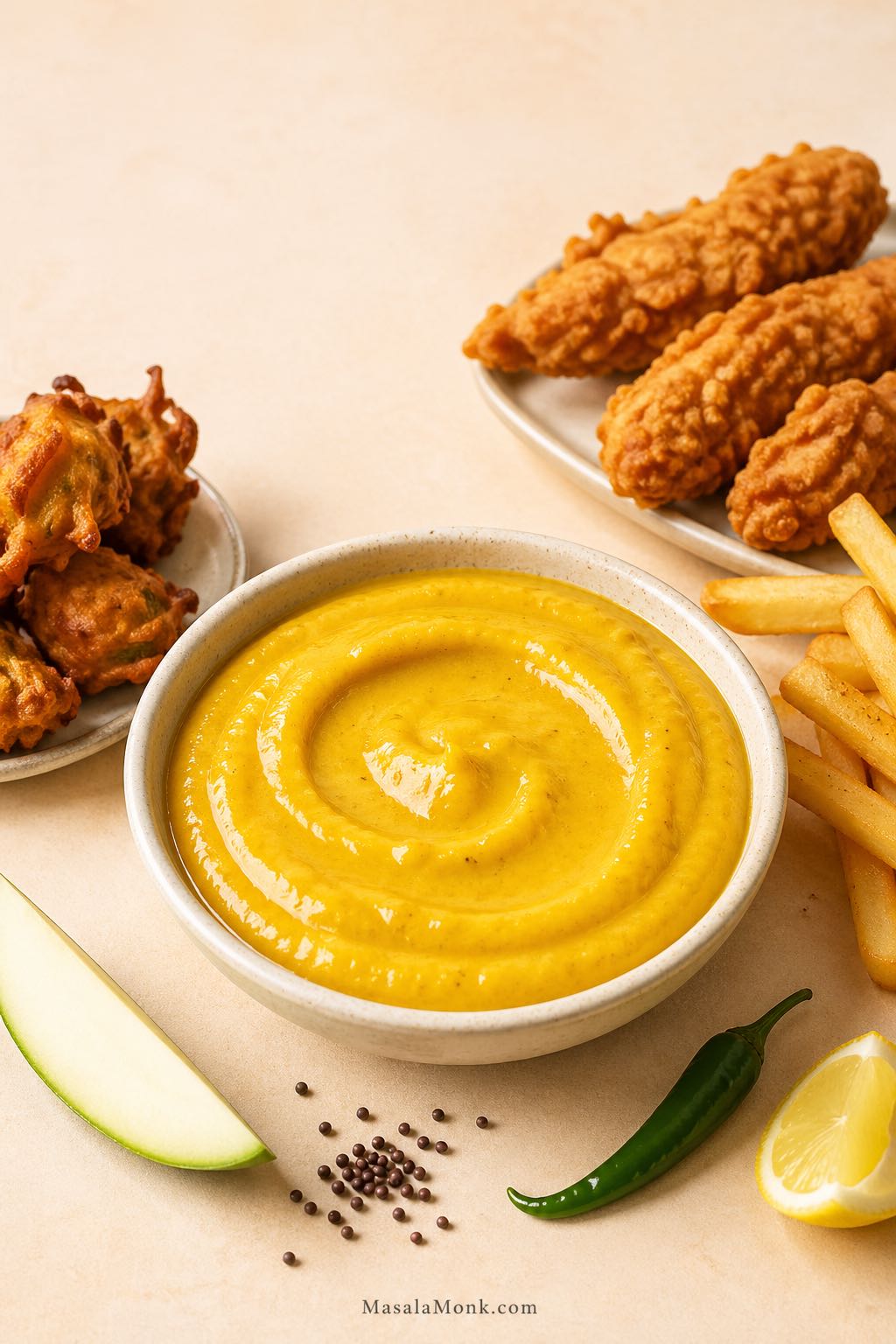
A good mango mustard sauce should taste sweet, tangy, sharp, lightly spicy, and useful enough to go with more than one meal. It should work as a dipping sauce for fries, chicken tenders, wings, pakoras, and nuggets, but also as a spread for burgers, sandwiches, wraps, and rolls.
This mango mustard sauce recipe gives you the most useful version first: a fast blender sauce made with ripe mango, mustard, lemon or vinegar, chili, salt, and a creamy base such as mayonnaise, thick yogurt, coconut cream, or soaked cashews. It takes only a few minutes, yet it tastes brighter and more interesting than plain honey mustard or a regular mayo-based dip.
At the same time, there is a sharper Indian/Bengali direction to know. In Bengali cooking, aam kasundi or mango kasundi usually means a pungent raw mango mustard sauce made with green mango, mustard seeds, mustard oil, green chili, turmeric, and salt. Because the two styles serve different needs, this guide keeps the fast blender sauce as the main recipe, then shows you how to move it toward an aam kasundi-style version when you want a stronger, sharper mustard flavor.
In This Guide
Quick Answer
Mango mustard sauce is a sweet-tangy sauce made with mango and mustard. In its easiest form, it blends ripe mango or unsweetened mango pulp with mustard, lemon juice or vinegar, chili, salt, and a creamy base such as mayonnaise, thick yogurt, coconut cream, or soaked cashews. As a result, it works as a dip, spread, drizzle, dressing, or quick sauce for chicken, fries, wings, burgers, fish, shrimp, pakoras, paneer, and wraps.
For a softer, creamier sauce, use ripe mango and mayo, yogurt, or coconut cream. By contrast, a sharper Indian/Bengali-style version starts with raw mango, mustard seeds, mustard oil, green chili, turmeric, and salt. That second version is closer to aam kasundi or mango kasundi, which is more pungent, sour, and mustard-forward than a creamy mango mustard dip.
- Best quick version: ripe mango, Dijon or yellow mustard, lemon, chili, salt, and mayo or yogurt.
- Best no-mayo version: use coconut cream, thick curd, Greek yogurt, or soaked cashews.
- Best Indian-style version: use kasundi or make the aam kasundi-style raw mango variation below.
- Best for dipping: keep the sauce thick and creamy.
- Best for drizzling: thin it with water, lemon juice, vinegar, or a little oil.
- Best for chicken and wings: keep it tangy, slightly sweet, and medium-spicy.
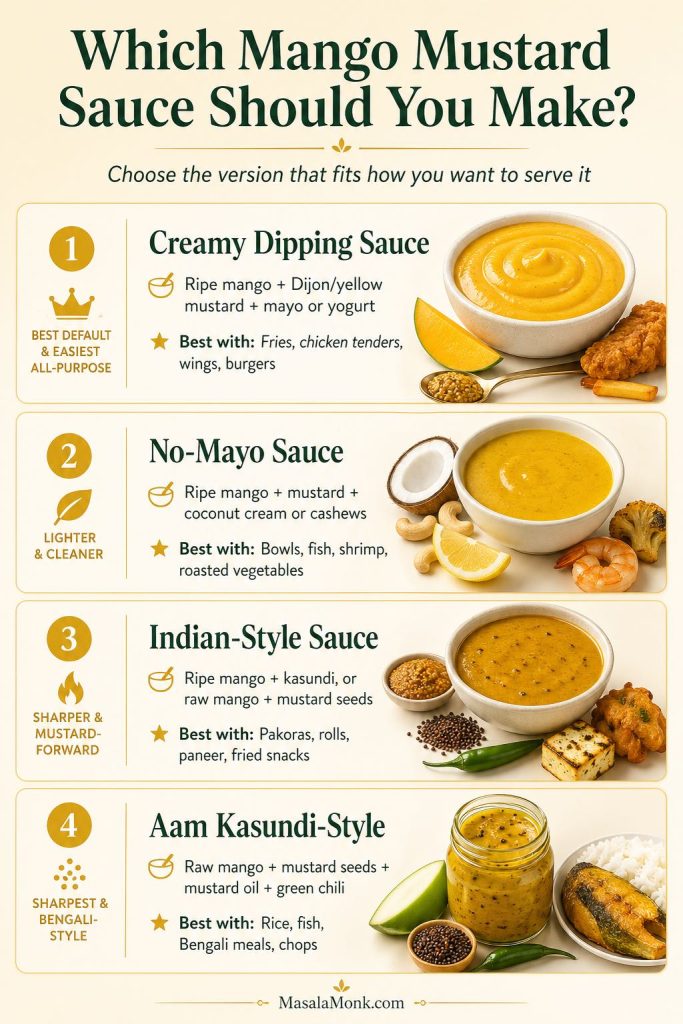
Which Mango Mustard Sauce Should You Make?
Choose the version based on how you want to serve it. The quick creamy sauce is best for dipping and spreading, the no-mayo version is better for lighter drizzles and bowls, and the aam kasundi-style version is sharper, sourer, and more mustard-forward.
| If You Want… | Make This Version | Best With |
|---|---|---|
| A creamy dipping sauce | Ripe mango + Dijon or yellow mustard + mayo or yogurt | Fries, chicken tenders, wings, nuggets, burgers |
| A no-mayo sauce | Ripe mango + mustard + coconut cream, thick yogurt, or cashews | Wraps, bowls, shrimp, fish, roasted vegetables |
| A sharper Indian-style sauce | Ripe mango + kasundi, or raw mango + mustard seeds | Pakoras, rolls, paneer, fish, fried snacks |
| A Bengali-style aam kasundi | Raw mango + mustard seeds + mustard oil + green chili | Rice, fish, Bengali meals, chops, pakoras |
Quick Mango Mustard Sauce
This quick mango mustard sauce is creamy, tangy, lightly spicy, and ready in minutes. For the best first batch, use ripe mango, Dijon mustard, lemon juice, chili, salt, and mayonnaise or thick yogurt. After that, adjust it toward a no-mayo, vegan, honey mustard, or aam kasundi-style version.
Ingredients
- 1 cup diced ripe mango or unsweetened mango pulp, about 160–170 g / 6 oz
- 2 tablespoons Dijon mustard, yellow mustard, or kasundi, about 30 ml
- 2 to 3 tablespoons mayonnaise, Greek yogurt, thick curd, or coconut cream, about 30–45 g
- Or, for a cashew version: 2 tablespoons soaked cashews, about 18–22 g, plus 1 to 2 tablespoons water
- 1 tablespoon fresh lemon juice or apple cider vinegar, about 15 ml
- 1/4 teaspoon chili flakes or cayenne, or 1 small green chili, finely chopped
- 1/4 teaspoon fine salt, about 1.5 g, plus more to taste
- 1 to 2 teaspoons honey or sugar, about 5–10 ml honey or 4–8 g sugar, optional
- 1 to 2 tablespoons cold water, about 15–30 ml, only if needed to thin
Instructions
- Add everything to a blender. Add the mango, mustard, creamy base, lemon juice or vinegar, chili, and salt. Do not add all the honey or sugar yet unless your mango is very tart.
- Blend until smooth. Blend until the sauce looks creamy, glossy, and fully combined. Scrape down the sides if needed.
- Check the texture. For a dip, the sauce should coat the back of a spoon. For a drizzle, it should fall in a thin ribbon. For a dressing, thin it until pourable but still creamy.
- Adjust in small amounts. Add mustard 1 teaspoon at a time for more sharpness, lemon or vinegar 1 teaspoon at a time for brightness, water 1 teaspoon at a time for a thinner sauce, and salt 1 small pinch at a time if the flavor tastes flat.
- Rest briefly. Let the sauce sit for 10 minutes if possible. The mustard sharpness settles and the mango flavor becomes rounder.
- Serve or chill. Use right away, or refrigerate in a clean airtight jar.
Notes
- This makes about 1 cup, enough for 4 to 6 servings as a dip or 6 to 8 servings as a drizzle.
- Use ripe mango for the quick creamy version.
- Use unsweetened mango pulp when you want the smoothest blender sauce.
- If using sweetened mango pulp, skip the honey or sugar and add extra lemon, vinegar, or mustard to keep the sauce savory.
- If using cashews, soak them in hot water for 20 to 30 minutes, then drain before blending.
- Use kasundi instead of Dijon when you want a sharper Indian-style mango mustard sauce.
- Use coconut cream or soaked cashews for a vegan no-mayo mango mustard sauce.
- Honey or sugar is optional. Add it only if the mango is tart or the mustard tastes harsh.
For the first serving, try this mango mustard sauce with fries, chicken tenders, pakoras, grilled paneer, roasted vegetables, fish, shrimp, burgers, wraps, or sandwiches. Ideally, it should taste sweet-tangy first, mustard-sharp second, and spicy only as much as you want it to be.
Why This Mango Mustard Sauce Works
- Ripe mango gives body and sweetness. It makes the sauce smooth, golden, and fruity without needing much added sugar.
- Mustard keeps it savory. Dijon, yellow mustard, or kasundi stops the sauce from tasting like plain mango puree.
- Lemon or vinegar adds lift. The acidity keeps the creamy base from feeling heavy and makes the sauce better with fried, grilled, and roasted foods.
- The creamy base controls the texture. Mayo makes it rich, yogurt makes it tangier, coconut cream makes it vegan, and soaked cashews make it thick and neutral.
- The aam kasundi-style option solves the raw mango question. It gives readers a sharper Bengali-style path without making the whole recipe traditional, time-heavy, or confusing.
Once blended, the finished sauce should be smooth, glossy, and spoonable. For dipping, it should cling to fries, pakoras, or chicken tenders. When used as a drizzle, it should fall from a spoon in a thin ribbon. As a spread, it should stay thicker and creamier.
What Is Mango Mustard Sauce?
Mango mustard sauce is a condiment made by combining mango with mustard, acid, salt, and heat. In its easiest form, it is a quick blender sauce made with ripe mango, prepared mustard, lemon or vinegar, chili, and something creamy. Therefore, it tastes like a brighter, fruitier mustard dip and works especially well with fried, grilled, roasted, or snacky foods.
However, mango mustard sauce can also point toward aam kasundi, a Bengali-style mango mustard condiment made with raw mango, mustard seeds, mustard oil, green chili, turmeric, salt, and sometimes garlic or ginger. That version is sharper, more pungent, sourer, and more mustard-heavy than a creamy dipping sauce.
For that reason, this recipe gives you both paths. Make the fast blender version when you need a sauce for fries, chicken, burgers, wraps, wings, fish, or pakoras. Meanwhile, use the aam kasundi-style variation when you need a bolder raw mango mustard flavor for rice, fish, rolls, fried snacks, Bengali-style meals, or kasundi mayo.
For a fresh, chunky mango topping instead of a mustard sauce, try this mango salsa recipe. Mango salsa is brighter, fresher, and diced, while mango mustard sauce is smoother, sharper, and more condiment-like.
For a tangier pickled mango sauce with turmeric, fenugreek, chili, and vinegar, use the amba sauce guide.
Mango Mustard Sauce Ingredients
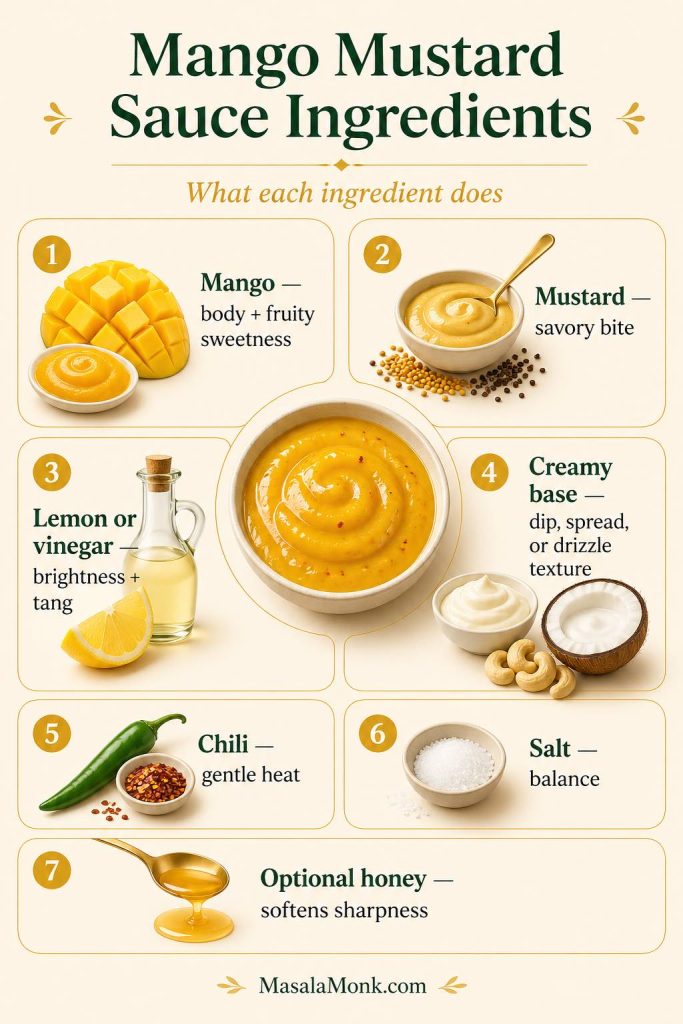
The ingredient list is simple, but each ingredient has a job. First, mango brings body and sweetness. Then, mustard gives bite. Meanwhile, lemon or vinegar keeps the sauce from tasting heavy. Finally, the creamy base decides whether the sauce feels like a dip, spread, drizzle, or dressing.
Ripe mango or mango pulp
Use ripe mango for the fast blender version because it gives the sauce sweetness, color, body, and a smooth fruit flavor. Fresh mango gives the brightest taste, while mango pulp gives the smoothest texture and the most consistent result. Whenever possible, choose unsweetened mango pulp. However, sweetened pulp can still work if you skip the honey or sugar and add extra lemon, vinegar, or mustard to keep the sauce savory.
Mustard
Mustard is what keeps the sauce savory. Dijon mustard gives the cleanest sharpness, while yellow mustard gives a familiar tangy dip flavor. By contrast, kasundi gives a deeper Indian/Bengali-style bite. When you use mustard seeds, the sauce moves closer to aam kasundi.
Lemon juice or vinegar
Acid keeps mango mustard sauce lively. Lemon juice tastes fresh and bright, while apple cider vinegar tastes rounder and slightly fruitier. White vinegar, on the other hand, tastes sharper. Start with a small amount, then adjust after blending.
Creamy base
Mayonnaise gives the richest, smoothest dipping sauce. By comparison, Greek yogurt or thick curd makes the sauce lighter and tangier. Meanwhile, coconut cream makes a vegan no-mayo version that works especially well with shrimp, fish, and snacks. For a neutral vegan base instead, soaked cashews make the sauce creamy without adding a strong coconut flavor.
Chili
Use chili flakes, cayenne, fresh green chili, jalapeño, or a little hot sauce depending on how spicy you want the sauce. For an all-purpose dip, keep the heat moderate. Then, for wings, grilled meats, or a spicy mango habanero mustard variation, increase the chili gradually.
Salt and optional honey
Salt makes the mango and mustard taste complete. Honey or sugar is optional, so use it only if the mango is tart, the mustard tastes harsh, or you prefer a softer honey mustard-style sauce.
Which Mustard Should You Use?
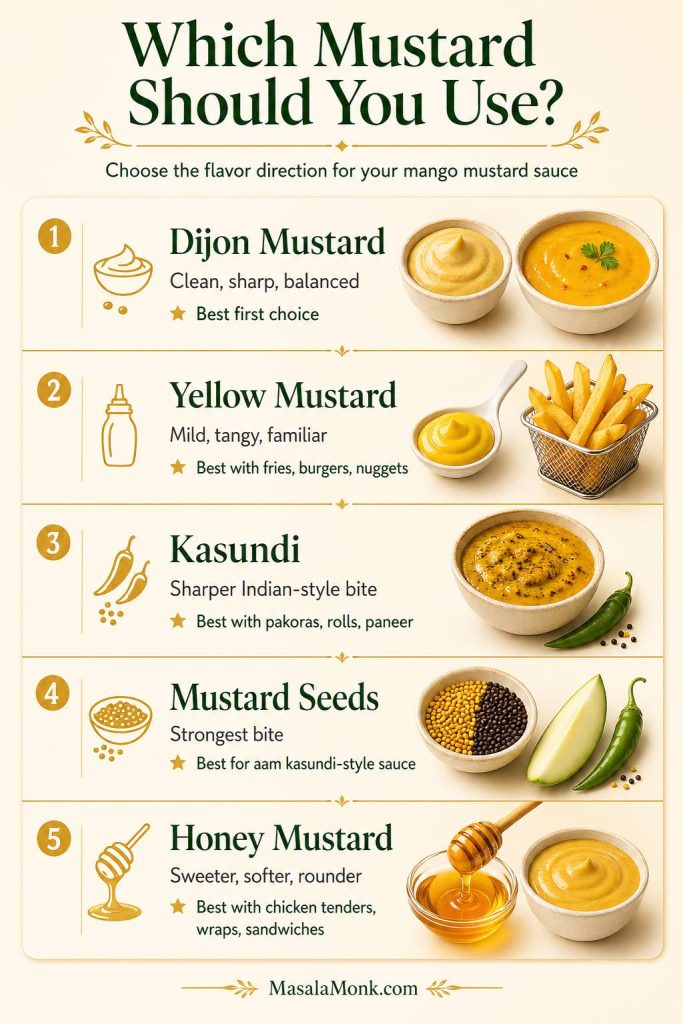
The mustard changes the whole personality of the sauce. For the easiest all-purpose version, start with Dijon. If you want something milder for fries, burgers, or kids, use yellow mustard instead. However, when you want the sauce to taste sharper and more Indian, kasundi is the better choice.
| Mustard | Best For | Flavor |
|---|---|---|
| Dijon mustard | Everyday mango mustard sauce, chicken, fish, sandwiches, wraps. | Sharp, smooth, balanced, not too sweet. |
| Yellow mustard | Fries, burgers, nuggets, chicken tenders, kid-friendly dipping sauce. | Mild, tangy, familiar, less pungent. |
| Kasundi | Indian-style dipping sauce, pakoras, rolls, paneer, fish, fried snacks. | Sharper, deeper, more pungent, mustard-forward. |
| Mustard seeds | Aam kasundi-style sauce, raw mango mustard sauce. | Strongest bite, more traditional, more textured if not blended fully. |
| Honey mustard | Softer variation for chicken, wraps, sandwiches, and fries. | Sweeter, rounder, less sharp. |
If you are unsure, use Dijon for the first batch. It gives the cleanest balance and lets the mango stay clear. After that, you can make the sauce sharper with kasundi or milder with yellow mustard.
Ripe Mango vs Raw Mango
This is the most important decision in the recipe. On one hand, ripe mango gives you a sweet, smooth, creamy dipping sauce. On the other hand, raw mango gives you a sharper, sourer, aam kasundi-style sauce. Both are useful, but they are not the same.
| Mango Type | Best For | Flavor | How to Adjust |
|---|---|---|---|
| Ripe mango | Quick creamy mango mustard sauce. | Sweet, fruity, mellow. | Add lemon/vinegar and mustard to keep it savory. |
| Unsweetened mango pulp | Fast blender sauce, smooth dipping sauce. | Very smooth, consistent, often sweeter than fresh mango. | Skip extra honey unless needed. |
| Raw mango / green mango | Aam kasundi-style mango mustard sauce. | Sour, sharp, more traditional. | Balance with salt, mustard oil, chili, and a little sugar if needed. |
| Frozen mango | Backup option for quick sauce. | Convenient, softer, sometimes watery. | Thaw and drain first, then blend. |
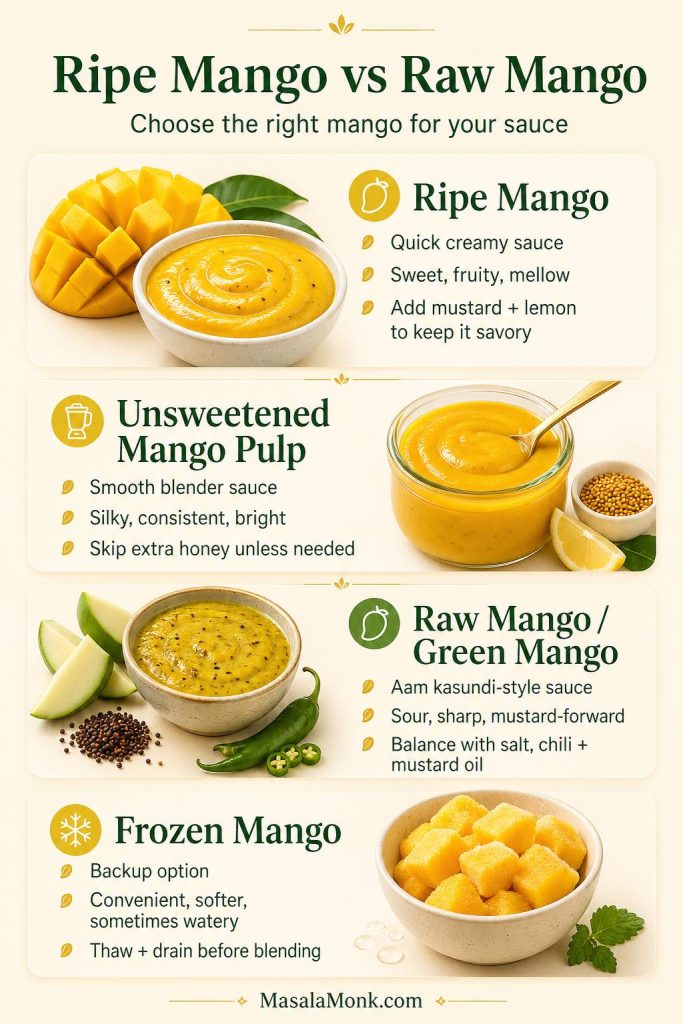
For the everyday blender sauce, use ripe mango or unsweetened mango pulp. For the aam kasundi-style variation, use raw mango or firm green mango. When the two are swapped, the sauce still works, but the flavor moves in a different direction: ripe mango tastes sweeter and smoother, while raw mango tastes sharper and more mustard-forward.
How to Make Mango Mustard Sauce
The quick version is a blender sauce. Even so, the final tasting step matters because mangoes and mustards vary a lot.
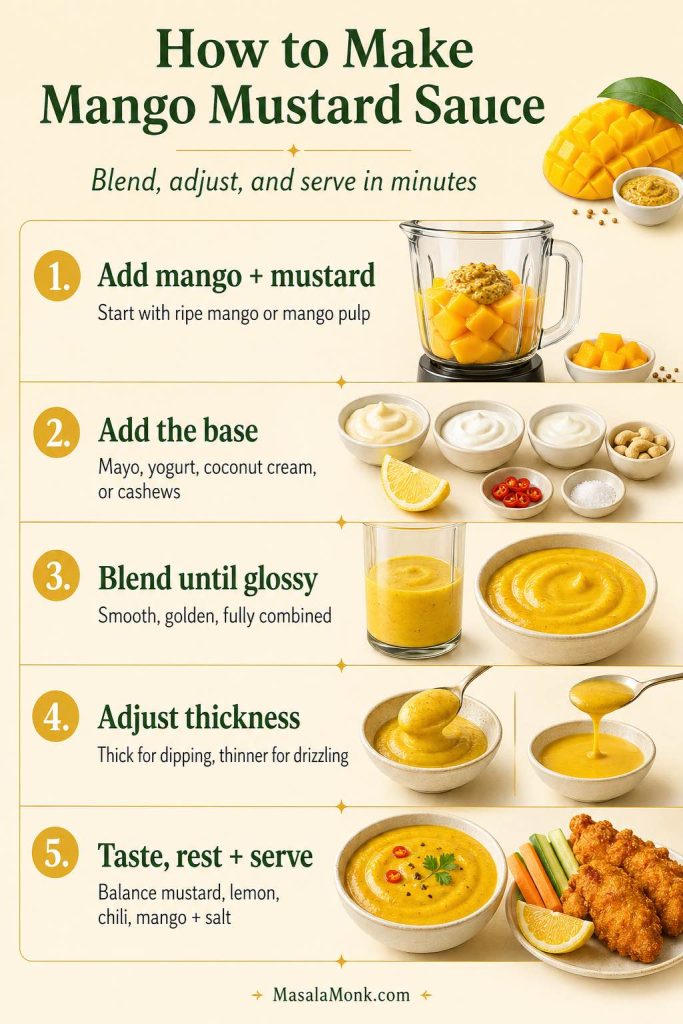
1. Add the mango and mustard
Add the ripe mango or mango pulp to a blender with the mustard. For the cleanest flavor, use Dijon. For a milder dip, choose yellow mustard instead. Alternatively, use kasundi for a sharper Indian-style sauce.
2. Add the creamy base
Next, add mayonnaise, Greek yogurt, thick curd, coconut cream, or soaked cashews with a little water. Use more creamy base for a thicker dipping sauce and less for a lighter drizzle.
3. Add acid, chili, and salt
After that, add lemon juice or vinegar, chili, and salt. Because mango usually brings enough sweetness on its own, do not add too much sweetener at the beginning.
4. Blend until smooth
Blend until the sauce is smooth, glossy, and spoonable. After that, scrape down the sides if needed so no mango pieces or mustard streaks remain.
5. Adjust the sauce
After blending, taste the sauce before adding anything else. When it tastes too sweet, add mustard, lemon, vinegar, chili, or salt. If it tastes too sharp, round it out with more mango or creamy base. Finally, when the flavor seems flat, add salt first before reaching for more lemon.
6. Rest before serving
Let the sauce sit for 10 minutes if you can. During that short rest, the mustard sharpness settles, the mango flavor comes forward, and the sauce tastes more complete.
Creamy vs No-Mayo Mango Mustard Sauce
You do not have to use mayonnaise. Instead, the creamy base simply decides how rich, tangy, vegan, or pourable the sauce becomes.
| Base | Best For | What It Does |
|---|---|---|
| Mayonnaise | Classic dipping sauce, fries, wings, chicken tenders, burgers. | Richest, smoothest, most dip-like. |
| Greek yogurt / thick curd | Grilled chicken, wraps, bowls, sandwiches. | Lighter, tangier, less rich. |
| Coconut cream | Vegan/no-mayo sauce, shrimp, fish, fried snacks. | Creamy with a mild tropical note. |
| Soaked cashews | Vegan creamy sauce without coconut flavor. | Thick, neutral, smooth. |
| Olive oil + lemon or vinegar | Dressing-style sauce for salads, bowls, and roasted vegetables. | Thinner, brighter, more pourable. |
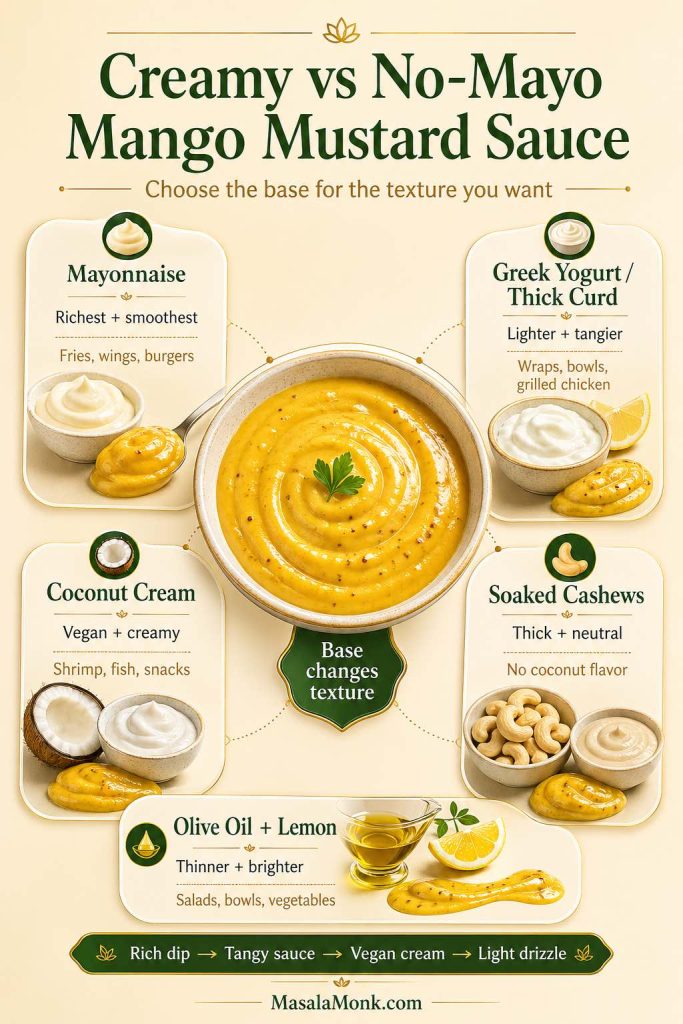
For the most crowd-friendly sauce, use mayonnaise or thick yogurt. Meanwhile, coconut cream or soaked cashews give you a vegan mango mustard sauce without losing body. When you want a dressing instead of a dip, use less creamy base and thin the sauce with lemon juice, vinegar, water, or olive oil.
For a smoother mango-based dressing rather than a mustard sauce, this sweet and spicy mango salad dressing is a better fit for salads, bowls, and lighter drizzles.
Aam Kasundi-Style Mango Mustard Sauce
Aam kasundi, also called mango kasundi or aam kashundi, is a sharper Bengali-style mango mustard condiment. Traditionally, it is usually made with raw mango, mustard seeds, mustard oil, green chili, turmeric, and salt. Compared with the fast blender sauce above, it tastes sourer, hotter, more pungent, and more mustard-forward.
This version is an aam kasundi-style refrigerator sauce. In other words, it gives you the raw mango mustard flavor without treating the sauce as shelf-stable or canned.
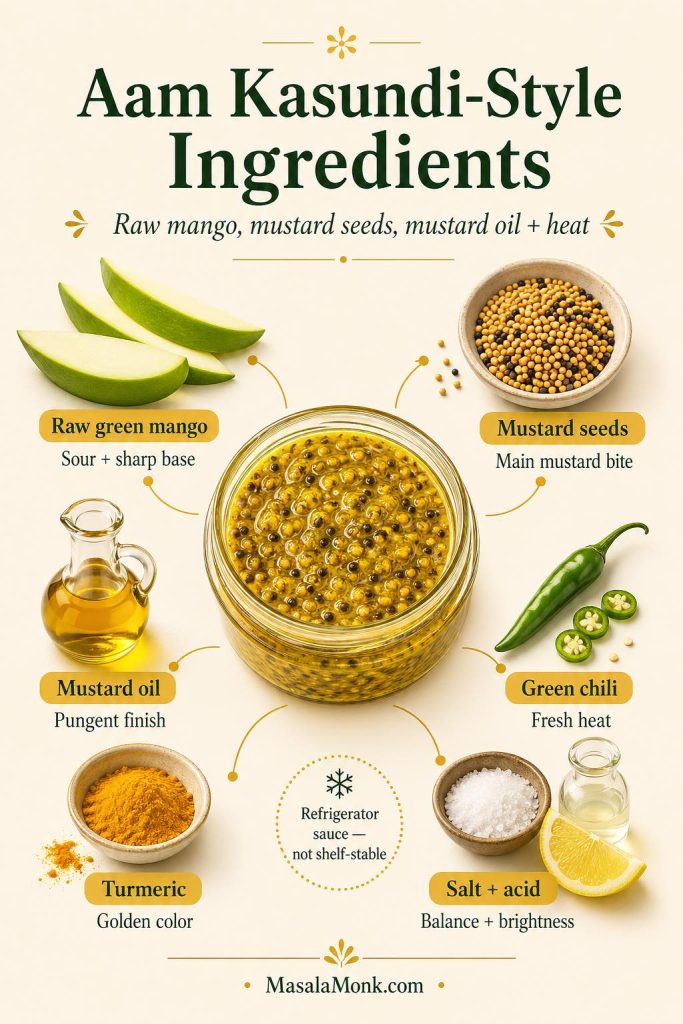
Aam Kasundi-Style Ingredients
- 1 cup grated raw mango or finely chopped green mango
- 1 1/2 tablespoons yellow mustard seeds
- 1 to 2 teaspoons black mustard seeds, optional, for stronger bite
- 1 to 2 green chilies
- 1/2 teaspoon turmeric
- 1 small garlic clove or 1/2 teaspoon grated ginger, optional
- 1 to 2 tablespoons food-grade mustard oil
- 1 tablespoon vinegar or lemon juice
- 1/2 teaspoon salt, plus more to taste
- 1/2 to 1 teaspoon sugar, optional
- Water as needed to blend
Use food-grade mustard oil where available. Without mustard oil, replace it with neutral oil and add a little extra prepared mustard or kasundi for sharper flavor.
How to Make the Aam Kasundi-Style Version
- Soak the mustard seeds in water for 20 to 30 minutes, then drain.
- Add the drained mustard seeds, raw mango, green chili, turmeric, salt, vinegar or lemon juice, garlic or ginger if using, and a splash of water to a blender.
- Blend to a coarse or smooth paste, depending on the texture you like.
- Stir in the mustard oil.
- Taste and adjust with more salt, vinegar, chili, or a small amount of sugar.
- Transfer to a clean jar and refrigerate.
If you are new to kasundi-style sauces, start with the smaller amount of black mustard seeds. You can always make the next batch sharper, but it is harder to fix a sauce that turns too bitter or pungent.
Use this sharper version with rice, fish, pakoras, rolls, Bengali-style meals, fried snacks, grilled paneer, or as a base for kasundi mayo. However, when it tastes too strong on its own, mix a spoonful into mayonnaise, yogurt, coconut cream, or mango pulp for a milder dip.
Mango Mustard Sauce vs Aam Kasundi
Mango mustard sauce and aam kasundi overlap, but they are not exactly the same. In general, the fast blender sauce is creamy and made with ripe mango. By contrast, aam kasundi is usually sharper, more pungent, and made with raw mango and mustard seeds.
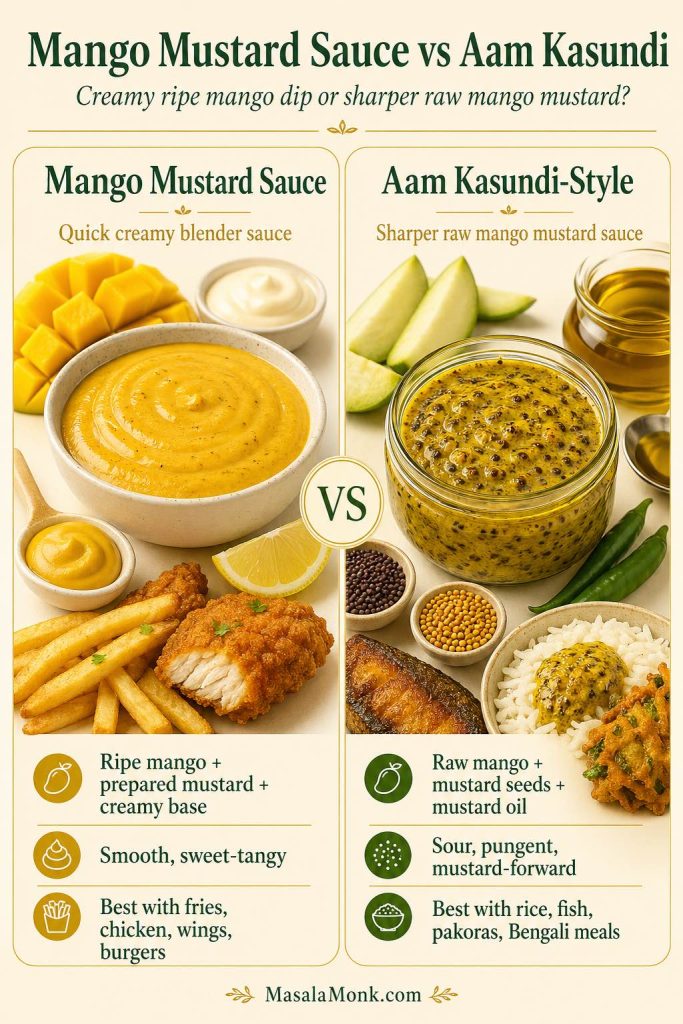
| Sauce | Mango | Mustard | Texture | Flavor | Best Use |
|---|---|---|---|---|---|
| Quick mango mustard sauce | Ripe mango or mango pulp | Dijon, yellow mustard, or kasundi | Creamy and smooth | Sweet-tangy, mild to sharp | Fries, chicken, wings, burgers, wraps |
| No-mayo mango mustard sauce | Ripe mango or mango pulp | Prepared mustard or kasundi | Creamy or pourable | Lighter, tangy, less rich | Snacks, salads, bowls, shrimp, fish |
| Aam kasundi / mango kasundi | Raw mango / green mango | Mustard seeds + mustard oil | Pungent, thicker, sometimes coarse | Sharp, sour, spicy, mustard-heavy | Rice, fish, pakoras, rolls, Bengali meals |
| Mango honey mustard | Ripe mango | Mustard + honey | Smooth | Sweeter, softer, rounder | Chicken tenders, sandwiches, wraps |
| Mango habanero mustard | Ripe mango | Mustard + habanero | Smooth or slightly seedy | Hot, fruity, sharp | Wings, grilled meats, burgers |
How to Use Mango Mustard Sauce
Mango mustard sauce is useful because it can be thick, creamy, pourable, or sharp depending on how you adjust it. Keep it thicker for dipping and spreading. When you need a drizzle or dressing, thin it slightly with water, lemon juice, vinegar, or oil.
As a simple rule, use the creamy ripe-mango version with fries, chicken, burgers, sandwiches, and wraps. Use the thinner no-mayo version with bowls, salads, grilled fish, shrimp, and roasted vegetables. Use the aam kasundi-style version when you want a sharper, mustard-heavy sauce for rice, fish, pakoras, rolls, or Bengali-style meals.
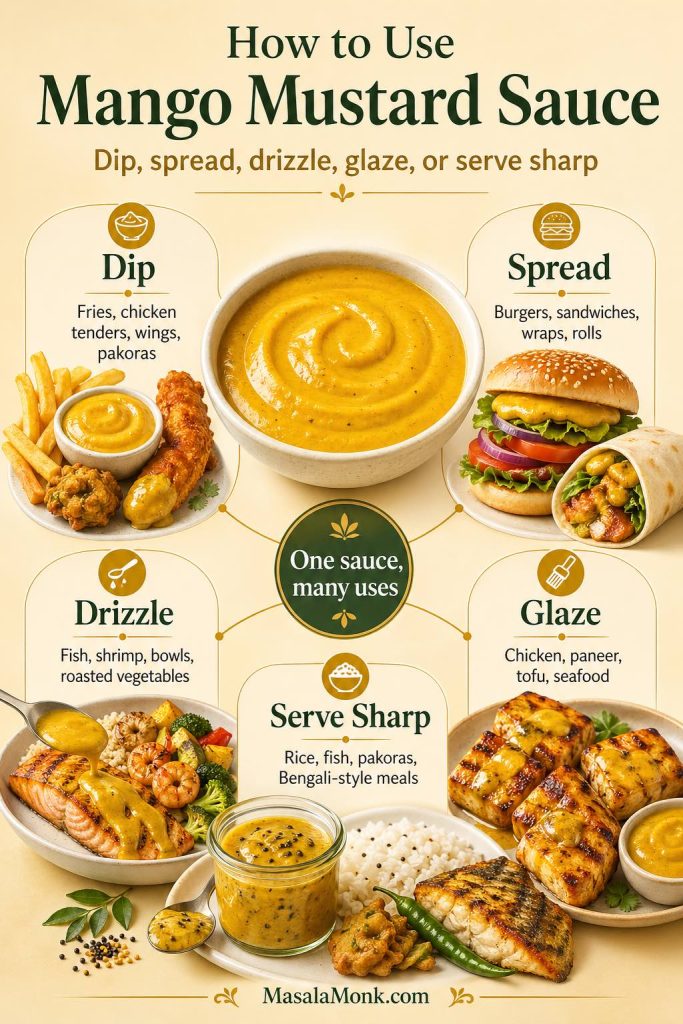
Best foods for dipping
Use thick mango mustard sauce with chicken tenders, fries, potato wedges, wings, pakoras, nuggets, onion rings, chips, crackers, and vegetable sticks. For this use, keep the sauce creamy enough to cling instead of running off the food.
Mango Mustard Sauce for Chicken
For chicken tenders, nuggets, fried chicken sandwiches, grilled chicken, or wings, keep the sauce tangy and medium-thick. Use Dijon for a sharper sauce, yellow mustard for a softer family-style dip, or kasundi for a stronger Indian-style chicken sauce. When using it as a glaze, brush it on near the end of cooking so the mango and creamy base do not scorch.
Best places to spread it
Spread mango mustard sauce on burgers, sandwiches, wraps, rolls, grilled cheese, paneer wraps, tofu wraps, and fried chicken sandwiches. For spreading, keep it thicker than a dressing so it stays in place.
Best meals for drizzling
Thin mango mustard sauce slightly and drizzle it over grilled chicken, fish, shrimp, roasted vegetables, grain bowls, salads, grilled paneer, tofu bowls, and rice bowls. For a lighter drizzle, use yogurt, coconut cream, cashews, or olive oil instead of a heavy mayo base.
Glaze, marinade, or finishing sauce
For chicken, fish, shrimp, paneer, or tofu, use mango mustard sauce as a finishing glaze, table sauce, or short marinade. A 20 to 30 minute marinade is usually enough because the sauce is acidic and strongly flavored. When the sauce contains yogurt, mayo, or coconut cream, avoid brushing it too early over high heat because it can split or scorch. Instead, add it near the end of cooking, or spoon it over the finished dish at the table.
If the sauce has touched raw chicken, fish, shrimp, paneer, or tofu, do not reuse it as a table sauce unless it has been cooked properly. For serving, keep a clean portion separate before marinating.
For Bengali-style meals
The aam kasundi-style version is stronger and sharper. Therefore, it works especially well with rice, fish, pakoras, rolls, chops, fried snacks, or mustard-forward dishes. For a milder snack dip, mix a small spoonful into mayo, yogurt, or thick curd.
Mango Mustard Sauce Variations
Once the base sauce tastes balanced, you can move it sweeter, hotter, creamier, tangier, or more Indian-style depending on what you are serving. In other words, the same base can become a dip, glaze, dressing, or sharper kasundi-style sauce with only a few changes.
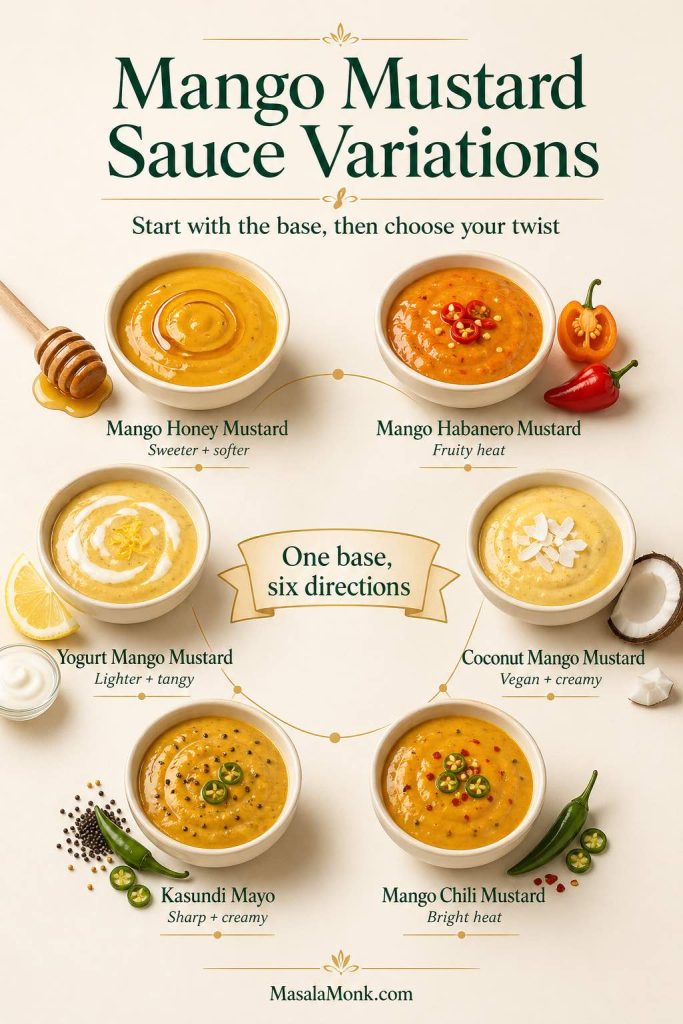
Mango Honey Mustard
Add 1 to 2 teaspoons honey and use Dijon or yellow mustard. As a result, this version becomes softer, sweeter, and especially good with chicken tenders, sandwiches, wraps, and fries.
Mango Habanero Mustard
Add a very small amount of minced habanero or habanero hot sauce. Since habanero heat builds quickly, start with less than you think you need. This variation is best with wings, grilled meats, burgers, and spicy sandwiches.
Coconut Mango Mustard Sauce
Use coconut cream instead of mayo or yogurt. This version is vegan, creamy, slightly tropical, and especially good with shrimp, fish, roasted vegetables, and fried snacks.
Yogurt Mango Mustard Sauce
Use Greek yogurt or thick curd for a lighter, tangier sauce. Because it has more acidity and less richness than mayo, it works well with grilled chicken, wraps, bowls, paneer, and roasted vegetables.
Kasundi Mayo
Mix 1 tablespoon kasundi with 2 tablespoons mayo or yogurt and 1 to 2 tablespoons mango pulp. This gives you a fast, sharp, creamy dip for fries, pakoras, rolls, sandwiches, and snacks.
Mango Chili Mustard Sauce
Add chili flakes, fresh green chili, cayenne, or a small amount of chili sauce. However, keep the mango and mustard balanced so the sauce tastes fruity and sharp, not just hot.
How to Fix Mango Mustard Sauce
Mangoes, mustards, and creamy bases all vary. Therefore, after blending, taste the sauce and adjust it before serving.
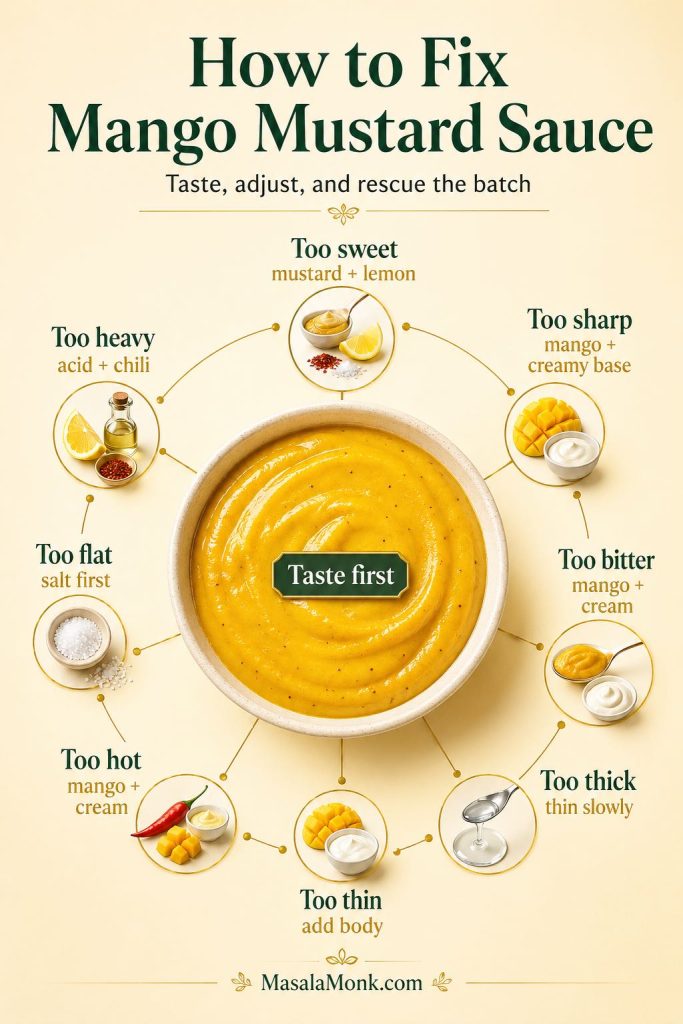
| Problem | What Happened | How to Fix It |
|---|---|---|
| Too sweet | The mango or mango pulp is very sweet. | Add lemon juice, vinegar, mustard, chili, or a pinch of salt. |
| Too sharp | There is too much mustard or acid. | Add more mango, mayo, yogurt, coconut cream, or a tiny bit of honey. |
| Too bitter | The mustard seeds or mustard are too strong. | Add mango and creamy base. Next time, use less mustard seed or a milder mustard. |
| Too thick | There is too much mango pulp, cashew, mayo, or coconut cream. | Thin with water, lemon juice, vinegar, or a little oil. |
| Too thin | There is too much liquid or the mango is watery. | Add mayo, yogurt, cashew paste, coconut cream, or more mango pulp. |
| Too hot | The chili is stronger than expected. | Add more mango and creamy base. |
| Too flat | The sauce is under-salted or lacks acid. | Add salt first, then lemon or vinegar if it still needs brightness. |
| Too heavy | There is too much mayo or cream. | Add lemon juice, vinegar, chili, mango, or mustard to lift it. |
Store-Bought vs Homemade Mango Mustard Sauce
Store-bought aam kasundi, mango kasundi, or mango mustard sauce can be convenient, but the flavor varies a lot. Some versions are sharp, salty, oily, and pungent. Others, however, are sweeter, creamier, or closer to a mild mustard dip.
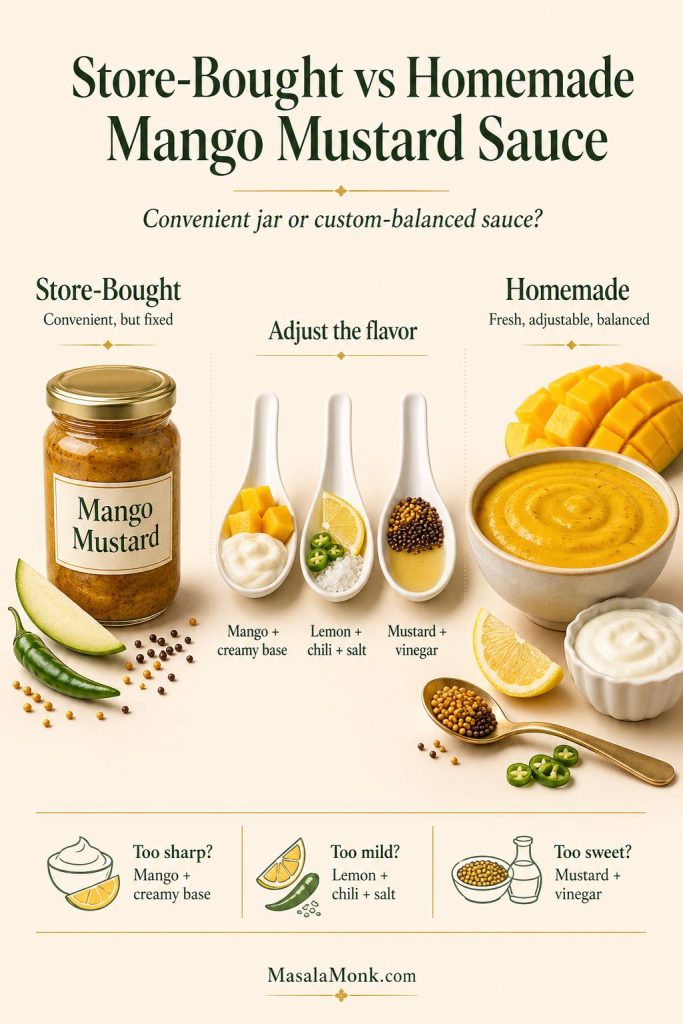
Homemade mango mustard sauce gives you more control. Instead of accepting one fixed flavor, you can make it creamy or no-mayo, sweet or sharp, mild or spicy, thick for dipping, or thin for drizzling. However, if you already have store-bought kasundi, you can still turn it into a fast sauce by whisking a spoonful with mango pulp and mayo, yogurt, coconut cream, or soaked cashews.
When store-bought kasundi tastes too sharp, soften it with mango pulp and a creamy base. If it tastes too mild, brighten it with lemon, chili, or a pinch of salt. When it leans too sweet, bring back the mustard bite with extra mustard, vinegar, or lemon juice.
Storage
Storage depends on the version you make. Because the fast blender sauce contains fresh mango and often mayo, yogurt, coconut cream, or cashews, treat it as a fresh refrigerator sauce.
Quick creamy mango mustard sauce
- Store in a clean airtight jar or container in the refrigerator.
- Use within 3 to 4 days.
- Stir before serving because the sauce may thicken slightly as it sits.
- Use a clean spoon every time.
- Do not leave the sauce at room temperature for more than 2 hours, or more than 1 hour in very hot weather.
Aam kasundi-style refrigerator sauce
- Store in a clean jar in the refrigerator.
- For best flavor and freshness, use within 5 to 7 days.
- Use a clean spoon to avoid introducing moisture or crumbs.
- Treat it as a refrigerator condiment, not a shelf-stable preserve.
- Discard if it smells off, grows mold, or changes texture in an unpleasant way.
For general safe pickling principles, see the National Center for Home Food Preservation’s pickling guidance.
Mango Mustard Sauce FAQs
What is mango mustard sauce made of?
Mango mustard sauce is usually made with mango, mustard, lemon juice or vinegar, chili, salt, and a creamy base such as mayonnaise, yogurt, coconut cream, or soaked cashews. A sharper aam kasundi-style version, however, uses raw mango, mustard seeds, mustard oil, green chili, turmeric, and salt.
Is mango mustard sauce the same as aam kasundi?
Not exactly. Quick mango mustard sauce is usually creamy and made with ripe mango and prepared mustard. By contrast, aam kasundi is a sharper Bengali-style mango mustard condiment made with raw mango, mustard seeds, mustard oil, and green chili.
What is mango kasundi?
Mango kasundi, also called aam kasundi or aam kashundi, is a Bengali-style raw mango mustard sauce. Because it uses raw mango and mustard seeds, it is usually sharper, sourer, and more pungent than a creamy mango mustard dipping sauce.
Can I make mango mustard sauce without mayo?
Yes. Instead of mayonnaise, use Greek yogurt, thick curd, coconut cream, or soaked cashews. For a vegan no-mayo version, coconut cream and cashews are the best options.
Can I use mango pulp?
Yes. Mango pulp works well for a smooth blender sauce. Unsweetened mango pulp is best; however, if the pulp is very sweet, skip the honey or sugar and add extra lemon juice or mustard if needed.
Which mustard is best?
Dijon mustard is the best first choice because it is sharp, smooth, and balanced. Yellow mustard makes a milder dipping sauce. Meanwhile, kasundi gives the sauce a stronger Indian/Bengali-style flavor, and mustard seeds are best for the aam kasundi-style version.
Is mango mustard sauce good with chicken?
Yes. Mango mustard sauce works well with grilled chicken, chicken tenders, chicken wings, chicken sandwiches, wraps, and rice bowls. Depending on the meal, use it as a dip, spread, drizzle, or finishing glaze.
Can I use mango mustard sauce as a marinade?
Yes, but it works best as a short marinade or finishing glaze. For a marinade, 20 to 30 minutes is usually enough. Since the sauce may contain mayo, yogurt, or coconut cream, avoid cooking it over very high heat for too long because it can split or scorch. For grilling, brush it on near the end or serve it on the side.
What do you eat with mango mustard sauce?
Serve mango mustard sauce with fries, chicken tenders, wings, pakoras, nuggets, onion rings, burgers, sandwiches, wraps, grilled chicken, fish, shrimp, paneer, tofu, roasted vegetables, grain bowls, or salads.
How long does mango mustard sauce last?
The quick creamy version usually keeps for 3 to 4 days in the refrigerator in a clean airtight container. Meanwhile, the aam kasundi-style version should also be refrigerated and used within 5 to 7 days for best flavor and freshness.
Can I make mango habanero mustard?
Yes. Add a very small amount of minced habanero or habanero hot sauce to the quick mango mustard sauce. Since habanero heat builds quickly, start with less than you think you need.
Is mango mustard sauce sweet or spicy?
It can be both, but the best version is balanced. Ripe mango gives sweetness, mustard gives sharpness, lemon or vinegar gives tang, and chili adds heat. Therefore, you can make it mild, medium, or hot depending on how much chili you use.
Final Tips for the Best Mango Mustard Sauce
Before you make your first batch, keep these final points in mind.
- Use ripe mango for the quick creamy sauce and raw mango for the aam kasundi-style version.
- Start with Dijon if you want the cleanest all-purpose mango mustard sauce.
- Use kasundi when you want a sharper Indian-style flavor.
- Keep the sauce thick for dipping and thinner for drizzling.
- Add salt before adding more lemon or vinegar if the sauce tastes flat.
- Use coconut cream or soaked cashews for a vegan no-mayo version.
- Let the sauce rest for 10 minutes before final judging.
- Keep homemade mango mustard sauce refrigerated.









[…] mango mustard sauce, this mango habanero sauce recipe is hotter and more chili-forward. Where mango salsa stays chunky […]
[…] sauce, try MasalaMonk’s mango habanero sauce. For a sharper fruit-and-mustard dip, try the mango mustard sauce. Both fit naturally into the same homemade sauce and condiment […]
[…] the cooked patty lightly with mango habanero sauce or serve it on the side for fries. Meanwhile, mango mustard sauce gives the burger a tangy, fruity change from plain […]
[…] a sweet, tangy, fish-friendly sauce, try mango mustard sauce instead of plain mustard. For more heat, finish the plate with mango habanero sauce, especially […]