A Little Debbie-style oatmeal cream pie has a very particular texture. The cookie bends around the creme. The oats almost disappear into the crumb, while brown sugar and molasses come through before cinnamon. There is hardly any resistance when you bite through it. The cookie and filling give together.
Plenty of homemade oatmeal sandwich cookies are thicker, oatier and piled much higher with frosting. They can be wonderful. They just eat differently.
Here, the oats are finer, raisin paste disappears into the dough, the spice stays quiet, and the creme is light enough to belong between two cookies. Before the whole batch goes into the oven, bake one cookie and see what it does. That one cookie can save the rest.
Total time: About 1 hour 20 minutes, depending on whether you bake one or two sheets at a time
Oven: 350°F / 175°C
Dough: 30 g per cookie
Target size: About 3 inches / 7.5 cm across after cooling
Creme: About 17–18 g per sandwich
A digital scale is strongly recommended here. Small changes in flour, oats and portion size can noticeably change how the cookies spread, and sticky ingredients such as shortening and Marshmallow Fluff are easier to measure by weight.
What You’re Aiming For
Three visual clues work together here: finer oats smooth the chew, the low cookie profile keeps the sandwich flexible, and a restrained creme layer prevents the filling from taking over.
For the Oatmeal Cookies
60 g raisins
30 ml (2 tablespoons) hot water, for soaking
140 g (about 1¾ cups) quick oats, measured before processing
210 g (1¾ cups) all-purpose flour
1½ tablespoons cornstarch (12 g)
¾ teaspoon baking soda (about 3 g)
¾ teaspoon fine salt (about 4 g)
¼ teaspoon ground cinnamon
180 g unsalted butter, cool room temperature
160 g (¾ cup packed) dark brown sugar
50 g (¼ cup) granulated sugar
20 g (1 tablespoon) regular unsulphured molasses
1 large egg
1 large egg yolk
2 teaspoons vanilla extract
For the Creme Filling
70 g vegetable shortening
35 g unsalted butter, cool room temperature
110 g Marshmallow Fluff or another thick marshmallow creme
80 g confectioners’ sugar, sifted
1 teaspoon vanilla extract
⅛ teaspoon fine salt (about 1 g)
Useful equipment: a digital kitchen scale, food processor or small chopper, electric mixer, parchment-lined baking sheets, cooling rack, and piping bag or small offset spatula.
No food processor? Finely mince the softened raisins and use the quick oats as they are. The cookies will have a more obvious oat texture and look a little less like the packaged version, but it is a perfectly workable shortcut.
Method
1. Heat the Oven and Soak the Raisins
Heat the oven to 350°F / 175°C. If baking one sheet at a time, place a rack in the center. With two sheets, position racks in the upper and lower thirds. Line the baking sheets with parchment.
Pour the hot water over the raisins, stir so they are evenly moistened, and leave them for about 10 minutes. While they soften and the oven heats, prepare the oats.
2. Process the Oats
Add the quick oats to the food processor and pulse until they resemble coarse meal. Rub a pinch between your fingers: you want tiny pieces with very few intact flakes. Stop before the oats become powdery, then transfer them to a bowl.
The processor is changing the finished chew, not just the appearance of the oats. Smaller pieces blend into the crumb, while intact flakes make the cookie feel more like a rustic oatmeal cookie.
3. Make the Raisin Paste
Drain the softened raisins, keeping the soaking water nearby. Put the raisins into the same processor and puree until thick and mostly smooth.
If the blades need help, add some of the reserved water 1 teaspoon at a time, using only enough to keep things moving. Tiny flecks are fine; obvious pieces of raisin need another spin.
Use the smear as the texture check: the raisin paste should hold its shape rather than run, with tiny flecks still visible.
4. Mix the Dough
Whisk the processed oats, flour, cornstarch, baking soda, salt and cinnamon together.
In another bowl, beat the butter with both sugars at medium speed for about 2 minutes, until creamy and slightly lighter. Soft butter is fine; shiny or greasy butter is getting too warm.
Beat in the molasses and raisin paste. Add the egg, yolk and vanilla and mix until smooth. Add the dry ingredients and mix on low just until the last flour streaks disappear. Scrape across the bottom of the bowl once before you stop.
The dough should be soft and easy to scoop. Leave it unchilled for the first cookie.
5. Bake One Cookie First
Weigh one 30 g piece of dough. Roll it gently, then flatten it to roughly 1¾ inches / 4.5 cm across and about ½ inch / 1.25 cm thick.
Keep every test portion at 30 g before judging cookie spread. Otherwise, a larger scoop can masquerade as a dough problem and send you toward an adjustment the recipe does not need.
Bake for about 9–11 minutes. Pull the cookie when the edges are set but the center still looks slightly underdone. Leave it on the hot sheet for 4–5 minutes, then move it to a rack and let it finish cooling.
Once cooled, you’re aiming for roughly 3 inches / 7.5 cm across. Use that first cookie as your reference before committing the rest of the dough.
Too thick? Let firm dough warm briefly or flatten the next piece slightly more.
Too wide? Chill the dough for 10–15 minutes and try again.
Close to the target? Portion the rest while the dough is still in roughly the same state.
Do not judge width alone: an oatmeal cookie can cool close to 3 inches across and still sit too domed. In that case, change the starting shape rather than extending the bake.
6. Bake the Remaining Cookies
Divide the dough into 30 g portions, flatten them as you did the test cookie, and leave at least 2½ inches / 6 cm between them on parchment-lined sheets.
Bake one sheet at a time on the center rack for the most even results, or bake two sheets together on racks positioned in the upper and lower thirds, swapping their positions halfway through. Either way, judge doneness by the cookies rather than the clock.
Pull them while the centers still look soft. They continue setting during the 4–5 minutes they spend on the hot pan.
The center is the better doneness signal than overall browning: once it looks dry in the oven, the cookie is likely to cool firmer than the soft sandwich texture we’re after.
Later batches may spread a little less as the oats continue absorbing moisture and the butter cools. If that happens, flatten the next portions slightly more rather than simply baking them longer.
7. Make the Creme
Beat the shortening and butter for about 2 minutes, until smooth and lightly aerated. Add the Marshmallow Fluff, vanilla and salt, beat until combined, then gradually add the confectioners’ sugar and continue for another 1–2 minutes.
Lift the beater. The creme should hold a soft peak. Press a dab between two fingers: it should feel smooth and soft enough to give easily, but not so loose that it stretches away in long sticky strings.
The two consistency checks answer different questions: the beater tells you whether the creme filling can hold its shape, while the fingertip test tells you whether it will yield easily when the sandwich is bitten.
Pair the completely cooled cookies by size and turn half of them flat-side up. Pipe or spread about 17–18 g of creme onto each bottom cookie, leaving a narrow border around the edge. Add the matching top and press gently until the filling moves close to the perimeter.
Matching cookies by size is not cosmetic: with the same 17–18 g of creme, an undersized top pushes filling outward sooner, while a well-matched pair lets it spread more evenly.
This is the one to taste before you start cleaning up. The pies are good straight away, but if you’re chasing the softer packaged-style texture, keep the rest tightly covered for about 2–4 hours before eating another. The creme gradually softens the inside of the cookies as they sit.
Don’t judge the final texture too early. If a fresh pie feels slightly firmer than expected, compare it again after 2–4 covered hours before changing the recipe.
A McKee Foods product sheet for Oatmeal Creme Pies lists rolled oats, molasses and raisin paste among the ingredients. Pureeing the raisins lets the fruit itself disappear into the dough while leaving a faint dark-fruit note behind the molasses. You should never bite into one and think “raisin cookie.”
Why the Oats Are So Fine
Quick oats give a finer cookie. Whole rolled oats still work, but their flakes remain much more obvious. Processing the quick oats into smaller pieces keeps the oat flavor while smoothing out the chew.
Use ordinary unsulphured molasses. Blackstrap is much more bitter and can overpower a small cookie quickly. The ¼ teaspoon of cinnamon adds warmth in the background without turning this into a spice-forward oatmeal cookie.
If you want molasses and spice to take over, our soft gingerbread cookies head deliberately in that direction.
The Cookie Should Spread—Just Not Too Far
Some spread is what keeps these cookies relatively thin instead of turning them into thick oatmeal rounds. If the test cookie barely moves, start with dough temperature: cool, firm dough spreads less. If it races across the parchment, a short chill is usually more useful than adding extra flour.
Flour measurement matters too. A heavily packed cup can stiffen the dough surprisingly quickly. That’s another reason the scale earns its place here.
The filling changes the whole character of the pie. Butter brings flavor, shortening keeps the creme paler and steadier in a warm room, and Marshmallow Fluff gives it a lighter texture with some spring.
The finished creme should stay between the cookies without eating like dense cake frosting.
How Much Filling Is Enough?
About 17–18 g per sandwich gives you creme in every bite without losing the oatmeal cookie underneath it. Keep the filling just short of the perimeter so it has somewhere to move when the top goes on.
A towering layer looks great in a cut-open cookie. Try to eat it and the glamour disappears pretty quickly.
Prefer an All-Butter Filling?
You can replace the shortening with butter. Expect more butter flavor, a more ivory-colored filling and less firmness in a warm room.
They barely spread. If warming and slightly flattening the test piece did not solve it, recheck the flour amount, how finely you processed the oats, and how long the dough has been sitting.
They spread into puddles. Give the dough 10–15 minutes in the refrigerator and bake another single cookie. Resist fixing the problem with handfuls of flour; that can trade an over-spreading cookie for a cakey one.
They turned crisp after cooling. Pull the next batch sooner. Once the centers look completely dry in the oven, the soft-cookie window is probably behind you.
Start with the smallest fix first—temperature, flattening or bake time—before changing the dough itself with more flour.
If It’s the Creme
It slumps. Give it a few cool minutes before adding more sugar. Warm butter can make a workable filling look much looser than it really is. If it still will not hold a soft peak, add confectioners’ sugar one tablespoon at a time.
It feels stiff and sugary. Beat it another 30 seconds. If it still feels dense, work in a small spoonful of Marshmallow Fluff. Liquid can take a sandwich filling from stiff to slippery very quickly.
It squeezes out when you eat the pie. The creme may be warm, there may be too much of it, or the cookies may have baked too firm. Start with less filling before changing anything else.
The whole pie tastes too sweet. Check the amount of filling first. An overloaded sandwich can taste cloying even when the creme itself is well balanced.
Start with temperature, then mixing, and change the formula only if neither solves it. That way a warm or under-mixed creme does not get “fixed” with ingredients it never needed.
Storage, Make-Ahead and How the Texture Changes
Freshly assembled pies have more contrast between cookie and filling. Leave them covered for a few hours and the creme gradually softens the inside of the cookies, giving the sandwich a more unified, packaged-style texture.
How to Store Oatmeal Cream Pies
Airtight storage protects the softness you worked for: exposed oatmeal cookies dry faster, while refrigerated pies need some time back at room temperature before their softer texture returns.
At room temperature: Keep the pies tightly covered in a cool room for up to 2 days. Refrigerate them if keeping them longer. Leaving them exposed will dry the cookies much faster.
In the refrigerator: Store them airtight for up to 5 days. Let a cold pie sit at room temperature for 20–30 minutes before eating if you want it softer again.
For freezing: Unfilled cookies or assembled pies can be frozen for up to 2 months. Freeze assembled pies in a single layer until firm, then wrap individually or transfer them to an airtight container. Thaw in the refrigerator, then let them come closer to room temperature before eating.
Make Them Ahead Without Losing the Texture
The assembled pies are well suited to making earlier in the day because a few covered hours soften the cookie around the creme. The dough can also be refrigerated, but a long rest gives the oats more time to absorb moisture, so chilled dough may spread less. Let it lose some of its chill and use the test cookie to recalibrate before baking.
Take a normal bite.
The cookie bends, the creme stays with it, and oats and molasses are still there after the sweetness arrives.
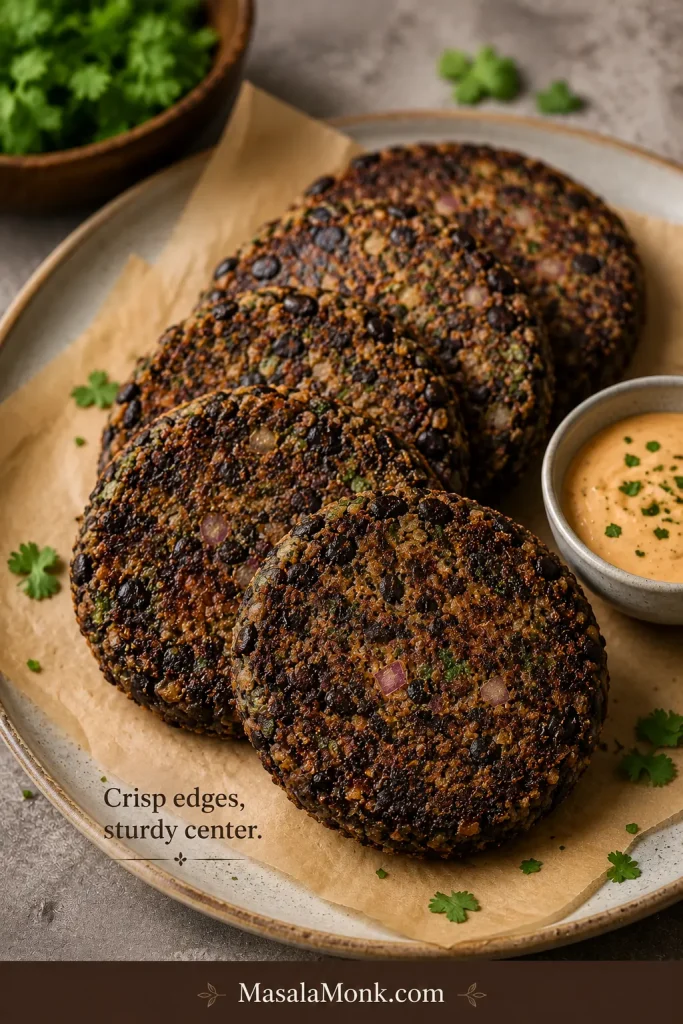
Black bean burgers are easy to love and surprisingly easy to mess up. The mixture can turn wet, the patties can crack in the pan, or the center can taste more like mashed beans than a real burger. What you want is a patty that lands on a bun without crumbling, browns at the edges, and feels hearty when you bite into it — not something you have to rescue with extra sauce.
This black bean burger recipe is built for that kind of confidence: crisp edges, smoky flavor, a tender middle, and patties that hold together without first-flip panic. It is the recipe for people tired of mushy, fragile bean burgers and ready for one that actually feels like dinner.
The main version uses canned black beans, egg, panko or oats, onion, garlic, and smoky spices. You will also find vegan, gluten-free, no-breadcrumb, oven, grill, and air fryer options, so the recipe works whether you want a classic veggie burger, a no-egg patty, or a meal-prep-friendly batch for the freezer.
Quick Answer: How to Make Black Bean Burgers That Don’t Fall Apart
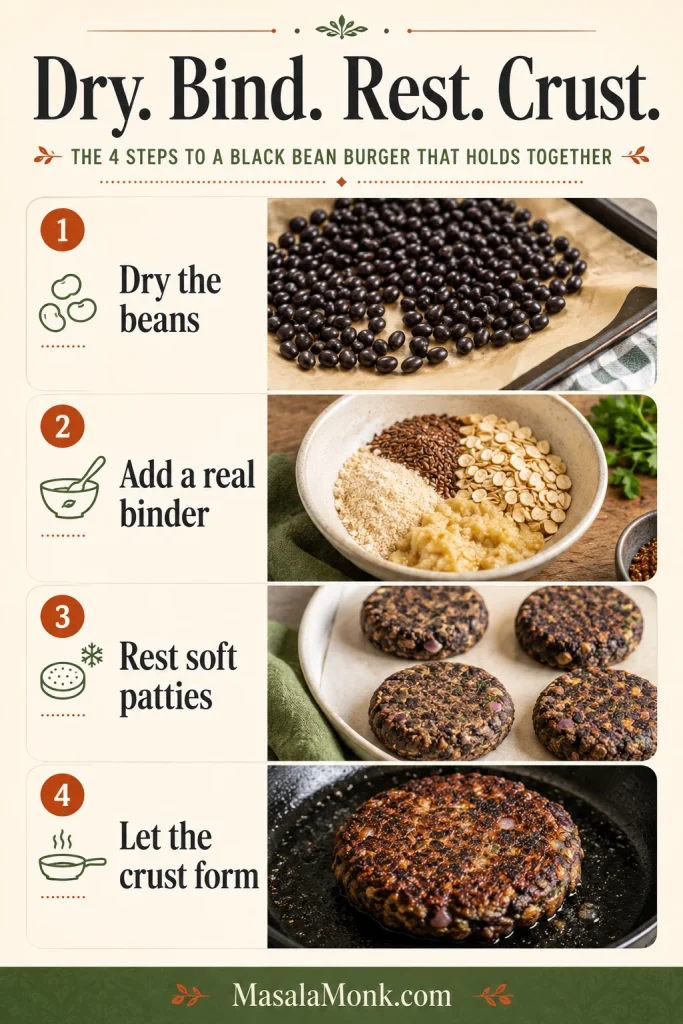
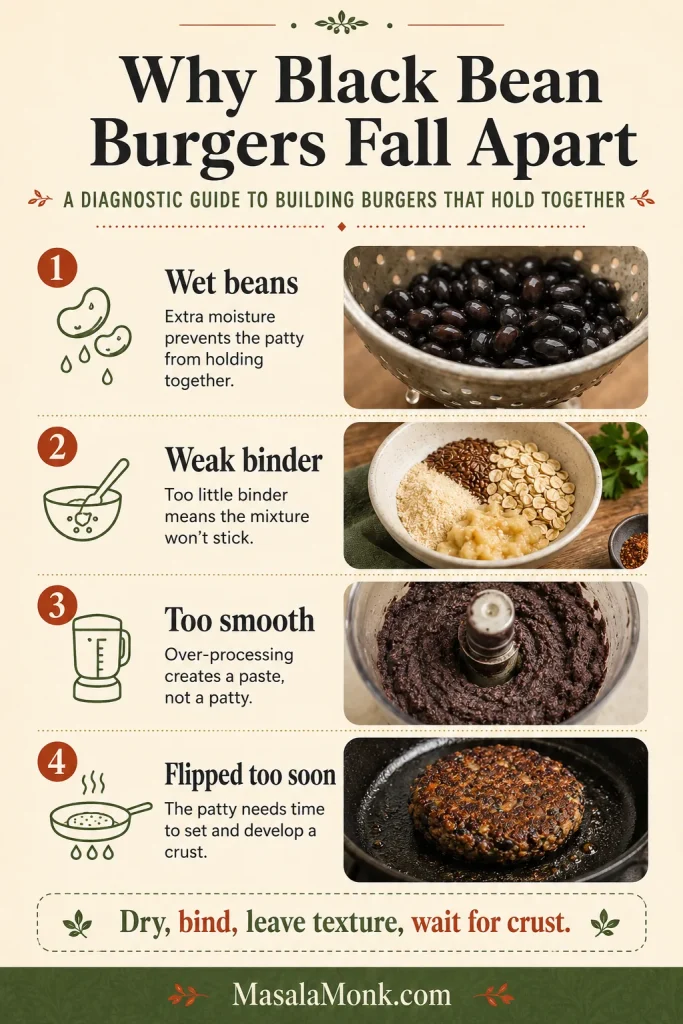
To make black bean burgers that do not fall apart, dry the beans first, mash only part of them, use a real binder, and cook the first side until a crust forms before flipping. Wet beans, raw watery vegetables, too little binder, and early flipping are the main reasons homemade black bean burgers turn mushy or break.
The simple rule is: dry, bind, rest, crust. That means drying the beans, binding the mixture, resting delicate patties, and letting the crust form before flipping.
Dry the beans: bake drained beans briefly so the center does not turn pasty.
Use a binder: egg plus panko, breadcrumbs, or oats is the easiest vegetarian option.
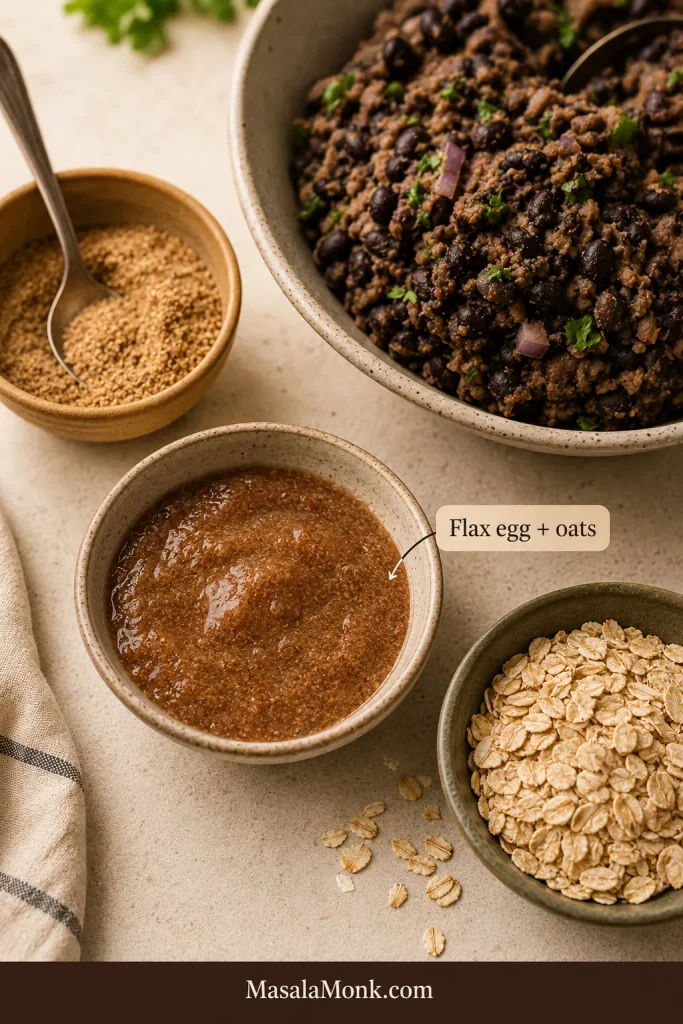
Go egg-free with oats: flax egg plus oats or oat flour works well for vegan patties.
Leave texture: mash enough to bind, but keep some visible bean pieces.
Rest soft patties: a short chill makes delicate patties easier to move.
Wait for the crust: if a patty feels stuck, it probably needs another minute before flipping.
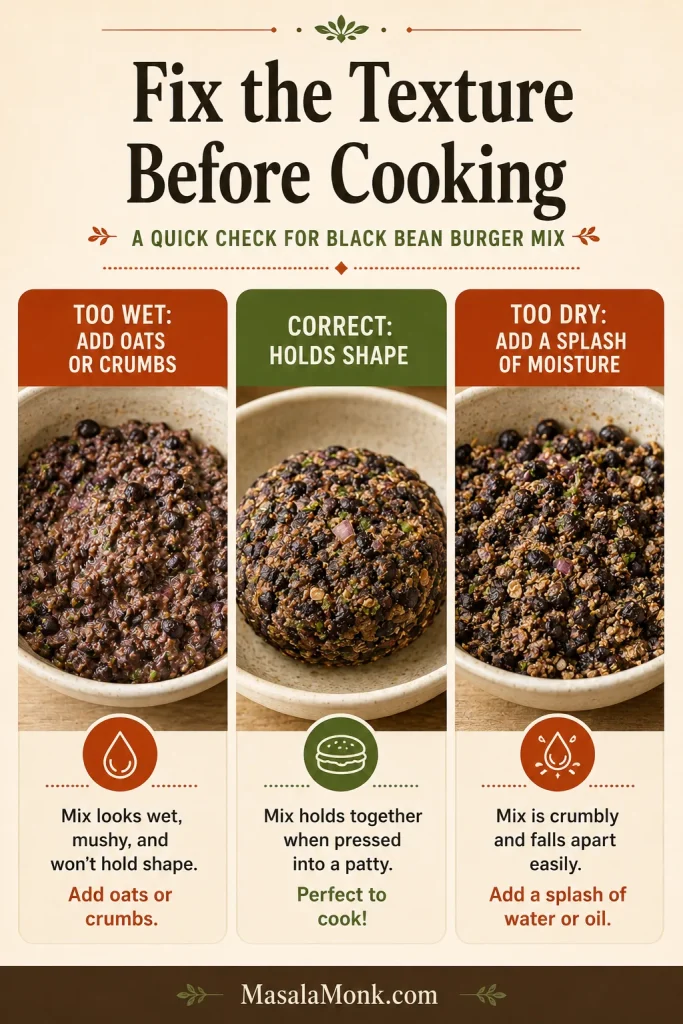
Even if this is your first homemade veggie burger, the cues below will help you fix the bean base before it ever touches the skillet. If it looks like bean dip, it is not ready to be a burger. A pressed handful that holds its shape means you are much closer to a clean flip.
Before cooking, follow the structure sequence: dry the beans, bind the mixture, rest soft patties, then let the crust set.
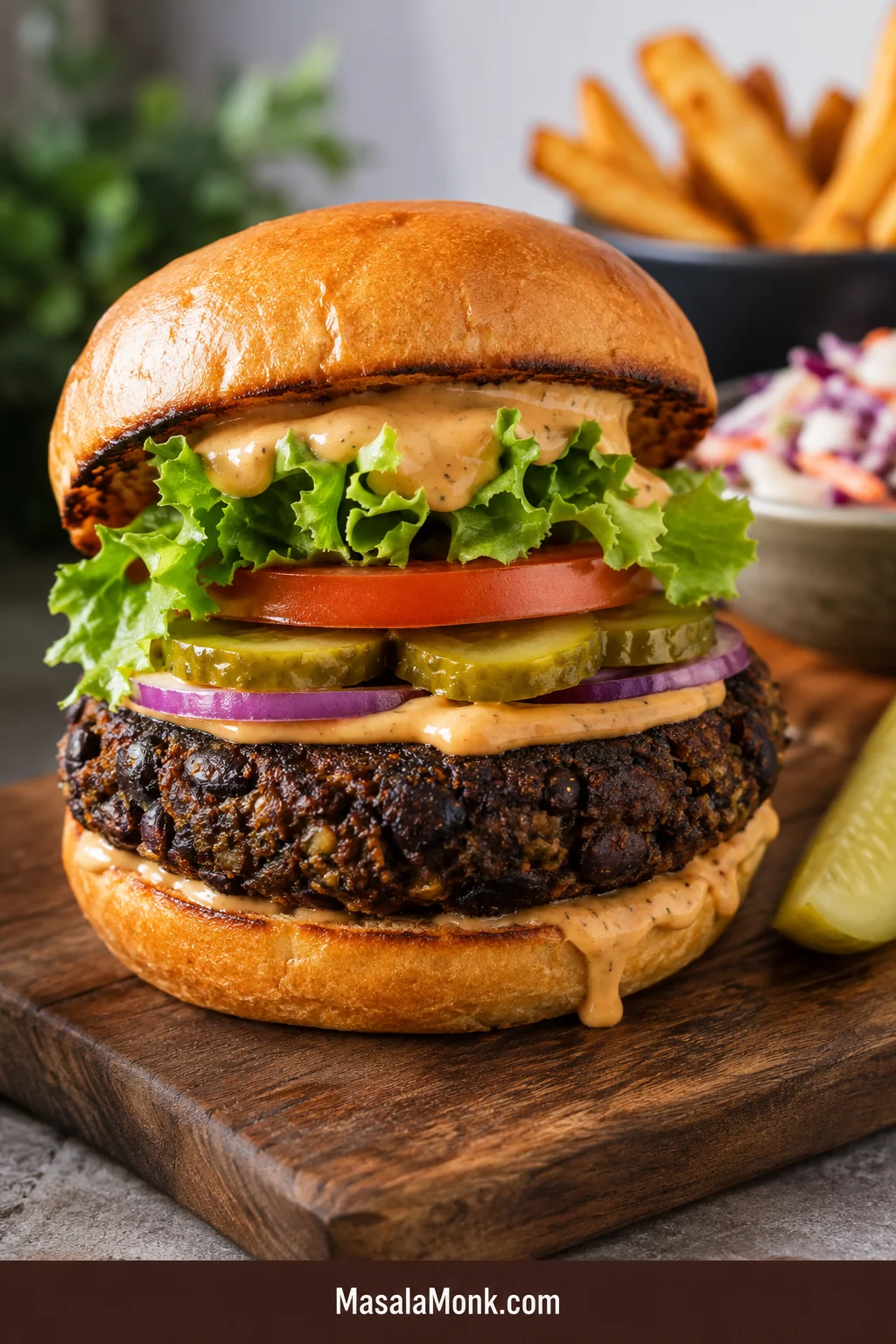
These black bean burgers are smoky, hearty, crisp-edged, and firm enough to flip. They are sturdy enough for a bun but still tender in the middle, with enough texture to feel satisfying instead of pasty.
The finished patty should have browned edges, a smoky garlic-cumin aroma, and a middle that feels hearty rather than mashed. Add a toasted bun, creamy sauce, something crunchy, and a little acidity, and it eats like a real burger.
Prep Time
15 minutes
Bean-Drying Time
12–15 minutes
Patty Cook Time
10 minutes for skillet
Total Time
About 40–45 minutes
Yield
6 patties
Main Method
Skillet
Other Methods
Oven, grill, air fryer
If you chill the patties before cooking, add 20–30 minutes of resting time. The wait is useful when the mixture feels soft, especially for vegan, oat-based, or grill-ready patties.
Fast path: For a quicker version, towel-dry the beans very well instead of baking them. The patties will be a little softer than the oven-dried version, but still workable if you use enough binder and let the first side brown before flipping.
Make-ahead path: Shape the patties up to 24 hours ahead and refrigerate them covered. This gives the binder time to settle and makes the patties easier to cook later.
Equipment
Rimmed baking sheet
Parchment paper
Large mixing bowl
Fork, potato masher, or food processor
Cast-iron or nonstick skillet
Thin spatula
Optional: grill mat, foil, or air fryer basket
You do not need a food processor. A fork or potato masher gives you more control and makes it easier to leave some texture in the beans.
Ingredients
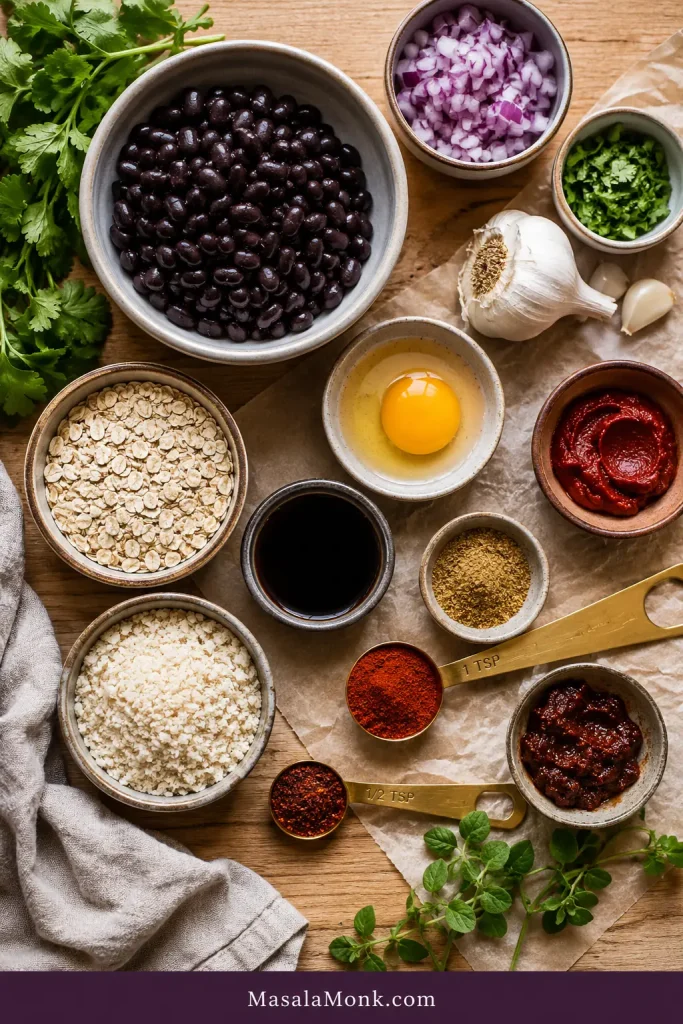
2 cans black beans, 15 oz / 425 g each, drained and rinsed, about 3 cups / 500–520 g drained beans
1 teaspoon oil, for cooking the onion
½ cup / 75 g finely chopped onion
2–3 garlic cloves, minced
1 large egg
¾ cup panko or breadcrumbs, about 45–55 g, or ¾ cup rolled oats, about 60 g
1 tablespoon tomato paste, ketchup, or barbecue sauce
1 tablespoon tamari, soy sauce, or vegan Worcestershire-style sauce for deeper burger-style flavor
1 teaspoon ground cumin
1 teaspoon smoked paprika
½ teaspoon chili powder
½ teaspoon fine salt, plus more to taste
¼ teaspoon black pepper
1–2 tablespoons chopped cilantro or parsley, optional
1 tablespoon chopped chipotle in adobo, optional for smoky heat
1–2 tablespoons oil, for cooking the patties
Using soy sauce or vegan Worcestershire-style sauce? Taste before adding extra salt because both can make the mixture saltier than expected.
With oat flour: Start with ½ cup / about 50 g oat flour instead of ¾ cup whole oats. Oat flour absorbs more quickly, so add more only when the mixture still feels loose.
Vegan Swap
Replace the egg with 1 flax egg. Mix 1 tablespoon ground flaxseed with 3 tablespoons water and let it thicken for 5–10 minutes. Use rolled oats or oat flour as the dry binder, and chill the shaped patties before cooking.
Instructions
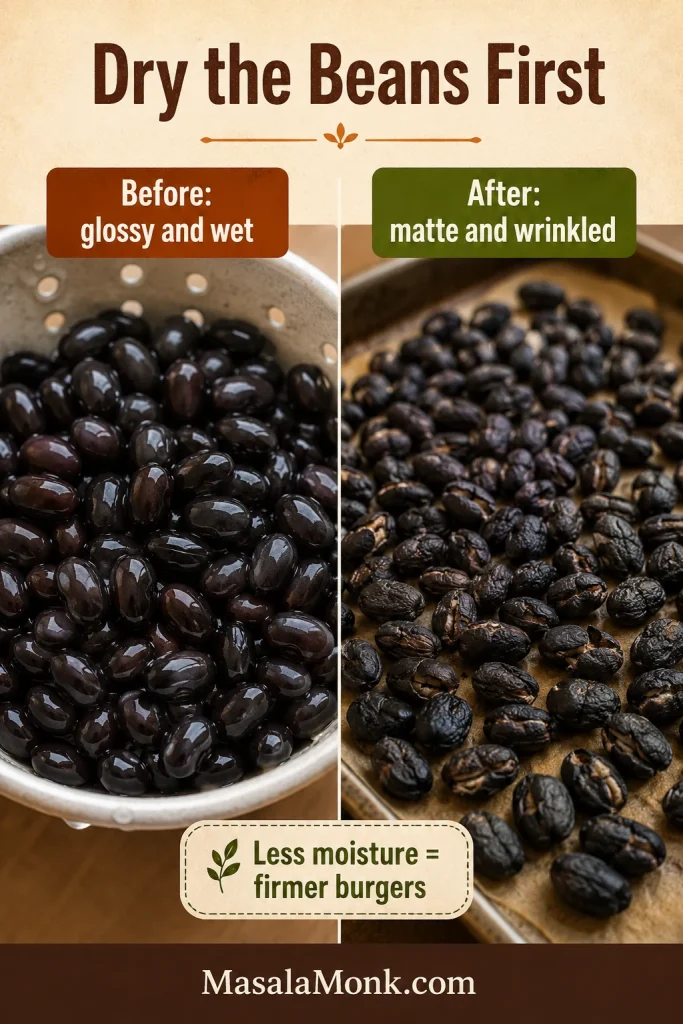
Dry the beans. Heat the oven to 350°F / 175°C. Spread the drained and rinsed black beans on a parchment-lined baking sheet. Bake for 12–15 minutes, until the beans look matte and slightly wrinkled. Cool briefly.
Cook the onion and garlic. Warm 1 teaspoon oil in a skillet. Soften the onion for 3–4 minutes, stir in the garlic for 30 seconds, then cool slightly.
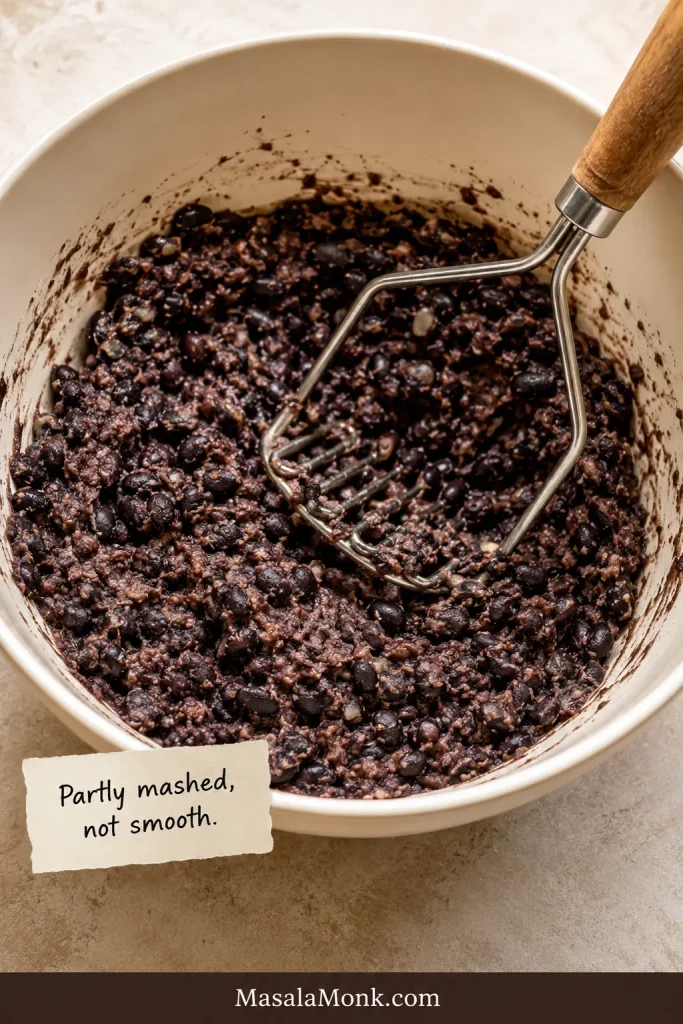
Mash the beans. Transfer the beans to a large bowl. Mash with a fork or potato masher until partly mashed with some visible bean pieces.
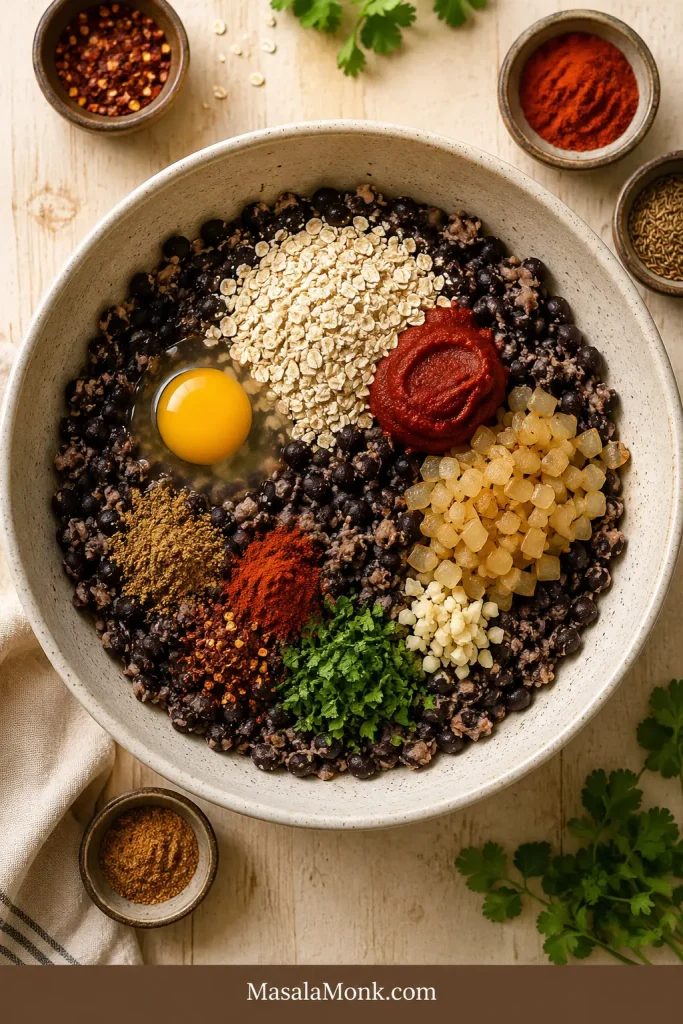
Add binder and seasoning. Stir in the cooked onion and garlic, egg, panko, breadcrumbs, or oats, tomato paste, tamari or soy sauce, spices, herbs, and chipotle if using.
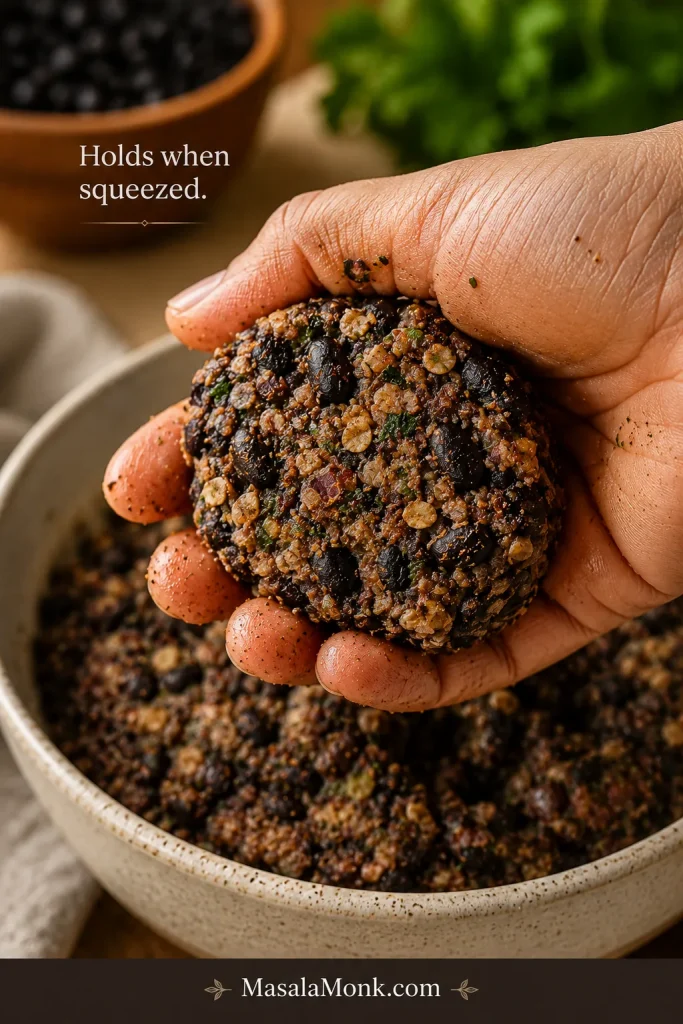
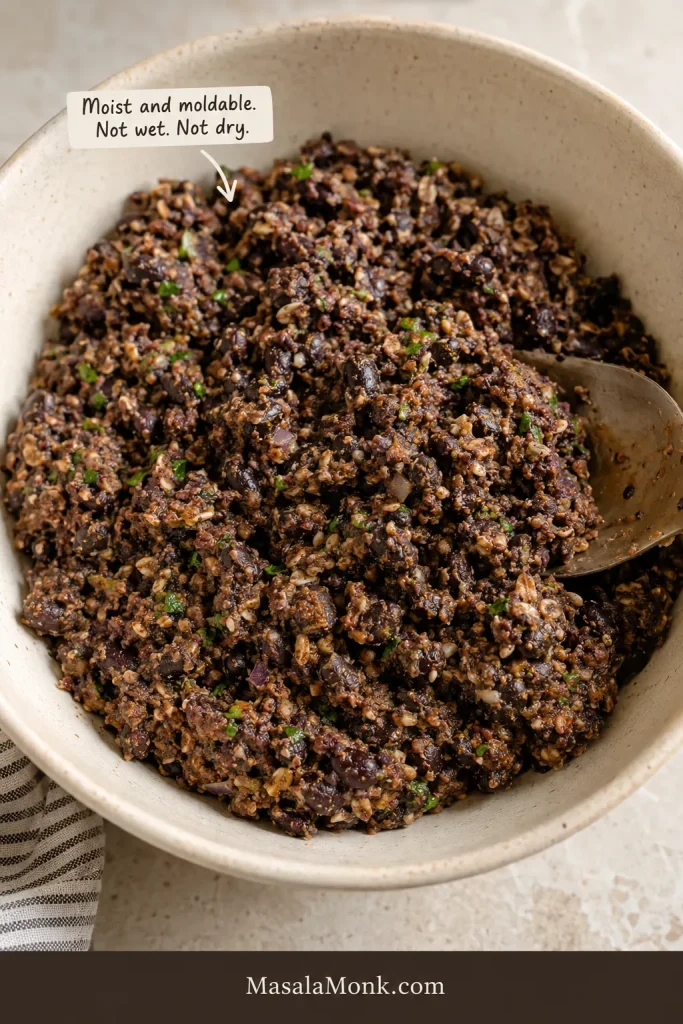
Mix until moldable. Stir and press until the mix holds when squeezed.
Adjust if needed. If the bowl feels wet, add oats or breadcrumbs 1 tablespoon at a time. If it feels dry, work in a teaspoon of sauce, water, or oil.
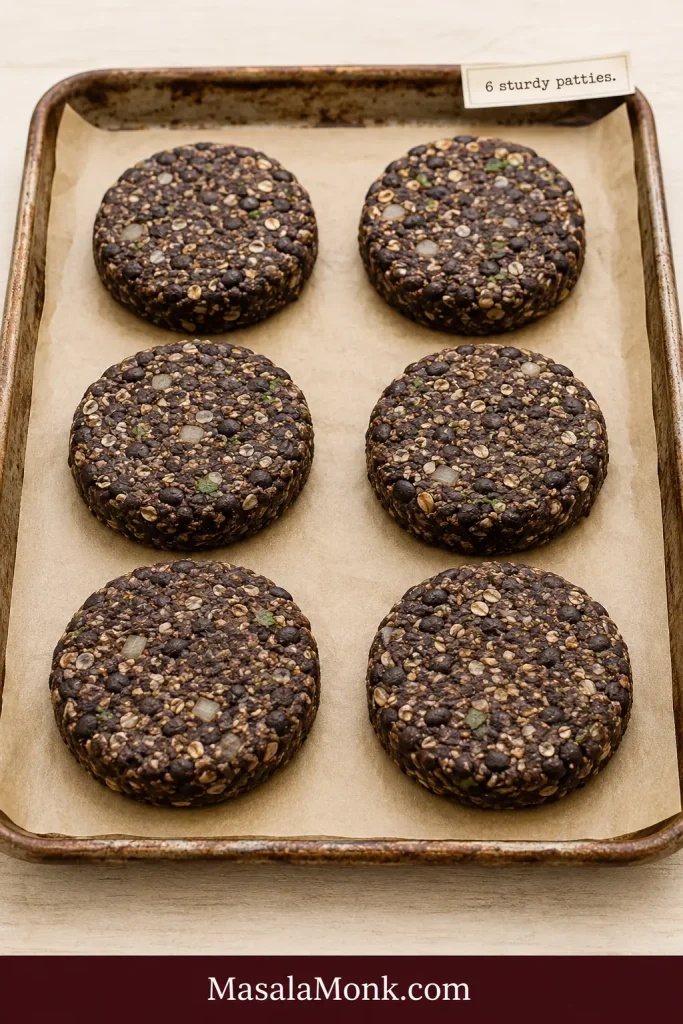
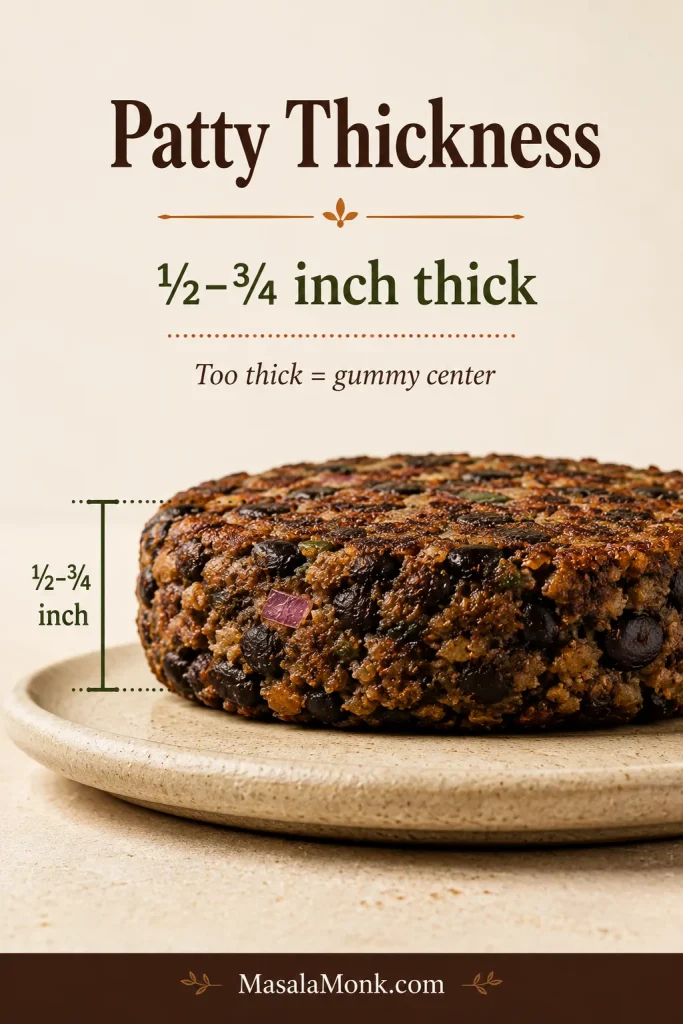
Shape the patties. Divide the bean base into 6 patties, about ½ cup each. Shape them ½–¾ inch thick and press the edges smooth.
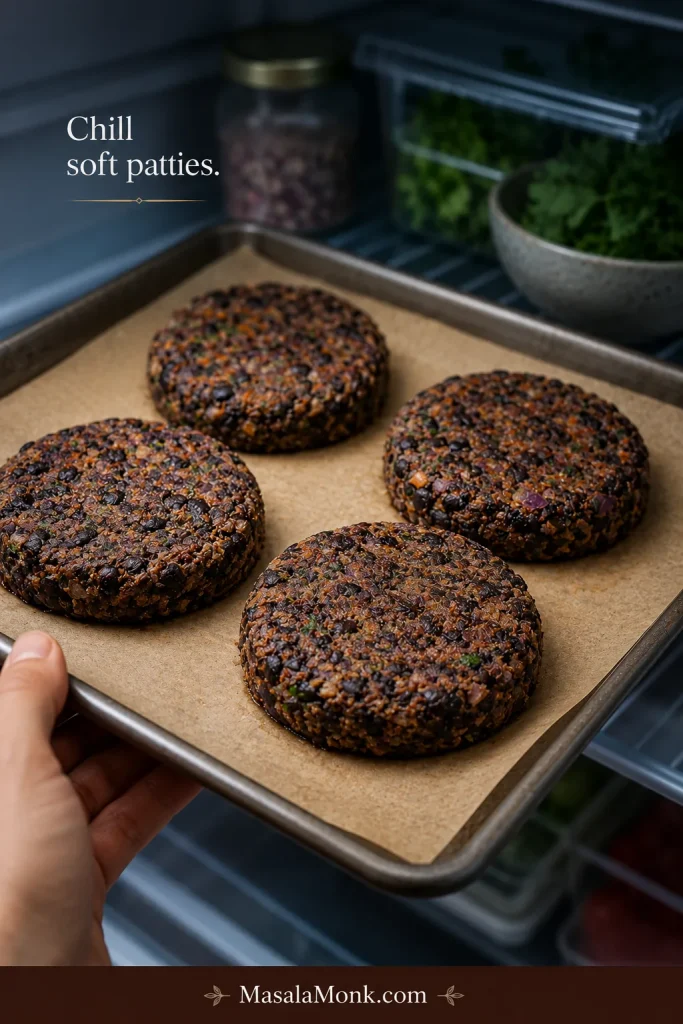
Chill soft patties. Refrigerate for 20–30 minutes when the shaped burgers feel delicate. This helps vegan or grill-ready patties.
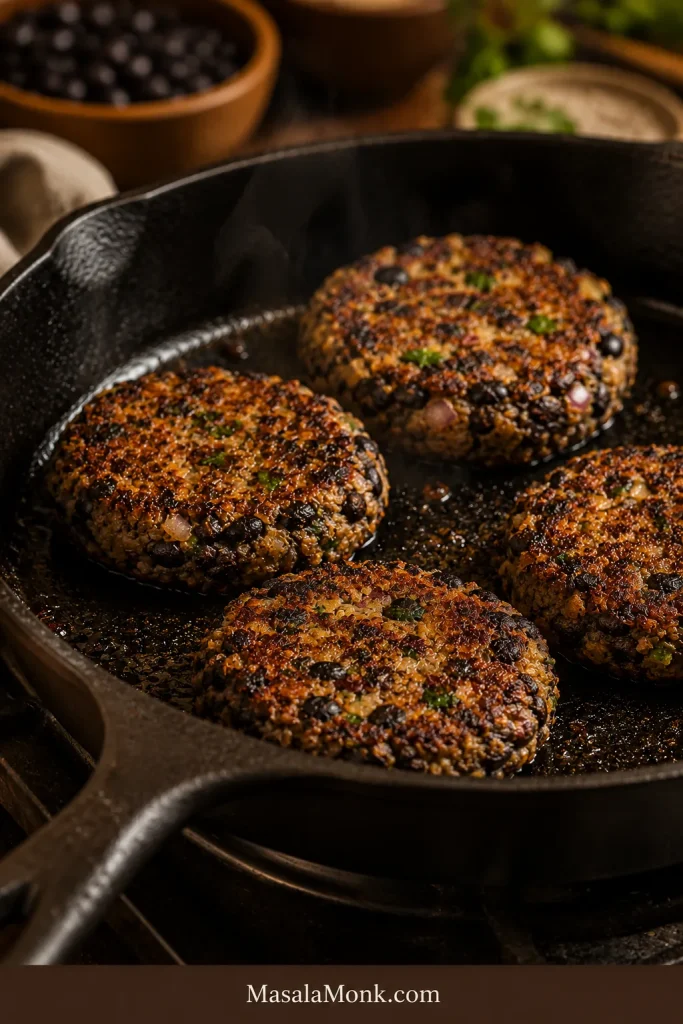
Cook in a skillet. Heat 1 tablespoon oil over medium heat. Cook 4–5 minutes per side, flipping only after the first side browns and releases. Work in batches so each patty has room to brown.
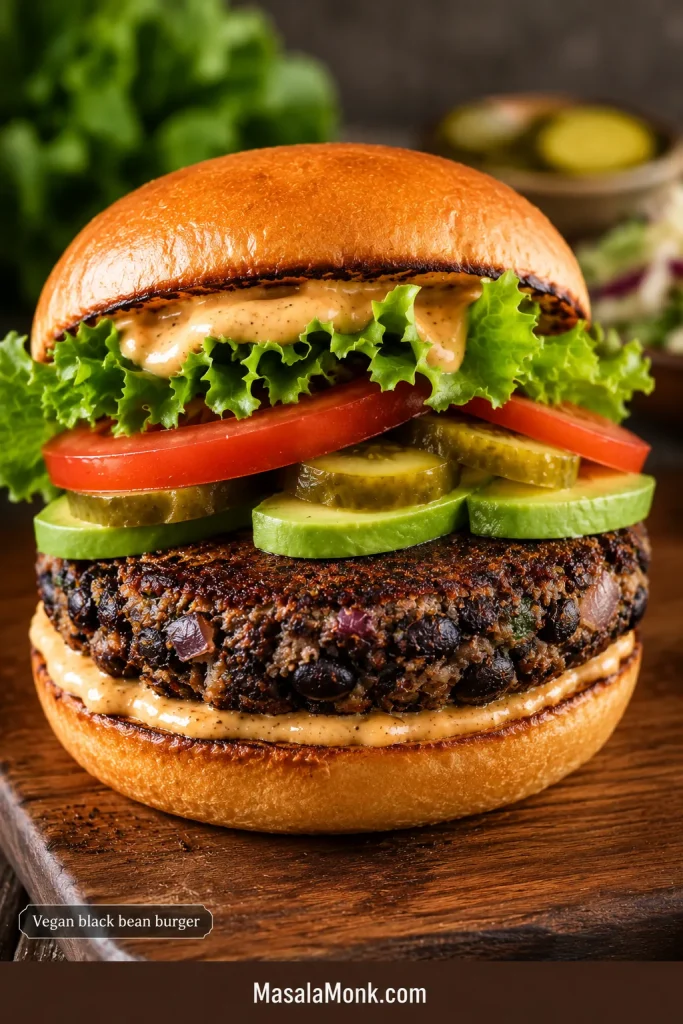
Serve. Build on toasted buns with lettuce, tomato, onion, avocado, pickles, chipotle mayo, garlic aioli, or salsa.
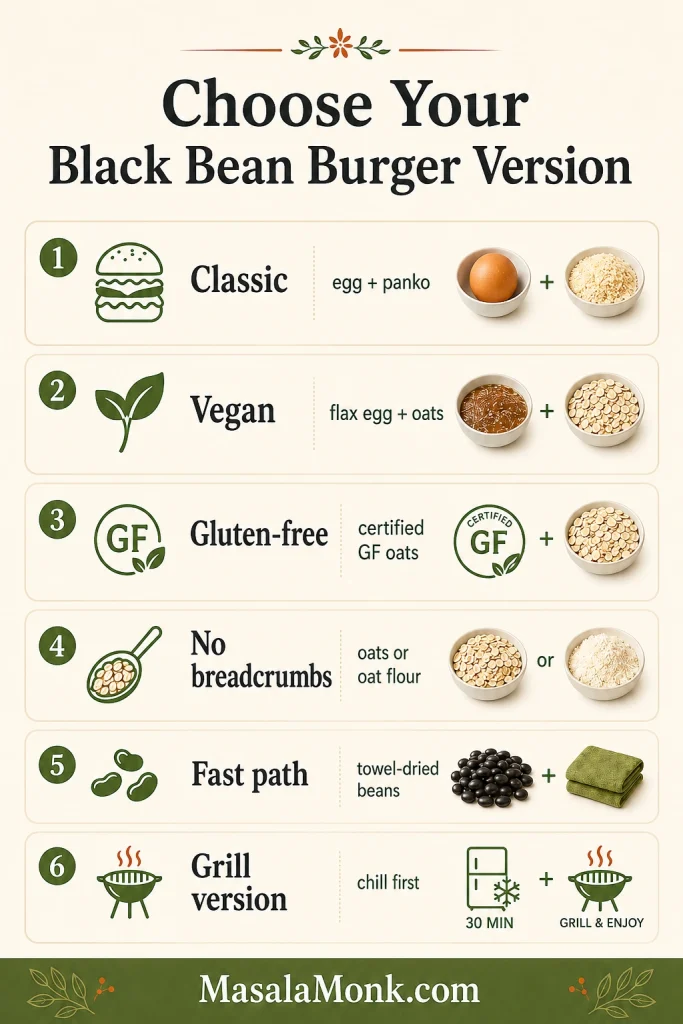
Use this quick table if you already know what kind of black bean burger you want. The base method stays the same, but the binder and resting time change depending on your goal.
Softer before cooking, firmer after resting and browning
Gluten-free patty
Certified gluten-free oats or oat flour
Good structure without panko or breadcrumbs
No-breadcrumb patty
Rolled oats, quick oats, or oat flour
Hearty texture with a little resting time
Fastest version
Very well towel-dried beans
Slightly softer, but still workable
Best texture
Oven-dried beans
Firmest patties and least mushy center
Grill version
Firm binder + chilled patties
Better handling on hot grates
Next, use the visual cues below to check how the bean base should look and feel before it reaches the pan.
First choose the binder: egg and panko for firmness, flax and oats for vegan patties, and certified gluten-free oats when needed.
What Good Black Bean Burgers Should Look Like
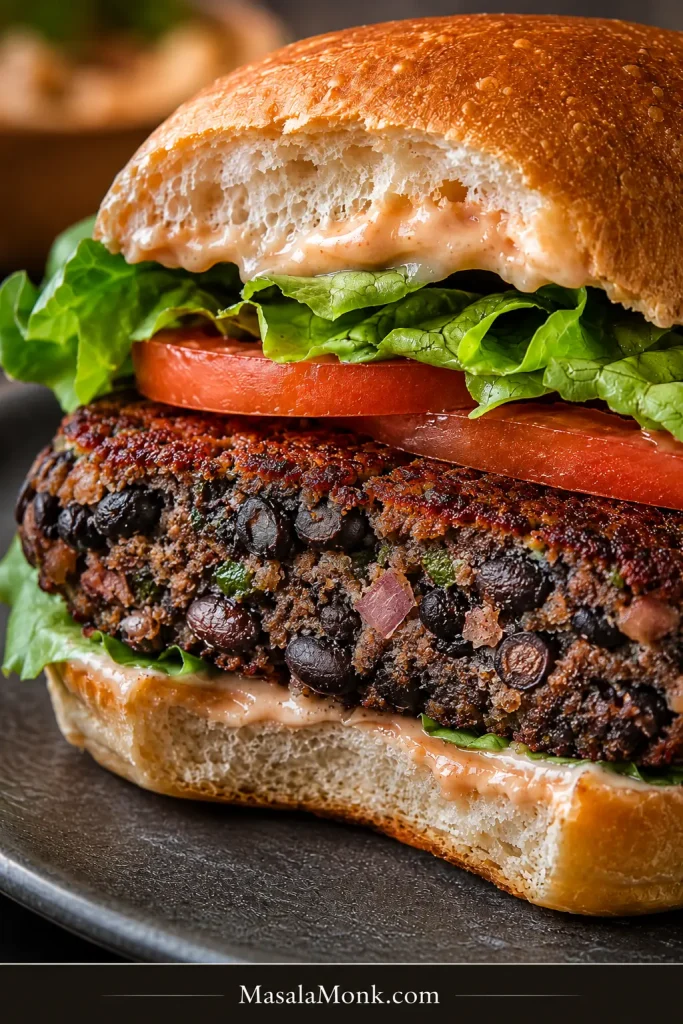
Good bean burgers are not perfectly smooth. They should look rustic, with some bean pieces still visible, a firm edge, and enough structure to lift with a spatula. A good black bean burger should be sturdy enough for a bun and tender enough to enjoy.
After drying: the beans should look matte and slightly wrinkled, and a few may split open.
After mashing: the bowl should have both mashed beans and visible bean pieces.
Before shaping: a squeezed handful should hold together without oozing through your fingers.
After shaping: each patty should hold its edge instead of slumping on the plate.
In the pan: the first side should brown and release more easily once the crust sets.
After cooking: the outside should be crisp-edged and the middle should be tender, not wet or gummy.
The best texture is tender inside but not pasty, with visible bean pieces and a browned exterior that gives each bite structure.
When the mixture looks like bean dip, it needs more dry binder and resting time. If it looks dusty or cracks at the edges, mash a little more or add a tiny splash of moisture. The same basic patty logic applies whether you are shaping beans or meat: control moisture, shape gently, and let the surface set. For a deeper look at patty structure, see this burger patty recipe.
Why This Black Bean Burger Recipe Works
Most black bean burgers fail because they treat beans like ground meat. Beans bring moisture, starch, and softness, so the method has to build structure before the patty ever hits the pan. This version does that with dried beans, cooked aromatics, partial mashing, and a binder that matches your diet.
Control Point
What It Fixes
Drying the beans
Prevents pasty, wet centers
Cooking the onion
Removes raw sharpness and extra water
Partial mashing
Creates natural bean paste without losing bite
Binder
Absorbs moisture and helps the patty set
Chilling when needed
Makes delicate patties easier to move
Surface browning
Creates the crust needed for a clean flip
Do not make the beans smoother. Make the structure smarter. A fully smooth mixture can cook up dense and gummy, while a barely mashed one can crumble. The sweet spot is enough mashed beans to bind, with enough whole pieces to make the burger satisfying.
Ingredients You’ll Need
This ingredient list is short, but a few choices matter more than others: dry beans, controlled onion, a real binder, and bold seasoning. A black bean burger should taste like dinner, not a compromise.
Before shaping, build flavor into the bean base with onion, garlic, smoky spices, tomato paste, herbs, and tamari.
Black Beans
Canned black beans are the easiest choice. Drain, rinse, and dry them well before mixing. Home-cooked black beans also work, but they should be tender, well-drained, and not soupy.
Extra cooked beans do not have to sit around either; they can become a cozy bean stew later in the week.
Onion and Garlic
Onion and garlic give the patties a savory base. Cooking the onion first is worth the extra few minutes because raw onion can release water into the bean base and make the patties softer.
Egg or Flax Egg
Egg is the easiest binder for a vegetarian version because it helps the patty set as it cooks. For an egg-free version, use a flax egg or chia egg with oats.
Panko, Breadcrumbs, Oats, or Oat Flour
Panko and breadcrumbs give a lighter, firmer bite. Rolled oats are great for no-breadcrumb and gluten-free versions. Oat flour binds quickly when the patty mix feels soft, but too much can make the center dense.
Smoky Spices and Flavor Boosters
Cumin, smoked paprika, and chili powder make the burgers warm, smoky, and savory. Tomato paste, ketchup, barbecue sauce, tamari, soy sauce, or vegan Worcestershire-style sauce adds depth, so the burger does not taste like a plain bean patty.
Optional Texture Add-Ins
Chopped walnuts, cashews, sunflower seeds, corn, cooked quinoa, or cooked mushrooms can add bite. Keep add-ins modest because too many extras make the patties harder to bind.
Which Binder Should You Use?
There is no single correct binder. The right choice depends on whether you want the firmest vegetarian patty, a vegan version, or a gluten-free one. Your test is simple: press a handful together. It should hold its shape without oozing, slumping, or crumbling apart.
Before shaping, squeeze a small handful. If it holds together without oozing or crumbling, the mixture is ready.
Need
Binder
How to Use It
Firmest vegetarian patty
Egg + panko or breadcrumbs
Easiest option for clean flipping
Vegan black bean burger
Flax egg or chia egg + oats
Rest and chill so the oats can settle into the mixture
Gluten-free
Certified gluten-free oats or oat flour
Use oat flour when a firmer texture is needed
No breadcrumbs
Rolled oats, quick oats, or oat flour
Let the mixture rest before shaping
Grillable patties
Strong binder + chilling
Chill 30 minutes or freeze 15–20 minutes before grilling
Softer, richer patties
Avocado, mashed sweet potato, or a little mayo
Add extra oats or crumbs to balance moisture
More bite
Chopped nuts, seeds, quinoa, or corn
Use as add-ins, not the main binder
In the main recipe, egg plus panko, breadcrumbs, or oats is the most reliable path. For vegan patties, use a flax egg and oats. To keep the burgers gluten-free, use certified gluten-free oats or oat flour and check the sauces you add.
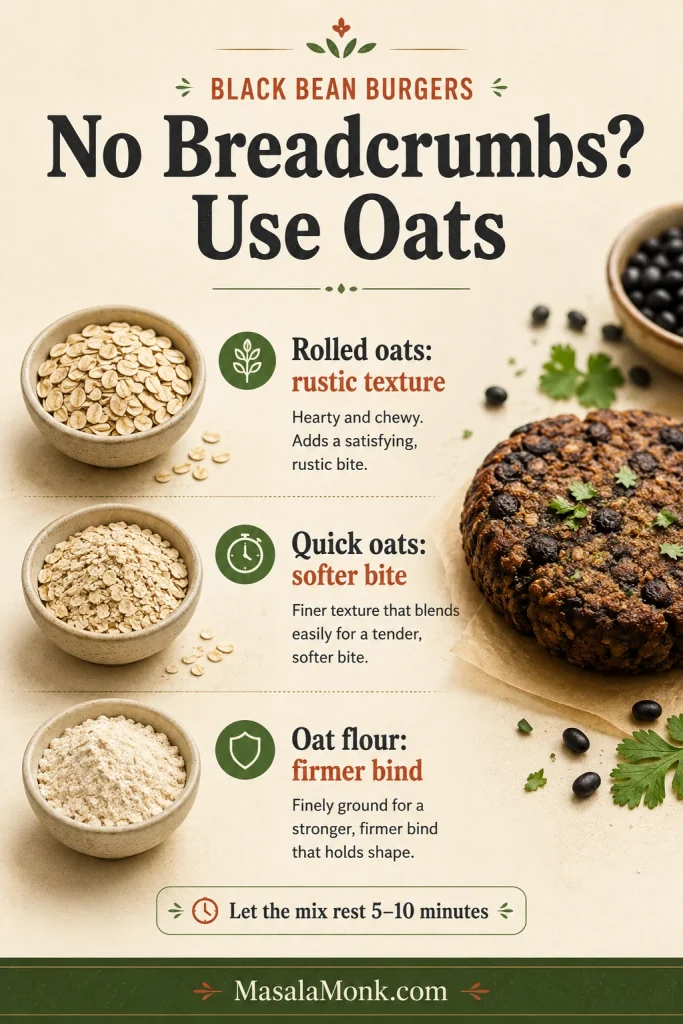
No Breadcrumbs? Use Oats This Way
Breadcrumbs are not required. If oats are what you have, they can do the job well — they just need a few minutes to absorb moisture. They are also useful for vegan and gluten-free versions when certified gluten-free oats are used.
Rolled oats give the most rustic texture. Quick oats blend in faster and make a softer patty. Oat flour binds the fastest and gives a firmer gluten-free patty, but too much can make the center dense.
Start with ¾ cup rolled oats or ½ cup oat flour for 2 cans of black beans. After mixing, let the patty mix rest for 5–10 minutes. Oats firm up as they absorb moisture, so a base that feels slightly soft at first may become easier to shape after resting.
No breadcrumbs? Use oats strategically: rolled oats add chew, quick oats blend in softly, and oat flour binds fastest.
Step-by-Step Method
The steps are simple, but the order matters. Dry the beans first, soften the aromatics, mash for texture, then add the binder and seasonings.
1. Dry the Black Beans
Heat the oven to 350°F / 175°C. Spread drained and rinsed black beans on a parchment-lined baking sheet. Bake for 12–15 minutes, until they look drier and slightly wrinkled. This one step makes the biggest difference in preventing a mushy center.
No oven available? Pat the beans very dry with a clean towel and let them sit uncovered while you prepare the rest of the ingredients. The oven method is stronger, but even towel-drying helps.
After drying, the beans look less glossy and hold less moisture. That small step helps the patties firm up in the pan.
2. Cook the Onion and Garlic
Cook the chopped onion in a little oil for 3–4 minutes, then add garlic for 30 seconds. This softens the sharp flavor and cooks off extra moisture. Raw onion can make the bean base wetter than expected.
3. Mash the Beans
Mash the dried beans with a fork or potato masher. Stop when the bowl is partly mashed with some whole or half beans still visible. A food processor can be used, but pulse gently and avoid turning everything into a smooth paste.
Stop mashing while some beans are still whole. The mix needs both paste for binding and pieces for texture.
4. Add the Binder and Seasonings
Add the egg, panko, breadcrumbs, or oats, cooked onion and garlic, tomato paste or ketchup, tamari or soy sauce, cumin, smoked paprika, chili powder, salt, pepper, and herbs. Stir until the mixture holds together when pressed.
Once the beans are partly mashed, the binder absorbs moisture and helps the patties hold together without becoming heavy.
5. Adjust the Texture
Aim for moist and moldable — closer to soft dough than bean dip. Add oats or breadcrumbs 1 tablespoon at a time when the bowl feels wet. Use a teaspoon of sauce, water, or oil when the base feels dry and cracks at the edges.
The ideal mix should be moist and moldable. It should scoop and press easily, not spread like dip or crumble like dry stuffing.
6. Shape the Patties
Divide the mixture into 6 patties. Aim for about ½ cup mixture per patty and keep them ½–¾ inch thick. Press the edges smooth so the shaped burgers do not crumble in the pan.
After shaping, smooth the edges and keep the patties even. Clean edges help them cook and flip more reliably.
Keep patties about ½ to ¾ inch thick. That size browns well without leaving the center gummy.
7. Chill When Needed
If the patties feel delicate, do not panic. Chill them for 20–30 minutes before cooking. Vegan, oat-based, and grill-ready patties benefit the most from this short rest.
Chilling delicate patties before cooking gives the binder time to firm the mixture.
8. Cook Until the Edges Are Crisp
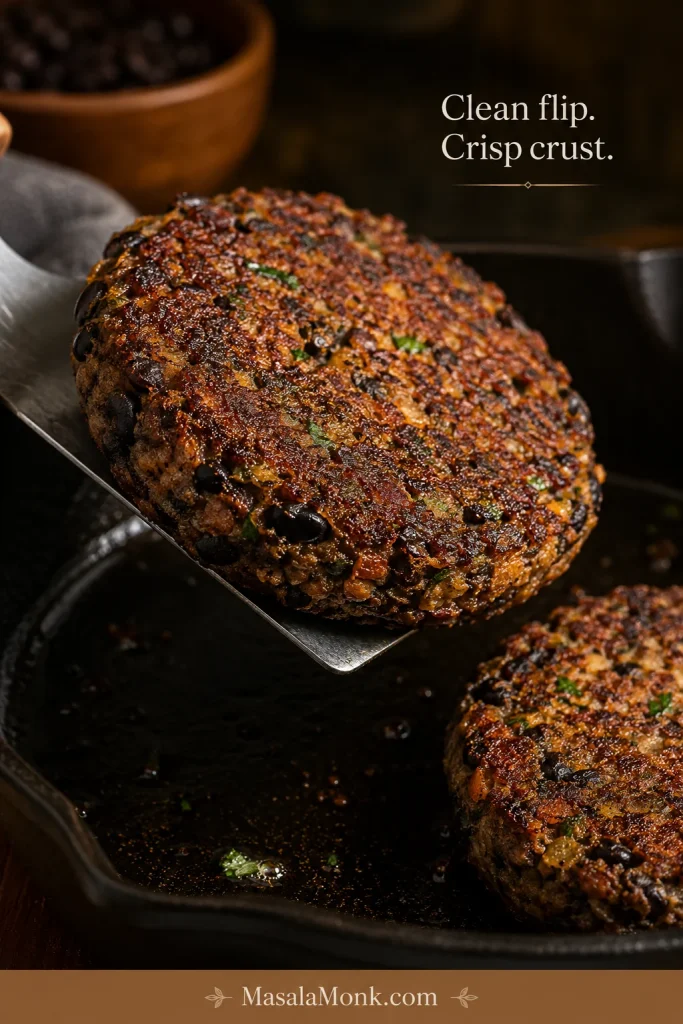
Cook the patties in a lightly oiled skillet over medium heat for 4–5 minutes per side. If a patty feels stuck, do not force it. That usually means the crust has not finished forming. Give it another minute, then slide the spatula under slowly. The patties are done when both sides are browned, the center is hot, and the patty feels set when gently pressed.
Once the crust sets, the burger stops feeling delicate. It lifts cleanly, lands on the bun in one piece, and gives you that crisp-edge, smoky-middle bite that makes a bean burger feel like dinner instead of a backup plan.
For the deepest crust, cook in a skillet with space between patties. Crowding makes them steam instead of brown.
Once the first side browns, the patty releases more easily. Wait for that crust before flipping so the burger stays intact.
Cooked patties should hold their shape for buns, bowls, wraps, or meal prep without turning soft again.
Fix the Mixture Before You Cook
Most black bean burger problems can be fixed before the patties hit the pan. A soft mixture is not a failed mixture. It usually just needs a little more binder, a little more resting time, or a gentler hand when shaping.
When patties break, check the cause first: wet beans, weak binder, over-smooth mash, or flipping before the crust sets.
Quick Texture Fixes
Problem
Likely Reason
Fix
Mixture looks like bean dip
Too much moisture or over-processing
Add oats or breadcrumbs 1 tablespoon at a time and chill
Patties fall apart
Not enough binder or not enough mashing
Mash more beans, add binder, and rest the mixture
Patties slump on the plate
Mixture is too soft
Add oats or crumbs, then chill 20–30 minutes
Patties crack at the edges
Mixture is too dry
Mash more beans or add 1 teaspoon sauce, water, or oil
Patties stick to your hands
Mixture is moist but workable
Lightly wet or oil your hands while shaping
Too soft for the grill
Patties need more firmness
Chill 30 minutes or freeze 15–20 minutes and use foil or a grill mat
Patties stick to the pan
Flipped too early or surface too dry
Use a lightly oiled pan and wait for a crust before flipping
Center is gummy
Patties are too thick or mixture is too smooth
Shape thinner patties and leave more bean texture next time
Burgers taste bland
Beans need stronger seasoning
Add chipotle, smoked paprika, cumin, tamari, lime, hot sauce, or more salt
Final Squeeze Test
The final test is simple: press a patty between your palms. When it holds its shape, keeps its edge, and does not feel loose, it is ready to cook.
Fix texture before heat hits the pan: add oats if wet, add moisture if cracked, and shape only when it holds.
Choose Your Cooking Method: Skillet, Oven, Grill, or Air Fryer
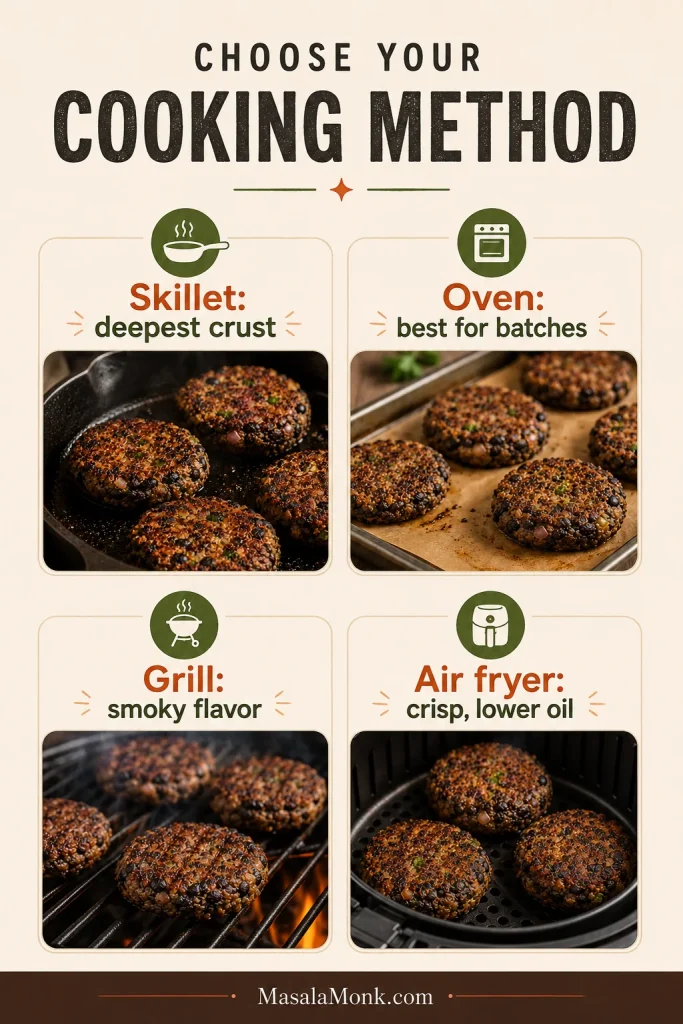
Skillet cooking gives the deepest crust, but these patties can also be baked, grilled, or air fried. A firm patty gives you more freedom: once the mixture holds together, every cooking method becomes easier.
Method
Temperature
Time
Good For
Key Tip
Skillet
Medium heat
4–5 minutes per side
Deepest crust and flavor
Let the first side brown before turning
Oven
375°F / 190°C
10 minutes per side
Batch cooking
Raise the oven after drying the beans
Grill
Medium to medium-high
5–7 minutes per side
Smoky flavor
Chill patties and oil the grates well
Air fryer
380°F / 193°C
10–12 minutes total
Crisp, lower-oil cooking
Flip halfway and keep patties about ½ inch thick
Choose the method by goal: skillet for crust, oven for batches, grill for smoke, and air fryer for crisp lower-oil cooking.
Heat a thin layer of oil in a cast-iron or nonstick skillet over medium heat. Cook for 4–5 minutes per side. This is the easiest method for crisp edges and a tender center.
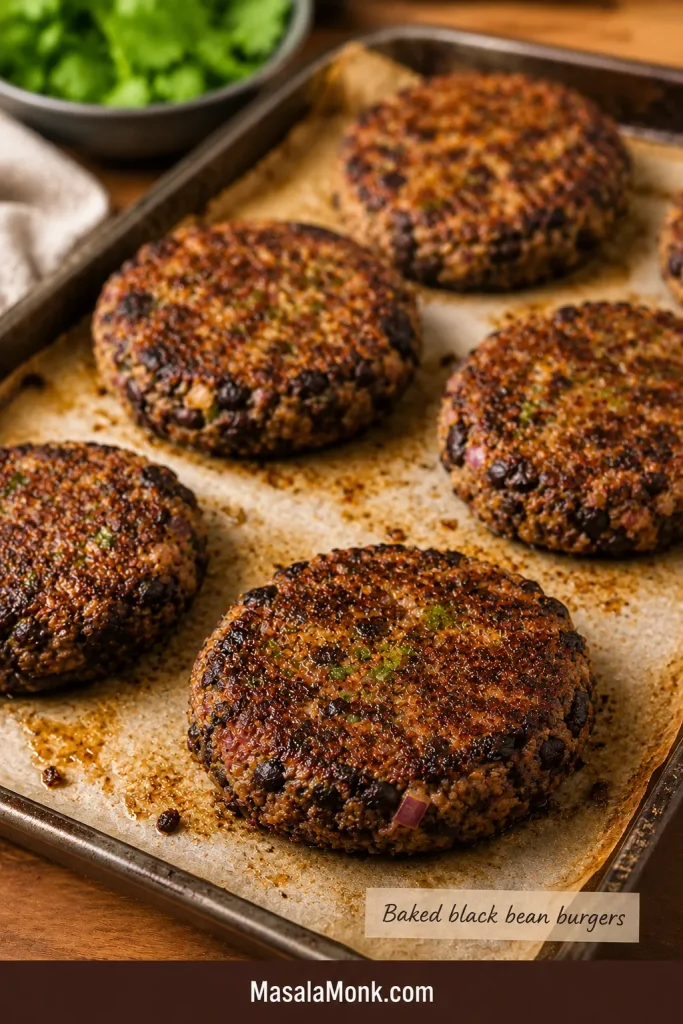
Baked Black Bean Burgers
After drying the beans at 350°F / 175°C, raise the oven to 375°F / 190°C. Place shaped patties on a parchment-lined baking sheet and brush or spray lightly with oil. Bake for 10 minutes, flip carefully, then bake another 10 minutes. Baked patties are convenient for batches, though the crust is gentler than skillet-cooked ones.
For batch cooking, bake on parchment and brush lightly with oil so the tops brown without drying out.
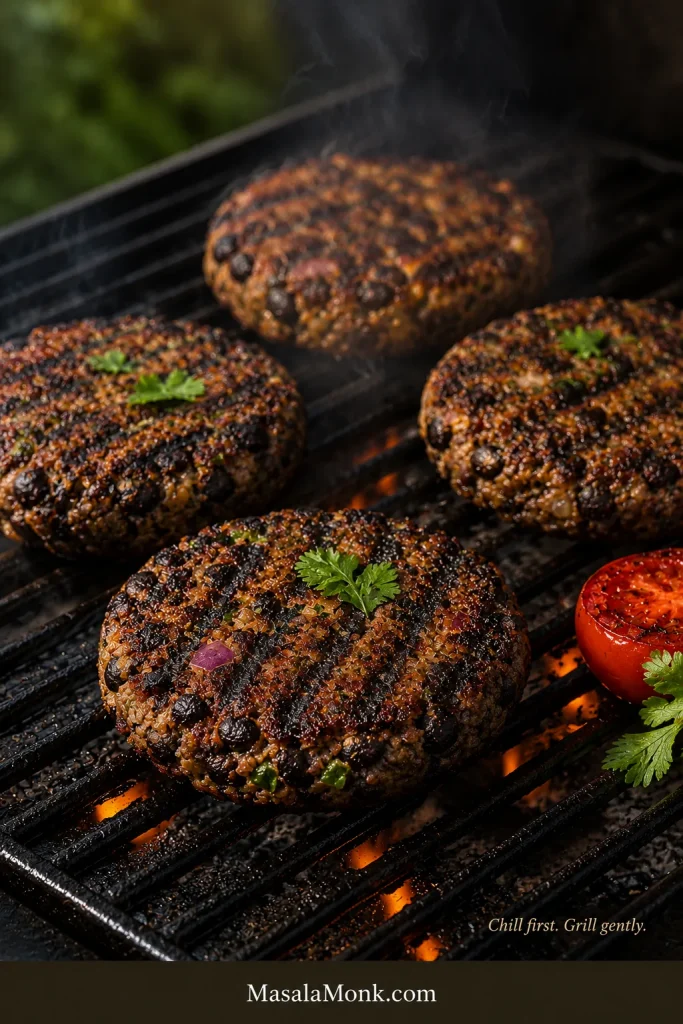
Grilled Black Bean Burgers
Treat grilling as the firm-patty method. Chill the patties for at least 30 minutes, oil the grates well, and cook over medium to medium-high heat for 5–7 minutes per side. Do not grill loose or freshly mixed patties. If they feel delicate in your hand, they will feel even more delicate on hot grates.
For the safest grill version, chill the patties until firm, brush both sides with oil, and use a grill mat or foil for the first try. Once you know how your mixture behaves, you can move them directly onto well-oiled grates.
Grill only firm, chilled patties. Oiled grates, gentle heat, and patience help them stay intact over the fire.
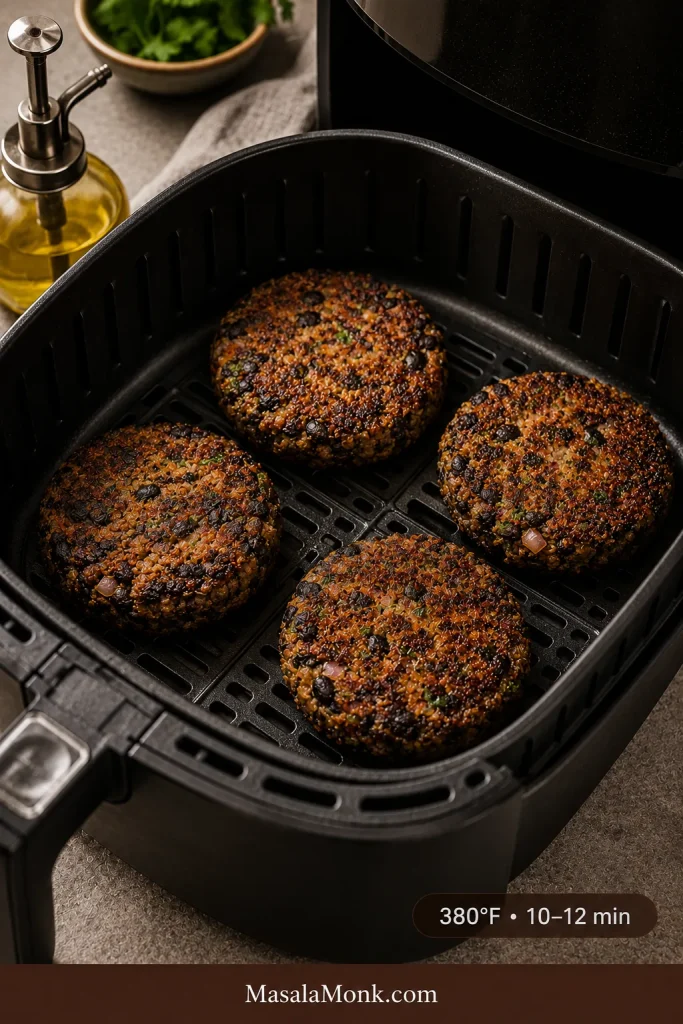
Air Fryer Black Bean Burgers
Preheat the air fryer to 380°F / 193°C. Lightly spray the patties and basket with oil. Cook for 10–12 minutes total, flipping halfway. Air fryer patties should be about ½ inch thick so the center heats through before the outside dries. The same thickness-and-flip logic applies to meat burgers too; this air fryer burgers guide is useful if you use your air fryer for burger nights often.
In the air fryer, leave space around each patty so the edges crisp before the centers lose moisture.
Making Them Vegan
For vegan black bean burgers, replace the egg with a flax egg or chia egg and use oats or oat flour as the dry binder. They may feel softer than egg-bound patties at first, but that does not mean they will fail. A short rest and a good crust make them much easier to handle.
The vegan version should still feel hearty. Avocado, pickles, tomato, lettuce, and egg-free sauce add richness and freshness.
How to Make a Flax Egg
Mix 1 tablespoon ground flaxseed with 3 tablespoons water.
Let it sit for 5–10 minutes until slightly thickened.
Add it to the burger mixture in place of 1 egg.
For vegan patties, let the flax egg thicken first. Then it can help the oats and beans bind cleanly.
Use tamari, soy sauce, or vegan Worcestershire-style sauce when keeping the recipe fully vegan. For a creamy egg-free topping, this eggless mayonnaise recipe is a useful sauce base.
Making Them Gluten-Free
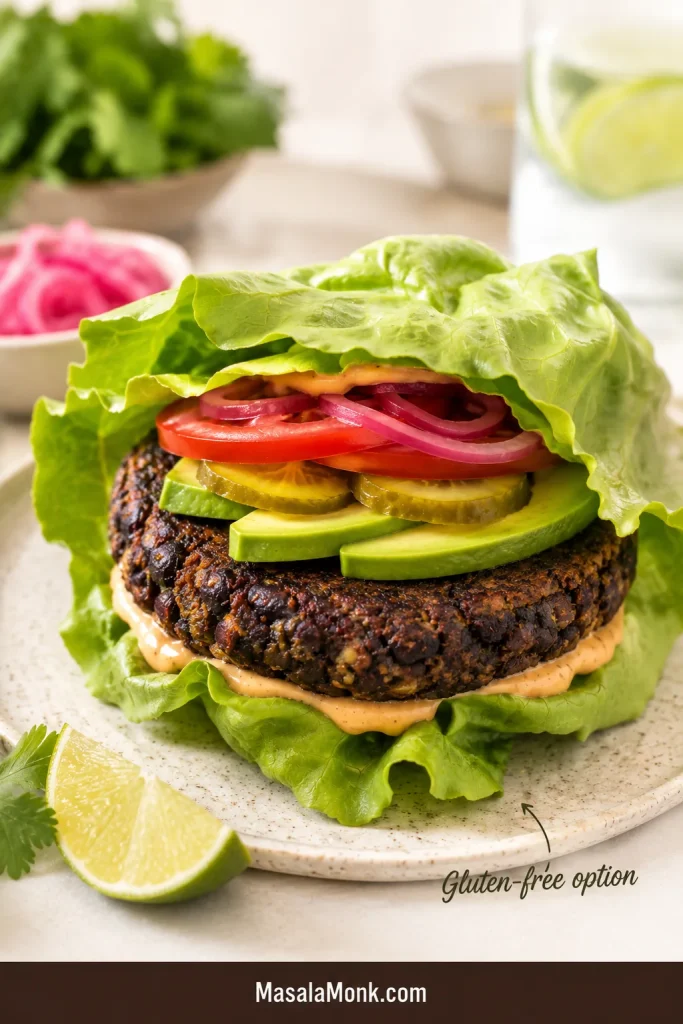
Making the burgers gluten-free is mostly about the binder and sauces. Use certified gluten-free oats or oat flour instead of panko or breadcrumbs. Check labels on soy sauce, Worcestershire-style sauce, and barbecue sauce. Tamari is a useful gluten-free swap for soy sauce.
Gluten-free patties benefit from a short rest before cooking because oats and oat flour need a few minutes to absorb moisture.
For a gluten-free option, use a lettuce wrap to keep the bite fresh while the sturdy patty stays the focus.
Flavor Variations
Once the base mixture holds together, black bean burgers are easy to customize. Keep the same structure: beans, binder, seasoning, and a controlled amount of add-ins.
Spicy Black Bean Burger
Add chopped chipotle in adobo, jalapeño, extra chili powder, cayenne, or hot sauce for more heat. Serve with chipotle mayo, avocado, pickled onions, and lettuce. A little mango salsa adds sweet-bright contrast on top or on the side.
Sweet Potato Black Bean Burger
Mix in mashed roasted sweet potato for a softer, sweeter version. Because sweet potato brings extra moisture, balance it with a little more oats or breadcrumbs until the mixture feels sturdy again. This version pairs especially well with smoked paprika, cumin, lime, avocado, and cilantro.
Black Bean Quinoa Burger
Cooked and cooled quinoa adds chew without making the patty heavy. Keep the amount moderate; too much quinoa makes the mixture harder to hold together. It works especially well with garlic, cumin, smoked paprika, and a little lime.
Mushroom Black Bean Burger
Cook chopped mushrooms before adding them. Mushrooms add savory depth, but raw mushrooms release water and can make the patties soft. Sauté until their moisture cooks off, then cool before mixing.
Corn and Southwest Black Bean Burger
A small handful of corn, chopped cilantro, lime zest, cumin, smoked paprika, and chili powder gives the patties a Southwest-style feel. Keep the corn modest so the mixture still binds cleanly.
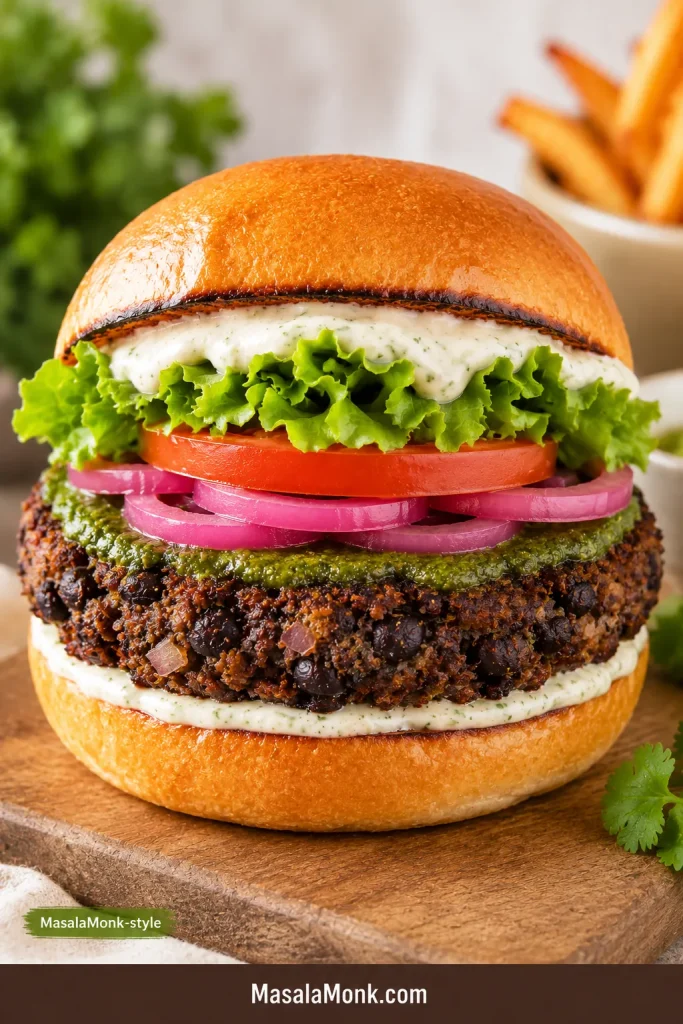
MasalaMonk-Style Black Bean Burger
Start with the smoky patty, then build the burger with green chutney, pickled onion, sliced tomato, lettuce, and a little yogurt-style sauce or egg-free mayo. The cumin, chili, herbs, and sharp onion make the burger brighter without turning it into a completely different recipe.
For a brighter MasalaMonk-style burger, pair the smoky patty with green chutney, pickled onion, tomato, lettuce, and creamy sauce.
Mini Patties or Sliders
Shape smaller patties for sliders and reduce the cooking time by 1–2 minutes per side. Because mini patties dry faster, pull them once the edges are browned and the centers are hot.
Cheesy Black Bean Burger
For a vegetarian version, add a small amount of shredded cheese, feta, pepper jack, or cotija. Cheese adds salt, richness, and a little extra structure.
Toppings, Sauces, and Buns That Work Well
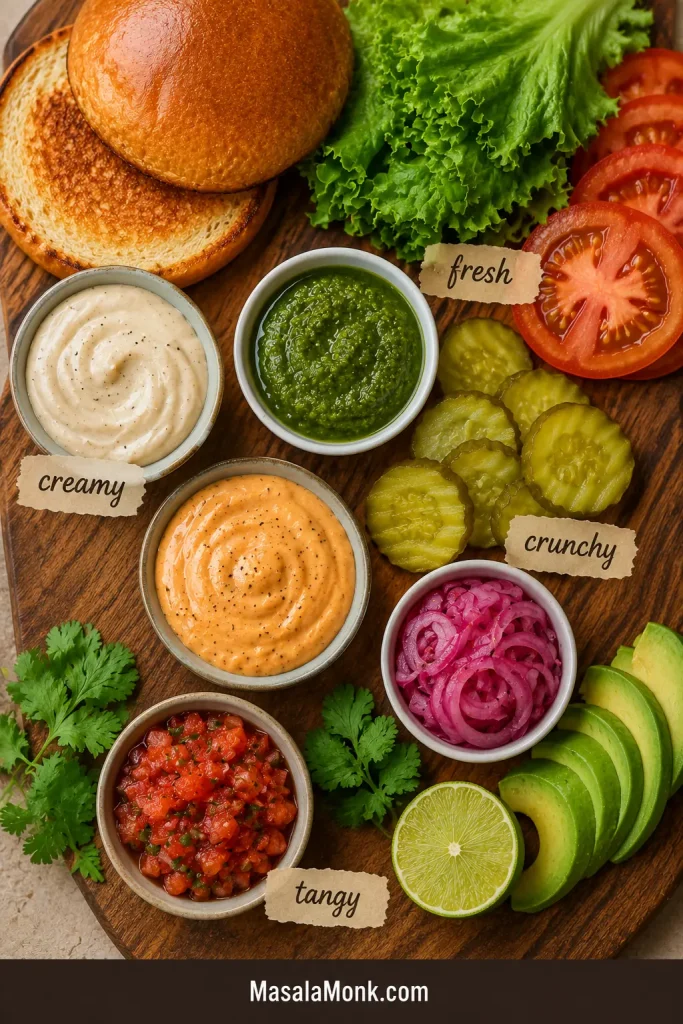
Because the patty is smoky and hearty, the toppings should bring contrast: creaminess, crunch, acidity, and freshness. The best bite has a warm smoky patty, cool lettuce, juicy tomato, creamy sauce, and a little sharpness from pickles, salsa, chutney, or onion.
Build contrast with toppings: creamy sauce, crunchy pickles, fresh lettuce, tangy salsa, avocado, green chutney, and a toasted bun.
Chipotle mayo
Garlic aioli
Avocado or guacamole
Salsa or pico de gallo
Pickled onions
Lettuce
Tomato
Red onion
Jalapeños
Cabbage slaw
Lime crema
Barbecue sauce
Vegan mayo
For sauce, go creamy or sharp. Garlic aioli adds creaminess without covering up the smoky bean flavor. For a brighter MasalaMonk-style twist, use green chutney with sliced onion, tomato, lettuce, and a little mayo or yogurt-style sauce.
Use toasted burger buns, brioche-style buns, whole wheat buns, or lettuce wraps. Toasting helps protect the bun from sauce and keeps the burger from feeling soft-on-soft.
What to Serve With Black Bean Burgers
Serve black bean burgers anywhere a regular burger would feel right. They work with classic sides, fresh salads, roasted vegetables, and bowl-style meals.
Roasted vegetables work better than another heavy starch for a lighter dinner plate. These roasted carrots bring sweetness, color, and browned edges without competing with the burger.
To add more protein, use cheese, a Greek-yogurt-style sauce, or serve the patty over a quinoa bowl. On a vegan plate, pair it with hummus, tofu slaw, extra beans, or a hearty salad.
Storage, Freezing, and Reheating
These patties are excellent for meal prep. They store well, freeze well, and reheat best when the crust gets a chance to crisp again.
Fridge
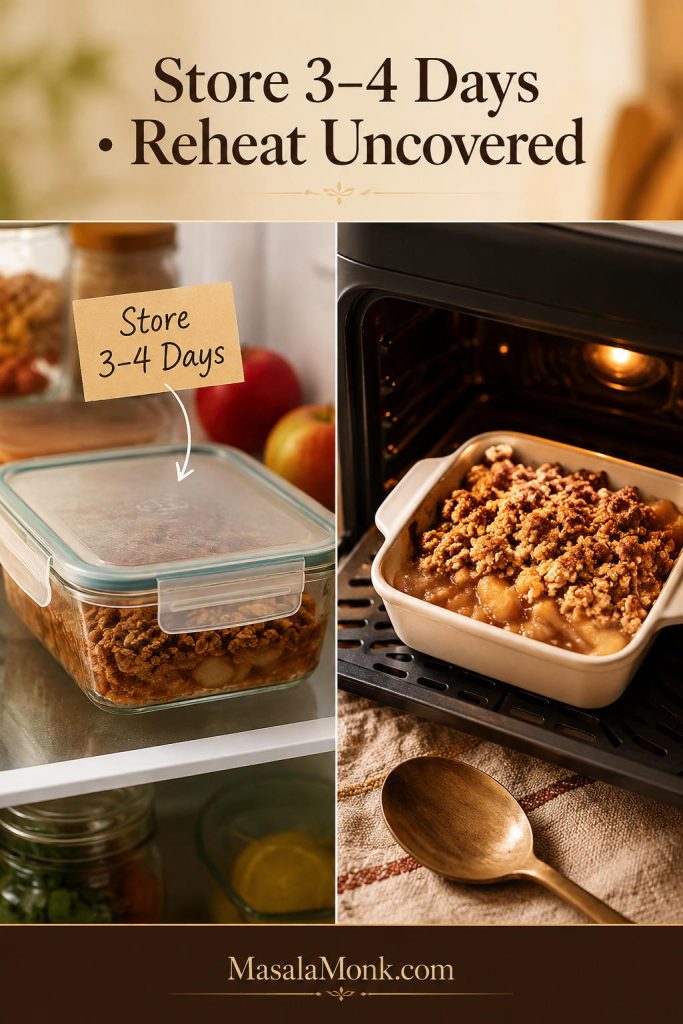
Cooked patties keep for 3–4 days in an airtight container in the refrigerator. Let them cool before storing so trapped steam does not soften the crust too much.
Freezer
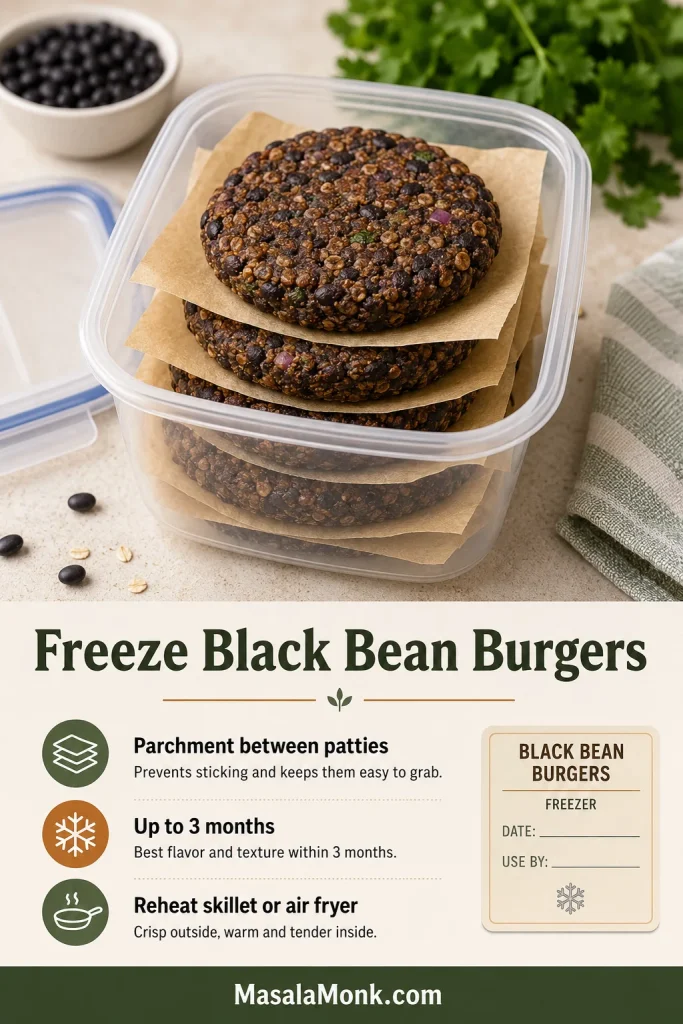
Freeze shaped or cooked patties for up to 3 months. Place parchment between patties so they do not stick together, then store in a freezer-safe bag or container.
When freezing, place parchment between patties so they separate easily, then reheat in a skillet or air fryer to bring back the crust.
For general leftover safety, the USDA recommends using refrigerated leftovers within 3–4 days and freezing leftovers for longer storage. Their leftovers and food safety guide is helpful if you want broader storage guidance.
Reheating
Reheat the burgers in a skillet or air fryer for the best texture. A microwave works for speed, but it softens the crust. For frozen patties, start over medium-low heat so the center warms before the outside over-browns, then increase the heat briefly to crisp the edges.
Make-Ahead Patties
Shape the patties up to 24 hours ahead and refrigerate them covered. This helps the binder absorb moisture and makes the patties easier to cook.
Once you learn the feel of the mixture, black bean burgers stop being risky. You know when the beans are dry enough, when the patty is firm enough, and when the crust is ready to flip. That is the real win here: a smoky, satisfying veggie burger you can put on a bun without holding your breath.
Usually because the beans, onion, or add-ins brought too much moisture, or because the beans were processed too smoothly. Dry the beans, cook watery vegetables first, leave some bean texture, and add oats or breadcrumbs if the mixture feels loose.
What keeps black bean burgers from falling apart?
A good binder, enough mashing, and proper browning keep the patties from falling apart. Egg and breadcrumbs work well for vegetarian patties, while flax egg and oats work well for vegan patties.
Do black bean burgers need egg?
No. Egg helps, but you can still make a sturdy patty without it. Use a flax egg or chia egg with oats or oat flour, then give the mixture a short rest before cooking.
What can replace breadcrumbs in black bean burgers?
Rolled oats, quick oats, oat flour, crushed crackers, or potato flakes can replace breadcrumbs. Cooked quinoa can add texture, but it works best with another binder because it does not absorb moisture as strongly as oats.
Can I make black bean burgers without a food processor?
A fork or potato masher works very well and gives you more control over the texture. Mash enough beans to bind the mixture, but leave some pieces for a heartier bite.
Are canned black beans okay for black bean burgers?
Canned beans work very well because they are already cooked and consistent. Drain and rinse them well, then dry them in the oven or with a towel before mixing.
Can I use dried black beans?
Dried beans are fine once they are fully cooked, tender, drained, and cooled. They should be soft enough to mash but not watery when they go into the burger mixture.
Are black bean burgers vegan?
Some are vegan, but many recipes use egg, cheese, mayonnaise, or Worcestershire sauce. This recipe can be made vegan with flax egg, oats, and vegan-friendly sauces.
Are black bean burgers gluten-free?
They can be gluten-free; the main things to watch are the binder and sauces. Use certified gluten-free oats or oat flour instead of breadcrumbs or panko, and check sauce labels when gluten is a concern.
Can black bean burgers be grilled?
Yes, but treat grilling as the firm-patty method. Chill the patties before grilling, oil the grates well, and flip carefully. Use foil, a grill mat, or a cast-iron griddle for delicate patties.
How do you make black bean burgers taste better?
Lean on bold seasoning and a little umami. Cumin, smoked paprika, chili powder, chipotle, tamari, tomato paste, lime, garlic, and onion all help the patties taste deeper and more satisfying.
How long do black bean burgers last in the fridge?
Cooked patties last 3–4 days in an airtight container in the refrigerator. Reheat them in a skillet or air fryer for the best texture.
Can black bean burgers be frozen?
Yes. Freeze shaped or cooked patties for up to 3 months. Place parchment between patties so they do not stick together, then thaw overnight or cook with a few extra minutes from frozen.
Are black bean burgers healthy?
These burgers can be a nourishing, filling option because black beans bring plant-based protein, fiber, complex carbohydrates, vitamins, and minerals. Harvard’s Nutrition Source has a helpful overview of legumes and pulses if you want more background. The overall nutrition still depends on the binder, oil, bun, cheese, sauce, and toppings you use.
Homemade granola is one of those small kitchen wins that feels much bigger than the effort. A tray of oats, nuts, maple syrup or honey, cinnamon, and vanilla goes into the oven, and soon the kitchen smells like breakfast for the whole week.
It is especially satisfying if you have ever bought a bag of granola that looked beautiful but tasted too sweet, too bland, or too dusty by the time it reached the bowl. The goal here is simple: crunchy granola that does not burn, clusters that actually hold, and a jar you will want to use all week.
This is a base-ratio recipe first. Once you understand the method, you can make the granola crunchier, chunkier, less sweet, nut-free, vegan, gluten-free, or better for yogurt without starting from scratch.
The base uses old-fashioned rolled oats, nuts or seeds, oil, maple syrup or honey, salt, cinnamon, and vanilla. It bakes low and steady at 300°F / 150°C, which gives the oats time to crisp while keeping the nuts and coconut from browning too aggressively.
The first batch teaches the method. The second batch starts to become your house granola: almonds and cranberries one week, peanut butter and chocolate the next, or pumpkin seeds and coconut when you want something nut-free.
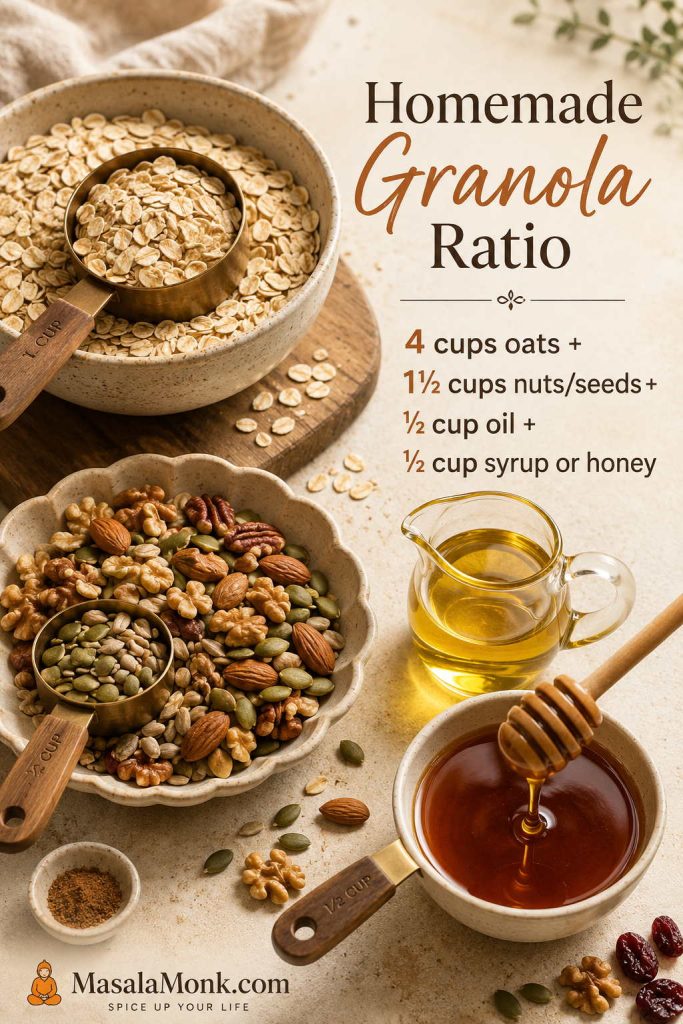
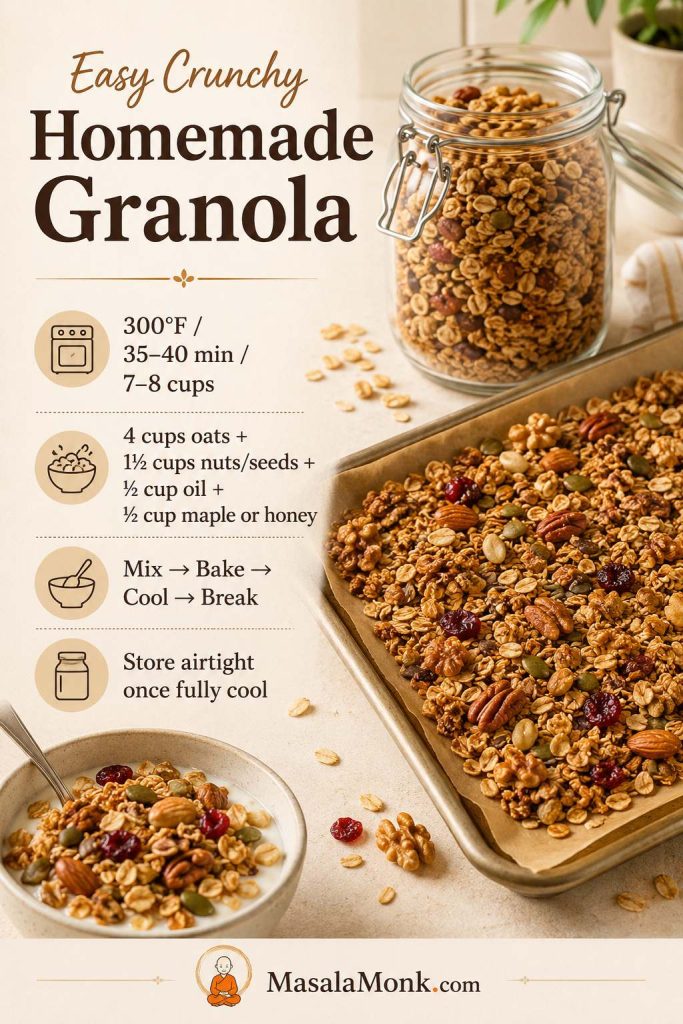
4 cups / about 320–360g rolled oats + 1½ cups / 150–180g nuts or seeds + ½ cup / 120ml oil + ½ cup / 120ml maple syrup or honey.
Mix that with salt, cinnamon, and vanilla, then bake it on a parchment-lined rimmed baking sheet at 300°F / 150°C for 35–40 minutes. Stir once halfway through, press it back down if you want clusters, and let it cool fully on the pan before breaking it apart.
Hot granola lies a little. It often feels slightly soft when it first comes out of the oven, then crisps as it cools. If you bake it until it feels fully crunchy while hot, the edges and nuts can turn bitter.
That is the real appeal of homemade granola: one pan, one jar, and several breakfasts that feel easier before the week even starts.
Want the exact measurements without the full guide? Skip to the recipe card. If your last batch stayed soft, the troubleshooting section has the quick re-crisp fix.
Homemade granola ratio guide
Once the base granola ratio makes sense, the recipe becomes flexible: keep the oats, oil, and sweetener balanced, then change the nuts, seeds, spices, or fruit.
Why This Homemade Granola Recipe Works
The promise here is straightforward: granola should be easy, but texture should not be left to luck. This recipe keeps the ratio steady and shows you how to read the four things that matter most: heat, coating, space on the pan, and cooling.
A lower oven protects the edges
Many granola recipes bake hotter, but nuts, coconut, and the edges of the tray can brown quickly. At 300°F / 150°C, the oats have time to dry and crisp before the mix-ins over-toast.
Oil and sweetener do different jobs
Oil helps the oats toast evenly instead of turning dry and dusty. Maple syrup or honey adds sweetness, but it also helps bind the oats into clusters. Reduce either one too much and the batch will still work, but the texture will change.
Cooling is part of the cook time
The hardest part is leaving the pan alone. If you break the granola while it is warm, you get smaller pieces. If you wait until it firms up, the clusters hold better.
The base is flexible without becoming vague
Because nuts, seeds, honey, maple syrup, and dried fruit are not ingredients you want to waste, the recipe leans on clear signs instead of guesswork: glossy coated oats, an even layer, dry-looking edges, a warm nutty smell, and a full cool-down before breaking.
Once you know those signs, you can make the batch more snack-like, more yogurt-friendly, less sweet, vegan, gluten-free, nut-free, or cluster-heavy without losing the basic structure.
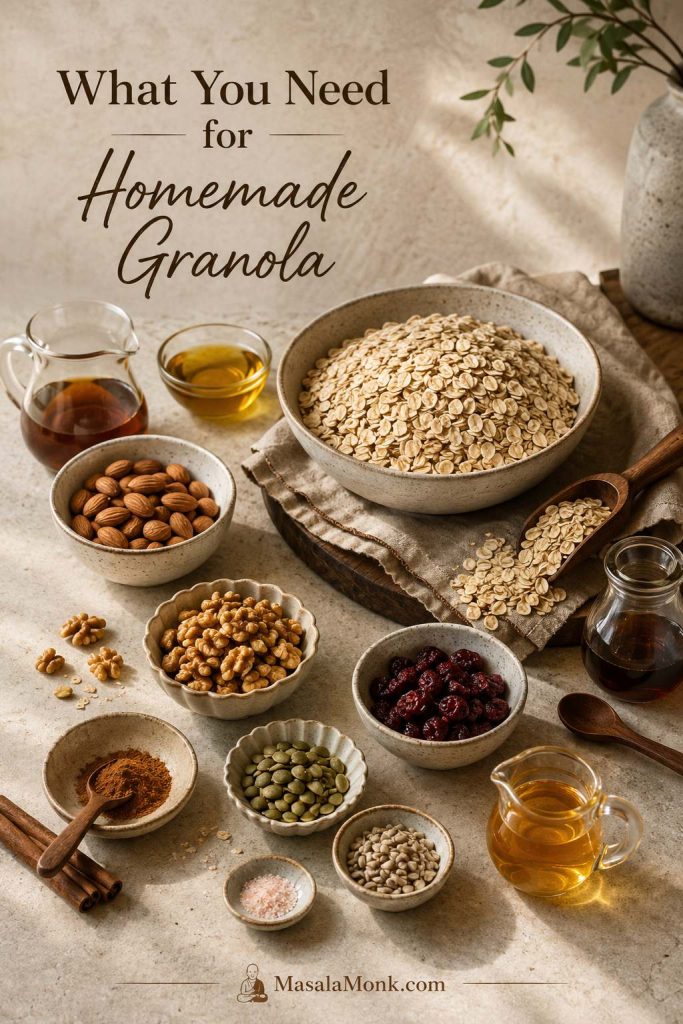
Ingredients for Homemade Granola
The ingredients are simple, but each one has a job. Once you understand those jobs, granola stops feeling like a strict formula and becomes something you can adjust with confidence.
Homemade granola ingredients at a glance
The best homemade granola starts with simple ingredients doing different jobs: oats give structure, oil helps crispness, sweetener binds, and dried fruit adds chew after baking.
Ingredient
Amount
Why it matters
Old-fashioned rolled oats
4 cups / about 320–360g
The main base. They toast well and create the best classic granola texture.
Nuts and seeds
1½ cups / 150–180g
Add crunch, richness, flavor, and a more satisfying bite.
Oil
½ cup / 120ml
Helps the oats crisp and brown evenly.
Maple syrup or honey
½ cup / 120ml
Sweetens the granola and helps bind clusters.
Fine salt
¾ teaspoon, plus more to taste
Balances the sweetness and keeps the granola from tasting flat.
Cinnamon
1–2 teaspoons / about 3–5g
Adds warm breakfast flavor.
Vanilla extract
1 teaspoon / 5ml
Rounds out the flavor and makes the granola smell bakery-like.
Dried fruit
⅔ cup / 80–100g
Add after baking so it stays chewy instead of hard or burnt.
Rolled oats or old-fashioned oats
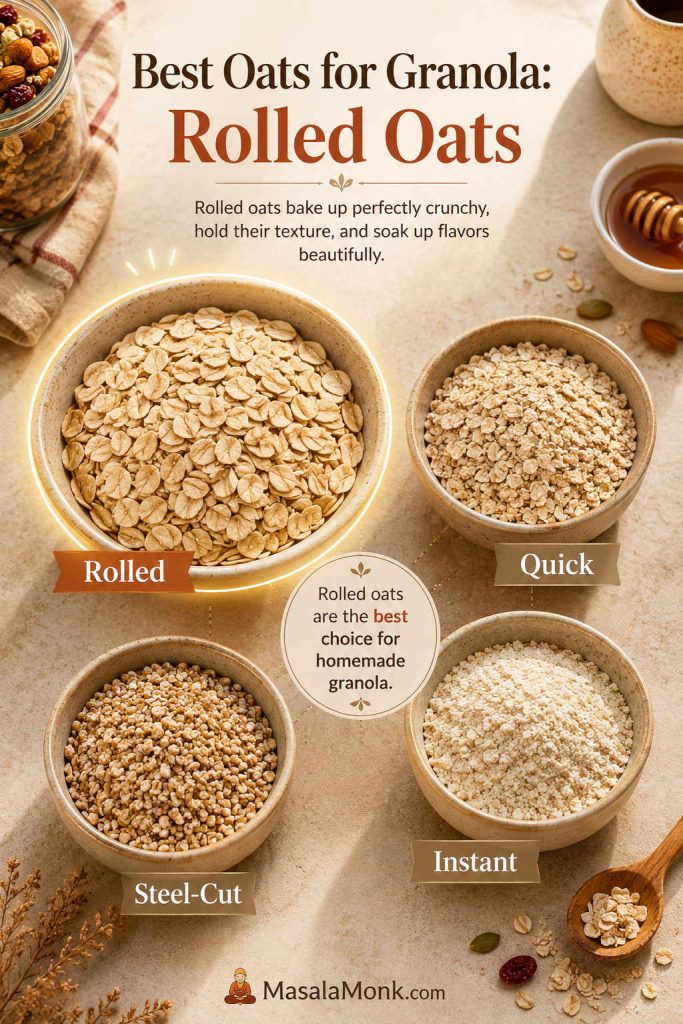
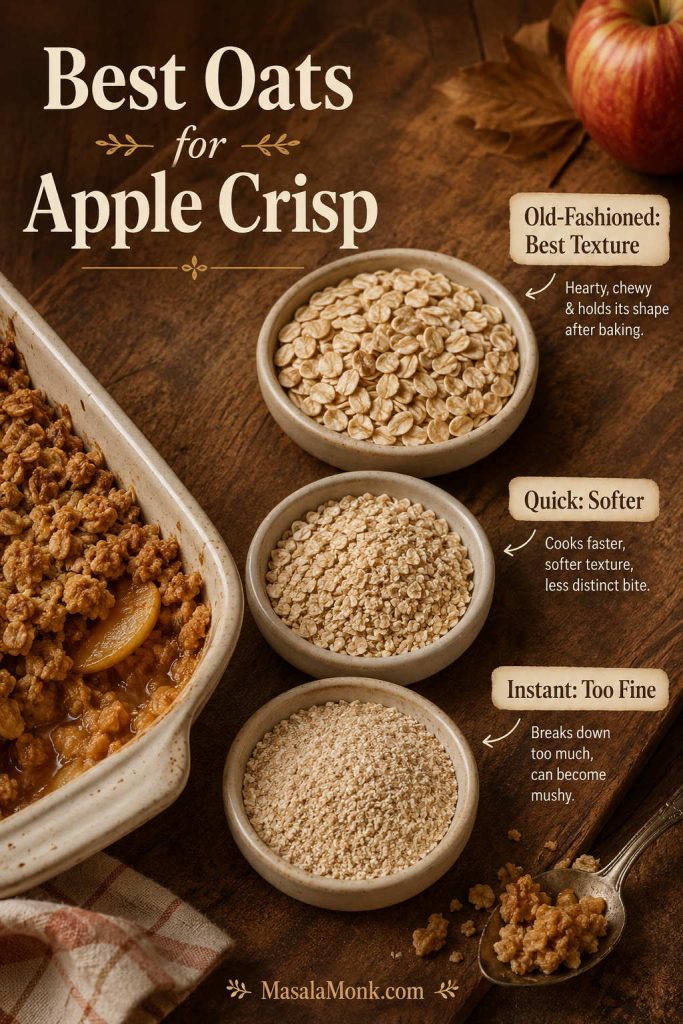
Old-fashioned rolled oats are the best oats for homemade granola. They are sturdy enough to toast, but thin enough to become crisp. They also hold their shape, which helps the granola feel like granola instead of powdery cereal crumbs.
If you are unsure about oat types, MasalaMonk’s guide to oats explains the differences between rolled oats, quick oats, instant oats, and steel-cut oats in more detail.
Nuts and seeds
Use almost any mix you like. Almonds, walnuts, pecans, cashews, pistachios, pumpkin seeds, sunflower seeds, sesame seeds, flaxseed, chia seeds, and hemp hearts all work.
For the best texture, use both larger pieces and smaller seeds. Sliced almonds plus pumpkin seeds give you crisp flakes and deeper crunch, while a good mix of nuts and seeds makes the granola more satisfying. For nut-free granola, skip the tree nuts and use seeds, coconut, and hemp hearts instead.
Oil
Coconut oil gives a classic sweet breakfast flavor. Olive oil tastes a little more savory and grown-up. Avocado oil or a neutral oil stays quieter in the background. Melted butter is delicious too, but it makes the batch richer and more dessert-like.
Do not remove the oil completely unless you are intentionally making an oil-free version. It is one of the reasons granola becomes crisp instead of papery.
Trying to skip oil completely? Read the oil-free granola notes before swapping it out, because fruit binders change the final texture.
Maple syrup or honey
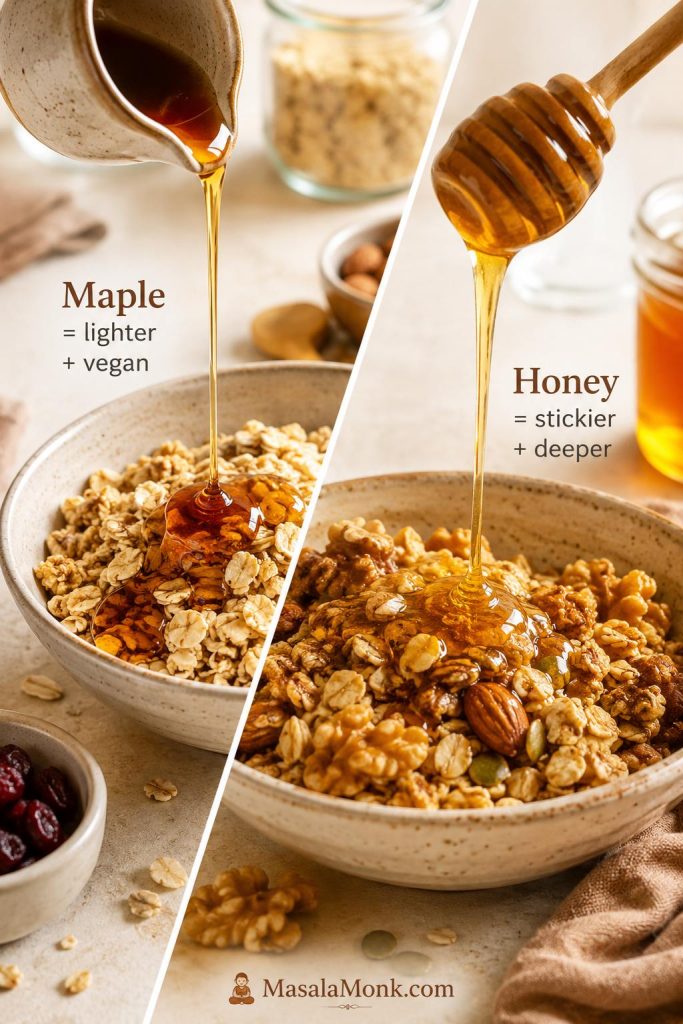
Both work, but they give slightly different results. Use maple syrup if you want vegan granola, cleaner sweetness, and a lighter flavor. Use honey if you want deeper sweetness, a more golden finish, and slightly stickier clusters.
Maple syrup gives homemade granola a lighter flavor and keeps it vegan, while honey brings a deeper sweetness and can help clusters feel slightly stickier.
Using maple syrup for a vegan batch? The variation guide shows how to keep the texture flexible without relying on honey.
Salt, cinnamon, and vanilla
These small ingredients make a big difference. Salt keeps the granola from tasting one-dimensional. Cinnamon adds warmth. Vanilla makes the finished batch smell like something you bought from a very good bakery.
Dried fruit and chocolate
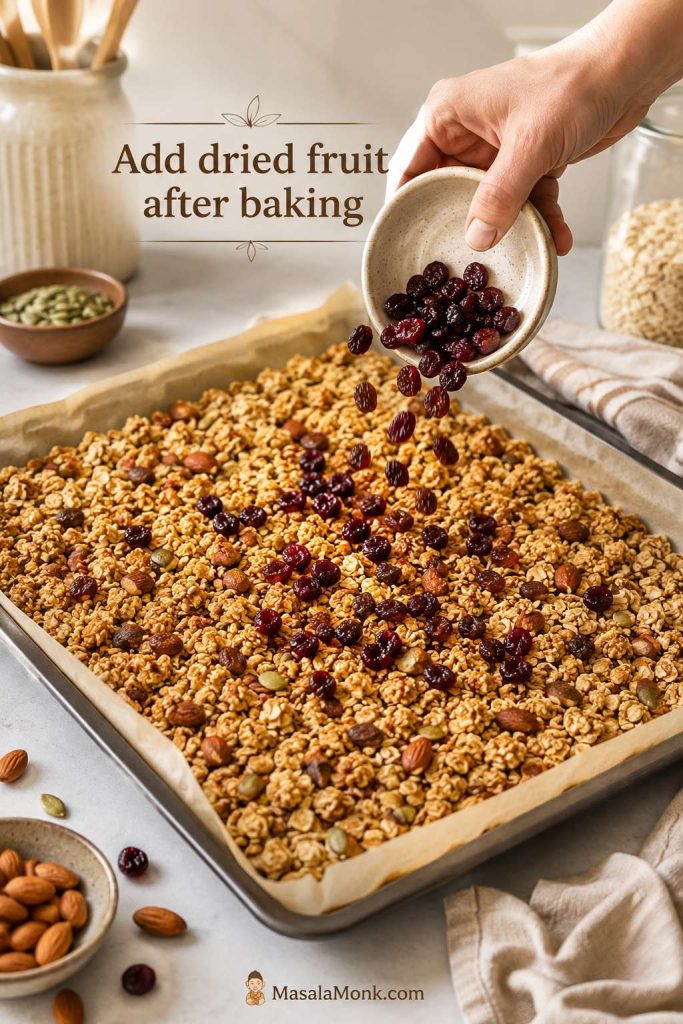
Raisins, cranberries, chopped dates, apricots, figs, cherries, and dried blueberries all work well. Stir them in after baking so they stay chewy instead of turning hard or bitter.
Chocolate chips should also go in after the granola cools. Add them while the tray is hot and they will melt through the batch, which can be delicious, but it is not the same as little chocolate pieces scattered through crisp granola.
Best Oats for Granola
The best oats for granola are old-fashioned rolled oats. They toast evenly, hold their shape, and give the finished granola a crisp but hearty texture.
Rolled oats are the safest choice for crunchy homemade granola because they toast evenly, hold their shape, and avoid the soft or powdery texture of finer oats.
Oat type
Use for granola?
Best answer
Rolled oats / old-fashioned oats
Yes
Use for classic homemade granola, clusters, and crunch.
Quick oats
Only in a pinch
They make softer, less defined granola and fewer sturdy clusters.
Instant oats
No
Too fine and powdery for good granola texture.
Steel-cut oats
Not for classic granola
Too hard and not a direct swap for rolled oats.
Certified gluten-free rolled oats
Yes
Best choice for gluten-free homemade granola.
Rolled oats and old-fashioned oats are usually the same style of oat for recipe purposes, while steel-cut oats are cut pieces of the oat groat and do not behave the same way on a baking sheet. For more detail, see MasalaMonk’s guide to old-fashioned oats and rolled oats.
How to Make Homemade Granola
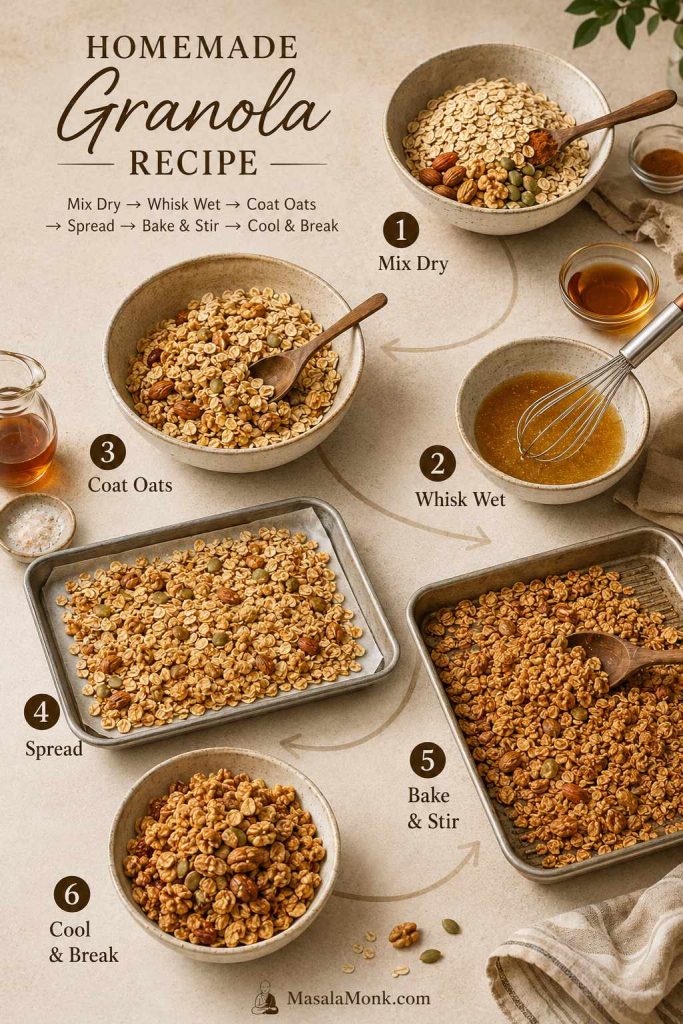
The method is simple, but a few small choices decide whether the tray comes out crisp and chunky or pale and soft. Think of it as controlled drying: coat the oats well, spread them evenly, bake low and steady, stir once, and let cooling do the final crisping.
Granola is less about complicated steps and more about order: coat first, spread evenly, bake gently, and let the tray cool before breaking it into clusters.
Step 1: Heat the oven and line the pan
Preheat the oven to 300°F / 150°C. Line a large rimmed baking sheet with parchment paper.
A rimmed pan keeps the granola from sliding off when you stir. Parchment prevents sticking and makes it easier to lift off bigger clusters later. If your baking sheet is small, divide the mixture between two pans. Crowded granola steams before it crisps.
If your baking sheet is very dark, start checking a few minutes early. Dark pans can brown granola faster than light-colored pans.
Step 2: Mix the dry ingredients
In a large bowl, combine the rolled oats, nuts, seeds, salt, and cinnamon. If your coconut flakes are delicate or already toasted, save them for the halfway stir so they do not brown too fast.
Step 3: Mix the wet ingredients
In a smaller bowl or measuring cup, whisk together the oil, maple syrup or honey, and vanilla. When honey is thick or coconut oil has solidified, warm the wet ingredients gently just until pourable, not hot.
Step 4: Coat the oats well
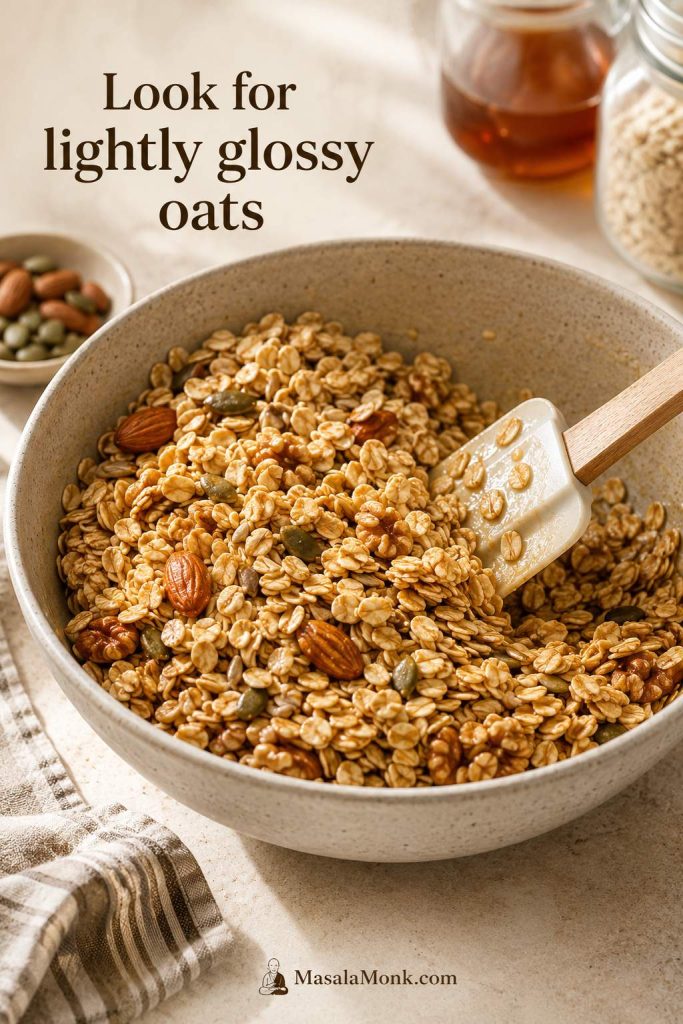
Pour the wet mixture over the oats and stir thoroughly. Every oat should look lightly glossy. Dry, dusty oats will not toast or cluster as well.
Lightly glossy oats are a good sign before baking. If the mixture looks dusty, the granola may toast unevenly and struggle to form crisp clusters.
Step 5: Spread and press
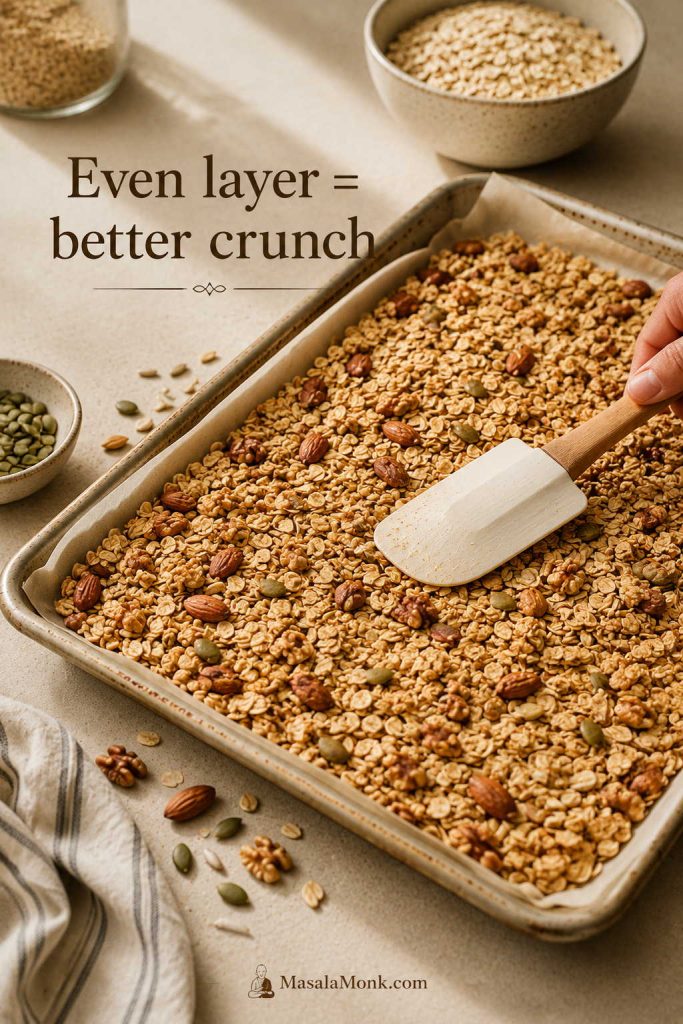
Tip the mixture onto the prepared pan and spread it into an even layer. For looser granola, spread it evenly and leave it alone. For clusters, press the mixture down gently with a spatula so the oats bake together.
Give the oats room to dry and toast. If the pan is too crowded, the granola can steam before it gets crisp.
Step 6: Bake, stir once, and press again
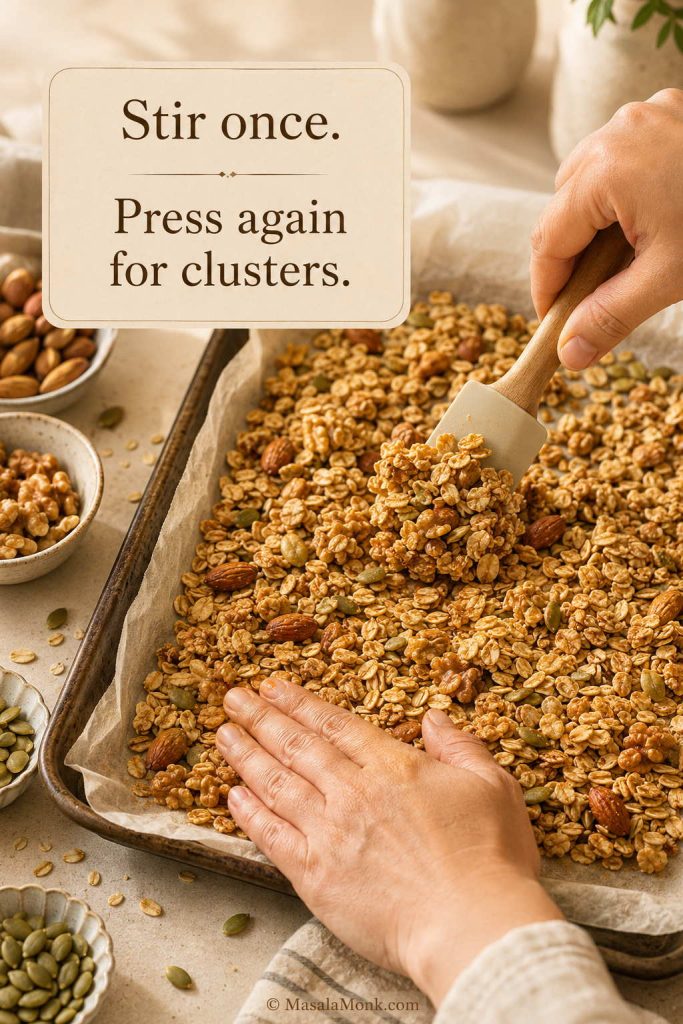
Bake for 20 minutes. Remove the pan, stir once, add delicate coconut now if using, spread the granola back out, and press again for clusters.
The halfway stir keeps the batch even; pressing it back down afterward helps the coated oats cool into sturdier granola clusters.
For bigger pieces, check the granola clusters section before changing the binder or stirring pattern.
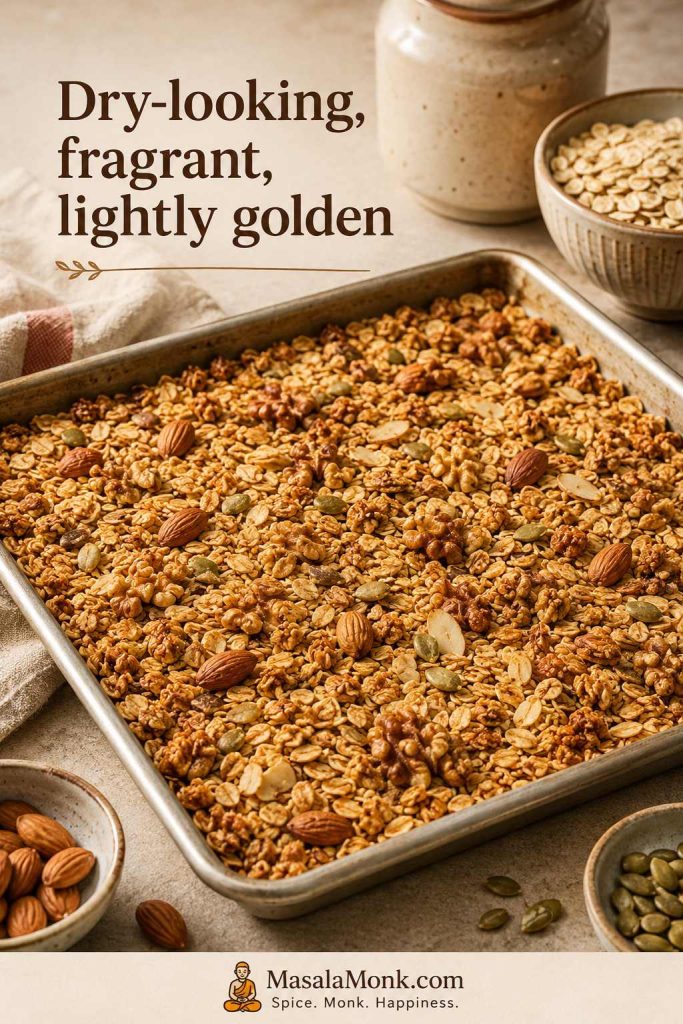
Return the pan to the oven and bake for another 15–20 minutes, until the kitchen smells toasted and warm, the surface looks dry, and the edges are lightly golden. It should smell nutty, not sharp or burnt, and the granola will still feel softer than it tastes later.
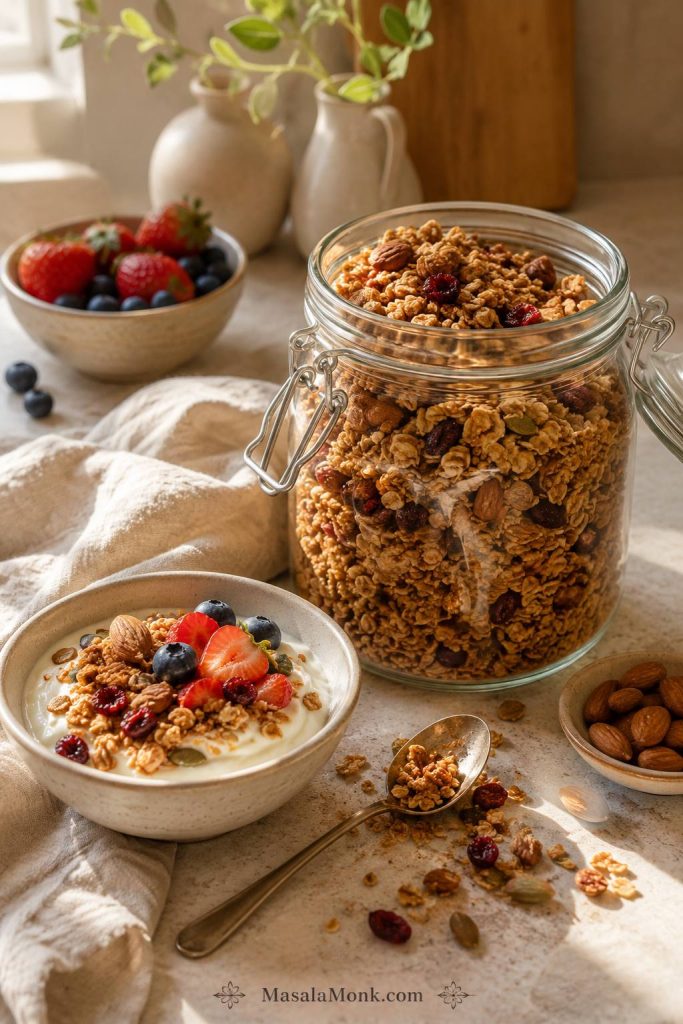
What finished granola should look like
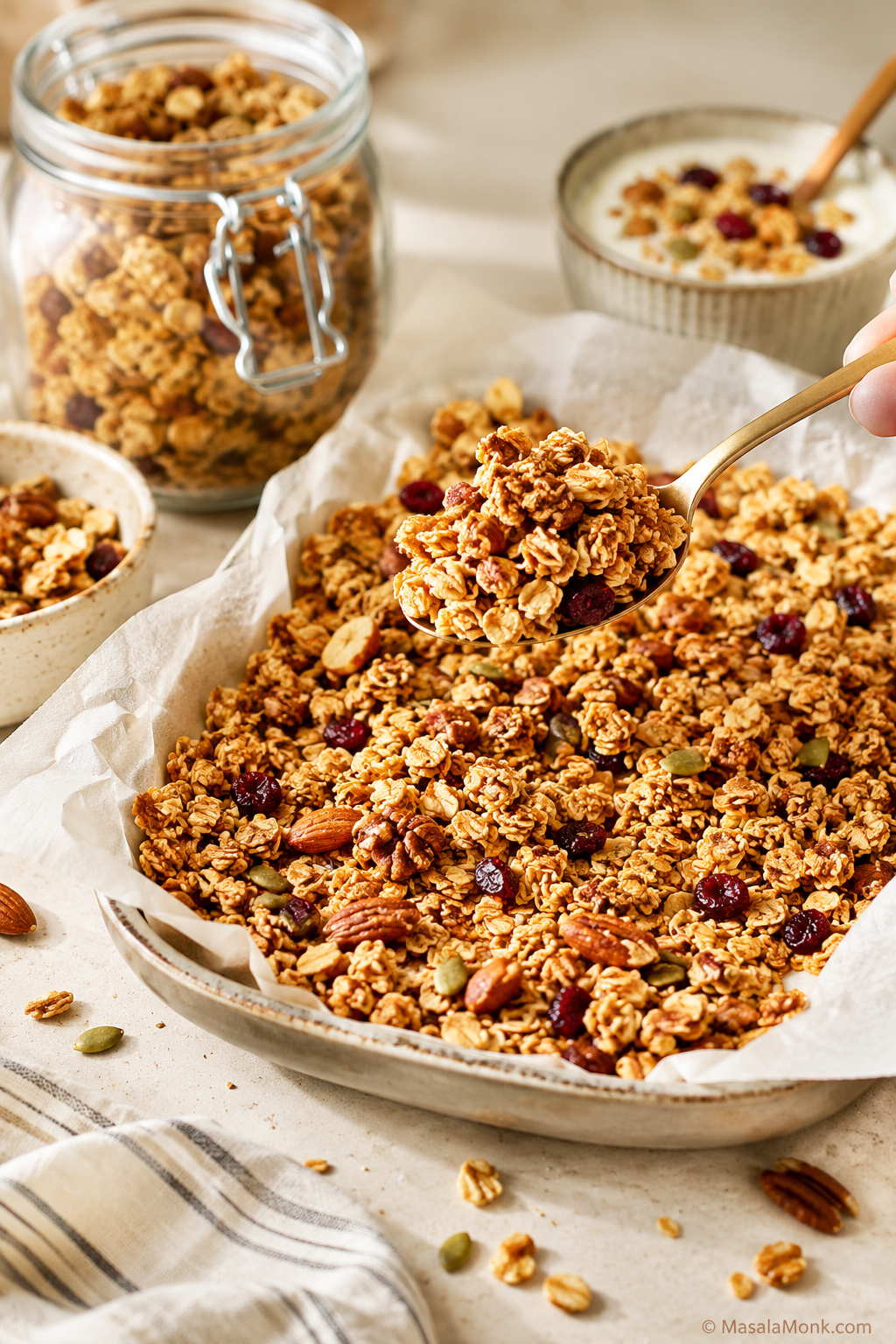
Finished granola does not need to look dark. Instead, stop when the surface looks dry, the edges are lightly golden, and the kitchen smells warm and toasted.
Step 7: Cool before breaking
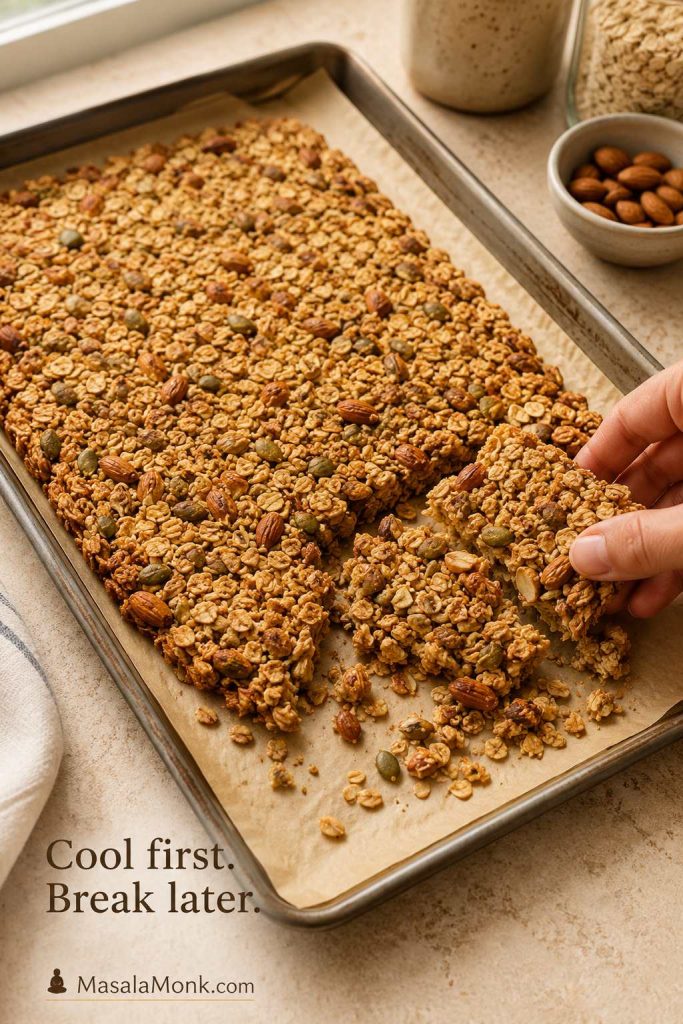
Set the pan on a rack or heat-safe surface and leave it alone until the granola firms up, usually 35–45 minutes. Break it too early and the clusters will be smaller.
Cooling is part of the recipe, not a waiting penalty. Once the granola firms on the tray, it breaks into cleaner, crunchier clusters.
Step 8: Add dried fruit
Once the granola is cool or just barely warm, add dried fruit. Break the granola into the size you like, then transfer it to an airtight jar or container.
Add dried fruit after baking because the oven can turn raisins, cranberries, dates, and apricots hard or bitter before the oats are finished.
How to Make Granola Crunchy
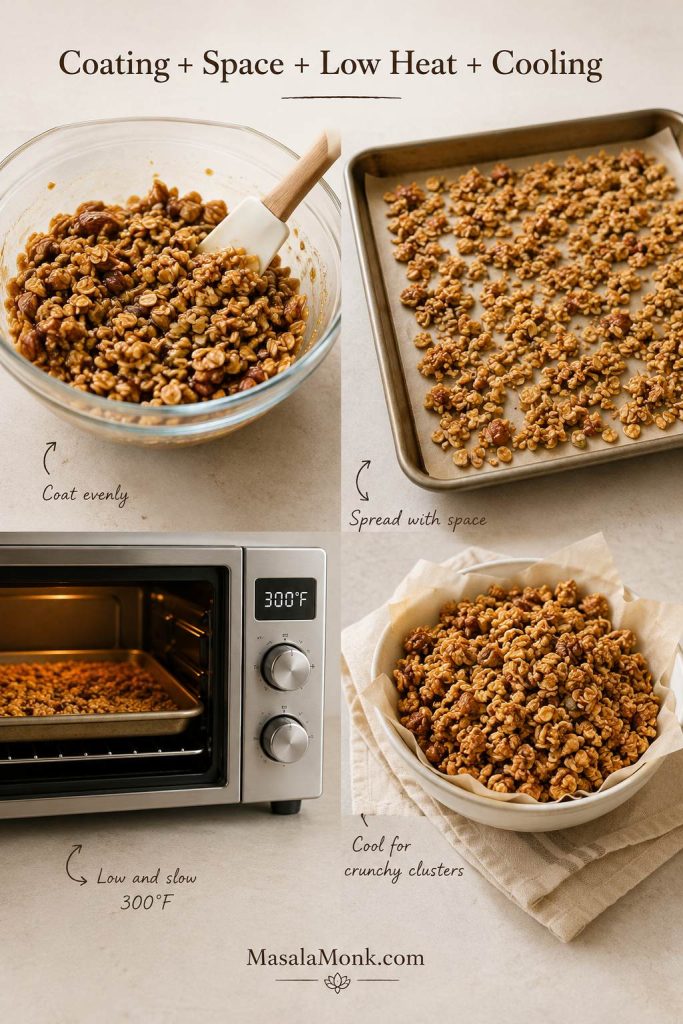
Crunchy granola comes from four things: enough coating, enough space on the pan, low, steady heat, and a full cool-down. If one of those is missing, the batch may taste soft, dusty, steamed, or overbaked.
The four controls for crunchy granola
Crunchy granola comes from four small controls working together: glossy coating, space on the pan, gentle heat, and a full cool-down before storing.
Crunch factor
What to do
What it prevents
Good coating
Stir until the oats look lightly glossy.
Dry, papery oats.
Space on the pan
Spread in an even layer; use two pans if needed.
Steamed, soft granola.
Low heat
Bake at 300°F / 150°C.
Burnt nuts and dark edges.
Full cooling
Let the tray rest before judging texture.
Breaking clusters too soon.
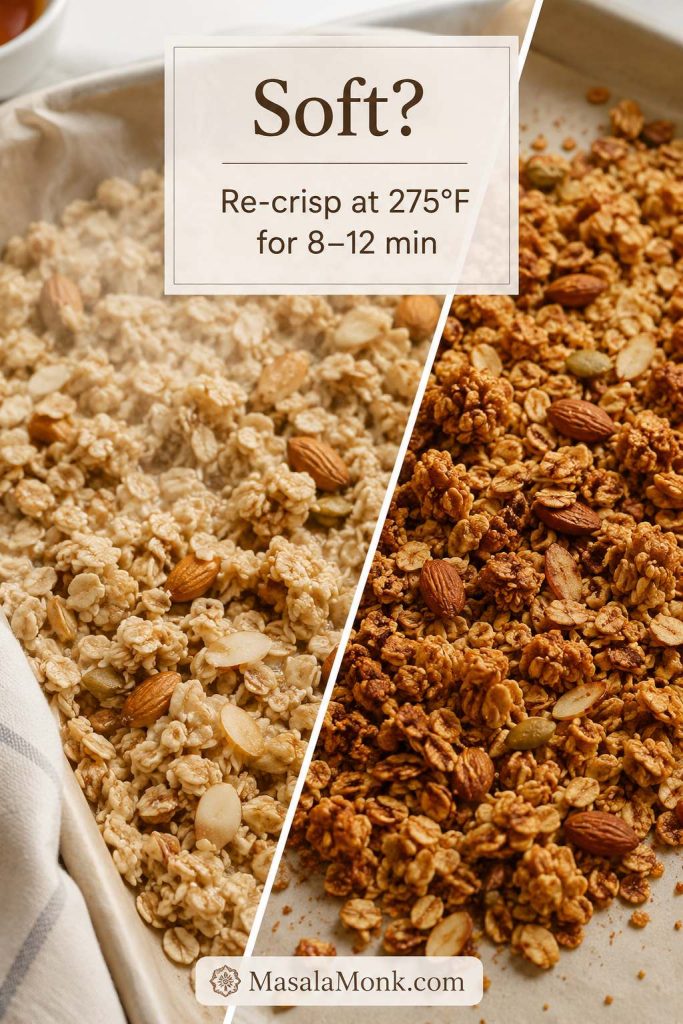
Quick fix: If your granola cooled and still tastes soft, spread it back on the pan and bake it at 275°F / 135°C for 8–12 minutes. Let it cool again before storing.
Soft vs crunchy granola
Soft granola is usually fixable. Spread it back out, warm it gently at 275°F, and then cool it fully before deciding whether it needs more time.
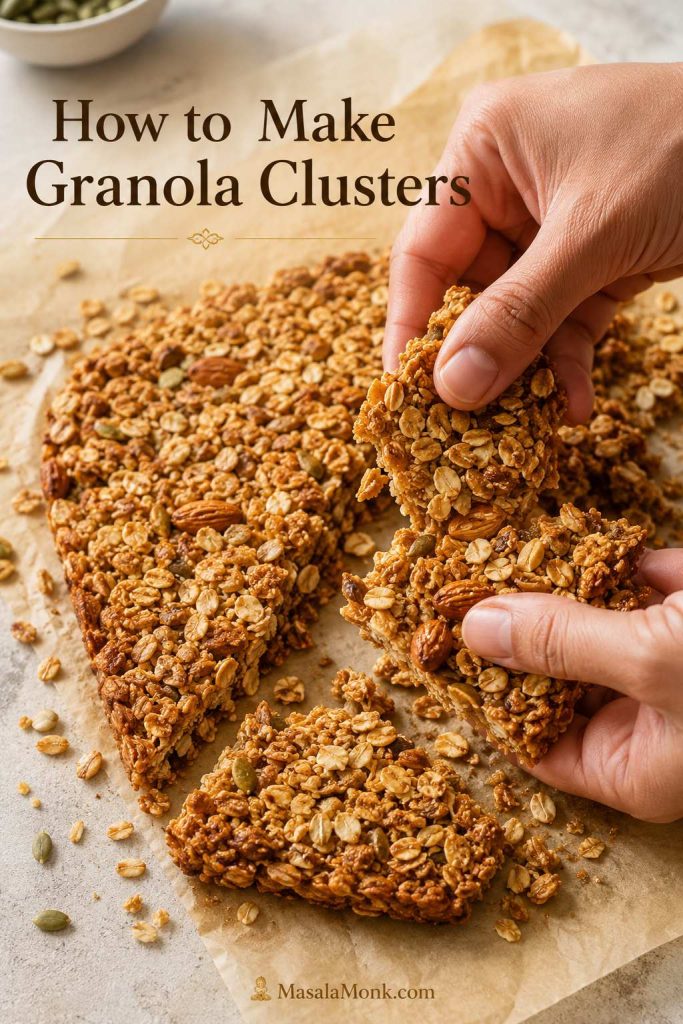
How to Make Granola Clusters
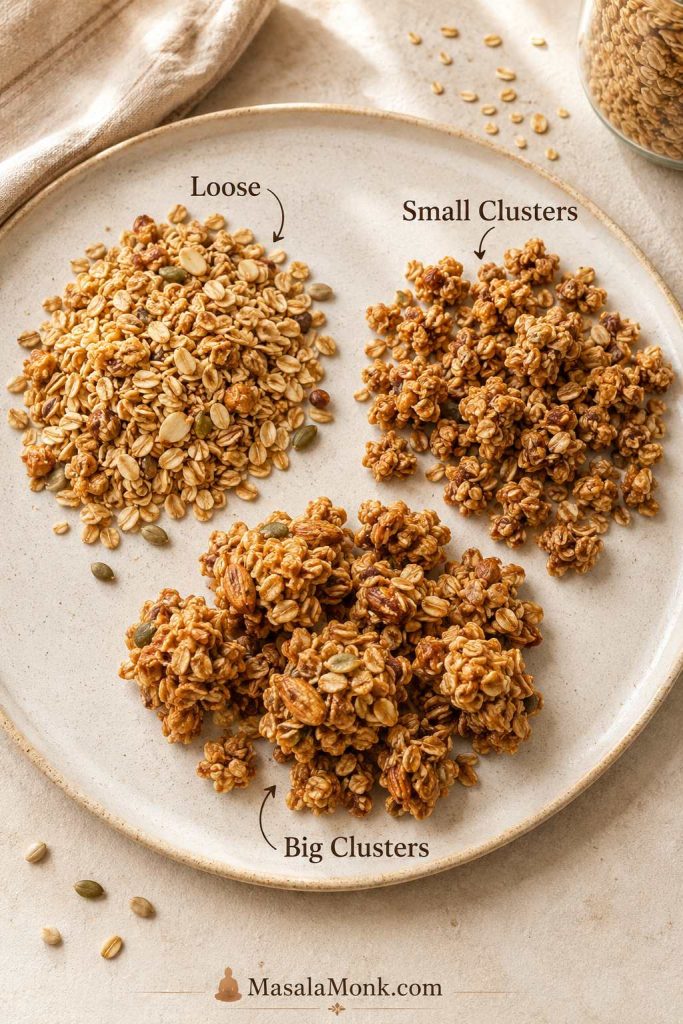
Clusters are the pieces people pick out of the jar first. Some readers want loose, cereal-style granola they can scoop with milk; others want big crunchy chunks for yogurt, parfaits, snack jars, and smoothie bowls.
You can choose that texture instead of hoping for it.
Bigger granola clusters come from restraint: stir less, press the mixture down, and wait until the slab cools before breaking it apart.
Choose your granola cluster size
Texture you want
What to do
Loose cereal-style granola
Stir twice, spread evenly, and break into smaller pieces after cooling.
Small everyday clusters
Stir once, press down after stirring, and wait until firm before breaking.
Add almond butter or peanut butter, press into a compact layer, and let the slab set before breaking.
Extra crisp clusters
Bake 5 minutes longer if needed, then cool before breaking.
Cluster size depends on how you bake and break the batch. Loose granola suits milk, small clusters work well on yogurt, and bigger pieces are best for snack jars.
The base recipe is enough for small everyday clusters. To make larger bakery-style clusters, add 1 beaten egg white to the coated oats before baking. A vegan version can use 2 tablespoons almond butter or peanut butter in the wet mixture instead.
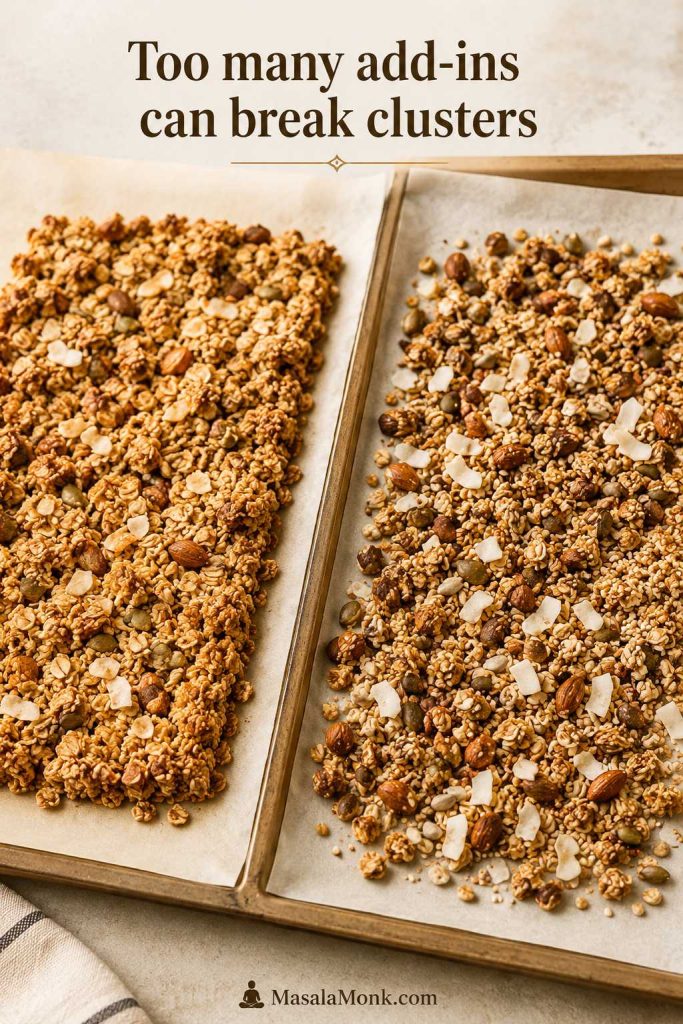
Why too many add-ins break clusters
If you want bigger clusters, avoid overloading the mixture with too many loose add-ins. Extra nuts, seeds, coconut, and dried fruit can taste great, but heavy mix-ins make the slab easier to break apart.
Extra mix-ins add flavor, but too many loose nuts, seeds, and coconut flakes can weaken the slab and make large granola clusters harder to keep.
If you warmed the oil and sweetener, let that mixture cool until just warm before adding egg white. Hot liquid can cook the egg white before it reaches the oats.
Loose granola is not a failure either. It is often better when you want a cereal-style bowl with milk or a lighter topping that scatters over fruit.
Homemade Granola for Yogurt, Parfaits, Bowls, and Milk
A spoonful of crunchy granola can turn plain yogurt into breakfast, make a smoothie bowl feel finished, and make a simple fruit bowl feel more satisfying. Granola is often best as the finishing crunch, not the base of the whole bowl.
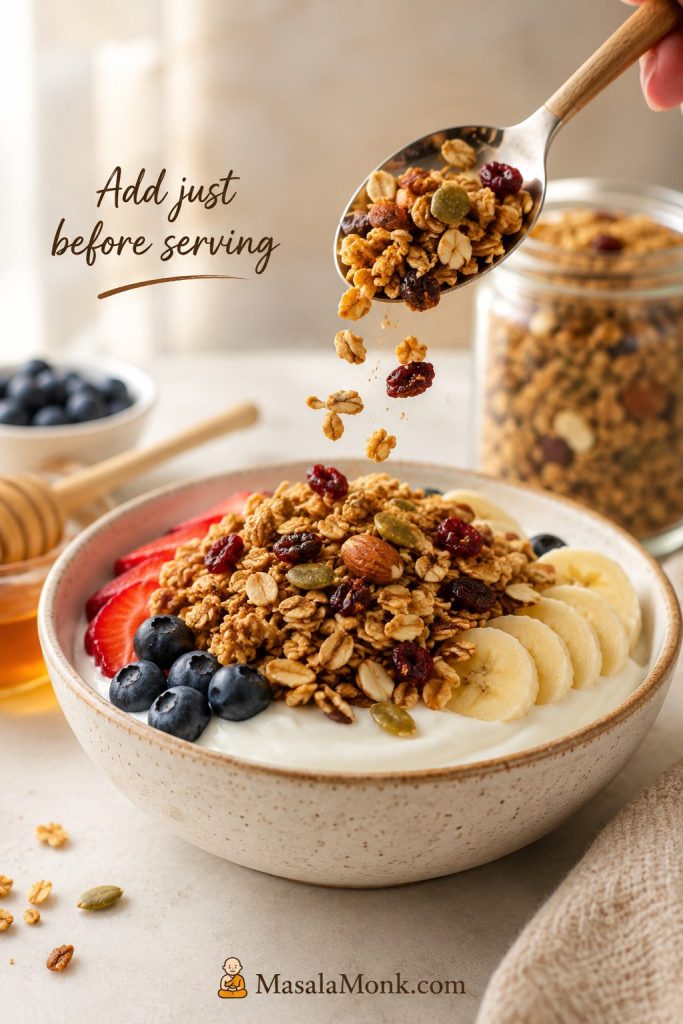
Add granola to yogurt right before eating. That way, the oats stay crisp, the clusters hold longer, and the bowl keeps its contrast.
For crisp granola, timing matters: add it close to serving. Yogurt softens granola as it sits.
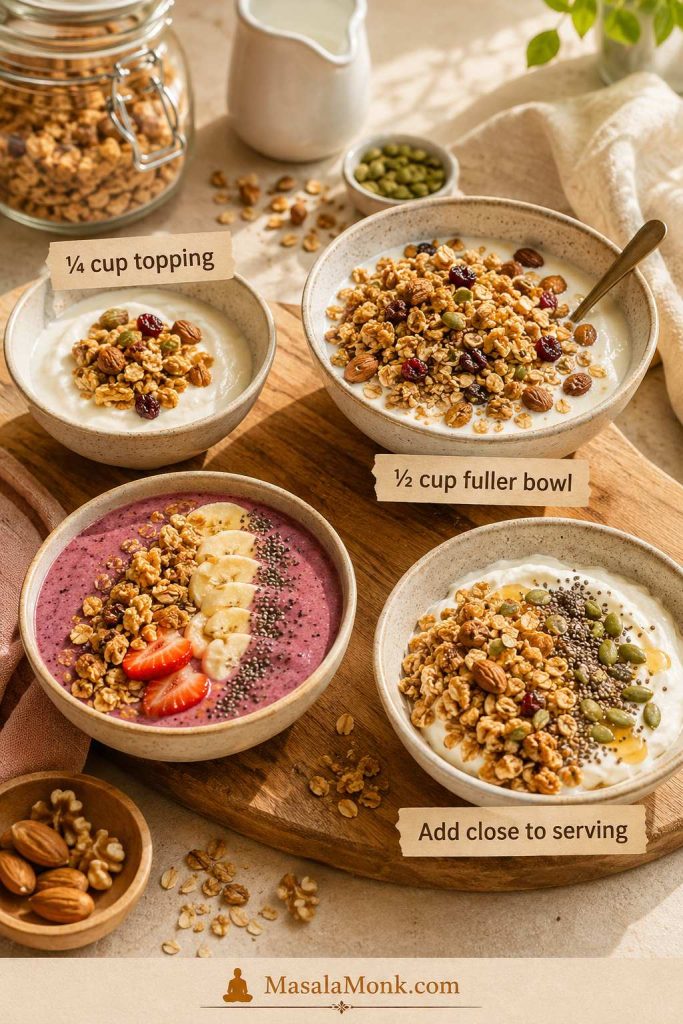
How much granola to use
Use
Good starting amount
Texture that works well
Tip
Yogurt bowl
¾–1 cup yogurt + ¼ cup granola + fruit
Loose granola or small clusters
Add just before eating so it stays crisp.
Parfait jar
¾ cup Greek yogurt + ¼ cup fruit + ¼ cup granola
Larger clusters
Keep granola separate until serving if making ahead.
Larger breakfast bowl
½ cup granola + milk or yogurt + fruit
Loose granola or small clusters
Use a bigger bowl when granola is the main base.
Smoothie bowl
2–4 tablespoons granola
Crunchy clusters
Sprinkle on top instead of mixing in, especially with a thick fruit base like mango, banana, or berries.
Kids snack bowl
¼ cup granola + banana or berries
Peanut butter or chocolate variation
Add chocolate chips after cooling.
High-protein bowl
Greek yogurt + ¼ cup granola + seeds
Protein granola with small clusters
Add hemp hearts, chia, flax, or nuts.
Use ¼ cup when granola is a crunchy topping and ½ cup when it is the main breakfast base. Then add yogurt, milk, fruit, or seeds around it.
Use these amounts as starting points, not rules. Granola is forgiving once you know whether you want it as a topping, a cereal-style bowl, or a snacky cluster.
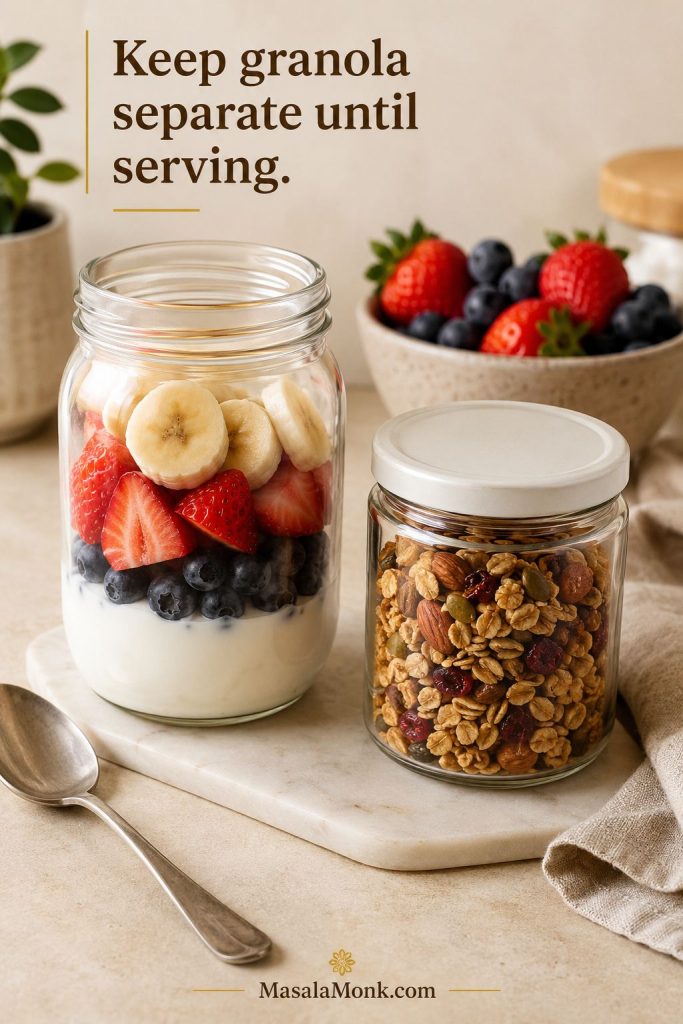
Make-ahead parfaits without soggy granola
For meal-prepped yogurt parfaits, keep the granola separate unless you prefer a softer texture. If you layer it early, expect a softer, chewier granola layer rather than crisp clusters. The same rule applies to smoothie bowls: blend the fruit first, then finish with granola right before serving.
For make-ahead parfaits, prep the yogurt and fruit first, but keep the granola separate until serving so the clusters stay crisp.
If you are making a batch for the week, the storage section explains how to keep the main jar crisp.
This recipe also works beautifully as a topping for overnight oats. For a higher-protein breakfast, pair a smaller handful of granola with Greek yogurt or use it on high-protein overnight oats.
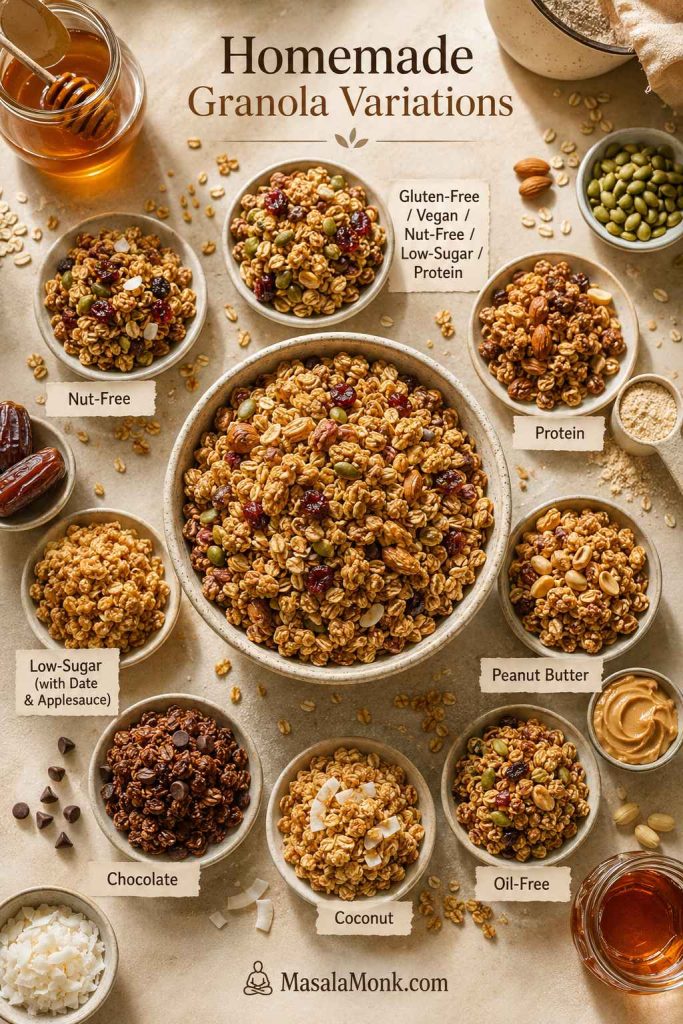
Homemade Granola Variations: Gluten-Free, Vegan, Nut-Free, Low-Sugar, and More
Homemade granola is not automatically low-calorie, but it can be a smarter everyday choice because you control the oats, nuts, seeds, oil, sweetener, and portion size. Starting with whole-grain oats gives the recipe a hearty base, while the rest of the mix-ins are up to you.
Think of granola as a flavorful crunch booster: a ¼-cup handful can make yogurt, fruit, oatmeal, or a smoothie bowl feel much more satisfying. For a fuller bowl, use ½ cup with milk or yogurt and add fresh fruit.
The same homemade granola base can move in several directions: gluten-free, vegan, nut-free, low-sugar, protein, peanut butter, chocolate, coconut, or oil-free.
Choose the variation you need
Variation
How to adjust
Texture note
Gluten-free granola
Use certified gluten-free rolled oats.
Texture stays close to the original.
Vegan granola
Use maple syrup instead of honey.
For vegan clusters, add almond butter or peanut butter.
Nut-free granola
Use pumpkin seeds, sunflower seeds, sesame seeds, coconut, or hemp hearts.
Still crunchy, but lighter than nut-based granola.
Protein granola
Add more seeds and nuts, or start with ¼ cup protein powder.
Too much protein powder can make granola dry or chalky.
Low-sugar granola
Reduce maple syrup or honey to ⅓ cup.
Less sweetener usually means fewer clusters.
Peanut butter granola
Add 2–3 tablespoons peanut butter to the wet mixture.
Better clusters and a stronger snack-like flavor.
Chocolate granola
Add 2 tablespoons cocoa powder before baking; add chocolate chips after cooling.
Do not bake chocolate chips unless you want them melted through.
Coconut granola
Add coconut flakes halfway through baking if they brown quickly.
Large coconut flakes can burn if added too early.
Oil-free granola
Replace oil with mashed banana, applesauce, date paste, or extra nut butter.
Softer and chewier than the main recipe.
No-added-sugar style
Use mashed banana or date paste instead of syrup.
Softer, less crisp, and less clumpy than the base recipe.
Use the variations as steering points, not separate recipes: a little more protein here, a little less sugar there, a different binder when you want clusters.
Gluten-free granola
Oats are naturally gluten-free, but cross-contact during processing can be an issue. For gluten-free homemade granola, use gluten-free oats and check the labels on nuts, seeds, dried fruit, chocolate, and other mix-ins.
Vegan granola
Use maple syrup instead of honey. For vegan clusters, use almond butter, peanut butter, or another nut or seed butter as the binder instead of egg white.
Protein granola
For a protein granola variation, start with ingredients that naturally improve texture: pumpkin seeds, sunflower seeds, hemp hearts, chia seeds, flaxseed, almonds, peanuts, or walnuts.
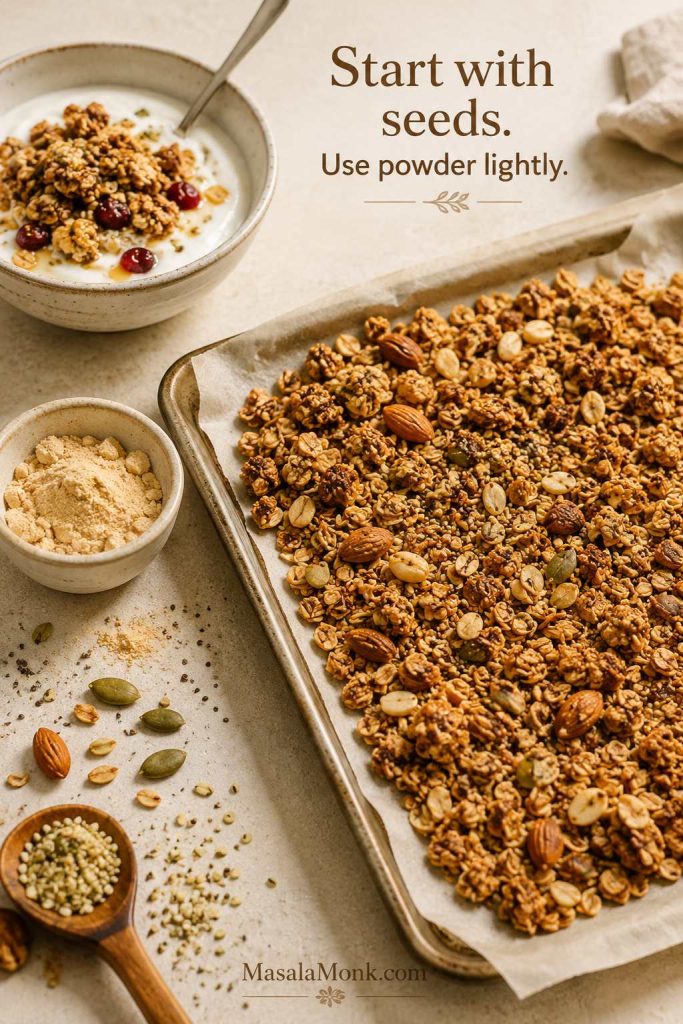
Seeds and nuts are the easiest way to make protein granola feel natural. Protein powder can work too, but start small so the texture stays crisp instead of chalky.
With protein powder, start with ¼ cup, not ½ cup. Mix it into the dry ingredients before adding the wet mixture. If the oats look dusty or dry after mixing, add 1–2 extra tablespoons of maple syrup, honey, oil, or nut butter.
Plant-based powders usually absorb more moisture, while some whey powders brown faster, so start small before scaling up. Seeds and nuts are the safer protein boost if texture matters most.
If you enjoy protein-rich oat breakfasts, this high-protein oatmeal guide has more ideas for building a satisfying bowl.
Low-sugar granola
You can reduce the maple syrup or honey to ⅓ cup. The granola will be less sweet and may form fewer clusters, but it can still be crisp and flavorful.
To make it taste fuller, keep the salt, increase the cinnamon and vanilla slightly, use flavorful toasted nuts or seeds, and add dried fruit after baking if you want little pockets of sweetness.
Peanut butter granola
Add 2–3 tablespoons peanut butter to the wet mixture. If your peanut butter is thick, warm it gently with the oil and maple syrup or honey so it mixes smoothly. A spoonful of homemade peanut butter works especially well when you want a stronger roasted-peanut flavor.
Peanut butter granola is especially good with bananas, chocolate chips, raisins, Greek yogurt, or a splash of milk.
Oil-free granola
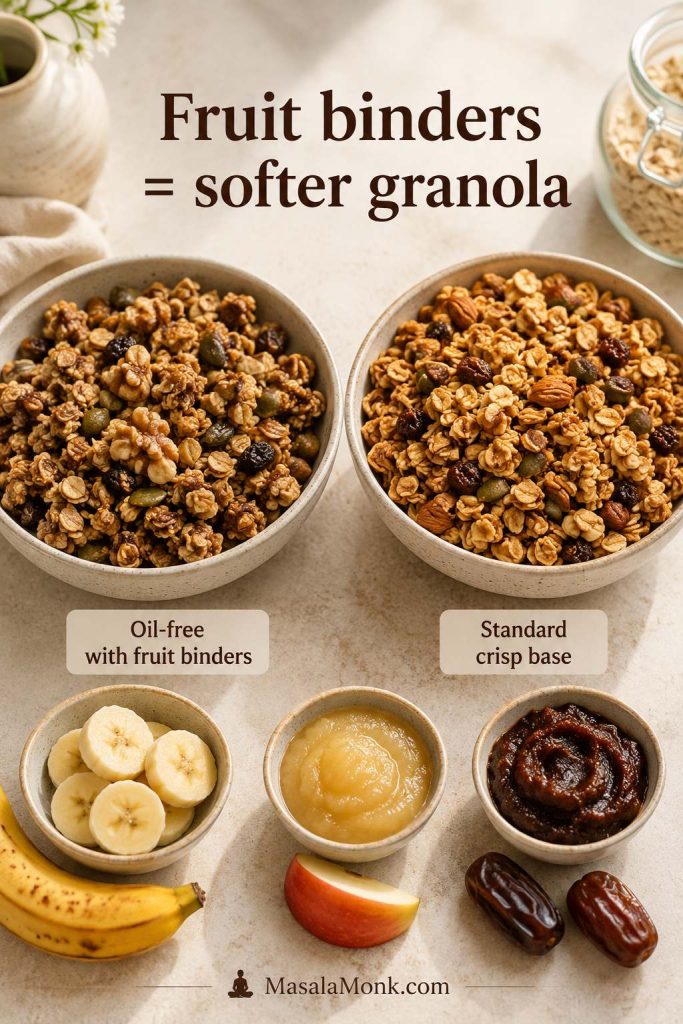
Oil-free granola is possible, but it will not have the same crisp texture as the main recipe. Use mashed banana, applesauce, date paste, or extra nut butter to help coat the oats, and expect a softer, chewier finish.
Oil-free granola can still be delicious, but fruit binders like banana, applesauce, and date paste usually make it softer than the standard crisp base.
Fruit-based binders like banana, applesauce, and date paste add moisture, so the granola will usually be softer and less crisp than the maple or honey version. For a firmer oat-based snack that leans into fruit and dates instead of syrup, these healthy oat cookies are a better direction than trying to make this granola behave like a cookie.
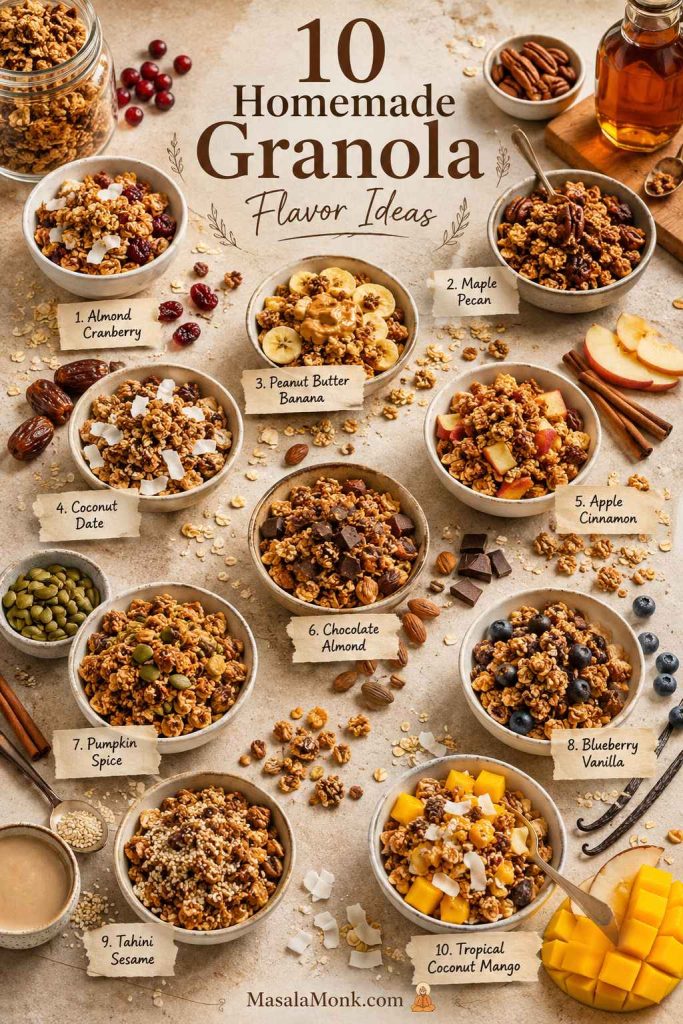
Easy Homemade Granola Flavor Ideas
Once the base recipe feels familiar, the fun is in changing the flavor without changing the method. Keep the oats, oil, sweetener, and salt steady, then change the nuts, seeds, spices, fruit, or finishing mix-ins.
Pick one direction for each batch instead of adding everything at once; the best granola usually tastes intentional, not crowded.
Keep the base ratio steady, then change one flavor direction at a time. That is how maple pecan, apple cinnamon, chocolate almond, or tropical coconut mango still feel balanced.
Flavor idea
What to add
Almond cranberry granola
Sliced almonds, dried cranberries, vanilla, and a little orange zest after baking.
Maple pecan granola
Pecans, maple syrup, cinnamon, and a pinch of nutmeg.
Peanut butter banana granola
Peanut butter in the wet mixture, banana chips after baking, and optional chocolate chips once cool.
Coconut date granola
Coconut flakes, chopped dates after baking, cinnamon, and a pinch of cardamom.
Apple cinnamon granola
Extra cinnamon, walnuts, dried apple, and raisins after baking.
Chocolate almond granola
Cocoa powder before baking, almonds, and chocolate chips after cooling.
Pumpkin spice granola
Pumpkin pie spice, pecans or walnuts, pumpkin seeds, and dried cranberries after baking.
Blueberry vanilla granola
Extra vanilla, almonds or cashews, and dried blueberries after baking.
Tahini sesame granola
Tahini in the wet mixture, sesame seeds, pistachios, and a little honey or maple syrup.
Tropical coconut mango granola
Coconut flakes, cashews or macadamias, and dried mango after baking.
If you make your own version, note what went in. Granola is one of those recipes where the second batch is often even better because you learn exactly how sweet, chunky, nutty, or fruit-heavy you like it. If one batch disappears faster than the others, write that combination down; that is usually your house granola trying to announce itself.
How to Store Homemade Granola
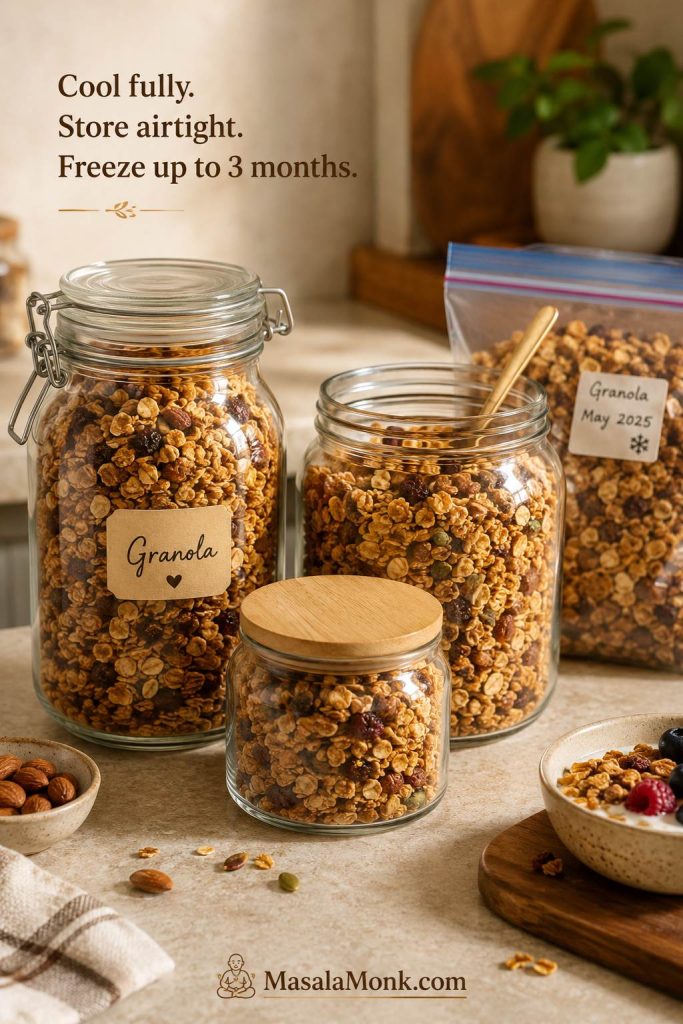
Cool the granola before storing it. This is the storage rule that matters most.
If you close the lid while the batch is still warm, steam gets trapped in the jar and softens the oats. Let the pan sit first, then move the granola to an airtight container.
Store homemade granola only after it cools completely. Airtight jars protect the crunch, while freezer portions help a big batch last beyond the week.
For everyday use, store homemade granola in a clean airtight jar or container at room temperature. For the best texture, use it within 2 weeks. It may last longer in a sealed container, but the crunch is usually best earlier.
Once a jar is ready, it becomes the easiest breakfast helper in the kitchen: the thing that makes plain yogurt, fruit, or milk feel like you planned ahead.
For longer storage, freeze granola for up to 3 months in a freezer-safe bag or container. Let it come back to room temperature before serving, or refresh it briefly in a low oven if you want the crunch to come back more strongly.
Storage tip: If your kitchen is humid, smaller jars are better than one giant container that gets opened every day. Less air exposure helps the granola stay crisp.
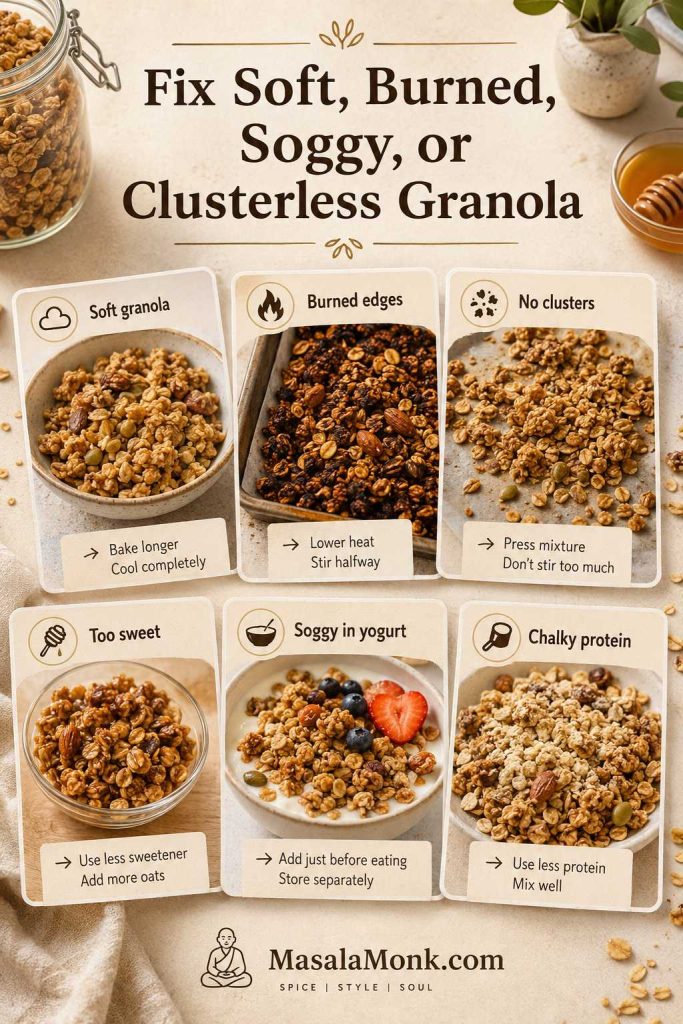
Homemade Granola Troubleshooting
Most granola problems are fixable, and almost all of them come down to heat, moisture, binder, or timing. A less-than-perfect batch is rarely wasted: soft granola can usually be re-crisped, too-sweet granola can be balanced with yogurt or nuts, and a loose batch still works beautifully over fruit or milk.
Most granola problems are fixable: soft batches can be re-crisped, clusterless granola still works over yogurt, and too-sweet granola can be balanced with plain toppings.
Texture and cluster fixes
Start here if the problem is crunch, clusters, sticking, or sogginess. Most texture problems come from moisture, pan crowding, heat, or breaking the granola too soon.
Problem
Fix this batch
Adjust next time
Granola is soft
Spread it out and bake at 275°F / 135°C for 8–12 minutes, then cool fully.
Bake a few minutes longer, cool before storing, and avoid trapping steam in the jar.
Granola burned
Pick out very dark or bitter pieces if needed.
Use 300°F / 150°C, check early with dark pans, and add delicate coconut later.
No clusters
Use it as loose granola for milk, yogurt, or fruit.
Press after stirring, stir less, and add egg white or nut butter for more binding.
Granola stuck to the pan
Let it cool, then lift gently with a spatula.
Use parchment paper and avoid baking sticky sweetener directly onto the pan.
Granola got soggy in yogurt
Eat it as a softer parfait layer.
Keep granola separate and add it right before serving.
Flavor, fruit, and protein fixes
Use this section when the texture is fine but the flavor, sweetness, dried fruit, or protein add-ins need help. These fixes are mostly about balance rather than rebaking the whole batch.
Problem
Fix this batch
Adjust next time
Granola is too sweet
Serve over unsweetened Greek yogurt or add plain toasted nuts for balance.
Reduce syrup or honey slightly and use less dried fruit or chocolate.
Granola is not sweet enough
Add dried fruit, a few chocolate chips, or a light drizzle of honey when serving.
Use the full ½ cup sweetener or choose sweeter dried fruit.
It tastes bitter
Remove scorched nuts, coconut, or dark edge pieces if possible.
Lower heat, check earlier, and add coconut halfway through.
Dried fruit is hard
Pick out the hardest pieces if they bother you.
Add dried fruit after baking, not before.
Protein granola tastes chalky
Use it over yogurt or with milk to soften the dryness.
Start with ¼ cup protein powder and add extra wet binder only if needed.
By this point, the recipe is less about memorizing rules and more about knowing the signs: glossy coated oats, an even layer, dry-looking edges, a warm nutty smell, and a full cool-down before breaking.
Save the core formula first: oats, nuts or seeds, oil, maple or honey, low oven heat, and a full cool-down before storing.
Easy Crunchy Homemade Granola
Crunchy homemade granola made with rolled oats, nuts, seeds, maple syrup or honey, oil, cinnamon, and vanilla. Bake it low and steady, then let it cool on the pan so the oats turn crisp and the clusters hold together.
Prep Time10 minutes
Cook Time35–40 minutes
Cooling Time35–45 minutes
Total Time1 hour 20 minutes to 1 hour 35 minutes
Yield7–8 cups
Servings14–16 larger ½-cup servings
Topping Portions28–32 smaller ¼-cup portions
Oven300°F / 150°C
Equipment
Large rimmed baking sheet or half-sheet pan
Parchment paper
Large mixing bowl
Small bowl or measuring cup for wet ingredients
Rubber spatula or flexible spatula
Measuring cups, measuring spoons, or kitchen scale
Airtight jar or container for storage
Ingredients
4 cups old-fashioned rolled oats / about 320–360g
1½ cups chopped nuts and/or seeds / 150–180g
½ cup oil / 120ml, such as coconut oil, olive oil, avocado oil, or neutral oil
½ cup maple syrup or honey / 120ml
¾ teaspoon fine salt, plus more to taste
1–2 teaspoons ground cinnamon / about 3–5g
1 teaspoon vanilla extract / 5ml
⅔ cup dried fruit / 80–100g, added after baking
Optional: ½–1 cup coconut flakes / 40–80g
Optional for bigger clusters: 1 large egg white, beaten
Optional for vegan clusters: 2 tablespoons almond butter or peanut butter / about 32g
Instructions
Preheat the oven to 300°F / 150°C. Line a large rimmed baking sheet with parchment paper.
In a large bowl, mix the rolled oats, nuts and/or seeds, salt, and cinnamon. If using delicate coconut flakes, stir them in when you stir the granola halfway through baking instead of adding them at the beginning.
In a smaller bowl or measuring cup, whisk together the oil, maple syrup or honey, and vanilla. If using almond butter or peanut butter for vegan clusters, whisk it into this wet mixture.
Pour the wet mixture over the oats. Stir thoroughly until every oat looks lightly coated and glossy.
If using egg white for bigger clusters, make sure the oat mixture is not hot, then stir the beaten egg white into the coated oats.
Spread the granola evenly on the prepared pan. Press it lightly with a spatula if you want clusters.
Bake for 20 minutes. Stir once, spread the granola back out, and press it down again for clusters. Bake for another 15–20 minutes, until lightly golden, dry-looking, and fragrant.
Let the granola cool on the pan until firm. Break it into the size you like, then stir in dried fruit. Store in an airtight jar or container once fully cool.
Notes
Do not judge the crunch straight from the oven. Granola firms and crisps as it cools.
For clusters, press after stirring and cool fully before breaking; for very big clusters, add 1 beaten egg white.
For vegan clusters, add 2 tablespoons almond butter or peanut butter to the wet mixture.
For gluten-free granola, use certified gluten-free rolled oats.
For low-sugar granola, reduce the maple syrup or honey to ⅓ cup, but expect fewer clusters.
Add delicate coconut halfway through baking if it browns quickly.
Divide between two pans if the baking sheet is crowded.
Store only once fully cool. Use within 2 weeks at room temperature or freeze for up to 3 months.
Use the recipe card as the base, then let the rest of the guide help you steer the texture, sweetness, and mix-ins.
FAQs About Homemade Granola
What are the best oats for homemade granola?
Old-fashioned rolled oats are best because they toast evenly, hold their shape, and create a crisp texture. Quick oats are softer, instant oats are too fine, and steel-cut oats are too hard for classic granola.
Why did my homemade granola turn soft?
Soft granola is usually underbaked, stored before cooling, or exposed to moisture. Re-crisp it at 275°F / 135°C for 8–12 minutes, then cool fully before storing.
How do I get bigger granola clusters?
Press before and after the halfway stir, then cool fully before breaking. For very large clusters, add egg white; for vegan clusters, use nut butter.
Is homemade granola healthy?
Homemade granola can be a better everyday choice because you control the oats, nuts, seeds, oil, sweetener, and portion size. It is still calorie-dense, so it works especially well as a measured topping for yogurt, fruit, or oatmeal.
When should I add dried fruit?
Add dried fruit after baking. If it bakes with the oats for the full time, it can become hard, bitter, or burnt.
How long does homemade granola keep?
Homemade granola is usually best within 2 weeks at room temperature when stored fully cool in an airtight container. For longer storage, freeze it for up to 3 months.
How do I make gluten-free granola?
Use certified gluten-free rolled oats and check that your nuts, seeds, dried fruit, chocolate, and other mix-ins are also labeled gluten-free if needed.
What granola texture is best for yogurt?
Small or medium clusters are best for yogurt. Add granola just before eating if you want crunch, or layer it earlier if you like a softer, chewier parfait texture.
What changes in oil-free granola?
Oil-free granola is usually softer and chewier than the base recipe. Mashed banana, applesauce, date paste, egg white, or nut butter can help coat the oats, but the finish will not be as crisp as granola made with oil.
Can I turn this granola into bars?
This recipe is not designed to slice into bars because granola bars need more binder. For that version, use MasalaMonk’s homemade granola bars recipe.
Your house granola for the week
Once the jar is ready, breakfast gets easier: spoon homemade granola over yogurt, fruit, or milk whenever you want crunch without starting from scratch.
The first batch teaches you the method. After that, granola becomes a small weekly habit: the sweetness you like, the cluster size you reach for, and the jar that makes plain yogurt, fruit, or milk feel like breakfast without extra work.
This sourdough banana bread recipe is for the two things home bakers hate wasting most: overripe bananas and sourdough discard. The loaf bakes up soft, fragrant, and deeply banana-forward, with brown sugar warmth, a tender crumb, and just enough sourdough tang to make each slice taste more rounded and interesting.
This is the bread you make when the bananas are too far gone for snacking but exactly right for baking. It is the kind of loaf that smells like a good decision before it even leaves the oven, especially if you plan to eat the first slice warm with butter.
Why This Sourdough Banana Bread Is Different
The batter comes together like a regular quick bread: no kneading, no shaping, no rise time, no mixer, and no complicated sourdough schedule. You only need about 15 minutes of hands-on prep, one main mixing bowl, and a standard loaf pan.
Meanwhile, the discard adds flavor, moisture, acidity, and a little tang, while baking soda and baking powder do the lifting. This sourdough banana bread recipe is designed to feel familiar first and sourdough-smart second, so the discard improves the loaf without making it complicated.
What makes this loaf especially reliable is the way it handles moisture. Ripe bananas and sourdough discard both make banana bread taste better, but too much of either can leave the middle gummy. This recipe keeps the banana and discard in a safe range, then gives you clear doneness cues so the loaf bakes up moist, tender, and sliceable.
A good sourdough discard banana bread slice should look tender and slightly plush, while still holding together when you pick it up.
So instead of guessing whether your bananas are “about right” or whether the loaf just needs five more minutes, you get clear amounts, clear texture cues, and a better chance at a loaf that slices the way banana bread should.
This sourdough discard banana bread is a same-day quick bread made with ripe bananas and sourdough discard or active starter. The discard gives the loaf a mild tang, deeper flavor, and extra moisture, but baking soda and baking powder do the lifting, so there is no rise time.
In this sourdough banana bread recipe, you can mix the batter and bake it right away. For the best texture, use very ripe bananas, measure the mashed banana instead of guessing, whisk the discard fully into the wet ingredients, and bake until no wet batter remains in the thickest part.
A good slice should feel soft and moist, but still hold together when you pick it up. It should taste like banana bread first, with just enough sourdough depth to make it more interesting than the usual loaf.
Because ripe bananas and discard both add moisture, the best loaf needs enough structure and bake time to stay soft without turning heavy.
For exact quantities, pan size, and bake time, you can jump straight to the printable recipe card.
Sourdough Banana Bread Recipe at a Glance
Best pan: 9×5-inch light metal loaf pan
Oven: 350°F / 175°C
Bake time: 55–65 minutes
Banana amount: 340–360 g mashed ripe banana
Discard amount: 113 g / ½ cup sourdough discard
Texture goal: moist, tender, sliceable, and baked cleanly through the center
Keep these core numbers close: measured banana, steady discard, the right pan, and clear bake cues make the recipe easier to repeat.
What This Sourdough Banana Bread Tastes Like
This is not a sharp or sour loaf. Instead, it tastes like classic banana bread with more depth: sweet ripe banana first, then brown sugar, vanilla, butter, and a gentle sourdough note in the background.
The crumb should be moist and tender, not wet or pudding-like. Once cooled, the slices should hold together cleanly, with enough softness to feel cozy and enough structure to toast the next day.
Walnuts make it feel more breakfast-like and nutty. Chocolate chips, on the other hand, push it toward dessert. Either way, the base loaf stays simple enough for a weekday bake.
The Three Things That Make This Loaf Reliable
Measure the mashed banana, whisk the discard fully into the wet ingredients, and bake until the loaf tests clean at its tallest point. Together, those three small steps help it stay tender while still slicing neatly.
Why This Sourdough Banana Bread Recipe Works
You will like this loaf if you want banana bread that still feels familiar, just a little more grown-up. The discard does not take over. Instead, it deepens the flavor, softens the crumb, and gives you one more reason not to waste a jar of starter.
Why Moisture Control Matters
Although banana bread looks simple, the best loaves depend on balance. Too little moisture and the loaf feels dry. Too much banana or discard, however, and the center can take longer to bake through. The sweet spot is enough banana for flavor, enough flour for structure, and enough leavening to lift a dense, moist batter.
The recipe is built around the problem that makes sourdough banana bread tricky: ripe bananas and discard both add moisture, so the loaf needs enough structure, enough lift, and clear doneness cues to finish properly.
The key is moisture control: measure the banana by weight, keep the discard steady at 113 g, and bake by doneness cues instead of the clock alone. That is what gives you a slice that feels soft in the hand instead of fragile or underbaked.
Very ripe bananas bring natural sweetness, aroma, and moisture.
Sourdough discard adds gentle tang, acidity, and deeper flavor.
Brown sugar gives a warmer, caramel-like banana bread flavor.
Melted butter keeps the loaf rich and classic.
Baking soda plus baking powder gives more reliable lift than baking soda alone.
Measured banana helps the loaf bake through cleanly.
The Moisture-Control Rule
For this loaf, do not measure bananas by count alone. Measure the mashed banana, keep the discard steady, and bake by doneness cues. That is the difference between moist banana bread and a loaf that stays heavy in the middle.
Instead of guessing by banana count, this recipe controls the main moisture points before the loaf ever goes into the oven.
If you only remember one thing, remember this rule; then use the doneness section to confirm the loaf is fully baked before slicing.
Think of this as classic banana bread with a sourdough-discard upgrade. It is not trying to be chewy sandwich bread, and it is not trying to be aggressively tangy. Rather, it is soft, sliceable, fragrant, and practical.
Before You Start
Mash and measure the bananas first. If you have more than 360 g mashed banana, save the extra for oatmeal, pancakes, or a smoothie instead of adding it all to the loaf. That one step keeps the bread moist while helping the center bake through cleanly.
Ingredients for Sourdough Banana Bread
The ingredient list for this sourdough banana bread recipe is familiar, but a few details matter more because sourdough discard adds both moisture and acidity.
The ingredients are familiar, yet the balance matters: bananas bring flavor, discard adds depth, and the leaveners support a steady rise.
Very Ripe Bananas
Use bananas with plenty of brown spots, or bananas that are fully soft and deeply fragrant. They should mash easily with a fork.
For the best banana bread flavor, choose bananas that smell sweet and mash easily; however, avoid fruit that smells fermented or spoiled.
Measure the Mashed Banana
The best range is 340–360 g peeled mashed banana, which is about 1½ cups. That is usually 3 medium-to-large bananas; however, a scale saves you from guessing here, because three bananas can mean very different things depending on their size.
Banana size varies a lot, so weighing the mashed fruit is the easiest way to avoid an overly loose banana bread batter.
You do not need perfect-looking bananas for this recipe. You just need ripe, fragrant bananas and a measured amount, so the loaf gets banana flavor without turning heavy.
Banana Bread Texture Tip
Extra banana sounds harmless, but it can make the middle take much longer to set. Therefore, when your bananas are extra large, mash them first and measure the amount instead of adding every banana on the counter.
Can You Use Frozen Bananas?
Yes. First, thaw frozen bananas; then drain off any watery liquid before measuring. Frozen bananas release more moisture than fresh ripe bananas, so measure the mashed fruit after thawing and keep it in the 340–360 g range.
Frozen bananas work well in sourdough banana bread, but draining the extra liquid first keeps the batter from becoming too wet.
Use 113 g / ½ cup sourdough discard. A discard from a starter fed with equal weights of flour and water works best here.
Fresh discard gives a milder loaf. Older fridge discard gives a stronger sourdough note. Active starter also works, and it may make the loaf slightly lighter. However, this recipe does not rely on the starter for rise.
Discard gives this loaf a deeper tang, while active starter can make the flavor milder and the crumb slightly lighter.
All-purpose flour gives the cleanest structure. Brown sugar keeps the loaf moist and gives the flavor a caramel edge. Meanwhile, melted butter makes the loaf rich and familiar, while eggs help bind the batter and support the crumb.
If you measure flour by cups, spoon it into the cup and level it off instead of scooping directly from the bag, because scooped flour packs down easily. Too much packed flour can make the loaf dry, heavy, or dense.
Fat
Best For
Texture
Melted butter
Classic banana bread flavor
Rich, tender, slightly denser
Neutral oil
Softest crumb and longer moistness
Softer, lighter, less buttery
Use a neutral oil such as avocado, canola, sunflower, or light olive oil if you choose the oil version. Avoid strongly flavored oils unless you already know you like them in sweet bakes.
Butter gives a classic banana bread flavor, whereas oil creates a softer crumb that can stay tender a little longer.
If you are choosing a version before baking, the version guide gives the quickest way to decide between classic, softer, tangier, walnut, or chocolate chip.
Baking Soda and Baking Powder
This recipe uses both for a steadier rise. Baking soda reacts with the acidity from the bananas, brown sugar, and sourdough discard, while baking powder adds backup lift so the loaf does not feel heavy for how moist the batter is.
Even though this loaf uses sourdough discard, baking soda and baking powder still do the lifting for a steadier quick bread rise.
Optional Mix-Ins
Walnuts, pecans, and chocolate chips all work well. Keep mix-ins to about 85–115 g so the loaf does not become too heavy.
Blueberries can be added, but they bring extra moisture. For that reason, keep them to about 75–100 g, use them straight from the fridge or freezer, and avoid adding extra banana at the same time.
Sourdough Discard vs Active Starter
This is one of the most common questions when making banana bread with sourdough discard: does the starter need to be active? For this recipe, no. Discard is the easiest default.
In this loaf, discard is mostly a flavor and moisture ingredient. The baking soda and baking powder do the main lifting, so you do not need to wait for the starter to rise the batter.
Older discard can add more sourdough character, but it should smell pleasantly tangy rather than harsh, moldy, or unpleasant.
Stronger sourdough note. Good for people who like more tang.
Active starter
Yes
Slightly lighter loaf and usually less sour flavor.
Very runny discard
Yes
Batter may be looser and the loaf may need a few extra minutes.
Very thick discard
Yes
Bring closer to room temperature and whisk well into the wet ingredients.
Brand-new starter discard
Not ideal
Early starter discard can smell harsh or unstable. Use mature discard for better flavor.
For more ways to use starter and discard in baking, keep this page on more sourdough bread recipes handy. It is useful when you want to move from quick discard bakes to focaccia, pizza dough, and simple bread projects.
Which Sourdough Banana Bread Version Should You Make?
Use the base recipe if you want a classic moist loaf. Then adjust only one or two things depending on the flavor or texture you want. Banana bread is forgiving, but the best versions come from changing one thing at a time.
If You Want…
Use This Direction
Mild classic banana bread
Use fresh discard or active starter.
More sourdough tang
Use older but healthy fridge discard.
Softer crumb
Use neutral oil instead of melted butter.
Richer flavor
Use melted butter and dark brown sugar.
Less sweetness
Reduce brown sugar to about 125 g.
Better structure
Do not skip the baking powder.
Nutty banana bread
Add 85–115 g walnuts or pecans.
Dessert-style loaf
Add 85–115 g chocolate chips.
Eggless loaf
Use flax eggs and cool the loaf completely before slicing.
Lowest risk of a wet center
Weigh the banana and bake to 200–205°F / 93–96°C.
Choose One Direction First
For a first bake, choose one direction and keep the rest of the loaf simple. Then you will know whether your repeat version is the buttery classic, the softer oil loaf, the walnut breakfast loaf, or the chocolate-chip treat.
What Not to Change the First Time
For your first loaf, do not increase the banana, increase the discard, remove the baking powder, and switch flour types all at once. Make the base version once, then adjust sweetness, fat, mix-ins, or tang after you know how your pan and oven behave.
If you already know your favorite banana bread style — walnut, chocolate chip, less sweet, extra tangy, or warm with butter — choose that direction first. Most people find their house version after two bakes: one classic loaf, then one small adjustment based on what they liked most.
How to Make Sourdough Banana Bread
The method for this sourdough banana bread recipe is straightforward, but the order matters. Blend the discard into the wet ingredients before adding flour. That way, you avoid sticky sourdough streaks and get a more even crumb.
Once the discard is fully blended into the wet mixture, the flour can be folded in gently without leaving sticky starter streaks.
1. Prepare the Pan and Oven
Preheat the oven to 350°F / 175°C. Then line a 9×5-inch / 23×13 cm loaf pan with parchment paper, leaving a little overhang so the baked loaf is easy to lift out.
If your loaf pan looks more than about three-quarters full after adding the batter, set a small amount aside and bake it as 1–2 muffins. An overfilled pan can rise unevenly or stay wet in the center.
2. Mash and Measure the Bananas
Mash the bananas until mostly smooth with a few small lumps. Then measure out 340–360 g. A few soft banana pieces are fine; however, large chunks can create wet pockets in the loaf.
3. Mix the Wet Ingredients
Whisk melted butter and brown sugar until glossy. Next, add the eggs, vanilla, mashed banana, and sourdough discard. Whisk until the discard is fully blended into the mixture.
At this point, the mixture should look glossy and loose, with no visible streaks of discard.
At this stage, look for a glossy banana mixture with no visible discard streaks before the dry ingredients go in.
4. Fold in the Dry Ingredients
Add flour, baking soda, baking powder, salt, and cinnamon. Sprinkle the baking soda, baking powder, salt, and cinnamon evenly over the flour before folding so they distribute more evenly. Then fold gently with a spatula until no dry flour remains. Stop as soon as the batter comes together.
A thick, slightly lumpy batter is exactly what you want because it means the flour has been mixed in without overworking the loaf.
The batter should look thick and slightly lumpy, not smooth like cake batter. It should mound slightly in the pan; if it pours like pancake batter, the loaf may need longer to bake. A slightly uneven batter is a good sign here. Smooth, overworked batter is more likely to bake up heavy.
A few small lumps are fine because overmixing can make banana bread dense, especially in a moist sourdough discard batter.
In fact, overmixing develops gluten and can make banana bread dense, tough, or heavy. If your past banana bread turned dense or gummy, compare your batter to the troubleshooting section before changing the recipe.
5. Add Mix-Ins
Fold in walnuts, pecans, or chocolate chips, if using. Keep the amount moderate so the loaf still rises and slices cleanly.
6. Bake and Cool
Spread the batter into the prepared pan and smooth the top. The batter should sit below the rim of the pan, with room to rise.
A 9×5 light metal loaf pan gives the batter enough room to rise, while parchment makes the cooled loaf easier to lift out.
Bake for 55–65 minutes, or until the highest part of the loaf feels firm and no wet batter remains. When it is done, the top should look set and gently domed, not jiggly.
Finally, cool in the pan for 10–20 minutes. After that, lift the loaf onto a rack and let it cool before slicing.
The loaf keeps firming as it cools, so this resting time is part of the texture — not just a waiting step.
Important Cooling Note
Warm banana bread is tempting, but slicing too early can make the middle seem wetter than it really is. Let it cool until the crumb has time to set.
Cutting too soon can make a finished loaf seem underbaked, so give the crumb time to settle before the first slice.
Best Pan, Oven Temperature, and Bake Time for Sourdough Banana Bread
For this sourdough banana bread recipe, the most reliable setup is a 9×5-inch light metal loaf pan at 350°F / 175°C. Light metal helps the loaf bake evenly without the sides darkening too quickly.
Pan choice affects bake time: a light metal 9×5 pan helps the sides and center finish more evenly.
Banana bread is naturally dense and moist, so bake time is only a guide. The real test is whether the loaf is baked through at its tallest point.
That is why the doneness test matters more than the exact minute on the timer.
Pan or Oven Situation
What to Do
9×5-inch light metal pan
Most reliable setup for this recipe. Start checking around 55 minutes.
8½×4½-inch pan
The loaf will be taller and may need extra time in the middle.
Dark metal pan
Browns faster. Tent with foil if the top darkens before the middle is done.
Glass or ceramic pan
May bake differently and often needs a few extra minutes. Check the thickest part carefully.
Top browning too fast
Tent loosely with foil during the last part of baking.
Outside dark but middle wet
Next time, bake at 325°F / 163°C for longer so the loaf has more time to bake through.
How to Tell When the Loaf Is Done
If your first worry is a wet middle, you are not alone. Banana bread often looks done on top before the loaf has finished baking through, so test the tallest part instead of trusting the browned crust.
Because banana bread browns before the center always finishes, the thermometer and crumb test are more reliable than color alone.
A browned top is a clue, not a guarantee. The inside still needs time to settle into a soft, sliceable crumb.
A skewer inserted into the center should come out without wet batter.
A few moist crumbs are fine.
The top should spring back lightly when pressed.
The thickest part of the loaf should read about 200–205°F / 93–96°C on an instant-read thermometer.
Because banana smears on a skewer can look wet, look for raw batter rather than soft banana. When in doubt, give the loaf a few more minutes, especially if you used a smaller pan, extra banana, or runny discard.
How to Fix Gummy, Dense, or Dry Sourdough Banana Bread
Most texture problems in sourdough discard banana bread come down to moisture, mixing, or bake time. Once you know which one caused the problem, the next loaf is much easier to fix.
If your loaf failed once, do not assume the recipe is hopeless. Sourdough banana bread usually goes wrong for one of four reasons: too much banana, very wet discard, overmixing after flour, or pulling the loaf before the thickest part has finished baking.
Match the Problem Before You Change the Recipe
If a loaf fails, the fix is usually practical: adjust banana moisture, mix more gently, measure flour carefully, or bake a little longer.
Problem
Likely Cause
Fix
Gummy center
Too much banana, underbaking, overmixing, or slicing too soon
Weigh the banana, bake longer, fold the flour gently, and cool before slicing.
Dense loaf
Discard not blended well or batter overmixed after flour
Whisk discard fully into wet ingredients, then fold dry ingredients lightly.
Dry loaf
Too much flour or overbaking
Weigh flour or spoon-and-level it. Check a few minutes earlier next time.
Too sour
Older, very acidic discard
Use fresher discard or active starter for a milder loaf.
Sunken middle
Underbaked center or too much moisture
Bake until the thickest part tests clean and avoid adding extra banana beyond the recipe range.
Dark outside, raw middle
Oven too hot, pan too dark, or loaf too tall
Tent with foil, use a lighter pan, or bake lower and longer next time.
Sticky sourdough streaks
Discard not fully mixed into wet ingredients
Whisk the discard with banana, eggs, butter, and sugar before adding flour.
If you only change one thing next time, weigh the mashed banana. It is the small, unglamorous step that solves more banana bread texture problems than almost anything else.
Once this sourdough banana bread recipe works for you, the variations are easy. Keep mix-ins moderate and avoid adding extra wet ingredients unless you adjust the bake time.
Start with the base loaf first; then, once you know the texture, choose a walnut, chocolate chip, or tangier discard version.
Walnut Sourdough Banana Bread
Fold in 85–115 g chopped walnuts. Toasting the walnuts first gives a deeper flavor and helps them stay crisp inside the loaf.
Chocolate Chip Sourdough Banana Bread
Fold in 85–115 g chocolate chips. For a more dessert-like loaf, sprinkle a few extra chips on top before baking.
Less-Sweet Version
Reduce the brown sugar to about 125 g. The loaf will be less moist and less caramel-like, but still pleasant if your bananas are very ripe. However, avoid cutting the sugar too aggressively because sugar affects softness, browning, and shelf life.
Eggless Version
For an eggless version, use 2 flax eggs and expect a slightly softer, denser crumb. Let the loaf cool completely before slicing so the structure has time to set. This flax egg for quick breads guide explains the basic ratio and when flax eggs work best.
Healthier Banana Bread Direction
For a more wholesome loaf, replace up to half the all-purpose flour with whole wheat flour, reduce the sugar slightly, or use part Greek yogurt in place of a little butter. For a separate banana-bread style built around oat flour, see this healthy banana bread with oat flour.
Optional Long-Fermented Version
The same-day version gives the most classic banana bread texture, so start there if this is your first loaf. However, if you want deeper sourdough flavor, you can use a long-fermented method as long as the final leaveners are added close to baking.
For a true long-fermented version, mix the flour, sourdough discard, mashed banana, melted butter, and brown sugar first. Cover and refrigerate overnight. The next day, let the mixture sit at room temperature for 20–30 minutes so it softens slightly. Beat the eggs and vanilla together first, then stir them into the fermented mixture. Sprinkle in the baking soda, baking powder, salt, and cinnamon, then fold until evenly combined and bake right away.
The overnight rest is for flavor and fermentation, while the eggs, baking soda, and baking powder wait until baking day for better lift.
If the mixture looks very stiff the next day, do not panic. Let it soften at room temperature, then stir gently after adding the beaten eggs and vanilla.
The texture will be tangier and slightly less cake-like than the same-day loaf. Do not add the baking soda or baking powder before the overnight rest, because they give the loaf its best lift when added closer to baking.
Can This Become Muffins?
The flavor works beautifully as muffins, but the pan, fill level, and bake time change. Use this loaf as the flavor base, then bake muffin versions separately rather than treating the loaf timing as a direct swap. For another portioned breakfast-bake idea, these high protein muffins with banana or applesauce are useful when you want something meal-prep friendly.
How to Serve Sourdough Banana Bread
The first day, this loaf is soft enough to eat plain once it has cooled. For a warmer, richer slice, add salted butter, cream cheese, peanut butter, or a little honey.
The next day, toast a slice lightly until the edges crisp and the banana aroma comes back. That is also the best way to revive a frozen slice.
It is humble enough for a weekday breakfast and good enough to wrap up for someone who needs a little comfort. It also disappears slice by slice: breakfast, afternoon tea, lunchbox treat, late-night snack.
How to Store and Freeze Sourdough Banana Bread
Let the loaf cool completely before wrapping. Otherwise, warm banana bread traps steam, and that can make the crust sticky and the middle feel wetter than it should.
Wrap the loaf once it is fully cool, and freeze slices separately so you can toast one piece whenever you need it.
Room temperature: Wrap well and keep for 3–4 days.
Refrigerator: Useful in hot or humid weather, but the loaf may dry out faster.
Freezer: Freeze slices for up to 3 months for best texture.
To reheat: Warm gently, toast lightly, or microwave a slice briefly until soft.
Instead of freezing only the whole loaf, freeze slices so you can warm one piece at a time for breakfast, tea, or a quick sweet snack.
If you are baking ahead, the recipe card has the core times, pan size, and storage note in one place.
For general food-safe freezer guidance, the USDA’s overview of freezing and food safety is a helpful reference.
Printable Sourdough Banana Bread Recipe Card
Sourdough Banana Bread Recipe
This moist sourdough discard banana bread turns ripe bananas and starter discard into a soft, sliceable loaf with brown sugar warmth, gentle tang, and classic banana bread comfort.
Prep Time15 minutes
Cook Time55–65 minutes
Total Time1 hour 10 minutes to 1 hour 20 minutes, plus cooling
Yield1 loaf
Equipment
9×5-inch / 23×13 cm loaf pan
Parchment paper
Mixing bowl
Whisk
Rubber spatula
Kitchen scale, recommended
Cooling rack
Instant-read thermometer, optional but helpful
Ingredients
340–360 g very ripe bananas, peeled and mashed, about 1½ cups
113 g sourdough discard, about ½ cup, ideally from a starter fed with equal weights flour and water
240 g all-purpose flour, about 2 cups
150 g packed brown sugar, about ¾ cup
113 g unsalted butter, melted and cooled, about ½ cup
2 large eggs
2 teaspoons vanilla extract
1 teaspoon baking soda
1 teaspoon baking powder
½ teaspoon fine salt
1 teaspoon ground cinnamon, optional
85–115 g chopped walnuts, pecans, or chocolate chips, optional
Instructions
Preheat the oven to 350°F / 175°C. Line a 9×5-inch loaf pan with parchment paper.
Mash the bananas and measure out 340–360 g. Set aside.
In a large bowl, whisk melted butter and brown sugar until glossy.
Add eggs, vanilla, mashed banana, and sourdough discard. Whisk until the discard is fully blended into the wet ingredients.
Add flour, baking soda, baking powder, salt, and cinnamon. Sprinkle the leaveners and salt evenly over the flour, then fold gently with a spatula until no dry flour remains.
Fold in walnuts, pecans, or chocolate chips, if using.
Spread the batter into the prepared loaf pan and smooth the top.
Bake for 55–65 minutes, or until the top is domed, the thickest part feels set, and a skewer inserted into the center shows moist crumbs but no wet batter. If the top browns too quickly, tent loosely with foil.
The loaf is done when the thickest part reads about 200–205°F / 93–96°C.
Cool in the pan for 10–20 minutes, then lift onto a rack and cool before slicing.
Recipe Notes
Fresh discard gives a mild flavor. Older discard gives a stronger sourdough note.
Active starter can be used in the same amount by weight.
Do not add extra banana without expecting a longer bake time.
For a less-sweet loaf, reduce brown sugar to about 125 g.
For a softer oil-based loaf, replace the melted butter with 100–110 g neutral oil.
For blueberries, use 75–100 g and avoid adding extra banana at the same time.
For a long-fermented version, use a separate method where the flour, discard, banana, butter, and sugar rest first, then add the eggs and final leaveners closer to baking.
Store wrapped at room temperature for 3–4 days, or freeze slices for up to 3 months.
Save these core cues for repeat bakes: measured banana, 113 g discard, a 9×5 pan, and a 200–205°F finish.
Save the core cues for later: measured banana, 113 g discard, a 9×5 pan, and a 200–205°F finish make the loaf easier to repeat.
More Ways to Use Ripe Bananas
If you still have bananas on the counter after this loaf, this banoffee pie recipe takes them in a caramel-and-cream dessert direction. For a no-oven breakfast, banana oatmeal pancakes use ripe banana for natural sweetness and moisture.
Once this base loaf works for you, it becomes a reliable discard recipe to return to whenever bananas go brown. After that, the walnut, chocolate chip, oil-based, and extra-tangy versions become easy little adjustments rather than brand-new recipes.
Once you know how your oven bakes this loaf, it becomes one of those quiet kitchen recipes you do not need a special occasion for: brown bananas, a little discard, one bowl, and a loaf that makes the next morning easier.
FAQs
Does sourdough banana bread taste sour?
It should taste like banana bread with a little extra depth, not like sour bread. Fresh discard gives the mildest flavor. Older fridge discard creates a stronger tang, especially if it has been sitting for several days.
Can I use active sourdough starter instead of discard?
Yes. Use the same amount by weight. Active starter usually gives a slightly lighter loaf and a milder sourdough flavor, while older discard gives more tang.
Is this a sourdough starter banana bread?
Yes. You can make it with sourdough discard or active starter. However, it is still a quick bread, so baking soda and baking powder do the main lifting while the starter adds moisture, acidity, tenderness, and flavor.
Why is my loaf gummy in the middle?
The most common causes are too much banana, underbaking, overmixing, or slicing before the loaf has cooled. Use 340–360 g mashed banana, fold the flour gently, and bake until no wet batter remains in the thickest part.
How ripe should bananas be for banana bread?
Use bananas with brown spots or fully brown skins. They should smell sweet and mash easily. Firm yellow bananas do not give the same sweetness, moisture, or banana flavor.
Can I use frozen bananas?
Yes. Thaw them first, drain off the watery liquid, then measure the mashed banana. Frozen bananas release more moisture than fresh ripe bananas, so keeping the amount in the 340–360 g range matters even more.
Should I use baking soda, baking powder, or both?
Both work best in this recipe. Baking soda reacts with the acidity in the bananas, brown sugar, and discard, while baking powder adds backup lift for a more reliable loaf.
What happens when the discard is very old?
Older discard can make the loaf tangier. That can be delicious when the discard smells pleasantly sour, but avoid discard that smells spoiled, moldy, or sharply unpleasant. For a mild loaf, use fresh discard or active starter.
Does the discard make the bread rise?
Not much. In this quick bread, baking soda and baking powder do the main lifting. The discard mostly adds moisture, acidity, tenderness, and flavor.
Can I make this dairy-free?
Yes. Replace the melted butter with 100–110 g neutral oil. The loaf will taste less buttery, but the crumb will stay soft and moist. This makes the loaf dairy-free, but not egg-free unless you also use the flax egg option.
Can I use whole wheat flour?
Yes, but start by replacing only half the all-purpose flour with whole wheat flour. A full whole-wheat loaf can taste heavier and absorb more moisture. If the batter feels unusually stiff, add 1–2 tablespoons of milk, yogurt, or water.
Can this sourdough banana bread recipe be made ahead?
Yes. The loaf keeps well at room temperature for 3–4 days and freezes nicely in slices. In fact, the flavor often tastes even better the next day because the banana, brown sugar, and sourdough notes settle together.
Can I bake this as muffins?
The batter can inspire muffins, but loaf timing does not translate directly. Muffins need a different pan, shorter bake time, and careful fill level. For the cleanest result, treat sourdough banana muffins as their own recipe rather than simply shrinking the loaf.
If you make this sourdough banana bread recipe, leave a comment with three details: fresh discard or older discard, butter or oil, and plain, walnut, or chocolate chip. Those notes help the next baker choose a version — and I would love to know which one becomes your repeat loaf.
This easy apple crisp recipe is for the night when you want the house to smell like cinnamon, butter, and brown sugar without making pie crust. The apples bake down into glossy cinnamon juices, the oat topping turns craggy and golden, and the corners get just crisp enough that someone always tries to claim them first.
It gives you the cozy part of apple pie with much less work: no rolling dough, no chilling crust, and no worrying about perfect slices. Better still, this crisp is forgiving. An 8×8, 9×9, or 9×13 pan can all work with the right scaling, and you can slice the apples thin for a softer filling or chop them for more bite.
It is the kind of dessert that works on a random weeknight with apples you already have, but it also earns its place on a fall table, Thanksgiving spread, or potluck when pie feels like too much. And although it is good plain, it becomes the version people remember when vanilla ice cream melts into the cinnamon juices and catches in the oat topping.
The promise here is simple: the right apple amount, a generous brown sugar oat topping, clear doneness cues, and pan guidance for both small family desserts and bigger holiday-style bakes.
Most importantly, this version helps you avoid the usual apple crisp problems: watery filling, underbaked apples, sandy topping, or a pan that tastes like baked apples with a thin sprinkle of oats. The goal is warm fruit underneath, crisp topping on top, and enough structure that every scoop feels complete.
Serving tip: A good apple crisp should give you warm apples, oat crumble, and just enough glossy cinnamon juice for vanilla ice cream to melt into.
Apple crisp with oats gives you the comfort of apple pie without crust work, while the crumble topping keeps the method simple and forgiving.
A good apple crisp recipe has tender apples, a buttery oat topping, and enough thickener to keep the filling spoonable instead of watery. For a standard 8×8 or 9×9-inch baking dish, use about 2 1/2 pounds / 1.1 kg apples, which is about 8 cups sliced or chopped apples. For a larger holiday pan, see the apple crisp pan guide. Toss the apples with lemon, brown sugar, cinnamon, vanilla, and a little flour or cornstarch.
Then cover the apples with a topping made from old-fashioned oats, flour, brown sugar, cold butter, cinnamon, and salt. Bake at 350°F / 175°C until the apple juices are bubbling and the topping is golden. Finally, let the crisp rest for 15–20 minutes before serving so the filling thickens instead of running across the bowl.
Apple Crisp at a Glance
Best pan8×8 or 9×9 inch
Apples2 1/2 lb / 1.1 kg
Oven350°F / 175°C
Bake time45–55 minutes
Texture cue: the crisp is done when the fruit is actively bubbling, the topping is golden and craggy, and a knife slides into the apples without resistance.
The no-guesswork formula: 8 cups apples, a generous oat topping, active bubbling, and a 15–20 minute rest. Those four details prevent most watery, underbaked, or thin-topped crisps.
For a no-guesswork apple crisp, start with enough apples, a generous oat layer, active bubbling, and a short rest before serving.
The two checks before you pull it from the oven: First, the apple juices should bubble at the edges and toward the center, not just around the sides. Second, the topping should look golden and craggy, with a few deeper brown-sugar edges. If the topping is brown but the middle still looks quiet, cover loosely with foil and keep baking a little longer.
A brown top is only half the cue; the apple filling also needs to bubble so the juices thicken properly.
Why This Apple Crisp Recipe Works
A good apple crisp is not just baked apples with crumbs on top. The filling has to bubble long enough for the juices to thicken, and the topping has to stay loose enough to brown instead of steaming against the fruit. This recipe is built around those two cues: glossy apple juices and a craggy, buttery oat topping.
Most disappointing apple crisps fail in the same few ways. The apples stay firm, the filling runs across the bowl, the topping turns sandy, or there simply is not enough crumble to make every scoop satisfying. So the goal here is simple: enough apples to feel generous, enough topping to cover every serving, and enough thickener to turn the cinnamon juices glossy instead of soupy.
Runny filling, sandy crumbs, firm apples, and too little crumble usually trace back to prep, butter temperature, or bake time.
Cold butter is the key to the crumble. It helps the oats, flour, brown sugar, cinnamon, and salt bake into rough crumbs instead of melting into the apples. A small amount of flour or cornstarch in the filling catches the apple juices as they bubble, so the crisp sets up after a short rest.
It also gives you enough crumble. Apple crisp should not look like apples with a little dusting on top. The brown-sugar crumbs are part of the dessert, and the larger clumps are not mistakes; they are the pieces people go looking for.
Equipment You’ll Need
You do not need special equipment for this crisp, but the right dish makes the bake more predictable. The pan matters more than the tool list; a very deep dish bakes differently from a shallow metal pan, even with the same ingredients. A ceramic, glass, or light-colored metal baking dish works best for the main recipe because it gives the apples enough time to soften before the topping gets too dark.
8×8 or 9×9-inch baking dish: best for the base recipe.
Large mixing bowl: for tossing the apples evenly with sugar, lemon, spice, and thickener.
Medium bowl: for the oat topping.
Pastry cutter, fork, or clean hands: for working cold butter into the topping.
Peeler, knife, and cutting board: for prepping the apples.
Rimmed baking sheet: useful under the dish in case the apple juices bubble over.
Foil: helpful if the surface browns before the apples are tender.
The rimmed baking sheet is optional, but it is one of those small things you are grateful for if the apple juices start bubbling over at the edges.
Dish note: Glass and ceramic dishes give a steady, even bake. Metal pans can brown the edges faster. Cast iron works too, although it holds heat aggressively, so watch the top near the end of baking.
Ingredients for Apple Crisp with Oats
You only need fresh apples, butter, oats, sugar, and pantry baking ingredients. The list is simple, but the small choices matter: cold butter instead of soft, old-fashioned oats instead of instant oats, and enough lemon and salt to keep the filling from tasting flat.
Every ingredient has a job: apples bring body, oats add texture, lemon brightens the filling, and cold butter helps the crumble bake properly.
For the Apple Filling
Coating the apples evenly helps the sugar, spice, lemon, and thickener work through the whole filling instead of settling in patches.
Apples: Use about 2 1/2 pounds / 1.1 kg apples before peeling and coring. This gives you about 8 cups sliced or chopped apples.
Lemon juice: Brightens the apples and keeps the filling from tasting flat.
Brown sugar: Adds caramel warmth. Use less if your apples are very sweet and a little more if they are very tart.
Flour or cornstarch: Use 2 tablespoons flour in the apple layer, or 1 tablespoon cornstarch for a glossier, slightly clearer filling.
Cinnamon: The main spice. It should be present but not dusty or overpowering.
Nutmeg: Optional, but a small pinch makes the filling taste warmer.
Vanilla: Softens the sharpness of the apples and sugar.
Salt: Makes the apples and topping taste more balanced.
Before it bakes, the filling should taste bright. If the apples taste flat in the bowl, they will taste flat after baking too, so do not skip the lemon juice and salt.
For the Brown Sugar Oat Topping
Cold butter helps the oat topping bake into rough, buttery crumbs instead of melting into the apple layer.
Old-fashioned rolled oats: Best for a classic crisp texture.
All-purpose flour: Helps the topping hold together in buttery crumbs.
Brown sugar: Gives the topping its caramel flavor and golden color.
Cinnamon: Ties the topping to the apple filling.
Cold butter: The most important topping detail. Cold butter creates crumbly pieces instead of a greasy layer.
Salt: Keeps the topping from tasting only sweet.
Chopped nuts, optional: Pecans or walnuts add crunch, but the recipe works beautifully without them.
At this point, the topping should taste like a brown sugar oatmeal cookie before it ever goes into the oven. That is the flavor you want baking into the top layer.
No scale? Use about 8 cups of sliced or chopped apples for the base recipe. Very large apples may give you that amount with only 4–5 apples, while smaller apples may take 7–8.
Best Apples for Apple Crisp
The best apples for apple crisp hold their shape while baking and bring enough tartness to balance the brown sugar topping. In most cases, a mix is better than one apple variety because you get both structure and flavor.
The best apples for apple crisp usually come from a mix: one firm tart apple for structure and one sweeter apple for aroma.
For an easy blend, use Granny Smith + Honeycrisp. Granny Smith apples bring tartness and structure, while Honeycrisp apples add sweetness and a juicy bite. Braeburn, Pink Lady, Golden Delicious, and Jonagold also work well.
Easy Apple Mixes for Apple Crisp
Choose the apple mix by texture and flavor: tarter, sweeter, deeper, or softer and more spoonable.
Apple Mix
Best For
Flavor and Texture
Granny Smith + Honeycrisp
Best default mix
Tart, sweet, juicy, and sturdy
Granny Smith + Pink Lady
Tarter apple crisp
Bright, firm, and less sweet
Honeycrisp + Golden Delicious
Sweeter family-style crisp
Softer, sweeter, and very cozy
Braeburn + Granny Smith
Deeper baked flavor
Warm, aromatic, and balanced
Golden Delicious + a firm tart apple
Softer, saucier filling
Good when you want a more spoonable dessert
If you use a local apple variety that bakes well, tell us which one. Apple crisp is one of those recipes where regional apples can completely change the flavor, and the underrated local ones are often the most interesting.
By contrast, very soft apples can break down quickly under a long bake. They still taste good, but they may create a saucier, almost applesauce-like filling and make the bottom of the crisp wetter.
Firm apples help apple crisp hold its shape, while softer apples create a saucier filling; mixing varieties gives better balance.
Apple
Best Use
What to Expect
Granny Smith
Best tart backbone
Firm, bright, less sweet
Honeycrisp
Best sweet-tart flavor
Juicy, aromatic, holds well
Pink Lady
Balanced crisp filling
Tangy, firm, colorful
Braeburn
Warm baked flavor
Sweet-tart and sturdy
Golden Delicious
Softer, sweeter filling
Good when mixed with tart apples
Red Delicious
Not recommended
Often too soft and mild after baking
For a deeper apple breakdown, the best apples for apple pie guide is also useful for apple crisp because the same basic rule applies: choose apples that taste good after baking and do not collapse too quickly.
Should Apples Be Sliced or Chopped for Apple Crisp?
Sliced apples bake into a softer, layered filling, while chopped apples keep more bite in each spoonful.
Both work, but they give different textures. Thin slices bake into a softer, more layered filling. Chunks give more bite and make the dessert feel fruitier. Either way, even cutting matters because uneven apples can leave you with mushy small pieces and firm large pieces in the same pan.
Cut-size tip: Keep slices and chunks even so the apple crisp filling bakes at the same pace.
Even apple pieces bake at the same pace, which helps prevent mushy bits and underbaked chunks in the same pan.
Cut
Best Size
Result
Slices
1/4–1/2 inch thick
Softer, layered, classic spoon-dessert texture
Chunks
1/2–3/4 inch
More apple bite and a chunkier filling
Very thick pieces
Over 3/4 inch
May stay firm unless baked longer
For the most classic texture, use mostly slices with a few slightly thicker pieces mixed in. As a result, some apples soften into the cinnamon juices, while others stay tender enough to bite.
Old-Fashioned Oats vs Quick Oats for Apple Crisp
Oat choice: Old-fashioned oats give the topping more visible texture, while quick oats make the crumble finer and softer.
Old-fashioned oats give apple crisp a chewy-crisp topping; quick oats make it finer and softer, while instant oats can turn powdery.
Old-fashioned rolled oats are the best oats for apple crisp. They hold their shape in the oven and give the topping the chunky, crisp texture people expect. Quick oats can work in an emergency, but they make a softer, finer topping. Instant oats are too powdery, and steel-cut oats are too hard for this kind of topping.
Oat Type
Use in Apple Crisp?
Result
Old-fashioned rolled oats
Yes, best choice
Classic crisp topping with good texture
Quick oats
Yes, only if needed
Softer, finer topping with less chew
Instant oats
Not ideal
Can become too soft or powdery
Steel-cut oats
No
Too hard and chewy for this topping
That little bit of chew is what makes apple crisp feel like apple crisp instead of baked apples with crumbs. Old-fashioned oats stay visible, toasty, and slightly chewy, so the topping has more texture than a plain crumble.
For a version without oats, make a flour-butter-brown-sugar crumble topping instead. That leans closer to apple crumble than classic apple crisp, and it needs slightly different handling because the topping does not have the same chewy oat structure. You can also jump to the apple crisp without oats variation below.
How to Make Apple Crisp
Method overview: The recipe is easiest when you follow the same order every time: prep, mix, crumble, scatter, bake, and rest.
The method works best in order: prep the apples, coat the filling, make the crumble, scatter it loosely, bake until bubbling, and rest.
1. Prep the Apples
First, preheat the oven to 350°F / 175°C. Lightly butter an 8×8 or 9×9-inch baking dish, and place it on a rimmed baking sheet if the dish is quite full.
Next, peel the apples for a softer, more classic dessert texture. For a more rustic crisp with extra texture, leave the skins on. Core the apples, then cut them into even slices or chunks.
Thin slices: softer, more layered filling
1/2-inch chunks: more apple bite and texture
Uneven pieces: some apples may turn mushy while others stay firm
2. Mix the Apple Filling
Add the apples to a large bowl with lemon juice, brown sugar, flour or cornstarch, cinnamon, nutmeg, vanilla, and salt. Then toss until the apples are evenly coated. The thickener should disappear into the juices and sugar instead of sitting in dry patches.
Mix until the thickener disappears into the apple juices so the filling bakes glossy instead of floury.
After mixing, spread the apples into the prepared baking dish. Do not worry if the dish looks full; the apples shrink as they bake.
3. Make the Oat Topping
In a separate bowl, mix the oats, flour, brown sugar, cinnamon, and salt. Add cold cubed butter. Then use your fingers, a fork, or a pastry cutter to rub the butter into the dry ingredients.
The mixture should look like uneven, buttery crumbs, not dry flour and not a smooth paste. When you squeeze a handful, it should hold together in rough clumps, then break apart easily. Leave some larger clumps on purpose; those become the crispest brown-sugar bites after baking.
The oat topping should form rough crumbs that hold together lightly, then break apart before baking.
If the mixture still looks dusty, keep working in the butter. Dry crumbs bake up floury. If it looks wet or greasy before baking, the butter has softened too much; chill the bowl for 10 minutes before sprinkling the oat mixture over the apples.
Warm kitchen tip: In a warm kitchen, cube the butter and chill or freeze it for 5–10 minutes before making the topping. Cold butter helps the oat topping bake into distinct crumbs instead of melting into the apples.
If the butter softens, chill the topping briefly; cold butter keeps the crumble distinct instead of greasy.
4. Add the Topping
Scatter the oat mixture evenly over the apples. Do not press it down firmly. A loose crumb layer allows heat to move through the apples while the surface browns.
Scatter the topping loosely rather than pressing it down, so heat reaches the apples while the surface browns.
5. Bake Until Bubbling
Bake for 45–55 minutes, or until the oat layer is golden and the apple juices are visibly active beneath the surface. That heat is what wakes up the flour or cornstarch and turns the juices glossy instead of loose.
Active bubbling is the doneness cue that tells you the filling has enough heat for the thickener to work.
If the surface browns too quickly before the apples are tender, loosely cover the dish with foil and continue baking. Do not seal the foil tightly, because trapped steam can soften the crumb layer. If the crisp still looks off, use the troubleshooting chart before you pull it from the oven.
6. Let It Rest Before Serving
Once the crisp comes out of the oven, let it rest for at least 15–20 minutes before scooping. This short rest helps the juices settle so the filling is glossy and spoonable instead of runny.
That short wait after baking is not wasted time; it helps the hot apple juices thicken so the first scoop does not collapse into the bowl.
Should Apple Crisp Be Baked Covered or Uncovered?
Bake apple crisp uncovered so the oat layer can brown and crisp. If the surface turns dark before the apples are tender, cover the dish loosely with foil for the last 10–15 minutes. Do not cover it from the beginning unless your oven runs very hot.
Once the apples are coated and the crumble is ready, the hardest part is already done. From here, the oven does most of the work: softening the apples, thickening the juices, and turning those rough oat clumps into the bites everyone wants first.
Easy Apple Crisp Recipe with Oats
Easy Apple Crisp Recipe with Oats
This easy apple crisp bakes tender cinnamon apples under a generous brown sugar oat topping, with clear doneness cues so the filling turns glossy instead of watery. Serve it warm with vanilla ice cream, especially if you want the corner pieces to disappear first.
Prep Time20 minutes
Cook Time45–55 minutes
Rest Time15 minutes
Servings6–8
Ingredients
For the apple filling
2 1/2 lb / 1.1 kg apples, weighed before peeling and coring; about 8 cups sliced or chopped apples
1 tablespoon / 15 ml lemon juice
1/3 cup / 65 g packed light brown sugar, or up to 1/2 cup / 100 g for very tart apples
2 tablespoons / 16 g all-purpose flour, or 1 tablespoon / 8 g cornstarch
1 teaspoon ground cinnamon
1/4 teaspoon ground nutmeg, optional
1 teaspoon / 5 ml vanilla extract
1/4 teaspoon fine salt
For the oat topping
1 cup / 90 g old-fashioned rolled oats
3/4 cup / 95 g all-purpose flour
3/4 cup / 150 g packed light brown sugar
1 teaspoon ground cinnamon
1/4 teaspoon fine salt
1/2 cup / 113 g cold unsalted butter, cut into small cubes
Optional: 1/2 cup / 55–60 g chopped pecans or walnuts
Instructions
Preheat the oven to 350°F / 175°C. Lightly butter an 8×8 or 9×9-inch baking dish. Place the dish on a rimmed baking sheet if it is very full.
Add the apples to a large bowl. Toss with lemon juice, brown sugar, flour or cornstarch, cinnamon, nutmeg, vanilla, and salt until evenly coated.
Spread the apple mixture into the prepared baking dish.
In another bowl, stir together the oats, flour, brown sugar, cinnamon, and salt.
Add the cold cubed butter. Rub it into the oat mixture with your fingers, a fork, or a pastry cutter until the topping forms moist crumbs and rough clumps.
Sprinkle the topping evenly over the apples. Do not press it down firmly.
Bake for 45–55 minutes, until the topping is golden and the apple juices are bubbling at the edges and toward the center.
If the topping browns before the apples are tender, cover loosely with foil and continue baking.
Let the crisp rest for 15–20 minutes before serving. Serve warm, plain or with vanilla ice cream.
Notes
Use old-fashioned oats for the best topping texture.
The crisp is not done just because the topping is brown. Look for bubbling juices near the center too.
If the topping looks powdery before baking, work in the butter a little more or add 1–2 teaspoons extra cold butter.
If using a 9×9 pan, check a few minutes early because it is slightly shallower than an 8×8.
Use less sugar for sweet apples and more for very tart apples.
For a glossier filling, use cornstarch instead of flour.
For a thicker filling, let the crisp cool for at least 20 minutes before scooping.
Keep the base formula simple: 2½ pounds of apples, 350°F, old-fashioned oats, and a proper rest before serving.
Finished texture: The best scoop holds glossy apples and crumble together without leaving a watery puddle behind.
The ideal spoonful holds tender apples, glossy cinnamon juices, and enough crumble to give every bite texture.
Using a different dish? Check the pan guide before baking.
Apple Crisp Pan Guide: 8×8, 9×9, and 9×13
Pan size changes the depth of the apples, the bake time, and how much crumble you need. A deeper crisp feels softer and more spoonable, while a wider dish gives the oat layer more exposure and more golden edges.
Use the pan guide before you bake, because a deeper dish needs more time while a wider dish exposes more crumble to direct heat.
Pan Size
Apple Amount
Topping Amount
Bake Time
Best For
8×8 inch
2–2 1/2 lb / 900 g–1.1 kg
Use full recipe
45–55 minutes
Deeper family-style crisp
9×9 inch
2 1/2 lb / 1.1 kg
Use full recipe
45–55 minutes
Best balanced default
9×13 inch
3 1/2–4 lb / 1.6–1.8 kg
Use 1 1/2x topping
50–60 minutes
Holidays, potlucks, larger families
How to Make a 9×13 Apple Crisp
A 9×13 apple crisp is the version to make for a holiday table, potluck, or family dinner where people will go back for seconds. The trick is not just adding more apples; the topping has to scale too, or the pan tastes like baked apples with a thin oat sprinkle.
For a 9×13 apple crisp, scaling the crumble matters as much as scaling the apples; otherwise, each serving can feel thin on top.
For a 9×13-inch apple crisp, increase the recipe so the pan still has enough fruit and topping. Otherwise, a thin layer of apples can dry out, while a thin topping makes the crisp feel unfinished.
Ingredient
9×13 Amount
Apples
3 1/2–4 lb / 1.6–1.8 kg, about 11–12 cups sliced or chopped
Lemon juice
1 1/2 tablespoons / 22 ml
Brown sugar for filling
1/2 cup / 100 g, or less for sweet apples
Flour for filling
3 tablespoons / 24 g, or 1 1/2 tablespoons cornstarch
Old-fashioned oats
1 1/2 cups / 135 g
Flour for topping
1 cup plus 2 tablespoons / about 140 g
Brown sugar for topping
1 cup plus 2 tablespoons / about 225 g
Cold butter
3/4 cup / 170 g
Bake time
50–60 minutes at 350°F / 175°C
For the 9×13 version, give the middle of the pan enough time to catch up with the edges, then rest it at least 20 minutes before serving. A larger pan holds more hot apple juice, so the short wait makes each scoop cleaner.
Pan texture tip: Think of dish size as a texture decision, not only a volume decision.
Think of pan size as a texture choice: deeper dishes give a softer fruit layer, while wider dishes create more browned crumble and edges.
If you make this in a different dish size, share the pan and bake time. Someone else will absolutely be standing in their kitchen with a deep ceramic dish or shallow glass pan wondering if it will work.
Popular Apple Crisp Variations
This apple crisp recipe uses fresh apples and oats, but the basic ratio is flexible. Once you understand the filling, topping, and doneness cues, you can adjust the crisp for prepared apple pie filling, no oats, gluten-free flour, cranberries, pears, caramel, nuts, or a dairy-free topping.
Start with the classic version, then choose the variation by purpose: caramel for richness, cranberry for tartness, nuts for crunch, or no oats for a softer crumble.
Start with the base apple crisp recipe, then choose the variation based on what you want the crisp to do: caramel makes it richer, cranberries make it sharper for a holiday table, pears make the fruit layer softer, nuts add crunch, and gluten-free or dairy-free swaps make the same base recipe work for more people.
Apple Crisp with Apple Pie Filling
Apple pie filling makes a shortcut apple crisp possible, but fresh apples give you more control over sweetness and texture.
Use apple pie filling when you need a shortcut crisp with no peeling or slicing. Because the filling is already sweetened and thickened, skip the fresh-apple sugar, flour, lemon, and spice mixture. Spread 5–6 cups filling in the dish, add the oat topping, and bake until bubbling.
Homemade filling gives you more control over sweetness and texture. This apple pie filling recipe works for pies, crisps, hand pies, turnovers, and toppings, so it is useful to keep around when apples are in season.
Apple Crisp Without Oats
Choose the no-oat version when you want a finer brown-sugar crumble instead of the chewy texture that oats bring to classic apple crisp.
For a no-oat version, make a flour, brown sugar, butter, and cinnamon crumble topping. The texture is closer to apple crumble: buttery and tender rather than chewy-crisp. Keep the butter cold and work it in until the topping forms rough crumbs, not a smooth paste.
Caramel Apple Crisp
Drizzle caramel over each serving instead of loading the filling with it, so the apples stay balanced.
For caramel apple crisp, use the base recipe and drizzle caramel over each serving instead of stirring a lot of caramel into the filling. That keeps the apples from becoming overly sweet or sticky while still giving you the caramel-apple flavor people expect.
Apple Cranberry Crisp
Cranberries add tartness and color, making apple cranberry crisp especially useful for fall dinners and holiday menus.
Add 3/4 to 1 cup fresh or frozen cranberries to the apples for a sharper holiday-style crisp. Because cranberries are tart, taste the apple mixture before baking and add 1–2 extra tablespoons of sugar if needed.
Apple Pear Crisp
Apple pear crisp works best with firm pears and tart apples together, because the pears add softness while the apples keep the flavor bright.
Replace about one-third of the apples with firm pears. Keep some tart apples in the mix so the filling does not taste flat. Softer pears can work, but they will make the filling more delicate and saucy.
Apple Crisp with Nuts
Add 1/2 cup chopped pecans or walnuts to the topping for extra crunch. If the nuts start browning before the apples are tender, cover the dish loosely with foil near the end of baking.
Maple Apple Crisp
Replace 1–2 tablespoons of the filling sugar with maple syrup for a deeper fall flavor. Do not add too much extra liquid; maple should support the apples, not make the filling loose.
Individual Apple Crisps
Individual apple crisps bake faster than a full pan, so start checking early and serve while the topping still has texture.
Divide the filling and topping among small ramekins and bake until the fruit bubbles and the topping is golden. Start checking around 25–30 minutes because smaller portions bake faster.
No-Peel Apple Crisp
Leave the skins on if your apples have thin, pleasant skins and you like a more rustic texture. Peel thick-skinned or waxy apples for a softer, more classic filling.
Gluten-free and dairy-free tip: Keep the base method, but choose certified gluten-free oats and a firm plant-based butter stick so the crumble still works.
For gluten-free or dairy-free apple crisp, keep the method the same but choose certified gluten-free oats and a firm plant-based butter stick.
Gluten-Free Apple Crisp
For a gluten-free apple crisp, use certified gluten-free oats and replace the flour with a gluten-free blend or cornstarch in the filling. The topping can use gluten-free all-purpose flour, oat flour, or almond flour, depending on the texture you want.
Dairy-Free Apple Crisp
Use a good plant-based butter stick instead of a soft tub spread. A firmer vegan butter works better because it can be cut into the topping and form crumbs, while softer spreads can make the topping greasy.
Lower-Sugar Apple Crisp
To make a lower-sugar apple crisp, start with naturally sweet apples and reduce the sugar in the apple layer first. Still, keep some sugar in the topping because it helps with browning, flavor, and crisp texture.
Apple Crisp vs Apple Crumble vs Dutch Apple Pie
Apple crisp, apple crumble, and Dutch apple pie all live in the same cozy dessert family, but the topping and crust make them different.
This comparison helps readers choose the dessert they actually want: chewy oat-topped crisp, softer crumble, or a sliceable Dutch apple pie with crust.
Dessert
Has Oats?
Has Crust?
Texture
Apple crisp
Usually yes
No
Chewy, crumbly, oat-topped
Apple crumble
Usually no
No
Softer, buttery crumb topping
Dutch apple pie
Usually no oats
Yes, bottom crust
Slices like pie with a crumb top
For the crumb-topped pie version, see this Dutch apple pie recipe. For the easiest spoon dessert, stay with apple crisp.
Troubleshooting Apple Crisp
Most apple crisp problems can be fixed or at least improved. If the apples are underbaked, the dish can go back in the oven. If the oat layer is pale, give it more uncovered time. A runny-looking filling may simply need time to rest; hot apple juices thicken as they cool.
Quick Fixes Before You Serve It
Trying to save it right now? If the topping is pale or powdery, put the crisp back in the oven uncovered. If the apples are still firm but the topping is already dark, cover loosely with foil and keep baking. If the filling looks runny, let it rest 20 minutes before deciding it failed; apple juices thicken as they cool.
When apple crisp goes wrong, match the fix to the texture: rest runny filling, bake pale topping longer, add cold butter to dry crumbs, or cover fast-browning topping loosely.
Apple Crisp Troubleshooting Chart
Problem
Likely Cause
How to Fix It
Apple crisp is watery
Very juicy apples, too little thickener, underbaking, or not enough resting time
Use flour or cornstarch, bake until bubbling, and rest 15–20 minutes before serving
Crumb layer is soggy
Butter was too warm, crisp was covered while hot, or it was underbaked
Use cold butter, bake until golden, and reheat uncovered
Crumb layer is dry or floury
Not enough butter worked into the topping
Rub butter in until the mixture forms moist crumbs and clumps
Crumb layer is greasy
Butter was too soft or melted before baking
Use cold cubed butter; chill the topping briefly in a warm kitchen
Apples are still firm
Apple pieces were too thick or the crisp needed more time
Slice apples thinner next time; cover loosely with foil and continue baking
Apple crisp is too sweet
Sweet apples plus too much sugar
Use more tart apples, reduce filling sugar, and add lemon juice
Apple crisp tastes flat
Not enough salt, lemon, or spice
Add enough salt to both layers and use lemon juice in the apples
If your crisp came out watery, too firm, or softer than expected, drop the apple variety and pan size in the comments. Those two clues usually explain what happened and make it much easier to adjust the next batch.
How Do You Keep Apple Crisp from Getting Watery?
Use a small amount of flour or cornstarch in the apple layer, cut the apples evenly, and bake until the juices are actively bubbling. The bubbling matters because the thickener needs heat to do its job. After baking, let the crisp rest before serving so the juices can settle.
How Do You Keep the Topping Crisp?
Use cold butter, do not overmix the topping into a paste, and do not cover the crisp while it is still hot. If the problem is leftover texture rather than fresh-baked texture, see storage and reheating.
Can You Put Apple Crisp Back in the Oven?
Yes. If the apples are still firm, the topping is pale, or the filling has not bubbled, return the dish to the oven at 350°F / 175°C. If the topping is already brown, cover it loosely with foil and keep baking until the apples are tender.
Make Ahead, Storage, Freezing, and Reheating
Leftover texture tip: Chill the extra crisp safely, then reheat single portions uncovered when you want the oat topping to recover some crunch.
For better leftover texture, keep the extra crisp chilled and reheat single portions uncovered so the oat topping has a chance to crisp again.
Can You Make Apple Crisp Ahead?
Yes. For the best texture, prepare the apple filling and topping separately, refrigerate them, and assemble right before baking. This keeps the topping crumbly. If the whole dish is assembled ahead, the topping can absorb moisture from the apples and bake up softer.
For the best topping texture, reheat apple crisp uncovered in a 325°F / 160°C oven until warm. Small portions can also be reheated in an air fryer. The microwave works for speed, but it softens the topping. For the best next-day texture, reheat only what you plan to eat and keep the rest covered in the fridge; repeated reheating softens the oat layer faster.
Can You Freeze Apple Crisp?
Yes, although the topping is best when baked fresh. You can freeze baked apple crisp tightly wrapped, then thaw overnight in the refrigerator and reheat uncovered. You can also freeze the apple filling and topping separately for a fresher result later.
What to Serve with Apple Crisp
Apple crisp is best warm, after a short rest, because the filling has time to settle while the topping still has texture. Vanilla ice cream is the classic pairing because the cold cream melts into the cinnamon apples. Whipped cream, caramel sauce, Greek yogurt, or a spoonful of custard also work.
For a holiday dessert table, apple crisp is easier to serve than pie because it does not need neat slices. Spoon it into bowls, add ice cream, and let the topping do the work.
For another soft, cozy apple dessert that starts with prepared filling, this apple cinnamon roll bake with apple pie filling is closer to a brunch-style bake than a crisp, but it scratches the same cinnamon-apple craving.
FAQs About Apple Crisp
Do you have to peel apples for apple crisp?
No. Peeled apples give a softer, more classic dessert texture. Unpeeled apples add color and texture. If the apple skins are thick or waxy, peeling is usually better.
Is it better to slice or chop apples for apple crisp?
Slices give you a softer, more layered filling, almost like the inside of apple pie. Chunks give you more bite and make the crisp feel fruitier. The best middle ground is thin slices with a few thicker pieces mixed in, so the filling has both softness and texture.
Can quick oats be used instead of old-fashioned oats?
Quick oats work if that is what you have, but they make the topping finer and softer, more like an oatmeal crumble than a chunky crisp. For the best golden, craggy topping, old-fashioned rolled oats are still the better choice.
Why is my apple crisp runny?
Apple crisp is usually runny because the apples were very juicy, the filling did not have enough thickener, the center did not bake long enough, or the crisp was served too soon. Bake until the filling is visibly bubbling, then let it rest for 15–20 minutes so the juices can thicken.
Why is my apple crisp topping powdery?
Powdery topping usually means the butter was not worked in enough. The oat mixture should look like moist crumbs and rough clumps before it goes over the apples. If it still looks dusty, rub in a little more cold butter before baking.
Can apple crisp be made with canned apples?
Yes, but canned apples are softer than fresh apples, so the filling will be more tender and less structured. Drain canned apples well, reduce added sugar if they are packed in syrup, and expect a softer scoop. Apple pie filling also works, although it is already sweetened and thickened, so it needs a shortcut-style method.
For a true shortcut pie rather than a crisp, this apple pie with apple pie filling keeps the focus on prepared filling inside a crust.
What is the difference between apple crisp and apple crumble?
Apple crisp usually has oats in the topping, which gives it more chew and texture. Apple crumble usually leans on flour, butter, and sugar without oats, so the topping is softer and more crumbly. The names overlap in everyday baking, but oats are the easiest clue.
How do you know when apple crisp is done?
The topping should be golden, the filling should be visibly active beneath the surface, and the apples should be tender when pierced with a knife. If the topping is brown but the apples are still firm, cover loosely with foil and bake longer.
Should apple crisp be served warm or cold?
Apple crisp is best warm after a short rest, when the cinnamon juices have settled but the topping still has texture. Cold leftovers are still delicious, especially for breakfast-style snacking, but the topping will be softer.
Can you double apple crisp?
Yes. For a 9×13-inch pan, use 3 1/2–4 pounds / 1.6–1.8 kg apples and increase the topping by about 1 1/2 times. The pan is wider, not just bigger, so give the middle enough time to bake through before serving.
Final Thoughts
Apple crisp is one of those desserts that proves simple baking can still feel generous. You do not need a perfect crust, a fancy pan, or a long ingredient list. You just need apples that hold their shape, cold butter in the topping, enough salt and lemon to wake up the filling, and the patience to let the juices bubble before you pull the pan from the oven.
Serve it warm, give it a few minutes to settle, and add vanilla ice cream if that is the kind of night you want. Then watch what happens to the corner pieces.
What apple mix did you use: Granny Smith and Honeycrisp, Pink Lady and Braeburn, or something local? Leave your combination in the comments, especially if you found an underrated apple that bakes beautifully.
That is the difference between a loose, forgettable apple dessert and a warm, spoonable crisp with a topping people quietly chase around the pan.