Posted on 2 Comments

High Protein Muffins That Stay Moist and Fluffy

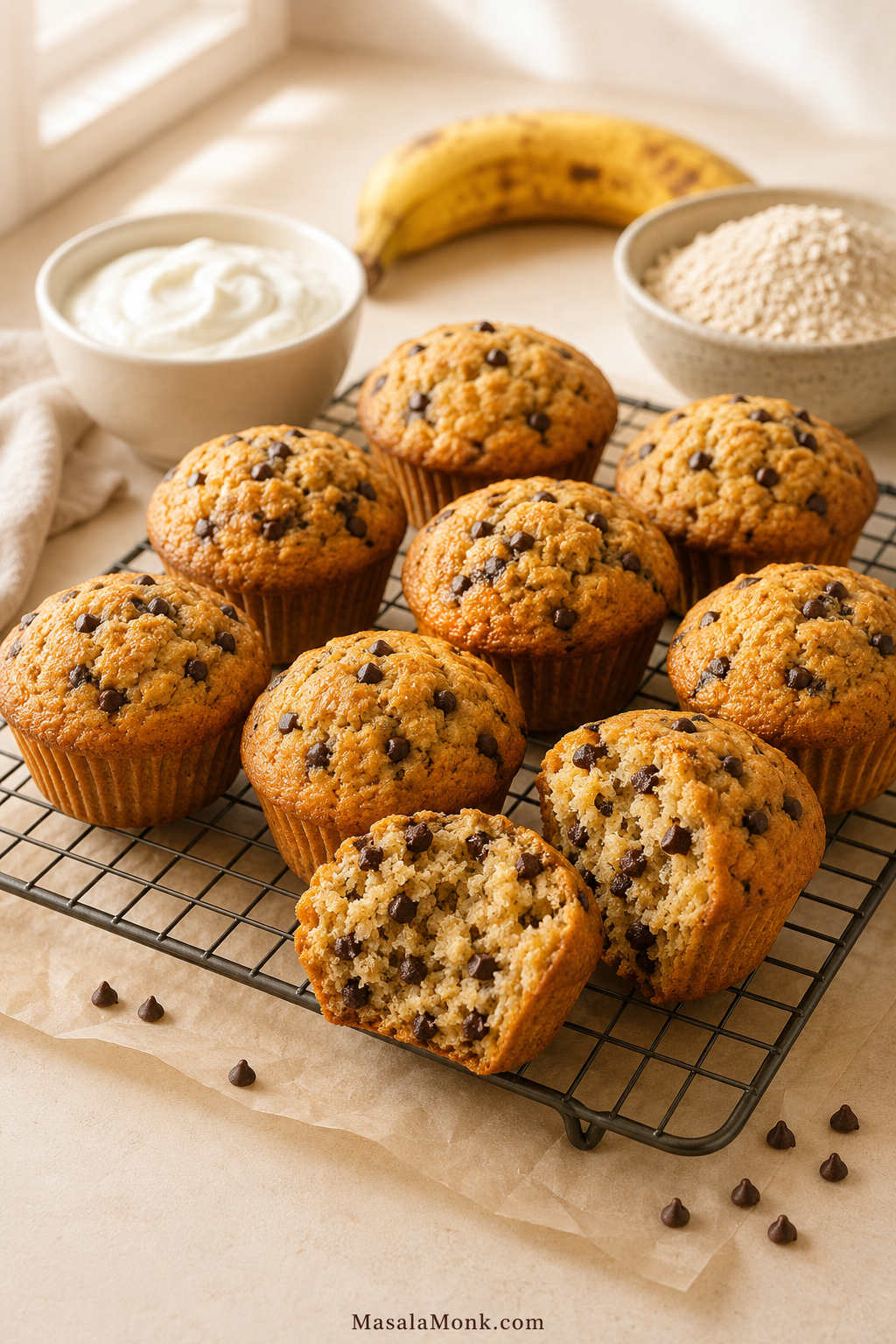
High protein muffins on a cooling rack with one muffin split open to show a soft chocolate chip crumb.

Too many high protein muffins sound better than they taste. They promise easy breakfast meal prep and extra protein, then come out dry, rubbery, chalky, or heavy enough to feel like a compromise. This recipe is built the other way around: soft first, moist first, useful first.

The goal is a muffin you actually want to eat with coffee, not a “healthy” muffin you tolerate because it has protein. Greek yogurt, a reasonable amount of protein powder, oat flour or whole wheat flour, and banana or applesauce all work together to keep the crumb tender.

If you like make-ahead breakfasts in this same lane, you may also like these high protein overnight oats for a no-bake option.

Use the base recipe once, then make it fit your mornings: banana chocolate chip when you want cozy, blueberry lemon when you want fresh, pumpkin when you want softer and spiced, or cottage cheese when you want extra moisture without relying only on protein powder.

Soft Crumb, Not Chalky
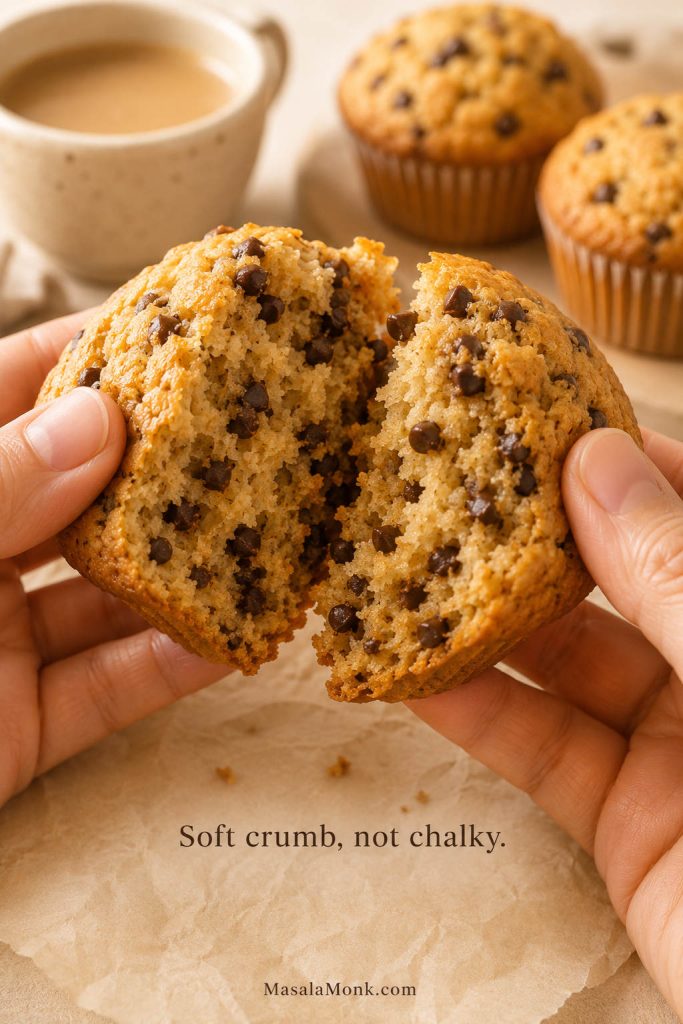
Close-up of a high protein muffin torn open to show a soft moist crumb with chocolate chips.
The crumb tells you whether the recipe worked. Pull the muffins when they are just set, because they continue to firm up as they cool.

Already know you want to bake? Use the jump button to go straight to the recipe card. If you want to avoid dry protein muffins, read the batter and protein powder notes first.

Table of Contents

Use this guide to make soft protein muffins, choose the right protein base, fix texture problems, and store them for easy breakfasts or snacks.

Quick Answer: How Do You Make High Protein Muffins?

To make high protein muffins, combine flour or oat flour, protein powder, Greek yogurt, eggs, banana or applesauce, a little maple syrup or honey, leavening, and enough milk to make a sturdy muffin batter. After that, bake in a lined muffin tin until the tops spring back lightly and a toothpick comes out clean or with a few moist crumbs.

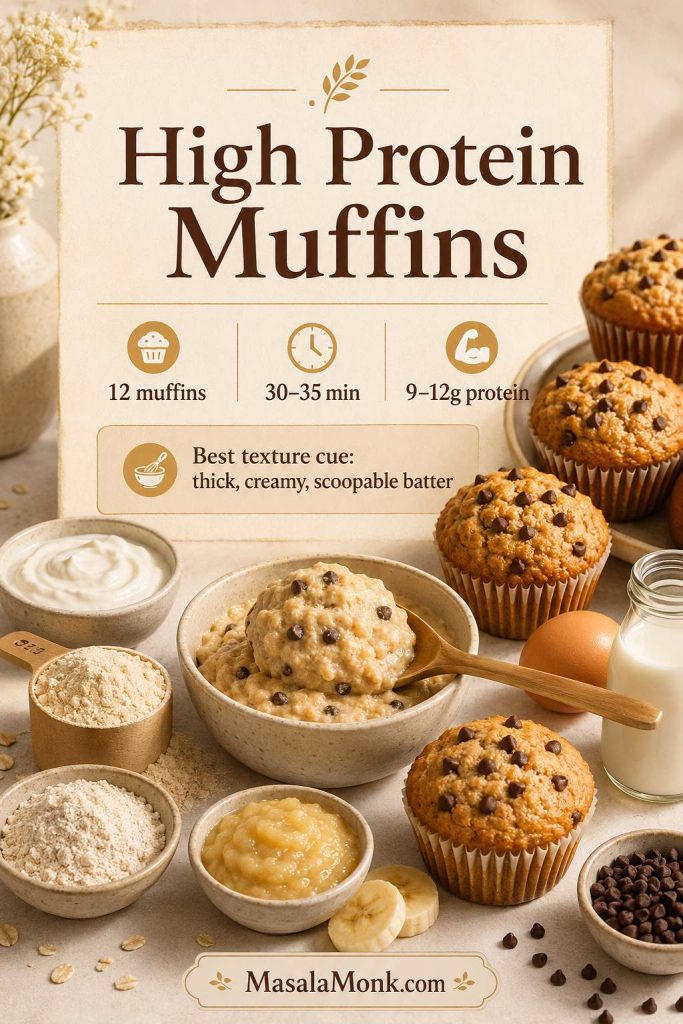
This recipe makes 12 muffins. The exact protein number depends on your protein powder, yogurt, flour, and mix-ins. Most batches land around 9–12 grams of protein per muffin, which makes them more filling without pushing the texture into dry, dense, or chalky territory.

Texture rule: the batter should be thick enough to scoop, but not dry or crumbly. When it looks stiff, loosen it gradually with milk before baking.

If you are ready to bake, jump to the recipe card. If your past protein muffins turned dry or rubbery, read the protein powder tips and troubleshooting guide first.

High Protein Muffins at a Glance

Yield12 muffins
Total timeAbout 30–35 minutes
ProteinAbout 9–12g per muffin, depending on protein powder, yogurt, flour, and mix-ins
TextureTender, lightly hearty, and muffin-like
Best first protein baseGreek yogurt + vanilla protein powder
Best no-powder pathGreek yogurt, cottage cheese, eggs, oats, nut butter, and seeds
Oven375°F / 190°C for 5 minutes, then 350°F / 175°C until done
StorageFridge 4–5 days, freezer up to 3 months
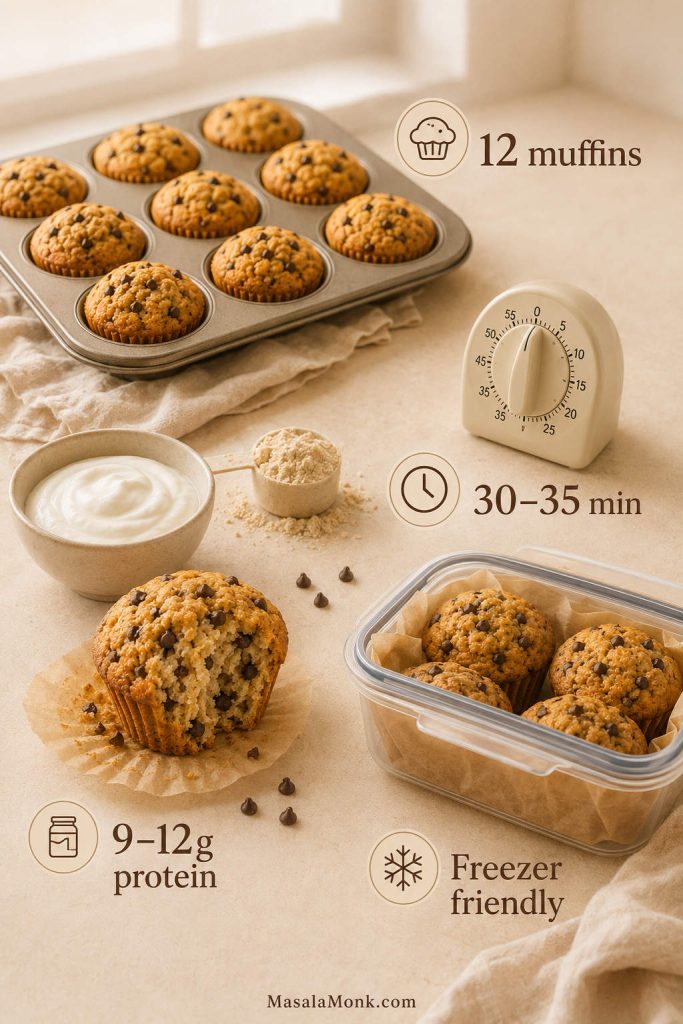
At-a-glance guide for high protein muffins showing yield, time, protein range, and freezer-friendly storage.
This 12-muffin batch is built for real meal prep: a realistic protein range, a soft crumb, and fridge-or-freezer flexibility for busy mornings.

What They Should Taste Like

These are not cupcake-style muffins, and they are not meant to taste like dry protein bars either. Instead, the crumb should be soft and lightly hearty, with enough moisture from Greek yogurt and banana or applesauce to keep each bite tender.

With banana, the muffins lean cozy and breakfast-like. Applesauce gives a more neutral base, which works better with blueberries, chocolate chips, lemon zest, or pumpkin spice. Either way, the muffin should feel satisfying without tasting like a protein powder project.

The best batch should feel like a real breakfast muffin first: warm, tender, lightly sweet, and satisfying enough that you would eat it even without counting the protein. If you add mini chocolate chips, they should give little sweet pockets in the crumb. If you choose blueberries, the muffin should feel fresher and brighter, not wet or gummy.

How Each Version Should Look Inside

Different mix-ins change the color and flavor of the crumb, but they should not change the goal: a tender muffin that still feels soft after cooling.
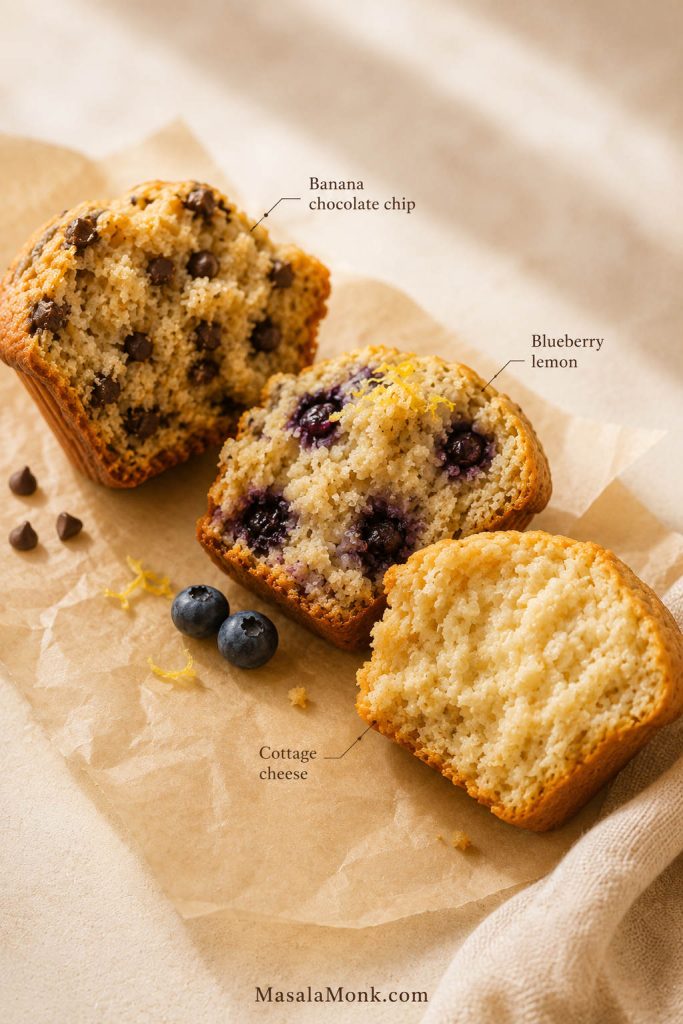
Crumb comparison of banana chocolate chip, blueberry lemon, and cottage cheese high protein muffins.
Banana chocolate chip is cozy, blueberry lemon is bright, and cottage cheese adds extra moisture. Every version should still bake up tender rather than chalky.

Choose Your Muffin Path

There is no single “right” way to make a higher-protein muffin. Some days you may want the extra boost from protein powder. Other times, you may want a more natural muffin built around Greek yogurt, cottage cheese, eggs, and oats. Use this table to choose the version that fits your kitchen and your taste.

PathBest forMain protein sourceTexture note
Protein powder muffinsHigher protein with simple ingredientsVanilla protein powder + Greek yogurtNeeds enough moisture so the crumb stays soft.
No-powder protein muffinsReaders who dislike protein powder tasteGreek yogurt, eggs, oats, hemp hearts, nut butterSofter and more natural, but usually lower in protein per muffin.
Cottage cheese protein muffinsMoist, filling breakfast muffinsBlended cottage cheese + eggsVery moist; needs proper baking and cooling so the centers set.
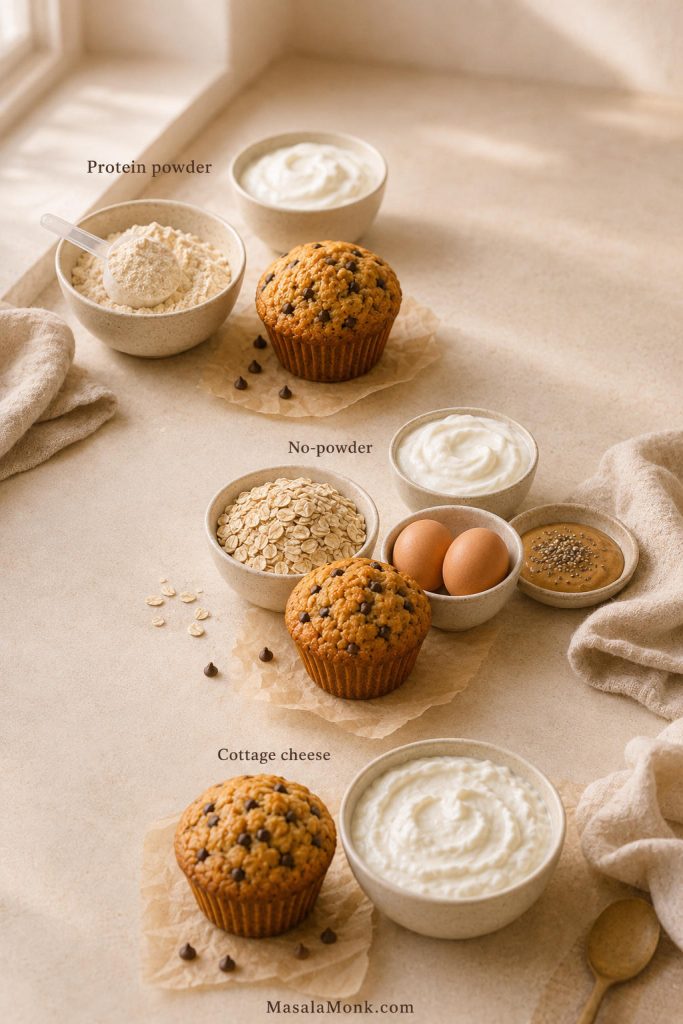
Decision guide showing protein powder, no-powder, and cottage cheese paths for high protein muffins.
Choose by texture and taste, not just protein. Protein powder gives the biggest boost; no-powder and cottage cheese versions lean more real-food and naturally moist.

Once you choose your path, use the protein powder notes for the main version, the no-powder section for real-food protein muffins, or the cottage cheese variation if you want extra moisture.

Why This High Protein Muffin Recipe Works

Greek yogurt keeps the crumb moist

Greek yogurt is one of the most useful ingredients here because it adds protein and moisture at the same time. It also helps balance the drying effect of protein powder, especially if you are using whey or a very absorbent plant-based powder.

Greek yogurt also gives the recipe a real-food protein base instead of making the entire muffin depend on powder. It is naturally protein-rich, and Harvard Health includes Greek yogurt among useful protein sources, which is why it works so well in breakfast recipes that need both moisture and staying power.
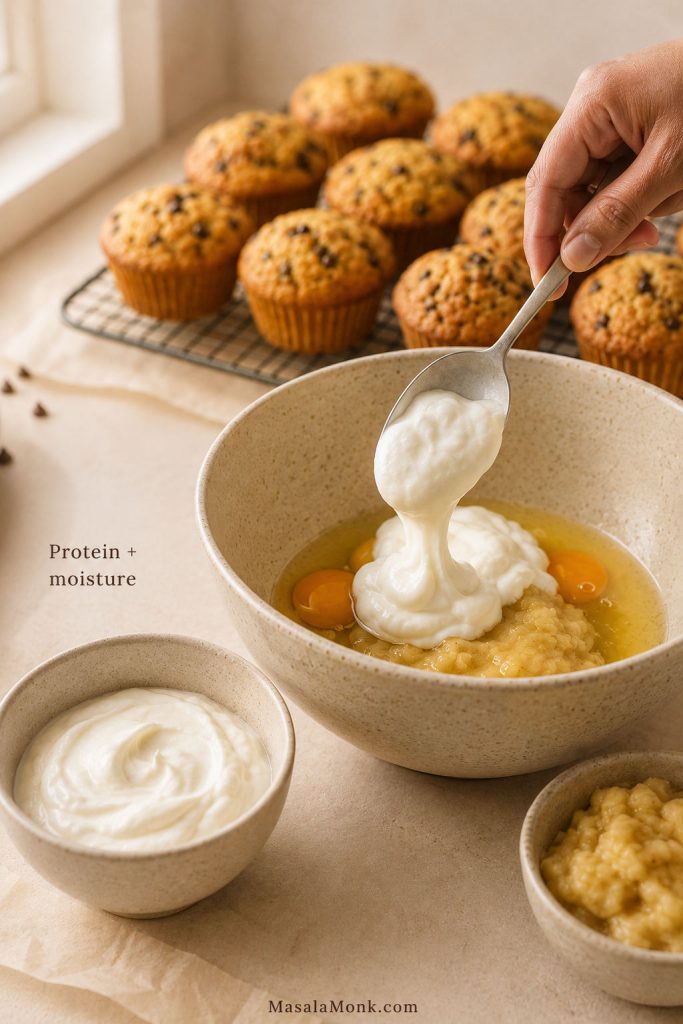
Greek yogurt being added to muffin batter ingredients to keep high protein muffins moist.
Greek yogurt helps twice: it adds protein and protects the crumb from drying out, which makes it one of the most useful ingredients in this batter.

Protein powder adds structure, but not too much

The fastest way to ruin protein muffins is to treat protein powder like regular flour. It absorbs liquid, changes the structure of the batter, and can make muffins firm when used too heavily. So this recipe uses enough protein powder to support the high-protein goal without letting it take over the texture.

A hotter oven start helps muffins rise

Start the muffins at a slightly higher oven temperature, then finish them lower. That short hot start encourages lift, while the gentler finish helps the center bake through without drying out the edges.

Banana or applesauce protects the texture

Mashed banana gives the muffins a naturally sweeter breakfast flavor. If you want a more neutral base, use unsweetened applesauce instead. Both add moisture, which is especially helpful in a protein-rich batter.

A little fat makes them taste like real muffins

Low-fat protein muffins often taste dry because too many softening ingredients are removed at once. That is why a modest amount of oil or melted butter helps the crumb stay tender, especially after refrigeration or freezing.

How Much Protein Should a Protein Muffin Have?

A realistic protein muffin can land anywhere from about 7g to 14g protein per muffin depending on the formula. Protein-powder versions can go higher, but the texture often becomes harder to protect. For this base recipe, the goal is about 9–12g protein per muffin with a soft, repeatable texture.

For exact numbers, use the labels on your own protein powder, yogurt, flour, and milk. Treat the nutrition estimate as a helpful range, not a fixed number. You can also look up individual ingredients in USDA FoodData Central if you want a more precise calculation.

That matters because a muffin with 20g protein is not automatically better if it tastes tough, chalky, or too lean. For most home bakers, the better target is a muffin that gives more protein than a regular muffin while still being enjoyable enough to make again.

Useful rule: a slightly lower-protein muffin that tastes good is more valuable than an ultra-high-protein muffin nobody wants to eat.
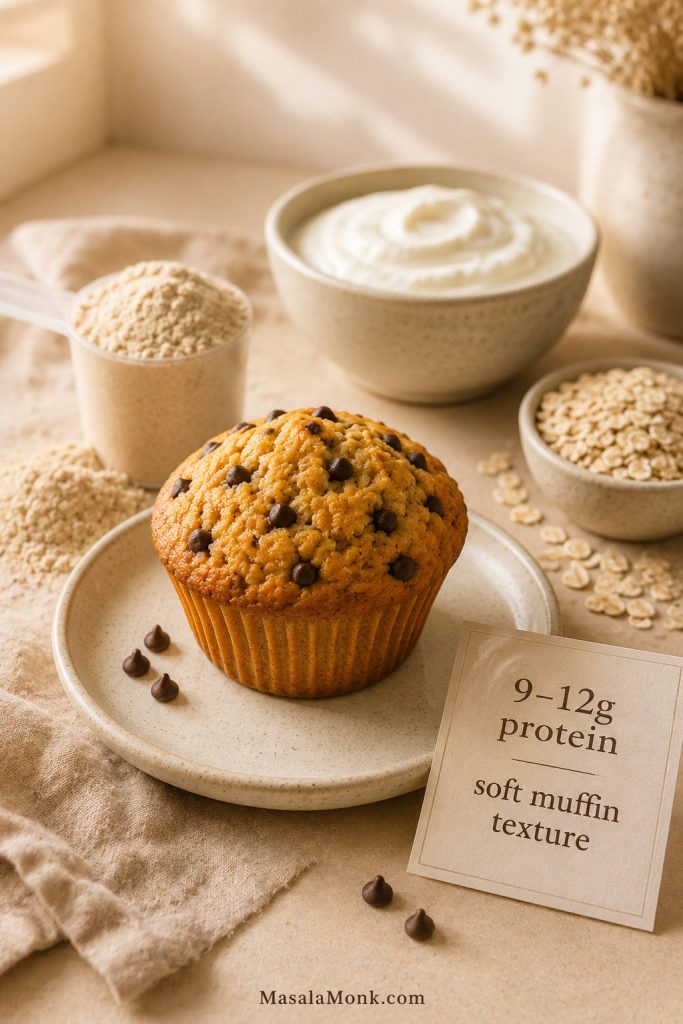
High protein muffin with a note showing a realistic 9 to 12 gram protein range and soft texture.
A realistic protein target protects texture. In practice, a softer 9–12g muffin is more useful than a dry batch chasing the biggest number.

Ingredients for High Protein Muffins

Best first version to make

Best first batch: start with oat flour, almond flour, vanilla protein powder, plain Greek yogurt, mashed banana, neutral oil, and mini chocolate chips. That version gives the easiest balance of flavor, moisture, and texture. Once you like the base, try applesauce, blueberries, pumpkin, or cottage cheese.
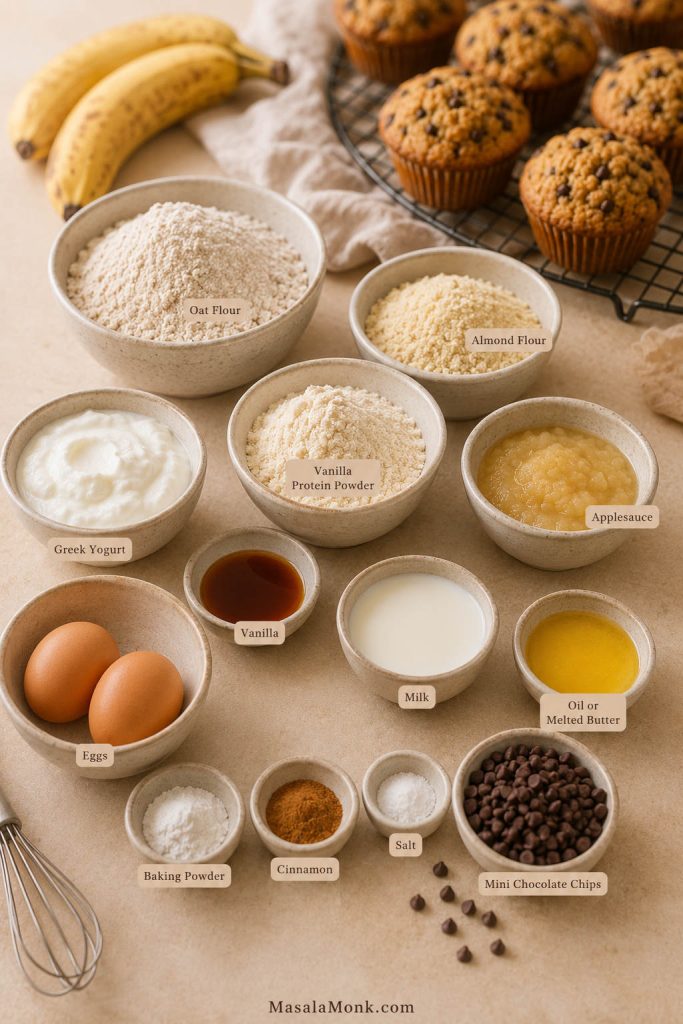
Ingredients for high protein muffins including oat flour, protein powder, Greek yogurt, banana, eggs, and chocolate chips.
Balance matters more than any one “healthy” add-in: flour gives body, Greek yogurt adds moisture, eggs set the crumb, and protein powder brings the boost.

Oat flour, white whole wheat flour, or all-purpose flour

Oat flour gives these muffins a wholesome breakfast feel. White whole wheat flour gives a slightly nutty but still soft muffin. All-purpose flour gives the most classic texture. For the base recipe, use 100g oat flour or 120g all-purpose or white whole wheat flour.
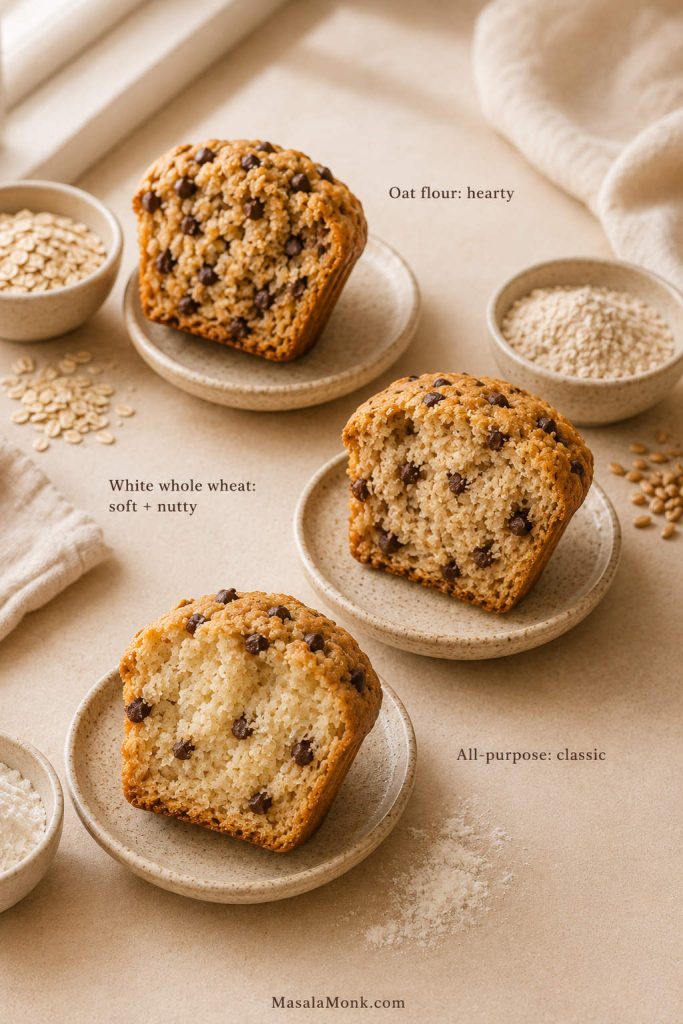
Comparison of oat flour, white whole wheat, and all-purpose flour textures in high protein muffins.
Flour choice changes the crumb: oat flour is heartier, white whole wheat adds soft nuttiness, and all-purpose flour gives the most classic muffin texture.

If oats are your favorite breakfast base, this guide to high protein oatmeal has more ideas for using oats with yogurt, protein powder, cottage cheese, seeds, and nut butter.

Almond flour or extra oat flour

A small amount of almond flour adds tenderness and helps keep the muffin from tasting too lean. If you do not want to use almond flour, use extra oat flour instead. Avoid replacing all the flour with almond flour unless you are using a recipe designed for that structure.

Protein powder

Vanilla protein powder is the easiest choice because it adds sweetness and flavor. Plain protein powder can work, but the muffins may need more vanilla, cinnamon, sweetener, or mix-ins. For example, chocolate protein powder works best in chocolate chip, double chocolate, or banana chocolate versions.

Greek yogurt

Use plain Greek yogurt. Full-fat or 2% yogurt gives the softest result, but nonfat Greek yogurt also works. If the batter looks too stiff after mixing, add a small splash of milk until it loosens.

Banana or applesauce

Use mashed ripe banana for a banana-forward muffin. If you want a more neutral base, use unsweetened applesauce instead. Banana gives more flavor and sweetness; applesauce keeps the muffin more flexible for blueberry, chocolate chip, or pumpkin variations.
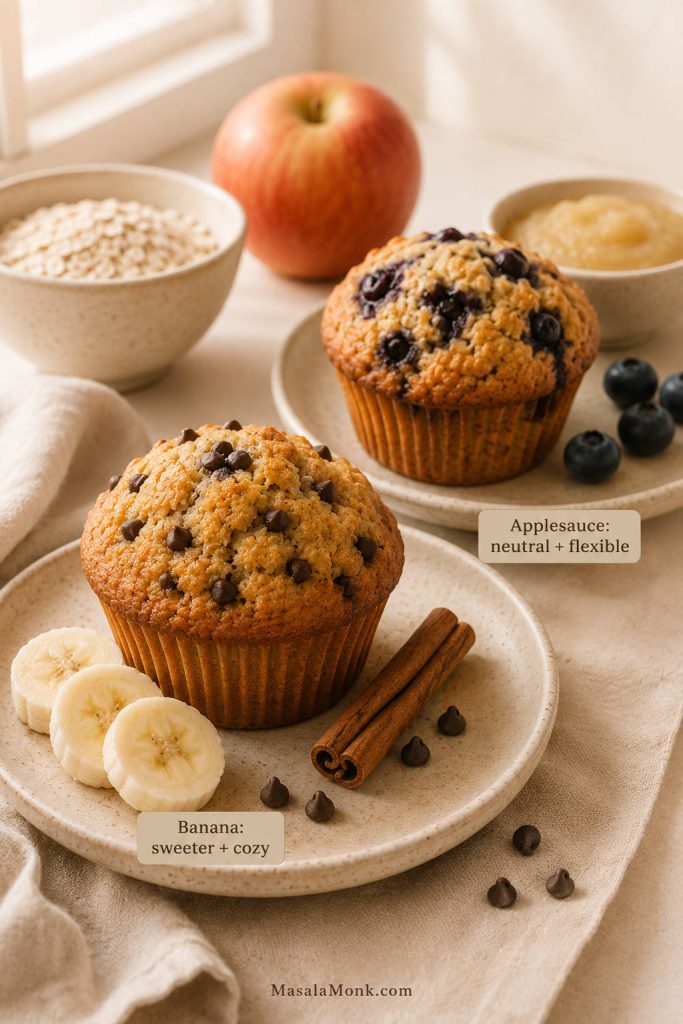
Banana and applesauce high protein muffin comparison showing different moisture and flavor bases.
Banana makes the batch sweeter and more banana-bread-like. Applesauce keeps the base more neutral for blueberry, chocolate chip, or pumpkin variations.

Eggs, milk, and oil

Eggs give structure, milk adjusts the batter, and a little oil or melted butter keeps the crumb tender. Think of the milk as an adjustment, not a fixed amount. Start with less, then add only what the batter needs.

Mix-ins

Mini chocolate chips, blueberries, chopped walnuts, lemon zest, cinnamon, pumpkin spice, and diced strawberries can all work. Keep mix-ins to about ½–¾ cup so the muffins bake evenly.

Flavor and sweetness

Protein powder, oats, and Greek yogurt can mute sweetness once baked. If your protein powder is plain or lightly sweetened, use the full amount of maple syrup or honey and do not skip the vanilla, cinnamon, or salt. For a more treat-like muffin, mini chocolate chips usually help more than extra sweetener because they give little pockets of flavor in every bite.

Best Protein Powder for Muffins

Protein powder can make muffins better, but it can also make them dry if the batter is not balanced. Different powders absorb liquid differently, so use the batter texture as your final guide.

This is the part that decides whether your muffins taste like breakfast or like a protein bar in muffin form. The same recipe can turn out soft with one powder and dry with another, so the batter matters more than brand loyalty.
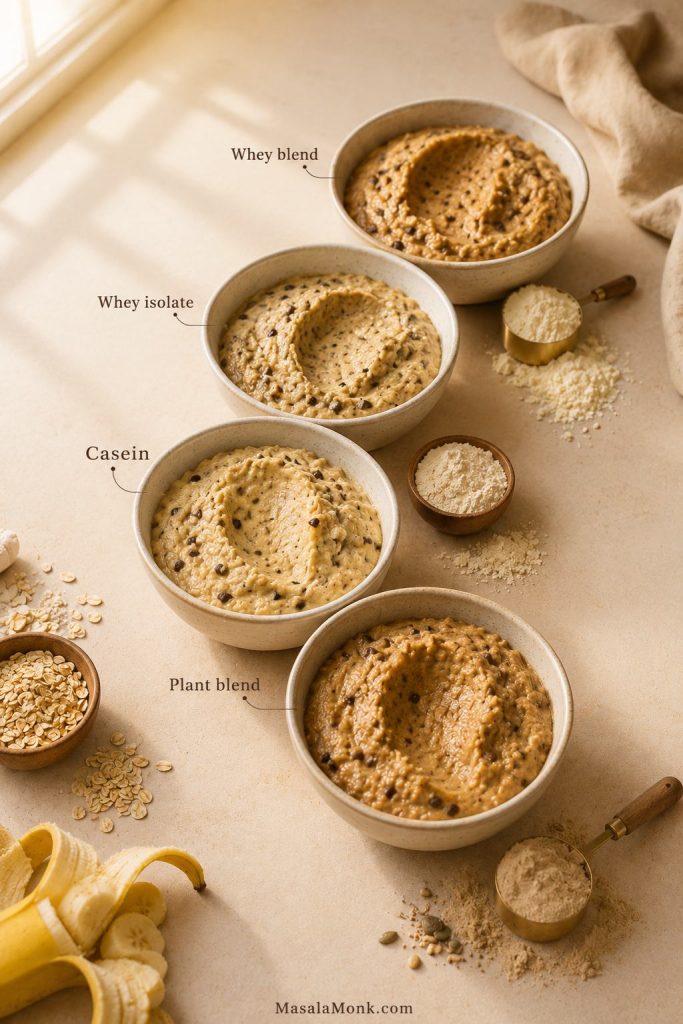
Four muffin batter bowls showing how whey, casein, and plant protein powders create different batter textures.
The same recipe can bake differently with whey, casein, or plant protein. Start with the formula, then adjust the batter before it goes into the pan.
Protein powder typeWhat to expect in muffinsBest adjustment
Whey isolateCan bake firm or dry if overused.Add extra yogurt or milk and check early for doneness.
Whey blendUsually easier than pure isolate and works well in muffin batter.Start with the recipe amount of milk, then adjust if needed.
CaseinAbsorbs a lot of liquid and can make the batter sturdy.Loosen gradually with milk until the batter is easy to scoop.
Pea proteinGood structure, but can become dense or earthy.Use enough flavor, moisture, and gentle mixing.
Plant protein blendOften reliable, but brands vary widely in absorption.Judge by batter texture, not just the printed amount of milk.
CollagenNot ideal as the only protein powder replacement.Use as a partial boost, not a full swap for flour or protein powder.

How protein powder changes batter moisture
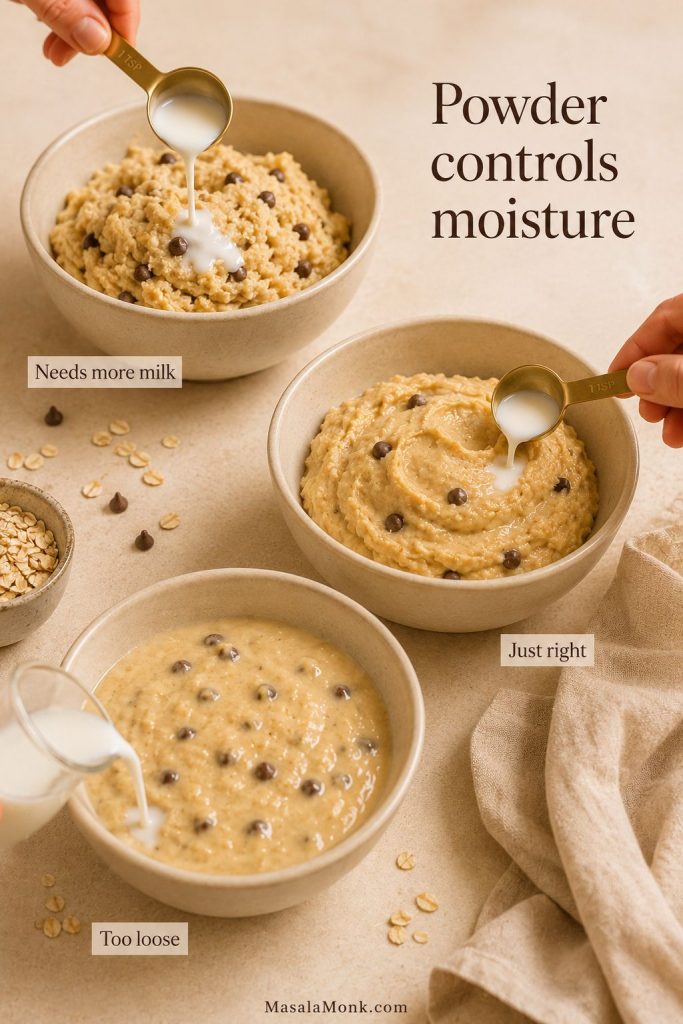
Protein muffin batter absorption guide showing thick, just-right, and too-loose batter after adding milk.
A stiff batter does not always mean the recipe is wrong. Often, the protein powder simply needs a slower, splash-by-splash milk adjustment.

Protein powder rule: do not keep adding protein powder just to raise the number. Once protein powder becomes too large a share of the dry ingredients, muffins turn tough, dry, or heavy. A better muffin with 9–12g protein is more useful than a 20g muffin nobody wants to eat.

As a practical starting point, avoid replacing more than about one-third of the dry ingredient base with protein powder unless the recipe has been specifically built for that much powder. The more powder you add, the more moisture, fat, flavor, and careful baking you usually need.

Check the batter texture before baking

Before you bake: if the batter looks like cookie dough, it needs more milk. If it pours like pancake batter, it needs oat flour and a short rest. The sweet spot is thick, creamy, and scoopable.
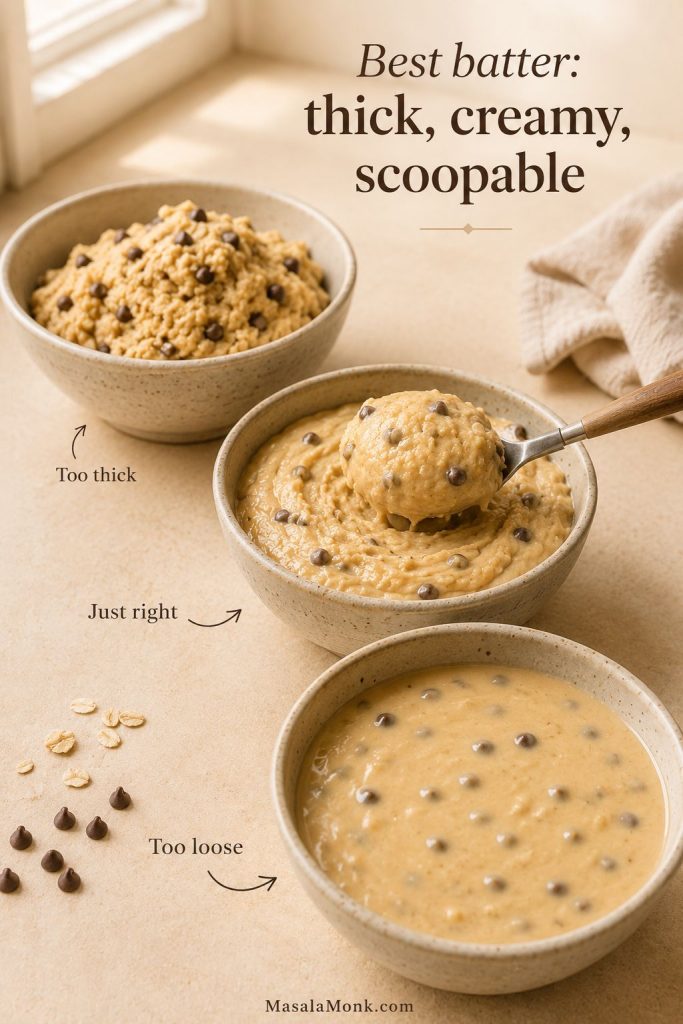
Three bowls showing too-thick, just-right, and too-loose batter textures for high protein muffins.
This is the texture check that prevents most dry protein muffins. The batter should hold a scoop without crumbling or pouring.

If your batter already looks too stiff or too loose, fix it here before filling the pan. For finished muffins that came out dry, dense, or rubbery, jump to troubleshooting.

How to fix thick or loose batter
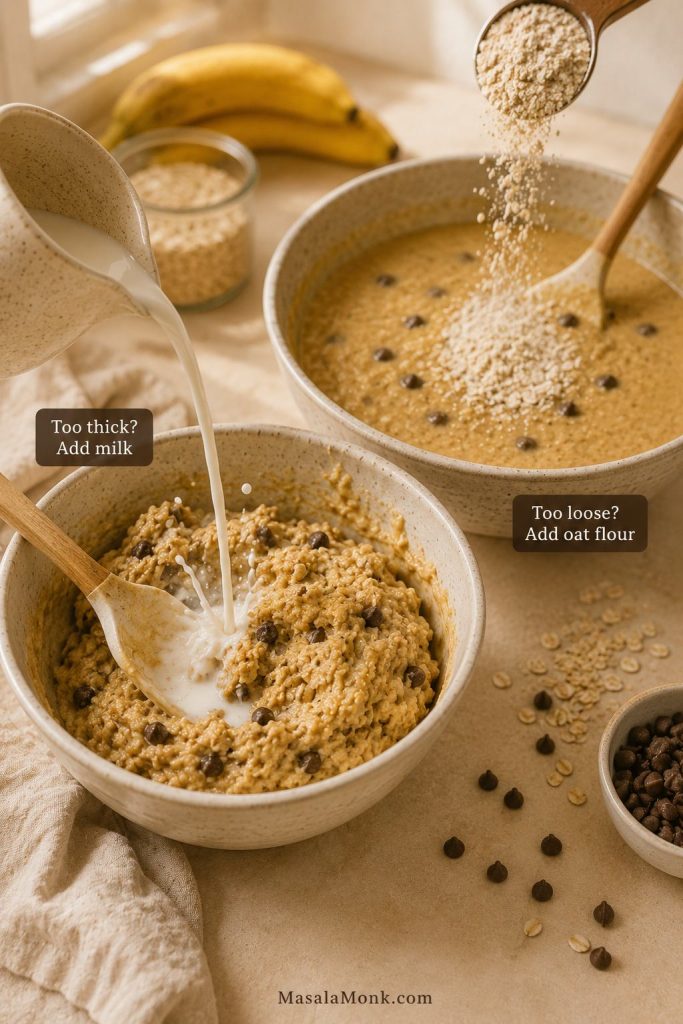
Muffin batter being fixed with milk for thick batter and oat flour for loose batter.
Most batter problems are fixable before baking. Use milk to loosen a stiff mix, or oat flour to tighten a loose one, then let the batter rest briefly.

This is the best moment to fix the batter. If it does not look scoopable, check the batter texture guide before filling the muffin tin.

Step-by-Step Method

1. Mix the dry ingredients

In a large bowl, whisk together the flour or oat flour, almond flour or extra oat flour, protein powder, baking powder, baking soda, salt, and cinnamon. Whisking first helps distribute the protein powder and leavening evenly.

2. Whisk the wet ingredients

In a separate bowl, whisk the Greek yogurt, eggs, mashed banana or applesauce, maple syrup or honey, oil or melted butter, milk, and vanilla. The mixture should look smooth and creamy.

3. Combine gently

Add the wet ingredients to the dry ingredients and fold with a spatula. Stop when no dry streaks remain. Do not worry if the mixture looks a little sturdier than regular muffin batter; that is normal here.

This is the point where the recipe either stays tender or starts getting tough. A few tiny lumps are fine; a perfectly smooth batter is not the goal.
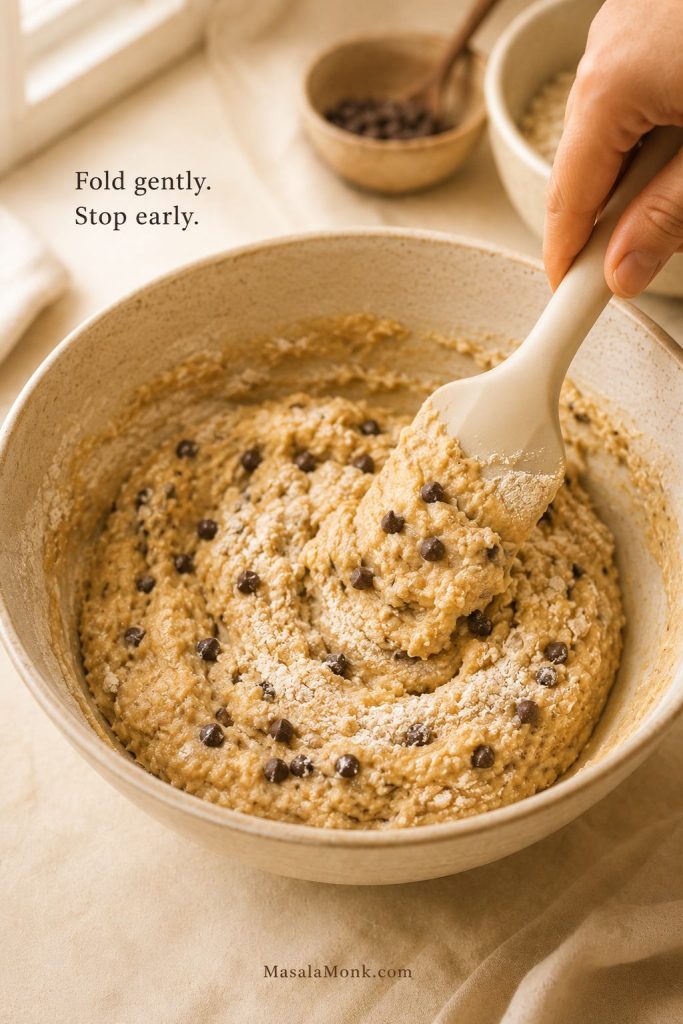
High protein muffin batter being gently folded with a spatula before overmixing.
Stop folding as soon as the batter comes together. A few streaks are better than overmixing, which can make protein muffins dense or rubbery.

4. Check and fix the batter texture

The batter should be creamy, scoopable, and easy to portion. It should mound slightly on a spoon but still spread slowly when scooped into the muffin cup. If it looks dry or crumbly, add a small splash of milk. If it pours like pancake batter, add oat flour 1 tablespoon at a time and let it rest for 5 minutes.

5. Let the batter rest if needed

If using oat flour, casein, pea protein, or a thick plant protein blend, let the batter rest for 5 minutes before scooping. Some powders hydrate slowly, so a short rest can make the final texture more even. If it becomes too stiff after resting, loosen it with 1–2 tablespoons of milk.

6. Fold in mix-ins

Fold in chocolate chips, blueberries, nuts, or other mix-ins gently. Overmixing at this point can make the muffins dense.

7. Fill the muffin tin

Line a 12-cup muffin tin and lightly spray the liners. Fill each cup about ¾ full for regular muffins, or slightly fuller for taller tops.
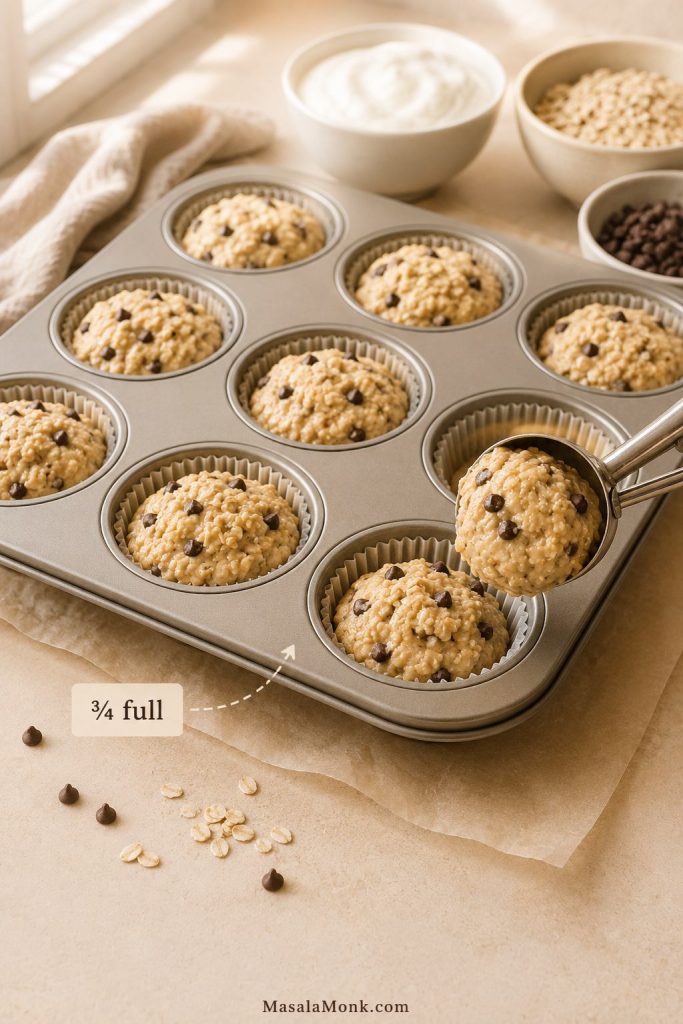
High protein muffin batter scooped into a muffin tin with cups filled about three-quarters full.
Fill each muffin cup about three-quarters full. That gives the batter room to rise while still creating a generous, bakery-style top.

8. Bake and cool

Bake at the higher starting temperature first, then reduce the oven temperature without opening the door. After that, let the muffins cool in the pan for 10 minutes before moving them to a rack. A little patience here pays off because the centers continue to settle as they cool.

Bake Time, Temperature, and Doneness

For the best balance of lift and moisture, start the muffins at 375°F / 190°C for 5 minutes. Then reduce the oven to 350°F / 175°C and bake for another 12–17 minutes, depending on your oven, muffin tin, protein powder, and mix-ins.
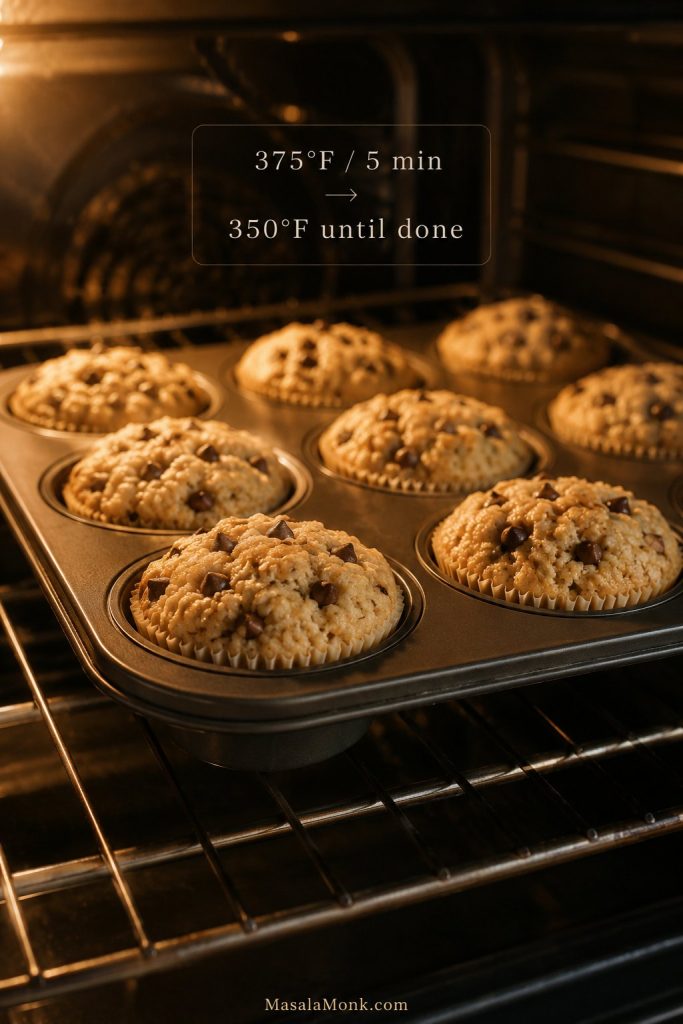
High protein muffins baking with a hot-start oven cue of 375 degrees then 350 degrees.
A short hot start helps protein muffins lift before the lower temperature finishes the centers gently. This gives better rise without drying the edges.

How to check doneness

The muffins are done when the tops spring back lightly and a toothpick inserted in the center comes out clean or with a few moist crumbs. Do not wait until the tops feel hard. Instead, pull them when they are just set because they continue to firm up as they cool.
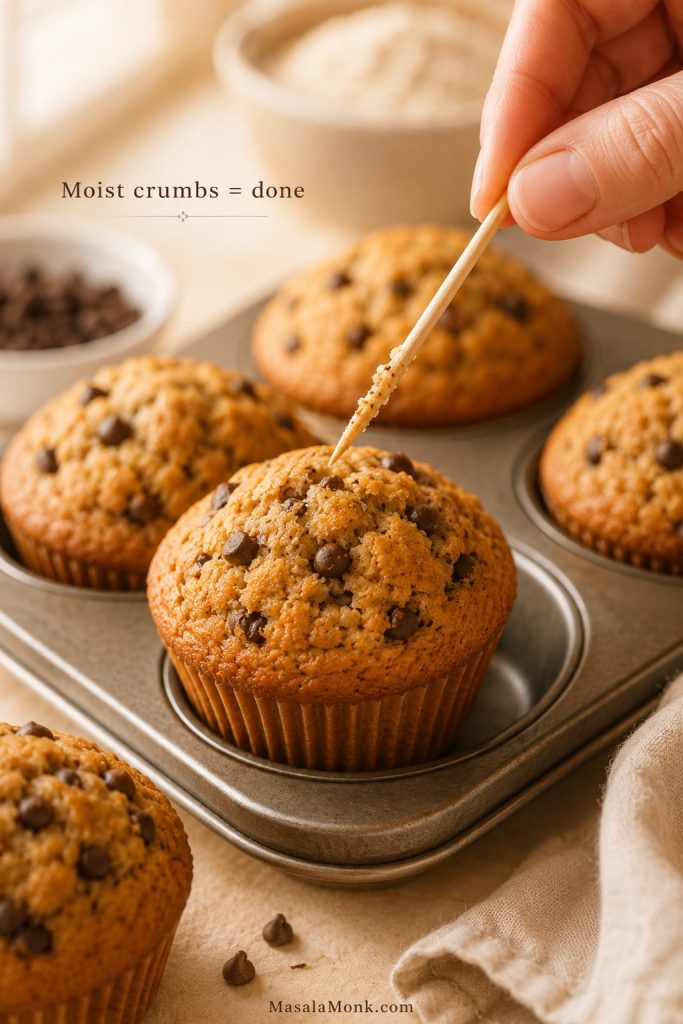
Toothpick test showing moist crumbs on a high protein muffin to indicate doneness.
Do not wait for a perfectly clean toothpick if you want a softer crumb. A few moist crumbs usually mean the muffins are done.

A good batch should rise slightly, feel soft when pressed, and smell warm and lightly sweet. The tops should not feel hard when they leave the oven. If they do, the batch likely baked a few minutes too long.

Cool before storing

Do not skip cooling: these muffins can seem slightly soft in the center when hot. Give them 10 minutes in the pan and more time on a rack before judging the final texture.
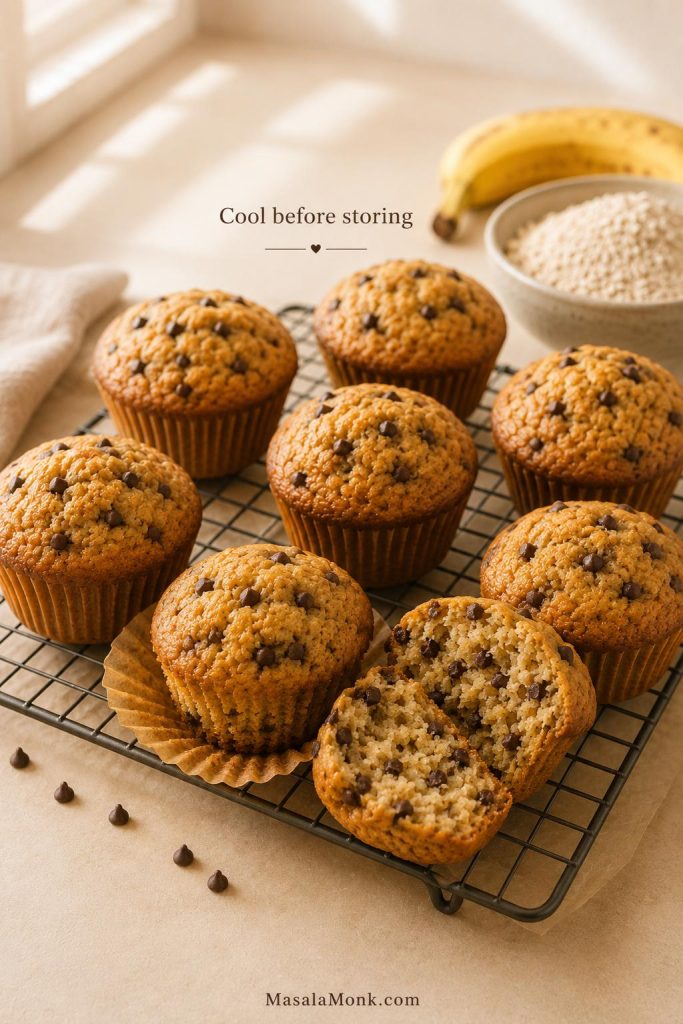
High protein muffins cooling on a wire rack with one muffin split open after cooling.
Cooling is part of the recipe, not an afterthought. Letting the muffins rest helps the centers settle and keeps extra steam out of the storage container.

After baking, let the muffins cool before judging the final crumb. Then use the storage and freezing tips if you are making them for meal prep.

Easy Muffin Variations

Use the base recipe as a flexible formula. The mixture should be sturdy enough to scoop, but still soft enough to settle into the muffin cups. Adjust with milk if your protein powder makes it too stiff.

Choose the version based on what you want the muffin to feel like: banana for cozy breakfast, blueberry for fresh and bright, chocolate chip for snack prep, oatmeal for a heartier morning muffin, and pumpkin for a softer fall batch.

Best first variation: banana chocolate chip is the easiest crowd-pleaser. Blueberry lemon is fresher, pumpkin is softer, and cottage cheese is best when you want extra moisture without relying only on protein powder.

For the easiest first batch, start with banana chocolate chip. For a brighter version, try blueberry lemon; for extra moisture, use the cottage cheese version.

Banana protein muffins

Choose this when you want the coziest version. Mashed ripe banana makes the muffins taste closer to banana bread, especially with cinnamon and mini chocolate chips.
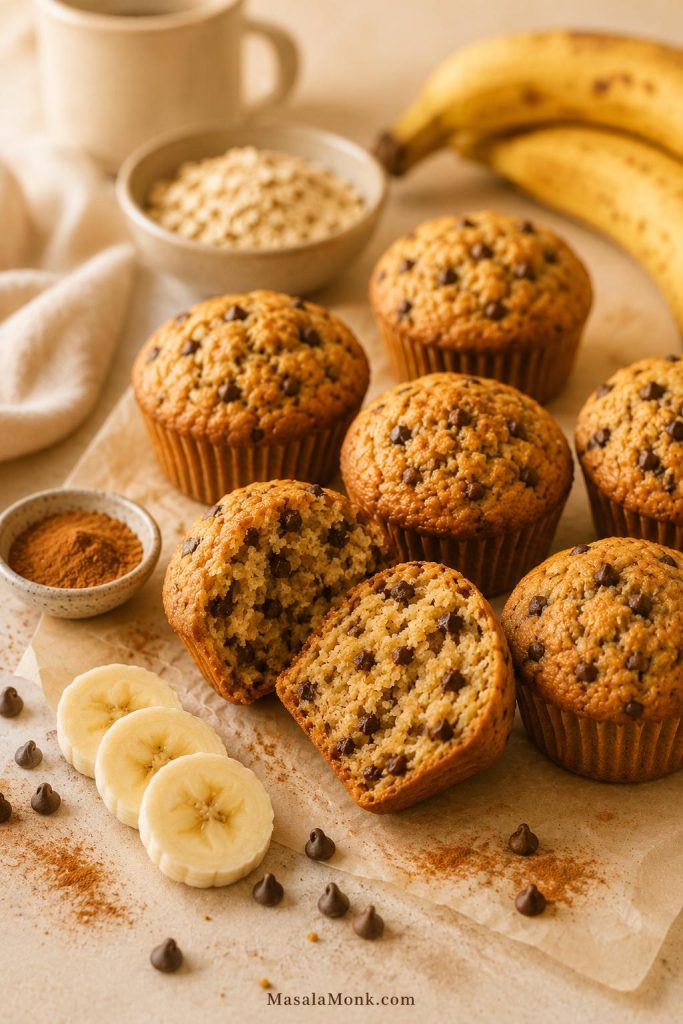
Banana chocolate chip high protein muffins with one muffin split open to show a moist crumb.
Banana chocolate chip is the coziest variation: ripe banana adds sweetness, while mini chips spread little pockets of flavor through the crumb.

Blueberry protein muffins

Choose this when you want something fresher and brighter. Applesauce keeps the base neutral, while blueberries and lemon zest make the muffins feel more like a morning bakery muffin.
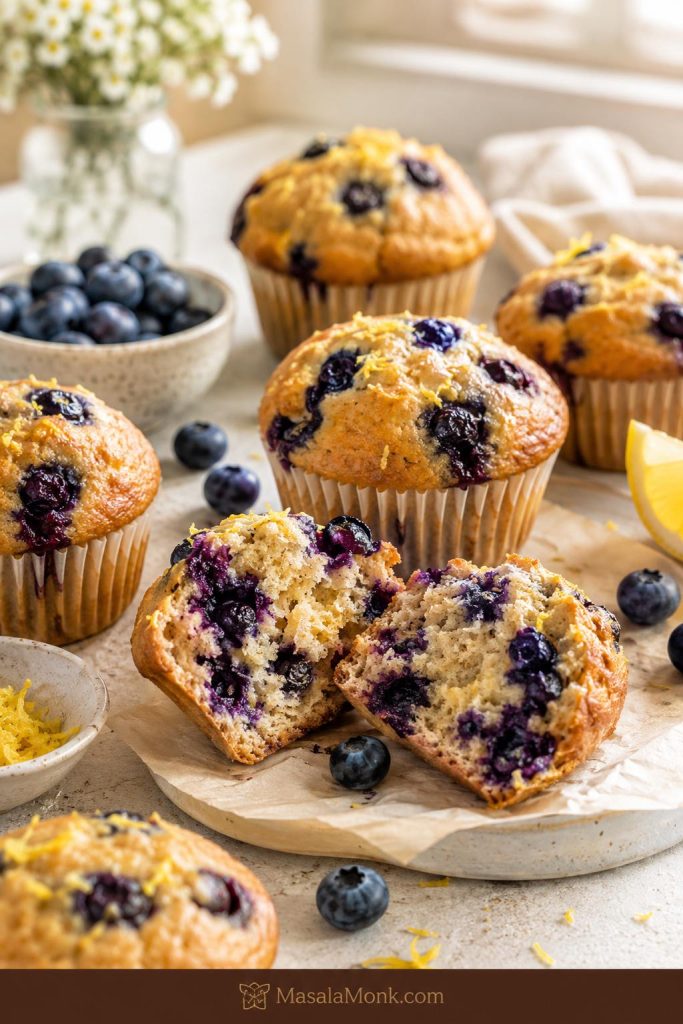
Blueberry lemon high protein muffins with one muffin split open to show a soft crumb and blueberry pockets.
Blueberry lemon gives the same protein muffin base a fresher, brighter flavor. Keep the batter thick enough so the berries stay suspended instead of sinking.

Chocolate chip protein muffins

Choose this when you want the batch to feel more like a snack than a strict breakfast. Mini chips spread through the crumb better, so you get chocolate in more bites without overloading the batter.
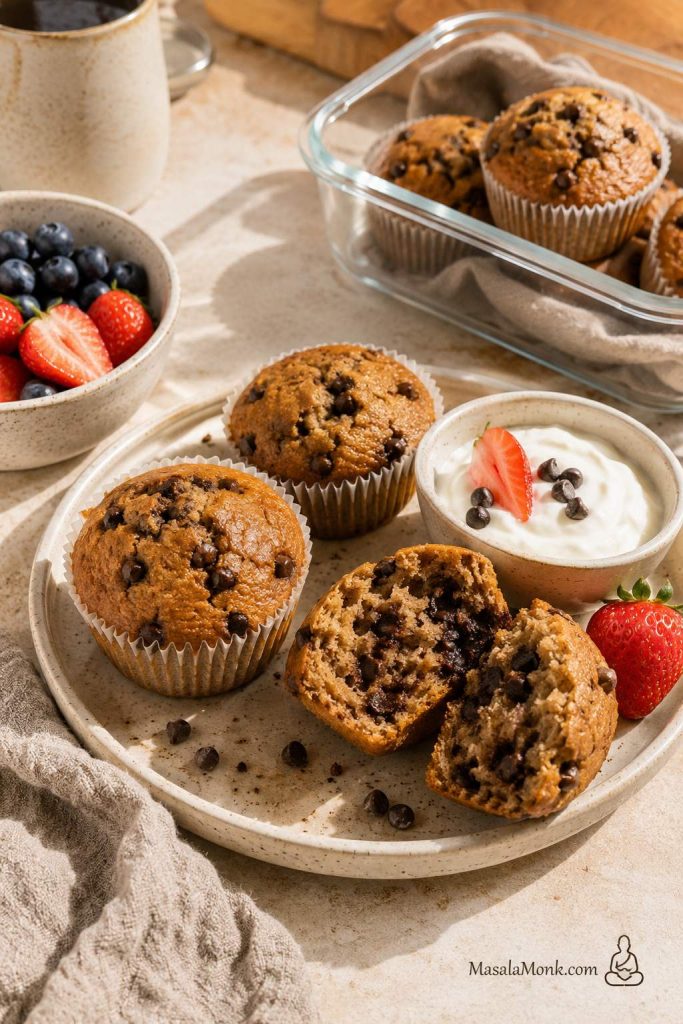
Chocolate chip high protein muffins served with Greek yogurt and fruit for snack prep.
For snack prep, mini chocolate chips make the muffins feel more satisfying without overloading the batter. Pair one with yogurt and fruit for a fuller bite.

Oatmeal protein muffins

For a heartier breakfast muffin, use oat flour and a small amount of rolled oats. Avoid steel-cut oats here because they will not soften properly in a standard muffin bake.

Pumpkin protein muffins

To make a fall-style batch, replace the banana or applesauce with pumpkin puree, add pumpkin pie spice, and use chocolate chips or walnuts. Because pumpkin adds a lot of moisture, these muffins may need the longer end of the bake window.
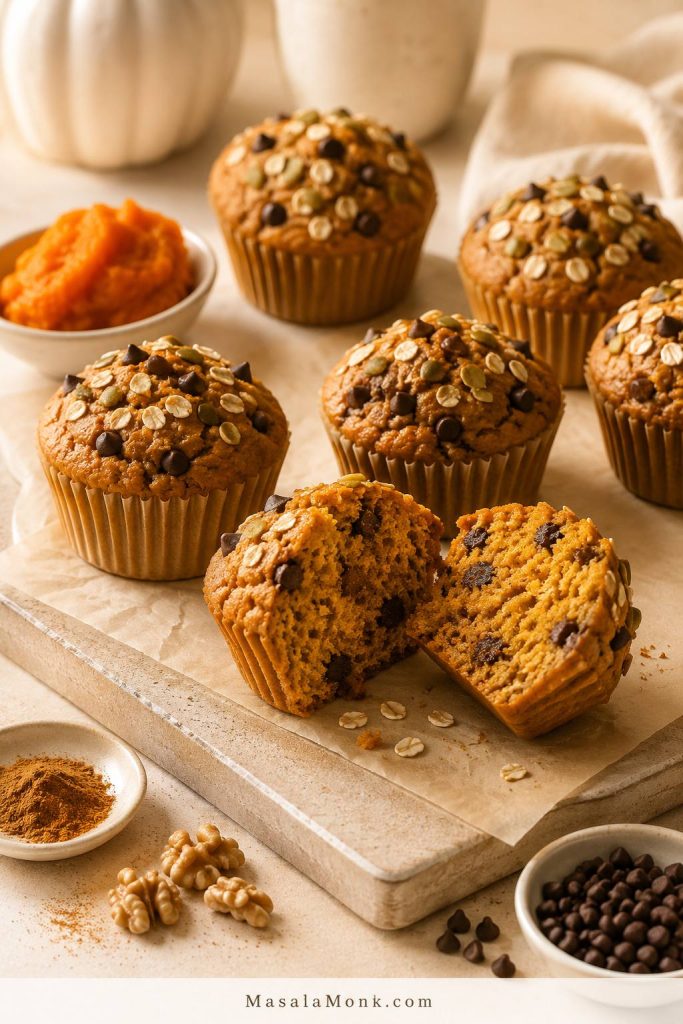
Pumpkin high protein muffins with a soft orange crumb and warm spice cues.
Pumpkin adds moisture, color, and warm spice, but it also softens the batter. Use the longer end of the bake window if the centers need more time.

Cottage cheese protein muffins

Choose this when you want extra moisture and a softer center. This is the best cottage cheese protein muffin direction if you want more real-food protein without making the batch depend only on powder. Blend the cottage cheese into the wet ingredients first so the batter bakes smooth instead of curdy.
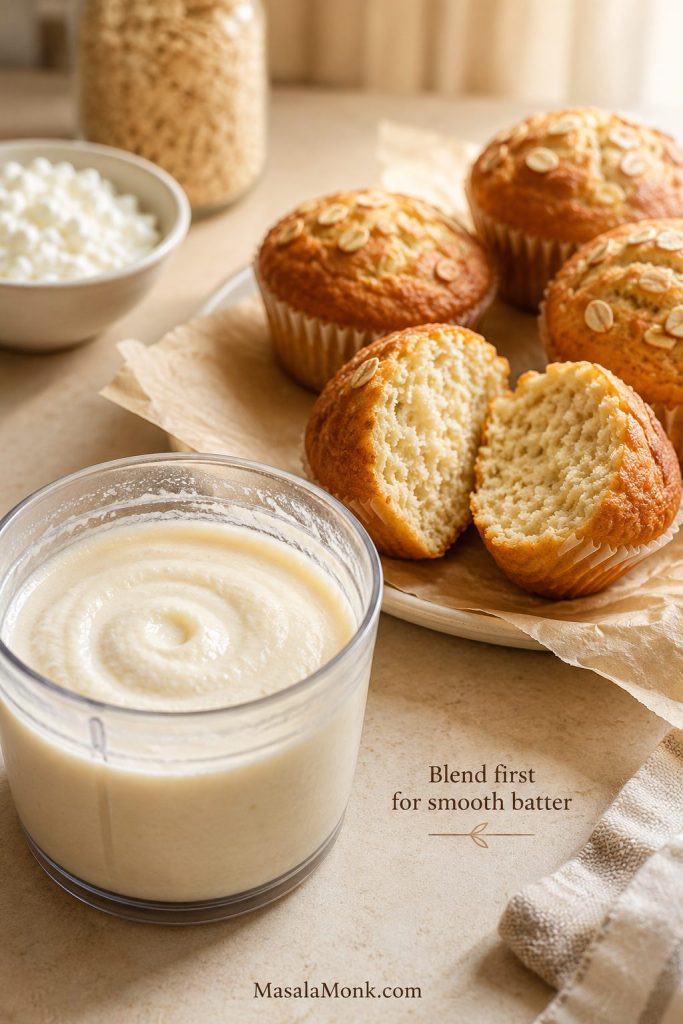
Cottage cheese protein muffins with blended cottage cheese and a split muffin showing a smooth tender crumb.
Cottage cheese works best when blended into the wet ingredients first. That simple step adds moisture without leaving curdy pockets in the crumb.

For more breakfast ideas using the same ingredient, see cottage cheese for breakfast.

How to Make High Protein Muffins Without Protein Powder

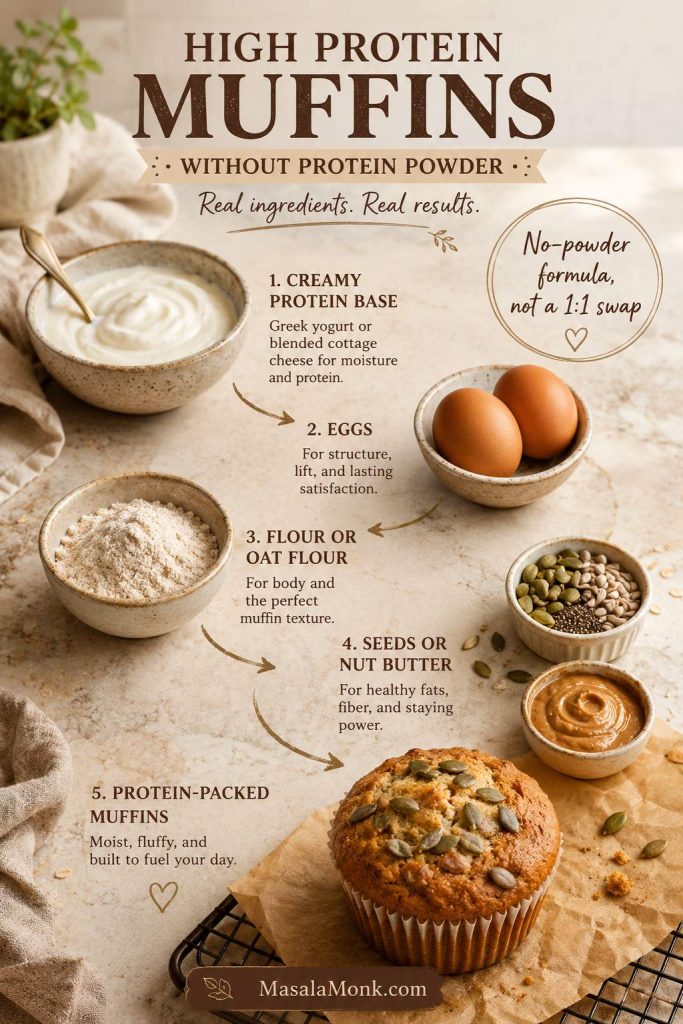
You can make protein-rich muffins without protein powder, but the recipe needs a different strategy. For a no-powder batch, think in parts: a creamy protein base, eggs for structure, flour for body, and a little fat, seeds, or nut butter for staying power.

Important: this is not a direct one-for-one swap. If you simply remove the protein powder from the main recipe, the batter balance changes. Use the no-powder formula below instead.

If you are using protein powder after all, return to the main recipe card. If you want to avoid powder completely, follow the no-powder formula below rather than removing the powder from the main batter.

Best no-powder formula

For muffins without protein powder, start with a structure that balances moisture, lift, body, and staying power:

  • Creamy protein base: ¾–1 cup Greek yogurt or blended cottage cheese
  • Structure: 2 eggs
  • Body: 1 cup oat flour + 1 cup all-purpose or white whole wheat flour
  • Staying power: ¼–½ cup hemp hearts or nut butter
  • Moisture and flavor: banana or applesauce
  • Lift: 2 teaspoons baking powder + ½ teaspoon baking soda
  • Balance: ½ teaspoon salt
No-powder high protein muffin formula with Greek yogurt or cottage cheese, eggs, flour, seeds, nut butter, and a finished muffin.
A no-powder protein muffin needs its own structure. Build around yogurt or cottage cheese, eggs, flour, and seeds or nut butter instead of simply removing protein powder.

This will usually give less protein than a protein-powder muffin. The flavor is often more natural, though, and the texture can be softer.

The same idea works in other breakfast batters too. These oat pancakes use oats, cottage cheese, and high-protein options in a way that feels very similar: simple ingredients, better texture, and no need to rely only on protein powder.

Best real-food protein options

IngredientHow it helpsBest use
Cottage cheeseAdds protein and moisture.Blend with wet ingredients for a smooth muffin.
Greek yogurtAdds protein and keeps the crumb soft.Use in banana, blueberry, and chocolate chip muffins.
EggsAdd structure and protein.Useful in almost every muffin formula.
Oats or oat flourAdd breakfast texture and slow-digesting carbs.Best for oatmeal and banana protein muffins.
Nut butterAdds fat, flavor, and some protein.Best in banana, chocolate, and peanut butter muffins.
Hemp, flax, or chiaAdds protein, fiber, and texture.Use in small amounts so the muffins do not turn heavy.

For the best no-powder result, use cottage cheese or Greek yogurt as part of the wet base rather than treating them like simple add-ins. They help the batter stay moist while adding protein in a more natural way.

Troubleshooting: Why Are My Protein Muffins Dry, Dense, or Rubbery?

Most protein muffin problems are not disasters. They are signals. Dry muffins, sticky centers, flat tops, and chalky flavor usually mean the batter needed a little more moisture, less mixing, or a shorter bake.

If your first batch is not perfect, do not treat it like a failure. Protein muffin batter is more sensitive than regular muffin batter because protein powder, oats, yogurt, and cottage cheese all hold moisture differently. Most problems can be fixed by changing the liquid, mixing less, or pulling the muffins from the oven a little earlier.

The batter usually tells you what it needs. A stiff batter needs a little milk. A loose batter needs oat flour and a short rest. Finally, flat flavor usually needs more vanilla, cinnamon, salt, fruit, or chocolate next time.

Dry vs moist: read the crumb
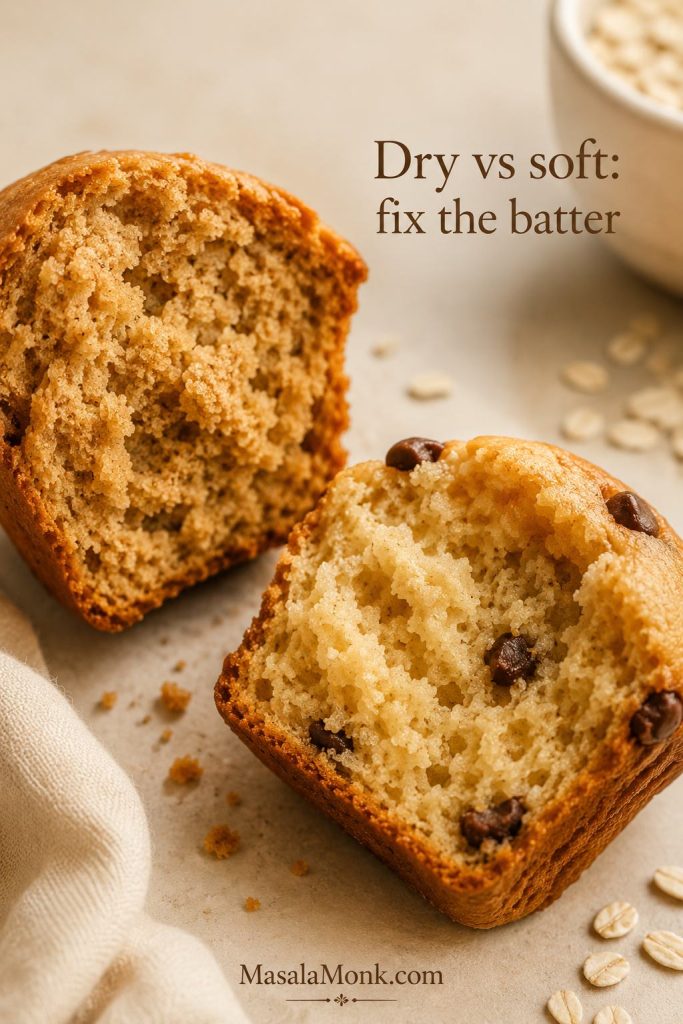
Dry protein muffin crumb compared with soft moist protein muffin crumb for troubleshooting.
Dry protein muffins usually point back to the batter. More moisture, less overbaking, and a better powder-to-flour balance can change the result.

If the problem started before baking, go back to the batter texture cue. If the muffins looked fine going in but came out dry, check the bake time and doneness notes.

Protein muffin troubleshooting guide
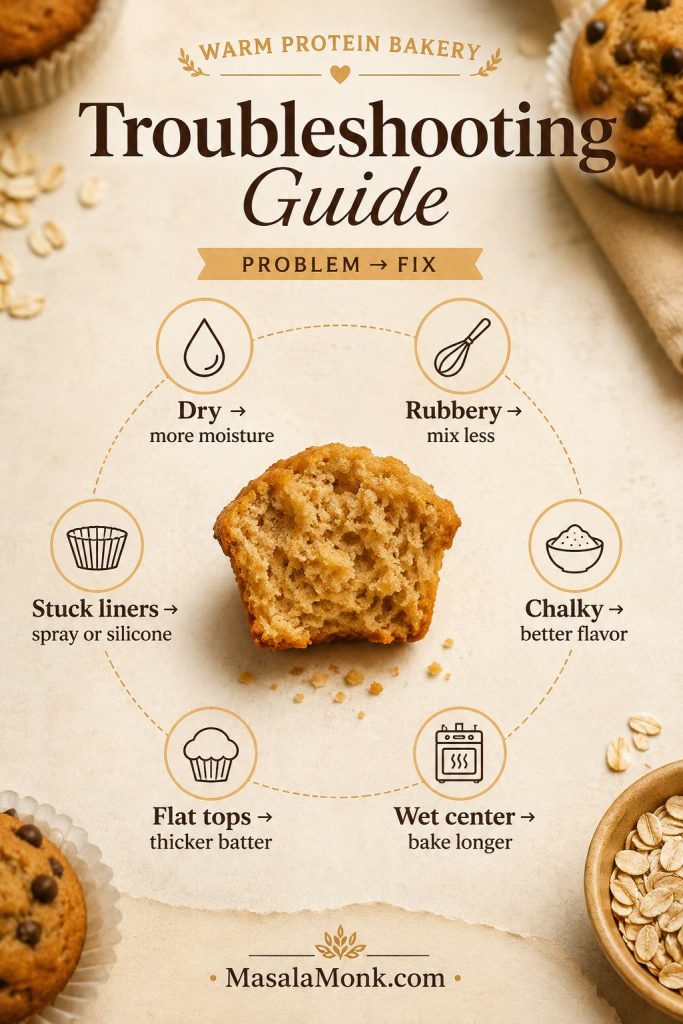
Troubleshooting guide for high protein muffins showing fixes for dry, rubbery, chalky, wet, flat, and stuck muffins.
Most protein muffin problems have a simple cause. Once you know whether it is moisture, mixing, bake time, or liners, the next batch is easier to fix.

Use the tables below like a quick diagnosis: find what happened, then adjust the next batch before changing the whole recipe.

Texture problems

ProblemLikely reasonFix
Dry muffinsToo much protein powder, not enough moisture, or overbaking.Add more yogurt or milk next time and check the muffins earlier.
Rubbery textureThe batter was overmixed after the wet and dry ingredients were combined.Fold gently and stop as soon as the batter comes together.
Chalky tasteThe protein powder flavor is too strong or too much powder was used.Use a better-tasting powder, add cinnamon or vanilla, or reduce the powder slightly.
Wet centerToo much fruit, yogurt, or cottage cheese; muffins may also need more cooling.Bake 2–4 minutes longer and let the muffins cool fully before storing.

Baking and pan problems

ProblemLikely reasonFix
Flat topsThe oven was not hot enough at the start or the batter was too thin.Use the hot-start method and keep the batter thick enough to hold shape.
Muffins stick to linersLow-fat, high-protein batters often cling to paper liners.Spray the liners lightly or use silicone muffin cups.
Blueberries sinkThe berries were too wet, too large, or folded into thin batter.Toss berries with a little flour and keep the batter thick.

Batter and flavor fixes

ProblemLikely reasonFix
Batter too thickThe protein powder absorbed more liquid than expected.Add milk gradually until the batter softens.
Batter too thinToo much yogurt, fruit, or milk was added.Add oat flour 1 tablespoon at a time and let the batter rest for 5 minutes.
Muffins taste “healthy” in a bad wayNot enough flavor against the protein powder.Add cinnamon, vanilla, banana, chocolate chips, lemon zest, or a pinch more salt.

How to Store and Freeze Protein Muffins

These muffins are at their best once fully cooled, which makes them useful for breakfast prep. Bake a batch, cool them completely, then keep a few in the fridge and freeze the rest for mornings when you want something filling without cooking.

For another freezer-friendly breakfast that works well on busy mornings, these freezer-friendly breakfast burritos are a savory option to keep alongside muffins.
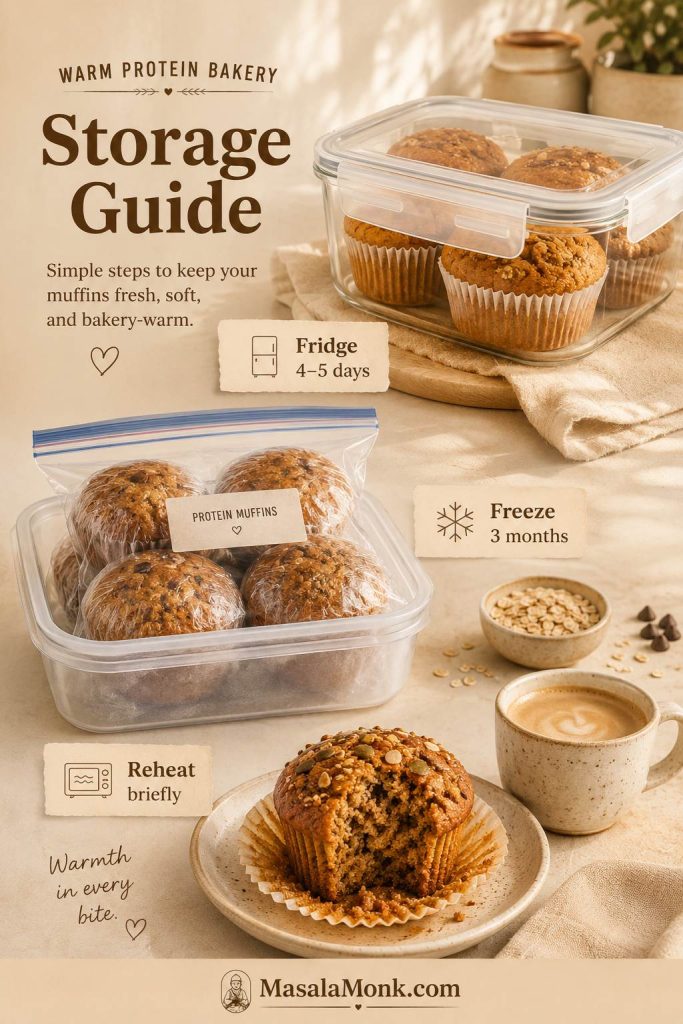
Storage guide for high protein muffins showing fridge storage, freezer storage, and reheating.
Store protein muffins only after they cool completely. Then refrigerate the week’s batch and freeze the rest so the texture stays fresher for longer.

Meal prep tip: save the base recipe once, then change only the fruit, mix-ins, and protein powder adjustment. The batter texture should stay the same even when the flavor changes.

Storage times

Storage methodHow longBest tip
Room temperatureSame day, or overnight if your kitchen is coolFor longer storage, refrigerate because these muffins are moist and yogurt-based.
Refrigerator4–5 daysStore in an airtight container with a paper towel to absorb moisture.
FreezerUp to 3 monthsFreeze individually, then move to a freezer bag or airtight container.
Reheating15–45 secondsMicrowave briefly until just warm, not hot and tough.

What to Serve with High Protein Muffins

These muffins work well as a quick breakfast, lunchbox item, pre-workout bite, or afternoon snack. For a fuller breakfast, serve one with Greek yogurt, fruit, boiled eggs, cottage cheese, nut butter, or a smoothie.
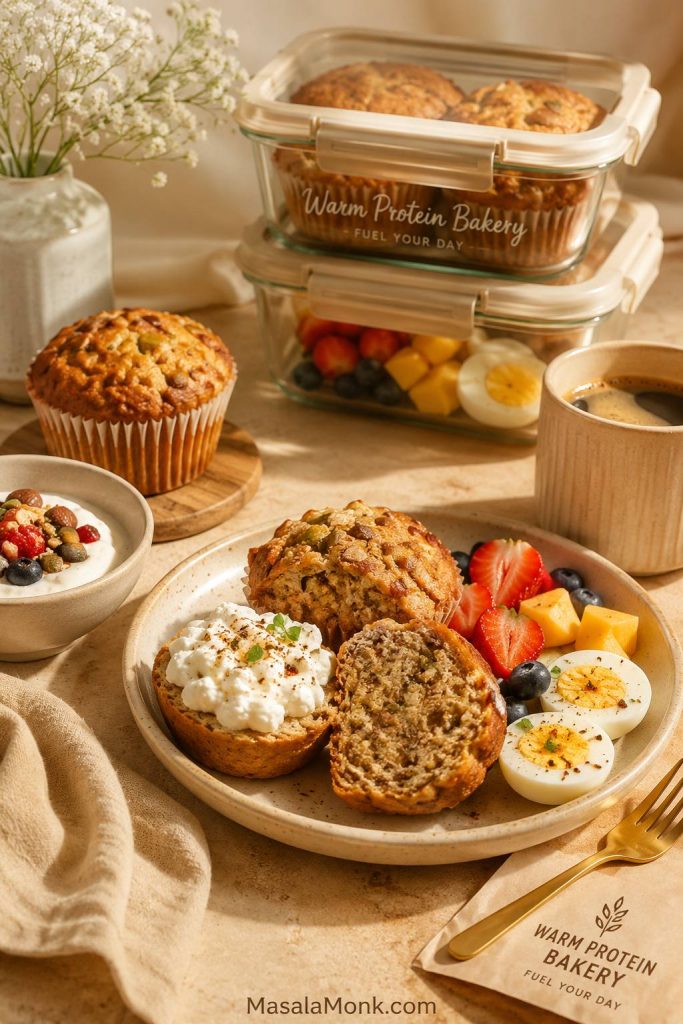
High protein muffins served with Greek yogurt, fruit, eggs, and coffee for breakfast meal prep.
One muffin can be a quick snack, but it becomes a fuller breakfast with Greek yogurt, fruit, eggs, cottage cheese, or coffee.

When you want a softer, bakery-style breakfast, warm one muffin briefly and split it with a little butter, peanut butter, or almond butter.

For snack prep, pair this recipe with healthy oat protein bars so you have both baked muffins and grab-and-go bars ready for the week.

Once you understand the batter, this becomes an easy recipe to repeat. Keep the base the same, change the fruit or mix-ins, and you have a breakfast muffin that can move from weekday meal prep to a weekend coffee plate without feeling like “diet food.”

For your own next batch, note the protein powder you used and how much milk the batter needed. Once you know that one detail, this recipe becomes easy to repeat with banana, blueberries, chocolate chips, pumpkin, or cottage cheese.

Ready to bake? The full recipe card below gives you the exact amounts, bake time, and adjustment notes. If your protein powder is very absorbent, start with the lower milk amount and add more only after mixing.

High Protein Muffins Recipe Card

A flexible, meal-prep friendly muffin base made with Greek yogurt, protein powder, oat flour or whole wheat flour, and banana or applesauce. Use the notes below to adjust the batter for your protein powder and favorite mix-ins.
Yield12 muffins

Prep Time10 minutes

Bake Time17–22 minutes

Total Time30–35 minutes

High protein muffins recipe card image with yield, time, protein range, and batter texture cue.
Save the texture cue along with the ingredient list: the batter should hold its shape, feel creamy, and scoop easily before it goes into the muffin tin.

Equipment

  • 12-cup muffin tin
  • Muffin liners or silicone muffin cups
  • Mixing bowls
  • Whisk
  • Rubber spatula
  • ¼ cup scoop or spoon
  • Wire cooling rack

Ingredients

Dry ingredients

  • 1 cup oat flour, 100g, for the default breakfast-style version
  • Flour swap: use 1 cup all-purpose or white whole wheat flour, 120g, for a softer classic muffin texture
  • ½ cup almond flour, about 50–55g, for extra tenderness
  • Almond-free swap: use ½ cup extra oat flour instead
  • ½ cup vanilla protein powder, about 50–60g
  • 2 teaspoons baking powder
  • ½ teaspoon baking soda
  • ½ teaspoon fine salt
  • 1 teaspoon cinnamon

Wet ingredients

  • ¾ cup plain Greek yogurt, about 180g
  • ½ cup mashed ripe banana or unsweetened applesauce, about 120g
  • 2 large eggs
  • ⅓ cup maple syrup or honey, about 80ml
  • 3 tablespoons neutral oil or melted butter, about 45ml
  • 3–6 tablespoons milk, about 45–90ml, starting with 3 tablespoons and adding more only if the batter looks too stiff
  • 2 teaspoons vanilla extract

Optional mix-ins

  • ½ cup mini chocolate chips
  • ½–¾ cup blueberries
  • ½ cup chopped walnuts or pecans
  • 1 tablespoon lemon zest for blueberry muffins
  • ½ teaspoon pumpkin pie spice for a warmer flavor

Instructions

  1. Preheat the oven. Preheat to 375°F / 190°C. Line a 12-cup muffin tin and lightly spray the liners.
  2. Mix the dry ingredients. In a large bowl, whisk together the flour, almond flour or extra oat flour, protein powder, baking powder, baking soda, salt, and cinnamon.
  3. Mix the wet ingredients. In a second bowl, whisk Greek yogurt, mashed banana or applesauce, eggs, maple syrup or honey, oil or melted butter, 3 tablespoons milk, and vanilla.
  4. Combine gently. Add the wet ingredients to the dry ingredients. Fold with a spatula until just combined.
  5. Adjust the batter. The batter should be sturdy but not dry. If it looks stiff, add a small splash of milk. If it looks too loose, add oat flour 1 tablespoon at a time and rest for 5 minutes.
  6. Rest if needed. If using oat flour, casein, pea protein, or a very absorbent plant protein powder, let the batter rest for 5 minutes before scooping.
  7. Add mix-ins. Fold in chocolate chips, blueberries, nuts, or other mix-ins. Do not overmix.
  8. Fill the muffin tin. Divide the batter between 12 muffin cups, filling each about ¾ full.
  9. Bake with a hot start. Bake at 375°F / 190°C for 5 minutes. Without opening the oven, reduce the temperature to 350°F / 175°C and bake for 12–17 more minutes.
  10. Check for doneness. The muffins are done when the tops spring back lightly and a toothpick comes out clean or with a few moist crumbs.
  11. Cool properly. Cool in the pan for 10 minutes, then transfer to a wire rack. Let the muffins cool before storing.

Recipe Notes

  • Best texture cue: the batter should mound on a spoon but still spread slowly in the muffin cup.
  • Protein powder varies: if your batter looks dry, add milk gradually before baking.
  • Banana version: use mashed ripe banana instead of applesauce.
  • Neutral base: use applesauce and vanilla protein powder.
  • Softer muffins: avoid overbaking and give the muffins enough cooling time.
  • Sticking prevention: use silicone liners or spray paper liners lightly.
  • Dairy-free batch: use thick dairy-free yogurt and a plant-based protein powder, then adjust the milk as needed.

Approximate Nutrition

Approximate per muffin, based on 12 muffins: 180–230 calories, 9–12g protein, 20–28g carbohydrates, 6–10g fat, and 2–4g fiber. Exact numbers vary by protein powder, yogurt, flour, sweetener, milk, and mix-ins.

Storage

Store fully cooled muffins in an airtight container in the refrigerator for 4–5 days, or freeze for up to 3 months. Reheat briefly in the microwave until just warm.

FAQs About High Protein Muffins

How much protein is in each muffin?

Each muffin has about 9–12 grams of protein depending on the protein powder, yogurt, flour, milk, eggs, and mix-ins you use. For the most accurate number, calculate using the exact brands and amounts in your kitchen.

What if I do not want to use protein powder?

A no-powder version needs a slightly different formula built around cottage cheese, Greek yogurt, eggs, oats, nut butter, or seeds. Simply removing the protein powder from this recipe will change the flour-to-liquid balance.

Which protein powder works best for muffins?

A vanilla whey blend or plant-based blend is the easiest starting point. Whey isolate can bake dry if used heavily, while casein and some plant powders may need extra milk because they absorb more liquid.

Why did my protein muffins turn dry?

Dry muffins usually come from too much protein powder, not enough liquid, overbaking, or using a powder that absorbs heavily. Next time, add more yogurt or milk and check the muffins earlier.

Why is my batter thicker than regular muffin batter?

Protein powder, oat flour, and Greek yogurt all make the batter sturdier than a classic muffin batter. It should still be scoopable, not dry. Let it rest for 5 minutes, then loosen with a small splash of milk if needed.

Does oat flour work in this recipe?

Oat flour works well and gives the muffins a breakfast-style flavor. The texture will be slightly heartier than all-purpose flour. If the batter gets too stiff, add a little more milk.

How should I freeze and reheat them?

Cool the muffins fully, freeze them individually, then move them to a freezer bag or airtight container for up to 3 months. To reheat, microwave briefly from frozen or thaw overnight in the fridge.

How do I make a dairy-free version?

Choose a thick dairy-free yogurt and a plant-based protein powder. Because plant-based powders often absorb more liquid, add milk gradually until the batter looks sturdy but workable.

Blueberries or chocolate chips: which works better?

Both work well, but they give different results. Blueberries make the muffins feel fresher and more breakfast-like, while mini chocolate chips make them feel more snackable. Keep mix-ins around ½–¾ cup so the muffins bake evenly.

How do I know when they are done?

The tops should spring back lightly, and a toothpick should come out clean or with a few moist crumbs. Pull them before they feel firm and dry because they continue to set as they cool.

Are these filling enough for breakfast?

They can be, especially when paired with fruit, Greek yogurt, cottage cheese, eggs, or coffee. On their own, they are more filling than a regular muffin because they include protein-rich ingredients and a more substantial crumb.

If you try these, leave a note with the protein powder you used, whether you chose banana or applesauce, and how much milk your batter needed. Those little details often help the next reader get a softer batch on the first try.
Back to top

Posted on Leave a comment

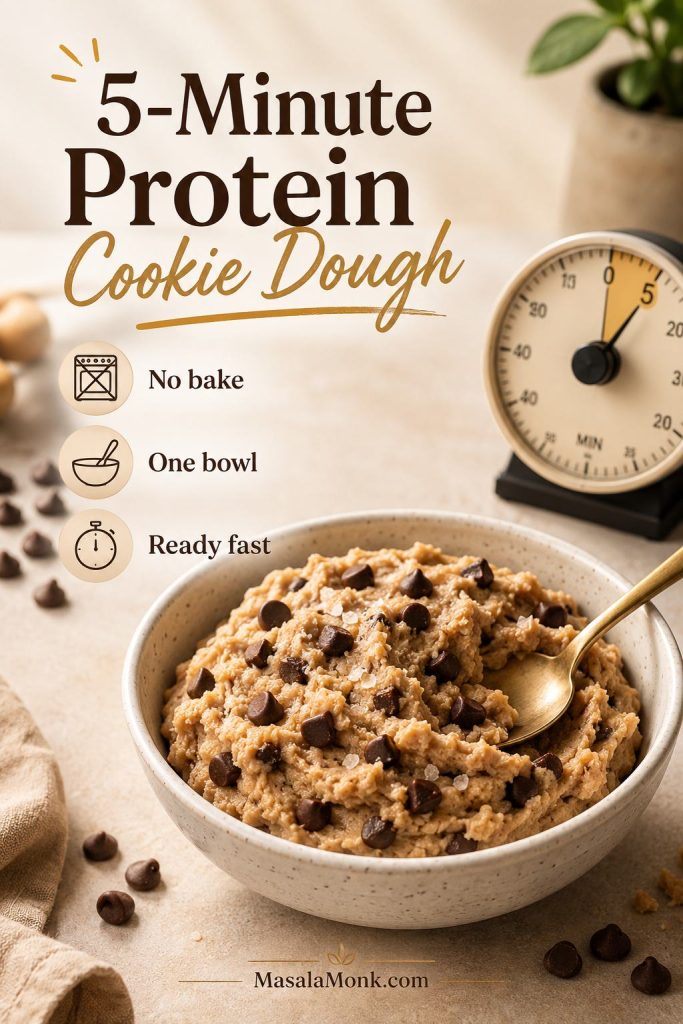
Protein Cookie Dough Recipe

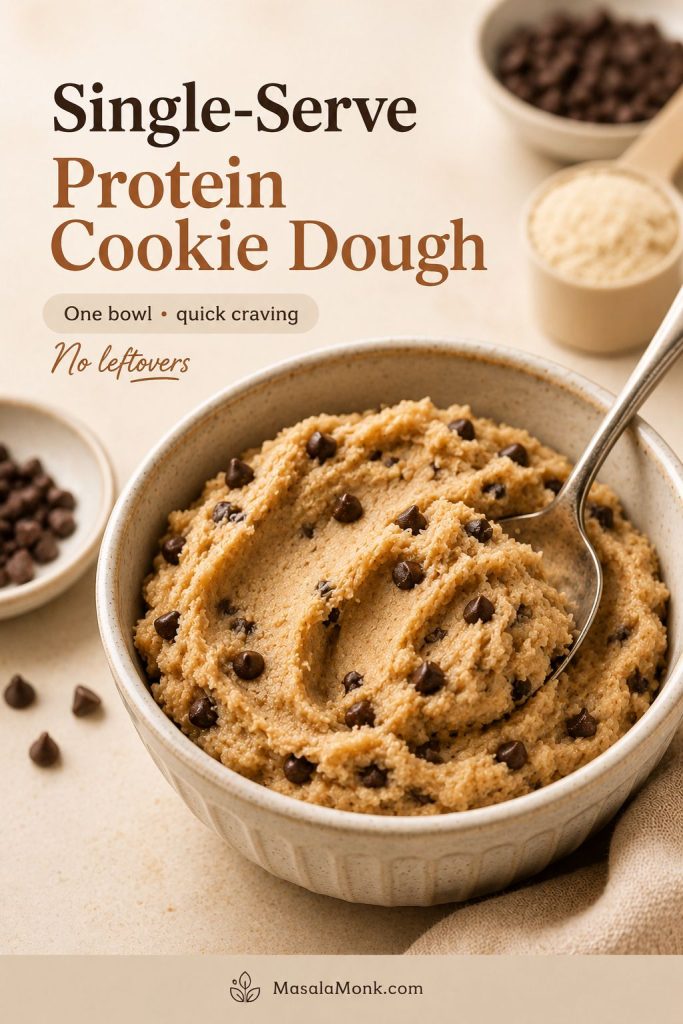
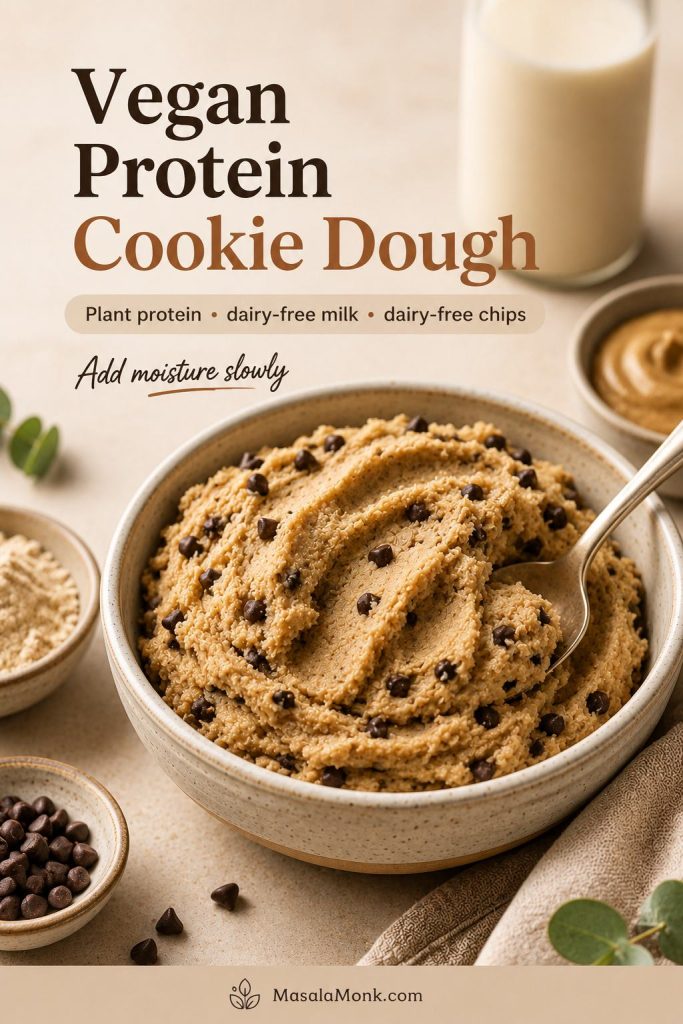
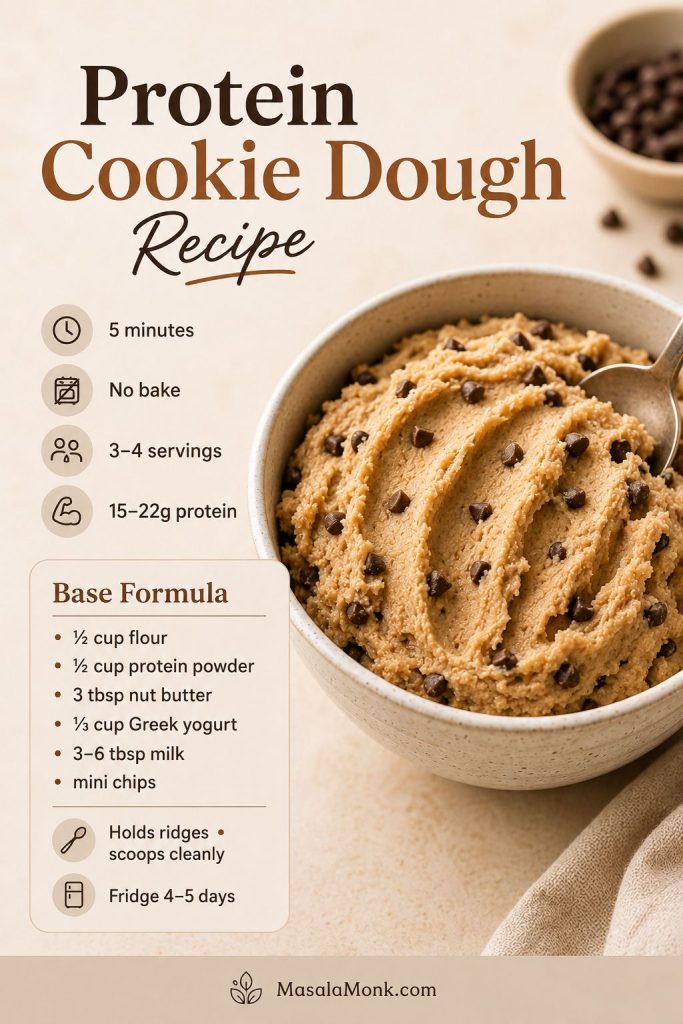
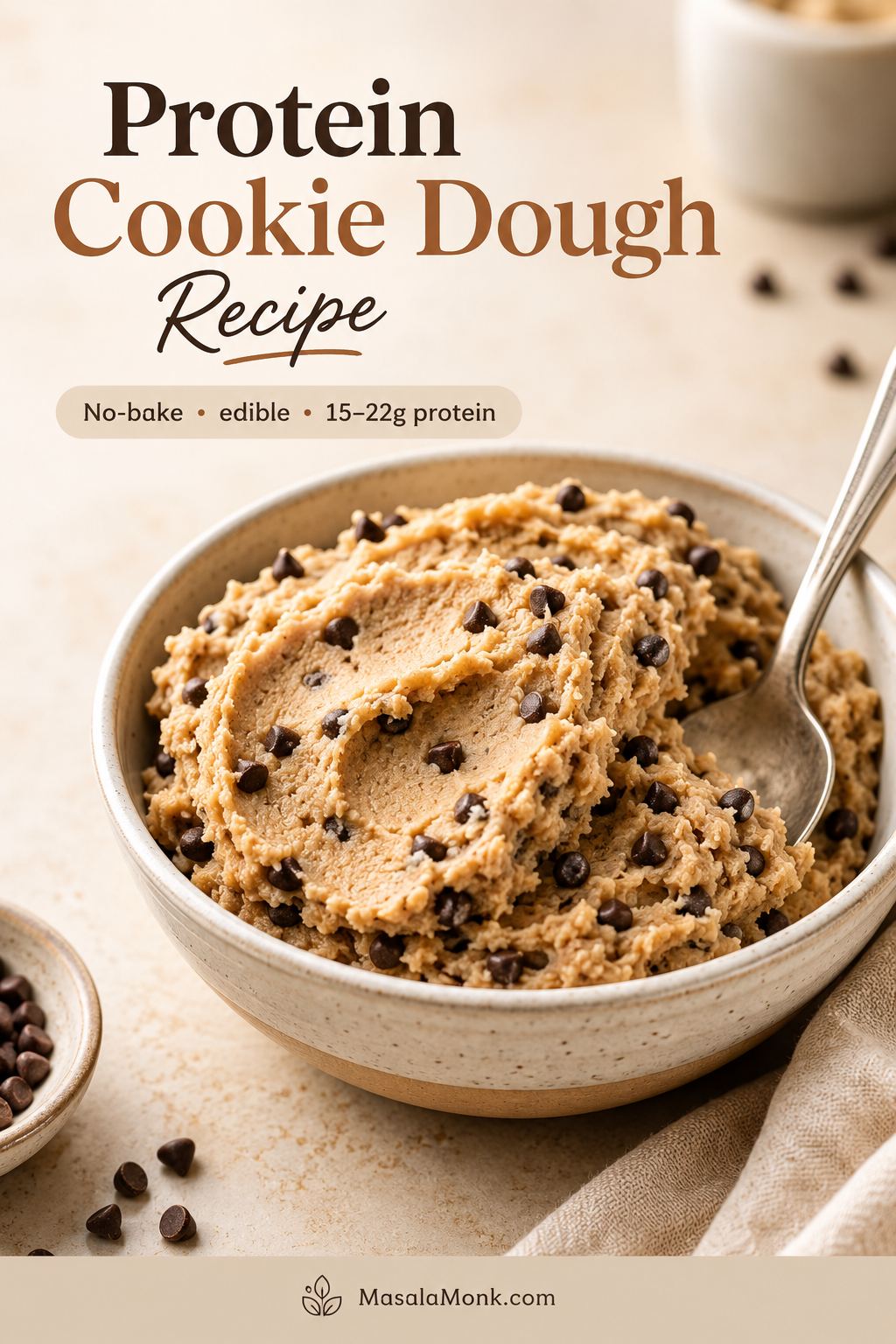
Thick protein cookie dough recipe in a bowl with mini chocolate chips, spoon marks, and a scoopable texture.

This protein cookie dough recipe is edible, no-bake, ready in about 5 minutes, and built to taste like cookie dough — not protein paste. It is egg-free, made without raw all-purpose flour, and gives you a scoopable, chocolate-studded dough with about 15–22g protein per serving when divided into 3–4 portions.

No oven, no mixer, no waiting for cookies to cool — just one bowl, a spoon, and a sweet snack that feels more like dessert than a protein shake.

The difference between good protein cookie dough and chalky protein paste is balance. Protein powder adds structure, nut butter gives richness, Greek yogurt softens the dough, and almond flour or oat flour makes it thick enough to scoop. Then vanilla, salt, and mini chocolate chips bring it closer to a real cookie dough bite. If you like this kind of high-protein dessert, this dough gives you the same treat-like feeling without needing a freezer or blender.

It should feel like sneaking a spoonful of cookie dough from the bowl, only with enough protein to make it feel more satisfying than a random bite of dessert.

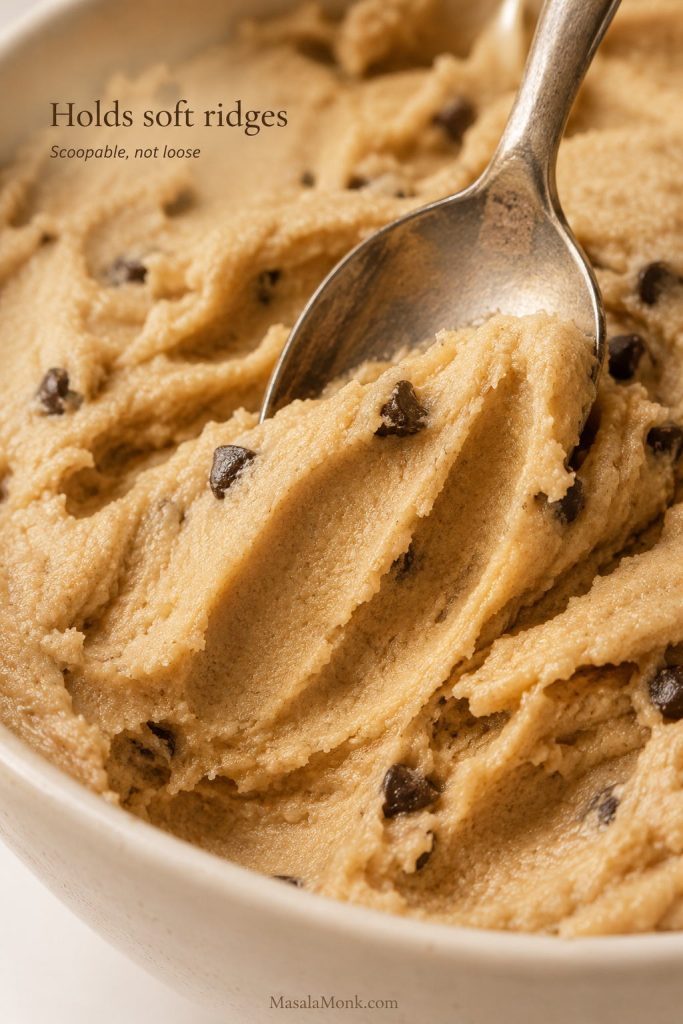
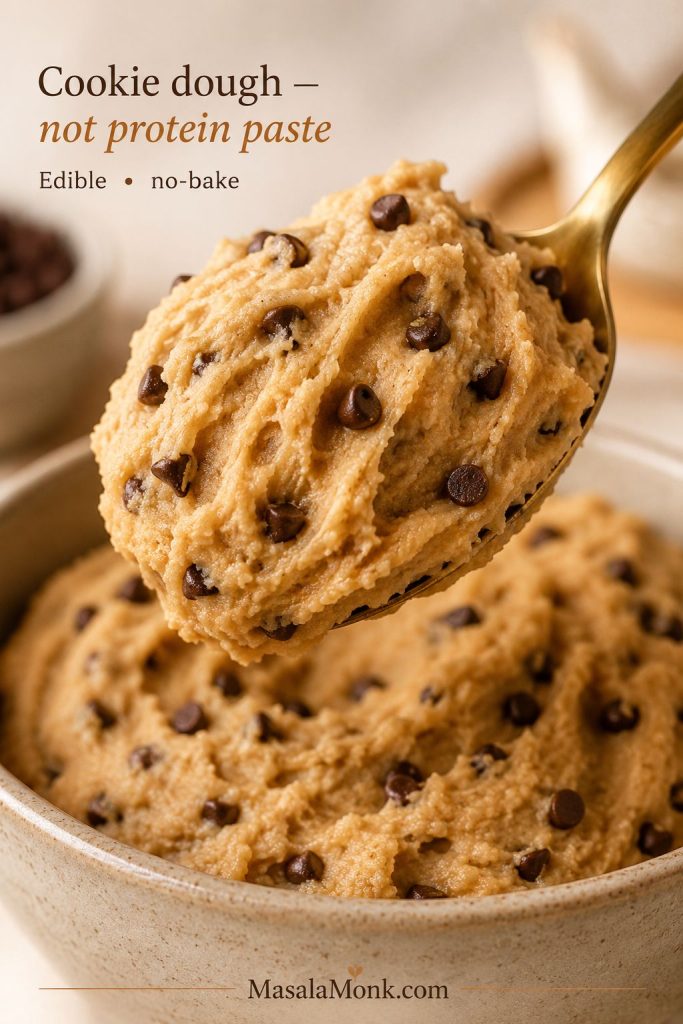
Spoon lifting edible protein cookie dough with mini chocolate chips and soft ridges showing the scoopable texture
This spoon-lift shows the texture you want: creamy, sturdy, and able to hold its shape without turning stiff.

Quick Answer: The Best Protein Cookie Dough Ratio

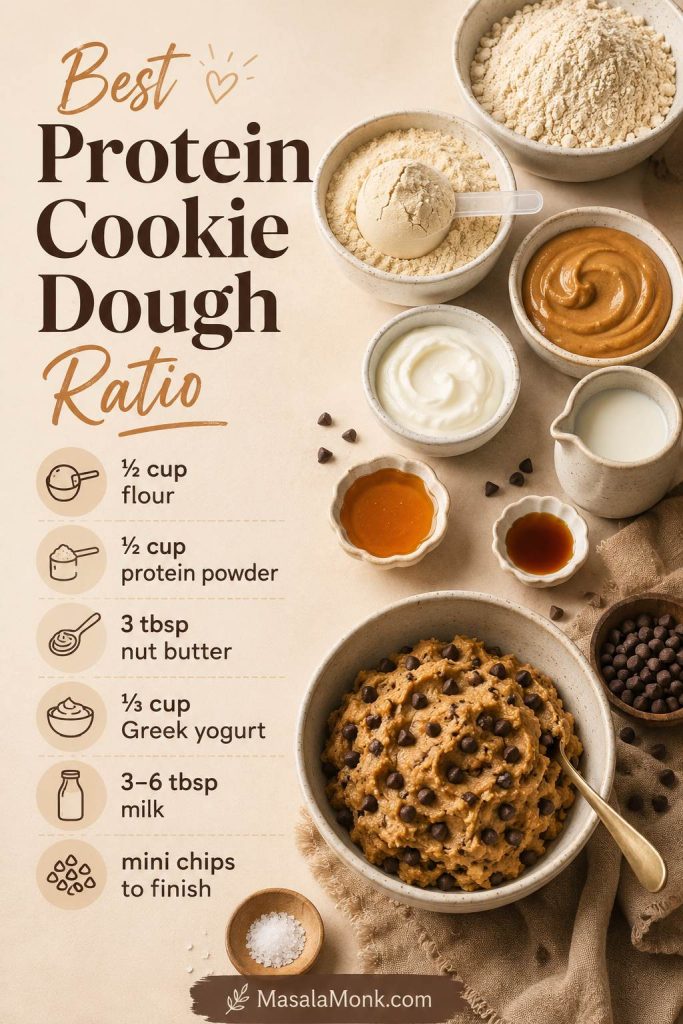
Protein cookie dough ratio board with protein powder, flour, nut butter, Greek yogurt, milk, and mini chocolate chips
This quick ratio works because the dry base, creamy ingredients, and milk are balanced before the chocolate chips go in.

Use less milk for a firmer dough and more milk for a softer, scoop-and-eat texture. Divide the batch into 3 portions for a higher-protein snack, or 4 portions for smaller dessert-style servings.

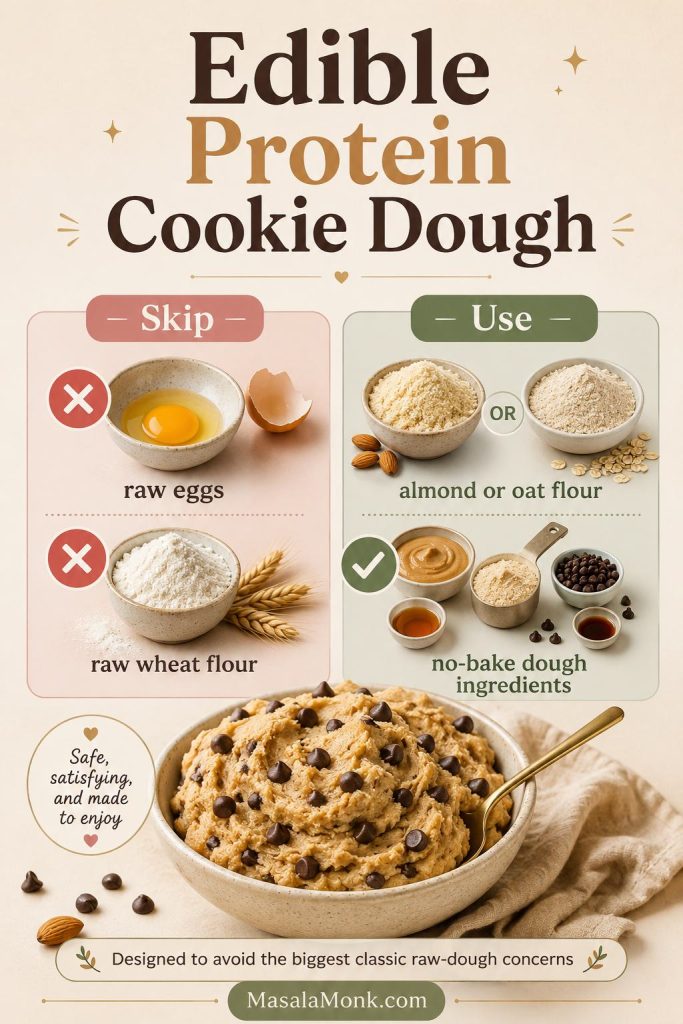
Best first version: Use a vanilla whey-casein blend if you have one, almond flour for a softer rich dough, and mini chocolate chips for the most cookie-dough-like bite.
Do not add all the milk at once. Protein powders absorb moisture differently, and a dough that looks dry at first can loosen quickly after mixing. Add liquid gradually and stop as soon as the dough holds together.

Not sure how your powder will behave? See the protein powder guide before adding all the milk.

Protein Cookie Dough at a Glance

One-bowl five-minute no-bake protein cookie dough with a timer, spoon, and thick chocolate chip dough
Since this is a 5-minute no-bake recipe, the key is adjusting texture in the bowl instead of relying on baking time.
Prep time 5 minutes
Cook time 0 minutes
Chill time Optional 20–30 minutes for firmer dough
Servings 3–4 servings
Protein estimate About 15–22g per serving, depending on powder and serving size
Best texture Scoopable, sturdy, and easy to eat with a spoon
Best flour Almond flour for soft/rich, oat flour for more cookie-like
Main fix Add liquid slowly, then fine-tune the texture in small spoonfuls
Storage 4–5 days in the fridge or 2–3 months frozen in portions

The best part is that the recipe is forgiving. If the first mix looks too dry, too sticky, or too thick, you do not have to start over — you just adjust the bowl in small steps.

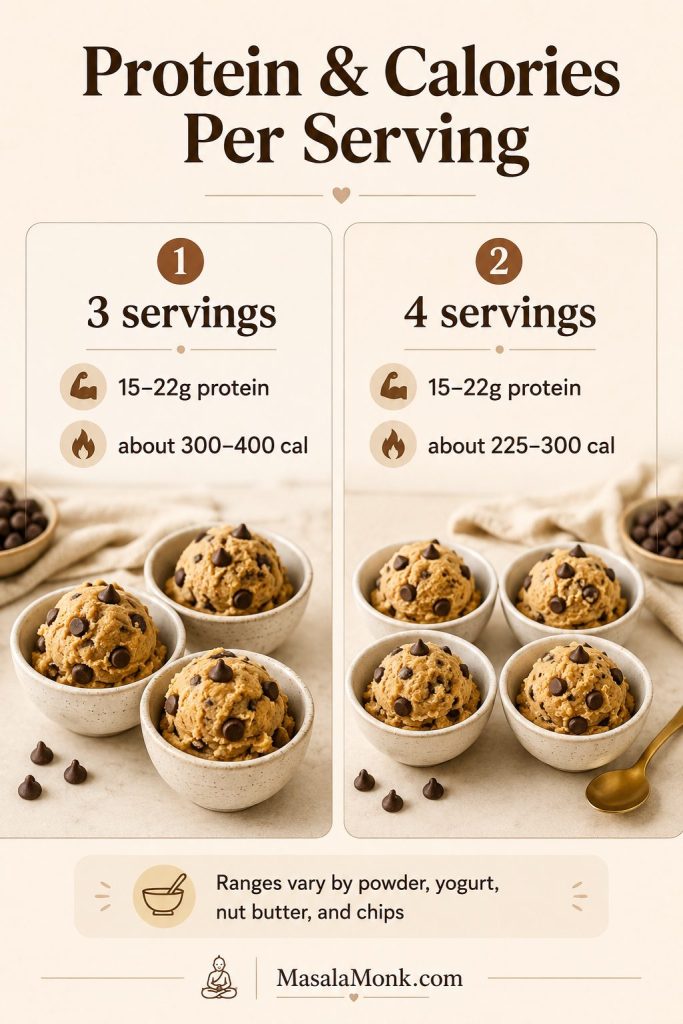
Estimated Protein, Calories, and Serving Size

Protein and calorie guide for protein cookie dough showing three-serving and four-serving portion estimates
For macro tracking, portion size matters: three larger servings feel more snack-like, while four smaller servings keep the calories lighter.

As a rough range, the full batch often lands around 900–1,200 calories, depending on the protein powder, nut butter, yogurt, milk, syrup, and chocolate chips used. That works out to about 300–400 calories if divided into 3 larger servings, or about 225–300 calories if divided into 4 smaller servings. Use your own ingredient labels for the most accurate number.

Calories vary most from the nut butter, chocolate chips, protein powder, syrup, and yogurt you use. A richer dessert bowl usually comes from regular nut butter, maple syrup or honey, and the full chocolate chip amount. If you want a lighter version, use powdered peanut butter, nonfat Greek yogurt, almond milk, and fewer mini chocolate chips.

To keep the bowl lighter without making it taste flat, jump to the low-calorie protein cookie dough version and use the swaps there.

Why This Protein Cookie Dough Works

A good high-protein cookie dough has to solve the real problem: it needs enough protein to feel worth making, but it still has to satisfy the part of you that wanted cookie dough in the first place. When the balance is off, the texture changes quickly. Extra protein powder can make the dough dry or chalky, too much liquid can turn it sticky, and not enough fat can make it taste like sweet paste instead of cookie dough.

This version works because each ingredient protects the dough from the usual protein-dessert problems: dry, sticky, chalky, or bland. Protein powder gives the snack its purpose, almond flour or oat flour keeps it from turning loose, nut butter makes it taste richer, and Greek yogurt softens the bite so it feels more like dessert than a scoop of powder. Vanilla, salt, and mini chocolate chips finish the flavor so it tastes more like cookie dough and less like a protein shake in a bowl.

When that balance is right, the dough tastes sweet and familiar instead of “healthy” in the disappointing way.

The finished dough should hold ridges when stirred, scoop cleanly, and firm up slightly after chilling. It should not pour like batter, crumble like dry powder, or cling aggressively to the spoon.

Why readers usually love this: It gives you the cookie-dough feeling without turning into a full baking project. No oven, no mixer, no waiting for cookies to cool — just a thick, sweet, chocolate-studded bowl you can adjust until it tastes right.

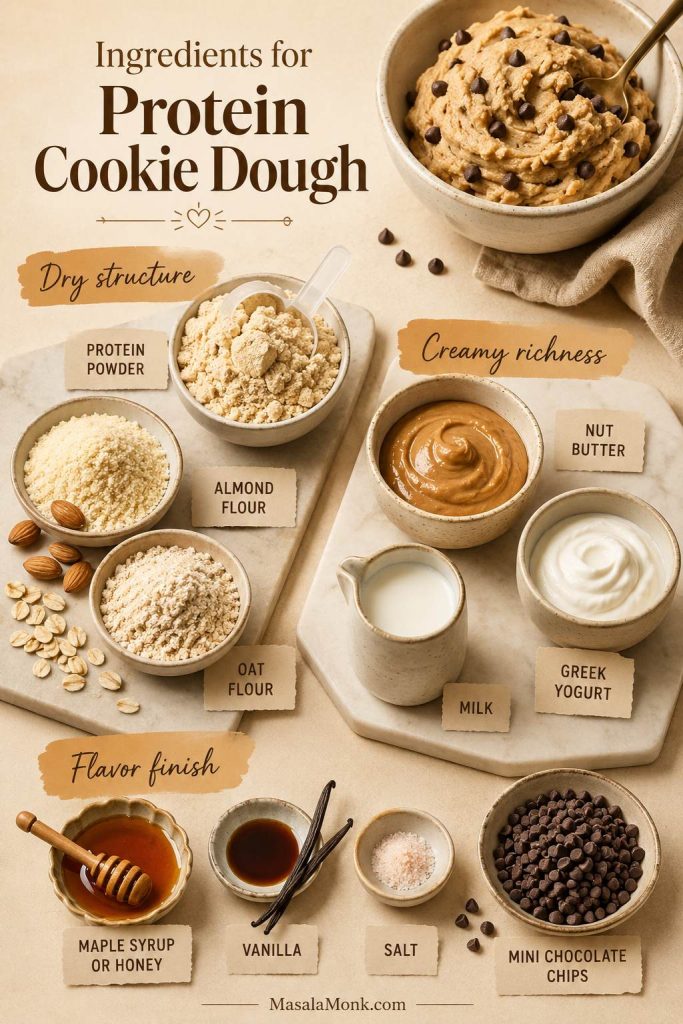
Ingredients You Need

Protein cookie dough ingredients arranged by texture role, including protein powder, flour, yogurt, nut butter, and chocolate chips
Each ingredient controls something important: body, creaminess, sweetness, flavor, or chocolate in every bite.

Protein powder

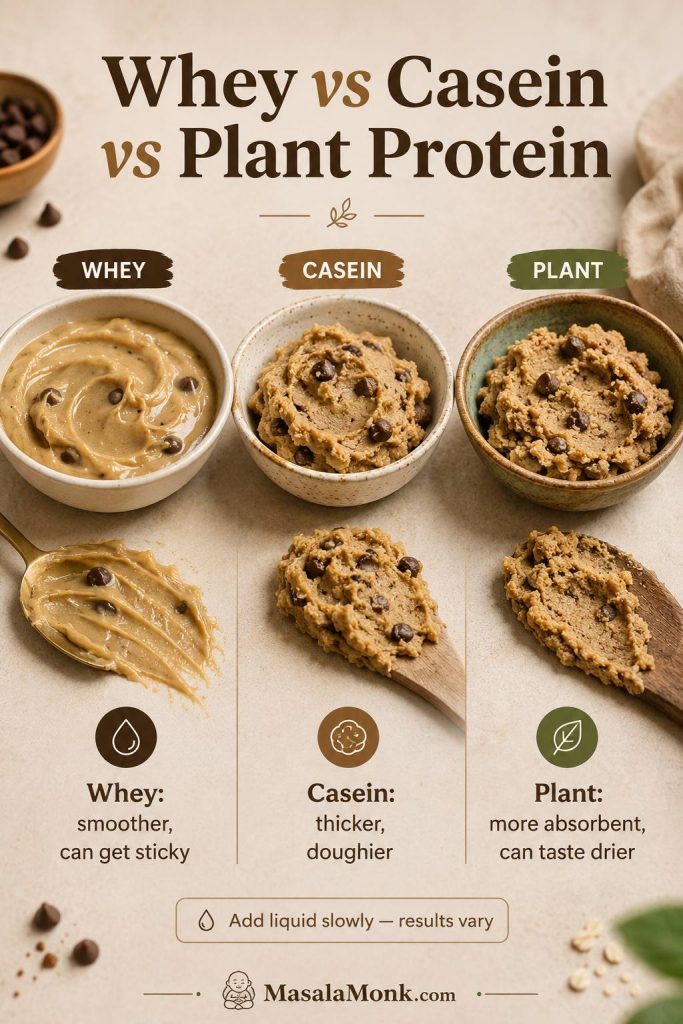
Vanilla protein powder is the easiest choice because it already brings sweetness and dessert flavor. Whey protein can make a smoother dough, but it may become sticky if you add too much liquid. Casein and plant protein usually thicken more aggressively, so they often need extra milk or yogurt. A whey-casein blend is often the easiest option for a classic cookie dough texture.

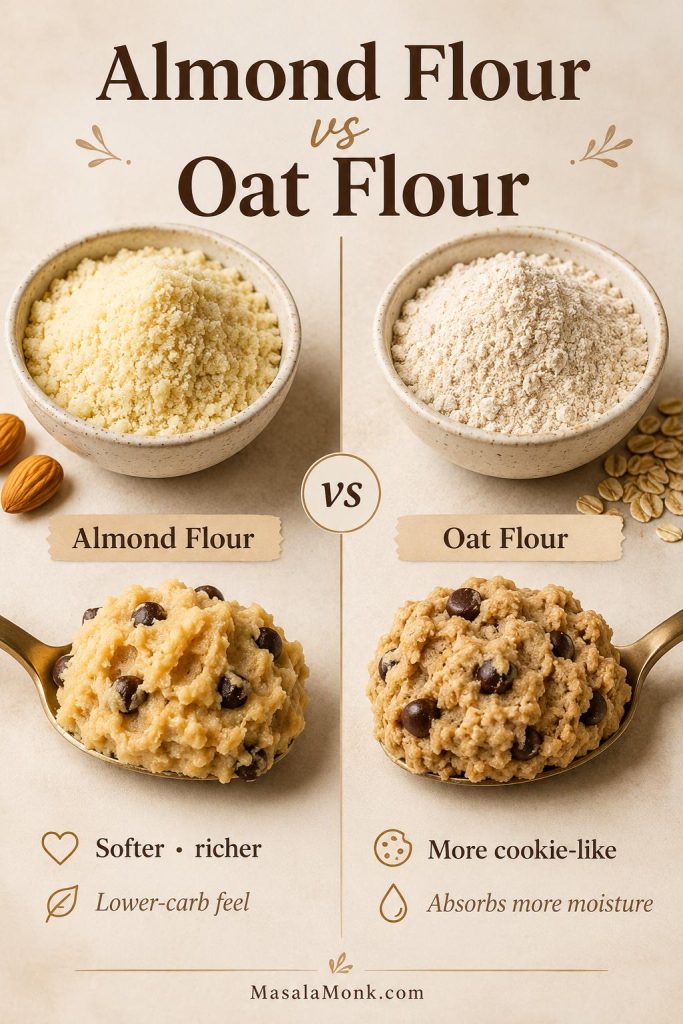
Almond flour or oat flour

Almond flour versus oat flour comparison for protein cookie dough showing softer rich dough and more cookie-like dough
Almond flour gives a softer, richer dough; meanwhile, oat flour brings a more cookie-like chew and usually needs a little more moisture.

Do not use regular raw all-purpose flour in this no-bake recipe. The safety section below explains why.

For the raw-dough details, read the edible cookie dough safety section before swapping flours.

Nut butter

Peanut butter gives the strongest flavor and the richest dough. Almond butter is milder. Cashew butter gives a softer, almost bakery-style sweetness. Sunflower seed butter works if you need a nut-free option, though it has a more noticeable flavor.

Greek yogurt

Greek yogurt keeps the dough creamy while adding more protein. Thick plain Greek yogurt works best. If your yogurt is thin or watery, start with less milk. If your yogurt is very thick, you may need an extra spoonful of milk to bring the dough together.

Maple syrup or honey

Maple syrup and honey do more than sweeten the dough. They also add moisture and help the texture feel less powdery. Sugar-free syrup can work, but the texture may be thinner or less rich depending on the brand.
Vanilla, salt, and mini chocolate chips

These small ingredients make a big difference. Vanilla gives the dough a dessert-like aroma, salt keeps the flavor from tasting flat, and mini chocolate chips spread more evenly than large chips, especially in a single-serving bowl.

Is Protein Cookie Dough Safe to Eat Raw?

Edible protein cookie dough safety board showing no raw eggs, no raw wheat flour, and almond or oat flour instead
Edible protein cookie dough works best when the no-bake base avoids raw eggs and raw wheat flour from the start.

The FDA explains that most flour is raw and has not been treated to kill germs. The CDC also warns against eating raw dough made with uncooked flour because flour can carry germs that are killed only when the flour is baked or cooked.

For this no-bake dough, use fresh almond flour, oat flour from a trusted package, or a flour product specifically labeled for edible dough. Do not swap in regular raw wheat flour.

If you want the classic version without protein powder, this edible cookie dough recipe follows the same no-bake, spoonable dessert idea with a more traditional cookie-dough flavor.

Important: This recipe avoids raw all-purpose wheat flour. Keep the finished dough chilled, use fresh ingredients, and do not leave yogurt-based cookie dough sitting out for long.

Best Protein Powder for Cookie Dough

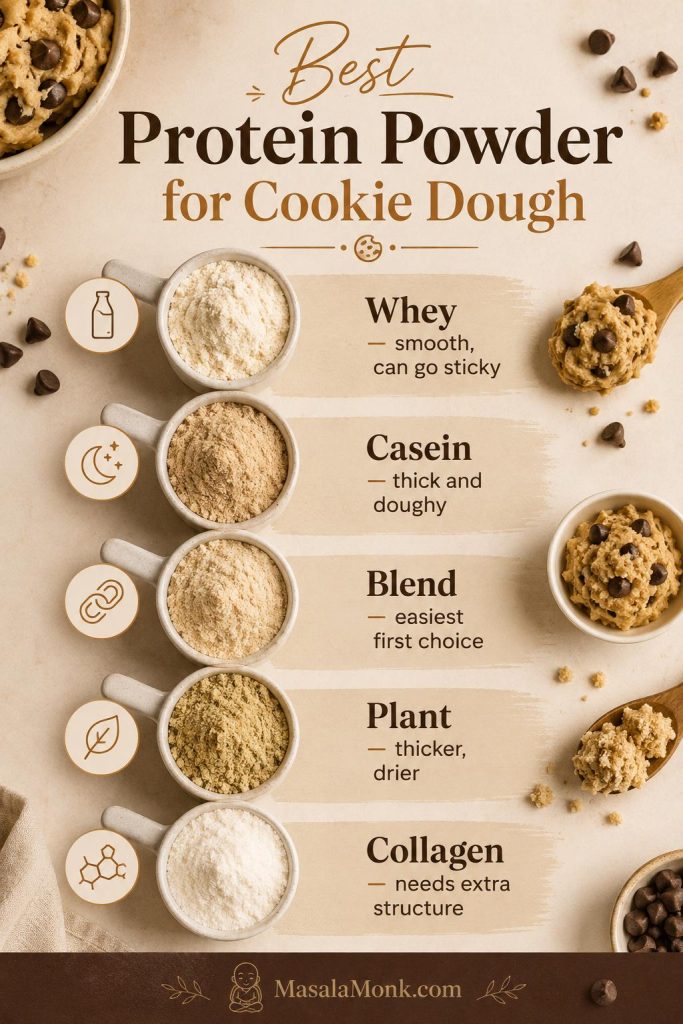
Best protein powder for cookie dough guide comparing whey, casein, blended, plant, and collagen protein powders
The best powder depends on texture as much as flavor, because each type thickens the bowl differently.
Texture matters just as much as flavor. Whey, casein, plant protein, collagen, and blends all absorb moisture at a different pace, which is why the recipe gives a range for milk instead of one fixed amount.
This is why two people can use the same recipe and get different results. The recipe may not be the problem — the powder may simply need more or less moisture.

Protein powder texture guide

Protein powder Texture in cookie dough Best fix
Whey protein Smooth, but can become sticky or wet if overhydrated. Add milk slowly. Thicken with almond flour, oat flour, or a little more protein powder.
Casein protein Thick, doughy, and very absorbent. Add milk or Greek yogurt 1 teaspoon at a time until spoonable.
Whey-casein blend Usually the most balanced cookie dough texture. Best first choice for a balanced, cookie-dough-like texture.
Plant protein Thick, sometimes chalky or earthy. Add nut butter, yogurt, vanilla, salt, and enough milk to soften the texture.
Collagen powder Adds protein but does not give much dough structure. Use it with almond flour or oat flour, not as the only dry ingredient.
Powdered peanut butter Lower in fat, peanut-forward, and slightly dry. Pair with Greek yogurt or milk to keep the dough creamy.
Whey, casein, and plant protein cookie dough comparison showing smoother, thicker, and more absorbent dough textures
Whey, casein, and plant protein can all work, but each one changes how much liquid the bowl needs before it becomes scoopable.

For the first batch, use the recipe as written but hold back some of the milk. Once you see how your protein powder thickens, the recipe becomes easy to repeat.

If your dough already turned dry, sticky, or loose, go straight to the texture fixes instead of guessing.

How to Make Protein Cookie Dough

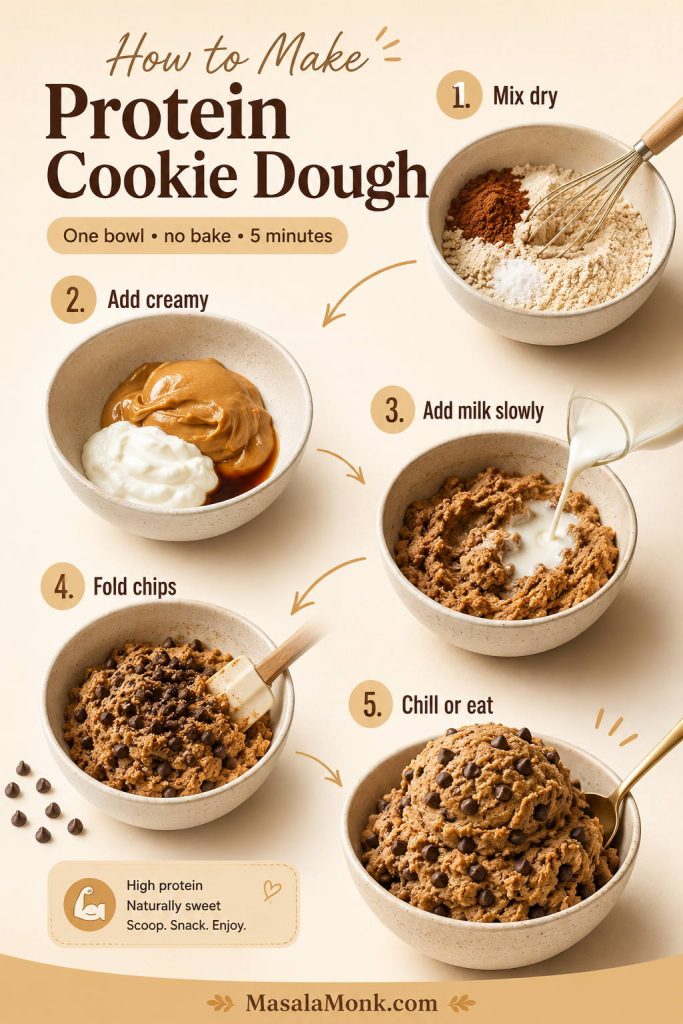
Step-by-step protein cookie dough method showing dry ingredients, creamy ingredients, slow milk addition, chocolate chips, and finished dough
The method stays simple: build the dry base, add richness, loosen carefully, fold in chocolate, then chill only if you want a firmer bite.

Step 1: Mix the dry ingredients

Place the almond flour or oat flour, protein powder, and salt in a medium bowl. Stir them together first so the protein powder is evenly distributed before the wet ingredients go in.

Step 2: Add the creamy ingredients

Stir in the nut butter, Greek yogurt, maple syrup or honey, and vanilla. The dough may start to clump together and look too thick at this point, which is fine.

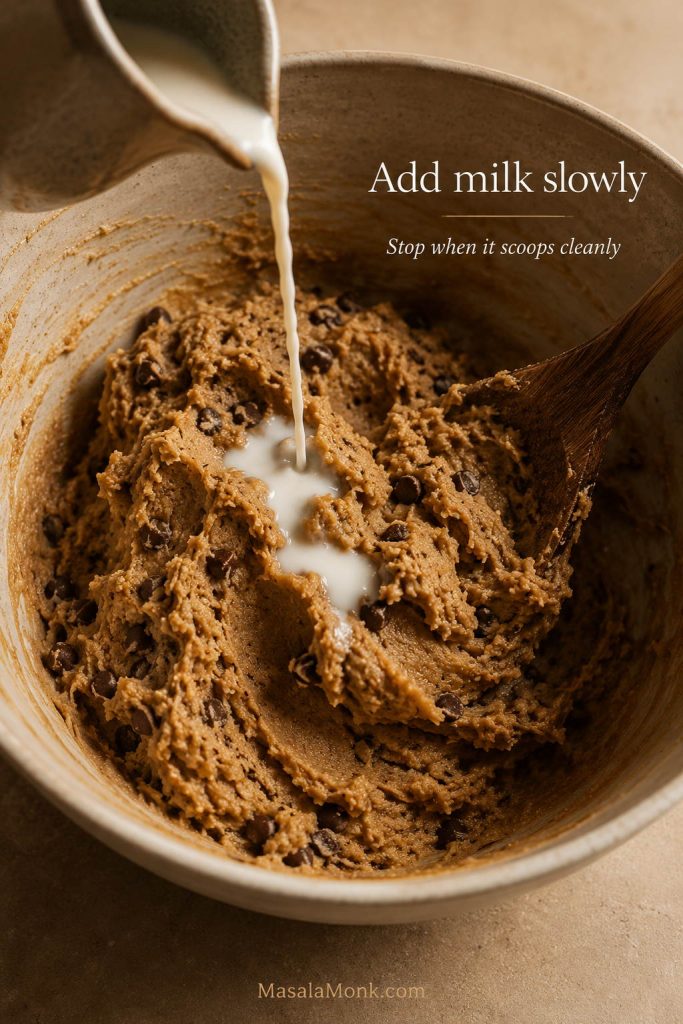
Pour in milk or almond milk 1 tablespoon / 15ml at a time. Mix well after each addition and stop when the dough is soft but sturdy. You may not need all the milk, especially if your yogurt is loose or your protein powder is whey-based.

Milk being added slowly to thick protein cookie dough in a mixing bowl to control the final texture
Add milk slowly so the dough softens gradually; otherwise, a small bowl can turn loose before the protein powder has time to absorb it.
Close-up of protein cookie dough holding soft spoon ridges to show the ideal thick but scoopable texture
Look for spoon marks that stay visible for a moment; that is the easiest sign your protein cookie dough is thick enough without being dry.

If your dough does not look like this yet, use the texture guide to fix it before folding in the chocolate chips.

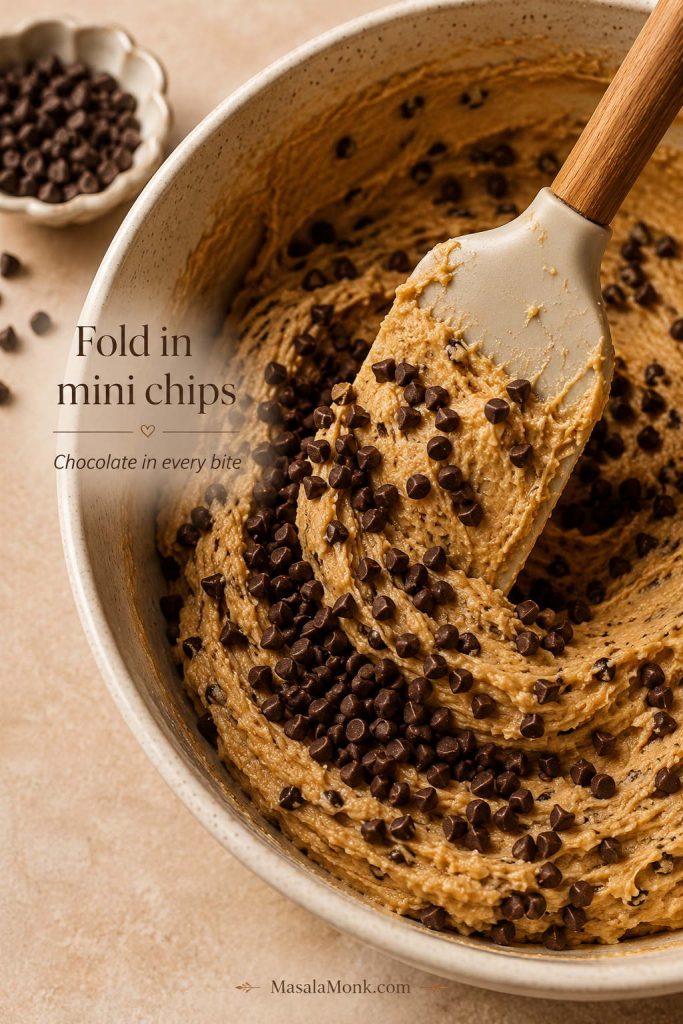
Step 4: Fold in mini chocolate chips

Mini chocolate chips being folded into thick protein cookie dough so the chips spread evenly through the bowl
Mini chocolate chips work better than larger chips because they spread through the dough evenly and make each spoonful taste more like dessert.

Step 5: Eat right away or chill

You can eat the dough immediately if you like a softer, freshly mixed texture. For a firmer, more classic cookie dough feel, cover the bowl and chill it for 20–30 minutes.

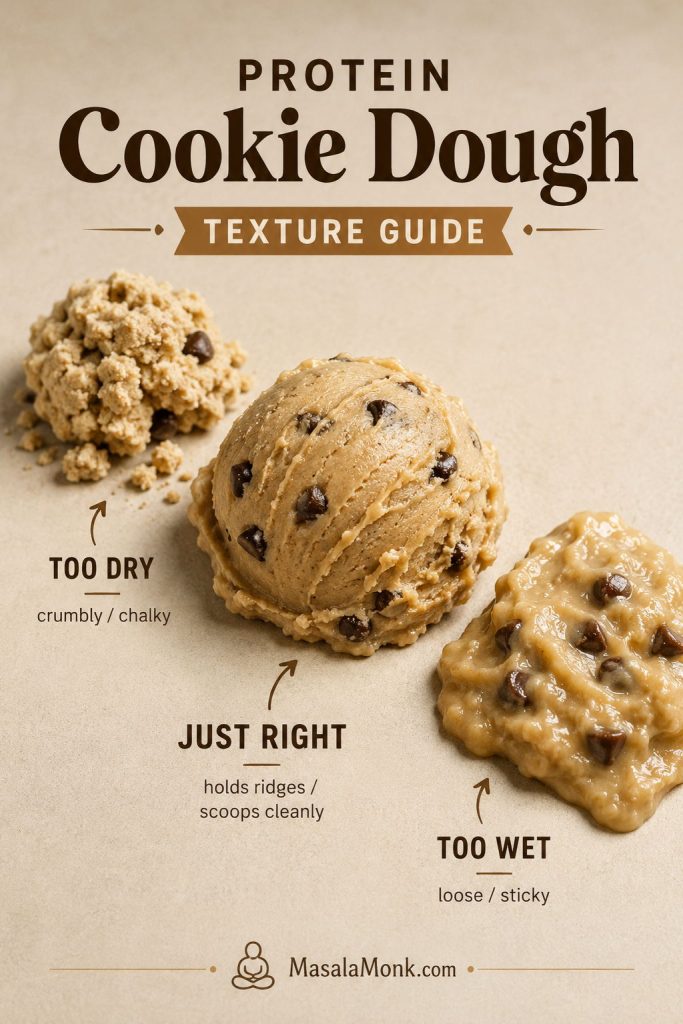
Protein Cookie Dough Texture Guide

Protein cookie dough texture guide comparing crumbly dry dough, scoopable just-right dough, and loose wet dough
Once you recognize the difference between crumbly, scoopable, and loose, fixing the texture becomes much easier.
Problem Why it happened How to fix it
Too wet Too much milk, loose yogurt, or a whey protein that does not absorb much liquid. Stir in 1 teaspoon almond flour, oat flour, or protein powder at a time.
Too dry Casein or plant protein absorbed the liquid quickly. Loosen it with 1 teaspoon milk or Greek yogurt at a time.
Chalky Too much protein powder, plant protein, or not enough fat/moisture. Work in 1–2 teaspoons nut butter or Greek yogurt, plus vanilla and a pinch of salt.
Too sticky Too much syrup, nut butter, or liquid. Chill 20–30 minutes, or sprinkle in a little almond/oat flour.
Not sweet enough Unsweetened protein powder or not enough syrup. Sweeten with 1 teaspoon maple syrup, honey, or your preferred sweetener.
Too protein-y The protein powder flavor is too strong. Balance it with vanilla, salt, mini chocolate chips, or a better-tasting vanilla protein powder next time.
Best texture rule: Adjust slowly. One teaspoon can change a small batch more than you expect.

Once the texture is right, the bowl stops feeling like a protein workaround and starts feeling like what you actually wanted: cold, sweet cookie dough with little pockets of chocolate in every spoonful.

How to Make It Taste More Like Cookie Dough

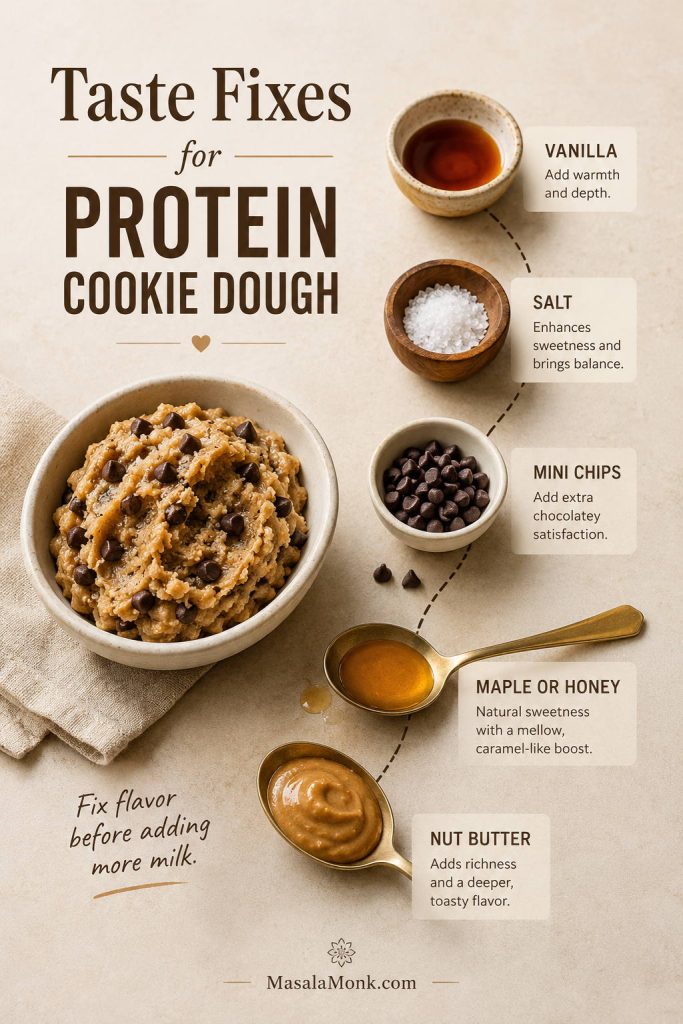
Protein cookie dough taste-fix board with vanilla, salt, chocolate chips, syrup, and nut butter for better flavor
If the flavor feels too protein-heavy, vanilla, salt, nut butter, syrup, and mini chips can improve the dough without making it runnier.
  • Add a little more vanilla if the flavor tastes flat.
  • Add a tiny pinch of salt if the dough tastes too sweet, bland, or protein-heavy.
  • Use mini chocolate chips so every spoonful gets chocolate.
  • Add 1 teaspoon maple syrup or honey if your protein powder is not very sweet.
  • Add 1 teaspoon nut butter if the dough tastes chalky or thin.
  • Chill the dough for 20–30 minutes if the flavor feels sharp right after mixing.
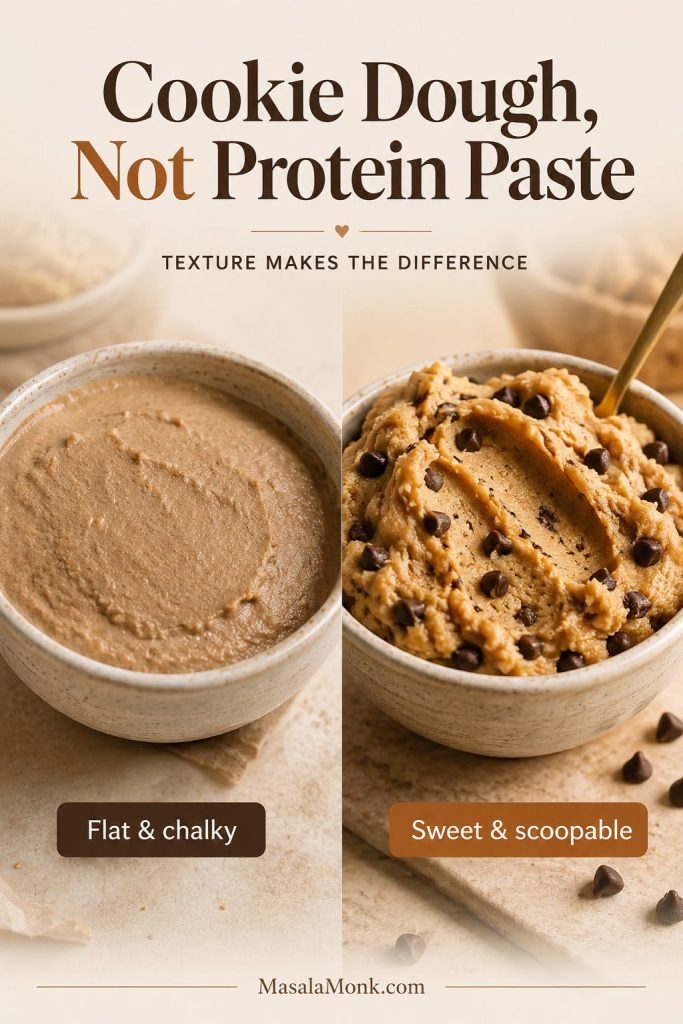
Cookie dough versus protein paste comparison showing dull chalky dough beside sweet scoopable chocolate chip dough
The best high-protein cookie dough still needs dessert appeal, so texture and flavor matter just as much as the protein number.

Once the base flavor tastes right, try one of the flavor variations to make the dough more dessert-like.

Protein Cookie Dough Flavor Variations

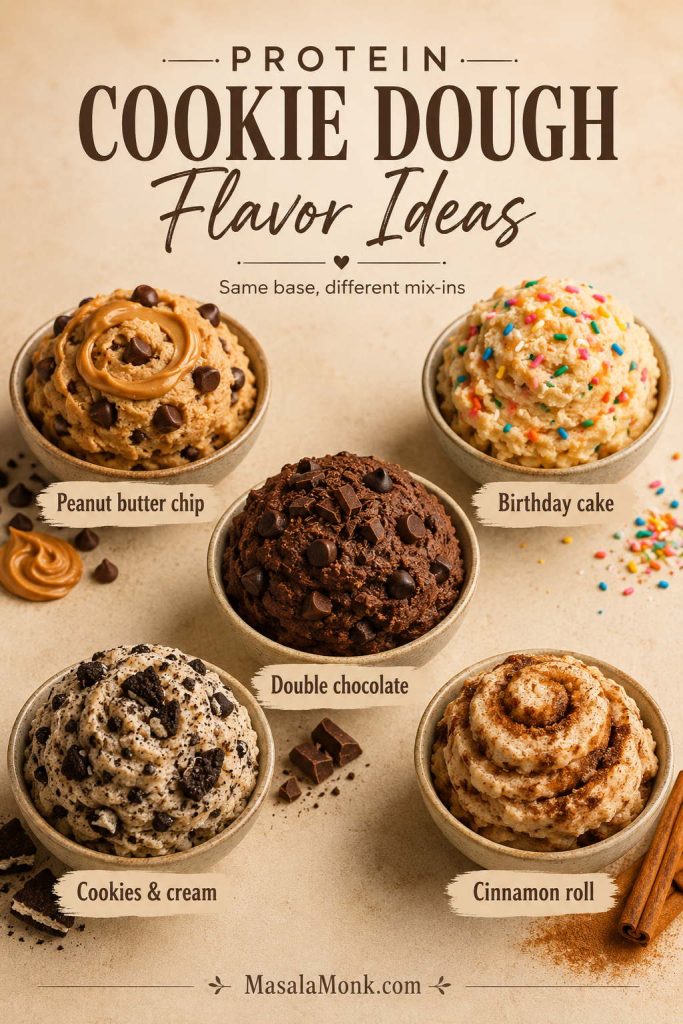
Protein cookie dough flavor variation board with peanut butter chip, birthday cake, double chocolate, cookies and cream, and cinnamon roll
Once the base dough is balanced, small mix-ins can take it toward peanut butter chip, birthday cake, double chocolate, cookies and cream, or cinnamon roll.
  • Peanut butter chocolate chip: Use peanut butter as the nut butter and keep the mini chocolate chips.
  • Birthday cake: Use vanilla protein powder, cashew butter, and a small spoonful of sprinkles.
  • Double chocolate: Add 1 tablespoon cocoa powder and a little extra milk if the dough gets too thick.
  • Cookies and cream: Fold in crushed chocolate sandwich cookies or a lighter cookie-style mix-in.
  • Cinnamon roll: Add cinnamon, vanilla, and a tiny pinch more salt.

For any dry mix-in like cocoa powder or crushed cookies, add a tiny splash of milk only after the dough is mixed so you do not accidentally make it loose.

Which Protein Cookie Dough Version Should You Make?

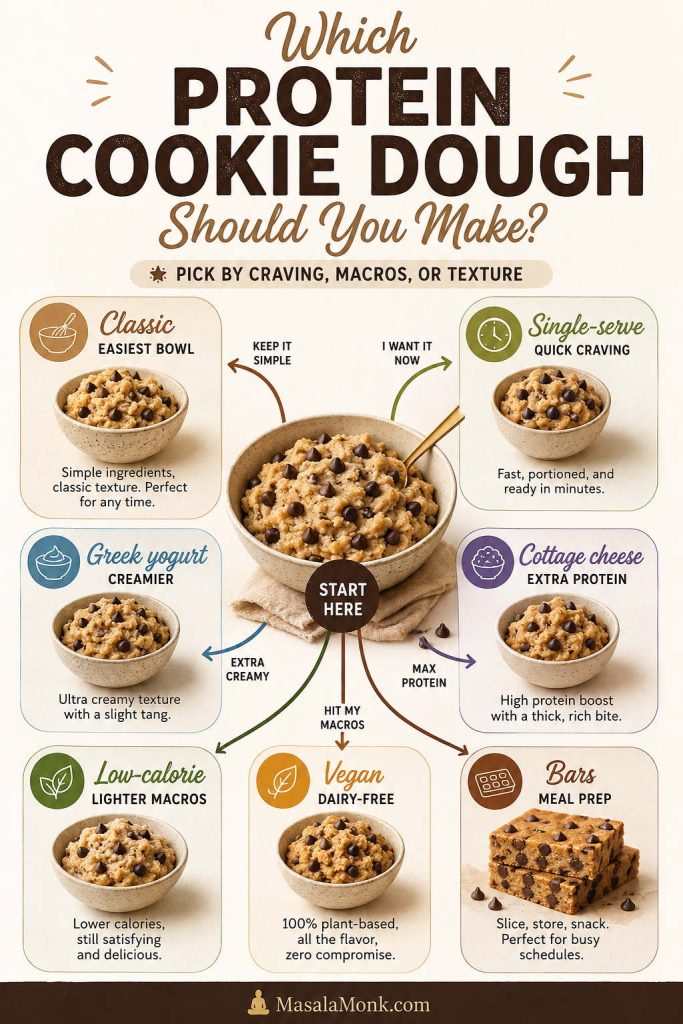
Protein cookie dough version chooser showing classic, single-serve, Greek yogurt, cottage cheese, low-calorie, vegan, and bars
Use this guide by need: single-serve for speed, Greek yogurt or cottage cheese for creaminess, low-calorie for lighter macros, vegan for dairy-free, or bars for meal prep.
Version Best for Texture Use this base
Classic protein cookie dough Best overall Thick enough to scoop, soft enough to eat with a spoon Protein powder + flour + nut butter + Greek yogurt
Single serve Quick craving Small-batch dough 30g protein powder + nut butter
Greek yogurt Creamier snack Smoother, tangier, and more spoonable Greek yogurt + protein powder
Cottage cheese Extra creamy, higher-protein variation Smooth and creamy when blended first Blended cottage cheese
Low calorie Macro-friendly snack Lighter and less rich Powdered peanut butter + nonfat Greek yogurt
Vegan Dairy-free version Thick, sometimes chalkier Plant protein + dairy-free milk
Chickpea Plant-based/fiber-rich Thicker and dip-like Chickpeas + protein powder
Bars Meal prep Firm and sliceable Thicker dough + pan chill

Single-Serve Protein Cookie Dough

Single-serve protein cookie dough in a small bowl with mini chocolate chips, spoon, and quick snack portion
The single-serve version is ideal when you want one quick bowl now, especially if you do not want extra dough waiting in the fridge.
Ingredient Amount
Vanilla protein powder 30g
Almond flour or oat flour 2–3 tablespoons
Nut butter 1½ tablespoons
Greek yogurt or milk 1–2 tablespoons
Maple syrup or honey 1–2 teaspoons, optional
Vanilla extract ¼ teaspoon
Salt Pinch
Mini chocolate chips 1–2 tablespoons

Mix the dry ingredients first, stir in the nut butter and yogurt, then adjust with tiny splashes of milk until the dough is scoopable but not loose. This version can be higher in protein than the main recipe because it uses a full scoop of protein powder in one serving.

Greek Yogurt Protein Cookie Dough

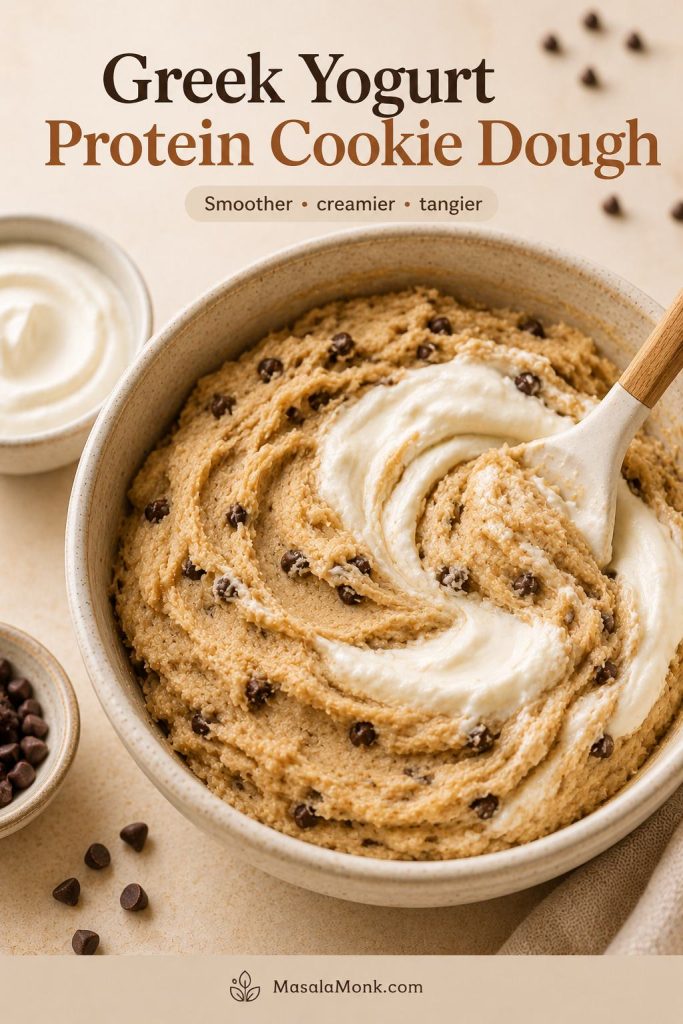
Greek yogurt protein cookie dough with thick Greek yogurt being mixed in for a smoother and creamier texture
Greek yogurt gives the dough a softer, tangier bite, which helps balance the dryness some protein powders can bring.

To make the Greek yogurt version, increase the Greek yogurt to ½ cup and reduce the milk. Stir the dough well, then chill it for 20–30 minutes so the flour and protein powder can absorb the moisture. If the yogurt is very thick, add milk 1 teaspoon at a time. If the yogurt is loose, add a little more almond flour or oat flour.

Cottage Cheese Protein Cookie Dough

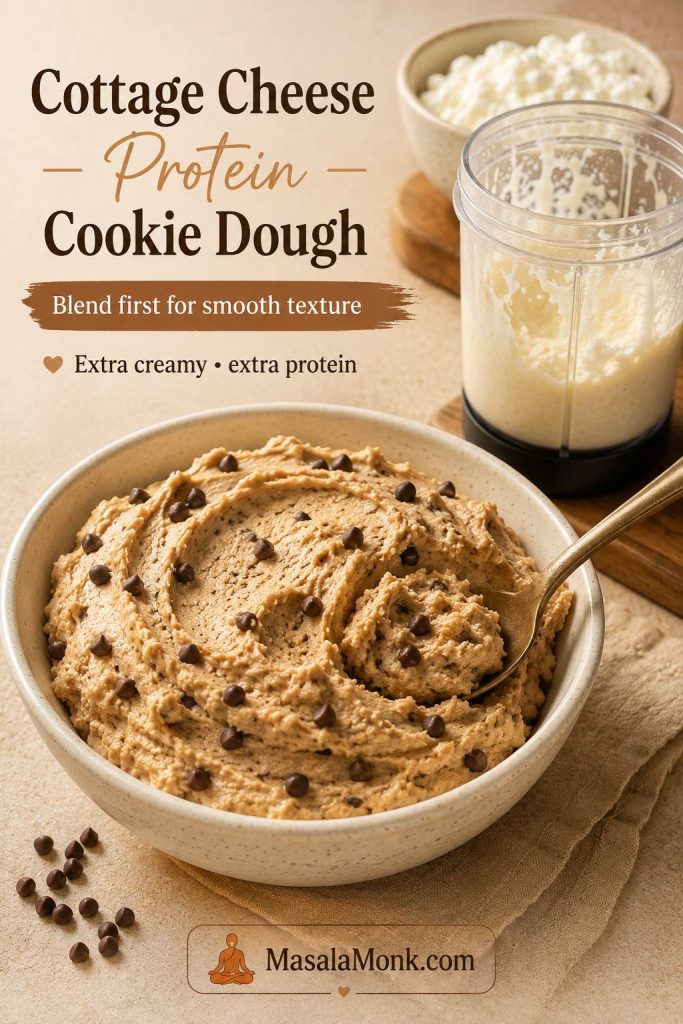
Cottage cheese protein cookie dough showing blended cottage cheese, finished dough, and the smooth texture after blending
The cottage cheese version depends on one important step: blend the cottage cheese smooth before mixing it into the dry base.

For a cottage cheese version, blend ½ cup cottage cheese with vanilla and 2–3 teaspoons maple syrup until smooth. Then stir it by hand into the protein powder, almond flour or oat flour, nut butter, salt, and chocolate chips. Add the chips after blending, not before.

If your blended cottage cheese is very loose, start with less milk or skip the milk completely until the dough is mixed.

Cottage cheese texture tip: Blend the cottage cheese first, then mix by hand after the dry ingredients go in. Over-blending the full dough can make it runnier.

If you enjoy creamy low-carb desserts, this keto cheesecake recipe is another good one to keep nearby, especially when you want something chilled and richer than a snack bowl.

Low-Calorie Protein Cookie Dough

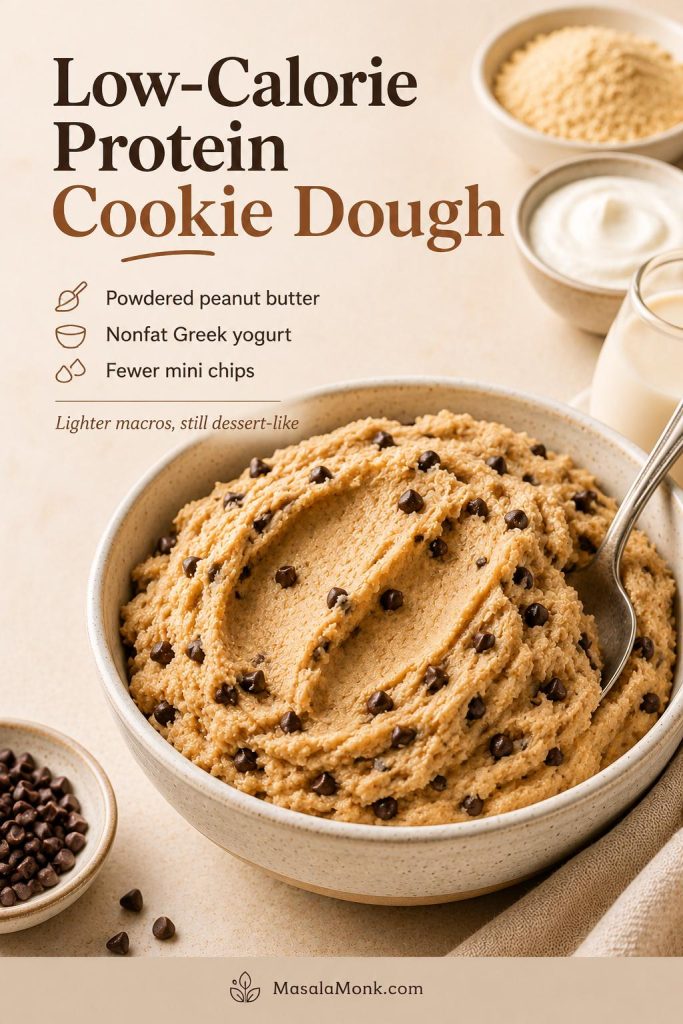
Low-calorie protein cookie dough with powdered peanut butter, nonfat Greek yogurt, almond milk, and fewer mini chocolate chips
A lighter bowl should still taste satisfying, so use macro-friendly swaps without removing all the creaminess and chocolate.
Swap What it does
Powdered peanut butter Reduces fat and calories while keeping peanut flavor.
Nonfat Greek yogurt Adds creaminess and protein with fewer calories.
Mini chocolate chips Gives more chocolate in every bite with a smaller amount.
Sugar-free syrup, carefully Can reduce sugar, but may make the dough thinner or less rich.
Single-serving batch Helps with portion control and avoids extra leftovers.

For one lighter serving, start with 30g vanilla protein powder, 2 tablespoons powdered peanut butter, ¼ cup nonfat Greek yogurt, 1–2 teaspoons syrup or sweetener, vanilla, salt, and 1 tablespoon mini chocolate chips. Add almond milk 1 teaspoon at a time until the dough becomes scoopable.

For another creamy dessert with a lighter, healthier feel, this avocado chocolate mousse is a good next option when you want chocolate without baking.

Vegan Protein Cookie Dough

Vegan protein cookie dough with plant protein powder, dairy-free milk, nut butter, and dairy-free chocolate chips
The vegan version usually needs a little more moisture and fat because plant protein can thicken quickly as it sits.

For a vegan batch, use ½ cup almond or oat flour, ½ cup plant protein powder, 2–3 tablespoons almond or cashew butter, 2–3 teaspoons maple syrup, vanilla, salt, dairy-free milk as needed, and dairy-free mini chocolate chips. Add the milk slowly because plant protein often thickens fast.

When plant protein tastes earthy, extra vanilla, a tiny pinch of salt, and mini chocolate chips help a lot. A little more nut butter can also soften the chalky edge without making the dough too loose.

Chickpea Protein Cookie Dough

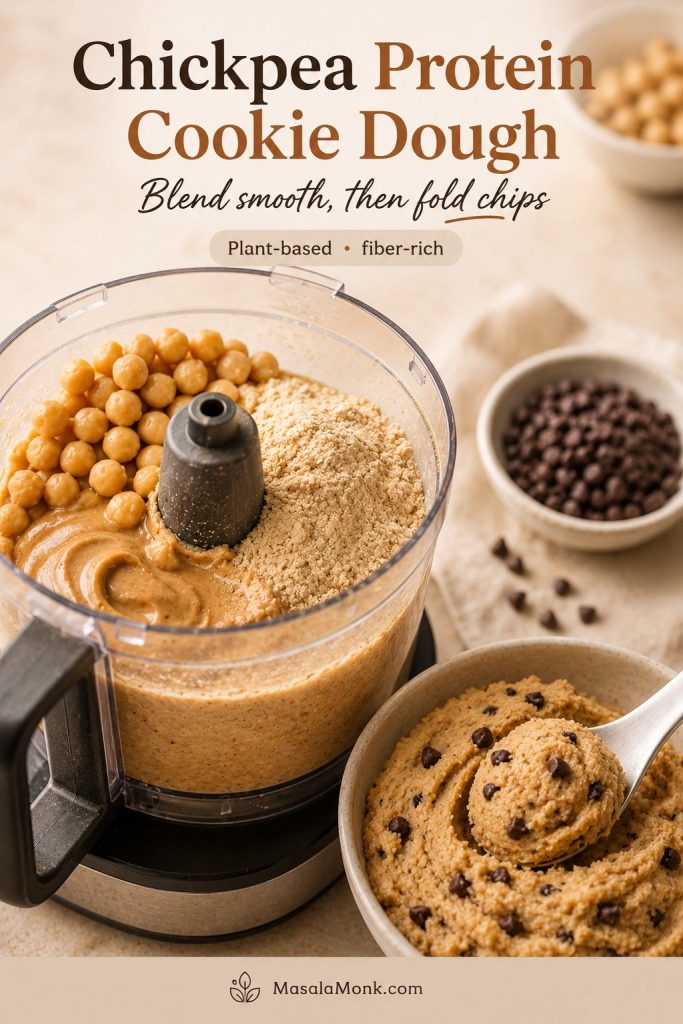
Chickpea protein cookie dough being made in a food processor with chickpeas, protein powder, nut butter, and chocolate chips
The chickpea version works best as a blended variation, since a food processor gives the base a smoother, dip-like texture.

For a chickpea version, start with 1 cup well-rinsed chickpeas, 30g vanilla protein powder, 2 tablespoons nut butter or sunflower seed butter, 1–2 tablespoons maple syrup, vanilla, salt, and 1–2 tablespoons milk as needed. Blend everything except the chocolate chips until smooth, then fold in the chips.

For the smoothest texture, rinse the chickpeas very well and remove the skins if you have time. Chilling the dough for 20–30 minutes also helps the flavor mellow and the texture thicken.

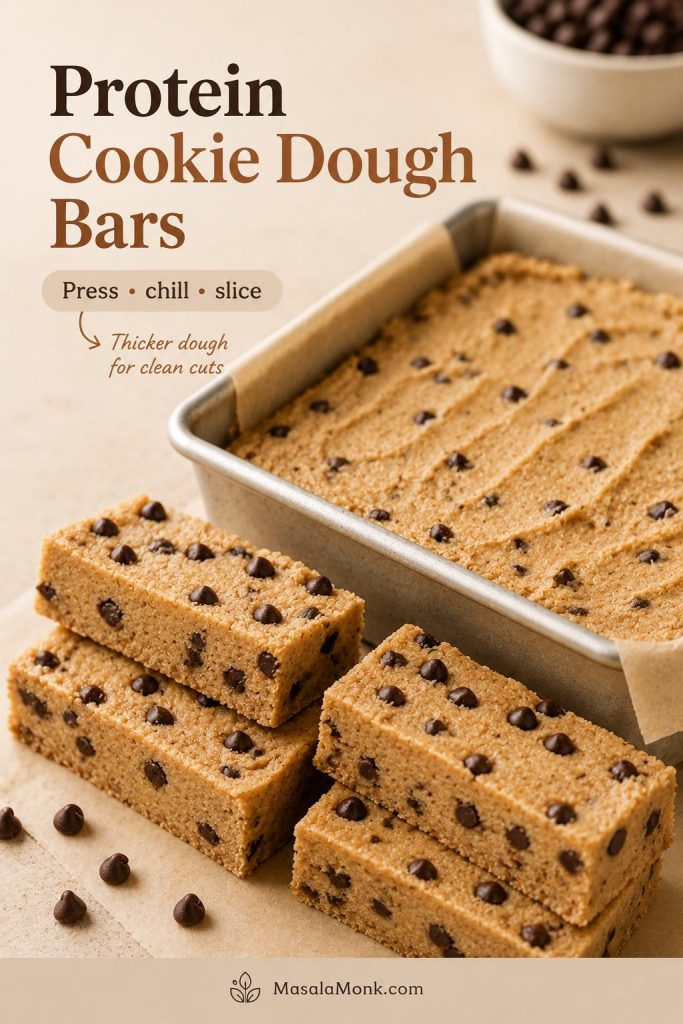
No-bake protein cookie dough bars sliced from a chilled parchment-lined loaf pan with mini chocolate chips visible
Protein cookie dough bars need a firmer base than the spoonable version, so they can chill, hold their shape, and slice cleanly.

After slicing, use the storage guide so the bars stay firm instead of drying out.

A loaf pan works well for a thicker small batch. Use an 8-inch square pan only if you are doubling the recipe, otherwise the bars may be too thin.

For a more dessert-like bar, spread melted chocolate over the chilled dough and chill again until set. For a softer snack bar, skip the chocolate coating and keep the chocolate chips mixed into the dough.

Storage and Freezer Tips

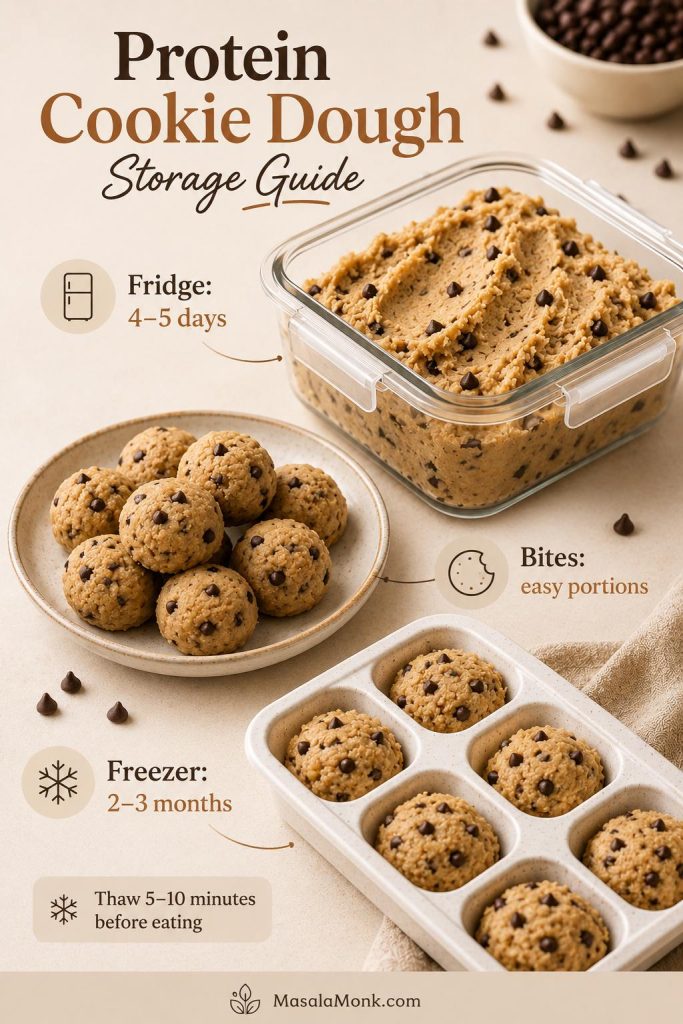
Protein cookie dough storage guide showing an airtight fridge container, rolled snack bites, and freezer portions
For easy snack prep, keep protein cookie dough chilled in a container or freeze small portions that soften after a few minutes.
Storage method How long Best tip
Airtight container in the fridge 4–5 days Stir before serving if it firms up.
Rolled balls in the fridge 4–5 days Use a small cookie scoop for even portions.
Freezer portions 2–3 months Freeze on a tray first, then move to a container.
Cookie dough bars Up to 1 week chilled Keep parchment between layers if stacking.

For bites, chill the dough until it is firm enough to scoop, then roll it into small balls and store them in the fridge or freezer. They are easier to portion than a full bowl and work well for snack prep.

Frozen portions taste best after sitting at room temperature for 5–10 minutes. They should soften slightly but still hold their shape.

What to Eat With Protein Cookie Dough

You can absolutely eat this straight from the bowl. That is the point. But if you make extra, it also turns into an easy topping, dip, or freezer snack.

Think of it as a spoonable snack first, then use leftovers anywhere you would normally want a sweet, cookie-dough-style topping.

  • Scoop it into small snack balls.
  • Serve it with apple slices.
  • Swirl it into Greek yogurt.
  • Crumble it over smoothie bowls.
  • Press it into bars.
  • Freeze it into bite-size portions.
  • Use it as a high-protein dessert dip.

Once you understand the texture, this becomes the kind of recipe you can make by feel: a little more milk for spoonable, a little more flour for scoopable, and a little more vanilla and salt when the protein powder tries to take over.

Different protein powders can change this dough a lot. If you try it with whey, casein, collagen, or plant protein, note how much milk it needed and whether the final texture turned out scoopable, sticky, dry, or firm. That is the kind of detail other readers actually want before they open a new tub of protein powder, so it is worth sharing if your powder behaved differently.

After one batch, you will probably know exactly how your protein powder behaves. From there, this becomes an easy fridge snack you can make by feel — thicker for cookie dough bites, softer for spooning, sweeter when it is dessert, and lighter when you just want a quick protein treat.

Ready to make it now? Jump to the full protein cookie dough recipe card.

FAQs About Protein Cookie Dough

Why is my protein cookie dough dry?

Your protein powder probably absorbed more liquid than expected. Casein and plant-based protein powders are especially thirsty, so add milk or Greek yogurt 1 teaspoon at a time until the dough softens.

Why did my protein cookie dough turn sticky?

Sticky dough usually means too much syrup, nut butter, or milk. First, chill it for 20–30 minutes. After that, add almond flour or oat flour 1 teaspoon at a time if the mixture still feels too loose.

Which protein powder tastes best in cookie dough?

A good vanilla whey-casein blend is usually the easiest choice for a balanced dough texture. Whey can be smooth but sticky, casein can be thick and dry, and plant protein may need more moisture and flavor support.

Best peanut butter substitutes for protein cookie dough

Peanut butter is not required. Almond butter, cashew butter, sunflower seed butter, tahini, or a mix of Greek yogurt and powdered peanut butter can all work. The flavor and texture will change slightly, but the recipe still holds together.

Using powdered peanut butter in protein cookie dough

Powdered peanut butter works best in the low-calorie version because it keeps peanut flavor while reducing fat. Since it can taste drier than regular nut butter, pair it with Greek yogurt and add milk slowly until the dough is scoopable.

No Greek yogurt? Use this texture fix

Greek yogurt helps with creaminess, but the recipe can work without it. Replace it with more nut butter and a little milk, or use dairy-free yogurt for a vegan version. Since yogurt also adds thickness, add the liquid slowly so the dough does not become loose.

Is almond flour safe in no-bake cookie dough?

This recipe avoids raw all-purpose wheat flour, which is the main flour concern in classic raw cookie dough. Use fresh almond flour or oat flour from a reputable source, keep the finished dough chilled, and do not swap in regular raw wheat flour unless it is specifically labeled for edible dough.

Freezing protein cookie dough without ruining the texture

Roll the dough into balls or portion it into small scoops, freeze on a tray, then transfer to an airtight container. Let frozen portions sit for 5–10 minutes before eating so they soften slightly without turning mushy.

Should you bake this dough into cookies?

This recipe is designed as edible no-bake dough. Protein powder behaves differently when baked, so a dedicated protein cookie recipe will give you a better baked texture.

Lower-calorie protein cookie dough swaps that still taste good

Use powdered peanut butter, nonfat Greek yogurt, sugar-free syrup if you like it, and a smaller amount of mini chocolate chips. A single-serving batch is usually the easiest way to keep the calories controlled without making a large bowl of leftovers.

Vegan protein cookie dough: what changes?

Plant-based protein powder usually thickens more and can taste earthier than whey. Use almond or oat flour, nut butter, maple syrup, dairy-free milk, and dairy-free chocolate chips, then add extra milk or nut butter if the dough tastes chalky.

Protein cookie dough recipe card showing the base formula, five-minute prep time, protein estimate, texture target, and storage
Save the base formula as a texture guide: equal parts flour and protein powder, creamy ingredients for richness, then milk only until scoopable.

Protein Cookie Dough Recipe Card

This edible protein cookie dough is no-bake, egg-free, creamy, and ready in about 5 minutes. Chill it for a firmer cookie-dough bite, or eat it right away while it is softer and freshly mixed.

Texture target: The dough should hold ridges when stirred, scoop cleanly, and feel thick but not dry. Pourable dough needs more dry structure, while crumbly dough needs a little more moisture.

Servings 3–4
Prep Time 5 minutes
Chill Time Optional 20–30 minutes
Cook Time 0 minutes

Equipment

  • Medium mixing bowl
  • Spatula or sturdy spoon
  • Measuring cups and spoons
  • Kitchen scale, optional but helpful
  • Airtight container for storage

Ingredients

Ingredient US amount Metric amount
Almond flour or oat flour ½ cup 50–56g
Vanilla protein powder ½ cup 50–60g
Creamy peanut, almond, or cashew butter 3 tablespoons About 48g
Plain thick Greek yogurt ⅓ cup About 80g
Maple syrup or honey 2–3 teaspoons 10–15ml
Milk or almond milk 3–6 tablespoons, added gradually 45–90ml
Vanilla extract ½ teaspoon 2.5ml
Fine salt ¼ teaspoon About 1.5g
Mini chocolate chips 3 tablespoons 30–40g

Instructions

  1. Stir the almond flour or oat flour, protein powder, and salt together in a medium bowl.
  2. Mix in the nut butter, Greek yogurt, maple syrup or honey, and vanilla until a thick dough starts to form.
  3. Add milk or almond milk 1 tablespoon / 15ml at a time, mixing well after each addition, until the dough holds ridges when stirred and scoops cleanly.
  4. Fold in the mini chocolate chips.
  5. Eat immediately for a softer dough, or cover and chill for 20–30 minutes for a firmer cookie-dough bite.

Notes

  • Protein powders absorb liquid differently, so start with less milk and add more gradually.
  • Chilling is optional, but it improves both texture and flavor because the flour and protein powder have time to hydrate.
  • Divide the batch into 3 servings for a higher-protein snack or 4 servings for smaller dessert portions.
  • Use 3 teaspoons maple syrup or honey for a sweeter dessert-style dough, or start with 2 teaspoons for a less sweet snack.
  • When the dough is wet, build it back up with almond flour, oat flour, or protein powder 1 teaspoon at a time.
  • For dry dough, add milk or Greek yogurt 1 teaspoon at a time until it softens.
  • Strong protein-powder flavor usually improves with extra vanilla, a tiny pinch of salt, or 1 teaspoon nut butter before adding more milk.
  • Do not use regular raw all-purpose flour in this no-bake recipe.

Storage

Store protein cookie dough in an airtight container in the fridge for 4–5 days. For longer storage, portion it into balls or scoops and freeze for 2–3 months. Let frozen portions sit for 5–10 minutes before eating.

Estimated Protein and Calories

Protein and calories will vary by powder, yogurt, flour, nut butter, milk, syrup, chocolate chips, and serving size. As a rough guide, this batch usually lands around 15–22g protein per serving when divided into 3–4 portions, with about 225–400 calories per serving depending on portion size and ingredients. Use your own labels for the most accurate numbers.

Posted on 10 Comments

Protein Ice Cream Recipe: 10 Creamy Homemade Recipes

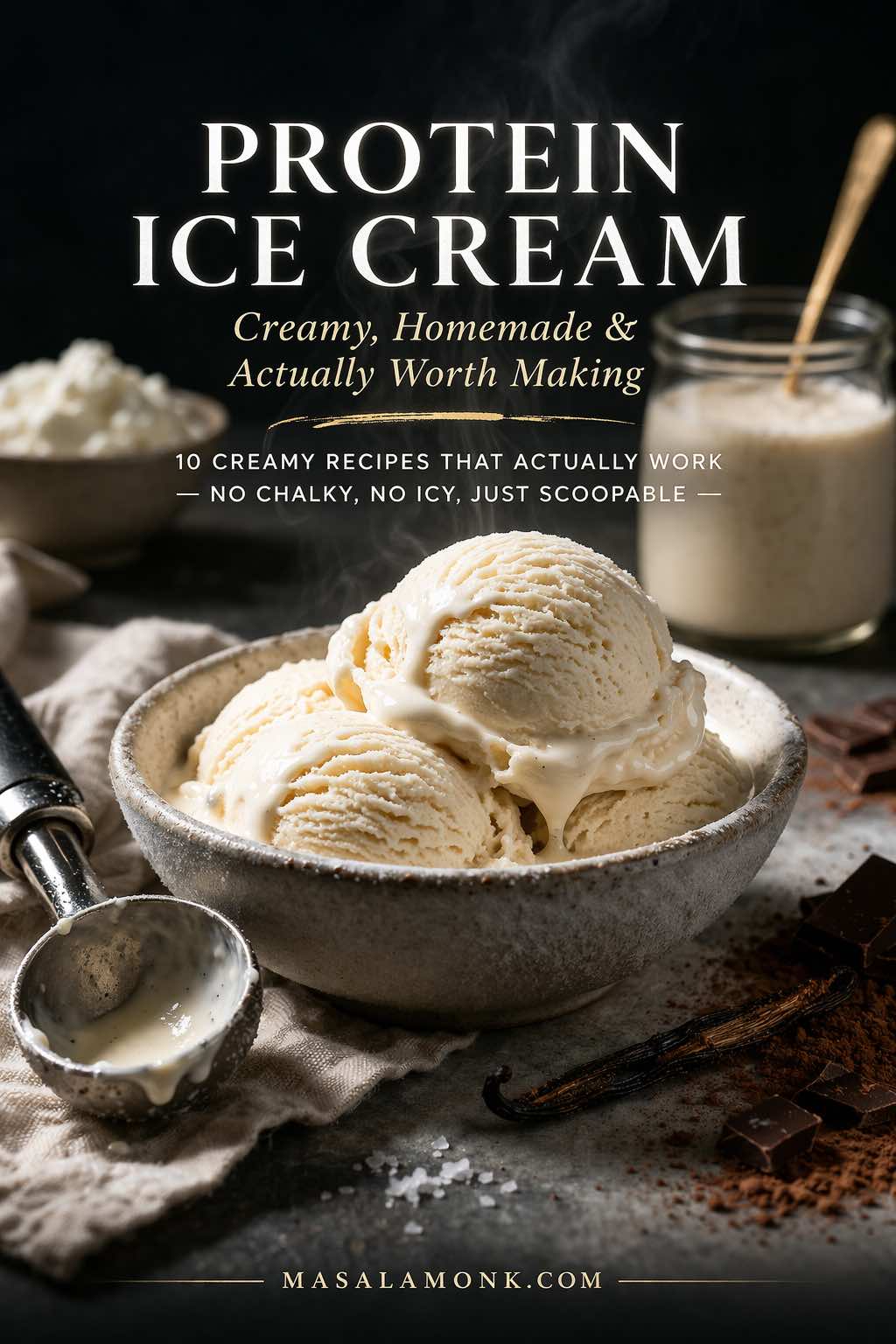
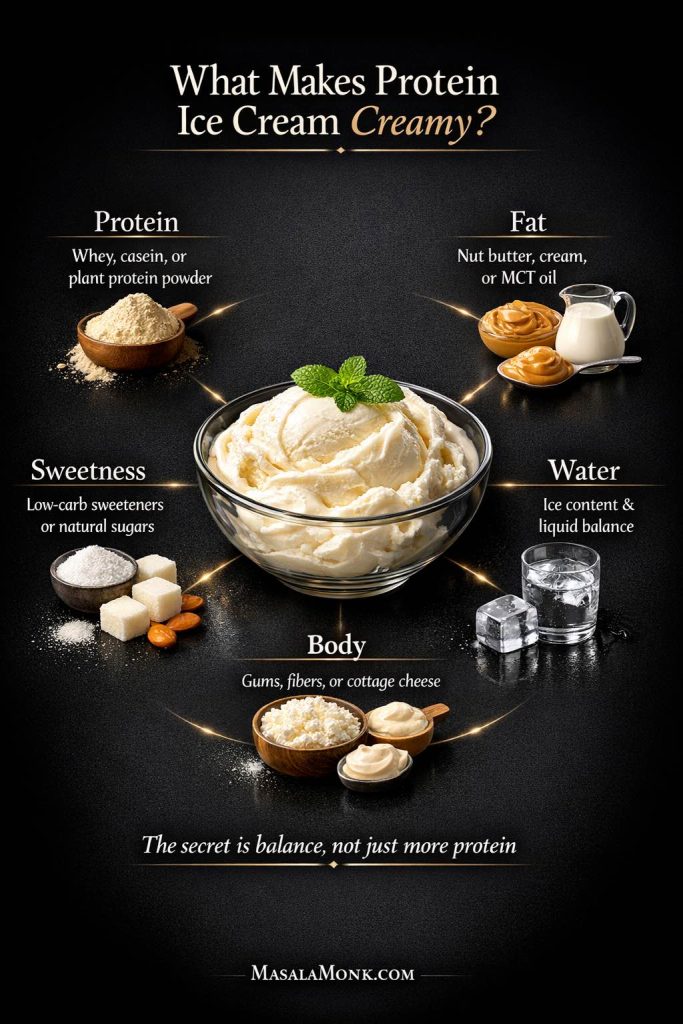
Bowl of creamy homemade protein ice cream in a grey ceramic bowl with scoop, vanilla bean, and dark luxe styling for a protein ice cream recipe cover image.

Protein ice cream sounds perfect until you make a bad batch. One turns chalky. Another freezes so hard it barely gives way to a spoon. A third tastes less like dessert and more like cold protein powder with ambition.

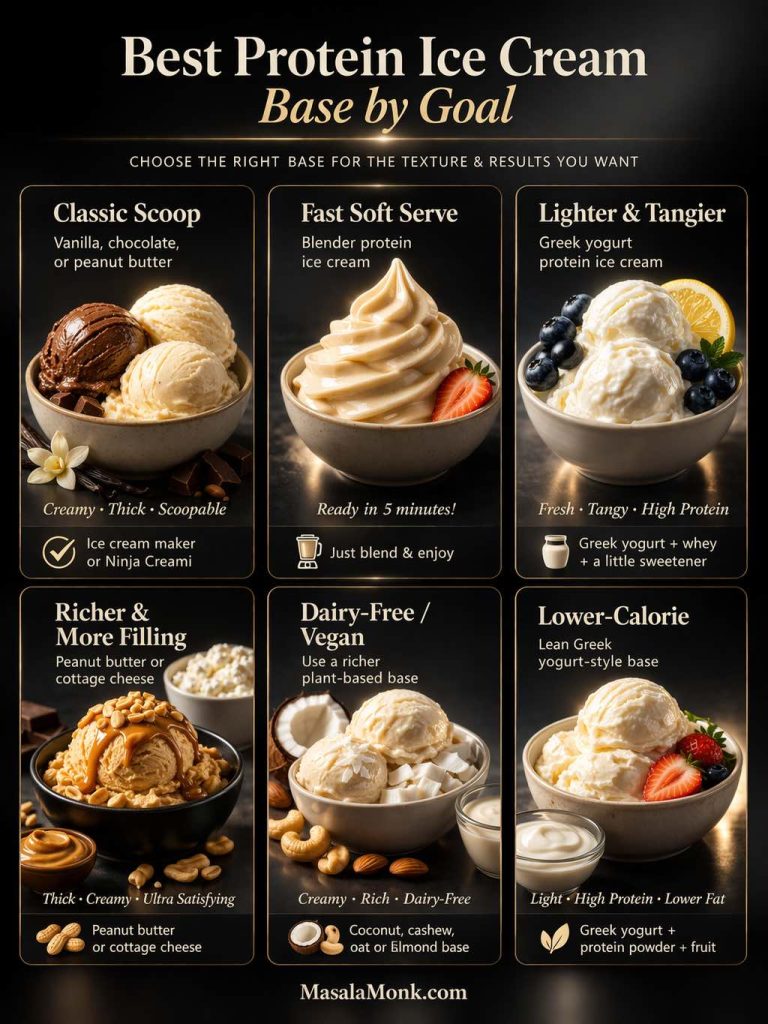
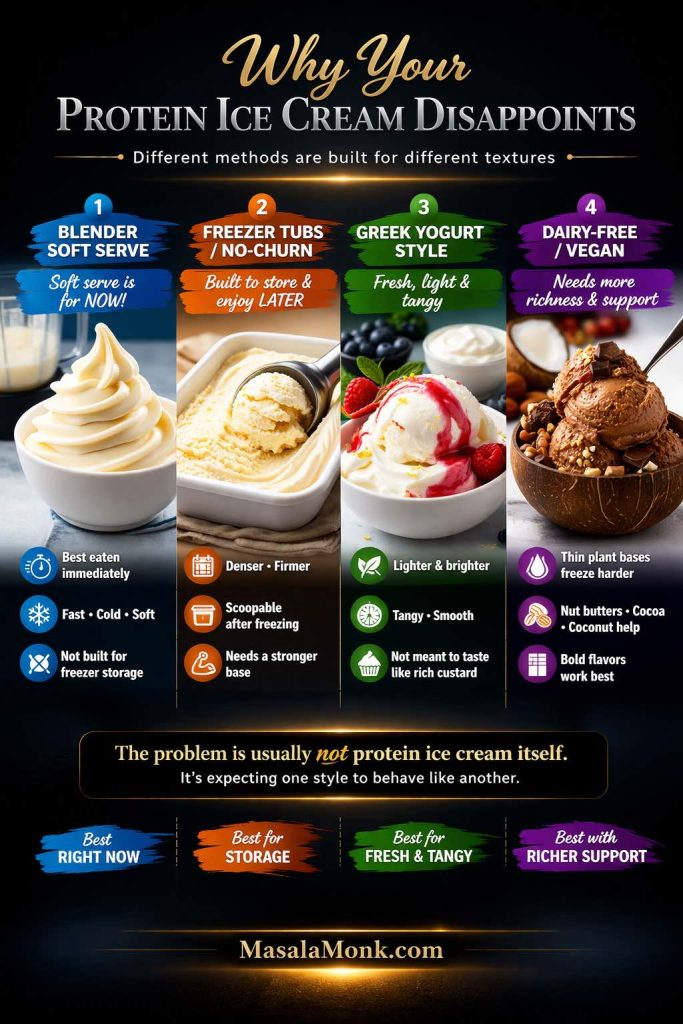
The good news is that homemade protein ice cream can be genuinely enjoyable. The mistake is expecting one formula to cover every goal. A fast blender bowl, a scoopable vanilla tub, a tangy Greek yogurt version, a dairy-free chocolate batch, and a lighter low-calorie option are not trying to deliver the same experience. Once you stop treating them as the same dessert, the category becomes much easier to understand and much easier to get right.

This guide is built to do exactly that. It helps you choose the right method, start with the strongest all-around recipe, and then move into the version that actually suits the kind of frozen dessert you want to eat. If you want something that tastes good enough to make again, not just once for the macros, this is the way to do it.

If You Want the Short Version

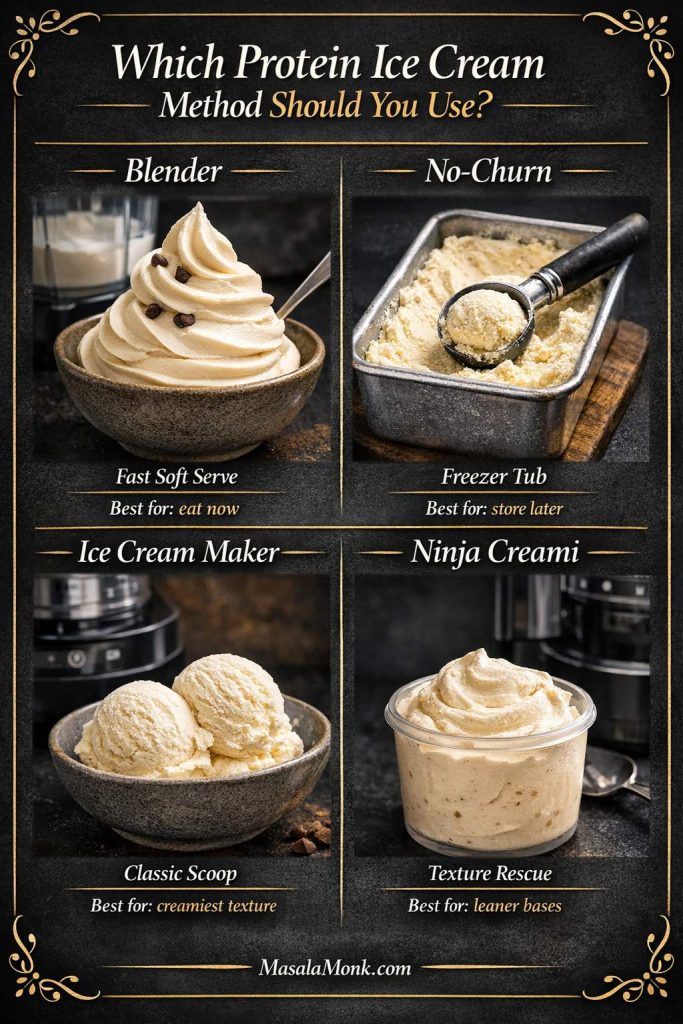
  • Want something cold and fast? A blender version is your best bet.
  • Planning to keep a tub in the freezer? Go with no-churn.
  • After the closest thing to a classic homemade scoop? Use an ice cream maker.
  • Need the best place to begin? Start with classic vanilla homemade protein ice cream.
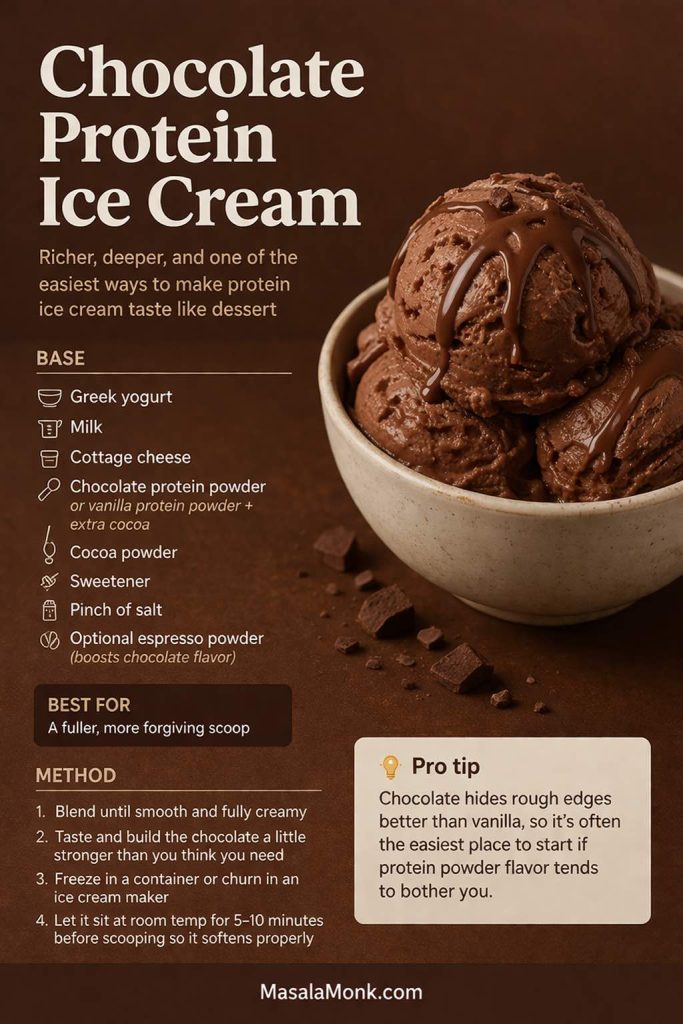
  • Nervous about chalky flavor? Chocolate is the safest route.
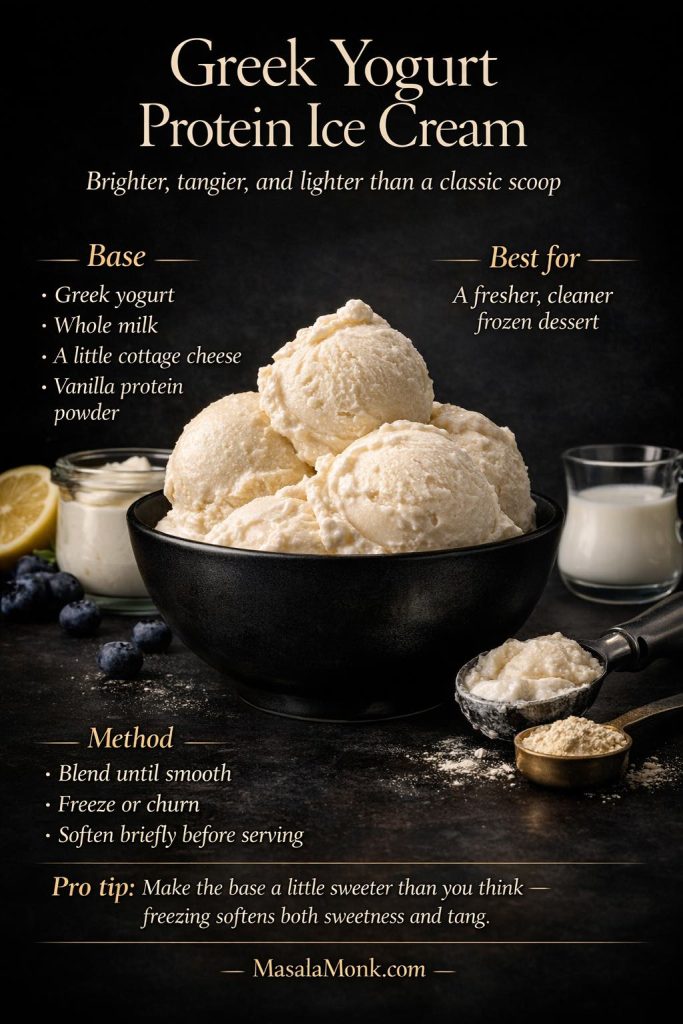
  • Prefer something fresher and tangier? Greek yogurt protein ice cream fits best.
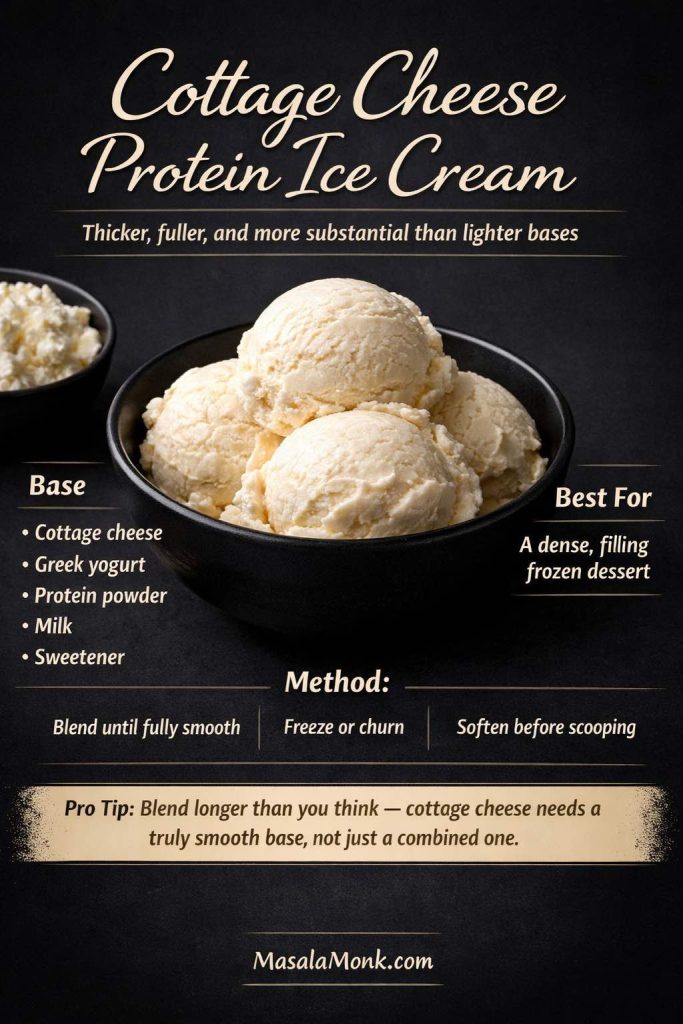
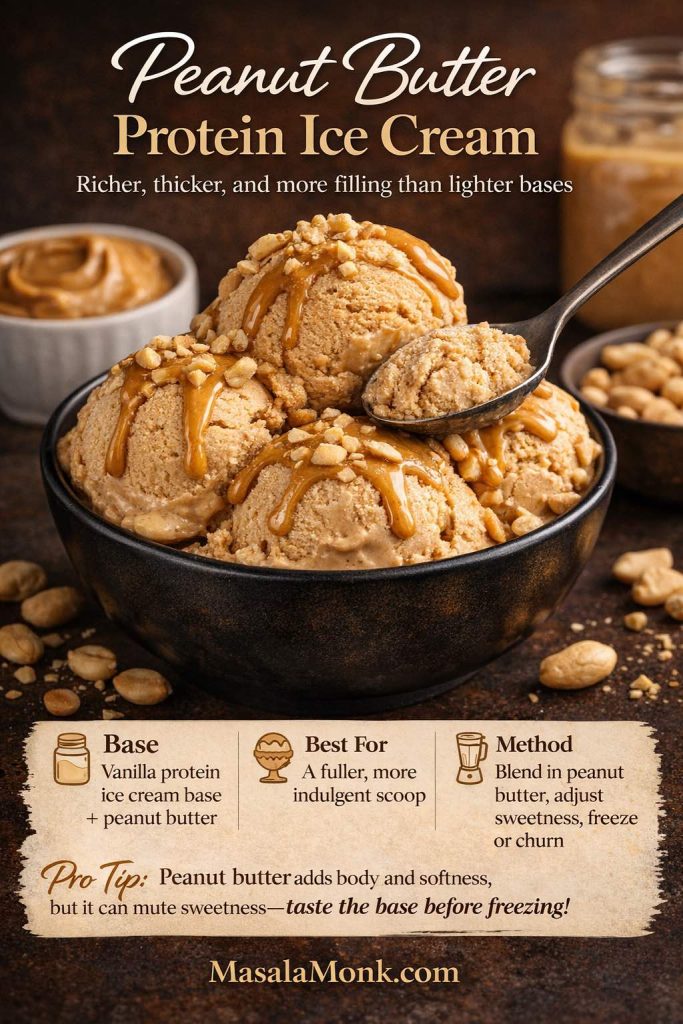
  • Looking for more body and fullness? Reach for peanut butter or cottage cheese.
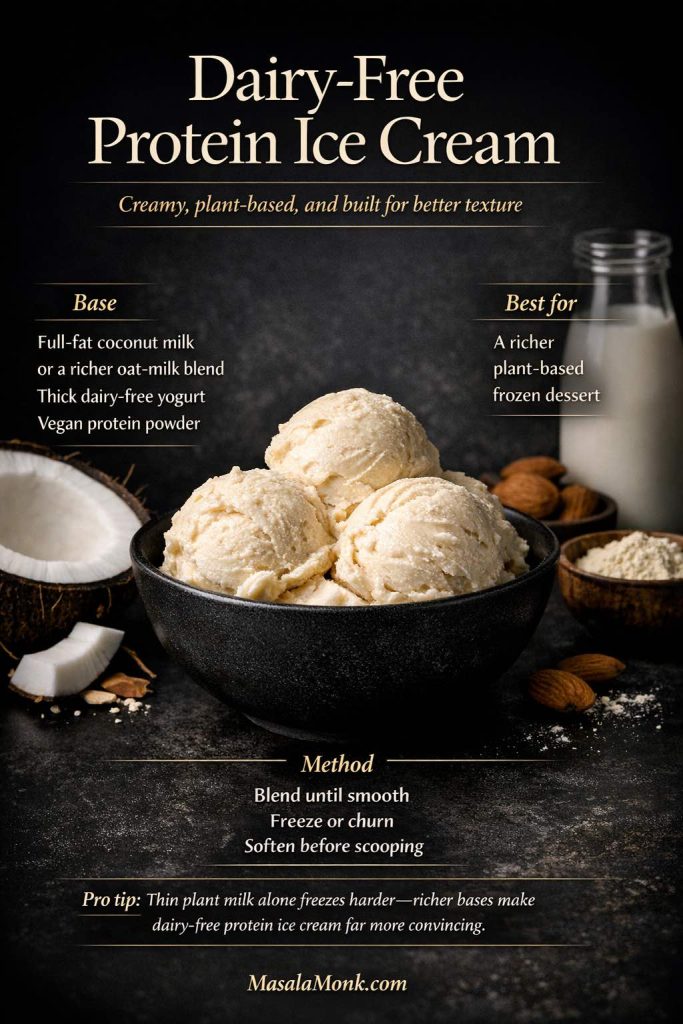
  • Keeping it plant-based? Make sure the dairy-free or vegan base is rich enough to support the texture.
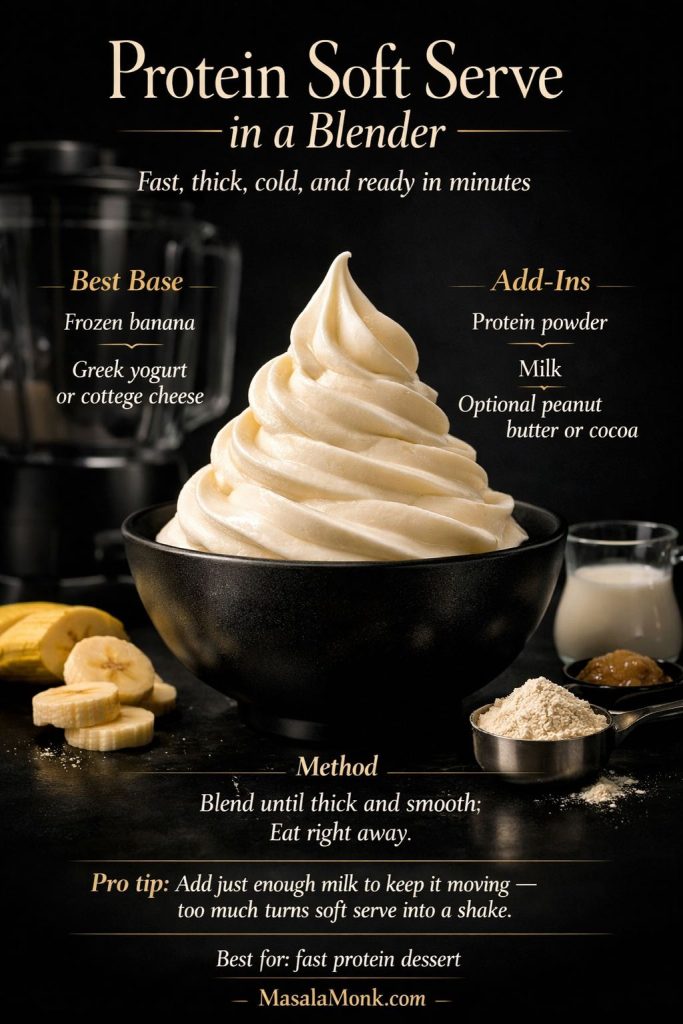
  • Want something ready in minutes? Start with protein soft serve in a blender.
  • Using a Ninja Creami? Most of these bases can also become Ninja Creami protein ice cream.

That is the whole category in miniature. The rest of the guide shows you how to make each one work.

What Is Protein Ice Cream?

Protein ice cream is a frozen dessert made with extra protein-rich ingredients such as protein powder, Greek yogurt, cottage cheese, ricotta, higher-protein dairy, or plant-based bases paired with vegan protein powder.

That broad definition matters because this category can lead to very different results. Some versions are fast, soft, and blender-based. Others are built for a scoopable freezer tub. Some feel lighter and tangier, while others lean richer and more dessert-like. It is not automatically creamy, and it is not automatically a better dessert choice just because it has more protein. The best version depends on the texture, method, and eating experience you actually want. For broader context on protein itself, Harvard Nutrition Source’s guide to protein is a useful reference.

Also Read: Homemade Mango Ice Cream Recipe

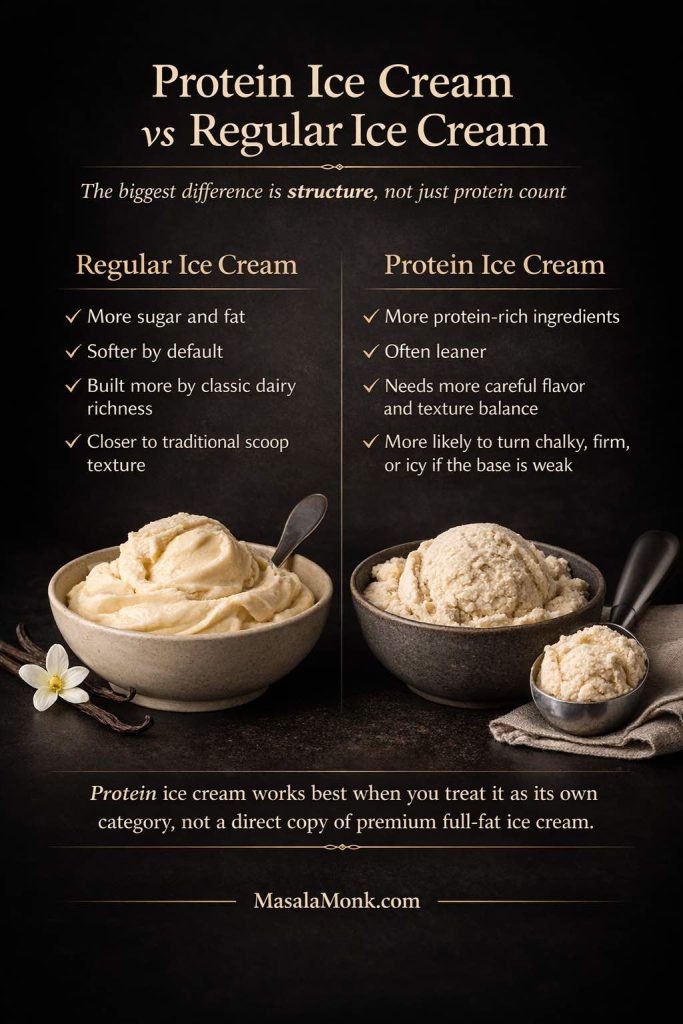
Protein Ice Cream vs Regular Ice Cream: What Changes?

The biggest difference is not just the protein count. It is the structure. Regular ice cream usually relies more heavily on sugar, fat, and traditional dairy richness to create softness and body. Protein ice cream often asks protein powder, Greek yogurt, cottage cheese, or plant-based ingredients to do more of that work.

Protein ice cream vs regular ice cream comparison graphic showing how regular ice cream is richer and softer by default while protein ice cream is leaner and needs more careful flavor and texture balance.
Protein ice cream and regular ice cream are not separated by protein count alone. Regular ice cream gets more built-in softness from sugar, fat, and classic dairy richness, while protein ice cream depends more on yogurt, cottage cheese, protein powder, and careful structure, which is why it can feel satisfying when well made but far easier to turn chalky, firm, or icy when the base is weak.

That changes both texture and flavor. High protein ice cream can be thick, satisfying, and genuinely good, but it also has more ways to go wrong. It can turn chalky if the powder is too aggressive. It can freeze too hard if the base is too lean. And then it can taste flat if the flavor is not built strongly enough before freezing.

That is why homemade protein ice cream should be treated as its own category rather than judged as a direct one-to-one copy of premium full-fat ice cream. Some versions land closer to frozen yogurt. Some land closer to soft serve. And then some are best thought of as lighter frozen desserts with a higher-protein profile rather than replicas of classic custard.

How to Make Protein Ice Cream: Choose the Right Method

Before you decide on vanilla, chocolate, fruit, or peanut butter, decide how you want the finished dessert to behave. This is where many homemade recipes go off course. People want a soft blender bowl to scoop like a freezer tub, or they want a lean no-churn mix to eat like a richer churned ice cream.

Protein ice cream method guide comparing blender soft serve, no-churn freezer tub, ice cream maker scoops, and Ninja Creami texture rescue for homemade protein ice cream.
Not every protein ice cream method gives the same result. Use this quick guide to choose between blender soft serve, a no-churn freezer tub, classic ice cream maker scoops, or Ninja Creami texture rescue before you start your batch.

Blender Protein Ice Cream for a Fast Soft-Serve Texture

A blender method is the quickest path. It is best when you want something thick, cold, and immediate rather than something to store for several days. This style suits frozen fruit, Greek yogurt, cottage cheese, and softer protein-based mixtures that taste best right away.

Its weakness is storage. Fresh from the blender, the texture can be lush and spoonable. After deep freezing, many versions turn firmer and lose their easy soft-serve appeal. That does not make them bad. It simply means they are built for speed rather than long freezer life. This is the best method when you want protein soft serve rather than a freezer tub.

No-Churn Protein Ice Cream for a Scoopable Freezer Tub

No-churn makes more sense when you want a proper freezer dessert that can sit in a container and still feel worth revisiting later. It is also the most useful option if you do not own an ice cream maker. MasalaMonk’s guide to homemade ice cream without a machine is a helpful companion if you want a broader no-machine foundation.

This method needs a stronger base. If the mixture is too lean, too watery, or overloaded with powder, it usually freezes hard or icy. When the structure is right, though, a no-churn tub can feel far more like a real stored dessert than a quick frozen shake.

Ice Cream Maker Protein Ice Cream for the Most Classic Texture

An ice cream maker gives the best chance of producing a batch that feels closest to traditional homemade ice cream. Constant movement as it freezes improves body and helps avoid the one-block problem that plagues many freezer-only recipes. This matters most with richer versions such as vanilla, chocolate, peanut butter, or cottage cheese-based styles. For a fuller churn workflow, MasalaMonk’s guide on how to make ice cream with a KitchenAid mixer is worth reading.

One thing is non-negotiable: the base has to be thoroughly chilled first. A properly cold mixture churns more smoothly, thickens more evenly, and lands much closer to the creamy finish most readers are hoping for.

No-churn vs ice cream maker protein ice cream comparison showing a dense freezer tub on one side and smoother scoopable protein ice cream in a bowl on the other.
No-churn and ice cream maker protein ice cream can both work well, but they do not produce the same kind of scoop. No-churn usually lands denser and richer, while an ice cream maker gives a smoother, lighter texture that feels closer to classic homemade ice cream.

Also Read: Cookie Pie Recipe: 10 Best Flavors, Fillings and Variations

Healthy Protein Ice Cream: What Makes It Actually Work

Healthy protein ice cream is not just regular ice cream with protein powder stirred in, and it is not automatically a success because the macros look better on paper. The versions that actually work are the ones that balance protein with enough body, sweetness, and flavor to remain enjoyable after freezing.

That is the real tension in this category. Push too hard toward lean, low-fat, ultra-high-protein formulas and you often end up with something dry, icy, or strangely joyless. Build with more care and you can get a homemade frozen dessert that feels lighter or more balanced without becoming a punishment.

Healthy protein ice cream guide showing what works versus what goes wrong, with a balanced creamy protein ice cream on one side and a dry powder-heavy failed version on the other.
Healthy protein ice cream works when balance still matters more than macros alone. Enough body, moderate sweetness, and stronger flavor support keep the scoop satisfying after freezing, while overly lean, watery, or powder-heavy mixes are far more likely to turn dry, chalky, icy, or flat.

Greek yogurt, cottage cheese, well-chosen protein powder, concentrated fruit, nut butter, and moderate sweetness often do more for healthy protein ice cream than macro extremism ever will. The best version is not the one making the loudest promise. It is the one you would actually want to eat again.

Best Homemade Protein Ice Cream Recipe: Classic Vanilla

If you make only one version from this guide, make this first. It is the strongest all-around starting point for most readers because it balances texture, flavor, and practicality better than the leaner or more extreme versions. It is also the recipe that makes the rest of the guide easier to understand, because so many variations build from the same logic.

Best for: a classic scoopable homemade protein ice cream
Method: no-churn or ice cream maker
Texture: creamy, balanced, and softer than leaner versions

Dark luxe classic vanilla protein ice cream recipe image showing glossy vanilla scoops in a black bowl with recipe text overlay for homemade protein ice cream.
Start with this classic vanilla protein ice cream when you want the creamiest, most reliable introduction to homemade protein ice cream. It gives you a scoopable base built with Greek yogurt, cottage cheese, vanilla protein powder, and just enough richness to feel satisfying instead of chalky or flat.

Why This Vanilla Protein Ice Cream Works

This version works because no single ingredient is forced to do all the heavy lifting. Greek yogurt brings brightness and protein. Cottage cheese adds body. Milk keeps the mixture workable. A little optional cream or nut butter rounds off the dry edge that protein powder can create.

Balance is what matters here. A lot of homemade recipes are too thin, too lean, or too powder-heavy, so they freeze into something dull and stubborn. This one is built to stay softer, fuller, and more dessert-like than those shortcut versions. It is not identical to custard ice cream, but it gets much closer to that direction than a simple milk-and-powder formula ever will.

Ingredients

  • 1 cup Greek yogurt
  • 3/4 cup whole milk
  • 1/2 cup cottage cheese
  • 1 scoop vanilla protein powder
  • 2 to 3 tablespoons maple syrup or another preferred sweetener
  • 1 teaspoon vanilla extract
  • 1 pinch salt
  • 2 tablespoons peanut butter, almond butter, or cream, optional but recommended
Classic vanilla protein ice cream process and texture guide showing a smooth glossy blended base, fully chilled mixture, shallow tub or churn option, and final scoopable homemade protein ice cream.
The best vanilla protein ice cream starts looking right before it ever freezes. A smooth glossy base, a full chill before freezing or churning, and a short rest before scooping are what help this version stay creamier, softer, and more dessert-like instead of turning grainy, icy, or stubbornly firm.

Method

Blend everything until completely smooth and glossy. The base should look silky, not grainy or dull. Taste before chilling. At this point it should seem slightly sweeter and slightly more vanilla-forward than necessary, because both will soften once frozen.

Chill the mixture until fully cold, ideally for 2 to 4 hours. For a no-churn version, freeze it in a shallow container for about 4 to 6 hours, stirring once or twice during the early freezing stage if convenient.

For the most classic texture, churn the cold base in an ice cream maker until it reaches a thick soft-serve stage, then freeze it for another 1 to 2 hours for a firmer scoop. Let it stand for 5 to 10 minutes before serving.

What to Expect

This vanilla version should feel smoother, rounder, and more complete than the leaner recipes in the post. It lands between rich frozen yogurt and classic homemade ice cream, which is exactly why it works so well as the hero version. If you are making homemade protein ice cream for the first time, this is the one most likely to convince you the effort is worth it.

Also Read: Punjabi Mutton Bhuna – Amritsari Village-Style Gosht Recipe

Best High Protein Ice Cream Base by Goal

If you match the recipe style to the dessert you actually want, the whole category becomes easier.

Best protein ice cream base by goal comparison guide showing classic scoop, fast soft serve, Greek yogurt, richer peanut butter or cottage cheese, dairy-free vegan, and lower-calorie protein ice cream options.
Not every protein ice cream base is built for the same result. Use this quick guide to choose between a classic scoop, fast blender soft serve, tangy Greek yogurt, richer peanut butter or cottage cheese, dairy-free plant-based options, or a lighter lower-calorie base before you commit to a recipe.

Best for a Classic Scoop

Classic vanilla, chocolate, and the richer peanut butter version are your best options if you want something closest to a true homemade scoop. These styles have the most support from dairy, body-building ingredients, and overall balance. An ice cream maker improves the odds even more.

Best for a Fast Soft-Serve Bowl

A blender-style version is the right fit when speed matters more than storage. Choose this route when you want something thick, cold, and satisfying within minutes instead of waiting half a day for a freezer tub to set.

Best for a Lighter, Tangier Dessert

Greek yogurt is the clearest winner when you want something fresher, cleaner, and less heavy on the palate. Strawberry also fits naturally here when the fruit is concentrated properly.

Best for a Richer, More Filling Spoonful

Peanut butter and cottage cheese are the strongest choices when you want more body. Peanut butter gives richness and softness, while cottage cheese gives the dessert a denser, more substantial spoonful.

Best for Dairy-Free or Vegan Needs

Choose a dairy-free base when you want a plant-based route with some flexibility around the rest of the formula. Move into a vegan version when both the base and the protein source need to stay plant-based. In both cases, richer ingredients and stronger flavor directions usually give the best results.

Best for Lower-Calorie Goals

Low calorie protein ice cream is the most direct fit when keeping the dessert lighter matters most. Sugar-free versions can also work well, but they ask more from the flavor structure and usually freeze more firmly.

Best for Freezer Storage

Richer no-churn versions and churned versions usually hold up best if you want to keep a batch in the freezer and return to it later. Quick blender bowls are usually the weakest at long storage.

Also Read: Peach Cobbler with Canned Peaches (Dessert Recipe)

How to Make Protein Ice Cream Creamy Instead of Chalky or Icy

Homemade protein ice cream gets much better once you understand one simple truth: protein alone does not make frozen dessert creamy. Texture depends on balance, not just macros.

Protein ice cream creamy texture guide showing how protein, fat, sweetness, body, and water affect homemade protein ice cream texture and help prevent chalky or icy results.
Protein powder alone does not create creamy protein ice cream. The best texture comes from balancing protein with enough fat, sweetness, body, and controlled water so the final scoop stays smooth instead of turning chalky, icy, or hard.

Protein Alone Does Not Make Good Ice Cream

Protein powder can help build the dessert you want, but it cannot do every job at once. It adds protein, some flavor, and some thickness, but it can also make the base drier, grittier, or more artificial if used too aggressively. That is why homemade batches go downhill so quickly when people keep adding extra scoops to chase bigger numbers.

Greek yogurt, cottage cheese, ricotta, and thicker dairy ingredients often help because they bring protein with body and texture, not just powder. That is one reason some high protein frozen desserts feel naturally creamy while others feel dry and strange.

Fat, Sweetness, and Body Matter More Than People Think

Creaminess depends on more than protein. Fat softens texture. Sweetness matters because frozen desserts always taste less sweet once cold. Body matters too. Thick yogurt, cottage cheese, nut butter, and even a little cream can make the difference between a spoonable dessert and a disappointing frozen mass.

Very lean formulas often underperform for exactly that reason. They are light on softness, light on flavor support, and easy to freeze too firmly.

Too Much Water Is What Breaks Many Homemade Batches

If there is one silent problem behind weak results, it is excess water. Thin milk, watery fruit, unbalanced plant milk, and diluted bases all raise the risk of iciness. Fruit can be wonderful here, but it often needs reducing or concentrating first. Dairy-free versions can also be excellent, but thin plant milk alone rarely gives enough support.

The real secret is balance: enough richness, enough sweetness, enough solids, and not too much water.

Also Read: Avocado Chocolate Mousse Recipe

Chocolate Protein Ice Cream

Chocolate is one of the easiest flavors to make convincingly, and that is part of its charm.

Chocolate protein ice cream recipe graphic showing homemade chocolate protein ice cream in a bowl with ingredients, method, pro tip, and serving guidance.
Chocolate is often the easiest way to make protein ice cream feel like dessert instead of a cold nutrition experiment. Cocoa builds depth, helps cover rough protein-powder edges, and gives the scoop a fuller, more forgiving flavor than lighter vanilla-style versions usually manage.

Why This Chocolate Protein Ice Cream Works

Chocolate works because it hides rough edges. A powder that would feel exposed in vanilla often becomes much easier to enjoy once cocoa, bitterness, and salt enter the picture.

That makes this one of the safest choices for readers who want their dessert to feel unmistakably like dessert.

Ingredients

  • 1 batch classic vanilla protein ice cream base
  • 2 tablespoons cocoa powder
  • 1 teaspoon espresso powder, optional
  • 1 tablespoon melted dark chocolate or 1 tablespoon peanut butter, optional

Method

Blend the cocoa into the vanilla base until smooth. Add espresso powder if you want more depth. For a darker finish, add the melted chocolate or peanut butter too.

If the base warms during blending, chill it again before freezing. Then either freeze it in a shallow container for 4 to 6 hours or churn it until thick and soft, followed by a short freezer rest. Taste before freezing and make sure the chocolate feels a touch stronger than you think it should.

What to Expect

Chocolate usually feels deeper, richer, and more forgiving than vanilla. If you already know you prefer intense chocolate desserts, MasalaMonk’s avocado chocolate mousse is another natural direction.

Also Read: Falafel Recipe: Crispy Homemade, Air Fryer and Baked Falafel

Peanut Butter Protein Ice Cream

Peanut butter is one of the most effective ingredients in the whole category because it improves flavor and texture in the same move.

Peanut butter protein ice cream in a black bowl with recipe text overlay, showing a richer homemade protein ice cream topped with peanut butter drizzle and chopped peanuts.
Peanut butter changes protein ice cream in two important ways at once: it adds richer flavor, and it makes the texture feel thicker, softer, and more filling. That is why this version works so well when you want a scoop that feels more indulgent than lighter Greek yogurt or lower-calorie styles.

Why This Peanut Butter Protein Ice Cream Works

Peanut butter adds fat, softness, and body while also giving the dessert a fuller personality. Instead of feeling light or overly functional, the finished scoop tends to feel rounded, thick, and more indulgent.

Biggest Mistake to Avoid

Do not assume peanut butter automatically makes the base balanced. It improves texture, but it can also mute sweetness and make a weak vanilla base seem flatter. Taste after blending and adjust before freezing if needed.

Ingredients

  • 1 batch classic vanilla protein ice cream base
  • 2 to 3 tablespoons peanut butter
  • Chopped roasted peanuts, optional
  • Dark chocolate shards or chips, optional

Method

Blend the peanut butter into the base until fully smooth. If it thickens more than you want, add a splash of milk to loosen it. Taste and adjust sweetness if needed because peanut butter can quiet the sweetness slightly.

Freeze in a shallow container for 4 to 6 hours or churn and then firm briefly in the freezer. Fold in chopped peanuts or chocolate near the end if you want more texture.

What to Expect

This version should feel thicker and more substantial than the vanilla base. It is one of the easiest styles to make feel satisfying in a classic dessert sense.

Also Read: Mango Margarita Recipe (Frozen or On the Rocks)

Strawberry Protein Ice Cream

Strawberry is appealing in theory, but it only works well when the fruit flavor is treated seriously.

Strawberry protein ice cream in a black bowl with recipe text overlay, showing a fruit-forward homemade protein ice cream made with concentrated strawberry flavor for a brighter, stronger scoop.
Strawberry protein ice cream only works well when the fruit flavor is strong enough to survive freezing. That is why frozen strawberries or reduced strawberry puree give a fuller, brighter result than fresh berries alone, which can water down the base and leave the final scoop tasting weaker than it should.

Why This Strawberry Protein Ice Cream Works

The weakness of many strawberry versions is dilution. Fresh berries blended straight into the base often make the dessert colder and pinker without making it truly taste like strawberry.

Using frozen berries or reduced strawberry puree creates a more concentrated fruit flavor that still shows up clearly after freezing.

Best Method for This Version

This is one of the variations where fruit concentration matters more than equipment. A churned version can be smoother, but even the best machine cannot rescue a watery berry base. If the strawberry flavor is weak before freezing, the finished dessert will be weaker still.

Ingredients

  • 1 batch classic vanilla protein ice cream base
  • 3/4 cup frozen strawberries or reduced strawberry puree
  • Extra 1/2 teaspoon vanilla extract, optional

Method

Blend frozen strawberries or cooled reduced puree into the base until smooth. If starting with fresh strawberries, cook them down first until they are thicker and less watery, then cool before blending.

Taste before freezing. The fruit should taste stronger than seems necessary at room temperature. Freeze in a shallow container for 4 to 6 hours or churn if you prefer a smoother finish. For more fruit-forward ideas, MasalaMonk’s strawberry smoothie recipe with healthy variations is a useful related read.

What to Expect

This strawberry protein ice cream should feel bright, softly tangy, and properly strawberry-forward rather than pale and watery. When the fruit is concentrated well, it becomes one of the freshest styles in the guide.

Also Read: Sourdough Pizza Dough Recipe (Crispy Crust & Easy Pizza Base)

Greek Yogurt Protein Ice Cream

This is the cleaner, tangier style in the article, and it deserves to be treated as its own category rather than a weaker version of vanilla.

Greek yogurt protein ice cream in a black bowl with recipe text overlay, showing a lighter, tangier homemade protein ice cream made with Greek yogurt, milk, cottage cheese, and vanilla protein powder.
Greek yogurt changes protein ice cream more than people expect. It gives the batch a brighter tang, a cleaner finish, and a lighter feel than richer classic-style bases, which is exactly why this version works so well when you want something fresher instead of heavier.

Why This Greek Yogurt Protein Ice Cream Works

Greek yogurt changes the character of the dessert. It makes the scoop fresher, more lively, and more refreshing. Instead of chasing richness above all else, it gives the whole thing a cooler, lighter, almost frozen-yogurt identity.

That is why Greek yogurt and protein powder ice cream can be so appealing when you want something cleaner and brighter than a fuller vanilla tub. A good Greek yogurt protein powder ice cream should taste deliberate, not like a compromised vanilla.

How This Differs From the Base Recipe

The hero vanilla version aims for a broader, softer, more classic dessert feel. This one is deliberately sharper and brighter. If you want something that tastes clean rather than plush, this is the better fit.

Ingredients

  • 1 1/4 cups Greek yogurt
  • 3/4 cup whole milk
  • 1/4 cup cottage cheese
  • 1 scoop vanilla protein powder
  • 2 to 3 tablespoons sweetener
  • 1 teaspoon vanilla extract
  • Pinch of salt

Method

Blend until fully smooth. Taste carefully before chilling and make sure the base is sweet enough to carry the yogurt’s tang after freezing.

Freeze in a shallow container for about 4 to 5 hours, stirring once or twice early if desired, or churn until it thickens into a soft frozen texture. Let it soften briefly before serving if stored overnight.

What to Expect

Expect something brighter and cleaner than the hero vanilla version. This lands closer to premium frozen yogurt than to rich custard-style ice cream, which is exactly its strength.

Also Read: Mojito Recipe (Classic) + Ratios, Pitcher, Mocktail & Easy Variations

Dairy-Free Protein Ice Cream

Dairy-free versions do not succeed by acting like dairy is irrelevant. They succeed by replacing some of dairy’s lost richness and body intelligently.

Dairy-free protein ice cream in a black bowl with recipe text overlay, showing a creamy plant-based protein ice cream made with coconut milk, richer oat-milk blend, dairy-free yogurt, and vegan protein powder.
Dairy-free protein ice cream works best when the base brings enough richness to replace what dairy usually provides. Full-fat coconut milk, richer oat blends, and thick dairy-free yogurt create a smoother, more convincing texture than thin plant milk ever can.

Why This Dairy-Free Protein Ice Cream Works

Without dairy solids and creaminess, a plant-based base can freeze brittle or icy surprisingly fast. That is why full-fat coconut milk, thick dairy-free yogurt, and nut butter matter so much here. They bring back some of the softness and body that thin plant milk cannot provide on its own. Chocolate is often the safest default direction here because it helps the dairy-free base feel fuller and more convincing.

Best Method for This Version

For a dairy-free batch, the best method depends on how rich the base is. Coconut-forward versions handle no-churn storage better than thinner oat-based ones. If the base feels lean, churning helps. If the base is already rich and well-built, either route can work.

Ingredients

  • 1 cup full-fat coconut milk or a rich oat-milk blend
  • 1/2 cup thick dairy-free yogurt or extra rich plant milk
  • 1 scoop vegan or neutral protein powder
  • 2 to 3 tablespoons sweetener
  • 1 teaspoon vanilla extract
  • Pinch of salt
  • 1 tablespoon peanut butter or almond butter, optional
  • 1 to 2 tablespoons cocoa powder, recommended for a fuller flavor

Method

Blend everything until smooth. If the base feels too thin, add a little more thick yogurt or a spoon of nut butter. Taste before chilling and make sure the flavor is confident enough to survive freezing.

Freeze for about 4 to 6 hours in a shallow container or churn if your machine handles plant-based mixtures well. Give it a little extra time on the counter before scooping if the base is on the lighter side.

What to Expect

Coconut-forward versions usually feel richer and softer. Oat-based versions tend to be lighter and less lush. Both can work well, but neither benefits from being too thin. A chocolate-led version usually feels more convincing than a delicate vanilla one.

Also Read: Balti Paneer Gravy (Restaurant-Style, Creamy + Bold Recipe)

Vegan Protein Ice Cream

A vegan version is not just dairy-free with a label change. It has its own behavior because the protein itself changes the dessert.

Vegan protein ice cream in a dark bowl with recipe text overlay, showing a plant-based protein ice cream made with coconut milk or rich oat blend, dairy-free yogurt, and vegan protein powder.
Vegan protein ice cream works best when the base is rich enough to support the powder. Thick dairy-free yogurt, full-fat coconut milk, or a richer oat blend give plant-based batches more body, while bolder flavor directions like chocolate, peanut butter, espresso, or vanilla-cinnamon help the scoop taste fuller after freezing.

Why This Vegan Protein Ice Cream Works

Plant-based protein powders often finish drier, flatter, or more noticeable than whey once frozen. That means this style needs a bolder flavor strategy from the start. Chocolate, peanut butter, coffee, and warm vanilla-cinnamon all tend to perform better than delicate flavors that leave the powder exposed. For most readers, chocolate-peanut-butter is the strongest first version because it gives plant-based powders more support and a more complete dessert feel.

Best Flavor Direction to Choose First

If this is your first homemade vegan batch, start with chocolate or peanut butter. They are more forgiving, they support plant-based powders better, and they give the whole dessert a fuller personality.

Ingredients

  • 1 batch dairy-free protein ice cream base
  • Extra cocoa, peanut butter, espresso, or vanilla-cinnamon, depending on the flavor direction you want

Method

Start with the dairy-free base, then choose one strong direction. Blend in cocoa for a darker finish, peanut butter for a fuller texture, espresso for depth, or cinnamon with extra vanilla for warmth.

Taste before freezing and adjust while the base still feels easy to correct. Freeze in a shallow container for 4 to 6 hours or churn if you prefer. A short counter rest before serving usually improves the texture noticeably.

What to Expect

The best vegan version feels cohesive and intentional, not like a plant-based compromise. Strong flavor choices are what make that happen.

Also Read: Paloma Recipe: 12 Paloma Cocktail Drinks

Low-Calorie High-Protein Ice Cream

This is one of the most commercially attractive directions in the category, but it only works when the expectations are realistic.

Low-calorie high-protein ice cream guide showing a lighter homemade protein ice cream in a black bowl with callouts for lean base, firmer texture after freezing, and flavor-building tips.
Low-calorie protein ice cream works when you stop expecting richness to do the work for you. A leaner base made with Greek yogurt, protein powder, milk, and a little sweetener can still feel satisfying, but only when flavor is built deliberately and the scoop gets time to soften before serving.

Why This Low-Calorie High-Protein Ice Cream Works

This version succeeds by aiming for a lighter frozen dessert that still feels worth repeating, not by pretending to be premium full-fat ice cream. Once that is clear, the recipe becomes much easier to enjoy on its own terms.

Biggest Mindset Shift for This Version

Do not judge this one by whether it matches premium ice cream spoon for spoon. Judge it by whether it gives you a lighter dessert that still tastes deliberate, satisfying, and worth keeping in the freezer.

A chocolate-espresso direction usually works better than a shy vanilla one because leaner formulas need stronger flavor support.

Ingredients

  • 1 1/4 cups Greek yogurt
  • 1 scoop vanilla or chocolate protein powder
  • 1/2 cup milk
  • 1 to 2 tablespoons sweetener
  • Pinch of salt
  • 1 teaspoon vanilla extract
  • Cocoa, espresso, or cinnamon, optional

Method

Blend until smooth and taste carefully before chilling. If the flavor feels underbuilt, add cocoa, espresso, or cinnamon rather than relying on extra powder.

Freeze in a shallow container for 4 to 5 hours or churn if you want a more refined finish. Let it soften for several minutes before scooping because this style usually freezes firmer than richer versions.

What to Expect

This version should feel lighter, firmer, and less plush than the richer recipes. Its strength is not decadence. Its strength is that it can still feel satisfying without becoming heavy.

Low-calorie vs Greek yogurt protein ice cream comparison graphic showing how a leaner lighter scoop differs from a tangier Greek yogurt protein ice cream in texture, flavor, and overall eating experience.
Low-calorie protein ice cream and Greek yogurt protein ice cream may both sound lighter than classic versions, but they do not eat the same way. One is leaner and usually firmer after freezing, while the other stays brighter, tangier, and closer to frozen yogurt in character.

Also Read: Pork Tenderloin in Oven (Juicy, Easy, 350°F or 400°F) Recipe

Sugar-Free Protein Ice Cream

Sugar-free versions can be rewarding, but they are one of the clearest examples of why sweetness affects more than taste.

Sugar-free protein ice cream in a black bowl with text overlay showing a lower-sugar homemade protein ice cream made with Greek yogurt or cottage cheese, protein powder, milk, and sugar-free sweetener.
Sugar-free protein ice cream needs more than a sweetener swap to work well. When sugar drops, texture firms up faster, so stronger flavor support and a longer softening rest help the scoop feel fuller, smoother, and far less flat.

Why This Sugar-Free Protein Ice Cream Works

Sugar contributes softness and body. Once you remove it, you lose more than sweetness. That is why this style needs stronger help from vanilla, cocoa, nut butter, espresso, and overall balance.

Biggest Mistake to Avoid

Do not make this version too delicate. A sugar-free base needs a confident flavor direction. A timid vanilla mix that might survive with regular sweetener often feels flat and severe without it.

The easiest way to make this style satisfying is to lean into bolder flavors like chocolate, peanut butter, or warm vanilla-cinnamon rather than keeping the base too delicate.

Ingredients

  • 1 batch classic vanilla protein ice cream base
  • Sugar-free sweetener in place of maple syrup or other liquid sweetener
  • Extra vanilla, cocoa, espresso, or nut butter, optional but often helpful

Method

Blend the base with your chosen sweetener and taste before chilling. If it feels thin in flavor, strengthen it now with more vanilla, cocoa, espresso, or nut butter.

Freeze for about 4 to 6 hours if using the no-churn route, or churn and then firm briefly if using a machine. Let it rest a little longer on the counter before serving because sugar-free versions often set up more firmly.

What to Expect

Expect a firmer, more direct texture than the standard sweetened versions. When the flavor is built properly, though, it can still feel complete and satisfying rather than austere.

Can You Make Low Carb Protein Ice Cream at Home?

Yes, but the easiest path is not always the most obvious one. If you want low carb protein ice cream, skip the banana-heavy blender route and focus instead on vanilla, chocolate, peanut butter, Greek yogurt, cottage cheese, or richer dairy-free bases with a lower-carb sweetener.

The same logic applies to high protein low sugar ice cream. You are looking for enough protein and enough body to make the dessert satisfying without relying on a lot of sugar or higher-carb fruit. That can work very well, but it works best when the flavor is bold and the structure is supportive.

Also Read: Chicken Pesto Pasta (Easy Base Recipe + Creamy, One-Pot, Baked & More)

Cottage Cheese Protein Ice Cream

This is the thickest, most substantial style in the guide, and that density is exactly why some readers will love it.

Why This Cottage Cheese Protein Ice Cream Works

Cottage cheese brings protein, body, and a more grounded texture than Greek yogurt. Instead of tasting bright and cool, this style tends to feel heavier, rounder, and more filling.

Cottage cheese protein ice cream in a black bowl with text overlay, showing a thicker homemade protein ice cream made with cottage cheese, Greek yogurt, protein powder, milk, and sweetener.
Cottage cheese changes protein ice cream by adding more body than lighter bases can usually deliver. When it is blended fully smooth, the result feels thicker, fuller, and more substantial, which is exactly why this version works so well for a denser, more filling scoop.

Biggest Mistake to Avoid

Do not stop blending too early. In this version, well combined is not enough. It has to be truly smooth, or the texture will never feel finished.

Ingredients

  • 3/4 cup cottage cheese
  • 3/4 cup Greek yogurt
  • 1 scoop protein powder
  • 3/4 cup milk
  • 2 to 3 tablespoons sweetener
  • Pinch of salt
  • 1 teaspoon vanilla extract

Method

Blend longer than you think you need to. The mixture should look completely smooth, not merely combined. Taste, adjust sweetness or vanilla, then chill thoroughly.

Freeze for about 4 to 6 hours in a shallow container or churn if preferred. Chocolate and peanut butter both suit this base especially well if you want a deeper, more dessert-like finish.

What to Expect

This version gives the fullest spoonful in the guide. It is not the lightest or freshest option. It is the most substantial.

Also Read: Slow Cooker Pork Tenderloin (Crock Pot Recipe) — 3 Easy Ways

Protein Soft Serve: How to Make Protein Ice Cream in a Blender

A blender version is the fastest way to make protein ice cream at home when you want something thick, cold, and ready right away. This style works best when you are after protein soft serve rather than a freezer tub you plan to revisit days later.

Banana is one of the easiest ways to make this method work because it adds body, sweetness, and immediate soft-serve texture. Greek yogurt, cottage cheese, milk, and protein powder can all support it. Peanut butter and cocoa are especially useful here because they help the bowl feel fuller and more dessert-like.

Protein soft serve in a blender with a glossy creamy swirl in a black bowl, plus quick ingredient and method text for a fast homemade protein ice cream dessert.
When you want protein ice cream fast, blender soft serve is the easiest win. Frozen banana gives it body, Greek yogurt or cottage cheese makes it thicker, and just enough milk keeps the mixture moving without thinning it into a shake.

Why This Blender Version Works

Unlike a stored tub, blender protein ice cream is built for immediate texture. Frozen fruit gives it bulk, dairy or dairy-free support ingredients smooth it out, and protein powder adds substance without having to carry the whole dessert on its own.

Best Ingredients for Fast Protein Soft Serve

Frozen ripe banana is the easiest base. Greek yogurt makes it tangier and lighter. Cottage cheese makes it thicker and more filling. A splash of milk helps the blender move. Peanut butter, cocoa, or vanilla give it a more complete dessert flavor.

This is also the clearest answer to how to make protein ice cream in a blender. You are building for immediate softness, not for long-term freezer storage.

Ingredients

  • 2 frozen ripe bananas
  • 1/2 cup Greek yogurt or cottage cheese
  • 1/4 to 1/3 cup milk
  • 1 scoop vanilla or chocolate protein powder
  • 1 tablespoon peanut butter or 1 tablespoon cocoa powder, optional
  • Pinch of salt

Method

Blend until thick and smooth, stopping to scrape down as needed. Add just enough milk to keep the mixture moving. Eat right away for the best soft-serve texture.

What to Expect

This version is colder, softer, and more immediate than a freezer tub. It is ideal when you want a fast protein dessert in minutes, not a scoopable batch for later.

Also Read: Keto Mocktails: 10 Low Carb, Sugar Free Recipes

Why Homemade Protein Ice Cream Disappoints and How to Fix It

Most failures come down to mismatched structure. The base is too lean, so it freezes hard. The powder is too aggressive, so the dessert turns chalky or oddly sweet. The flavor tastes acceptable before freezing, then weak and lifeless once cold.

Protein ice cream method and texture comparison guide showing blender soft serve, freezer tub no-churn, Greek yogurt style, and dairy-free vegan protein ice cream with notes on how each texture and method behaves.
Protein ice cream often disappoints when the method and the expectation do not match. Blender soft serve is best eaten right away, freezer tubs need a stronger base to stay scoopable, Greek yogurt versions stay lighter and tangier, and dairy-free batches usually need more richness and bolder flavor support to feel creamy after freezing.

A fruit-heavy blender bowl is not meant to behave like a scoopable freezer tub. A tangy Greek yogurt version is not trying to imitate rich custard. A dairy-free batch can be smooth and satisfying, but it usually needs more support than a dairy-based version to stay that way.

Once you understand that this topic is really a family of desserts rather than one fixed formula, the failures start making much more sense.

Best Ingredients for Homemade Protein Ice Cream

A good base is not about piling in healthy ingredients. A few ingredients do most of the real work.

Best ingredients for homemade protein ice cream shown in a dark luxe ingredient guide with protein powder, Greek yogurt, cottage cheese, milk, nut butter, cocoa, berries, vanilla, and salt.
Use this ingredient guide to build better homemade protein ice cream from the start. Protein powder adds protein, Greek yogurt and cottage cheese build body, nut butter softens the texture, and cocoa, fruit, vanilla, and salt help the final scoop taste fuller instead of chalky or flat.

Protein Powder

Protein powder changes flavor, thickness, and final texture very quickly. Some powders stay smooth and cooperative. Others turn chalky, grainy, or strangely sweet once cold. One scoop is often enough for a home batch. More than that can make the dessert feel processed faster than it makes it feel better.

Whey-based powders and plant-based powders often behave differently in homemade protein ice cream, especially once the dessert is fully frozen. That is one reason broad rules about protein powder do not always travel well from one recipe to another.

Greek Yogurt and Cottage Cheese

Greek yogurt lifts the dessert. It adds tang, brightness, and a lighter feel. Cottage cheese grounds it. It adds body, weight, and a more substantial spoonful. Both are useful, but they create very different personalities.

Milk, Cream, Nut Butter, and Sweetener

Milk keeps the base blendable. Cream softens the result and makes it feel closer to classic homemade ice cream. Nut butter adds body and softness at the same time. Sweetener matters because frozen desserts always taste less sweet once cold, so the base has to taste stronger before freezing than many people expect.

Fruit, Cocoa, Vanilla, and Salt

These are what bring the dessert back to life. Fruit often needs concentrating. Cocoa usually needs enough salt and sweetness behind it. Vanilla needs more presence than people think. A pinch of salt, a little espresso, or a touch of cinnamon can make a huge difference in how complete the final scoop tastes.

Also Read: Crock Pot Pork Chops and Sauerkraut (No Dry Chops Recipe)

Best Protein Powder for Ice Cream

Once brands are out of the conversation, the real question becomes behavior. What kind of powder actually works well once the dessert is cold, thick, and fully frozen?

Best protein powder for ice cream comparison guide showing chocolate, vanilla, and plant-based protein powder options and how each affects homemade protein ice cream flavor and texture.
The best protein powder for ice cream is not just the one that looks good in a shaker. Chocolate usually hides rough edges best, vanilla stays the most flexible when the flavor is clean, and plant-based powders often need richer bases and bolder flavor support to avoid tasting dry or flat after freezing.

What Makes a Protein Powder Work Better in Ice Cream

The best choice blends in smoothly, tastes pleasant before freezing, and still behaves well after freezing. It should support the dessert rather than sit on top of it. A powder that already tastes tiring, gritty, or oddly sweet in a shake rarely becomes more enjoyable in frozen form.

The best powder for homemade protein ice cream is usually one that tastes good before freezing and still behaves well after freezing.

Chocolate Protein Powder Is Usually the Safer Choice

Chocolate is usually the safer route because cocoa hides flaws. It covers mild chalkiness, softens a harsh sweetener edge, and gives the dessert more depth right away. If someone has had disappointing protein desserts before, chocolate often gives them the best chance of a result that still feels like dessert.

Vanilla Protein Powder Works Best When the Flavor Is Clean

Vanilla can be excellent, but only when the powder itself is clean, rounded, and not overly artificial, because vanilla itself leaves very little room to hide. If the powder has an aftertaste, the frozen dessert will expose it. The upside is flexibility. A good vanilla powder can move into strawberry, cinnamon, peanut butter, honey-style, or classic vanilla directions very naturally.

Plant-Based Protein Powder Needs More Help

Plant-based powder can absolutely work here, but it often needs more support from the rest of the recipe. Vegan powders are more likely to finish dry, flat, or slightly dusty unless the base has enough richness and the flavor direction is strong enough to carry them.

What to Avoid

Avoid powders that leave a strong aftertaste, turn sandy in cold mixtures, or taste aggressively sweet in a way that feels processed rather than dessert-like. Also avoid trying to fix a weak recipe by adding more and more powder. That usually makes the texture worse, not better.

If your goal is protein ice cream with protein powder, the smartest route is usually to let the powder support the dessert rather than dominate it. That same rule applies whether you are trying to make ice cream from protein powder in a blender, a no-churn tub, or an ice cream maker.

Also Read: Masterclass in Chai: How to Make the Perfect Masala Chai (Recipe)

Why Protein Ice Cream Needs Stronger Flavor Than You Think

One of the easiest ways to ruin a batch is to underbuild the flavor. Cold mutes sweetness and aroma, and protein powder often mutes them further. Vanilla needs to be louder. Chocolate needs more depth. Fruit needs concentration instead of extra water.

Protein ice cream flavor boost guide showing vanilla, chocolate, and fruit flavor-building cues with overhead ingredient styling, plus tips for making homemade protein ice cream taste stronger after freezing.
Protein ice cream often tastes weaker after freezing because cold dulls flavor and protein powder can mute it further. That is why vanilla usually needs a heavier hand, chocolate benefits from cocoa or espresso depth, and fruit works best when the flavor comes from a concentrated puree instead of extra watery fruit.

That is why so many homemade versions feel technically fine but emotionally disappointing. The texture may be acceptable, yet the flavor lands flat. The sweetness is too cautious. The cocoa is too timid. The fruit is too diluted. For stronger chocolate thinking, MasalaMonk’s homemade hot chocolate with cocoa powder and this guide to cacao vs chocolate vs dark chocolate are both useful related reads.

A base that tastes slightly overbuilt before freezing often tastes properly balanced afterward.

Can You Make Protein Ice Cream in a Ninja Creami?

Yes, and that is one reason Ninja Creami protein ice cream recipes are so popular. The machine works especially well with leaner or higher-protein frozen bases because spinning after freezing can dramatically improve texture.

Ninja Creami protein ice cream guide showing a before frozen pint and an after creamy scoopable bowl, with notes on what the machine improves and what it does not fix.
A Ninja Creami can rescue texture far better than it can rescue a weak recipe. It is especially useful for leaner protein ice cream bases that freeze firm or crumbly, but the base still has to taste good before freezing because the machine cannot fix bland flavor or a poorly balanced formula.

What it helps with is body. It can make a firmer, more restrained base feel smoother, softer, and more scoopable. What it does not fix is a weak formula. A bland base will still taste bland. An overly powdery base can still taste too much like protein powder. A thin base can still feel less satisfying than one built with better richness and balance.

Step-by-step Ninja Creami protein ice cream guide showing how to blend a smooth base, freeze the pint until solid, re-spin if crumbly, and scoop creamy homemade protein ice cream.
A Ninja Creami can smooth out a firmer protein ice cream base, but it works best when the mix is already built well. Freeze the pint fully solid, expect the first spin to look crumbly with leaner recipes, then re-spin to bring it together into a creamier, more scoopable texture.

The best candidates from this article for Creami-style adaptation are the classic vanilla, chocolate, low-calorie, sugar-free, dairy-free, and vegan versions. In other words, the machine is excellent for texture rescue, but it is not a substitute for building a good base in the first place.

Also Read: Air Fryer Salmon Recipe (Time, Temp, and Tips for Perfect Fillets)

Protein Ice Cream Troubleshooting

Most bad batches fail in familiar ways, which is good news because familiar problems are easier to fix.

Protein ice cream troubleshooting guide showing how to fix chalky, too hard, icy, bland, and overly powdery homemade protein ice cream with quick visual fixes.
Homemade protein ice cream gets much easier once you know what went wrong. Use this troubleshooting guide to fix chalky texture, hard freezer tubs, icy batches, weak flavor, or that overly powdery finish before you give up on the recipe.

Why Protein Ice Cream Turns Chalky

Chalkiness usually comes from too much powder, a powder that behaves badly in the cold, or a base that is too lean to support it. Reduce the powder slightly next time and build more body through yogurt, nut butter, cottage cheese, or a little cream.

Why Protein Ice Cream Freezes Too Hard

This usually means the formula is short on softness. Too little sugar, too little fat, or too much water can all make the dessert set up like a brick. A richer base and a short softening rest before serving usually help.

Why Protein Ice Cream Turns Icy

Iciness is most common in fruit-heavy, dairy-free, or low-fat versions because there is too much water relative to the rest of the base. Reduce fruit purees, use thicker plant ingredients, or add more structure through yogurt or nut butter.

Why Protein Ice Cream Tastes Bland Once Frozen

Cold mutes flavor. If the unfrozen base tastes merely pleasant, the frozen version will usually taste weak. Increase vanilla, salt, cocoa, espresso, cinnamon, sweetness, or concentrated fruit before freezing the next batch.

Why Protein Ice Cream Tastes Too Much Like Protein Powder

That usually means the rest of the dessert is underbuilt. Instead of adding more powder, choose a stronger direction such as chocolate, peanut butter, espresso, or berry and let those flavors carry more of the load.

Also Read: Tapas Recipe With a Twist: 5 Indian-Inspired Small Plates

How to Store Protein Ice Cream So It Stays More Scoopable

Storage matters more than people often realize. A batch can taste excellent on the day it is made, then feel much firmer and less appealing after a night in the freezer. That does not always mean the recipe failed. It often means the storage setup or the expectations were off.

Protein ice cream storage guide showing the best shallow airtight container setup, which homemade protein ice cream styles store best, and how long to soften richer, low-calorie, sugar-free, and blender-style versions before scooping.
A good batch can still feel disappointing the next day if you store it badly. Shallow airtight containers help protein ice cream freeze more evenly, wrap pressed close to the surface reduces drying and crystals, and a short softening rest before scooping makes richer tubs, low-calorie versions, and sugar-free batches much more pleasant to eat.

The Best Container Setup for Homemade Protein Ice Cream

Use a shallow airtight container rather than a deep, narrow one. A flatter layer freezes more evenly, is easier to scoop from, and gives you more control over the final texture. Press wrap or parchment close to the surface if you want to reduce freezer crystals and keep the top from drying out.

If you know the batch is a lighter or lower-sugar version, shallow storage matters even more because those styles tend to firm up faster.

How Long Different Protein Ice Cream Styles Keep Their Best Texture

Most homemade protein ice cream is best within the first couple of days, when the texture still feels relatively fresh and the flavor has not gone dull from deep freezing. Richer no-churn or churned versions usually store the best. The hero vanilla recipe, chocolate protein ice cream, and peanut butter protein ice cream all hold up better than quick blender bowls.

Greek yogurt protein ice cream and cottage cheese protein ice cream can still store well for a short time, but both benefit from a little softening before serving. Fruit-heavy and soft-serve-style versions are usually best eaten the same day.

How Long to Soften Protein Ice Cream Before Serving

Most versions improve with 5 to 10 minutes on the counter before scooping. Leaner, lower-calorie, or sugar-free styles may need a little longer because they freeze firmer. The goal is not to melt the dessert. The goal is to let the structure relax enough that the scoop becomes smoother, more pleasant, and much closer to what you intended when you made it.

Also Read: Air Fryer Donuts Recipe (2 Ways): Glazed Homemade Donuts + Biscuit Donuts

Final Thoughts on Making Protein Ice Cream at Home

Protein ice cream can absolutely be worth making at home, but only when the recipe matches the goal. If you want the best all-purpose place to begin, start with the classic vanilla version. From there, chocolate is the easiest forgiving variation, peanut butter gives the richest comfort, Greek yogurt offers the lightest easy win, and dairy-free or vegan versions become much more successful once you build in enough body from the start.

If speed matters most, the blender soft-serve section is the clearest shortcut. If you already own a Creami, it can help smooth out leaner or firmer bases, but it still cannot rescue a weak flavor structure on its own.

That is the real key to the whole category. The best version is not the one making the loudest promise. It is the one that fits your ingredients, respects the texture you actually want, and still tastes good enough that you would choose to make it again.

Also Read: 19 Essential Kitchen Tools That Make Cooking Easier

Closing protein ice cream guide image with a creamy vanilla hero bowl surrounded by chocolate, peanut butter, dairy-free, berry yogurt, and soft-serve cues, showing that the best homemade protein ice cream depends on your goal and desired texture.
Protein ice cream gets much better once you stop chasing one “perfect” version for every craving. A classic vanilla bowl is the easiest place to begin, chocolate is more forgiving, peanut butter brings extra richness, Greek yogurt keeps things lighter, and dairy-free or soft-serve styles work best when you choose them for the texture they are actually built to deliver.

Protein Ice Cream FAQs

1. Can you make protein ice cream without an ice cream maker?

Yes. A no-churn version works when you want a freezer tub to scoop later, while a blender version is better when you want a soft-serve-style bowl to eat immediately.

2. Do you need protein powder to make protein ice cream?

No. Greek yogurt, cottage cheese, ricotta, and other protein-rich ingredients can all help build a higher-protein frozen dessert, though protein powder is still one of the easiest ways to push the protein level higher.

3. Can you make protein ice cream without banana?

Yes. Banana is especially helpful for blender-style protein soft serve, but plenty of no-churn, cottage cheese, dairy-free, and Ninja Creami versions skip it completely.

4. What protein powder works best in protein ice cream?

The best protein powder is one that tastes good before freezing and still behaves well after freezing. Chocolate is often the safest choice, while vanilla works best when the flavor is clean and not overly artificial.

5. Is whey or plant-based protein better for protein ice cream?

Neither is automatically better, but they behave differently. Whey is often easier to work with, while plant-based powders usually need more help from richer ingredients and stronger flavors.

6. Why does protein ice cream turn chalky?

It usually turns chalky because there is too much protein powder, the powder behaves badly in the cold, or the base is too lean to support it.

7. Why does protein ice cream freeze so hard?

It usually freezes hard because the formula is too lean, too watery, or too low in sugar and fat for the style you are trying to store.

8. How long should protein ice cream soften before serving?

Usually 5 to 10 minutes is enough, though leaner, lower-sugar, and lower-fat versions may need a little longer.

9. How long does homemade protein ice cream last in the freezer?

Most homemade protein ice cream is at its best within the first few days, especially if texture matters as much as flavor.

10. Can you make protein ice cream in a Ninja Creami?

Yes. A Ninja Creami can improve body and scoopability, especially with leaner or higher-protein bases, but it cannot fix a bland or poorly balanced formula.

11. Why is my Ninja Creami protein ice cream crumbly after the first spin?

That is common. The usual fix is to re-spin, and sometimes add a very small splash of milk first if needed.

12. What is the easiest protein ice cream version for beginners?

For most readers, the easiest good first batch is either a balanced vanilla freezer tub, a forgiving chocolate version, or a banana-based blender soft serve.

Posted on 15 Comments

High Protein Overnight Oats | 5 Recipes (Low Calorie, Vegan, Bulking & More)

High protein overnight oats in a glass jar with berries and peanut butter, showing 5 easy ways for weight loss, bulking, vegan and more

If you like the idea of breakfast quietly getting ready for you while you sleep, high protein overnight oats are one of the easiest wins you can build into your routine. You stir a few ingredients into a jar at night, tuck it into the fridge, and wake up to something cold, creamy, filling and actually useful for your goals—whether that’s dropping a bit of weight, building muscle, eating more plant-based, or simply avoiding chaos in the morning.

At their core, high protein overnight oats are just oats soaked in liquid with enough protein-rich ingredients added to push the bowl into the 20–30 gram range. Because oats already bring slow-digesting carbohydrates and fibre, you get a steady release of energy instead of a blood-sugar spike and crash. When you add protein and a few smart toppings, you end up with a breakfast that feels like dessert in a jar but behaves like something a dietitian would approve of.

In this guide, you’ll first see a flexible base recipe for high protein overnight oats. After that, we’ll walk through four simple variations: a low-calorie, weight-loss–friendly version, a bulking/bodybuilder version, a vegan and dairy-free version, and finally a no-protein-powder version for days when you want everything to come from regular foods. Along the way, you’ll find links to deeper resources on oats, chia, peanut butter and more so you can tweak things to perfectly fit your macros and taste.


What Makes High Protein Overnight Oats So Powerful?

Before getting into measurements and jars, it’s worth understanding why this basic idea has so much staying power.

Oats are one of those old-school ingredients that have quietly earned their place in modern nutrition. They provide complex carbohydrates, a decent amount of plant protein, and a type of soluble fibre called beta-glucan. That fibre forms a gentle gel in your digestive system, slowing the release of glucose into your bloodstream and helping you feel full for longer. If you want to geek out on the details, the Harvard overview of oats explains how they support heart health, cholesterol and digestion without being complicated to cook.

Because oats are a whole grain, they also bring B-vitamins and minerals along for the ride. The key, though, is not to drown them in sugar. A piece on oatmeal as a smart breakfast choice makes the point that the base is excellent; it’s the flavoured instant sachets and excessive sweeteners that usually cause problems. In overnight oats, you’re in control of every ingredient, which makes it easy to keep things balanced.

Now add protein to that picture. Breakfasts that contain around 20–30 grams of protein are consistently associated with better appetite control and fewer random cravings later in the day. If you’re aiming to manage weight or just avoid mid-morning snack attacks, that’s a big deal. A simple explainer on protein at breakfast and weight loss breaks down why that 20-gram mark is such a useful target. High protein overnight oats are basically a painless way to hit that threshold.

Also Read: 10 High Calorie Protein Shakes & Smoothie Recipes for Healthy Weight Gain

Toppings for Extra Protein

On top of all that, you have chia seeds, nuts and seeds, Greek yogurt, soy products and protein powders—each of which brings its own extra protein, fibre and healthy fats. A quick look at chia seeds and their benefits shows how much fibre and omega-3 fat you get from just a couple of spoonfuls. When you combine all these pieces inside one jar, you get a breakfast that’s easy to prepare, genuinely satisfying, and far more interesting than a plain bowl of porridge.


Choosing Your Oats and Other Building Blocks

Although “oats are oats” is a nice simple idea, the supermarket shelves tell a different story. You’ll see steel-cut, rolled, old-fashioned, quick-cooking and instant oats, plus flavoured packets and granola mixes. The good news is that most plain, unflavoured oat types can work in high protein overnight oats, as long as you adjust the liquid and soaking time.

If you’re a bit confused by the options, MasalaMonk has a detailed guide to oat types and nutrition that walks through steel-cut, rolled, quick and instant oats in simple language. Pair that with their breakdown of oats vs oatmeal and you’ll never stand in the cereal aisle unsure what to buy again.

For overnight oats specifically:

  • Rolled or old-fashioned oats are the sweet spot. They soften nicely overnight and keep some texture.
  • Quick oats will give you a softer, more pudding-like texture and tend to thicken faster.
  • Steel-cut oats need more liquid and time; if you like a bit of chew, they can be great, but you may want to pre-soak or use slightly warm liquid.

If you want to see what happens when oats and chia get together specifically for weight loss and texture, take a look at MasalaMonk’s article on harnessing the power of oats and chia seeds for weight loss. It’s essentially a deep dive into the same idea we’re using here: using fibre and volume to keep hunger in check.

Beyond the oats themselves, you’ll be choosing:

  • Liquid – milk, oat milk, soy milk, almond milk, coconut milk or a mix. If you enjoy DIY projects, the homemade oat milk tutorial at MasalaMonk gives you a one-ingredient version that works beautifully in jars.
  • Protein source – Greek yogurt, skyr, cottage cheese, silken tofu, protein powder (whey or plant-based), or combinations of these.
  • Thickeners and boosters – chia seeds, ground flax, nut butters, seeds.
  • Flavour and sweetness – fruit, cocoa powder, vanilla, cinnamon, cardamom, a small amount of honey, jaggery or dates.

Once you see high protein overnight oats as a formula rather than a single strict recipe, it becomes much easier to customise them.

Also Read: How to Cook Perfect Rice Every Time (Recipe)


The Base High Protein Overnight Oats Recipe

Let’s start with a foundation you can come back to repeatedly. This base high protein overnight oats recipe is designed to land around the 22–28 gram protein mark for most people, depending on your protein powder and yogurt.

Ingredients for One Jar

  • ½ cup (around 40 g) rolled oats
  • ¾ cup (about 180 ml) milk of choice (dairy, soy, or another plant milk)
  • ¼ cup (60 g) thick Greek yogurt or hung curd
  • 1 scoop (20–25 g) protein powder
  • 1 tablespoon chia seeds
  • ½ medium banana, mashed or 1–2 teaspoons honey/jaggery powder
  • A pinch of salt
  • ½ teaspoon vanilla extract or ground cinnamon
  • Optional toppings in the morning: berries, sliced banana, a few chopped nuts, a teaspoon of nut butter, extra seeds

If you’re sensitive to sweetness, err on the side of less banana or sweetener at first. You can always drizzle a bit of honey or maple syrup on top the next day.

Base High Protein Overnight Oats recipe card showing a glass of creamy overnight oats with banana slices and chia seeds on a wooden board, plus a simple list of ingredients and 3-step method.
Screenshot or pin this base high protein overnight oats formula—oats, milk, Greek yogurt, protein powder and chia—then tweak the toppings to match your calories and macros for the day.

Step-by-Step Method

  1. Combine the dry ingredients.
    Add oats, protein powder, chia seeds, salt and any spices into a jar or container. Stir them together so the powder and seeds are evenly distributed.
  2. Whisk the wet ingredients.
    In a small bowl, whisk milk, yogurt and mashed banana or liquid sweetener. This little step helps your protein powder dissolve more evenly and keeps clumps away.
  3. Bring everything together.
    Pour the wet mixture over the oats mixture. Stir thoroughly, scraping down the sides and bottom of the jar. If it looks very thick, add a splash more milk; if it looks thin, remember that chia and oats will thicken it overnight.
  4. Let the fridge do the work.
    Seal the jar and refrigerate it for at least 4 hours. Overnight (8–12 hours) is ideal. A simple overnight refrigerator oatmeal recipe from Mayo Clinic notes that this kind of mixture can keep for a couple of days if stored properly, which makes prepping multiple jars at once very practical.
  5. Top and adjust in the morning.
    When you’re ready to eat, open the jar and give your high protein overnight oats a quick stir. If it’s too thick, loosen it with a little extra milk or yogurt. Then add toppings: a handful of berries, a spoonful of chopped nuts, some seeds, or a drizzle of peanut butter.

If you enjoy this kind of “prepped once, ready for several days” breakfast, you’ll probably also like MasalaMonk’s healthy oat protein bars. Those bars use oats and protein in a portable, no-sugar way that pairs naturally with this overnight oats approach.

From this base, you can move in four directions depending on your goals and preferences.

Also Read: Homemade Hot Chocolate with Cocoa Powder Recipe


Low Calorie High Protein Overnight Oats for Weight Loss

Sometimes you want your breakfast to be filling and high in protein, but not too heavy on calories. In that case, the idea is to keep protein high while dropping the overall energy density and increasing fibre and water content.

A low calorie high protein overnight oats version is especially useful when:

  • You’re in a fat-loss phase
  • You tend to snack a lot mid-morning
  • You’d rather save more calories for lunch and dinner

How to Lighten the Base Recipe

Starting from the base, you can make a few simple adjustments:

  • Reduce oats to ⅓ cup instead of ½ cup.
  • Use 1 cup unsweetened almond milk, oat milk or skimmed dairy milk instead of ¾ cup regular milk.
  • Keep ¼ cup of low-fat Greek yogurt, or use a slightly smaller portion if you’re very calorie-conscious.
  • Leave the protein powder scoop as-is so protein stays high.
  • Increase chia seeds to 1½ tablespoons; they add fibre and volume for very few additional calories.
  • Swap mashed banana for grated apple and cinnamon or use a zero-calorie sweetener if needed.
  • Focus toppings on fruit and a few seeds rather than heavy nut butters.
Low Calorie High Protein Overnight Oats recipe card showing a glass jar of creamy overnight oats topped with berries, with a simple list of lighter ingredients and quick method for a weight-loss friendly breakfast.
Save this low calorie high protein overnight oats formula for busy mornings—use less oats, more milk, extra chia and fruit for sweetness to stay full on fewer calories while still hitting 20–25 g of protein.

This gives you a jar of high protein overnight oats that feels generous in size, thanks to extra liquid and chia, but doesn’t eat up your entire calorie budget for the morning. If you like reading about how oats and chia can support fat loss specifically, the MasalaMonk post on oats and chia seeds for weight loss goes into both the science and practical tips.

Importance of Protein

On the protein side, starting your day with a substantial amount can help you feel satisfied for longer and spontaneously eat a little less later on. An accessible explainer on protein at breakfast and weight loss points out that aiming for around 20 grams or more can be particularly helpful for hunger and cravings. With this lighter jar, you remain in that target zone without feeling like you’re dieting.

If you’re building a broader plan around this approach, you might enjoy moving on to other whole-grain, high-protein options during the week, like oat-based snack bars or savoury legumes. The important thing is that this low calorie high protein overnight oats version gives you a stable, predictable base to fall back on during busy mornings.


Bulking and Bodybuilder High Protein Overnight Oats

Of course, not every phase is about eating less. When you’re trying to add muscle mass, train harder or simply maintain weight on an active schedule, you often need more calories in a compact, digestible form. That’s where a bulking version of high protein overnight oats shines.

Instead of nibbling on toast after toast, you can get a serious hit of calories and protein in one bowl or jar, without feeling like you’re stuffing yourself.

Also Read: Peanut Butter Cookies (Classic Recipe & 3 Variations)

Turning the Base Into a Bulking Jar

Using the base high protein overnight oats recipe, make the following changes:

  • Increase oats to ¾ cup for more carbohydrates and volume.
  • Use 1 cup whole milk or even add a splash of cream if you’re really struggling to get enough calories.
  • Keep ¼ cup Greek yogurt, or go up to ⅓ cup if you enjoy the tang.
  • Keep the full scoop of protein powder.
  • Add 1–2 tablespoons peanut butter or almond butter into the mixture.
  • Top with 1–2 tablespoons chopped nuts (almonds, walnuts, peanuts) and a spoon of seeds in the morning.
  • If you tolerate sugar well, a small drizzle of honey or dates syrup can add pleasant sweetness and extra energy.
Bulking High Protein Overnight Oats recipe card showing a creamy jar of overnight oats on a wooden board with nuts and chia seeds, plus a short list of higher-calorie ingredients and a simple how-to for mass-gainer breakfast.
Use this bulking high protein overnight oats formula on heavy training days—extra oats, whole milk, Greek yogurt, protein powder and nut butter give you a dense, 30+ gram protein jar that helps you hit your calorie surplus without feeling stuffed.

This kind of bodybuilder high protein overnight oats can easily reach the 500–700 kcal range depending on your exact ingredient choices, while still leaving you feeling comfortable rather than bloated. It’s the sort of breakfast that pairs nicely with heavy training days or long work mornings when lunch is far away.

Why this combination of Oats and Peanut Butter works

The combination of oats and peanut butter, in particular, is a classic for a reason. It brings complex carbohydrates, protein, fibre and healthy fats together in a simple package. MasalaMonk has a full article on oatmeal and peanut butter as a powerful combination that, while written with weight management in mind, also explains why the pairing is so effective for energy and satiety.

For extra protein and crunch, it’s worth looking at which nuts and seeds give you the most per serving. The MasalaMonk guide to protein-packed nuts and seeds breaks down the standouts, making it easier to choose toppings that aren’t just tasty but also macro-friendly for a bulking phase.

Also Read: Béchamel Sauce for Lasagna: Classic, Vegan & Ricotta Sauce Recipe


Vegan and Dairy-Free High Protein Overnight Oats

If you avoid dairy or just prefer a plant-based diet, you might wonder whether high protein overnight oats are still realistic. The good news is that they absolutely are. You simply shift the emphasis towards soy, pea protein and seeds instead of yogurt, cottage cheese or whey.

A vegan high protein overnight oats jar can still hit the same 20–25 gram range while feeling light and fresh.

Building a Plant-Based High Protein Jar

Here’s how you can adapt the base recipe without any dairy:

  • Use ½ cup rolled oats, as usual.
  • Swap dairy milk for 1 cup unsweetened soy milk; it’s one of the highest-protein plant milks.
  • Replace Greek yogurt with ¼ cup soy yogurt or a few spoons of silken tofu blended into the liquid.
  • Choose a plant-based protein powder, such as pea, soy or a rice-pea blend.
  • Keep at least 1 tablespoon chia seeds, and consider adding some ground flax for extra omega-3 fats.
  • Sweeten naturally with mashed banana, blended dates or a small spoonful of maple syrup.
Vegan High Protein Overnight Oats recipe card showing a jar of creamy dairy-free overnight oats with berries and seeds, plus a simple list of plant-based ingredients and a quick how-to for a 20–25 g protein breakfast.
Screenshot this vegan high protein overnight oats formula for dairy-free mornings—rolled oats, soy milk, plant-based protein powder, chia seeds and fruit give you a creamy 20–25 g protein jar without any yogurt or whey.

Chia seeds play an especially important role in vegan high protein overnight oats, because they add both protein and fibre, helping you reach your targets without relying on dairy. For a deeper look at why these tiny seeds are often described as nutritional heavyweights, you can read a concise summary on chia seed nutrition and benefits, which explains their fibre, protein and omega-3 content in a straightforward way.

If you’re looking to generally increase your plant-based protein intake at breakfast, MasalaMonk’s article on high protein plant-based breakfast ideas fits nicely alongside this jar formula. You could rotate between tofu scrambles, chickpea patties and this vegan high protein overnight oats recipe throughout the week to keep things interesting.

Also Read: Cottage Cheese Lasagna Recipe | Chicken, Spinach, & Ricotta


High Protein Overnight Oats Without Protein Powder

Protein powders are convenient, versatile and usually taste good in overnight oats. Even so, you might prefer to get all your protein from “regular” foods, or you may occasionally run out of your favourite tub. In those situations, high protein overnight oats without protein powder are absolutely possible.

The key is to lean heavily on Greek yogurt, curd, cottage cheese or paneer, along with seeds and milk.

A Whole-Food, No-Powder Version

Use this pattern when you’d rather skip the scoop:

  • ½ cup rolled oats
  • ½–¾ cup milk or fortified plant milk
  • ½ cup thick Greek yogurt or hung curd
  • Optional: ¼ cup soft paneer or cottage cheese, crumbled finely
  • 1–2 tablespoons chia seeds or a mix of chia and ground flax
  • A little honey, jaggery or mashed fruit for sweetness
  • Cinnamon, cardamom or vanilla for flavour
  • Fruit and a small handful of chopped nuts on top
High Protein Overnight Oats without protein powder recipe card showing a creamy jar of oats with seeds and fruit, plus a simple list of whole-food ingredients like yogurt, milk, paneer and chia.
Keep this high protein overnight oats formula handy for days you don’t want to use protein powder—Greek yogurt, milk, a little paneer or cottage cheese and chia seeds give you a 20–25 g protein breakfast built entirely from everyday foods.

Greek yogurt can provide 8–10 grams of protein in just 100 grams, and cottage cheese or paneer adds even more. Between that, the milk and the seeds, you can still reach a meaningful protein intake without relying on any processed powders.

You might see recipes online that add raw egg whites straight into overnight oats to raise the protein. It’s best to be cautious there. If you do experiment, use pasteurised liquid egg whites and heat the mixture gently before serving rather than eating them fully raw from the fridge.

For the bigger picture—how this jar fits into your whole day—it’s worth checking out MasalaMonk’s article on how to eat 100 grams of protein a day. That guide shows you how a strong breakfast like high protein overnight oats can take some pressure off lunch and dinner, especially if you’re trying to hit more ambitious protein targets.

Also Read: French Toast Sticks (Air Fryer + Oven Recipe) — Crispy Outside, Custardy Inside


Flavour Ideas to Keep High Protein Overnight Oats Interesting

Once you understand the structure of high protein overnight oats, you can create an almost endless range of flavours without losing the macro balance. Keeping things exciting is important; even the healthiest recipe will get abandoned if it feels boring after three days.

Here are a few flavour profiles you can use across all four variations:

Chocolate Peanut Butter High Protein Overnight Oats

Stir cocoa powder into the base mixture along with a spoon of peanut butter. In the bulking version, you can be generous with both; in the low-calorie version, go lighter on the peanut butter and rely more on cocoa and a few crushed peanuts for flavour. A little chopped dark chocolate on top makes it feel like dessert.

If you want to understand why oats and peanut butter are such a satisfying combination, the MasalaMonk piece on oatmeal and peanut butter explores how they work together for fullness and nutrition.

Chocolate Peanut Butter High Protein Overnight Oats recipe card showing a jar of chocolate overnight oats on a wooden board with peanuts, cocoa and peanut butter, plus a simple list of ingredients and a quick how-to.
Turn your basic high protein overnight oats into a chocolate peanut butter jar—just add cocoa, peanut butter and a chocolate or vanilla protein powder for a dessert-style breakfast that still delivers around 25–30 grams of protein.

Apple Cinnamon High Protein Overnight Oats

Grate half an apple into the jar before refrigerating and add a generous pinch of cinnamon. The apple softens overnight, adding natural sweetness and volume. In the morning, you can top with a few raisins and a sprinkle of chopped walnuts to echo classic apple-pie flavours while still keeping the jar balanced.

Apple Cinnamon High Protein Overnight Oats recipe card showing a jar of creamy oats with apple slices and cinnamon on a wooden board, plus a simple list of ingredients and a quick how-to.
Save this apple cinnamon high protein overnight oats formula for cozy mornings—grated apple, cinnamon, oats, Greek yogurt, protein powder and chia give you warm apple-pie flavour with 20–25 grams of protein in each jar.

Pumpkin Pie High Protein Overnight Oats

For a seasonal twist, add a few spoons of pumpkin purée, cinnamon, nutmeg and a touch of sweetener. This works especially well with the no-powder or vegan versions, as the pumpkin adds thickness and comfort without much extra fat. A small handful of toasted pumpkin seeds on top brings extra crunch and protein.

Pumpkin Pie High Protein Overnight Oats recipe card showing a jar of pumpkin-coloured overnight oats topped with nuts and cinnamon on a wooden board, with a simple ingredient list and quick how-to for a cozy high protein breakfast.
Pin this pumpkin pie high protein overnight oats formula for autumn—stir pumpkin purée, cinnamon, nutmeg, oats, Greek yogurt, protein powder and chia together for a dessert-style jar that still delivers around 20–25 grams of protein.

Tiramisu-Inspired High Protein Overnight Oats

Add a shot of strong coffee (or a spoonful of instant coffee dissolved in your milk), along with cocoa and vanilla. In the morning, dust the top with a little more cocoa powder and add a spoon of yogurt for a “cream” effect. This variation leans heavily on the idea that high protein overnight oats can feel like a treat rather than a chore.

Tiramisu-Inspired High Protein Overnight Oats recipe card showing a jar of coffee-and-cocoa overnight oats with a creamy topping and cocoa dusting, alongside a simple ingredient list and quick how-to for a 20–25 g protein breakfast.
Turn your morning coffee into breakfast with this tiramisu-inspired high protein overnight oats—espresso, cocoa, oats, Greek yogurt, protein powder and chia come together for a dessert-style jar that still delivers around 20–25 grams of protein.

Berry Cheesecake High Protein Overnight Oats

Use a mix of Greek yogurt and cottage cheese in the base, plus a little vanilla and lemon zest. Top with a small handful of mixed berries. This flavour profile sits very naturally inside the no-powder version, because the dairy itself creates that cheesecake-like tang and creaminess.

You can also borrow ideas from other jar-style recipes. For instance, MasalaMonk’s chia pudding with steel-cut oats and mango uses layered textures and fruit in a way that translates beautifully to high protein overnight oats. The formats are similar; only the exact macro balance and ingredients change.

Berry Cheesecake High Protein Overnight Oats recipe card showing a jar of creamy cheesecake-style overnight oats topped with mixed berries, alongside a short ingredient formula and step-by-step method including folding in berries and topping them in the morning.
Screenshot this berry cheesecake high protein overnight oats formula for days you want dessert at breakfast—Greek yogurt, soft paneer or cottage cheese, oats, protein powder and chia make a tangy cheesecake-style base, then you fold in berries and add a fresh berry topping in the morning for 20–25 grams of protein per jar.

Also Read: 10 Best Chicken Sandwich Recipes (BBQ, Parm, Buffalo & More)


Making High Protein Overnight Oats Part of Your Week

A single jar is great, but where high protein overnight oats really shine is in repeatable meal prep. Because the ingredients are simple and inexpensive, you can batch-prepare several jars at once and line them up in the fridge.

A few practical strategies make life easier:

  • Choose one or two base patterns for the week—perhaps the low calorie version on workdays and the bulking version on heavy training days.
  • Prep 3–4 jars of the same base high protein overnight oats, then vary the toppings in the morning with different fruits, nuts and spices so you don’t get bored.
  • Keep a small box of mixed nuts and seeds ready to sprinkle over the top; the guide to protein-rich nuts and seeds can help you stock up on the most efficient options.
  • On days when you’re in the mood for something different, switch to a bar or baked format like the healthy oat protein bars or an oat-based snack, but keep the overall ingredients similar.

Overnight oats also sit comfortably inside a more general pattern of eating that emphasises whole grains, plenty of plants and adequate protein. If you enjoy exploring that style of eating, resources like the Harvard Healthy Eating Plate give a simple visual summary of how to balance your plate (or jar) without obsessing over exact numbers.

Also Read: Vegan French Toast: 6 Easy Recipes (Pan, Air Fryer, GF & High-Protein)


Bringing It All Together

High protein overnight oats are one of those rare habits that manage to be practical, enjoyable and nutritionally solid at the same time. Once you’re comfortable with the base method—mix, soak, top—you can adapt them in countless ways.

You’ve seen:

  • A base recipe that can easily reach 20–30 grams of protein.
  • A low-calorie version that supports weight loss and appetite control while still feeling generous.
  • A bulking and bodybuilder version for days when you need more energy and strength.
  • A vegan and dairy-free version that keeps everything plant-based without sacrificing protein.
  • A no-powder version built entirely from regular foods like yogurt, paneer, milk and seeds.

From there, you can apply as many flavour layers as you like—chocolate peanut butter, apple cinnamon, pumpkin pie, tiramisu and beyond—while still respecting your macro goals. You can keep things simple on busy weekdays and get creative when you have more time, all without changing the underlying habit of prepping your high protein overnight oats the night before.

With a few jars, some rolled oats, a protein source you like and a handful of toppings, you’re only a five-minute stir away from a breakfast that quietly takes care of you every morning.

Also Read: Pumpkin Spice, Your Way: Master Blend, Variations & Real-World Recipes


FAQs

1. How much protein should be in high protein overnight oats?

For most people, high protein overnight oats make sense when each serving delivers at least 20 grams of protein. Plenty of bowls will land between 20–30 grams, depending on how much yogurt, milk and protein powder you use. That kind of overnight oats protein content is usually enough to support better appetite control and muscle repair after training.

To nudge your jar into the high end of that range, simply combine rolled oats with a scoop of protein powder, Greek yogurt and a little milk. Together, those ingredients turn regular oats into genuinely high protein overnight oats instead of just a carb-heavy breakfast.


2. Are high protein overnight oats good for weight loss?

Yes, high protein overnight oats can fit very well into a fat-loss plan, especially when you build low calorie high protein overnight oats on purpose. Protein and fibre help you feel full, which makes it easier to avoid random snacking later in the day. Meanwhile, the slow-digesting carbs from oats give you steady energy rather than a crash.

To keep your bowl helpful for weight loss, emphasise high protein low calorie overnight oats: reduce the amount of oats slightly, choose a lean protein source, increase chia seeds or fruit for volume, and be modest with nut butters and sugary toppings. In that way, you enjoy a big jar, satisfying texture and a proper hit of protein without blowing through your calorie budget.


3. Which oats are best for high protein overnight oats?

Rolled or old-fashioned oats tend to be the best choice for high protein overnight oats because they soften nicely overnight while still keeping some bite. Quick oats also work, particularly if you enjoy a smoother, pudding-like texture, although they can get a bit mushy if you leave the jar for several days.

Steel-cut oats are an option too, yet they usually need more liquid and a longer soak. If you like a chewier texture, you can mix a spoonful of steel-cut oats into rolled oats and adjust the liquid accordingly. In short, any plain oat variety can be used, but rolled oats give the most reliable texture for high protein overnight oats recipes.


4. What is the best protein powder for overnight oats and oatmeal?

There isn’t a single “best protein powder for overnight oats,” because it depends on your taste, digestion and dietary needs. Even so, there are a few reliable patterns. Whey concentrate or isolate dissolves easily and creates creamy whey protein overnight oats with a dessert-like texture. Casein, on the other hand, thickens the mixture a little more and keeps you full for longer.

If you prefer a plant-based option, pea, soy or a rice–pea blend often makes the best protein powder for oats and oatmeal because those powders usually mix smoothly without chalkiness. Flavours such as vanilla, chocolate or cinnamon roll pair especially well with oats. Regardless of which you choose, start with a small scoop and adjust the liquid until your high protein overnight oats feel just right.


5. Can I make high protein overnight oats without protein powder?

Absolutely. High protein overnight oats without protein powder are easy to build if you lean on whole foods. Thick Greek yogurt, hung curd, cottage cheese or paneer, plus milk and seeds, can all add meaningful protein. When you combine these with oats, it’s still simple to reach 20 grams of protein per serving.

To do this, simply increase your yogurt or curd to at least half a cup, keep a generous splash of milk, and include one or two tablespoons of chia or other seeds. That way, you end up with high protein overnight oats that rely entirely on familiar ingredients and still feel indulgent and creamy.


6. Can I use whey protein in overnight oats, or will it get gritty?

You can definitely use whey protein in overnight oats, and it usually blends in very well. To avoid any gritty texture, first whisk the whey with your milk and yogurt before pouring it over the oats. Once everything is smooth, stir in the oats and chia seeds. After chilling, whey protein overnight oats become thick, creamy and easy to eat straight from the jar.

Because whey tends to dissolve quickly, it is particularly good for people who want high protein overnight oats with a simple, milkshake-like flavour. If your scoop is very sweet, you may not need extra sugar, honey or banana at all.


7. Is it possible to make high protein overnight oats low carb?

It’s tricky to make overnight oats truly low carb, since oats themselves are a carbohydrate-rich grain. Nevertheless, you can move toward high protein low carb overnight oats by adjusting the ratios. For example, you can use a slightly smaller portion of oats, then increase protein sources such as Greek yogurt, protein powder and seeds.

In addition, focus on toppings like berries and nuts rather than bananas, dried fruit or large amounts of honey. The result will still contain some carbs from the oats, yet the overall balance shifts toward higher protein, more healthy fats and fewer sugars. As a result, your high protein overnight oats feel steadier on blood sugar while still being enjoyable.


8. Are high protein overnight oats suitable for vegans and people who are dairy-free?

Yes, it’s straightforward to make vegan high protein overnight oats. Instead of dairy milk and yogurt, choose soy milk, almond milk or oat milk and use a plant-based yogurt or silken tofu. Then add a scoop of vegan protein powder made from pea, soy or a blend, and finish with chia seeds, flaxseeds and nuts.

This approach gives you vegan high protein overnight oats that still reach a solid protein target, without any dairy at all. On top of that, you add extra fibre and good fats, which makes the jar satisfying and nutrient-dense even without animal products.


9. How long do high protein overnight oats last in the fridge?

Typically, high protein overnight oats keep well for around three days in the fridge when stored in a sealed container. The texture often improves on day two as the oats and chia seeds absorb more liquid. After that, the mixture can become very thick, and fruit mixed in from the beginning may start to soften too much.

If you want to meal prep several portions, it’s better to prepare the base high protein overnight oats in jars and then add fresh toppings on the day you plan to eat each one. In that manner, you get the convenience of batch-prep while keeping the flavours and textures bright.


10. Can high protein overnight oats really replace a full breakfast?

For most people, a well-balanced serving of high protein overnight oats can absolutely stand in for a complete breakfast. You’re getting complex carbohydrates from oats, a solid chunk of protein, and depending on your toppings, fibre, healthy fats and micronutrients from fruit, nuts and seeds. That combination tends to keep you full and focused for several hours.

To turn the jar into a more substantial meal, you can simply scale the recipe slightly upward or add an extra side such as a small piece of fruit or a handful of nuts. Consequently, high protein overnight oats become a flexible foundation that you can adjust up or down depending on your hunger, training schedule and goals.