
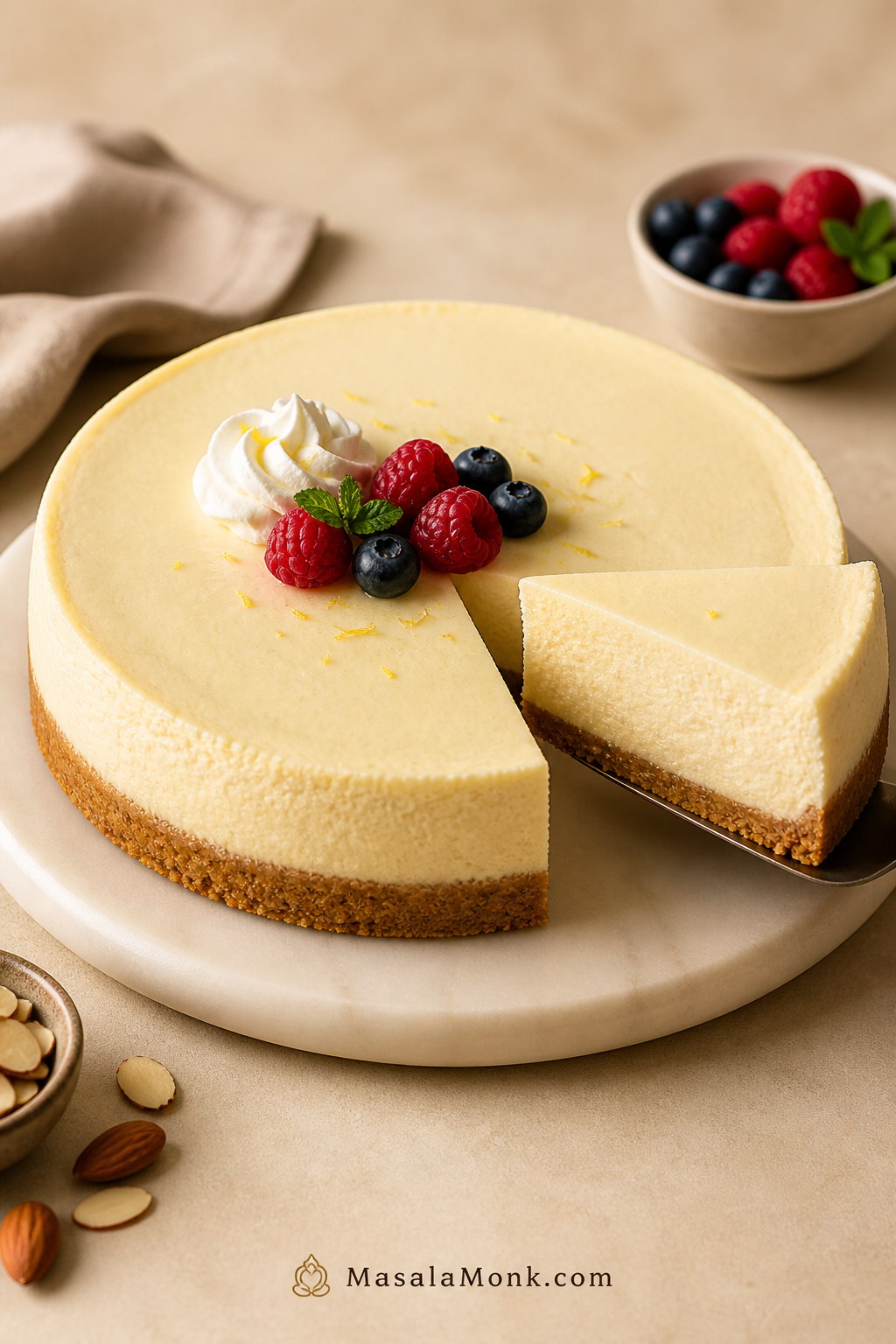
This keto cheesecake recipe gives you the kind of slice people actually want from cheesecake: cool, creamy, rich, smooth, and firm enough to cut cleanly. It has a buttery almond flour crust, a full-fat cream cheese filling, and a slow-cooling method that helps prevent cracks without needing a complicated water bath.
The flavor is classic first and keto second. You get the tang of cream cheese and sour cream, the warmth of vanilla, a little brightness from lemon juice, and a low-carb crust that feels much closer to a traditional cheesecake base than a dry “diet dessert” crust.
Use this as your classic baked cheesecake base. You will also find a crustless option, a no-bake option, sweetener guidance, pan-size help, storage tips, and fixes for common problems like cracks, grainy filling, soggy crust, and a runny center.
Keto Cheesecake Guide
Start Here
Quick Answer: The Best Keto Cheesecake Recipe
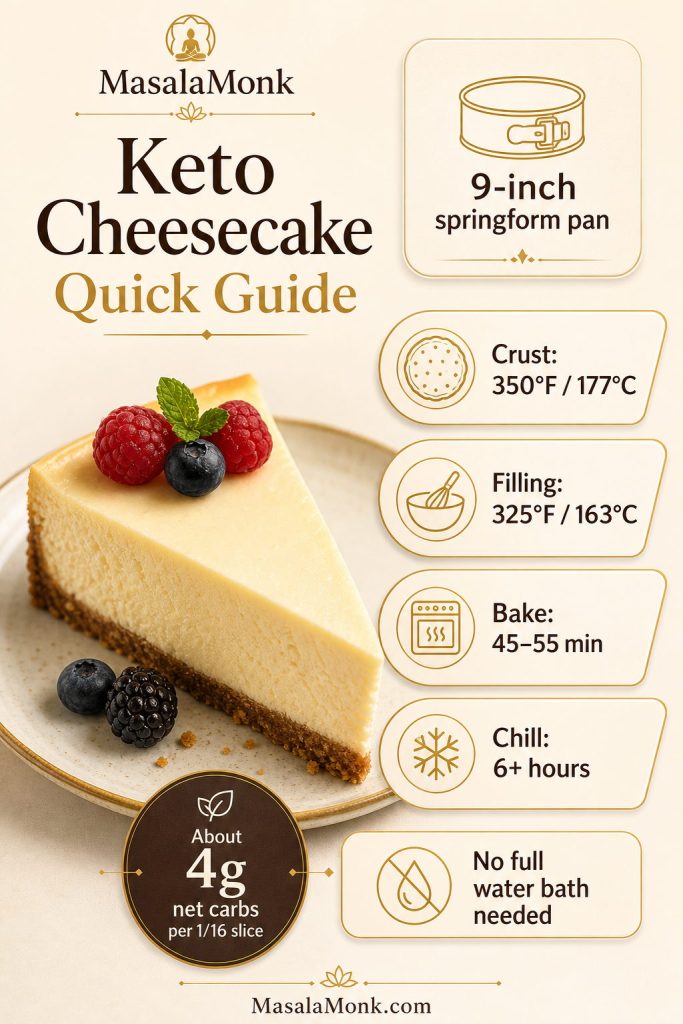
For the best keto cheesecake, make a baked full-fat cream cheese filling in a 9-inch springform pan with a pre-baked almond flour crust. Bake the crust at 350°F / 177°C for 10–12 minutes, then lower the oven to 325°F / 163°C and bake the cheesecake for 45–55 minutes, until the edges are set and the center still has a soft jiggle.
Let it cool slowly, then chill for at least 6 hours or overnight before slicing. A powdered allulose or monk fruit/allulose blend gives the smoothest texture because it dissolves better than coarse granulated sweeteners.
Need the full formula? Jump to recipe card · Back to guide
Why This Keto Cheesecake Works
A good keto cheesecake has to solve three problems at once: it needs to taste like classic cheesecake, avoid a gritty sweetener texture, and hold together without flour or sugar. This version uses full-fat brick cream cheese for structure, sour cream for a smooth tangy finish, eggs for setting, and powdered keto sweetener so the filling stays creamy.
The almond flour crust is pre-baked before the filling goes in. That gives it a warmer, nuttier flavor and helps it hold together under the cheesecake layer. The filling bakes low and slow at 325°F / 163°C, then cools gradually so the center can finish setting without a dramatic temperature shock.
That slow method is what makes this sugar free cheesecake more reliable. You do not need a full water bath, but you do need room-temperature ingredients, gentle mixing, and enough chill time.
Baked vs No-Bake vs Crustless Versions
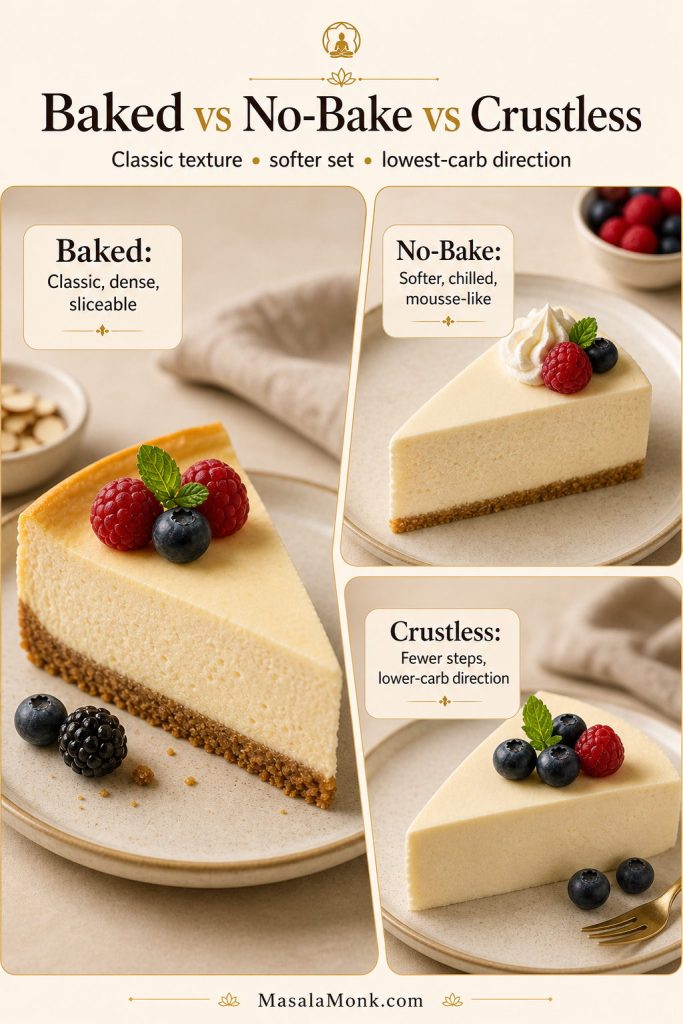
Before you start, choose the right style. A baked cheesecake gives the most classic texture, a no-bake version is easier and lighter, and a crustless cheesecake is the simplest way to reduce carbs and skip the almond flour crust.
| Version | Best For | Texture | Main Watch-Out |
|---|---|---|---|
| Baked keto cheesecake | Classic cheesecake flavor and clean slices | Dense, creamy, rich | Do not overbake; cool slowly to prevent cracks |
| No-bake keto cheesecake | Easy summer dessert or oven-free prep | Lighter, softer, mousse-like | Needs enough chill time to set properly |
| Crustless keto cheesecake | Lower carbs, fewer steps, no almond flour | Creamy and simple | Pan lining matters so it releases cleanly |
The baked version is the focus here because it gives the most traditional cheesecake texture. The crustless and no-bake sections below show how to adapt the base without turning the main recipe into three different desserts at once.
Is Keto Cheesecake Low Carb or No Carb?
Keto cheesecake is low carb, but it is usually not truly zero carb. Cream cheese, sour cream, eggs, almond flour, lemon juice, and even some keto sweeteners can contribute small amounts of total carbs depending on the brands you use.
Think of this as a low carb cheesecake or sugar free cheesecake, not a misleading zero-carb dessert. If you want the lowest-carb version, make the crustless option and cut the cheesecake into 16 smaller slices. That gives you the creamy filling with fewer carbs from the almond flour crust.
If you like make-ahead low-carb desserts, this keto chia pudding with almond milk is another easy no-sugar option with simple net-carb math.
Equipment You Need
You do not need complicated bakery equipment, but a few tools make this cheesecake much easier and cleaner.
- 9-inch springform pan: The best standard size for this recipe.
- Parchment paper: Helps the crust release and makes slicing easier.
- Mixing bowls: One for the crust and one large bowl for the filling.
- Hand mixer or stand mixer: Helps make the filling smooth without lumps.
- Rubber spatula: Useful for scraping the bowl and smoothing the top.
- Flat-bottom cup or measuring cup: Presses the almond flour crust firmly into the pan.
- Baking sheet: Makes the springform pan easier to move in and out of the oven.
- Sharp knife: For clean slices after the cheesecake is fully chilled.
Ingredients for Keto Cheesecake
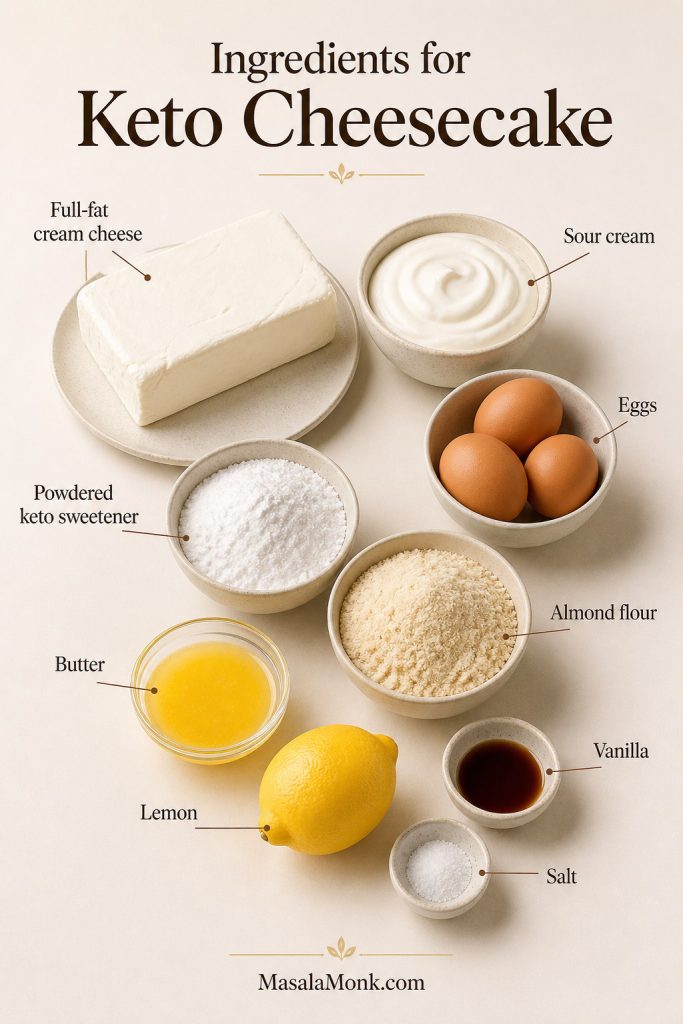
The ingredient list is simple, but the details matter. For the smoothest low carb cheesecake, use full-fat dairy, room-temperature ingredients, almond flour for the crust, and a powdered sweetener rather than a coarse granulated one.
Next step: choose sweetener · make the crust
Cream Cheese
Use 32 oz / 907 g full-fat brick cream cheese, softened to room temperature. Brick-style cream cheese gives the cheesecake body and structure. Tub-style spreadable cream cheese is usually softer and can make the filling looser.
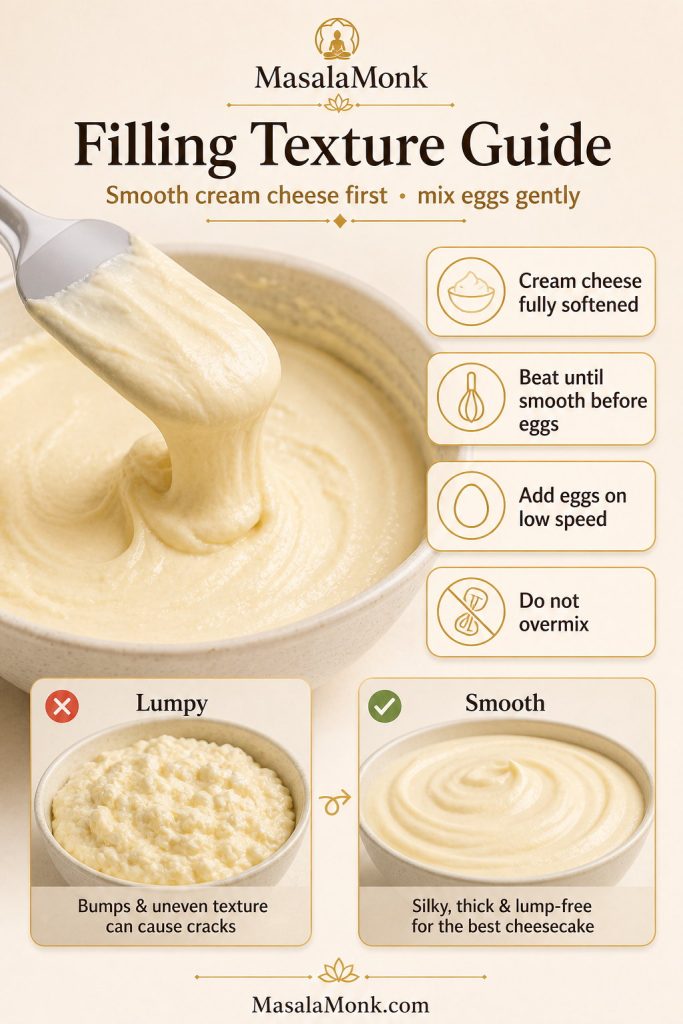
The cream cheese should be soft enough to beat smoothly, but not melted or oily. If it is too cold, the filling can turn lumpy. If it is too warm, the batter can become loose and overmixed.
Sour Cream
Sour cream adds a classic tang and softens the richness of the cream cheese. Use 1/2 cup / 120 g sour cream at room temperature. Full-fat sour cream works best here because low-fat versions can make the texture thinner and less creamy.
Eggs
Use 3 large eggs, also at room temperature. Eggs help the cheesecake set, but they should be mixed in gently. Once the eggs go in, do not whip the batter aggressively. Too much air can make the cheesecake puff up in the oven and crack as it cools.
Sweetener
Use 1 cup to 1 1/4 cups powdered keto sweetener. The exact amount depends on how sweet you like cheesecake and how sweet your specific sweetener tastes. A powdered allulose or monk fruit/allulose blend gives the smoothest texture.
If you use a strong erythritol-heavy sweetener, the cheesecake may have a cooling finish. If you use a coarse granulated sweetener, the filling can taste slightly grainy.
Lemon Juice, Vanilla, and Salt
Fresh lemon juice brightens the filling and makes the cheesecake taste more classic. Vanilla rounds out the sweetness, while salt keeps the flavor from tasting flat.
- Lemon juice: 1 tablespoon fresh lemon juice
- Vanilla extract: 2 teaspoons
- Fine salt: 1/4 teaspoon
Best Sweetener for a Smooth Cheesecake Filling
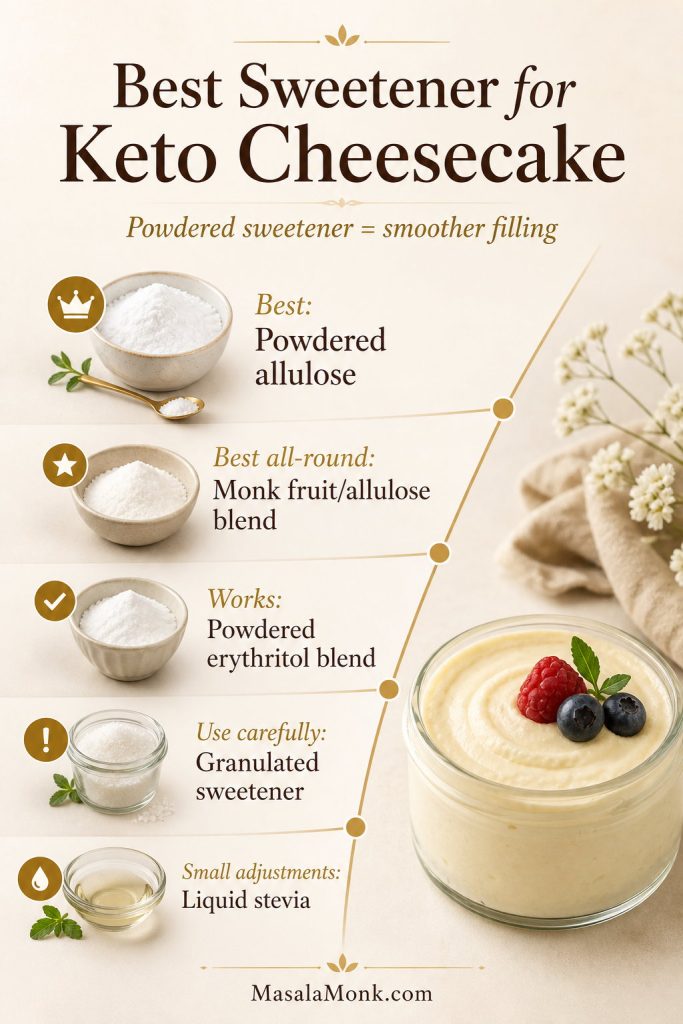
The best sweetener for keto cheesecake is one that dissolves smoothly and does not leave the filling gritty. Powdered sweetener is usually better than granulated sweetener for the filling because it blends more evenly into the cream cheese. For a broader baking overview, this low-carb baking guide explains why ingredient choice can affect texture, browning, and aftertaste.
The sweetener matters even more after chilling. Some erythritol-heavy blends can recrystallize in cold desserts, which is why a cheesecake may taste smooth on day one but slightly gritty after a night in the fridge.
Using the right sweetener? Continue to crust · fix grainy texture
| Sweetener | Best Use | What to Know |
|---|---|---|
| Powdered allulose | Smoothest filling texture | Less likely to taste grainy; may brown slightly faster in some baked goods |
| Powdered monk fruit/allulose blend | Best all-round choice | Good sweetness and smooth texture when powdered |
| Powdered erythritol blend | Works if you like the taste | Can leave a cooling effect or slight crystallized texture |
| Granulated keto sweetener | Better for crust than filling | Can make the filling grainy unless blended very well |
| Liquid stevia | Small sweetness adjustment | Does not add bulk; too much can taste bitter |
Almond Flour Cheesecake Crust
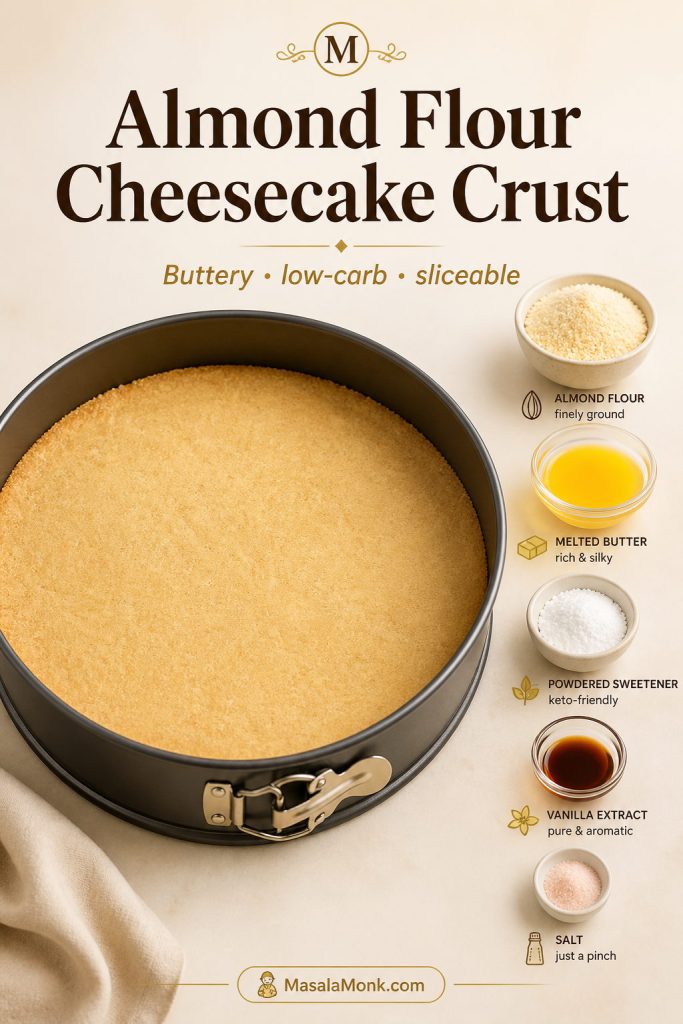
The almond flour cheesecake crust is one of the most important parts of this recipe. A good cheesecake crust with almond flour should still taste buttery, hold together under the filling, and slice cleanly after chilling.
It replaces the usual graham cracker crust with a gluten-free, low-carb base that still feels like a real cheesecake crust.
Need sizing help? See crust ratios · continue to method
For the crust, use:
- 2 cups / about 224 g blanched almond flour
- 1/3 cup / 75 g unsalted butter, melted
- 2 tablespoons powdered keto sweetener
- 1 teaspoon vanilla extract
- 1/4 teaspoon fine salt
Mix everything until the almond flour looks evenly moistened. It should feel like damp sand and hold together when pressed. Press it firmly into the bottom of a parchment-lined 9-inch springform pan, then bake at 350°F / 177°C for 10–12 minutes, until lightly golden and fragrant.
Almond Flour Crust Ratio Guide
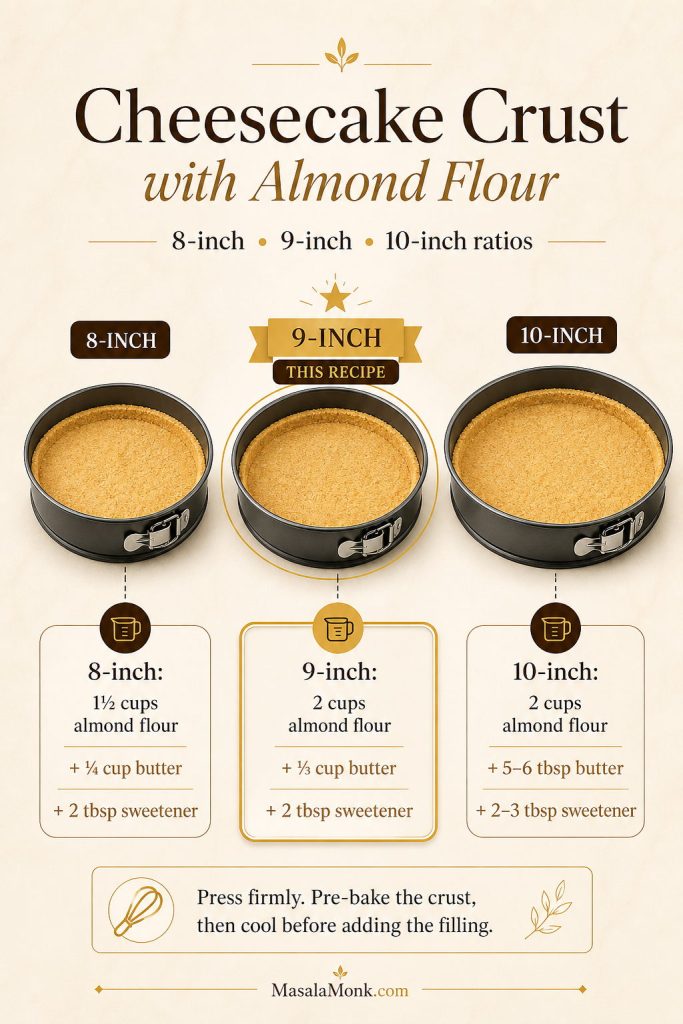
The same almond flour cheesecake crust does not behave the same in every pan. A smaller pan makes the crust feel thicker, while a wider pan spreads the mixture thinner and may need a little more butter to stay sliceable.
Use the 9-inch ratio for this keto cheesecake recipe as written. If you change pan size, press the crust firmly, pre-bake it until lightly golden, and let it cool before adding the filling.
| Pan Size | Almond Flour | Butter | Sweetener | Best Use |
|---|---|---|---|---|
| 8-inch | 1 1/2 cups / about 168 g | 1/4 cup / 57 g | 2 tbsp | Thicker cheesecake or smaller batch |
| 9-inch | 2 cups / about 224 g | 1/3 cup / 75 g | 2 tbsp | This recipe as written |
| 10-inch | 2 cups / about 224 g | 5–6 tbsp / 70–85 g | 2–3 tbsp | Thinner, wider cheesecake |
Crust ready? check pan size · start the method
Almond Flour vs Almond Meal
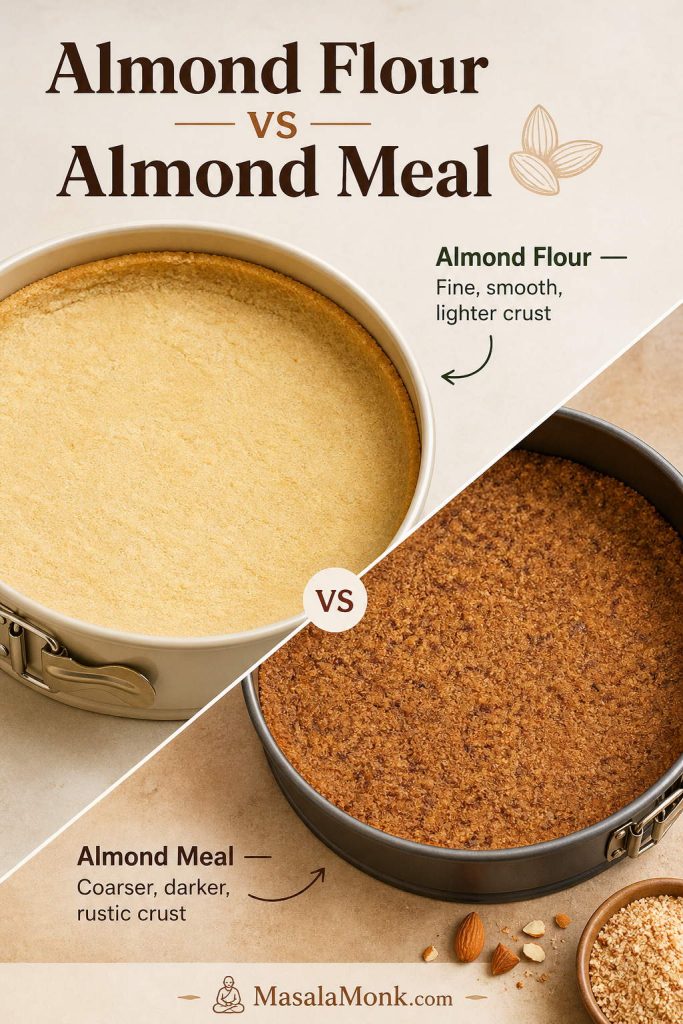
Blanched almond flour gives the neatest crust because it is finer and lighter. Almond meal can work, but it is usually coarser and may make the crust more rustic or crumbly. For a smooth, classic cheesecake look, use fine blanched almond flour.
If you are searching for an almond meal crust for cheesecake, the same basic idea works, but the texture will be darker, coarser, and more rustic. Fine blanched almond flour gives a smoother shortbread-style crust, while almond meal gives a nuttier, more graham-cracker-like look.
Chosen your flour? Check crust ratios · jump to recipe
How to Keep the Crust from Crumbling
A crumbly keto cheesecake crust usually means one of three things: not enough butter, not enough pressing, or not enough baking. The crust should be pressed firmly with the bottom of a cup, especially around the edges. After baking, let it cool for a few minutes before adding the filling.
If the crust still seems loose, add 1 extra tablespoon melted butter next time. If it seems greasy, reduce the butter slightly or bake the crust a minute or two longer.
How to Avoid a Soggy Almond Flour Crust
Pre-baking is the easiest fix. A lightly golden crust holds up better under the filling than a raw almond flour crust. You should also avoid pouring very warm or loose filling onto the crust. The cream cheese filling should be smooth and room temperature, not runny.
Cheesecake Crust Without Almond Flour
You can make the crust without almond flour, but do not swap coconut flour 1:1. Coconut flour absorbs much more liquid and will make the crust dry and dense if used in the same amount.
For a nut-free direction, use a tested sunflower seed flour crust or skip the crust completely and make the crustless option below.
Springform Pan Size Guide
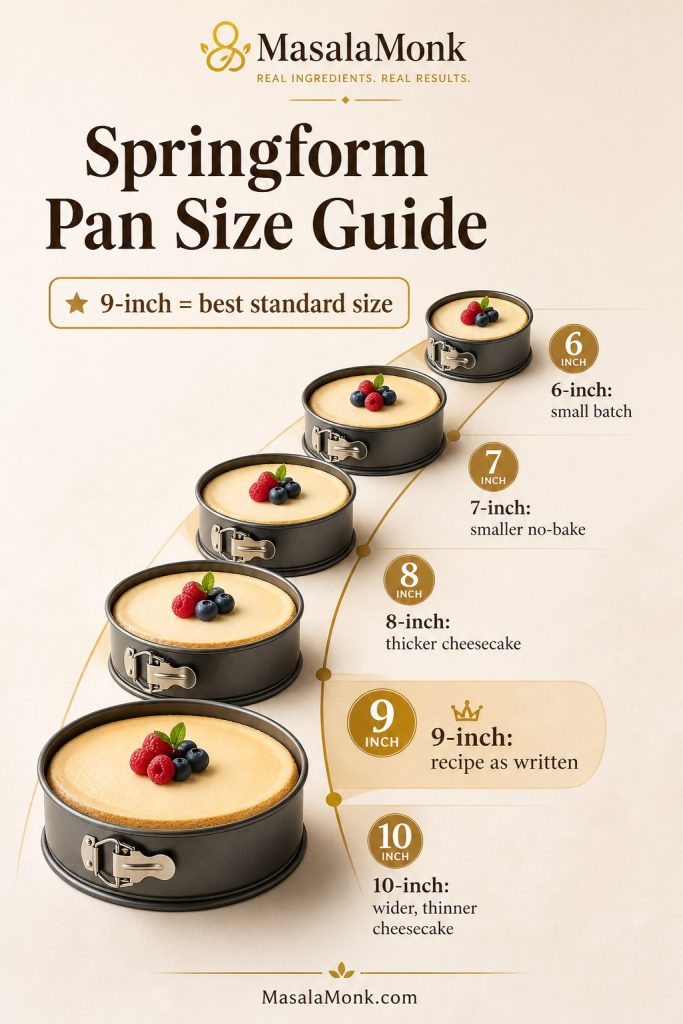
This recipe is designed for a 9-inch springform pan. Different pan sizes change the height, bake time, and texture, so use the table below if you need to adjust.
Using a 9-inch pan? Start baking · see exact recipe
| Pan Size | Best Use | What Changes |
|---|---|---|
| 6-inch | Small batch or shortcut cheesecake | Use a scaled-down recipe; bake time will be shorter |
| 7-inch | Taller no-bake cheesecake | Works well for smaller no-bake versions |
| 8-inch | Thicker baked cheesecake | May need a little more bake time because the filling is deeper |
| 9-inch | Best standard size | Use the recipe as written |
| 10-inch | Wider, slightly thinner cheesecake | May bake faster; watch the center jiggle carefully |
How to Make Keto Cheesecake
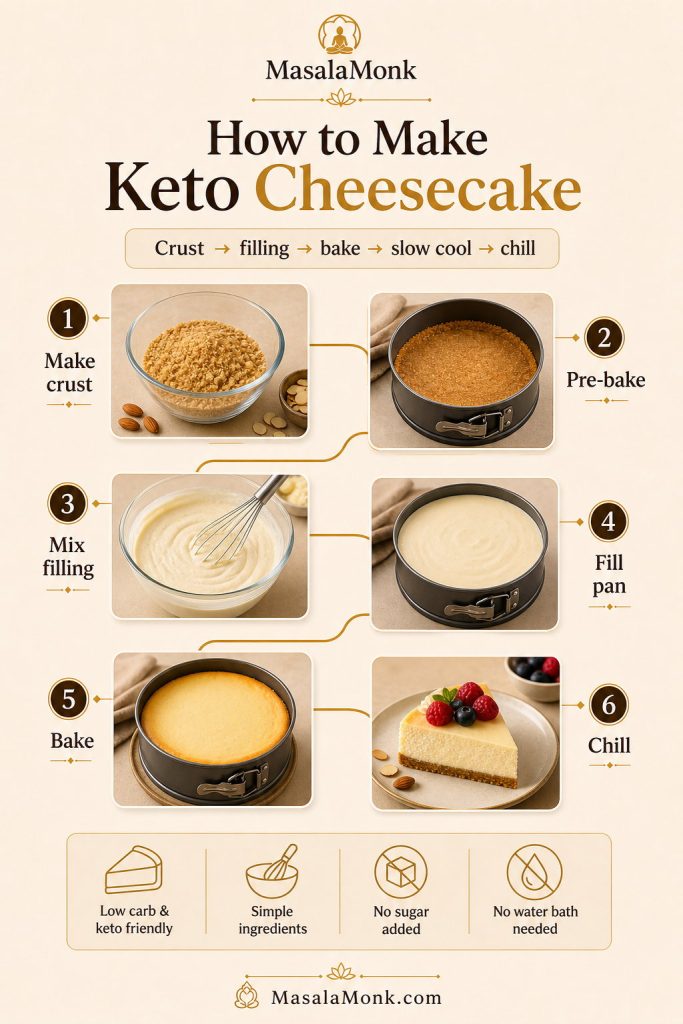
The method is simple, but the order matters. Make the crust first, reduce the oven temperature, mix the filling gently, then cool the cheesecake slowly.
Mixing the filling? check texture cues · see doneness
Step 1: Prepare the Pan
Line the bottom of a 9-inch springform pan with parchment paper. Lightly grease the sides. If your springform pan is older or tends to leak butter, place it on a baking sheet before it goes into the oven.
Step 2: Make the Almond Flour Crust
In a bowl, stir together almond flour, melted butter, sweetener, vanilla, and salt. The mixture should look like damp crumbs. Press it firmly into the bottom of the prepared pan. Use a flat-bottom cup to compact it evenly.
Bake the crust at 350°F / 177°C for 10–12 minutes, until it smells nutty and looks lightly golden at the edges. Remove it from the oven and let it cool slightly while you make the filling.
Step 3: Mix the Cheesecake Filling
Lower the oven to 325°F / 163°C. Beat the softened cream cheese on medium-low speed until smooth. Add the powdered sweetener and beat again until combined. Scrape the bowl well so no dense pockets of cream cheese remain.
Add the sour cream, lemon juice, vanilla, and salt. Mix until smooth. Add the eggs one at a time, mixing on low speed just until each egg disappears into the batter.
Ready to bake? check doneness · avoid cracks
Step 4: Fill the Pan
Pour the filling over the cooled almond flour crust. Smooth the top with a spatula. Tap the pan gently on the counter once or twice to release large air bubbles, but do not bang it aggressively.
Step 5: Bake Low and Slow
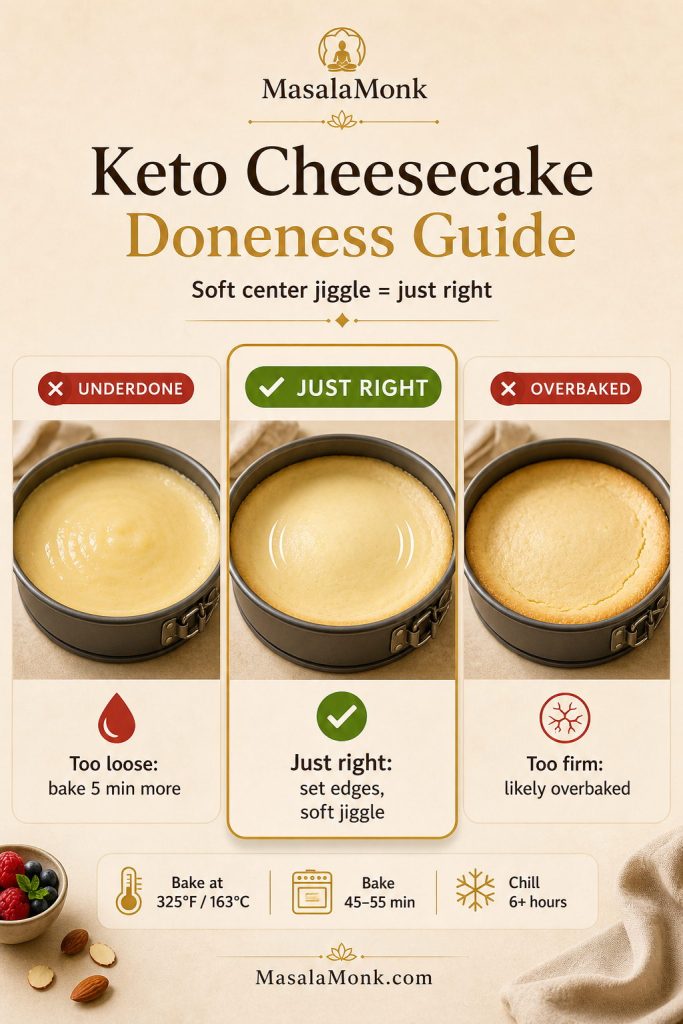
Bake at 325°F / 163°C for 45–55 minutes. The edges should look set and slightly puffed, while the center should still wobble gently when the pan is nudged.
If the center looks liquid and sloshes, bake for another 5 minutes and check again. If the entire cheesecake looks fully firm in the oven, it is likely overbaked.
Step 6: Cool Slowly
Turn off the oven. Crack the oven door open and leave the cheesecake inside for 20–30 minutes. Then move it to the counter and let it cool to room temperature.
Once cool, cover and refrigerate for at least 6 hours. Overnight chilling gives the cleanest slices and best texture.
How to Know When the Cheesecake Is Done
The most reliable doneness cue is the jiggle test. The outer 2–3 inches should look set, while the center should still wobble like soft gelatin. It should not look wet, soupy, or liquid, but it should not be completely firm either.
Cheesecake keeps setting as it cools. That is why a slightly jiggly center is correct. If you bake until the center is completely firm, the final chilled cheesecake can turn dense, dry, or cracked.
Center still jiggly? cool without cracks · store it right
| What You See | What It Means | What to Do |
|---|---|---|
| Edges set, center softly jiggles | Done | Turn off oven and begin slow cooling |
| Center sloshes like liquid | Underdone | Bake 5 more minutes, then check again |
| Top is puffed and fully firm | Likely overbaked | Cool slowly; serve with topping if cracked |
| Top has deep cracks before cooling | Too much heat, air, or bake time | Use troubleshooting tips next time |
How to Prevent Cracks
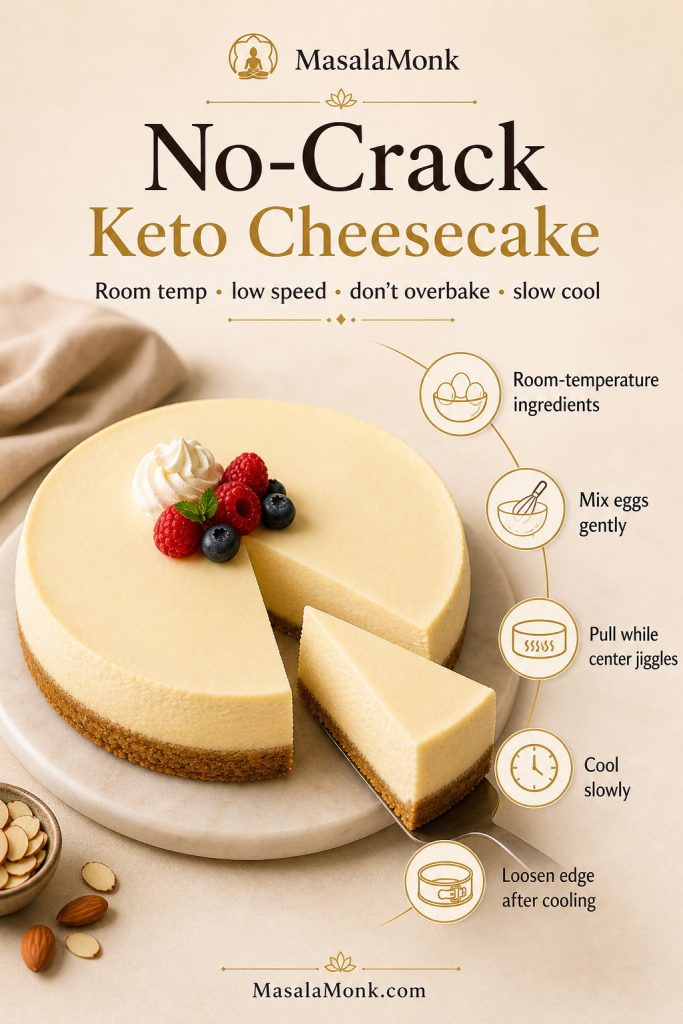
Cracks do not ruin cheesecake, but they are easy to reduce. Most cracks come from cold ingredients, overmixing, overbaking, or cooling too quickly.
- Use room-temperature ingredients: Cold cream cheese creates lumps, and cold eggs can make the batter harder to mix evenly.
- Mix gently after adding eggs: Eggs trap air quickly. Too much air makes the cheesecake puff and collapse.
- Do not overbake: The center should still jiggle softly when the cheesecake comes out.
- Cool gradually: Leave the cheesecake in the turned-off oven with the door cracked before moving it to the counter.
- Loosen the edge: After cooling slightly, run a thin knife around the edge so the cheesecake does not pull against the pan as it contracts.
Want extra insurance? compare water bath options · fix common issues
Water Bath or No Water Bath?
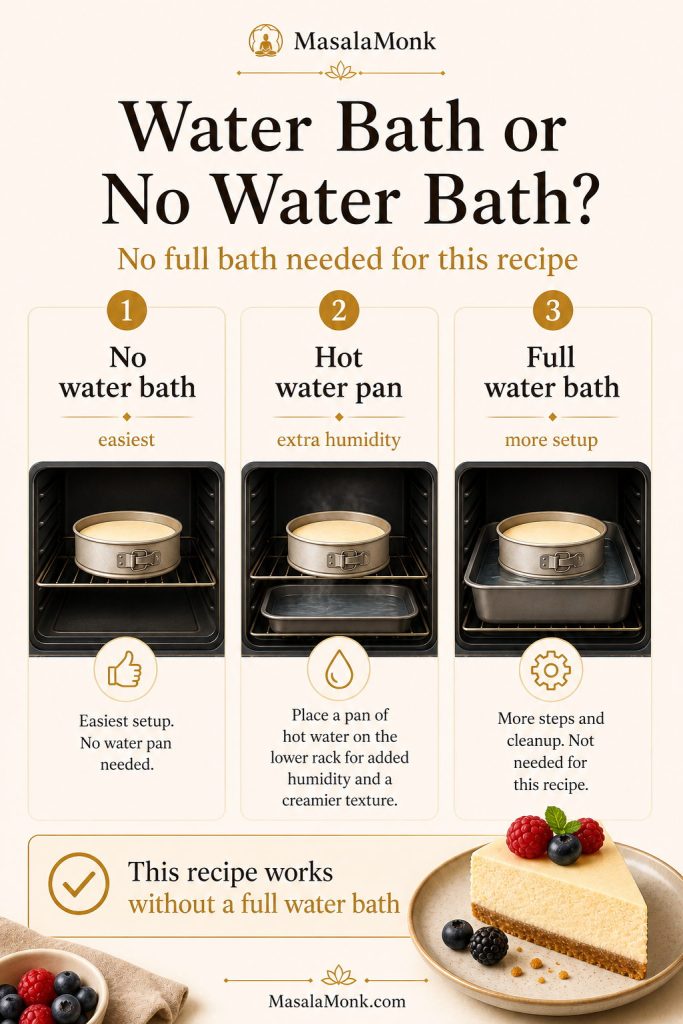
You do not need a full water bath for this keto cheesecake recipe. The slow bake at 325°F / 163°C, room-temperature ingredients, gentle mixing, and gradual cooling are enough for a smooth cheesecake in most ovens.
A full water bath can help cheesecakes bake gently, but it also adds extra steps and can leak into a springform pan if the wrapping is not secure. King Arthur Baking explains that a water bath can help reduce cracks, but for this recipe the easier option is to place a pan of hot water on the lower oven rack. It adds a little humidity without putting the cheesecake pan directly in water.
No full bath needed? Use the recipe card · check doneness cues
| Method | Best For | Downside |
|---|---|---|
| No water bath | Simplest method; works well with slow cooling | Needs careful bake time and cooling |
| Pan of hot water on lower rack | Easy extra insurance against drying | Still not a guarantee if the cheesecake is overbaked |
| Full water bath | Very gentle baking | More setup; springform pans can leak |
Crustless Keto Cheesecake Option
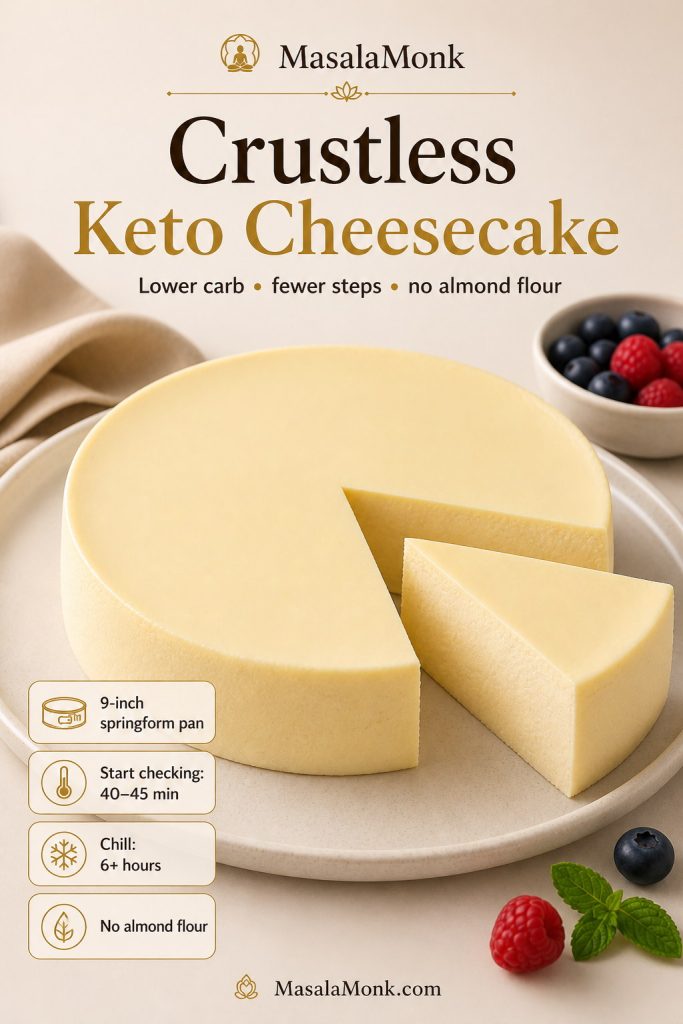
You can make this cheesecake without the almond flour crust. A crustless keto cheesecake is slightly lower in carbs, simpler to prepare, and useful if you are avoiding nuts.
To make it crustless, skip the crust ingredients and line the bottom of the springform pan with parchment. Grease the sides well. Pour the filling directly into the pan and bake at 325°F / 163°C until the edges are set and the center still jiggles softly.
The bake time may be slightly shorter because there is no crust layer. Start checking around 40–45 minutes. Chill completely before slicing, because crustless cheesecake needs time to firm up for clean edges.
Skipping crust? adapt the recipe · chill and store properly
No-Bake Keto Cheesecake Option
A no-bake keto cheesecake is a different style of cheesecake. It is lighter, softer, and more mousse-like because it sets in the refrigerator instead of baking with eggs.
For a 9-inch no-bake keto cheesecake, use the almond flour crust as written, then chill or briefly bake the crust before adding the filling. For the filling, beat 24 oz / 680 g softened full-fat cream cheese with 3/4 to 1 cup powdered keto sweetener, 2 teaspoons vanilla, 1 tablespoon lemon juice, and a pinch of salt until smooth. In a separate bowl, whip 1 cup / 240 ml heavy cream to soft peaks, then fold it into the cream cheese mixture.
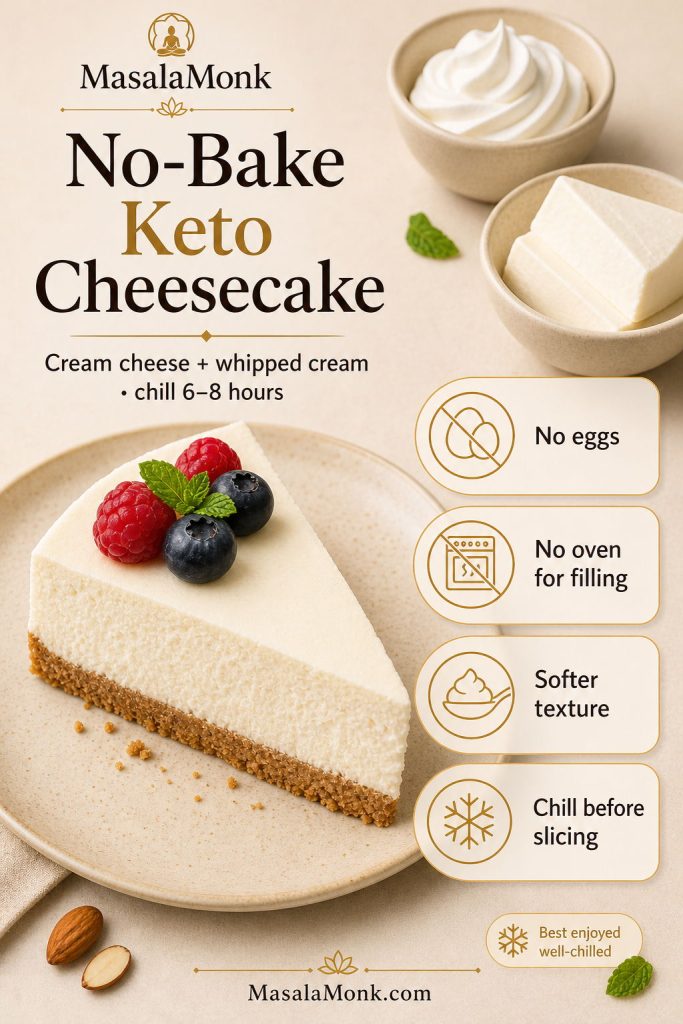
Making it no-bake? choose pan size · compare with baked recipe
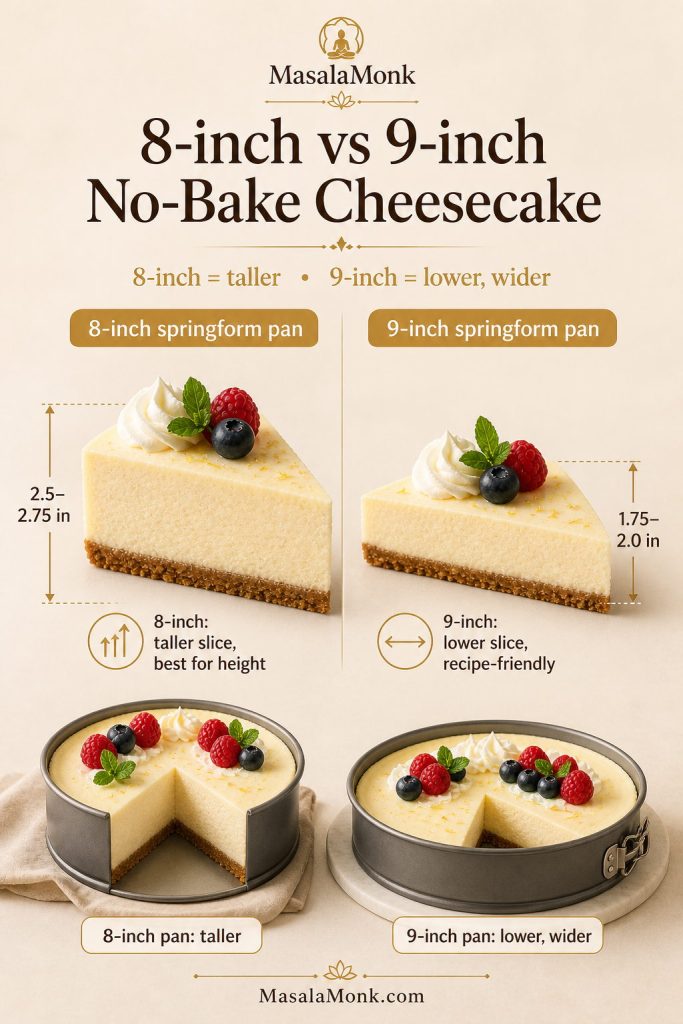
This makes a slightly lower 9-inch no-bake cheesecake. For a taller no-bake keto cheesecake, use an 8-inch springform pan and chill it overnight before slicing.
8-Inch vs 9-Inch No-Bake Keto Cheesecake
No-bake cheesecake height depends heavily on pan width because the filling sets in the refrigerator instead of rising or firming in the oven. An 8-inch pan gives a taller, more bakery-style slice, while a 9-inch pan gives a wider cheesecake with a slightly lower profile.
Both pan sizes work, but the chilling time matters more in the taller version. If you use an 8-inch pan, chill overnight before slicing so the center has enough time to set cleanly.
Picked your pan? return to no-bake method · see variations
Spread the filling over the crust, smooth the top, cover, and refrigerate for at least 6–8 hours. Overnight is better. If the cheesecake is sliced too soon, it can look soft or collapse at the edges.
If you want the classic non-keto version with a sweeter filling and regular crumb crust, use this no bake cheesecake recipe instead.
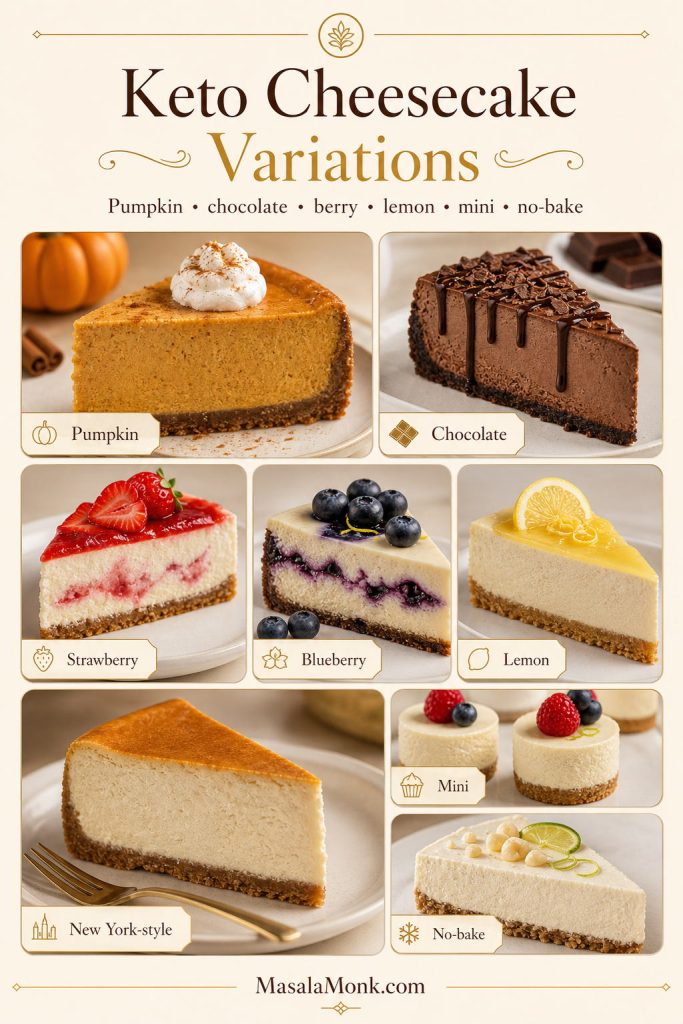
Keto Cheesecake Variations
Once you understand the base, you can use it for other low carb cheesecake flavors. Keep the structure the same, then adjust carefully so the filling still sets properly. In most cases, toppings are safer than mix-ins because they add flavor without loosening the cheesecake.
Need a classic slice first? Jump to recipe · see New York-style
Keto Pumpkin Cheesecake
Pumpkin cheesecake needs pumpkin puree, pumpkin pie spice, and a little cinnamon in the filling. Since pumpkin adds moisture, it works better as a dedicated variation than as a casual stir-in. With this base cheesecake, a spoonful of pumpkin spice whipped cream on top gives you the flavor without changing the bake.
Keto Chocolate Cheesecake
A chocolate version works best with melted sugar-free chocolate or cocoa powder in the filling. Chocolate changes both sweetness and texture, so taste the filling before adding eggs and adjust the sweetener if needed. If you want a separate creamy chocolate dessert instead, this avocado chocolate mousse stays in the same rich, spoonable dessert lane.
Keto Strawberry Cheesecake
The cleanest strawberry version keeps the filling vanilla and adds a sugar-free strawberry topping after baking. Fresh berry toppings are easier to control than mixing watery fruit into the batter. Cooked and cooled strawberry sauce gives stronger flavor without making the cheesecake soft.
Keto Blueberry Cheesecake
A thick low-carb blueberry sauce works best as a topping or light swirl. If using a swirl, keep it concentrated and spoon it lightly over the top before baking. Too much fruit sauce can make the center loose.
Keto Lemon Cheesecake
To make the cheesecake brighter, add lemon zest to the filling. Zest gives strong lemon flavor without adding much liquid. Avoid adding too much extra lemon juice because excess liquid can soften the filling.
Mango Cheesecake and Keto Limits
Mango is not usually the easiest strict-keto cheesecake flavor because it brings natural sugar and extra moisture. If you are not keeping the dessert strictly keto and want a fruit-forward no-bake version, this no bake mango cheesecake recipe is the better fit.
Keto New York Cheesecake
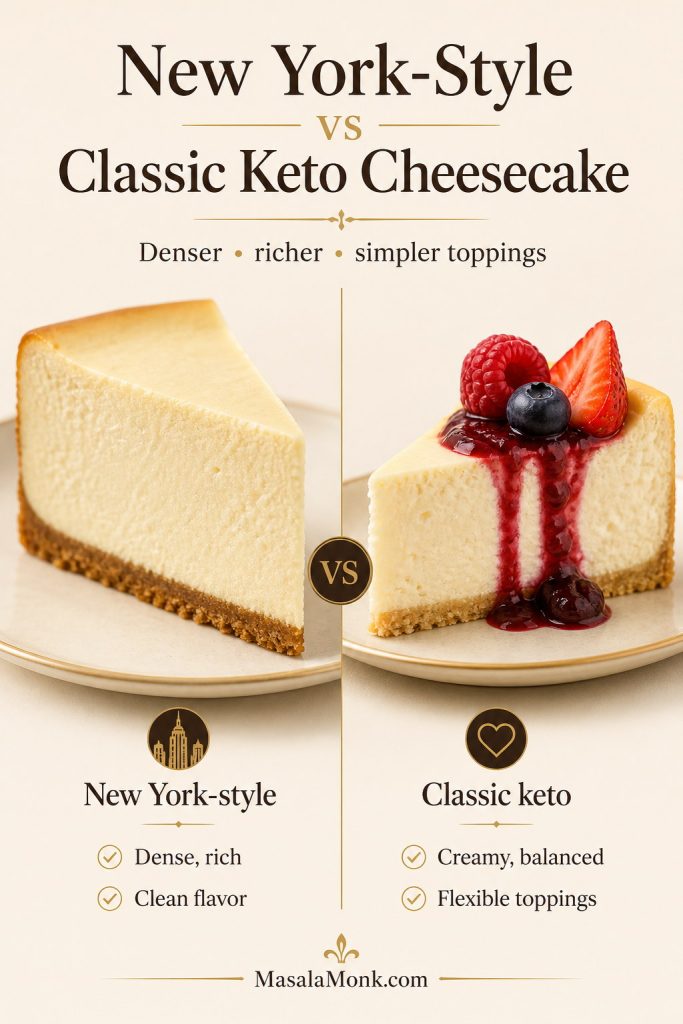
For a New York-style keto cheesecake, keep the flavor simple and focus on a dense, creamy texture. Use full-fat brick cream cheese, sour cream, eggs, vanilla, lemon juice, and the almond flour crust. Avoid fruit puree or chocolate in the filling because those move it away from the classic New York-style profile.
The biggest difference is texture. A New York-style keto cheesecake should feel rich, smooth, and slightly dense rather than fluffy. Chill it overnight before slicing, and serve toppings on the side so the clean cheesecake flavor stays central.
Prefer smaller portions? See mini cheesecakes · return to recipe
Keto Ricotta Cheesecake
Ricotta gives keto cheesecake a lighter, slightly more Italian-style texture. It is less dense than an all-cream-cheese filling and can taste a little grainier unless blended very smooth. Use full-fat ricotta, drain excess liquid if it looks wet, and blend it with cream cheese rather than using ricotta alone.
For the most reliable result, treat ricotta cheesecake as a separate variation rather than a direct one-for-one swap. If you are experimenting, replace only part of the cream cheese with smooth ricotta and keep the eggs, lemon, vanilla, and sweetener balanced so the cheesecake still sets.
High-Protein Keto Cheesecake
For a higher-protein direction, cottage cheese, Greek yogurt, ricotta, or protein powder can be used in separate cheesecake styles. For a breakfast-style version of that idea, these high-protein low-carb pancakes use similar cottage cheese and low-carb logic.
Protein powder needs care in cheesecake because it can make the filling dry, chalky, or rubbery if added casually. If using cottage cheese, blend it completely smooth before adding it to a cheesecake filling. A high-protein low carb cheesecake works best as its own tested variation rather than a direct swap inside this classic baked version.
Mini Keto Cheesecakes, Cups, and Bites
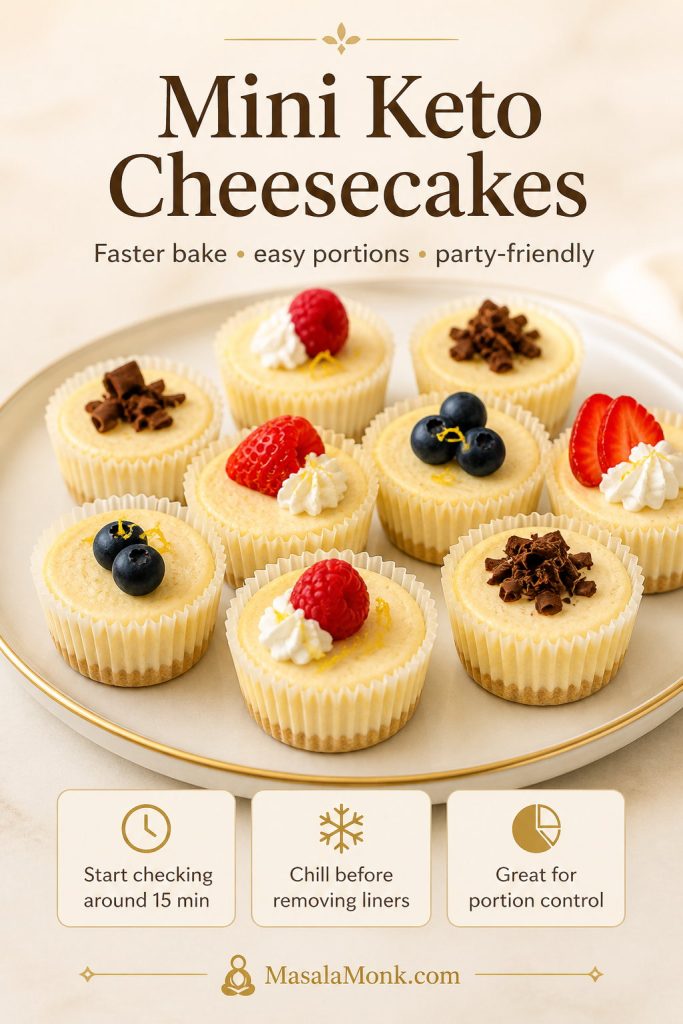
You can turn the same flavor idea into mini keto cheesecakes by baking the crust and filling in a lined muffin pan. Mini versions bake faster, chill faster, and are easier to portion for parties, lunch boxes, or meal prep.
Start checking mini cheesecakes around 15 minutes. They are done when the edges look set and the centers still have a slight wobble. Chill them fully before removing the liners. For true keto cheesecake bites or fat bombs, use a separate no-bake cream cheese mixture instead of this baked filling.
Baking minis? use the same doneness cues · store leftovers
3 Ingredient Keto Cheesecake Shortcut
A 3 ingredient keto cheesecake is usually a no-bake shortcut made with cream cheese, keto sweetener, and another creamy ingredient such as whipped cream, Greek yogurt, or keto vanilla yogurt. It is useful for a quick dessert, but it will not have the same baked cheesecake texture as this full recipe.
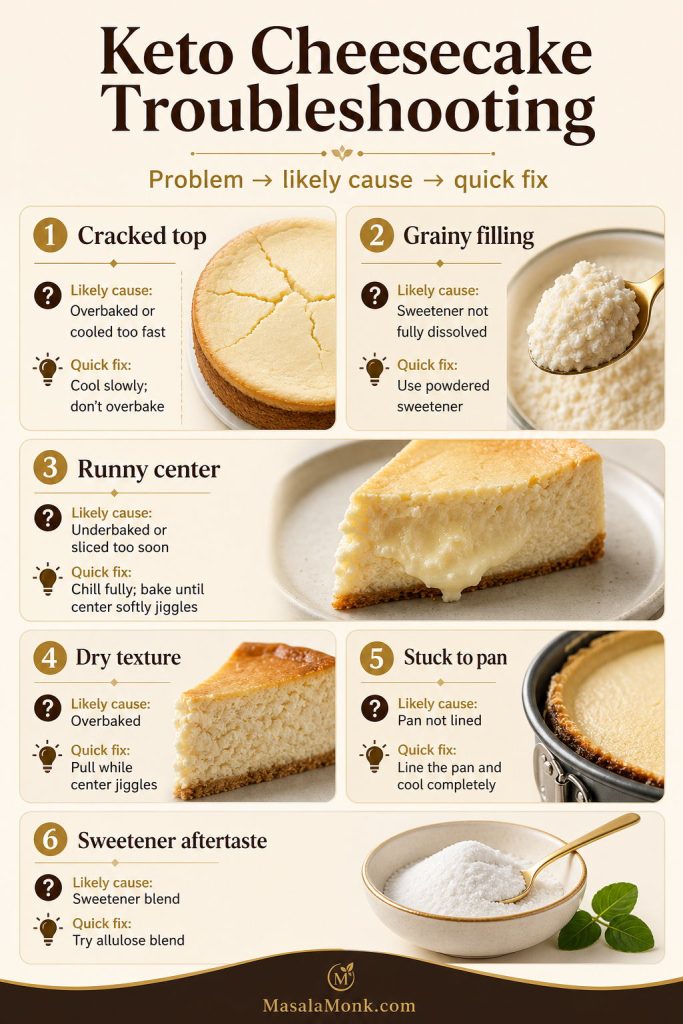
Keto Cheesecake Troubleshooting
Most keto cheesecake problems are easy to diagnose. Use this table to fix the current cheesecake if possible and prevent the issue next time.
Need a crust fix too? See crust fixes · retry with recipe card
| Problem | Likely Cause | Fix |
|---|---|---|
| Cracked top | Overbaking, too much air, or fast cooling | Cool slowly next time; serve current cheesecake with whipped cream or berry topping |
| Lumpy filling | Cream cheese was too cold | Use fully softened cream cheese and beat it smooth before adding eggs |
| Grainy texture | Coarse sweetener or crystallizing sweetener | Use powdered allulose or powdered monk fruit/allulose blend |
| Soggy crust | Crust was not pre-baked enough or filling was too loose | Pre-bake crust until lightly golden and let it cool before filling |
| Crumbly crust | Not enough butter or not pressed firmly | Add 1 extra tablespoon melted butter next time and press with a flat-bottom cup |
| Runny center | Underbaked or sliced too soon | Bake until softly jiggly, then chill at least 6 hours before slicing |
| Dry texture | Overbaked cheesecake | Pull it from the oven while the center still jiggles |
| Cheesecake stuck to pan | No parchment or not enough chilling | Line the pan and chill fully before removing the springform ring |
| Sweetener aftertaste | Sweetener blend does not suit your taste | Try allulose or a monk fruit/allulose blend; add lemon and vanilla for balance |
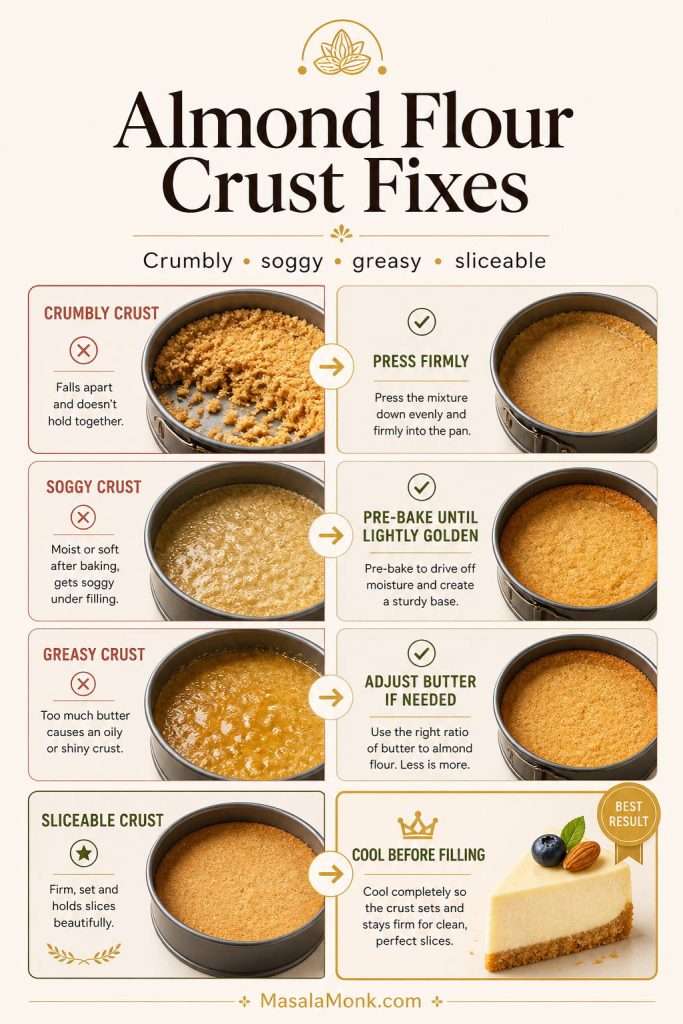
Almond Flour Crust Fixes
Almond flour crust problems usually come from pressure, butter balance, or bake time. If the crust crumbles, it often needed firmer pressing or a touch more butter. If it turns soggy, it usually needed a longer pre-bake or more cooling time before the filling went in.
The goal is a crust that feels compact, lightly golden, and sturdy enough to lift with the cheesecake slice. Fixing the crust separately is useful because the filling can be perfect while the base still needs adjustment.
Crust sorted? continue method · jump to recipe
What the Finished Cheesecake Should Be Like
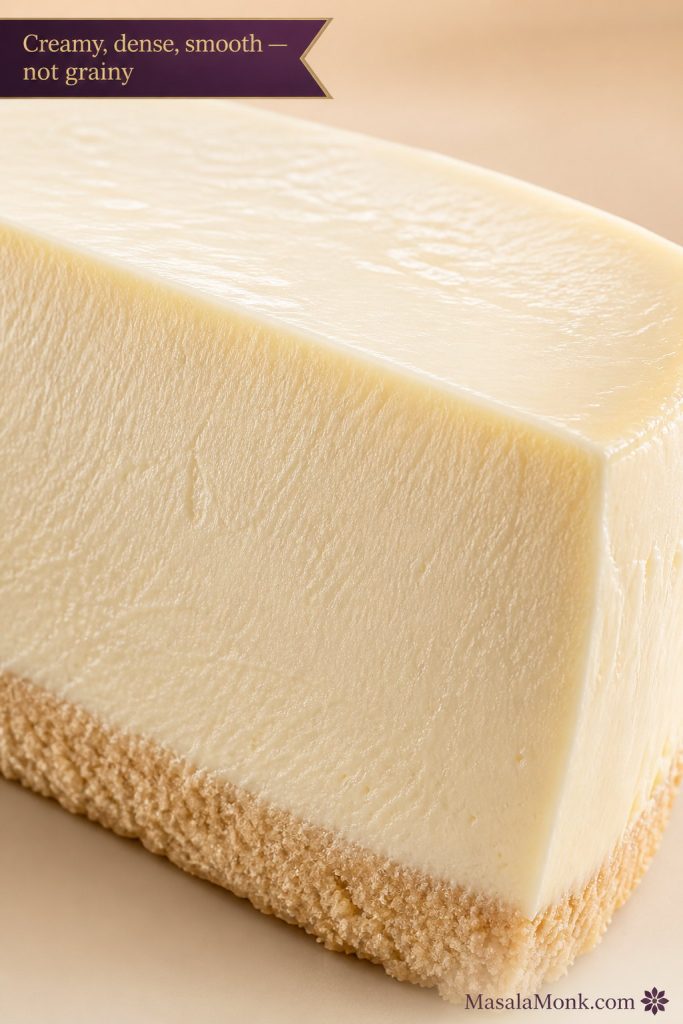
After chilling, the cheesecake should slice cleanly, hold its shape on a plate, and feel dense but creamy when you cut through it. The center should not be runny, the filling should not taste grainy, and the almond flour crust should stay firm enough to lift with the slice.
The flavor should be rich and tangy, not flat or overly sweet. If your cheesecake tastes slightly muted when cold, let slices sit at room temperature for 10–15 minutes before serving.
Storage and Freezing
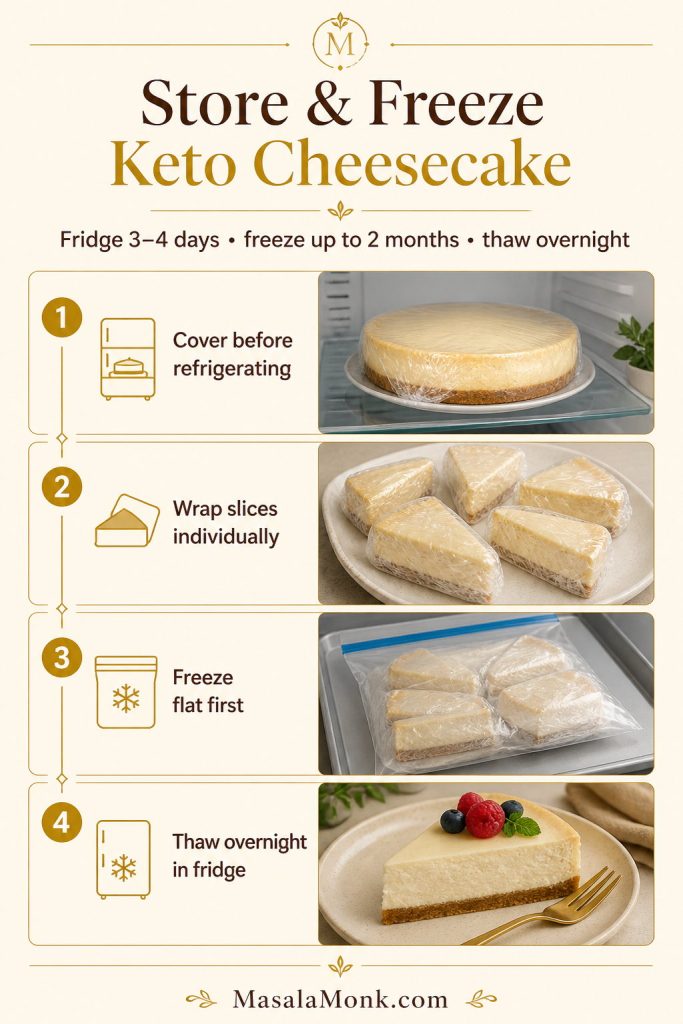
Keto cheesecake is an excellent make-ahead dessert because the texture improves after chilling. Keep it covered in the refrigerator until ready to serve. For food safety, the USDA recommends using refrigerated leftovers within 3–4 days or freezing them for longer storage.
Serving later? slice cleanly · add toppings
- Refrigerator: Store covered for 3–4 days for the best balance of texture and food safety.
- Freezer: Freeze slices or the whole cheesecake for up to 2 months for best quality.
- Thawing: Thaw overnight in the refrigerator for the best texture.
- Serving: Slice cold, then let slices sit at room temperature for 10–15 minutes if you prefer a softer texture.
For freezing, place chilled slices on a parchment-lined tray until firm, then wrap individually. This keeps the slices from sticking together and makes it easier to thaw only what you need.
How to Slice Cheesecake Cleanly
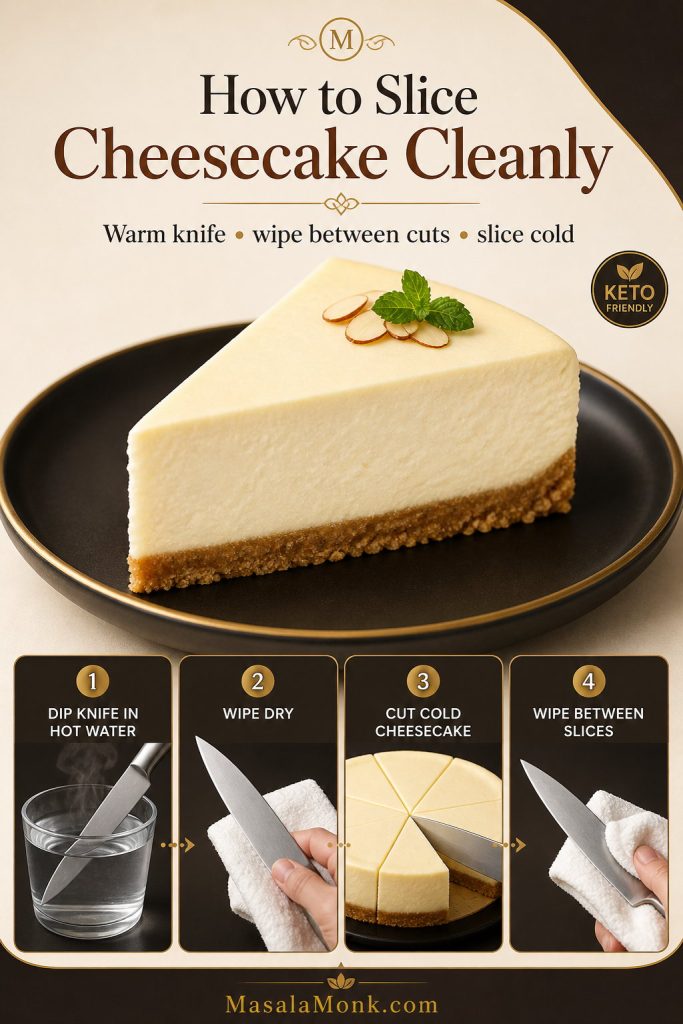
For clean slices, chill the cheesecake fully before cutting. Use a sharp knife, dip it in hot water, wipe it dry, then cut one slice. Wipe the knife between cuts so the filling stays smooth and the almond flour crust does not drag through the slice.
Ready to serve? see toppings · save the recipe
Serving Ideas
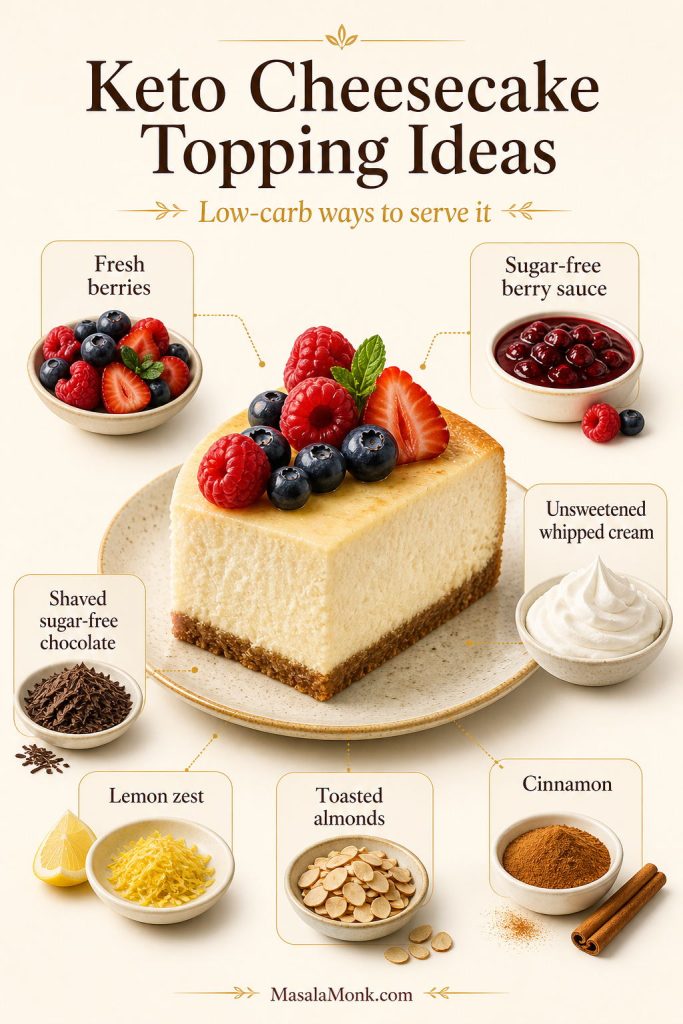
This keto cheesecake is rich enough to serve plain, but toppings can make it feel more special without adding much sugar.
- Fresh strawberries, raspberries, or blueberries
- Sugar-free berry sauce
- Unsweetened whipped cream
- Shaved sugar-free chocolate
- Lemon zest
- Toasted sliced almonds
- A light dusting of cinnamon for a warmer flavor
Want exact amounts? Jump to recipe card · check FAQs
Keep toppings simple if you want the cheesecake texture to stay the focus. Watery fruit sauces should be cooked down and cooled before adding.
For a cozy pairing, serve a small slice with keto hot chocolate instead of a sugary drink.
Keto Cheesecake Recipe Card
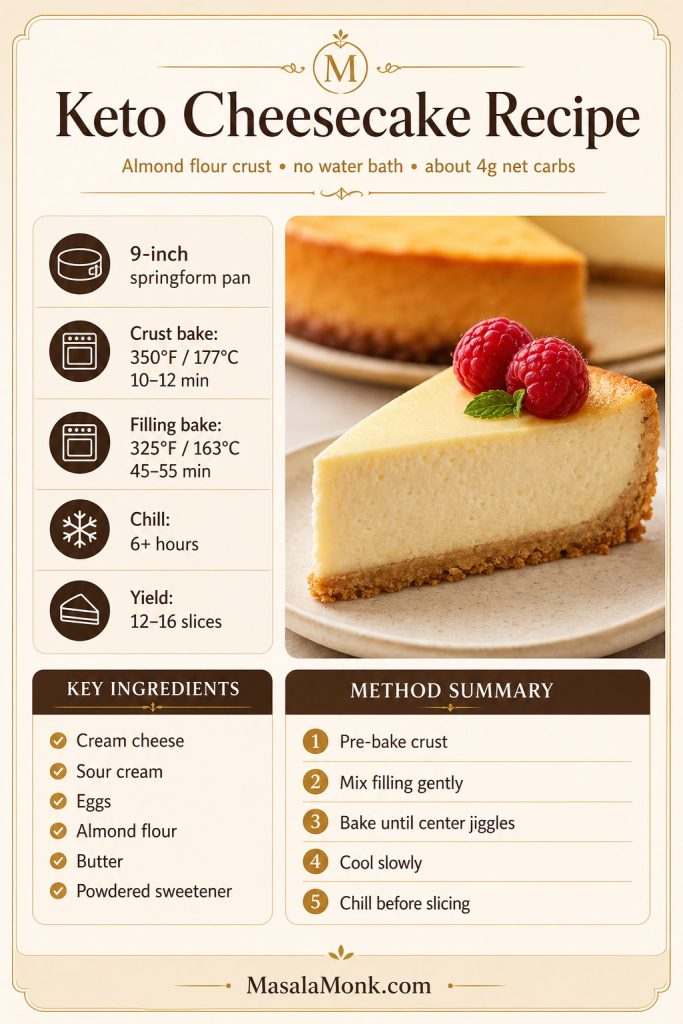
This creamy keto cheesecake has a buttery almond flour crust, smooth sugar-free cream cheese filling, and a slow-cooling method that helps prevent cracks. It is rich, low carb, gluten-free, and made without a water bath.
Ingredients
For the Almond Flour Crust
- 2 cups / about 224 g blanched almond flour
- 1/3 cup / 75 g unsalted butter, melted
- 2 tablespoons powdered keto sweetener
- 1 teaspoon vanilla extract
- 1/4 teaspoon fine salt
For the Cheesecake Filling
- 32 oz / 907 g full-fat brick cream cheese, softened
- 1 cup to 1 1/4 cups powdered keto sweetener, preferably allulose or monk fruit/allulose blend
- 1/2 cup / 120 g sour cream, room temperature
- 3 large eggs, room temperature
- 1 tablespoon fresh lemon juice
- 2 teaspoons vanilla extract
- 1/4 teaspoon fine salt
Instructions
- Prepare the pan. Line the bottom of a 9-inch springform pan with parchment paper and lightly grease the sides.
- Heat the oven for the crust. Preheat the oven to 350°F / 177°C.
- Make the crust. Stir almond flour, melted butter, sweetener, vanilla, and salt until the mixture looks like damp crumbs.
- Press and bake the crust. Press the crust firmly into the pan using the bottom of a cup. Bake for 10–12 minutes, until lightly golden. Let it cool slightly.
- Lower the oven temperature. Reduce the oven to 325°F / 163°C.
- Beat the cream cheese. In a large bowl, beat softened cream cheese until smooth. Scrape the bowl well.
- Add sweetener. Add 1 cup powdered keto sweetener and beat until smooth. Taste before adding eggs and add up to 1/4 cup more sweetener if you prefer a sweeter cheesecake.
- Add sour cream and flavorings. Mix in sour cream, lemon juice, vanilla, and salt until smooth.
- Add eggs gently. Add eggs one at a time on low speed, mixing only until each egg is incorporated. Do not overmix.
- Fill the pan. Pour the filling over the cooled crust and smooth the top.
- Bake. Bake at 325°F / 163°C for 45–55 minutes, until the edges are set and the center still jiggles softly.
- Cool slowly. Turn off the oven, crack the door open, and leave the cheesecake inside for 20–30 minutes.
- Cool at room temperature. Move the cheesecake to the counter and cool completely.
- Chill. Cover and refrigerate for at least 6 hours, preferably overnight.
- Slice and serve. Run a thin knife around the edge before releasing the springform ring. Slice cold with a sharp knife.
Recipe Notes
- For the smoothest filling, use powdered sweetener rather than coarse granulated sweetener.
- Do not overbake. The center should still wobble gently when the cheesecake comes out of the oven.
- For a crustless version, skip the crust, line and grease the pan well, and start checking the bake around 40–45 minutes.
- For a more New York-style texture, chill the cheesecake overnight and serve toppings on the side rather than mixing fruit into the filling.
- For the lowest-carb version, make the cheesecake crustless and slice it into 16 smaller portions.
- Nutrition will vary by brand of sweetener, cream cheese, sour cream, and almond flour.
Approximate Nutrition
Approximate per 1 of 16 slices: 330–360 calories, 7–9 g protein, 32–35 g fat, and about 4 g net carbs. For 12 larger slices, net carbs are closer to about 5 g per slice. Exact values depend on the brands used.
Still deciding? Read FAQs · Back to guide
FAQs
Is cheesecake keto?
Traditional cheesecake is usually not keto because the filling contains sugar and the crust is often made with graham crackers. This version uses an almond flour crust and keto sweetener to keep the carbs low.
Is keto cheesecake zero carb?
No. It is usually low carb, not zero carb. Dairy, eggs, almond flour, lemon juice, and some sweeteners can all add small amounts of carbs. For the lowest-carb version, make it crustless and keep toppings simple.
How many net carbs are in keto cheesecake?
This recipe has about 4 g net carbs per slice if cut into 16 slices, or about 5 g net carbs if cut into 12 larger slices. The exact number depends on the almond flour, cream cheese, sour cream, and sweetener brands you use.
What can I use instead of almond flour?
The easiest option is to make the crustless version. You can also use a tested nut-free crust, but coconut flour should not be swapped 1:1 for almond flour because it absorbs much more moisture.
How do I make keto cheesecake no crust?
For keto cheesecake no crust, skip the almond flour base, line the pan with parchment, grease the sides well, and pour the filling directly into the pan. Start checking the cheesecake a little earlier because there is no crust layer.
How is no-bake keto cheesecake different?
A no-bake version uses a different filling structure. It usually sets with whipped cream and long chilling instead of eggs and baking, so the texture is softer and more mousse-like.
Do I need a water bath for keto cheesecake?
A full water bath is not required. This recipe uses room-temperature ingredients, gentle baking at 325°F / 163°C, careful mixing after the eggs go in, and slow cooling. For extra insurance, place a pan of hot water on the lower oven rack.
What is the best sweetener for keto cheesecake?
Powdered allulose or a powdered monk fruit/allulose blend gives the smoothest filling. Coarse granulated sweeteners can taste gritty, and some erythritol-heavy blends can leave a cooling finish.
Why did my keto cheesecake crack?
Cracks usually happen because the filling was overmixed, the cheesecake was overbaked, or it cooled too quickly. Use room-temperature ingredients, mix gently after adding eggs, pull it from the oven while the center still jiggles, and cool it slowly.
Why is my cheesecake grainy?
Grainy cheesecake often comes from coarse sweetener or a sweetener that crystallizes as it chills. Use powdered sweetener in the filling and avoid overmixing once the eggs are added.
Does coconut flour work for the crust?
Not as a direct swap. Coconut flour is much more absorbent than almond flour, so it needs a different ratio of fat and liquid. For this recipe, almond flour is the better choice unless you are using a tested coconut flour crust.
Ricotta vs cottage cheese: do they work?
Both can work in separate cheesecake styles, but the texture will be different. Ricotta gives a lighter, slightly grainier cheesecake, while cottage cheese needs blending until completely smooth. For this classic version, brick cream cheese gives the best result.
How long do mini keto cheesecakes bake?
Mini cheesecakes usually bake faster than a full cheesecake, often around 15–22 minutes depending on size. Use a muffin pan with liners, watch for set edges and slightly wobbly centers, then chill well before serving.
How do you freeze keto cheesecake?
Freeze it only after the cheesecake has chilled completely. Wrap slices individually or freeze them on a parchment-lined tray first, then store them in an airtight container. Thaw overnight in the refrigerator for the best texture.









[…] work for a lower-sugar version. For a fully low-carb cheesecake with a more classic structure, this keto cheesecake recipe goes deeper into almond flour crusts, sugar-free sweeteners, crustless cheesecake, and no-crack […]
[…] you enjoy creamy low-carb desserts, this keto cheesecake recipe is another good one to keep nearby, especially when you want something chilled and richer than a […]