Posted on Leave a comment

Healthy Homemade Granola Bars Recipe

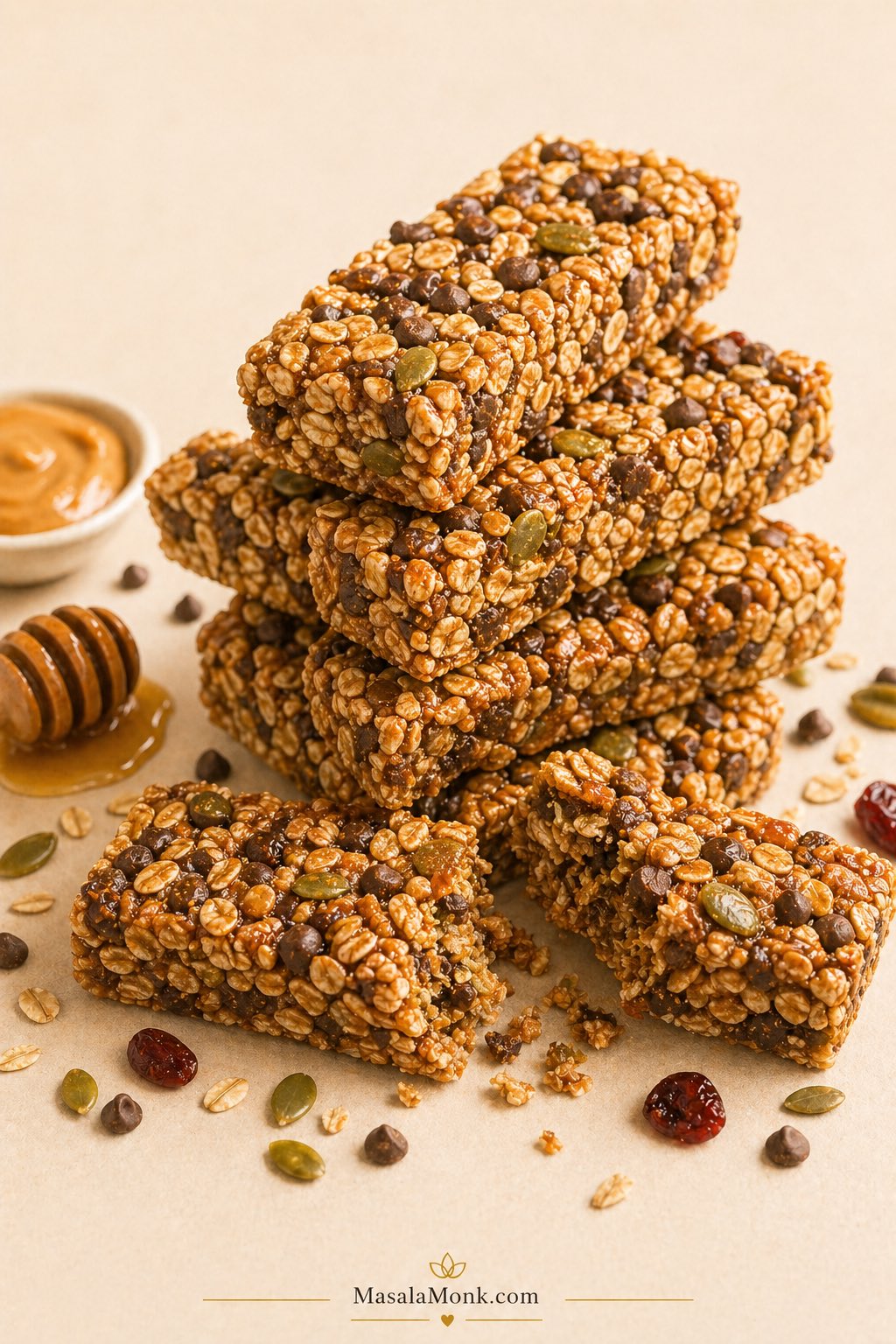
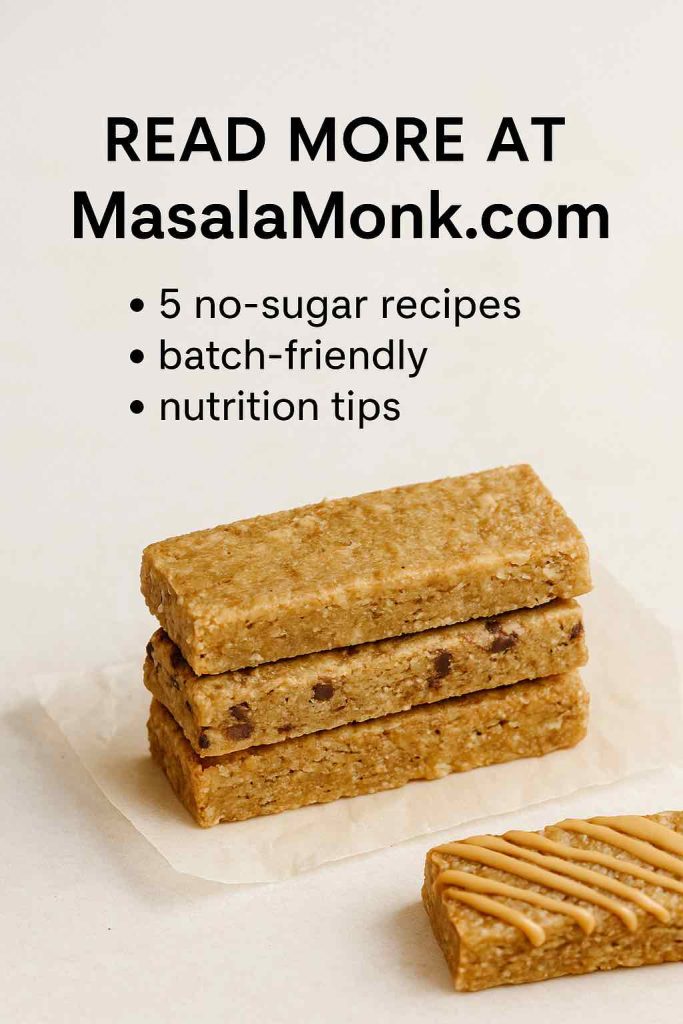
Stack of chewy homemade granola bars with oats, seeds, chocolate chips, honey, and nut butter on a warm neutral surface.

A good healthy homemade granola bars recipe should give you bars that are chewy, sturdy, lightly sweet, and easy to pack without crumbling into oat clusters. This version starts with a simple no-bake base of oats, nut butter, a sticky sweetener, salt, and mix-ins. Once that base works, you can adjust it for peanut butter, chocolate chip, protein, low-sugar, gluten-free, vegan, nut-free, cereal-style, or baked flapjack-style bars.

The best part is that these healthy homemade granola bars can fit the way you actually snack. Keep them simple for lunchboxes, add protein powder for a more filling post-workout bar, use sunflower seed butter for a nut-free lunchbox option, or bake the mixture briefly when you want a crunchier texture. Once you know how the oat-binder-sweetener formula works, homemade granola bars become much easier to customize.

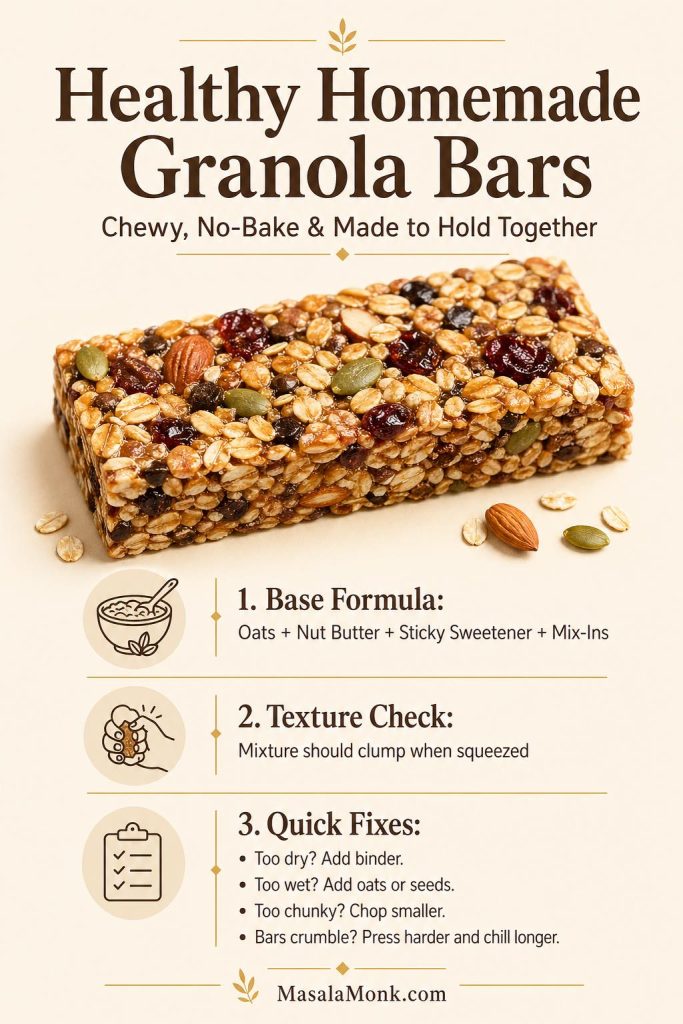
Summary guide for healthy homemade granola bars showing the base formula, texture check, and quick fixes for dry, wet, chunky, or crumbly bars.
If a reader only remembers three things, it should be these: use a balanced base formula, make sure the mixture clumps when squeezed, and fix problems before chilling by adjusting binder, oats, seeds, or mix-in size.

If this is your first batch, start with the basic chewy no-bake version. Do not try to make the bars protein-rich, vegan, low-sugar, crunchy, and nut-free all at once. Instead, make one reliable batch first, learn how the mixture should feel before pressing, and then use the variations to change the flavor, sweetness, texture, or diet fit.

Healthy Homemade Granola Bars Guide

Start with the chewy no-bake base, then use the guides below to make the bars firmer, softer, crunchier, lower in sugar, higher in protein, vegan, gluten-free, nut-free, cereal-style, or flapjack-style.

Quick Answer: Healthy Homemade Granola Bars Recipe

To make chewy, healthy homemade granola bars, mix rolled oats with creamy nut butter or seed butter, a sticky sweetener such as honey, brown rice syrup, or date paste, a little salt, and small mix-ins. Then, press the mixture very firmly into a lined pan, chill until set, and slice it into bars.

The bars hold together best when the mixture looks sticky and slightly glossy before it goes into the pan. However, if it looks dusty, it will probably slice dusty. If it feels wet and loose, add more oats, seeds, or ground flaxseed. In the end, the goal is a dense mixture that clumps when squeezed in your hand.

In this recipe, the homemade oat mixture turns into chewy granola-style bars once it is pressed firmly and chilled. That texture cue matters more than any single mix-in, especially if you want a healthier bar that still slices cleanly.

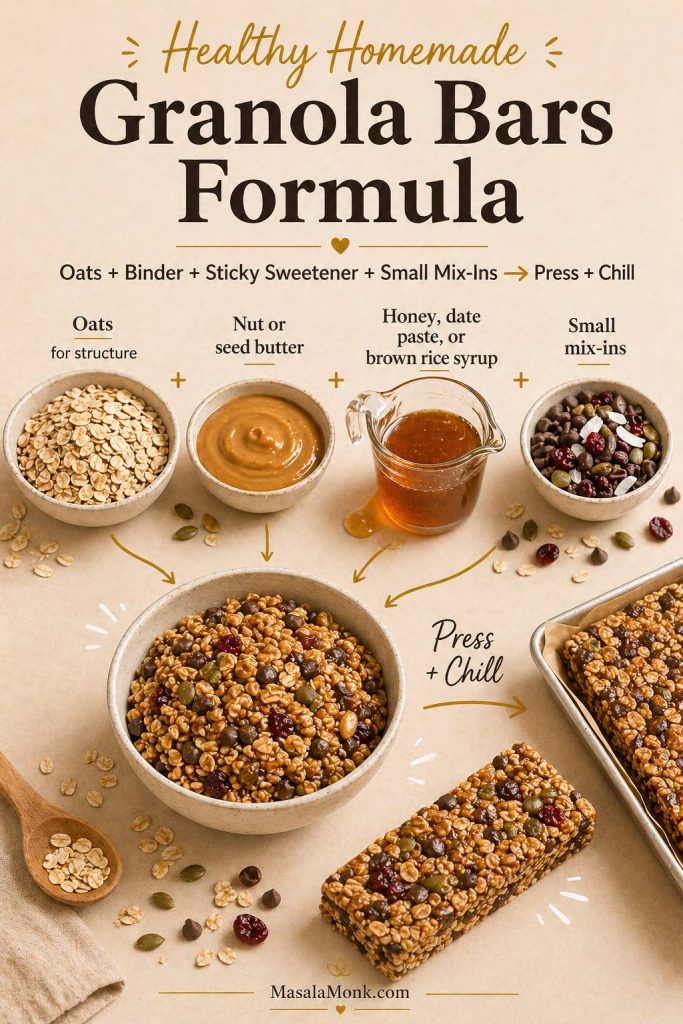
Formula guide showing oats, nut butter, sticky sweetener, small mix-ins, pressing, chilling, and finished homemade granola bars.
In short, the formula is simple: oats give structure, nut or seed butter adds richness, sticky sweetener helps the bars hold, and small mix-ins add flavor without breaking the slab.
At a glance: These are chewy no-bake granola bars made with rolled oats, creamy peanut butter or seed butter, honey or date paste, seeds, and mini chocolate chips. You need about 15 minutes of hands-on time, then the bars chill until firm. For the most reliable first batch, use peanut butter and honey, press the mixture firmly, and chill before slicing.

Why Make Granola Bars at Home?

Making granola bars at home gives you more control over sweetness, texture, binder choice, and mix-ins. That matters because the same basic oat mixture can become a chewy snack bar, a firmer lunchbox bar, a lower-sugar seed bar, a vegan date bar, or a protein-focused bar once you know how to adjust the formula.

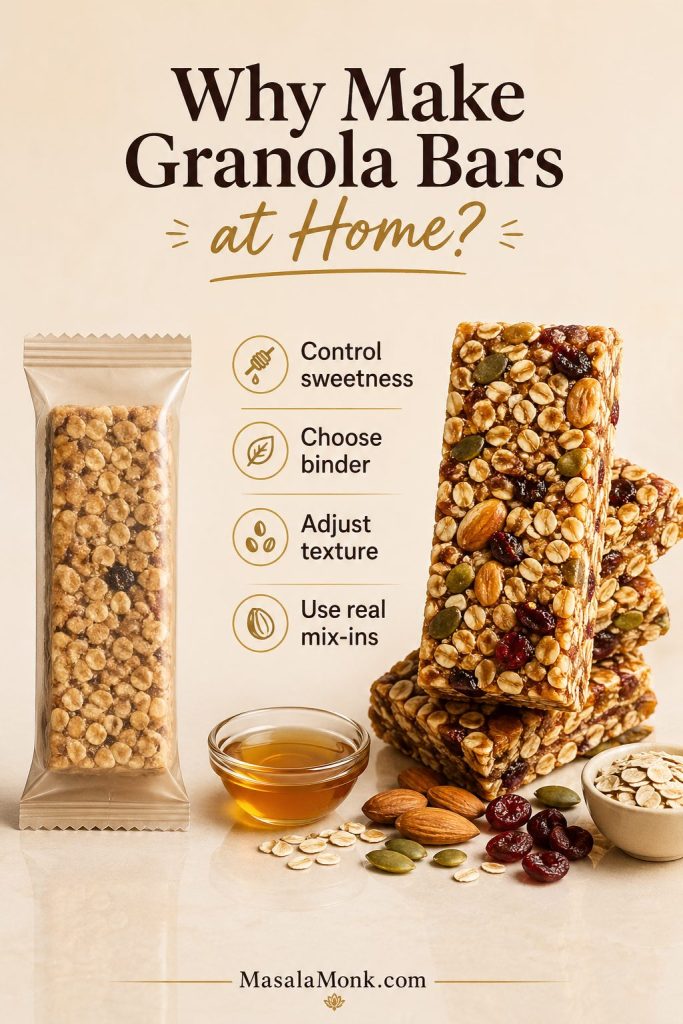
Guide image explaining why to make granola bars at home, highlighting control over sweetness, binder choice, texture adjustment, and real mix-ins.
One of the biggest advantages of making granola bars at home is control. You decide how sweet they are, what binder to use, how chewy or firm they feel, and which real mix-ins actually go into the batch.

5-Ingredient Homemade Granola Bars

When you want the simplest possible version, use this 5-ingredient formula. It is the easiest way to make homemade granola bars without turning the recipe into a project.

Because this recipe keeps the bars homemade, you can control the granola-style base, the binder, and the final sweetness without relying on a packaged snack bar.

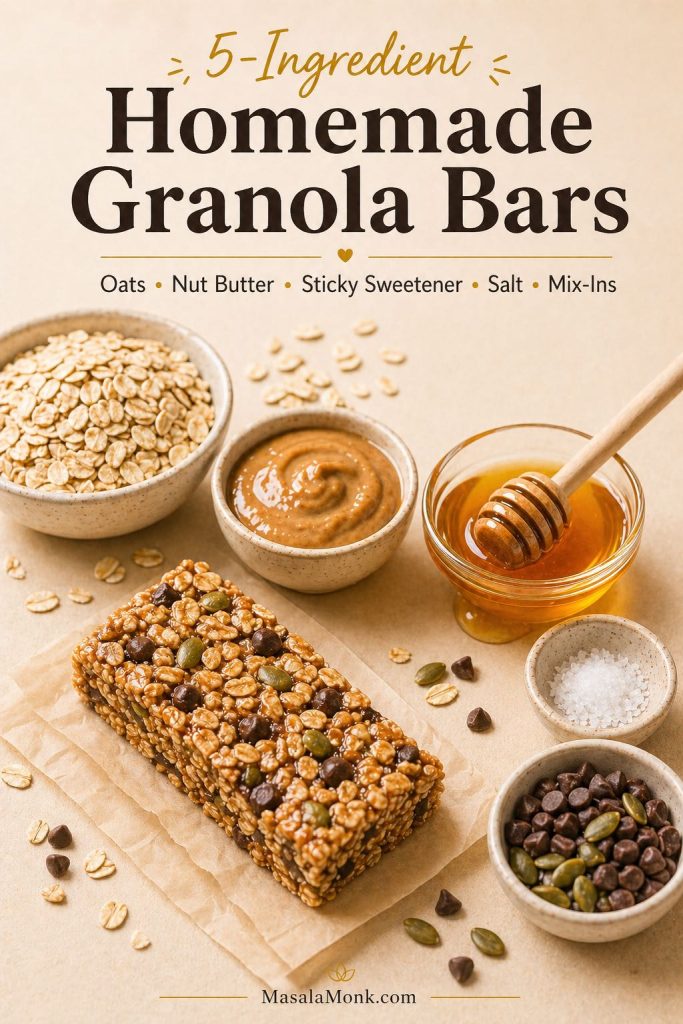
Five ingredients for homemade granola bars: oats, nut butter, honey, salt, mix-ins, and one finished granola bar.
Because this version starts with only five ingredients, it is the easiest place to learn how the oat mixture should look before you move into protein, vegan, nut-free, or low-sugar bars.
  • Oats for structure and chew
  • Peanut butter or sunflower seed butter for richness and binding
  • Honey, brown rice syrup, or date paste for stickiness
  • Salt for balance
  • Mini chocolate chips, seeds, raisins, or chopped nuts for flavor

If you are making these for older kids, start with oats, peanut butter, honey, salt, and mini chocolate chips. For a nut-free version, use sunflower seed butter and seeds instead. When you want a less sweet batch, use seeds or chopped nuts as the fifth ingredient instead of chocolate or dried fruit.

For a lighter, crispier bar, replace 1/2 to 1 cup of the oats with puffed rice cereal, crisp rice cereal, or crisp oat cereal. Since cereal is lighter than oats, keep the sticky binder strong so the bars hold together.

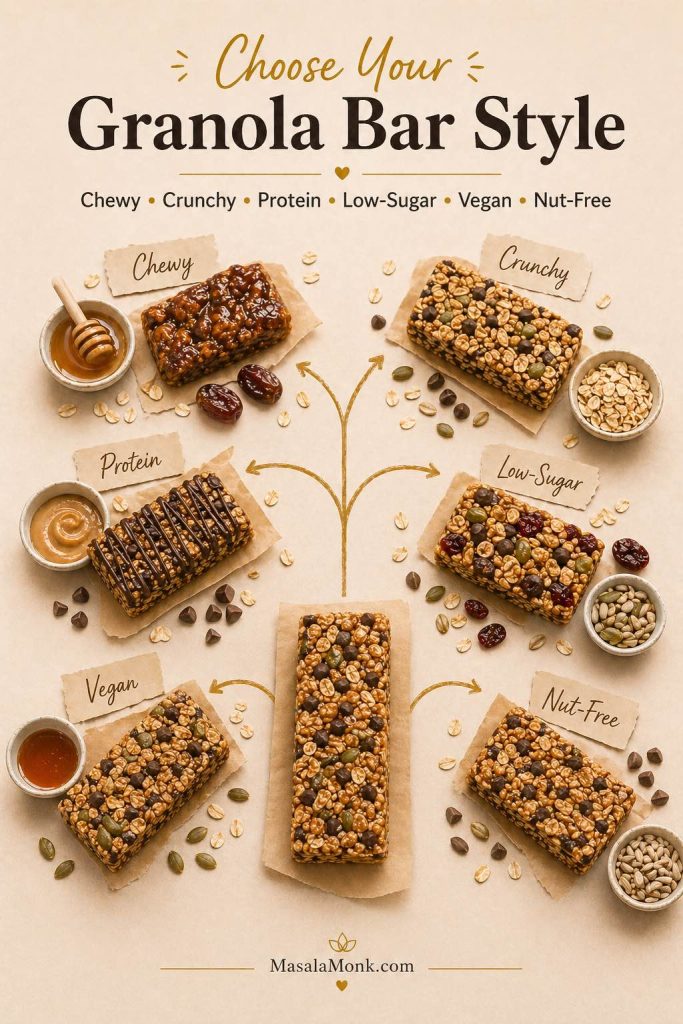
Choose Your Granola Bar Style

This recipe works because homemade granola bars do not all need the same texture. A lunchbox bar, breakfast bar, protein bar, cereal bar, and crunchy bar each need slightly different handling.

Granola bar style guide showing chewy, crunchy, protein, low-sugar, vegan, and nut-free homemade granola bar options.
Once the base recipe works, you can steer the same homemade granola bar formula toward chewy, crunchy, protein-rich, low-sugar, vegan, or nut-free versions.
You Want Best Version to Make What to Remember
Easiest first batch Chewy no-bake granola bars Use peanut butter and honey, then press hard and chill fully.
Bars that hold together best Honey or brown rice syrup + nut butter Brown rice syrup is especially sticky; honey is easier to find.
Prepared granola version Ready-made granola + sticky binder Crush large clusters first and use less added sweetener if the granola is already sweet.
Nut-free lunchbox option Sunflower seed butter + seeds Skip nuts and use pumpkin seeds, sunflower seeds, sesame, coconut, or mini chocolate chips.
Higher-protein bars Protein granola bars Start with a small amount of protein powder so the bars do not turn chalky.
Less sweet bars Seed-heavy bars with less dried fruit and chocolate Do not remove all sticky binder, or the bars will crumble.
Crunchy granola bars Toasted and briefly baked bars Cool completely before slicing; crunchy bars firm as they cool.
Cereal bars Oats + puffed rice or crisp cereal Use a strong binder and press firmly because cereal is lighter than oats.
Vegan granola bars Date paste or brown rice syrup bars Maple syrup can work, but it usually needs extra support from nut butter or flax.
Soft breakfast bars Oat bars with banana or applesauce These are softer and more breakfast-like than classic granola bars.
Flapjack-style oat bars Baked granola bar variation Use the crunchy baked method, but keep the sweetener measured for a lighter bar.

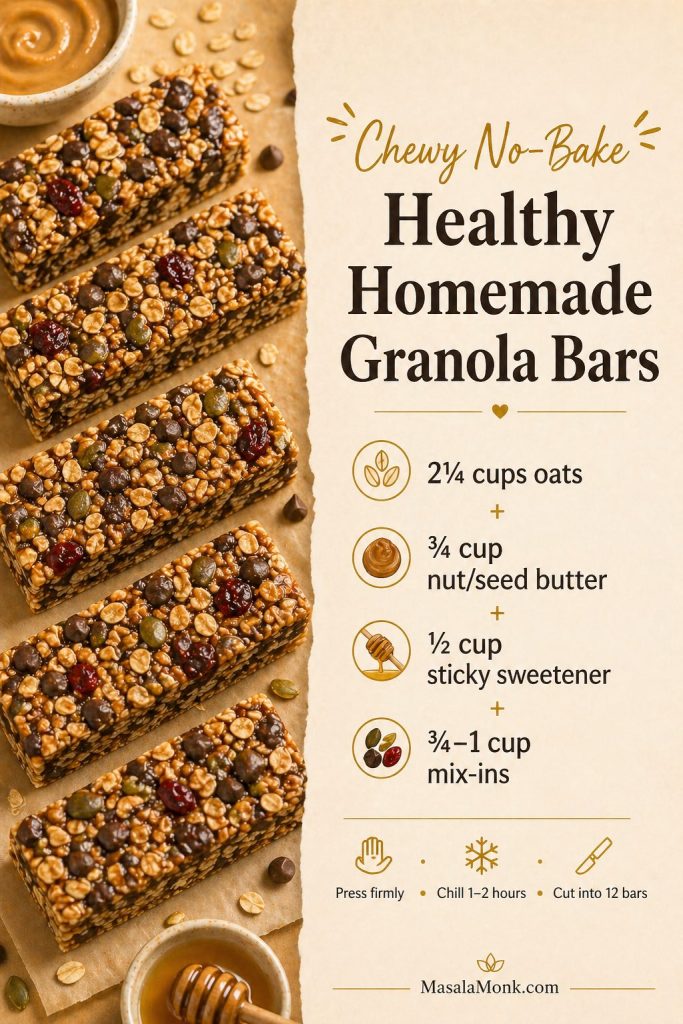
Recipe Card: Chewy No-Bake Healthy Homemade Granola Bars

Tip: Use your browser’s print option to save this recipe card, or screenshot it if you want to keep the basic formula on your phone.

Saveable recipe card for chewy no-bake homemade granola bars with oats, nut or seed butter, sticky sweetener, mix-ins, pressing, chilling, and slicing notes.
Use this base ratio as your starting point, then adjust the binder, sweetener, and mix-ins depending on whether you want softer bars, firmer lunchbox bars, or a more protein-focused batch.
Before you start: For the easiest chewy bars, use peanut butter and honey. If you have a kitchen scale, weigh the oats, nut butter, and sweetener for the most consistent texture. For vegan bars, use brown rice syrup or date paste instead of honey.

Chewy No-Bake Healthy Homemade Granola Bars Recipe

These healthy homemade granola bars are chewy, no-bake, easy to customize, and made with oats, nut butter, honey or date paste, seeds, and mini chocolate chips. Start with the base recipe, then use the variations below to change the flavor, texture, sweetness, or diet fit.

Yield12 bars
Prep Time15 minutes
Binder Warming2 minutes
Chill Time1 to 2 hours
Total TimeAbout 1 1/2 to 2 1/2 hours

Ingredients for Chewy Homemade Granola Bars

  • 2 1/4 cups rolled oats or old-fashioned oats, about 200 g / 7 oz
  • 3/4 cup creamy peanut butter, almond butter, sunflower seed butter, or tahini, about 190–205 g / 6.7–7.2 oz
  • 1/2 cup honey, brown rice syrup, or thick date paste, about 160–170 g / 5.6–6 oz / 120 ml
  • 1 teaspoon vanilla extract, 5 ml
  • 1/2 teaspoon cinnamon, optional
  • 1/2 teaspoon fine salt, about 3 g, or less if your nut butter is salted
  • 1/3 cup pumpkin seeds or sunflower seeds, about 45–55 g / 1.6–2 oz
  • 1/3 cup chopped nuts, chopped dried fruit, or extra seeds, about 40–55 g / 1.4–2 oz
  • 1/3 cup mini chocolate chips, about 55–60 g / 2 oz, optional
  • 1 to 2 tablespoons ground flaxseed or chia seeds, about 7–18 g, optional

Instructions for Homemade Granola Bars

  1. Line an 8-inch / 20 cm square pan with parchment paper, leaving overhang on two sides. For thinner bars, use a 9-inch / 23 cm square pan. For thicker bars, use a 9 x 5-inch / 23 x 13 cm loaf pan or press the mixture into only part of a larger pan.
  2. In a small saucepan over low heat, warm the nut butter and honey until smooth and pourable. Then, stir in vanilla, cinnamon, and salt. Do not boil for the basic no-bake version.
  3. In a large bowl, mix the oats, seeds, chopped nuts or dried fruit, and flaxseed or chia seeds if using.
  4. Pour the warm binder over the oat mixture. Stir thoroughly until every oat and mix-in is coated. At this point, the mixture should feel sticky and dense, not dry or dusty.
  5. Let the mixture cool for 3 to 5 minutes, then fold in the mini chocolate chips.
  6. Transfer to the lined pan. Cover with parchment and press very firmly into an even layer. Use the bottom of a measuring cup to compact the mixture into the corners.
  7. Chill for at least 1 hour, or 2 hours for firmer bars. Before slicing, the center should feel firm when pressed.
  8. Lift out of the pan and slice into 12 bars. Store chilled for the firmest texture.

Recipe Notes for Homemade Granola Bars

  • The mixture should look sticky and dense before pressing. If dry oats collect at the bottom of the bowl, add 1 tablespoon more nut butter or honey before pressing.
  • When the mixture crumbles before pressing, add more nut butter or honey. If it feels wet and sticky, add more oats, seeds, or ground flaxseed.
  • Use brown rice syrup or thick honey instead of thin maple syrup when you want firmer bars.
  • Vegan granola bars work best with brown rice syrup or date paste.
  • Nut-free bars need sunflower seed butter or tahini, plus seeds instead of nuts.
  • Gluten-free bars need certified gluten-free oats and checked labels on all mix-ins.
  • Protein granola bars work best when you replace 1/4 cup oats with protein powder and add 1 to 2 extra tablespoons nut butter if the mixture feels dry.
  • For a lighter crisp texture, replace 1/2 to 1 cup of the oats with puffed rice cereal, crisp rice cereal, or crisp oat cereal.
  • Bars made with ready-made granola need about 2 1/2 cups prepared granola in place of the oats, with less sweetener if the granola is already sweet.
  • A warm lunchbox needs a firmer binder, so use brown rice syrup or a short-cooked honey binder and pack with an ice pack.
  • Do not use honey in bars for children under 12 months old. Use date paste or another suitable sweetener instead.

Nutrition Estimate for Homemade Granola Bars

Nutrition will vary depending on the nut butter, sweetener, seeds, chocolate, dried fruit, and protein powder you use. As a rough estimate, one of 12 bars from the basic peanut butter and honey version will usually fall in the range of 180 to 230 calories, with most of the energy coming from oats, nut butter, seeds, and sweetener. For a lighter bar, cut the slab into 16 smaller squares.

How to Cut Homemade Granola Bars

Cut the slab into 12 rectangles when you want regular snack bars. For smaller lunchbox portions, slice it into 16 squares. Bite-size freezer snacks work well as 24 mini bars. In general, thicker bars hold together better, while thinner bars feel lighter and chill faster.

Texture Notes for Chewy Homemade Granola Bars

For the most reliable first batch, use peanut butter and honey because both help the oats stick together. Brown rice syrup makes firmer bars, especially if you need them to hold up longer outside the fridge. Maple syrup tastes good, but it usually makes softer, more fragile bars unless you add extra nut butter or ground flaxseed.

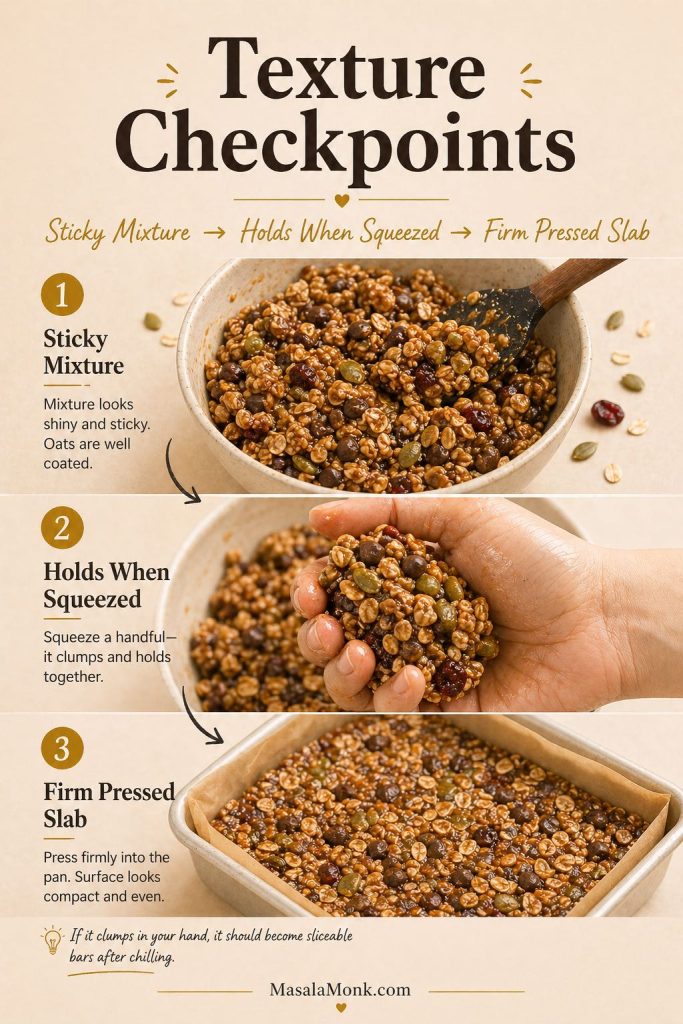
Texture checkpoint guide showing sticky granola bar mixture, a hand-squeezed cluster, and a firm pressed slab in a pan.
Before chilling, the mixture should look sticky, clump when squeezed, and press into a compact slab; otherwise, the bars may crumble when sliced.

The mixture should feel sticky before it goes into the pan. If dry oats are still sitting at the bottom of the bowl, do not press yet. Instead, add another spoonful of nut butter or honey, stir again, and test a small handful. Once it clumps when squeezed, it is ready to press.

Texture checkpoints: Before pressing, the mixture should look sticky, dense, and slightly glossy. After pressing, the slab should feel compact and flat, not loose or bumpy. After chilling, the center should feel firm when pressed. If the knife smears, chill longer. If the slab cracks sharply, let it sit for 5 minutes before slicing.

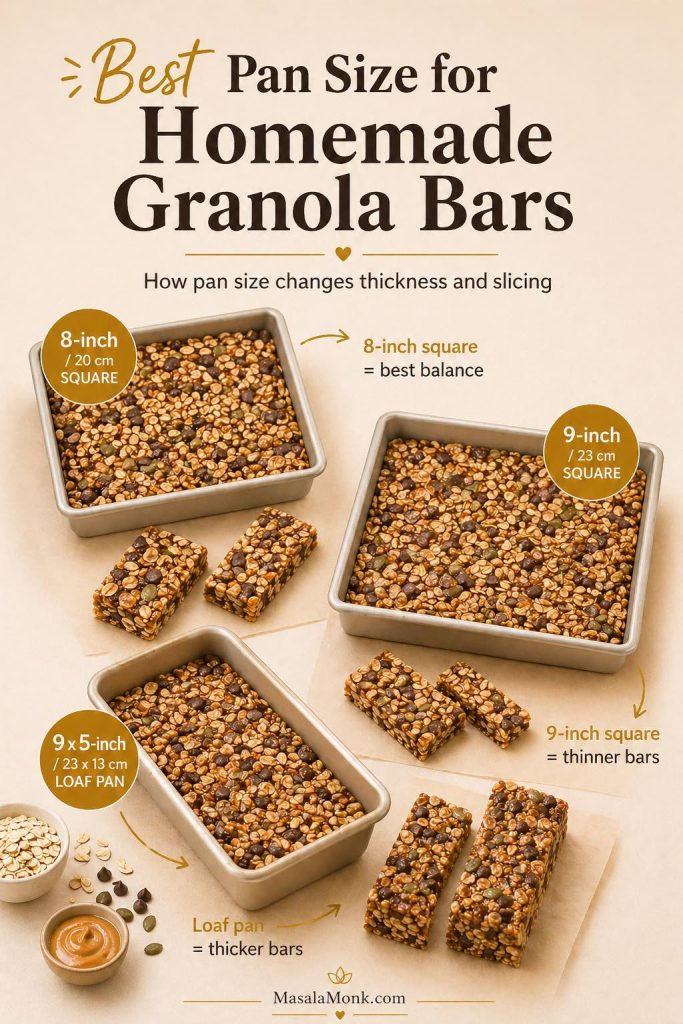
Best Pan Size for Homemade Granola Bars

An 8-inch / 20 cm square pan gives the best balance of thickness, chilling time, and clean slicing. A 9-inch / 23 cm square pan makes thinner bars that chill faster, but they can break more easily if the mixture is not pressed firmly. A 9 x 5-inch / 23 x 13 cm loaf pan makes thicker bars that hold together well, although the yield will be smaller.

Comparison guide showing homemade granola bars in an 8-inch square pan, 9-inch square pan, and 9x5-inch loaf pan, with notes about thickness and slicing.
Pan size changes the thickness of homemade granola bars more than most people expect. An 8-inch square pan usually gives the best balance, whereas a 9-inch square makes thinner bars and a loaf pan gives a thicker, taller bar.

Whatever pan you use, press the mixture into a tight, even layer before chilling. Otherwise, the slab may look set on top but crumble when sliced.

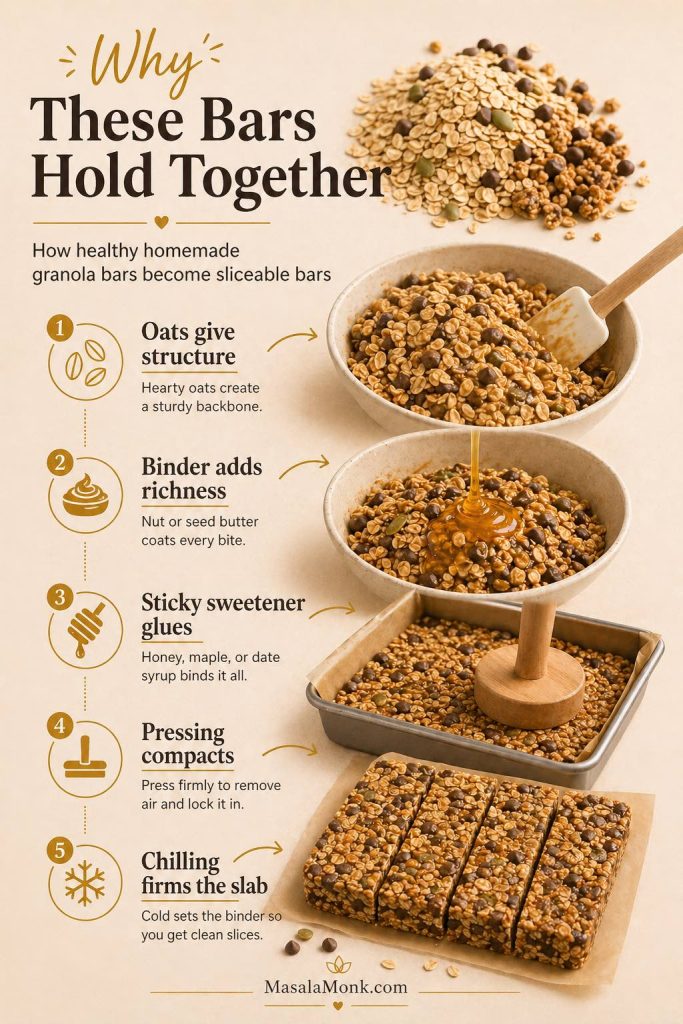
Why These Healthy Homemade Granola Bars Work

Granola bars are simple, but they can fail in frustrating ways. Sometimes they taste good but crumble as soon as you cut them. At other times, they are so sticky that they feel unfinished. Occasionally, they become hard because the binder was cooked too long.

These bars work because the oats, binder, sweetener, and mix-ins are balanced before anything goes into the pan. First, the oats give chew and structure. Then, the nut butter or seed butter adds richness and helps glue the mixture together. Meanwhile, the sticky sweetener holds the dry ingredients in place. Because small mix-ins spread through the bars instead of creating big break points, the slab cuts more cleanly. Finally, firm pressing and proper chilling turn the mixture into sliceable bars.

Guide showing how oats, binder, sticky sweetener, pressing, and chilling help homemade granola bars hold together and slice cleanly.
In other words, bars hold together because each part has a job: oats build structure, binder adds cohesion, sticky sweetener locks things in, pressing compacts the slab, and chilling firms everything up for cleaner slices.

Oats are also a strong base for a filling snack because they are a whole grain and contain beta-glucan, the main soluble fiber in oats. Harvard’s Nutrition Source notes that beta-glucan has been studied for slowing digestion and increasing satiety, which is one reason oats work so well in breakfasts and snacks. Read Harvard’s guide to oats and beta-glucan here.

Are Homemade Granola Bars Healthy?

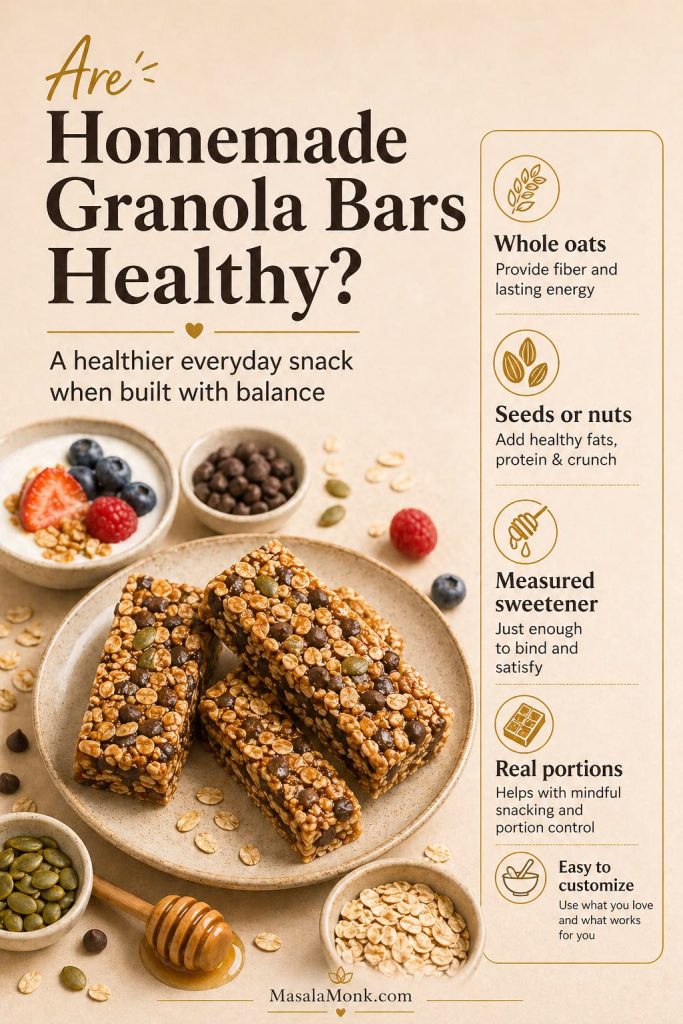
Homemade granola bars can be a healthier everyday snack, especially when you build them around oats, nuts, seeds, and a measured amount of sweetener. Still, homemade does not automatically mean sugar-free, low-calorie, or high-protein. The real benefit is that you decide what goes in and how sweet, filling, or protein-rich the bars should be.

Plate of homemade granola bars with oats, seeds, chocolate chips, berries, and yogurt, alongside notes about why balanced homemade granola bars can be a healthier snack.
Homemade granola bars can be a healthier snack when they are built with balance. For example, whole oats, nuts or seeds, measured sweetener, and sensible portions make them easier to fit into everyday eating.

For a more balanced homemade granola bar, start with whole oats, a moderate amount of nut or seed butter, seeds for texture, a sticky sweetener used with restraint, and enough salt to make the flavors taste complete. If the bar is meant to replace breakfast, consider protein and fiber. However, if it is meant to be a small snack, keep the portion size realistic.

In practice, a healthy homemade granola bars recipe should not depend only on removing sugar. It should also help the bars stay satisfying, easy to portion, and sturdy enough to eat without falling apart.

Granola Bars vs Oat Bars vs Muesli Bars vs Cereal Bars

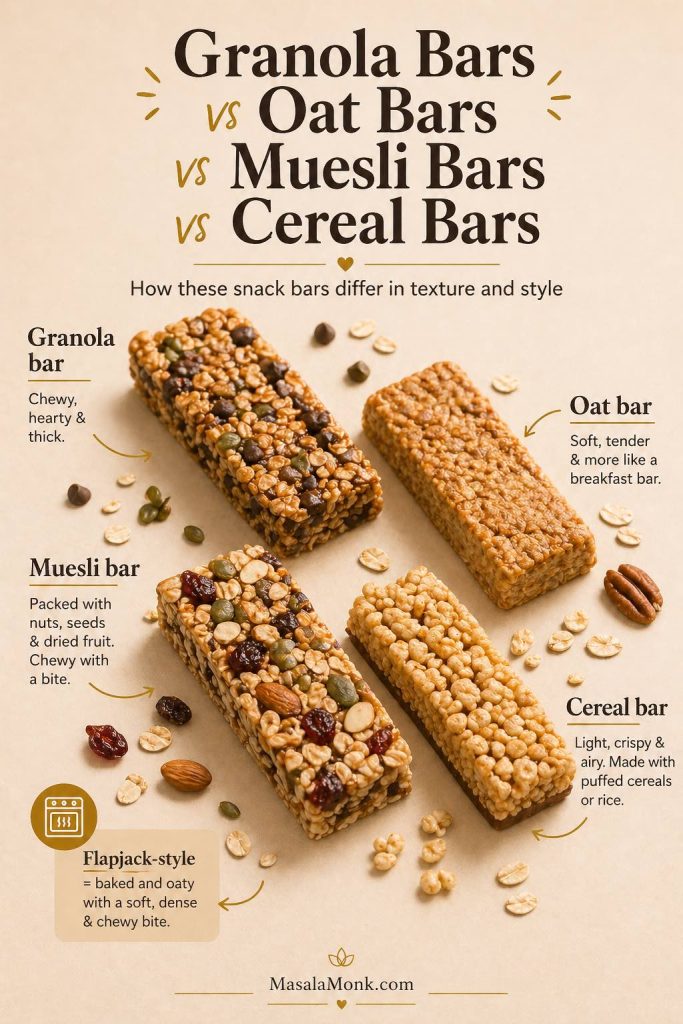
These names overlap, but they are not always used the same way. Knowing the difference helps you choose the right style instead of forcing one recipe to do everything.

Comparison image showing a granola bar, oat bar, muesli bar, and cereal bar, with notes on texture, ingredients, and style differences.
Although these snack bars often get grouped together, they are not exactly the same. Granola bars are usually chewier and chunkier, oat bars are softer, muesli bars lean more toward nuts and dried fruit, and cereal bars are lighter and crispier.
Bar Type What It Usually Means Best For
Granola bars Oat-based bars with nuts, seeds, dried fruit, chocolate, and a sticky binder. Classic snack bars, lunchboxes, road trips, meal prep.
Oat bars Often softer, more breakfast-like, and sometimes made with banana, applesauce, or baked oatmeal-style mixtures. Breakfast, kids’ snacks, softer meal-prep bars.
Muesli bars A common name in some regions for oat, nut, seed, and dried fruit bars. Chewy oat bars with fruit, nuts, and seeds.
Cereal bars Bars made with puffed rice, toasted cereal, oat cereal, or similar breakfast cereals. Quick no-bake lunchbox bars and kid-friendly snacks.
Protein bars Bars built around extra protein from protein powder, nuts, seeds, dairy, soy, or other protein-rich ingredients. Post-workout snacks, higher-protein breakfasts, gym bags.
Flapjacks In UK-style usage, usually baked oat bars made with oats, fat, sugar, and syrup. People who want a firmer baked oat bar texture.

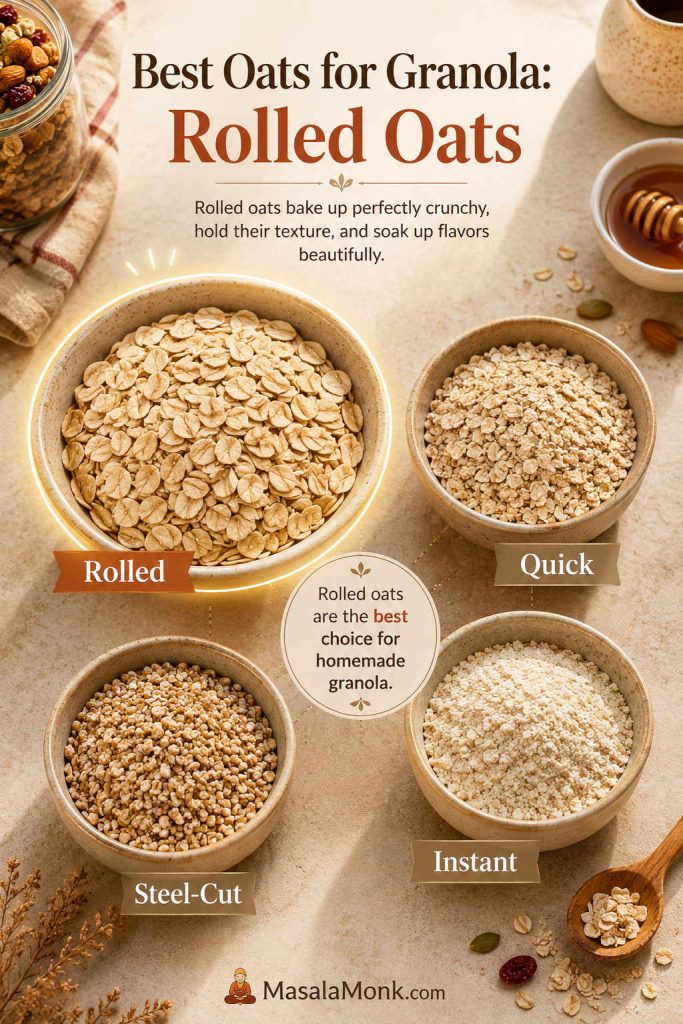
For this recipe, rolled oats or old-fashioned oats are the best starting point because they give homemade granola-style bars visible texture and chew. If you are still deciding which oats to use, MasalaMonk’s guide to oats, types, nutrition, and differences explains rolled oats, quick oats, instant oats, and steel-cut oats in more detail.

Ingredients for Healthy Homemade Granola Bars

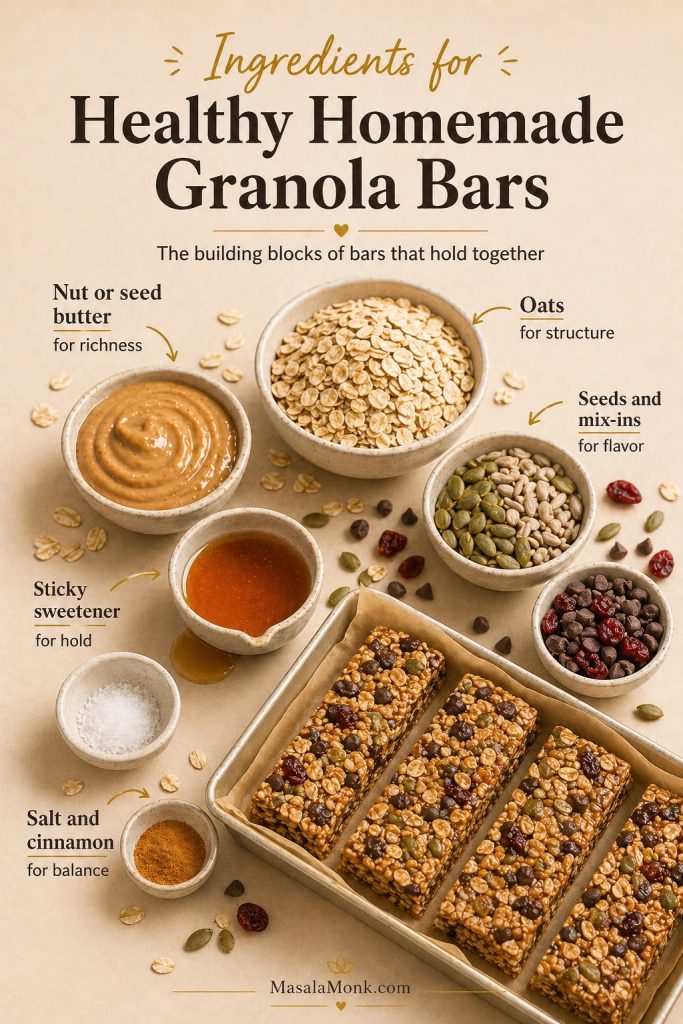
This recipe uses simple homemade granola bar ingredients, but each one has a job. Once you understand what each ingredient does, it becomes much easier to make substitutions without ending up with crumbly, sticky, or dry bars.

Ingredient guide for healthy homemade granola bars showing oats, nut or seed butter, sticky sweetener, seeds, mix-ins, salt, cinnamon, and sliced bars in a pan.
Before you start, it helps to see the building blocks clearly. Oats provide structure, nut or seed butter adds richness, sticky sweetener helps with hold, and mix-ins bring flavor, texture, and variety.

Rolled Oats or Old-Fashioned Oats

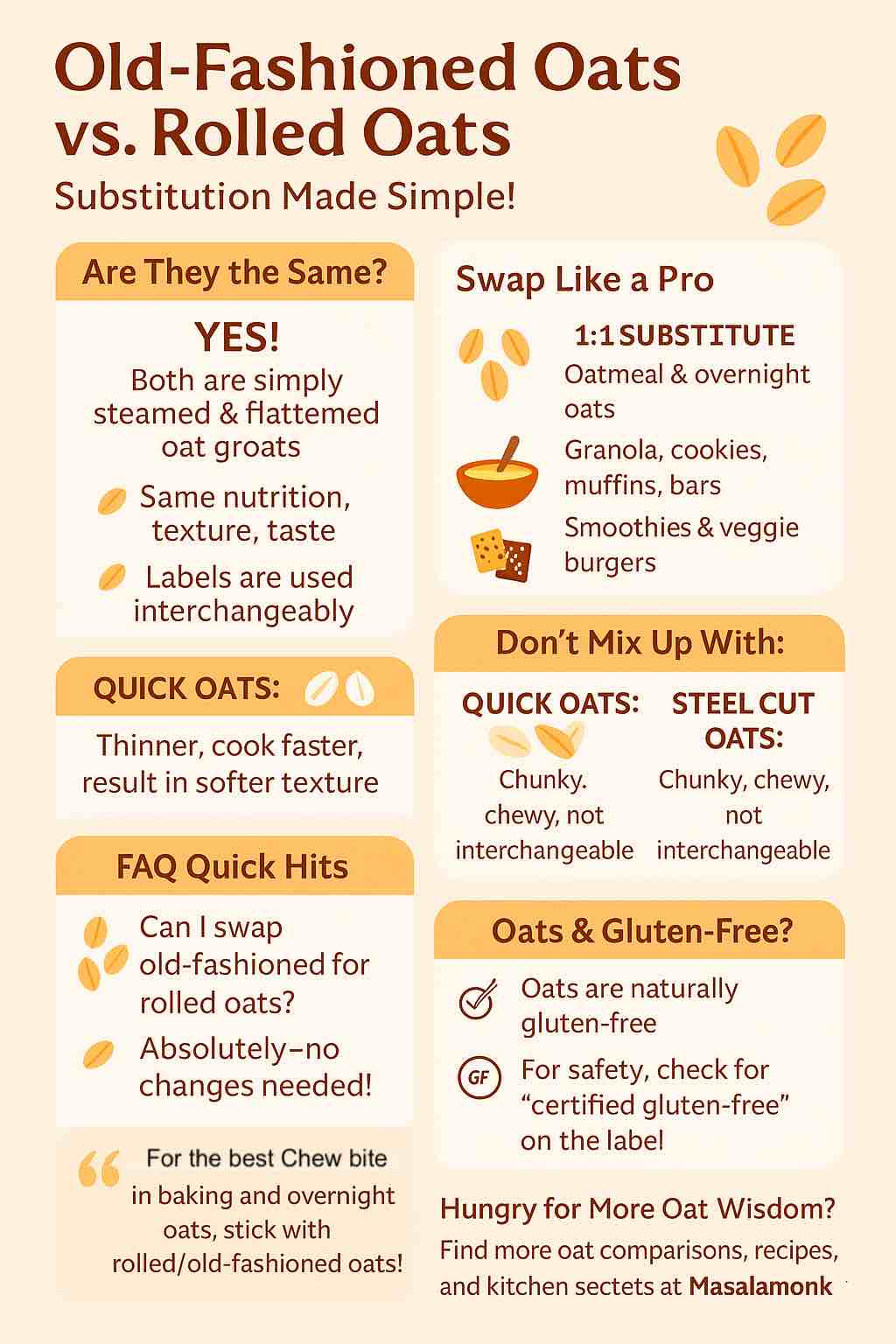
Rolled oats are the best all-purpose choice for chewy granola bars. They are flat enough to bind into the mixture, but they still keep enough texture to feel hearty. Old-fashioned oats and rolled oats are usually the same thing, so either label works here. MasalaMonk has a full guide on substituting old-fashioned oats for rolled oats if you want the details.

Quick oats can work when you want softer bars, although the texture will be less defined. On the other hand, steel-cut oats are not ideal for this no-bake recipe because they stay too hard and do not bind well unless they are cooked or processed first.

Nut Butter or Seed Butter

Creamy peanut butter is the easiest binder for a first batch because it is thick, flavorful, and sticky. Almond butter, cashew butter, sunflower seed butter, pumpkin seed butter, and tahini can also work. If you use natural nut butter, stir it very well before measuring, since separated oil can make some parts of the bars greasy while other parts stay dry.
For peanut butter granola bars, use creamy peanut butter. For nut-free granola bars, use sunflower seed butter or tahini. If you want full control over salt, sweetness, and texture, you can also make peanut butter at home and use it as the binder.

Sticky Sweetener and Best Binders

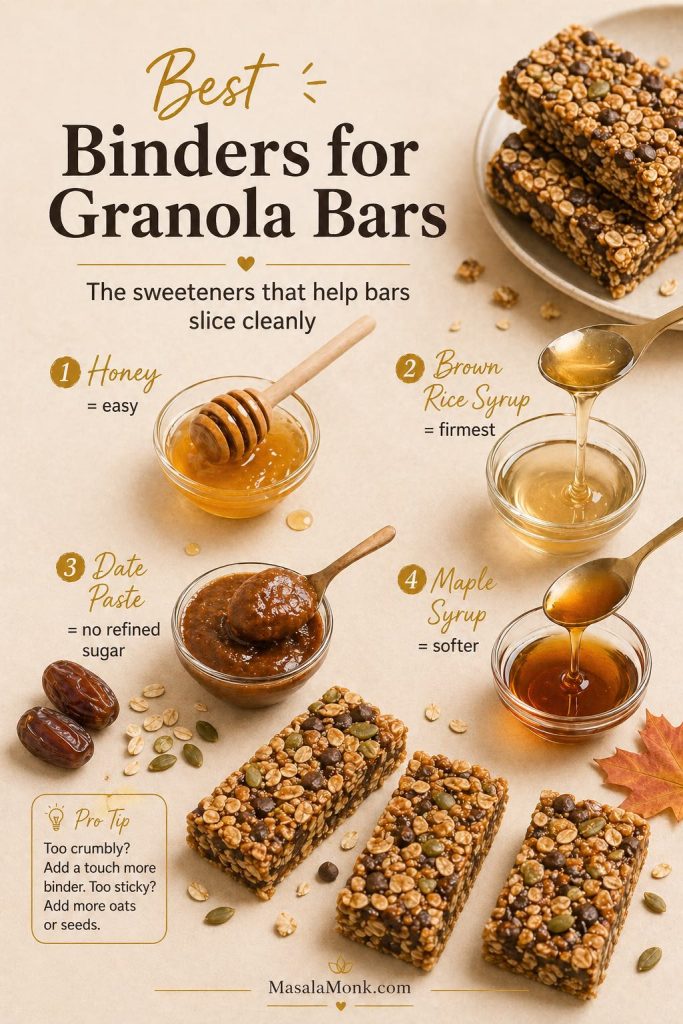
A sticky sweetener turns oats and mix-ins into bars instead of loose granola. Honey is the easiest choice for chewy no-bake granola bars. Brown rice syrup is even stickier and can help bars hold together more firmly. Date paste works well for a no-refined-sugar version. Maple syrup tastes good, but it is thinner and less sticky, so bars made only with maple syrup can be more fragile unless you adjust the formula.

Binder comparison guide for granola bars showing honey, brown rice syrup, date paste, and maple syrup, with notes on firmness, sweetness, and texture.
Choosing the right binder changes how your granola bars feel and slice. Honey is easy to use, brown rice syrup gives the firmest hold, date paste avoids refined sugar, and maple syrup usually makes a softer bar.

For vegan granola bars, brown rice syrup and date paste usually give a better hold than maple syrup alone. If you use maple syrup, add extra nut butter, ground flaxseed, or a slightly longer chill time. Also, if you are making bars for a baby under 12 months old, do not use honey; the CDC advises against giving honey to children younger than 12 months because of infant botulism risk. Read the CDC guidance here.

The binder is where most granola bars succeed or fail. Use this quick guide when you are choosing between honey, maple syrup, date paste, brown rice syrup, peanut butter, tahini, or seed butter.

Binder Goal Best Choice Why It Works
Best first batch Peanut butter + honey Easy, sticky, familiar, and reliable.
Firmest vegan bars Seed butter + brown rice syrup Brown rice syrup is thick and sticky, so it holds better than thin maple syrup.
No-refined-sugar bars Nut butter + date paste Thick, sweet, and caramel-like, though still naturally sweet.
Flapjack-style bars Honey or golden syrup + butter or nut butter Gives a firmer baked oat-bar texture.
No-peanut-butter bars Almond butter, cashew butter, tahini, or sunflower seed butter Useful for allergies, taste preference, and lunchbox planning.
Lunchbox-firm bars Brown rice syrup or short-cooked honey binder Helps bars hold up better outside the fridge.

Nuts, Seeds, Dried Fruit, and Chocolate

Mix-ins make homemade granola bars more interesting, but they can also make the bars break apart. Large almonds, whole cashews, big chunks of dates, and oversized chocolate chips create weak spots in the slab. Therefore, chop nuts and dried fruit before mixing, and use mini chocolate chips when possible.

Good mix-ins include pumpkin seeds, sunflower seeds, chia seeds, flaxseed meal, sesame seeds, chopped nuts, shredded coconut, dried cranberries, raisins, dates, mini chocolate chips, cacao nibs, and a pinch of cinnamon. In general, smaller pieces make cleaner bars because they compress more evenly into the oat mixture.

Salt, Vanilla, and Cinnamon

Do not skip the salt. A small amount keeps the bars from tasting flat and makes the nut butter, oats, and sweetener taste more complete. Vanilla adds warmth, while cinnamon gives the bars a breakfast-like flavor. You can also use cardamom, ginger, cocoa powder, orange zest, or espresso powder in specific variations.

Optional Protein Powder

Protein powder can turn this into a homemade protein granola bars recipe, but it changes the texture quickly. Whey protein usually blends more smoothly than many plant proteins. Meanwhile, plant protein powders often absorb more moisture and can make bars dry or chalky. Start small, then add more nut butter or a splash of milk if the mixture feels dry before pressing.

For a more protein-focused oat recipe, MasalaMonk already has healthy oat protein bars. If you want to understand protein powder in oats more deeply, this protein oatmeal guide explains whey, plant protein, yogurt, egg whites, paneer, tofu, and other ways to raise protein in oat-based meals.

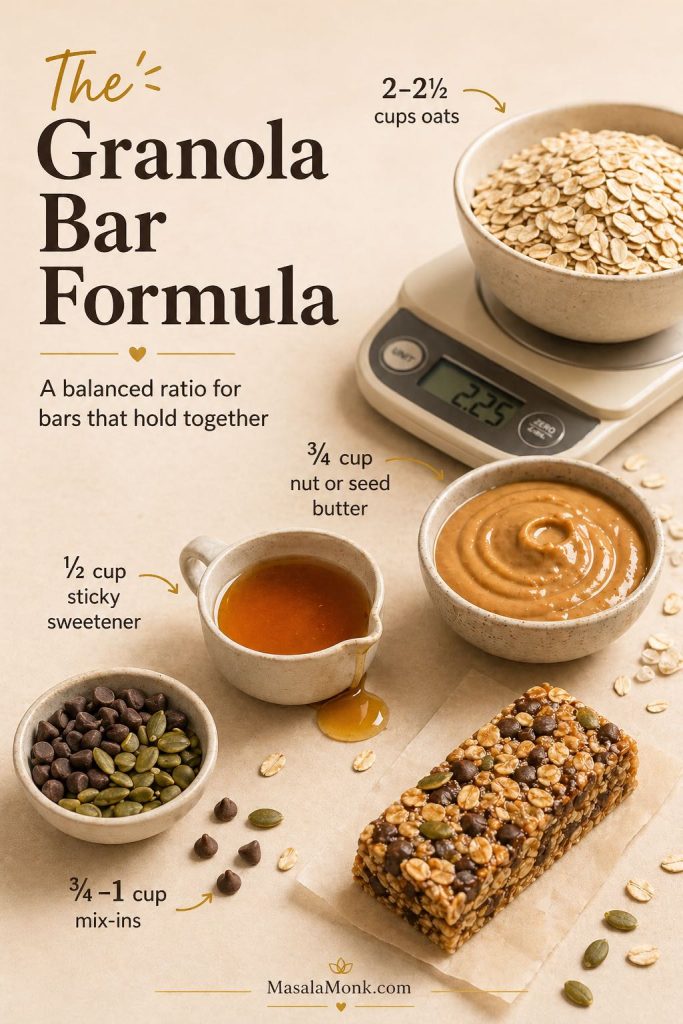
The Simple Formula Behind Homemade Granola Bars

Think of this recipe as a balance between dry structure and sticky glue. The oats and mix-ins give the bars body, while the nut butter and sweetener hold everything together. If either side gets too heavy, the texture suffers.

Formula guide for homemade granola bars showing oats, nut or seed butter, sticky sweetener, mix-ins, and a finished bar.
Once you understand the base formula, homemade granola bars become much easier to adjust. The oats build structure, while the binder and sticky sweetener help the mixture press into bars instead of crumbling apart.
Ingredient Type Starting Amount Purpose Best Choices
Oats 2 to 2 1/2 cups Structure and chew Rolled oats or old-fashioned oats
Nut or seed butter 3/4 cup Binder, richness, flavor Peanut butter, almond butter, sunflower seed butter, tahini
Sticky sweetener 1/2 cup Glue and sweetness Honey, brown rice syrup, date paste
Mix-ins 3/4 to 1 cup Flavor, crunch, chew Mini chips, seeds, chopped nuts, chopped dried fruit
Flavor boosters Small amounts Balance Salt, vanilla, cinnamon, cocoa, cardamom

As a rule, do not keep adding dry mix-ins just because they sound good. Too many seeds, nuts, dried fruit pieces, chocolate chips, or protein powder will overwhelm the binder. Ideally, the mixture should look compact and sticky before pressing, with no dry oats collecting at the bottom of the bowl.

Can You Make Granola Bars with Ready-Made Granola?

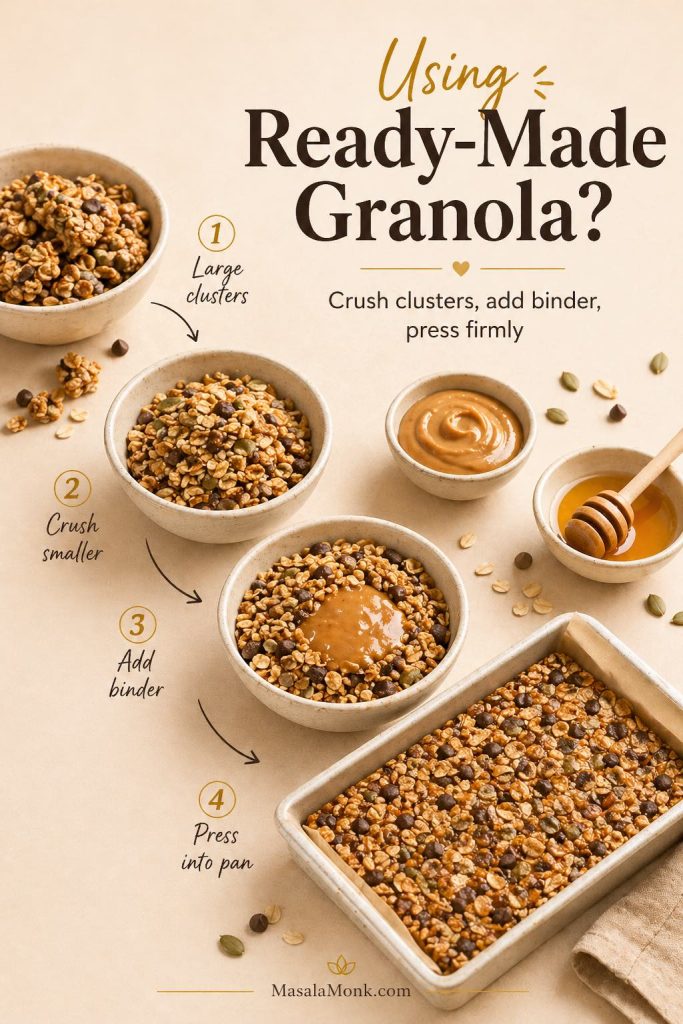
Yes, you can make granola bars with ready-made granola, but the texture depends on what is already in the granola. If your granola is very crunchy, very sweet, or full of large clusters, crush or pulse it lightly before mixing so the bars can compact properly. Large clusters taste good in a bowl, but they can make sliced bars break apart.

Because prepared granola is often already sweetened, use less added sweetener than the main recipe. As a starting point, use 2 1/2 cups granola, 1/2 cup creamy nut or seed butter, 1/3 cup honey or brown rice syrup, and 1/4 to 1/2 cup extra seeds, mini chocolate chips, or chopped dried fruit. After that, warm the binder, mix everything well, press very firmly into a lined pan, and chill before slicing.

Guide showing ready-made granola clusters being crushed smaller, mixed with binder, and pressed into a pan for granola bars.
Ready-made granola can work, but large clusters need to be broken down first. Then, add just enough binder and press the mixture firmly so it slices more like bars than loose clusters.

With ready-made granola, the recipe still works, but homemade-style bars need smaller clusters and a strong binder. Otherwise, the slab may taste good but crumble when sliced.

Texture tip: Granola bars made with ready-made granola work best when the granola pieces are small enough to compress. If the mixture looks like loose cereal even after adding the binder, crush the granola a little more or add another spoonful of nut butter.

How to Make Homemade Granola Bars Step by Step

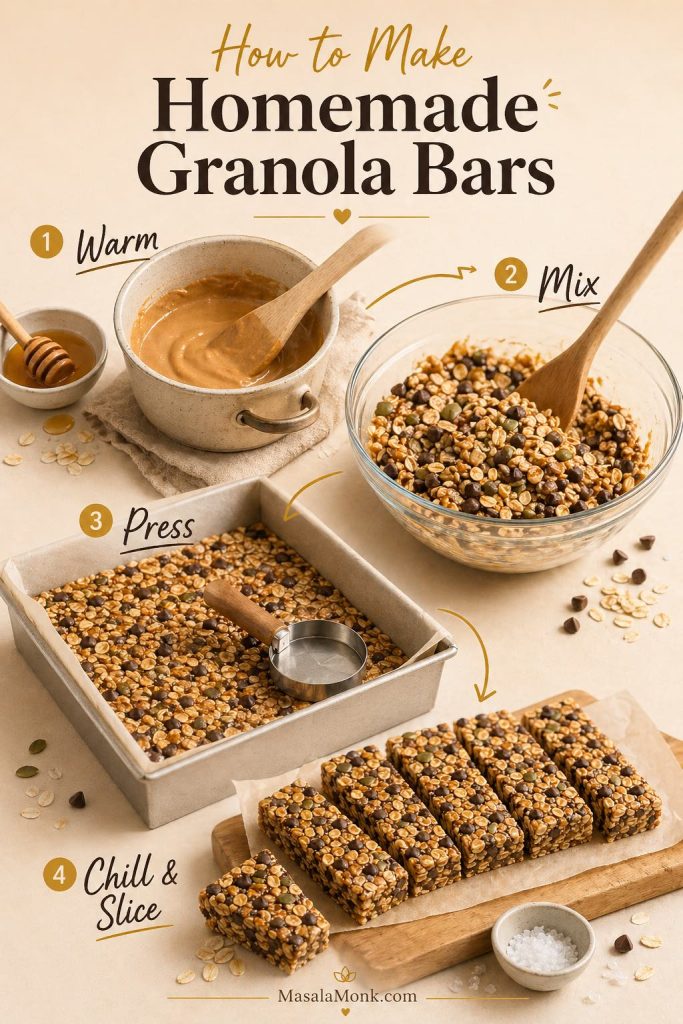
This step-by-step recipe shows how a homemade granola mixture becomes firm, sliceable bars after warming, mixing, pressing, chilling, and cutting.

Step-by-step guide showing homemade granola bars being warmed, mixed, pressed into a pan, chilled, and sliced.
The method is simple, although the order matters. Warm the binder first, mix until the oats are coated, press the slab firmly, and then chill before slicing for cleaner homemade granola bars.

1. Line the Pan

Line an 8-inch / 20 cm square pan with parchment paper, leaving some overhang on two sides. This makes it easier to lift the chilled slab out cleanly. For thinner bars, use a 9-inch / 23 cm square pan. For thicker bars, use a 9 x 5-inch / 23 x 13 cm loaf pan or press the mixture into only part of a larger pan.

2. Warm the Binder

Add the nut butter, honey or other sticky sweetener, vanilla, and salt to a small saucepan. Warm over low heat just until smooth and pourable. For the basic no-bake version, you are not trying to boil the mixture. Instead, you only want it loose enough to coat the oats evenly.

If you need firmer room-temperature bars, gently simmer honey for about 1 minute before mixing it with the nut butter. This creates a stickier binder, but it can also make the bars harder if cooked too long.

3. Mix the Oats and Dry Ingredients

In a large bowl, combine the rolled oats, seeds, chopped nuts, chopped dried fruit, cinnamon, and any protein powder or flaxseed meal. Keep chocolate chips aside until the binder has cooled slightly, especially if you want visible chips instead of melted chocolate streaks.

4. Combine Wet and Dry

Pour the warm binder over the oat mixture. Stir until every oat and mix-in is coated. Scrape the bottom and sides of the bowl so there are no dry pockets. The mixture should look sticky, dense, and slightly glossy. If it still looks dusty, add another spoonful of nut butter or honey.

5. Add Chocolate Chips Last

Let the mixture cool for a few minutes before folding in mini chocolate chips. Small chips work better than large chips because they spread through the bars evenly and do not create big break points. If the mixture is very warm, the chips will melt, which is fine for flavor but less tidy for slicing.

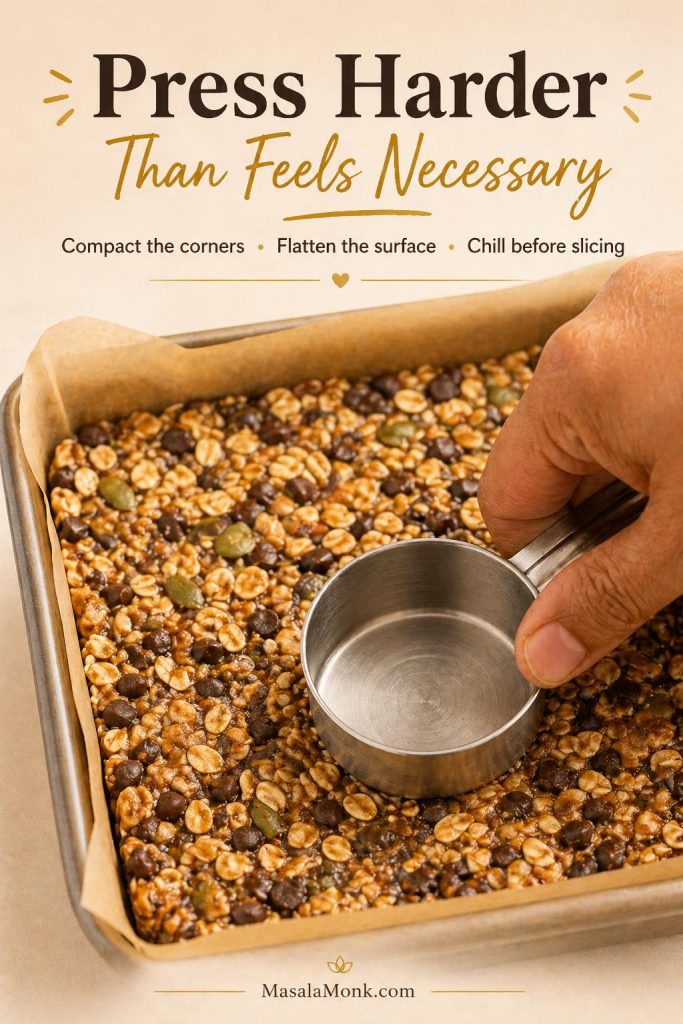
6. Press Harder Than Feels Necessary

Transfer the mixture to the lined pan. Cover the top with another piece of parchment paper and press down firmly with your hands, the bottom of a measuring cup, or a flat spatula. Push into the corners and flatten the surface. Then press again. This step is what turns a sticky oat mixture into actual bars.

Close-up of a measuring cup pressing homemade granola bar mixture firmly into a parchment-lined pan.
Pressing is where many granola bars succeed or fail. For better structure, compact the corners, flatten the surface, and remove air gaps before the slab goes into the fridge.

7. Chill Before Slicing

Chill for at least 1 hour, or 2 hours if your kitchen is warm. Do not judge the final texture while the slab is still soft. After chilling, lift the slab out using the parchment, then slice with a sharp knife. Press straight down instead of sawing back and forth.

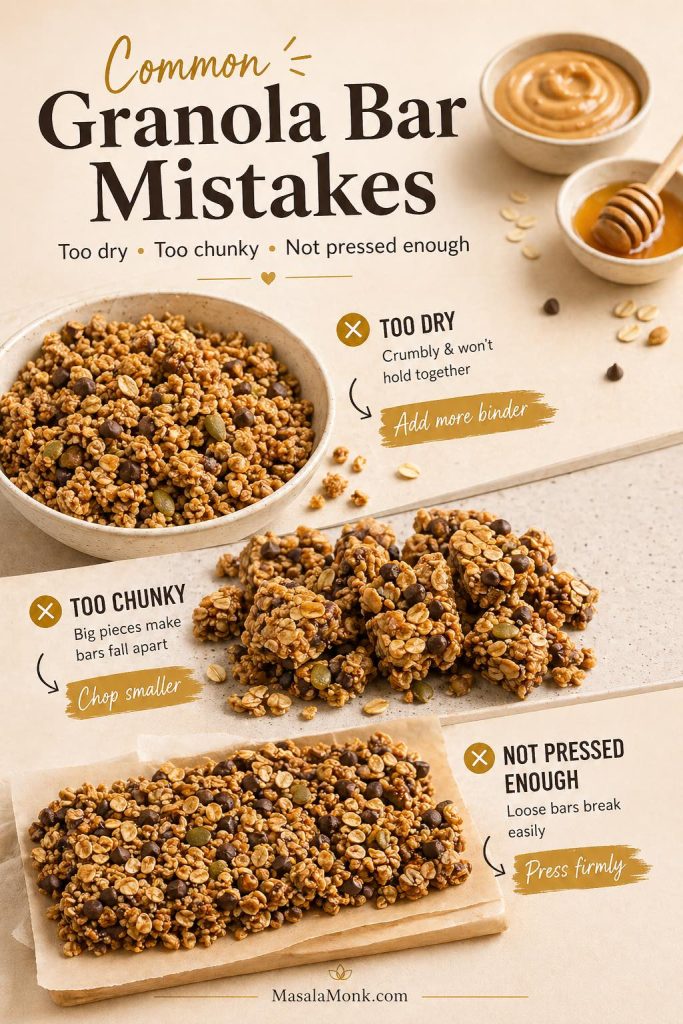
Common Mistakes When Making Homemade Granola Bars

Even a simple homemade granola bars recipe can fail when the mixture is too dry, too wet, too chunky, or not pressed firmly enough.

Common granola bar mistakes guide showing a dry mixture, chunky pieces, and a loose slab with fixes for each problem.
Most crumbly bars come from one of three issues: the mixture is too dry, the mix-ins are too large, or the slab was not pressed firmly enough. Fortunately, each problem is easy to fix before the next batch.
  • Avoid overloading the mix-ins. Too many nuts, seeds, dried fruit pieces, chocolate chips, or protein powder can overwhelm the binder.
  • Keep large chunks out of the mixture. Big almonds, dates, chocolate pieces, and granola clusters create weak spots.
  • Press harder than feels necessary. Otherwise, the mixture may stay loose instead of compacting into one slab.
  • Wait before slicing. No-bake granola bars need chilling time before they cut cleanly.
  • Keep some sticky sweetener in the recipe. Sweetener is part of the structure, not just the flavor.
  • Let protein bars rest before judging texture. Protein powder absorbs moisture as the mixture sits.

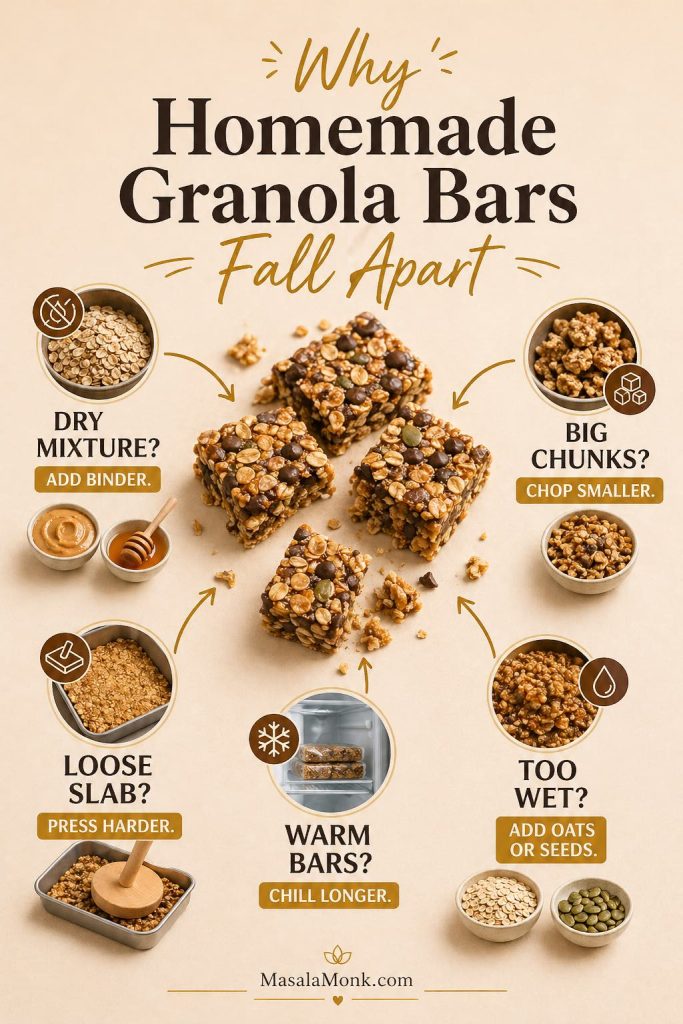
Why Homemade Granola Bars Fall Apart

If homemade granola bars fail, they usually fail here. The recipe may taste good, but the slab slices into crumbs. Fortunately, the fix is rarely complicated: use enough sticky binder, chop the mix-ins smaller, press harder than feels necessary, and chill the slab until it is genuinely firm.

Troubleshooting guide showing why homemade granola bars fall apart, including dry mixture, big chunks, loose slab, warm bars, and wet mixture fixes.
When homemade granola bars fall apart, do not guess blindly. Instead, check the texture: add binder if the mixture is dry, chop large chunks smaller, press harder, chill longer, or add oats and seeds if the mixture is too wet.

The Hand-Squeeze Test

Before pressing the mixture into the pan, squeeze a spoonful in your hand. A good mixture should hold together like a sticky cluster after a firm squeeze. When it falls apart immediately, add a little more nut butter, honey, date paste, or brown rice syrup. When it smears and feels wet, balance it with more oats, seeds, or ground flaxseed.

What to Adjust Before Pressing

Crumbly bars usually need more sticky binder, even when the homemade granola mixture looks well mixed. That is why the hand-squeeze test is so useful before everything goes into the pan. Once the mixture clumps in your hand, press it firmly into the pan instead of adding more dry mix-ins.

Clean Slicing Cues

Before slicing, press the center of the slab gently. A firm center means the bars are ready to cut. Deep dents mean they need more chilling time. Smearing on the knife usually means the bars are too warm or too wet, while sharp cracking can mean the mixture is too dry or too cold.

Quick Troubleshooting Guide

Problem Most Likely Cause Best Fix
Crumbles when sliced Not enough sticky binder Add 1 to 2 tablespoons more nut butter, honey, date paste, or brown rice syrup next time.
Breaks around nuts or fruit Mix-ins are too large Chop nuts and dried fruit smaller before mixing.
Falls apart after chilling Mixture was not pressed firmly enough Cover with parchment and press hard with a measuring cup before chilling.
Sticky and messy texture Too much wet binder or not enough dry structure Add more oats, seeds, shredded coconut, or ground flaxseed.
Too hard after setting Binder was cooked too long or too much syrup was used Warm only until smooth for chewy no-bake bars. Avoid over-boiling.
Softens in a lunchbox No-bake bars are warmer than ideal Pack with an ice pack, use brown rice syrup, or make the firmer cooked-binder version.
Chocolate melts into the mixture Binder was too hot when chips were added Cool the mixture for a few minutes, then add mini chocolate chips.
Slab cracks when cut Mixture is too dry or too cold Let it sit for 5 minutes before slicing, and add slightly more binder next time.
Knife smears through the bars Bars are too warm or too wet Chill longer, then slice with a sharp knife. Add more oats next time if needed.

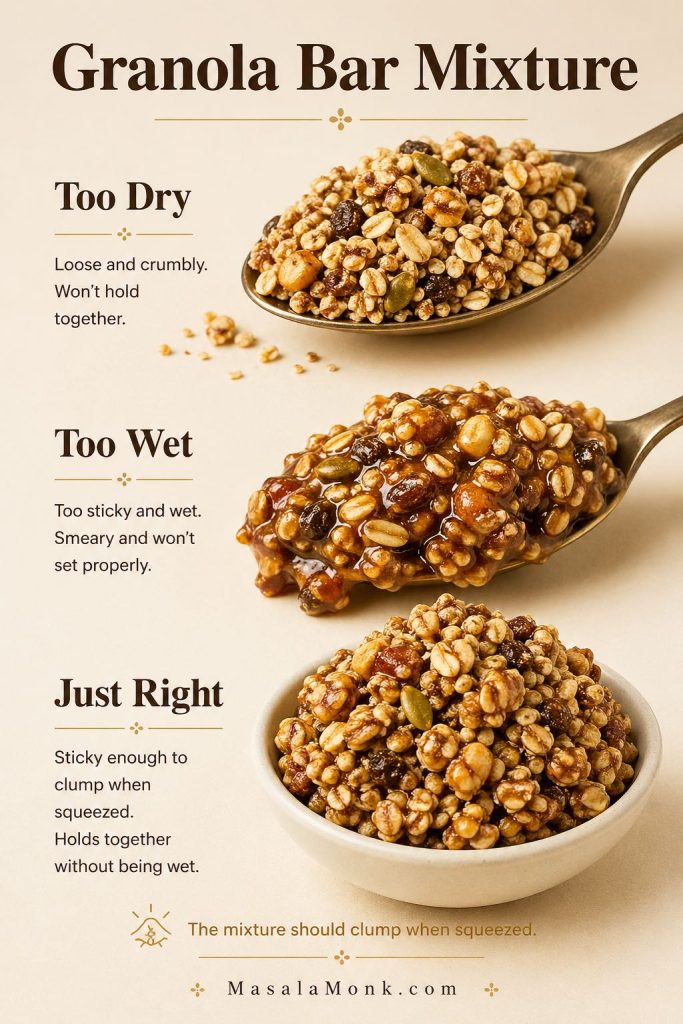
Granola Bar Mixture: Too Dry, Too Wet, or Just Right

Texture guide showing granola bar mixture that is too dry, too wet, and just right, with the note that the mixture should clump when squeezed.
Before you ever press the mixture into the pan, texture tells you whether the bars are likely to work. The mixture should look cohesive and slightly sticky, and it should clump when squeezed instead of scattering or smearing.
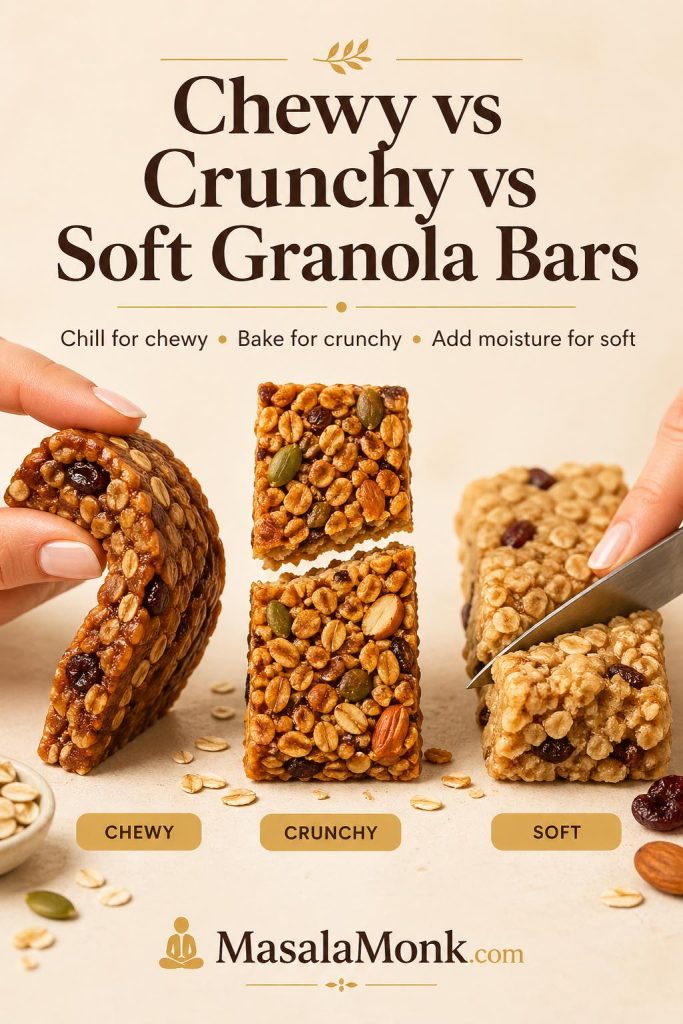
Chewy vs Crunchy vs Soft Granola Bars

This homemade recipe can make chewy, crunchy, or soft granola bars depending on how you handle the binder, oats, baking, and chilling.

Comparison image showing chewy, crunchy, and soft granola bars, with notes that chilling makes chewy bars, baking makes crunchy bars, and added moisture makes soft bars.
Texture changes the whole experience of a homemade granola bar. For example, chilling helps create a chewier bite, baking makes bars crisper, and a slightly moister mix gives you a softer, more tender bar.
Texture How to Get It Best For
Chewy no-bake bars Use nut butter + sticky sweetener, press firmly, and chill. Classic homemade granola bars, lunchbox snacks, freezer snacks.
Crunchy granola bars Toast the oats and nuts first, use slightly less wet binder, then bake briefly and cool fully. People who prefer crisp edges and toasted flavor.
Soft breakfast oat bars Add mashed banana, applesauce, yogurt, egg, or flax egg and bake like oatmeal bars. Breakfast, toddlers, softer snack bars, meal prep.
Firm travel bars Use brown rice syrup or a short cooked honey binder and keep mix-ins small. Road trips, office snacks, gym bags, warmer weather.

For Chewy Granola Bars

Use the main no-bake recipe. Keep the oats mostly whole, use creamy nut butter, choose a sticky sweetener, and chill fully. Chewy bars are the best first version because they are easy, flexible, and forgiving.

For Crunchy Granola Bars

For crunchy granola bars, toast the oats, nuts, and seeds at 325°F / 165°C until fragrant, then use slightly less wet binder than the chewy no-bake version. Press the mixture firmly into a parchment-lined pan and bake at 300°F / 150°C for 15 to 20 minutes, until the edges look lightly golden. Let the slab cool completely before slicing. If you cut while warm, the bars may bend or crumble instead of snapping cleanly.

Extra crispness comes from replacing 1/2 to 1 cup of the oats with puffed rice cereal, crisp rice cereal, or crisp oat cereal. Brown rice syrup gives a firmer bite than maple syrup because it is thicker and stickier.

For Soft Breakfast Oat Bars

Use more moisture and a baking method. Add mashed banana, applesauce, yogurt, or a flax egg to the oats. The result will be closer to oatmeal breakfast bars than classic granola bars. If you want a spoonable make-ahead breakfast instead of a sliced bar, MasalaMonk’s high protein overnight oats are a better fit.

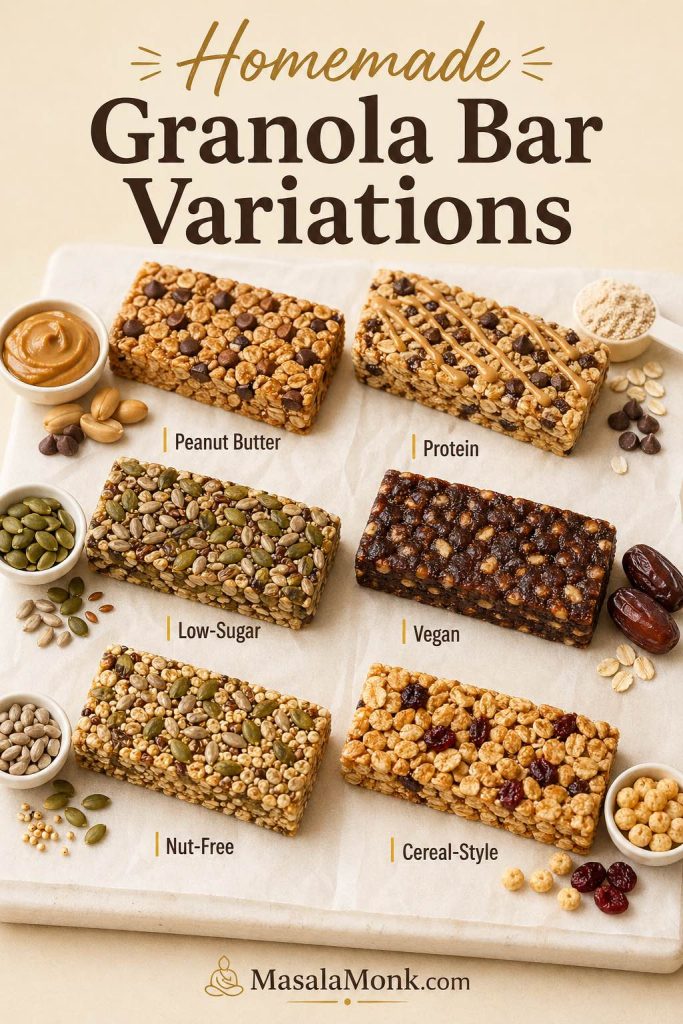
Recipe Variations for Homemade Granola Bars

Once the basic healthy homemade granola bars recipe works, the variations become much easier. Keep the oat-binder balance in mind, and change one or two things at a time.

Guide showing six homemade granola bar variations: peanut butter, protein, low-sugar, vegan, nut-free, and cereal-style.
Once the base recipe works, it becomes much easier to branch out. From peanut butter and protein bars to lower-sugar, nut-free, and cereal-style versions, these variations help readers adapt homemade granola bars to different needs.

Peanut Butter Granola Bars

Peanut butter is the easiest flavor to start with because it binds well, tastes familiar, and makes the bars feel richer without extra steps. Use creamy peanut butter with honey, then add mini chocolate chips, chopped roasted peanuts, or a pinch of cinnamon. If your peanut butter is very thick, warm it gently before mixing so it coats the oats instead of clumping.

To make the peanut flavor stronger, use roasted peanut butter and add chopped peanuts as part of the mix-ins. A softer bar needs finely chopped peanuts and slightly more peanut butter. When the bars need to hold up better in a lunchbox, choose honey or brown rice syrup rather than maple syrup.

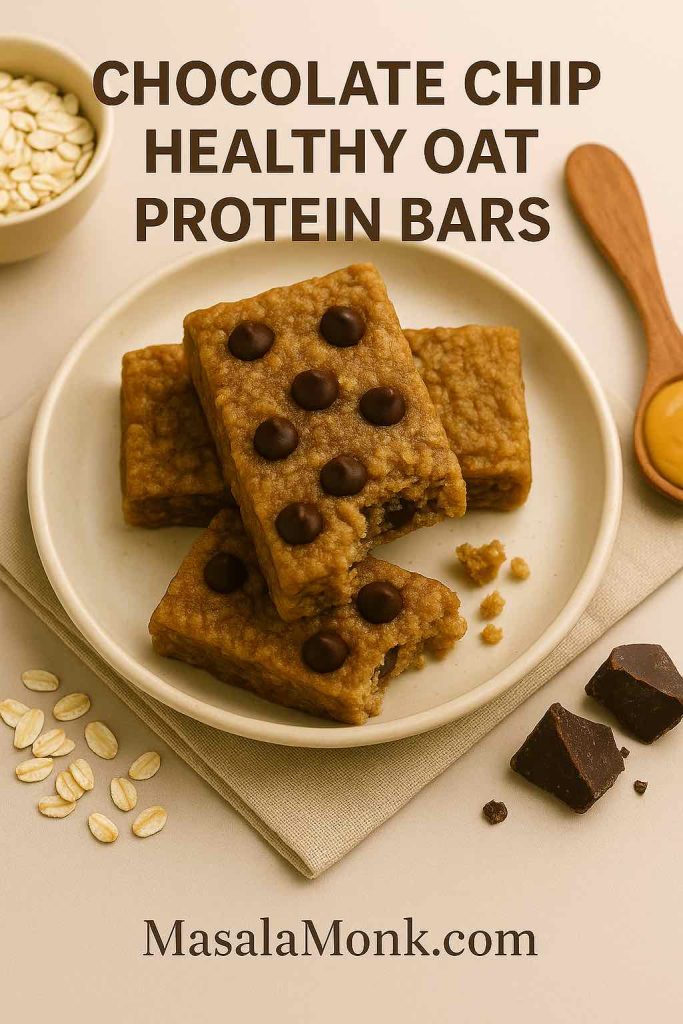
Chocolate Chip Granola Bars

Mini chocolate chips are better than large chips because they spread evenly through the bars and do not create big gaps. Let the oat mixture cool for a few minutes before adding them. If you add chocolate while the binder is very hot, the chips will melt into the mixture instead of staying visible.

For a more chocolate-forward bar, stir 1 tablespoon cocoa powder into the warm binder before adding the oats. For a less sweet version, use cacao nibs or chopped dark chocolate instead of regular chocolate chips.

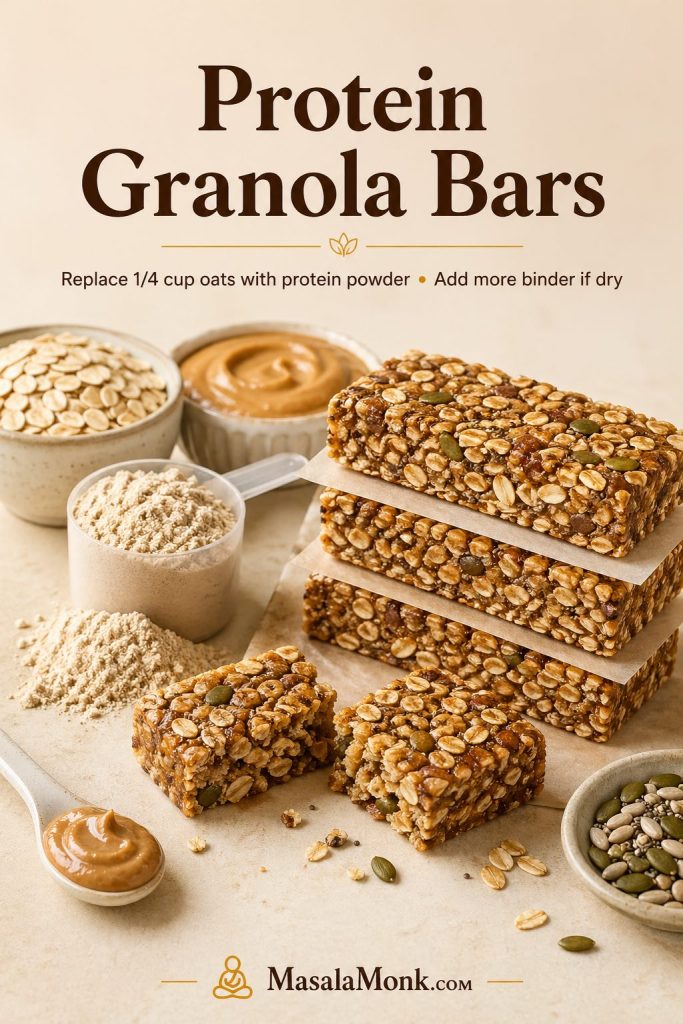
Protein Granola Bars

Protein granola bars need a little more care because protein powder absorbs moisture. Start by replacing 1/4 cup oats with protein powder. Then, mix the bars and check the texture before pressing. If the mixture feels dry, add 1 to 2 tablespoons more nut butter or a small splash of milk.

Protein granola bars shown with oats, protein powder, nut butter, seeds, and stacked finished bars.
Protein granola bars usually work best when only part of the oats is replaced. In other words, add enough protein powder to boost nutrition, but keep enough binder so the bars stay chewy instead of dry and crumbly.

Whey protein usually blends more smoothly, while many plant protein powders make the mixture thicker and drier. Do not expect a homemade protein granola bar to feel exactly like a store-bought protein bar. The best homemade version should still taste like oats, nut butter, and real mix-ins, with extra protein added carefully.

For a simple protein version, use 2 cups oats, 1/4 cup protein powder, 3/4 cup peanut butter or almond butter, 1/2 cup honey or brown rice syrup, 1/3 cup seeds, and 1/3 cup mini chocolate chips. If the mixture feels stiff before pressing, add 1 tablespoon milk or extra nut butter at a time until it clumps when squeezed.

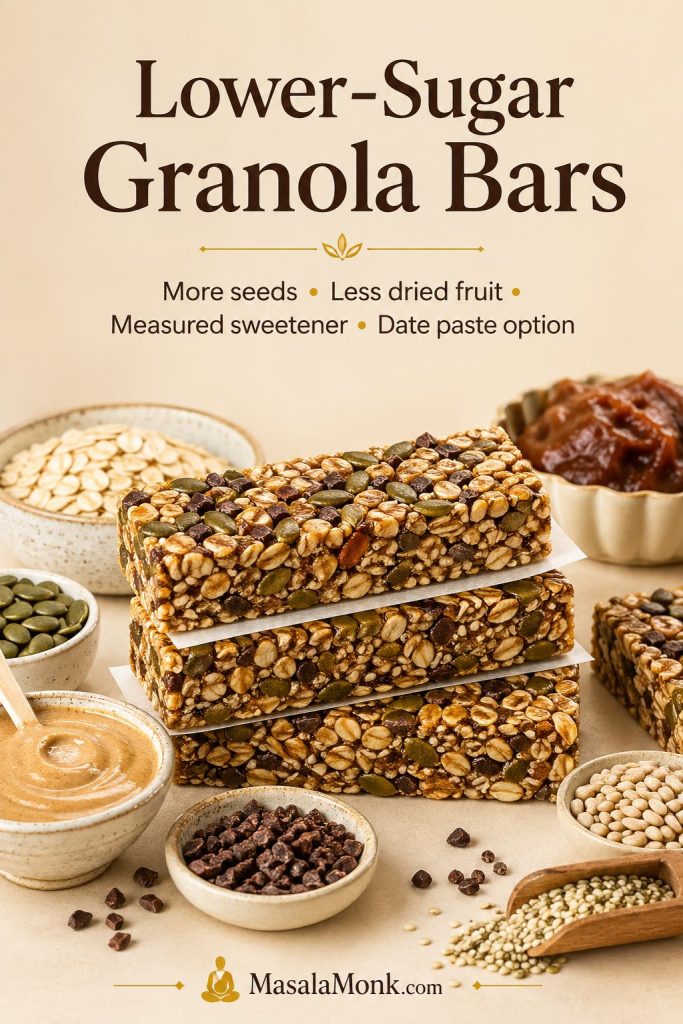
Low-Sugar Granola Bars

For lower-sugar granola bars, the goal is not to remove every sweet ingredient. Instead, keep the sticky binder measured, use fewer dried fruits and chocolate chips, and build more of the texture from oats, seeds, nuts, coconut, cacao nibs, or chopped dark chocolate.

Lower-sugar granola bars made with oats, seeds, measured sweetener, nut butter, and a date paste option.
Lower-sugar granola bars do not need to taste flat. Instead, leaning on seeds, oats, nut or seed butter, and carefully measured sweetener helps keep the bars satisfying while cutting back on overall sweetness.

For a lower-sugar batch, use more seeds and nuts, reduce dried fruit and chocolate, and keep the sticky binder measured. If you want a no-refined-sugar version, use date paste. For flavor without extra syrup, try cinnamon, vanilla, cocoa, orange zest, toasted coconut, or a small pinch of salt.

EatingWell’s dietitian guidance on granola bars recommends looking at added sugar, fiber, protein, whole grains, and recognizable whole-food ingredients when deciding whether a granola bar is a healthy choice. Read their granola bar health guide here.

Gluten-Free Granola Bars

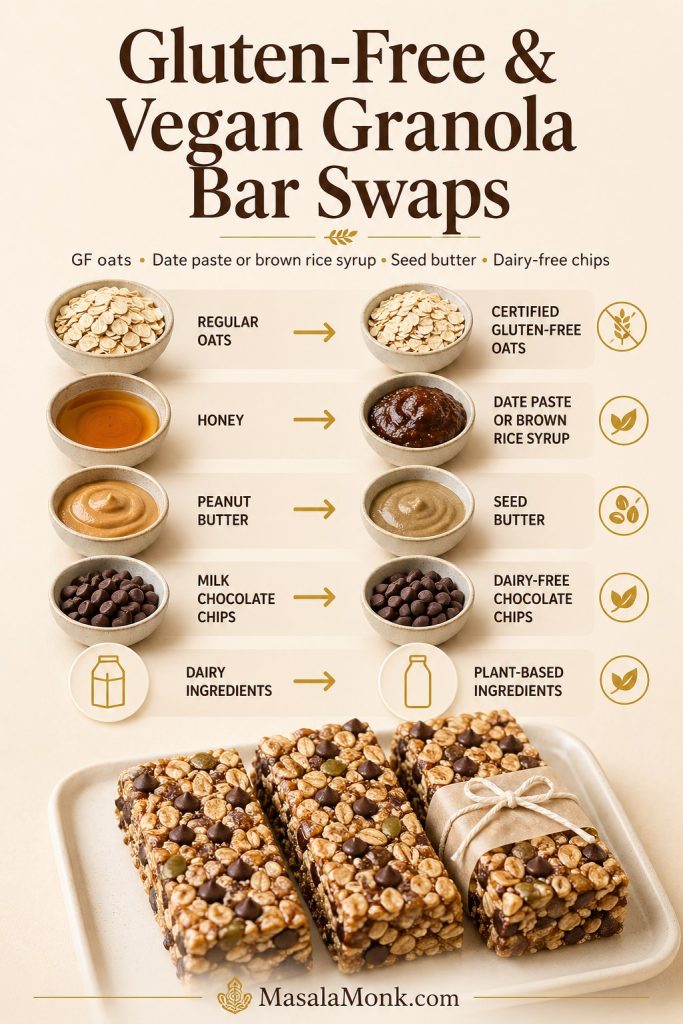
For gluten-free granola bars, start with certified gluten-free oats and then check the smaller ingredients too, especially chocolate chips, protein powder, cereal-style mix-ins, and flavorings. As long as the oats and add-ins are gluten-free, the base recipe can be gluten-free too.

Gluten-Free and Vegan Granola Bar Swaps

Swap guide for gluten-free and vegan granola bars showing regular oats changed to certified gluten-free oats, honey to date paste or brown rice syrup, peanut butter to seed butter, and milk chocolate chips to dairy-free chips.
If you need gluten-free or vegan granola bars, the easiest approach is to swap one ingredient at a time. Certified gluten-free oats, plant-based binders, seed butter, and dairy-free chocolate chips usually get you close to the original texture without rebuilding the whole recipe.

Vegan Granola Bars

For vegan granola bars, choose brown rice syrup, date paste, or maple syrup instead of honey. Brown rice syrup gives the firmest result, while date paste adds softer caramel-like sweetness. Also check that your chocolate chips are dairy-free if needed.

Nut-Free Granola Bars

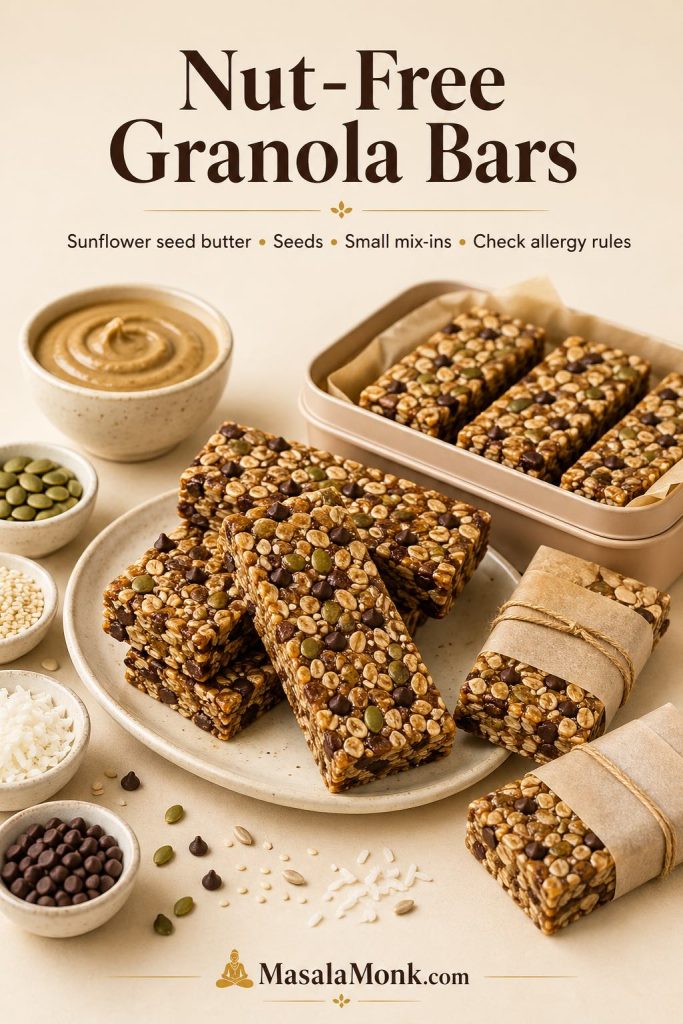
For nut-free granola bars, start with sunflower seed butter, pumpkin seed butter, or tahini instead of nut butter. Then, replace nuts with pumpkin seeds, sunflower seeds, sesame seeds, chia seeds, flaxseed, dried fruit, coconut, or chocolate chips. This can be useful for lunchboxes, depending on allergy rules where the bars will be eaten.

Nut-free granola bars made with seed butter, seeds, small mix-ins, and packed bars for storage or lunchboxes.
Nut-free granola bars can still be rich, sturdy, and flavorful. For best texture, use seed butter, keep the mix-ins fairly small, and check school or allergy rules if the bars are meant for lunchboxes or sharing.

Sunflower seed butter is one of the easiest nut-free binders, and sunflower seeds also work well as crunchy mix-ins. For the best texture, keep the seeds small, use a sticky binder, and press the mixture firmly before chilling.

Muesli-Style Granola Bars

For muesli-style bars, use oats, chopped almonds, pumpkin seeds, sunflower seeds, raisins, dried cranberries, chopped dates, and a little coconut. Because fruit-and-nut bars can become chunky, keep everything chopped small and press the mixture especially firmly.

Breakfast Granola Bars

For breakfast bars, keep the chocolate light and build the flavor around oats, seeds, nut butter, cinnamon, dried fruit, and maybe protein powder. If you want something softer and more filling, use the soft oat bar variation with mashed banana or applesauce.

Date Granola Bars

Blend soft dates with a splash of warm water to make a thick date paste, then use it as part or all of the sticky sweetener. Date paste gives the bars caramel-like sweetness and helps avoid refined sugar. Even so, dates are still sweet, so balance them with salt, seeds, and unsweetened nut butter.

No-Peanut-Butter Granola Bars

If you do not want peanut butter, use almond butter, cashew butter, sunflower seed butter, tahini, or pumpkin seed butter. Almond butter gives a mild flavor, cashew butter makes the bars softer and creamier, sunflower seed butter works well for nut-free bars, and tahini gives a slightly earthy flavor that pairs well with honey, sesame, dates, and dark chocolate.

Cereal Bar Variation

For a lighter, crispier cereal bar, replace 1 cup of the oats with puffed rice cereal, toasted oat cereal, or another crisp breakfast cereal. Keep the binder sticky, because cereal is lighter than oats and can fall apart if the mixture is too dry. For chocolate chip cereal bars, use mini chocolate chips and press the mixture especially firmly before chilling.

For a stronger cereal-bar texture, use half oats and half crisp cereal. However, if you want the bars to taste more like classic granola bars, keep more oats than cereal.

No-Bake Oat Bars

If you want softer no-bake oat bars instead of classic granola bars, use quick oats for part of the oats and add a softer ingredient such as mashed banana, applesauce, or date paste. The bars will be less crisp and less granola-like, but they will feel more like breakfast bars. This is a good direction for kids, softer snacks, and make-ahead breakfasts.

For a simple no-bake oatmeal bar, use 1 cup rolled oats, 1 cup quick oats, 3/4 cup peanut butter or sunflower seed butter, 1/2 cup date paste or honey, and 1/2 cup small mix-ins. Press firmly and chill before slicing.

Healthy Granola Flapjack Variation

If you know flapjacks as baked oat bars, this recipe can move in that direction too. Use the crunchy baked variation, press the mixture into a lined tin, and bake until the edges look lightly golden. Traditional flapjacks are usually richer and sweeter because they often use butter, sugar, and syrup. This version stays closer to a healthy granola bar because it uses oats, nut or seed butter, measured sweetener, seeds, and dried fruit.

For a more flapjack-like texture, use slightly more binder and bake the slab until it looks set at the edges but still a little soft in the center. Let it cool completely before slicing, because baked oat bars firm up as they rest.

Best Mix-Ins for Homemade Granola Bars

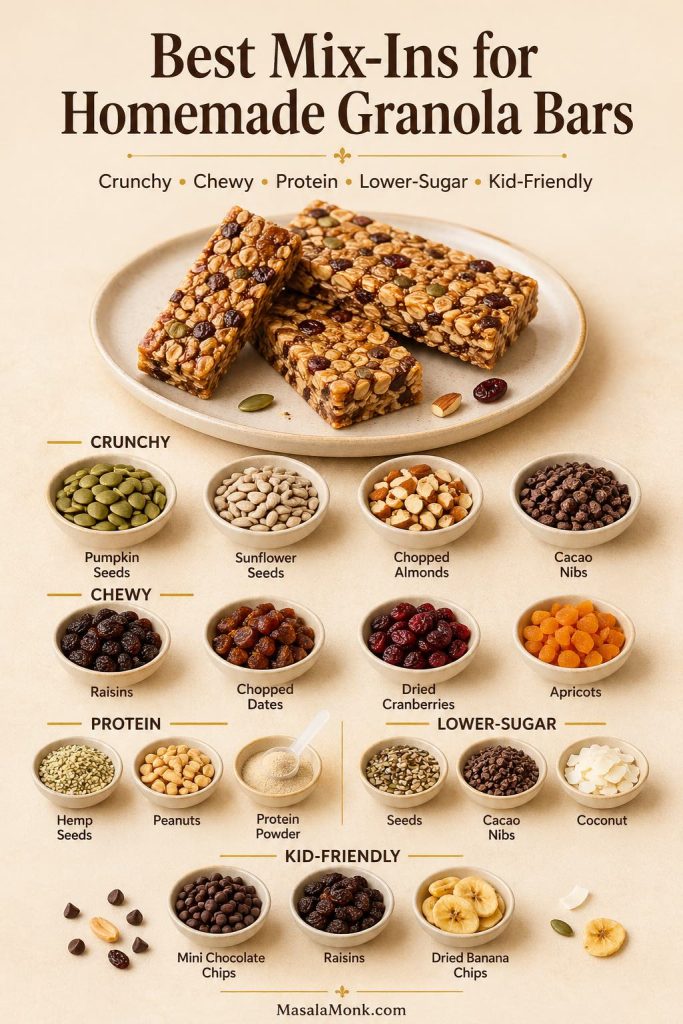
The best mix-ins depend on what you want from the bar. Crunchy batches work well with pumpkin seeds, sunflower seeds, sesame seeds, chopped almonds, cacao nibs, or toasted coconut. Chewier batches are better with raisins, chopped dates, dried cranberries, dried apricots, figs, or dried blueberries.

Guide image showing the best mix-ins for homemade granola bars, grouped by crunchy, chewy, protein, lower-sugar, and kid-friendly options, including pumpkin seeds, sunflower seeds, chopped almonds, cacao nibs, raisins, chopped dates, dried cranberries, apricots, hemp seeds, peanuts, protein powder, coconut, mini chocolate chips, and dried banana chips.
The best mix-ins do more than add flavor. They also shape the texture, sweetness, chew, and nutrition of your homemade granola bars, so choosing them with a purpose helps the bars taste better and hold together more reliably.

To add more protein, use hemp seeds, pumpkin seeds, peanuts, almonds, protein powder, or extra peanut butter. Meanwhile, kid-friendly bars work best when the flavor stays familiar, so try peanut butter, mini chocolate chips, cinnamon, vanilla, raisins, or dried banana chips. If you want a lower-sugar feel, lean on seeds, nuts, unsweetened coconut, cinnamon, cacao nibs, or chopped dark chocolate instead of large amounts of dried fruit.

Whatever you add, keep the pieces small. Although that sounds like a minor detail, small mix-ins make a huge difference. They help the slab compress tightly and slice cleanly.

How to Store and Freeze Homemade Granola Bars

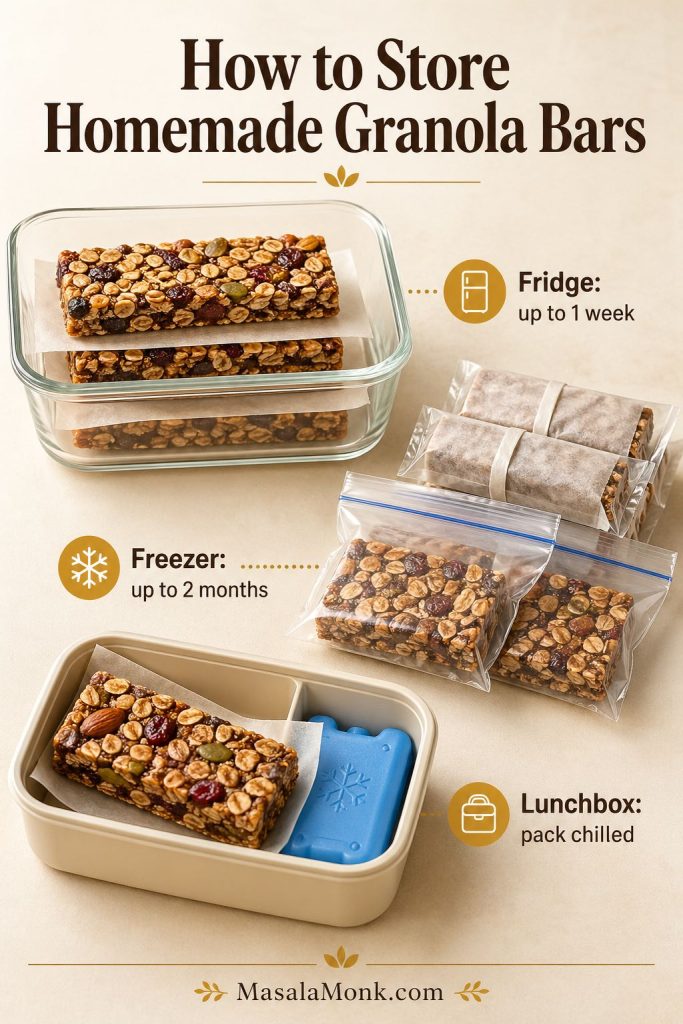
No-bake homemade granola bars are firmest when stored cold. Once sliced, place parchment between layers so the bars do not stick together. Therefore, if your kitchen is warm, the fridge is the safest place for clean, chewy bars.

Storage guide for homemade granola bars showing fridge storage for up to 1 week, freezer storage for up to 2 months, and packing chilled bars for lunchboxes.
Homemade granola bars usually keep best when chilled and stored with a little separation between layers. Refrigeration helps preserve texture for the week, while freezing is the better option if you want to make a larger batch ahead.

For lunchboxes, this recipe makes homemade granola bars that slice more cleanly when chilled first. If the room is warm, pack them with an ice pack or use the firmer binder variation.

Fridge-firm vs lunchbox-firm: Most no-bake granola bars are best from the fridge. If you need bars that hold up longer at room temperature, use brown rice syrup or a short-cooked honey binder, keep mix-ins small, press very firmly, and chill before packing.

Make-Ahead Plan

For weekly meal prep, make the bars the night before you need them. Chill the whole slab overnight, then slice in the morning. After that, wrap individual bars in parchment and store them in an airtight container in the fridge or freezer. This gives the cleanest slices and the firmest texture.

Storage Method How Long Best For
Room temperature 1 to 2 days, only if firm enough Short-term snacking, cool kitchens, firmer cooked-binder bars.
Refrigerator Up to 1 week Best texture for chewy no-bake bars.
Freezer Up to 2 months Meal prep, lunchbox planning, batch cooking.
Lunchbox Same day Pack with parchment. Use an ice pack if the weather is warm.

To freeze, wrap bars individually or layer them with parchment in an airtight container. Thaw in the fridge or let a frozen bar sit at room temperature for a few minutes before eating. Frozen bars are especially useful in hot weather because they soften gradually instead of falling apart immediately.

As with any homemade snack, store the bars in a clean airtight container and discard them if they smell off, look moldy, or become unusually wet or sticky during storage.

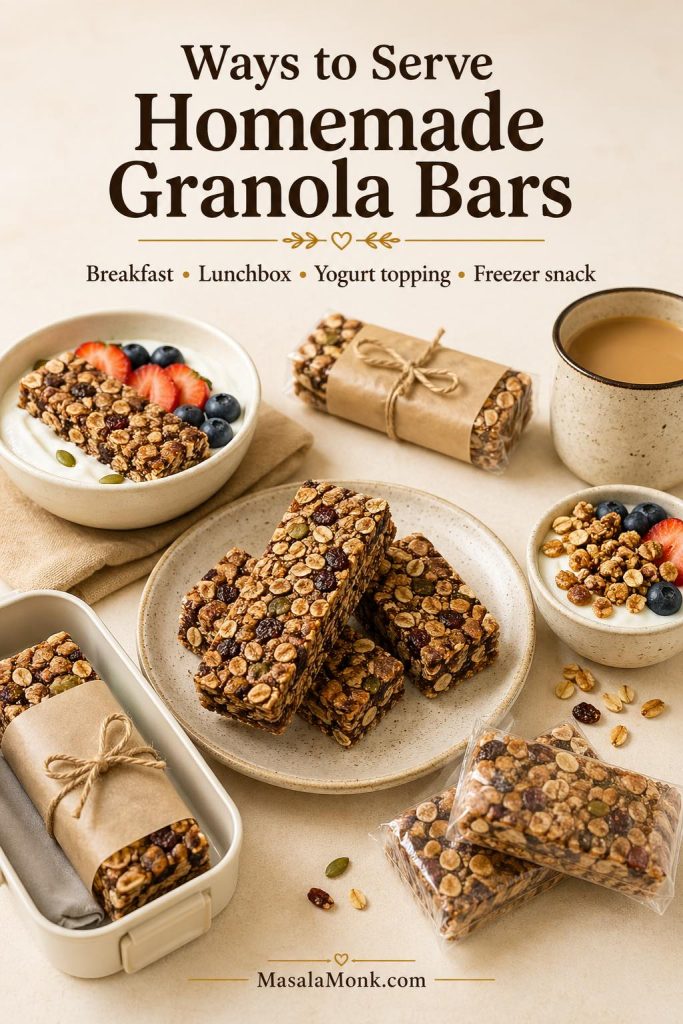
How to Serve Homemade Granola Bars

Homemade granola bars are useful at several points in the day. For example, you can serve one with tea or coffee, pack one in a lunchbox, crumble one over yogurt, eat one before a workout, or keep a few in the freezer for rushed mornings.

Serving ideas for homemade granola bars, including breakfast with yogurt and fruit, lunchbox packing, yogurt topping, and freezer snack use.
Homemade granola bars are more versatile than just grab-and-go snacks. They can double as breakfast with yogurt and fruit, work well in lunchboxes, and even be broken up as a topping when you want a little crunch.

For a more complete breakfast, pair a bar with fruit, yogurt, eggs, cottage cheese, paneer, milk, or a smoothie. The bar gives you oats and energy; the extra protein or fruit makes the meal feel more complete.

FAQs About Healthy Homemade Granola Bars

Why do homemade granola bars fall apart?

Homemade granola bars usually fall apart because they do not have enough sticky binder, the mix-ins are too large, the mixture was not pressed firmly enough, or the bars were sliced before chilling. Use enough nut butter and sticky sweetener, chop large nuts and dried fruit, press hard, and chill fully.

What is the best binder for homemade granola bars?

A combination of creamy nut butter and honey is the easiest binder for chewy granola bars. Brown rice syrup is even stickier and works well for firm or vegan bars. Date paste is useful for no-refined-sugar bars. Maple syrup tastes good, but it is thinner and usually needs extra support from nut butter, flaxseed, or longer chilling.

Can I make granola bars without peanut butter?

Absolutely. Almond butter, cashew butter, sunflower seed butter, pumpkin seed butter, and tahini can all work. For a nut-free version, sunflower seed butter and tahini are usually the easiest swaps.
Can I use quick oats instead of rolled oats?

You can, although the texture will be softer and less defined. Rolled oats give a chewier, more classic granola bar texture, while quick oats make the bars more compact and softer for kids.

Can I use maple syrup instead of honey?

You can, but maple syrup is usually less sticky than honey or brown rice syrup. If you use maple syrup, add extra nut butter, ground flaxseed, or date paste to help the bars hold together. Chill the bars longer before slicing.

How do I make vegan granola bars?

For vegan granola bars, choose brown rice syrup, date paste, or maple syrup instead of honey. Brown rice syrup gives the firmest result, while date paste adds softer caramel-like sweetness. Also check that your chocolate chips are dairy-free if needed.

How do I make gluten-free granola bars?

Start with certified gluten-free oats, then check the labels on your chocolate chips, protein powder, cereal mix-ins, and flavorings. As long as the oats and add-ins are gluten-free, the base recipe can be gluten-free too.

How do I make nut-free granola bars?

Start with sunflower seed butter, pumpkin seed butter, or tahini instead of nut butter. Then, replace nuts with pumpkin seeds, sunflower seeds, sesame seeds, coconut, dried fruit, or chocolate chips. Depending on allergy rules where the bars will be eaten, this can be a useful lunchbox direction.

Can I add protein powder to granola bars?

Yes, but start small. Replace 1/4 cup oats with protein powder. If the mixture becomes dry or chalky, add more nut butter or a splash of milk. Plant protein powders usually absorb more moisture than whey protein.
How do I make crunchy or crispy granola bars?

Toast the oats, nuts, and seeds first, then press the mixture into a pan and bake it briefly at a low temperature. Let the slab cool completely before slicing. For a lighter crisp texture, replace part of the oats with puffed rice cereal or crisp rice cereal.

How long do homemade granola bars last?

Chewy no-bake granola bars keep best in the fridge for about 1 week. They can be frozen for up to 2 months. At room temperature, they are best eaten within a day or two unless you make a firmer cooked-binder version.

Can I freeze homemade granola bars?

Freezing works well. First, wrap bars individually or layer them with parchment in an airtight container. After that, freeze them for up to 2 months. To serve, thaw in the fridge or let a frozen bar sit at room temperature for a few minutes before eating.

Are homemade granola bars good for breakfast?

They can be, especially if they include oats, nut or seed butter, seeds, and a moderate amount of sweetener. To make breakfast more complete, pair a granola bar with fruit, yogurt, milk, eggs, cottage cheese, paneer, or another protein source.

What is the difference between granola bars and oat bars?

Granola bars are usually chewy or crunchy snack bars made with oats, nuts, seeds, dried fruit, and a sticky binder. Oat bars can be softer and more breakfast-like, especially when made with banana, applesauce, yogurt, or a baked oatmeal-style base.

Can I make granola bars with dates instead of honey?

Yes. Blend soft dates with a small amount of warm water to make a thick paste, then use it as the sticky sweetener. Date paste gives the bars a caramel-like flavor and helps avoid refined sugar, but it still adds sweetness.

Can I make granola bars with ready-made granola?

Prepared granola can work well. As a starting point, use about 2 1/2 cups prepared granola, 1/2 cup creamy nut or seed butter, and 1/3 cup honey, brown rice syrup, or date paste. Since prepared granola is often already sweetened, start with less added sweetener than you would use for plain oats.

Are granola bars the same as flapjacks?

They overlap, especially in UK-style usage. A British flapjack is usually a baked oat bar made with oats, fat, sugar, and syrup, while granola bars are often made with oats, nuts, seeds, dried fruit, and a sticky binder. This recipe is closer to a healthy homemade granola bar, but the baked variation can work like a lighter flapjack-style oat bar.

Can I add crisp rice cereal or puffed rice to granola bars?

Yes. Replace 1/2 to 1 cup of the oats with crisp rice cereal, puffed rice, crisp oat cereal, or another light breakfast cereal. This makes the bars lighter and crispier. Because cereal is less dense than oats, keep the binder sticky and press the mixture firmly before chilling.

What is the best sweetener for granola bars that hold together?

Honey and brown rice syrup are the easiest sweeteners for granola bars that hold together. Brown rice syrup is especially sticky and works well for firm or vegan bars. Date paste is useful for no-refined-sugar bars. Maple syrup tastes good, but it is thinner and usually needs extra nut butter, flaxseed, or longer chilling.

If you try this healthy homemade granola bars recipe, leave a comment with the binder, sweetener, and mix-ins you used. That helps other readers choose their own chewy, crunchy, protein, nut-free, or low-sugar version.

Back to top

Posted on 8 Comments

Oat Pancakes Recipe (Healthy Oatmeal Pancakes)

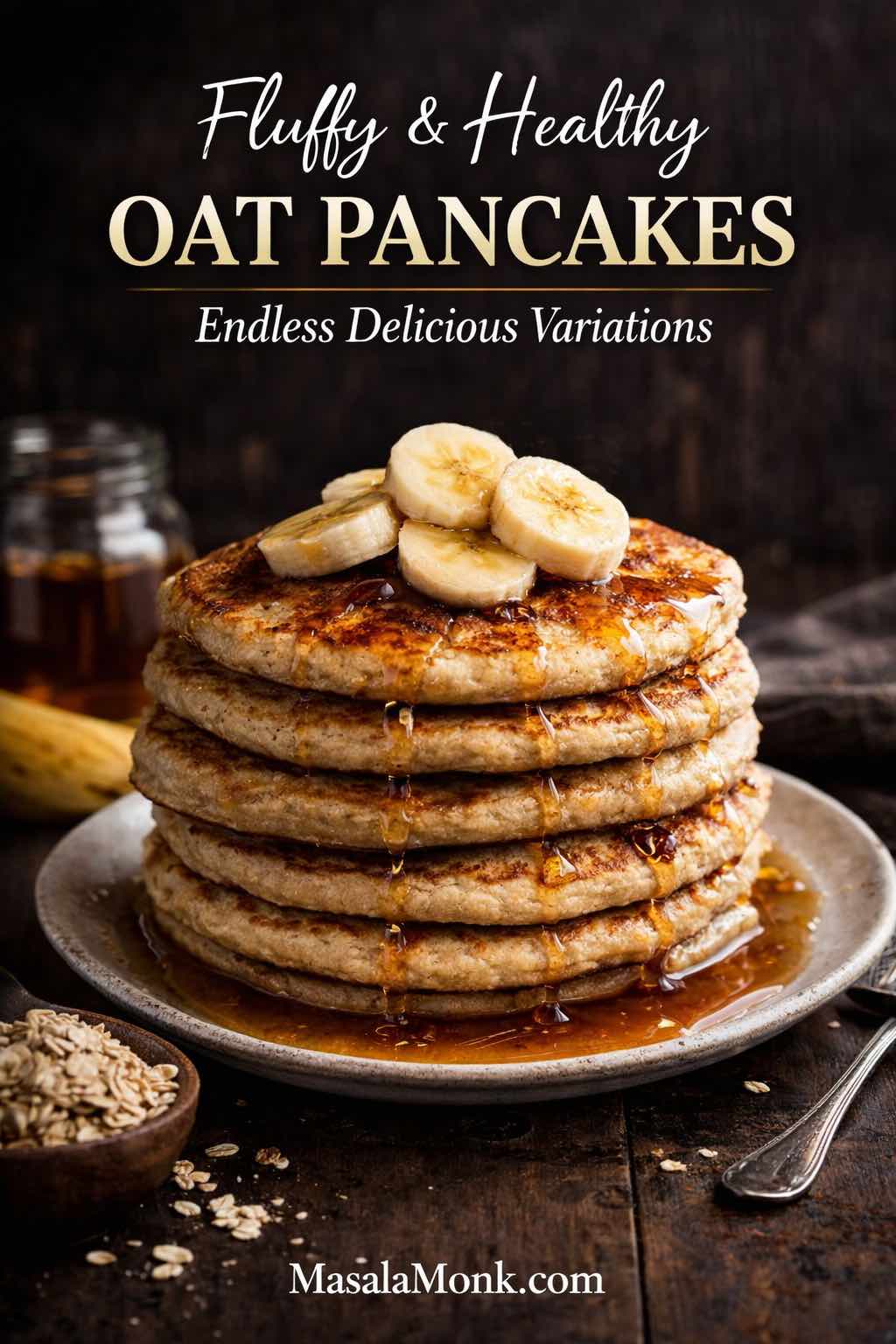
Photo-realistic magazine-style cover of fluffy oat pancakes topped with banana slices and maple syrup on a dark rustic table.

There are breakfasts that feel like a rush job, and then there are breakfasts that feel like a small reset. Pancakes fall firmly into the second category. Even when you’re short on time, there’s something about that first warm pancake hitting the plate that makes the day feel a little more manageable. Oat pancakes live in that same comforting space, with an extra bonus: they’re easy to adapt.

You can make them with rolled oats you already have, quick oats when you’re in a hurry, or a bag of oat flour when you want the smoothest crumb. From there, the batter can take you in all kinds of directions—banana oatmeal pancakes when you want natural sweetness, vegan oatmeal pancakes when you’re skipping eggs and dairy, applesauce oatmeal pancakes on a cozy morning, blueberry oat pancakes when you want something bright, or cottage cheese oat pancakes when you’d like extra tenderness and protein without reaching for powders.

What makes them special isn’t that they’re “better” than regular pancakes. It’s that pancakes from oatmeal give you flexibility. The oats bring a gentle nuttiness, a soft bite, and a kind of steady satisfaction that keeps you happy long after the last forkful.

If you’ve tried oat pancake recipes before and ended up with pancakes that felt gritty, gummy, or oddly flat, don’t worry—you’re not alone. With oats, a few small choices matter: what kind of oats you use, how fine you blend them, how long you let the batter sit, and how hot your pan is.

So let’s make a stack that actually feels worth it—fluffy, tender, and reliable—then we’ll play with variations that cover nearly every craving.


Start with the oats: what works best for pancakes from oatmeal

Oats aren’t one single ingredient. They’re the same grain in different forms, and those forms absorb liquid at different speeds. That’s why one pancake oat recipe can feel perfect with rolled oats, yet turn heavy with instant oats if you don’t adjust anything.

If you want a deeper primer on oat types, MasalaMonk has a straightforward overview here: Guide to Oats: Types, Nutrition, and Differences Explained. And if you’ve ever wondered why people use “oats” and “oatmeal” interchangeably, this clears it up: Oats vs Oatmeal: What’s the Difference?.

Here’s the practical breakdown for pancakes:

Rolled oats (old-fashioned oats)

Rolled oats are the most forgiving choice for a pancake recipe using oats. Blend them and you get a flour-like texture that cooks evenly and rises well. Leave them slightly coarser and you’ll get a heartier crumb that feels rustic—in a good way—so long as you give the batter time to hydrate.

If you’re ever unsure whether “rolled” and “old-fashioned” are truly interchangeable, MasalaMonk addresses that directly: Can You Substitute Old-Fashioned Oats for Rolled Oats?.

Quick oats

Quick oats hydrate faster because they’re thinner. That can be convenient when you want oat hotcakes recipe-style pancakes without much waiting. At the same time, quick oats can turn a batter thick very quickly, so you may need a splash more milk after resting.

If you keep mixing up quick oats and instant oats, MasalaMonk makes it clear: Are Quick Oats the Same as Instant Oats?.

Instant oats (plain)

Plain instant oats can work, but the texture tends to be softer and more uniform. If you like a very smooth pancake, that can be a plus. Flavored instant packets, on the other hand, usually bring added sugar and thickeners that can make the batter behave unpredictably, so they’re not ideal here.

Steel-cut oats

Steel-cut oats are wonderful in a bowl, yet they don’t really belong in pancakes from oatmeal unless they’re cooked first. Raw steel-cut pieces stay chewy in a way that fights the tender pancake bite.

If you want the full comparison, this is helpful: Steel Cut Oats vs Rolled Oats.


The base oat pancakes recipe you can build on

This is the batter I’d recommend starting with. It’s simple, it cooks evenly, and it’s designed to be remixed. You can make it as oat flour pancakes or as blended-oat pancakes, and it’s easy to turn into banana and oat pancakes, vegan oat pancakes, apple oat pancakes, or blueberry oatmeal pancake stacks.

Ingredients (8–10 medium pancakes)

  • 1 cup rolled oats or quick oats
    (or ¾ cup oat flour)
  • 1 cup milk (dairy or plant milk)
  • 1 large egg
  • 1½ teaspoons baking powder
  • ¼ teaspoon salt
  • 1 tablespoon oil or melted butter
  • 1 tablespoon sweetener (optional; adjust based on add-ins)
  • ½ teaspoon vanilla (optional)
  • ½ teaspoon cinnamon (optional)

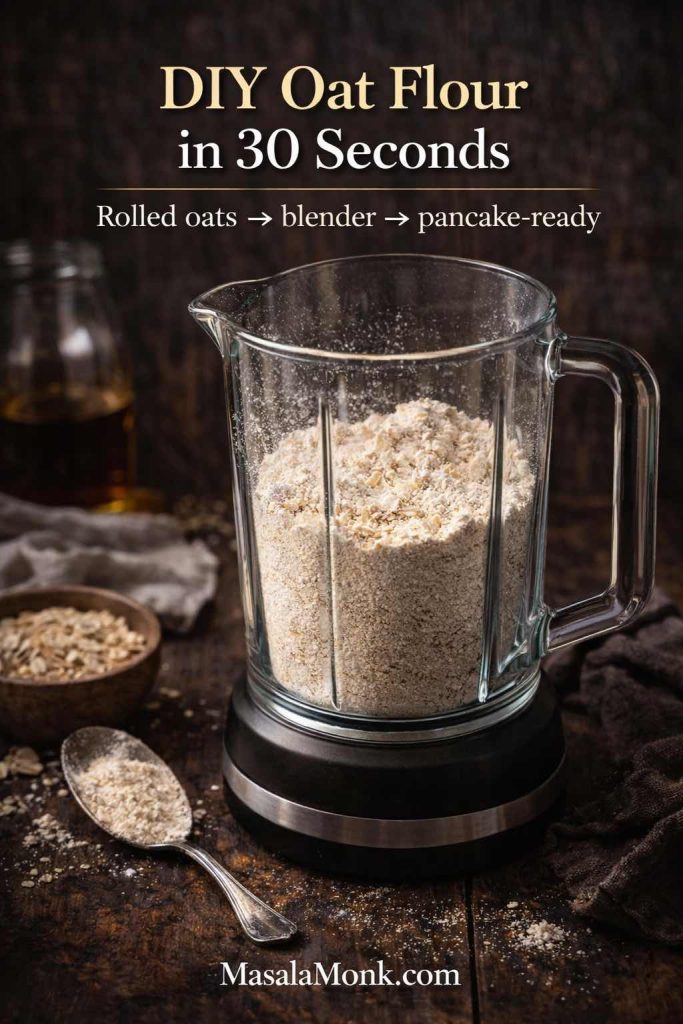
Step 1: Make your oat “flour” (if using oats)

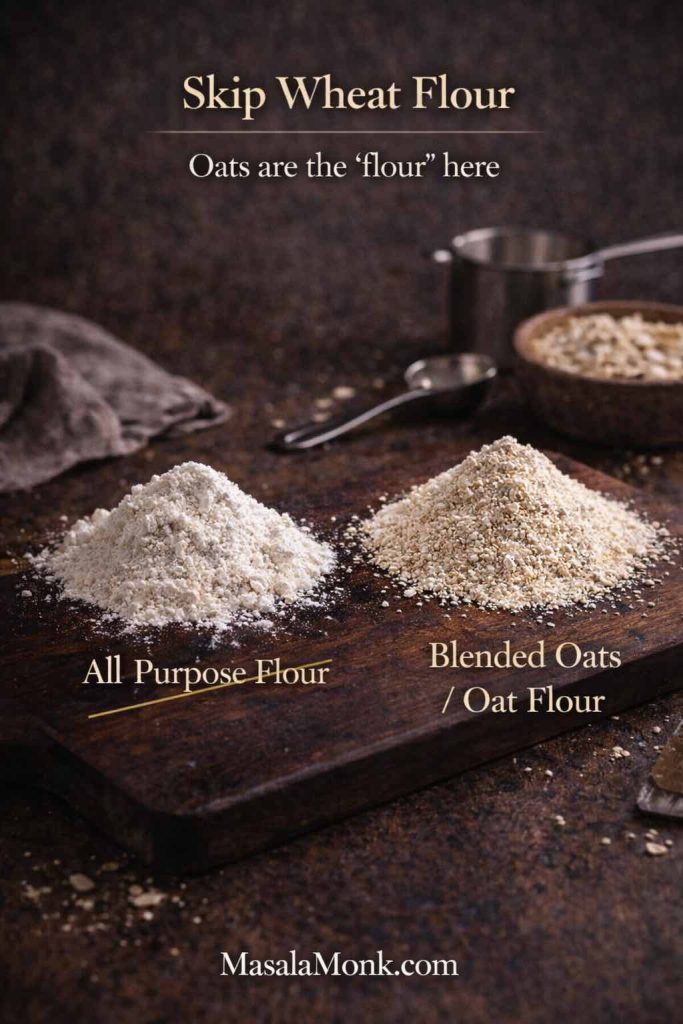
Add oats to a blender and pulse until they look like coarse flour. You’re not aiming for perfection; a little texture is fine. In fact, those tiny flecks can make the pancakes feel more tender.

If you’re using store-bought oat flour, skip this step and move on.

Blender jar filled with homemade oat flour made from rolled oats, styled on a dark tabletop with oats and a spoon, with text “DIY Oat Flour in 30 Seconds.”
Turn rolled oats into oat flour in seconds—this quick step gives oat flour pancakes a smoother, fluffier texture (and you can do it with any basic blender).

Step 2: Whisk the wet ingredients

In a bowl, whisk milk, egg, oil/butter, sweetener, and vanilla until smooth. This matters because it helps you mix less later.

Step 3: Add the dry ingredients and stir gently

Add your blended oat flour (or oat flour), baking powder, salt, and cinnamon. Stir just until you don’t see dry streaks.

A small note that changes everything: pancake batter doesn’t want aggressive mixing. If you overwork it, it can lose the lightness you want.

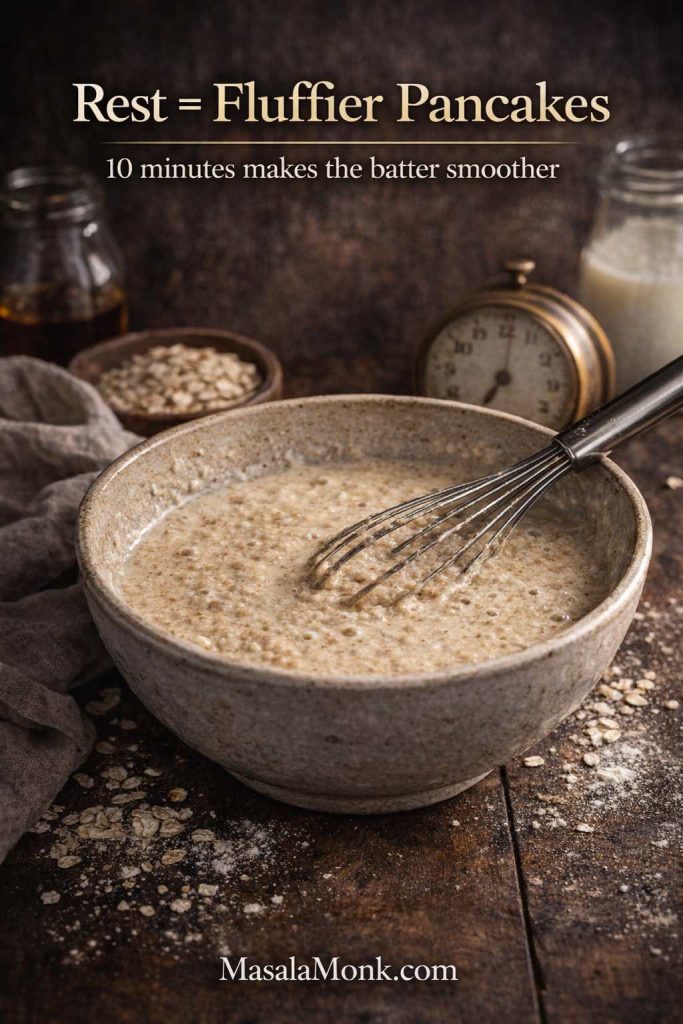
Step 4: Rest the batter (10–15 minutes)

Oats need time to hydrate. During the rest, the batter will thicken slightly and become more cohesive. As a result, the pancakes cook up fluffier and the texture feels smoother.

Bowl of oat pancake batter with a whisk resting in it on a rustic table, with a kitchen timer and oats in the background and text “Rest = Fluffier Pancakes.”
Letting oat pancake batter rest for about 10 minutes helps the oats hydrate, thickens the batter slightly, and leads to softer, fluffier pancakes.

If you’re curious about the “why” behind resting batter, Serious Eats has a good explainer on pancake technique and batter resting: Serious Eats pancake guidance.

Step 5: Cook on medium heat

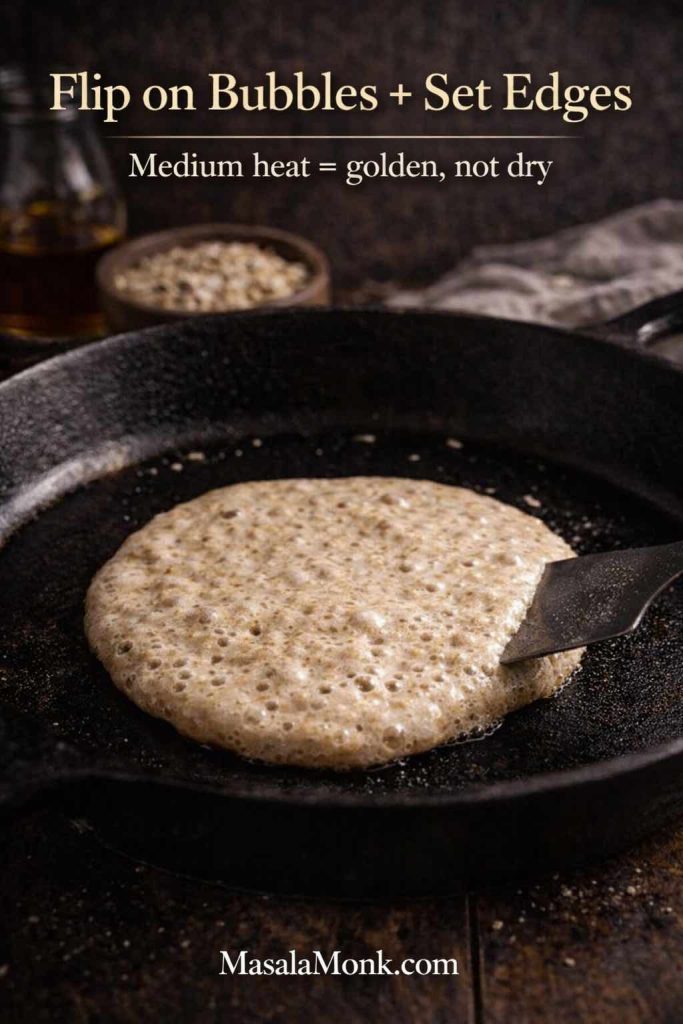
Warm a pan or griddle over medium heat. Grease lightly. Pour batter, cook until bubbles appear and the edges look set, flip, then cook the second side until golden.

Oat pancake cooking in a cast-iron skillet with bubbles on the surface and a spatula sliding underneath, with text “Flip on Bubbles + Set Edges.”
Wait for bubbles across the surface and edges that look set before flipping—medium heat helps oat pancakes brown evenly without drying out.

If your first pancake is pale and soft, the pan may be too cool. If it browns too fast while the center stays wet, the pan is too hot. Once you find the sweet spot, the rest of the batch becomes easy.

Also Read: Belgian Waffle Recipe + 5 Indian Twists on a Breakfast Classic


Oat flour pancake recipe: oatmeal flour pancakes with a smoother crumb

Sometimes you want the smoothest possible pancake—especially if you’re cooking for someone who doesn’t love “texture.” That’s when oat flour pancakes shine.

To make an oat flour pancake recipe with the base above:

  • use ¾ cup oat flour instead of blending oats
  • keep everything else the same
  • expect the batter to thicken a little faster

Because oat flour can absorb liquid quickly, the batter might look perfectly pourable when you mix it, then become noticeably thicker after resting. If that happens, add a splash of milk and stir gently.

If you like baking-style technique guidance, King Arthur has consistently solid pancake tips: King Arthur Baking.

Also Read: Vegan Mayo Recipe Guide: 5 Plant-Based Mayonnaise


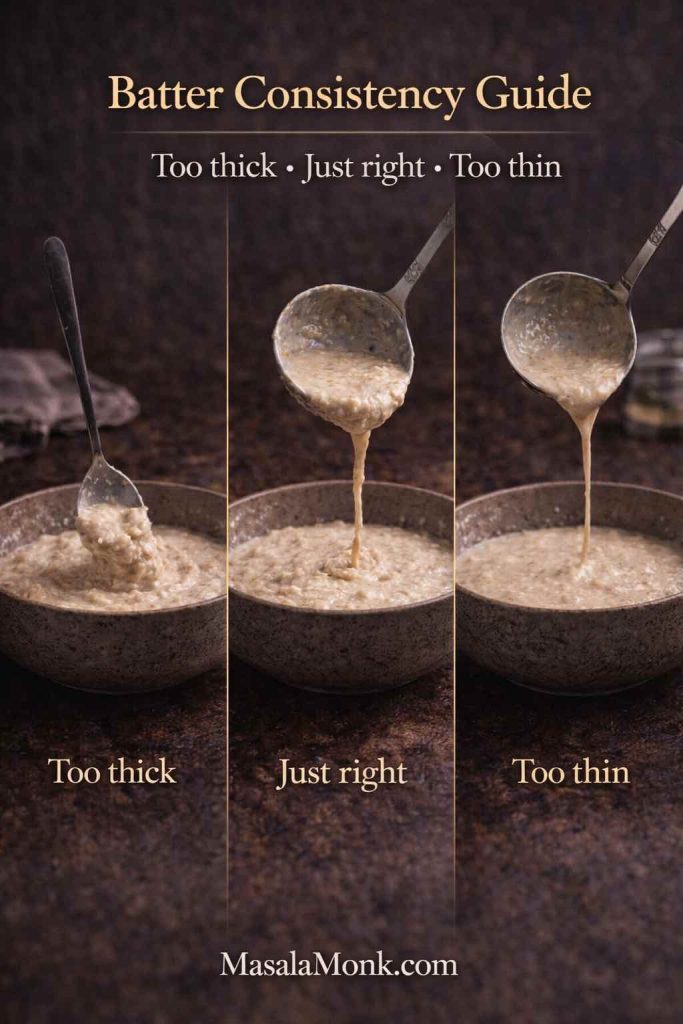
The batter consistency you’re aiming for

Oat batters vary more than wheat-flour batters because oats don’t behave exactly like flour. Different brands, different grind sizes, and different oat types can shift the thickness.

You want a batter that pours slowly and spreads a bit, but doesn’t run like water. It should feel like it has body.

If it’s too thick:

  • add milk a tablespoon at a time
  • stir gently between additions

If it’s too thin:

  • give it another few minutes to rest
  • or add a tablespoon of oat flour (or blended oats), then wait again

That “wait again” part is important because oats keep thickening as they sit.

Also Read: Healthy Tuna Salad – 10 Easy Recipes (Avocado, Mediterranean, No Mayo & More)


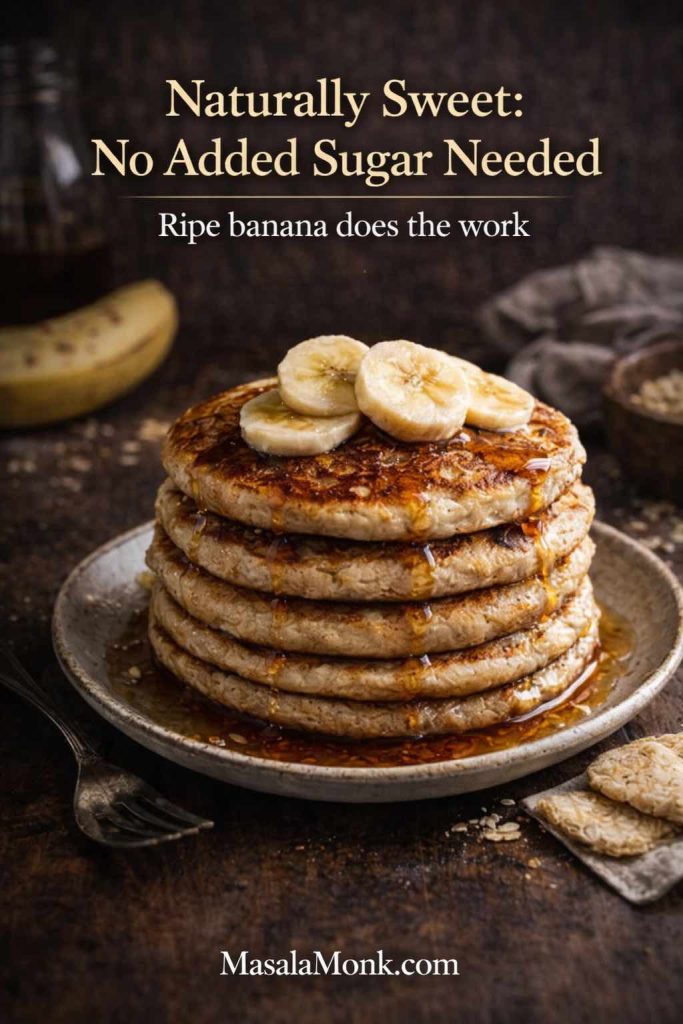
Banana oat pancakes: banana oatmeal pancakes that feel like comfort food

Banana oatmeal pancakes are popular for a reason. While banana adds sweetness, fragrance, and moisture, they also makes the pancakes more forgiving if you slightly overcook them.

This is also the variation that tends to satisfy a whole family of cravings: banana and oat pancakes for the classic version, banana blender pancakes when you want fewer dishes, and even banana porridge pancakes when you lean into a softer, more custardy style.

Stack of banana oat pancakes topped with banana slices and syrup on a dark table, with text “Naturally Sweet: No Added Sugar Needed.”
Ripe bananas add natural sweetness and moisture, making banana oatmeal pancakes a great option when you want a flavorful stack with minimal added sugar.

Banana oatmeal pancakes (easy method)

Use the base recipe, then mash 1 ripe banana into the wet ingredients before adding the dry ingredients.

After resting, check thickness. Banana can make batter thicker, so you may want a splash more milk.

If your banana is very ripe, you can often skip sweetener entirely, especially if you’re adding syrup later.

Banana blender pancakes (smooth and fast)

If you want a smoother batter:

  • blend banana + milk + egg until completely smooth
  • pour into a bowl
  • stir in blended oats (or oat flour), baking powder, salt, and cinnamon
  • rest briefly, then cook

This method feels almost effortless, and the flavor comes through beautifully.

Banana pancakes with oat flour

If you prefer oat flour pancakes, you can still do banana easily. Use oat flour in the base recipe, then mash banana into the wet ingredients. The result tends to be extra tender, with a very even crumb.

Banana oatmeal pancakes no eggs

If you’re looking for oatmeal pancakes without eggs, banana can help with binding, but it’s usually best paired with another binder so the pancakes don’t fall apart.

A reliable approach:

  • replace the egg with a flax “egg” (1 tablespoon ground flax + 3 tablespoons water, rested until gelled)
  • keep the banana
  • cook on medium-low so the center sets nicely

That combination works well for banana oat pancakes vegan too.

Banana oat pancakes healthy (without feeling like a “healthy recipe”)

If you want the satisfying, steady feeling of oats and banana without going heavy:

  • keep the batter thick enough to rise
  • use cinnamon and vanilla for aroma
  • top with yogurt and fruit rather than drowning everything in syrup

It still tastes like a treat—just a calmer one.

Also Read: Upma Recipe: 10+ Easy Variations (Rava, Millet, Oats, Semiya & More)


Vegan oat pancakes: vegan oatmeal pancakes that flip and hold together

Vegan oat pancakes don’t need to be fragile. Oats naturally help bind batter, so once you use a good egg replacement and keep the heat steady, you’ll get pancakes that flip well and stay fluffy.

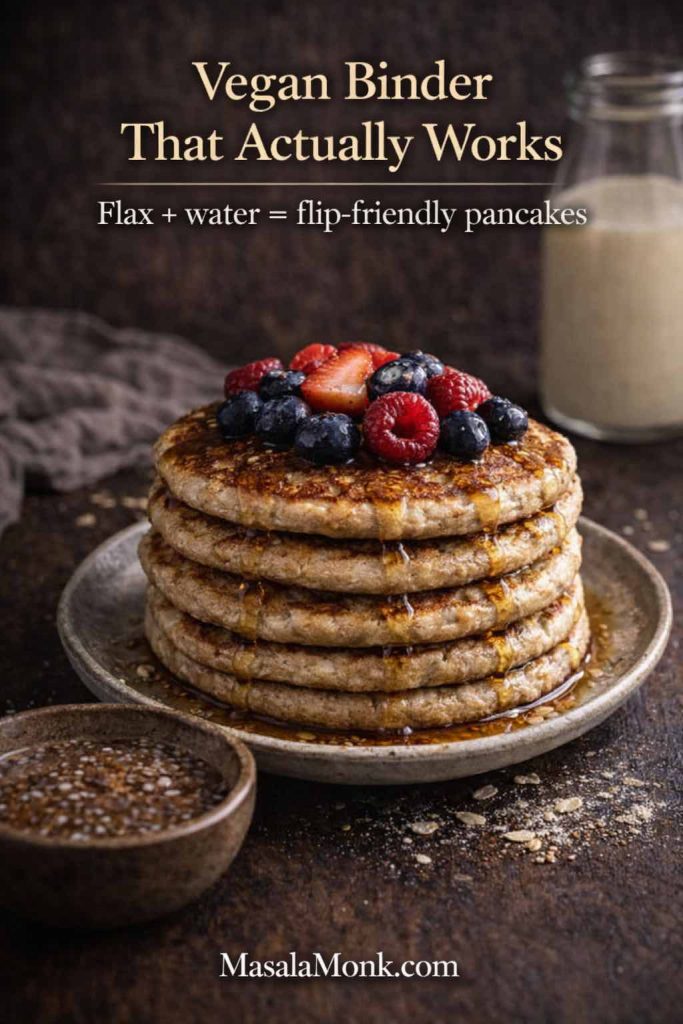
Stack of vegan oat pancakes topped with mixed berries and syrup, with a bowl of flax-and-water “egg” and oat milk in the background and text “Vegan Binder That Actually Works.”
A simple flax “egg” (flaxseed + water) helps vegan oatmeal pancakes hold together and flip cleanly, while oat milk keeps the flavor mellow and comforting.

Vegan oatmeal pancakes (base vegan version)

Start with the base recipe and swap:

  • egg → flax “egg” (1 tablespoon ground flax + 3 tablespoons water, rested)
  • milk → plant milk
  • butter → oil

Then cook over medium or medium-low.

Plant milks vary, so the batter thickness might shift. Oat milk tends to make a cozy, mellow pancake; almond milk makes a slightly lighter one; soy milk can make a sturdier crumb.

Oat milk pancakes

Pancakes made with oat milk are especially nice because oat milk has a naturally rounded flavor that pairs perfectly with oats.

If you prefer homemade oat milk, and you’ve ever struggled with slimy texture, MasalaMonk’s approach is helpful: Easy Homemade Oats Milk with Just One Ingredient.

Vegan pancakes with oats and banana

If you want vegan pancakes with oats and banana, add mashed banana to the wet ingredients along with the flax egg. This creates a soft, tender crumb with built-in sweetness.

Also Read: Double Chocolate Chip Cookies – Easy Recipe with 7 Variations


Apple oat pancakes: applesauce oatmeal pancakes for cozy mornings

Apple and oats feel like the kind of pairing you’d find in a warm kitchen on a quiet morning. You can go two ways: applesauce for ease and moisture, or fresh apple for fragrance and texture.

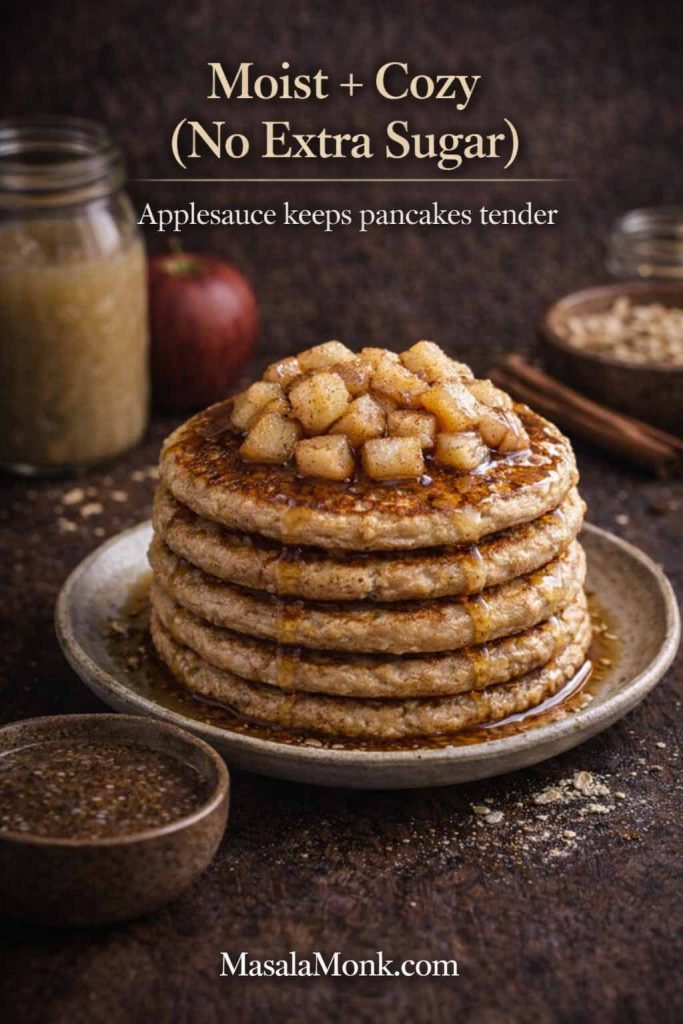
Stack of oat pancakes topped with cinnamon apples and syrup, with a jar of applesauce in the background and text “Moist + Cozy (No Extra Sugar).”
Applesauce (or warm cinnamon apples) adds moisture and gentle sweetness, helping apple oat pancakes stay tender even after they cool.

Applesauce oatmeal pancakes

Use the base recipe and replace about ¼ cup of the milk with ¼ cup applesauce. Add cinnamon if you like.

The applesauce brings sweetness and tenderness, so you can often reduce added sweetener.

Apple oat pancakes with grated apple

If you’d rather use fresh apple:

  • grate ½ cup apple finely
  • fold it into the batter after mixing
  • rest the batter, then cook

Grated apple melts into the pancake. Chopped apple stays crunchy unless you pre-cook it, which is more work than most mornings call for.

Also Read: Mimosa Recipe: 10 Easy Versions from Classic to Caramel Apple


Blueberry oat pancakes: bright, juicy, and easy to love

Blueberry oat pancakes feel like weekend breakfast energy even when it isn’t the weekend. They’re also one of the easiest ways to make the base recipe feel completely new.

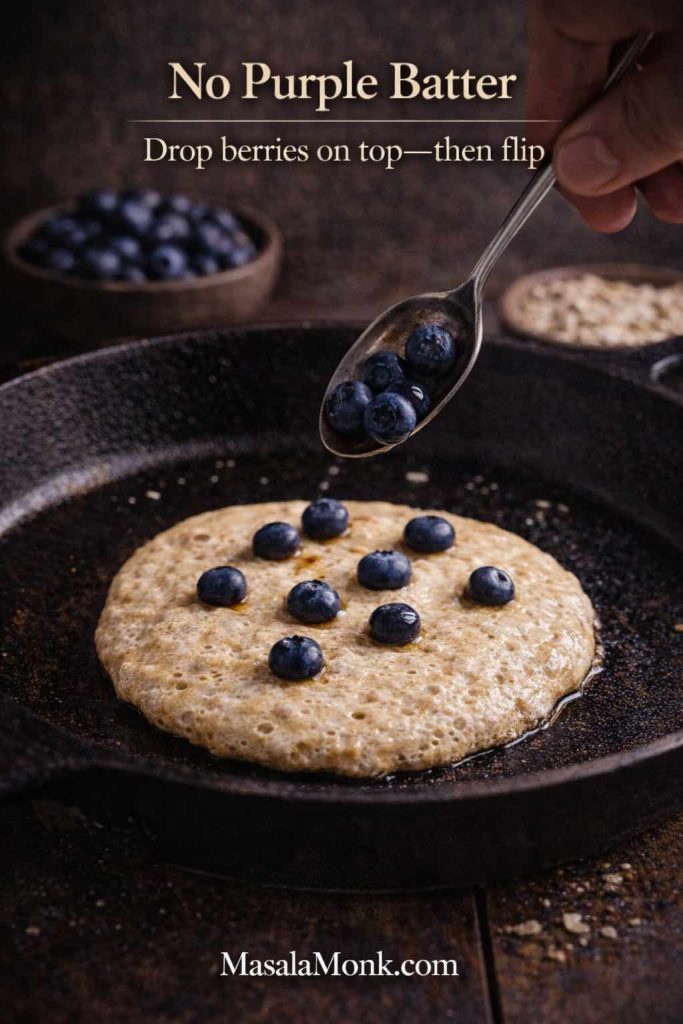
Single oat pancake cooking in a cast-iron skillet with blueberries being placed on top before flipping, with text “No Purple Batter—Drop berries on top, then flip.”
For cleaner blueberry oatmeal pancakes, add berries after you pour the batter—this keeps the batter golden and distributes blueberries evenly in every pancake.

Blueberry oatmeal pancake variation

Use the base recipe and fold in about ½ cup blueberries.

If your berries are frozen, add them to the pancake after pouring the batter onto the pan. This helps prevent the batter from turning purple and keeps the pancakes lighter.

If you want more blueberry ideas to keep the breakfast momentum going, MasalaMonk’s roundup is a fun rabbit hole: Blueberry Pancakes (6 Recipes) + Homemade Pancake Mix.


Cottage cheese oat pancakes: the tender, protein-friendly stack

Oat pancakes made with cottage cheese are one of those “sounds weird, tastes amazing” situations. Cottage cheese brings moisture and richness, which means the pancakes stay tender even after cooling. It also adds protein without any powdery aftertaste.

Cottage cheese oatmeal pancake-style batter

Use the base recipe and add ½ cup cottage cheese. If you dislike curds, blend cottage cheese into the wet ingredients before adding the dry ingredients.

Because cottage cheese can thicken batter, you may need a splash of milk after resting. The goal is still a batter that pours slowly rather than dropping in a lump.

If you enjoy exploring different flour options too, MasalaMonk’s Almond Flour Pancakes are another satisfying direction—different texture, same cozy payoff.


Protein oat pancakes without protein powder

A lot of “protein pancake” recipes taste like supplements. If what you want is protein pancakes no powder, the easiest way is to start with a genuinely good oat pancake recipe and add protein through normal foods that also improve texture.

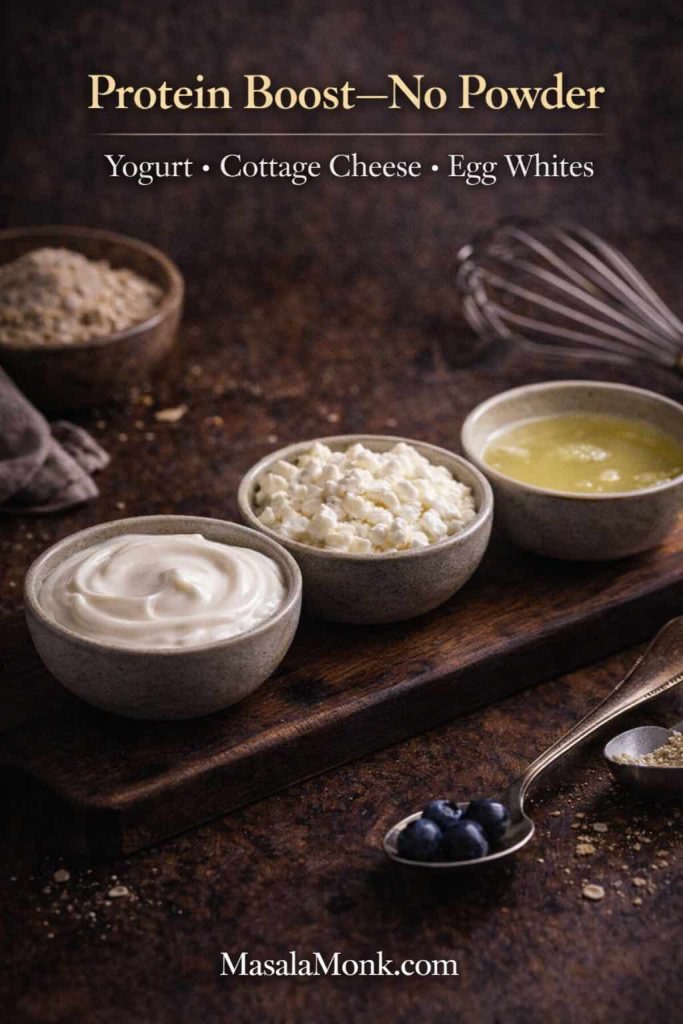
Three bowls of Greek yogurt, cottage cheese, and egg whites on a dark table with oats and a whisk, with text “Protein Boost—No Powder.”
For protein pancakes without protein powder, use everyday add-ins—Greek yogurt for tenderness, cottage cheese for moisture, or egg whites for a lighter crumb.

Here are a few options that keep things delicious:

Yogurt-based protein pancakes

Replace about ¼ cup of milk with thick yogurt (Greek yogurt or hung curd). The pancakes come out softer and slightly richer.

Egg-white variation

Use egg whites instead of a whole egg for a lighter, airy crumb. Keep the oil/butter for tenderness.

Cottage cheese route

Use the cottage cheese version above. It’s one of the best protein pancakes no powder options for meal prep because it reheats so well.

If you like building protein into breakfasts in general, MasalaMonk’s guide is a nice companion read: Protein Oatmeal: Turn Plain Oats into a High-Protein Meal.


Egg and oat pancakes: oats and eggs pancake variations for simple mornings

Sometimes you want the shortest ingredient list possible. That’s where egg and oat pancakes come in—also searched as oat egg pancakes or oats and eggs pancake versions.

A simple version:

  • blend 1 cup oats into flour
  • whisk with 2 eggs
  • add ½ to ¾ cup milk
  • add baking powder and salt

Cook them on medium-low so they set evenly.

If you keep the batter slightly thicker and let it rest, the pancakes lean more toward oat hotcakes recipe territory—thicker, softer, and nicely risen. If you thin the batter, you’ll get something closer to a crepe-pancake hybrid that’s excellent with fruit and yogurt.

Also Read: Classic Deviled Eggs (Easy) + 8 Flavorful Variations


No flour oat pancakes: oat pancakes no flour without feeling “alternative”

No flour oat pancakes sound dramatic, but the idea is simple: the oats are your flour. If you blend them and let them hydrate, they behave like a gentle flour substitute.

Two piles on a cutting board comparing all-purpose flour and blended oats/oat flour for no flour oat pancakes, with text “Skip Wheat Flour—Oats are the ‘flour’ here.”
For oat pancakes no flour, blended oats (or oat flour) replace wheat flour—expect a slightly heartier crumb with the same classic pancake comfort.

In practice, the base recipe already makes oat pancakes no flour in the “no wheat flour” sense. The main difference is how thick you keep the batter. A slightly thicker batter gives you that classic hotcake feel.


3 ingredient oatmeal pancakes: the fastest version

Three ingredient oatmeal pancakes are popular because they’re fast, sweet, and easy to memorize.

Blend:

  • 1 banana
  • 2 eggs (or a flax egg if you’re avoiding eggs)
  • ½ to 1 cup oats
Banana, two eggs, and a bowl of oats on a dark tabletop with text “3 Ingredients. 10 Minutes.” for 3 ingredient oatmeal pancakes.
These 3 ingredient oatmeal pancakes come together fast—blend banana, eggs, and oats for a quick batter that cooks up naturally sweet and satisfying.

Cook on medium-low.

These pancakes tend to be softer than the baking-powder base. If you want them fluffier, add baking powder and a pinch of salt. That tiny upgrade changes the texture in a big way.

Also Read: One-Pot Chicken Bacon Ranch Pasta (Easy & Creamy Recipe)


A note on gluten-free oats

Oats are naturally gluten-free, but cross-contact is common during growing and processing. If you’re cooking for someone with celiac disease or strict gluten avoidance, certified gluten-free oats are generally the safer choice.

If you want to read more, these are clear explanations:

This matters for gluten free banana oat pancakes too—certified oats are the easiest way to keep that version safe.


Make-ahead pancakes from oatmeal: storing and reheating

Oat pancakes are one of the best “cook once, eat twice” breakfasts. Instead of storing batter overnight (which tends to thicken and lose lift), it’s usually better to cook the whole batch and store the pancakes.

If you like meal-prep breakfasts, these pair nicely with pancakes and keep mornings easy:

Oat pancakes cooling on parchment and a wire rack with a labeled freezer bag in the background, with text “Freezer-Friendly Breakfast—Cook once, reheat all week.”
Cook a full batch and freeze extra pancakes in a single layer first—then you can reheat a quick, warm breakfast any day of the week.

Refrigerating

Let pancakes cool completely, then store in an airtight container. They keep well for a few days.

Freezing

Freeze pancakes in a single layer first, then move them to a freezer bag. This prevents sticking and makes it easier to grab only what you need.

Reheating

  • In the oven, pancakes warm evenly and keep a pleasant edge.
  • In the toaster, thinner pancakes reheat beautifully.
  • In the microwave, use short bursts so they stay tender rather than rubbery.

Also Read: Simple Bloody Mary Recipe – Classic, Bloody Maria, Virgin & More


A quick safety reminder about tasting raw batter

It’s tempting to taste batter, especially when it smells like banana and cinnamon. Still, uncooked flour and raw eggs can carry germs. If you want official guidance:


Bringing it all together

The real charm of oat pancakes is how easily they fit into real life. Keep the base version for days you want simple comfort. Lean into fruit the moment you’re craving something brighter—banana oatmeal pancakes and blueberry oat pancakes both deliver that naturally sweet, cozy feel. If eggs aren’t on the table, vegan oatmeal pancakes follow the same familiar rhythm and still turn out beautifully. For a little extra tenderness (and a protein lift that doesn’t taste like a supplement), cottage cheese oat pancakes feel like an effortless upgrade. And on rushed mornings, 3 ingredient oatmeal pancakes make it possible to get a warm stack on the plate with almost no planning.

After you’ve made the base a few times, the process becomes second nature: blend, whisk, rest, cook. From there, it’s just a matter of choosing the version that suits your mood—and that’s exactly what makes this recipe one you’ll actually come back to.

Also Read: How to Make Pineapple Chia Pudding: A Refreshing Low-Carb Breakfast Option

Triptych showing oat pancake batter consistency examples—too thick, just right, and too thin—with text “Batter Consistency Guide.”
Use this quick batter check: if it drops in clumps, thin it with a splash of milk; if it runs like water, rest it a few minutes (or add a touch more oat flour) until it pours in a slow ribbon.

FAQs

1. What are oat pancakes, and how are they different from regular pancakes?

Oat pancakes are pancakes where the main “flour” comes from oats—either blended oats or oat flour—so the flavor is slightly nutty and the texture is often more tender and hearty than classic all-purpose-flour pancakes.

2. Can I really make pancakes from oatmeal, or do I need flour?

Yes—pancakes from oatmeal work well because blended oats behave like flour once they absorb liquid. In other words, you can skip wheat flour entirely and still get a proper pancake stack.

3. Which oats work best: rolled oats, quick oats, or instant oats?

Rolled oats are the most reliable for a fluffy result. Quick oats also work, although the batter thickens faster. Instant oats can work in a pinch, yet the texture tends to turn softer and more uniform.

4. How do I make an oat flour pancake recipe if I only have rolled oats?

Simply blend rolled oats until they look like fine flour, then use that as your oat flour. After that, treat it like an oat flour pancake recipe: mix gently and rest the batter so it hydrates.

5. Are oatmeal flour pancakes the same thing as oat flour pancakes?

Most of the time, yes. “Oatmeal flour” is often just another way people refer to oat flour (ground oats). The main difference is whether the grind is very fine (smoother) or slightly coarse (more rustic).

6. Why do my oat pancake recipes turn out gummy or dense?

Usually it’s one of three things: the batter was overmixed, the oats didn’t get time to hydrate, or the pan heat was too high (browning the outside before the center sets). A short rest and steady medium heat typically fix it.

7. Do I have to rest the batter for oat pancakes?

It’s not mandatory, but it’s a big upgrade. A 10–15 minute rest helps oats absorb liquid, which improves texture and makes pancakes hold together better—especially for pancakes from oatmeal.

8. How do I adjust the batter if it gets too thick?

Add milk one splash at a time and stir gently. Oat batters continue thickening as they sit, so a small adjustment often goes a long way.

9. Can I make banana oat pancakes without added sugar?

Absolutely. Ripe banana adds plenty of sweetness on its own. If you’re making banana oatmeal pancakes with a very ripe banana, you can often skip sweetener entirely and still get a satisfying flavor.

10. How do I make vegan oat pancakes that don’t fall apart?

Use a reliable binder like a flax “egg” (ground flax + water), then cook on medium or medium-low. Also, avoid flipping too early—vegan oatmeal pancakes firm up nicely once the first side is fully set.

11. Can I make oat pancakes no egg without going fully vegan?

Yes. Options include a flax egg, applesauce, or thick yogurt (if dairy is okay). Each changes texture slightly, so pick based on what you like: flax gives structure, applesauce adds softness, yogurt adds richness.

12. What’s the best approach for protein pancakes no powder?

Use ingredients that boost protein while improving texture: Greek yogurt, cottage cheese, or egg whites. Cottage cheese oat pancakes are especially popular because they stay tender and reheat well.

13. How do I make cottage cheese oatmeal pancake batter smooth?

Blend the cottage cheese with the wet ingredients first. That way, the curds disappear into the batter and you get a more uniform pancake crumb.

14. Are applesauce oatmeal pancakes good for kids (and picky eaters)?

Yes—applesauce makes pancakes naturally sweeter and softer, which many kids prefer. Plus, the apple flavor pairs well with cinnamon, so it tastes like a treat without needing much syrup.

15. How do I keep blueberry oat pancakes from turning purple?

Fold blueberries in gently and avoid over-stirring. If using frozen berries, it helps to add them to each pancake after you pour the batter onto the pan, rather than mixing them into the whole bowl.

16. Are no flour oat pancakes actually “no flour”?

They’re “no wheat flour.” Oats are still functioning as the flour ingredient, just in oat form. So oat pancakes no flour usually means the recipe uses blended oats or oat flour instead of all-purpose flour.

17. Do 3 ingredient oatmeal pancakes get fluffy like regular pancakes?

They can be softer and less fluffy because many versions skip baking powder. For more lift, add baking powder and a pinch of salt; the texture becomes much closer to classic pancakes while staying simple.

18. Are oat milk pancakes different from using regular milk?

Oat milk pancakes often taste slightly sweeter and rounder, and the batter can feel a bit creamier. If your oat milk is sweetened, reduce added sweetener so the pancakes don’t taste overly sweet.

19. Can I make oatmeal pancakes healthy without them tasting “diet”?

Yes—focus on texture and balance rather than stripping ingredients. Use fruit for sweetness, add yogurt or cottage cheese for satisfaction, and cook on steady heat for a fluffy bite that feels like real pancakes.

20. Can I meal-prep oat pancakes, and what’s the best way to store them?

Definitely. Cook the full batch, cool completely, then refrigerate for a few days or freeze for longer storage. Reheat gently (toaster or warm oven works well) so the pancakes stay tender instead of rubbery.

Posted on 12 Comments

Healthy Oat Protein Bars – 5 Easy No Sugar Recipes for Snacks

Healthy oat protein bars with peanut butter drizzle, chocolate chips, blueberries, banana slices, and apple cinnamon garnish displayed on a ceramic platter.

If you’ve ever grabbed a store-bought granola bar in a rush and later regretted it after reading the label, you’re not alone. Many so-called “healthy” bars are loaded with hidden sugars, syrups, and additives. They may look nutritious on the package, but in reality, they’re often closer to candy bars than real fuel. The good news is that you don’t need to rely on those packaged options. With just a few simple ingredients, you can create your own healthy oat protein bars at home — bars that are naturally sweetened, nourishing, and quick to prepare. They make the perfect grab-and-go snack, a light breakfast, or even post-workout recovery fuel.

And here’s the best part: oats and protein aren’t just tasty, they’re backed by science. Oats are rich in beta-glucan, a soluble fiber proven to lower total and LDL cholesterol by up to 10% in clinical studies (PubMed). In fact, Health Canada even allows oat-based products to carry a heart health claim based on this evidence (Health Canada). Beyond heart health, oats also provide slow-digesting carbs that help stabilize blood sugar and keep energy levels steady throughout the day (Health.com).

When you combine oats with protein from nut butters, seeds, or powders, you don’t just make a snack—you create a balanced mini-meal. Protein helps with satiety, supports muscle repair, and prevents energy crashes. Dietitians often recommend snacks with at least 7 grams of protein to keep you feeling full and focused (Real Simple). That’s exactly what these recipes deliver.

Also Read: The Science of Protein: Maximizing Muscle Growth and Recovery


Why Make Homemade Healthy Oat Protein Bars?

It’s tempting to toss a box of granola or protein bars into your cart. But once you understand the difference, you may never want to go back.

First, you control the ingredients. With homemade bars, there are no hidden sugars, syrups, or preservatives. A surprising number of commercial “protein bars” contain as much sugar as a candy bar (NY Post). By making your own, you decide whether to sweeten with bananas, dates, or honey—and you know exactly what’s going into your body.

Second, the nutrition is better. Oats are packed with fiber and help slow digestion, which means fewer spikes in blood sugar and better appetite control (Verywell Health). Add protein and healthy fats from nut butters, seeds, or yogurt, and you’ve got a truly balanced snack.

Third, they’re more satisfying. When you hit that 7–10 grams of protein mark, you’re not just curbing hunger—you’re setting yourself up for better focus, energy, and even fewer cravings later in the day. That’s something most sugary snack bars simply can’t deliver.

Finally, they’re cost-effective and customizable. A batch of homemade oat protein bars often costs less than a single box of store-bought ones, and you can change the flavors week to week: chocolate one week, fruit the next, apple-cinnamon when the weather turns crisp.

In other words, by making your own bars, you save money, gain control, and actually get a snack that fuels you the way it should.

Also Read: Oats vs Oatmeal: What’s the Difference?


5 Easy No Sugar Healthy Oat Protein Bar Recipes

These recipes all follow the same simple formula: oats + binder + protein source + flavor boost. But each one has its own personality. Some lean indulgent (hello, chocolate chip), others are light and fruity (blueberry, apple cinnamon), while peanut butter and banana offer a more classic, hearty vibe.

Each recipe makes about 8–10 bars. Nutrition is estimated per bar.


1. Peanut Butter Healthy Oat Protein Bars

Peanut butter lovers, this one’s for you. These bars are rich, creamy, and full of that nutty goodness we all crave. Unlike packaged peanut butter bars that often sneak in added sugars and oils, these are made with nothing but whole, real ingredients. They’re also naturally high in protein, making them ideal for a pre-workout energy boost or a post-gym recovery snack.

Peanut butter healthy oat protein bars stacked on a ceramic plate, topped with peanut butter drizzle, chia seeds, and surrounded by oats and peanuts.
Stacked high with creamy peanut butter drizzle, these healthy oat protein bars show that wholesome can still feel indulgent. And because they’re packed with protein, they make the perfect grab-and-go breakfast or snack.

Ingredients:

  • 2 cups rolled oats
  • ½ cup natural peanut butter (no sugar added)
  • ¼ cup honey or 1 mashed banana
  • 1 scoop vanilla protein powder (optional)
  • 2 tbsp chia seeds

Method:

  1. Warm peanut butter and honey/banana until smooth.
  2. Stir in oats, protein powder, and chia seeds.
  3. Press mixture into a lined pan and refrigerate for at least 1 hour.
  4. Slice into bars.

Estimated Nutrition (per bar): ~180 calories · 8g protein · 20g carbs · 4g fiber · 8g fat

👉 Pro tip: Wrap each bar individually so you can toss it into your bag for a quick, protein-packed snack whenever you need it.

Also Read: What is Protein? – To understand more about this essential Macronutrient, how much and why you need it.


2. Chocolate Chip Oatmeal Protein Bars

These bars are proof that healthy doesn’t have to mean boring. By using dark chocolate (70–85% cacao), you get antioxidants and rich flavor without the sugar overload of milk chocolate. Think of these as a smarter version of a chocolate chip cookie—one you can enjoy any time of day without guilt.

Chocolate chip oatmeal protein bars on a plate with scattered dark chocolate chips.
Rich, chewy, and dotted with dark chocolate, these oatmeal protein bars prove that healthy snacks can taste like dessert while keeping you fueled.

Ingredients:

  • 2 cups oats
  • ½ cup almond butter
  • ¼ cup maple syrup or date paste
  • ¼ cup dark chocolate chips
  • Pinch of sea salt

Method:

  1. Mix almond butter and maple syrup until smooth.
  2. Stir in oats, chocolate chips, and salt.
  3. Press into a pan, chill, and slice.

Estimated Nutrition (per bar): ~190 calories · 6g protein · 22g carbs · 3g fiber · 9g fat

👉 Pro tip: For a lower-sugar version, swap chocolate chips for cacao nibs. You’ll still get the chocolatey flavor with added crunch.

Do Read: Almonds for Brain Health: Unleashing the Nutritional Powerhouse for Cognitive Function


3. Banana Oat Protein Bars

Bananas are one of the best natural sweeteners you can use in baking. They’re loaded with potassium and fiber, and they double as a binder, eliminating the need for eggs or refined sugar. These bars come out soft and chewy—like banana bread in snack form. They’re perfect for kids, or as a wholesome breakfast bar.

Banana oat protein bar topped with banana slices, styled on a plate with oats and cinnamon sticks.
Soft, naturally sweet, and packed with fiber, these banana oat protein bars are like banana bread in snackable form.

Ingredients:

  • 2 ripe bananas, mashed
  • 2 cups oats
  • 2 tbsp almond butter
  • ½ tsp cinnamon
  • Optional: 1 scoop protein powder

Method:

  1. Mash bananas until smooth, then stir in almond butter.
  2. Add oats, cinnamon, and protein powder if using.
  3. Bake at 350°F (175°C) for 20–25 minutes, or chill for a no-bake version.

Estimated Nutrition (per bar): ~160 calories · 5g protein · 26g carbs · 4g fiber · 4g fat

👉 Pro tip: Add chopped walnuts or raisins for extra texture and flavor. This small change transforms them into a snack that feels almost like banana bread bars.

Also Read: How Much Potassium Is in a Banana? Nutrition Facts, Comparisons & Benefits


4. Blueberry Healthy Oat Protein Bars

When you’re craving something fruity and refreshing, these bars are the answer. Blueberries are packed with antioxidants and natural sweetness, while Greek yogurt adds protein and creaminess. The result is a bar that feels indulgent yet energizing—a cross between a snack and a mini breakfast.

Blueberry healthy oat protein bars topped with fresh blueberries on a ceramic plate with oats.
Juicy blueberries make these healthy oat protein bars a refreshing and antioxidant-rich twist on the classic oat snack.

Ingredients:

  • 2 cups oats
  • ½ cup Greek yogurt
  • ½ cup fresh or frozen blueberries
  • 2 tbsp honey or mashed banana
  • 1 tsp vanilla extract

Method:

  1. Mix oats, yogurt, honey/banana, and vanilla until smooth.
  2. Fold in blueberries gently.
  3. Press into a pan and refrigerate until set.

Estimated Nutrition (per bar): ~170 calories · 7g protein · 23g carbs · 3g fiber · 5g fat

👉 Pro tip: Add a sprinkle of lemon zest to give these bars that bright, muffin-like flavor—without the bakery sugar.

Suggested Read: Health Benefits of Blueberries


5. Apple Cinnamon Oatmeal Protein Bars

These bars are like autumn in snack form. The grated apple keeps them moist, while cinnamon adds that cozy, spiced flavor. Unlike many packaged “apple cinnamon” bars that rely on artificial flavors, these actually taste like real fruit and spice. They’re perfect with a cup of tea or coffee in the afternoon.

Apple cinnamon oatmeal protein bars styled with apple slices and cinnamon sticks on a ceramic platter.
Spiced with cinnamon and sweetened with apples, these cozy bars are perfect with a warm cup of tea.

Ingredients:

  • 1 apple, grated
  • 2 cups oats
  • 2 tbsp almond butter
  • ½ tsp cinnamon
  • Optional: walnuts or raisins

Method:

  1. Mix grated apple with almond butter.
  2. Stir in oats, cinnamon, and extras.
  3. Bake for 20 minutes at 350°F (175°C), or refrigerate overnight.

Estimated Nutrition (per bar): ~165 calories · 5g protein · 24g carbs · 4g fiber · 4g fat

👉 Pro tip: Make a batch on Sunday, and you’ll have a cozy, ready-to-go snack all week long.

Do Read: 20 Benefits of Cinnamon


Tips for Making the Best Healthy Oat Protein Bars

To make sure your bars turn out just right:

  • Boost the protein: Add whey or plant-based protein powders, hemp hearts, or pumpkin seeds. Hitting at least 7 grams of protein per bar ensures satiety (Real Simple).
  • Bind naturally: Dates and mashed bananas are excellent natural binders, holding the bars together without refined sugars.
  • Store smartly: Keep them in the fridge for up to 7 days, or freeze in batches for up to 2 months.
  • Get creative: Change up flavors to keep it exciting—add cranberries, coconut, or even drizzle with dark chocolate.

Call-to-action slide promoting healthy oat protein bars recipes at MasalaMonk.com with short bullets and a stack of bars.
Want more? Discover all 5 no-sugar recipes for healthy oat protein bars at MasalaMonk.com and start snacking smarter.

Wrapping It Up

These healthy oat protein bars prove that eating well doesn’t mean sacrificing taste or convenience. They’re versatile, affordable, and backed by science. Oats improve heart health, cholesterol, and blood sugar stability (Verywell Health), while protein adds staying power, focus, and recovery support.

So instead of grabbing a sugar-laden bar off the shelf, imagine reaching into your own fridge for a bar you made yourself—with oats, protein, and flavors you love. The result? A snack that truly works with your body, not against it.

👉 Try one of these recipes this week and see the difference. Once you taste how simple and satisfying homemade oat protein bars can be, you may never go back to store-bought again.

Frequently Asked Questions About Healthy Oat Protein Bars

1. Are healthy oat protein bars actually good for you?

Yes, absolutely! Healthy oat protein bars combine the slow-digesting carbs and soluble fiber in oats with the satiating power of protein. As a result, they not only give you energy but also help keep you full for hours. Unlike store-bought bars—which can contain as much sugar as a candy bar—homemade oat bars allow you to control every ingredient and avoid artificial fillers. That makes them a smart choice for breakfast, snacks, or even post-workout recovery.


2. Can oatmeal protein bars help with weight loss?

They can definitely support weight management when used wisely. Oats are naturally rich in beta-glucan fiber, which has been shown to improve fullness and reduce cravings. When you combine oats with protein, you slow digestion and stabilize blood sugar, which helps prevent overeating later. Therefore, oatmeal protein bars make an excellent snack for anyone looking to manage appetite and maintain steady energy.


3. How much protein should homemade oat bars have?

Most dietitians recommend that snacks contain at least 7 grams of protein to be truly satisfying. That’s why many of the recipes here include nut butters, Greek yogurt, or protein powder. Consequently, each bar hits that target, making them not just tasty but also functional. Whether you’re eating them for breakfast, as a midday bite, or as a quick oat protein snack before the gym, that protein makes all the difference.


4. Do you need sugar to make oat protein bars taste good?

Not at all. In fact, one of the best things about homemade oat bars is that you can rely on natural sweeteners like ripe bananas, Medjool dates, or even a touch of honey. These add gentle sweetness without spiking your blood sugar the way refined sugar does. Moreover, when combined with cinnamon, vanilla, cocoa, or fruit, your bars taste amazing without needing extra sugar.


5. How long do healthy oat protein bars last?

Freshly made bars usually keep for 5–7 days in the fridge when stored in an airtight container. For longer storage, freeze them for up to 2 months. That means you can meal prep a whole batch of oatmeal protein bars on Sunday and enjoy healthy, ready-to-go snacks all week long. In addition, freezing makes it easy to keep a stash for busy days.


6. Are oat protein snacks good for kids?

Yes, and kids often love them! Since these bars are soft, slightly sweet, and customizable, they’re a much healthier alternative to packaged granola bars or sugary cereal bars. Of course, you can adjust ingredients—like skipping protein powder for younger children—and still provide a wholesome, naturally sweet snack. Therefore, oat protein snacks are family-friendly, portable, and easy to make in bulk.

Posted on 7 Comments

Can You Substitute Old-Fashioned Oats for Rolled Oats?

Old-Fashioned Oats vs. Rolled Oats

If you love oats—whether for breakfast, baking, or healthy meal prep—you’ve probably encountered the terms “old-fashioned oats” and “rolled oats.” The good news? These names often cause confusion, but they actually refer to the same product! Here’s what every home cook, baker, and oat enthusiast should know about using these oats, when substitutions are seamless, and when it might matter.


What Are Old-Fashioned Oats?

“Old-fashioned oats” is simply another name for “rolled oats.” Both terms describe oat groats that have been steamed and then pressed flat with large rollers, resulting in those classic, thin oat flakes you find in most kitchens and recipes. There is no real difference between the two—manufacturers just use the names interchangeably, and you might see either on a package label.

  • Texture: Flat, oval flakes that are soft yet hold their shape when cooked or baked.
  • Flavor: Mild and slightly nutty.
  • Uses: Perfect for oatmeal (porridge), overnight oats, granola, cookies, muffins, bars, smoothies, or as a binder in burgers and veggie patties.

What About “Rolled Oats”?

Rolled oats, like old-fashioned oats, are made by steaming whole oat groats and rolling them into flakes. This process helps them cook faster than steel cut oats but still gives you a heartier texture and more nutrition than quick or instant oats.

  • Look for: Rolled oats, old-fashioned oats, or even “traditional oats”—they’re all the same in most recipes.

Substituting Old-Fashioned Oats for Rolled Oats

Can you substitute old-fashioned oats for rolled oats?

  • YES! These two oat types are completely interchangeable in any recipe calling for either one.

How about the other way around?

  • Absolutely. There’s no difference—you can swap “old-fashioned oats” and “rolled oats” 1:1 by volume or weight.

This is true for:

  • Classic cooked oatmeal/porridge
  • Overnight oats
  • Baking (cookies, muffins, breads, bars)
  • Granola or muesli
  • Pancakes, smoothies, or savory uses

Where Substitutions Might Matter

While old-fashioned/rolled oats can replace each other, there’s sometimes confusion with other oat types. Here’s where you need to be careful:

  • Quick oats or instant oats: These are rolled even thinner and/or cut smaller, so they cook faster and lose texture. If you substitute quick oats for old-fashioned/rolled oats, your recipe will be softer, sometimes mushy (especially in cookies, granola, or bars).
  • Steel cut oats: These are not rolled or steamed, just chopped—completely different texture and much longer cooking time. Steel cut oats are not a direct substitute for rolled/old-fashioned oats in baking or most recipes.

Want to understand all oat types in more depth? Visit our Ultimate Guide to Oats: Types, Nutrition, and Differences Explained.


Practical Kitchen Tips

For best results in baking or granola:

  • Use rolled/old-fashioned oats for chewy cookies, sturdy granola, and hearty breakfast bars.
  • If you only have quick oats, you can use them in a pinch, but expect a softer, less textured result.
  • Never use instant oats in place of rolled oats for baking—they dissolve and change the final texture.

For overnight oats:

  • Rolled/old-fashioned oats give you the classic, creamy-yet-chewy bite everyone loves.

For classic oatmeal:

  • Both rolled and old-fashioned oats are ideal, cooking in just 5–10 minutes for a creamy, hearty bowl.

In smoothies or as a binder:

  • Either works perfectly—blend or stir directly in for extra fiber.

When Might Packaging Matter?

Some brands market “old-fashioned oats” for a rustic, traditional feel, while others label their oats as “rolled oats.” As long as the ingredient list says 100% rolled oats and they look like flat flakes, you’re good to go.

If you’re following a gluten-free diet, always look for certified gluten-free rolled/old-fashioned oats, as oats are often processed in facilities that handle wheat.


Related Oat Comparisons

If you’re curious about how rolled/old-fashioned oats compare to steel cut, quick, or instant oats, be sure to check out:


Conclusion

You never need to worry about substituting old-fashioned oats for rolled oats—or vice versa. In fact, they are two names for the same nutritious, versatile ingredient that can power up breakfasts, snacks, and baked treats with ease. Just keep an eye out for quick, instant, or steel cut oats, as those are different in texture, cook time, and use.

Ready to learn everything about oat types, nutrition, and kitchen secrets? Explore our Ultimate Guide to Oats!


10 FAQs – Old-Fashioned Oats vs Rolled Oats Substitution

1. Are old-fashioned oats and rolled oats the same?

Yes. Old-fashioned oats and rolled oats are just two names for the same product.


2. Can I substitute old-fashioned oats for rolled oats in recipes?

Yes, you can substitute them 1:1 in any recipe without adjustment.


3. Can I use quick oats instead of rolled oats?

You can, but the texture will be softer and the final result may be less chewy, especially in baked goods.


4. Can I use instant oats instead of rolled oats?

It’s not recommended. Instant oats tend to break down too much and make recipes mushy.


5. Is there a difference in nutrition between old-fashioned and rolled oats?

No, they have identical nutrition since they are the same product.


6. Which is better for overnight oats: rolled or old-fashioned oats?

They are the same—both are perfect for overnight oats and give the best creamy-yet-chewy texture.


7. Do I need to change the cooking time if I swap old-fashioned oats for rolled oats?

No, use the same cooking time for both.


8. What if my recipe calls for “traditional oats”?

“Traditional oats” is another name for rolled/old-fashioned oats. Use them interchangeably.


9. Can I use rolled oats in place of quick oats?

Yes, but your recipe will have more texture and may take slightly longer to cook or soften.


10. Are rolled oats or old-fashioned oats gluten-free?

Oats are naturally gluten-free, but always check for a gluten-free label if you are sensitive or celiac.

Posted on 4 Comments

Are Quick Oats the Same as Instant Oats?

QUICK OATS vS. INSTANT OATS

If you’re trying to eat healthier or just want a speedy breakfast, you’ve probably noticed two convenient oat choices in every store: quick oats and instant oats. But are they actually the same thing? Why are there so many options—and does it matter which you choose for your porridge, overnight oats, or baking? Here’s the full story, with practical tips, cooking advice, and nutrition facts so you can pick the best oats for your lifestyle.


What Exactly Are Quick Oats?

Quick oats (also called “quick-cooking oats”) start with the same whole oat groats used for all oat products. These groats are first steamed, then rolled thinner and sometimes cut into smaller pieces than traditional rolled (old-fashioned) oats. The extra processing makes them cook faster and break down more easily when prepared.

  • Texture: Soft and fluffy, but still has some bite.
  • Cooking time: Just 1–3 minutes on the stovetop or microwave.
  • Best uses: Hot porridge, overnight oats, soft cookies, pancakes, and quick breads.

Quick oats give you a hot breakfast or recipe base in almost no time—no need for long simmering.
If you’re curious about the differences between rolled oats, old-fashioned oats, and when you can swap them, check out our detailed guide on substituting old-fashioned oats for rolled oats.


Instant Oats: Even Faster, Even Softer

Instant oats (often found as “instant oatmeal”) take processing a step further. Oat groats are steamed, fully cooked, dried, rolled even thinner than quick oats, and then sometimes chopped so they cook immediately when you add hot water or microwave them. Most commonly, instant oats are sold in single-serve packets, often with flavorings and sugar already mixed in.

  • Texture: Creamy, smooth, and very soft—almost pudding-like when cooked.
  • Cooking time: Instantly ready with boiling water or in 1 minute in the microwave.
  • Best uses: Instant breakfast, office snacks, travel, camping, or for kids who prefer a smoother texture.

It’s important to note that instant oats in packets are often pre-flavored and sweetened. The added sugars, salt, and flavorings can make them less healthy than plain oats. For ultimate control, buy plain instant oats and add your own healthy toppings at home.


Quick Oats vs Instant Oats: What Really Matters?

Although both are designed for speed, quick oats and instant oats are not identical. The differences matter in real-life cooking, texture, and health:

FeatureQuick OatsInstant Oats
ProcessingSteamed & rolled thinPre-cooked, rolled ultra-thin, often chopped
TextureSoft, still some biteSilky, very soft, can be mushy
Cook Time1–3 minutesInstant—just add hot water
PackagingSold in bulkOften single-serve flavored packets
AdditivesRare in plain quick oatsCommon in instant oat packets (sugar, salt)
Recipe useGreat for bakingNot ideal for baking (gets too mushy)

When it comes to taste and mouthfeel:

  • Quick oats make a thicker, heartier porridge or baked good with a little more chew.
  • Instant oats dissolve into a creamy, very smooth mixture—great if you like a super-soft texture.

If you want a breakdown of how all major oat types compare (including steel cut and rolled), don’t miss our Ultimate Guide to Oats: Types, Nutrition, and Differences Explained.


Practical Kitchen Advice: When to Use Each

Quick oats are your best friend for:

  • Hot oatmeal when you’re short on time but still want real oat texture.
  • Adding to muffin or pancake batters for extra fiber.
  • Thickening smoothies (just toss them in raw).
  • Making “overnight oats” with a softer texture, perfect for meal prep.

Instant oats shine when:

  • You need breakfast or a snack instantly—just pour boiling water and stir.
  • You’re traveling, camping, or need food on the go.
  • You’re serving kids, or anyone who prefers a creamy, pudding-like bowl.

If you love baking or making granola, quick oats will hold up much better than instant oats. Instant oats will break down and make recipes mushy—so stick to using them in porridge or as a speedy meal.


Nutrition: Is One Healthier?

Plain quick oats and plain instant oats are virtually identical in nutrition, with about 150 calories, 4 grams of fiber, and 5 grams of protein per serving. Both deliver the heart-healthy benefits of oats, including beta-glucan fiber.

BUT:
Instant oat packets are often loaded with sugar, salt, and flavorings—sometimes as much as a dessert! Always check the ingredients, and whenever possible, choose unsweetened varieties so you can control the flavors and sweetness.

If you’re interested in how glycemic index, satiety, and fiber stack up across all oat types (including steel cut and rolled), you’ll find a full comparison in our oat guide.


Can You Substitute Quick Oats for Instant Oats (and Vice Versa)?

  • For hot porridge, you can swap them—just expect a difference in texture: quick oats are thicker, instant oats are silkier.
  • In baking, quick oats are better; instant oats can turn recipes gooey or pasty.
  • For overnight oats, quick oats work best; instant oats will dissolve and become almost like pudding.

Whenever a recipe simply says “oats,” check the texture you want. If you’re unsure, read up on the difference between oats, oatmeal, and which oat type is best for every recipe.


The Real-World Bottom Line

Both quick oats and instant oats offer convenience, whole grain nutrition, and the versatility to fit your lifestyle.

  • Choose quick oats if you want speed, texture, and more flexibility for cooking and baking.
  • Choose instant oats if you value pure convenience (and be sure to read the label for added sugar and sodium).

Still unsure which oat is best for you? See how they all stack up in our comprehensive oats guide.

Explore more about using different oats in baking and porridge, and discover when to swap or stick with each in Can You Substitute Old-Fashioned Oats for Rolled Oats?

And if you’re comparing all oats head to head (steel cut, rolled, quick, instant), our “Steel Cut Oats vs Rolled Oats: Nutrition, Taste, Cooking & More” post breaks it down further:
Read the in-depth comparison


Conclusion

Quick oats and instant oats are both designed to help you get nutritious, hearty meals on the table—fast. Their key differences are in texture, use in recipes, and (with instant) the likelihood of extra additives. For the healthiest choice, stick to plain varieties and add your own flavors at home.

Want to learn even more about all things oats? Browse our Ultimate Guide to Oats for practical cooking tips, nutrition details, and the best ways to enjoy oats every day!

10 FAQs – Are Quick Oats the Same as Instant Oats?

1. Are quick oats and instant oats the same thing?

No. Quick oats are rolled thinner and cut smaller to cook faster, but instant oats are pre-cooked, dried, and rolled even thinner for truly instant preparation.


2. Can I substitute quick oats for instant oats in recipes?

In hot cereal, yes—the texture will just be thicker. In baking, quick oats are usually better; instant oats may make recipes too mushy.


3. Are instant oats less healthy than quick oats?

Plain instant oats have similar nutrition to quick oats. However, most instant oats packets have added sugar, salt, and flavors—check labels!


4. Why do instant oats cook faster than quick oats?

Instant oats are pre-cooked and rolled much thinner than quick oats, allowing them to absorb water and soften immediately.


5. Can I use instant oats for overnight oats?

You can, but they will dissolve and become very soft, almost pudding-like. Quick oats work better for classic overnight oats texture.


6. Do quick oats and instant oats taste the same?

They’re both mild, but instant oats have a smoother, softer texture and can taste sweeter if flavored.


7. Are quick oats and instant oats gluten-free?

Oats are naturally gluten-free, but always check for certified gluten-free labeling, as cross-contamination can occur during processing.


8. Which is better for baking: quick oats or instant oats?

Quick oats are better. Instant oats tend to break down and make baked goods mushy.


9. Do quick oats and instant oats have the same calories and nutrients?

Yes, if both are plain and unsweetened. Most differences come from flavorings and additives, not the oats themselves.


10. Which should I choose for the healthiest breakfast?

Choose plain quick oats or plain instant oats, and add your own fruit or nuts. Avoid flavored instant oat packets with added sugar.