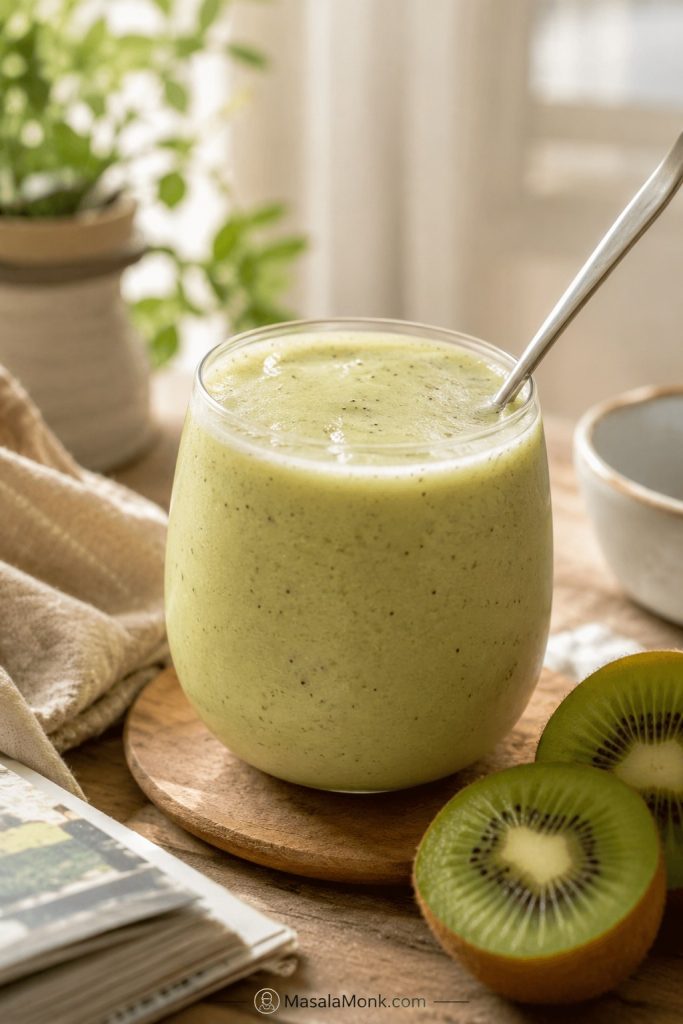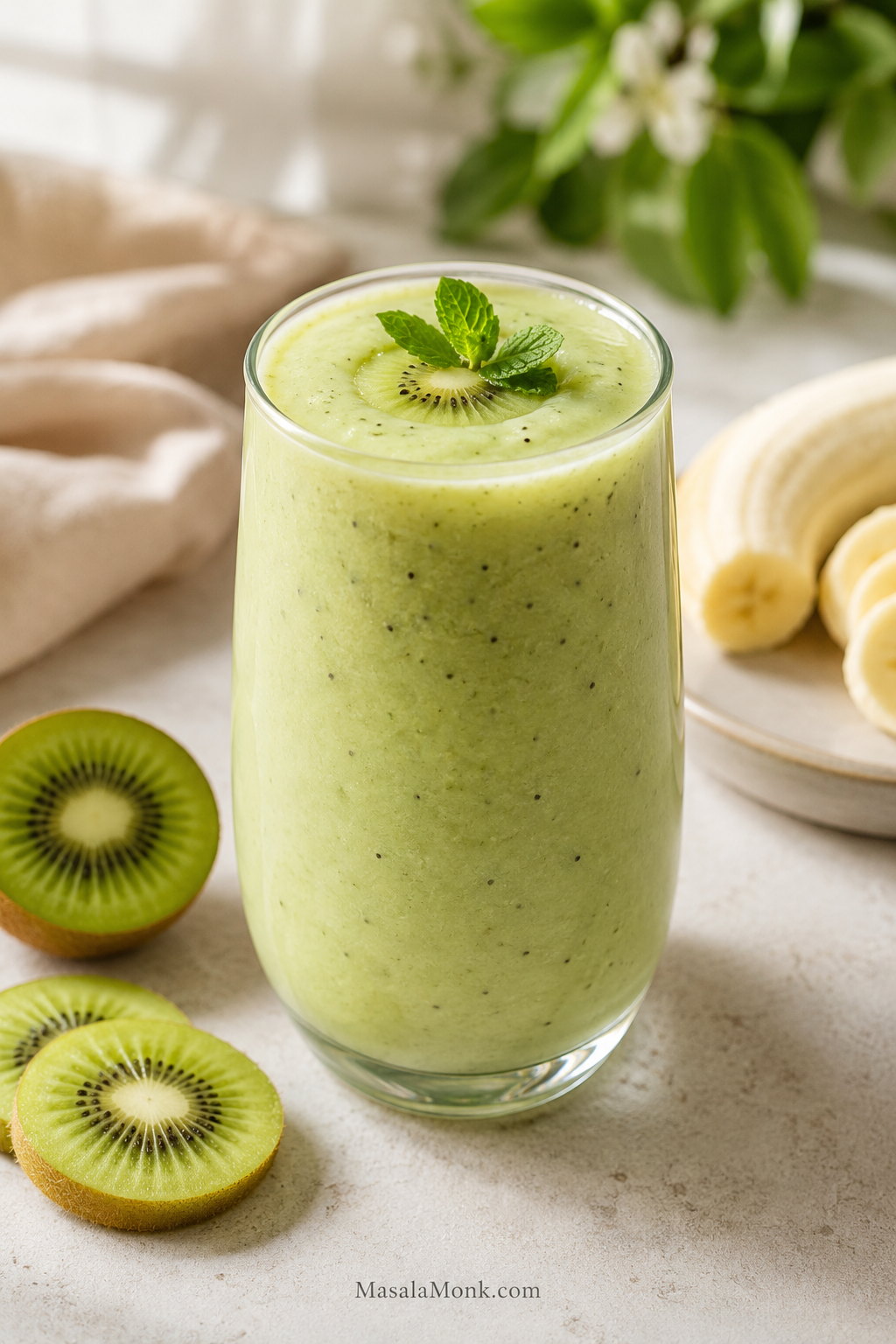
This kiwi smoothie recipe is creamy, fresh, tangy-sweet, and easy to adjust with banana, yogurt, milk, strawberry, mango, or dairy-free swaps. It takes about 5 minutes, but it still gives you enough control to avoid the usual problems: a smoothie that tastes too sour, too thin, too watery, too seedy, or too bland.
Done right, it tastes bright and creamy at the same time — fresh enough for a warm morning, but filling enough to feel like breakfast.
The base is simple: ripe kiwi for brightness, frozen banana for creaminess, yogurt for body, and just enough liquid to help the blender move. From there, you can make it lighter with coconut water, fruitier with orange juice, thicker as a smoothie bowl, greener with spinach, or sweeter with mango and strawberries.
Start with the classic kiwi banana smoothie, then adjust it to fit what you have. If your kiwis are sharp, jump to the fixes section. If you want a no-yogurt smoothie, a no-banana version, or a kiwi shake-style drink, those options are built into the guide too.
Kiwi Smoothie Guide
Make the Smoothie
Quick Answer: Best Kiwi Smoothie Recipe Ratio
The best kiwi smoothie ratio is 2 ripe kiwis + 1 frozen banana + ½ cup yogurt + ½ cup liquid. Choose milk for a creamier smoothie, coconut water for a lighter smoothie, or orange juice for a brighter fruitier version. Add honey only if your kiwis taste sharp.
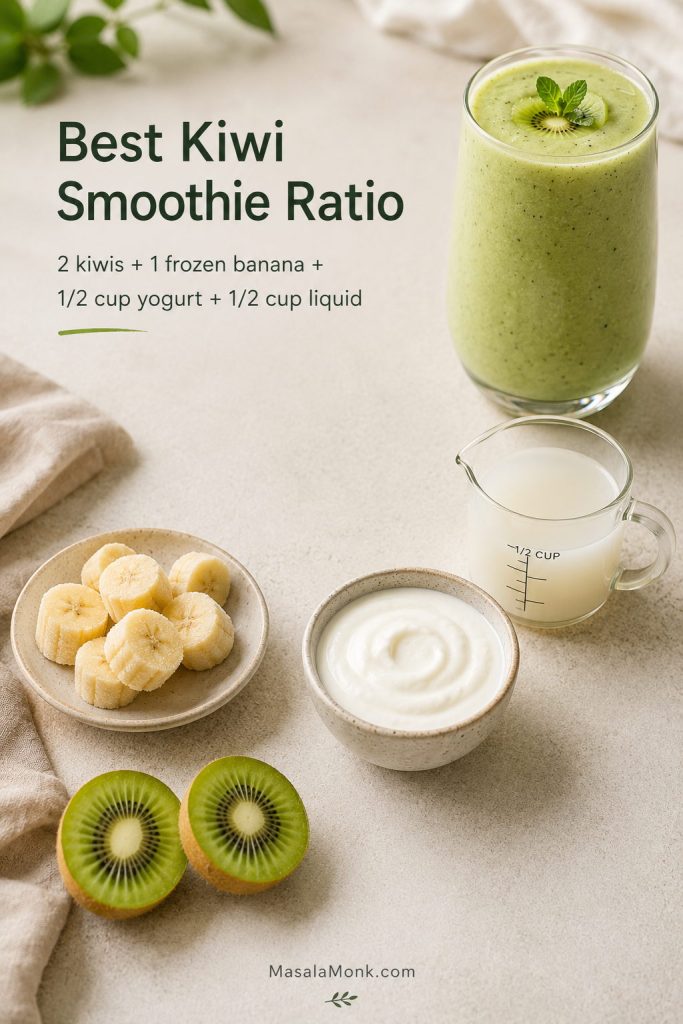
Best First Version to Try
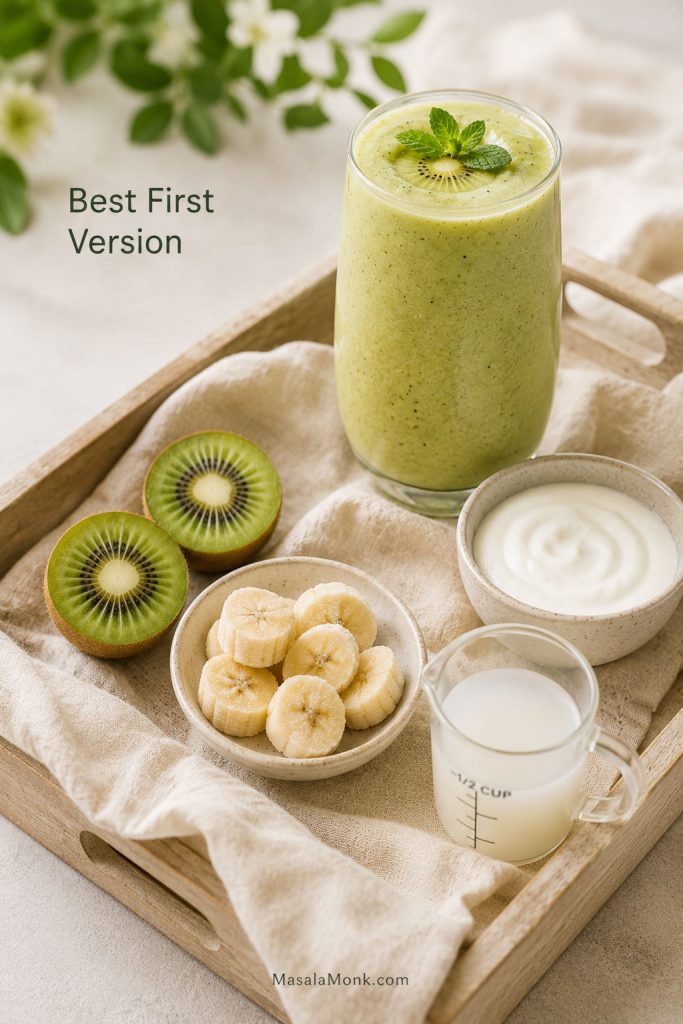
For one large smoothie, the base recipe usually means 2 peeled kiwis, 1 medium frozen banana, ½ cup Greek yogurt or plain yogurt, and ½ cup milk, water, coconut water, or orange juice. Blend until smooth, taste, then adjust before pouring.
The formula works because each ingredient has a job. Kiwi brings the bright fruit flavor, banana softens the tartness, yogurt gives body, and the liquid helps everything blend. Once that balance is right, the smoothie tastes fresh instead of sharp or watery.
If you already know what went wrong with your last smoothie, the troubleshooting table will help you adjust sourness, thickness, sweetness, and texture quickly.
How to Adjust the Ratio
| Want your kiwi smoothie… | Add or adjust this |
|---|---|
| Creamier | Frozen banana, Greek yogurt, avocado, or a splash of milk. |
| Sweeter | Ripe banana, mango, strawberries, or 1–2 teaspoons honey. |
| Brighter | Orange juice as the liquid or a tiny squeeze of lime. |
| Lighter | Coconut water, water, cucumber, or spinach. |
| Thicker | Frozen banana, frozen mango, chia seeds, or less liquid. |
| Dairy-free | Almond milk, oat milk, coconut water, plant yogurt, mango, or avocado. |
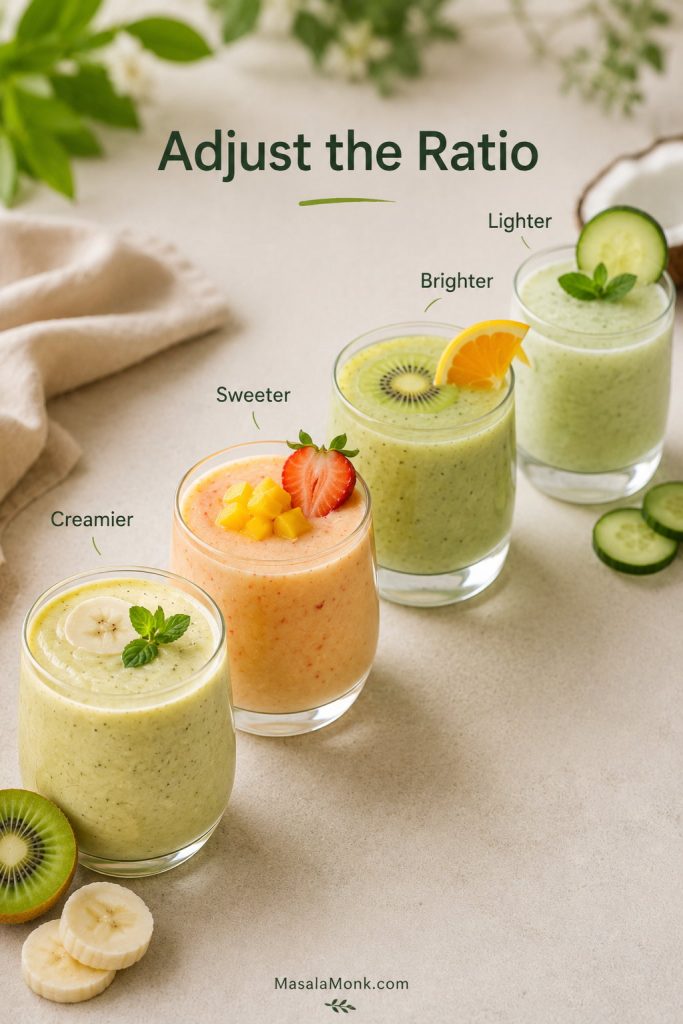
From there, the rest of the recipe is mostly about control. If your kiwi is very sweet, you may not need honey. If it tastes sharp, banana, mango, or yogurt will smooth it out quickly without changing the whole recipe.
Ingredients for a Creamy Kiwi Smoothie
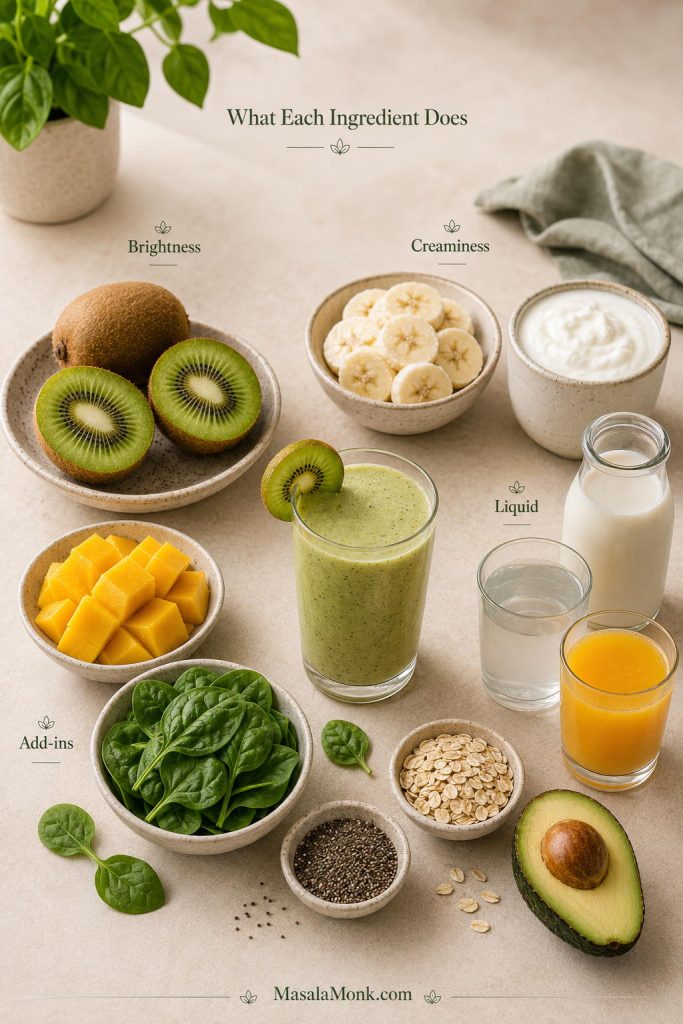
A good smoothie recipe using kiwis needs balance. Kiwi gives the drink its bright, tangy flavor, but it needs something creamy or sweet beside it so the smoothie does not taste thin or harsh. The best version is not just about adding kiwi; it is about giving kiwi the right support.
Kiwi
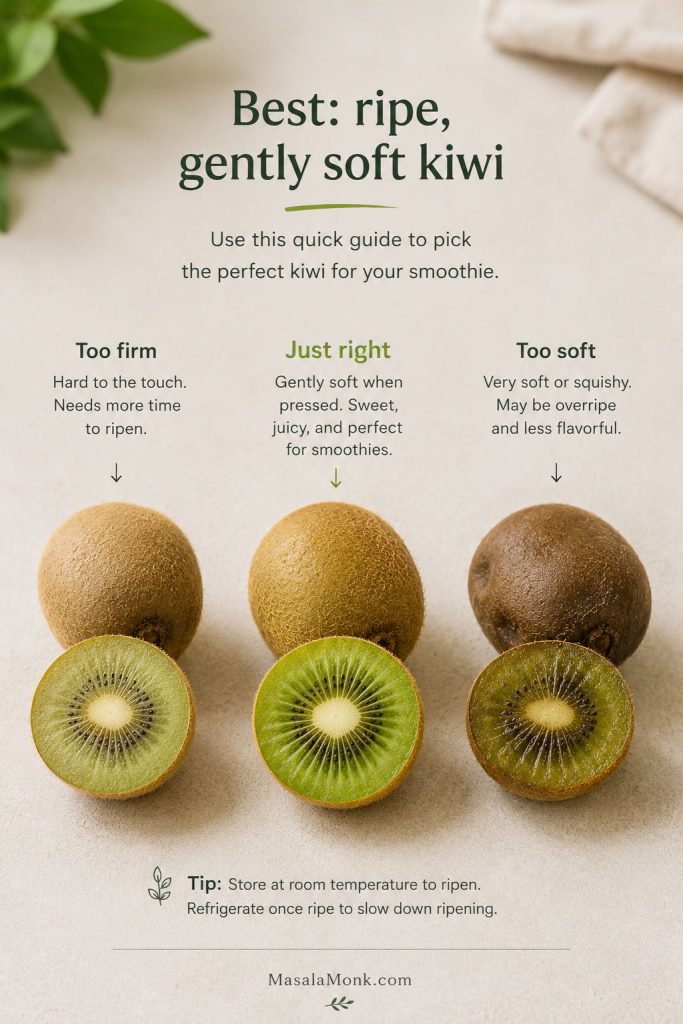
Ripe kiwis make the best smoothie. They should give slightly when pressed and smell fresh, not fermented. Hard kiwis can taste grassy, sour, or harsh once blended, while overripe kiwis can make the smoothie taste dull.
For the smoothest texture, peel the kiwi before blending. Kiwi skin is edible, but it can make a smoothie feel fibrous or slightly fuzzy, especially if your blender is not very powerful.
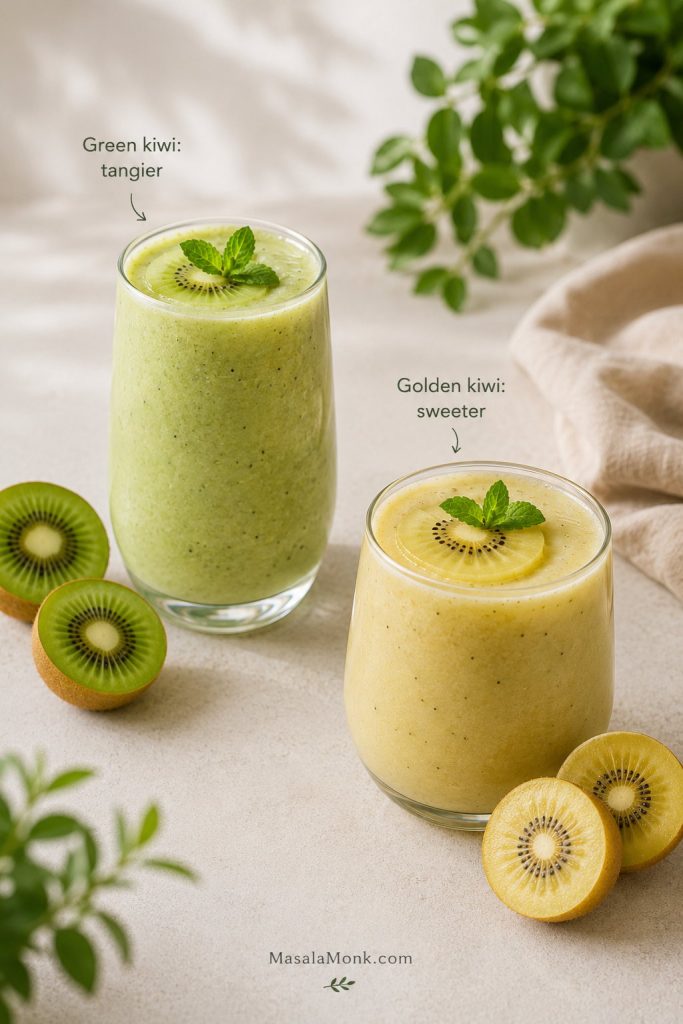
Green kiwi gives the classic tangy flavor. Golden kiwi is usually sweeter and softer, so it can work well if you want a milder smoothie with less added sweetener.
Banana
Banana is the easiest way to make the drink creamy, especially in a recipe where kiwis bring most of the tartness. A frozen banana works best because it chills and thickens the drink without needing lots of ice. For a less sweet smoothie, use half a banana and add more yogurt, mango, or avocado for body.
Yogurt
Plain Greek yogurt makes the smoothie thicker and more satisfying. Regular plain yogurt gives a softer, drinkable texture. For a dairy-free version, plant yogurt, almond milk, coconut water, avocado, chia, oats, and frozen mango can all help replace some of that body. The no-yogurt variation gives the easiest swaps.
Liquid
The liquid decides whether the smoothie tastes creamy, light, or bright. Milk makes it mellow, coconut water keeps it fresh, orange juice makes it fruitier, and water keeps it simple but thinner. Start with ½ cup and add more only if the blender needs help.
Optional Add-Ins
Spinach, mango, pineapple, chia seeds, oats, protein powder, avocado, mint, and lime can all work with kiwi. Add them with a purpose: mango for sweetness, avocado for creaminess, spinach for a green smoothie, chia or oats for thickness, and lime only when the smoothie needs a sharper finish.
How to Make a Kiwi Smoothie
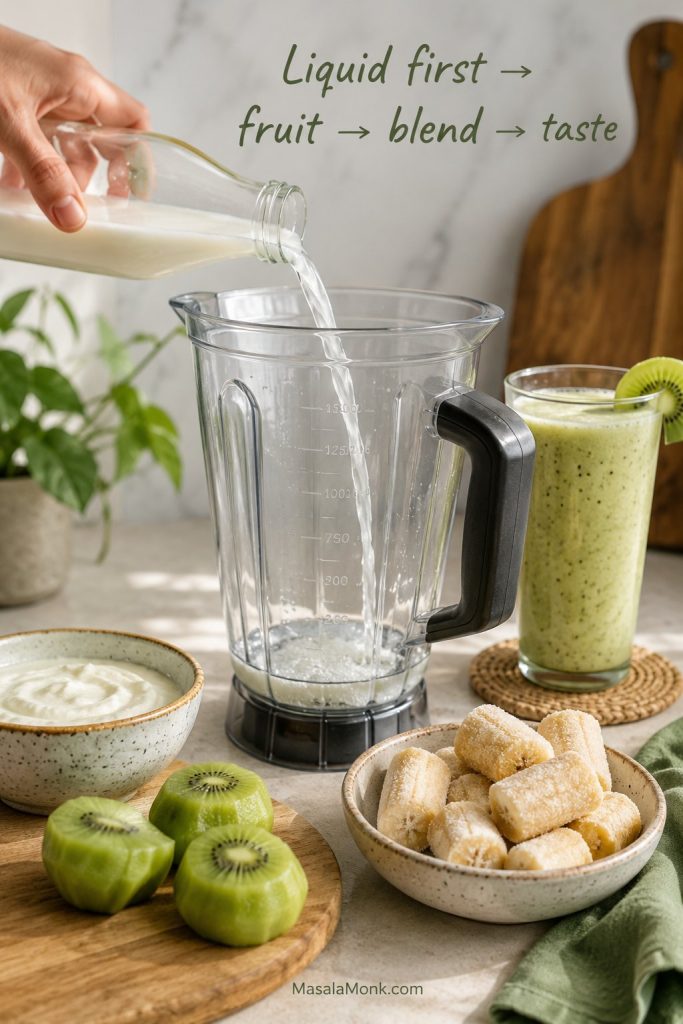
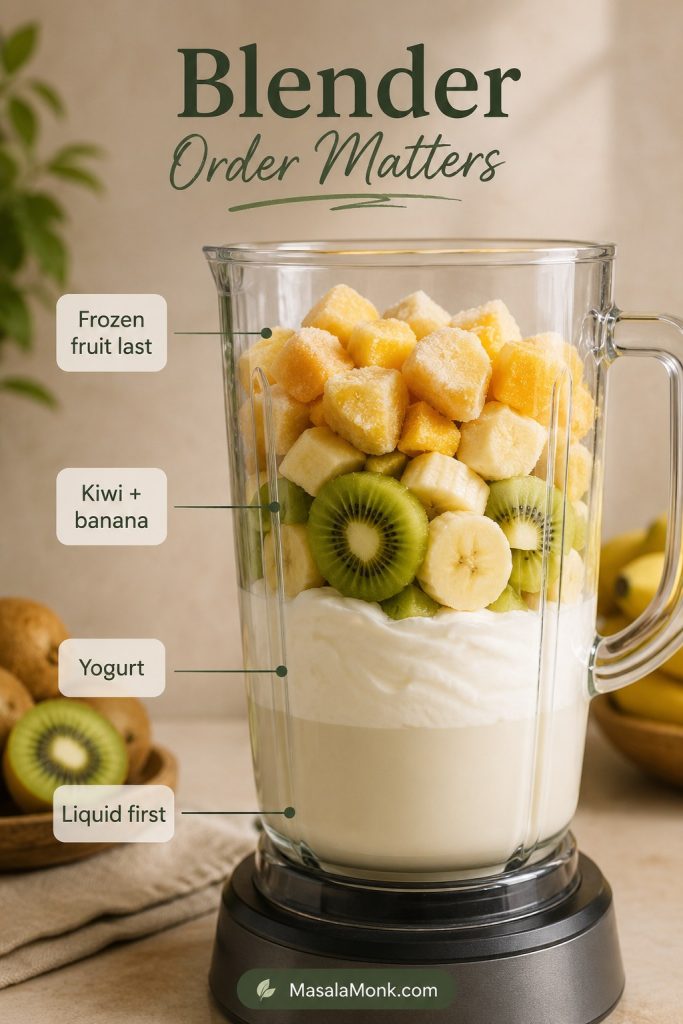
The method is simple, but the order matters when you are blending kiwis with frozen banana, yogurt, and liquid. Add the liquid first so the blender can catch the ingredients more easily, especially if you are using frozen mango, frozen strawberries, oats, or greens.
- Peel and chop the kiwis. Cut away the fuzzy skin for the smoothest drink.
- Add the liquid first. Pour milk, coconut water, orange juice, or water into the blender.
- Add yogurt and soft ingredients. This helps the blender move before the frozen fruit goes in.
- Add kiwi and banana. Break the frozen banana into chunks if needed.
- Add frozen fruit or ice last. Use ice only if your fruit is fresh and the smoothie needs chilling.
- Blend until smooth. Most versions take 30–60 seconds. Green or frozen-heavy smoothies may need 60–120 seconds.
- Taste before pouring. Adjust sweetness, thickness, or brightness while the smoothie is still in the blender. The fixes table below shows the quickest adjustments.
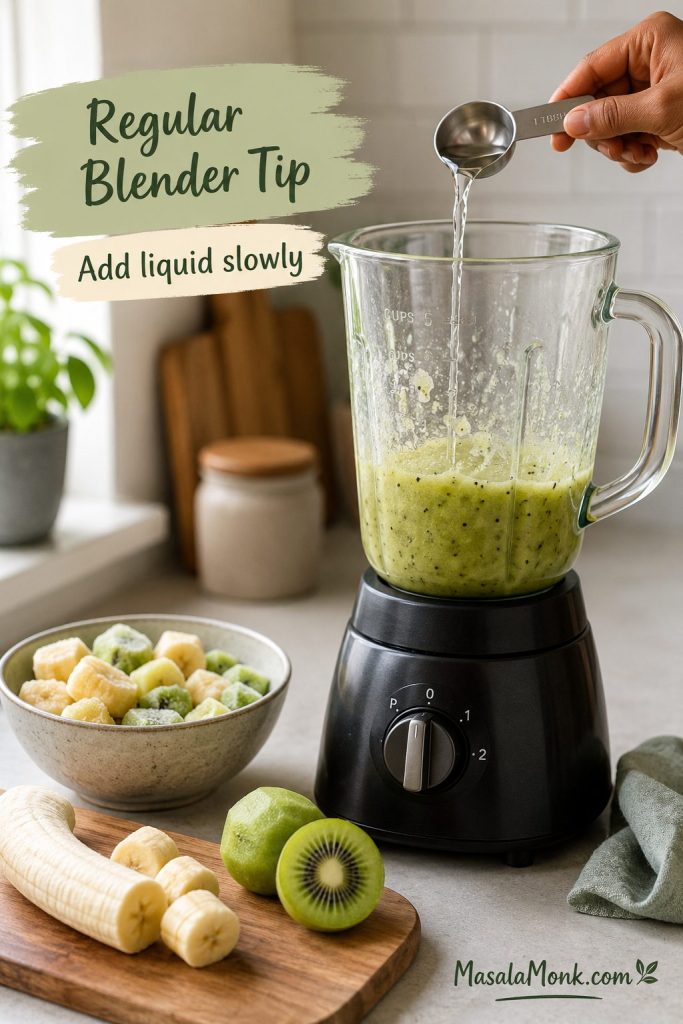
If you are using a regular blender, chop the frozen banana smaller and let very hard frozen fruit sit at room temperature for 3–5 minutes before blending. Also, add liquid first, then increase the liquid by tablespoons only if the blades stop moving.
Kiwi Smoothie Recipe Card
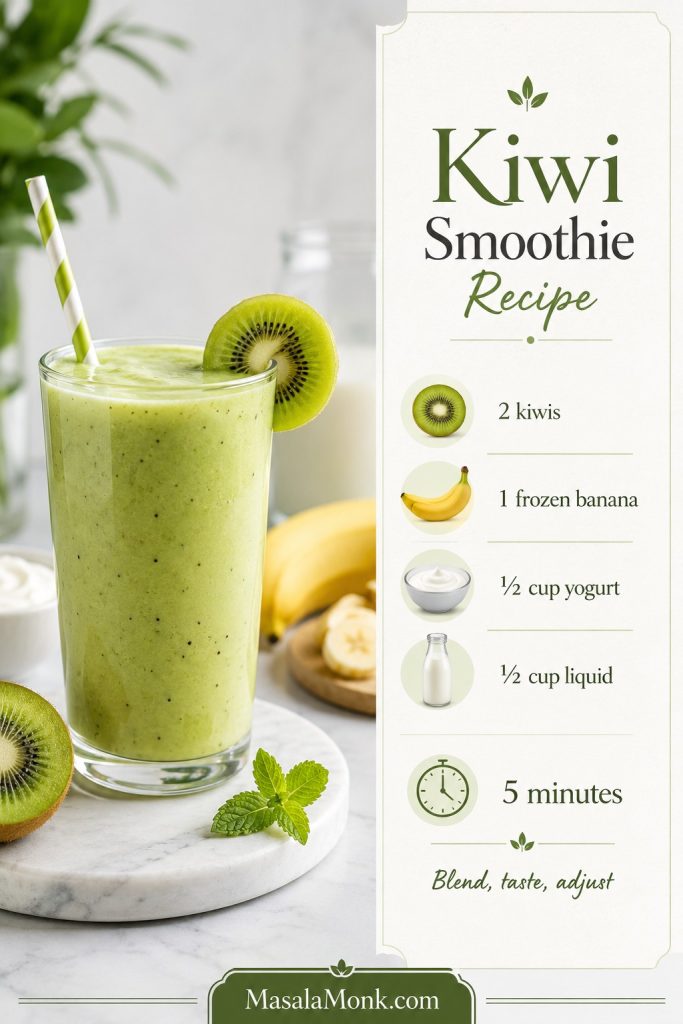
Kiwi Smoothie Recipe
This creamy kiwi smoothie recipe is made with ripe kiwi, frozen banana, yogurt, and your choice of milk, coconut water, orange juice, or water. It is bright, fresh, tangy-sweet, and easy to adjust.
Equipment
- Blender or high-speed blender
- Knife and cutting board
- Measuring cups and spoons
- Glass or jar for serving
Ingredients
- 2 medium ripe kiwis, peeled and chopped, about 140–160 g flesh
- 1 medium frozen banana, about 100–120 g
- ½ cup plain Greek yogurt or regular plain yogurt, about 120 g
- ½ cup milk, coconut water, orange juice, or water, 4 fl oz / 120 ml
- 1–2 teaspoons honey or maple syrup, optional, 7–14 g
- ½ cup frozen mango, strawberries, or pineapple, optional, about 70–90 g
- ¼–½ cup ice, optional, only if your fruit is fresh and the smoothie needs chilling
- 1 teaspoon lime or lemon juice, optional, 5 ml
Method
- Add the liquid to the blender first.
- Add the yogurt, peeled kiwi, frozen banana, and any optional frozen fruit.
- Blend for 30–60 seconds, or until smooth. If using greens, oats, chia, protein powder, or a lot of frozen fruit, blend for 60–120 seconds.
- Taste the smoothie. Add honey if it is too tart, more liquid if it is too thick, or more frozen banana/mango if it is too thin.
- Pour into one large glass or two small glasses and drink right away.
Notes
- For the creamiest smoothie, use frozen banana instead of fresh banana.
- For a dairy-free smoothie, use plant yogurt, almond milk, coconut water, mango, or avocado.
- For a smoothie bowl, reduce the liquid to ¼ cup / 60 ml and use frozen banana or frozen mango.
- Kiwi smoothies with milk or yogurt are best enjoyed fresh because kiwi can change the texture as it sits. See the milk, yogurt, and juice guide for more detail.
- The final yield depends on how much frozen fruit or ice you add.
Kiwi Smoothie Variations
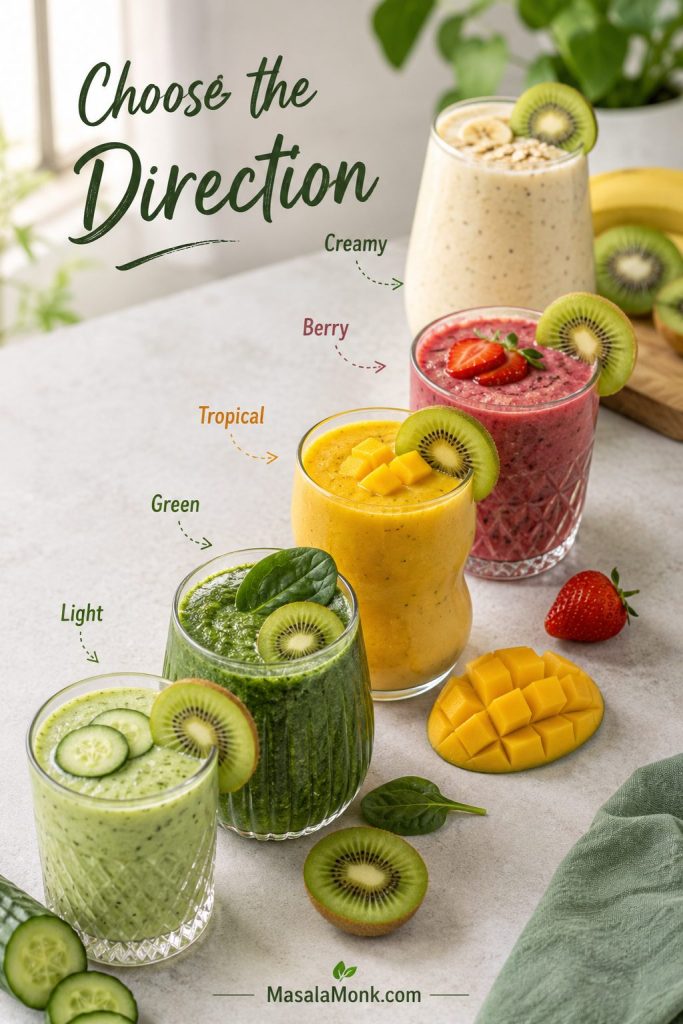
Once the base ratio tastes right, the fun part is choosing the direction. You can make it creamy and breakfast-like with banana, tropical with mango or pineapple, sharper with strawberries, greener with spinach, or lighter with cucumber and coconut water. Since kiwis bring most of the bright, tangy flavor, change one thing at a time so the blend stays balanced.
Banana Kiwi Smoothie
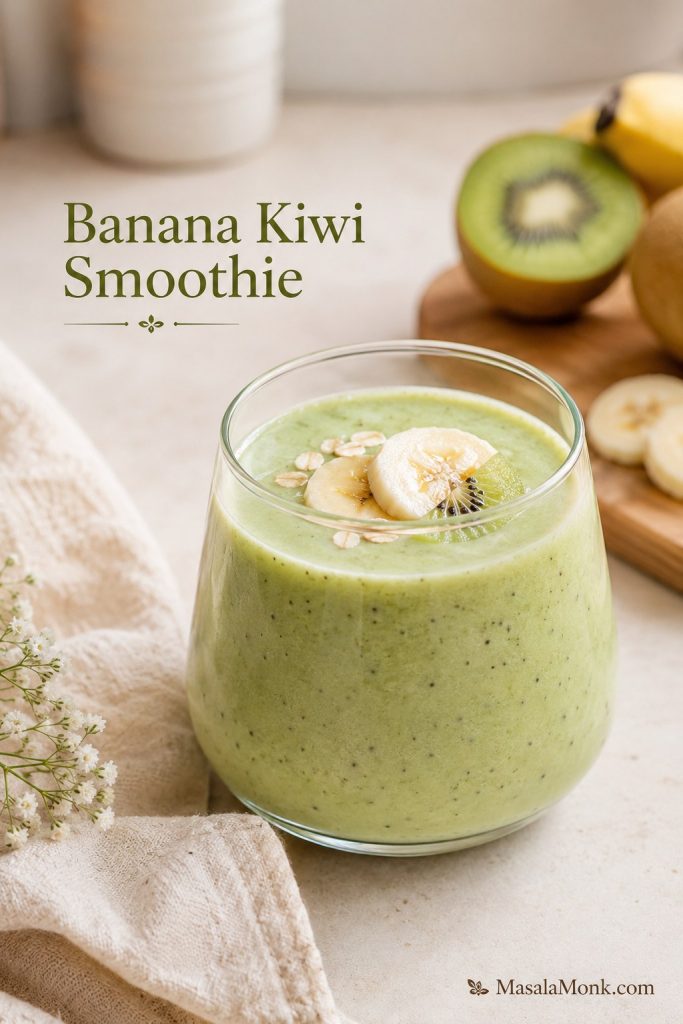
This is the easiest and creamiest version. Make the base recipe with 2 ripe kiwis, 1 frozen banana, yogurt, and milk or coconut water. The banana softens kiwi’s tartness and gives the smoothie a smooth breakfast-style texture.
Strawberry Kiwi Smoothie
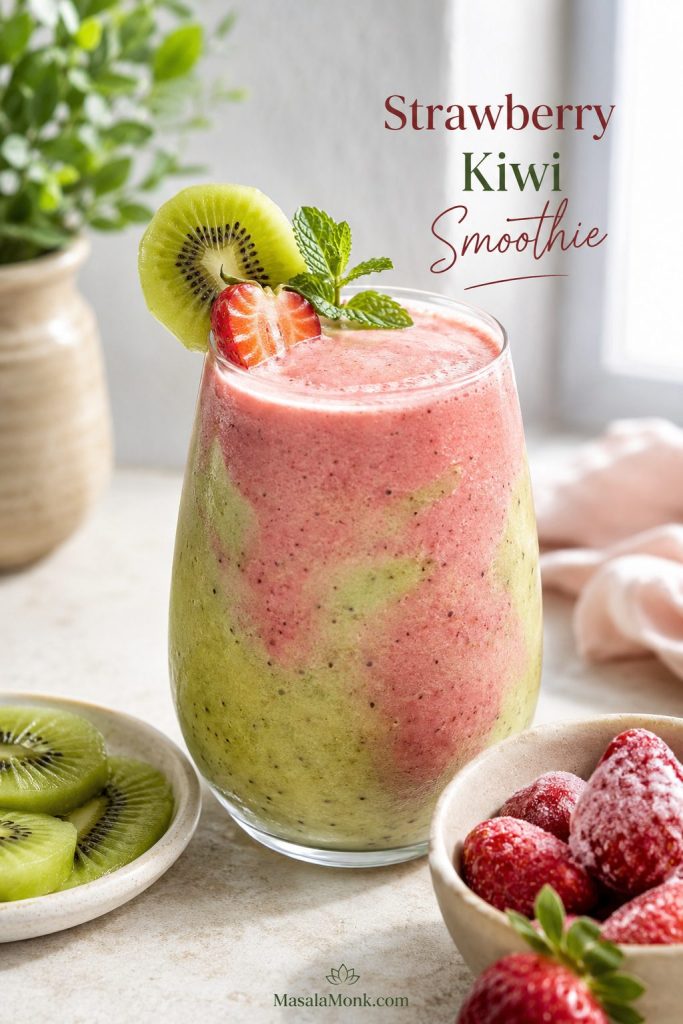
Strawberries make the smoothie taste brighter and more familiar, especially if you like a sweet-tart berry flavor. Add ½–1 cup frozen strawberries to the base recipe. Keep the banana if you want creaminess, or reduce it slightly if you want the strawberry and kiwi to taste sharper and fresher.
If you want to go deeper on the berry side, MasalaMonk also has a full strawberry smoothie guide with yogurt, no-yogurt, protein, and fruit variation ideas.
Kiwi Mango Smoothie
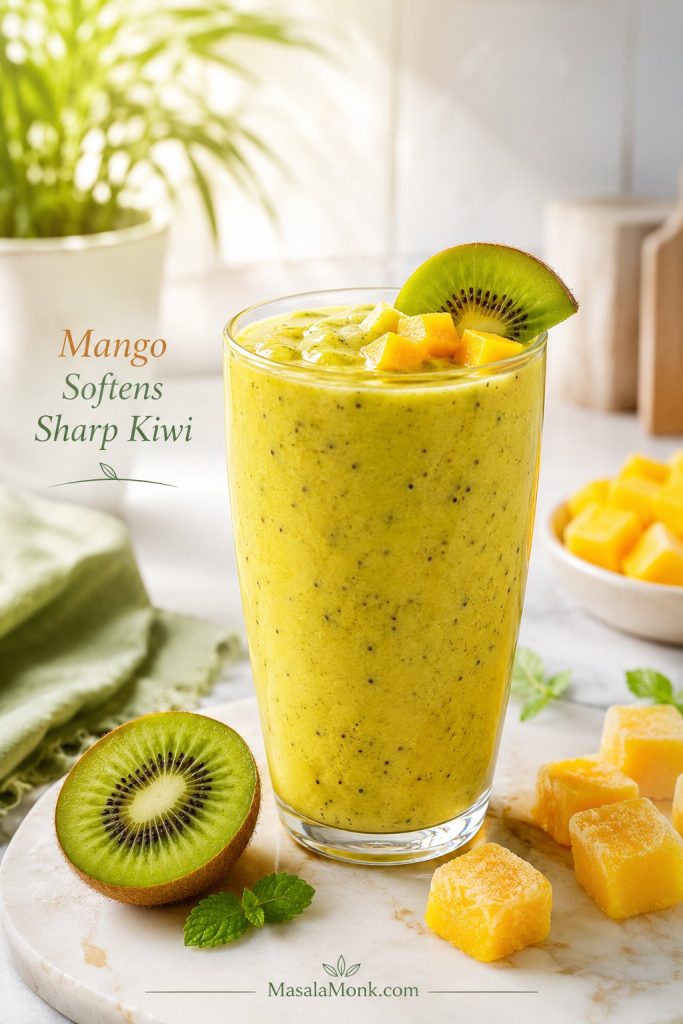
Mango is one of the easiest ways to tame sharp kiwi. It adds sweetness, body, and a tropical flavor without needing much extra sweetener. Blend ½–1 cup frozen mango with 2 kiwis, then use coconut water for a lighter drink or orange juice for a brighter one.
If mango is the fruit you use most often in smoothies, this mango smoothie recipe is a useful companion because it covers fresh mango, frozen mango, yogurt, milk, banana, no-banana, dairy-free, protein, and smoothie bowl versions.
Kiwi Pineapple Smoothie
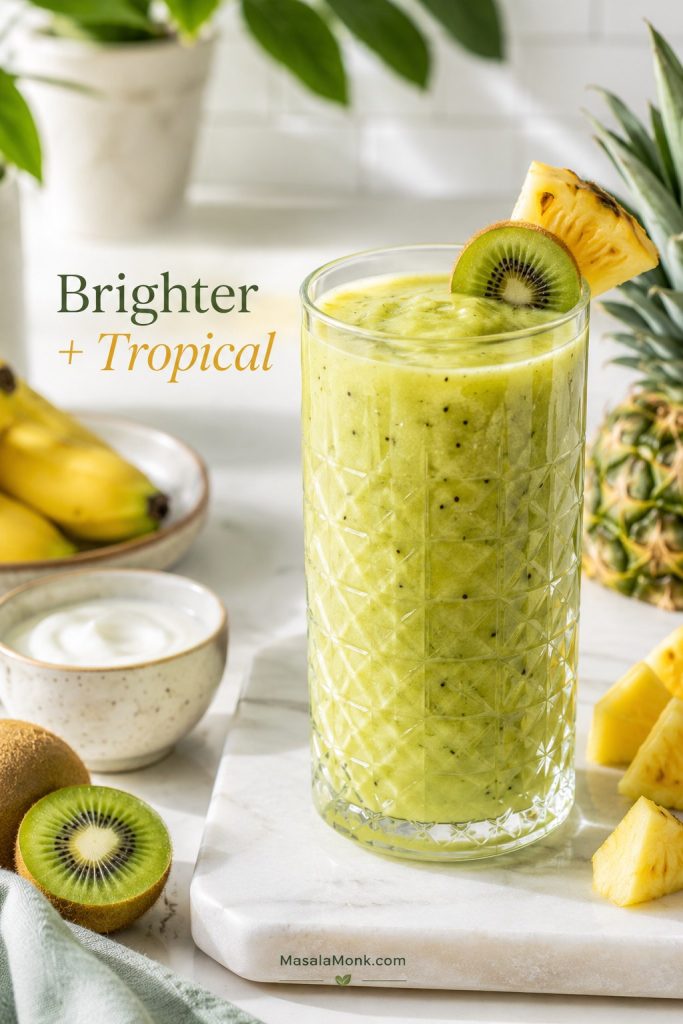
Pineapple pushes the smoothie in a sharper, juicier, more tropical direction. Frozen pineapple is especially good when you want a colder, thicker drink. Because both kiwi and pineapple can taste tart, balance this version with banana, yogurt, mango, or a small amount of honey.
Green Kiwi Smoothie With Spinach
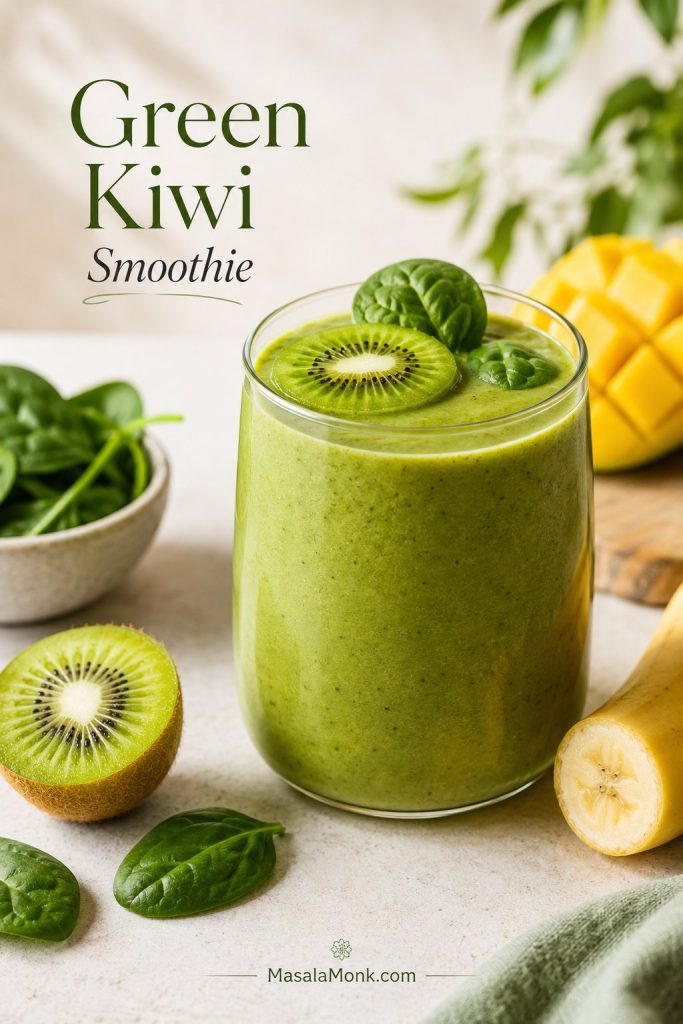
Fresh baby spinach blends into kiwi smoothies more gently than frozen spinach. Add 1 cup to the base recipe, then keep banana or mango in the mix so the smoothie still tastes sweet enough. The color becomes greener, but the flavor stays mild when the spinach is fresh and not packed too heavily.
For more smoothie ideas built around fruit, greens, and vitamin C pairings, see MasalaMonk’s high-iron smoothies and shakes guide.
Kiwi Cucumber Smoothie
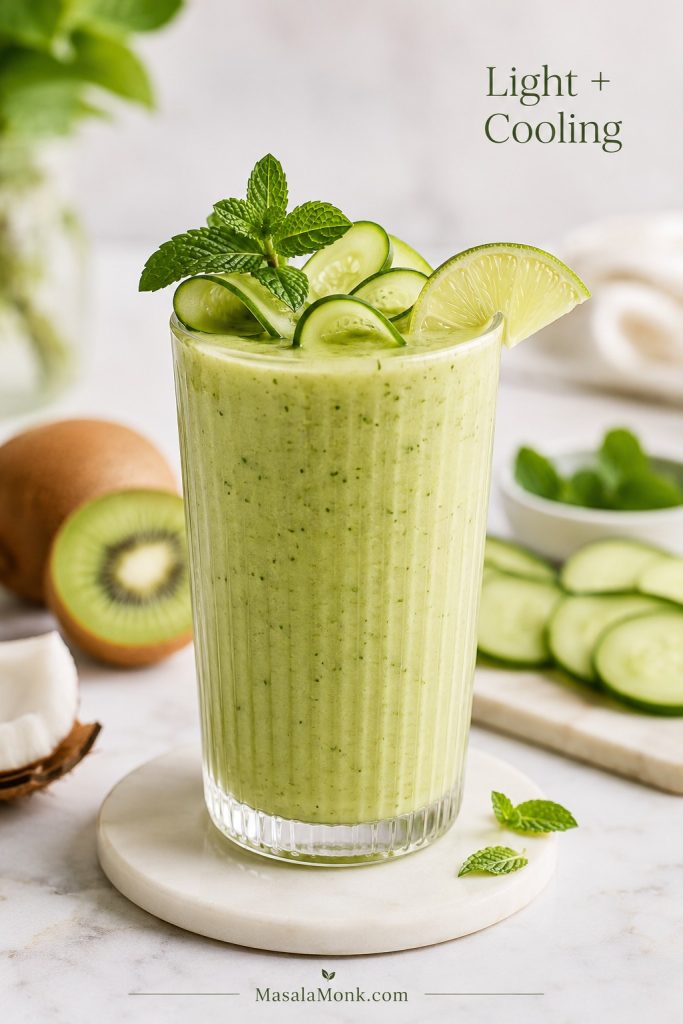
This cucumber version is lighter and fresher than the banana-yogurt blend. Blend kiwi with cucumber, mint, lime, and coconut water for a crisp, cooling drink. Add a little banana, mango, or Greek yogurt if you want it to feel more filling.
Kiwi Protein Smoothie
Greek yogurt is the simplest protein boost because it also improves texture. You can add one scoop of plain or vanilla protein powder, but keep banana, mango, or yogurt in the mix so the smoothie does not taste chalky.
For another simple way to add texture to smoothies, see this guide on using hemp seeds in smoothies.
Kiwi Smoothie Without Yogurt
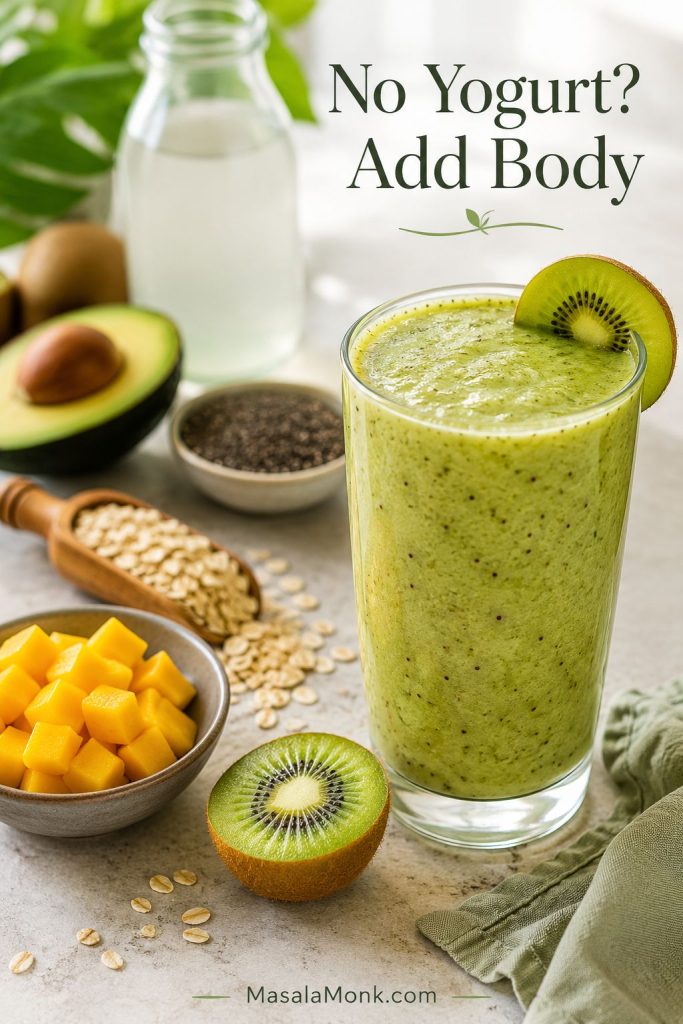
A no-yogurt version still needs body because kiwis alone can make the recipe taste sharp and thin. Keep the frozen banana and use almond milk, oat milk, coconut water, or orange juice as the liquid. For a thicker texture, add frozen mango, avocado, chia seeds, oats, or plant-based yogurt.
Kiwi Smoothie Without Banana
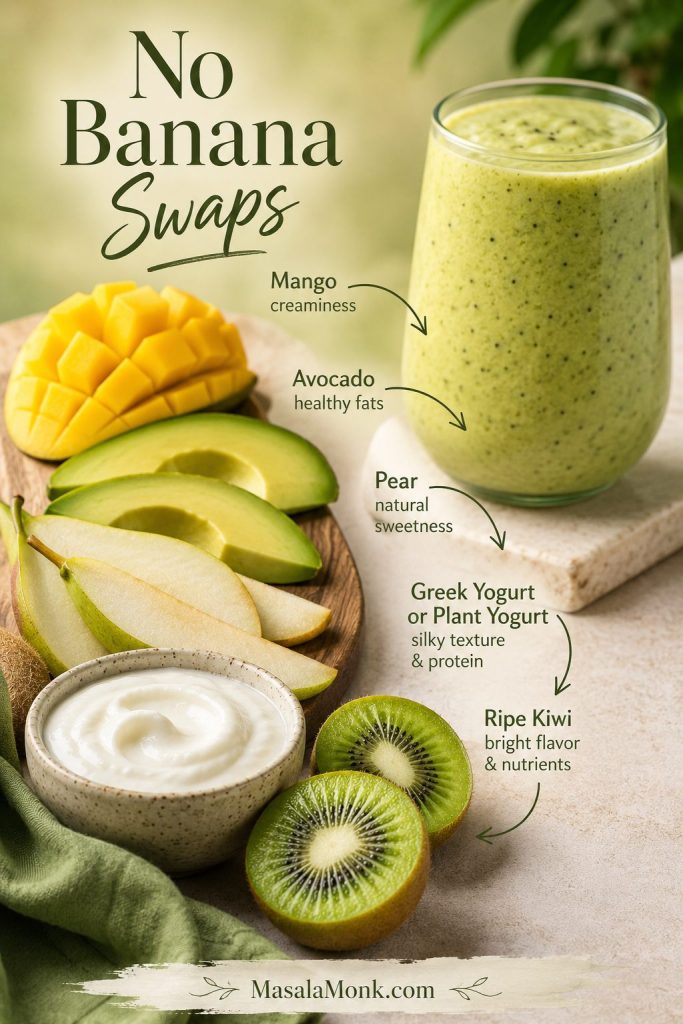
Banana is helpful, but it is not mandatory. Frozen mango is the best swap when you still want sweetness and thickness. Avocado gives creaminess without sweetness, Greek yogurt adds body, and pear gives a softer fruit flavor. Without one of these replacements, kiwi can taste sharper and the smoothie may feel thinner.
Kiwi Smoothie Bowl
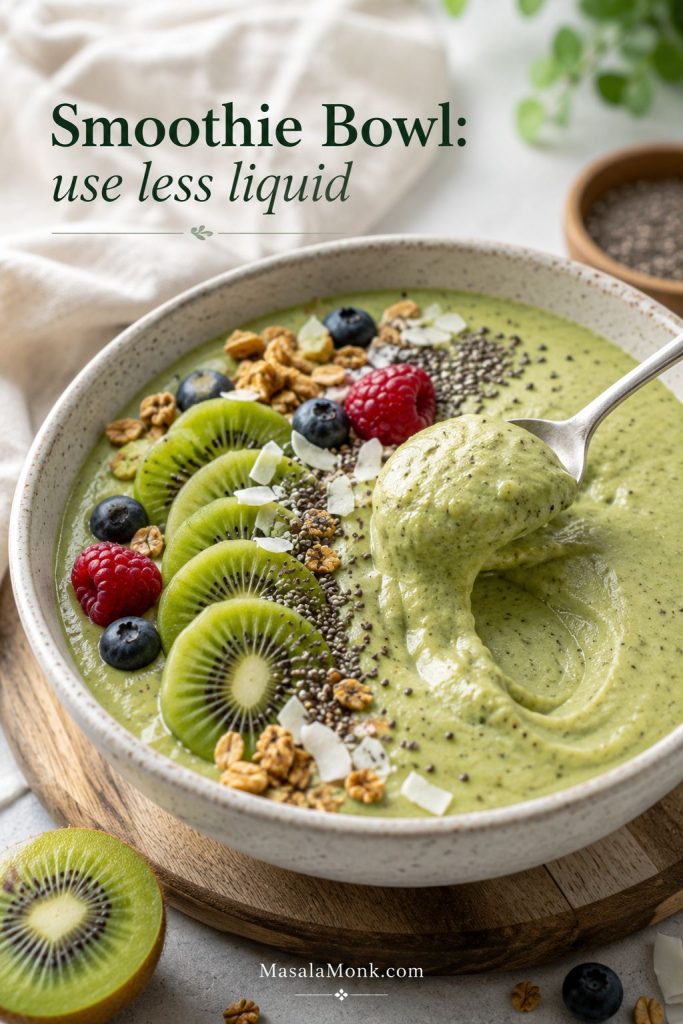
A smoothie bowl needs much less liquid than a drinkable smoothie. Reduce the liquid to ¼ cup / 60 ml and use frozen banana, frozen mango, or frozen pineapple. Blend thick, then top with sliced kiwi, granola, coconut, chia seeds, berries, or pumpkin seeds.
Kiwi Milkshake or Kiwi Shake
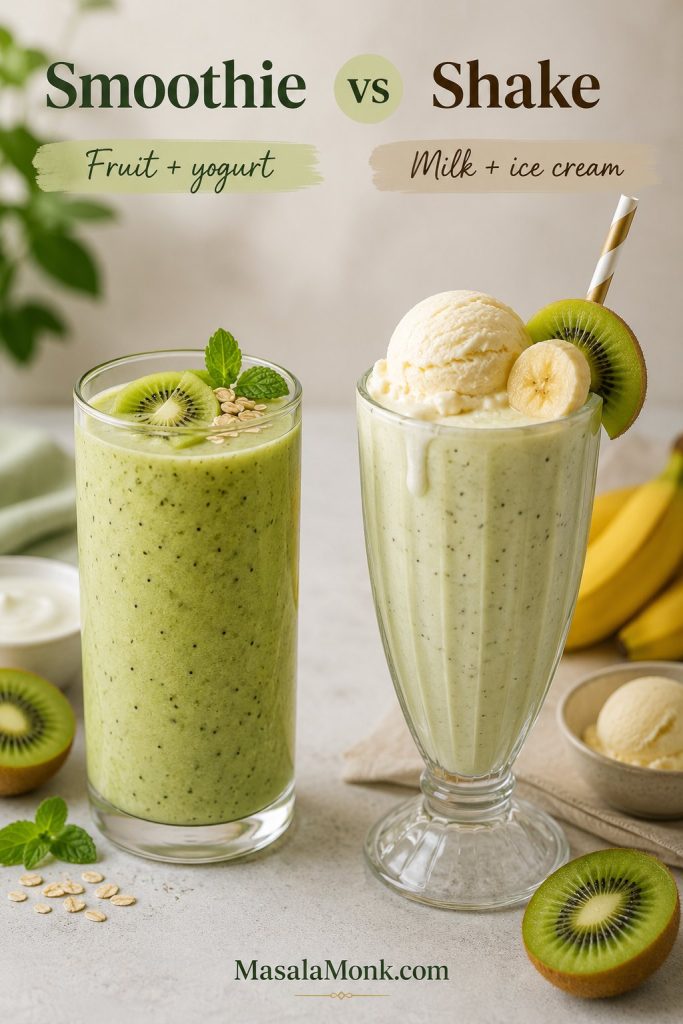
A kiwi shake is the dessert-style cousin of this smoothie. Blend 2–3 peeled kiwis with milk, banana, and a scoop of vanilla ice cream for a colder, sweeter drink. It is richer than the main recipe, so serve it right away and treat it more like a milkshake than a breakfast smoothie.
Best Fruits to Pair With Kiwi in Smoothies
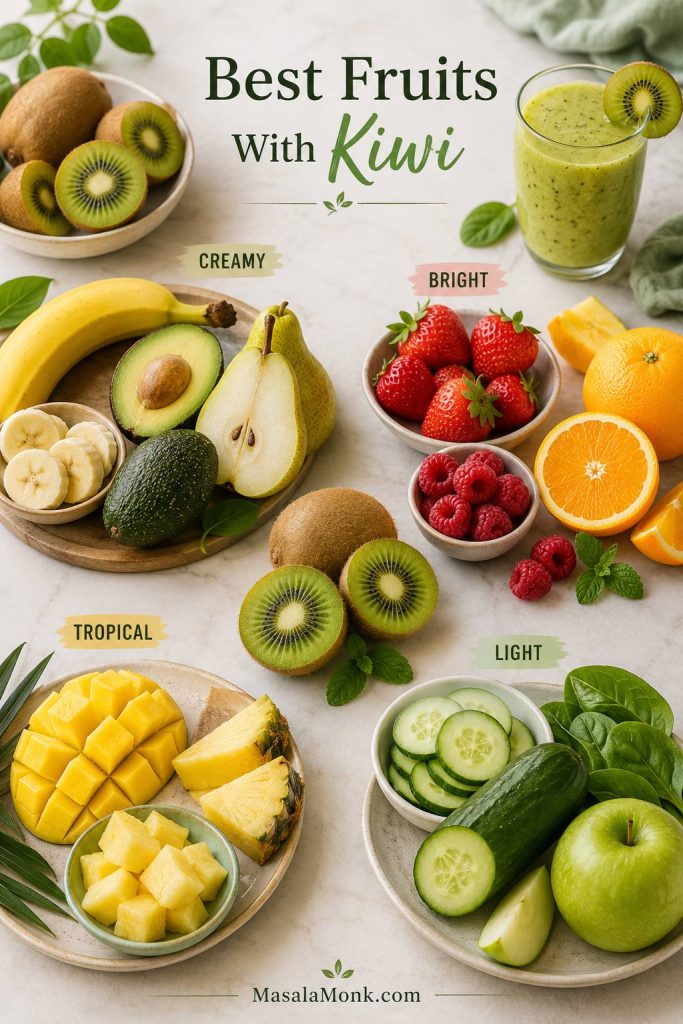
Because kiwi has a naturally bright edge, it works best with fruits that either soften its tartness or echo that fresh flavor. Banana and mango make it creamier. Strawberry and raspberry keep it tangy. Pineapple and orange make it tropical. Apple, pear, cucumber, and spinach keep it lighter.
| Fruit or add-in | Why it works with kiwi | Best smoothie style |
|---|---|---|
| Banana | Softens tartness and thickens the drink. | Creamy breakfast smoothie |
| Strawberry | Gives a familiar sweet-tart berry flavor. | Berry kiwi smoothie |
| Mango | Adds tropical sweetness and body. | No-yogurt or tropical smoothie |
| Pineapple | Makes the smoothie bright and juicy. | Refreshing summer smoothie |
| Orange | Adds citrus sweetness and makes the drink fruitier. | Juice-based smoothie |
| Apple | Keeps the flavor mild and fresh. | Light breakfast smoothie |
| Blueberry | Adds deeper berry flavor and color. | Purple fruit smoothie |
| Raspberry | Keeps the smoothie sharp and tangy. | Tart berry smoothie |
| Pear | Adds gentle sweetness without dominating. | No-banana smoothie |
| Avocado | Makes the smoothie creamy without banana. | No-banana creamy smoothie |
| Spinach | Adds green color with mild flavor. | Green kiwi smoothie |
| Cucumber | Makes the smoothie lighter and fresher. | Cooling smoothie |
Kiwi Smoothie With Milk, Yogurt, or Juice
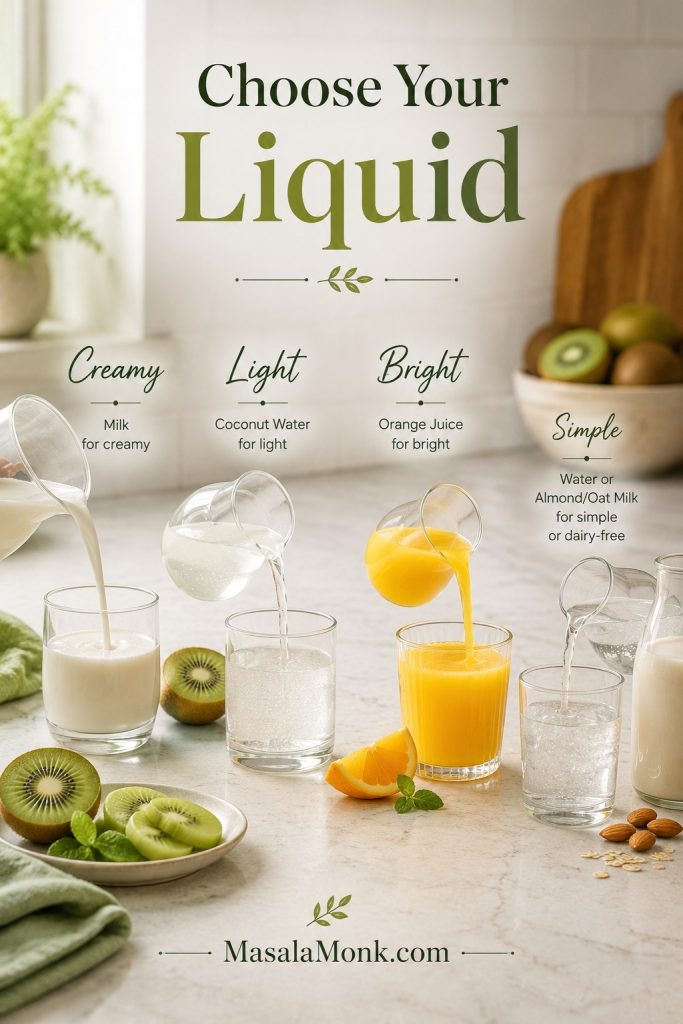
The liquid you choose changes the whole smoothie. There is no single correct option; the best one depends on whether you want the drink creamy, light, bright, dairy-free, or more filling.
Because the liquid changes the final texture so much, choose based on the smoothie you actually want instead of forcing one option.
| Liquid | Best use | Watch-out |
|---|---|---|
| Milk | Creamy, mellow smoothie. | Best with banana or yogurt for balance. |
| Greek yogurt + water | Thick texture without too much liquid. | Can taste tangy if the kiwi is tart. |
| Almond milk or oat milk | Dairy-free creaminess. | Use unsweetened if you want more control. |
| Coconut water | Light, refreshing, tropical-style smoothie. | Thinner than milk or yogurt. |
| Orange juice | Bright, fruity, tropical flavor. | Can make a tart kiwi taste even sharper. |
| Water | Cleanest and simplest option. | Can taste thin unless you use banana or mango. |
| Canned coconut milk | Rich tropical smoothie. | Can get heavy fast; use a small amount. |
Milk vs Coconut Water
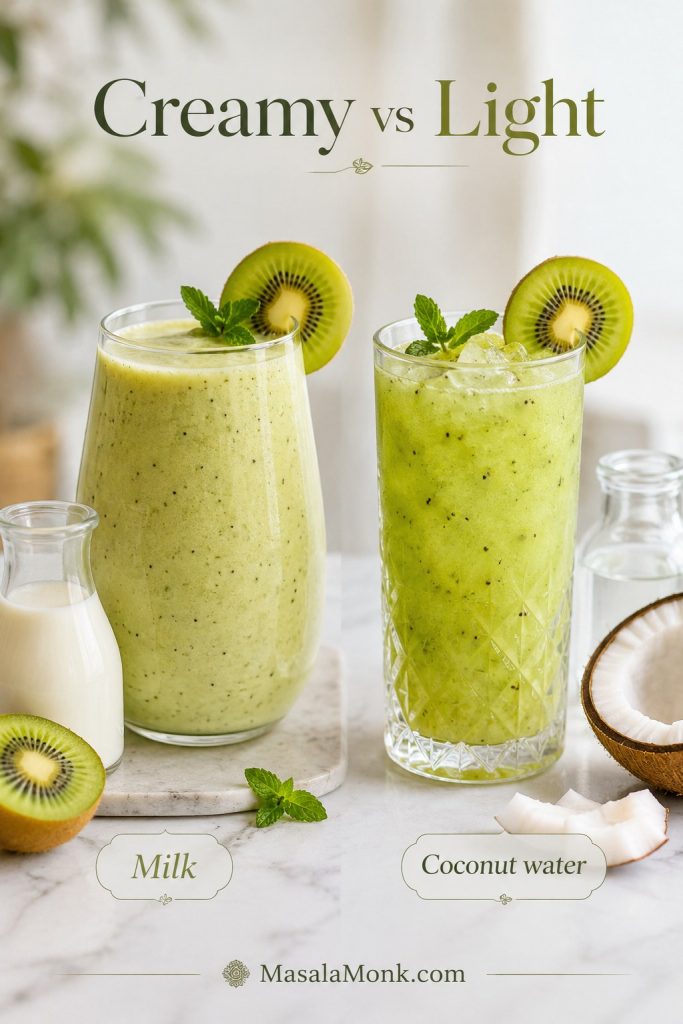
If you like the lighter tropical finish of coconut water, MasalaMonk’s coconut water smoothie ideas can give you more combinations beyond kiwi.
Kiwi works with milk and yogurt, but dairy-based versions are best enjoyed soon after blending. Green kiwifruit contains actinidin, a natural protein-digesting enzyme, so a milk- or yogurt-heavy smoothie can thin or separate more noticeably as it sits.
Is a Kiwi Smoothie Good for Weight Loss?
A smoothie recipe with kiwis can fit into a lighter breakfast or snack, but it is not magic on its own. The overall blend matters more than the word “kiwi.” Use whole fruit, keep juice and sweeteners modest, and add protein or fiber if you want the smoothie to feel more satisfying. The protein smoothie variation is a good place to start if you want a more filling version.
For example, a more balanced version could use 2 kiwis, ½ frozen banana, Greek yogurt or unsweetened plant milk, spinach or cucumber, and chia seeds. On the other hand, too much honey, sweetened yogurt, fruit juice, or ice cream can quickly turn it into a dessert drink.
Harvard Health notes that smoothies can become calorie-heavy when they include added sugar, syrup, honey, sweetened yogurt, frozen yogurt, or large amounts of juice. That is why this recipe keeps sweetener optional and uses whole fruit as the main base.
How to Fix a Kiwi Smoothie
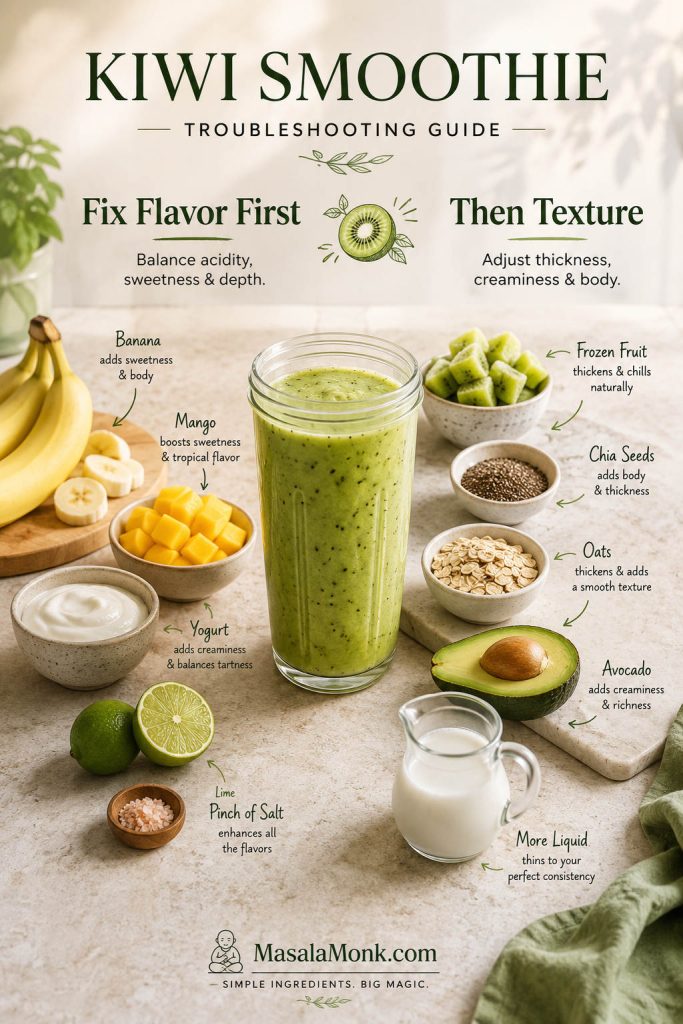
Most problems in a smoothie recipe with kiwis are easy to fix while the drink is still in the blender. Taste before pouring, then adjust one thing at a time. Small changes work better than adding a lot of liquid, sugar, or ice all at once.
Do not throw out a smoothie just because the first sip is not perfect. Kiwi can taste different from fruit to fruit, and one small adjustment in the blender can turn a sharp, flat, or watery smoothie into something balanced.
Fix the Flavor First
If the smoothie tastes sour, flat, bitter, or too sweet, fix the flavor before you change the texture. Usually, one small addition is enough: banana or mango for softness, yogurt for roundness, lime for brightness, or a tiny pinch of salt for a flat-tasting blend.
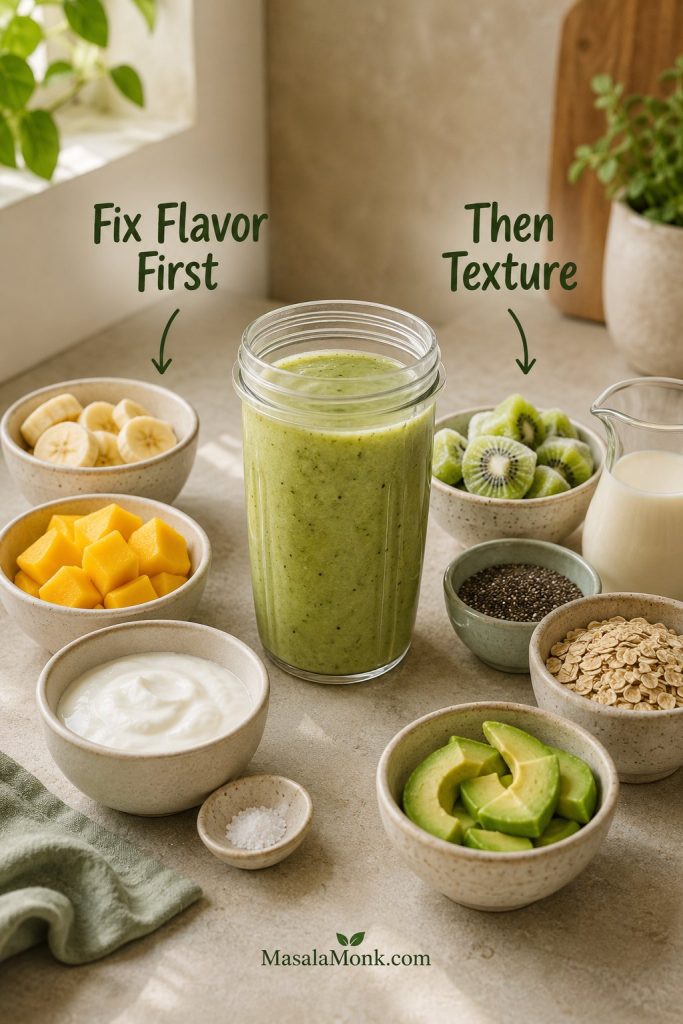
Then Fix the Texture
Once the flavor tastes right, adjust the texture. Frozen fruit, banana, chia, oats, and avocado add body, while milk, coconut water, orange juice, or water loosen a thick smoothie. Add liquid slowly so the drink does not become watery.
| Problem | Best fix |
|---|---|
| Sour or sharp | Blend in banana, mango, honey, maple syrup, or yogurt to soften the edge. |
| Thin texture | Use frozen banana, frozen mango, chia seeds, oats, or avocado to bring back body. Next time, start with less liquid. |
| Overly thick | Add milk, coconut water, orange juice, or water 1 tablespoon at a time until the blender moves smoothly. |
| Flat flavor | A little more kiwi, a tiny squeeze of lime, orange juice, or even a small pinch of salt can wake it up. |
| Overly sweet | Plain yogurt, cucumber, spinach, extra kiwi, or a little lemon/lime can pull the sweetness back into balance. |
| Seed-heavy texture | Blend longer or use a high-speed blender. Kiwi seeds are edible, but a little texture is normal. |
| Watery smoothie | Use frozen fruit instead of lots of ice, and keep the liquid lower at the start. |
| Bitter or harsh | Use ripe, peeled kiwi. Hard kiwis and too much skin can make the drink taste rough. |
| Separation after sitting | Shake or stir before drinking. For the next batch, use banana, yogurt, chia, or a less watery liquid. |
| Blender struggling | Pour liquid in first, chop frozen fruit smaller, and add extra liquid by tablespoons instead of splashing in too much at once. |
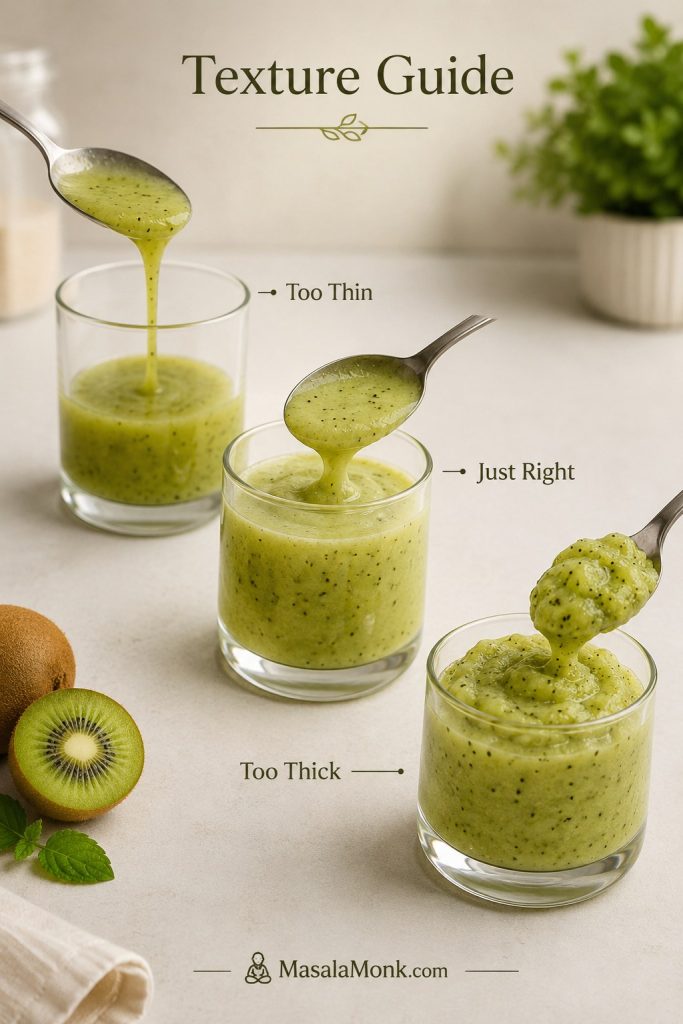
Kiwi Smoothie Thickness Guide
Make-Ahead, Freezing, and Storage Tips
This smoothie tastes best right after blending. The flavor is brighter, the texture is smoother, and dairy-based versions are less likely to thin out. If you need to make it ahead, keep it short and practical.
Storing a Kiwi Smoothie in the Fridge
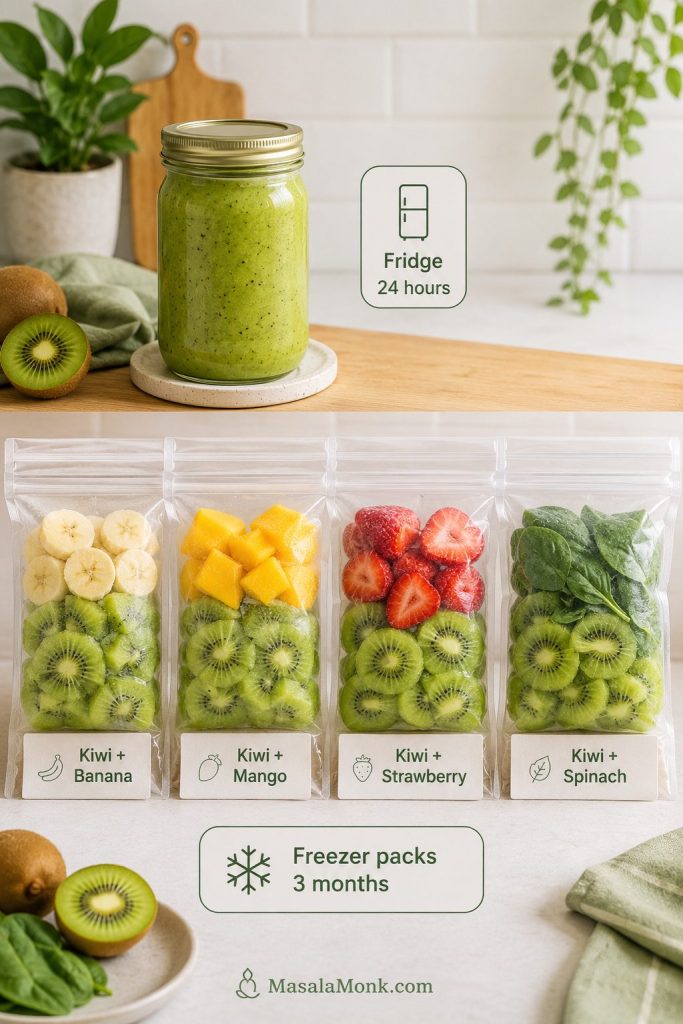
For the best texture, drink it within 24 hours. Store it in a sealed jar or bottle, refrigerate it, and shake or stir before drinking. The smoothie may separate slightly, especially if it has water, coconut water, or juice instead of yogurt.
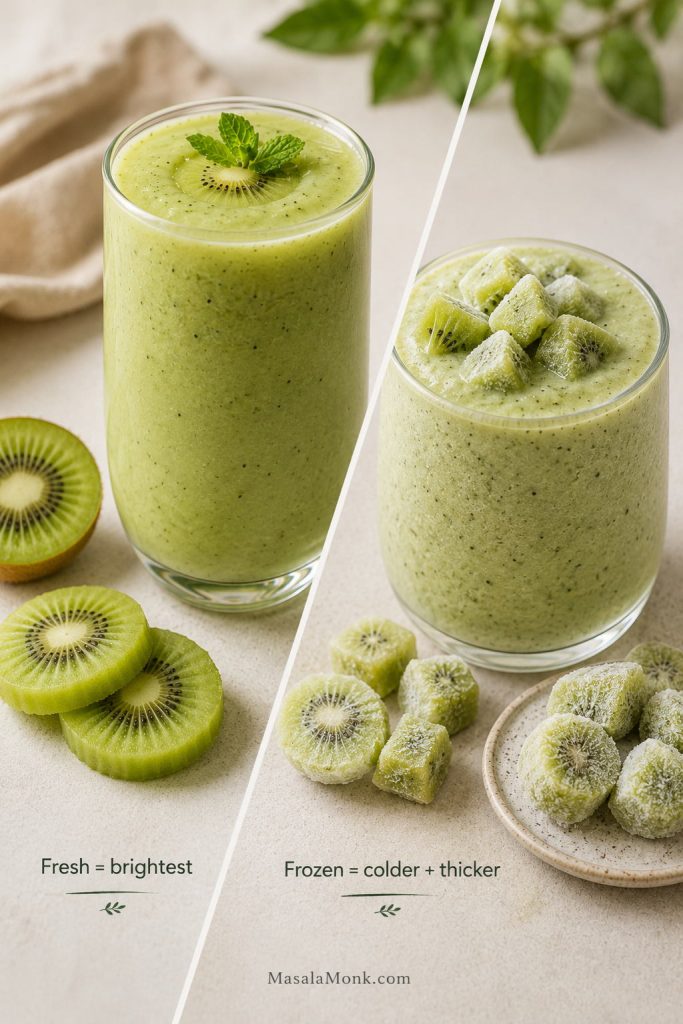
Freezing Kiwi for Smoothies
Frozen kiwi works well in smoothies. Peel and chop ripe kiwi, freeze the pieces on a tray, then transfer them to a freezer bag or container. However, frozen kiwi works best with banana, mango, strawberry, or yogurt because kiwi alone can become icy.
Making Kiwi Smoothie Packs
Smoothie packs are the easiest make-ahead option. Add peeled kiwi, banana, mango, strawberries, spinach, or pineapple to freezer bags. Freeze for up to 3 months. When ready to blend, add the frozen pack to the blender with yogurt and liquid.
Kiwi Nutrition Notes for Smoothies
Kiwi is often used in smoothies because it brings bright flavor, gentle natural sweetness, fiber from the whole fruit, and vitamin C. It pairs especially well with banana, mango, strawberry, spinach, and yogurt because those ingredients balance the tartness.
The USDA vitamin C table lists raw green kiwifruit as a high-vitamin-C fruit per cup, which makes kiwi a useful ingredient in fruit smoothies. You can also explore MasalaMonk’s broader guide to vitamin C rich foods for more everyday fruit and vegetable ideas.
For a deeper look at kiwi beyond smoothies, MasalaMonk has a guide to kiwi nutrition, benefits, and practical uses. For this recipe, though, the most important thing is simple: ripe fruit, the right liquid, and enough body to keep the smoothie enjoyable.
FAQs About Kiwi Smoothies
These quick answers cover the most common questions readers have before changing the base recipe: milk or no milk, yogurt or no yogurt, banana or no banana, fresh kiwi or frozen kiwi.
Can you put kiwi in a smoothie?
Kiwi works very well in smoothies because it adds bright, tangy fruit flavor. It tastes best with creamy or sweet ingredients like banana, yogurt, mango, strawberry, milk, or coconut water.
Do you peel kiwi before putting it in a smoothie?
For the smoothest kiwi smoothie, peel it first. Kiwi skin is edible, but it can add a fuzzy, fibrous texture. If you want to blend kiwi with the skin on, wash it very well and use a strong blender.
What fruit goes well with kiwi in smoothies?
Banana, strawberry, mango, pineapple, orange, apple, blueberry, raspberry, pear, and avocado all pair well with kiwi. Banana and mango are best for sweetness and creaminess, while strawberry and pineapple keep the flavor brighter.
Can I make a kiwi smoothie with milk?
Milk makes the drink creamy and mild, especially when paired with banana or yogurt. For the best texture, drink milk-based versions soon after blending.
Can I make a kiwi smoothie without yogurt?
For a no-yogurt version, replace yogurt with frozen banana, mango, avocado, plant milk, coconut water, chia seeds, oats, or plant-based yogurt. Without yogurt, the smoothie usually needs frozen fruit or banana to stay thick.
Can I make a kiwi smoothie without banana?
Mango, avocado, pear, Greek yogurt, frozen pineapple, or chia seeds can all replace banana. Mango is the best swap when you want sweetness and thickness without changing the flavor too much.
How do you make a kiwi smoothie less sour?
Start with ripe kiwis, then add banana or mango if the smoothie still tastes sharp. Milk or yogurt can also soften the flavor better than water. If needed, add 1–2 teaspoons honey or maple syrup, but avoid too much lime, lemon, pineapple, or orange juice when the kiwi is already tart.
Why did my kiwi smoothie turn watery?
It may have too much liquid, too much ice, or not enough creamy fruit. Frozen banana, frozen mango, yogurt, avocado, chia seeds, or oats will help thicken it. Also, the texture can thin slightly as it sits, so it is best fresh.
Can I use frozen kiwi in a smoothie?
Frozen kiwi works well, especially with banana, mango, strawberry, yogurt, or another creamy ingredient. On its own, frozen kiwi can make a smoothie taste icy or sharp.
What is the difference between a kiwi smoothie and a kiwi milkshake?
The smoothie version is usually fruit-based and often made with yogurt, milk, coconut water, or juice. A kiwi milkshake is dessert-style and usually includes milk, ice cream, or extra sweetener.
Final Tips for the Best Kiwi Smoothie
The first time you make it, start with 2 ripe kiwis, 1 frozen banana, ½ cup yogurt, and ½ cup liquid. Then, taste it before pouring. That one small pause is what helps you catch a sharp kiwi, a thin texture, or a smoothie that needs one more spoonful of yogurt.
After that, the recipe becomes easy to adapt. Banana makes it creamy, mango makes it tropical, strawberry makes it brighter, cucumber makes it lighter, and ice cream turns it into a kiwi shake. Once you make it once, note which direction you liked best: creamy banana, tropical mango, lighter coconut water, or sharper strawberry kiwi.
The best version is not always the sweetest one. It is the one where the kiwi still tastes fresh, the texture feels creamy, and nothing sharp, watery, or heavy takes over.