Posted on Leave a comment

Kiwi Smoothie Recipe

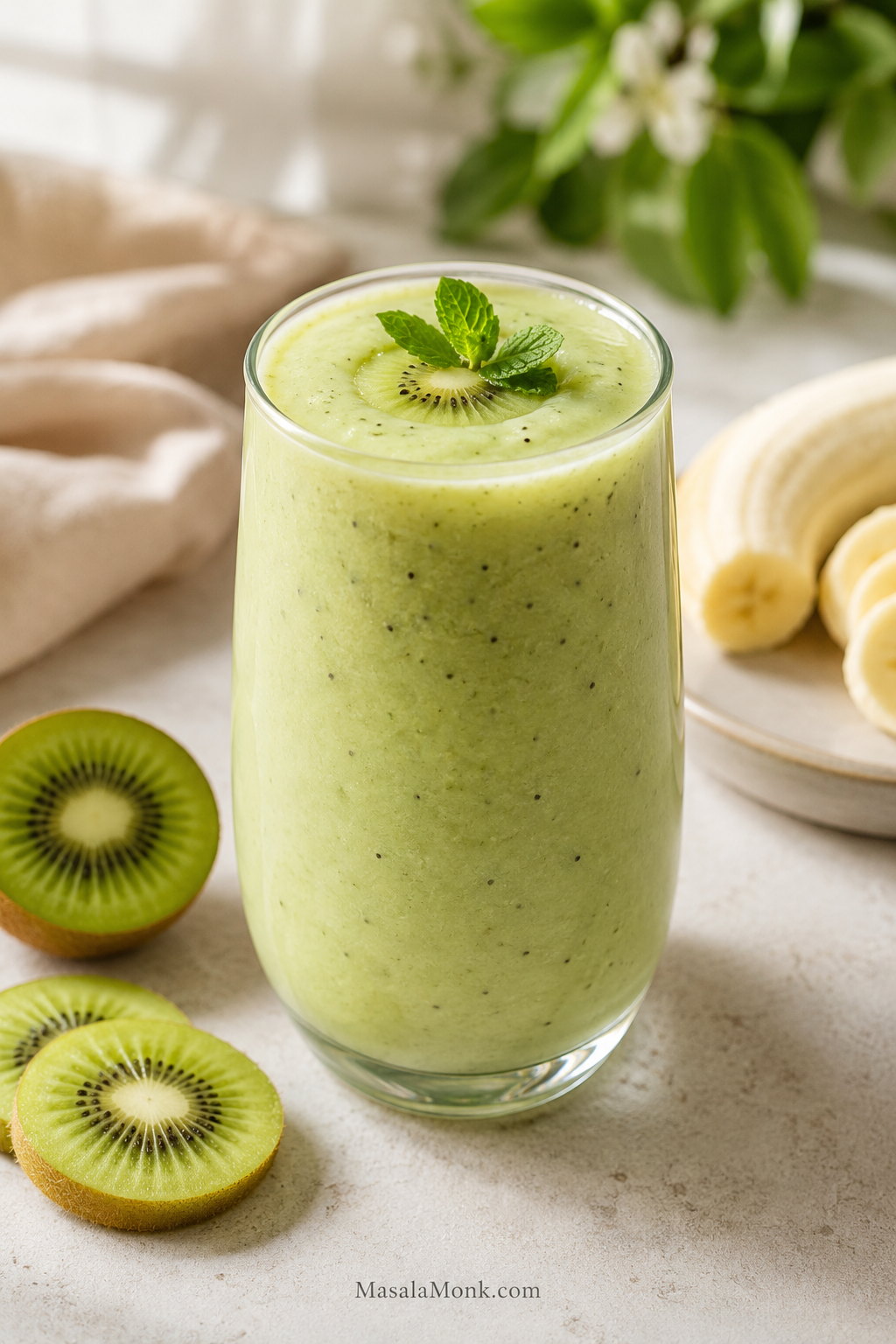
Creamy pale-green kiwi smoothie in a glass with sliced kiwi and banana on a breakfast counter.

This kiwi smoothie recipe is creamy, fresh, tangy-sweet, and easy to adjust with banana, yogurt, milk, strawberry, mango, or dairy-free swaps. It takes about 5 minutes, but it still gives you enough control to avoid the usual problems: a smoothie that tastes too sour, too thin, too watery, too seedy, or too bland.

Done right, it tastes bright and creamy at the same time — fresh enough for a warm morning, but filling enough to feel like breakfast.

The base is simple: ripe kiwi for brightness, frozen banana for creaminess, yogurt for body, and just enough liquid to help the blender move. From there, you can make it lighter with coconut water, fruitier with orange juice, thicker as a smoothie bowl, greener with spinach, or sweeter with mango and strawberries.

Start with the classic kiwi banana smoothie, then adjust it to fit what you have. If your kiwis are sharp, jump to the fixes section. If you want a no-yogurt smoothie, a no-banana version, or a kiwi shake-style drink, those options are built into the guide too.

Quick Answer: Best Kiwi Smoothie Recipe Ratio

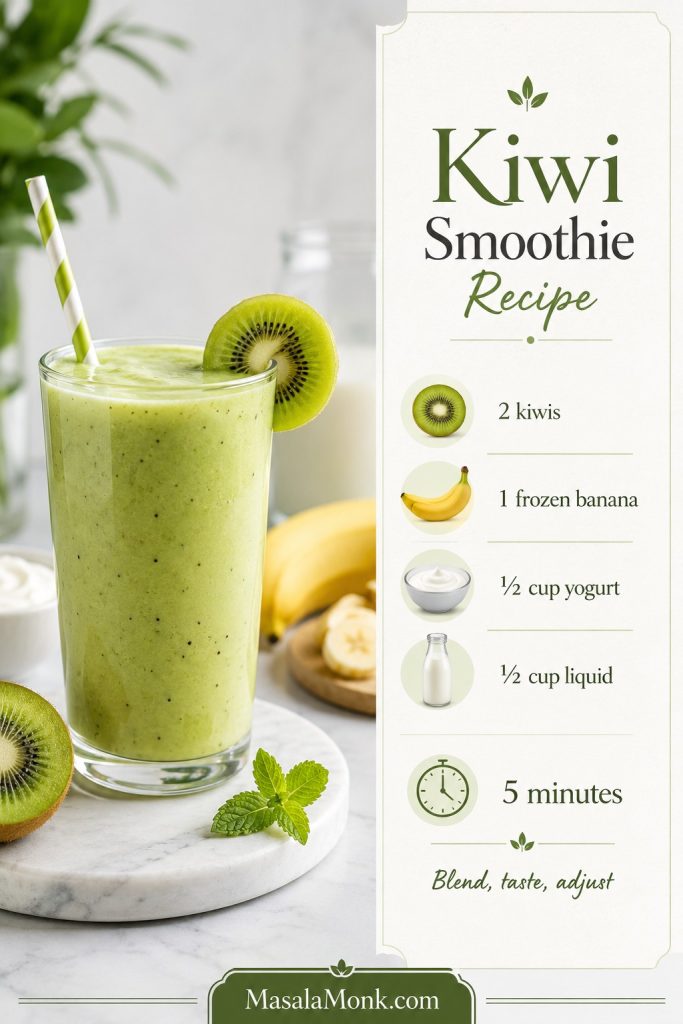
The best kiwi smoothie ratio is 2 ripe kiwis + 1 frozen banana + ½ cup yogurt + ½ cup liquid. Choose milk for a creamier smoothie, coconut water for a lighter smoothie, or orange juice for a brighter fruitier version. Add honey only if your kiwis taste sharp.
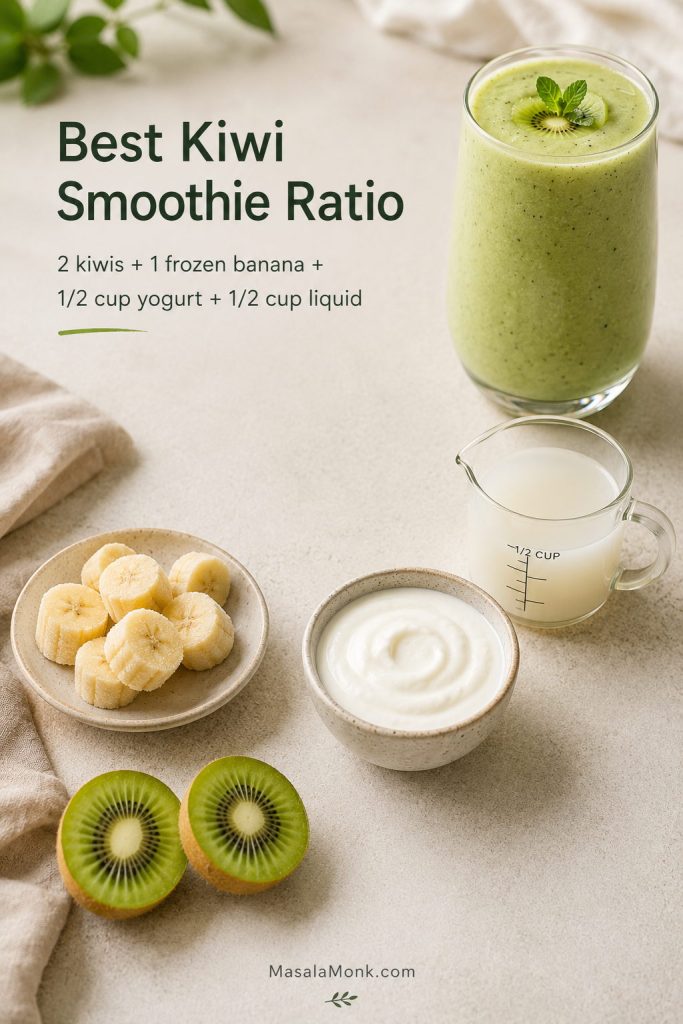
Kiwi smoothie ratio guide with kiwis, frozen banana, yogurt, liquid, and a finished smoothie
Start with this base kiwi smoothie ratio first; then taste before adding more fruit, liquid, or sweetener.

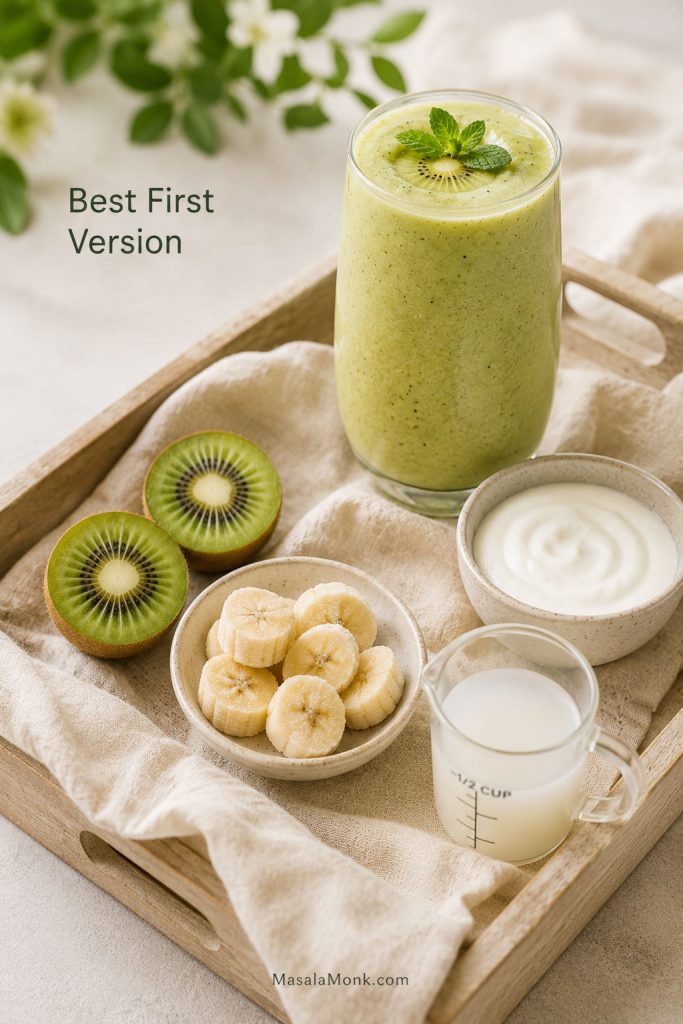
Best First Version to Try

Use 2 ripe kiwis, 1 frozen banana, ½ cup plain Greek yogurt, and ½ cup milk or coconut water. This gives you the cleanest creamy-tangy balance before you start changing the fruit, liquid, or sweetness.
Finished kiwi smoothie with ripe kiwis, frozen banana, Greek yogurt, and milk or coconut water
This first blend is the safest place to start because it gives you a creamy-tangy balance before you try strawberry, mango, no-yogurt, or no-banana versions.

For one large smoothie, the base recipe usually means 2 peeled kiwis, 1 medium frozen banana, ½ cup Greek yogurt or plain yogurt, and ½ cup milk, water, coconut water, or orange juice. Blend until smooth, taste, then adjust before pouring.

The formula works because each ingredient has a job. Kiwi brings the bright fruit flavor, banana softens the tartness, yogurt gives body, and the liquid helps everything blend. Once that balance is right, the smoothie tastes fresh instead of sharp or watery.

If you already know what went wrong with your last smoothie, the troubleshooting table will help you adjust sourness, thickness, sweetness, and texture quickly.

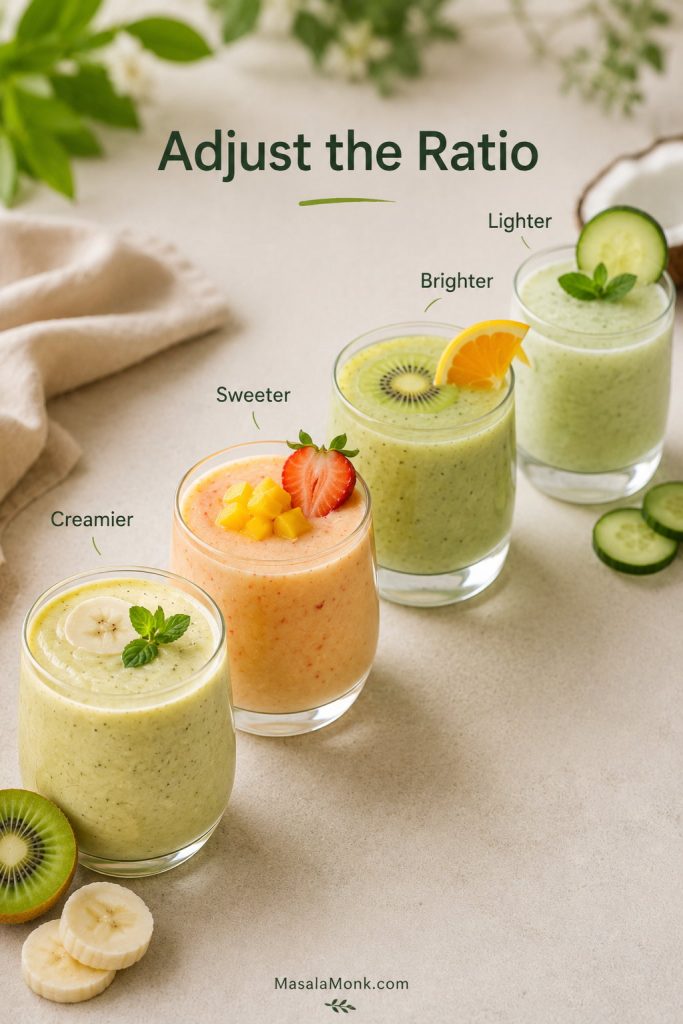
How to Adjust the Ratio

Want your kiwi smoothie… Add or adjust this
Creamier Frozen banana, Greek yogurt, avocado, or a splash of milk.
Sweeter Ripe banana, mango, strawberries, or 1–2 teaspoons honey.
Brighter Orange juice as the liquid or a tiny squeeze of lime.
Lighter Coconut water, water, cucumber, or spinach.
Thicker Frozen banana, frozen mango, chia seeds, or less liquid.
Dairy-free Almond milk, oat milk, coconut water, plant yogurt, mango, or avocado.
Four kiwi smoothie glasses showing creamier, sweeter, brighter, and lighter adjustment options
Small adjustments change the whole drink, so correct one thing at a time: body, sweetness, brightness, or overall lightness.

From there, the rest of the recipe is mostly about control. If your kiwi is very sweet, you may not need honey. If it tastes sharp, banana, mango, or yogurt will smooth it out quickly without changing the whole recipe.

Ingredients for a Creamy Kiwi Smoothie
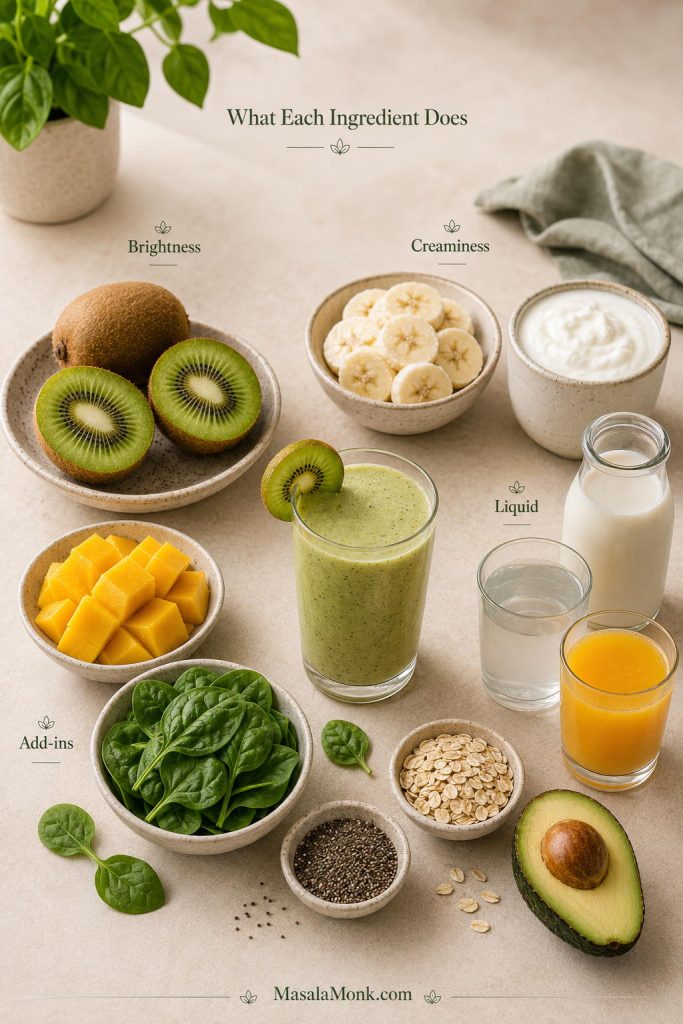
Kiwi smoothie ingredient guide with kiwi, banana, yogurt, liquid, mango, spinach, chia, oats, and avocado grouped by purpose
Each ingredient has a clear job: kiwi brings brightness, banana and yogurt add body, while the liquid decides whether the smoothie feels creamy, light, or bright.

A good smoothie recipe using kiwis needs balance. Kiwi gives the drink its bright, tangy flavor, but it needs something creamy or sweet beside it so the smoothie does not taste thin or harsh. The best version is not just about adding kiwi; it is about giving kiwi the right support.

Kiwi
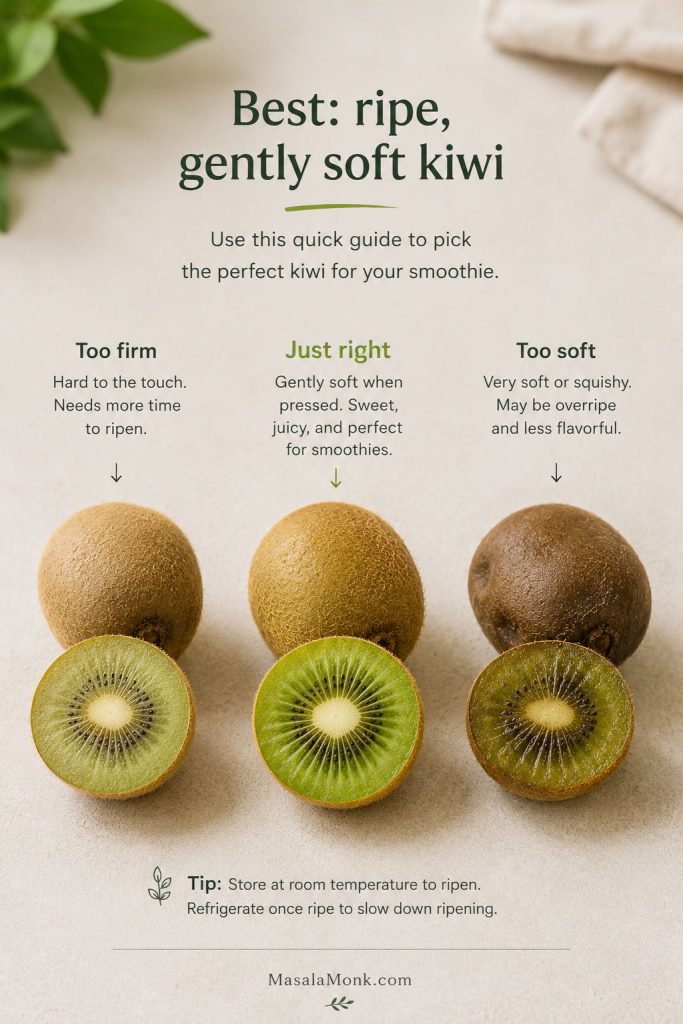
Kiwi ripeness guide showing firm kiwi, ripe kiwi, and very soft kiwi for smoothies
Ripe kiwis usually make a smoother, sweeter smoothie; however, firm kiwis can taste grassy or harsh once blended.

Ripe kiwis make the best smoothie. They should give slightly when pressed and smell fresh, not fermented. Hard kiwis can taste grassy, sour, or harsh once blended, while overripe kiwis can make the smoothie taste dull.

For the smoothest texture, peel the kiwi before blending. Kiwi skin is edible, but it can make a smoothie feel fibrous or slightly fuzzy, especially if your blender is not very powerful.
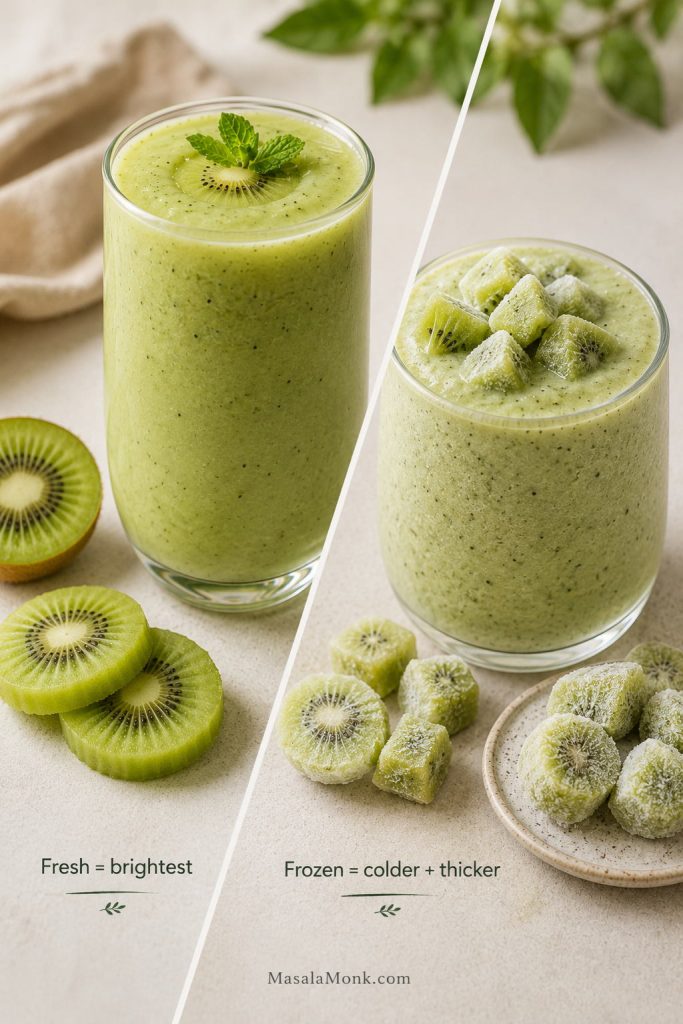
Fresh or frozen kiwi? Fresh kiwi gives the brightest flavor. Frozen kiwi makes the smoothie colder and thicker, but it works best with banana, mango, yogurt, or another creamy ingredient so the drink does not turn icy.
Fresh kiwi slices compared with frozen kiwi chunks for smoothie making
Fresh kiwi gives the brightest flavor, while frozen kiwi helps chill and thicken the smoothie when it is paired with banana, mango, yogurt, or another creamy ingredient.

Green kiwi gives the classic tangy flavor. Golden kiwi is usually sweeter and softer, so it can work well if you want a milder smoothie with less added sweetener.
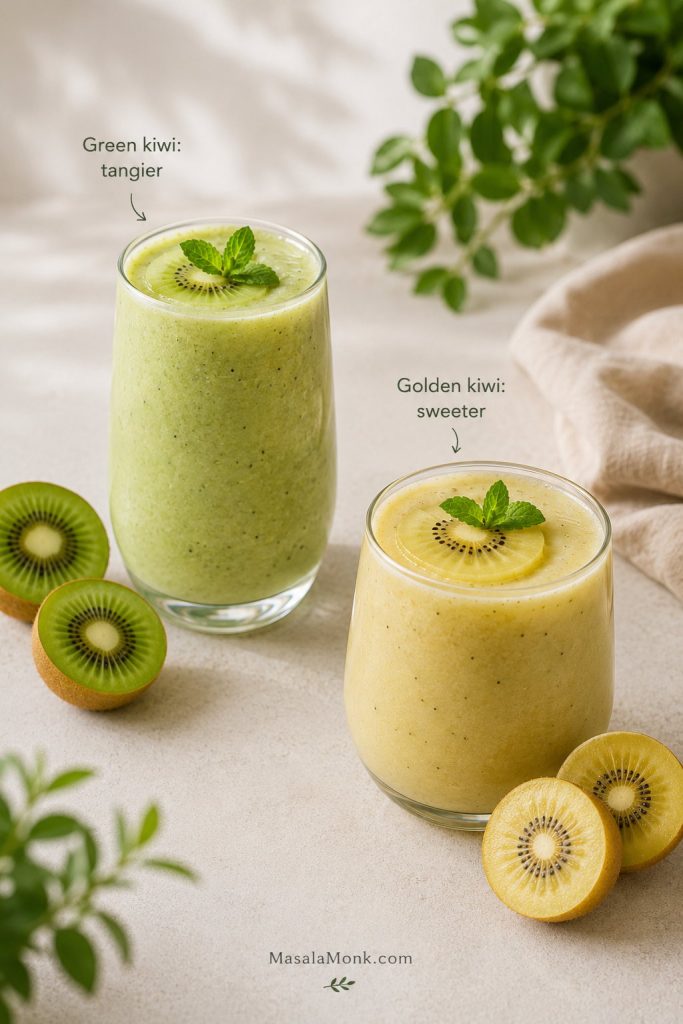
Green kiwi smoothie and golden kiwi smoothie shown side by side with matching fruit
Green kiwi gives the classic tangy smoothie flavor, whereas golden kiwi makes the drink softer, sweeter, and a little milder.

Banana

Banana is the easiest way to make the drink creamy, especially in a recipe where kiwis bring most of the tartness. A frozen banana works best because it chills and thickens the drink without needing lots of ice. For a less sweet smoothie, use half a banana and add more yogurt, mango, or avocado for body.

Yogurt

Plain Greek yogurt makes the smoothie thicker and more satisfying. Regular plain yogurt gives a softer, drinkable texture. For a dairy-free version, plant yogurt, almond milk, coconut water, avocado, chia, oats, and frozen mango can all help replace some of that body. The no-yogurt variation gives the easiest swaps.

Liquid

The liquid decides whether the smoothie tastes creamy, light, or bright. Milk makes it mellow, coconut water keeps it fresh, orange juice makes it fruitier, and water keeps it simple but thinner. Start with ½ cup and add more only if the blender needs help.

Optional Add-Ins

Spinach, mango, pineapple, chia seeds, oats, protein powder, avocado, mint, and lime can all work with kiwi. Add them with a purpose: mango for sweetness, avocado for creaminess, spinach for a green smoothie, chia or oats for thickness, and lime only when the smoothie needs a sharper finish.

How to Make a Kiwi Smoothie
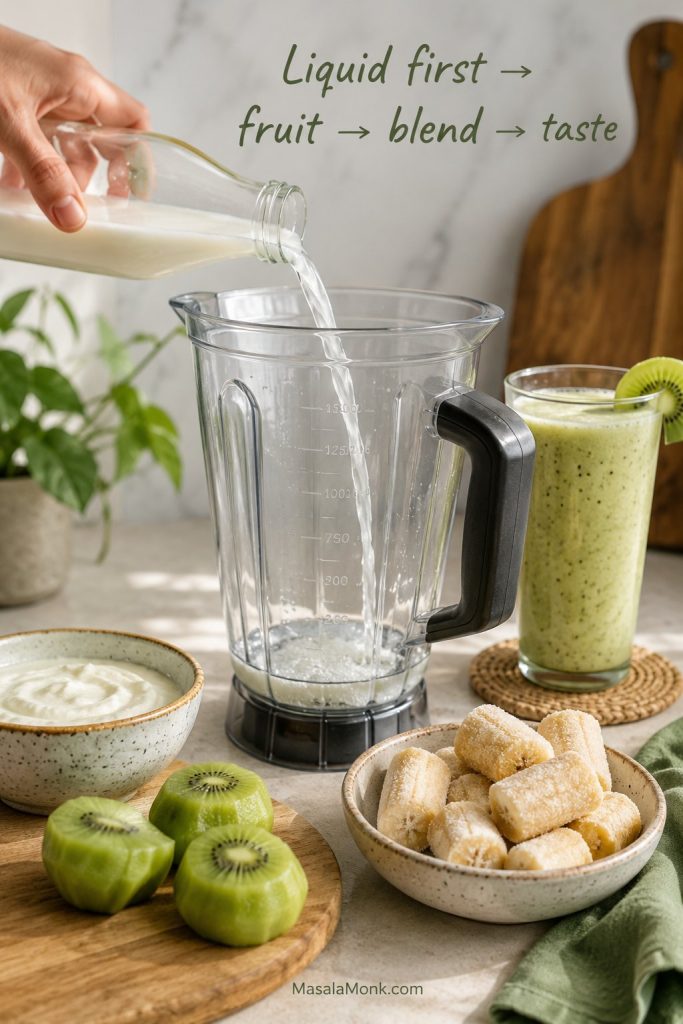
Liquid being poured into a blender with kiwi, banana, yogurt, and a finished smoothie nearby
Add the liquid first, because it helps the blender catch the fruit more easily and keeps the smoothie from getting watered down later.

The method is simple, but the order matters when you are blending kiwis with frozen banana, yogurt, and liquid. Add the liquid first so the blender can catch the ingredients more easily, especially if you are using frozen mango, frozen strawberries, oats, or greens.

  1. Peel and chop the kiwis. Cut away the fuzzy skin for the smoothest drink.
  2. Add the liquid first. Pour milk, coconut water, orange juice, or water into the blender.
  3. Add yogurt and soft ingredients. This helps the blender move before the frozen fruit goes in.
  4. Add kiwi and banana. Break the frozen banana into chunks if needed.
  5. Add frozen fruit or ice last. Use ice only if your fruit is fresh and the smoothie needs chilling.
  6. Blend until smooth. Most versions take 30–60 seconds. Green or frozen-heavy smoothies may need 60–120 seconds.
  7. Taste before pouring. Adjust sweetness, thickness, or brightness while the smoothie is still in the blender. The fixes table below shows the quickest adjustments.
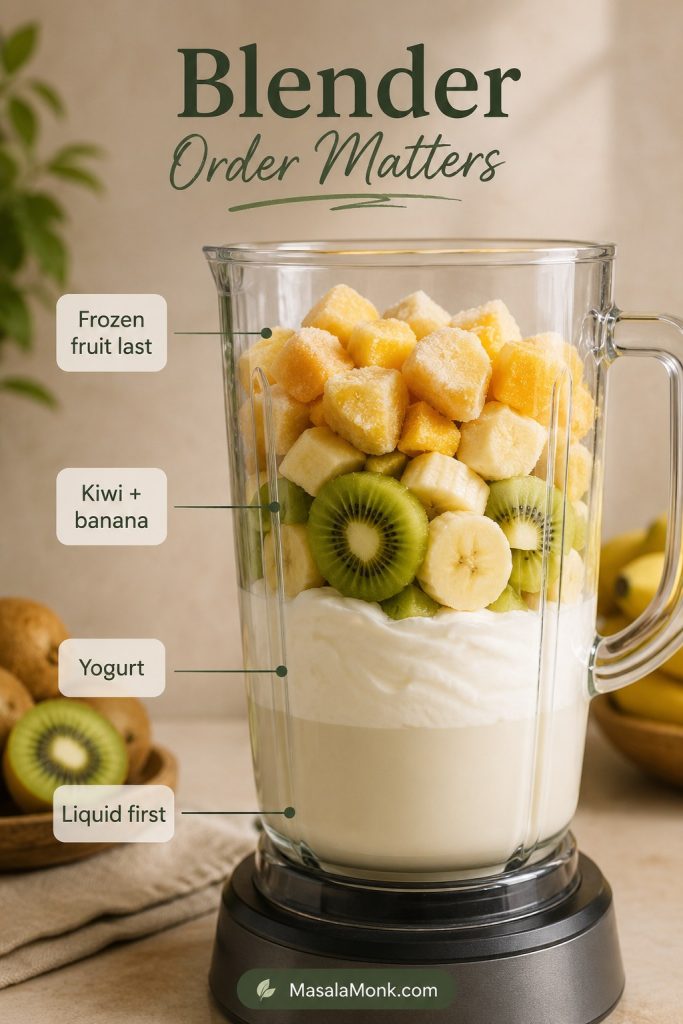
Blender tip: If the blender stalls, do not dump in a lot of liquid at once. Add 1 tablespoon at a time, blend again, and stop as soon as the smoothie moves smoothly.
Blender jar layered with liquid, yogurt, kiwi, banana, and frozen fruit for a smoothie
The right blender order matters: liquid first, creamy ingredients next, and frozen fruit last so the blades can move smoothly.

If you are using a regular blender, chop the frozen banana smaller and let very hard frozen fruit sit at room temperature for 3–5 minutes before blending. Also, add liquid first, then increase the liquid by tablespoons only if the blades stop moving.
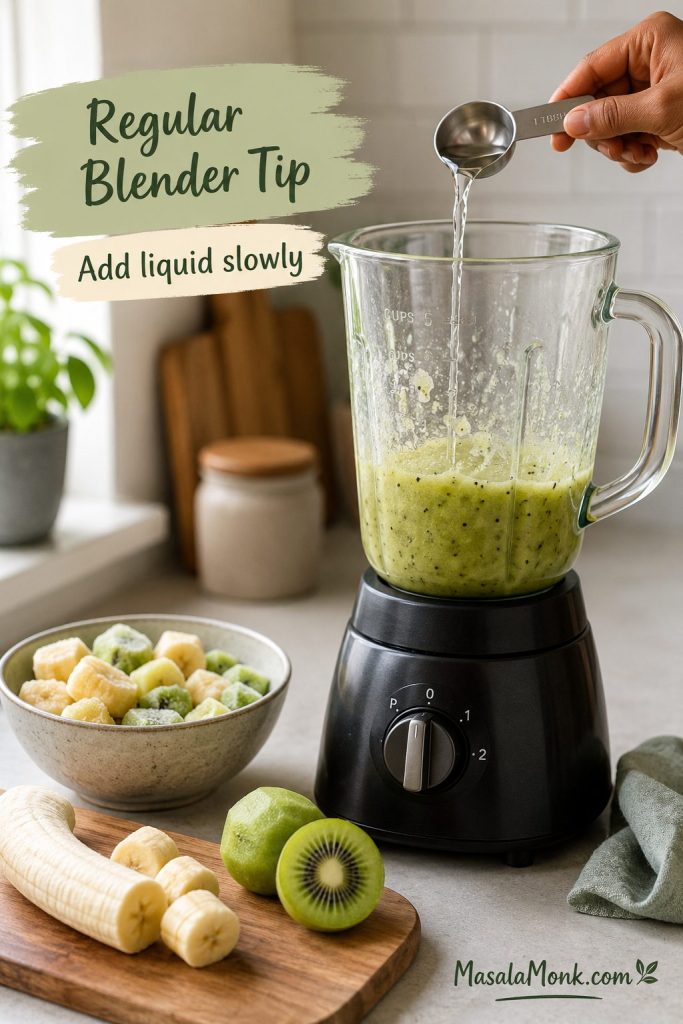
Regular blender with kiwi smoothie ingredients and liquid being added slowly
Even a regular blender can make a creamy kiwi smoothie when the frozen fruit is chopped smaller and the liquid is added gradually.

Kiwi Smoothie Recipe Card

Kiwi smoothie recipe card with a finished smoothie and the base ingredient ratio
Save this base recipe first; once the ratio is familiar, it becomes much easier to troubleshoot texture and build variations confidently.

Kiwi Smoothie Recipe

This creamy kiwi smoothie recipe is made with ripe kiwi, frozen banana, yogurt, and your choice of milk, coconut water, orange juice, or water. It is bright, fresh, tangy-sweet, and easy to adjust.

Prep Time5 minutes
Cook Time0 minutes
Total Time5 minutes
YieldAbout 1 large 16–20 oz smoothie or 2 small 8–10 oz smoothies

Equipment

  • Blender or high-speed blender
  • Knife and cutting board
  • Measuring cups and spoons
  • Glass or jar for serving

Ingredients

  • 2 medium ripe kiwis, peeled and chopped, about 140–160 g flesh
  • 1 medium frozen banana, about 100–120 g
  • ½ cup plain Greek yogurt or regular plain yogurt, about 120 g
  • ½ cup milk, coconut water, orange juice, or water, 4 fl oz / 120 ml
  • 1–2 teaspoons honey or maple syrup, optional, 7–14 g
  • ½ cup frozen mango, strawberries, or pineapple, optional, about 70–90 g
  • ¼–½ cup ice, optional, only if your fruit is fresh and the smoothie needs chilling
  • 1 teaspoon lime or lemon juice, optional, 5 ml

Method

  1. Add the liquid to the blender first.
  2. Add the yogurt, peeled kiwi, frozen banana, and any optional frozen fruit.
  3. Blend for 30–60 seconds, or until smooth. If using greens, oats, chia, protein powder, or a lot of frozen fruit, blend for 60–120 seconds.
  4. Taste the smoothie. Add honey if it is too tart, more liquid if it is too thick, or more frozen banana/mango if it is too thin.
  5. Pour into one large glass or two small glasses and drink right away.

Notes

  • For the creamiest smoothie, use frozen banana instead of fresh banana.
  • For a dairy-free smoothie, use plant yogurt, almond milk, coconut water, mango, or avocado.
  • For a smoothie bowl, reduce the liquid to ¼ cup / 60 ml and use frozen banana or frozen mango.
  • Kiwi smoothies with milk or yogurt are best enjoyed fresh because kiwi can change the texture as it sits. See the milk, yogurt, and juice guide for more detail.
  • The final yield depends on how much frozen fruit or ice you add.

Kiwi Smoothie Variations
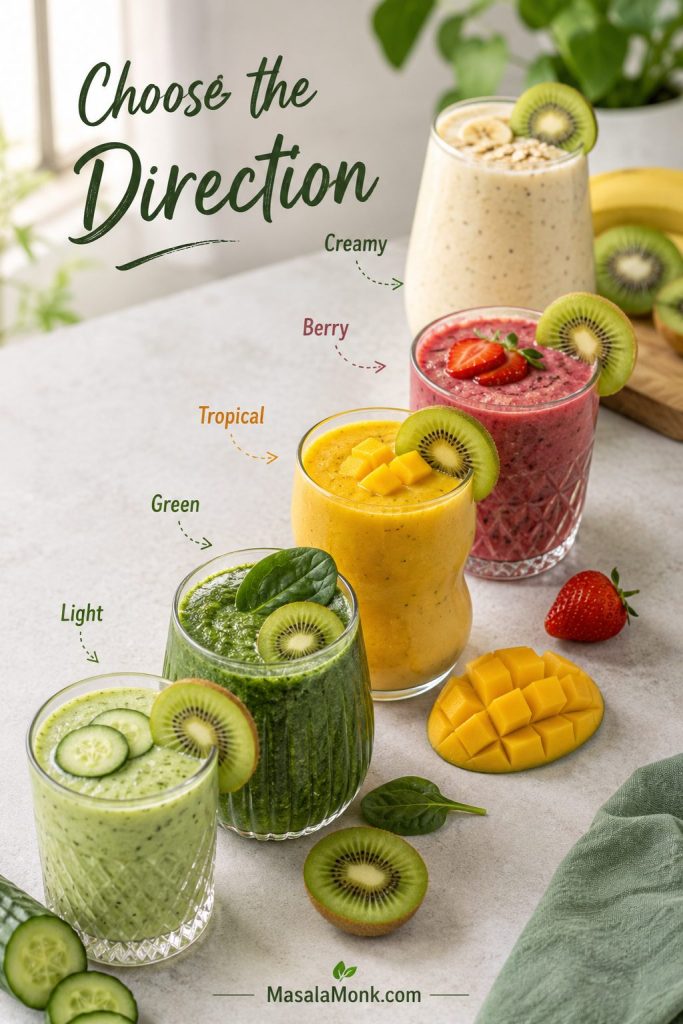
Five kiwi smoothie variations in different glasses with banana, strawberry, mango, spinach, and cucumber styles
A good base smoothie can move in several directions; however, changing one main ingredient at a time keeps the flavor balanced.

Once the base ratio tastes right, the fun part is choosing the direction. You can make it creamy and breakfast-like with banana, tropical with mango or pineapple, sharper with strawberries, greener with spinach, or lighter with cucumber and coconut water. Since kiwis bring most of the bright, tangy flavor, change one thing at a time so the blend stays balanced.

Banana Kiwi Smoothie
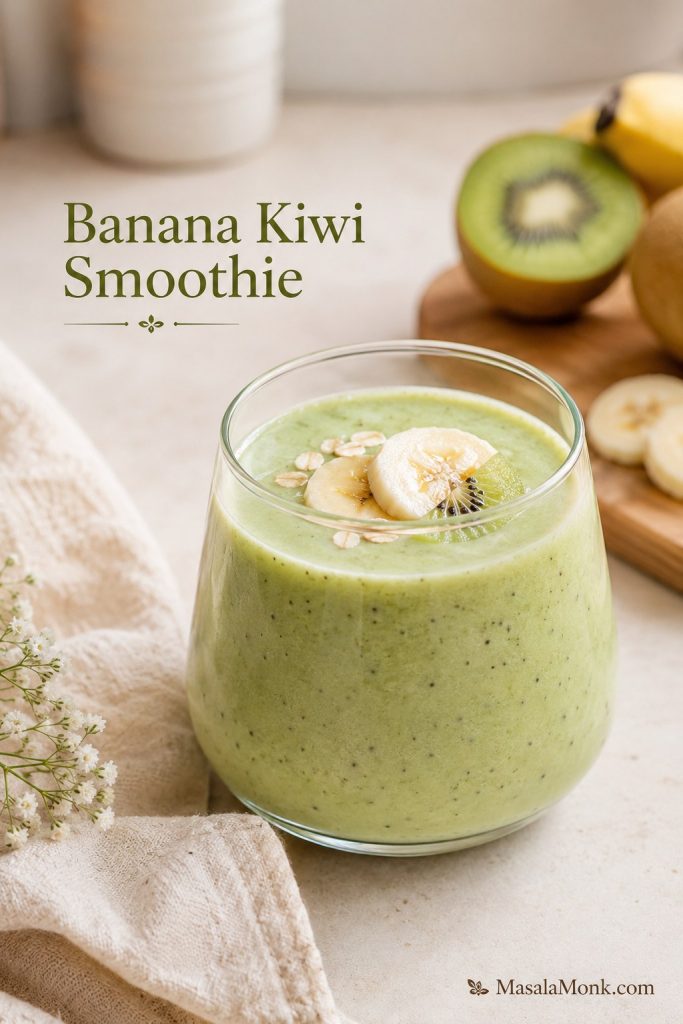
Creamy banana kiwi smoothie with banana slices and fresh kiwi garnish
Banana softens kiwi’s tartness and gives the smoothie a thicker breakfast-style texture without relying on extra ice.

This is the easiest and creamiest version. Make the base recipe with 2 ripe kiwis, 1 frozen banana, yogurt, and milk or coconut water. The banana softens kiwi’s tartness and gives the smoothie a smooth breakfast-style texture.

Strawberry Kiwi Smoothie
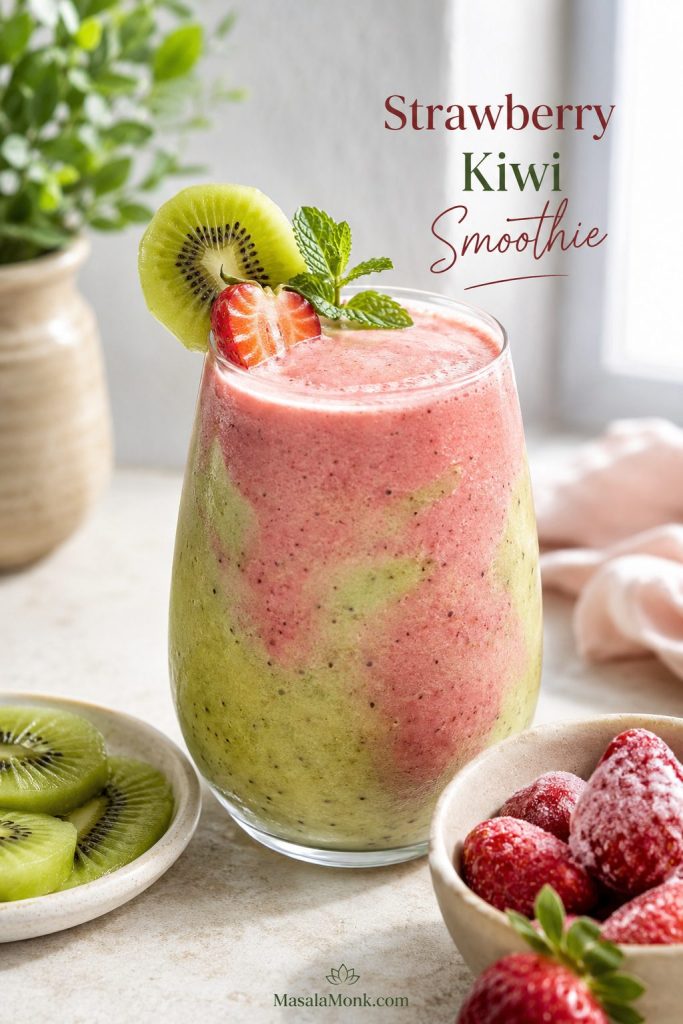
Strawberry kiwi smoothie with pink and green blended layers, kiwi, and strawberries
Strawberries make the drink brighter and more familiar, while kiwi keeps the smoothie fresh, tangy, and fruit-forward.

Strawberries make the smoothie taste brighter and more familiar, especially if you like a sweet-tart berry flavor. Add ½–1 cup frozen strawberries to the base recipe. Keep the banana if you want creaminess, or reduce it slightly if you want the strawberry and kiwi to taste sharper and fresher.

If you want to go deeper on the berry side, MasalaMonk also has a full strawberry smoothie guide with yogurt, no-yogurt, protein, and fruit variation ideas.

Kiwi Mango Smoothie
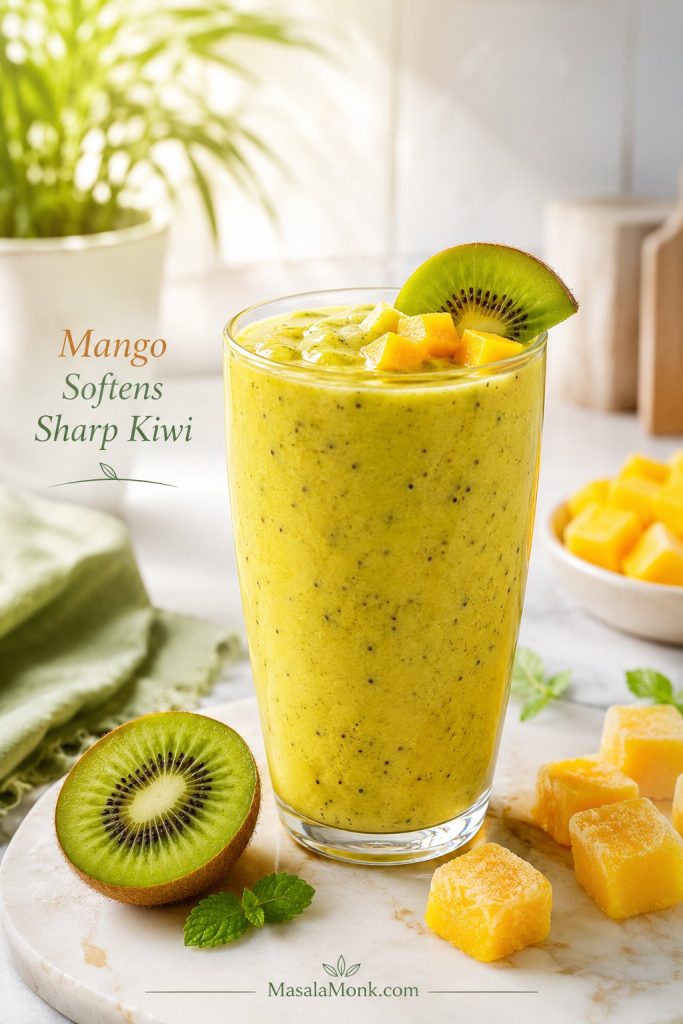
Golden-green kiwi mango smoothie with mango cubes and sliced kiwi
Mango is one of the best ways to soften sharp kiwi because it adds natural sweetness and body at the same time.

Mango is one of the easiest ways to tame sharp kiwi. It adds sweetness, body, and a tropical flavor without needing much extra sweetener. Blend ½–1 cup frozen mango with 2 kiwis, then use coconut water for a lighter drink or orange juice for a brighter one.

If mango is the fruit you use most often in smoothies, this mango smoothie recipe is a useful companion because it covers fresh mango, frozen mango, yogurt, milk, banana, no-banana, dairy-free, protein, and smoothie bowl versions.

Kiwi Pineapple Smoothie
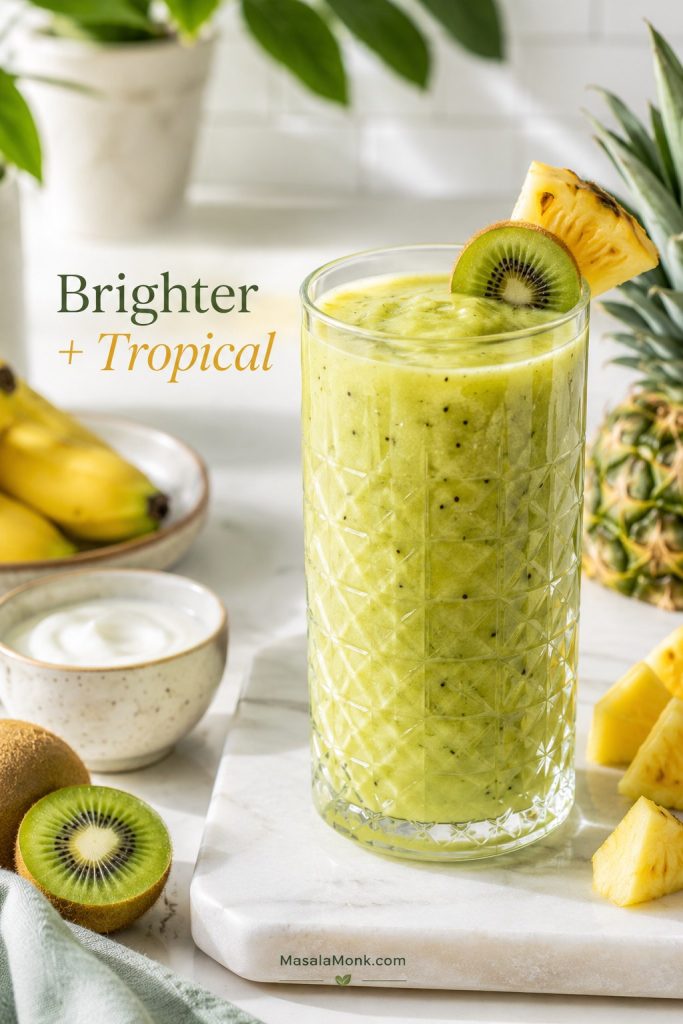
Kiwi pineapple smoothie in a tall glass with pineapple and kiwi garnish
Pineapple pushes the smoothie in a brighter tropical direction; because it can also taste tart, banana, mango, or yogurt helps keep it balanced.

Pineapple pushes the smoothie in a sharper, juicier, more tropical direction. Frozen pineapple is especially good when you want a colder, thicker drink. Because both kiwi and pineapple can taste tart, balance this version with banana, yogurt, mango, or a small amount of honey.

Green Kiwi Smoothie With Spinach
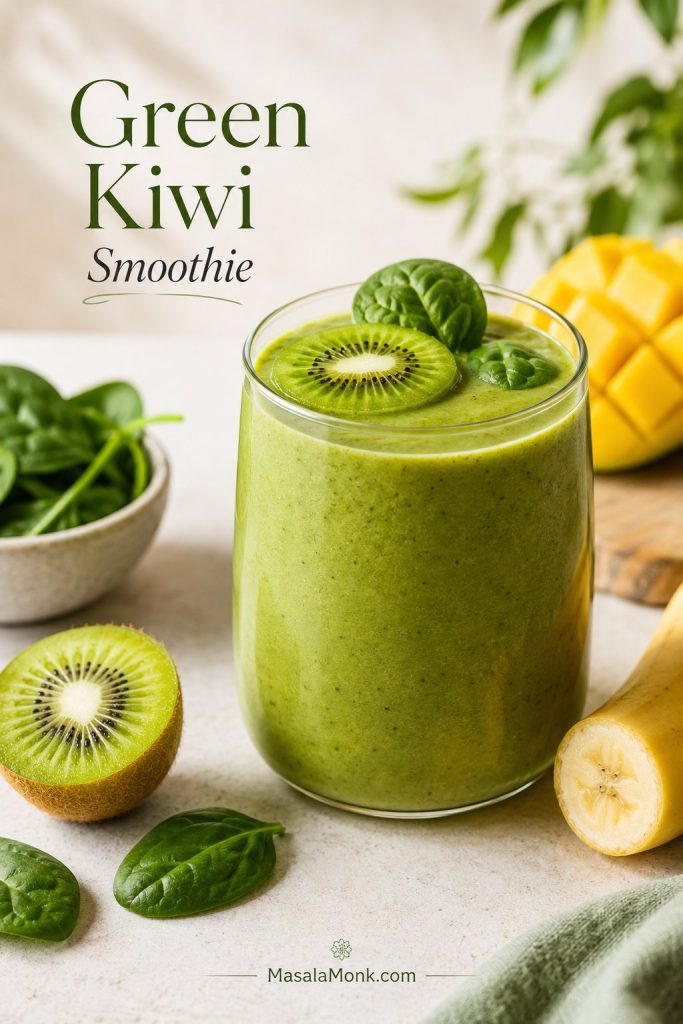
Green kiwi smoothie with spinach, banana, mango, and kiwi garnish
Fresh spinach blends into a kiwi smoothie more gently than frozen spinach, especially when banana or mango stays in the mix for sweetness.

Fresh baby spinach blends into kiwi smoothies more gently than frozen spinach. Add 1 cup to the base recipe, then keep banana or mango in the mix so the smoothie still tastes sweet enough. The color becomes greener, but the flavor stays mild when the spinach is fresh and not packed too heavily.

For more smoothie ideas built around fruit, greens, and vitamin C pairings, see MasalaMonk’s high-iron smoothies and shakes guide.

Kiwi Cucumber Smoothie
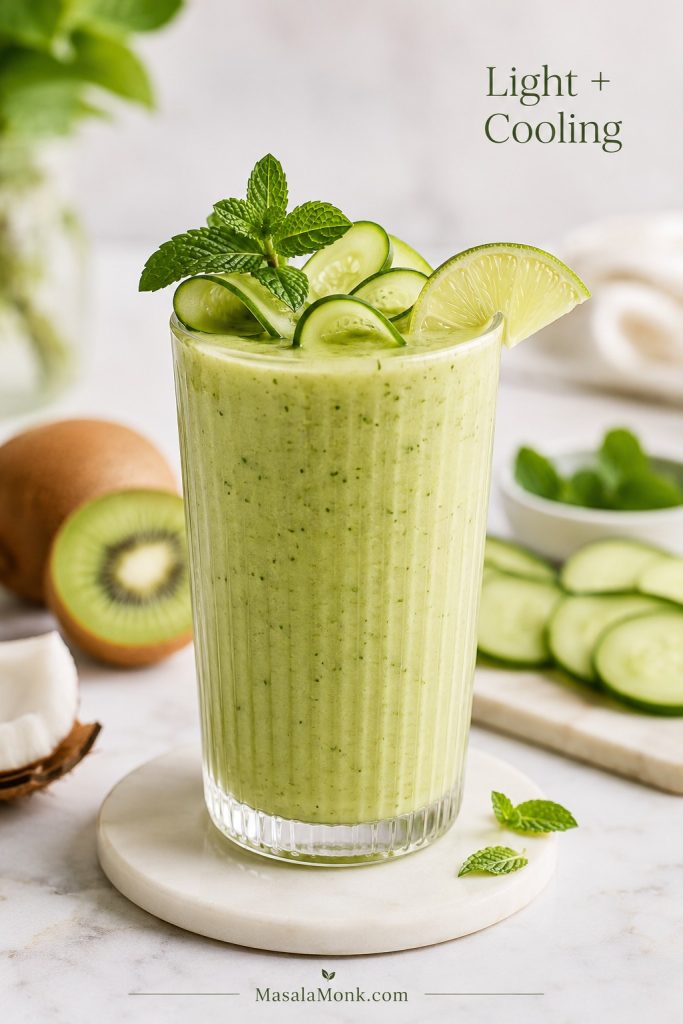
Light kiwi cucumber smoothie with cucumber slices, mint, lime, and kiwi
For a lighter version, cucumber, mint, lime, and coconut water make the smoothie feel crisp without turning it into a heavy breakfast blend.

This cucumber version is lighter and fresher than the banana-yogurt blend. Blend kiwi with cucumber, mint, lime, and coconut water for a crisp, cooling drink. Add a little banana, mango, or Greek yogurt if you want it to feel more filling.

Kiwi Protein Smoothie

Greek yogurt is the simplest protein boost because it also improves texture. You can add one scoop of plain or vanilla protein powder, but keep banana, mango, or yogurt in the mix so the smoothie does not taste chalky.

For another simple way to add texture to smoothies, see this guide on using hemp seeds in smoothies.

Kiwi Smoothie Without Yogurt
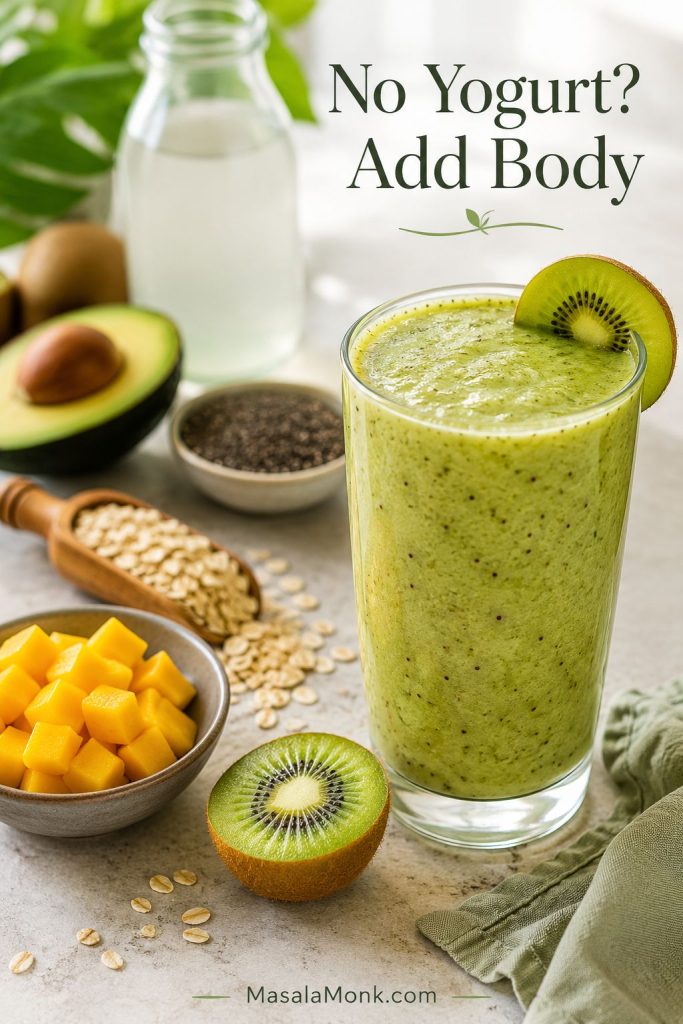
Kiwi smoothie without yogurt shown with mango, avocado, oats, chia seeds, and plant milk
Without yogurt, the smoothie needs another source of body, so mango, avocado, oats, chia, or plant milk become more important.

A no-yogurt version still needs body because kiwis alone can make the recipe taste sharp and thin. Keep the frozen banana and use almond milk, oat milk, coconut water, or orange juice as the liquid. For a thicker texture, add frozen mango, avocado, chia seeds, oats, or plant-based yogurt.

Kiwi Smoothie Without Banana
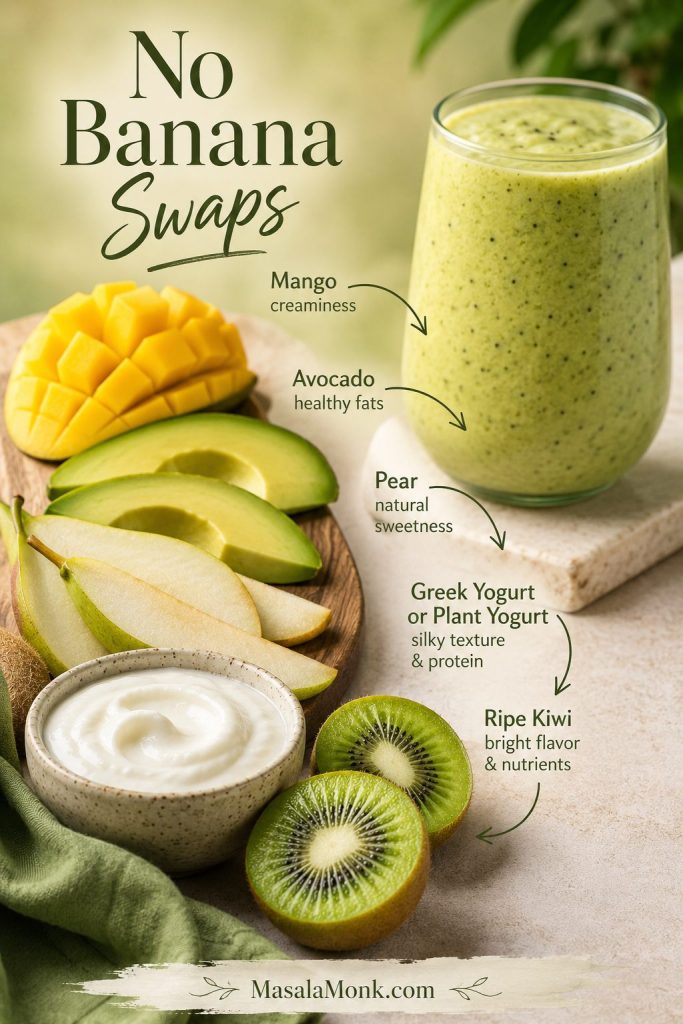
Kiwi smoothie without banana shown with mango, avocado, pear, yogurt, and kiwi
Banana is easy, but not essential; instead, use mango for sweetness or avocado and pear when you want creaminess with a different flavor profile.

Banana is helpful, but it is not mandatory. Frozen mango is the best swap when you still want sweetness and thickness. Avocado gives creaminess without sweetness, Greek yogurt adds body, and pear gives a softer fruit flavor. Without one of these replacements, kiwi can taste sharper and the smoothie may feel thinner.

Kiwi Smoothie Bowl
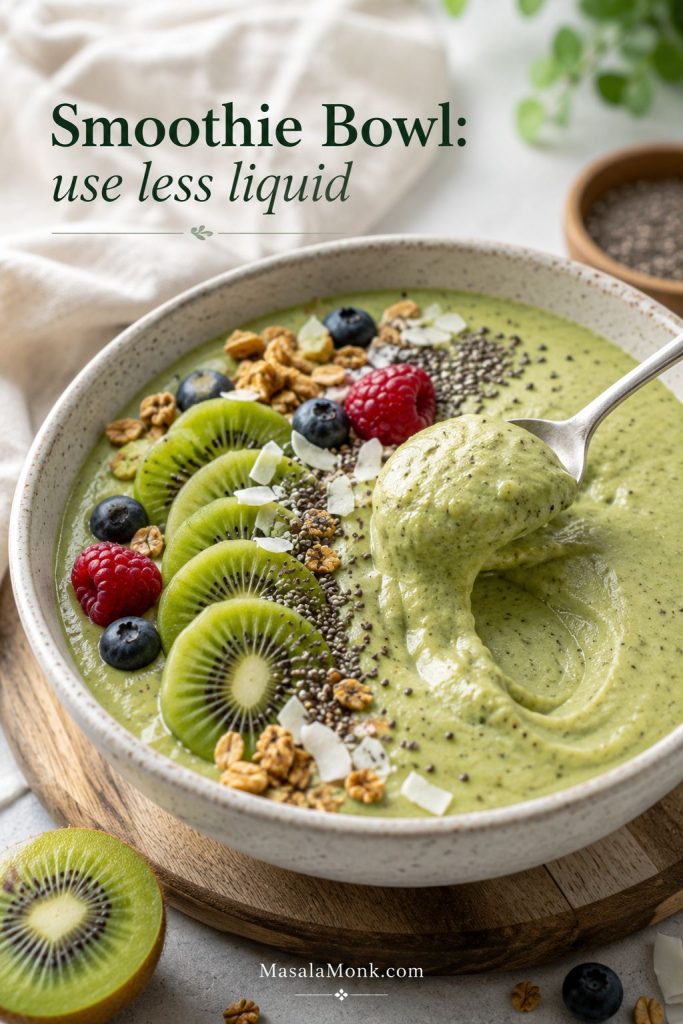
Thick kiwi smoothie bowl with sliced kiwi, berries, granola, coconut, chia, and a spooned texture
A kiwi smoothie bowl needs less liquid than a drinkable smoothie; otherwise, the toppings sink and the base becomes too loose.

A smoothie bowl needs much less liquid than a drinkable smoothie. Reduce the liquid to ¼ cup / 60 ml and use frozen banana, frozen mango, or frozen pineapple. Blend thick, then top with sliced kiwi, granola, coconut, chia seeds, berries, or pumpkin seeds.

Kiwi Milkshake or Kiwi Shake
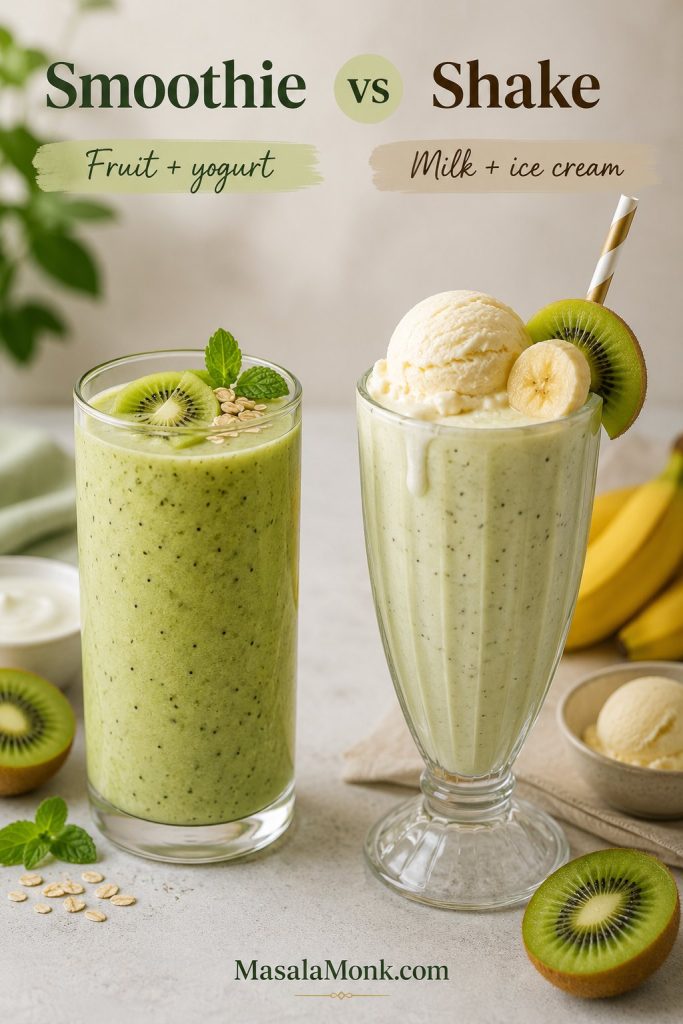
Kiwi smoothie and kiwi milkshake compared in two different glasses
A kiwi smoothie is usually lighter and fruit-based, while a kiwi shake becomes richer and sweeter with milk, banana, and ice cream.

A kiwi shake is the dessert-style cousin of this smoothie. Blend 2–3 peeled kiwis with milk, banana, and a scoop of vanilla ice cream for a colder, sweeter drink. It is richer than the main recipe, so serve it right away and treat it more like a milkshake than a breakfast smoothie.

Best Fruits to Pair With Kiwi in Smoothies
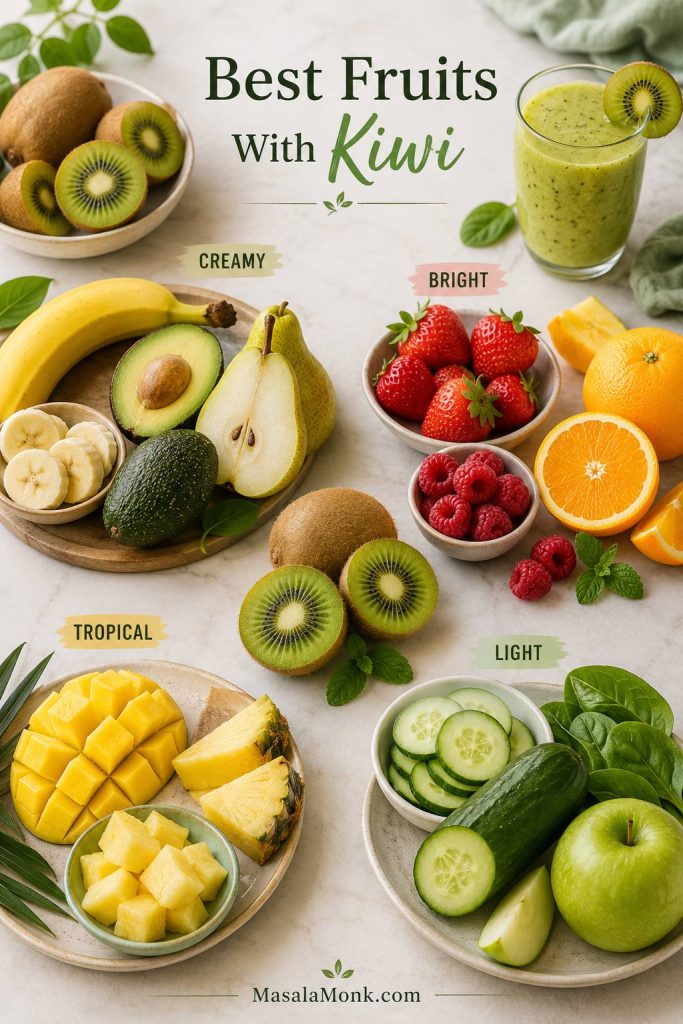
Fruit pairing guide for kiwi smoothies with banana, avocado, pear, berries, orange, mango, pineapple, cucumber, spinach, and apple
Kiwi pairs best with fruits that either soften its tangy edge or echo its bright flavor, so choose the pairing based on the smoothie you want.

Because kiwi has a naturally bright edge, it works best with fruits that either soften its tartness or echo that fresh flavor. Banana and mango make it creamier. Strawberry and raspberry keep it tangy. Pineapple and orange make it tropical. Apple, pear, cucumber, and spinach keep it lighter.

Fruit or add-in Why it works with kiwi Best smoothie style
Banana Softens tartness and thickens the drink. Creamy breakfast smoothie
Strawberry Gives a familiar sweet-tart berry flavor. Berry kiwi smoothie
Mango Adds tropical sweetness and body. No-yogurt or tropical smoothie
Pineapple Makes the smoothie bright and juicy. Refreshing summer smoothie
Orange Adds citrus sweetness and makes the drink fruitier. Juice-based smoothie
Apple Keeps the flavor mild and fresh. Light breakfast smoothie
Blueberry Adds deeper berry flavor and color. Purple fruit smoothie
Raspberry Keeps the smoothie sharp and tangy. Tart berry smoothie
Pear Adds gentle sweetness without dominating. No-banana smoothie
Avocado Makes the smoothie creamy without banana. No-banana creamy smoothie
Spinach Adds green color with mild flavor. Green kiwi smoothie
Cucumber Makes the smoothie lighter and fresher. Cooling smoothie

Kiwi Smoothie With Milk, Yogurt, or Juice
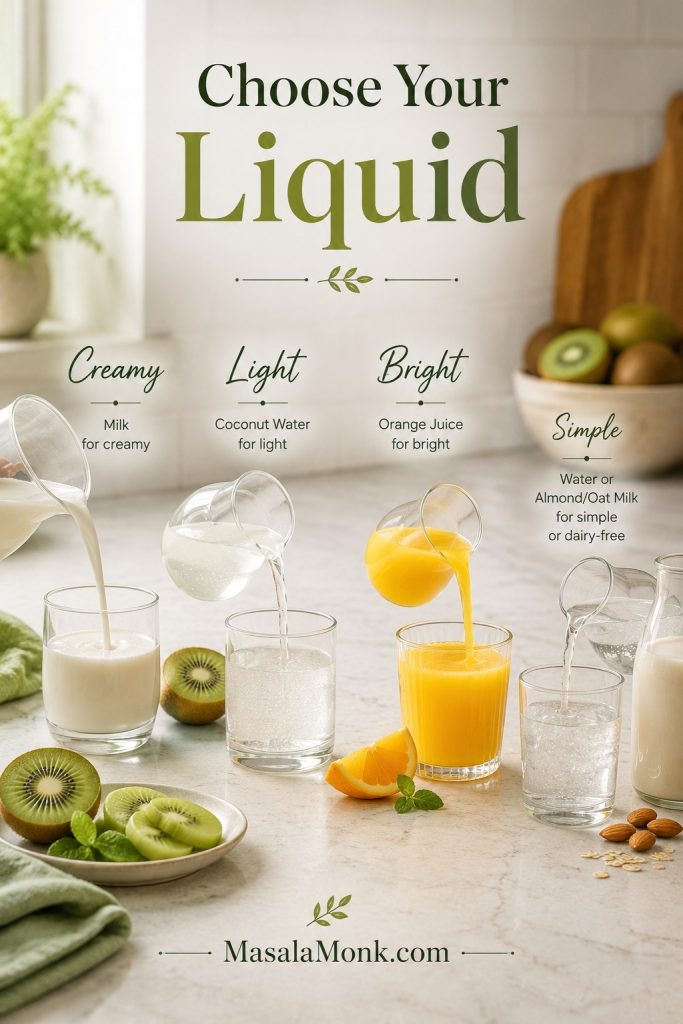
Liquid guide for kiwi smoothies showing milk, coconut water, orange juice, water, and plant milk
Liquid choice shapes the whole smoothie, so pick milk for creaminess, coconut water for lightness, orange juice for brightness, or water when the fruit already tastes sweet.

The liquid you choose changes the whole smoothie. There is no single correct option; the best one depends on whether you want the drink creamy, light, bright, dairy-free, or more filling.

Because the liquid changes the final texture so much, choose based on the smoothie you actually want instead of forcing one option.

Liquid Best use Watch-out
Milk Creamy, mellow smoothie. Best with banana or yogurt for balance.
Greek yogurt + water Thick texture without too much liquid. Can taste tangy if the kiwi is tart.
Almond milk or oat milk Dairy-free creaminess. Use unsweetened if you want more control.
Coconut water Light, refreshing, tropical-style smoothie. Thinner than milk or yogurt.
Orange juice Bright, fruity, tropical flavor. Can make a tart kiwi taste even sharper.
Water Cleanest and simplest option. Can taste thin unless you use banana or mango.
Canned coconut milk Rich tropical smoothie. Can get heavy fast; use a small amount.

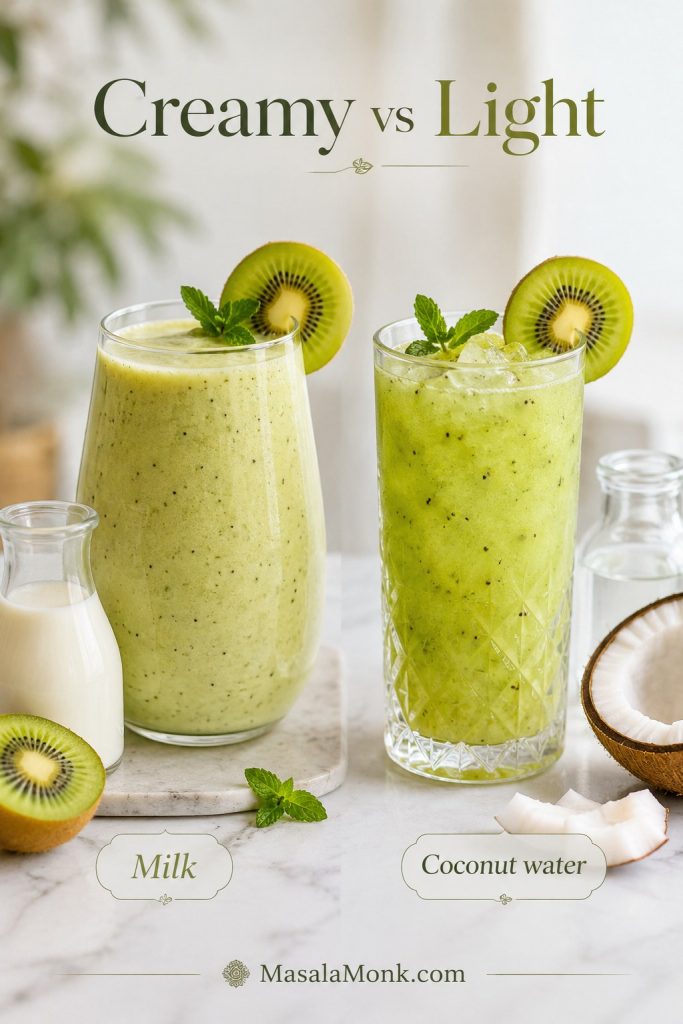
Milk vs Coconut Water

Milk-based kiwi smoothie and coconut-water kiwi smoothie shown side by side
Choose milk when you want a softer, creamier breakfast smoothie; meanwhile, coconut water works better for a lighter, fresher finish.

If you like the lighter tropical finish of coconut water, MasalaMonk’s coconut water smoothie ideas can give you more combinations beyond kiwi.

Kiwi works with milk and yogurt, but dairy-based versions are best enjoyed soon after blending. Green kiwifruit contains actinidin, a natural protein-digesting enzyme, so a milk- or yogurt-heavy smoothie can thin or separate more noticeably as it sits.

Is a Kiwi Smoothie Good for Weight Loss?

A smoothie recipe with kiwis can fit into a lighter breakfast or snack, but it is not magic on its own. The overall blend matters more than the word “kiwi.” Use whole fruit, keep juice and sweeteners modest, and add protein or fiber if you want the smoothie to feel more satisfying. The protein smoothie variation is a good place to start if you want a more filling version.

For example, a more balanced version could use 2 kiwis, ½ frozen banana, Greek yogurt or unsweetened plant milk, spinach or cucumber, and chia seeds. On the other hand, too much honey, sweetened yogurt, fruit juice, or ice cream can quickly turn it into a dessert drink.

Harvard Health notes that smoothies can become calorie-heavy when they include added sugar, syrup, honey, sweetened yogurt, frozen yogurt, or large amounts of juice. That is why this recipe keeps sweetener optional and uses whole fruit as the main base.

How to Fix a Kiwi Smoothie
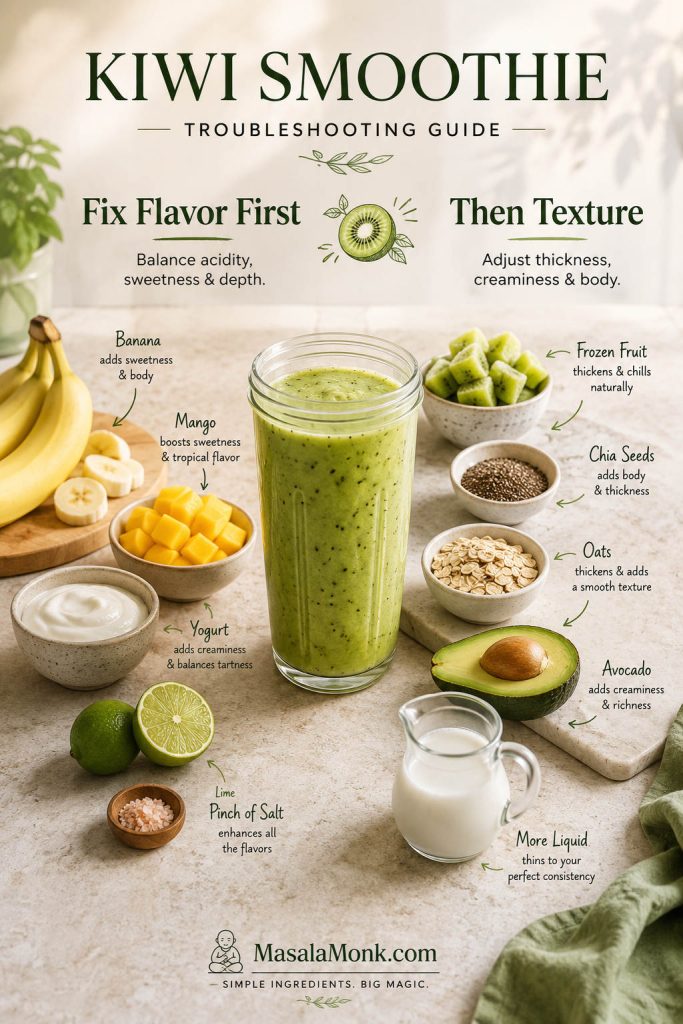
Kiwi smoothie troubleshooting scene with small glasses labeled sour, thin, thick, flat, and watery
A kiwi smoothie that tastes off rarely needs a full remake; instead, one small fix for flavor or texture usually brings it back quickly.

Most problems in a smoothie recipe with kiwis are easy to fix while the drink is still in the blender. Taste before pouring, then adjust one thing at a time. Small changes work better than adding a lot of liquid, sugar, or ice all at once.

Do not throw out a smoothie just because the first sip is not perfect. Kiwi can taste different from fruit to fruit, and one small adjustment in the blender can turn a sharp, flat, or watery smoothie into something balanced.

Fix the Flavor First

If the smoothie tastes sour, flat, bitter, or too sweet, fix the flavor before you change the texture. Usually, one small addition is enough: banana or mango for softness, yogurt for roundness, lime for brightness, or a tiny pinch of salt for a flat-tasting blend.
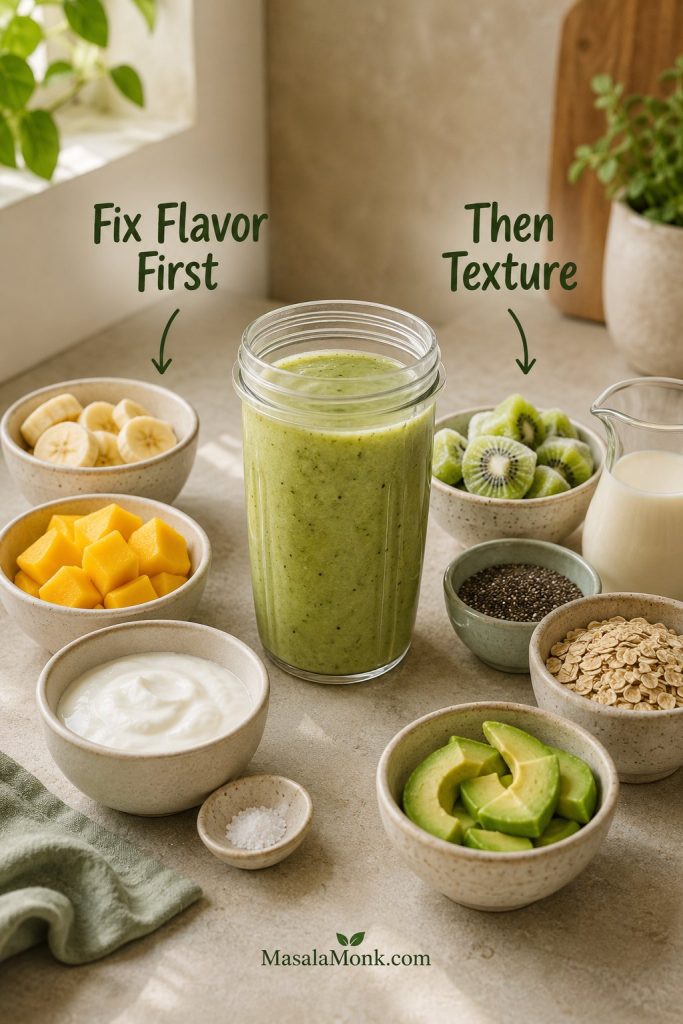
Kiwi smoothie fix guide with flavor ingredients on one side and texture ingredients on the other
Fix flavor before texture, because a smoothie that is sour or bland needs a different adjustment than one that is too thick or too thin.

Then Fix the Texture

Once the flavor tastes right, adjust the texture. Frozen fruit, banana, chia, oats, and avocado add body, while milk, coconut water, orange juice, or water loosen a thick smoothie. Add liquid slowly so the drink does not become watery.

Problem Best fix
Sour or sharp Blend in banana, mango, honey, maple syrup, or yogurt to soften the edge.
Thin texture Use frozen banana, frozen mango, chia seeds, oats, or avocado to bring back body. Next time, start with less liquid.
Overly thick Add milk, coconut water, orange juice, or water 1 tablespoon at a time until the blender moves smoothly.
Flat flavor A little more kiwi, a tiny squeeze of lime, orange juice, or even a small pinch of salt can wake it up.
Overly sweet Plain yogurt, cucumber, spinach, extra kiwi, or a little lemon/lime can pull the sweetness back into balance.
Seed-heavy texture Blend longer or use a high-speed blender. Kiwi seeds are edible, but a little texture is normal.
Watery smoothie Use frozen fruit instead of lots of ice, and keep the liquid lower at the start.
Bitter or harsh Use ripe, peeled kiwi. Hard kiwis and too much skin can make the drink taste rough.
Separation after sitting Shake or stir before drinking. For the next batch, use banana, yogurt, chia, or a less watery liquid.
Blender struggling Pour liquid in first, chop frozen fruit smaller, and add extra liquid by tablespoons instead of splashing in too much at once.

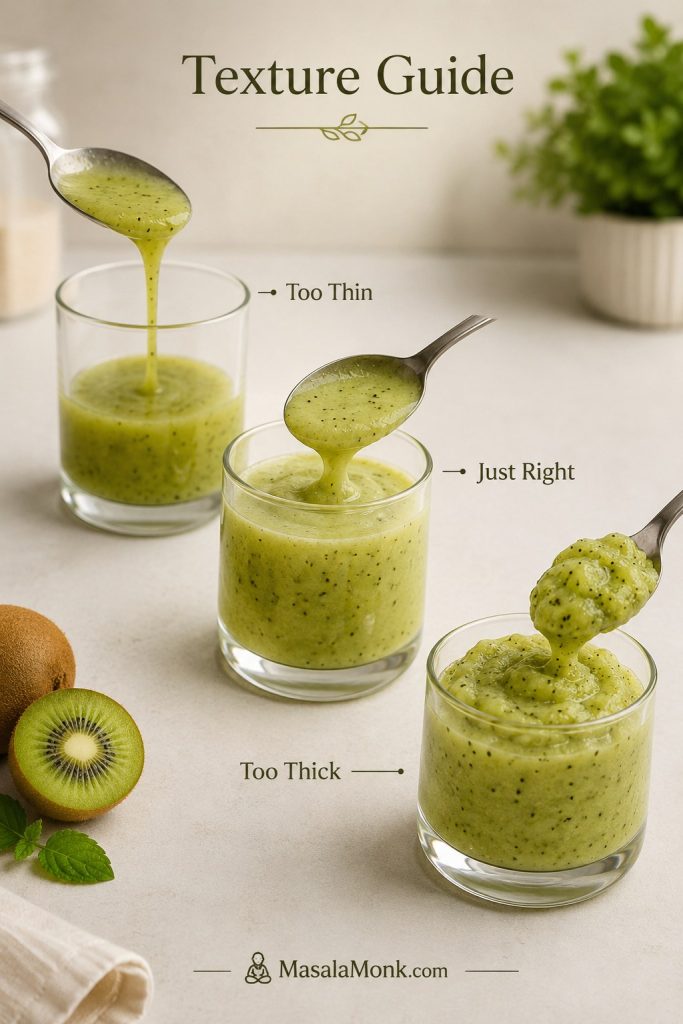
Kiwi Smoothie Thickness Guide

Kiwi smoothie texture guide showing too thin, just right, and too thick spoon textures
The sweet spot is thick enough to feel creamy, yet still loose enough to pour and sip comfortably without feeling heavy.

Make-Ahead, Freezing, and Storage Tips
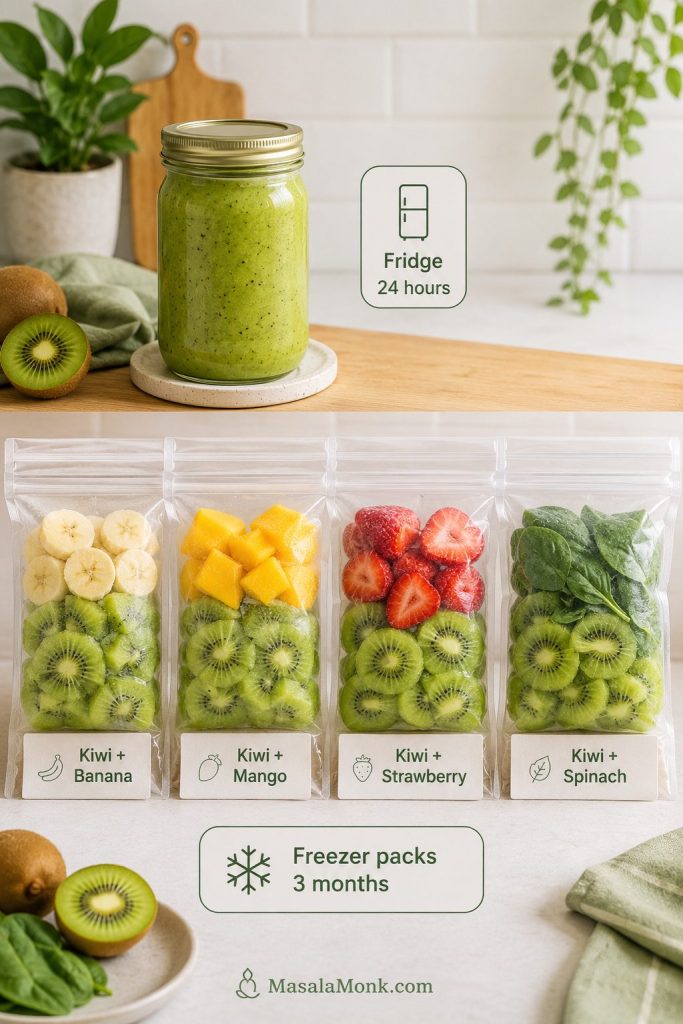
Kiwi smoothie storage image with a fridge jar and freezer packs for kiwi banana, kiwi mango, kiwi strawberry, and kiwi spinach
Blended smoothies taste best fresh, but freezer packs make it easier to prep kiwi, banana, mango, berries, or spinach ahead of time.

This smoothie tastes best right after blending. The flavor is brighter, the texture is smoother, and dairy-based versions are less likely to thin out. If you need to make it ahead, keep it short and practical.

Storing a Kiwi Smoothie in the Fridge

For the best texture, drink it within 24 hours. Store it in a sealed jar or bottle, refrigerate it, and shake or stir before drinking. The smoothie may separate slightly, especially if it has water, coconut water, or juice instead of yogurt.

Freezing Kiwi for Smoothies

Frozen kiwi works well in smoothies. Peel and chop ripe kiwi, freeze the pieces on a tray, then transfer them to a freezer bag or container. However, frozen kiwi works best with banana, mango, strawberry, or yogurt because kiwi alone can become icy.

Making Kiwi Smoothie Packs

Smoothie packs are the easiest make-ahead option. Add peeled kiwi, banana, mango, strawberries, spinach, or pineapple to freezer bags. Freeze for up to 3 months. When ready to blend, add the frozen pack to the blender with yogurt and liquid.

Kiwi Nutrition Notes for Smoothies

Kiwi is often used in smoothies because it brings bright flavor, gentle natural sweetness, fiber from the whole fruit, and vitamin C. It pairs especially well with banana, mango, strawberry, spinach, and yogurt because those ingredients balance the tartness.

The USDA vitamin C table lists raw green kiwifruit as a high-vitamin-C fruit per cup, which makes kiwi a useful ingredient in fruit smoothies. You can also explore MasalaMonk’s broader guide to vitamin C rich foods for more everyday fruit and vegetable ideas.

For a deeper look at kiwi beyond smoothies, MasalaMonk has a guide to kiwi nutrition, benefits, and practical uses. For this recipe, though, the most important thing is simple: ripe fruit, the right liquid, and enough body to keep the smoothie enjoyable.

FAQs About Kiwi Smoothies

These quick answers cover the most common questions readers have before changing the base recipe: milk or no milk, yogurt or no yogurt, banana or no banana, fresh kiwi or frozen kiwi.

Can you put kiwi in a smoothie?

Kiwi works very well in smoothies because it adds bright, tangy fruit flavor. It tastes best with creamy or sweet ingredients like banana, yogurt, mango, strawberry, milk, or coconut water.

Do you peel kiwi before putting it in a smoothie?

For the smoothest kiwi smoothie, peel it first. Kiwi skin is edible, but it can add a fuzzy, fibrous texture. If you want to blend kiwi with the skin on, wash it very well and use a strong blender.

What fruit goes well with kiwi in smoothies?

Banana, strawberry, mango, pineapple, orange, apple, blueberry, raspberry, pear, and avocado all pair well with kiwi. Banana and mango are best for sweetness and creaminess, while strawberry and pineapple keep the flavor brighter.

Can I make a kiwi smoothie with milk?

Milk makes the drink creamy and mild, especially when paired with banana or yogurt. For the best texture, drink milk-based versions soon after blending.

Can I make a kiwi smoothie without yogurt?

For a no-yogurt version, replace yogurt with frozen banana, mango, avocado, plant milk, coconut water, chia seeds, oats, or plant-based yogurt. Without yogurt, the smoothie usually needs frozen fruit or banana to stay thick.

Can I make a kiwi smoothie without banana?

Mango, avocado, pear, Greek yogurt, frozen pineapple, or chia seeds can all replace banana. Mango is the best swap when you want sweetness and thickness without changing the flavor too much.

How do you make a kiwi smoothie less sour?

Start with ripe kiwis, then add banana or mango if the smoothie still tastes sharp. Milk or yogurt can also soften the flavor better than water. If needed, add 1–2 teaspoons honey or maple syrup, but avoid too much lime, lemon, pineapple, or orange juice when the kiwi is already tart.

Why did my kiwi smoothie turn watery?

It may have too much liquid, too much ice, or not enough creamy fruit. Frozen banana, frozen mango, yogurt, avocado, chia seeds, or oats will help thicken it. Also, the texture can thin slightly as it sits, so it is best fresh.

Can I use frozen kiwi in a smoothie?

Frozen kiwi works well, especially with banana, mango, strawberry, yogurt, or another creamy ingredient. On its own, frozen kiwi can make a smoothie taste icy or sharp.

What is the difference between a kiwi smoothie and a kiwi milkshake?

The smoothie version is usually fruit-based and often made with yogurt, milk, coconut water, or juice. A kiwi milkshake is dessert-style and usually includes milk, ice cream, or extra sweetener.

Final Tips for the Best Kiwi Smoothie

The first time you make it, start with 2 ripe kiwis, 1 frozen banana, ½ cup yogurt, and ½ cup liquid. Then, taste it before pouring. That one small pause is what helps you catch a sharp kiwi, a thin texture, or a smoothie that needs one more spoonful of yogurt.

After that, the recipe becomes easy to adapt. Banana makes it creamy, mango makes it tropical, strawberry makes it brighter, cucumber makes it lighter, and ice cream turns it into a kiwi shake. Once you make it once, note which direction you liked best: creamy banana, tropical mango, lighter coconut water, or sharper strawberry kiwi.

The best version is not always the sweetest one. It is the one where the kiwi still tastes fresh, the texture feels creamy, and nothing sharp, watery, or heavy takes over.
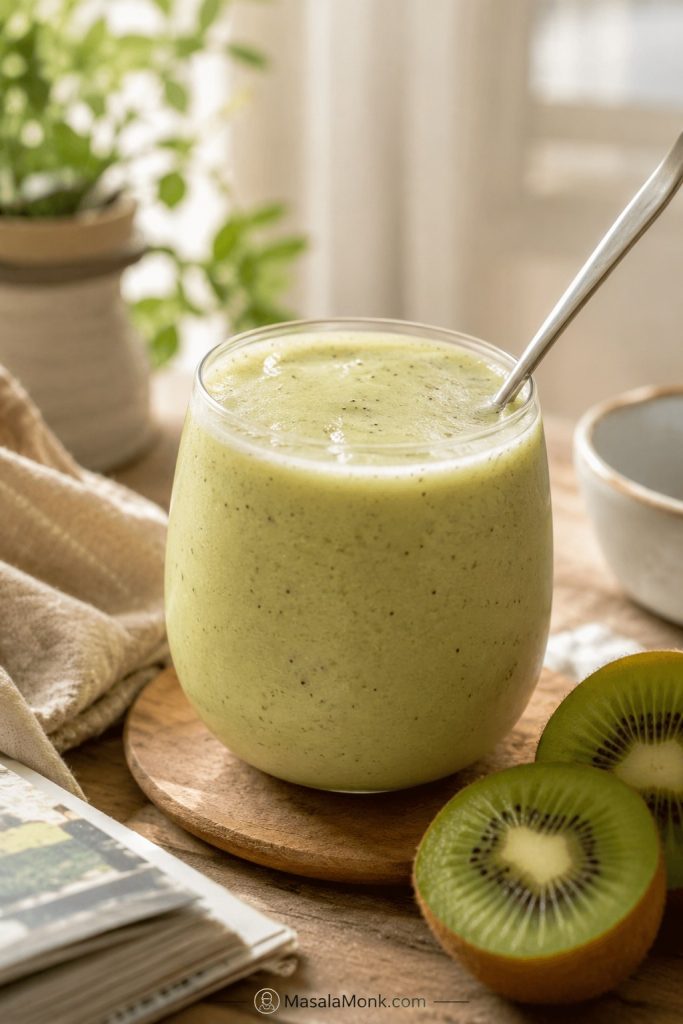
Finished creamy kiwi smoothie served in a glass with sliced kiwi in a warm breakfast setting
At its best, this smoothie stays bright, creamy, and fresh-tasting, so the kiwi still leads without turning the drink watery or harsh.
Posted on 14 Comments

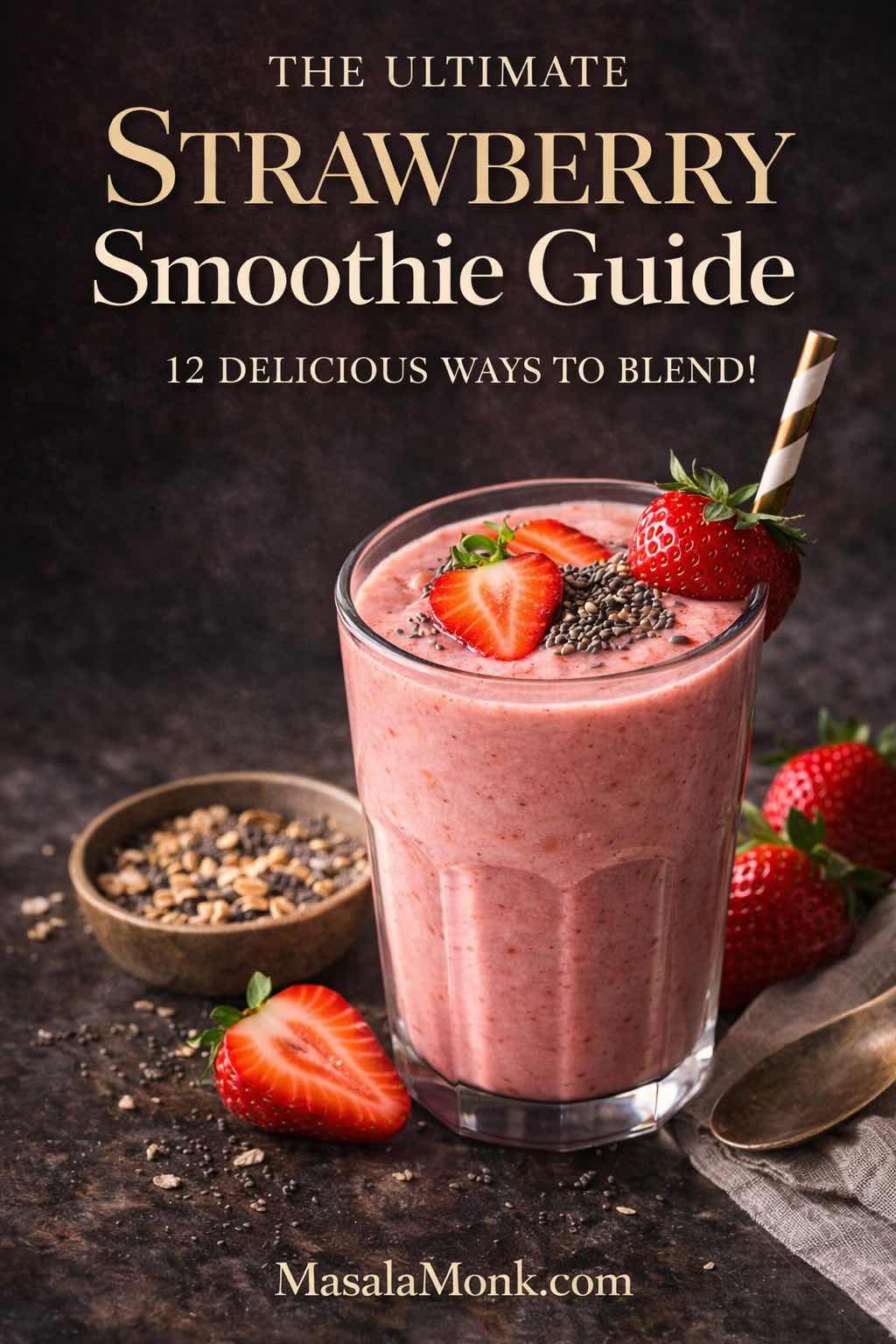
Strawberry Smoothie Recipes (12 Easy Blends + Bowls & Protein Shakes)

The Ultimate Strawberry Smoothie Guide cover featuring a creamy strawberry smoothie in a glass topped with fresh strawberries and chia seeds on a dark background.

A strawberry smoothie recipe can be as simple as fruit and milk—sweet, cold, and comforting in the way only strawberries manage. Still, it can also be the kind of drink that feels a little more intentional: thicker, creamier, packed with protein, or bright and tropical depending on what you toss into the blender. That’s the charm. You can keep it basic on a sleepy morning, then lean into something spoonable and extra on the weekend.

Even if you start with one strawberry smoothie recipe, the variations open up fast. Add banana and you’ve got a strawberry banana smoothie that tastes like a classic diner treat. Stir in yogurt and it turns into a strawberry smoothie with yogurt—tangy, creamy, and quietly luxurious. Blend in protein powder and you’re suddenly in strawberry protein shake territory, where the smoothie stops being “just a drink” and starts pulling real weight as breakfast or post-workout fuel. Push the texture thicker and you’ve stepped into strawberry smoothie bowl land, with toppings and crunch and the satisfaction of eating your smoothie with a spoon.

Before any of that, though, it’s worth doing two quick things that make every version better.

First, wash fresh strawberries properly. The FDA’s guidance on handling produce is practical and straightforward in their page on selecting and serving produce safely. Second, if you ever like checking nutrition basics for ingredients you use often, the USDA FoodData Central strawberry listings are a dependable reference.

Now that you’ve got clean berries and a blender, let’s make smoothies that taste like strawberries—whether you want them light and drinkable, thick and creamy, or bold enough to count as a full meal.

Also Read: Fight Anemia and Boost Hemoglobin: 10 High Iron Shakes & Smoothie Ideas


The small details that make smoothies taste smoother, richer, and more “finished”

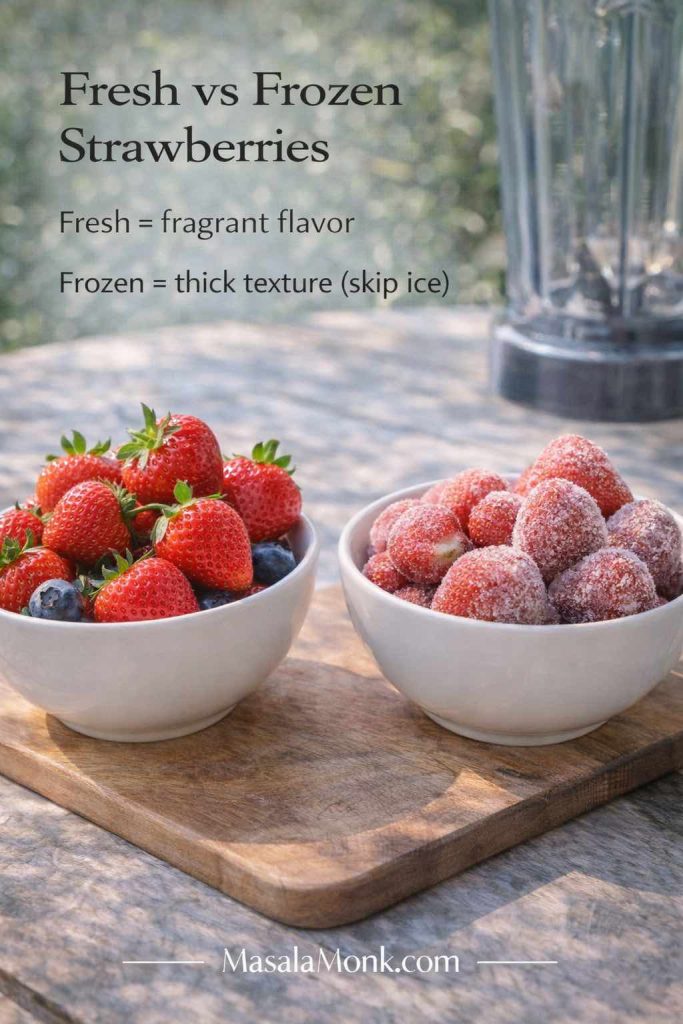
Start with the fruit: fresh strawberries vs frozen strawberries

Fresh strawberries taste vivid and perfumed when they’re in season. Frozen strawberries, on the other hand, are the secret to texture. If you’re chasing that thick café-style consistency, a strawberry smoothie made with frozen strawberries is hard to beat.

Fresh vs frozen strawberries guide card for smoothies showing two bowls of strawberries outdoors, with tip that frozen strawberries make thicker smoothies and help you skip ice.
Fresh vs Frozen Strawberries: Use fresh berries when you want the most fragrant strawberry flavor—use frozen berries when you want thickness and a frosty smoothie without watering it down with ice.

When you use frozen fruit, you’re essentially replacing ice with flavor. That’s why the “smoothie frozen fruit” approach works so well: you get frost and thickness without watering down the fruit. The same logic applies to any recipe for smoothie with frozen fruit—frozen berries, frozen mango, frozen pineapple—because cold fruit behaves like a built-in thickener.

If your blender is strong, you can go fully frozen. If it struggles, you can use half frozen and half fresh, then adjust.

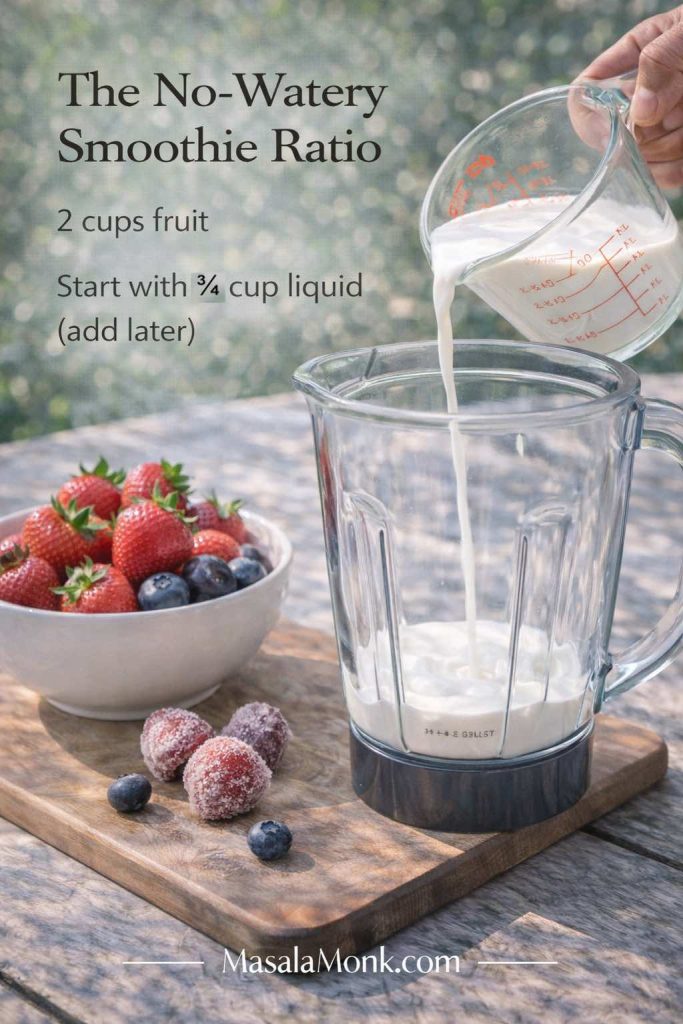
A simple ratio that keeps you out of watery territory

A lot of disappointment comes from one thing: too much liquid too soon. Instead, begin conservatively and add more only when the blender needs it.

A reliable starting point for most drinkable smoothies:

  • 2 cups fruit (more if you want it extra thick)
  • ¾ cup liquid (milk, almond milk, coconut water, juice)
  • ½ cup creamy element (yogurt, banana, oats, nut butter)
No-watery smoothie ratio guide card showing milk being poured into a blender jar beside strawberries, with tip to use 2 cups fruit and start with 3/4 cup liquid.
The No-Watery Smoothie Ratio: Start thick on purpose—use plenty of fruit and add liquid only as needed. It’s the easiest way to avoid a bland, watery smoothie without adding ice.

For thicker blends, especially smoothie bowls:

  • 2½ to 3 cups frozen fruit
  • ¼ to ½ cup liquid (start low)
  • Optional yogurt, but don’t lean on it too heavily unless you like a tang-forward bowl

Once you get comfortable with this, you can improvise endlessly—banana strawberry fruit smoothie one day, strawberry mango smoothie the next—without thinking too hard about measurements.

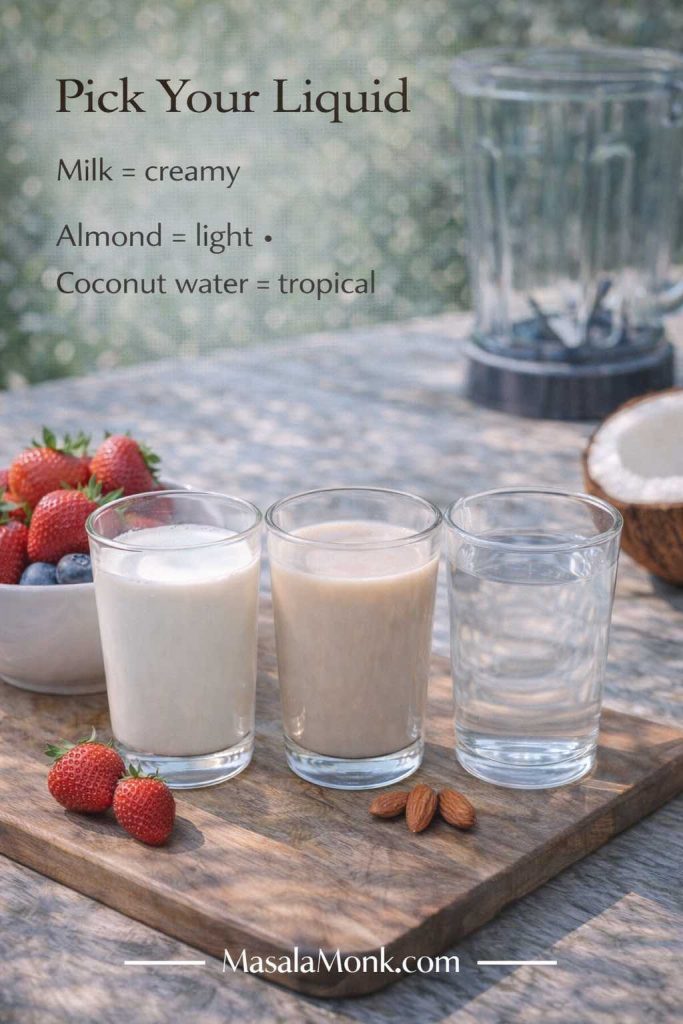
Choosing the liquid sets the vibe

The liquid you choose isn’t just “what makes the blender spin.” It decides the flavor direction and the mouthfeel.

Pick your liquid guide card for strawberry smoothies showing three glasses of milk, almond milk, and coconut water, with tip that milk makes smoothies creamy, almond milk keeps them light, and coconut water tastes tropical.
Pick Your Liquid: Milk gives the creamiest strawberry smoothie, almond milk keeps it lighter, and coconut water makes fruit taste brighter—choose based on whether you want “milkshake” comfort or a refreshing finish.
  • Milk makes a classic strawberry smoothie with milk: creamy, mild, and familiar.
  • Almond milk keeps things lighter and slightly nutty, which is perfect for an almond milk strawberry smoothie or a banana strawberry smoothie almond milk version.
  • Yogurt-based liquids (like kefir or drinkable yogurt) create a tangy, thicker “strawberry smoothie drink” feel.
  • Coconut water brightens tropical smoothies. If you like that clean, refreshing finish, MasalaMonk’s coconut water smoothie ideas are a great source of flavor combinations.

Yogurt: regular, Greek, or strawberry yogurt?

Yogurt is one of the easiest ways to turn “nice” into “wow.”

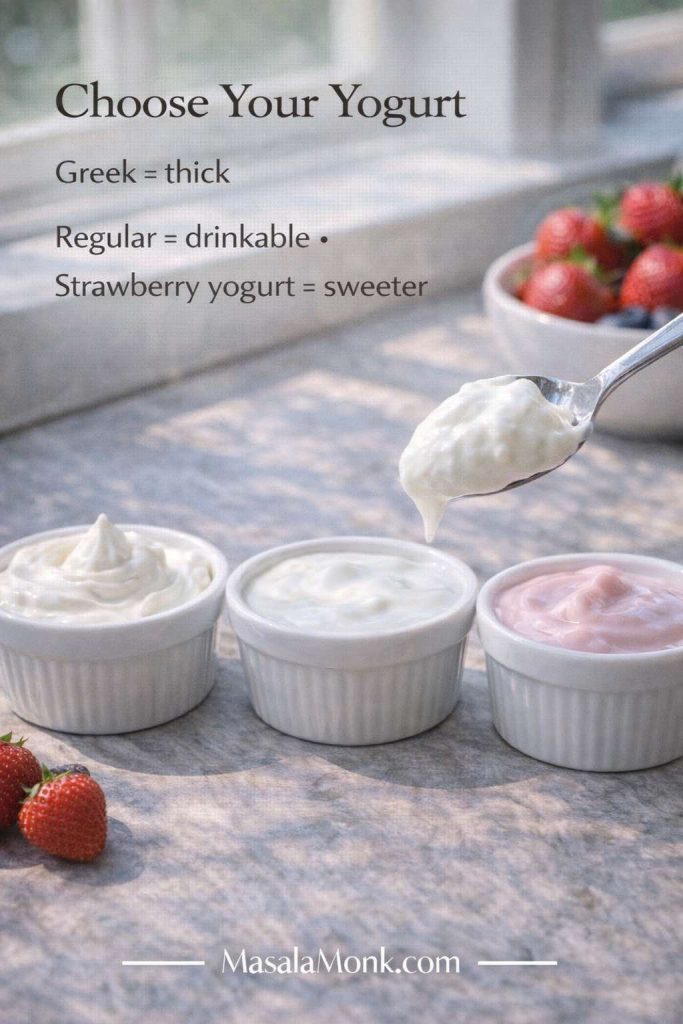
Choose your yogurt guide card for strawberry smoothies showing Greek yogurt, regular yogurt, and strawberry yogurt in small bowls, with tip that Greek yogurt is thick, regular yogurt is more drinkable, and strawberry yogurt is sweeter.
Choose Your Yogurt: Want a thick, café-style strawberry smoothie? Go Greek. Prefer a lighter sip? Use regular yogurt. Want extra sweetness without adding honey? Strawberry yogurt does the job.
  • Greek yogurt makes thick smoothies and supports the kind of creamy texture people want when they look up smoothie recipes with Greek yogurt.
  • Regular yogurt is softer and more drinkable; it’s ideal for strawberry fruit smoothie recipes with yogurt that feel light but still creamy.
  • Strawberry yogurt adds extra sweetness and a dessert-like flavor. It’s also handy if you want a strawberry smoothie with strawberry yogurt and you don’t feel like adding a sweetener.

If you like the idea of a strawberry yogurt shake recipe that feels like a treat without ice cream, yogurt is the cleanest path.

Blend order matters more than you think

If your blender ever stalls, it’s usually because frozen fruit got stuck around the blades. The fix is simple: blend in layers.

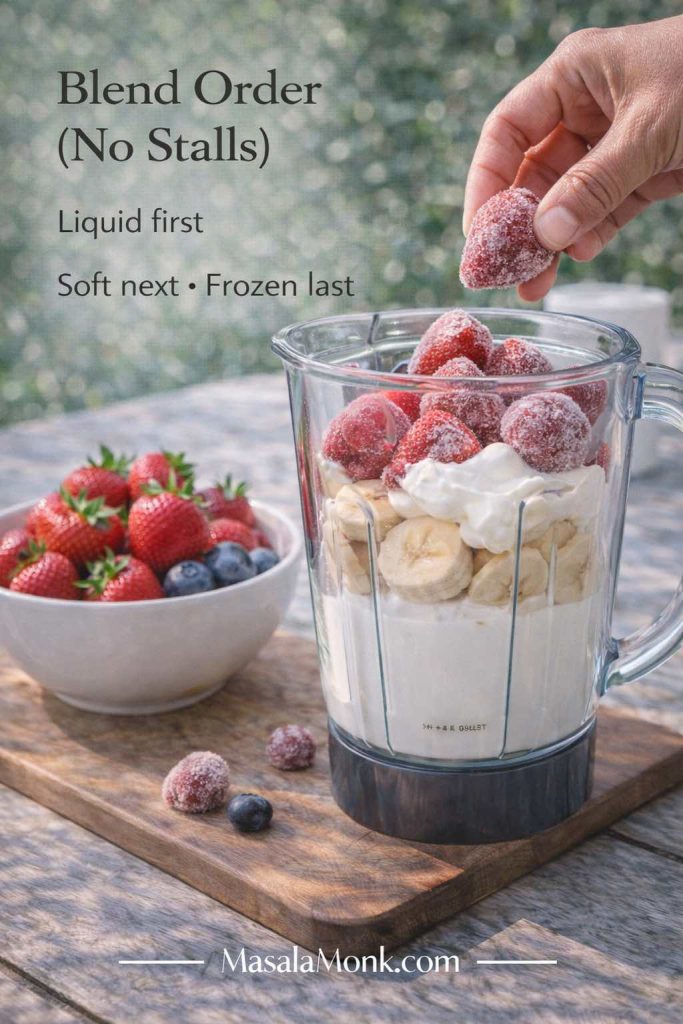
Smoothie blend order guide card showing a blender jar layered with milk, banana, yogurt, and frozen strawberries, with tip to add liquid first, soft ingredients next, and frozen fruit last.
Blend Order (No Stalls): Putting liquid in first helps the blades catch—then add soft ingredients, and finish with frozen fruit so everything blends smooth without getting stuck.
  1. Liquid first
  2. Soft ingredients next (yogurt, banana, nut butter, protein powder)
  3. Frozen fruit last

With leafy greens, blend greens with liquid first, then add fruit. You’ll see why when we get to the strawberry spinach smoothie.

Sweetness: aim for balance, not sugar

Strawberries can be sweet or tart depending on the batch. Instead of reaching straight for sugar, you can sweeten through ingredients:

  • ripe banana
  • dates
  • honey or maple
  • a splash of orange juice (especially good with pineapple)
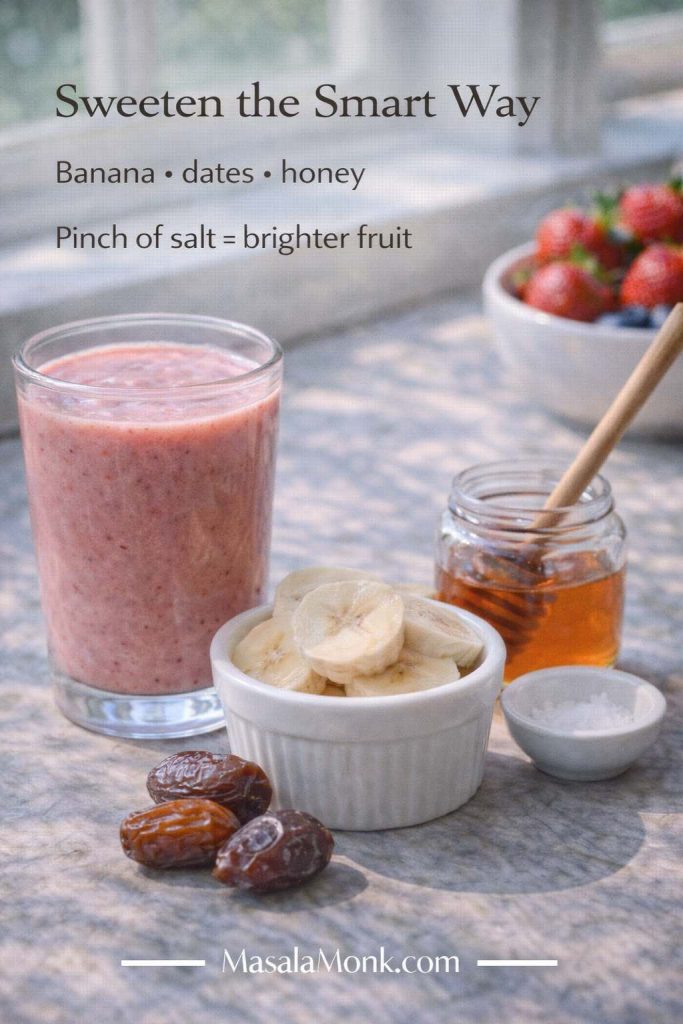
Sweeten strawberry smoothies naturally guide card showing a strawberry smoothie with banana slices, dates, honey, and a pinch of salt, with tip that salt makes fruit taste brighter.
Sweeten the Smart Way: If your strawberries are tart, sweeten with banana, dates, or a little honey—then add a tiny pinch of salt to make the fruit flavor pop without making the smoothie taste “salty.”

A tiny pinch of salt can also make fruit taste brighter. It won’t taste salty; it just rounds out the flavor.

A note on “shake” style smoothies (without ice cream)

When someone wants a strawberry shake recipe, they often mean a smoothie that feels like a milkshake—thicker, creamier, a little frothy—without adding ice cream.

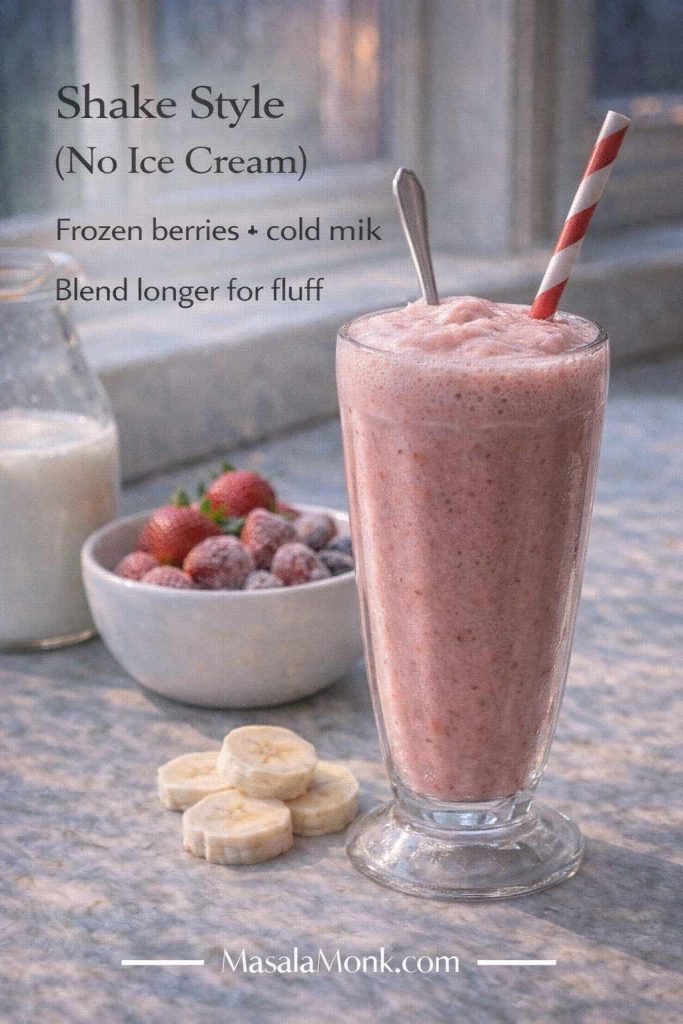
Strawberry shake without ice cream guide card showing a frothy strawberry shake in a tall glass with frozen strawberries and cold milk, with tip to blend longer for a fluffier texture.
Shake Style (No Ice Cream): Skip the ice cream and the ice—use cold milk plus frozen strawberries, then blend a little longer to whip in air for that milkshake-like fluff.

To get that strawberry milkshake without ice cream feel:

  • use cold milk
  • use frozen strawberries
  • include banana or yogurt for thickness
  • blend a little longer for fluff

That’s it. You’ll get a strawberry shake without ice cream that still feels indulgent.

Also Read: How to Make Churros (Authentic + Easy Recipe)


Recipe 1: Strawberry Smoothie (Classic, flexible, and dependable)

This is the foundational strawberry smoothie recipe you can return to anytime. It’s simple enough to memorize, yet it’s also the base that supports dozens of strawberry fruit smoothie recipes.

Ingredients for Strawberry Smoothie Recipe

  • 2 cups strawberries (fresh or frozen)
  • ¾ cup milk (or almond milk)
  • ½ cup yogurt (optional)
  • 1–2 teaspoons honey or maple (optional)
  • Ice (only if using fresh strawberries and you want it extra cold)
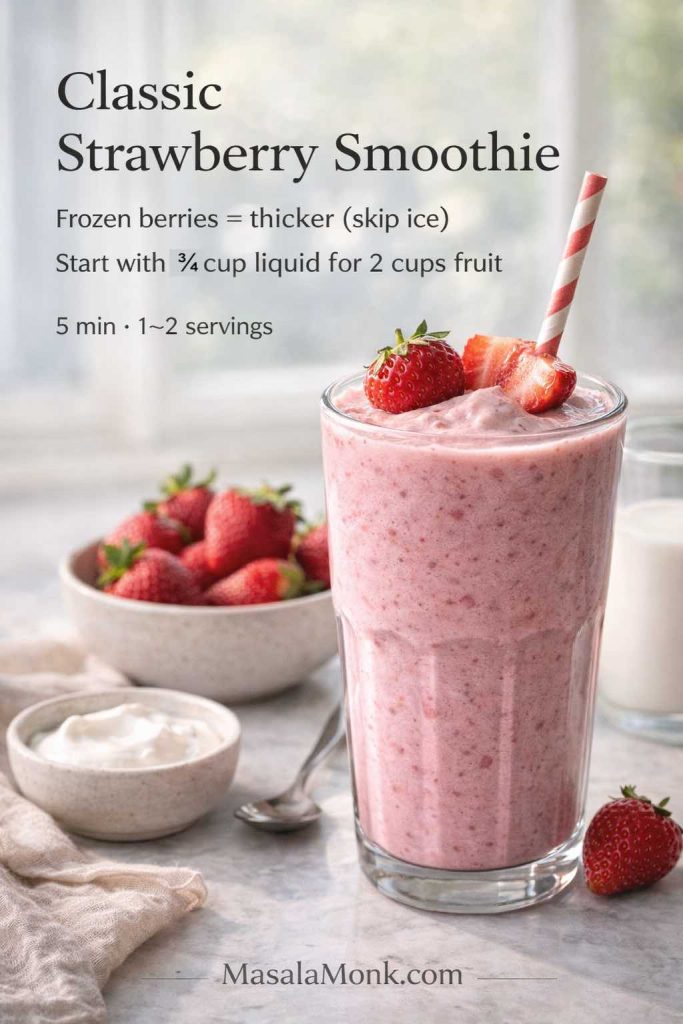
Classic strawberry smoothie recipe card in a tall glass, with tip to use frozen strawberries for a thicker smoothie and start with less liquid.
Classic Strawberry Smoothie: For a thicker café-style blend, use frozen strawberries instead of ice and add liquid gradually—start low, then loosen only if the blender needs it.

Method

Add the liquid to the blender first, followed by strawberries. Blend until smooth. If you’re using yogurt, add it after the berries break down, then blend again. Taste and adjust.

Make it three different ways (without changing the spirit)

Strawberry smoothie with yogurt
Add ½ cup Greek yogurt for a creamy, thick finish. This is the version that often feels like the best strawberry smoothie recipe when you want something satisfying.

Strawberry smoothie recipe without yogurt
Skip yogurt and add ½ banana, or 2 tablespoons oats, or 1 tablespoon chia. Each makes it creamy in a different way.

Strawberry smoothie with milk
Use cold milk and frozen strawberries for a smooth, classic drink. If you want it extra thick, reduce the milk slightly and add more frozen strawberries instead.

If you’re ever unsure what to do with a batch of berries, this is the “good strawberry smoothie recipe” you can make without thinking.

Also Read: Peanut Butter Cookies (Classic Recipe & 3 Variations)


Recipe 2: Strawberry Banana Smoothie (the classic everyone loves)

A strawberry banana smoothie is sweet, creamy, and forgiving. It’s also the smoothie that most people associate with the phrase “fruit smoothie.” Whether you call it banana and strawberries smoothie or banana strawberry fruit smoothie, the goal is the same: smooth texture, bright berry flavor, and a sweetness that feels natural.

Ingredients for Strawberry Banana Smoothie Recipe

  • 2 cups strawberries (frozen is ideal)
  • 1 banana (fresh or frozen)
  • ¾ cup milk (or almond milk)
  • ½ cup yogurt (optional)
  • Pinch of salt (optional)
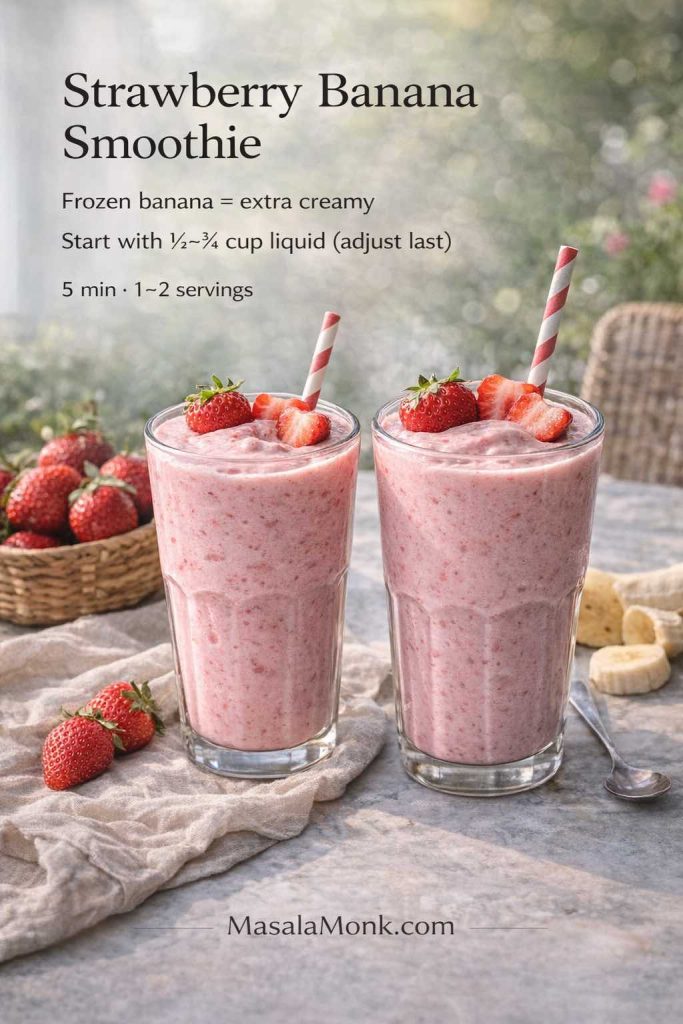
Strawberry banana smoothie recipe card showing two creamy smoothies, with tip to use frozen banana for a thicker texture and start with less liquid.
Strawberry Banana Smoothie: Freeze the banana for built-in creaminess, then add milk slowly—thickness comes from fruit, not extra liquid.

Method

Blend milk and strawberries first. Once the strawberries break down, add banana and yogurt (if using), then blend until creamy.

Variation options you’ll actually use

Strawberry banana smoothie with yogurt
Use Greek yogurt for extra thickness. If you’re building smoothie recipes with yogurt and strawberries into your routine, this is a great staple.

Strawberry banana smoothie with milk
Keep it simple: cold milk + frozen strawberries + banana. It feels like a strawberry banana drink, especially if you blend it until slightly frothy.

Strawberry banana smoothie without yogurt
Frozen banana does the heavy lifting. Use slightly less liquid and you’ll still get a thick smoothie.

If you enjoy comparing techniques, Serious Eats has a clear, straightforward strawberry banana smoothie method that’s easy to read alongside your own version.

And if you ever want a more filling, nutty twist, MasalaMonk’s nut-infused smoothie recipes are a great way to borrow ideas—like adding walnuts for richness without making the smoothie taste heavy.

Also Read: Double Chocolate Chip Cookies – Easy Recipe with 7 Variations


Recipe 3: Strawberry Smoothie With Yogurt (extra creamy, lightly tangy)

Sometimes the “best strawberry smoothie” isn’t the simplest one—it’s the one with that lush, creamy texture that tastes like it came from a café. Yogurt is the easiest way to get there.

This recipe also naturally fits smoothie recipes with Greek yogurt, strawberry smoothie recipe with yogurt, and even the idea of a strawberry yogurt milk smoothie if you prefer a thinner pour.

Ingredients for Strawberry Smoothie With Yogurt Recipe

  • 2 cups frozen strawberries
  • ½ cup Greek yogurt
  • ¾ cup milk (or almond milk)
  • 1 teaspoon honey (optional)
  • ½ teaspoon vanilla (optional)
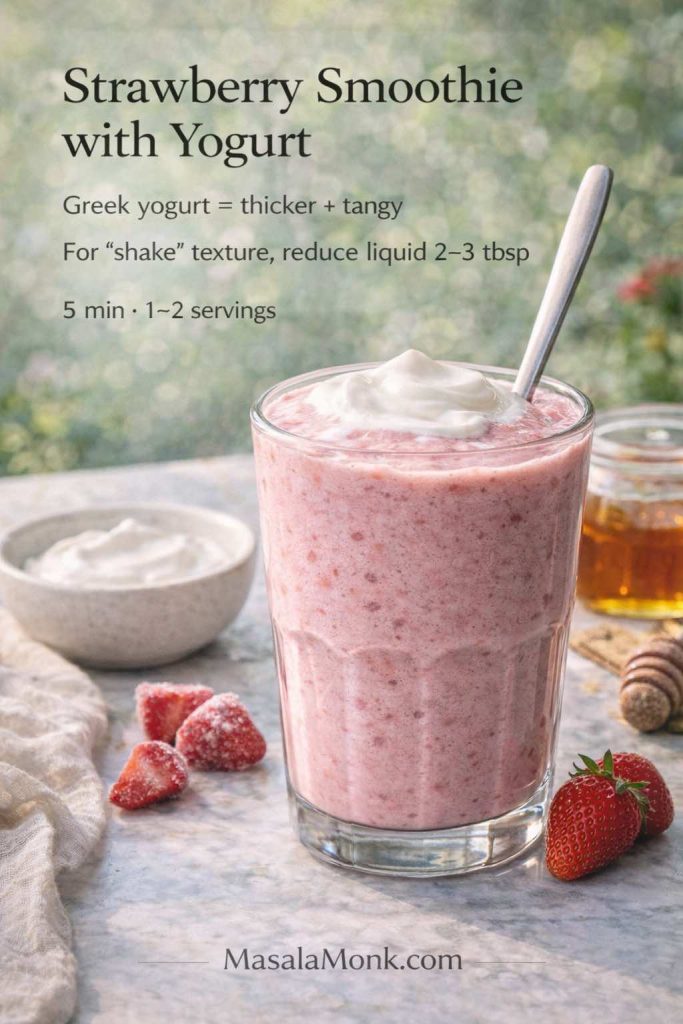
Strawberry smoothie with yogurt recipe card showing a thick smoothie topped with Greek yogurt, with tip to use Greek yogurt for a thicker, tangy texture.
Strawberry Smoothie with Yogurt: Greek yogurt gives you that café-thick texture—if it feels too pourable, reduce the liquid by a couple tablespoons instead of adding ice.

Method

Blend milk and yogurt first until smooth. Then add strawberries and blend until thick and creamy. Taste; sweeten lightly if needed.

Two directions to take it

If you want something closer to a strawberry yogurt shake recipe, use cold whole milk and blend longer so it becomes a little airy. On the other hand, if you prefer a brighter, lighter smoothie, use regular yogurt and almond milk.

Either way, you’ll get a strawberry smoothie drink that feels creamy without being heavy.

Also Read: French Toast Sticks (Air Fryer + Oven Recipe) — Crispy Outside, Custardy Inside


Recipe 4: Strawberry Smoothie Without Yogurt (still creamy, still satisfying)

If yogurt isn’t your thing—or you simply ran out—you can still make a strawberry smoothie that’s thick and silky. The trick is replacing yogurt with something that brings body.

Ingredients for Strawberry Smoothie Recipe Without Yogurt

  • 2 cups frozen strawberries
  • ¾ cup milk or almond milk
  • One creamy option:
    • ½ banana, or
    • 2 tablespoons oats, or
    • 1 tablespoon chia (let it sit for a few minutes after blending), or
    • ¼ avocado
  • Optional sweetener if your berries are tart
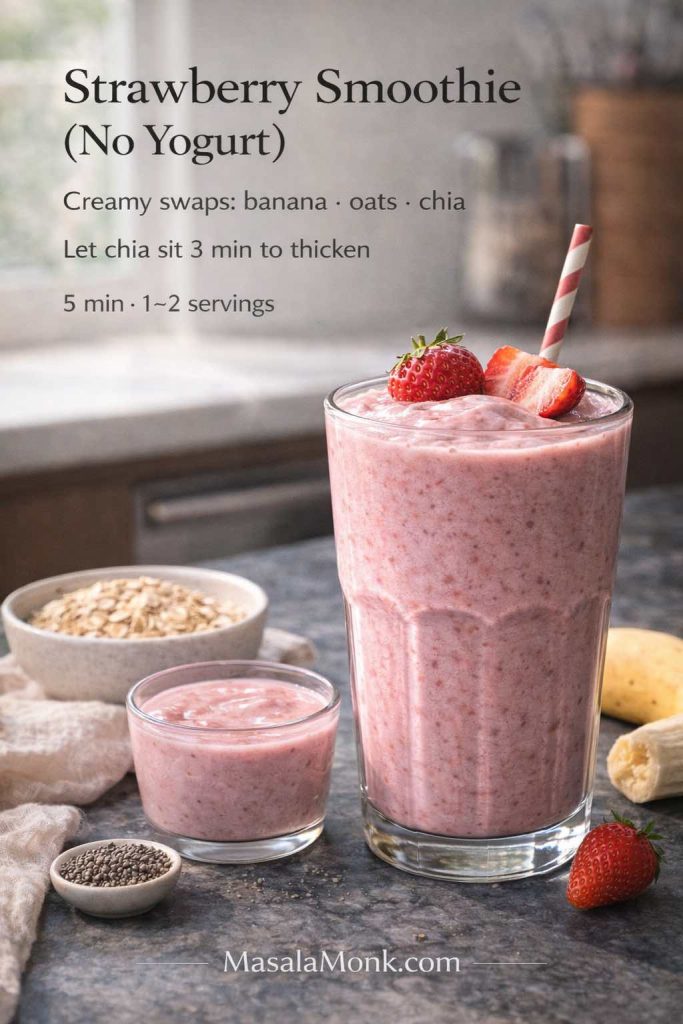
Strawberry smoothie without yogurt recipe card showing a creamy pink smoothie with banana, oats, and chia as yogurt-free thickening options.
Strawberry Smoothie Without Yogurt: If it tastes great but feels thin, thicken with fruit or fiber—banana for sweetness, oats for a breakfast-like body, or chia (rest 3 minutes) for a naturally thicker finish.

Method

Blend liquid and your creamy option first. Add frozen strawberries and blend until smooth.

What it tastes like

With banana, the smoothie leans sweet and classic—almost like a strawberry banana smoothie but lighter. When making it with oats, it becomes more breakfast-like, especially if you let it sit briefly so it thickens. And with avocado, it feels plush and rich, yet it still tastes like strawberries.

This is a simple strawberry smoothie solution that feels complete even without yogurt.

Also Read: 10 Best Chicken Sandwich Recipes (BBQ, Parm, Buffalo & More)


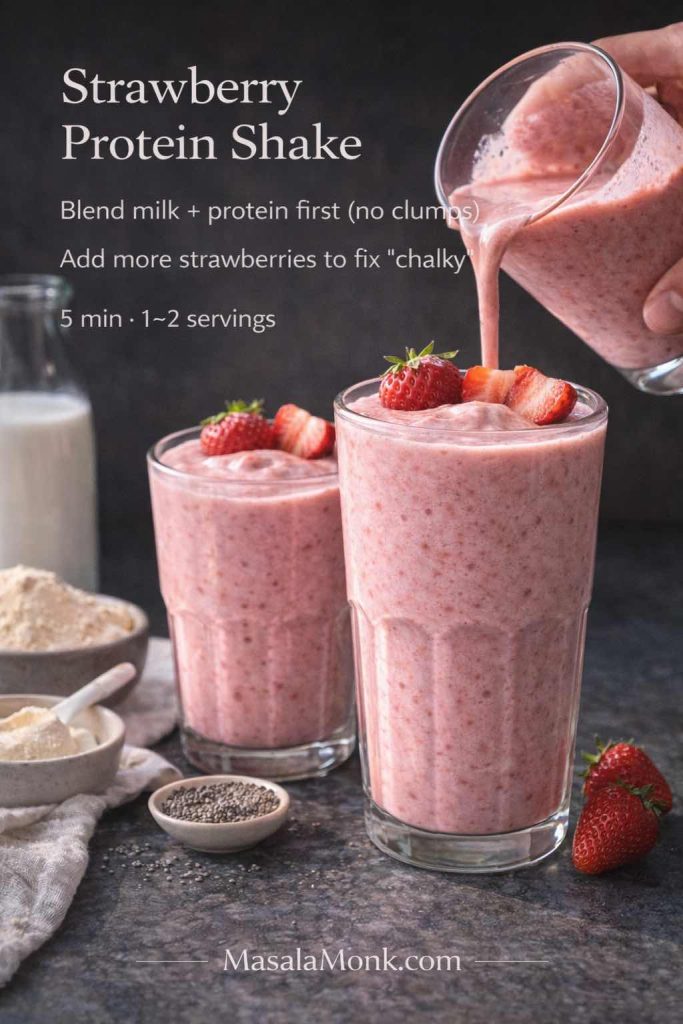
Recipe 5: Strawberry Protein Shake (filling, fast, and surprisingly delicious)

A strawberry protein shake should still taste like fruit, not like a supplement. The best versions are creamy, balanced, and easy to drink even when you’re not in the mood for something heavy.

It’s also a natural fit for strawberry protein drink, strawberry protein smoothie, and strawberry protein shake powder type blends.

Ingredients for Strawberry Protein Shake Recipe

  • 2 cups frozen strawberries
  • 1 cup milk (or almond milk)
  • 1 scoop vanilla protein powder
  • ½ banana or 1 date (optional)
  • 1 tablespoon chia or ground flax (optional)
Strawberry protein shake recipe card showing a thick pink shake being poured into a glass, with tips to blend milk and protein powder first and add more strawberries to reduce chalky taste.
Strawberry Protein Shake: For a smooth, non-chalky shake, blend your liquid with protein powder first, then add frozen strawberries—extra fruit fixes texture and flavor better than extra sweetener.

Method

Blend the milk and protein powder first. Next, add strawberries and blend until thick. If you’re using chia, pulse it in at the end.

Make it more satisfying in a clean way

A spoonful of nut butter adds richness and makes the smoothie feel like a meal. Hemp seeds work well too; MasalaMonk’s hemp seed smoothie ideas include combinations that pair nicely with berries.

If you’re in a season where you want higher-calorie blends, MasalaMonk’s high calorie protein shakes can inspire how to build a thicker, more substantial shake while keeping your own version strawberry-forward.

For an external reference point, Healthline has a simple strawberry banana protein powder smoothie that’s easy to compare if you like seeing alternate ratios.

Also Read: Almond Flour Pancakes (Easy Recipes) Fluffy, High-Protein, Keto & More


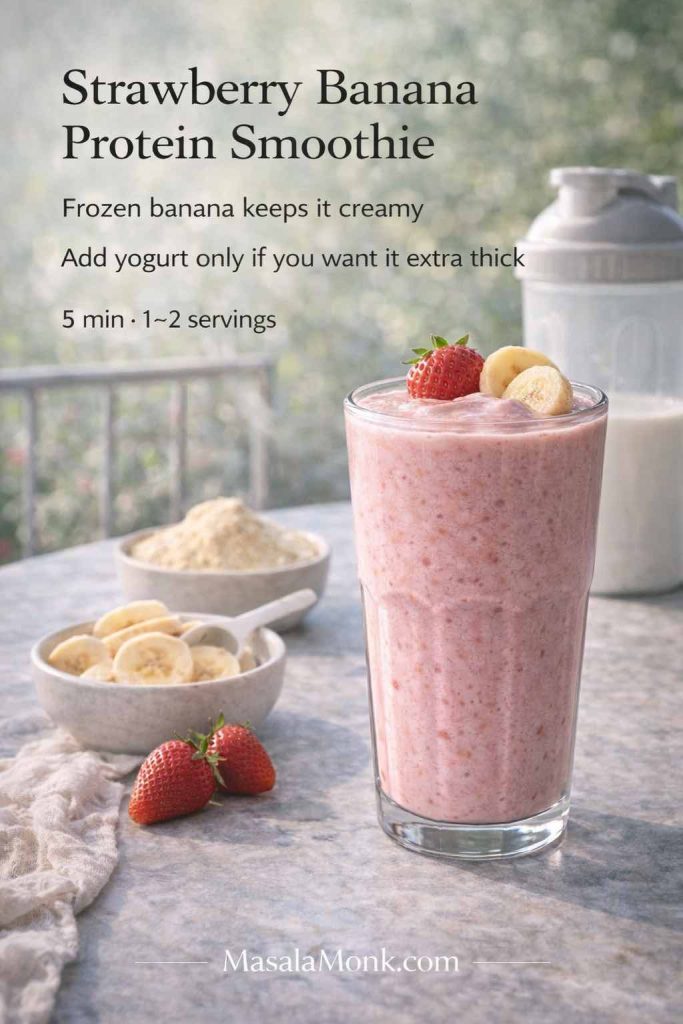
Recipe 6: Strawberry Banana Protein Smoothie (breakfast + gym-friendly)

This is what happens when a strawberry banana smoothie grows up. It’s still sweet and familiar, yet it carries you further thanks to protein.

It also naturally matches phrases like strawberry banana protein smoothie, banana and strawberry protein shake, and protein banana strawberry smoothie.

Ingredients for Strawberry Banana Protein Smoothie Recipe

  • 1½ cups frozen strawberries
  • 1 banana
  • 1 cup milk or almond milk
  • 1 scoop protein powder
  • ½ cup yogurt (optional)
Strawberry banana protein smoothie recipe card on an outdoor patio, showing a thick pink smoothie with banana and strawberry garnish and tips for keeping it creamy.
Strawberry Banana Protein Smoothie: Use frozen banana for creaminess, then decide your texture—skip yogurt for a lighter shake, or add a little Greek yogurt when you want it extra thick and filling.

Method

Blend milk and protein powder until smooth. Add strawberries and banana, then blend until creamy.

Two easy adjustments

If you want it lighter, skip the yogurt and rely on frozen banana for creaminess. Conversely, if you want it extra thick, add yogurt and reduce the milk slightly.

If you’re using almond milk, you’ll end up close to a strawberry banana smoothie with almond milk—just with more staying power.

Also Read: Bolognese Sauce Recipe: Real Ragù & Easy Spag Bol


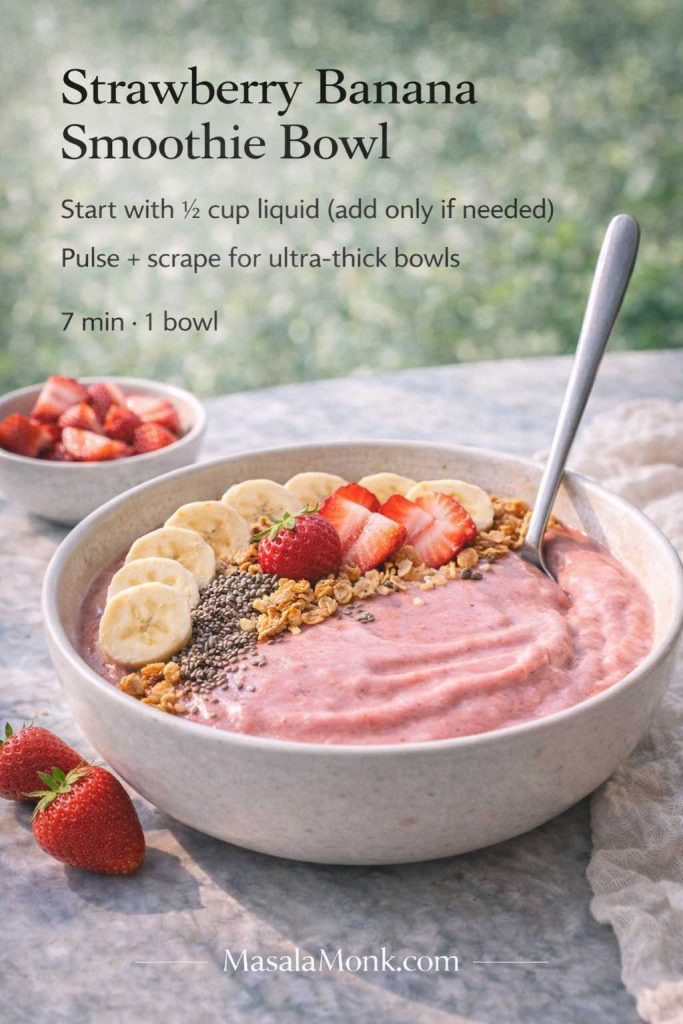
Recipe 7: Strawberry Banana Smoothie Bowl (thick, spoonable, topping-ready)

A smoothie bowl is all about texture. Instead of “drinkable,” you’re aiming for thick enough to hold toppings without everything sinking.

This covers strawberry banana smoothie bowl, smoothie bowl strawberry banana, and strawberry smoothie bowl recipe style blends naturally—without turning it into a project.

Ingredients for Strawberry Banana Smoothie Bowl Recipe

  • 2 cups frozen strawberries
  • 1 frozen banana (sliced before freezing)
  • ¼ to ⅓ cup milk or almond milk (start small)
  • Optional: ¼ cup yogurt for tang
Strawberry banana smoothie bowl recipe card showing a thick pink smoothie bowl topped with banana slices, strawberries, granola, and chia, with tip to use minimal liquid for a spoonable texture.
Strawberry Banana Smoothie Bowl: Bowl thickness comes from frozen fruit, not extra yogurt—start with very little liquid, then pulse and scrape until it turns spoonable enough to hold toppings.

Method

Add frozen fruit to the blender first. Then add the smallest amount of liquid to help it catch. Blend, stop, scrape, blend again until thick. Spoon into a bowl.

Toppings that work every time

  • Granola + sliced strawberries
  • Banana coins + nut butter drizzle
  • Coconut flakes + pineapple chunks
  • Chia seeds + cacao nibs
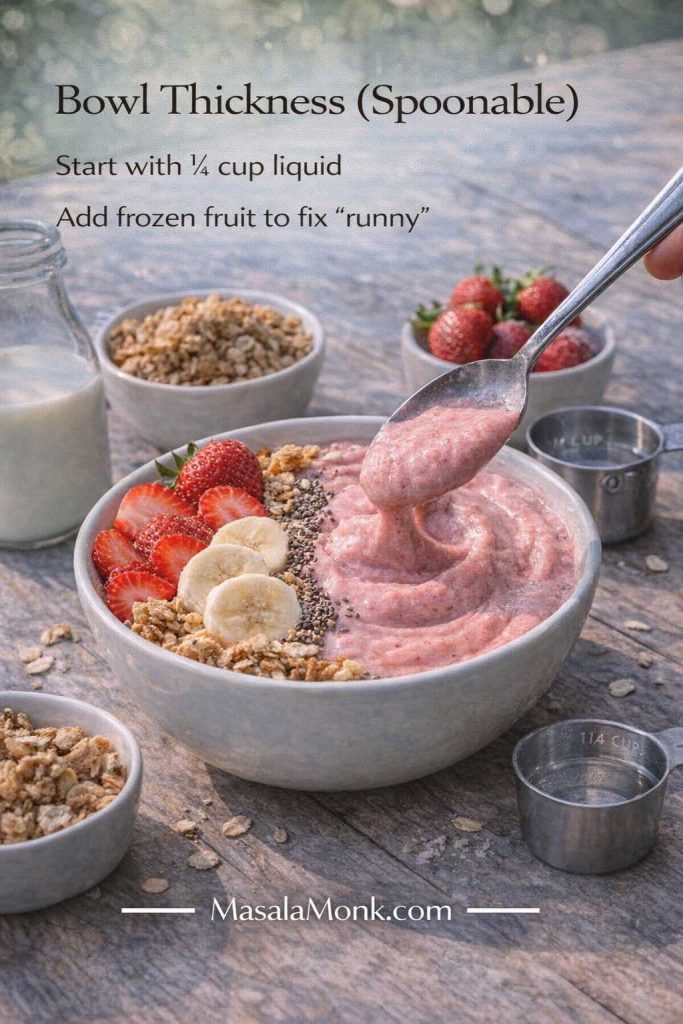
Strawberry smoothie bowl thickness guide card showing a spoonable pink smoothie bowl with toppings, with tip to start with 1/4 cup liquid and add frozen fruit to fix a runny bowl.
Bowl Thickness (Spoonable): Smoothie bowls should be blended “thick first”—start with very little liquid, then correct texture by adding more frozen fruit (not more yogurt or milk) if it turns runny.

If you want a quick visual reference for thickness, Bakerita’s strawberry banana smoothie bowl shows a classic approach. Meanwhile, Minimalist Baker’s smoothie bowl method explains the key principle: minimal liquid and patience in the blender.

For a make-ahead angle, MasalaMonk’s meal prepping with strawberries is a great companion read, especially if you like prepping frozen fruit packs for quick blending.

Also Read: Classic Rum Punch + 9 Recipes (Pitcher & Party-Friendly)


Recipe 8: Strawberry Peanut Butter Smoothie (comforting, rich, and balanced)

Strawberries and peanut butter sound unusual until you taste them together. The berries keep it bright; the peanut butter adds depth. The result feels like dessert while still being breakfast-friendly.

This naturally fits strawberry peanut butter smoothie, peanut butter and strawberry smoothie, and strawberry banana peanut butter smoothie variations.

Ingredients for Strawberry Peanut Butter Smoothie Recipe

  • 2 cups frozen strawberries
  • 1 banana
  • 1–2 tablespoons peanut butter
  • ¾ cup milk or almond milk
  • Optional: pinch of cinnamon, pinch of salt, splash of vanilla
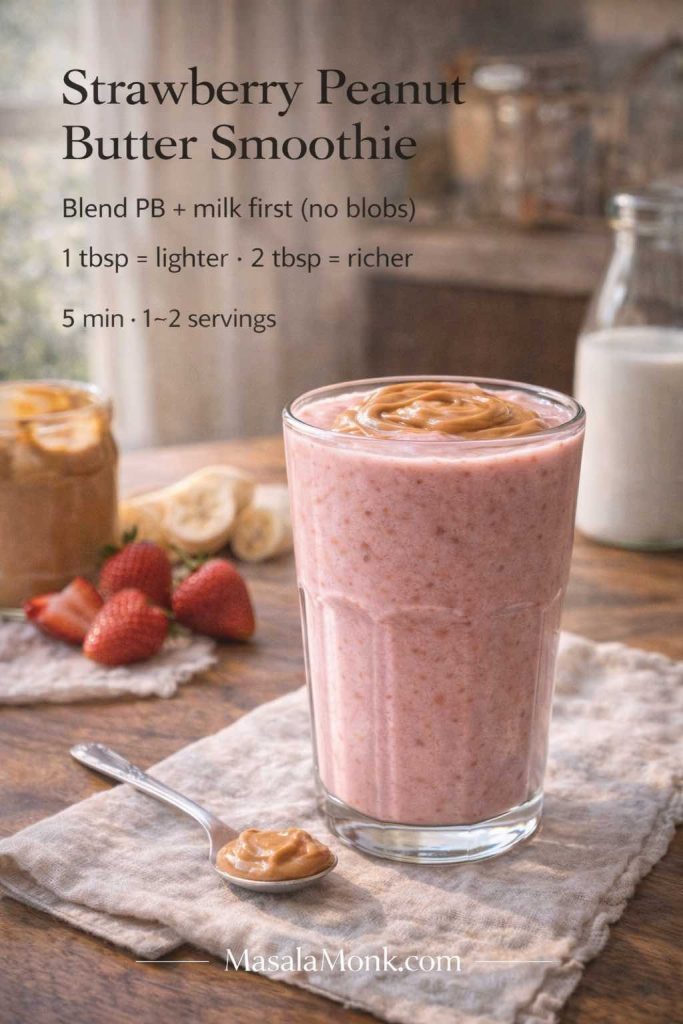
Strawberry peanut butter smoothie recipe card showing a creamy pink smoothie topped with peanut butter, with tips to blend peanut butter with milk first and adjust richness with 1–2 tablespoons.
Strawberry Peanut Butter Smoothie: For a smooth, creamy blend, emulsify peanut butter with milk first—then choose your richness: 1 tablespoon keeps it light, 2 tablespoons makes it dessert-like.

Method

Blend milk and peanut butter first so it emulsifies. Add strawberries and banana and blend until thick and creamy.

A few ways to change the mood

If you want something lighter, use almond milk and stick to 1 tablespoon peanut butter. If you want it more like a strawberry shake without ice cream, use cold milk and blend longer so it becomes airy.

Either direction, you’ll have a smoothie that feels indulgent without being heavy.

Also Read: Moscow Mule Recipe (Vodka Mule): The Master Formula + 9 Variations


Recipe 9: Chocolate Strawberry Smoothie (cocoa-forward, not syrupy)

Chocolate and strawberry is a classic pairing, although it can become overly sweet if you lean on syrups. Cocoa powder keeps things grounded while frozen strawberries keep it bright.

This is a natural fit for chocolate strawberry smoothie, chocolate and strawberry smoothie, and cocoa strawberry smoothie versions.

Ingredients for Chocolate Strawberry Smoothie Recipe

  • 2 cups frozen strawberries
  • 1 banana (or 2 dates)
  • 1 tablespoon cocoa powder
  • 1 cup milk (or almond milk)
  • Optional: ½ cup yogurt for extra creaminess
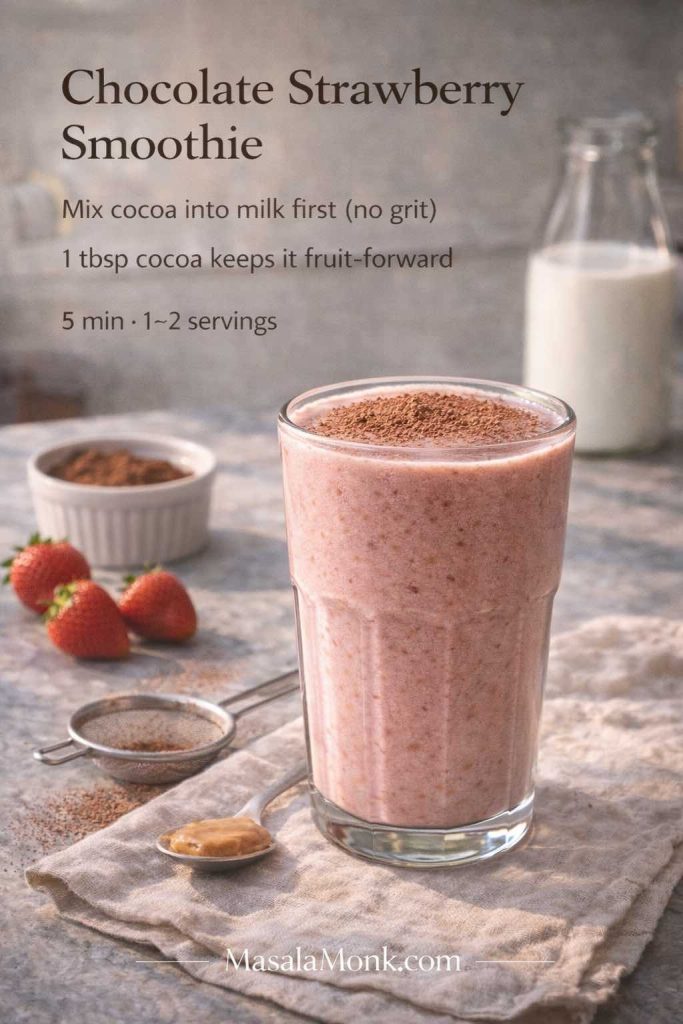
Chocolate strawberry smoothie recipe card showing a creamy strawberry smoothie topped with cocoa powder, with tip to mix cocoa into milk first for a smooth, grit-free texture.
Chocolate Strawberry Smoothie: To avoid gritty cocoa, dissolve it into the milk first—then keep it to about 1 tablespoon so the chocolate supports the strawberries instead of overpowering them.

Method

Blend cocoa powder with milk first so it dissolves smoothly. Add strawberries and banana, then blend until creamy.

A protein-friendly approach

If you like the idea of a strawberry banana chocolate protein smoothie, you can add vanilla or chocolate protein powder and keep the cocoa modest. That way, the smoothie stays fruit-forward rather than tasting like a protein bar in liquid form.

If you’re curious about adding seeds for extra richness, MasalaMonk’s hemp seed smoothie ideas include combinations that pair beautifully with cocoa.

Also Read: 7 Pizza Sauce Recipes | Marinara, White Garlic, Alfredo, Buffalo, BBQ, Vodka & Ranch


Recipe 10: Strawberry Mango Smoothie (sunny, tropical, and silky)

Strawberry mango smoothie blends are bright, cheerful, and naturally creamy—even without much dairy. Mango has a way of smoothing everything out, so the texture feels “finished” with very little effort.

This fits strawberry mango smoothie, mango and strawberry smoothie, mango and strawberry smoothie recipe, and smoothie strawberry mango phrasing naturally.

Ingredients

  • 1½ cups frozen strawberries
  • 1 cup frozen mango
  • ¾ cup coconut milk beverage or milk
  • Optional: ½ banana or 1 date
  • Optional: 1 tablespoon chia
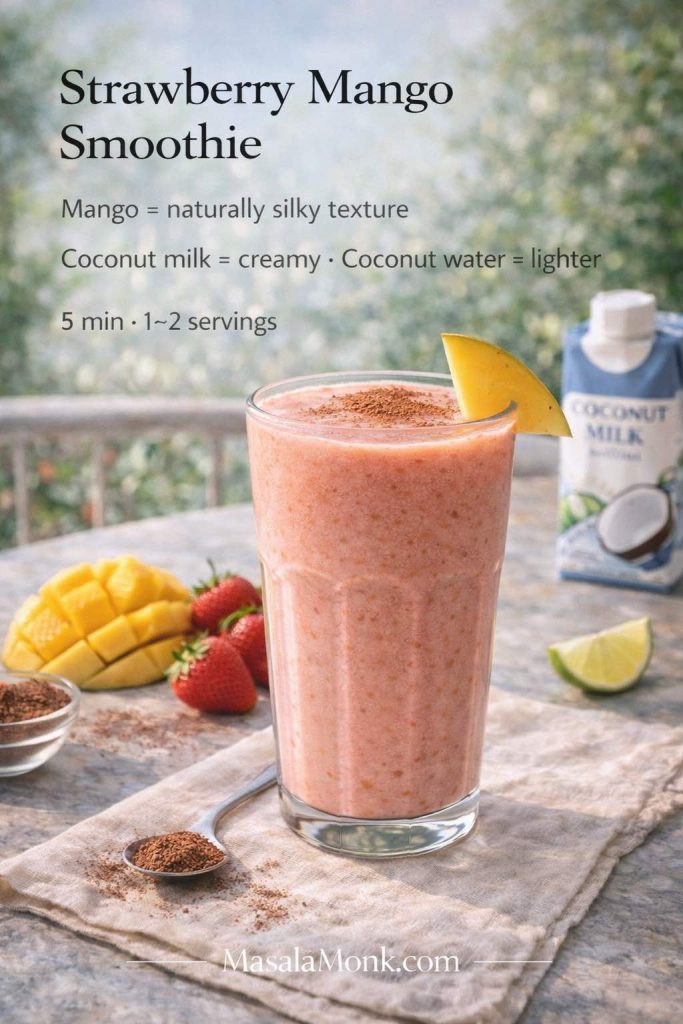
Strawberry mango smoothie recipe card showing a tropical smoothie in a tall glass with mango and strawberries, with tip that mango makes it naturally silky and coconut milk is creamier than coconut water.
Strawberry Mango Smoothie: Mango gives you a naturally silky blend—choose coconut milk when you want it creamy, or coconut water when you want a lighter, more refreshing tropical finish.

Method

Blend liquid and fruit until smooth. If you’re using chia, pulse it in at the end.

An easy twist if you like “shake” style blends

If you enjoy mango drinks beyond smoothies, MasalaMonk’s mango shake guide offers variations that translate well—especially if you want a dairy-free or lower-sugar direction.

Also Read: Vodka Pasta (Penne alla Vodka) + Spicy Rigatoni, Chicken, and Gigi Recipes


Recipe 11: Strawberry Blueberry Smoothie (berry-forward, vibrant, and satisfying)

A strawberry blueberry smoothie tastes like berries—not just sweetness. It’s also endlessly flexible, because you can keep it lean and bright or make it creamy and thick depending on your mood.

This naturally covers strawberry blueberry smoothie, strawberry and blueberry smoothie, strawberry blueberry smoothie recipe, and smoothie strawberry and blueberry phrasing.

Ingredients

  • 1½ cups frozen strawberries
  • 1 cup frozen blueberries
  • ¾ to 1 cup milk or almond milk
  • Optional: ½ cup yogurt
  • Optional: sweetener only if needed
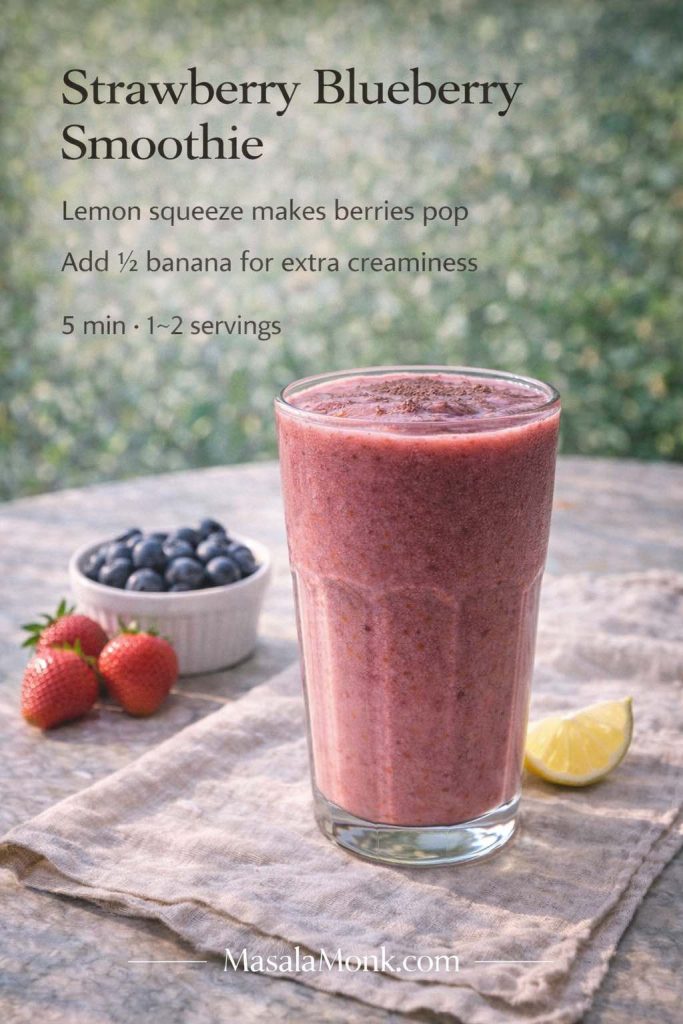
Strawberry blueberry smoothie recipe card with a thick berry smoothie in a glass, blueberries and strawberries on the side, and tip to add a squeeze of lemon and optional banana for creaminess.
Strawberry Blueberry Smoothie: Berries taste brighter with a tiny squeeze of lemon—then add half a banana only if you want a smoother, creamier finish (especially with frozen fruit).

Method

Blend liquid and berries until smooth. Add yogurt if using, then blend again until creamy.

Triple-fruit variation (banana blueberry and strawberry smoothie)

Add ½ banana. You’ll end up with a strawberry blueberry banana smoothie that tastes rounder and creamier, and it also aligns beautifully with the classic banana blueberry and strawberry smoothie style.

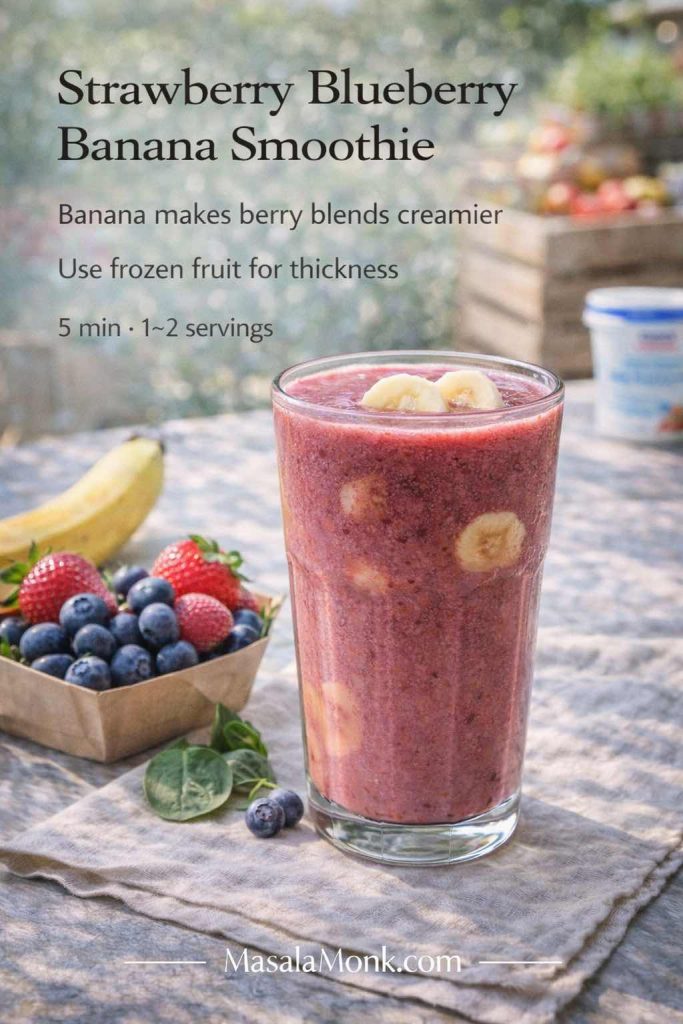
Strawberry blueberry banana smoothie recipe card at an outdoor market table, showing a thick berry smoothie with banana slices and fresh strawberries and blueberries, with tip that banana makes berry smoothies creamier.
Strawberry Blueberry Banana Smoothie: When berry smoothies taste too sharp, half a banana rounds them out—use frozen fruit for thickness and a smoother, creamier finish without extra dairy.

If you enjoy berry blends in general, you can also push this into “berry smoothies” territory by adding raspberries or blackberries—just keep your liquid modest so it stays thick.

Also Read: Golden Milk Recipe: The Best Bedtime Detox Drink!


Recipe 12: Strawberry Pineapple Smoothie (bright, tangy, refreshing)

Pineapple brings a tropical sharpness that makes strawberries taste even sweeter. If you like a smoothie that feels light and energizing, strawberry pineapple smoothie blends are a great choice.

This naturally fits pineapple and strawberry smoothie and smoothie with strawberries and pineapple versions.

Ingredients

  • 1½ cups frozen strawberries
  • 1 cup pineapple chunks (fresh or frozen)
  • ¾ cup coconut water or milk
  • Optional: ½ banana for sweetness
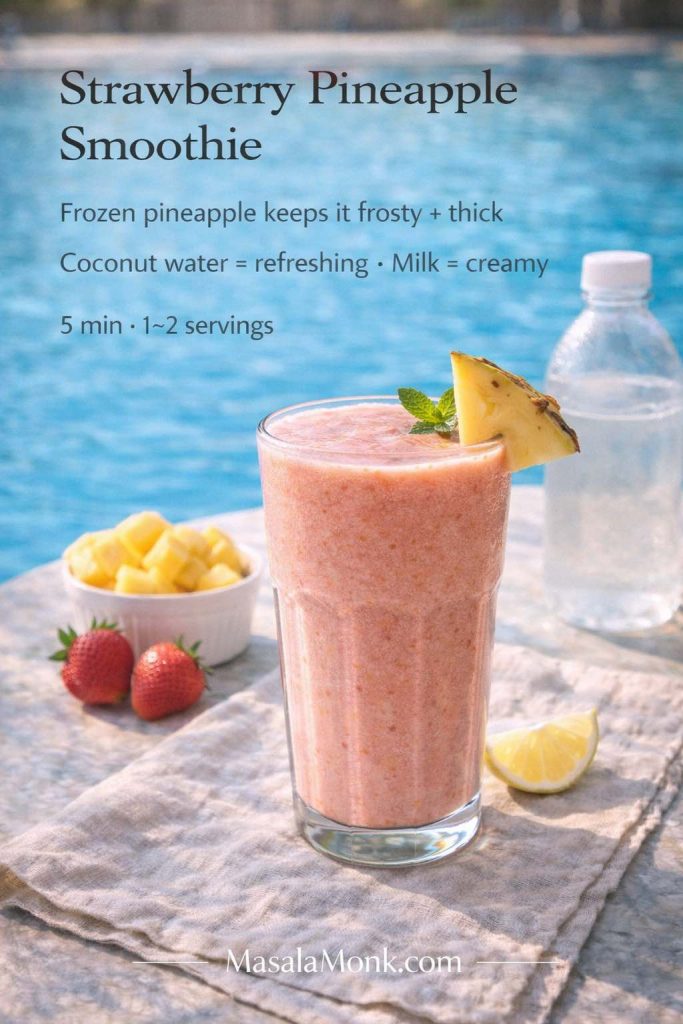
Strawberry pineapple smoothie recipe card showing a tropical smoothie by a pool with pineapple and strawberries, with tip to use frozen pineapple for thickness and choose coconut water for a lighter smoothie or milk for a creamier one.
Strawberry Pineapple Smoothie: For a bright, refreshing tropical blend, use frozen pineapple to keep it thick and frosty—then choose coconut water for a lighter finish or milk when you want it creamy.

Method

Blend coconut water and pineapple first until smooth. Add strawberries and blend until frosty.

If you enjoy the clean, refreshing finish of coconut water, MasalaMonk’s coconut water smoothie ideas pair naturally with this style.

And if you like the idea of “tropical” but want more structure, MasalaMonk’s meal prepping with strawberries includes a tropical bowl direction that’s easy to adapt using strawberry, pineapple, mango, and banana.

Also Read: Authentic Louisiana Red Beans and Rice Recipe (Best Ever)


Bonus: Strawberry Kiwi Smoothie (zippy, bright, and a little fancy recipe)

This one isn’t part of the numbered list above, but it deserves a spot in your rotation. Strawberry kiwi smoothies taste like a fruit salad that decided to become a drink—bright, juicy, and refreshing.

It also naturally matches strawberry kiwi smoothie, kiwi and strawberry smoothie, and smoothie with kiwi and strawberry phrasing.

Ingredients

  • 2 cups strawberries (frozen works best)
  • 1–2 kiwis, peeled
  • ¾ cup apple juice or milk
  • Optional: ½ banana if you want it sweeter
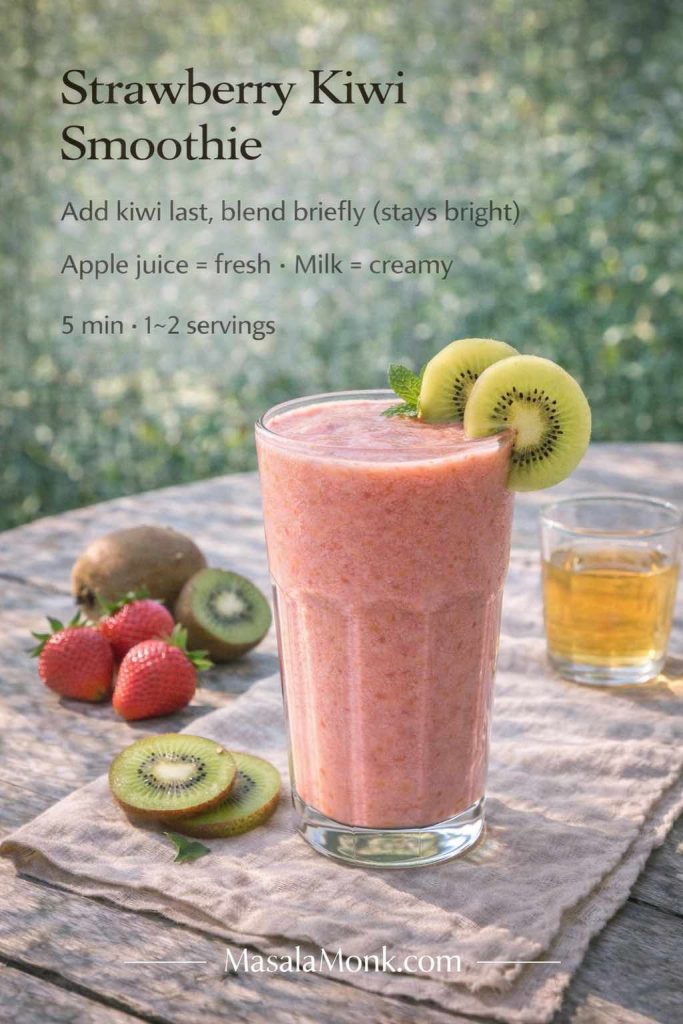
Strawberry kiwi smoothie recipe card on an outdoor garden table, with kiwi slices on the glass and tip to add kiwi last and blend briefly, plus apple juice vs milk for a fresh or creamy finish.
Strawberry Kiwi Smoothie: Kiwi tastes brightest when it’s blended briefly—add it at the end, then choose apple juice for a crisp, fresh smoothie or milk when you want it creamier.

Method

Blend strawberries with your liquid first. Add kiwi and blend briefly until smooth.

Kiwi can get slightly bitter if over-blended in some machines, so keeping it quick helps the flavor stay clean.

Also Read: 10 Creative Chia Pudding Recipes for Every Taste


Bonus: Strawberry Spinach Smoothie Recipe (green, but still tastes like strawberries)

If you want greens without sacrificing flavor, this is the one. Strawberry spinach smoothie blends are at their best when they taste like fruit first, spinach second.

This naturally covers smoothie with spinach and strawberries and strawberry smoothie with spinach variations.

Ingredients

  • 2 cups frozen strawberries
  • 1 banana
  • 1–2 packed cups baby spinach
  • ¾ to 1 cup milk or almond milk
  • Optional: chia or flax for extra body
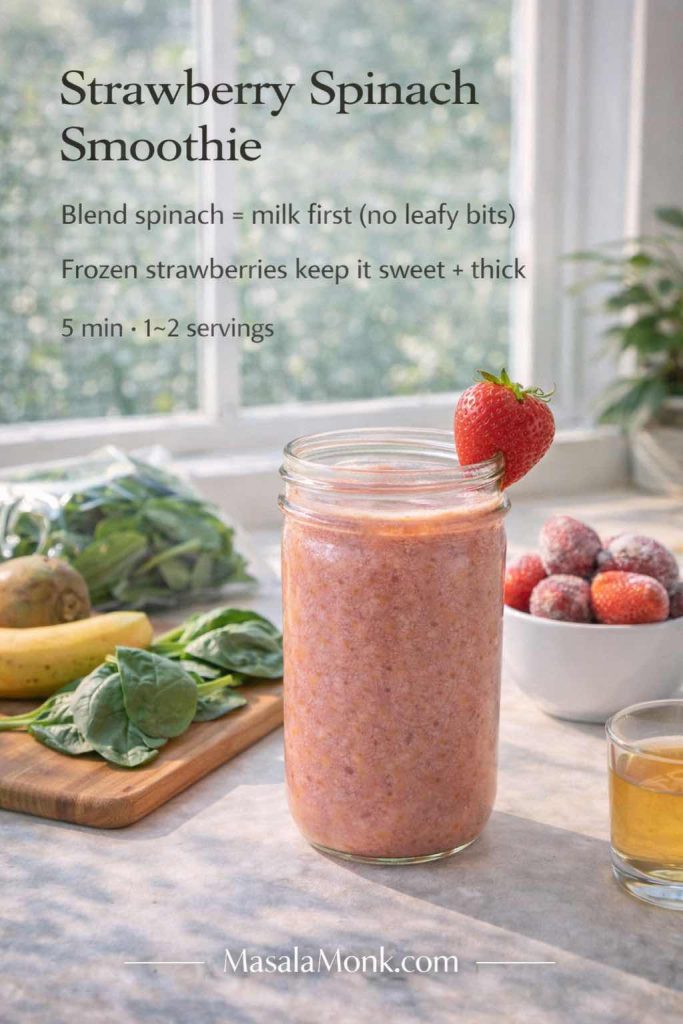
Strawberry spinach smoothie recipe card showing a pink-green smoothie in a mason jar on a kitchen counter with spinach, banana, and frozen strawberries, with tip to blend spinach with milk first for a smooth texture.
Strawberry Spinach Smoothie: For a smooth, fruit-forward green smoothie, blend spinach with your liquid first until completely silky—then add frozen strawberries and banana for sweetness and thickness.

Method

Blend milk and spinach first until completely smooth. Then add strawberries and banana and blend until thick and creamy.

If you’re interested in iron-friendly directions, MasalaMonk’s high-iron smoothies and shakes includes ideas in the same spirit—greens plus vitamin C–rich fruits—without turning the smoothie into something that tastes medicinal.

Also Read: Tres Leches – Mexican 3 Milk Cake Recipe


How to build your own “mix and match” variations without overthinking it

Once you’ve made a few of these, you’ll start noticing patterns. From there, you can spin off new combinations easily—whether you’re craving smoothie strawberry ingredients that feel light, or something thicker and more filling.

If you want a smoothie recipe without strawberries

Sometimes you land here even though you’re not in a strawberry mood. In that case, you can swap strawberries for another frozen fruit and keep the same method. Mango, blueberries, pineapple, and mixed berries all work beautifully. The blending logic stays exactly the same as any recipe for smoothie with frozen fruit.

If you want smoothie ideas with strawberries but not banana

Banana is popular, although not everyone loves it. If you want a strawberry smoothie no banana or strawberry smoothie without banana direction, try one of these as your “creamy element” instead:

  • Greek yogurt
  • oats
  • chia (let it rest briefly after blending)
  • avocado (use a small amount)

That’s how you get a creamy strawberry smoothie without banana, without needing special ingredients.

If you want a strawberry smoothie recipe no banana and no yogurt

Use frozen strawberries, almond milk, and oats or chia. It turns into a simple strawberry smoothie that’s creamy enough to satisfy, yet still light.

If you want a strawberry fruit shake feel

Lean on cold milk, frozen strawberries, and an extra banana slice or two. Blend longer until the texture looks fluffy. You’ll end up with a strawberry fruit shake that feels like a treat, especially if you add a splash of vanilla.

Also Read: How to Cook Perfect Rice Every Time (Recipe)


Make-ahead smoothie packs (the easiest way to drink smoothies more often)

If you’ve ever bought frozen strawberries and bananas with good intentions, only to watch the bananas over-ripen on the counter, smoothie packs are the answer.

They also make mornings smoother because you’re not measuring fruit while half awake.

What to do

Portion fruit into freezer bags or containers. Then, when you want a smoothie, dump a pack into the blender and add liquid plus any creamy element you like.

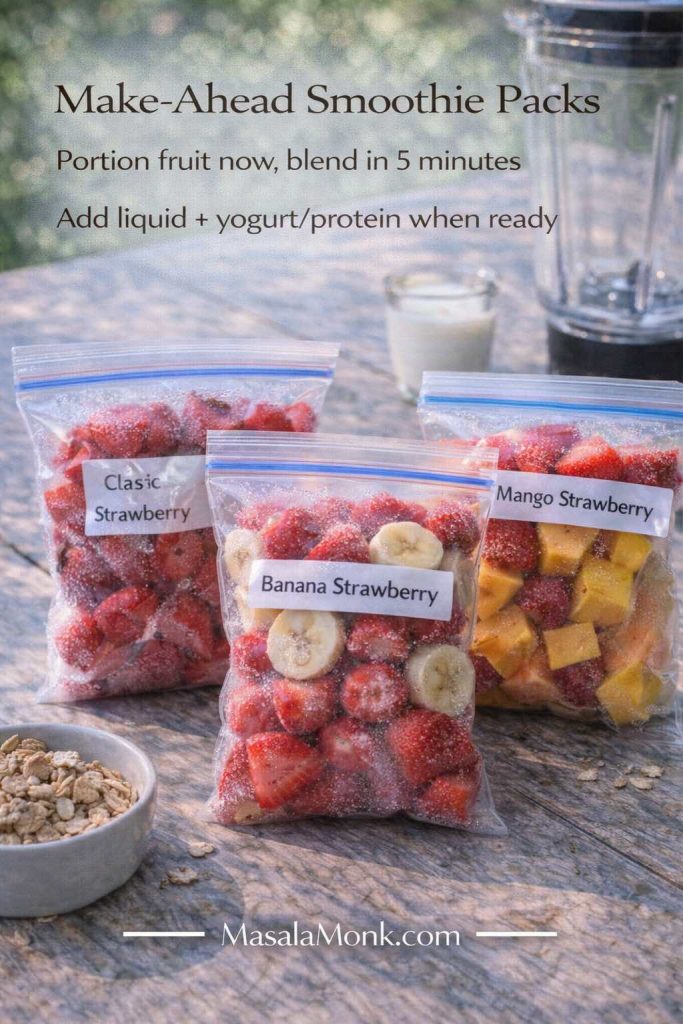
Make-ahead smoothie packs guide card showing three freezer bags labeled classic strawberry, banana strawberry, and mango strawberry with tip to portion fruit ahead and add liquid plus yogurt or protein when blending.
Make-Ahead Smoothie Packs: Pre-portion frozen fruit once, then smoothies become a 5-minute habit—just dump a pack into the blender and add your liquid (plus yogurt or protein) when you’re ready.

Packs to try (easy, practical, and delicious)

Classic Strawberry pack

  • 2 cups strawberries
    This one works with milk, almond milk, or yogurt. It’s the base for most strawberry smoothie recipes.

Banana Strawberry pack

  • 1½ cups strawberries
  • 1 banana, sliced
    This is your go-to for a strawberry banana smoothie recipe whenever you want it.

Mango Strawberry pack

  • 1½ cups strawberries
  • 1 cup mango
    Add coconut milk beverage for the smoothest, sunniest result.

Blueberry Strawberry pack

  • 1½ cups strawberries
  • 1 cup blueberries
    Great with milk, almond milk, or yogurt, depending on whether you want it bright or creamy.

Strawberry pineapple pack

  • 1½ cups strawberries
  • 1 cup pineapple
    Try coconut water for a fresh finish, especially on hot days.

Turning packs into smoothie bowls

If you want a smoothie bowl, use the same packs—but cut your liquid down dramatically. Instead of ¾ cup, start with ¼ cup, then increase only if the blender needs it.

Also Read: Whole Chicken in Crock Pot Recipe (Slow Cooker “Roast” Chicken with Veggies)


A few serving ideas that make smoothies feel less repetitive

It’s easy to love smoothies for a week and then get bored. A small change in presentation can keep them interesting.

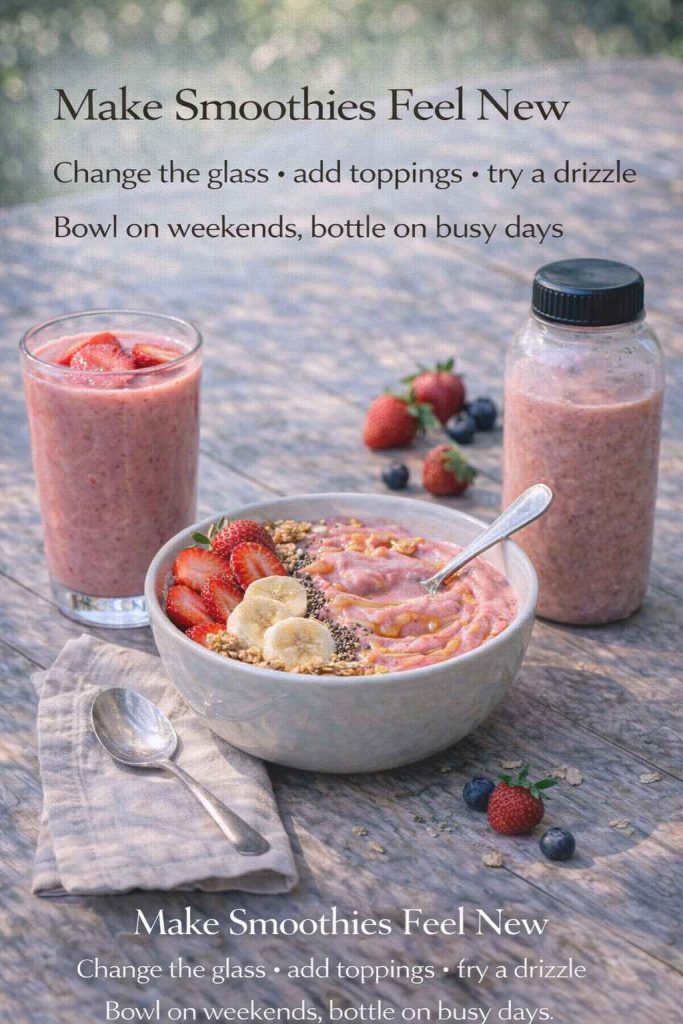
Strawberry smoothie serving ideas guide card showing a classic smoothie in a glass, a strawberry smoothie bowl with toppings, and a portable protein smoothie bottle, with tips to change the glass, add toppings, and use bowls or bottles.
Serving ideas: Keep smoothies from getting boring by changing the format—glass for a classic sip, bowl for weekend toppings, and a bottle when you need something grab-and-go.
  • Pour your strawberry smoothie with milk into a chilled glass and add a few sliced strawberries on top. It feels more “finished.”
  • Turn a strawberry banana smoothie into a smoothie bowl on weekends and add crunchy toppings.
  • Make a chocolate strawberry smoothie when you’re craving dessert, then add a spoonful of yogurt to keep it creamy and satisfying.
  • Blend a strawberry protein smoothie after workouts, then sprinkle chia on top for a little texture.

Small shifts keep the routine enjoyable, which is often the real secret to sticking with it.

Also Read: Mayo Recipe: 15+ Homemade Mayonnaise Variations


FAQs

1. What’s the easiest strawberry smoothie recipe for beginners?

To keep it simple, start with strawberries + milk and blend until smooth. For an easy strawberry smoothie recipe that’s consistently creamy, use frozen berries and begin with less liquid than you think you need. Afterward, adjust: add a splash more milk if it’s too thick, or add more frozen strawberries if it’s too thin. That approach turns a basic strawberry smoothie into a good strawberry smoothie recipe you can repeat without measuring perfectly every time.

2. What are the best strawberry smoothie ingredients for a creamy texture?

In practice, creaminess comes from a combination of frozen fruit and one “softener.” Strawberries provide flavor; banana, yogurt, oats, chia, or nut butter provide body. For a classic strawberry smoothie recipe, frozen strawberries + milk + yogurt is hard to beat. Alternatively, if you prefer fewer ingredients, frozen strawberries + milk + banana creates a thick, smooth result with a naturally sweet finish.

3. Can I make a strawberry smoothie with yogurt, and what yogurt works best?

Absolutely—strawberry smoothie with yogurt is one of the creamiest versions. Greek yogurt yields a thicker, tangier blend, while regular yogurt makes it lighter and more drinkable. As it happens, flavored strawberry yogurt can also work when you want extra sweetness without adding honey. If your goal is a strawberry smoothie recipe with yogurt that feels like a treat, choose a thicker yogurt and keep the liquid modest.

4. How do I make a strawberry smoothie recipe without yogurt that’s still creamy?

For that reason, you’ll want a substitute that adds body. A ripe banana is the easiest swap; it thickens and sweetens at the same time. Otherwise, oats (2 tablespoons) add a breakfast-like texture, while chia seeds thicken after blending if you let the smoothie rest briefly. In a pinch, a small piece of avocado can create a velvety mouthfeel without overpowering the strawberry flavor.

5. What’s a simple strawberry smoothie recipe with only 3 ingredients?

A simple strawberry smoothie recipe can be as straightforward as: frozen strawberries, milk, and banana. That combination also doubles as an easy strawberry smoothie recipe when you don’t want yogurt. By the same token, you can swap banana for yogurt if you prefer tang over sweetness. Either way, keeping the ingredient list short tends to make the strawberry flavor stand out more.

6. How do I make a strawberry smoothie with milk that doesn’t taste watery?

All things considered, wateriness comes from too much liquid or too much ice. Use frozen strawberries rather than ice, and start with about ¾ cup milk for 2 cups fruit. Next, blend thoroughly so the fruit fully breaks down—under-blended smoothies can taste thin even when they aren’t. If it still feels light, add more frozen strawberries instead of adding more milk.

7. What’s the best strawberry banana smoothie recipe for a thick, creamy result?

A reliable strawberry banana smoothie recipe uses frozen strawberries and a ripe banana, plus just enough milk to get the blender moving. At the same time, blending the milk with strawberries first can prevent clumps, especially if your berries are very icy. If you want a richer strawberry and banana smoothie recipe, add yogurt; if you’d rather keep it simpler, rely on the banana for creaminess and reduce the liquid slightly.

8. How do I make a strawberry banana smoothie with yogurt?

In contrast to the no-yogurt version, a strawberry banana smoothie with yogurt has more tang and a thicker texture. Add yogurt after the fruit begins to blend—this helps the blender stay smooth and prevents the mixture from getting stuck. Subsequently, tweak consistency with frozen fruit rather than extra liquid. If you want a more dessert-like finish, a dash of vanilla makes the flavor feel rounder.

9. How do I make a strawberry banana smoothie with milk that tastes like a shake?

To get that “strawberry shake recipe” vibe, use cold milk, frozen strawberries, and a ripe banana, then blend a little longer to introduce air. In addition, skip ice whenever possible—ice can dull the flavor and thin the texture as it melts. For a strawberry shake without ice cream, a spoonful of yogurt can mimic milkshake creaminess without making it heavy.

10. What’s the easiest way to use frozen fruit in smoothies?

In practice, the best smoothie frozen fruit method is to treat frozen fruit as your thickener. Start with frozen strawberries (or a frozen fruit mix), add liquid gradually, and blend in stages. If you’re following a recipe for smoothie with frozen fruit, begin with less liquid than suggested and increase only if the blender stalls. That strategy keeps the smoothie thick and prevents the “watery aftertaste” that can happen when you over-pour liquid.

11. How do I make a frozen strawberry smoothie that’s smooth, not icy?

A frozen strawberry smoothie turns silky when you blend long enough and use a creamy element. Yogurt, banana, or a spoonful of nut butter helps prevent an icy texture. Moreover, letting frozen fruit sit for 2–3 minutes before blending can reduce harsh ice crystals. If your blender struggles, blend the liquid with softer ingredients first, then add the frozen strawberries gradually.

12. Can I make a strawberry smoothie bowl recipe if I only have a regular blender?

Yes—strawberry smoothie bowl recipes are doable in most blenders with one adjustment: use far less liquid. Begin with frozen strawberries and frozen banana, add only a small splash of milk, and stop to scrape down the sides. In the same vein, pulsing can help the blades catch. If it becomes too thick to blend, add liquid a tablespoon at a time rather than pouring freely.

13. How do I thicken a strawberry banana smoothie bowl if it turns runny?

In that situation, add more frozen fruit first—frozen strawberries or frozen banana fixes texture quickly. Alternatively, a spoonful of oats or chia can thicken the bowl if you let it sit a couple of minutes. Avoid adding extra yogurt once it’s already runny, because yogurt can add moisture. For a reliable strawberry banana smoothie bowl, starting with minimal liquid is the best prevention.

14. What’s a good strawberry protein shake that still tastes like fruit?

A strawberry protein shake works best when protein supports the flavor rather than taking over. Blend your liquid with protein powder first to prevent clumps, then add frozen strawberries. Next, consider adding a banana or yogurt to keep the texture creamy and the taste balanced. If you want a strawberry protein smoothie that feels more like dessert, a small pinch of cocoa or vanilla can round out the flavor without burying the strawberries.

15. How do I make a strawberry banana protein smoothie without it tasting chalky?

To reduce chalkiness, use less powder than you think you need and build creaminess with banana or yogurt instead. Additionally, blending the powder with liquid first makes a smoother base. If the flavor still feels strong, add more strawberries rather than more sweetener—extra fruit softens the protein taste while keeping the smoothie bright. That approach usually produces a better strawberry protein drink overall.

16. Can I make a strawberry smoothie no banana that’s still thick?

Certainly—strawberry smoothie without banana is easy if you replace banana’s thickening role. Greek yogurt is the simplest option; oats and chia also work well. In particular, chia thickens after blending, so a short rest can transform texture. If you need a strawberry smoothie recipe no banana and no yogurt, use oats or chia with frozen strawberries and start with minimal liquid.

17. How do I make a non dairy strawberry smoothie or an almond milk strawberry smoothie?

A non dairy strawberry smoothie works beautifully with almond milk, oat milk, or coconut milk beverage. For an almond milk strawberry smoothie, blend frozen strawberries with almond milk and add a creamy element like banana, oats, or nut butter. In addition, skip ice and rely on frozen fruit for thickness. If you’re aiming to make smoothie without milk entirely, coconut water can be used, although it’ll taste lighter and more refreshing.

18. How do I make a strawberry shake without ice cream?

A strawberry shake without ice cream comes down to cold milk, frozen strawberries, and one thickener. Banana creates a classic milkshake-style sweetness; yogurt adds tang and creaminess. After that, blend longer than usual to make it slightly frothy. If you’re after a strawberry milkshake without ice cream that feels extra rich, add a small spoonful of nut butter and a pinch of salt.

19. What’s the best way to add strawberry puree for smoothies?

Strawberry puree for smoothies works best as a flavor booster rather than the main thickener. Use puree when you want a strong strawberry taste from fresh berries, then add frozen fruit (or a banana/yogurt) to build texture. Likewise, puree is handy in smoothie bowls if your blender needs help catching—use a little puree as the base, then blend in frozen fruit for thickness.

20. Can I prep frozen strawberries and bananas ahead for quick smoothies?

Yes—frozen strawberries and bananas are one of the easiest make-ahead combos. Slice bananas before freezing so they blend smoothly. Then, portion frozen fruit into packs so you can dump and blend. For a drinkable smoothie, add milk or almond milk; for a thicker bowl, add only a small splash. As a result, you’ll make strawberry banana smoothie recipes far more often because the hardest part is already done.

21. What if I’m using frozen smoothie mixes or strawberry smoothie mix packets?

Frozen smoothie mixes can be convenient, although flavor varies. To make them taste fresher, add extra frozen strawberries and keep sweeteners minimal. If you’re working with a strawberry smoothie mix or strawberry smoothie powder, use it lightly and let real fruit lead. In general, blending the mix with milk or almond milk and adding a banana improves both texture and taste.

22. What can I make if I want a smoothie recipe without strawberries?

A smoothie recipe without strawberries can follow the same structure—frozen fruit + liquid + a creamy element. Mango, pineapple, blueberries, and mixed berries all work well. Consequently, you can still keep a thick, creamy texture by relying on frozen fruit instead of ice. If you like tropical flavors, mango and pineapple blends are naturally smooth; if you prefer a deeper berry taste, blueberries make a rich base.