This post was last updated on
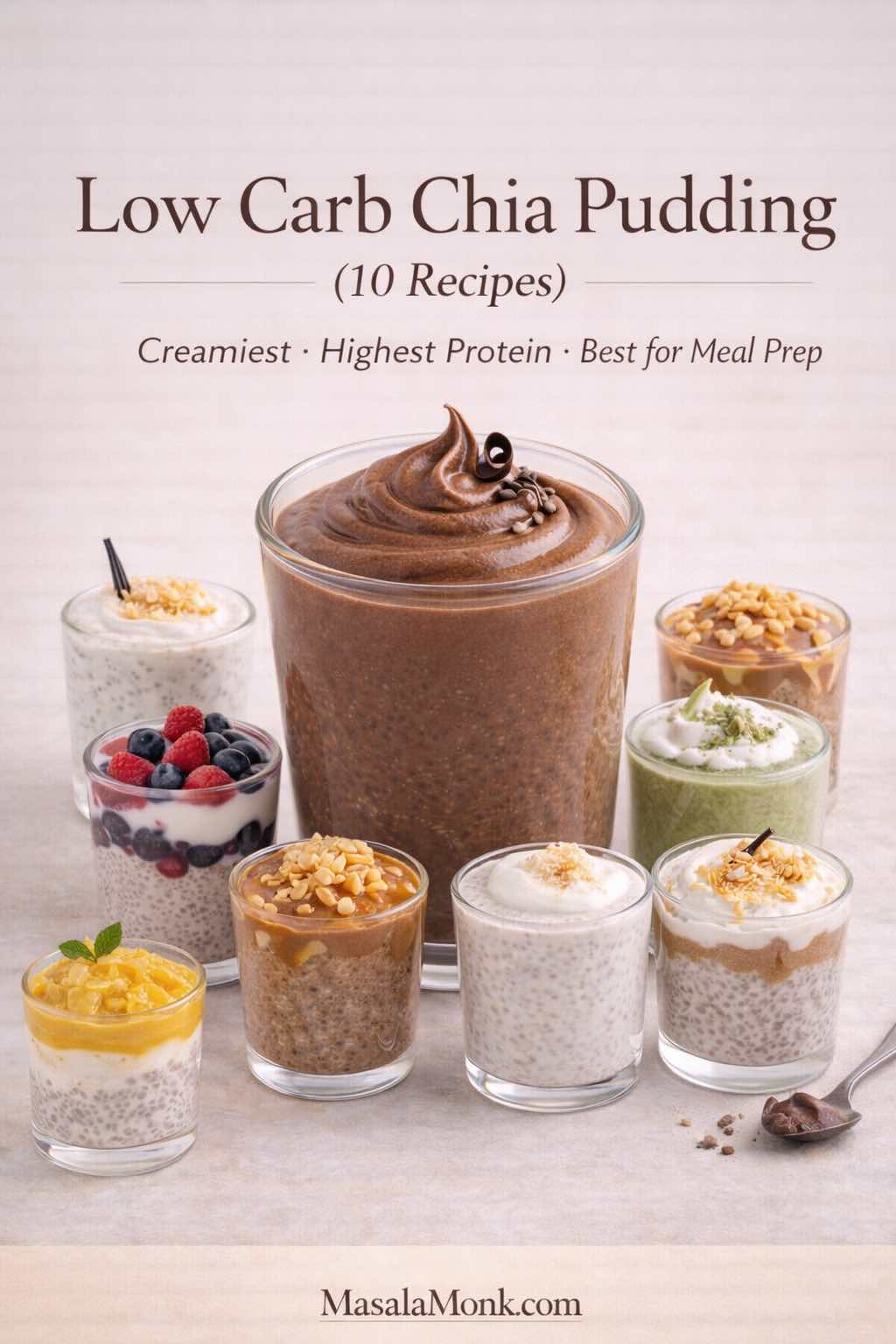
Looking for low carb chia pudding recipes for weight loss? The most useful place to start is the pudding itself. Chia is not a fat burner, but a make-ahead serving can be easy to portion, simple to build with protein, and satisfying without relying on much added sugar. Here you can make it light with almond milk, thick and tangy with Greek yogurt, rich with coconut milk, chocolatey with protein powder, or completely smooth after blending.
Here for the thick Greek-yogurt chia pudding? Start with ¾ cup plain Greek yogurt + 3 tablespoons chia seeds + ¼ cup / 60 ml unsweetened almond milk or water. Stir again after 10 minutes, then chill for at least 2 hours. Jump to the full Greek yogurt chia pudding recipe ↓
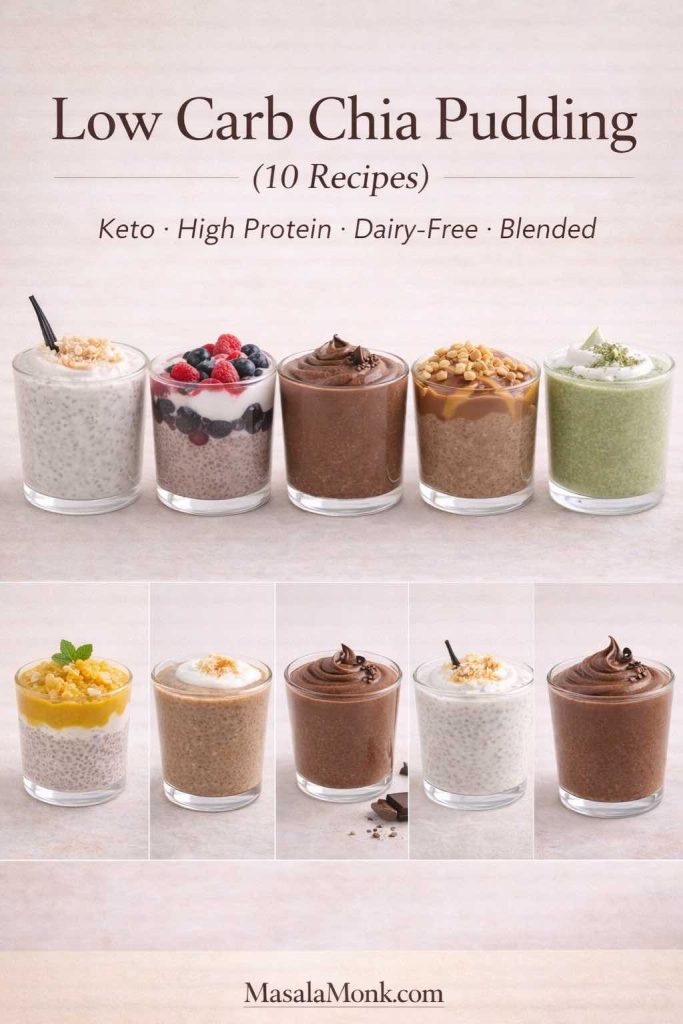
You do not need to read this guide from top to bottom. Use the jumps above if you already know what you want, or use the table of contents to solve the ratio, liquid, protein, meal-prep, or troubleshooting question that brought you here.
Table of Contents
- Chia Pudding for Weight Loss: What Actually Matters
- Why Chia Pudding Works as a Breakfast
- Best Chia Pudding Ratio + No-Clump Method
- Almond Milk, Coconut Milk, Yogurt & Other Liquids
- Dairy-Free Chia Pudding
- High-Protein Chia Pudding
- 10 Low Carb Chia Pudding Recipes
- Troubleshooting Runny, Thick or Lumpy Chia Pudding
- Meal Prep & Storage
- How to Make Chia Pudding Taste Better
- Frequently Asked Questions
Low Carb Chia Pudding for Weight Loss: What Actually Matters
Chia pudding is not a fat burner, and a jar does not cause weight loss by itself. What makes it useful in a weight-management routine is practical: chia is easy to portion ahead, it creates a substantial gel-like texture when hydrated, and it can be paired with protein-rich ingredients such as Greek yogurt or protein powder.
The rest of the jar matters just as much. Canned coconut milk, nut butter, nuts, granola, fruit, sweeteners, and large portions can quickly change both calories and carbohydrates. A chia pudding that replaces a less satisfying breakfast is a different situation from adding a rich pudding on top of everything else you already eat.
- Start unsweetened: choose unsweetened almond milk, plain Greek yogurt, or an unsweetened coconut base when keeping added sugar low matters.
- Add protein when the jar needs to function as a meal: Greek yogurt or a protein powder you already tolerate well are the easiest routes.
- Measure calorie-dense toppings: nut butter, nuts, seeds, coconut and granola are easy to overserve.
- Use fruit deliberately: berries are easy to portion; mango and apple work better as measured flavor accents when carbs matter.
- Do not confuse “keto” or “low carb” with automatically low-calorie: coconut milk and nut butter can make an excellent low-carb pudding while still creating a very energy-dense jar.
That is the reason this guide includes several styles rather than one “perfect” weight-loss pudding: the best jar is the one whose portion, protein, texture, and toppings fit the rest of your day.
Why Chia Pudding Works So Well as a Breakfast
A good chia pudding does two practical things well: it gives you a breakfast you can prepare ahead, and it creates a thick, substantial texture from very little morning work. Chia seeds absorb liquid as they hydrate, while Greek yogurt, protein powder, nuts, or richer milks can make the finished jar feel more complete.
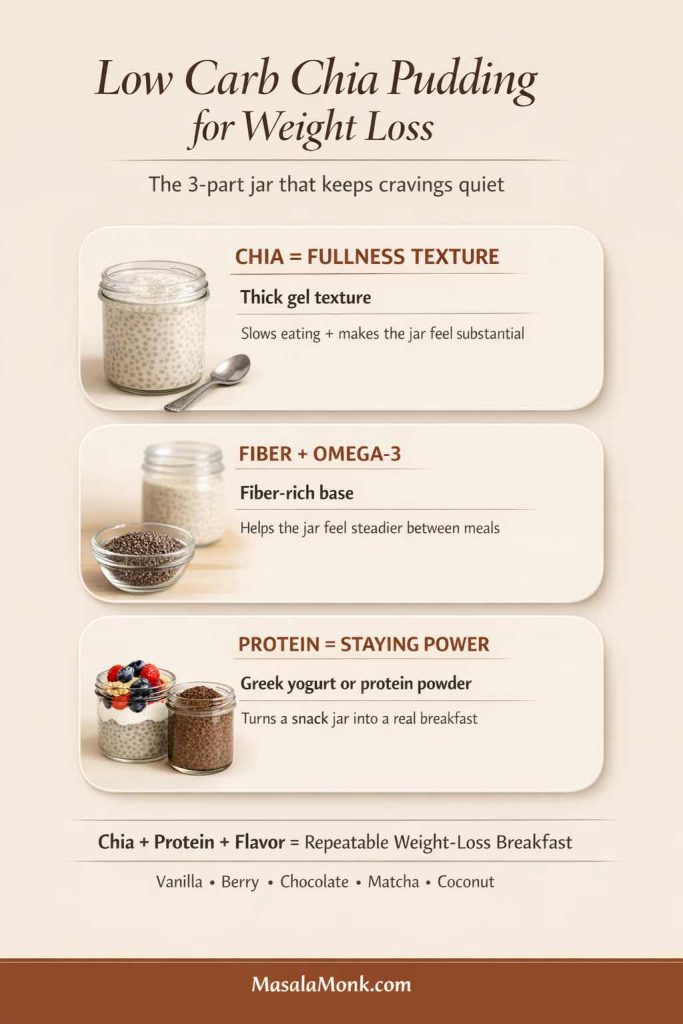
Chia seeds are naturally rich in fiber and contain alpha-linolenic acid, a plant-based omega-3 fat. For a useful evidence-based overview rather than exaggerated claims, see the Harvard Nutrition Source guide to chia seeds.
Protein is the easiest way to make the jar feel more meal-like
Plain chia and milk can work perfectly well as a snack, but Greek yogurt or protein powder gives you another lever when you want the jar to function as breakfast. Greek yogurt also changes the texture immediately: instead of waiting for milk alone to become pudding-like, you start with a thick, creamy base.
Low Carb Chia Pudding Ratio: The Base Recipe That Prevents Clumps
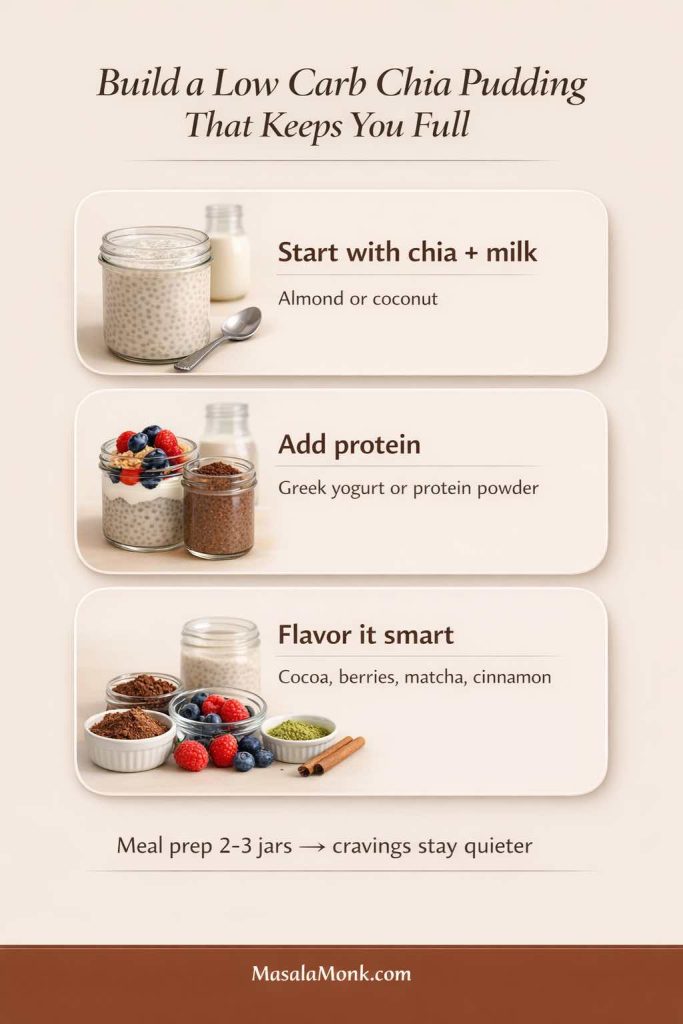
For a classic milk-based chia pudding, this is the dependable starting point:
- 3 tablespoons chia seeds (roughly 30–35 g, depending on how you measure)
- 1 cup / 240 ml liquid
- Pinch of salt
- ½ teaspoon vanilla, optional
- Sweetener to taste, optional
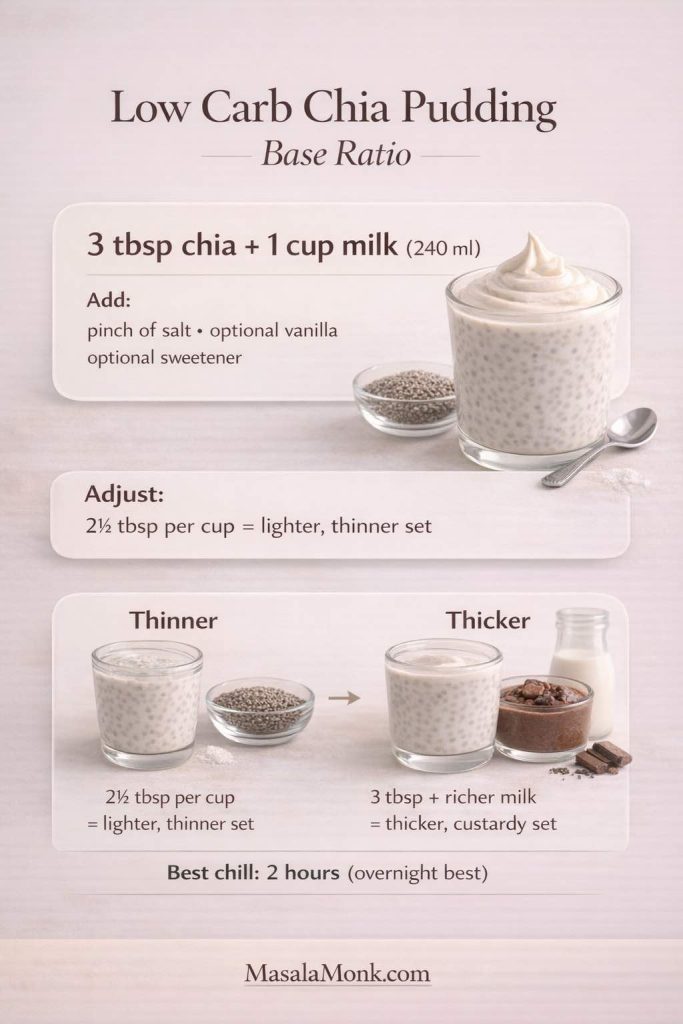
The exact result changes with your liquid. Thin almond milk gives a lighter pudding, while canned coconut milk sets much richer. Greek yogurt needs far less added liquid because the yogurt already provides most of the body.
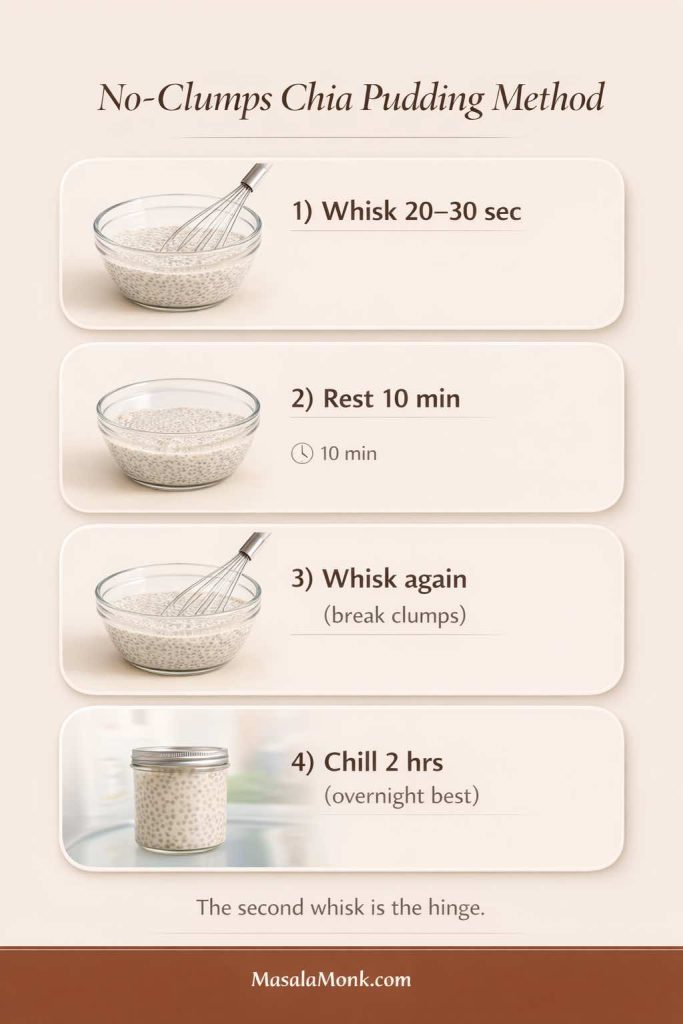
The stir-rest-stir method
- Whisk the liquid with vanilla, salt, sweetener, cocoa, protein powder, or other smooth flavorings first.
- Add the chia and whisk vigorously for 20–30 seconds.
- Let the mixture stand for 10 minutes.
- Whisk or stir thoroughly a second time.
- Cover and refrigerate for at least 2 hours; overnight gives the most settled texture.
Can you make quick chia pudding?
Yes, although “quick” still means giving chia time to hydrate. Follow the same method and chill for 30–45 minutes. The texture will be softer than an overnight jar. Greek yogurt is particularly useful when you want a thick pudding sooner because much of the thickness is already present before the chia sets.
Give the chia enough time to hydrate
Chia thickens because the seeds absorb liquid over time. For pudding, use them fully hydrated rather than judging the mixture immediately after stirring. If the texture still seems thin after 30 minutes, give it more time before adding extra seeds; the biggest change usually happens during the longer refrigerator rest.
Choosing Your Liquid: Almond Milk, Coconut Milk, Yogurt, Oat Milk & More
Your liquid controls far more than flavor. It changes thickness, richness, carbohydrate content, and how much additional chia you may need. Choose the liquid first, then fine-tune the jar.
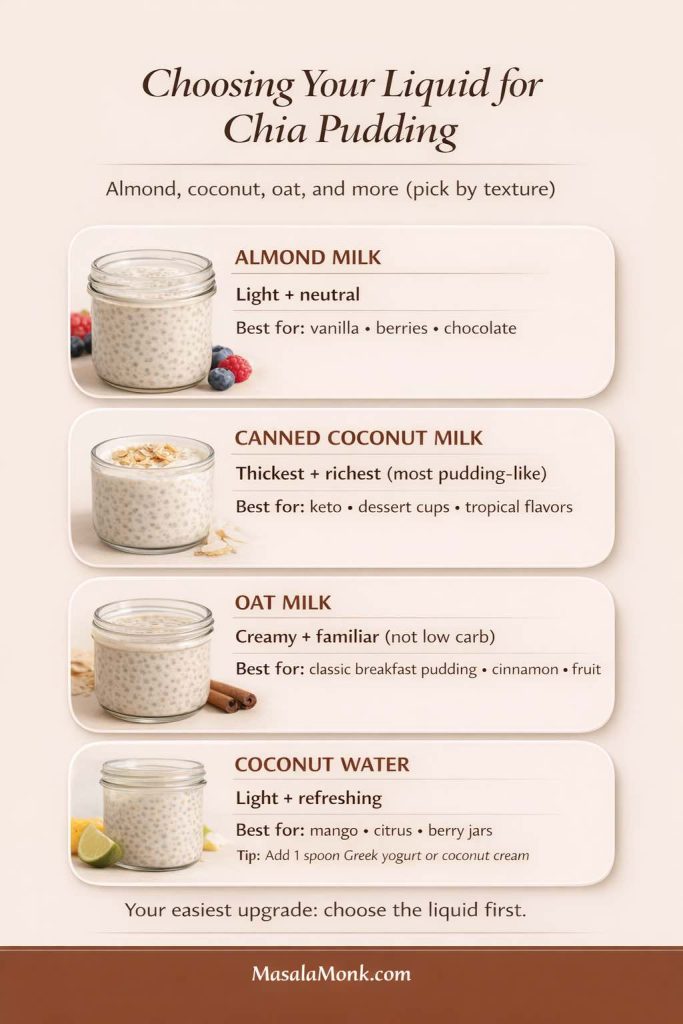
Almond milk: light and versatile
Unsweetened almond milk is an easy low-carb base because its flavor stays out of the way. It works especially well with vanilla, chocolate, cinnamon, berries, matcha, and nut butter.
Canned coconut milk: richest and thickest
If you want a pudding that feels especially rich, canned coconut milk is hard to beat. Because brands vary in thickness, whisk in enough water to make the mixture comfortably pourable before adding chia. Very thick coconut milk can otherwise produce dense pockets before the seeds hydrate evenly.
Greek yogurt: thick before it even chills
Greek yogurt works differently from milk. Instead of using a full cup of liquid, start with yogurt and loosen it gradually. For our full high-protein version, ¾ cup Greek yogurt + ¼ cup / 60 ml water or unsweetened almond milk creates a creamy starting mixture before the chia goes in.
Jump to the Greek yogurt chia pudding recipe →
Oat milk: creamy, but usually not low carb
Oat milk produces a mild, familiar breakfast-pudding flavor. It can still be used with any of the methods in this guide, but check the nutrition label if keeping carbohydrates low is an important part of your goal.
Coconut water: light and fruit-friendly
Coconut water produces a much lighter gel than milk. It pairs particularly well with mango, lime and berries, but it will not taste as creamy unless you add a spoonful of Greek yogurt or coconut cream. If you would rather drink your chia than turn it into pudding, our Chia Seed Water guide uses a much lighter chia-to-liquid ratio and covers plain, lemon, coconut-water and overnight versions.
Dairy-Free Chia Pudding: The Easiest Swaps
Several recipes in this collection are naturally dairy-free when you use plant milk and skip optional Greek yogurt. Unsweetened almond milk is the lightest neutral base; canned coconut milk gives the richest dairy-free texture; and a lighter coconut-milk beverage works well for matcha, mango, apple-cinnamon, and gingerbread.
- Best simple dairy-free base: Vanilla Almond Milk Chia Pudding
- Richest dairy-free version: Coconut Milk Keto Chia Pudding
- Best fruit-forward option: Mango Chia Pudding
- Best smooth option: Blended Chocolate Chia Pudding made without the optional yogurt
If you use protein powder in a dairy-free jar, check the ingredient label: whey and casein are dairy proteins, while many pea, soy, rice, and blended plant proteins are dairy-free.
High Protein Chia Pudding: Greek Yogurt, Protein Powder & Collagen
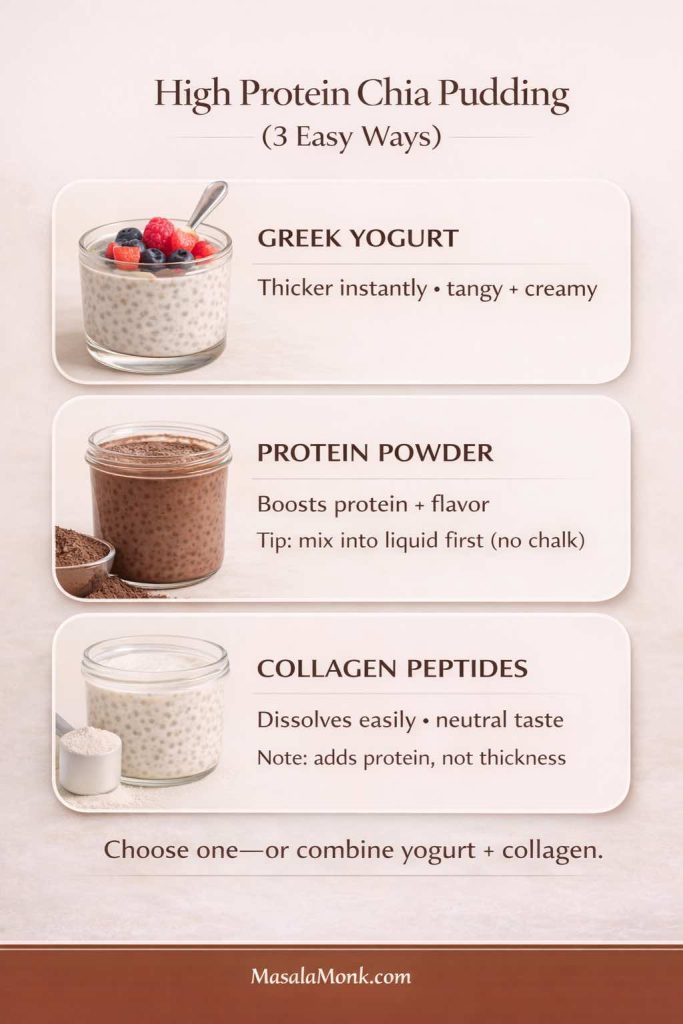
There are three straightforward ways to increase the protein in a chia jar. Greek yogurt gives you protein and immediate thickness. Protein powder can add more protein and flavor but needs to be dissolved well. Collagen peptides dissolve easily, although they do not thicken the pudding the way yogurt does. If collagen is part of your routine, Harvard Health has a measured overview of what collagen supplements can and cannot reasonably claim.
How to add protein powder without a chalky texture
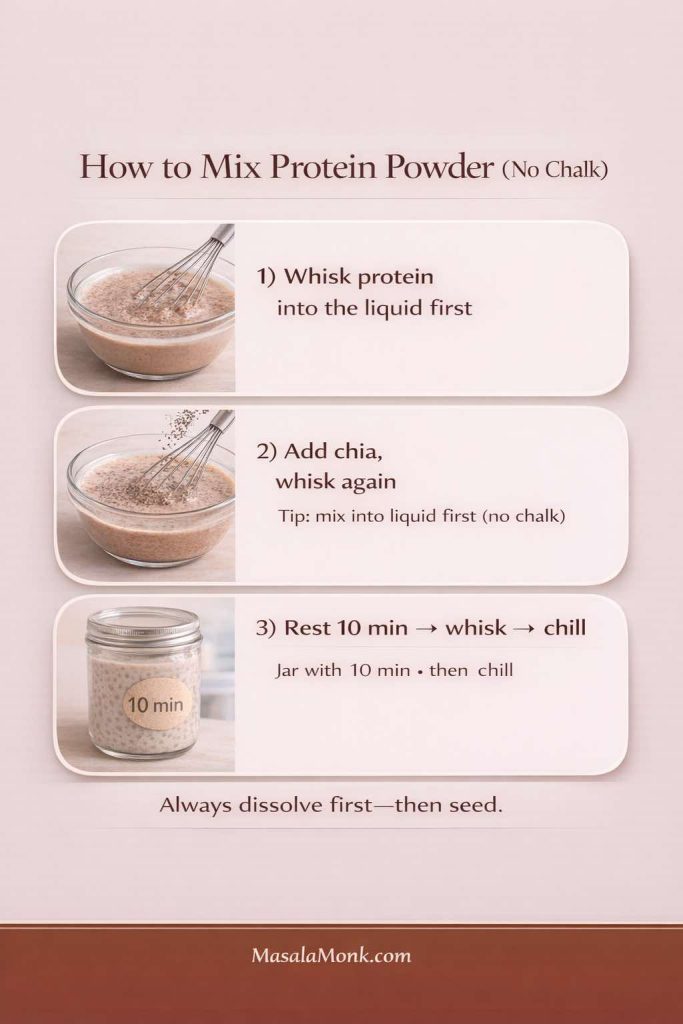
Do not dump dry protein powder into a finished chia pudding. Whisk it completely into the milk first, then add the chia. If your powder is stubborn, make a smooth paste with a small amount of liquid before gradually whisking in the rest.
Keep extra liquid nearby: protein powders absorb liquid very differently. After the 10-minute rest, add 2–4 tablespoons milk if the mixture has become unusually thick before it goes into the refrigerator.
10 Low Carb Chia Pudding Recipes
Each recipe below makes roughly 2 small servings or 1 generous serving, depending on appetite and toppings. For meal prep, multiply the ingredients and portion the finished mixture into individual jars.
Low-carb vs keto: these recipes are not all equally low in carbohydrate. The unsweetened almond-milk, Greek-yogurt, chocolate, and coconut versions are the easiest to keep very low carb. Mango and apple are fruit-forward options; use the fruit as a measured accent if carbohydrate intake is a priority.
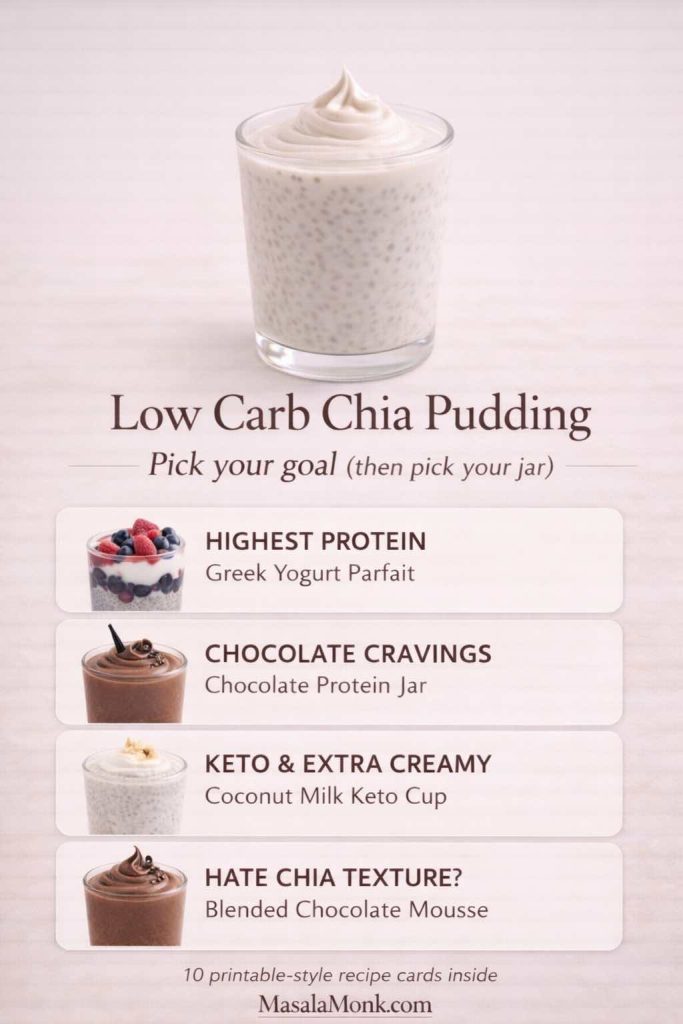
| If you want… | Make this one |
|---|---|
| Thickest high-protein jar | Greek Yogurt Chia Pudding |
| Simple everyday keto base | Vanilla Almond Milk |
| Chocolate + protein | Chocolate Protein |
| Chocolate dessert feel | Chocolate Peanut Butter |
| Fresh café-style flavor | Matcha |
| Fruit-forward | Mango |
| Cozy breakfast | Apple Cinnamon |
| Warm-spice dessert flavor | Gingerbread |
| Richest keto texture | Coconut Milk |
| No whole-seed texture | Blended Chocolate Mousse |
1) Keto Chia Pudding with Almond Milk
This is the easiest everyday low carb chia pudding to memorize. Vanilla keeps it neutral enough for berries, nuts, cocoa, cinnamon, or nut butter later.
Ingredients
- 3 tablespoons chia seeds
- 1 cup / 240 ml unsweetened almond milk
- ½ teaspoon vanilla extract
- Pinch of salt
- Optional low-carb sweetener, to taste
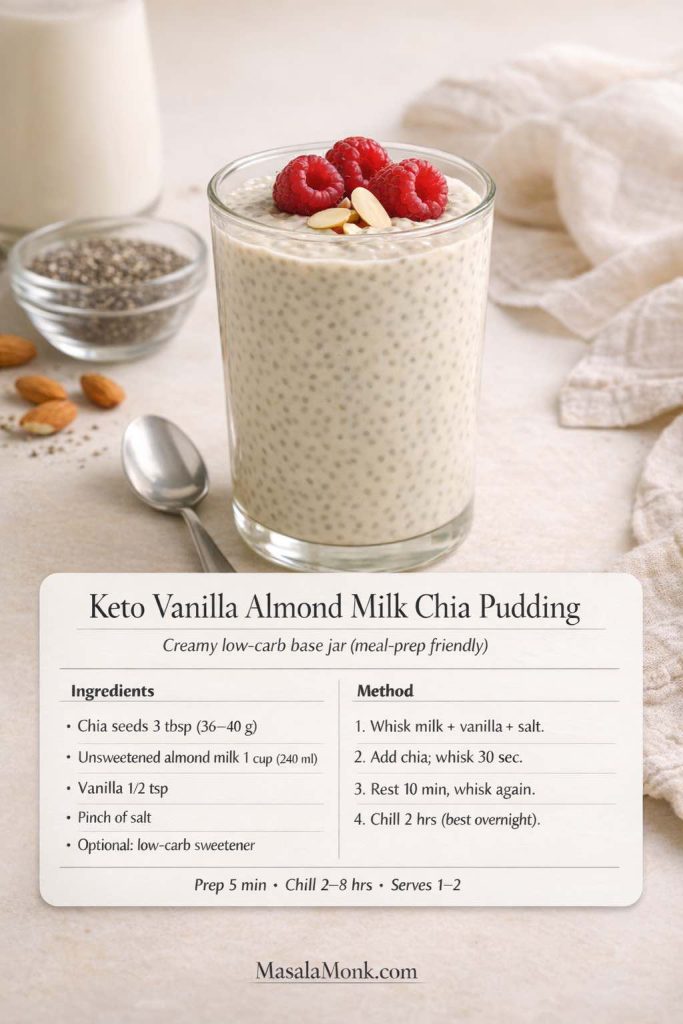
Method
- Whisk almond milk, vanilla, salt and sweetener, if using.
- Add the chia and whisk vigorously for 20–30 seconds.
- Rest 10 minutes, then whisk again.
- Cover and refrigerate for at least 2 hours or overnight.
Easy variations: add ½ teaspoon cinnamon; stir in 1 tablespoon unsweetened shredded coconut; or add 1–2 tablespoons Greek yogurt at serving time for a creamier finish.
For a deeper single-recipe treatment, see the keto chia pudding with almond milk.
2) Chia Pudding with Greek Yogurt: High Protein & Ultra Creamy
If the chia pudding you want is thick, creamy and closer to cheesecake filling than a glass of soaked seeds, start here. Greek yogurt gives the jar body before the chia has even finished hydrating, while a small amount of liquid keeps the mixture creamy rather than pasty.
Ingredients
- ¾ cup plain Greek yogurt
- 3 tablespoons chia seeds
- ¼ cup / 60 ml unsweetened almond milk or water, plus 1–2 tablespoons more after chilling if needed
- ½ teaspoon vanilla extract
- Pinch of salt
- Optional sweetener, to taste
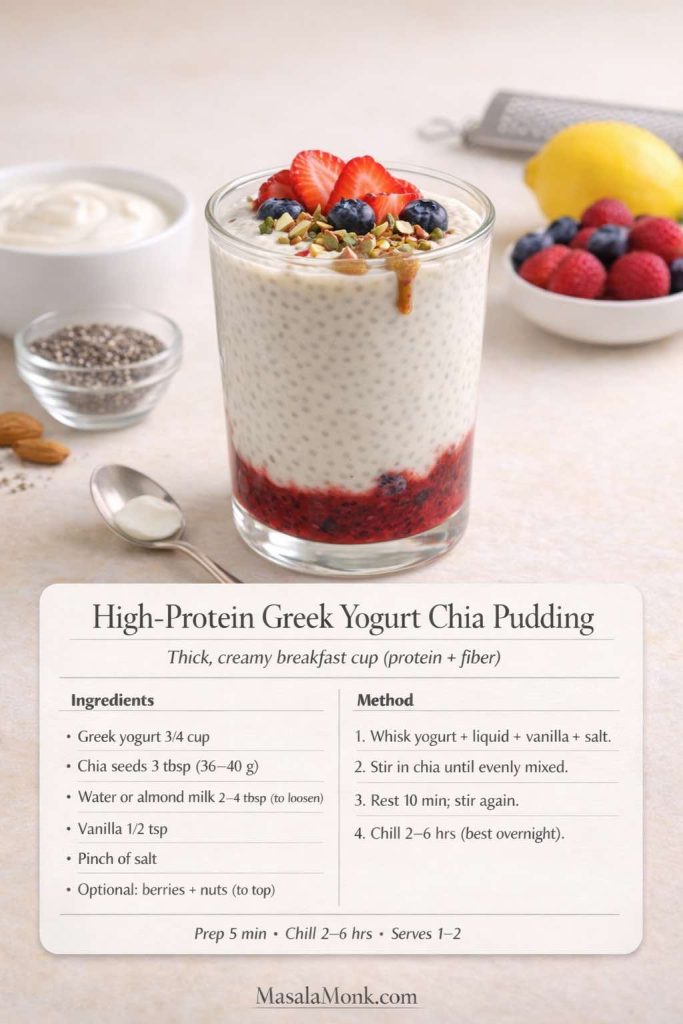
Method
- Whisk the Greek yogurt, vanilla, salt and ¼ cup / 60 ml water or almond milk until completely smooth.
- Stir in the chia seeds until evenly distributed.
- Rest for 10 minutes, then stir again so no dense chia pockets remain.
- Refrigerate for at least 2 hours. Overnight is fine.
- Stir before serving and add another 1–2 tablespoons liquid if you want it looser.
How thick should it look before chilling?
It should already be thick, but it should still move easily when stirred. If it looks like a stiff paste before going into the refrigerator, add another tablespoon or two of liquid. The chia will absorb more as it sits.
Can you use nonfat or regular yogurt?
Yes. Nonfat Greek yogurt works, although the finished pudding can taste a little sharper and less rich. Regular yogurt is thinner, so start with less added liquid and check the texture after hydration. Different yogurts vary enough that the final splash of liquid should be adjusted by texture rather than treated as an exact requirement.
Can you add protein powder too?
Yes. Whisk the protein powder into the yogurt and loosening liquid before adding chia. Protein powders absorb liquid differently, so expect to add another 1–3 tablespoons milk if the mixture becomes unusually stiff after the 10-minute rest.
Best toppings and variations
For a cheesecake-style jar, use vanilla, berries and a little lemon zest. For chocolate, whisk cocoa into the yogurt before adding chia. Peanut butter, chopped nuts, cacao nibs and a small berry layer all work well because they add contrast without turning the pudding watery.
Want to stay on this page? Try Chocolate + Protein · Extra-Creamy Coconut Keto · Smooth Blended Chocolate · Fix a Runny, Thick or Lumpy Pudding
If this thick, tangy, almost-cheesecake style is the chia pudding you actually want, keep going with our 10 Creative Chia Pudding Recipes. That collection branches into Greek-yogurt, cheesecake, chocolate, blueberry-lemon, mango and coconut-cream directions, so you can keep the texture you like and change the flavor.
3) Chocolate Protein Chia Pudding
This is the jar to make when you want chocolate flavor without turning breakfast into a sugar-heavy dessert. The important technique is dissolving the protein powder and cocoa before the chia goes in.
- 1 cup / 240 ml unsweetened almond milk or dairy milk
- 1 scoop chocolate protein powder, or vanilla protein plus extra cocoa
- 2 tablespoons cocoa or cacao powder
- 3 tablespoons chia seeds
- Pinch of salt
- Optional sweetener, to taste
- Optional: 1 tablespoon Greek yogurt for extra creaminess
- 2–4 tablespoons extra milk, only if your protein powder makes the mixture unusually thick
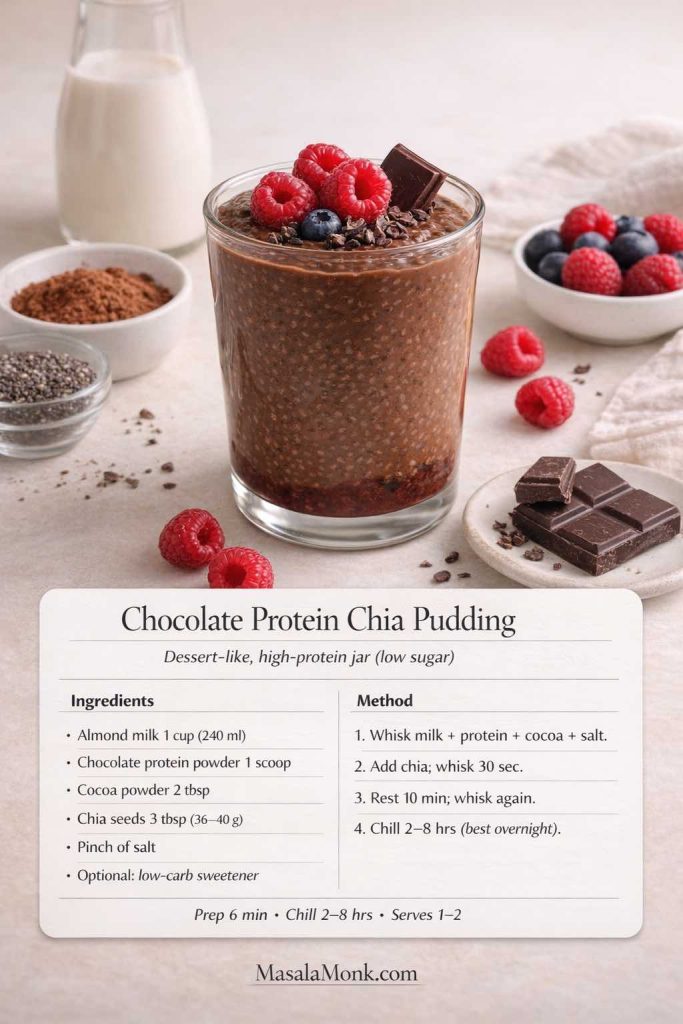
- Whisk the milk, protein powder, cocoa, salt and sweetener until completely smooth.
- Add chia and whisk again.
- Rest 10 minutes, then stir thoroughly. If it already looks very thick, add 2–4 tablespoons extra milk.
- Refrigerate for at least 2 hours; overnight gives the most settled texture.
If it tastes chalky: whisk the protein powder with a small amount of milk into a smooth paste first, then gradually add the rest of the milk.
4) Chocolate Peanut Butter Chia Pudding
Peanut butter supplies richness and makes chocolate taste fuller even when you keep the pudding only lightly sweetened.
- 1 cup / 240 ml almond milk or dairy milk
- 3 tablespoons chia seeds
- 1–2 tablespoons peanut butter
- 1 tablespoon cocoa powder
- Pinch of salt
- Optional sweetener
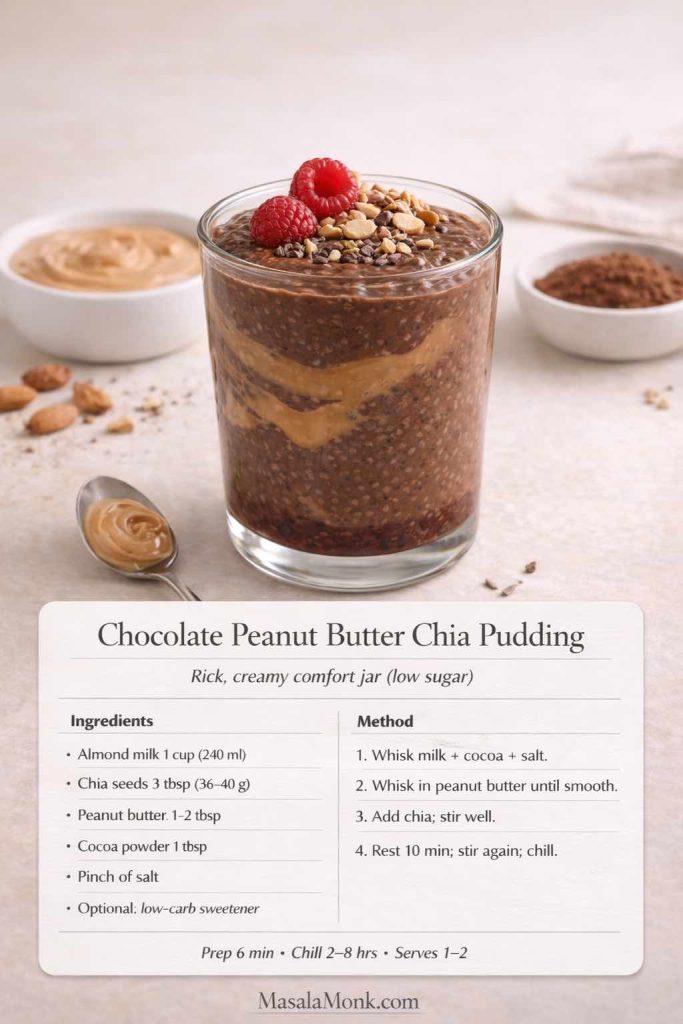
- Whisk milk, cocoa, salt and sweetener until smooth.
- Whisk in the peanut butter until evenly incorporated.
- Add chia, rest 10 minutes and stir again.
- Refrigerate for at least 2 hours.
A tiny splash of vanilla or pinch of cinnamon can make the cocoa taste deeper. Top with berries, roasted nuts or a few cacao nibs.
5) Matcha Chia Pudding
Matcha gives chia pudding a clean green-tea flavor that works especially well with vanilla and a small pinch of salt.
- 1 cup / 240 ml unsweetened almond milk or light coconut-milk beverage
- 3 tablespoons chia seeds
- 1–2 teaspoons matcha powder
- ½ teaspoon vanilla
- Pinch of salt
- Optional sweetener
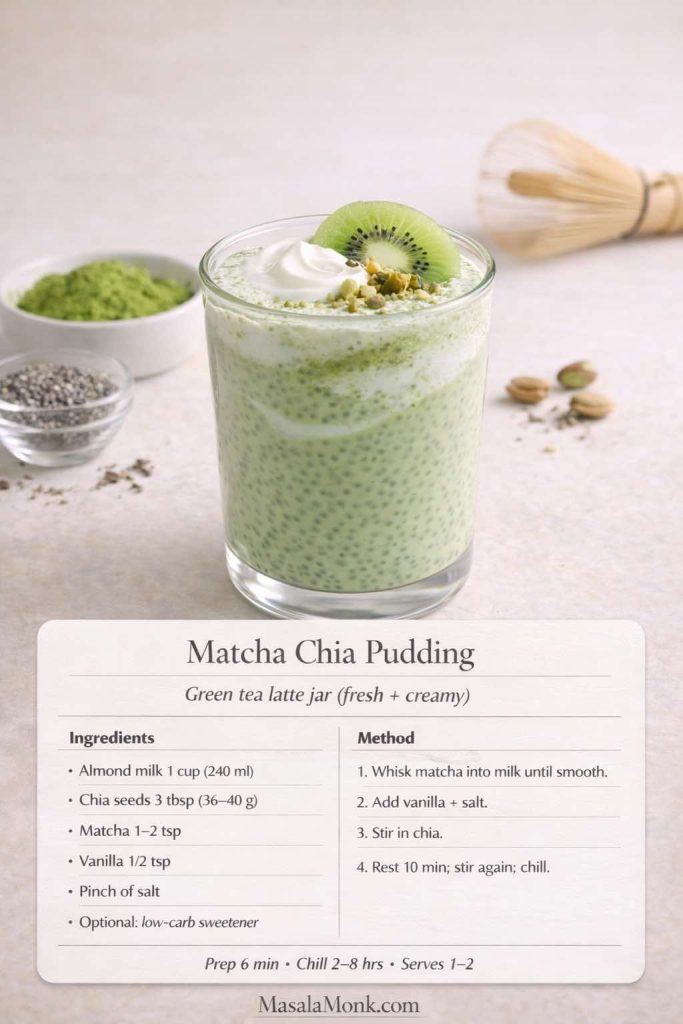
- Whisk or sift matcha into the milk until smooth.
- Add vanilla, salt and sweetener, if using.
- Add chia, rest 10 minutes, stir again and refrigerate.
If your matcha clumps, whisk it first with 1–2 tablespoons warm water to form a smooth paste. Matcha contains caffeine, so use less or enjoy it earlier in the day if you are sensitive to it.
6) Mango Chia Pudding
Mango gives you plenty of flavor from a relatively small amount of fruit. Lime and a pinch of salt help the mango taste brighter, so you do not need to turn the whole jar into mango puree.
- 1 cup / 240 ml almond milk or coconut-milk beverage
- 3 tablespoons chia seeds
- ⅓ cup mango puree or finely diced mango
- Pinch of salt
- Optional squeeze of lime
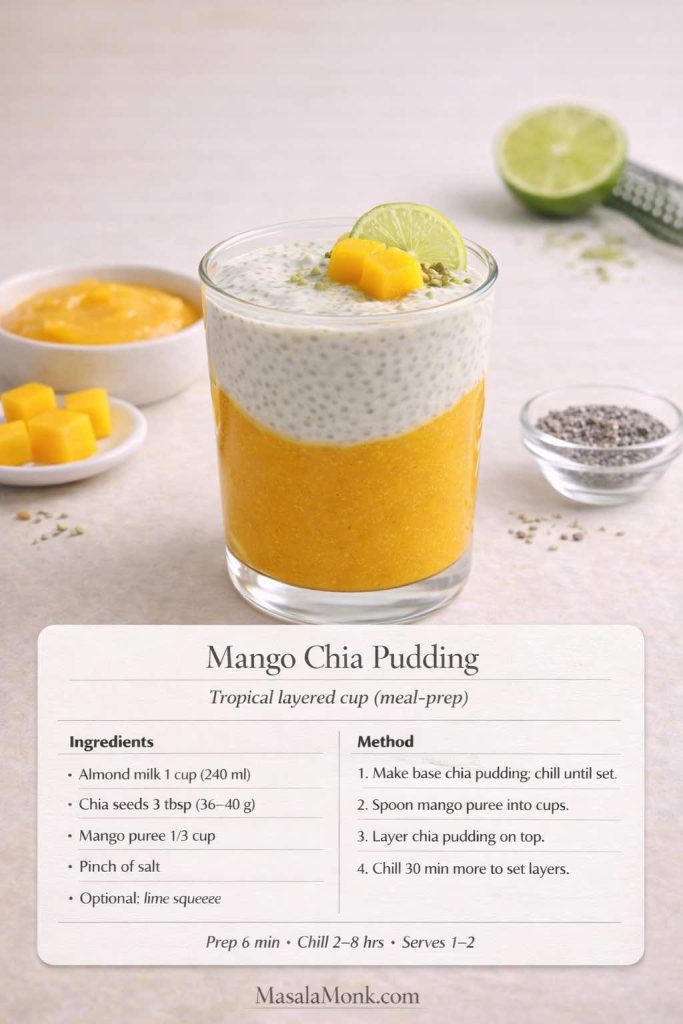
- Make the chia base with milk, chia and salt.
- Chill until set.
- Fold in the mango just before eating, or layer the puree at the bottom of the jar.
- Finish with lime, if using.
If the tropical-fruit direction is what you like, try our pineapple chia pudding next. It uses the same two-stir logic but goes deeper on pineapple, yogurt, texture, and how to keep the pudding spoonable rather than watery.
7) Apple Cinnamon Chia Pudding
This version gets most of its cozy character from cinnamon, vanilla and nutmeg, so the apple can stay a relatively small accent.
- 1 cup / 240 ml unsweetened almond milk
- 3 tablespoons chia seeds
- ½ teaspoon cinnamon
- Pinch of salt
- Optional: ⅓ cup grated apple
- Optional: pinch of nutmeg
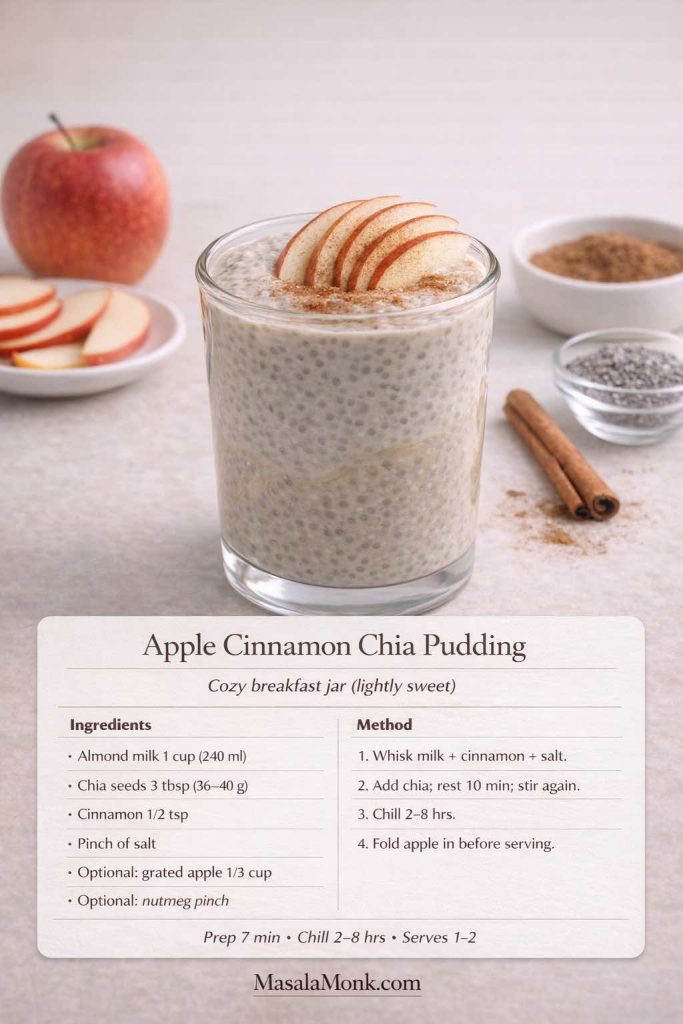
- Whisk milk, cinnamon, salt and nutmeg.
- Add chia, rest 10 minutes, stir again and chill.
- Fold in grated apple shortly before serving.
Stricter low-carb version: skip the apple and use cinnamon, vanilla and chopped pecans for a cinnamon-pecan jar.
8) Gingerbread Chia Pudding
Gingerbread chia pudding is about warm-spice flavor rather than a health halo: cinnamon, ginger and cloves turn the same neutral base into something that feels much more dessert-like.
- 1 cup / 240 ml almond milk or coconut-milk beverage
- 3 tablespoons chia seeds
- ½ teaspoon cinnamon
- ¼ teaspoon ground ginger
- Pinch of cloves or allspice
- Pinch of salt
- Optional sweetener
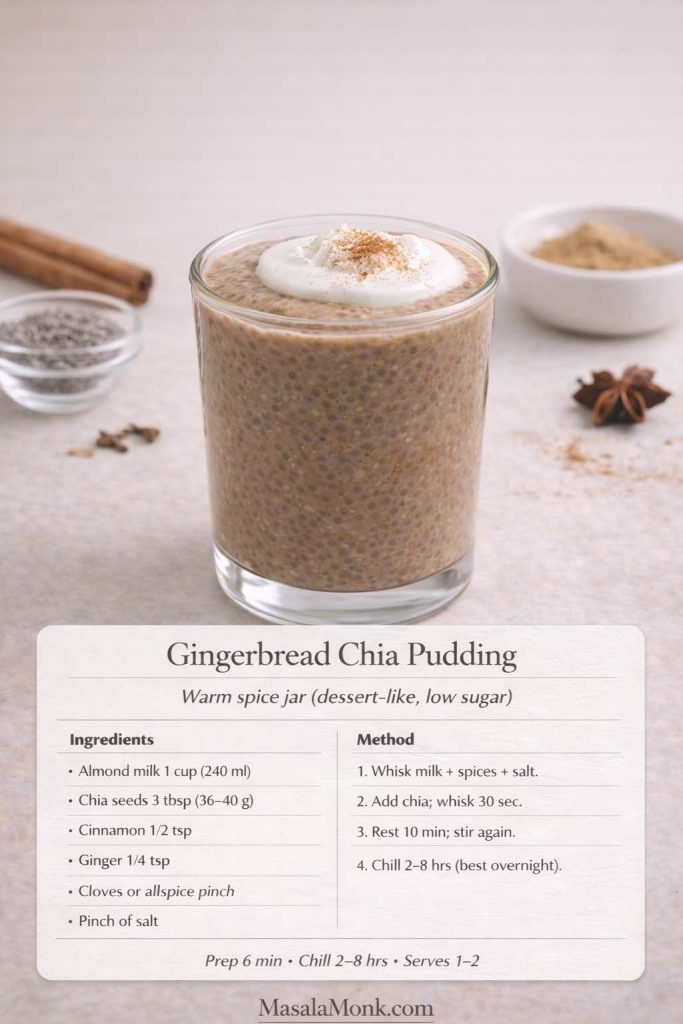
- Whisk the spices, salt and sweetener into the milk.
- Add chia, rest 10 minutes, stir again and refrigerate.
- Serve with chopped nuts, Greek yogurt or coconut cream.
9) Keto Chia Pudding with Coconut Milk
This is the richest milk-based pudding in the collection. Canned coconut milk gives you much more body than almond milk, but thinning it slightly helps the chia hydrate evenly.
- 3 tablespoons chia seeds
- ¾ cup / 180 ml canned coconut milk
- ¼ cup / 60 ml water, plus more if needed
- ½ teaspoon vanilla
- Pinch of salt
- Optional sweetener
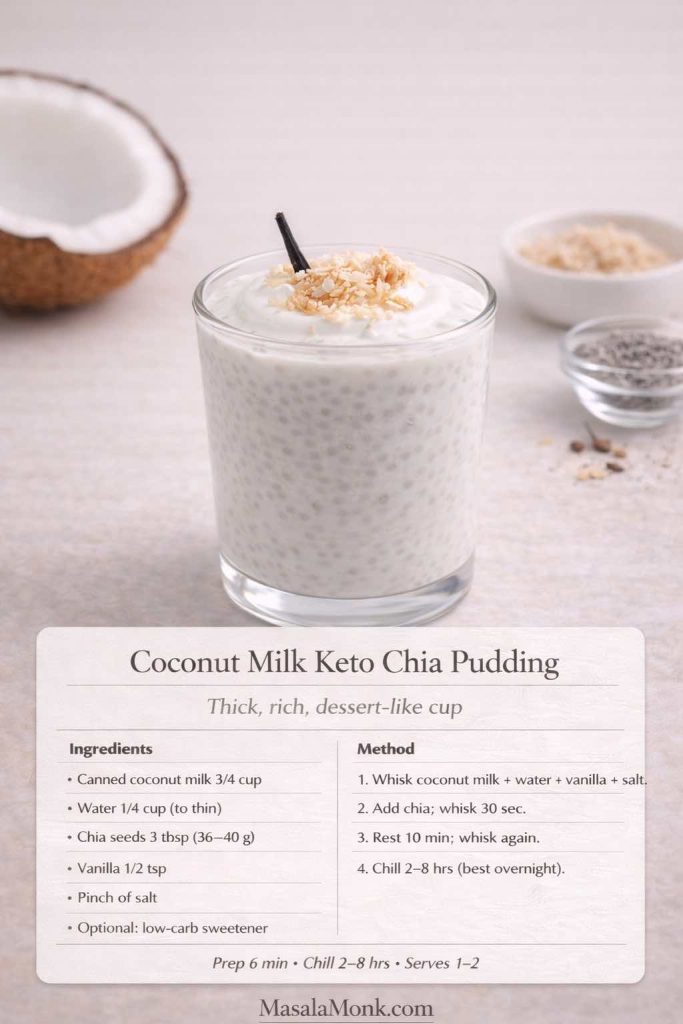
- Whisk coconut milk, water, vanilla, salt and sweetener until smooth.
- Add chia, rest 10 minutes and stir again.
- Refrigerate for at least 2 hours.
- If it becomes extremely thick overnight, loosen it with a splash of water before serving.
10) Blended Chia Pudding: Smooth Chocolate Mousse
If the idea of chia appeals to you but the whole-seed texture does not, this is the recipe worth trying. Let the chia hydrate first, then blend the finished pudding until glossy and smooth.
- 1 cup / 240 ml almond milk or dairy milk
- 3 tablespoons chia seeds
- 1–2 tablespoons cocoa or cacao powder
- Pinch of salt
- Optional sweetener
- Optional: 1 tablespoon peanut butter or 2 tablespoons Greek yogurt
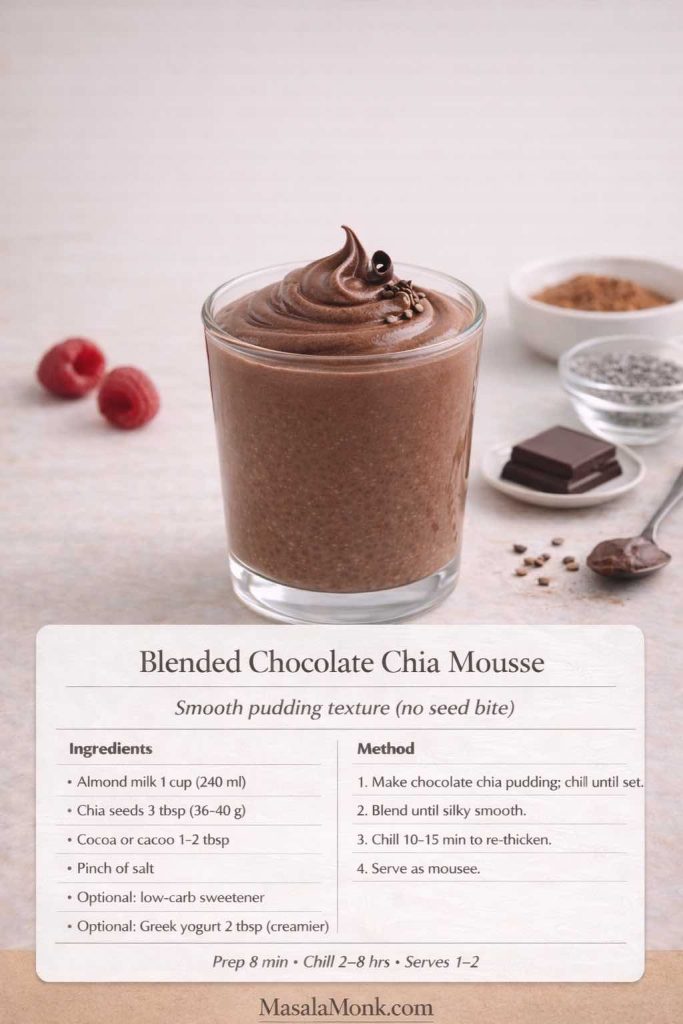
- Make a standard chocolate chia pudding and refrigerate it for at least 2 hours.
- Blend until completely smooth and glossy.
- Add Greek yogurt or peanut butter if you want a richer finish.
- Chill for another 10–15 minutes before serving.
If protein powder is part of the recipe, blending after the chia has set can also smooth out small powdery pockets.
Whichever flavor you choose, texture is the part most likely to need adjusting. The fixes below are designed so you can rescue the pudding you already made instead of starting over.
Chia Pudding Troubleshooting: Runny, Too Thick, Lumpy or Bland
Most disappointing chia pudding can be traced to the ratio, hydration time, stirring pattern, or the thickness of the liquid you started with. Fix the texture before abandoning the jar.
| Problem | What probably happened | What to do now |
|---|---|---|
| Runny after 2+ hours | Too much liquid, too little chia, or very thin milk | Add 1 teaspoon chia at a time, stir well and chill another 30–60 minutes. |
| Too thick or pasty | Rich coconut milk, thick yogurt, extra protein powder, or too much chia | Stir in milk or water 1 tablespoon at a time until creamy. |
| Large chia clumps | The seeds settled together before fully hydrating | Break them up thoroughly; next time use the 10-minute second stir. |
| Seeds still crunchy | Not enough hydration time or liquid | Add a small splash of liquid and give the pudding more time. |
| Protein powder tastes chalky | Powder was added after the chia or not dissolved first | Blend the pudding, or next time dissolve powder completely before adding seeds. |
| Watery fruit layer | Juicy fruit sat in the jar too long | Keep berries and other watery toppings separate until serving. |
| Flavor is flat | Not enough salt, aroma, richness or acidity | Add a pinch of salt plus vanilla, cinnamon, cocoa, nut butter, citrus zest or berries. |
| You hate the seed texture | The pudding may be fine; the texture simply is not for you | Blend it into chocolate chia mousse. |
One important correction: if a milk-based pudding is only slightly soft at the 30-minute mark, do not keep throwing chia into it. Give it the full two hours first. Chia continues absorbing liquid as it rests.
Chia Pudding Meal Prep & Storage
The easiest way to meal prep chia is to make one plain base and create several flavors from it rather than mixing four completely separate recipes.
- Whisk the base in a bowl where you can easily break up clumps.
- Do the 10-minute second stir.
- Portion into three or four jars.
- Flavor the jars in different directions—vanilla, cocoa, matcha, cinnamon, yogurt.
- Keep crunchy toppings and watery fruit separate until serving.
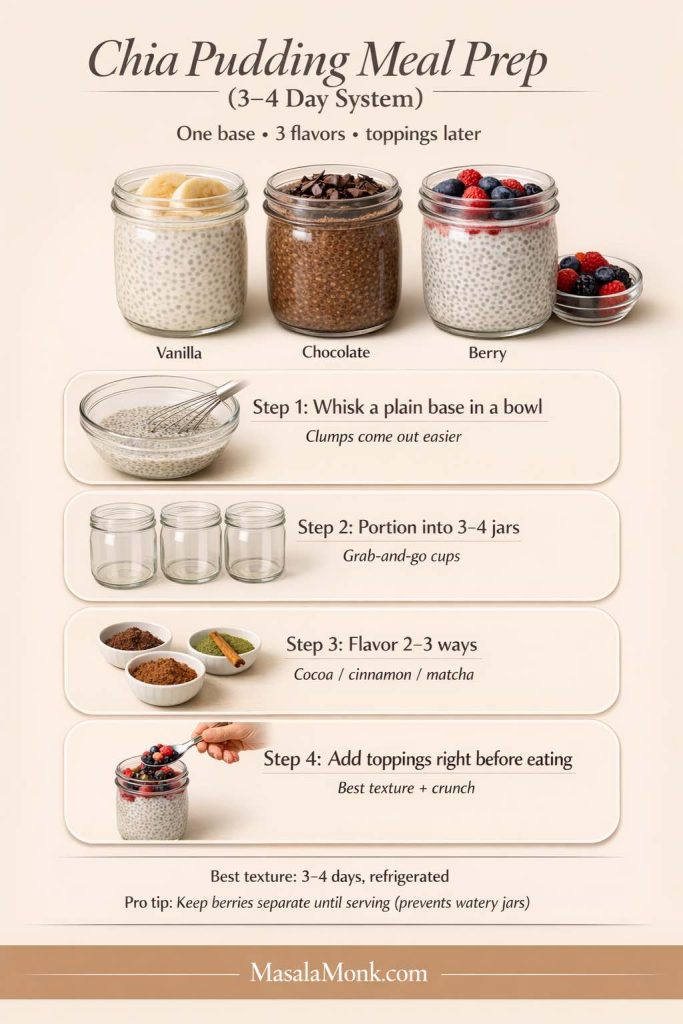
For quality, most chia puddings are best eaten within about 3–4 days when refrigerated. Yogurt- and milk-based versions should stay cold, and fruit is usually best added closer to serving. Follow normal refrigerated food-safety practices and discard anything that develops an unusual smell, appearance or signs of spoilage.
If what you really enjoy is the make-it-tonight, grab-it-tomorrow routine rather than chia specifically, our high protein overnight oats give you the same fridge-ready breakfast rhythm with oats, yogurt, protein-powder and dairy-free routes.
How to Make Chia Pudding Taste Better
If chia pudding tastes like a health chore, the problem is usually not the chia. A plain mixture of seeds and unsweetened milk needs flavor structure just like any other pudding.
- Salt: a small pinch makes chocolate, vanilla, fruit and nut butter taste fuller.
- Vanilla or warm spice: vanilla, cinnamon, ginger or nutmeg give the jar aroma without requiring much sweetness.
- Depth: cocoa, cacao or matcha create a strong flavor identity.
- Creaminess: Greek yogurt, canned coconut milk or nut butter changes both flavor and mouthfeel.
- Contrast: berries, chopped nuts, toasted coconut and cacao nibs stop every spoonful feeling the same.
- Acidity: lemon or lime zest can make fruit flavors brighter.
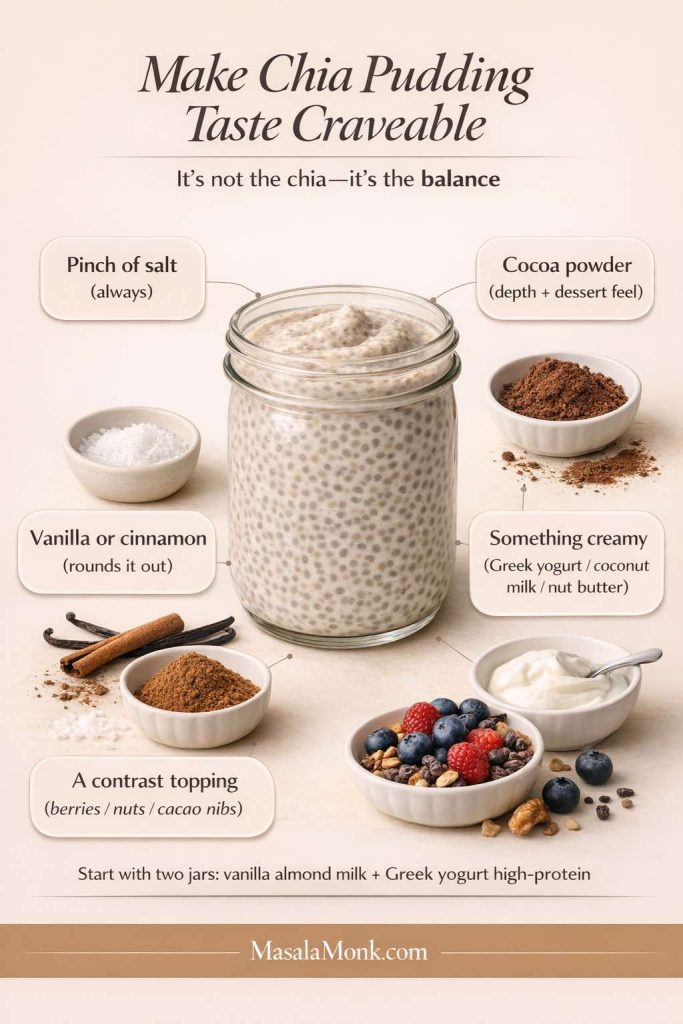
If you are making chia pudding for the first time, a useful two-jar experiment is one vanilla almond-milk jar and one Greek-yogurt jar. You will immediately learn whether you prefer a lighter gel-style pudding or a thicker, tangier texture.
Frequently Asked Questions
1) What is the best chia pudding ratio?
For a milk-based pudding, start with 3 tablespoons chia seeds to 1 cup / 240 ml liquid. Use a little less chia for a softer pudding. Greek-yogurt chia pudding uses a different ratio because yogurt already supplies most of the thickness.
2) How long does chia pudding need to set?
Give it at least 2 hours for a dependable set. A 30–45 minute quick version is possible but softer. Overnight works especially well for meal prep.
3) Why is my chia pudding watery?
It may need more time, more chia, or a better second stir. If it is still runny after at least two hours, add about 1 teaspoon chia, stir thoroughly and chill for another 30–60 minutes.
4) Why is my chia pudding too thick?
Thick Greek yogurt, canned coconut milk, protein powder and slightly heavy chia measurements can all produce an unexpectedly dense pudding. Stir in water or milk a tablespoon at a time until it becomes creamy again.
5) How do I stop chia seeds clumping together?
Whisk immediately after adding the seeds, then stir or whisk again after about 10 minutes. That second stir redistributes the seeds just as they begin to gel.
6) Can I make chia pudding with Greek yogurt and no milk?
Yes. Use water instead of milk to loosen the yogurt. Start with ¾ cup Greek yogurt, 3 tablespoons chia and ¼ cup / 60 ml water, then add another tablespoon or two after chilling if the pudding is too stiff.
7) Is Greek yogurt better than regular yogurt for chia pudding?
Neither is inherently better, but they behave differently. Greek yogurt is thicker and generally higher in protein, so it gives a firmer pudding. Regular yogurt starts looser, meaning you may need less added liquid or slightly more chia.
8) Can I add protein powder to chia pudding?
Yes. For the smoothest texture, dissolve the protein powder in the milk or yogurt mixture before adding the chia seeds. Because powders absorb liquid differently, keep a little extra milk nearby and adjust after the 10-minute rest.
9) Can I make chia pudding with almond milk?
Yes. Unsweetened almond milk is one of the easiest bases for low carb chia pudding because its flavor is mild and it works well with vanilla, cocoa, cinnamon, berries, matcha and nut butter.
10) Can I make chia pudding with coconut milk?
Yes. Canned coconut milk makes an especially rich pudding. If the coconut milk is very thick, dilute it with a little water before adding chia so the seeds hydrate evenly.
11) Can I make chia pudding with oat milk?
Yes. Oat milk creates a mild, creamy pudding, although many oat milks contain substantially more carbohydrate than unsweetened almond milk, so check the label if low carb is your priority.
12) Can I make dairy-free chia pudding?
Yes. Use unsweetened almond milk, coconut milk, or another dairy-free milk you enjoy. If adding protein powder, check whether it contains whey or casein; those are dairy proteins.
13) Can I make blended chia pudding?
Yes, and it is one of the best solutions if you dislike whole chia seeds. Let the pudding hydrate first, then blend until smooth. Cocoa, peanut butter or Greek yogurt can make the result even more mousse-like.
14) What is the easiest three-ingredient chia pudding?
A simple version is chia seeds + unsweetened almond milk + vanilla. Another is chia + coconut milk + cocoa. Add a pinch of salt if possible; it makes a surprisingly large difference to the finished flavor.
15) Can I use frozen berries in chia pudding?
Yes. Thawed berries release juice, which can be useful as a swirl or compote-style layer. For meal prep, keep very juicy berries separate until serving if you do not want them loosening the pudding.
16) How can I sweeten chia pudding without much sugar?
Start by improving flavor before simply increasing sweetness. Vanilla, cinnamon, cocoa, nut butter, coconut milk, berries, citrus zest and a pinch of salt can all make the pudding taste more complete. If you use a low-carb sweetener, add only enough to suit your taste.
17) Is chia pudding keto-friendly?
It can fit many low-carb or ketogenic eating patterns when made with ingredients such as unsweetened almond milk or coconut milk and appropriate toppings. The final carbohydrate content depends on your milk, yogurt, fruit, sweetener and serving size, so check the ingredients you actually use rather than relying on the word “keto” alone.
18) How long does chia pudding last in the fridge?
For quality, aim to eat most homemade chia pudding within about 3–4 days, refrigerated. Keep toppings such as nuts separate for crunch and add juicy fruit later if you want the pudding to stay thick.
19) Which chia pudding should I make first?
If you want the simplest base, start with vanilla almond milk chia pudding. If you came for the thick, creamy version, make the Greek yogurt chia pudding. And if chia’s seed texture has always bothered you, go directly to the blended chocolate mousse.