Posted on — 7 Comments

Low Carb Chia Pudding Recipes

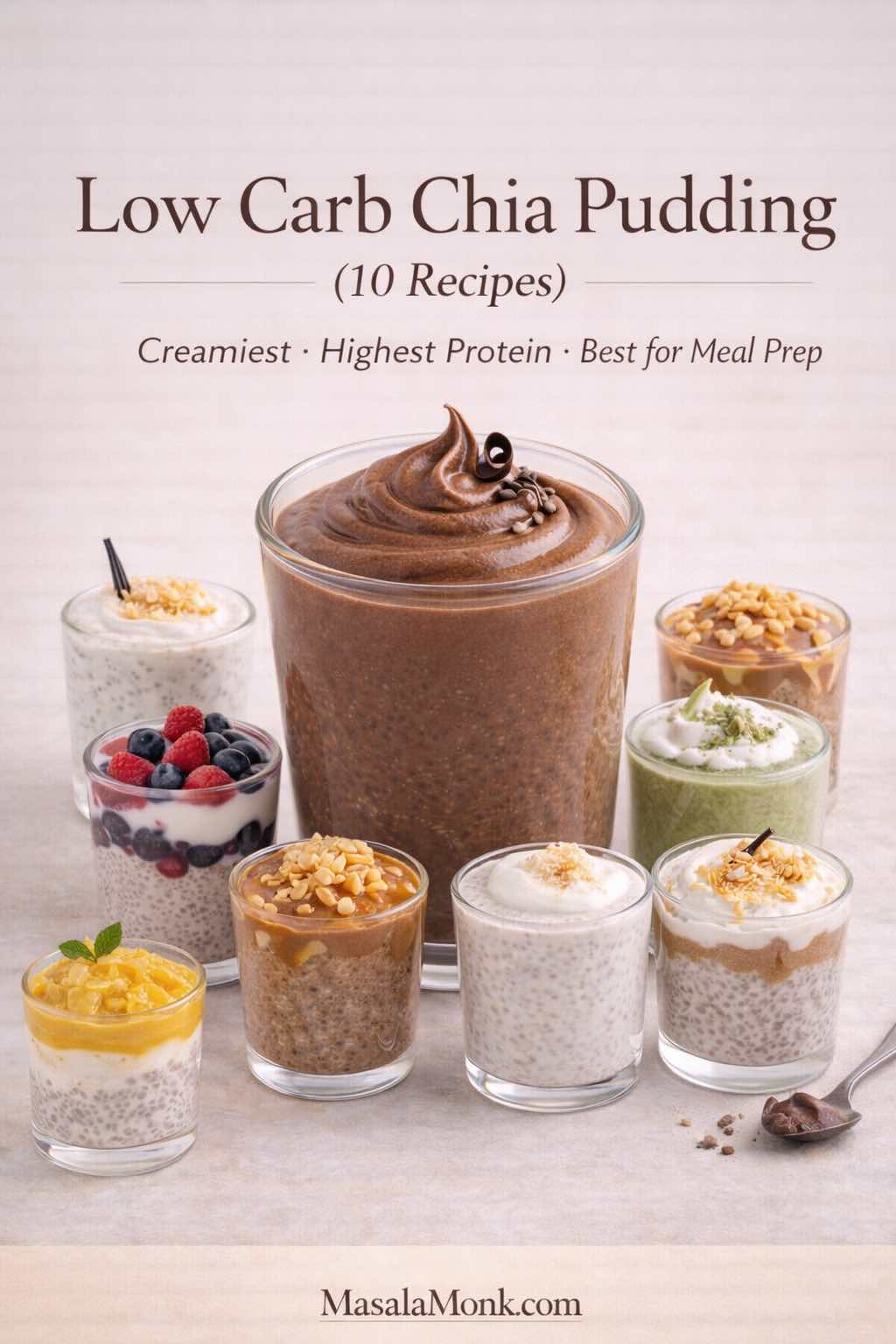
Cover image showing a premium glass jar of low carb chia pudding with a smooth whipped topping on a warm-cream seamless background. Editorial food photography style for “Low Carb Chia Pudding” featuring 10 recipes including keto, high protein, dairy-free, and blended options, with MasalaMonk.com branding.

This post was last updated on

Looking for low carb chia pudding recipes for weight loss? The most useful place to start is the pudding itself. Chia is not a fat burner, but a make-ahead serving can be easy to portion, simple to build with protein, and satisfying without relying on much added sugar. Here you can make it light with almond milk, thick and tangy with Greek yogurt, rich with coconut milk, chocolatey with protein powder, or completely smooth after blending.

Here for the thick Greek-yogurt chia pudding? Start with ¾ cup plain Greek yogurt + 3 tablespoons chia seeds + ¼ cup / 60 ml unsweetened almond milk or water. Stir again after 10 minutes, then chill for at least 2 hours. Jump to the full Greek yogurt chia pudding recipe ↓
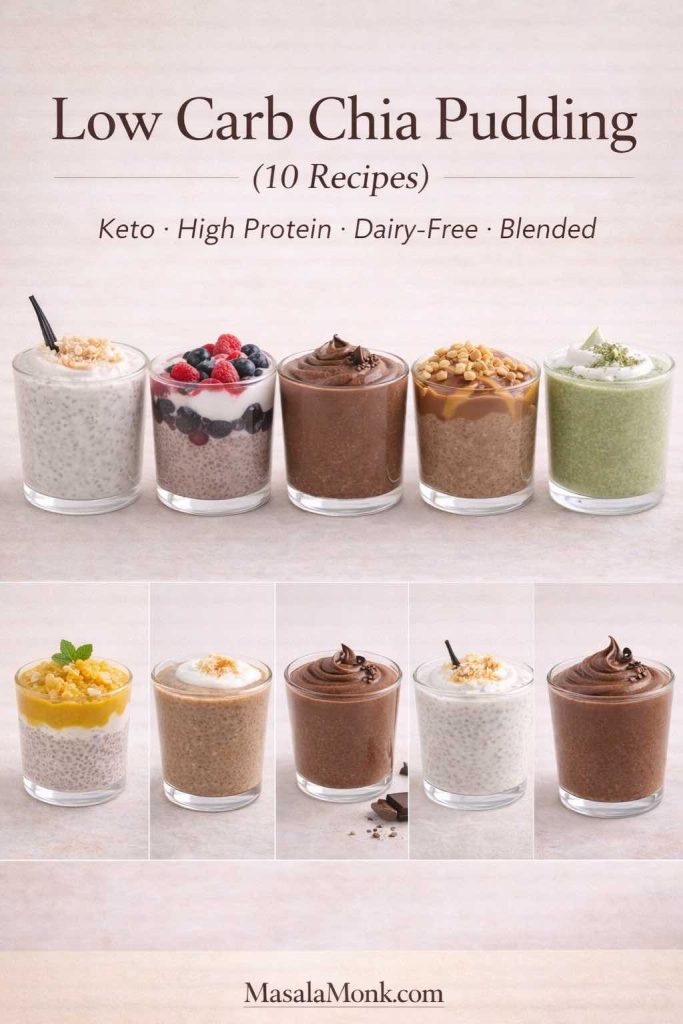
Collage showing ten low carb chia pudding cups including vanilla, Greek yogurt, chocolate, peanut butter, matcha, mango, coconut and blended mousse variations.
All 10 chia pudding recipes at a glance—from thick Greek yogurt and keto coconut milk to chocolate protein pudding, fruit layers and smooth blended mousse.

You do not need to read this guide from top to bottom. Use the jumps above if you already know what you want, or use the table of contents to solve the ratio, liquid, protein, meal-prep, or troubleshooting question that brought you here.


Low Carb Chia Pudding for Weight Loss: What Actually Matters

Chia pudding is not a fat burner, and a jar does not cause weight loss by itself. What makes it useful in a weight-management routine is practical: chia is easy to portion ahead, it creates a substantial gel-like texture when hydrated, and it can be paired with protein-rich ingredients such as Greek yogurt or protein powder.

The rest of the jar matters just as much. Canned coconut milk, nut butter, nuts, granola, fruit, sweeteners, and large portions can quickly change both calories and carbohydrates. A chia pudding that replaces a less satisfying breakfast is a different situation from adding a rich pudding on top of everything else you already eat.

  • Start unsweetened: choose unsweetened almond milk, plain Greek yogurt, or an unsweetened coconut base when keeping added sugar low matters.
  • Add protein when the jar needs to function as a meal: Greek yogurt or a protein powder you already tolerate well are the easiest routes.
  • Measure calorie-dense toppings: nut butter, nuts, seeds, coconut and granola are easy to overserve.
  • Use fruit deliberately: berries are easy to portion; mango and apple work better as measured flavor accents when carbs matter.
  • Do not confuse “keto” or “low carb” with automatically low-calorie: coconut milk and nut butter can make an excellent low-carb pudding while still creating a very energy-dense jar.

That is the reason this guide includes several styles rather than one “perfect” weight-loss pudding: the best jar is the one whose portion, protein, texture, and toppings fit the rest of your day.


Why Chia Pudding Works So Well as a Breakfast

A good chia pudding does two practical things well: it gives you a breakfast you can prepare ahead, and it creates a thick, substantial texture from very little morning work. Chia seeds absorb liquid as they hydrate, while Greek yogurt, protein powder, nuts, or richer milks can make the finished jar feel more complete.
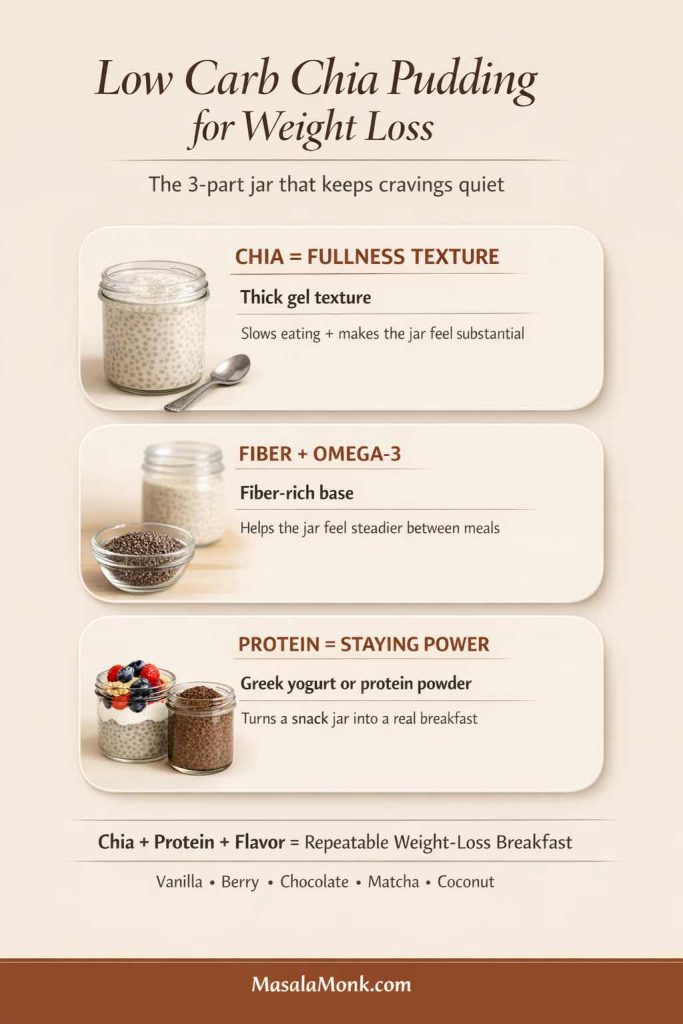
Infographic explaining how chia creates a thick gel texture and can be combined with protein such as Greek yogurt or protein powder.
Chia supplies the pudding structure; protein and the rest of the ingredients determine whether the jar behaves more like a snack or a full breakfast.

Chia seeds are naturally rich in fiber and contain alpha-linolenic acid, a plant-based omega-3 fat. For a useful evidence-based overview rather than exaggerated claims, see the Harvard Nutrition Source guide to chia seeds.

Protein is the easiest way to make the jar feel more meal-like

Plain chia and milk can work perfectly well as a snack, but Greek yogurt or protein powder gives you another lever when you want the jar to function as breakfast. Greek yogurt also changes the texture immediately: instead of waiting for milk alone to become pudding-like, you start with a thick, creamy base.
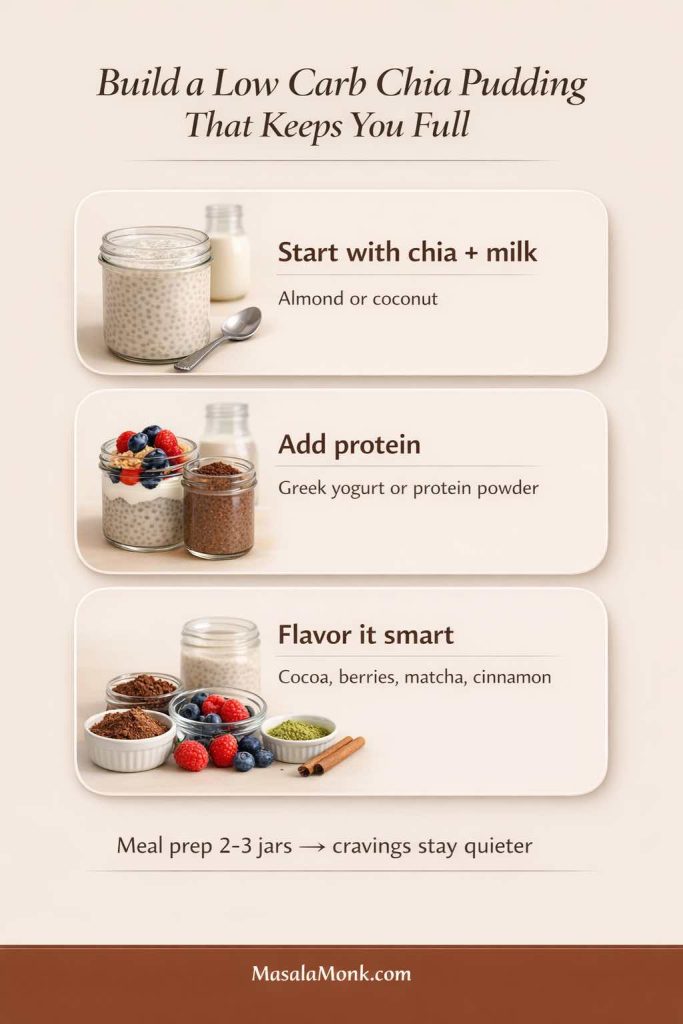
Three-step low carb chia pudding builder showing chia and milk, an optional protein addition, and flavor options such as cocoa, berries, matcha and cinnamon.
Think of the jar in three layers: chia + liquid for structure, an optional protein source for a more substantial breakfast, then flavors you genuinely want to eat.

Low Carb Chia Pudding Ratio: The Base Recipe That Prevents Clumps

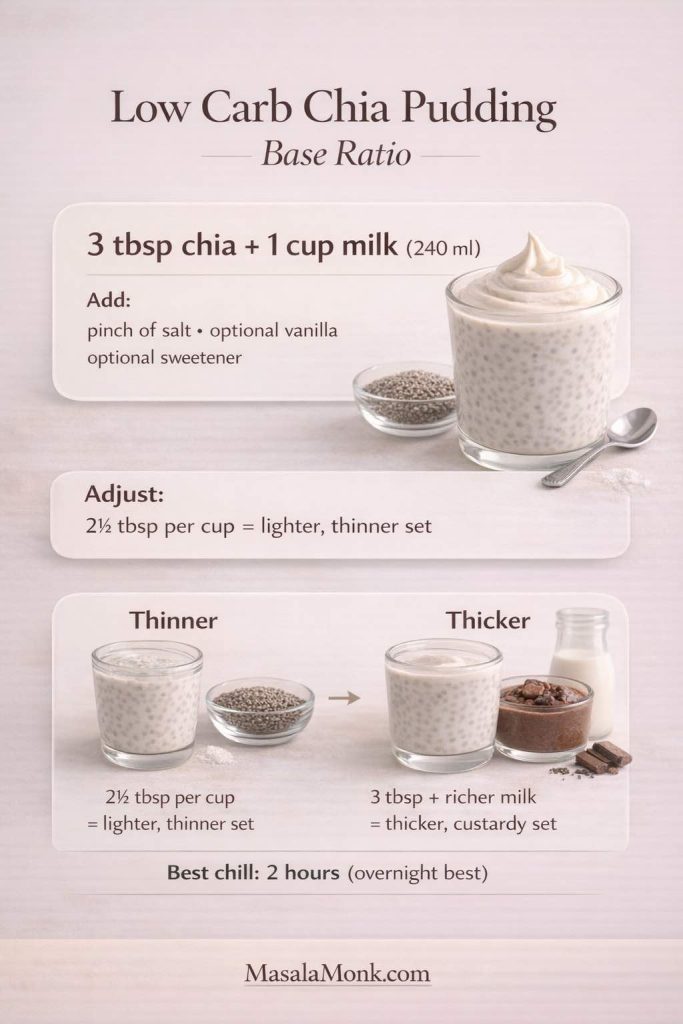
For a classic milk-based chia pudding, this is the dependable starting point:

  • 3 tablespoons chia seeds (roughly 30–35 g, depending on how you measure)
  • 1 cup / 240 ml liquid
  • Pinch of salt
  • ½ teaspoon vanilla, optional
  • Sweetener to taste, optional
Chia pudding ratio infographic showing 3 tablespoons chia seeds to 1 cup or 240 ml milk, with adjustments for thinner or thicker pudding.
Start with 3 tablespoons chia to 1 cup / 240 ml liquid. Use a little less chia for a softer set, or keep the full amount and use a richer liquid for a denser pudding.

The exact result changes with your liquid. Thin almond milk gives a lighter pudding, while canned coconut milk sets much richer. Greek yogurt needs far less added liquid because the yogurt already provides most of the body.

The stir-rest-stir method

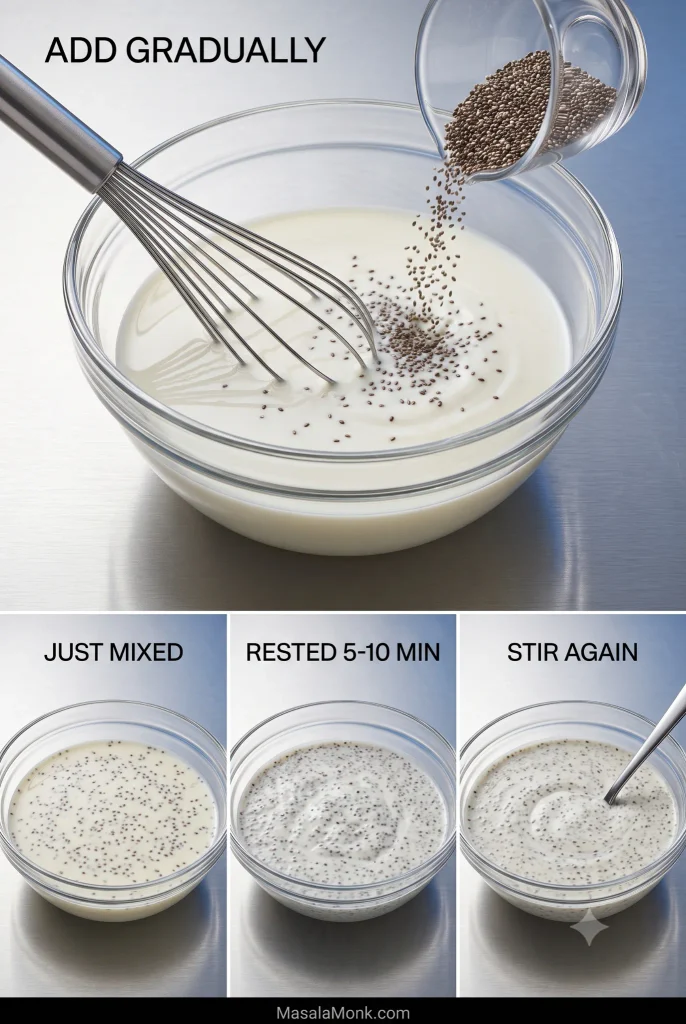
  1. Whisk the liquid with vanilla, salt, sweetener, cocoa, protein powder, or other smooth flavorings first.
  2. Add the chia and whisk vigorously for 20–30 seconds.
  3. Let the mixture stand for 10 minutes.
  4. Whisk or stir thoroughly a second time.
  5. Cover and refrigerate for at least 2 hours; overnight gives the most settled texture.
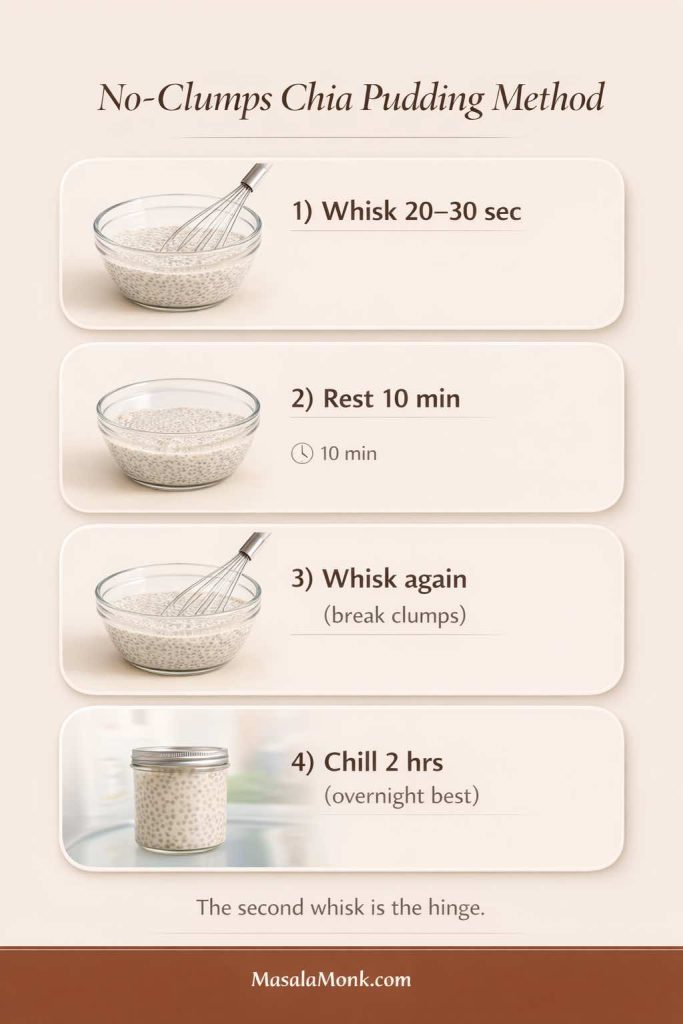
No-clumps chia pudding method showing whisking, a 10-minute rest, a second whisk and a final chill.
The second stir is the important one: the seeds have started hydrating but have not fully set, so this is your chance to break up clusters before they become permanent.

Can you make quick chia pudding?

Yes, although “quick” still means giving chia time to hydrate. Follow the same method and chill for 30–45 minutes. The texture will be softer than an overnight jar. Greek yogurt is particularly useful when you want a thick pudding sooner because much of the thickness is already present before the chia sets.

Give the chia enough time to hydrate

Chia thickens because the seeds absorb liquid over time. For pudding, use them fully hydrated rather than judging the mixture immediately after stirring. If the texture still seems thin after 30 minutes, give it more time before adding extra seeds; the biggest change usually happens during the longer refrigerator rest.


Choosing Your Liquid: Almond Milk, Coconut Milk, Yogurt, Oat Milk & More

Your liquid controls far more than flavor. It changes thickness, richness, carbohydrate content, and how much additional chia you may need. Choose the liquid first, then fine-tune the jar.
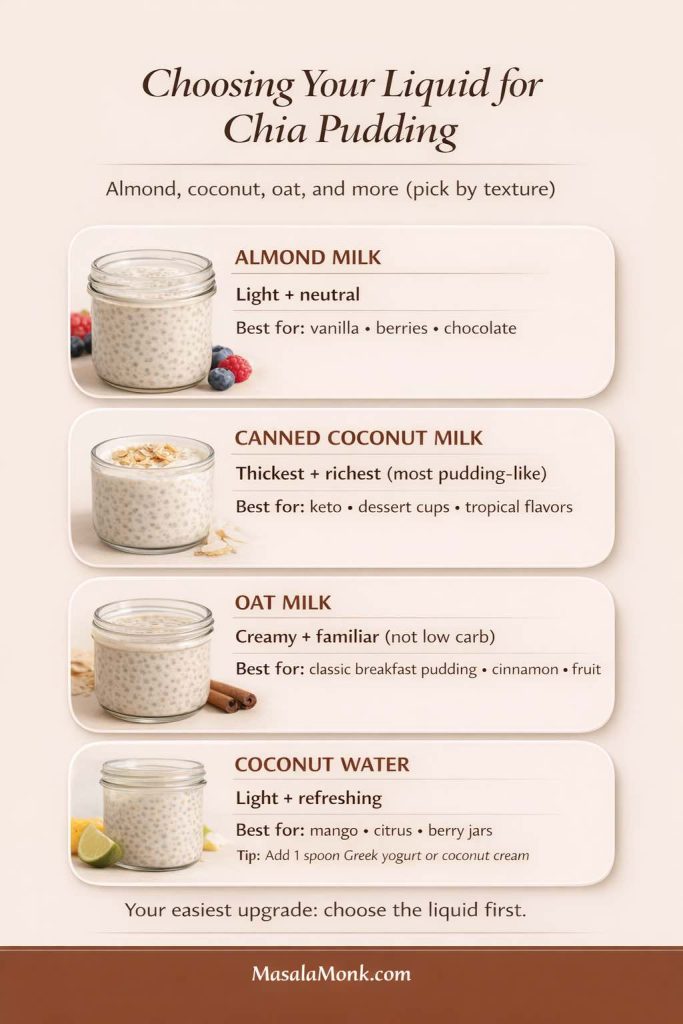
Guide comparing almond milk, canned coconut milk, oat milk and coconut water for chia pudding, including texture and best-use notes.
Almond milk stays light, canned coconut milk gives the richest set, oat milk is creamy but usually higher in carbohydrate, and coconut water creates a lighter fruit-friendly chia gel.

Almond milk: light and versatile

Unsweetened almond milk is an easy low-carb base because its flavor stays out of the way. It works especially well with vanilla, chocolate, cinnamon, berries, matcha, and nut butter.

Canned coconut milk: richest and thickest

If you want a pudding that feels especially rich, canned coconut milk is hard to beat. Because brands vary in thickness, whisk in enough water to make the mixture comfortably pourable before adding chia. Very thick coconut milk can otherwise produce dense pockets before the seeds hydrate evenly.

Greek yogurt: thick before it even chills

Greek yogurt works differently from milk. Instead of using a full cup of liquid, start with yogurt and loosen it gradually. For our full high-protein version, ¾ cup Greek yogurt + ¼ cup / 60 ml water or unsweetened almond milk creates a creamy starting mixture before the chia goes in.

Jump to the Greek yogurt chia pudding recipe →

Oat milk: creamy, but usually not low carb

Oat milk produces a mild, familiar breakfast-pudding flavor. It can still be used with any of the methods in this guide, but check the nutrition label if keeping carbohydrates low is an important part of your goal.

Coconut water: light and fruit-friendly

Coconut water produces a much lighter gel than milk. It pairs particularly well with mango, lime and berries, but it will not taste as creamy unless you add a spoonful of Greek yogurt or coconut cream. If you would rather drink your chia than turn it into pudding, our Chia Seed Water guide uses a much lighter chia-to-liquid ratio and covers plain, lemon, coconut-water and overnight versions.

Dairy-Free Chia Pudding: The Easiest Swaps

Several recipes in this collection are naturally dairy-free when you use plant milk and skip optional Greek yogurt. Unsweetened almond milk is the lightest neutral base; canned coconut milk gives the richest dairy-free texture; and a lighter coconut-milk beverage works well for matcha, mango, apple-cinnamon, and gingerbread.

If you use protein powder in a dairy-free jar, check the ingredient label: whey and casein are dairy proteins, while many pea, soy, rice, and blended plant proteins are dairy-free.


High Protein Chia Pudding: Greek Yogurt, Protein Powder & Collagen

There are three straightforward ways to increase the protein in a chia jar. Greek yogurt gives you protein and immediate thickness. Protein powder can add more protein and flavor but needs to be dissolved well. Collagen peptides dissolve easily, although they do not thicken the pudding the way yogurt does. If collagen is part of your routine, Harvard Health has a measured overview of what collagen supplements can and cannot reasonably claim.
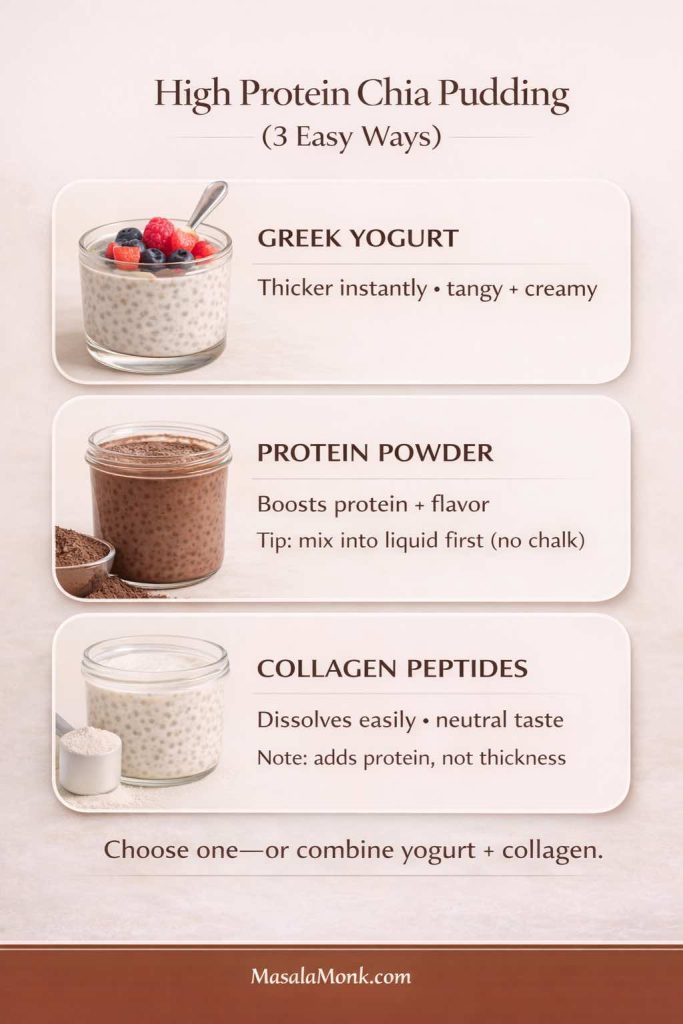
High protein chia pudding comparison showing Greek yogurt, protein powder and collagen peptides as three ways to add protein.
Greek yogurt changes both protein and texture; protein powder is a bigger flavor lever; collagen dissolves easily but contributes little to thickness.

How to add protein powder without a chalky texture

Do not dump dry protein powder into a finished chia pudding. Whisk it completely into the milk first, then add the chia. If your powder is stubborn, make a smooth paste with a small amount of liquid before gradually whisking in the rest.

Keep extra liquid nearby: protein powders absorb liquid very differently. After the 10-minute rest, add 2–4 tablespoons milk if the mixture has become unusually thick before it goes into the refrigerator.
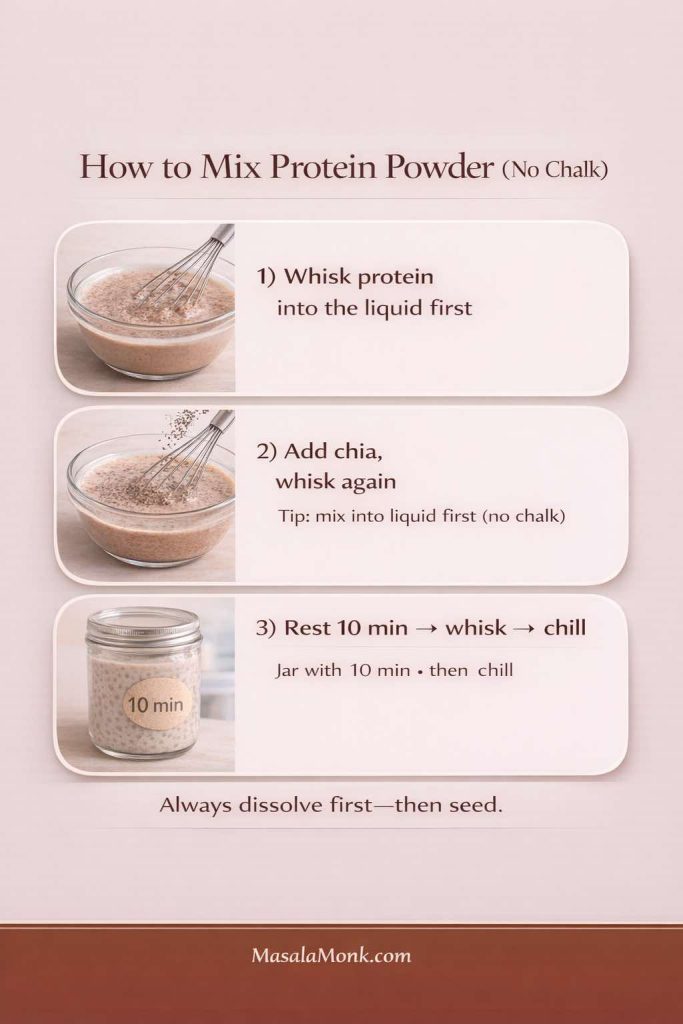
Three-step guide showing protein powder whisked into liquid first, followed by chia seeds and a final 10-minute rest and second stir.
For smooth protein chia pudding: dissolve the powder first, add the seeds second, then use the same 10-minute rest and second-stir method.

10 Low Carb Chia Pudding Recipes

Each recipe below makes roughly 2 small servings or 1 generous serving, depending on appetite and toppings. For meal prep, multiply the ingredients and portion the finished mixture into individual jars.

Low-carb vs keto: these recipes are not all equally low in carbohydrate. The unsweetened almond-milk, Greek-yogurt, chocolate, and coconut versions are the easiest to keep very low carb. Mango and apple are fruit-forward options; use the fruit as a measured accent if carbohydrate intake is a priority.
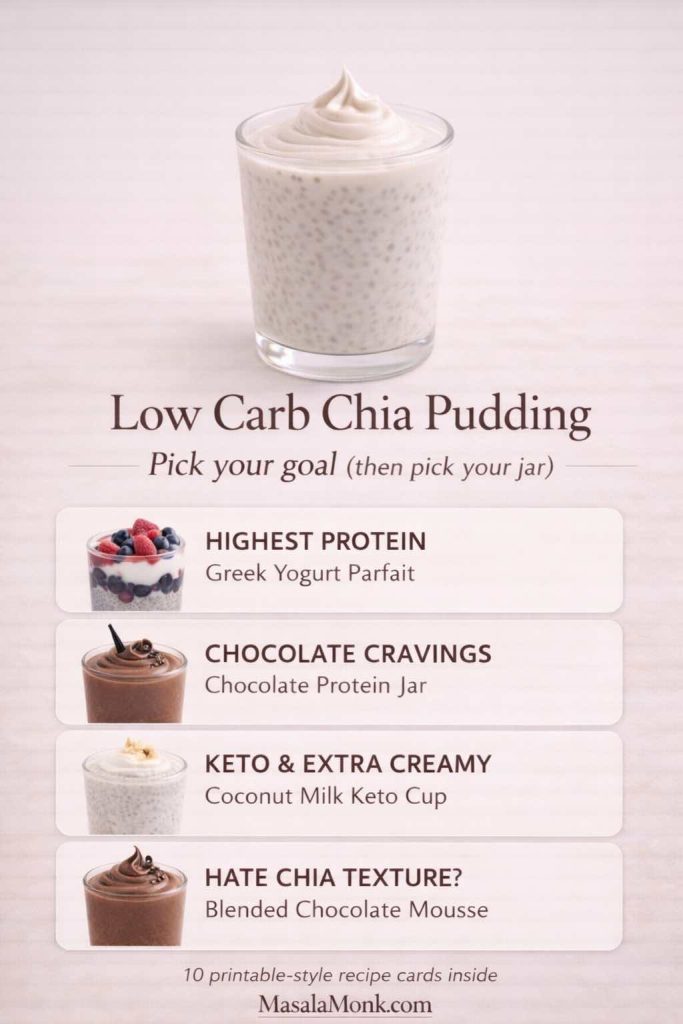
Goal-based chia pudding chooser showing Greek yogurt for highest protein, chocolate protein pudding for chocolate cravings, coconut milk for extra-creamy keto pudding and blended chocolate mousse for people who dislike whole chia texture.
Start with the result you want: Greek yogurt for thick and protein-forward, chocolate protein for cocoa cravings, coconut milk for the richest keto texture, or blended mousse if whole chia seeds are the problem.
If you want…Make this one
Thickest high-protein jarGreek Yogurt Chia Pudding
Simple everyday keto baseVanilla Almond Milk
Chocolate + proteinChocolate Protein
Chocolate dessert feelChocolate Peanut Butter
Fresh café-style flavorMatcha
Fruit-forwardMango
Cozy breakfastApple Cinnamon
Warm-spice dessert flavorGingerbread
Richest keto textureCoconut Milk
No whole-seed textureBlended Chocolate Mousse

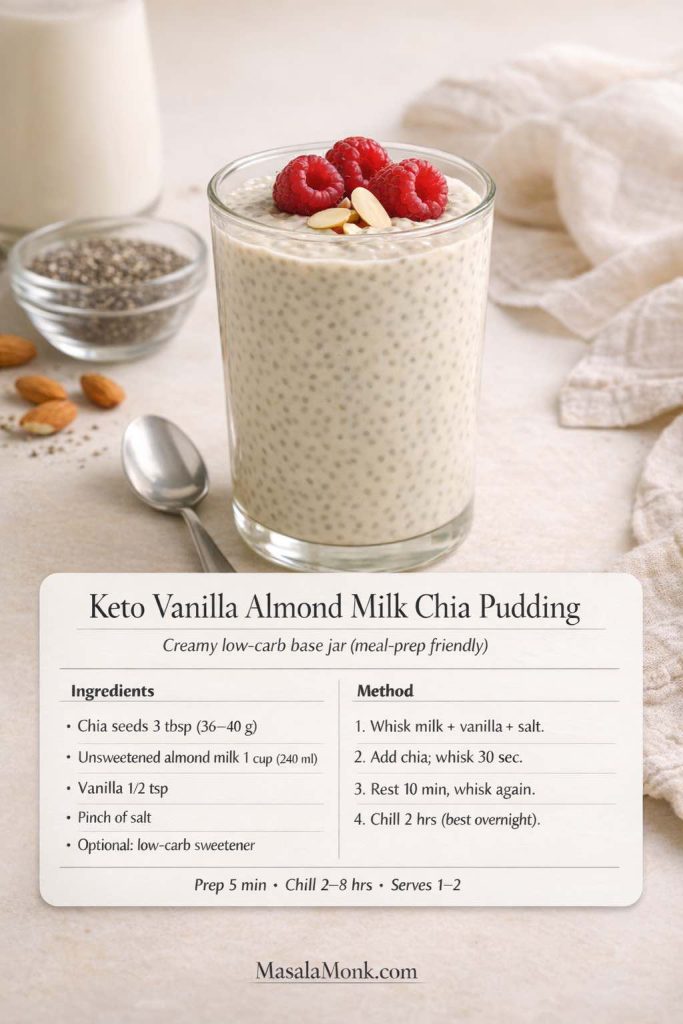
1) Keto Chia Pudding with Almond Milk

This is the easiest everyday low carb chia pudding to memorize. Vanilla keeps it neutral enough for berries, nuts, cocoa, cinnamon, or nut butter later.

Ingredients

  • 3 tablespoons chia seeds
  • 1 cup / 240 ml unsweetened almond milk
  • ½ teaspoon vanilla extract
  • Pinch of salt
  • Optional low-carb sweetener, to taste
Keto vanilla almond milk chia pudding topped with raspberries and sliced almonds.
The almond-milk jar is the useful blank canvas of the collection: light enough for fruit, but easy to make richer with yogurt, nuts or nut butter.

Method

  1. Whisk almond milk, vanilla, salt and sweetener, if using.
  2. Add the chia and whisk vigorously for 20–30 seconds.
  3. Rest 10 minutes, then whisk again.
  4. Cover and refrigerate for at least 2 hours or overnight.

Easy variations: add ½ teaspoon cinnamon; stir in 1 tablespoon unsweetened shredded coconut; or add 1–2 tablespoons Greek yogurt at serving time for a creamier finish.

For a deeper single-recipe treatment, see the keto chia pudding with almond milk.


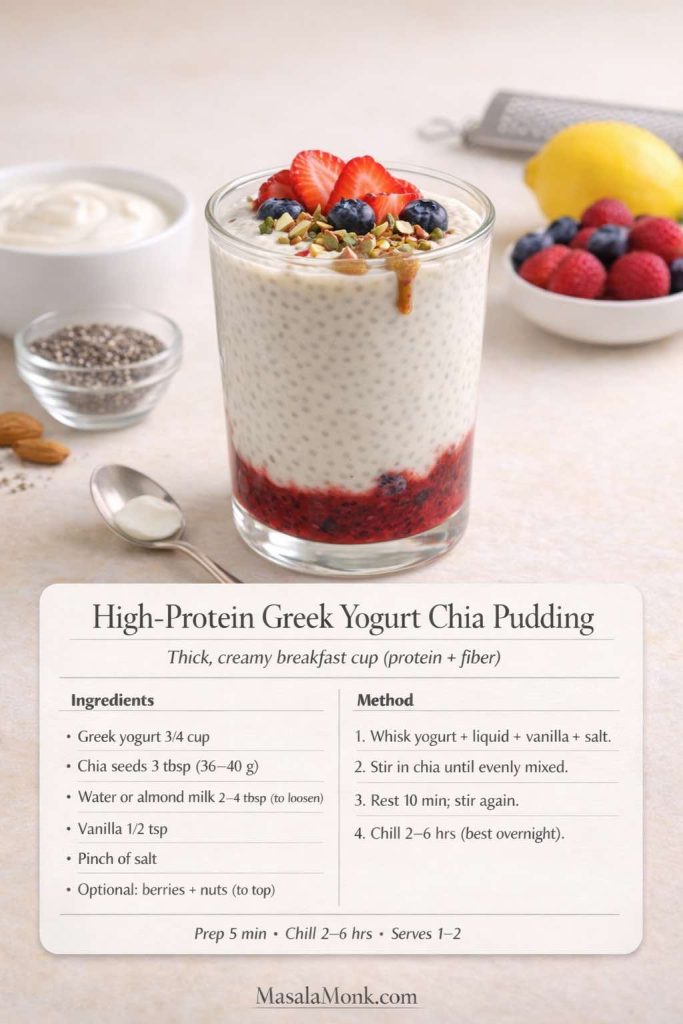
2) Chia Pudding with Greek Yogurt: High Protein & Ultra Creamy

If the chia pudding you want is thick, creamy and closer to cheesecake filling than a glass of soaked seeds, start here. Greek yogurt gives the jar body before the chia has even finished hydrating, while a small amount of liquid keeps the mixture creamy rather than pasty.

Ingredients

  • ¾ cup plain Greek yogurt
  • 3 tablespoons chia seeds
  • ¼ cup / 60 ml unsweetened almond milk or water, plus 1–2 tablespoons more after chilling if needed
  • ½ teaspoon vanilla extract
  • Pinch of salt
  • Optional sweetener, to taste
Thick high-protein Greek yogurt chia pudding layered with berries and topped with strawberries, blueberries, nuts and a small nut-butter drizzle.
This is the thickest protein-forward version in the collection: tangy Greek yogurt, hydrated chia and enough added liquid to keep the pudding creamy rather than stiff.

Method

  1. Whisk the Greek yogurt, vanilla, salt and ¼ cup / 60 ml water or almond milk until completely smooth.
  2. Stir in the chia seeds until evenly distributed.
  3. Rest for 10 minutes, then stir again so no dense chia pockets remain.
  4. Refrigerate for at least 2 hours. Overnight is fine.
  5. Stir before serving and add another 1–2 tablespoons liquid if you want it looser.

How thick should it look before chilling?

It should already be thick, but it should still move easily when stirred. If it looks like a stiff paste before going into the refrigerator, add another tablespoon or two of liquid. The chia will absorb more as it sits.

Can you use nonfat or regular yogurt?

Yes. Nonfat Greek yogurt works, although the finished pudding can taste a little sharper and less rich. Regular yogurt is thinner, so start with less added liquid and check the texture after hydration. Different yogurts vary enough that the final splash of liquid should be adjusted by texture rather than treated as an exact requirement.

Can you add protein powder too?

Yes. Whisk the protein powder into the yogurt and loosening liquid before adding chia. Protein powders absorb liquid differently, so expect to add another 1–3 tablespoons milk if the mixture becomes unusually stiff after the 10-minute rest.

Best toppings and variations

For a cheesecake-style jar, use vanilla, berries and a little lemon zest. For chocolate, whisk cocoa into the yogurt before adding chia. Peanut butter, chopped nuts, cacao nibs and a small berry layer all work well because they add contrast without turning the pudding watery.

If this thick, tangy, almost-cheesecake style is the chia pudding you actually want, keep going with our 10 Creative Chia Pudding Recipes. That collection branches into Greek-yogurt, cheesecake, chocolate, blueberry-lemon, mango and coconut-cream directions, so you can keep the texture you like and change the flavor.


3) Chocolate Protein Chia Pudding

This is the jar to make when you want chocolate flavor without turning breakfast into a sugar-heavy dessert. The important technique is dissolving the protein powder and cocoa before the chia goes in.

  • 1 cup / 240 ml unsweetened almond milk or dairy milk
  • 1 scoop chocolate protein powder, or vanilla protein plus extra cocoa
  • 2 tablespoons cocoa or cacao powder
  • 3 tablespoons chia seeds
  • Pinch of salt
  • Optional sweetener, to taste
  • Optional: 1 tablespoon Greek yogurt for extra creaminess
  • 2–4 tablespoons extra milk, only if your protein powder makes the mixture unusually thick
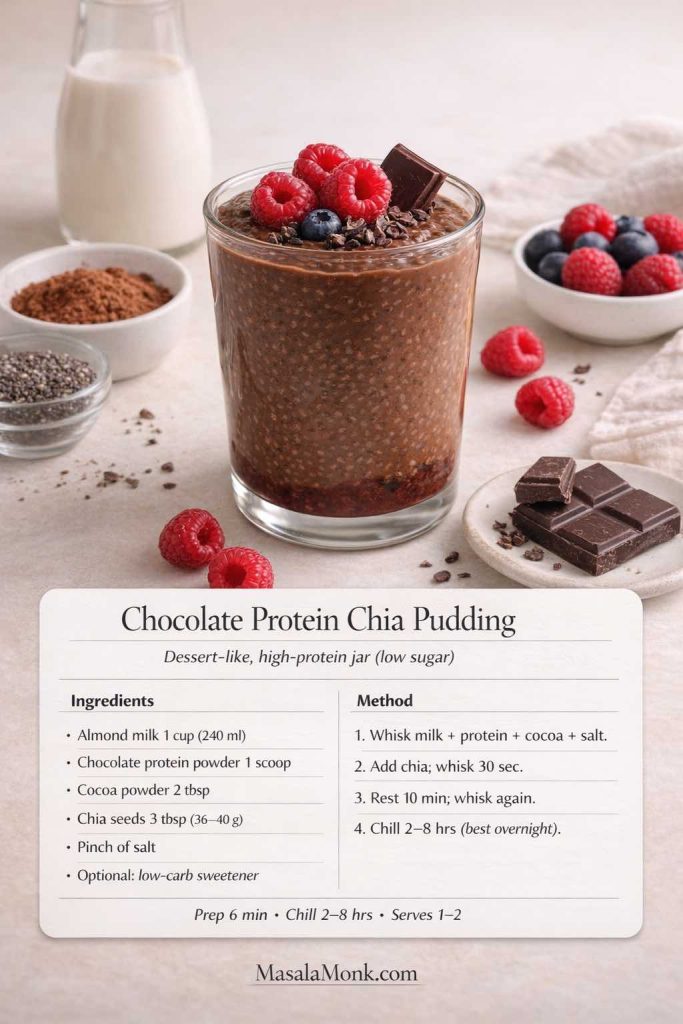
Chocolate protein chia pudding topped with raspberries, cacao nibs and dark chocolate.
Cocoa and protein powder make this the most direct chocolate-for-breakfast jar in the collection.
  1. Whisk the milk, protein powder, cocoa, salt and sweetener until completely smooth.
  2. Add chia and whisk again.
  3. Rest 10 minutes, then stir thoroughly. If it already looks very thick, add 2–4 tablespoons extra milk.
  4. Refrigerate for at least 2 hours; overnight gives the most settled texture.

If it tastes chalky: whisk the protein powder with a small amount of milk into a smooth paste first, then gradually add the rest of the milk.


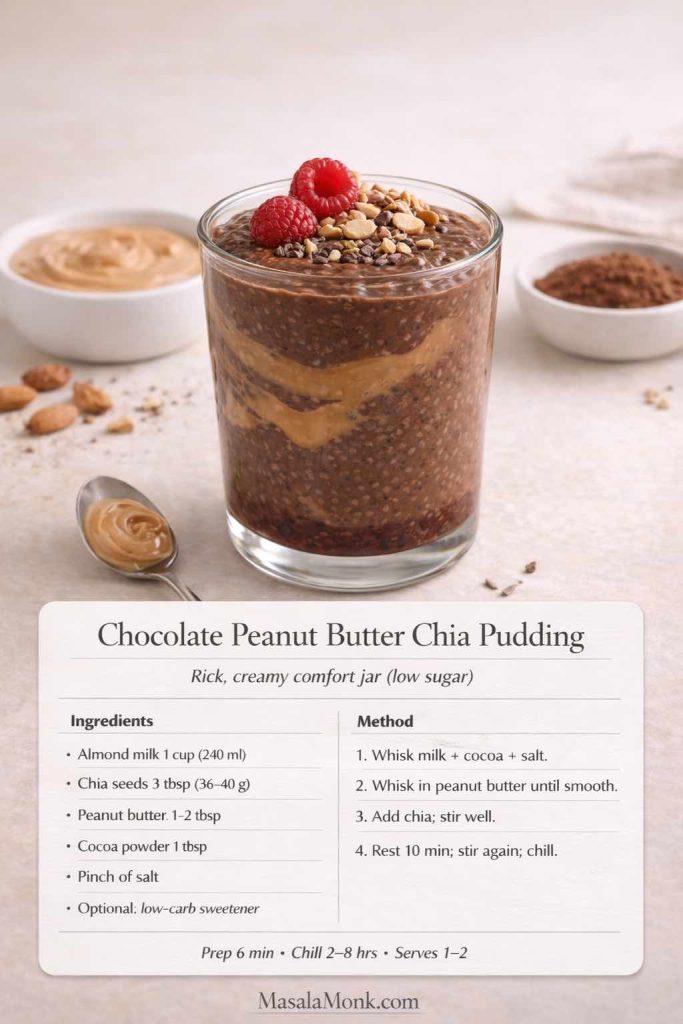
4) Chocolate Peanut Butter Chia Pudding

Peanut butter supplies richness and makes chocolate taste fuller even when you keep the pudding only lightly sweetened.

  • 1 cup / 240 ml almond milk or dairy milk
  • 3 tablespoons chia seeds
  • 1–2 tablespoons peanut butter
  • 1 tablespoon cocoa powder
  • Pinch of salt
  • Optional sweetener
Chocolate peanut butter chia pudding with a peanut butter swirl, raspberries, chopped peanuts and cacao nibs.
Chocolate and peanut butter create a richer dessert-style jar without needing much additional sweetness.
  1. Whisk milk, cocoa, salt and sweetener until smooth.
  2. Whisk in the peanut butter until evenly incorporated.
  3. Add chia, rest 10 minutes and stir again.
  4. Refrigerate for at least 2 hours.

A tiny splash of vanilla or pinch of cinnamon can make the cocoa taste deeper. Top with berries, roasted nuts or a few cacao nibs.


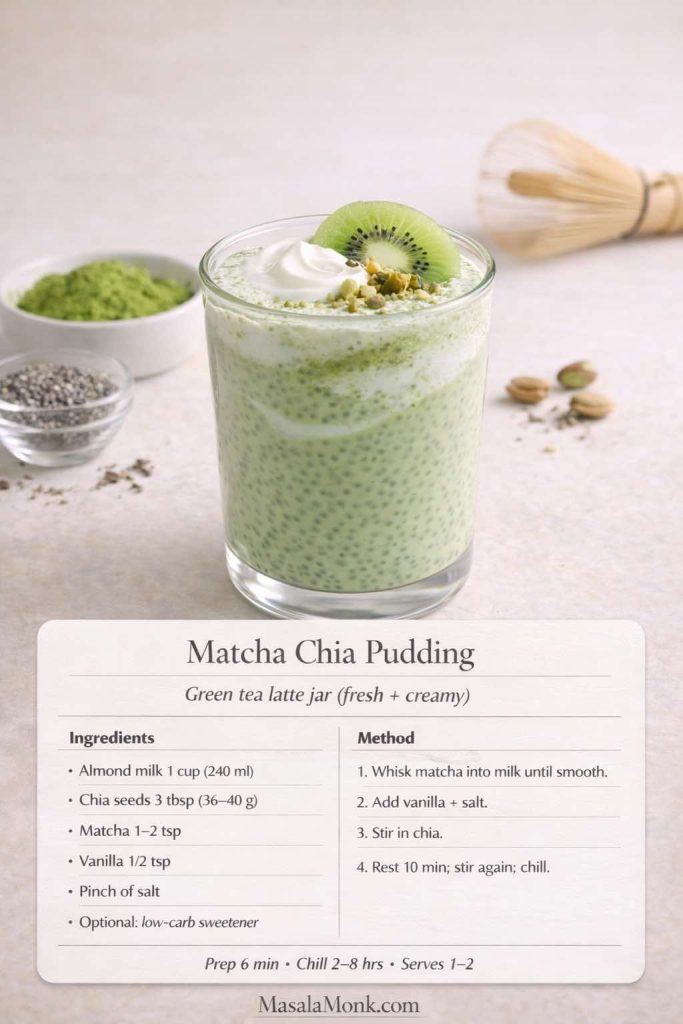
5) Matcha Chia Pudding

Matcha gives chia pudding a clean green-tea flavor that works especially well with vanilla and a small pinch of salt.

  • 1 cup / 240 ml unsweetened almond milk or light coconut-milk beverage
  • 3 tablespoons chia seeds
  • 1–2 teaspoons matcha powder
  • ½ teaspoon vanilla
  • Pinch of salt
  • Optional sweetener
Creamy matcha chia pudding topped with kiwi, pistachio and a small spoonful of yogurt.
Matcha creates a lighter, café-style change of pace between the richer chocolate and coconut puddings.
  1. Whisk or sift matcha into the milk until smooth.
  2. Add vanilla, salt and sweetener, if using.
  3. Add chia, rest 10 minutes, stir again and refrigerate.

If your matcha clumps, whisk it first with 1–2 tablespoons warm water to form a smooth paste. Matcha contains caffeine, so use less or enjoy it earlier in the day if you are sensitive to it.


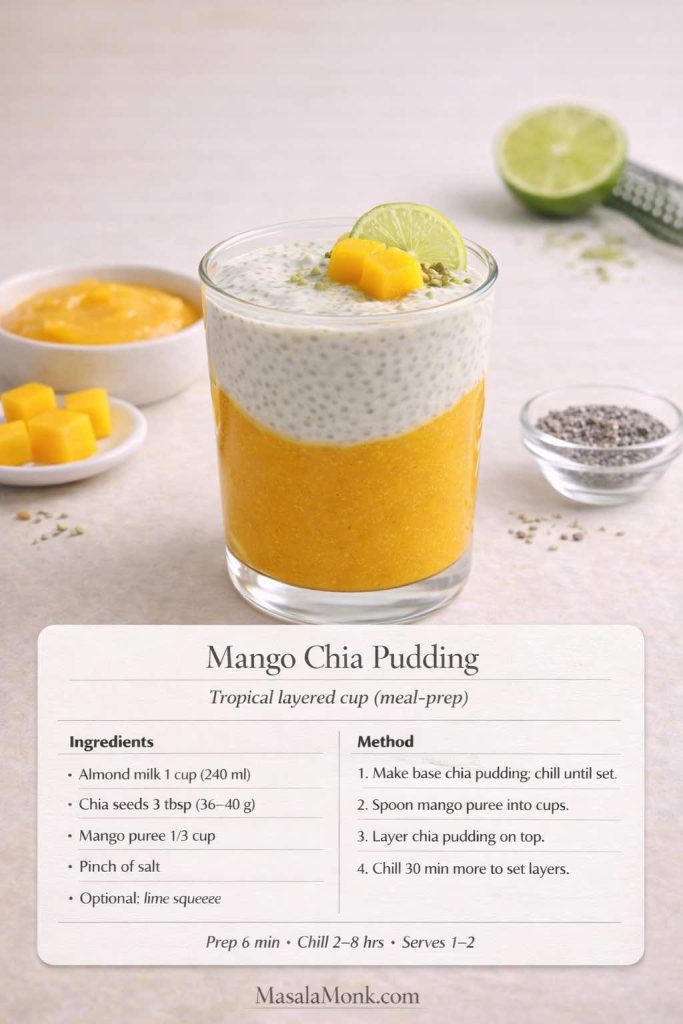
6) Mango Chia Pudding

Mango gives you plenty of flavor from a relatively small amount of fruit. Lime and a pinch of salt help the mango taste brighter, so you do not need to turn the whole jar into mango puree.

  • 1 cup / 240 ml almond milk or coconut-milk beverage
  • 3 tablespoons chia seeds
  • ⅓ cup mango puree or finely diced mango
  • Pinch of salt
  • Optional squeeze of lime
Layered mango chia pudding with bright mango puree, creamy chia pudding, mango pieces and lime.
Layering the mango rather than mixing a large quantity through the whole jar gives you strong tropical flavor without overwhelming the chia base.
  1. Make the chia base with milk, chia and salt.
  2. Chill until set.
  3. Fold in the mango just before eating, or layer the puree at the bottom of the jar.
  4. Finish with lime, if using.

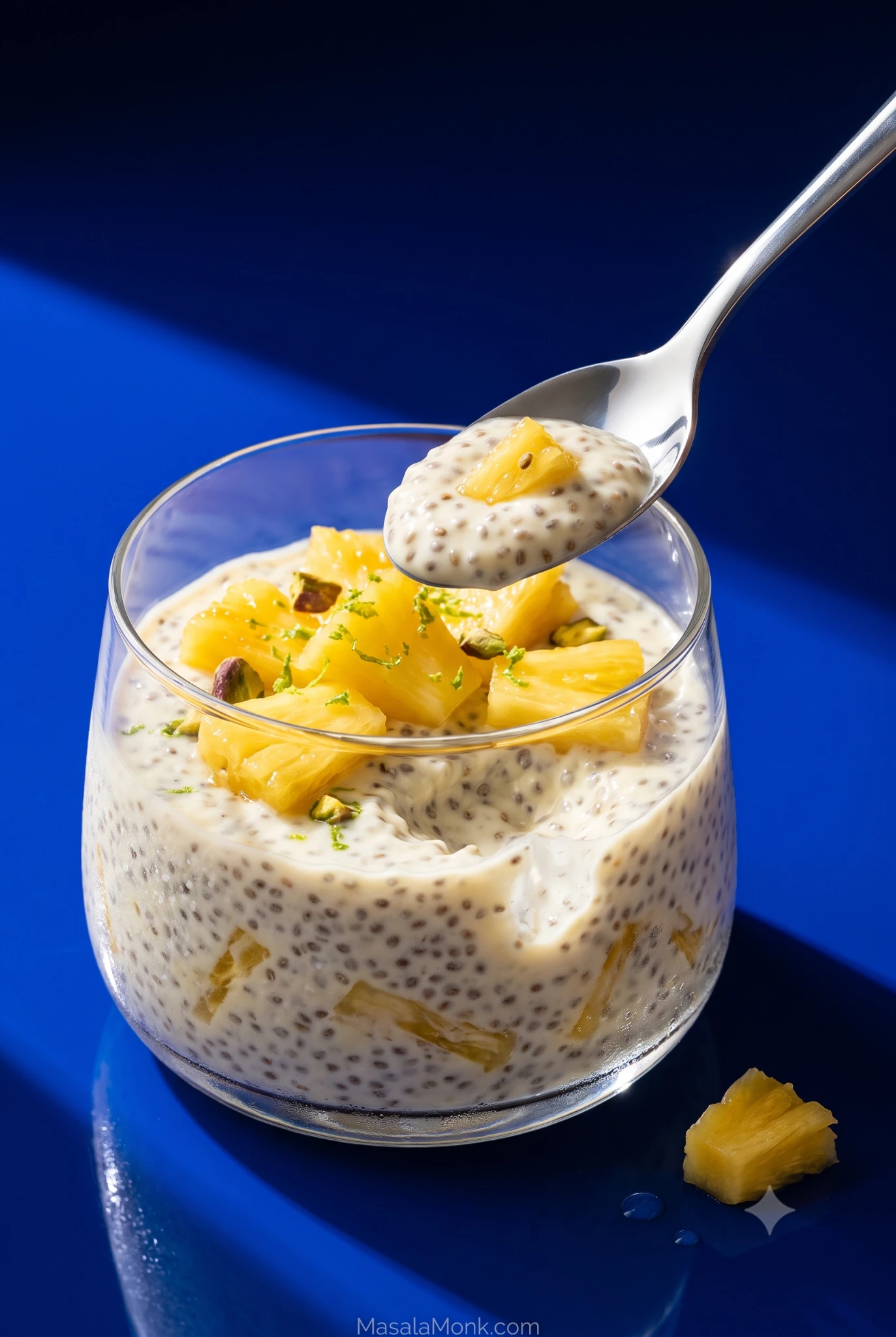
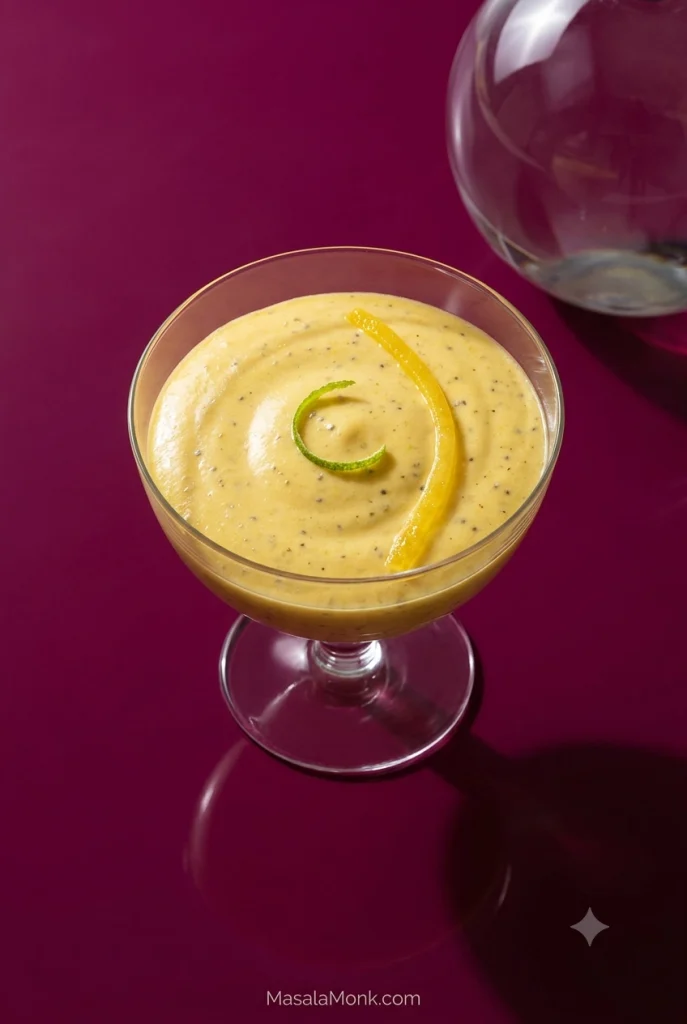
If the tropical-fruit direction is what you like, try our pineapple chia pudding next. It uses the same two-stir logic but goes deeper on pineapple, yogurt, texture, and how to keep the pudding spoonable rather than watery.


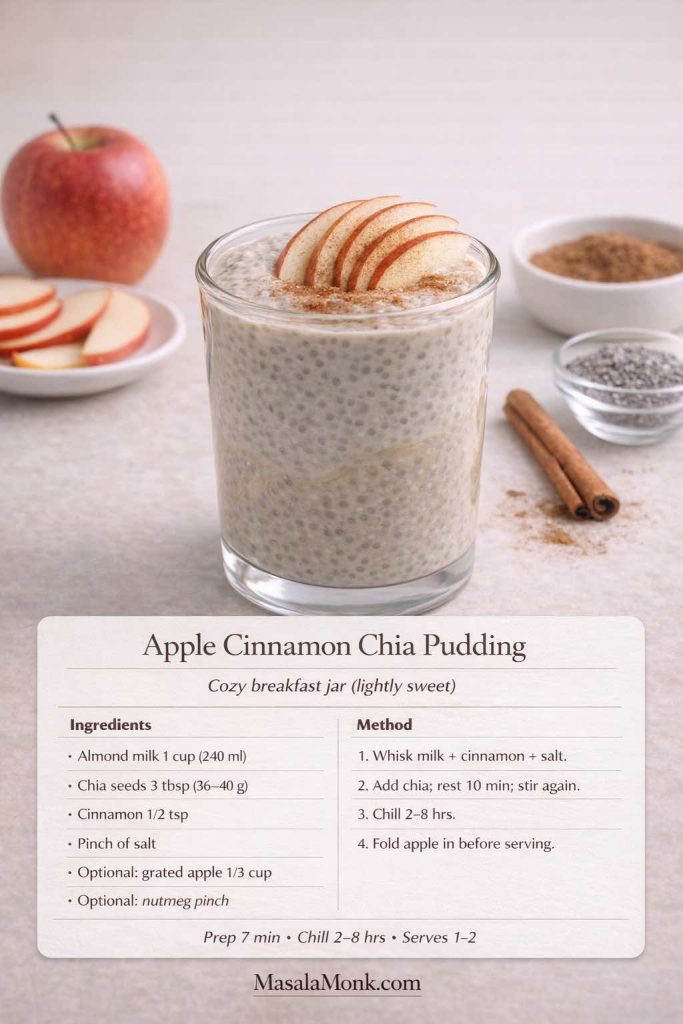
7) Apple Cinnamon Chia Pudding

This version gets most of its cozy character from cinnamon, vanilla and nutmeg, so the apple can stay a relatively small accent.

  • 1 cup / 240 ml unsweetened almond milk
  • 3 tablespoons chia seeds
  • ½ teaspoon cinnamon
  • Pinch of salt
  • Optional: ⅓ cup grated apple
  • Optional: pinch of nutmeg
Apple cinnamon chia pudding topped with thin apple slices and cinnamon.
For the freshest texture, add grated apple shortly before serving rather than letting it sit in the pudding for several days.
  1. Whisk milk, cinnamon, salt and nutmeg.
  2. Add chia, rest 10 minutes, stir again and chill.
  3. Fold in grated apple shortly before serving.

Stricter low-carb version: skip the apple and use cinnamon, vanilla and chopped pecans for a cinnamon-pecan jar.


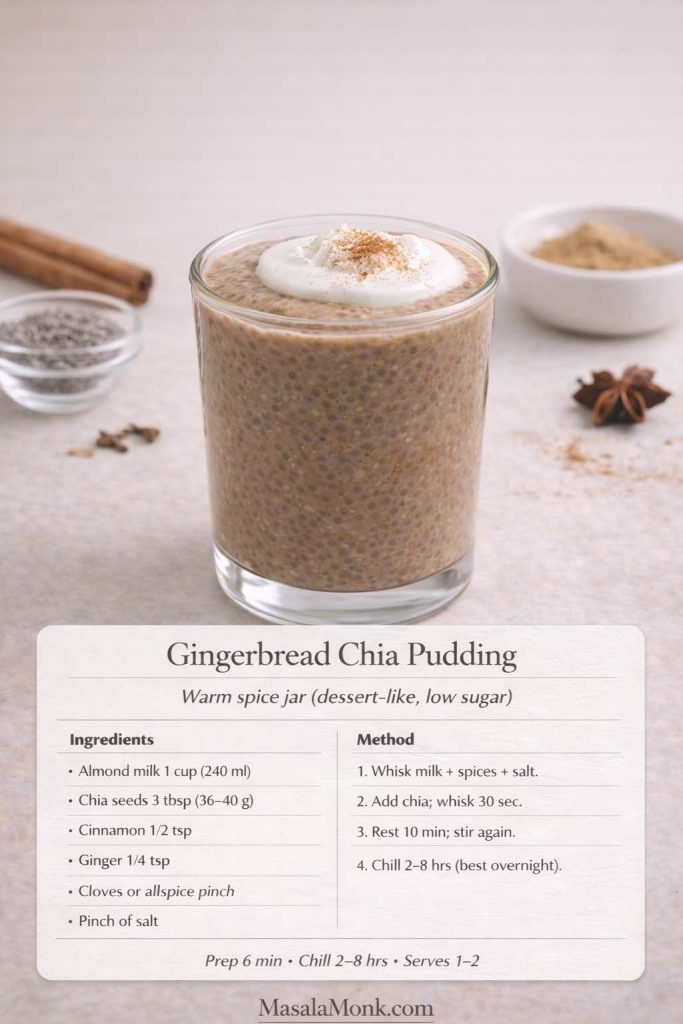
8) Gingerbread Chia Pudding

Gingerbread chia pudding is about warm-spice flavor rather than a health halo: cinnamon, ginger and cloves turn the same neutral base into something that feels much more dessert-like.

  • 1 cup / 240 ml almond milk or coconut-milk beverage
  • 3 tablespoons chia seeds
  • ½ teaspoon cinnamon
  • ¼ teaspoon ground ginger
  • Pinch of cloves or allspice
  • Pinch of salt
  • Optional sweetener
Gingerbread chia pudding topped with yogurt and cinnamon.
Warm spices transform a basic chia-and-milk jar without needing a complicated ingredient list.
  1. Whisk the spices, salt and sweetener into the milk.
  2. Add chia, rest 10 minutes, stir again and refrigerate.
  3. Serve with chopped nuts, Greek yogurt or coconut cream.

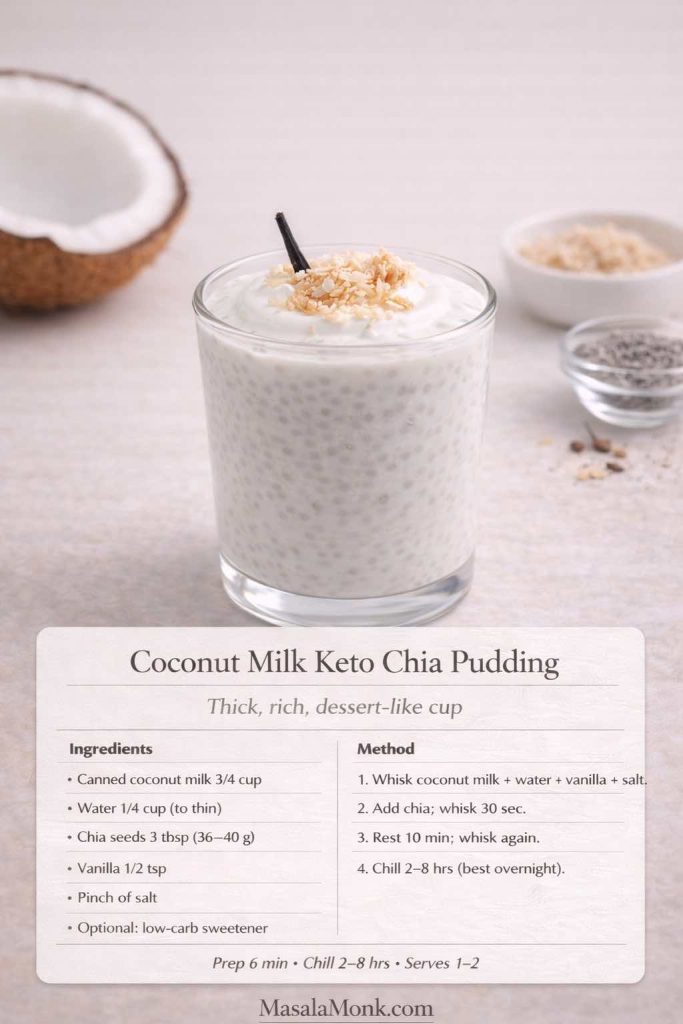
9) Keto Chia Pudding with Coconut Milk

This is the richest milk-based pudding in the collection. Canned coconut milk gives you much more body than almond milk, but thinning it slightly helps the chia hydrate evenly.

  • 3 tablespoons chia seeds
  • ¾ cup / 180 ml canned coconut milk
  • ¼ cup / 60 ml water, plus more if needed
  • ½ teaspoon vanilla
  • Pinch of salt
  • Optional sweetener
Rich coconut milk keto chia pudding topped with toasted coconut and vanilla.
Canned coconut milk produces the densest, richest milk-based chia pudding in this collection.
  1. Whisk coconut milk, water, vanilla, salt and sweetener until smooth.
  2. Add chia, rest 10 minutes and stir again.
  3. Refrigerate for at least 2 hours.
  4. If it becomes extremely thick overnight, loosen it with a splash of water before serving.

10) Blended Chia Pudding: Smooth Chocolate Mousse

If the idea of chia appeals to you but the whole-seed texture does not, this is the recipe worth trying. Let the chia hydrate first, then blend the finished pudding until glossy and smooth.

  • 1 cup / 240 ml almond milk or dairy milk
  • 3 tablespoons chia seeds
  • 1–2 tablespoons cocoa or cacao powder
  • Pinch of salt
  • Optional sweetener
  • Optional: 1 tablespoon peanut butter or 2 tablespoons Greek yogurt
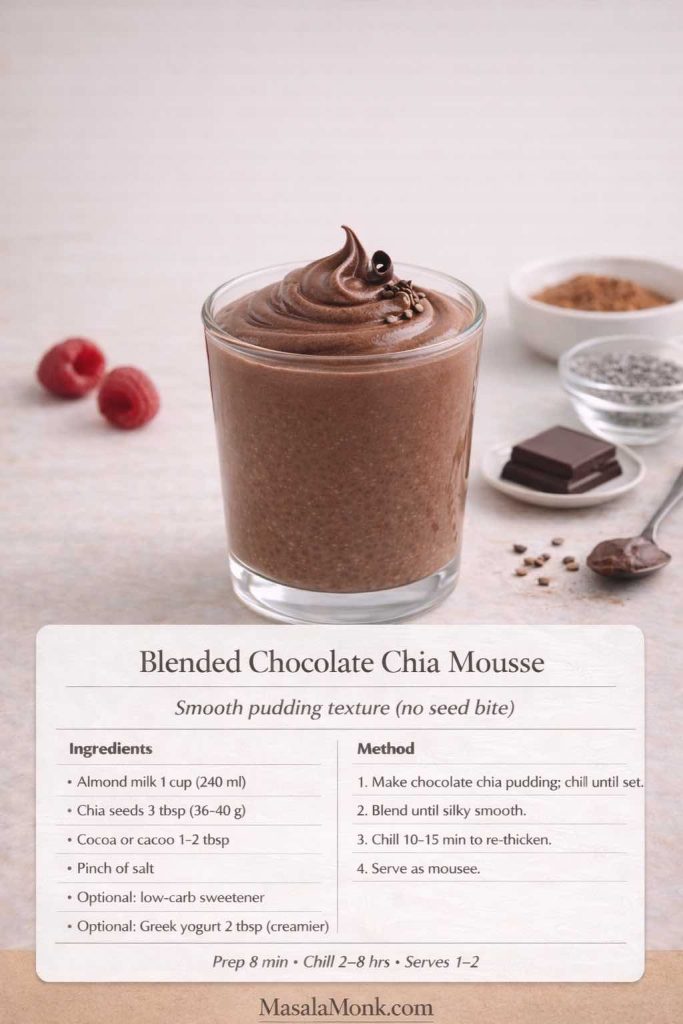
Silky blended chocolate chia mousse topped with dark chocolate and cacao nibs.
Hydrate first and blend second: that is what changes chia from a seedy pudding into a much smoother mousse-like texture.
  1. Make a standard chocolate chia pudding and refrigerate it for at least 2 hours.
  2. Blend until completely smooth and glossy.
  3. Add Greek yogurt or peanut butter if you want a richer finish.
  4. Chill for another 10–15 minutes before serving.

If protein powder is part of the recipe, blending after the chia has set can also smooth out small powdery pockets.

Whichever flavor you choose, texture is the part most likely to need adjusting. The fixes below are designed so you can rescue the pudding you already made instead of starting over.


Chia Pudding Troubleshooting: Runny, Too Thick, Lumpy or Bland

Most disappointing chia pudding can be traced to the ratio, hydration time, stirring pattern, or the thickness of the liquid you started with. Fix the texture before abandoning the jar.

ProblemWhat probably happenedWhat to do now
Runny after 2+ hoursToo much liquid, too little chia, or very thin milkAdd 1 teaspoon chia at a time, stir well and chill another 30–60 minutes.
Too thick or pastyRich coconut milk, thick yogurt, extra protein powder, or too much chiaStir in milk or water 1 tablespoon at a time until creamy.
Large chia clumpsThe seeds settled together before fully hydratingBreak them up thoroughly; next time use the 10-minute second stir.
Seeds still crunchyNot enough hydration time or liquidAdd a small splash of liquid and give the pudding more time.
Protein powder tastes chalkyPowder was added after the chia or not dissolved firstBlend the pudding, or next time dissolve powder completely before adding seeds.
Watery fruit layerJuicy fruit sat in the jar too longKeep berries and other watery toppings separate until serving.
Flavor is flatNot enough salt, aroma, richness or acidityAdd a pinch of salt plus vanilla, cinnamon, cocoa, nut butter, citrus zest or berries.
You hate the seed textureThe pudding may be fine; the texture simply is not for youBlend it into chocolate chia mousse.

One important correction: if a milk-based pudding is only slightly soft at the 30-minute mark, do not keep throwing chia into it. Give it the full two hours first. Chia continues absorbing liquid as it rests.


Chia Pudding Meal Prep & Storage

The easiest way to meal prep chia is to make one plain base and create several flavors from it rather than mixing four completely separate recipes.

  • Whisk the base in a bowl where you can easily break up clumps.
  • Do the 10-minute second stir.
  • Portion into three or four jars.
  • Flavor the jars in different directions—vanilla, cocoa, matcha, cinnamon, yogurt.
  • Keep crunchy toppings and watery fruit separate until serving.
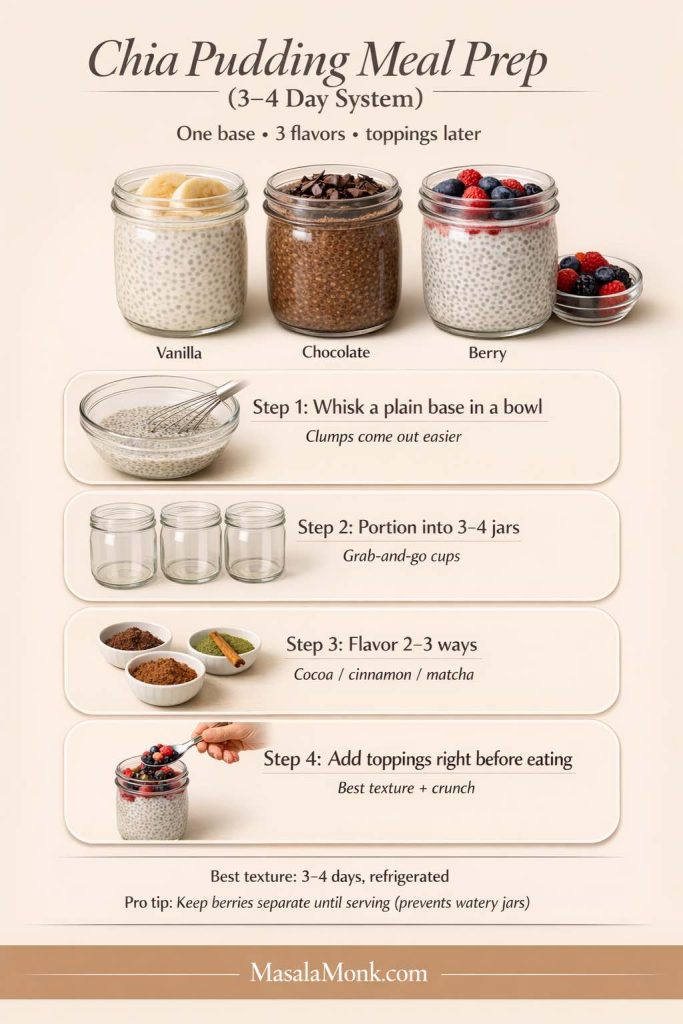
Chia pudding meal-prep system showing one base divided into several jars and flavored with vanilla, chocolate and berries, with toppings kept separate until serving.
One base, several flavors, toppings added later: this is much easier to repeat than making a completely different pudding every morning.

For quality, most chia puddings are best eaten within about 3–4 days when refrigerated. Yogurt- and milk-based versions should stay cold, and fruit is usually best added closer to serving. Follow normal refrigerated food-safety practices and discard anything that develops an unusual smell, appearance or signs of spoilage.

If what you really enjoy is the make-it-tonight, grab-it-tomorrow routine rather than chia specifically, our high protein overnight oats give you the same fridge-ready breakfast rhythm with oats, yogurt, protein-powder and dairy-free routes.


How to Make Chia Pudding Taste Better

If chia pudding tastes like a health chore, the problem is usually not the chia. A plain mixture of seeds and unsweetened milk needs flavor structure just like any other pudding.

  • Salt: a small pinch makes chocolate, vanilla, fruit and nut butter taste fuller.
  • Vanilla or warm spice: vanilla, cinnamon, ginger or nutmeg give the jar aroma without requiring much sweetness.
  • Depth: cocoa, cacao or matcha create a strong flavor identity.
  • Creaminess: Greek yogurt, canned coconut milk or nut butter changes both flavor and mouthfeel.
  • Contrast: berries, chopped nuts, toasted coconut and cacao nibs stop every spoonful feeling the same.
  • Acidity: lemon or lime zest can make fruit flavors brighter.
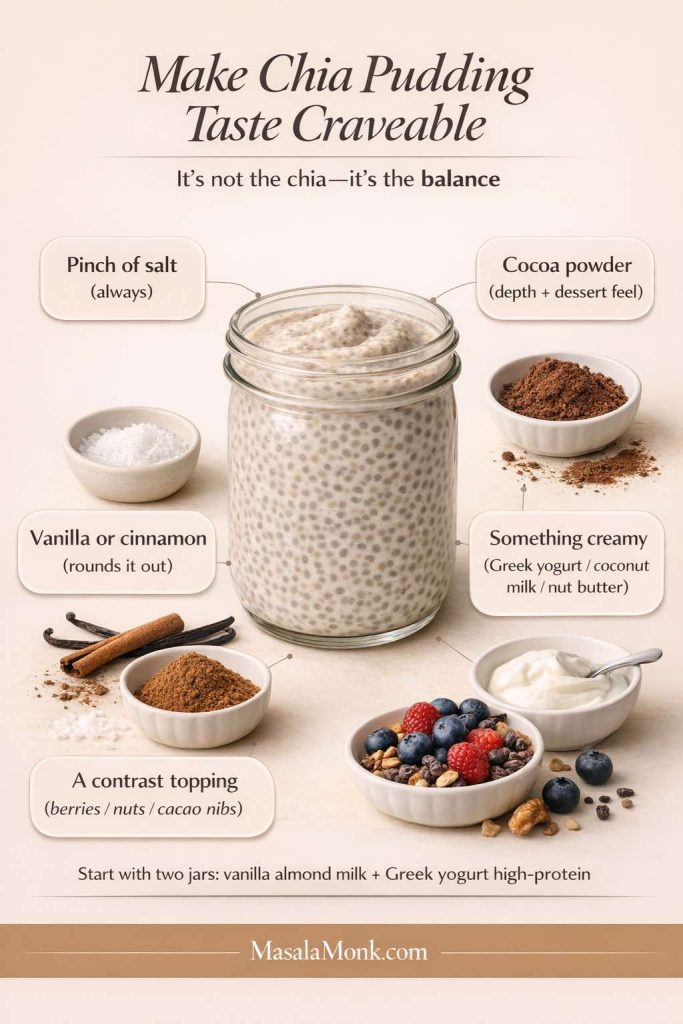
Flavor-balance guide for chia pudding showing salt, vanilla or cinnamon, cocoa, creamy ingredients and contrasting toppings.
Good chia pudding needs the same things other desserts do: seasoning, aroma, richness and contrast.

If you are making chia pudding for the first time, a useful two-jar experiment is one vanilla almond-milk jar and one Greek-yogurt jar. You will immediately learn whether you prefer a lighter gel-style pudding or a thicker, tangier texture.


Frequently Asked Questions

1) What is the best chia pudding ratio?

For a milk-based pudding, start with 3 tablespoons chia seeds to 1 cup / 240 ml liquid. Use a little less chia for a softer pudding. Greek-yogurt chia pudding uses a different ratio because yogurt already supplies most of the thickness.

2) How long does chia pudding need to set?

Give it at least 2 hours for a dependable set. A 30–45 minute quick version is possible but softer. Overnight works especially well for meal prep.

3) Why is my chia pudding watery?

It may need more time, more chia, or a better second stir. If it is still runny after at least two hours, add about 1 teaspoon chia, stir thoroughly and chill for another 30–60 minutes.

4) Why is my chia pudding too thick?

Thick Greek yogurt, canned coconut milk, protein powder and slightly heavy chia measurements can all produce an unexpectedly dense pudding. Stir in water or milk a tablespoon at a time until it becomes creamy again.

5) How do I stop chia seeds clumping together?

Whisk immediately after adding the seeds, then stir or whisk again after about 10 minutes. That second stir redistributes the seeds just as they begin to gel.

6) Can I make chia pudding with Greek yogurt and no milk?

Yes. Use water instead of milk to loosen the yogurt. Start with ¾ cup Greek yogurt, 3 tablespoons chia and ¼ cup / 60 ml water, then add another tablespoon or two after chilling if the pudding is too stiff.

7) Is Greek yogurt better than regular yogurt for chia pudding?

Neither is inherently better, but they behave differently. Greek yogurt is thicker and generally higher in protein, so it gives a firmer pudding. Regular yogurt starts looser, meaning you may need less added liquid or slightly more chia.

8) Can I add protein powder to chia pudding?

Yes. For the smoothest texture, dissolve the protein powder in the milk or yogurt mixture before adding the chia seeds. Because powders absorb liquid differently, keep a little extra milk nearby and adjust after the 10-minute rest.

9) Can I make chia pudding with almond milk?

Yes. Unsweetened almond milk is one of the easiest bases for low carb chia pudding because its flavor is mild and it works well with vanilla, cocoa, cinnamon, berries, matcha and nut butter.

10) Can I make chia pudding with coconut milk?

Yes. Canned coconut milk makes an especially rich pudding. If the coconut milk is very thick, dilute it with a little water before adding chia so the seeds hydrate evenly.

11) Can I make chia pudding with oat milk?

Yes. Oat milk creates a mild, creamy pudding, although many oat milks contain substantially more carbohydrate than unsweetened almond milk, so check the label if low carb is your priority.

12) Can I make dairy-free chia pudding?

Yes. Use unsweetened almond milk, coconut milk, or another dairy-free milk you enjoy. If adding protein powder, check whether it contains whey or casein; those are dairy proteins.

13) Can I make blended chia pudding?

Yes, and it is one of the best solutions if you dislike whole chia seeds. Let the pudding hydrate first, then blend until smooth. Cocoa, peanut butter or Greek yogurt can make the result even more mousse-like.

14) What is the easiest three-ingredient chia pudding?

A simple version is chia seeds + unsweetened almond milk + vanilla. Another is chia + coconut milk + cocoa. Add a pinch of salt if possible; it makes a surprisingly large difference to the finished flavor.

15) Can I use frozen berries in chia pudding?

Yes. Thawed berries release juice, which can be useful as a swirl or compote-style layer. For meal prep, keep very juicy berries separate until serving if you do not want them loosening the pudding.

16) How can I sweeten chia pudding without much sugar?

Start by improving flavor before simply increasing sweetness. Vanilla, cinnamon, cocoa, nut butter, coconut milk, berries, citrus zest and a pinch of salt can all make the pudding taste more complete. If you use a low-carb sweetener, add only enough to suit your taste.

17) Is chia pudding keto-friendly?

It can fit many low-carb or ketogenic eating patterns when made with ingredients such as unsweetened almond milk or coconut milk and appropriate toppings. The final carbohydrate content depends on your milk, yogurt, fruit, sweetener and serving size, so check the ingredients you actually use rather than relying on the word “keto” alone.

18) How long does chia pudding last in the fridge?

For quality, aim to eat most homemade chia pudding within about 3–4 days, refrigerated. Keep toppings such as nuts separate for crunch and add juicy fruit later if you want the pudding to stay thick.

19) Which chia pudding should I make first?

If you want the simplest base, start with vanilla almond milk chia pudding. If you came for the thick, creamy version, make the Greek yogurt chia pudding. And if chia’s seed texture has always bothered you, go directly to the blended chocolate mousse.
Posted on — 9 Comments

Coconut Milk Nutrition Facts & Glycemic Index Impact

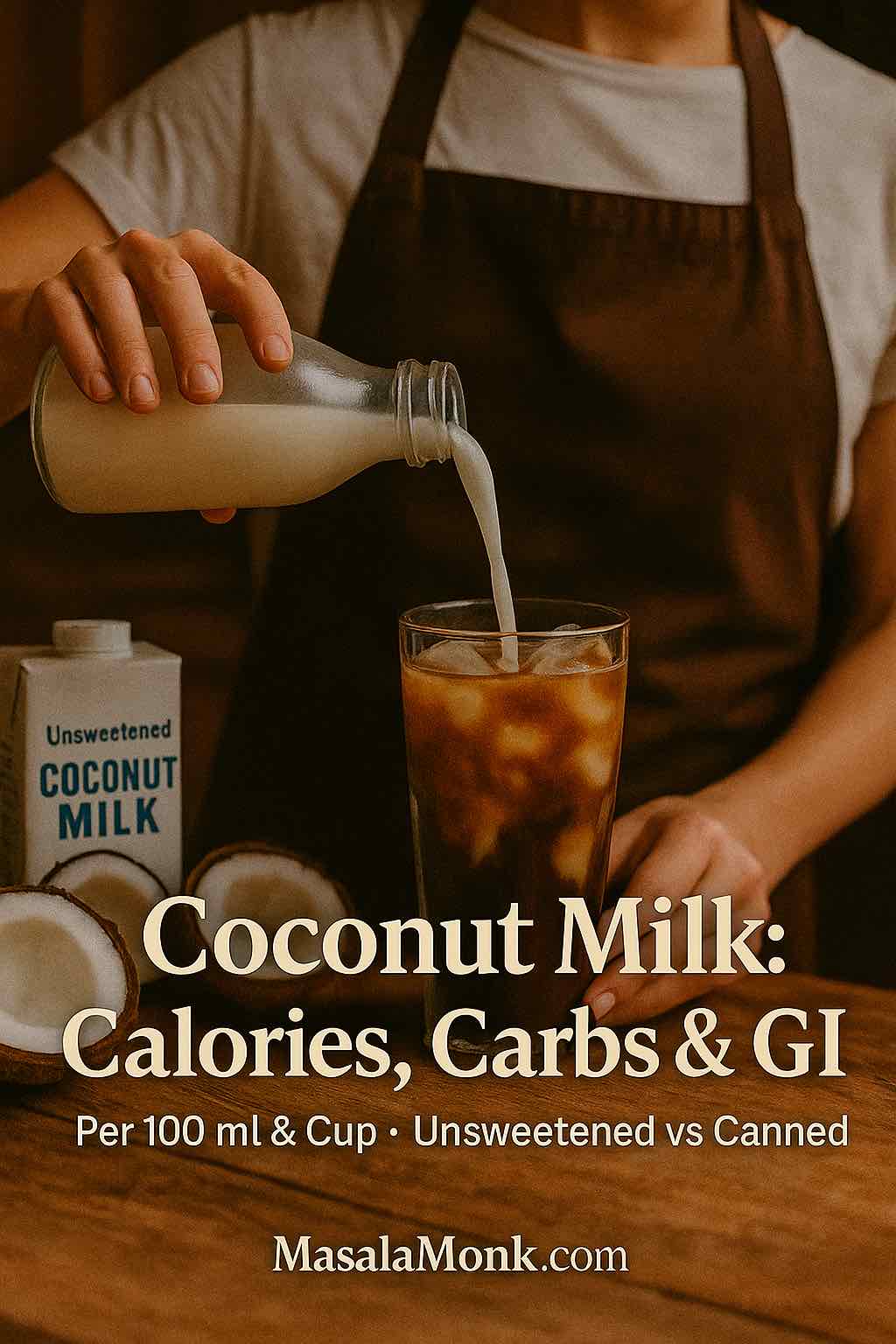
Unsweetened coconut milk poured into iced coffee with coconuts and a carton, showing coconut milk nutrition—calories, carbs and GI.

Creamy, fragrant, and endlessly versatile, coconut milk slips into curries, smoothies, porridges, and even coffee. Yet despite its popularity, confusion persists about coconut milk nutrition because “coconut milk” refers to two very different products. On one hand, there’s the canned cooking milk—thick, rich, and energy-dense. On the other, you’ll find the carton coconutmilk beverage—lighter, splashable, and typically fortified. Understanding which one you’re buying is half the battle; everything from calories to glycemic impact hinges on that distinction.

If blood sugar response is high on your list, you may also want a quick refresher on the difference between glycemic index and glycemic load; our short guide on GI vs GL explained shows why GL—carbs × portion—often matters more than a single “GI” number in everyday meals.


What “coconut milk” really means (and why labels matter)

Before we talk numbers, definitions. In grocery aisles, coconutmilk beverages in cartons are mostly water with a small amount of coconut plus stabilizers, emulsifiers, and—helpfully—fortified vitamins and minerals. They’re designed for pouring, much like almond or oat beverages. Meanwhile, the canned version is essentially coconut cream + water, intended for cooking and far more concentrated.

For anyone who wants a factual, impartial primer that distinguishes beverage from cooking milk, the UF/IFAS overview of plant-based coconut milks is refreshingly clear about composition and additives as well as where each style fits in your kitchen.

Because these products behave so differently, coconut milk nutrition can look wildly inconsistent online. Therefore, when you’re evaluating a recipe or planning your macros, always check the package type, then glance at the serving size and the “added sugars” line. That thirty seconds of diligence prevents most mistakes.

Coconut Milk Nutrition per 100 ml
Type Calories Fat Saturated Fat Carbs Sugars Fiber Protein
Canned coconut milk (regular) ~197–230 kcal 21–24 g ~21 g ~6–8 g ~3 g ~2 g ~2–3 g
Canned coconut milk (light) ~60–120 kcal 6–12 g ~6–11 g ~2–4 g ~1–2 g ~1 g ~1–2 g
Carton coconutmilk beverage (unsweetened) ~19–21 kcal ~1.7–2.0 g ~1.7–2.0 g ~0.4–1.0 g 0 g added 0–0.4 g 0–0.4 g

Sources: see USDA FoodData Central for canned entries; brand labels for carton beverages such as Silk Unsweetened Coconutmilk and So Delicious Unsweetened Coconutmilk. Values vary by brand; check your label.

Coconut Milk Nutrition per 1 Cup (240 ml)
Type Calories Fat Saturated Fat Carbs Sugars Fiber Protein
Carton coconutmilk beverage (unsweetened) ~40–45 kcal ~4–4.5 g ~4 g ~1–2 g 0 g added 0–0.5 g 0–1 g
Canned coconut milk (regular) ~445–552 kcal ~48–57 g ~42–50 g ~12–14 g ~6–8 g ~2–5 g ~5 g
Canned coconut milk (light) ~140–280 kcal ~14–28 g ~12–24 g ~4–9 g ~2–5 g ~1–3 g ~2–4 g

Sources: verify ranges via USDA FoodData Central (canned, regular & light). For unsweetened beverage, see labels like Silk Unsweetened Coconutmilk and So Delicious Unsweetened Coconutmilk.


Unsweetened carton coconutmilk: light, splashable, and low-carb

For people seeking creaminess without many calories or carbs, unsweetened carton coconutmilk is an easy win. Labels from major brands commonly land around 40–45 kcal per cup (240 ml) with ~2 g carbs, 0 g added sugars, and ~4 g fat. As a concrete reference, the facts panel on Silk Unsweetened Coconutmilk lists 40 kcal, 2 g total carbohydrate, 0 g total sugars, and 4 g fat, along with noteworthy fortification (e.g., roughly 35% DV calcium per cup).

Likewise, So Delicious Organic Unsweetened Coconutmilk reports similar values on its nutrition panel. In short, for daily splashes in coffee, tea, or shakes, the carton beverage gives you the “coconut” flavor profile with minimal carbohydrate exposure.

From a glycemic lens, that matters: tiny carb counts per cup translate to a very low glycemic load, which is the practical reason unsweetened coconutmilk beverage tends to have a negligible effect on blood glucose when used as a drink base or splash. To understand the broader context, you can also explore the GI Foundation’s database and their educational hub on Glycemic Index—useful resources when comparing beverages.

Because this beverage is comparatively thin, you might still want more body in warm drinks or smoothies. In that case, a tablespoon of chia seeds, a scoop of protein, or some oats will thicken things up while also adding fiber or protein for better satiety. For inspiration, check our simple chia pudding variations and oats smoothie ideas and keep sweeteners light to preserve that low GL advantage.


Canned coconut milk: rich, concentrated, and calorie-dense

Conversely, canned coconut milk is the workhorse of curries and desserts precisely because it’s concentrated. Per cup, many entries in public nutrition databases land roughly around ~445 to 552 kcal, driven by fat content; per 100 g, values near ~197–230 kcal are common. For authoritative lookups, have a look at Coconut, milk, canned, reduced fat – listing we found on Australian Food Composition Database, courtesy Food Standards Australia New Zealand.

Those calories deliver silky mouthfeel and a beautiful sheen—but they add up quickly. In practice, a curry that uses one full can will often be portioned among several servings, which softens the per-plate impact. Nevertheless, if you’re tracking intake, measuring by tablespoons or weighing out 100 ml at a time keeps the totals realistic. For a balanced bowl, combine canned coconut milk with plenty of non-starchy vegetables and a meaningful protein; the fat will carry flavors while the rest of the plate ensures satiety without runaway energy intake.

If you’re curious about health perspectives beyond the numbers, Verywell Health’s overview on coconut milk summarizes both potential benefits (e.g., MCTs, phenolics) and saturated fat concerns, while reiterating something we emphasize as well: the nutrition depends on the exact product, so label-reading is non-negotiable.


Coconut milk nutrition and blood sugar: GI vs GL in real life

Because the internet loves single numbers, people often ask: “What is the glycemic index of coconut milk?” The honest answer: there isn’t one universal GI value for “coconut milk.” Formulas vary, ingredients differ, and testing methods aren’t always consistent. The GI Foundation even showcases beverage examples that include blends—say, a coconut beverage with added rice components—reporting higher GI values in those particular cases. That variability isn’t a bug; it’s a reminder that product composition drives outcomes.

Therefore, in day-to-day decisions, glycemic load is the more useful compass. Because unsweetened carton coconut milk has ~1–2 g carbs per cup, its GL is very low, and its impact on blood glucose tends to be minimal. Meanwhile, the canned version contributes far more fat and calories than carbohydrates; blood-sugar changes will be influenced more by what else is on the plate (rice, noodles, breads, fruit) than by the coconut milk itself.

Moreover, café drinks marketed with “coconut milk” can swing wildly in sugar content depending on syrups and bases. As a sanity check, peek at a representative nutrition page, such as a cold milk or coconut milk beverage on Starbucks’ nutrition, then always open the exact drink you plan to order. The takeaway is straightforward: the carton beverage at home is typically unsweetened and very low in carbs; café builds often are not.

If you’d like a concise framework to apply beyond coconut milk, loop back to our guide on GI vs GL explained—it lays out how to assess both number and portion at a glance.


Coconut milk nutrition, clearly applied: how to choose for your goals

Because coconut milk nutrition varies by format, choose with the end use in mind:

When you want a low-calorie splash
Reach for an unsweetened carton. It brings pleasant coconut notes while keeping energy intake and carbs modest. As an added bonus, many cartons are fortified—Silk, for instance, lists roughly 35% DV calcium per cup—which can help when you’re replacing dairy. See the specifics on Silk Unsweetened Coconutmilk or another brand’s facts panel before you add to cart.

When you need luscious body in hot dishes
Use canned coconut milk. A moderate ladle transforms sauces and soups with almost no effort. However, because it’s energy-dense, portioning is your friend. A common rhythm is to stir in half a can, simmer, taste, then decide if you need more—often you won’t. For reality-checked numbers, verify entries in USDA FoodData Central as you plan recipes.

When clean labels matter
If additives aren’t your thing, you can make coconut milk at home with just coconut and water, then dilute to the texture you want. Practically speaking, homemade milk lands nutritionally closer to canned (pre-dilution) but lets you control thickness.

When you’re managing blood sugar
As a beverage, unsweetened carton coconut milk is usually a low-GL swap. In cooked dishes, your rice/bread/fruit choices drive the glycemic impact more than the coconut milk itself. For a quick contrast with another coconut product often confused with milk, skim our short primer on coconut water nutrition so you don’t mix up their carb profiles.


Label cues that make or break coconut milk nutrition

Even among similar-looking cartons, the nutrition can differ noticeably. Because of that, a few quick label checks save headaches later.

Unsweetened vs flavored
Look specifically for “unsweetened” and confirm 0 g added sugars. While standard unsweetened options like Silk Unsweetened Coconutmilk list 0 g added sugars, flavored or barista-style versions may climb. When in doubt, read the panel rather than trusting the front.

Fortification
If you rely on plant beverages regularly, fortification helps fill gaps. Many unsweetened coconut milk beverages carry meaningful amounts of calcium and vitamins A/D/B12. For instance, Silk’s facts panel shows ~35% DV calcium and modest vitamin D per cup. Checking this once per brand avoids surprises.

Serving size
With canned coconut milk, a “serving” might be listed as a fraction of a cup—sometimes 60 ml or 80 ml. That can make the numbers look deceptively modest until you scale up to the actual amount used. To sanity-check, you can cross-reference typical per-100 g and per-cup entries in different databases online.

Ingredient lists
For cartons, small amounts of gums or lecithins stabilize texture; that’s normal. The UF/IFAS explainer on plant-based coconut milks briefly outlines why these show up and what they do. If you’d rather skip them entirely, homemade is your answer.


Coconut milk nutrition in popular contexts (and smart tweaks)

Because food is culture as much as chemistry, it helps to picture common use-cases and simple adjustments that keep your goals intact.

Curries and stews
A tablespoon or two of canned coconut milk can mellow heat and carry aromatics without turning your bowl into a calorie bomb. As a rule of thumb, bloom spices in oil, add aromatics, then whisk in a modest dose of coconut milk at the end—taste first, add more only if needed. Serve with non-starchy sides (cauliflower, green beans, leafy greens) when you want to nudge the meal’s glycemic load down.

Smoothies and shakes
For creaminess without calories, start with unsweetened carton coconutmilk, then add fiber (chia, flax, oats) or protein powder to build body. The beverage’s low carbohydrate base makes it forgiving—just be judicious with bananas, dates, or syrups so the sugar doesn’t creep up. For ideas, browse a handful of our chia pudding riffs and adapt the flavors to a drinkable format.

Coffee and tea
Carton coconut milk won’t foam like dairy, but it gives a rounded, tropical note in iced lattes and cold brew. If you want extra texture, whisk in a small spoon of canned coconut milk—yes, a hybrid approach—then cut it with the carton beverage to keep calories predictable.

Baking and desserts
Canned coconut milk excels in custards, panna cottas, and ganache-style toppings. For a lighter dessert, swap half the canned quantity for carton coconutmilk and test the set; often, you’ll get the best of both worlds.

Savory sauces
When a sauce risks splitting or tasting thin, a small swirl of canned coconut milk emulsifies the texture. Use a silicone spatula and gentle heat to fold it in at the end; avoid a rolling boil once coconut milk is added, which can dull aromas and alter mouthfeel.


Coconut milk vs coconut water, flour, and “other coconut things”

It’s astonishing how often these get conflated. In brief:

  • Coconut water is the clear liquid from young coconuts; it contains natural sugars and electrolytes and behaves nothing like coconut milk in recipes. If you’re juggling “hydration vs calories,” our short read on coconut water nutrition keeps the comparisons straight.
  • Coconut flour is a high-fiber baking ingredient; nutrition and glycemic behavior differ substantially from both milk and water. When you’re exploring low-GI swaps in baking, consider pairing coconut flour with eggs or plant proteins for structure and satiety.
  • Sprouted coconut and fresh coconut meat have their own macros; delicious as they are, they aren’t interchangeable with coconut milk beverage or canned cooking milk. If your goal is a smoother relationship with blood glucose, prioritize portion control and pair coconut foods with protein and non-starchy vegetables.

If you like control, make it yourself

Store-bought convenience is great, yet there’s something satisfying about pulling off your own. With a blender, warm water, and dried coconut, you can make coconut milk at home in minutes. Strain for a silky beverage, or leave a little fiber in if you like body. Because homemade starts richer, you can dilute to the exact thickness you want—effectively choosing your point along the spectrum between “canned” and “carton” styles.

When you do make it yourself, keep in mind that nutrition will reflect your ratio and coconut quality. If you need precise macros, log a test batch by weight and portion from there; if you just need consistency, use measuring cups for the coconut and water, note your blend time, and repeat the process the same way next week.


Putting coconut milk nutrition into practice (quick guide)

Plan the role
Decide whether coconut milk is the main source of richness or merely a supporting note. When it’s center stage—say, in a laksa or korma—balance it with lean protein and plenty of vegetables. When it’s a whisper in coffee, the carton beverage is perfect.

Read the panel
A thirty-second scan for “unsweetened,” “added sugars = 0 g,” and fortification details pays off for months. Labels spell out the essentials clearly; verifying once can save you from buying a sweetened version by accident.

Cross-check when cooking
If you’re scaling recipes or logging macros, double-check typical ranges for canned coconut milk per 100 g and per cup. Because brands vary, this reference protects you from small surprises.

Treat café drinks differently
At home, your carton is likely unsweetened; on menus, syrups and bases do the heavy lifting. Open the specific nutrition page for your drink and you’ll see how sugar shifts with sizes and flavors. Adjust requests accordingly (unsweetened, fewer pumps, or smaller size) and you’ll stay aligned with your plan.

Focus on GL for real-world control
When someone quotes a single GI for “coconut milk,” remember that formulations differ and results vary. The GI database is invaluable, but translating that into daily choices means zooming out to glycemic load and portion size. That’s where unsweetened carton coconut milk shines—it gives creaminess with barely any carbs.


Want more ways to use it?

For comfort-food bowls that still feel balanced, use canned coconut milk in modest amounts and structure the rest of the plate with vegetables and protein. For lower-calorie sips, lean on unsweetened carton coconutmilk and thicken with fiber-forward additions like chia. If you’re exploring broader benefits—from culinary versatility to potential nutrient angles—our overview on the benefits of coconut milk collects practical ideas and tips.

And finally, when curiosity strikes and you want the raw data behind any claim, don’t hesitate to browse USDA FoodData Central for canned entries, compare fortified unsweetened beverage labels like Silk or So Delicious, and sanity-check glycemic concepts through the GI Foundation’s database. With those tools and a bit of label literacy, coconut milk nutrition becomes simple to navigate—one intentional choice at a time.

FAQs

1) What is coconut milk nutrition in simple terms?

Coconut milk nutrition varies by product. Unsweetened carton coconutmilk (the drink) is low in calories and carbs per cup, while canned coconut milk (for cooking) is much richer, higher in fat, and far more calorie-dense.

2) How many calories are in 1 cup of coconut milk?

For the beverage, expect roughly 40–45 kcal per 240 ml. For canned, anticipate about 445–552 kcal per cup depending on regular vs light styles.

3) What are the calories per 100 ml?

Typically ~19–21 kcal for the unsweetened beverage and ~190–230 kcal for regular canned coconut milk. Light canned versions land lower, depending on dilution.

4) How many carbs are in coconut milk per cup?

Carton unsweetened usually delivers ~1–2 g carbohydrates per cup. Canned generally provides ~12–14 g carbs per cup, with light versions trending a bit lower.

5) What about carbs per 100 ml?

Approximately ~0.4–1.0 g for the beverage; ~6–8 g for regular canned; light canned often ranges ~2–4 g per 100 ml.

6) Does coconut milk contain sugar?

Unsweetened beverage typically lists 0 g added sugar and negligible total sugars. Canned coconut milk contains small natural sugars; sweetened or flavored products add more—check labels.

7) Is coconut milk high in fat?

Canned coconut milk is high in fat (about ~48–57 g per cup for regular). In contrast, the beverage has ~4–4.5 g per cup. Light canned options reduce fat noticeably.

8) How much saturated fat does it have?

Regular canned coconut milk carries a substantial amount of saturated fat per cup, whereas unsweetened beverage has a modest ~4 g per cup. Light canned cuts this down but remains higher than the beverage.

9) Is coconut milk good for people with diabetes?

For beverages, unsweetened carton coconutmilk has very low carbs per cup, so its glycemic load is very low. For cooking, canned versions influence calories and fat more than carbs; overall impact depends on the entire meal.

10) What is the glycemic index of coconut milk?

There isn’t a single definitive GI because formulations differ. A more useful metric is glycemic load: the unsweetened beverage has very low GL per serving due to minimal carbs.

11) Is coconut milk low-carb or keto friendly?

The unsweetened beverage generally fits low-carb and many keto approaches thanks to ~1–2 g carbs per cup. Canned is also low in carbs per serving of a dish but is calorie-dense, so portion control is key.

12) Which is better for weight management: carton or canned?

For everyday drinks, the unsweetened beverage is lighter (fewer calories) and easier to track. Canned provides indulgent texture for recipes; however, using smaller amounts or light varieties helps manage total calories.

13) How does coconut milk nutrition compare to dairy milk?

Compared per cup, unsweetened coconutmilk beverage is much lower in calories, carbs, and protein than dairy. Canned coconut milk is not a dairy substitute for protein—its strength is richness, not protein content.

14) How much protein is in coconut milk?

Protein is minimal in the beverage (often 0–1 g per cup). Canned has a bit more (~2–5 g per cup), but neither is a meaningful protein source.

15) Is there any fiber in coconut milk?

Canned coconut milk contains some fiber (commonly ~2–5 g per cup). The beverage usually has little to none per serving.

16) What’s the difference between regular and light canned coconut milk?

Light versions are diluted to reduce calories and fat while retaining coconut flavor. They’re useful when you want creaminess with fewer calories than regular canned.

17) How should I use each type in recipes?

Use the beverage for coffee, cereal, smoothies, or cold drinks. Reserve canned for curries, sauces, and desserts when you need body and silkiness. Light canned can split the difference for soups and lighter curries.

18) Does coconut milk spike blood sugar?

Unsweetened beverage: unlikely, because carbs per cup are very low. Canned used in cooking shifts a dish’s macros toward fat and calories; blood-sugar response then depends more on accompanying carbs like rice or bread.

19) How can I keep coconut milk dishes balanced?

Pair canned coconut milk with plenty of non-starchy vegetables and a solid protein, and keep portions moderate. Alternatively, thin canned with water or use light canned to reduce energy density.

20) What should I look for on the label?

Prioritize “unsweetened,” confirm 0 g added sugars, note serving size, and scan fat and calorie totals. Fortification (calcium, vitamins A/D/B12) in beverages can be a helpful bonus.

21) Can I make coconut milk at home to control coconut milk nutrition?

Yes. Blending coconut with warm water and straining lets you choose thickness—and therefore calories and fat. Diluting further yields a beverage-like profile; using it richer mimics canned.

22) Is coconut milk suitable for lactose-free or vegan diets?

Indeed. Coconut milk (beverage or canned) is dairy-free and typically vegan. Nevertheless, always check ingredient lists for additives if you have specific preferences.

23) How does coconut milk nutrition compare to coconut water?

They’re different products. Coconut water contains natural sugars and electrolytes; coconut milk is made from coconut flesh and water, resulting in vastly different calories, fat, and carb profiles.

24) What are typical micronutrients in the beverage?

Many unsweetened beverages are fortified—commonly calcium and vitamin D, sometimes B12 and vitamin A. The exact amounts vary, so review the facts panel for precise percentages.

25) Does “barista” or flavored coconutmilk change the numbers?

Often yes. Barista and flavored versions can add sugars or change fat levels. Consequently, verify total sugars, added sugars, and serving size to keep macros aligned.

26) Is coconut milk appropriate for children?

As part of meals, it can add flavor and texture. However, because the beverage is low in protein, it shouldn’t replace primary protein sources; balance with legumes, eggs, dairy (if used), or other proteins.

27) Will heating coconut milk alter coconut milk nutrition?

Cooking won’t meaningfully change core macros, but reducing sauces concentrates calories per spoonful. Gentle heat preserves flavor and texture better than vigorous boiling once coconut milk is added.

28) How can I store leftover coconut milk properly?

Refrigerate opened beverage cartons and use within a few days. For canned, transfer leftovers to a sealed container, refrigerate, and use within several days; freezing in small portions works well for cooking.

29) Why do numbers differ across brands?

Water content, processing, and fortification vary. Consequently, always rely on the exact panel of the product you’re using, especially when tracking calories or carbs closely.

30) Bottom line: how do I pick the right option?

Choose the unsweetened beverage for everyday low-calorie, low-carb drinks, and choose canned for recipes needing lush texture. With that simple rule—and a quick label check—you’ll keep coconut milk nutrition working for your goals.

Posted on — 19 Comments

10 Creative Chia Pudding Recipes for Every Taste

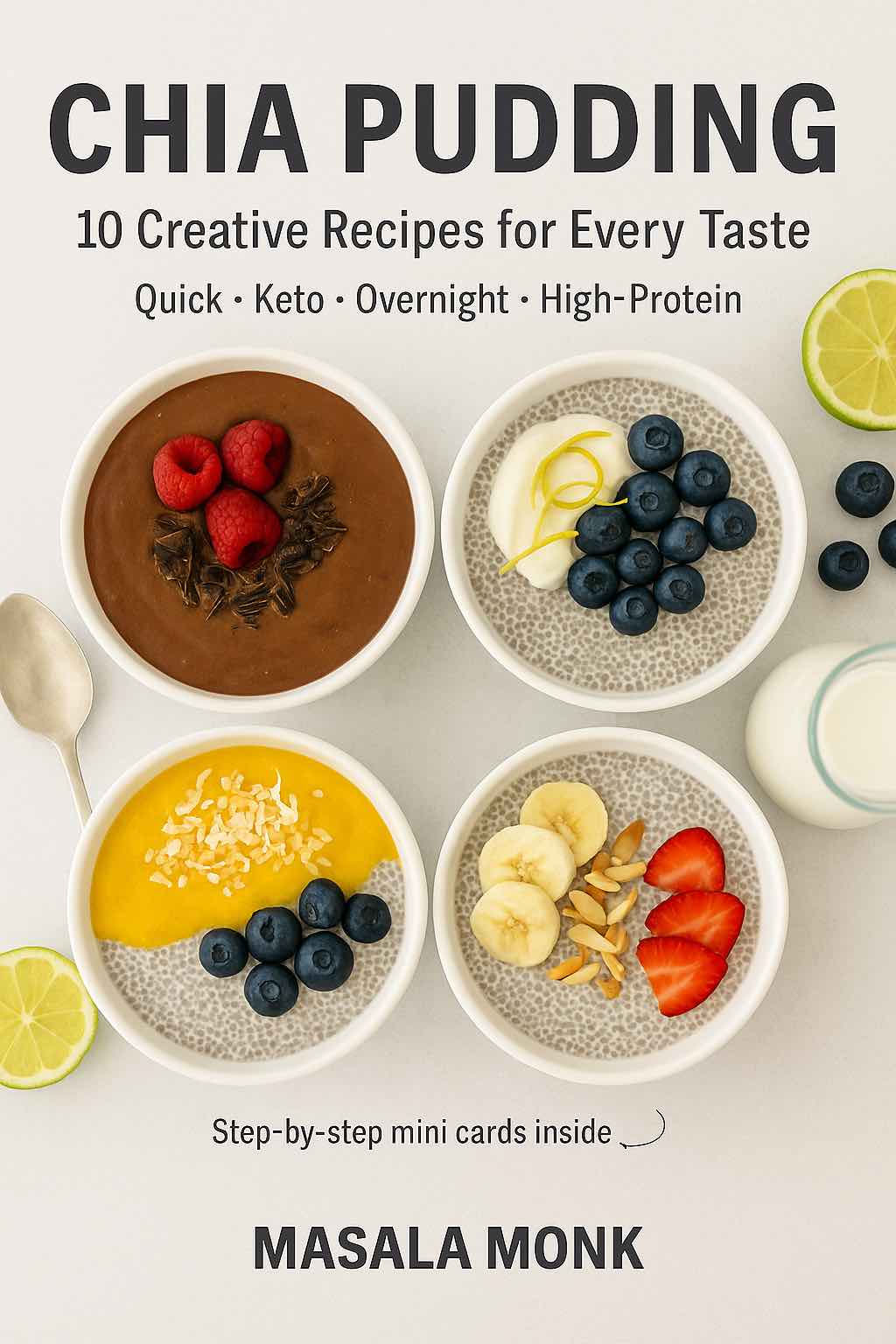
Food blog cover showing four different chia pudding recipes in jars.

The best chia pudding recipes look almost too easy: stir chia seeds into milk, chill, and eat. What makes the difference is the chia-to-liquid ratio — and knowing how to fix the pudding when it turns out too thin, too thick, or clumpy.

This guide gives you a dependable base recipe first, then 10 chia pudding recipes ranging from overnight and almond-milk versions to Greek yogurt, chocolate, mango, matcha, cheesecake, and coconut cream. You’ll also find a flavor chooser, storage guidance, and a troubleshooting table so you can adjust the pudding instead of starting over.

Quick answer: for a thick, spoonable chia pudding, start with ¼ cup chia seeds to 1 cup liquid. Stir once when you mix it, stir again after 5–10 minutes, then chill for at least 2 hours. If you prefer a slightly softer pudding, start with 3 tablespoons chia per cup and adjust after chilling.

In this guide


Basic Chia Pudding Recipe: The 2-Ingredient Base

Every flavor below starts with the same idea: chia seeds need enough liquid and enough time to hydrate. This version makes one generous breakfast serving or two smaller snack portions.

Prep time5 minutes
Chill time2 hours minimum; overnight works well
Cook timeNone
Yield1 large or 2 small servings
Starting ratio¼ cup chia seeds : 1 cup liquid

Ingredients

  • ¼ cup chia seeds
  • 1 cup milk or other liquid: dairy milk, almond milk, soy milk, oat milk, coconut milk beverage, or another option you enjoy

Method

  1. Add the chia seeds and liquid to a bowl or jar and stir thoroughly, scraping the bottom so no dry seeds remain.
  2. Let the mixture stand for 5–10 minutes, then stir again. This second stir is the simplest way to prevent dense chia clumps.
  3. Cover and refrigerate for at least 2 hours. For a make-ahead breakfast, leave it overnight.
  4. Stir before serving. If it is thicker than you like, loosen it with a splash of milk; if it is still thin, use the troubleshooting guide below.

Vanilla, cinnamon, cocoa, fruit puree, nut butter, honey, maple syrup, jaggery, or another sweetener can all be added after you have the base texture right.


Which Chia Pudding Should You Make?

If you do not want to scroll through ten recipes before deciding, start here. Pick by texture, flavor, or what you already have in the fridge.

RecipeFlavor / textureBest for
Overnight chia puddingClassic, creamyEasy meal prep
Almond milk chia puddingLight, nuttyVegan / dairy-free
Greek yogurt chia puddingThick, tangyHigher-protein breakfast
Blueberry lemonBright, fruityFresh summer flavor
Chocolate chia puddingRich, cocoa-forwardDessert-style breakfast or snack
Mango chia puddingTropical, fruityMango season
Banana bread chia puddingCozy, cinnamon-bananaNaturally sweeter flavor
Matcha chia puddingEarthy, lightly bitterMatcha lovers
Cheesecake chia puddingRich, tangyBrunch or dessert
Coconut cream chia puddingVery thick, richDairy-free dessert

10 Chia Pudding Recipes to Try

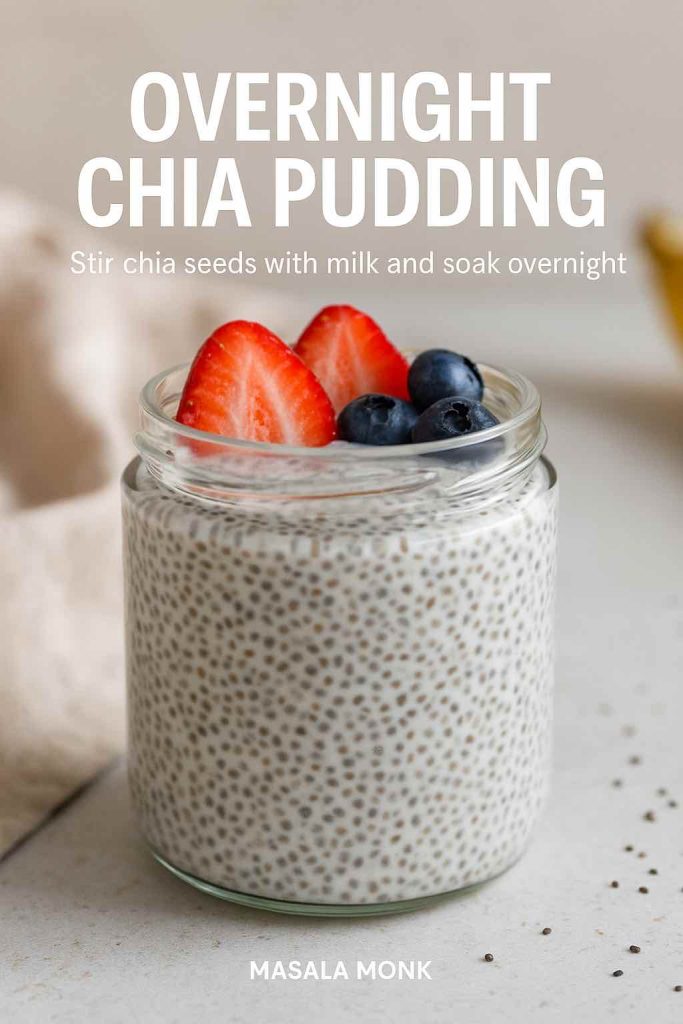
1. Overnight Chia Pudding Recipe

If mornings are always rushed, this overnight chia pudding recipe is a lifesaver. With just 5 minutes of prep the night before, you can wake up to a ready-made, creamy, and satisfying breakfast. The chia seeds absorb the liquid overnight, creating a pudding-like texture without any effort.

Ingredients:

  • ¼ cup chia seeds
  • 1 cup almond milk (or coconut milk for richness)
  • 1 tsp vanilla extract
  • 1–2 tsp honey, maple syrup, or stevia (optional)

Instructions:

  1. Combine chia seeds, almond milk, vanilla, and sweetener in a jar.
  2. Stir well, wait 5 minutes, then stir again to prevent clumping.
  3. Cover and refrigerate overnight.
  4. Stir before serving and add toppings of choice.
Overnight chia pudding recipe card with a jar topped with strawberries and blueberries.
The second stir after 5–10 minutes is what keeps this overnight chia pudding evenly set instead of clumping at the bottom.

Topping Ideas:

  • Fresh berries (blueberries, raspberries, strawberries)
  • Sliced banana
  • Granola or toasted nuts for crunch
  • A sprinkle of cinnamon or cocoa powder

Variations:

  • Make it keto-friendly by using unsweetened almond milk + stevia.
  • Blend the mixture before chilling for a smooth, mousse-like pudding.
  • Stir in cocoa powder for a chocolate overnight chia pudding.

If you like breakfasts you can prep the night before, compare this with our overnight oats recipe, which has its own ratio, storage, and texture-fix guide.


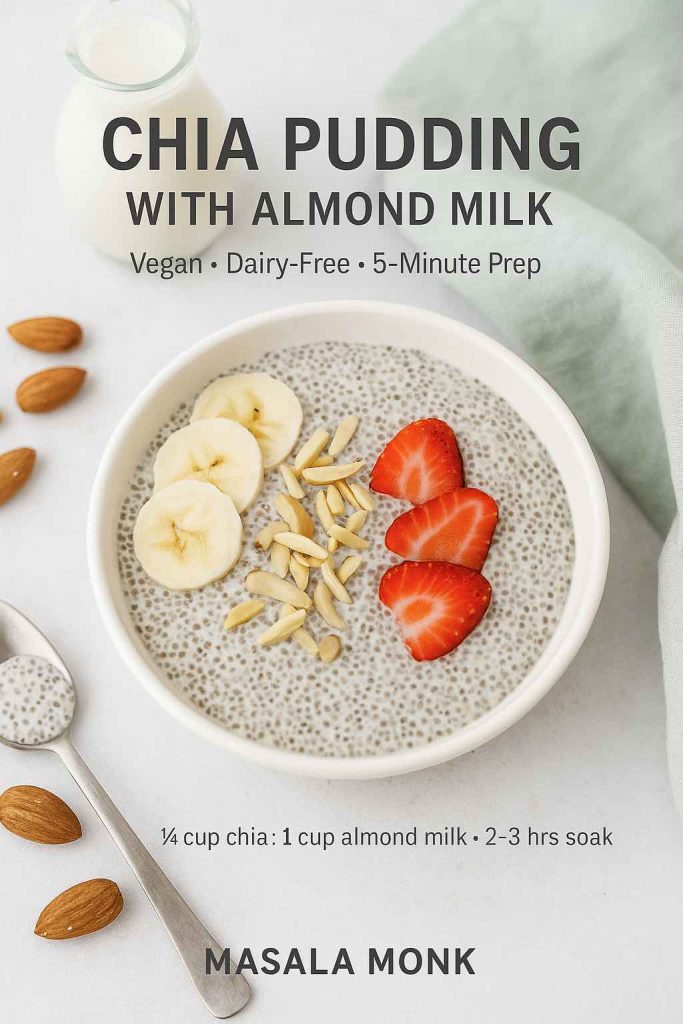
2. Chia Pudding with Almond Milk (Vegan-Friendly)

This chia pudding with almond milk is light, dairy-free, and endlessly versatile. Almond milk gives a subtle nutty flavor and pairs beautifully with fruit or nut butter. It’s the base recipe many vegans swear by.

Ingredients:

  • ¼ cup chia seeds
  • 1 cup unsweetened almond milk
  • 1 tbsp almond butter (optional, for richness)
  • 1 tsp vanilla extract
  • 1–2 tsp maple syrup or agave

Instructions:

  1. Mix chia seeds, almond milk, vanilla, and sweetener in a jar.
  2. Stir well and refrigerate for at least 2 hours (overnight preferred).
  3. Stir again before serving.
  4. Add toppings for extra texture.
Almond milk chia pudding recipe card with banana, strawberries, and slivered almonds.
Almond milk keeps the base light; banana, strawberries, and almonds add sweetness and crunch at serving time.

Topping Ideas:

  • Sliced bananas + almond butter drizzle
  • Fresh strawberries or blueberries
  • Chopped almonds or walnuts
  • Dark chocolate shavings

Variations:

  • Add cocoa powder for a chocolate almond chia pudding.
  • Blend in a handful of frozen berries for a fruity version.
  • Use flavored almond milk (like vanilla) for a natural twist.

Using almond milk often? You can also make almond milk at home and control the sweetness and thickness yourself.


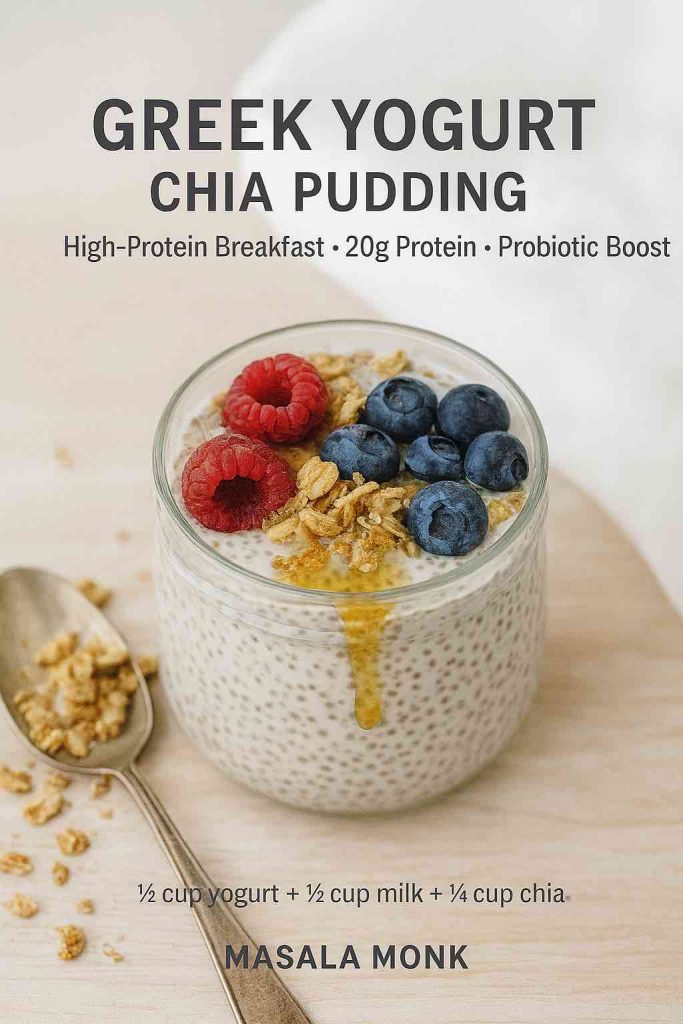
3. Greek Yogurt Chia Pudding (High-Protein)

This Greek yogurt chia pudding recipe is creamy, tangy, and higher in protein than a milk-only version. With ¼ cup chia seeds plus ½ cup Greek yogurt, many combinations land around the 20 g protein range shown in the image, though the exact amount depends on the yogurt and milk you use. Greek yogurt also makes the pudding noticeably thicker; products with live cultures can provide probiotics too.

Ingredients:

  • ¼ cup chia seeds
  • ½ cup almond or dairy milk
  • 1 tbsp honey or stevia
  • ½ cup Greek yogurt
  • ½ tsp vanilla extract

Instructions:

  1. Mix chia seeds, milk, Greek yogurt, vanilla, and sweetener in a bowl.
  2. Stir well until combined.
  3. Refrigerate for at least 2 hours or overnight.
  4. Stir again and add toppings before serving.
Greek yogurt chia pudding recipe card with berries, granola, and honey drizzle.
Greek yogurt makes the base thicker and raises the protein; the exact protein amount depends on the yogurt and milk you choose.

Topping Ideas:

  • Granola or muesli
  • Fresh berries
  • Walnuts or pecans
  • A drizzle of nut butter

Variations:

  • Add a scoop of protein powder for an extra high-protein chia pudding.
  • Use flavored Greek yogurt for a fun twist.
  • Add a spoonful of fruit compote for tangy sweetness.

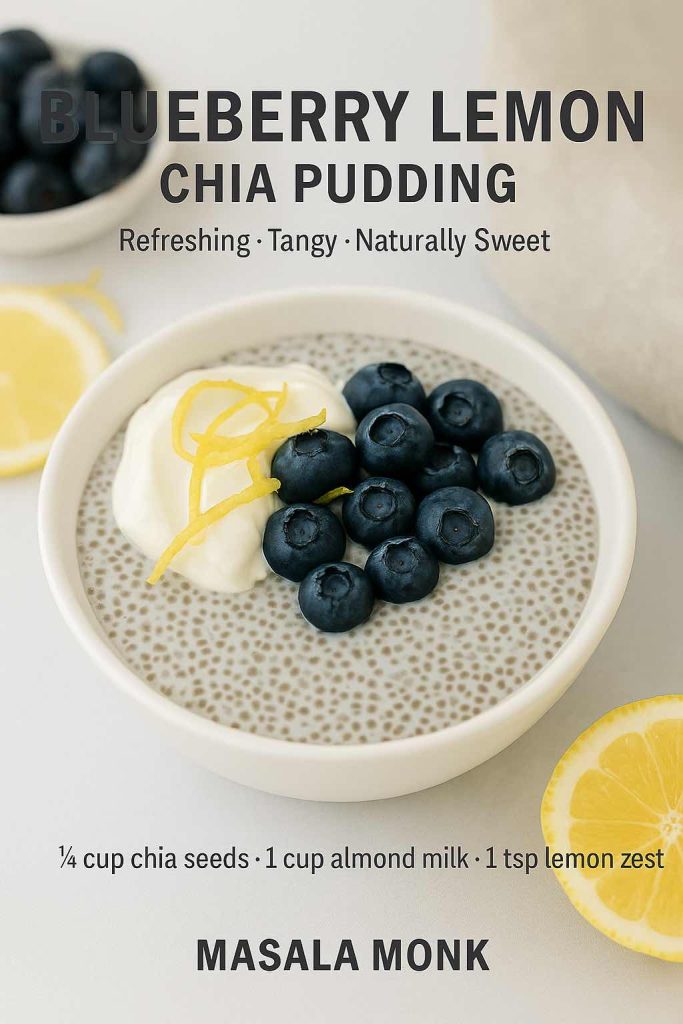
4. Blueberry Lemon Chia Pudding

This blueberry chia pudding gets its bright flavor from lemon zest and fresh or blended blueberries. The fruit can be layered over the set pudding or blended into the milk for a purple base, while a spoonful of yogurt adds a cheesecake-like tang.

Ingredients:

  • ¼ cup chia seeds
  • 1 cup almond milk
  • 1 tsp lemon zest
  • ½ cup fresh or blended blueberries
  • 1 tbsp honey or maple syrup

Instructions:

  1. Mix chia seeds, almond milk, lemon zest, and sweetener in a jar.
  2. Refrigerate for 2 hours or overnight.
  3. Layer pudding with blueberries before serving.
Blueberry lemon chia pudding recipe card with lemon zest, yogurt, and fresh blueberries.
The yogurt shown here is an optional topping; lemon zest goes into the chia base, while blueberries can be layered or spooned on top.

Topping Ideas:

  • Lemon zest curls
  • Blueberry compote
  • A dollop of Greek yogurt
  • Crushed graham crackers (for cheesecake vibes)

Variations:

  • Blend blueberries into the almond milk for a vibrant purple pudding.
  • Use kefir instead of almond milk for a probiotic-rich version.
  • Add vanilla protein powder for extra nutrition.

Blueberries work especially well here; if you use them often, our guide to the health benefits of blueberries goes deeper into the fruit itself.


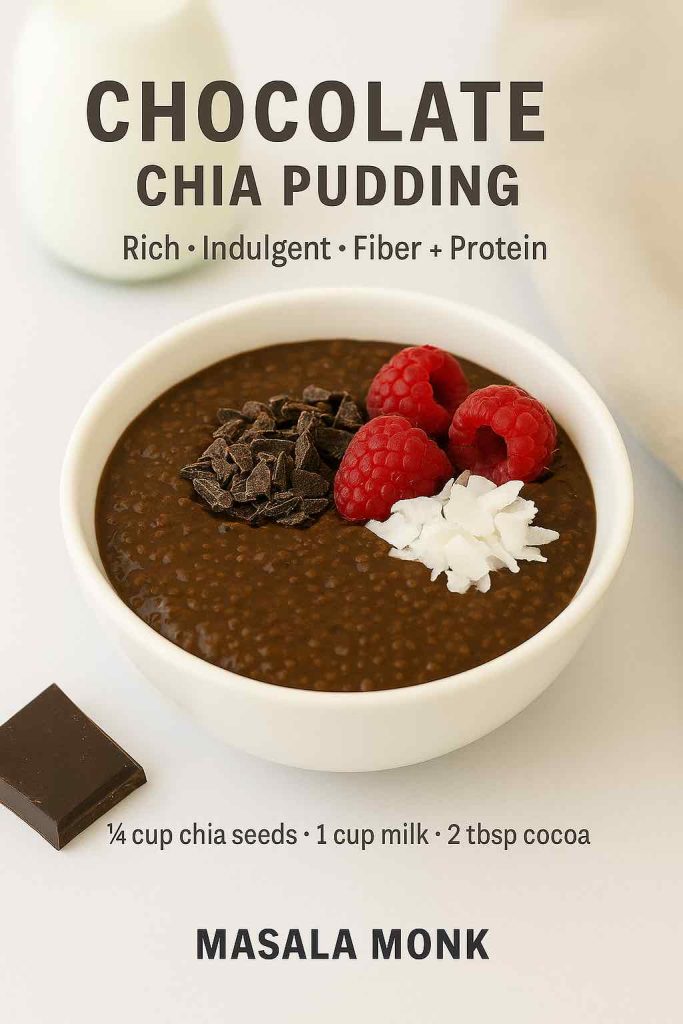
5. Chocolate Chia Pudding

This chocolate chia pudding recipe turns the basic chia base into something richer and more dessert-like. The important step is whisking the cocoa into the milk before the chia goes in; that prevents dry cocoa pockets and gives the pudding a more even chocolate flavor.

Ingredients:

  • ¼ cup chia seeds
  • 1 cup milk (almond, coconut, or dairy)
  • 2 tbsp cocoa powder or cacao
  • 1–2 tbsp maple syrup, honey, or stevia
  • ½ tsp vanilla extract

Instructions:

  1. Whisk cocoa into the milk until smooth.
  2. Stir in chia seeds, vanilla, and sweetener.
  3. Refrigerate at least 2 hours or overnight.
  4. Stir well before serving.
Chocolate chia pudding recipe card with raspberries, coconut, and chocolate pieces.
Whisk cocoa into the milk before adding chia to avoid dry cocoa pockets; raspberries, coconut, and chocolate add contrast on top.

Topping Ideas:

  • Dark chocolate shavings
  • Fresh raspberries or strawberries
  • Coconut flakes
  • Peanut butter drizzle

Variations:

  • Add chocolate protein powder for a higher-protein chocolate chia pudding.
  • Use coconut cream instead of milk for a mousse-like texture.
  • Add espresso powder for a mocha chia pudding.

Want another chocolatey make-ahead idea? Our keto hot chocolate guide also shows how a cocoa mix can be repurposed into a chia pudding cup.


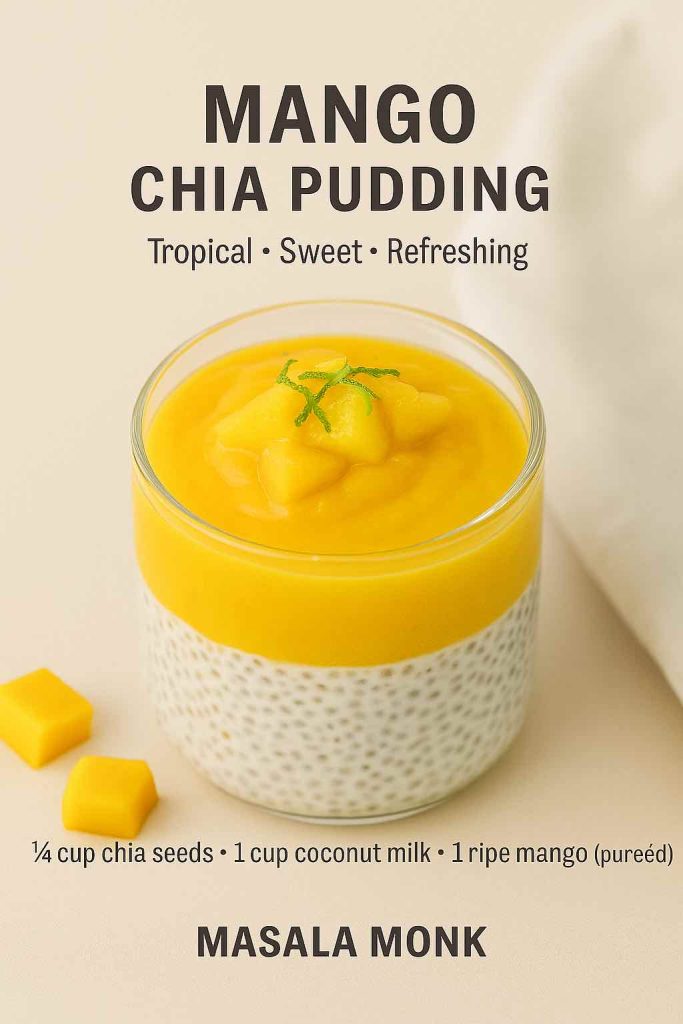
6. Mango Chia Pudding

This mango chia pudding recipe brings tropical vibes to your table. Sweet mango puree layered with creamy chia pudding makes a dessert-like breakfast that’s both refreshing and filling.

Ingredients:

  • ¼ cup chia seeds
  • 1 cup coconut milk
  • 1 ripe mango (pureed)
  • 1 tsp lime juice (optional, for tang)

Instructions:

  1. Mix chia seeds and coconut milk, then refrigerate overnight.
  2. Puree mango and layer it over the chia pudding.
  3. Garnish with extra mango or lime zest.
Glass of chia pudding layered with coconut milk and topped with mango purée and lime zest.
Set the coconut chia base first, then add the mango purée so the two layers stay distinct.

Topping Ideas:

  • Fresh mango chunks
  • Shredded coconut
  • Pistachios
  • A squeeze of lime juice

Variations:

  • Blend mango puree into the base for a smooth, golden pudding.
  • Mix with passionfruit for a tropical combo.
  • Use dairy milk + yogurt for a creamy mango lassi-style pudding.

If mango is the flavor you came for, go next to 5 creative mango chia pudding ideas for more tropical combinations.


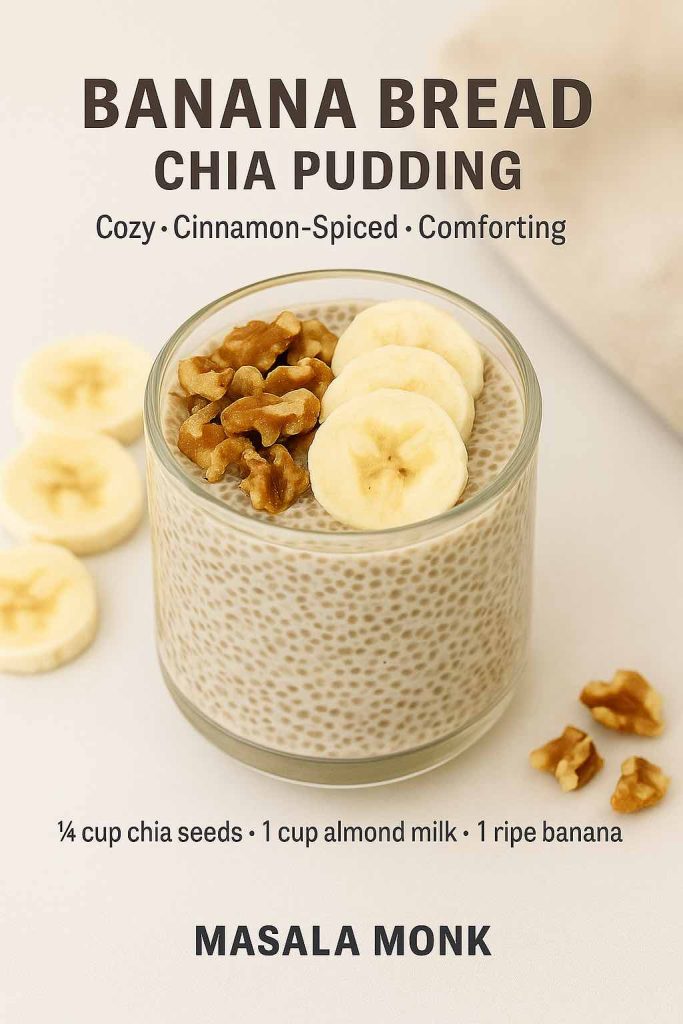
7. Banana Bread Chia Pudding

Think of this banana chia pudding as banana bread flavors in a jar. Mashed banana, cinnamon, and vanilla go into the base, while walnuts and fresh banana on top add the contrast that makes the flavor feel more complete — with no baking required.

Ingredients:

  • ¼ cup chia seeds
  • 1 cup almond or dairy milk
  • 1 ripe banana (mashed)
  • ½ tsp cinnamon
  • ½ tsp vanilla extract
  • 2 tbsp chopped walnuts (optional)
Glass jar of chia pudding with bananas and walnuts on top, inspired by banana bread flavors.
Mashed banana and cinnamon flavor the base; fresh banana slices and walnuts are best added just before serving.

Instructions:

  1. Mash banana and whisk with milk, cinnamon, and vanilla.
  2. Stir in chia seeds.
  3. Refrigerate overnight.
  4. Add walnuts and extra banana slices before serving.

Topping Ideas:

  • Chopped walnuts or pecans
  • Raisins or dates
  • Banana slices
  • A dusting of cinnamon

Variations:

  • Add cocoa powder for a chocolate banana version.
  • Use Greek yogurt instead of milk for extra protein.
  • Stir in nut butter for a richer flavor.

For more banana-and-chia combinations, see these banana pudding breakfast twists.


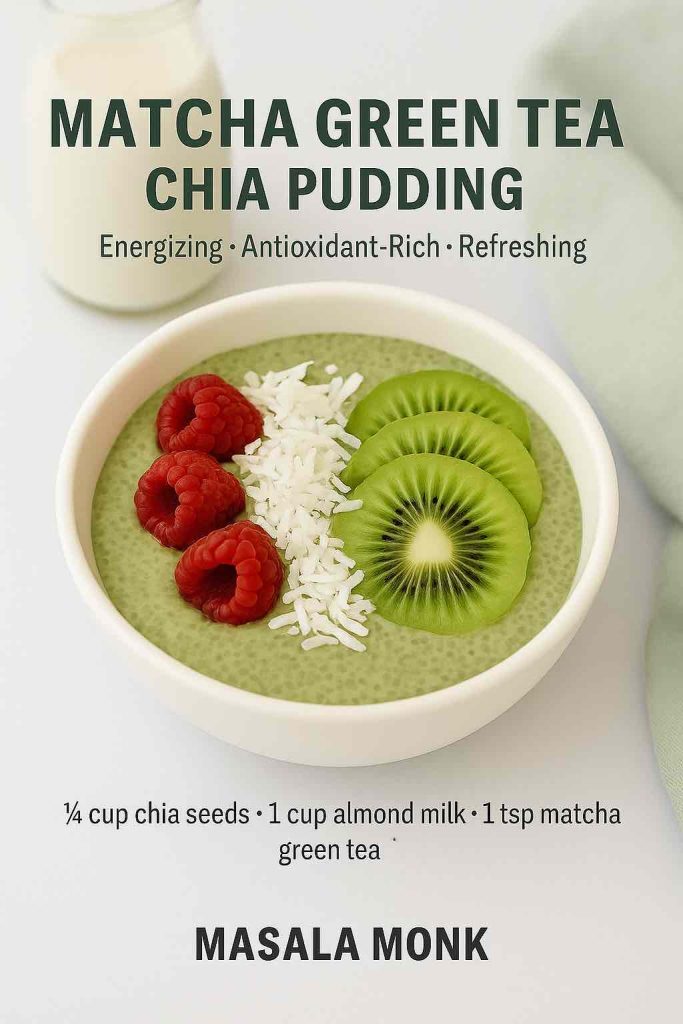
8. Matcha Green Tea Chia Pudding

This matcha chia pudding recipe has the earthy, slightly bitter flavor and green color of matcha. Whisking the powder into the milk first keeps it smooth, and because matcha contains caffeine, this version makes more sense earlier in the day if you are sensitive to it.

Ingredients:

  • ¼ cup chia seeds
  • 1 cup warm almond milk
  • 1 tsp matcha green tea powder
  • 1 tsp honey, maple syrup, or stevia
Bowl of green matcha chia pudding with sliced kiwi, raspberries, and shredded coconut.
Whisk matcha into the milk before adding chia so the powder disperses smoothly without green clumps.

Instructions:

  1. Whisk matcha into warm almond milk until no lumps remain.
  2. Stir in chia seeds and sweetener.
  3. Refrigerate overnight.
  4. Stir before serving and add toppings.

Topping Ideas:

  • Fresh raspberries
  • Shredded coconut
  • Sliced kiwi
  • Granola clusters

Variations:

  • Blend banana into the base for natural sweetness.
  • Add vanilla protein powder for a high-protein matcha pudding.
  • Use coconut milk for a creamier, dessert-like version.

If you prefer a smoother texture, this matcha version also works well blended after it has set; the same technique is covered in the troubleshooting guide below.


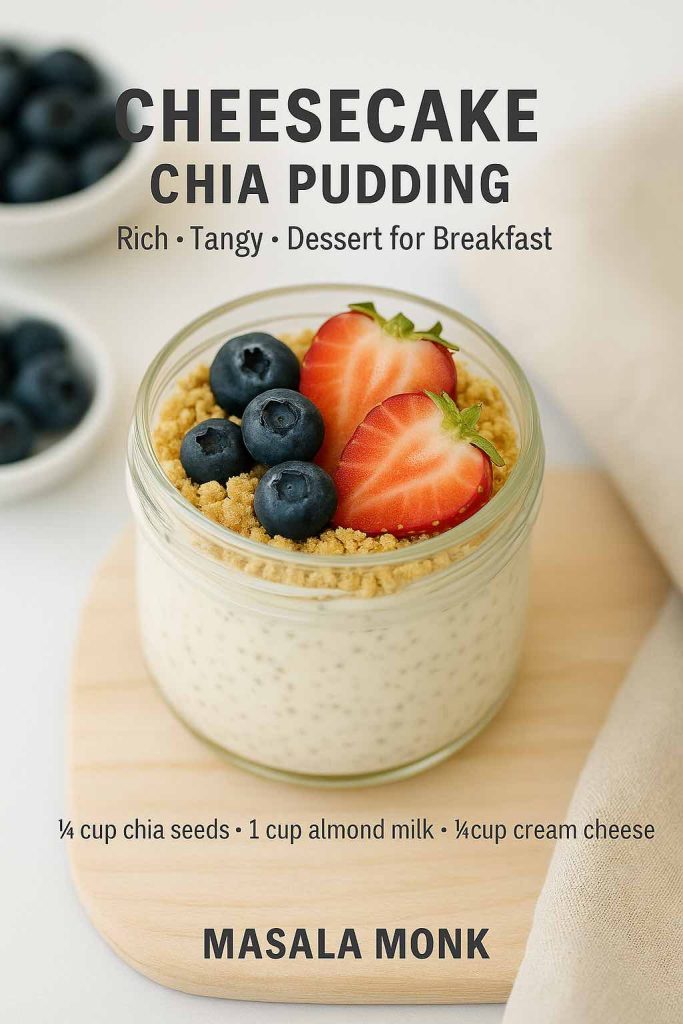
9. Cheesecake Chia Pudding

Yes, you can have cheesecake for breakfast — with this cheesecake chia pudding recipe. Cream cheese (or Greek yogurt for a lighter version) makes the base rich and tangy, while crushed biscuits and berries give it that dessert feel.

Ingredients:

  • ¼ cup chia seeds
  • 1 cup almond or dairy milk
  • 1 tbsp honey or maple syrup
  • ¼ cup cream cheese (or Greek yogurt)
  • ½ tsp vanilla extract
  • 2 tbsp crushed biscuits or granola (for topping)
  • Fresh berries

Instructions:

  1. Blend milk, cream cheese, honey, and vanilla until smooth.
  2. Stir in chia seeds.
  3. Refrigerate overnight.
  4. Top with crushed biscuits and fresh berries.
Jar of cheesecake-style chia pudding with cream cheese base, graham cracker topping, strawberries, and blueberries.
Cream cheese gives the base its tang; graham crumbs and berries are added after chilling so the topping keeps its texture.

Topping Ideas:

  • Strawberries or blueberries
  • Graham cracker crumbs
  • Lemon zest
  • Berry coulis

Variations:

  • Use flavored yogurt for different cheesecake vibes.
  • Add cocoa powder for a chocolate cheesecake chia pudding.
  • Stir in lemon juice for a tangy New York-style cheesecake twist.

Love the berry-cheesecake direction? You may also like our no-bake blueberry cheesecake.


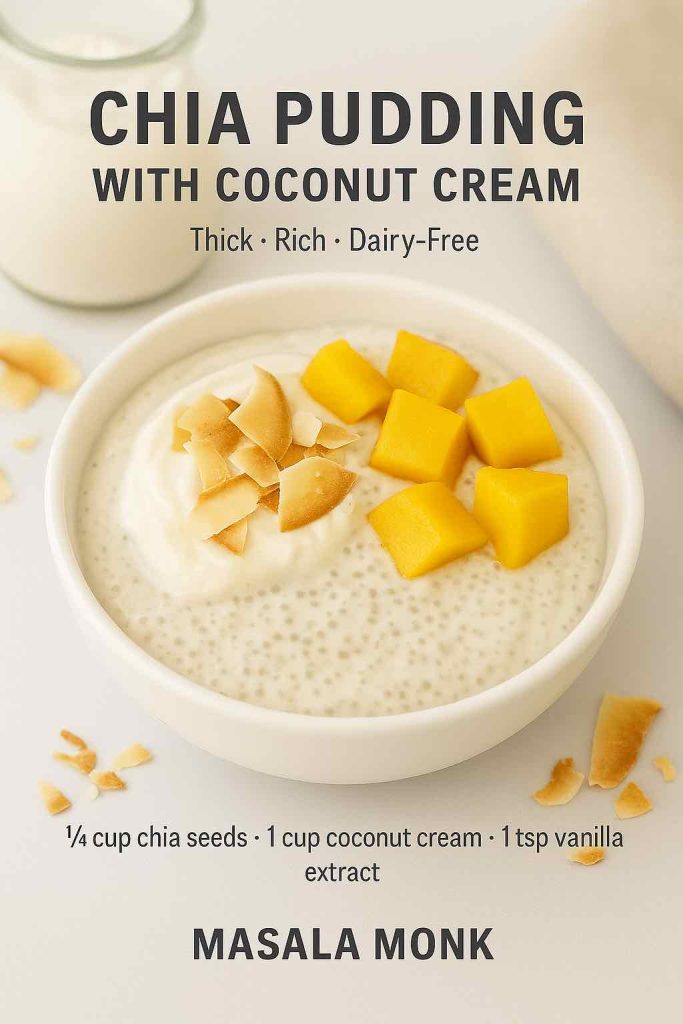
10. Chia Pudding with Coconut Cream

This chia pudding with coconut cream is thick, rich, and incredibly indulgent — almost like a mousse. It’s naturally dairy-free but tastes luxurious enough for dessert.

Ingredients:

  • ¼ cup chia seeds
  • 1 cup coconut cream
  • 1 tbsp honey, maple syrup, or stevia
  • 1 tsp vanilla extract

Texture note: coconut cream varies a lot by brand. If yours is spoon-thick straight from the container, whisk in a little coconut milk or another milk before adding the chia rather than waiting until the pudding becomes nearly solid.

Instructions:

  1. Mix coconut cream, chia seeds, vanilla, and sweetener.
  2. Stir well, let sit for 5 minutes, then stir again.
  3. Refrigerate overnight until thick.
  4. Garnish before serving.
Bowl of chia pudding with coconut cream, mango chunks, and toasted coconut flakes.
Coconut cream makes the richest, firmest pudding in the set; thin it with a little milk if your brand sets too densely.

Topping Ideas:

  • Toasted coconut flakes
  • Mango chunks
  • Dark chocolate drizzle
  • Crushed nuts

Variations:

  • Blend in cocoa for a chocolate coconut chia pudding.
  • Add pineapple for a pina colada-inspired pudding.
  • Use spiced jaggery syrup for an Indian twist.

For another tropical direction, try our pineapple chia pudding.


Chia Pudding Ratio, Texture & Troubleshooting

Most chia pudding problems are fixable. The important variables are the amount of chia, the thickness of your liquid, how well you stirred, and how long the mixture has had to hydrate.

Common Chia Pudding Problems and Fixes

ProblemLikely causeWhat to do
Too runnyNot enough chia, very thin liquid, or too little chill timeStir first. If it is still loose, add 1 teaspoon chia, wait 15–30 minutes, and check again. Next time, use slightly more chia or less liquid.
Too thickToo much chia or a thick base such as yogurt or coconut creamStir in milk 1 tablespoon at a time. Next time, reduce the chia or start with more liquid.
ClumpyThe seeds gelled together before they were evenly dispersedBreak up the clumps with a spoon or whisk and add a splash of milk if needed. Stir again 5–10 minutes after mixing next time.
Seeds still crunchyThe chia needs more hydration timeRefrigerate longer and check again. Two hours is a useful minimum; overnight is easier when you are meal-prepping.
Cocoa or matcha has lumpsDry powder was added directly to the chia mixtureWhisk or blend briefly now. Next time, whisk cocoa or matcha into the milk before adding chia.
Too dense with yogurtBoth yogurt and chia are thickening the mixtureLoosen it with milk. Half yogurt and half milk is a useful starting point.
Coconut cream version is almost solidCoconut cream is much thicker than a coconut milk beverageThin with coconut milk or another milk. Use coconut cream when you want a dessert-style result; use coconut milk beverage for a lighter pudding.
You dislike the seed textureThe pudding is set correctly, but you do not enjoy the tapioca-like textureBlend the chilled pudding until smooth and treat it as a chia mousse instead.

Adjust the Ratio to Your Ingredients

The ratio is a starting point, not a law. Different milks, yogurt, fruit puree, cocoa, protein powder, and coconut cream all change how thick the final pudding feels, so make small adjustments rather than doubling ingredients at once.


Milk, Protein & Dietary Swaps

BaseWhat it doesUseful for
Unsweetened almond milkLight, neutral, relatively thinEveryday dairy-free pudding
Soy milkCreamier than many nut milks and naturally contains more proteinVegan higher-protein base
Dairy milkClassic creamy textureGeneral-purpose pudding
Oat milkSoft, naturally sweeter-tastingFruit and cinnamon flavors
Coconut milk beverageLight tropical flavorMango, pineapple, chocolate
Canned coconut milk / coconut creamMuch richer and thickerDessert-style pudding
Greek yogurt + milkThickens the pudding and adds more proteinMore substantial breakfast

Vegan: use a plant milk and a plant-based sweetener such as maple syrup if you want one. For more protein: Greek yogurt, soy milk, or protein powder can help; because protein powder thickens as it sits, keep extra milk handy. Keeping it keto: choose unsweetened low-carb milk and sweetener, then watch fruit, granola, and other toppings; our dedicated keto chia pudding with almond milk goes deeper into that version.


How to Store Chia Pudding for Meal Prep

Meal prep is easiest when you portion the pudding into sealed jars or containers and refrigerate it. A plain chia base generally keeps well for about 4–5 days; fruit, yogurt, and other add-ins can affect the best storage window, so use your judgment and follow the storage guidance for those ingredients too.

  • Keep crunch separate: granola, toasted nuts, coconut chips, and similar toppings are better added right before eating.
  • Add delicate fruit later: fresh banana and very juicy fruit can soften or release liquid if they sit for several days.
  • Expect thickening: chia pudding often gets thicker as it sits. Stir in a splash of milk before eating if needed.
  • Freeze individual portions: a plain chia pudding can be frozen for about 1 month in an airtight container. Thaw it overnight in the refrigerator, stir well, and add fresh fruit or crunchy toppings after thawing; the texture may be slightly softer.
  • Batch in one bowl: when making several servings, mix the base in a large bowl first, do the second stir there, and then divide it into jars for more even texture.

If make-ahead breakfasts are a regular part of your week, the same topping-timing idea appears in our overnight oats storage and texture guide: soft mix-ins can go in early, while crunch usually belongs at serving time.


Chia Seed Nutrition: Useful Food, Not a Magic Ingredient

Nutritionally, chia seeds are dense for their size, but it is worth separating that from the bigger claims often made about “superfoods.” Harvard’s Nutrition Source notes that 2 tablespoons (about 28 g) of chia seeds provide roughly 140 calories, 4 g protein, 11 g fiber, unsaturated fat, calcium, and other minerals. They are also a plant source of the omega-3 fat ALA.

The practical reason chia works so well in pudding is its fiber and mucilage: when the seeds meet liquid, they form a gel that creates the familiar spoonable texture. That fiber can contribute to fullness as part of a meal, but chia by itself should not be treated as a weight-loss, blood-sugar, or heart-health treatment. Harvard’s review notes that controlled human studies have produced mixed results, while a 2024 systematic review of randomized trials found some modest changes in selected metabolic markers rather than a universal effect.

In other words: enjoy chia pudding because it is convenient, fiber-rich, flexible, and easy to build into a balanced breakfast or snack—not because one ingredient needs to carry the entire health story. If you are specifically interested in glucose, our separate guide looks at chia seeds and blood sugar in more detail.


Frequently Asked Questions About Chia Pudding

What is the best chia pudding ratio?

For a thick, spoonable pudding, start with ¼ cup chia seeds to 1 cup liquid. If you prefer a softer result, try 3 tablespoons per cup. The thickness of your milk and any yogurt, fruit puree, cocoa, or protein powder will also affect the final texture.

How long does chia pudding need to set?

Give it at least 2 hours in the refrigerator. Overnight is convenient and gives the seeds plenty of time to hydrate. Stirring again after the first 5–10 minutes helps the pudding set more evenly.

Why is my chia pudding still runny?

First stir it again—sometimes the seeds have settled instead of thickening evenly. If it is still thin after enough chill time, add about 1 teaspoon chia, mix well, and let it sit another 15–30 minutes. Very thin plant milks and watery fruit can also loosen the pudding.

Can you make chia pudding with yogurt?

Yes. Greek yogurt makes chia pudding thicker and usually raises the protein compared with a milk-only version. A simple starting point is half yogurt and half milk, then adjust with more milk if the mixture becomes too dense.

Can you add protein powder to chia pudding?

Yes. Whisk the protein powder into the milk before adding chia so it disperses more evenly. Because many powders thicken as they hydrate, check the pudding after chilling and add extra milk if it becomes stiff.

Is chia pudding keto-friendly?

It can be. Use an unsweetened low-carb milk, choose an appropriate sweetener if you want one, and be mindful of fruit, granola, and other toppings. For exact low-carb combinations, use the dedicated keto chia pudding recipe.

How long does chia pudding last in the fridge?

A plain chia pudding base generally keeps well for about 4–5 days in a sealed refrigerator container. Add crunchy toppings at serving time, and remember that fresh fruit, yogurt, or other perishable add-ins can change the practical storage window.

Can you freeze chia pudding?

Yes. Freeze plain chia pudding in individual airtight portions for about 1 month, then thaw it overnight in the refrigerator and stir before serving. Fruit, yogurt, and richer coconut versions can change texture more noticeably after freezing, so add fresh toppings after thawing.

Can you blend chia pudding?

Absolutely. Chill it until the seeds have hydrated, then blend until smooth. This turns the tapioca-like seed texture into something closer to a mousse and works particularly well with chocolate, banana, mango, and nut butter.

What is the best milk for chia pudding?

There is no single healthiest or best milk for everyone. Almond milk gives a lighter pudding, dairy or soy milk can add more protein, oat milk tastes naturally sweeter, and coconut milk makes tropical flavors richer. Choose based on texture, flavor, dietary needs, and the nutrition of the specific product you use.

Is chia pudding good for weight loss?

Chia pudding can fit into a weight-management eating pattern because chia contributes fiber and the recipe can be portioned easily, but it is not automatically low-calorie and chia seeds are not a weight-loss treatment. Milk, coconut cream, sweeteners, nut butter, granola, chocolate, and other toppings can change the energy content substantially.


The Takeaway

Start with the ratio, stir twice, and give the chia enough time to hydrate. Once the base is right, the rest is mostly preference: almond milk for something lighter, yogurt for more body, cocoa for dessert energy, mango or berries for fruit, or a quick blend when you want the texture completely smooth.

The ten recipes above are meant to be starting points rather than ten separate rules. Pick the version that sounds good, use the troubleshooting table if the texture needs adjusting, and change the toppings when you want the same basic jar to feel new again.

Posted on — 4 Comments

Pineapple Chia Pudding Recipe: Creamy & Spoonable Every Time

Pineapple chia pudding in a clear glass, topped with juicy pineapple, lime zest and pistachio, with a spoon lifting a soft chia-filled bite.

This post was last updated on:

Pineapple chia pudding should be cold, creamy and bright with fruit. It should not have milk floating above a chia slab or be so thick you can stand a spoon in it.

Juicy pineapple, fresh lime and just enough vanilla make it taste like something you would actually look forward to finding in the fridge. Mixing it takes minutes. Getting that soft, spoonable texture is where most jars go sideways.

This pineapple chia seed pudding uses a slightly firmer base so there is room for the fruit’s moisture. Give it a second stir before it goes into the fridge, and by morning the work is done: stir, add cold pineapple and eat.

Quick Answer

For one breakfast jar, use 3 tablespoons / about 35 g chia seeds + ¾ cup / 180 ml / 6 fl oz milk + ½ cup / about 80 g pineapple, divided. Stir well, wait 5–10 minutes, stir again, fold in about half the fruit, then chill for at least 2 hours. Four hours or overnight gives the most dependable texture; save the remaining pineapple for serving.

It is ready when the chia holds softly on a spoon and there is no loose milk pooling around it.

Pineapple Chia Pudding Recipe

Start with plenty of pineapple, a creamy but not heavy base, and enough lime and vanilla to keep the fruit tasting fresh and lively.

  • Makes: 1 breakfast jar or 2 small snack portions
  • Prep: about 5 minutes
  • Second stir: after the brief initial rest
  • Minimum chill: about 2 hours
  • Best texture: about 4 hours to overnight
  • Cook time: none

A 16 oz / 475 ml jar leaves plenty of room to stir and add toppings. A 12 oz / 350 ml jar works if you mix in a bowl first.

Equipment: a bowl or wide jar, a whisk or spoon, measuring spoons and a lidded container. A small blender is optional for the smooth version.

Ingredients

  • Whole chia seeds: 3 tablespoons, about 35 g / 1.2 oz
  • Unsweetened almond or coconut drinking milk: ¾ cup / 180 ml / 6 fl oz; soy or dairy milk also works
  • Finely diced pineapple: ½ cup / about 80 g / 2.8 oz, divided
  • Vanilla extract: ½ teaspoon
  • Finely grated lime zest: ½ teaspoon
  • Fresh lime juice: ½–1 teaspoon / 2.5–5 ml
  • Fine salt: a small pinch
  • Sweetener: up to 1 teaspoon, if needed

Chia tablespoon weights vary slightly between brands and measuring styles, so the tablespoon measure is the main functional measurement here.

Store-bought unsweetened almond milk keeps things easy, but homemade almond milk works too. Homemade batches vary in richness, so you may need a little more or less milk at the end.

Using dairy milk? The recipe still works. When the jar will sit overnight, keep raw fresh or frozen pineapple separate and add it at serving; the reason is explained below.

Optional toppings: choose one or two so the pineapple still gets to be the point.

  • Toasted unsweetened coconut
  • Chopped pistachios
  • Plain Greek or plant-based yogurt
  • Granola
  • Extra lime zest or fresh mint
Measured chia seeds, three-quarter cup of milk and half a cup of pineapple divided into two portions, with lime, vanilla and salt.
The firmer base leaves room for pineapple’s juice. The goal is still a soft, spoonable pudding once the fruit is folded in.

Method

  1. Mix the base. Add the milk, vanilla, lime zest, lime juice, salt and any sweetener to a bowl or wide jar. With the whisk moving, sprinkle in the chia gradually and whisk for about 20–30 seconds. Scrape the bottom and corners so no dry pockets remain.
  2. Wait, then stir again. Leave it for 5–10 minutes, then scrape the bottom and sides and break apart any clusters. This is what prevents milk on top and a dense chia layer underneath.
  3. Add half the pineapple. Fold in about ¼ cup / 40 g well-drained diced pineapple. Very juicy fruit—and fruit going into jars for several days—is better kept separate until serving.
  4. Cover and chill. Refrigerate for at least 2 hours. Four hours gives a more dependable set; overnight is easiest. Still seeing the seeds settle—or making a large batch? Give it one more stir 30–60 minutes later. Most single jars will not need it.
  5. Check the texture. Give the pudding a good stir. The seeds should be evenly hydrated and the mixture should hold softly on a spoon without loose milk around it.
  6. Adjust only if needed. Too thick? Add milk 1 tablespoon / 15 ml at a time. Still clearly too thin after several hours? Add 1 teaspoon chia and wait another 15–30 minutes.
  7. Finish and eat. Add the remaining pineapple and any crunchy toppings. Taste it cold: if the pineapple seems muted, add a little extra lime zest; if the fruit is tart, add a touch more sweetener.

Why the Second Stir Matters

Four-step chia pudding process showing chia sprinkled into milk while whisking, then the mixture just mixed, rested for 5 to 10 minutes, and stirred again until evenly distributed.
The useful moment for the second stir is after hydration has started but before settling has fully taken hold. By then the seeds are tackier, so redistributing them now is more effective than trying to break up a compact layer later.

If your jar is already in the fridge, stop here—you have done everything you need. The rest is for choosing different pineapple or milk, making several breakfasts at once, or rescuing a jar that did not behave as expected.

Choose What You Need

The Chia-to-Liquid Ratio for Pineapple Pudding

Three tablespoons of chia per cup of liquid gives a softer pudding; four gives a noticeably firmer one. Pineapple adds its own moisture, so the main recipe starts toward the thicker end.

Chia seedsLiquidResult
3 tbsp1 cup / 240 mlSofter, looser pudding
4 tbsp1 cup / 240 mlFirmer, spoonable pudding
3 tbsp¾ cup / 180 mlThicker base with room for juicy fruit

A very ripe fresh pineapple can be surprisingly juicy, thawed fruit leaks water, and crushed pineapple carries more liquid than neat chunks. The main recipe’s 3 tablespoons chia to ¾ cup / 180 ml milk leaves room for that extra moisture.

More chia makes the pudding thicker. Yogurt or richer coconut milk makes it feel creamier. That distinction matters when you are chasing a lush café-style spoonful rather than simply trying to make the pudding stand up on the spoon.

The same basic method works with plenty of other flavors in our chia pudding guide.

What Should Properly Set Chia Pudding Look Like?

Whole-seed chia pudding is never quite as smooth as custard. Each seed develops a soft gel coating while the seed remains perceptible. The finished pudding lands somewhere between tiny tapioca and a soft seeded gel.

  • It should hold a soft mound on a spoon.
  • The seeds should look evenly hydrated.
  • There should be no pool of milk floating around it.
  • There should be no dense seed slab stuck underneath.
  • The overall texture should feel creamy rather than rubbery.

A little seed texture is normal. Dry, hard pockets are not.

Three glasses compare chia pudding textures: runny pudding dripping from a spoon, properly spoonable pudding holding a soft mound, and very thick pudding forming a dense stiff scoop.
After one good stir, watch what the spoon track does. A loose mixture flows closed, a ready pudding relaxes slowly around a soft scoop, and an over-thick jar leaves ridges that stay sharply defined.

Sometimes the pudding is exactly right and you still dislike the texture. That is allowed. Try the blended version. If that still does not appeal, there are plenty of good breakfasts in the world and no reason to force yourself into a chia habit.

Does your jar look different? Jump to Troubleshooting.

Fresh, Frozen or Canned Pineapple?

PineappleBest forWatch for
FreshBright flavor, topping, juicy piecesVariable juice
FrozenBlending into the baseThaw liquid
Canned in juiceEasy meal prepDrain well
CrushedFruit in every spoonfulExtra liquid
JuiceStronger pineapple flavorCounts as liquid

Fresh pineapple gives the brightest bite. For the sweetest jar, look for a clean sweet aroma at the base and a little give, then dice it fairly small.

Frozen pineapple is best when you want fruit through the base. Blend about ¼ cup / 40 g with the measured milk and keep the rest for serving. Drain thawed fruit before folding it into an already-set pudding.

Canned pineapple is easy for meal prep; choose fruit packed in juice and drain it well. Crushed pineapple spreads fruit through every spoonful but brings more liquid, so drain it or keep it as a separate layer.

Five pineapple forms labeled fresh, frozen, canned, crushed and juice, showing fresh pieces, frozen chunks, drained canned fruit, crushed pineapple in a strainer and pineapple juice.
A useful rule is to watch what escapes the fruit. If thawed, crushed or canned pineapple leaves noticeable liquid behind, drain it. Once that moisture starts pouring rather than clinging to the fruit, treat it as part of the liquid budget.

Pineapple Juice Changes the Ratio

Chia hydrates perfectly well in pineapple juice, but the juice has to come out of the liquid somewhere else. Add ¼ cup / 60 ml pineapple juice and reduce the milk by about the same amount.

Juice makes the pudding fruitier and sweeter; milk, coconut or yogurt supplies more of the creamy body. Diced fruit gives bite, purée makes a fruit layer, and fully blended pineapple behaves more like liquid. Once the fruit pours like juice, treat it like juice.

Using Yogurt? One Pineapple Quirk Matters

Fresh pineapple contains bromelain, an enzyme that breaks down milk proteins, and freezing raw pineapple does not reliably switch that enzyme off. Pineapple and yogurt are still perfectly normal foods to eat together. Odd bitterness or texture can show up when raw fresh or frozen pineapple sits in yogurt or skyr for hours.

For an overnight dairy-based jar, use canned or cooked pineapple, or add raw fresh or frozen fruit in the morning. With protein-rich soy yogurt, keeping raw pineapple separate until serving is a simple precaution when prepping well ahead.

Three pineapple and yogurt chia pudding examples: raw pineapple mixed in for eating soon, raw pineapple kept separate for overnight prep, and cooked or canned pineapple mixed into an overnight jar.
Keeping raw pineapple separate for an overnight yogurt jar has a sensory payoff too. Besides avoiding hours of enzyme contact, you preserve more of the fruit’s fresh aroma, brighter acidity and firmer bite for breakfast.

Using ordinary almond or coconut drinking milk and fresh pineapple? Follow the main recipe and move on.

Using yogurt for the base? Jump to the high-protein Greek yogurt version.

How to Make Pineapple Chia Pudding Creamier

Almond milk keeps the jar light, Greek yogurt makes it silkier, and coconut brings richness.

BaseResultBest move
Almond milkLight, cleanUse main ratio
Soy milkMore body, more proteinUse main ratio
Dairy milkRounder, creamierFresh pineapple at serving for overnight prep
Coconut drinkLight, tropicalUse main ratio
Canned coconut milkRich, denseDilute with lighter milk
Greek yogurt or skyrSilky, tangy, protein-richUse yogurt ratio below
Three close-up chia pudding textures compare a dense mixture with more chia, silky Greek yogurt chia pudding and glossy rich coconut chia pudding.
Look at the spoon tracks rather than the color. Extra chia creates tighter, more rigid grooves; Greek yogurt gives rounded silky folds; richer coconut shows more gloss and a fuller cold-set body.

Carton coconut drink, light canned coconut milk and full-fat canned coconut milk behave very differently once cold. Our guide to coconut milk types and nutrition goes deeper into those differences.

If you are happy with almond or coconut drinking milk and the main recipe, you do not need to change a thing. For a more café-style spoonful, Greek yogurt or skyr gives the base more body and a silkier feel. Let the pineapple do most of the flavor work, then add vanilla, lime and something crisp—perhaps toasted coconut, pistachios or a little granola.

Full-fat canned coconut milk can become surprisingly firm when it gets cold. A mixture that looked creamy at night may feel almost waxy by breakfast. Whisk a separated can smooth before measuring it, and combine rich canned coconut milk with a thinner drink rather than using it alone.

Pineapple Coconut Chia Pudding

Here the coconut softens pineapple’s sharper edges without burying the fruit.

Pineapple coconut chia pudding in a clear coupe with a pineapple layer, fresh pineapple, toasted coconut and lime zest.
The coconut blend is really a cold-texture decision. Lighter coconut drink provides most of the hydration. A smaller amount of canned coconut milk adds richness without letting chilled coconut fat dominate the finished pudding.
  • Chia seeds: 3 tbsp, about 35 g
  • Coconut drinking milk: ⅔ cup / 160 ml
  • Well-mixed canned coconut milk: ¼ cup / 60 ml
  • Pineapple: ½ cup / about 80 g, divided
  • Vanilla: ½ tsp
  • Lime zest: ½ tsp
  • Lime juice: ½–1 tsp
  • Salt: a pinch
  • Sweetener: only if needed

Use the same two-stir method as the main recipe. Fold about half the pineapple through and keep the rest for the top.

For a piña colada-style jar, pulse some of the pineapple into a thick purée. Layer it with the coconut chia so each spoonful gets a clearer hit of fruit.

That same pineapple-coconut-lime combination runs through our piña colada guide.

High-Protein Pineapple Chia Pudding with Greek Yogurt

Greek yogurt or skyr is the simplest way to add substantial protein while making the chia base silkier at the same time.

  • ½ cup plain Greek yogurt or skyr, about 120 g
  • ⅓ cup milk, about 80 ml
  • 2 tbsp chia seeds, about 24 g
  • ½ tsp vanilla
  • Lime zest to taste
  • Pinch of salt
  • Sweetener, if needed
  • ½ cup pineapple, about 80 g
Close-up of thick pineapple chia pudding made with Greek yogurt, with a spoon drawn through the creamy chia mixture and a piece of pineapple in the pudding.
The lower chia amount here is deliberate. Greek yogurt already supplies substantial body. Using 2 tablespoons instead of the master recipe’s 3 helps the high-protein pineapple chia pudding stay silky rather than crowded with seeds.

Whisk the yogurt, milk, vanilla, lime zest and salt first, then add the chia and follow the same two-stir method. Very thick Greek yogurt may need another tablespoon or two of milk so the chilled pudding stays silky rather than pasty.

For an overnight jar, heat-treated or canned pineapple can go straight into the pudding. Raw fruit, whether fresh or frozen, is better added in the morning.

For a plant-based version, use soy milk with a thick soy yogurt. Using protein powder? Start with about 1 tablespoon. Depending on the powder, you may need another 1–3 tablespoons / 15–45 ml milk to keep the pudding creamy rather than pasty.

Prefer It Smooth? Blend It After Chilling

Whole chia always keeps a tiny-seed texture. For something closer to mousse, let the pudding hydrate fully first and then blend it with the pineapple until creamy.

Smooth blended pineapple chia pudding in a glass coupe with fine chia flecks, a pineapple purée swirl and lime zest.
Blend this version to change mouthfeel, not to rescue a runny pudding. Fully hydrated chia becomes smoother and mousse-like after blending, but an under-set ratio still needs time or adjustment before the blender comes out.

Blending after the set usually gives a smoother result than grinding dry chia at the beginning. Ground chia can feel finer, but it can also turn gummy. Hydrating whole seeds first and blending later smooths out most of the seed texture, although chia’s natural gel-like feel will still be there.

Ready to make it? Back to the main recipe.

Lower-Carb Pineapple Chia Pudding

For a lower-carb jar, use a smaller amount of pineapple and let lime zest, vanilla and a pinch of salt make that fruit go further. The easiest way to lower the carb load is simply to use less pineapple.

  • 3 tbsp chia seeds, about 35 g
  • ¾ cup unsweetened almond milk, 180 ml
  • 2–4 tbsp finely diced pineapple, about 20–40 g
  • ½ tsp vanilla
  • Plenty of fresh lime zest
  • Pinch of salt
  • Optional monk fruit, stevia or another preferred non-sugar sweetener

With less pineapple in the jar, lime zest matters more. Start toward the upper end of the fruit range if flavor matters more than shaving off every possible gram of carbohydrate. There is little point making a pineapple pudding with two apologetic cubes of pineapple.

Watching added sugar? Ripe pineapple may be sweet enough on its own. Honey, maple syrup and agave still count as added sugars even when they are described as “natural” sweeteners.

For a stricter base, use our keto chia pudding with almond milk.

Meal Prep & Storage

Making four breakfasts at once? Do not stand there stirring four tiny jars separately. Mix one big batch, give it the second stir, then divide it up.

Four jars of pineapple chia pudding on a refrigerator shelf, with a hand reaching for one jar and a small container of pineapple nearby.
Before portioning a batch, give the bowl one last thorough stir so the first and last jars receive the same seed-to-liquid balance. Then divide promptly rather than letting the chia begin settling again while you fill containers.

Scaling the recipe is straightforward:

MakeChiaMilkPineapple
1 jar3 tbsp / ~35 g¾ cup / 180 ml½ cup / ~80 g
2 jars6 tbsp / ~70 g1½ cups / 360 ml1 cup / ~160 g
4 jars¾ cup / ~140 g3 cups / 720 ml2 cups / ~320 g

Mix all of the milk and chia in one large bowl, wait 5–10 minutes, and stir thoroughly again. If a large batch is still settling, keep it in the bowl for one more stir 30–60 minutes later; then divide it between containers. Use roughly half the pineapple in or alongside the jars and save the rest for serving. Keeping all of the fruit separate gives the most consistent texture over several days.

Keeping Meal-Prep Jars at Their Best

Crunchy toppings belong at the last minute. Granola, nuts, seeds and toasted coconut are much more enjoyable crisp than after three nights sitting in chia gel.

A jar that is just right on Monday can be noticeably thicker on Wednesday. Stir in 1–2 tablespoons / 15–30 ml milk and it usually comes straight back.

Three stages of stored chia pudding labeled Monday, Wednesday and add a splash of milk, showing a soft pudding, a firmer pudding two days later and milk being poured into the thicker jar.
Loosen the jar you are eating, not the entire batch in advance. Because stored chia keeps changing, adjusting each serving with a little milk preserves more control over tomorrow’s texture.

For the best fruit and texture quality, aim to eat prepared pineapple chia pudding within about 3–4 days. Keep it covered and refrigerated at 40°F / 4°C or below.

If you enjoy opening the fridge to find breakfast already handled, overnight oats work on much the same evening-prep rhythm with a completely different texture.

↑ Back to Recipe · ↑ Back to Top

Pineapple Chia Pudding Troubleshooting

Before fixing anything, check how long the pudding has actually been chilling. A jar that looks loose after 45–60 minutes may simply need more time.

Three clear glasses compare separated chia pudding with milk on top, evenly hydrated chia pudding, and a dense chia layer settled at the bottom beneath thinner liquid.
Treat separation as a distribution problem before treating it as a ratio problem. If milk is sitting above compacted chia, first break up and redistribute the seeds already there. Adding more chia immediately can make the bottom even heavier.

Setting and Texture Problems

My chia pudding is still watery. What now?

After several hours, excess liquid usually means the ratio was too loose or the pineapple brought more juice than expected. Stir first. If it is still clearly too thin, add 1 teaspoon chia, wait 15–30 minutes, then check again. Next time, drain the fruit more thoroughly or keep it as a topping.

Why is there milk on top and a solid chia layer underneath?

The seeds settled before they had hydrated enough to stay suspended. Break the layer apart vigorously if you still can. Next time, stir once when you mix the pudding and again 5–10 minutes later.

My pudding is much too thick.

Stir in milk 1 tablespoon / 15 ml at a time until the spoon moves through it comfortably again. Very thick yogurt, extra chia and rich coconut milk can all push a jar past creamy into dense.

Why are there dry or crunchy chia pockets?

The seeds clumped before enough liquid could reach them. Break up any pockets you can find. Next time, sprinkle the chia in while whisking and do not skip the second stir.

Pineapple, Coconut and Yogurt Problems

The pineapple made my pudding watery.

Very ripe, thawed, crushed or poorly drained pineapple can contribute much more liquid than neat fresh pieces. A teaspoon of extra chia can rescue a clearly loose batch. Draining the fruit or keeping it as a separate layer prevents the problem next time.

Why did the coconut version become firm or waxy?

Coconut fat firms when chilled. Loosen the pudding with a little thinner milk and stir well. Next time, combine rich canned coconut milk with coconut drink or another lighter milk instead of using only full-fat canned coconut.

Why did my pineapple-yogurt pudding turn bitter?

Uncooked pineapple—fresh or frozen—can still contain active bromelain, which breaks down milk proteins during a long rest. For overnight yogurt or skyr pudding, use canned or cooked fruit, or add the raw pineapple in the morning.

It set properly, but I still hate the texture.

You may dislike whole chia pudding. Try blending the fully hydrated pudding. If that still does not help, the texture simply is not for you.

If the Chia Barely Gels at All

Brands and batches can thicken at different speeds, so give a correctly measured pudding several hours—or overnight—before blaming the seeds. If a familiar recipe suddenly stops setting, mix 1 teaspoon chia with 2 tablespoons water. After about 10–15 minutes, you would normally expect a clear gel halo. Very little gel is a good reason to try fresher chia rather than adding more and more seeds.

Macro view of hydrated chia seeds in water, each surrounded by a translucent gel halo, with several gelled seeds overlapping in a small cluster.
Judge the gel test across several seeds rather than looking for one perfect specimen. Visible translucent mucilage around multiple chia seeds is the useful sign that hydration is happening, even when individual halos vary in size and shape.

↑ Back to Recipe · ↑ Back to Top

A Few Flavor Ideas

Pineapple, cardamom & pistachio: stir a scant ⅛ teaspoon ground green cardamom into the milk, then finish with pineapple and chopped pistachios.

Pineapple, ginger & lime: add about ¼ teaspoon finely grated fresh ginger to the base and finish with extra lime zest. Start small; ginger gets loud quickly.

For a softer, sweeter fruit direction, try mango chia pudding.

Warm pineapple over cold chia: cook diced pineapple over medium heat for about 5 minutes, until hot, glossy and softened. Add cardamom, ginger or cinnamon, then spoon it over the cold pudding.

Warm glossy pineapple being spooned onto cold chia pudding in a clear glass, with steam rising from the fruit and condensation visible on the chilled glass.
Add the warm pineapple only when you are ready to eat. The fruit stays glossy and aromatic, the chia stays properly cold, and the temperature contrast survives long enough to reach the first spoonful.

A Quick Nutrition Note

Chia contributes dietary fiber, plant protein, unsaturated fats and ALA omega-3 fatty acids. Harvard’s Nutrition Source has a fuller evidence-based overview. The rest of the jar matters too—Greek yogurt, coconut milk, sweeteners, granola and nuts can change the nutritional picture substantially.

Frequently Asked Questions

Can I make pineapple chia pudding overnight?

It works well overnight. Do the second stir, cover and refrigerate; the extra time gives the seeds plenty of time to hydrate.

Can I use pineapple juice instead of milk?

You can. Count pineapple juice as part of the measured liquid: add ¼ cup / 60 ml juice and reduce the milk by about the same amount.

Can I use fresh pineapple with Greek yogurt?

Fresh pineapple is fine for immediate serving. For an overnight yogurt jar, use canned or cooked pineapple, or add uncooked fruit in the morning.

Can I use ground chia seeds?

Yes, but ground chia can turn gummy. For a smoother result, hydrate whole chia first and blend the chilled pudding.

Why didn’t my chia pudding thicken?

Usually it needs more time, extra fruit liquid is involved, or the seeds clumped early. Check the troubleshooting section before adding more chia.

How long does pineapple chia pudding last?

Aim for 3–4 days refrigerated at 40°F / 4°C or below. Keep it covered and add crunchy toppings at serving.

When You’re Ready to Eat

Give the chilled pudding one good stir. Loosen it with a splash of milk if it needs it, then pile on the remaining pineapple, a little lime zest and something crunchy.

The best spoonful has soft, creamy chia, a juicy piece of pineapple and a little lime in the same bite. Cold, bright and ready when you open the fridge—not bad for five minutes the night before.

Did your jar behave differently? Tell us which milk and pineapple you used and how long it chilled; those details usually reveal what happened.

↑ Back to Recipe · ↑ Back to Top

Posted on — 4 Comments

Glycemic index of Chia Seeds and their effectiveness on Blood Sugar

CHIA SEEDS AND BLOOD SUGAR

Managing blood sugar—especially after meals—is a concern for millions, whether you’re living with diabetes, prediabetes, or just aiming for better metabolic health. While many foods claim to stabilize glucose levels, few are as hyped as chia seeds.

But do chia seeds actually help? How do they work, and how should you use them to see real benefits?

In this post, we dive into the science, break down the latest research (2024–2025), and give you practical strategies to make chia a smart part of your glucose game plan.


🌾 What Are Chia Seeds?

Chia seeds (from Salvia hispanica L.) are tiny black or white seeds native to Central America. Nutritionally, they’re powerhouses:

  • 10g fiber per 28g (1 oz) serving
  • Rich in omega-3s (ALA), antioxidants, protein, calcium, magnesium
  • Naturally gluten-free, vegan, and incredibly shelf-stable

Most interestingly for us? Their viscous gel-forming ability when mixed with water—a property that directly impacts how your body handles sugar.


📈 What Is the Glycemic Index of Chia Seeds?

  • Glycemic Index (GI): ~30 or even <5 depending on how it’s tested (because most of its carbs are fiber).
  • Glycemic Load (GL): Extremely low—about 1–2 per serving (28g), due to minimal available carbohydrates.

✅ Conclusion: Chia seeds are a low-GI, low-GL food—safe and stabilizing for blood sugar.


🧬 How Do Chia Seeds Reduce Blood Sugar Spikes?

Chia seeds work through a combination of physical, chemical, and biochemical mechanisms:

1. Gel Formation & Viscous Fiber

When soaked, chia seeds absorb up to 12x their weight in liquid and form a thick gel. This slows:

  • Gastric emptying
  • Enzymatic digestion of carbs
  • Glucose absorption

2. Slower Carb Digestion

Their fiber forms a physical barrier around starches, reducing the breakdown of sugars in the upper gut.

3. Bioactive Compounds

Chia contains flavonoids (like quercetin) and phenolic acids, which may:

  • Inhibit alpha-amylase and alpha-glucosidase (enzymes that digest carbs)
  • Act as mild anti-inflammatories

4. Satiety & Insulin Sensitivity

Chia’s fat, fiber, and protein increase satiety and slow food transit, which may help reduce insulin spikes.


📚 Latest Research (2024–2025): What the Science Says

🔍 Meta-Analysis (Pedram et al., June 2024)

  • 8 RCTs, 362 people
  • No significant effect on fasting glucose, insulin, or HbA1c
  • But some post-meal reductions observed in individual studies

🧪 Postprandial Glucose Reduction

  • Chia added to cookies or baked products reduced post-meal glucose by 22–30% in 2023–2024 trials
  • Best effects seen 30–60 minutes after eating

💡 Chia vs. Flaxseed

In a head-to-head glucose challenge:

  • 25g of ground chia outperformed flaxseed in lowering blood glucose after 50g of pure sugar.

🔬 Other Benefits

  • May lower systolic blood pressure by 6–7 mmHg
  • No consistent change in weight, fasting glucose, or cholesterol in medium-term use

🍴 How to Use Chia Seeds to Control Blood Sugar

✅ Best Practices

  1. Use before or with meals: Especially carb-rich ones (oats, rice, bread, etc.)
  2. Soak them: 1 tablespoon chia + ¼ cup water for 15–20 minutes before use
  3. Aim for 5–25g per dose (1–2 tablespoons)

💡 Tip: Ground chia may work faster and more effectively than whole seeds.


🥣 5 Simple Ways to Add Chia to Your Diet

IdeaGlycemic Benefit
Chia water (1 tbsp + lemon + cinnamon)Pre-load to slow carb absorption
Oatmeal with chiaAdds fiber and protein; lowers GL
Chia pudding (overnight with milk/fruit)Slow digesting, fiber-rich breakfast
Chia in smoothiesSlows sugar spike from fruit
Chia in baking (e.g., muffins, pancakes)Reduces GL of flour-based items

⚖️ Should Everyone Take Chia for Glucose Control?

✔️ Best for:

  • People with pre-diabetes, insulin resistance
  • Those with post-meal glucose spikes
  • Anyone managing metabolic syndrome

❗ Less useful for:

  • People looking for fasting glucose or HbA1c improvements only
  • Those eating very low-carb already

📌 Final Verdict: Does Chia Help With Blood Sugar?

✅ Yes—for post-meal glucose control.
Consuming 3–7g chia with meals significantly reduces glucose spikes within 60 minutes.

🚫 No—for long-term fasting markers alone.
Studies don’t show consistent changes in HbA1c or fasting insulin without other interventions.


🧠 Smart Strategy

Use chia strategically, not blindly.

💡 Pair chia with:

  • Carbs like oats, bread, or rice
  • Pre-meal hydration
  • Other glucose-stabilizing habits (walks, protein, vinegar, etc.)

🛠️ Bonus: Build Your Own Glucose Protocol

Step-by-Step Plan:

  1. Choose a carb-heavy meal you eat often
  2. Add 1 tbsp chia, soaked or ground, before or during
  3. Measure your blood glucose (optional)
  4. Track how you feel—satiety, energy, clarity
  5. Adjust dose, timing, and combination over time

💬 Final Thoughts

Chia seeds aren’t magic—but they’re a powerful tool in your blood sugar toolkit.

Used wisely, they can reduce the burden of postprandial glucose spikes, improve satiety, and support overall metabolic health—with virtually no downside.


🔎 Frequently Asked Questions (FAQs)

1. What is the best time to eat chia seeds for blood sugar control?

The most effective time is 15–30 minutes before or with a high-carb meal. This allows the chia gel to form and slow down digestion and glucose absorption.


2. Do I need to soak chia seeds before eating them?

Yes, ideally. Soaking chia seeds (1 tbsp in ¼ cup water) allows them to form a gel, which enhances their ability to blunt glucose spikes. Ground chia can also be used without soaking.


3. How much chia should I consume per day for glucose benefits?

Research supports using 5–25g/day (1–2 tablespoons), preferably spread across meals. Even as little as 3g per meal can reduce post-meal glucose spikes by 20–30%.


4. Can chia seeds help lower fasting blood sugar or HbA1c?

Not consistently. Most studies show little to no change in fasting glucose or HbA1c. Chia’s benefits are mainly in reducing post-meal spikes, not chronic glucose markers.


5. Whole chia or ground chia: which is better?

Ground chia may be more effective for quick blood sugar impact because the nutrients are more bioavailable. However, soaked whole chia still works well.


6. Are chia seeds safe for people with diabetes?

Yes. Chia seeds are generally safe and beneficial for people with diabetes. They have a very low glycemic load and can help reduce glucose spikes. Always start with small amounts if new to high-fiber foods.


7. Do chia seeds work instantly?

They work within 30–60 minutes post-meal, especially for lowering blood sugar spikes. However, long-term benefits on insulin or HbA1c require consistent use and meal pairing.


8. Can I bake chia seeds and still get the benefits?

Yes. Chia retains much of its fiber and gel-forming capacity even when baked into muffins, pancakes, or breads—especially at doses of 3–7g per serving.


9. Can chia seeds replace medication or other diabetes treatments?

No. Chia is a supportive food, not a substitute for medication or medical guidance. It can be a valuable adjunct, but should not replace prescribed treatment.


10. What’s the difference between chia and flax for blood sugar control?

Both are high in fiber, but studies suggest chia is slightly more effective at reducing post-meal glucose, likely due to its superior gel formation and higher mucilage content.