
This post was last updated on:
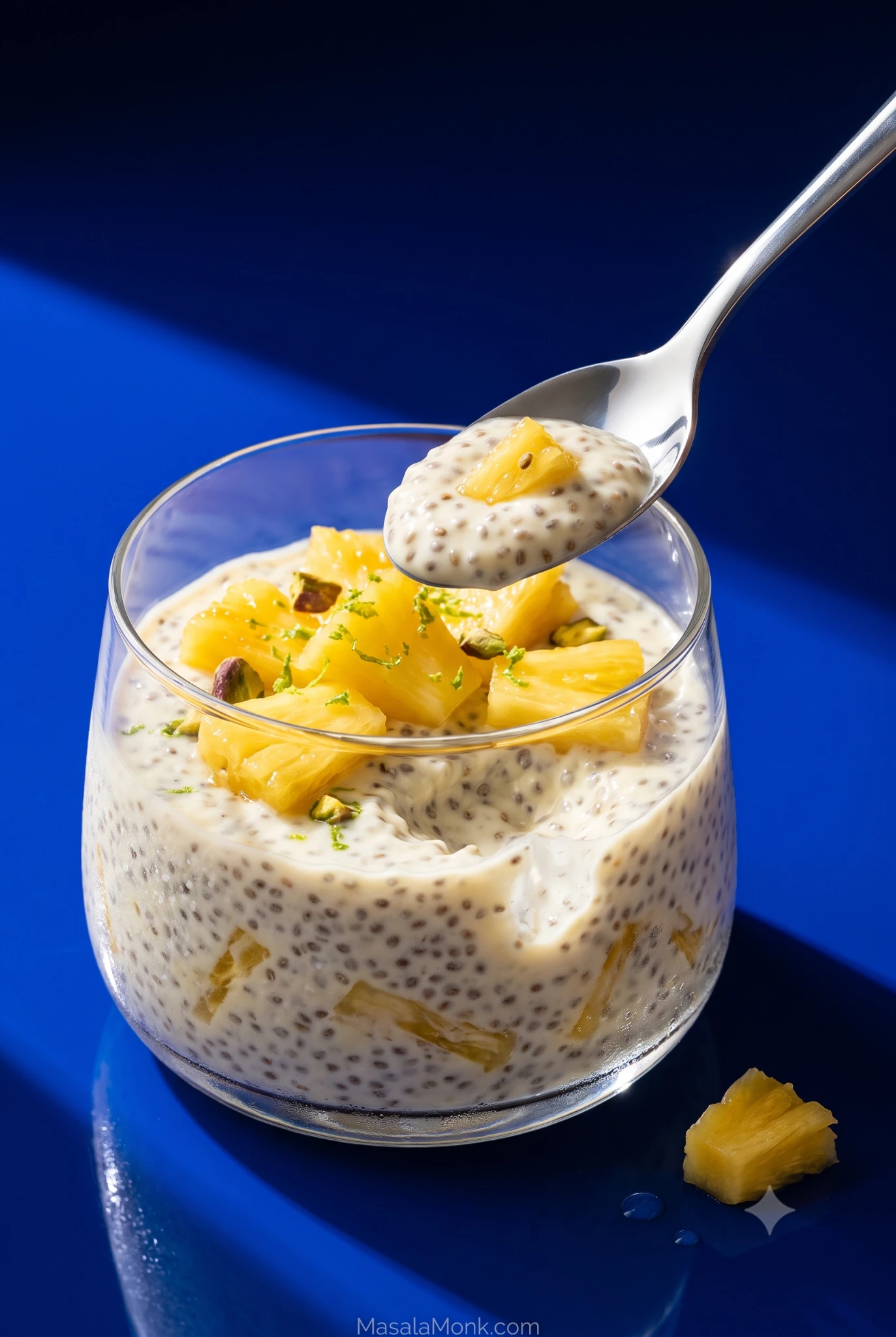
Pineapple chia pudding should be cold, creamy and bright with fruit. It should not have milk floating above a chia slab or be so thick you can stand a spoon in it.
Juicy pineapple, fresh lime and just enough vanilla make it taste like something you would actually look forward to finding in the fridge. Mixing it takes minutes. Getting that soft, spoonable texture is where most jars go sideways.
This pineapple chia seed pudding uses a slightly firmer base so there is room for the fruit’s moisture. Give it a second stir before it goes into the fridge, and by morning the work is done: stir, add cold pineapple and eat.
Quick Answer
For one breakfast jar, use 3 tablespoons / about 35 g chia seeds + ¾ cup / 180 ml / 6 fl oz milk + ½ cup / about 80 g pineapple, divided. Stir well, wait 5–10 minutes, stir again, fold in about half the fruit, then chill for at least 2 hours. Four hours or overnight gives the most dependable texture; save the remaining pineapple for serving.
It is ready when the chia holds softly on a spoon and there is no loose milk pooling around it.
Pineapple Chia Pudding Recipe
Start with plenty of pineapple, a creamy but not heavy base, and enough lime and vanilla to keep the fruit tasting fresh and lively.
- Makes: 1 breakfast jar or 2 small snack portions
- Prep: about 5 minutes
- Second stir: after the brief initial rest
- Minimum chill: about 2 hours
- Best texture: about 4 hours to overnight
- Cook time: none
A 16 oz / 475 ml jar leaves plenty of room to stir and add toppings. A 12 oz / 350 ml jar works if you mix in a bowl first.
Equipment: a bowl or wide jar, a whisk or spoon, measuring spoons and a lidded container. A small blender is optional for the smooth version.
Ingredients
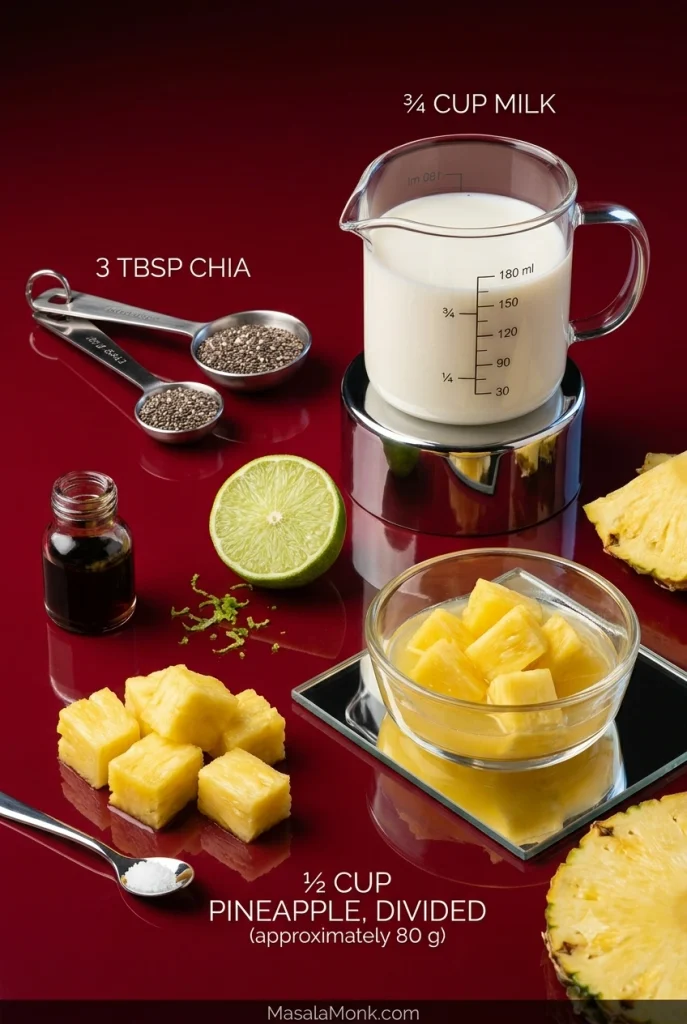
- Whole chia seeds: 3 tablespoons, about 35 g / 1.2 oz
- Unsweetened almond or coconut drinking milk: ¾ cup / 180 ml / 6 fl oz; soy or dairy milk also works
- Finely diced pineapple: ½ cup / about 80 g / 2.8 oz, divided
- Vanilla extract: ½ teaspoon
- Finely grated lime zest: ½ teaspoon
- Fresh lime juice: ½–1 teaspoon / 2.5–5 ml
- Fine salt: a small pinch
- Sweetener: up to 1 teaspoon, if needed
Chia tablespoon weights vary slightly between brands and measuring styles, so the tablespoon measure is the main functional measurement here.
Store-bought unsweetened almond milk keeps things easy, but homemade almond milk works too. Homemade batches vary in richness, so you may need a little more or less milk at the end.
Using dairy milk? The recipe still works. When the jar will sit overnight, keep raw fresh or frozen pineapple separate and add it at serving; the reason is explained below.
Optional toppings: choose one or two so the pineapple still gets to be the point.
- Toasted unsweetened coconut
- Chopped pistachios
- Plain Greek or plant-based yogurt
- Granola
- Extra lime zest or fresh mint
Method
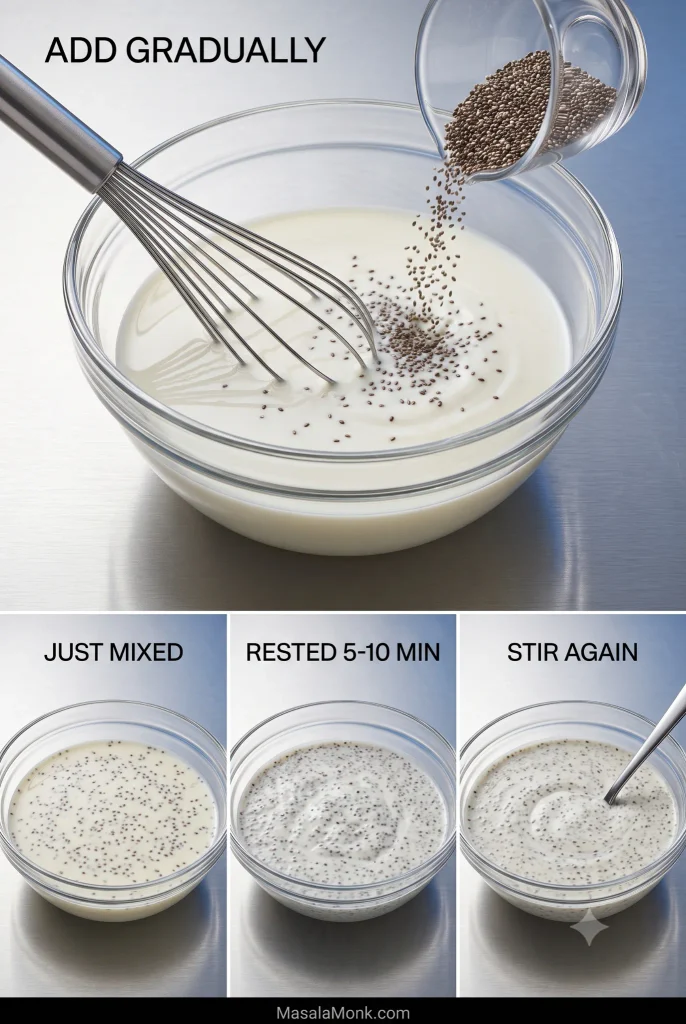
- Mix the base. Add the milk, vanilla, lime zest, lime juice, salt and any sweetener to a bowl or wide jar. With the whisk moving, sprinkle in the chia gradually and whisk for about 20–30 seconds. Scrape the bottom and corners so no dry pockets remain.
- Wait, then stir again. Leave it for 5–10 minutes, then scrape the bottom and sides and break apart any clusters. This is what prevents milk on top and a dense chia layer underneath.
- Add half the pineapple. Fold in about ¼ cup / 40 g well-drained diced pineapple. Very juicy fruit—and fruit going into jars for several days—is better kept separate until serving.
- Cover and chill. Refrigerate for at least 2 hours. Four hours gives a more dependable set; overnight is easiest. Still seeing the seeds settle—or making a large batch? Give it one more stir 30–60 minutes later. Most single jars will not need it.
- Check the texture. Give the pudding a good stir. The seeds should be evenly hydrated and the mixture should hold softly on a spoon without loose milk around it.
- Adjust only if needed. Too thick? Add milk 1 tablespoon / 15 ml at a time. Still clearly too thin after several hours? Add 1 teaspoon chia and wait another 15–30 minutes.
- Finish and eat. Add the remaining pineapple and any crunchy toppings. Taste it cold: if the pineapple seems muted, add a little extra lime zest; if the fruit is tart, add a touch more sweetener.
Why the Second Stir Matters
If your jar is already in the fridge, stop here—you have done everything you need. The rest is for choosing different pineapple or milk, making several breakfasts at once, or rescuing a jar that did not behave as expected.
Choose What You Need
- The Chia-to-Liquid Ratio
- What Properly Set Chia Looks Like
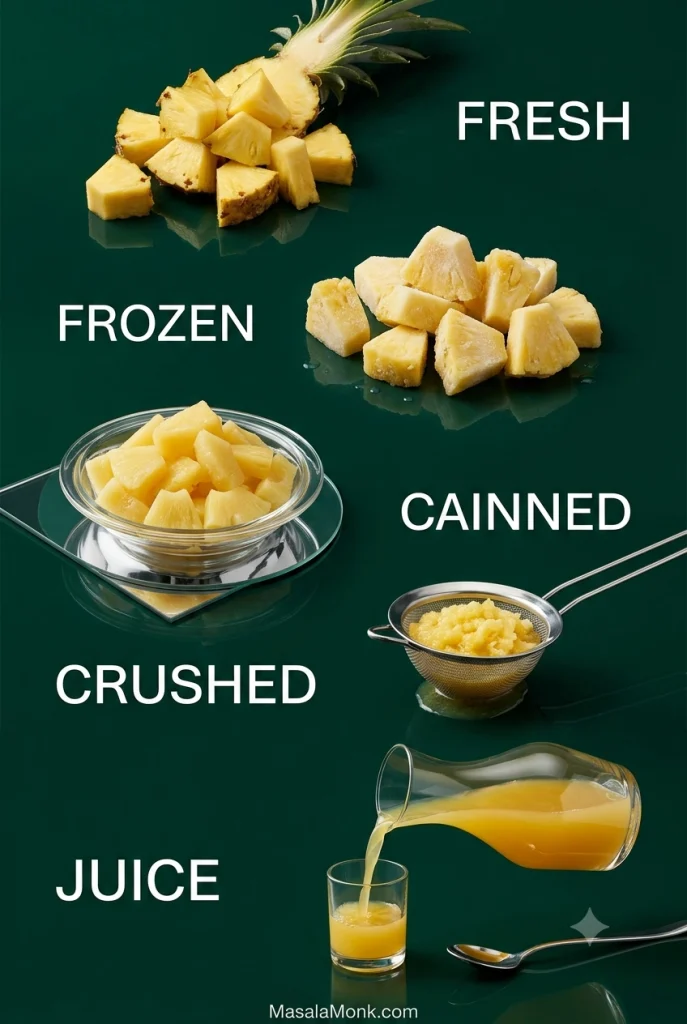
- Fresh, Frozen or Canned Pineapple?
- How to Make It Creamier
- Pineapple Coconut Version
- High-Protein Greek Yogurt Version
- Smooth / Blended Version
- Lower-Carb Version
- Meal Prep & Storage
- Troubleshooting
- Frequently Asked Questions
The Chia-to-Liquid Ratio for Pineapple Pudding
Three tablespoons of chia per cup of liquid gives a softer pudding; four gives a noticeably firmer one. Pineapple adds its own moisture, so the main recipe starts toward the thicker end.
| Chia seeds | Liquid | Result |
|---|---|---|
| 3 tbsp | 1 cup / 240 ml | Softer, looser pudding |
| 4 tbsp | 1 cup / 240 ml | Firmer, spoonable pudding |
| 3 tbsp | ¾ cup / 180 ml | Thicker base with room for juicy fruit |
A very ripe fresh pineapple can be surprisingly juicy, thawed fruit leaks water, and crushed pineapple carries more liquid than neat chunks. The main recipe’s 3 tablespoons chia to ¾ cup / 180 ml milk leaves room for that extra moisture.
More chia makes the pudding thicker. Yogurt or richer coconut milk makes it feel creamier. That distinction matters when you are chasing a lush café-style spoonful rather than simply trying to make the pudding stand up on the spoon.
The same basic method works with plenty of other flavors in our chia pudding guide.
What Should Properly Set Chia Pudding Look Like?
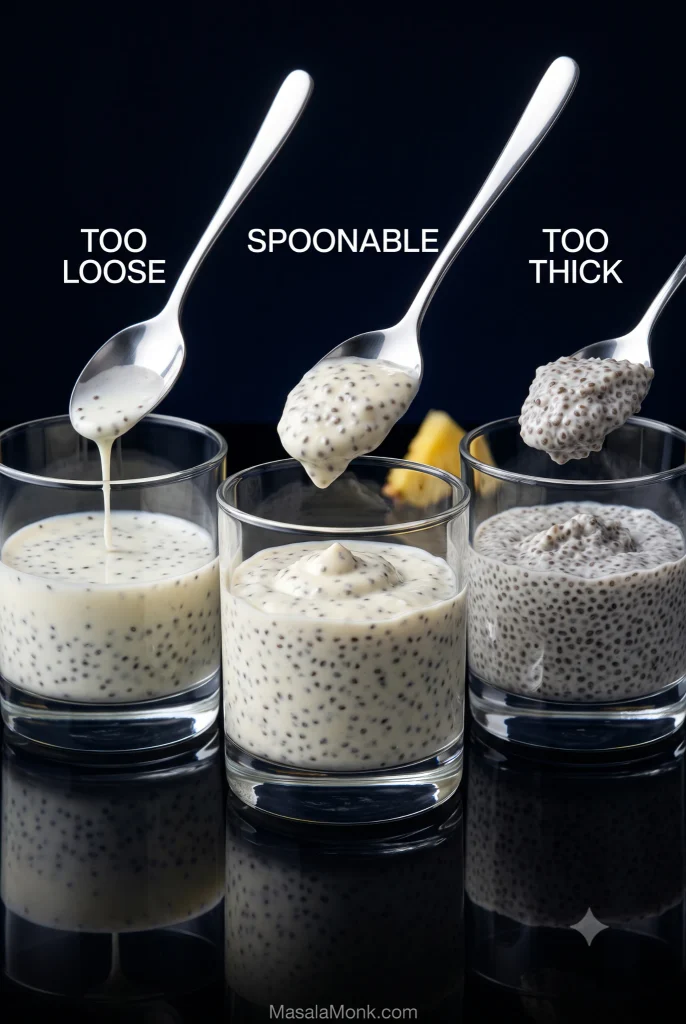
Whole-seed chia pudding is never quite as smooth as custard. Each seed develops a soft gel coating while the seed remains perceptible. The finished pudding lands somewhere between tiny tapioca and a soft seeded gel.
- It should hold a soft mound on a spoon.
- The seeds should look evenly hydrated.
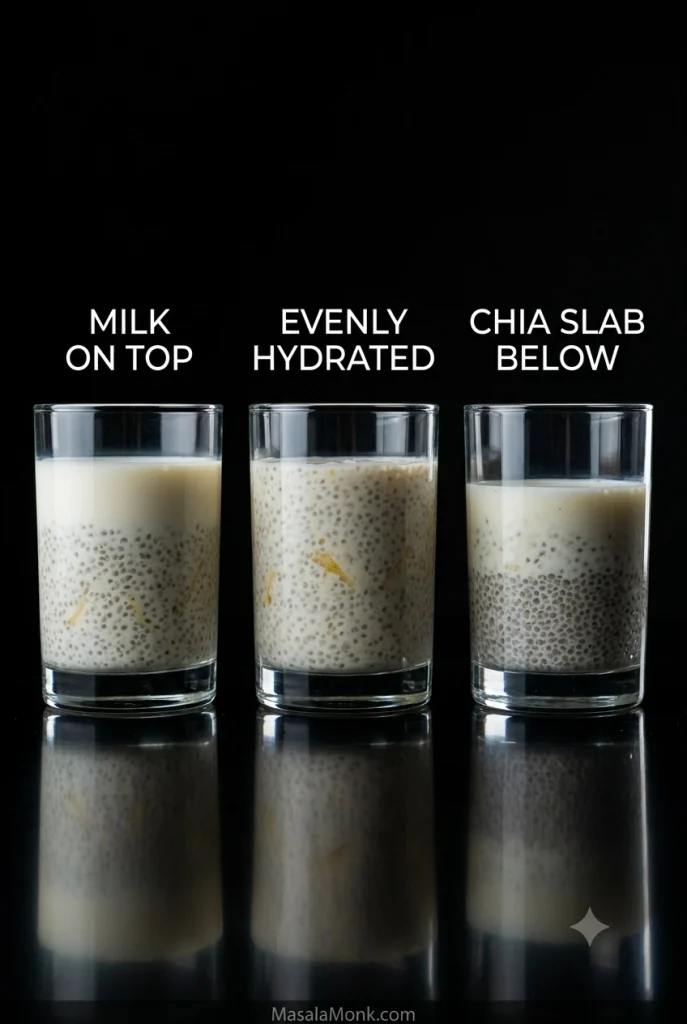
- There should be no pool of milk floating around it.
- There should be no dense seed slab stuck underneath.
- The overall texture should feel creamy rather than rubbery.
A little seed texture is normal. Dry, hard pockets are not.
Sometimes the pudding is exactly right and you still dislike the texture. That is allowed. Try the blended version. If that still does not appeal, there are plenty of good breakfasts in the world and no reason to force yourself into a chia habit.
Does your jar look different? Jump to Troubleshooting.
Fresh, Frozen or Canned Pineapple?
| Pineapple | Best for | Watch for |
|---|---|---|
| Fresh | Bright flavor, topping, juicy pieces | Variable juice |
| Frozen | Blending into the base | Thaw liquid |
| Canned in juice | Easy meal prep | Drain well |
| Crushed | Fruit in every spoonful | Extra liquid |
| Juice | Stronger pineapple flavor | Counts as liquid |
Fresh pineapple gives the brightest bite. For the sweetest jar, look for a clean sweet aroma at the base and a little give, then dice it fairly small.
Frozen pineapple is best when you want fruit through the base. Blend about ¼ cup / 40 g with the measured milk and keep the rest for serving. Drain thawed fruit before folding it into an already-set pudding.
Canned pineapple is easy for meal prep; choose fruit packed in juice and drain it well. Crushed pineapple spreads fruit through every spoonful but brings more liquid, so drain it or keep it as a separate layer.
Pineapple Juice Changes the Ratio
Chia hydrates perfectly well in pineapple juice, but the juice has to come out of the liquid somewhere else. Add ¼ cup / 60 ml pineapple juice and reduce the milk by about the same amount.
Juice makes the pudding fruitier and sweeter; milk, coconut or yogurt supplies more of the creamy body. Diced fruit gives bite, purée makes a fruit layer, and fully blended pineapple behaves more like liquid. Once the fruit pours like juice, treat it like juice.
Using Yogurt? One Pineapple Quirk Matters
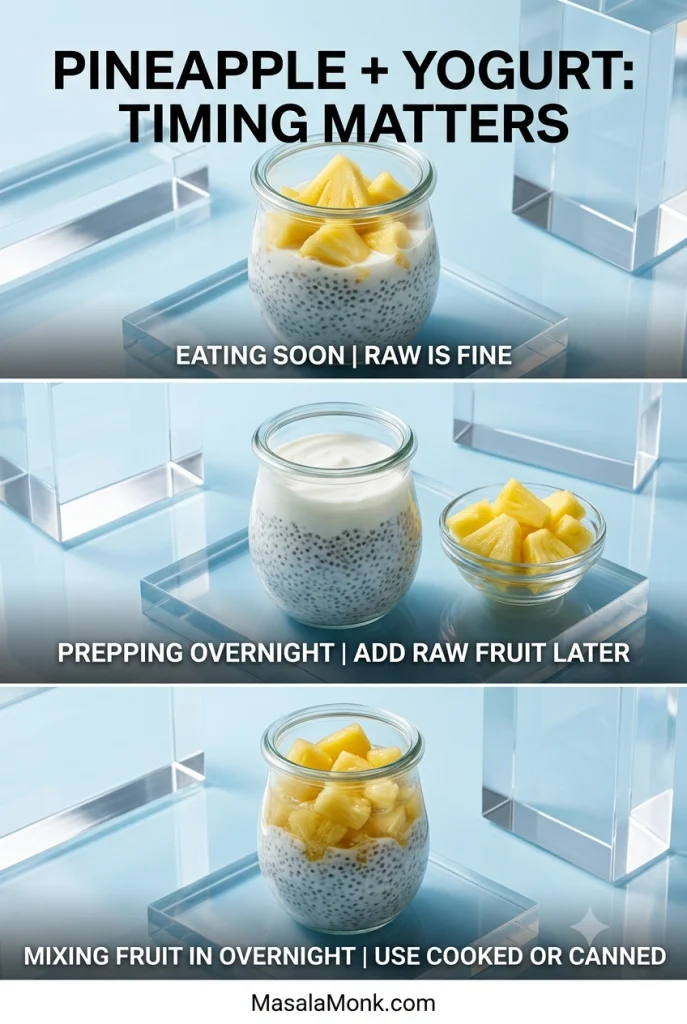
Fresh pineapple contains bromelain, an enzyme that breaks down milk proteins, and freezing raw pineapple does not reliably switch that enzyme off. Pineapple and yogurt are still perfectly normal foods to eat together. Odd bitterness or texture can show up when raw fresh or frozen pineapple sits in yogurt or skyr for hours.
For an overnight dairy-based jar, use canned or cooked pineapple, or add raw fresh or frozen fruit in the morning. With protein-rich soy yogurt, keeping raw pineapple separate until serving is a simple precaution when prepping well ahead.
Using ordinary almond or coconut drinking milk and fresh pineapple? Follow the main recipe and move on.
Using yogurt for the base? Jump to the high-protein Greek yogurt version.
How to Make Pineapple Chia Pudding Creamier
Almond milk keeps the jar light, Greek yogurt makes it silkier, and coconut brings richness.
| Base | Result | Best move |
|---|---|---|
| Almond milk | Light, clean | Use main ratio |
| Soy milk | More body, more protein | Use main ratio |
| Dairy milk | Rounder, creamier | Fresh pineapple at serving for overnight prep |
| Coconut drink | Light, tropical | Use main ratio |
| Canned coconut milk | Rich, dense | Dilute with lighter milk |
| Greek yogurt or skyr | Silky, tangy, protein-rich | Use yogurt ratio below |
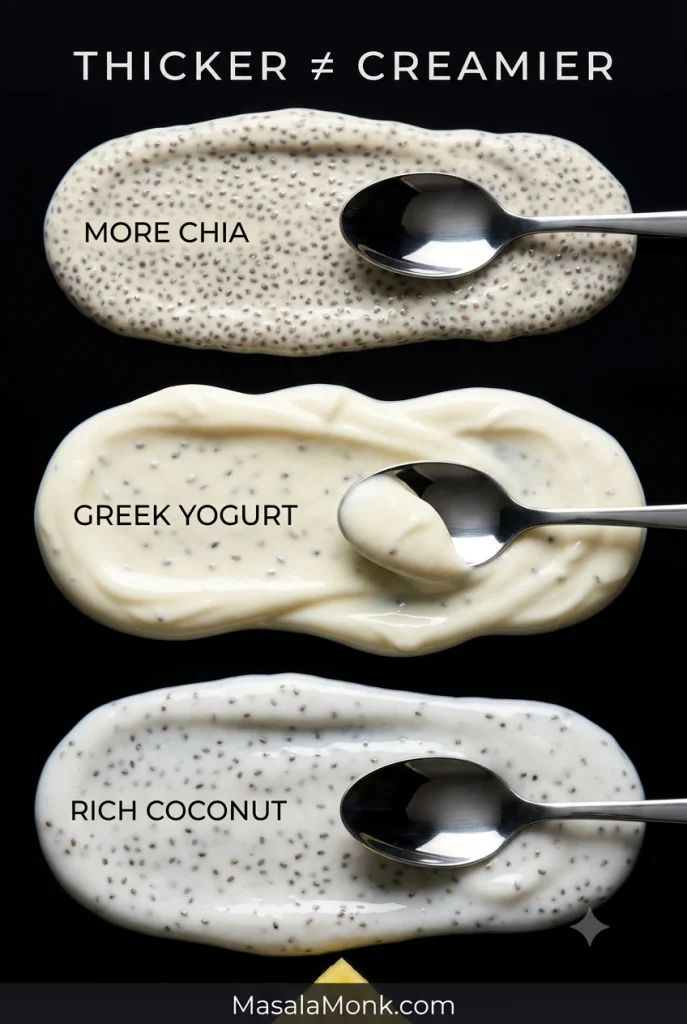
Carton coconut drink, light canned coconut milk and full-fat canned coconut milk behave very differently once cold. Our guide to coconut milk types and nutrition goes deeper into those differences.
If you are happy with almond or coconut drinking milk and the main recipe, you do not need to change a thing. For a more café-style spoonful, Greek yogurt or skyr gives the base more body and a silkier feel. Let the pineapple do most of the flavor work, then add vanilla, lime and something crisp—perhaps toasted coconut, pistachios or a little granola.
Full-fat canned coconut milk can become surprisingly firm when it gets cold. A mixture that looked creamy at night may feel almost waxy by breakfast. Whisk a separated can smooth before measuring it, and combine rich canned coconut milk with a thinner drink rather than using it alone.
Pineapple Coconut Chia Pudding
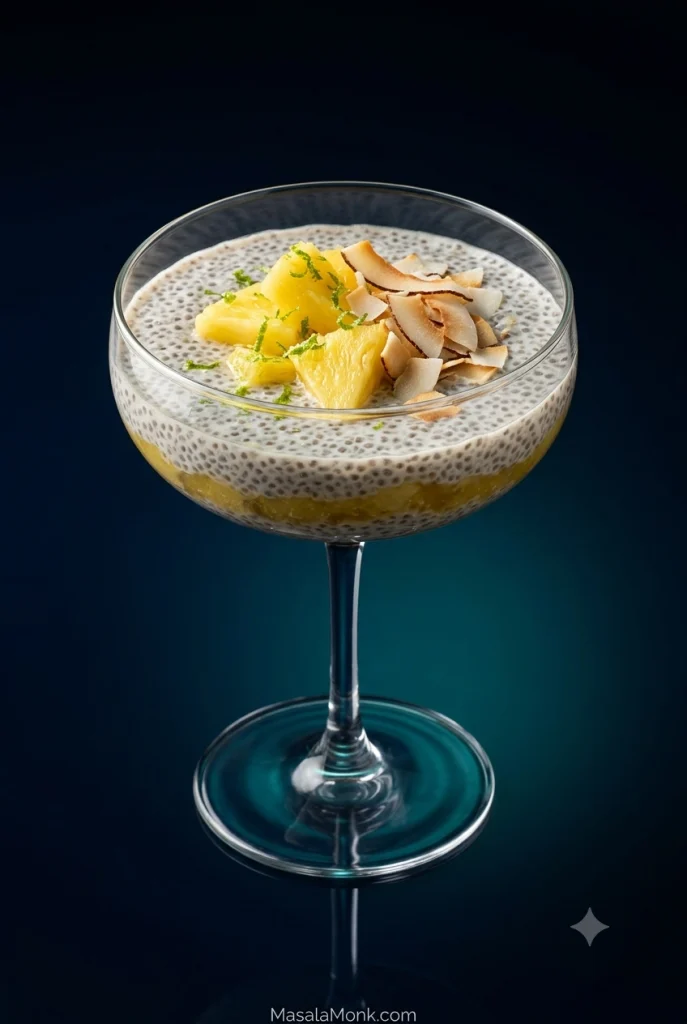
Here the coconut softens pineapple’s sharper edges without burying the fruit.
- Chia seeds: 3 tbsp, about 35 g
- Coconut drinking milk: ⅔ cup / 160 ml
- Well-mixed canned coconut milk: ¼ cup / 60 ml
- Pineapple: ½ cup / about 80 g, divided
- Vanilla: ½ tsp
- Lime zest: ½ tsp
- Lime juice: ½–1 tsp
- Salt: a pinch
- Sweetener: only if needed
Use the same two-stir method as the main recipe. Fold about half the pineapple through and keep the rest for the top.
For a piña colada-style jar, pulse some of the pineapple into a thick purée. Layer it with the coconut chia so each spoonful gets a clearer hit of fruit.
That same pineapple-coconut-lime combination runs through our piña colada guide.
High-Protein Pineapple Chia Pudding with Greek Yogurt
Greek yogurt or skyr is the simplest way to add substantial protein while making the chia base silkier at the same time.
- ½ cup plain Greek yogurt or skyr, about 120 g
- ⅓ cup milk, about 80 ml
- 2 tbsp chia seeds, about 24 g
- ½ tsp vanilla
- Lime zest to taste
- Pinch of salt
- Sweetener, if needed
- ½ cup pineapple, about 80 g
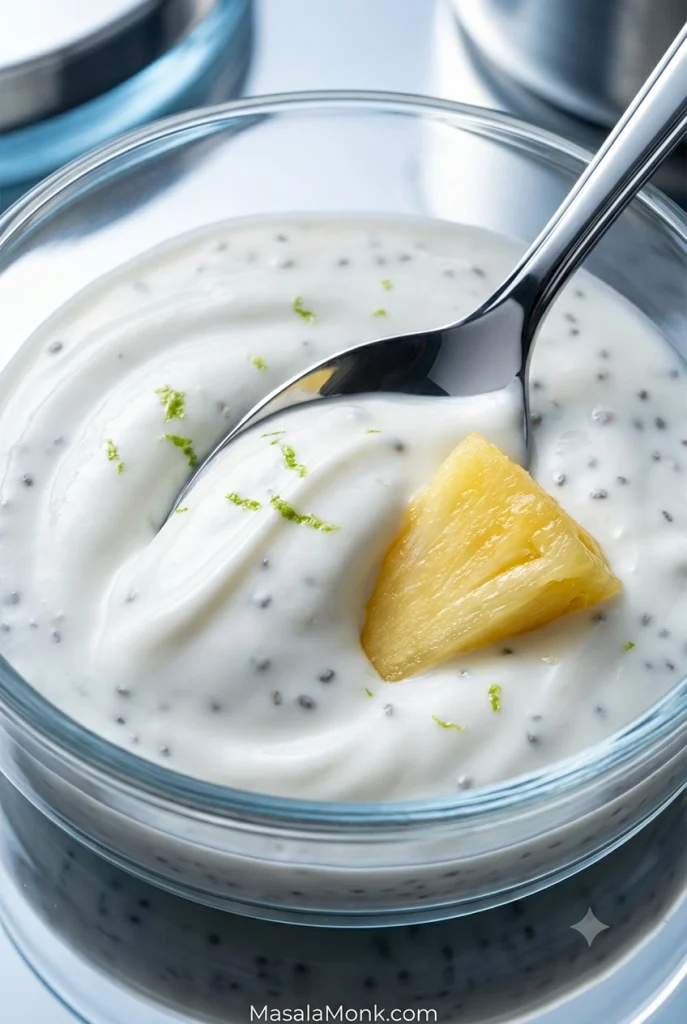
Whisk the yogurt, milk, vanilla, lime zest and salt first, then add the chia and follow the same two-stir method. Very thick Greek yogurt may need another tablespoon or two of milk so the chilled pudding stays silky rather than pasty.
For an overnight jar, heat-treated or canned pineapple can go straight into the pudding. Raw fruit, whether fresh or frozen, is better added in the morning.
For a plant-based version, use soy milk with a thick soy yogurt. Using protein powder? Start with about 1 tablespoon. Depending on the powder, you may need another 1–3 tablespoons / 15–45 ml milk to keep the pudding creamy rather than pasty.
Prefer It Smooth? Blend It After Chilling
Whole chia always keeps a tiny-seed texture. For something closer to mousse, let the pudding hydrate fully first and then blend it with the pineapple until creamy.
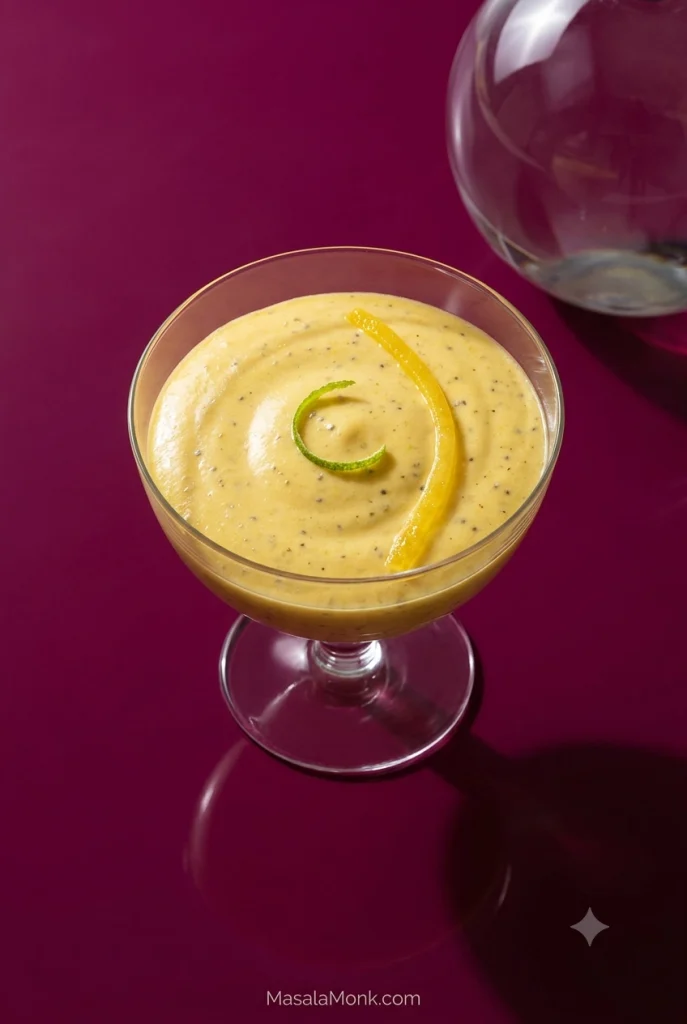
Blending after the set usually gives a smoother result than grinding dry chia at the beginning. Ground chia can feel finer, but it can also turn gummy. Hydrating whole seeds first and blending later smooths out most of the seed texture, although chia’s natural gel-like feel will still be there.
Ready to make it? Back to the main recipe.
Lower-Carb Pineapple Chia Pudding
For a lower-carb jar, use a smaller amount of pineapple and let lime zest, vanilla and a pinch of salt make that fruit go further. The easiest way to lower the carb load is simply to use less pineapple.
- 3 tbsp chia seeds, about 35 g
- ¾ cup unsweetened almond milk, 180 ml
- 2–4 tbsp finely diced pineapple, about 20–40 g
- ½ tsp vanilla
- Plenty of fresh lime zest
- Pinch of salt
- Optional monk fruit, stevia or another preferred non-sugar sweetener
With less pineapple in the jar, lime zest matters more. Start toward the upper end of the fruit range if flavor matters more than shaving off every possible gram of carbohydrate. There is little point making a pineapple pudding with two apologetic cubes of pineapple.
Watching added sugar? Ripe pineapple may be sweet enough on its own. Honey, maple syrup and agave still count as added sugars even when they are described as “natural” sweeteners.
For a stricter base, use our keto chia pudding with almond milk.
Meal Prep & Storage
Making four breakfasts at once? Do not stand there stirring four tiny jars separately. Mix one big batch, give it the second stir, then divide it up.
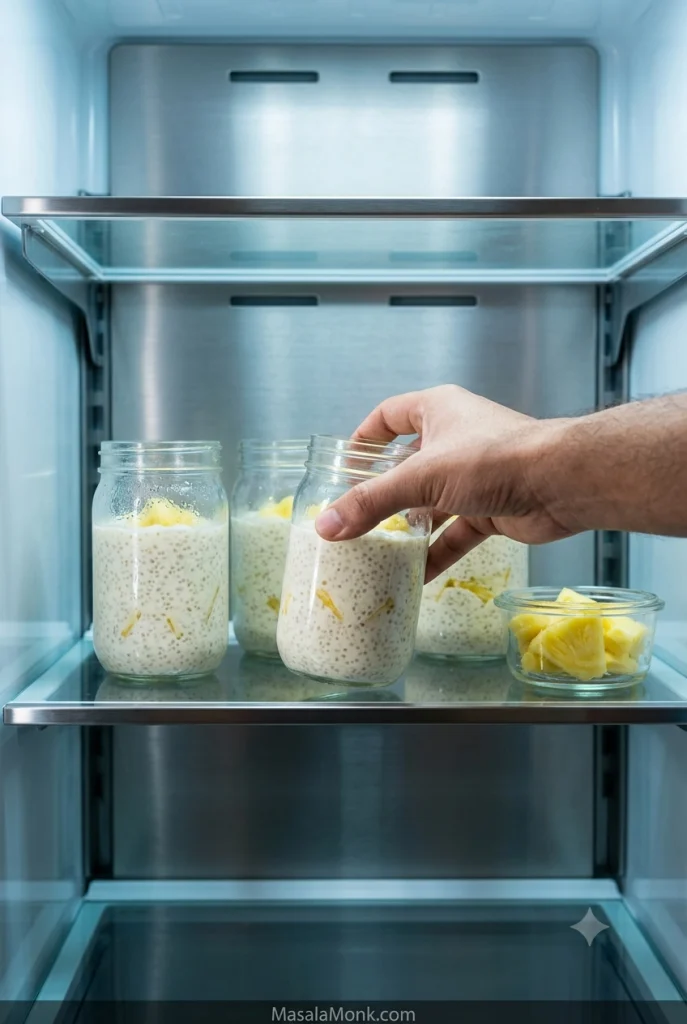
Scaling the recipe is straightforward:
| Make | Chia | Milk | Pineapple |
|---|---|---|---|
| 1 jar | 3 tbsp / ~35 g | ¾ cup / 180 ml | ½ cup / ~80 g |
| 2 jars | 6 tbsp / ~70 g | 1½ cups / 360 ml | 1 cup / ~160 g |
| 4 jars | ¾ cup / ~140 g | 3 cups / 720 ml | 2 cups / ~320 g |
Mix all of the milk and chia in one large bowl, wait 5–10 minutes, and stir thoroughly again. If a large batch is still settling, keep it in the bowl for one more stir 30–60 minutes later; then divide it between containers. Use roughly half the pineapple in or alongside the jars and save the rest for serving. Keeping all of the fruit separate gives the most consistent texture over several days.
Keeping Meal-Prep Jars at Their Best
Crunchy toppings belong at the last minute. Granola, nuts, seeds and toasted coconut are much more enjoyable crisp than after three nights sitting in chia gel.
A jar that is just right on Monday can be noticeably thicker on Wednesday. Stir in 1–2 tablespoons / 15–30 ml milk and it usually comes straight back.
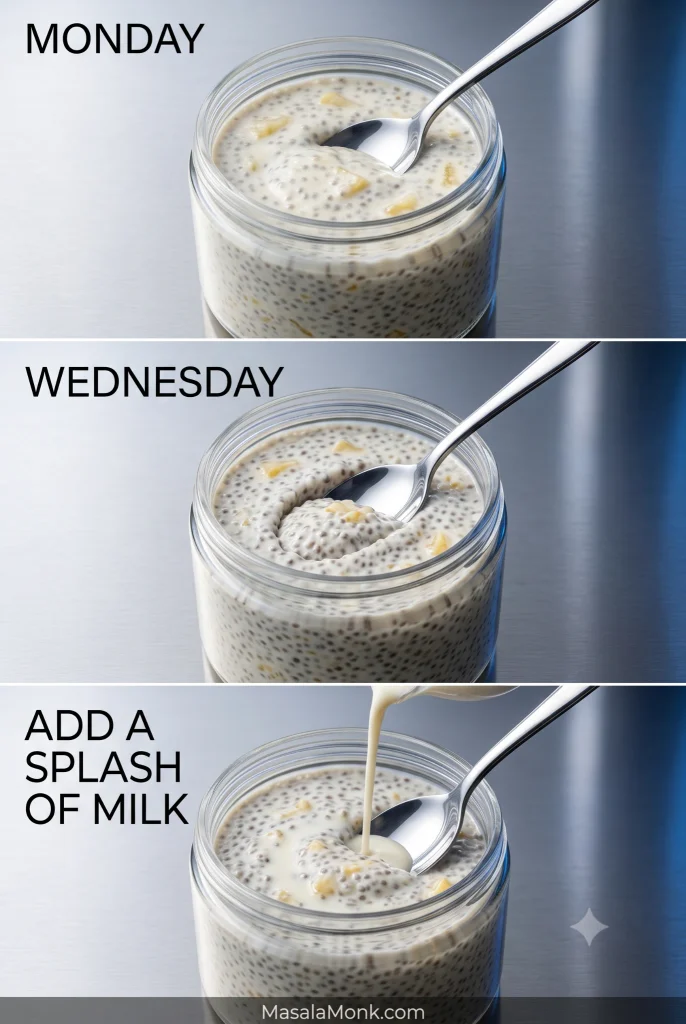
For the best fruit and texture quality, aim to eat prepared pineapple chia pudding within about 3–4 days. Keep it covered and refrigerated at 40°F / 4°C or below.
If you enjoy opening the fridge to find breakfast already handled, overnight oats work on much the same evening-prep rhythm with a completely different texture.
↑ Back to Recipe · ↑ Back to Top
Pineapple Chia Pudding Troubleshooting
Before fixing anything, check how long the pudding has actually been chilling. A jar that looks loose after 45–60 minutes may simply need more time.
Setting and Texture Problems
My chia pudding is still watery. What now?
After several hours, excess liquid usually means the ratio was too loose or the pineapple brought more juice than expected. Stir first. If it is still clearly too thin, add 1 teaspoon chia, wait 15–30 minutes, then check again. Next time, drain the fruit more thoroughly or keep it as a topping.
Why is there milk on top and a solid chia layer underneath?
The seeds settled before they had hydrated enough to stay suspended. Break the layer apart vigorously if you still can. Next time, stir once when you mix the pudding and again 5–10 minutes later.
My pudding is much too thick.
Stir in milk 1 tablespoon / 15 ml at a time until the spoon moves through it comfortably again. Very thick yogurt, extra chia and rich coconut milk can all push a jar past creamy into dense.
Why are there dry or crunchy chia pockets?
The seeds clumped before enough liquid could reach them. Break up any pockets you can find. Next time, sprinkle the chia in while whisking and do not skip the second stir.
Pineapple, Coconut and Yogurt Problems
The pineapple made my pudding watery.
Very ripe, thawed, crushed or poorly drained pineapple can contribute much more liquid than neat fresh pieces. A teaspoon of extra chia can rescue a clearly loose batch. Draining the fruit or keeping it as a separate layer prevents the problem next time.
Why did the coconut version become firm or waxy?
Coconut fat firms when chilled. Loosen the pudding with a little thinner milk and stir well. Next time, combine rich canned coconut milk with coconut drink or another lighter milk instead of using only full-fat canned coconut.
Why did my pineapple-yogurt pudding turn bitter?
Uncooked pineapple—fresh or frozen—can still contain active bromelain, which breaks down milk proteins during a long rest. For overnight yogurt or skyr pudding, use canned or cooked fruit, or add the raw pineapple in the morning.
It set properly, but I still hate the texture.
You may dislike whole chia pudding. Try blending the fully hydrated pudding. If that still does not help, the texture simply is not for you.
If the Chia Barely Gels at All
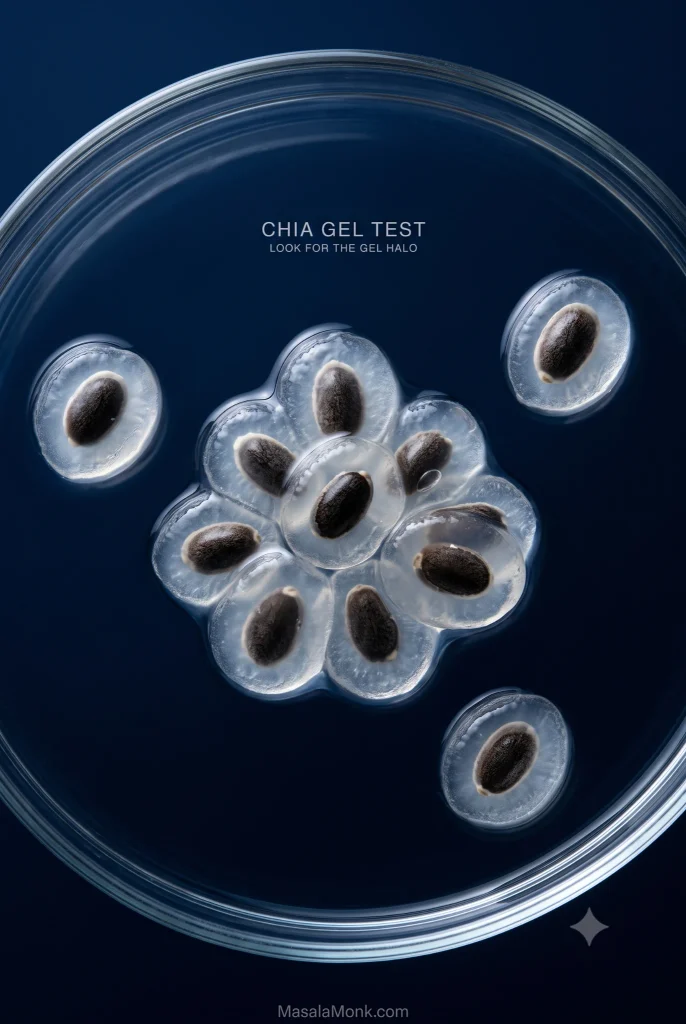
Brands and batches can thicken at different speeds, so give a correctly measured pudding several hours—or overnight—before blaming the seeds. If a familiar recipe suddenly stops setting, mix 1 teaspoon chia with 2 tablespoons water. After about 10–15 minutes, you would normally expect a clear gel halo. Very little gel is a good reason to try fresher chia rather than adding more and more seeds.
↑ Back to Recipe · ↑ Back to Top
A Few Flavor Ideas
Pineapple, cardamom & pistachio: stir a scant ⅛ teaspoon ground green cardamom into the milk, then finish with pineapple and chopped pistachios.
Pineapple, ginger & lime: add about ¼ teaspoon finely grated fresh ginger to the base and finish with extra lime zest. Start small; ginger gets loud quickly.
For a softer, sweeter fruit direction, try mango chia pudding.
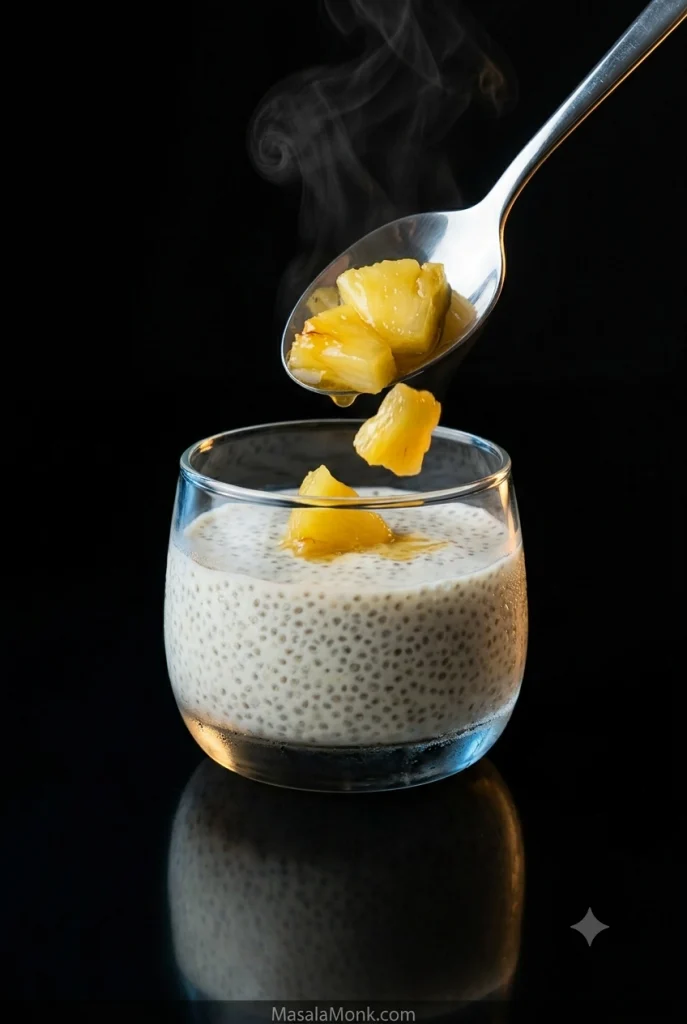
Warm pineapple over cold chia: cook diced pineapple over medium heat for about 5 minutes, until hot, glossy and softened. Add cardamom, ginger or cinnamon, then spoon it over the cold pudding.
A Quick Nutrition Note
Chia contributes dietary fiber, plant protein, unsaturated fats and ALA omega-3 fatty acids. Harvard’s Nutrition Source has a fuller evidence-based overview. The rest of the jar matters too—Greek yogurt, coconut milk, sweeteners, granola and nuts can change the nutritional picture substantially.
Frequently Asked Questions
Can I make pineapple chia pudding overnight?
It works well overnight. Do the second stir, cover and refrigerate; the extra time gives the seeds plenty of time to hydrate.
Can I use pineapple juice instead of milk?
You can. Count pineapple juice as part of the measured liquid: add ¼ cup / 60 ml juice and reduce the milk by about the same amount.
Can I use fresh pineapple with Greek yogurt?
Fresh pineapple is fine for immediate serving. For an overnight yogurt jar, use canned or cooked pineapple, or add uncooked fruit in the morning.
Can I use ground chia seeds?
Yes, but ground chia can turn gummy. For a smoother result, hydrate whole chia first and blend the chilled pudding.
Why didn’t my chia pudding thicken?
Usually it needs more time, extra fruit liquid is involved, or the seeds clumped early. Check the troubleshooting section before adding more chia.
How long does pineapple chia pudding last?
Aim for 3–4 days refrigerated at 40°F / 4°C or below. Keep it covered and add crunchy toppings at serving.
When You’re Ready to Eat
Give the chilled pudding one good stir. Loosen it with a splash of milk if it needs it, then pile on the remaining pineapple, a little lime zest and something crunchy.
The best spoonful has soft, creamy chia, a juicy piece of pineapple and a little lime in the same bite. Cold, bright and ready when you open the fridge—not bad for five minutes the night before.
Did your jar behave differently? Tell us which milk and pineapple you used and how long it chilled; those details usually reveal what happened.








