
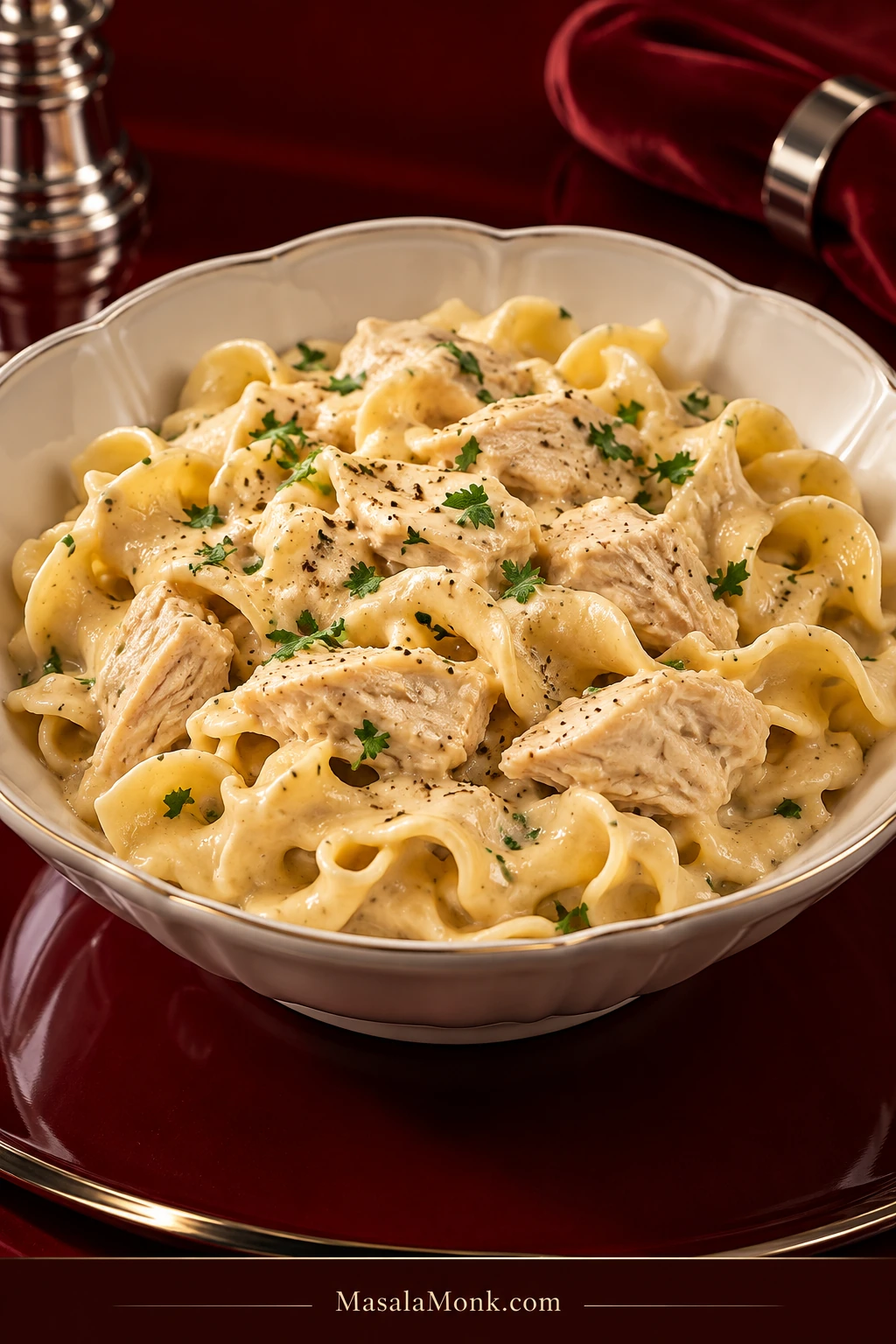
This Crock Pot chicken and noodles recipe gives you wide egg noodles and tender chicken in a savory cream sauce that slips into the folds and clings to every piece, with no pool of broth underneath. If a brothy bowl is what you want, this chicken noodle soup recipe is the better fit.
With slow cooker chicken and noodles, the timing is simple: cook the chicken first and add the noodles only at the end. Most of the cooking is hands-off. Stay nearby once the noodles go in; they can move quickly from firm to tender.
Slow-Cook the Chicken. Quick-Cook the Noodles.
| Stage | What to Watch |
|---|---|
| Cook the chicken | Check it at the early end of the cooking range. Remove it once the thickest part reaches 165°F (74°C). |
| Start the noodle stage | Take the chicken out and stir the cream into the sauce. |
| Cook the noodles | Stay nearby. Stir gently, taste early and stop cooking as soon as the noodles are tender. |
| Serve | Fold the chicken back in, taste and serve promptly. |
Crock Pot Chicken and Noodles Recipe
Tender chicken and extra-wide egg noodles in a savory cream sauce. Cook the chicken first, then add the noodles to the same sauce at the end.
Equipment
- 6-quart (5.7 L) slow cooker
- Instant-read thermometer
Ingredients
- 1½ lb (680 g) boneless skinless chicken breasts, thawed
- 1 cup (about 150 g) finely diced yellow onion
- 3 garlic cloves, minced
- 1 can (10.5 oz / 298 g) condensed cream of chicken soup, undiluted
- 2½ cups (600 mL) low-sodium chicken broth, divided
- 1 teaspoon concentrated chicken base or paste, or the amount of bouillon your brand recommends for about 1 cup (240 mL) broth
- 1 teaspoon dried thyme
- ½ teaspoon poultry seasoning
- ½ teaspoon freshly ground black pepper, plus more to taste
- ½ cup (120 mL) heavy cream, added after the chicken cooks
- 8 oz (227 g) dried extra-wide egg noodles, shelf-stable from the pasta aisle, not frozen homestyle noodles
- 2 tablespoons chopped fresh parsley, optional
- Salt, as needed after cooking
Instructions
1. Slow-cook the chicken
Whisk the condensed cream of chicken soup with 2 cups (475 mL) of the broth, chicken base, thyme, poultry seasoning and black pepper directly in the slow cooker. Stir in the onion and garlic, then nestle the thawed chicken breasts into the sauce.
Cover and cook on LOW for about 3–5 hours or HIGH for about 2–3 hours. Begin taking the chicken’s temperature at about 3 hours on LOW or 2 hours on HIGH. Remove it once the thickest part reaches 165°F (74°C). Do not keep cooking lean breast meat simply because it has not fallen apart on its own; it will rest while the noodles cook.
Use thawed chicken. USDA slow-cooker guidance recommends thawing meat and poultry before they go into a slow cooker.
Hold the salt for now. The condensed soup and chicken base already bring plenty of seasoning to the pot.
2. Remove the chicken and start the noodles
Transfer the chicken to a plate and cover it loosely. Stir the heavy cream into the sauce in the slow cooker. Warm the reserved ½ cup (120 mL) broth separately and keep it nearby.
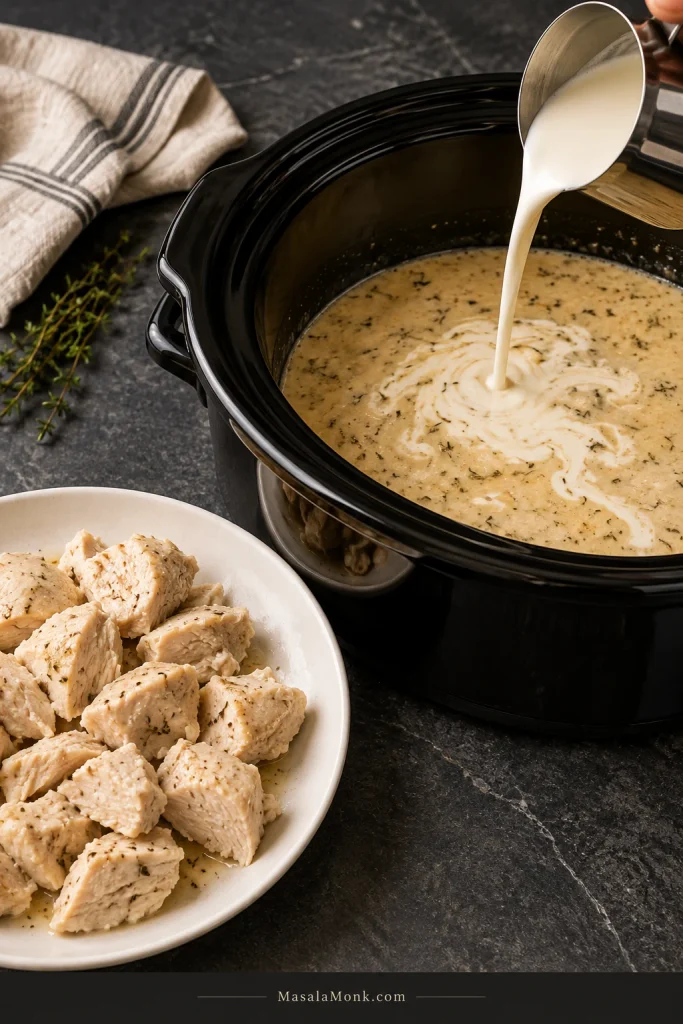
The sauce may look a little loose now. Leave it that way; the noodles still have liquid to absorb.
Turn the slow cooker to HIGH if needed. Add the dried extra-wide egg noodles and press them gently into the sauce. They do not have to be perfectly submerged.
3. Cook the noodles and return the chicken
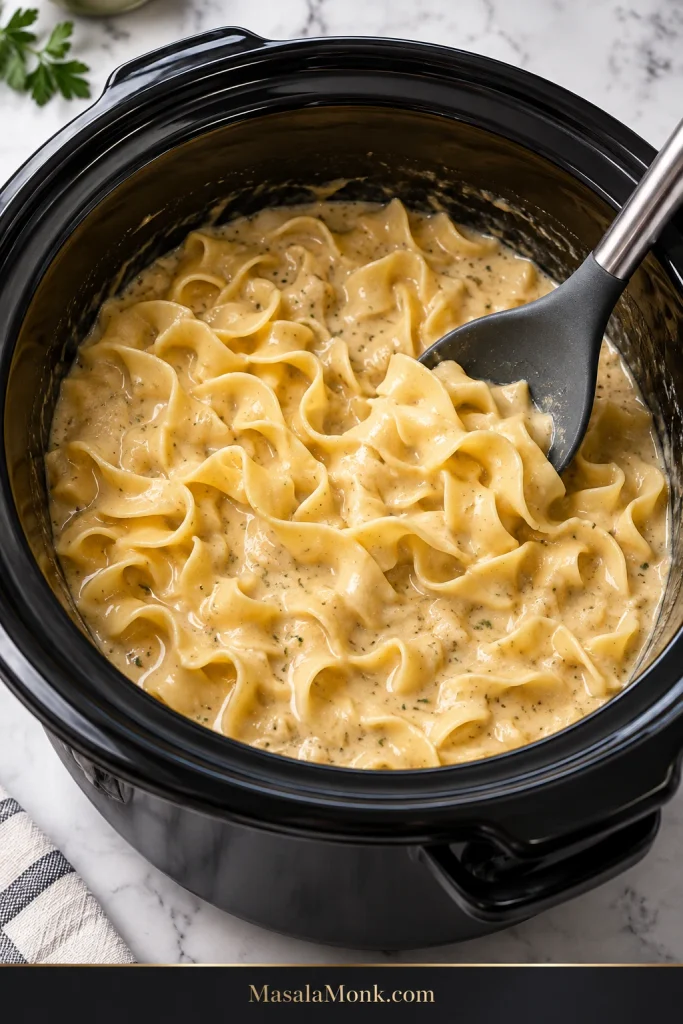
Cover for 8–10 minutes, then stir gently to separate the noodles. Re-cover and test one for tenderness at 12 minutes. Most extra-wide dried egg noodles will need about 15–25 minutes total, though noodle thickness and slow-cooker temperature vary.
While they cook, pull the rested chicken into chunky bite-size pieces. Fine shreds tend to disappear into the sauce.
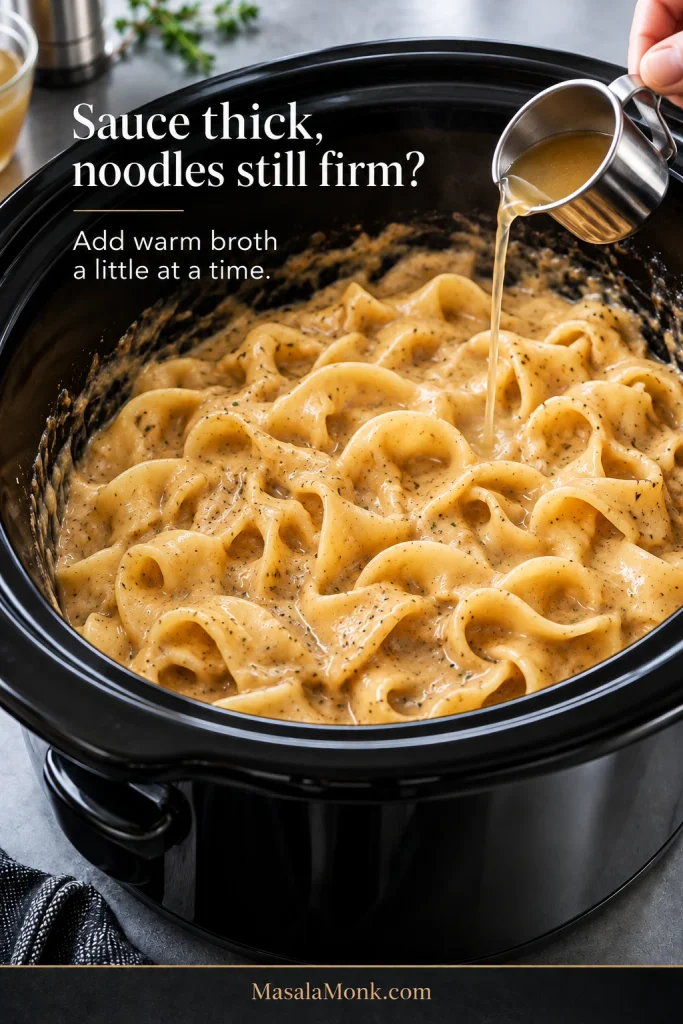
If the noodles are still firm and the sauce is getting thick, add the warm reserved broth 2–4 tablespoons at a time. You may use only a little of it.
Once the noodles are tender through the center, switch off the slow cooker and fold the chicken back in. If the sauce still seems loose, leave the pot uncovered for about 5 minutes before doing anything else.
Taste. Add salt or more black pepper if it needs it, then fold in the parsley, if using. Serve while the noodles still hold their shape.
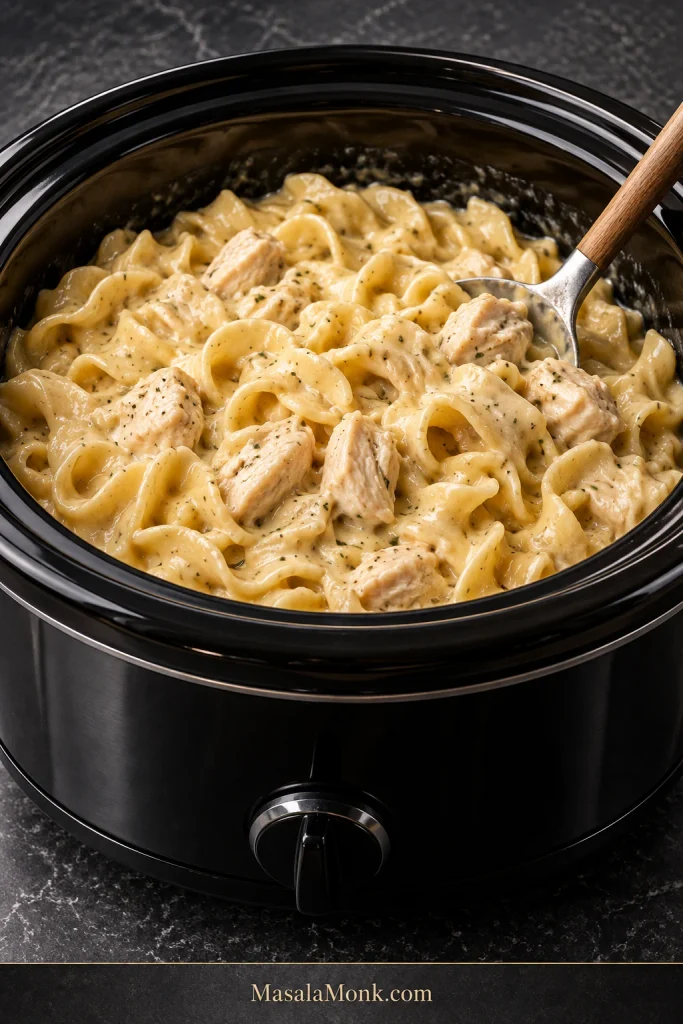
When it’s ready: the sauce should cling to the chicken and noodles and settle lightly between the folds. The noodles should separate easily when you spoon them out.
Recipe Notes
- Use the right noodles: these timings are for dried, shelf-stable extra-wide egg noodles. Frozen homestyle noodles need a different method.
- Do not hold the noodles on WARM for hours: egg noodles keep softening as they sit in the sauce. Once they are tender, serve rather than leaving the cooker on WARM.
More Help With Chicken & Noodles
Variations & Leftovers
Which Egg Noodles Should You Use?
Dried extra-wide egg noodles are the best fit here because they pick up some of the chicken sauce as they cook and still give you broad, distinct noodles. They can cook directly in the sauce once the chicken comes out. Cook them separately when exact texture or better leftovers matter more than keeping everything in one pot.
Frozen homestyle noodles need a different approach. They are thicker and denser, so follow their package directions rather than the dried-noodle timing in this recipe.
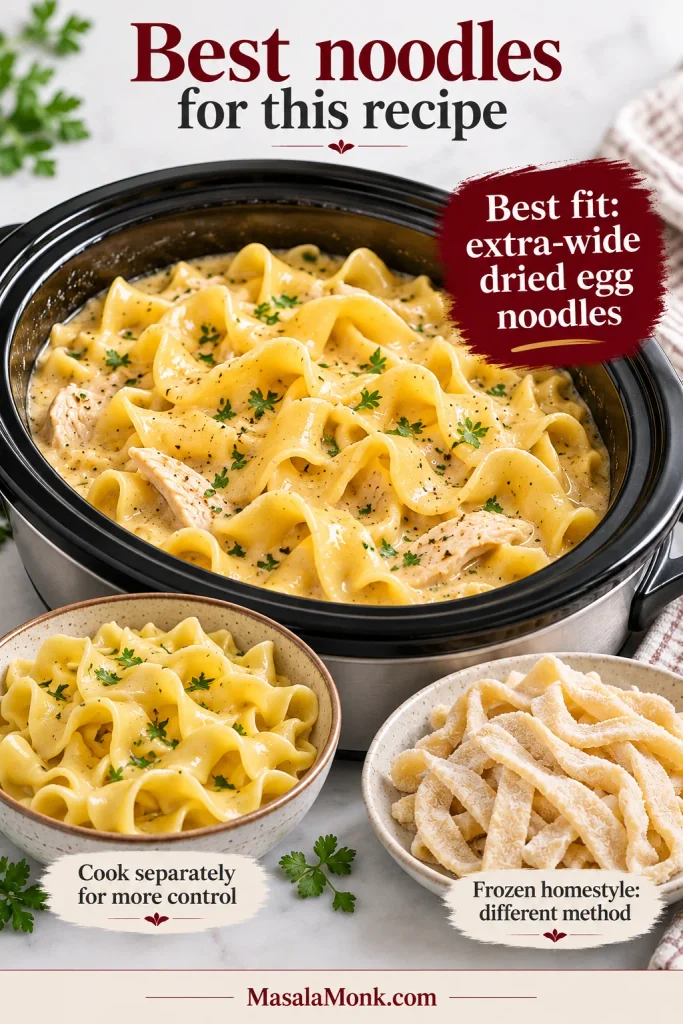
| Noodle Choice | Best When |
|---|---|
| Dried extra-wide noodles in the Crock Pot | Best for the easiest one-pot method and noodles that absorb some of the chicken sauce. |
| Dried noodles cooked separately | Best when precise texture or better leftovers matter more than one-pot convenience. |
| Frozen Reames or homestyle noodles | Choose these when you specifically want thicker homestyle noodles and don’t mind cooking them separately. |
Cook dried egg noodles in the Crock Pot
Use 8 oz (227 g) dried, shelf-stable extra-wide egg noodles from the pasta aisle. Start tasting early; once the center is tender, they are done. Thin egg noodles have less room for error, so test them sooner.
Cook the noodles separately
Follow the chicken stage as written, but begin with 1½ cups (360 mL) broth instead of 2 cups. When the chicken is done, remove it and stir in the cream.
Near serving time, boil 8 oz (227 g) dried egg noodles until barely al dente. Drain them well and fold them into the chicken sauce. Keep up to ½ cup (120 mL) warm broth nearby only if the sauce needs loosening. You will not usually need the full 2½ cups of broth listed in the main recipe.
This is also the better method for meal prep because the noodles keep their texture better when stored separately. Combine only the portions you are reheating. For the rest, see storing and reheating chicken and noodles.
Use frozen Reames or homestyle noodles
Do not swap frozen homestyle noodles ounce-for-ounce into the dried-noodle method and expect the same timing.
Reames recommends cooking its frozen noodles according to the package directions before combining them with the other ingredients, and says not to thaw them first. Use the reduced-broth approach above when you fold separately cooked noodles into the chicken mixture.
How to Tell When It’s Done
The timer gets you close. The noodles and sauce tell you when to stop.
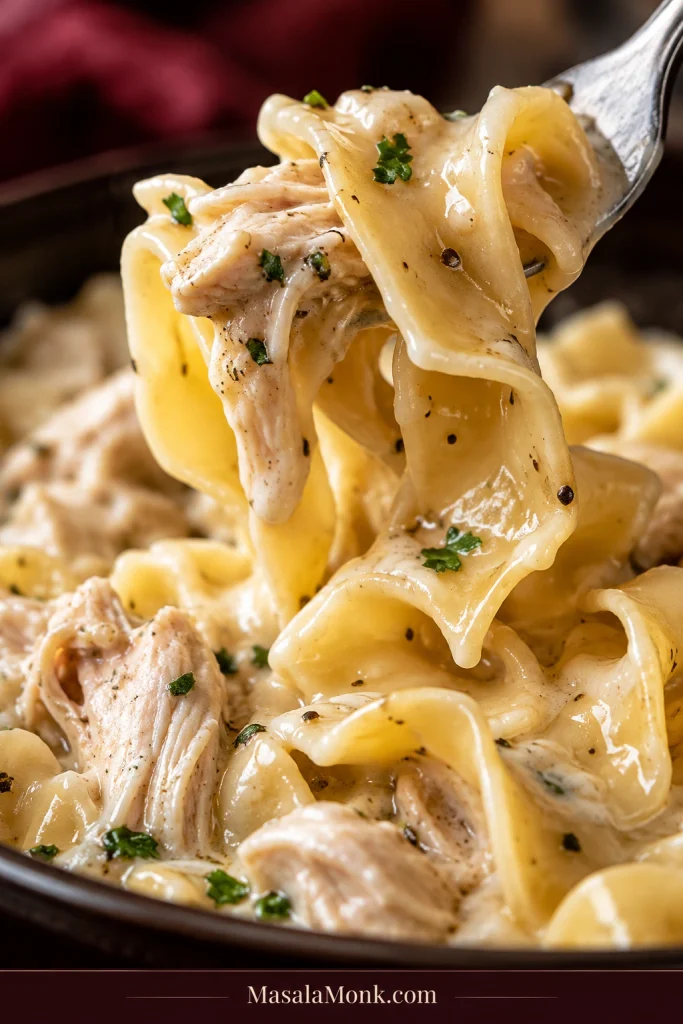
Noodles: bite into one. It should be tender through the middle and still look like a distinct ribbon. Swollen noodles that are splitting or losing their shape have gone too far.
Sauce: drag a spoon through the pot. The sauce should move slowly back into the space and cling to the noodles as it does.
Not seeing those cues yet? Match what you’re seeing to the texture fixes.
Fix My Chicken and Noodles
If something looks off, match what you’re seeing in the Crock Pot to the fix below.
| What You Are Seeing | What to Do |
|---|---|
| Sauce looks too soupy before the noodles go in | Leave it alone for now. The dry noodles still need that liquid. |
| Sauce thickened before the noodles became tender | Add warm reserved broth 2–4 tablespoons at a time and keep testing the noodles. |
| Noodles are still firm in the middle | Stir them back into the sauce, cover the pot and give them a few more minutes on HIGH. |
| Noodles are starting to get very soft | Switch off the slow cooker. They are done, or very close to it. |
| Chicken turned dry or stringy | Dry chicken breast usually means it stayed in the slow cooker too long. Next time take its temperature sooner and remove it at 165°F (74°C). |
| Dish tastes too salty | Condensed soup, chicken base and broth all bring salt. Use low-sodium broth and season only after tasting the dish. |
| Flavor seems flat | Check the salt, black pepper and chicken base before adding more broth. More liquid usually dilutes the flavor further. |
| Noodles are done, but the sauce is still thin | Leave the pot uncovered for 5 minutes first. Still too loose? Mix 1 teaspoon cornstarch with 1 tablespoon cold water and stir it into the very hot sauce. Keep the cooker on HIGH only until the sauce begins to tighten, then switch it off immediately. |
Back to the Crock Pot Chicken and Noodles recipe ↑
Useful Swaps Without Changing the Dish
Chicken thighs
Chicken thighs are the more forgiving choice if your slow cooker runs hot or you need a wider cooking window. Use the same weight of boneless skinless thighs and cook them to at least 165°F (74°C) and until they are tender enough to pull apart easily.
If chicken breast timing is the part you struggle with, the Crock Pot chicken breast recipes guide goes deeper into cooker size, timing and knowing when lean chicken is ready to come out.
Rotisserie or already-cooked chicken
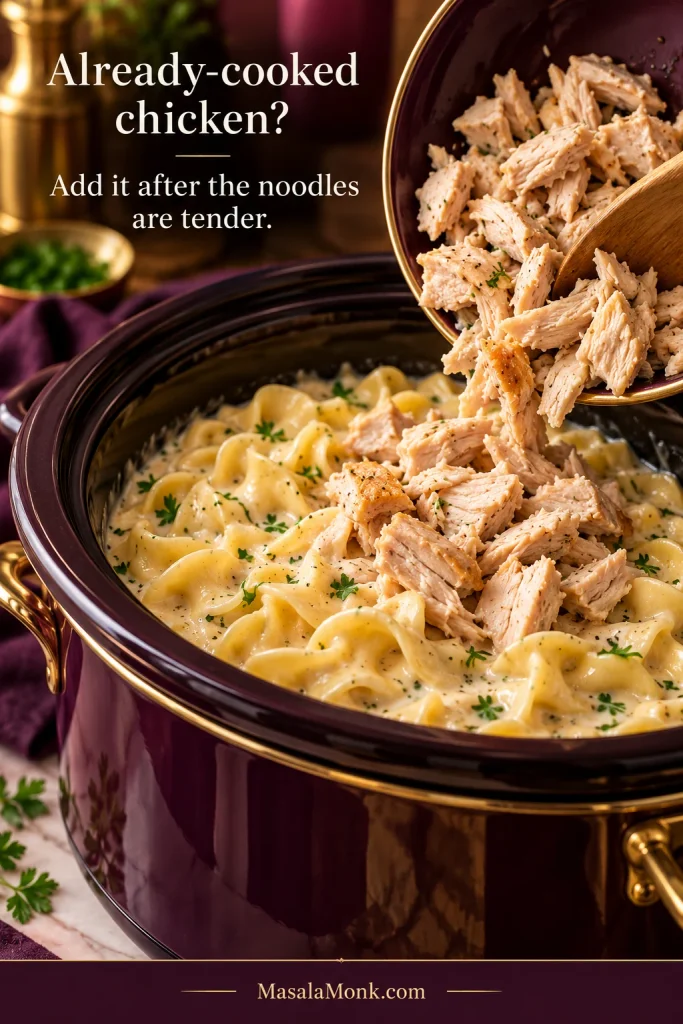
Already have cooked chicken? You can skip the long chicken stage and turn this into a much faster Crock Pot dinner. Replace the fresh onion and garlic with 1 teaspoon onion powder and ½ teaspoon garlic powder, since they will not have hours to soften in the sauce.
Combine the condensed soup, 2 cups (475 mL) broth, chicken base, onion powder, garlic powder, thyme, poultry seasoning and black pepper in the slow cooker. Heat on HIGH for about 30–45 minutes, until steaming, then stir in the cream and add the noodles. Reserve the remaining broth in case the noodles need more liquid.
The cooked chicken goes in only after the noodles are tender. If you’re using chilled leftover chicken, reheat it separately to 165°F (74°C) before folding in about 3 cups shredded chicken. If the rotisserie chicken is still hot, fold it through just before serving.
Got more cooked chicken to use? Chicken tetrazzini is another good home for rotisserie or leftover chicken.
Carrots, celery or peas
Carrots and celery can go in with the onion—up to about 1 cup total. Dice carrots fairly small, especially if you are cooking on HIGH. Stir peas in when the noodles are nearly tender.
For more than a handful of frozen vegetables, warm them separately first. A large cold addition can slow the noodle stage just when the sauce needs steady heat.
For a crisp green side instead, green beans almondine gives you tender-crisp beans, lemon and toasted almonds alongside the tender chicken and broad noodles.
No condensed cream of chicken soup
Skip the condensed soup, increase the heavy cream to ¾ cup (180 mL) and use 1–1½ teaspoons concentrated chicken base or paste, or the amount of bouillon your brand recommends for about 1 cup (240 mL) broth. Use 2 cups (475 mL) broth with the chicken and hold the remaining ½ cup (120 mL) in reserve.
Whisk 2 tablespoons cornstarch into the cold cream until smooth. Cook the chicken as directed, then remove it and stir the cream mixture into the sauce before adding the noodles. Leave the cooker on HIGH while the noodles cook.
This version starts thinner than the condensed-soup recipe and thickens as the cornstarch cooks. Add reserved broth only if the noodles are still firm and the sauce tightens first. Fold the chicken back in when the noodles are tender, then taste before adding more chicken base or salt.
Storing, Reheating and Freezing Chicken and Noodles
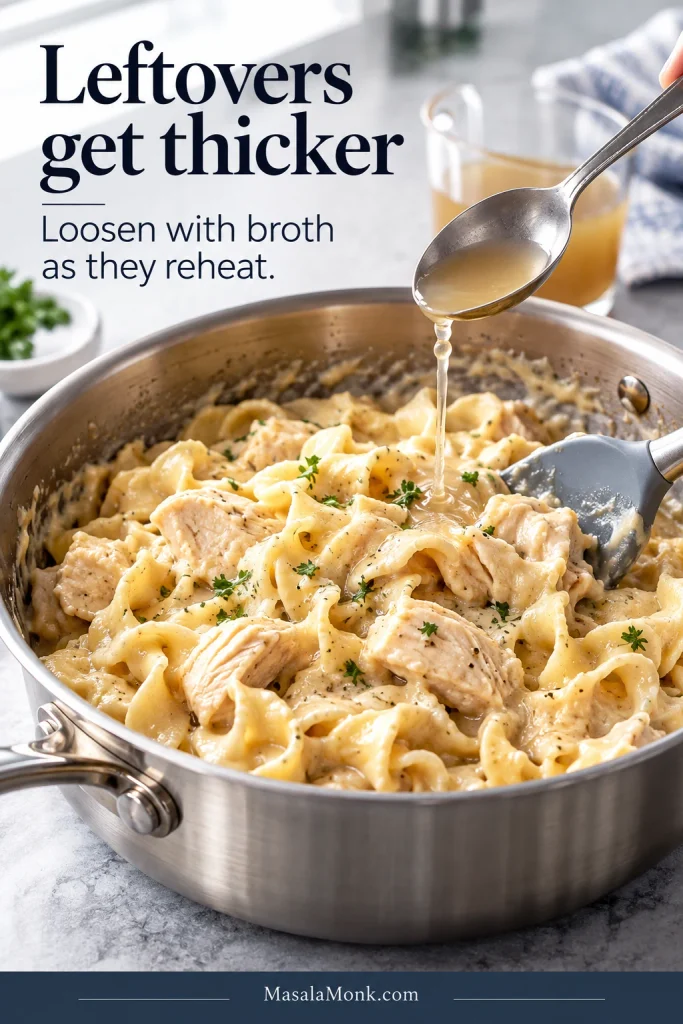
The noodles keep taking up moisture as the dish sits, so tomorrow’s chicken and noodles will be thicker than tonight’s.
Refrigerating
Divide leftovers into shallow containers and refrigerate within 2 hours. Use within 3–4 days.
Making it ahead
If this is tomorrow’s lunch as well as tonight’s dinner, keeping the noodles separate is worth the extra container. Reheat the chicken and sauce first, then add noodles only to the portions you are serving. The noodles will hold their texture much better.
Reheating
USDA guidance recommends reheating leftovers to 165°F (74°C), so use the stovetop or microwave rather than the slow cooker. Loosen the sauce with chicken broth a little at a time; if the consistency is already right, a small splash of cream can bring some richness back.
Freezing
For freezer meal prep, stop after the chicken has cooked and come out of the sauce. Cool and freeze the chicken and sauce base before adding the cream or noodles. Once thawed and reheated, stir in the cream and prepare the noodles fresh.
Fully assembled chicken and noodles can be frozen, but the noodles will be noticeably softer after thawing.
What Goes With Chicken and Noodles?
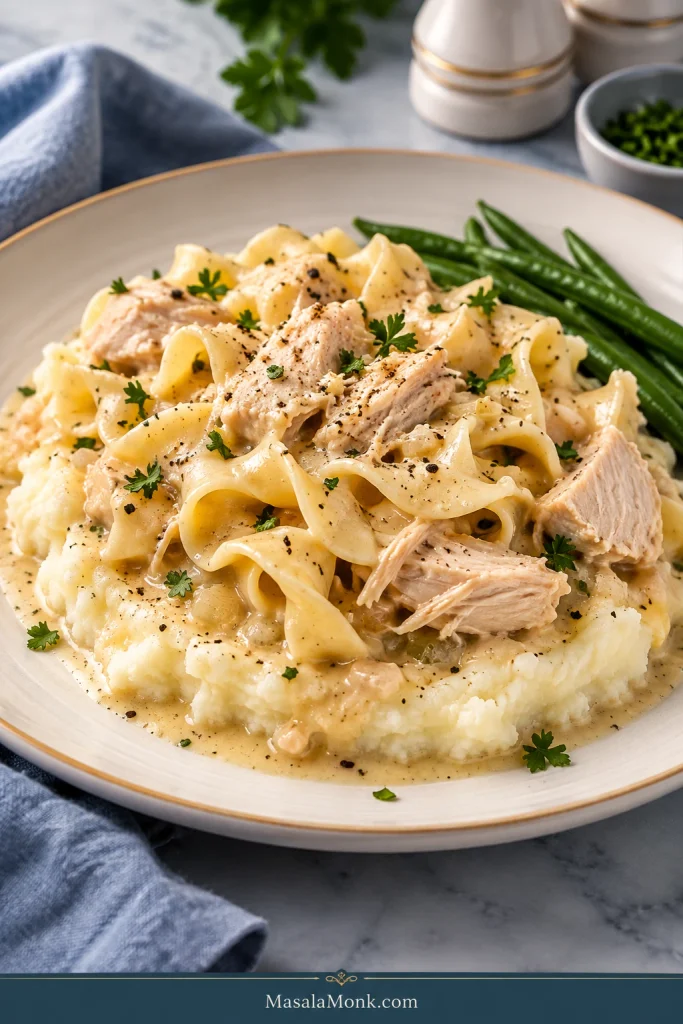
Chicken and noodles are filling enough to be the whole meal, especially with carrots or peas mixed in. A simple salad, roasted broccoli or green beans adds something fresh against the broad noodles and creamy sauce. Soft dinner rolls are good for catching any sauce left behind.
In parts of the Midwest, thick chicken and noodles are spooned right over creamy mashed potatoes. With something crisp and green alongside, you have a simple, substantial plate of tender chicken, broad noodles and plenty of sauce to catch with every forkful.
Recipe development disclosure: MasalaMonk developed this version by comparing established chicken-and-noodles methods, manufacturer guidance and recurring reader-reported problems. MasalaMonk has not independently kitchen-tested this exact formulation.








