
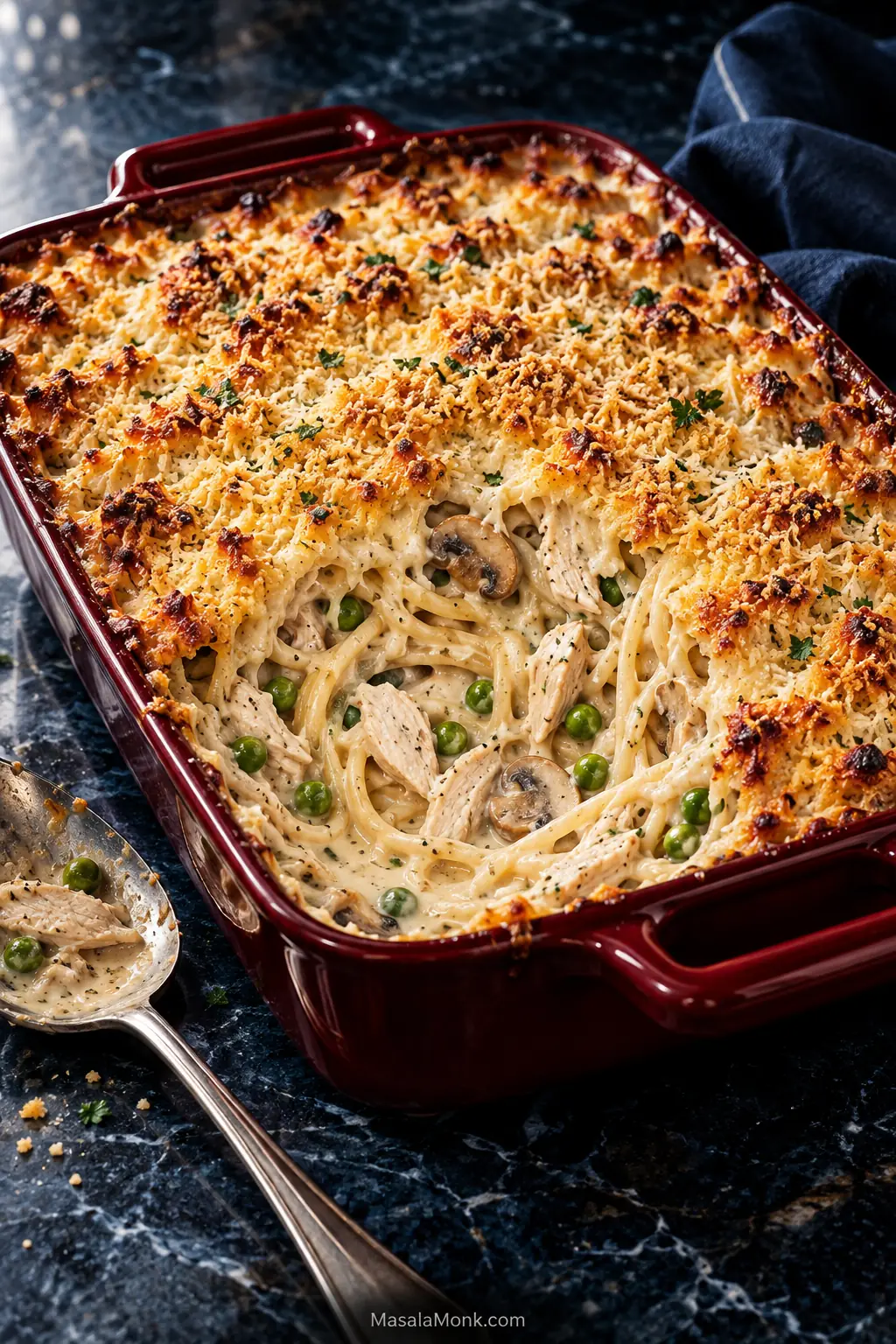
A good chicken tetrazzini recipe comes out of the oven bubbling at the edges, golden across the top and creamy underneath. The spaghetti keeps a little bite, the chicken sits in mushroom-Parmesan sauce, and when you scoop into the pan, the sauce still moves between the noodles instead of leaving you with a dry square.
This is the kind of comfort-food casserole that makes especially good sense when yesterday’s chicken needs to become tonight’s dinner. Rotisserie chicken works beautifully too. With the chicken already cooked and the sauce coming together in one main pan, most of the work is finished before the casserole reaches the oven.
Chicken tetrazzini is an American baked pasta casserole typically made with cooked chicken, long pasta, mushrooms and a creamy sauce, then finished with cheese or breadcrumbs. The trick is to let it look saucier before baking than you want it on the plate. The noodles keep taking up liquid as they bake and rest, so a casserole that already looks thick going into the oven can finish much drier than expected.
Make the Chicken Tetrazzini
Spaghetti, cooked chicken and browned mushrooms go into a pourable Parmesan cream sauce, then get a layer of mozzarella and crisp Parmesan-panko crumbs. This main version makes the sauce from scratch rather than using canned soup; the old-fashioned condensed-soup version is included farther down. The oven is mostly there to heat everything through and brown the top, not to cook the casserole until it stiffens. Because the chicken and sauce are already cooked and the pasta is nearly cooked, extra oven time mostly means more moisture loss rather than a better casserole.
Oven: 375°F / 190°C
Pan: 9×13 in / 23×33 cm, roughly 3 qt / 2.8 L
Rest: 10 minutes
Timing note: Times assume cooked chicken is ready to use.
A shallow dish or one filled close to the rim is worth setting on a rimmed sheet pan before baking. It is cheap insurance against bubbling sauce.
Cooking for fewer people? An 8×8-inch pan is the closest match for the depth of a half batch. A 9×9 also works, but the casserole will be shallower, so start checking it earlier.
Equipment
- Large pasta pot, about 6–8 qt / 5.5–7.5 L
- Large 12-inch / 30 cm skillet, sauté pan or Dutch oven
- Colander
- Whisk
- Wooden spoon or silicone spatula
- 9×13-inch / 23×33 cm baking dish, roughly 3 qt / 2.8 L
Ingredients
The sherry, peas, nutmeg and cayenne are optional and can be omitted without changing the core method.
Pasta, Chicken & Mushrooms
- 12 oz / 340 g dry spaghetti
- 4 loosely packed cups / about 18–20 oz / 510–565 g cooked chicken, chopped or coarsely shredded
- 12 oz / 340 g cremini or white button mushrooms, sliced
- 1 medium yellow onion, diced
- 4 garlic cloves, minced
- 1 tbsp / 15 ml olive oil
- 1 tbsp / 14 g unsalted butter
- 1 cup / 140 g frozen peas, no need to thaw, optional
- 1 cup / 240 ml pasta cooking water, reserved and used only if needed
Starting with raw chicken? Cook it first, let it cool enough to handle, then chop and measure what you need. This baked chicken breast recipe is an easy option when rotisserie or leftover chicken is not available.
Creamy Mushroom-Parmesan Sauce
- ¼ cup / 60 ml dry sherry, optional
- 4 tbsp / 56 g unsalted butter
- ¼ cup / 30 g all-purpose flour
- 3 cups / 720 ml low-sodium chicken broth
- 2 cups / 480 ml half-and-half
- ¾ cup / 75 g finely grated Parmesan
- 1 tsp dried thyme or 1 tbsp fresh thyme leaves
- 1 tsp fine salt, divided, plus more to taste
- 1 tsp freshly ground black pepper
- ⅛ tsp ground nutmeg, optional
- ⅛ tsp cayenne pepper, optional
- 1 tbsp / 15 ml fresh lemon juice
For the closest substitute for half-and-half, combine 1½ cups / 360 ml whole milk with ½ cup / 120 ml heavy cream. All whole milk works too when you specifically want a lighter sauce; the roux will still provide body, so there is no need to cook it unusually thick.
Cheese, Crisp Topping & Finish
- 1½ cups / 170 g shredded low-moisture mozzarella
- ½ cup / 30 g panko breadcrumbs
- ¼ cup / 25 g finely grated Parmesan
- 1 tbsp / 14 g unsalted butter, melted
- 2 tbsp chopped flat-leaf parsley, for finishing
Use low-moisture mozzarella here; fresh mozzarella can release enough water to loosen the casserole.
Method
1. Heat the Oven and Start the Pasta Water
Heat the oven to 375°F / 190°C and lightly grease the baking dish. Put a large pot of pleasantly salty water over high heat while you begin the mushrooms. Once it boils, lower the heat until you are ready to cook the spaghetti in Step 3.
2. Brown the Mushrooms Properly
Heat the olive oil and 1 tbsp / 14 g butter in the skillet or Dutch oven over medium-high heat. Add the mushrooms and ½ tsp salt.
At first, the pan will get wetter, not drier. Keep going. Once the liquid disappears and the sound shifts back toward a sizzle, let the mushroom edges take on color; that is when their deeper savory flavor starts to develop. Depending on your pan and heat, this usually takes 8–12 minutes.
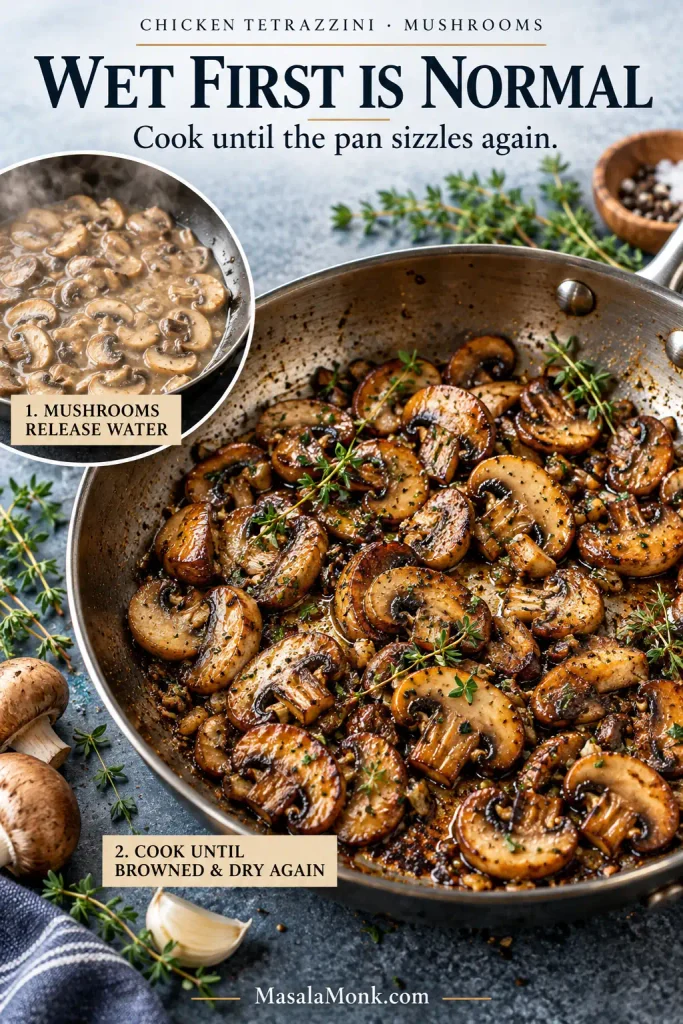
With a skillet smaller than 12 inches / 30 cm, brown the mushrooms in two batches instead of crowding them into one steaming layer.
Add the onion and cook for 4–5 minutes, until softened. Stir in the garlic and thyme for 30–60 seconds, just until fragrant.
Using sherry? Pour in ¼ cup / 60 ml and let it bubble for 1–2 minutes, until the sharp alcohol smell fades. Skipping it changes nothing else; move straight to the butter and flour without replacing it with extra broth.
3. Make the Cream Sauce and Cook the Spaghetti
Reduce the skillet heat to medium and add the 4 tbsp / 56 g butter. Once melted, sprinkle the flour evenly over the mushrooms and onions and stir for 1–2 minutes so no dry flour remains.
Gradually pour in the chicken broth while stirring and scraping the bottom of the pan. Once the mixture loosens, whisk if needed to smooth out any floury pockets. Add the half-and-half and bring the sauce to a gentle simmer—not a hard boil.
Bring the pasta water back to a full boil and add the spaghetti. Cook it about 2 minutes less than the package’s al-dente time. When the box gives a range, work from the lower end. The strands should bend easily but still resist slightly in the center.
While the spaghetti cooks, finish the sauce: let it simmer gently for 4–6 minutes and judge the texture rather than relying only on the clock.
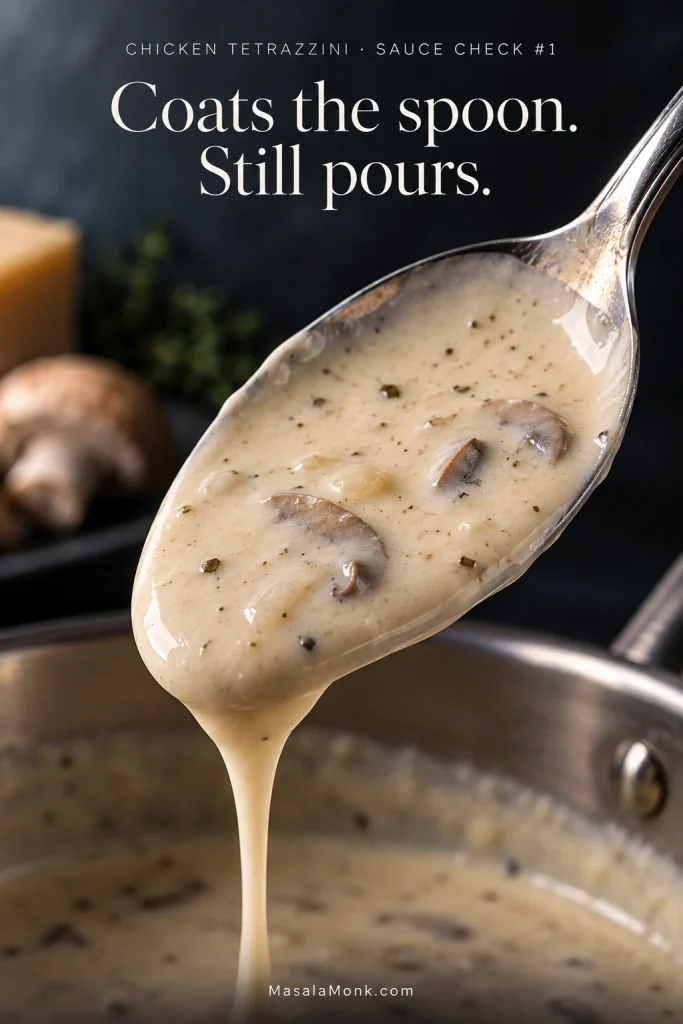
First Sauce Check: Leave Room for the Pasta
It should lightly coat the back of a spoon and pour easily. If the sauce already sits in a thick mound, stop reducing it.
Reduce the heat to low. Stir in ¾ cup / 75 g Parmesan, the remaining ½ tsp salt, black pepper, optional nutmeg and optional cayenne. Finely grated Parmesan melts most smoothly; some pre-shredded brands can make the sauce less silky.
Stir in the lemon juice and taste. It should not make the sauce taste lemony; it cuts through the cream, broth and Parmesan so the finished casserole tastes rich rather than flat. Add more salt if needed before the chicken and spaghetti soften the overall seasoning.
Just before the spaghetti reaches its stopping point, scoop out 1 cup / 240 ml pasta water. Drain the pasta without rinsing it and take it straight to the sauce.
4. Combine Before It Goes in the Oven
Fold the cooked chicken, drained spaghetti and frozen peas, if using, into the sauce. Turn everything gently until the sauce works its way between the strands instead of sitting around the outside of a pasta bundle.
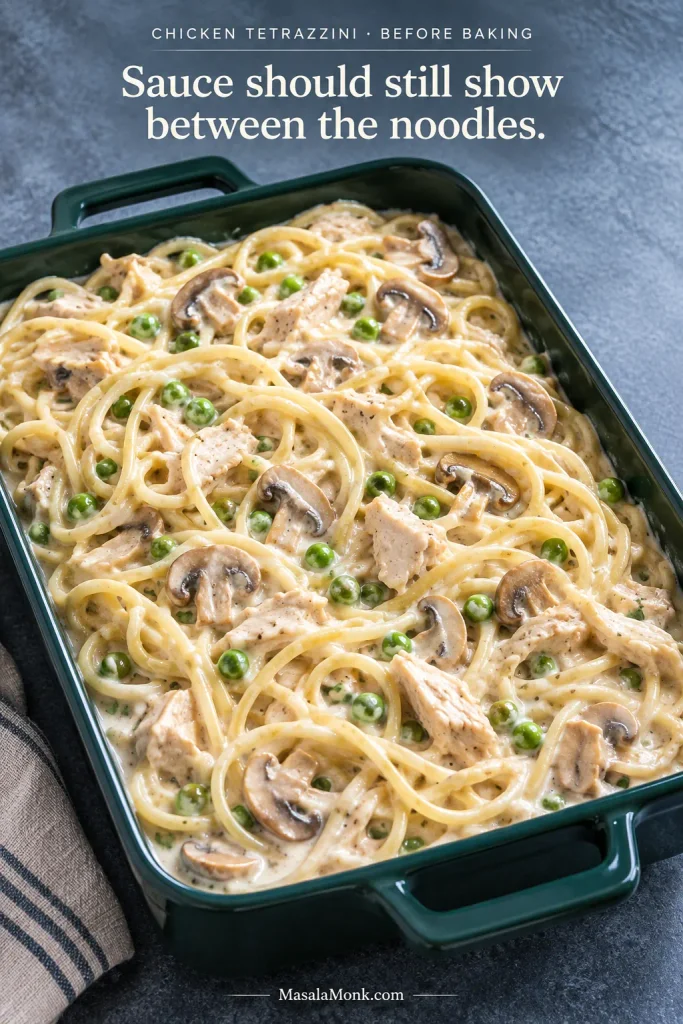
Second sauce check: visible sauce should remain between the noodles and at the bottom of the pan. A tight mixture needs reserved pasta water 2 tbsp / 30 ml at a time. You may not need any at all, so do not add the whole cup automatically.
5. Bake, Brown and Rest
Transfer everything to the prepared dish without packing it down. Scatter the mozzarella over the surface.
Mix the panko with the ¼ cup / 25 g Parmesan and melted butter, then sprinkle it evenly over the mozzarella.
Bake uncovered for 20–25 minutes. Stop when the edges are bubbling, the center is steaming hot, the cheese has melted and sauce remains visible between the noodles.
A hot center with a pale top only needs 1–2 minutes under the broiler. That gives the crumbs color without leaving the whole casserole in the oven longer. Watch it closely.

Rest for 10 minutes, then scatter the parsley over the top. The crisp crumbs and salty Parmesan are a welcome contrast to the creamy middle.
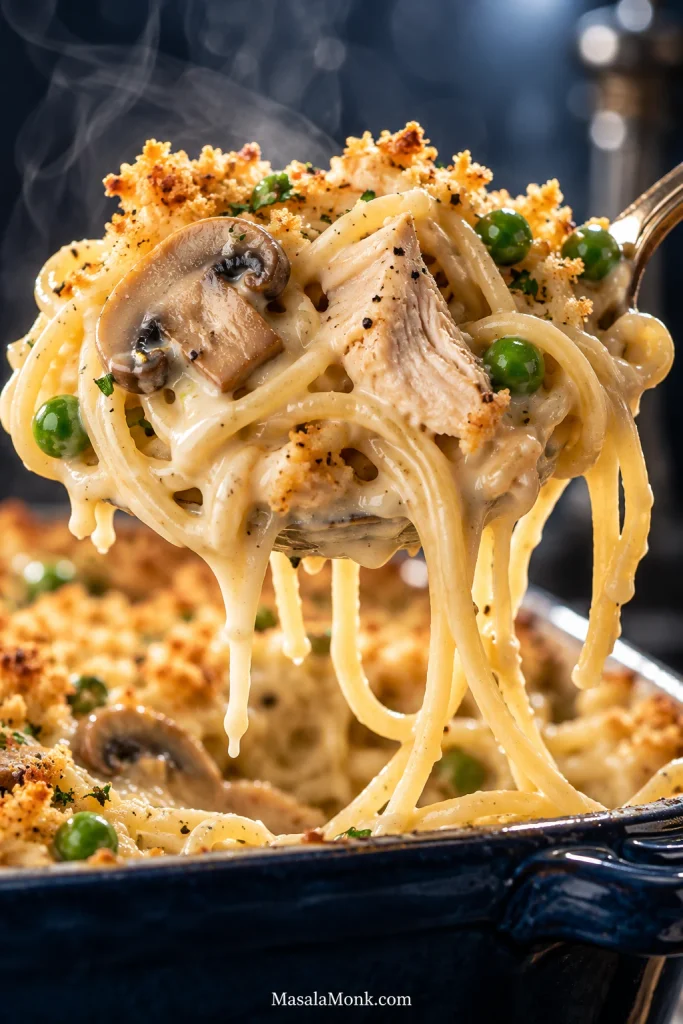
What Creamy Chicken Tetrazzini Should Look Like
Most of the decisions that determine the final texture happen before the baking dish reaches the oven. The finished scoop should confirm those choices: separate strands, sauce that still clings and a crisp topping over a creamy middle.
More Help With the Recipe
Get the Texture Right
Change the Recipe
Plan Ahead
How to Keep Chicken Tetrazzini Creamy
Why the Two Sauce Checks Matter
The first check happens before the spaghetti goes in because the sauce is not finished changing. As it simmers, flour gives it body, Parmesan thickens it further, and both continue tightening as the sauce sits. Taking it too far at this stage leaves very little room for what happens next.
The second check matters because cooked pasta keeps taking up liquid after it meets the sauce, including while the casserole bakes and rests. Only after the chicken and spaghetti are mixed in can you see whether there is enough sauce around the noodles.
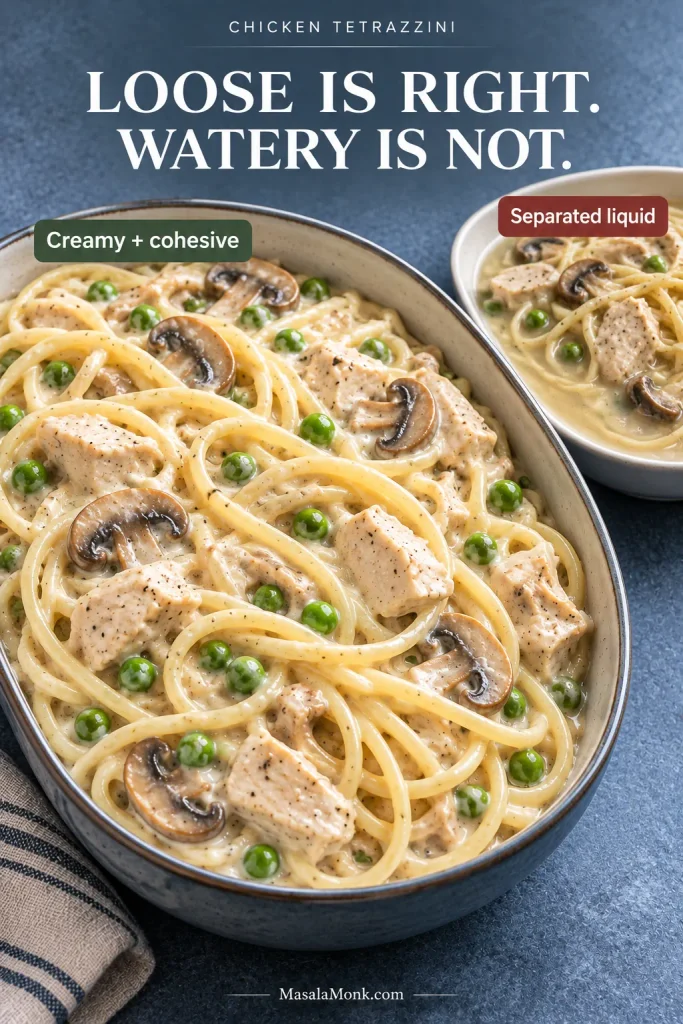
That is also why loose does not mean watery. A good pre-bake mixture is creamy and cohesive. Thin liquid separating around the noodles points to a different problem; a sauce that flows between them is doing what it should.
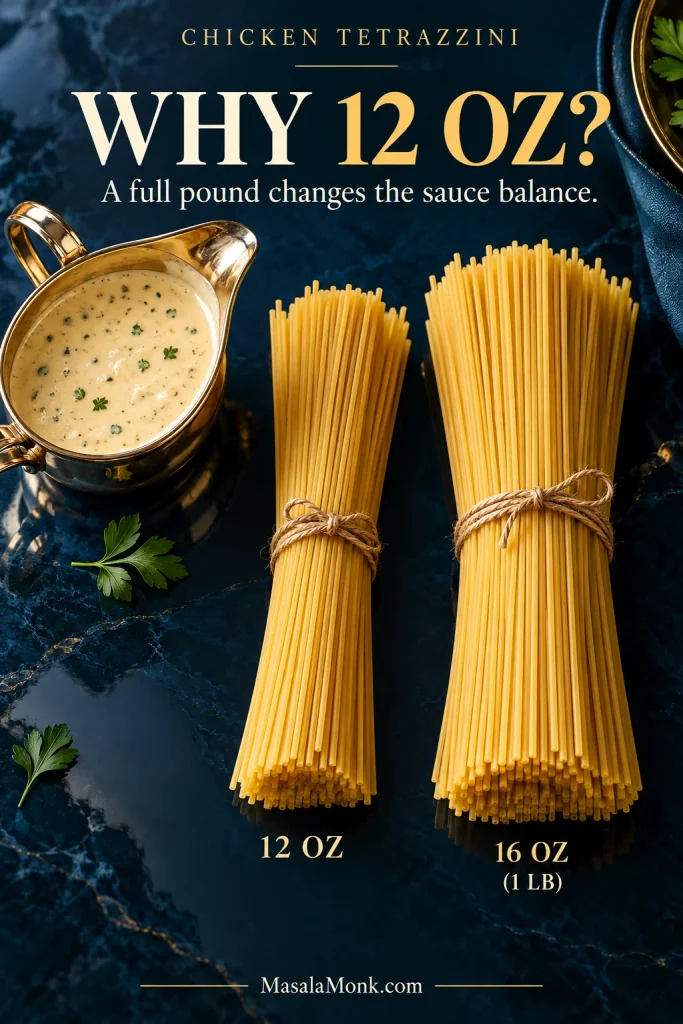
Why This Recipe Uses 12 Ounces of Spaghetti
A full 1-pound box works, but it crowds this amount of sauce. With 12 oz / 340 g spaghetti, the chicken and mushrooms stay noticeable and there is more sauce around each forkful. Using all 16 oz / 454 g pasta calls for more sauce if you want the same creamy balance.
Using another pasta shape? See spaghetti, linguine and other pasta choices.
Cook the Mushrooms Past Their Watery Stage
Waiting for the pan to dry does two jobs: it lets the mushrooms brown, which builds deeper savory flavor, and it keeps their water out of the cream sauce. A wet pan means they need more time.
The same technique matters in a creamy mushroom sauce. Add dairy while the mushrooms are releasing water and the finished sauce can end up thin and muted.
Other vegetables need similar treatment. Wilt and squeeze spinach, sauté zucchini until its water is gone, and lightly cook broccoli before it goes into the casserole.
If the Tetrazzini You Remember Used Cream of Mushroom Soup
You are not remembering it wrong. Many American chicken tetrazzini recipes use condensed cream of mushroom or cream of chicken soup, sometimes with sour cream, pimiento, bell pepper, celery or extra cheese.
The homemade sauce above gives you more control over salt and thickness, but that does not make the soup version less legitimate. For plenty of people, that creamy, pantry-friendly casserole is the tetrazzini they grew up eating.

Old-School Condensed-Soup Shortcut
Cook the 12 oz / 340 g spaghetti 2 minutes shy of al dente, then complete the mushroom, onion, garlic and thyme step from the main recipe, including the optional sherry if using. Skip the roux and homemade cream sauce. Instead, whisk together the shortcut sauce below and fold it into the cooked mushrooms, chicken, spaghetti and peas, if using.
- 1 can condensed cream of mushroom soup, about 10.5 oz / 298 g
- 1 can condensed cream of chicken soup, about 10.5 oz / 298 g
- 1 cup / 240 g sour cream
- 1 cup / 240 ml whole milk
- ½ cup / 120 ml low-sodium chicken broth, plus more only if needed
- ½ cup / 50 g grated Parmesan
- Black pepper to taste
Check the consistency before the mixture goes into the baking dish. Condensed soup, Parmesan and rotisserie chicken can already bring plenty of salt, so taste before adding more. Add the mozzarella and panko topping, then bake at 375°F / 190°C for 20–25 minutes, following the same doneness cues as Step 5. Rest for 10 minutes before serving.
Older-School Details You Can Lean Into
These are directions you can take the casserole rather than requirements for the core recipe:
- Pimiento: fold in ¼–½ cup drained diced pimiento.
- Green bell pepper or celery: dice finely and sauté with the onion.
- Dry sherry: keep it in for the aromatic note common to many older cream-sauce versions.
- Sage: especially good with turkey.
- Toasted slivered almonds: add a little retro crunch.
- Buttery crackers: use them instead of panko for a softer, richer topping.
Chicken Tetrazzini vs. Chicken Spaghetti
Chicken tetrazzini usually uses a creamy white sauce, mushrooms and Parmesan; Southern chicken spaghetti more often leans on cheddar, condensed soup and peppers or tomatoes. The lines can blur in older casserole recipes, but those flavor patterns are a useful way to tell the two styles apart.
← Back to the main recipe · See more variations →
Ways to Change the Recipe
Spaghetti, Linguine and Other Pasta Choices
Linguine can replace spaghetti 1:1 by weight and gives the casserole a broader, slightly heavier bite. Spaghetti keeps the texture a little lighter. Thin spaghetti and vermicelli work too, but both soften faster, so pull them from the water earlier.
No Mushrooms? Leave Them Out
You do not need to replace the mushrooms with an equal amount of something else. Broccoli is probably the easiest vegetable substitute. Wilted spinach also works when squeezed dry, while sautéed bell pepper fits particularly well with the old-fashioned casserole style.
Turkey, Gruyère and Cream Cheese
Cooked turkey can replace the chicken 1:1 and is one of the easiest ways to turn holiday leftovers into a different dinner. For a nuttier top, replace half the mozzarella with Gruyère while keeping the Parmesan in the sauce.
Cream cheese changes the casserole more noticeably. Melt 2–4 oz / 55–115 g into the warm sauce when you want it thicker and tangier, then loosen it with broth or reserved pasta water as needed. If that richer cream-cheese-and-cracker direction is what you are after, Million Dollar Chicken Casserole is built around it.
When the Casserole Goes Sideways
Most problems trace back to four things: pasta cooked too far, water carried in by vegetables, sauce that was too thick or thin, or too much time in the oven. Some can be corrected at the table; mushy pasta is mostly a lesson for the next batch.
Too Loose Before Baking
A creamy, cohesive mixture does not need thickening just because it looks loose. The pasta will take up more sauce in the oven and again during the rest. Thin liquid separating from the creamy part means the mixture is genuinely watery, not simply loose.
Watery After Baking
Give the casserole the full 10-minute rest first. Liquid that remains visibly separated after that usually points to excess moisture from mushrooms or another vegetable, or a sauce that was too thin before assembly.
Dry Tetrazzini
The usual causes are overcooked pasta, over-reduced sauce or too much oven time. An already-baked portion can often be improved with a spoonful or two of warm milk or broth.
Working with leftovers rather than a fresh bake? Jump to the reheating method.
Mushy Pasta
Mushy tetrazzini usually starts with pasta cooked too far before baking. There is not much to reverse once that has happened, so stop the first boil sooner next time.
Bland Sauce
Correct the salt first, then look at black pepper, Parmesan and acidity. A small squeeze of lemon can wake up a flat sauce without turning the casserole into lemon pasta.
Grainy Sauce
Keep the dairy below a hard boil and lower the heat before adding Parmesan. At the first sign of graininess, take the sauce off the heat and whisk gently instead of pushing it with more heat.
← Back to the recipe · Make it ahead →
Make It Ahead Without Drying It Out
Tonight → Tomorrow
You can assemble chicken tetrazzini up to about 24 hours ahead, which is useful when you want dinner finished before people arrive or need a casserole ready to take somewhere the next day. Stop before adding the panko, cover the casserole and refrigerate it. Keep the crumb mixture separate so it stays crisp.
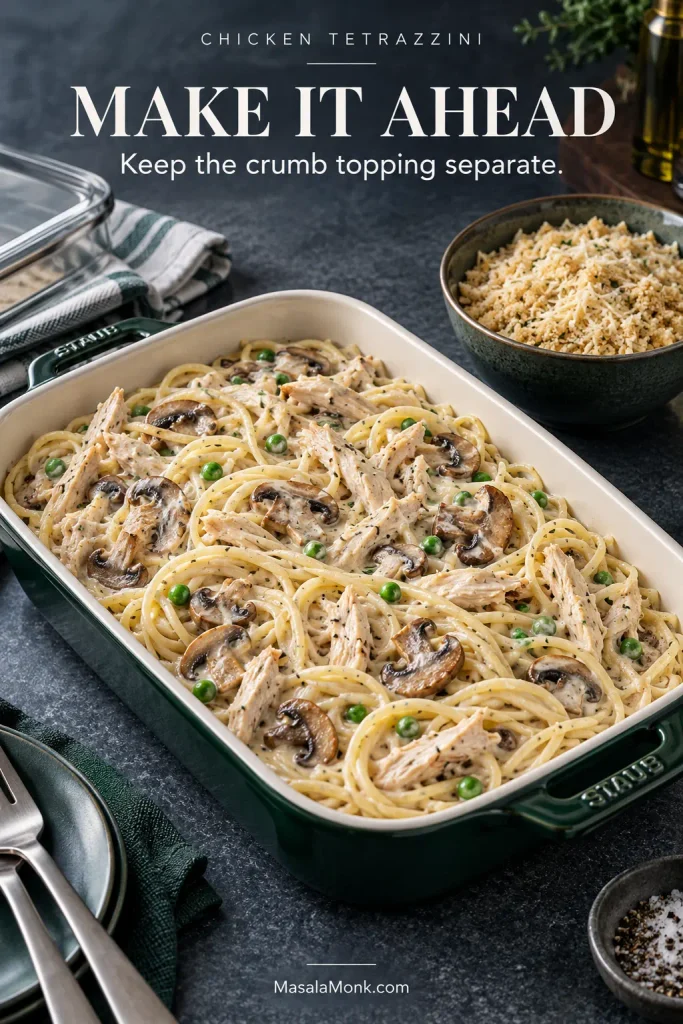
For an overnight casserole, leave the pasta mixture a touch looser than you would for immediate baking because the noodles will continue taking up sauce in the refrigerator. A mixture that already looks tight can take ¼ cup / 60 ml broth or reserved pasta water. Add another ¼ cup / 60 ml only if it still looks tight.
Just before baking, add the panko. A chilled casserole usually needs another 10–15 minutes. Look for bubbling edges and a thoroughly hot center. For food safety, the center should reach 165°F / 74°C.
With a glass baking dish, follow the manufacturer’s guidance before moving a very cold dish into a hot oven.
Freezer → Dinner
Freeze tetrazzini before baking when possible; the pasta holds up better that way. Assemble it with cooled or just-warm components, cover well and chill promptly before freezing. For best quality, use it within about 3 months.
Keep the panko topping separate when convenient. Thaw the casserole overnight in the refrigerator, add the topping and bake it as a chilled casserole.
Leftovers → Lunch
Add 1–2 tbsp / 15–30 ml milk or chicken broth per serving, cover and reheat until thoroughly hot. For a larger amount, drizzle a few tablespoons between portions before covering the dish with foil.
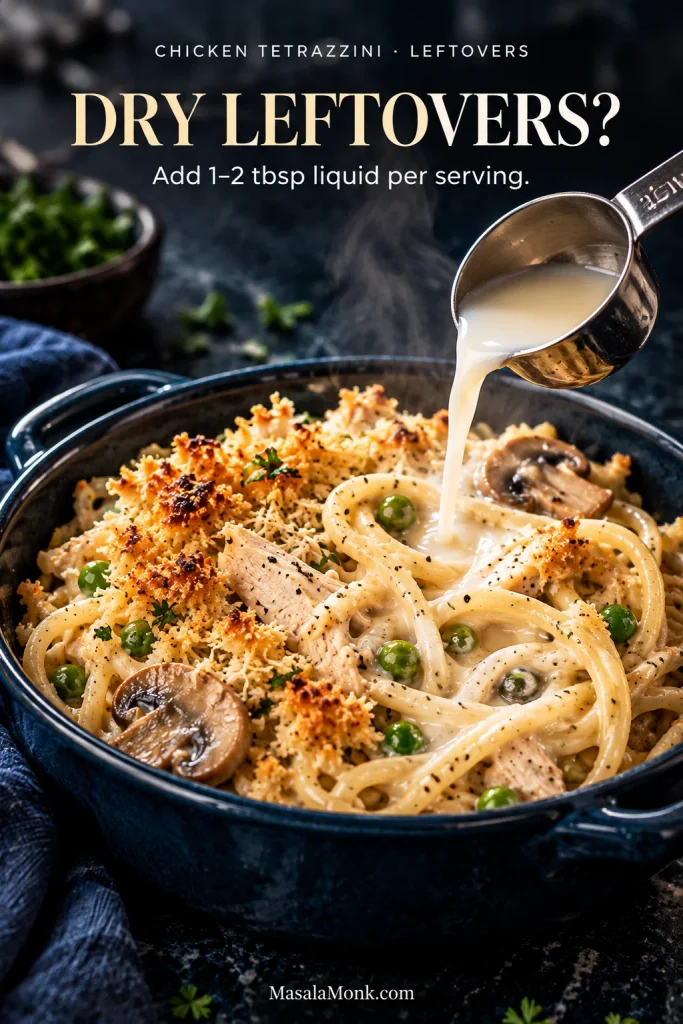
Refrigerate cooked leftovers within 2 hours and use them within 3–4 days. USDA guidance recommends reheating leftovers to 165°F / 74°C throughout. See the USDA leftovers and food-safety guidance.
← Back to the recipe · Back to top ↑
What to Serve With Chicken Tetrazzini
After a creamy casserole, something sharp, crisp or green feels especially good on the plate. A simple salad, roasted asparagus or broccoli all work. Green beans almondine bring lemon, crisp-tender beans and toasted almonds—a useful contrast to the rich pasta. Garlic bread makes sense when you want to lean all the way into comfort food.
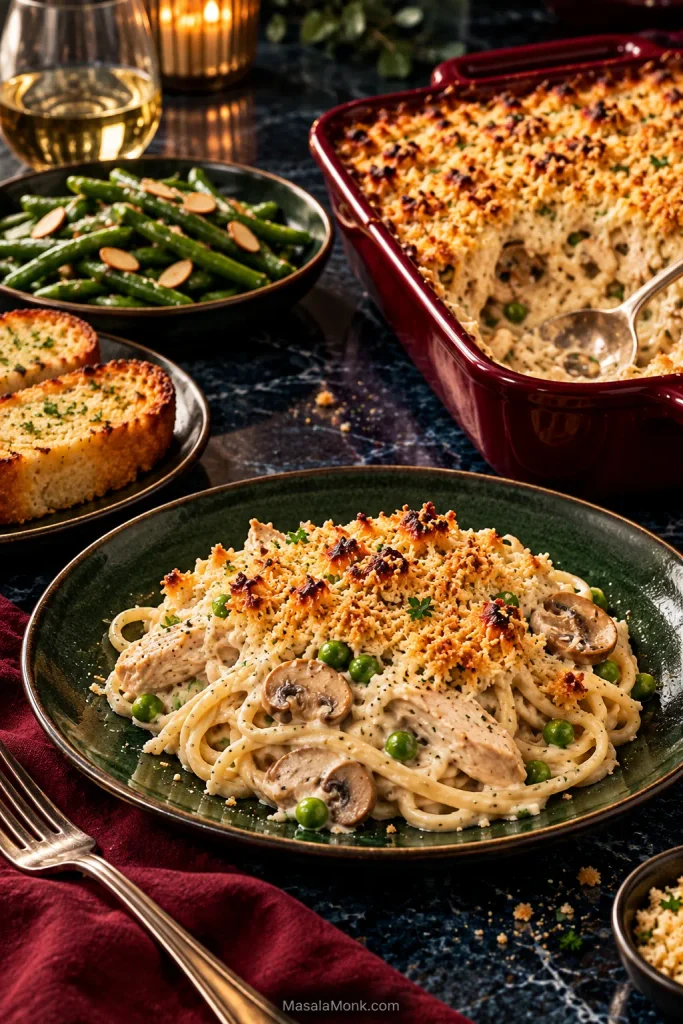
Once you know the cues—firm pasta, properly browned mushrooms, a pourable sauce and a short bake—tetrazzini stops feeling like a casserole you have to hope turns out. It becomes the kind of dinner you can make from leftover chicken, assemble for tomorrow, or put on the table for a crowd with confidence. Give it 10 minutes to rest, then serve while the crumbs are crisp and the middle is creamy.








