“`html
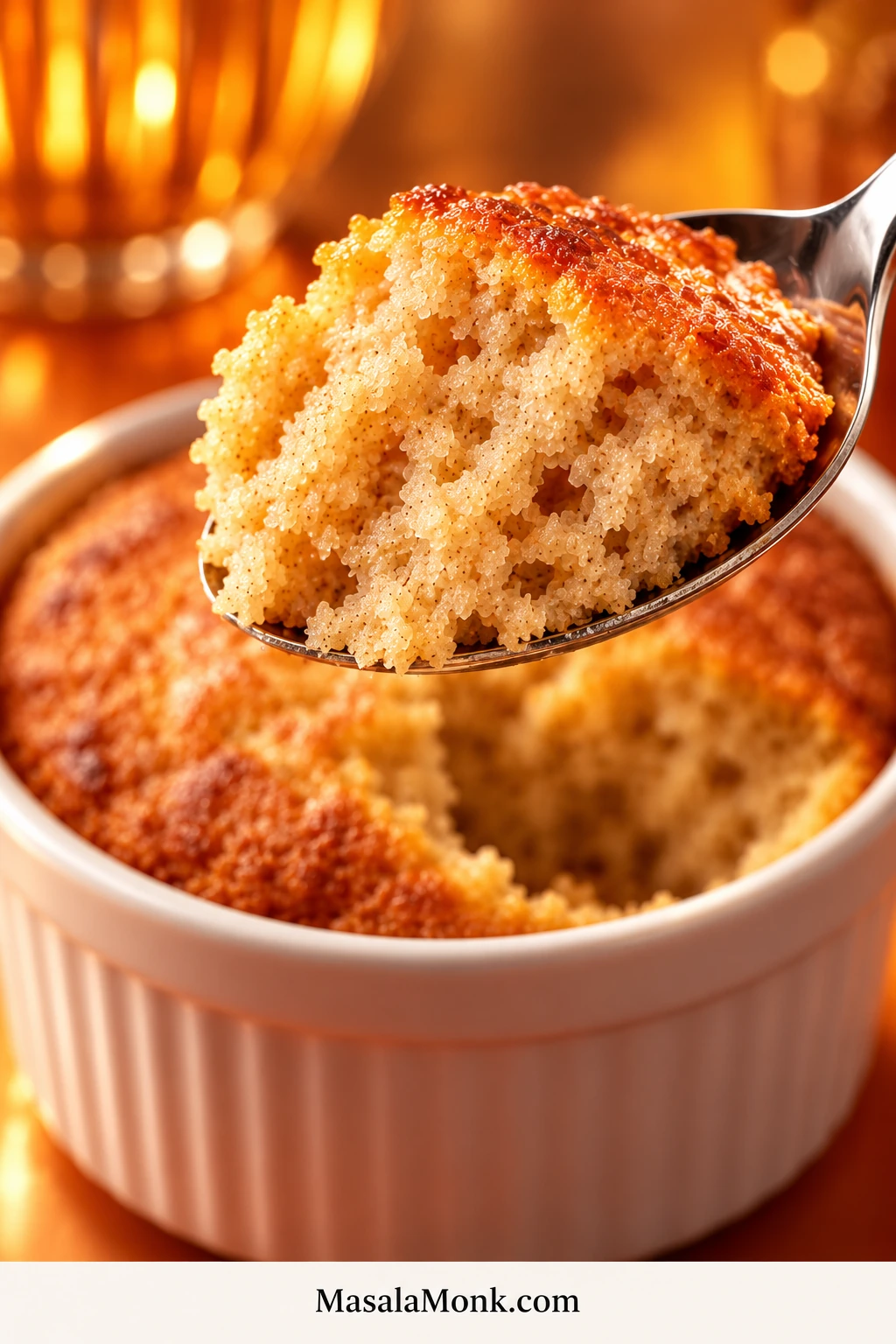
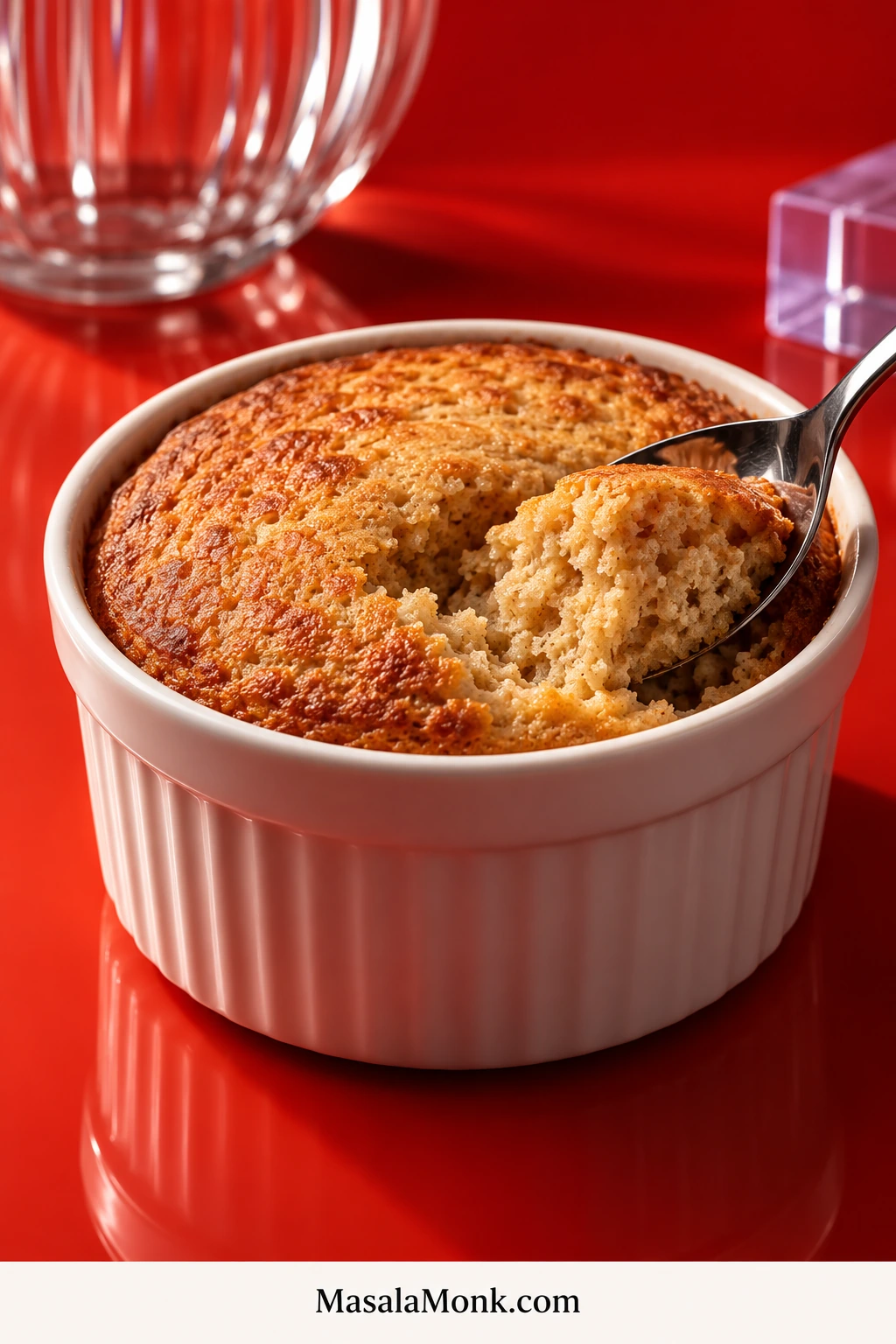
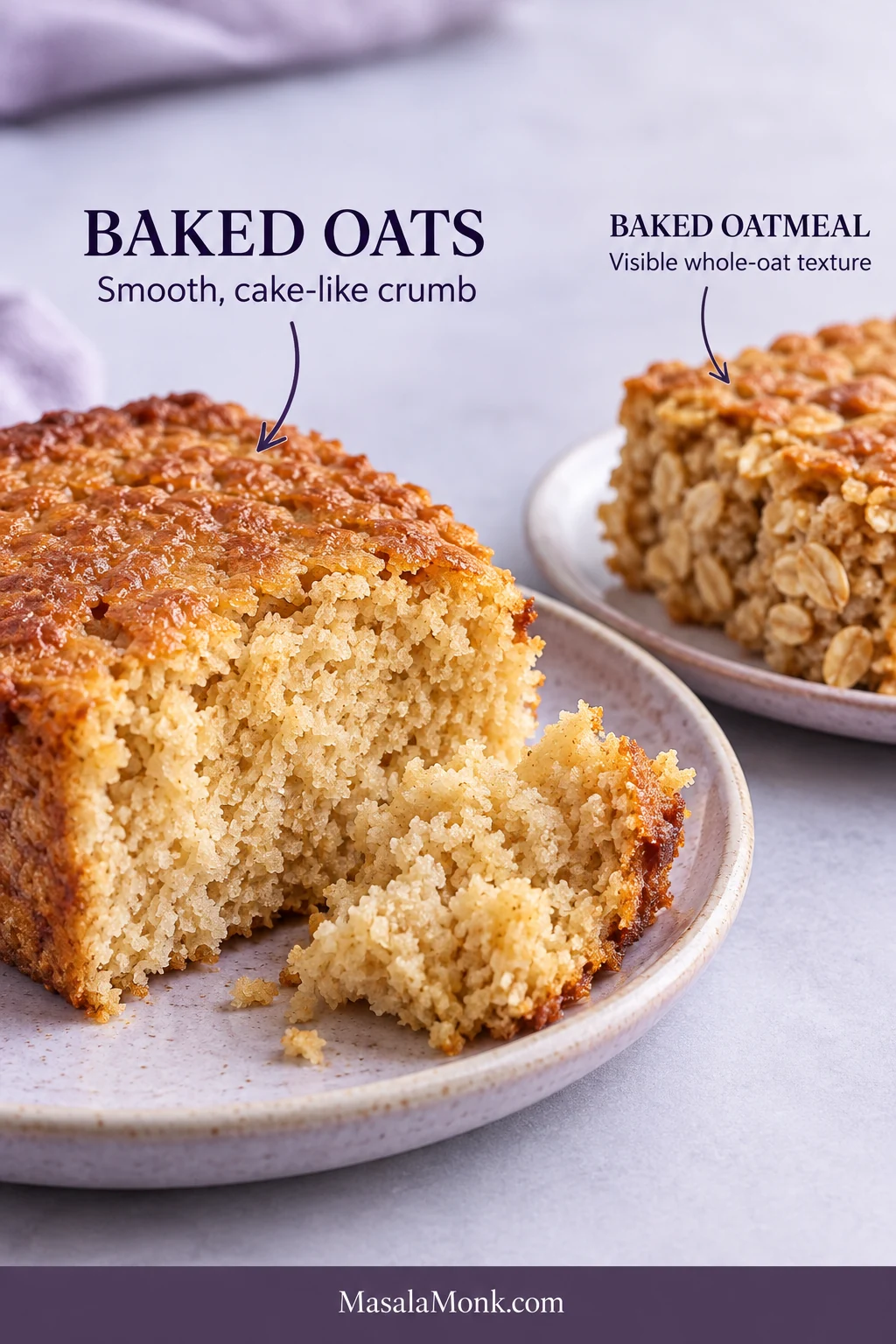
In this baked oats recipe, rolled oats are blended into a smooth batter that bakes up soft and cake-like. Banana brings sweetness and moisture, the egg gives the batter structure, milk loosens it, and baking powder supplies the lift. Unlike classic baked oatmeal, the oats are blended smooth rather than remaining visibly intact.
The batter takes about 5 minutes to prepare, bakes for about 20–25 minutes, then rests for 5–10 minutes. It makes one generous serving.
If you prefer visible oats and a softer, scoopable breakfast, make our baked oatmeal recipe instead. This one is chasing cake.
Read the Batter, Then Read the Center
| Stage | What to Look For |
|---|---|
| Going in | Aim for: smooth batter that falls in a thick ribbon and slowly levels. Needs attention: a watery mixture or a stiff mound that barely moves. |
| Coming out | Aim for: a risen top, set edges and a lightly springy center. Needs more time: liquid batter still moving beneath the surface. |
Baked Oats Recipe for One
Equipment
- A small blender
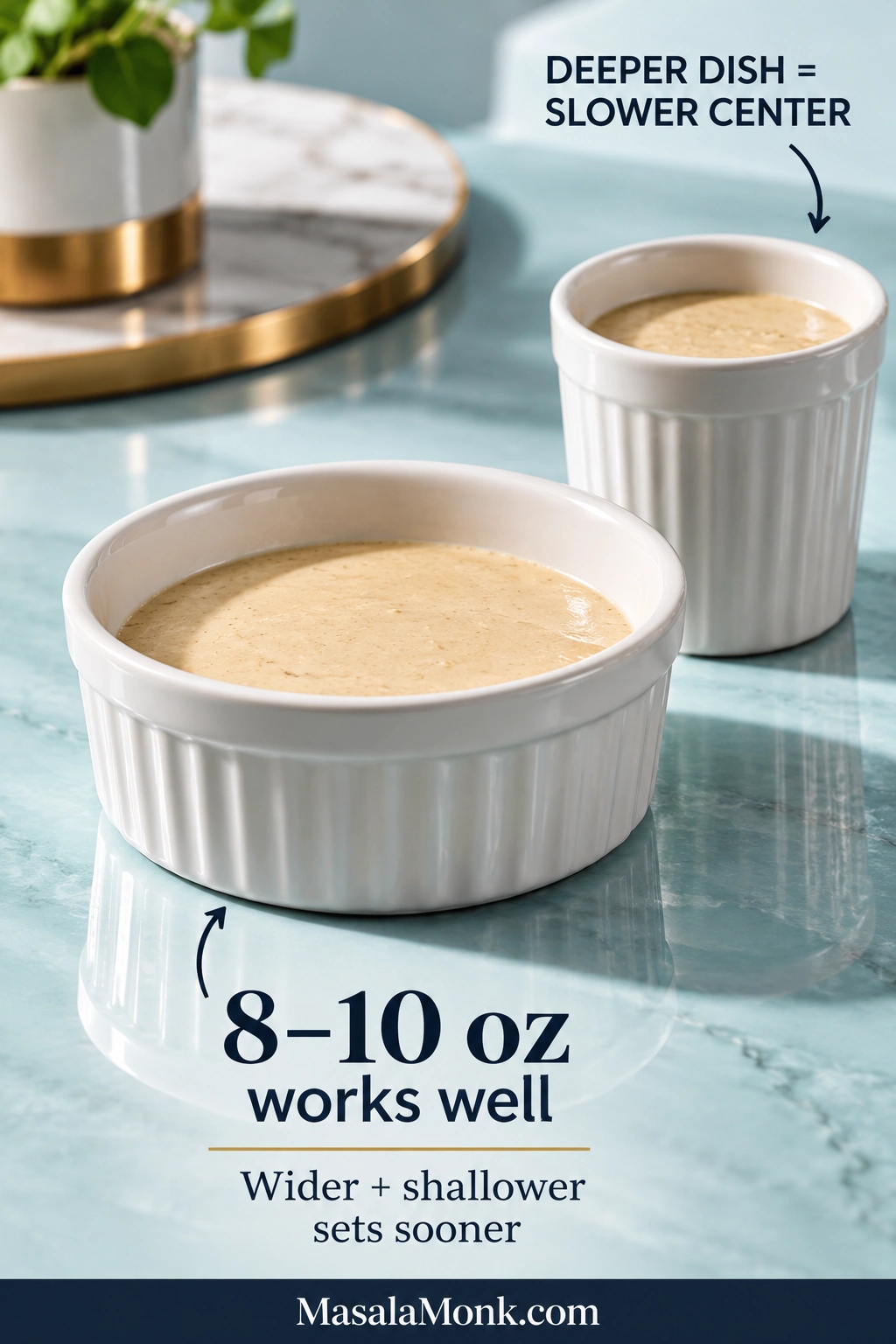
- An 8–10 oz / 240–300 ml oven-safe ramekin
- A kitchen scale or measuring cups and spoons
- A small spatula
Ingredients
- ½ cup rolled oats (45 g / 1.6 oz)
- ½ medium very ripe banana (about 60 g peeled / 2.1 oz)
- 1 large egg (about 50 g without shell)
- 3 tablespoons milk (45 ml / 1.5 fl oz), dairy or plain unsweetened nondairy
- 1 tablespoon maple syrup (15 ml / 0.5 fl oz)
- ½ teaspoon baking powder
- ½ teaspoon vanilla extract (2.5 ml)
- ⅛ teaspoon fine salt
- ¼ teaspoon ground cinnamon, optional
Before You Start
- Use the banana weight if you can. Bananas vary enough that “half a medium banana” can be misleading.
- Mind the depth. Leave some headroom for the batter to rise. A wider, shallower ramekin will generally set a little sooner than a deep, narrow one, so don’t rely on time alone.
Instructions
1. Preheat the Oven
Heat the oven to 350°F (175°C conventional / 160°C fan). Lightly grease the ramekin with butter, neutral oil or nonstick cooking spray.
2. Blend Until Smooth
Add the oats, banana, egg, milk, maple syrup, baking powder, vanilla, salt and cinnamon, if using, to the blender. Blend until smooth, with no obvious oat flakes left.
3. Check the Batter
Lift the spatula. The batter should fall in a thick ribbon and slowly settle back into itself. A stiff mound needs a little more milk; blend in 1 teaspoon at a time. By contrast, a thin, drink-like batter usually means too much banana or liquid. Check the measurements before adding anything else; extra oats will thicken the batter, but they’ll also change the oat-to-liquid ratio.
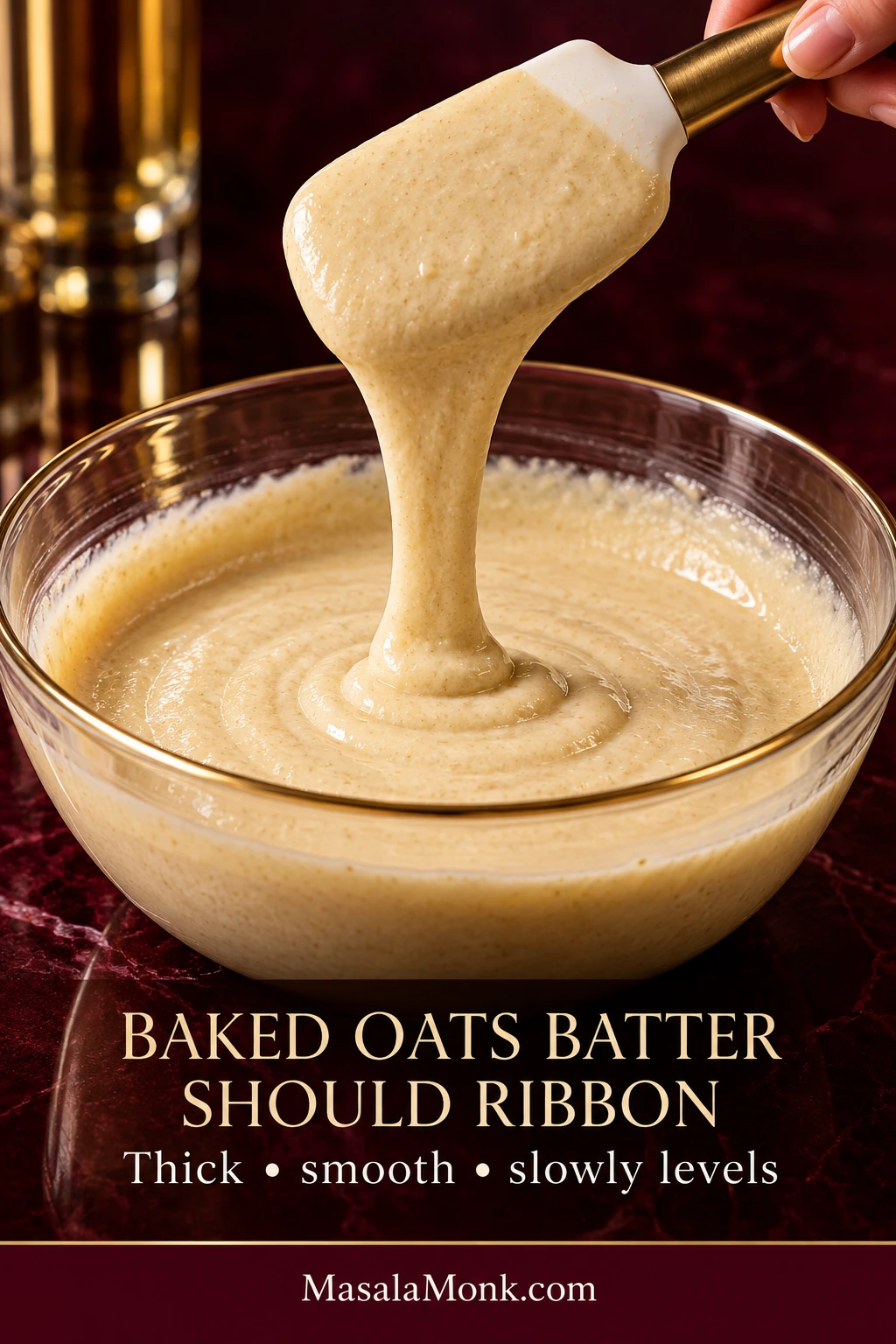
Pour into the prepared ramekin and bake straight away.
4. Bake Until Just Set
Start checking at about 20 minutes. The baked oats are ready when the edges are set and the top has risen. When lightly pressed, the center should spring back, with no liquid batter moving underneath. A toothpick inserted into the oat crumb can come out with a few moist crumbs.
Don’t worry if the top is still pale. Check the middle before giving it more time; depending on the ramekin and your oven, the bake will usually take about 20–25 minutes.
5. Let It Rest
Give the baked oats 5–10 minutes before digging in. As the steam settles, the middle firms slightly into a tender, cake-like crumb.
Recipe Notes
- No blender: Mash the banana until very smooth. Whisk in the egg, milk, maple syrup and vanilla. Add 45 g oat flour, baking powder, salt and cinnamon, if using, then whisk until no dry pockets remain.
- Gluten-free: Choose oats labeled gluten-free if needed. The FDA’s gluten-free labeling guidance explains the standard for foods carrying that claim.
Which Oats Work Best?
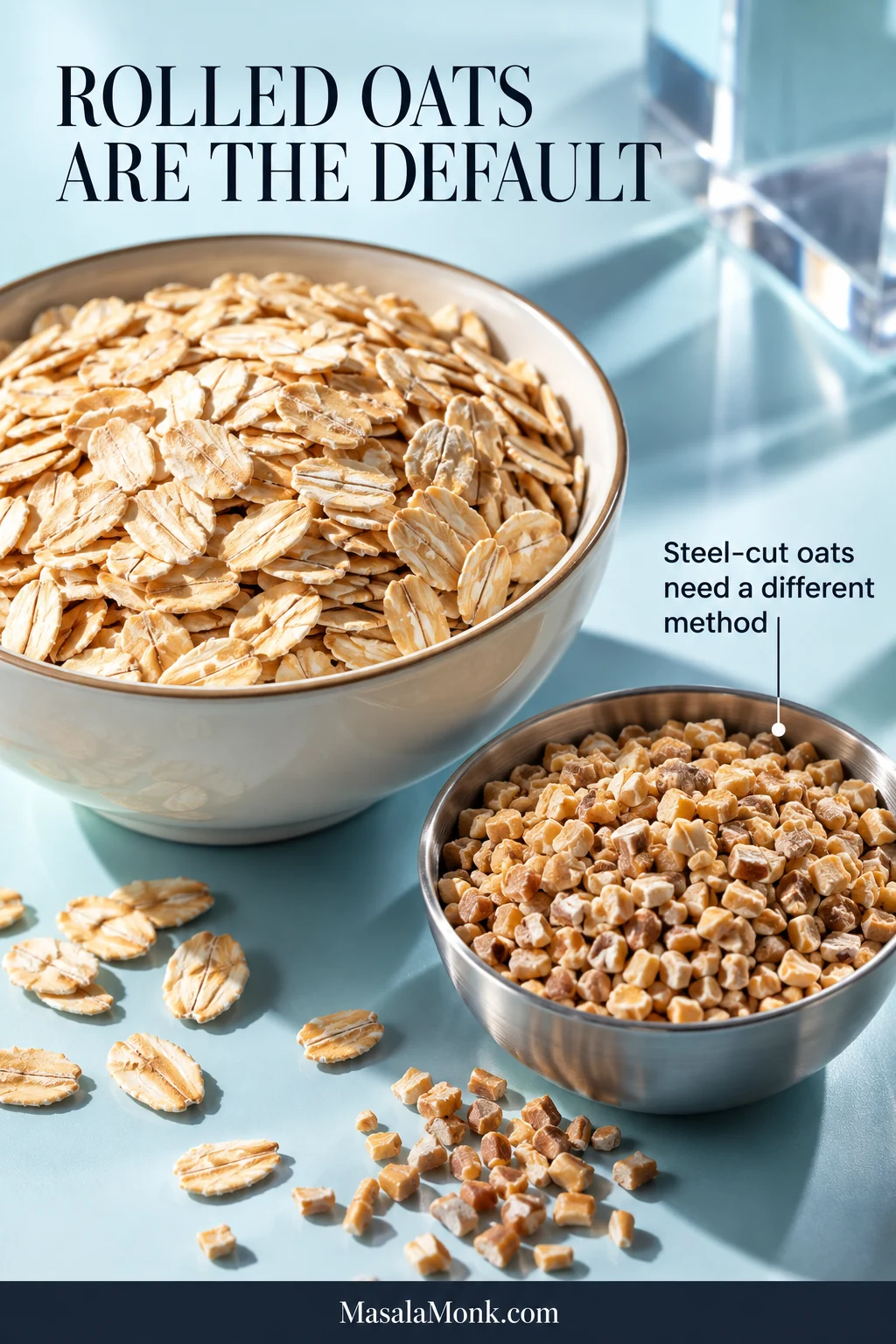
- Old-fashioned rolled oats: the first choice here because they blend smoothly while giving the batter enough body.
- Quick oats: fine at the same weight; they soften quickly and blend easily.
- Oat flour: works at the same 45 g weight.
- Steel-cut oats: not a direct substitute; they need a different cooking method and liquid balance.
- Flavored instant oatmeal packets: less predictable here because the sugar, salt and other add-ins vary.
The Banana Is Part of the Batter
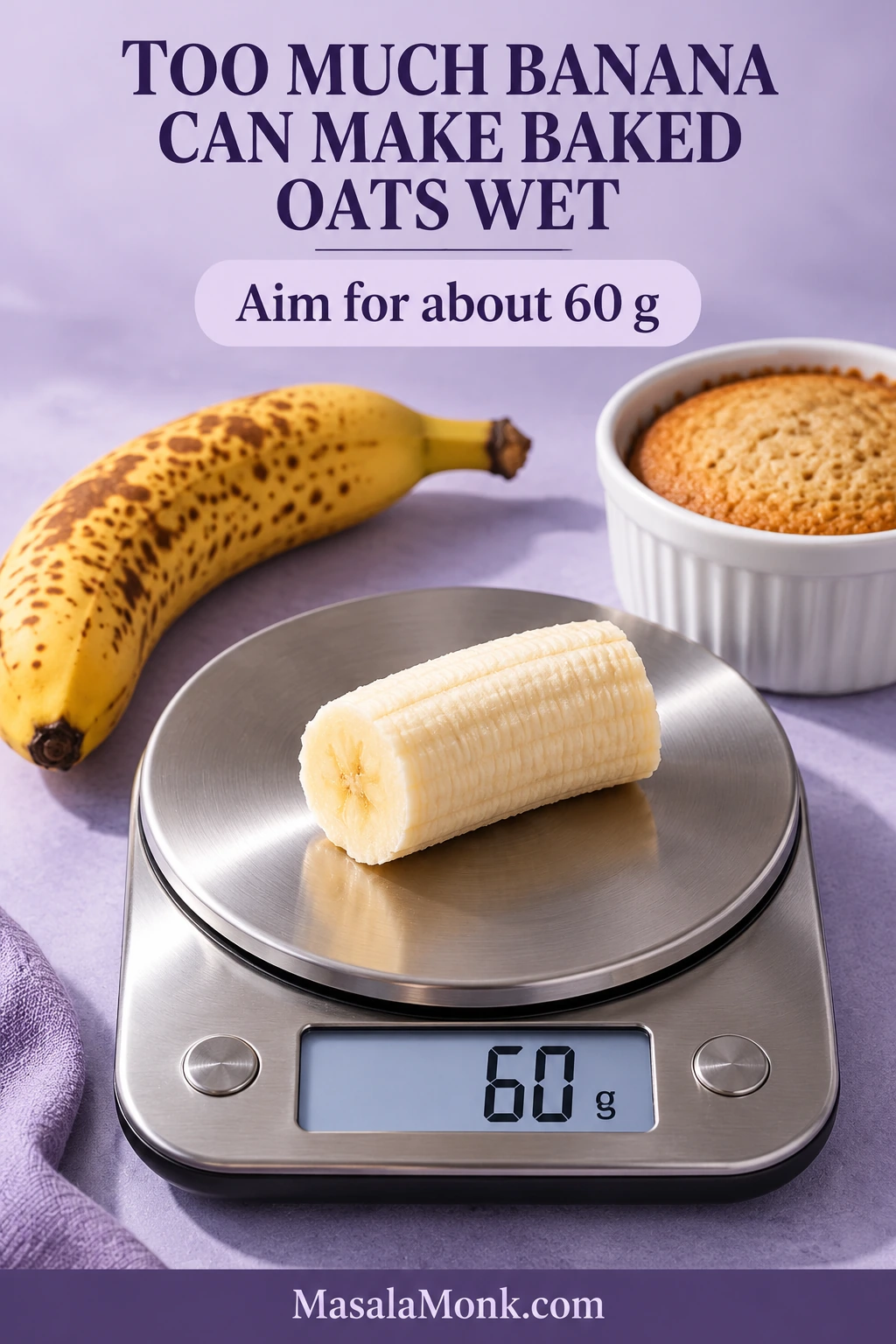
The banana supplies both sweetness and moisture, which is why its size matters so much in a one-serving batter. Too much can leave the bake wet and heavy.
Aim for about 60 g peeled banana. A ripe, well-spotted banana is ideal; a firm, barely ripe one won’t bring the same sweetness or ripe banana flavor.
Got more ripe bananas? Banana bread with applesauce puts them to work in a full loaf.
Cake-Like or Gooey? Know the Difference
Some baked-oats recipes are formulated for a fudgier center. This egg-based version is intended to be cooked through while staying tender and moist.
- Wet or raw: liquid batter still moves. Give it more time.
- Gooey: very soft and fudgy but no longer simply liquid; that’s still softer than the target here.
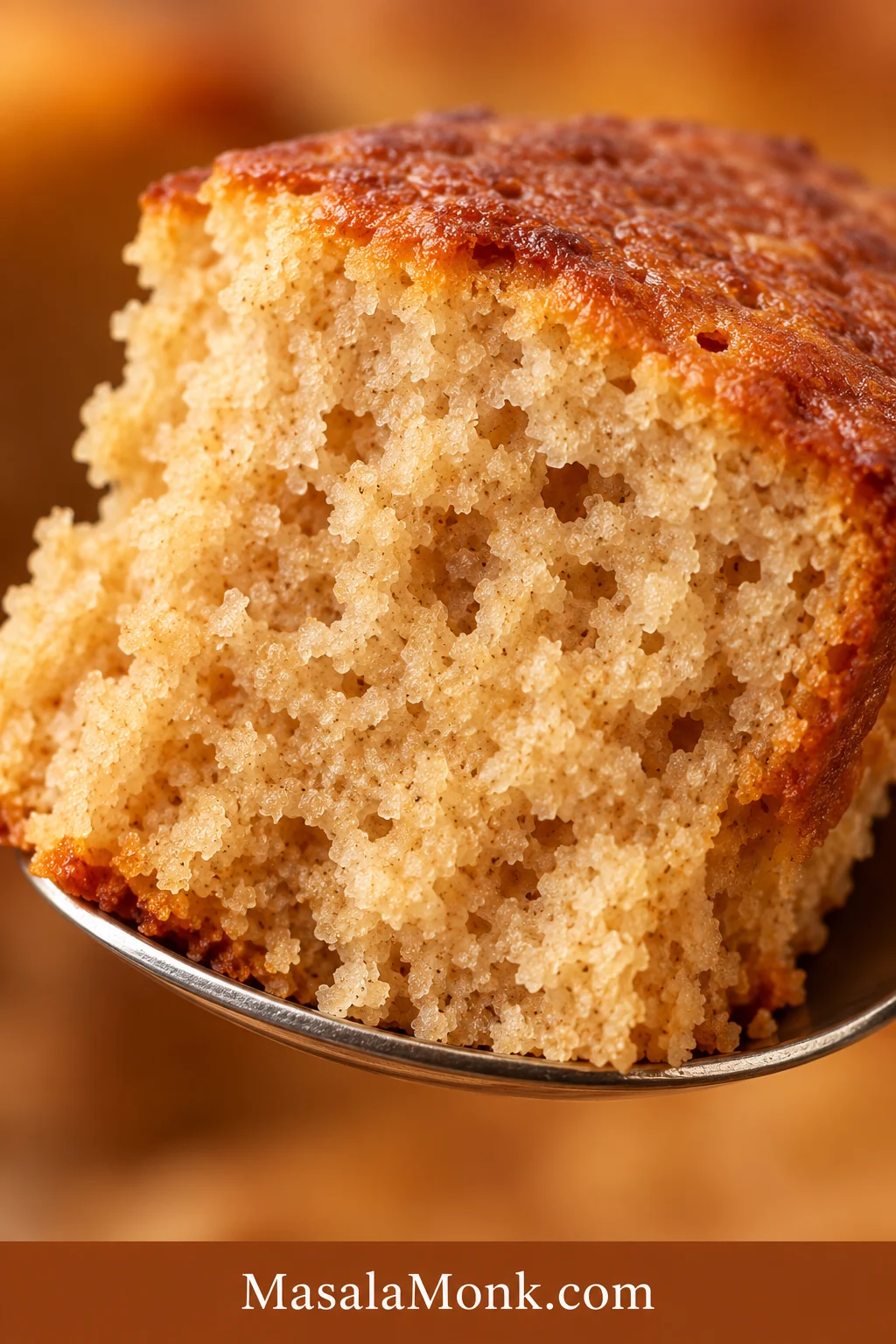
- Cake-like: cooked through, moist and lightly springy. That’s our target.
Fix My Baked Oats
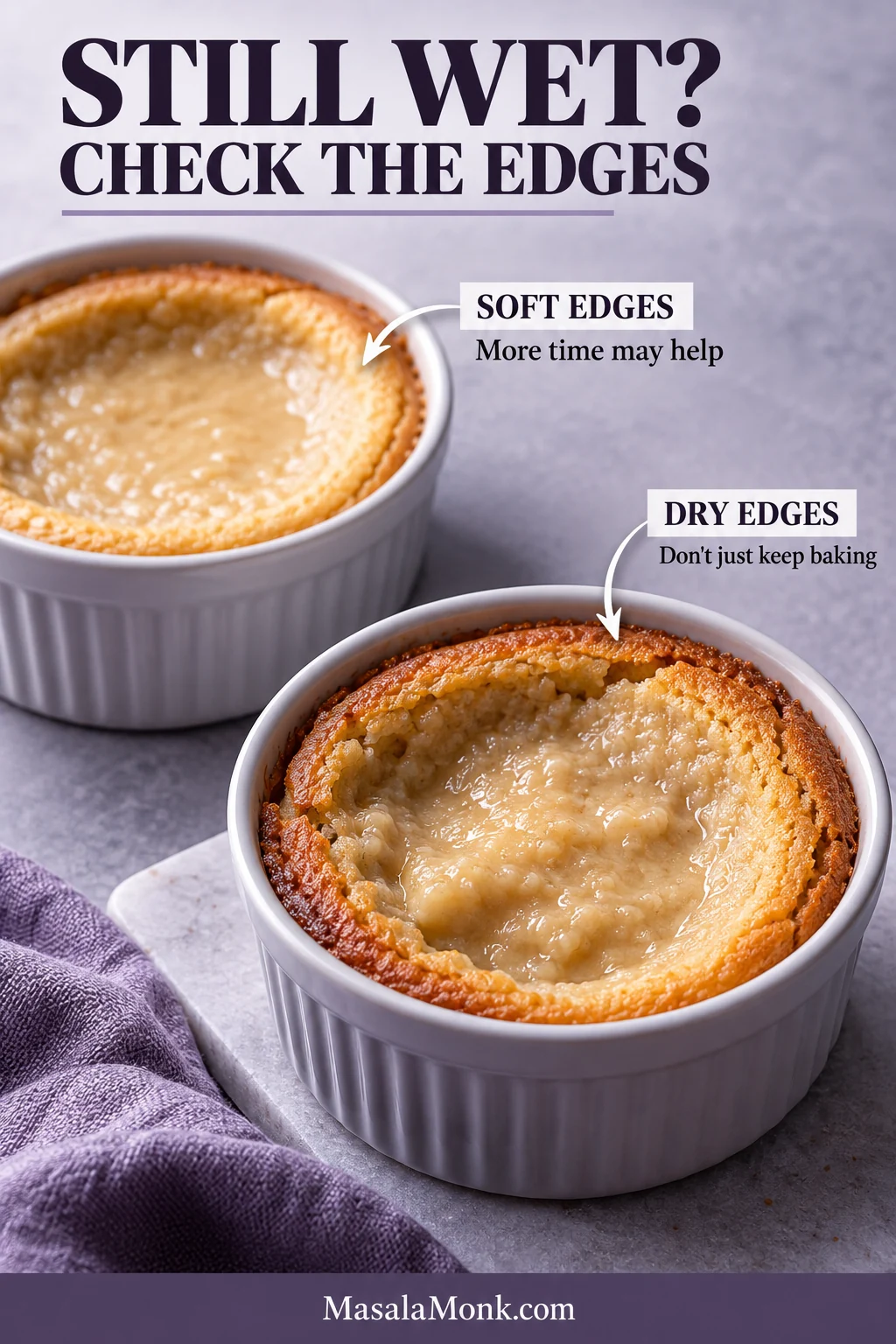
The useful clue is what the edges are doing. Soft edges usually mean the whole bake needs more time; dry edges suggest that simply baking longer may make things worse.
| What You See | What It Means + What to Do |
|---|---|
| Wet middle, edges still soft | Likely cause: underbaked. Try: return the ramekin to the oven for a few minutes, then check again. |
| Gluey middle, edges already dry | Likely cause: too much moisture or batter that’s too deep. Next time: weigh the banana and use a shallower layer instead of simply extending the bake. |
| Dense or barely risen | Likely cause: stiff batter, weak baking powder or an oven that wasn’t fully hot. Next time: use fresh baking powder, preheat fully and check for that thick-ribbon batter before baking. |
| Dry or crumbly | Likely cause: overbaking or an extra absorbent addition. Next time: check earlier and account for ingredients such as cocoa that make the batter thicker. |
| Rubbery texture | Likely cause: overcooking or adding a substantial amount of protein powder without adjusting the recipe around it. Try: stop once the bake is set and don’t treat protein powder as a simple add-in. |
← Back to Recipe · ↑ Back to Top
Baked Oats Without Banana
For baked oats without banana, replace the 60 g banana with 60 g unsweetened applesauce. Start with 2 tablespoons / 30 ml milk, blend, then add more milk only if the batter is too stiff. Applesauce can be looser than mashed banana, so don’t automatically add all 3 tablespoons of milk.
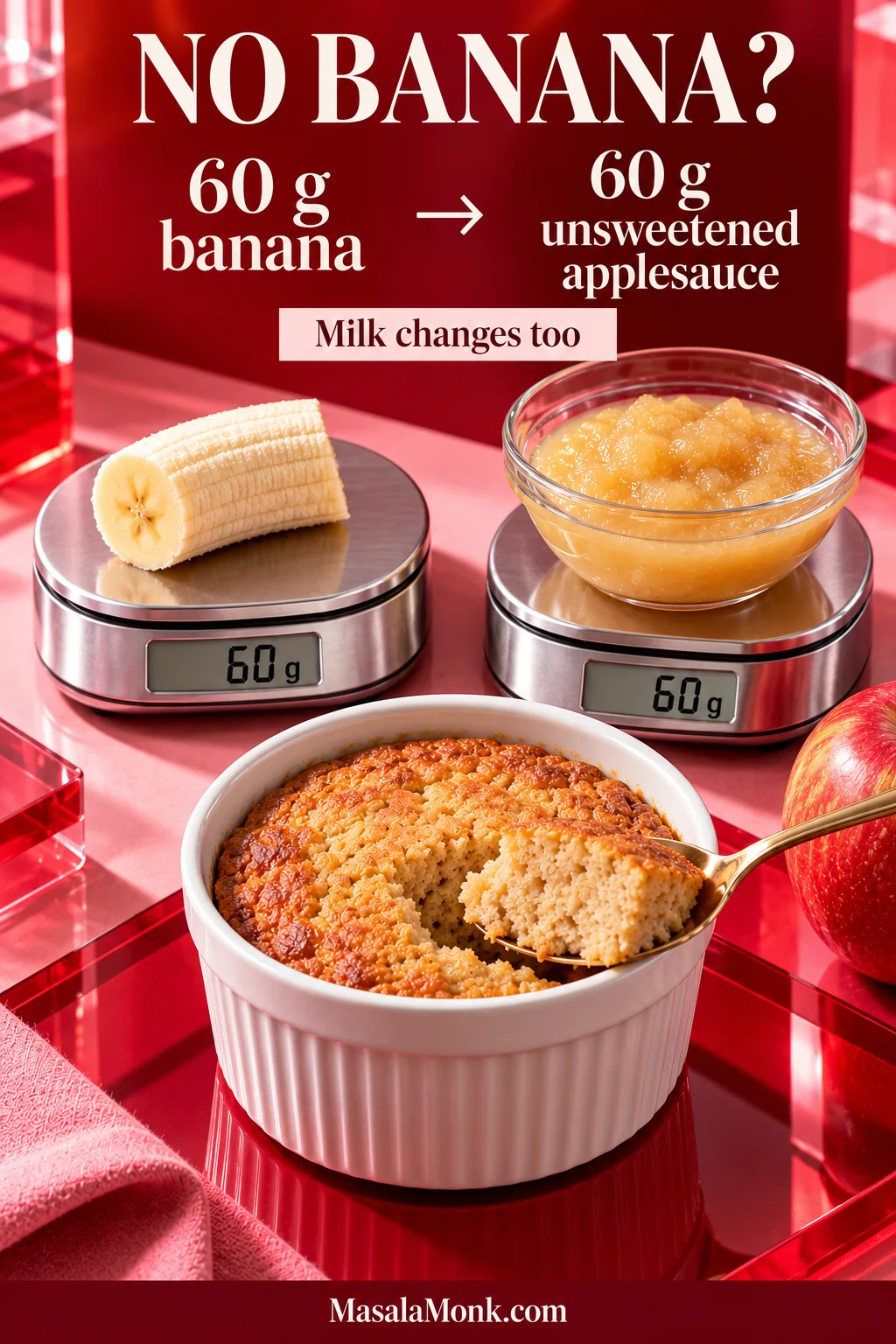
No banana and no applesauce? Don’t simply leave the fruit out. Without that 60 g of fruit, the batter loses both moisture and body, so it needs a different formula.
Baked Oats Variations
Once the plain version works, this is where baked oats get fun. Chocolate takes them toward brownie territory, blueberries bring little pockets of jammy fruit, and peanut butter can hide a soft, melty center.
Chocolate Baked Oats
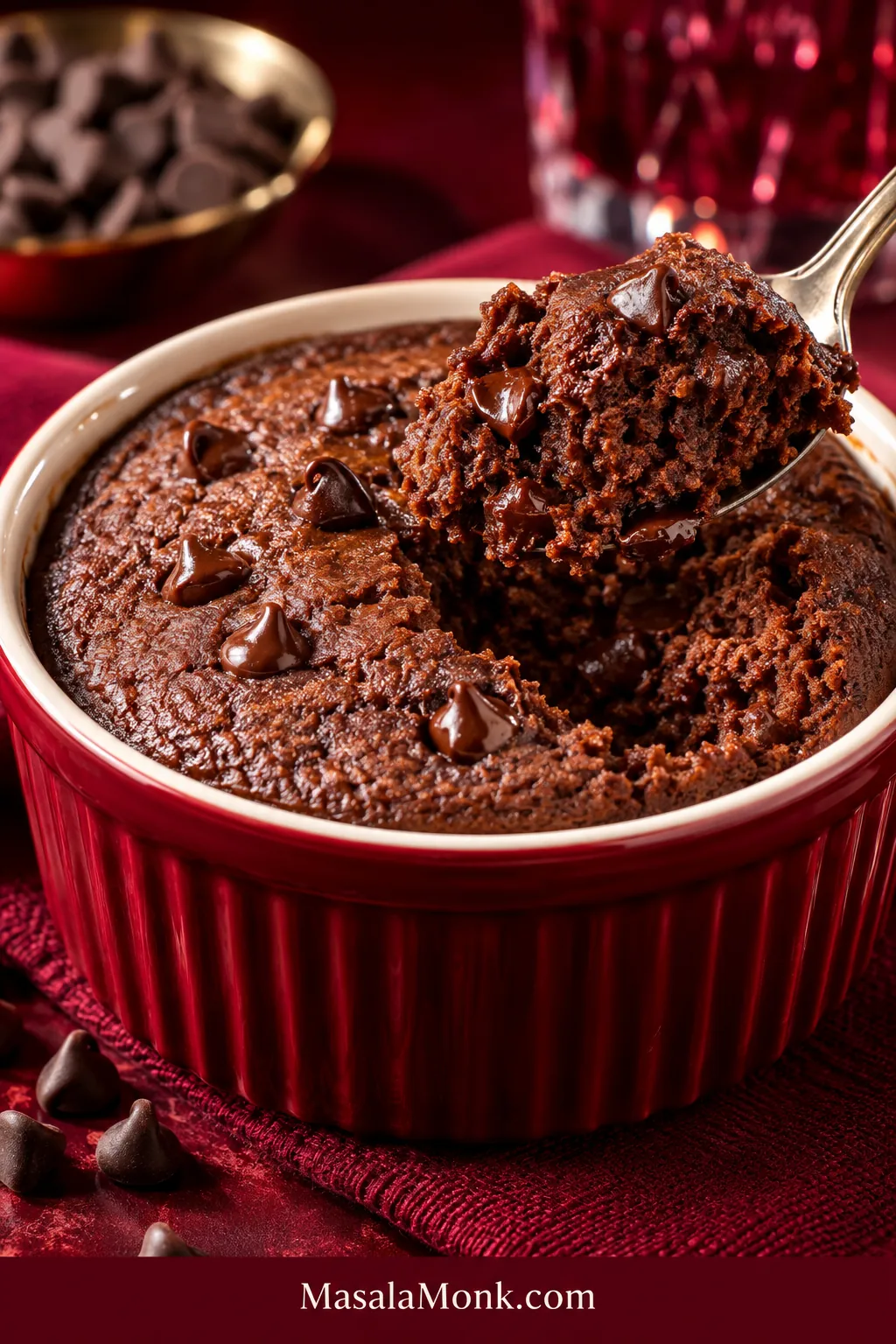
Add 1 tablespoon unsweetened cocoa powder to the blender and fold in 1 tablespoon chocolate chips. If the cocoa makes the batter noticeably stiff, loosen it with 1–2 teaspoons milk.
Blueberry Baked Oats
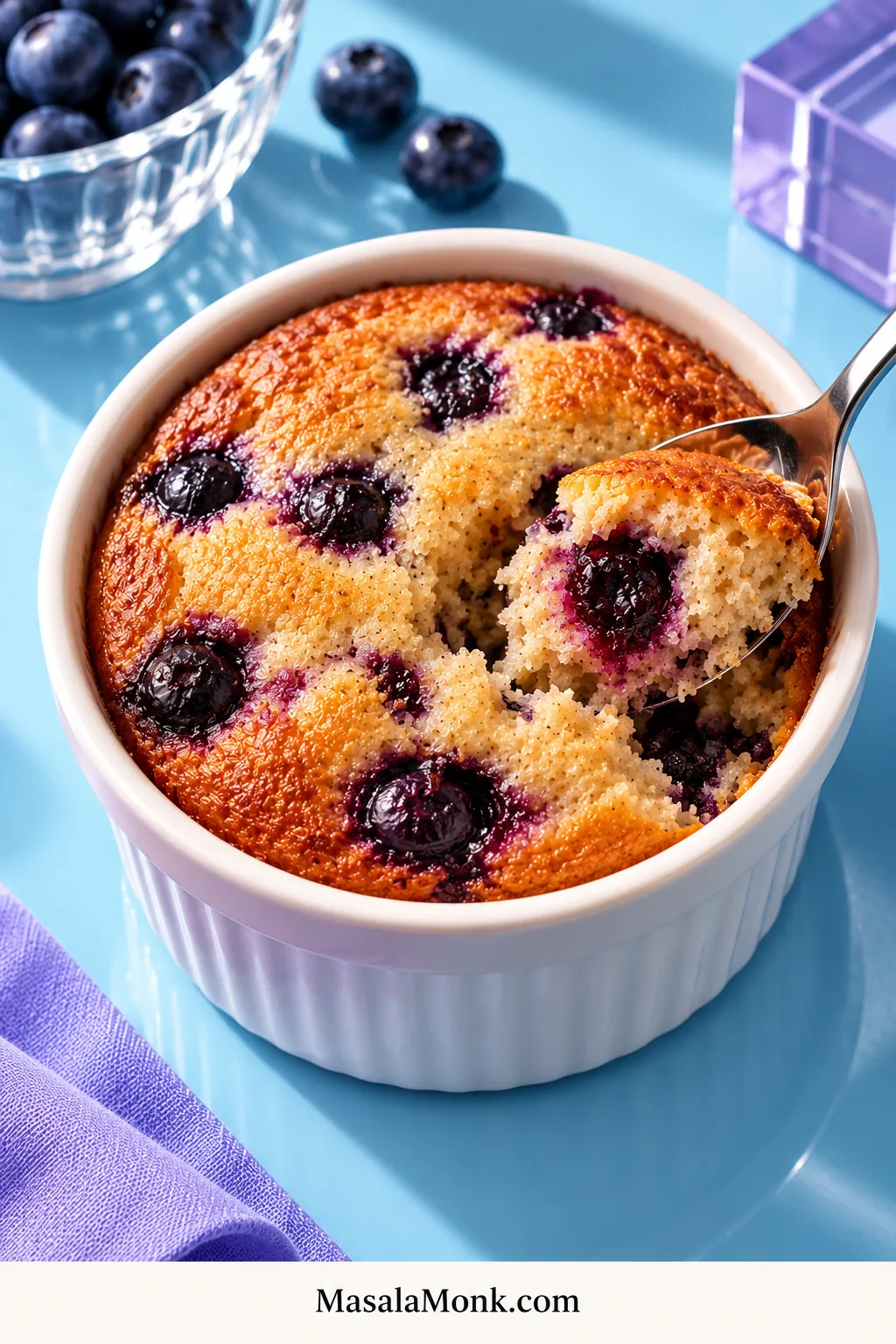
Blend the plain batter, then fold in ¼ cup / about 35–40 g blueberries. Frozen blueberries can go in from frozen, though they may push the bake toward the longer end of the range.
Juicy pockets around the fruit are normal; judge the crumb between the berries.
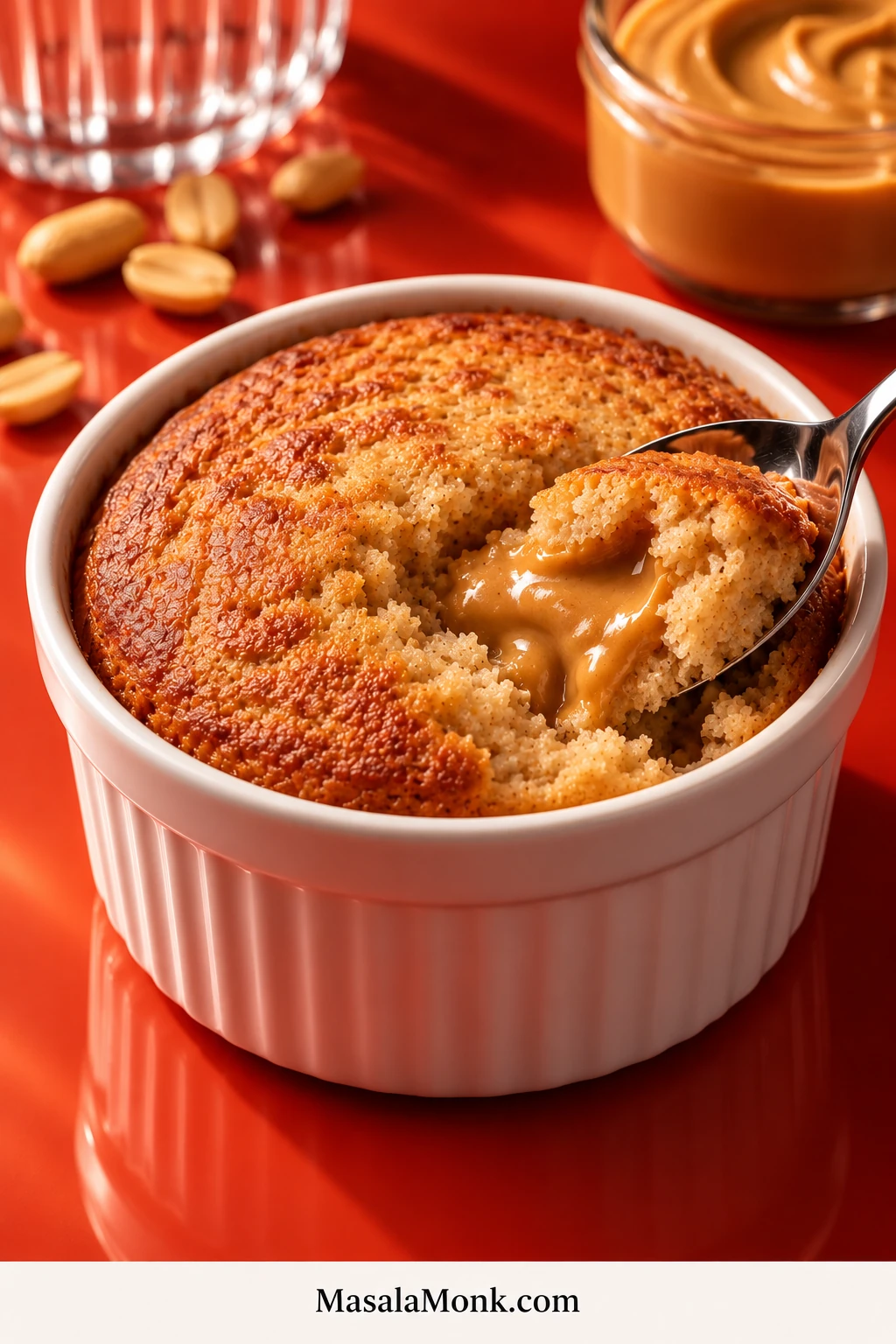
Peanut Butter Baked Oats
Swirl 1 tablespoon / about 16 g peanut butter through the filled ramekin, or spoon it into the middle and cover it with batter for a soft peanut-butter center. If you make a filled version, judge doneness in the oat crumb beside the peanut butter instead of through the filling itself.
What About Protein Baked Oats?
Protein powder isn’t an invisible extra. A full scoop can make a tender oat cake dense, chalky or rubbery, and different powders absorb moisture differently.
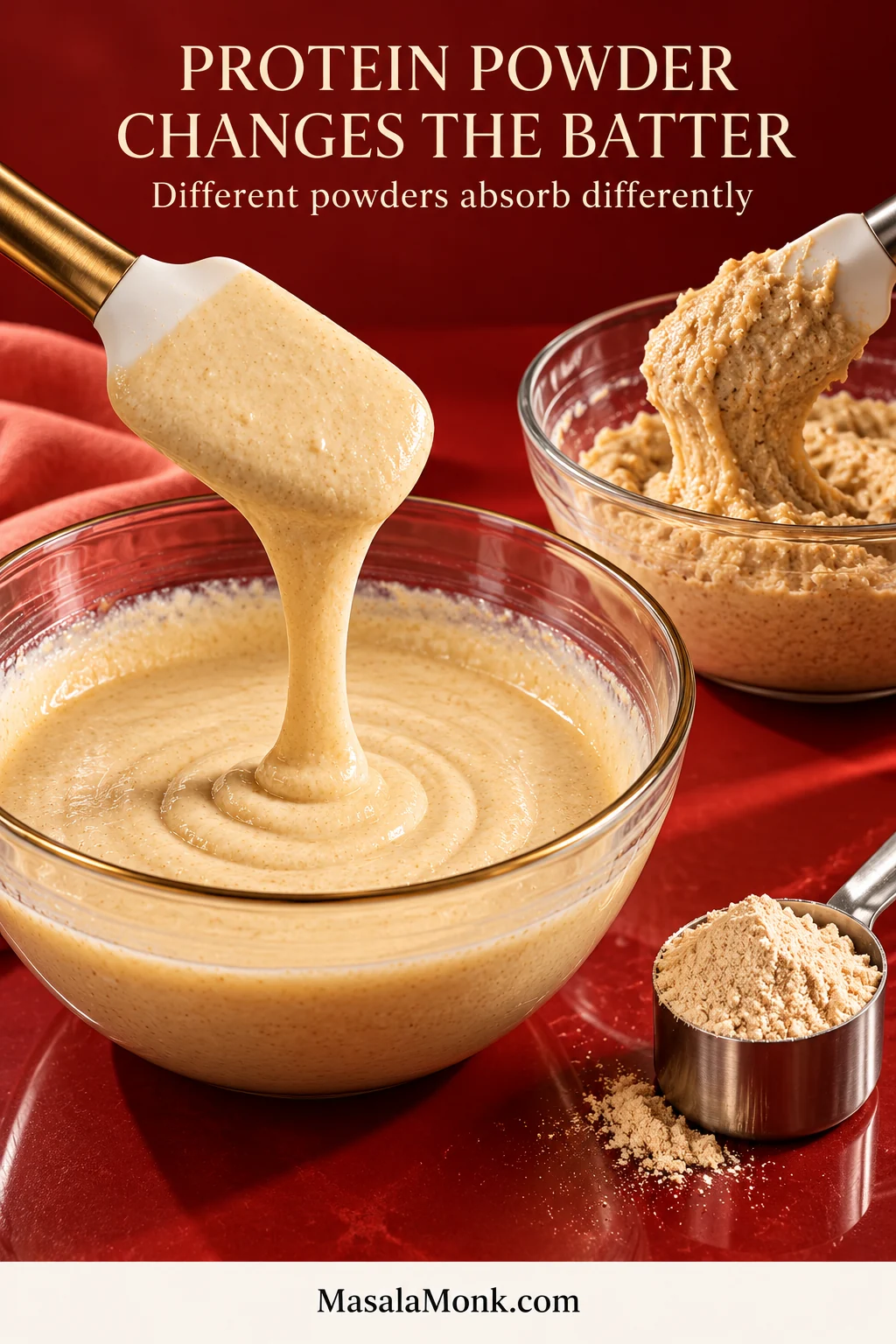
For a modest boost without rebuilding the recipe, use higher-protein milk or add Greek yogurt when serving. If protein is the main event, high-protein oatmeal is built around that goal from the start.
← Back to Recipe · ↑ Back to Top
Air Fryer and Microwave Baked Oats
Air Fryer Baked Oats
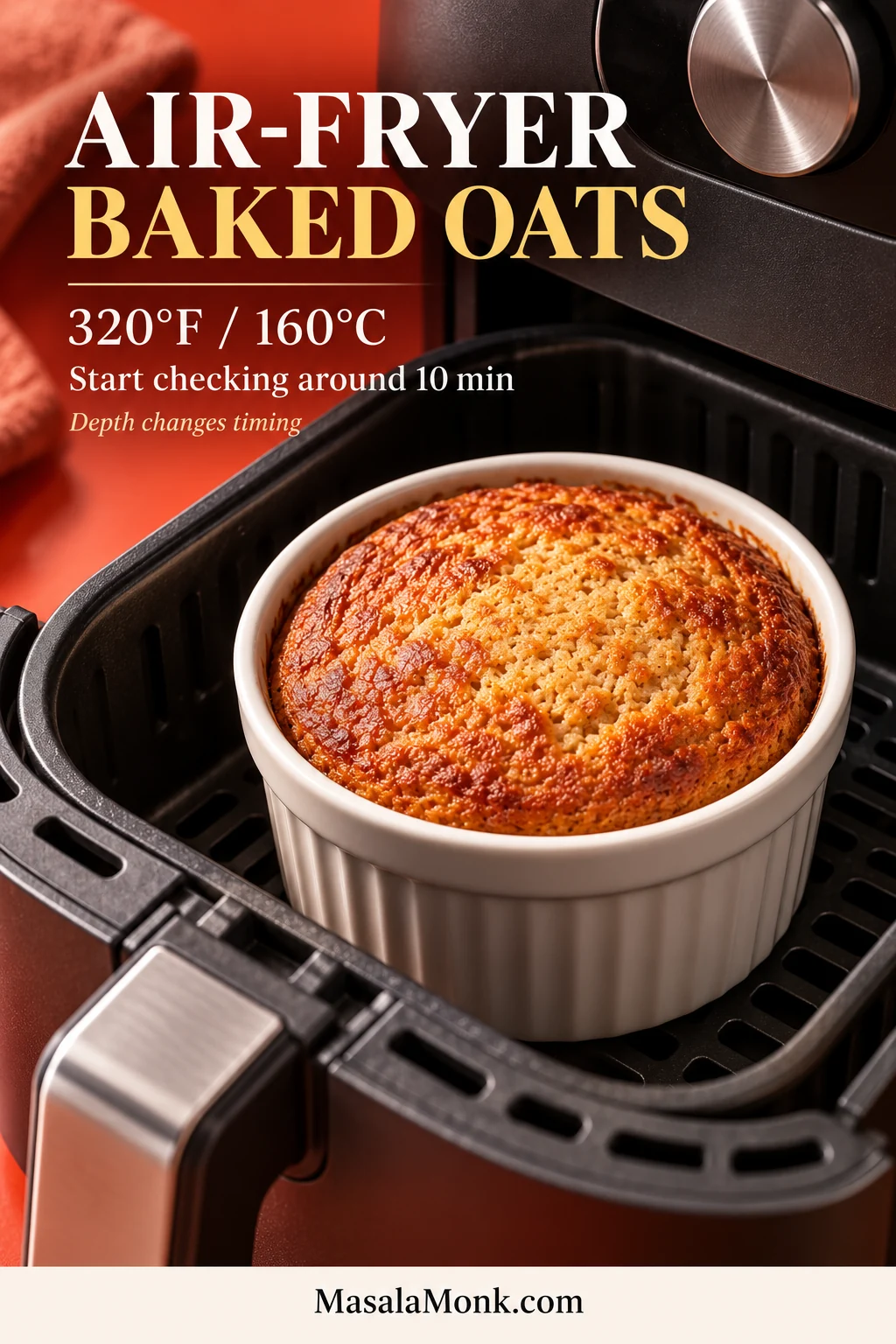
Air-fryer timing won’t match the oven exactly. Airflow and ramekin depth change how quickly the outside sets and browns.
Set the air fryer to 320°F (160°C), use an air-fryer-safe ramekin and start checking around 10 minutes. Continue in 2-minute intervals until the edges are set and there is no liquid movement in the middle. Don’t chase a particular minute; the center is a better guide.
Microwave Baked Oats
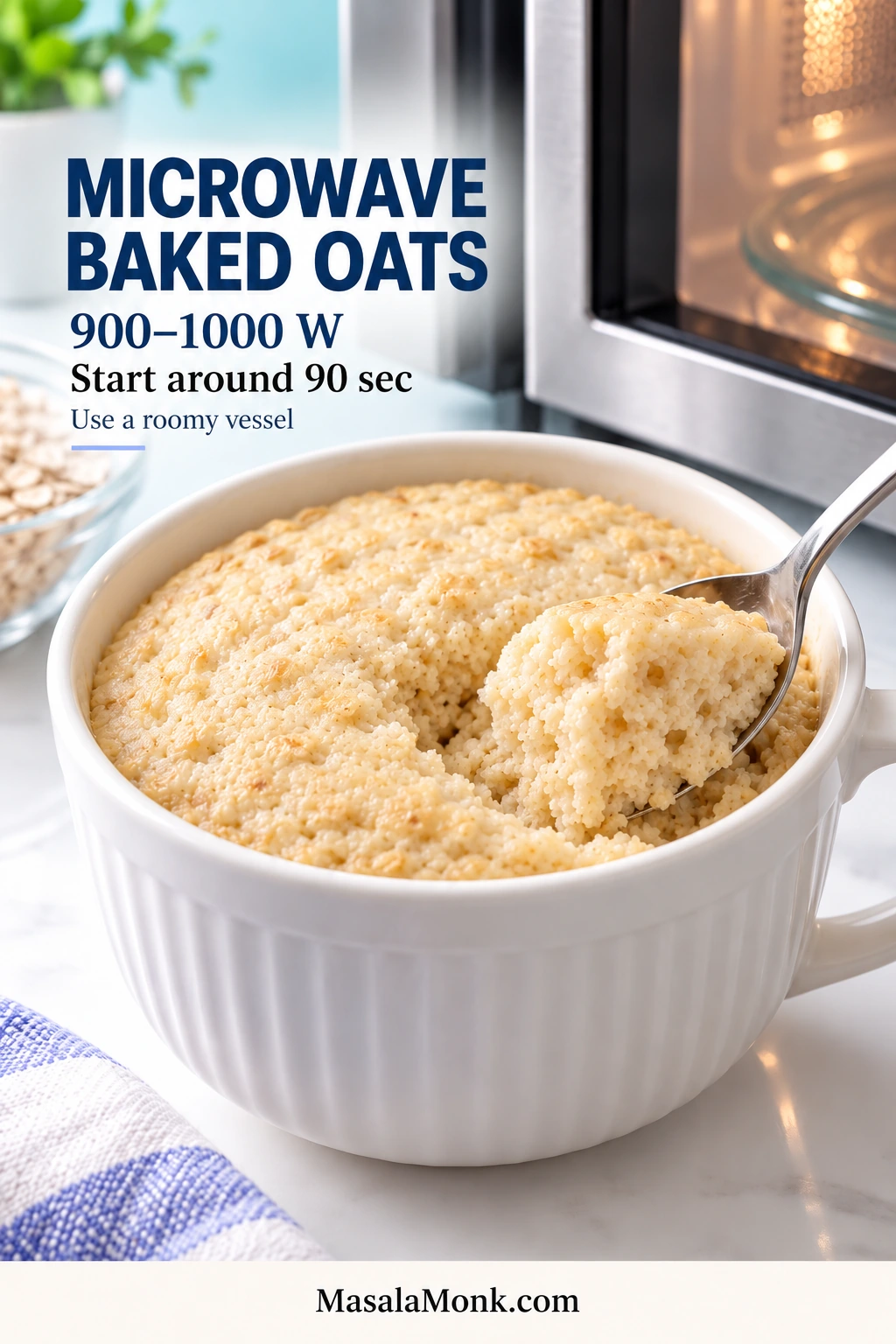
The microwave gives a softer, more steamed texture than the oven. Use a microwave-safe bowl or a mug of at least 12 oz / 350 ml with generous headroom. In a roughly 900–1000-watt microwave, start checking around 90 seconds, then continue in 15–20-second bursts until the oat crumb is set.
Lower-powered machines may need longer. Stop once it’s cooked through; extra microwave time can turn the edges rubbery. For the fluffy, cake-like texture this recipe is built around, the oven remains the first choice.
Make Ahead, Store and Reheat Baked Oats
For two servings, double the ingredients and divide the batter between two similar ramekins. Keeping the same batter depth means the original bake time should stay close; one deep dish will take longer.
If you’re baking ahead, cool the oats briefly, then cover and refrigerate promptly; don’t leave them at room temperature for more than two hours. Use within 3–4 days, following USDA guidance for refrigerated leftovers.
For reheating, USDA guidance recommends bringing leftovers to 165°F / 74°C. The microwave is quickest, while the oven or air fryer does a better job of bringing back the baked exterior.
Baked oats are at their best warm, when the middle is tender, the edges have just set and whatever you’ve tucked inside is still soft. It’s a small breakfast that lands much closer to cake than a bowl of oats has any right to.