
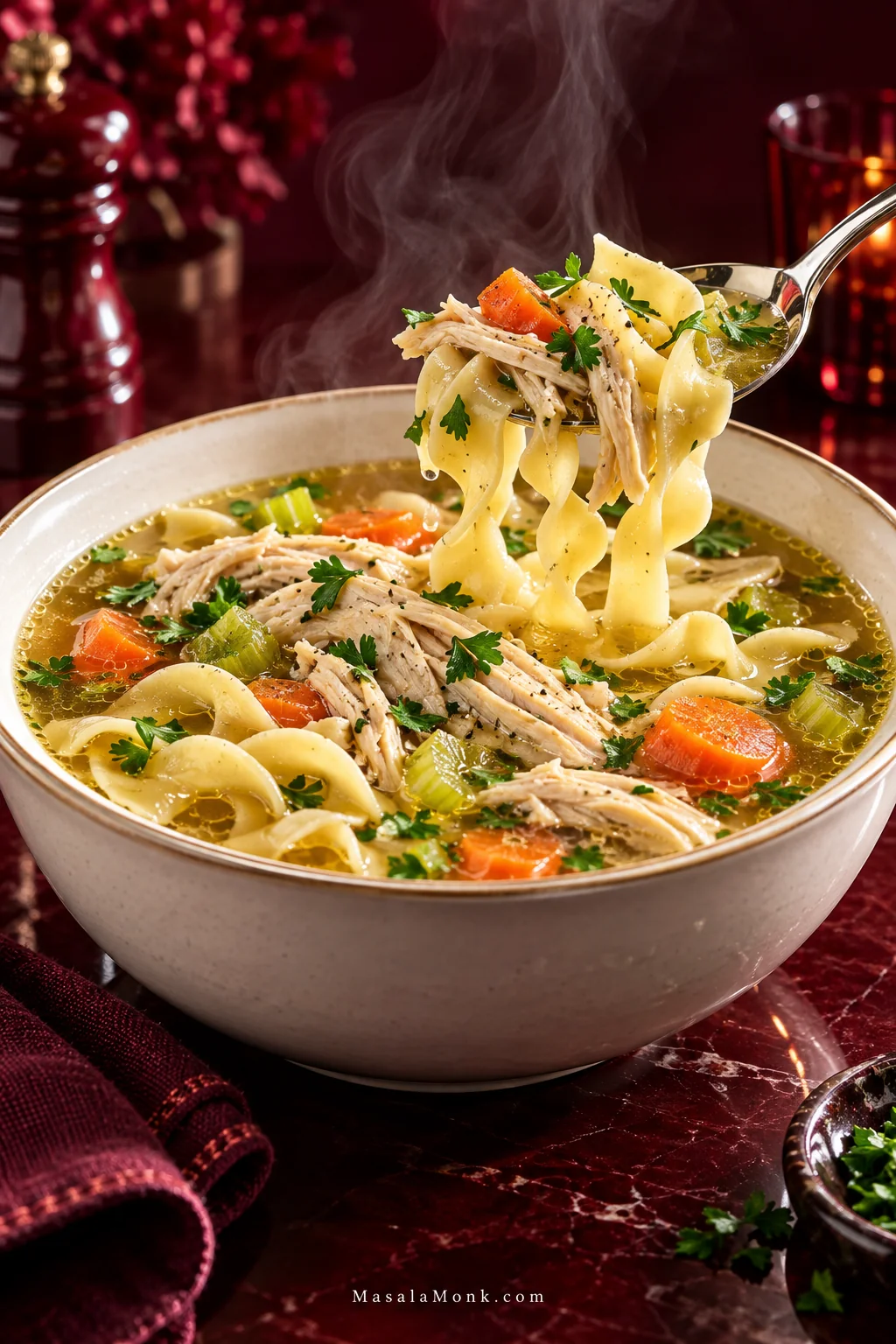
A good bowl of chicken noodle soup has tender chicken, carrots and celery, and plenty of savory broth—with noodles that are tender without drinking up half the pot.
The slow cooker handles most of that work for you. Chicken, vegetables, thyme, bay leaf and broth can cook while you get on with the day, with no browning or sautéing first. The part that needs the most careful timing is the noodles.
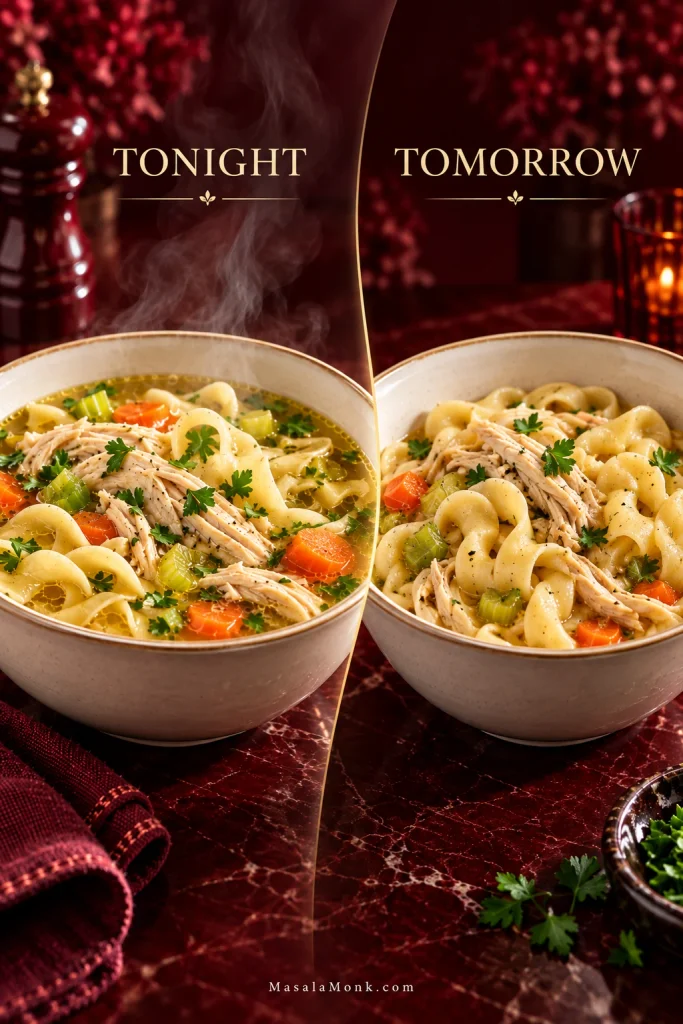
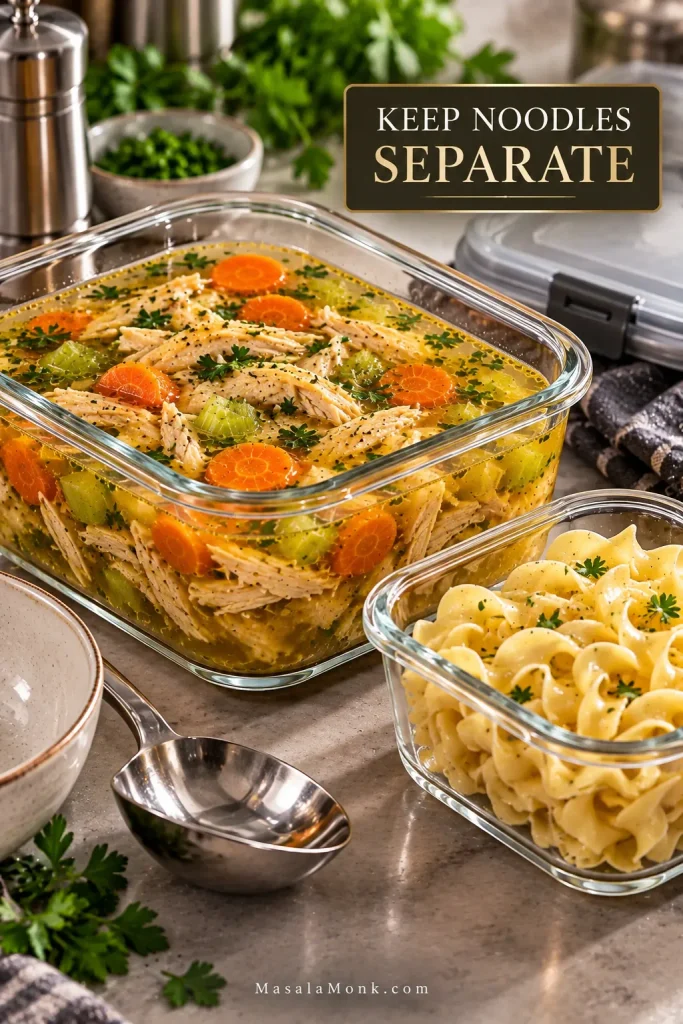
So before you start, make one small choice: cook the egg noodles in the soup for an easy one-pot dinner, or separately for better leftovers. The soup gets hours; the noodles get minutes.
Choose Your Noodle Method
Dinner tonight: Add dry egg noodles near the end and cook until just tender.
Saving leftovers: Boil the noodles separately and add them to individual bowls.
Freezing a batch: Freeze the chicken, vegetables and broth without noodles. Cook fresh noodles when serving.
Slow Cooker Chicken Noodle Soup Recipe
Slow Cooker Chicken Noodle Soup
Tender chicken, carrots and celery slow-cook in savory broth, then finish with wide egg noodles, fresh parsley and a touch of lemon.
Equipment
- 6-quart (5.7 L) slow cooker
- Cutting board and knife
- Tongs or two forks
- Instant-read food thermometer
- Saucepan and colander for separately cooked noodles
Ingredients
- 1½ lb (680 g) boneless, skinless chicken thighs
- 1 medium yellow onion, diced
- 3 medium carrots, sliced ¼–⅓ inch (6–8 mm) thick
- 3 celery ribs, cut into about ½-inch pieces
- 3 garlic cloves, minced
- 8 cups (64 fl oz / about 1.9 L) low-sodium chicken broth
- 1 teaspoon dried thyme
- 1 bay leaf
- ½ teaspoon freshly ground black pepper
- ¼ teaspoon fine salt to start, plus more to taste
- 6 oz (170 g) dry wide egg noodles
- 2–3 tablespoons chopped fresh parsley
- 1–2 teaspoons fresh lemon juice to start, plus more to taste
Instructions
- Layer the vegetables. Put the onion, carrots and celery in the bottom of the slow cooker. Add the chicken, garlic, thyme, bay leaf, pepper, salt and broth.
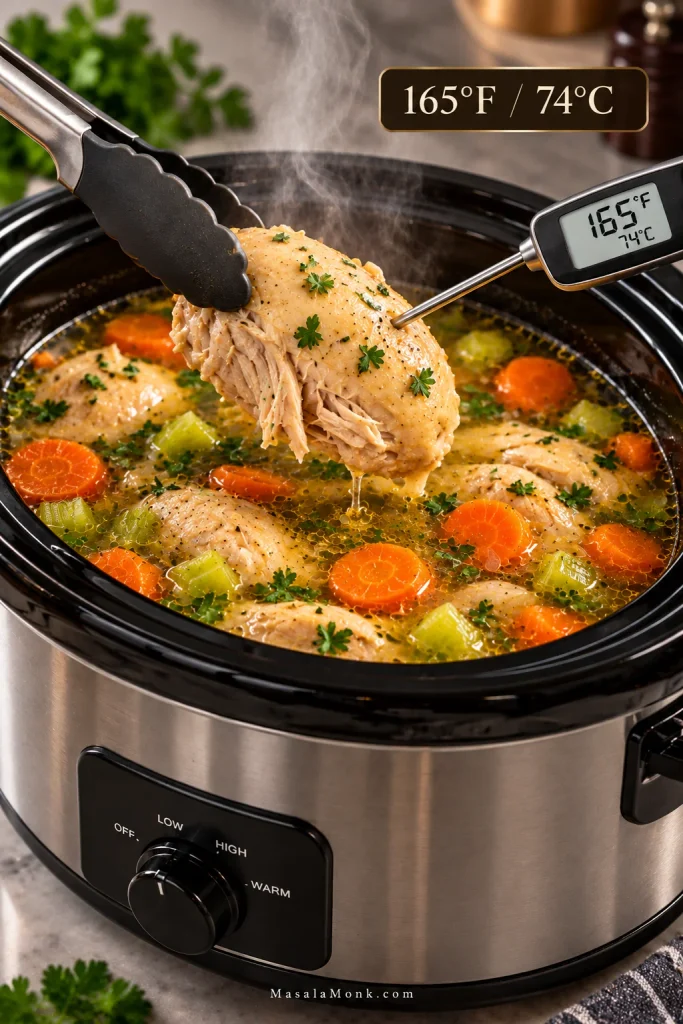
- Cook until tender. Cover and cook on LOW for about 5–6 hours or HIGH for 3–4 hours. Start checking toward the early end of the range. Chicken must reach at least 165°F (74°C) in the thickest part and should pull apart easily at the edges when lifted with tongs. The carrots should be tender but still hold their shape; exact timing varies with the cooker and size of the chicken pieces.
- Shred and return the chicken. Transfer it to a plate or shallow bowl and remove and discard the bay leaf. Shred the chicken into bite-size pieces and return it to the hot broth.
- Cook the noodles. For leftovers: boil them separately in lightly salted water until just al dente, then drain. For one-pot noodles: switch the cooker to HIGH, stir in the dry noodles and cover. Check at 10 minutes and keep cooking only until they are just cooked through, roughly 10–25 minutes depending on the noodles and cooker. The soup may need a little time to regain heat after the noodles go in.
- Finish the soup. Taste the broth and add enough salt for it to taste properly savory. Stir in the parsley and 1–2 teaspoons lemon juice, taste again, and add more salt or lemon if needed.
- Serve. Divide separate noodles among bowls and ladle the hot soup over them. If the noodles cooked in the pot, serve promptly. Finish with black pepper and extra parsley if desired.
Chicken Breast and Larger Batches
Chicken breast: Use roughly the same weight. Begin checking well before the thigh window and remove the breasts once the thickest part reaches 165°F (74°C) and the meat is cooked through. If the vegetables need more time, shred the chicken and return it near the end.
Making a larger batch? Follow your slow cooker’s capacity guidance. Don’t overfill it; use a larger suitable appliance or make two batches.
Get the Soup Just Right
Noodles & Broth
Chicken Choices
Fix & Save
How to Keep Chicken Noodle Soup Brothy
For a brothy chicken noodle soup, start with about 6 oz (170 g) dry wide egg noodles for 8 cups (1.9 L) broth. Use more for a noodle-heavy bowl, but expect less broth around the noodles.
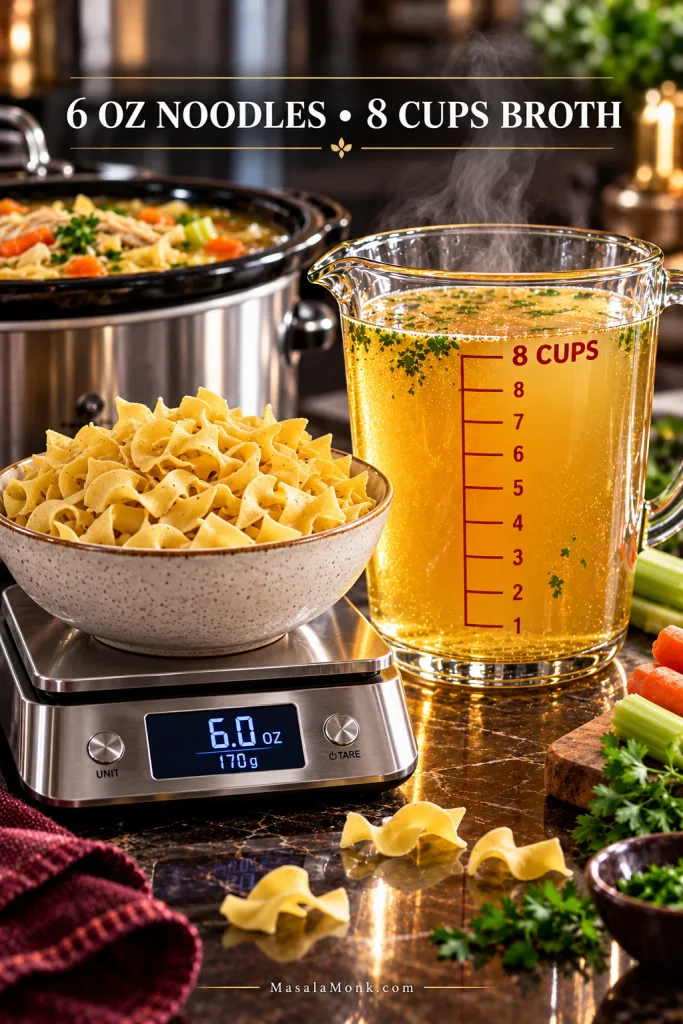
Noodles soften as they cook and continue absorbing liquid while sitting in hot broth. They can be lovely at dinner and swollen by the next day if left in the pot.
Cooking Noodles in the Slow Cooker
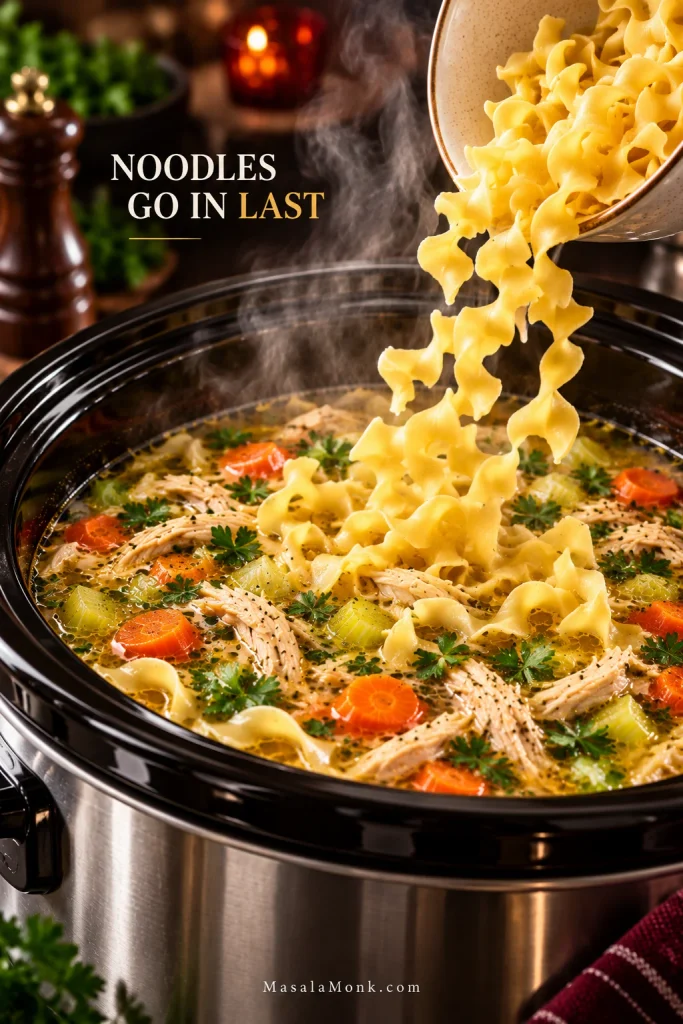
If you expect most of the batch to be eaten right away, cooking the noodles in the pot is the easy choice. Wait until the chicken and vegetables are done, stir in the noodles and keep the lid on between checks. Once the noodles are just cooked through, serve the soup; the longer they sit in hot broth, the softer they become.
Cooking Noodles Separately
Boil the noodles until just al dente, drain and add only what you need to each bowl. Keep the rest separate from the soup.
Other Noodles and Pasta
The 6 oz ratio and 10–25 minute timing above are for dry wide egg noodles. Frozen homestyle egg noodles, including Reames-style noodles, are a different product: they are thicker, usually need more time and can absorb more broth. Use the amount and timing on the package; if the noodles absorb more liquid than you want, loosen the soup with warmed chicken broth before serving.
Using another pasta shape or a gluten-free noodle? Cook it separately according to the package directions, especially if you are saving leftovers.
Which Chicken Works Best?
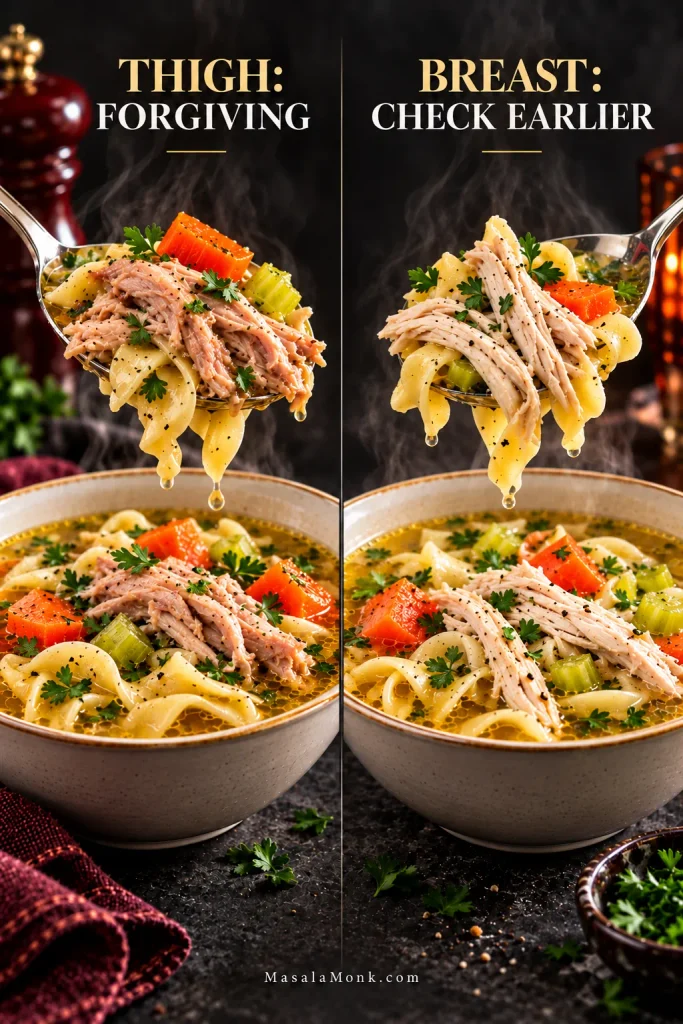
Both boneless skinless thighs and chicken breasts work here; the practical difference is how much timing margin they give you. Start raw poultry fully thawed rather than putting frozen chicken straight into the slow cooker; see the USDA slow-cooker safety guidance.
| Chicken | What to expect |
|---|---|
| Boneless skinless thighs | Easy to shred and forgiving during the slow cook. |
| Chicken breasts | Lean and less forgiving than thighs; remove once cooked through. |
Using a Whole Chicken
Using a whole chicken? It is not a one-for-one swap for the boneless thighs in the base recipe: both the liquid amount and cooking time need to suit the bird and your cooker capacity. Make sure the bird fits comfortably, and use our complete whole chicken in a Crock Pot guide for the cooking method.
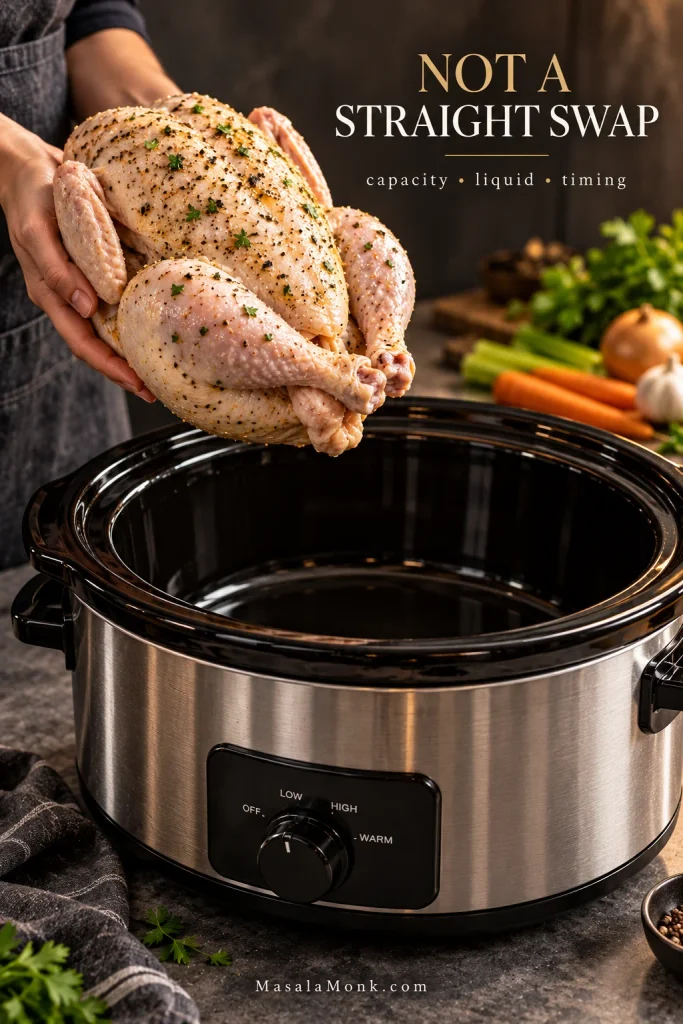
Before shredding, check the thickest part of the breast and the innermost thigh with a food thermometer, avoiding bone. For food safety, both must reach at least 165°F (74°C). Lift the bird out carefully, remove the skin and every bone, then return the shredded meat to the soup.
Rotisserie Chicken: Carcass Early, Meat Late
For the rotisserie shortcut, use about 3 cups (12 oz / 340 g) shredded cooked chicken. Add the onion, carrots, celery, garlic, thyme, bay leaf, black pepper and broth to the slow cooker. If you still have the carcass, add it now for extra chicken flavor. Because rotisserie chicken varies in saltiness, hold back the starting salt for now. Cover and cook on HIGH for about 3–4 hours, until the carrots are tender but still hold their shape.
Remove the carcass and bay leaf carefully, checking the soup for stray bones. Stir in the shredded meat near the end, just long enough to heat through. If you are cooking noodles in the pot, the chicken can go in with them; if the noodles are separate, warm the chicken in the broth while they cook. Finish with the parsley and 1–2 teaspoons lemon juice, then taste and add salt or more lemon only as needed.
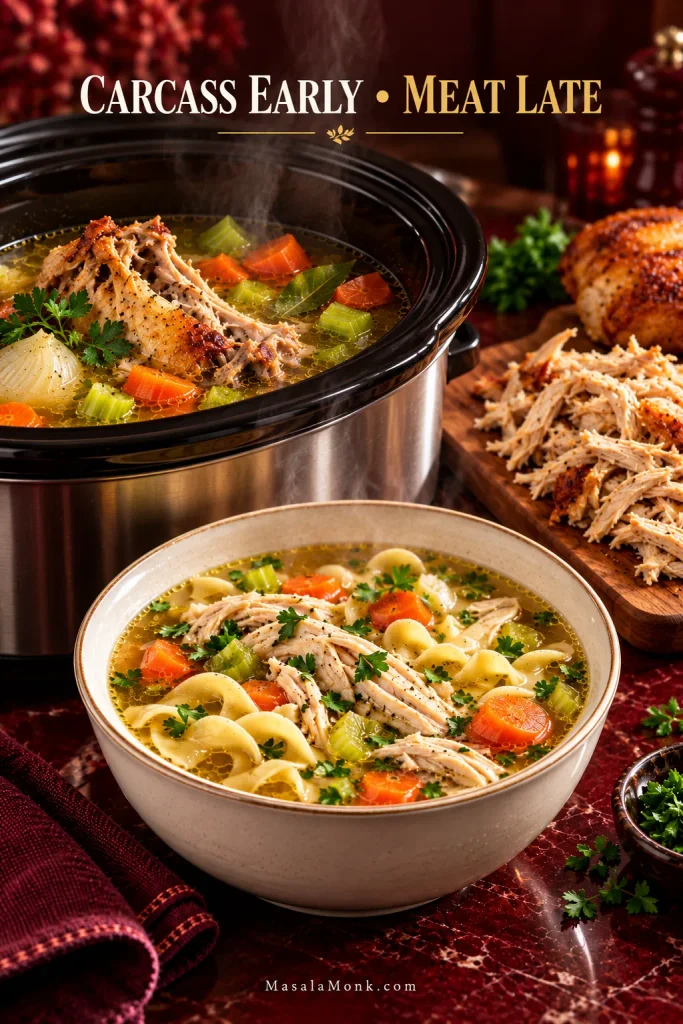
The chicken you choose also changes the broth. Bones can give it more body, while boneless chicken puts more of the flavor burden on the stock itself.
How to Fix the Broth
If chicken soup tastes bland, don’t automatically add more salt. Taste a spoonful of broth first and decide whether it needs salt, stronger chicken flavor, a little acidity or more body. A broth can be salty enough and still taste weak or flat.

| What you notice | What to do |
|---|---|
| Underseasoned | Add salt a little at a time, stir and taste again. |
| Salty enough but weak | Use a stronger unsalted or low-sodium stock. Chicken base can help, but add it cautiously only if the broth can tolerate more salt. |
| Savory but flat | Try fresh parsley and a small squeeze of lemon. |
| Good flavor but thin-bodied | If it tastes good, a lighter broth isn’t a failure. Next time, richer stock or bone-in chicken will give it more body; extra salt won’t. |
| Too salty | Dilute with unsalted broth or water, then rebalance. |
| Greasy surface | Skim excess fat with a spoon, then taste again. |
Get the salt close first, then add enough lemon to brighten the broth without making it taste distinctly lemony. Taste again and add more salt or lemon if needed. For a soup where lemon takes center stage, Avgolemono soup combines chicken broth, egg and lemon in a silky style.
Troubleshooting Chicken Noodle Soup
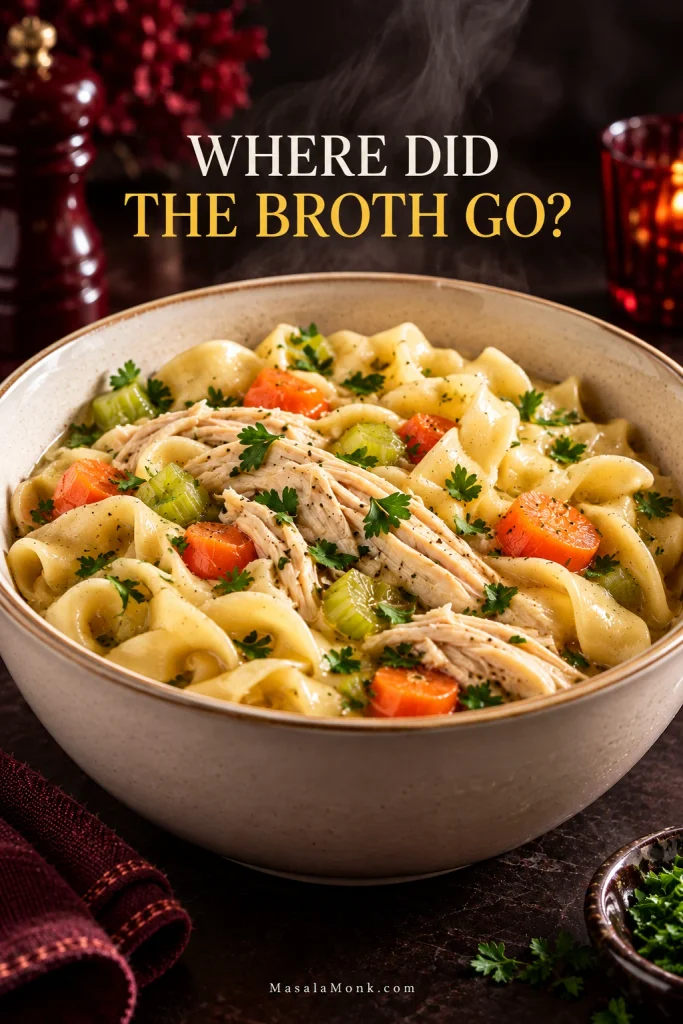
Start with the symptom you can actually see or taste. If most of the broth has disappeared, think noodle-to-liquid balance first; dry chicken and overly soft vegetables need different fixes. Correct the specific problem instead of changing the whole pot at once.
| Problem | What to do |
|---|---|
| Noodles are mushy | They won’t firm up again. Serve the soup; next time, cook noodles separately or for less time. |
| Noodles are taking longer | Keep the soup covered between checks and cook until tender. |
| The broth has mostly disappeared | Stir in hot chicken broth until the consistency looks right, then retaste. |
| The chicken is dry | It won’t become juicy again. Shred it smaller and serve it with plenty of broth; next time, check breast meat earlier or use thighs. |
| The vegetables are too soft | They won’t firm back up, so serve them as they are. Next time, cut the carrots and celery larger; if your slow cooker runs hot, add the vegetables later instead of at the beginning. |
Storage, Reheating and Freezing
If you are saving the soup, keep the noodles separate when you can. Divide the chicken, vegetables and broth into shallow containers and refrigerate or freeze promptly rather than leaving the whole pot on the counter to cool. Refrigerate within two hours of cooking, or within one hour when the temperature is above 90°F (32°C).
Refrigerator
Use refrigerated leftovers within 3–4 days, or freeze them sooner if you won’t eat them in that window.
Reheating
Reheat leftovers thoroughly to at least 165°F (74°C). USDA guidance also says to bring reheated soups, sauces and gravies to a boil. Add separately stored noodles close to serving; if the noodles are already in the soup, add broth as needed. Don’t use the slow cooker to reheat refrigerator-cold leftovers. See the USDA’s leftovers guidance for safe cooling, storage and reheating.
Freezing
Freeze the soup base without noodles for the best texture. Leave room for expansion, label the container and thaw in the refrigerator when possible. For best quality, use frozen soup within about 3–4 months. Cook fresh noodles when you’re ready to serve.
What to Serve With Chicken Noodle Soup
Tear open a warm dinner roll and use it to catch the last of the broth, or add Irish soda bread when you want something sturdier alongside the bowl. A simple cucumber salad gives you something cool and crisp between spoonfuls.
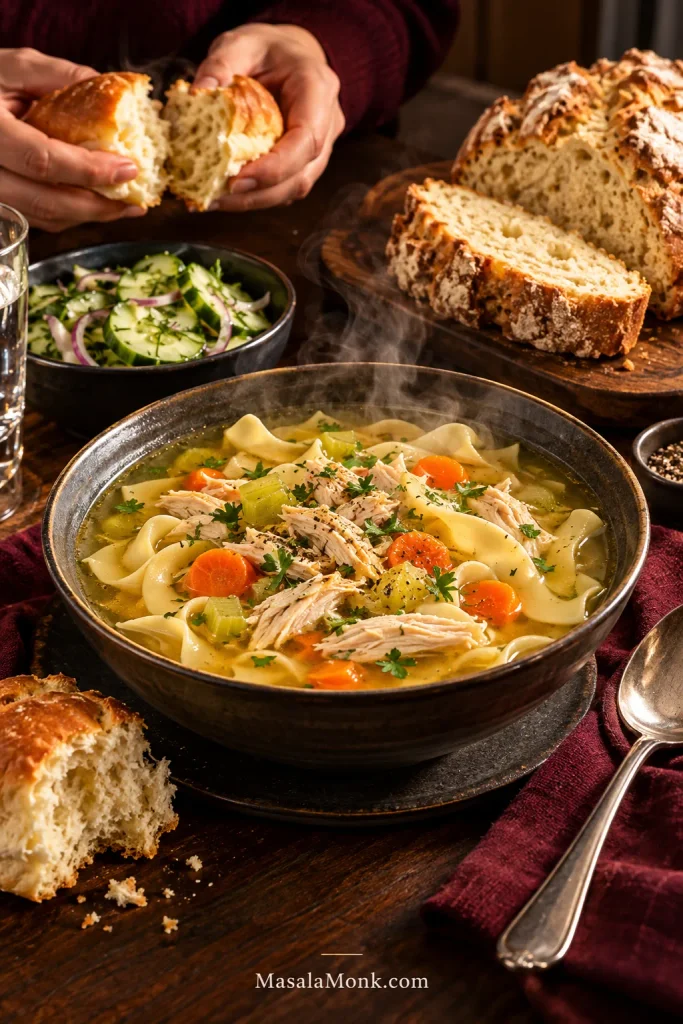
Ladle the soup into deep bowls while it is steaming, with plenty of chicken, carrots and noodles in every spoonful. Bring the bread to the table and dinner is done. If you kept the noodles separate, tomorrow’s lunch is already in good shape too.








