
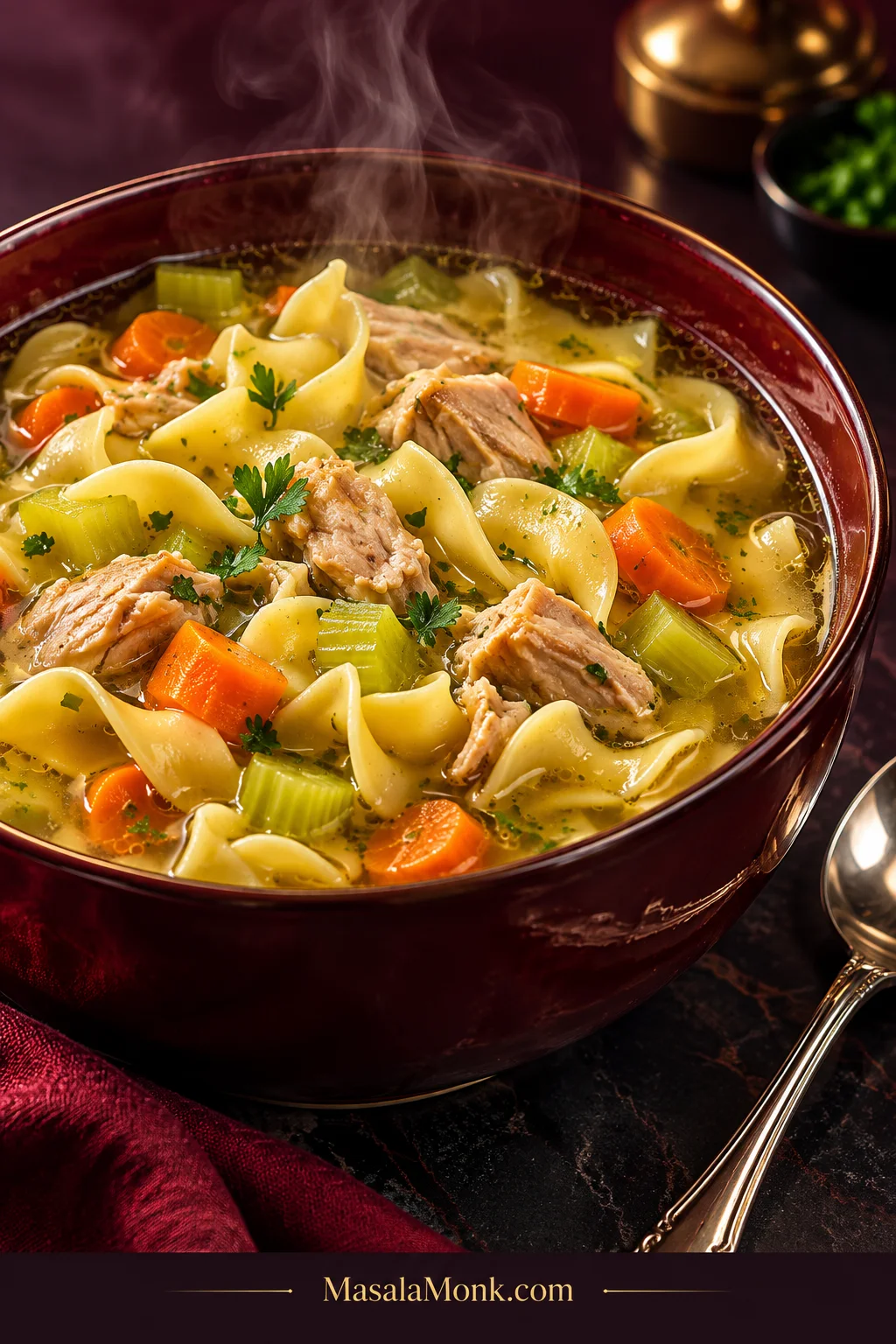
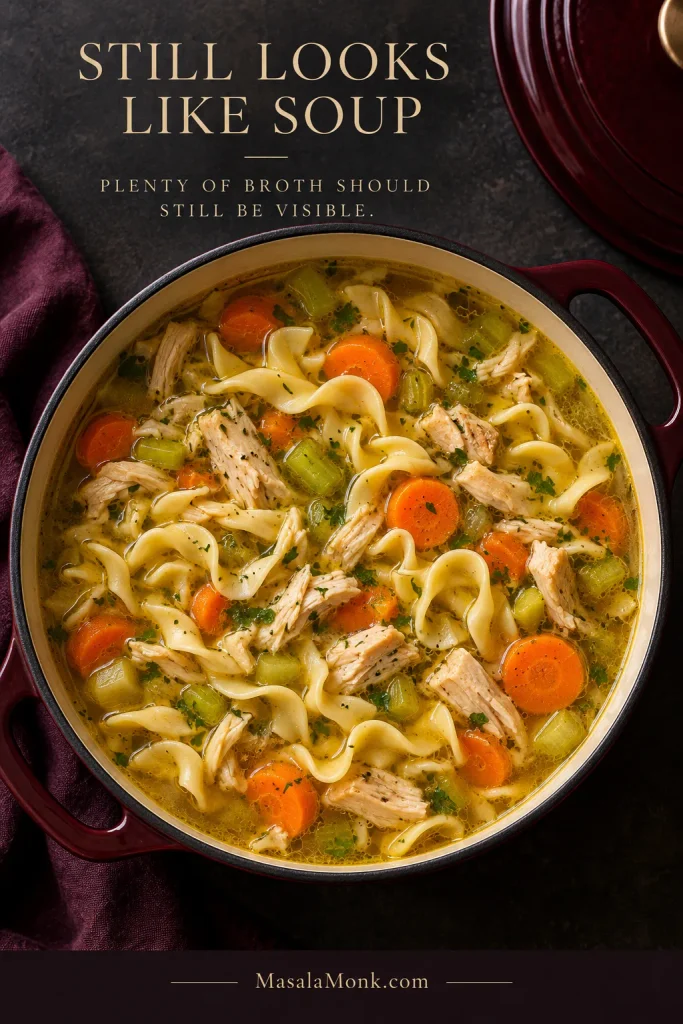
A good chicken noodle soup still looks like soup. There is plenty of golden, savory broth around the noodles, the chicken is tender rather than stringy, and the carrots and celery are soft enough to eat but hold their shape.
It is the kind of dinner that makes sense when the weather turns, the day has run long, or somebody at the table simply wants something warm and familiar.
This easy homemade chicken noodle soup recipe gets there without asking you to simmer a whole chicken all afternoon. Boneless chicken thighs get a light browning first, then onion, carrot and celery pick up the savory fond left behind. Low-sodium chicken broth goes in next, and the thighs finish gently in the pot until tender.
Chicken noodle soup is simple food, but the broth, chicken and noodles do not finish at the same time. Get the broth tasting right before the noodles go in. Take the chicken out when it is ready instead of making it wait for the pasta. Saving most of the pot for tomorrow? Keep those noodles separate.
Chicken Noodle Soup Recipe
A homemade chicken noodle soup with plenty of savory broth, tender chicken thighs, classic vegetables and wide egg noodles. Light browning gives store-bought chicken broth more depth without turning dinner into an all-day stock project.
Equipment
- 6–7 quart / 5.7–6.6 L Dutch oven or heavy soup pot
- Instant-read thermometer
- Tongs and a wooden spoon
- Chef’s knife and cutting board
- Optional second saucepan if cooking the noodles separately
Ingredients
- 1½ lb / 680 g boneless, skinless chicken thighs, trimmed and patted dry
- ¾ teaspoon fine sea salt, plus more as needed
- ½ teaspoon freshly ground black pepper, plus more to taste
- 1 tablespoon / 15 ml neutral cooking oil
- 1 tablespoon / 14 g unsalted butter
- 1 medium yellow onion, about 6 oz / 170 g, cut into roughly ½-inch / 1.3 cm pieces, about 1¼–1½ cups
- 3 medium carrots, about 8 oz / 225 g, sliced about ½ inch / 1.3 cm thick, about 1½ cups
- 3 celery ribs, about 6 oz / 170 g, cut into ½-inch / 1.3 cm pieces, about 1½ cups
- 4 garlic cloves, about 12 g, minced
- 8 cups / 1.9 L low-sodium chicken broth or stock, plus up to 1–2 cups / 240–480 ml extra if needed
- 1–2 teaspoons chicken base or bouillon paste, optional
- 2 bay leaves
- 4 fresh thyme sprigs, or ½ teaspoon dried thyme
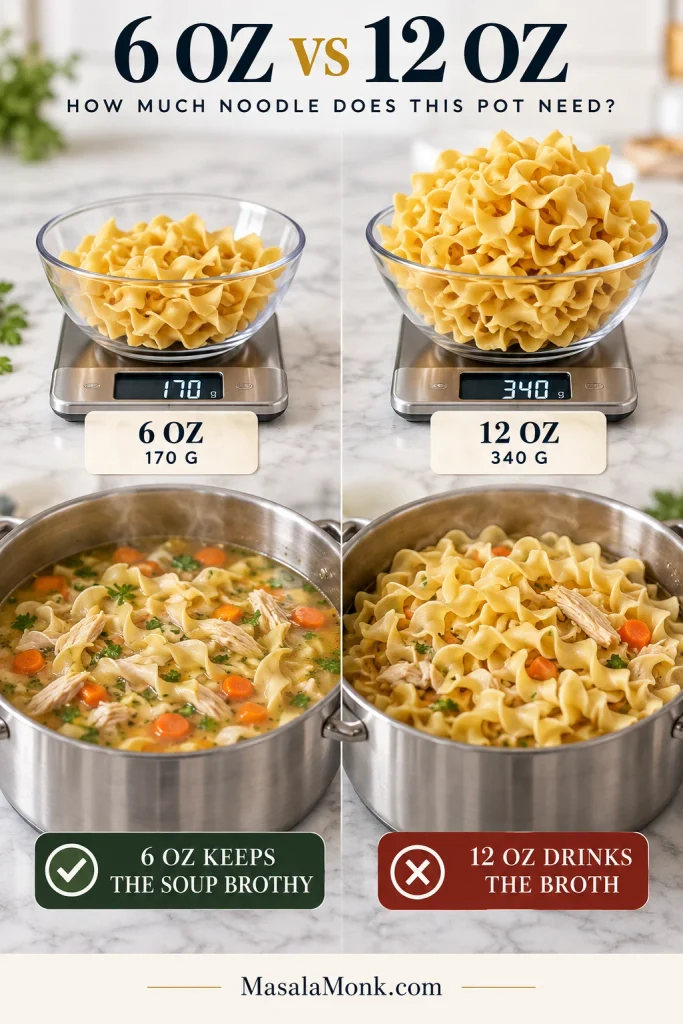
- 6 oz / 170 g wide egg noodles, roughly 3 cups dry depending on the brand and shape
- ¼ cup / about 15 g fresh parsley, chopped
- 1 tablespoon finely chopped fresh dill, optional
- 1–2 teaspoons / 5–10 ml fresh lemon juice, optional
Instructions
Brown the Chicken and Start the Vegetables
- Season the chicken. Pat the thighs dry. Season with ¾ teaspoon salt and ½ teaspoon black pepper.
- Give the chicken some color. Heat the oil over medium-high heat. Add the thighs in a single layer, working in two batches if necessary rather than crowding the pot. Cook for about 3–4 minutes on the first side and 2–3 minutes on the second, until lightly golden in patches. They should not be cooked through yet. Transfer them to a plate.
The brown residue left behind is the fond; keep it in the pot because it adds depth to the broth.

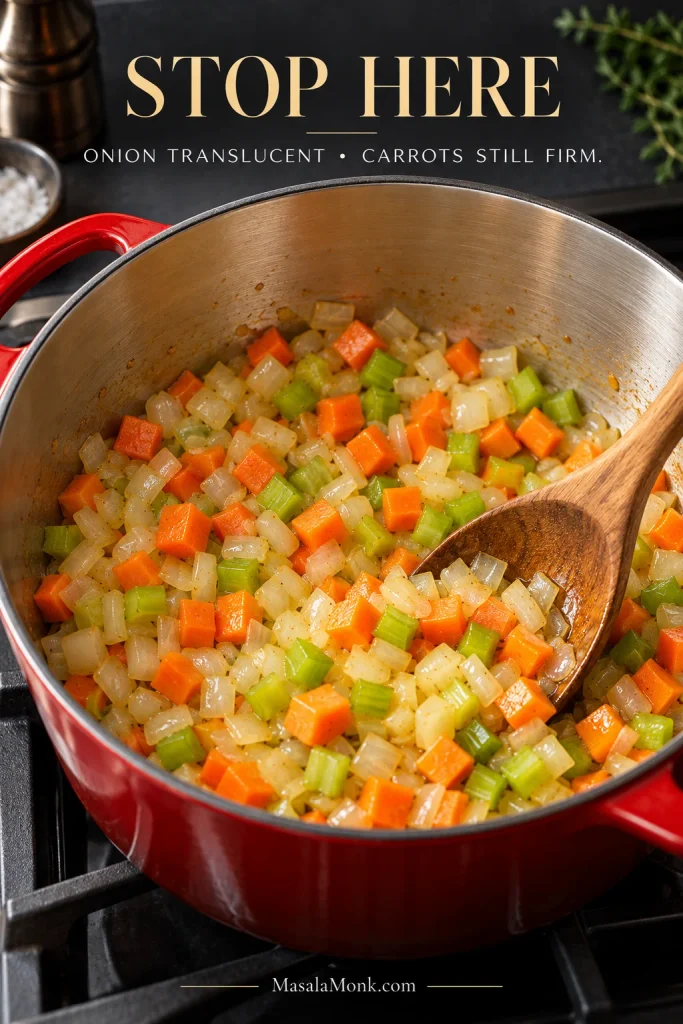
- Start the vegetables. Reduce the heat to medium. Spoon off excess chicken fat if there is much more than about a tablespoon in the pot. Add the butter, onion, carrots and celery. Cook for about 4–5 minutes, stirring occasionally. The onion should turn translucent, the celery should just begin to soften, and the carrots should remain quite firm. Add the garlic and cook for about 30 seconds, just until you can smell it clearly. Don’t wait for the garlic to brown.
Build the Broth and Cook the Chicken
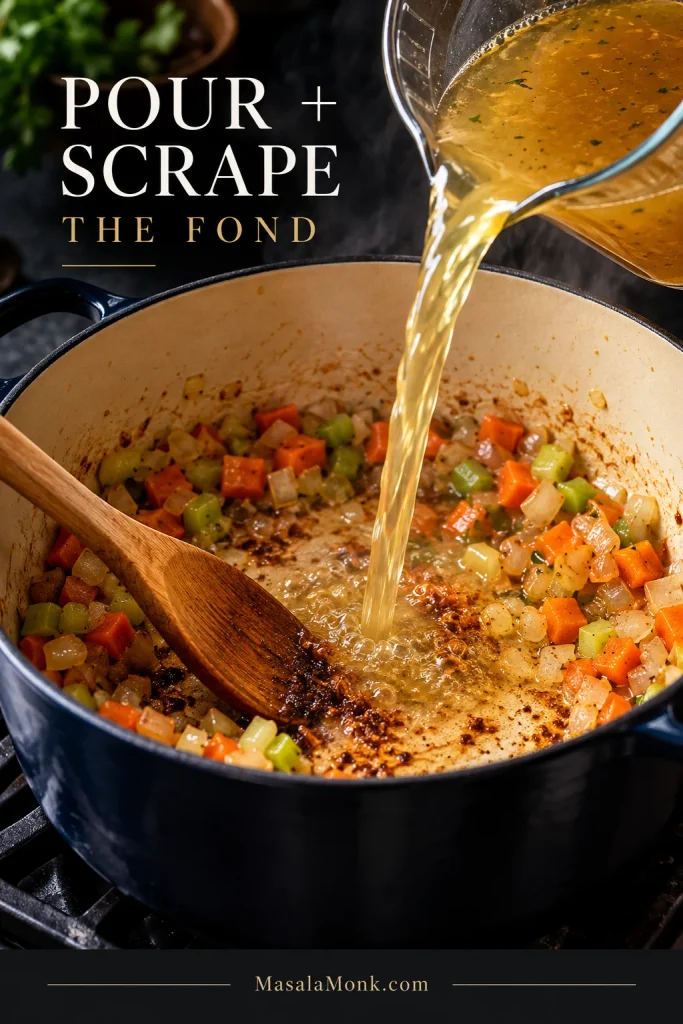
- Add the broth. Pour in the 8 cups / 1.9 L chicken broth and scrape the bottom of the pot with a wooden spoon to loosen the browned bits. Add the bay leaves and thyme. Bring the broth just to a boil.
Aim for deep golden-brown fond rather than black scorch. Scrape the browned layer into the broth, but leave genuinely burnt patches behind so bitterness does not spread through the pot.
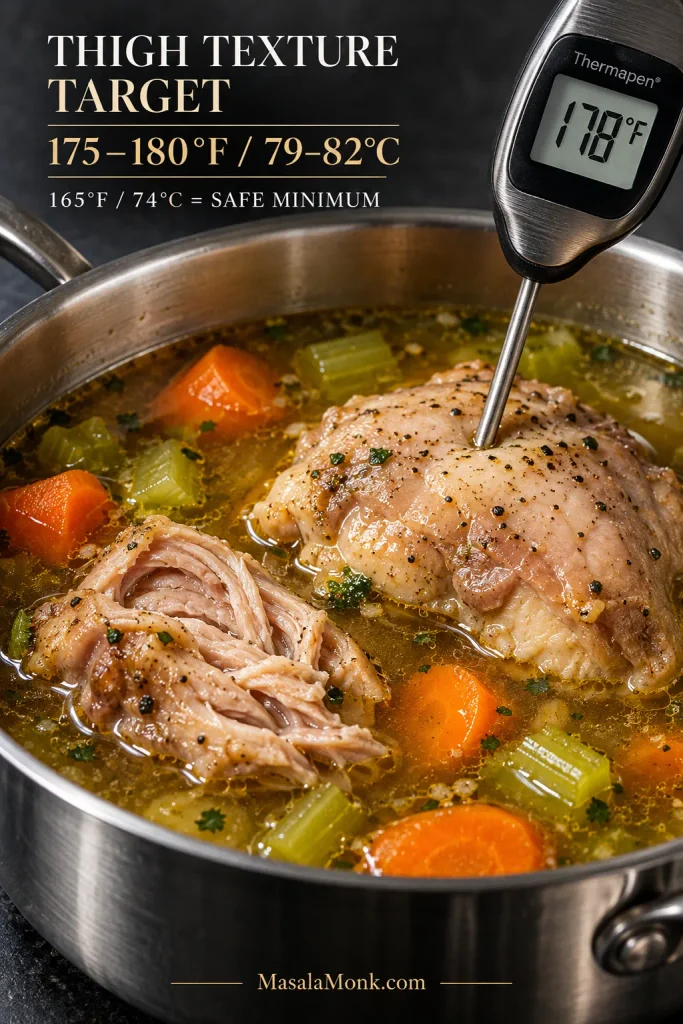
- Finish the thighs gently. Return the chicken and any juices from the plate. Adjust the heat until the broth settles into a gentle simmer with small, lazy bubbles. Begin checking after about 8 minutes. The safe minimum for poultry is 165°F / 74°C, but thighs become more tender as they cook beyond that point. For this soup, aim for about 175–180°F / 79–82°C. Larger pieces may need around 10–14 minutes. Remove the thighs when they pull apart easily but still form juicy pieces rather than dry threads. Rest for about 5 minutes, then shred or cut into bite-size pieces.
Check the thermometer in the thickest folded part of the thigh, not a thin edge. If the pieces vary noticeably in size, verify more than one before removing them from the broth.
- Taste the broth now. It should taste clearly of chicken before any noodles go in. Chicken flavor that is present but muted usually needs salt; add about ¼ teaspoon at a time. Weak broth with room for more salt can take 1 teaspoon chicken base. Let it dissolve and taste before deciding whether it needs the second teaspoon.
Cook the Noodles and Finish the Soup
- Choose your noodle method. Eating most of the soup tonight? Cook the noodles directly in the broth. Planning several leftover servings? Cook them separately in lightly salted water and add them to each bowl.
- Cook the noodles just shy of fully soft. For the one-pot version, add the 6 oz / 170 g egg noodles to the gently simmering broth. Begin checking about 1 minute before the package time; many wide egg noodles take around 6–8 minutes. Stop when they are tender but offer the faintest resistance in the center. For the separate version, cook them in their own saucepan to the same point, then drain.
- Return the chicken. Add the shredded chicken for the final 2–3 minutes, just long enough to heat it through. Remove the bay leaves and thyme stems, then stir in the parsley and optional dill.
- Take one final taste. A well-seasoned soup that tastes flat may only need 1 teaspoon / 5 ml lemon juice. Stir it in and taste before adding more. A noodle-heavy pot can be loosened with some of the extra low-sodium broth. The finished soup should look brothy, with plenty of liquid visible around the chicken, vegetables and noodles. Serve hot.
Need Help With the Broth, Chicken or Noodles?
How to Make Boxed Broth Taste Homemade
Browning the chicken gives boxed broth its first real layer of homemade flavor. The golden bits left on the bottom of the pot dissolve into the soup when the broth goes in, carrying savory chicken flavor into the broth.
You do not need to make stock from a whole chicken. A flavorful carton of low-sodium broth is a practical starting point, and the lower salt level leaves room to adjust the pot after the chicken and vegetables have flavored it.
Why Does My Chicken Noodle Soup Taste Bland?
If chicken noodle soup tastes bland, first work out whether it needs more salt, stronger chicken flavor, more body or a brighter finish. More salt is not always the answer.

| What you notice | What usually helps |
|---|---|
| The chicken flavor is there, but everything seems muted | Add salt about ¼ teaspoon at a time, stir well and taste again. |
| It barely tastes of chicken and the broth can take more salt | Stir in 1 teaspoon chicken base, let it dissolve, then taste before adding more. |
| It is already salty enough but the chicken flavor is weak | Add some stronger unsalted or low-sodium chicken stock if you have it. Reducing the broth or adding salty bouillon can make the salt problem worse. |
| The broth tastes balanced but feels watery | Try the optional gelatin fix below for more body. |
| It tastes savory and well seasoned but flat | Stir in 1 teaspoon fresh lemon juice, then taste before adding more. |
Broth with balanced flavor but a watery mouthfeel can take one optional fix: bloom about 2 teaspoons unflavored powdered gelatin in 2 tablespoons cold water or cool broth until hydrated, then stir it into the hot soup until dissolved. It adds some of the silky body of a long-simmered stock without making the soup thick or gravy-like.
Which Chicken Is Best for Chicken Noodle Soup?
Boneless skinless chicken thighs are the best choice for this easy version because they have more flavor and tolerate the gentle simmer well. Whatever chicken you use, don’t make finished chicken wait in the broth for the noodles.
- Chicken thighs: use the recipe as written. Taking them beyond the 165°F / 74°C safety minimum gives their connective tissue more time to soften; around 175–180°F / 79–82°C works well for tender pieces that still hold together.
- Chicken breasts: breasts have less margin than thighs. Begin checking sooner and remove them once the thickest part reaches the safe minimum of 165°F / 74°C. Leaving cooked breast meat in the simmer while the noodles finish is an easy way to make it dry and stringy.
- Rotisserie chicken: yesterday’s rotisserie chicken works well here. Use about 3 cups / 425–450 g shredded cooked chicken, skip the browning step, and add the meat only during the final few minutes.
- Leftover roast chicken: treat it like rotisserie chicken. It only needs enough time in the pot to heat through.
- Bone-in chicken: it can give the broth more depth but needs extra time and handling. Chicken Tinola is a good example of a soup built deliberately around bone-in chicken.
Using a rotisserie carcass? Simmer the picked carcass in the boxed broth for 15–20 minutes before making the soup. Strain the enriched broth into a bowl or large measuring jug, discard the bones and cartilage, then use that broth when you continue with the recipe. This keeps small bone fragments out of the vegetables later.
The Noodle Decision: Tonight or Tomorrow?
What Noodles Are Best for Chicken Noodle Soup?
Wide egg noodles fit this version particularly well. They have the familiar soft but substantial bite people expect from a classic bowl, and they sit comfortably beside chunks of chicken and vegetables without needing a huge amount of pasta.
Six ounces / 170 g may not look like much while the noodles are dry. Once cooked, it is plenty for this pot. A full 12-ounce bag is a different story: by the next day, a surprising amount of your broth may be inside the noodles.
Should You Cook Egg Noodles in the Broth?
When you’re eating the soup right away, cooking the noodles directly in the broth keeps things simple and lets them pick up some of the soup’s flavor. Once the pot needs to survive until tomorrow, separation becomes much more useful.
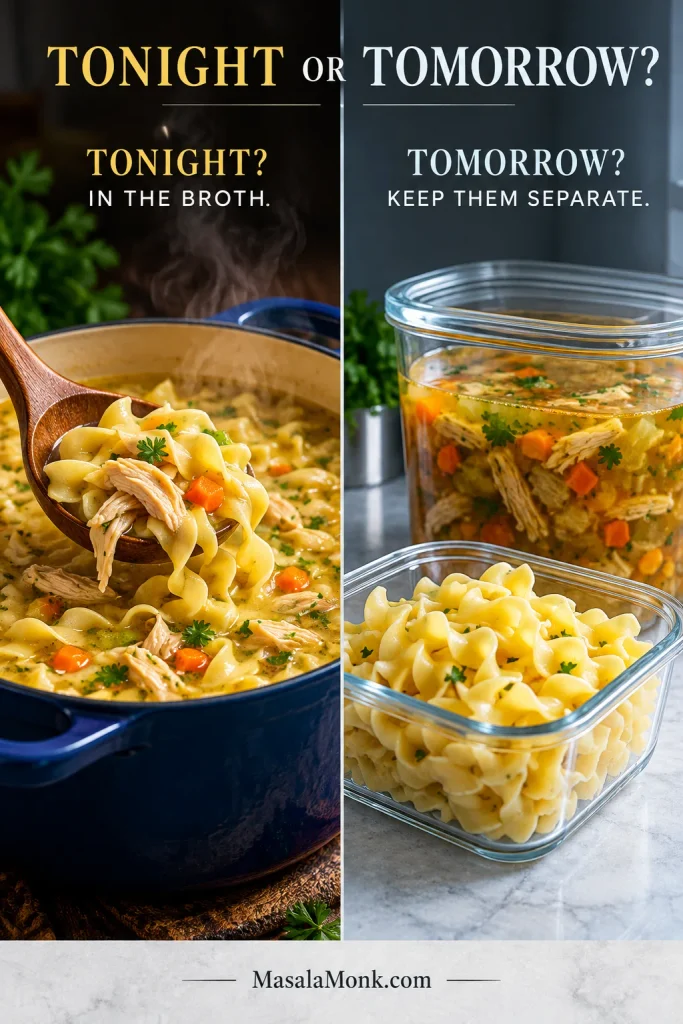
| If you are… | Do this |
|---|---|
| Eating most of the soup tonight | Cook the noodles directly in the broth. |
| Planning several leftover servings | Cook the noodles separately and add them by the bowl. |
| Taking a pot to a friend or family member | Pack broth and noodles separately so the soup tastes freshly made when they warm it. |
| Freezing the soup | Leave the noodles out and cook fresh ones later. |
Small pasta such as ditalini also works well. Homemade or frozen egg noodles are often thicker and chewier, so use the package or recipe timing rather than assuming they will cook in the same 6–8 minutes as dried wide egg noodles.
If You’re Missing an Ingredient
This soup can absorb a few substitutions without falling apart. You do not need an emergency grocery run because one celery rib is missing.
- No celery: leave it out. You’ll lose some of the familiar chicken-soup aroma, but the recipe works.
- No carrots: omit them. The finished broth will have less sweetness.
- No onion: you can make the soup without it, although you’ll miss some of the sweetness and savory aroma underneath the broth.
- Frozen vegetables: add them during the last few minutes and simmer only until hot and tender. They’re already partly softened, so adding them alongside the fresh carrots and celery can leave them mushy by the time the soup is done.
- No fresh thyme: use ½ teaspoon dried thyme.
- No dill: skip it. Parsley is enough.
- Dairy-free: replace the butter with another tablespoon of olive or neutral oil.
What makes the bowl taste like classic chicken noodle soup is the chicken, flavorful broth, onion-carrot-celery base and noodles. It does not need a cupboard full of “secret” seasonings.
Mushy Noodles, Dry Chicken & Other Fixes
Some mistakes can be fixed in this pot; others are really notes for next time. The useful thing is knowing which is which.
| What happened? | What helps now / next time |
|---|---|
| Noodles are mushy | You cannot make them firm again. Stop cooking and serve the soup now. Next time begin checking sooner and stop while the centers retain the faintest bite. |
| There is barely any broth left tomorrow | Add low-sodium broth while reheating. Next time store the noodles separately when you know most of the soup will be saved. |
| Chicken is dry or stringy | Get it out of the hot broth rather than letting it simmer longer. Next time remove the chicken when it reaches the right endpoint for the cut you’re using. |
| Vegetables are mushy | Their firmness cannot be restored. Stop simmering now; next time shorten the initial sauté or cut the vegetables slightly larger. |
| Soup looks greasy | Spoon off obvious excess fat. A few shimmering droplets are fine; a heavy oil slick is not needed. |
| Garlic or herbs dominate the bowl | Dilute genuinely overpowering flavor with a little unsalted or low-sodium broth. Then leave the seasonings alone and let the chicken broth do the work. |
Most pots do not need five different corrections. Change one thing, try another spoonful, and stop when the soup tastes good.
A slightly cloudy broth is not a failed broth. Chicken proteins, fat, noodle starch and vigorous simmering can all affect clarity. When the broth tastes balanced, a little cloudiness is not something you need to fix.
How to Keep Leftovers Brothy
Enough left for tomorrow? You’re in good shape. If you cooked the noodles separately, cool and refrigerate them in their own covered container and store the chicken, vegetables and broth in another. Combine only the amount you’re reheating.
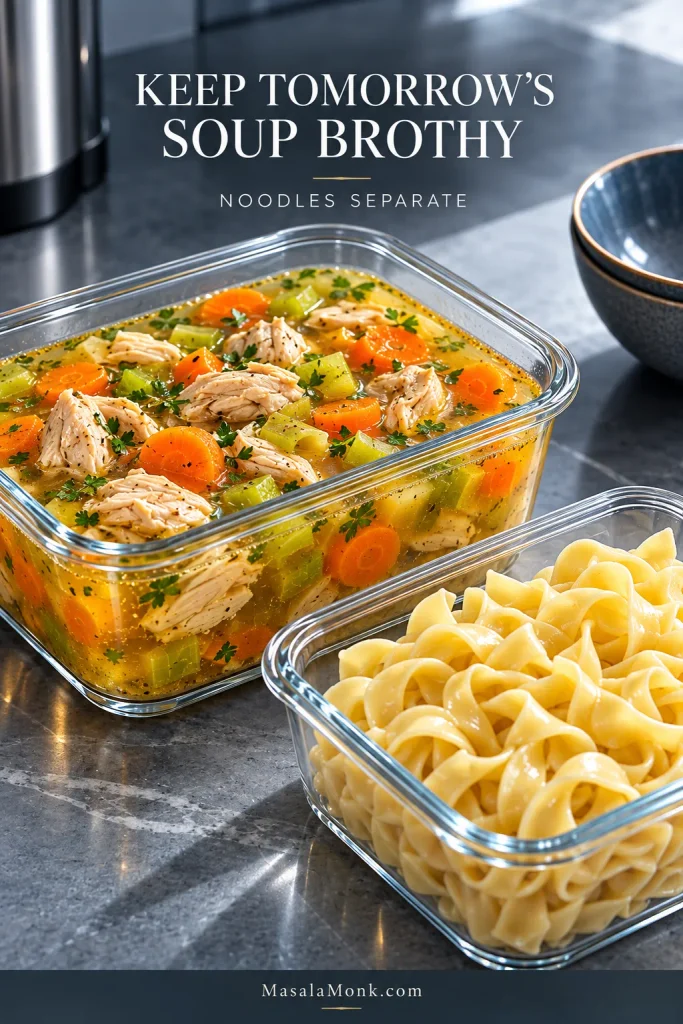
Making the soup ahead on purpose? Cool and refrigerate the cooked broth and vegetables, and keep the shredded chicken separately. When you’re ready to eat, warm the soup base gently just until hot. Cook fresh noodles in a separate saucepan, return the chicken only long enough to heat through, then add the noodles to each bowl. That keeps the vegetables from going through another full simmer and lets the noodles arrive at the table freshly cooked.
How Long Does Chicken Noodle Soup Last in the Fridge?
Chicken noodle soup keeps for 3–4 days in the refrigerator when it is cooled and stored safely. Divide leftovers into shallow covered containers and refrigerate them within 2 hours.
Noodles stored in the soup will continue taking up liquid overnight. Add low-sodium chicken broth while reheating until the bowl is as brothy as you want it again.
Don’t be surprised if the chilled broth turns a little jiggly. That’s often natural gelatin, along with some chilled fat. It melts back into the soup as it heats.
Can You Freeze Chicken Noodle Soup?
Yes. Freeze the chicken, vegetables and broth without noodles whenever possible. Portion the cooled soup into freezer-safe containers with a little room for expansion. For best quality, use it within about 3 months.
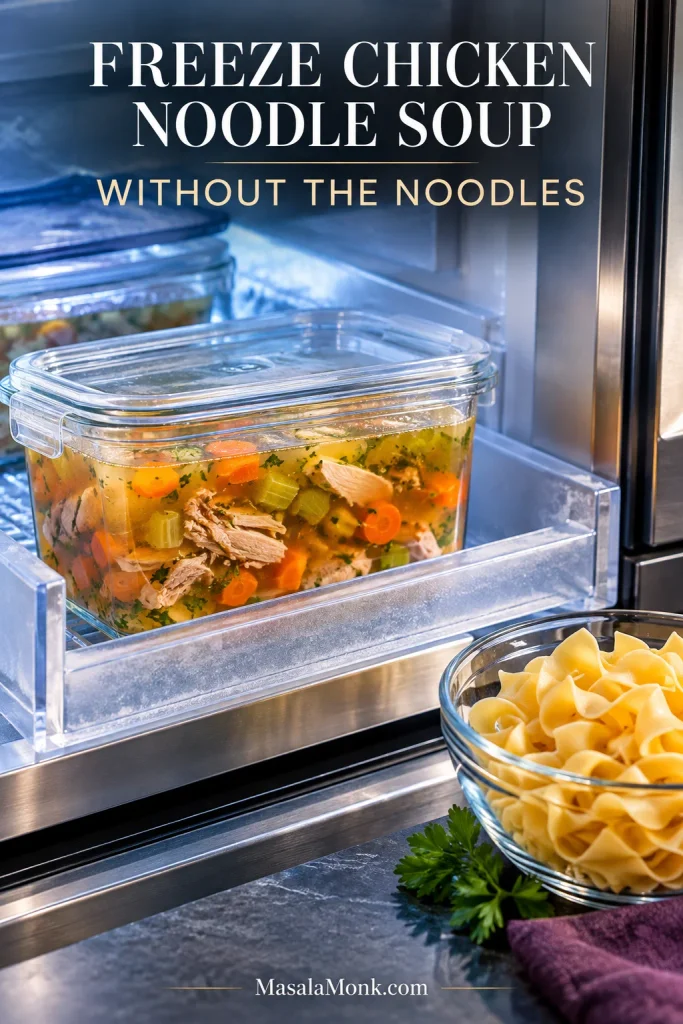
Thaw the soup overnight in the refrigerator when convenient, or warm it gently from frozen on the stovetop. Cook fresh egg noodles while the soup reheats.
How to Reheat Chicken Noodle Soup
Bring the soup to a brief boil on the stovetop and make sure it reaches at least 165°F / 74°C throughout.
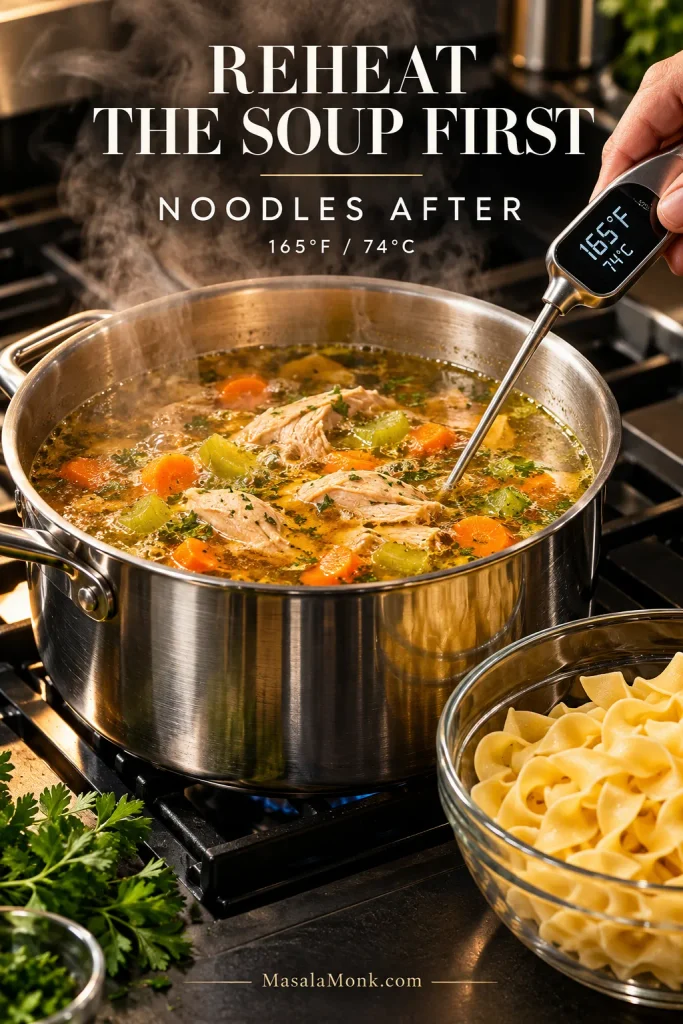
If the soup has thickened overnight, loosen it with a little low-sodium broth. Add separately stored noodles after the soup is fully reheated and warm them through briefly; if the noodles are already in the soup, keep the boil short to limit further softening.
What to Serve with Chicken Noodle Soup
If you’d like something alongside, warm Irish Soda Bread is an easy partner and doesn’t need yeast or proofing.
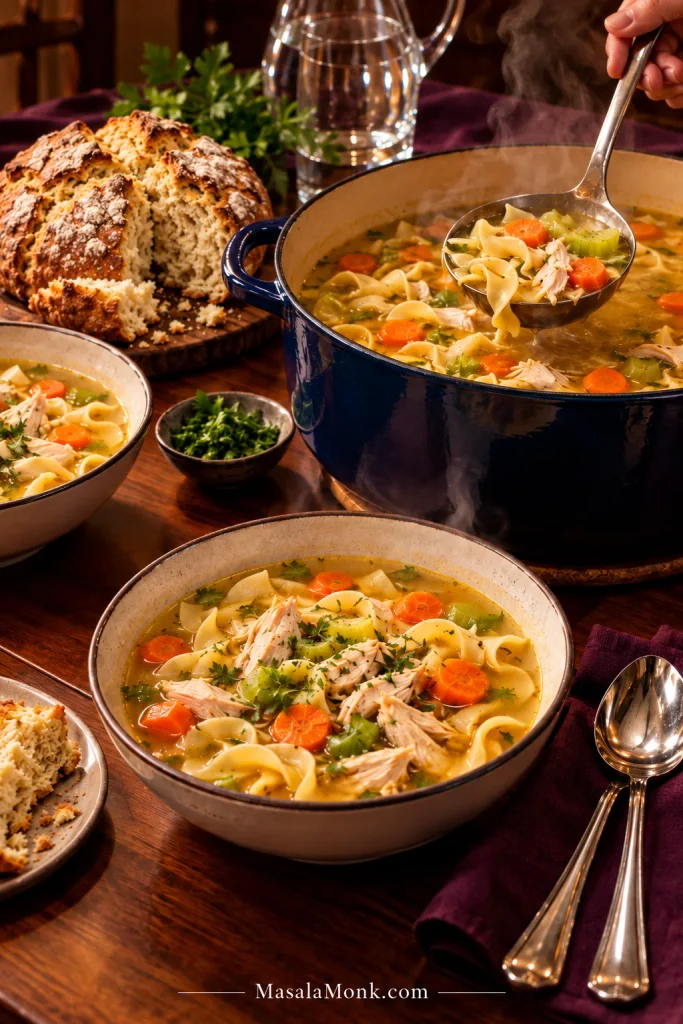
Ladle the soup while the broth is steaming, scatter over a little parsley or dill, and put the pot on the table. When the chicken is tender and the noodles are still just right, it really does not need much else.








