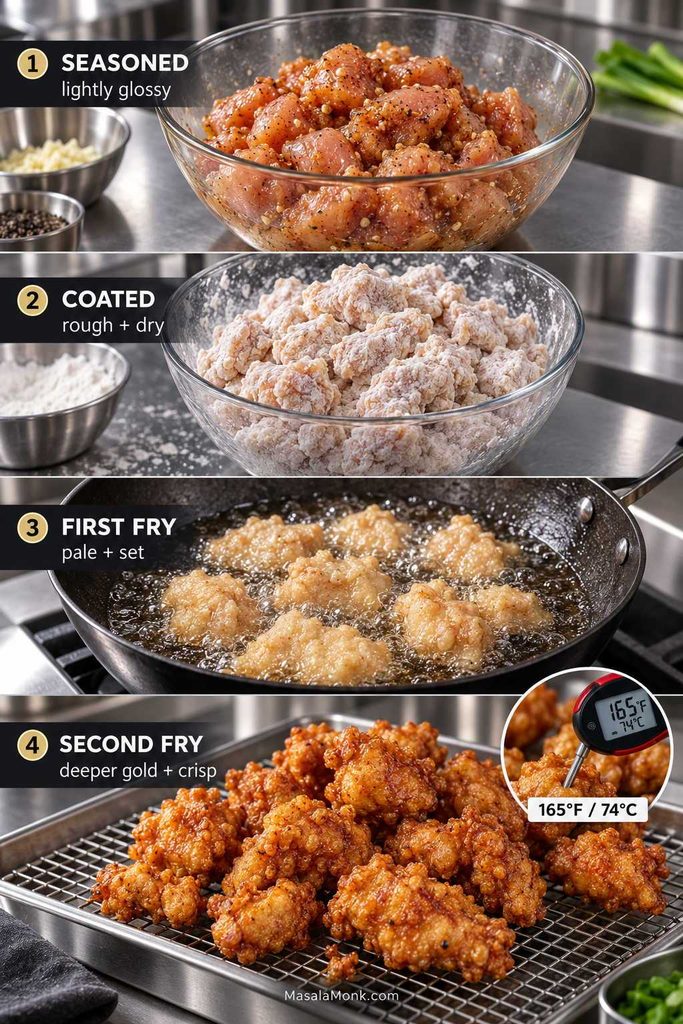
Posted on Leave a comment

General Tso Chicken Recipe: Crispy, Sticky, Better Than Takeout

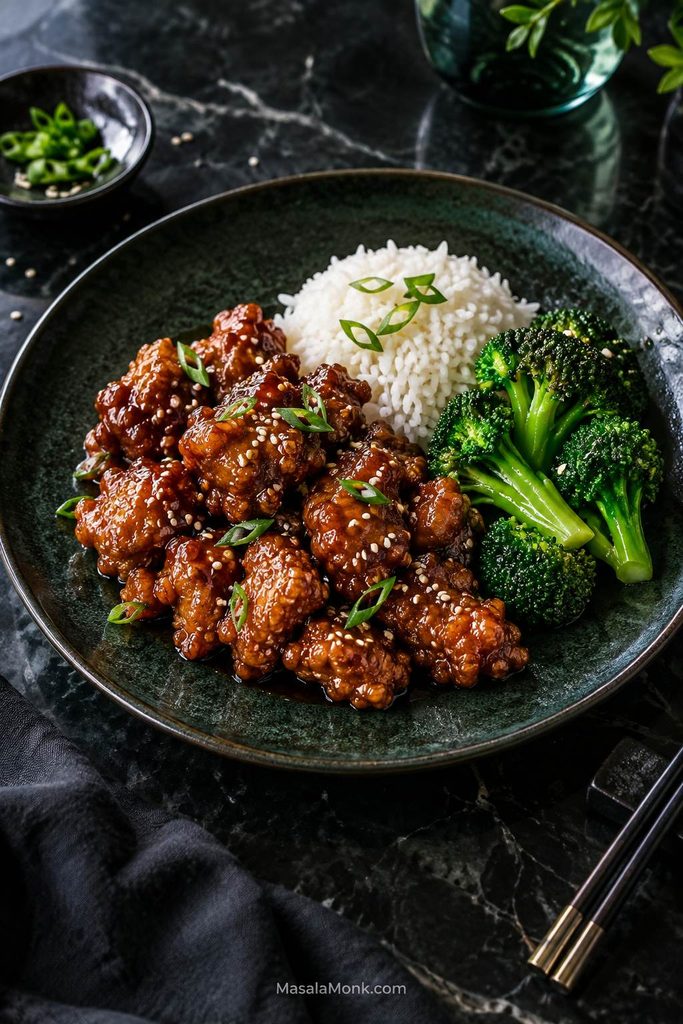
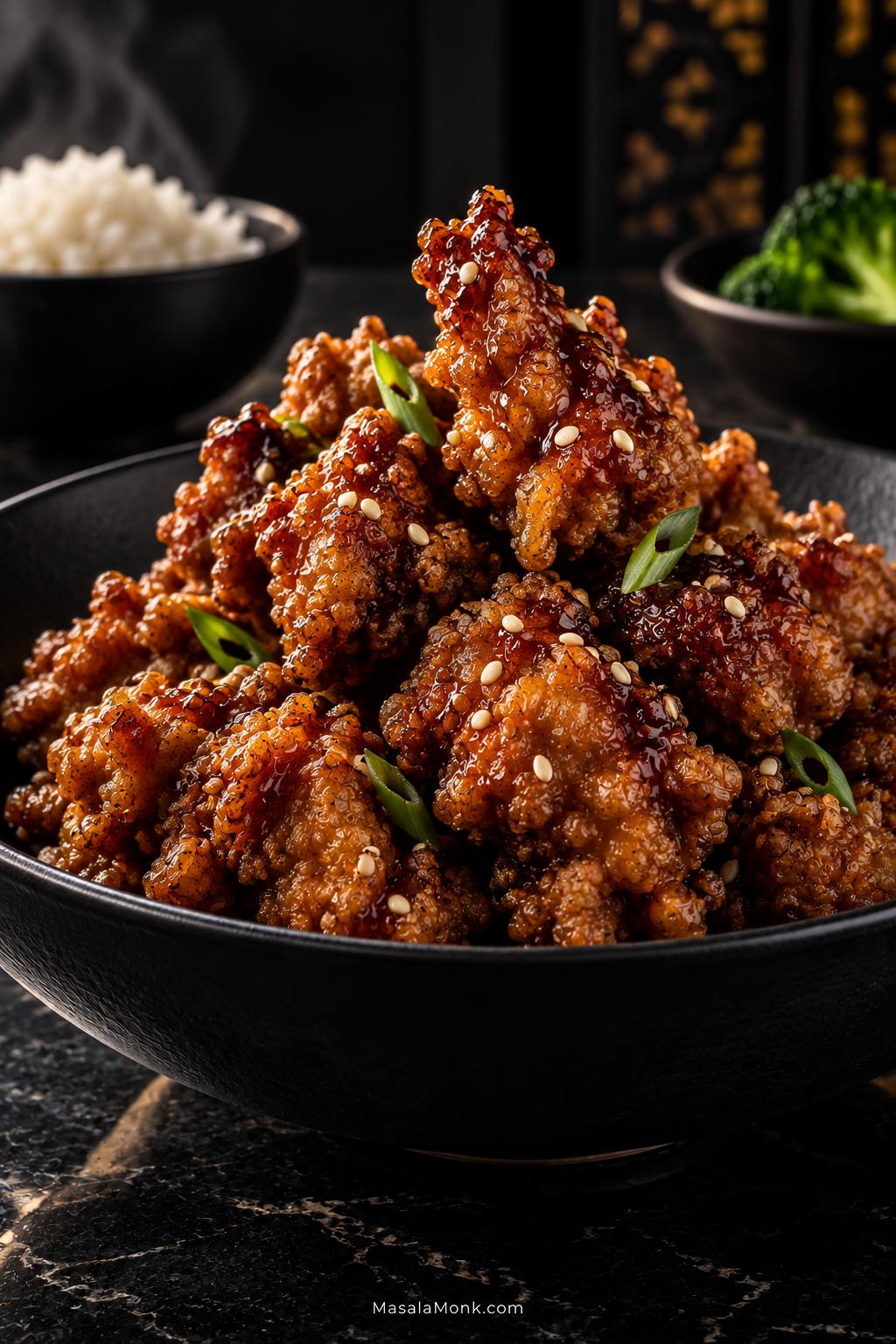
Bowl of glossy General Tso chicken over white rice with broccoli, scallions, sesame seeds, and dried red chilies on a dark surface.

This General Tso chicken recipe is for the takeout craving: crisp pieces of chicken, a glossy sweet-spicy sauce, garlic and ginger in the pan, and rice waiting underneath to catch every sticky spoonful.

The secret is timing, not a complicated sauce. Takeout chicken often softens because it sits in glaze on the way home. Here, the sauce meets the chicken at the last second, so the first few bites still have crunch.

The whole recipe comes down to three cues: rough coating, thick glaze, fast toss. Remember that rhythm and you get crunchy edges, juicy centers, and sauce that clings instead of turning the pan soggy.

This version takes about 40 minutes from start to finish and uses a shallow-fry method, so you do not need a deep fryer. Better than takeout here does not mean fancier; it means the chicken is sauced at the last second, the glaze is balanced to your taste, and the first bite still feels fresh from the pan.

Jump to Recipe Card · 3-Cue Method · Visual Cues · Sauce · Keep It Crispy · Coating Choice · Air Fryer & Other Methods · Storage · FAQ

Quick Answer

The best homemade General Tso chicken is made by cutting boneless chicken into small pieces, coating it with cornstarch, shallow frying it until crisp, then tossing it briefly in a thick sweet-spicy sauce made with soy sauce, rice vinegar, hoisin, sugar, garlic, ginger, chili, sesame oil, stock or water, and cornstarch.

For the juiciest General Tso’s chicken, use boneless skinless chicken thighs. For the crispiest result without a deep fryer, fry the chicken in batches in about 2 cm / 3/4 inch of hot oil, thicken the sauce separately, and toss the fried pieces only at the end.

This recipe also helps with the two things that usually go wrong at home: soggy chicken and sauce that tastes too sweet, too salty, too thin, or too flat.
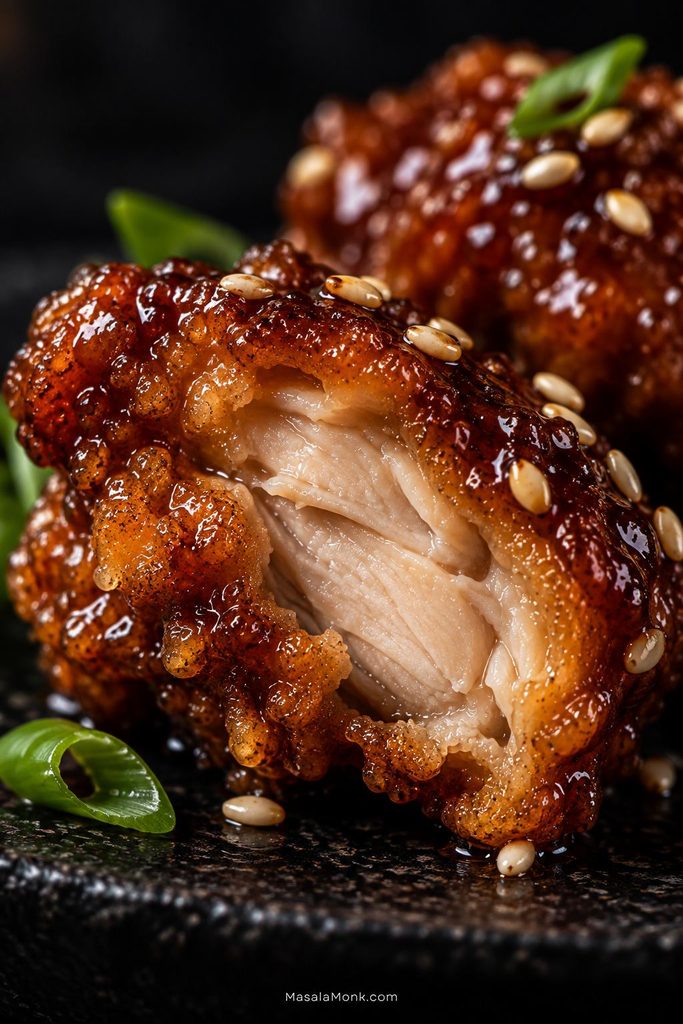
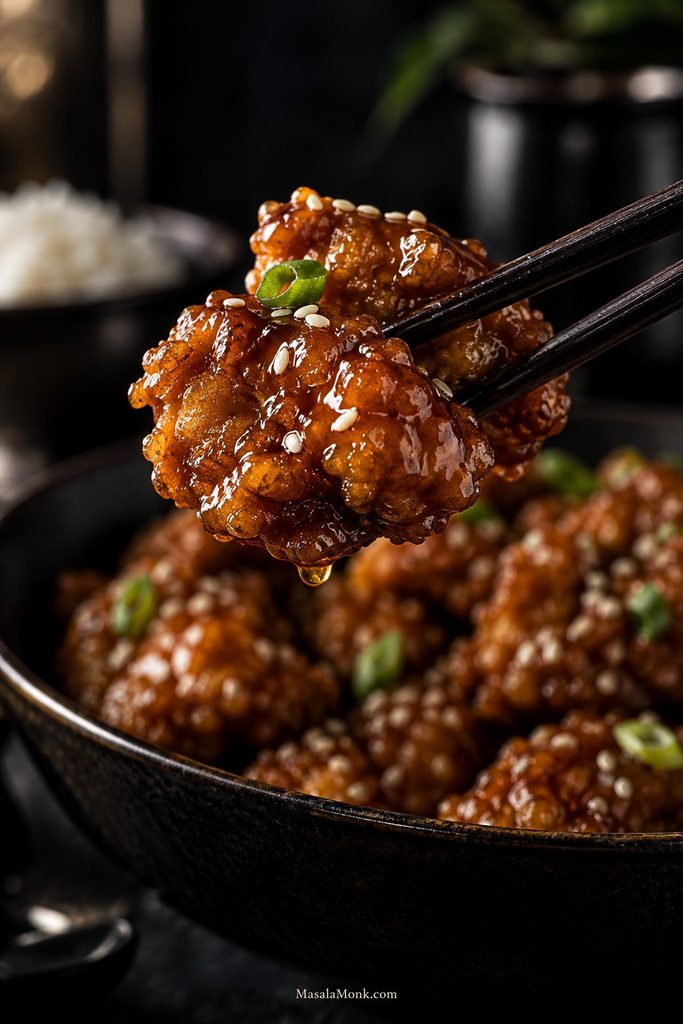
A close look at the finished chicken helps you know what the sauce should do: cling lightly to the ridges without hiding the crisp coating.
Close-up of sauced General Tso chicken pieces with rough crispy ridges, sesame seeds, scallions, and white rice underneath.
Sticky sauce, visible ridges, and rice underneath — this is the texture target.
The 3-Cue Method

If you remember only one thing before cooking, remember this: rough coating, thick glaze, fast toss. These three checks protect the texture more than any complicated sauce trick.
CueWhat to Look ForWhy It Matters
Rough coatingPatchy, dry-looking chicken pieces, not smooth pasteRough edges crisp better in hot oil
Thick glazeSauce that coats a spoon and leaves a short trailThin sauce soaks into the crust
Fast tossAbout 30 seconds in the panThe chicken gets coated without turning soft

Once the sauce is mixed, the chicken is coated, and the rice is already steaming, the cooking feels much calmer. From there, it is hot oil, a quick glaze, scallions on top, and the sticky takeout-style bowl you were hoping for.

The Three Cues in One Look

Use this visual as a quick check before cooking: the coating should look rough, the sauce should look thick, and the toss should happen fast.

Three-panel guide showing rough cornstarch-coated chicken, thick General Tso sauce with a spatula trail, and fried chicken tossed in sauce.
Rough coating, thick glaze, fast toss — these three checks protect the crisp edges.

General Tso Chicken at a Glance

FlavorSweet first, then savory, tangy, and gently spicy
TextureCrisp chicken edges with a sticky glaze
Best chickenBoneless skinless thighs for juicy takeout-style pieces
Leaner optionChicken breast, cut evenly and cooked carefully
Main methodShallow fry, thicken sauce, toss briefly
Oil depthAbout 2 cm / 3/4 inch
Oil amountAbout 1 1/2 cups in a 10-inch skillet; closer to 2 cups in a wider pan
Oil temperature375–390°F / 190–200°C
Chicken safe temperature165°F / 74°C inside
Best served withRice and broccoli

What Is General Tso Chicken?

General Tso chicken, often written as General Tso’s chicken, is a Chinese-American takeout dish made with crispy pieces of chicken tossed in a sweet, tangy, savory, lightly spicy sauce. It usually tastes sweet first, then savory and tangy, with a gentle chili warmth at the end. The goal is contrast: crisp edges, juicy chicken, and a shiny sauce that clings to each piece instead of pooling at the bottom of the pan.

Before You Start

This recipe moves quickly once the oil is hot, so a little prep makes everything easier. Start the rice first; this guide to cooking rice is useful when you want fluffy grains ready before the chicken hits the sauce.

Frying feels less stressful when you treat the first piece as a test. Use a heavy pan, keep the oil shallow, and fry one small coated piece before the first full batch. When it sizzles steadily and turns golden without burning, the oil is ready.

Crispy General Tso Chicken Without Deep Frying

Summary: Crispy shallow-fried chicken tossed in a glossy sweet, tangy, lightly spicy General Tso sauce. This homemade version gives you takeout-style flavor without a deep fryer.

Prep Time20 minutes
Cook Time20 minutes
Total Time40 minutes
Servings4 servings
MethodShallow fry, thicken sauce, toss briefly
Skill LevelModerate, but very manageable with prep

Equipment

  • Large heavy skillet, wok, or Dutch oven
  • Mixing bowls
  • Whisk
  • Tongs or a spider strainer
  • Wire rack or paper towel-lined plate
  • Instant-read thermometer or oil thermometer, helpful but optional
  • Knife and cutting board

Ingredients

For the Chicken

  • 600g / 1.3 lb boneless skinless chicken thighs, cut into 1-inch / 2.5 cm pieces
  • 1 large egg white, or 2 tablespoons beaten egg, for better coating grip
  • 1 tablespoon soy sauce
  • 1 tablespoon Shaoxing wine, dry sherry, chicken stock, or water
  • 1/4 teaspoon salt, plus more only if needed
  • 1/4 teaspoon white pepper or black pepper
  • 1/2 cup / about 65g cornstarch, plus 1–2 tablespoons more if needed
  • Neutral oil for shallow frying, usually 1 1/2 to 2 cups depending on pan width

For the General Tso Sauce

  • 1/2 cup / 120ml chicken stock or water
  • 3 tablespoons low-sodium soy sauce
  • 2 tablespoons hoisin sauce
  • 2 tablespoons unseasoned rice vinegar
  • 2–3 tablespoons brown sugar or honey, depending on how sweet you like it
  • 1 tablespoon chili garlic sauce or sambal, or 1/2–1 teaspoon red pepper flakes
  • 2 teaspoons sesame oil
  • 1 tablespoon cornstarch

For the Aromatics and Serving

  • 2–3 garlic cloves, minced
  • 1 teaspoon fresh ginger, grated
  • 3–5 dried red chilies, optional
  • Cooked jasmine rice, white rice, brown rice, or fried rice
  • Steamed or stir-fried broccoli
  • Sliced scallions
  • Sesame seeds

Instructions

Prep the Chicken

1. Cut the chicken. Cut the chicken into even 1-inch / 2.5 cm pieces. Similar size matters more than perfect cubes.

2. Season the chicken. In a bowl, combine the chicken with egg white or beaten egg, soy sauce, Shaoxing wine or another listed liquid, salt, and pepper. Stir until the pieces are lightly coated.

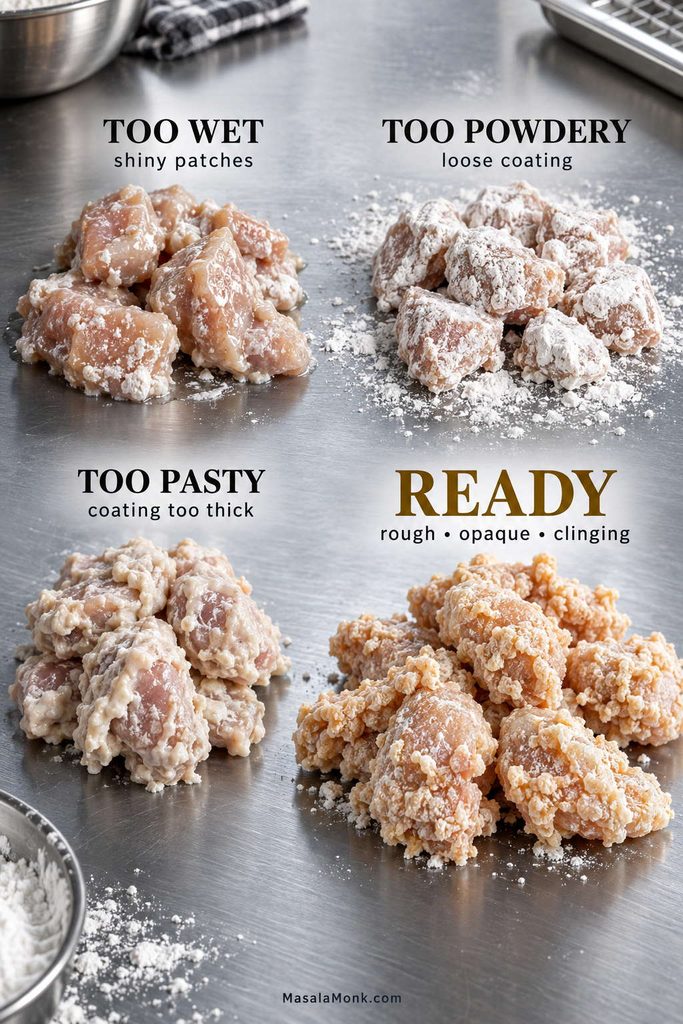
3. Add the cornstarch. Sprinkle in the cornstarch and toss until the chicken pieces have a thin, rough, mostly dry-looking coating. Uneven is good here because those rough patches turn into crisp edges in the oil. If the chicken looks wet or sticky, add another tablespoon or two of cornstarch. Shake off heavy loose clumps before frying.

4. Mix the sauce. In a separate bowl, whisk together the stock or water, soy sauce, hoisin sauce, rice vinegar, brown sugar or honey, chili garlic sauce, sesame oil, and cornstarch.

Fry and Drain

5. Heat the oil. Add about 2 cm / 3/4 inch neutral oil to a heavy skillet, wok, or Dutch oven. In a 10-inch skillet, start with about 1 1/2 cups oil. In a wider pan, you may need closer to 2 cups to reach the same shallow depth. Heat to 375–390°F / 190–200°C. Without a thermometer, look for shimmering oil and listen for an immediate steady sizzle when a small test piece goes in.

6. Fry in batches. Add the chicken in a single layer with space between pieces. Fry for 3–5 minutes total, turning as needed, until golden, crisp, and cooked through. The chicken should reach 165°F / 74°C inside.

7. Drain the chicken. Transfer the fried chicken to a wire rack or a paper towel-lined plate. A wire rack is best because it lets steam escape instead of collecting under the coating. Repeat with the remaining chicken.

Make the Sauce and Toss

8. Cook the aromatics. Carefully pour off most of the oil, leaving about 1 tablespoon in the pan. Add the garlic, ginger, and dried chilies. Stir for 20–30 seconds, just until the garlic and ginger smell sharp, warm, and a little toasty. Stop before the garlic browns; burnt garlic can make the whole sauce taste harsh.

9. Thicken the sauce. Whisk the sauce once more, then pour it into the pan. Simmer for 1–2 minutes, stirring often, until the sauce turns shiny, darkens slightly, and moves like a glaze instead of a thin liquid. When you drag a spatula through the sauce, it should briefly leave a trail before flowing back together.

10. Toss quickly. Add the fried chicken back to the pan and toss for about 30 seconds, just until the glaze catches on the rough edges in a thin, shiny layer, with a few crisp ridges still showing. Get it out of the pan before the coating sits too long in the sauce.

11. Serve immediately. Finish with scallions and sesame seeds. Serve hot with rice and broccoli while the sauce is shiny and the edges still have some crunch.

Recipe Notes

  • Chicken thighs are the most forgiving choice because they stay juicy. Chicken breast works too, but avoid overcooking it.
  • Egg white gives the cleanest coating. If using whole beaten egg, use only 2 tablespoons at first and add extra cornstarch as needed.
  • Before frying, aim for rough, mostly dry chicken pieces. Before tossing, look for a glossy sauce that coats the spoon. If either one looks wet or thin, fix it before moving on.
  • The sauce must thicken before the chicken returns. This one step protects the coating more than anything else.
  • If the first batch browns before the chicken cooks through, the oil is too hot for the size of the pieces. Lower the heat slightly and give the next batch a little more time.
  • For a milder sauce, reduce the chili garlic sauce or skip the dried chilies.
  • For a sweeter restaurant-style sauce, use the full 3 tablespoons brown sugar or honey.
  • If using regular soy sauce instead of low-sodium soy sauce, reduce the added salt and taste the sauce before coating the chicken.

This is the kind of recipe where the first batch teaches you the pan. By the second batch, the sizzle, color, and sauce thickness start to make sense.

The coating will not look perfectly smooth, and that is a good thing. Rough, patchy bits are what crisp in the oil, and the sauce needs to be thick before the chicken returns so those edges stay noticeable in the first few bites.

Why This Recipe Works

This dish looks simple, but the texture depends on timing. Cool oil makes the coating greasy. Thin sauce softens the crust. Too much time in the pan after saucing turns crunchy edges into soft ones.

  • Small chicken pieces cook quickly. One-inch pieces brown fast and stay juicy inside.
  • Egg white and cornstarch build the right coating. Egg white helps the coating grip, while cornstarch fries up lighter and crisper than heavy breading.
  • Shallow frying gives better texture than a dry skillet. You get crunchy edges without needing a full deep fryer.
  • A thick glaze protects the crust. Sauce thickness matters more than sauce complexity because thin liquid soaks into fried coating.
  • A fast toss keeps the texture alive. The chicken needs enough time to catch the glaze, not enough time to stew in it.
  • The flavor is adjustable. You can make the sauce sweeter, spicier, tangier, or less salty before it ever touches the chicken.

Ingredients You’ll Need

You do not need a long list of specialty ingredients here. What matters is balance: enough sweetness to feel like takeout, enough vinegar to keep it bright, enough chili to warm the bowl, and enough garlic and ginger to make the sauce smell alive as soon as it hits the pan.

The sauce can taste a little bold before it hits the chicken because the rice, broccoli, and crisp coating will soften the edges.

Set Up Before the Pan Gets Hot

General Tso chicken moves quickly once the pan is hot, so this setup keeps the frying, sauce, and serving steps from colliding.

Ingredient board with chicken, cornstarch, egg white, soy sauce, hoisin sauce, rice vinegar, garlic, ginger, chilies, sesame oil, rice, broccoli, scallions, and seasonings.
A full setup keeps the frying, sauce, and final toss from feeling rushed.

Chicken and Coating

Chicken thighs are the easiest choice for juicy pieces because they handle hot oil well. Chicken breast works for a leaner version, but cut it evenly and pull it from the pan as soon as it is cooked through.

Egg white helps the cornstarch cling without making the coating heavy. Cornstarch is the ingredient to watch: too little and the pieces will not crisp well; too much loose powder can fall off in the oil. Aim for rough, dry-looking patches that cling to the chicken.

Sauce Ingredients

Low-sodium soy sauce gives you better control because the sauce reduces quickly. Hoisin adds body and that darker, rounder takeout sweetness. Rice vinegar keeps the sauce bright, while brown sugar or honey gives the sticky finish.

Chili garlic sauce gives spice plus flavor, sambal tastes sharper and more chili-forward, and red pepper flakes are the easiest pantry fix. Sesame oil goes in the sauce for aroma, and cornstarch turns everything glossy and spoon-coating.

When the balance is right, the sauce tastes bold on its own but even better once it catches the crisp chicken and drips into the rice.

Aromatics and Garnish

Fresh garlic and ginger wake up the sauce fast. Because the glaze only cooks for a minute or two, those fresh aromatics matter more here than they would in a long-simmered dish. Scallions, sesame seeds, and broccoli make the final bowl feel fresh instead of heavy.

Easy Ingredient Substitutions

IngredientBest SubstituteWhat Changes
Shaoxing wineDry sherry, chicken stock, or waterLess restaurant-style aroma, but still works
Rice vinegarApple cider vinegar, using slightly lessSharper flavor
Hoisin sauceExtra soy sauce, sugar or honey, and a splash of stockLess body, still sweet-savory
Chili garlic sauceSambal or red pepper flakesHeat changes slightly
Low-sodium soy sauceRegular soy sauce, with less added saltSauce can get salty faster
Chicken thighsChicken breastLeaner, less forgiving

Chicken Thighs vs Chicken Breast

Chicken thighs are juicier, more forgiving, and closer to the takeout texture most people expect. Chicken breast is leaner, but it dries out faster, so cut it evenly and pull it from the pan as soon as it reaches 165°F / 74°C.

FoodSafety.gov’s safe minimum internal temperature chart is a helpful reference if you use a thermometer often.

Cornstarch vs Batter: Which Coating Is Best?

There is more than one way to coat the chicken. The best choice depends on whether the night calls for fast, extra crunchy, or somewhere in the middle.

Coating MethodBest ForResult
Cornstarch onlyFastest weeknight versionLight crisp edges, easiest method
Egg white + cornstarchBest balance for shallow fryingBetter coating grip and stronger crispness
Flour + cornstarch + baking powderRestaurant-style crunchThicker, crispier coating; best with double frying

How Each Coating Looks After Frying

Use the coating comparison as a texture decision guide before you choose the fastest, balanced, or crunchiest version.

Three-panel comparison of fried chicken coatings labeled cornstarch only, egg white plus cornstarch, and flour plus cornstarch.
For coating style, cornstarch-only stays light, egg white plus cornstarch gives balance, and flour plus cornstarch adds a thicker crunch.

For this recipe, the egg-white-and-cornstarch method gives the best balance. It is still simple, but the coating grips better than cornstarch alone. For a very fast version, skip the egg white and use only cornstarch. For a restaurant-style version, add a little flour and baking powder and fry the chicken twice.

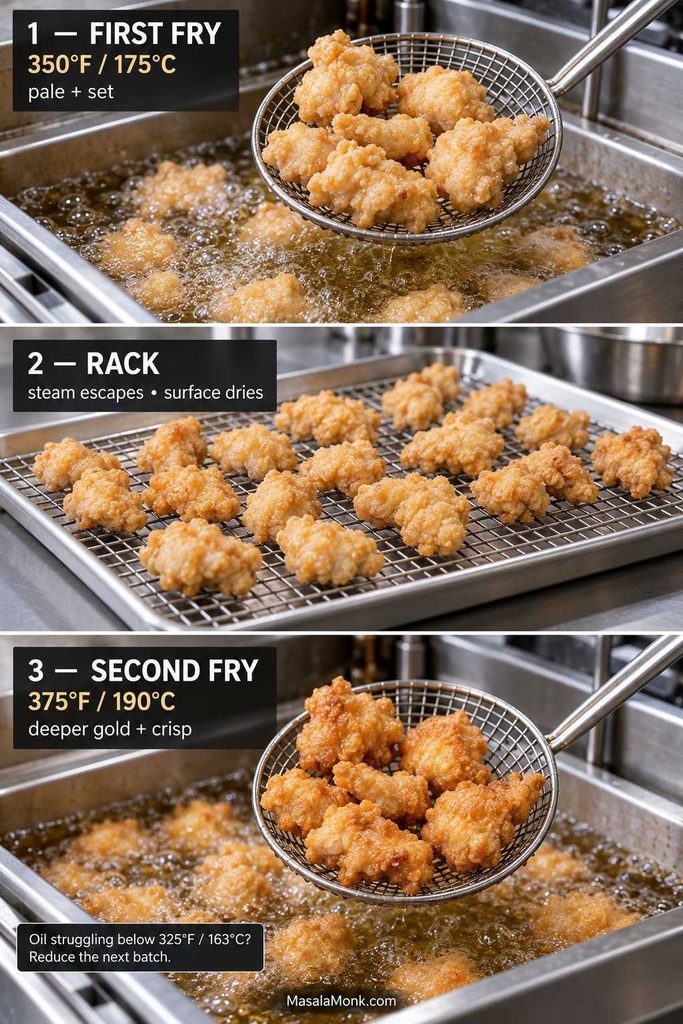
Extra crispy option: For a thicker, crunchier coating, replace part of the cornstarch with flour and add a pinch of baking powder. Fry once until cooked and lightly golden, rest the chicken on a rack, then fry again briefly until crisp. This gives a stronger restaurant-style crust, but it adds more oil, time, and cleanup.

General Tso Sauce: Sweet, Sticky, Spicy, and Tangy

This is where the dish becomes yours. The sauce should be sweet enough to feel like takeout, tangy enough to stay balanced, salty enough to season the chicken, and spicy enough to give warmth without overwhelming the bowl.

General Tso sauce formula: salty soy sauce, sweet brown sugar or honey, rounded hoisin, bright rice vinegar, chili warmth, fresh garlic and ginger, and enough cornstarch to turn it glossy and thick.

Garlic, Ginger, and Chilies

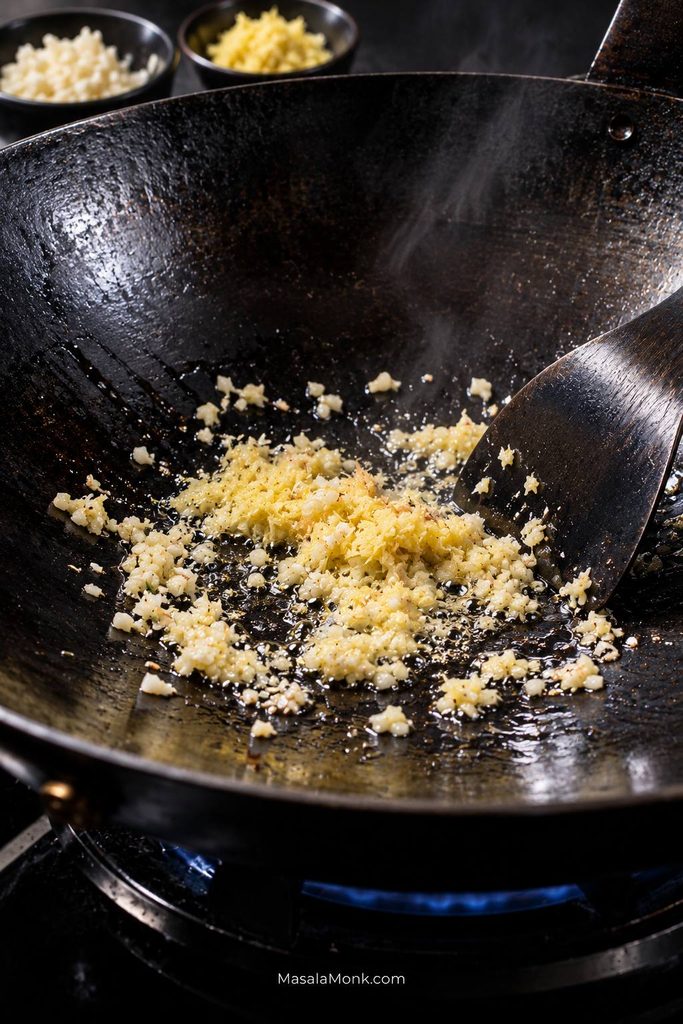
The sauce starts with a quick aromatic sizzle. Keep it brief so the garlic and ginger taste warm and sharp, not browned or bitter.

Minced garlic, grated ginger, and dried red chilies sizzling in oil in a black wok with a wooden spatula.
Once the chicken is fried, let garlic, ginger, and chilies sizzle briefly so the General Tso sauce starts with bold aroma.

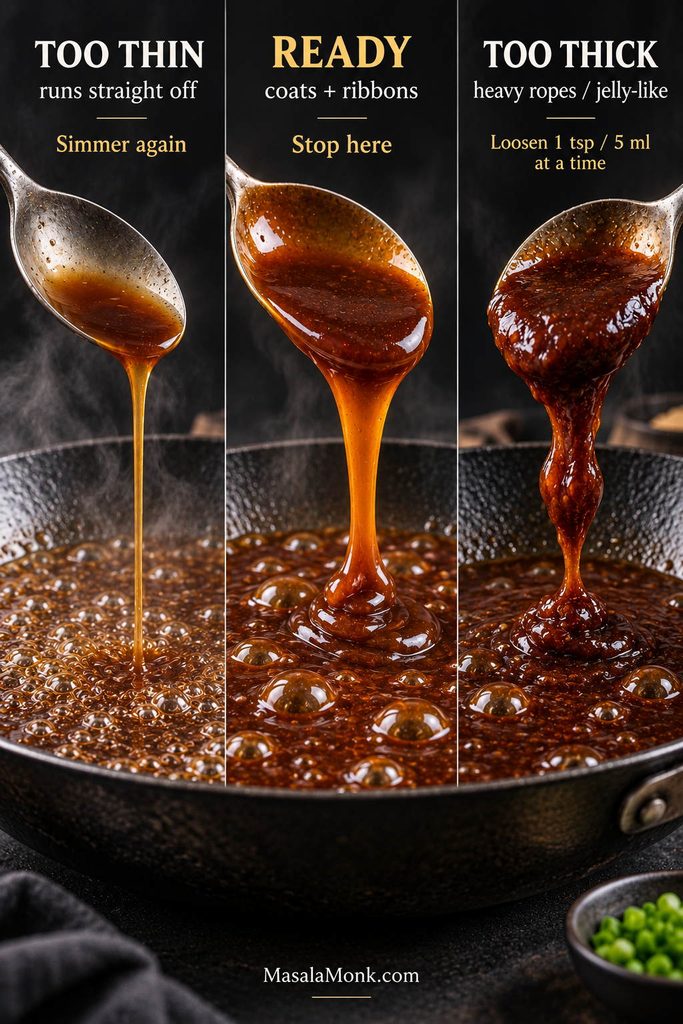
How Thick Should the Sauce Be?

Look for a sauce that coats a spoon and leaves a short trail when you drag a spatula through the pan. It thickens quickly once it starts bubbling, so stay close. If it is watery when the chicken goes in, the coating will soften quickly.

When the Sauce Is Thick Enough

This is the visual cue to look for before the fried chicken goes back into the pan.

Thick glossy General Tso sauce in a dark skillet with a wooden spatula leaving a visible trail through the sauce.
The sauce trail is your sign to stop reducing; at this thickness, the glaze coats the chicken instead of soaking the crust.

If the sauce tightens before the chicken is ready, loosen it with a splash of water or stock, warm it until glossy again, then toss. When the sauce is right, it looks like something you want to drag a spoon through before the chicken even goes in.

Can You Make General Tso Sauce Ahead?

Yes. You can mix and cook the sauce 3–4 days ahead, then refrigerate it in an airtight container. Reheat it gently in a pan with a splash of water or stock until it turns glossy again. For the best texture, fry the chicken fresh and toss it with the warmed sauce right before serving.

Other Ways to Use General Tso Sauce

Use it with crispy tofu, shrimp, cauliflower, stir-fried vegetables, frozen chicken bites, or rice bowls. The rule stays the same: cook the sauce until shiny, then toss it with the main ingredient at the end.

General Tso Sauce Troubleshooting

Sauce ProblemHow to Fix It
Too thickAdd water or stock 1 tablespoon at a time until it loosens.
Too thinSimmer a little longer, or add a small cornstarch slurry.
Too saltyAdd water or stock, then balance with a little sugar and vinegar.
Too sweetAdd rice vinegar or chili garlic sauce.
Too spicyAdd a little hoisin, sugar, or water.
Tastes flatAdd a little more ginger, garlic, vinegar, or sesame oil.

How to Fix the Sauce Before Tossing

Fix the sauce while it is still by itself. Once the chicken returns, every extra minute in the pan softens the crust.

Troubleshooting guide with bowls of General Tso sauce labeled too thin, too salty, too sweet, and too thick, with suggested fixes.
Balance the sauce while it is still alone in the pan, before it can soften the chicken.

The sauce does not need to be perfect in the bowl before it hits the pan. It just needs to be balanced enough that, once it turns glossy, you want it on rice.

When in doubt, come back to the rhythm: rough coating, thick glaze, fast toss.

How It Should Look at Each Step

Once the exact steps are in front of you, these visual cues keep you from second-guessing the pan when the oil is hot and the recipe starts moving quickly.

Chicken Cut Size

The pieces do not need to be perfect cubes, but they should be close in size so they brown outside and cook through inside.

Raw boneless chicken pieces cut into one-inch chunks on a wooden cutting board with a knife and a 1 inch / 2.5 cm measurement label.
First, aim for roughly 1-inch chicken pieces; that size helps the inside cook through while the outside turns golden.

What the Marinade Should Look Like

Before the cornstarch goes in, the chicken should be lightly coated, not sitting in a puddle of marinade.

Chicken pieces being mixed in a ceramic bowl with egg white, soy sauce, pepper, and marinade on a wooden surface.
Next, the egg white and soy mixture lightly glosses the chicken, giving the cornstarch something to grab onto.

Rough Cornstarch Coating

Smooth paste is not the goal here. A patchy, dry-looking coating gives the sauce more crisp edges to grab later.

Close-up of chicken pieces tossed in cornstarch with a rough, patchy, mostly dry coating in a bowl.
After the cornstarch goes in, patchy and dry is what you want; those uneven spots become the crispest edges.

Set Up the Shallow Fry

Use enough oil to crisp the coating, but not so much that the recipe turns into a full deep-fry project.

Dark wok with a shallow layer of oil on a stovetop, with coated chicken pieces waiting nearby on a tray and frying tools at the side.
Meanwhile, a shallow layer of oil gives you crisp General Tso chicken without the mess of a deep fryer.

How to Know the Oil Is Ready

Test one piece before committing to a full batch. Steady bubbles mean the oil is ready; silence or smoke means you need to adjust.

Single cornstarch-coated chicken piece sizzling in shallow oil with small bubbles around it in a dark skillet.
Once one test piece bubbles steadily, the oil is ready; quiet oil turns coating greasy, while smoking oil browns too fast.

Frying in Batches

Space is part of the method. If the pieces touch everywhere, they steam before they crisp.

Several golden chicken pieces frying in a single layer with visible space between them in hot oil inside a dark wok.
Fry in batches so the pieces stay separate, the oil stays hot, and the coating has room to crisp instead of steam.

Why a Wire Rack Helps

A rack keeps the crust away from trapped steam while the rest of the recipe comes together.

Golden fried chicken pieces resting on a wire rack over a sheet pan with crumbs and dried red chilies nearby.
Then, move the fried chicken to a wire rack; airflow underneath protects the crust while you finish the sauce.

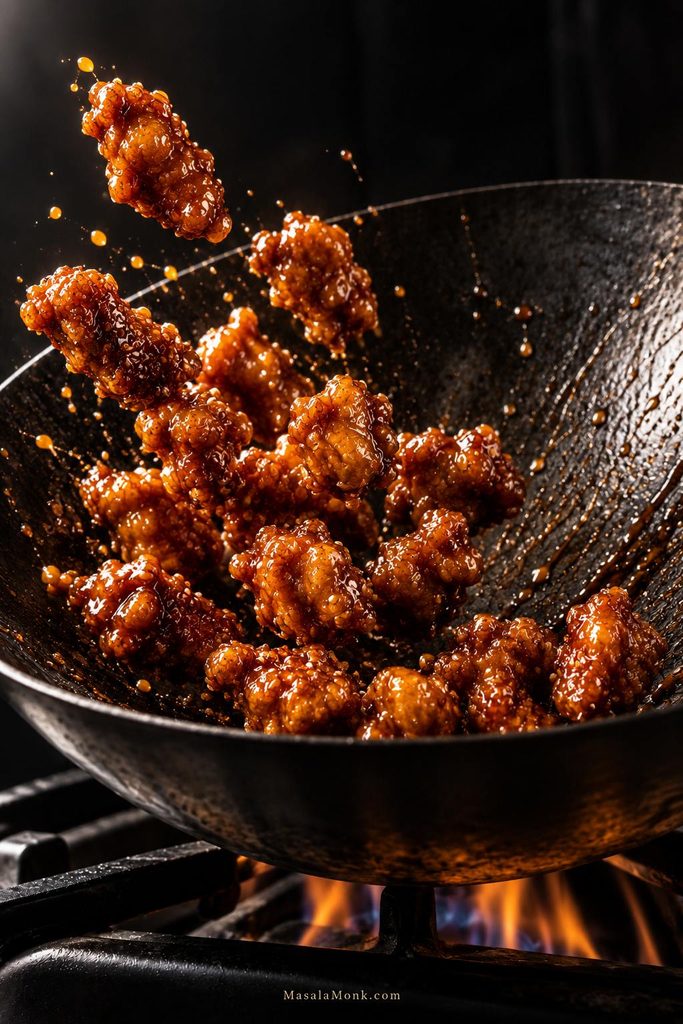
When to Stop Tossing

Look for coated chicken, not submerged chicken. As soon as the glaze catches on the rough edges, get it out of the pan.

Fried chicken pieces being tossed in glossy General Tso sauce in a black wok with scallions, dried chilies, and steam.
Finally, toss quickly until the sauce catches on the rough edges; look for glazed chicken, not simmered chicken.

If the chicken is softening too quickly, jump to how to keep General Tso chicken crispy.

How to Keep General Tso Chicken Crispy

If homemade saucy chicken usually turns soft on you, this is the part to remember. You are not chasing dry, shattering crunch here. You want that first little crackle before the sauce turns soft and sticky.

Why General Tso Chicken Gets Soggy

Most texture problems come from one of four places: crowded oil, thin sauce, trapped steam, or too much time in the glaze.

Diagnostic guide showing crowded fried chicken, thin sauce, trapped steam under a lid, and chicken sitting too long in sauce.
If the chicken softens quickly, check the usual suspects: crowding, thin sauce, trapped steam, or too much time in the glaze.

The Big 3 Crispy Rules

RuleWhy It Matters
Fry in batchesCrowding makes the coating steam instead of crisp.
Thicken the sauce firstThin sauce soaks into the crust.
Toss for about 30 secondsLong simmering softens the fried coating.

The supporting details matter too: pat the chicken dry if it looks wet, use enough cornstarch for a dry-looking coating, shake off heavy loose powder, drain the fried pieces on a rack, and serve as soon as the sauce goes on. Also avoid covering freshly fried or freshly sauced chicken; trapped steam is one of the fastest ways to soften the coating.

Quick Crispness Troubleshooting

ProblemLikely CauseFix Next Time
Chicken feels greasyOil was too coolHeat oil until chicken sizzles immediately
Coating fell offChicken was too wet or stirred too muchUse more cornstarch and turn gently
Chicken softened fastSauce was thin or chicken sat too longThicken sauce first and toss right before serving
Chicken browned but inside was undercookedPieces were too large or oil too hotCut smaller pieces and control heat
Chicken is dryOvercooked or breast pieces were too smallUse thighs or cook breast just to 165°F / 74°C

If the chicken softened almost immediately, the sauce was probably too thin or the pieces sat in it too long. If they never got crisp in the first place, the oil was probably too cool or the pan was crowded.

Even when leftovers soften, the first serving should give you that little edge of crunch that makes the whole bowl feel worth the extra pan.

Make It Sweeter, Spicier, Tangier, or Less Salty

Taste before you toss. Once the chicken is in, you have less room to adjust the sauce without softening the coating.

Cooking for kids or spice-sensitive eaters? Start with less chili in the sauce and add chili oil, flakes, or sambal at the table.

Craving…Adjustment
Sweeter sauceAdd 1–2 teaspoons brown sugar or honey.
Extra heatAdd chili garlic sauce, sambal, red pepper flakes, or dried chilies.
Tangier sauceAdd another splash of rice vinegar.
Lower saltUse low-sodium soy sauce and add a little water or stock.
Bigger garlic flavorAdd one extra clove of garlic.
Restaurant-style depthAdd a little extra hoisin and sesame oil.
Less sweetnessUse 2 tablespoons sugar instead of 3 and add a little more vinegar.
Savory balanceAdd a splash more soy sauce or a spoon of stock, then rebalance with vinegar.

Make small changes and taste again. A good sauce does not taste like only sugar, only soy sauce, or only chili. It lands somewhere in the middle: sticky, bright, savory, and warm.

Lighter Version

To make the bowl a little lighter, use chicken breast, reduce the sugar to 2 tablespoons, choose low-sodium soy sauce, and use the air fryer or baked method. You will lose some takeout crunch, but you still get the sweet-spicy sauce, rice-bowl comfort, and a dinner that feels fun.

Choose Your Version

There are a few honest ways to make this dish, and they do not all promise the same texture. Pick the one that matches your night.

Craving This?Use This MethodWhat to Expect
Best balance of crisp and easyEgg white + cornstarch shallow fryJuicy chicken, crisp edges, no deep fryer
Fastest weeknight versionCornstarch-only skillet methodLighter coating, fewer steps
Restaurant-style crunchFlour + cornstarch + baking powder, then double fryCrispier crust, more oil and cleanup
Lower oilAir fryerUseful, but not as glossy-crisp as fried
Hands-off dinnerSlow cookerSaucy and tender, not crispy
No-fry family mealBaked or sheet-pan styleEasier cleanup, softer coating

If crispness matters most, use the main shallow-fry recipe. If convenience matters more, jump to the other cooking methods.

The recipe card above is the version to make first. Once you understand the texture you want, you can adjust the method without guessing.

Air Fryer, Baked, Slow Cooker, and Deep-Fry Notes

The shallow-fry version is the main recipe because it gives the best mix of crispness, control, and realistic home cleanup. Choose the method that matches your night, not the one that sounds most impressive.

In short: shallow fry for the best overall texture, air fry for lower oil, bake for easier cleanup, slow cook for saucy comfort, and deep fry for the crunchiest restaurant-style result. If your main goal is less oil or less hands-on cooking, a softer coating is not a failure; it is just a different dinner — saucier, easier, and still good over rice.

Which Cooking Method Fits Your Night?

This comparison keeps the method choice honest: crispness, oil level, cleanup, and sauciness all change depending on how you cook the chicken.

Four-panel comparison showing shallow fried, air fryer, baked, and slow cooker versions of General Tso chicken.
Choose the method by texture and time: shallow fry is crispest, air fryer is lighter, baked is simpler, and slow cooker is saucier.

Air Fryer General Tso Chicken

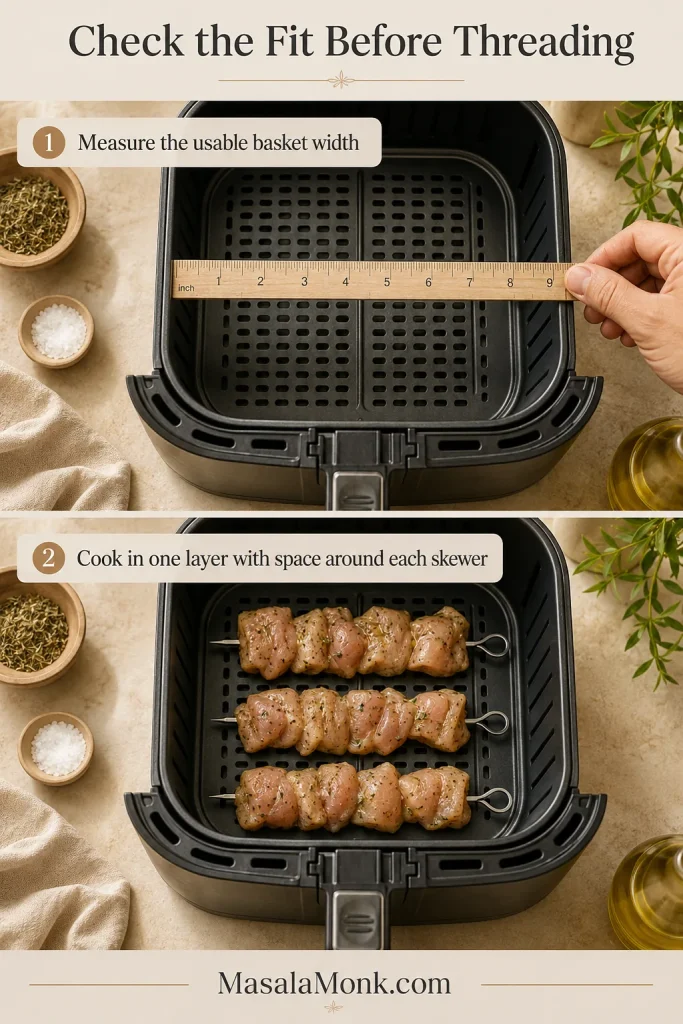
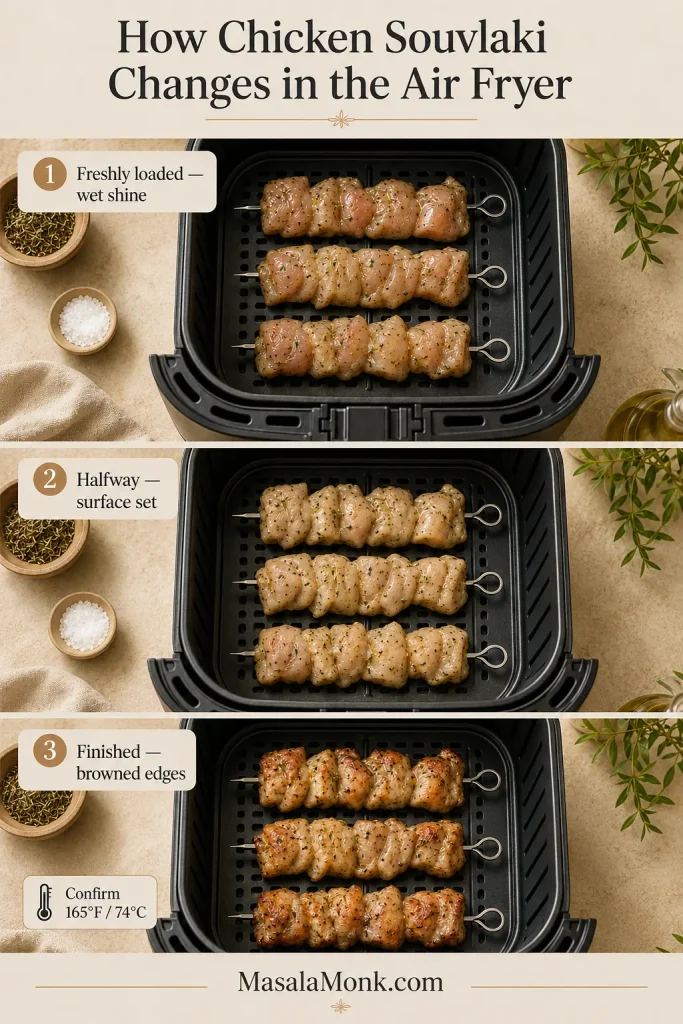
Air fryer General Tso chicken works best when the chicken is cooked separately and the sauce is made on the stove. Air fry coated chicken pieces at about 400°F / 200°C for 10–15 minutes, turning or shaking halfway through, then toss with hot sauce right before serving. Leave space between the pieces so the coating can dry and crisp instead of steaming.

If your air fryer chicken often turns out pale, uneven, or soft, this guide to common air fryer mistakes explains why spacing, flipping, and dry surfaces matter.

Baked General Tso Chicken

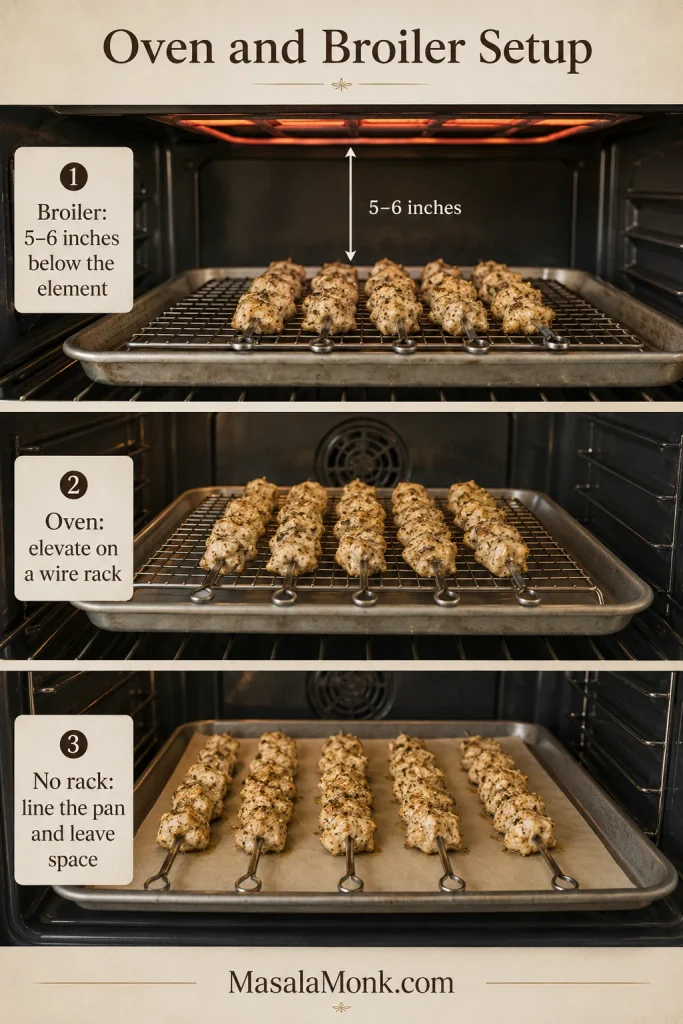
Baked General Tso chicken is easier and less messy, but it will be softer than fried. For better texture, bake the coated chicken on a rack or a well-oiled sheet pan, then sauce it after baking.

Slow Cooker General Tso Chicken

Slow cooker General Tso chicken is cozy and saucy. It is the version for spooning over rice, not the one for crisp edges. Brown the chicken first for better flavor, then cook it with the sauce and serve it hot.

Deep-Fried Restaurant-Style General Tso Chicken

The crispiest route is a deeper pot of oil and a double fry. Fry once until cooked and lightly golden, rest the chicken on a rack, then fry again briefly at a slightly hotter temperature before tossing with sauce.

Shortcut General Tso Chicken

For a shortcut dinner, use frozen crispy chicken bites or popcorn chicken and make only the sauce from scratch. Heat the chicken until crisp, simmer the sauce separately, then toss right before serving.

What to Serve With General Tso Chicken

General Tso chicken is rich and saucy, so it works best with simple sides that catch the sauce or balance the sweetness. Plain rice is the easiest base, but for a fuller takeout-style plate, shrimp fried rice works beautifully beside the sticky chicken.

  • Steamed jasmine rice or white rice
  • Brown rice
  • Fried rice
  • Steamed broccoli
  • Stir-fried green beans
  • Bok choy
  • Noodles
  • Cucumber salad
  • Cabbage slaw
  • Cauliflower rice for a lighter bowl

If serving broccoli, steam or blanch it for 3–4 minutes while the chicken drains, then serve it on the side or toss it into the pan only at the very end. Broccoli cuts through the sticky sauce and makes the plate feel complete without adding much extra work.

For the best bowl, add rice first, then broccoli, then the hot chicken. Spoon any extra sauce from the pan over the rice, not over the chicken, so the top pieces keep more texture. The best bowl is not neat; it is rice catching sauce, broccoli cutting the sweetness, and a few crisp edges still fighting through the glaze.

How to Build the Bowl

The rice can take the extra sauce. The top pieces should stay more exposed so the coating keeps a little texture.

General Tso chicken bowl with rice, broccoli, and glossy chicken while extra sauce is spooned onto the rice side.
For serving, spoon extra sauce onto the rice side so the top pieces keep more texture while the rice gets saucy.

The Final Bowl

The finished bowl should look saucy and generous, but the chicken should still show some crisp edges after tossing.

Close-up of finished General Tso chicken over white rice with broccoli, scallions, sesame seeds, and a spoon lifting rice and chicken.
The best bowl has saucy rice, bright broccoli, and chicken pieces with crisp edges still showing.

For a starter, add something crisp and snacky like these crispy veg spring rolls. A small bowl of peanut sauce gives the table a creamy, salty-sweet contrast.

Storage and Reheating

General Tso chicken is best fresh. The coating starts to soften once it is tossed in sauce, so the first serving will always have the best texture. Leftovers are still good over rice, just more saucy and soft than crackly.

  • Refrigerator: Store leftovers in an airtight container for 3–4 days.
  • Rice: Store rice separately if possible so it does not absorb all the sauce.
  • Microwave: Fastest option, but it softens the coating.
  • Air fryer: Reheat at about 350°F / 175°C for 6–8 minutes.
  • Skillet: Reheat over medium heat until hot, adding a splash of water if the sauce is too thick.
  • Freezer: You can freeze it, but the coating will not stay crisp after thawing.

Can You Make It Ahead?

The parts can be prepped ahead, but save the frying and tossing for the last minute. Mix the sauce, cut the chicken, and chop the aromatics earlier in the day, then cook when you are ready to eat.

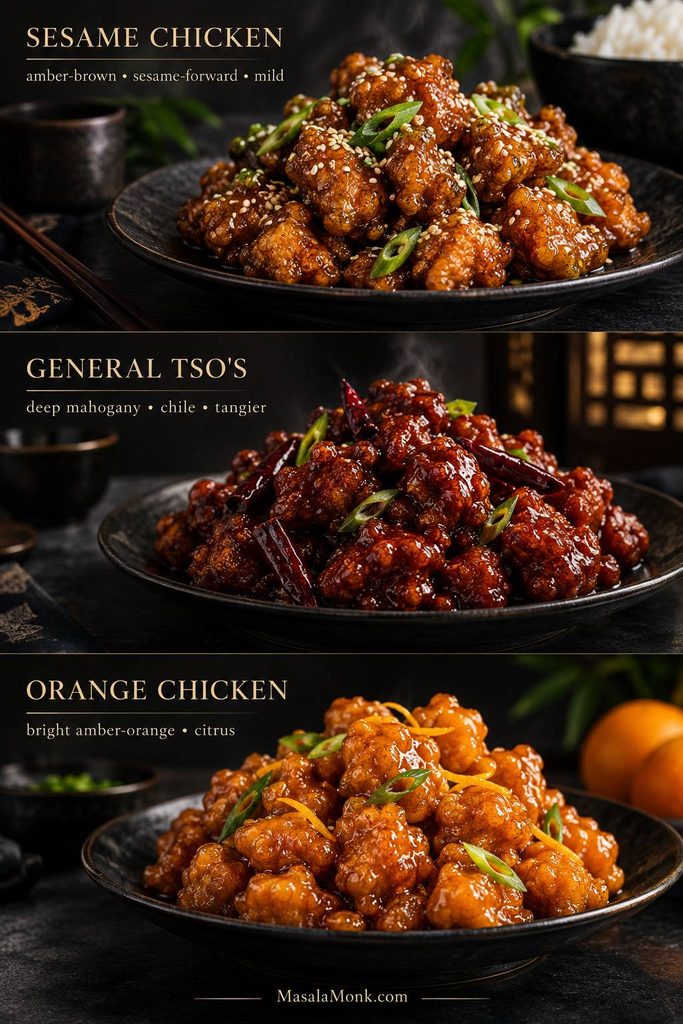
General Tso Chicken vs Sesame Chicken, Orange Chicken, and Kung Pao

These takeout dishes can look similar, but the flavor profiles are different.

DishMain FlavorTextureHeat Level
General Tso chickenSweet, tangy, savoryCrispy chicken in sticky glazeMild to medium
Sesame chickenSweeter, sesame-forwardCrispy or saucyMild
Orange chickenSweet citrusCrispy chicken in orange glazeUsually mild
Kung pao chickenSavory, spicy, nuttyStir-fried, not usually batteredMedium

Choose General Tso for sticky, sweet heat. Choose sesame chicken for a sweeter and milder sauce, orange chicken for citrus, and kung pao chicken for a less-sweet stir-fry with peanuts and chiles.

Is General Tso Chicken Authentic?

General Tso chicken is best known today as a Chinese-American restaurant dish. It has roots connected to Hunan-style cooking and the dish associated with Chef Peng Chang-kuei, but the version most people know from American takeout menus became sweeter, saucier, and more heavily coated over time. For a short background read, Smithsonian has a helpful piece on the history of General Tso’s chicken.

This is a takeout-style version, written for the flavor most people expect from the dish: crisp chicken, a sweet-spicy glaze, a little tang, and rice underneath. It is not trying to replace a traditional Chinese home recipe.

Once you understand the coating, sauce thickness, and toss timing, most General Tso problems become easy to fix.

FAQ

Is General Tso chicken spicy?

General Tso chicken is usually mildly spicy, not extremely hot. The heat comes from chili garlic sauce, dried red chilies, sambal, or red pepper flakes. For a family-friendly version, use less chili sauce and skip the dried chilies. For more heat, add extra chili near the end and taste as you go.

What is General Tso sauce made of?

General Tso sauce is made with soy sauce, rice vinegar, sugar or honey, hoisin, chili, garlic, ginger, sesame oil, stock or water, and cornstarch. It should taste sweet, savory, tangy, lightly spicy, and thick enough to coat the chicken.

Can I make General Tso chicken without hoisin sauce?

Yes. The sauce will be a little less rounded and glossy, but it will still work. Use an extra teaspoon of soy sauce, a little more sugar or honey, and a small splash of water or stock. If you have oyster sauce, add 1 teaspoon for body. Taste before tossing the chicken.

Why is my General Tso sauce not sticky?

General Tso sauce is usually not sticky because it is too thin, has not simmered long enough, or does not have enough cornstarch. Simmer it until glossy and spoon-coating. If it still looks watery, add a small cornstarch slurry and cook for another minute.

What oil is best for frying General Tso chicken?

Use a neutral high-heat oil such as canola, vegetable, peanut, sunflower, or rice bran oil. Avoid olive oil for this shallow-fry method because the oil needs to get hot enough for the coating to crisp quickly.

Can I use frozen chicken?

Yes, but thaw it completely first and pat it very dry before coating. Do not coat or fry frozen chicken pieces; the extra moisture can make the coating fall off, splatter in the oil, and turn the chicken soggy. For safest cooking, check the thickest piece and cook the chicken to 165°F / 74°C.

Why did my chicken get soggy?

Chicken gets soggy when the sauce is too thin, the pan is crowded, or the fried pieces sit in sauce too long. Fry in batches, drain well, thicken the sauce first, and toss right before serving.

Can I use chicken breast instead of thighs?

Yes, chicken breast works, but it is leaner and dries out faster than thighs. Cut it into even 1-inch pieces and avoid overcooking it. Chicken thighs are more forgiving and usually give a juicier, more takeout-style result.

Is General Tso the same as General Tao, General Cho, or General Gau chicken?

General Tao chicken, General Cho chicken, General Gau chicken, General Tsao chicken, and chicken tso are often used for very similar sweet-spicy crispy chicken dishes. The spelling changes by restaurant and region, but most people are looking for the same takeout-style idea.

Can I make it without deep frying?

Yes, shallow frying gives the closest texture without using a deep fryer. Air fryer and oven versions also work, but the coating will be lighter and less like classic takeout. For the crispiest result, shallow frying or deep frying works best.

How do I make it gluten-free?

Use gluten-free tamari instead of soy sauce and choose a gluten-free hoisin sauce. Cornstarch is usually gluten-free, but always check the label if needed. Serve with rice and vegetables instead of noodles unless the noodles are certified gluten-free.

Can General Tso chicken be made ahead of time?

The parts can be prepped ahead, but save the frying and tossing for the last minute. Mix the sauce, cut the chicken, and chop the aromatics earlier in the day, then cook when you are ready to eat.

What is the difference between General Tso chicken and sesame chicken?

General Tso chicken is usually tangier and spicier, while sesame chicken is sweeter, milder, and more sesame-forward. Both are often made with crispy chicken and sticky sauce, but General Tso has more heat and a sharper sweet-tangy balance.

Can I use bottled General Tso sauce?

Yes, bottled General Tso sauce works when dinner needs to be fast. Heat it separately and toss the chicken only at the end so the coating does not sit in sauce too long. Homemade still gives you better control over sweetness, salt, heat, and thickness.

Make it once as written, then adjust the sauce the way your table likes it. A little more vinegar, a little more chili, a little less sugar — that is when this stops feeling like a copied takeout order and starts feeling like yours. Next time, you will know exactly what to change.

Back to the recipe card · Back to top

Posted on Leave a comment

Air Fryer Chicken Thighs Recipe: Crispy Skin, Juicy Meat & Time Chart

Crispy air fryer chicken thighs served on a plate with lemon wedges, rice, salad, and a creamy dipping sauce.

The air fryer is especially good for chicken thighs because the heat moves fast around the skin while the dark meat stays forgiving and juicy. When the timing is right, you get golden crisp edges, tender meat near the bone, and a dinner that feels much more satisfying than the effort it takes.

The easiest mistake is treating every chicken thigh the same. Bone-in, skin-on thighs need time for the skin to render. Boneless skinless thighs cook much faster. Frozen thighs need a slower start. BBQ sauce and sweet marinades need to go in late so they turn sticky instead of burnt.

Start with the best all-purpose version: bone-in, skin-on thighs with crisp skin and juicy meat. Bought boneless, frozen, sauced, skinless, tiny, or extra-large thighs? You are still covered. Use the recipe card for the classic crispy-skin version, then jump to the section that matches the chicken you actually have.

The goal is simple: no rubbery skin, no dry boneless pieces, and no guessing whether the thickest part is done. You should be able to open the basket and know what you are looking at: crisp skin where there is skin, juicy meat in the center, and no awkward cutting into every piece to check.

Jump to: Recipe Card · Time Chart · Boneless Skinless · Crispy Skin · Frozen Thighs · BBQ & Marinated · Troubleshooting · FAQs

Quick Answer: How Long to Cook Air Fryer Chicken Thighs

For bone-in, skin-on chicken thighs, air fry at 400°F / 200°C for 20 to 24 minutes, flipping once, until the center of the largest thigh reaches at least 165°F / 74°C. Many people prefer dark meat closer to 175°F / 79°C for a softer texture, while still using 165°F as the food-safety minimum.

Boneless skinless thighs need a shorter window. Thin pieces may take 11–13 minutes, average pieces usually take 14–17 minutes, and thick or folded pieces may need 18–20 minutes.

Skin-side up or down? Start skin-side down, then finish skin-side up. Starting skin-side down gives the fat under the skin time to render; finishing skin-side up gives the skin direct heat so it turns golden instead of rubbery.

Air fryers vary. A compact basket model may finish faster than a large oven-style model, so use the time range as a starting point and let the thermometer decide the final few minutes.

Choose Your Thighs

The cut decides the clock: bone-in needs time, boneless needs attention, frozen needs patience, and sauced chicken needs a late glaze. Match your pack of chicken to the right path before you cook.

Think of air fryer chicken thighs in four decisions: cut, size, surface, and finish. Cut gives you the basic timing, size tells you when to start checking, surface decides whether you get crisp skin, a browned coating, or a sticky glaze, and the thermometer confirms when dinner is actually done.

What you haveBest forWatch out forWhere to go
Bone-in, skin-on thighsCrisp skin and juicy dinner platesNeeds enough time for the skin to renderRecipe Card
Boneless skinless thighsBowls, wraps, salads, tacos, noodles, meal prepCooks fast and can dry if ignoredBoneless Skinless
Skinless bone-in thighsJuicy meat without skinLess browning, no crispy skinTime Chart
Frozen thighsRescue dinners when you forgot to thawLess predictable; must check temperatureFrozen Thighs
BBQ or sauced thighsSticky, glossy finishSugar can burn if added too earlyBBQ & Marinated
Marinated thighsDeeper flavorToo much wet marinade prevents browningBBQ & Marinated
Very small or very large thighsStill usable with adjusted timingSmall pieces finish early; large pieces need more timeTime Chart
Guide to choosing air fryer chicken thigh timing for bone-in skin-on, boneless skinless, frozen, and BBQ sauced thighs.
Before you choose a time, choose your chicken. Bone-in, boneless, frozen, and sauced thighs all need a slightly different air fryer game plan.

Next step: Making the classic bone-in version? Jump to the recipe card. Need exact timing? Use the time chart. Bought a different pack? Go to boneless skinless, frozen thighs, or BBQ and marinated thighs.

Before You Start: The 3 Rules That Change the Result

1. Dry skin browns; wet skin steams

Pat the chicken dry before seasoning, especially on the skin side. If the skin still looks shiny-wet, it will steam before it crisps.

2. Airflow is what makes the edges crisp

The thighs can touch lightly at the edges, but they should not overlap or cover each other. If air cannot move around the chicken, the skin softens and the pieces cook unevenly. The same airflow issue is behind many common air fryer mistakes.

Four seasoned chicken thighs arranged in a single layer with space between them inside a black air fryer basket.
A little space does real work here. When the thighs sit in one layer, hot air can reach more surface area and brown the chicken more evenly.

3. The biggest thigh decides when the batch is done

Chicken thighs vary in size, shape, and thickness. Use the time range to start, then check the center of the largest piece with a thermometer. That is the difference between guessing and knowing.

Avoid These 5 Mistakes

  • Keep the thighs in one layer instead of stacking them.
  • Brush BBQ sauce on near the end, not at the beginning.
  • Use browned skin as a clue, not the final doneness test.
  • Insert the thermometer into the meat without touching the bone.
  • Give boneless thighs their own shorter timing instead of using the bone-in timing.
Infographic listing common air fryer chicken thigh mistakes including crowding, wet skin, early sauce, wrong thermometer placement, and overcooked boneless thighs.
When air fryer chicken thighs disappoint, the fix is usually simple: more space, drier skin, later sauce, better thermometer placement, or less time for boneless pieces.

Ready to cook? Follow the recipe card for the classic version, or check the time chart first if your thighs are boneless, frozen, sauced, skinless, unusually small, or unusually large.

Air Fryer Chicken Thighs Recipe Card

This is the everyday version: bone-in, skin-on thighs rubbed with smoked paprika, garlic, herbs, and a little oil, then air fried until the skin is golden and the dark meat stays juicy. The skin should smell like paprika and garlic as it browns, and the first cut should stay juicy instead of spilling everything onto the plate.

This is the kind of chicken that works on a tired weeknight: crisp enough to feel special, simple enough that you are not babysitting a pan.

Serve it straight from the basket with lemon wedges, rice, salad, or a cool dip, and it feels like a proper dinner without much planning.

Prep time5 minutes
Cook time20–24 minutes
Rest time5 minutes
Total time30–34 minutes
Servings4
Main cut4 medium bone-in, skin-on chicken thighs
Temperature400°F / 200°C
Basket setupSingle layer, no overlapping

Equipment

  • 5–6 quart air fryer
  • Instant-read thermometer
  • Tongs
  • Paper towels
  • Small bowl for the seasoning

Ingredients

  • 4 medium bone-in, skin-on chicken thighs, about 2–2.5 lb / 900–1130 g total
  • 1 tablespoon / 15 ml olive oil or avocado oil
  • 1 teaspoon smoked paprika
  • 1 teaspoon garlic powder
  • 1/2 teaspoon onion powder
  • 1/2 teaspoon dried oregano or thyme
  • 3/4 teaspoon fine salt, or about 1 teaspoon coarse kosher salt, plus more to taste
  • 1/4 teaspoon black pepper
  • Optional for extra-crisp skin: 1/4 teaspoon aluminum-free baking powder
  • Lemon wedges, for serving

Instructions

  1. Dry the chicken well. Pat the thighs very dry with paper towels, especially on the skin side.
  2. Trim loose pieces. Remove large hanging pieces of skin or fat, but leave the skin attached. If the skin folds under itself, gently spread it back over the top.
  3. Mix the seasoning. In a small bowl, combine smoked paprika, garlic powder, onion powder, oregano or thyme, salt, and pepper. For extra-crisp skin, add the baking powder.
  4. Season the thighs. Rub the chicken with oil, then coat both sides with the seasoning. Season the edges too.
  5. Preheat the air fryer. Set it to 400°F / 200°C for 3–5 minutes if your model recommends preheating.
  6. Start skin-side down. Place the thighs in a single layer, skin-side down. Air fry for 10–12 minutes.
  7. Flip and finish skin-side up. Turn the thighs over and air fry for another 8–12 minutes, until the skin is golden and the chicken is cooked through.
  8. Check the temperature. Insert an instant-read thermometer into the center of the largest thigh without touching the bone. The safe minimum is 165°F / 74°C; for softer dark meat, cook closer to 175°F / 79°C.
  9. Rest before serving. Let the thighs rest for 5 minutes so the juices settle instead of running out as soon as you cut into the meat.

Recipe Notes

  • The baking powder is optional, but it helps skin-on thighs crisp more deeply. Use only a tiny amount.
  • With table salt, start slightly lighter. Coarse kosher salt may need a little more by volume.
  • Small thighs may finish closer to 18–20 minutes. Large thighs may need 2–5 extra minutes.
  • If the chicken is cooked but the skin is not crisp, air fry skin-side up for 2–4 more minutes.
  • For boneless skinless thighs, use the boneless timing section instead of the main bone-in timing.

Using a different kind of thigh? See boneless skinless thighs, frozen thighs, or BBQ and marinated thighs before you cook.

Ingredients You Need

The recipe card gives you the amounts. These notes help you choose the right cut, seasoning, and crisping option before you cook.

Raw chicken thighs with paprika, garlic powder, herbs, salt, pepper, oil, and lemon arranged on a prep board.
The seasoning stays flexible on purpose. Paprika brings color, garlic and herbs bring depth, and oil helps the air fryer build better browning.

Chicken thighs

Bone-in, skin-on thighs are best for the main recipe because they give you crisp skin and juicy meat. Boneless skinless thighs cook faster and are better for bowls, wraps, salads, tacos, noodles, and meal prep.

Oil

One tablespoon / 15 ml of oil is enough for 4 thighs. It helps the seasoning cling and encourages browning. Too much oil can make the basket smoky and the skin heavy.

Smoked paprika

Smoked paprika gives the chicken a warm color and a lightly smoky flavor, which helps the thighs taste roasted even though they cook quickly.

Garlic powder and onion powder

Powdered garlic and onion coat the chicken evenly and are less likely to burn than fresh garlic in the air fryer.

Dried herbs

Oregano or thyme adds a simple savory note. Crush dried herbs between your fingers before adding them to wake up the aroma. You can also use Italian seasoning, Cajun seasoning, ranch seasoning, lemon pepper, or a pinch of garam masala.

Salt

Fine salt seasons quickly and evenly. Table salt is stronger by volume, so start a little lighter. Coarse kosher salt may need a little more.

How to Make It

Here is what each stage should look and feel like, so you can adjust confidently even if your thighs are bigger, smaller, or shaped differently from mine.

1. Dry the chicken until the skin is no longer shiny

Blot both sides, then give the skin side a second pass. If the surface still looks wet, it will steam first and brown later.

Hands patting raw chicken thighs dry with a white paper towel before seasoning.
Remove surface moisture before seasoning. Dry skin has a much better chance of crisping instead of steaming in the basket.

2. Trim loose fat, but keep the skin attached

Trim large hanging pieces of skin or fat, but do not remove the skin completely. Spread folded skin back over the top instead of leaving it tucked underneath.

3. Coat the edges, not just the top

Rub the thighs with oil, then season both sides and around the edges. If the skin is loose, you can season lightly underneath it without pulling it off.

Raw chicken thighs being coated with a paprika garlic seasoning rub in a shallow bowl.
Season the edges as well as the top. As the thighs cook and tighten, those seasoned edges become some of the most flavorful bites.

4. Start hot so the surface begins browning quickly

Preheating helps the chicken start cooking as soon as it hits the basket. If your air fryer does not require preheating, you can still run it empty for 3 minutes while you finish seasoning the chicken.

5. Give the skin time to render before the flip

Arrange the thighs in a single layer, skin-side down. Cook for 10–12 minutes. The pieces can touch lightly at the edges, but they should not overlap.

Seasoned chicken thighs placed skin-side down in an air fryer basket with metal tongs.
Starting skin-side down gives the fat under the skin time to warm and render. That quiet first step helps set up the crispier finish.

6. Finish skin-side up for color and texture

Turn the thighs over and finish cooking skin-side up for another 8–12 minutes. This final stage is where the skin gets its best color. If one thigh is much smaller than the others, check it early and pull it out if it is already done.

Chicken thighs flipped skin-side up in an air fryer basket with metal tongs.
The final direct heat is what turns the skin crisp. During this stage, the color deepens and the surface changes from soft to browned.

7. Check the thickest thigh, not the prettiest one

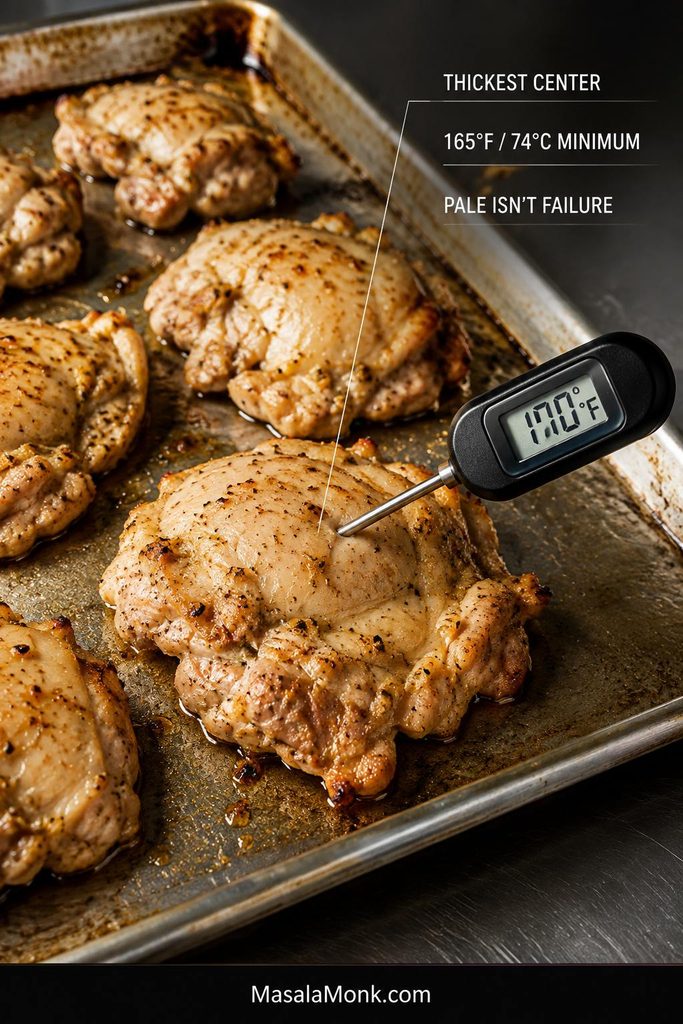
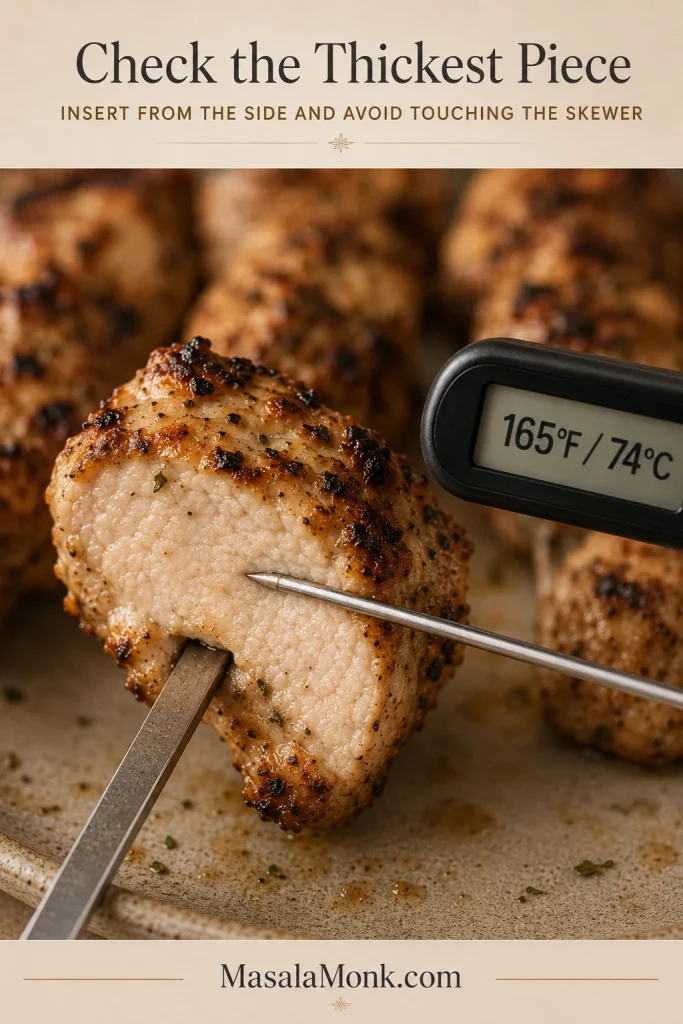
Insert the thermometer into the deepest part of the meat without touching the bone. The safe minimum for poultry is 165°F / 74°C; FoodSafety.gov lists that same minimum for chicken thighs and other poultry cuts.

Instant-read thermometer inserted into the thickest part of a cooked chicken thigh.
A thermometer removes the guesswork. Check the thickest thigh first because the largest piece decides when the whole batch is ready.

Think of 165°F / 74°C as the safety line. Going closer to 175°F / 79°C is a texture choice, not a safety rule; many people like dark meat better there because it turns softer instead of dry.

8. Rest before cutting so the juices stay in the meat

Rest the chicken for 5 minutes before serving. Resting keeps the first cut from sending all those juices onto the plate.

How to Tell When Chicken Thighs Are Done

Look for golden skin, browned seasoning around the edges, and juices that do not look pink when the thigh rests. Boneless thighs should feel springy but not tight. Bone-in thighs can still look slightly pink near the bone, so color alone is not enough.

Temperature is still the real check: 165°F / 74°C in the thickest part for safety, or closer to 175°F / 79°C if you prefer softer dark meat.

Cut-open air fryer chicken thigh showing crisp browned skin and fully cooked juicy meat inside.
Aim for contrast: browned skin outside, moist cooked meat inside. Resting briefly helps keep those juices in the chicken.

A compact, thick thigh usually needs more time than a flatter thigh of the same weight. Large pieces can look browned outside before the center is ready, so check the largest thigh in the basket before serving.

Why This Method Works

This method works because it gives the skin time to render before the final crisping stage. Starting skin-side down warms the fat under the skin; finishing skin-side up gives the surface direct heat. The thermometer check keeps the timing flexible, because a small boneless thigh and a large bone-in thigh can look similar outside but cook very differently inside.

Time and Temperature Chart

If you remember one thing, remember this: the cut decides the clock. Use the chart to get close, then use the thermometer to land the chicken exactly where you want it: safe, juicy, and not overcooked.

Chicken thigh typeTemperatureApprox. timeFlip?Doneness cue
Bone-in, skin-on400°F / 200°C20–24 minYesSkin crisp, 165°F minimum inside
Small bone-in, skin-on400°F / 200°C18–20 minYesCheck early so they do not dry
Large bone-in, skin-on390–400°F / 199–200°C24–28 minYesContinue in 3-minute bursts if needed
Boneless skinless, thin375–400°F / 190–200°C11–13 minOptionalEdges browned, center 165°F
Boneless skinless, average380–390°F / 193–199°C14–17 minYesJuicy center, browned surface
Boneless skinless, thick380–390°F / 193–199°C18–20 minYesCheck the thickest folded part
Bone-in, skinless390–400°F / 199–200°C18–22 minYesJuicy but less browned
Frozen bone-in360°F then 380°F / 180°C then 190°C25–40 minYesSeparate once softened, check near bone
BBQ thighs380–400°F / 193–200°CNormal time + 3–5 min glazeYesSauce sticky, not burned
Marinated thighs380–400°F / 193–200°CDepends on cutYesPat dry if you want browning
Air fryer chicken thighs time and temperature chart for bone-in, boneless, frozen, and BBQ sauced thighs.
Treat the air fryer chicken thighs time chart as your starting point, then let size and thickness guide the final few minutes. Smaller thighs often finish faster than the chart suggests.

Need the full method? Return to the recipe card. For special cases, jump to boneless skinless thighs, frozen thighs, or BBQ and marinated thighs.

Boneless Skinless Air Fryer Chicken Thighs

Boneless skinless chicken thighs in the air fryer are the fast version: less dramatic than crisp skin, maybe, but incredibly useful for rice bowls, wraps, salads, tacos, noodles, and lunch boxes.

Sliced boneless skinless air fryer chicken thighs served with rice, salad, cucumbers, herbs, and lemon wedges.
This sliced version is built for bowls, wraps, salads, noodles, and meal prep. Start checking early so the pieces stay juicy.

The texture is different from skin-on thighs. Boneless pieces can get browned edges and a roasted surface, but they will not have crispy chicken skin. For a better surface, pat them dry, use a little oil, and toss the seasoned thighs with 1 tablespoon / about 8 g cornstarch if you want a light crisp coating.

This is the version to make when you want cooked chicken you can actually use all week: slice it hot for dinner, then tuck leftovers into wraps, bowls, salads, noodles, or a filling chickpea salad with lemon, herbs, or a spoonful of yogurt dip.

Best method for boneless skinless thighs

  1. Pat the thighs dry.
  2. Open any folded pieces so the thickness is more even.
  3. Rub with oil and seasoning.
  4. Use cornstarch if you want a light browned coating.
  5. Air fry average pieces at 380–390°F / 193–199°C.
  6. Flip halfway for better browning.
  7. Check the center for 165°F / 74°C.

Thin boneless thighs may be ready in 11–13 minutes. Average pieces usually need 14–17 minutes. Thick pieces, folded pieces, or a crowded basket may need closer to 18–20 minutes. Start checking at the low end of the range if your air fryer runs hot.

How to Get Crispy Skin

Crisp skin is not luck. It is mostly dryness, space, and the final few minutes.

  • Blot the skin very dry. Keep blotting until it no longer looks shiny.
  • Give the thighs space. Light edge-touching is fine; overlapping traps steam.
  • Start skin-side down, finish skin-side up. The first stage helps render fat; the second gives the skin direct heat.
  • Use very little oil. Too much oil makes the surface heavy instead of crisp.
  • Add wet or sweet things late. BBQ sauce, honey, and sugary marinades brown fast and can burn before the chicken is done.
Infographic showing five rules for crispy air fryer chicken thigh skin, including drying, spacing, flipping, and saucing late.
Crispy skin works best as a sequence: dry surface, good airflow, a purposeful flip, and sauce only at the end.

For the crispiest version, season the thighs and refrigerate them uncovered for 1–8 hours before cooking. This dries the surface even more, but it is optional for a regular weeknight batch.

If the chicken is cooked through but the skin is still soft, air fry skin-side up for another 2–4 minutes. Watch closely near the end because spices can darken quickly. For another crisp chicken guide, see these air fryer chicken wings.

Frozen Chicken Thighs in the Air Fryer

You can cook frozen thighs in the air fryer, but treat them like a rescue dinner, not the crispiest version of the recipe. Begin gently, separate the pieces as soon as they loosen, and let the thermometer make the final call.

For frozen bone-in thighs, start at 360°F / 180°C for 20–30 minutes, flipping halfway, then finish hotter only after the pieces have separated and the centers are mostly cooked. When pieces are frozen into a solid block, do not force them apart with a knife; warm them until they loosen.

Frozen-together thighs cook unevenly because the center of the stack lags behind the outside pieces. Separate them as soon as they loosen, season any exposed surfaces, then continue cooking in a single layer.

Frozen chicken thighs in an air fryer basket shown before and after separating into a single layer.
When cooking frozen chicken thighs, separation is the turning point. After the pieces loosen, spread them out so the middle cooks as evenly as the edges.

Once the chicken is mostly cooked through, increase to 380°F / 190°C for 3–5 minutes to improve browning and crisp the skin. Medium frozen thighs may take about 25–35 minutes total. Large frozen thighs can take 30–40 minutes. Check near the bone before serving.

The same staged approach works for other frozen chicken pieces too, including frozen chicken wings in the air fryer. Fresh or fully thawed thighs usually brown better and cook more predictably, but frozen thighs are useful when dinner needs to happen without a thawing plan.

Thawed thighs? Return to the classic recipe card or compare cuts in the time chart.

BBQ, Sauced, and Marinated Chicken Thighs

BBQ sauce and marinades can make the chicken taste deeper and more flavorful, but they also change how the surface cooks. Think dry rub early, sweet sauce late. That is the simple rule.

The best sauced thighs should look glossy and sticky at the edges, not blackened before the center is done.

BBQ sauce brushed onto cooked chicken thighs inside an air fryer basket.
Timing matters more than extra sauce here. Brush near the end so the BBQ glaze turns sticky and glossy instead of burnt.

For BBQ thighs

Air fry the thighs mostly plain or with a dry rub first. Sauce belongs near the end: brush it on during the final 3–5 minutes, then cook until it looks glossy at the edges, not blackened. Add a second light brush after cooking if you want a saucier finish. For very sugary sauces, use a thin layer first and add more after cooking.

Marinated thighs

Lift the chicken out of the marinade and wipe off excess liquid before air frying. Let the flavor stay, but leave the liquid behind. This is especially useful for soy-based marinades, honey garlic marinades, yogurt marinades, and tandoori-style marinades.

With sweet marinades, cook closer to 380°F / 193°C and watch the last few minutes carefully. Honey, sugar, and bottled sauces can darken quickly. For a glossy sweet-savory finish, brush on homemade teriyaki sauce near the end rather than at the start.

Flavor Variations

Once the cooking method is clear, flavor becomes the easy part. Keep the timing steady and adjust the seasoning around it.

  • Lemon pepper: Use lemon pepper seasoning and finish with fresh lemon juice after cooking. For a saucier version, see this lemon pepper chicken.
  • Garlic herb: Use garlic powder, onion powder, thyme, oregano, and black pepper.
  • Cajun: Use Cajun seasoning and reduce added salt if the blend is already salty.
  • Ranch: Use dry ranch seasoning lightly, then taste before adding extra salt.
  • Teriyaki: Cook with a dry base seasoning, then glaze near the end.
  • Honey garlic: Add honey garlic glaze during the final few minutes so it does not burn.
  • Tandoori-style: Use a thick yogurt-spice marinade, wipe off excess, then air fry until cooked through.
  • Garam masala: Add a small pinch of garam masala to the paprika-garlic rub for a warmer spice note.
  • Green chutney: Serve with green chutney, or stir the chutney into yogurt for a quick herby dip.
  • Spicy: Add cayenne, chili powder, crushed red pepper, or hot sauce after cooking. Serve sweet-hot versions with mango habanero sauce.

Bright, spicy serving idea

For a brighter plate, keep the thighs dry-rubbed and crisp, then serve them with sliced onions, lemon wedges, green chutney, and a quick yogurt-garlic dip. You get the crisp skin from the air fryer and the fresh, spicy contrast on the side.

Air Fryer Size, Basket Space, and Equipment

A 5–6 quart basket-style air fryer is ideal for 4 medium bone-in thighs. Smaller air fryers may only fit 2 or 3 at a time. Light edge-touching is fine; overlapping or stacking means you should cook in batches.

Basket-style air fryers often brown faster than oven-style air fryers. Larger oven-style models may need a few extra minutes because the food sits farther from the heating element. Ninja Foodi, Cosori, Instant, Philips, and similar models can all work, but basket shape and heating strength change the final few minutes more than the brand name does.

The most useful tool is an instant-read thermometer. It removes the guesswork, especially when the thighs are different sizes or when you are cooking frozen pieces.

Troubleshooting

Most air fryer chicken thigh problems are not recipe failures. They are usually surface problems, spacing problems, timing problems, or sauce problems. Once you know which one happened, the fix is usually simple.

Quick fixes by problem

ProblemLikely reasonFix
Skin is rubberyThe skin was wet, the basket was crowded, or the thighs did not finish skin-side up long enoughPat dry, cook in a single layer, and add 2–4 minutes skin-side up
Chicken is dryThe thighs were small or cooked too longStart checking earlier and rest for 5 minutes before serving
Outside is browned but inside is undercookedThe thighs are large, very cold, frozen, or crowdedLower the temperature slightly and continue cooking in 3-minute bursts
Seasoning burnedToo much sugar, fresh garlic, or sauce went in too earlyUse dry spices first and add sweet sauces near the end
Air fryer smokedToo much oil, excess fat, old grease, or a dirty basketTrim loose fat, use less oil, and check the drawer for old grease before starting
Chicken tastes blandThe surface was under-seasonedSeason both sides, including edges, and add a squeeze of lemon after cooking if the chicken tastes flat
Thighs cooked unevenlyPieces were different sizes or folded under themselvesUse similar-sized thighs and open folded boneless pieces before cooking
Skin stuck to the basketThe basket was not clean, the skin was too wet, or the chicken was moved too earlyClean the basket, dry the skin well, and let the first side cook before flipping
Frozen thighs cooked unevenlyThe pieces were stuck together or too thickSeparate once softened and check near the bone before serving

When the skin is still soft

When the chicken is already cooked but the skin is disappointing, do not start over. Put it back skin-side up for a few minutes, then serve with lemon, chutney, sauce, or a cool dip.

Storage and Reheating

Store leftover chicken thighs in an airtight container in the refrigerator for 3–4 days. That matches USDA guidance for cooked leftovers, which gives a 3–4 day refrigerator window.

To reheat, air fry at 350°F / 175°C until hot in the center. The exact time depends on whether the thigh is bone-in or boneless. Reheating in the air fryer keeps the surface much better than microwaving.

For the best leftover texture, reheat only what you plan to eat and keep the rest chilled until needed.

The microwave works when speed matters, but the skin will soften. If you want the skin crisp again, microwave briefly to warm the center, then air fry for a few minutes to revive the outside.

Cooked thighs can also be frozen, though the skin will not be as crisp after thawing. For best results, remove the meat from the bone and use it later in rice bowls, wraps, soups, noodles, or salads.

What to Serve with Them

These thighs are flexible enough for a simple dinner, a meal prep box, or a more flavorful weekend plate. The best plate is usually hot chicken, something cool, something bright, and something that catches the juices.

Crispy air fryer chicken thighs served with green chutney, yogurt dip, sliced onions, lemon wedges, and naan.
To serve, build contrast around the crispy chicken. Lemon brightens it, onions add bite, chutney brings heat, and yogurt dip cools everything down.
  • Plain rice, jeera rice, fried rice, or a bowl with sliced thighs and crunchy vegetables
  • Mashed potatoes, roasted potatoes, or air fryer hash browns
  • Steamed vegetables, roasted broccoli, green beans, carrots, or corn
  • A cold cucumber salad for smoky, spicy, or BBQ-style thighs
  • Garlic bread, dinner rolls, or naan
  • Noodles with garlic, chili, or teriyaki-style sauce
  • Cool yogurt-garlic dip, green chutney, ranch, aioli, hot sauce, or lemon wedges for squeezing over the hot skin

Creamy garlic mayo works well here, or you can build one from this homemade mayonnaise guide. For a tandoori-style version, serve the chicken with naan, rice, sliced onions, lemon wedges, and a cooling yogurt dip.

A lighter meal works well with sliced boneless thighs over salad. Tuck extras into wraps with crunchy vegetables.

FAQs

How long do chicken thighs take in the air fryer?

Bone-in, skin-on thighs usually take 20–24 minutes at 400°F / 200°C. Boneless skinless thighs cook faster, usually 11–20 minutes depending on thickness. Start checking at the low end of the range if your thighs are small or your air fryer runs hot.

What temperature works best?

For bone-in, skin-on thighs, 400°F / 200°C gives the best balance of golden skin and juicy meat. Boneless skinless thighs do better around 380–390°F / 193–199°C because the center can cook before the edges dry.

Do you need to preheat the air fryer?

Preheating helps the chicken start browning quickly, especially for skin-on thighs. If your air fryer does not require preheating, you can still run it empty for 3 minutes while you finish seasoning the chicken.

Should chicken thighs start skin-side up or down?

Start skin-side down, then flip skin-side up to finish. The first stage helps the fat begin to render, and the final stage gives the skin direct heat so it can crisp.

Are boneless skinless thighs faster?

Yes. Boneless skinless thighs cook much faster than bone-in thighs, especially when they are thin or opened flat. Start checking early so they stay juicy instead of tightening up.

How do you make the skin crispy?

Use skin-on thighs, blot the skin dry, preheat the air fryer, avoid overcrowding, and finish cooking skin-side up. A tiny amount of baking powder can also help the skin crisp more deeply.

Why is the skin not crispy?

The skin may have been too damp, the basket may have been crowded, or the chicken may have needed a few extra minutes skin-side up. Wet marinades and too much oil can also soften the surface.

Is 165°F enough for chicken thighs?

Yes. Chicken thighs are safe to eat once they reach 165°F / 74°C in the deepest part of the meat. Check the thickest thigh and keep the thermometer in the meat, not against the bone.

Why cook thighs closer to 175°F?

They do not have to reach 175°F for safety, but many people prefer dark meat around that temperature because it can taste softer and more tender. Thighs are more forgiving than chicken breast, so they can handle a slightly higher finish.

Can frozen thighs go straight in?

Yes, but give them a slower start and check the center carefully. Begin around 360°F / 180°C to cook through, then finish hotter around 380°F / 190°C to brown and crisp the outside. Separate pieces as soon as they loosen so the centers cook evenly.

How many thighs fit in an air fryer?

A 5–6 quart basket usually fits 4 medium bone-in thighs in a single layer. Smaller air fryers may fit only 2 or 3. The thighs can touch lightly, but they should not overlap.

Can you use BBQ sauce?

Yes. Brush BBQ sauce on during the final 3–5 minutes so it turns sticky without burning. If the sauce is very sugary, use a thin layer first and add more after cooking.

Can you air fry marinated thighs?

Yes, just do not move them straight from a dripping marinade into the basket. Let the flavor stay, but wipe away excess liquid so the surface can brown.

Need the short version again? Return to the Quick Answer or the Recipe Card.

Final Tip

Once you know what kind of thigh is in the basket, the recipe becomes simple. Give skin-on thighs time to render, check boneless pieces early, be patient with frozen pieces, and finish with something bright: lemon, chutney, yogurt dip, or a sticky glaze. The result is a low-effort dinner that still feels like you meant to make something good.

Posted on Leave a comment

Lemon Pepper Chicken Recipe: Juicy, Easy, Skillet & Oven Friendly

Golden lemon pepper chicken cutlets in a dark skillet with lemon butter sauce, parsley, cracked black pepper, and lemon wedges.

Lemon pepper chicken should feel easy before you even start cooking: golden chicken, fresh lemon, cracked pepper, and a buttery pan sauce you can spoon over rice, potatoes, pasta, or vegetables. It should taste lively without being sour, peppery without being harsh, and tender enough that chicken breast does not feel like the boring part of dinner.

The usual problems are familiar: thick chicken dries out, bottled lemon pepper can be salty, and too much juice can make the sauce sharp. This version keeps the chicken thin, the seasoning flexible, and the lemon butter balanced.

It is especially useful when you have two chicken breasts, a bottle of lemon pepper seasoning, and no patience for another dry weeknight chicken dinner. When the skillet is right, the chicken picks up a light golden crust, the lemon zest smells fresh before the juice ever hits the pan, and the butter pulls the browned bits into a sauce that tastes bigger than the short ingredient list.

Quick Answer

Lemon pepper chicken is made by seasoning thin chicken breast cutlets with lemon pepper seasoning, searing them until golden, and finishing them in a lemon butter pan sauce. The key is to use lemon zest for flavor, lemon juice for brightness, and cook chicken breast to 165°F / 74°C in the thickest part.

For the skillet version, slice 2 large chicken breasts into 4 thin cutlets, season them with lemon pepper seasoning, garlic powder, salt only as needed, and a light flour coating, then sear for about 3–5 minutes per side. The pan sauce comes together in the same skillet with butter, broth, lemon zest, and fresh lemon juice.

This recipe is built around the three fixes that matter most: thin chicken so it stays juicy, flexible salt because lemon pepper blends vary, and fresh zest so the lemon flavor tastes bright instead of sour. The point is not to make chicken fancy; it is to make it reliable: juicy, bright, buttery, and easy to serve with whatever is already in the kitchen.

Before You Start: 5 Details That Matter

A few small choices decide whether this tastes bright and tender or just like seasoned chicken.

Chicken2 large breasts, sliced into 4 thin cutlets
ThicknessAbout 1.25 cm / 1/2 inch
SaltDepends on your lemon pepper blend
LemonZest for flavor, juice near the end
Doneness165°F / 74°C in the thickest part
Overhead guide showing thin chicken, lemon pepper seasoning, lemon zest, lemon juice, and a thermometer marked 165°F / 74°C.
Before cooking, check the details that prevent most mistakes: thin cutlets, restrained salt, zest for aroma, juice near the end, and a final 165°F / 74°C temperature.

If you only remember one thing before cooking, remember this: thin chicken gives you room to get color without drying out the center.

Use the seasoning you already have; just taste or check the label before adding extra salt. Some bottled blends are mostly pepper and lemon. Others are salty enough that the chicken barely needs any added salt at all.

Lemon Pepper Chicken Recipe Card

Start here when dinner needs to happen now. This is the skillet version to make first: thin chicken cutlets, lemon pepper seasoning, a light flour coating, and a quick lemon butter finish made in the same pan.

Recipe nameLemon Pepper Chicken
Prep time10 minutes
Cook time15 minutes
Total time25 minutes
Servings4
Yield4 thin chicken cutlets
Main methodSkillet
Internal temperature165°F / 74°C for chicken breast

Equipment

You need a large 10–12 inch skillet, tongs, a shallow plate for coating, a fine grater for zest, and ideally an instant-read thermometer. A meat mallet or rolling pin helps even out thick spots.

Ingredients

IngredientAmount
Boneless skinless chicken breasts2 large, about 550–650 g / 1.2–1.4 lb total
All-purpose flour3 tablespoons / 24 g
Lemon pepper seasoning2 teaspoons / about 5–6 g, depending on brand
Garlic powder1/2 teaspoon
Fine salt1/4 to 1/2 teaspoon, depending on seasoning
Olive oil or neutral oil1 1/2 tablespoons / about 22 ml
Unsalted butter3 tablespoons / 42 g
Chicken broth or stock1/2 cup / 120 ml
Fresh lemon juice1 to 2 tablespoons / 15–30 ml
Lemon zest1 to 2 teaspoons
Fresh parsley, chopped1 to 2 tablespoons
Fresh garlic, optional1 clove, minced

Before adding salt: Taste or check your lemon pepper seasoning. If it already tastes salty, start with 1/4 teaspoon extra salt or skip the added salt until the pan sauce is finished. Let the skillet juices do the balancing before you reach for more salt.

Instructions

  1. Slice the chicken. Place each breast flat on a board and slice horizontally into 2 thinner cutlets. Pound uneven spots to about 1.25 cm / 1/2 inch thick.
  2. Pat it dry. Use paper towels to remove surface moisture so the chicken browns better and holds seasoning evenly.
  3. Season the flour. In a shallow bowl or plate, mix the flour, lemon pepper seasoning, garlic powder, and salt.
  4. Coat lightly. Dredge each cutlet and shake off the excess. The coating should look thin and dusty, not thick or caked on.
  5. Sear until golden. Heat oil in a large skillet over medium to medium-high heat. Cook the cutlets in one layer for 3–5 minutes per side, until golden. Lower the heat if the coating colors too fast.
  6. Check the temperature. Test the thickest part before removing the chicken, or right after transferring it to a plate. It should read 165°F / 74°C.
  7. Start the pan finish. Lower the heat to medium, add butter, and stir in garlic, when using, for 20–30 seconds.
  8. Add broth and lemon. Pour in the broth, scrape up the browned bits, then stir in 1 tablespoon lemon juice and the zest. Simmer for 2–4 minutes, until glossy.
  9. Return the chicken. Add the cutlets back and spoon the lemon butter over the top. Warm gently instead of boiling hard.
  10. Finish and serve. Taste, then add more lemon juice, pepper, or salt only as needed. Sprinkle with parsley and serve warm.

Recipe Notes

  • Large chicken breasts cook better when sliced into cutlets instead of cooked whole.
  • Fresh lemon zest gives stronger lemon flavor than lemon juice alone.
  • Use 1 tablespoon lemon juice for a softer sauce and 2 tablespoons for a sharper lemon finish.
  • Broth and butter are the best way to bring a strong-tasting sauce back into balance.
  • For a gluten-free version, use a light gluten-free flour blend.
  • For a thinner coating, use 1 1/2 tablespoons cornstarch instead of flour, or skip the coating and reduce the sauce slightly longer.

Choosing another method? Jump to the oven, air fryer, thighs, and meal-prep options.

What Good Lemon Pepper Chicken Should Taste Like

Good lemon pepper chicken should taste lemony before it tastes sour, peppery before it tastes hot, and buttery without feeling heavy. Ideally, the cutlets are golden outside, tender in the center, and lightly coated rather than buried under sauce.

A little lemon butter should remain in the pan for rice, potatoes, pasta, or vegetables. The best bite makes the side dish better too, as if it caught the same bright, buttery finish.

Sliced lemon pepper chicken served with mashed potatoes, green vegetables, lemon butter sauce, parsley, and a lemon wedge.
A good side should catch the lemon-butter juices, not compete with them. That is why mashed potatoes, rice, pasta, and simple vegetables all work well here.

When the first bite tastes mostly salty, the bottled blend was probably too aggressive. A flat bite usually needs zest or a final squeeze of lemon. Sharpness, though, is better fixed with butter and broth than with more juice.

4 Small Details That Make or Break It

The recipe is simple, but these four choices decide whether it tastes bright and juicy or flat, salty, and dry.

Educational board showing thin cutlets, salt control, lemon zest and juice, and pan sauce for lemon pepper chicken.
Four details decide the final result: thin cutlets for even cooking, salt control for balance, zest and juice for lemon flavor, and a skillet finish for depth.
DetailWhat Can HappenHow This Recipe Handles It
Chicken thicknessThick pieces cook unevenly.Slice into thin cutlets and check the internal temperature.
Seasoning strengthBottled lemon pepper seasoning may already contain salt.Add salt carefully and adjust after the sauce is made.
Lemon balanceToo much lemon juice can taste sharp.Use zest for flavor and juice near the end.
Pan finishSeasoned chicken can still feel plain.Make a quick lemon butter pan sauce with broth and butter.

Why This Recipe Works

This recipe treats the dish as a balance problem, not just a seasoning problem.

Cutting the chicken into thin cutlets gives you more surface area for browning and shortens the cooking time. The outside can turn golden before the inside dries out. A thin coating of seasoned flour helps the breast meat brown and gives the skillet juices just enough body to cling lightly.

Zest brings the lemon aroma, juice brings the bright finish, butter rounds out the pepper, and broth lifts the browned bits from the skillet. When the finish is right, it tastes peppery first, buttery in the middle, and fresh at the end.

By the time it turns glossy and the chicken goes back in, dinner should smell like lemon, browned butter, and pepper — not like a complicated project.

Choose Your Version

If this is your first time making it, stay with the skillet. It gives you the golden crust, the full lemon-butter finish, and the best pan flavor. Once you know that version, you can bend the same flavor toward the oven, air fryer, grill, or slow cooker depending on the night.

Method guide showing lemon pepper chicken options for skillet, oven, air fryer, thighs, meal prep, and wings.
Choose the method based on what you need. Skillet lemon pepper chicken gives the strongest pan flavor, while oven, air fryer, thighs, meal prep, and wings offer easier variations.
VersionBest ForKey Tip
Skillet lemon pepper chickenFastest saucy dinnerUse thin cutlets and finish with lemon butter sauce.
Oven lemon pepper chickenHands-off cookingUse evenly thick pieces and spoon sauce over after baking.
Air fryer lemon pepper chickenQuick, low-mess cookingOil lightly so the coating does not stay floury.
Lemon pepper chicken breastLean weeknight dinnerSlice or pound evenly so the breast stays tender.
Lemon pepper chicken thighsJuicier, more forgiving chickenCook a little longer for softer texture.
Grilled lemon pepper chickenSmoky summer flavorUse zest and oil in the marinade, then add lemon after cooking.
Slow cooker lemon pepper chickenMeal prep, bowls, wraps, or shreddingUse less liquid than expected and brighten at the end.
Lemon pepper wingsCrispy party-style wingsUse a separate wings method for crisp skin.

Looking for crispy lemon pepper wings instead of skillet chicken? Wings need a different method for crisp skin and a dry or wet wing sauce. Use this lemon pepper chicken wings recipe when wings are the plan.

Ingredients You Need

The ingredient list is short, and each item has a job, which makes substitutions easier.

Chicken

Boneless skinless chicken breasts are quick, lean, and familiar. The key is to turn 2 large breasts into 4 thinner cutlets so they cook quickly and stay tender in the center.

Boneless thighs, bone-in thighs, or tenders also work. Thighs are juicier and more forgiving, while tenders are good for bowls, wraps, or kid-friendly dinners.

Lemon Pepper Seasoning

Lemon pepper seasoning gives the recipe its familiar flavor. Some blends are lemony and peppery with very little salt. Others are salty enough that you barely need any extra salt at all.

The bottle gives you the shortcut; the fresh zest makes it taste alive.

Fresh Lemon

Fresh lemon makes bottled seasoning taste brighter. The zest gives the strongest lemon aroma, while the juice adds tang to the pan finish. Avoid adding too much juice too early; it can turn sharp when it cooks down hard.

Butter, Broth, and Flour

Butter softens the pepper and acidity. Broth keeps the sauce spoonable and pulls flavor from the skillet. Flour gives the chicken a light coating, helps with browning, and gently thickens the pan sauce. Shake off the excess before cooking.

Salt-Control Guide

This is where many lemon pepper recipes go wrong. The label matters more than the measuring spoon because lemon pepper seasoning is not standardized. One brand may taste mostly like lemon peel and black pepper, while another may taste salty before it ever touches the chicken.

Salt-control guide with lemon pepper seasoning, salt, lemon zest, broth, butter, and labels about tasting the blend first.
Lemon pepper seasoning can be mild, salty, or sharp depending on the blend. Taste it first, then add salt only after you know what the chicken needs.
Your Seasoning Tastes…What to Do
Very saltySkip the added salt in the coating. Adjust only after the sauce is finished.
Mild but saltedUse 1/4 teaspoon salt for 550–650 g chicken.
Salt-freeUse 1/2 teaspoon salt in the coating, then taste the sauce.
Sour or citricUse less lemon juice and more lemon zest.
Weak or flatAdd fresh lemon zest and a little extra black pepper.
Very pepperyUse the lower amount of seasoning and soften the sauce with butter.

Start with less salt when unsure. It is much easier to add a little salt to the finished sauce than to rescue chicken that is already too salty. Avoid adding more lemon as the first fix because acidity can make salt taste sharper.

Once the salt is under control, the lemon tastes brighter, the butter tastes rounder, and the chicken finally tastes like dinner instead of seasoning.

Seasoning already tastes too strong? Go to troubleshooting or check zest vs juice.

Bottled Seasoning or Homemade?

Bottled lemon pepper seasoning is completely fine for a weeknight. This recipe is written to work with bottled seasoning, not to shame it. The only catch is that every brand behaves a little differently, especially around salt and citric sharpness.

  • Bottled lemon pepper seasoning: Fastest and easiest, but check the salt level.
  • Salt-free lemon pepper: Gives more control, but you need to add salt separately.
  • Homemade lemon pepper: Freshest lemon flavor, especially with fresh zest and cracked pepper.
  • Lemon pepper marinade: Better for grilled or baked chicken than for the skillet cutlet method.
  • Lemon butter pan sauce: The best finish for this skillet version.

Quick Homemade Lemon Pepper Blend

No bottled seasoning on hand? Mix a quick fresh blend for this recipe. It is not a shelf-stable pantry mix.

  • 1 tablespoon fresh lemon zest
  • 1 1/2 teaspoons cracked black pepper
  • 1 teaspoon garlic powder
  • 1/2 teaspoon fine salt
  • 1/4 teaspoon onion powder, optional
  • A tiny pinch of sugar, optional, to soften the lemon edge

This blend tastes fresher than many bottled seasonings, but the salt level depends on how much salt you add. Taste the sauce at the end and adjust from there.

Lemon Zest vs Lemon Juice

The simplest way to understand this recipe is this: use zest for lemon flavor and juice for brightness.

Lemon zest carries the fragrant oils from the outside of the lemon. It gives the chicken a strong lemon aroma without adding much acidity. Lemon juice gives the sauce its tang, but too much can make the dish sharp.

Hands zesting a lemon and squeezing lemon juice with labels for zest as flavor, juice as brightness, and yellow zest only.
Lemon zest and lemon juice do different jobs. Zest brings aroma without extra sourness, while juice adds brightness near the end of cooking.
  • Zest: Gives strong lemon aroma without extra sourness.
  • Juice: Adds a fresh, tangy finish to the pan sauce.
  • Lemon slices: Look good as garnish, but can turn mildly bitter if cooked too long.
  • Bottled lemon juice: Works in a pinch, although fresh lemon tastes cleaner.

When zesting a lemon, remove only the yellow part. The white pith underneath can taste bitter. A microplane or fine grater makes this easier.

How to Keep Chicken Breast Juicy

Once the lemon flavor is balanced, the next job is texture. Chicken breast only tastes good here if it stays tender.

  • Slice large breasts into cutlets. Thinner pieces cook faster.
  • Pound uneven spots. Even thickness helps the whole piece finish at the same time.
  • Pat the chicken dry. Dry chicken browns better than wet chicken.
  • Use enough heat. A properly heated skillet gives color before the chicken overcooks.
  • Do not crowd the pan. Crowding traps steam and makes the chicken pale.
  • Use a thermometer. Pull chicken breast when it reaches 165°F / 74°C.
  • Rest before slicing. Even a short rest helps the juices settle.
  • Spoon lemon butter over the chicken. The glossy finish protects the meat and makes every bite feel moist.

What Juicy Lemon Pepper Chicken Looks Like

The best visual cue is in the sliced center. Look for meat that is still moist, with a golden outside and just enough gloss to carry flavor.

Close-up of sliced lemon pepper chicken with a moist interior, golden crust, lemon butter sauce, black pepper, and parsley.
Use the sliced center as your doneness cue. The sliced center should look moist, the crust should look golden, and the surface should be lightly glossed rather than soaked.

The goal is chicken that slices cleanly and still looks moist, not chicken you have to hide under sauce.

That is the difference between chicken you eat because it is there and chicken people drag through the last spoonful of sauce.

Chicken breast giving you trouble in general? This baked chicken breast recipe goes deeper into thickness, timing, resting, and doneness so the meat stays juicy instead of chalky.

Ready for the pan? Jump to the cooking cues or check the time and temperature guide.

Step-by-Step Cooking Cues

The recipe card gives the steps. These are the little pan cues that tell you things are going right.

1. Cut the Chicken Into Thin Pieces

Place each chicken breast flat on a cutting board and slice it horizontally into two thinner cutlets. Pound thicker spots gently until the piece is even. The chicken does not need to be paper-thin; it just needs to cook evenly.

Raw chicken breast being sliced horizontally into thin cutlets on a wooden board with lemon and seasoning nearby.
Thin cutlets cook evenly, so the edges can brown before the center dries out.

2. Season and Coat Lightly

Mix the flour, lemon pepper seasoning, garlic powder, and salt in a shallow bowl. Coat the chicken lightly and shake off the extra flour. The coating should look like a light dusting, not a batter.

Chicken cutlet lightly coated in seasoned flour with lemon pepper seasoning and garlic powder on a shallow plate.
The flour coating should look light, not packed on. That thin layer helps the cutlet brown while keeping the finished bite tender instead of bready.

3. Sear Until Golden

A steady sizzle is the goal. If the pan is too quiet, the chicken may steam; if it smokes hard, the coating can brown before the center finishes. Let the underside release easily before flipping, and lower the heat if the cutlets color too quickly.

Lemon pepper chicken cutlets searing in a skillet with space between the pieces, golden edges, pepper flecks, and light pan juices.
Give the cutlets enough space to sear. Otherwise, trapped moisture turns the pan steamy and leaves the chicken pale instead of golden.

When to Flip Lemon Pepper Chicken

The first side is done when it lifts cleanly with tongs and shows a golden underside. If it still sticks, give the crust another minute before turning.

Tongs lifting the edge of a lemon pepper chicken cutlet to show the golden underside before flipping.
The first side is ready when the cutlet releases without tearing. If it still sticks, wait briefly so the crust can finish forming.

4. Make the Lemon Butter Pan Sauce

After the chicken comes out, let the pan calm down for a few seconds, then add butter. Stir in garlic when using, then add broth, lemon juice, and lemon zest. Scrape the bottom so the browned bits melt into the sauce.

Spoon dragging through glossy lemon butter pan sauce with browned bits, lemon zest, black pepper, and herbs in a skillet.
Aim for a loose, glossy lemon butter sauce rather than a thick gravy. That texture lets it spoon easily over chicken and flow into rice, potatoes, pasta, or vegetables.

5. Return the Chicken Gently

Add the chicken back to the skillet and spoon the sauce over the top. Taste before adding more lemon or salt. Boiling the cooked chicken hard can tighten the breast and take away tenderness.

Lemon butter sauce being spooned over sliced golden lemon pepper chicken with parsley, cracked pepper, and lemon zest.
Spoon the lemon butter over cooked chicken, not boiling-hard chicken, so the breast meat stays tender and glossy.

Need exact timing? Use the time and temperature guide before switching methods.

Time and Temperature Guide

Use this table as a starting point, not a promise. Chicken thickness always wins over the clock. The clock helps, but the thermometer is what saves dinner. For the simplest food-safety rule, cook chicken to 165°F / 74°C in the thickest part.

Instant-read thermometer inserted into cooked lemon pepper chicken in a skillet, showing 165°F.
Check the thickest part of the chicken, not the pan juices. For chicken breast, 165°F / 74°C is the safe internal temperature that still protects tenderness.
MethodBest CutTemperatureApprox TimeInternal Temp
Skillet cutletsBreast cutlets, about 1.25 cm thickMedium to medium-high3–5 min per side165°F / 74°C
Skillet thicker breastThicker breast piecesMedium5–6 min per side, then check165°F / 74°C
Oven thin cutletsThin breast cutlets400°F / 204°C15–18 min165°F / 74°C
Oven medium breasts6–8 oz / 170–225 g breasts425°F / 218°C18–22 min165°F / 74°C
Oven large breasts9–10 oz / 255–285 g breasts425°F / 218°C22–26 min165°F / 74°C
Boneless thighsChicken thighsSkillet or 400°F / 204°C oven22–28 min in oven165°F / 74°C safe, 175°F / 79°C for softer texture
Air fryer cutletsThin breast pieces375°F / 190°C10–14 min165°F / 74°C
Grilled breastChicken breastMedium-high grill6–8 min per side165°F / 74°C

Once you understand the skillet version, the rest is just choosing the method that fits your night. The next sections are quick adaptations, not separate full recipes.

Cooking another way? Jump to oven, air fryer, or chicken thighs.

Oven-Baked Lemon Pepper Chicken

Use the oven when you want the same flavor with less stove time. This is the oven version of the same recipe, not a separate full ingredient list. Thin cutlets usually take 15–18 minutes at 400°F / 204°C, while larger breasts usually take 18–26 minutes at 425°F / 218°C.

The oven cooks the chicken; a small pan makes the sauce. Bake the seasoned chicken until the thickest part reaches 165°F / 74°C, then spoon lemon butter sauce over the top after baking.

Oven-baked lemon pepper chicken cutlets in a metal baking dish with lemon wedges, parsley, black pepper, and pan juices.
Bake the cutlets until just done, then add the lemon-butter finish so the flavor stays bright instead of harsh.
Chicken PieceOven TempApprox Time
Thin breast cutlets400°F / 204°C15–18 minutes
Medium breasts, 6–8 oz / 170–225 g425°F / 218°C18–22 minutes
Large breasts, 9–10 oz / 255–285 g425°F / 218°C22–26 minutes
Boneless thighs400°F / 204°C22–28 minutes
Bone-in skin-on thighs400°F / 204°C35–45 minutes

Air Fryer Lemon Pepper Chicken

Use the air fryer when you want quick cutlets with less cleanup. Thin chicken breast pieces usually take 10–14 minutes at 375°F / 190°C. Tenders may cook faster, while thighs need a little more time.

Lightly oil the chicken, season it, and arrange it in a single layer. If using the flour coating, mist or brush the surface lightly with oil so no dry flour patches remain. Cook the chicken first, then spoon the sauce over it after it comes out.

Air fryer basket with browned lemon pepper chicken cutlets, parsley, black pepper, and a lemon wedge.
For air fryer lemon pepper chicken, coat the surface lightly with oil before cooking. Otherwise, the seasoned flour can stay pale, dry, and dusty.
CutAir Fryer TempApprox Time
Thin chicken breast cutlets375°F / 190°C10–14 minutes
Chicken tenders375°F / 190°C8–12 minutes
Boneless thighs380°F / 193°C14–18 minutes
Bone-in thighs380°F / 193°C20–24 minutes

Using Chicken Thighs

Chicken thighs are the more forgiving choice. They have more fat than chicken breasts, so they stay moist even when they cook a little longer.

Boneless thighs work well in a skillet or oven. Bone-in, skin-on thighs are better when you want crisp skin and deeper flavor. Chicken thighs are safe at 165°F / 74°C, but many cooks prefer the texture closer to 175°F / 79°C.

Lemon pepper chicken thighs with golden browned skin, lemon butter pan juices, black pepper, parsley, and lemon slices.
Lemon pepper chicken thighs are more forgiving than breast meat. Let them cook a little longer for richer texture, then finish with lemon so the flavor stays fresh.

Using Tenders, Drumsticks, and Other Cuts

The seasoning can travel; the cooking method just has to fit the cut. This is useful when the chicken in your fridge is not the exact cut in the recipe.

Chicken CutBest ApproachQuick Tip
Chicken tendersSkillet or air fryerCook like small breast pieces and check early.
Chicken stripsSkillet or air fryerSeason lightly and add sauce after cooking.
DrumsticksOven or air fryerTurn during cooking so the skin browns evenly.
Bone-in legsOvenCheck temperature near the bone, not just the surface.
WingsAir fryer, oven, or fried wing methodUse a separate wings recipe for crisp skin.

Grilled Lemon Pepper Chicken

Grilling takes this in a lighter, smokier direction. Skip the flour coating and use a marinade instead: oil, lemon zest, lemon pepper seasoning, garlic, and a small amount of lemon juice.

Grill chicken breast over medium-high heat for about 6–8 minutes per side, depending on thickness, until it reaches 165°F / 74°C. Finish with a little butter, lemon zest, or fresh lemon juice so the flavor tastes lifted rather than flat.

Slow Cooker Lemon Pepper Chicken

The slow cooker is for meal prep days, not for the golden skillet finish. Use thighs when possible because they stay softer and shred more easily.

Add lemon pepper seasoning, a small amount of broth, garlic, and butter. Start checking around 3–4 hours on low for breasts and 4–5 hours for thighs. Add fresh lemon juice and zest near the end, and reduce watery sauce in a pan before serving. For more slow-cooker chicken ideas, use these crock pot chicken breast recipes as a meal-prep starting point.

Lemon Pepper Chicken Marinade

You do not need a marinade for the skillet recipe. Use this only when the chicken is going on the grill, into the oven, or into the air fryer.

For 550–650 g / 1.2–1.4 lb chicken, start with 3 tablespoons / 45 ml olive oil, 1–2 teaspoons lemon zest, 1–2 tablespoons / 15–30 ml lemon juice, and 2 teaspoons lemon pepper seasoning. Add 1–2 minced garlic cloves, then add salt only when your seasoning needs it. One teaspoon honey is optional for better browning and a rounder finish.

Chicken CutMarinating Time
Boneless chicken breast30 minutes to 2 hours
Boneless thighs1 to 4 hours
Bone-in pieces2 to 8 hours
Very lemon-heavy marinadeAvoid overnight marinating

Longer marinating works better with more zest, oil, garlic, and seasoning, and less lemon juice. Marinate chicken in the refrigerator, never on the counter. For safety, USDA FSIS notes poultry can be refrigerated in marinade for up to 2 days, but this lemon-heavy version tastes better with the shorter times above. See the USDA poultry marinating guidance for the safety side.

Lemon Butter Sauce for Chicken

The pan sauce is what turns this from seasoned chicken into dinner. Without it, the chicken can taste dry, salty, or one-dimensional. With it, the chicken becomes glossy, fresh, and easy to serve with almost anything.

  • Butter: 3 tablespoons / 42 g, to round out the lemon and pepper.
  • Chicken broth: 1/2 cup / 120 ml, to lift the browned bits and keep the sauce spoonable.
  • Lemon juice: 1–2 tablespoons / 15–30 ml, for brightness.
  • Lemon zest: 1–2 teaspoons, for clean lemon aroma.
  • Parsley: 1–2 tablespoons, for freshness and color.

The sauce should taste peppery first, buttery in the middle, and fresh at the end. Add an extra tablespoon of butter for a richer finish. For a creamy version, stir in 2–3 tablespoons cream after the broth reduces, then keep the heat gentle.

What to Serve on the Side

Because the sauce is bright and buttery, it plays well with almost anything that can catch a spoonful.

  • Easy dinner: rice, roasted potatoes, or a simple salad.
  • Comfort plate: mashed potatoes, pasta, buttered noodles, or garlic bread.
  • Lighter side: green beans, asparagus, zucchini, broccoli, or cauliflower rice.
  • Meal prep: rice bowls, couscous, roasted vegetables, or wraps.

For a fresh, sharp side, a crisp cucumber salad recipe works especially well because the vinegar, dill, and onion cut through the buttery lemon sauce.

Serving potatoes? Creamy garlic mashed potatoes are one of the best ways to catch the lemon butter without making the plate feel too heavy.

Make It a Rice Bowl, Pasta, Salad, or Wrap

This is the kind of chicken that makes plain rice, pasta, or bowls feel intentional. Use the pan sauce as the bridge between the chicken and the rest of the plate.

Lemon pepper chicken rice bowl with sliced chicken, rice, broccoli, carrots, lemon wedge, sauce, and a leftover container behind it.
Leftovers work better with extra pan juices. Spoon them over rice bowls, wraps, pasta, or meal-prep containers so the chicken stays moist the next day.
  • Rice bowl: Spoon extra sauce over rice, then top with sliced chicken and parsley.
  • Pasta: Toss noodles with extra sauce, a splash of broth, and a little pasta water.
  • Chicken bowl: Add rice, roasted vegetables, sliced chicken, and a little extra lemon butter.
  • Salad: Serve sliced chicken over crisp greens with a lemony dressing.
  • Wrap: Use sliced chicken, lettuce, cucumber, and a little creamy sauce or yogurt dressing.

Making pasta often? The same loose-sauce habit matters in this chicken pesto pasta recipe too, where pasta water keeps the dish glossy instead of dry.

For a colder, crunchier salad plate, a wedge salad recipe works better as a full dinner side than a small garnish.

Storage and Reheating

Leftovers are best when the extra pan juices stay with the chicken.

  • Refrigerator: Store leftovers in an airtight container for 3–4 days.
  • Freezer: Freeze cooked chicken for up to 2 months. The sauce may look slightly different after thawing, but the flavor will still be good.
  • Skillet reheating: Reheat gently with a splash of broth or water until warmed through.
  • Microwave reheating: Cover and reheat at lower power in short bursts so the chicken does not dry out.
  • Best tip: Store the pan juices in the same container so the chicken stays moist.

Avoid overheating chicken breast when reheating. It is already cooked, so the goal is to warm it gently, not cook it again.

Leftover sliced chicken also works well in wraps and sandwiches. For more ways to turn cooked chicken into lunch, these chicken sandwich recipes give you BBQ, buffalo, Caesar, pesto, and quick café-style ideas.

Troubleshooting Dry, Salty, or Sharp Chicken

Most problems here have simple fixes once you know what went wrong.

Troubleshooting board showing dry chicken fixed with thin cutlets and temperature, salty seasoning balanced with broth and butter, and sharp lemon corrected with zest and less juice.
Most dry, salty, or sharp results come from thickness, salt, or lemon balance. Fix the cause directly with thinner cutlets, gentler seasoning, broth and butter, or more zest with less juice.
ProblemWhy It HappenedFix
Chicken is dryThe breast was too thick or overcookedSlice into cutlets, pound evenly, and use a thermometer.
Chicken tastes too saltyThe lemon pepper seasoning already had saltReduce added salt and balance with broth or butter.
Lemon tastes harshToo much lemon juice was added too earlyUse zest for flavor and add juice near the end.
Sauce is wateryToo much broth or not enough reducing timeSimmer for 2–4 minutes longer.
Sauce is too sharpToo much lemon juiceAdd butter or a splash of broth.
Coating falls offThe chicken was wet or the pan was not hotPat chicken dry and preheat the skillet.
Chicken is paleThe pan was crowdedCook in batches so the chicken sears instead of steams.
Air fryer chicken is dryThe pieces were small or cooked too longCheck early and add sauce after cooking.
Thighs are chewyThey were pulled too early for best textureCook thighs a little longer, closer to 175°F / 79°C.

A salty sauce usually needs dilution and fat, not more acid. Add broth and butter first, then taste again before reaching for more lemon.

If the sauce tastes a little too sharp, butter and broth fix that faster than more lemon.

This is not fussy chicken. It is the better kind of weeknight chicken: fast, bright, buttery, and useful with whatever side is already in your kitchen.

FAQs

What is lemon pepper chicken made of?

It is usually made with chicken breast or thighs, lemon pepper seasoning, garlic, fresh lemon, and butter or oil. This skillet version uses thin chicken cutlets and finishes them in a lemon-butter pan sauce.

How do you keep lemon pepper chicken from drying out?

Slice large chicken breasts into thin cutlets, pound uneven spots, cook only until the thickest part reaches 165°F / 74°C, and spoon sauce over the chicken before serving. Thick chicken breast and overcooking are the most common reasons it turns dry.

What temperature should lemon pepper chicken reach?

Chicken breast should reach 165°F / 74°C in the thickest part. Thighs are also safe at 165°F / 74°C, but they often taste more tender when cooked closer to 175°F / 79°C.

How long does lemon pepper chicken take?

This skillet dinner takes about 25 minutes total: 10 minutes to prep and about 15 minutes to cook. Thin chicken breast cutlets usually need 3–5 minutes per side. Oven versions usually take 15–26 minutes depending on thickness.

Do you use fresh lemon or lemon pepper seasoning?

Use both when possible. Lemon pepper seasoning gives the familiar peppery flavor, while fresh lemon zest and juice make it taste livelier. Bottled seasoning alone can taste flat or too salty depending on the brand.

Why does it taste too salty?

The seasoning blend probably already contained salt. Taste the seasoning before adding extra salt, and soften a salty sauce with broth and butter before adding more lemon.

Is it better with breasts or thighs?

Chicken breasts are lean, quick, and classic. Thighs are juicier and more forgiving. If breast meat often turns dry for you, thighs are the easier option.

Does lemon pepper chicken need to marinate?

No, the skillet version does not need to marinate. The seasoned coating and lemon butter sauce give plenty of flavor. Marinade is more useful for grilled, baked, or air fryer chicken.

How do you reheat it without drying it out?

Reheat it gently with a splash of broth or water. A skillet over low heat works well. In the microwave, cover the chicken and heat it in short bursts at lower power. Avoid cooking it a second time.

Why is my lemon pepper chicken bitter?

Bitterness usually comes from too much white pith in the lemon zest, lemon slices cooked too long, or a seasoning blend with a harsh citric taste. Zest only the yellow part of the lemon, use juice near the end, and balance sharpness with butter or broth.

Final Thoughts

This skillet dinner works best when it stays simple: thin chicken, smart seasoning, fresh lemon, and enough butter sauce to make the plate feel finished. That is what turns two plain chicken breasts into dinner you actually want to eat.

Keep this version for the nights when chicken needs to be fast but not boring, bright but not sour, buttery but not heavy. A little zest, a steady skillet, and one spoonful of pan sauce can do more than a long ingredient list.

That is the real win: chicken that tastes fresh, peppery, buttery, and complete without turning a simple dinner into a project.

Posted on 1 Comment

Cream of Mushroom Chicken Recipe

Cream of mushroom chicken served over mashed potatoes with sliced mushrooms, creamy sauce, black pepper, and fresh herbs.

This cream of mushroom chicken recipe is for the night when you have chicken in the fridge, a can of cream of mushroom soup in the pantry, and no patience for a complicated sauce. The goal is simple: tender chicken, creamy mushroom gravy, and a dinner that works with rice, egg noodles, mashed potatoes, biscuits, or whatever vegetable you already have.

This is the kind of dinner that feels like a shortcut while it cooks, but like comfort food once it hits the plate. It is not fancy food; it is the creamy, spoon-over-something meal you make when the day has been long and everyone still needs to eat.

Bake it when you want the easiest family dinner. Use the skillet when dinner needs to happen faster, the slow cooker when the meal should take care of itself, and the rice bake when chicken and rice should land in one dish.

The dish works best with condensed cream of mushroom soup, thin or evenly pounded chicken, and just enough milk or broth to turn the soup into a spoonable sauce. A thermometer keeps the chicken from drying out while still getting it safely to 165°F / 74°C.

Quick Answer: How to Make Cream of Mushroom Chicken

To make cream of mushroom chicken, season chicken breasts or thighs, place them in a baking dish, whisk condensed cream of mushroom soup with milk or low-sodium chicken broth, pour the sauce over the chicken, cover, and bake until the chicken reaches 165°F / 74°C. Uncover near the end if the sauce needs to thicken or cheese is going on top.

The result should be chicken that slices easily with creamy mushroom gravy you can spoon over rice, noodles, mashed potatoes, biscuits, or vegetables. This is still a low-effort dinner: about 10 minutes of prep, then the oven does most of the work.

The skillet version is faster, the slow cooker version is more hands-off, and the rice bake turns it into a one-dish meal. The trick is changing the liquid slightly for each method, so use the version guide or the soup and liquid ratios before switching methods.

Best first version: Bake thin chicken breasts or thighs with 1 can condensed cream of mushroom soup and ½ cup milk or broth at 375°F / 190°C. Cover first for moisture, then uncover near the end so the sauce thickens.
Quick answer board showing cream of mushroom chicken, chicken pieces, condensed soup, milk or broth, and covered baking instructions.
For the simplest version, build the dish in four parts: chicken, condensed cream of mushroom soup, a little milk or broth, and a covered bake.

For food safety, chicken should reach 165°F / 74°C in the thickest part; FoodSafety.gov lists poultry and casseroles at this internal temperature.

Which Version Should You Make?

Before you open the soup can, decide how dinner needs to work tonight. The same basic ingredients can become an easy oven dinner, a quick skillet meal, a slow cooker comfort dish, or a chicken-and-rice bake.

The one thing that changes most between versions is the soup-to-liquid ratio. The oven, skillet, slow cooker, and rice bake each need slightly different treatment, which is what keeps the chicken juicy and the sauce creamy instead of watery.

Choose This Version Best When Key Ratio
Baked cream of mushroom chicken You want the easiest family dinner with minimal prep. 1 can soup + ½ cup milk or broth
Skillet cream of mushroom chicken You want dinner faster and more control over the sauce. 1 can soup + ½–1 cup broth or milk
Slow cooker cream of mushroom chicken You want hands-off creamy chicken for rice, noodles, or potatoes. 2 cans soup + ½ cup liquid
Cream of mushroom chicken and rice You want a full one-dish meal. 1 can soup + 1 cup liquid + ¾ cup rice
Creamy chicken over egg noodles You want mushroom-sauce chicken without baking rice. Cook noodles separately and spoon sauce over them
Guide comparing baked, skillet, slow cooker, and chicken and rice versions of cream of mushroom chicken.
Instead of using one formula for every method, adjust the liquid for baked, skillet, slow cooker, and chicken-and-rice versions.

How Much Liquid to Add to Cream of Mushroom Soup

Use these ratios as starting points, then adjust until the sauce looks spoonable, not stiff and not soupy.

Version Condensed Soup Added Liquid Why It Works
Baked chicken 1 can / 10.5 oz / 298 g ½ cup / 120 ml milk or broth Creates a creamy, spoonable sauce without making the dish watery.
Skillet chicken 1 can / 10.5 oz / 298 g ½–1 cup / 120–240 ml broth or milk The sauce reduces as it simmers, so you can loosen or thicken it as needed.
Slow cooker chicken 2 cans / about 596 g total ½ cup / 120 ml broth or water The slow cooker traps moisture, so too much liquid makes the sauce thin.
Small chicken and rice bake 1 can / 10.5 oz / 298 g 1 cup / 240 ml liquid + ¾ cup rice Rice needs measured liquid and trapped steam to cook properly.
Large 9×13 rice bake 2 cans / about 596 g total 2 cups / 480 ml broth + 1¼ cups rice Better for a family-size casserole with more rice and chicken.
Liquid ratio guide for baked, skillet, slow cooker, and chicken and rice cream of mushroom chicken recipes.
Condensed soup gives the sauce body; however, each cooking method needs a different amount of liquid to stay creamy.

Once the ratio is right, everything gets easier: the chicken cooks gently, the sauce stays spoonable, and the sides do half the work. When you are ready to cook the oven version, go straight to the cream of mushroom chicken recipe card.

Water works in a pinch, but broth gives the dish more savory flavor and milk makes the sauce softer and creamier. Regular condensed soup, regular broth, cheese, and onion soup mix can all add salt, so taste before adding more.

Basic Oven Method at a Glance

Use this as the quick map before the full recipe card.

  1. Thin and season the chicken. Slice large breasts in half lengthwise or pound them evenly, then season lightly.
  2. Whisk the soup mixture. Mix condensed cream of mushroom soup with milk or broth until smooth.
  3. Cover and bake. Pour the mixture over the chicken, cover with foil, and bake so the meat stays moist.
  4. Uncover, check, and rest. Finish uncovered, cook to 165°F / 74°C, and rest before serving.
Four-step oven method for cream of mushroom chicken showing thin chicken, soup mixture, covered baking, and temperature check.
Once the chicken is even in thickness and the soup mixture is loosened, the oven version becomes simple and predictable.

Cream of Mushroom Chicken Recipe Card

This baked cream of mushroom chicken is the oven version to make first: tender chicken, condensed cream of mushroom soup, a little milk or broth, simple seasonings, and enough creamy mushroom sauce to spoon over rice, egg noodles, mashed potatoes, or vegetables.

Prep Time10 minutes
Cook Time30–35 minutes
Total Time40–45 minutes
Yield4 servings

Course: Dinner
Cuisine: American
Method: Baked
Equipment: 9×13-inch baking dish, foil, mixing bowl, instant-read thermometer

Ingredients

  • 1½ lb / 680 g boneless skinless chicken breasts or thighs
  • 1 can condensed cream of mushroom soup, 10.5 oz / 298 g
  • ½ cup / 120 ml milk or low-sodium chicken broth
  • ½ tsp garlic powder, divided
  • ½ tsp onion powder, divided
  • ½ tsp paprika, divided
  • ¼ tsp black pepper, divided, plus more to taste
  • 8 oz / 225 g sliced mushrooms, optional
  • ¼–½ cup / 60–120 g sour cream, optional
  • ¾–1 cup / 85–115 g shredded mozzarella, Monterey Jack, or cheddar, optional
  • Salt only after tasting, if needed

Instructions

  1. Heat oven to 375°F / 190°C. Lightly grease a 9×13-inch baking dish.
  2. Slice large chicken breasts in half lengthwise or pound them to an even thickness.
  3. Place the chicken in the baking dish. Sprinkle with about half of the garlic powder, onion powder, paprika, and black pepper.
  4. Scatter raw mushrooms around the chicken for convenience, or brown them first for deeper flavor and less extra moisture.
  5. In a bowl, whisk the condensed cream of mushroom soup with milk or broth and the remaining garlic powder, onion powder, paprika, and pepper until smooth. Whisk in sour cream now if using it for the baked version.
  6. Taste the sauce. Add salt only if it needs it. A flat-tasting sauce can take a little more pepper, paprika, thyme, garlic powder, or Dijon.
  7. Pour the sauce over the chicken and spread it so the chicken is mostly covered.
  8. Cover the dish tightly with foil.
  9. Bake for 25 minutes.
  10. Uncover and bake 5–10 minutes more, or until the chicken reaches 165°F / 74°C in the thickest part.
  11. Sprinkle cheese over the chicken during the uncovered finish if using it, then bake until melted.
  12. When the chicken is done but the sauce is still thin, move the chicken to a plate and thicken the sauce separately in a small pan, or in the baking dish only if your dish is stovetop-safe.
  13. Rest for 5 minutes before serving.
  14. Serve over rice, egg noodles, mashed potatoes, biscuits, broccoli, green beans, or roasted vegetables.

Notes

  • Use condensed cream of mushroom soup, not ready-to-eat mushroom soup.
  • Browned mushrooms give the sauce a deeper, less canned flavor.
  • Water works if that is all you have, but broth gives better flavor and milk makes the sauce creamier.
  • A cream of chicken swap works too: replace half or all of the cream of mushroom soup with condensed cream of chicken soup.
  • For skillet or slow cooker versions, add sour cream or cheese near the end over gentle heat for the smoothest finish.
Recipe card for cream of mushroom chicken with prep time, cook time, oven temperature, chicken, condensed soup, milk or broth, and method notes.
Save this basic baked cream of mushroom chicken formula first, then use the other sections when you want skillet, slow cooker, or rice variations.

Making a different version? Use the skillet method, slow cooker method, or chicken and rice bake so the liquid and timing stay right.

Why This Recipe Works

The baked version works because it solves two problems at once: thick chicken and loose sauce. Thin pieces cook before they dry out, while condensed soup gives the sauce enough body to stay creamy. A small splash of milk or broth loosens the canned base, covered baking protects the chicken, and the uncovered finish lets the sauce settle.

The real win is not making it fancy. It is keeping the chicken juicy and turning the canned soup into a sauce that tastes like it belongs on the plate.

Ingredient Notes That Keep It Creamy, Not Watery

Nothing here is precious. The point is knowing which shortcuts help and which ones make the dish watery, salty, or dry.

Ingredients for cream of mushroom chicken including chicken, condensed mushroom soup, milk or broth, mushrooms, seasonings, sour cream, and cheese.
A pantry base can still taste rounded when you add smart upgrades like broth, browned mushrooms, thyme, pepper, sour cream, or cheese.
  • Chicken: Boneless skinless breasts or thighs both work. Breasts give you a classic sliced dinner; thighs give you more forgiveness.
  • Condensed cream of mushroom soup: The word condensed matters because the soup starts thick and becomes sauce when you add liquid.
  • Milk, broth, or water: Broth gives savory depth, milk gives a softer creamy finish, and water works when that is all you have.
  • Fresh mushrooms: Raw mushrooms are convenient, but browned mushrooms add deeper flavor and release less water into the dish.
  • Sour cream: Use it for tang. Whisk it into the oven version before baking, or stir it into skillet and slow cooker versions near the end over gentle heat.
  • Cheese: Mozzarella, Monterey Jack, cheddar, Swiss, or Muenster can turn this into a richer family bake.
Taste before baking: Once the soup, liquid, and seasonings are mixed, taste the sauce before pouring it over the chicken. A bland sauce can take black pepper, garlic powder, paprika, thyme, or a small spoon of Dijon; a salty sauce does not need extra salt.

For the oven version, a 9×13-inch baking dish, foil, a mixing bowl, and an instant-read thermometer are enough. The stovetop route needs a lidded skillet, while the crockpot option works best in a 4–6 quart slow cooker.

Using Campbell’s or Any Condensed Mushroom Soup

Campbell’s condensed cream of mushroom soup works well here, and so do other condensed brands. The label matters less than the word condensed.

Condensed vs Ready-to-Eat Soup

Condensed soup is thick enough to become sauce when mixed with a small amount of milk, broth, or water. Ready-to-eat mushroom soup is already diluted, so it can make the dish watery unless you reduce or skip the added liquid.

Comparison of thick condensed cream of mushroom soup and thinner ready-to-eat mushroom soup.
Condensed cream of mushroom soup starts thick, while ready-to-eat soup is already diluted; that difference matters when you want a creamy sauce.

Low-sodium condensed soup gives you more control if you are also using broth, cheese, onion soup mix, or another salty ingredient.

The same cream-soup comfort logic shows up in MasalaMonk’s tuna noodle casserole recipe, where condensed soup turns into a creamy noodle bake.

Best Chicken to Use: Breasts, Thighs, or Cubed Chicken

That is really the whole chicken decision: breasts for a classic sliced dinner, thighs when you want more forgiveness, and cubed chicken when you want a faster skillet or casserole-style meal.

Chicken guide showing breasts, thighs, cubed chicken, and thinner cutlets for cream of mushroom chicken.
Your cut changes the result: breasts slice neatly, thighs stay juicy, and cubed chicken cooks quickly for skillet-style dinners.

Chicken Breasts

Chicken breasts work well when they are not too thick. Large breasts should be sliced in half lengthwise to make thinner cutlets, or pounded to an even thickness. This helps the chicken cook through before the sauce dries out.

For more detail on baking chicken breast without drying it out, see MasalaMonk’s baked chicken breast recipe.

Chicken Thighs

Boneless skinless thighs stay juicy even when the dish needs a few extra minutes. They are especially good for the slow cooker or chicken-and-rice versions because they can handle longer cooking better than thin breasts.

Cubed Chicken

Cubed chicken is useful for a quick skillet dinner or a casserole-style variation. It cooks faster and mixes easily with noodles or rice, though it does not give you the same sliced-chicken presentation as baked breasts or thighs.

Baked Cream of Mushroom Chicken

This is the version to make first. It gives you the classic creamy mushroom chicken experience without needing a skillet, a roux, or a separate sauce.

The best pan comes out bubbling around the edges, with mushroom gravy tucked around the chicken and enough creamy sauce to drag through rice, noodles, or mashed potatoes.

Before Baking

The dish should look assembled but not finished: chicken tucked into the mushroom mixture, mushrooms visible, and just enough sauce to coat the pan before it is covered.

Raw chicken breasts in a baking dish with cream of mushroom sauce, sliced mushrooms, foil, and a spoon nearby.
Before baking, the chicken should be coated and nestled into the mushroom mixture, not buried under too much liquid.

Baked Version at a Glance

Detail Best Answer
Oven temperature 375°F / 190°C
Baking dish 9×13-inch dish
Chicken 1½ lb / 680 g boneless skinless breasts or thighs
Soup 1 can condensed cream of mushroom soup, 10.5 oz / 298 g
Liquid ½ cup / 120 ml milk or low-sodium chicken broth
Covered bake 25 minutes
Uncovered finish 5–10 minutes
Safe internal temperature 165°F / 74°C
Resting time 5 minutes
Baked cream of mushroom chicken guide showing 375°F oven, covered baking, uncovered finish, 165°F temperature, and resting time.
Baked cream of mushroom chicken works best with a covered start, a short uncovered finish, and a thermometer check at 165°F.

Once this version is in the oven, there is not much left to do except make something for the sauce to land on.

Covered or Uncovered?

Cover the chicken for the first part of baking. The foil traps steam, keeps the meat moist, and prevents the sauce from drying out too quickly. The final uncovered minutes help looseness cook off and let cheese melt if you are using it.

Very thin pieces should be checked early. Thicker pieces need a thermometer more than they need a guessed time.

Comparison of covered and uncovered baked cream of mushroom chicken in a casserole dish.
Covering helps the chicken stay moist; afterward, uncovering lets the creamy mushroom sauce reduce just enough.
If the chicken is done but the sauce is thin: Do not keep baking the chicken just to thicken the sauce. Move the chicken to a plate, cover it loosely, and thicken the sauce in a small pan, or in the baking dish only if your dish is stovetop-safe.

What the Sauce Should Look Like

The finished sauce should be creamy and spoonable, thick enough to coat the chicken but loose enough to run into rice, noodles, or mashed potatoes. It should not be stiff like paste, and it should not run like soup.

A sauce that looks too thick before baking needs another splash of milk or broth. When the sauce looks watery but the chicken still needs time, uncover the dish for the last few minutes. Once the chicken is already at 165°F / 74°C, remove it and thicken the sauce separately instead of overbaking dinner.

Sauce texture guide for cream of mushroom chicken showing too thick, just right, and too thin sauces.
Look for sauce that coats a spoon without running like soup, since that texture will sit better on rice, noodles, or mashed potatoes.

In the oven version, ½ cup / 120 ml milk or broth per 10.5 oz / 298 g can of condensed soup is the safest starting point. The skillet version can handle more liquid because the pan sauce reduces as it simmers. The slow cooker needs less because the lid traps moisture as everything cooks. When the texture looks off, use the troubleshooting guide instead of guessing.

Skillet Cream of Mushroom Chicken

The skillet version is best when dinner needs to be faster and the sauce needs more hands-on control. It tastes a little more cooked, not just assembled, because the chicken and mushrooms get direct heat before the sauce comes together.

This is the version with the most dinner-pan flavor: a little browning, a little butter, and creamy mushroom sauce pulled together in the same skillet.

Skillet cream of mushroom chicken with seared chicken, browned mushrooms, creamy sauce, black pepper, and herbs.
The skillet version adds extra savory depth because the chicken and mushrooms brown before the cream sauce is finished.

Skillet Formula

  • 1½–2 lb / 680–900 g chicken
  • 1 tbsp oil or butter, for searing
  • 1 can condensed cream of mushroom soup, 10.5 oz / 298 g
  • ½–1 cup / 120–240 ml milk, water, or low-sodium chicken broth
  • 8 oz / 225 g sliced mushrooms, optional
  • Garlic powder, onion powder, paprika, black pepper, and herbs to taste

Oil helps the chicken sear without burning. A small knob of butter added with the mushrooms gives the pan a richer, rounder flavor.

Skillet Timing

Chicken Type Timing What to Watch
Thin chicken cutlets Sear 3–4 minutes per side, then simmer 5–8 minutes in sauce Check early so they do not dry out.
Boneless thighs Sear 4–5 minutes per side, then simmer 8–12 minutes in sauce They stay juicier and can handle a little longer cooking.
Cubed chicken Cook 8–12 minutes total, depending on cube size Stir often so the sauce coats the pieces evenly.
Skillet formula and timing guide for cream of mushroom chicken with cutlets, thighs, and cubed chicken.
Skillet cream of mushroom chicken cooks quickly, so cut size matters: thin cutlets, thighs, and cubed chicken all need different timing.

How to Make It in a Skillet

Season the chicken, then sear it in a large skillet until lightly browned on both sides. Add fresh mushrooms after removing the chicken briefly, then cook them until they release moisture and start to brown. Whisk in the condensed soup with enough broth or milk to make a sauce, then return the chicken to the pan.

Step-by-step skillet method showing seared chicken, browned mushrooms, sauce mixture, returned chicken, and gentle simmering.
Sear first, then simmer gently; that sequence builds flavor while keeping the chicken from drying out.

Cover and simmer gently until the chicken reaches 165°F / 74°C. A pan sauce that tightens too much only needs a tablespoon or two of milk or broth. A loose sauce needs the opposite: a few uncovered minutes so extra moisture can cook off. Use the sauce texture guide if you are unsure whether to loosen or reduce it. For a quick slurry, mix 1 tsp cornstarch with 1 tbsp cold water, then stir it into the simmering sauce. Sour cream should go in near the end over low heat so everything stays smooth.

Slow Cooker Cream of Mushroom Chicken

The slow cooker is best when you want tender, saucy chicken waiting for you later. It is less about speed and more about having creamy chicken ready when the rice, noodles, or potatoes are done.

Because the lid traps moisture, start with less liquid than you would use in the oven or skillet. Thawed chicken gives the most predictable timing and texture; frozen chicken releases more moisture and can make the sauce thin.

Slow cooker cream of mushroom chicken before and after cooking, with chicken, mushrooms, condensed soup, and creamy finished sauce.
Slow cooker cream of mushroom chicken needs a thicker starting mixture because the covered cooker creates its own moisture.

If you like this kind of hands-off chicken dinner, MasalaMonk’s crock pot chicken breast recipes has more ways to keep slow-cooked chicken juicy instead of dry.

Slow Cooker Formula

  • 1½–2 lb / 680–900 g chicken breasts or thighs
  • 2 cans condensed cream of mushroom soup, 10.5 oz / 298 g each
  • ½ cup / 120 ml low-sodium chicken broth or water
  • 8 oz / 225 g sliced mushrooms, optional
  • ½ packet onion soup mix, optional, only if you like a saltier old-school flavor
  • Sour cream or cheese near the end, optional
Slow cooker formula board for cream of mushroom chicken with chicken, condensed soup, broth or water, timing, and temperature.
Start the slow cooker with less liquid than the oven version, then adjust near the end if the sauce needs loosening or enrichment.

Cook on High for 3–4 hours or Low for 6–7 hours, until the chicken reaches 165°F / 74°C. Thighs handle the longer cook better than thin breasts. By the end, the chicken should be fork-tender and the sauce should taste like it has had time to settle into the meat.

Serve the pieces whole, or shred the chicken into the sauce if you want it to spoon over rice, noodles, or potatoes. Add sour cream or cheese near the end, not at the beginning, for the smoothest finish.

How to Thicken Slow Cooker Cream of Mushroom Chicken

A thin slow cooker sauce can be fixed by removing the lid for a short time, shredding the chicken into the sauce, or thickening it with a small slurry made from 1 tsp cornstarch and 1 tbsp cold water. Use this fix before the chicken overcooks.

Guide showing how to thicken slow cooker cream of mushroom chicken sauce by removing the lid, shredding chicken, or adding slurry.
If slow cooker sauce turns thin, you can fix it calmly with uncovered time, shredded chicken, or a small cornstarch slurry.

For another saucy crockpot chicken dinner, MasalaMonk’s slow cooker French onion chicken follows a similar comfort-food idea with onion gravy, cheese, and a base of noodles, potatoes, rice, or toast.

Cream of Mushroom Chicken and Rice

Rice can absolutely work here, but it needs its own formula. Dry rice needs extra liquid, trapped steam, and more time than the basic baked chicken version. Before you bake, scan the rice mistakes to avoid if you are using brown rice, instant rice, or thick chicken pieces.

Rice version rule: Use extra liquid, a tight foil cover, and longer baking time. The soup base alone is too thick to cook raw rice evenly.
Cream of mushroom chicken and rice casserole in a baking dish with tender rice, mushrooms, creamy sauce, and a serving spoon.
Cream of mushroom chicken and rice needs its own method, since dry rice requires extra liquid, trapped steam, and resting time.

Campbell’s classic one-dish chicken and rice bake follows this same condensed-soup pattern: condensed soup, measured liquid, uncooked long-grain white rice, and chicken baked together under a tight cover. You can see that reference here: Campbell’s One-Dish Chicken & Rice Bake.

Small Classic Chicken and Rice Bake

This smaller rice bake makes about 4 servings.

  • 1 can condensed cream of mushroom soup, 10.5 oz / 298 g
  • 1 cup / 240 ml water or low-sodium chicken broth
  • ¾ cup / about 140 g uncooked long-grain white rice
  • 1¼ lb / 565 g boneless skinless chicken breast or thighs
  • ¼ tsp paprika, plus pepper and garlic powder if desired

Mix the soup, liquid, rice, and seasoning in a greased baking dish. Place the chicken on top, cover tightly, and bake at 375°F / 190°C for about 45 minutes, or until the rice is tender and the chicken reaches 165°F / 74°C. Let it stand for 10 minutes before serving so the rice can finish absorbing the sauce.

Chicken and rice timing tip: Thicker chicken pieces or thighs work better for rice bakes because the rice needs longer to cook. Thin chicken breasts may finish before the rice is tender. When that happens, remove the chicken, keep the rice covered, and continue baking the rice until soft.

Larger 9×13 Family Rice Bake

A larger family-style casserole needs more soup, more rice, and more liquid.

  • 2 cans condensed cream of mushroom soup, 10.5 oz / 298 g each
  • 2 cups / 480 ml low-sodium chicken broth
  • 1¼ cups / about 230 g long-grain white rice
  • 1½–2 lb / 680–900 g chicken
  • Optional onion, thyme, Dijon, black pepper, or Parmesan

Cover tightly and bake at 350°F / 175°C for about 60 minutes. Check the rice, stir gently around the chicken if needed, add a splash of hot broth if the rice is still firm, then cover again and bake 10–15 minutes more. Rest 10 minutes before serving.

Chicken and Rice Formula Guide

Use the small bake when you want a compact dinner, and use the 9×13 formula when the casserole needs to feed more people without leaving the rice undercooked.

Formula guide for small and family-size cream of mushroom chicken and rice bakes with soup, liquid, rice, chicken, oven temperature, and time.
Use the right chicken-and-rice formula from the start, and you avoid the common problem of tender chicken with undercooked rice.

Rice Mistakes to Avoid

The rice version is forgiving once the steam is right, but it is less forgiving when the cover is loose or the liquid is guessed.

  • A loose cover will not trap enough steam. Rice needs a tight cover to soften properly.
  • Brown rice needs a different plan. It takes more time and usually more liquid than white rice.
  • Instant rice cooks too fast for this long bake. It can turn mushy unless you change the method.
  • Ready-to-eat soup can make the bake watery. It is already diluted, unlike condensed soup.
  • The chicken can finish before the rice. Check both before calling the dish done.
  • Resting matters. The rice absorbs the final sauce as it stands.
Chicken and rice mistakes guide showing loose cover, wrong rice, too little liquid, chicken done before rice, skipped resting time, and rice choices.
Long-grain white rice is the easiest choice; brown rice and instant rice need different liquid and timing to work well.

Serving the chicken over plain rice instead of baking rice in the dish? MasalaMonk’s how to cook rice guide is useful for getting fluffy grains that do not turn gummy under the sauce.

Cream of Chicken + Cream of Mushroom Variation

You can mix cream of chicken and cream of mushroom soup. Cream of chicken makes the sauce milder and more savory, while cream of mushroom adds deeper mushroom flavor. A 50/50 mix works especially well for larger bakes, chicken and rice, and slow cooker meals.

For a bigger casserole or crockpot dinner, try 1 can cream of mushroom soup and 1 can cream of chicken soup. Low-sodium versions are the safest choice because two condensed soups can make the dish salty fast.

Comparison of cream of mushroom soup, cream of chicken soup, and a 50 50 blend spooned over chicken.
Cream of mushroom brings deeper flavor, cream of chicken tastes milder, and a 50/50 blend gives a softer creamy sauce.

This same cream-soup swap logic also shows up in comfort casseroles like MasalaMonk’s green bean casserole recipe ideas, where condensed cream soup is part of the classic creamy base.

How to Make Cream of Mushroom Chicken Taste Better

The shortcut works as-is, but one or two small upgrades can make it taste more like a creamy mushroom dinner than plain canned soup.

The easiest upgrades are browned mushrooms for depth, broth for savoriness, and a small spoon of Dijon or thyme for balance.

Flavor upgrade board for cream of mushroom chicken with browned mushrooms, broth, thyme, Dijon, sour cream, cheese, pepper, and parsley.
Small upgrades like browned mushrooms, broth, Dijon, thyme, sour cream, cheese, pepper, and parsley make the shortcut taste more complete.

Browned vs Raw Mushrooms

Raw mushrooms can go straight into the dish, but browning them first gives the sauce more flavor and reduces the extra moisture that can loosen the pan.

Comparison of raw sliced mushrooms and browned mushrooms for cream of mushroom chicken.
Raw mushrooms keep prep easy; meanwhile, browned mushrooms add deeper flavor and reduce extra moisture in the sauce.
  • Brown fresh mushrooms first: This adds real mushroom flavor, cooks off extra moisture, and gives the sauce a deeper base.
  • Choose broth instead of water: Low-sodium chicken broth gives the dish more savory depth.
  • Add garlic and onion powder: These make the pantry version taste fuller.
  • Add thyme: Thyme works naturally with mushrooms and chicken.
  • Stir in a small spoon of Dijon: It cuts through the richness without making the dish taste mustardy.
  • Finish with sour cream: It gives the sauce a tangier, creamier finish. In skillet and slow cooker versions, add it near the end over gentle heat.
  • Melt cheese on top: Mozzarella, Monterey Jack, cheddar, Swiss, or Muenster can turn this into a cheesy baked chicken dinner.
  • Add black pepper and parsley at the end: This keeps the final plate from tasting too heavy.

What to Serve with Cream of Mushroom Chicken

The sauce is the point, so serve it with something that catches every spoonful: fluffy rice, buttered egg noodles, mashed potatoes, biscuits, broccoli, or green beans.

Side dish guide for cream of mushroom chicken with rice, egg noodles, mashed potatoes, biscuits, broccoli, and green beans.
The best sides give the sauce somewhere to go, whether you choose rice, egg noodles, mashed potatoes, biscuits, broccoli, or green beans.

Over Rice

Plain white rice is the easiest pairing. Brown rice, leftover rice, or seasoned rice also work, but keep them separate unless you are following a true chicken-and-rice bake formula.

Cream of mushroom chicken served over fluffy white rice with sliced mushrooms, creamy sauce, black pepper, and herbs.
Rice keeps this creamy chicken dinner simple, filling, and easy to serve on a busy weeknight.

Over Egg Noodles

Egg noodles make this feel like old-school chicken and gravy. Cook the noodles separately, then spoon the chicken and mushroom sauce over the top. Dry egg noodles should not go into the baking dish unless you are using a tested noodle-casserole formula.

Cream of mushroom chicken served over broad egg noodles with creamy mushroom sauce, chicken pieces, herbs, and a fork lifting a bite.
Broad egg noodles hold the mushroom sauce in their folds, so this version feels cozy without needing extra prep.

Over Mashed Potatoes

Mashed potatoes make the plate even cozier. If you want a creamy potato side that will hold the sauce without turning gluey, try MasalaMonk’s garlic mashed potatoes recipe.

Sliced cream of mushroom chicken served over mashed potatoes with mushrooms, creamy sauce, black pepper, and herbs.
Mashed potatoes make the richest plate because the soft potatoes hold the creamy mushroom sauce instead of letting it run.

With Vegetables

Green beans, broccoli, peas, carrots, roasted mushrooms, or a simple salad balance the richness. For a holiday-style comfort plate, serve it with green bean casserole, roasted vegetables, or a crisp side salad.

For a bigger comfort-food spread, MasalaMonk’s hashbrown casserole recipe also works as a creamy potato side, especially when the chicken is served with green beans or salad. Planning leftovers? The storage and reheating tips explain how to loosen the sauce again without drying out the chicken.

How to Fix Cream of Mushroom Chicken

Even when this dish goes a little sideways, it is usually fixable. Most problems are texture problems: the sauce is too thick, too watery, or too salty, while the chicken dries out because the pieces were too thick or cooked too long.

The usual culprits are ready-to-eat soup instead of condensed soup, too much liquid, a loose cover on rice, or thick chicken breasts that needed more time than the sauce did.

Common Sauce, Chicken, and Rice Fixes

Problem What Happened How to Fix It
Sauce is too thick or gluey Not enough liquid was added to the condensed soup. Add milk or broth 1–2 tbsp at a time until it is spoonable.
Sauce is watery Too much liquid was added, ready-to-eat soup was used, or raw mushrooms released extra moisture. When the chicken still needs time, bake uncovered 5–10 minutes. When the chicken is already done, remove it and thicken the sauce separately with a small slurry: 1 tsp cornstarch mixed with 1 tbsp cold water.
Sauce is too salty Condensed soup, broth, cheese, or onion soup mix added too much salt. Serve with rice, noodles, or potatoes to soften the saltiness. A spoonful of sour cream can also mellow the sauce. Next time, use low-sodium soup and broth.
Chicken is dry The pieces were too thick, uncovered too long, or cooked past 165°F / 74°C. Slice breasts thinner, cover while baking, check early, or use thighs.
Chicken is done but sauce is thin The sauce needs more time, but the chicken does not. Remove the chicken, cover it loosely, and thicken the sauce separately in a small pan.
Rice is undercooked The dish needed more steam, liquid, or time. Add ¼–½ cup hot broth, cover tightly again, and bake longer.
Rice is mushy Too much liquid or too much bake time. Use long-grain white rice, measure carefully, and rest the dish instead of overbaking.
Dish tastes bland The sauce was not boosted with enough seasoning or fresh ingredients. Add black pepper, garlic powder, onion powder, thyme, paprika, Dijon, or browned mushrooms.
Sauce splits when reheated It was reheated too aggressively. Reheat gently with a splash of milk or broth and stir slowly.
Troubleshooting guide for cream of mushroom chicken showing fixes for watery sauce, thick sauce, salty sauce, dry chicken, undercooked rice, and bland flavor.
Most cream of mushroom chicken problems are fixable once you know whether the issue is texture, salt, timing, or seasoning.

Storage, Freezing and Reheating

Store leftovers in an airtight container in the refrigerator for 3–4 days. Rice or noodles are best stored separately when possible so they do not soak up all the sauce.

To reheat, warm the chicken gently on the stovetop or in the microwave with a splash of milk or broth. The sauce thickens as it chills, so that splash of liquid helps bring it back to a spoonable texture.

You can freeze the cooked chicken and sauce, but the sauce may loosen or look slightly grainy after thawing. It is still usable; reheat gently and whisk in a splash of milk or broth to bring it back together.

Chicken-and-rice leftovers thicken more in the fridge because the rice keeps absorbing the sauce. Reheat them with a splash of broth or milk so the rice loosens instead of turning dry.

Storage guide for cream of mushroom chicken showing a fridge container, freezer bag, and reheating in a skillet with milk or broth.
Creamy leftovers thicken in the fridge, so reheat gently and add a splash of milk or broth to bring the sauce back.

Cream of Mushroom Chicken FAQs

How long should cream of mushroom chicken bake?

Thin boneless chicken breasts or thighs usually need about 25 minutes covered at 375°F / 190°C, then 5–10 minutes uncovered. Thickness matters more than the clock, so check that the chicken reaches 165°F / 74°C.

Covered or uncovered?

Cover the dish first so the chicken stays moist and the sauce does not dry out. Uncover near the end when the sauce needs to thicken or cheese is going on top.

Campbell’s soup vs other condensed brands

A standard 10.5 oz / 298 g can of Campbell’s condensed cream of mushroom soup works well, but other condensed brands work too. The important detail is that the soup is condensed, not ready-to-eat.

Chicken breasts vs thighs

Boneless skinless thighs are the more forgiving choice because they stay juicy even when the dish needs a few extra minutes. Breasts work well too, but they should be thin and even before baking.

How much liquid should I add to condensed soup?

For baked chicken, ½ cup / 120 ml milk or low-sodium broth per 10.5 oz / 298 g can makes a creamy sauce. Skillet chicken can take ½–1 cup / 120–240 ml because the pan sauce reduces as it simmers.

How to make it on the stove

The stovetop version works best with thin pieces because they cook quickly and stay tender. Sear them first, then simmer gently in the mushroom sauce until they reach 165°F / 74°C. A few uncovered minutes will tighten a loose pan sauce.

Homemade mushroom sauce instead of canned soup

This becomes a different style of recipe, but it can work. For a quick homemade mushroom cream sauce, start with 2 tbsp butter, 8 oz mushrooms, 1 minced garlic clove, 2 tbsp flour, 1 cup broth, and ½ cup milk or cream, then cook the chicken in that sauce. For the classic shortcut flavor, use condensed soup.

Adding rice safely

Rice can work beautifully, but treat it like its own bake, not a last-minute add-in. It needs extra liquid, trapped steam, and more time than the basic chicken version. Start with 1 can condensed soup, 1 cup / 240 ml water or broth, ¾ cup / about 140 g long-grain white rice, and about 1¼ lb / 565 g chicken.

Should you use frozen chicken?

Thawed chicken is the safer bet here because it cooks more evenly and keeps the sauce from turning watery. Frozen chicken can release a lot of moisture, especially in the oven or skillet, so thaw it first when you can.

Why the sauce turns watery

Watery sauce usually comes from too much liquid, ready-to-eat soup instead of condensed soup, raw mushrooms releasing moisture, or keeping the dish covered for the whole bake. Once the chicken is done, remove it and thicken the sauce separately with a small slurry made from 1 tsp cornstarch and 1 tbsp cold water.

Fixing a salty sauce

Condensed soup is already salty, and broth, cheese, or onion soup mix can add even more. Rice, noodles, or potatoes help soften the saltiness on the plate. A spoonful of sour cream can also mellow the sauce.

Best sides for creamy mushroom chicken

Rice, egg noodles, mashed potatoes, biscuits, broccoli, green beans, peas, carrots, and roasted mushrooms all work. The best side is something that catches the creamy mushroom sauce.

Slow cooker ratio

In the slow cooker, use less liquid than you might expect because the lid traps moisture. For 1½–2 lb / 680–900 g chicken, use 2 cans condensed cream of mushroom soup and about ½ cup / 120 ml broth or water. Cook on High for 3–4 hours or Low for 6–7 hours, until the chicken reaches 165°F / 74°C.

Final Thoughts

Start with the oven version first. Once you understand the soup-to-liquid ratio, the recipe bends to the night: faster in a skillet, easier in the slow cooker, or heartier with rice.

However you make it, the goal stays the same: juicy chicken, creamy mushroom gravy, and a dinner that asks very little from you but still feels like someone cared.

Back to top

Posted on Leave a comment

Slow Cooker French Onion Chicken

Slow cooker French onion chicken with melted cheese, soft onions, and onion gravy served over creamy mashed potatoes.

Slow Cooker French Onion Chicken is what you make when you want the comfort of French onion soup but need it to feel like dinner: tender chicken, soft onions, savory gravy, and melted cheese spooned over mashed potatoes, rice, egg noodles, or toasted bread.

The base version is a true shortcut dinner: chicken, sliced onion, condensed French onion soup, dry onion soup mix, a little broth, and cheese at the end. It is simple enough for a busy day, but a few small choices keep the chicken tender and the onion gravy balanced instead of watery, harsh, or too salty.

When you lift the lid, you want soft onions, a savory gravy smell, chicken that still tastes juicy, and cheese that melts over the top instead of disappearing into the sauce. That is why this guide covers cook times, chicken breasts vs thighs, onion soup mix balance, gravy thickening, and the best way to finish the cheese.

The main recipe uses condensed French onion soup and dry onion soup mix, but you can also make it creamy, use thighs instead of breasts, broil the cheese, add mushrooms, or use the no-canned-soup version when you want a more homemade onion sauce.

Before the timing details, this is the result to aim for: a full dinner plate with tender chicken, softened onions, glossy onion gravy, and something underneath to catch the sauce.

Finished slow cooker French onion chicken served over egg noodles with melted cheese, onion gravy, and toasted bread nearby.
Because the onion gravy needs something to catch it, noodles, potatoes, rice, or toast help turn the chicken into a complete comfort-food dinner.

Quick Answer: How Long to Cook Slow Cooker French Onion Chicken

Cook slow cooker French onion chicken on low for 4–6 hours or on high for 3–4 hours, depending on the thickness of the chicken and whether you want sliceable or shreddable meat. Thin chicken breasts may be ready closer to 3–4 hours on low. Boneless thighs can usually handle a little longer and stay juicier.

The chicken is done when the thickest piece reaches 165°F / 74°C on an instant-read thermometer. Add the cheese only after the chicken is cooked through, then cover the slow cooker until the cheese melts, or transfer the chicken to a broiler-safe dish for a browned, bubbling top.

Quick answer guide for slow cooker French onion chicken with low and high cook times, 165°F doneness, and cheese finish note.
Start with the cook time, but trust the thermometer: the thickest piece of chicken should reach 165°F / 74°C before the cheese goes on.

For food safety, use thawed chicken rather than frozen chicken in the slow cooker. FoodSafety.gov lists 165°F / 74°C as the safe minimum internal temperature for poultry, and USDA slow-cooker guidance recommends thawing meat or poultry before adding it to a slow cooker. FoodSafety.gov’s temperature chart and USDA/FSIS slow-cooker guidance are useful references if you want the safety details.

For more detail by chicken cut and thickness, use the low vs high cook-time guide below.

Slow Cooker French Onion Chicken at a Glance

Best slow cooker size 5- to 6-quart slow cooker for about 2 lb / 900 g chicken
Best chicken Boneless skinless breasts for a leaner, sliceable dinner; boneless thighs for juicier, more forgiving meat
Cook time Low 4–6 hours or high 3–4 hours, checking to 165°F / 74°C
Flavor base Condensed French onion soup, dry onion soup mix, sliced onions, low-sodium beef broth, Worcestershire, thyme, and cheese
Best cheese Gruyère for classic French onion flavor, Swiss for budget-friendly comfort, provolone for smooth melting
Best serving ideas Mashed potatoes, rice, egg noodles, pasta, toasted bread, roasted vegetables, or sandwich rolls
At-a-glance guide for slow cooker French onion chicken showing slow cooker size, chicken amount, onion soup mix, and cheese options.
A 5- to 6-quart slow cooker keeps the chicken mostly in one layer, helping the onions, broth, soup mix, and cheese cook more evenly around it.

Use the table as your baseline, then choose the texture you want: sliceable chicken for plates, shredded chicken for bowls and sandwiches, or a creamier sauce for noodles and rice.

Choose Your Result: Sliceable, Shredded, Creamy, or Extra Cheesy

The best version depends on how you want to serve it. For a plated dinner, keep the chicken sliceable. For rice, noodles, mashed potatoes, or sandwiches, let it go softer and shred it into the onion gravy.

Slow cooker French onion chicken result guide with sliceable, shredded, creamy, and broiled cheese finish options.
Choose the result before you cook: sliceable chicken for plates, shredded chicken for bowls, creamy sauce for noodles, or broiled cheese for a deeper finish.
What you want Use Best method
Sliceable chicken Thin or evenly pounded chicken breasts Check early, around 3–4 hours on low
Shredded chicken and gravy Breasts or thighs Cook longer, then shred into the onion sauce
Juiciest version Boneless chicken thighs Cook low and slow; thighs are more forgiving
Creamy version Sour cream, Greek yogurt, cream cheese, or heavy cream Stir in at the end, after cooking
French onion soup-style finish Swiss, Gruyère, or provolone Broil the cheese for 2–5 minutes after slow cooking

Slow Cooker French Onion Chicken Recipe

This slow cooker French onion chicken cooks tender chicken in a savory onion gravy, then finishes with melted Swiss, provolone, or Gruyère cheese. Keep it simple with condensed French onion soup and onion soup mix, or use the notes below for thicker gravy, a broiled cheese finish, chicken thighs, creamy sauce, or a no-canned-soup version.

Prep Time10 minutes
Cook Time3–4 hours high or 4–6 hours low
Total TimeAbout 3 hr 10 min–6 hr 10 min
Servings4–6

Equipment

  • 5- to 6-quart slow cooker
  • Instant-read thermometer
  • Medium mixing bowl
  • Tongs
  • Optional broiler-safe dish for browning the cheese

Ingredients

  • 2 lb / 900 g boneless skinless chicken breasts or thighs
  • 1 large yellow or sweet onion, thinly sliced, about 200–250 g
  • 1 can condensed French onion soup, 10.5 oz / about 298 g, undiluted
  • 1 packet dry onion soup mix, 1 oz / 28 g
  • ½ cup / 120 ml low-sodium beef broth, plus more if needed
  • 1 tbsp / 15 ml Worcestershire sauce
  • 1 tsp Dijon mustard or 2 tsp balsamic vinegar, optional
  • ½ tsp black pepper
  • ½ tsp dried thyme or 2–3 fresh thyme sprigs
  • 4–6 slices Swiss, provolone, or Gruyère, or 1 cup / 100–115 g shredded cheese
  • Optional for thickening: 1 tbsp cornstarch + 1 tbsp cold water

Instructions

  1. Add the sliced onions to the bottom of a 5- to 6-quart slow cooker.
  2. Place the chicken over the onions in a mostly even layer.
  3. In a bowl, stir together the undiluted condensed French onion soup, dry onion soup mix, beef broth, Worcestershire sauce, Dijon or balsamic if using, black pepper, and thyme.
  4. Pour the sauce mixture over the chicken.
  5. Cover and cook on high for 3–4 hours or on low for 4–6 hours, until the thickest piece of chicken reaches 165°F / 74°C.
  6. If you want thicker gravy, remove the chicken to a plate. Stir together cornstarch and cold water, then stir the slurry into the slow-cooker sauce. Cover and cook on high for 10–15 minutes, until slightly thickened.
  7. Return the chicken to the sauce. Top with cheese, cover, and cook 10–30 minutes until melted.
  8. For a browned cheese finish, transfer the cooked chicken and some sauce to a broiler-safe dish, top with cheese, and broil for 2–5 minutes, watching closely.
  9. Serve over mashed potatoes, rice, egg noodles, pasta, toasted bread, or vegetables.

Notes

  • Use low-sodium broth because condensed soup, onion soup mix, and cheese already season the gravy.
  • If you prefer a milder onion gravy, start with ½ packet onion soup mix and add more only after tasting.
  • For sliceable chicken breasts, check early and avoid cooking much past 165°F / 74°C.
  • For shredded chicken, cook until very tender, shred into the sauce, then add cheese.
  • For a creamier sauce, stir in sour cream, Greek yogurt, cream cheese, or heavy cream at the end, once the slow cooker is on warm or the sauce is no longer bubbling hard.
Saveable slow cooker French onion chicken recipe card with servings, cook time, main ingredients, method, and 165°F doneness cue.
Keep the basic build simple, then use the extra notes when you want thicker gravy, a browned cheese top, or a no-canned-soup version.

Why This Recipe Works

This recipe works because the onion flavor comes from three places: sliced onions for sweetness, condensed French onion soup for body, and dry onion soup mix for shortcut seasoning. Low-sodium broth loosens the sauce without diluting it, while Worcestershire, thyme, and a little Dijon or balsamic keep the flavor from tasting flat.

The cheese waits until the end because it has a job: it should sit on top like a French onion soup finish. Melt it in the slow cooker for the easiest version, or broil it for browned edges and a deeper, toastier flavor.

What the Finished Chicken Should Be Like

When this dish is right, the chicken should be tender enough to cut with a fork but not dry around the edges. The onions should be soft and tucked into the gravy, not sitting on top as sharp raw slices. You want a sauce that drapes over potatoes or noodles, not one that runs straight to the edge of the plate.

At the finish, the cheese should stay visible and melty instead of blending into the gravy. If you broil it, look for browned spots, bubbling edges, and that French onion soup feeling when the cheese pulls slightly as you serve it.

French onion chicken texture guide showing tender chicken, soft onions, melted cheese, and gravy draping over the food.
The best onion gravy should drape instead of run, so it coats potatoes, noodles, or rice without turning watery or paste-thick.

Ingredients You Need

The ingredient list is short, but each part has a job: onions for sweetness, soup mix for shortcut flavor, broth for a spoonable base, and cheese for the French onion finish. Amounts are written in both US and metric measurements where useful.

Ingredients for slow cooker French onion chicken including chicken, sliced onions, onion soup mix, broth, thyme, cheese, and cornstarch slurry.
Although the ingredient list is short, the balance matters: soup mix seasons, broth loosens, onions sweeten, and cheese gives the French onion finish.

Chicken

The chicken is the only part of this recipe that can really punish you if it overcooks. Use 2 lb / 900 g boneless skinless chicken breasts or thighs. Breasts give you a leaner, more sliceable dinner, while thighs stay juicier and are more forgiving if you want shredded chicken in the sauce.

Chicken Breast Thickness and Doneness

If your chicken breasts are very thick, slice them horizontally or pound them to a more even thickness. This helps them cook evenly and reduces the chance of dry edges before the center is done. For exact timing by cut, use the cook-time table.

Chicken breast doneness guide with thick chicken breast, thinner chicken pieces, and a 165°F target temperature.
Even thickness helps chicken breasts cook predictably. Slice or pound thick pieces, and start checking thin pieces early.

If you want more slow-cooker ideas built around lean chicken, these crock pot chicken breast recipes are helpful for keeping chicken breast tender instead of dry.

For a different dinner built around a whole bird instead of boneless pieces, this whole chicken in crock pot guide is the better match.

Onions

Use 1 large yellow or sweet onion, thinly sliced. This is usually about 200–250 g, or roughly 2 cups sliced onion. Yellow onions give classic savory-sweet flavor. Sweet onions make the sauce softer and slightly sweeter.

For a more onion-heavy, French onion soup-style sauce, add a second onion. On busy nights, 1 large onion is still enough because the soup base and onion soup mix bring plenty of onion flavor too.

Condensed French Onion Soup

The shortcut base is 1 can condensed French onion soup, usually 10.5 oz / about 298 g. Use it straight from the can; do not prepare it with water first. The condensed soup brings savory onion flavor, body, and seasoning.

Dry Onion Soup Mix

Use 1 packet dry onion soup mix, usually 1 oz / 28 g. Any standard dry onion soup mix works. Because the mix already seasons the sauce, the rest of the recipe uses low-sodium broth and waits until the end for final adjustments.

For a better-balanced gravy: use low-sodium broth and wait to add extra salt until the end. Condensed soup, onion soup mix, and cheese already season the sauce, so you may not need much more.

Beef Broth or Beef Consommé

Use ½ cup / 120 ml low-sodium beef broth for a saucier version. Beef consommé can also work when you want a deeper, more concentrated flavor, but it is often richer and saltier than broth. Taste the sauce before adjusting the seasoning.

Worcestershire, Dijon, Balsamic, and Thyme

Worcestershire gives the sauce a deeper savory edge, while Dijon or balsamic keeps the onion sweetness from feeling flat. Thyme brings it closer to the flavor of French onion soup.

Use 1 tbsp / 15 ml Worcestershire sauce, plus either 1 tsp Dijon mustard or 2 tsp balsamic vinegar. Add ½ tsp dried thyme or a few fresh thyme sprigs.

Cheese

Use 4–6 slices Swiss, provolone, or Gruyère, or about 1 cup / 100–115 g shredded cheese. Gruyère gives the most classic French onion soup flavor. Swiss is easy to find and budget-friendly. Provolone melts smoothly and is mild enough for kids or picky eaters.

Best cheese for French onion chicken guide showing Gruyère, Swiss, and provolone melted over chicken.
Gruyère gives the most classic French onion flavor, Swiss keeps it easy and budget-friendly, and provolone melts into a smooth, mild topping.

Slow Cooker French Onion Chicken with Onion Soup Mix

Dry onion soup mix is what gives this crock pot French onion chicken its easiest shortcut flavor. One standard packet, usually 1 oz / 28 g, is enough for the main recipe because the condensed French onion soup and cheese also season the gravy.

Onion Soup Mix Balance

If you prefer a milder gravy, start with half the packet, use low-sodium beef broth, and taste the sauce before adding any extra seasoning. Two packets can work in some creamy onion soup mix chicken recipes, but for this French onion chicken, one packet usually gives a better balance.

French onion chicken soup mix balance guide with condensed soup, dry onion soup mix, broth, onions, and slow cooker chicken.
Condensed French onion soup gives body, dry onion soup mix adds seasoning, and low-sodium broth helps keep the gravy savory instead of harsh.

For a creamier onion soup mix chicken variation, use the main recipe as written, then stir in sour cream, Greek yogurt, cream cheese, or heavy cream after the chicken has finished cooking. Keep the creamy ingredient out of the slow cooker during the long cook so the sauce stays smoother.

If you want the same comfort-food idea without condensed soup or dry soup mix, jump to the no-canned-soup French onion chicken version.

Best shortcut balance: use 1 can condensed French onion soup, 1 packet dry onion soup mix, ½ cup / 120 ml low-sodium beef broth, and cheese at the end. That gives you a rich onion gravy without making the sauce harsh.

Chicken Breasts vs Thighs

Both work, but they give different results. If you want tidy, sliceable pieces, use chicken breasts and check them early. If you want juicy, pull-apart chicken in onion gravy, use thighs.

Chicken breasts versus thighs comparison for French onion chicken showing sliced chicken breast and saucier thigh-style chicken.
Breasts work best for cleaner slices, while thighs stay juicier and more forgiving if you want pull-apart French onion chicken in gravy.
Chicken cut Best for What to watch
Boneless skinless breasts Lean, sliceable French onion chicken Can dry out if cooked too long; check early
Thin-sliced breasts Faster, more even cooking May be done closer to 3–4 hours on low
Boneless skinless thighs Juicier, richer, more forgiving chicken Best if you like shredded or very tender meat
Bone-in thighs Deeper flavor Less convenient to serve; check around the bone

If you are making this for the first time, boneless thighs are the most forgiving. If you prefer chicken breasts, keep the pieces even and start checking before the longest listed cook time.

Best Crock Pot Size for French Onion Chicken

A 5- to 6-quart slow cooker is the best size for about 2 lb / 900 g chicken. It gives the chicken enough room to sit in a mostly even layer while still keeping the onions and sauce close around it.

Best crock pot size guide showing chicken pieces arranged in one layer in a slow cooker with onions and sauce.
Keeping the chicken mostly in one layer helps it cook evenly while the onions stay close enough to soften into the slow-cooker sauce.

A very large slow cooker can let the sauce spread thin and cook down faster. A small one may stack thick chicken breasts and cook them unevenly. Whenever possible, keep the chicken in one layer.

How to Make Crock Pot French Onion Chicken

The method is simple, but the order matters: onions underneath, chicken in an even layer, sauce over the top, and cheese only once the chicken is cooked.

Do not let the extra notes make the recipe feel complicated. The basic version is still simple: layer the onions, add the chicken, pour over the sauce, cook until done, then finish with cheese. For more detail, use the cook-time guide or the gravy-thickening section.

Step-by-step board for slow cooker French onion chicken showing onions, chicken, sauce, slow cooking, thickening, and cheese finish.
Once the onions and chicken are layered, the slow cooker does most of the work; the final texture depends on doneness, gravy thickness, and cheese timing.

1. Layer the onions

Add the sliced onions to the bottom of a 5- to 6-quart slow cooker. Spreading the onions underneath the chicken helps them soften into the sauce instead of sitting raw on top.

Hand placing chicken pieces over sliced onions in a slow cooker for French onion chicken.
Layer the onions underneath the chicken so they soften into the sauce rather than sitting on top with a sharp, raw bite.

2. Add the chicken

Place the chicken in a single layer over the onions. A little overlap is fine, but try not to stack thick chicken breasts directly on top of one another.

3. Mix the sauce

In a bowl, stir together the undiluted condensed French onion soup, dry onion soup mix, low-sodium beef broth, Worcestershire sauce, Dijon or balsamic if using, black pepper, and thyme. Pour this mixture over the chicken.

4. Slow cook until done

Cook on low for 4–6 hours or on high for 3–4 hours, until the thickest piece of chicken reaches 165°F / 74°C.

5. Thicken the gravy if needed

If the sauce is thinner than you like, remove the chicken to a plate. Stir together 1 tbsp cornstarch and 1 tbsp cold water, then stir the slurry into the sauce. Cover and cook on high for 10–15 minutes, until the sauce thickens slightly.

6. Add cheese

Place the chicken back into the sauce, top with cheese, and cover until melted. For a browned French onion finish, transfer the chicken and some sauce to a broiler-safe dish, add cheese, and broil for 2–5 minutes, watching closely.

Cooking Time: Low vs High

Slow cookers vary, and chicken thickness matters. Use the times below as a guide, then trust the thermometer.

French onion chicken cook time guide showing thin breasts, regular breasts, thighs, and 165°F doneness.
Cook time changes with cut and thickness, so check thin breasts early and use 165°F as the final doneness cue.
Chicken style Low setting High setting Best result
Thin or lightly pounded chicken breasts 3–4 hours 2–3 hours Sliceable, tender chicken
Regular boneless chicken breasts 4–6 hours 3–4 hours Tender chicken that can be sliced or lightly shredded
Boneless chicken thighs 5–7 hours 3–4 hours Juicy, saucy, more forgiving meat
Shredded French onion chicken 5–6 hours 3–4 hours Pull-apart chicken mixed into the gravy
Frozen chicken Not recommended Not recommended Thaw first before slow cooking
Chicken breast tip: if your slow cooker runs hot or your chicken breasts are thin, start checking around 3 hours on low. The goal is tender chicken at 165°F / 74°C, not chicken that stays in the pot until the longest possible time.

The same “check by temperature, not just time” idea matters with other lean slow-cooker meats too. This slow cooker pork loin recipe uses that same approach to keep lean pork sliceable and juicy.

How to Make the Onion Gravy Spoonable, Not Watery

The sauce should thicken enough to coat chicken, potatoes, or noodles. If your slow cooker releases a lot of liquid from the chicken and onions, thicken the sauce at the end instead of adding more soup mix.

For a simple thickener, stir together 1 tbsp cornstarch with 1 tbsp cold water. Remove the chicken, stir the slurry into the sauce, cover, and cook on high for 10–15 minutes. Add the chicken back once the sauce has thickened.

Cornstarch slurry being poured into French onion chicken gravy in a slow cooker.
When the slow-cooker liquid looks thin, a cornstarch slurry helps turn it into onion gravy that coats the chicken instead of pooling underneath.

When the sauce tastes strong rather than thin, use the troubleshooting table instead of adding more soup mix.

For another slow-cooker dinner with a proper spoonable sauce, this slow cooker sausage casserole recipe has the same cozy, gravy-friendly feel.

For a thicker gravy from the start, use only ½ cup / 120 ml broth. And for more sauce to spoon over rice, noodles, or mashed potatoes, use up to 1 cup / 240 ml broth and thicken at the end.

French Onion Chicken Gravy Thickness Guide

The goal is not a stiff gravy or a watery sauce. You want the middle texture: glossy, spoonable, and thick enough to cling to whatever you serve underneath.

French onion chicken gravy guide showing too thin, just right, and too thick gravy textures.
Aim for the middle texture: glossy enough to flow, yet thick enough to coat a spoon and cling to potatoes, noodles, or rice.

Melt the Cheese in the Slow Cooker or Broil It Until Bubbly

You have two good options for the cheese. The easiest is to melt it right in the slow cooker. The most French onion soup-like finish is to broil it briefly.

If you are still choosing the topping, see the best cheese options before deciding between a slow-cooker melt and a broiled finish.

French onion chicken cheese finish comparison showing slow cooker melted cheese and browned broiled cheese.
The slow-cooker melt keeps dinner easy; the broiled finish adds browned, bubbling cheese for a more French onion soup-style result.
Finish How to do it Best for
Slow cooker melt Top the cooked chicken with cheese, cover, and cook 10–30 minutes until melted Easy weeknight dinners, no extra dishes
Broiled cheese finish Transfer chicken and sauce to a broiler-safe dish, add cheese, and broil 2–5 minutes Browned, bubbling, French onion soup-style cheese

The slow cooker melt is easiest. The broiled finish is best if you want this dish to feel closer to French onion soup. Transfer the cooked chicken and onion gravy to a broiler-safe dish, add Swiss, Gruyère, or provolone, and broil until the cheese is bubbling and browned in spots.

Watch closely under the broiler; the cheese can move from beautifully browned to burnt quickly.

Optional 5-Minute Upgrade for Deeper Onion Gravy

The easy version works well as written. But if you have five extra minutes, this is where the dish starts to taste less like a shortcut and more like slow-cooked French onion gravy.

Five-minute flavor upgrades for French onion chicken with sautéed onions, broth, seasonings, and browned cheese finish.
Small upgrades can make a big difference: sautéed onions, garlic, deeper broth, and a browned cheese finish all build more layered French onion flavor.
  • Sauté the onions first: cook them in butter for 5–8 minutes before adding them to the crock pot.
  • Add garlic: one or two minced cloves make the gravy taste less flat.
  • Use beef consommé: it gives a richer flavor than regular broth, but taste before adjusting the seasoning.
  • Add Worcestershire and Dijon or balsamic: this balances the sweetness of the onions.
  • Broil the cheese: the browned top gives the dish a more classic French onion soup finish.

Variations

Once you have made the basic version, the recipe is easy to bend toward what you have: thighs instead of breasts, mushrooms in the sauce, a creamy finish, or a broth-based gravy when you do not want canned soup.

This is also where the recipe becomes more personal: some people want it creamy, some want it onion-heavy, and some just want the easiest version with the cheese browned on top.

French onion chicken variations board showing creamy, no-canned-soup, mushroom, potato, and dip-style versions.
Once the base recipe works, you can make it creamier, more homemade, mushroom-rich, potato-friendly, or thicker and dip-style for toast.

Creamy French Onion Chicken

For a creamy version, stir in ¼–½ cup sour cream, Greek yogurt, cream cheese, or heavy cream at the end. This makes the gravy softer and richer, especially if you are serving the chicken over rice, mashed potatoes, or noodles.

Add the creamy ingredient after the chicken is cooked and the slow cooker is on warm or no longer bubbling hard. This keeps the sauce smoother and reduces the chance of splitting.

No Canned Soup French Onion Chicken

For a no-canned-soup version, use a broth-based onion gravy instead of condensed soup and dry onion soup mix. It tastes less salty and more homemade, but it needs either sautéed onions or a slurry at the end for body.

No-canned-soup French onion chicken ingredients with onions, broth, garlic, herbs, slurry, chicken, and cheese.
Instead of canned soup, this version builds flavor from onions, broth, garlic, herbs, and a simple slurry for a more homemade French onion chicken.

Choose this version when you want the dish to taste more like slow-cooked onions and broth than a pantry shortcut. It takes a little more effort, but the flavor is softer, deeper, and easier to adjust.

If you make the no-canned-soup version, the biggest choice is how onion-forward you want it. Two onions keep it balanced; three onions push it closer to French onion soup.

Use the same 2 lb / 900 g chicken and the same cheese finish from the main recipe; only the soup base changes.

  • 2–3 yellow or sweet onions, thinly sliced
  • 1 tbsp butter or oil for sautéing the onions, optional but helpful
  • 1½ cups / 360 ml low-sodium beef broth
  • 2 cloves garlic, minced
  • 1 tbsp / 15 ml Worcestershire sauce
  • 1 tbsp balsamic vinegar or 1 tsp Dijon mustard
  • ½ tsp dried thyme or 2–3 fresh thyme sprigs
  • 1 bay leaf, optional
  • 1 tbsp cornstarch + 1 tbsp cold water, added at the end

No-Canned-Soup Method

For best flavor, sauté the onions in butter for 8–10 minutes before adding them to the slow cooker. Cook the chicken in the broth mixture, then thicken the sauce at the end and finish with Swiss, Gruyère, or provolone.

No-canned-soup French onion chicken method board showing sautéed onions, broth base, slow cooking, thickening, and cheese finish.
Sautéing the onions first gives the no-canned-soup version a deeper base before the broth, chicken, thickener, and cheese finish come together.

Chicken Thighs and Potatoes

For a one-pot comfort dinner, use boneless chicken thighs and add halved baby potatoes under or around the chicken. Potatoes need enough time to soften, so keep them in small pieces and cook on low until both the potatoes are tender and the chicken reaches 165°F / 74°C.

French Onion Chicken with Mushrooms

Add 8 oz / 225 g sliced mushrooms with the onions. Mushrooms make the sauce deeper and more savory, especially if you are serving the chicken over egg noodles or mashed potatoes.

French Onion Dip-Style Chicken

For a richer dip-style version, reduce the added broth, then stir in sour cream or cream cheese at the end. This variation is thicker, creamier, and especially good served with toasted bread, rice, or roasted potatoes.

What to Serve with Slow Cooker French Onion Chicken

Spoon it over mashed potatoes for the coziest plate, pile it onto egg noodles for a weeknight dinner, or shred the leftovers into sandwich rolls with extra cheese.

This is not a recipe that wants to sit alone on a plate. It wants something soft underneath it — potatoes, noodles, rice, or toasted bread — so the onion gravy and melted cheese become part of the whole dinner.

Serving ideas for slow cooker French onion chicken with mashed potatoes, noodles, rice, toast, and sandwich rolls.
Mashed potatoes, noodles, rice, toast, and rolls all give the onion gravy somewhere to go, so the dish feels like a full dinner.
  • Mashed potatoes: the best comfort-food pairing.
  • Egg noodles: easy, cozy, and great for shredded chicken.
  • Rice: simple and practical for weeknights.
  • Toasted bread: gives the dish a French onion soup feel.
  • Pasta: works well if you keep the sauce loose enough.
  • Roasted vegetables: a good lighter side with the rich sauce.
  • Sandwich rolls: shred the chicken, spoon it into rolls, add cheese, and broil.

Leftover French Onion Chicken Melt

If you are making this for a family dinner, mashed potatoes or egg noodles make it feel the coziest. For leftovers, shred the chicken into the onion gravy, tuck it into sandwich rolls, add extra cheese, and broil until the top looks like a French onion melt.

Leftover French onion chicken sandwich melt with shredded chicken, onion gravy, rolls, and melted browned cheese.
For leftovers, the gravy does the work: shredded chicken, rolls, and melted cheese turn yesterday’s slow-cooker dinner into a French onion melt.

Because the chicken is rich, salty-savory, and cheesy, a crisp side helps. This cucumber salad recipe gives you a fresh, tangy contrast without adding much work.

Make-Ahead and Freezer Meal Tips

You can slice the onions and mix the sauce ingredients a day ahead, then keep them covered in the refrigerator until you are ready to cook. Keep the raw chicken separate until it goes into the slow cooker.

For a freezer meal, combine the chicken, sliced onions, undiluted condensed soup, onion soup mix, broth, Worcestershire, thyme, and pepper in a freezer-safe bag. Freeze without the cheese. Thaw overnight in the refrigerator before cooking, then add the cheese at the end.

Storage, Freezing, and Reheating

Store leftovers in an airtight container in the refrigerator for up to 3–4 days. Reheat gently on the stove, in the microwave, or in the slow cooker on low until hot. Add a splash of broth if the sauce has thickened too much.

You can freeze the cooked chicken and sauce for up to 2–3 months. For best texture, freeze the chicken and gravy without the cheese, then add fresh cheese when reheating and serving.

Small Mistakes That Can Change the Result

  • Adding cheese too early: it can melt into the sauce and disappear instead of giving you that French onion-style finish.
  • Salting before tasting: condensed soup, soup mix, broth, and cheese may already season the gravy enough.
  • Cooking thin chicken breasts all day: check early if you want sliceable chicken instead of shredded chicken.
  • Adding regular pasta at the beginning: it can turn mushy in the slow cooker, so serve the chicken over cooked pasta instead.

Troubleshooting Slow Cooker French Onion Chicken

Most issues are easy to fix at the end. The chicken can be shredded back into the sauce, thin gravy can be thickened, and a strong sauce can be softened with broth, cream, or a plain side.

If your main issue is thin sauce, start with the gravy-thickening method. If the problem is dry chicken, strong sauce, sharp onions, or disappearing cheese, use the fixes below.

Troubleshooting board for slow cooker French onion chicken with fixes for dry chicken, thin gravy, strong sauce, flat flavor, sharp onions, and disappeared cheese.
Most fixes are simple: add moisture to dry chicken, thicken thin gravy with slurry, and soften a strong sauce with broth or cream.
Problem Why it happened How to fix it
Chicken is dry Breasts cooked too long or pieces were too thin Shred the chicken into the sauce and add a splash of broth or cream
Sauce is too thin Chicken and onions released more liquid than expected Use a cornstarch slurry and cook on high for 10–15 minutes
Sauce is too strong Condensed soup, soup mix, broth, and cheese all season the gravy Add unsalted broth, cream, sour cream, or Greek yogurt; serve over potatoes, rice, or noodles
Sauce is too thick Not enough broth or too much thickener Add ¼ cup / 60 ml broth at a time until spoonable
Flavor tastes flat Needs acidity or savory depth Add Worcestershire, Dijon, balsamic, black pepper, or thyme
Cheese disappeared into the sauce Cheese was added too early Add cheese only after the chicken is cooked, or broil it separately
Onions are still sharp Onions were too thick or did not cook long enough Slice thinly next time; for this batch, cook a little longer if the chicken can handle it, or remove chicken while sauce continues cooking

FAQs

Frozen chicken in the slow cooker: safe or not?

Use thawed chicken for this recipe. USDA slow-cooker guidance recommends thawing meat or poultry before adding it to a slow cooker. Frozen chicken may take too long to heat evenly in the slow cooker.

Chicken breasts or thighs: which is better?

For sliceable pieces, chicken breasts are leaner and cleaner on the plate. Thighs are juicier, more forgiving, and better when you want shreddable chicken in a rich onion gravy.

Best cheese for French onion chicken

Gruyère is the most classic choice because it echoes French onion soup. Swiss is easier to find and usually cheaper. Provolone melts smoothly and gives a milder finish.

How to make French onion chicken without canned soup

Use extra sliced onions, low-sodium beef broth, Worcestershire sauce, Dijon or balsamic, garlic, thyme, and a cornstarch slurry at the end. Sautéing the onions first gives the best flavor, but you can still make a simpler no-canned-soup slow-cooker version.

Can I use French onion dip instead of condensed soup?

You can use French onion dip for a creamier, thicker version, but it will taste different from classic French onion soup-style chicken. Use less added broth, cook the chicken until done, then stir the dip in near the end so the sauce stays smoother.

How to balance a strong onion gravy

If the sauce tastes stronger than you like, it is usually from stacked seasoning in the condensed soup, dry onion soup mix, broth, and cheese. Use low-sodium broth next time, taste before adding salt, and soften the current batch with a splash of unsalted broth, cream, sour cream, Greek yogurt, or a plain side like mashed potatoes, rice, or noodles.

How to make the French onion gravy thicker

Remove the chicken, stir 1 tbsp cornstarch with 1 tbsp cold water, then stir that slurry into the sauce. Cover and cook on high for 10–15 minutes until the sauce thickens.

Rice or pasta in the crock pot: what works?

For this recipe, it is better to serve the chicken over cooked rice, noodles, or pasta instead of adding them at the beginning. Regular pasta can turn mushy in the slow cooker, and rice needs a recipe built specifically around rice timing and liquid ratios. If you want a chicken-and-pasta dinner instead, this Cajun chicken pasta guide uses a better method: cook the pasta separately, then fold it into the sauce.

How to make creamy French onion chicken without splitting the sauce

Stir in sour cream, Greek yogurt, cream cheese, or heavy cream at the end, after the chicken is cooked. Add it gently and avoid boiling the sauce hard after the dairy goes in.

Best sides for slow cooker French onion chicken

Mashed potatoes, rice, egg noodles, pasta, toasted bread, roasted vegetables, or sandwich rolls all work well. Anything that catches the onion gravy will make the dish feel more complete.

If you try this with thighs, mushrooms, or the broiled cheese finish, that is the kind of variation other readers will want to know about too.

Final Thoughts

Slow Cooker French Onion Chicken is at its best when it stays easy without tasting careless. Keep the chicken from overcooking, let the onions soften into the sauce, and finish it in a way that feels generous. Then serve it over potatoes, noodles, rice, or toasted bread — the kind of simple dinner that feels bigger than the effort it took.

Back to top