
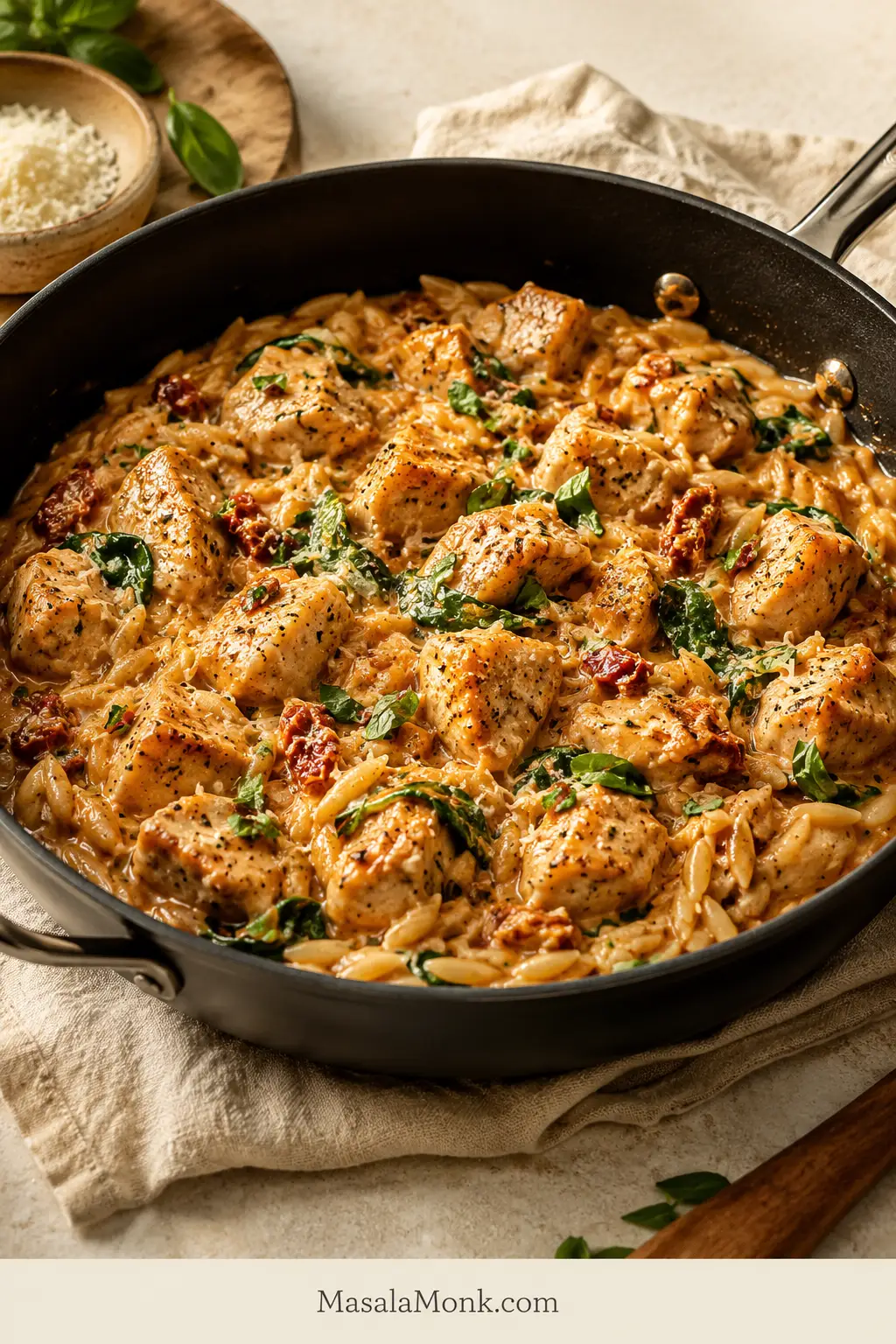
This Marry Me Chicken Orzo comes out of one skillet with golden chicken, tender orzo, spinach and sun-dried tomatoes wrapped in a creamy garlic-Parmesan sauce.
It is an easy one-pan dinner that feels a little more special than the effort suggests. The concentrated tang of sun-dried tomatoes and a squeeze of lemon keep the creamy sauce bright, while the whole skillet comes together in about 30 minutes with no separate pasta pot and nothing to drain.
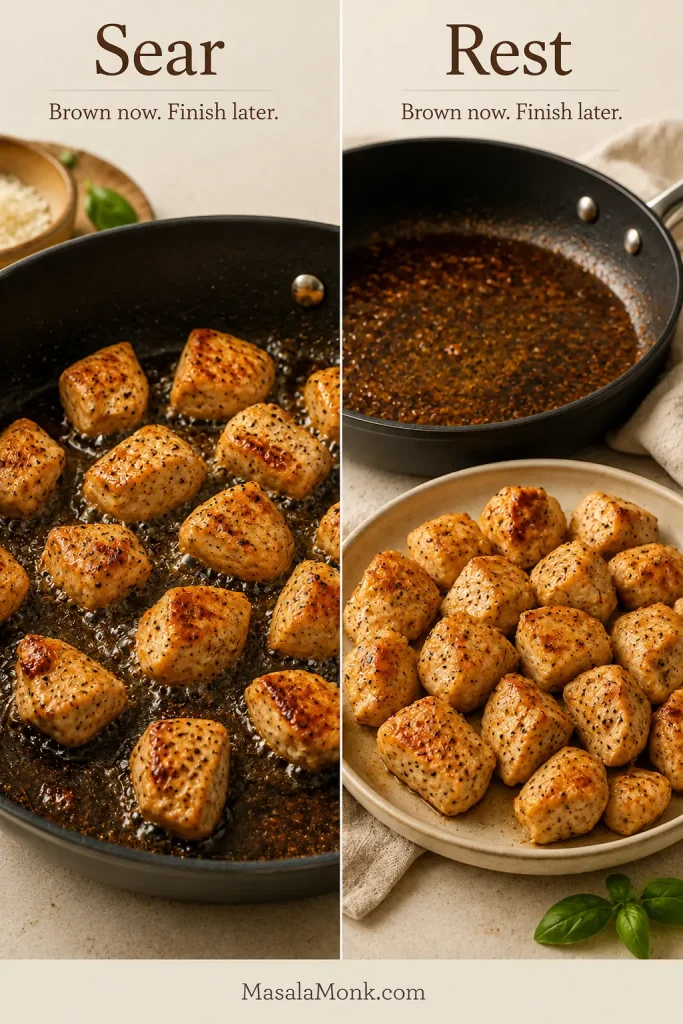
Chicken and orzo cook on different clocks. The chicken can dry out while the pasta finishes, so it gets a quick sear and then waits on a plate while the orzo catches up. It is a small change in order that makes the whole recipe feel much more relaxed at the stove.
Jump to Recipe · Check the Orzo · Rescue the Pan · Store & Reheat
Quick Answer: How to Make Marry Me Chicken Orzo in One Pan
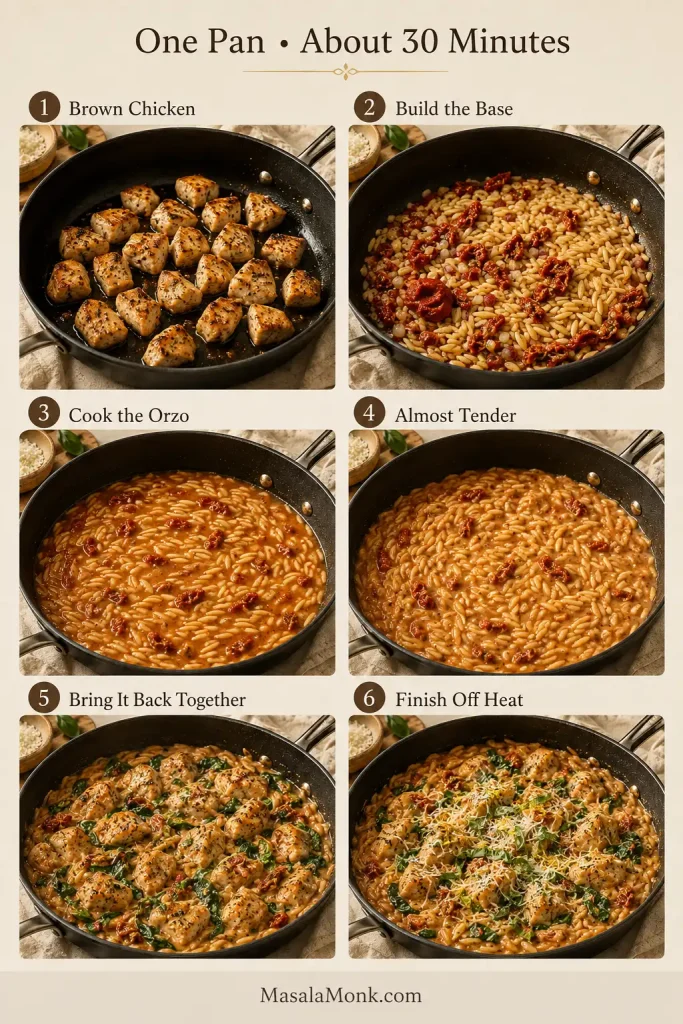
Brown the chicken and remove it, then soften the shallot, garlic, tomato paste and sun-dried tomatoes in the same skillet. Toast the dry orzo, add hot broth and cook until the pasta is almost tender. Return the chicken with the cream and spinach so both finish together. Take the pan off the heat, stir in Parmesan, lemon and basil, then rest briefly before serving.
Marry Me Chicken Orzo Recipe
Prep: about 10 minutes
Cook: about 18–20 minutes
Rest: 2 minutes
Total: about 30–32 minutes
Serves: 4 generously
Equipment
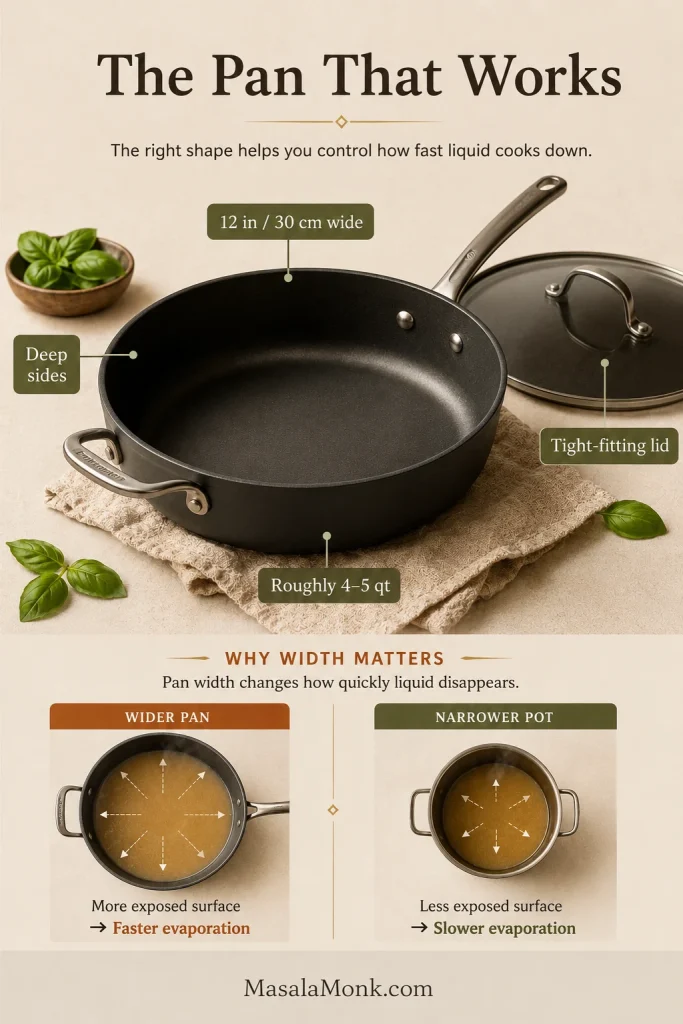
- Deep 12-inch / 30-cm skillet or sauté pan with a tight-fitting lid, roughly 4–5 qt
- Wooden spoon or silicone spatula
- Fine grater for the Parmesan
- Instant-read thermometer
Ingredients
- 1¼ lb / 570 g boneless, skinless chicken breast, cut into roughly 1-inch / 2.5-cm pieces
- 1 tablespoon / 15 ml oil from the sun-dried tomato jar, or olive oil
- ¾ teaspoon fine sea salt, divided, plus more if needed
- ¾ teaspoon freshly ground black pepper, divided, plus more if needed
- 1 teaspoon paprika
- 1 teaspoon dried oregano
- ¼ teaspoon red pepper flakes, optional
- 1 medium shallot, about 2 oz / 60 g, finely chopped, or ½ small yellow onion
- 4 medium garlic cloves, finely minced
- 2 teaspoons / 10 g tomato paste
- 4¼ oz / 120 g drained oil-packed sun-dried tomatoes, sliced
- 9 oz / 250 g dry orzo, roughly 1½ cups
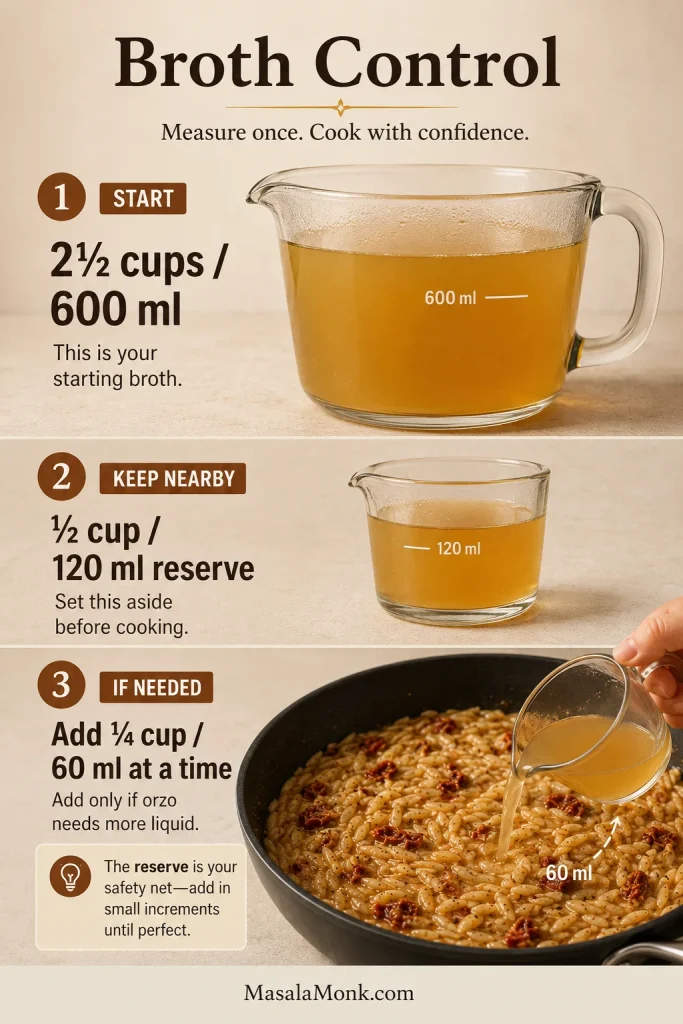
- 2½ cups / 600 ml hot low-sodium chicken broth
- ½ cup / 120 ml additional hot chicken broth, kept in reserve
- ½ cup / 120 ml heavy cream
- 3½ oz / 100 g baby spinach, about 3 packed cups
- 2 oz / 60 g Parmesan, finely and freshly grated
- 2 teaspoons / 10 ml fresh lemon juice, plus more if needed
- A small handful fresh basil, torn or chopped, plus more for serving
One-pan shortcut: warm the broth in a microwave-safe measuring jug while you prepare the chicken.
Method
Brown the chicken and build the flavor base
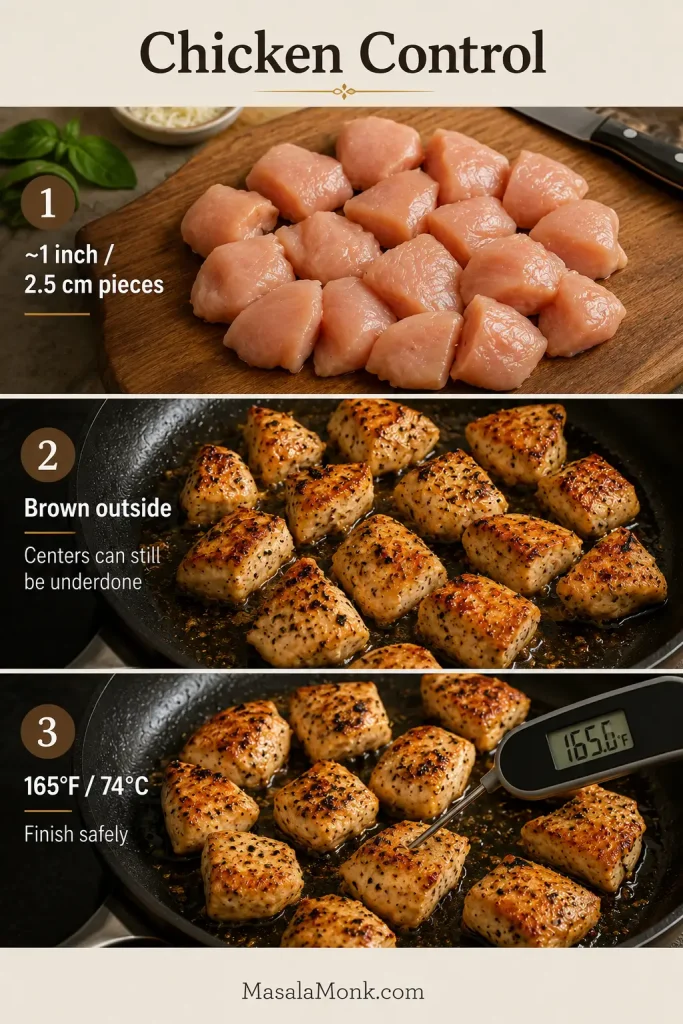
- Season and brown the chicken. Pat the chicken dry, then toss with ½ teaspoon salt, ½ teaspoon black pepper, the paprika and oregano. Heat the sun-dried tomato oil in a deep 12-inch / 30-cm skillet over medium-high heat. Add the chicken in an even layer and cook for 3–4 minutes, turning once or twice, until golden in places. The centers can still be underdone. Transfer to a clean plate.
- Build the tomato-garlic base and toast the orzo. Reduce the heat to medium. Add the shallot and cook for 1 minute. Stir in the garlic, tomato paste, red pepper flakes and remaining ¼ teaspoon black pepper. Cook for 30 seconds, until the garlic smells fragrant and the tomato paste has darkened slightly. Stir in the sun-dried tomatoes and dry orzo, then cook for another 1 minute.

Cook the orzo and finish the skillet
- Cook the orzo in the broth. Pour in 2½ cups / 600 ml hot broth, scraping across the bottom to loosen the browned bits. Add the remaining ¼ teaspoon salt. Bring to a gentle simmer, cover and reduce the heat to medium-low.
At minute 4: stir across the bottom and around the edges, then cover again.
At minute 8: taste a grain and check the liquid. Firm orzo with plenty of broth needs more time. If it is still firm and nearly dry, add reserve broth ¼ cup / 60 ml at a time, as needed. Continue until the pasta is almost tender, with only faint firmness in the center and some loose sauce remaining. The covered broth phase usually takes 9–11 minutes. - Bring the chicken back. Reduce the heat to low. Return the chicken and any juices from the plate, then stir in the cream and spinach. Cook until the spinach wilts, the orzo is fully tender and the thickest pieces of chicken reach 165°F / 74°C.
- Add the Parmesan off the heat. Remove the skillet from the burner. Stir in the Parmesan, lemon juice and basil until the cheese melts and the sauce is smooth and glossy. Loosen with a splash of reserve broth if needed.
- Rest, taste and serve. Let the skillet sit off the heat for 2 minutes so the sauce can settle around the pasta. Taste after the rest, then add more salt, pepper or lemon only if it needs it.
Let the food overrule the timer. Pan width, burner strength and brands of orzo all change the pace slightly.
If your skillet looks good, you can stop here and eat.
Need more help? See the visual cues · Rescue the orzo · See substitutions · Store and reheat
The Texture You’re Aiming For
At the table, you want juicy chicken, tender but distinct orzo and enough creamy sauce to move easily between the grains. Pull a spoon through and the sauce should slowly settle back into the trail.

The sun-dried tomatoes bring concentrated sweetness and tang, Parmesan gives the sauce savory depth, and lemon lifts everything at the end. It is rich, but bright enough that the next spoonful still sounds good.
Watch the Orzo, Not Just the Clock
Your skillet does not have to match these stages minute for minute. Think of them as landmarks.

When the broth goes in
Everything looks loose and brothy—almost excessively so. That is normal. The dry pasta still has plenty of liquid to absorb.
Around minute 4
The grains look noticeably plumper and the broth turns cloudier as starch moves into it. Stir across the bottom, cover again and let the orzo keep going. This is a good moment to grate the Parmesan if you have not already.
At minute 8, taste a grain and check the liquid. Firm pasta can need either more time or more broth—the liquid level tells you which.

Ready for the chicken and cream
Bite into a grain. It should be almost tender, with only faint firmness left in the center, and there should still be loose sauce moving between the grains.

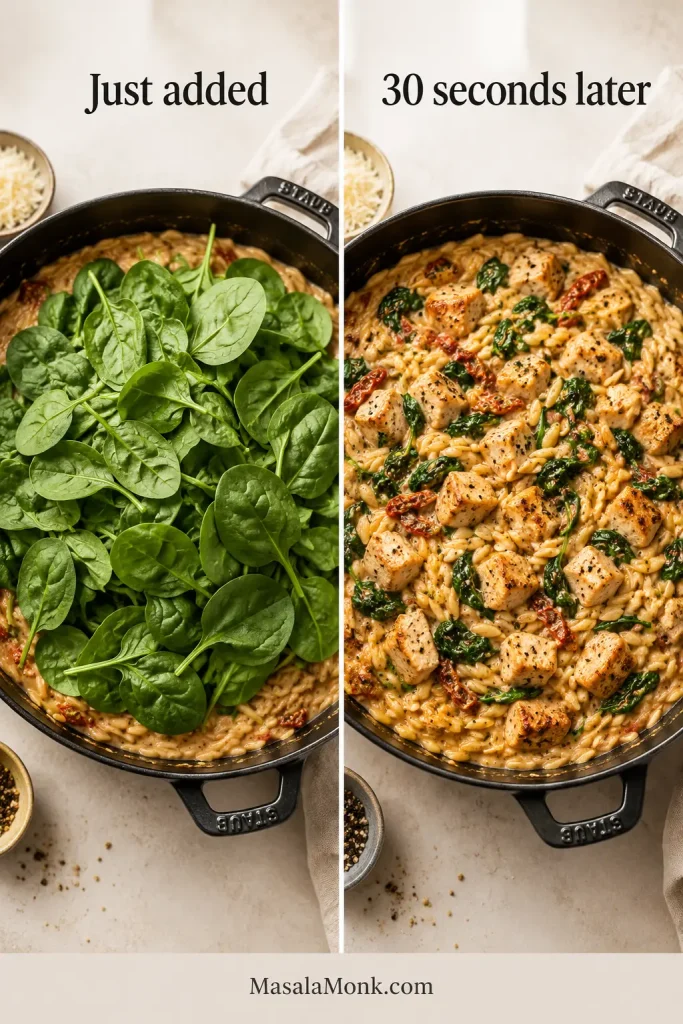
Once the spinach goes in, the handfuls look comically large for about thirty seconds before collapsing into the sauce while the pasta finishes cooking.
Ready to serve
The orzo is fully tender but still distinct, the chicken is juicy and cooked through, and the sauce is glossy and creamy enough to flow slowly back after you stir.

Fix the Orzo While It’s Still Cooking
If the orzo seems too dry, too wet or slower to soften than expected, match what you see to the fix below.
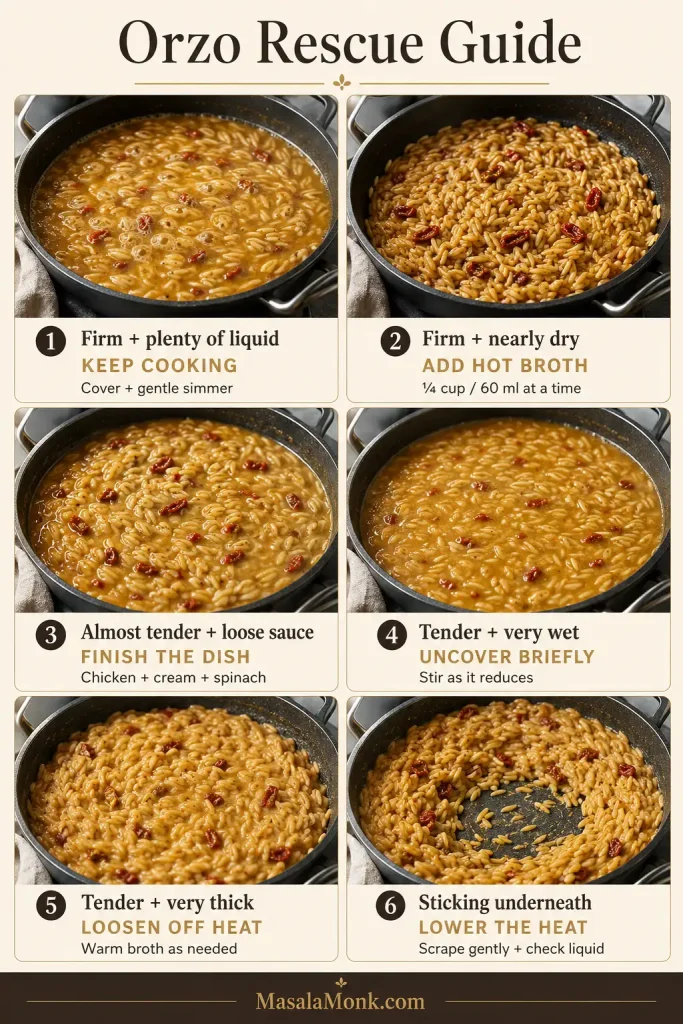
| What you see | Why it happens | Best fix |
|---|---|---|
| Firm orzo + plenty of liquid | It needs more time | Cover and keep cooking at a gentle simmer |
| Firm orzo + nearly dry | Liquid is disappearing too quickly | Add hot reserve broth ¼ cup / 60 ml at a time, as needed, stir and cover |
| Almost tender + loose sauce | Ready for the chicken, cream and spinach | Move on to the next step |
| Tender orzo + very wet | The pasta finished before enough liquid reduced | Cook uncovered briefly, stirring |
| Tender orzo + sauce very thick | It has gone a little too far | Remove from heat and loosen with warm broth |
| Orzo sticking underneath | The heat is too high or there is too little liquid | Lower the heat, scrape carefully and check the broth |
Once those few cues make sense, this stops feeling like temperamental orzo and starts feeling like an ordinary skillet dinner.
Pan back on track? Return to the Method · See the almost-tender cue
Why the Order Matters
Brown the chicken, then give it a break
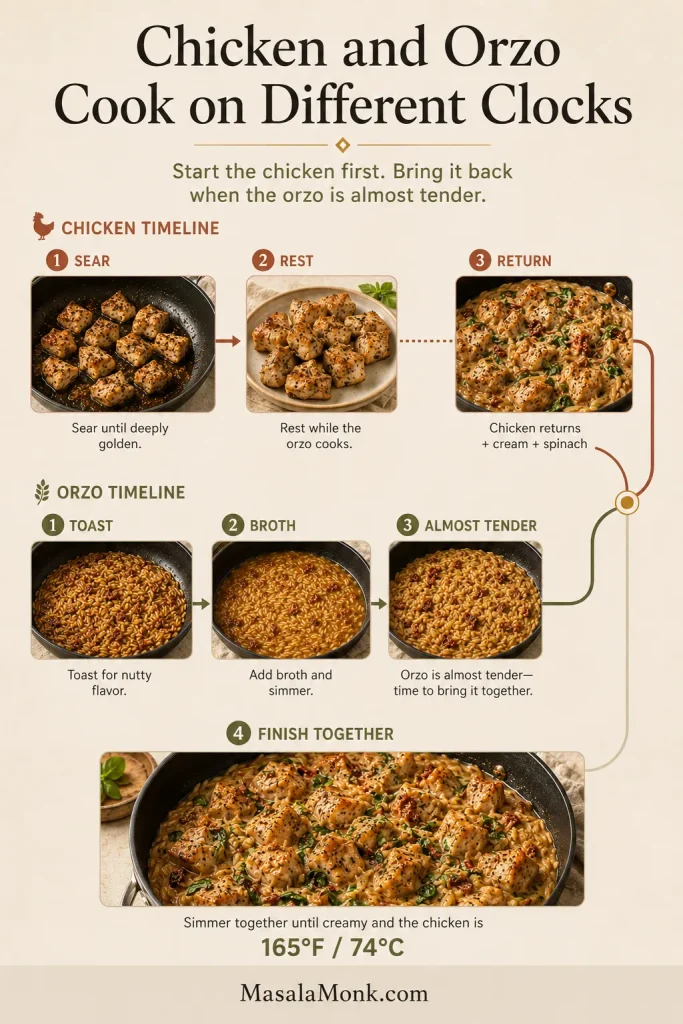
Chicken pieces around 1 inch / 2.5 cm brown quickly without drying out as easily as smaller pieces. Taking them out after the initial sear lets the pasta cook without leaving lean chicken breast simmering the whole time.
Let broth cook the pasta
Skillets lose liquid at different rates, which is why the reserve broth is there. If the orzo needs it, use it; if the pasta is softening nicely with enough liquid left, leave it alone.
Bring everything together gently
The cream spends only a short time over low heat, while the Parmesan melts into the residual heat after the skillet leaves the burner. That sequence keeps the final sauce smooth and avoids simmering the dairy longer than necessary.

Ingredients That Make the Difference
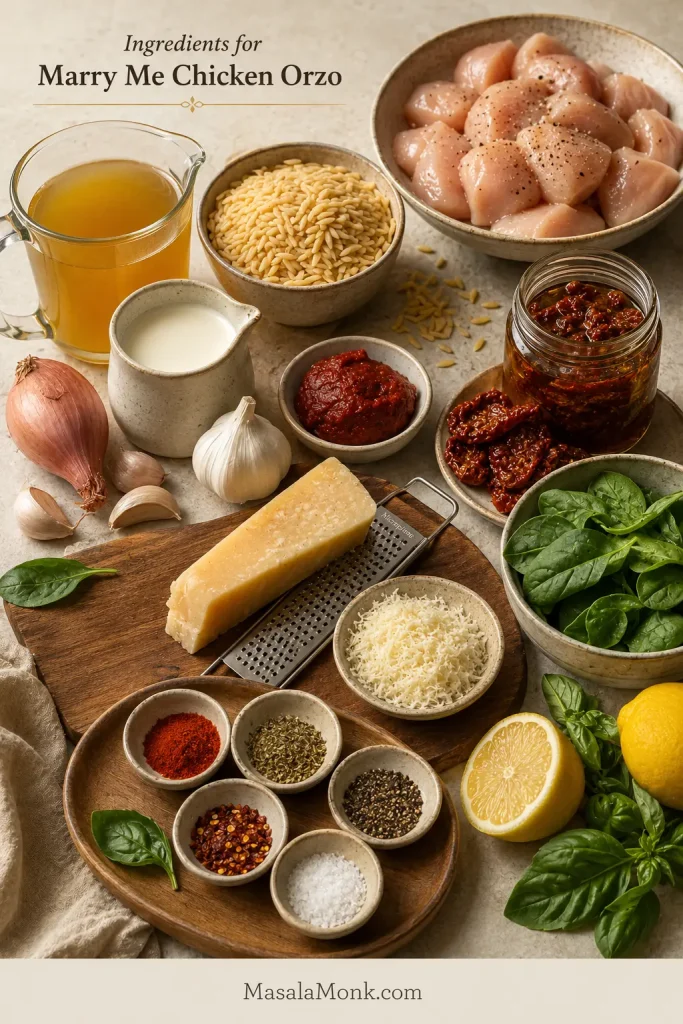
Chicken breast, thighs or cooked chicken?
| Chicken | Why choose it | What changes |
|---|---|---|
| Breast | Lean and quick | Keep the pieces even and use the thermometer |
| Boneless thighs | Stay juicy through a wider cooking window | They may take a little longer depending on size |
| Rotisserie or cooked chicken | Fastest shortcut | Skip the sear and add it near the end |

For cooked chicken, use 14–16 oz / 400–450 g, roughly 3 cups chopped or shredded. Let the orzo cook first, then fold the chicken in with the cream and spinach so it only needs heating through.
Orzo
Orzo looks like rice, but it is pasta. It goes into this recipe dry, absorbs the seasoned broth and releases starch that helps the sauce cling. Do not pre-boil it.
Got some left in the box? Orzo also works well in minestrone soup, where it cooks in a much larger volume of broth.
Oil-packed sun-dried tomatoes
Oil-packed tomatoes are already soft enough to slice straight from the jar, and a spoonful of their seasoned oil makes excellent cooking fat for the chicken. Drain the tomatoes, but do not rinse them.
If yours are dry-packed, soften them in hot water for about 10 minutes, then drain before slicing and adding them.

Fresh or canned tomatoes are not direct substitutes: they contain far more water and produce a different sauce.
Cream, Parmesan, spinach and broth
The orzo starch and Parmesan already give the sauce plenty of body, so ½ cup / 120 ml cream is enough for richness without flooding the pasta. Freshly grated Parmesan melts most smoothly off the heat.
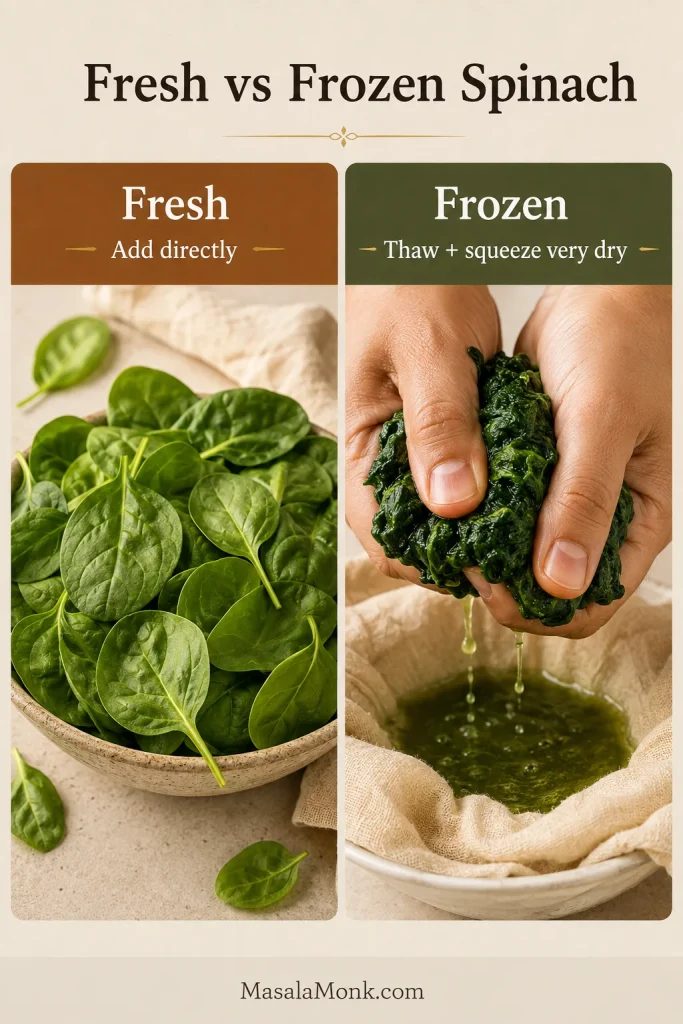
Fresh baby spinach wilts quickly. Frozen spinach works too, but thaw and squeeze it thoroughly first. Low-sodium broth leaves room to adjust the seasoning once the Parmesan and sun-dried tomatoes are in.
Best Pan for Chicken Orzo: Use a Deep Skillet With a Lid
A deep 12-inch / 30-cm skillet or sauté pan, roughly 4–5 qt, gives the chicken room to brown and still has enough depth for the broth, pasta and spinach.
A similarly wide, deep pan with a lid works too. Width matters because a broad surface loses liquid faster than a narrow pot. A loose lid may have you reaching for the reserve broth sooner, while heavy cast iron may need the burner lowered promptly once the broth starts simmering.
Substitutions and Add-Ins That Work
| Change | What to expect |
|---|---|
| Chicken thighs | Juicier meat with a wider cooking window |
| Rotisserie chicken | Skip the sear and add it with the cream and spinach |
| Half-and-half | Use the same ½ cup / 120 ml; the sauce will be a little lighter and looser |
| Frozen spinach | Works once thawed and squeezed very dry |
| Dry-packed sun-dried tomatoes | Soften them in hot water before using |
| Mushrooms | Brown them first so their released water cooks away |

Gluten-free orzo: start tasting early. Different blends can soften and absorb broth differently from standard wheat pasta, so follow the texture rather than assuming the same timing.
Whole milk: it is not a straight 1:1 replacement for heavy cream if you want the same texture. The sauce will be noticeably looser.
Rice or another pasta shape: neither is a straight swap. Liquid needs and cooking times can change substantially.
Adding mushrooms? Brown them before the shallot until most of the moisture they release has cooked away. If yours usually steam rather than brown, the cues in this creamy mushroom sauce can help you judge when they are ready.
Troubleshooting the Finished Dish
Still at the stove? If the orzo is too wet, too dry or still firm, use the Orzo Rescue Guide instead.
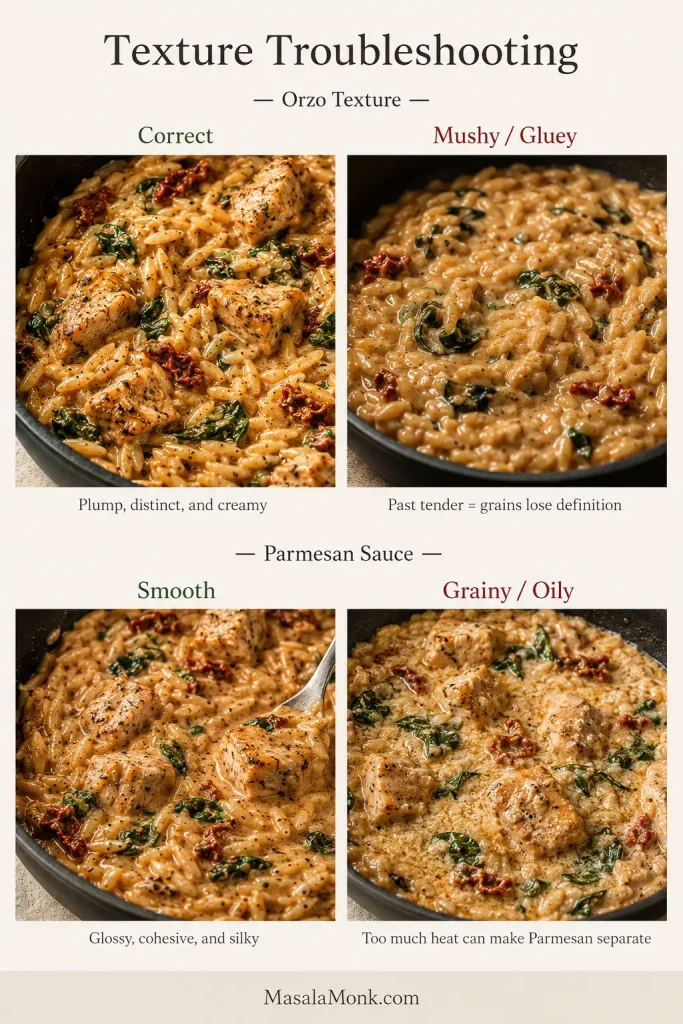
The orzo is mushy or gluey. It probably cooked beyond tender while the sauce was still reducing. You cannot make overcooked orzo firm again, but a spoonful or two of warm broth can loosen it enough to make serving easier.
The chicken is dry. The usual causes are pieces cut too small, an initial sear that ran too long, or chicken left in throughout the pasta cook. Keep the pieces near 1 inch / 2.5 cm and let the thermometer—not the clock—decide when they are done.
The Parmesan looks grainy or oily. The skillet was probably too hot when the cheese went in. Finely grate the Parmesan and stir it through after removing the pan from the burner.
Frozen spinach made the sauce watery. Thaw it completely and squeeze out as much water as you can before adding it. That one step keeps a surprising amount of extra liquid out of the sauce.
The sun-dried tomatoes taste too strong. Some jars are much saltier or more intensely seasoned than others. A splash of cream or broth, extra spinach, fresh basil and black pepper can soften that intensity.
The dish tastes too rich. Try a little more lemon, black pepper or basil first. If the sauce itself tastes good but the plate needs contrast, a cold cucumber salad will help more than thinning a sauce that was already right.
Make Ahead, Store and Reheat
Prep ahead
For the best texture, prepare the ingredients ahead but cook the orzo fresh. Chop the shallot and tomatoes, mince the garlic, grate the Parmesan and wash the spinach earlier in the day. Cut the chicken too, then keep it covered and refrigerated separately until cooking.

If you need to cook the whole dish ahead, stop with the orzo just tender and leave the sauce slightly looser than usual. The pasta will absorb more as it sits.
Store and reheat
Cool leftovers promptly, cover and refrigerate. USDA guidance recommends using cooked leftovers within 3–4 days.
For meal prep, divide the cooled chicken orzo into individual containers. Before reheating, stir in 1–2 tablespoons / 15–30 ml broth per serving.
Microwave in short intervals, stirring between each one, or warm gently on the stovetop with the added broth until the sauce loosens. Reheated leftovers should reach 165°F / 74°C in the center.

Freezing
You can freeze it, but refrigeration gives the better texture. Frozen and thawed orzo tends to soften further, and the dairy sauce may not return to quite the same smooth consistency.
What to Serve With Marry Me Chicken Orzo
You do not really need another side. Chicken, pasta and spinach already make this a full dinner.
When you do want something alongside it, choose freshness, crunch or bread for catching the sauce.
- A lemony green salad
- Roasted broccoli or broccolini
- Asparagus with black pepper and lemon
- A crisp cucumber or tomato salad
- Crusty bread or homemade garlic bread for the last of the sauce
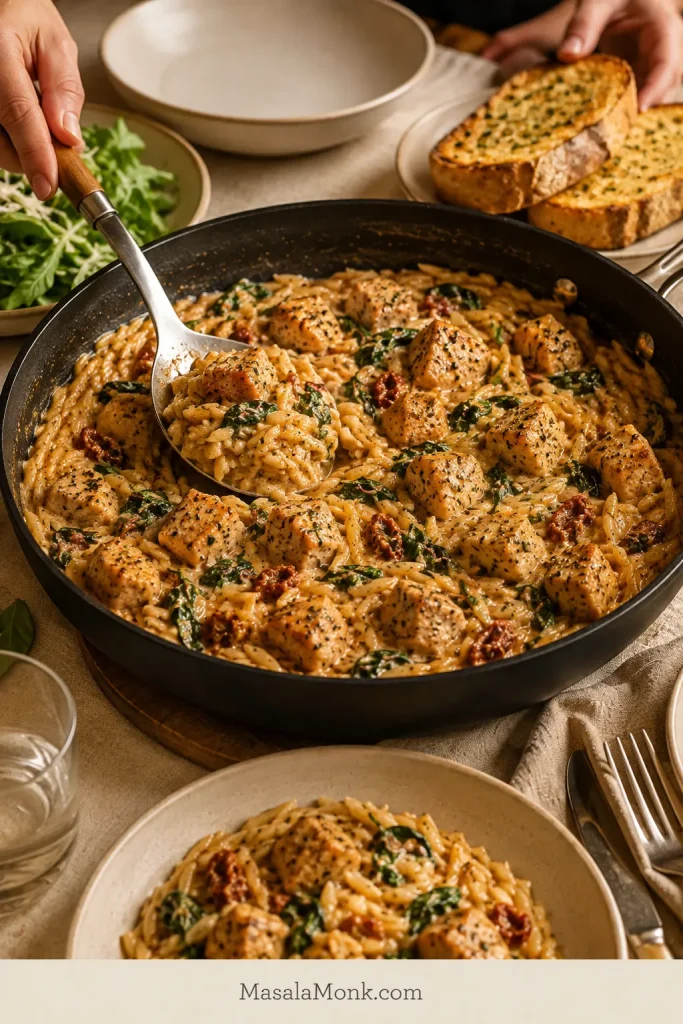
It is just as comfortable eaten straight from the skillet on a weeknight as it is spooned into warm bowls when you want dinner to feel a little more special.
Marry Me Chicken Orzo FAQs
Do you cook the orzo first?
No. The dry orzo cooks directly in the broth, so there is no separate pasta pot and nothing to drain.
Can I use rotisserie chicken?
Yes. Use 14–16 oz / 400–450 g cooked chicken, roughly 3 cups, and add it with the cream and spinach near the end.
Can I make it without heavy cream?
Yes. Use the same ½ cup / 120 ml half-and-half for a lighter, slightly looser sauce. Whole milk will make the sauce thinner and is not a direct replacement if you want the same consistency.
Can I bake this instead?
Not by moving this exact stovetop formula into the oven unchanged. Baking changes evaporation and timing, so an oven version needs its own broth ratio and method.
Why is it called Marry Me Chicken?
According to Delish recipe creator Lindsay Funston, the dish was developed in 2016 under the working title “Sicilian Chicken Skillet.” A marriage-themed reaction during the video shoot inspired the name that stuck. Adding orzo turns those creamy garlic, sun-dried tomato and Parmesan flavors into a complete one-pan meal.
Made it? Tell us how your skillet behaved, which chicken you used, or what you served alongside it. And if you reached for some of that reserve broth, you are definitely not the only cook whose pan had its own ideas.
Two Cooking Cues Worth Remembering
Almost tender + loose sauce: bring back the chicken and add the cream and spinach.
Fully tender + chicken at 165°F / 74°C: take the skillet off the heat, then stir in the Parmesan, lemon and basil.
After the short rest, the sauce should be glossy, creamy and still moving easily between the grains. Put the bowls on the table and give it those two quiet minutes; by the time you spoon everything out, the chicken should still be juicy and the sauce should cling without turning stiff.









