
Posted on — Leave a comment

Marry Me Chicken Orzo Recipe: Creamy, One-Pan and Ready in 30 Minutes

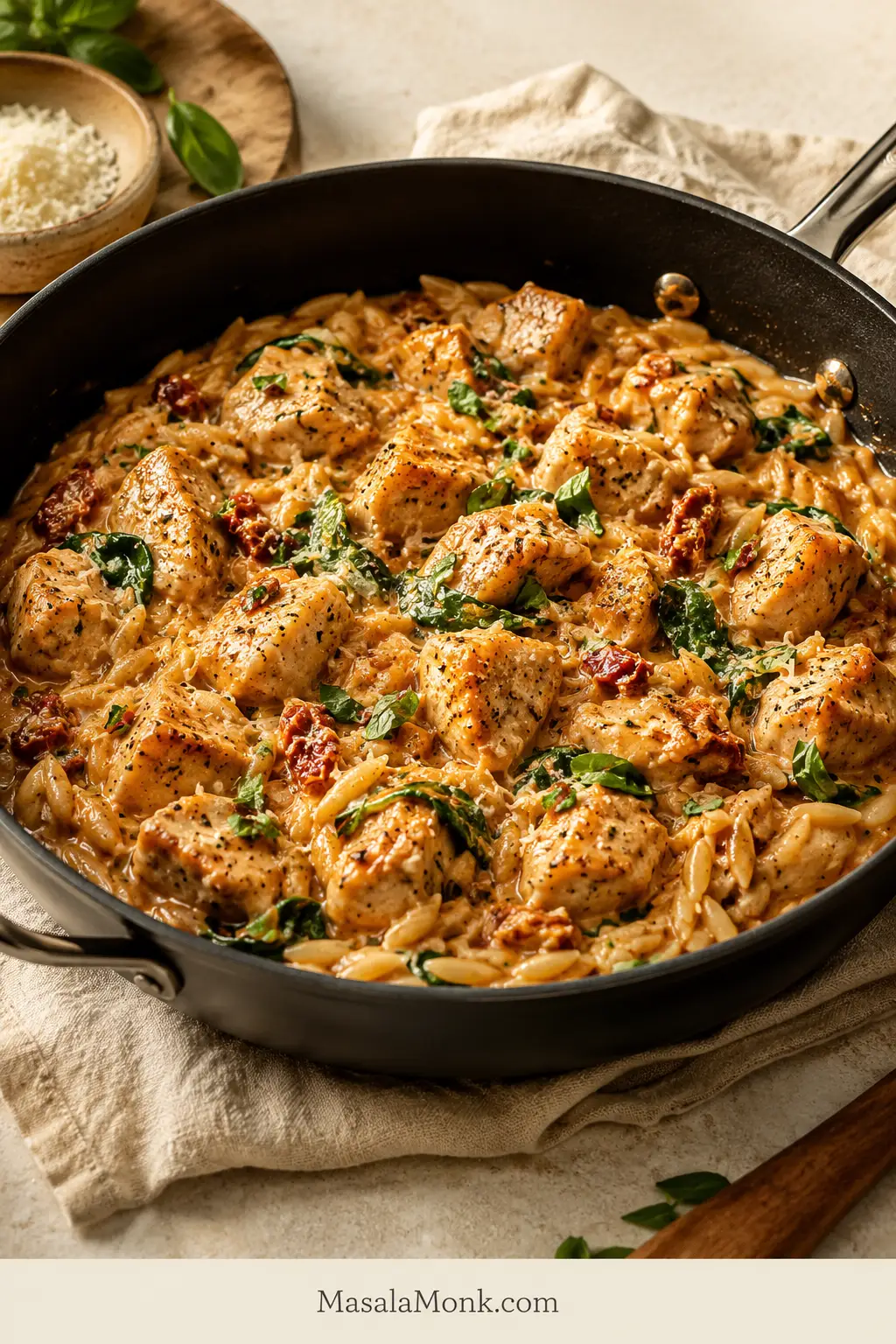
Finished Marry Me Chicken Orzo in a dark skillet with browned chicken pieces, creamy orzo, wilted spinach, sun-dried tomatoes, basil and grated Parmesan.

This Marry Me Chicken Orzo comes out of one skillet with golden chicken, tender orzo, spinach and sun-dried tomatoes wrapped in a creamy garlic-Parmesan sauce.

It is an easy one-pan dinner that feels a little more special than the effort suggests. The concentrated tang of sun-dried tomatoes and a squeeze of lemon keep the creamy sauce bright, while the whole skillet comes together in about 30 minutes with no separate pasta pot and nothing to drain.

Chicken and orzo cook on different clocks. The chicken can dry out while the pasta finishes, so it gets a quick sear and then waits on a plate while the orzo catches up. It is a small change in order that makes the whole recipe feel much more relaxed at the stove.

Jump to Recipe · Check the Orzo · Rescue the Pan · Store & Reheat

Quick Answer: How to Make Marry Me Chicken Orzo in One Pan

Brown the chicken and remove it, then soften the shallot, garlic, tomato paste and sun-dried tomatoes in the same skillet. Toast the dry orzo, add hot broth and cook until the pasta is almost tender. Return the chicken with the cream and spinach so both finish together. Take the pan off the heat, stir in Parmesan, lemon and basil, then rest briefly before serving.
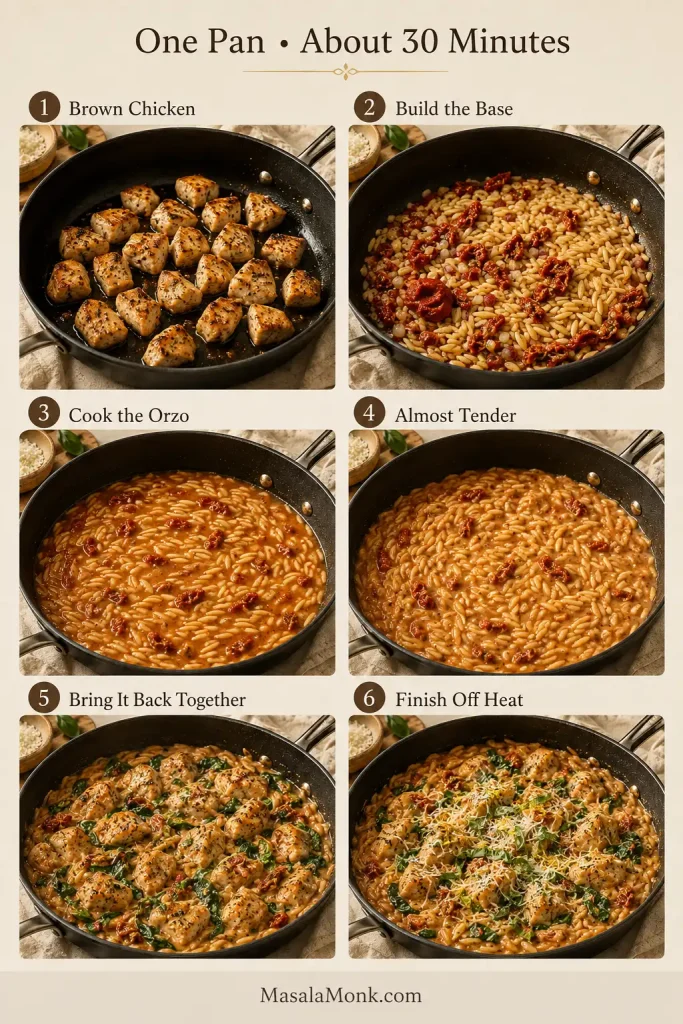
Six-stage Marry Me Chicken Orzo cooking guide showing chicken browning, the aromatic base, orzo simmering in broth, almost-tender orzo, chicken returning with cream and spinach, and the final off-heat finish.
Two planned checkpoints keep the orzo manageable: stir around minute 4, then taste and check the liquid around minute 8.

Marry Me Chicken Orzo Recipe

Prep: about 10 minutes
Cook: about 18–20 minutes
Rest: 2 minutes
Total: about 30–32 minutes
Serves: 4 generously

Equipment

  • Deep 12-inch / 30-cm skillet or sauté pan with a tight-fitting lid, roughly 4–5 qt
  • Wooden spoon or silicone spatula
  • Fine grater for the Parmesan
  • Instant-read thermometer

Ingredients

  • 1¼ lb / 570 g boneless, skinless chicken breast, cut into roughly 1-inch / 2.5-cm pieces
  • 1 tablespoon / 15 ml oil from the sun-dried tomato jar, or olive oil
  • ¾ teaspoon fine sea salt, divided, plus more if needed
  • ¾ teaspoon freshly ground black pepper, divided, plus more if needed
  • 1 teaspoon paprika
  • 1 teaspoon dried oregano
  • ¼ teaspoon red pepper flakes, optional
  • 1 medium shallot, about 2 oz / 60 g, finely chopped, or ½ small yellow onion
  • 4 medium garlic cloves, finely minced
  • 2 teaspoons / 10 g tomato paste
  • 4¼ oz / 120 g drained oil-packed sun-dried tomatoes, sliced
  • 9 oz / 250 g dry orzo, roughly 1½ cups
  • 2½ cups / 600 ml hot low-sodium chicken broth
  • ½ cup / 120 ml additional hot chicken broth, kept in reserve
  • ½ cup / 120 ml heavy cream
  • 3½ oz / 100 g baby spinach, about 3 packed cups
  • 2 oz / 60 g Parmesan, finely and freshly grated
  • 2 teaspoons / 10 ml fresh lemon juice, plus more if needed
  • A small handful fresh basil, torn or chopped, plus more for serving

One-pan shortcut: warm the broth in a microwave-safe measuring jug while you prepare the chicken.

Method

Brown the chicken and build the flavor base

  1. Season and brown the chicken. Pat the chicken dry, then toss with ½ teaspoon salt, ½ teaspoon black pepper, the paprika and oregano. Heat the sun-dried tomato oil in a deep 12-inch / 30-cm skillet over medium-high heat. Add the chicken in an even layer and cook for 3–4 minutes, turning once or twice, until golden in places. The centers can still be underdone. Transfer to a clean plate.
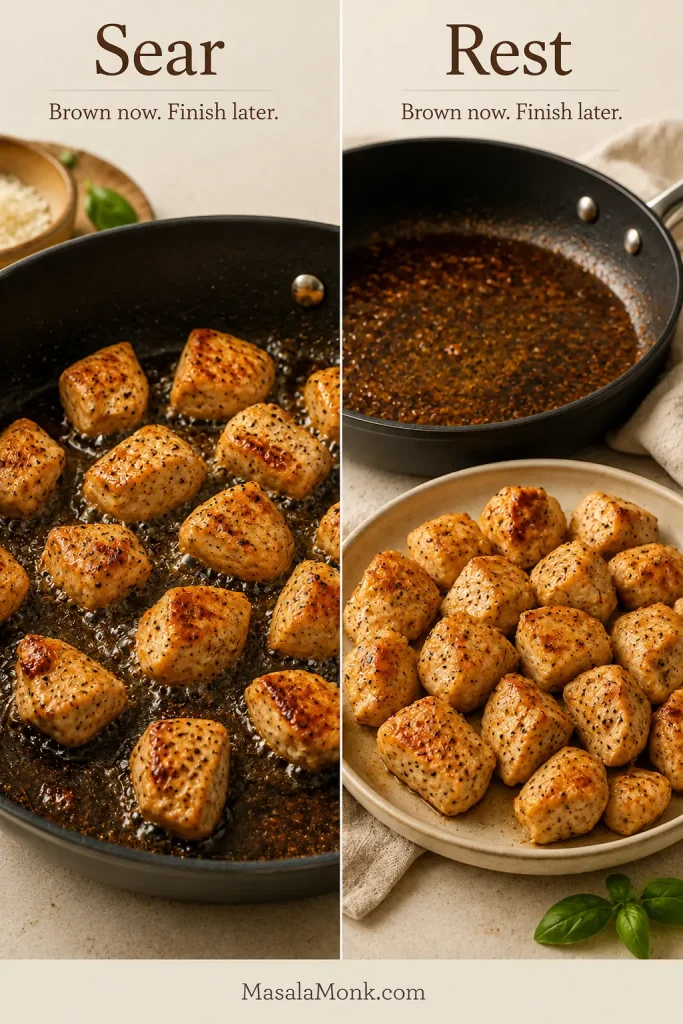
Split image showing bite-size chicken pieces searing until golden in a skillet and the browned chicken resting on a plate beside the pan.
The plate is part of the method: resting the browned chicken gives the orzo time to cook without leaving lean meat simmering beside it.
  1. Build the tomato-garlic base and toast the orzo. Reduce the heat to medium. Add the shallot and cook for 1 minute. Stir in the garlic, tomato paste, red pepper flakes and remaining ¼ teaspoon black pepper. Cook for 30 seconds, until the garlic smells fragrant and the tomato paste has darkened slightly. Stir in the sun-dried tomatoes and dry orzo, then cook for another 1 minute.
Close-up of minced garlic and a small amount of tomato paste cooking in oil in a dark skillet, with the paste dispersed and slightly darkened.
Work the tomato paste through the aromatics rather than leaving it in red clumps; a brief cook deepens its flavor without making the sauce tomato-heavy.

Cook the orzo and finish the skillet

  1. Cook the orzo in the broth. Pour in 2½ cups / 600 ml hot broth, scraping across the bottom to loosen the browned bits. Add the remaining ¼ teaspoon salt. Bring to a gentle simmer, cover and reduce the heat to medium-low.

    At minute 4: stir across the bottom and around the edges, then cover again.

    At minute 8: taste a grain and check the liquid. Firm orzo with plenty of broth needs more time. If it is still firm and nearly dry, add reserve broth ¼ cup / 60 ml at a time, as needed. Continue until the pasta is almost tender, with only faint firmness in the center and some loose sauce remaining. The covered broth phase usually takes 9–11 minutes.
  2. Bring the chicken back. Reduce the heat to low. Return the chicken and any juices from the plate, then stir in the cream and spinach. Cook until the spinach wilts, the orzo is fully tender and the thickest pieces of chicken reach 165°F / 74°C.
  3. Add the Parmesan off the heat. Remove the skillet from the burner. Stir in the Parmesan, lemon juice and basil until the cheese melts and the sauce is smooth and glossy. Loosen with a splash of reserve broth if needed.
  4. Rest, taste and serve. Let the skillet sit off the heat for 2 minutes so the sauce can settle around the pasta. Taste after the rest, then add more salt, pepper or lemon only if it needs it.

Let the food overrule the timer. Pan width, burner strength and brands of orzo all change the pace slightly.

If your skillet looks good, you can stop here and eat.

Need more help? See the visual cues · Rescue the orzo · See substitutions · Store and reheat

The Texture You’re Aiming For

At the table, you want juicy chicken, tender but distinct orzo and enough creamy sauce to move easily between the grains. Pull a spoon through and the sauce should slowly settle back into the trail.

Close-up bowl of Marry Me Chicken Orzo with distinct pasta grains, browned chicken, wilted spinach and sun-dried tomatoes.
Creaminess should not erase the pasta: each plump orzo grain still holds its shape beneath the garlic-Parmesan sauce.

The sun-dried tomatoes bring concentrated sweetness and tang, Parmesan gives the sauce savory depth, and lemon lifts everything at the end. It is rich, but bright enough that the next spoonful still sounds good.

Watch the Orzo, Not Just the Clock

Your skillet does not have to match these stages minute for minute. Think of them as landmarks.

Four-stage Marry Me Chicken Orzo guide showing the orzo progressing from brothy, to plumper and cloudy, to almost tender with loose sauce, and finally tender and creamy.
As starch leaves the orzo, the liquid starts clinging to the grains. That change in coating tells you more than simply watching the liquid level fall.

When the broth goes in

Everything looks loose and brothy—almost excessively so. That is normal. The dry pasta still has plenty of liquid to absorb.

Around minute 4

The grains look noticeably plumper and the broth turns cloudier as starch moves into it. Stir across the bottom, cover again and let the orzo keep going. This is a good moment to grate the Parmesan if you have not already.

At minute 8, taste a grain and check the liquid. Firm pasta can need either more time or more broth—the liquid level tells you which.

Two-panel comparison showing firm orzo with plenty of liquid in one skillet and similarly firm orzo in a nearly dry skillet in the other.
Firm pasta does not automatically need more broth. Check the liquid level too; doneness and moisture are two separate decisions.

Ready for the chicken and cream

Bite into a grain. It should be almost tender, with only faint firmness left in the center, and there should still be loose sauce moving between the grains.

Close-up of almost-tender orzo with sun-dried tomato pieces and loose sauce visible between the plump grains before chicken, cream and spinach are added.
A faint bite is useful here. If the orzo is already completely tender before finishing, the next few minutes can only push it past its best texture.

Once the spinach goes in, the handfuls look comically large for about thirty seconds before collapsing into the sauce while the pasta finishes cooking.
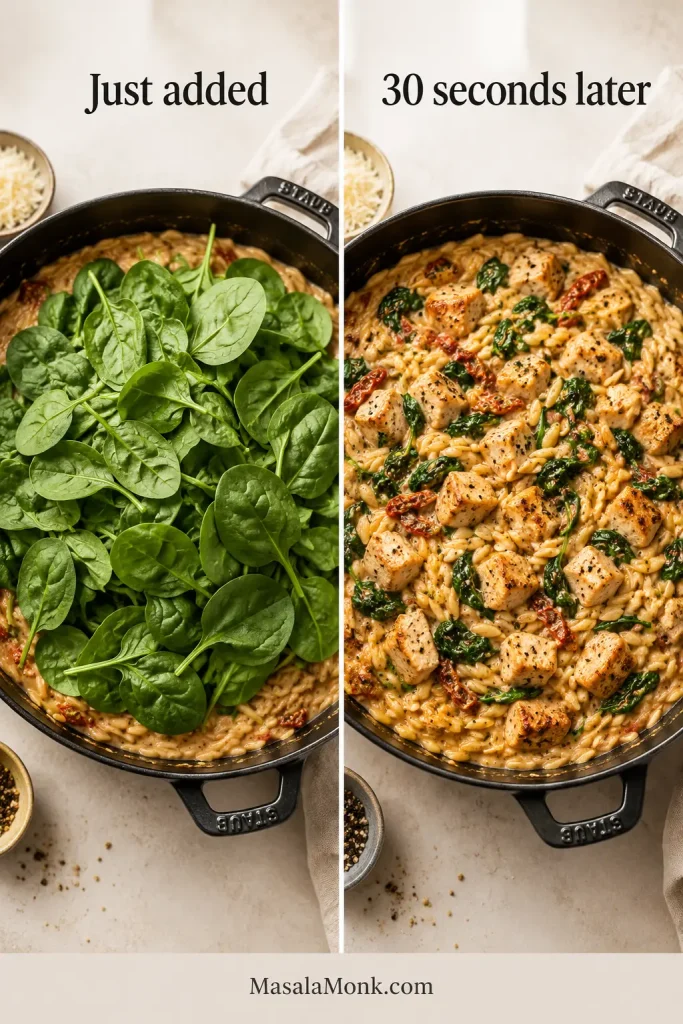
Before-and-after comparison showing a large mound of fresh spinach just added to chicken orzo and the spinach wilted into the creamy pasta shortly afterward.
Three packed cups shrink dramatically, which is why the greens can disappear into a four-serving skillet without overwhelming the pasta.

Ready to serve

The orzo is fully tender but still distinct, the chicken is juicy and cooked through, and the sauce is glossy and creamy enough to flow slowly back after you stir.

Spoon dragged through finished creamy chicken orzo, leaving a visible trail while the glossy sauce slowly settles back around the pasta.
If the spoon trail stays open instead of slowly relaxing, the sauce is too tight; loosen it with a small splash of warm broth before serving.

Fix the Orzo While It’s Still Cooking

If the orzo seems too dry, too wet or slower to soften than expected, match what you see to the fix below.
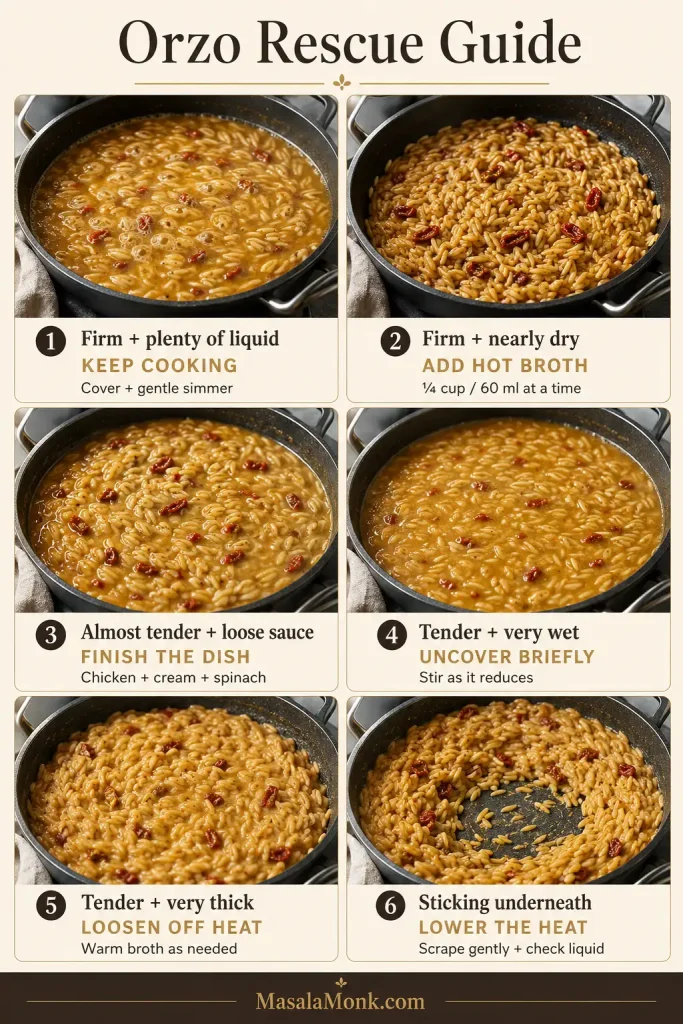
Six-panel Marry Me Chicken Orzo rescue guide showing firm orzo with plenty of liquid, firm orzo nearly dry, almost-tender orzo with loose sauce, tender orzo that is too wet, tender orzo that is too thick, and orzo beginning to stick.
Orzo gets much easier to rescue once you judge two things separately: how tender the grain is and how much free liquid remains.
What you seeWhy it happensBest fix
Firm orzo + plenty of liquidIt needs more timeCover and keep cooking at a gentle simmer
Firm orzo + nearly dryLiquid is disappearing too quicklyAdd hot reserve broth ¼ cup / 60 ml at a time, as needed, stir and cover
Almost tender + loose sauceReady for the chicken, cream and spinachMove on to the next step
Tender orzo + very wetThe pasta finished before enough liquid reducedCook uncovered briefly, stirring
Tender orzo + sauce very thickIt has gone a little too farRemove from heat and loosen with warm broth
Orzo sticking underneathThe heat is too high or there is too little liquidLower the heat, scrape carefully and check the broth

Once those few cues make sense, this stops feeling like temperamental orzo and starts feeling like an ordinary skillet dinner.

Pan back on track? Return to the Method · See the almost-tender cue

Why the Order Matters

Brown the chicken, then give it a break
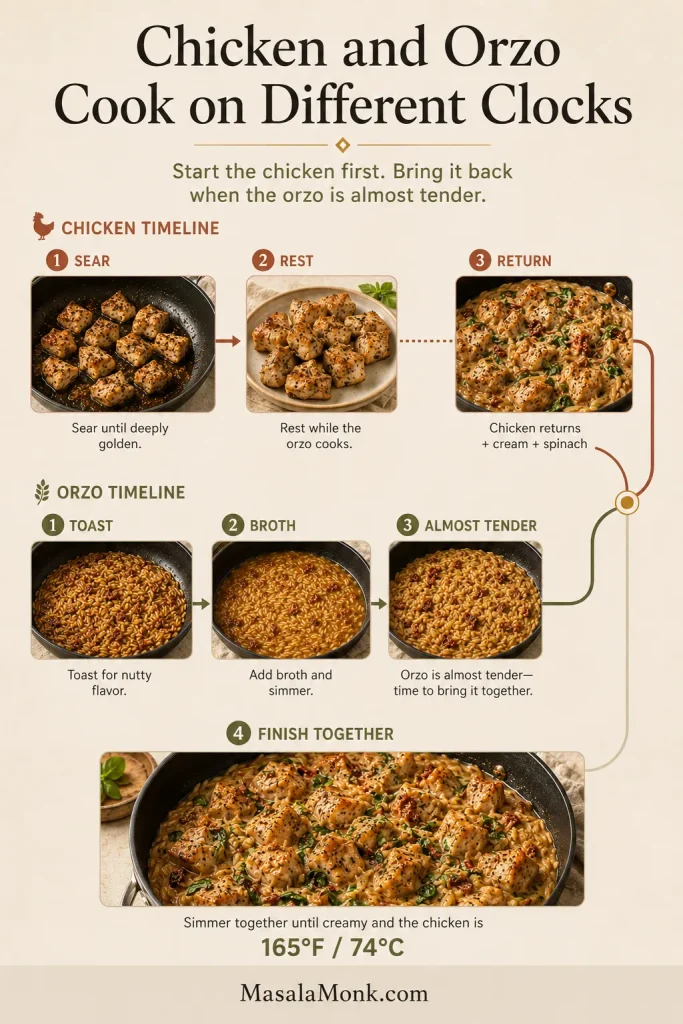
Parallel Marry Me Chicken Orzo timeline showing chicken being seared and rested while orzo is toasted and simmered, with both paths joining when the orzo is almost tender and finishing together.
The second trip to the skillet should be brief: enough to finish the chicken through, not long enough to harden its browned edges.

Chicken pieces around 1 inch / 2.5 cm brown quickly without drying out as easily as smaller pieces. Taking them out after the initial sear lets the pasta cook without leaving lean chicken breast simmering the whole time.
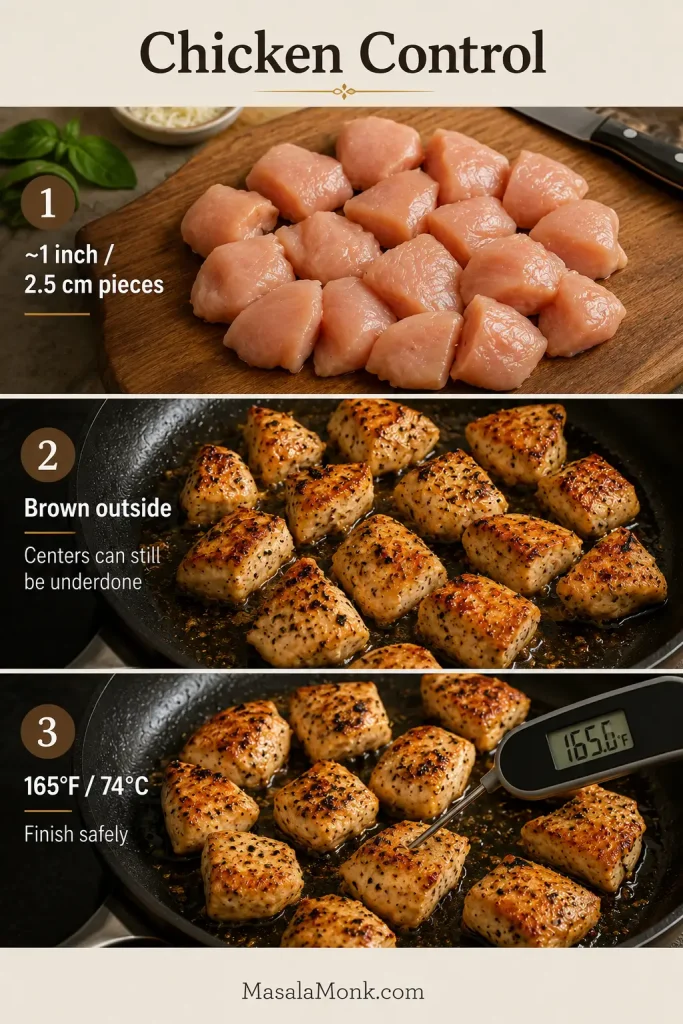
Three-stage chicken guide showing evenly cut raw chicken pieces, browned chicken after searing, and an instant-read thermometer checking a cooked piece at 165°F or 74°C.
Check the thickest chicken piece through its center; 165°F / 74°C is the finish line.

Let broth cook the pasta

Skillets lose liquid at different rates, which is why the reserve broth is there. If the orzo needs it, use it; if the pasta is softening nicely with enough liquid left, leave it alone.
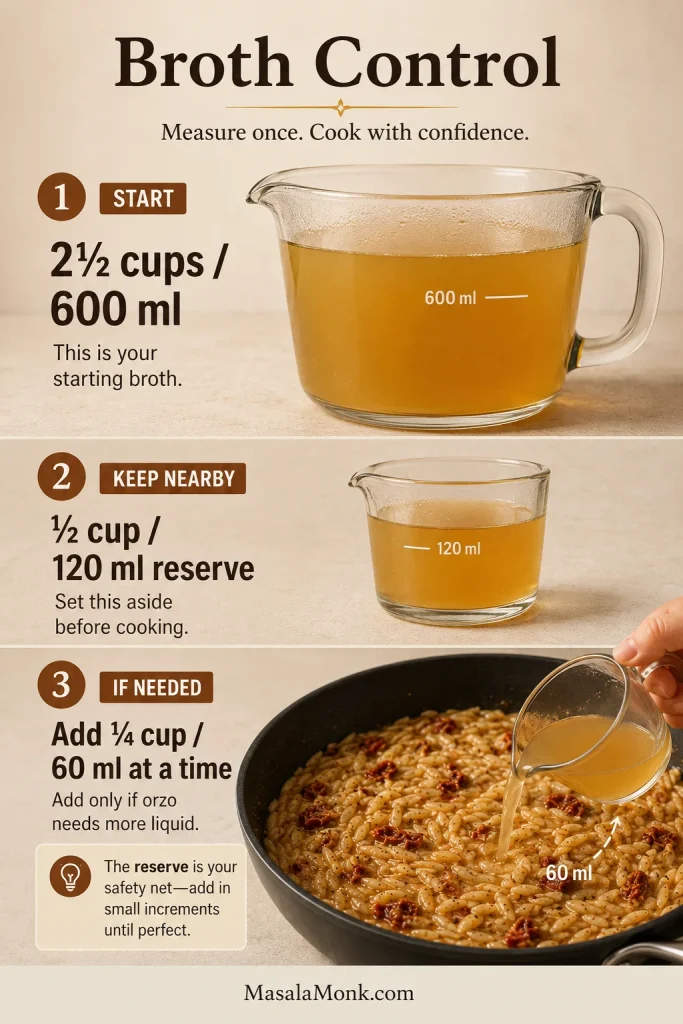
Broth guide showing 2½ cups or 600 milliliters as the starting amount, ½ cup or 120 milliliters held in reserve, and ¼ cup or 60 milliliters added only when needed.
Reserve broth is insurance, not a target—use it only when the orzo is still firm and the pan is nearly dry.

Bring everything together gently

The cream spends only a short time over low heat, while the Parmesan melts into the residual heat after the skillet leaves the burner. That sequence keeps the final sauce smooth and avoids simmering the dairy longer than necessary.

Three-stage guide showing orzo simmering in broth, chicken with cream and spinach added over low heat, and grated Parmesan stirred into the skillet after it is removed from direct heat.
Finely grated Parmesan disappears into residual heat faster and more evenly than coarse shreds, which helps the sauce stay cohesive.

Ingredients That Make the Difference
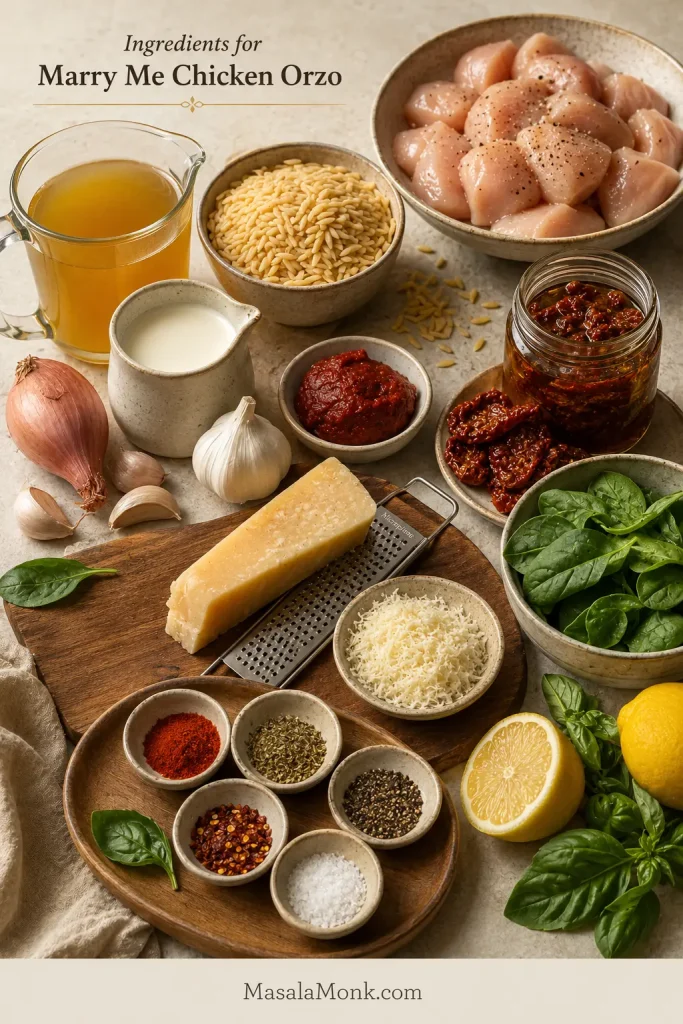
Ingredients for Marry Me Chicken Orzo arranged on a counter, including chicken breast, dry orzo, broth, shallot, garlic, tomato paste, sun-dried tomatoes, cream, Parmesan, spinach, lemon, basil and seasonings.
The richness has counterweights: concentrated sun-dried tomato, lemon, spinach and basil keep the cream and Parmesan lively rather than one-note.

Chicken breast, thighs or cooked chicken?

ChickenWhy choose itWhat changes
BreastLean and quickKeep the pieces even and use the thermometer
Boneless thighsStay juicy through a wider cooking windowThey may take a little longer depending on size
Rotisserie or cooked chickenFastest shortcutSkip the sear and add it near the end
Three-part comparison showing chicken breast, boneless chicken thighs and cooked chicken as different options for making chicken orzo.
Cooked chicken only needs warming through, whether it comes from a rotisserie bird or leftovers.

For cooked chicken, use 14–16 oz / 400–450 g, roughly 3 cups chopped or shredded. Let the orzo cook first, then fold the chicken in with the cream and spinach so it only needs heating through.

Orzo

Orzo looks like rice, but it is pasta. It goes into this recipe dry, absorbs the seasoned broth and releases starch that helps the sauce cling. Do not pre-boil it.

Got some left in the box? Orzo also works well in minestrone soup, where it cooks in a much larger volume of broth.

Oil-packed sun-dried tomatoes

Oil-packed tomatoes are already soft enough to slice straight from the jar, and a spoonful of their seasoned oil makes excellent cooking fat for the chicken. Drain the tomatoes, but do not rinse them.

If yours are dry-packed, soften them in hot water for about 10 minutes, then drain before slicing and adding them.

Three-stage comparison showing glossy oil-packed sun-dried tomatoes, dry wrinkled sun-dried tomatoes, and dry-packed tomatoes softened after soaking.
Rehydrating dry-packed tomatoes is mostly about texture: softened pieces settle naturally into each spoonful instead of staying chewy against the tender orzo.

Fresh or canned tomatoes are not direct substitutes: they contain far more water and produce a different sauce.

Cream, Parmesan, spinach and broth

The orzo starch and Parmesan already give the sauce plenty of body, so ½ cup / 120 ml cream is enough for richness without flooding the pasta. Freshly grated Parmesan melts most smoothly off the heat.

Fresh baby spinach wilts quickly. Frozen spinach works too, but thaw and squeeze it thoroughly first. Low-sodium broth leaves room to adjust the seasoning once the Parmesan and sun-dried tomatoes are in.
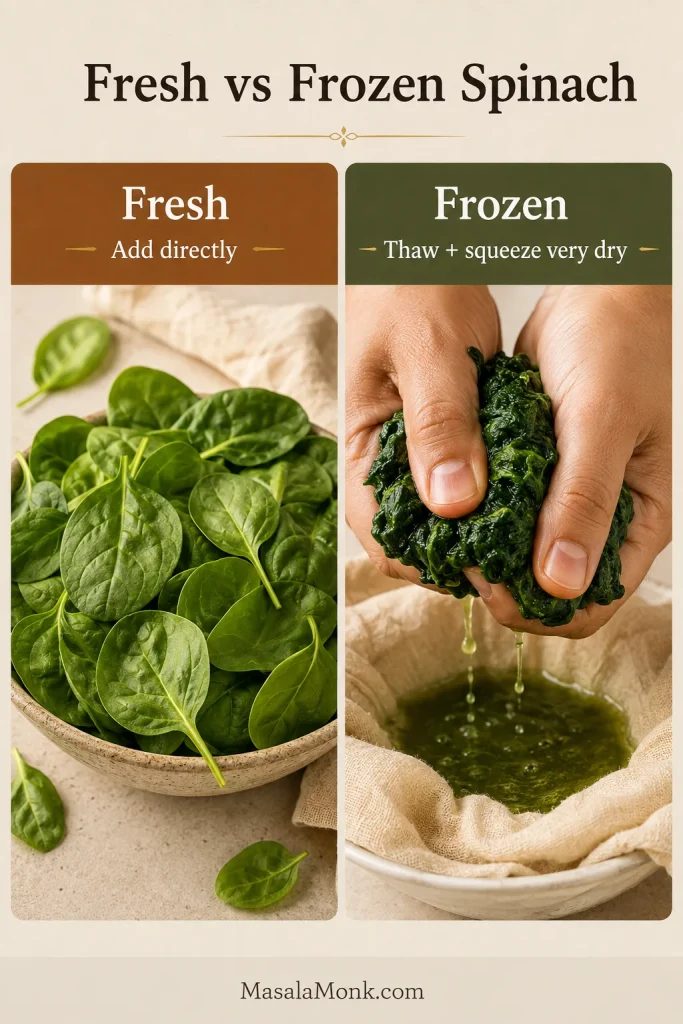
Comparison showing fresh baby spinach beside thawed frozen spinach being squeezed firmly to remove excess water.
Even a little trapped spinach water has to go somewhere; here, it ends up thinning a sauce built from only a modest amount of cream.

Best Pan for Chicken Orzo: Use a Deep Skillet With a Lid

A deep 12-inch / 30-cm skillet or sauté pan, roughly 4–5 qt, gives the chicken room to brown and still has enough depth for the broth, pasta and spinach.

A similarly wide, deep pan with a lid works too. Width matters because a broad surface loses liquid faster than a narrow pot. A loose lid may have you reaching for the reserve broth sooner, while heavy cast iron may need the burner lowered promptly once the broth starts simmering.
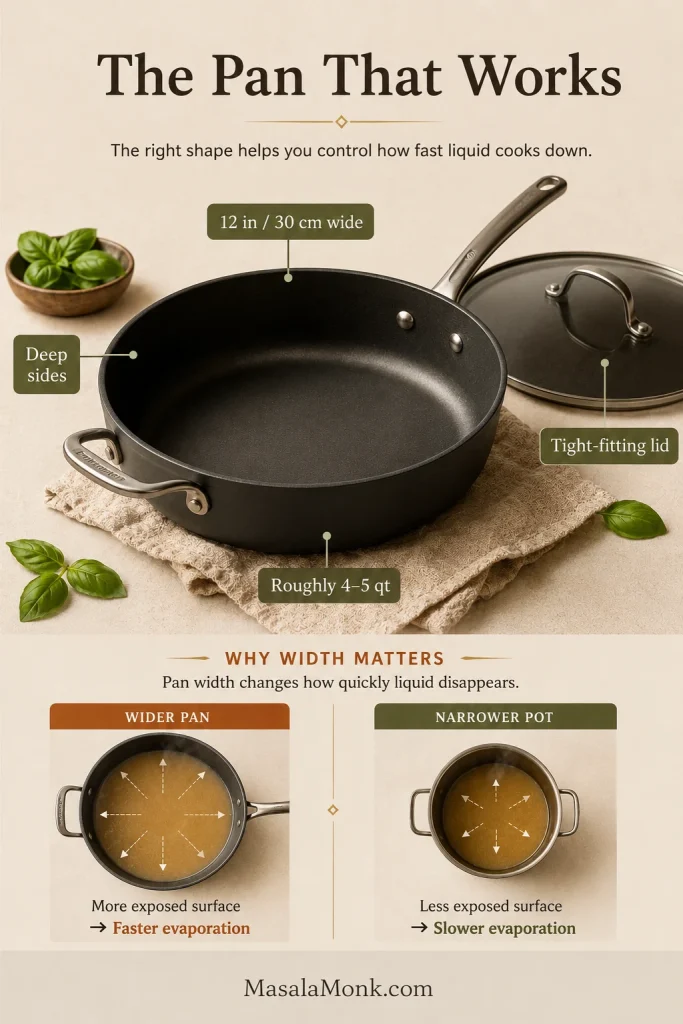
Deep 12-inch skillet with lid and dimension callouts, plus a comparison showing greater exposed surface area in a wide pan than in a narrow pot.
Using a narrower pot? Expect the liquid to linger longer, and resist adding reserve broth merely because the suggested check time has arrived.

Substitutions and Add-Ins That Work

ChangeWhat to expect
Chicken thighsJuicier meat with a wider cooking window
Rotisserie chickenSkip the sear and add it with the cream and spinach
Half-and-halfUse the same ½ cup / 120 ml; the sauce will be a little lighter and looser
Frozen spinachWorks once thawed and squeezed very dry
Dry-packed sun-dried tomatoesSoften them in hot water before using
MushroomsBrown them first so their released water cooks away
Side-by-side chicken orzo comparison showing a slightly fuller sauce made with heavy cream and a slightly lighter, looser sauce made with half-and-half.
With half-and-half, judge the sauce after the short rest before calling it too loose; warm orzo continues absorbing liquid as the skillet settles.

Gluten-free orzo: start tasting early. Different blends can soften and absorb broth differently from standard wheat pasta, so follow the texture rather than assuming the same timing.

Whole milk: it is not a straight 1:1 replacement for heavy cream if you want the same texture. The sauce will be noticeably looser.

Rice or another pasta shape: neither is a straight swap. Liquid needs and cooking times can change substantially.

Adding mushrooms? Brown them before the shallot until most of the moisture they release has cooked away. If yours usually steam rather than brown, the cues in this creamy mushroom sauce can help you judge when they are ready.

Troubleshooting the Finished Dish

Still at the stove? If the orzo is too wet, too dry or still firm, use the Orzo Rescue Guide instead.
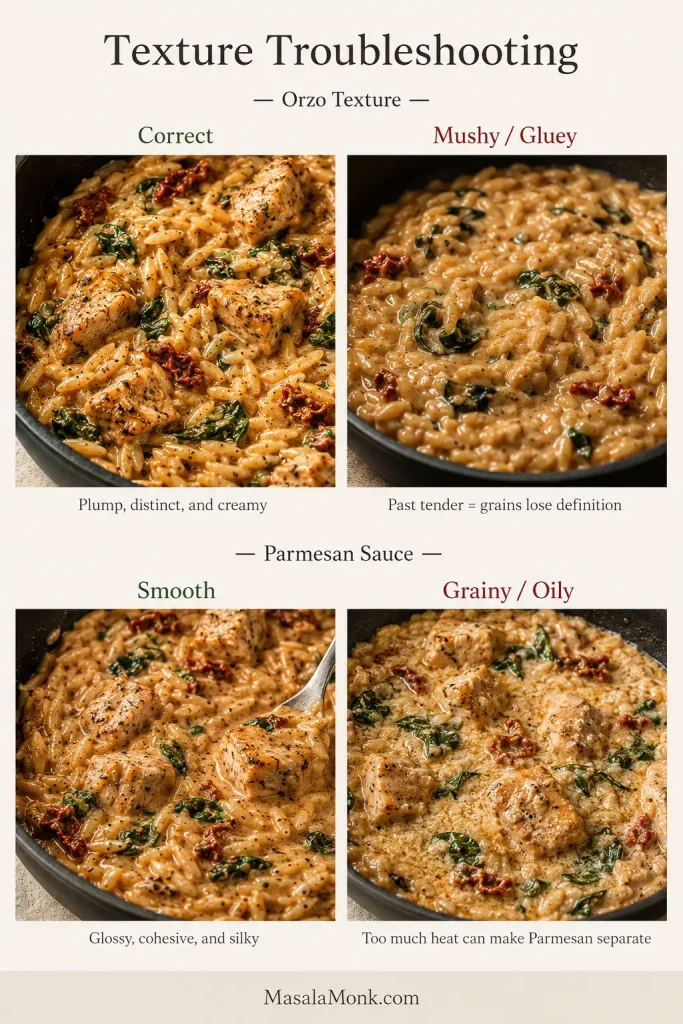
Four-photo troubleshooting board comparing distinct orzo with mushy orzo and smooth Parmesan sauce with a grainy, slightly separated sauce.
First decide whether the pasta or sauce texture failed; fixing the wrong problem can make the dish worse.

The orzo is mushy or gluey. It probably cooked beyond tender while the sauce was still reducing. You cannot make overcooked orzo firm again, but a spoonful or two of warm broth can loosen it enough to make serving easier.

The chicken is dry. The usual causes are pieces cut too small, an initial sear that ran too long, or chicken left in throughout the pasta cook. Keep the pieces near 1 inch / 2.5 cm and let the thermometer—not the clock—decide when they are done.

The Parmesan looks grainy or oily. The skillet was probably too hot when the cheese went in. Finely grate the Parmesan and stir it through after removing the pan from the burner.

Frozen spinach made the sauce watery. Thaw it completely and squeeze out as much water as you can before adding it. That one step keeps a surprising amount of extra liquid out of the sauce.

The sun-dried tomatoes taste too strong. Some jars are much saltier or more intensely seasoned than others. A splash of cream or broth, extra spinach, fresh basil and black pepper can soften that intensity.

The dish tastes too rich. Try a little more lemon, black pepper or basil first. If the sauce itself tastes good but the plate needs contrast, a cold cucumber salad will help more than thinning a sauce that was already right.

Make Ahead, Store and Reheat

Prep ahead

For the best texture, prepare the ingredients ahead but cook the orzo fresh. Chop the shallot and tomatoes, mince the garlic, grate the Parmesan and wash the spinach earlier in the day. Cut the chicken too, then keep it covered and refrigerated separately until cooking.

Meal-prep guide showing covered raw chicken kept separately from prepared spinach, shallot, garlic, sun-dried tomatoes and grated Parmesan, with cooked chicken orzo portioned into containers below.
Prep everything ahead, but keep dry orzo and broth apart until cooking begins.

If you need to cook the whole dish ahead, stop with the orzo just tender and leave the sauce slightly looser than usual. The pasta will absorb more as it sits.

Store and reheat

Cool leftovers promptly, cover and refrigerate. USDA guidance recommends using cooked leftovers within 3–4 days.

For meal prep, divide the cooled chicken orzo into individual containers. Before reheating, stir in 1–2 tablespoons / 15–30 ml broth per serving.

Microwave in short intervals, stirring between each one, or warm gently on the stovetop with the added broth until the sauce loosens. Reheated leftovers should reach 165°F / 74°C in the center.

Three-stage Marry Me Chicken Orzo reheating guide showing cold, tight orzo, broth being added to one portion, and the reheated dish restored to a creamy consistency.
Warm leftovers before judging thickness; add broth gradually because cold orzo loosens as it reheats.

Freezing

You can freeze it, but refrigeration gives the better texture. Frozen and thawed orzo tends to soften further, and the dairy sauce may not return to quite the same smooth consistency.

What to Serve With Marry Me Chicken Orzo

You do not really need another side. Chicken, pasta and spinach already make this a full dinner.

When you do want something alongside it, choose freshness, crunch or bread for catching the sauce.

  • A lemony green salad
  • Roasted broccoli or broccolini
  • Asparagus with black pepper and lemon
  • A crisp cucumber or tomato salad
  • Crusty bread or homemade garlic bread for the last of the sauce
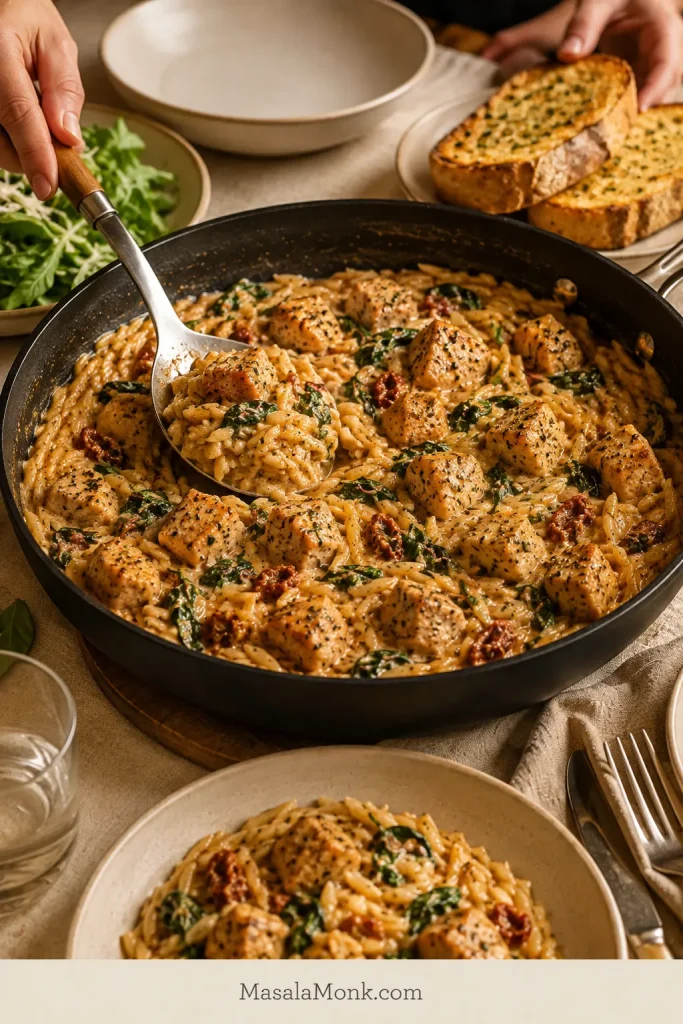
Warm dinner table with a skillet of Marry Me Chicken Orzo being served alongside a green salad and garlic bread, with hands reaching into the meal.
This creamy chicken orzo needs little beside it—something crisp for freshness, something crusty for the sauce, and bowls on the table.

It is just as comfortable eaten straight from the skillet on a weeknight as it is spooned into warm bowls when you want dinner to feel a little more special.

Marry Me Chicken Orzo FAQs

Do you cook the orzo first?

No. The dry orzo cooks directly in the broth, so there is no separate pasta pot and nothing to drain.

Can I use rotisserie chicken?

Yes. Use 14–16 oz / 400–450 g cooked chicken, roughly 3 cups, and add it with the cream and spinach near the end.

Can I make it without heavy cream?

Yes. Use the same ½ cup / 120 ml half-and-half for a lighter, slightly looser sauce. Whole milk will make the sauce thinner and is not a direct replacement if you want the same consistency.

Can I bake this instead?

Not by moving this exact stovetop formula into the oven unchanged. Baking changes evaporation and timing, so an oven version needs its own broth ratio and method.

Why is it called Marry Me Chicken?

According to Delish recipe creator Lindsay Funston, the dish was developed in 2016 under the working title “Sicilian Chicken Skillet.” A marriage-themed reaction during the video shoot inspired the name that stuck. Adding orzo turns those creamy garlic, sun-dried tomato and Parmesan flavors into a complete one-pan meal.

Made it? Tell us how your skillet behaved, which chicken you used, or what you served alongside it. And if you reached for some of that reserve broth, you are definitely not the only cook whose pan had its own ideas.

Two Cooking Cues Worth Remembering

Almost tender + loose sauce: bring back the chicken and add the cream and spinach.

Fully tender + chicken at 165°F / 74°C: take the skillet off the heat, then stir in the Parmesan, lemon and basil.

After the short rest, the sauce should be glossy, creamy and still moving easily between the grains. Put the bowls on the table and give it those two quiet minutes; by the time you spoon everything out, the chicken should still be juicy and the sauce should cling without turning stiff.

Nearly empty skillet with a small amount of creamy orzo, spinach and sun-dried tomato remaining as a hand drags crusty bread through the last sauce.
The right finish leaves a little creamy sauce behind—just enough reason not to clear the bread from the table yet.

Back to Recipe · Back to Top

Posted on — Leave a comment

Chicken and Chorizo Recipe

Dark skillet filled with boneless chicken pieces, sliced chorizo, peppers, herbs, and glossy red tomato sauce, with rice and bread behind it.

Chicken and chorizo is the meal you make when you want one pan to taste like it worked harder than it did. The chorizo releases smoky paprika oil, the chicken browns in it, and the tomato-pepper mixture turns rich enough to spoon over rice, toss with pasta, mop up with bread, or finish with cream.

Start with the stovetop smoky tomato version below. Once the chicken is simmering, you can keep it rustic, make it creamy, add orzo, serve it over rice, or use the guide to move the same flavors toward pasta, paella, a tray bake, or the slow cooker.

This is the kind of recipe that helps when dinner feels undecided. You do not have to commit to pasta, rice, or cream at the start. Build the smoky tomato mixture first, then choose the version that fits the night. It feels bigger than a quick dinner, but it still behaves like one.

Quick Answer

The best easy chicken and chorizo recipe is a one-pan tomato dinner: render Spanish-style chorizo, brown chicken thighs in the smoky oil, then simmer with peppers, garlic, tomatoes, paprika, and stock until the mixture coats the chicken.

Chicken thighs give the juiciest result, and firm Spanish-style chorizo is the easiest to cook with. Breast works too, but it needs gentler simmering. Mexican chorizo can be used, but cook it fully first because it behaves like raw seasoned sausage, not sliced cured chorizo.

Add cream at the end for a softer, richer finish. For orzo, add more stock and simmer it into a one-pot meal. Toss the tomato-chorizo mixture with pasta if you want pasta night. Use a paella method from the start if rice is the main event.

Chicken and Chorizo at a Glance

Start withOne-pan tomato chicken and chorizo
Total time35–40 minutes
Most forgiving chickenBoneless skinless chicken thighs
Easiest chorizoFirm Spanish-style cooking chorizo or cured chorizo
Main panLarge deep skillet or sauté pan with lid, ideally 28–30cm / 11–12 inch
Chicken doneness165°F / 74°C in the thickest pieces
Watch forExtra chorizo oil

Before You Start

Before you start, decide only one thing: are you making the smoky tomato version, the creamy version, or the orzo version? The first steps stay the same, but the liquid changes later.

  • Classic smoky tomato version: start with less stock and reduce until the mixture coats the chicken.
  • Creamy chicken and chorizo: spoon off extra chorizo oil before adding cream, or the finish can feel heavy.
  • Orzo version: use more stock and stir often because orzo thickens quickly.
  • Rice version: serve over cooked rice unless you are following a dedicated paella-style method.

Make this stovetop smoky tomato version first if you are unsure; it is the base for almost every direction below.

Decided your version? Go to the recipe card, or compare the chicken and chorizo variations first.

Recipe Card: One-Pan Chicken and Chorizo

One-Pan Tomato Chicken and Chorizo

A smoky, saucy meal made with chicken, chorizo, tomatoes, peppers, garlic, smoked paprika, and an optional creamy finish.

Prep Time10 minutes
Cook Time25–30 minutes
Total Time35–40 minutes
Servings4
EquipmentLarge deep skillet or sauté pan with lid, tongs, wooden spoon, sharp knife, chopping board, measuring jug

Ingredients

  • 600g / 1.3 lb boneless skinless chicken thighs, cut into large bite-size pieces
  • 120–150g / 4–5 oz firm Spanish-style chorizo, sliced or diced
  • 1 medium onion, finely chopped
  • 1 large bell pepper or 2 small bell peppers, sliced
  • 3–4 garlic cloves, minced
  • 1 tbsp tomato paste
  • 1–1½ tsp smoked paprika
  • 1 tsp dried oregano or mixed herbs
  • 400g / 14 oz canned chopped tomatoes or passata
  • 150–250ml / ⅔–1 cup chicken stock
  • 1 tbsp olive oil, only if the skillet needs it
  • Salt and black pepper, to taste
  • Small handful parsley or basil, chopped
  • Squeeze of lemon juice, to finish

Optional Creamy Finish

  • 100–180ml / ⅓–¾ cup cream
  • 20–30g parmesan, finely grated
  • 1–2 handfuls spinach

Instructions

  1. Render the chorizo. Heat a large deep skillet over medium heat. Add chorizo and cook for 2–3 minutes, until red oil appears and the edges start to crisp.
  2. Control the oil. Keep a glossy coating in the pan, but spoon off any shallow red pool before the dish turns heavy.
  3. Brown the chicken. Add the chicken pieces, season lightly, and brown for 4–5 minutes. They do not need to cook through yet.
  4. Soften the vegetables. Add onion and peppers. Cook for 4–5 minutes, then add garlic for 30 seconds.
  5. Build the smoky base. Stir in tomato paste, smoked paprika, and oregano. Cook for 1 minute so the paste darkens and the spices bloom.
  6. Simmer gently. Add tomatoes or passata and 150ml / ⅔ cup stock. Scrape the pan, cover loosely, and simmer for 10–12 minutes.
  7. Reduce until glossy. Uncover and simmer for 5–8 minutes, until the sauce coats the chicken and leaves a light spoon trail. Add stock if it gets too thick.
  8. Make it creamy, if you like. Lower the heat, then stir in cream, parmesan, and spinach. Simmer gently for 2–4 minutes without boiling hard.
  9. Finish fresh. Add parsley or basil and lemon juice. Taste before adding salt because chorizo and stock become stronger as they reduce.
  10. Check doneness. Chicken should reach 165°F / 74°C in the thickest pieces before serving.

Recipe Notes

  • Pan size: a wide 28–30cm / 11–12 inch skillet helps the chicken brown and the tomatoes reduce. If yours is smaller, brown the chicken in batches.
  • No lid? Use a sheet pan, large plate, or foil loosely over the skillet, or simmer uncovered with extra stock nearby. Watch the liquid and add a little more as needed.
  • Stock amount: start with 150ml for a thicker result. Use up to 250ml if your skillet is wide, your tomatoes are thick, or you prefer a looser finish.
  • Chorizo strength: if your chorizo is very salty, spicy, or oily, start closer to 120g.
  • Buying cue: look for firm Spanish-style chorizo that can be sliced or diced. If it is soft and loose like sausage meat, cook it fully first.
  • Tomato paste: 1 tbsp keeps the tomato flavor balanced. Use 2 tbsp if you want it deeper.
  • Chicken breast: use about 500g / 1.1 lb and simmer more gently. Breast cooks faster than thighs.
  • Mexican chorizo: cook it fully first, breaking it up like sausage meat, then continue with the recipe.
  • Lighter plate: use 100–120g chorizo and add extra peppers, spinach, peas, beans, or greens.
  • Thicker result: simmer uncovered for a few extra minutes.
  • Looser result: thin with stock a little at a time.

This is the point where the recipe starts paying you back: the chicken is tender, the smoky tomato mixture is rich, and the side dish almost chooses itself.

Sauce Texture Cue

Before choosing a variation, check the sauce texture. It should look glossy and thick enough to coat the chicken, not like separate pieces sitting in liquid.

Close-up of boneless chicken pieces and sliced chorizo coated in thick red tomato sauce with peppers and herbs.
At the finish, the sauce should cling to the chicken instead of dripping away; that is your cue that the tomatoes have reduced enough.

Need a different finish? Jump to creamy chicken and chorizo, rice, orzo, or pasta, or troubleshooting.

More Helpful Chicken and Chorizo Tips

Why This Chicken and Chorizo Recipe Works

The chorizo is not just an add-in. It is the flavor starter. As it fries, it releases paprika-rich oil that seasons the chicken, vegetables, and tomatoes. That is why the recipe begins with chorizo instead of plain oil.

The chicken is browned before it simmers, so the pieces taste savory instead of boiled. Tomato paste gets a short moment in the hot oil, which deepens the whole dish. Peppers add sweetness, stock gives the chicken enough moisture to finish cooking, and lemon or herbs at the end keep the richness in check.

By the time the tomatoes reduce, you are looking for a smoky, garlicky, slightly sweet mixture that clings to the chicken instead of sitting thin around it. That is when this stops feeling like chicken in tomato sauce and starts feeling like something you want to put in the middle of the table.

The smoky tomato mixture tastes good before you add cream, pasta, or rice, which is what makes it so flexible. Keep it rustic for a saucy skillet meal, add cream for comfort, stir in orzo for one-pot ease, or spoon it over rice when you want something simple.

What This Tastes Like

This is smoky, tomato-rich, and savory, with a little sweetness from the peppers and a salty paprika edge from the chorizo. The lemon and herbs at the end make the whole skillet taste brighter instead of heavy.

In its smoky tomato form, the skillet is bolder and brighter, especially with rice, potatoes, or a torn piece of bread. Cream makes it softer and richer, parmesan gives the finish more body, orzo turns it cozy and spoonable, pasta makes it glossy, and rice keeps it simple.

Ingredients You’ll Need

Chicken and Chorizo Ingredients at a Glance

The ingredient list is simple, but the order matters. Chorizo starts the flavor, chicken browns in that oil, and tomatoes, peppers, garlic, smoked paprika, and stock turn it into a flexible skillet sauce.

Raw boneless chicken thighs on a board with sliced chorizo, peppers, tomatoes, stock, spinach, cream, parmesan, garlic, paprika, lemon, and herbs.
The flavor starts before the sauce: chicken thighs, firm chorizo, smoked paprika, garlic, peppers, tomatoes, and stock all build the base.

Chicken Thighs or Chicken Breast

Chicken thighs are the most forgiving choice because they stay juicy while the tomatoes simmer down. They also hold their own against the smoky, salty richness of chorizo.

Breast works for a leaner or quicker meal. Cut it into larger pieces, brown it lightly, and simmer gently. Smaller pieces can dry out quickly once the tomatoes start reducing.

If keeping breast juicy is usually the problem, this Baked Chicken Breast Recipe will help with timing and texture.

Best Chorizo to Buy

For this recipe, the easiest choice is firm Spanish-style cooking chorizo or cured chorizo that can be sliced or diced. It should release smoky red oil as it fries and leave little browned edges in the skillet.

Mild chorizo gives you more control, especially if you are cooking for family. Spicy chorizo works well, but taste before adding extra paprika or pepper. Diced chorizo is convenient, while sliced chorizo gives better browned edges and a more visible finished dish.

Avoid a very oily chorizo for the creamy version unless you are ready to spoon off extra fat before the cream goes in. Soft, raw, loose chorizo should be cooked fully first and treated like Mexican chorizo.

Spanish Chorizo vs Mexican Chorizo

Spanish-style cooking chorizo or cured chorizo slices cleanly, releases smoky paprika oil, and gives the tomatoes their deep red flavor.

Mexican chorizo is usually raw, soft, and crumbly. It can still taste excellent with chicken, but it changes the texture. Cook it fully first, breaking it up like sausage meat, then build the tomatoes around it. The finished dish will be looser and meatier, not dotted with neat slices of chorizo.

Side-by-side comparison of sliced Spanish-style chorizo and soft crumbly Mexican-style chorizo with labels explaining how each is used.
Choose cured Spanish-style chorizo for clean slices and paprika oil. Cook soft Mexican-style chorizo through first, like fresh sausage.

For more on the ingredient difference, see Food & Wine’s guide to Spanish and Mexican chorizo.

A good amount for 4 servings is 120–150g / 4–5 oz chorizo. More than that can push the final dish toward oily or salty unless you balance it with potatoes, beans, rice, or extra vegetables.

Tomatoes, Peppers, Garlic, and Paprika

Canned chopped tomatoes make the finish rustic and spoonable. Passata gives a smoother result. Tomato paste adds depth, especially when it cooks for a minute in the chorizo oil before the liquid goes in.

Bell peppers are a natural match for chorizo. Red, yellow, and orange peppers add sweetness; green pepper gives a sharper edge. Garlic should go in after the onion and peppers have softened so it does not burn.

Smoked paprika reinforces the chorizo flavor. Use it carefully if your chorizo is already very smoky. The goal is rounded smokiness, not a harsh finish.

Stock, Salt, and Cream

Stock loosens the tomatoes and helps the chicken finish cooking. Start with 150ml / ⅔ cup for a thicker result. Use closer to 250ml / 1 cup if you prefer a looser finish or plan to add orzo.

Taste at the end, not the beginning. Chorizo, stock, parmesan, and olives can all become more intense as they reduce, so early seasoning can turn too salty later.

Cream is optional. Use 100ml / about ⅓ cup for a lightly creamy finish, or up to 180ml / ¾ cup for a richer one. Add it at the end, over lower heat, and simmer gently. A hard boil can make dairy split or turn greasy.

How to Make Chicken and Chorizo

1. Render the Chorizo First

Start the chorizo in a dry or barely oiled skillet over medium heat. Within a few minutes, the bottom should turn glossy and red-orange. This is the smell that tells you the recipe is going somewhere: smoky, salty, and already halfway to dinner.

Sliced chorizo frying in a dark skillet with red-orange oil forming around the crisping edges.
Give the chorizo its own minute first; as the edges crisp, the red oil becomes a smoky seasoning for the whole skillet.

Control the Chorizo Oil

Keep a glossy coating in the skillet, but spoon off any shallow red pool before moving on. That small bit of control keeps the finished dish rich instead of heavy.

Two-panel comparison showing a thin glossy coating of red chorizo oil beside a skillet with too much pooled red oil.
Keep the shine, lose the puddle: a thin chorizo oil coating adds flavor, while a deep pool can make the tomato sauce feel heavy.

2. Brown the Chicken in the Chorizo Oil

Add the chicken pieces and let them take on color. They do not need to cook through yet. Browning creates a better base and helps the chicken taste seasoned from the start.

Bite-size boneless chicken pieces browning in red chorizo oil in a dark skillet, with sliced chorizo pushed to one side.
Before simmering, sear the boneless chicken pieces in chorizo oil so they bring browned flavor into the sauce instead of tasting boiled.

In a crowded skillet, brown the chicken in two batches. Crowded chicken steams, and steamed chicken does not give the same depth.

3. Build the Tomato-Pepper Base

Add onion and peppers and cook until they begin to soften. Garlic goes in next, followed by tomato paste, smoked paprika, and oregano. The cue is a smoky, savory smell before the tomatoes go in.

Cooking the tomato paste for even one minute makes the final flavor richer. It is a small step that keeps the tomatoes from tasting thin or raw.

Tomato paste, smoked paprika, garlic, onions, and peppers cooking in red chorizo oil in a dark skillet before tomatoes are added.
After the chicken browns, briefly fry the tomato paste and smoked paprika; this turns a simple tomato sauce into a deeper, smokier one.

4. Simmer Until It Coats the Chicken

Add tomatoes and stock, then simmer gently. Keep it at a quiet bubble. You want the chicken to finish gently while the tomatoes thicken around it. As the mixture reduces and the chorizo oil folds in, it will turn darker, glossier, and more spoonable.

At this point, the skillet should look like dinner, not separate pieces sitting in liquid: red oil folded in, chicken coated, peppers soft, and everything smelling smoky enough to make rice or bread feel obvious.

You’ll know it is ready when it coats the chicken and leaves a light trail as you drag a spoon through the skillet. At this stage, you should want bread nearby even if you planned rice.

Spoon dragged through thick tomato-chorizo sauce in a skillet, leaving a visible trail with chicken and chorizo pieces around it.
A spoon trail is the easiest visual test: when the sauce parts for a moment, it is thick enough to coat the chicken.

If the chicken is cooked but the skillet still looks thin, simmer uncovered for a few more minutes. Oil pooling on top is your cue to spoon some off. If it gets too thick or tastes too rich, stock, lemon juice, and herbs will bring it back.

5. Finish Based on the Version You Want

For a brighter tomato finish, add herbs and lemon. To make it creamy, lower the heat before stirring in cream and parmesan. Orzo needs extra stock and direct simmering, while pasta works best when the mixture stays thicker and loosens later with pasta water.

Substitutions and Easy Swaps

Use what you have. This is not the kind of recipe that falls apart because you used one pepper instead of two or swapped thighs for breast. Keep the smoky tomato mixture, adjust the liquid, and you still have a good pan of food.

IngredientEasy swapWhat changes
Chicken thighsChicken breast or drumsticksBreast cooks faster; drumsticks need longer.
Spanish chorizoMexican chorizo cooked fully first, or smoked sausage plus smoked paprikaThe texture may become looser or less smoky.
Bell peppersCourgette, mushrooms, peas, spinach, green beans, kaleAdd delicate greens near the end.
Canned tomatoesPassata, crushed tomatoes, fresh chopped tomatoesFresh tomatoes may need longer to reduce.
Chicken stockWater plus bouillon, vegetable stockWatch salt if using cubes or powder.
CreamCrème fraîche, cream cheese, extra stock, pasta waterAdd dairy over low heat to avoid splitting.
ParmesanCheddar, manchego, pecorino, or skip itSaltiness changes, so taste before seasoning.
Parsley or basilCoriander, chives, lemon zestUse a fresh finish to cut the richness.

If you are using smoked sausage instead of chorizo, the skillet logic is similar to this Kielbasa and Potatoes Recipe: brown the sausage first, then let its flavor carry the rest of the meal.

Back to recipe card · Back to table of contents

Choose Your Chicken and Chorizo Variation

Start with the smoky tomato pan recipe first. From there, the table below helps you change the meal without turning the chicken dry, the finish greasy, or the rice mushy.

Already know what you want? Jump to creamy, rice, orzo, or pasta, or tray bake and slow cooker.

Chicken and Chorizo Variation Guide

Four-panel guide showing chicken and chorizo as a tomato skillet, creamy skillet, orzo dish, and rice bowl.
Once the base skillet is right, choose the finish by texture: bright tomato, silky cream, spoonable orzo, or fluffy rice.

Not sure which version to make? The smoky tomato version is the safest weeknight choice. Cream makes it softer and richer, orzo turns it into a full one-pot meal, and rice works best when it is cooked separately or handled with a paella-style method.

You want…Best way to make itWhat to watch
Classic pan mealMake the smoky tomato version as written.Keep it rich, not oily.
Creamy chicken and chorizoAdd cream and parmesan at the end.Lower the heat so the cream does not split.
Chicken and chorizo with riceServe over cooked rice or use a dedicated rice method.Rice needs planned liquid, not guesswork.
Chicken and chorizo orzoAdd orzo and extra stock to the skillet.Stir often because orzo sticks.
Chicken and chorizo pastaUse the tomato-chorizo mixture as a coating for short pasta.Loosen with pasta water, not too much stock.
Chicken and chorizo paellaUse the dedicated paella recipe.Paella needs rice and liquid control from the start.
Chicken and chorizo jambalayaUse Cajun seasoning and long-grain rice.It needs a separate rice-pot method.
Chicken and chorizo tray bakeUse thighs, potatoes, peppers, tomatoes, and chorizo.Do not crowd the tray.
Slow cooker chicken and chorizoUse thighs or drumsticks with less stock.Add cream, pasta, or orzo late.
Lighter chicken and chorizoUse less chorizo and add greens, beans, or extra peppers.Keep it tomato-based instead of creamy.

Creamy Chicken and Chorizo

Creamy chicken and chorizo is the softer, richer version — the one to make when you want the smoky tomato skillet to feel a little more comforting. Cream rounds off the paprika heat, parmesan gives the finish body, and spinach or peas keep the plate from feeling too heavy.

Creamy chicken and chorizo in a dark skillet with boneless chicken pieces, sliced chorizo, spinach, herbs, and pale orange tomato cream sauce.
Wait until the tomato-chorizo sauce has calmed down before adding cream; gentle heat keeps the finish smooth, glossy, and rich.

Make the smoky tomato version first, let it reduce until the chicken is cooked, then lower the heat before adding cream. Use 100ml / about ⅓ cup cream for a lightly creamy finish, or up to 180ml / ¾ cup for a richer one. Add 20–30g parmesan, stir gently, and simmer for 2–4 minutes, just until everything turns silky.

Spinach, peas, mushrooms, and basil all work well here. Lemon juice is small but useful because it cuts through the chorizo and cream. A thick creamy finish can be loosened with stock, milk, or pasta water.

The same gentle-heat rule matters in this Cream of Mushroom Chicken Recipe too.

Creamy rule: remove excess chorizo oil before adding cream. Too much oil plus dairy can make the finish feel heavy or split-looking.

Lighter Chicken and Chorizo

A lighter plate is easy if you let a smaller amount of chorizo do the seasoning. Use 100–120g chorizo, chicken breast or trimmed thighs, extra peppers, spinach, courgette, beans, or greens, and keep the tomatoes bright instead of creamy.

Serve it with salad, cauliflower rice, steamed greens, or a smaller portion of rice rather than pasta or potatoes. Start with little or no added oil because the chorizo will season the skillet on its own.

Chicken and Chorizo with Rice, Orzo, or Pasta

Choose your starch: rice, orzo, or pasta.

Three-panel comparison showing chicken and chorizo over white rice, mixed with orzo, and tossed with short pasta.
Rice, orzo, and pasta need different moves: serve rice underneath, simmer orzo directly in the sauce, and loosen pasta with a splash of pasta water.

Chicken and Chorizo with Rice

For the easiest chicken and chorizo with rice, serve the tomato-chorizo mixture over cooked rice. This keeps the chicken tender, the texture controlled, and the rice from turning mushy. White rice, brown rice, pilaf, and cauliflower rice all work.

Bowl of white rice topped with boneless chicken pieces, sliced chorizo, peppers, herbs, lemon, and red tomato sauce.
Cooked rice keeps this version simple: spoon the bold tomato-chorizo mixture over the grains so they stay fluffy.

If rice texture is where dinner usually goes wrong, this guide on How to Cook Rice will help with ratios, soaking, and cooking methods.

You can also stir cooked rice into the skillet at the end for a quick rice-bowl meal. Thin with stock if the rice absorbs too much of the pan juices.

If paella is what you want, take the rice-pan method from the beginning. Paella depends on rice depth, liquid timing, and resting, so it is better not to improvise it by stirring raw rice into this recipe. Use the Chicken and Chorizo Paella Recipe when you want the saffron rice-pan version.

Chicken and Chorizo Orzo

For chicken and chorizo orzo, add the orzo after the tomatoes and stock go in. Use 200g orzo and increase the total stock to about 500–600ml / 2–2½ cups.

Chicken and chorizo orzo in a dark skillet with boneless chicken pieces, sliced chorizo, tomato sauce, herbs, parmesan, and a serving spoon.
Because orzo drinks up liquid fast, stop while it still looks loose and glossy; it will thicken more as it rests.

Grams are more reliable than cups here. Orzo cup measures vary by brand and shape; 200g is usually around 1 to 1¼ cups.

Simmer for 9–12 minutes, stirring often. Orzo sticks as the mixture thickens, so keep extra stock nearby and stir in a little at a time if the skillet looks dry before the orzo is tender.

Finish orzo with spinach, peas, parmesan, parsley, or a little cream. Serve it while it is loose and saucy because orzo thickens as it sits.

Chicken and Chorizo Pasta

Pasta works best when the tomato-chorizo mixture starts slightly thicker, then loosens with pasta water. Cook 225–300g short pasta such as penne, rigatoni, fusilli, or orecchiette until just tender, then toss it through the skillet.

Creamy tomato pasta works best when the cream and parmesan go in before the pasta. For a pasta bake, mix the cooked pasta with the chicken and chorizo, top with cheese, and bake until bubbling.

The glossy finish uses the same pasta-water logic as this Broccoli Pasta Recipe.

Aim to finish pasta while the mixture still clings. Dry pasta needs pasta water, while soupy pasta needs another minute of simmering before serving.

Chicken and Chorizo Jambalaya

Jambalaya needs its own cooking plan before rice goes in. Instead of this tomato pan recipe, use long-grain rice, Cajun seasoning, peppers, tomatoes, stock, chicken, and chorizo, then simmer until the rice is tender.

Think of it as its own one-pot rice meal rather than a quick variation of this recipe. In this post, serve the skillet over cooked rice or use the paella link when you want saffron rice. Jambalaya needs its own seasoning, rice, and liquid plan from the start.

For another smoky rice-and-beans comfort meal, see this Red Beans and Rice Recipe.

Back to recipe card · Back to table of contents

Tray Bake and Slow Cooker Versions

Chicken and Chorizo Tray Bake

The tray bake version is for the night when you want the oven to take over and the potatoes to catch all that smoky chorizo oil. Use chicken thighs, chorizo, potatoes, peppers, onion, tomatoes, garlic, smoked paprika, and a little olive oil.

Spread everything in a large tray so the ingredients roast instead of steam. Bake at 200°C / 400°F for about 45–50 minutes, turning the potatoes once or twice, until the chicken is cooked through and the potatoes are tender. Bone-in thighs may need a little longer.

Metal roasting tray with browned chicken pieces, sliced chorizo, potatoes, peppers, onions, tomatoes, herbs, and roasted pan juices.
A crowded tray steams; a spread-out tray roasts, giving the chicken, chorizo, potatoes, peppers, and onions better browned edges.

Smaller pieces can brown faster at 220°C / 425°F if the tray is well spread out. For a general family tray bake, 200°C / 400°F is the safer starting point. Crowding is the fastest way to turn a tray bake watery, so use two trays if needed.

The same spread-it-out principle helps these Sheet Pan Chicken Fajitas brown instead of steam.

Slow Cooker Chicken and Chorizo

In the slow cooker, thighs or drumsticks are the safer choice because they stay juicier over longer cooking. Chicken breast can work, but check it earlier and avoid cooking it longer than needed.

If you are using breast in the slow cooker, these Crock Pot Chicken Breast Recipes are useful for keeping it tender.

The slow cooker traps liquid, so start with less stock than you think you need. For 4 servings, 400g / 14 oz tomatoes and about 100–150ml / ½ cup stock is usually enough. Cook for 3–4 hours on high or 6–8 hours on low, depending on your slow cooker and the size of the chicken pieces.

Brown the chorizo first when you have time. It is the difference between a slow cooker meal that tastes fine and one that still has that smoky skillet depth. Add cream, orzo, or pasta near the end so the texture stays right.

What to Serve with Chicken and Chorizo

Because the smoky tomato mixture is the best part, serve it with something that can catch it. A lighter plate works well with greens and bread, while a heartier family meal can take rice, potatoes, pasta, or orzo.

For a hearty plate

  • Steamed rice or pilaf
  • Crusty bread or garlic bread
  • Mashed potatoes
  • Roast potatoes
  • Short pasta
  • Orzo or couscous

For a lighter plate

  • Green salad with lemony dressing
  • Roasted broccoli
  • Green beans
  • Wilted spinach or kale
  • Cauliflower rice
  • Butter beans or chickpeas stirred into the skillet

Put the skillet in the middle of the table with rice or bread and it becomes the kind of meal people keep spooning from.

If bread is your plan for catching the smoky pan juices, this Homemade Garlic Bread Loaf is the kind of side that makes the plate feel complete.

Troubleshooting Chicken and Chorizo

Most problems come from the same few places: too much chorizo oil, overcooked chicken breast, over-reduced salty tomatoes, or the wrong liquid ratio for rice and orzo. The good news is that most of them are fixable while the skillet is still on the stove.

Common Chicken and Chorizo Fixes

Four-panel troubleshooting guide showing greasy red oil, watery tomato sauce, split cream sauce, and sticky orzo with short fix labels.
The fixes are simple: remove excess oil, reduce watery tomatoes, lower heat for cream, and add stock when orzo gets too tight.
ProblemWhy it happenedFix
The dish is greasyThe chorizo released more fat than needed.Spoon off extra oil after rendering the chorizo. Keep a glossy coating, not a shallow pool.
It tastes too saltyChorizo, stock, parmesan, or olives reduced together.Add tomatoes, unsalted stock, cream, beans, potatoes, or cooked rice. Salt later next time.
It is too spicyThe chorizo or paprika was hotter than expected.Add cream, tomatoes, beans, rice, or potatoes to soften the heat.
The chicken is dryBreast pieces cooked too long or too hard.Use thighs, cut breast larger, and simmer gently.
The skillet is wateryIt was covered too long or the vegetables released water.Simmer uncovered until the tomatoes reduce.
It tastes flatThe tomato paste and spices were not cooked in the oil.Cook tomato paste, paprika, and garlic briefly before adding liquid.
The cream splitThe mixture boiled hard after cream was added.Lower the heat and stir cream in at the end.
The orzo is stickingOrzo thickens quickly and catches on the base.Stir often and add stock a little at a time.
The rice is mushyRice was added without the right method or ratio.Use cooked rice on the side, or follow a dedicated rice or paella method.
The plate tastes too richToo much chorizo oil or cream built up.Add lemon juice, parsley, tomatoes, greens, or beans to balance it.

Back to recipe card · Back to table of contents

Storage, Freezing, Reheating, and Make-Ahead

Fridge

Store leftovers in an airtight container in the fridge for up to 3 days. Creamy versions are best within 2–3 days.

If you added rice, pasta, or orzo, the dish will thicken as it sits because the starch keeps absorbing the juices. Thin it with a little liquid when reheating.

Freezer

The smoky tomato version freezes better than creamy, pasta, or orzo versions. Cool completely, pack into freezer-safe containers, and freeze for up to 2 months.

Creamy finishes can separate slightly after freezing, but gentle reheating and stirring usually brings them back together.

Make-Ahead

The tomato chicken and chorizo mixture is the best part to make ahead. Cook it without cream, pasta, or orzo, then cool and store it. Add cream, fresh greens, cooked pasta, or orzo when reheating so the texture stays smoother and the starch does not turn soft.

Leftovers are not an afterthought here. The tomatoes often taste deeper after a night in the fridge, especially if you reheat gently and finish with fresh herbs or lemon.

Reheating

Reheat gently on the stovetop or in the microwave until hot all the way through. Use stock, water, milk, or cream to loosen the texture. Avoid boiling creamy leftovers aggressively.

Once you understand the chorizo oil and tomato mixture, this becomes less of a fixed recipe and more of a weeknight formula you can actually trust.

FAQs

What chorizo is best for chicken and chorizo?

Firm Spanish-style cooking chorizo or cured chorizo is best because it slices cleanly and releases smoky paprika oil. Mexican chorizo can work, but cook it fully first because it behaves like raw sausage meat.

Is chicken breast or chicken thigh better?

Chicken thighs are better for a juicy skillet meal because they stay tender during simmering. Breast works for a leaner version, but it needs gentler heat and a shorter simmer.

How much chorizo should I use?

For 4 servings, use 120–150g / 4–5 oz chorizo. That gives enough smoky flavor without making the dish too oily or salty.

Why is my chicken and chorizo oily?

Chorizo naturally releases fat as it cooks. Fry it first, then spoon off extra oil before adding tomatoes, stock, or cream. A glossy coating is enough for flavor.

How do I make it creamy?

Add 100–180ml / ⅓–¾ cup cream near the end and simmer gently. Parmesan, spinach, and lemon juice all work well in the creamy version.

Can I make chicken and chorizo without cream?

Yes. Keep it tomato-based and finish with lemon juice, herbs, and a little stock if needed. For body without cream, add beans, pasta water, or parmesan.

Can this be made with orzo?

Yes. Add 200g orzo and 500–600ml stock, then simmer for 9–12 minutes, stirring often. Keep extra stock nearby in case the orzo thickens before it turns tender.

Can I use cooked chicken?

Yes. Render the chorizo, build the tomato mixture, then stir in cooked shredded or chopped chicken near the end just long enough to heat through.

Will this work in the slow cooker?

Yes, but use less stock because slow cookers trap liquid. Thighs or drumsticks work better than breast. Add cream, orzo, or pasta near the end.

Can I make it ahead?

Yes. Make the tomato chicken and chorizo mixture ahead, then add cream, pasta, or orzo when reheating so the texture stays smoother.

What pan works best?

Use a large deep skillet or sauté pan with a lid, ideally 28–30cm / 11–12 inch. A wider cooking surface helps the chicken brown and the tomatoes reduce.

What temperature should chicken be cooked to?

Chicken should reach 165°F / 74°C in the thickest part before serving. A small meat thermometer is the easiest way to check. You can also refer to the FoodSafety.gov safe minimum internal temperature chart for poultry guidance.

Back to recipe card · Back to table of contents

Final Tip

The whole meal gets easier when you let the chorizo do its job first. Give it a few minutes to release that smoky red oil, keep only as much richness as the skillet needs, and the tomatoes will taste deeper before they have even simmered.

Keep it tomato-based for a saucy skillet meal, add cream for comfort, stir in orzo for one-pot ease, toss it with pasta, or serve it over rice. Use the paella method when you want the saffron rice-pan version.

Make the smoky tomato version once, and the next time you see chicken and chorizo in the fridge, you will know exactly what kind of meal it wants to become.








