
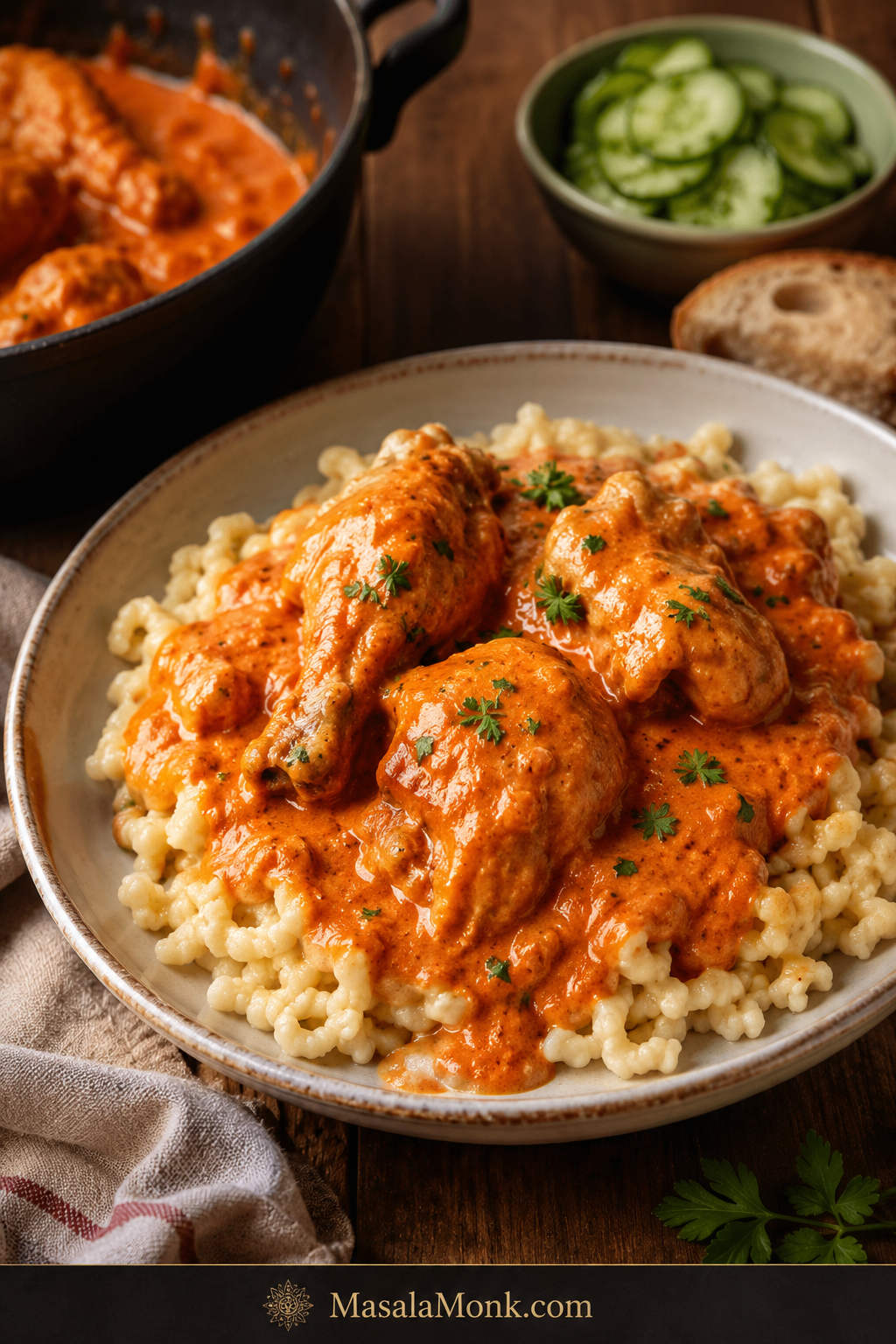
Chicken paprikash looks like a simple pot of chicken in sauce, but the magic is in a few small moments: the onions softening until they smell sweet, the paprika blooming just long enough to wake up, and the sour cream turning the sauce creamy and red-orange at the end.
Rush those moments and the sauce can taste flat, bitter, or grainy. Handle them gently and you get tender chicken in a paprika-rich sour cream sauce that begs for noodles, dumplings, rice, mashed potatoes, or a piece of crusty bread.
This easy chicken paprikash keeps the familiar Hungarian-style comfort of paprikás csirke, but makes it practical for a normal evening: no scorched paprika, no grainy sour cream, no mandatory dumplings, and enough sauce to make the whole plate feel generous.
Quick Answer: What Is Chicken Paprikash?
Chicken paprikash is a Hungarian chicken dish made with chicken, onions, paprika, broth, and sour cream. The sauce is creamy, savory, red-orange, lightly tangy, and paprika-forward. It is usually mild rather than spicy, unless hot paprika or cayenne is added.
- Chicken to use: boneless thighs for an easy weeknight version; bone-in thighs or legs for deeper flavor.
- Paprika to use: sweet Hungarian paprika, ideally fresh and fragrant.
- Key technique: bloom the paprika briefly off harsh heat, then add sour cream gently at the end.
- Sides that work: nokedli, spaetzle, egg noodles, rice, mashed potatoes, cucumber salad, or crusty bread.
- Main mistake to avoid: letting paprika scorch or boiling the sauce after sour cream goes in.
Make This Chicken Paprikash When
- Creamy chicken sounds good, but you want more character than a plain cream sauce.
- A cozy dinner needs to feel special without fancy ingredients.
- You want something saucy enough for noodles, dumplings, rice, or potatoes.
- Comfort food should reward careful heat, not complicated technique.
Boneless thighs keep it practical, while the important details stay protected: warm paprika, tender chicken, smooth sour cream, and enough sauce to carry the whole plate.
The 4 Details That Make or Break Chicken Paprikash
Chicken paprikash does not need many ingredients, but it does need a little care. These four details make the biggest difference.
- Start with good paprika. Old paprika makes the dish taste flat, even if you use enough of it.
- Protect the paprika from high heat. It only needs a short bloom, not a long fry.
- Simmer gently. The chicken should cook in small, steady bubbles, not a hard boil.
- Add sour cream carefully. Temper it first and stir it in after the strongest heat has passed.
This is not a fussy dish, but it does ask you to pay attention for a few small moments. Paprikash rewards patience, not perfection. Slow down for the paprika and sour cream, and the rest of the recipe is very forgiving.
Choose Your Paprikash Path
Are you making the weeknight version or the deeper traditional version? That choice decides the chicken and the side more than anything else.
| Version | Use this when | What changes |
|---|---|---|
| Weeknight | You want dinner faster | Use boneless thighs with egg noodles, rice, or mashed potatoes |
| More traditional | You want deeper flavor | Use bone-in thighs or drumsticks with nokedli or spaetzle |
| Extra saucy | You are serving dumplings or noodles | Keep extra broth nearby and loosen as needed |
| Slow cooker | You want hands-off cooking | Sauté onions and bloom paprika first for better flavor |
| Shortcut | You have cooked chicken | Make the paprika base first, then fold chicken in at the end |
Chicken Paprikash Recipe Card
Recipe: Chicken Paprikash Recipe: Easy Hungarian Paprika Chicken With Sour Cream
Prep time: 15 minutes
Cook time: 40 minutes
Total time: 55 minutes
Servings: 4
| Main flavor | Sweet paprika, onion, chicken, sour cream |
| Texture | Tender chicken in a creamy, spoonable sauce |
| Sauce color | Red-orange, not pale beige |
| Weeknight chicken | Boneless skinless chicken thighs |
| More traditional option | Bone-in thighs, drumsticks, or cut-up chicken |
| Paprika | Sweet Hungarian paprika |
| Chicken doneness | 165°F / 74°C internal temperature |
| Good sides | Nokedli, spaetzle, egg noodles, rice, mashed potatoes |
| Key technique | Use gentle heat for paprika and sour cream |
Useful Equipment
- Dutch oven or deep 12-inch skillet with lid
- Sharp knife and cutting board
- Mixing bowl for tempering sour cream
- Whisk or fork
- Wooden spoon or spatula
- Instant-read thermometer, helpful for checking chicken doneness
Ingredients
For the chicken
- 2 lb / 900 g boneless skinless chicken thighs, cut into large bite-size pieces
- 1 teaspoon fine salt
- 1/2 teaspoon black pepper
- 2 tablespoons neutral oil, chicken fat, or lard
For the paprika base
- 2 large yellow onions, finely chopped
- 1/4 teaspoon fine salt, plus more to taste
- 3 garlic cloves, minced
- 3 tablespoons sweet Hungarian paprika
- 1/4 teaspoon hot Hungarian paprika or cayenne, optional
- 1 1/4 to 1 1/2 cups / 300 to 360 ml low-sodium chicken broth, plus more if needed
To finish
- 3/4 cup / 180 g full-fat sour cream, set out while the chicken cooks so it is not ice-cold
- 1 tablespoon all-purpose flour, optional, for a thicker sauce
- 1 teaspoon lemon juice or a small splash of vinegar, optional, only if the sauce needs brightness
- Chopped parsley, optional, for serving
For serving
- Nokedli, spaetzle, egg noodles, rice, mashed potatoes, or crusty bread
Instructions
Brown, bloom and simmer
- Season the chicken. Pat the chicken dry. Season with 1 teaspoon salt and the black pepper.
- Brown the chicken. Heat the oil in a Dutch oven or deep skillet over medium-high heat. Brown the chicken in batches for 2 to 3 minutes per side. It does not need to cook through yet. Transfer to a plate.
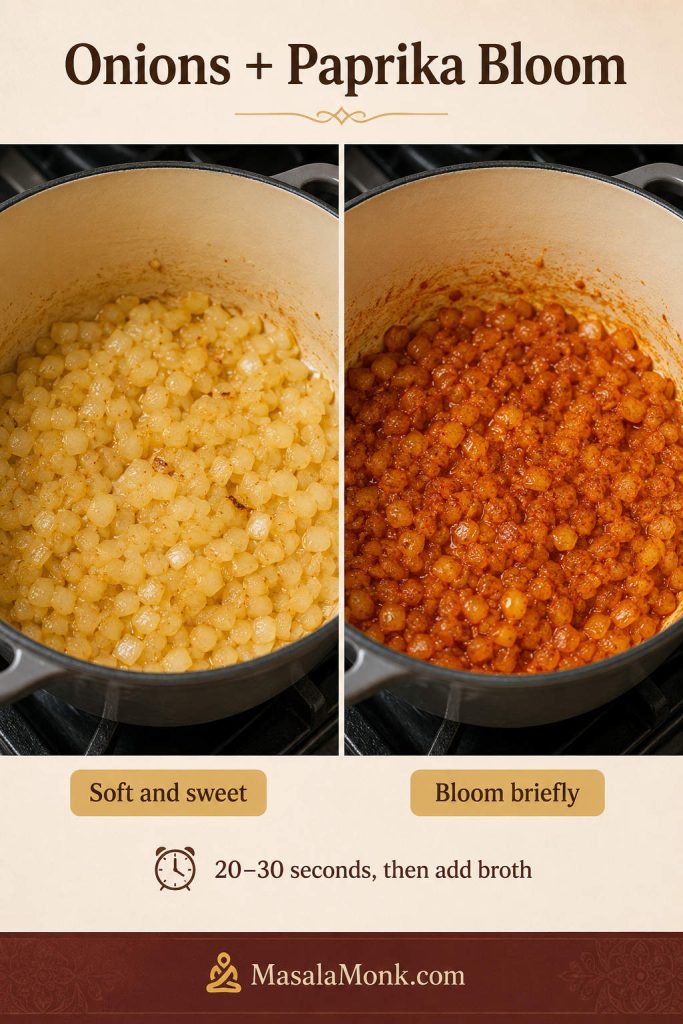
- Cook the onions. Reduce heat to medium. Add the chopped onions and the remaining 1/4 teaspoon salt. Cook for 8 to 10 minutes, stirring often, until soft and lightly golden. Stir in the garlic for 30 seconds.
- Add the paprika carefully. Lower the heat or briefly move the pot off the burner. Stir in the sweet paprika and optional hot paprika for 20 to 30 seconds. If the pot looks dry or too hot, add a small splash of broth right away.
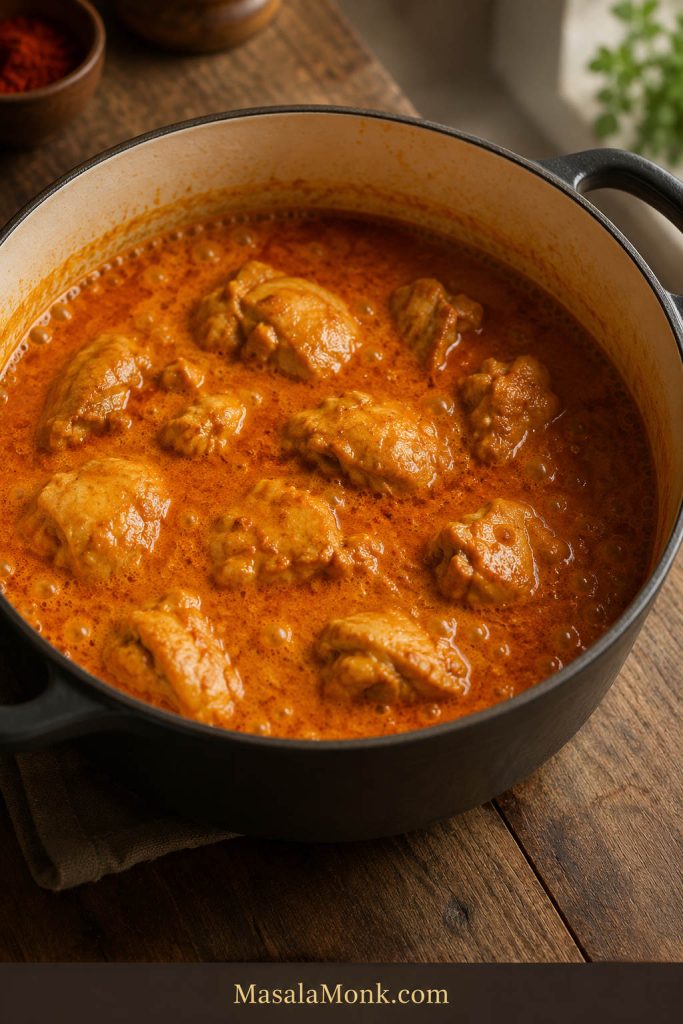
- Simmer the chicken. Pour in 1 1/4 cups broth and scrape up the browned bits from the bottom of the pot. Return the chicken and any juices to the pot. Bring to a gentle simmer with small bubbles, not a hard boil. Partly cover and cook for 18 to 22 minutes, or until the chicken is tender and reaches 165°F / 74°C.
Finish the sauce gently
- Check the sauce before adding sour cream. It should be spoonable and flavorful. A thin sauce needs a few uncovered minutes before the sour cream goes in. A tight sauce needs the remaining 1/4 cup broth, or a little more as needed.
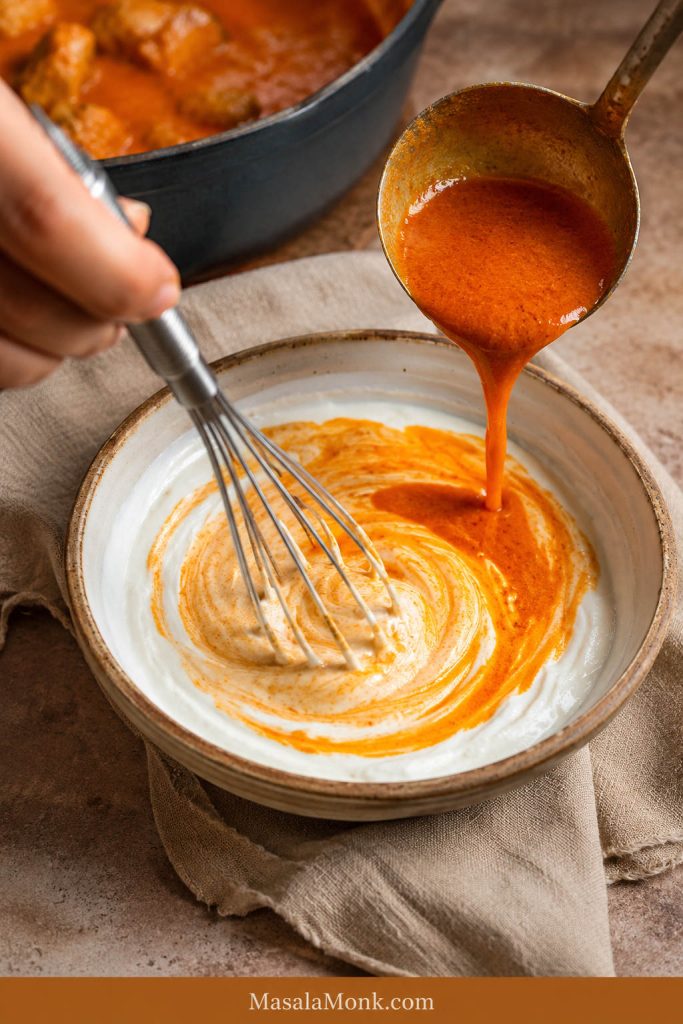
- Temper the sour cream. In a bowl, whisk the sour cream with the flour, if using. Slowly whisk in a few spoonfuls of hot sauce from the pot to warm the sour cream mixture gradually.
- Finish gently. Turn the heat to very low or off. Stir the tempered sour cream mixture into the pot. Warm through for 2 to 3 minutes without boiling. Taste and adjust salt. Add lemon juice or vinegar only if the sauce tastes too heavy.
- Serve. Spoon the chicken paprikash over nokedli, spaetzle, egg noodles, rice, or mashed potatoes. Garnish with parsley if you like.
Recipe Notes
- Bone-in chicken: use thighs, drumsticks, or a mix. Simmer for 35 to 45 minutes, or until tender and cooked through.
- Chicken breast: simmer gently and check early so it does not dry out.
- Thicker sauce: use the flour in the sour cream mixture or simmer the paprika base uncovered before adding sour cream.
- Gluten-free thickener: mix 1 teaspoon cornstarch with 1 tablespoon cold water, stir it into the simmering base before adding sour cream, and cook briefly until slightly thickened.
- Looser sauce: skip the flour and add a splash more broth if needed.
- Best paprika flavor: use fresh sweet Hungarian paprika as the base, add a small pinch of hot Hungarian paprika if you want more depth, and keep the heat gentle when blooming it.
- Before serving: taste for salt, warmth, and brightness. Add salt if flat, a tiny splash of lemon juice or vinegar if heavy, or a spoonful of sour cream if too sharp.
- Serving amounts: plan on about 8 oz / 225 g dry egg noodles, 3 to 4 cups cooked nokedli or spaetzle, 3 cups cooked rice, or 4 portions mashed potatoes for 4 servings.
Need help before you cook? See which paprika to use, which chicken cut works best, how to keep sour cream smooth, or what to serve with chicken paprikash.
Once the recipe is clear, the rest is about control: choosing the right paprika, keeping the sour cream smooth, and knowing what the finished dish should look and taste like.
What Is Chicken Paprikash?
Chicken paprikash, often called paprikás csirke, is a Hungarian chicken dish built around onion, paprika, liquid, and sour cream. It is sometimes called chicken paprika in English-language recipes.
What makes it different from plain creamy chicken is the paprika. The finished dish should taste warm, savory, gently sweet from the onions, lightly tangy from the sour cream, and clearly paprika-forward. If it tastes like cream sauce with a little red color, the paprika has not done its job.
Paprikash is not a dry chicken dish with a little sauce on the side. The creamy red-orange sauce is the reason the noodles, dumplings, rice, or potatoes make sense.
If you like creamy chicken dinners such as cream of mushroom chicken, this gives you the same cozy feel in a paprika, onion, and sour cream direction.
Authentic-Style vs Easy Chicken Paprikash
This is a practical home-style version of paprikás csirke, built around the essentials: chicken, onion, paprika, liquid, and sour cream. Hungarian families make paprikash in many ways, so this version keeps the core flavor while making the method easier for a normal evening.
More traditional versions often use bone-in chicken pieces, sweet Hungarian paprika, sour cream, and nokedli or spaetzle on the side. Some cooks add tomato or sweet pepper, while others keep the pot focused on onion, paprika, and sour cream.
Boneless thighs cook faster than bone-in pieces, egg noodles or rice can stand in for dumplings, and the sauce still gets the care it needs: softened onions, protected paprika, gentle simmering, and sour cream added at the end.
For a deeper, more traditional result, use bone-in thighs or drumsticks and simmer them longer. For the easiest dinner, use boneless thighs and serve the chicken over egg noodles, rice, or mashed potatoes.
Why This Recipe Works
This version gives you classic paprikash comfort without making dumplings mandatory, without using hard-to-find steps, and without making the dish grainy or bitter.
The method works because it protects the two delicate parts of the dish: paprika and sour cream. The paprika blooms briefly away from harsh heat, and the sour cream is warmed gradually before it goes into the pot.
Boneless thighs keep the chicken juicy, softened onions give the paprika base body, and the consistency is adjusted before the dairy goes in. The result is tender chicken in a dish that feels rich without being heavy, creamy without being bland, and warm with paprika in every bite.
Ingredients for Chicken Paprikash
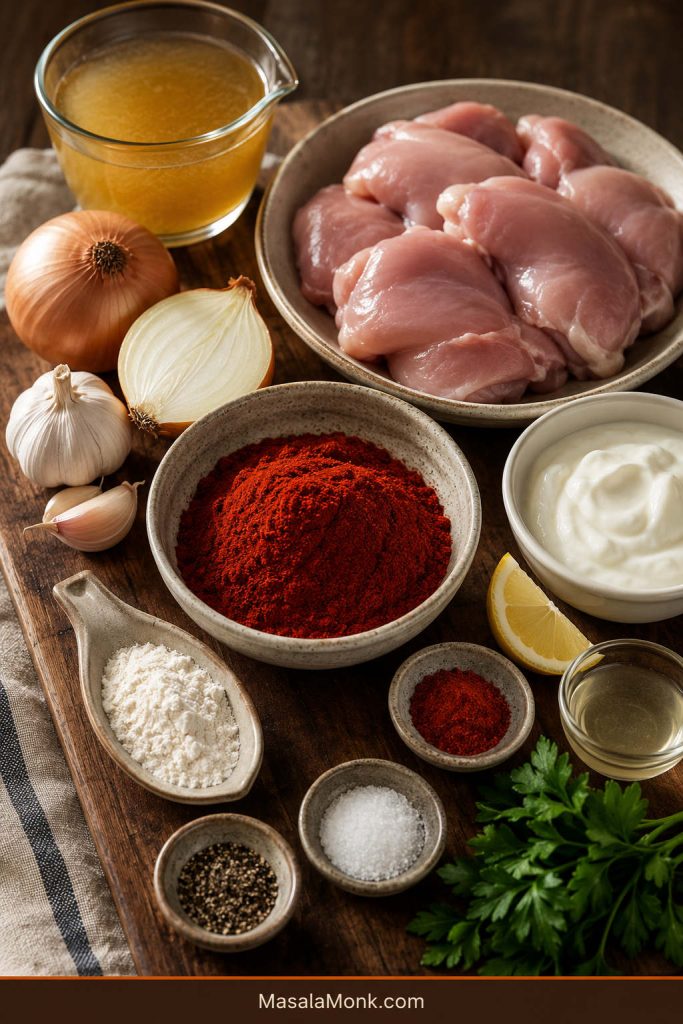
Because this recipe uses a short ingredient list, each ingredient matters. Paprika is not just color here; it is the main flavor.
Chicken
Boneless skinless chicken thighs are the easiest choice for this version. They stay tender, cook quickly, and hold up well in the sauce. Bone-in thighs and drumsticks give more flavor, while chicken breast gives a leaner but less forgiving result.
Paprika
Use sweet Hungarian paprika if possible. Fresh paprika should smell warm, peppery, and fragrant. A small pinch of hot Hungarian paprika adds depth if you want more character without making the dish truly spicy.
Regular sweet paprika can work if it smells fresh. Smoked paprika should not be the main paprika here because it turns the dish in a smokier direction. Use it only as a small accent if you love the flavor.
Onions
Onions create the body of the sauce. Cook them until soft and lightly golden so they bring sweetness instead of raw sharpness.
Garlic
Garlic should stay in the background here. You want it to round the sauce, not pull attention away from the paprika.
Broth
Broth does two quiet jobs: it loosens the paprika base and pulls the browned bits from the pot into the sauce. Start with 1 1/4 cups and add more if the sauce reduces too much or if you are serving it with noodles or dumplings.
Sour Cream
Sour cream gives paprikash its creamy tang. Full-fat sour cream is the safest choice because it handles gentle heat better than low-fat versions. Add it at the end and keep the heat low.
Flour
Flour is optional, but helpful if you want a sauce that clings more confidently to noodles or dumplings. You can skip it for a looser result, or use the cornstarch slurry in the recipe notes if you need a gluten-free thickener.
Tomato or Pepper
Some versions include a little tomato, tomato paste, or fresh pepper. Others do not. Use 1 small chopped tomato, 1 teaspoon tomato paste, or 1/2 finely chopped bell pepper if you like, but keep it subtle so the dish still tastes like paprika and sour cream, not tomato chicken stew.
The ingredient notes above give the basics. These two choices — paprika and chicken — are where the dish changes most.
Choosing Paprika
Sweet Hungarian paprika gives chicken paprikash its red-orange color and warm pepper flavor without making it overly spicy. Before you measure it, smell it. Good paprika should smell warm and peppery, not dusty or flat.
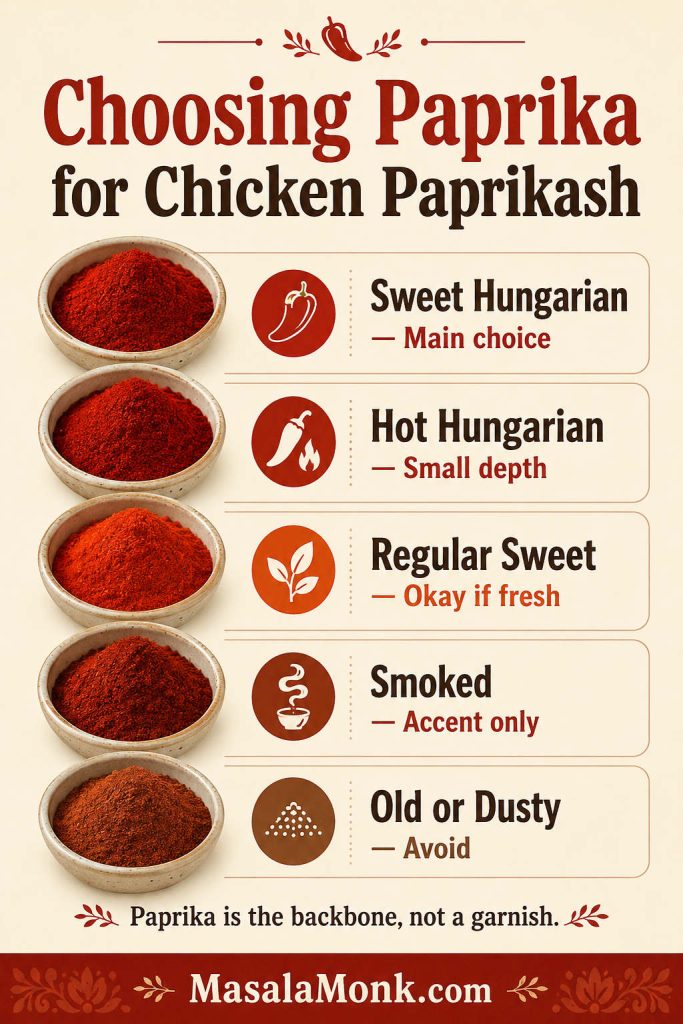
Three tablespoons of paprika may look like a lot, but paprikash needs more than a dusting. The spice is the backbone of the dish, not a garnish.
For more depth, use mostly sweet Hungarian paprika with a small pinch of hot Hungarian paprika. Cayenne can add heat, but hot Hungarian paprika keeps the flavor closer to the dish.
Paprika brings both color and flavor here, but it is delicate. A short bloom in onion fat helps it open up; a long fry on high heat makes it harsh. Once the paprika goes in, stay close to the pot. You should smell the paprika before you worry about seeing a big change. The color deepens quickly, but the aroma is the real cue.
| Paprika type | Use it? | What to know |
|---|---|---|
| Sweet Hungarian paprika | Yes | Best default for classic paprikash flavor |
| Regular sweet paprika | Yes, if fresh | Works, but may taste less deep than Hungarian paprika |
| Hot Hungarian paprika | Yes, in small amounts | Adds warmth and depth without changing the dish too much |
| Smoked paprika | Only as an accent | Can taste good, but changes the dish into a smokier version |
| Old paprika | Avoid | Makes the finished dish taste flat and dusty |
| Cayenne | Optional | Useful if you want heat but not more paprika flavor |
Choosing the Chicken
The right cut depends on the kind of dinner you want. Boneless thighs are the easiest all-around choice for weeknight paprikash. Bone-in chicken gives deeper flavor. Chicken breast works, but it needs a gentler hand.

If chicken breast is what you have, this baked chicken breast guide is useful for understanding timing, thickness, and how to avoid dry white meat.
| Chicken cut | Does it work? | Use when |
|---|---|---|
| Boneless thighs | Yes | You want a juicy, easy weeknight version |
| Bone-in thighs or drumsticks | Yes | You want deeper flavor and a longer simmer |
| Chicken breast | Yes | You want a leaner version and can cook gently |
| Rotisserie chicken | Yes | You want a shortcut and already-cooked chicken |
| Shredded cooked chicken | Yes | You want leftovers, bowls, noodles, or quick lunches |
For rotisserie chicken, make the paprika base first, then fold in the cooked chicken just long enough to warm it through.
Once the chicken is chosen and the paprika is ready, the cooking is mostly about building the dish in the right order.
How to Make Chicken Paprikash
The recipe card gives you the full method. This section shows what to look for as you cook, because paprikash is easier when you can see and smell the right moments.
The recipe is not difficult because it has many steps. It is difficult only if the heat gets impatient. Keep the pot gentle, and the dish gives you back more comfort than the ingredient list promises.
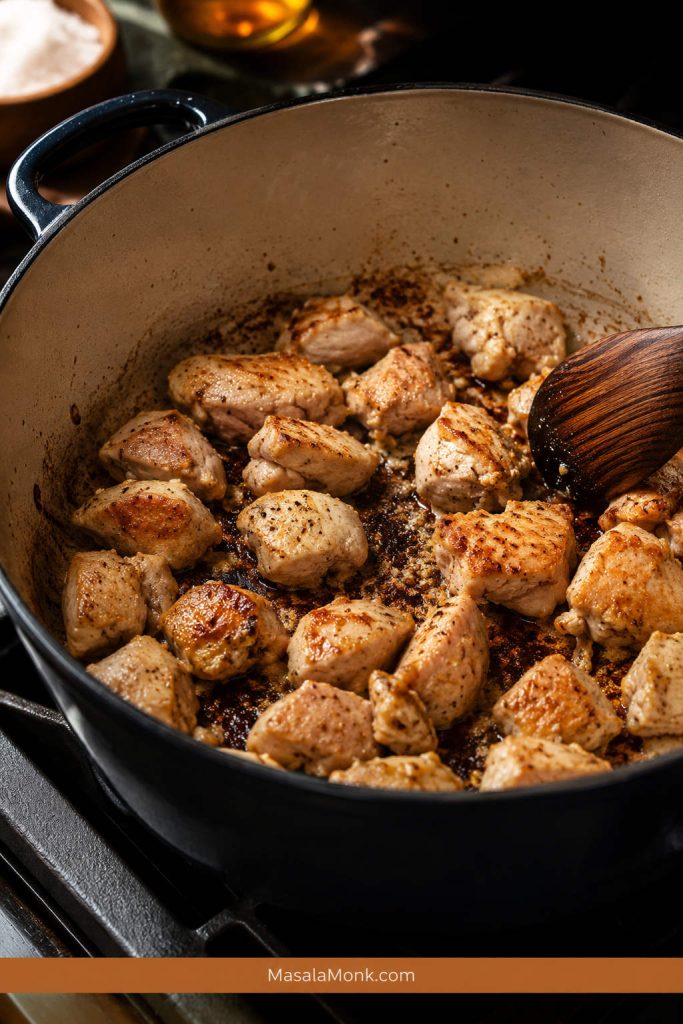
Step 1: Brown the chicken for flavor, not doneness
The chicken should pick up color on the outside, but it does not need to cook through yet. Those browned bits on the bottom of the pot will dissolve into the paprika base later.
Step 2: Cook the onions until they smell sweet
The onions should soften, shrink, and smell sweet instead of sharp. This is where the dish starts getting body. Rushed onions make a thinner-tasting paprikash.
Step 3: Bloom the paprika briefly
Lower the heat before the paprika goes in. The spice should hit warm fat and smell fragrant almost immediately. That is the moment to add broth. A good bloom smells warm and peppery; a scorched one smells harsh.
Step 4: Simmer gently
The pot should bubble quietly, not aggressively. Gentle simmering keeps the chicken tender and lets the paprika base pick up flavor without reducing too fast.
Step 5: Fix the consistency before the sour cream goes in
The sauce should already taste savory and spoonable before the dairy is added. Reduce it if it looks watery. Loosen it with broth if it looks tight. Once sour cream goes in, you want to warm the dish, not wrestle with it.
Step 6: Temper the sour cream
Whisking hot sauce into sour cream first keeps the temperature change gentle. The mixture should look smooth in the bowl before it goes back into the pot.
Step 7: Finish low and slow
Once the sour cream goes in, the sauce is no longer something to boil; it is something to warm. The finished dish should look creamy, red-orange, and ready to coat every noodle, dumpling, or spoonful of rice underneath.
How It Should Look and Taste
The finished dish should look creamy, warm, and generous. It should be red-orange from paprika, not pale beige and not tomato-red. It should coat the chicken and spoon easily over noodles, dumplings, rice, or potatoes.
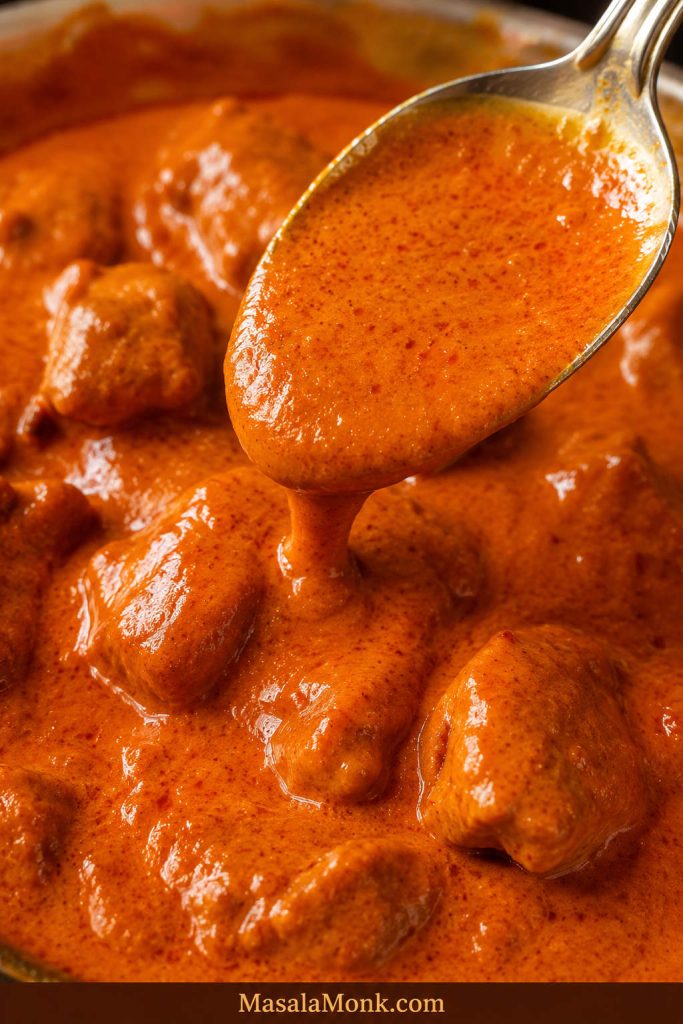
- Color: red-orange and paprika-rich.
- Texture: creamy and spoonable, not watery or paste-thick.
- Chicken: tender pieces that still hold their shape.
- Flavor: savory, paprika-forward, lightly tangy, and gently sweet from onions.
- Heat level: mild unless you add hot paprika or cayenne.
- Sauce amount: generous enough to coat whatever you serve underneath.
A good paprikash should coat a spoon and leave a brief trail when you drag the spoon through the pan, but it should still flow easily over noodles, dumplings, rice, or potatoes.
The plate should not look tidy; it should look saucy. Every noodle should catch a little red-orange cream.
If the dish tastes flat, it may need salt or a little brightness. Dull flavor from the start often points to old paprika. Bitterness usually means the paprika caught too much heat.
Sauce not looking right yet? Jump to the troubleshooting guide before serving.
How to Keep the Sour Cream Smooth
The sour cream is where paprikash becomes silky and comforting, as long as the heat stays gentle. If the sauce gets too hot after the sour cream goes in, the creamy finish can turn grainy.
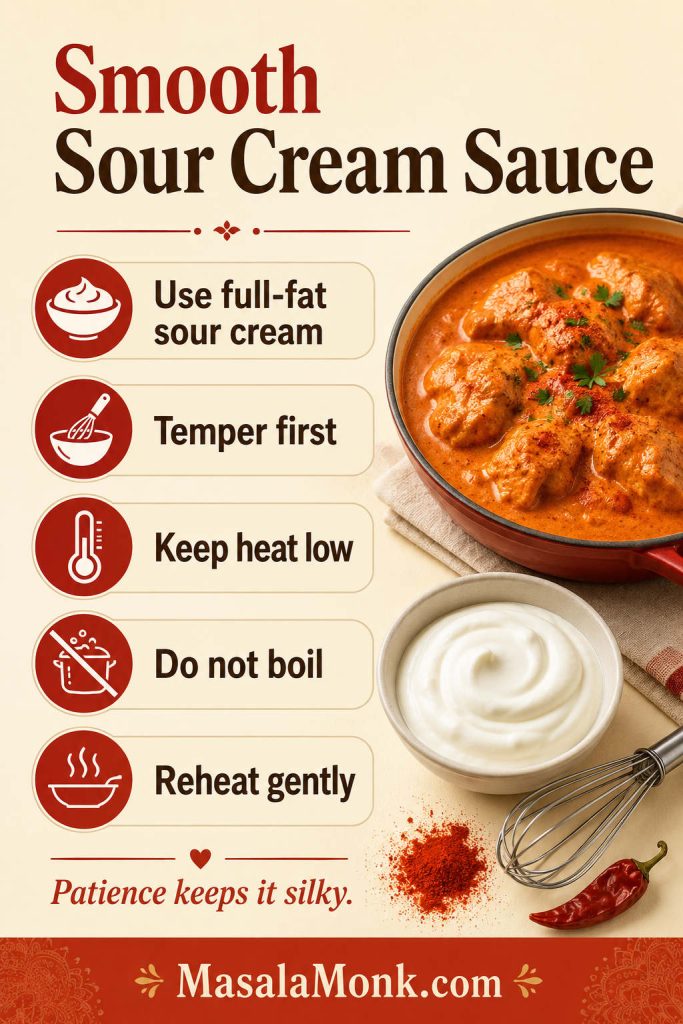
Sour cream behaves better when it is warmed gradually. Tempering is not a fancy step; it simply narrows the temperature gap between cool dairy and hot sauce.
- Use full-fat sour cream. It is more stable and gives better texture.
- Do not add it ice-cold. Let it sit while the chicken cooks so it loses the refrigerator chill.
- Temper it first. Whisk a little hot sauce into the sour cream before adding it to the pot.
- Lower the heat. Add sour cream on very low heat or off heat.
- Warm it through. Boiling is what puts the sauce at risk.
- Reheat slowly. Leftovers need low heat and patience.
The dish does not need bravery here; it needs patience. If sour cream sauces make you nervous, turn the heat off before adding it. You have more control than you think.
If the sauce does split, lower the heat, add a small splash of broth, and stir gently. It may not become perfectly silky again, but it will still taste good.
Ready to cook now? Return to the recipe card and add the sour cream only after the strongest heat has passed.
Chicken Paprikash With Dumplings, Nokedli, Spaetzle or Egg Noodles
A saucy dish like this needs somewhere soft to land. In a more traditional plate, that usually means nokedli or spaetzle. On a weeknight, egg noodles, rice, or mashed potatoes still do the job beautifully.

Want the Traditional Side Without a Project?
Nokedli are small Hungarian-style dumplings and one of the most traditional partners for this dish. Spaetzle is very similar and works beautifully. Egg noodles are the easiest weeknight option when you want the comfort of dumplings without making dumplings from scratch.
Use store-bought spaetzle, homemade nokedli, or egg noodles. For homemade nokedli, keep the batter soft and cook the dumplings separately in boiling water, then spoon the paprikash over the top. Do not simmer dumplings directly in the finished sauce unless you want a thicker, heavier pot. The shortcut version is not a failure; it is dinner moving at real-life speed.
| Side | Amount for 4 servings | Use when |
|---|---|---|
| Nokedli | 3 to 4 cups cooked | You want the most traditional serving |
| Spaetzle | 3 to 4 cups cooked | You want an easy dumpling substitute |
| Egg noodles | 8 oz / 225 g dry | You want a fast weeknight dinner |
| Rice | 3 cups cooked | You want a simple gluten-free meal |
| Mashed potatoes | 4 portions | You want full comfort food |
Dumplings make the plate feel most traditional. Egg noodles make it weeknight-easy. Rice keeps it simple. Mashed potatoes make it full comfort. None of them are wrong; the only mistake is not having enough sauce.
If rice is your easiest side, this guide on how to cook perfect rice helps you time the grains while the chicken simmers. For a deeper comfort-food version, spoon the paprika sour cream sauce over creamy mashed potatoes instead.
The side is not just filler here. It is the thing that catches the red-orange cream and makes every forkful feel complete.
Once you choose the base, see what to serve with chicken paprikash for fresh sides that balance the plate.
What to Serve With Chicken Paprikash
Because the dish is rich and creamy, the rest of the plate works best when it adds freshness, crunch, or something simple for wiping up the last spoonfuls.
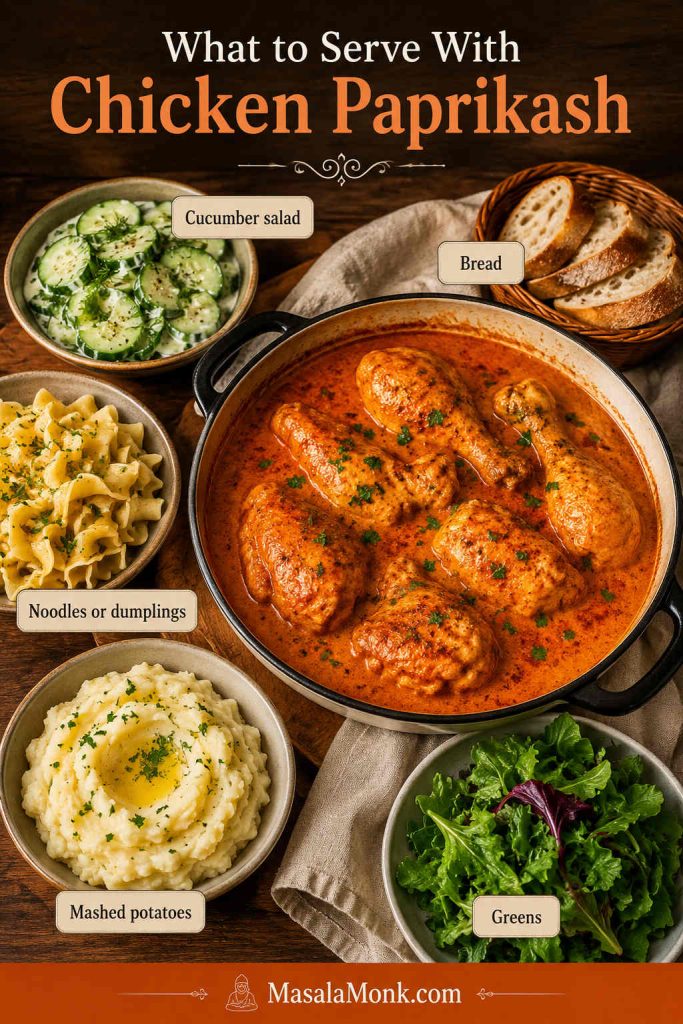
- Cucumber salad: crisp and refreshing against the creamy sauce, especially a cold cucumber salad with vinegar, dill, and onion.
- Green salad: helpful when you want the meal to feel lighter.
- Roasted or steamed vegetables: green beans, cabbage, carrots, broccoli, or peas work well.
- Roasted potatoes: a crispier potato option if you are not serving mashed potatoes.
- Crusty bread: perfect for wiping up the last spoonfuls in the pan.
Choose noodles if you want the dish to feel lighter, dumplings if you want it to feel most traditional, and mashed potatoes if you want the plate to lean fully into comfort.
For the most balanced dinner, serve the chicken with noodles or dumplings and a crisp cucumber salad or green salad on the side.
Slow Cooker and Crock Pot Chicken Paprikash
The stovetop version gives you the best feel for the dish, but the same flavors can work in a slow cooker or Crock Pot as long as the sour cream is added at the end.
Chicken paprikash can be made in a slow cooker or Crock Pot two ways: the deepest-flavor method and the dump-and-go shortcut.
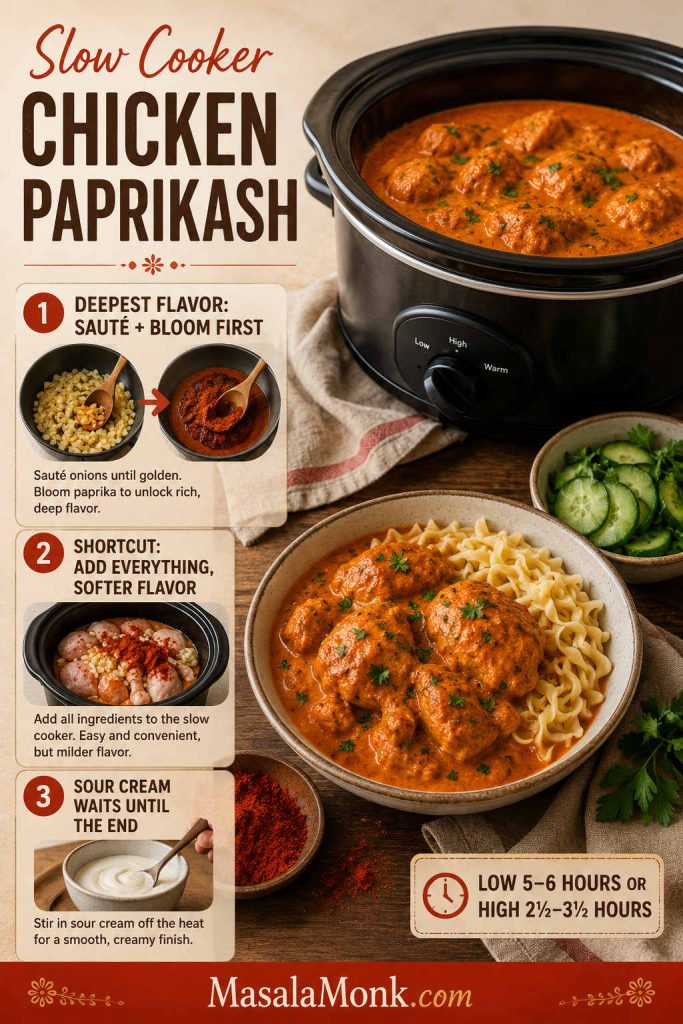
For the deepest flavor
- Sauté the onions in a skillet until soft.
- Add garlic, then lower the heat and stir in the paprika for 20 to 30 seconds.
- Add a splash of broth to loosen the paprika-onion mixture.
- Transfer the mixture to the slow cooker with the chicken, salt, pepper, and remaining broth.
- Cook boneless thighs on low for 5 to 6 hours or on high for 2 1/2 to 3 1/2 hours, until tender and cooked through.
- Whisk a little hot cooking liquid into the sour cream, then stir the tempered sour cream into the slow cooker at the end.
Dump-and-go shortcut
Add chicken, onions, paprika, salt, pepper, and broth directly to the slow cooker. This works, but the flavor will be softer because the onions are not browned and the paprika is not bloomed first. Stir in tempered sour cream only at the end.
Chicken thighs are better than chicken breast for slow cooker paprikash because they stay juicier during long cooking. If you are set on using breast meat, this guide to crock pot chicken breast recipes goes deeper into keeping lean chicken tender in the slow cooker.
If the slow cooker version looks thin, transfer the liquid to a pan and simmer briefly before adding sour cream, or thicken it with a small cornstarch slurry.
For the stovetop version, use the main recipe card. For sauce issues, keep the troubleshooting table nearby.
Instant Pot, Baked and One-Pot Methods
Instant Pot Chicken Paprikash
Instant Pot chicken paprikash works best with boneless thighs. Keep the sour cream out until after pressure cooking.
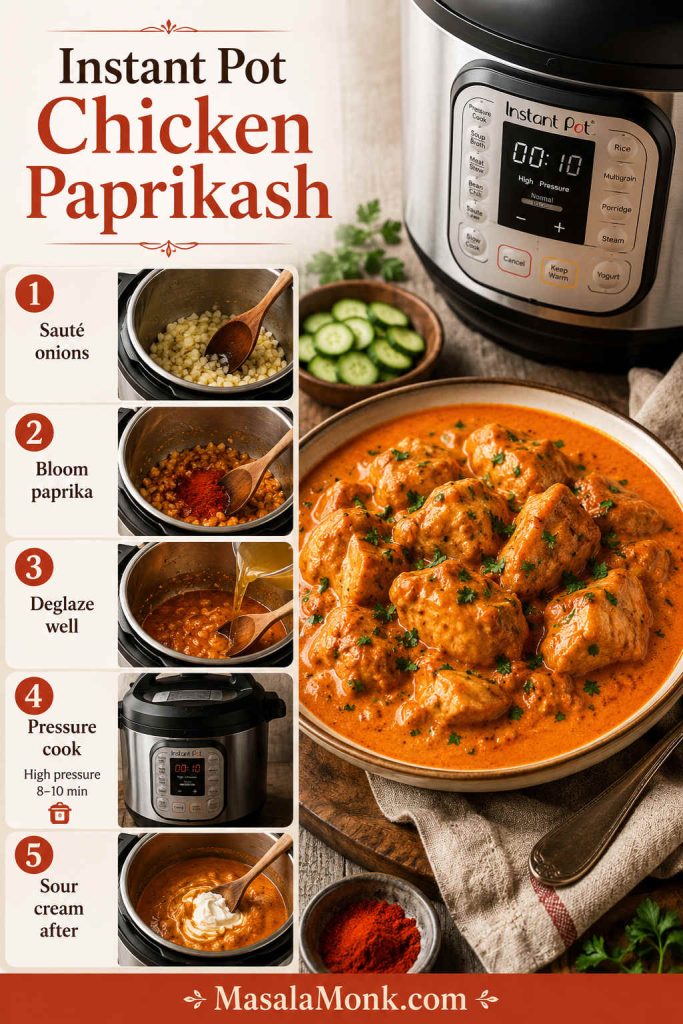
- Sauté the onions first, then add garlic.
- Lower the heat briefly and stir in paprika for 20 to 30 seconds.
- Add broth and scrape the bottom very well so no browned bits are stuck.
- Add the chicken and pressure cook on high for 8 to 10 minutes.
- Let the pressure release naturally for 5 minutes, then quick release.
- Stir in tempered sour cream after pressure cooking.
Baked Chicken Paprikash
Baked chicken paprikash works best with bone-in pieces. Start the onions and paprika base on the stovetop, add the chicken, cover, and bake at 350°F / 175°C for about 35 to 45 minutes, or until the chicken is cooked through and tender. Stir in sour cream after baking so the sauce stays smoother.
One-Pot Chicken Paprikash
The stovetop version is already a one-pot chicken paprikash if you cook the chicken and paprika base in one Dutch oven or deep skillet. Cook noodles, rice, or dumplings separately so they do not soak up everything before serving.
Cooking by pressure cooker instead? Return to the Instant Pot steps, or use the main recipe card for the classic stovetop flow.
Can You Make Chicken Paprikash Without Sour Cream?
Can you make it without sour cream? Yes. Will it taste like classic chicken paprikash? Not exactly.
Sour cream gives the dish its familiar creamy tang. Without it, the recipe becomes closer to paprika chicken stew or creamy paprika chicken, depending on what you use instead.
| Substitute | How it works | Important note |
|---|---|---|
| Greek yogurt | Tangy and creamy | More likely to split; add off heat |
| Heavy cream | Rich and smooth | Less tangy than sour cream |
| Crème fraîche | Smooth, tangy, and rich | Usually more heat-stable but heavier |
| Dairy-free sour cream | Useful for dairy-free meals | Flavor and texture depend on the brand |
| No creamy ingredient | Lighter paprika dish | Less familiar and less creamy |
For the most familiar paprikash flavor, use full-fat sour cream and add it gently at the end.
Chicken Paprikash vs Goulash
Chicken paprikash and goulash both use paprika, but they are not the same dish. The easiest difference is texture and finish: paprikash is creamy and saucy, while goulash is usually more stew-like.
| Dish | Main idea | Texture | Dairy? |
|---|---|---|---|
| Chicken paprikash | Chicken in paprika sour cream sauce | Creamy and saucy | Usually finished with sour cream |
| Goulash | Paprika stew, often beef-based | Brothy or stew-like | Usually not finished the same creamy way |
This dish should be creamy and saucy, not thin like soup. If you make it much brothier, it starts moving toward chicken paprikash soup or paprika chicken stew instead of the creamy version most people expect.
How to Store, Freeze and Reheat Chicken Paprikash
Fridge
Store leftovers in an airtight container in the fridge for 3 to 4 days. If possible, store noodles, rice, or dumplings separately so they do not soak up too much sauce.
Freezer
You can freeze chicken paprikash, but sour cream can change texture after thawing. For the smoothest result, freeze the chicken and paprika base before adding sour cream, then add sour cream after reheating.
Reheating
Leftovers are still cozy, but creamy sauces need gentle reheating to stay their best. Reheat on the stovetop over low heat and add a splash of broth if the sauce looks too thick.
Make-Ahead Tip
For guests, cook the chicken and paprika base first, then cool and refrigerate it without the sour cream. Reheat gently and stir in the sour cream right before serving so the dish tastes freshly made.
Troubleshooting the Sauce and Chicken
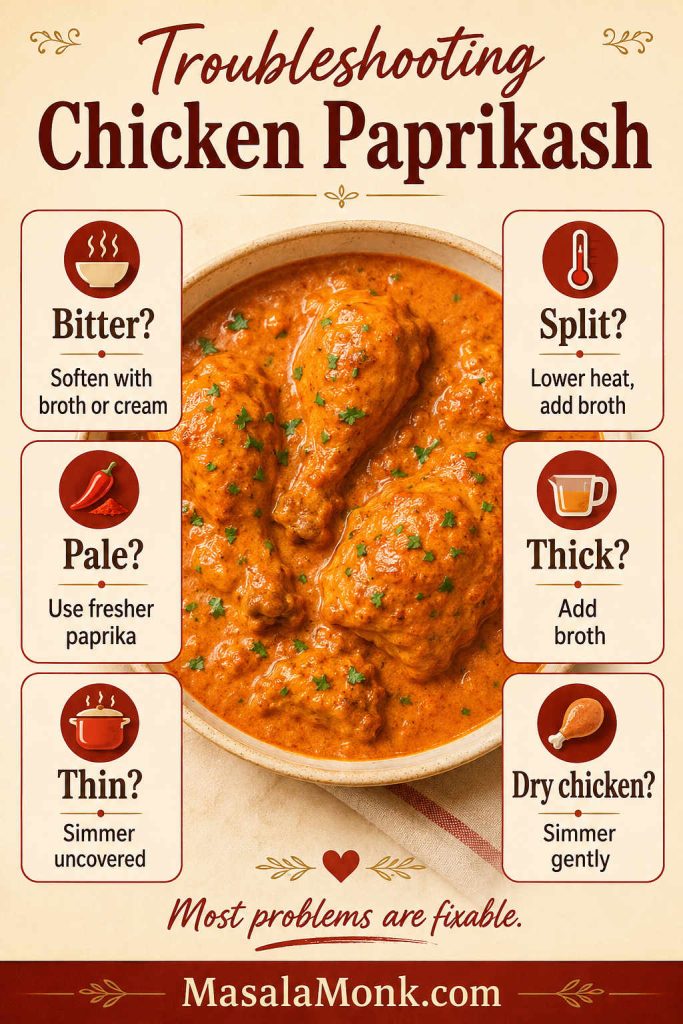
Paprikash is forgiving until the heat gets aggressive. A dish that is too thick, too thin, slightly split, or a little flat can usually be brought back enough for dinner. Use this table before you give up on the pot.
| Problem | Likely cause | Fix |
|---|---|---|
| Tastes bitter | Paprika scorched or heat was too high | Add a little broth or cream to soften the bitterness; next time lower heat before adding paprika |
| Tastes flat | Old paprika, not enough salt, or undercooked onions | Season in layers, cook onions until soft, and use fresher paprika next time |
| Looks pale | Not enough paprika or paprika is weak | Use fresh sweet paprika and let it bloom briefly off high heat |
| Tastes too tomatoey | Too much tomato or tomato paste | Add broth and sour cream to rebalance; next time keep tomato subtle |
| Sour cream curdled | Added cold sour cream to very hot sauce or overheated after adding | Temper sour cream first and stir it in off heat or on very low heat |
| Too thin | Too much broth or not enough reduction | Simmer uncovered before adding sour cream, or thicken with flour or cornstarch |
| Too thick | Reduced too much or used too much flour | Add chicken broth a splash at a time until smooth |
| Chicken is dry | Chicken breast overcooked or heat was too high | Use thighs next time, or simmer breast pieces gently and check early |
| Split when reheated | Reheated too hot after sour cream was added | Reheat on low and stir in a splash of broth or sour cream |
FAQ About Chicken Paprikash
What is chicken paprikash made of?
Chicken paprikash is usually made with chicken, onions, paprika, broth or water, and sour cream. Some versions also include garlic, tomato, pepper, flour, hot paprika, or cayenne.
Is chicken paprikash Hungarian?
Chicken paprikash is a Hungarian dish often known as paprikás csirke. This recipe is an easy home-style version with the familiar paprika and sour cream sauce.
Can I use regular paprika if I do not have Hungarian paprika?
Regular sweet paprika works if it is fresh and fragrant. Hungarian paprika gives a deeper flavor, but regular paprika can still make a good dish if it has not gone stale.
Should chicken paprikash be spicy?
Usually, chicken paprikash is more warm and paprika-rich than hot. Use sweet paprika for the base, then add hot paprika or cayenne only if you want extra heat.
Why does my chicken paprikash taste bitter?
Bitter paprikash usually means the paprika scorched. Lower the heat or move the pot off the burner before adding paprika, stir briefly, then add broth before the spice burns.
Does chicken breast work for chicken paprikash?
Chicken breast works, but it asks for a gentler hand. Keep the simmer quiet and check it early so it stays juicy.
Why did my sour cream curdle?
Sour cream usually curdles when the sauce is too hot or the sour cream is too cold. Temper it with warm sauce first, then stir it in off heat or on very low heat.
Do I need dumplings, or are noodles okay?
You do not need dumplings. Nokedli and spaetzle are traditional choices, but egg noodles are a very good weeknight option. Rice, mashed potatoes, and bread also work well.
Can chicken paprikash be frozen?
The sauce is smoother if you freeze it before adding sour cream. Reheat the chicken and paprika base gently, then stir in sour cream just before serving.
Can I make chicken paprikash ahead of time?
For the smoothest make-ahead version, cook the chicken and paprika base ahead, then reheat gently and stir in the sour cream just before serving.
Is chicken paprikash the same as goulash?
No. Chicken paprikash is usually chicken in a paprika sour cream sauce. Goulash is usually more stew-like and often made with beef, vegetables, broth, and paprika.
Can I make chicken paprikash in a slow cooker or Crock Pot?
The slow cooker works, but the sour cream should wait until the end. For deeper flavor, sauté the onions and bloom the paprika before transferring everything to the slow cooker.
Chicken paprikash is simple food, but it pays you back for the few moments when you slow down. Let the onions sweeten, let the paprika bloom, keep the sour cream gentle, and give the sauce something soft to land on. That is the whole comfort of the dish: tender chicken, a warm red-orange sauce, and a plate that feels generous from the first spoonful.
Did you go traditional with nokedli, weeknight-easy with egg noodles, or full comfort with mashed potatoes? Leave a comment and tell us what caught the sauce.








