
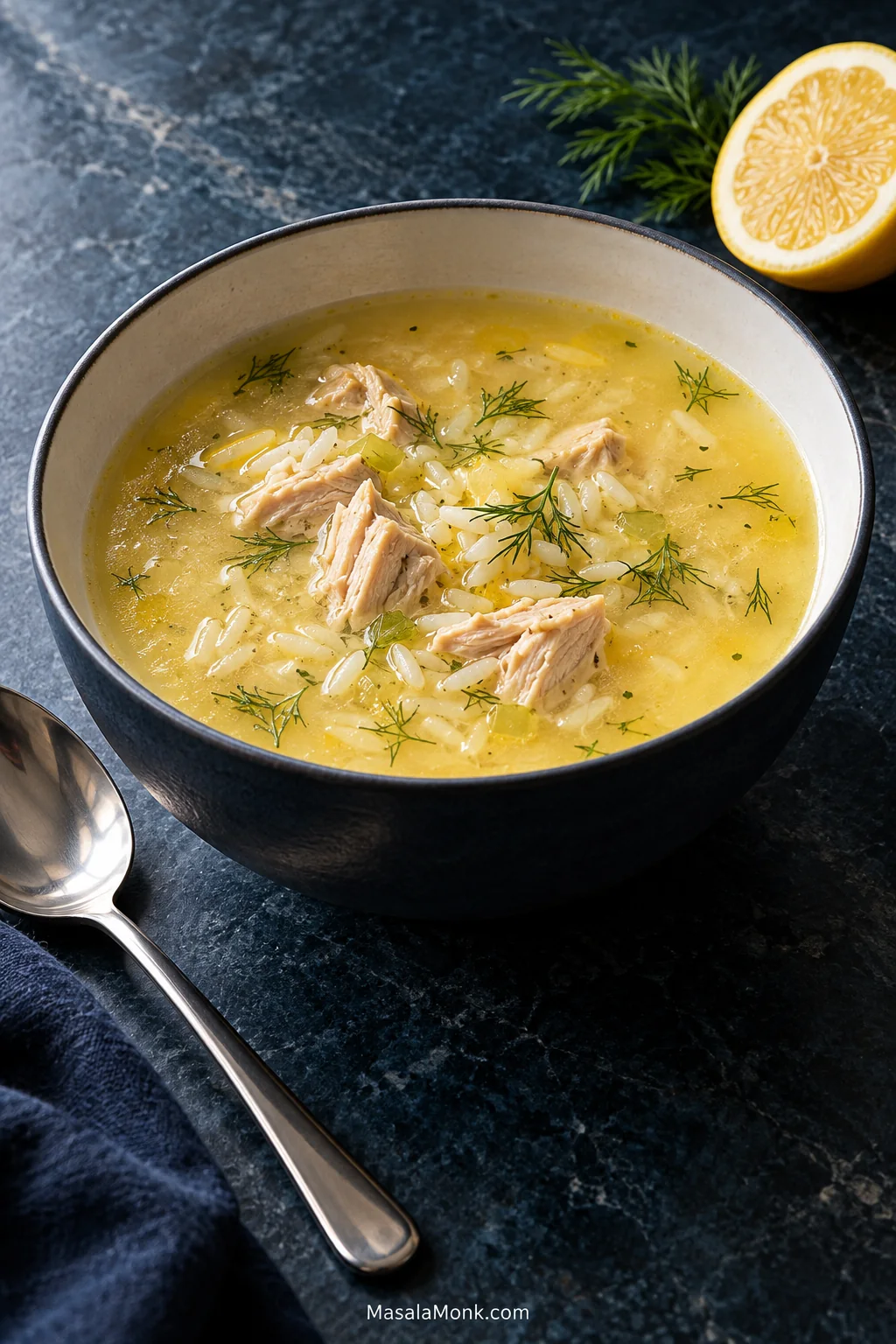
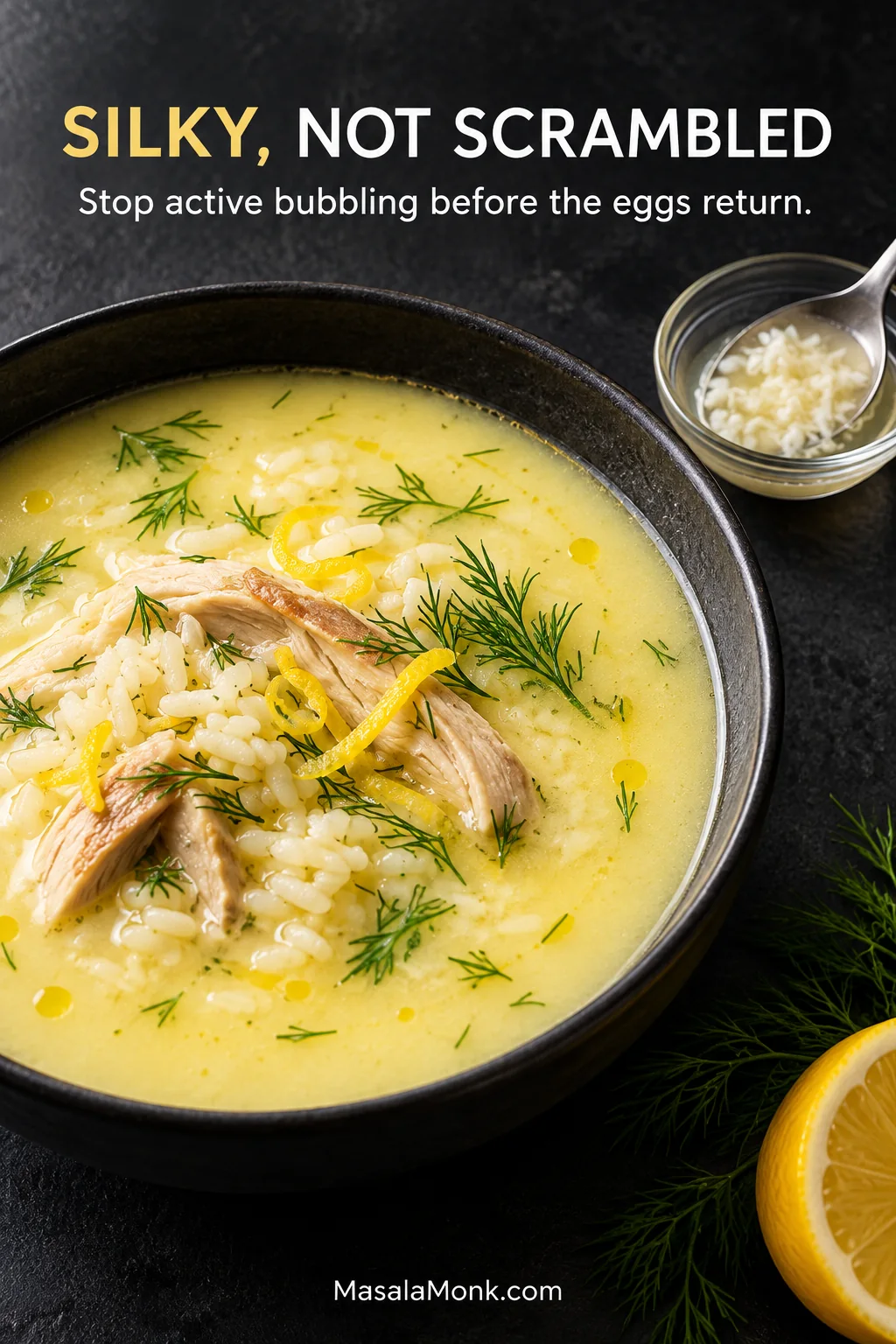
Avgolemono should be silky enough to lightly coat a spoon, bright with fresh lemon, and brothy enough that tender rice and chicken still move freely through the soup. Eggs—not cream—give the broth its creamy body, while lemon keeps it fresh rather than heavy. Underneath the unfamiliar name and egg-lemon technique is something reassuringly simple: warm chicken broth, tender chicken and soft rice.
The main risks are simple too: eggs that get too hot and rice that takes over the broth. Overheated eggs can tighten into white ribbons. Rice that looks perfectly reasonable while the pot is bubbling can keep drinking broth long after the heat is off.
The method below keeps both in check. First comes the chicken, followed by the medium-grain rice. Active simmering stops before the egg-lemon mixture goes back into the pot, leaving you with a Greek lemon chicken soup that stays bright, brothy and smooth without cream.
This Avgolemono soup recipe uses medium-grain rice, with an exact orzo option below. Lemon goes in stages too. Most of the cooking is ordinary soup-making; tempering is the one part that asks for your full attention, and the cues below make it much easier than it sounds.
Four Moments Decide the Soup
SIMMER
Cook the chicken, then the rice, while the broth can still simmer.
Look for: tender rice with plenty of free broth.
STOP
Turn the burner off before the egg-lemon mixture returns.
Look for: active bubbling has stopped.
TEMPER
Whisk measured hot broth gradually into eggs and lemon.
Look for: a warm, smooth mixture with no white strands.
REST
Give the finished soup 10–15 minutes before changing anything.
Look for: broth that lightly coats a spoon but still pours freely.
Avgolemono Soup Recipe
Greek lemon chicken soup with tender chicken, medium-grain rice and a fresh egg-lemon finish. The modest amount of rice leaves plenty of broth, while measured tempering gives the eggs time to warm gradually and disappear into it.
Equipment
- 5–6 quart / about 5–6 L Dutch oven or heavy soup pot with lid
- Medium heatproof mixing bowl
- Whisk
- Instant-read thermometer
A ladle or heatproof measuring cup makes tempering easier. For rinsing the rice, a fine-mesh sieve is useful; a fine grater helps if you are adding zest.
Ingredients
| Ingredient | Amount |
|---|---|
| Extra-virgin olive oil | 1 tablespoon / 15 ml |
| Yellow onion, finely diced | 1 medium, about 150 g / 5.3 oz |
| Carrot, finely diced | 1 medium, about 100 g / 3.5 oz |
| Celery, finely diced | 1 large stalk, about 60 g / 2 oz |
| Low-sodium chicken broth or stock | 8 cups / 1.9 L, plus extra if needed |
| Boneless skinless chicken thighs | 1¼ lb / about 570 g |
| Medium-grain white rice | ½ cup / about 95 g / 3.4 oz |
| Large eggs | 3 |
| Fresh lemon juice | ¼ cup / 60 ml, plus 1–2 tablespoons / 15–30 ml to taste; about 2–3 medium lemons total |
| Finely grated lemon zest, optional | 1 teaspoon |
| Fresh dill, finely chopped | 2 tablespoons / about 3 g |
| Fine salt | ½ teaspoon / about 3 g to start, plus more to taste |
| Freshly ground black pepper | ½ teaspoon, plus more to taste |
Before you start: take the eggs from the refrigerator while you prep the vegetables. Rinse the rice in a fine-mesh sieve under cool running water until the runoff is much less cloudy, then drain well. This removes much of the loose surface starch and helps prevent the broth from becoming overly thick. If your broth is already salty, start with less than the listed ½ teaspoon salt.
Instructions
Cook the Broth, Chicken & Rice
- Soften the vegetables. Heat the olive oil in the soup pot over medium heat. Add the onion, carrot, celery and ½ teaspoon salt. Cook for about 5 minutes, stirring occasionally, until the onion is translucent and the vegetables begin to soften. Keep them pale rather than browning them deeply.
- Add the broth and chicken. Pour in the chicken broth and bring it to a low simmer. Add the thighs, partially cover the pot and adjust the heat so small steady bubbles rise through the broth.
- Cook until safe and tender. Simmer until the thickest thigh reaches at least 165°F / 74°C and the meat is tender, usually about 12–16 minutes depending on thickness. Transfer the chicken to a plate. If the broth has reduced noticeably, top it up with some hot broth before the rice goes in.
- Cook the rice uncovered. Stir in the rinsed rice and keep the broth at a low simmer until the rice is tender, usually about 14–18 minutes.
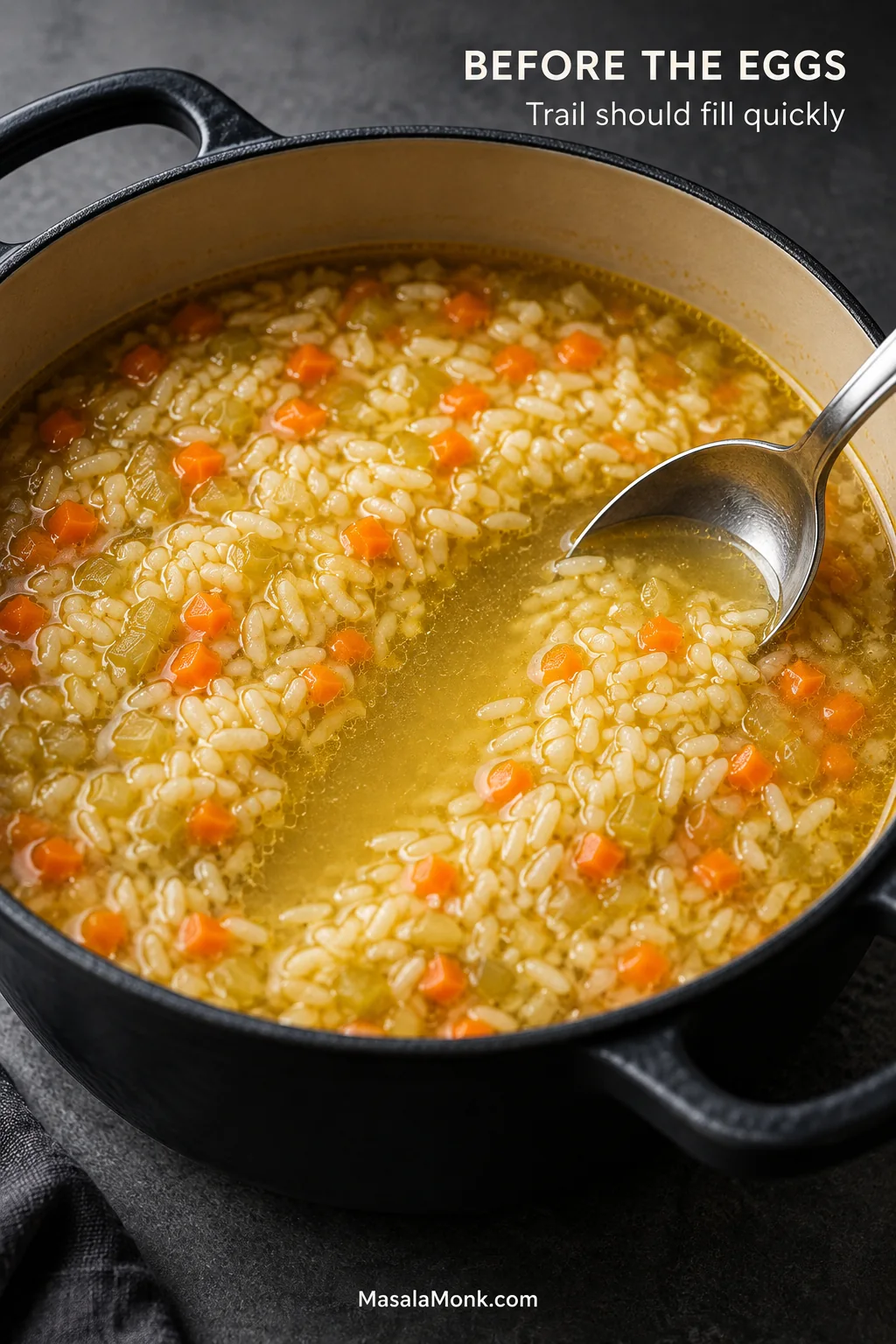
- Read the pot. There should be plenty of liquid around the rice. Drag a spoon through the pot; broth should flow back into the trail almost immediately. If that is what you see, you are exactly where you want to be. A pot that already looks thick needs some hot broth now rather than later.
- Prepare the chicken. While the rice cooks, shred or chop the thighs into pieces that fit easily on a soup spoon.
Temper the Egg-Lemon Mixture
- Whisk the eggs and lemon. In a medium heatproof bowl, whisk the eggs until completely blended and lightly frothy. Whisk in ¼ cup / 60 ml freshly squeezed lemon juice and the zest, if using.
- Turn the burner off. Once the rice is tender, switch off the heat. Wait 1–2 minutes, until active bubbling has stopped.
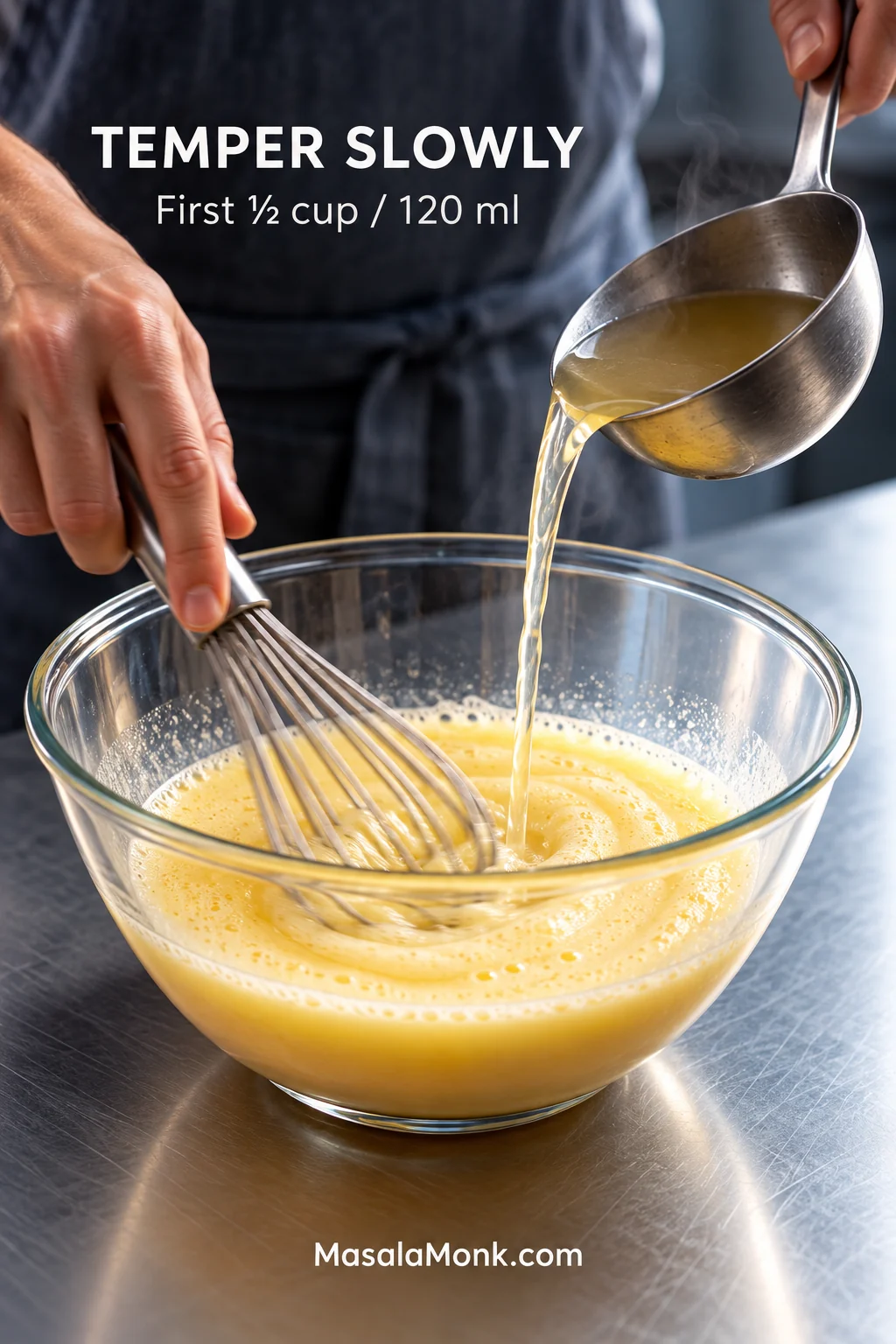
- Temper gradually. Measure 2 cups / 475 ml hot broth from the pot. While whisking continuously, slowly stream in the first ½ cup / 120 ml. Once the egg mixture feels warm, add the remaining broth in roughly ½-cup / 120 ml additions, whisking throughout. Lift the whisk at the end: the mixture should run back smoothly, without cooked white strands clinging to it. Once it is warm and smooth, the hardest part is over.
Return, Rest & Finish the Soup
- Return it to the pot. Slowly pour the tempered mixture into the soup while stirring, then add the chicken. The broth turns pale and fuller.
Temperature check: if the soup is already 160°F / 71°C or above, the fresh soup needs no more heat. If it is cooler, warm it over low heat while stirring until it reaches 160°F / 71°C. Do not bring freshly finished Avgolemono back to a simmer.
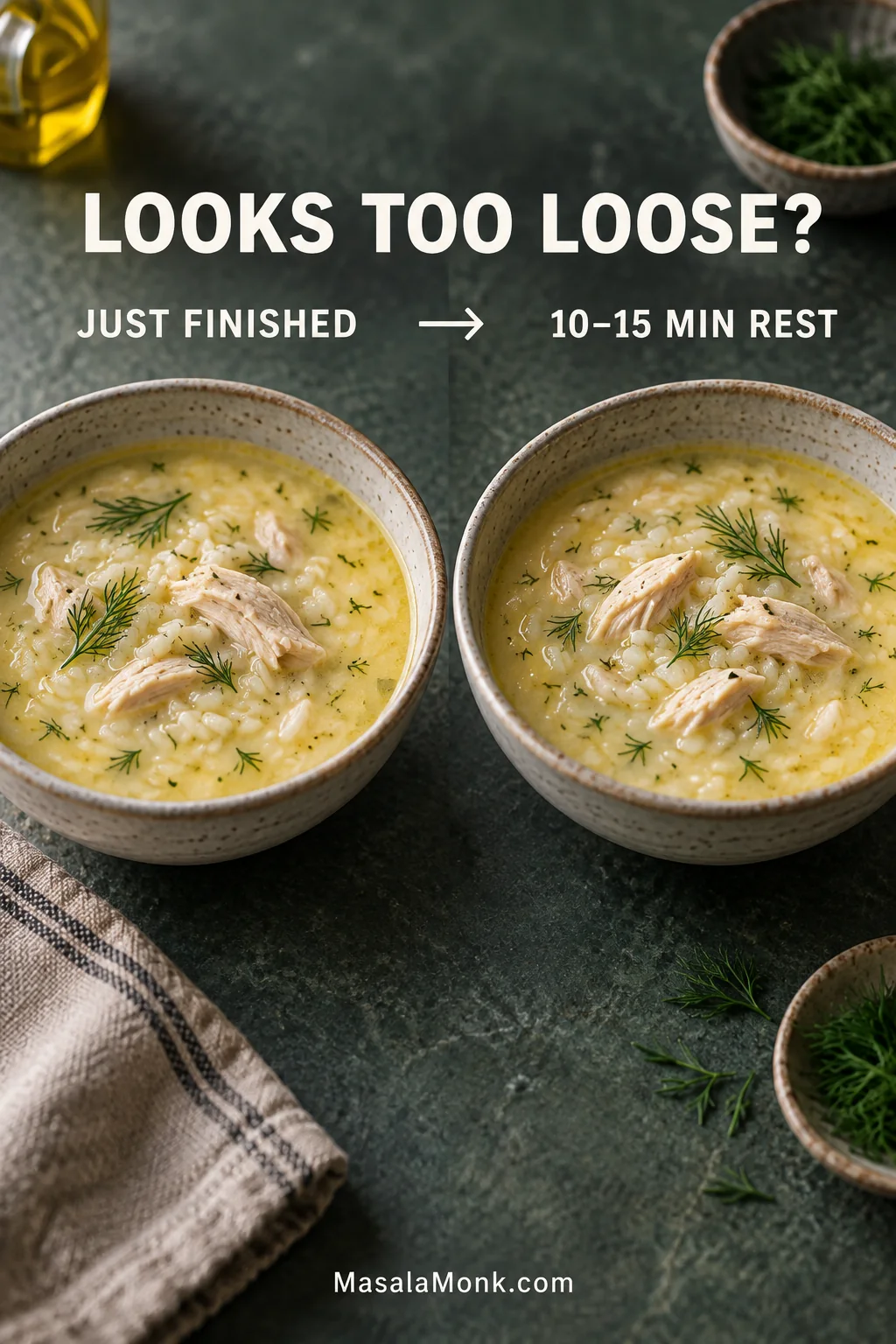
- Leave it alone for 10–15 minutes. A soup that looks slightly loose at this point is normal. The texture will settle as it rests. Don’t chase thickness before that happens.
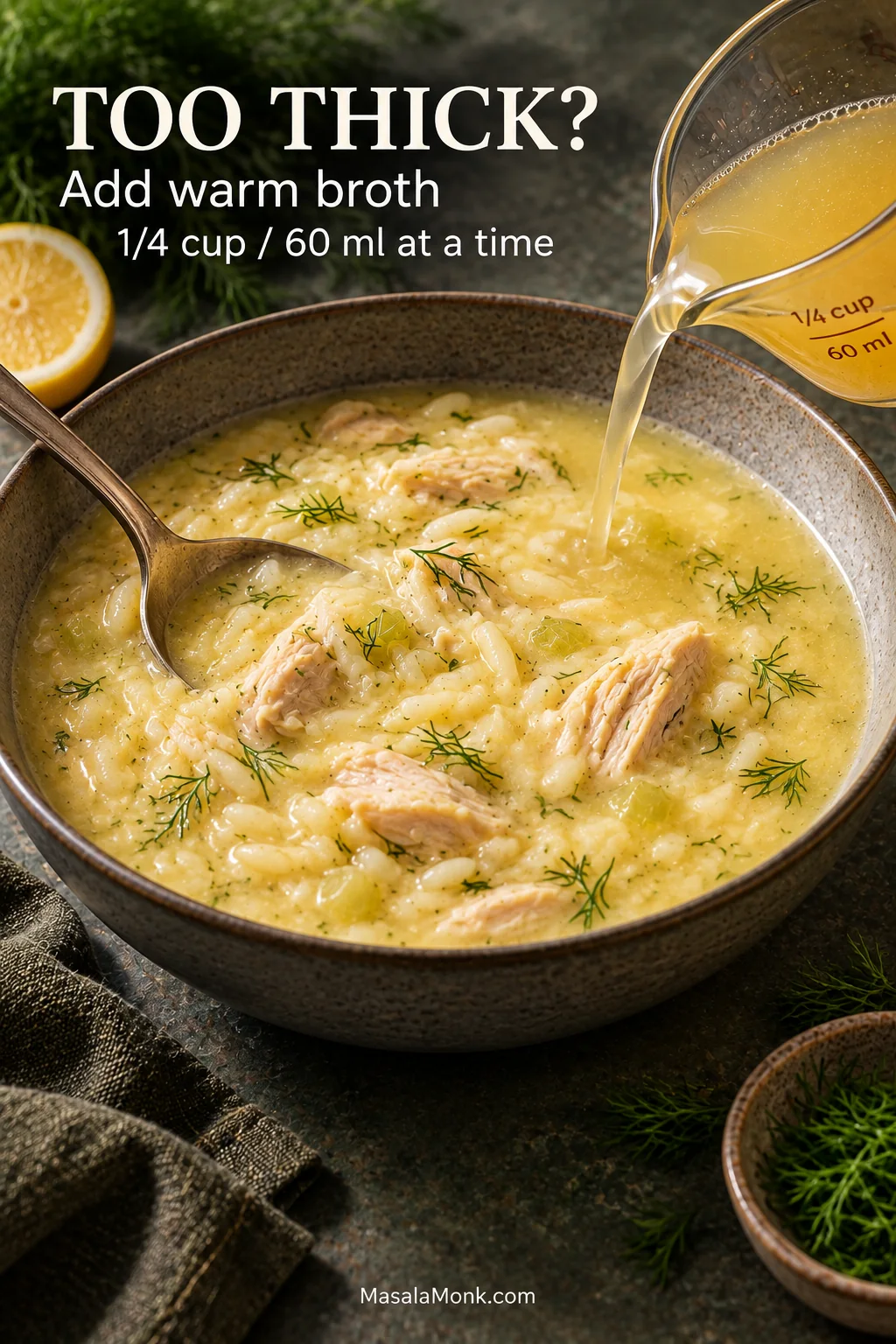
- Finish the soup. Check the salt first, then add more fresh lemon juice 1 tablespoon / 15 ml at a time until it tastes as bright as you want it. Stir in the dill and black pepper. Tilt a ladle over the pot: the broth should pour back in a smooth stream rather than drop in heavy clumps. Add warm broth ¼ cup / 60 ml at a time if it needs loosening.
Useful Substitutions
- Chicken breast: use the same weight and remove it promptly once the thickest part reaches 165°F / 74°C.
- Rotisserie chicken: use about 3 cups / 400–450 g shredded plain or lightly seasoned chicken. If it is refrigerator-cold, warm it in the broth before turning off the heat and tempering the eggs.
- Orzo: replace the rice with 4 oz / 115 g dry orzo and cook until just tender, usually about 7–10 minutes depending on the brand.
- Cooked rice: warm about 1½ cups in the broth before turning off the heat and tempering, or warm it separately and ladle the finished Avgolemono over it.
- Parsley: flat-leaf parsley can replace the dill.
- Richer egg finish: use 2 whole eggs + 2 yolks instead of 3 whole eggs.
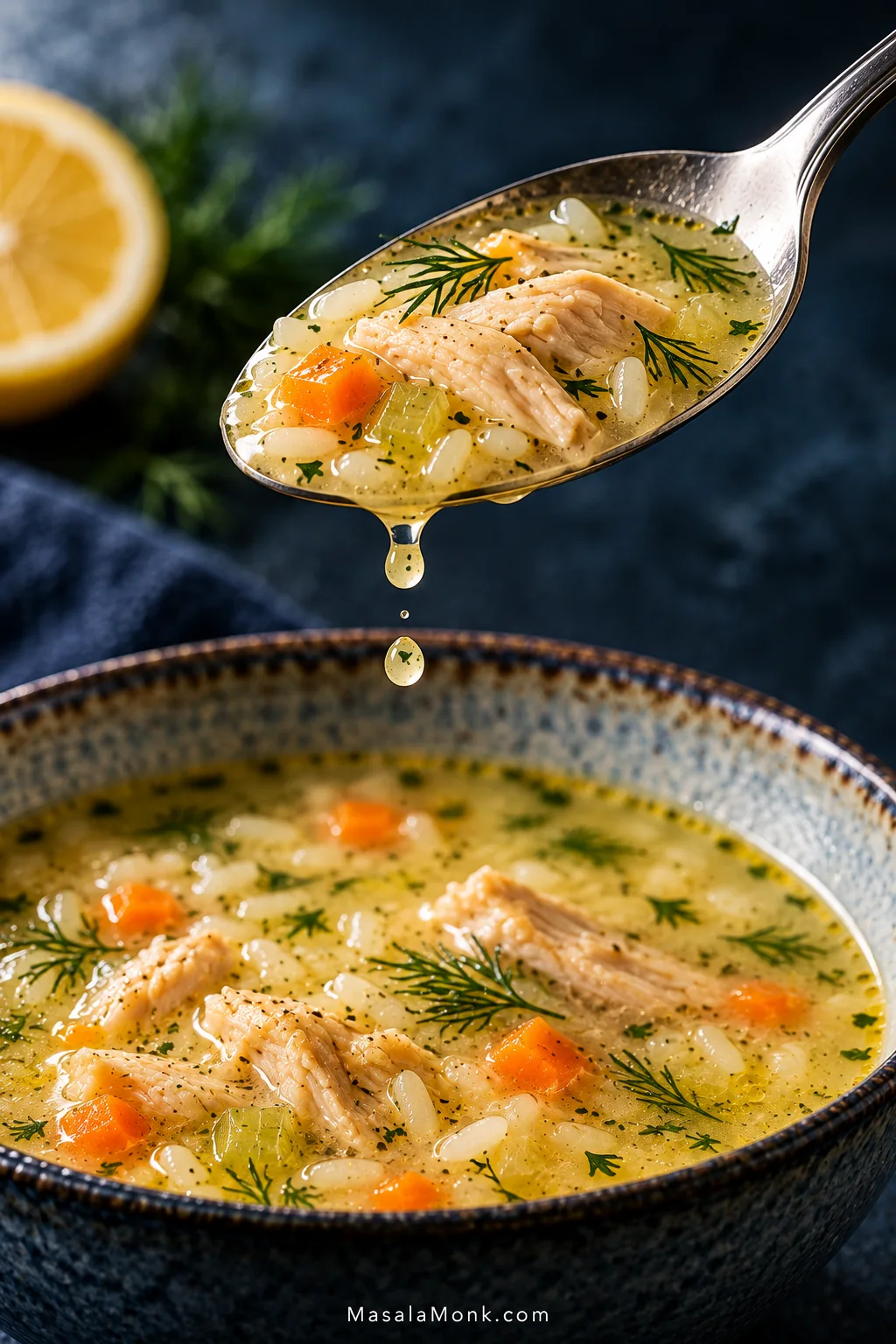
Texture check: finished Avgolemono should cling lightly to the spoon while still falling back into the bowl as broth.
Avgolemono Guide
What Makes Avgolemono Avgolemono?
Avgolemono (roughly ahv-go-LEM-uh-no) literally means “egg-lemon.” It is a Greek preparation made with eggs, lemon and hot broth, and it is used to give soups and other dishes body, brightness and a smooth finish.
Here, it transforms chicken-and-rice soup into the pale, silky soup most English-speaking cooks know by the same name. You will also see it described as Greek lemon chicken soup or Greek egg-lemon soup. In Greek-American diners, it may also appear as chicken lemon rice soup.
A lemon chicken soup with rice or orzo is not automatically Avgolemono; the egg-lemon finish is what changes it. Some cooks use rice, others orzo. Whole eggs are common, while extra yolks make the mixture richer. The soup can finish light and brothy or considerably thicker.
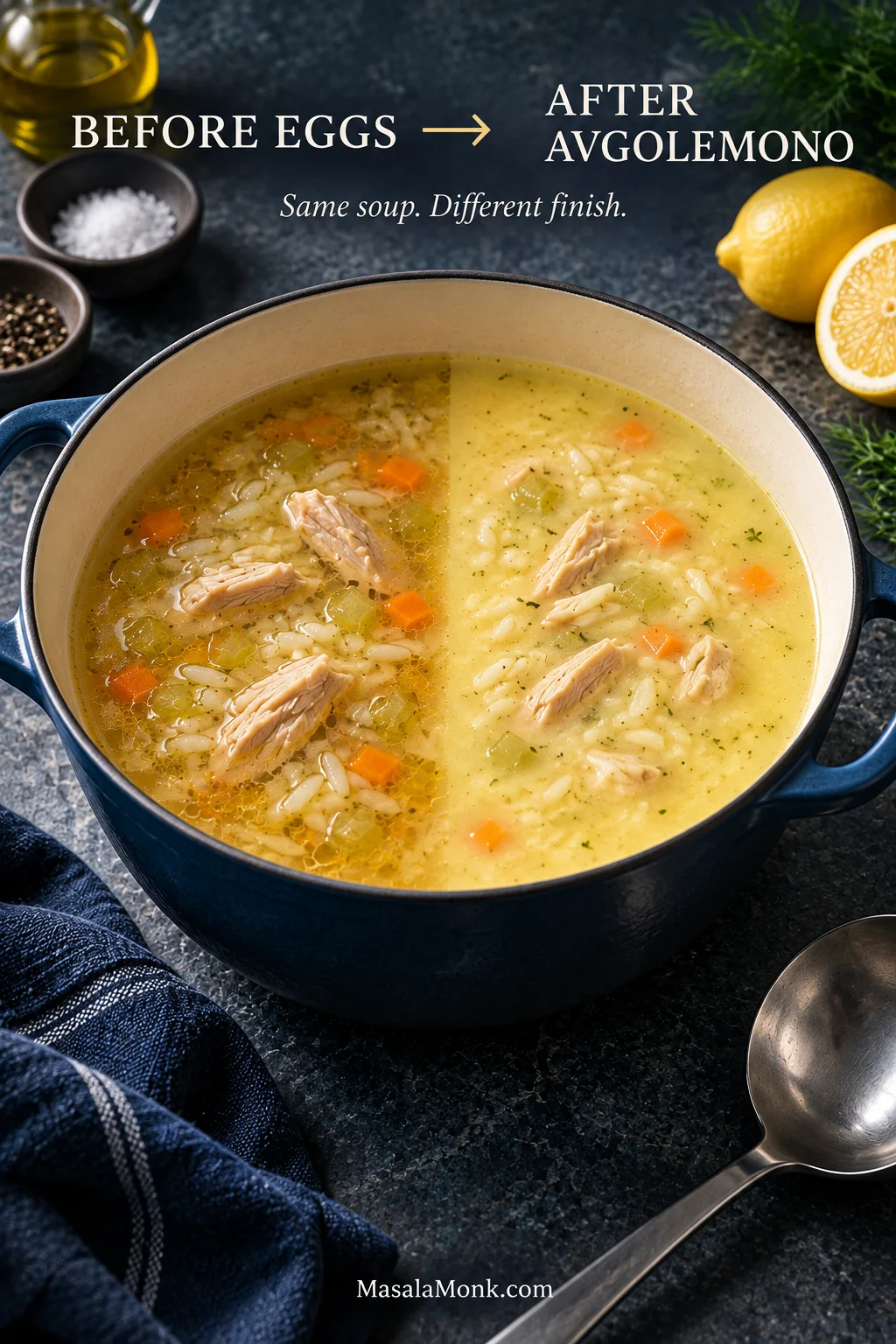
Rice or Orzo: Choose the Texture You Want
Both rice and orzo work in Avgolemono. Rice usually gives you a softer, more integrated soup; orzo has a more distinct pasta bite. Either one will continue taking up broth during storage, which is worth remembering when you are cooking ahead.
| If you want… | Choose… | What changes |
|---|---|---|
| A fuller, more integrated lemon-rice soup | Medium-grain white rice | Softer grains and a little more body in the broth |
| A lighter soup with clearer individual grains | Long-grain white rice | More separation between rice and broth |
| A defined pasta bite | Orzo | A more pasta-forward texture while fresh |
| Several days of leftovers | Cook either starch separately | The stored broth stays much looser |
| A thick Greek-American diner style | A little more starch or a longer rest | More body and a stronger lemon-rice character |

Start with ½ cup / about 95 g medium-grain rice for 8 cups / 1.9 L broth. That gives the soup substance without making it starch-heavy; the eggs provide most of the body.
Arborio works too, but it releases plenty of starch and thickens the broth quickly. Use the same restrained amount and give the soup time to settle before deciding it needs more body.
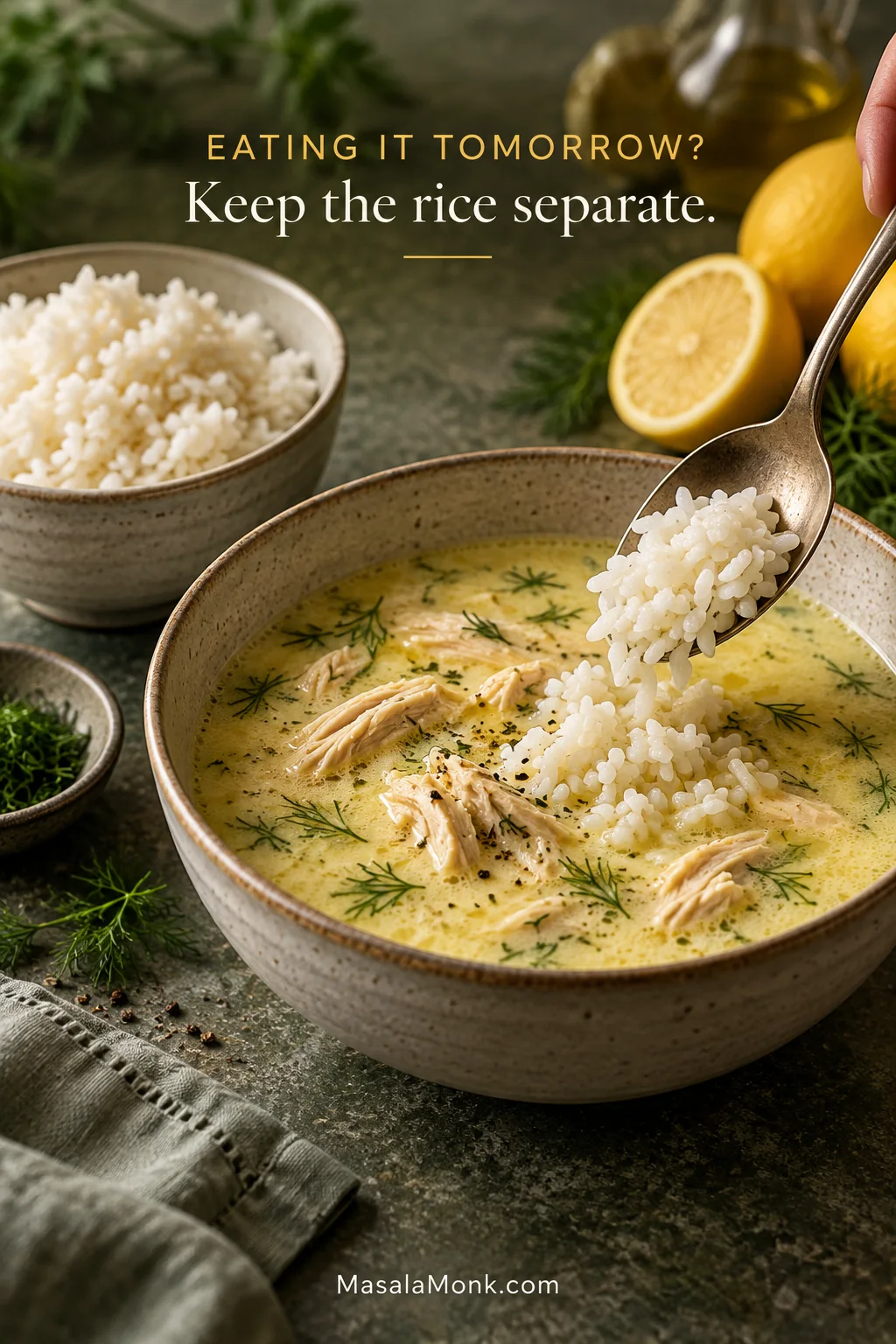
If Tomorrow Matters, Keep the Rice Separate
When most of the soup will be eaten at dinner, cook the rice right in the broth. It takes on chicken flavor, and some of its starch becomes part of the soup.
For leftovers over the next couple of days, keep the rice or orzo separate from the start. Spoon some into each serving and add hot Avgolemono over it. The how to cook rice guide has the basic ratios and timings if you are cooking a separate batch.
Planning for leftovers? See make-ahead, storage and reheating.
Chicken Thighs, Breast or Rotisserie?
Chicken thighs are the main choice here because they are forgiving and bring some richness to the broth. 165°F / 74°C is the safe minimum for poultry, but thighs may become more tender with additional time at a low simmer if the meat still feels firm.
Chicken breast behaves differently: remove it promptly at 165°F / 74°C to keep it from drying out. The baked chicken breast guide goes deeper into thickness and temperature.
Rotisserie chicken is the fastest option. Use a plain or lightly seasoned bird, remove heavily flavored skin, and warm refrigerated meat in the broth before the tempering step. Smoke, barbecue seasoning or a strong herb crust can pull the soup away from its clean chicken-and-lemon flavor.
The Egg-Lemon Handoff
To keep Avgolemono from curdling, take the soup off active heat, warm the egg-lemon mixture gradually with hot broth while whisking, then return it to the pot without letting the freshly finished soup simmer or boil.
Tempering narrows the temperature jump. The eggs warm in stages, so they disperse into the broth instead of tightening into visible strands.
Why 2 Cups of Broth?
Ladles vary enormously. A measured 2 cups / 475 ml hot broth gives you enough liquid to warm the eggs gradually and makes the method repeatable from one kitchen to another.
Watch the mixture: before tempering, the eggs and lemon look yellow and lightly frothy. By the end they are warmer, thinner and completely smooth. White threads mean some egg has already started to coagulate.
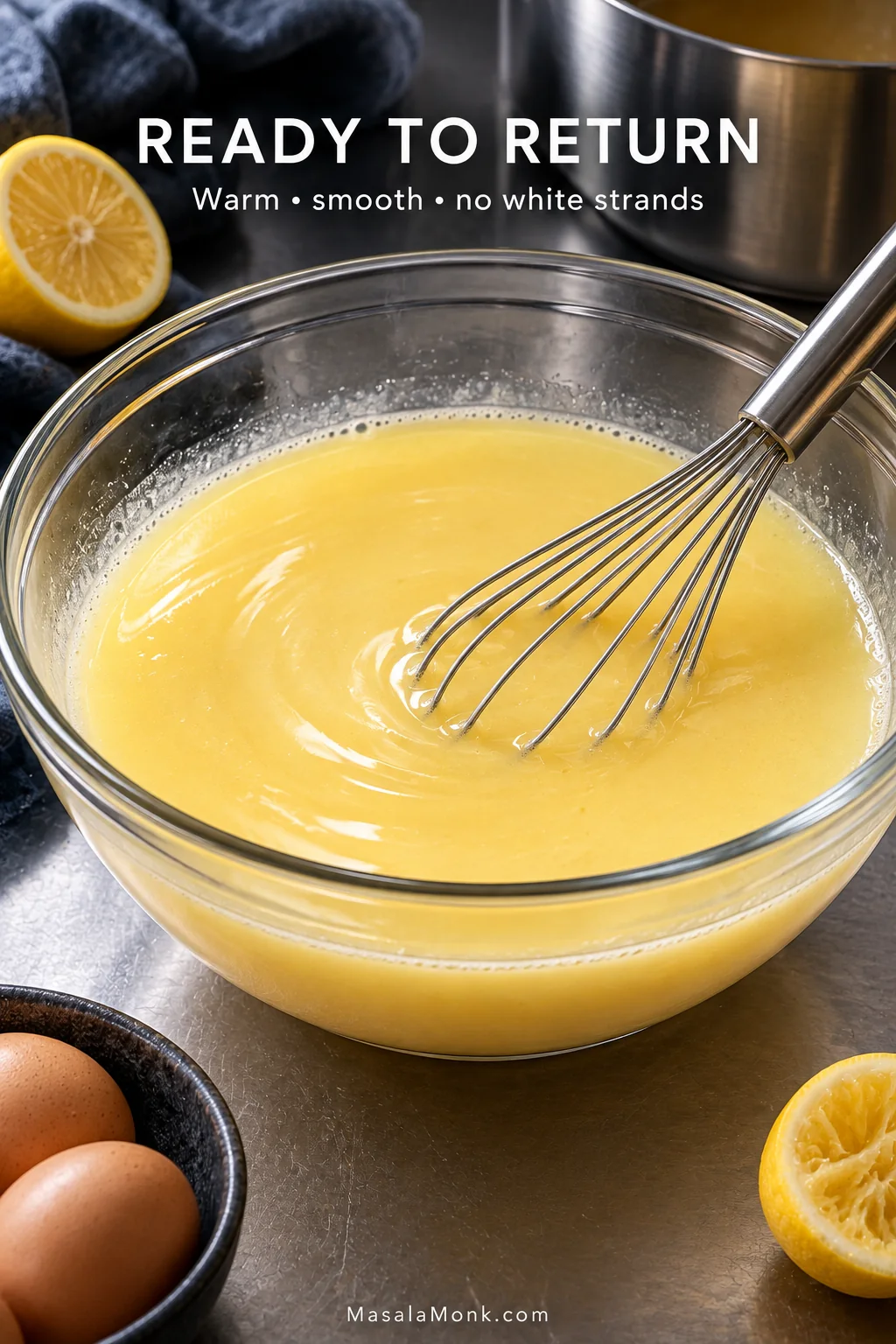
Those threads are exactly what you want in egg drop soup, where the eggs are encouraged to form ribbons. Avgolemono is aiming for a smooth broth instead.
Three whole eggs keep this version simple; extra yolks make the soup richer and more yellow, while some traditional methods whip the whites separately for a lighter, foamier finish. For more richness without changing the basic technique, use 2 whole eggs and 2 yolks.
Temperature note: chicken needs to reach at least 165°F / 74°C in its thickest part. Egg-containing dishes should reach 160°F / 71°C. If the soup drops below that temperature during tempering, warm it over low heat while stirring until it reaches 160°F / 71°C rather than restarting a simmer. The FDA egg-safety guidance also explains when pasteurized eggs are useful.
Already seeing white strands or graininess? See Avgolemono troubleshooting.
Bright Is Not the Same as Sour
One Avgolemono can taste gently lemony while another makes lemon the first thing you notice. Starting with a moderate amount leaves room to adjust after the soup has rested.
Begin with ¼ cup / 60 ml freshly squeezed lemon juice, then taste again after the rest and add more a tablespoon at a time. Fresh juice has a brighter citrus aroma than bottled lemon juice.
Juice and Zest Do Different Jobs
Lemon juice adds acidity. Lemon zest adds aroma. A soup can already taste tart and still seem strangely short on lemon character. More juice may only sharpen it; some fresh yellow zest can make the citrus smell brighter without adding the same amount of acid.

Keep the grater on the thin yellow skin and away from the bitter white pith underneath. The same distinction is useful in our lemon pepper chicken, where zest carries much of the citrus aroma and juice supplies the sharper finish.
Still tasting flat? Check the salt before squeezing another lemon. Weak or under-seasoned broth does not become richer just because it becomes more acidic.
Read the Soup Now, in 15 Minutes, and Tomorrow
Fresh Avgolemono changes after the burner goes off. A soup that looks slightly loose right after tempering can settle into exactly the right texture after ten minutes, so the first spoonful from the pot can be misleading.
| When | What you are likely to see | What to do |
|---|---|---|
| Just finished | Slightly looser than the final texture | Leave it alone for 10–15 minutes |
| After the rest | Fuller broth with liquid around the rice | Adjust salt, lemon and broth now |
| An hour later | More noticeable thickening | Add some broth if needed |
| Tomorrow | Usually much thicker | Expect a thicker soup; follow the reheating guidance below |
How Thick Should Avgolemono Be?
There is no single fixed answer. Some Greek versions stay light and broth-forward; others are much more substantial. Greek-American lemon rice soup from Detroit-area Coney Island diners can be thicker still, with rice playing a much larger role.
This recipe aims for broth that lightly coats a spoon but still moves freely around the chicken and rice. If you prefer the thicker diner style, let it stand longer before thinning it or use more rice next time.
When Avgolemono Goes Wrong
Think back to the moment the soup changed. A pot that became thick before the eggs arrived needs broth; white strands appearing during tempering point to too much heat. That timing usually tells you where the problem started.
Problems Before the Egg-Lemon Finish
| What you see | What probably happened | What to do |
|---|---|---|
| Hardly any broth around the rice | The pot reduced too much or there is too much rice for the remaining broth | Add hot broth before tempering |
| Firm thigh meat before tempering | If it has already reached 165°F / 74°C, it may be safely cooked but not fully tender yet | Return the chicken to the simmering broth and cook until tender |
| The pot is still bubbling hard | It has not cooled enough for the egg mixture | Wait until active bubbling stops |
| White threads appear while tempering | The eggs heated too quickly | Pause, whisk and add the remaining broth more slowly; a heavily scrambled mixture is better remade |
| The mixture turns grainy | Some egg has coagulated | Stop applying heat; severe curdling cannot truly be reversed |
Problems After the Soup Is Finished
| Problem | Try this |
|---|---|
| Too thin | Let it rest before changing anything |
| Too thick | Add warm broth ¼ cup / 60 ml at a time |
| Too sour | Dilute with broth, then recheck the salt |
| Tart but not very aromatic | Add some fresh yellow zest rather than more juice |
| Bitter lemon flavor | White pith or cooked peel is the likely culprit; dilution may soften it |
| Bland except for lemon | Fix the broth and salt before adding more acid |
| Almost porridge the next day | For future batches, keep the rice separate when leftovers matter |
| Grainy after reheating | The egg emulsion has tightened; reheated Avgolemono may not return to its freshly made texture |
A few tiny egg flecks are mostly cosmetic and can be strained out if they bother you. Once the whole broth is visibly grainy or full of cooked egg ribbons, blending may hide the appearance, but it cannot uncook the eggs.
Serving Later Today, Tomorrow, or From the Freezer
Making Avgolemono Ahead
If you are serving within about an hour, let the finished soup rest and make the final lemon and broth adjustments just before eating. For a longer gap, refrigerate it promptly rather than leaving a chicken-and-egg soup at room temperature. According to the USDA leftovers guidance, perishable food should be refrigerated within 2 hours, or within 1 hour when the surrounding temperature is above 90°F / 32°C.
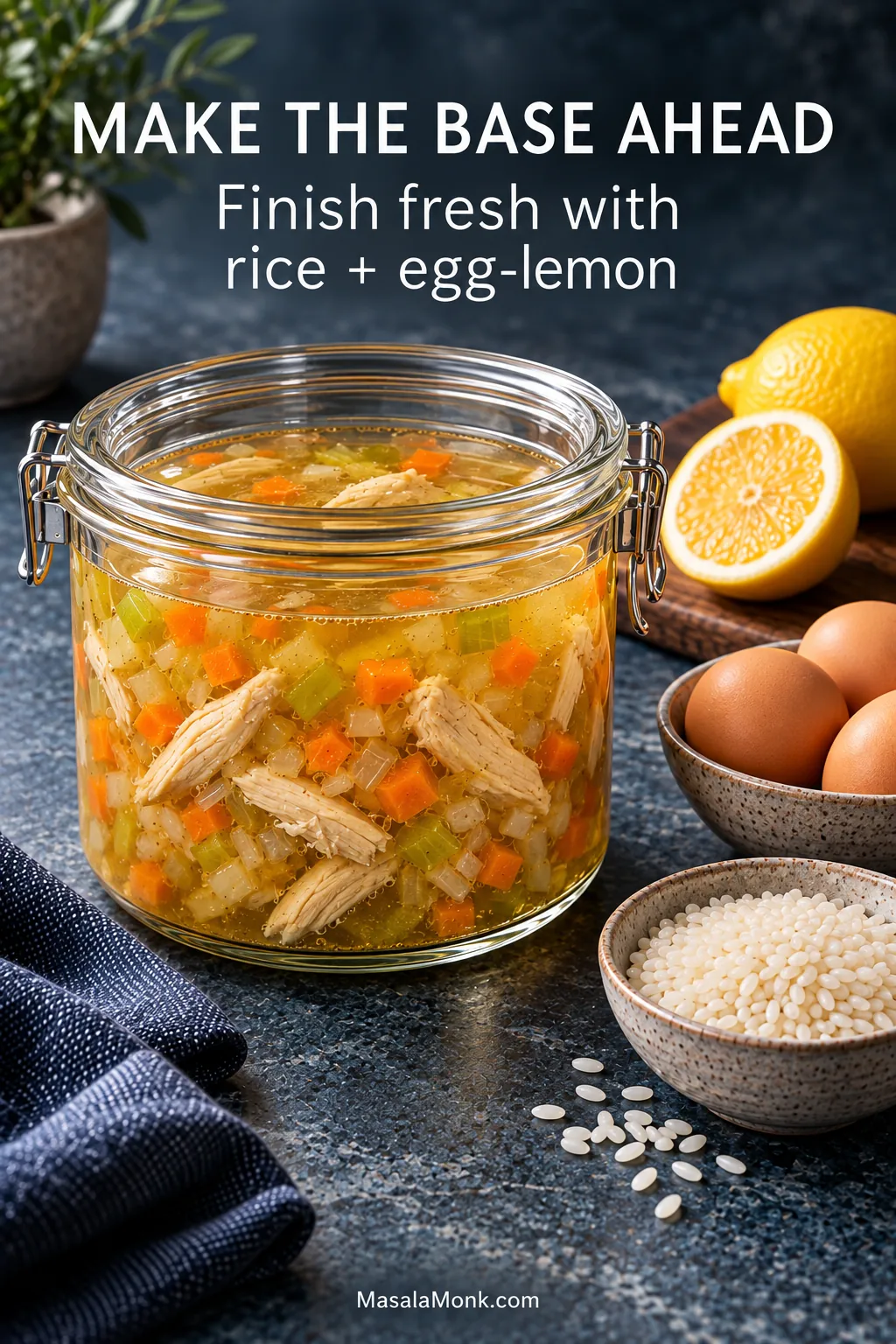
For the best texture when you already know the soup is for later, stop earlier: chill the chicken-and-broth base before adding the rice or orzo and egg-lemon mixture, then finish the soup closer to serving. Shallow containers help a large batch cool more quickly.
Storing & Reheating Avgolemono
How Long Does Avgolemono Keep?
Properly refrigerated leftovers are generally best used within about 3–4 days. Rice or orzo will continue softening during storage, so a finished batch will not look exactly as it did on the first night.
How to Reheat Avgolemono Safely
The USDA leftovers guidance says reheated leftovers should reach 165°F / 74°C and soups should be brought to a rolling boil.
That treatment is hard on Avgolemono’s egg-lemon texture, so a reheated batch may be less smooth than the first pot. Food safety takes priority. If second-day texture matters, the base-only make-ahead method above is the better choice.
Can You Freeze Avgolemono?
You can freeze finished Avgolemono, but the thawed soup may be grainier and the rice or orzo softer. The more reliable approach is the same one used for make-ahead cooking: freeze the chicken-and-broth base before the starch and egg-lemon finish.
Thaw the base safely, heat it, cook the rice or orzo, then make the Avgolemono fresh.
The Finished Bowl
This Avgolemono doesn’t rely on cream or a large amount of rice for its body. The broth should pour rather than sit, the chicken should be tender, and the lemon should smell fresh before the acidity becomes the first thing you notice.
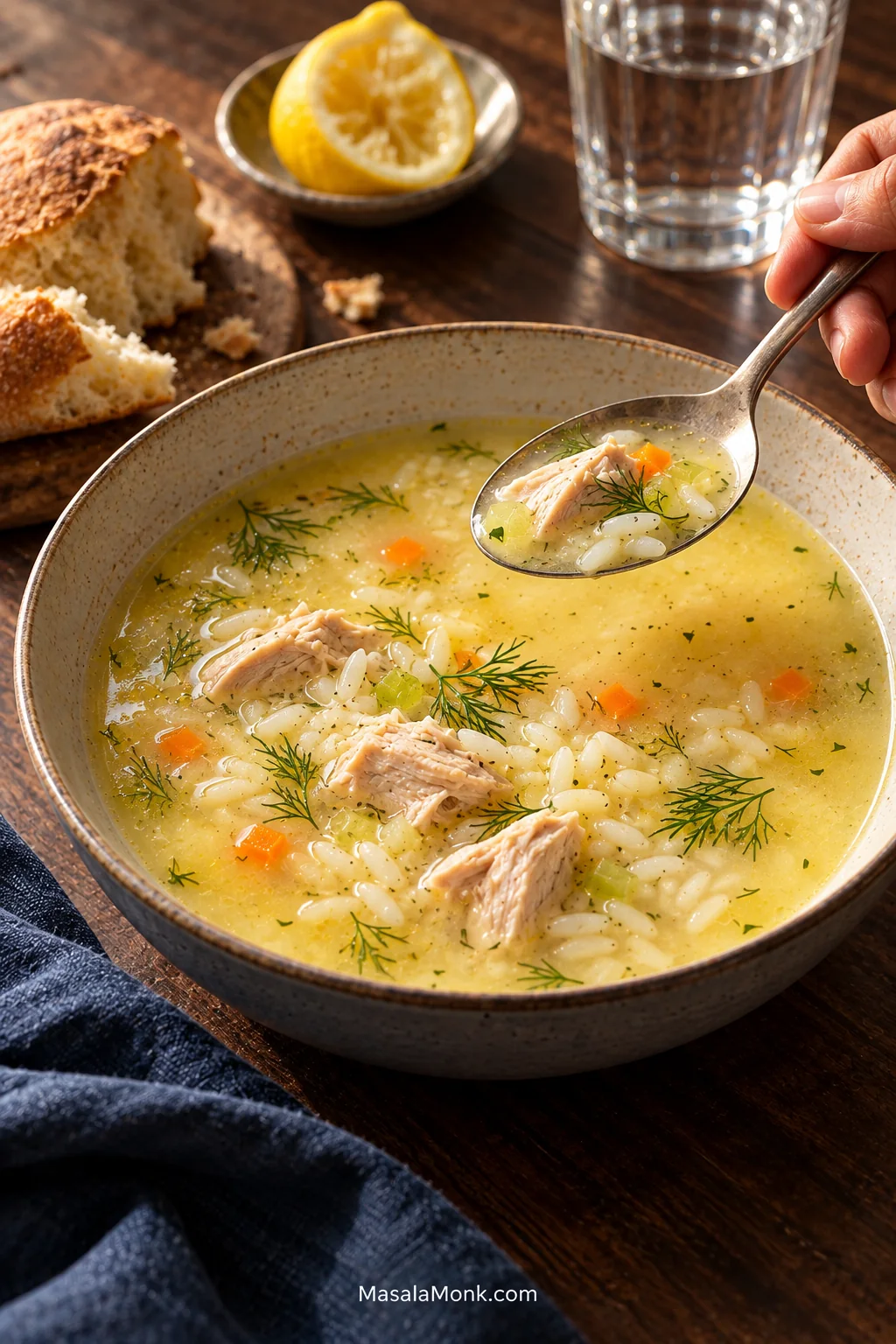
Once the rhythm makes sense, the technique fades into the background. What is left in the bowl is tender chicken, soft rice, fresh lemon and a broth that somehow feels creamy without being heavy.
Simmer → Stop → Temper → Rest.








