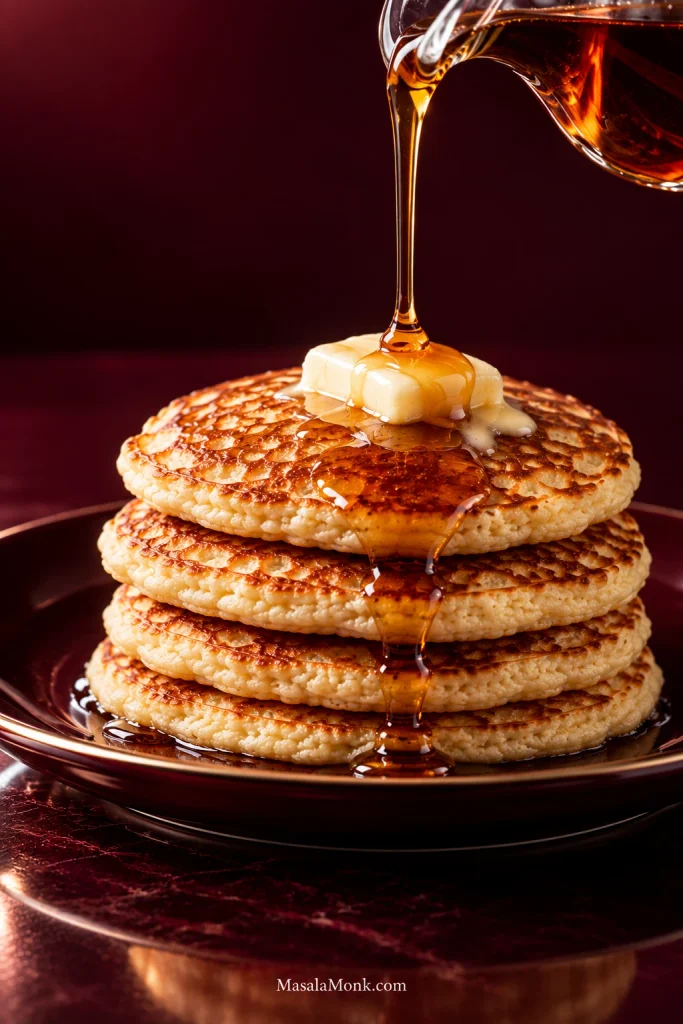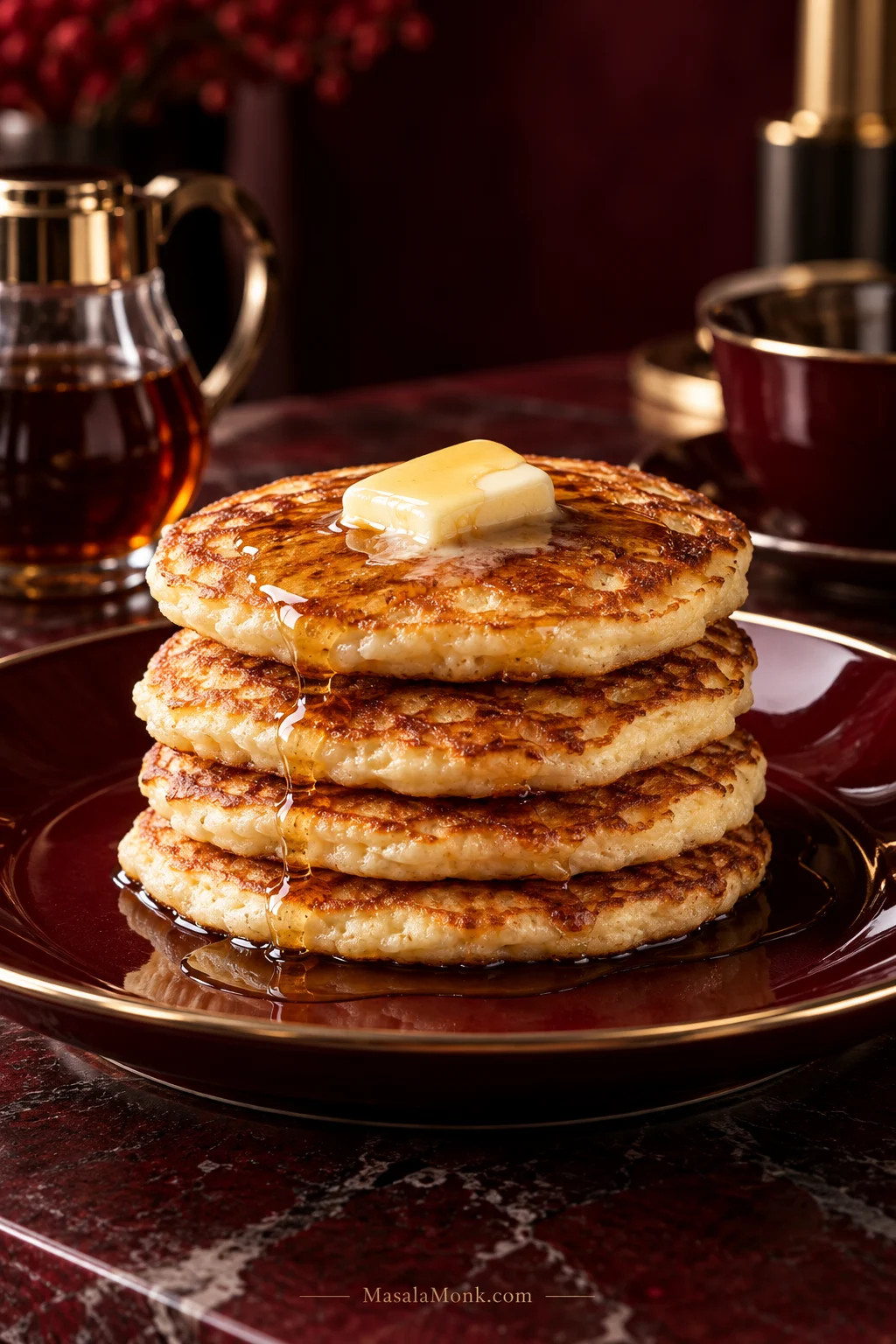
A full cup of cottage cheese disappears into these pancakes once it is blended with the eggs. You get the extra protein and tenderness without obvious curds or a strong cheese flavor.
The finished stack should still give you what you want from an ordinary pancake: an evenly golden surface, a fork-tender middle and that warm butter-and-vanilla smell coming off the skillet. More protein is useful, but breakfast should not turn into a rubbery, eggy compromise just to get it.
The main wrinkle is moisture. Cottage cheese can make the batter too loose, while an overly hot pan can brown the outside before the middle is ready. This cottage cheese pancakes recipe keeps both under control without making breakfast fussy.
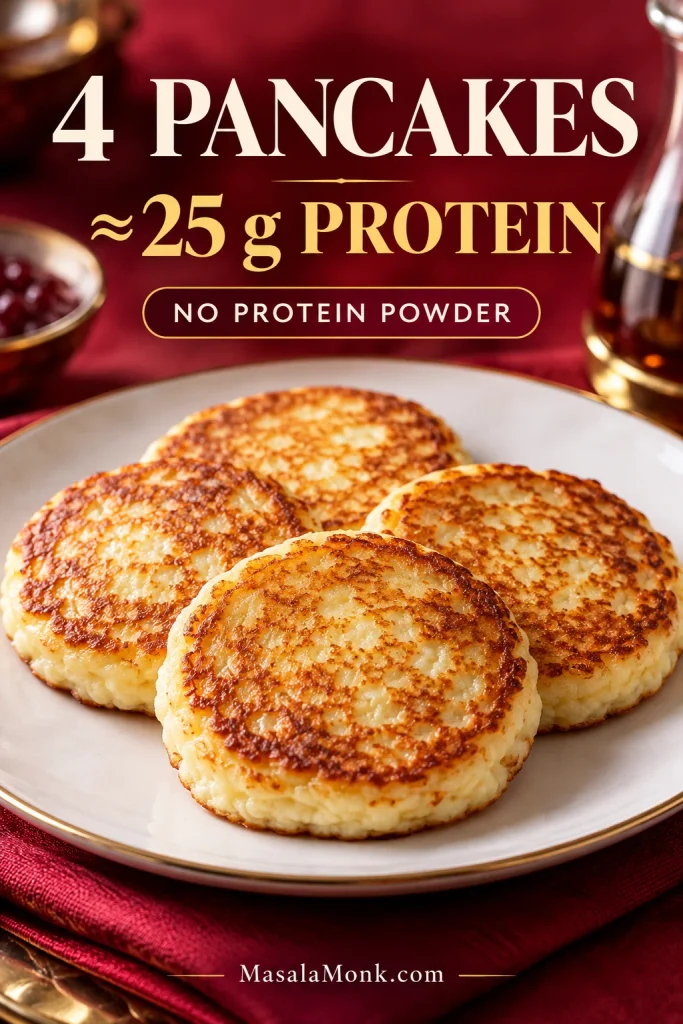
The short version: these are fluffy cottage cheese pancakes with no obvious cottage-cheese taste and about 25 g protein per 4-pancake serving—without protein powder. Blend the wet ingredients, fold them into the flour, then cook one test pancake before making the batch.
Cottage Cheese Pancakes Recipe
Fluffy cottage cheese pancakes with buttery vanilla flavor, lightly golden edges and a tender, springy middle. Blending only the wet ingredients hides the curds while keeping the flour gently mixed.
Equipment
- Blender or immersion blender with a tall blending vessel
- Medium mixing bowl and whisk
- Silicone spatula
- Kitchen scale, recommended
- 10–12 inch nonstick skillet or flat griddle
- Thin, wide spatula or turner
- ¼-cup measure or portion scoop
Ingredients
- 1 cup / 220 g / 7.8 oz cottage cheese, preferably whole-milk/4% or a thick 2%
- 2 large eggs, about 100 g without shells
- 1 cup / 120 g / 4.2 oz all-purpose flour
- 2 teaspoons / 8 g double-acting baking powder
- ¼ teaspoon / about 1.5 g fine salt; reduce to ⅛ teaspoon if your cottage cheese tastes particularly salty
- 2 tablespoons / 25 g granulated sugar
- 2 tablespoons / 30 ml milk, plus more only if needed
- 1 teaspoon / 5 ml vanilla extract
- 1 tablespoon / 14 g unsalted butter, melted and cooled slightly
- Neutral oil for the skillet; a little butter can be added for flavor
Instructions
Make the Batter
- Mix the dry ingredients. Whisk the flour, baking powder and salt together in a medium bowl.
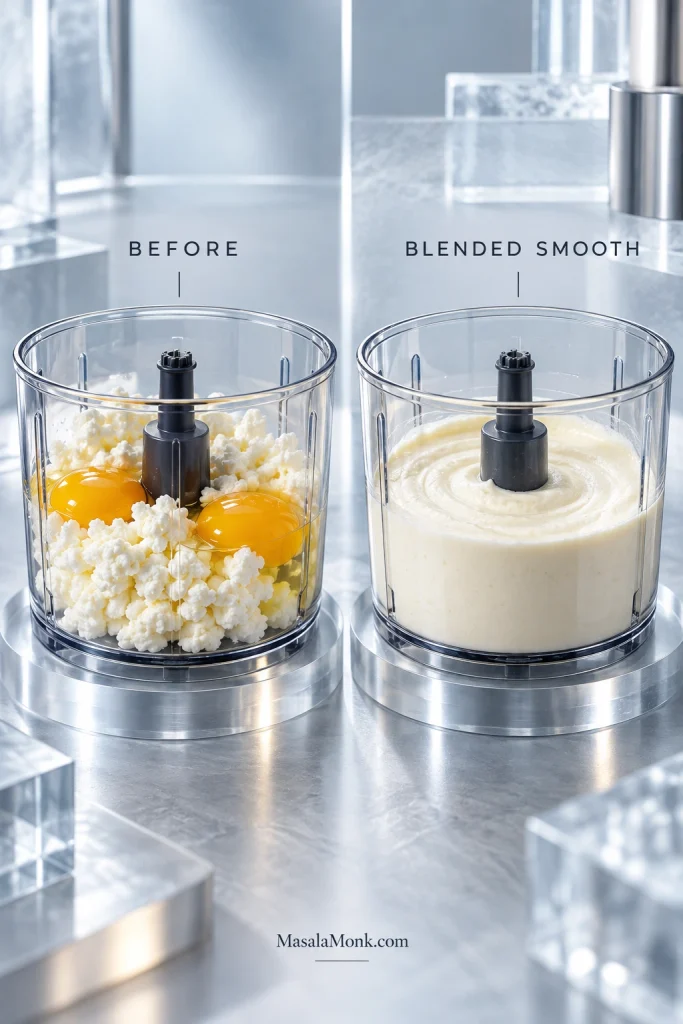
- Blend the wet ingredients. Add the cottage cheese, eggs, sugar, 2 tablespoons / 30 ml milk, vanilla and melted butter to a blender, or to a tall blending vessel if using an immersion blender. Blend for about 20–30 seconds, just until smooth and creamy.
- Fold the batter together. Pour the blended mixture into the flour. Fold with a silicone spatula until no dry pockets remain. A few small lumps are harmless; stop once everything is combined.
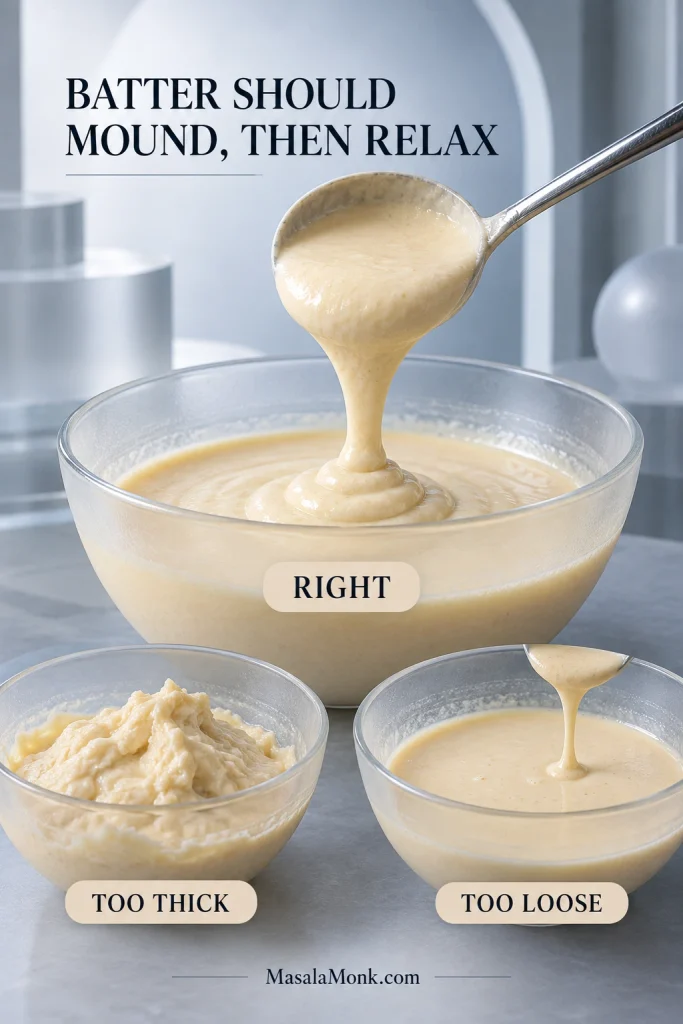
- Check the consistency. A scoop should fall slowly, mound for a moment and then relax into a round. Batter that sits like paste can take another 1 tablespoon / 15 ml milk. If it runs outward immediately, fold in 1 tablespoon / about 8 g flour, wait a minute or two and check again.
Calibrate with One Pancake
- Warm and grease the skillet. Heat a nonstick skillet or flat griddle over medium-low heat for a couple of minutes while the batter sits. If you have a surface thermometer, 325–340°F / 163–171°C is a useful place to begin. Wipe the surface with a thin film of neutral oil; add a little butter if you want more flavor, but avoid leaving puddles underneath the pancakes.
- Cook one test pancake. Use a scant ¼ cup / 60–65 g batter and keep it around 3½–4 inches / 9–10 cm wide. Your first pancake matters more than the dial on the stove.
- Watch the first side. Cook for 2½–3½ minutes. The edge should look set, the glossy shine on top should begin to fade, and a thin spatula should slide underneath without tearing the pancake. A few bubbles are useful; you do not need a surface covered in them.
- Flip and check the center. Flip once and do not press. Cook for another 1½–2½ minutes. If you are unsure, cut into the test pancake: the center should be set and lightly springy with small air pockets. A glossy or wet stripe through the middle still needs more cooking at gentler heat.
Finish the Batch
- Finish the batch. Adjust the heat if needed, then cook 2–3 pancakes at a time, depending on skillet size, leaving enough room to flip them easily. A roomy 12-inch skillet can usually handle three; a 10-inch skillet is more comfortable with two. The pan may get hotter as you go, so lower the heat if later pancakes color faster. Wipe away dark butter solids or burnt crumbs and refresh the thin film of fat when needed.
- Serve or keep warm. Serve straight from the skillet, or hold cooked pancakes on a wire rack over a sheet pan in a 200°F / 93°C oven.
Recipe Notes
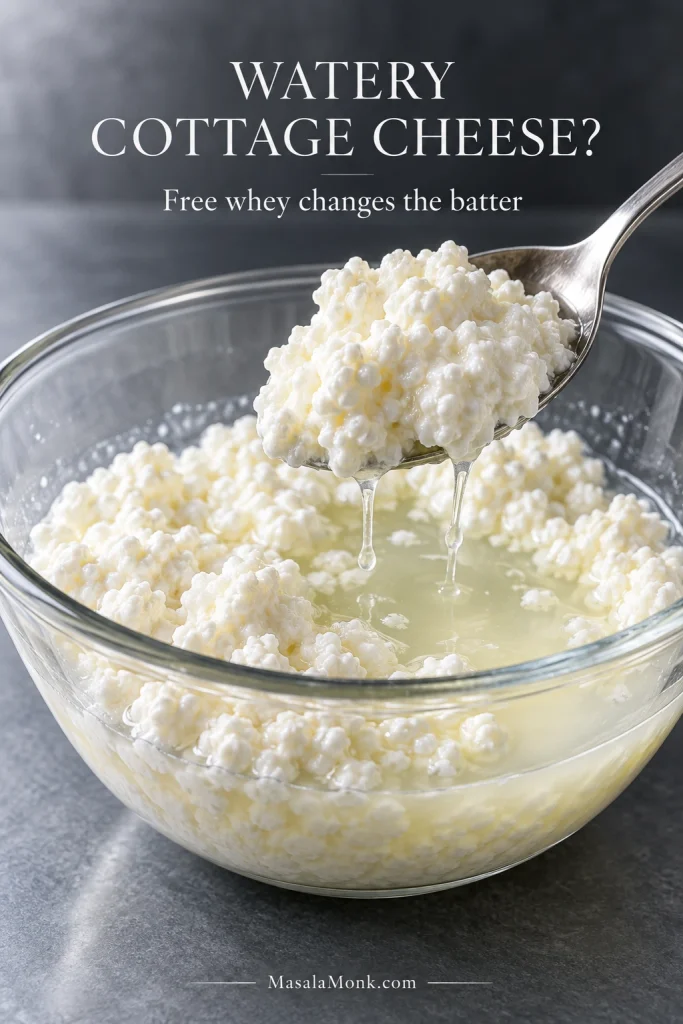
- Very watery cottage cheese: if a large pool of whey has separated, stir the cottage cheese first. If it remains unusually watery, do not include a large pool of loose whey in your measured 220 g portion.
- Protein: approximately 25 g protein per 4-pancake serving, with some variation between cottage-cheese and milk brands.
- Storage: refrigerate cooked pancakes for up to 4 days or freeze for up to 3 months for best quality.
If the first one cooks evenly and the center is set, make the rest. Everything below is optional help; you do not need to read it before breakfast.
Need More Help?
Can You Taste the Cottage Cheese?
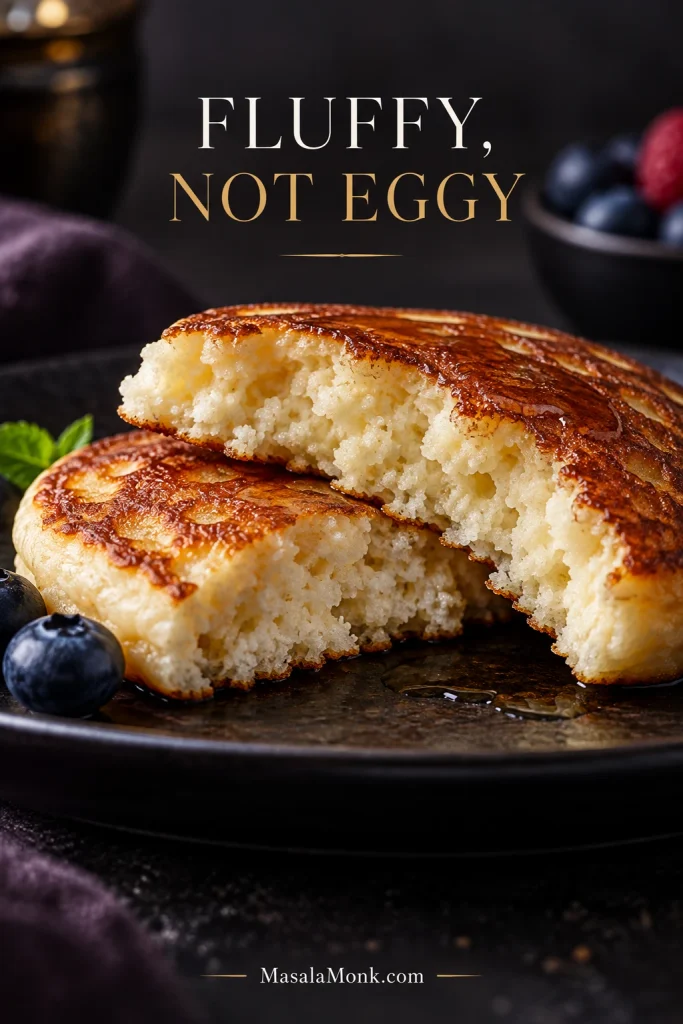
You should not taste obvious cottage cheese once it is blended smooth. It becomes a creamy base that adds moisture, richness and protein without leaving white curds throughout the pancake. There may be a faint dairy tang, but vanilla, butter and a modest amount of sugar keep the flavor firmly in breakfast territory.
You don’t want the pancakes tasting eggy either. In this formula, two eggs provide enough binding without pushing the texture firmer or the flavor toward egg. Adding extra egg just to raise the protein number changes the pancake rather than quietly improving it.
How Thick Should Cottage Cheese Pancake Batter Be?
The batter should fall slowly from a scoop and briefly hold its shape before settling. It should not pour across the skillet.
- Slowly drops and settles: you’re ready to cook.
- Sits in a stiff mound: fold in a tablespoon of milk.
- Runs quickly: fold in a tablespoon of flour, give it a minute and check again.
Which Cottage Cheese Works Best?
Whole-milk/4% cottage cheese is the easiest default for richness and consistency, while a thick 2% works well too. Some brands are almost ricotta-thick; others have much more loose whey, so the same weight can still produce slightly different batters.
Small-curd versus large-curd matters much less once the cottage cheese is blended. Fat-free cottage cheese is less rich and can vary more in moisture, so judge the finished batter rather than trying to force every brand into exactly the same consistency.
Blend the Wet Base Smooth, Then Fold in the Flour
Blend the cottage cheese with the other wet ingredients until the mixture looks smooth and creamy, then stop. Add that blended base to the flour and fold by hand. Keeping the flour out of the blender helps prevent overmixing, while avoiding unnecessary extra milk keeps the batter from becoming too loose.
Cottage Cheese Pancakes Without a Blender
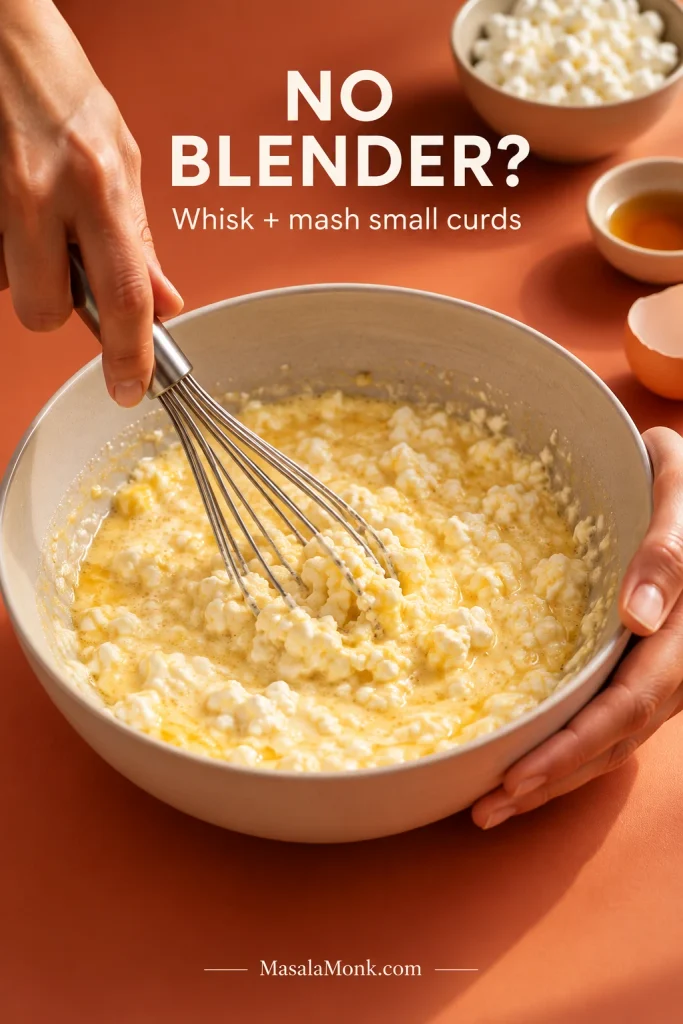
Yes, you can make them without one. Small-curd cottage cheese is easiest. Whisk it vigorously with the eggs, milk, sugar and vanilla, pressing larger curds against the side of the bowl with a fork or sturdy whisk. Let it sit for a minute, mash any stubborn curds once more, then stir in the melted butter.
Fold the wet mixture into the dry ingredients and stop once the flour disappears. The finished pancakes will have a few creamy pockets instead of a completely smooth crumb, which is perfectly fine.
Let the First Pancake Tell You What to Change
Cook one test pancake before filling the skillet. It tells you whether the heat, portion size and timing are working together.
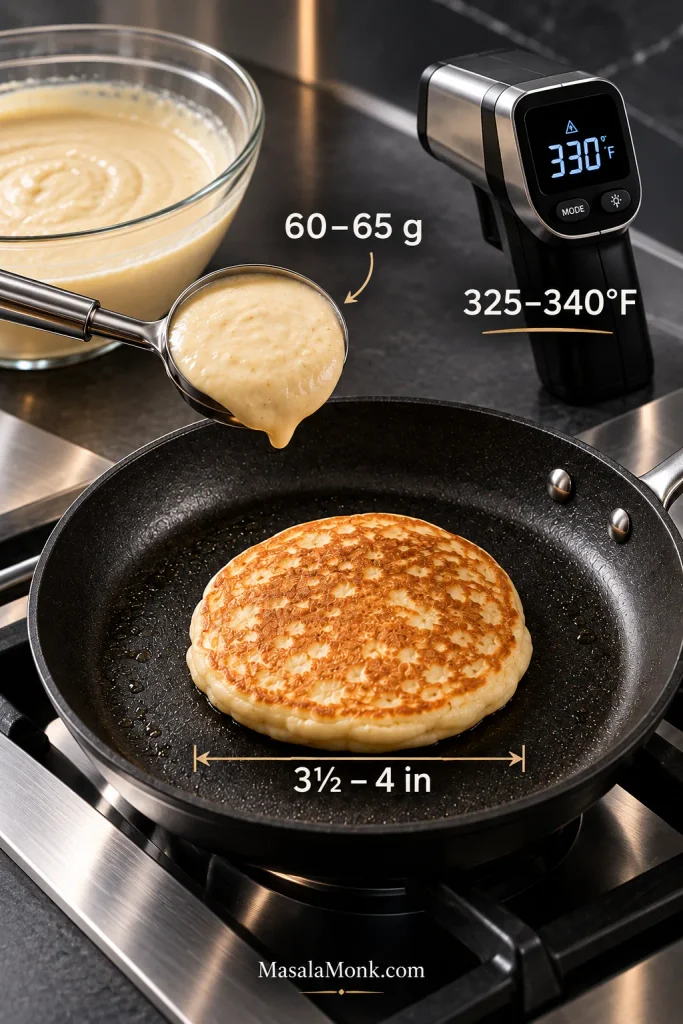
If the pancake gets dark while the top is still glossy, lower the heat; if the spatula tears the edge, give the first side longer.
Bubbles are only one clue. Watch the sheen on top, look for the edge to set, and feel whether the pancake releases easily when the spatula slides underneath. Once flipped, leave it alone rather than pressing it flat.
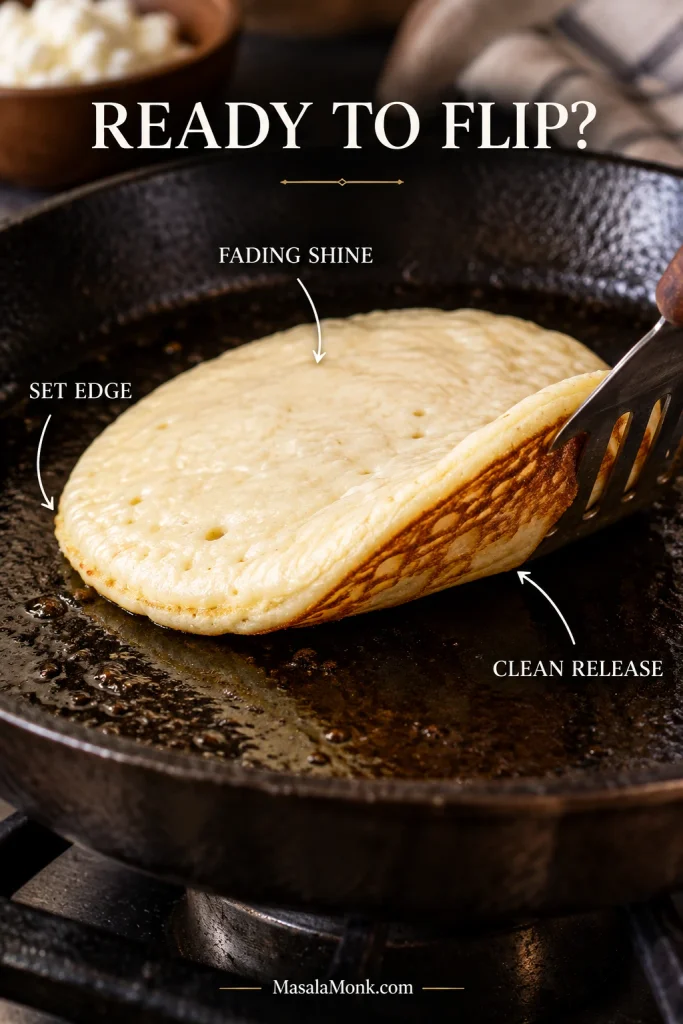
When the heat is right, the underside comes off the skillet evenly golden and the center springs back gently under a fingertip. Tear one open and the crumb should be set and lightly springy—not wet or custardy through the middle.
Back to Recipe · Something went wrong? Troubleshoot the batch
Cottage Cheese Pancake Troubleshooting
Most batches will never need this section. But if the first pancake comes off the skillet looking wrong, the batch is usually still fixable. Change one thing, cook another small pancake and see what happened.
A wet or glossy center means the pancake is still undercooked. Common reasons are a pan that is too hot, a pancake that is too large, or simply not giving the first side enough time. If the outside is already deeply browned, lower the heat before cooking the next one.
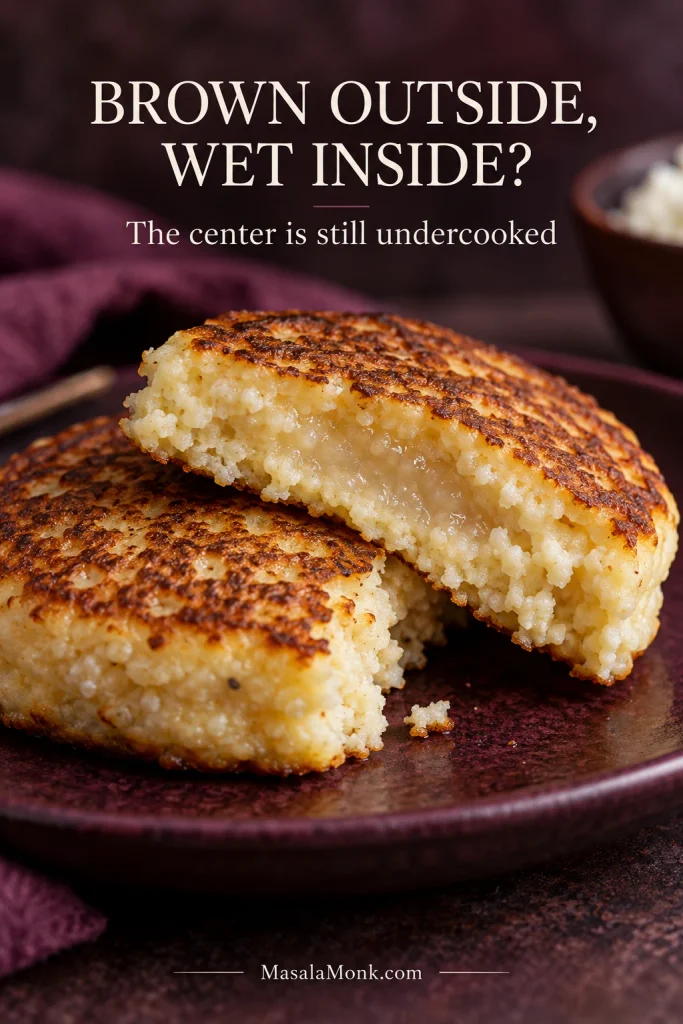
Cooking, Browning and Shape Problems
| Problem | Likely cause | Fix |
|---|---|---|
| Spreads too far | The batter is too loose or the cottage cheese is unusually wet | Thicken the batter slightly before cooking more. |
| Flat despite normal batter thickness | Stale or weak baking powder, or an overmixed batter | Use fresh double-acting baking powder and fold only until combined. |
| Breaks during the flip | Too large or turned before the first side had enough structure | Wait for a set edge and clean spatula release; make the next one smaller if needed. |
| Sticks to the skillet | The pan, fat or timing is working against you | Use nonstick or a well-seasoned griddle, keep a thin film of fat and let the first side release naturally. |
| Pale with greasy dark patches | Too much butter or oil is pooling underneath | Wipe the skillet back to a thin film before the next pancake. |
Gummy, Rubbery or Eggy?
If the middle is fully cooked but the texture still feels wrong, tear open the test pancake before changing the next batch. The crumb gives you more useful information than the surface color alone.
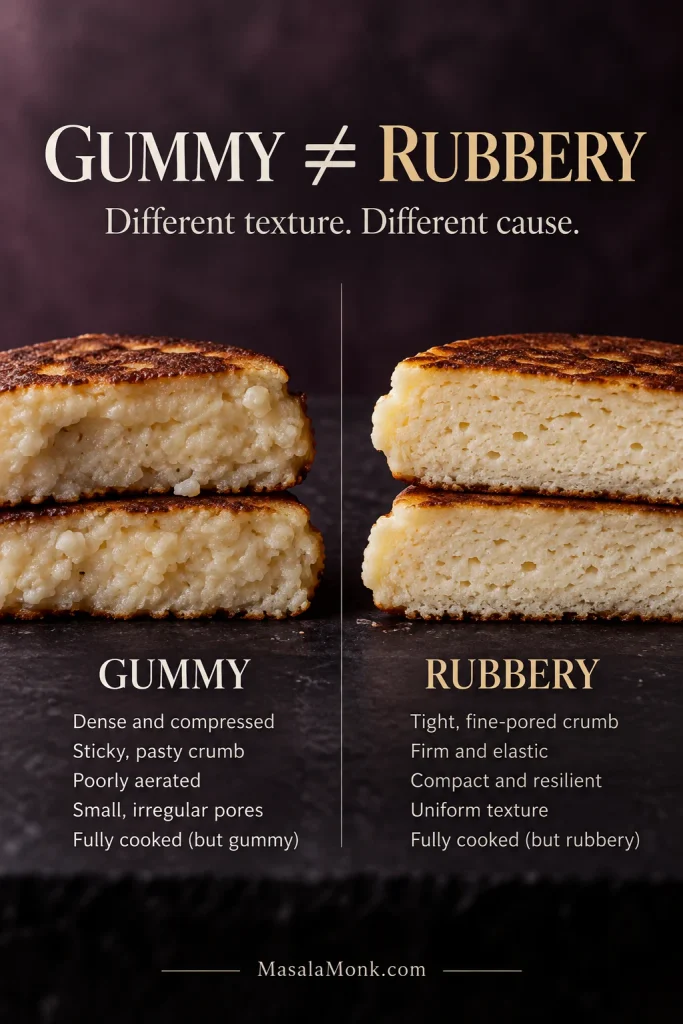
| Problem | Likely cause | Fix |
|---|---|---|
| Fully cooked but dense or gummy | The batter carried too much moisture or the flour was overmixed | Check the consistency and fold only until the dry flour disappears. |
| Dense or rubbery | Overmixing, extra egg or pressing after the flip | Fold only until combined, keep this formula at two eggs and do not press after turning. |
| Distinctly eggy | Too much egg relative to the rest of the batter | Do not increase the two-egg quantity just to raise the protein number; extra egg makes the pancakes firmer and more obviously eggy. |
| Too salty | The cottage cheese itself is particularly salty | Reduce the added salt to ⅛ teaspoon or omit it with an especially salty brand. |
| Too tangy | The cottage cheese has a stronger cultured flavor | Use a milder-tasting cottage cheese next time. Vanilla and a little sweetness can soften the impression, but they will not completely hide a strongly tangy brand. |
| Visible curds | The cottage cheese was not blended completely smooth | Blend the wet ingredients a little longer, or accept the creamy pockets in the no-blender version. |
Once the first pancake is golden, set and lifting cleanly, the rest is straightforward. If you want to change the recipe, the variations below account for how those changes affect the batter.
Cottage Cheese Oat Pancakes
Oats hydrate differently and do not form the gluten network that wheat flour does, so they need their own ratio and a short rest. The result is softer and less springy than the wheat-flour pancakes, with a more noticeable oat character.
For gluten-free pancakes, use certified gluten-free oats. Oats are still a grain, so this version is not grain-free.
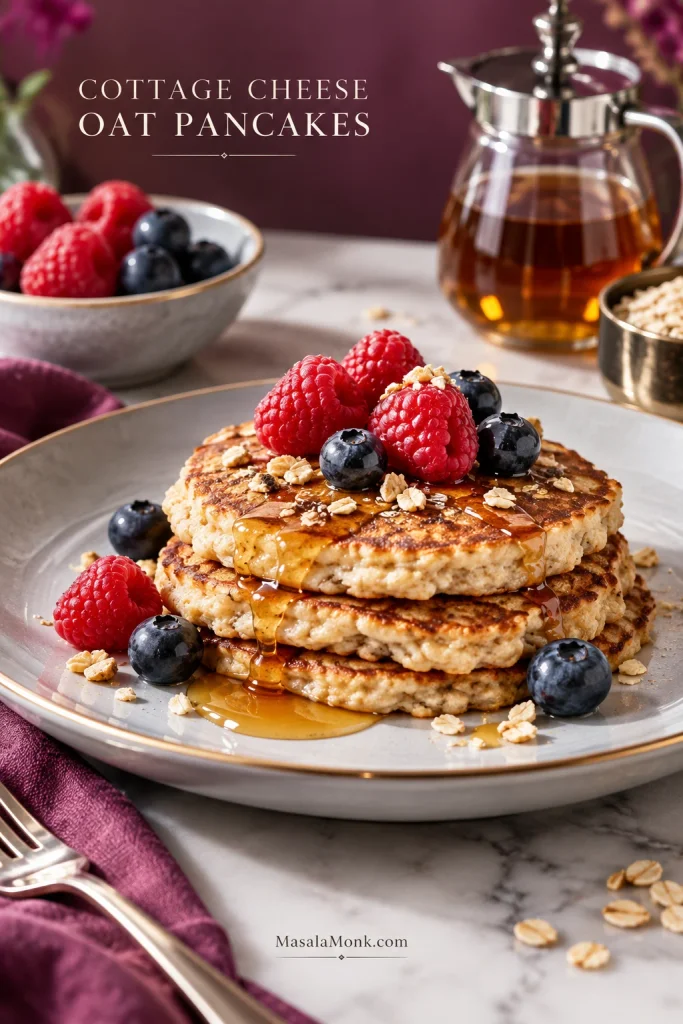
Oat Pancake Ingredients
- 1 cup / 220 g cottage cheese
- 2 large eggs
- 1 cup / 100 g rolled oats
- 1 teaspoon / 4 g baking powder
- Small pinch salt
- 1 tablespoon / 20 g maple syrup or honey
- 1 teaspoon / 5 ml vanilla extract
- Up to 2 tablespoons / 30 ml milk, only if needed after resting
Blend everything except the optional milk until the oats are finely ground, then leave the batter for 10 minutes. That gives the oats time to absorb moisture and makes the batter easier to portion.
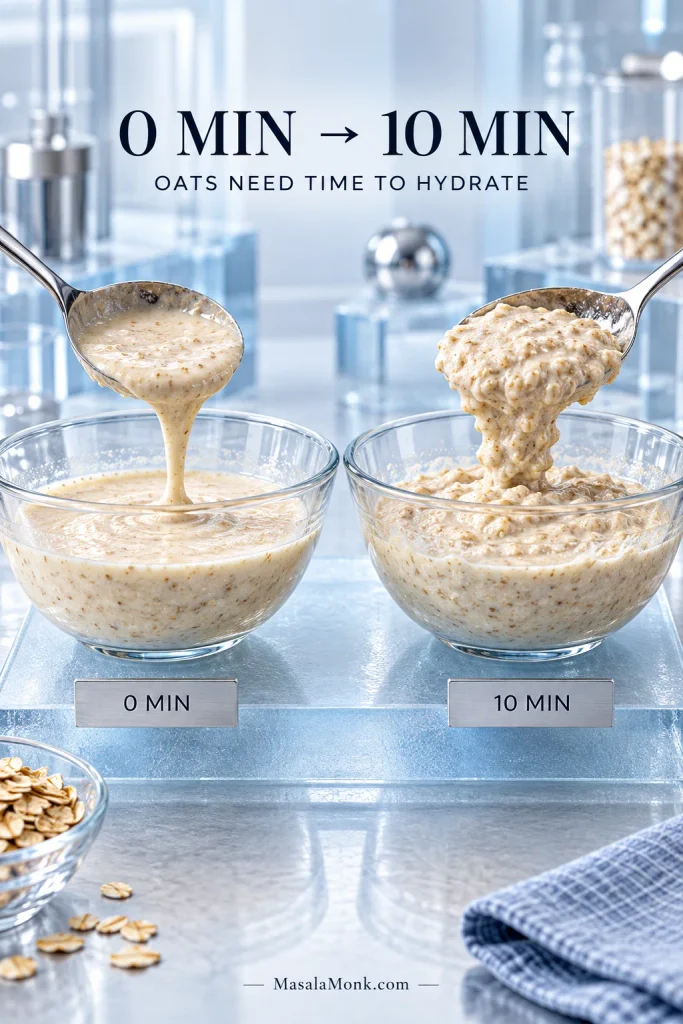
Lightly grease a nonstick skillet and use 2–3 tablespoons / 35–40 g batter per pancake. This makes about 10–12 small pancakes. Cook over medium-low heat for 2–3 minutes on the first side and 1–2 minutes after flipping, looking for a set edge and clean release.
If oats are the version you really want, our oat pancakes guide goes further into oat-based batters and variations.
Can You Make Cottage Cheese Pancakes Gluten-Free or Low-Carb?
Certified gluten-free oats are the most predictable gluten-free option here. If you want to try a cup-for-cup gluten-free baking blend, 120 g is a reasonable starting point in place of the all-purpose flour. Leave out the initial 2 tablespoons / 30 ml milk, mix the batter, let it sit for about 5 minutes, then add milk only if needed. Blends vary in how much liquid they absorb.
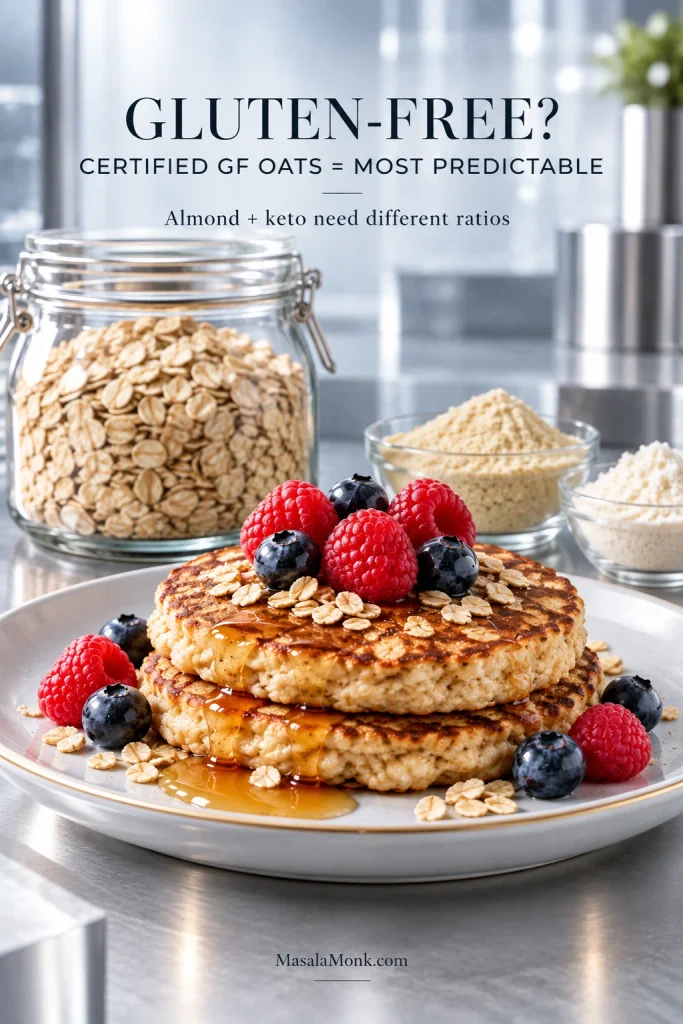
Almond flour absorbs liquid differently and makes a more delicate pancake. Start with the ratios in our almond flour pancakes rather than swapping it cup for cup here.
A true low-carb version needs different ratios again; those are built into our keto pancakes.
Adding Banana, Blueberries or Pumpkin
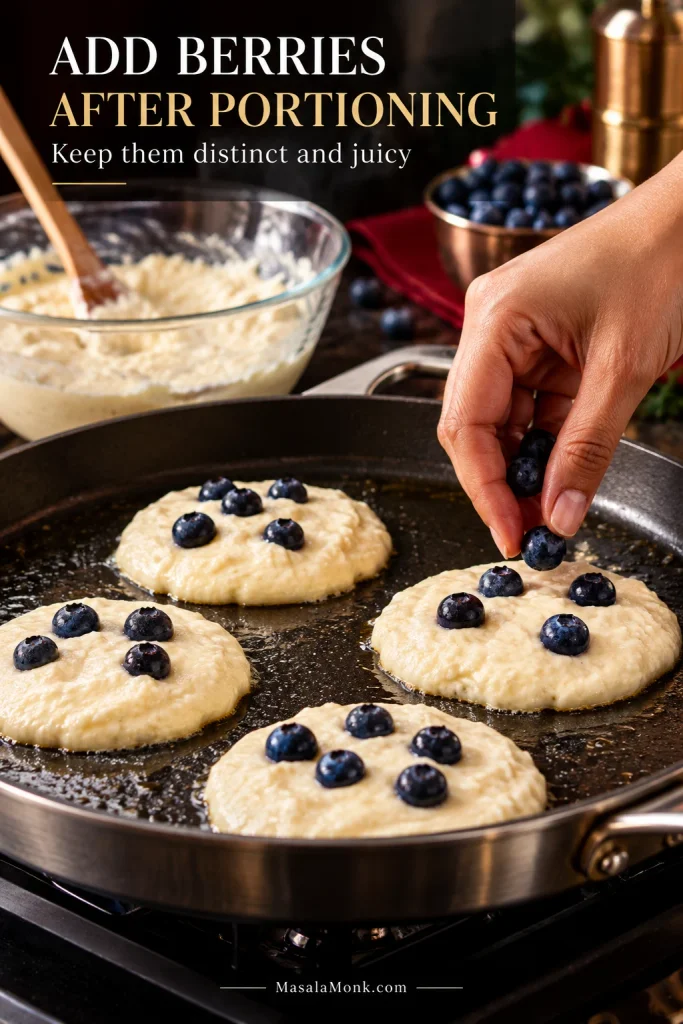
Banana and pumpkin change the batter itself, while blueberries are easiest to add after portioning. The main thing to watch is how much extra moisture reaches the pancake.
| Add-in | How to use it | What changes |
|---|---|---|
| Banana | Blend in about ½ medium ripe banana / 55–60 g. Begin with only 1 tbsp / 15 ml milk. With a very ripe banana, reduce the sugar to 1 tablespoon; you can omit it when serving with syrup. | The pancakes become softer, sweeter and a little more moist. |
| Blueberries | Portion the plain batter first, then scatter berries onto each pancake. Fresh or frozen both work; add frozen berries straight from the freezer. | The berries stay distinct and juicy instead of bleeding through the whole bowl of batter. |
| Pumpkin | Add ¼ cup / about 60 g pumpkin puree and leave out the initial milk. Add liquid only after seeing the mixed batter. For classic pumpkin flavor, add about ½ teaspoon cinnamon plus a pinch of ginger or pumpkin pie spice. | The pancakes become moister and slightly denser. |
Chocolate chips need no special adjustment; scatter them onto each pancake immediately after portioning. For more on fresh versus frozen berries and keeping fruit from weighing down the crumb, see our blueberry pancakes guide.
Small Batches and Faster Shortcuts
Sometimes you’re cooking for one. On other mornings, you may already have pancake mix in the cupboard or simply want the shortest ingredient list possible.
Cottage Cheese Pancakes for One
This is a half batch of the full recipe, so the texture and cooking cues stay the same. It makes about four 3½–4-inch / 9–10 cm pancakes.
- ½ cup / 110 g cottage cheese
- 1 large egg
- ½ cup / 60 g all-purpose flour
- 1 teaspoon / 4 g baking powder
- ½ teaspoon vanilla
- 1 tablespoon / 12 g sugar
- 1 tablespoon / 15 ml milk, plus more only if needed
- ⅛ teaspoon fine salt, or a smaller pinch with salty cottage cheese
- 1½ teaspoons / about 7 g melted butter
3-Ingredient Cottage Cheese Pancakes
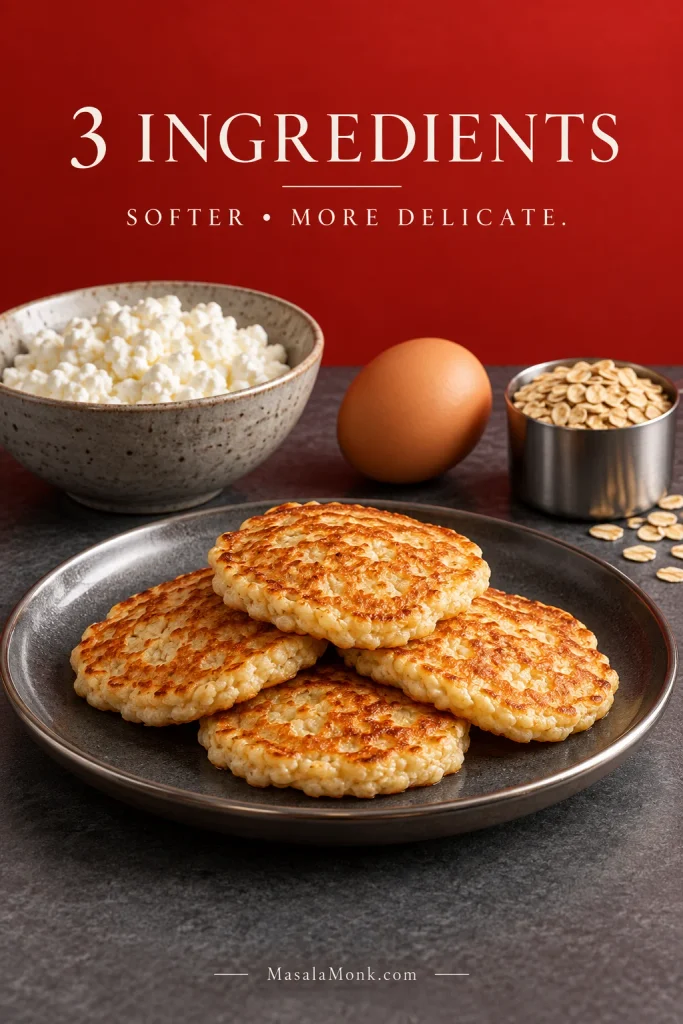
Three ingredients will get breakfast on the plate, but expect a plainer, softer and more delicate pancake than the full version. Choose this when the shortest ingredient list matters more than buttery-vanilla flavor and spring.
Blend ½ cup / 110 g cottage cheese, 1 large egg and ⅓ cup / about 35 g rolled oats. Rest for 10 minutes, then use 2 tablespoons / about 30 g batter per pancake. This makes about 6 small pancakes.
Cook over medium-low heat for 2–3 minutes on the first side and 1–2 minutes after flipping. Add about ½ teaspoon baking powder when fluffiness matters more than keeping the ingredient count at three.
Cottage Cheese Pancakes with Pancake Mix or Kodiak Mix
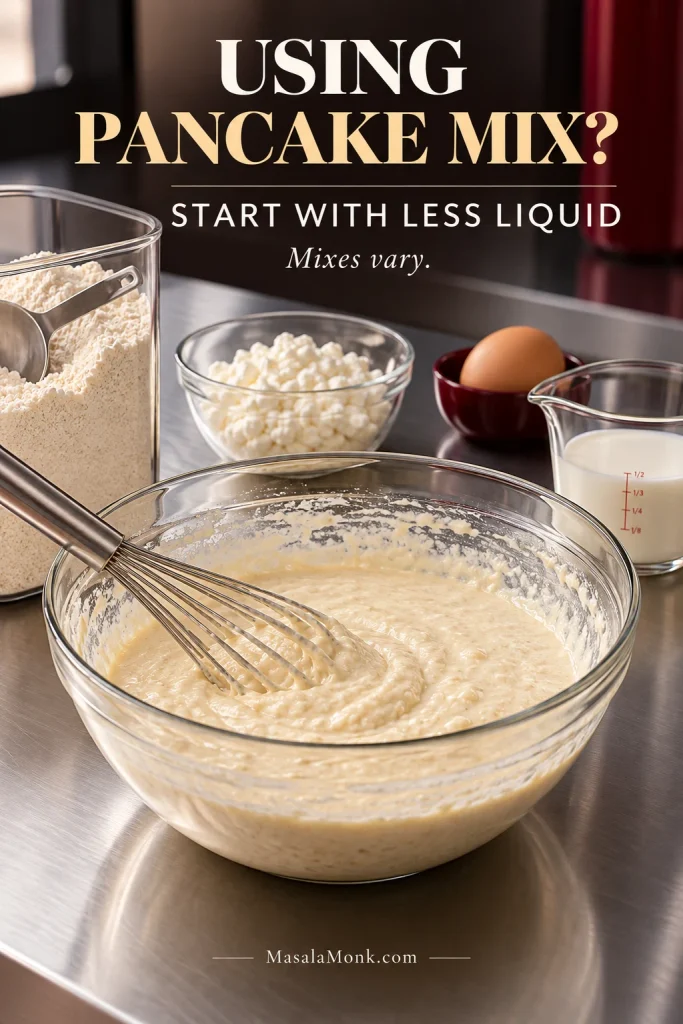
Pancake mixes vary widely. For a complete or protein pancake mix such as Kodiak, use the package weight for 1 cup if it is provided. As a starting point for 100–110 g dry mix, try ½ cup / 110 g blended cottage cheese, 1 large egg and about 3 tablespoons / 45 ml milk.
Give the mixed batter 3–5 minutes before adjusting. Add milk a tablespoon at a time when it is too thick; if it runs too freely, thicken it before it reaches the griddle. Treat this as a starting ratio rather than a universal conversion, because some mixes are designed for water alone while others expect eggs, milk or oil.
Storage, Freezing and Reheating
For the best lift, cook the flour batter after mixing rather than holding it overnight. The flour continues hydrating as it sits, and the baking powder begins reacting once it becomes wet. If you want to prep ahead, measure the dry ingredients in advance and keep the cottage cheese, eggs and other refrigerated ingredients cold until breakfast.
Cooked pancakes keep well in the refrigerator and can be frozen for up to 3 months for best quality.
Refrigerate
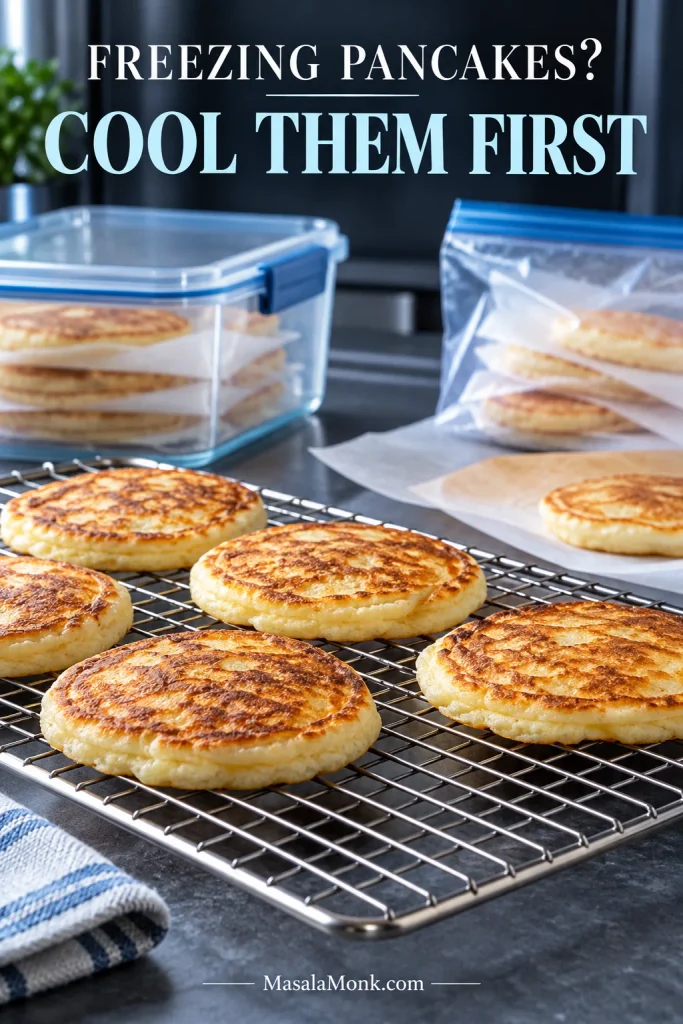
Let the pancakes cool briefly on a rack until the heavy steam has escaped, then refrigerate them promptly in an airtight container. Use within 3–4 days, in line with USDA food-safety guidance for leftovers.
Freeze
Freeze cooled pancakes in a single layer until firm, then move them to a freezer bag or container. Parchment between layers makes it easier to pull out one or two at a time.
Reheat
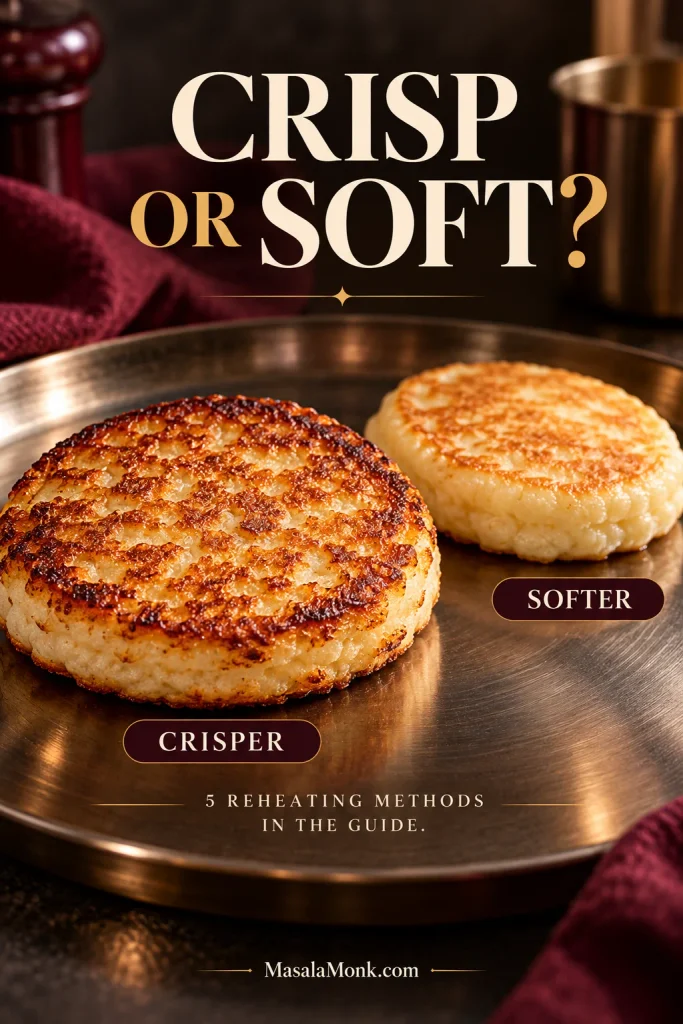
- Toaster: start with one normal toast cycle for refrigerated pancakes and check before adding another. Frozen pancakes may need an extra cycle.
- Oven or toaster oven: warm at about 325°F / 163°C for 5–8 minutes from the refrigerator; frozen pancakes will take longer.
- Air fryer: start around 325°F / 163°C for 2–4 minutes for refrigerated pancakes. Frozen pancakes will need longer, so continue in short increments and check early.
- Skillet: warm over low to medium-low heat until the centers are hot.
- Microwave: start with 20–30 seconds for one or two refrigerated pancakes, then add short bursts as needed. The exterior will stay soft rather than lightly crisp.
Serve Them Sweet or Savory
For the classic version, serve the first stack hot with butter melting into the top pancake, maple syrup and berries. Greek yogurt or nut butter makes the plate more substantial; fruit adds freshness without changing the batter.
For a savory batch, omit the vanilla and reduce the sugar to about 1 teaspoon or leave it out. Serve with eggs, herbs, yogurt or sour cream. If you have cottage cheese left in the tub, our cottage cheese breakfast guide has more ways to use it.
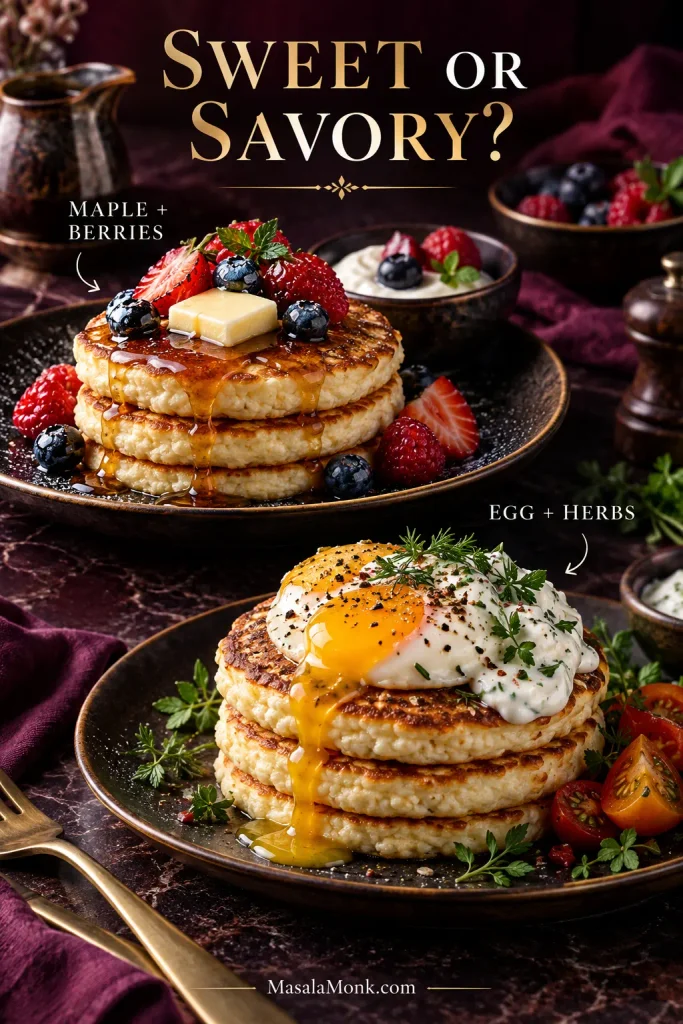
The pancake itself should already taste good before any topping arrives. Cottage cheese is there to make breakfast more tender, satisfying and higher in protein—not to make it feel like a compromise.