
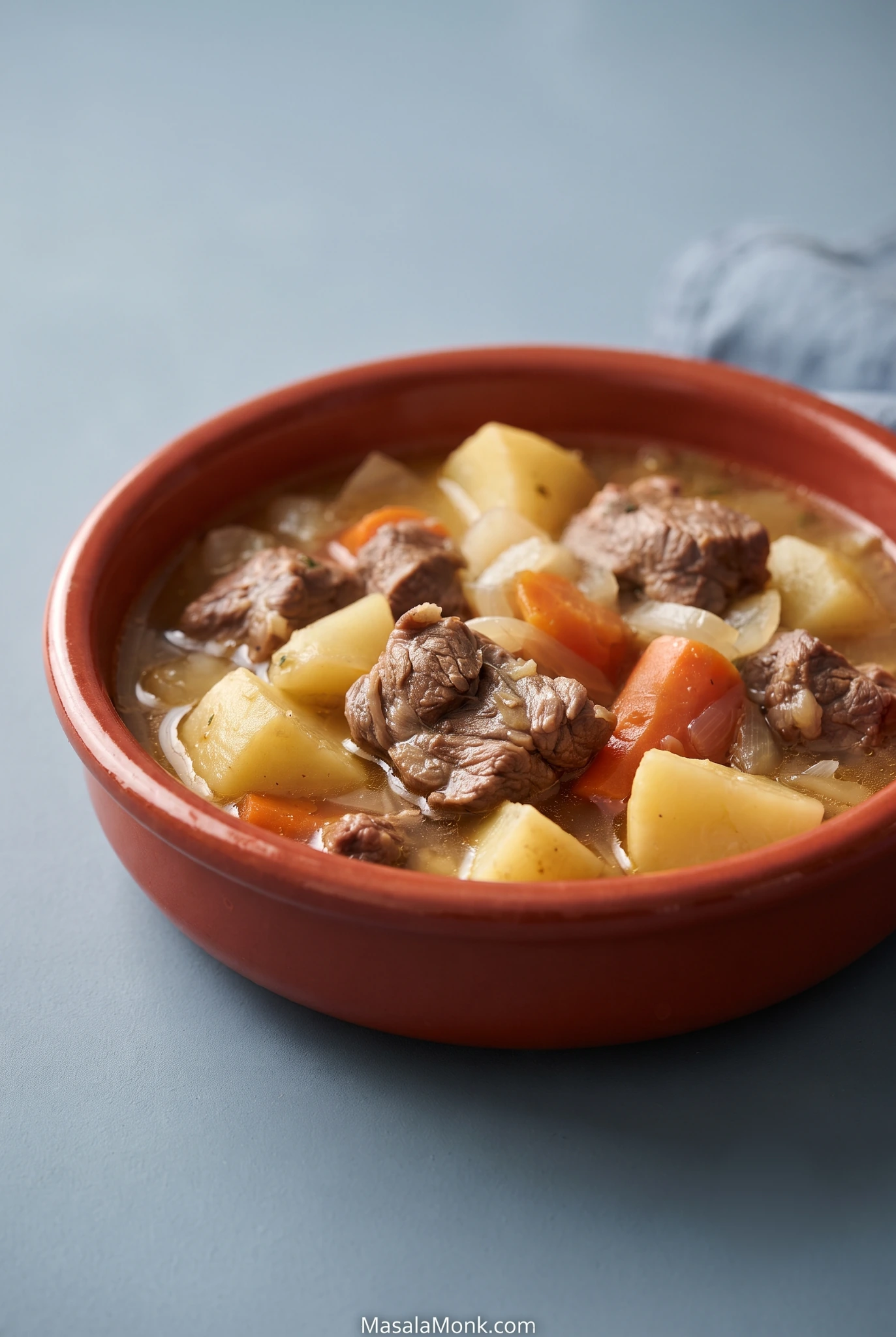
Tender lamb, potatoes that partly melt into the broth, and larger chunks that stay intact are what make a good Irish stew so satisfying. As the pot simmers, the onions soften, the lamb yields and the broth gains body from the potatoes.
This Irish stew recipe follows the familiar lamb-or-mutton, potato-and-onion foundation, with carrots and a little thyme. The key is to let the lamb become tender while giving the vegetables the cooking time they need—not to assume everything will be ready at once. If you’re looking for beef simmered with stout into a darker gravy, our Guinness Beef Stew Recipe takes a different route.
Irish Stew Recipe
Tender lamb shoulder, soft potatoes and carrots in a savory broth, naturally thickened as some of the potatoes soften into it.
Equipment
- A heavy 6-quart / 5.7-liter lidded pot or Dutch oven
- Sharp knife and cutting board
- Liquid measuring cup or jug
- Slotted spoon or tongs
Ingredients
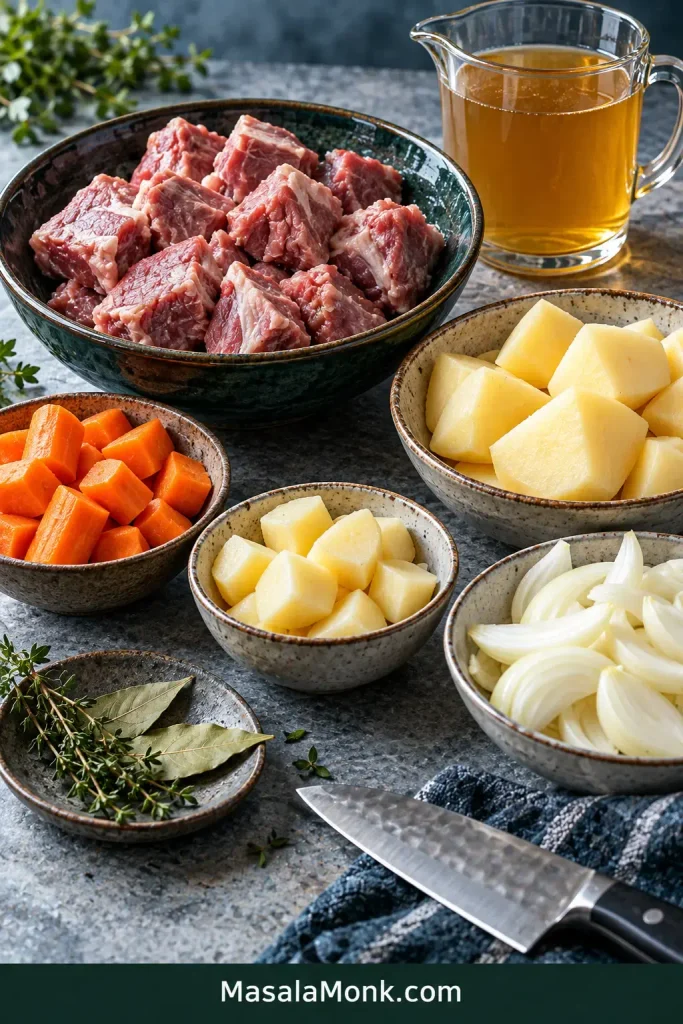
- 2 lb / 900 g boneless lamb shoulder, trimmed of large, hard pieces of exterior fat and cut into roughly 1½-inch / 4-cm chunks
- 2.2 lb / 1 kg potatoes, weighed before peeling, preferably floury or starchy potatoes such as Russets; cut into smaller and larger pieces as directed
- 2 large yellow onions, about 350 g after peeling, thickly sliced
- 3 medium carrots, about 250 g after trimming, cut into roughly 1-inch / 2.5-cm pieces
- 2 cups plus 2 tablespoons / 500 ml unsalted or low-sodium chicken or lamb stock
- 1½ cups / 350 ml water, plus a little hot water if needed
- 2 bay leaves
- 1 teaspoon dried thyme or 4–5 fresh thyme sprigs
- 1 teaspoon fine salt, about 5 g, divided, plus more to taste
- Freshly ground black pepper, ½ teaspoon, plus more to taste
- Chopped flat-leaf parsley, optional, for serving
Instructions
Build the Stew
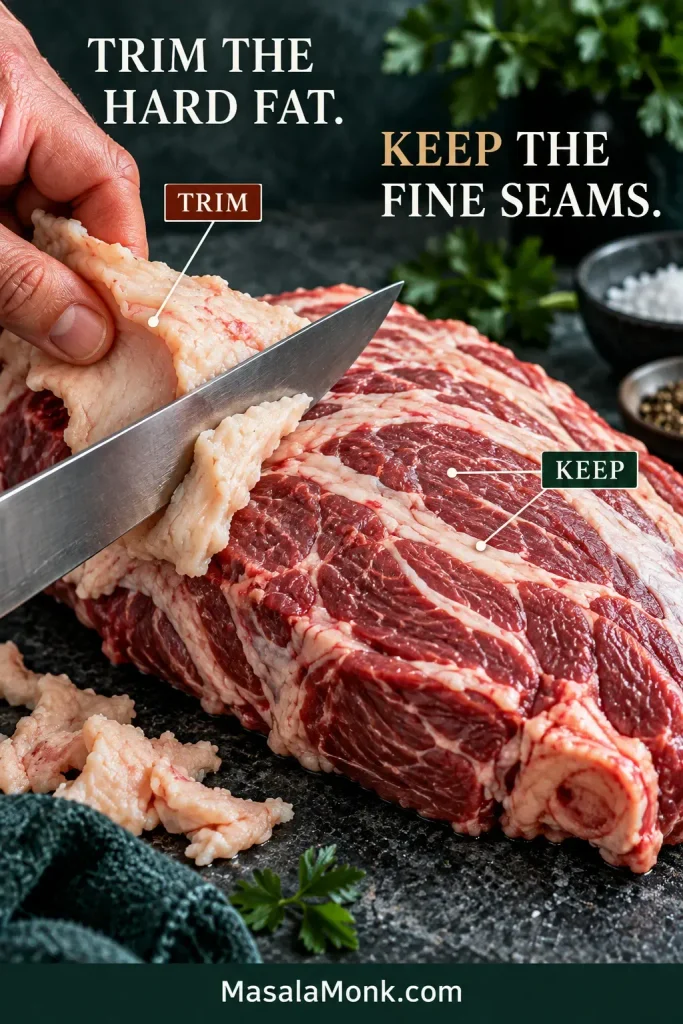
- Prepare the lamb and potatoes. Trim away large, hard pieces of exterior fat, leaving the finer seams running through the shoulder. Cut the lamb into roughly 1½-inch / 4-cm chunks and season with ½ teaspoon of the measured salt and all the black pepper. Peel the potatoes. Cut roughly one-quarter into 1-inch / 2.5-cm pieces and the rest into larger 1½-inch / 4-cm chunks.
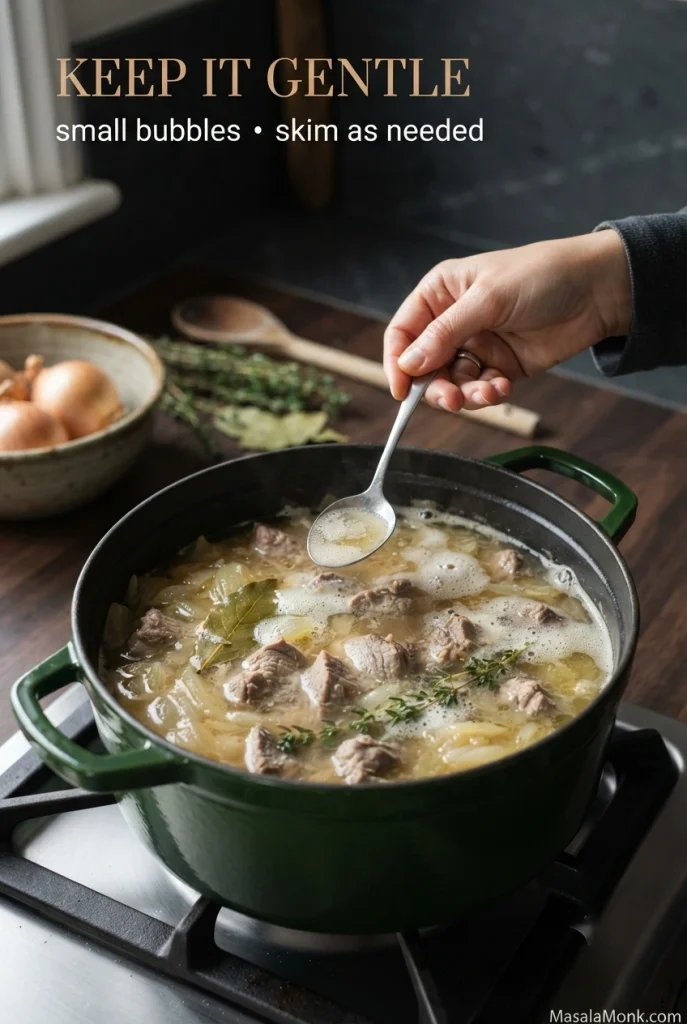
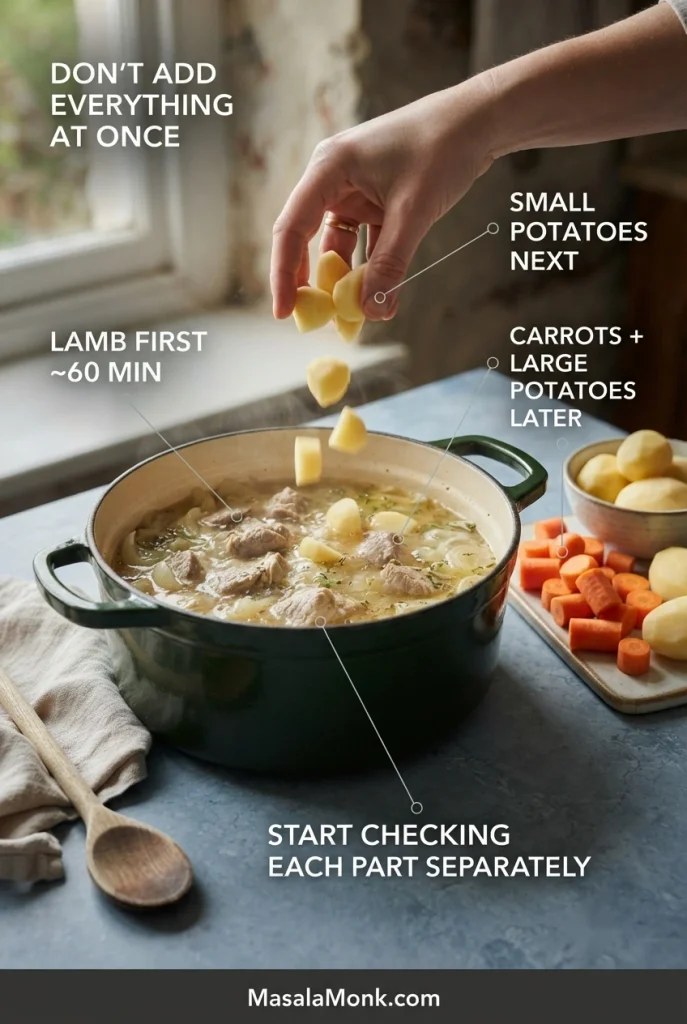
- Start the stew. Put the lamb, onions, stock, water, bay leaves, thyme and remaining ½ teaspoon of salt into the pot. The onions go in from the start so they have time to soften into the stew. Bring just to a boil, then lower the heat until only small bubbles break the surface. Partially cover the pot.
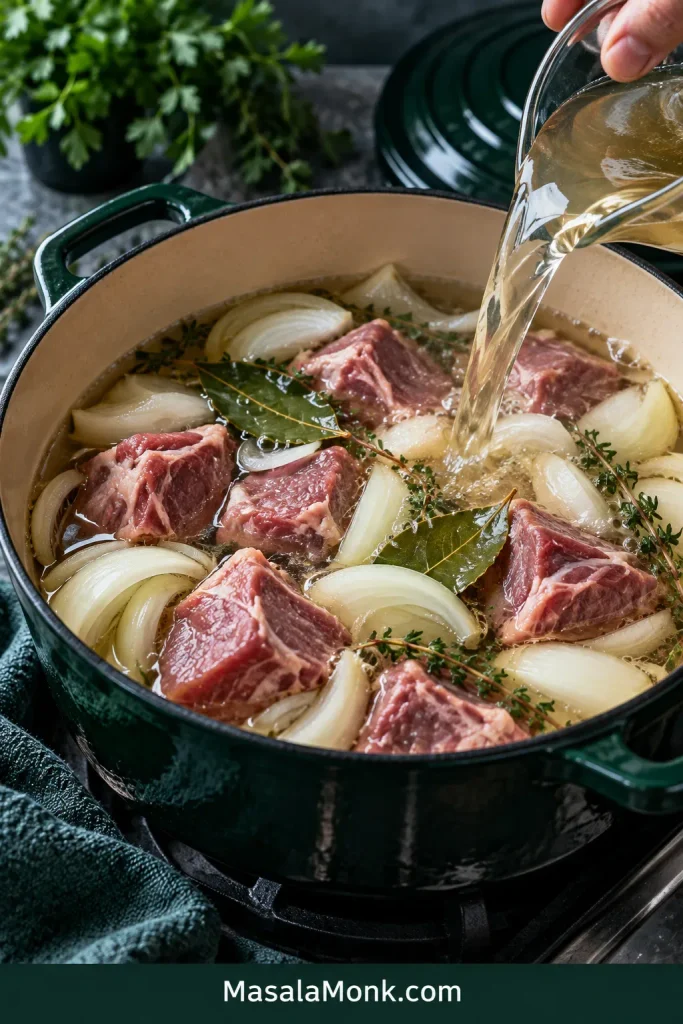
- Give the lamb a head start. Simmer gently for about 60 minutes, skimming away any heavy foam or large pools of fat as they rise to the surface. Don’t worry if the lamb is still firm; it has more cooking ahead.
- Add the smaller potatoes. Stir them in and simmer for 15–20 minutes. These pieces are meant to become very soft, and some may begin breaking apart into the broth.
Finish and Check the Stew
- Add the carrots and remaining potatoes. Stir them in gently and simmer, partially covered, for about 25 minutes, then begin checking. Give them another 5–15 minutes as needed. If the liquid drops too far while the lamb is still firm, add a little hot water.
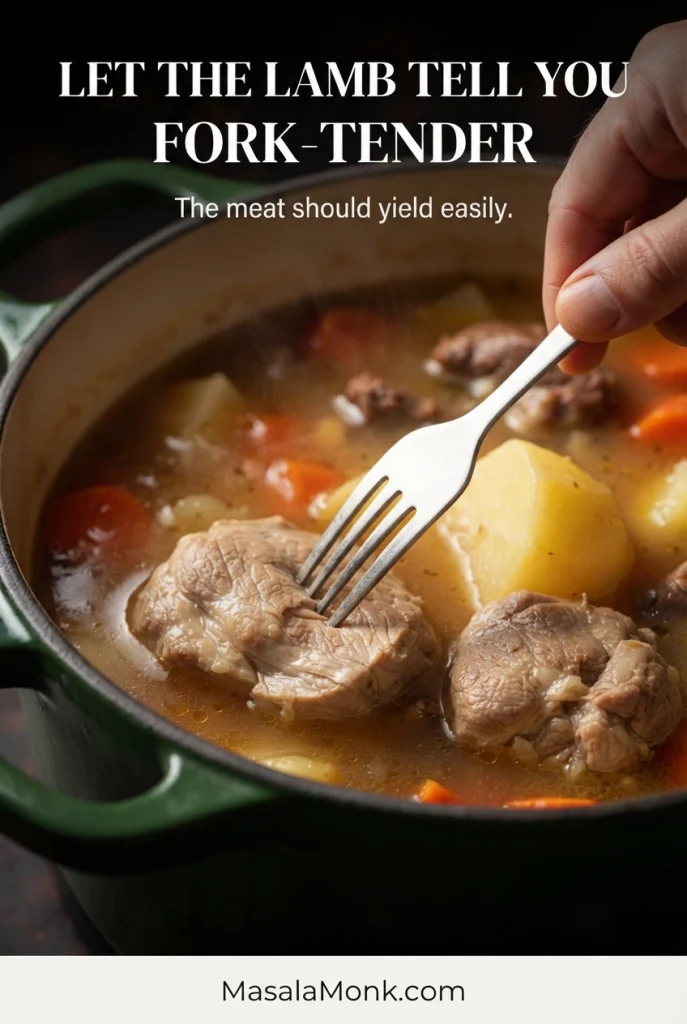
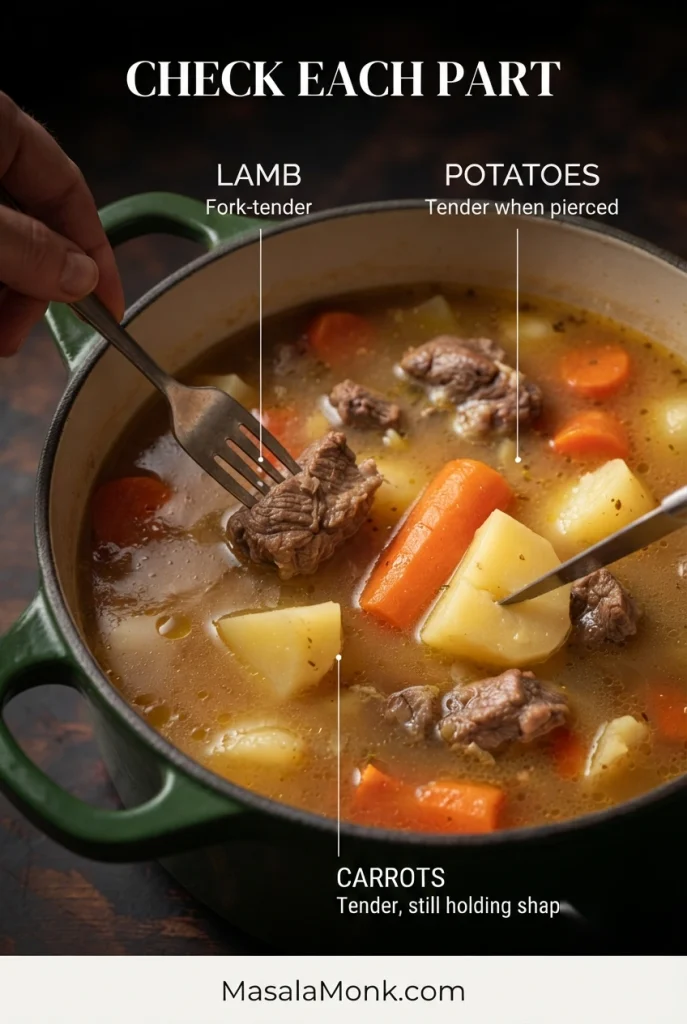
- Check everything separately. A knife should slide through the center of a large potato without finding a hard core. The carrots should be tender but still hold together. Press a piece of lamb with a fork; it should yield easily and begin to pull apart with gentle pressure. If the lamb is still chewy, lift out any vegetables that are already done and keep simmering the meat, checking every 15–20 minutes.
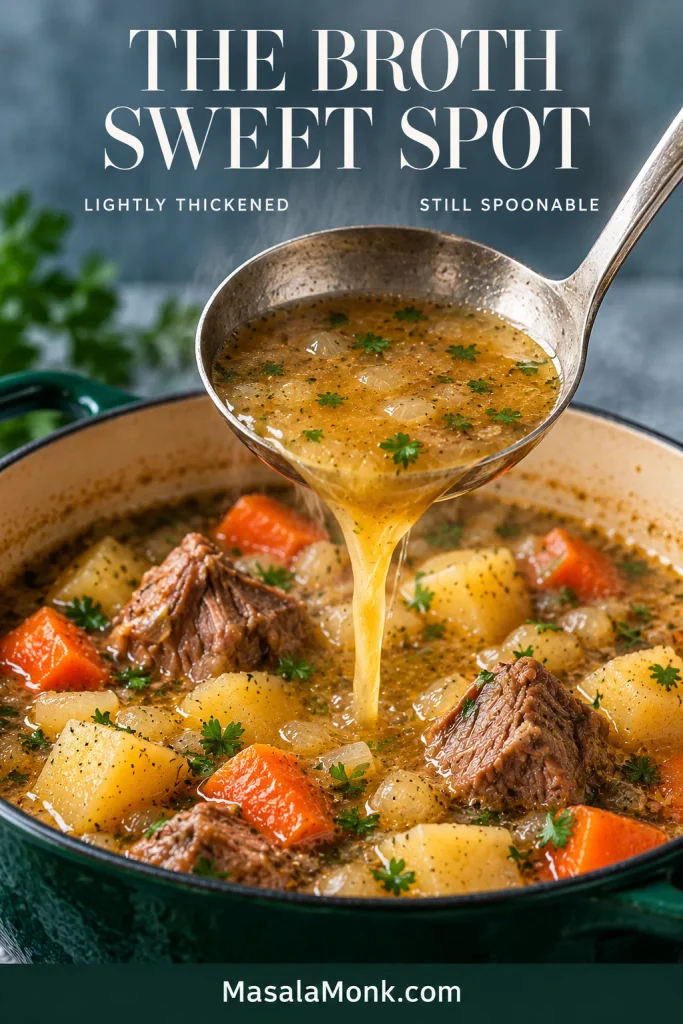
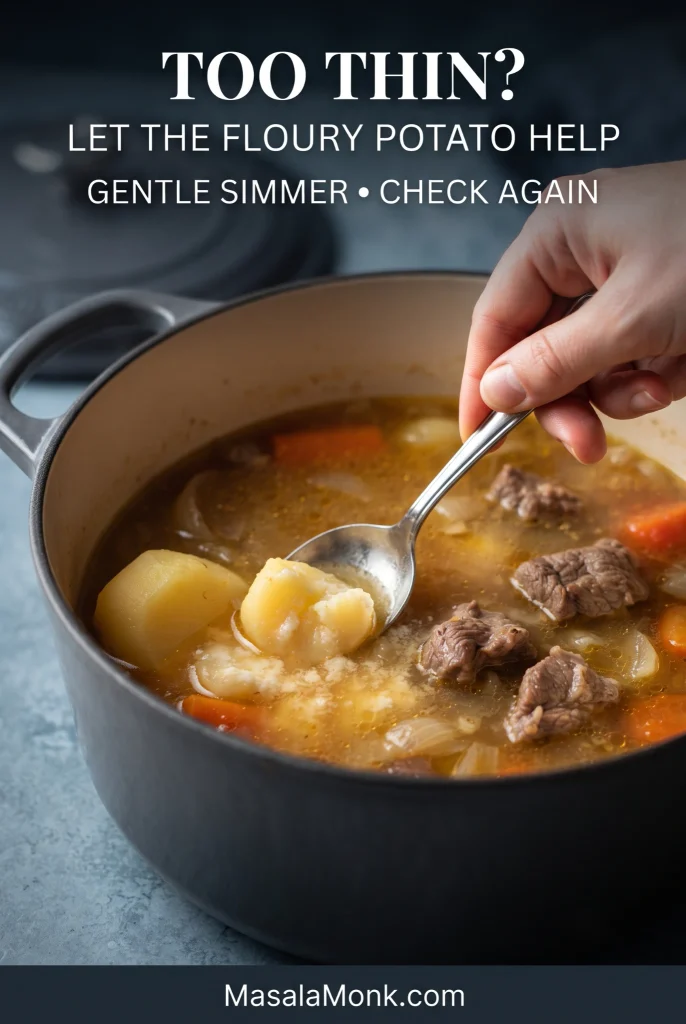
- Finish the broth. It should be lightly thickened but still loose enough to spoon around the lamb and vegetables. A little cloudiness from potato starch is normal. If the broth is watery once the solids are cooked, lift them out and reduce the liquid uncovered for a few minutes, or mash two or three very soft potato pieces into it.
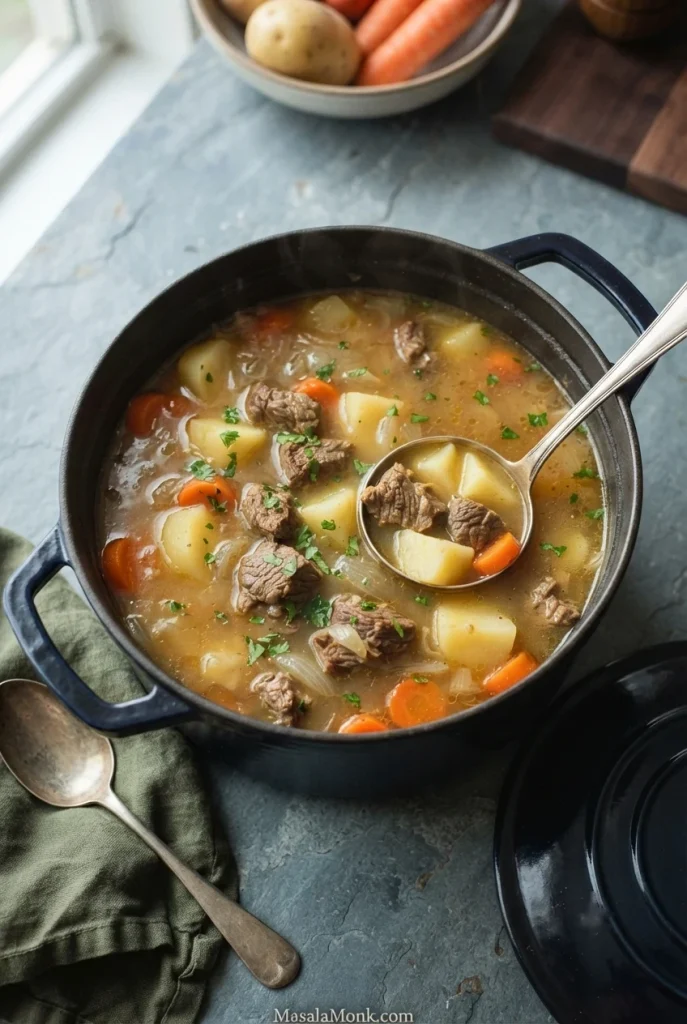
- Taste and serve. Remove the bay leaves and any thyme stems. Skim off a heavy slick of surface fat. Taste the broth and adjust the salt and pepper. Return anything you removed, rest the stew for about 10 minutes, and ladle it into warm bowls. Finish with chopped parsley, if using.
Irish Stew Guide
Which Lamb Cut Works Best for Irish Stew?
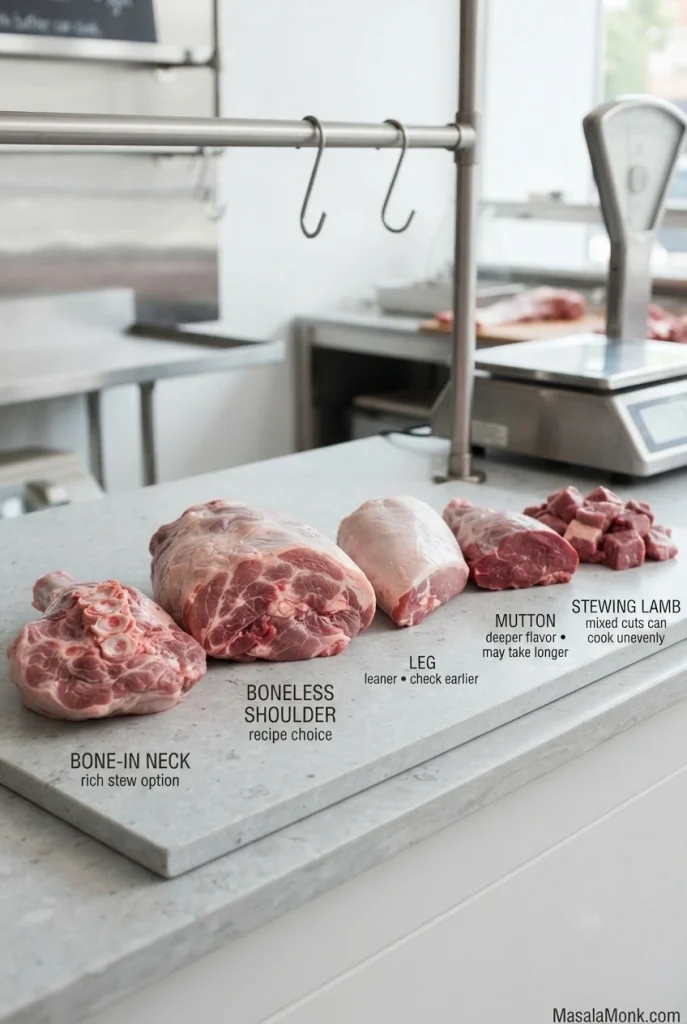
Lamb shoulder is our first choice for this recipe. It handles a long, gentle simmer well, becoming tender while giving the broth plenty of flavor.
| Cut | What to expect |
|---|---|
| Boneless shoulder | The cut this recipe is written for: flavorful, convenient and well suited to slow cooking. |
| Bone-in neck | Excellent for stew, with bones and connective tissue contributing to the broth. Because the edible yield differs, don’t treat the same weight as a direct swap for boneless shoulder. |
| Lamb leg | It can work in a pinch, but this recipe’s timing is written for shoulder. Leg is generally leaner, so start checking it earlier. |
| Mutton | Deeper and more mature in flavor than lamb, and it may need longer before becoming tender. |
| Stewing lamb | Convenient, but mixed cuts can finish unevenly, so check the larger pieces for tenderness. |
Don’t over-trim the shoulder. The fine seams running through the meat can stay; concentrate on removing the thick exterior deposits of fat. That keeps the broth from becoming unnecessarily greasy without stripping the meat of all its internal fat.
Should You Brown the Lamb First?
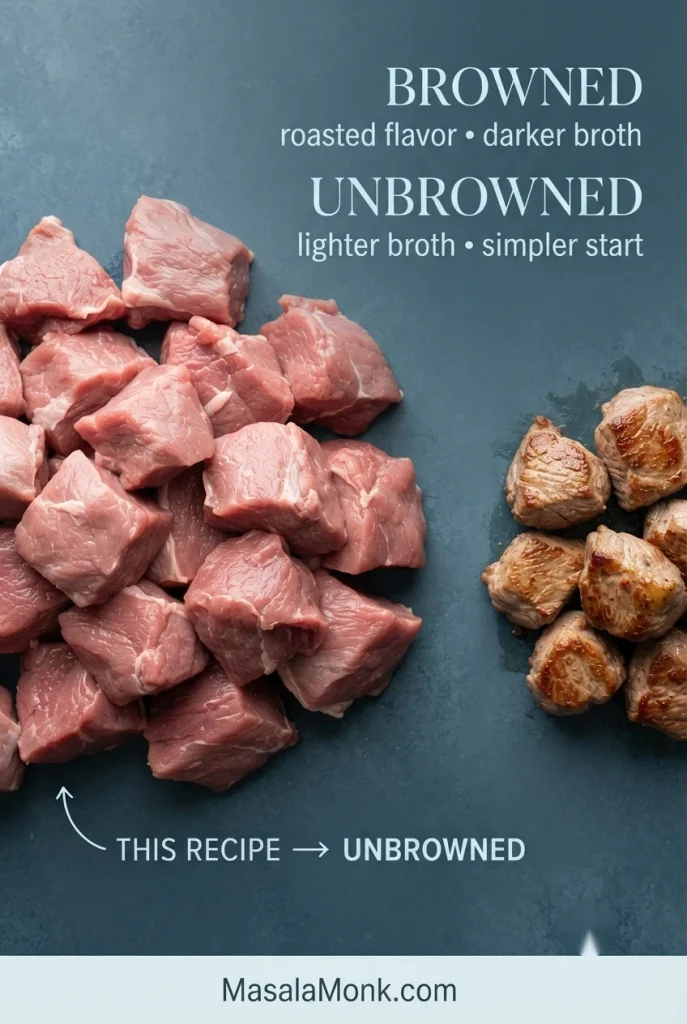
You don’t have to. Browning gives lamb a roasted flavor and makes the broth darker; putting the meat straight into the liquid keeps preparation simpler and the broth lighter. This recipe skips browning.
Which Potatoes Work Best for Irish Stew?
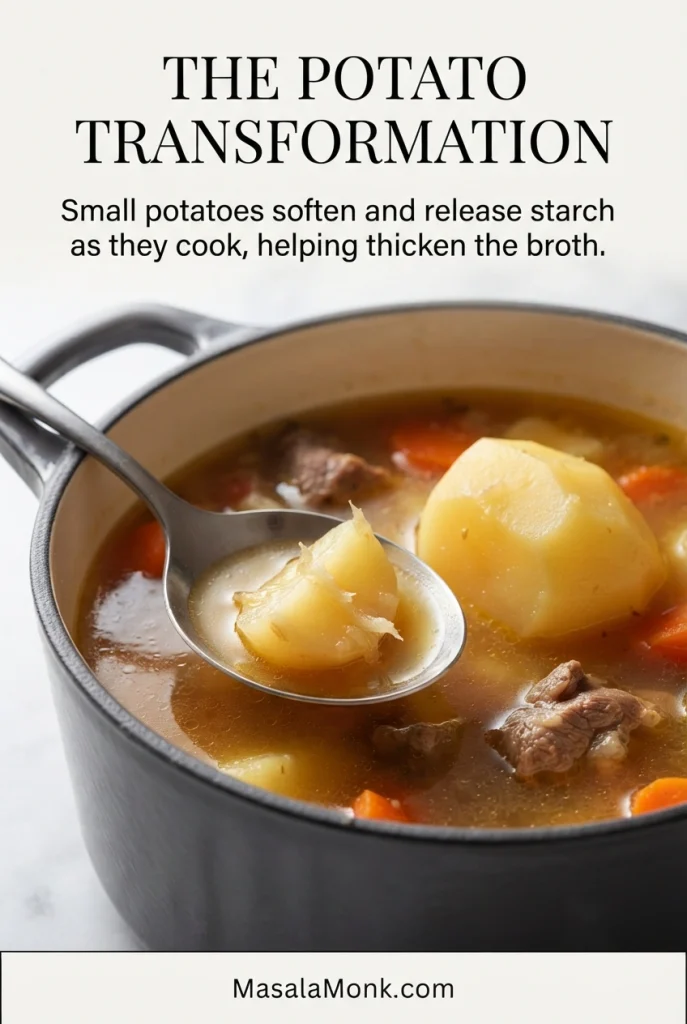
Floury or starchy potatoes such as Russets work especially well in Irish stew because their edges soften readily and help thicken the broth. If Yukon Golds are what you have, use them—they’ll simply hold their shape more firmly and thicken the broth less. Very waxy potatoes are better at keeping neat edges than breaking down into the liquid.
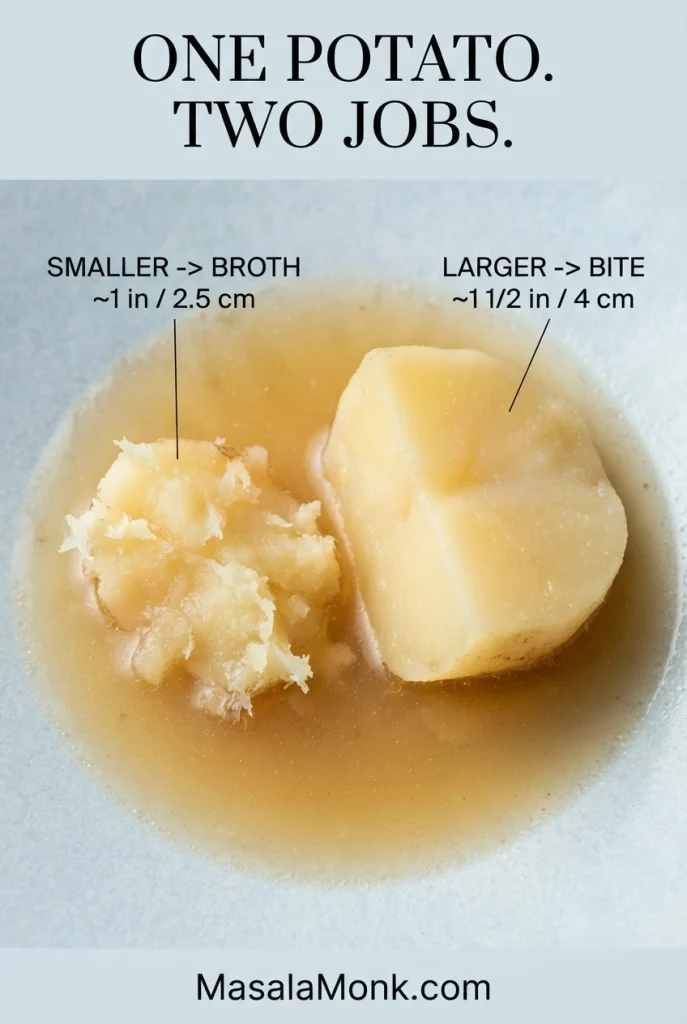
That’s why this recipe cuts one batch of potatoes smaller and adds it first. Those are the pieces you can afford to lose into the broth. The larger chunks arrive later and stay substantial enough for the spoon. If your potatoes hold their shape especially well, mash a couple of cooked pieces into the broth at the end if it still seems thin. For another quick option, see the watery-broth fix.
If you have Russets left over, our Potato Soup Recipe turns them into a creamier, more substantial soup.
How Much Liquid Does Irish Stew Need?
For 900 g / 2 lb boneless lamb shoulder, start with 500 ml stock and 350 ml water. Unsalted or low-sodium stock adds flavor without making the stew too salty before it reduces. Water alone is also a reasonable choice if you want the lamb itself to provide most of the broth’s flavor.
A wide Dutch oven loses liquid faster than a narrower pot because more surface is exposed. Keep the lid partly on and the simmer gentle. If the liquid drops too far before the lamb is tender, add a small splash of hot water instead of turning up the heat.
Bone-in lamb can add extra richness to the cooking liquid, while mutton brings a deeper meat flavor. With either, water may be enough instead of stock. Whatever liquid you choose, wait until the stew has finished cooking before making the final salt adjustment. Before serving, judge the broth while it is hot: it should have some body but still pour easily from a spoon.
What Belongs in Traditional Irish Stew?
Traditional Irish stew is built around lamb or mutton, potatoes and onions, but there isn’t one fixed ingredient list. Carrots, leeks, turnips, rutabaga (swede), cabbage and herbs appear in different versions.
For an Irish reference point, Bord Bia’s Irish stew uses lamb neck or shoulder with onions, carrots, leek, turnip, potatoes and cabbage. Other versions keep the ingredient list closer to meat, potatoes and onions.
Some versions include pearl barley, which adds chew and absorbs some of the broth. We leave it out here to keep the focus on lamb and potatoes.
How Do You Know Irish Stew Is Done?
Don’t make the clock decide dinner. Press one of the larger pieces of lamb with a fork: it should yield easily rather than spring back or fight you. Push a knife through one of the largest potatoes; there should be no firm center. Taste the broth, too. It should be savory and cohesive, but loose enough to spoon generously around the meat and vegetables.
If the lamb is still chewy, it needs more cooking even if the timer says otherwise. If the potatoes are already perfect, lift them out first. The pot doesn’t care whether everything finishes at exactly the same minute. If the timing gets awkward, use Fix My Irish Stew below.
Fix My Irish Stew
Does something look wrong? Find the closest match below before you keep cooking.
Quick Troubleshooting Guide
| What happened? | What to do |
|---|---|
| The lamb is chewy but the vegetables are ready. | Lift out the tender vegetables and keep cooking the lamb at a gentle simmer. Check it again every 15–20 minutes. |
| The lamb is ready but the potatoes are hard. | Lift out the lamb and continue cooking the potatoes until a knife slides through the centers easily. |
| The potatoes are falling apart. | Stop unnecessary stirring. A little breakdown is useful here. If most pieces are disappearing, lift out the ones still intact and return them when the stew is ready. |
| The broth looks watery. | Once the solids are cooked, lift them out and reduce the broth uncovered for a few minutes, or mash a couple of very soft potato pieces into it. |
| The broth is too thick. | Stir in hot water a little at a time until it loosens to the consistency you want. |
| The broth is cloudy. | That is often simply potato starch and isn’t a problem by itself. Judge the broth by its flavor and consistency. |
| There is a greasy layer on top. | Skim it with a shallow spoon or ladle. Reducing the broth won’t remove excess fat; it will only concentrate what is there. |
| The stew tastes flat. | Check the salt first. If the seasoning is right but the broth still tastes weak, remove the solids and reduce the liquid briefly, then taste again. |
| The stew is too salty. | Stop reducing it. Add unsalted hot water gradually until the flavor comes back into balance. |
If the Broth Is Watery
Choose reduction if the broth tastes weak as well as thin. If the flavor is already where you want it and only the body needs help, mash in one or two very soft potato pieces instead.
Make Ahead, Store and Reheat
Irish stew works particularly well as a make-ahead dinner, and chilling brings one practical bonus: the rendered lamb fat firms on the surface, where it’s easy to lift away.
Don’t be alarmed if the refrigerated broth looks considerably thicker. Potato starch thickens the liquid, and gelatin released from the lamb can make it set further. Warm the stew gently before deciding whether it needs extra water.
Refrigerating Leftovers
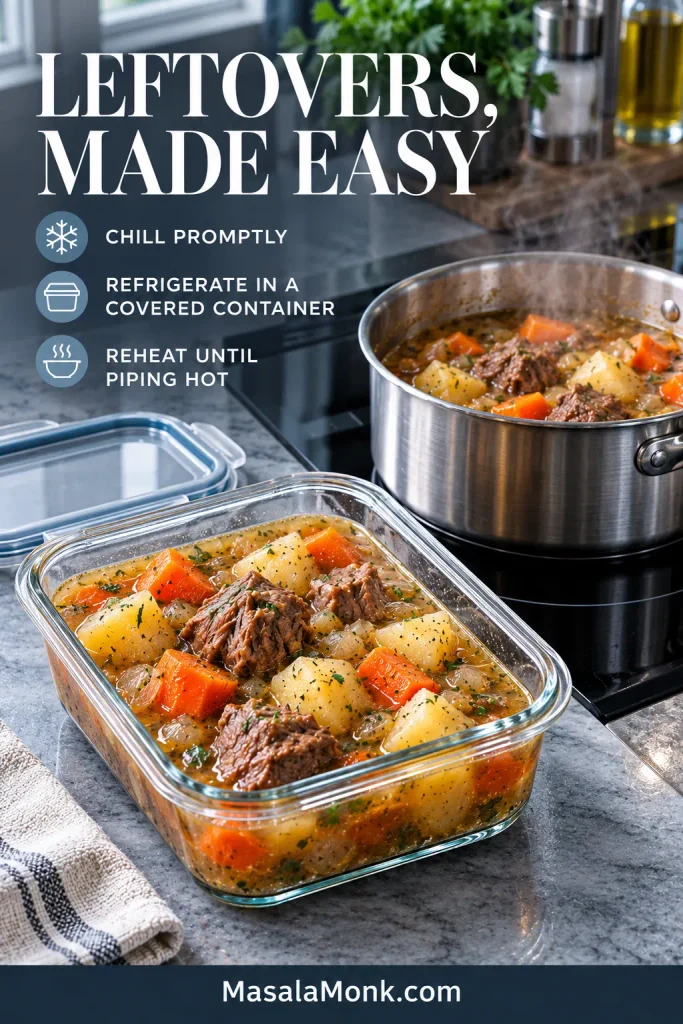
Cool leftovers promptly. For a large batch, divide the stew among smaller, shallow containers and refrigerate within two hours—or within one hour if the surrounding temperature is above 90°F / 32°C. Cover and use within 3–4 days. See the USDA guidance on leftovers for food-safety details.
Reheating
Reheat the stew gently on the stovetop, stirring only as much as needed so the potatoes don’t break apart. Add a splash of water if the broth remains too thick once hot. Reheat leftovers thoroughly to 165°F / 74°C.
Freezing
The lamb and broth freeze well, but potatoes can become softer or slightly grainy after thawing. If that texture bothers you, add freshly cooked potatoes when reheating.
What to Serve with Irish Stew
Irish stew doesn’t need much beside it. A thick piece of Irish Soda Bread is hard to beat: hold onto the crust and let the soft crumb catch the broth left at the bottom of the bowl.
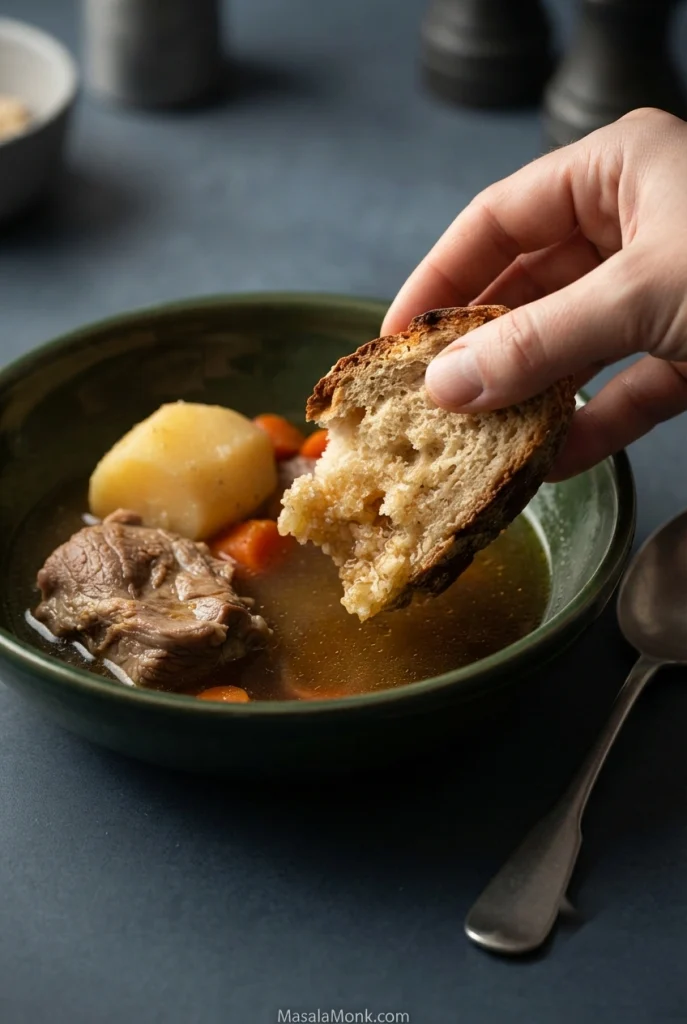
Steamed cabbage or another simply cooked green vegetable works well if you want something fresh alongside. Otherwise, a little chopped parsley and bread on the table are plenty.
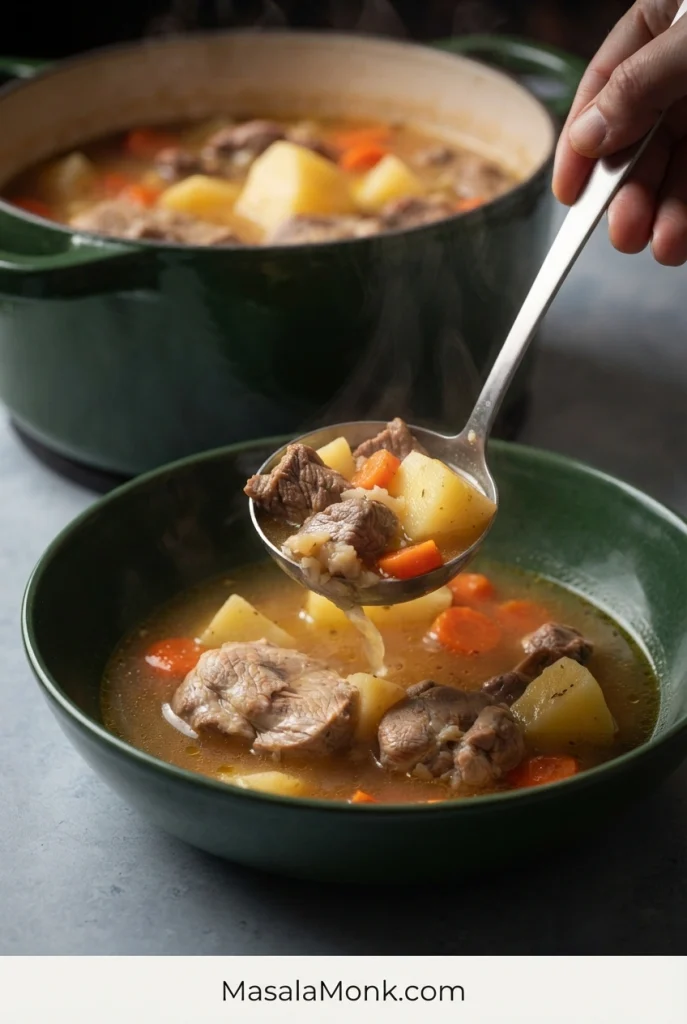
Save the last spoonful of lamb-and-potato broth for the final piece of soda bread.








