
Potato soup can go wrong in both directions. One pot stays brothy no matter how much cream goes in; another looks perfect on the stove and turns almost spoon-standing dense by dinner. Then there is the batch that gets blended too enthusiastically and becomes sticky instead of creamy.
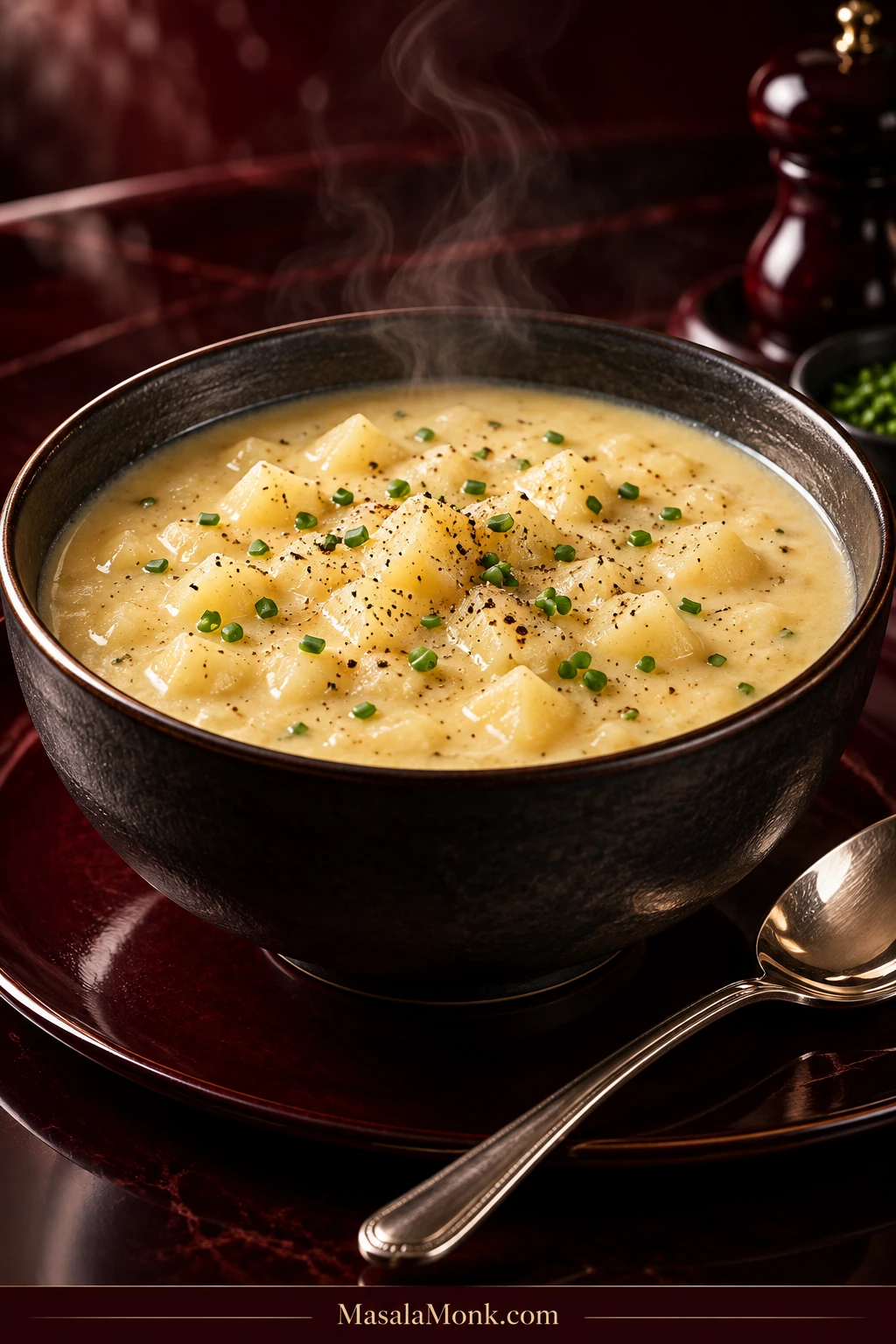
This potato soup recipe is made from scratch on the stovetop, with creamy broth, soft potato chunks and enough body to coat a spoon without turning into mashed potatoes in a bowl. It cooks in one pot, needs no blender or heavy cream, and takes about 20 minutes of hands-on prep before the simmering does most of the work. This is the version for when you want potato soup to taste like potatoes.
The rule to remember is simple: tender first, mash lightly, milk late, judge after the rest.
Potato Soup Recipe
Tender Russet chunks sit in a smooth broth with softened onion, thyme and black pepper underneath. A small roux and light hand-mashing give the soup enough body to coat a spoon without needing heavy cream.
Equipment
- 5½–6 quart / 5–5.7 L Dutch oven or heavy-bottomed pot
- Whisk
- Potato masher
- Kitchen scale and/or measuring cups and spoons
Ingredients
- 2½ lb / 1.13 kg Russet potatoes, peeled and cut into ½-inch / 1.25-cm cubes
- 3 Tbsp / 42 g unsalted butter
- 1 medium yellow onion / 150–170 g, finely diced
- 2 celery ribs / about 100 g, finely diced
- 3 garlic cloves / about 10 g, minced
- 3 Tbsp / 24 g all-purpose flour
- 4 cups / 960 ml low-sodium chicken broth, divided—use 3½ cups / 840 ml for cooking and keep ½ cup / 120 ml aside for final adjustment
- 2 cups / 480 ml whole milk
- 1 tsp dried thyme
- ½ tsp freshly ground black pepper, plus more to finish
- 1 tsp fine sea salt / about 5–6 g, divided, plus more to taste
- ½–1½ tsp / 2.5–7.5 ml lemon juice, optional; white wine vinegar or apple cider vinegar can be used instead
- Chopped chives or scallions, optional, for serving
Instructions
Build the Soup
- Prepare the potatoes. Peel the Russets and cut them into roughly ½-inch / 1.25-cm cubes. Cut them roughly the same size so they become tender together; the cubes don’t need to be perfect.
- Soften the onion and celery. Melt the butter over medium heat. Add the onion, celery and ¼ teaspoon salt. Cook for 5–6 minutes, stirring occasionally, until soft and the pot smells sweet and savory rather than raw. Add the garlic and thyme and cook for about 30 seconds, just until fragrant.
- Build a smooth light roux. Sprinkle in the flour and stir constantly for 1–2 minutes. From the 3½ cups / 840 ml cooking broth, add about ½ cup / 120 ml first and whisk until smooth. Gradually stir in the remaining 3 cups / 720 ml.
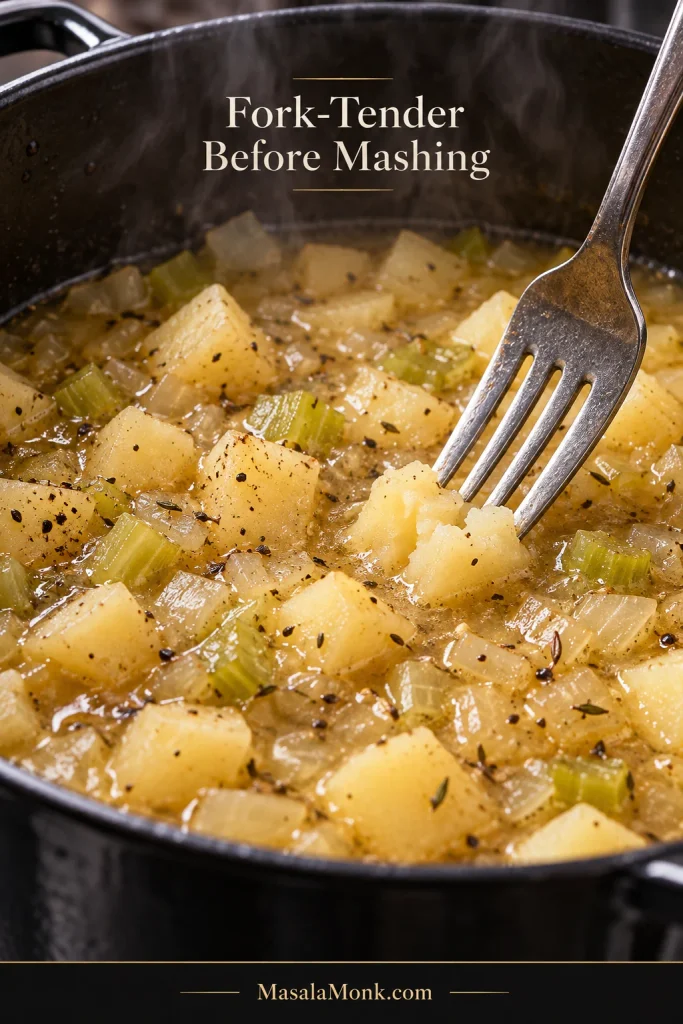
- Cook the potatoes until truly tender. Add the potatoes, black pepper and ½ teaspoon salt. Bring just to a boil, then lower the heat to a gentle simmer with small, lazy bubbles. Simmer gently, stirring from the bottom once or twice as the potatoes cook. Begin checking around 18 minutes and keep cooking as needed. The potatoes are ready when a fork slips through easily and a cube collapses with light pressure against the side of the pot. Let them become fully tender before deciding how much to mash.
- Mash lightly. Take the pot off the heat. Start with about 6 firm presses of a potato masher, moving around the pot instead of repeatedly working one area. Stir. The broth should begin looking creamy while plenty of potato chunks remain. You can always mash more; you can’t put the chunks back.
Finish the Soup
- Add the milk. Stir in the whole milk and return the pot to low heat. Cook gently for about 5 minutes. Do not let it boil hard. Stir frequently and scrape across the bottom because the thickening soup can catch quickly.
- Wait. Take the pot off the heat and leave it alone for 5 full minutes. Do not add more flour, potato flakes or extra mashed potato yet.
- Check the consistency.
Looks right? If the soup coats the spoon but still flows easily, move on to seasoning.
Too dense? Add reserved broth starting with ¼ cup / 60 ml.
Too loose? Mash a few more potato pieces. If needed, simmer gently, uncovered, for another 3–5 minutes.
Still loose? Stir in 1 Tbsp / about 8 g plain instant potato flakes, wait 2–3 minutes, then check again before adding more. - Season and serve. Add the remaining ¼ teaspoon salt if needed, then more only as your broth and potatoes require. Finish with black pepper to taste. If the soup is properly seasoned but still feels heavy or muted, take it off the heat and stir in ½ tsp / 2.5 ml lemon juice. Taste before adding more. White wine vinegar or apple cider vinegar can stand in for the lemon if needed.
Recipe Notes
- No potato masher? Press a few fully tender potato pieces against the side of the pot with a sturdy wooden spoon or silicone spatula.
- Do not aggressively blend Russets. Overworking cooked potato starch can turn the texture sticky or pasty. For a smoother bowl, briefly use an immersion blender in one small area of the pot, then stop well before the entire soup becomes smooth.
- You do not have to peel every potato. Peeling gives the smoothest, palest soup. For a more rustic bowl, scrub the potatoes well and leave some or all of the skin on.
If the broth coats the spoon and the potatoes are soft but still visible, you’re done. Taste a hot spoonful with plenty of black pepper before changing anything else. If your pot looks thinner, thicker or stranger than expected, identify the problem before adjusting the texture.
Get the Texture You Want
Swaps, Shortcuts & Leftovers
Why Potato Soup Gets Thicker as It Sits
Potato soup gets thicker as it sits because potato starch and cooked flour continue holding onto liquid as the soup cools. Russets release starch while they simmer, and breaking a few of the cooked potatoes apart sends even more into the broth.
Heavy cream makes a soup richer; the potatoes and roux are what give this one its body. Overworking the potatoes can push that body too far and leave the soup dense or sticky.
That same handling matters in our mashed potatoes recipe: gentle mashing keeps Russets fluffy, while aggressive working pushes them toward paste.
This is also where tenderness matters more than the clock. Fully tender potatoes mash cleanly into the broth; partly firm pieces break unevenly and can leave hard centers behind.
That starch behavior is why the potato itself matters so much here.
Russet, Yukon Gold or Red Potatoes?
For this thick, creamy style, Russet potatoes are the best choice because their high starch content naturally gives the soup more body. They soften into the base instead of staying sharply defined.
| Potato | Effect on the broth | Potato pieces |
|---|---|---|
| Russet | Most natural body; thickest | Soft, fluffy and more likely to break down |
| Yukon Gold | Creamy but somewhat looser | Buttery and better defined |
| Red potato | Lightest of the three | Firmest and best at holding shape |
| Half Russet + half Yukon | Creamy with moderate starch | More defined chunks than all-Russet |

If firm potato pieces are the priority, the same distinction matters in our potato salad guide, where holding shape matters much more than releasing starch.
Is Your Potato Soup Actually Too Thin?
Before adding anything, give the soup its full 5-minute rest. A pot that looks loose immediately after the milk goes in can tighten considerably once it is off the heat.
Too loose
The liquid runs straight off the spoon, and the potato pieces sit in an obviously thin base even after the final cook and rest.
Just right
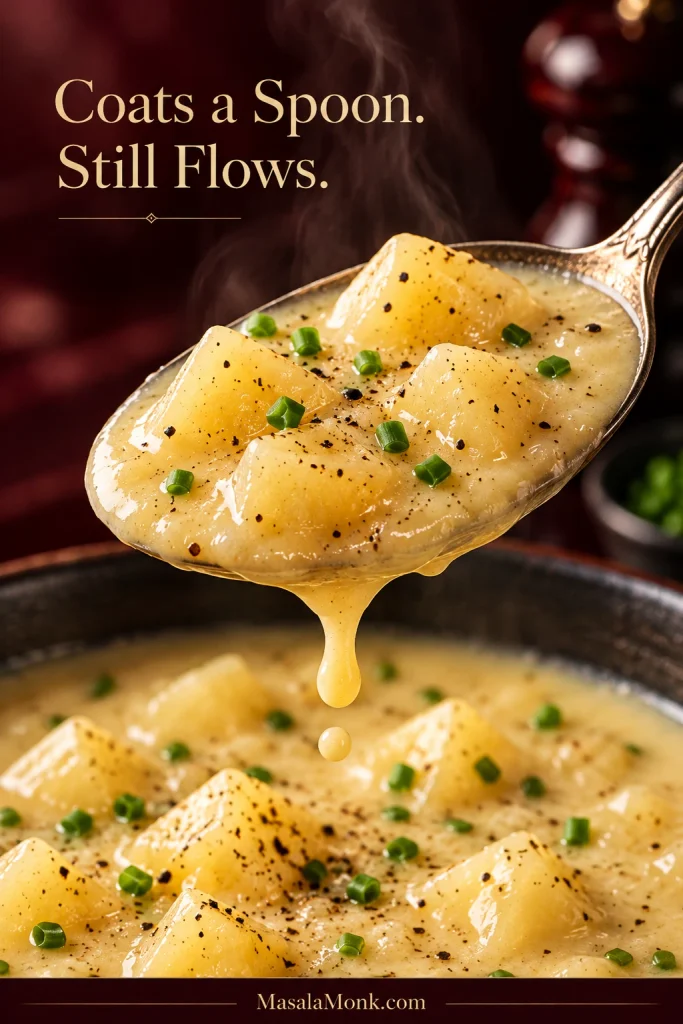
The broth coats the back of a spoon but still drips slowly. A ladleful settles into the bowl on its own, with tender potato pieces still visible. Ideally, each spoonful feels creamy first, then gives you a soft piece of potato.
Too far
A spoon leaves a rigid channel behind, or the soup sits in a mound instead of settling. Too much potato may have been mashed, too much liquid may have evaporated, or the starch simply tightened more than expected.

How to Thicken Potato Soup Without Making It Gluey
- Mash a few more cooked potato pieces.
- Simmer uncovered for 3–5 minutes over gentle heat, stirring from the bottom.
- Give it another short rest.
- If it still needs help, stir in 1 Tbsp / about 8 g plain instant potato flakes.
- Wait 2–3 minutes before deciding whether it needs another spoonful.

For the standard recipe, use the potato already in the pot before reaching for another starch. A cornstarch slurry makes more sense when you’re deliberately making a flourless batch.
If it is too dense
Add reserved broth ¼ cup / 60 ml at a time, stirring completely before adding more. Once the reserve is gone, use warm milk or additional broth in the same small increments if needed.

Thick is not the same as gluey. If yours is simply too thick but still creamy, a splash of broth will bring it back. Gluey potato soup feels sticky, elastic or stringy after the potatoes have been worked too aggressively. Serious Eats explains the potato-starch changes behind that texture.

When Potato Soup Goes Wrong
First, think about when the problem appeared—that usually tells you where to look.
Before the milk goes in
The potatoes are still hard. Keep simmering until they crush easily. Cube size, potato variety and simmer strength all change the timing.
The base is already very dense. Don’t mash yet. Add a splash of reserved broth if necessary and finish cooking the potatoes before making another adjustment.
The flour formed lumps. Whisk firmly while the mixture is still fairly loose. Next time, make the first ½ cup / 120 ml broth completely smooth with the flour-coated vegetables before adding the rest.
After the milk goes in
The dairy looks grainy or separated. Most often, the pot became too hot. Pull it off the burner and whisk gently. Return it only to low heat if it needs more cooking. Gentle whisking can smooth it somewhat, but badly split dairy won’t always return to a perfectly smooth texture.
The bottom smells scorched. Move the unburned soup into a clean pot immediately. Leave the burnt layer behind rather than scraping it into the rest of the batch.
It tastes bland. Check the salt first and correct it gradually, then add freshly ground black pepper. If the soup is properly seasoned but still feels heavy or muted, stir in ½ tsp / 2.5 ml lemon juice off the heat. Taste before adding more.
It became sticky or elastic after blending. You’ve probably overworked the potato starch. A little broth can make the soup easier to eat, but the original texture may not return completely. Next time, use a potato masher instead of blending the whole pot.
Once the potatoes and texture are where you want them, there is some room to adapt the dairy and a few other ingredients.
Creamy Potato Soup Without Heavy Cream
You don’t need heavy cream here. Russets and the small roux provide the body; whole milk adds enough richness without making the bowl heavy.

The swaps below are for the nights when your fridge—or your diet—requires a change.
| If you have | What to do |
|---|---|
| 2% milk | Replace whole milk 1:1. The finished soup will taste slightly lighter. |
| Evaporated milk | Replace the milk 1:1 for a richer, slightly more concentrated dairy flavor. Use unsweetened evaporated milk, not sweetened condensed milk. |
| Half-and-half | Replace up to half the milk if you want a richer bowl. |
| Heavy cream | Replace up to 1 cup / 240 ml of the milk with heavy cream for a richer soup. |
| Unsweetened oat milk | Choose plain and unflavored. An extra-creamy style will come closest to whole milk, though the flavor will still be slightly different. |
Vegan, Gluten-Free and Flourless Options
To make vegan potato soup, use vegetable broth, plant-based butter and the plain unsweetened oat milk described above.
For gluten-free potato soup, a cup-for-cup / 1:1 gluten-free flour blend can replace the all-purpose flour; start with 24 g. Blends vary, so the finished consistency may need a small adjustment.
For a flourless version, skip the roux. Once the potatoes are fully tender, mash a little more of them into the soup. If the rested pot still needs body, whisk 1 Tbsp / about 8 g cornstarch with 2 Tbsp / 30 ml cold milk, stir it in and heat gently until the soup thickens. Our white bean soup uses another flourless route, blending cannellini beans into the base.
Making Potato Soup With What You Have
Fresh Russets are the easiest route, but don’t abandon dinner because what you have is frozen, shredded or already mashed.
Frozen diced potatoes. Add them directly unless the package says otherwise. Different brands use different potatoes and cube sizes. Once they’re in the pot, tenderness matters more than the original timer.
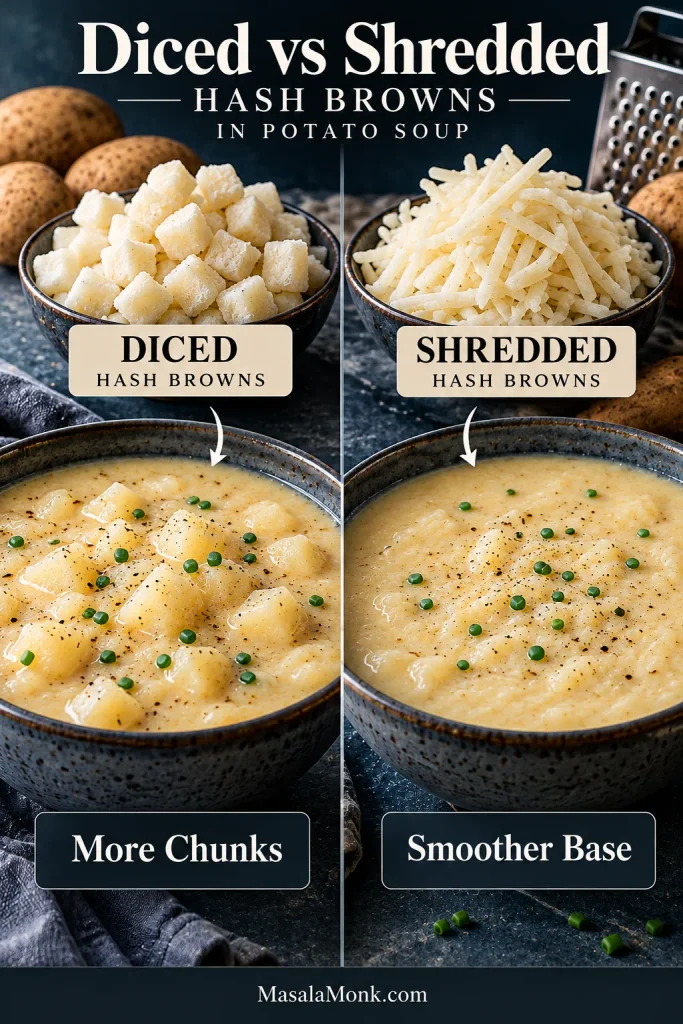
Frozen hash browns. If they are what gets dinner into the pot tonight, use them. Diced hash browns are better when you want recognizable potato pieces; shredded ones disappear much more readily and create a smoother base. Choose plain, unseasoned hash browns when possible so extra salt, onion powder or added fat does not unexpectedly change the soup.
Leftover mashed potatoes. Stir them in near the end, starting with about ½ cup at a time. Leftover mash may already contain butter, milk, cheese, garlic or plenty of salt, so taste before seasoning again.
Plain instant potato flakes. They are useful as an emergency thickener because they add potato solids without introducing another floury flavor. Use plain flakes rather than seasoned instant mash; follow the measured rescue method if the pot still needs help.
What to Serve With Potato Soup
Potato soup is especially good with something crisp, fresh or crusty alongside it. Irish soda bread gives you something sturdy for the broth, a simple green salad brings freshness, and grilled cheese turns the bowl into a fuller meal.

Taste the soup before reaching for toppings; it should already feel complete. The finished bowl should taste of potato first, with softened onion, thyme and black pepper underneath it. Chopped chives or scallions bring a fresh finish without covering that up.
Bacon, cheddar and sour cream are all good additions at the table when you want something more loaded. If those flavors are really the point of dinner, our twice-baked potato casserole takes that combination much further.
Storing, Reheating and Freezing Potato Soup
Potato soup will be noticeably thicker straight from the refrigerator. Reheat it gently before deciding how much liquid it needs; warming and stirring alone will loosen it.

Refrigerating potato soup safely
Refrigerate leftovers in shallow containers within 2 hours of cooking, or within 1 hour in temperatures above 90°F / 32°C.
Keep them at 40°F / 4°C or colder and use within 3–4 days. These timings follow USDA guidance for safely handling cooked leftovers.
Reheating
Start over medium-low heat and stir frequently, scraping the bottom. If the cold soup is too stiff to stir comfortably, add just 1–2 Tbsp / 15–30 ml broth or milk to get it moving. Once the soup is hot and evenly mixed, add more liquid only as needed, 2–4 Tbsp / 30–60 ml at a time.
Reheat the soup thoroughly. Leftovers should reach at least 165°F / 74°C throughout; if you bring the soup to a boil, keep it brief rather than letting the milk-based soup boil hard. If the consistency still feels off once the soup is hot, use the same texture check as the fresh pot before making another adjustment.
Freezing
You can freeze potato soup, but expect some change. Russet pieces may become grainier or more crumbly after thawing, and the milk-based broth can look slightly separated.
For best quality, use frozen potato soup within about 2–3 months. Thaw it in the refrigerator, then reheat thoroughly while stirring. If the potato pieces have become crumbly, mash some of them back into the soup instead of trying to make them firm again.
Ladle the soup while the broth still moves easily around the soft potato pieces. Finish with chives and plenty of black pepper. Put something crisp or crusty alongside it, and serve while the potatoes are still unmistakably the main event.








