
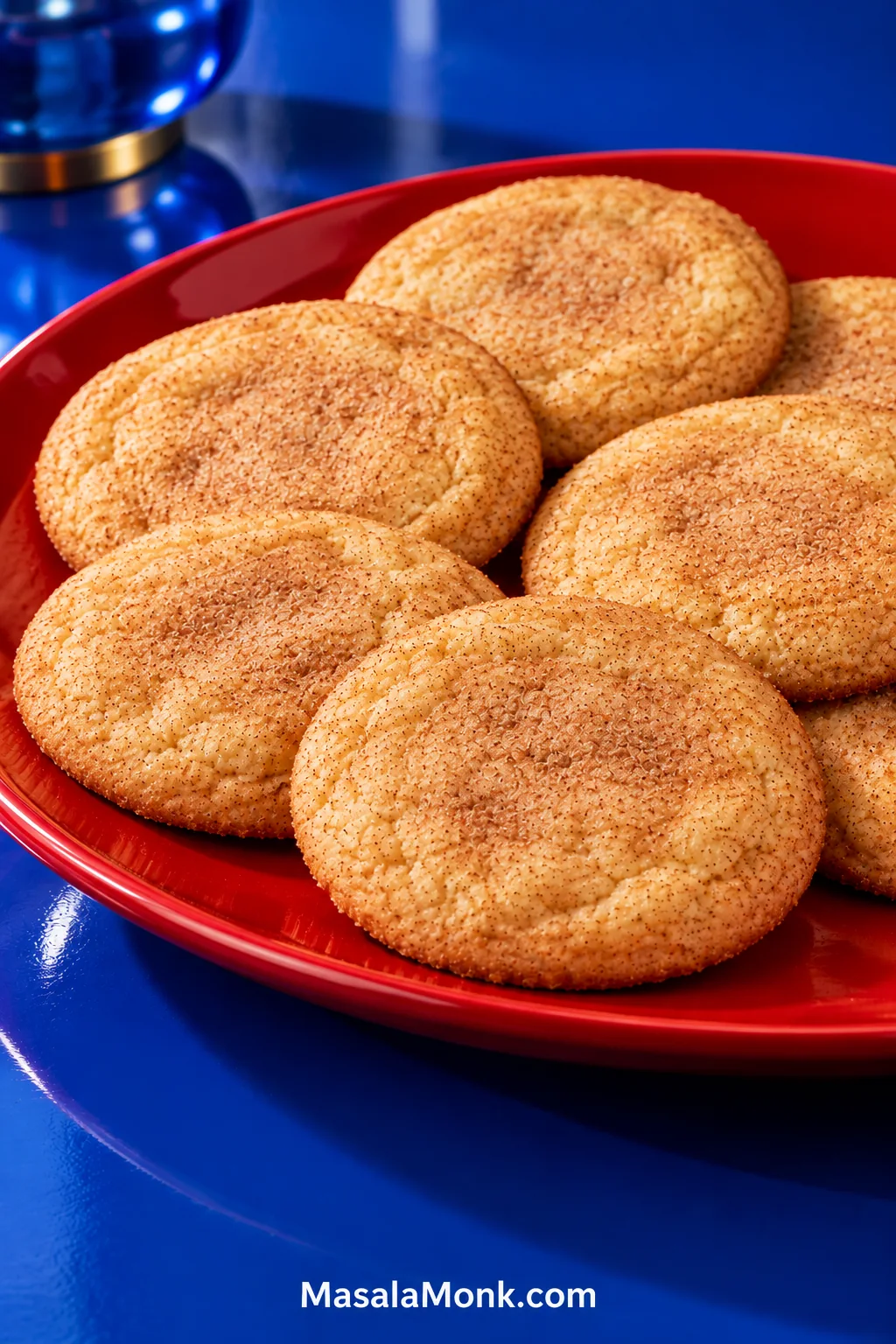
A good Snickerdoodle has a lightly crisp edge, a fine cinnamon-sugar coating and a soft, chewy middle. The first bite brings buttery sweetness and warm cinnamon, followed by the gentle tang that sets these cookies apart from ordinary sugar cookies.
This Snickerdoodle recipe uses cool-soft butter, accurately measured flour and a 375°F oven to help the cookies spread before their edges set. You can bake the dough straight away when it is cool and easy to portion; a short chill is useful only if it becomes too warm to handle.
Three cues make the difference: spread, surface and center.
- Before baking: the dough feels soft and slightly tacky but holds its shape when portioned.
- In the oven: the cookies spread outward, and modest surface breaks may develop naturally.
- When they come out: the edges are set while the centers remain pale and soft. A short rest finishes the job.
Soft & Chewy Snickerdoodles
Classic all-butter Snickerdoodles with a fine cinnamon-sugar coating, lightly crisp edges and soft, chewy centers.
Ingredients
For the cookie dough
- 2¾ cups all-purpose flour (330 g / 11.6 oz), preferably weighed
- 2 teaspoons cream of tartar
- 1 teaspoon baking soda
- ½ teaspoon fine sea salt
- 1 cup unsalted stick or block butter (226 g / 8 oz), cool-soft
- 1¼ cups granulated sugar (250 g / 8.8 oz)
- 1 large egg
- 1 large egg yolk
- 1 teaspoon vanilla extract (5 ml)
For the cinnamon-sugar coating
- ⅓ cup granulated sugar (67 g / 2.4 oz)
- 2 teaspoons ground cinnamon
Instructions
Mix the dough
- Preheat the oven. Set a rack in the center and heat the oven to 375°F / 190°C. Line two light-colored metal baking sheets with parchment paper. Let each sheet cool completely before reusing it for another batch.
- Prepare the coating and dry ingredients. Stir the 67 g sugar and cinnamon together in a shallow bowl. In a separate bowl, whisk the flour, cream of tartar, baking soda and salt until evenly combined.
- Cream the butter and sugar. Beat the cool-soft butter with the 250 g sugar for about 2 minutes, until creamy and slightly lighter. Stop before the mixture becomes very pale and fluffy.
- Add the egg, yolk and vanilla. Beat until smooth, scraping the bottom and sides of the bowl as needed.
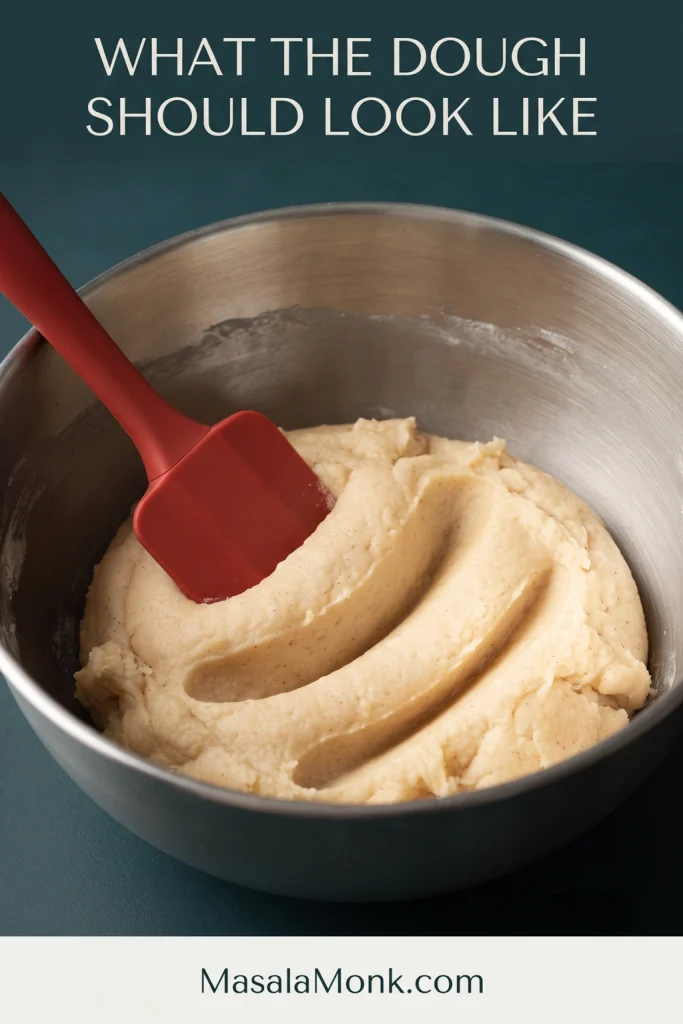
- Finish the dough. Add the dry ingredients and mix on low until only a few flour streaks remain. Finish with a spatula. The dough should be soft, cohesive and slightly tacky, not runny or greasy.
Portion, coat and bake
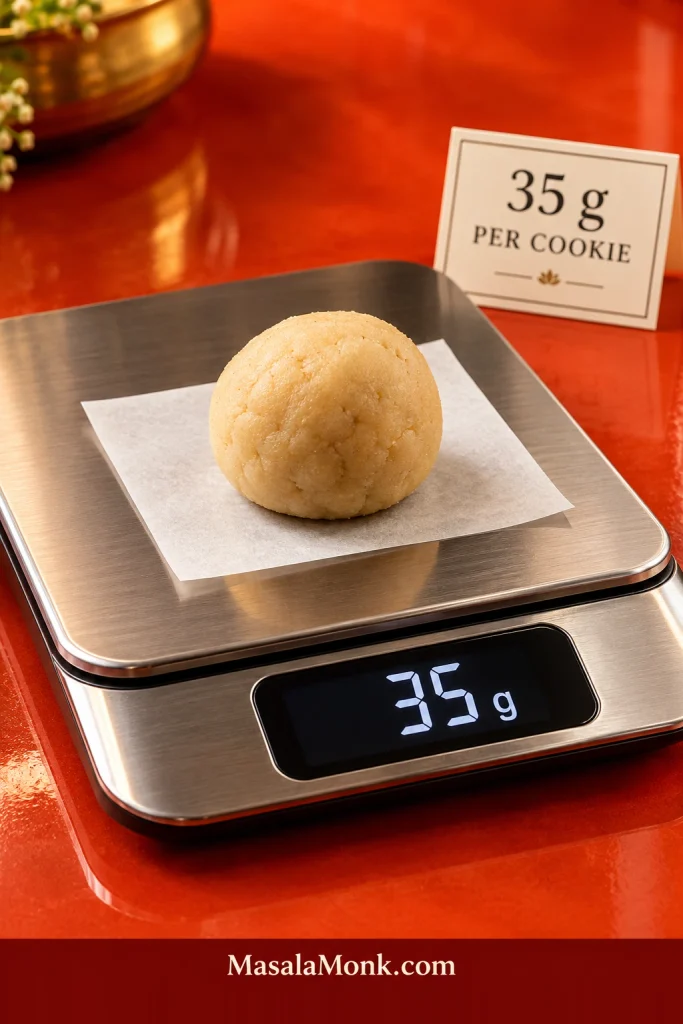
- Portion the dough. Weigh out 35 g per cookie. If you do not have a scale, roughly 2 level tablespoons is a useful starting point, although weighing gives more consistent results.
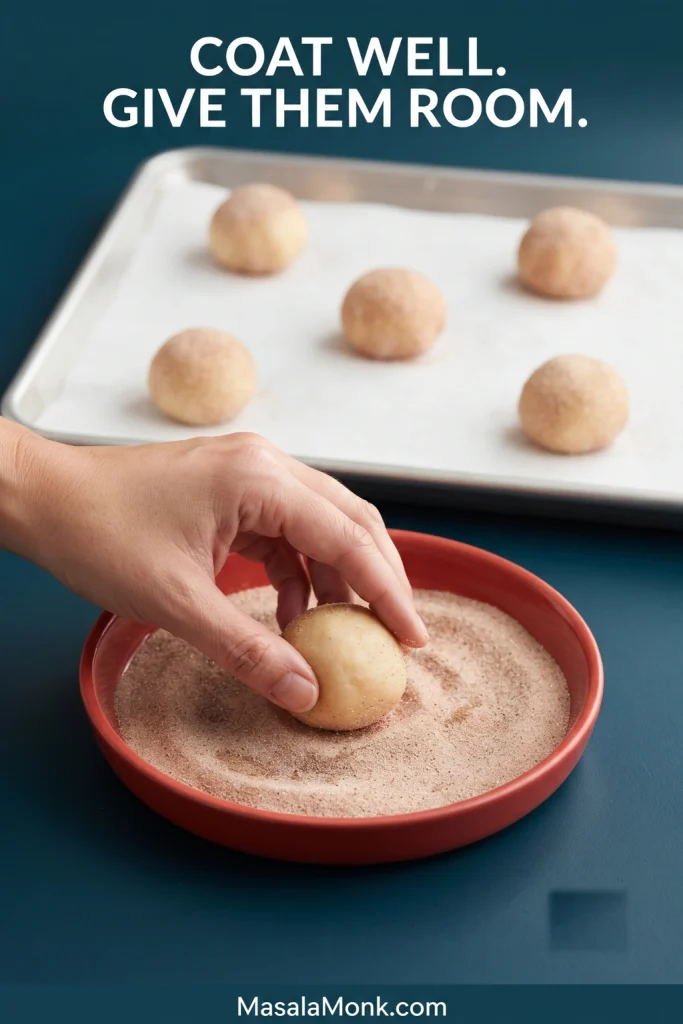
- Roll and coat. Roll each portion into a ball, then coat it evenly in the cinnamon-sugar mixture. Arrange the balls on the prepared baking sheet with generous room to spread. Do not flatten them.
- Bake one sheet at a time. Bake for 8–9 minutes. Look for set edges and pale, soft centers rather than waiting for the whole cookie to become firm or deeply golden.
- Let the cookies rest. Leave them on the baking sheet for 10 minutes. They will settle and continue setting as they cool, after which you can transfer them to a wire rack.
- Repeat with the remaining dough. Use a cool baking sheet for each round. Stir the cinnamon sugar occasionally so the coating remains evenly mixed.
Want to check the spread before committing the whole batch? Bake one cookie first. If it spreads too far, check whether the dough or baking sheet is warm. If it stays unusually tall, check the flour measurement and whether the dough is very cold. Change one variable at a time.
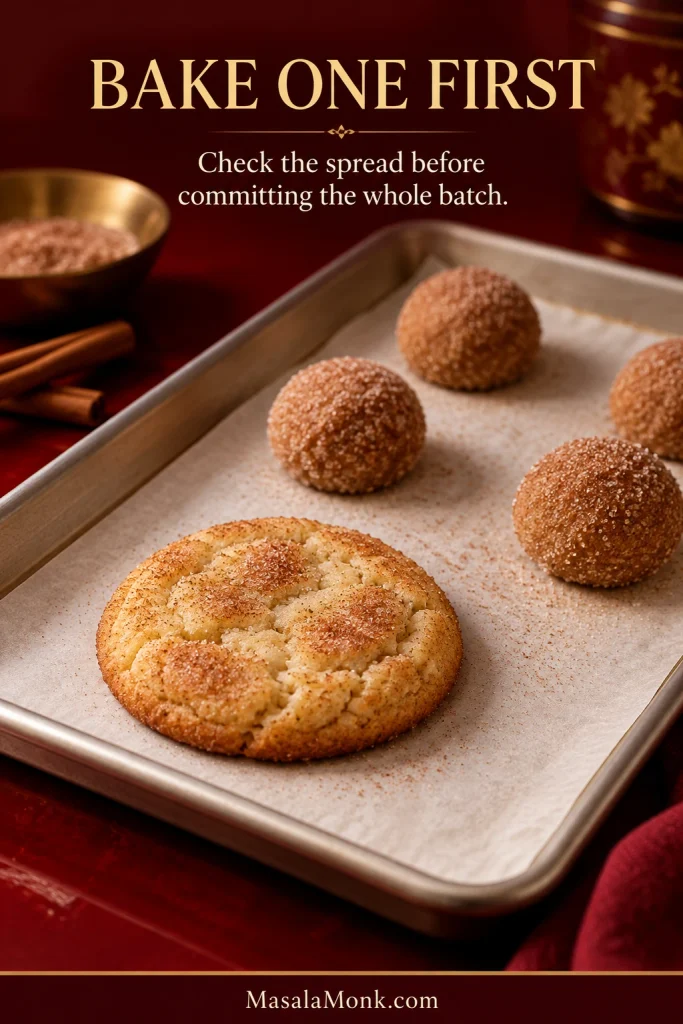
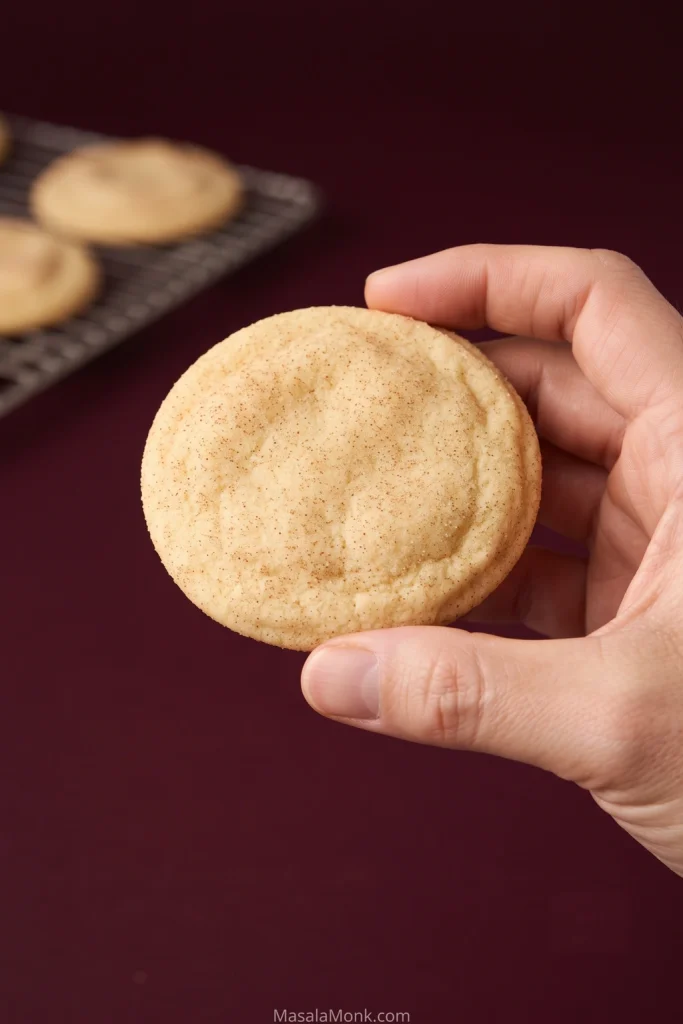
What a successful Snickerdoodle looks like
The cinnamon comes through first, followed by buttery sweetness and the characteristic tang of cream of tartar. As the cookies cool, their edges become more defined while the centers retain a softer bite.
- Top: fine cinnamon-sugar coverage with modest, natural surface irregularities rather than deep craters.
- Edge: set and lightly crisp, without becoming hard or dark.
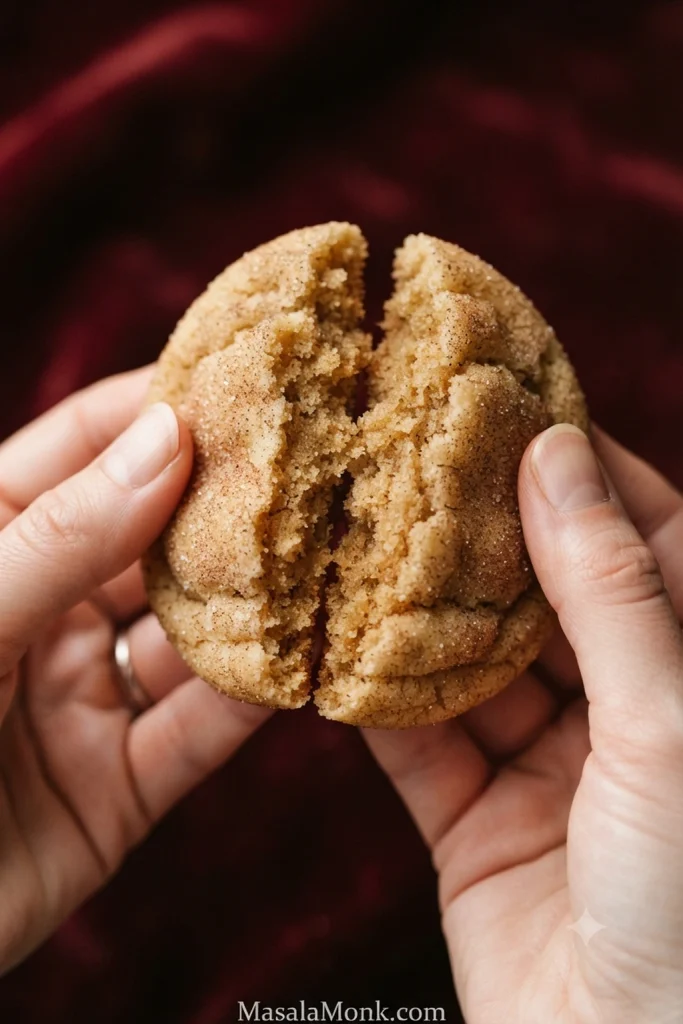
- Center: soft and chewy, with a fine, cohesive crumb once cooled.
- Shape: wider than the original dough ball, with enough thickness to retain a tender middle.
Some puffing in the oven is normal. As the cookies cool, the rounded tops settle into their final shape; pronounced cracks are not necessary for a successful batch.
What should the surface look like?
How to recognize a soft, chewy center
Need help with your batch?
Find the issue that most closely matches what you saw, then use the relevant section to work out what to change.
Dough & flavor
Baking & troubleshooting
Variations & storage
Why Snickerdoodles use cream of tartar
Cream of tartar gives classic Snickerdoodles their characteristic tang. It also supplies the acid that reacts with baking soda, helping the dough rise as the cookies bake.
King Arthur Baking’s explanation of baking soda and baking powder offers more detail about how these two leaveners differ.
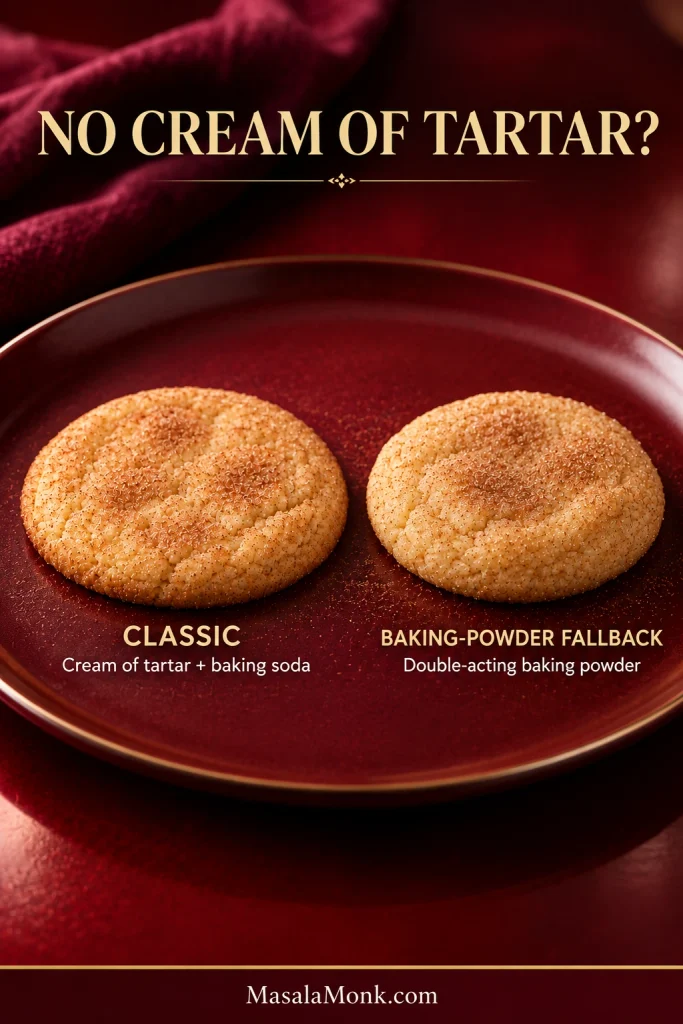
Can you make Snickerdoodles without cream of tartar?
Yes. For this recipe, omit the 2 teaspoons cream of tartar and 1 teaspoon baking soda, then use 2 teaspoons double-acting baking powder instead. The cookies will have a milder tang, and their rise and spread may differ. Use the same portion size and check the first cookie before baking the remaining dough.
How butter temperature and flour affect spread
When Snickerdoodles spread too much or barely spread at all, start by checking the butter temperature and flour measurement. Dough temperature, baking-sheet temperature and oven accuracy can also influence the result, so work through the basics before changing the formula.
Butter should dent, not slump
Press the butter with a finger. It should give way slightly while remaining cool and holding its shape. If the surface looks greasy or the whole piece slumps, it is warmer than ideal for this dough.
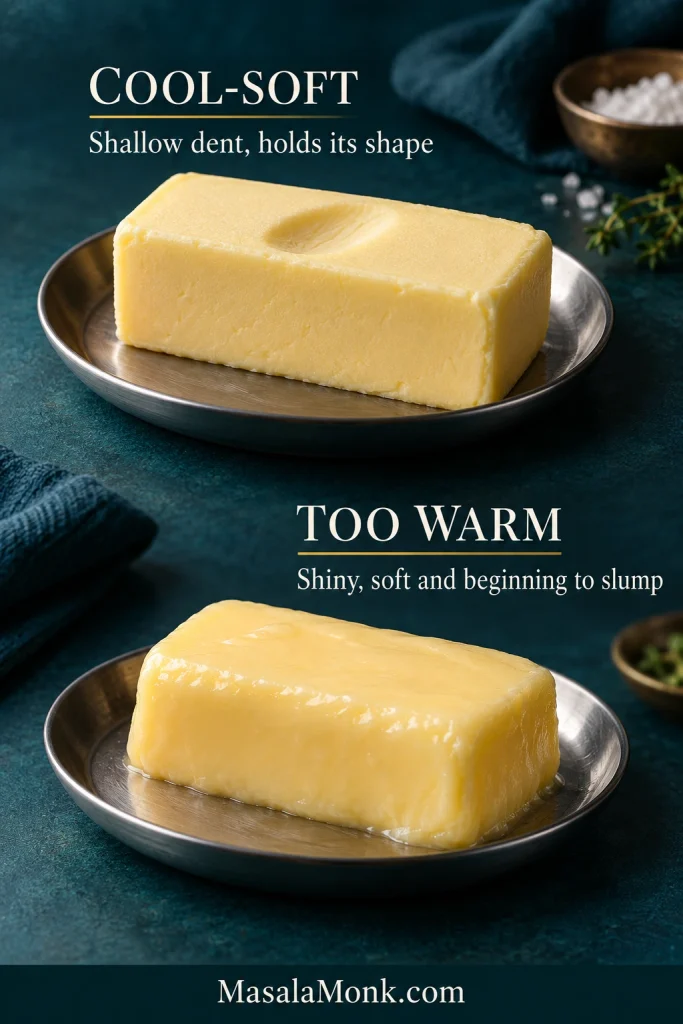
Warm butter can let the dough spread earlier in the oven, sometimes producing thinner edges or a greasy feel. The effect can become more noticeable as the kitchen warms during successive baking rounds.
Brown butter needs a formula that accounts for the water lost during browning as well as the deeper flavor it develops. The brown butter chocolate chip cookies are designed around that change.
Why flour measurement matters
Too much flour can leave the cookies unusually tall, dry or reluctant to spread. The dough may look perfectly workable in the bowl, so the problem is not always obvious until the first cookie comes out of the oven.
Use 330 g of flour as the reference amount. If measuring by cups, spoon the flour into the measuring cup and level it off rather than scooping directly from the bag.
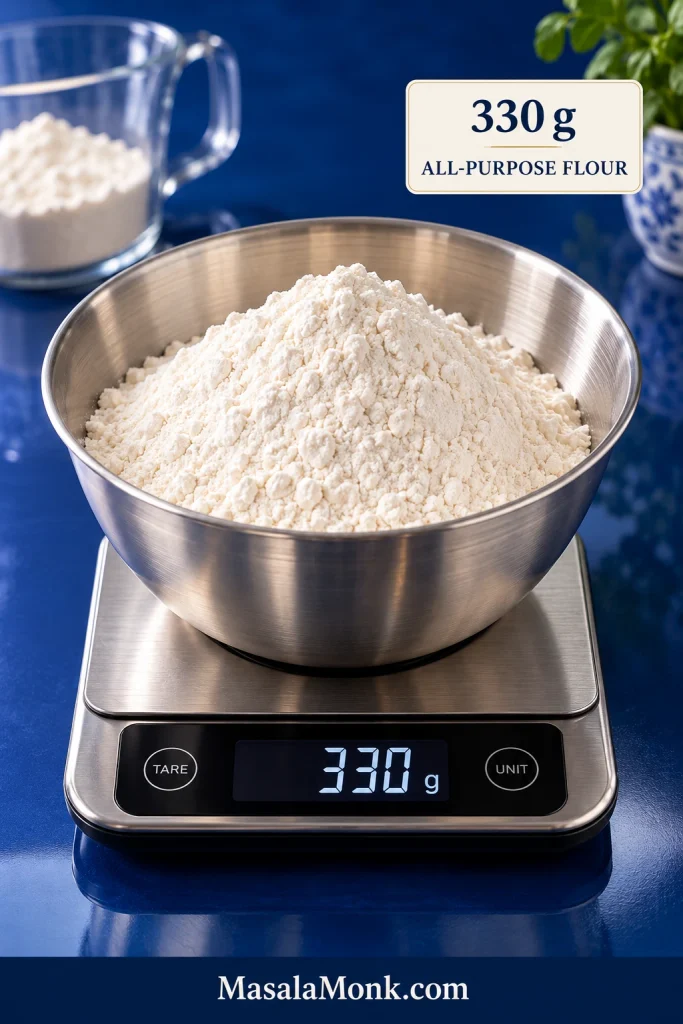
King Arthur Baking’s flour-measuring guide explains why the amount of flour in a cup can vary with the measuring technique.
If the dough becomes sticky because the kitchen is warm, cool it briefly before adding flour. Extra flour is not always the answer to dough that has softened while you work.
While one sheet bakes, keep the remaining dough away from the oven and other warm surfaces. If it becomes greasy or difficult to roll, refrigerate it briefly until it is easier to handle.
The gingerbread cookies use chilling to help cut-out shapes hold their edges. Snickerdoodles need enough movement in the oven to spread into their characteristic shape.
Keep the cinnamon sugar evenly mixed
Cinnamon can settle through the granulated sugar while you coat the dough. If the mixture starts looking paler near the top or darker at the bottom, stir it again so the last cookies receive a similar coating to the first.
When to take Snickerdoodles out of the oven
It is tempting to leave cookies in for another minute just to be safe. For a soft, chewy Snickerdoodle, though, waiting until the entire cookie looks firm can lead to a drier result after cooling.
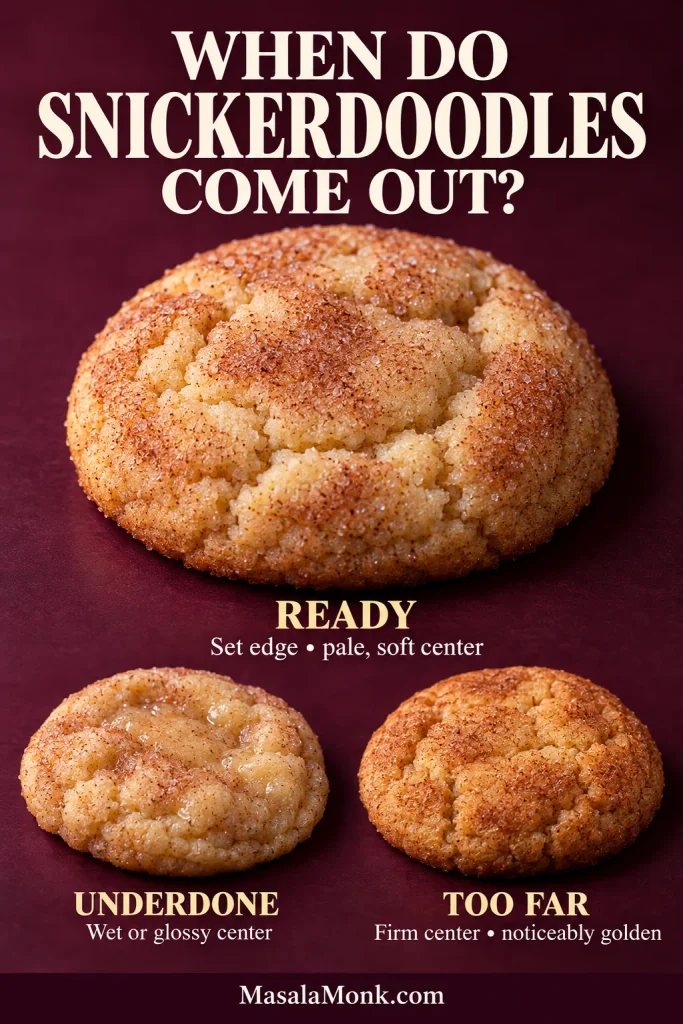
| What you see | What it means |
|---|---|
| Wet, glossy surface and a very loose center | The cookies need more baking. |
| Set edges, modest surface breaks and a pale, soft center | Remove the baking sheet. The centers will continue setting during the 10-minute rest. |
| Firm centers and noticeably golden cookies | The cookies are moving toward a crisper, drier result. |
A properly baked center can still feel soft when the cookies leave the oven. After cooling, it should be tender and cohesive rather than wet, gummy or paste-like.
How to troubleshoot Snickerdoodles
If your first batch looks different from the target, start by identifying the problem. A cookie that stays tall needs a different correction from one that spreads thin, so diagnose the shape before changing the ingredients.
Identify the cookie shape first
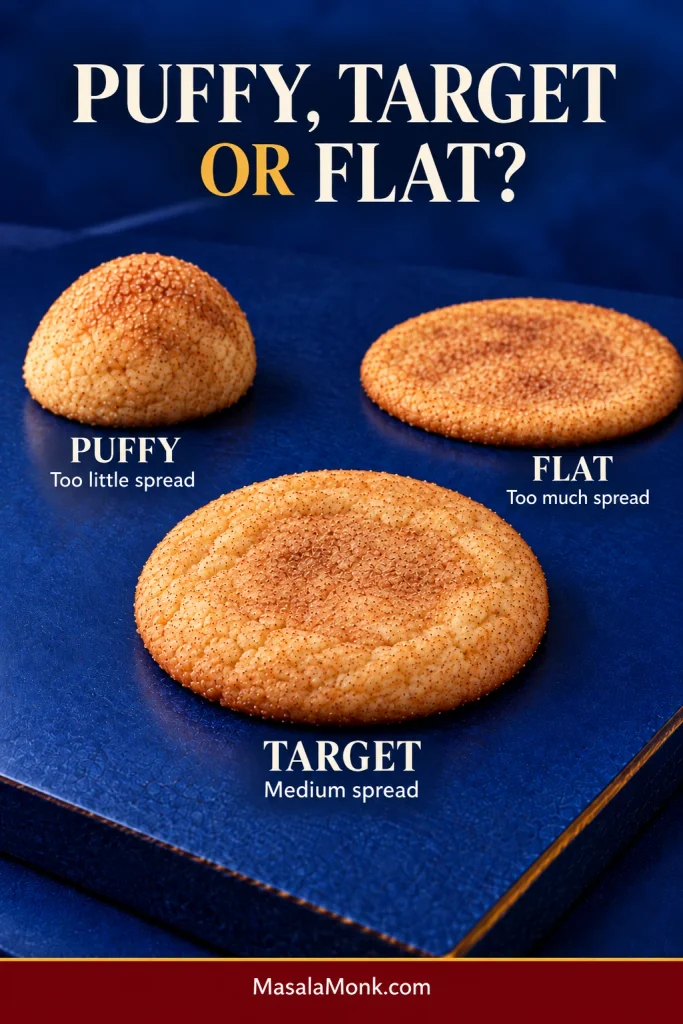
| Problem | What to check next |
|---|---|
| Puffy or cakey | Check the flour measurement and whether the dough was very cold. Excessive creaming can also contribute to a puffier result. |
| Barely spread | Let cold dough soften slightly and check the flour amount before making other changes. |
| Flat and thin | Check whether the butter or dough was too warm, whether the baking sheet was hot, and whether the flour was measured accurately. |
| Hard after cooling | Check the flour measurement and baking time. Remove the cookies when the edges are set and the centers remain pale and soft. |
| Greasy | The butter may have been too warm or partly melted. Begin with cool-soft stick or block butter. |
| Raw center | Keep portions close to 35 g and check the oven temperature. A pale, soft center is normal; a wet or very loose center needs more baking. |
| Few visible surface breaks | If the spread and cooled texture are right, no correction is needed. A smoother top alone does not mean the batch has failed. |
| Patchy cinnamon coating | Roll the dough more evenly and stir the coating mixture as you work. |
| Bitter or chemical taste | Recheck the cream of tartar and baking soda amounts, including the difference between teaspoons and tablespoons. |
| Later sheets spread farther | Check whether the waiting dough has warmed or the reused baking sheet is still hot. |
| Bottoms brown too quickly | Use a light-colored baking sheet on the center rack and verify the oven temperature if the problem continues. |
When a recipe that worked before suddenly behaves differently, recheck the measurements before changing the formula. If you are using the baking-powder substitute, check that the baking powder is still active as well.
What happens if you change the recipe?
Do you need to chill Snickerdoodle dough? Not always. Warm dough can benefit from a short chill, but dough that is already cool and easy to portion may not need extra refrigeration. Chilled dough generally starts spreading later in the oven and may produce a thicker cookie, although the result depends on the dough temperature and chilling time.

Butter versus shortening: Shortening can produce a tender, puffier cookie, but it has a different flavor from butter. This recipe uses butter for its richer taste.
Brown sugar: Brown sugar adds caramel notes and changes the dough’s moisture and spread. The granulated sugar in this recipe keeps the flavor closer to the classic cinnamon-sugar profile.
For an egg-free version: replacing the egg and yolk changes both moisture and structure. The flax egg guide explains where flax can work as an egg substitute and how texture may differ.
For gluten-free cookies: gluten-free flour blends can absorb liquid and spread differently from all-purpose flour. The almond flour cookies use a formula designed around almond flour rather than treating it as a direct replacement here.
Large sugar reductions, alternative sweeteners and replacing solid butter with liquid oil can all change the finished texture. For those adjustments, a recipe developed around the substitution is more reliable than trying to correct this dough ingredient by ingredient.
How to store and freeze Snickerdoodles
Store baked cookies at room temperature
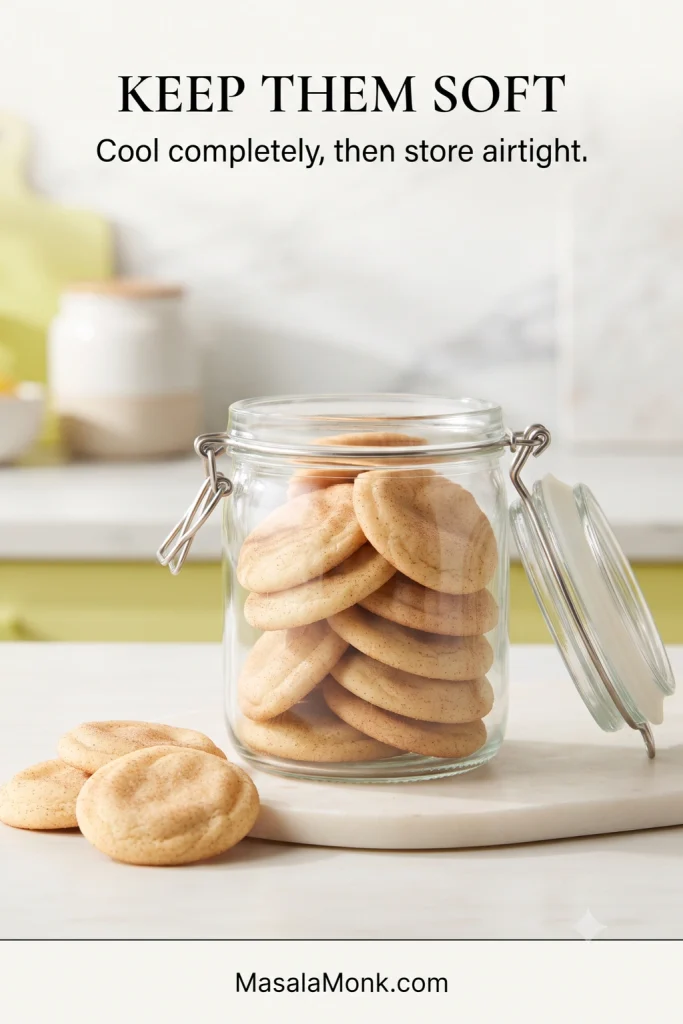
Let the cookies cool completely before sealing them in an airtight container. Closing the container while they are warm can trap steam and soften the cinnamon-sugar coating. Store at room temperature for up to 4 days; the cookies will gradually firm as they sit.
If you prefer softer Snickerdoodles, place a small piece of soft white bread in the airtight container, beside the cookies rather than directly on top. The cookies absorb some moisture from the bread, which can soften their edges as well as their centers. Check the bread daily and replace or remove it before it spoils.
Freeze baked cookies
Freeze fully cooled cookies in an airtight, freezer-safe container for up to 2 months. Separate layers with parchment if needed. Thaw them covered at room temperature to help limit condensation on the surface.
Freeze the dough for later
Freeze uncoated 35 g dough portions on a baking sheet until firm, then transfer them to an airtight freezer-safe container for up to 3 months.
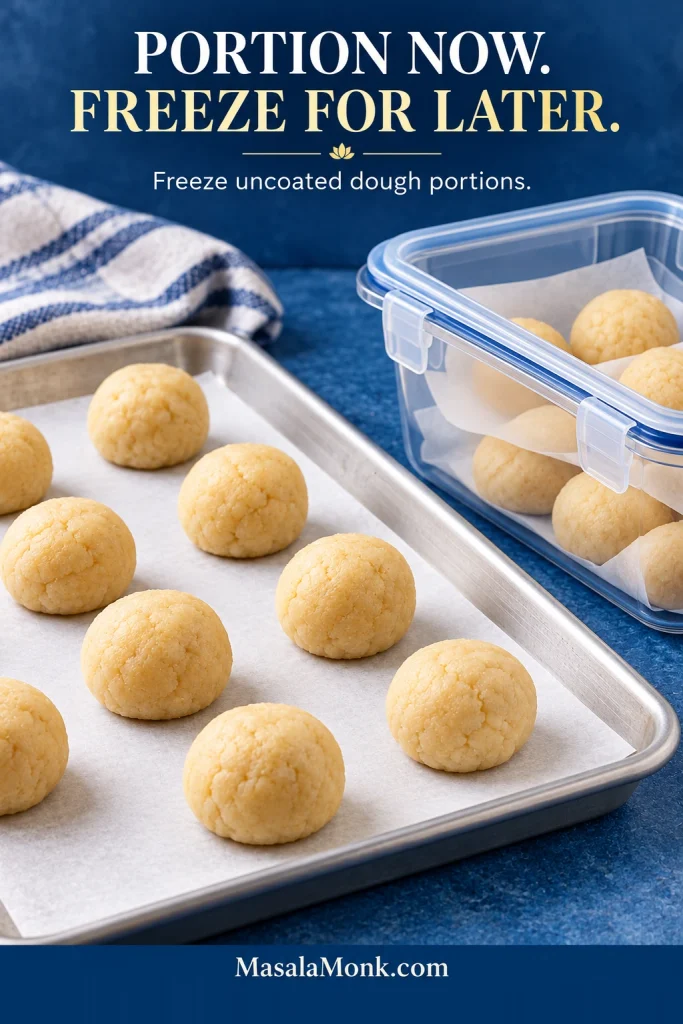
For a result closer to cookies made from fresh dough, thaw the portions overnight in the refrigerator. Before coating, let them soften enough to roll cleanly. Bake as directed, using the edges and centers as your guide rather than relying on the original timing alone.








