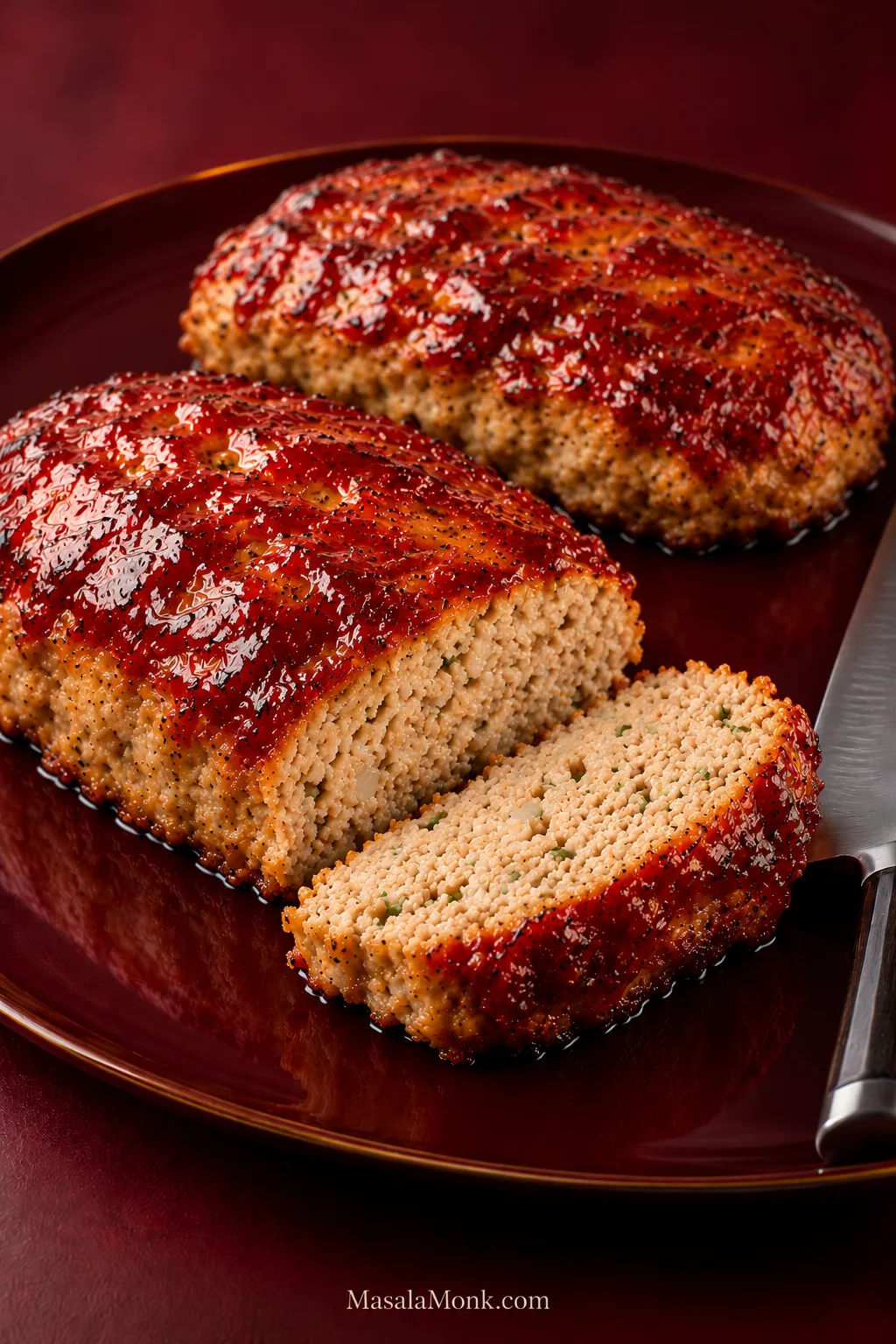
The best turkey meatloaf has a sticky, sweet-tangy glaze around the browned edges and a savory center that stays tender enough to cut with a fork. Just as important, a thick slice should lift cleanly onto the plate instead of crumbling apart or slumping into a wet center.
That balance is where turkey meatloaf gets tricky. Too little moisture and lean turkey can turn dry; too much and the loaf struggles to hold together.
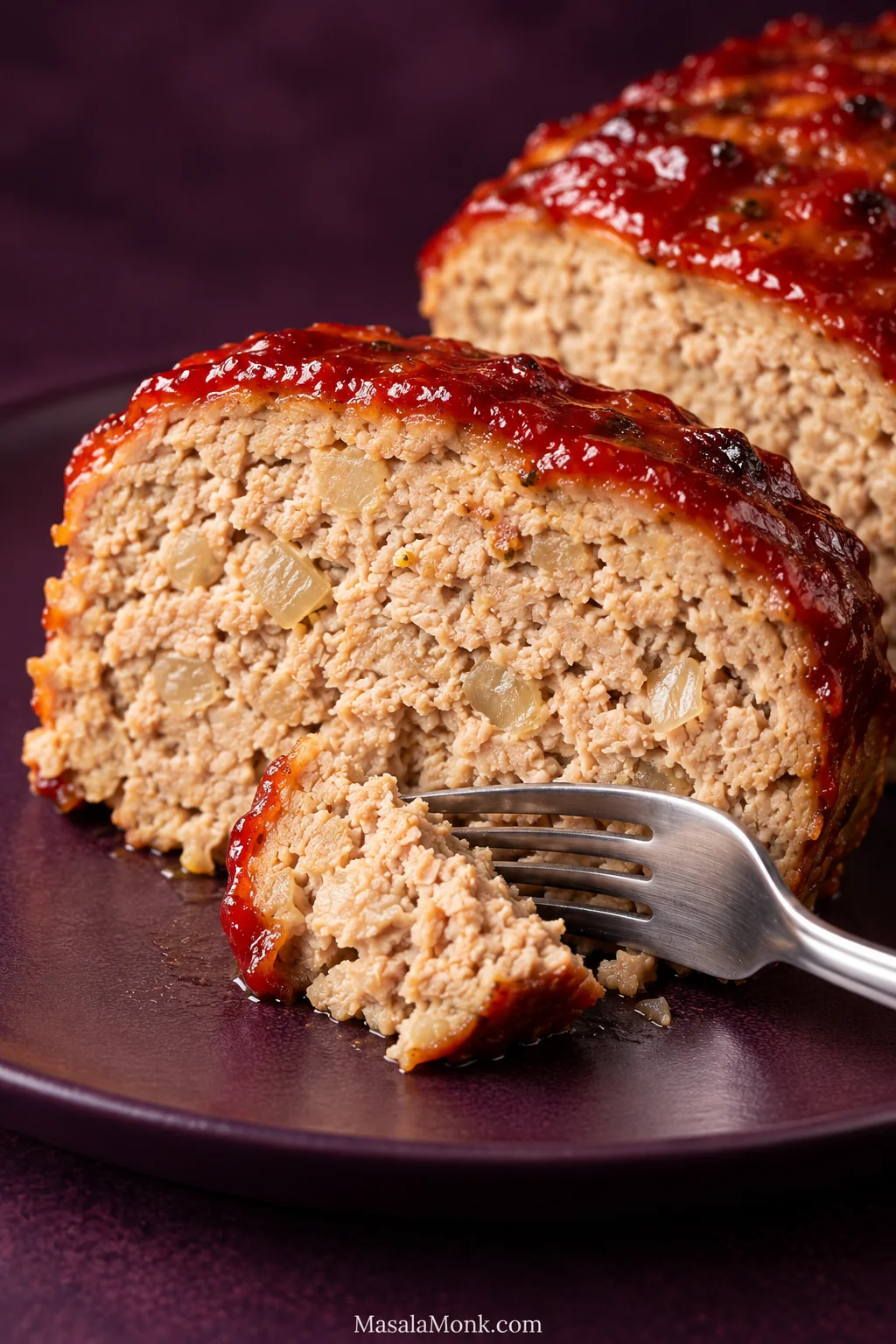
Moist is the goal. Wet is not. Ground turkey often feels less firm than a beef meatloaf mixture, and that alone is not a problem.
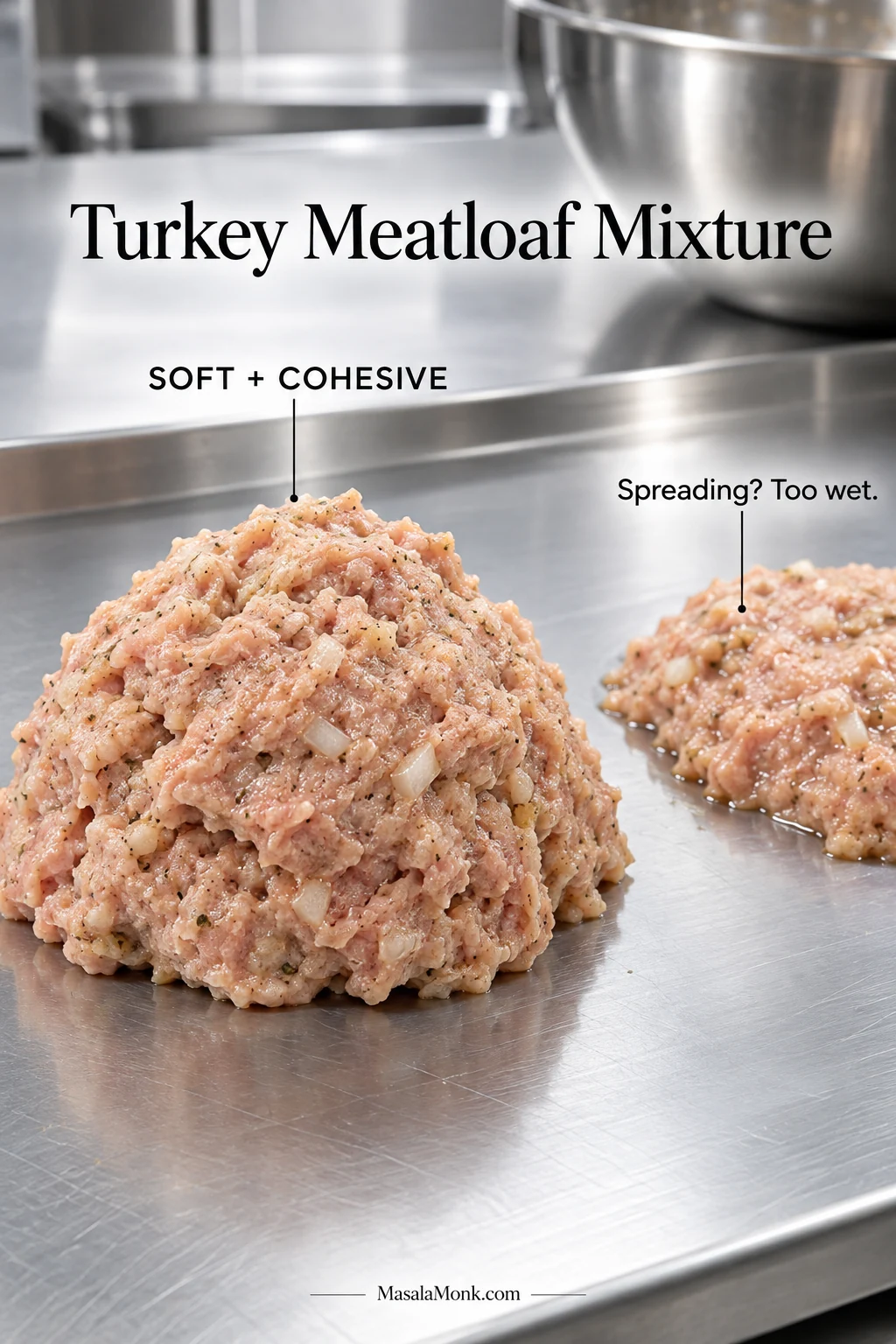
What Should Turkey Meatloaf Mixture Look Like?
The mixture should be soft but cohesive and stay where you shape it. It should not pour, puddle, or immediately spread flat when you mound it on the baking sheet.
Package-to-package texture varies, so judge the finished mixture by how it behaves rather than expecting every bowl to feel identical.
| Stage | What to look for |
|---|---|
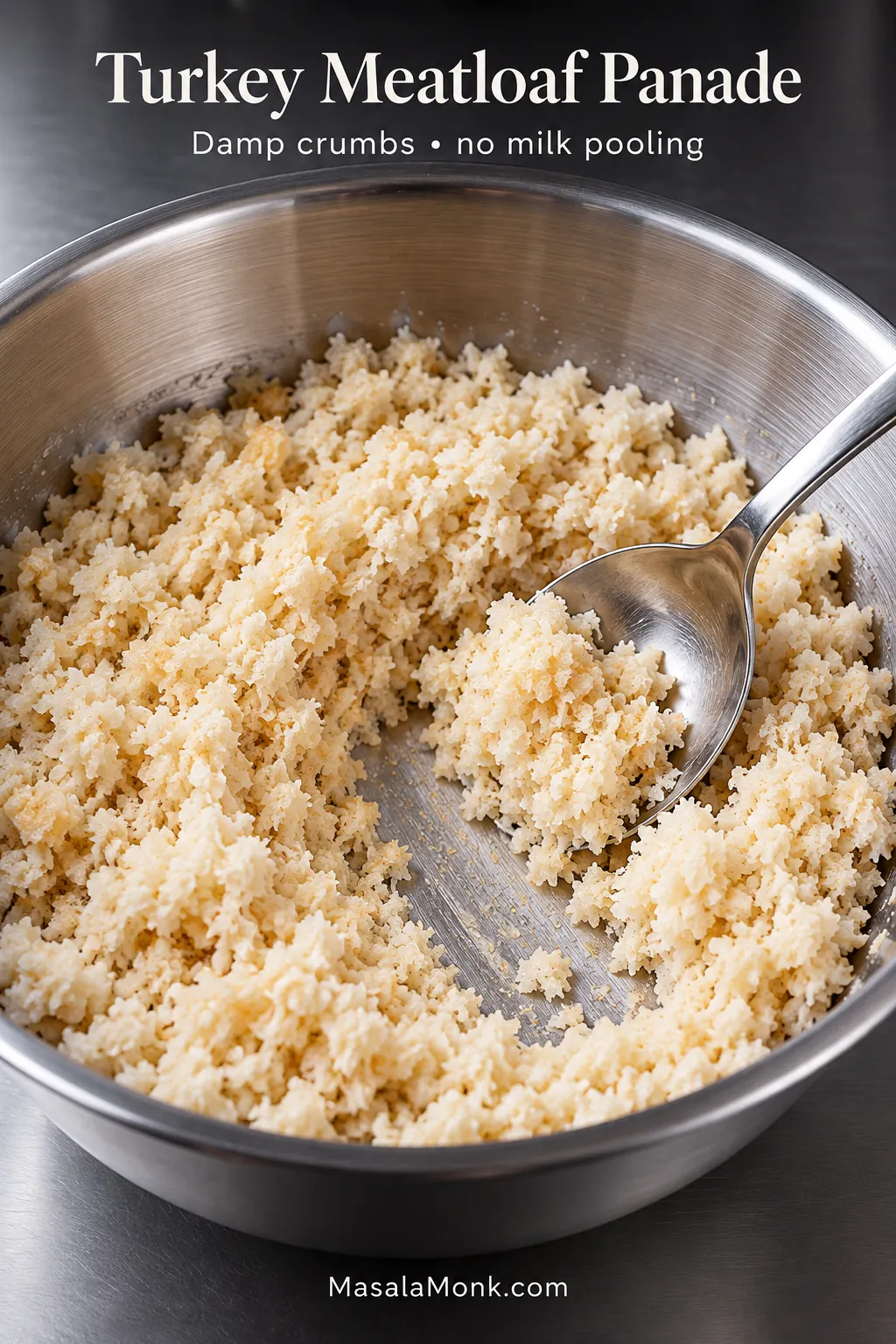
| Panko + milk | Evenly damp crumbs with no loose milk underneath. |
| Finished mixture | Soft but cohesive, without puddling or flowing across the bowl. |
| Shaped loaves | Rounded sides that stay in place instead of slowly spreading flat. |
Turkey Meatloaf Recipe
Easy Turkey Meatloaf with Sweet-Tangy Glaze
Tender, sliceable turkey meatloaf with seasoned onion and garlic through the middle and a glossy ketchup glaze on top. The mixture is divided into two free-form loaves for more glazed surface and more even cooking.
Equipment
- Large rimmed baking sheet
- Parchment paper or foil
- Medium skillet
- Large mixing bowl
- Small bowl for the glaze
- Instant-read thermometer
Ingredients for the Turkey Meatloaf
- 2 lb (907 g) 93% lean ground turkey
- 1½ cups plain panko breadcrumbs (about 90 g; weigh if possible)
- ½ cup (120 ml) whole milk
- 2 large eggs
- 1 medium yellow onion, finely chopped (about 150 g)
- 3 garlic cloves, minced
- 1 tablespoon (15 ml) olive oil
- 1½ tablespoons (22 ml) Worcestershire sauce
- 2 teaspoons (10 ml) Dijon mustard
- 1½ teaspoons Diamond Crystal kosher salt (about 4 g); see salt note
- 1 teaspoon freshly ground black pepper
- 1 teaspoon dried thyme
- 1 teaspoon sweet paprika
For the Sweet-Tangy Glaze
- ¾ cup (180 ml) ketchup
- 2 tablespoons (25 g) packed light brown sugar
- 1 tablespoon (15 ml) apple cider vinegar
- 2 teaspoons (10 ml) Dijon mustard
- 1 teaspoon (5 ml) Worcestershire sauce
Instructions
Prepare the mixture
- Heat the oven. Preheat to 375°F (190°C). Line a large rimmed baking sheet with parchment. If using foil instead, lightly oil it so the meatloaf and glaze release more easily.
- Cook the onion. Heat the olive oil in a skillet over medium heat. Add the onion and cook for 5–7 minutes, stirring occasionally, until soft and translucent. The bottom of the pan should no longer look visibly wet. Add the garlic and cook for another 30–60 seconds, just until fragrant. Let the mixture cool until warm rather than piping hot.
- Make the panade. Stir the panko and milk together in the large mixing bowl and leave for 5 minutes. The crumbs should be evenly damp, with no loose milk pooling underneath.
- Add the seasonings. Stir the eggs, Worcestershire, Dijon, salt, pepper, thyme, paprika, and warm onion mixture into the panade until evenly combined.
- Fold in the turkey. Add the ground turkey and gently fold everything together. Stop as soon as the ingredients are evenly distributed; the mixture does not need to become smooth.
- Check the texture. The mixture should be soft but cohesive and stay where you shape it. Still spreading after a few minutes? Fold in 1 tablespoon of panko, wait briefly, and check again before adding any more.
Shape, glaze and bake
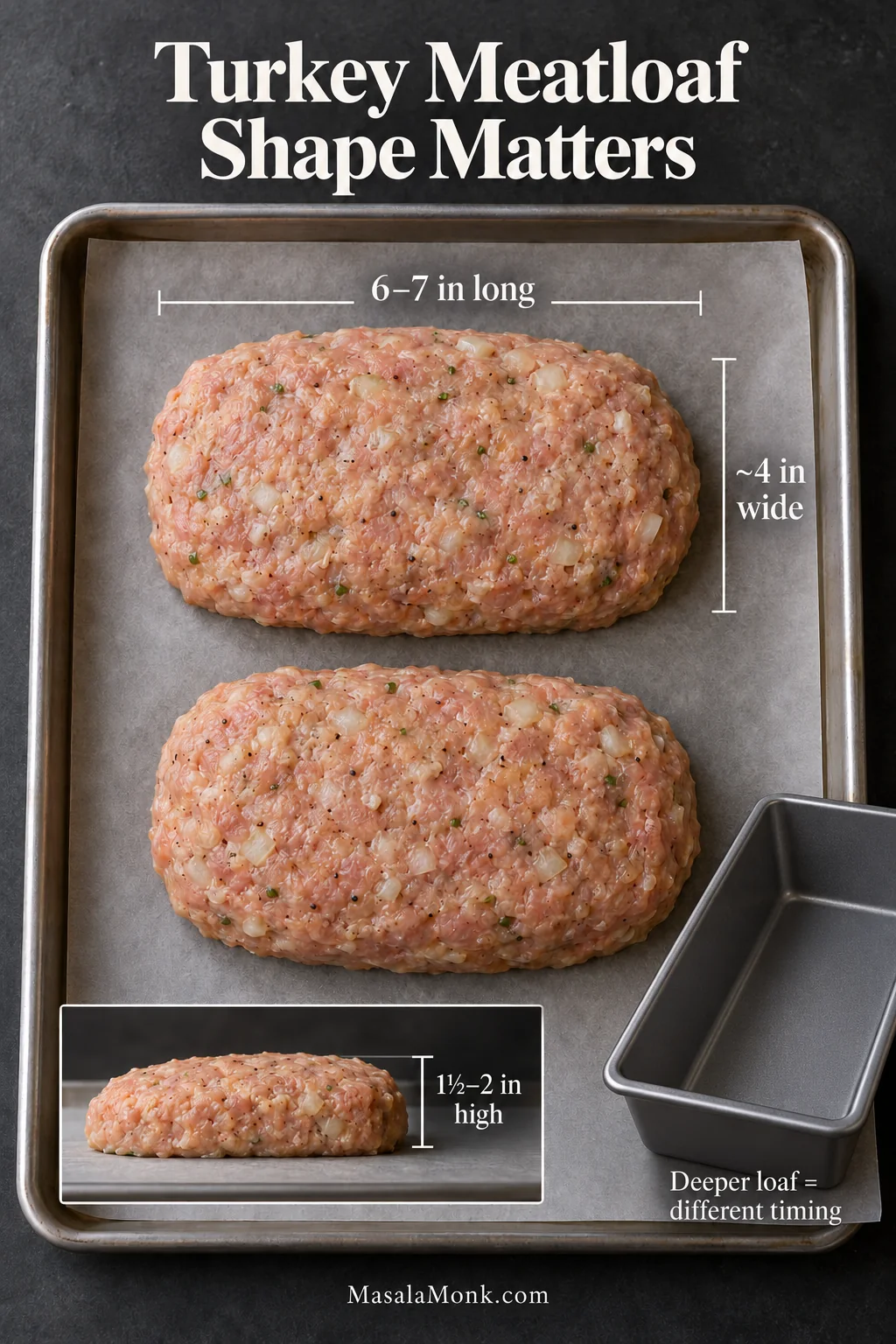
- Shape two loaves. Divide the mixture evenly and form two free-form loaves, each about 6–7 inches (15–18 cm) long, 4 inches (10 cm) wide, and 1½–2 inches (4–5 cm) high. Keep their thickness similar and leave space between them.
- Make the glaze. Stir together the ketchup, brown sugar, apple cider vinegar, Dijon, and Worcestershire. Reserve about ¼ cup (60 ml) in a clean bowl if you want glaze for serving later. Keep that portion away from the raw turkey.
- Add the first coat. Brush, spoon, or spread a light layer of glaze over the loaves, then bake for 25 minutes.
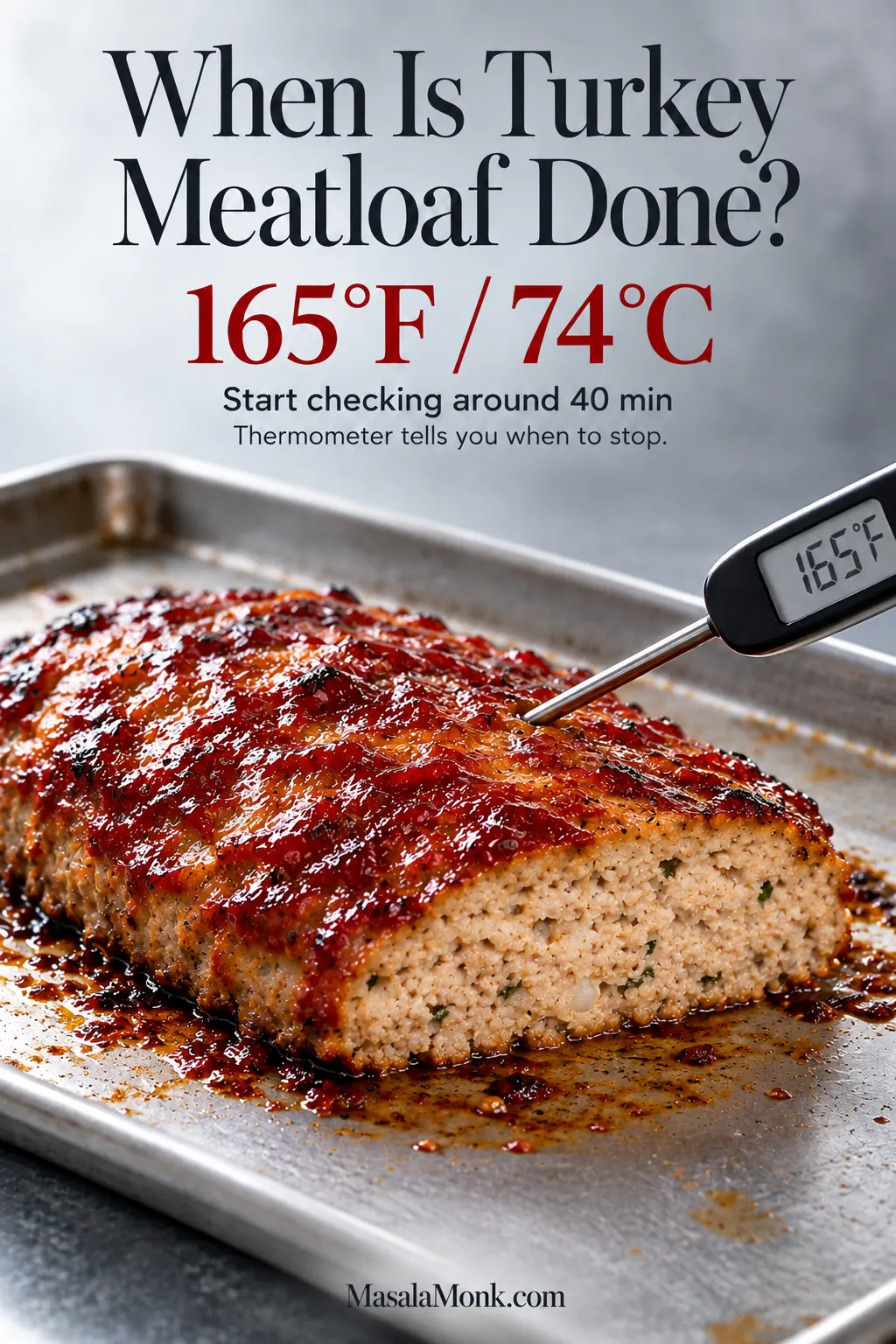
- Glaze again. Spread a more generous second coat over the loaves and return them to the oven. Begin checking the thickest part around 40 minutes total cooking time. Remove each loaf when it reaches 165°F (74°C).
- Give it 10 minutes. Let the loaves rest before slicing. The glaze will set around the edges, and the meatloaf will be easier to cut cleanly.
Salt note: the volume measure above is for Diamond Crystal kosher salt. If using Morton kosher salt, use about 1 teaspoon; if using fine table salt, use about ¾ teaspoon. Worcestershire and Dijon also contribute salt to the meatloaf, so brand differences can shift the final seasoning slightly.
Getting Turkey Meatloaf Right
Texture & Flavor
Shape & Cook
Variations & Leftovers
Building a Tender, Sliceable Meatloaf
Start with 93% lean ground turkey
93% lean ground turkey is a practical choice here. It brings some fat to a naturally lean meat without making the loaf heavy. Extra-lean 99% turkey can work too, but it gives you less margin for overcooking, so watch the thermometer closely and don’t let the center sail past 165°F.
Turkey also tends to make a softer raw mixture than beef. If you’re used to shaping a classic beef meatloaf, don’t keep adding breadcrumbs simply because the turkey feels different.
Let the panko absorb the milk first
Hydrating the panko before it meets the turkey spreads the milk through the mixture instead of leaving pockets of free liquid. Give it time to absorb before deciding whether the mixture needs adjusting.
Once the turkey goes in, use a light hand. Fold just until the ingredients are distributed and then stop. Kneading the mixture into a smooth paste works against the tender texture we’re after.
Make the middle worth eating, too
Most of each bite is turkey, so the flavor cannot live only on the surface. Softened onion and garlic build the savory base; Worcestershire and Dijon add depth and tang; thyme, paprika, black pepper, and salt carry the seasoning through the loaf.
The ketchup glaze brings the sweeter, sharper finish, especially along the edges. Underneath, the meat should already taste seasoned before the glaze gets involved.
Shape, Glaze and Bake the Meatloaf
Shape the loaves to the same thickness
For two free-form loaves, matching their thickness matters more than making them look identical. Similar-height loaves tend to reach temperature at about the same time.
Build the glaze in two coats
Glazing twice gives each coat a different job. The first thin layer cooks onto the meatloaf; the second goes on later for a thicker, glossier, stickier finish.
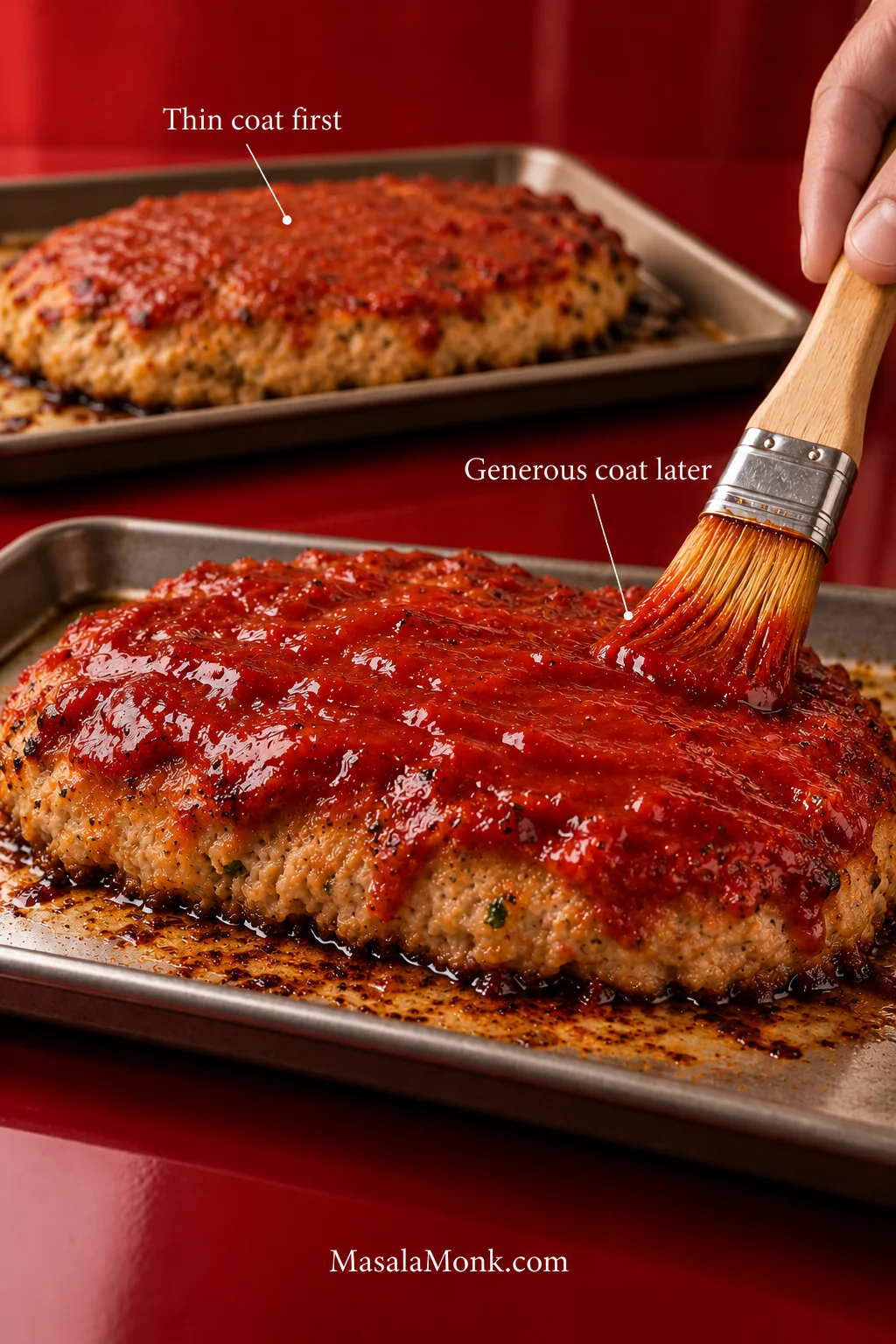
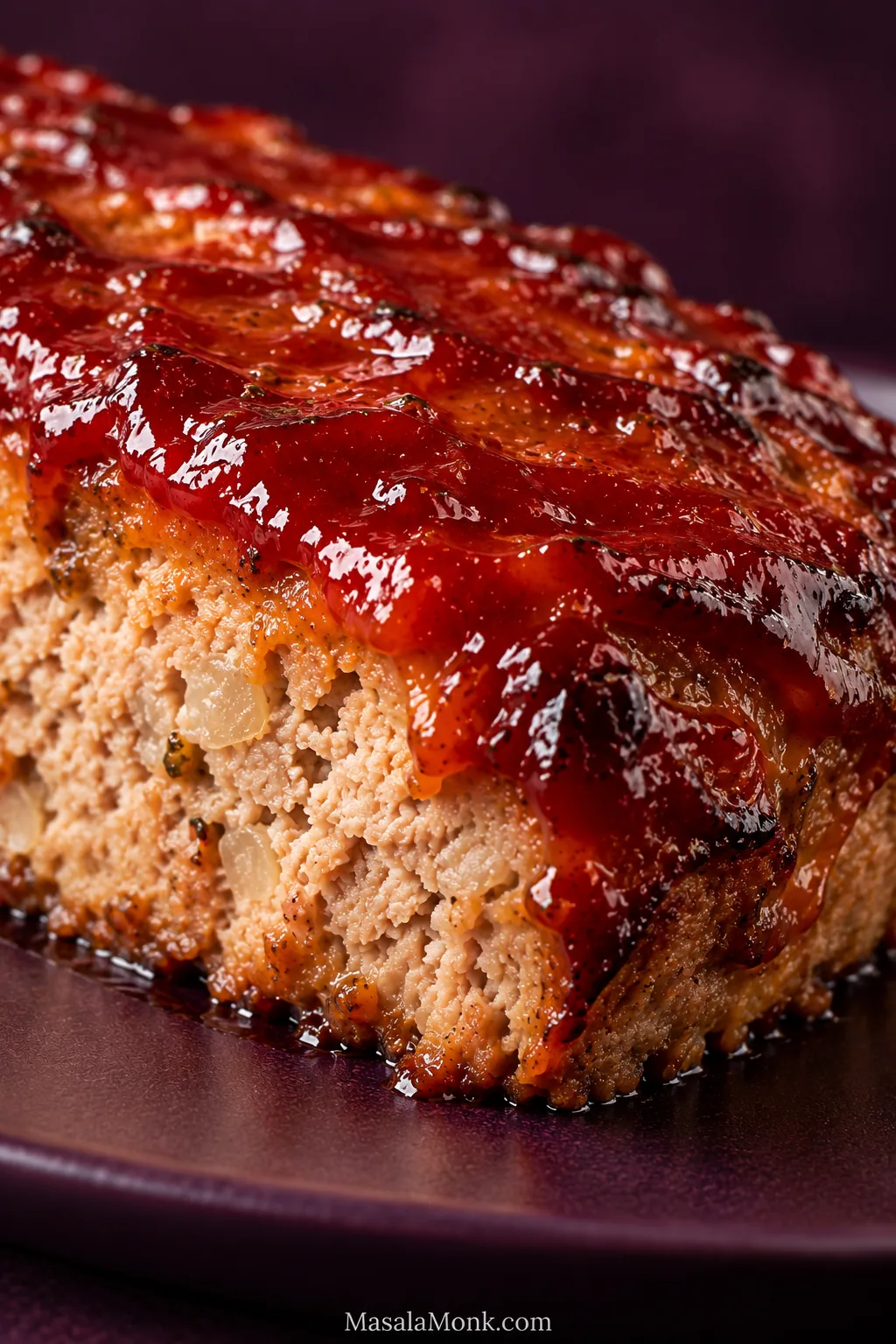
What should the finished glaze look like? It should cling to the surface with a tacky sheen and darker ridges around the edges instead of running freely onto the pan.
Use 165°F, not the clock, as the endpoint
Bake at 375°F (190°C) and begin checking around 40 minutes. The meatloaf is done when the thickest part reaches 165°F (74°C), the USDA safe minimum for ground poultry. Many loaves finish between 40 and 50 minutes, but their thickness, starting temperature, and your oven can shift that window.
Check both loaves with an instant-read thermometer. Use the clock to tell you when to look; let the thermometer tell you when to stop.
Prefer a loaf pan? Use a lightly greased 9 × 5-inch pan, but don’t pack the mixture above the rim; shape any excess as a small free-form loaf. A deeper loaf can take considerably longer than the two free-form loaves above, so ignore their timing and cook to 165°F (74°C) in the thickest part. Check the smaller free-form loaf earlier and remove it separately as soon as it reaches 165°F (74°C).
Making half the recipe? Halve the ingredients and shape one loaf to approximately the same dimensions as either of the two main loaves. Don’t halve the baking time: thickness matters more than total batch weight, so begin checking around the same point and cook to 165°F (74°C).
Rest before you judge the center
However you shape it, give the cooked meatloaf 10 minutes before slicing. After the rest, the cut surface should look moist rather than wet or pasty, and the slice should hold together when you cut into it.
Something still looks wrong? Troubleshoot the texture · Back to the recipe
When the Texture Doesn’t Look Right
The raw mixture won’t hold its shape
First, wait. Give the panko time to absorb the milk and make sure the cooked onion isn’t carrying visible liquid into the bowl. A soft mixture is normal; one that puddles or keeps spreading needs attention.
Still spreading after that? Fold in 1 tablespoon of panko and give it another moment before deciding whether it needs more. A mixture that is simply very soft can also be easier to shape after a short chill.
Avoid chasing a very wet mixture back and forth with handfuls of breadcrumbs and extra eggs. Egg helps the loaf set as it cooks, but it also adds liquid to the raw mixture.
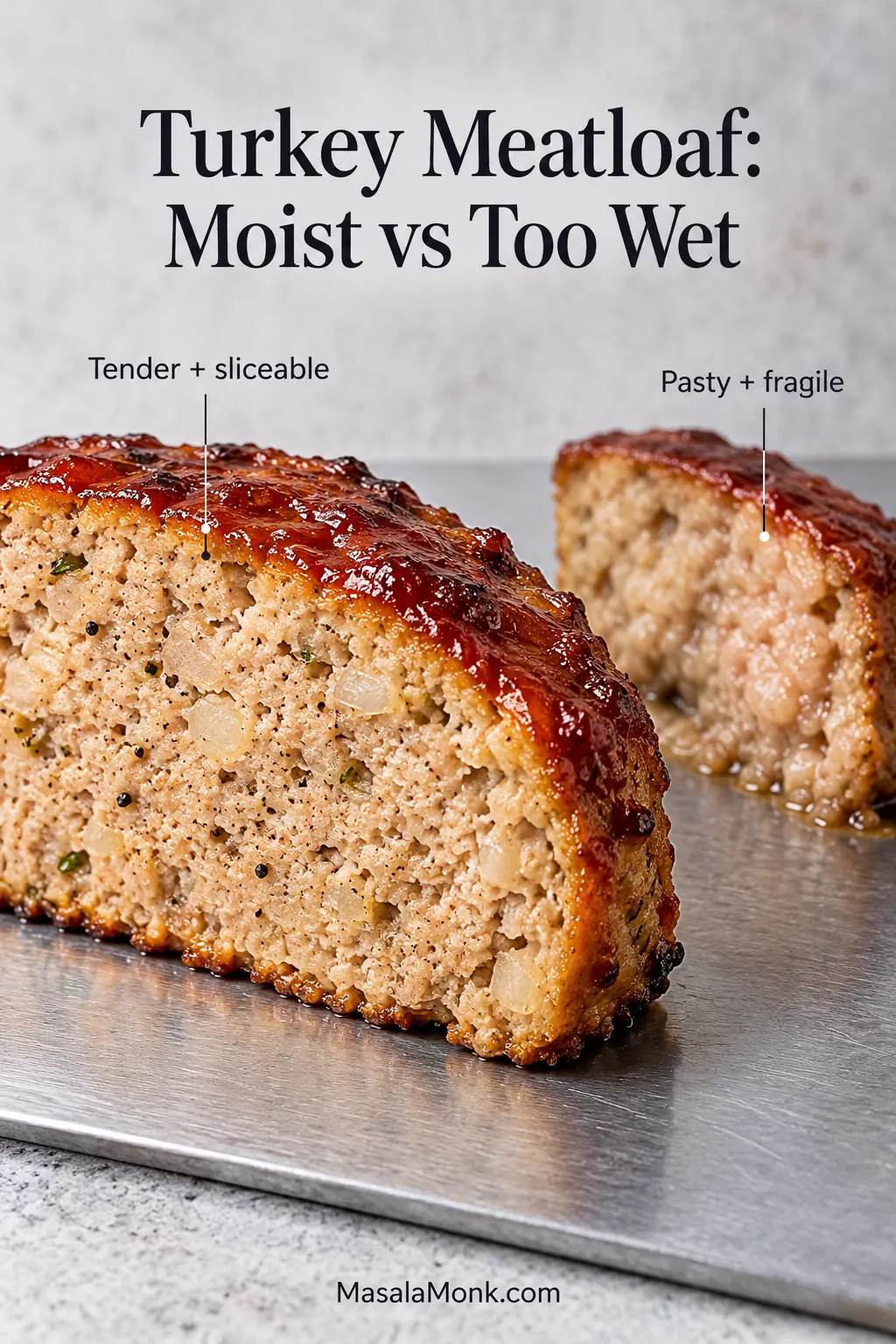
The cooked loaf seems soft, wet or fragile
A loaf can feel surprisingly soft straight from the oven without being ruined. Give it the full 10-minute rest first. A properly cooked meatloaf often becomes noticeably easier to slice as it sits.
First make sure the center actually reached 165°F (74°C), then give the loaf its full rest. Still wet and pasty after that? Excess moisture is more likely than undercooking.
Watery vegetables or too much added liquid are the first places to look. More oven time at that point can dry the edges without fixing the center.
The meatloaf is dry, dense or rubbery
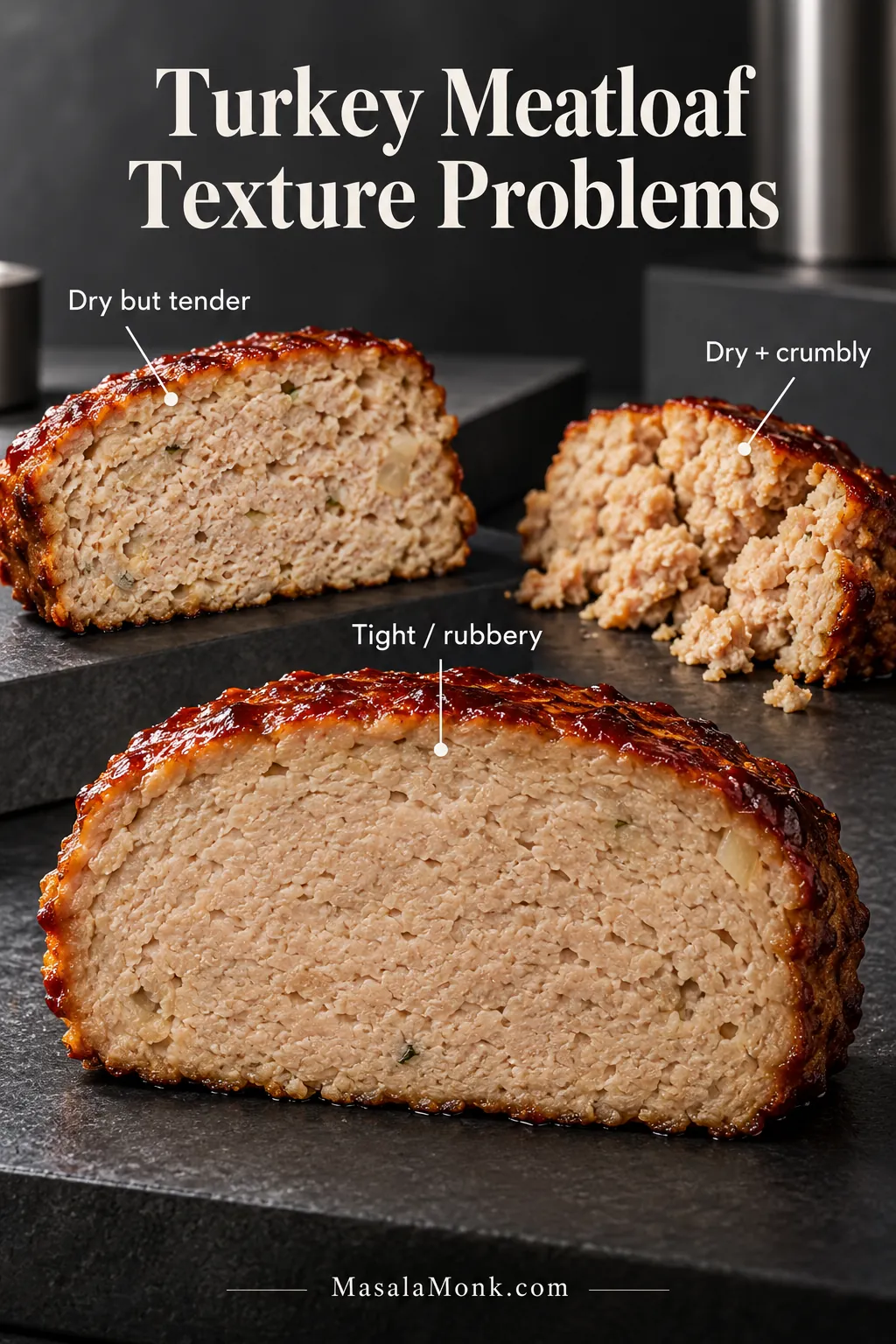
Dry but still fairly tender? Extra-lean turkey or a temperature overshoot is more likely. Tight, firm or rubbery? Heavy mixing moves higher on the list. Dry and crumbly? Lean meat and overcooking deserve another look.
There is no prize for leaving ground turkey in the oven after it has safely reached 165°F.
There’s liquid on the pan or the glaze is getting too dark
A little juice around the loaf isn’t alarming. By contrast, a large pool can point to especially wet turkey or vegetables that carried too much water into the mixture. When the glaze starts darkening too quickly, loosely shield the dark area with foil and keep cooking until the meatloaf reaches temperature.
Need the method again? Back to the recipe · Recheck time & temperature
Oats, Vegetables and Smaller Loaves
Using oats instead of panko
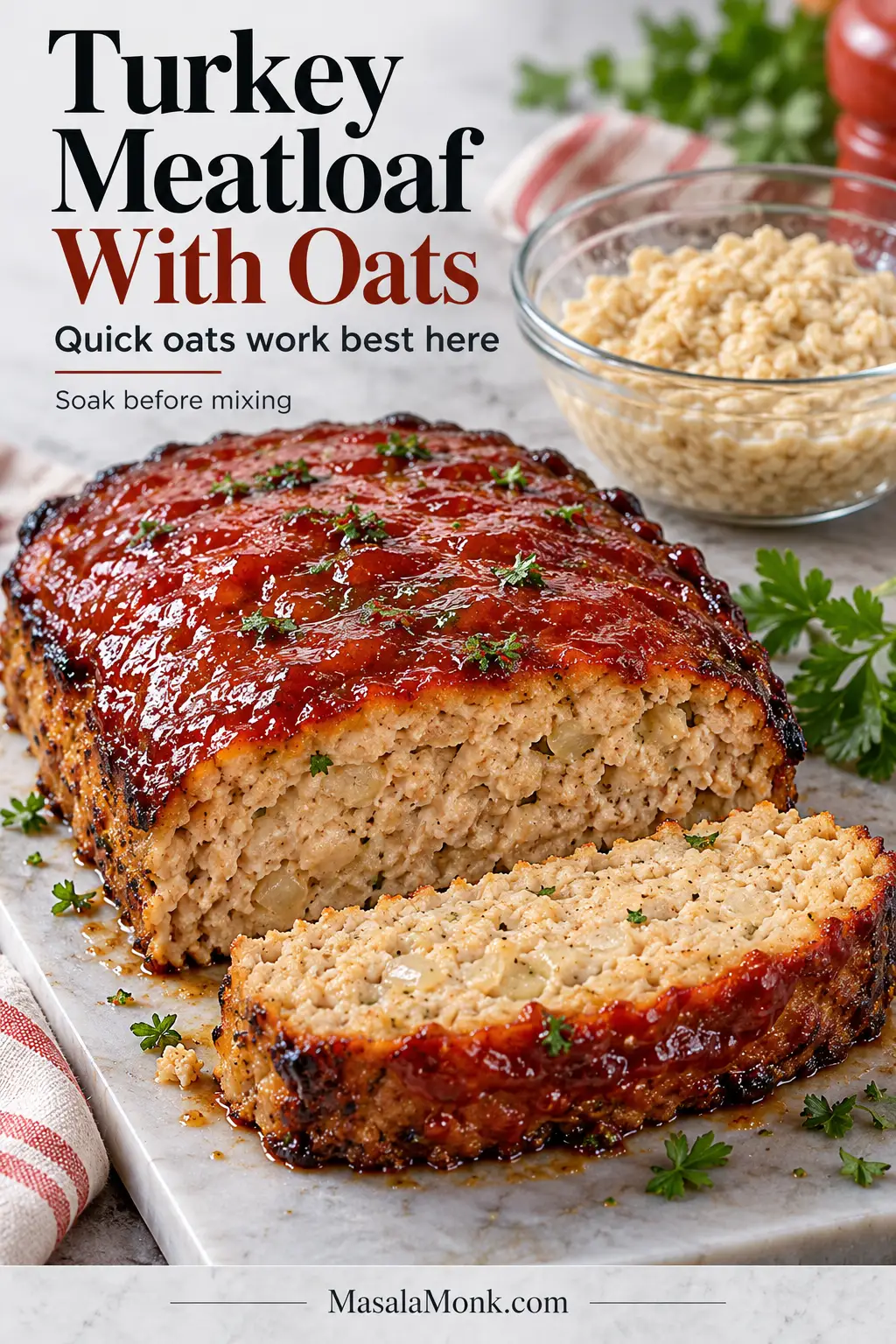
For an oat version of this 2-pound batch, use ¾ cup quick-cooking oats in place of the panko and keep the ½ cup (120 ml) milk. Stir the oats and milk together first and let them soak for 5–10 minutes before adding the remaining ingredients. Quick oats give a finer texture than old-fashioned rolled oats and are the better fit for this substitution.
If gluten is a concern, use certified gluten-free oats or gluten-free panko and check the labels on the Worcestershire, Dijon, ketchup, and other prepared condiments you use rather than assuming the breadcrumb swap alone makes the whole recipe gluten-free.
Adding vegetables without making the loaf watery
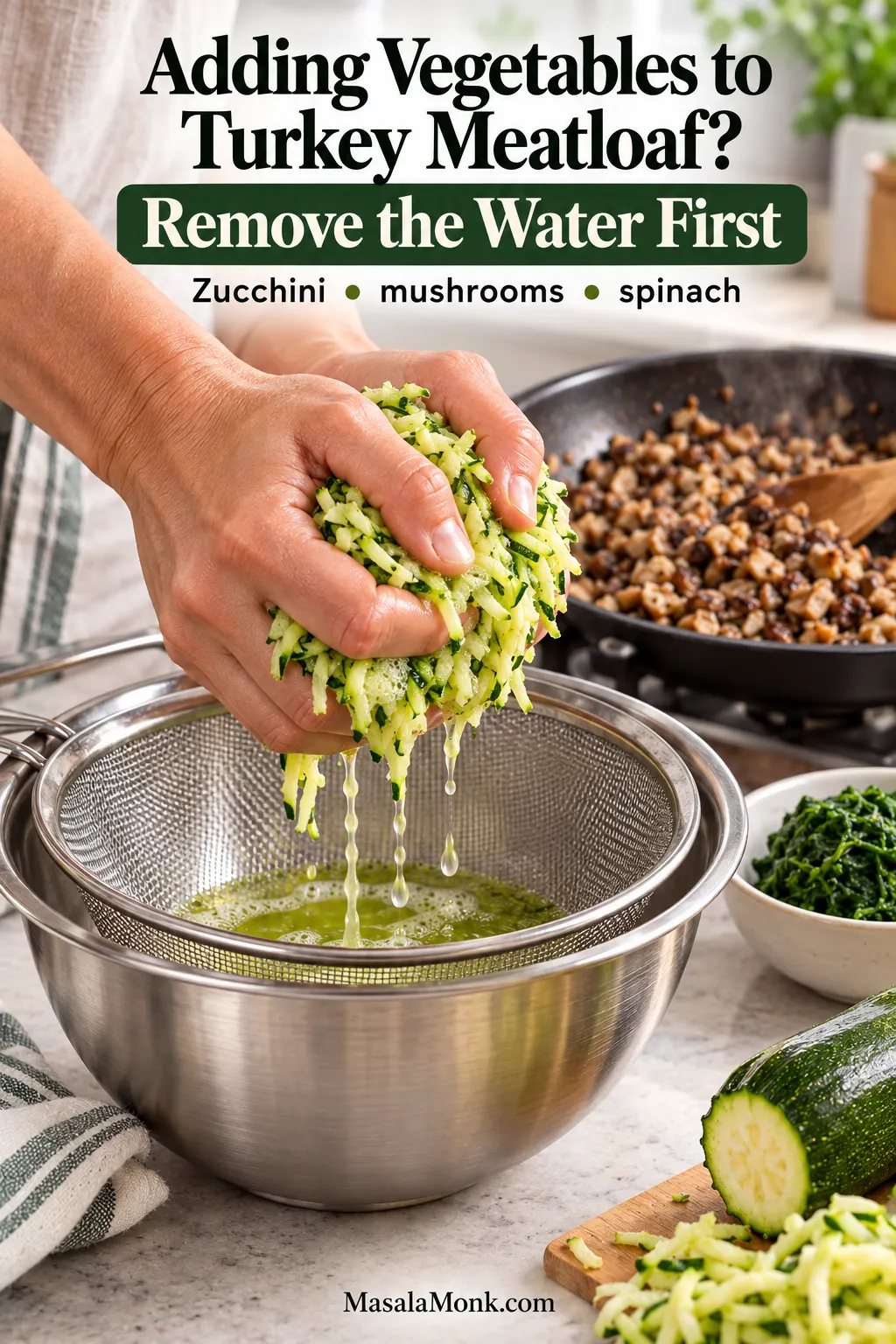
Vegetables can add sweetness, savory depth, color, or tenderness. These amounts keep the added moisture modest while still giving you a noticeable vegetable presence.
- Mushrooms: use up to 8 ounces (225 g), chop them very finely, and sauté until the liquid they release has cooked away before cooling and adding them.
- Carrots: use 1 medium carrot, finely grated, and soften it with the onion so it disappears more naturally into the loaf.
- Zucchini: use up to 1 cup grated zucchini and squeeze it very thoroughly before adding. The volume should shrink noticeably once the excess water is pressed out.
- Spinach: use about ½ cup cooked or thawed chopped spinach after squeezing it as dry as you reasonably can.
If combining vegetables, keep the total cooked or well-drained addition to about 1 cup.
Or leave the loaf itself alone and put the vegetables beside it. Roasted carrots bring sweet, caramelized edges without changing the meatloaf’s texture at all.
Making mini turkey meatloaves
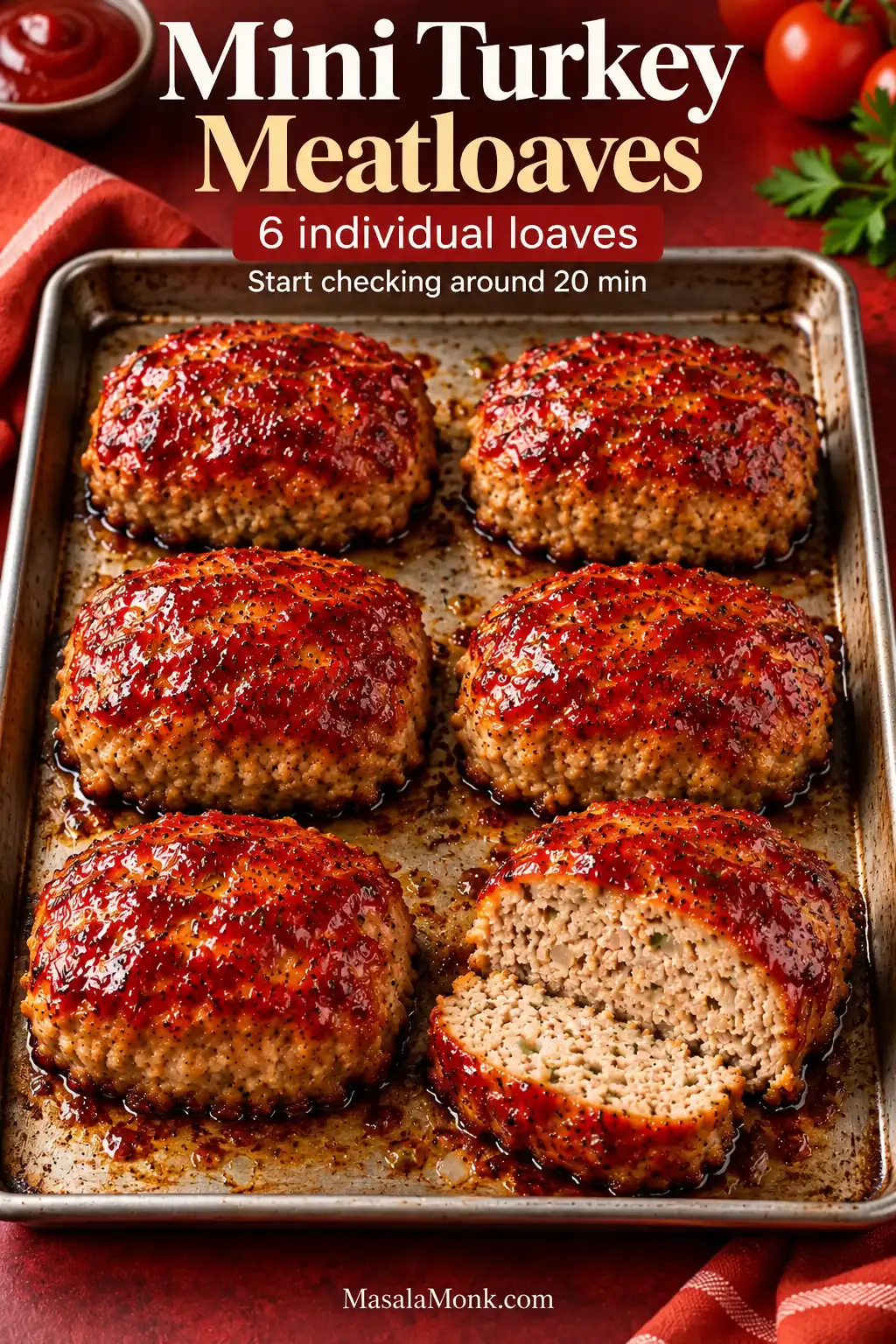
For individual portions, divide this batch into 6 equal pieces and shape each into a small free-form loaf on the baking sheet. Keep them similar in thickness and leave space between them. At 375°F (190°C), begin checking around 20 minutes; many loaves of this size finish in roughly 20–25 minutes, but each one still needs to reach 165°F (74°C).
What to Serve With Turkey Meatloaf
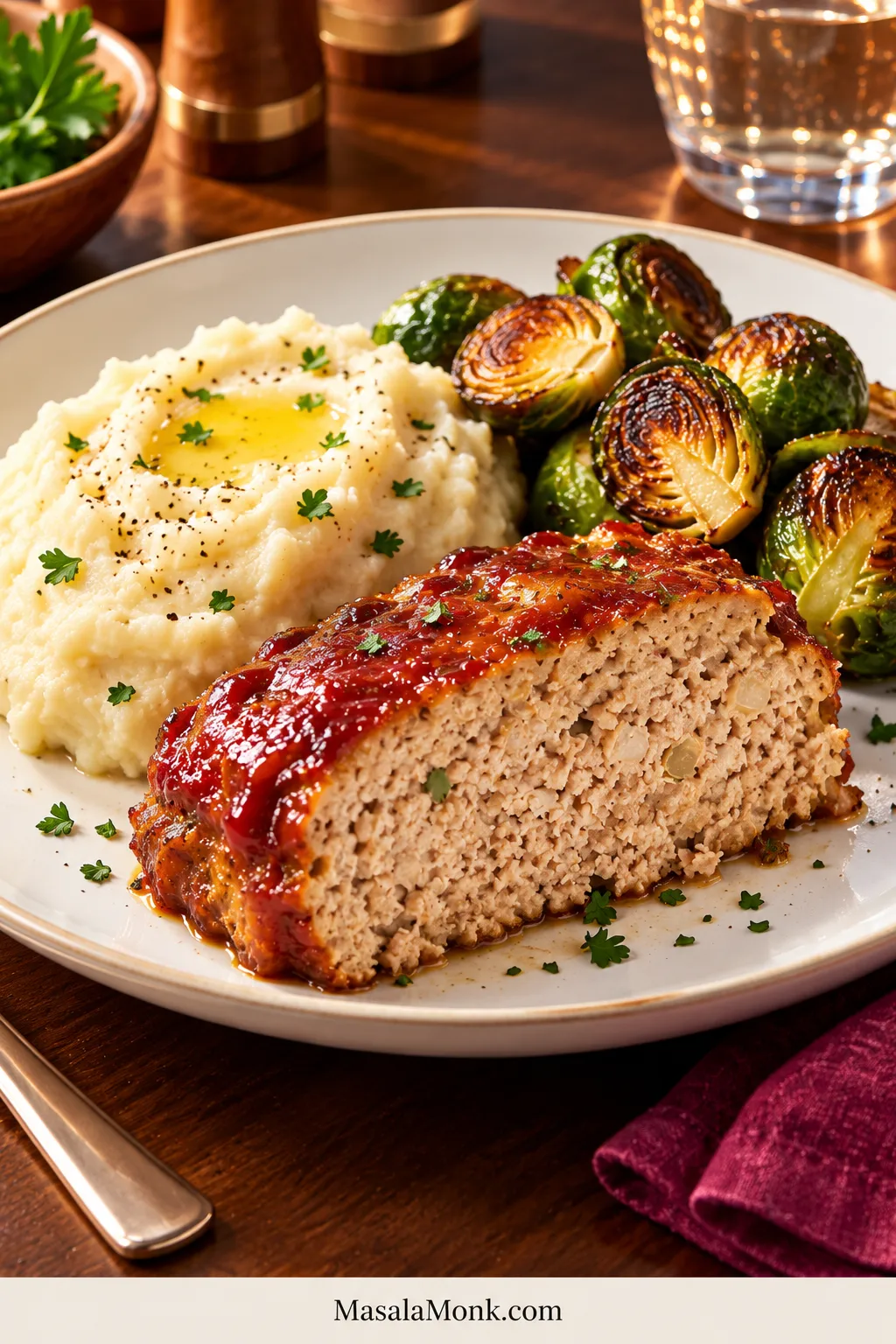
For the classic comfort-food plate, spoon creamy mashed potatoes beside a slice and let them catch some of the glaze.
If you want something greener, roasted Brussels sprouts bring deeply browned, slightly bitter edges that cut through the sweeter glaze. A basket of warm dinner rolls works when you want something soft for the last streaks left on the plate.
Make Ahead, Store, Freeze and Reheat
You can shape the uncooked loaves ahead, cover them well, and refrigerate until you’re ready to bake. Keep raw ground turkey refrigerated at 40°F (4°C) or below and cook or freeze it within 1–2 days of purchase. Loaves going straight from the refrigerator may need a little longer in the oven, so use 165°F rather than the clock as the endpoint.
For cooked meatloaf, refrigerate leftovers within two hours in shallow, covered containers or well-wrapped portions. Cooked meat and poultry leftovers generally keep for 3–4 days at 40°F (4°C) or below. The USDA’s leftovers guidance has more detail on refrigeration, freezing, and reheating.
Turkey meatloaf also freezes well. Wrap a cooked loaf or individual slices tightly; for best quality, use them within about 3–4 months. Thaw in the refrigerator and reheat the portion you’re serving to 165°F (74°C). Covering slices as they warm helps keep the exposed surfaces from drying out, and a spoonful of clean reserved glaze doesn’t hurt.
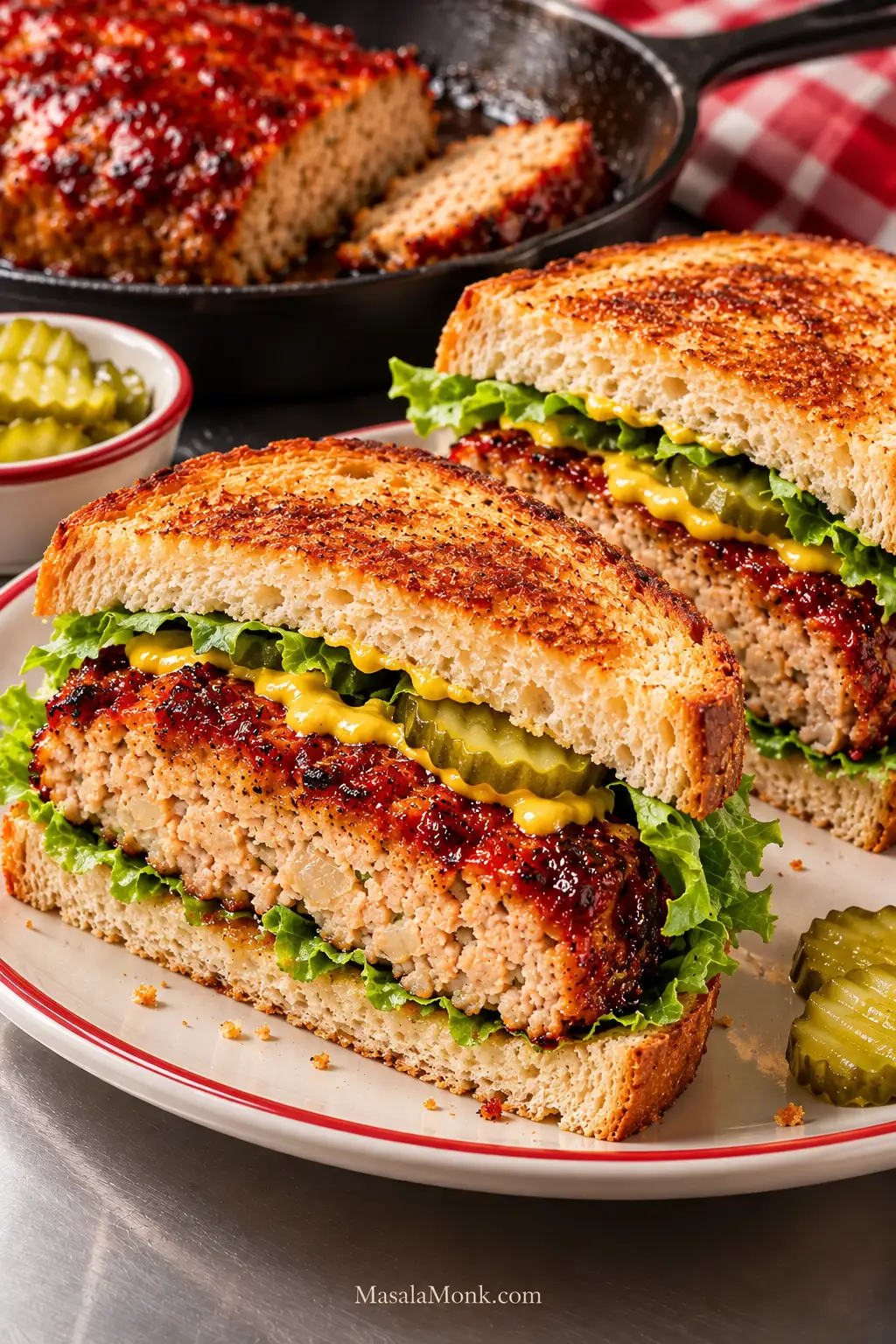
Or skip the attempt to make yesterday’s slice feel exactly like the first one. Warm a slice through in a skillet while letting the cut sides develop a browned crust. Add mustard, pickles, crisp lettuce, or a little leftover glaze and tuck it into bread. Suddenly the second loaf isn’t merely leftovers; it’s tomorrow’s lunch already halfway sorted.