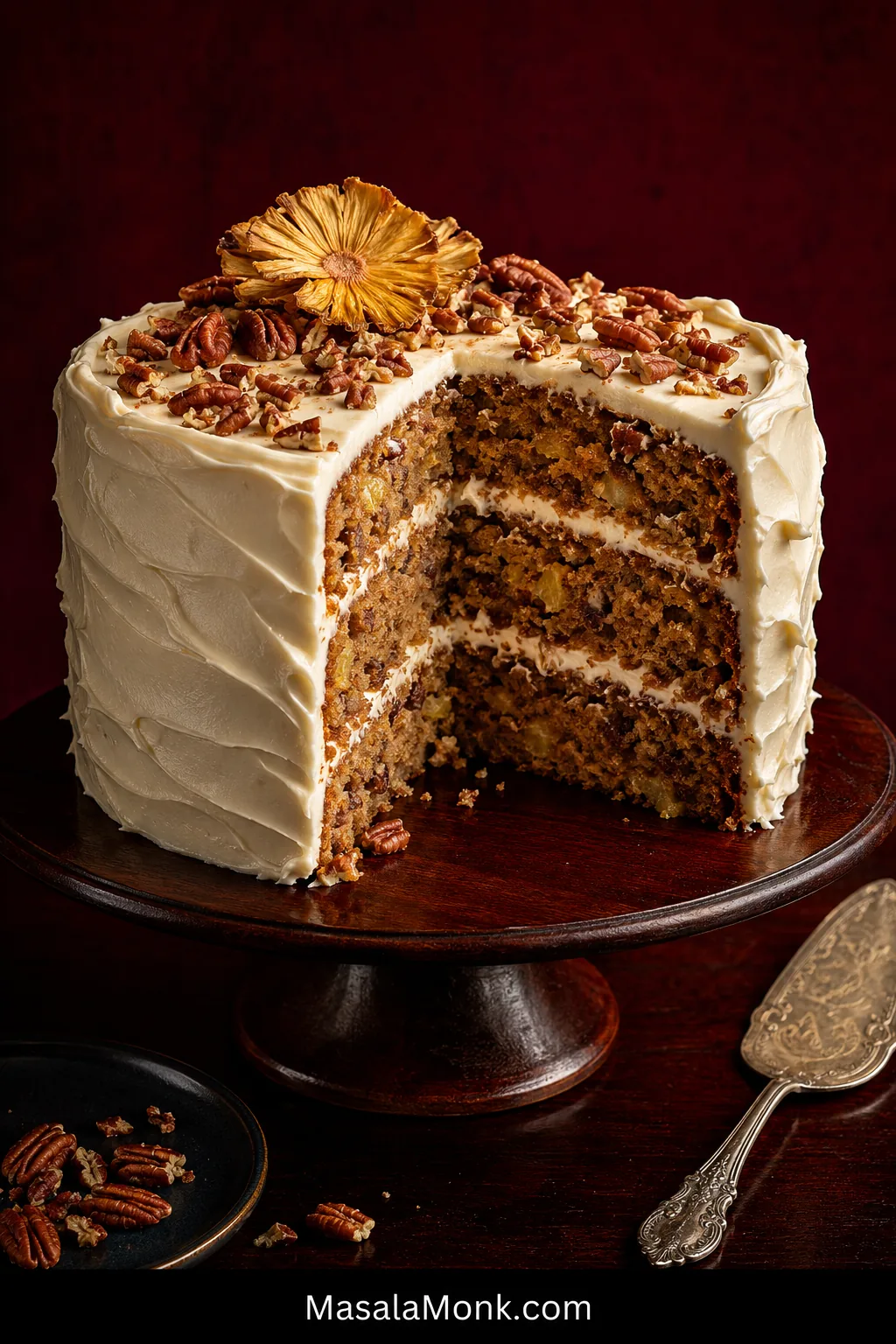
Hummingbird Cake has a delicate name for a decidedly generous cake. Beneath the cream cheese frosting are three fruit-rich layers where ripe banana leads, pineapple brings a little brightness, and toasted pecans break up the moist crumb with roasted crunch.
All that fruit is part of the appeal. It also leaves less room for guesswork: extra banana, too much free pineapple liquid, very deep pans or an underbaked center can take the crumb from lush to sticky. What you want is an abundant old-fashioned cake that stands tall enough to slice cleanly.
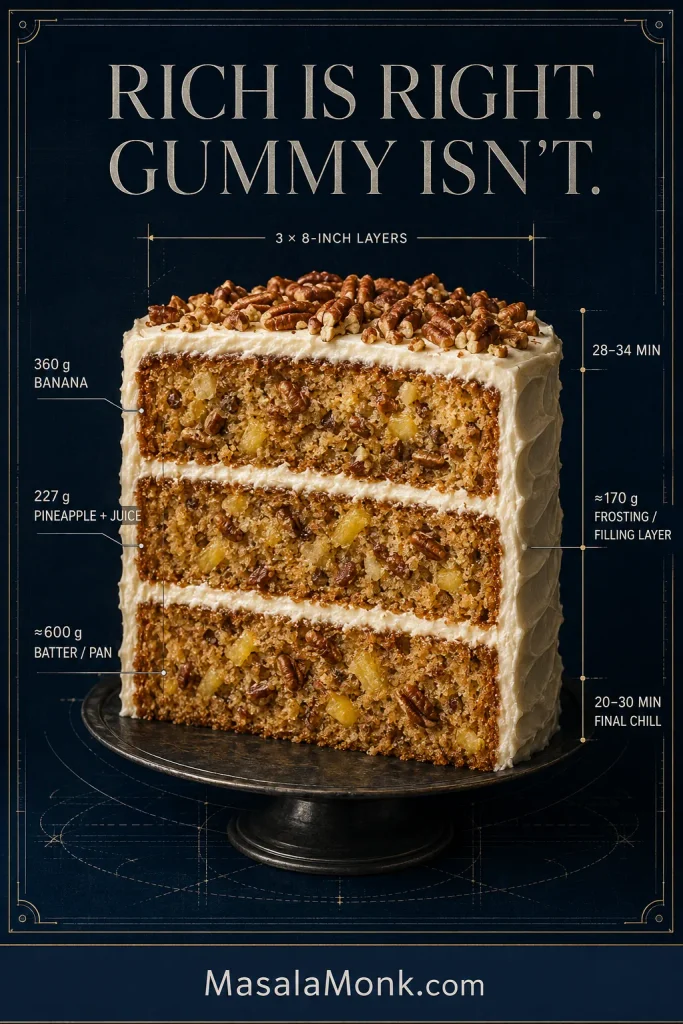
Rich is right. Gummy isn’t.
What Does Hummingbird Cake Taste Like?
Hummingbird Cake is a banana-and-pineapple spice layer cake with pecans and cream cheese frosting, now a Southern classic with roots in Jamaica’s Doctor Bird Cake.
Banana is usually the first flavor you notice, but it shouldn’t flatten everything else. Pineapple gives the crumb a brighter fruitiness, toasted pecans add little pockets of crunch, and cinnamon stays comfortably in the background. Cream cheese frosting brings the tang that keeps a generous slice from feeling simply sweet.
Carrot cake is an easy comparison, although the two eat quite differently. Carrot cake gets much of its character from grated carrot and a stronger spice profile; Hummingbird Cake is fruitier and more tropical, with banana and pineapple doing most of the work. If spice cake is your other reference point, Hummingbird Cake is its fruitier, less spice-led cousin.
A moist pocket beside pineapple is normal; a wet, paste-like center is not. Judge the crumb around the fruit.
The Short Version
Despite the three layers, the cake batter itself is straightforward: two bowls, mixed by hand, no mixer needed. Most of the roughly four-hour total is waiting for the cake to bake, cool and firm up; the hands-on work is much shorter.
Use 360 g mashed very ripe banana, one 8-ounce / 227-g can crushed pineapple with its juice, neutral oil, cinnamon and toasted pecans. Divide the batter between three 8-inch / 20-cm pans and bake at 350°F / 177°C conventional / about 160°C fan. Start checking at 28 minutes; expect a bake somewhere around 28–34 minutes, depending on your pans and oven.
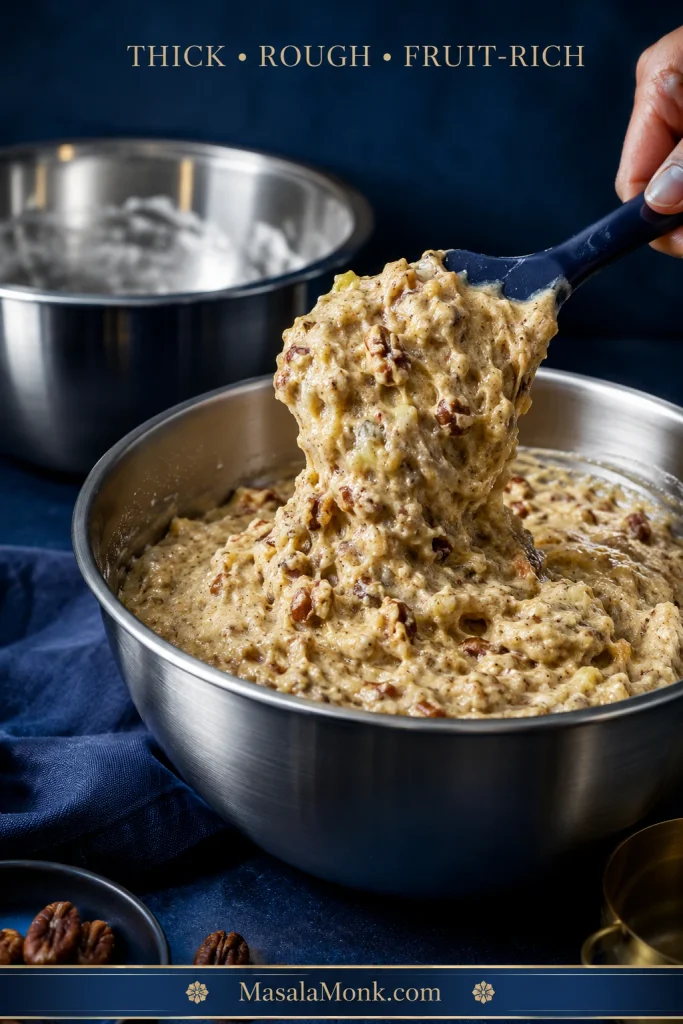
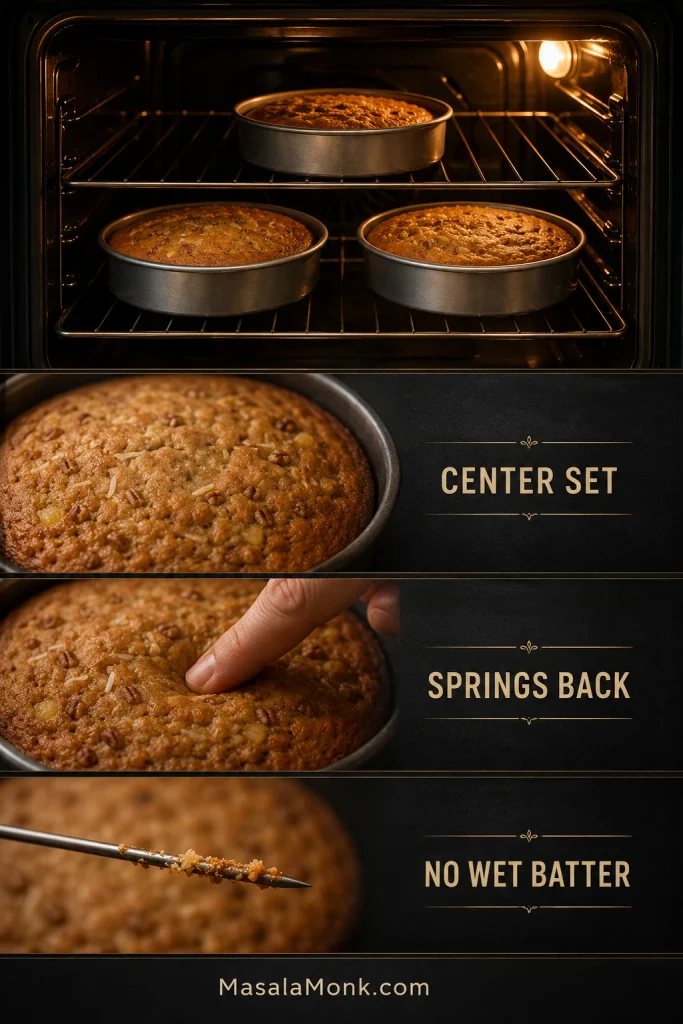
The batter should look thick, rough and visibly full of fruit. Stop folding once the flour disappears. The layers are ready when the centers look set, spring back gently under a fingertip and a skewer comes out without wet batter. Once cool, the crumb should be moist and tender, not glossy, gluey or pudding-like.
Three-Layer Hummingbird Cake: The Recipe
What this version is aiming for: the rich, fruit-heavy character that makes Hummingbird Cake distinctive, with a clear line between deeply moist and gummy. The banana is weighed, one small can of pineapple goes in with its juice, and the batter is spread across three relatively shallow layers. The cream cheese frosting relies on butter and cool handling for much of its structure, so its tang doesn’t have to disappear under a mountain of powdered sugar.
Yield
One three-layer 8-inch / 20-cm cake
Serves
12 generous or about 16 smaller slices
Active time
About 50 minutes
Bake
28–34 minutes; begin checking at 28
Total time
About 4 hours, including cooling and chilling
Oven
350°F / 177°C conventional / about 160°C fan
Make ahead
Excellent prepared a day before serving
Ingredients
Use the gram amounts if you have a kitchen scale. Cup measurements are included for convenience, but flour and mashed banana are both easy to misjudge by volume.
For the Cake
150 g chopped pecans — about 1⅓ cups, divided
375 g all-purpose flour — 3 cups, spooned and leveled
1 teaspoon baking soda
1 teaspoon baking powder
¾ teaspoon fine salt
1½ teaspoons ground cinnamon
¼ teaspoon ground allspice
3 large eggs, preferably at room temperature
1 cup / 240 ml neutral oil, such as vegetable or canola oil
1 cup / 200 g granulated sugar
125 g packed light brown sugar — about ½ cup + 2 tablespoons
2 teaspoons vanilla extract
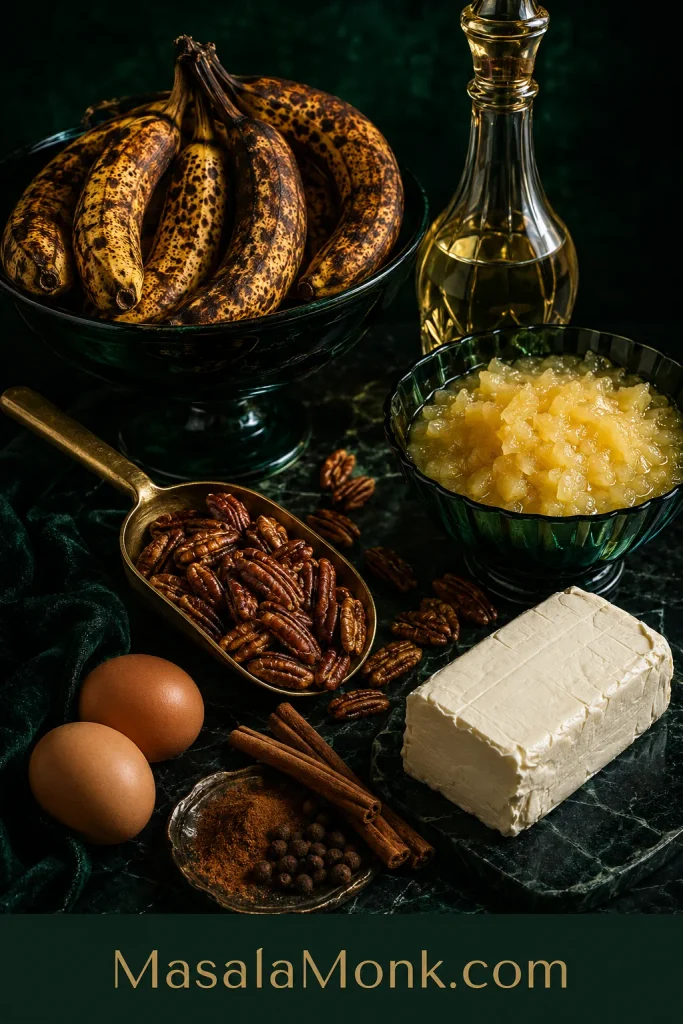
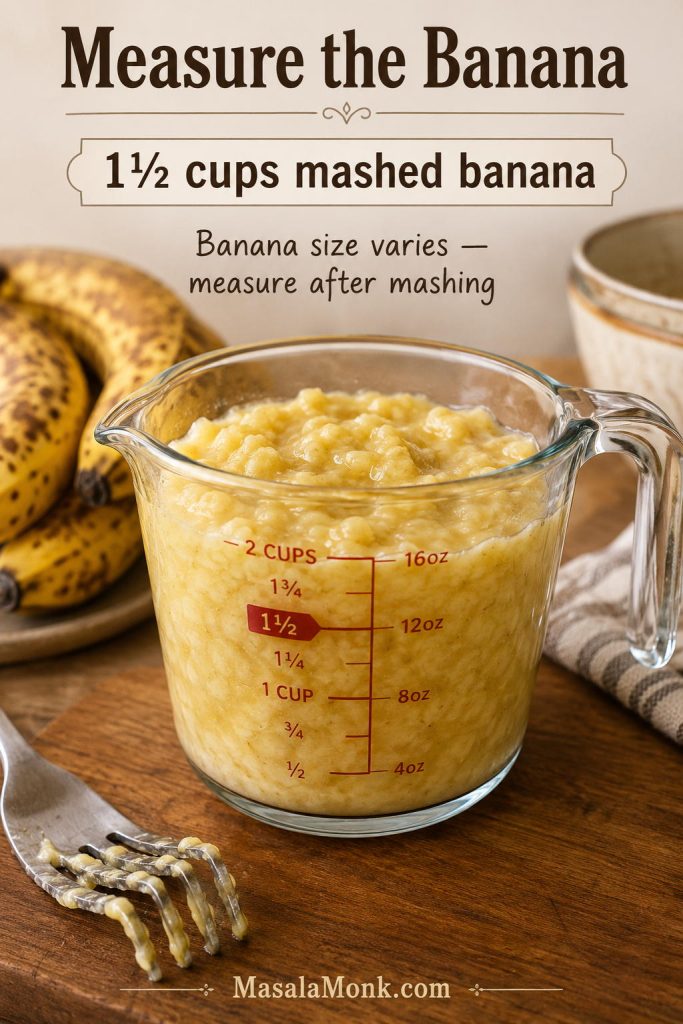
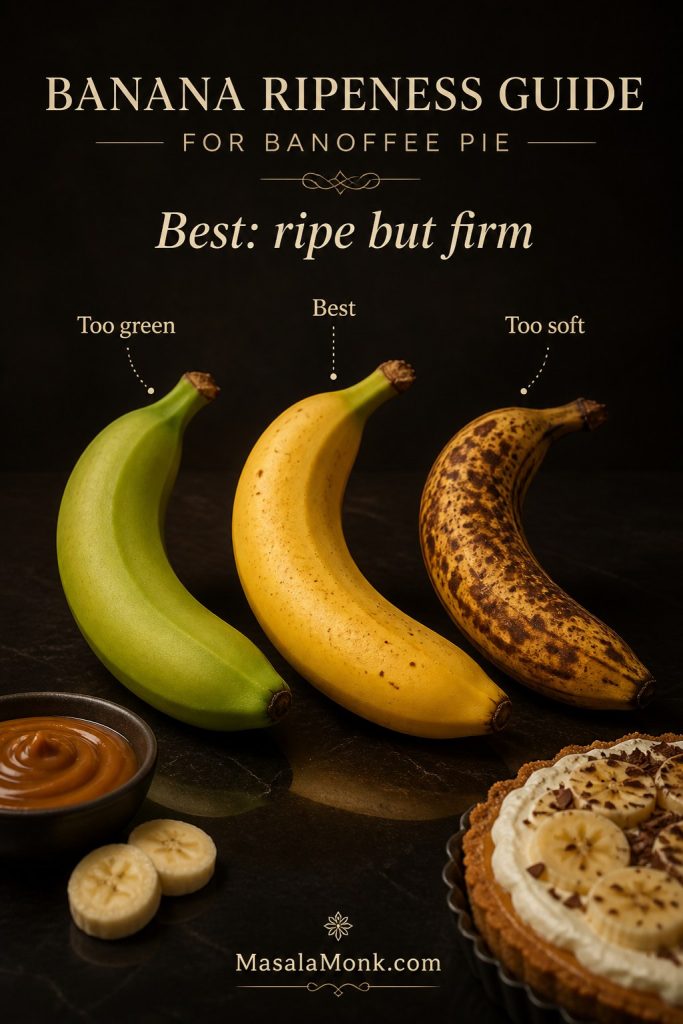
360 g mashed very ripe banana — about 1½ cups or roughly 3 large bananas after peeling; use bananas that are soft, deeply spotted and fragrant
1 x 8-ounce / 227-g can crushed pineapple in juice, undrained; with a larger can, weigh out 227 g of fruit and juice together
For the Cream Cheese Frosting
300 g unsalted butter — about 1⅓ cups, softened but still cool
300 g confectioners’ / powdered sugar — about 2½ cups, sifted if lumpy
2 teaspoons vanilla extract
¼ teaspoon fine salt
16 ounces / 452 g full-fat block-style cream cheese, chilled and cut into small pieces
The frosting amount is enough for two sensible filling layers and a comfortable rustic coat over the top and sides. Make extra only if you want an unusually thick coat or elaborate piping.
Equipment: three 8-inch / 20-cm round cake pans, parchment, two large bowls, a whisk, flexible spatula, cooling racks and preferably a kitchen scale. The batter is mixed by hand; use a hand or stand mixer for the frosting.
Weigh the mashed banana when you can; fruit count varies too much to be a reliable moisture measure.
Method
Prepare the Batter
Heat the oven and prepare the pans. Preheat to 350°F / 177°C conventional / about 160°C fan. Grease three 8-inch / 20-cm round pans, line the bottoms with parchment and lightly grease the parchment.
Toast the pecans. Spread the chopped pecans on a baking sheet and toast for 5–7 minutes, starting to watch closely at 5. Stir or shake the tray once. Take them out when they smell deeply nutty and have darkened slightly. Cool completely. Reserve about 30 g for the finished cake and use the remaining 120 g in the batter.
Mix the dry ingredients. Whisk the flour, baking soda, baking powder, cinnamon, allspice and salt in a large bowl, breaking up any obvious flour lumps.
Mix the wet ingredients. In another large bowl, whisk the eggs and oil together. Add both sugars and the vanilla, then stir in the mashed banana and crushed pineapple with all of its measured juice.
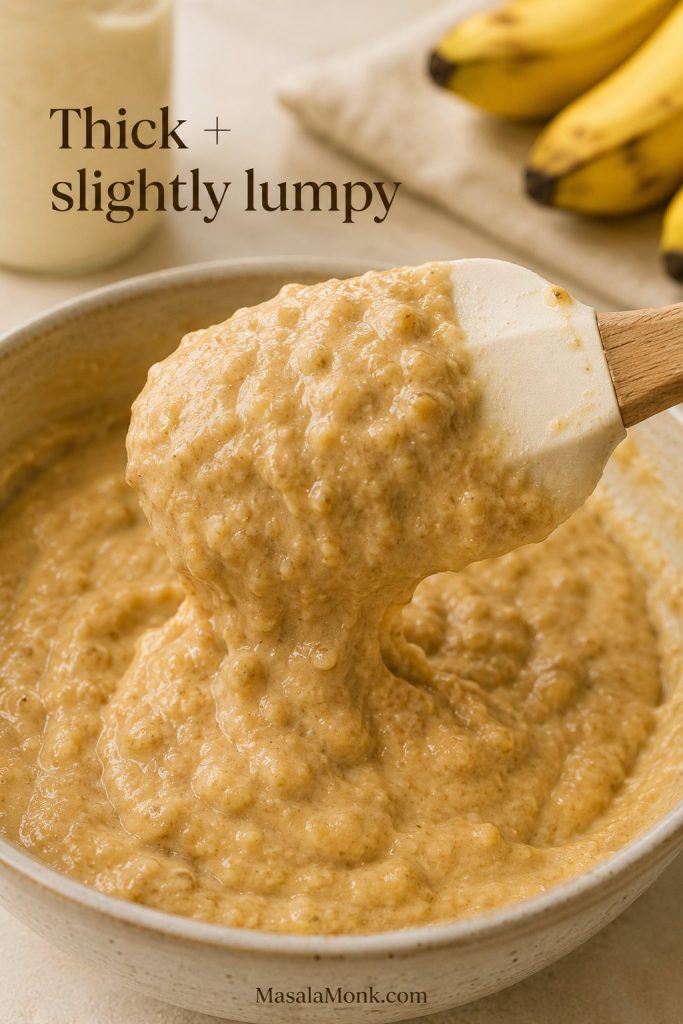
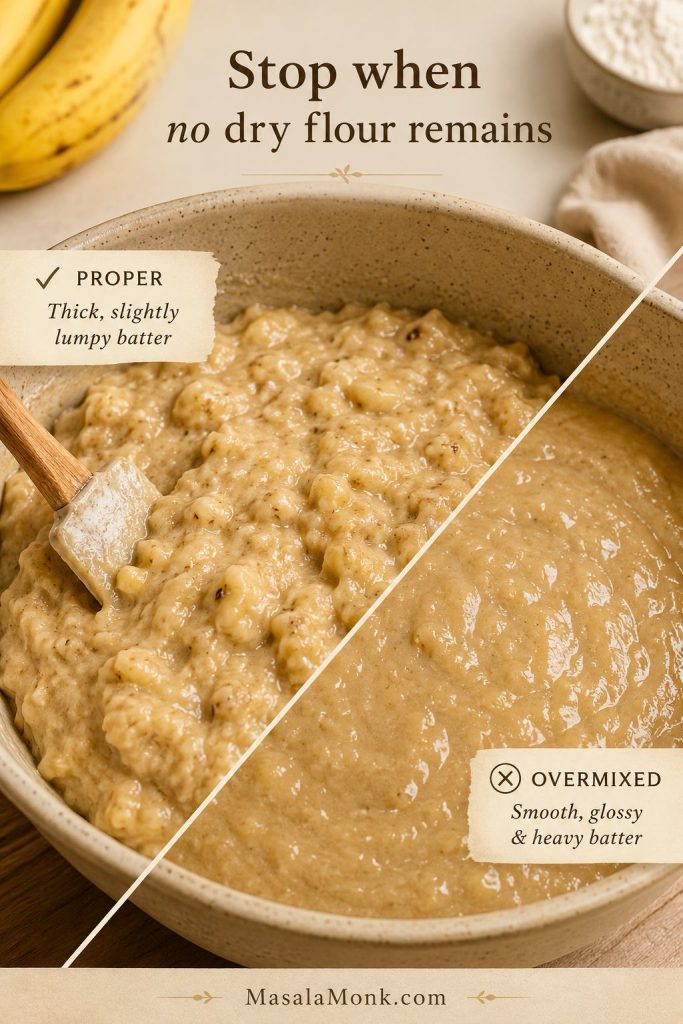
Fold the batter gently. Pour the wet mixture into the flour mixture and fold with a flexible spatula. Add the 120 g toasted pecans while a few dry streaks remain, then stop as soon as the flour disappears. The finished batter should look thick, rough and crowded with fruit.
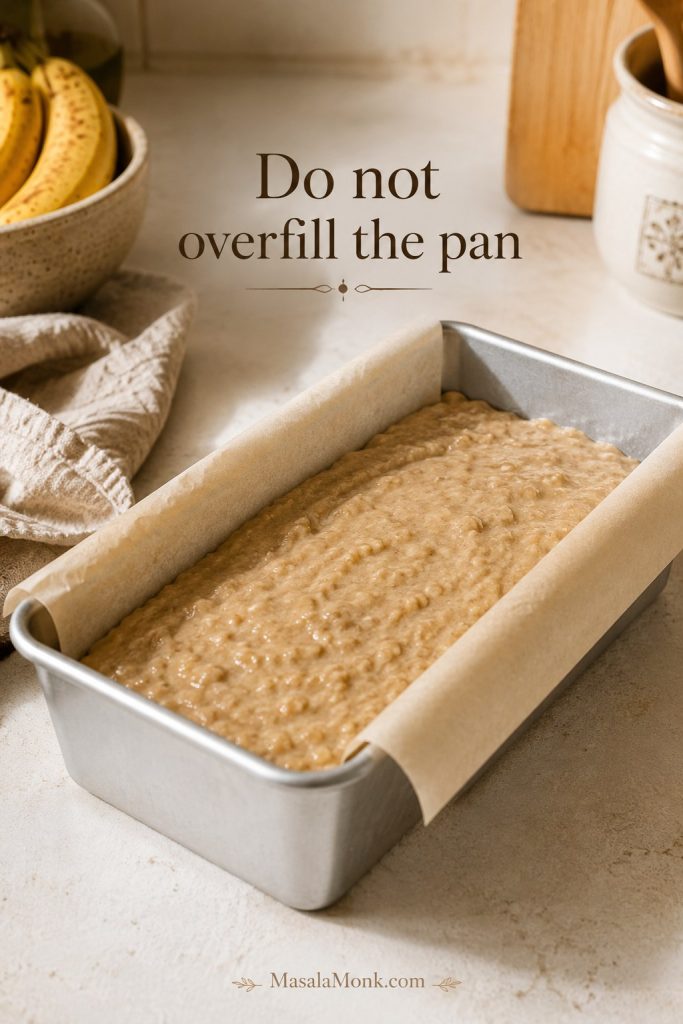
Divide it evenly. The batch makes roughly 1.8 kg of batter, so aim for about 600 g per pan. Exact grams are not important; similar layer depths are.
Before the pans go in, scrape the bowl once more. Thick batter can hide dry flour at the bottom.
Bake and Cool the Layers
Bake the layers. Put all three pans on one rack near the center of the oven when they fit with some air around them. Otherwise stagger them across two racks. Begin checking at 28 minutes; expect the bake to fall somewhere around 28–34 minutes. Using two racks? Leave the pans alone during the early bake. Once the centers have visibly begun to set, swap the upper and lower pans if your oven is browning unevenly. They’re done when: the wet shine in the center has disappeared, a light fingertip press springs back and a thin skewer comes out without wet batter. A few moist crumbs are fine.
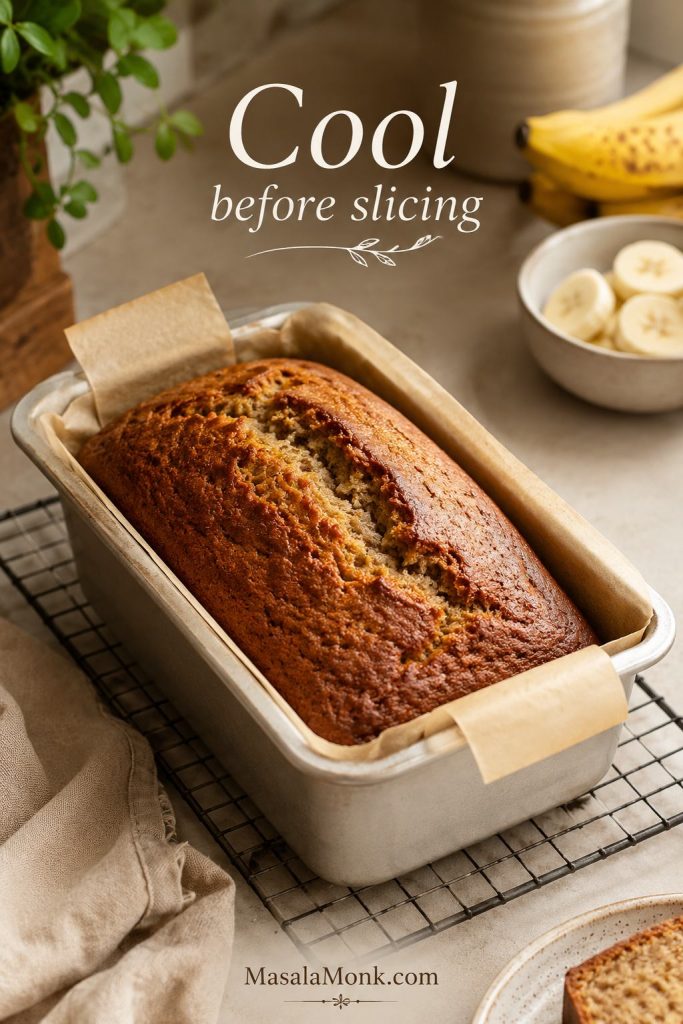
Cool completely. Leave the layers in their pans for about 10 minutes, then turn them onto wire racks and peel away the parchment. Let them cool fully before frosting. A 30–60 minute chill afterward can make the layers easier to handle and stack, but it isn’t a substitute for cooling them first.
Matching pans can finish a few minutes apart. Check each center for set, springback and no wet batter.
Make the Cream Cheese Frosting
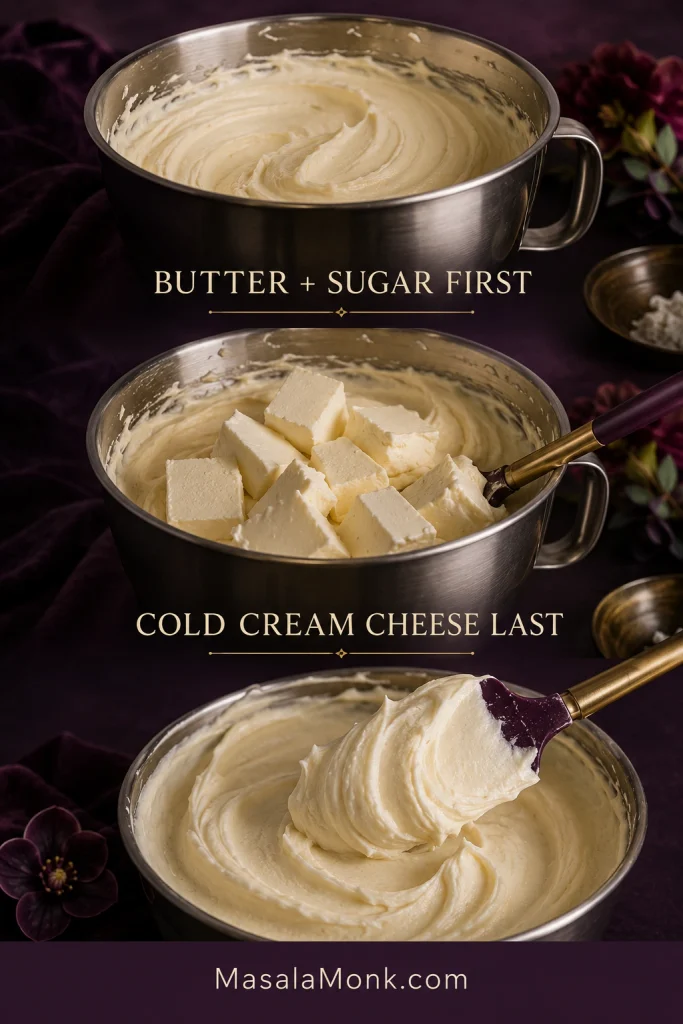
Make the frosting base. Beat the slightly cool butter until smooth. Gradually beat in the powdered sugar, then add the vanilla and salt.
Add the cream cheese last. Take the cream cheese from the refrigerator when you begin making the frosting. Add it to the finished butter-sugar base a few pieces at a time on low to medium-low speed. Stop once the frosting is smooth. Longer beating can make cream cheese frosting softer.
Check the consistency. Lift your spatula. A soft peak should hold and a swipe of frosting should stay where you put it. When the frosting slowly slumps, refrigerate it for 20–30 minutes before deciding it needs more sugar.
Smaller pieces of cold block cream cheese incorporate faster, limiting mixer time and helping the frosting stay thick.
Stack and Finish the Cake
Stack the cake. Put the first layer on a cake plate or board and spread about 170 g frosting over the top. Repeat with the second layer, then add the third. Should the stack begin drifting sideways, refrigerate it for about 20 minutes before continuing.
Frost and finish. Cover the top and sides with the remaining frosting. A relaxed coat suits Hummingbird Cake; nothing has gone wrong because the sides are not ruler-straight. Scatter over the reserved pecans, or add dried pineapple flowers for a more celebratory finish.
Refrigerate the assembled cake for about 20–30 minutes, or until the frosting feels firm enough for a clean first cut. For the best eating texture, give chilled slices about 15–20 minutes at a comfortable room temperature before eating.
The structural numbers matter most: fruit, batter depth, bake cues and frosting consistency. Perfectly straight sides do not.
If your pans are ready, that’s everything you need to bake the cake. The rest is here for the moment you cut into it and wonder whether the crumb looks right, where the pineapple went, or why the frosting isn’t behaving the way you expected.
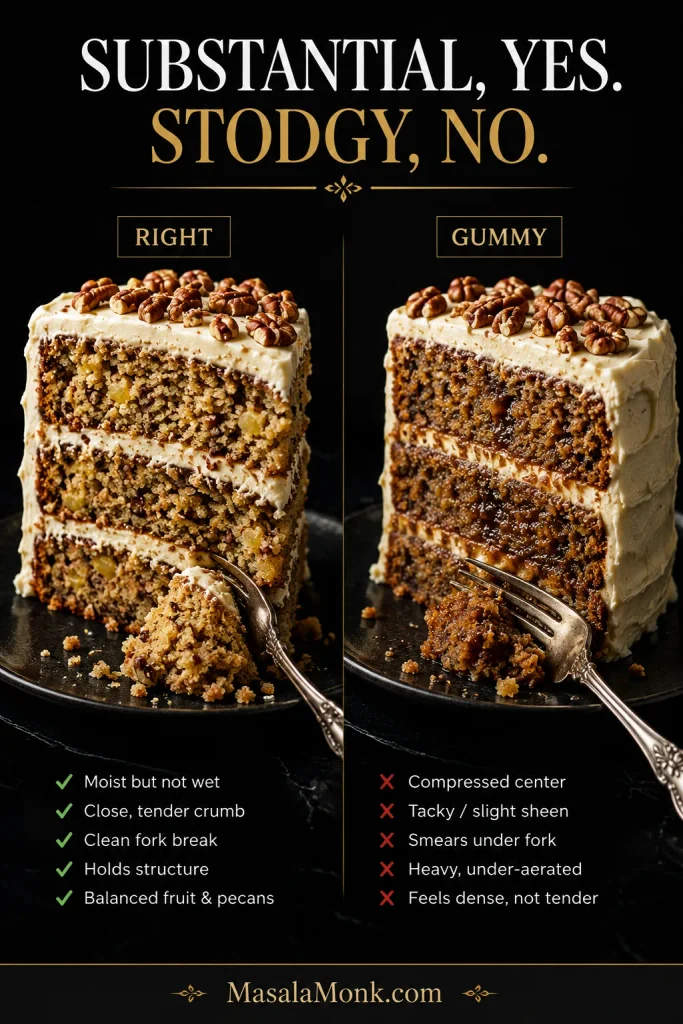
Substantial, yes. Stodgy, no. Hummingbird Cake naturally has more heft than a fluffy vanilla butter cake. Banana, pineapple, oil, eggs and pecans all contribute to a richer, closer crumb.
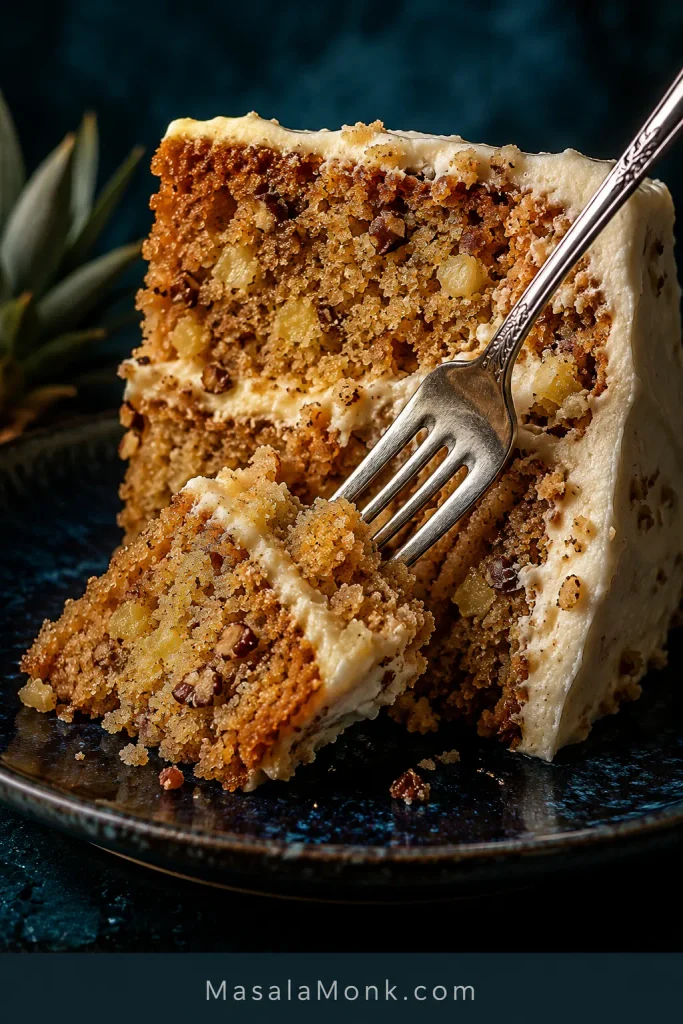
A good slice looks moist without looking shiny. Press a fork through the center and a piece comes away cleanly, with the occasional bit of pineapple or toasted pecan along the way. That’s the texture worth aiming for: generous and substantial, but still unmistakably cake.
A center that smears into paste is different. So is a rubbery, compressed crumb. Wetness usually points back toward bake time, fruit quantity or layers that were too deep; a tight, rubbery texture can point toward excess flour or too much mixing. A substantial layer that slices neatly and tastes good needs no fixing.
That’s the reassuring part of this cake: a layer can look lower and richer than the sponge cakes you may know and be exactly as it should be. The fork should meet cake, not wet paste.
Let the cake cool before diagnosing it. Warm fruit-heavy crumb can feel wetter than the same layer once settled.
Why Does Hummingbird Cake Sometimes Taste Like Banana Bread?
Banana is the loudest fruit in the room. It brings aroma, sweetness, moisture and fruit solids all at once, which makes it easy for the pineapple to disappear into the background.
Hummingbird Cake shouldn’t simply eat like frosted banana bread. A wet or underbaked crumb can push it in that direction even when the banana quantity is reasonable, and extra banana makes the effect stronger.
Weigh the mashed banana and stop at 360 g. Any extra is better used in banana bread, where a strongly banana-forward crumb is exactly the point.
Pineapple in Hummingbird Cake: Drain It or Don’t?
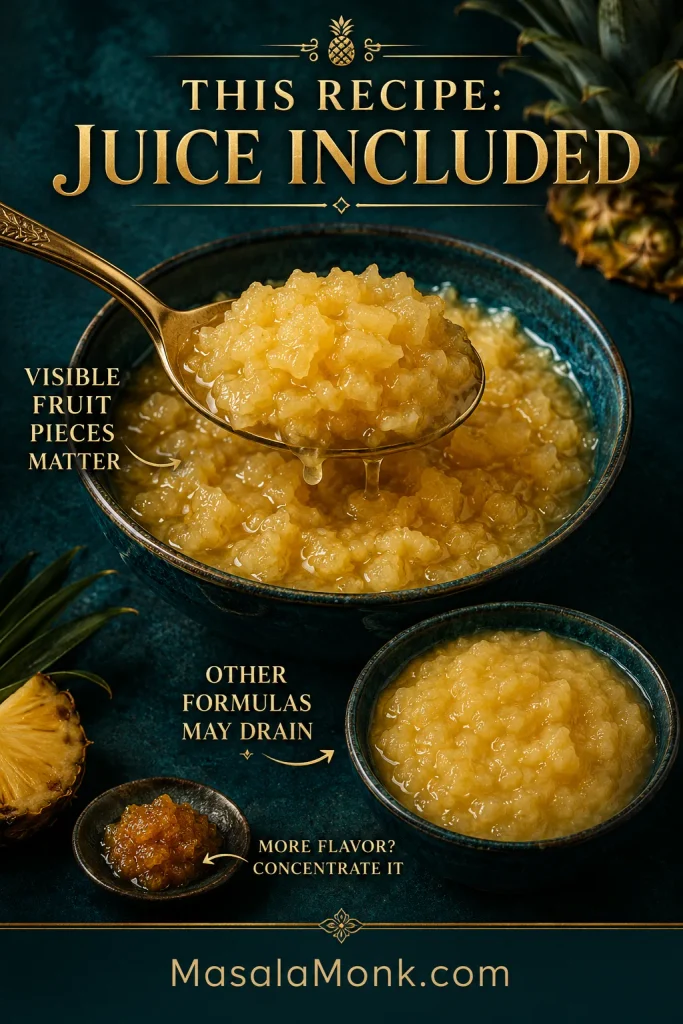
Use all 227 g here, juice included.
That isn’t a universal Hummingbird Cake rule. A wetter formula or one with more fruit may need the pineapple drained.
The stranger problem is putting a whole can of pineapple into a cake and barely tasting it afterward. Choose crushed pineapple that still resembles tiny pieces of fruit instead of smooth pulp. Those fragments have a better chance of surviving the bake as something you can actually notice in a slice.
For stronger pineapple flavor, concentrate it instead of making the batter wetter. A very thin layer of thick pineapple jam or pineapple curd between the layers gives you a brighter burst of fruit. Keep the filling restrained so the layers still stack comfortably.
The pineapple doesn’t need to dominate. Finding a small piece here and there against banana and toasted pecan is enough to keep the slice changing as you eat it.
Fresh pineapple: use it in a recipe designed for it. Chopped fresh pineapple does not bring exactly the same balance of fruit and liquid as canned crushed pineapple with juice, so canned remains the predictable choice for this batter.
Using a larger can? Stir fruit and juice together before weighing 227 g so the moisture ratio stays consistent.
Cream Cheese Frosting Should Taste Like Cream Cheese
Hummingbird Cake is already sweet and fruit-rich, so the frosting needs contrast. Its cream-cheese tang should be obvious when you eat it with the cake.
Runny frosting often sends bakers straight to the powdered-sugar bag. Temperature is a better first lever here. The generous amount of butter and cool cream cheese give the frosting the body it needs for a layer cake while letting the cream-cheese flavor remain clear.
Getting the Consistency Right
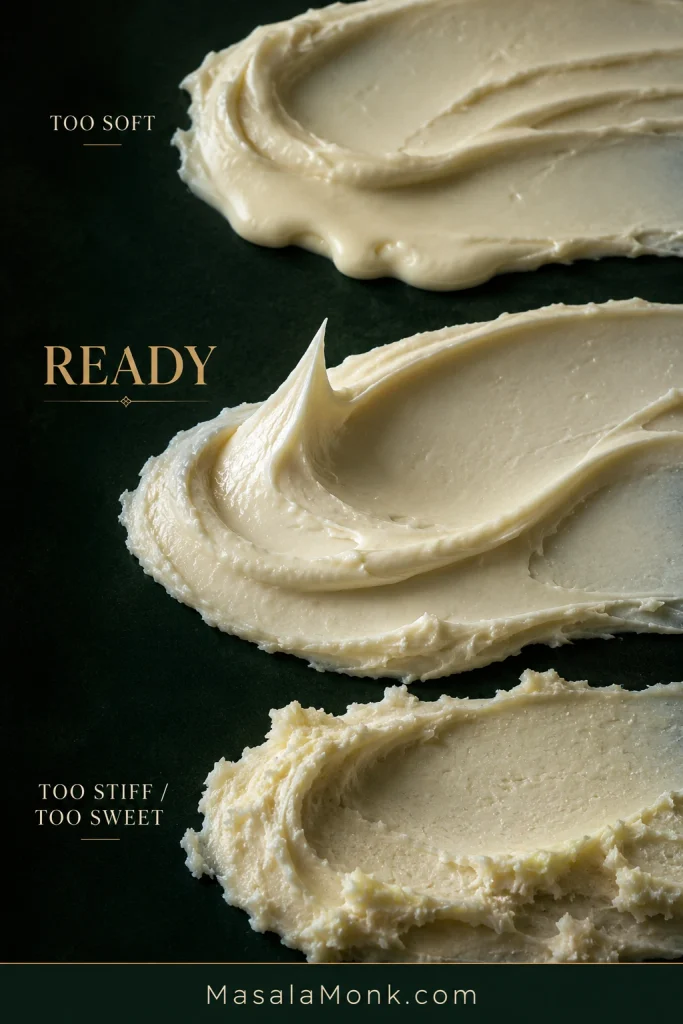
Too soft: a swipe slowly slumps or the frosting creeps down the bowl. Refrigerate it for 20–30 minutes.
Ready: a lifted spatula leaves a soft peak that holds, and the frosting spreads across a cooled layer without tearing it.
Too stiff or too sweet: it becomes very firm or grainy and powdered sugar starts drowning out the cream-cheese flavor.
Ready frosting should spread over a cool layer without tearing crumbs or losing the ridges you leave behind.
Firm American block cream cheese is easiest to work with. Where only softer spreadable cream cheese is available, choose the firmest full-fat version you can find and keep the frosting cool. Sometimes twenty minutes in the refrigerator is all a loose bowl needs.
The finished frosting should feel creamy against the fruit-rich crumb, not like a thick layer of sweetness sitting on top of it. For detailed piping or sharp edges that must hold for a long time at room temperature, a more structured buttercream is the better choice.
Hummingbird Cake Pan Sizes: Why Layer Depth Matters
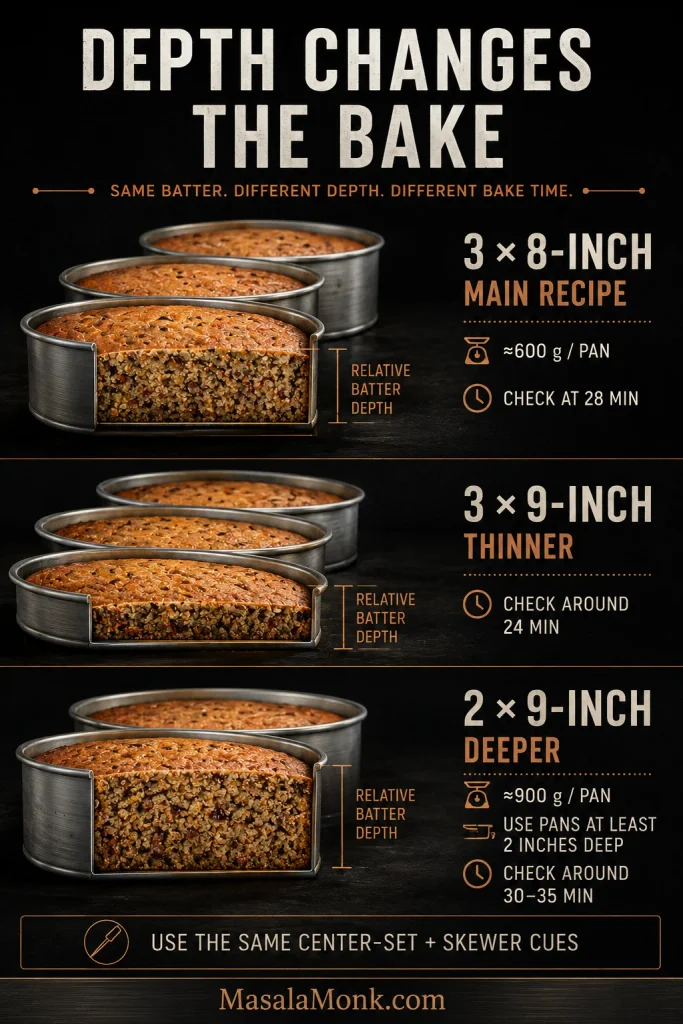
Three layers aren’t only about appearance. They keep this fruit-heavy batter relatively shallow, allowing the center to set before the outside has spent too long in the oven.
Pan setup
What to expect
3 x 8-inch / 20-cm rounds
Main recipe. About 600 g batter per pan; begin checking at 28 minutes.
3 x 9-inch / 23-cm rounds
Thinner layers. Begin checking around 24 minutes and use the same center-set and skewer cues.
2 x 9-inch / 23-cm rounds
Use pans at least 2 inches deep. Begin checking around 30–35 minutes and rely on the center-set cues for the endpoint.
A 9×13 sheet cake, Bundt cake, cupcakes or a smaller 6-inch cake changes the layer depth enough to deserve directions written for that format instead of a guessed conversion.
The timer tells you when to start looking. Batter depth and the cake tell you when to stop baking.
When changing pans, compare batter weight and depth—not fill lines alone. Shallower layers usually reach the center sooner.
If you’ve already cut the cake and something looks wrong, start here. The longer sections explain the details; this table is for the ten-second diagnosis.
Problem
Most likely cause
Try this
Tastes like banana bread
Banana dominates or crumb is too wet
Weigh the banana; choose pineapple with visible fruit pieces
Dense but tender
Often normal
Judge the crumb, not the height
Gummy or stodgy
Underbaked, too wet, too deep or overmixed
Check fruit amounts, pan depth and doneness
Wet center
Needs more baking or batter is too deep
Keep baking until the center sets
Dry and heavy
Too much flour or oven time
Weigh flour; check earlier
Pineapple disappears
Fruit is mild or too finely processed
Use visible fruit pieces or concentrated filling
Bland
Unripe banana, weak pineapple, untoasted nuts or low seasoning
Use deeply spotted bananas and toast the pecans
Tastes too much like carrot cake
Spices are crowding out the fruit
Keep secondary spices restrained
Runny frosting
Warm/soft cream cheese, warm room or overmixing
Refrigerate before adding more sugar
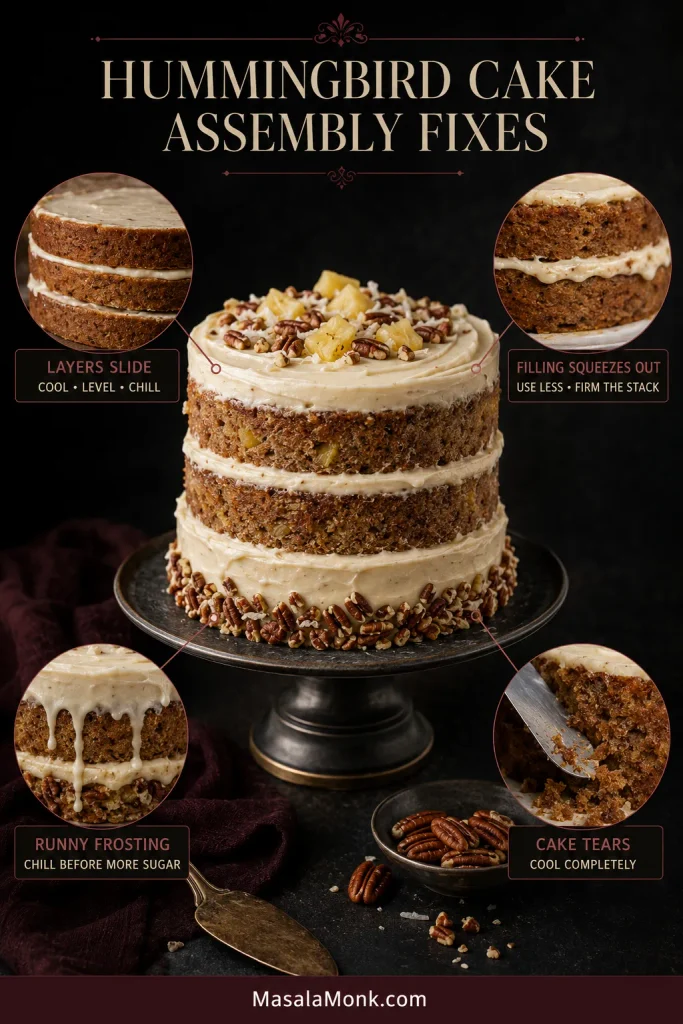
Filling squeezes out
Too much loose frosting
Use less filling; firm the stack before continuing
Layers slide
Warm cake/frosting, domes or overfilling
Cool, level if needed, then continue
Cake tears while frosting
Layers are too warm or delicate
Cool completely; chill briefly if needed
Outside done, center raw
Deep batter or hot oven
Check pan setup; tent a browning top if needed
Assembly Problems: Fix the Stack First
A warm layer can soften frosting, which squeezes outward and lets the stack slide. Fix the earliest problem first.
Walnuts: swap them for the pecans in the same amount and toast them first.
No nuts: leave them out. Nothing structural needs replacing.
Coconut: common in some versions, but not essential to the classic banana-pineapple-pecan cake.
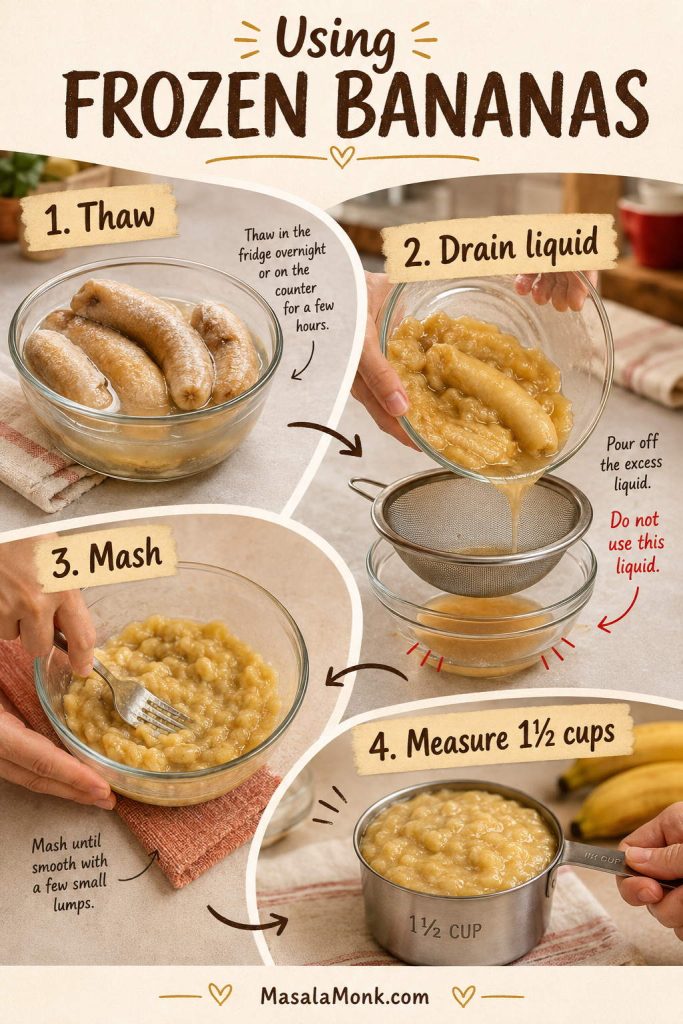
Frozen bananas: thaw completely, mash them with the liquid they release, then weigh out 360 g.
Butter instead of oil: use a recipe built around butter or a butter-oil blend. Neutral oil is one reason these refrigerated layers remain moist.
More pineapple: put concentrated fruit between the layers instead of another can of liquid-heavy pineapple in the batter.
Gluten-free, vegan and substantially reduced-sugar Hummingbird Cakes change the structure enough to deserve recipes of their own. At some point a substitution list simply becomes a different cake.
Why Hummingbird Cake Recipes Differ
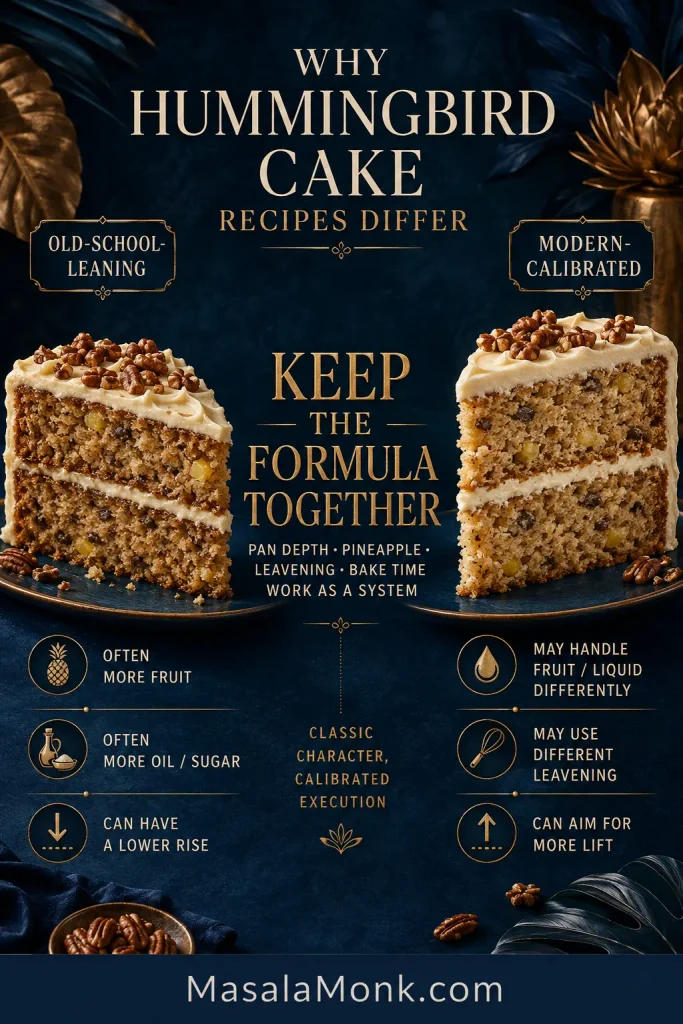
Hummingbird Cake recipes can look surprisingly different because they aren’t all working with the same balance of fruit, fat and liquid. Some old-school versions are exceptionally rich, with more banana, oil and sugar and sometimes no baking powder. Others pull back a little and rise somewhat higher.
The 1978 Hummingbird Cake made famous by Southern Living belongs firmly to that lavish old-school tradition. Modern versions may handle the pineapple, leavening or pans differently because the rest of the recipe changed too.
Keep the formula together. Pineapple handling, leavening, pan depth and bake time only make sense alongside the rest of the recipe they belong to. Borrow one instruction from a very different version and an otherwise sensible piece of advice can suddenly work against you.
Different pineapple instructions often reflect different formulas. Compare fruit, liquid, flour and batter depth before borrowing one rule.
Bake It Today, Serve It Tomorrow
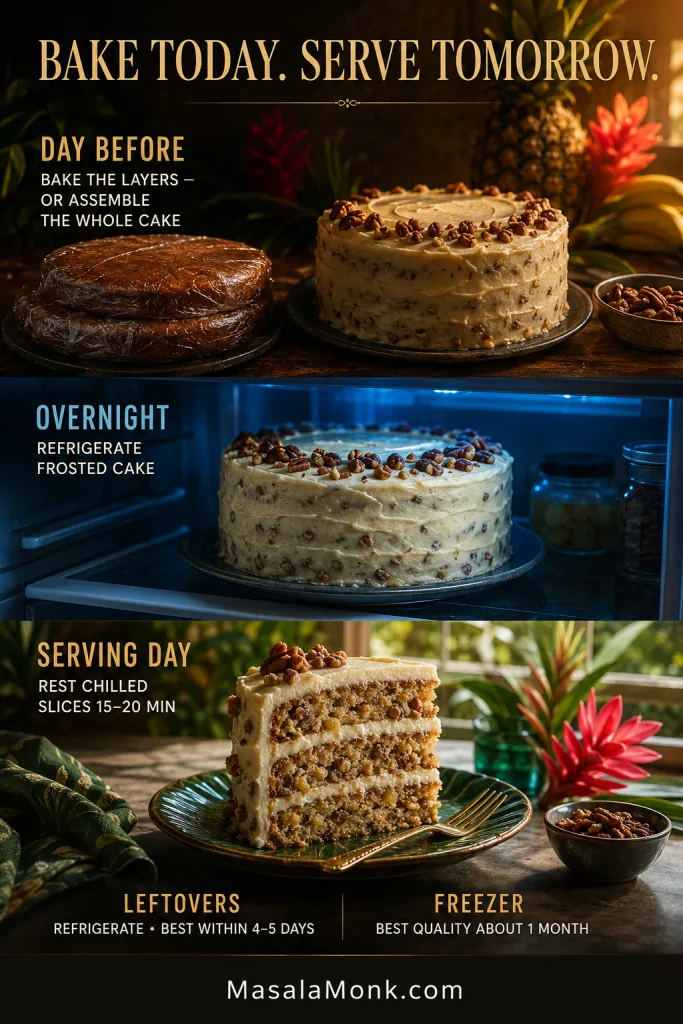
Hummingbird Cake is unusually friendly for a three-layer celebration cake. The oil and fruit help the crumb stay moist, and an overnight rest does it no harm. That’s useful when the cake is for a birthday, holiday table or gathering and serving day already gives you plenty to think about.
Does Hummingbird Cake need to be refrigerated? Once it is covered with cream cheese frosting, yes. Keep the finished cake refrigerated and give chilled slices about 15–20 minutes at room temperature before serving.
Storage, Freezing and Serving
The day before: bake and cool the layers completely, wrap them well and refrigerate. Or assemble and frost the entire cake, cover it and refrigerate overnight.
Serving day: keep the cake cool until you need it, especially in a warm room. That short rest before eating brings the crumb and frosting back to a much better texture.
Leftovers: cover and refrigerate. For the best texture and flavor, aim to finish the cake within about 4–5 days.
Freezing: unfrosted layers are easiest. Cool them, wrap tightly and freeze, then thaw in the refrigerator while still wrapped. Firm chilled slices of frosted cake can also be wrapped and frozen. For best quality, use frozen cake or slices within about 1 month.
This is one of those celebration cakes that does not punish you for getting ahead. There is a great deal to be said for opening the refrigerator the next day and finding the difficult part already done.
Cold keeps the cake stable; a short room-temperature rest restores a softer crumb and creamier frosting before serving.
Why Is It Called Hummingbird Cake? The Jamaican Doctor Bird Story
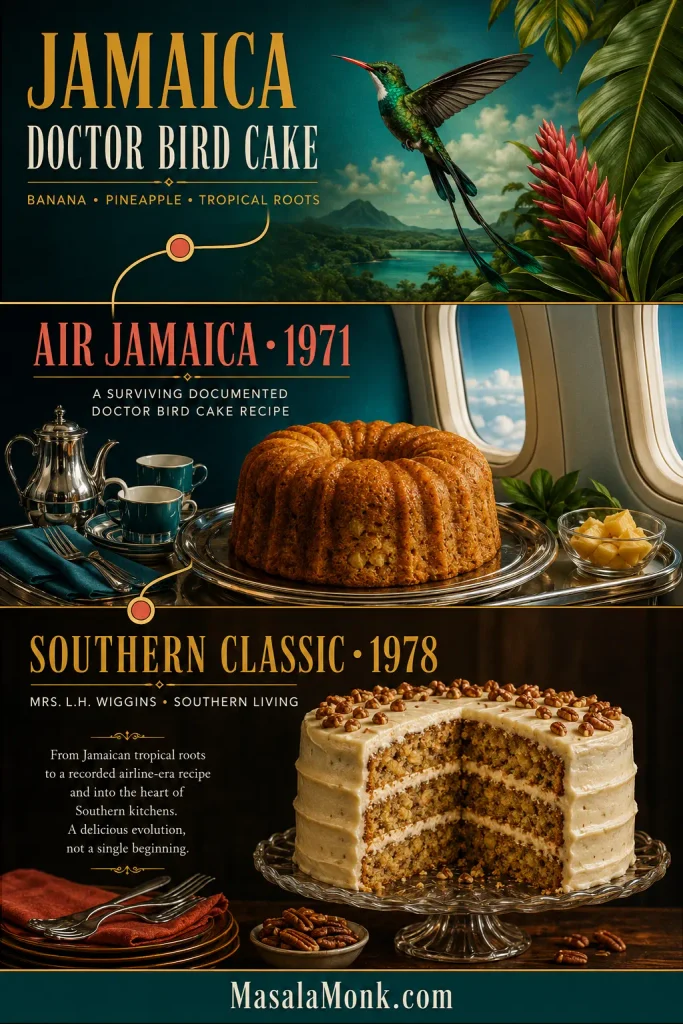
For a cake now so strongly associated with Southern baking, the earlier trail is wonderfully tropical. Its name points back to Jamaica and its national bird, the red-billed streamer-tail hummingbird known as the Doctor Bird.
The Jamaican Doctor Bird Cake
Versions of Doctor Bird Cake were already circulating in Jamaica-related promotional material by the late 1960s. Visit Jamaica’s archival account preserves an Air Jamaica recipe published in The Daily Gleaner on February 4, 1971. The feature covered dishes served on the airline’s in-flight menu, and the cake took its name from the Doctor Bird — both Jamaica’s national bird and a symbol used by Air Jamaica.
That version was described as a rich pineapple-and-banana dessert loaf. It’s a wonderful contrast with the cake many people picture today: the tropical fruit was already there, but the towering American layer cake came later.
The 1978 Southern Living Cake
In 1978, Mrs. L.H. Wiggins of Greensboro, North Carolina, submitted her Hummingbird Cake to Southern Living. The three-layer recipe became one of the magazine’s best-known desserts and helped turn Hummingbird Cake into a fixture of Southern celebration tables.
That gives the cake an identity that is hard to squeeze into one place. Its name and tropical fruit reach back toward Jamaica; the towering cream-cheese-frosted layer cake became deeply Southern. Both histories are sitting in the same slice.
The Jamaican Doctor Bird trail predates the Southern layer cake; the tall cream-cheese-frosted version came later.
For a cake named after something as tiny as a hummingbird, there is nothing timid about it. Three generous layers, soft under a fork and sturdy enough to stand proudly on the plate. Then someone cuts the first slice, and suddenly the cake doesn’t look quite so enormous after all.
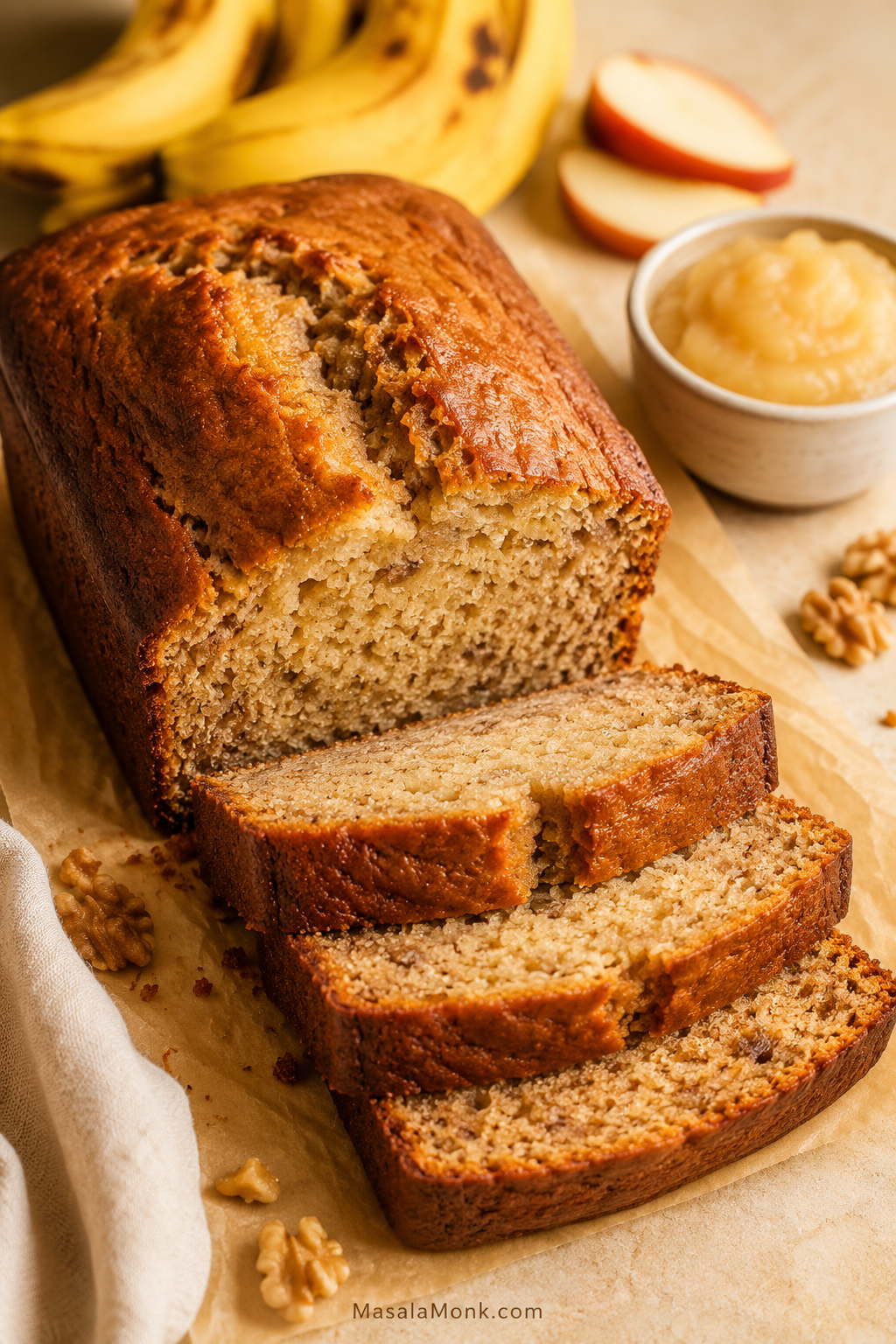
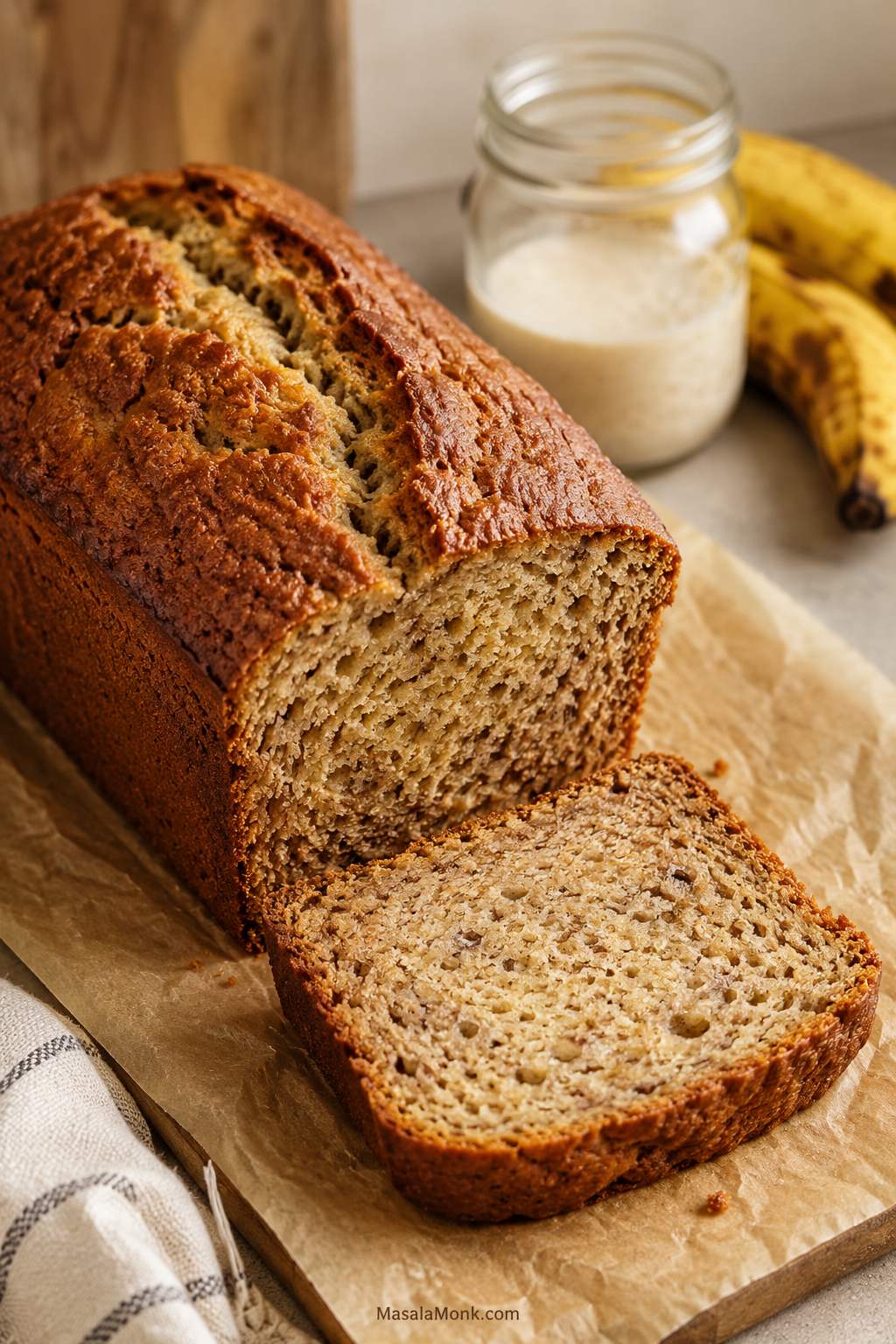
This banana bread with applesauce recipe is for the moment when the bananas on the counter are almost too soft for the fruit bowl but perfect for baking. The loaf comes out moist, sliceable, and a little lighter than classic banana bread, while still holding together after it cools.
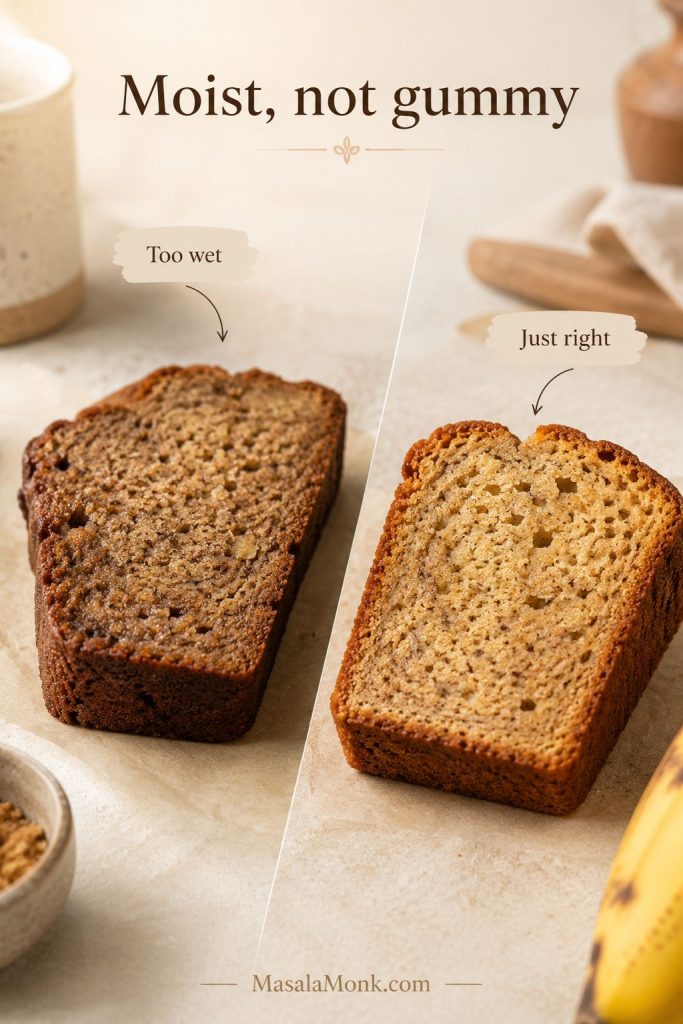
The texture comes down to balance. Applesauce is wonderful in banana bread because it adds moisture and lets you use less fat, but it also brings water into the batter. With the wrong ratio, the top can look beautifully baked while the center stays heavy, damp, or gummy.
The goal is a loaf that smells like ripe bananas and cinnamon, slices without dragging, and feels plush rather than damp when you pick up a piece.
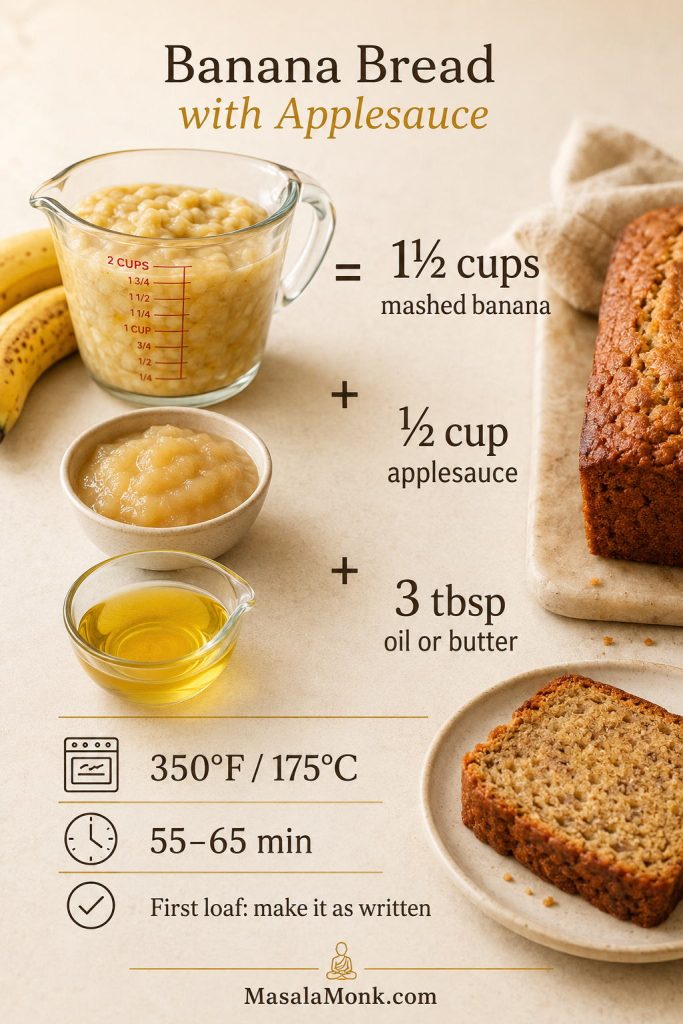
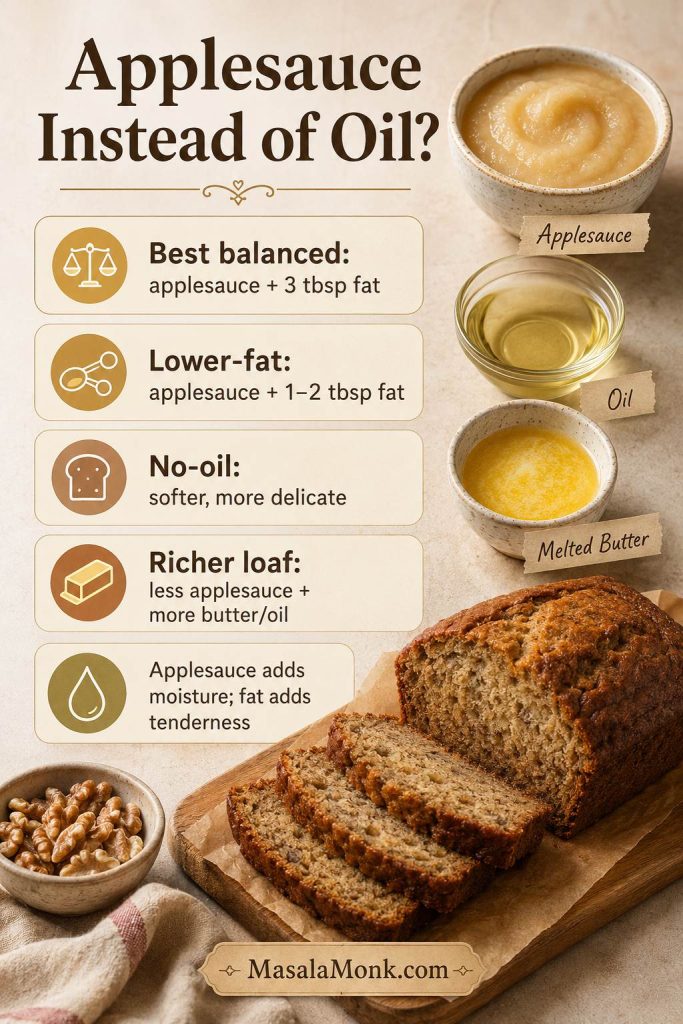
For one moist loaf, the sweet spot is 1½ cups mashed ripe banana plus ½ cup unsweetened applesauce, with 3 tablespoons oil or melted butter to keep each slice from feeling rubbery or fragile. Bake it in a 9×5-inch loaf pan at 350°F / 175°C until the middle bakes through and the crumb looks even, not shiny or wet.
This is not a fully no-oil loaf by default because applesauce replaces moisture better than it replaces tenderness. The small amount of fat keeps the crumb softer, cleaner, and easier to slice neatly.
This version is built around the texture problem applesauce banana bread often has: plenty of moisture, but not enough structure to slice cleanly. That is why the banana and applesauce are measured, a little fat stays in the batter, and the loaf gets time to bake through and cool before slicing.
At a glance: For one 9×5-inch loaf, use 1½ cups mashed ripe banana, ½ cup unsweetened applesauce, 2 cups flour, 2 eggs, and 3 tablespoons oil or melted butter. Bake at 350°F / 175°C for 55–65 minutes, until the center reaches about 200–205°F / 93–96°C.
For the first bake, make the recipe as written before reducing the oil, cutting the sugar further, or swapping in more whole wheat flour. Once you know how the batter should look and how the cooled loaf should slice, the variations become much easier to control.
Make the first loaf with the full ratio before tweaking. Once you know this baseline, lower-fat and variation decisions become much easier.
What This Loaf Tastes Like
This is a banana-forward loaf first, with gentle apple sweetness in the background. It does not taste like apple cake. The applesauce mostly shows up in the texture: an even crumb, a little extra moisture, and slices that still taste pleasant the next day.
Cinnamon, vanilla, and brown sugar make the banana flavor warmer. If you add walnuts or pecans, the loaf becomes more classic and bakery-style. If you skip them, it stays simple, easy to slice, and lunchbox-friendly.
It should taste like a cozy banana loaf with a softer crumb, not like applesauce trying to take over. It is still a quick bread, so expect a soft, sturdy crumb rather than an airy cake texture.
Look for a crumb that is evenly baked from edge to middle. That is the difference between fruit-rich banana bread and underdone banana bread.
Why You’ll Love This Recipe
Moist without the gummy middle: the banana, applesauce, flour, fat, and bake time are balanced so the loaf sets properly.
Still tastes like real banana bread: applesauce lightens the loaf, but a small amount of oil or butter keeps each slice from feeling rubbery or fragile.
Uses the bananas you were about to lose: heavily speckled bananas give the deepest flavor and natural sweetness.
Easy to adjust after the first bake: make it nuttier, less sweet, lower fat, dairy-free, vegan, or muffin-style without starting from scratch.
Why Applesauce Works in Banana Bread
Banana bread already depends on fruit puree, so applesauce fits naturally into the batter. It adds gentle sweetness and helps the loaf stay fresh-tasting for longer.
The catch is that applesauce is not the same as butter or oil. Fat helps coat the flour, which gives the crumb a softer bite. Applesauce brings extra water and fruit solids, which is why the batter needs the right balance. When the batter gets too wet, quick breads can turn dense, chewy, or gummy.
For that reason, this recipe keeps a small amount of oil or melted butter in the batter. It still feels lighter than a classic loaf, but it slices more cleanly once cooled.
You see the same idea in a good applesauce cake, where the applesauce keeps the crumb moist and even without making the cake feel wet.
Ingredients for Banana Bread with Applesauce
The ingredients are familiar, but measuring them makes the loaf much more reliable. A little too much banana or applesauce can make the crumb feel compressed instead of tender.
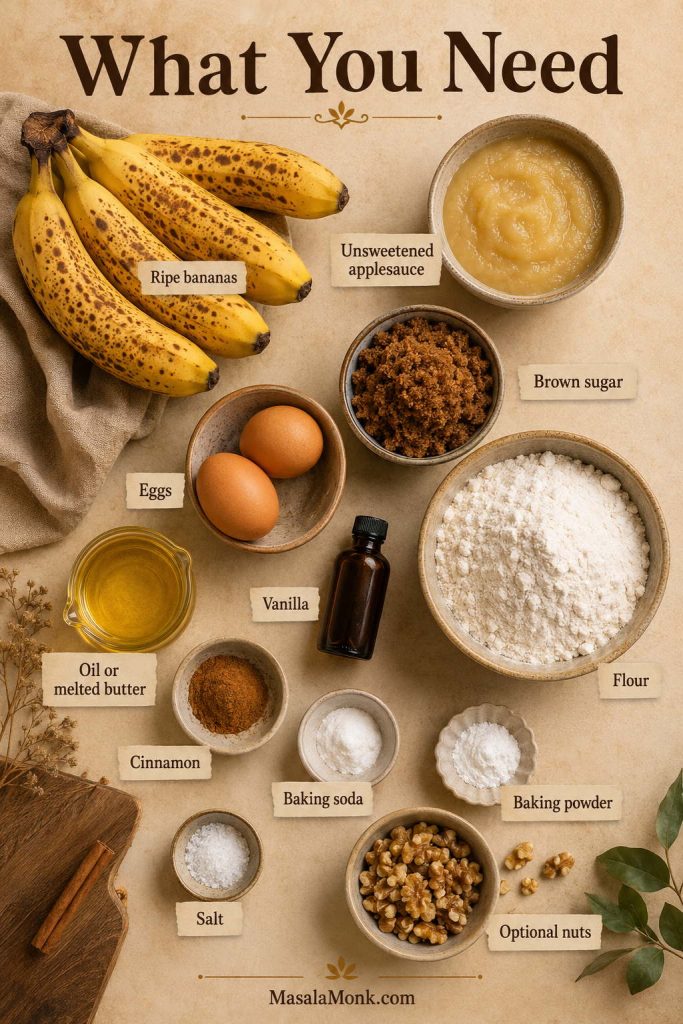
The ingredient list is simple, but the recipe depends on balance: ripe bananas for flavor, applesauce for moisture, and a little fat for tenderness.
Very Ripe Bananas
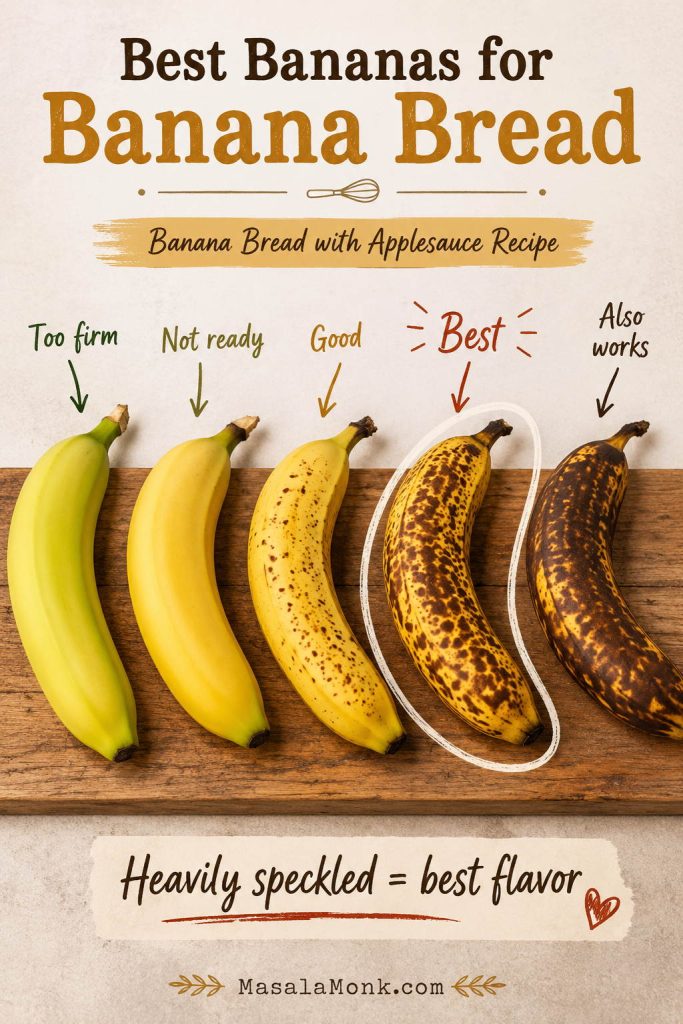
Use bananas that are heavily speckled or mostly brown on the outside. They mash easily, taste sweeter, and give the loaf its deep banana flavor. If the bananas are still too yellow, use the ripening shortcuts before you start.
Heavily speckled bananas give banana bread the deepest flavor. However, measuring the mashed fruit still keeps the applesauce loaf from getting too wet.
If a banana looks too far gone for eating out of hand, it may be exactly right for this batter. For this recipe, measure 1½ cups mashed banana, which is usually about 3 large bananas or 4 smaller ones. Too little banana gives a bland loaf, while too much can make the middle heavy, especially with applesauce in the batter. Using freezer bananas? Drain them before measuring.
Banana size changes from bunch to bunch, so measure after mashing. This one step makes banana bread with applesauce much more reliable.
Frozen bananas also work. Thaw them first, drain off excess liquid, then mash and measure. They can release a lot of moisture, so measuring is even more important if you are using bananas from the freezer.
Frozen bananas work well, but they release extra liquid. Drain first, then mash and measure so the loaf stays soft instead of gummy.
How to Ripen Bananas Faster
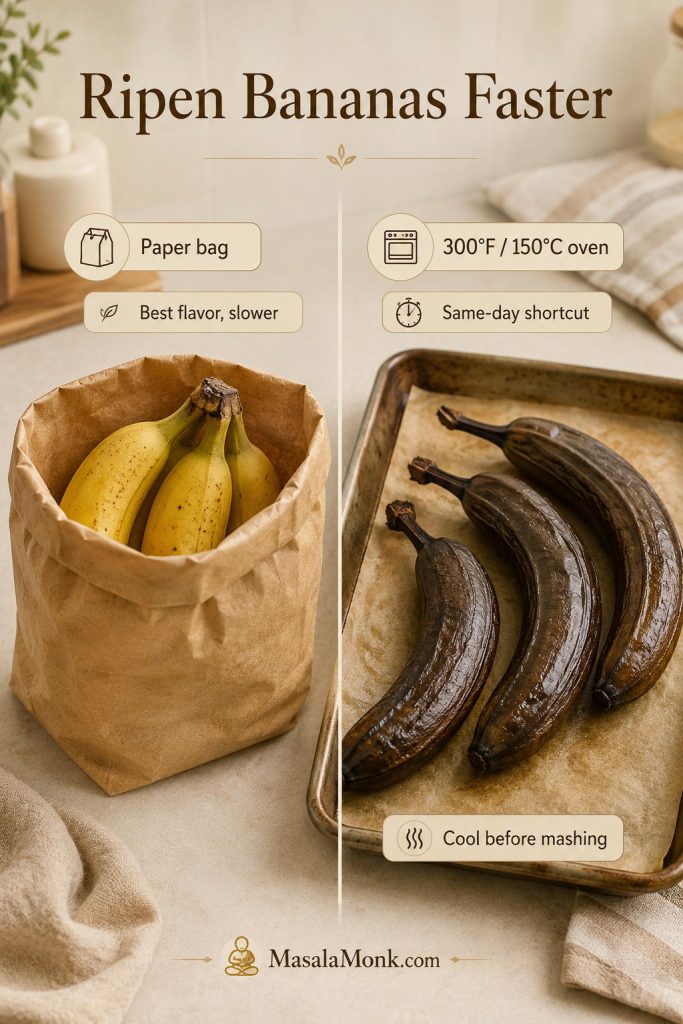
If your bananas are yellow but not soft yet, place them in a paper bag and leave them at room temperature until the peels become heavily speckled. For a same-day option, bake unpeeled bananas on a lined baking sheet at 300°F / 150°C until the peels darken and the fruit softens, then cool before mashing.
This shortcut helps with texture, but it does not create the same deep flavor as bananas that ripen naturally over several days. Use it when you need banana bread today, not when you are chasing the strongest banana flavor.
If the bananas release liquid as they cool, leave that liquid behind before measuring so you do not add extra water to the batter.
A paper bag is better when you have time; meanwhile, the oven shortcut helps when banana bread needs to happen today.
Unsweetened Applesauce
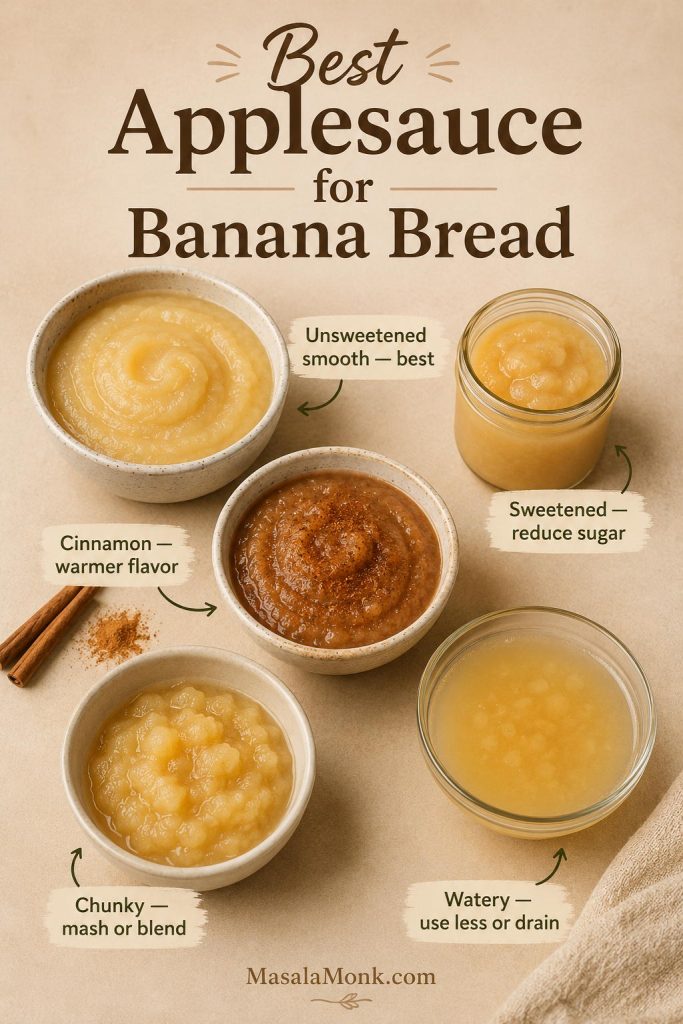
Plain unsweetened applesauce is best because it adds moisture without making the loaf too sweet. Homemade or store-bought both work, as long as the applesauce is smooth enough to blend evenly into the batter.
Sweetened applesauce is fine, but reduce the brown sugar slightly if you prefer a less sweet loaf. Cinnamon applesauce works too, especially if you want a warmer, spiced flavor.
A Small Amount of Oil or Melted Butter
The few tablespoons of fat are not there by accident. You can make a no-oil version, but the texture is usually more fragile. Three tablespoons of neutral oil or melted butter give the crumb a better bite while keeping the recipe lighter than a traditional butter-heavy loaf.
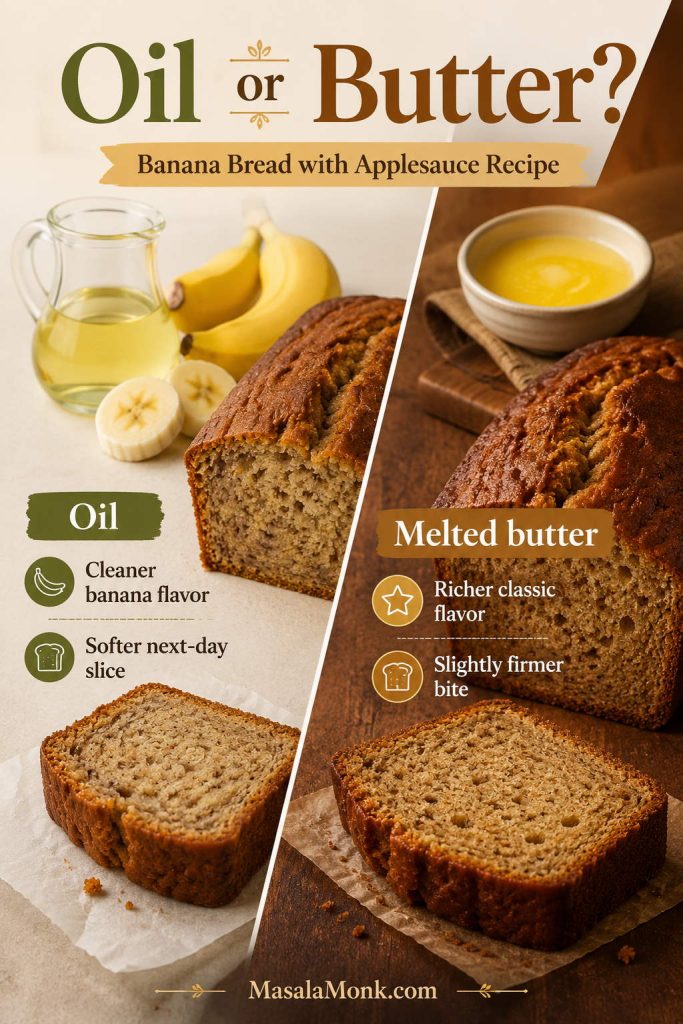
Use neutral oil when you want the banana flavor to stay clean and simple, with a softer next-day slice. Use melted butter if you want a richer, more classic banana bread flavor and a slightly firmer bite once the loaf cools. Trying to reduce more fat? Compare the applesauce-oil options later in the post.
Oil keeps the banana flavor cleaner and softer the next day, while melted butter gives the loaf a richer, more classic banana bread taste.
Flour, Eggs, Sugar, and Leavening
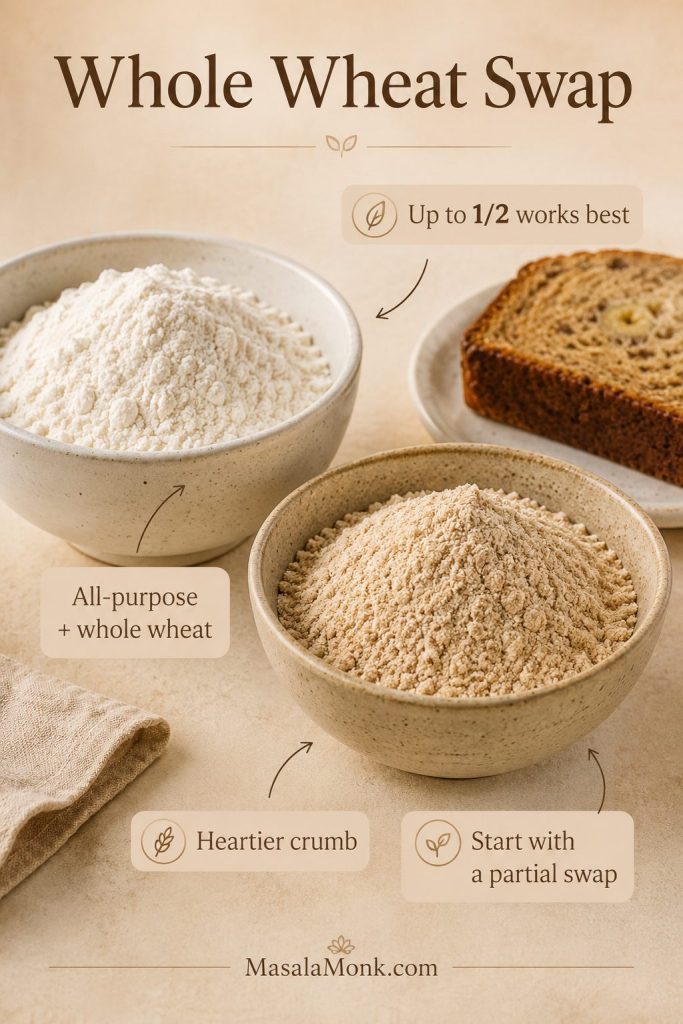
All-purpose flour gives the most reliable loaf. You can replace up to half of it with whole wheat flour for a heartier flavor, but using all whole wheat flour will make the bread denser and may need a little extra moisture.
A partial whole wheat swap adds heartier flavor without taking over the loaf. Start with half so the crumb still stays tender.
If you want a banana loaf built around oats instead of regular flour, try this healthy banana bread with oat flour for a more oat-forward version.
Brown sugar is doing more than sweetening here. It brings a light caramel note that makes the banana taste rounder, especially when the applesauce is plain and unsweetened. Eggs help the batter set, and a mix of baking soda plus a little baking powder helps lift the fruit-heavy batter.
Walnuts, Pecans, or Chocolate Chips
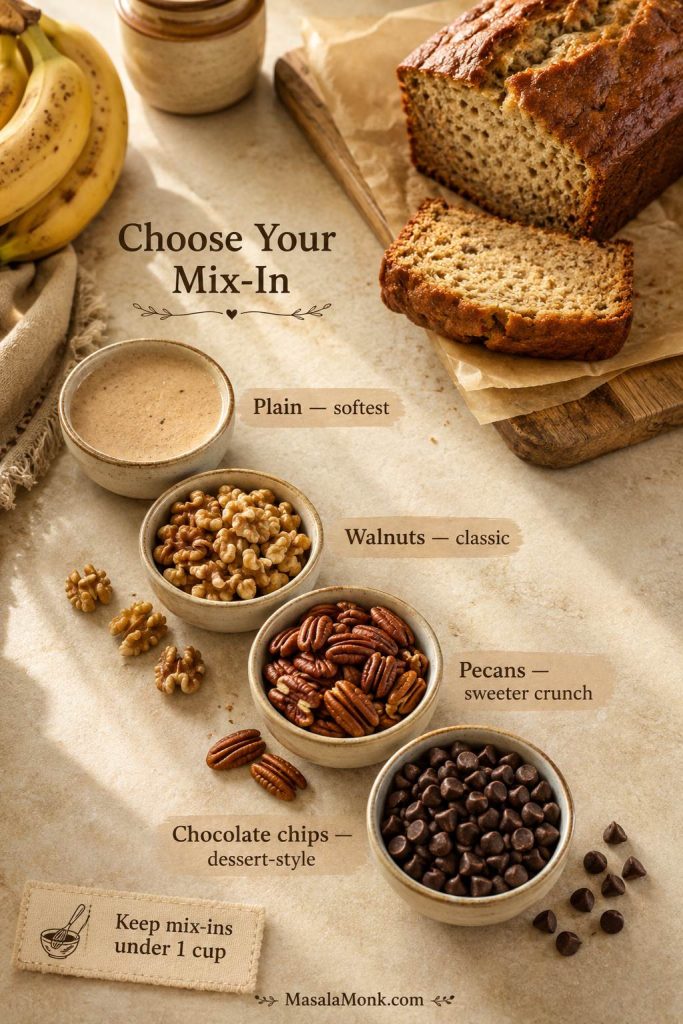
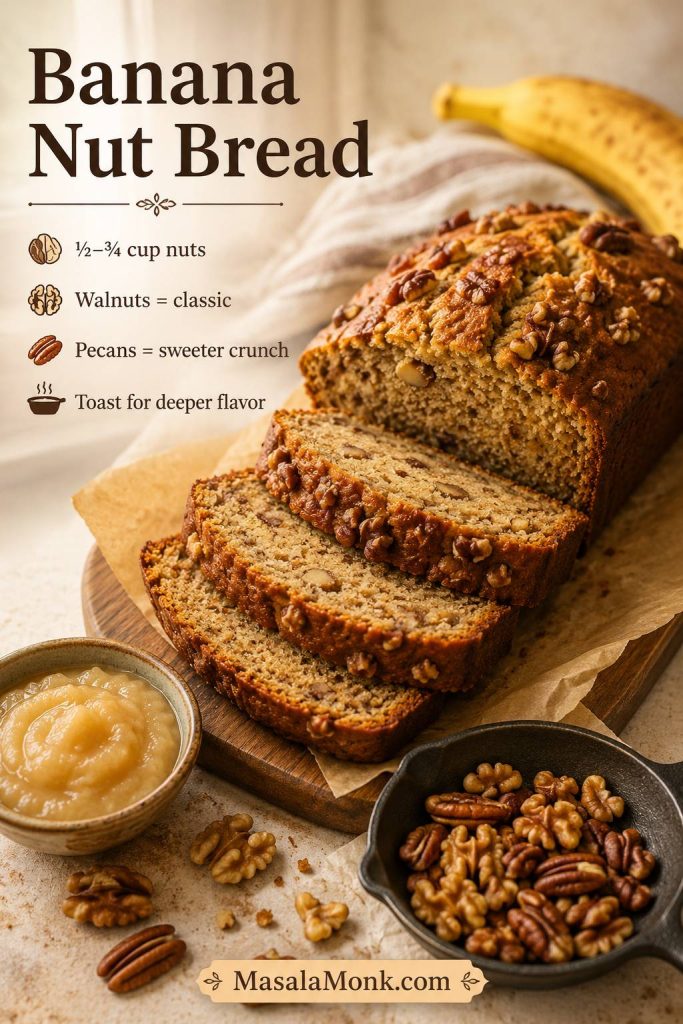
Walnuts and pecans turn this into banana nut bread with applesauce. Use ½ cup for a lighter crunch or up to ¾ cup for a more classic banana nut loaf. Chocolate chips also work, but they make the bread sweeter and more dessert-like.
Mix-ins change the personality of the loaf. Still, keep them under 1 cup so the banana-applesauce batter stays balanced and sliceable.
Equipment for This Loaf
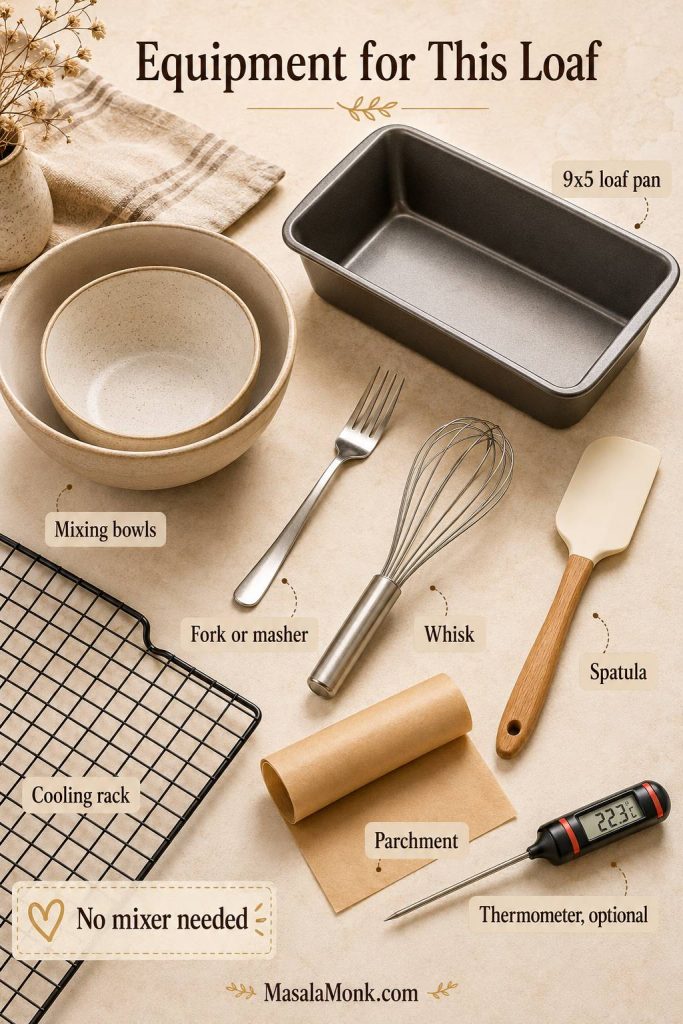
You do not need a mixer for this loaf. In fact, mixing by hand is better because it helps prevent a rubbery crumb. A few small banana lumps are fine; beaten batter is not what you want here.
9×5-inch loaf pan
Large mixing bowl
Medium bowl for dry ingredients
Fork or potato masher for the bananas
Whisk
Flexible spatula
Parchment paper, optional
Cooling rack
Digital thermometer, optional
The important part is not special equipment. It is gentle mixing, the right pan, and enough cooling time before slicing. A digital thermometer removes the guesswork from fruit-heavy loaves, where the top can brown before the center is ready.
A bowl, whisk, spatula, and loaf pan are enough. The thermometer is the only optional tool that can save an uncertain center.
What Kind of Applesauce Should You Use?
The applesauce you use changes more than sweetness. It can change how loose the batter feels and how quickly the middle bakes through. If you are trying to avoid a damp center, this is one of the easiest places to stay in control.
Smooth unsweetened applesauce is the safest choice. If your applesauce is chunky or watery, adjust it before mixing so the crumb bakes evenly.
Applesauce Type
Works?
What to Adjust
Unsweetened smooth applesauce
Best choice
No change needed
Sweetened applesauce
Yes
Reduce the brown sugar slightly if you want a less sweet loaf
Cinnamon applesauce
Yes
Reduce or skip the extra cinnamon if needed
Homemade applesauce
Yes
Use smooth applesauce that is not watery
Chunky applesauce
Sometimes
Mash or blend first for a more even crumb
Very watery applesauce
Risky
Drain slightly or use 1–2 tablespoons less
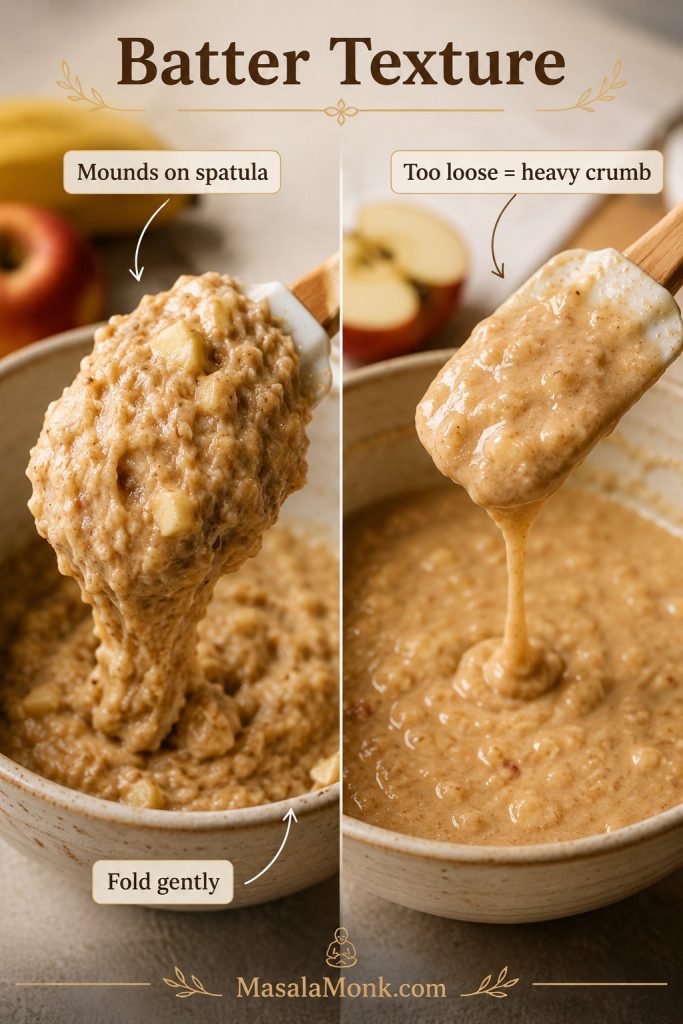
If your applesauce looks loose and watery, hold back a little instead of adding extra. The batter may seem thick at first, but extra water shows up later in the baked crumb. The finished batter should mound softly in the pan, not pour like pancake batter.
Best Banana-to-Applesauce Ratio
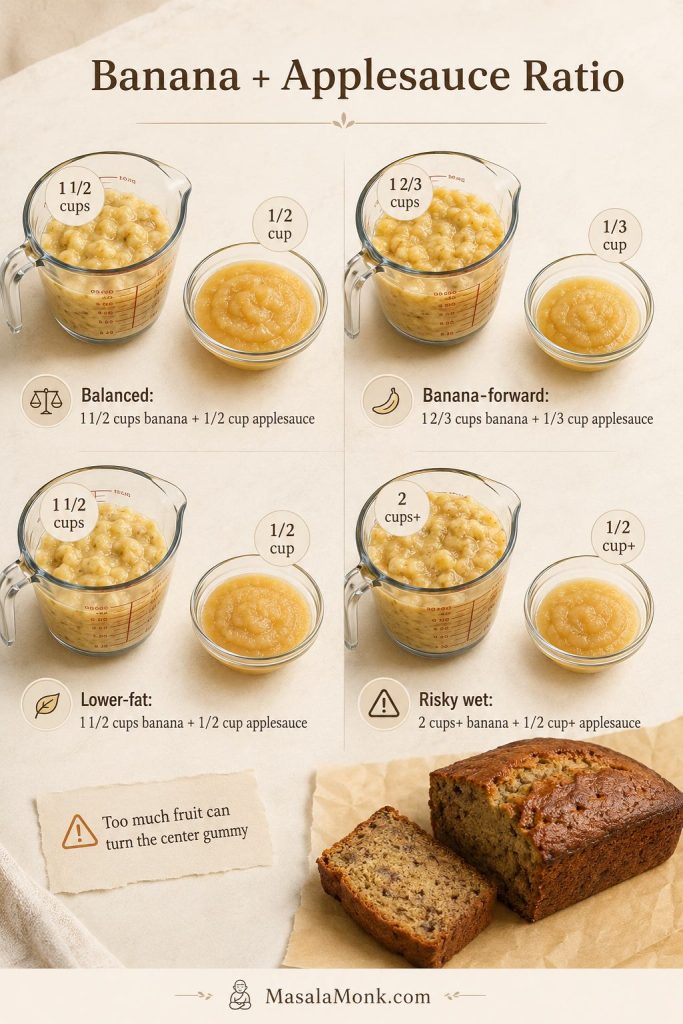
The best starting ratio for one standard loaf is 1½ cups mashed banana to ½ cup applesauce. That gives enough banana flavor and enough applesauce moisture without flooding the batter.
Applesauce is not the problem. The problem is stacking too much banana and applesauce without giving the loaf enough flour, eggs, bake time, and cooling time.
Loaf Style
Mashed Banana
Applesauce
Result
Balanced classic
1½ cups
½ cup
Moist and sliceable
More banana-forward
1⅔ cups
⅓ cup
Stronger banana flavor with slightly less added moisture
Lower-fat style
1½ cups
½ cup
Lighter and more delicate, especially if you reduce the oil
Risky wet loaf
2 cups or more
½ cup or more
More likely to bake up dense or gummy in the center
When the balance is right, the loaf tastes fruit-rich without feeling heavy. The first slice should smell warm, hold together, and look set rather than damp or compressed.
The banana-to-applesauce ratio controls moisture before the loaf ever reaches the oven. Too much fruit can make the crumb slow to set.
That balance is what keeps the loaf tasting like real banana bread, not like a lighter version where the texture feels like a compromise.
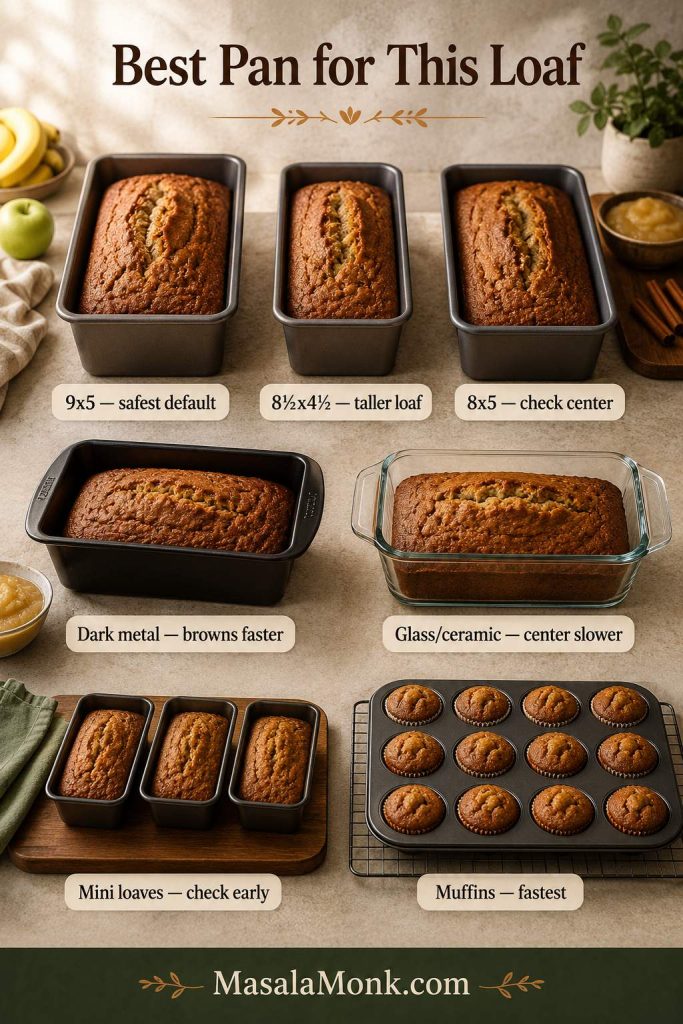
Best Pan Size and Pan Type for Banana Bread with Applesauce
Pan size changes how deep the batter sits, which changes how quickly the center sets. For this fruit-rich batter, a 9×5-inch loaf pan is the safest default.
Pan
What Changes
How to Bake It
9×5-inch loaf pan
Best default; bakes most evenly
55–65 minutes at 350°F / 175°C
8½x4½-inch loaf pan
Taller loaf; center takes longer
Start checking around 55 minutes, but expect extra time
8×5-inch loaf pan
Works, but the center can be slower
Use a thermometer if possible and avoid pulling early
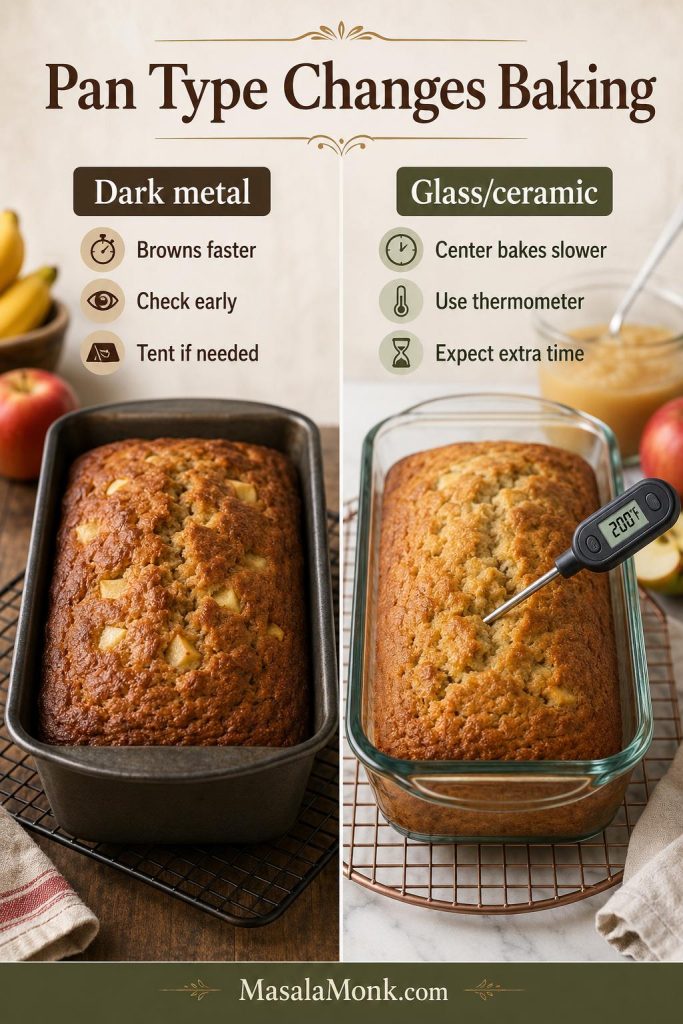
Dark metal loaf pan
Browns faster on the outside
Check early, tent if needed, and reduce the oven by 25°F / about 15°C if it over-browns
Glass or ceramic loaf pan
Can bake more slowly through the center
Expect extra time and use a thermometer; tent if the top browns before the middle is done
Mini loaf pans
Smaller loaves bake faster
Start checking around 30–35 minutes
Muffin tin
Fastest bake with more edges
20–25 minutes at 350°F, or 18–20 minutes at 375°F
Pan size and material change how the middle bakes. Because this batter is fruit-rich, the safest default is a 9×5-inch loaf pan.
If the top browns before the middle is done, tent the loaf loosely with foil and continue baking. This is especially useful with smaller loaf pans, dark metal pans, glass pans, ceramic pans, or very ripe bananas.
Dark metal browns faster, while glass and ceramic can bake more slowly through the center. As a result, doneness cues matter more than color alone.
How to Make Banana Bread with Applesauce
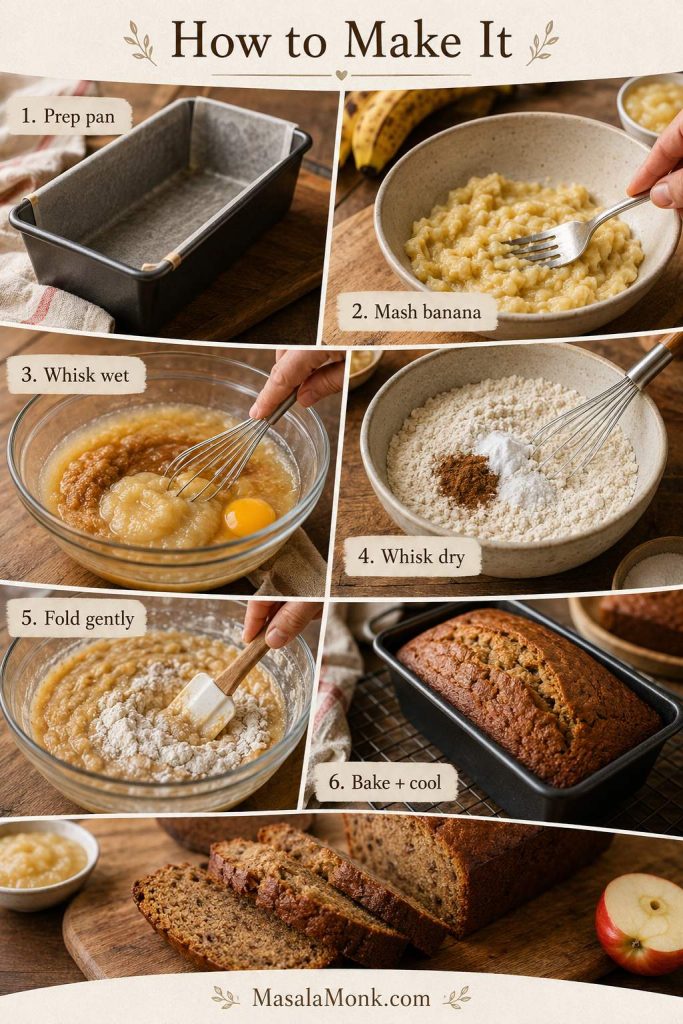
Once the fruit and applesauce are measured, the method is simple. The main thing is to mix gently and give the center enough time to bake through. If you are unsure near the end, use the doneness guide instead of judging by color alone.
The method is simple, but the order helps: measure the fruit, mix wet and dry separately, fold gently, then let the loaf cool before slicing.
1. Prepare the Pan
Heat the oven to 350°F / 175°C. Grease a 9×5-inch loaf pan and line it with parchment if you want to lift the loaf out easily.
2. Mash and Measure the Bananas
Mash the ripe bananas with a fork, then measure 1½ cups. A few small banana lumps are fine. They make the loaf feel homemade and keep the crumb from becoming too uniform.
3. Mix the Wet Ingredients
Whisk the mashed banana, applesauce, eggs, brown sugar, oil or melted butter, and vanilla until combined. The mixture will look loose and glossy.
4. Mix the Dry Ingredients Separately
In another bowl, whisk the flour, baking soda, baking powder, cinnamon, and salt. This helps the leavening spread evenly through the thick fruit-based batter.
5. Fold Gently
Add the dry ingredients to the wet ingredients and fold with a spatula until no dry flour remains. A mixer is not needed here; overmixing is one of the easiest ways to make the crumb rubbery.
The batter should be thick enough to mound on the spatula. If it looks loose before it goes into the oven, the finished crumb is more likely to feel heavy.
The batter should mound instead of pour. If it spreads too easily, the baked banana bread is more likely to feel compressed.
6. Add Nuts if Using
Fold in walnuts or pecans at the end. For a prettier top, save a small handful and scatter them over the batter before baking.
7. Bake Until the Center Is Set
Spread the batter into the prepared pan and bake for 55 to 65 minutes. A browned top is only part of the story; this fruit-heavy batter still needs time for the center to finish baking.
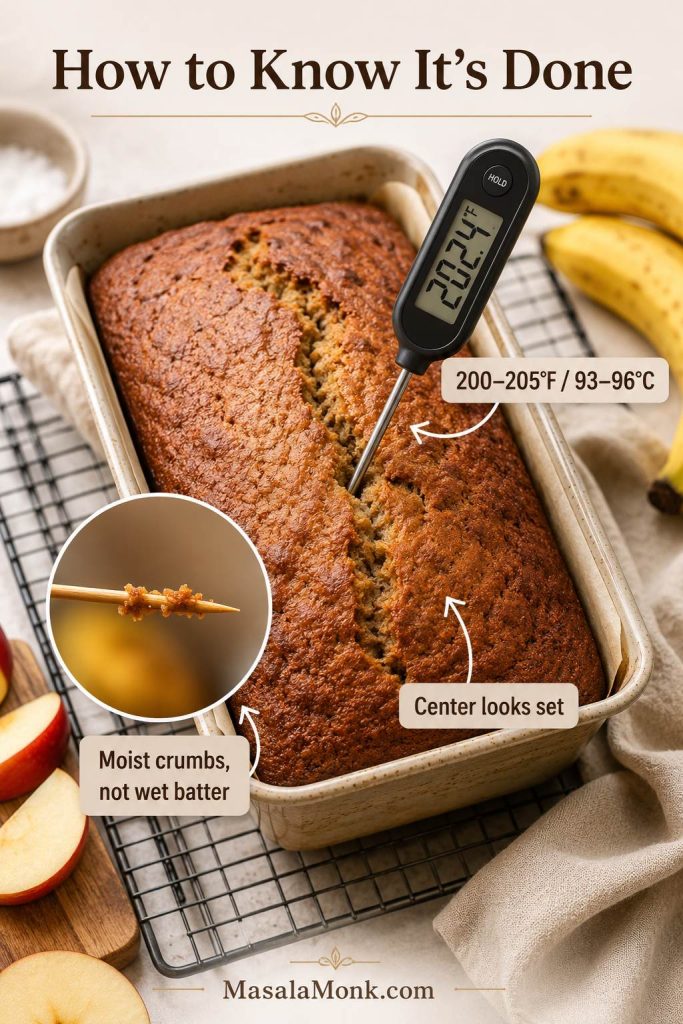
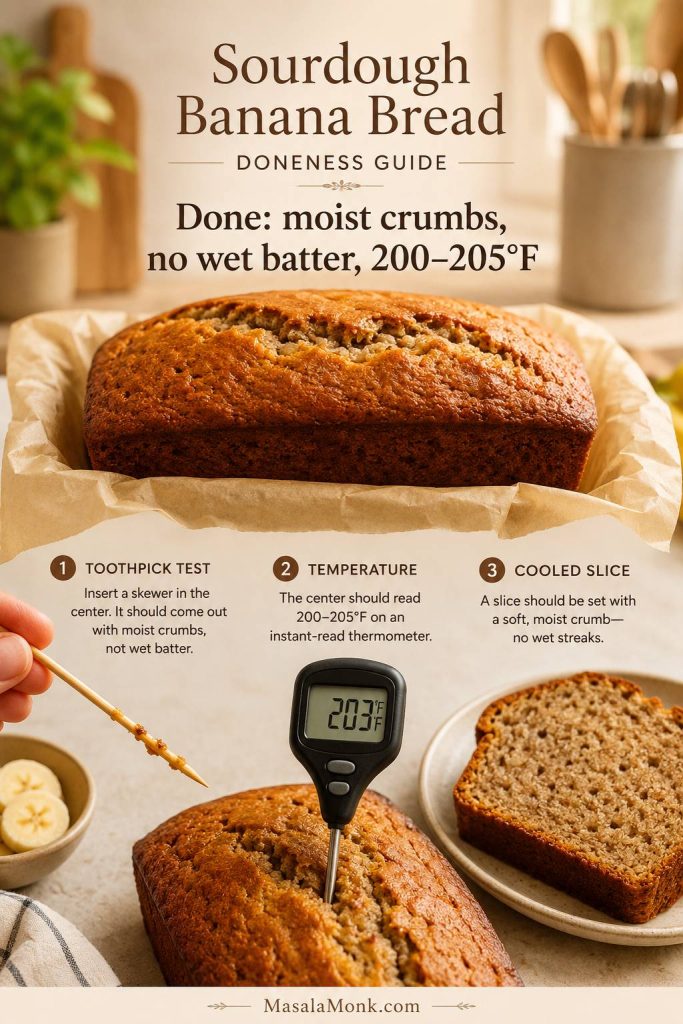
Near the end, the loaf should smell deeply banana-rich, and the center should look set rather than glossy. The bread is done when a toothpick inserted into the center comes out with moist crumbs but no wet batter. For the most reliable check, use a digital thermometer; the center should register about 200°F to 205°F / 93°C to 96°C. King Arthur Baking also recommends this internal-temperature range for banana bread doneness in its banana bread doneness guide.
A few moist crumbs are fine, but wet batter is not. For extra confidence, check for 200–205°F in the center before cooling the loaf.
8. Cool Before Slicing
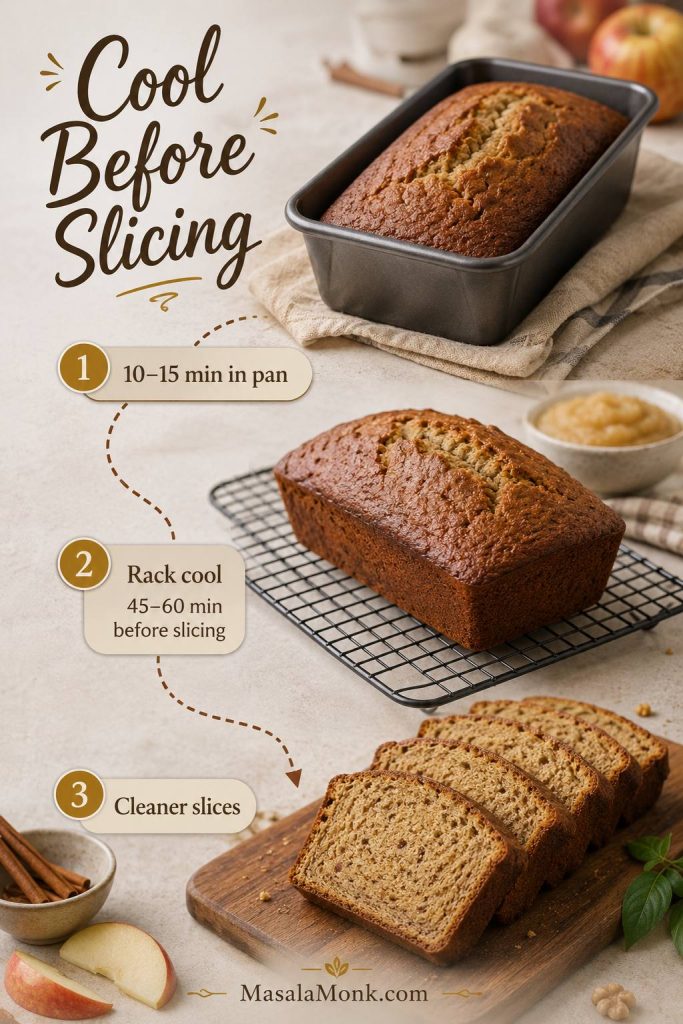
Let the loaf cool in the pan for 10 to 15 minutes, then move it to a rack. Banana bread continues to set as it cools, especially when applesauce is in the batter.
Cutting too early can make a properly baked loaf look underdone, because the crumb has not had time to settle. Waiting is annoying, but it is one of the easiest ways to get clean slices.
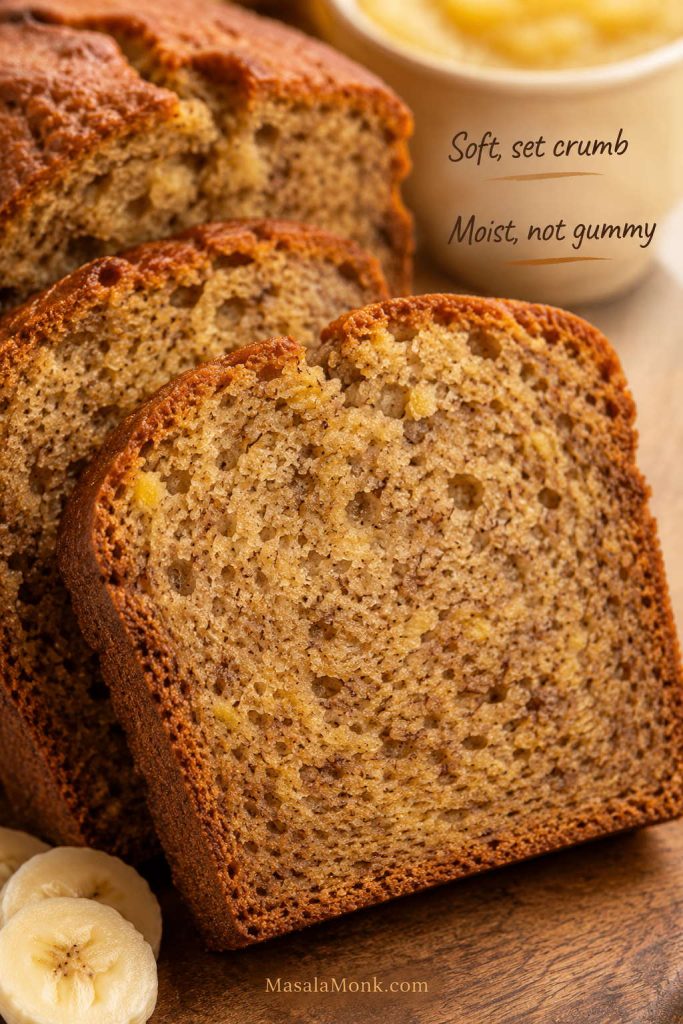
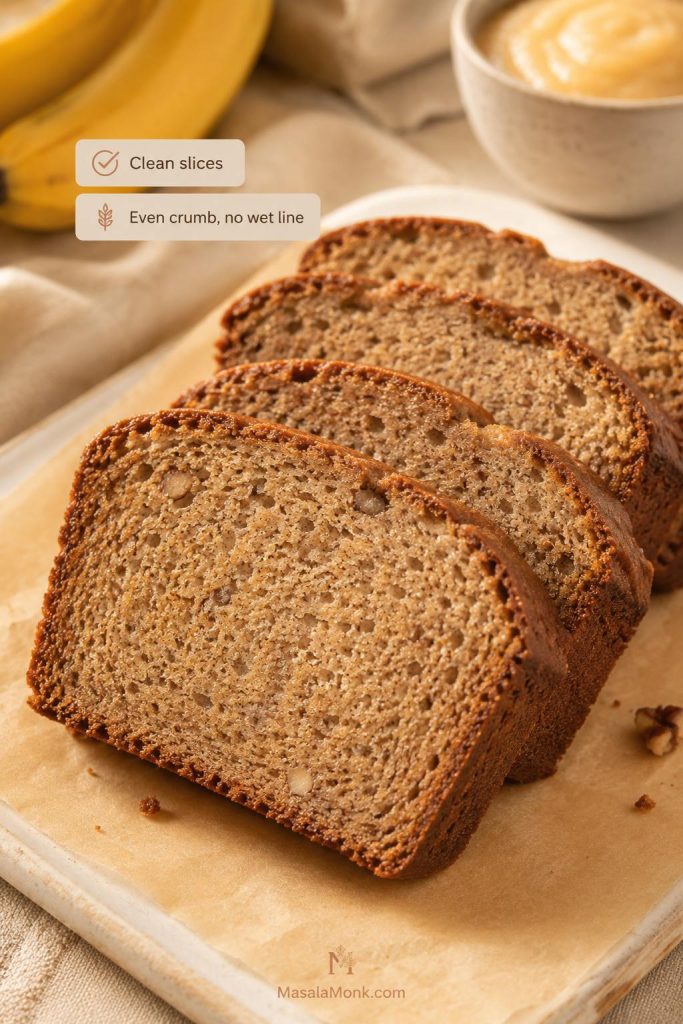
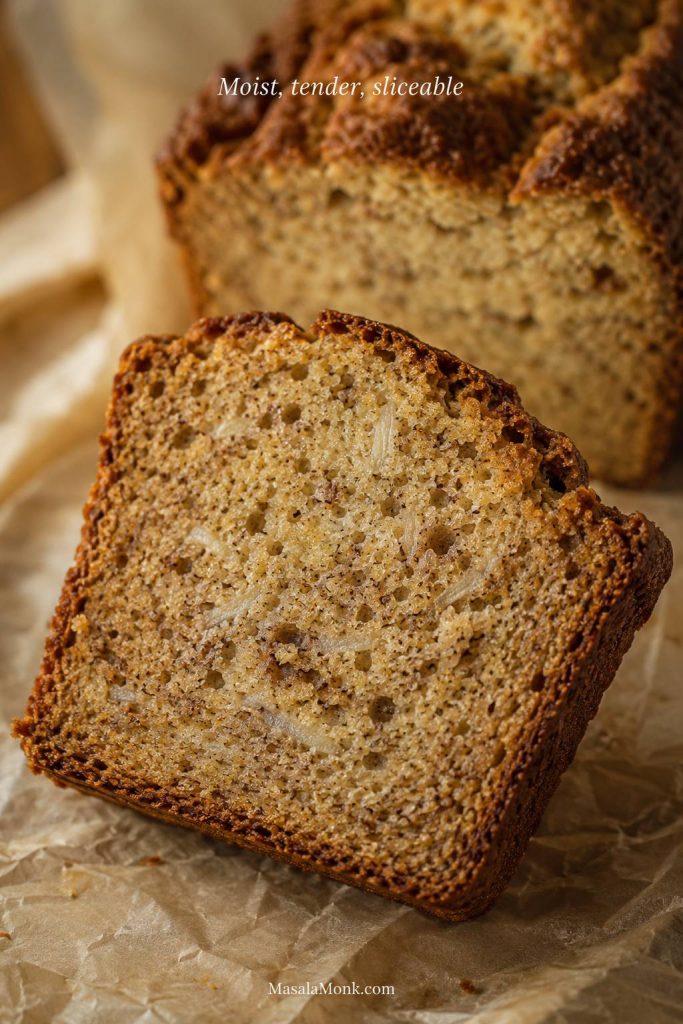
Once cooled, the slices should look even and plush, with tiny banana flecks through the crumb instead of a shiny wet line in the center.
Cooling is part of the recipe, not an afterthought. Once the crumb settles, the slices cut cleaner and hold their shape.
Before you use the recipe card, remember the three texture cues that matter most: measured banana, batter that mounds instead of pours, and a fully cooled loaf before the first cut.
This is the texture to look for after cooling: even crumb, clean edges, and slices that hold together without crumbling.
Banana Bread with Applesauce Recipe
This fruit-rich loaf is lighter than classic banana bread but still soft, fragrant, and sturdy enough to slice cleanly once cooled.
Yield1 standard loaf
Prep Time15 minutes
Cook Time55–65 minutes
Total TimeAbout 1 hour 20 minutes, plus 45–60 minutes cooling
Pan: 9×5-inch loaf pan Oven: 350°F / 175°C
Ingredients
1½ cups mashed very ripe banana, about 340 g
½ cup unsweetened applesauce, about 120 g
2 large eggs
½ cup packed light brown sugar, about 105 g
3 tablespoons neutral oil, about 45 ml, or 3 tablespoons melted butter, about 42 g
2 teaspoons vanilla extract
2 cups all-purpose flour, 240 g
1 teaspoon baking soda
½ teaspoon baking powder
1 teaspoon ground cinnamon
½ teaspoon fine salt
½ cup chopped walnuts or pecans, optional, about 55–65 g
Method
Heat the oven to 350°F / 175°C. Grease a 9×5-inch loaf pan and line it with parchment if you want easier lifting.
Mash the bananas, then measure 1½ cups. Banana size varies so much that measuring gives you a more reliable loaf than counting bananas alone.
In a large bowl, whisk the mashed banana, applesauce, eggs, brown sugar, oil or melted butter, and vanilla.
In a separate bowl, whisk the flour, baking soda, baking powder, cinnamon, and salt.
Add the dry ingredients to the wet ingredients and fold gently until no dry flour remains. The batter should be thick enough to mound on the spatula, not runny.
Fold in walnuts or pecans if using.
Spread the batter into the prepared pan. Bake for 55–65 minutes, or until a toothpick inserted in the center comes out with moist crumbs but no wet batter. For the most reliable check, the center should read about 200–205°F / 93–96°C.
If the top browns before the center is done, tent the loaf loosely with foil and keep baking.
Cool in the pan for 10–15 minutes, then move to a rack. Let the loaf cool for at least 45–60 minutes before slicing so the crumb can finish setting.
Notes
For your first loaf, use the full 3 tablespoons oil or melted butter. Once you know the texture, you can reduce it to 2 tablespoons for a lighter but more delicate loaf.
Use up to ¾ cup nuts, about 85 g, if you want a more classic banana nut loaf.
For a less sweet loaf, reduce the brown sugar to ⅓ cup if your bananas are very ripe.
If using frozen bananas, thaw and drain off excess liquid before measuring.
For the cleanest slices, cool the loaf fully before cutting.
After the first loaf, the best tweak is personal: richer with butter, cleaner with oil, crunchier with walnuts, softer as muffins, or lighter with a little less fat. The sections below help you adjust without losing the clean-slicing texture.
How to Avoid Gummy Banana Bread with Applesauce
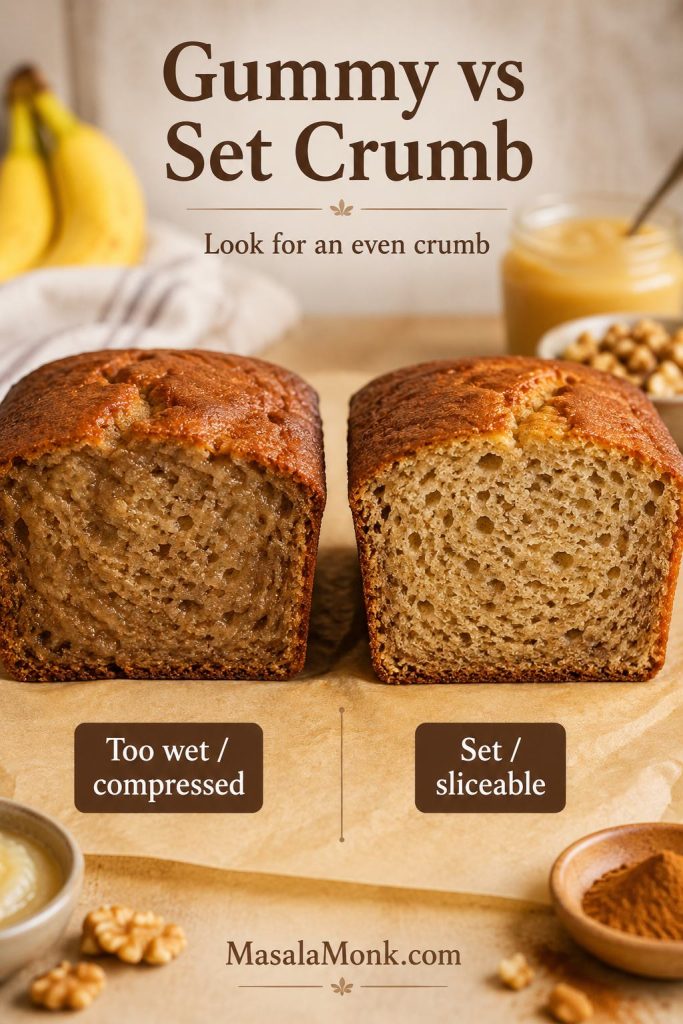
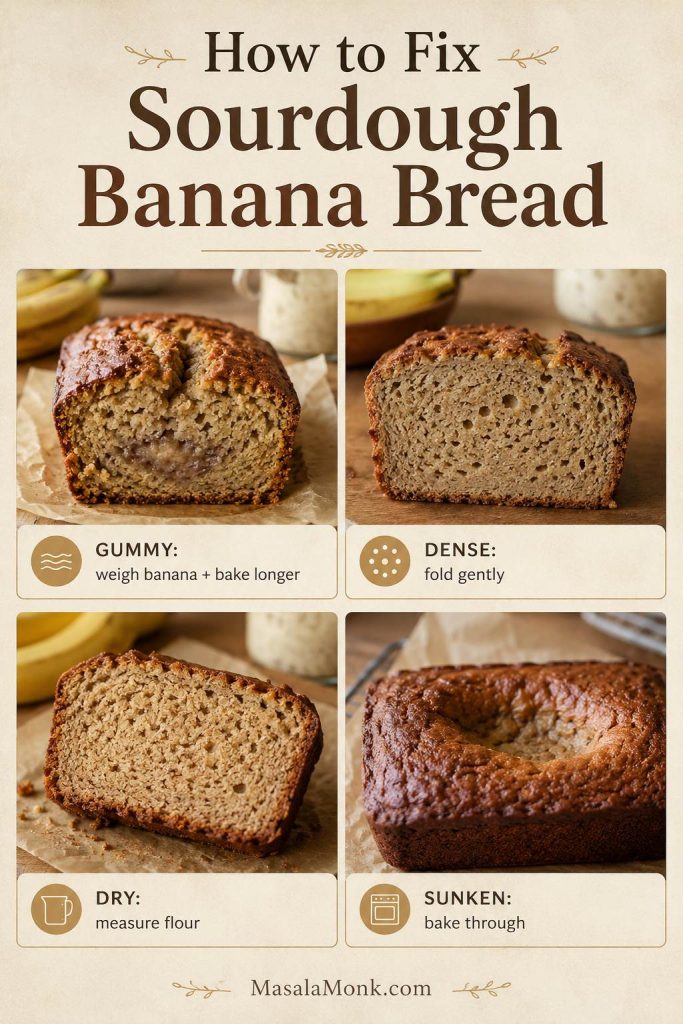
A good slice should hold together, with an even crumb and a set center. If your last loaf looked beautiful on top but cut into a compressed middle, you probably do not need a completely different recipe. You usually need better measurement, a little more bake time, and enough cooling before cutting.
Most gummy loaves come from a combination of too much wet fruit, heavy mixing, not enough time in the oven, or slicing before the crumb has set. The good news is that it usually does not mean you are bad at banana bread; it comes down to one of a few fixable choices.
Most gummy banana bread problems come from moisture, mixing, bake time, or cooling. Once you know the cause, the fix is usually simple.
Texture Problems and Fixes
Problem
Likely Cause
How to Fix It
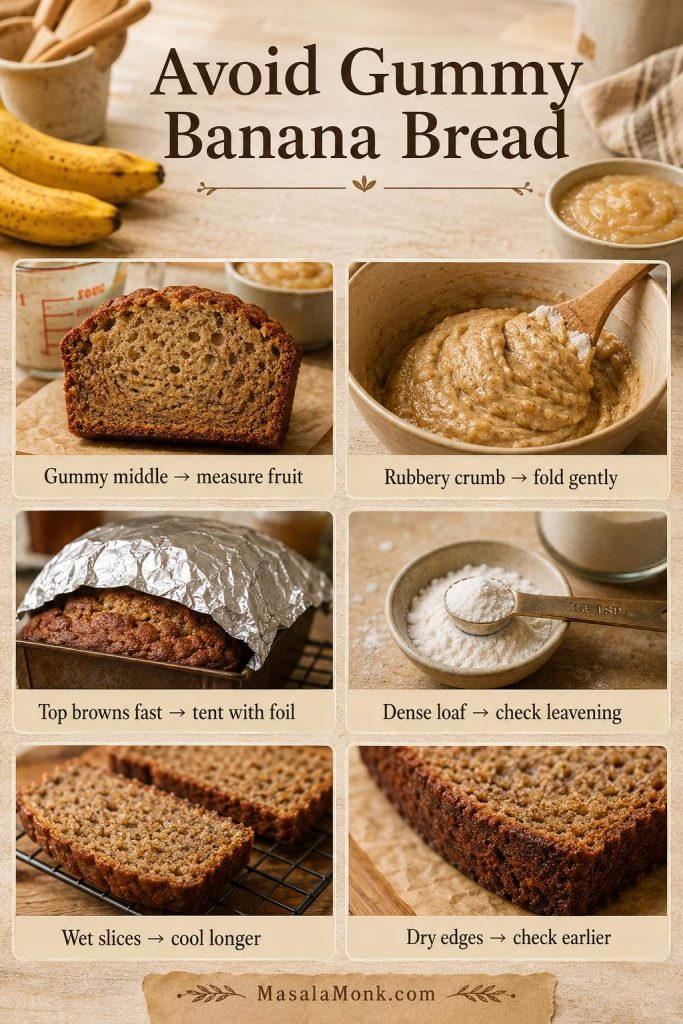
Gummy middle
Too much banana or applesauce, or the loaf was underbaked
Measure the banana, keep applesauce to ½ cup, and bake until the middle no longer looks shiny or wet
Rubbery texture
The batter was overmixed
Fold gently by hand and stop when the flour disappears
Top browns too fast
The outside is browning before the center finishes
Tent loosely with foil and continue baking
Dense loaf
Too much wet ingredient or weak leavening
Use fresh baking soda and baking powder, and follow the banana-to-applesauce ratio
Wet-looking slices
The loaf was sliced too hot
Cool at least 45 minutes before slicing
Dry edges
Dark pan, overbaking, or too little wet ingredient
Check earlier, use parchment, and try a lighter pan next time if the edges keep drying out
A compressed crumb is a clue, not a disaster. Next time, check the fruit amount, bake time, and cooling window.
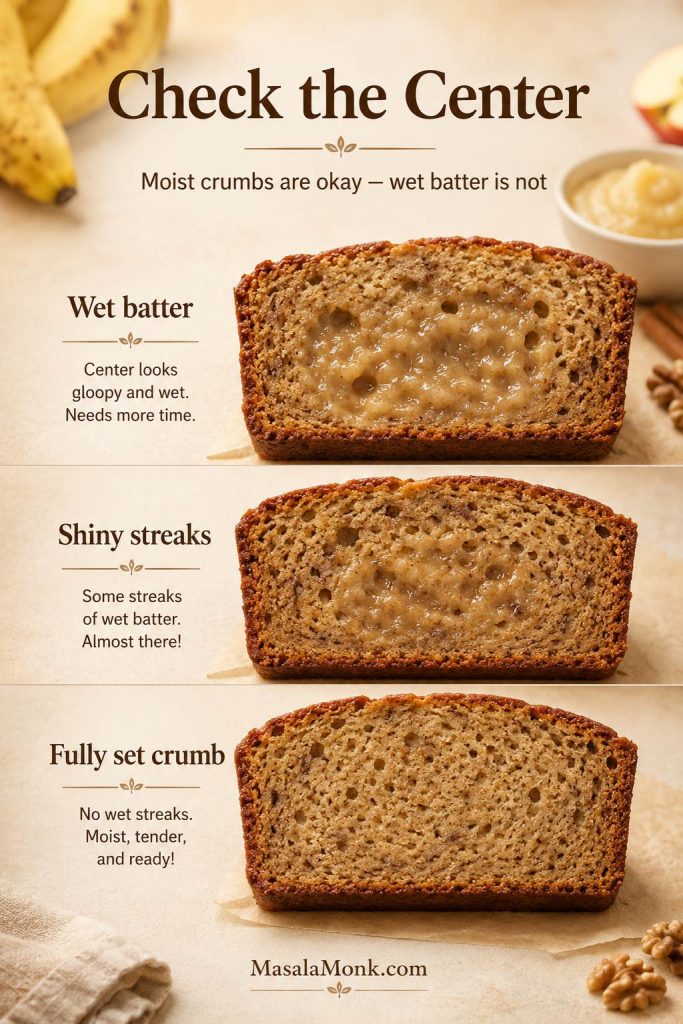
Wet Center vs Fully Baked Crumb
A clean toothpick is not always the best goal for banana bread. A few soft crumbs on the toothpick are fine. Wet batter, shiny streaks, or a sunken center mean the loaf needs more time.
Moist crumbs are normal in banana bread, but shiny streaks or wet batter mean the center still needs more time.
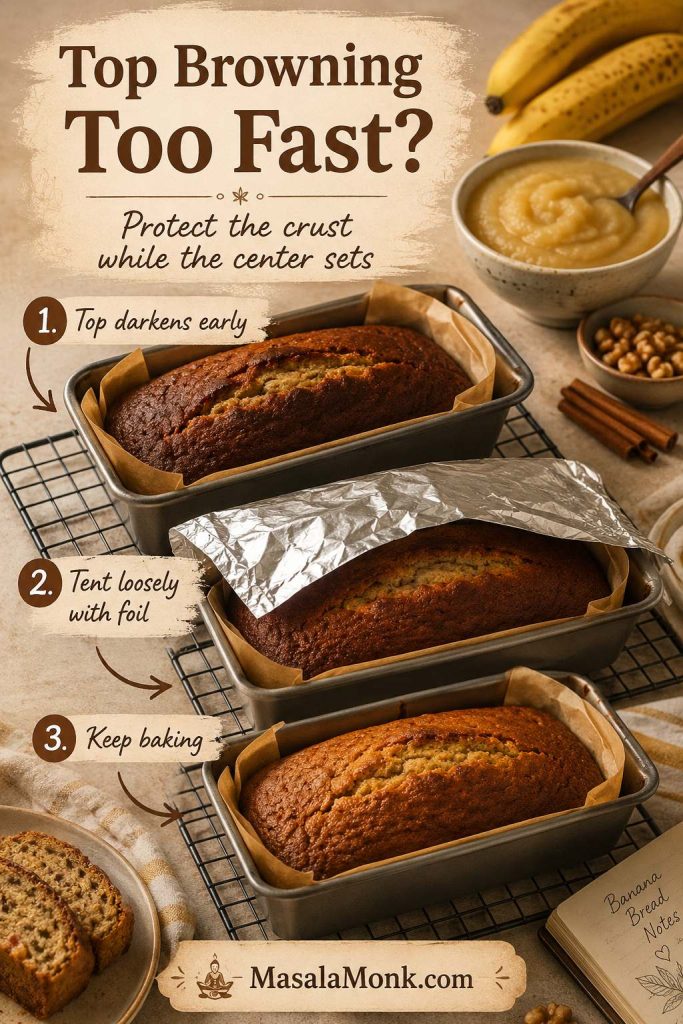
What to Do If the Top Browns Too Fast
If the top is dark but the center still has wet batter, lay a loose piece of foil over the loaf and continue baking. This keeps the crust from getting too dark while the middle finishes.
If the top browns early, do not pull the loaf too soon. Tent it loosely with foil so the crust is protected while the center finishes.
Can Applesauce Replace Oil or Butter in Banana Bread?
Applesauce can lighten banana bread beautifully, but it cannot do everything butter or oil does. It brings moisture; fat brings richness, tenderness, and a cleaner bite.
Because banana bread already contains mashed fruit, it handles applesauce better than many cakes or cookies. Even so, a small amount of oil or melted butter helps prevent the loaf from becoming springy, tough, or too delicate in the middle.
½ cup applesauce + 3 tablespoons oil or melted butter
Moist, rich enough, and sliceable
Lower-fat
½ cup applesauce + 1–2 tablespoons oil
Lighter and more delicate
No-oil
½ cup applesauce and no added fat
Moist but more delicate, with a higher risk of a soft center
Richer loaf
⅓ cup applesauce + ¼ cup melted butter or oil
More classic banana bread texture
After the first loaf, you can reduce the oil slightly if you prefer a softer, lower-fat version.
Applesauce adds moisture, but fat adds tenderness. That is why the best banana bread with applesauce usually keeps a small amount of oil or butter.
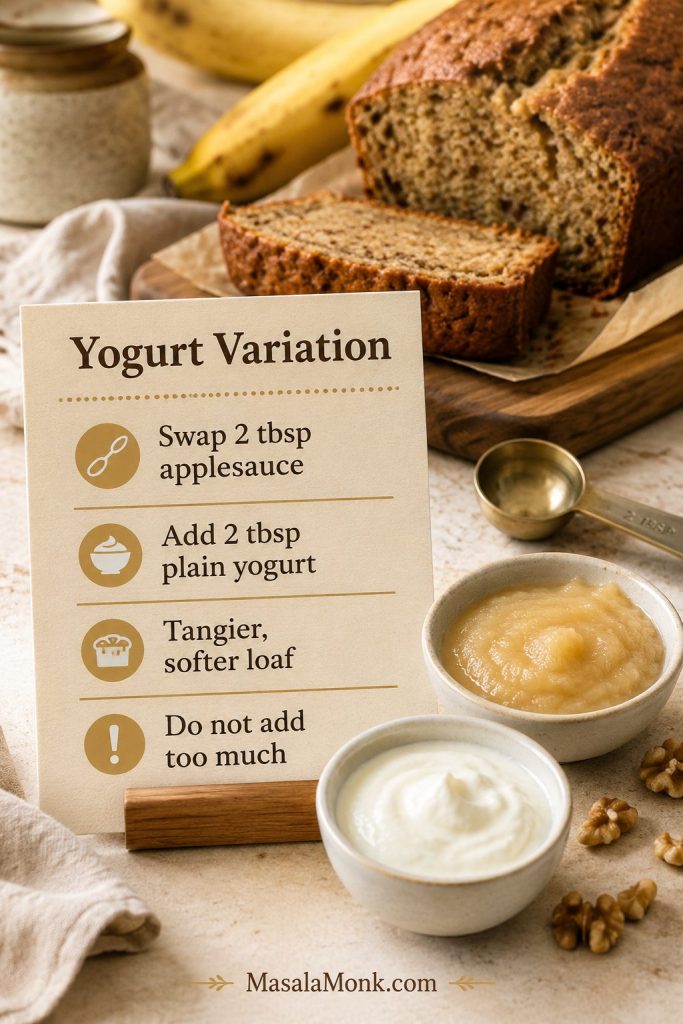
Banana Bread with Applesauce and Yogurt
Yogurt works best as a small swap, not a big extra addition, because banana, applesauce, and yogurt all bring moisture. For a tangier, softer loaf, replace 2 tablespoons of the applesauce with plain Greek yogurt or regular plain yogurt.
Use yogurt as a swap, not an add-on. A small amount adds tang, while too much extra moisture can slow the center.
It gives the loaf a little tang and softness without turning it into a completely different bake.
Adding a full extra ½ cup yogurt can make this batter too wet unless you also adjust the flour or bake time. The flavor may be good, but the center can turn heavy.
Banana Nut Bread with Applesauce
For banana nut bread with applesauce, fold ½ to ¾ cup chopped walnuts or pecans, about 55–85 g, into the batter just before baking. Walnuts make the loaf taste more old-school; pecans make it a little softer and sweeter.
Toast the nuts, cool them, then fold them in last. That keeps the crunch clear without overworking the batter.
This is the version to make when you want the loaf to feel more classic and bakery-style, with a little crunch against the soft fruit-rich crumb.
Toasting the nuts first gives deeper flavor without changing the recipe. Warm them in a dry skillet for 3–5 minutes, or on a baking sheet for 6–8 minutes at 350°F / 175°C, then cool before folding them into the batter.
Too many nuts can make the loaf crumbly and weigh down an already-moist batter. Keep it under 1 cup if you want neat slices.
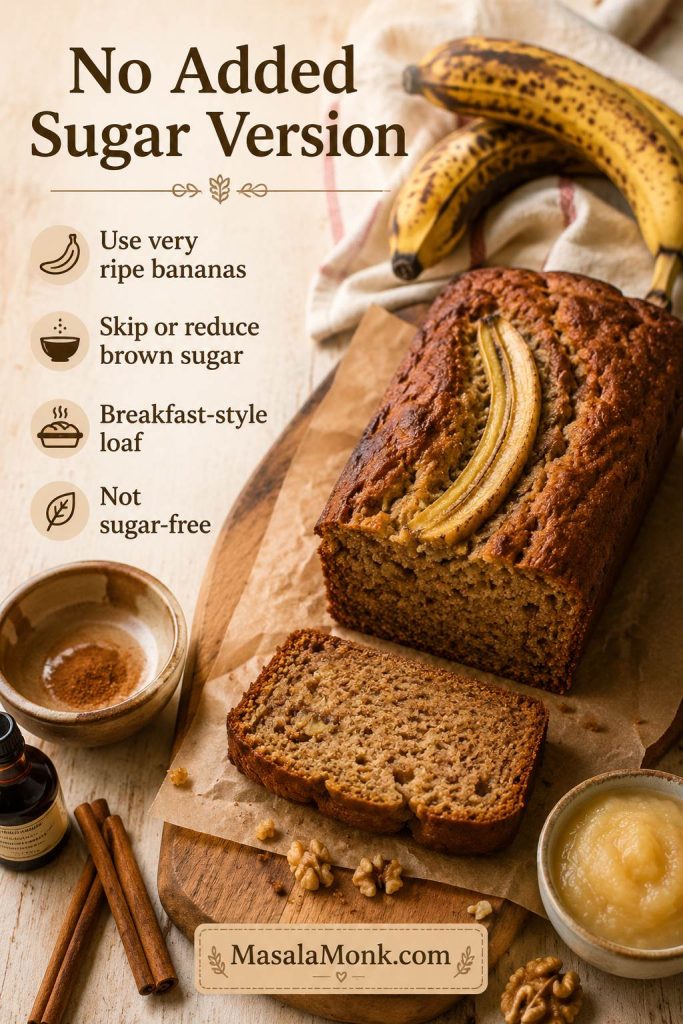
No Added Sugar Banana Bread with Applesauce
A no-added-sugar version works best when the bananas are deeply ripe, but it will taste more like a breakfast loaf than a dessert loaf. The bananas carry most of the sweetness, so this is not the place for pale, barely ripe fruit.
This version is not truly sugar-free because bananas and applesauce contain natural sugars. However, you can skip the brown sugar or reduce it to 2 to 3 tablespoons if your bananas are very sweet and heavily speckled.
For a no-added-sugar version, very ripe bananas do the heavy lifting. However, the loaf will taste more breakfast-style than dessert-like.
For better flavor in a no-added-sugar loaf, use extra cinnamon, vanilla, and a pinch more salt. These small touches make the banana flavor taste fuller even without much added sugar.
Eggless or Vegan Banana Bread with Applesauce
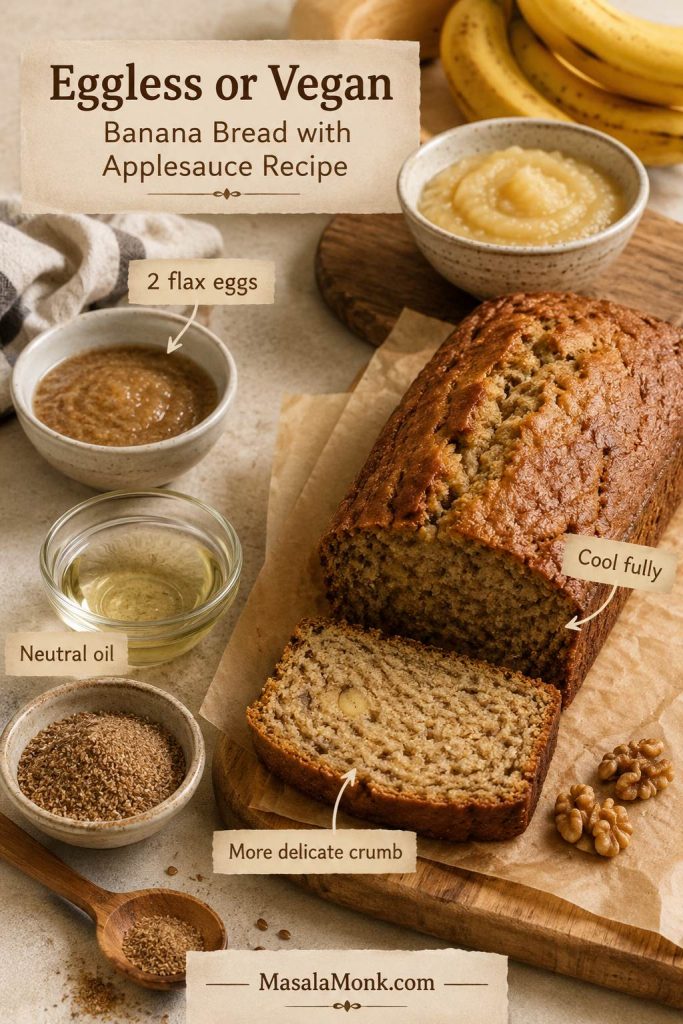
For a vegan version, use neutral oil instead of butter and replace the eggs with 2 flax eggs. To make 2 flax eggs, mix 2 tablespoons ground flaxseed with 5 tablespoons water and let it thicken for about 10 minutes before adding it to the batter.
Flax eggs help bind the batter, but the crumb is more delicate. Let the loaf cool fully before slicing for the cleanest texture.
It is a helpful option when the loaf needs to work for more people at the table, but full cooling matters even more because the crumb is more delicate.
Applesauce helps with moisture and a little binding, but it does not behave exactly like eggs. An eggless loaf will usually be more delicate and slightly denser, so let it cool completely before slicing.
If you only need the recipe to be dairy-free, the fix is easier: use neutral oil instead of melted butter. The rest of the main recipe can stay the same.
Banana Muffins with Applesauce
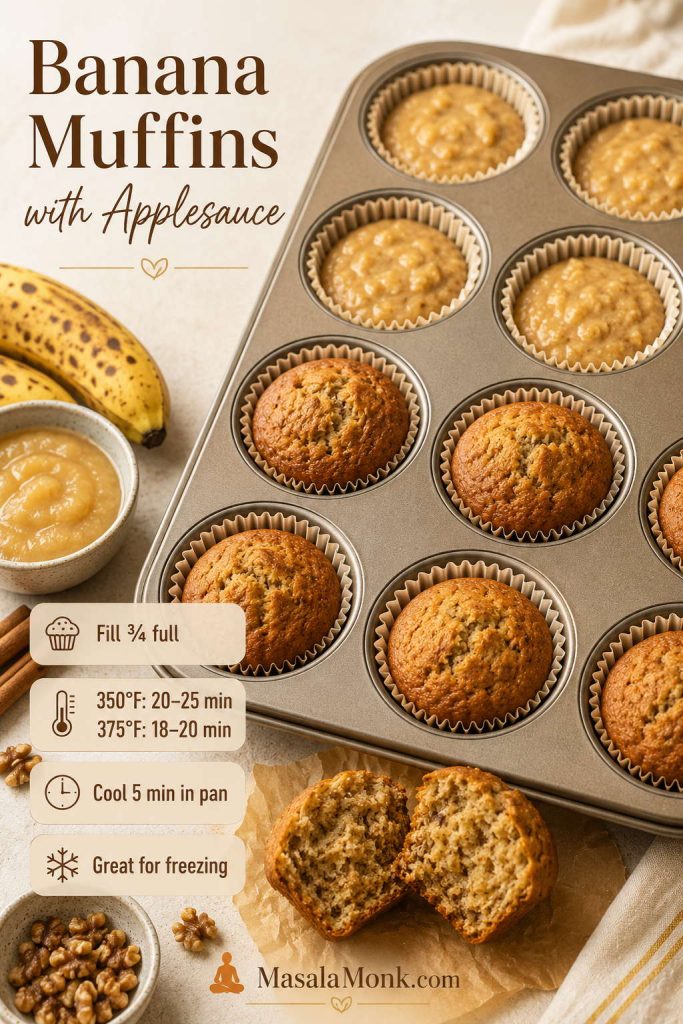
This batter also works as banana muffins with applesauce. Divide it into a lined muffin tin, filling each cup about ¾ full. Bake at 350°F / 175°C for about 20 to 25 minutes, or until the tops spring back and a toothpick comes out with moist crumbs.
The same banana-applesauce batter can become muffins. Because they bake faster than a loaf, check early and let them rest briefly in the pan.
Muffins are the better choice when you want faster cooling, easy freezing, or smaller grab-and-go portions with the same banana-applesauce flavor. Overbaking while waiting for a dark top can dry the edges, so look for tops that are set and spring back lightly.
For slightly taller muffin tops, bake at 375°F / 190°C and start checking around 18 to 20 minutes. Muffins bake faster than a loaf, so watch them closely near the end.
This recipe usually makes about 12 standard muffins. Let them sit in the pan for 5 minutes, then move them to a rack so the bottoms do not steam and turn damp.
For a more filling meal-prep bake, these high protein muffins are a good next step.
Storage and Freezing
How to Store the Loaf
Because this loaf is fruit-rich, storage matters almost as much as baking. Wrap it too soon and the outside can turn sticky; cool it fully and the slices keep beautifully. Want smaller portions instead? Use the muffin conversion.
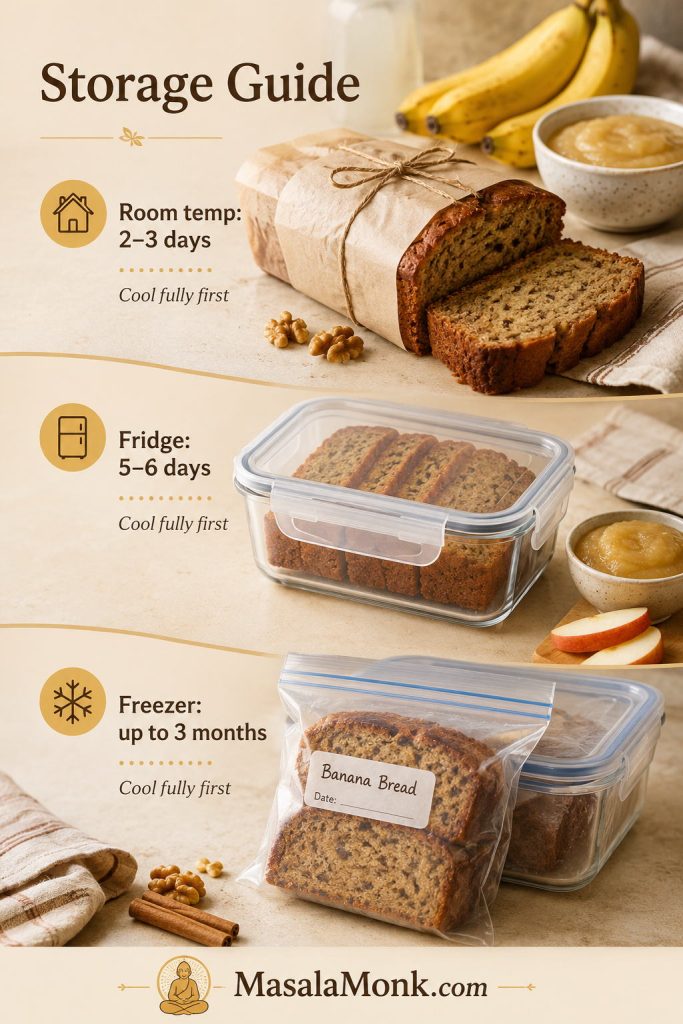
Room temperature: keep tightly wrapped or in an airtight container for 2–3 days once fully cool.
Refrigerator: store for 5–6 days if your kitchen is warm, though the crumb may firm slightly.
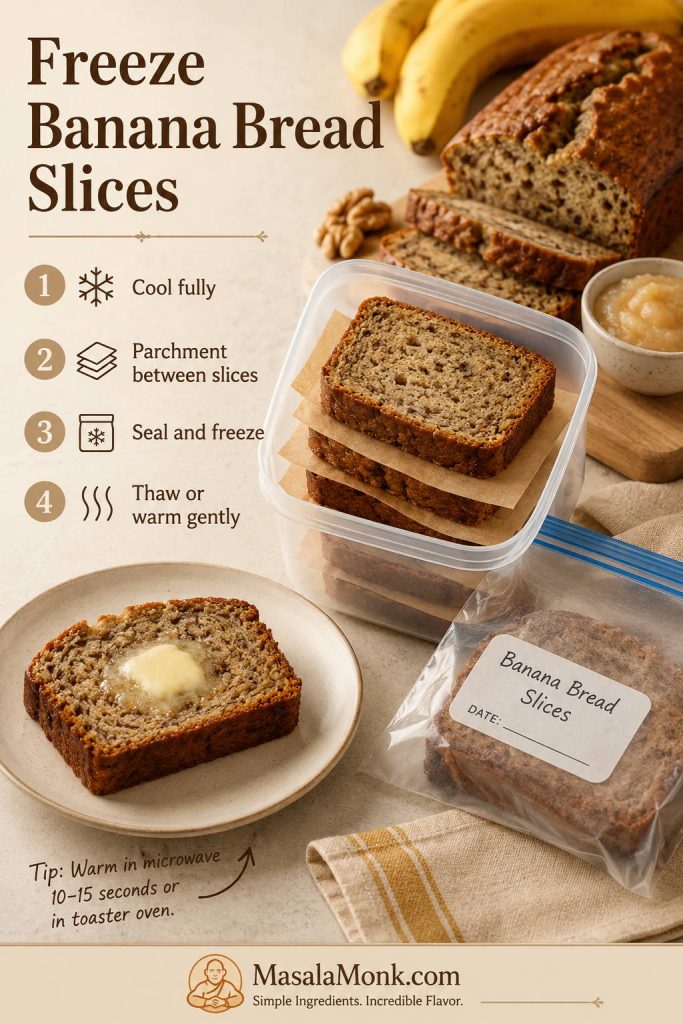
Freezer: freeze slices for up to 3 months with parchment between them for easier thawing. For the cleanest setup, use the slice-freezing method below.
Cool the loaf fully before storing. Otherwise, trapped steam can soften the crust and make the slices feel sticky.
How to Freeze Slices
To serve frozen slices, thaw at room temperature or warm gently. A quick warm-up makes the banana flavor taste fresher and softens the crumb again.
Freeze slices with parchment between them so you can thaw one piece at a time. Then warm gently to bring back the soft crumb.
It is especially good the next day, when the banana flavor has had time to settle into the crumb.
If you are baking through ripe bananas often, this sourdough banana bread recipe is another good make-ahead loaf for the same breakfast-and-snack lane.
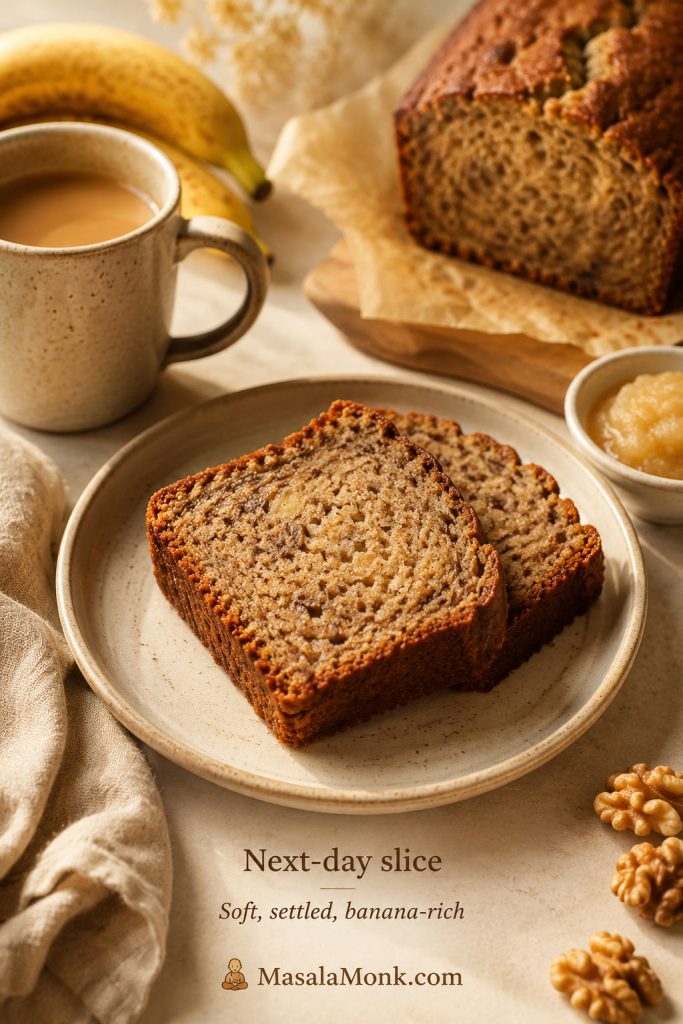
The Next-Day Slice
Once you know the texture cues, this becomes the kind of banana bread you stop overthinking: ripe bananas, a measured scoop of applesauce, a thick batter, and enough cooling time for clean slices. The first slice is soft and fragrant, but the next-day slice may be even better — more settled, more banana-rich, and exactly the reason those spotted bananas were worth saving.
The next-day slice is often the reward for waiting: the banana flavor deepens, the crumb settles, and the loaf feels even easier to enjoy.
After the first bake, pay attention to your favorite version: oil for a cleaner banana flavor, melted butter for a richer slice, walnuts for a classic banana bread feel, or plain for a softer breakfast loaf. That little preference is what turns the recipe into your house version.
FAQs About Banana Bread with Applesauce
How much applesauce belongs in one loaf of banana bread?
For one standard 9×5-inch loaf, ½ cup applesauce is the best starting point. It adds moisture without making the batter too loose, especially when paired with about 1½ cups mashed banana.
Does applesauce replace all the oil or butter?
Applesauce can replace some of the fat, but the best texture usually comes from keeping a small amount of oil or melted butter in the batter. A fully no-oil loaf can work, although it will be more delicate.
Why did my applesauce banana bread turn gummy?
The usual causes are too much wet ingredient, overmixing, underbaking, or slicing while the loaf is still hot. Measure the banana, keep the applesauce to ½ cup, fold gently, and bake until the middle no longer looks shiny or wet.
Do frozen bananas work?
They do, but thawing and draining matter. Frozen bananas release extra liquid, so drain off the excess, mash the fruit, and then measure the 1½ cups.
How much whole wheat flour can I use?
Up to half is the safest swap. Replacing all the all-purpose flour with whole wheat flour makes the loaf heartier and denser, so start with a partial swap before changing the whole recipe.
What happens if I skip the added sugar?
The loaf will taste more breakfast-style than dessert-style. Very ripe bananas help, but bananas and applesauce still contain natural sugars, so “no added sugar” is the more accurate description.
How do I make this into banana nut bread?
Fold ½ to ¾ cup chopped walnuts or pecans into the batter before baking. Toasted walnuts give the most classic banana nut bread flavor.
Which applesauce types work best?
Unsweetened smooth applesauce is the easiest choice. Sweetened applesauce works if you reduce the sugar slightly, cinnamon applesauce adds warmth, and chunky applesauce should be mashed or blended first.
How do I make it eggless or vegan?
For a vegan loaf, use neutral oil instead of butter and replace the eggs with 2 flax eggs. The loaf will be more delicate and slightly denser, so cool it completely before slicing.
Where does yogurt fit into the recipe?
A small amount works best. Replace 2 tablespoons of the applesauce with plain yogurt for a tangier loaf, but avoid adding much more unless you adjust the flour or bake time.
How do I know the middle is fully baked?
A toothpick should come out with moist crumbs, not wet batter or shiny streaks. For a more precise check, the center should register about 200°F to 205°F / 93°C to 96°C on a digital thermometer.
{
“@context”: “https://schema.org”,
“@graph”: [
{
“@type”: “Organization”,
“@id”: “https://masalamonk.com/#organization”,
“name”: “MasalaMonk.com”,
“url”: “https://masalamonk.com/”,
“logo”: {
“@type”: “ImageObject”,
“@id”: “https://masalamonk.com/#logo”,
“url”: “https://masalamonk.com/wp-content/uploads/2018/04/masala-monk-logo.png”,
“contentUrl”: “https://masalamonk.com/wp-content/uploads/2018/04/masala-monk-logo.png”
}
},
{
“@type”: “WebSite”,
“@id”: “https://masalamonk.com/#website”,
“url”: “https://masalamonk.com/”,
“name”: “MasalaMonk.com”,
“publisher”: {
“@id”: “https://masalamonk.com/#organization”
},
“inLanguage”: “en-US”
},
{
“@type”: “ImageObject”,
“@id”: “https://masalamonk.com/banana-bread-with-applesauce-recipe/#primaryimage”,
“url”: “https://masalamonk.com/wp-content/uploads/2026/05/banana-bread-with-applesauce-recipe.jpg”,
“contentUrl”: “https://masalamonk.com/wp-content/uploads/2026/05/banana-bread-with-applesauce-recipe.jpg”,
“caption”: “Banana bread with applesauce sliced to show a soft, set crumb.”
},
{
“@type”: “WebPage”,
“@id”: “https://masalamonk.com/banana-bread-with-applesauce-recipe/#webpage”,
“url”: “https://masalamonk.com/banana-bread-with-applesauce-recipe/”,
“name”: “Banana Bread with Applesauce Recipe”,
“headline”: “Banana Bread with Applesauce Recipe”,
“description”: “A moist banana bread with applesauce recipe that uses ripe bananas, measured applesauce, and a little oil or butter for tender slices without a gummy center.”,
“isPartOf”: {
“@id”: “https://masalamonk.com/#website”
},
“publisher”: {
“@id”: “https://masalamonk.com/#organization”
},
“primaryImageOfPage”: {
“@id”: “https://masalamonk.com/banana-bread-with-applesauce-recipe/#primaryimage”
},
“mainEntity”: {
“@id”: “https://masalamonk.com/banana-bread-with-applesauce-recipe/#recipe”
},
“datePublished”: “2026-05-28”,
“dateModified”: “2026-05-28”,
“isAccessibleForFree”: true,
“inLanguage”: “en-US”
},
{
“@type”: “Recipe”,
“@id”: “https://masalamonk.com/banana-bread-with-applesauce-recipe/#recipe”,
“mainEntityOfPage”: {
“@id”: “https://masalamonk.com/banana-bread-with-applesauce-recipe/#webpage”
},
“url”: “https://masalamonk.com/banana-bread-with-applesauce-recipe/”,
“name”: “Banana Bread with Applesauce Recipe”,
“headline”: “Banana Bread with Applesauce Recipe”,
“description”: “Moist banana bread with applesauce, ripe bananas, and a small amount of oil or butter for tender slices without a gummy center.”,
“image”: [
{
“@type”: “ImageObject”,
“@id”: “https://masalamonk.com/banana-bread-with-applesauce-recipe/#image-finished-loaf”,
“url”: “https://masalamonk.com/wp-content/uploads/2026/05/banana-bread-with-applesauce-recipe.jpg”,
“contentUrl”: “https://masalamonk.com/wp-content/uploads/2026/05/banana-bread-with-applesauce-recipe.jpg”,
“caption”: “Sliced banana bread with applesauce showing a soft, set crumb.”
},
{
“@type”: “ImageObject”,
“@id”: “https://masalamonk.com/banana-bread-with-applesauce-recipe/#image-slice-texture”,
“url”: “https://masalamonk.com/wp-content/uploads/2026/05/banana-bread-with-applesauce-slice-texture-683×1024.jpg”,
“contentUrl”: “https://masalamonk.com/wp-content/uploads/2026/05/banana-bread-with-applesauce-slice-texture-683×1024.jpg”,
“caption”: “Close-up of banana bread with applesauce slices showing an even crumb.”
},
{
“@type”: “ImageObject”,
“@id”: “https://masalamonk.com/banana-bread-with-applesauce-recipe/#image-clean-slices”,
“url”: “https://masalamonk.com/wp-content/uploads/2026/05/clean-slices-of-banana-bread-with-applesauce-683×1024.jpg”,
“contentUrl”: “https://masalamonk.com/wp-content/uploads/2026/05/clean-slices-of-banana-bread-with-applesauce-683×1024.jpg”,
“caption”: “Clean slices of banana bread with applesauce showing no wet line.”
},
{
“@type”: “ImageObject”,
“@id”: “https://masalamonk.com/banana-bread-with-applesauce-recipe/#image-next-day-slice”,
“url”: “https://masalamonk.com/wp-content/uploads/2026/05/banana-bread-with-applesauce-next-day-slice-683×1024.jpg”,
“contentUrl”: “https://masalamonk.com/wp-content/uploads/2026/05/banana-bread-with-applesauce-next-day-slice-683×1024.jpg”,
“caption”: “Next-day banana bread with applesauce served as a breakfast slice.”
}
],
“thumbnailUrl”: “https://masalamonk.com/wp-content/uploads/2026/05/banana-bread-with-applesauce-recipe.jpg”,
“author”: {
“@id”: “https://masalamonk.com/#organization”
},
“publisher”: {
“@id”: “https://masalamonk.com/#organization”
},
“datePublished”: “2026-05-28”,
“dateModified”: “2026-05-28”,
“inLanguage”: “en-US”,
“prepTime”: “PT15M”,
“cookTime”: “PT1H5M”,
“totalTime”: “PT2H20M”,
“recipeYield”: “1 standard loaf (about 10 slices)”,
“recipeCategory”: [
“Quick Bread”,
“Breakfast”,
“Snack”
],
“recipeCuisine”: “American”,
“keywords”: “banana bread with applesauce, applesauce banana bread, moist banana bread, banana bread recipe, banana nut bread with applesauce, no added sugar banana bread, eggless banana bread, vegan banana bread, banana muffins with applesauce”,
“recipeIngredient”: [
“1½ cups mashed very ripe banana, about 340 g”,
“½ cup unsweetened applesauce, about 120 g”,
“2 large eggs”,
“½ cup packed light brown sugar, about 105 g”,
“3 tablespoons neutral oil, about 45 ml, or 3 tablespoons melted butter, about 42 g”,
“2 teaspoons vanilla extract”,
“2 cups all-purpose flour, 240 g”,
“1 teaspoon baking soda”,
“½ teaspoon baking powder”,
“1 teaspoon ground cinnamon”,
“½ teaspoon fine salt”,
“½ cup chopped walnuts or pecans, optional, about 55–65 g”
],
“recipeInstructions”: [
{
“@type”: “HowToStep”,
“@id”: “https://masalamonk.com/banana-bread-with-applesauce-recipe/#prepare-the-pan”,
“position”: 1,
“name”: “Prepare the pan”,
“url”: “https://masalamonk.com/banana-bread-with-applesauce-recipe/#prepare-the-pan”,
“text”: “Heat the oven to 350°F / 175°C. Grease a 9×5-inch loaf pan and line it with parchment if you want easier lifting.”,
“image”: “https://masalamonk.com/wp-content/uploads/2026/05/how-to-make-banana-bread-with-applesauce-step-by-step-683×1024.jpg”
},
{
“@type”: “HowToStep”,
“@id”: “https://masalamonk.com/banana-bread-with-applesauce-recipe/#mash-and-measure-bananas”,
“position”: 2,
“name”: “Mash and measure the bananas”,
“url”: “https://masalamonk.com/banana-bread-with-applesauce-recipe/#mash-and-measure-bananas”,
“text”: “Mash the bananas, then measure 1½ cups. Banana size varies, so measuring gives you a more reliable loaf than counting bananas alone.”,
“image”: “https://masalamonk.com/wp-content/uploads/2026/05/measure-mashed-bananas-for-banana-bread-683×1024.jpg”
},
{
“@type”: “HowToStep”,
“@id”: “https://masalamonk.com/banana-bread-with-applesauce-recipe/#mix-wet-ingredients”,
“position”: 3,
“name”: “Mix the wet ingredients”,
“url”: “https://masalamonk.com/banana-bread-with-applesauce-recipe/#mix-wet-ingredients”,
“text”: “In a large bowl, whisk the mashed banana, applesauce, eggs, brown sugar, oil or melted butter, and vanilla.”,
“image”: “https://masalamonk.com/wp-content/uploads/2026/05/how-to-make-banana-bread-with-applesauce-step-by-step-683×1024.jpg”
},
{
“@type”: “HowToStep”,
“@id”: “https://masalamonk.com/banana-bread-with-applesauce-recipe/#mix-dry-ingredients”,
“position”: 4,
“name”: “Mix the dry ingredients”,
“url”: “https://masalamonk.com/banana-bread-with-applesauce-recipe/#mix-dry-ingredients”,
“text”: “In a separate bowl, whisk the flour, baking soda, baking powder, cinnamon, and salt.”,
“image”: “https://masalamonk.com/wp-content/uploads/2026/05/how-to-make-banana-bread-with-applesauce-step-by-step-683×1024.jpg”
},
{
“@type”: “HowToStep”,
“@id”: “https://masalamonk.com/banana-bread-with-applesauce-recipe/#fold-gently”,
“position”: 5,
“name”: “Fold the batter gently”,
“url”: “https://masalamonk.com/banana-bread-with-applesauce-recipe/#fold-gently”,
“text”: “Add the dry ingredients to the wet ingredients and fold gently until no dry flour remains. The batter should be thick enough to mound on the spatula, not runny.”,
“image”: “https://masalamonk.com/wp-content/uploads/2026/05/banana-bread-batter-texture-guide-683×1024.jpg”
},
{
“@type”: “HowToStep”,
“@id”: “https://masalamonk.com/banana-bread-with-applesauce-recipe/#add-nuts-if-using”,
“position”: 6,
“name”: “Add nuts if using”,
“url”: “https://masalamonk.com/banana-bread-with-applesauce-recipe/#add-nuts-if-using”,
“text”: “Fold in walnuts or pecans if using.”,
“image”: “https://masalamonk.com/wp-content/uploads/2026/05/mix-ins-for-banana-bread-with-applesauce-683×1024.jpg”
},
{
“@type”: “HowToStep”,
“@id”: “https://masalamonk.com/banana-bread-with-applesauce-recipe/#bake-until-center-is-set”,
“position”: 7,
“name”: “Bake until the center is set”,
“url”: “https://masalamonk.com/banana-bread-with-applesauce-recipe/#bake-until-center-is-set”,
“text”: “Spread the batter into the prepared pan. Bake for 55–65 minutes, or until a toothpick inserted in the center comes out with moist crumbs but no wet batter. For the most reliable check, the center should read about 200–205°F / 93–96°C.”,
“image”: “https://masalamonk.com/wp-content/uploads/2026/05/banana-bread-doneness-guide-683×1024.jpg”
},
{
“@type”: “HowToStep”,
“@id”: “https://masalamonk.com/banana-bread-with-applesauce-recipe/#foil-tent-banana-bread”,
“position”: 8,
“name”: “Tent with foil if needed”,
“url”: “https://masalamonk.com/banana-bread-with-applesauce-recipe/#foil-tent-banana-bread”,
“text”: “If the top browns before the center is done, tent the loaf loosely with foil and keep baking.”,
“image”: “https://masalamonk.com/wp-content/uploads/2026/05/top-browning-too-fast-banana-bread-fix-683×1024.jpg”
},
{
“@type”: “HowToStep”,
“@id”: “https://masalamonk.com/banana-bread-with-applesauce-recipe/#cool-before-slicing-step”,
“position”: 9,
“name”: “Cool before slicing”,
“url”: “https://masalamonk.com/banana-bread-with-applesauce-recipe/#cool-before-slicing-step”,
“text”: “Cool in the pan for 10–15 minutes, then move to a rack. Let the loaf cool for at least 45–60 minutes before slicing so the crumb can finish setting.”,
“image”: “https://masalamonk.com/wp-content/uploads/2026/05/cool-banana-bread-before-slicing-683×1024.jpg”
}
]
}
]
}
This sourdough banana bread recipe is for the two things home bakers hate wasting most: overripe bananas and sourdough discard. The loaf bakes up soft, fragrant, and deeply banana-forward, with brown sugar warmth, a tender crumb, and just enough sourdough tang to make each slice taste more rounded and interesting.
This is the bread you make when the bananas are too far gone for snacking but exactly right for baking. It is the kind of loaf that smells like a good decision before it even leaves the oven, especially if you plan to eat the first slice warm with butter.
Why This Sourdough Banana Bread Is Different
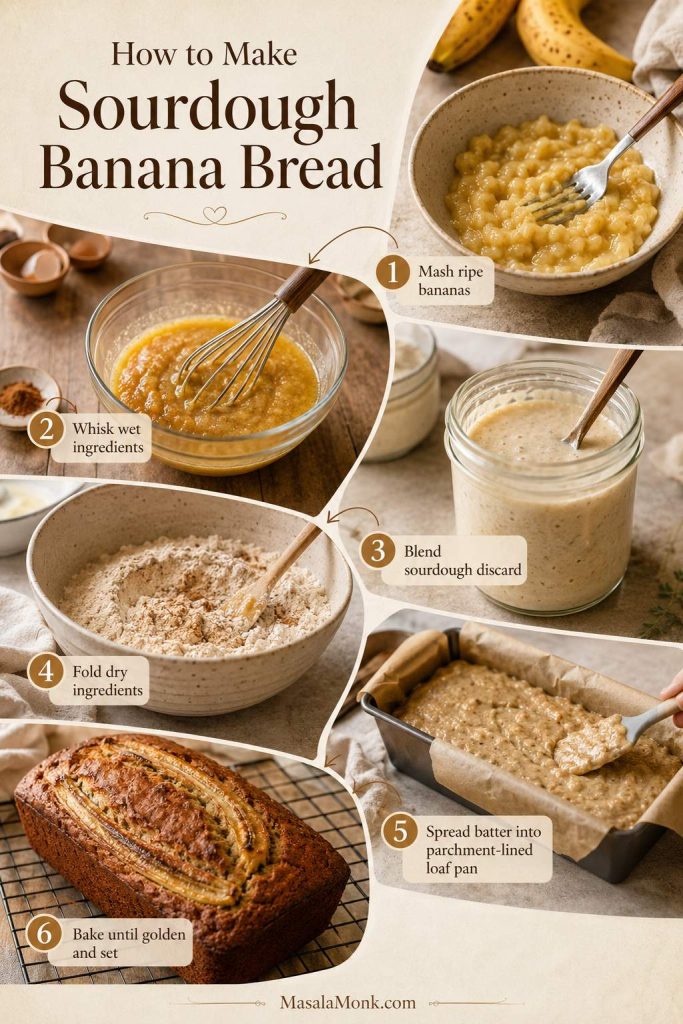
The batter comes together like a regular quick bread: no kneading, no shaping, no rise time, no mixer, and no complicated sourdough schedule. You only need about 15 minutes of hands-on prep, one main mixing bowl, and a standard loaf pan.
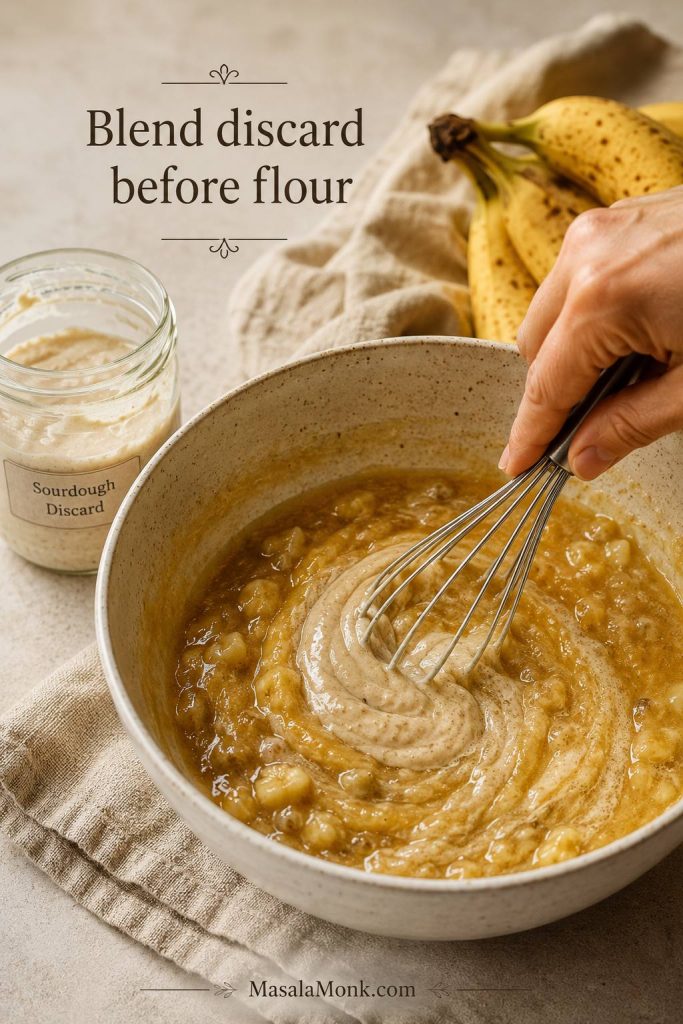
Meanwhile, the discard adds flavor, moisture, acidity, and a little tang, while baking soda and baking powder do the lifting. This sourdough banana bread recipe is designed to feel familiar first and sourdough-smart second, so the discard improves the loaf without making it complicated.
What makes this loaf especially reliable is the way it handles moisture. Ripe bananas and sourdough discard both make banana bread taste better, but too much of either can leave the middle gummy. This recipe keeps the banana and discard in a safe range, then gives you clear doneness cues so the loaf bakes up moist, tender, and sliceable.
A good sourdough discard banana bread slice should look tender and slightly plush, while still holding together when you pick it up.
So instead of guessing whether your bananas are “about right” or whether the loaf just needs five more minutes, you get clear amounts, clear texture cues, and a better chance at a loaf that slices the way banana bread should.
This sourdough discard banana bread is a same-day quick bread made with ripe bananas and sourdough discard or active starter. The discard gives the loaf a mild tang, deeper flavor, and extra moisture, but baking soda and baking powder do the lifting, so there is no rise time.
In this sourdough banana bread recipe, you can mix the batter and bake it right away. For the best texture, use very ripe bananas, measure the mashed banana instead of guessing, whisk the discard fully into the wet ingredients, and bake until no wet batter remains in the thickest part.
A good slice should feel soft and moist, but still hold together when you pick it up. It should taste like banana bread first, with just enough sourdough depth to make it more interesting than the usual loaf.
Because ripe bananas and discard both add moisture, the best loaf needs enough structure and bake time to stay soft without turning heavy.
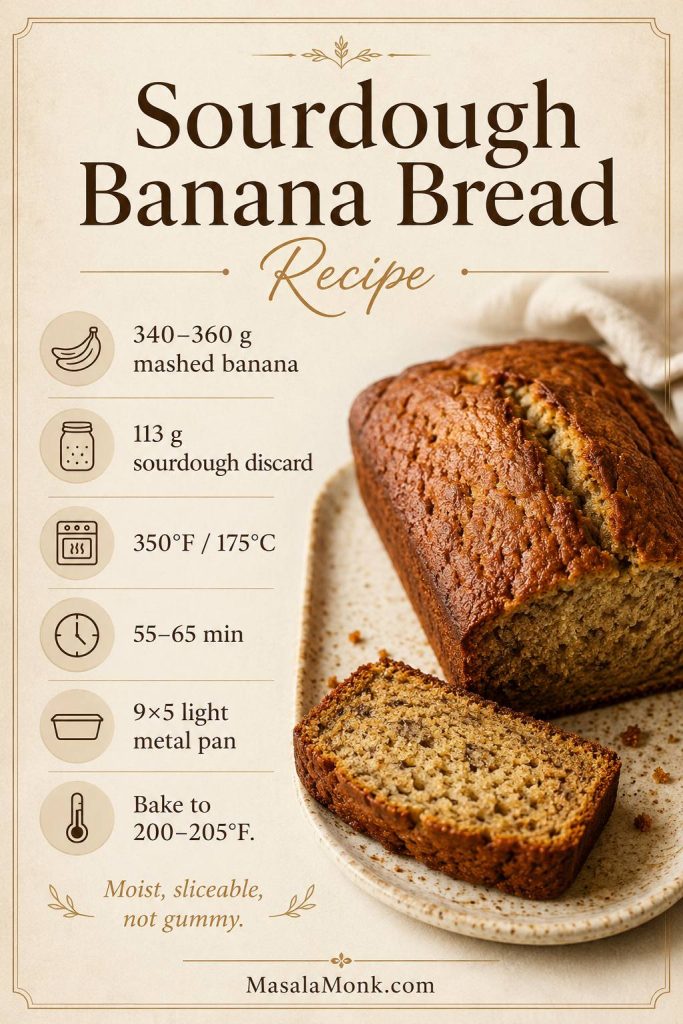
For exact quantities, pan size, and bake time, you can jump straight to the printable recipe card.
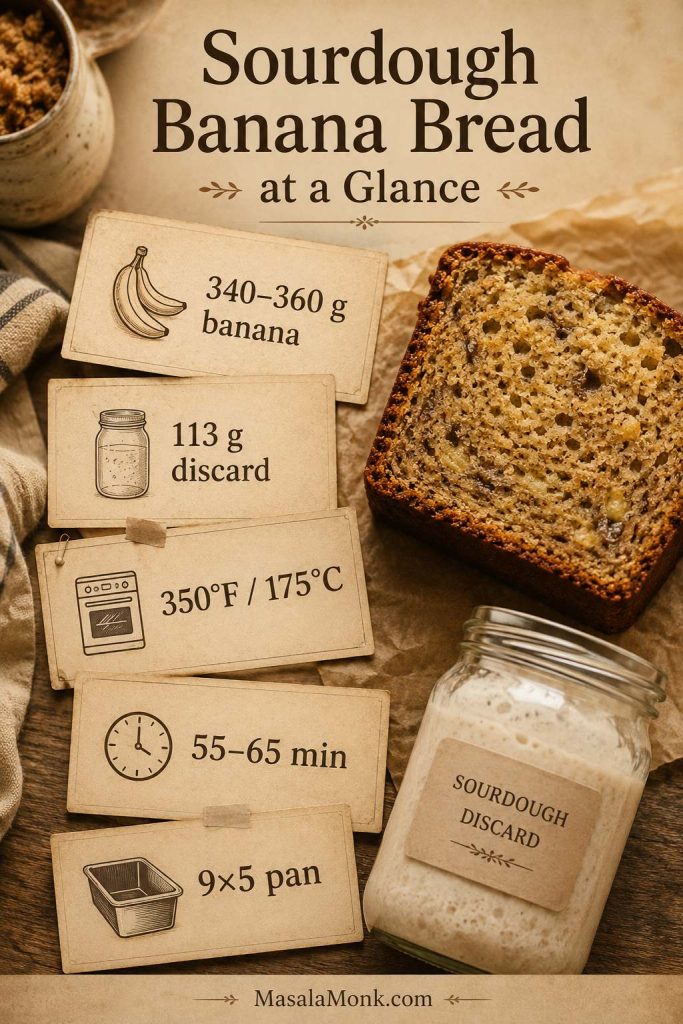
Sourdough Banana Bread Recipe at a Glance
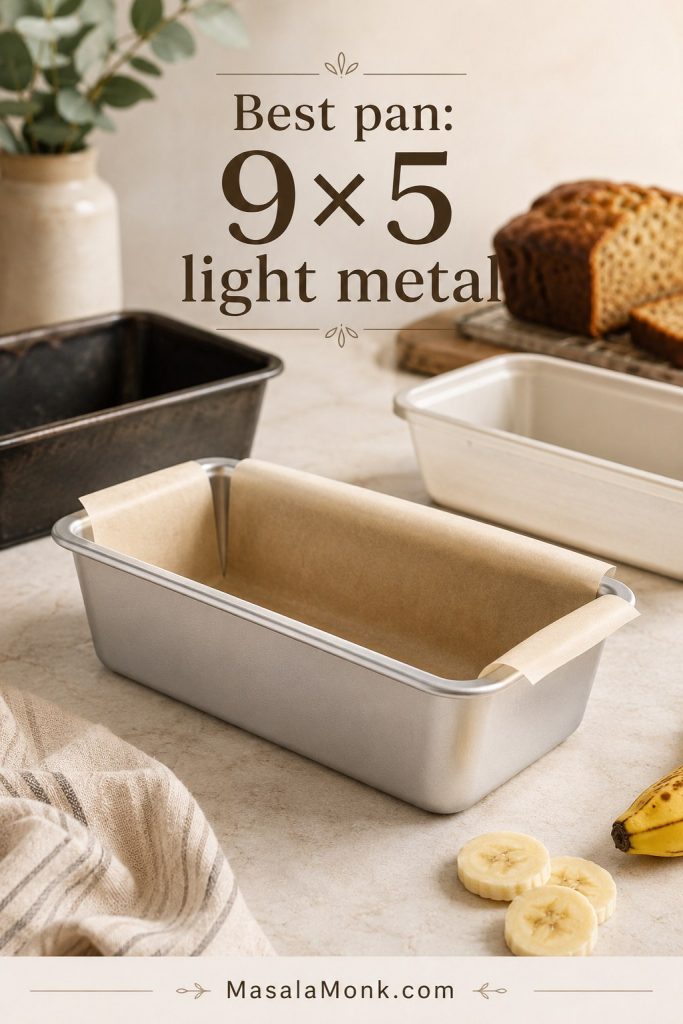
Best pan: 9×5-inch light metal loaf pan
Oven: 350°F / 175°C
Bake time: 55–65 minutes
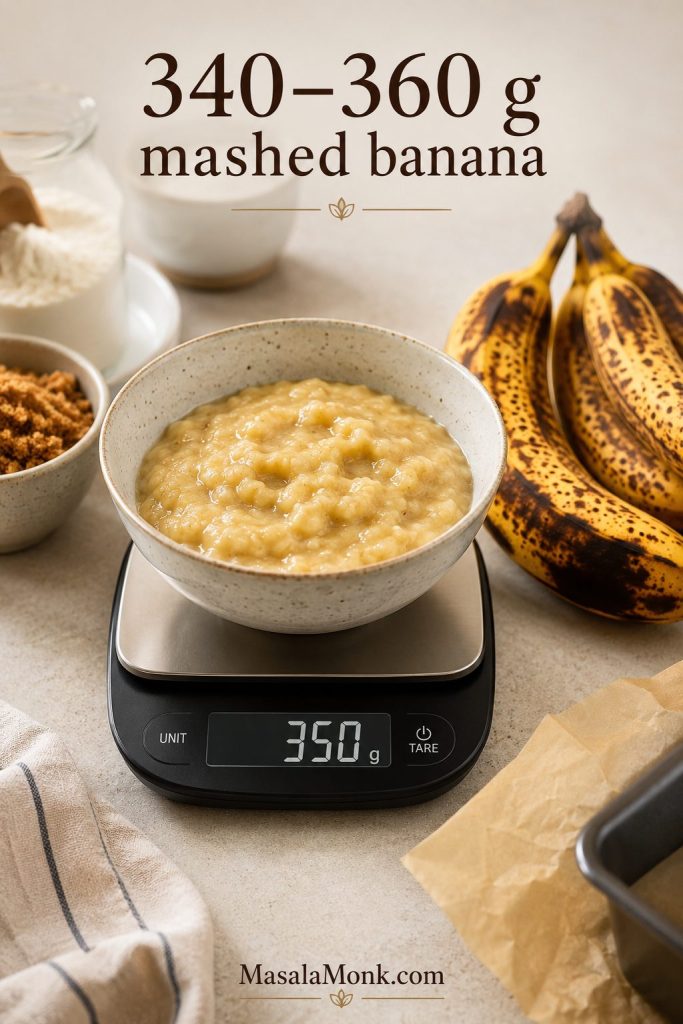
Banana amount: 340–360 g mashed ripe banana
Discard amount: 113 g / ½ cup sourdough discard
Texture goal: moist, tender, sliceable, and baked cleanly through the center
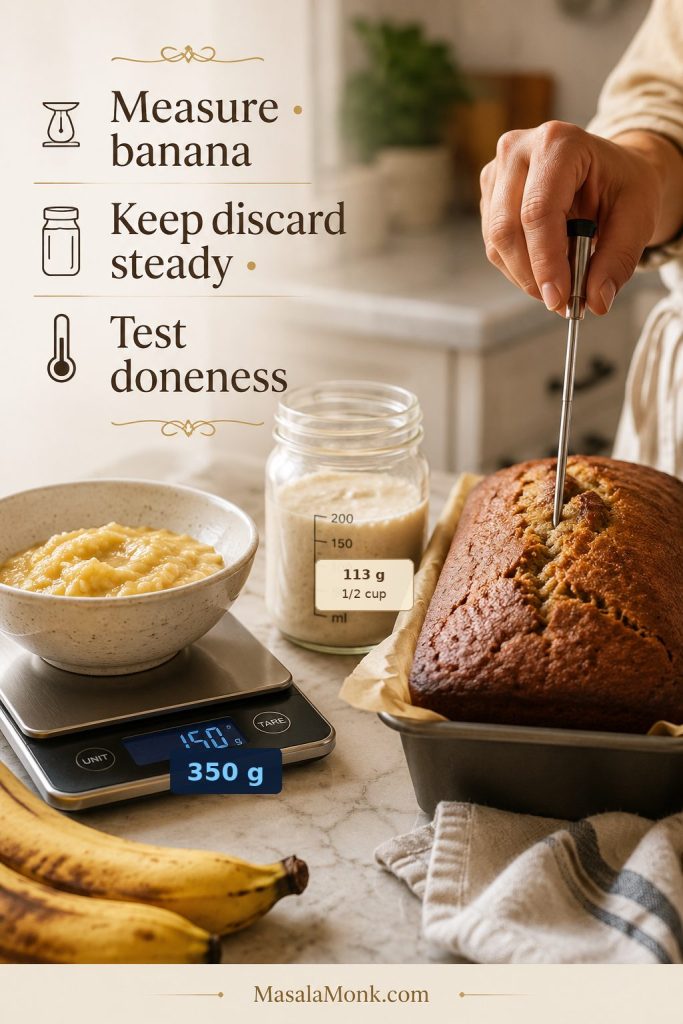
Keep these core numbers close: measured banana, steady discard, the right pan, and clear bake cues make the recipe easier to repeat.
What This Sourdough Banana Bread Tastes Like
This is not a sharp or sour loaf. Instead, it tastes like classic banana bread with more depth: sweet ripe banana first, then brown sugar, vanilla, butter, and a gentle sourdough note in the background.
The crumb should be moist and tender, not wet or pudding-like. Once cooled, the slices should hold together cleanly, with enough softness to feel cozy and enough structure to toast the next day.
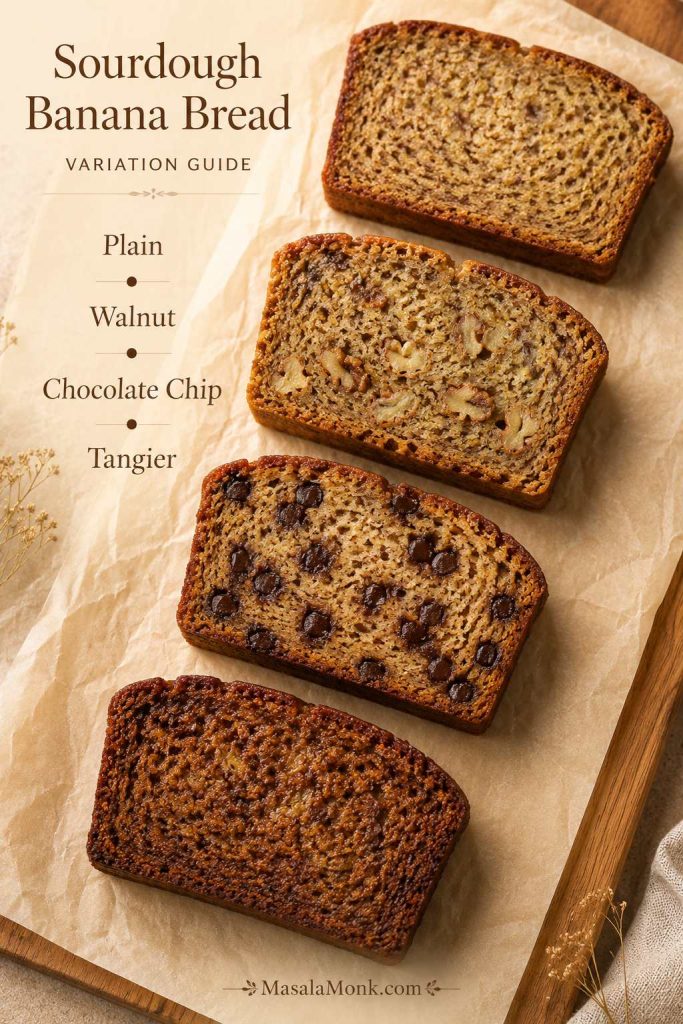
Walnuts make it feel more breakfast-like and nutty. Chocolate chips, on the other hand, push it toward dessert. Either way, the base loaf stays simple enough for a weekday bake.
The Three Things That Make This Loaf Reliable
Measure the mashed banana, whisk the discard fully into the wet ingredients, and bake until the loaf tests clean at its tallest point. Together, those three small steps help it stay tender while still slicing neatly.
Why This Sourdough Banana Bread Recipe Works
You will like this loaf if you want banana bread that still feels familiar, just a little more grown-up. The discard does not take over. Instead, it deepens the flavor, softens the crumb, and gives you one more reason not to waste a jar of starter.
Why Moisture Control Matters
Although banana bread looks simple, the best loaves depend on balance. Too little moisture and the loaf feels dry. Too much banana or discard, however, and the center can take longer to bake through. The sweet spot is enough banana for flavor, enough flour for structure, and enough leavening to lift a dense, moist batter.
The recipe is built around the problem that makes sourdough banana bread tricky: ripe bananas and discard both add moisture, so the loaf needs enough structure, enough lift, and clear doneness cues to finish properly.
The key is moisture control: measure the banana by weight, keep the discard steady at 113 g, and bake by doneness cues instead of the clock alone. That is what gives you a slice that feels soft in the hand instead of fragile or underbaked.
Very ripe bananas bring natural sweetness, aroma, and moisture.
Sourdough discard adds gentle tang, acidity, and deeper flavor.
Brown sugar gives a warmer, caramel-like banana bread flavor.
Melted butter keeps the loaf rich and classic.
Baking soda plus baking powder gives more reliable lift than baking soda alone.
Measured banana helps the loaf bake through cleanly.
The Moisture-Control Rule
For this loaf, do not measure bananas by count alone. Measure the mashed banana, keep the discard steady, and bake by doneness cues. That is the difference between moist banana bread and a loaf that stays heavy in the middle.
Instead of guessing by banana count, this recipe controls the main moisture points before the loaf ever goes into the oven.
If you only remember one thing, remember this rule; then use the doneness section to confirm the loaf is fully baked before slicing.
Think of this as classic banana bread with a sourdough-discard upgrade. It is not trying to be chewy sandwich bread, and it is not trying to be aggressively tangy. Rather, it is soft, sliceable, fragrant, and practical.
Before You Start
Mash and measure the bananas first. If you have more than 360 g mashed banana, save the extra for oatmeal, pancakes, or a smoothie instead of adding it all to the loaf. That one step keeps the bread moist while helping the center bake through cleanly.
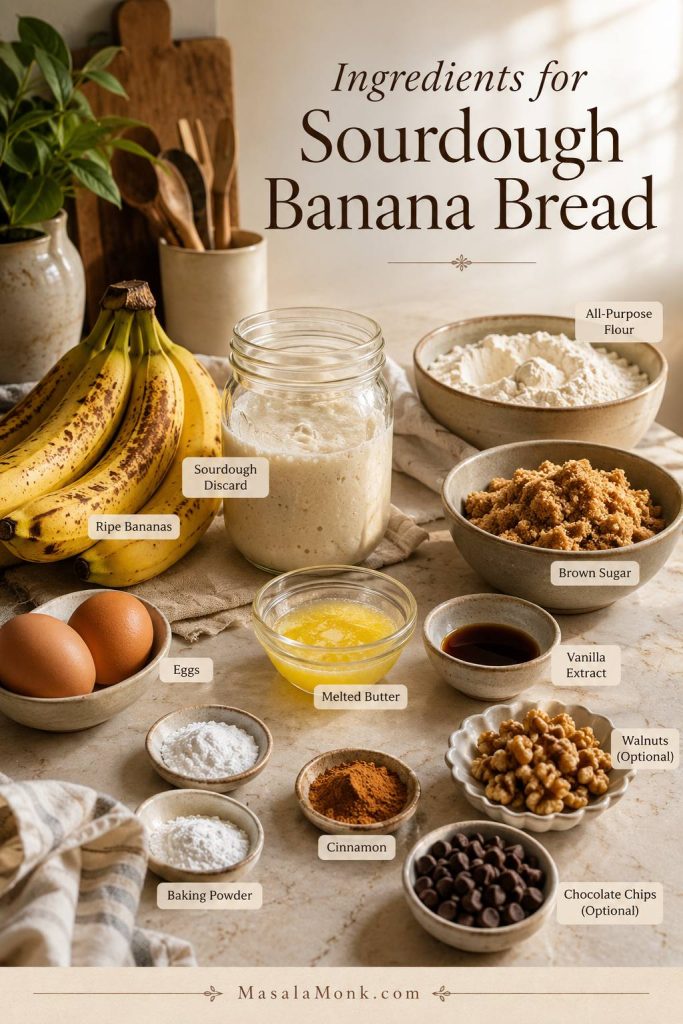
Ingredients for Sourdough Banana Bread
The ingredient list for this sourdough banana bread recipe is familiar, but a few details matter more because sourdough discard adds both moisture and acidity.
The ingredients are familiar, yet the balance matters: bananas bring flavor, discard adds depth, and the leaveners support a steady rise.
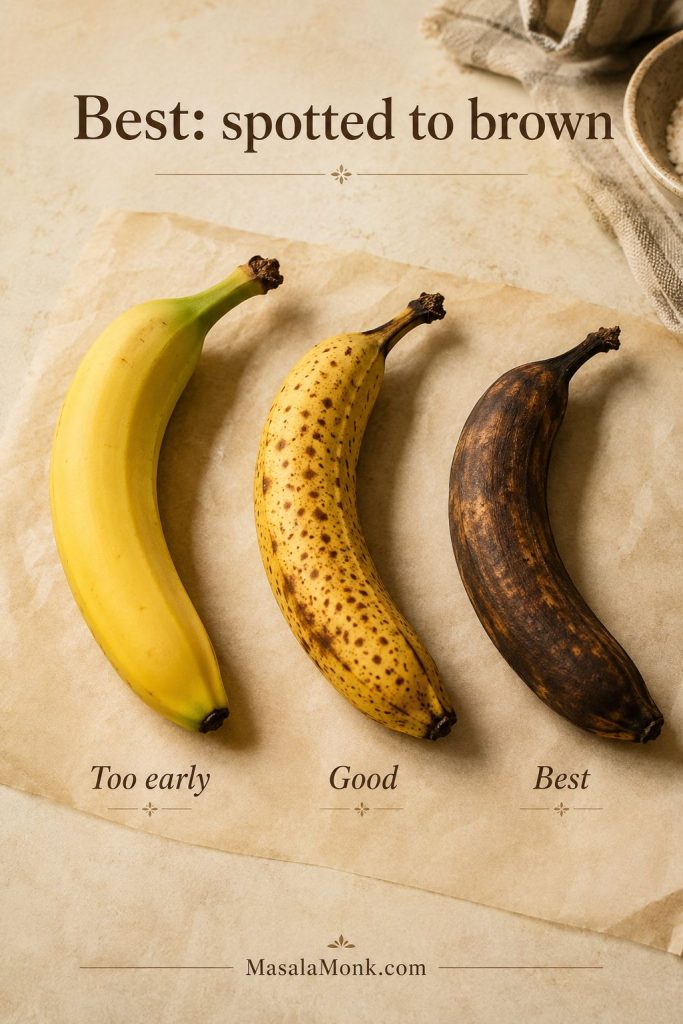
Very Ripe Bananas
Use bananas with plenty of brown spots, or bananas that are fully soft and deeply fragrant. They should mash easily with a fork.
For the best banana bread flavor, choose bananas that smell sweet and mash easily; however, avoid fruit that smells fermented or spoiled.
Measure the Mashed Banana
The best range is 340–360 g peeled mashed banana, which is about 1½ cups. That is usually 3 medium-to-large bananas; however, a scale saves you from guessing here, because three bananas can mean very different things depending on their size.
Banana size varies a lot, so weighing the mashed fruit is the easiest way to avoid an overly loose banana bread batter.
You do not need perfect-looking bananas for this recipe. You just need ripe, fragrant bananas and a measured amount, so the loaf gets banana flavor without turning heavy.
Banana Bread Texture Tip
Extra banana sounds harmless, but it can make the middle take much longer to set. Therefore, when your bananas are extra large, mash them first and measure the amount instead of adding every banana on the counter.
Can You Use Frozen Bananas?
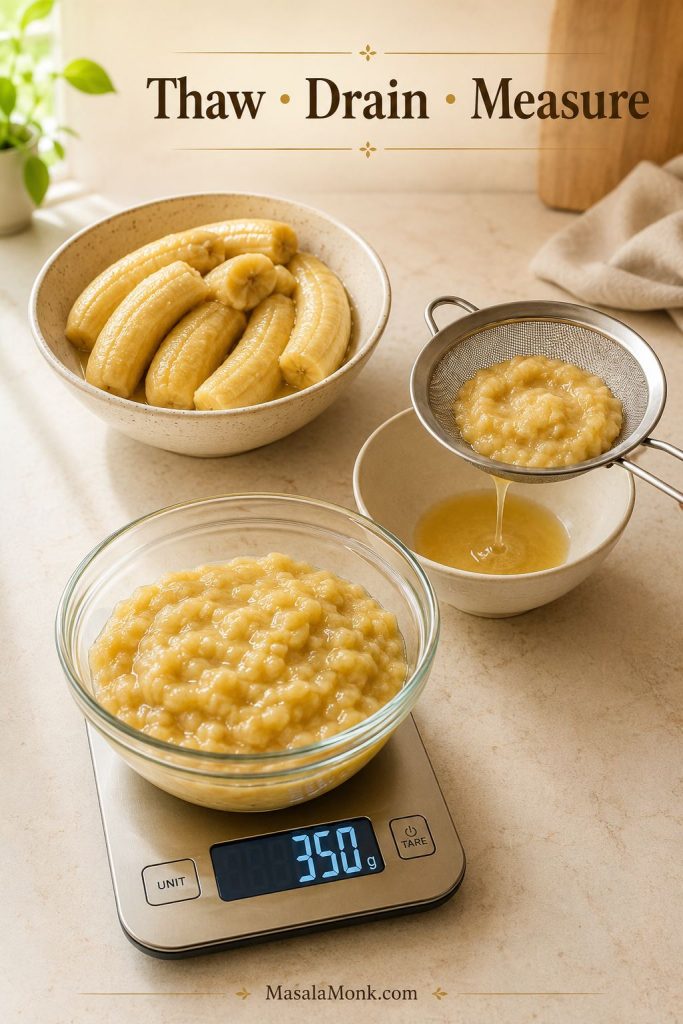
Yes. First, thaw frozen bananas; then drain off any watery liquid before measuring. Frozen bananas release more moisture than fresh ripe bananas, so measure the mashed fruit after thawing and keep it in the 340–360 g range.
Frozen bananas work well in sourdough banana bread, but draining the extra liquid first keeps the batter from becoming too wet.
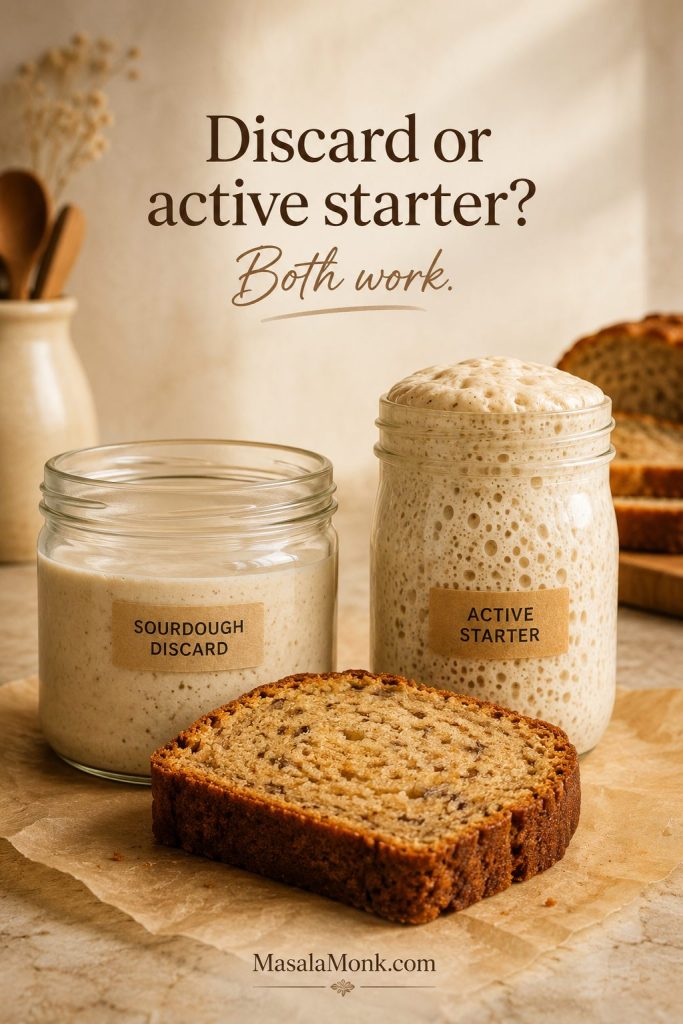
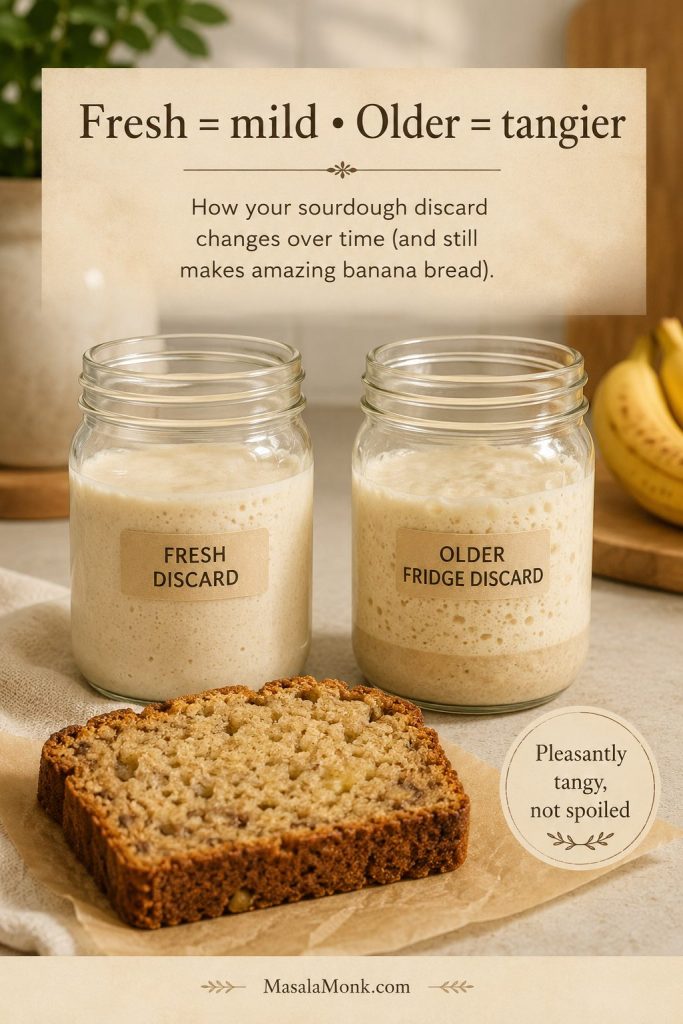
Use 113 g / ½ cup sourdough discard. A discard from a starter fed with equal weights of flour and water works best here.
Fresh discard gives a milder loaf. Older fridge discard gives a stronger sourdough note. Active starter also works, and it may make the loaf slightly lighter. However, this recipe does not rely on the starter for rise.
Discard gives this loaf a deeper tang, while active starter can make the flavor milder and the crumb slightly lighter.
All-purpose flour gives the cleanest structure. Brown sugar keeps the loaf moist and gives the flavor a caramel edge. Meanwhile, melted butter makes the loaf rich and familiar, while eggs help bind the batter and support the crumb.
If you measure flour by cups, spoon it into the cup and level it off instead of scooping directly from the bag, because scooped flour packs down easily. Too much packed flour can make the loaf dry, heavy, or dense.
Fat
Best For
Texture
Melted butter
Classic banana bread flavor
Rich, tender, slightly denser
Neutral oil
Softest crumb and longer moistness
Softer, lighter, less buttery
Use a neutral oil such as avocado, canola, sunflower, or light olive oil if you choose the oil version. Avoid strongly flavored oils unless you already know you like them in sweet bakes.
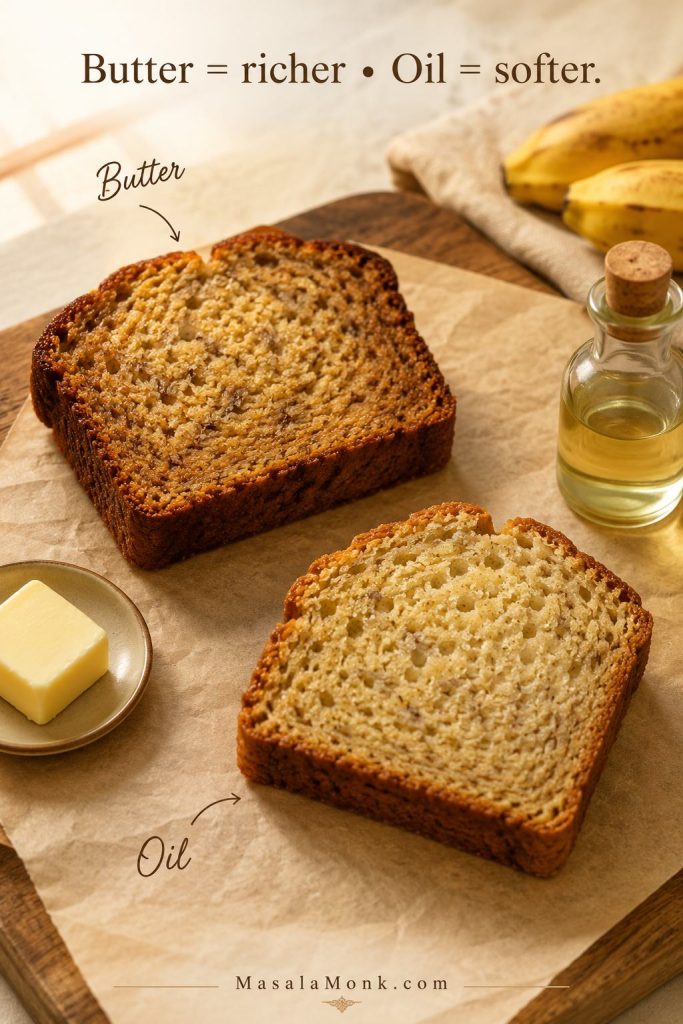
Butter gives a classic banana bread flavor, whereas oil creates a softer crumb that can stay tender a little longer.
If you are choosing a version before baking, the version guide gives the quickest way to decide between classic, softer, tangier, walnut, or chocolate chip.
Baking Soda and Baking Powder
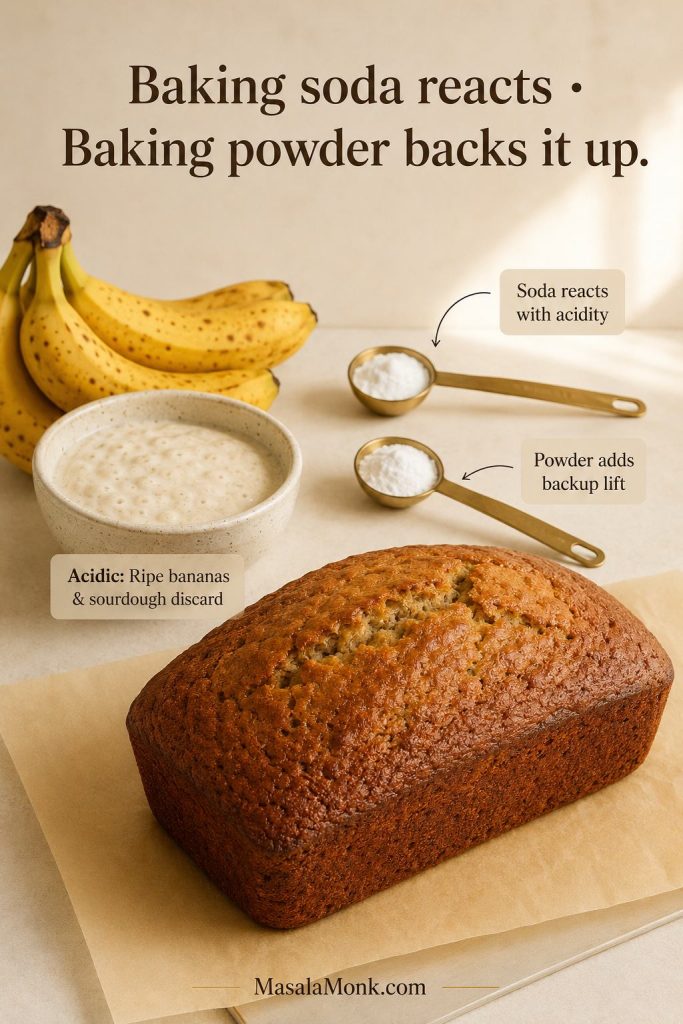
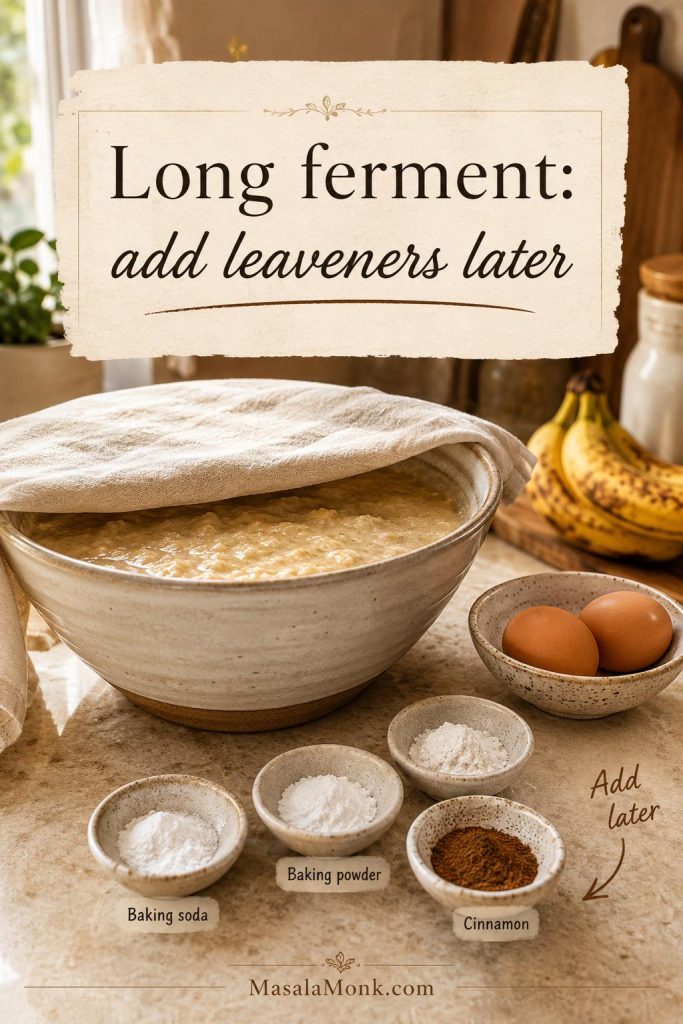
This recipe uses both for a steadier rise. Baking soda reacts with the acidity from the bananas, brown sugar, and sourdough discard, while baking powder adds backup lift so the loaf does not feel heavy for how moist the batter is.
Even though this loaf uses sourdough discard, baking soda and baking powder still do the lifting for a steadier quick bread rise.
Optional Mix-Ins
Walnuts, pecans, and chocolate chips all work well. Keep mix-ins to about 85–115 g so the loaf does not become too heavy.
Blueberries can be added, but they bring extra moisture. For that reason, keep them to about 75–100 g, use them straight from the fridge or freezer, and avoid adding extra banana at the same time.
Sourdough Discard vs Active Starter
This is one of the most common questions when making banana bread with sourdough discard: does the starter need to be active? For this recipe, no. Discard is the easiest default.
In this loaf, discard is mostly a flavor and moisture ingredient. The baking soda and baking powder do the main lifting, so you do not need to wait for the starter to rise the batter.
Older discard can add more sourdough character, but it should smell pleasantly tangy rather than harsh, moldy, or unpleasant.
Stronger sourdough note. Good for people who like more tang.
Active starter
Yes
Slightly lighter loaf and usually less sour flavor.
Very runny discard
Yes
Batter may be looser and the loaf may need a few extra minutes.
Very thick discard
Yes
Bring closer to room temperature and whisk well into the wet ingredients.
Brand-new starter discard
Not ideal
Early starter discard can smell harsh or unstable. Use mature discard for better flavor.
For more ways to use starter and discard in baking, keep this page on more sourdough bread recipes handy. It is useful when you want to move from quick discard bakes to focaccia, pizza dough, and simple bread projects.
Which Sourdough Banana Bread Version Should You Make?
Use the base recipe if you want a classic moist loaf. Then adjust only one or two things depending on the flavor or texture you want. Banana bread is forgiving, but the best versions come from changing one thing at a time.
If You Want…
Use This Direction
Mild classic banana bread
Use fresh discard or active starter.
More sourdough tang
Use older but healthy fridge discard.
Softer crumb
Use neutral oil instead of melted butter.
Richer flavor
Use melted butter and dark brown sugar.
Less sweetness
Reduce brown sugar to about 125 g.
Better structure
Do not skip the baking powder.
Nutty banana bread
Add 85–115 g walnuts or pecans.
Dessert-style loaf
Add 85–115 g chocolate chips.
Eggless loaf
Use flax eggs and cool the loaf completely before slicing.
Lowest risk of a wet center
Weigh the banana and bake to 200–205°F / 93–96°C.
Choose One Direction First
For a first bake, choose one direction and keep the rest of the loaf simple. Then you will know whether your repeat version is the buttery classic, the softer oil loaf, the walnut breakfast loaf, or the chocolate-chip treat.
What Not to Change the First Time
For your first loaf, do not increase the banana, increase the discard, remove the baking powder, and switch flour types all at once. Make the base version once, then adjust sweetness, fat, mix-ins, or tang after you know how your pan and oven behave.
If you already know your favorite banana bread style — walnut, chocolate chip, less sweet, extra tangy, or warm with butter — choose that direction first. Most people find their house version after two bakes: one classic loaf, then one small adjustment based on what they liked most.
How to Make Sourdough Banana Bread
The method for this sourdough banana bread recipe is straightforward, but the order matters. Blend the discard into the wet ingredients before adding flour. That way, you avoid sticky sourdough streaks and get a more even crumb.
Once the discard is fully blended into the wet mixture, the flour can be folded in gently without leaving sticky starter streaks.
1. Prepare the Pan and Oven
Preheat the oven to 350°F / 175°C. Then line a 9×5-inch / 23×13 cm loaf pan with parchment paper, leaving a little overhang so the baked loaf is easy to lift out.
If your loaf pan looks more than about three-quarters full after adding the batter, set a small amount aside and bake it as 1–2 muffins. An overfilled pan can rise unevenly or stay wet in the center.
2. Mash and Measure the Bananas
Mash the bananas until mostly smooth with a few small lumps. Then measure out 340–360 g. A few soft banana pieces are fine; however, large chunks can create wet pockets in the loaf.
3. Mix the Wet Ingredients
Whisk melted butter and brown sugar until glossy. Next, add the eggs, vanilla, mashed banana, and sourdough discard. Whisk until the discard is fully blended into the mixture.
At this point, the mixture should look glossy and loose, with no visible streaks of discard.
At this stage, look for a glossy banana mixture with no visible discard streaks before the dry ingredients go in.
4. Fold in the Dry Ingredients
Add flour, baking soda, baking powder, salt, and cinnamon. Sprinkle the baking soda, baking powder, salt, and cinnamon evenly over the flour before folding so they distribute more evenly. Then fold gently with a spatula until no dry flour remains. Stop as soon as the batter comes together.
A thick, slightly lumpy batter is exactly what you want because it means the flour has been mixed in without overworking the loaf.
The batter should look thick and slightly lumpy, not smooth like cake batter. It should mound slightly in the pan; if it pours like pancake batter, the loaf may need longer to bake. A slightly uneven batter is a good sign here. Smooth, overworked batter is more likely to bake up heavy.
A few small lumps are fine because overmixing can make banana bread dense, especially in a moist sourdough discard batter.
In fact, overmixing develops gluten and can make banana bread dense, tough, or heavy. If your past banana bread turned dense or gummy, compare your batter to the troubleshooting section before changing the recipe.
5. Add Mix-Ins
Fold in walnuts, pecans, or chocolate chips, if using. Keep the amount moderate so the loaf still rises and slices cleanly.
6. Bake and Cool
Spread the batter into the prepared pan and smooth the top. The batter should sit below the rim of the pan, with room to rise.
A 9×5 light metal loaf pan gives the batter enough room to rise, while parchment makes the cooled loaf easier to lift out.
Bake for 55–65 minutes, or until the highest part of the loaf feels firm and no wet batter remains. When it is done, the top should look set and gently domed, not jiggly.
Finally, cool in the pan for 10–20 minutes. After that, lift the loaf onto a rack and let it cool before slicing.
The loaf keeps firming as it cools, so this resting time is part of the texture — not just a waiting step.
Important Cooling Note
Warm banana bread is tempting, but slicing too early can make the middle seem wetter than it really is. Let it cool until the crumb has time to set.
Cutting too soon can make a finished loaf seem underbaked, so give the crumb time to settle before the first slice.
Best Pan, Oven Temperature, and Bake Time for Sourdough Banana Bread
For this sourdough banana bread recipe, the most reliable setup is a 9×5-inch light metal loaf pan at 350°F / 175°C. Light metal helps the loaf bake evenly without the sides darkening too quickly.
Pan choice affects bake time: a light metal 9×5 pan helps the sides and center finish more evenly.
Banana bread is naturally dense and moist, so bake time is only a guide. The real test is whether the loaf is baked through at its tallest point.
That is why the doneness test matters more than the exact minute on the timer.
Pan or Oven Situation
What to Do
9×5-inch light metal pan
Most reliable setup for this recipe. Start checking around 55 minutes.
8½×4½-inch pan
The loaf will be taller and may need extra time in the middle.
Dark metal pan
Browns faster. Tent with foil if the top darkens before the middle is done.
Glass or ceramic pan
May bake differently and often needs a few extra minutes. Check the thickest part carefully.
Top browning too fast
Tent loosely with foil during the last part of baking.
Outside dark but middle wet
Next time, bake at 325°F / 163°C for longer so the loaf has more time to bake through.
How to Tell When the Loaf Is Done
If your first worry is a wet middle, you are not alone. Banana bread often looks done on top before the loaf has finished baking through, so test the tallest part instead of trusting the browned crust.
Because banana bread browns before the center always finishes, the thermometer and crumb test are more reliable than color alone.
A browned top is a clue, not a guarantee. The inside still needs time to settle into a soft, sliceable crumb.
A skewer inserted into the center should come out without wet batter.
A few moist crumbs are fine.
The top should spring back lightly when pressed.
The thickest part of the loaf should read about 200–205°F / 93–96°C on an instant-read thermometer.
Because banana smears on a skewer can look wet, look for raw batter rather than soft banana. When in doubt, give the loaf a few more minutes, especially if you used a smaller pan, extra banana, or runny discard.
How to Fix Gummy, Dense, or Dry Sourdough Banana Bread
Most texture problems in sourdough discard banana bread come down to moisture, mixing, or bake time. Once you know which one caused the problem, the next loaf is much easier to fix.
If your loaf failed once, do not assume the recipe is hopeless. Sourdough banana bread usually goes wrong for one of four reasons: too much banana, very wet discard, overmixing after flour, or pulling the loaf before the thickest part has finished baking.
Match the Problem Before You Change the Recipe
If a loaf fails, the fix is usually practical: adjust banana moisture, mix more gently, measure flour carefully, or bake a little longer.
Problem
Likely Cause
Fix
Gummy center
Too much banana, underbaking, overmixing, or slicing too soon
Weigh the banana, bake longer, fold the flour gently, and cool before slicing.
Dense loaf
Discard not blended well or batter overmixed after flour
Whisk discard fully into wet ingredients, then fold dry ingredients lightly.
Dry loaf
Too much flour or overbaking
Weigh flour or spoon-and-level it. Check a few minutes earlier next time.
Too sour
Older, very acidic discard
Use fresher discard or active starter for a milder loaf.
Sunken middle
Underbaked center or too much moisture
Bake until the thickest part tests clean and avoid adding extra banana beyond the recipe range.
Dark outside, raw middle
Oven too hot, pan too dark, or loaf too tall
Tent with foil, use a lighter pan, or bake lower and longer next time.
Sticky sourdough streaks
Discard not fully mixed into wet ingredients
Whisk the discard with banana, eggs, butter, and sugar before adding flour.
If you only change one thing next time, weigh the mashed banana. It is the small, unglamorous step that solves more banana bread texture problems than almost anything else.
Once this sourdough banana bread recipe works for you, the variations are easy. Keep mix-ins moderate and avoid adding extra wet ingredients unless you adjust the bake time.
Start with the base loaf first; then, once you know the texture, choose a walnut, chocolate chip, or tangier discard version.
Walnut Sourdough Banana Bread
Fold in 85–115 g chopped walnuts. Toasting the walnuts first gives a deeper flavor and helps them stay crisp inside the loaf.
Chocolate Chip Sourdough Banana Bread
Fold in 85–115 g chocolate chips. For a more dessert-like loaf, sprinkle a few extra chips on top before baking.
Less-Sweet Version
Reduce the brown sugar to about 125 g. The loaf will be less moist and less caramel-like, but still pleasant if your bananas are very ripe. However, avoid cutting the sugar too aggressively because sugar affects softness, browning, and shelf life.
Eggless Version
For an eggless version, use 2 flax eggs and expect a slightly softer, denser crumb. Let the loaf cool completely before slicing so the structure has time to set. This flax egg for quick breads guide explains the basic ratio and when flax eggs work best.
Healthier Banana Bread Direction
For a more wholesome loaf, replace up to half the all-purpose flour with whole wheat flour, reduce the sugar slightly, or use part Greek yogurt in place of a little butter. For a separate banana-bread style built around oat flour, see this healthy banana bread with oat flour.
Optional Long-Fermented Version
The same-day version gives the most classic banana bread texture, so start there if this is your first loaf. However, if you want deeper sourdough flavor, you can use a long-fermented method as long as the final leaveners are added close to baking.
For a true long-fermented version, mix the flour, sourdough discard, mashed banana, melted butter, and brown sugar first. Cover and refrigerate overnight. The next day, let the mixture sit at room temperature for 20–30 minutes so it softens slightly. Beat the eggs and vanilla together first, then stir them into the fermented mixture. Sprinkle in the baking soda, baking powder, salt, and cinnamon, then fold until evenly combined and bake right away.
The overnight rest is for flavor and fermentation, while the eggs, baking soda, and baking powder wait until baking day for better lift.
If the mixture looks very stiff the next day, do not panic. Let it soften at room temperature, then stir gently after adding the beaten eggs and vanilla.
The texture will be tangier and slightly less cake-like than the same-day loaf. Do not add the baking soda or baking powder before the overnight rest, because they give the loaf its best lift when added closer to baking.
Can This Become Muffins?
The flavor works beautifully as muffins, but the pan, fill level, and bake time change. Use this loaf as the flavor base, then bake muffin versions separately rather than treating the loaf timing as a direct swap. For another portioned breakfast-bake idea, these high protein muffins with banana or applesauce are useful when you want something meal-prep friendly.
How to Serve Sourdough Banana Bread
The first day, this loaf is soft enough to eat plain once it has cooled. For a warmer, richer slice, add salted butter, cream cheese, peanut butter, or a little honey.
The next day, toast a slice lightly until the edges crisp and the banana aroma comes back. That is also the best way to revive a frozen slice.
It is humble enough for a weekday breakfast and good enough to wrap up for someone who needs a little comfort. It also disappears slice by slice: breakfast, afternoon tea, lunchbox treat, late-night snack.
How to Store and Freeze Sourdough Banana Bread
Let the loaf cool completely before wrapping. Otherwise, warm banana bread traps steam, and that can make the crust sticky and the middle feel wetter than it should.
Wrap the loaf once it is fully cool, and freeze slices separately so you can toast one piece whenever you need it.
Room temperature: Wrap well and keep for 3–4 days.
Refrigerator: Useful in hot or humid weather, but the loaf may dry out faster.
Freezer: Freeze slices for up to 3 months for best texture.
To reheat: Warm gently, toast lightly, or microwave a slice briefly until soft.
Instead of freezing only the whole loaf, freeze slices so you can warm one piece at a time for breakfast, tea, or a quick sweet snack.
If you are baking ahead, the recipe card has the core times, pan size, and storage note in one place.
For general food-safe freezer guidance, the USDA’s overview of freezing and food safety is a helpful reference.
Printable Sourdough Banana Bread Recipe Card
Sourdough Banana Bread Recipe
This moist sourdough discard banana bread turns ripe bananas and starter discard into a soft, sliceable loaf with brown sugar warmth, gentle tang, and classic banana bread comfort.
Prep Time15 minutes
Cook Time55–65 minutes
Total Time1 hour 10 minutes to 1 hour 20 minutes, plus cooling
Yield1 loaf
Equipment
9×5-inch / 23×13 cm loaf pan
Parchment paper
Mixing bowl
Whisk
Rubber spatula
Kitchen scale, recommended
Cooling rack
Instant-read thermometer, optional but helpful
Ingredients
340–360 g very ripe bananas, peeled and mashed, about 1½ cups
113 g sourdough discard, about ½ cup, ideally from a starter fed with equal weights flour and water
240 g all-purpose flour, about 2 cups
150 g packed brown sugar, about ¾ cup
113 g unsalted butter, melted and cooled, about ½ cup
2 large eggs
2 teaspoons vanilla extract
1 teaspoon baking soda
1 teaspoon baking powder
½ teaspoon fine salt
1 teaspoon ground cinnamon, optional
85–115 g chopped walnuts, pecans, or chocolate chips, optional
Instructions
Preheat the oven to 350°F / 175°C. Line a 9×5-inch loaf pan with parchment paper.
Mash the bananas and measure out 340–360 g. Set aside.
In a large bowl, whisk melted butter and brown sugar until glossy.
Add eggs, vanilla, mashed banana, and sourdough discard. Whisk until the discard is fully blended into the wet ingredients.
Add flour, baking soda, baking powder, salt, and cinnamon. Sprinkle the leaveners and salt evenly over the flour, then fold gently with a spatula until no dry flour remains.
Fold in walnuts, pecans, or chocolate chips, if using.
Spread the batter into the prepared loaf pan and smooth the top.
Bake for 55–65 minutes, or until the top is domed, the thickest part feels set, and a skewer inserted into the center shows moist crumbs but no wet batter. If the top browns too quickly, tent loosely with foil.
The loaf is done when the thickest part reads about 200–205°F / 93–96°C.
Cool in the pan for 10–20 minutes, then lift onto a rack and cool before slicing.
Recipe Notes
Fresh discard gives a mild flavor. Older discard gives a stronger sourdough note.
Active starter can be used in the same amount by weight.
Do not add extra banana without expecting a longer bake time.
For a less-sweet loaf, reduce brown sugar to about 125 g.
For a softer oil-based loaf, replace the melted butter with 100–110 g neutral oil.
For blueberries, use 75–100 g and avoid adding extra banana at the same time.
For a long-fermented version, use a separate method where the flour, discard, banana, butter, and sugar rest first, then add the eggs and final leaveners closer to baking.
Store wrapped at room temperature for 3–4 days, or freeze slices for up to 3 months.
Save these core cues for repeat bakes: measured banana, 113 g discard, a 9×5 pan, and a 200–205°F finish.
Save the core cues for later: measured banana, 113 g discard, a 9×5 pan, and a 200–205°F finish make the loaf easier to repeat.
More Ways to Use Ripe Bananas
If you still have bananas on the counter after this loaf, this banoffee pie recipe takes them in a caramel-and-cream dessert direction. For a no-oven breakfast, banana oatmeal pancakes use ripe banana for natural sweetness and moisture.
Once this base loaf works for you, it becomes a reliable discard recipe to return to whenever bananas go brown. After that, the walnut, chocolate chip, oil-based, and extra-tangy versions become easy little adjustments rather than brand-new recipes.
Once you know how your oven bakes this loaf, it becomes one of those quiet kitchen recipes you do not need a special occasion for: brown bananas, a little discard, one bowl, and a loaf that makes the next morning easier.
FAQs
Does sourdough banana bread taste sour?
It should taste like banana bread with a little extra depth, not like sour bread. Fresh discard gives the mildest flavor. Older fridge discard creates a stronger tang, especially if it has been sitting for several days.
Can I use active sourdough starter instead of discard?
Yes. Use the same amount by weight. Active starter usually gives a slightly lighter loaf and a milder sourdough flavor, while older discard gives more tang.
Is this a sourdough starter banana bread?
Yes. You can make it with sourdough discard or active starter. However, it is still a quick bread, so baking soda and baking powder do the main lifting while the starter adds moisture, acidity, tenderness, and flavor.
Why is my loaf gummy in the middle?
The most common causes are too much banana, underbaking, overmixing, or slicing before the loaf has cooled. Use 340–360 g mashed banana, fold the flour gently, and bake until no wet batter remains in the thickest part.
How ripe should bananas be for banana bread?
Use bananas with brown spots or fully brown skins. They should smell sweet and mash easily. Firm yellow bananas do not give the same sweetness, moisture, or banana flavor.
Can I use frozen bananas?
Yes. Thaw them first, drain off the watery liquid, then measure the mashed banana. Frozen bananas release more moisture than fresh ripe bananas, so keeping the amount in the 340–360 g range matters even more.
Should I use baking soda, baking powder, or both?
Both work best in this recipe. Baking soda reacts with the acidity in the bananas, brown sugar, and discard, while baking powder adds backup lift for a more reliable loaf.
What happens when the discard is very old?
Older discard can make the loaf tangier. That can be delicious when the discard smells pleasantly sour, but avoid discard that smells spoiled, moldy, or sharply unpleasant. For a mild loaf, use fresh discard or active starter.
Does the discard make the bread rise?
Not much. In this quick bread, baking soda and baking powder do the main lifting. The discard mostly adds moisture, acidity, tenderness, and flavor.
Can I make this dairy-free?
Yes. Replace the melted butter with 100–110 g neutral oil. The loaf will taste less buttery, but the crumb will stay soft and moist. This makes the loaf dairy-free, but not egg-free unless you also use the flax egg option.
Can I use whole wheat flour?
Yes, but start by replacing only half the all-purpose flour with whole wheat flour. A full whole-wheat loaf can taste heavier and absorb more moisture. If the batter feels unusually stiff, add 1–2 tablespoons of milk, yogurt, or water.
Can this sourdough banana bread recipe be made ahead?
Yes. The loaf keeps well at room temperature for 3–4 days and freezes nicely in slices. In fact, the flavor often tastes even better the next day because the banana, brown sugar, and sourdough notes settle together.
Can I bake this as muffins?
The batter can inspire muffins, but loaf timing does not translate directly. Muffins need a different pan, shorter bake time, and careful fill level. For the cleanest result, treat sourdough banana muffins as their own recipe rather than simply shrinking the loaf.
If you make this sourdough banana bread recipe, leave a comment with three details: fresh discard or older discard, butter or oil, and plain, walnut, or chocolate chip. Those notes help the next baker choose a version — and I would love to know which one becomes your repeat loaf.
A good banoffee pie recipe should give you everything people love about this classic dessert: a buttery biscuit base, thick caramel, fresh bananas, cool whipped cream, and slices that actually hold together. This version keeps the method easy and mostly no-bake, while giving you the texture tips you need to avoid a runny, messy pie.
Even better, this is a no-bake Banoffee pie unless you choose to bake the crust for a firmer slice. So, if you love chilled banana desserts like no-bake banana pudding, this is the richer banana-toffee version: less spoonable pudding, more dramatic layered dessert.
This recipe for banoffee pie is especially useful if you want the classic flavor but do not want to guess your way through the caramel, crust, bananas, or cream. The trick is getting each layer to behave before the next one goes on: firm base, thick caramel, fresh bananas, and stable cream.
Done well, Banoffee Pie tastes like cold caramel cream, fresh banana, and buttery biscuit in one forkful. Done badly, it can slide apart before it reaches the plate. This version is built to give you the first result, not the second.
Although the layers look impressive, the actual work is simple: crush, press, spread, slice, whip, and chill.
It is the kind of dessert that looks like you worked harder than you did, which makes it especially useful for parties, family dinners, birthdays, and make-ahead dessert tables.
Because the caramel is thick and the pie is properly chilled, the slice stays creamy and generous without collapsing on the plate.
Banoffee Pie at a Glance
Best pan9-inch / 23cm pie dish or tart tin
BaseDigestives, graham crackers, or Marie biscuits
CaramelThick dulce de leche or thick caramel
Chill time2 1/2 hours minimum, 4 hours best
This recipe keeps banoffee pie simple: a biscuit base, thick caramel, firm bananas, and whipped cream. For the cleanest slices, use thick caramel, chill the base first, and add the bananas close to serving.
If you want the quick version, remember this: a 9-inch pan, thick caramel, firm bananas, and a 2–4 hour chill make this no-bake Banoffee Pie much easier to slice.
Banoffee Pie is a banana-and-toffee dessert made with a base, a thick caramel or toffee layer, sliced bananas, and whipped cream. Most modern versions use a biscuit base, although older versions may use pastry. The name comes from banana and toffee, which is why you may also see it written as Banoffi Pie.
The classic flavor is simple but powerful: buttery base, deep caramel, fresh banana, cool cream, and a little chocolate or cocoa on top. Since the dessert is chilled and layered, it feels impressive without needing a complicated baking method. Better still, each part can be prepared calmly, so the recipe is much easier than it looks.
If you enjoy the story behind classic desserts, the original Banoffi pie story is a lovely read because it comes from Ian Dowding, one of the people associated with the dessert’s creation.
Is Banoffee Pie the Same as Banoffee Pudding?
Banoffee Pie is the classic name, but you may also see people search for Banoffee pudding or Banoffee dessert because the dish is chilled, creamy, and layered. In British usage, “pudding” can also mean dessert in a general sense. For most home cooks, though, a Banoffee pudding recipe usually points to the same banana-toffee idea: a base, caramel, bananas, and cream.
This banoffee pie works because the recipe solves the problems that usually make the dessert disappointing: a crumbly base, loose caramel, browning bananas, soft cream, and messy slices. Each layer has a job, and the method keeps those layers distinct.
The base is sturdy but not greasy. A balanced biscuit-to-butter ratio gives the pie enough structure without making the crust heavy.
The caramel layer is thick. Dulce de leche, thick caramel, or homemade condensed milk toffee holds much better than thin caramel sauce.
The bananas stay fresh. Firm ripe bananas slice cleanly and release less liquid than overripe bananas.
The cream is whipped to the right stage. Medium or medium-firm peaks hold better than loose cream but still taste soft and fresh.
The chilling plan is practical. First, you chill the base. After that, you chill the finished pie so it cuts neatly.
Most importantly, this recipe is less about difficult technique and more about timing. Once the base is cold, the caramel is thick, and the cream is properly whipped, you get a pie that tastes rich and homemade but still holds together when you cut it.
Banoffee Pie Ingredients
The ingredients are simple, but this recipe for banoffee pie depends on a few small choices: biscuit texture, caramel thickness, banana ripeness, and cold cream all matter.
The ingredients look simple, but each one has a job: biscuits build structure, caramel gives body, bananas add freshness, and whipped cream keeps the dessert light.
For example, a thin caramel sauce may taste good, but it will not hold like thick dulce de leche or cooked condensed milk toffee. Similarly, very soft bananas may be sweet, yet they can make the filling wet and unstable.
What to Use in the US, UK, and India
Banoffee Pie travels well across kitchens, but ingredient names change from country to country. Use this quick guide before you shop.
Layer
US Option
UK Option
Common India Option
Base
Graham crackers
Digestive biscuits
Digestive biscuits or Marie biscuits
Caramel
Dulce de leche
Thick caramel or dulce de leche
Dulce de leche, milk caramel, or condensed milk toffee
Cream
Heavy cream
Double cream or whipping cream
Whipping cream; avoid low-fat table cream unless it whips reliably
Pan
9-inch pie dish
23cm loose-bottom tart tin
8–9 inch tart tin or springform pan
Since ingredient names change by country, this Banoffee Pie guide helps you swap graham crackers, digestives, Marie biscuits, heavy cream, double cream, and whipping cream with confidence.
You may also see Brazilian-style Banoffee recipes call dulce de leche doce de leite, while a Maizena-style biscuit base may replace digestives or graham crackers. Either way, the idea is still the same: a crumb base, thick milk caramel, bananas, and cream.
Biscuits or Graham Crackers
Digestive biscuits give Banoffee Pie the most classic biscuit-base flavor. Graham crackers work well for a US-style crust, while Marie biscuits are lighter and easy to find in many Indian kitchens. For a richer variation, Biscoff or Lotus biscuits add a spiced caramel flavor. However, they also make the dessert sweeter, so skip extra sugar in the base if you use them.
Butter and Salt
Melted butter binds the crumbs so the base holds together after chilling. A pinch of salt is just as important because Banoffee pie has several sweet layers. Without salt, the base can taste flat and the caramel can feel too heavy.
Caramel, Dulce de Leche, or Condensed Milk Toffee
The caramel layer must be thick and spreadable. Dulce de leche is the easiest reliable option. Thick canned caramel can also work. However, thin caramel sauce should not be used as the main filling because it can make the pie runny.
If you keep condensed milk for quick pantry desserts, you may also like MasalaMonk’s guide to sweetened condensed milk fudge. For this pie, though, the condensed milk needs to become a thick toffee-style layer before it goes into the crust.
Bananas
Use firm ripe bananas. They should be yellow and sweet, but not mushy. Green bananas taste starchy, while overripe bananas can release too much moisture and make the pie harder to slice.
Cream
Use heavy cream, whipping cream, or double cream. Also, make sure the cream is cold before whipping. Canned spray cream is not ideal for the main recipe because it softens quickly and does not give the same clean finish.
For this banoffee pie, the recipe works best with a biscuit base that is firm enough to hold caramel and bananas, but not so hard that it breaks when sliced. A good rule of thumb is 220g biscuits, 110g melted butter, and a pinch of salt.
First, crush the biscuits finely. Then, mix them with melted butter until the crumbs look like damp sand. After that, press the mixture into the base and sides of the tin. A flat-bottomed measuring cup or glass helps you level the crumbs neatly.
The biscuit base should feel like damp sand before it is pressed; that way, it chills into a firm crust without turning greasy or rock-hard.
At this point, resist the urge to press too hard. Ideally, the base should be compact enough to hold, but still tender enough to cut with a fork.
Chill the base for at least 30 minutes before adding caramel. If you want a firmer slice, you can optionally bake the base for 8–10 minutes at 175°C / 350°F, then cool it completely before filling.
If you prefer a traditional pastry-style dessert instead of a crumb base, MasalaMonk’s apple pie crust recipe is the better starting point. Banoffee is usually easier as a biscuit-base pie, while apple pie dough needs cold butter, chilling, rolling, and baking.
Digestive Biscuits vs Graham Crackers vs Marie Biscuits vs Biscoff
Base
Best For
Watch-Out
Digestive biscuits
Classic Banoffee base
Usually balanced and sturdy
Graham crackers
US-style pie crust
Sweeter, so added sugar is often unnecessary
Marie biscuits
Easy India option
Lighter, so press well and add salt
Biscoff or Lotus biscuits
Spiced caramel variation
Sweeter and stronger flavored
Digestives give the most classic Banoffee Pie base, while graham crackers, Marie biscuits, and Biscoff each change the sweetness, crumb texture, and final flavor.
Dulce de Leche vs Caramel vs Condensed Milk Toffee
The caramel layer is where this banoffee pie recipe is worth slowing down. When the caramel is thick, the pie slices cleanly. When it is thin, the filling can slide, pool, and soak the crust.
Before you start layering, check the texture. For the cleanest slice, the caramel should spread like a thick filling, not pour like a dessert sauce.
Here is where the pie succeeds or fails: thick caramel should spread like a filling, not pour like a dessert sauce.
Option
Use It?
Best For
Watch-Out
Thick dulce de leche
Yes
Easiest reliable pie
Warm slightly if too stiff to spread
Thick canned caramel
Yes
Fast UK-style version
Must be spreadable, not runny
Homemade condensed milk toffee
Yes
Best homemade flavor
Stir constantly and cook gently
Thin caramel sauce
No, not as filling
Drizzle only
Makes the pie runny
Boiled condensed milk can
Avoid as main advice
Old-school shortcut
Use safer methods instead
Dulce de leche, thick caramel, and homemade condensed milk toffee can all work well; however, thin caramel sauce is better saved for a light drizzle.
Easiest Option: Thick Dulce de Leche
Dulce de leche is the easiest option because it is already thick, creamy, and caramelized. Use about 397g / 14 oz for one 9-inch / 23cm pie. If it is too stiff to spread straight from the jar or can, warm it briefly until it loosens slightly.
Fast Option: Thick Ready Caramel
Thick ready caramel can work well, especially in a UK-style Banoffee Pie. The key word is thick. If the caramel pours like sauce, it is too loose for the main layer. Instead, save that kind of caramel for a final drizzle over the cream.
Homemade Option: Condensed Milk Toffee
For a homemade toffee layer, combine 397g sweetened condensed milk, 80g butter, and 80g brown sugar in a saucepan. Cook over low to medium-low heat, stirring constantly, for about 6–8 minutes, or until the mixture becomes thick, glossy, and spreadable.
Do not rush this step. High heat can scorch the sugar or make the mixture catch on the bottom of the pan. Once the toffee thickens, spread it into the chilled base and let it cool before adding bananas and cream.
Once condensed milk toffee looks glossy, thick, and spreadable, it is ready to hold its place in the Banoffee Pie instead of running into the biscuit base.
What Not to Use
Do not use thin caramel sauce as the main filling. It may look tempting at first, but it can run into the banana layer, soften the crust, and make the pie difficult to cut. If you have only a thin sauce, use it sparingly on top as a garnish.
A spreadable caramel layer gives this recipe for Banoffee Pie structure; on the other hand, a pourable sauce can soak the crust and make the filling slide.
Safety Note on Boiling Condensed Milk Cans
Some old Banoffee methods involve boiling unopened cans of condensed milk. For a home recipe, however, a safer approach is to use ready dulce de leche or make stovetop condensed milk toffee in a saucepan. Eagle Brand also says it does not recommend heating condensed milk in the can.
In this banoffee pie recipe, bananas should taste sweet but still behave like a clean layer. Choose fruit that is yellow with a few light speckles, not green and not soft enough for banana bread.
Ripe but firm bananas give the best balance because they taste sweet while still slicing cleanly and holding their shape under the cream.
Avoid green bananas because they taste starchy and flat. On the other hand, very dark, soft bananas can turn mushy under the cream and release extra moisture into the pie.
Slice the bananas about ¼ inch / 6mm thick. That way, you get a clear banana layer without making the pie bulky. If you prefer a chunkier banana layer, you can go up to 1cm, but thinner slices usually give cleaner pieces.
Thinner banana slices layer more neatly, so the finished Banoffee Pie cuts cleaner and feels balanced in every bite.
If you need to assemble slightly ahead, use only a few drops of lemon juice and cover the bananas fully with cream. Otherwise, too much lemon juice can make the filling taste sharp.
Best Cream for Banoffee Pie
For clean slices, the cream should look billowy, not stiff and grainy. You want it thick enough to sit proudly on the pie, but still soft enough to melt into the caramel and bananas when you take a bite.
For most home cooks, cold heavy cream, whipping cream, or double cream works best. If the cream is too loose, the topping can slide. If it is overwhipped, it can taste heavy and look rough.
Medium to medium-firm peaks are the sweet spot for whipped cream: soft enough to taste fresh, yet stable enough to help the pie slice neatly.
Cream Stage
What It Looks Like
Best For
Soft peaks
Falls gently from the whisk
Spoonable desserts, not the cleanest slices
Medium peaks
Holds shape but still looks smooth
Best everyday Banoffee Pie topping
Medium-firm peaks
Holds cleaner ridges without looking dry
Best if the pie needs to hold longer
Overwhipped
Grainy, stiff, or starting to split
Avoid; it tastes heavy and can look rough
If you like desserts where whipped cream has to stay soft but still hold its shape, MasalaMonk’s strawberry shortcake recipe is another good guide. It uses fresh fruit and cream in a different way, but the same idea applies: the cream should feel light, not stiff or grainy.
If your kitchen is warm or the pie needs to sit longer, you can stabilize the cream with 1–2 tablespoons mascarpone, cream cheese, or milk powder. Keep the cream cold, whip it only until medium-firm, and spread it over the bananas before the final chill.
If your kitchen is warm or the dessert needs to sit longer, a small stabilizer can help whipped cream hold without making it stiff or heavy.
Equipment You Need
You do not need pastry-school equipment for this dessert. A simple pan, a way to crush biscuits, and cold cream are enough.
You do not need special pastry equipment for this banoffee pie recipe; instead, a good tin, a pressing tool, a saucepan, and a whisk are enough for cleaner layers.
9-inch / 23cm pie dish, tart tin, or springform pan
Food processor, or a zip-top bag and rolling pin for crushing biscuits
Mixing bowl
Flat-bottomed cup or measuring cup for pressing the base
Saucepan, only if making homemade condensed milk toffee
Once the caramel is sorted, the rest is just layering and chilling: make the base, chill it, spread the caramel, add bananas, whip the cream, and chill before slicing.
Step 1: Make the Biscuit Base
Crush the biscuits into fine crumbs. From there, mix them with melted butter and salt until evenly moistened. Press into a 9-inch / 23cm pie dish, tart tin, or springform pan, then chill for at least 30 minutes.
Press the crumb base evenly before chilling because a compact crust gives the caramel, bananas, and cream a sturdier foundation.
Step 2: Add the Caramel or Dulce de Leche
Spread thick dulce de leche, thick caramel, or homemade condensed milk toffee over the chilled base. Keep the layer even so every slice gets the same banana-toffee balance.
After the base is chilled, spread the caramel evenly so every slice gets the same banana-toffee balance and the filling sets more predictably.
Step 3: Add the Bananas
Arrange sliced bananas over the caramel in a single layer or a slightly overlapping layer. For the cleanest slice, do not pile on too many bananas; a heavy banana layer can make the pie unstable.
Add the bananas in an even layer rather than piling them high; as a result, the pie stays easier to cut and serve.
Step 4: Whip the Cream
Whip cold cream with icing sugar and vanilla until it reaches medium or medium-firm peaks. It should hold soft shape on the whisk, but it should not look dry, grainy, or overbeaten.
Stop whipping when the cream holds a soft shape on the whisk, since overwhipped cream can taste heavy and look grainy.
Step 5: Chill, Slice, and Serve
Spoon or spread the whipped cream over the bananas. Before slicing, chill the finished pie for at least 2 hours. For the cleanest slices, chill it closer to 4 hours, then finish with chocolate shavings, cocoa, or a very light caramel drizzle.
After chilling, the layers should look creamy but controlled, with the biscuit base, caramel, bananas, and cream holding together in each slice.
Chilling is not just a waiting step. It helps the base firm up, keeps the caramel layer stable, and makes the cream easier to slice through.
Banoffee Pie chill time is not just waiting time; it firms the base, steadies the caramel, and gives the cream enough structure for cleaner slices.
For a soft but sliceable banoffee pie, this recipe works best when you chill the base for at least 30 minutes, then chill the finished pie for at least 2 hours. For the cleanest slices, especially if your caramel is slightly soft, chill the finished pie for closer to 4 hours.
Crust chill: at least 30 minutes before adding caramel.
Finished pie chill: 2 hours minimum.
Best clean-slice chill: closer to 4 hours.
If caramel is very firm: rest the pie for 10–15 minutes before slicing.
If you want the firmest possible base, bake it for 8–10 minutes at 175°C / 350°F, then cool completely before filling. The pie will no longer be fully no-bake, but the slices will be cleaner.
Can You Make Banoffee Pie Ahead?
Yes, you can make Banoffee Pie ahead, but for the best texture, prepare the components rather than fully assembling the whole pie too early.
For make-ahead Banoffee Pie, prepare the base and caramel early, then add bananas and whipped cream closer to serving so the texture stays fresh.
Component
Can You Make It Ahead?
Best Timing
Biscuit base
Yes
1–2 days ahead, covered in the fridge
Caramel layer
Yes
1 day ahead, or spread into the chilled base before final assembly
Bananas
Not sliced early
Slice close to assembly for best color and texture
Whipped cream
Same day is best
Whip and add before the final chill
Fully assembled pie
Yes, but short window
Best within 4–8 hours; acceptable within 24 hours
Leftovers
Yes
Eat within 1–2 days, knowing the bananas and cream will soften
Leftovers can still taste good later, although the bananas will darken, the cream will soften, and the base may absorb moisture. For guests, assemble it the day you plan to serve it.
Clean slices mostly come down to patience and layer control. Because the pie has soft bananas, caramel, and cream, every layer needs to be slightly controlled.
Clean slices come from several small choices working together: chill well, use thick caramel, warm the knife, and wipe the blade between cuts.
Use thick caramel or dulce de leche, not thin sauce.
Chill the base before filling.
Slice bananas evenly and avoid overloading the pie.
Whip cream to medium-firm peaks if the pie needs to hold longer.
Use a removable-bottom tart tin or springform pan if possible.
Cut with a warm sharp knife and wipe it between slices.
If your first slice is messy, let the pie chill longer before cutting the rest. Often, a little extra time in the fridge is all a soft caramel layer needs.
Banoffee Pie Variations
Once you know the classic method, Banoffee Pie is easy to adapt. The easiest way to keep it balanced is to change one thing at a time: the base, the topping, or the serving format.
Biscoff Banoffee Pie
Use Biscoff or Lotus biscuits instead of digestives or graham crackers. Because Biscoff is sweeter and more spiced, skip extra sugar in the base and keep the cream lightly sweetened. If you like the Biscoff idea, you may also enjoy this cookie pie recipe, especially when you want something baked, gooey, and sliceable.
Chocolate Banoffee Pie
A chocolate Banoffee Pie works best when chocolate supports the banana-toffee flavor instead of taking over. Use chocolate biscuits for the base or spread a thin cooled ganache over the caramel before adding the bananas.
Salted Caramel Banoffee Pie
To make it salted caramel-style, add a small pinch of fine salt to the caramel layer and finish the pie with a few flakes of sea salt. Use a light hand because the goal is balance, not a salty dessert.
Banoffee Cheesecake or Banoffee Tart
A Banoffee cheesecake moves the caramel and banana idea into a cream cheese filling, so it becomes a different dessert rather than a quick topping change. In a Banoffee tart, the same layers sit in a shallow tin for a neater, more elegant slice.
Mini Banoffee Pies or Banoffee Cups
Small jars or cups are easier to serve than slices at parties. Layer biscuit crumbs, caramel, banana slices, and whipped cream, then assemble them close to serving so the crumbs do not soften too much.
Vegan Banoffee Pie
A vegan version needs dairy-free biscuits, vegan butter, vegan caramel or condensed milk alternative, and a plant-based whipping cream. Because vegan caramel and plant-based cream behave differently, it is worth following a dedicated vegan method rather than swapping ingredients one-for-one.
Gluten-Free Banoffee Pie
Use certified gluten-free biscuits for the base and check that the caramel, chocolate, and toppings are gluten-free as well. The method stays similar, but the base may need a little extra chilling because gluten-free biscuits vary in texture.
Healthy Banoffee Pie
If you want a lighter version, plan it from the start instead of only reducing the sugar. Many healthier Banoffee-style desserts use oat, nut, or date-based crusts and a date-style caramel, so the base and filling usually need to change too.
What to Serve with Banoffee Pie
Banoffee Pie is rich, sweet, and creamy. That is why it pairs best with something bitter, cold, fruity, or lightly acidic.
Black coffee or espresso
Lightly sweet tea
Fresh berries
Vanilla ice cream
Extra chocolate shavings
A very small pinch of flaky salt on the caramel layer
For a summer meal or party spread, Banoffee Pie also pairs beautifully with homemade mango ice cream. The mango keeps things bright, while the Banoffee brings the caramel-and-cream richness.
For a bigger dessert table, a chilled cake like tres leches cake also makes sense beside Banoffee Pie. Both are creamy, cold desserts, but tres leches gives you a soft cake texture while Banoffee brings biscuit crunch and caramel.
Troubleshooting Banoffee Pie Recipe
Most Banoffee Pie problems come from texture. Fortunately, they are easy to understand once you know which layer caused the issue.
If the pie does not behave, check the layer causing trouble first; usually the fix is better chilling, thicker caramel, colder cream, or fresher bananas.
Problem
Likely Cause
Fix
Base crumbles
Crumbs too coarse or not enough butter
Crush the biscuits finer, add a little more melted butter, and chill longer
Base feels greasy
Too much butter or very weak biscuits
Next time, use slightly less butter and chill the base well before filling
Caramel runs
Caramel too thin or not chilled
Switch to thick dulce de leche, or cook condensed milk toffee a little longer
Caramel too stiff
Dulce de leche too cold or thick
Warm it briefly before spreading
Bananas brown
Assembled too early
Slice the bananas closer to serving and cover them fully with cream
Cream weeps
Underwhipped or unstable cream
Start with cold cream and whip it to medium-firm peaks
Pie is too sweet
Sweet base, caramel, and cream together
Balance the layers with salt in the base and less sugar in the cream
This saveable Banoffee Pie recipe card keeps the method simple: biscuit base, thick caramel, bananas, cream, and enough chilling time to slice cleanly.
Banoffee Pie Recipe Card
This easy Banoffee Pie Recipe has a buttery biscuit base, thick caramel or dulce de leche, fresh bananas, whipped cream, and a simple chill-and-slice method.
Yield8–10 slices
Prep Time25 minutes
Chill Time2 1/2 hours minimum, 4 hours best
Total TimeAbout 3 hours minimum
Pan9-inch / 23cm pie dish or tart tin
DietVegetarian, eggless
OvenNot required
Best ServedSame day; best within 4–8 hours
Ingredients
Biscuit Base
220g digestive biscuits, Marie biscuits, or graham crackers, finely crushed, about 2 cups crumbs
110g unsalted butter, melted, about 1/2 cup
Pinch of salt
1 tbsp sugar, optional, only if using very plain biscuits
Caramel Layer
397g / 14 oz thick dulce de leche or thick caramel
Homemade condensed milk toffee option: Use 397g / 14 oz sweetened condensed milk, 80g butter / about 5 1/2 tbsp, and 80g brown sugar / about 1/3 cup plus 1 tbsp packed. Cook gently, stirring constantly, for about 6–8 minutes, or until thick, glossy, and spreadable.
Let homemade toffee cool until warm, not hot, before adding bananas and cream.
Banana Layer
2–3 firm ripe bananas, sliced about 1/4 inch / 6mm thick
Cream Layer
300ml heavy cream, whipping cream, or double cream, cold, about 1 1/4 cups
1–2 tbsp icing sugar
1 tsp vanilla extract
Topping
Chocolate shavings, cocoa powder, or a very light caramel drizzle
Method
Start with the base. Mix crushed biscuits, melted butter, salt, and optional sugar until the crumbs look like damp sand.
Shape and chill. Press the crumbs into a 9-inch / 23cm pie dish, tart tin, or springform pan, then chill for at least 30 minutes.
Spread the caramel. Add thick dulce de leche, thick caramel, or homemade condensed milk toffee over the chilled base.
Layer the bananas. Arrange banana slices over the caramel in a single or slightly overlapping layer.
Whip the cream. Beat cold cream with icing sugar and vanilla until it reaches medium or medium-firm peaks.
Cover the bananas. Spread or spoon the cream over the banana layer.
Let it set. Chill the finished pie for at least 2 hours, or closer to 4 hours for cleaner slices.
Finish and serve. Add chocolate shavings, cocoa, or a light caramel drizzle, then slice with a warm sharp knife.
Notes
For a firmer base, bake the crust for 8–10 minutes at 175°C / 350°F, then cool completely before filling.
If your caramel is thin, do not use it as the main layer because it can make the pie runny.
For the freshest color, add the bananas closer to serving.
Once fully assembled, Banoffee Pie is best within 4–8 hours and still acceptable within 24 hours.
Depending on where you live, use digestives for a classic UK-style base, graham crackers for a US-style crust, or Marie biscuits for a lighter India-friendly option.
FAQs About This Banoffee Pie Recipe
1. What is Banoffee Pie made of?
A classic Banoffee Pie usually has a biscuit or pastry base, thick caramel or toffee, sliced bananas, whipped cream, and a chocolate or cocoa topping. In this version, the base is made with biscuits, the filling uses dulce de leche or thick caramel, and the cream is lightly sweetened so the pie does not become too heavy.
2. Is Banoffee Pie no-bake?
Yes, this version is no-bake if you chill the biscuit base instead of baking it. For a firmer crust and cleaner slices, however, you can bake the base for 8–10 minutes at 175°C / 350°F and cool it completely before filling.
3. Is Banoffee Pie the same as Banoffee pudding?
The classic name is Banoffee Pie, although some people call it Banoffee pudding because it is chilled, creamy, and layered. In everyday searches, Banoffee pudding and Banoffee dessert often point to the same banana, caramel, biscuit, and cream combination.
4. Is dulce de leche good for Banoffee Pie?
Absolutely. Thick dulce de leche is one of the easiest and most reliable fillings because it spreads well, holds its shape, and gives the dessert the deep caramel flavor it needs.
5. What kind of caramel sauce works?
Only use caramel sauce if it is very thick and spreadable. If it pours easily, keep it for a light drizzle on top because thin sauce can make the main filling runny.
6. How do you make Banoffee Pie with condensed milk?
You can use condensed milk, but it needs to be cooked into a thick toffee-style filling first. The easiest homemade method is to cook sweetened condensed milk with butter and brown sugar until the mixture looks thick, glossy, and spreadable.
7. Can I make Banoffee Pie without condensed milk?
Yes. You can use thick dulce de leche or thick ready caramel instead of making condensed milk toffee. Just avoid thin caramel sauce because it will not hold as well in the pie.
8. How do I stop Banoffee Pie from going runny?
Start with thick dulce de leche or thick caramel, chill the base before filling, choose firm ripe bananas, and chill the finished pie before slicing. Most importantly, avoid thin caramel sauce as the main layer.
9. How long does Banoffee Pie last?
Once assembled, Banoffee Pie is best the same day, especially within 4–8 hours. It is still acceptable within 24 hours, but the bananas may darken, the cream may soften, and the base may lose some texture.
10. Can I make Banoffee Pie ahead?
For the best result, make the base and caramel ahead, then add the bananas and whipped cream closer to serving. That way, the bananas stay fresher and the cream holds better.
11. Is Banoffee Pie eggless?
Yes. This banoffee pie recipe is naturally eggless because it uses a biscuit base, caramel or dulce de leche, bananas, and whipped cream, with no eggs in the filling or crust.
12. Can you freeze Banoffee Pie?
Freezing a fully assembled Banoffee Pie is not ideal because bananas can turn watery and the cream can lose its texture after thawing. If you want to work ahead, freeze only the biscuit base, then add caramel, bananas, and cream after thawing.
If you’ve ever been jolted awake at night by that burning sensation creeping up your chest, you know heartburn is more than just a minor nuisance. For many, it’s a daily struggle—ruining dinners, spoiling sleep, and making simple pleasures feel risky. The good news? You don’t have to reach for harsh meds every time. There’s a whole toolkit of natural, practical, and fast-acting remedies—many hiding right in your kitchen!
In this post, we’ll cut through the noise. No snake oil, no vague advice. Just what actually works, how fast, and what real people say. Let’s dig in.
What Is Heartburn, Really?
Before you fix it, it helps to know the basics. Heartburn happens when stomach acid backs up into your esophagus, causing that familiar burn. Common culprits? Spicy foods, large meals, alcohol, stress, and sometimes just lying down after eating.
Quick fact: Heartburn and acid reflux are closely related, but not identical. GERD (gastroesophageal reflux disease) is the chronic, more severe version.
Natural Heartburn Remedies That Actually Work
Here are the top tried-and-tested remedies—from clinical research and Redditors alike—ranked by how fast and reliable they are.
1. Baking Soda & Water: The “Fire Extinguisher”
How it works: Baking soda (sodium bicarbonate) neutralizes stomach acid in minutes.
How to use: Mix ½ to 1 teaspoon in a glass of cold water, stir, and sip slowly.
What real people say: “One or two teaspoons, then stay upright—massive burp, burning is gone.” (Reddit)
Cautions: High in sodium; don’t use more than once every few days.
Pro tip: Don’t chug it! Sipping slowly works better and is easier on your stomach.
2. Banana, Milk, and Soothing Foods
Banana: The gentle fruit. Its natural antacid effect soothes the esophagus.
“If my acid reflux is acting up, I eat a banana. Works wonders for me!” (Reddit)
Milk (or oat/almond milk): Sips of cold, low-fat milk can ease the burn for some.
Heads up: For others, especially with full-fat milk, it can sometimes make things worse later.
Honey lozenges: Sucking on honey-based lozenges stimulates saliva, which helps wash acid down.
3. Pickle Juice or Apple Cider Vinegar (ACV): The Contrarian Fix
How it works: A tablespoon of vinegar (especially ACV) or pickle juice can trigger your stomach to regulate acid production.
What real people say:
“A tablespoon of apple cider vinegar in water—heartburn gone.”
“Pickle juice, just a sip, sounds weird but instant relief.”
Why it works (sometimes): Some people’s heartburn is from too little acid, not too much. This trick “resets” stomach acidity.
Cautions: Try in small amounts, and stop if it makes things worse.
4. Ginger & Celery Juice (for the Naturalists)
How it works: Ginger is a classic anti-nausea, anti-inflammatory root. Celery is highly alkaline.
How to use: Juice fresh ginger (just a sliver!) and celery (a few stalks) and sip on an empty stomach.
What people say:
“Ginger tea or celery juice in the morning—I’m off meds!”
Downsides: Some find prep a hassle, but it’s a great long-term solution.
5. Chewing Gum, Lozenges & Water
Why it works: Chewing gum or sucking lozenges increases saliva, which helps neutralize acid and push it back down.
What works best: Sugar-free gum, especially after meals.
“Chewing gum after dinner is my secret weapon.” (Reddit)
Don’t forget: A big glass of water can help rinse acid down, especially in mild cases.
6. Mechanical Tricks: The “Burp Bubble”
How it works: Swallow air (like you’re about to burp) and “hold it in” to create a pressure bubble above your stomach, which some people swear blocks reflux for a few minutes.
“Swallow air, hold it, stay upright—instant blockade!”
Is it weird? Yes. But if you’re desperate and upright, worth a try.
7. Ayurvedic and Indian Pantry Staples
For readers in India (or with a good spice cabinet!), these “desi” remedies are gaining scientific respect:
Curd (plain yogurt): Soothes the stomach, provides probiotics.
Coconut water: Mildly alkaline and hydrating.
Jeera (cumin) water: Boil cumin seeds, cool, sip.
Fennel seeds (saunf): Chew after meals to aid digestion.
“Curd, coconut water, and saunf are my go-to for any acidity. I hardly need meds now.” (Times of India, user stories)
8. Alkaline Water: The Latest Science
What’s new: Water with a pH >8 can neutralize pepsin (an enzyme that damages the esophagus), offering fast relief.
How to use: Look for bottled “alkaline water” or add a pinch of baking soda to regular water.
Quick fixes are great, but sustained change wins. Here’s what actually works, according to thousands of forum users:
Don’t lie down after eating: Wait at least 2–3 hours.
Raise your head: Elevate your bed by 6–8 inches if you get night heartburn.
Eat small, frequent meals: Big meals = big reflux.
Lose a bit of weight (if you need to): Even a few kg can make a difference.
Track your triggers: Spicy food, caffeine, chocolate, tomatoes, and alcohol are classic offenders.
What NOT to Do
Don’t chug full-fat milk every time—for some, it’s a quick fix; for others, a rebound trigger.
Don’t rely on baking soda daily—it’s for emergencies, not routine.
Be cautious with peppermint tea—it relaxes the valve that keeps acid down, making heartburn worse for many.
Real Stories: What Worked for Others
Jatin (Delhi): “Heartburn hit every night. Curd and coconut water after dinner changed my life. I only use antacids when traveling now.”
Emily (US): “I keep a banana at my bedside and a pack of sugar-free gum. If I wake up burning, one or both get me back to sleep.”
Rakesh (Reddit): “First time in years I fixed it naturally—pickle juice shot, then a walk, then celery juice. Magic.”
Remedy
Real Mentioned?
How It’s Described
Notes
Baking soda
✅
1–2 tsp in water, fast “fire put-out”
High sodium, not for frequent use
Apple cider vinegar / pickle juice
✅
1 tbsp ACV, or pickle juice swallowed for relief
Counterintuitive, popular and swift
Banana / Milk / Lozenges
✅
Eat soothing banana or lozenges to aid saliva
Gentle relief, low acidity benefit
Swallowing air “burp bubble”
✅
Instant blockade of reflux
Mechanical trick, may work for some
Carrot / celery / ginger juices
✅
Sipping veggie/ginger mix for quick calm
Natural, anti-inflammatory properties
Lifestyle adjustments & breathing
✅
Bed angle, meal timing, high-pH water, breathing
Key for long-term success
Summary table of real like experiences
Your Action Plan for Next Time Heartburn Strikes
Immediate: Try a glass of water, or ½ tsp baking soda in water. If you’re adventurous, a tablespoon of pickle juice or diluted ACV.
Soothing: Eat a banana, suck a lozenge, drink a bit of cold milk or oatmilk.
Longer-acting: Try celery or ginger juice, chew fennel seeds, or sip on cumin water.
Lifestyle: Don’t lie down! Walk around, prop yourself up, and note what triggered it.
Prevent: Adopt small meals, stay upright after eating, and keep your spice triggers in check.
When To See a Doctor
If you’re getting heartburn more than twice a week, have trouble swallowing, vomit blood, or have unexplained weight loss—see a doctor ASAP. Chronic heartburn can mean something more serious.
Final Word: Experiment & Listen to Your Body
Everyone’s digestive system is different. The trick is to experiment (one remedy at a time), take notes, and see what works for you. With this toolkit of real-life, natural fixes—and a few small habits—you can keep heartburn in check and get back to enjoying life (and food!) again.
Got your own remedy or story? Share it in the comments—let’s help each other beat the burn, naturally!
References: Healthline, Medical News Today, Reddit, Times of India, UCLA Health, VeryWell Health, EatingWell, Patient.Info community, and real user stories. All advice is for informational purposes—when in doubt, talk to your doctor.
10 Frequently Asked Questions (FAQs) About Natural Heartburn Relief
1. What is the fastest natural remedy for heartburn? The quickest natural remedy is usually drinking a glass of water or a baking soda solution (½–1 tsp in a glass of water). Both can neutralize acid within minutes. Use baking soda sparingly due to sodium content.
2. Can banana or milk really help with heartburn? Yes, many people find bananas soothing due to their low acidity and natural antacid effect. Low-fat milk or plant-based alternatives like oat milk can also help, though some people experience rebound acidity with dairy.
3. Is it safe to use baking soda for heartburn often? No. Baking soda is safe for occasional, emergency use, but frequent use can cause high sodium intake and disrupt your body’s pH balance. Consult your doctor for recurring symptoms.
4. Are there any natural remedies I should avoid? Avoid peppermint (can worsen reflux), full-fat dairy (may trigger more acid), and excessive vinegar if it worsens symptoms. Always listen to your body and stop any remedy that causes discomfort.
5. How long should I wait before lying down after a meal if I have heartburn? Wait at least 2–3 hours before lying down. Staying upright helps prevent acid from flowing back into your esophagus.
6. Does apple cider vinegar work for everyone? No, ACV helps some people (especially if low stomach acid is the cause), but can worsen symptoms for others. Always start with a small, diluted amount to test your tolerance.
7. What are some Indian/ayurvedic remedies for quick relief? Curd (plain yogurt), coconut water, jeera (cumin) water, fennel seeds (saunf), and bananas are traditional remedies proven helpful by many in India.
8. What lifestyle changes can prevent heartburn naturally? Eat smaller meals, avoid late-night eating, maintain a healthy weight, avoid trigger foods, elevate your head while sleeping, and reduce stress. Consistency matters more than perfection.
9. When should I see a doctor for heartburn? If you have heartburn more than twice a week, trouble swallowing, vomiting blood, black stools, or unexplained weight loss, see a doctor immediately. Chronic or severe heartburn needs medical evaluation.
10. Can natural remedies be used with medications? Generally, yes, but always check with your doctor—especially if using remedies like baking soda, aloe vera, or vinegar. Some can interact with medications or underlying conditions.