Posted on 1 Comment

Applesauce Cake Recipe

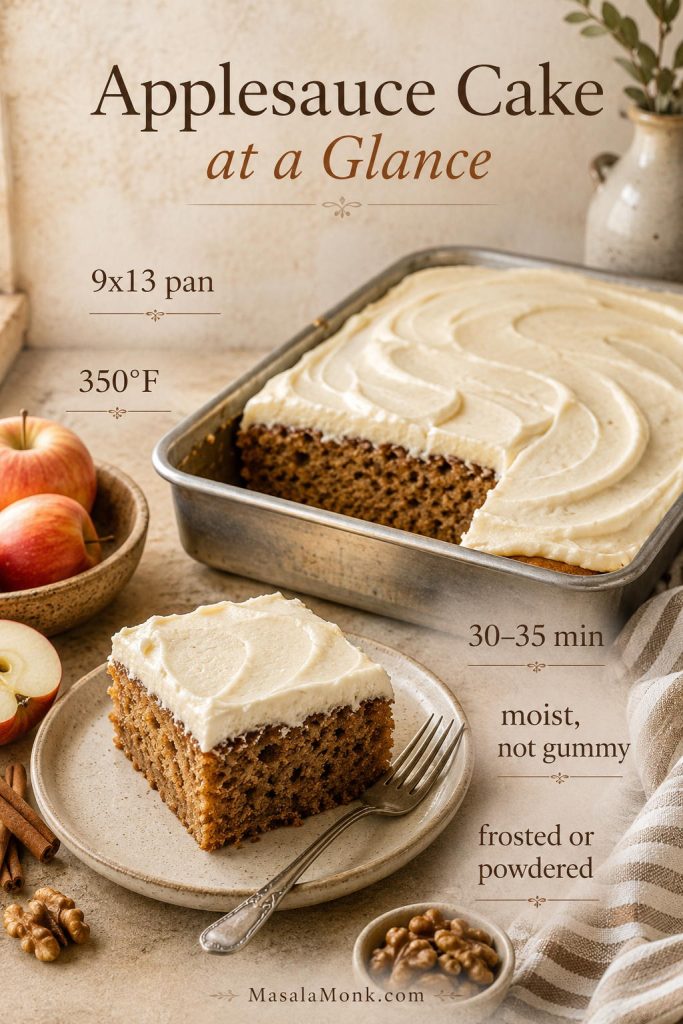
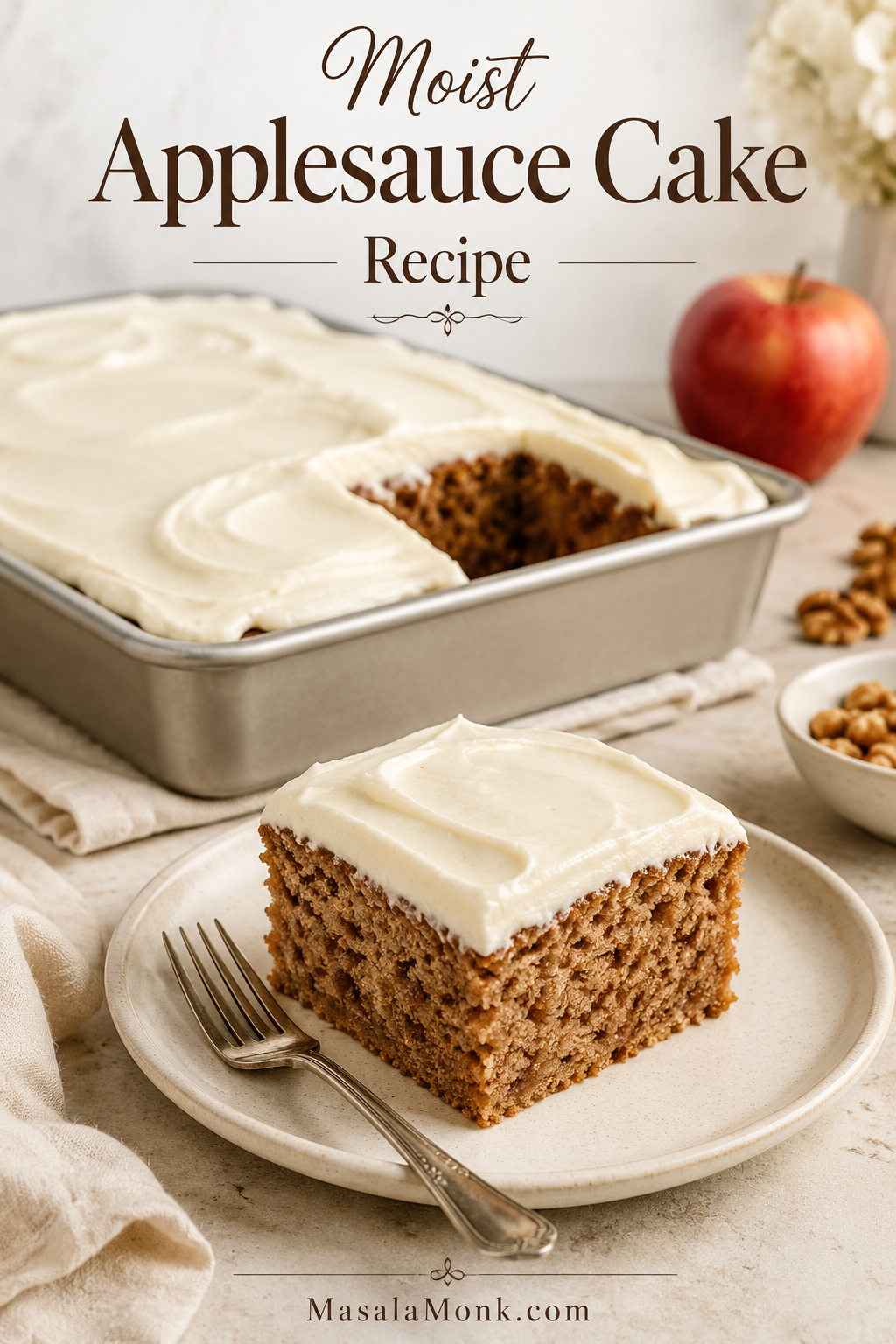
Frosted applesauce cake in a 9x13 metal pan with one square removed and plated in front, showing a soft brown crumb and cream cheese frosting.

Applesauce cake usually starts with one very specific craving: a soft, warmly spiced cake that feels old-fashioned without being dry, heavy, or fussy. This applesauce cake recipe is built around that craving, but also around the problems that can sneak in. Applesauce sounds like it should guarantee moisture, yet the middle can still turn gummy, the edges can dry out, the spices can taste flat, or the frosting can melt because the cake was still warm underneath.

The goal here is to prevent those problems before they happen. This easy applesauce cake bakes in a 9×13 pan with unsweetened applesauce, brown sugar, neutral oil, eggs, vanilla, cinnamon, ginger, nutmeg, and a small pinch of clove or allspice. Applesauce keeps the cake moist, while oil keeps the crumb tender after it cools.

The flavor is apple-spice rather than fresh-apple-chunk cake: cinnamon first, brown sugar underneath, gentle apple in the background, and a tangy cream cheese finish if you frost it. Think of it as an old-fashioned snack cake dressed up just enough for dessert. Dust it with powdered sugar when you want something simple with coffee, or fold in raisins and walnuts when you want the kind of cake that tastes like it came from an older recipe box.
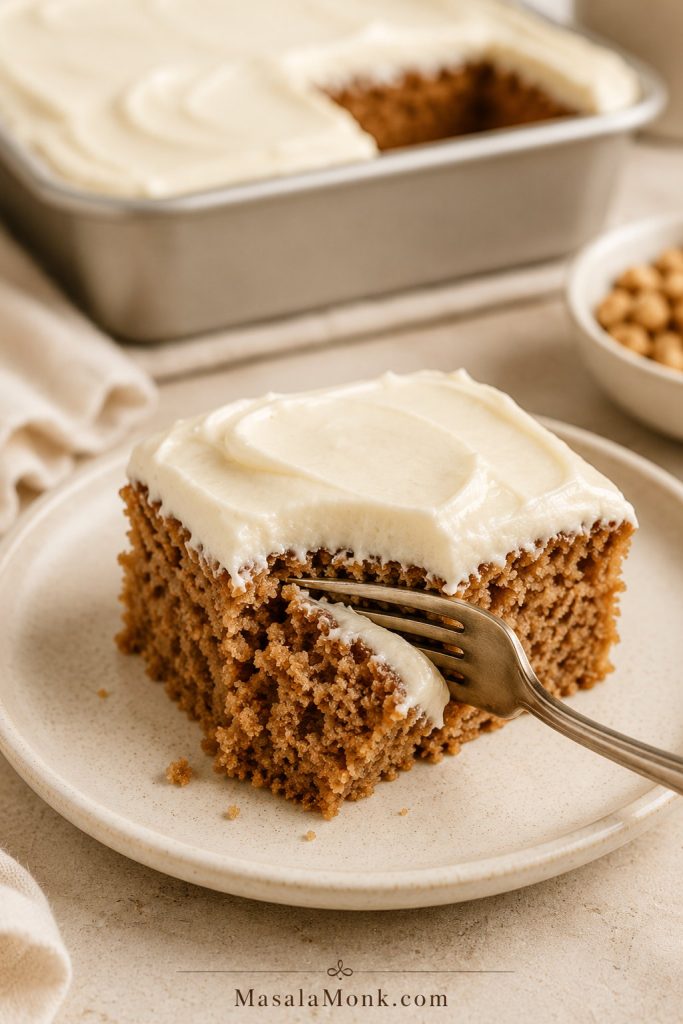
Close-up of a frosted applesauce cake square on a cream plate with a fork pressing into the soft crumb.
A fork should slide into the slice easily, but the cake should still hold its shape. That balance is what separates a tender applesauce cake from one with a gummy middle.

Applesauce Cake at a Glance

Most reliable pan 9×13-inch light metal baking pan.
Oven temperature 350°F / 175°C for metal pans; 325°F / 165°C for glass.
Bake time About 30–35 minutes, depending on pan and oven.
Applesauce texture Unsweetened, smooth, and not watery.
Texture goal Moist and tender, not wet or gummy.
Flavor profile Warm apple-spice cake with gentle apple flavor.
Topping choices Cinnamon cream cheese frosting, powdered sugar, or vanilla glaze.
Yield 15–16 squares.
Storage Refrigerate once frosted with cream cheese.
Make-ahead Bake one day ahead and frost after cooling.
At-a-glance applesauce cake guide showing a frosted cake square with cues for pan size, oven temperature, bake time, texture, and topping options.
Start with the reliable 9×13 setup: 350°F, about 30 to 35 minutes, and a center check that matters more than browned edges.

What This Applesauce Cake Guide Covers

Use this guide for the full cake, frosting choices, pan swaps, shortcut options, storage, and the small baking decisions that keep this cake moist instead of gummy.

Quick Answer: Moist 9×13 Applesauce Cake

For a moist applesauce cake, bake a 9×13-inch pan at 350°F / 175°C for about 30 to 35 minutes. Use unsweetened applesauce, brown sugar, eggs, warm spices, vanilla, and a moderate amount of neutral oil. The cake is done when the center springs back lightly and a toothpick comes out clean or with a few moist crumbs.

The most important texture rule is simple: applesauce adds moisture, but it does not replace fat perfectly. A no-oil version may sound appealing, but it is much more likely to bake up dense, chewy, or gummy. A little oil gives the crumb softness, especially after the cake has cooled and rested.

Most reliable first bake: use unsweetened applesauce, 3/4 cup neutral oil, a light metal 9×13 pan, and let the cake cool completely before frosting. Once you know how the crumb should feel, you can adjust sweetness, frosting, add-ins, or oil level with more confidence.

Need the visual cues before baking? Jump to the Applesauce Cake Texture Checklist before you mix the batter.

Applesauce Cake Texture Checklist
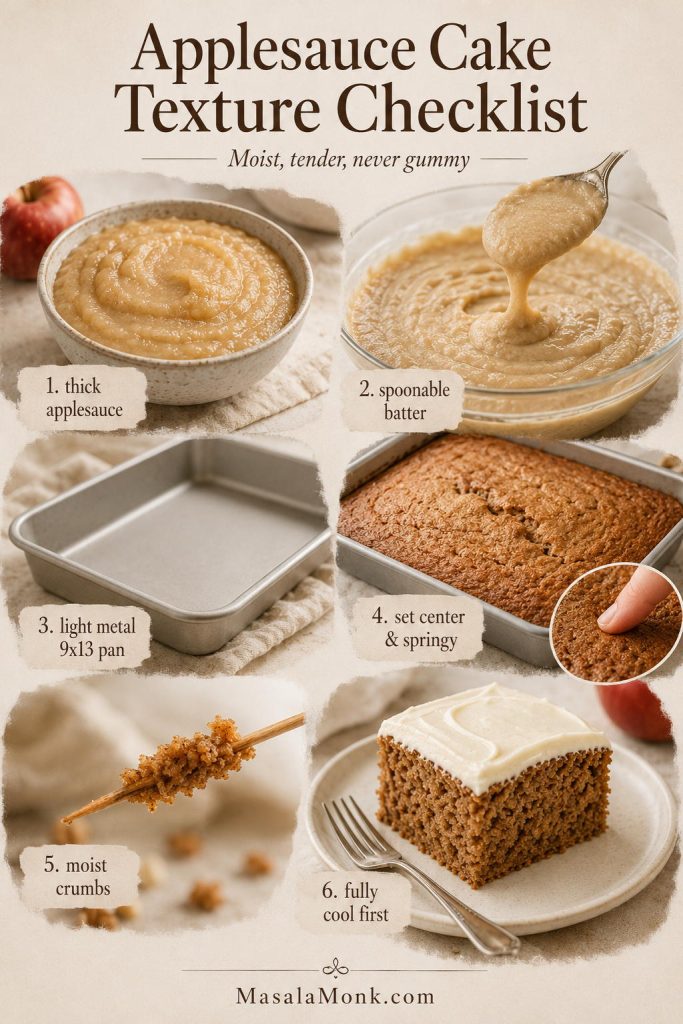
Applesauce Smooth, thick, and not watery.
Batter Glossy, tan, thick but spoonable.
Pan Light metal 9×13 for the most even first bake.
Center Set and springy, with no jiggle.
Toothpick Clean or a few moist crumbs, not wet batter.
Frosting Only after the cake is fully cool.
Applesauce cake texture checklist showing thick applesauce, spoonable batter, a metal pan, a set cake center, a toothpick test, and a cooled frosted slice.
The best anti-gummy cues happen before and after baking: thick applesauce, spoonable batter, a set center, moist crumbs, and a fully cooled cake before frosting.

Once those cues make sense, go straight to how to make applesauce cake without a gummy center, or use the recipe card if you are ready to bake.

Why This Recipe Works

The texture comes down to balance: enough applesauce for moisture, enough oil for tenderness, and enough structure for clean slices. Applesauce gives the cake its soft, damp crumb and quiet apple flavor, but oil is what keeps that crumb tender after the pan cools. Eggs help it set cleanly, while brown sugar, cinnamon, and the supporting spices make the apple flavor feel fuller.
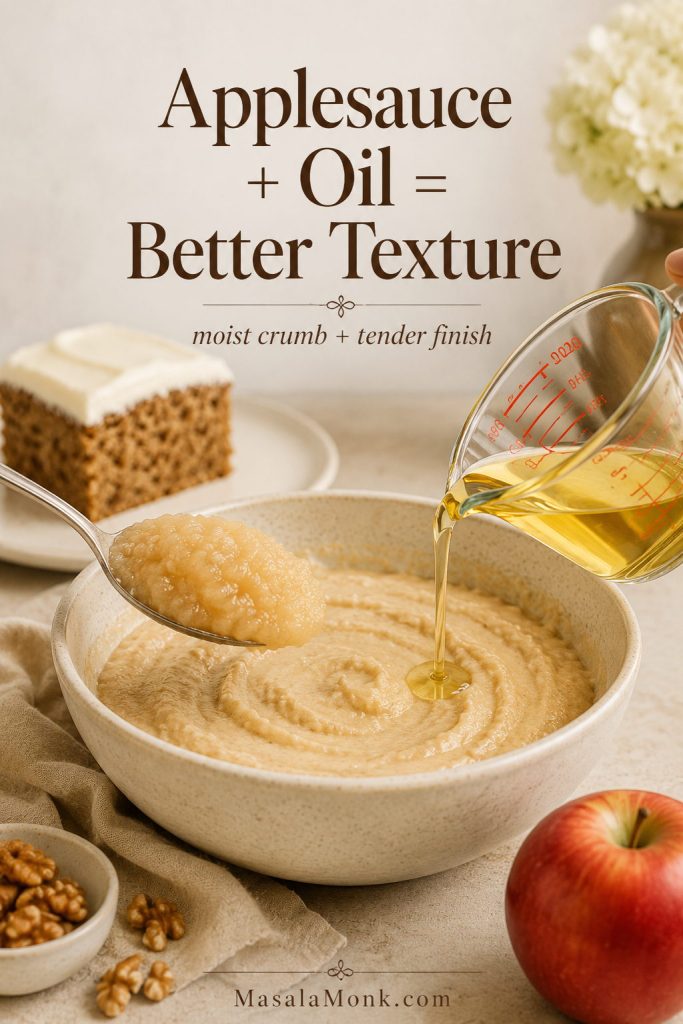
Applesauce and oil being added to cake batter with a finished applesauce cake slice in the background.
Applesauce gives the cake its soft, damp apple-spice crumb; however, the oil protects tenderness once the pan cools, so the slices stay plush instead of rubbery.

A 9×13 pan helps too. It gives the batter enough room to bake evenly, cools faster than a deep Bundt or loaf, and makes the finished cake easy to frost, slice, store, and share. This is the kind of pan cake that works for potlucks, after-school snacks, holiday tables, and casual weekends when you want the house to smell like cinnamon without building a layer cake.

Resting does this cake a favor. Warm spice cakes often taste fuller after a few hours because the cinnamon, applesauce, brown sugar, and vanilla have time to settle into the crumb. That makes this a useful make-ahead dessert, especially if you bake it one day and frost it the next.

There is one place where this recipe stays deliberately practical: it does not remove every bit of fat just because applesauce is in the batter. Applesauce can replace some oil or melted butter in certain bakes, but replacing too much can change the texture. Bon Appétit has a helpful explainer on using applesauce as an oil or butter replacement; the same lesson applies here. Applesauce brings moisture, but fat still matters for tenderness.

What Makes This an Old-Fashioned Applesauce Cake?

Old-fashioned applesauce cake is not just about the ingredient list. It is about the mood of the cake: simple pan, pantry ingredients, warm spice, soft crumb, and a flavor that feels better the next day. It should not need decoration to be good. A square dusted with powdered sugar should still feel complete.

The old-fashioned feeling stays, but the method gets a little more precise. The base cake is soft and spiced, the frosting is optional rather than mandatory, and the add-ins are flexible. In some families, raisins and walnuts are expected. Others want a plain soft square with powdered sugar. For dessert people, cream cheese frosting is what makes the cake feel complete. This recipe can handle all three camps.
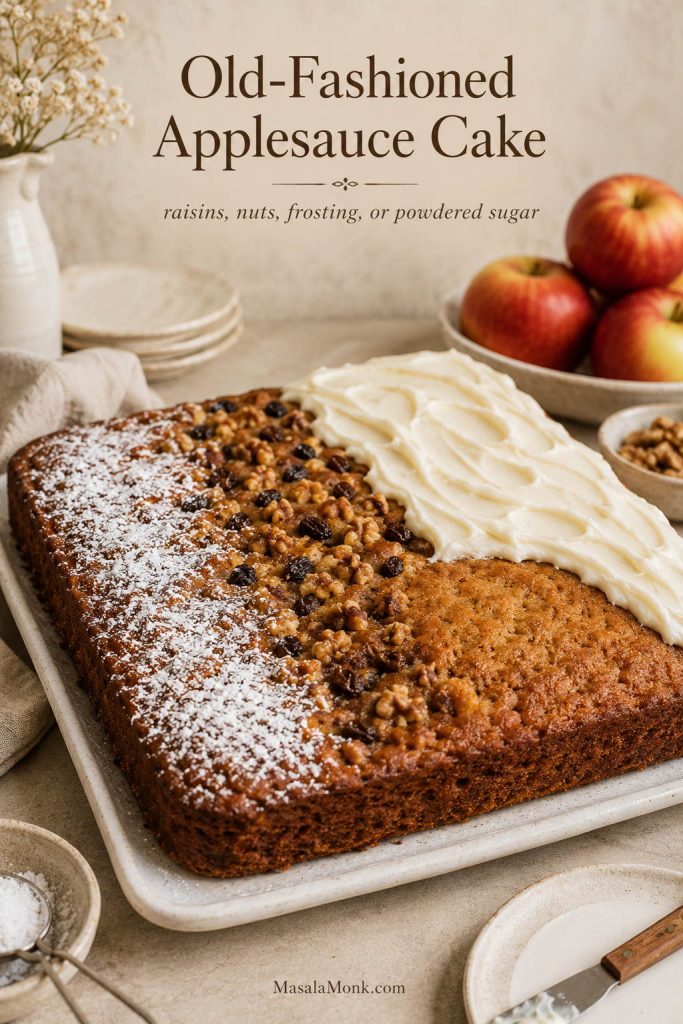
Old-fashioned applesauce cake shown with frosted, powdered sugar, raisin-walnut, and plain sections in one pan.
One pan can satisfy several applesauce cake camps: frosted for dessert, powdered for old-fashioned simplicity, plain for snacking, or raisin-walnut for recipe-box flavor.

If you grew up with applesauce cake, you probably already know which camp your family was in: raisins, no raisins, nuts, no nuts, frosting, or just powdered sugar. This is also the kind of cake that behaves well in real kitchens. Cut it into neat squares for guests, or let people shave off uneven little pieces all day. It is exactly the sort of cake that quietly disappears from the pan before anyone admits they had a second slice.

Ingredients That Keep the Cake Moist

The ingredient list is simple; the texture depends on how you handle a few key choices. Use smooth unsweetened applesauce, measure the flour carefully, keep some oil in the batter, and make sure the spices still smell fresh before you add them. The batter should already smell cozy before it goes into the oven: cinnamon first, then brown sugar, vanilla, and that quiet apple note from the applesauce.
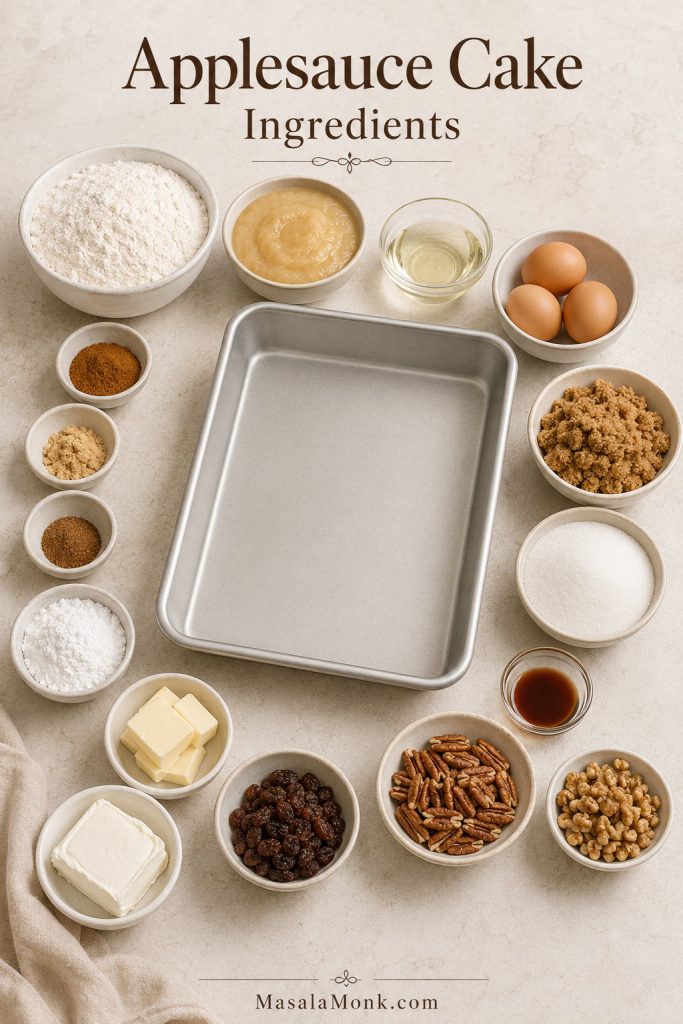
Ingredients for applesauce cake arranged around a 9x13 pan, including applesauce, flour, oil, eggs, sugars, spices, nuts, raisins, cream cheese, butter, and powdered sugar.
A simple pantry cake still depends on balance: watery applesauce slows the center, too much flour dries the crumb, and tired spices make the flavor fall flat.

Best Applesauce to Use

Unsweetened applesauce is the cleanest choice because the batter already has brown sugar and granulated sugar. Sweetened applesauce will work, but the cake can taste more sugary than balanced. Cinnamon applesauce can also work, although it gives you less control over the spice level.

Smooth applesauce gives the most even crumb, which is what you want if this is the kind of cake you plan to frost, slice, and carry to a table without fuss. Chunky applesauce makes the texture more rustic, but large pieces may create damp pockets unless the sauce is thick and the chunks are small. Homemade applesauce is fine as long as it is not watery. If it looks loose, simmer it briefly or drain off extra liquid before measuring.
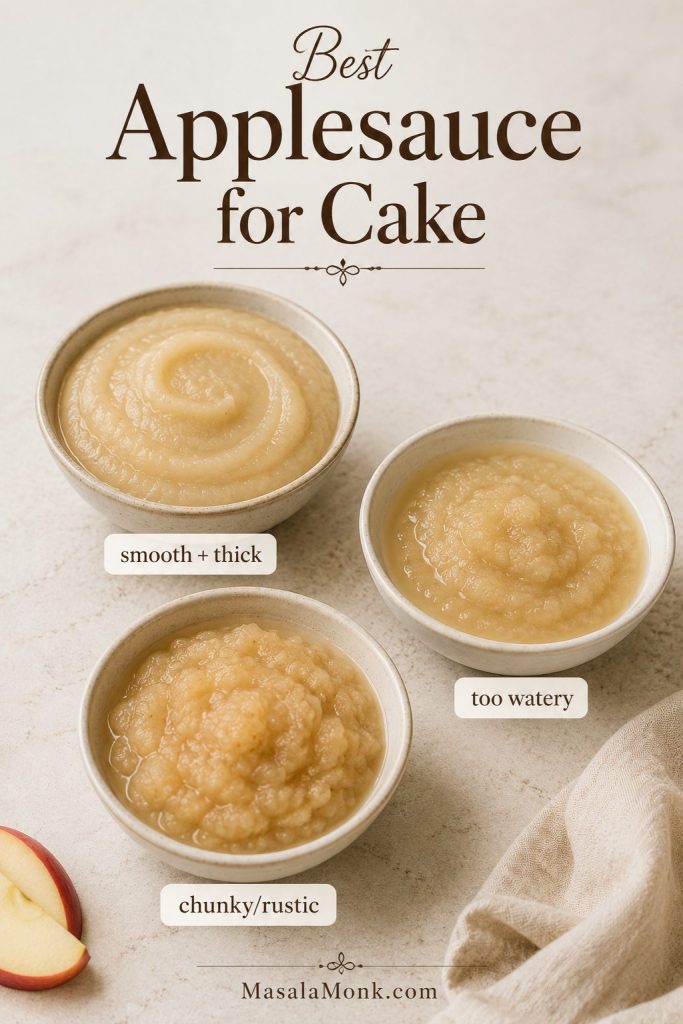
Three bowls comparing smooth thick applesauce, watery applesauce, and chunky applesauce for baking applesauce cake.
Smooth, thick applesauce gives the most even crumb. However, watery applesauce can loosen the batter and make the center harder to bake through.

If your applesauce looks loose, keep the troubleshooting guide nearby so you know how to avoid a wet or gummy center.

Why This Recipe Uses Applesauce and Oil

Applesauce gives the cake moisture, fruit solids, and mild apple flavor. Oil brings fat, which keeps the crumb soft after baking. Because the batter uses both, the finished squares stay moist without turning rubbery. That balance matters most after cooling, when leaner versions can start to feel dense or chewy.

For a slightly lighter cake, reduce the oil from 3/4 cup to 1/2 cup and add 1/4 cup extra applesauce. The full amount gives the most plush first-bake texture, though. Do not remove all the oil unless you are comfortable with a denser, more snack-cake-style result.

For a lighter version, check the variations section before reducing the oil too aggressively.

Flour, Leavening, and Salt

All-purpose flour gives the cake enough structure to slice cleanly. Spoon and level the flour, or weigh it if you can. Too much flour is one of the easiest ways to lose the soft, snack-cake crumb that makes this recipe work.

This recipe uses both baking powder and baking soda. Baking powder helps lift the batter, while baking soda supports browning and works with the acidity in the applesauce and brown sugar. Salt is not optional here; it keeps the sweetness and spice from tasting flat.

Warm Spices for Old-Fashioned Flavor

Cinnamon does most of the work, but it should not be alone. Ginger adds warmth, nutmeg adds roundness, and a small amount of clove or allspice gives the cake that old-fashioned spice-cake finish. Keep the clove light. Too much can cover the applesauce flavor instead of supporting it.

Before mixing, smell your cinnamon. If it does not make you think of fall before the cake even bakes, it probably will not carry the flavor once it is in the batter. Applesauce is gentle, so the spice blend has to carry the aroma.
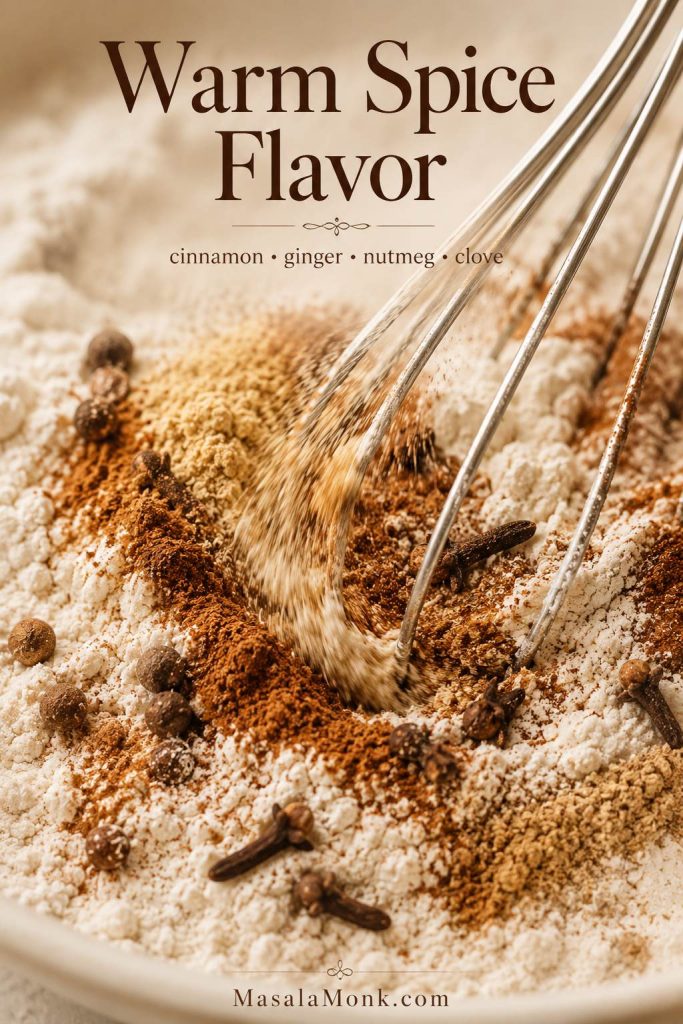
Warm spices including cinnamon, ginger, nutmeg, and clove being whisked into flour for applesauce cake.
Because applesauce has a gentle flavor, the spice blend does much of the aromatic work. Fresh cinnamon, ginger, nutmeg, and clove make the cake taste warmer and fuller.

Optional Raisins, Walnuts, and Pecans

Walnuts make the cake taste classic and slightly earthy. Pecans make it richer and sweeter. Raisins add soft little pockets of fruit, especially if they are soaked in hot water for 10 minutes and drained well before mixing.

To keep add-ins from sinking, toss them with a tablespoon of flour before folding them into the batter. If your table is divided on raisins, leave the batter plain and sprinkle nuts over only half the frosting. Raisins, walnuts, frosting, and powdered sugar all seem to create strong opinions around this cake, which is why a half-and-half pan works so well.
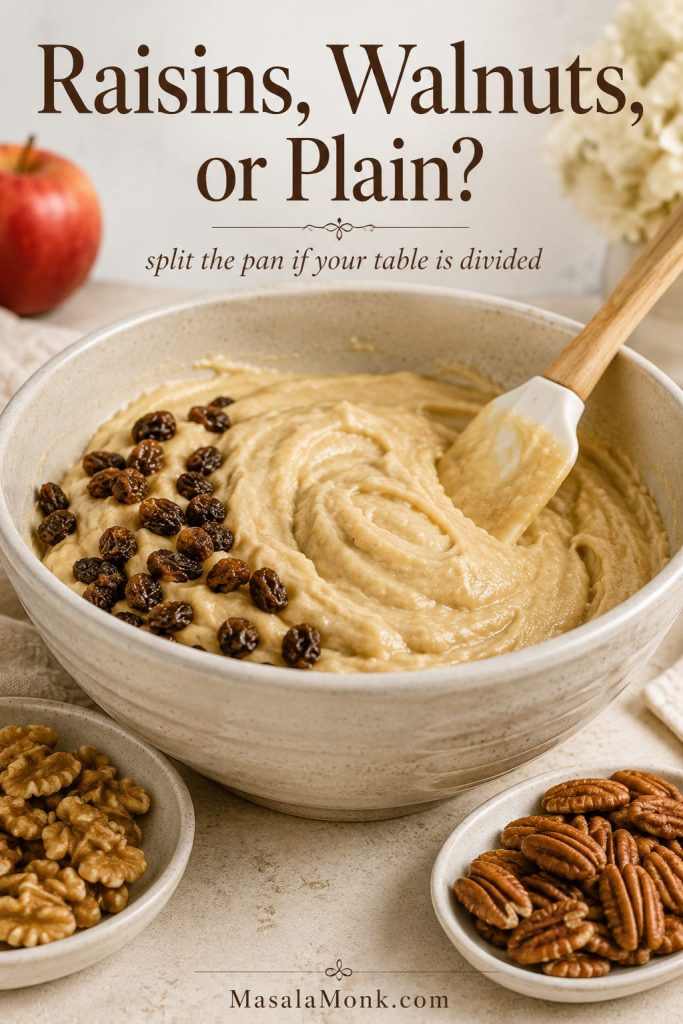
Applesauce cake batter with raisins partly folded in and walnuts and pecans shown nearby as add-in options.
Raisins, walnuts, and pecans are optional, but they change the whole mood of the cake. For divided tables, keep one side plain and add the old-fashioned extras to the other.

How to Make Applesauce Cake Without a Gummy Center

This is a stir-together cake, not a fussy layer cake. You do not need to cream butter, separate eggs, or use a mixer for the batter. The most important steps are preparing the pan, mixing gently, and baking until the center is truly set.

Already comfortable with the steps? Jump to the recipe card. Unsure how the center should look? Use the doneness cues before pulling the pan.

1. Prepare the Pan and Oven

Heat the oven to 350°F / 175°C. Grease a 9×13-inch light metal baking pan, or line it with parchment if you want to lift the cooled cake out for cleaner slices. A light metal pan gives the most reliable, even bake.
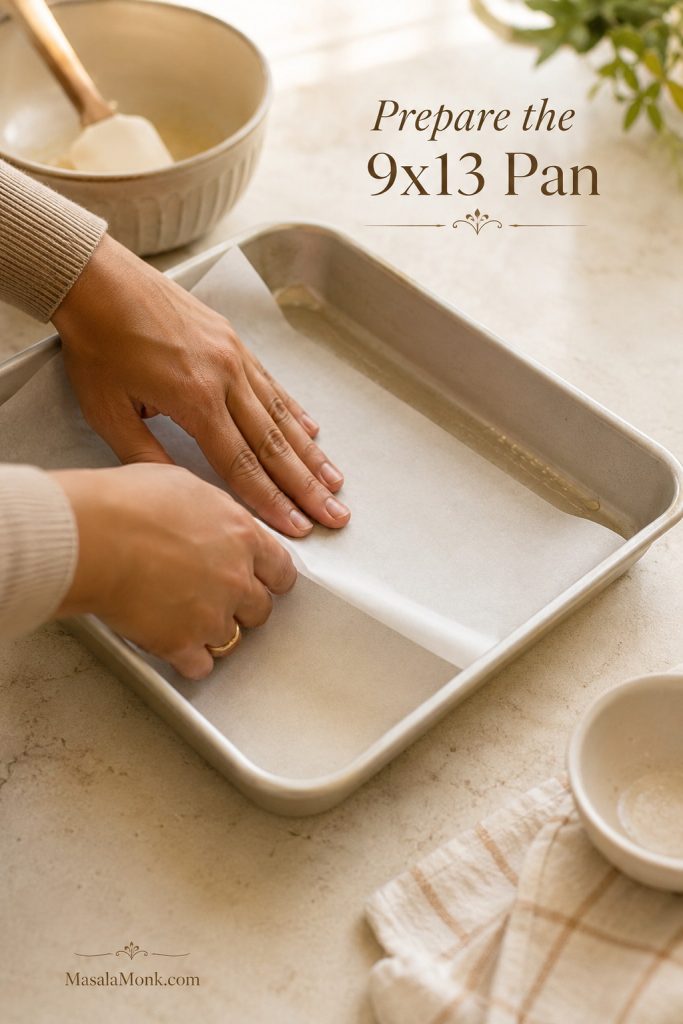
Hands smoothing parchment paper into a greased 9x13 metal baking pan before adding applesauce cake batter.
Preparing the pan before mixing saves trouble later. Parchment makes the cooled cake easier to lift, frost, slice, and serve cleanly.

When using a glass pan, reduce the oven temperature to 325°F / 165°C. Glass keeps radiating heat differently than metal, so the edges can race ahead while the center still needs time. The lower temperature gives the middle a better chance to catch up.
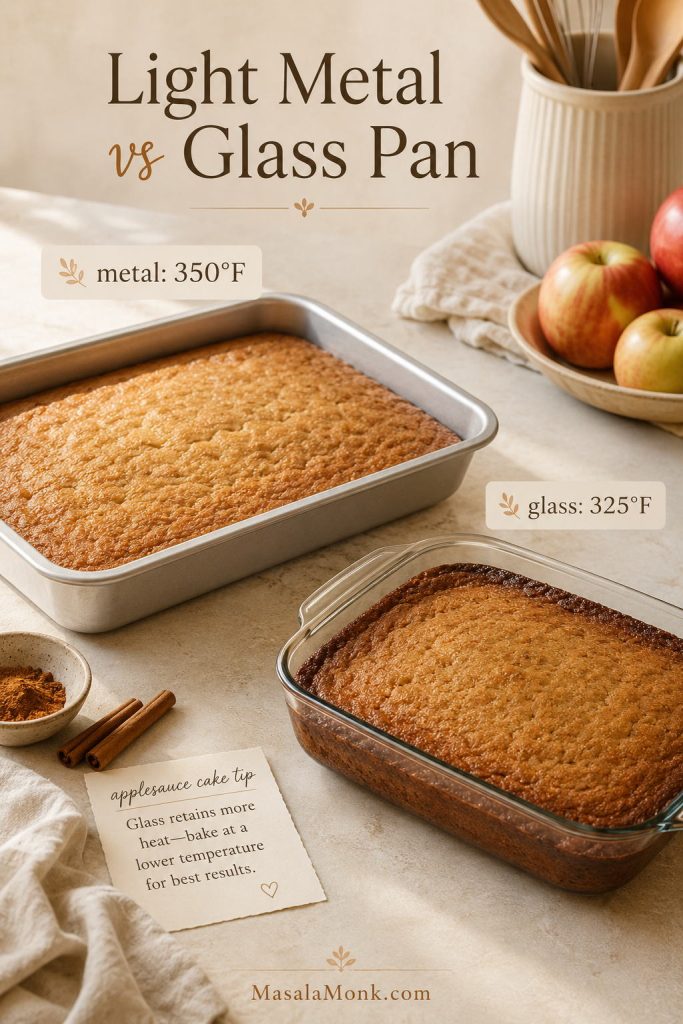
Light metal and glass baking pans compared for applesauce cake, with temperature cues for baking in each pan.
Metal and glass do not bake this cake the same way. A light metal 9×13 pan is the easiest first choice, while glass usually needs lower heat.

2. Whisk the Dry Ingredients

In a medium bowl, whisk the flour, baking powder, baking soda, salt, cinnamon, ginger, nutmeg, and clove or allspice. This spreads the leavening and spices evenly through the flour, so the cake rises well and does not end up with bitter pockets of baking soda or dull patches of spice.
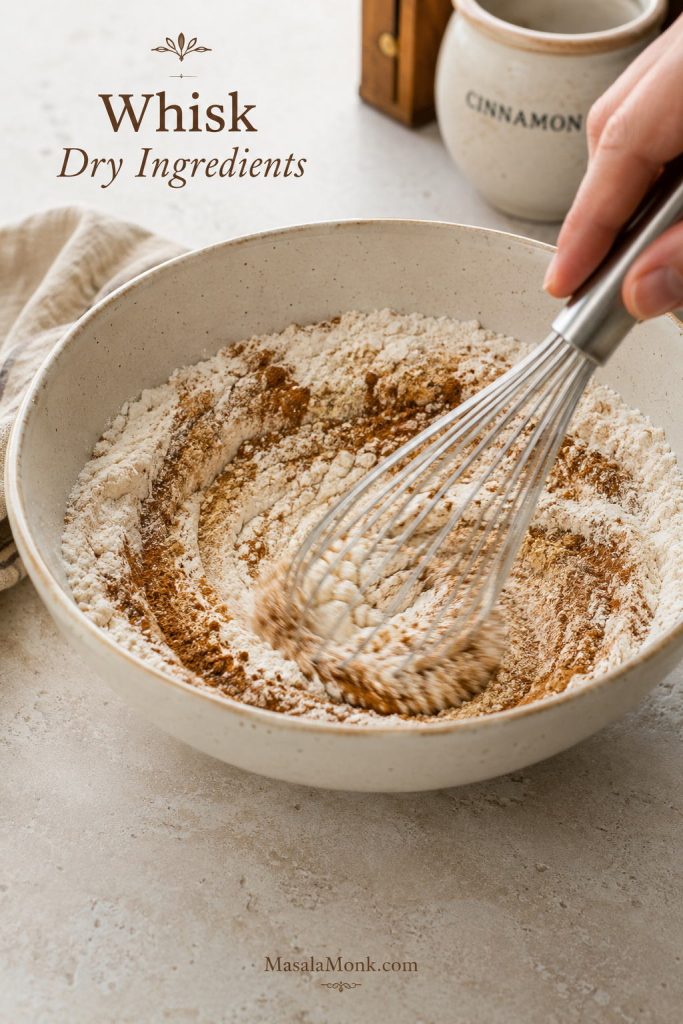
Flour, baking powder, baking soda, salt, and warm spices being whisked together in a bowl for applesauce cake.
A quick whisk before the wet ingredients go in is small insurance; it keeps the rise, salt, and spice evenly spread through every square.

3. Mix the Applesauce, Oil, Eggs, Sugars, and Vanilla

In a larger bowl, whisk the applesauce, oil, eggs, brown sugar, granulated sugar, and vanilla until smooth. The mixture should look loose, glossy, and tan. Break up any lumps of brown sugar now, before the flour goes in.

Applesauce, oil, eggs, brown sugar, granulated sugar, and vanilla whisked into a glossy tan mixture.
Before the flour goes in, the wet mixture should look loose, glossy, and even. At this stage, break up any brown sugar lumps so they do not streak through the batter.

Room-temperature eggs blend more easily, but the cake will still work if you forget. Just whisk the wet ingredients until the eggs are fully incorporated and the mixture looks even. This is the point where the batter starts to smell like the cake you are hoping for: cinnamon, brown sugar, vanilla, and just enough apple to make it feel old-fashioned.

4. Combine Without Overmixing

Add the dry ingredients to the wet ingredients and fold just until the flour disappears. The batter should be thick but spoonable, not runny and not stiff like cookie dough. Stop as soon as it comes together. Overmixing develops the flour too much and can make the cake feel tough or gummy.
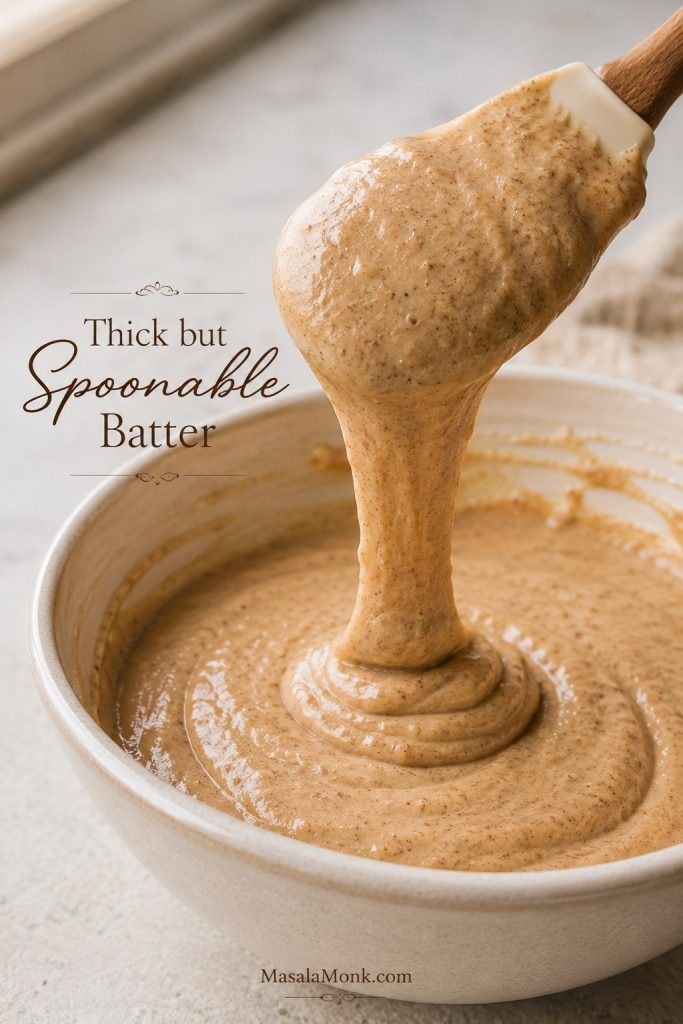
Thick tan applesauce cake batter lifting from a spatula and falling slowly back into the bowl.
Thick but spoonable batter is the sweet spot. If it pours too loosely, the middle of an applesauce cake can take longer to bake through.

Fold in walnuts, pecans, or raisins at the end if you are using them. Spread the batter evenly into the pan and smooth the top without pressing it down too firmly.
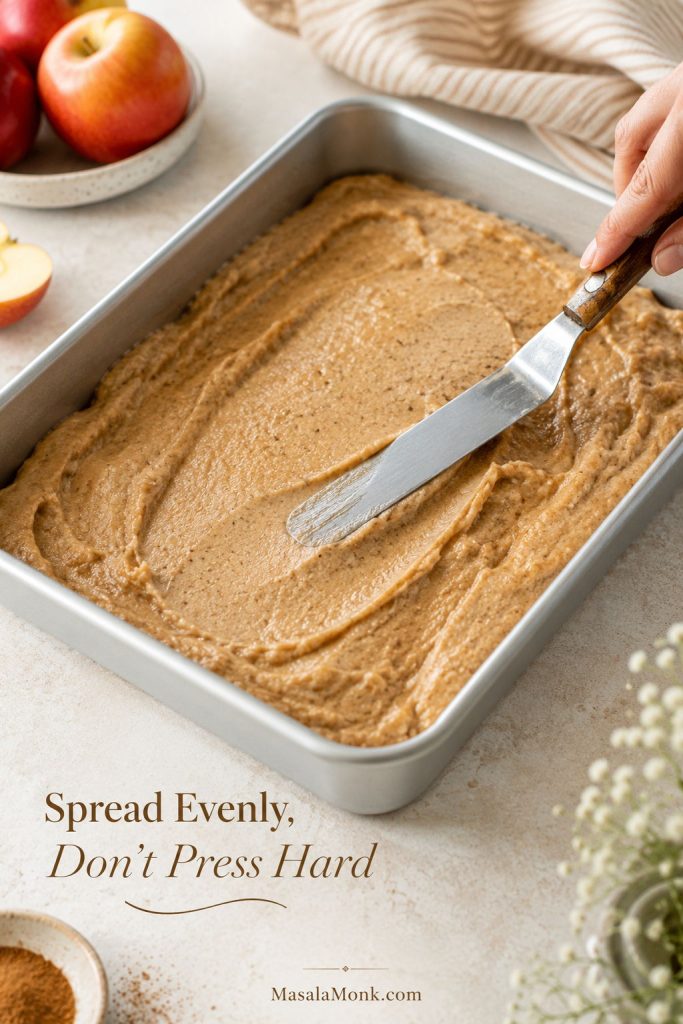
Applesauce cake batter being spread evenly into a 9x13 metal pan with an offset spatula.
Spread the batter evenly, then stop fussing with it. A level surface helps the center and edges bake at a similar pace.

5. Bake Until Moist, Not Gummy

Bake for 30 to 35 minutes, checking near the center around the 30-minute mark. The top should spring back lightly, and a toothpick inserted near the center should come out clean or with a few moist crumbs. Wet batter means the cake needs more time.

The center is the part that lies to you. The edges may look finished while the middle still needs a few more minutes. Since applesauce adds so much moisture, pulling the cake too early is the fastest route to a gummy square in the middle of the pan.
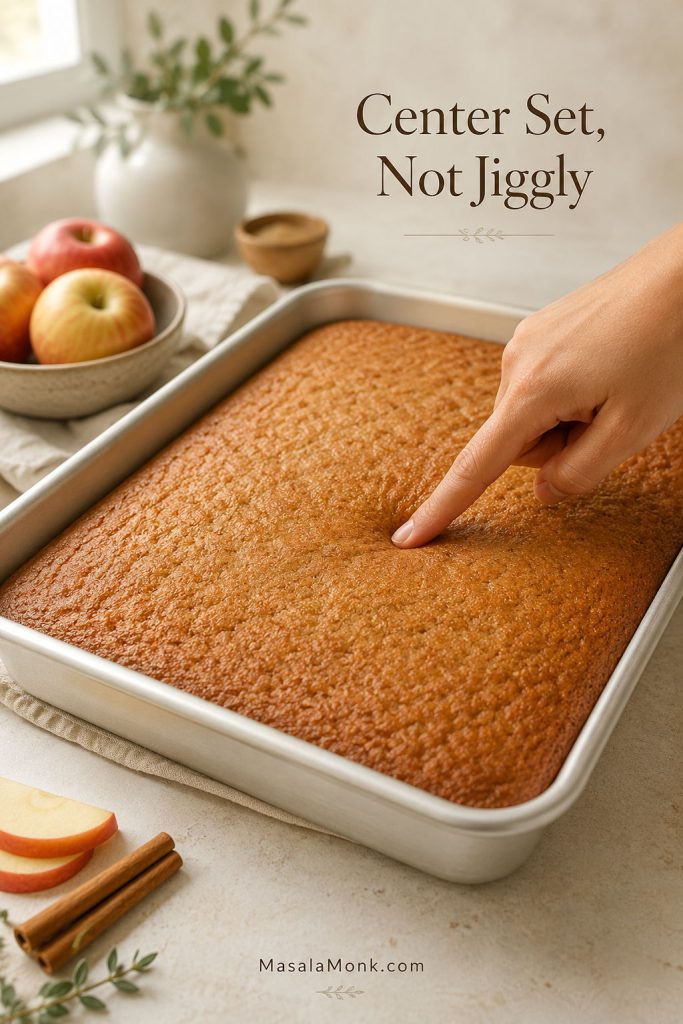
Finger gently pressing the center of a baked applesauce cake in a 9x13 pan to check that it springs back.
The edges often look done first, but the middle decides the cake’s texture. Press gently in the center and look for a light spring-back before pulling the pan.

Before removing the cake from the oven, compare it with the doneness cues so the edges do not trick you into underbaking the center.

6. Cool Completely Before Frosting

Let the cake cool completely before frosting. Cream cheese frosting melts quickly on a warm cake, and even a slightly warm center can make the frosting slide, soften, or turn greasy. If you are baking ahead, cool the cake, cover it, and frost it the next day.
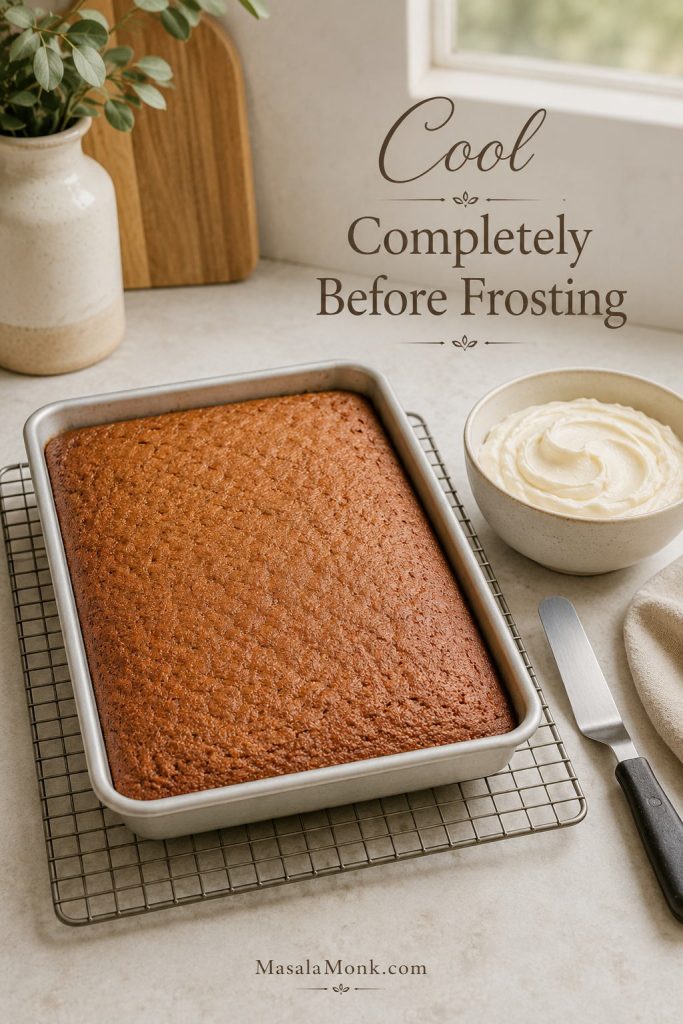
Unfrosted applesauce cake cooling in a 9x13 metal pan on a wire rack with cream cheese frosting waiting nearby.
Cream cheese frosting behaves best on a fully cooled cake. Even a little trapped warmth can loosen the topping and blur those clean frosted squares.

Can You Make It in One Bowl?

You can make a one-bowl version, but two bowls are more reliable. Whisking the flour, leavening, salt, and spices separately helps the cake rise evenly and keeps the spice flavor consistent. For the easiest cleanup, use one medium bowl for the dry ingredients and one large bowl for everything else.

The visual recipe card below keeps the main bake cues close before the full printable-style details.
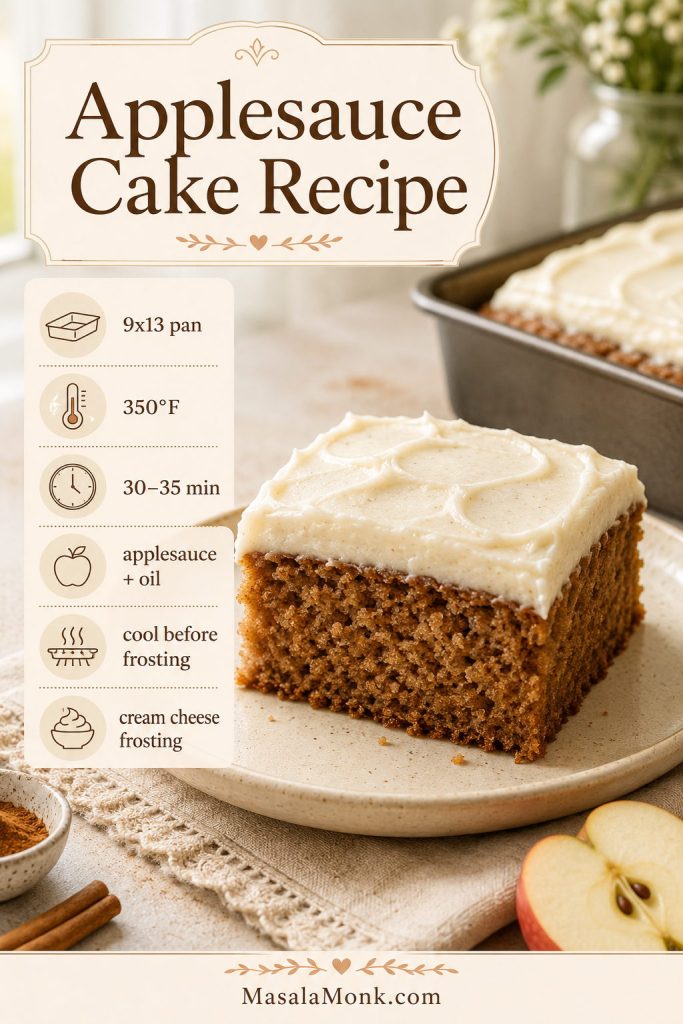
Saveable applesauce cake recipe card with a frosted cake square, 9x13 pan cue, oven temperature, bake time, applesauce and oil cue, and cream cheese frosting note.
This saveable cue card keeps the bake on track: use a 9×13 pan, keep the oven at 350°F, check around 30 minutes, and cool the cake before frosting.

Applesauce Cake Recipe Card

This easy 9×13 applesauce cake recipe has a soft, plush crumb, warm cinnamon-spice flavor, and just enough oil to stay tender after cooling. Frost it with cinnamon cream cheese frosting for a classic dessert finish, or leave it unfrosted for an old-fashioned snack cake.

Prep Time20 minutes
Cook Time30–35 minutes
Cooling Time1–1 1/2 hours
Yield15–16 squares

Equipment

  • 9×13-inch baking pan, preferably light metal
  • Mixing bowls
  • Whisk and silicone spatula
  • Measuring cups/spoons or kitchen scale
  • Toothpick, cake tester, or instant-read thermometer
  • Wire cooling rack
  • Hand mixer or stand mixer for frosting
  • Offset spatula, optional

Ingredients

For the Cake

  • 2 1/2 cups all-purpose flour, spooned and leveled, about 300–315g
  • 2 teaspoons baking powder
  • 1 teaspoon baking soda
  • 3/4 teaspoon fine salt
  • 1 tablespoon ground cinnamon
  • 1/2 teaspoon ground ginger
  • 1/2 teaspoon ground nutmeg
  • 1/4 teaspoon ground cloves or allspice
  • 2 cups smooth unsweetened applesauce, about 490–500g
  • 3/4 cup neutral oil, 180ml
  • 2 large eggs, room temperature if possible
  • 3/4 cup packed light brown sugar, about 150g
  • 1/2 cup granulated sugar, about 100g
  • 2 teaspoons vanilla extract
  • 3/4 cup chopped walnuts or pecans, optional
  • 1/2 cup raisins, optional

For the Cinnamon Cream Cheese Frosting

  • 8 oz brick-style cream cheese, softened, 226g
  • 6 tablespoons unsalted butter, softened, 85g
  • 2 1/2 to 3 cups powdered sugar, 300–360g
  • 1 teaspoon vanilla extract
  • 1/4 to 1/2 teaspoon cinnamon
  • Pinch of salt

Instructions

  1. Heat the oven. Preheat to 350°F / 175°C. Grease a 9×13-inch light metal baking pan or line it with parchment.
  2. Whisk the dry ingredients. In a medium bowl, whisk flour, baking powder, baking soda, salt, cinnamon, ginger, nutmeg, and cloves or allspice.
  3. Mix the wet ingredients. In a large bowl, whisk applesauce, oil, eggs, brown sugar, granulated sugar, and vanilla until smooth.
  4. Combine. Add the dry ingredients to the wet ingredients and fold just until no dry streaks remain. Fold in nuts or raisins if using.
  5. Bake. Spread the batter into the pan. Bake for 30 to 35 minutes, until the center no longer jiggles, springs back lightly, and a toothpick comes out clean or with a few moist crumbs.
  6. Cool. Let the cake cool completely in the pan before frosting.
  7. Make the frosting. Beat cream cheese and butter until smooth. Add powdered sugar, vanilla, cinnamon, and salt. Beat until creamy, using more powdered sugar for a thicker frosting.
  8. Frost and slice. Spread over the cooled cake, slice into squares, and serve.
Glass pan note: If baking in a glass 9×13 pan, reduce the oven to 325°F / 165°C and begin checking around 35 minutes. Glass can brown the edges before the center is fully set.
Using a different pan? Check the pan size and bake-time guide before adjusting the recipe.
Frosting note: Use brick-style cream cheese, not tub-style spread. Tub cream cheese is softer and can make the frosting loose.

How to Tell When the Cake Is Done

Do not pull the pan from the oven just because the edges look set. The center matters most. Look for three signs together: the top springs back lightly, the middle no longer jiggles, and a toothpick inserted near the center comes out clean or with a few moist crumbs.

Toothpick lifted from the center of applesauce cake with a few moist crumbs attached and no wet batter.
Moist crumbs mean the cake has baked through without drying out. Wet batter on the toothpick, however, means the center still needs more oven time.

A few soft crumbs are fine. Wet batter is not. Since applesauce keeps the batter moist, an underbaked center can seem acceptable while warm but turn dense and gummy as the cake cools. When in doubt, bake another 3 to 5 minutes and check again.

For extra precision, the center should be around 200–205°F / 93–96°C on an instant-read thermometer. You do not need to check this every time, but it helps if your oven runs cool, your pan is glass, or you are adapting the batter to a deeper pan.
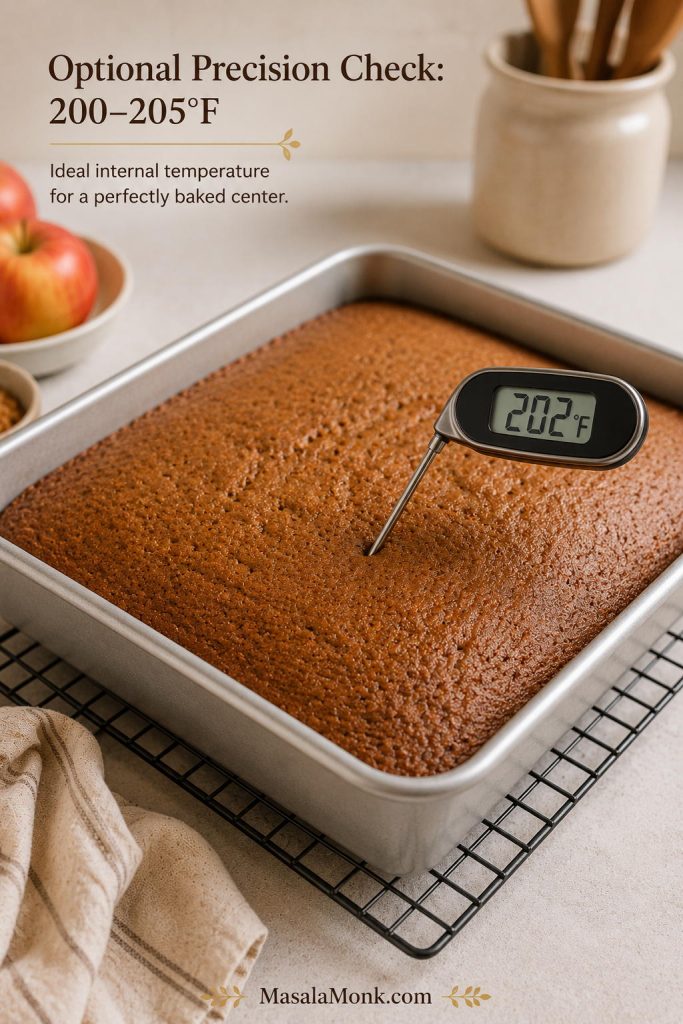
Instant-read thermometer inserted into the center of applesauce cake showing a temperature around 202 degrees Fahrenheit.
An internal temperature around 200 to 205°F is a helpful backup check, especially when using glass, a deeper pan, or an oven that runs cool.

Cream Cheese Frosting, Glaze, or Powdered Sugar?

Cream cheese frosting is the classic dessert finish. The tang balances the brown sugar and warm spices, while the cinnamon ties the frosting back into the cake. Make this version when you want a soft square to feel like dessert rather than an everyday snack.
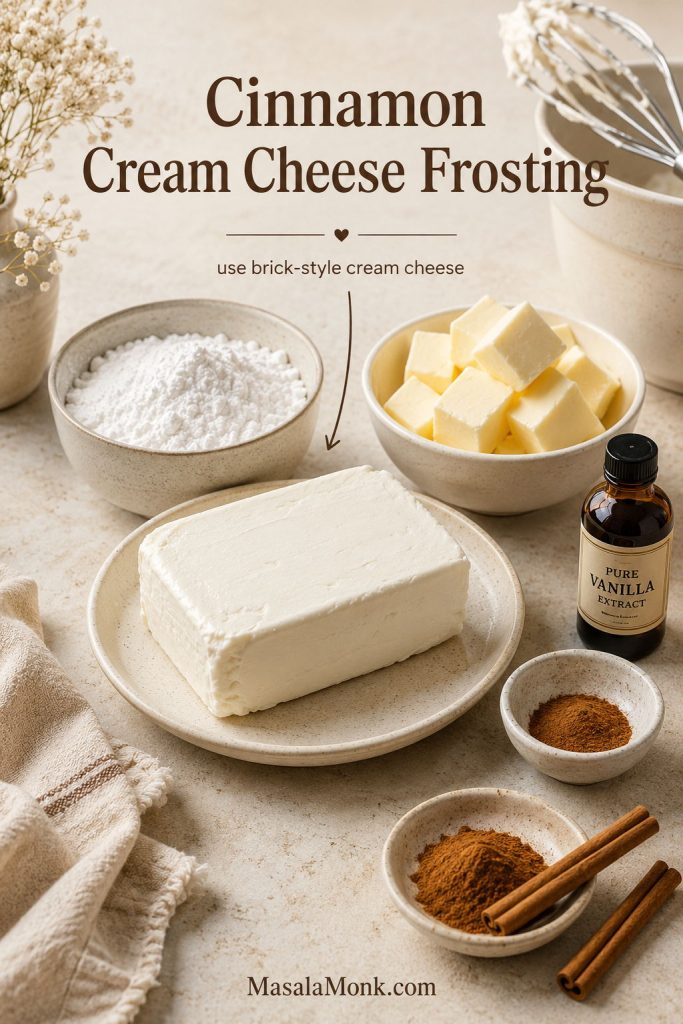
Cream cheese frosting ingredients for applesauce cake, including brick-style cream cheese, butter, powdered sugar, vanilla, and cinnamon.
Brick-style cream cheese gives the frosting more structure than tub-style spread. That small choice helps the topping stay creamy instead of loose or runny.

Powdered sugar makes the cake feel more old-fashioned. A thin vanilla glaze suits Bundt cakes and loaf cakes because it sets neatly and slices cleanly. No frosting at all works when you want the spice and applesauce flavor to stay in front.

The topping is where this cake changes personality, and it is also where families tend to have the strongest opinions. Frosted, it feels like dessert. Unfrosted, it feels like the kind of cake you cut in small squares with coffee, then somehow return to again before dinner. If the cake is for lunchboxes or a room-temperature table, powdered sugar or glaze is easier than cream cheese frosting.
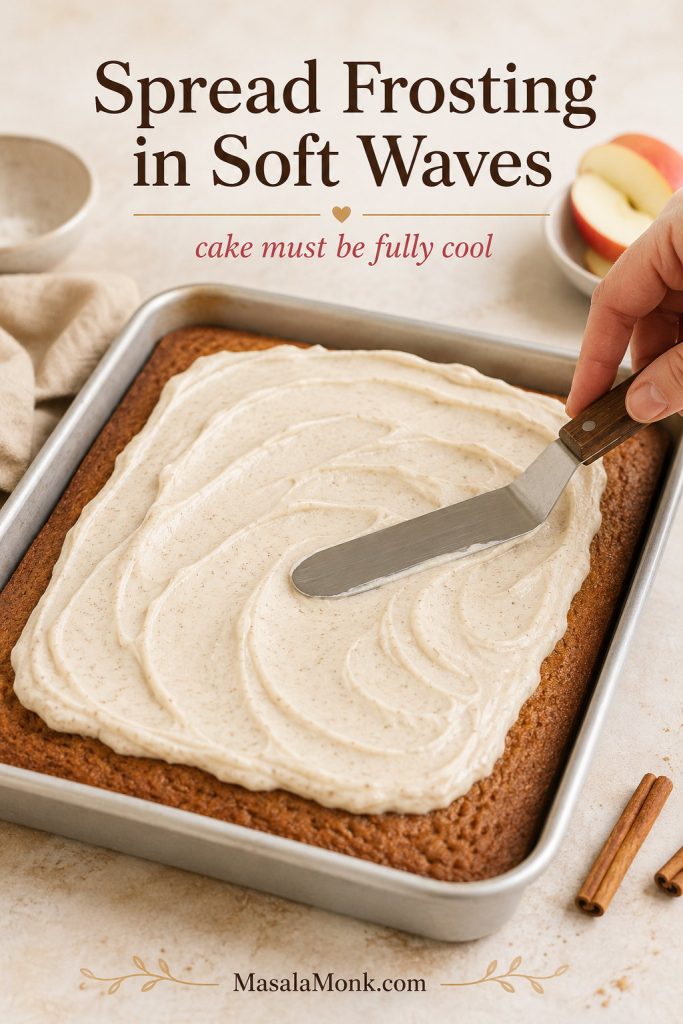
Cream cheese frosting being spread in soft waves over a cooled 9x13 applesauce cake with an offset spatula.
Once the cake is fully cool, spread the frosting in soft waves rather than a thick slab. The topping should feel creamy without overwhelming the spice cake.

Applesauce Cake Topping Options

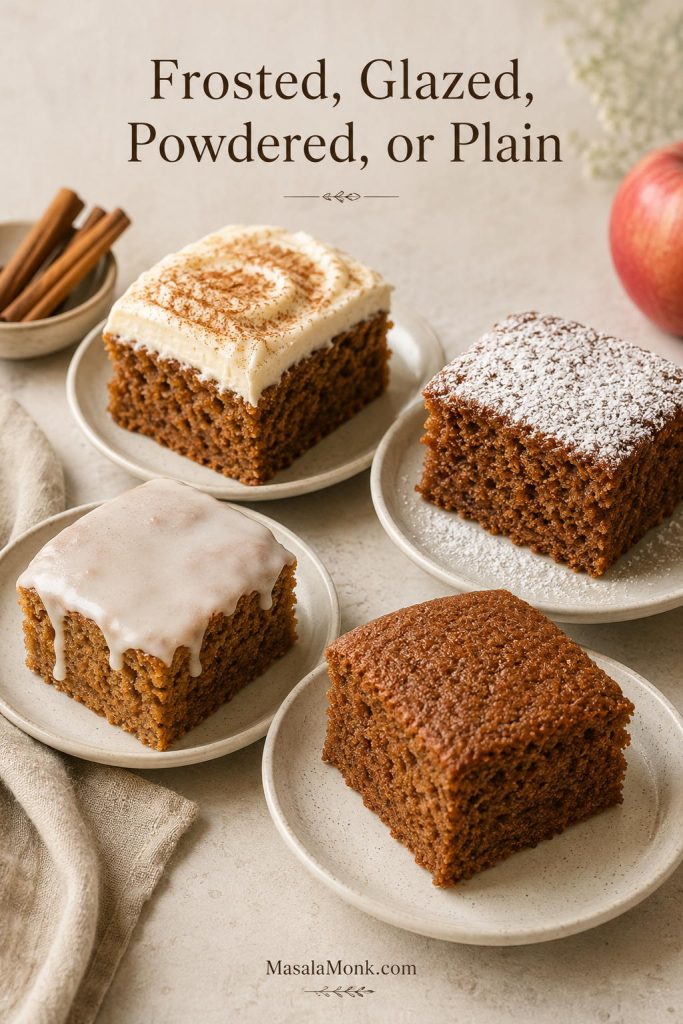
Four applesauce cake squares with different toppings: cream cheese frosting, vanilla glaze, powdered sugar, and plain.
The same applesauce cake can become dessert, coffee cake, lunchbox snack, or an old-fashioned plain square depending on how you finish the top.
Topping Best For Flavor
Cinnamon cream cheese frosting Classic dessert-style cake Tangy, creamy, warmly spiced
Brown butter cream cheese frosting Holiday or potluck version Nutty, rich, deeper
Powdered sugar Old-fashioned snack cake Simple and not too sweet
Vanilla glaze Bundt cake or loaf cake Sweet, neat, easy to slice
No frosting Breakfast, lunchbox, or coffee break More spice-forward

Applesauce Cake Pan Swaps and Bake-Time Changes

Start with the 9×13 Pan

A 9×13 pan is the most reliable first bake because the batter has room to set evenly. Deeper pans need more patience in the center, while wider pans bake faster and can dry out if you wait too long to check them.

Use the table below as a starting point, but let the center make the final call. This cake can look finished at the edges before the middle is ready, especially in glass, Bundt, or loaf pans.

Pan Size and Bake-Time Guide
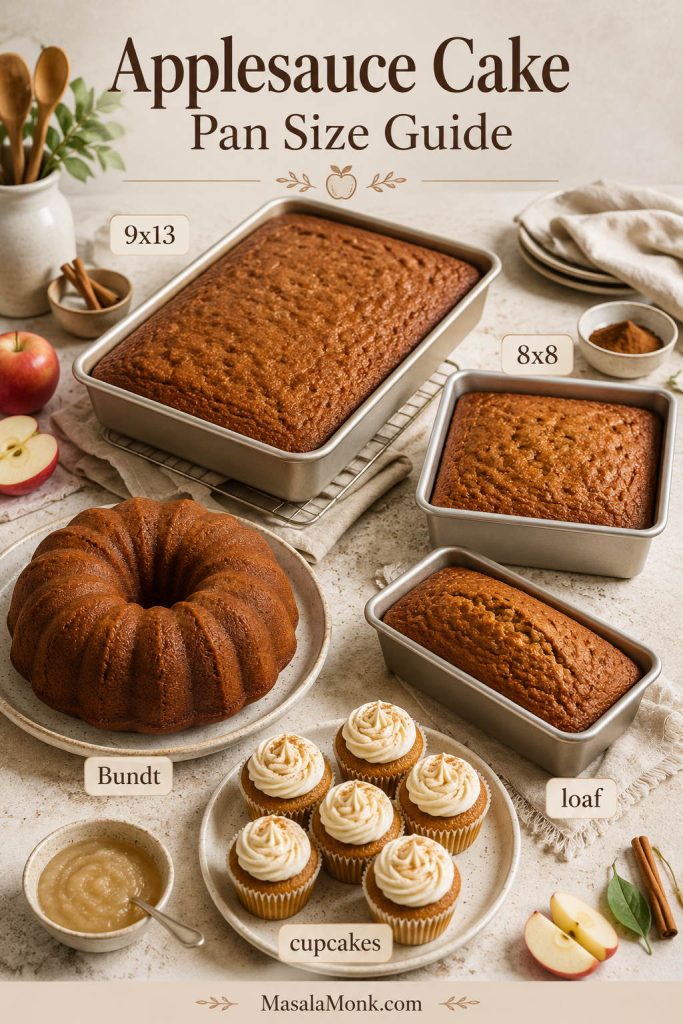
Applesauce cake pan size guide showing a 9x13 pan, 8x8 pan, Bundt cake, loaf pan, and cupcakes.
The 9×13 pan is the easiest starting point, but once the batter moves into Bundt, loaf, cupcake, or smaller pans, depth changes the bake time.
Pan Oven Approximate Bake Time Notes
9×13 metal pan 350°F / 175°C 30–35 minutes Most reliable default for this recipe.
9×13 glass pan 325°F / 165°C 35–42 minutes Lower heat helps protect the edges.
8×8 half batch 350°F / 175°C 30–38 minutes Use half the batter or halve the recipe.
15×10 sheet pan 350°F / 175°C 18–22 minutes Thinner cake; check early.
Bundt pan 350°F / 175°C 45–60 minutes Grease very well and check the deepest part.
Two 8-inch round pans 350°F / 175°C 25–32 minutes Useful for a simple layer cake.
Cupcakes 350°F / 175°C 18–22 minutes Fill liners about two-thirds full.
Two 9×5 loaf pans 350°F / 175°C 50–60 minutes Tent loosely if the tops brown too quickly.

If changing the pan changes the texture, use the problem-solving guide to diagnose whether the cake needed more time, less moisture, or gentler mixing.

Bundt Pan Release Tips

Bundt pans need special care because moist cakes are more likely to stick in the ridges. Grease every detail of the pan carefully, let the cake cool before unmolding, and use a glaze instead of soft frosting. King Arthur Baking has a useful guide to preventing Bundt cakes from sticking if you bake in shaped pans often.

Variations and Easy Changes

Once the base cake is right, it can move in several directions without losing its soft crumb. The first bake teaches you what the texture should feel like; after that, these variations make more sense.
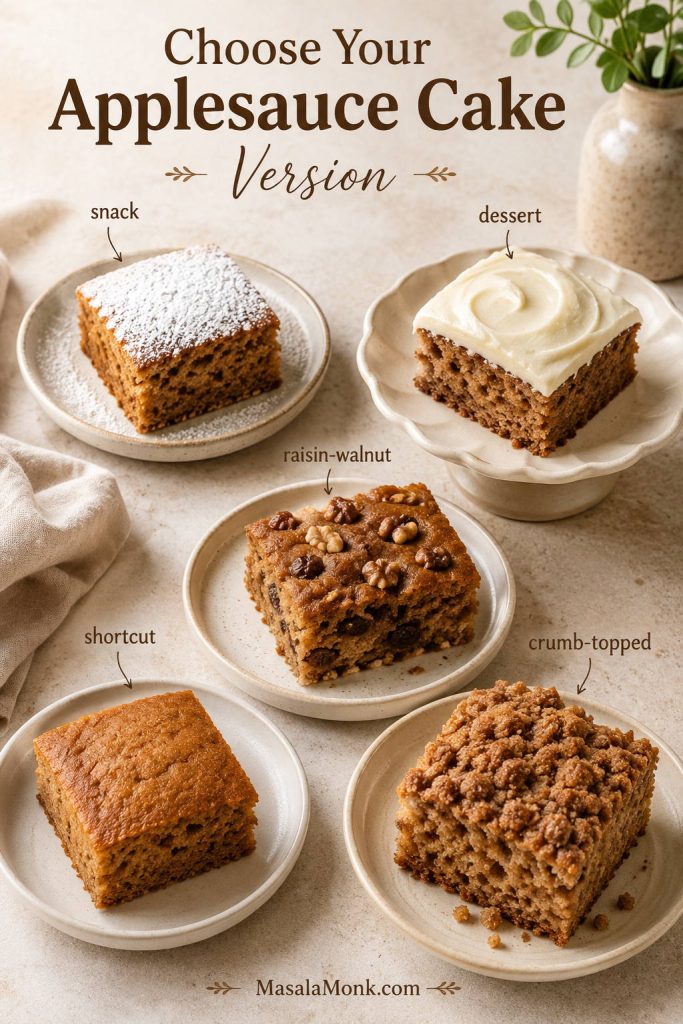
Applesauce cake variation guide showing powdered sugar snack cake, frosted dessert cake, raisin-walnut cake, shortcut cake, and crumb-topped cake.
Choose the version by mood: powdered sugar for snack cake, cream cheese frosting for dessert, raisins and walnuts for old-fashioned flavor, or crumb topping for coffee-cake style.
Version Choose It When What to Change
Less sweet You want a snack cake Skip frosting or use powdered sugar.
More dessert-like You want a potluck or holiday cake Use full oil and cream cheese frosting.
More old-fashioned You like recipe-box flavor Add raisins and walnuts.
Shortcut version You want almost no measuring Use cake mix, applesauce, and eggs.
Brunch-style You want coffee cake energy Use crumb topping and a light glaze.

Old-Fashioned Raisin-Walnut Version

Fold in 1/2 cup raisins and 3/4 cup chopped walnuts or pecans. Skip the frosting and dust the cooled cake with powdered sugar for a more old-fashioned coffee-cake feel, or keep the cream cheese frosting when you want a richer dessert.

This version feels closest to an older recipe-box cake: soft crumb, warm spice, little bites of fruit and nuts, and a flavor that deepens overnight. It is especially good with coffee or black tea.

Cake Mix Shortcut

This is not the same cake as the from-scratch version, but it is useful when you want the applesauce-spice idea with almost no measuring. For the simplest shortcut, use a 15.25 oz box of yellow or spice cake mix, 1 1/2 cups applesauce, and 3 large eggs. Bake in a greased 9×13 pan at 350°F until set, usually around 25 to 35 minutes depending on the mix and pan.
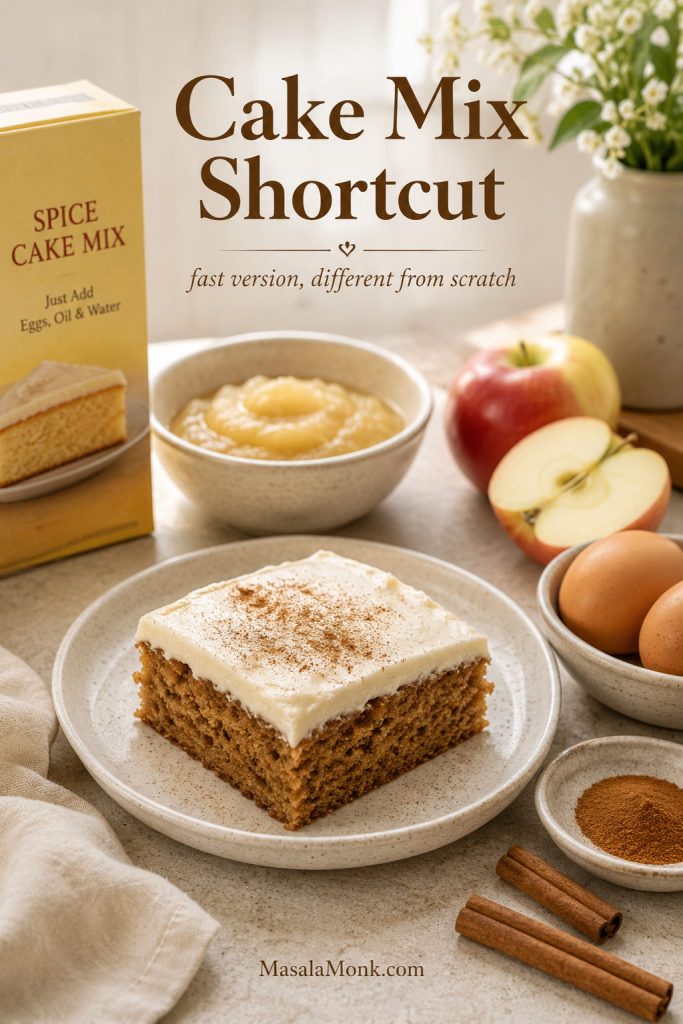
Applesauce cake mix shortcut setup with boxed cake mix, applesauce, eggs, cinnamon, and a frosted cake square.
A cake mix shortcut is useful when speed matters, although the texture will be different from the from-scratch applesauce cake.

The three-ingredient version wins on speed. The version with a little oil or melted butter tastes softer, richer, and less lean. For that style, add 2 to 4 tablespoons oil or melted butter and 1 to 2 teaspoons cinnamon.

If shortcut apple desserts are what you reach for most often, the same easy-bake mood also works in an apple cinnamon roll bake with apple pie filling, where refrigerated cinnamon rolls and apple filling turn into a warm 9×13 dessert.

Crumb Cake or Coffee Cake Style

To move this cake toward crumb cake, skip the cream cheese frosting and add a cinnamon brown sugar crumb topping before baking. Use a moderate layer of crumb at first because this batter is already moist. A very heavy topping can slow down the center and make the cake harder to bake evenly.

For a brunch-style version, add chopped nuts or oats to the crumb and finish with a thin vanilla glaze after cooling. Because the crumb topping changes how heat moves through the cake, check the center carefully and expect the bake time to shift slightly.

Bundt Cake Version

A Bundt version works well with vanilla glaze, maple glaze, or brown butter glaze. Grease every ridge of the pan, bake longer, and cool the cake before turning it out. The deepest part should be fully set before unmolding.
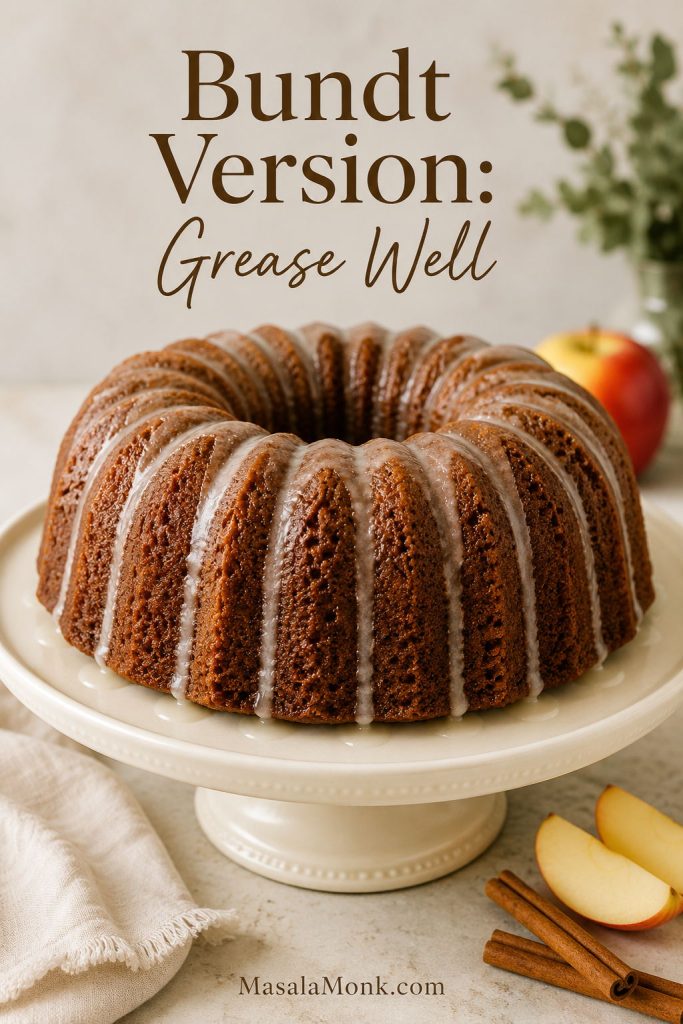
Applesauce Bundt cake with a thin glaze dripping down the ridges on a cream cake stand.
A Bundt version works best with careful pan greasing and a thin glaze. That way, the ridges stay visible and the cake releases more cleanly.

Gluten-Free or Almond Flour Version

For the closest gluten-free version, use a tested 1:1 gluten-free flour blend in place of the all-purpose flour. The texture may still be a little different, but the structure is more predictable than an almond flour swap.

Do not replace the flour with almond flour 1:1 in this batter. Almond flour needs different liquid, egg, and structure. Because applesauce already adds moisture, a casual almond flour swap can turn the cake oily, fragile, or gummy. For an almond flour version, use a formula written for almond flour from the start.

Vegan or Eggless Version

Eggless applesauce cake is possible, but this batter should not be converted by simply adding more applesauce. Applesauce is already the main moisture ingredient here, so using extra applesauce as an egg replacement can push the cake toward gummy.

For an egg-free version, start with a formula built that way from the beginning. This batter already gets so much moisture from applesauce that simply adding more can make the center heavy instead of soft.

Lighter or Lower-Sugar Version

For a lighter cake, use unsweetened applesauce, reduce the granulated sugar slightly, and serve the cake unfrosted or with a thin glaze. You can also cut the oil to 1/2 cup and add 1/4 cup extra applesauce, but the crumb will be a bit less plush.

Avoid removing all the oil on the first attempt. A little fat keeps the cake softer and prevents the texture from becoming rubbery. If you enjoy using applesauce in breakfast-style baking, it can also work as a moisture helper in recipes like oat pancakes, where softness and natural sweetness matter.

Common Applesauce Cake Problems and Fixes

When this cake disappoints, the problem usually comes from one of a few places: too much moisture, too much flour, not enough bake time, or overmixing. Once you know which one is working against you, the next pan is much easier to fix.

Texture, Bake-Time, and Flavor Problems
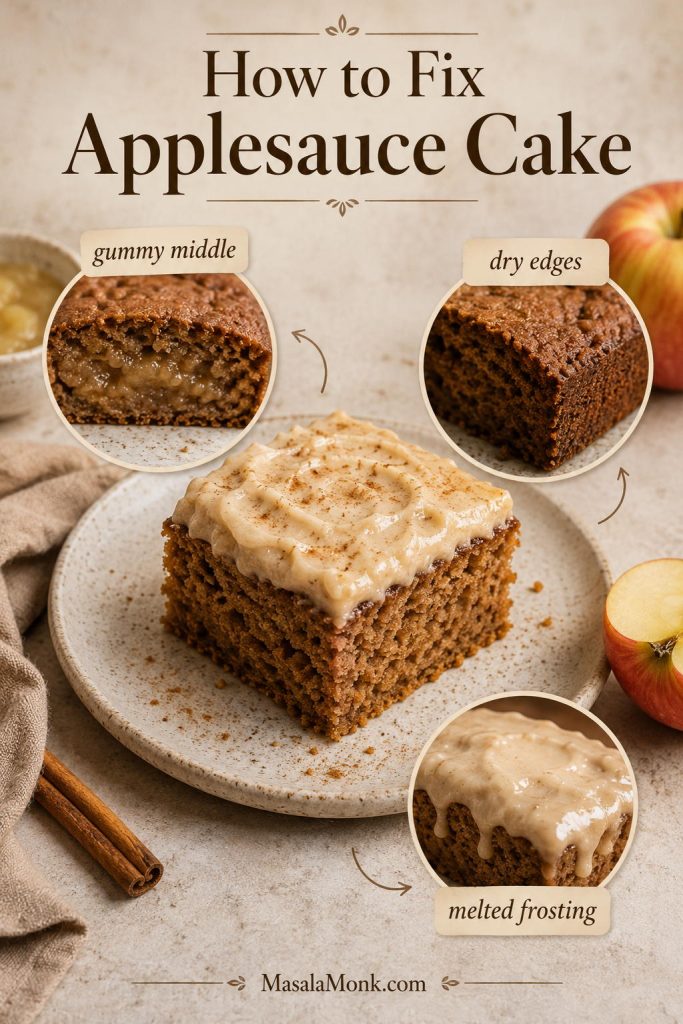
Troubleshooting board for applesauce cake showing gummy middle, dry edges, and melted frosting problems around a central frosted cake square.
A gummy middle, dry edges, or melted frosting usually points to one of four fixes: thicker applesauce, gentler mixing, more bake time, or longer cooling.
Problem Likely Cause Fix
Gummy middle Underbaked cake, watery applesauce, too much applesauce, or overmixed batter Bake until the center is fully set; use thick applesauce; mix only until combined.
Dry cake Too much flour or overbaking Spoon and level flour or use grams; start checking around 30 minutes.
Sank in the center Opened oven early or pulled the pan before the center set Do not open the oven too early; check the center, not just the edges.
Bland flavor Old spices, not enough salt, or too little vanilla Use fresh cinnamon and the full spice blend; do not skip the salt.
Weak apple flavor Applesauce flavor is naturally mild Expect spice-cake flavor with gentle apple in the background, or add a small amount of finely diced apple.

Pan, Add-In, and Frosting Problems

Problem Likely Cause Fix
Frosting melted Cake was still warm Cool completely before frosting.
Edges too dark Dark pan, glass pan, or overbaking Use a light metal pan or reduce heat for glass.
Nuts or raisins sank Add-ins were heavy or batter was loose Toss add-ins with 1 tablespoon flour before folding in.
Baking soda aftertaste Leavening was unevenly mixed or measured heavily Measure carefully and whisk the dry ingredients thoroughly.
Frosting too loose Tub cream cheese, warm butter, or too little powdered sugar Use brick cream cheese, softened butter, and add powdered sugar gradually.

Once you know what went wrong, return to the texture checklist before your next bake.

How to Store, Freeze, and Make Ahead

Unfrosted cake can be covered and stored at room temperature for about 2 days if your kitchen is cool. Once it has cream cheese frosting, refrigerate it. Let chilled slices sit at room temperature for 15 to 20 minutes before serving so the frosting softens and the crumb tastes tender again instead of cold and tight.

To freeze, wrap unfrosted squares tightly and freeze for up to 2 to 3 months. Thaw overnight in the refrigerator or at room temperature, then frost after thawing for the freshest texture.

This applesauce cake recipe is also easy to make ahead. Bake the cake one day ahead, cool it completely, cover it, and frost it the next day. The spice flavor often improves after resting because the cinnamon, brown sugar, and applesauce have time to settle into the crumb.
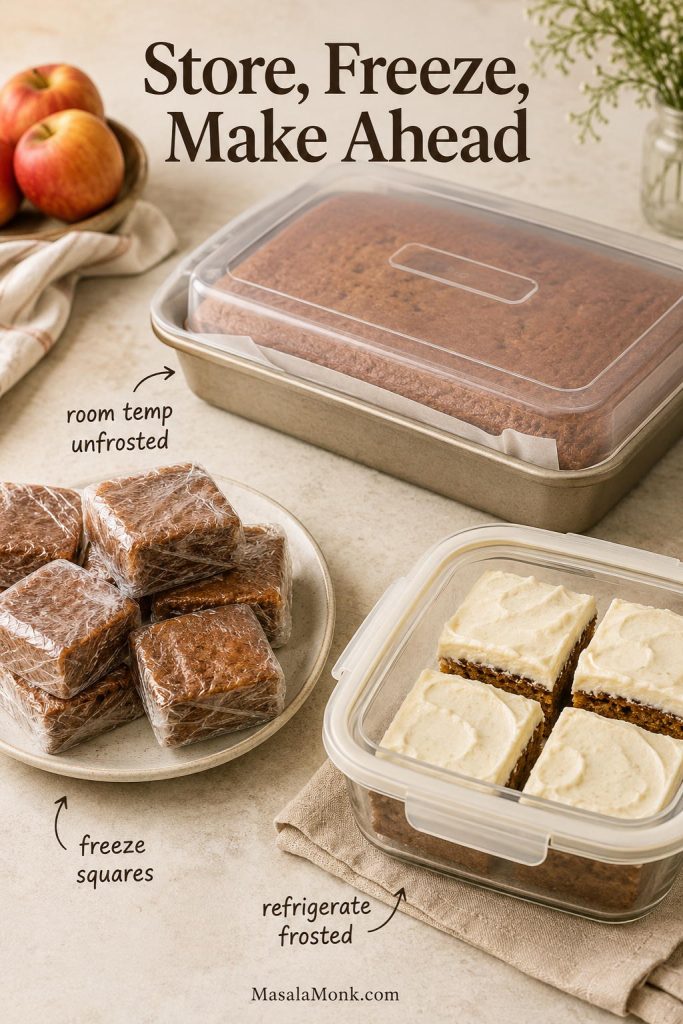
Storage guide showing a covered unfrosted applesauce cake pan, wrapped cake squares for freezing, and frosted slices in a container.
For make-ahead ease, freeze unfrosted squares and refrigerate anything with cream cheese frosting. Then let chilled slices soften before serving.

If you are baking ahead for a gathering, choose the topping from the frosting and topping guide after deciding how long the cake needs to sit out.

What to Serve with Applesauce Cake

This cake does not need much beside it. A square with coffee, black tea, chai, or cold milk is enough for an afternoon snack. If you want the whole table to lean into fall, a mug of healthy pumpkin spice latte keeps the cinnamon-and-spice mood going without adding another heavy dessert.

For dessert, serve it with vanilla ice cream, lightly whipped cream, caramel drizzle, or a few toasted walnuts scattered over the frosting. For brunch, cut it into smaller squares and keep the topping simple. Powdered sugar or a thin glaze works better than a heavy frosting when the cake is sharing the table with eggs, pancakes, fruit, and savory dishes.

For a fall dessert spread, pair this soft spice cake with pumpkin desserts, fruit crisps, or a shortcut pie like apple pie with apple pie filling. The cake brings warm spice and cream cheese frosting, while the pie brings flaky crust and glossy apple filling.

If you are making the apple side of the table from scratch, keep a batch of homemade apple pie filling ready for pies, waffles, pancakes, yogurt, or ice cream. It sits in a fruitier lane than this soft spice cake, so the two do not feel repetitive together.

Applesauce Cake FAQs

What does applesauce do in cake?

Applesauce adds moisture, mild apple flavor, and softness. However, it is not the same as fat. That is why this recipe uses applesauce and oil together for a tender crumb.

Sweetened or unsweetened applesauce?

Unsweetened applesauce is the better choice because it gives you control over the cake’s sweetness. Sweetened applesauce works, but the finished cake may taste sweeter than intended.

Oil or no oil: what happens?

You can reduce the oil, but removing it completely changes the texture. A no-oil version is usually denser and more likely to taste gummy. For the most reliable first bake, keep the oil.

Bundt pan timing

A Bundt pan works, but the bake time will be longer, usually around 45 to 60 minutes. Grease the pan very well, check the deepest part, and cool before turning it out.

Frosted or unfrosted?

Frosting is optional. Cream cheese frosting makes it feel like dessert, while powdered sugar, vanilla glaze, or no topping at all keeps it closer to an old-fashioned snack cake.

Why did the middle turn gummy?

The usual reasons are underbaking, watery applesauce, too much applesauce, not enough fat, or overmixing the batter. Bake until the center is fully set and fold the flour in gently.

Fresh apples: helpful or too wet?

A small amount of finely diced apple is fine, but do not add too much. Fresh apples release moisture as they bake, which can make the center wetter. For the first bake, keep the recipe focused on applesauce, then experiment later.

Homemade applesauce texture

Homemade applesauce works well as long as it is thick enough for baking. If it looks loose, simmer it briefly to thicken or drain off excess liquid before measuring. Smooth, thick applesauce gives the most reliable texture.

Make-ahead timing

This cake is a good make-ahead dessert. Bake it one day ahead, cool it completely, cover it, and frost it the next day. The spice flavor often improves after resting.

Applesauce instead of eggs?

Not in this recipe as a simple swap. Applesauce is already part of the batter, and adding more in place of eggs can make the cake too wet or gummy. Use a tested eggless formula if you need an egg-free version.

Final Thoughts

A good applesauce cake should feel simple, but not careless. The best version is soft in the middle, lightly spiced, easy to slice, and moist without being wet. That comes from treating it like the soft spice cake it is: enough moisture, enough tenderness, fresh spices, and enough patience for the center to set.

Serve it frosted when you want dessert, dust it with powdered sugar when you want something old-fashioned, or fold in raisins and walnuts when you want the cake to taste like it came from an older recipe box. Either way, this is the kind of 9×13 cake that quietly disappears one square at a time — first as dessert, then with coffee, then in those uneven little “just one more” slices everyone pretends do not count.
Back to top

Posted on Leave a comment

Apple Delight and Diabetes: Unveiling 5 Important Questions and 5 Scrumptious Ways to Include this Crunchy Fruit in Your Diabetic Diet

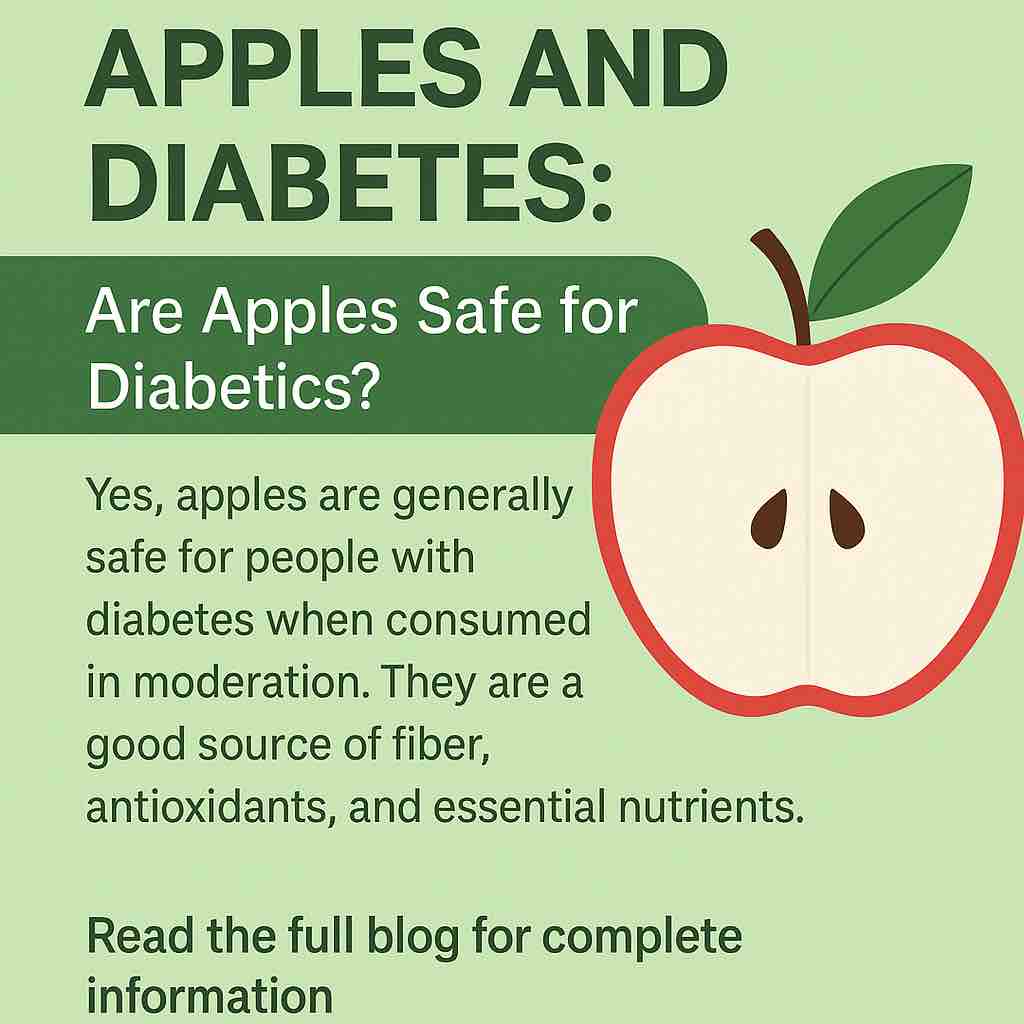
APPLES AND DIABETES: Are Apples Safe for Diabetics?

When you think of a healthy snack, apples often come to mind. With their juicy, crisp texture, apples have long been a favorite fruit worldwide, not just for their taste but also for their health benefits. But if you are someone managing diabetes, you might find yourself wondering, “Can I still enjoy this crunchy fruit?” The good news is that apples can absolutely be part of a diabetes-friendly diet, provided you understand their nutritional impact and how to include them mindfully in your meals.

This blog post dives deep into answering five key questions about apples and diabetes, followed by five delicious and creative ways you can enjoy apples while keeping your blood sugar levels in check. Let’s start with the essentials!


5 Important Questions About Apples and Diabetes

1. Are Apples Safe for Diabetics?

Apples are not only safe but also beneficial for individuals with diabetes, when consumed in moderation. One medium-sized apple contains approximately 20-25 grams of carbohydrates, primarily from natural sugars. However, this doesn’t mean that apples should be avoided; in fact, they are a great option for diabetics because they come with a wealth of health benefits.

First and foremost, apples are rich in fiber, particularly soluble fiber, such as pectin. This fiber plays an essential role in regulating blood sugar levels by slowing down the digestion and absorption of sugar into the bloodstream. This slow release helps prevent blood sugar spikes after meals, which is crucial for diabetics trying to manage their condition.

Additionally, apples contain antioxidants, particularly flavonoids and polyphenols, which have been shown to reduce oxidative stress in the body. Oxidative stress is a key factor in the development of diabetic complications such as nerve damage, heart disease, and kidney issues. Therefore, consuming apples regularly can help promote overall health.

2. Do Apples Raise Blood Sugar Levels?

The glycemic index (GI) of a food measures how quickly it raises blood sugar after consumption. Foods with a high GI value can cause a rapid spike in blood sugar levels, while foods with a low GI value release glucose more gradually. Apples have a relatively low glycemic index of about 38, meaning they have a minimal effect on blood sugar levels.

However, while apples are low in GI, portion control is essential. A large apple, for instance, may contain more carbohydrates than a smaller one. Consuming an entire large apple might lead to a higher blood sugar rise than a small apple. The key to including apples in a diabetic diet is moderation, as well as balancing the apple with other foods that stabilize blood sugar.

3. What is the Best Type of Apple for Diabetics?

Not all apples are created equal when it comes to blood sugar control. Some apple varieties are sweeter than others, and those with a higher sugar content can cause a faster spike in blood glucose levels. If you’re looking for the best apple for diabetes, green apples, particularly Granny Smith apples, are an excellent choice.

Granny Smith apples are not only tart and low in sugar but are also packed with fiber, which helps in blood sugar regulation. They also contain fewer carbohydrates compared to sweeter varieties like Fuji or Red Delicious. While sweeter apples can still be consumed in moderation, opting for a green apple may offer more control over blood sugar levels.

4. How Many Apples Can a Diabetic Eat Per Day?

As with all fruits, portion control is essential. The general guideline for diabetics is to consume a small-to-medium-sized apple (about 150 grams) per day. This amount typically provides 20-25 grams of carbohydrates, which can fit within the daily carb limit for most people with diabetes.

It’s important to consider your overall carbohydrate intake, so if you’re consuming an apple as part of a meal or snack, balance it with protein, healthy fats, and fiber-rich vegetables to prevent a blood sugar spike. For example, pairing an apple with a handful of nuts or a slice of cheese can provide a more balanced snack.

5. Are There Any Benefits to Apples for Diabetics?

Yes! Apples offer numerous health benefits that make them an excellent choice for diabetics. They are rich in antioxidants, particularly flavonoids, which are known for their anti-inflammatory and anti-oxidative properties. These antioxidants help protect the body from damage caused by free radicals, a major factor in the development of diabetes-related complications, such as heart disease and kidney failure.

Additionally, apples are high in soluble fiber, which not only helps regulate blood sugar but also promotes digestive health. The fiber in apples helps slow digestion and prevents rapid spikes in blood glucose after meals. Apples are also linked to better weight management, which is especially important for diabetics, as maintaining a healthy weight can improve insulin sensitivity.


5 Scrumptious Ways to Include Apples in Your Diabetic Diet

Incorporating apples into your diabetic-friendly diet doesn’t have to be boring or bland. Here are five creative and scrumptious ways to enjoy apples while keeping your blood sugar levels under control:

1. Apple and Nut Salad

This crisp, refreshing salad combines the tartness of apples with the crunchy texture of nuts, offering a perfect balance of flavors and textures. Slice a green apple (like Granny Smith) and toss it with mixed greens, such as spinach or arugula. Add a handful of walnuts, almonds, or pistachios for a dose of healthy fats and protein.

Top it off with a light dressing made from olive oil, lemon juice, and a pinch of salt. The nuts provide protein and healthy fats, which help slow the absorption of sugars from the apples, making this salad an excellent choice for a balanced meal.

2. Baked Cinnamon Apples

Baked apples are a warming and comforting treat, especially when the weather turns chilly. Slice up a green apple and sprinkle with cinnamon—a spice that has been shown to improve insulin sensitivity. Cinnamon adds flavor without adding sugar, making it a perfect complement to the natural sweetness of apples.

For a diabetes-friendly twist, bake the apples with a drizzle of stevia or monk fruit sweetener instead of sugar. You can also top them with a dollop of Greek yogurt or a sprinkle of chopped nuts for added protein and healthy fats.

3. Apple and Cheese Snack

If you’re looking for a quick, satisfying snack, try pairing apple slices with a small portion of cheese. The natural sweetness of the apple and the creamy, salty cheese create a delicious contrast. Choose a low-fat cheese like mozzarella, cheddar, or goat cheese to keep the snack healthier.

The combination of apple and cheese provides a good balance of carbohydrates, fiber, protein, and fat, which can help prevent blood sugar spikes and keep you feeling full for longer.

4. Apple Smoothie

A refreshing and nutrient-packed smoothie is a great way to incorporate apples into your diet. For a diabetic-friendly apple smoothie, blend up one small apple with a handful of spinach, a tablespoon of chia seeds, and unsweetened almond milk.

You can also add a scoop of protein powder for an extra boost. This smoothie is packed with fiber, healthy fats, and protein, which will help keep your blood sugar stable throughout the day. Plus, it’s a great way to get in some extra vegetables and antioxidants.

5. Apple Chia Pudding

For a fun, nutritious dessert, try making apple chia pudding. Mix chia seeds with unsweetened almond milk and let them sit overnight to form a thick, pudding-like consistency. In the morning, top the chia pudding with diced apple slices, a sprinkle of cinnamon, and some chopped nuts for added texture.

Chia seeds are a great source of fiber, protein, and omega-3 fatty acids, making them a perfect complement to the apples. This dessert is satisfying, filling, and perfectly suited for a diabetes-friendly diet.


Conclusion

Apples are a delightful and nutritious fruit that can easily fit into a diabetic diet when enjoyed in moderation. By choosing the right variety, controlling portion sizes, and pairing them with other healthy foods, you can savor apples without worrying about blood sugar spikes.

The 5 creative recipes outlined above offer delicious ways to include apples in your daily meals, allowing you to enjoy the many benefits this crunchy fruit has to offer. So go ahead, take a bite into that crisp apple—your taste buds and your body will thank you!

FAQs About Apples and Diabetes

1. Can diabetics eat apples daily?
Yes, diabetics can enjoy an apple a day in moderation. A medium-sized apple typically contains around 20-25 grams of carbohydrates, so it’s important to factor it into your daily carbohydrate intake. Pairing it with protein or healthy fats helps balance blood sugar levels.

2. Are apples high in sugar?
Apples contain natural sugars, but they also have a low glycemic index (GI), which means they do not cause a rapid increase in blood sugar levels. Their fiber content, particularly soluble fiber, helps slow the absorption of sugar, making them a good choice for diabetics.

3. What is the glycemic index of apples?
Apples have a glycemic index of around 38, which is considered low. Foods with a low GI are absorbed slowly, preventing spikes in blood sugar. This makes apples a safe option for individuals with diabetes when consumed in appropriate portions.

4. Is it better to eat apples with or without the skin for diabetics?
It’s better to eat apples with the skin on. The skin is rich in fiber, which helps regulate blood sugar and improve digestion. It also contains antioxidants that can reduce the risk of diabetes-related complications.

5. Can apples be part of a low-carb diet for diabetics?
Apples contain carbohydrates, so they should be consumed in moderation on a low-carb diet. A small apple is usually considered acceptable, but it’s essential to keep track of your overall carbohydrate intake and adjust accordingly.

6. Are green apples better for diabetics than red apples?
Green apples, such as Granny Smith, are often a better choice for diabetics due to their lower sugar content and higher fiber. However, red apples like Fuji and Gala can still be enjoyed in moderation. Opting for tart varieties helps minimize blood sugar spikes.

7. How do apples help control blood sugar levels?
Apples contain soluble fiber, which slows down digestion and the absorption of sugar into the bloodstream. This helps prevent sharp increases in blood sugar levels. Additionally, the antioxidants in apples may improve insulin sensitivity.

8. Can apple juice be consumed by diabetics?
While fresh apple juice may seem like a healthy option, it is not recommended for diabetics because it lacks fiber and can cause a rapid rise in blood sugar. Whole apples, with their skin and fiber, are a much better choice.

9. Are apples a good source of vitamins for diabetics?
Yes, apples are a good source of vitamins, particularly vitamin C, which supports immune function and overall health. They also contain small amounts of other essential vitamins and minerals that contribute to overall well-being.

10. Can apples help with weight management for diabetics?
Yes, apples are a great option for weight management. Their high fiber content promotes satiety, helping you feel fuller for longer. They are also low in calories, making them a great snack for diabetics who are trying to manage their weight.

Posted on 4 Comments

Fiber in Food

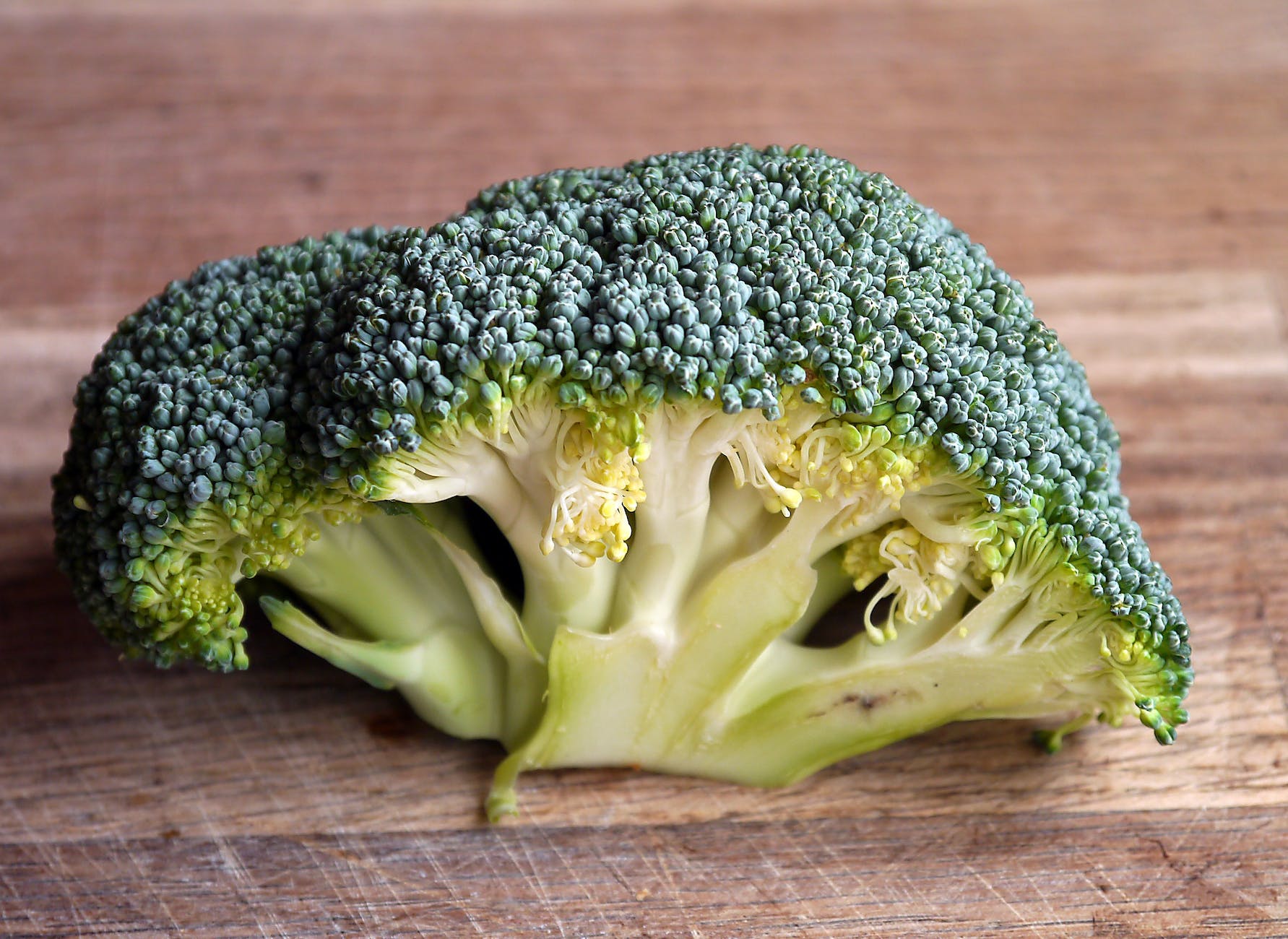
green broccoli vegetable on brown wooden table

Dietary fiber, a type of carbohydrate that our bodies cannot digest, plays a crucial role in maintaining our health. Unlike other carbs that are broken down into sugars, fiber passes through the body undigested, aiding in digestion, helping to keep our blood sugar levels stable, and making us feel full. The importance of dietary fiber cannot be overstated. From promoting healthier gut bacteria to lowering the risk of heart disease, a high-fiber diet is key to maintaining good health.

Types of Fiber: Soluble vs Insoluble

There are two types of dietary fiber: soluble and insoluble. Each type functions differently and provides different health benefits.

Soluble fiber dissolves in water and forms a gel-like substance in the stomach. It can help lower blood cholesterol and glucose levels. Soluble fiber is found in foods like oats, peas, beans, apples, and citrus fruits.

Insoluble fiber does not dissolve in water. It adds bulk to the diet and can help prevent constipation. Insoluble fiber is found in foods like whole-wheat flour, wheat bran, nuts, beans, and vegetables like cauliflower and potatoes.

Fiber in Foods: What You Need to Know

Let’s take a closer look at the fiber content in lists of various foods and how they can contribute to a high-fiber diet.

Fiber in Fruits

Fruits are a delicious way to add fiber to your diet. Here are some fruits that are particularly high in fiber:

Kiwi

A medium-sized kiwi has about 2.1 grams of fiber. This includes both soluble and insoluble fiber, making it a great choice for overall digestive health. Kiwi is also rich in vitamin C and antioxidants.

Raspberries

One cup of raspberries contains about 8 grams of fiber. Raspberries are a great source of soluble fiber and are also rich in antioxidants. They can help control blood sugar and fight inflammation.

Pear

One medium-sized pear contains about 5.5 grams of fiber. Pears are a good source of soluble fiber and are also rich in vitamin C.

Apple

One medium-sized apple contains about 4.4 grams of fiber. Apples are a good source of both soluble and insoluble fiber and are also high in vitamin C.

Banana

One medium-sized banana contains about 3.1 grams of fiber. Bananas are a good source of soluble fiber and are also high in vitamin C and potassium.

Orange

One medium-sized orange contains about 3.1 grams of fiber. Oranges are a good source of soluble fiber and are also high in vitamin C.

Tomatoes

Tomatoes are a good source of dietary fiber, providing about 1.5 grams per average-sized tomato. Most of the fibers in tomatoes are insoluble, including cellulose, hemicellulose, and lignin. This can aid in digestive health.

Strawberries

Strawberries are a good source of fiber. One cup of strawberries provides about 3 grams of fiber. This makes them a great choice for a healthy dessert or snack.

Blueberries

Blueberries are a good source of fiber. A 100-gram serving of raw blueberries has 2.4 grams of fiber. This makes them a great choice for a healthy dessert or snack.

Grapefruit

Grapefruit is a good source of fiber. One-half grapefruit provides 2 grams of fiber. This makes it a great choice for a healthy breakfast or snack.

Fiber in Vegetables

Vegetables are another excellent source of fiber. Here are some vegetables that are particularly high in fiber:

Broccoli

One cup of cooked broccoli contains about 5.1 grams of fiber. Broccoli is high in insoluble fiber and is also a powerhouse of vitamins and minerals like vitamin C and potassium.

Sweet Potato

One medium-sized sweet potato contains about 4 grams of fiber. Sweet potatoes are a great source of soluble fiber and are also high in vitamin A, vitamin C, and potassium.

Spinach

One cup of cooked spinach contains about 4.3 grams of fiber. Spinach is high in insoluble fiber and is also rich in many essential nutrients like calcium, iron, and vitamin A.

Carrots

One medium-sized carrot contains about 1.7 grams of fiber. Carrots are a good source of both soluble and insoluble fiber and are also high in vitamin A.

Peas

One cup of cooked green peas contains about 8.8 grams of fiber. Peas are a great source of both soluble and insoluble fiber. They are also a good source of protein, making them a great choice for vegetarians and vegans.

Mushrooms

Mushrooms are a good source of fiber, particularly the soluble fiber beta-glucan. This makes them a great choice for a healthy side dish or addition to meals.

Beets

Beets are a good source of fiber, with 2 grams per 100 grams. This makes them a great choice for a healthy side dish or addition to meals.

Fiber in Grains and Seeds

Grains and seeds are often high in fiber. Here are some that are particularly high in fiber:

Whole Wheat Bread

One slice of whole wheat bread contains about 2 grams of fiber. Whole grains like whole wheat are a great source of both soluble and insoluble fiber. They can help reduce the risk of heart disease and aid in weight management.

Quinoa

One cup of cooked quinoa contains about 5.2 grams of fiber. Quinoa is a good source of insoluble fiber and is also a complete protein, meaning it contains all nine essential amino acids.

Brown Rice

One cup of cooked brown rice contains about 3.5 grams of fiber. Brown rice is a good source of insoluble fiber and is also high in vitamins and minerals like magnesium and selenium.

Chia Seeds

One ounce of chia seeds contains about 10.6 grams of fiber. Chia seeds are a great source of soluble fiber and are also high in omega-3 fatty acids.

The fiber in Nuts and Legumes

Nuts and legumes are also high in fiber. Here are some that are particularly high in fiber:

Lentils

One cup of cooked lentils contains about 15.6 grams of fiber. Lentils are a great source of both soluble and insoluble fiber. They are also a good source of protein, making them a great choice for vegetarians and vegans.

Chickpeas

Chickpeas, also known as garbanzo beans, are an excellent source of dietary fiber. They provide 7.6 grams of fiber per 100 grams. This makes them a great addition to any high-fiber diet.

Almonds

One ounce of almonds contains about 3.5 grams of fiber. Almonds are a good source of both soluble and insoluble fiber. They are also high in healthy fats, protein, and vitamin E.

Walnuts

One ounce of walnuts contains about 1.9 grams of fiber. Walnuts are a good source of both soluble and insoluble fiber. They are also high in healthy fats and omega-3 fatty acids.

Peanuts

Peanuts are an excellent source of dietary fiber. They contain 8.5 grams of fiber per 100 grams, which can help in maintaining a healthy digestive system.

Roots

Chicory Root

Fresh chicory root is composed of 68% inulin by dry weight. Inulin is a type of fiber known as a fructan or fructooligosaccharide. This makes chicory root a great choice for those looking to boost their fiber intake.

Remember, the daily recommended intake of fiber for men is 38 grams and for women is 25 grams. Incorporating a variety of these high-fiber foods into your diet can help you meet your daily fiber needs and provide a host of other health benefits as well.

Blog Tags: Fiber, High-Fiber Diet, Soluble Fiber, Insoluble Fiber, Digestive Health, Heart Health, Weight Management, Blood Sugar Control, Kiwi, Whole Wheat Bread, Raspberries, Broccoli, Almonds, Sweet Potato, Blueberries, Lentils, Avocado, Quinoa, Spinach, Brown Rice, Pear, Apple, Banana, Orange, Sweet Potato, Spinach, Carrots, Peas, Whole Wheat Bread, Quinoa, Brown Rice, Chia Seeds, Almonds, Lentils, Walnuts.

Posted on 6 Comments

5 Benefits of Apple for the Skin

Apples, a staple in our fruit baskets, are more than just a nutritious snack. They are a treasure trove of benefits for your skin. This post will explore the various ways apples can enhance your skin health and how you can incorporate them into your skincare routine.

The Nutrient Powerhouse: Apples

Apples are packed with essential nutrients like vitamins A, B complex, and C, each contributing uniquely to your skin’s health:

  • Vitamin A: Known for its anti-aging properties, it helps reduce wrinkles and fine lines, giving your skin a youthful glow.
  • B Complex Vitamins: These vitamins aid in skin cell regeneration and fight off free radicals that cause skin damage.
  • Vitamin C: A potent antioxidant, Vitamin C aids in collagen production, which is crucial for skin elasticity and firmness.

Unveiling the Skin Benefits of Apples

1. Skin Brightening

Apples are known for their skin-brightening properties. The high content of vitamin C in apples helps lighten the skin tone and imparts a natural glow. Regular use of apple-based skincare products can result in a brighter and more radiant complexion.

2. Anti-Aging Properties

The antioxidants present in apples combat free radicals that cause premature aging. Regular application of apple-based skincare products can help reduce fine lines and wrinkles. The vitamin A in apples is particularly beneficial for its anti-aging properties, helping to keep your skin looking youthful and vibrant.

3. Acne and Dark Spot Treatment

The natural acids in apples, particularly malic acid, serve as a natural exfoliant and can help in treating acne and dark spots. They remove dead skin cells and unclog pores, reducing the occurrence of acne. Regular use of apple-based treatments can result in clearer, blemish-free skin.

4. Skin Hydration

Apples have a high water content, which aids in maintaining the skin’s natural hydration. They also contain natural oils that nourish the skin and keep it moisturized. Using apple-based moisturizers can help keep your skin hydrated and supple.

5. UV Protection

Apples contain antioxidants like vitamin C and quercetin that offer protection against harmful UV rays. However, apples should not replace your regular sunscreen. They can, however, provide an added layer of protection and help keep your skin healthy and damage-free.

Incorporating Apples in Your Skincare Routine

DIY Apple Face Mask

  • Grate a small apple and mix it with a tablespoon of honey.
  • Apply this mixture to your face and let it sit for 15-20 minutes.
  • Rinse off with warm water.

This mask can help brighten your skin, reduce blemishes, and provide deep hydration.

Homemade Apple Toner

  • Mix equal parts of apple cider vinegar and water.
  • Apply this mixture to your face using a cotton ball.
  • Let it dry naturally.

This toner can help balance your skin’s pH levels, reduce acne, and tighten your skin.

Conclusion

Apples are a boon for skin health. Incorporating them into your skincare routine can help you achieve radiant and healthy skin. However, it’s important to remember that everyone’s skin is different, and what works for one person might not work for another. Always do a patch test before trying any new skincare product or regimen.

FAQs

1. How long does it take to see the benefits of using apple on the skin?

The benefits of using apple on the skin can vary from person to person. However, with regular use, you may start to see improvements in your skin’s texture and appearance within a few weeks.

2. Can I use any type of apple for my skincare routine?

Yes, you can use any type of apple for your skincare routine. However, organic apples are recommended as they are free from pesticides and other harmful chemicals.

3. Are there any side effects of using apple on the skin?

Apples are generally safe for all skin types. However, if you have sensitive skin, it’s recommended to do a patch test before applying any apple-based product to your face. If you experience any irritation or discomfort, discontinue use.

4. Can I use apple-based skincare products if I have sensitive skin?

Yes, apple-based skincare products are generally safe for sensitive skin. However, it’s always best to do a patch test before using any new product. If you experience any irritation or discomfort, discontinue use.

5. How often should I use apple in my skincare routine?

You can use apple-based products in your skincare routine daily. However, it’s important to listen to your skin and adjust your usage based on its needs and reactions.


For benefits of Clove, click here

Read Benefits of Jaggery (Gur), click here

Benefits of Almonds during Pregnancy, click here


For videos related to Health and Wellness, Subscribe to our YouTube Channel:
Masala Monk – The Gourmet Store

Posted on Leave a comment

The Apple – Nutrition, Benefits, and 5 Practical Ways for Weight Loss

person holding red heart shaped ornament

Introduction

Apples – they say ‘an apple a day keeps the doctor away,’ but why is that? This common, globally loved fruit has more to offer than just a sweet crunch. Originating from Central Asia and cultivated for thousands of years, apples come in a myriad of varieties, each with a distinct flavor profile.

Nutritional Profile

The nutritional power of apples lies in their simplicity. A medium-sized apple (~180g) provides:

  • Calories: 95
  • Protein: 0.5 grams
  • Fat: 0.3 grams
  • Carbohydrates: 25 grams
  • Fiber: 4 grams
  • Vitamin C: 14% of the Daily Value (DV)
  • Potassium: 6% of the DV
  • Vitamin K: 5% of the DV

Health Benefits

Apples are more than just a low-calorie, nutrient-rich snack. They offer a range of health benefits:

  • Rich in antioxidants: Apples are high in flavonoids and Vitamin C that help protect the body from free radical damage.
  • Heart-healthy: The soluble fiber in apples contributes to maintaining healthy cholesterol levels, which benefits heart health.
  • Support digestive health: Apples are a good source of fiber, aiding in proper digestion and promoting gut health.

Weight Loss Benefits

Eating apples can contribute significantly to weight loss goals:

  • Low in calories, high in fiber: Apples are filling, meaning they can curb hunger pangs effectively without adding many calories to your diet.
  • Hydrating: With a high water content, apples can keep you hydrated, essential for overall health and weight management.
  • Boost satiety: The fiber in apples slows digestion, making you feel fuller for longer.

Five Practical Ways to Incorporate Apples into Your Diet for Weight Loss

Here’s how you can enjoy apples as part of your weight-loss journey:

  1. Apple Slices with Nut Butter: Pairing apple slices with a serving of nut butter adds protein and healthy fats, helping you feel full.
  2. In Salads: Add thinly sliced apples to your salads for a sweet and crunchy twist.
  3. Baked Apples: Bake apples with a sprinkle of cinnamon for a guilt-free dessert.
  4. In Smoothies: Add an apple to your morning smoothie for added fiber and sweetness.
  5. Apple Chips: Slice apples thinly, bake until crisp, and you have a healthy snack on the go!

Conclusion

Apples are a nutritional powerhouse that not only offers various health benefits but also are a great addition to any weight loss diet. Their high fiber content, low calories, and delicious taste make them an excellent choice for anyone trying to lose weight.