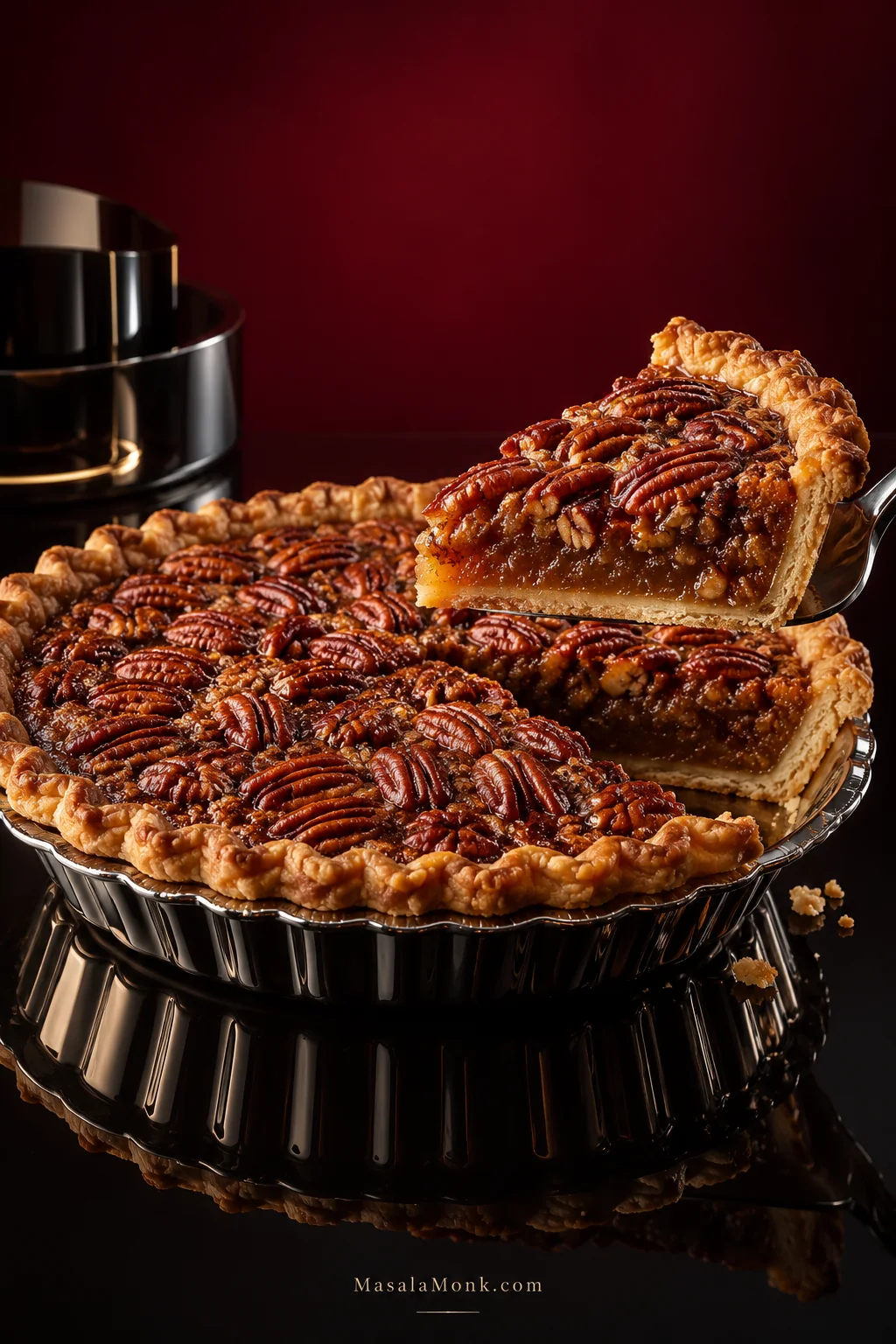
There is a moment with pecan pie when all the confidence disappears. The crust is browned, the pecans are glossy, the kitchen smells like butter and toasted nuts—and you still do not know what the middle will do when that first wedge comes out.
The goal with this pecan pie recipe is a soft, caramel-rich center that stays with the slice. It should not pour across the plate, but it should not be baked so firm that it eats like candy either. You want crisp pastry underneath, plenty of pecans in every forkful and a filling that gives easily when a fork goes in.
This is the familiar classic American holiday style: eggs, corn syrup, brown sugar, butter and plenty of pecans baked in a single pastry shell. The filling itself uses just seven ingredients. There is no stovetop caramel, no mandatory crust prebake and no need to arrange a perfect mosaic of pecan halves.
The important parts are simpler than that: the crust needs to bake through, the pecans need to taste toasted and the center needs to set soft.
Quick answer:Pecan pie is done when the filling around the outside is set and the center moves together in one gentle wobble rather than sloshing. Bake this 9-inch / 23-cm pie at 350°F / 177°C on a rack in the lower third of the oven. Start checking around 45–50 minutes; most pies finish in about 50–60 minutes. Around 200°F / 93°C near the center is a useful extra check. Give the pie about 2 hours to cool and set before slicing.
Easy Classic Pecan Pie Recipe
A flaky 9-inch pie packed with buttery pecans and a glossy brown-sugar filling that stays gooey without flowing across the plate.
Yield: 1 9-inch pie
Serves: 8 generous or about 10 smaller slices
Prep: about 20 minutes with a prepared crust
Bake: about 50–60 minutes
Cool: about 2 hours
Total: about 3 hours 10–20 minutes with a prepared crust, including cooling
Oven: 350°F / 177°C
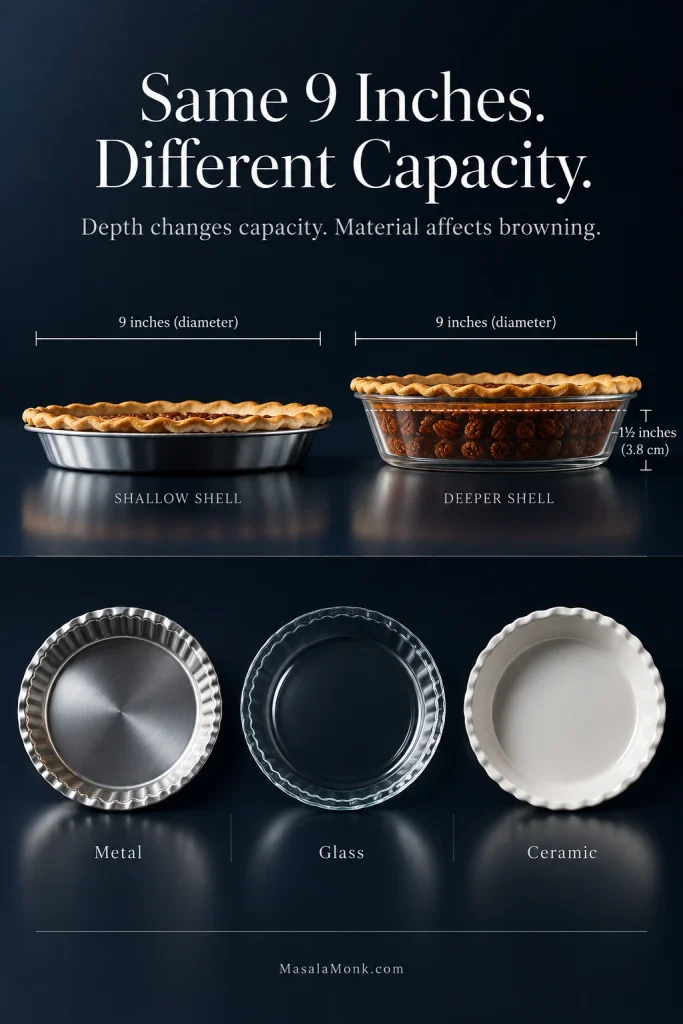
Before you start: Not every 9-inch pie plate holds the same amount. This filling fits most comfortably in a shell about 9 inches / 23 cm across and roughly 1½ inches / 3.8 cm deep. A shallow ready-made shell may need less filling.
Pecan Pie Ingredients
For the crust
1 unbaked single 9-inch / 23-cm pie crust, homemade, refrigerated or frozen. Making the pastry yourself? Use one disc of our homemade flaky pie crust.
For the pecan pie filling
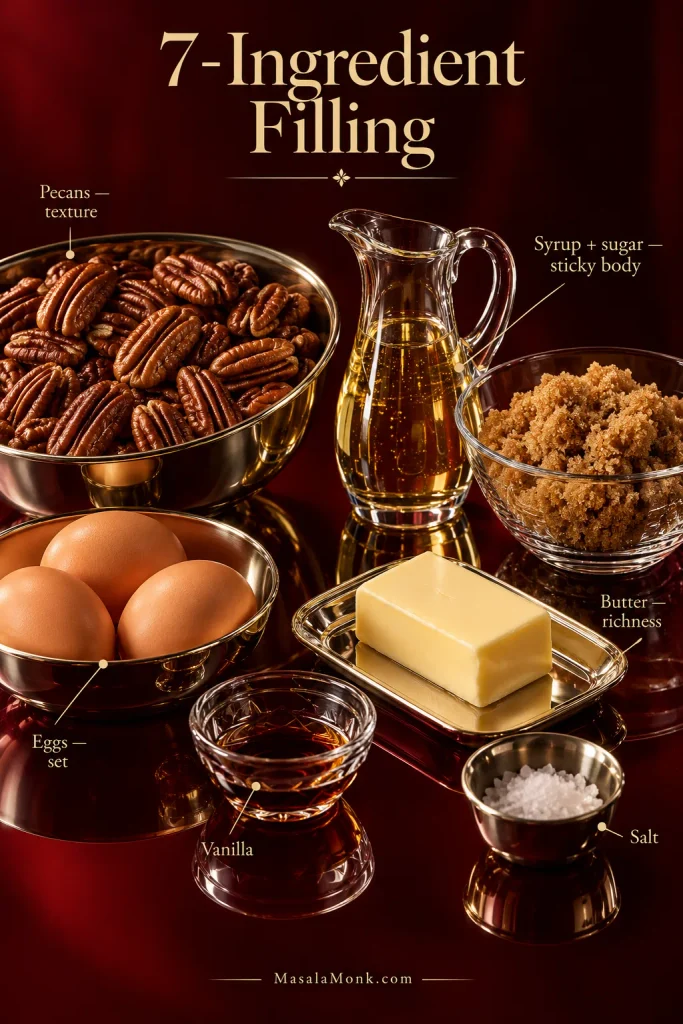
8 oz / 225 g pecans, about 2 cups, divided between chopped nuts and larger pieces
3 large eggs
1 cup / 240 ml / 312 g corn syrup, light or dark
½ cup packed light brown sugar / about 100 g
4 tbsp / 2 oz / 56 g unsalted butter, melted and cooled until warm
2 tsp / 10 ml vanilla extract
½ tsp fine salt
A short pecan pie filling formula still depends on balance: eggs give it structure, syrup and sugar create body, and generous pecans keep the finished pie textured rather than simply sweet.
Equipment
9-inch / 23-cm pie plate or deep-dish frozen pie shell
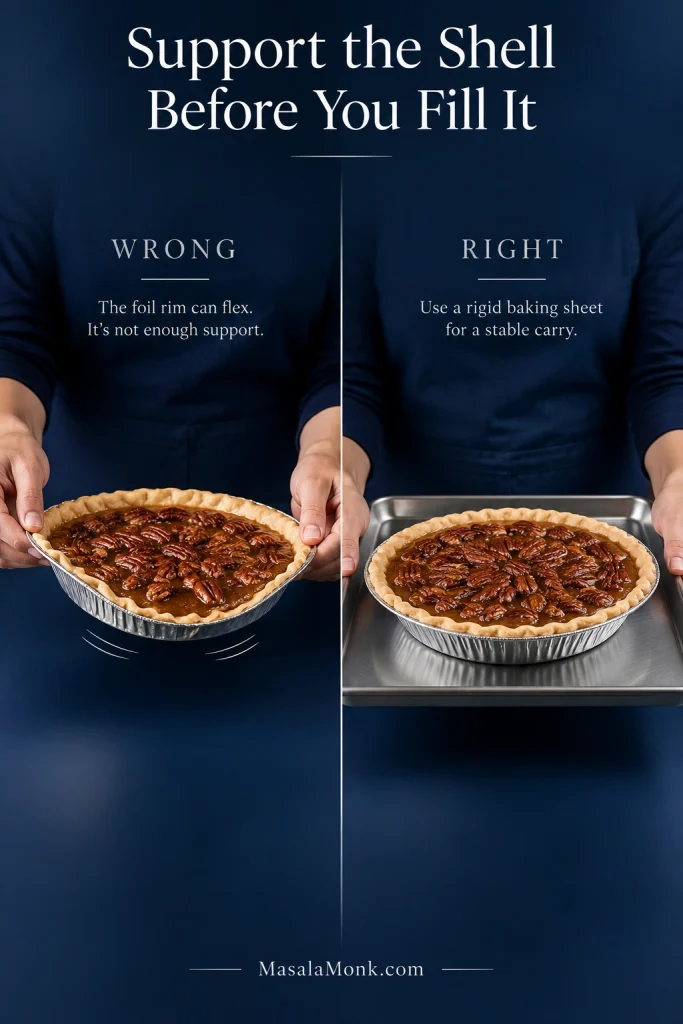
Rigid rimmed baking sheet if using a flexible disposable shell
Foil or pie-crust shield
Instant-read thermometer, optional
How to Make Pecan Pie
Prepare the Crust and Pecans
Heat the oven. Set a rack in the lower third and heat to 350°F / 177°C. If you are using a flexible disposable pie shell, place it on a sturdy rimmed baking sheet before filling it.
Fit and chill the crust. Press or roll homemade or refrigerated pastry into the plate and crimp the rim. Check the bottom and sides for cracks or paper-thin patches. For this method, do not prick or dock the raw shell; the liquid filling does not need extra openings where syrup could seep underneath. If the pastry has softened, refrigerate it for 15–20 minutes.
Using a frozen shell? Follow its package directions for thawing. Some are filled from frozen; others are thawed first. Keep a flexible foil tin on its baking sheet while you fill and carry it.
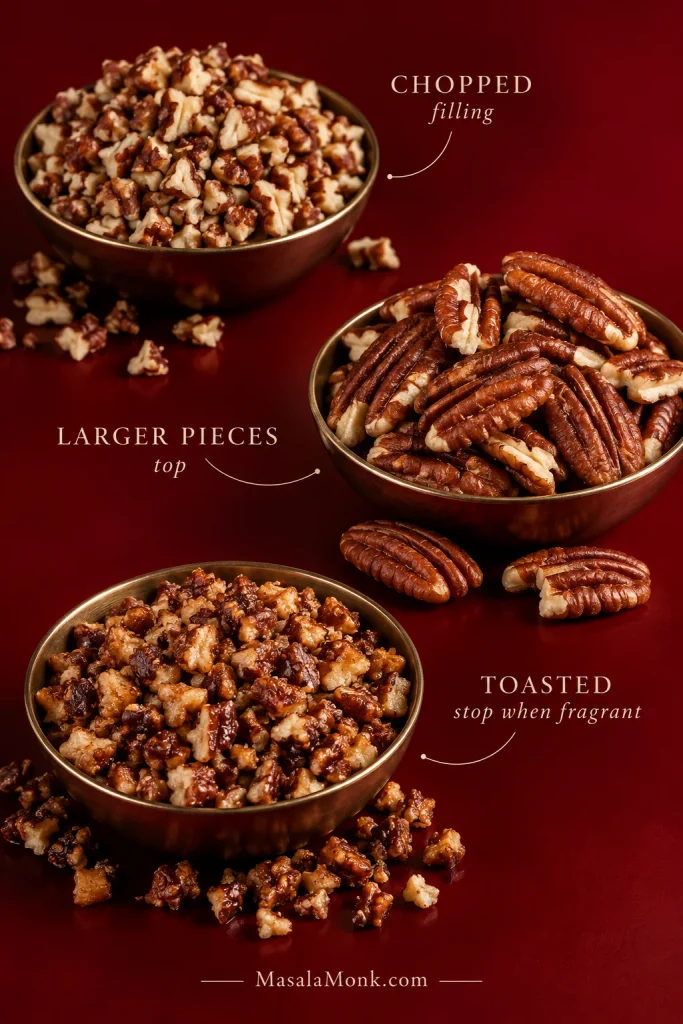
Prepare the pecans. Coarsely chop about two-thirds and leave the rest in larger pieces or halves. For deeper roasted flavor, toast the chopped nuts for 6–8 minutes at 350°F / 177°C, just until the kitchen smells distinctly nutty. Let them cool briefly. This step is optional.
Chopping most of the pecans does two useful things at once: it distributes nuts through more bites and makes clean slices easier; meanwhile, larger pieces give the top its crunch.
Mix, Fill and Bake
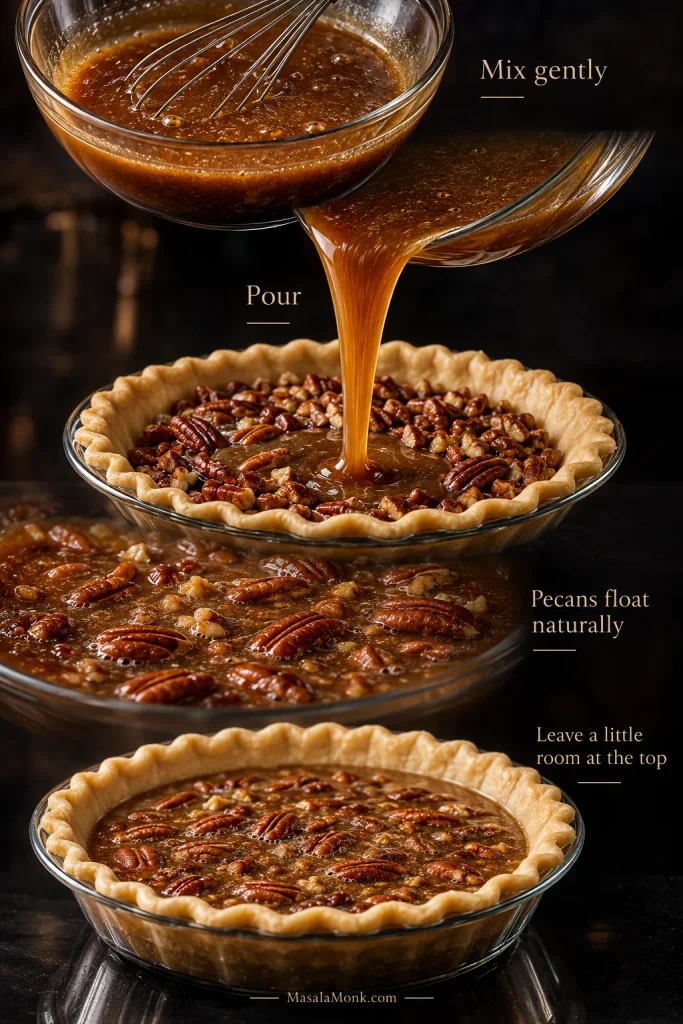
Mix the filling gently. Whisk the eggs only until blended. Add the corn syrup, brown sugar, warm melted butter, vanilla and salt. Whisk until smooth and glossy. Too much beating can leave the filling pale and foamy.
Fill the pie. Scatter the chopped pecans across the bottom, pour over the filling, then place the larger pieces loosely on top. Many pecans will rise or shift as the pie bakes. That is normal. There is no need to press them down.
Leave a little room at the top. A shallow commercial shell may not take every last spoonful. Stop before the filling reaches the top of the pastry.
As pecans rise, they create the classic nut-heavy top without arranging a mosaic; meanwhile, chopped nuts left below keep pecans distributed through the filling.
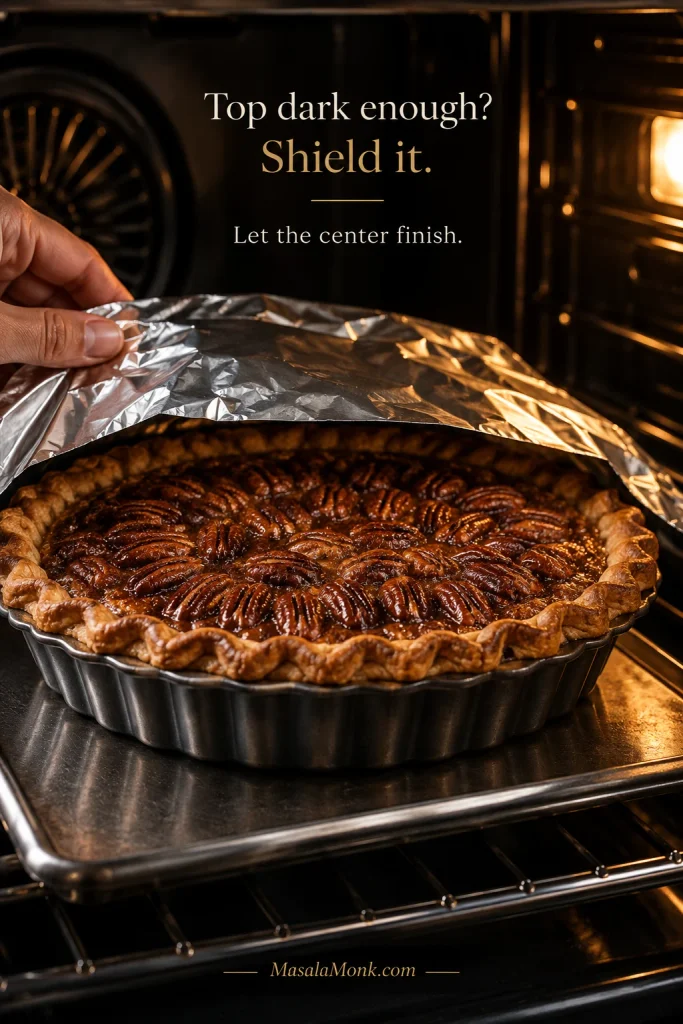
Bake. Put a sturdy metal, glass or ceramic pie plate directly on the lower-third rack. Keep a flexible disposable shell on its baking sheet for support. Begin checking around 45–50 minutes; most pies of this depth finish in roughly 50–60 minutes. Shield the rim once it is brown enough. If the pecans are getting dark first, tent the top loosely with foil and let the middle keep baking.
Read the Center, Then Let It Set
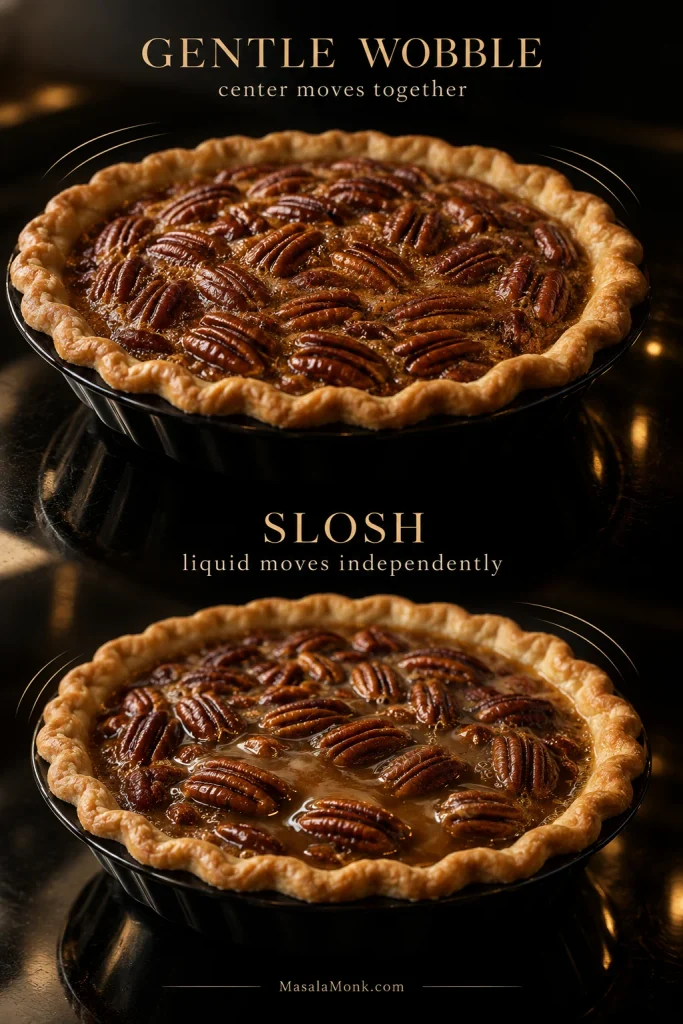
Check the middle. The outer filling should look set and slightly puffed. Give the pan a gentle nudge. The center should move together in one gentle wobble. Loose syrup shifting independently under the pecans means it needs more oven time. For another check, look for roughly 200°F / 93°C near the center.
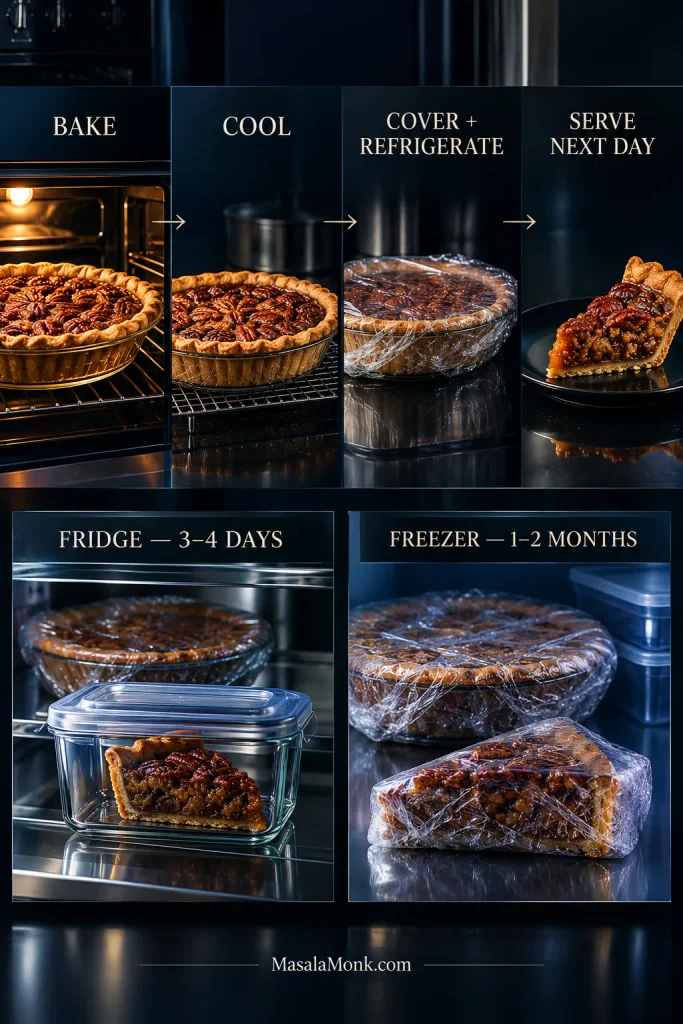
Cool before cutting. Set the pie on a rack and let it cool for about 2 hours. That gives the filling time to finish setting. If you are not serving it after the cooling period, cover and refrigerate it promptly.
If the pie came out with that gentle wobble, the hard part is over.
Leave it alone.
A tiny “test slice” cut from a hot pie can make a perfectly good filling look underdone. The recipe above is all most bakers will need. The rest is here for the moments when the center, crust or timing has you wondering what to do next.
Pecan pie is done when the filling around the edge is set and the center moves together in a gentle wobble, with no loose liquid sloshing underneath the pecans.
The timer tells you when to start paying attention. The center tells you when to stop.
Pecan Pie Bake Time: Start Looking Around 45–50 Minutes
At 350°F / 177°C, this 9-inch pie generally takes about 50–60 minutes. A shallow foil shell can finish sooner; a deeper pie or slower-heating dish may take longer.
Browning and doneness do not always arrive together. Once the surface has enough color, foil buys the center more baking time without asking the crust and pecans to take more heat.
Look for a wobble, not a slosh. Nudge the plate. A ready center moves together like thick custard and settles quickly. If syrup shifts independently under or between the pecans, keep baking. The top may already look finished, so shield it if necessary and give the middle the time it needs.
A gentle pan nudge reads the whole center without piercing or cutting a filling that is still setting; instead, the movement gives you a non-destructive doneness check.
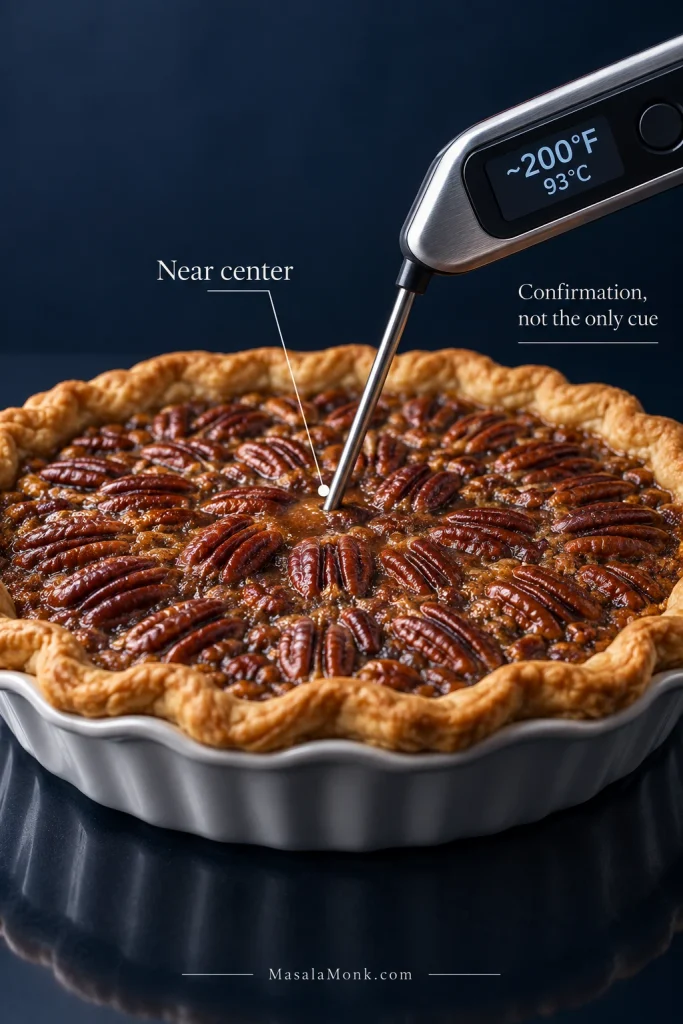
What Temperature Is Pecan Pie Done? About 200°F / 93°C
An instant-read thermometer is useful when the visual cue still leaves you unsure. Check near the center and use the reading as confirmation. Avoid touching the pie plate with the probe.
Because the center is the last part to set, that is where a temperature check is most useful. Around 200°F / 93°C can confirm what the wobble is already telling you.
Gooey, Runny and Overbaked
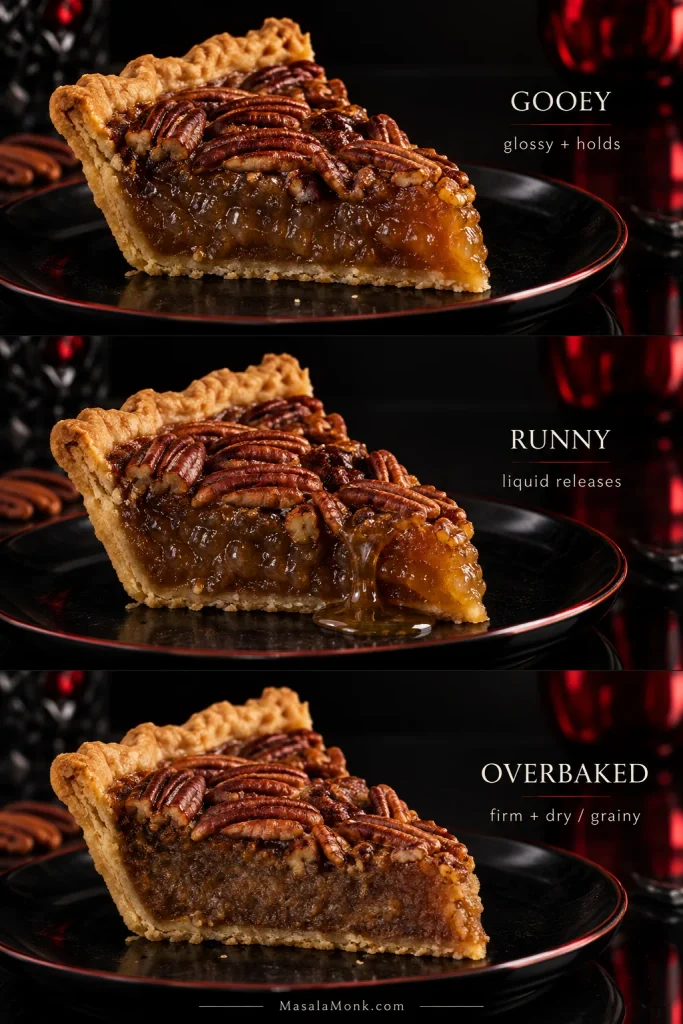
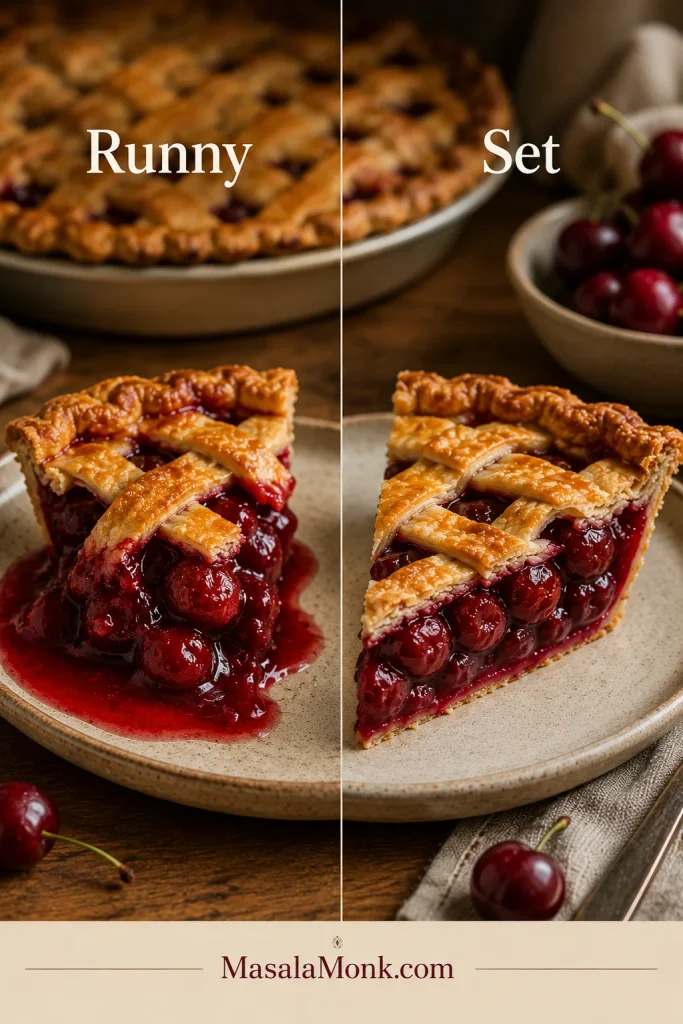
A gooey pie keeps its shape when cut but stays moist and glossy at the edge. The filling yields under the fork without flowing into the space left behind.
A runny pie still releases syrupy filling after it has cooled. Take the bake too far and the center becomes firm, grainy, eggy or almost candy-like.
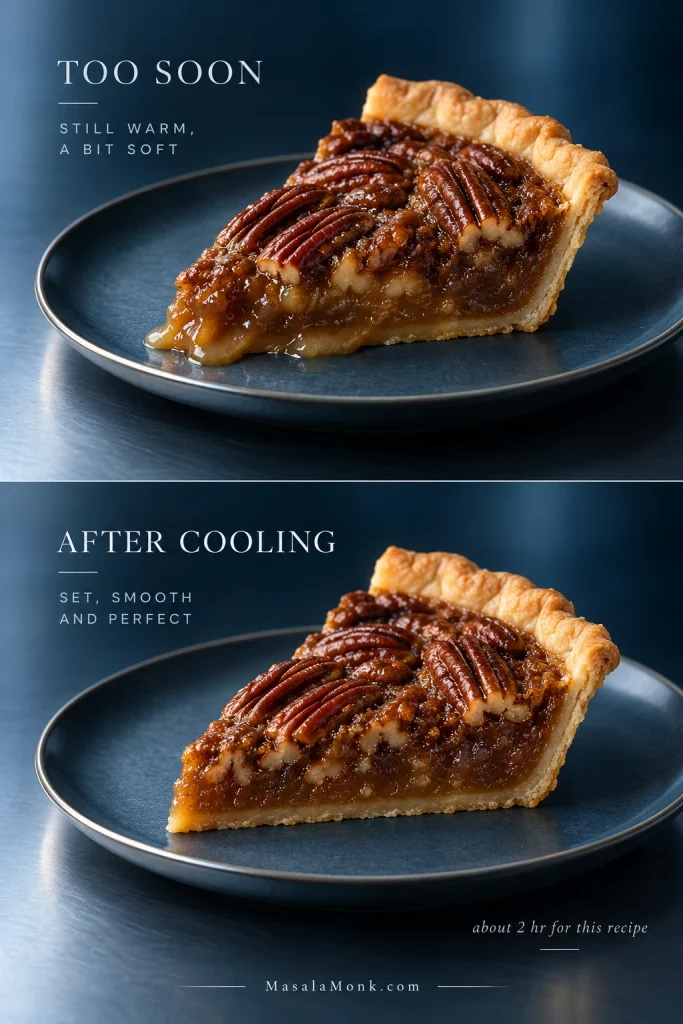
Give the pie about 2 hours on a cooling rack before cutting it. The filling is still settling as heat leaves the pie, so a center that looked soft from the oven can become exactly the texture you wanted.
Leave it uncovered while it is hot so steam can escape. If you are serving it after that cooling period, slice and serve. Otherwise, cover and refrigerate once it has cooled enough; treat roughly two hours at room temperature as the outer cooling window, not a minimum wait before refrigeration.
Warm filling can imitate underbaking. After the pie has cooled, however, the cut edge becomes more defined while retaining the moist gloss that separates a gooey center from a dry one.
Want the slice warm? Let the pie set first, then gently warm the wedge you are serving. A brief warm-up brings the butter and toasted-pecan aroma forward again without loosening the entire pie.
Vanilla ice cream gives you the classic hot-cold contrast. When the pie already feels sweet enough, lightly sweetened or unsweetened homemade whipped cream keeps the finish cooler and lighter.
Pecan Pie Crust: Crisp Underneath and Strong Enough for the Filling
A good bottom crust lifts with the filling instead of remaining glued to the plate.
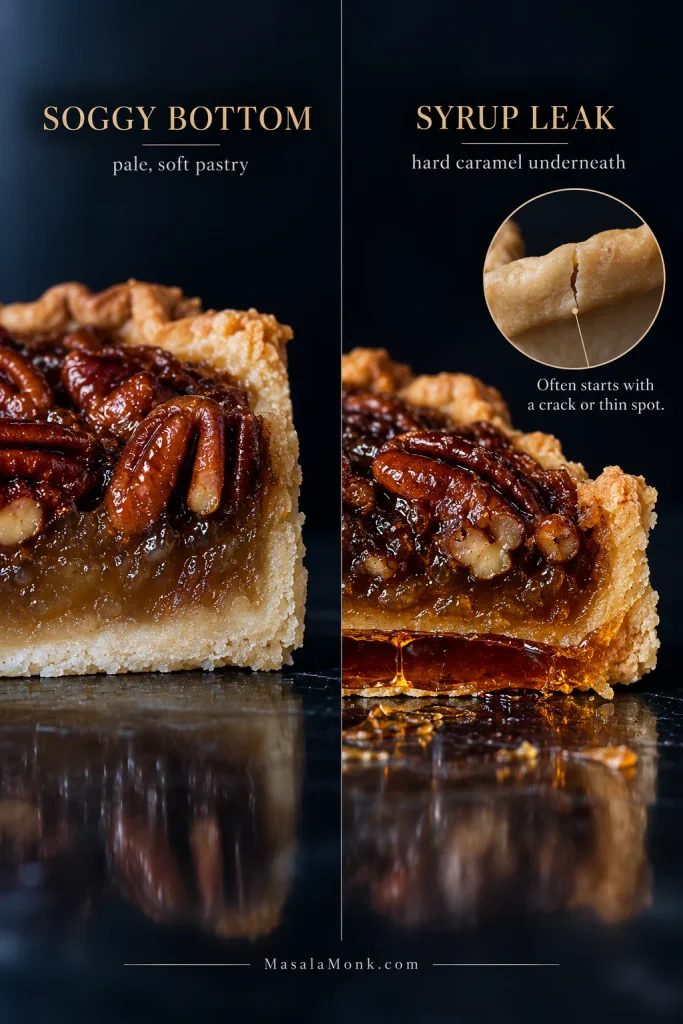
If the underside looks wrong, notice what is actually there. Pale, soft pastry points toward weak bottom heat. A hard layer of caramelized syrup under the crust means the filling found a route beneath it.
Pan Depth Matters More Than “9 Inch”
A shallow 9-inch shell holds much less than a deeper plate with the same diameter. Around 1½ inches / 3.8 cm deep is comfortable for this filling. With a shallower shell, stop before the filling reaches the top.
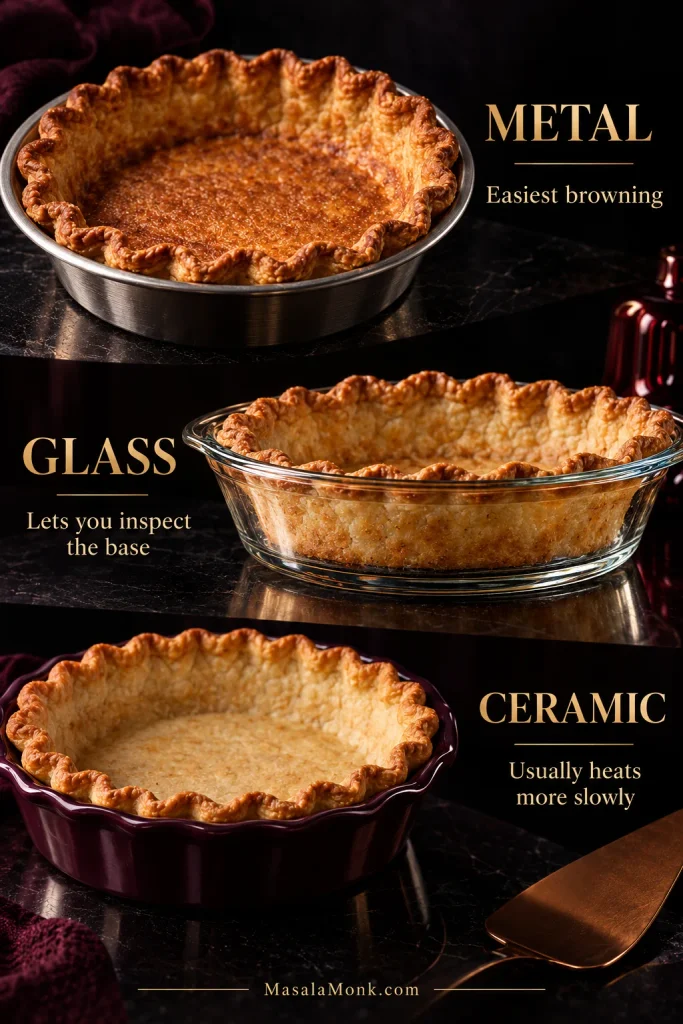
Metal pie plates usually brown the bottom most readily. Glass and ceramic work too, although the underside may take longer. A sturdy pie plate bakes directly on the lower-third rack; a flexible foil shell stays on its baking sheet for support.
Before pouring the filling, look at the pan from the side. Two 9-inch dishes can have very different capacities, and metal generally gives the bottom crust a head start on browning.
Using a Frozen Pie Crust for Pecan Pie? Keep It Supported
Yes, a frozen pie crust works for pecan pie. Choose a deep-dish shell when possible, follow its package directions for thawing and inspect the pastry before filling it. A tiny crack can look harmless until syrup finds it.
Disposable foil shells become surprisingly floppy once they are full. Put the empty shell on a rigid baking sheet before adding the filling, then carry the pie by the sheet.
With a frozen pie crust in a foil shell, support is preventive rather than cosmetic: once the pan flexes, a tiny crack can become a leak path during filling or transfer.
Blind bake? Not for this pie. This filling can go straight into a cold, unbaked shell. The lower-third rack gives the bottom useful heat without adding another pastry stage. A partial blind bake can help if your usual pie dish repeatedly leaves the bottom pale or if you switch to a thinner filling, but it also creates another chance for warm pastry to slump or shrink.
Soggy Bottom or Syrup Under the Crust?
Pale, soft pastry usually needs better bottom heat, colder dough or more time.
A hard, shiny layer of baked sugar underneath tells a different story. The filling probably found a crack, thin patch or opening and slipped below the crust.
Use the underside to choose the fix: soft pastry points to a baking problem, while a hard amber sheet means syrup crossed the crust and set underneath.
Pecan Pie Filling: Rich, Gooey and Packed With Pecans
Once the crust is sorted, the filling itself is simple: eggs, syrup, brown sugar, butter, vanilla, salt and pecans. Eggs are what let the filling set, while the syrup and sugar create its sticky body. Butter adds richness, and the pecans bring most of the texture and bulk. Corn syrup also reduces the chance of the sugar crystallizing as the filling cooks, helping the syrupy part of the filling stay smooth.
Many pecan pieces naturally rise toward the surface while the pie bakes. That is part of the classic look. What matters is using enough nuts that every forkful gets pecans along with the filling.
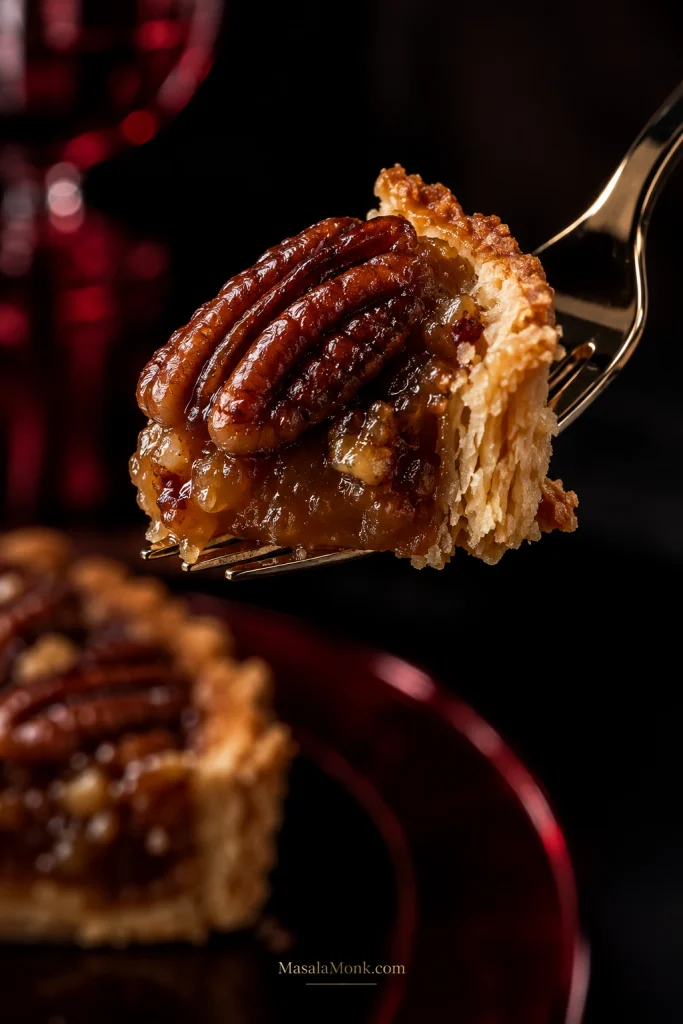
A good forkful catches crisp pastry, sticky filling and toasted pecan in the same bite.
The Best Pecans for Pecan Pie—and Which Ones to Toast
Start with fresh pecan halves or large pieces. Taste one before the bag goes into the recipe. Good pecans are sweet, buttery and clean; stale or paint-like flavors only become louder once the nuts are warm.
Use most of them coarsely chopped inside the filling, then save a smaller handful of halves or larger pieces for the top. Chopped nuts give you more pecan in each bite and make the finished pie easier to cut.
The nuts on top toast in the oven anyway. The chopped pecans under the syrup do not get that same exposure, so they are the ones worth toasting first. Give them 6–8 minutes at 350°F / 177°C and pull them when the aroma turns distinctly nutty; pecans can move from toasted to bitter quickly.
Light or Dark Corn Syrup?
Light corn syrup gives a cleaner sweetness and keeps vanilla and pecans prominent. Dark corn syrup brings a deeper, almost toffee-like flavor with some molasses character. Both work here, and dark brown sugar can also replace the light brown sugar when you want a stronger caramel note.
Both light and dark corn syrup use the same 1 cup / 240 ml / 312 g amount in this pecan pie, so switching between them changes flavor rather than the mixing or baking method.
Pecan pie is supposed to be sweet. It just should not taste as though sweetness is the only thing happening.
Roasted pecan flavor, salt and darker syrup add contrast. Smaller slices suit a pie this rich. The generous 8 oz / 225 g pecans also keep the dessert tasting like pecans rather than simply sweet syrup in a crust.
Cut the sugar or syrup too far and the center can set differently, so save those changes for a formula built around them.
Making Pecan Pie Without Corn Syrup
Yes, you can make pecan pie without corn syrup—but use a filling built for the sweetener you choose. Golden syrup is a proven alternative in pecan-pie fillings, but do not assume every liquid sweetener can replace corn syrup cup for cup. Recipes built around golden syrup, maple syrup or honey may use different egg and sugar proportions.
When making pecan pie without corn syrup, the key question is not which liquid looks similar; it is whether the filling’s egg-and-sugar balance was designed for that sweetener.
Pecan Pie Troubleshooting: Runny Filling, Soggy Crust & More
If a fully cooled pecan pie still pours from the cut edge, it was usually underbaked, or the amounts of eggs, sugar or syrup were changed enough to affect the set.
“Runny” is not much of a diagnosis on its own. What matters is when the filling looks loose and what the rest of the pie is doing.
The useful comparison happens after cooling: gooey filling remains soft but contained, runny filling still releases syrup, and an overbaked center has lost moisture and tenderness.
What You See
Likely Cause
What to Do
Center sloshes in the oven
Underdone
Shield browned areas and keep baking
Pie looks very soft while hot
May be completely normal
Give it the full cooling time before judging the set
Cold pie still pours from the cut edge
Underdone or filling amounts changed
Next time, bake until the middle moves together in one gentle wobble
Top is dark, middle is liquid
The surface finished first
Tent with foil and continue baking
Filling is pale and foamy
Too much air was beaten in
Usually still edible; whisk gently next time
Baked filling is grainy or eggy
Eggs overheated during baking
Pull the next pie sooner; use the gentle wobble as the doneness cue
Bottom crust is pale and gummy
Weak bottom heat
Use the lower rack, colder dough or a metal pan
Hard syrup is baked under the pastry
Crack, hole or thin spot in the crust
Keep the shell intact and avoid unnecessary docking
Pie overflowed
Shell too shallow or overfilled
Use a deeper plate or leave some filling behind
Pie is hard rather than gooey
Overbaked
Pull the next pie sooner
Top puffed dramatically or cracked
Filling may have baked too far
Start checking earlier and rely on the center movement
If the Filling Still Looks Wrong
If the raw filling curdles before it reaches the oven, the melted butter was probably too hot; starting again is usually simpler. An eggy or grainy baked filling points more toward too much heat during baking.
If your oven regularly finishes much earlier or later than recipes suggest, check it with an oven thermometer. Sometimes the problem really is the oven.
Serve It, Keep Baking or Start Again?
A slightly uneven top, an imperfect crimp or a pecan that browned more than its neighbors does not make a bad pie. If the filling holds and tastes good, serve it.
Keep baking while liquid still moves freely in the oven. Start again if you have time when the eggs scrambled badly before baking or a major break in the crust sent much of the filling underneath it. Everything else deserves a little perspective before it gets called a failure.
High-altitude note: Baking above about 3,000 feet / 915 metres? Pie pastry generally needs less adjustment than cakes or breads. Colorado State University Extension’s high-elevation baking guide notes that slightly more liquid can sometimes improve pastry texture and recommends baking pies in the lower third of the oven. Judge this filling by its center rather than borrowing adjustments from an unrelated recipe.
Make-Ahead Pecan Pie: Bake It Before Thanksgiving Gets Busy
Bake it the day before and dessert is already handled before the Thanksgiving oven gets crowded.
After cooling, cover and refrigerate the pie. By the next day the filling will be thoroughly set and easy to portion. Serve it chilled or let some of the refrigerator chill come off before dessert.
For cleaner portions, serve the pie chilled or let some refrigerator chill come off first; if you want it warm, reheat individual wedges rather than loosening the whole pie.
Does Pecan Pie Need to Be Refrigerated?
Yes. The FoodSafety.gov cold-storage chart gives baked pecan pie about 3–4 days in the refrigerator. Because the filling contains eggs, cover and refrigerate it promptly once cooled; do not leave it sitting at room temperature overnight.
Can You Freeze Pecan Pie?
Yes. Cool the pie, wrap it well and freeze it whole or in portions. For best quality, use it within about 1–2 months. Thaw it in the refrigerator while still wrapped.
Need something easier to carry? Our pecan pie bars with shortbread crust turn the buttery pecan-and-caramel idea into sturdy squares. They are easier to pack, portion and pass around when a round pie would have twelve people negotiating wedges.
Pecan Pie FAQs
1. Can pecan pie sit out overnight?
No. Homemade pecan pie contains eggs. Cool it, cover it and refrigerate it; do not leave it on the counter overnight.
2. Why do pecans float to the top of pecan pie?
That is normal. Many pecan pieces rise through the egg-and-syrup filling as the pie bakes, which is how the familiar nut-heavy top forms. Chopping most of the nuts and using plenty of them still gives every forkful pecans with the filling.
3. Can I make pecan pie two days ahead?
Yes. Bake the pie, cool it and refrigerate it well covered. Two days ahead fits comfortably within the recommended 3–4-day refrigerated storage window, and the filling will be fully set by serving day.
The Slice You’re Waiting For
The best bite starts with crisp, flaky pastry, moves into soft caramel filling and finishes with toasted pecan crunch, so the sweetness never lands by itself.
When the first wedge comes out, the crust lifts with it and the exposed edge of the filling stays moist and glossy instead of slowly spreading across the plate.
Once that first slice holds, you can stop thinking about temperatures and wobble. What’s left is crisp pastry, toasted pecans and a soft caramel middle that gives under the fork.
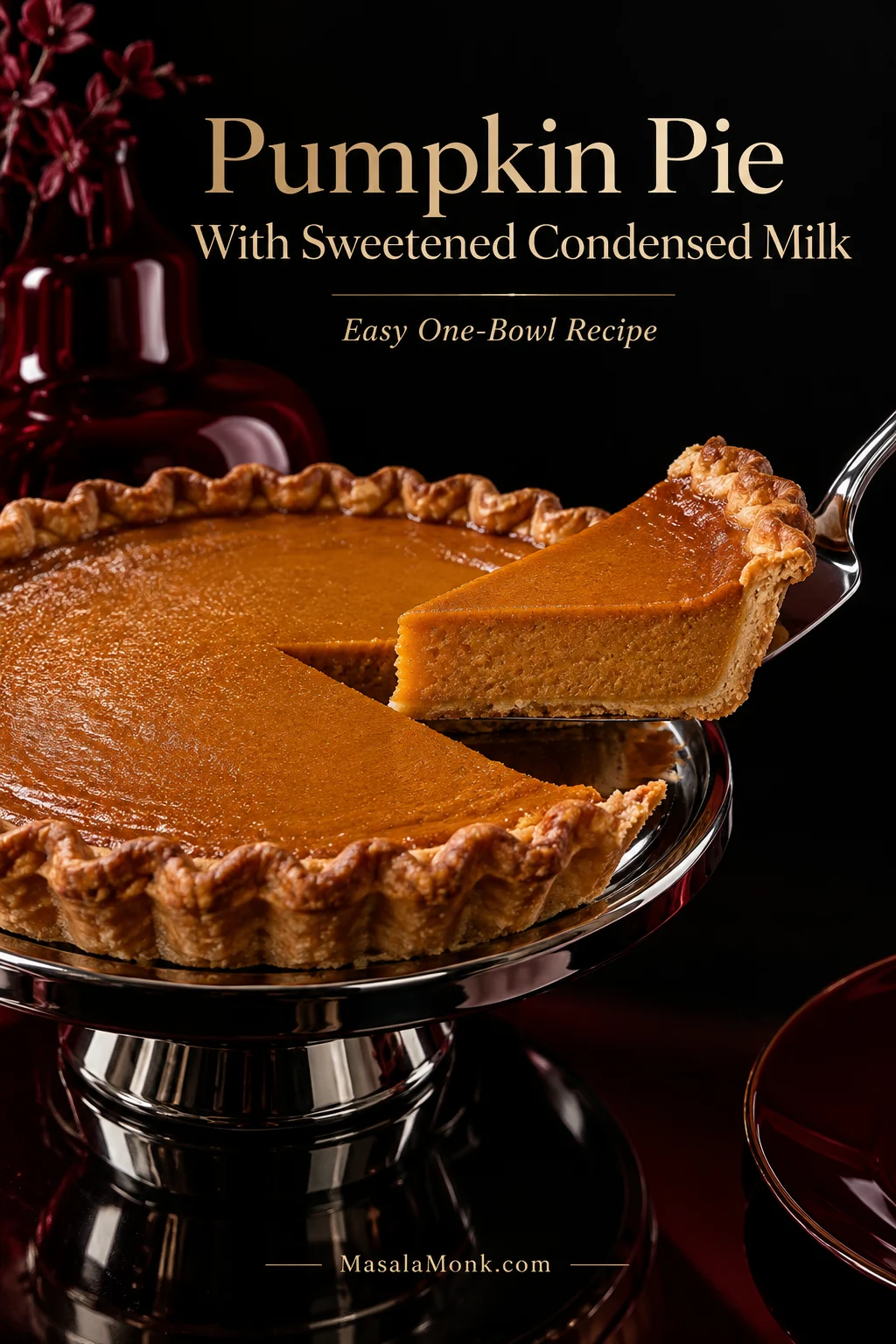
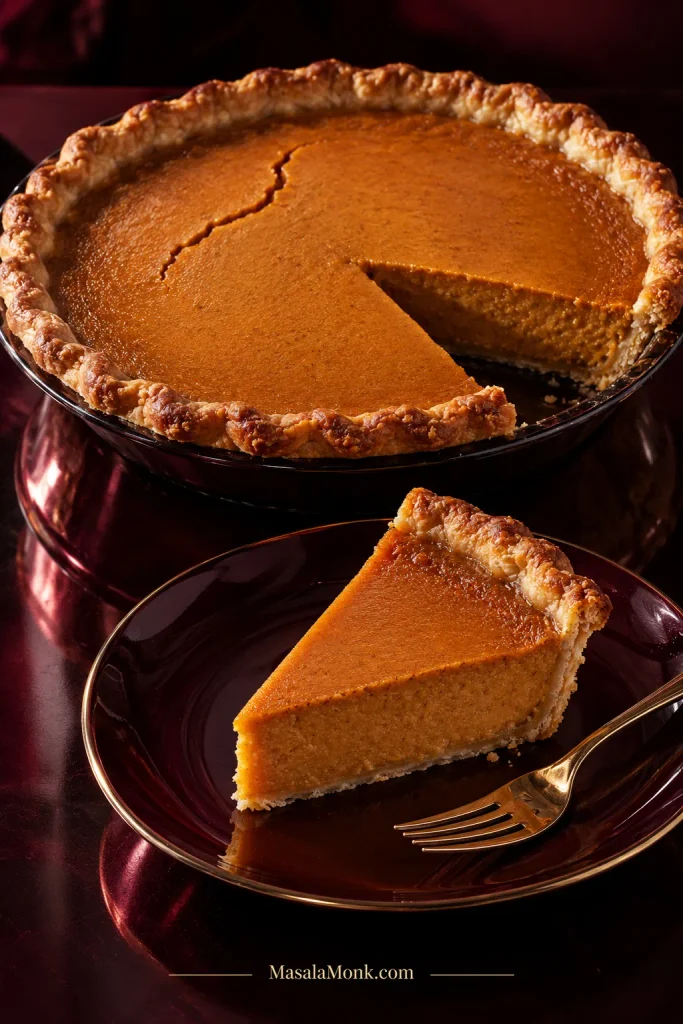
Pumpkin pie with sweetened condensed milk keeps the filling simple. If condensed milk is the can you already have, yes—it works here. Build the pie around it from the start and skip the separate sugar an evaporated-milk recipe would normally need.
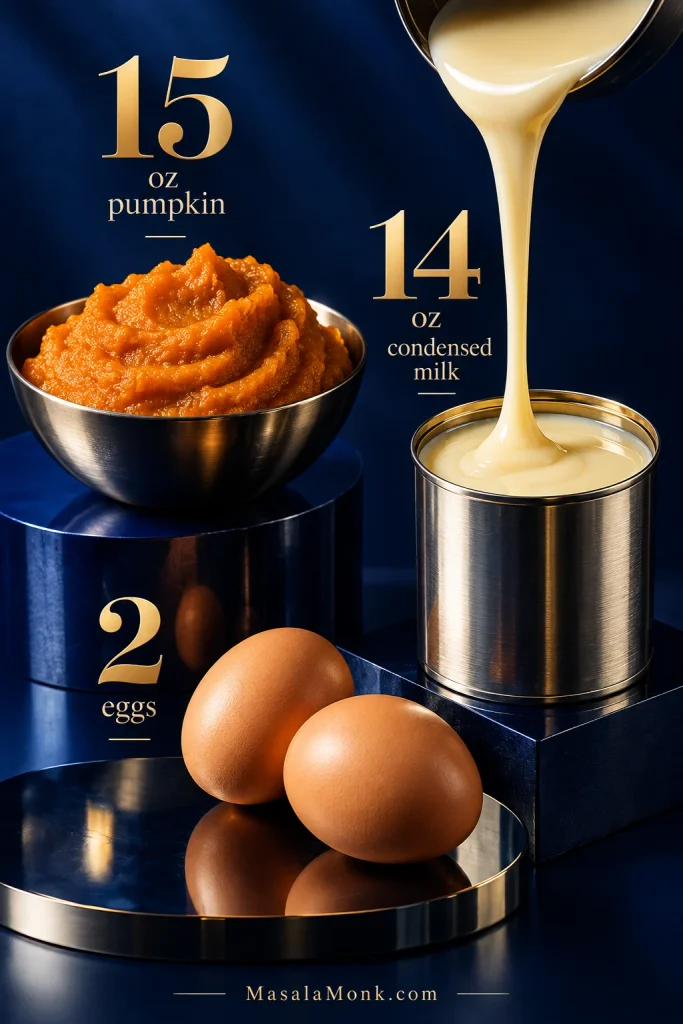
The ratio is easy to remember: 15 oz / 425 g pumpkin + one 14 oz / about 397 g can sweetened condensed milk + 2 large eggs. Add warm spices, salt, and vanilla if you like it, then pour the filling into a cold 9-inch / 23-cm pie crust.
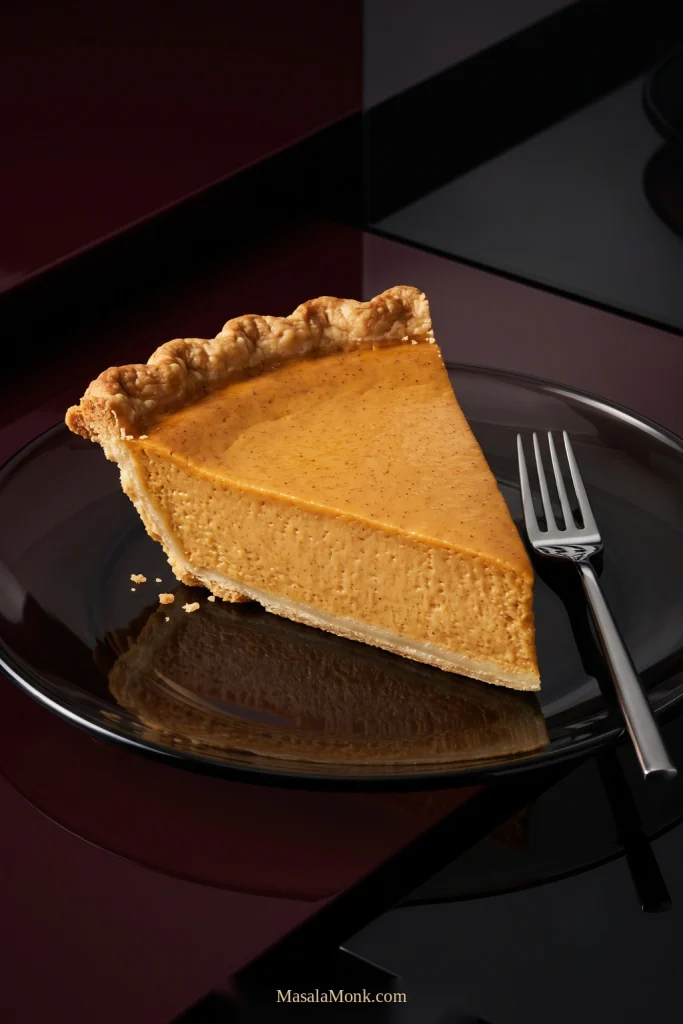
A good slice should feel like custard, not cheesecake: soft pumpkin filling once chilled, with warm cinnamon and ginger in the background. Enough pastry underneath keeps the condensed-milk richness from feeling heavy. The bake is where judgment matters most, because the filling can be ready while the bottom crust still needs help. A center that moves a little isn’t necessarily underdone, either.
Make It Now: Pumpkin Pie With Sweetened Condensed Milk
The filling itself is one-bowl simple. Most of the judgment comes later, when you’re deciding whether the custard and crust are done.
The 15 / 14 / 2 ratio has a practical advantage: it uses two standard cans without leftovers. One 15 oz can of pumpkin, one 14 oz can of sweetened condensed milk, and two eggs complete the core formula.
At a glance
What to know
Active prep
About 10–15 minutes
Bake
About 50–60 minutes: 425°F / 220°C for 15 minutes, then 350°F / 180°C for 35–45 minutes
Crust
Cold unbaked crust works; partially prebake if you want a crisper bottom
Doneness
Set outer filling + a small, controlled center wobble
Yield
About 8 slices
For slices that hold well
Cool, then refrigerate for about 4 hours; overnight is easiest
Optional partial prebake
Adds about 30 minutes chilling + 25–30 minutes baking
Ingredients
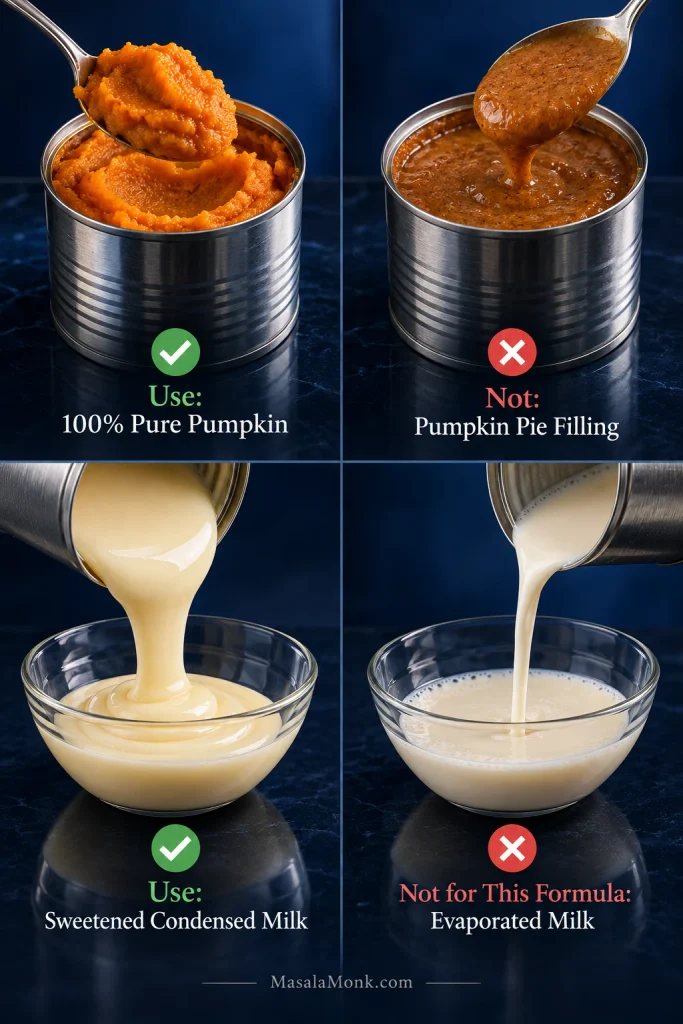
15 oz / 425 g 100% pure pumpkin purée — about 1¾ cups; use plain pumpkin, not pumpkin pie filling
1 × 14 oz / about 397 g can sweetened condensed milk — different from evaporated milk
2 large eggs / about 100 g without shells
2½ teaspoons pumpkin pie spice
½ teaspoon fine sea salt or table salt / about 2.5–3 g
1 teaspoon / 5 ml vanilla extract, optional
1 cold, unbaked 9-inch / 23-cm single pie crust
No ready-made spice blend? Use 1½ teaspoons cinnamon + ½ teaspoon ginger + ¼ teaspoon nutmeg + ⅛ teaspoon allspice + ⅛ teaspoon cloves. You can also make a batch of homemade pumpkin pie spice and adjust it from there.
Method
Heat the oven and ready the crust. Put a rack in the lower third and preheat fully to 425°F / 220°C. Set the cold shell on a rimmed baking sheet.
Make the Filling
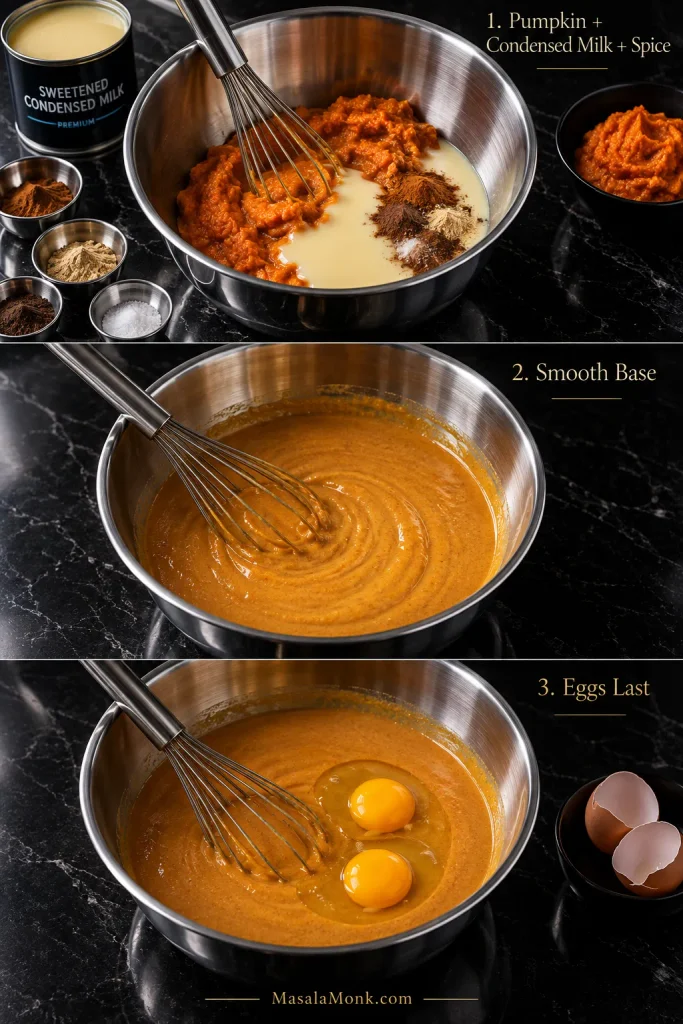
Mix the pumpkin, condensed milk, and seasonings. Whisk the pumpkin, condensed milk, spice, salt, and vanilla until evenly colored and smooth.
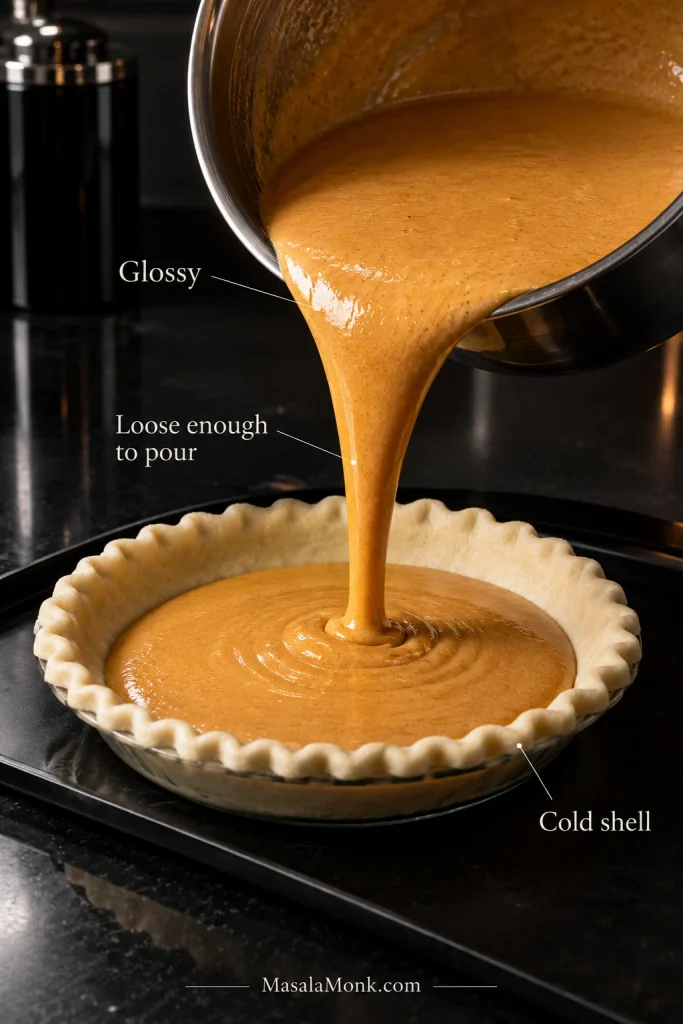
Add the eggs last. Whisk in both eggs just until combined. The filling should look glossy and loose enough to pour easily. That’s normal; pumpkin custard is much thinner before baking than it will be once set. Tap the bowl gently and pop any large bubbles on the surface.
Before the eggs go in, you can safely taste the pumpkin-condensed base and decide whether the optional brown sugar is actually needed. Afterward, whisk in the eggs only until combined.
Pour Into the Shell
Fill the shell. Pour in the custard, leaving a little headroom because 9-inch pie shells vary in depth. If you have extra filling, bake it in a lightly greased ramekin alongside the pie, but start checking it earlier. Take it out when the edges are set and the middle has the same small, controlled wobble.
A loose pumpkin pie filling does not need flour or cornstarch just to look thicker. The eggs provide the set in the oven, so look for a smooth, evenly mixed filling rather than judging it by how thick it seems in the bowl.
Bake and Cool
Start hot. Bake at 425°F / 220°C for 15 minutes. Leave the pie inside and lower the oven to 350°F / 180°C.
Finish gently. Bake for about 35–45 minutes more, checking before the upper end of the range. Ready: the outer filling is set and the center has a small, controlled wobble. Needs longer: a broad section ripples or sloshes like liquid. If the rim is already deep golden, cover it with foil or a pie shield while the center finishes.
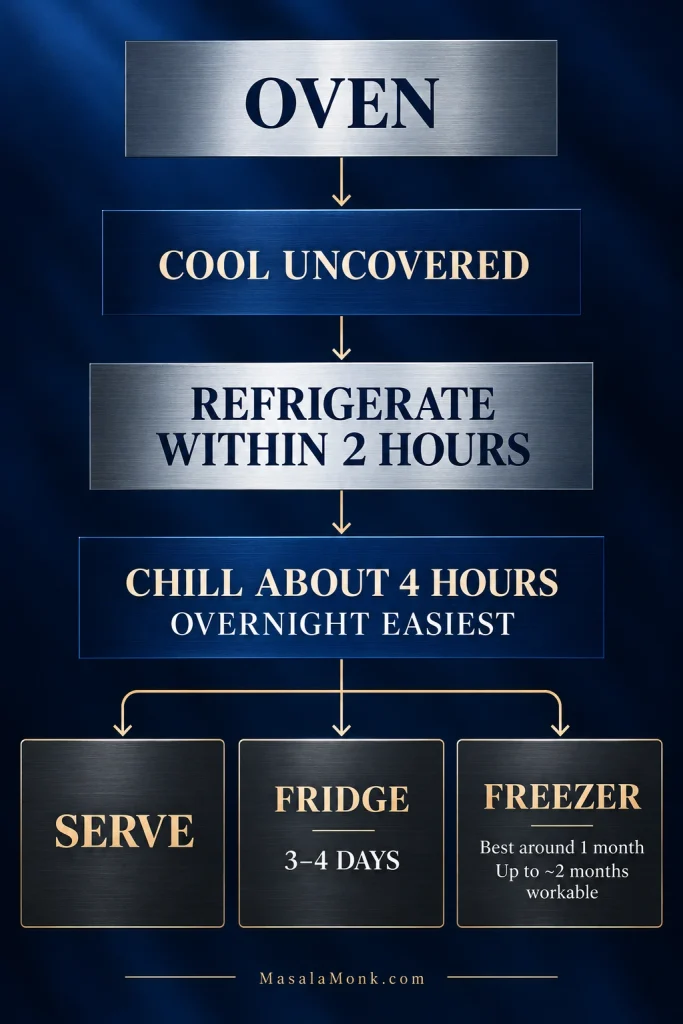
Cool safely. Let the pie cool uncovered on a rack and refrigerate it within 2 hours of leaving the oven. If it is still warm when refrigerated, leave it uncovered or loosely tented until chilled, then cover it once cold.
Fan or Convection Ovens
Start around 400°F / 200°C for 15 minutes, then lower to about 325°F / 160°C. If your oven already compensates automatically for fan heat, use its normal conversion setting. Countertop ovens deserve an earlier look because the top element can sit much closer to the pie.
There aren’t many ingredients here, which makes the two common supermarket mix-ups more important than they might seem.
Use Pure Pumpkin, Not Pie Filling
Choose a can labeled 100% pure pumpkin or pumpkin purée. Pumpkin pie filling or pumpkin pie mix already contains sweeteners and seasoning, so it would make this pie sweeter and change the spice balance.
A standard 15 oz can gives the 425 g needed here. Straight from the can, the purée should be thick enough to hold soft spoon marks.
Sweetened Condensed or Evaporated Milk?
Not 1:1. In this pumpkin pie with sweetened condensed milk, the condensed milk is thick and already contains sugar; evaporated milk is unsweetened and much thinner. Each needs a recipe with a different sugar and dairy balance.
Feature
Sweetened condensed milk
Evaporated milk
Sweet?
Yes
No
Texture
Thick and syrupy
Fluid and pourable
What it brings
Dairy, sweetness, richness, body
Dairy and moisture
Extra sugar usually needed?
No
Usually yes
If evaporated milk is the can you have, switch to an evaporated-milk pumpkin pie formula rather than trying to sweeten or thicken it until it behaves like condensed milk.
The finished pies differ too. A condensed-milk version is usually richer and sweeter; an evaporated-milk version tends to feel lighter and gives you separate control over the sugar. Either can make a soft custard—the eggs and final bake also determine how firmly it sets.
Opened sweetened condensed milk by mistake? You’re already in the right place. Use this formula and leave the separate sugar out.
Do You Need Extra Sugar?
No. The condensed milk already makes the standard filling clearly sweet. If you deliberately want a sweeter pie with a mild molasses note, taste the pumpkin-and-condensed-milk mixture before adding the eggs. Then add 1–2 tablespoons packed brown sugar only if you want it.
Once chilled, the pumpkin should lead the flavor, with cinnamon and ginger behind it and the pastry giving the soft custard some needed contrast.
Choosing Your Spice Level
The 2½ teaspoons in the recipe is a balanced starting point. Use about 2 teaspoons for a milder, more pumpkin-forward pie or 3–3½ teaspoons for something bolder. Go slowly with clove-heavy blends; the spice should sit behind the pumpkin, not bury it.
Once the cans and seasoning are right, the biggest remaining decision is when to stop baking. That matters more than another half-teaspoon of spice.
How to Tell When Pumpkin Pie Is Done
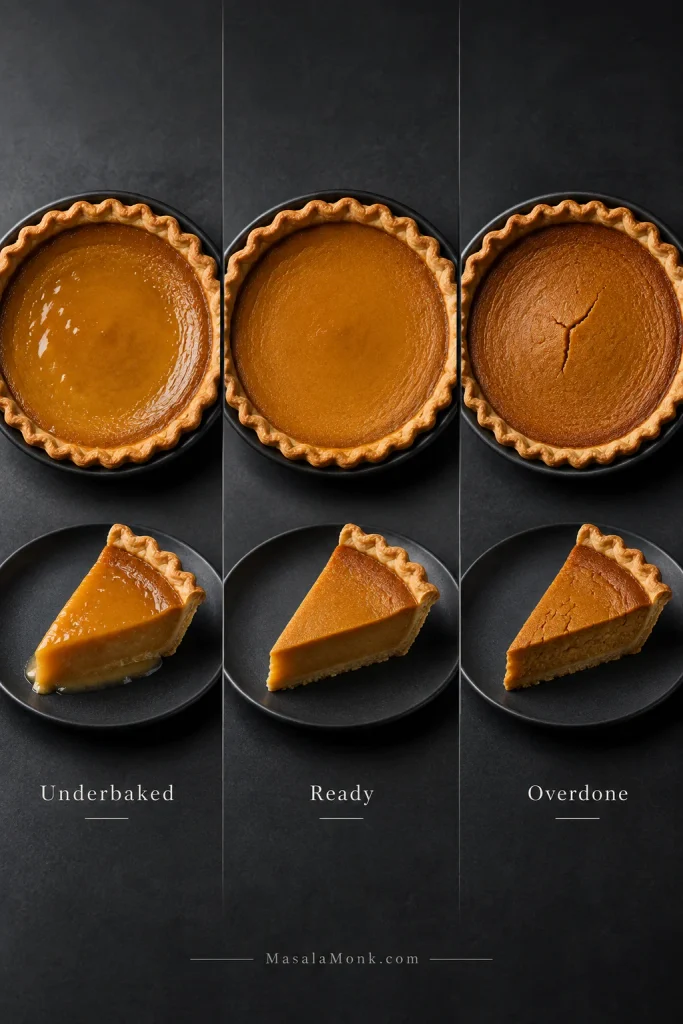
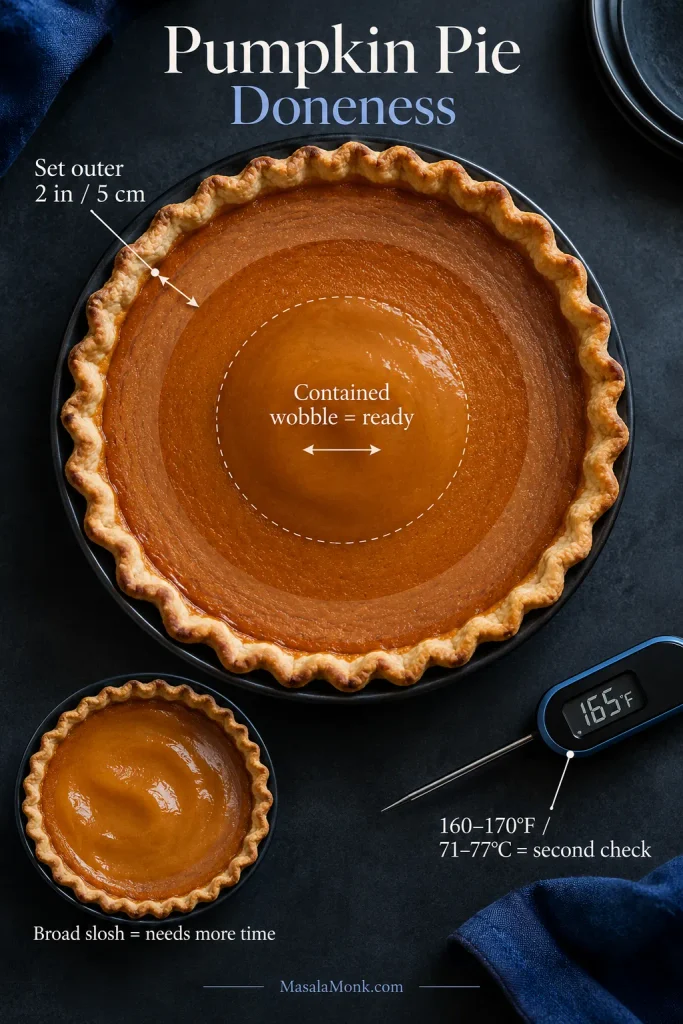
Pumpkin pie is done when the outer 2 inches / 5 cm are set. A smaller center should still wobble softly as one piece when you nudge the plate. Broad liquid ripples or sloshing mean it needs more time.
The middle will move, and the instinct is often to give it another ten minutes “just to be safe.” That’s exactly where a good custard pie can go too far. Start checking within the suggested bake-time range and let the pie itself make the decision.
Underbaked, Ready, or Overdone?
Stage
What you see
What to do
Too early
A broad part of the center ripples, waves, or sloshes like liquid
Keep baking
Ready
Set perimeter + a contained wobble in the middle
Take the pie out
Too far
The center is rigid, strongly puffed, cracked, or beginning to pull from the crust
Remove it immediately
Surface color is a poor guide to how to tell when pumpkin pie is done because pumpkin and spice can darken before the center sets. Use movement, not browning, to decide when to pull the pie.
Jiggly is not the problem. Liquid is. A small, controlled movement in the middle is what you want; the pie keeps setting as it cools.
You don’t need a perfectly clean knife test. Waiting for the center to look completely firm is more likely to push the custard too far.
Use a Thermometer When the Wobble Is Hard to Read
If you’ve been staring at the center and can’t decide whether that wobble is enough, an instant-read thermometer can break the tie. Roughly 160–170°F / 71–77°C in the middle is a useful secondary check, not a replacement for looking at the pie.
Use a simple hierarchy for pumpkin pie doneness: movement first, thermometer if you are unsure, bake time last. That keeps a clock or temperature reading from overruling what the custard is visibly telling you.
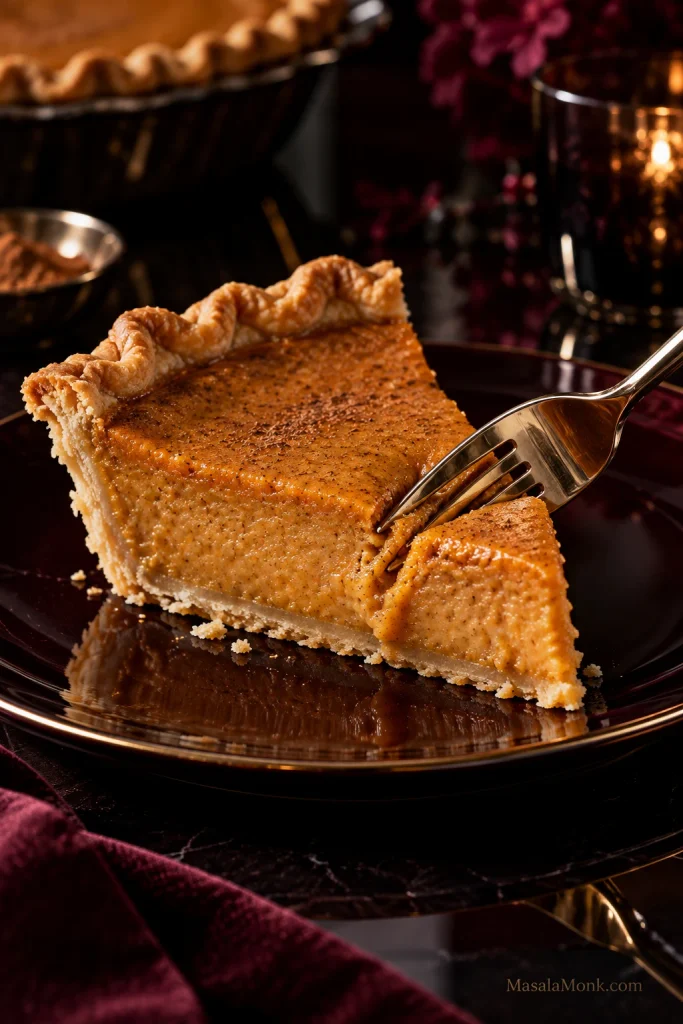
Once thoroughly chilled, that softly set center should hold a slice but yield easily under a fork. If the filling eats firm and bouncy like cheesecake, it probably went farther than it needed to in the oven.
A clean slice does not require a dry custard. Chilling provides much of the structure, so the filling can stay tender enough to yield under a fork without sacrificing a neat wedge.
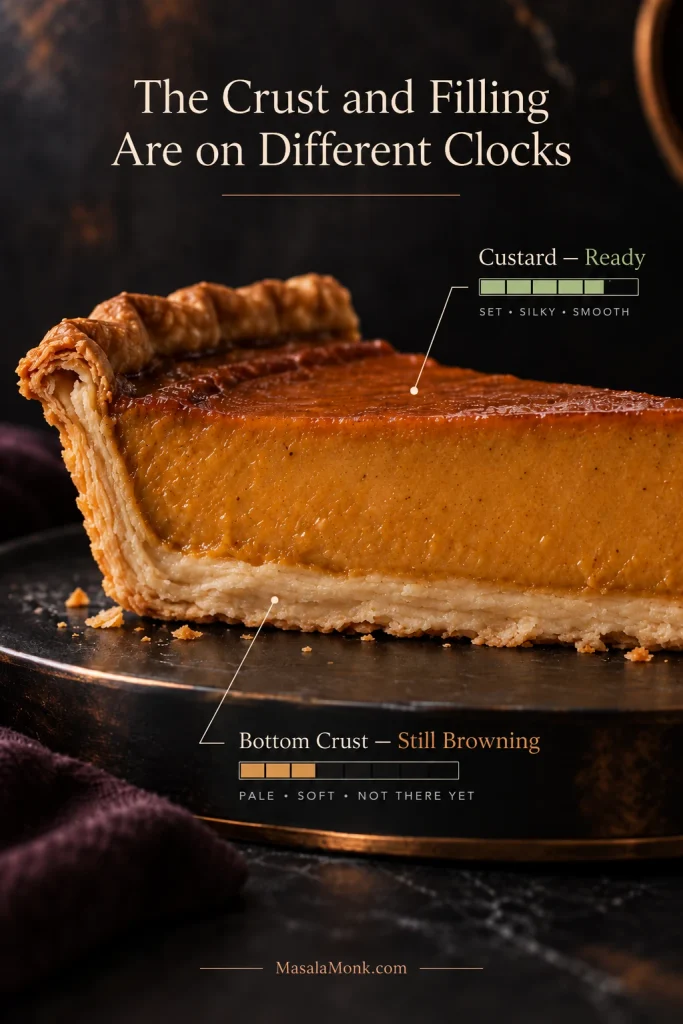
But doneness is only half the timing problem because the pastry underneath can be on a different schedule entirely.
A pumpkin pie can have an overbaked filling and a pale bottom at the same time. More baking isn’t always the answer. Once the custard is done, chasing a darker base can turn a good filling dry before the pastry catches up.
That is also why the recipe starts hot and then drops the temperature. The first 15 minutes give the cold pastry an early burst of heat and get crust browning underway; the lower oven then lets the egg custard finish more gently.
A deeply browned rim does not guarantee a browned bottom: exposed pastry gets direct oven heat, while the base sits beneath wet custard, so judge the filling and bottom crust separately.
For the easiest improvement, bake the pie on a lower rack. If you want a distinctly crisper bottom, partially bake the shell first.
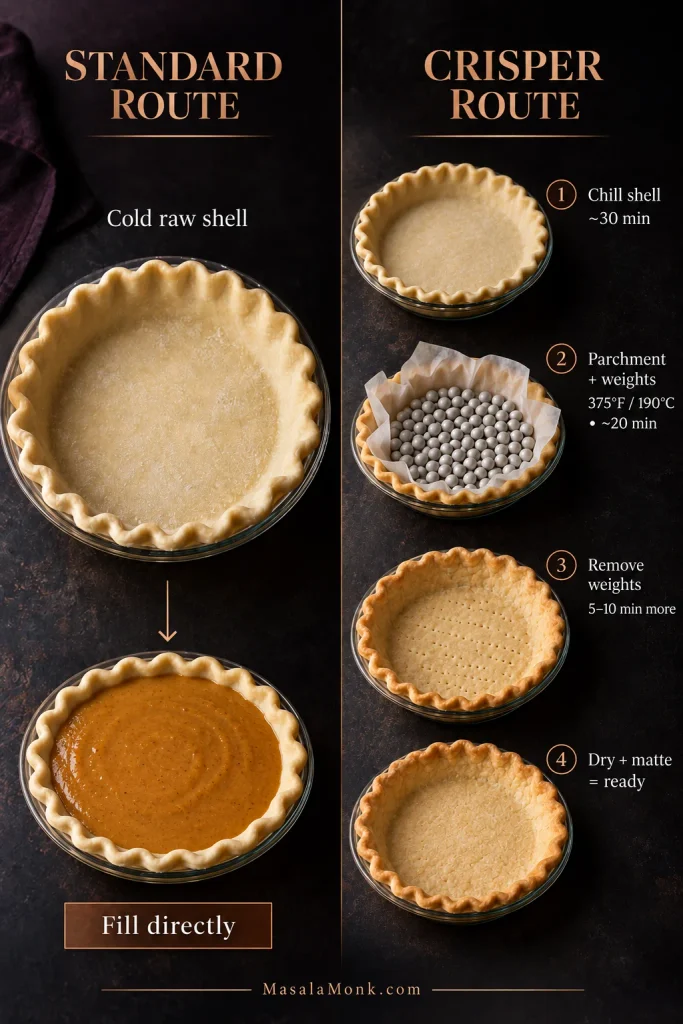
Cold, Unbaked Crust: The Standard Route
The main recipe uses a cold raw crust on a lower oven rack, and that isn’t the inferior version. A refrigerated or frozen store-bought shell is completely fine. Partial prebaking is an extra step for people who care especially about bottom-crust crispness; you don’t need to turn a simple pie into a project.
Prefer making the pastry yourself? This flaky homemade pie crust makes enough for two single-crust 9-inch / 23-cm pies, so one disk can go into this pie and the other can be frozen. Ease the dough into the plate instead of stretching it, then chill the shaped shell again if it has softened.
For a Crisper Bottom, Partially Bake the Shell
You do not have to prebake the crust for this pumpkin pie. Do it when a distinctly crisp bottom matters enough to add the extra step. The key is giving the base a few dry minutes after the weights come out, before wet custard goes in.
You are not trying to fully brown the empty shell. Instead, the useful checkpoint is a base that has lost its damp sheen, because the crust will keep baking after the pumpkin custard goes in.
Partial Prebake, Step by Step
Fit and crimp the pastry, then chill the shaped shell for about 30 minutes.
Heat the oven to 375°F / 190°C.
Line the shell with parchment and fill it about two-thirds full with pie weights, dried beans, uncooked rice, or granulated sugar. Keep the weights against the sides as well as the base.
Bake for about 20 minutes.
Remove the parchment and weights, then bake the empty shell for another 5–10 minutes. The bottom should lose its damp shine and look dry and matte.
Raise the oven to 425°F / 220°C, add the pumpkin filling, and continue with the main recipe.
The rim has already had a head start, so shield it with foil or a pie shield once the color looks right.
Instead of chasing a cracker-dry bottom, aim for enough crispness underneath to give the soft custard some contrast.
Metal, Glass, or Ceramic Pie Plates?
Pan material can help too. A metal pie plate generally gives the bottom heat more quickly and is the easiest choice when browning is the priority. Glass lets you see how the base is coloring. Ceramic works well but usually heats more slowly.
Pan material mostly changes the crust side of the equation. The pumpkin custard still needs the same set-edge and center-wobble cues whether the pie sits in metal, glass, or ceramic.
Raw, Soggy, or Simply Soft?
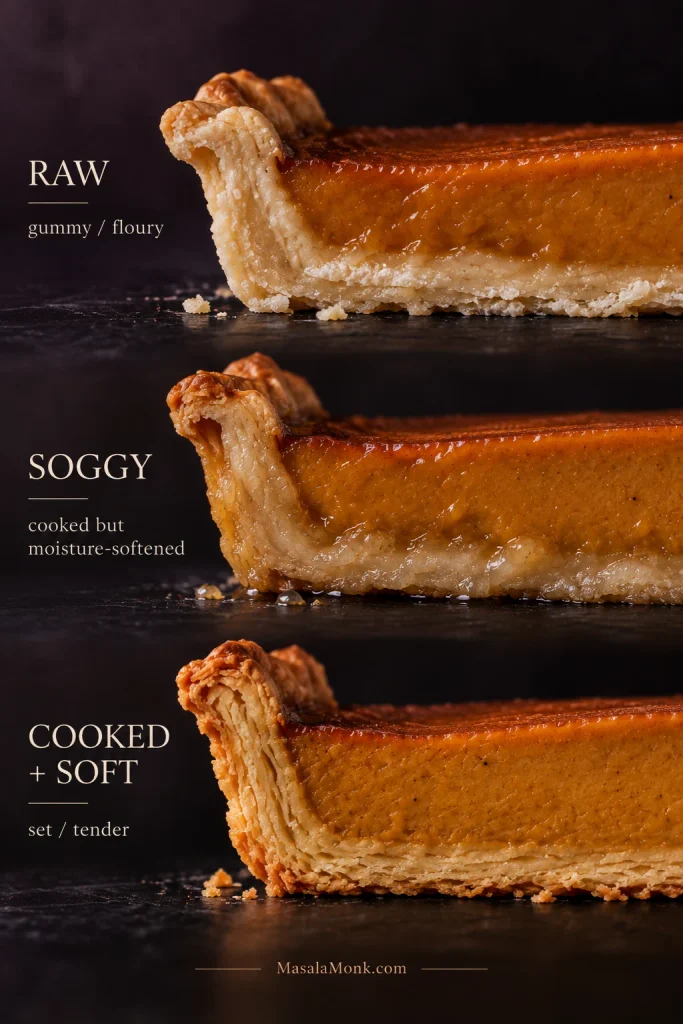
The pastry directly under pumpkin custard will usually be softer than the exposed rim. That doesn’t automatically mean it is raw.
Raw pastry feels gummy, floury, and dough-like. Soggy but cooked pastry has set but absorbed moisture. The layer where the custard meets the crust may simply be soft and tender.
Look at the cut edge as well as the color: raw dough smears and compresses, while cooked-soft pastry shows set layers even when it bends instead of snapping.
If the filling is properly done, much more oven time is unlikely to rescue the bottom without hurting the custard. Prevention works better: use a lower rack, choose a metal pie plate, or partially prebake the shell.
Got set edges, a softly moving center, and a crust you’re happy with? You’re done here. This section is for the moment something looks off.
Most pumpkin-pie problems don’t ruin dessert. A crack, soft crust, or condensation can look worse than it actually is, so start with what you can see.
If the Filling or Top Looks Wrong
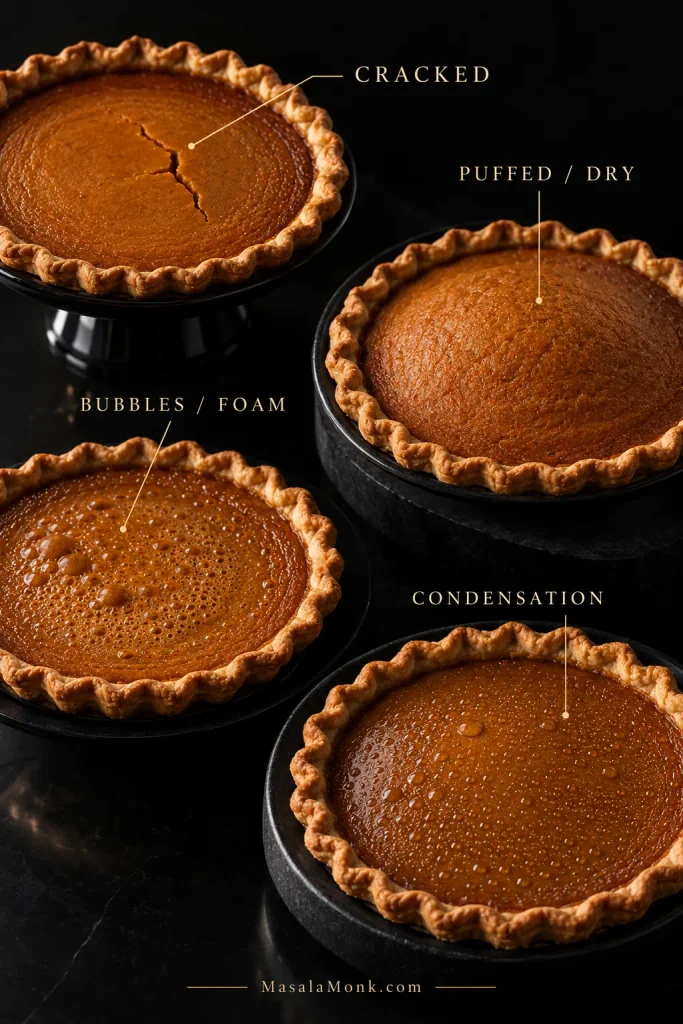
Surface flaws and doneness are not the same diagnosis. Cracks, puffing, bubbles, and condensation tell you something about heat, air, or cooling; a genuinely underbaked center is better recognized by broad liquid movement.
Match What You See to the Fix
What you see
Likely cause
What to do
Center still sloshes
Underbaked custard.
Now: If you just removed it, return it to the oven in 5-minute increments. Next time: Wait for set edges and a smaller soft wobble.
A warm slice is very soft
It may only need more cooling.
Now: Chill the rest before judging it. Next time: Give the pie plenty of refrigerator time before slicing.
The chilled filling is runny
Underbaking, wet homemade pumpkin, or changed ratios.
Now: A cold sliced custard is difficult to repair neatly. Next time: Control pumpkin moisture and use the doneness cues.
The surface cracked
The custard baked too far.
Now: Chill and serve; the crack is mostly cosmetic. Next time: Pull the pie while the center moves slightly.
The top puffed or looks dry
Too much heat or bake time.
Now: Let it cool; mild puffing often settles. Next time: Check sooner, especially in fan or countertop ovens.
The top is foamy or bubbly
Too much air entered during mixing.
Now: Leave it alone; surface bubbles mainly affect appearance. Next time: Whisk gently and clear large bubbles before baking.
The custard is grainy
The eggs overheated.
Now: The texture can’t really be reversed. Next time: Remove the pie sooner.
Water droplets appeared after chilling
Steam condensed on the surface.
Now: Blot large droplets gently. Next time: Cool uncovered and cover only once thoroughly cold.
Too sweet? Serve it cold with unsweetened or barely sweetened whipped cream. Tastes flat? Check the age of your spices before adding more; fresh cinnamon and ginger often help more than another spoonful of a tired blend.
If the Crust Isn’t Behaving
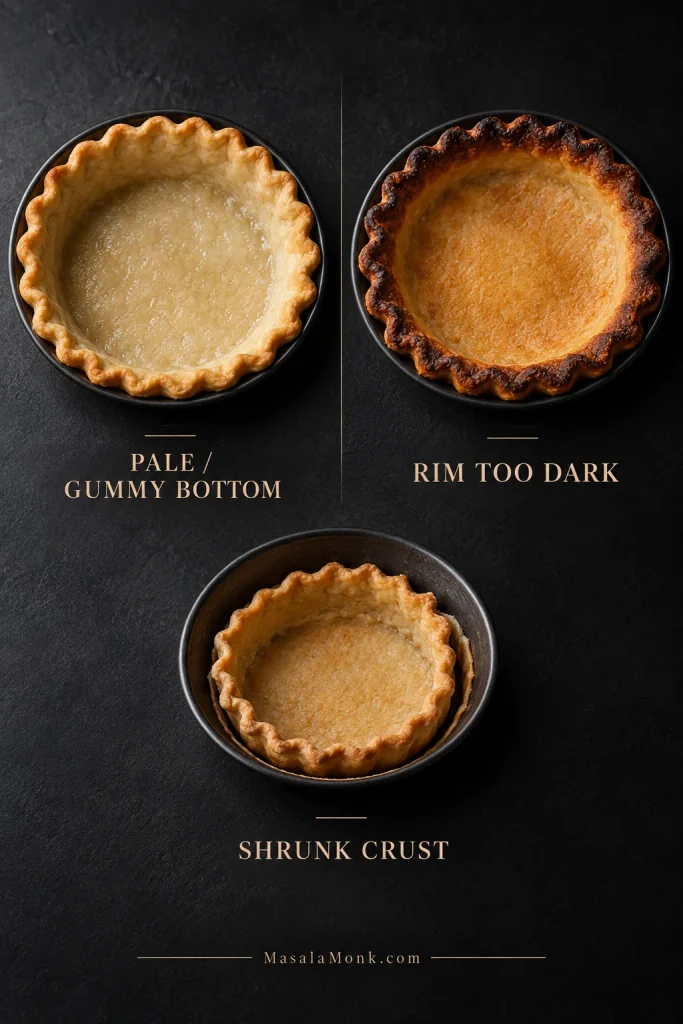
Use the location of the problem as the clue: base issues point toward bottom heat, rim issues toward exposure, while shrinkage points back to dough handling or support.
Match the Crust Problem to the Fix
What you see
Likely cause
What to do
Bottom crust is pale and gummy
Not enough bottom heat.
Now: It’s hard to fix once the custard is done. Next time: Use a metal pan, lower rack, or partial prebake.
Bottom is soft but cooked
The custard softened the pastry.
Now: Soft doesn’t necessarily mean raw. If the pastry has set and isn’t gummy or floury, serve it. Next time: Partially bake the shell if you want more crispness.
Crust rim is too dark
The exposed edge finished first.
Now: Cover with foil and let the center finish. Next time: Shield the rim once the color looks right.
The crust shrank
The pastry was stretched, warm, or poorly supported.
Now: There isn’t much to reverse after baking. Next time: Fit gently, chill thoroughly, and support the sides with weights.
The filling overflowed
The shell was too shallow or too full.
Now: Let the baking sheet catch it. Next time: Leave more headroom.
If the custard is set and tastes good, don’t let a crack or a softer-than-perfect bottom turn dessert into a post-mortem. Some problems are worth learning from without needing to rescue the pie in front of you.
If appearance matters, cut the first serving from an intact section and leave the cracked area for later. Chilled pumpkin custard is usually stable enough that a cosmetic crack will not prevent clean wedges.
Working with canned pumpkin? You can skip this section. With fresh pumpkin, moisture is the variable that matters most.
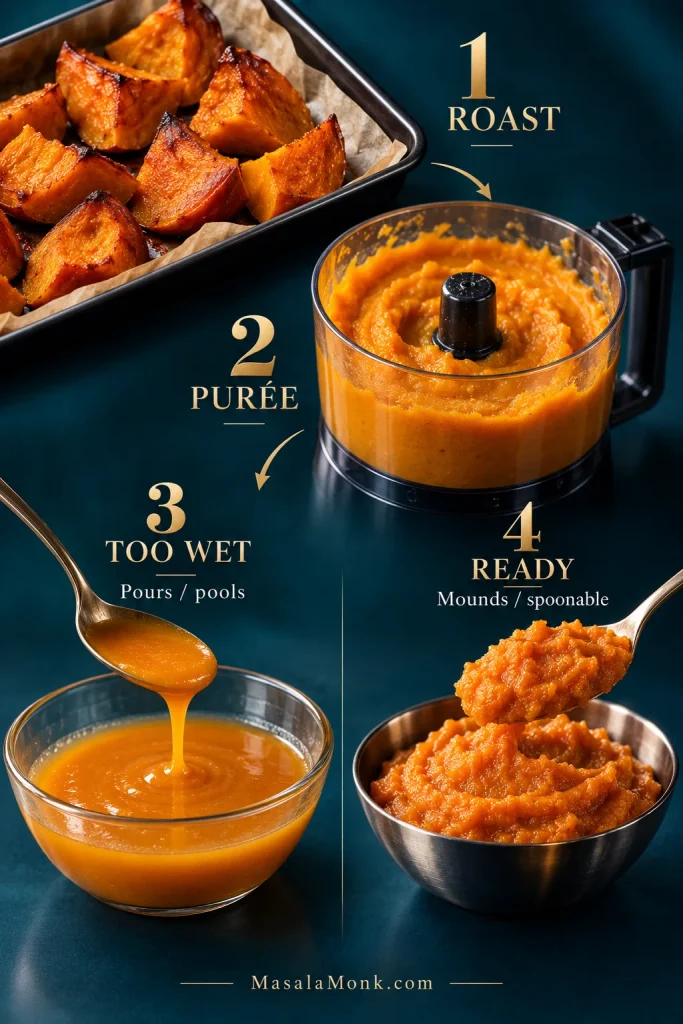
A small pie or sugar pumpkin—or another dense, sweet cooking pumpkin—is usually a better choice than a large carving pumpkin, which tends to be wetter and stringier. Roast it when possible, then purée until smooth. If liquid gathers around the purée or it pours instead of mounding from a spoon, it is too wet. Drain it through a fine sieve or cook it gently until some of that water evaporates.
You want something thick, spoonable, and spreadable, with no watery pooling. Once it reaches that point, weigh 15 oz / 425 g for the pie. Fix the excess water before mixing the custard; adding flour later changes the texture without fixing why the purée was loose in the first place.
For slightly wet fresh pumpkin purée, draining removes free water without concentrating the flavor as much. A clearly loose purée benefits more from gentle stovetop reduction.
Two changes are especially useful here: swap the pastry for a graham cracker crust, or warm the pumpkin and spices first for a deeper, more concentrated filling.
Graham Cracker Crust
The same filling works with graham cracker crust. Use a prepared shell or make a simple homemade graham cracker crust for a 9-inch / 23-cm plate.
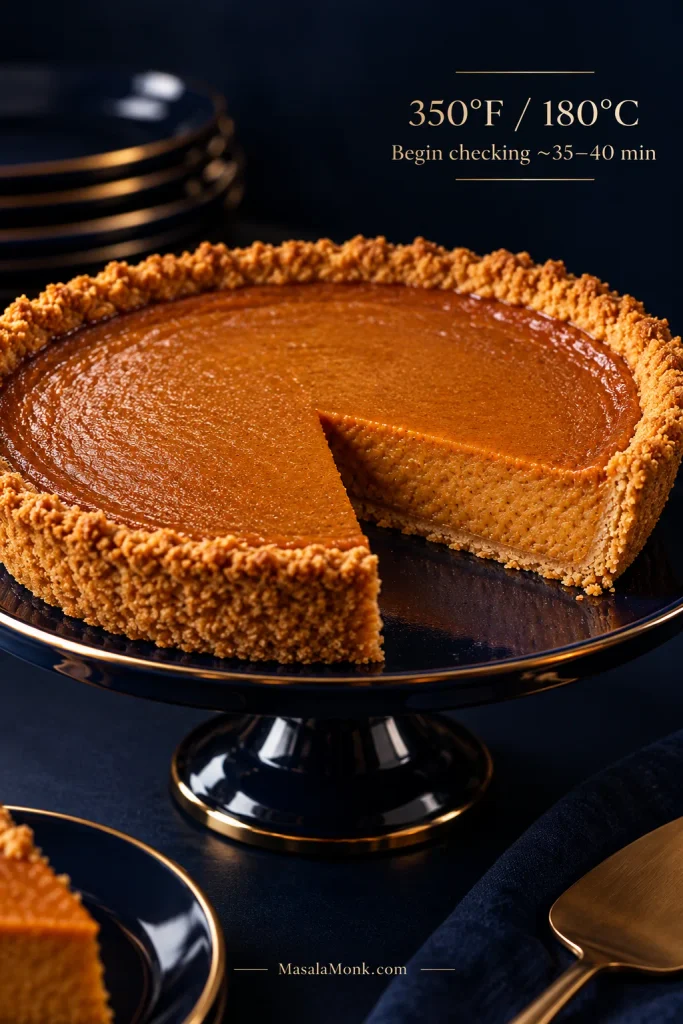
For a homemade crust, bake the empty shell at 350°F / 180°C for about 10 minutes, then cool it before adding the filling. Bake the filled pie at the same 350°F / 180°C and begin checking around 35–40 minutes. A standard prepared 9-inch shell may be ready around 40 minutes; a deeper homemade crust can take longer. Let the same set-edge and soft-center cues decide.
Prepared graham shells can be shallow, so don’t be surprised if all of the filling doesn’t fit.
A graham cracker crust skips the 425°F / 220°C hot start used for pastry. Bake the filled pie at 350°F / 180°C and begin checking around 35–40 minutes, using the same soft-center wobble to judge doneness.
Want Deeper Pumpkin Flavor? Warm the Purée First
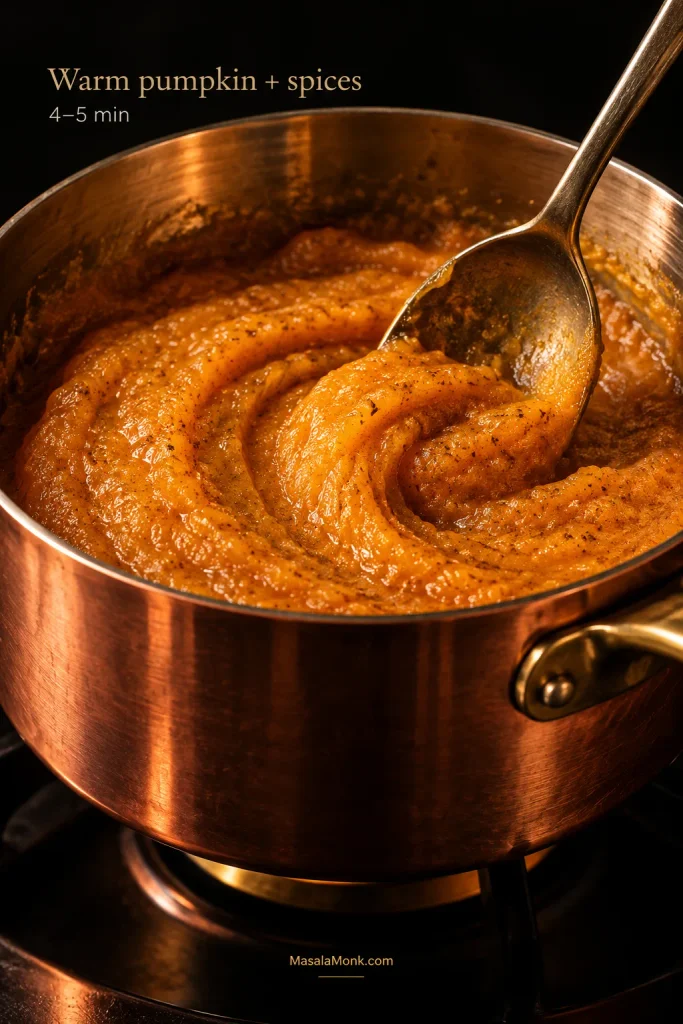
Cook the pumpkin, salt, and spices over low heat for about 4–5 minutes, stirring steadily. You’ll smell the change before you see much of one: the cinnamon and ginger become clearer as some moisture cooks away and the pumpkin loses its raw canned edge.
Let the mixture cool until it is warm rather than hot, then stir in the condensed milk. Add the eggs last and mix gently before filling the crust.
Let warmed pumpkin cool before the eggs go in; otherwise, residual heat can start setting the egg proteins before the pie reaches the oven. Warm is fine, but hot is not.
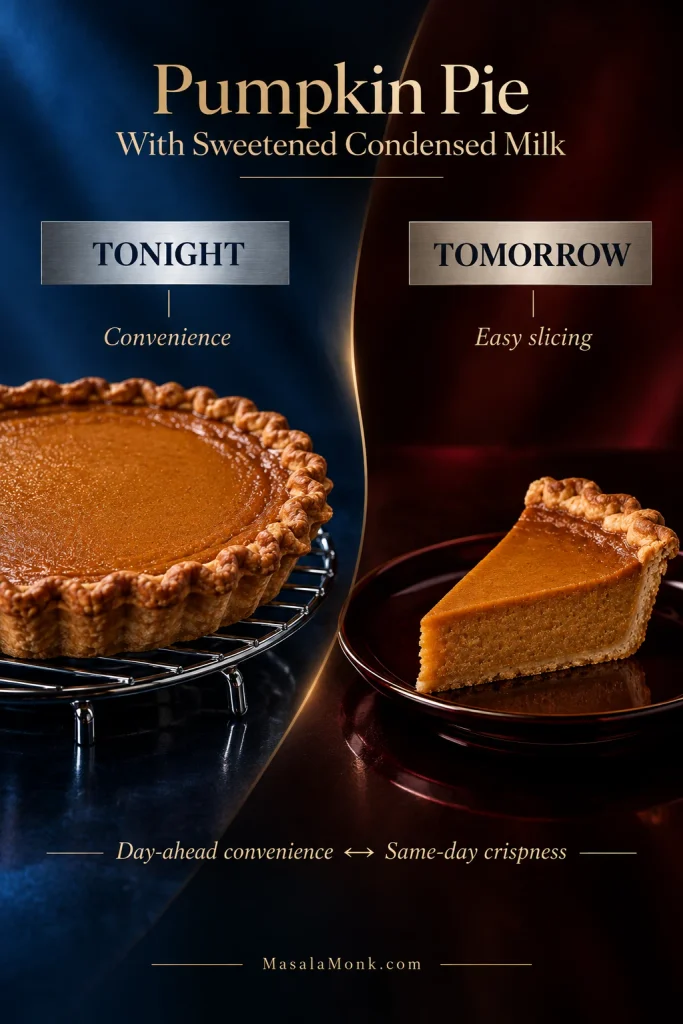
Bake Today, Slice Tomorrow
Yes, pumpkin pie can be baked a day ahead. An overnight chill gives the custard time to settle and makes the next day’s slicing much easier.
A day-ahead pie buys you convenience; a same-day bake buys you the crispest crust. If you want both, partially prebake the shell before baking the pie the day before.
When several dishes are competing for oven space, baking the pie the night before also leaves the oven free for food that needs to reach the table hot.
For the best make-ahead pumpkin pie crust, let the pie cool before covering it. Otherwise, trapped steam under wrap or a lid can soften the pastry faster.
Can You Make the Filling Ahead?
Yes. Mix the filling the night before, cover it, and refrigerate it separately from the unbaked crust. The resting time also gives the spices a chance to meld. Give the mixture a gentle stir before pouring it into the cold shell.
Cooling and Serving
Let the baked pie cool uncovered on a rack, but refrigerate it within 2 hours of leaving the oven. It does not need to be completely cold first; if it is still slightly warm, leave it uncovered or loosely tented until chilled. Cover it once cold.
For slices that hold together well, give the pie about 4 hours in the refrigerator after that cooling period. Overnight is easiest. If you prefer the pie less cold, let individual slices stand for 15–30 minutes before serving.
By then the center should cut cleanly but stay soft under a fork, with warm spice and pastry giving the richer filling some contrast. Barely sweetened or unsweetened homemade whipped cream works especially well because it lightens the condensed-milk richness without piling on more sweetness.
For cleaner pumpkin pie wedges, use a thin sharp knife, wipe the blade between cuts, and then slide a pie server fully beneath the crust before lifting.
Storage and Freezing
Keep the cooled pie covered in the refrigerator and use it within about 3–4 days. FoodSafety.gov gives the same refrigerator window for baked pumpkin and pecan pies in its cold food storage guidance.
You can freeze the pie too. For the best texture, aim to use it within about 1 month; roughly up to 2 months can work, but the custard may separate slightly and the crust can soften. Wrap the thoroughly cold pie well and thaw it overnight in the refrigerator.
If you freeze only a few servings, freeze individual pumpkin pie slices until firm and wrap them separately. Then you can thaw only what you need overnight in the refrigerator.
Pumpkin Pie Questions That Still Come Up
1. Can I bake two pumpkin pies at once?
Usually, as long as both pans fit with room for air to circulate. Two cold pies can slow the oven’s recovery, so the finish time may shift. Rotate them carefully later in the bake if your oven has obvious hot spots, and check each center separately.
2. Can pumpkin pie sit out overnight?
No. Pumpkin pie is an egg-and-dairy custard, so refrigerate it within 2 hours of leaving the oven. If a baked pumpkin pie has been left at room temperature overnight, the safest choice is to discard it.
3. What if my 9-inch crust doesn’t hold all the filling?
That’s common because 9-inch pie shells vary in depth. Stop before the shell becomes awkwardly full and bake the extra custard in a lightly greased ramekin. Start checking the ramekin earlier than the pie and remove it when the edges are set and the center has the same small, controlled wobble.
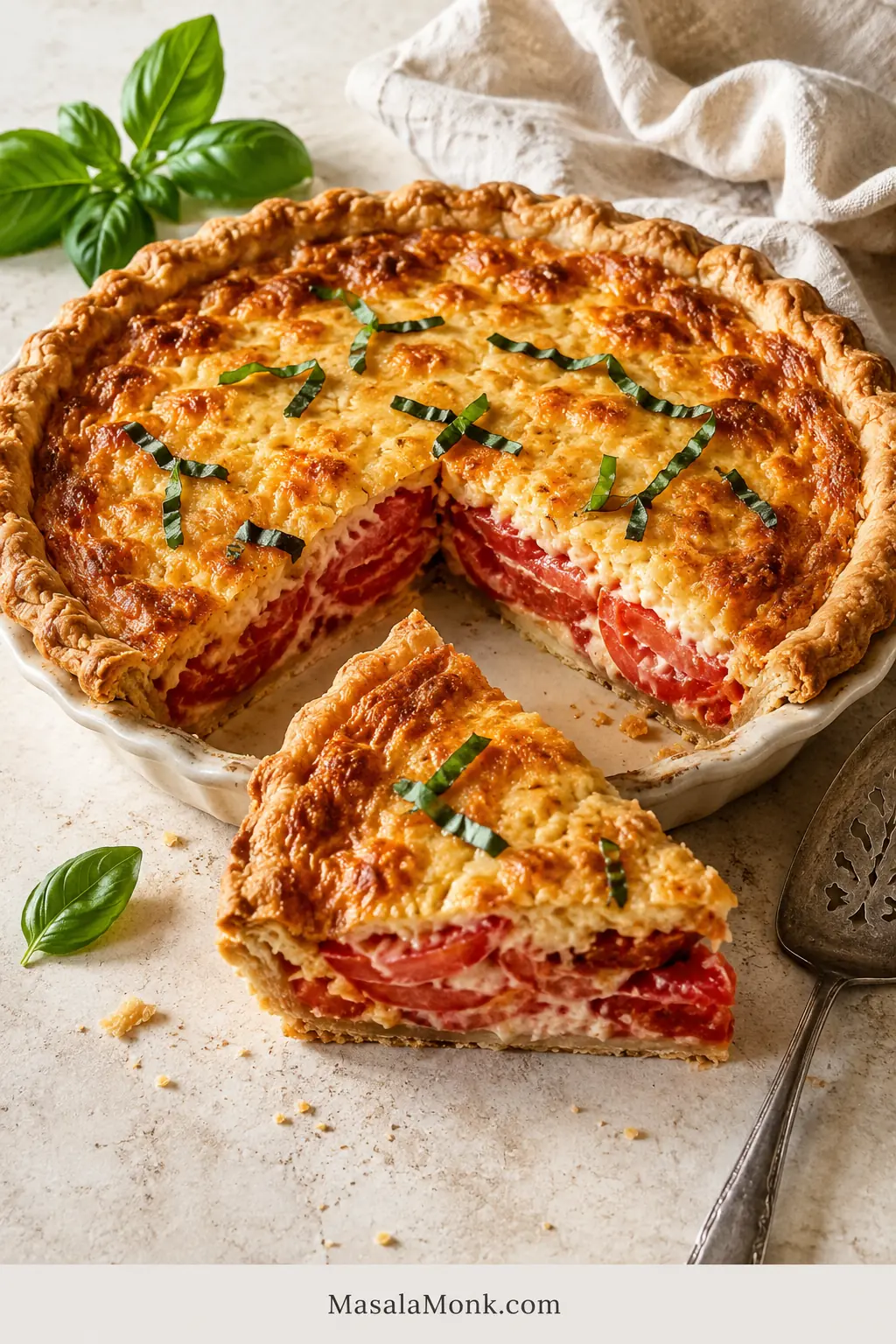
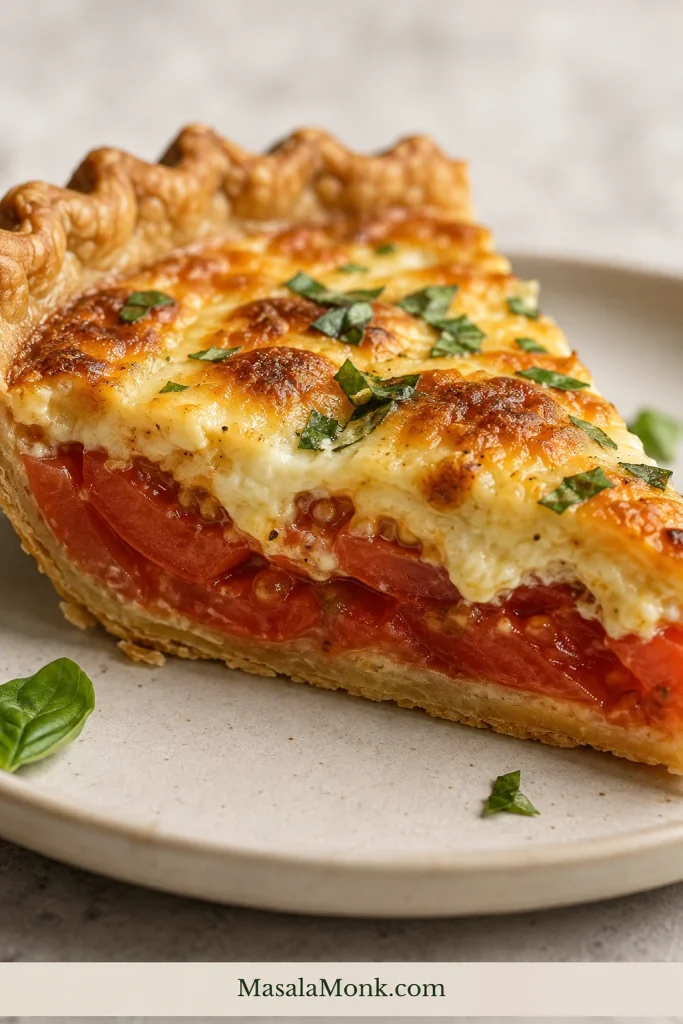
The first slice tells you whether a tomato pie worked. The tomatoes should still taste unmistakably of summer, the cheese should be creamy and savory, and underneath it all there should be a crust flaky enough to matter—not pale pastry soaking in tomato juice.
This is the kind of pie to make when tomatoes are so ripe and fragrant that dinner can reasonably revolve around them. The aim is to concentrate that ripe tomato flavor while keeping enough water away from the pastry for the first wedge to come out looking—and eating—like a proper slice of pie.
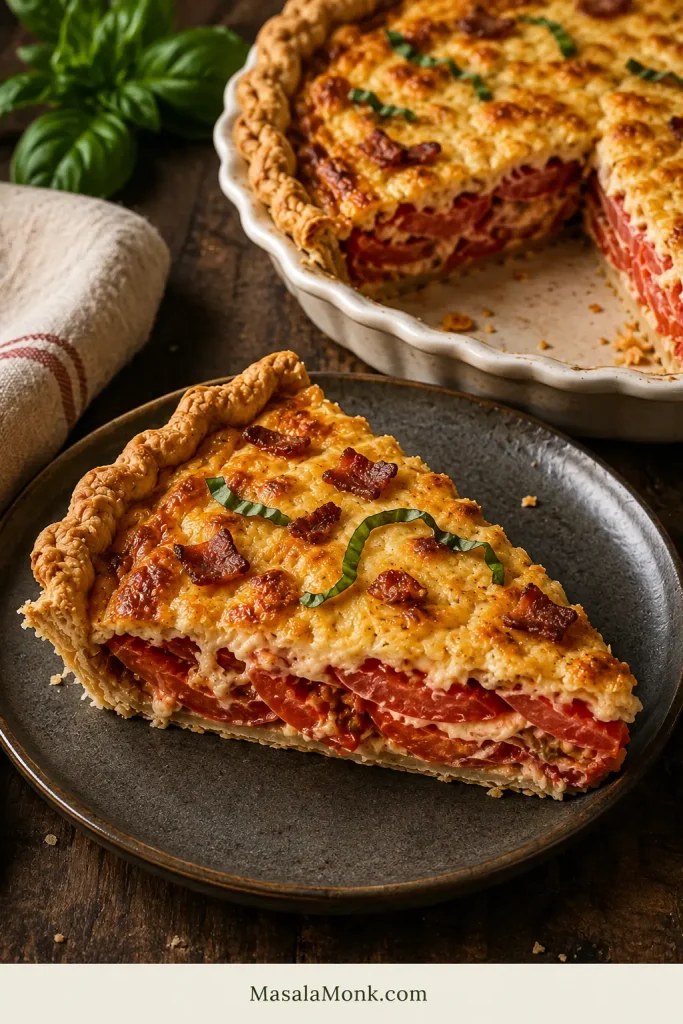
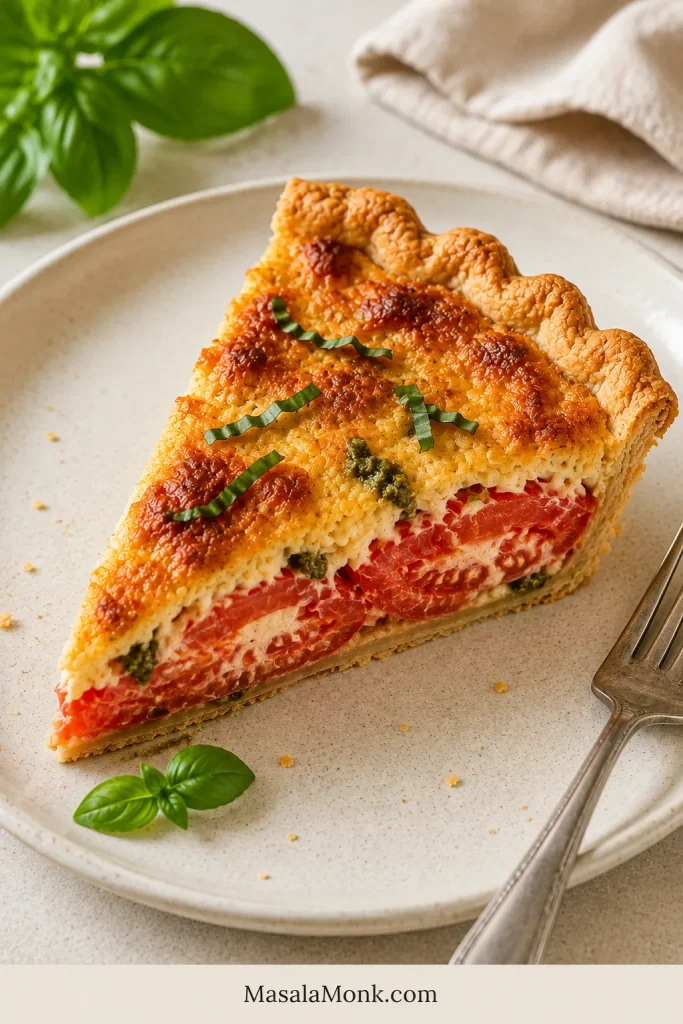
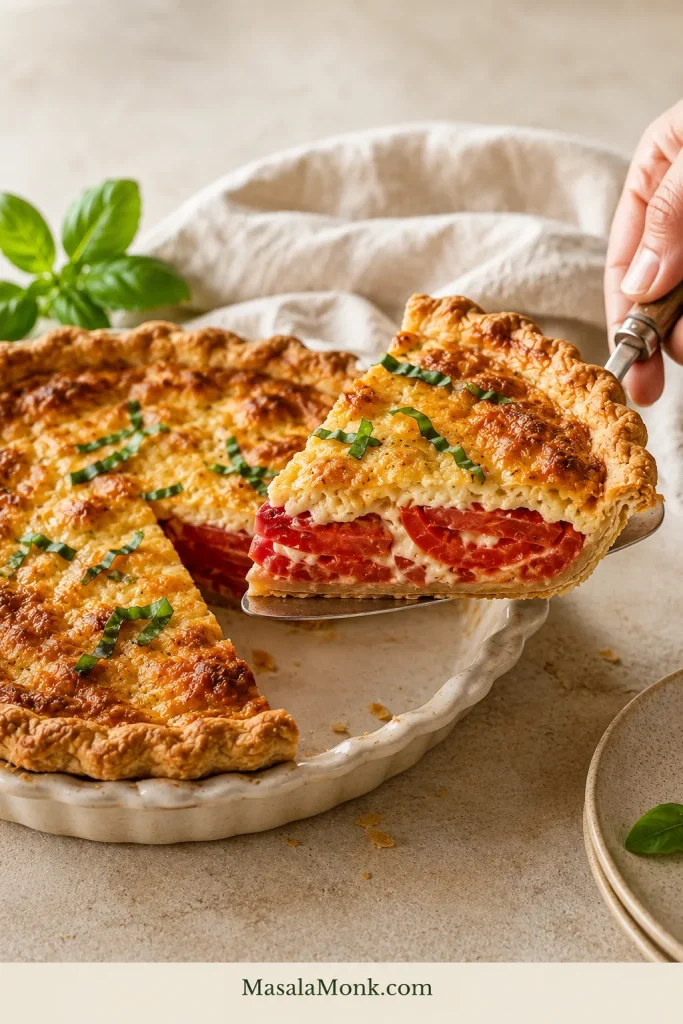
A good slice keeps the flaky crust distinct beneath generous tomato and browned cheese.
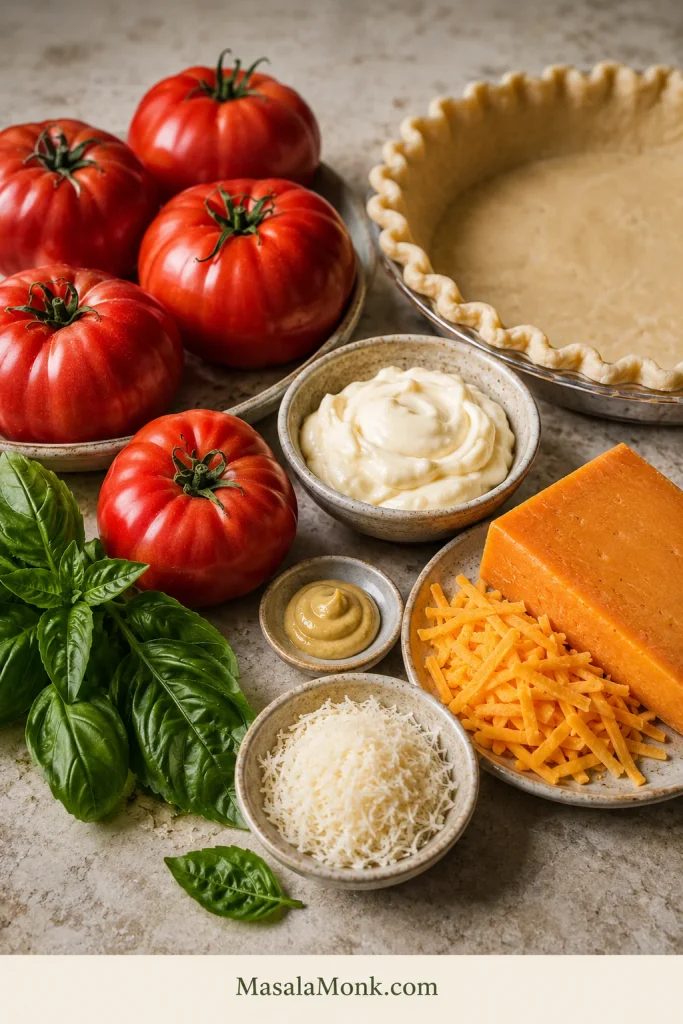
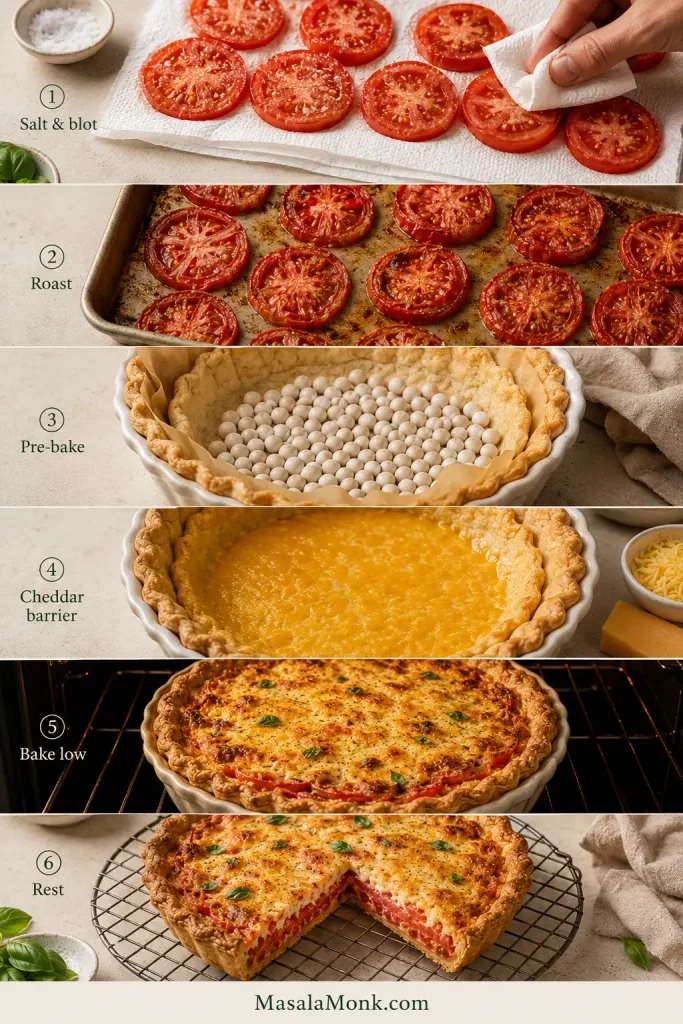
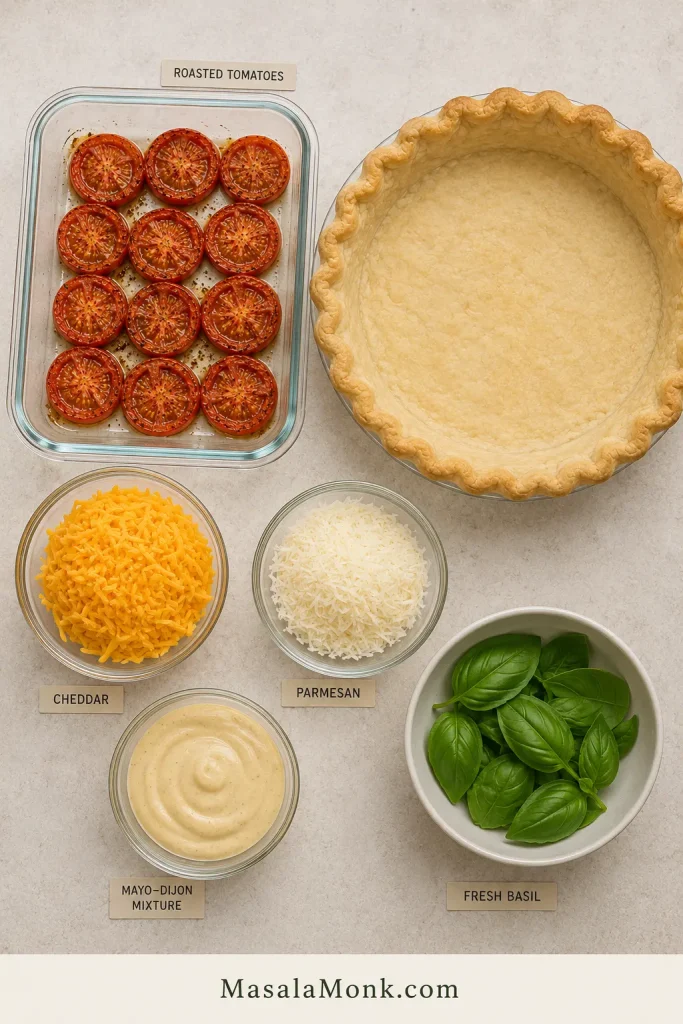
So the tomatoes are lightly salted, blotted and roasted. The crust gets a head start in the oven and a thin layer of melted sharp cheddar before the tomatoes ever touch it. On top goes extra-sharp cheddar, Parmesan, fresh basil, Dijon and enough mayonnaise to make everything creamy while the tomatoes still taste like the reason you made the pie.
Quick Answer: How to Make Tomato Pie Without a Soggy Crust
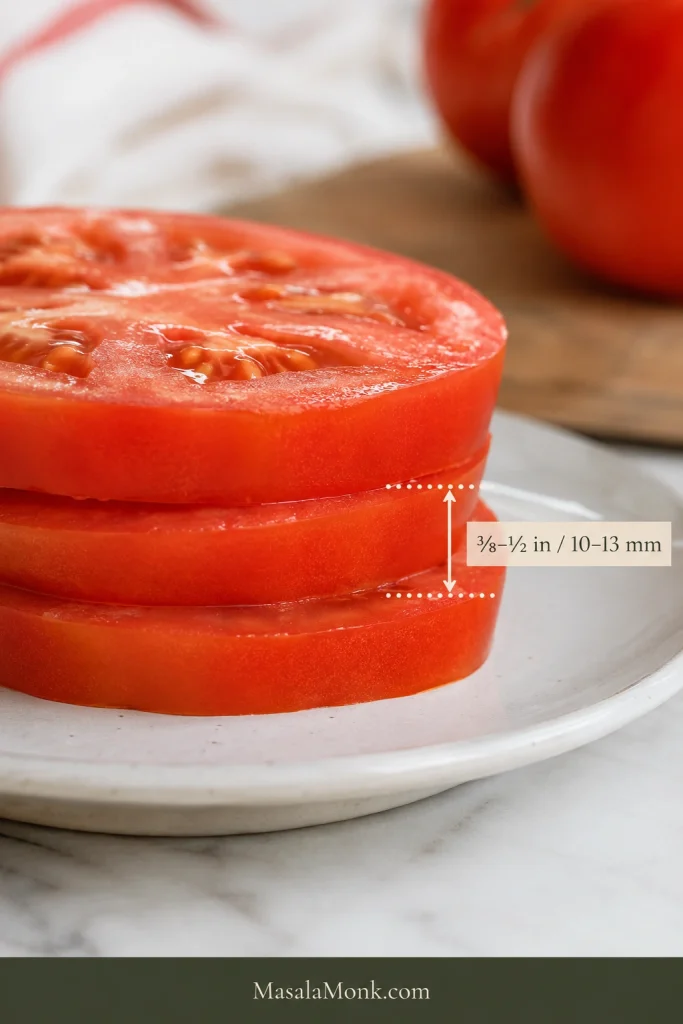
For a standard 9-inch / 23 cm pie, use about 2 lb / 900 g ripe tomatoes. Slice them ⅜–½ inch / 10–13 mm thick, lightly salt and blot them, then roast until slightly wrinkled and no longer wet-looking. Pre-bake the crust until the bottom is dry and lightly golden, then melt a thin layer of cheddar over it.
Arrange the tomatoes over the crust, add the cheese topping, and bake on the lower-third rack at 375°F / 190°C for about 30–35 minutes. Rest at least 30 minutes before slicing; closer to an hour gives cleaner wedges.
There are a few more steps here than in the quickest versions, but none is difficult. With one tomato tray, the tomatoes roast while the crust pre-bakes, so those two jobs finish at almost the same time.
Southern Tomato Pie Recipe With a Crisp Crust
This version keeps the tomatoes front and center: roasted just enough to deepen their flavor, layered over a pre-baked crust, then covered with a sharp, basil-flecked cheese topping that stays creamy without becoming heavy.
Yield: 1 standard 9-inch / 23 cm pie Serves: 6 generous portions or 8 smaller portions Hands-on time: about 30 minutes Prep + bake: about 1¼–1½ hours Rest: 30–60 minutes Total time: about 2–2½ hours Best served: warm or at room temperature Timing note: Times assume you are starting with a prepared crust ready to blind-bake.
Equipment
Standard 9-inch / 23 cm pie plate, if using rolled dough
1–2 large rimmed baking sheets
Parchment paper
Pie weights or dried beans, for rolled dough
Clean kitchen towels or paper towels
Wire cooling rack
Foil or a pie shield, optional
Ingredients
Tomatoes bring the juiciness and acidity; cheddar, Parmesan and mayo add richness; Dijon and basil keep it bright.
For the Tomatoes
2 lb / about 900 g ripe tomatoes, about 4–6 large tomatoes
¾ teaspoon fine sea salt / about 4 g
½ teaspoon freshly ground black pepper, divided
For the Crust and Bottom Cheese Layer
1 prepared standard 9-inch / 23 cm pie crust, homemade or store-bought; not deep dish
1½ oz / 40 g extra-sharp cheddar, finely grated
And for the Cheese Topping
5½ oz / 160 g extra-sharp cheddar, freshly grated
1 oz / 28 g Parmesan, finely grated; Pecorino Romano also works but is saltier
½ cup / about 115 g mayonnaise
1 teaspoon / 5 ml Dijon mustard
¼ cup loosely packed fresh basil, torn or chopped, plus more for serving
Pinch of red-pepper flakes, optional
Shopping note: You need 7 oz / 200 g cheddar total. One standard 8 oz / 227 g block is enough for the whole pie with a little left over.
Instructions
Prep the Tomatoes and Crust
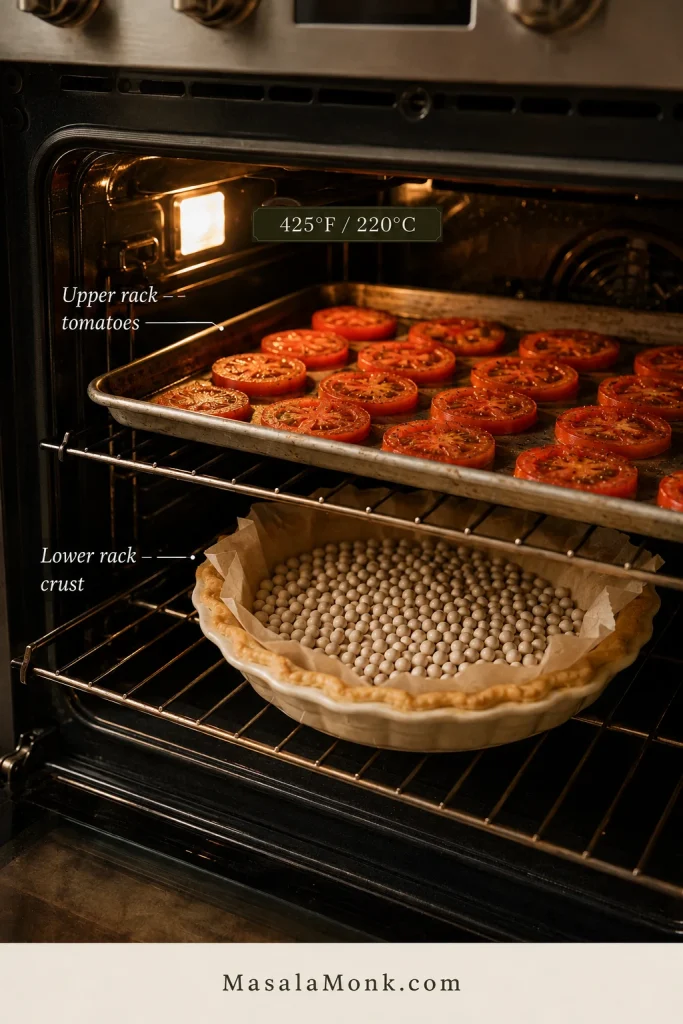
Heat the oven. Position one rack in the upper half of the oven and another in the lower third. Heat to 425°F / 220°C conventional. Line a large rimmed baking sheet with parchment.
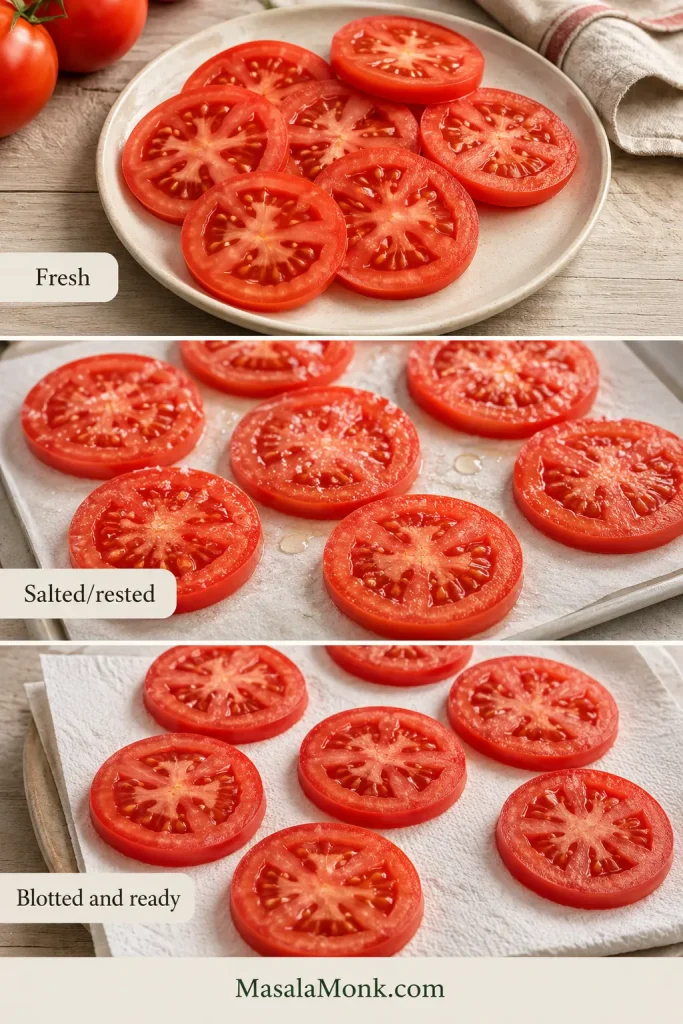
Slice, salt and blot the tomatoes. Core them and cut into slices about ⅜–½ inch / 10–13 mm thick. Arrange them over clean kitchen towels or several layers of paper towel, sprinkle with the ¾ teaspoon / 4 g salt, and leave for 10–15 minutes. Blot firmly, then season with ¼ teaspoon black pepper. Very large rounds can be halved so the finished pie is easier to portion.
Aim for ⅜–½ inch / 10–13 mm: thick enough to stay substantial after roasting, but not so thick that moisture lingers.
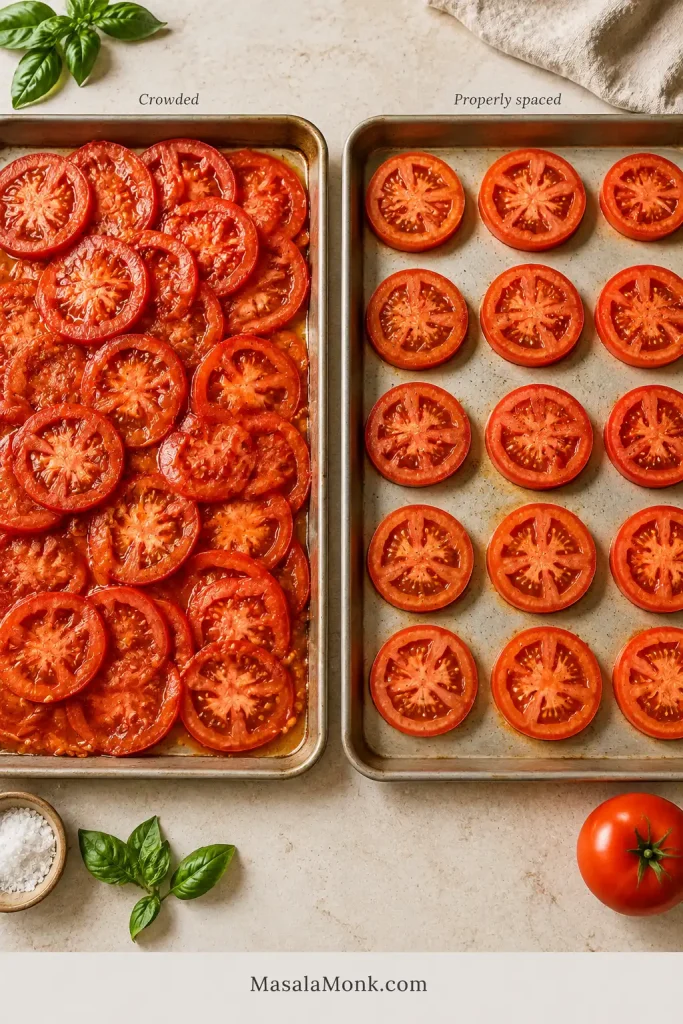
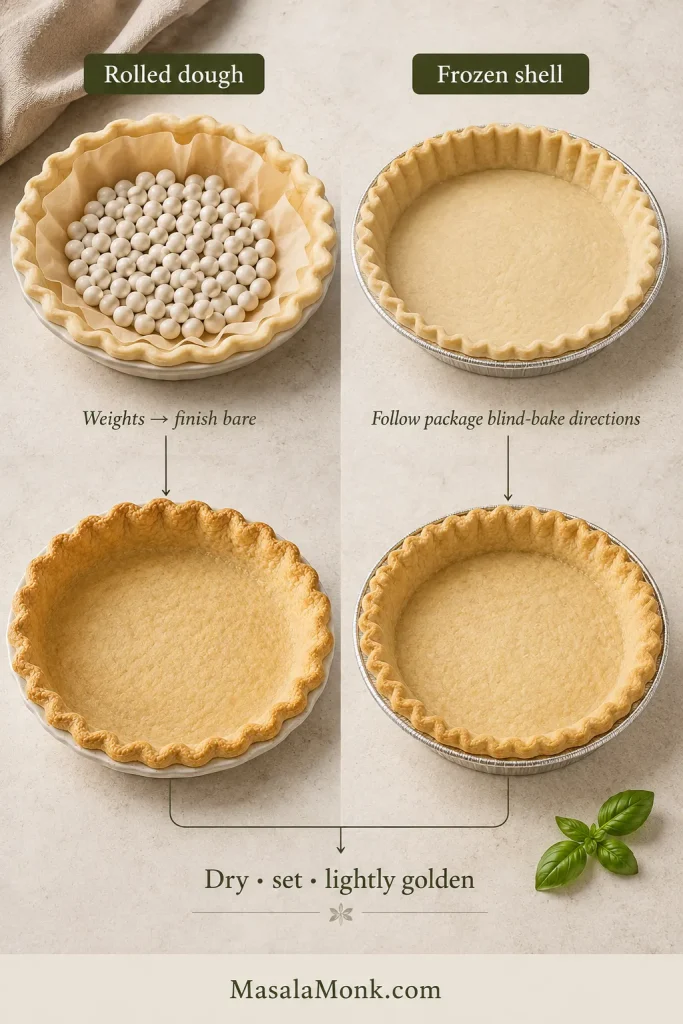
Prepare the crust and arrange the tomatoes. Using rolled dough? Fit it into a standard pie plate, crimp the edge, line it with parchment and fill with pie weights or dried beans. Using a preformed frozen shell? Keep it in its supplied pan. Follow its package directions for blind-baking; use weights only if those directions call for them. Arrange the blotted tomato slices on the baking sheet in one layer with a little breathing room between them. Avoid heavy overlap.
Leave breathing room between slices so steam can escape instead of collecting where tomatoes overlap.
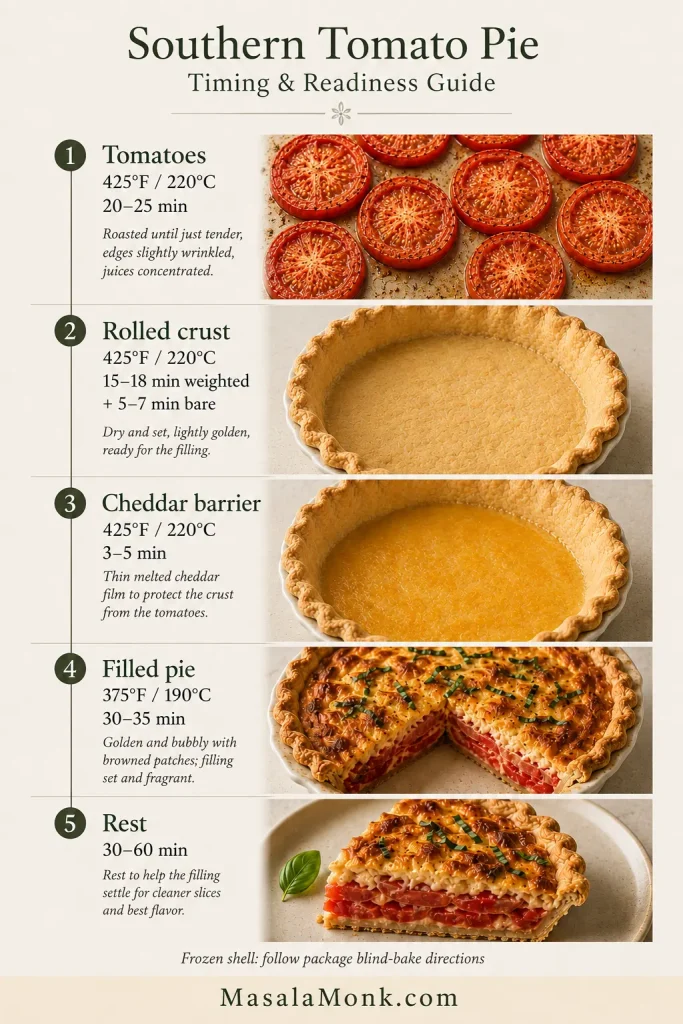
Roast the tomatoes while the crust pre-bakes. With one tomato tray, roast the tomatoes on the upper rack while the crust bakes below. Rolled crust: Bake it with the weights for 15–18 minutes. Preformed frozen shell: Follow its blind-baking time. It may finish before or after the tomatoes; that is fine. Need two tomato trays? Roast them first, rotating the pans if needed, then pre-bake the crust afterward. Giving the tomatoes space matters more than forcing the two jobs to overlap.
With one tomato tray, use the upper rack for tomatoes and the lower rack for the crust so both jobs can happen at once.
Finish the Crust and Make the Topping
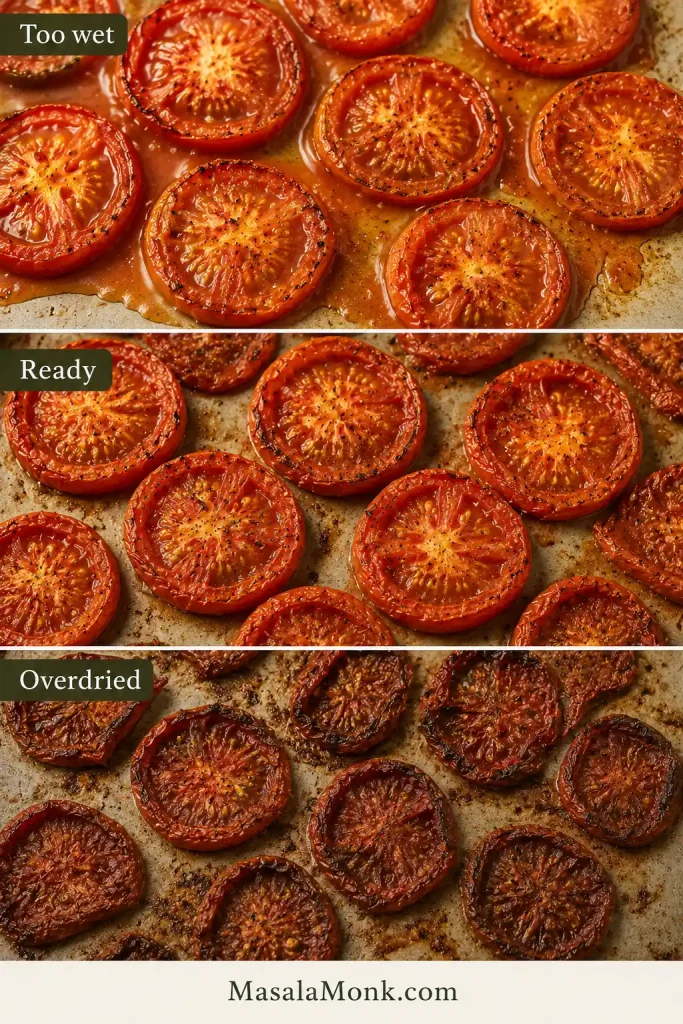
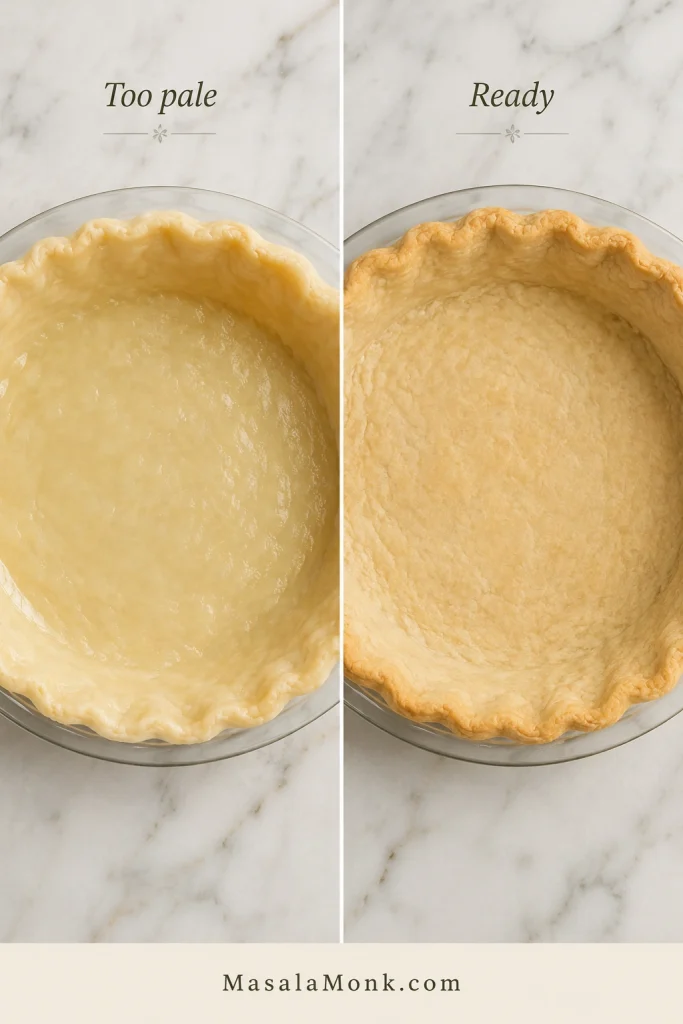
Finish the crust and check the tomatoes. Crust: For rolled dough, carefully remove the parchment and weights, then return the empty shell to the lower rack for another 5–7 minutes. For a preformed frozen shell, continue according to its package directions as needed. Whichever crust you use, the base should be dry, set and lightly golden before filling. Pale, shiny or slightly translucent pastry needs more time. Tomatoes: Their color should be a little deeper, the edges slightly wrinkled and the cut surfaces more matte than glossy. Very little thin juice should remain on the pan. They should still look juicy, not dried out.
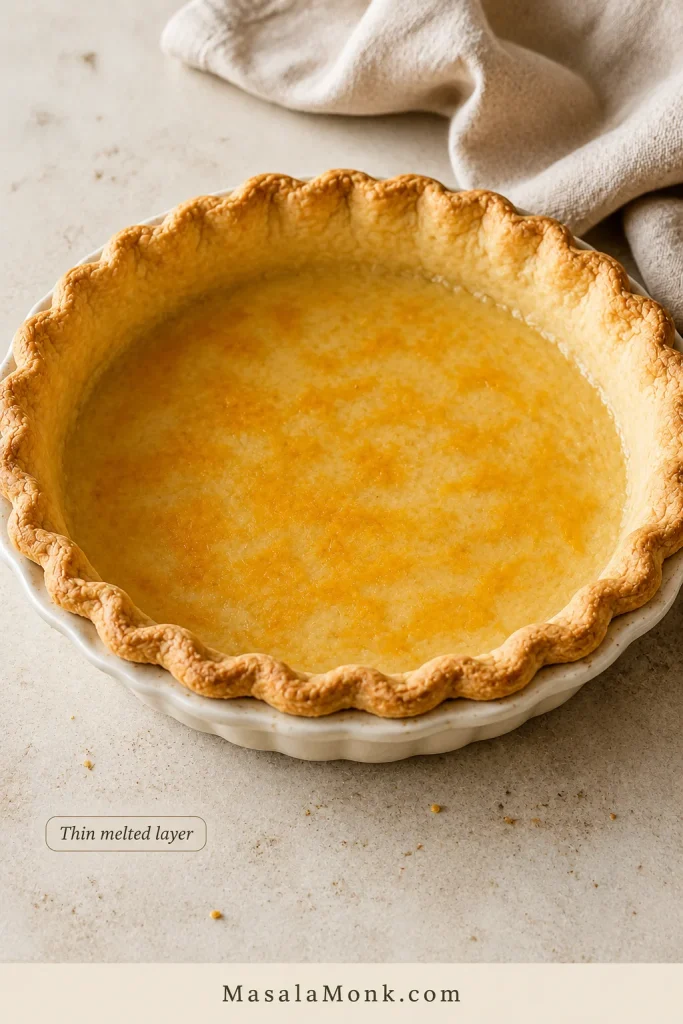
Add the cheddar barrier and lower the oven. Scatter the 40 g cheddar over the hot crust and return it to the oven for about 3–5 minutes, until the cheese melts into a thin layer. Reduce the oven temperature to 375°F / 190°C conventional and keep one rack in the lower third.
A thin melted cheddar layer adds another buffer between the pastry and the juicy tomato filling.
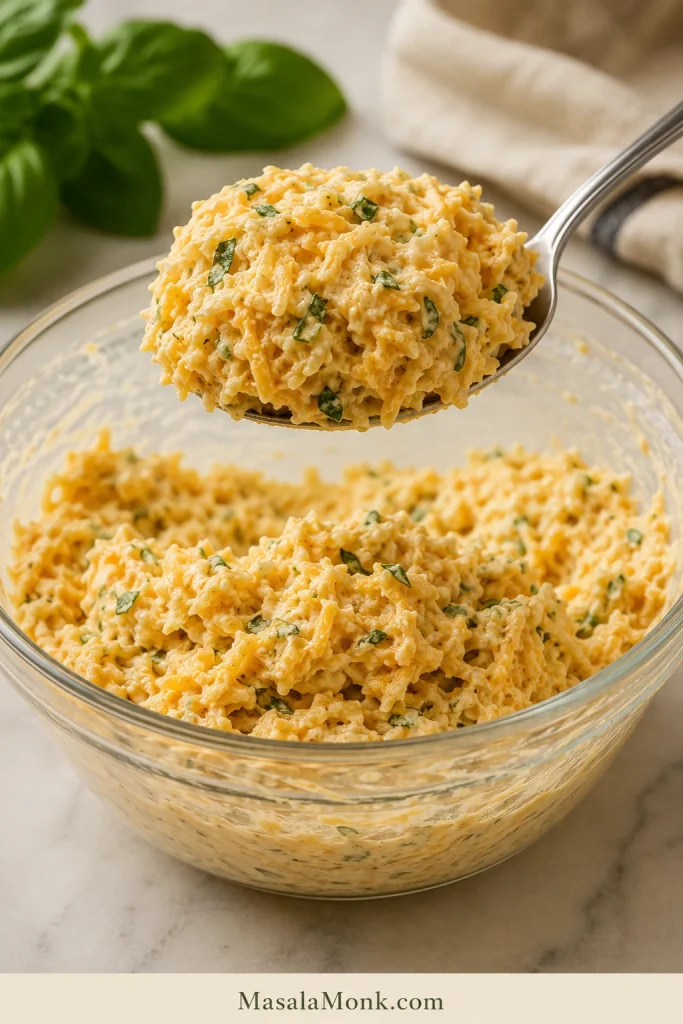
Mix the topping. Combine the remaining 160 g cheddar, Parmesan, mayonnaise, Dijon, the remaining ¼ teaspoon black pepper and the basil. The mixture should be thick enough to hold its shape. Cheddar, Parmesan and mayonnaise already bring plenty of salt, so taste before adding any more.
The topping should mound on the spoon and stay there—thick, cohesive and easy to dollop.
Assemble, Bake and Rest
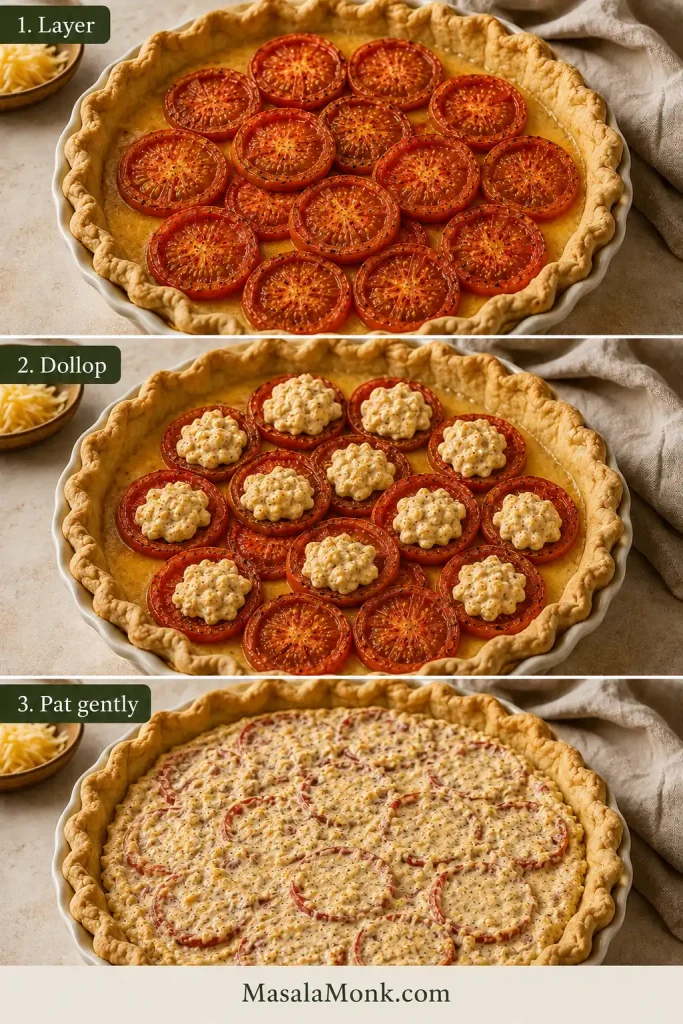
Assemble the pie. Arrange the roasted tomatoes over the cheese-lined base with light overlap. Blot any slice that has released a fresh puddle while waiting. Dollop the topping in small spoonfuls over the tomatoes, then gently spread or pat it into an even layer with the back of a spoon.
Dollop first, then spread gently so the roasted tomato slices stay where you placed them.
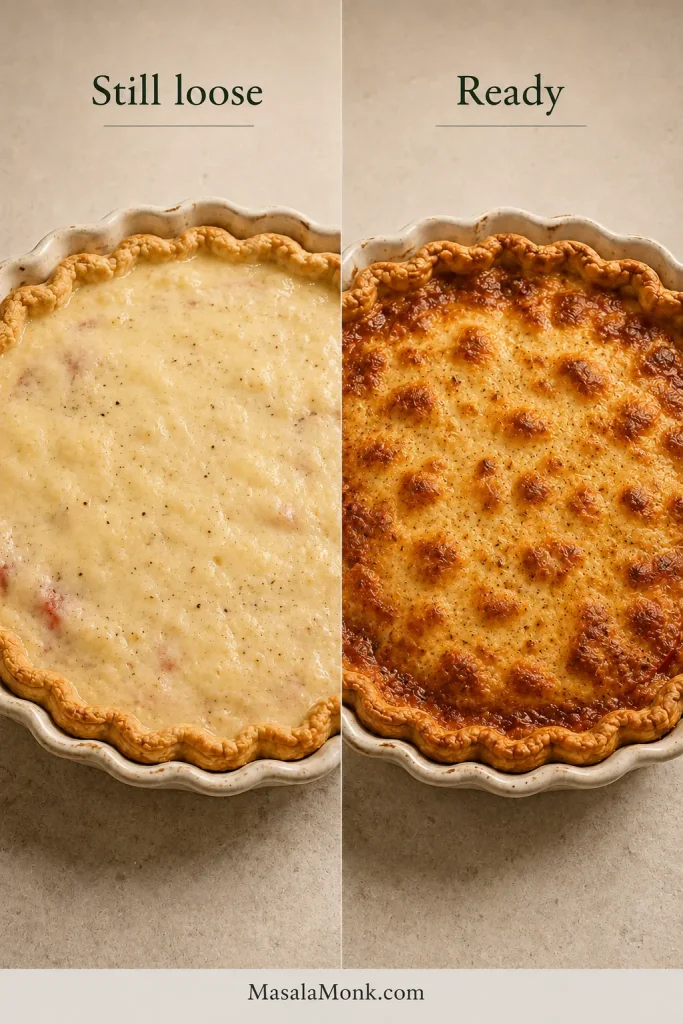
Bake until browned and set. Bake on the lower-third rack for about 30–35 minutes, beginning to check around 25 minutes. The crust should be deeply golden, the topping browned in patches, and small bubbles should appear around parts of the filling. Give the dish a gentle nudge. A little movement is fine; the filling should move together instead of sloshing. Shield the rim with foil if it browns before the center is ready.
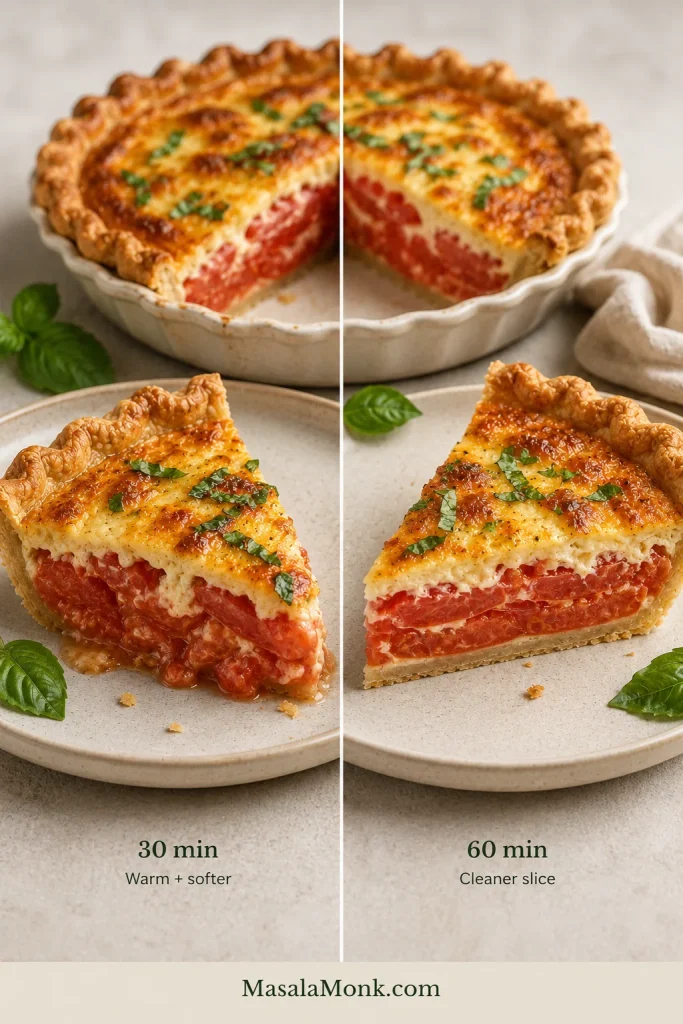
Rest and serve. Set the pie on a wire rack for at least 30 minutes. For cleaner wedges, give it closer to 45–60 minutes. Finish with a little fresh basil before serving.
Recipe Notes
Two-tray timing: Allow roughly another 20–30 minutes because the crust can no longer pre-bake alongside the tomatoes.
Using coarse kosher salt? Weigh it if possible; crystal size varies enough between brands to make a direct teaspoon conversion unreliable.
Very juicy heirlooms may need longer. Trust the tray rather than forcing every batch to finish at exactly 25 minutes.
Fan/convection ovens brown faster. Use your oven’s usual temperature adjustment and begin checking both tomatoes and crust early.
For cleaner slices, cut through the tomato skins first. A sharp serrated knife or very sharp chef’s knife helps keep a large slice from pulling the filling out with it.
Why Tomato Pie Gets Soggy—and Five Ways to Keep the Crust Crisp
A soft crust can begin in several places. Too much water may come in with the tomatoes. The pastry may need more time before filling, or the bottom may not be browning strongly enough. Sometimes a well-baked pie is simply sliced while everything inside is still loose and steaming.
The crispest pies do not rely on one heroic trick. A handful of smaller choices add up.
Crispness comes from several small protections working together: blot, roast, pre-bake, add a thin cheese barrier, bake low and rest.
Dry the tomatoes in two stages. A short salt-and-blot step removes easy surface water; roasting then drives off more moisture while concentrating the flavor.
Give the crust a real head start. The base should already have color and structure before the tomatoes arrive.
Add a thin cheese layer. Melted cheddar gives the crust another buffer against the tomato juices.
Bake low in the oven. The lower rack encourages better browning underneath while the filling finishes.
Let the pie rest. Cooling lets steam escape and gives the filling time to settle.
Together, those small choices make the difference between a pie that merely tastes good and one you can confidently lift from the dish and put on somebody’s plate.
Surface water is the easiest moisture to remove: salting draws it out, and blotting takes it away before roasting begins.
The beads that appear after salting are moisture you can blot away before the tomatoes ever reach the crust.
Best Tomatoes for Tomato Pie
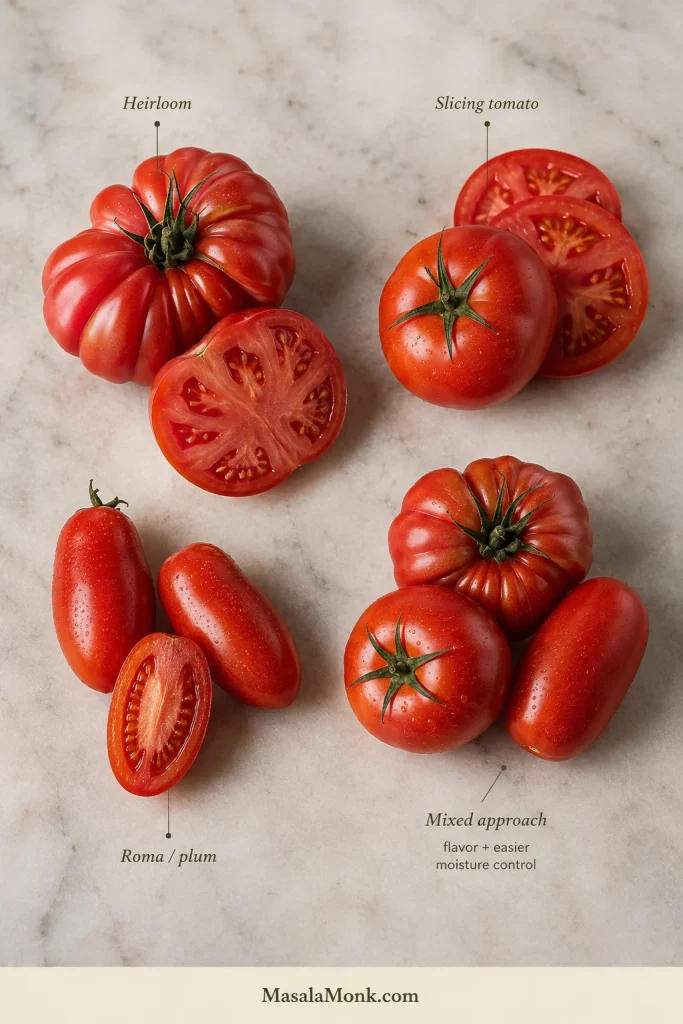
Heirlooms bring big flavor but more juice; plum tomatoes are meatier; slicing tomatoes sit comfortably between the two.
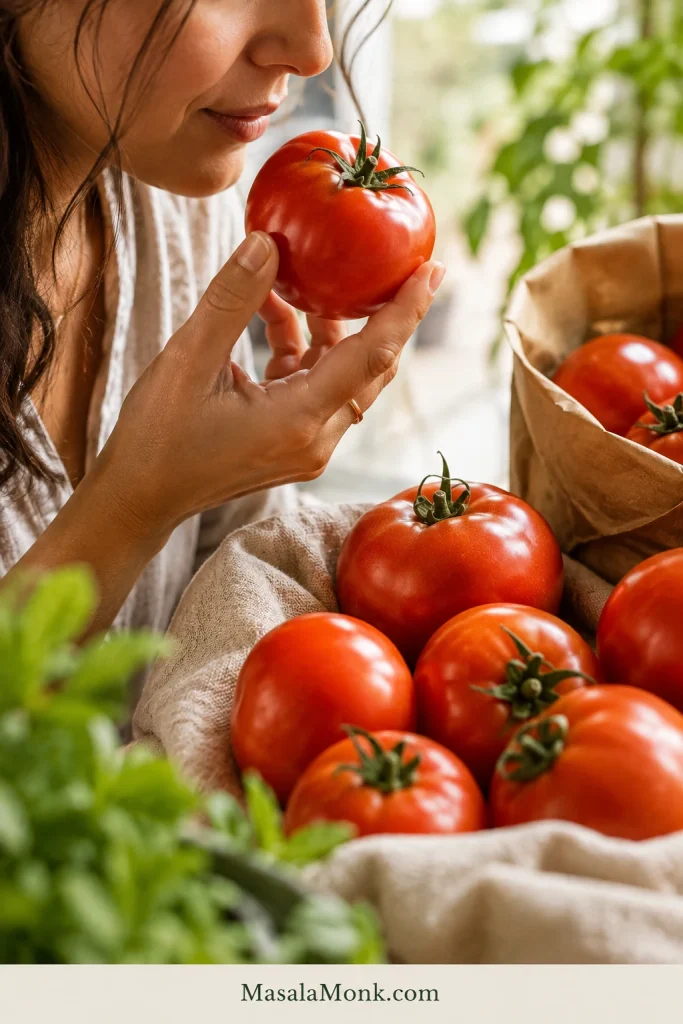
For pie, tomato flavor matters—but so does how much water that tomato is carrying. Smell them. If they barely smell like tomatoes before you cut them, roasting will not suddenly give them peak-summer flavor.
Tomato
Best For
Moisture Risk
What to Know
Heirloom
Big flavor and beautiful color
High
Wonderful in season, but very juicy varieties may need extra roasting time.
Ripe slicing tomato
Best all-round choice
Medium
Good balance of flavor, structure and availability.
Roma or plum
Easiest moisture control
Lower
Meatier flesh makes them forgiving, although flavor varies.
Mixed tomatoes
Flavor plus reliability
Medium
Mix flavorful heirlooms with firmer slicing or plum tomatoes when you want both character and easier moisture control.
What I Would Buy
If I were shopping specifically for this pie, I would choose ripe but still firm slicing tomatoes unless especially flavorful heirlooms were available.
Choose tomatoes that smell ripe and give slightly under pressure without feeling soft or collapsed.
Peak-season heirlooms are worth using; just let their juiciness decide the roasting time. Mixing a few with meatier plum tomatoes also works well when you want plenty of flavor with a little less water to manage.
Roasting does more than solve a water problem. As excess juice cooks away, the tomatoes taste sweeter, deeper and more intensely like themselves. That concentrated flavor becomes the heart of the finished pie.
Ready tomatoes stay red and plump with lightly wrinkled edges and a mostly matte surface—not glossy and watery, browned or shriveled.
If some of your tomatoes are already too soft or juicy to give you neat slices, they may be happier in fresh tomato soup, where their extra liquid can be cooked down instead of fought.
Cherry tomatoes can work, but they behave more like a variation than a direct substitute: once halved, they expose much more cut surface and do not create the same layered filling. Canned tomatoes are better saved for another recipe. This one really wants fresh tomatoes that can be sliced, roasted and layered.
The Best Crust
Use a standard 9-inch / 23 cm flaky pie crust, not deep dish. Homemade dough, refrigerated rolled pastry and a standard preformed frozen shell can all work. The base needs enough color and structure before the tomatoes arrive.
Rolled dough and a frozen shell can both work; what matters is a dry, well-set base before filling.
If store-bought crust gets tomato pie on the table, use it. The tomatoes matter much more here than whether you made the pastry yourself.
Do You Have to Blind-Bake the Crust?
For this recipe, yes. The shell gets a substantial head start so it is already baked across the bottom before it has to support a juicy filling.
Look underneath. Pale or slightly translucent pastry still needs more time. You want the bottom dry and lightly golden across the base, not just browned around the exposed rim.
Look across the center, not just the rim: the base should be dry, opaque, firm and lightly golden, without shiny or translucent patches.
A crust baked this far does not disappear underneath the filling. You can still feel its flaky edge when you cut into the finished pie.
If you want to make the pastry yourself, this flaky homemade pie crust recipe makes enough dough for two single 9-inch crusts, so you can use one here and freeze the second.
Metal, glass and ceramic pie plates can all work. Metal heats quickly. Glass lets you inspect the underside. Thick ceramic usually heats more slowly, so follow the color of the pastry rather than the clock alone.
Best Cheese—and Why Mayo Matters
Extra-sharp cheddar gives the topping plenty of flavor without requiring an especially thick cheese layer. A little melts directly over the crust, while the rest forms the backbone of the topping. Parmesan adds a concentrated savory edge without bringing much extra water.
Pecorino Romano can stand in for Parmesan, but it is saltier. Taste before adding anything else salty, especially if bacon is also going into the pie.
Why Does Southern Tomato Pie Use Mayonnaise?
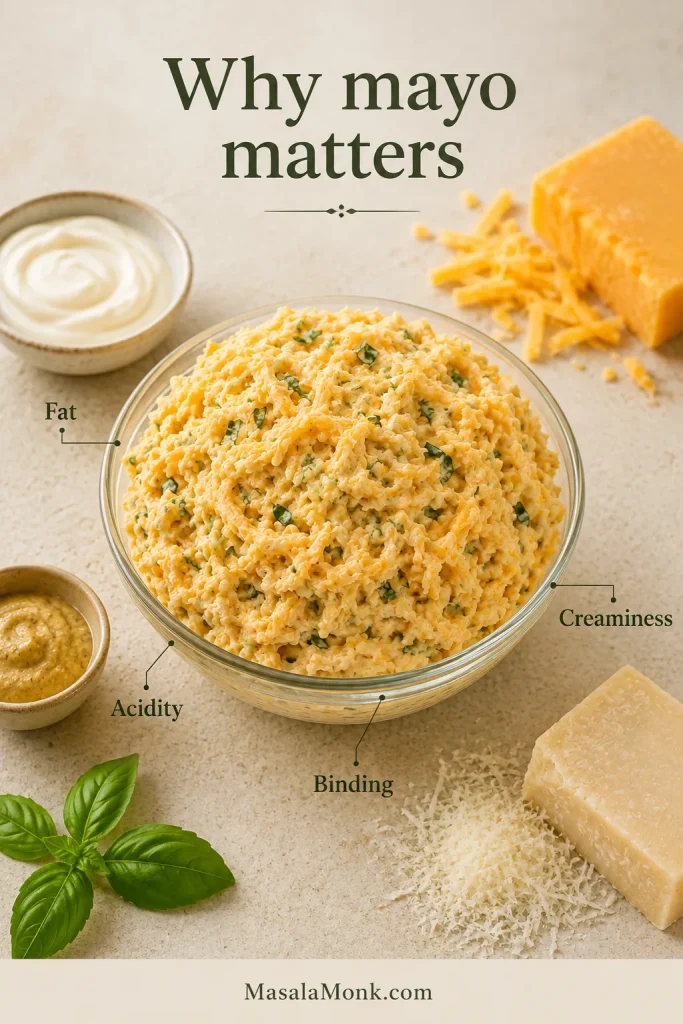
Mayo is part of the topping’s structure here, not a separate sauce or finishing condiment.
Mayonnaise brings fat, acidity, creaminess and enough binding to help the cheese topping hold together as it bakes. If you prefer making condiments from scratch, this homemade mayonnaise recipe explains the basic emulsion and gives you a classic mayo you can use here.
The creamy layer needs enough tang to sharpen the tomatoes. The topping should frame the filling, not bury it.
For more stretch, choose low-moisture mozzarella rather than fresh mozzarella. Treat it as a texture variation, not an exact cheddar substitution. Fresh mozzarella carries much more water. Gruyère gives the pie a nuttier, more savory character, while fontina melts into a softer, silkier layer.
How Long to Bake Tomato Pie: Times and Readiness Cues
The timer tells you when to start looking. The food tells you when to move on. Tomato variety, crust thickness, pie-dish material and oven calibration all affect the exact timing, so use the clock together with the visual cues below.
When your oven runs faster or slower than expected, these visual cues are the tie-breaker.
Stage
Temperature
Starting Time
Ready When
Tomatoes
425°F / 220°C
20–25 min
Slightly wrinkled, deeper in color, matte rather than wet-looking, very little thin juice
Weighted rolled crust
425°F / 220°C
15–18 min
Shell has set and the rim is beginning to color
Unweighted rolled crust
425°F / 220°C
5–7 min
Base looks dry and lightly golden
Preformed frozen shell
Per package directions
Per package directions
Base is dry, set and lightly golden
Cheddar barrier
425°F / 220°C
3–5 min
Cheese has melted into a thin layer
Filled pie
375°F / 190°C
30–35 min
Crust deeply golden, topping browned in patches, gentle bubbling, center moves together
Rest
Room temperature
30–60 min
Filling has settled enough for the kind of slice you want
By the end of the bake, the tomatoes should smell sweeter, the cheese will have browned in patches and the pastry should look unmistakably baked.
A ready center may jiggle, but the filling should move together; loose liquid sloshing independently means it needs more time.
How Long Should It Cool?
The hardest part of this recipe may be leaving it alone once it comes out of the oven.
For a warm, softer wedge, about 30 minutes is enough. For clean slices at the table, give it closer to 45–60 minutes.
As the pie rests, the topping firms and the filling settles, so extra time buys a cleaner slice.
By then the kitchen will smell like toasted pastry, warm tomato, cheddar and basil, and the filling will have settled without going cold.
Tomato Pie Troubleshooting: What Went Wrong?
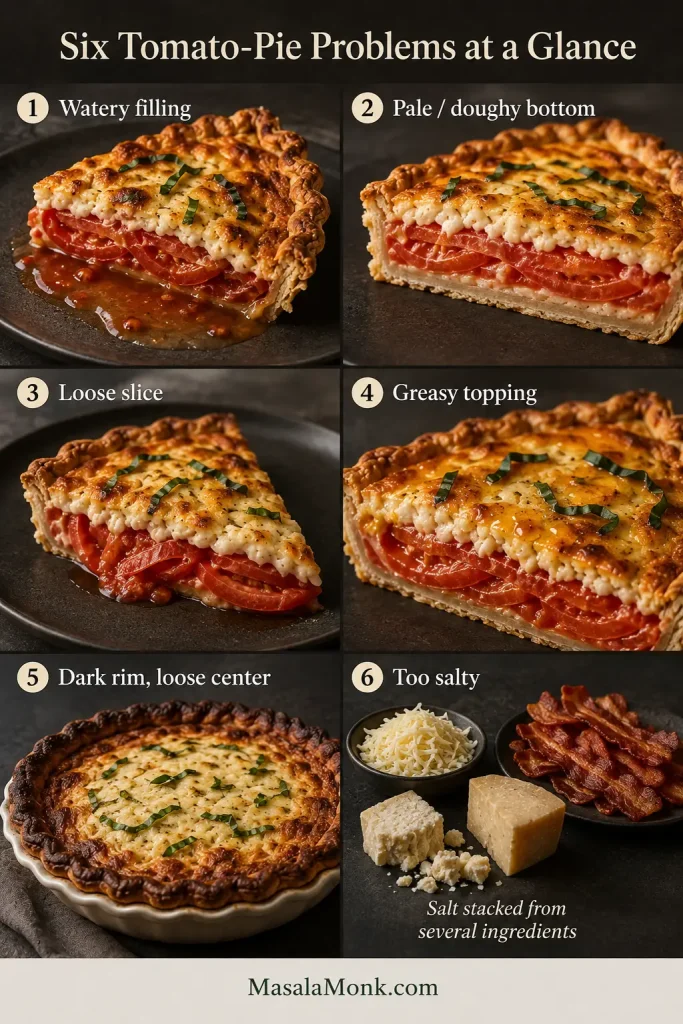
“Soggy” can mean several different things. Match the fix to what you actually see.
Start with where the problem appears—under the slice, in the filling, on top or around the rim—then match the fix.
What You See
Likely Cause
Fix
Watery filling; tomato juice pools around the slice
Tomatoes entered the pie too wet
Give them more space or roasting time; blot slices that release juice while waiting
Pale, doughy bottom while the filling looks fine
Crust needed more pre-baking or stronger bottom heat
Give the base more color before filling and keep the filled pie low in the oven
Loose slice without much free liquid
The pie was cut too hot
Let the filling settle longer before slicing
Clear or orange fat gathers on top
Too many rich ingredients stacked together
Use pesto modestly, drain bacon well and avoid another heavy cheese layer
Dark rim, loose center
Crust browned faster than the center cooked
Shield the rim with foil and keep baking
Harsh, overly salty topping
Salt from tomatoes, cheese and additions stacked up
Measure the tomato salt and taste before adding more when using Pecorino or bacon
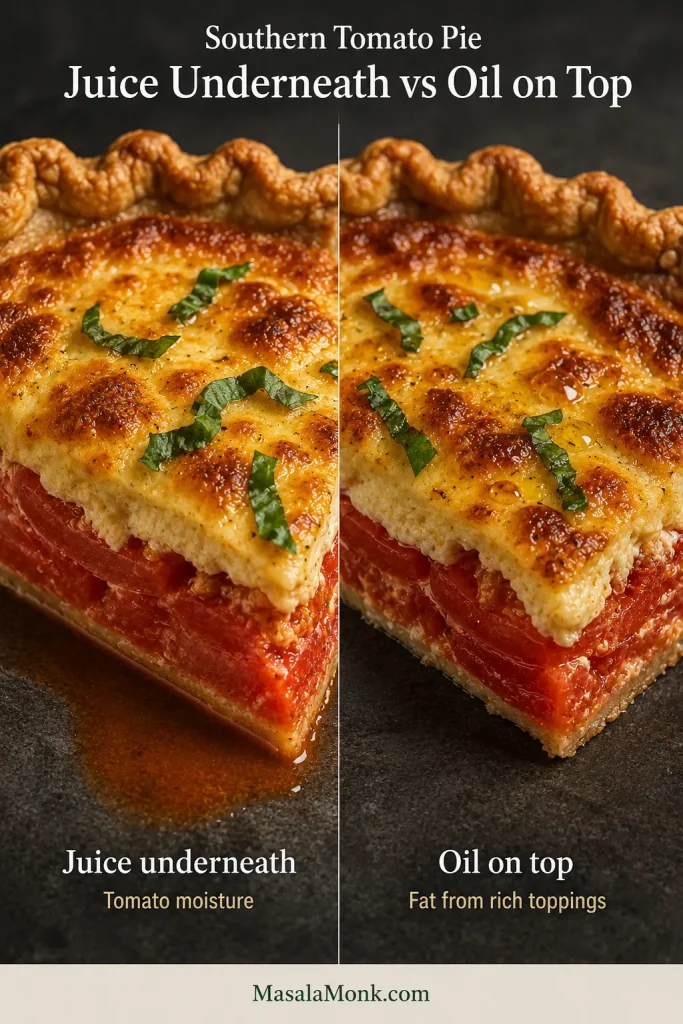
Juice underneath? Think tomatoes. Oil on top? Think cheese, mayo, bacon or pesto. They can look similar once the pie is cut, but they need completely different fixes.
Tomato juice is usually thin and reddish; rendered fat looks clearer and amber-orange, often beading on the cheese first.
Ripe fresh tomatoes, pastry and a creamy cheddar-mayo topping put this firmly in the Southern tomato-pie family. Basil, onion, bacon and other cheeses vary from one kitchen to another, but tomatoes, pastry and a rich cheese layer sit at the center of the dish.
The name can be confusing. Trenton/New Jersey and Utica tomato pies belong to pizza traditions, while green tomato pie can mean something entirely different: a sweet, spiced pie made with unripe tomatoes. This recipe is the Southern savory version.
Easy Variations
Every addition brings something besides flavor—especially water, fat or salt. Keep those three in mind and the basic balance of the pie is much easier to preserve.
With Bacon
Add crisp, well-drained bacon between the tomatoes and topping. If you want an easy small-batch method, this crispy air fryer bacon recipe renders the fat well and lets the strips firm up after cooking. Cool and drain the bacon before crumbling it into the pie, and remember that it brings plenty of salt of its own.
Scatter bacon so a few bites get a smoky, crisp accent without turning the whole pie heavy.
With Pesto
Use pesto sparingly. A classic basil pesto already contains olive oil, nuts and Parmesan, so a thick layer beneath the cheese topping can make the finished pie greasy. A thin smear is plenty. If what you mainly want is basil aroma, fresh leaves give you that lift with much less added fat.
A little pesto goes a long way; keep it as a bright basil-garlic accent, not another rich layer.
Two smaller additions: Sautéed onion or shallot adds sweetness while shedding some of its moisture before it reaches the filling. A modest handful of fresh corn adds little bursts of sweetness and texture.
Can You Make It Without Mayo?
Yes, but do not simply leave the mayonnaise out of this recipe. Mayo supplies fat, acidity, creaminess and binding, so a completely mayo-free pie needs a topping formulated around another binder.
If it is mainly the mayo flavor you want to soften, sour cream can be part of a lower-mayo topping. I would not swap it cup for cup here, though; changing the binder changes the way the topping sets. For a completely mayo-free version, use a recipe built specifically for that style.
What to Serve With Tomato Pie
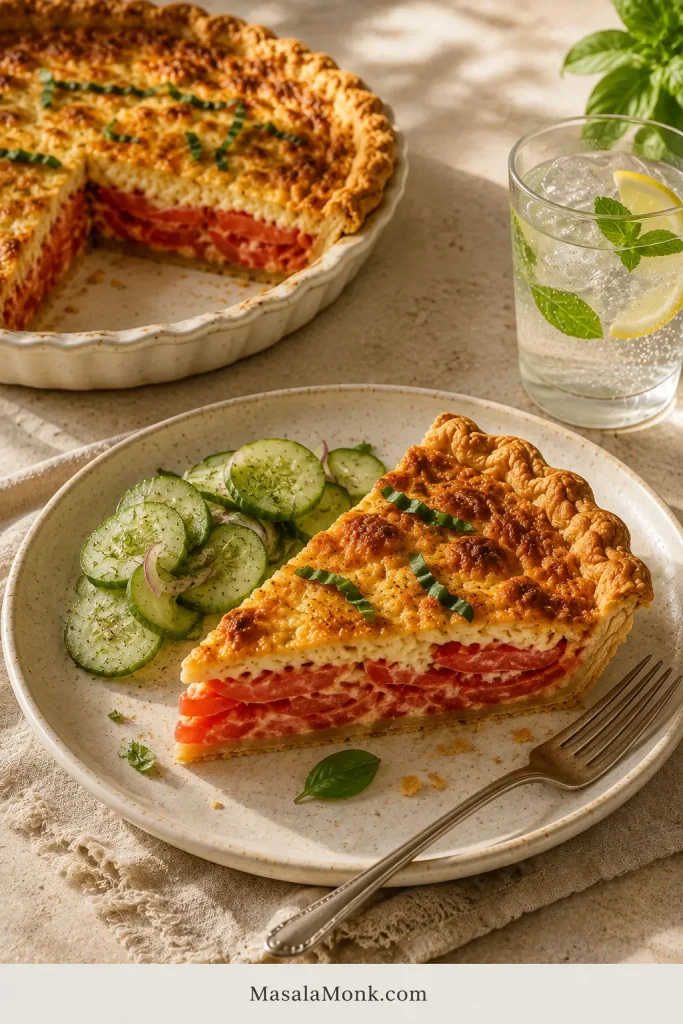
The pie is rich enough that something cool, crisp or sharp alongside it works especially well.
Warm tomato pie, something crisp and cool, and a cold drink—that is summer lunch.
Green salad with a sharp vinaigrette
Green beans
Corn on the cob
Grilled chicken
Grilled shrimp
Fresh fruit or cold watermelon
For brunch, add eggs, fruit and a simple salad. For a summer lunch, a generous wedge and something cold and crunchy alongside it may be all you need.
Make Ahead, Store and Freeze
Make Ahead: What to Prep Early
If I were preparing this a day ahead, I would stop before assembly.
Roast the tomatoes and refrigerate them once cool.
Blind-bake the crust, let it cool completely and keep it covered.
Grate the cheddar and Parmesan and refrigerate them.
Stir the mayonnaise and Dijon together if you want one less job later, but leave the fresh basil whole until assembly.
Keep the components separate overnight so the crust stays dry and the basil stays fresh until assembly.
When you are ready to bake, take the roasted tomatoes from the refrigerator as you start preheating the oven so they can lose some of their chill. Melt the 40 g cheddar over the pre-baked crust, combine the remaining cheese and freshly cut basil with the mayo-Dijon mixture, then assemble the pie.
If the filling is still quite cold when it goes into the oven, the final bake may take a little longer. Follow the browned topping, gentle bubbling and center-movement cues rather than forcing it to finish at the usual minute mark.
Storing and Reheating Leftovers
After baking, keep the pie at room temperature for no more than 2 hours total, including cooling and serving time. If the surrounding temperature is above 90°F / 32°C, limit that to 1 hour. Refrigerate leftovers promptly, keep them covered and use them within 3–4 days. These timings follow USDA leftover-safety guidance.
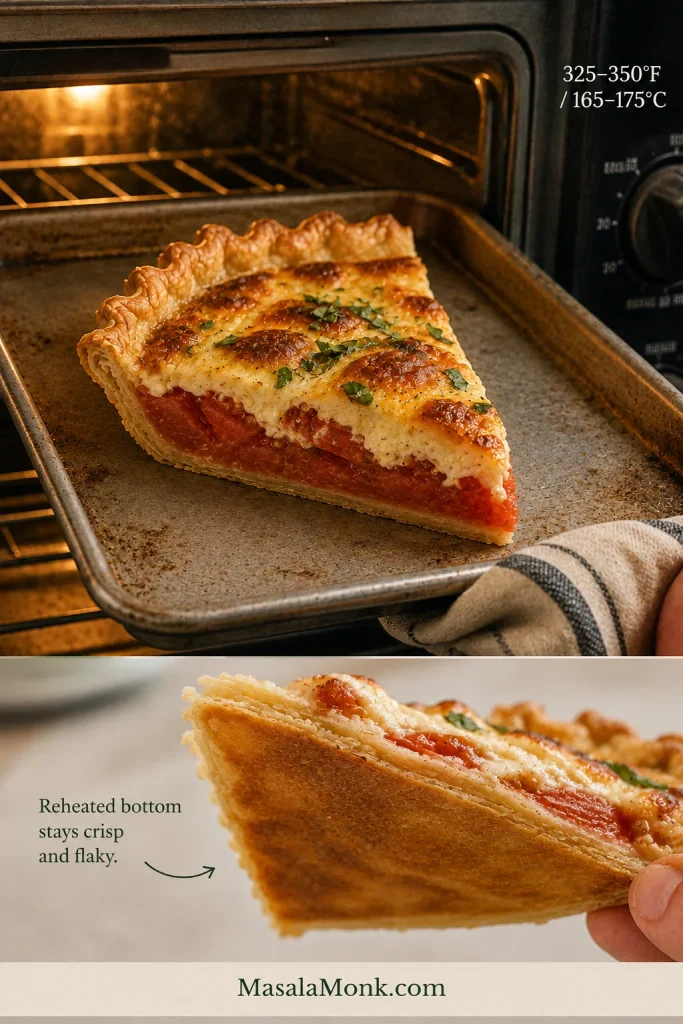
For the best crust, warm slices in an oven or toaster oven at about 325–350°F / 165–175°C. Reheated leftovers should reach 165°F / 74°C in the center. A preheated sheet pan underneath the slice can help crisp the base again.
Reheat on a hot metal sheet pan to give the pastry direct bottom heat and help it crisp again.
The microwave is fine when speed matters, but expect softer pastry.
Freezing
You can freeze the pie, but it would not be my first choice if crust texture matters.
Tomatoes soften after freezing and thawing; Penn State Extension likewise recommends thawed frozen tomatoes for cooked uses rather than expecting fresh tomato texture. The pastry also tends to come back softer than it was freshly baked.
If you know in advance that you will not need the whole pie, preparing the components ahead and baking closer to serving usually gives you the better result.
Do I need to peel the tomatoes? No. Roasting and baking soften the skins, and leaving them on helps the slices retain their shape. Peel them only if your tomatoes have unusually tough skins or you strongly dislike the texture.
Should I remove the seeds? Not routinely. The seed cavities contain plenty of juice, so removing some can help with exceptionally watery tomatoes, but roasting gives you a more consistent way to manage moisture.
Can I make it gluten-free? Yes. Use a reliable gluten-free pie crust and follow the same tomato-drying and pre-baking method. Check the crust manufacturer’s directions because gluten-free pastry can brown and handle differently from wheat-based pastry.
The Slice You Are Looking For
By the time the pie has rested, the cheese should have settled into the tomatoes and the crust underneath should still feel like part of the dish. Run the knife cleanly through the tomato skins and pastry, then lift the first wedge.
The bottom should come with it.
The payoff: a clean wedge that lifts with its flaky bottom crust still attached.
You get flaky pastry underneath, concentrated ripe tomato through the middle, sharp creamy cheese on top and fresh basil cutting through the richness.
Nothing running across the plate. Nothing drowning anything else.
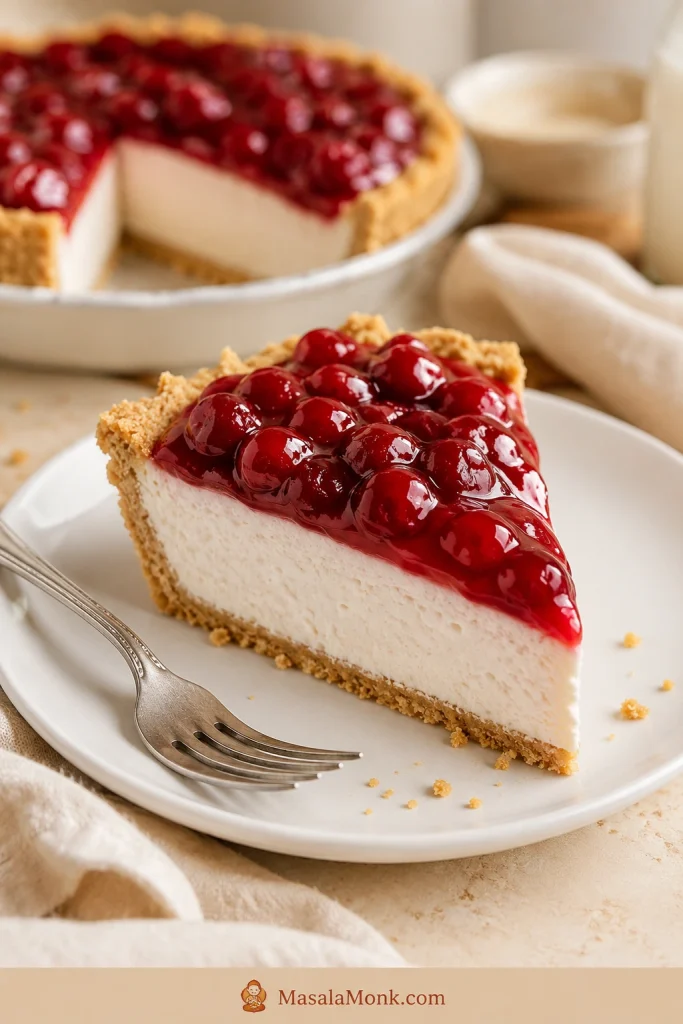
Cream cheese pie should be cold, creamy, tangy, and soft enough to feel lighter than cheesecake — but firm enough to cut into a real slice. It is the kind of pie that looks simple in the pan, then feels special when the first chilled wedge lifts out cleanly.
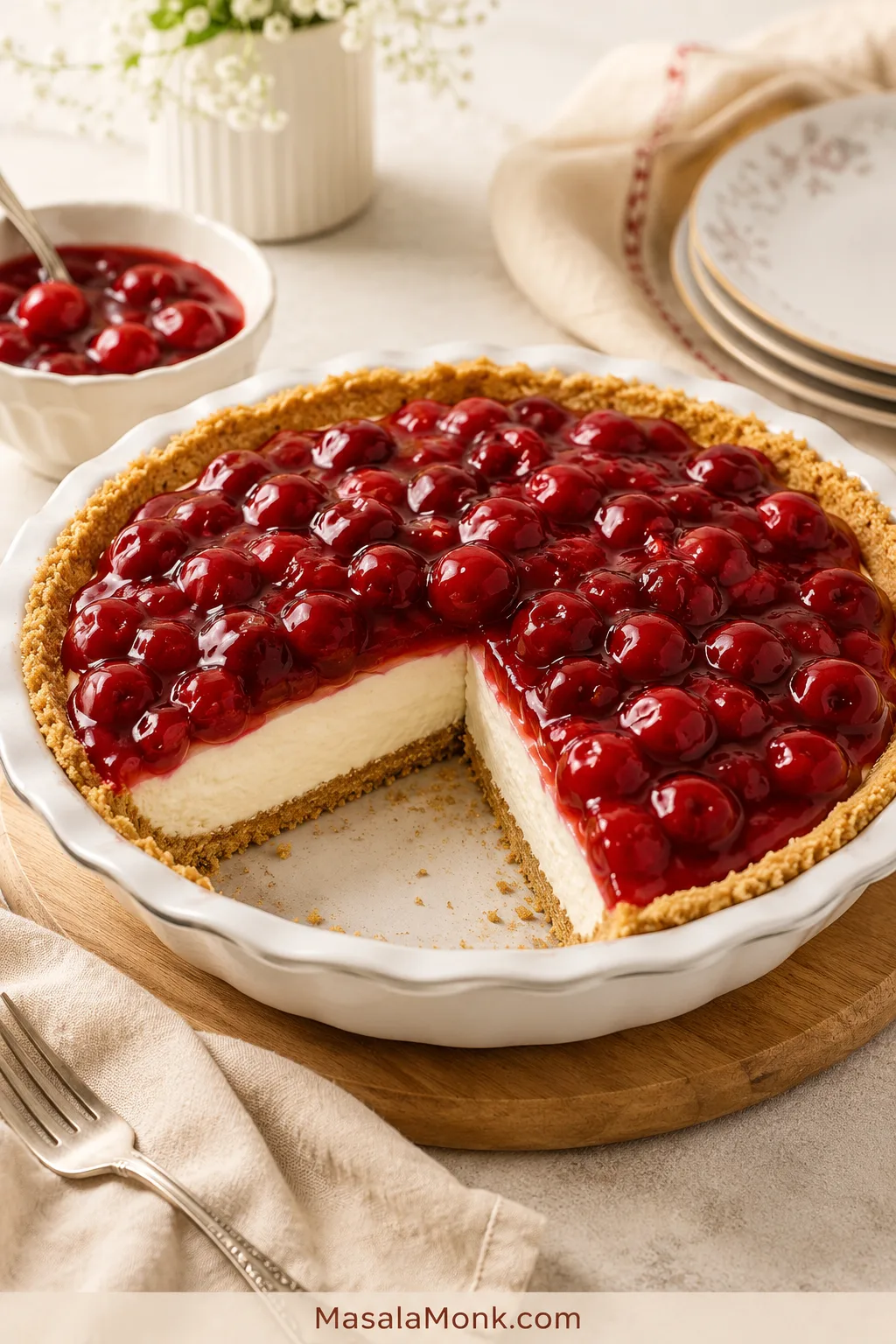
This is the dessert that shows up at potlucks and family dinners, then disappears faster than the showier sweets: a buttery crumb crust, a cool creamy middle, and a glossy fruit topping everyone recognizes before the first slice is cut.
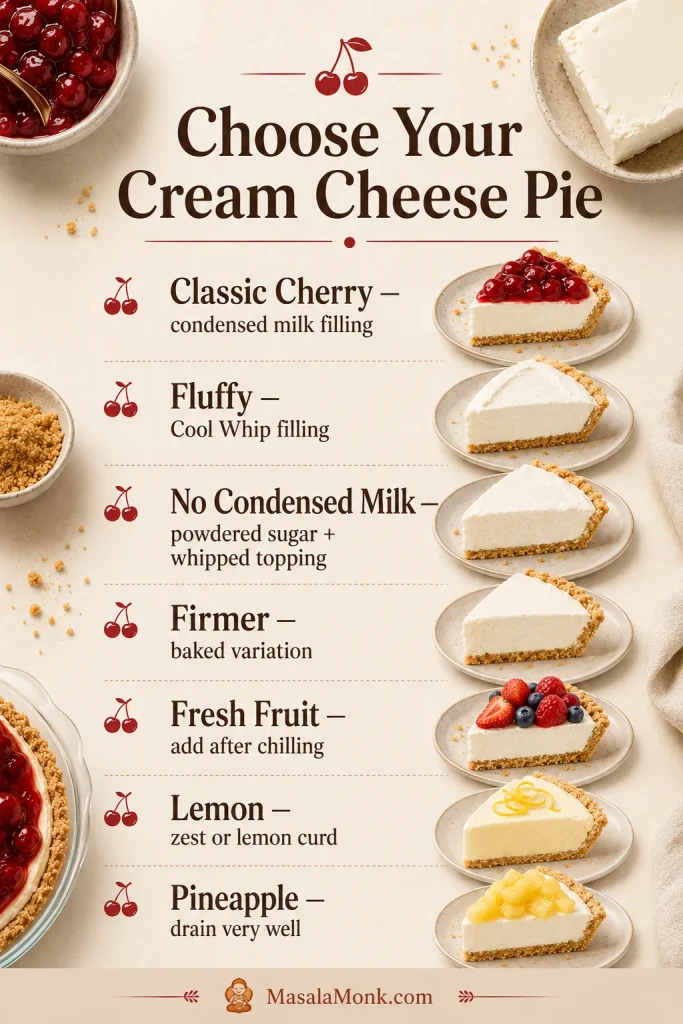
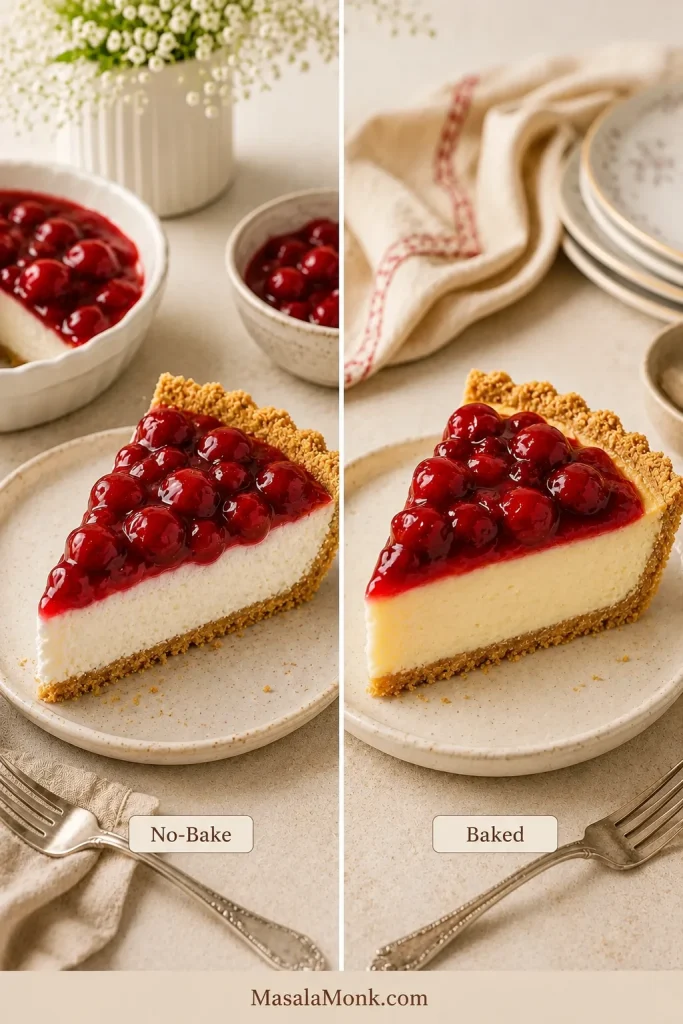
The tricky part is that the name can mean a few different desserts. Some cream cheese pies are no-bake and made with sweetened condensed milk. Others are fluffy with Cool Whip. The baked style uses eggs and sour cream, closer to a shallow cheesecake pie.
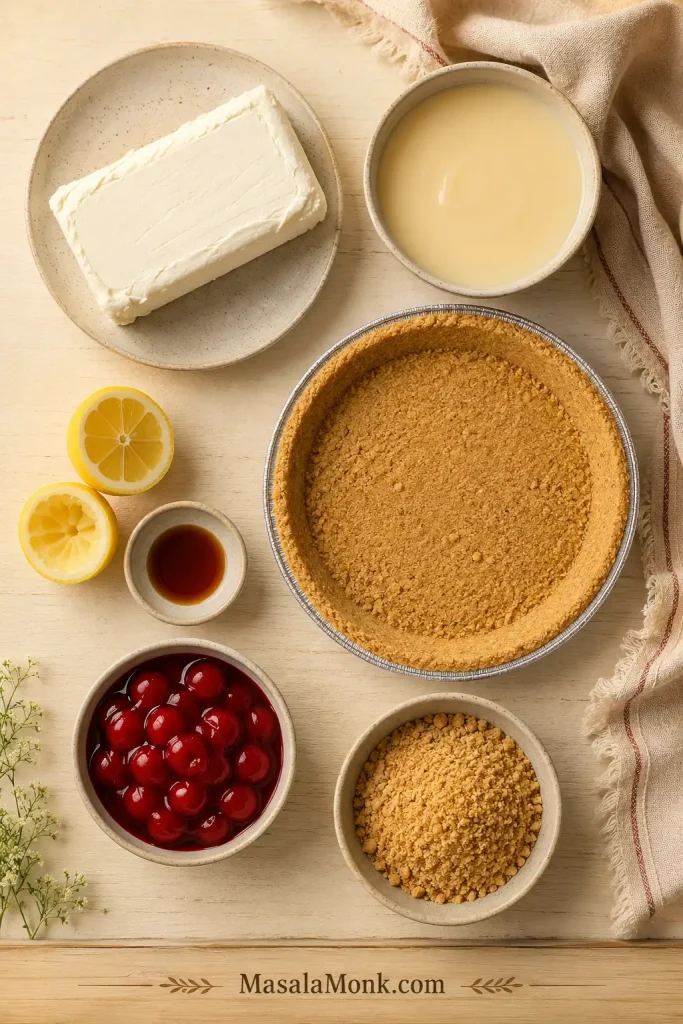
This recipe starts with the classic no-bake version: full-fat cream cheese, sweetened condensed milk, lemon juice, vanilla, a graham cracker crust, and optional cherry topping. From there, you can adjust the filling for a baked pie, a lighter whipped topping version, a fresh fruit topping, or a firmer cheesecake-style texture.
The goal is simple: a smooth cream cheese pie that sets properly, slices cleanly, and does not turn runny, lumpy, too sweet, or soggy under the topping.
Cream cheese pie is a creamy pie made with sweetened cream cheese filling in a graham cracker crust or pie crust. It can be no-bake and served chilled like an icebox pie, or baked like a lighter, shallower cheesecake pie.
For a taller chilled dessert with a thicker cheesecake-style set, try this no-bake cheesecake recipe instead.
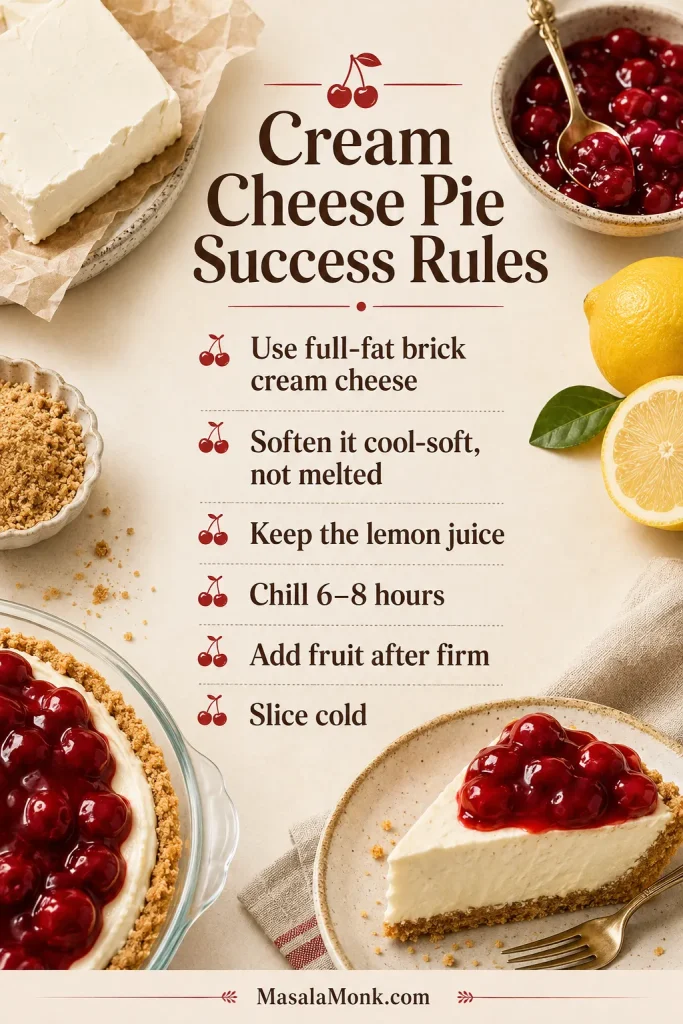
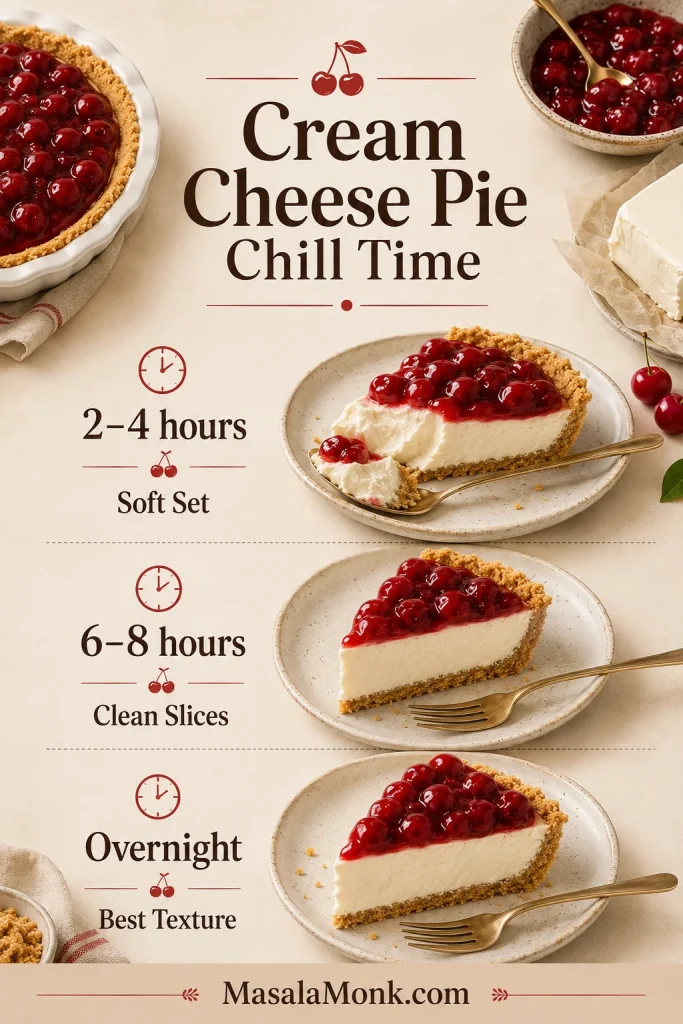
The save-this rule: use full-fat brick cream cheese, soften it until smooth but still cool, keep the lemon juice, chill the pie for 6 to 8 hours, and wait to add fruit until the filling is firm.
Make This When
This is a good pie for the day before company comes, because the fridge does most of the work while you move on with the rest of the meal.
Cheesecake flavor sounds good, but a full cheesecake feels like too much work.
A make-ahead dessert would make the meal easier.
Dessert needs to happen without turning on the oven.
An old-fashioned cherry-topped pie fits the potluck, holiday, or Sunday dinner table.
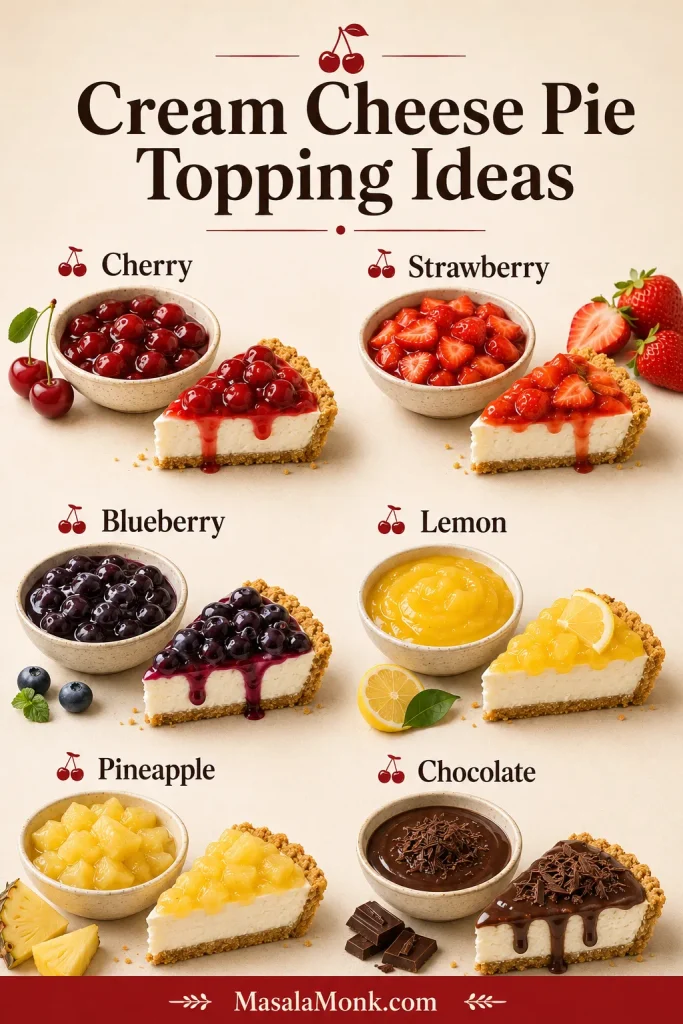
One reliable base should work with cherry, strawberry, blueberry, lemon, or pineapple topping.
Cherry pie filling added after the chilled base is firm
Texture
Creamy, tangy, sliceable, softer than baked cheesecake
Best make-ahead plan
Chill the plain pie overnight; top it before serving
No-Bake Cream Cheese Pie Recipe
This is the easy chilled pie: a 4-ingredient cream cheese filling in a graham cracker crust, finished with cherry pie filling when you want the old-fashioned fruit-topped style. The cherry version is the one many people remember from family tables: cool white filling, glossy red topping, and a buttery graham crust that somehow tastes even better the next day.
Yield: 8 slices
Prep time: 10 minutes
Chill time: 6 to 8 hours
Total time: 6 hours 10 minutes minimum
Pan: 9-inch / 23 cm pie crust
Method: No-bake
Best for: make-ahead holidays, potlucks, Sunday dinners, and no-bake summer desserts
Texture: creamy, tangy, smooth, and sliceable; softer than baked cheesecake
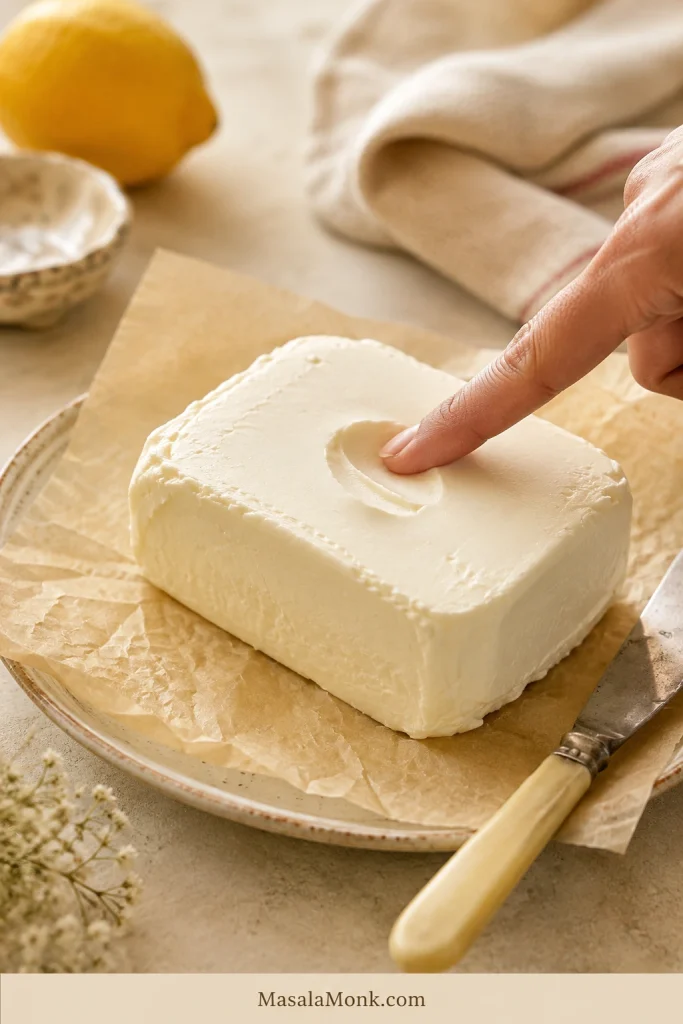
Before you start: for the safest first try, use the condensed milk filling, soften the cream cheese until cool-soft, chill the pie overnight, and add cherry topping only after the filling sets. In most kitchens, 30 to 45 minutes at room temperature softens cream cheese enough; in a hot kitchen, check sooner so it does not melt.
Ingredients
Ingredient
Amount
Notes
Full-fat brick cream cheese
8 oz / 226 g
Softened but still cool
Sweetened condensed milk
14 oz / 397 g
One standard can; do not use evaporated milk
Fresh lemon juice
⅓ cup / 80 ml
Balances sweetness and helps the filling thicken
Vanilla extract
1 tsp / 5 ml
Adds warmth
Prepared graham cracker crust
1 9-inch / 23 cm crust
Store-bought or homemade
Cherry pie filling, optional
20 to 21 oz / 565 to 595 g
Use enough to cover the top without weighing down the filling
Instructions
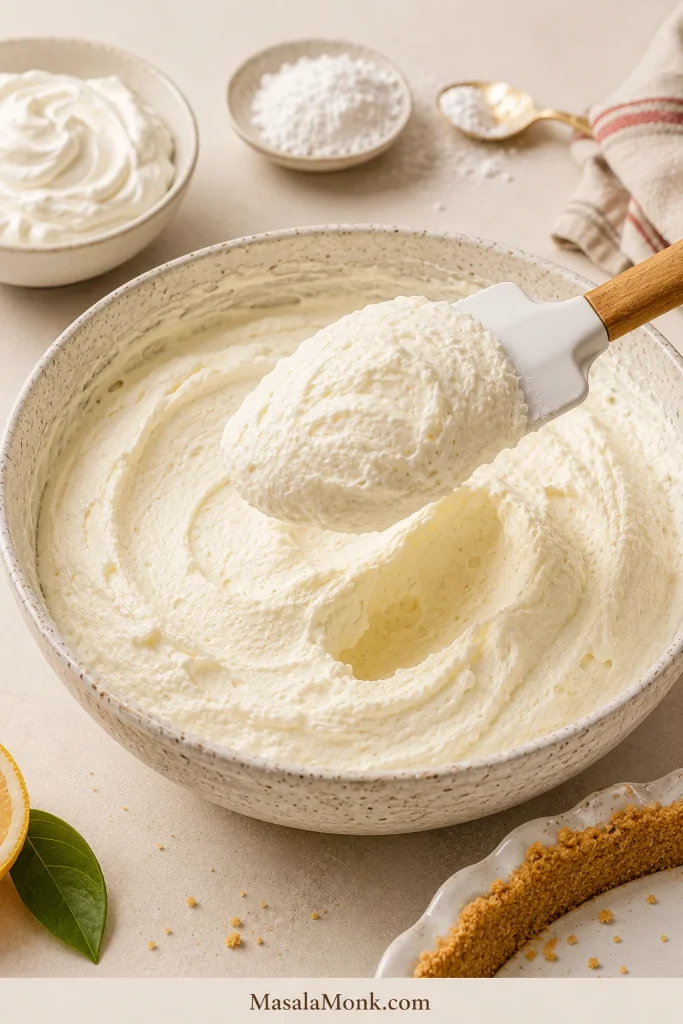
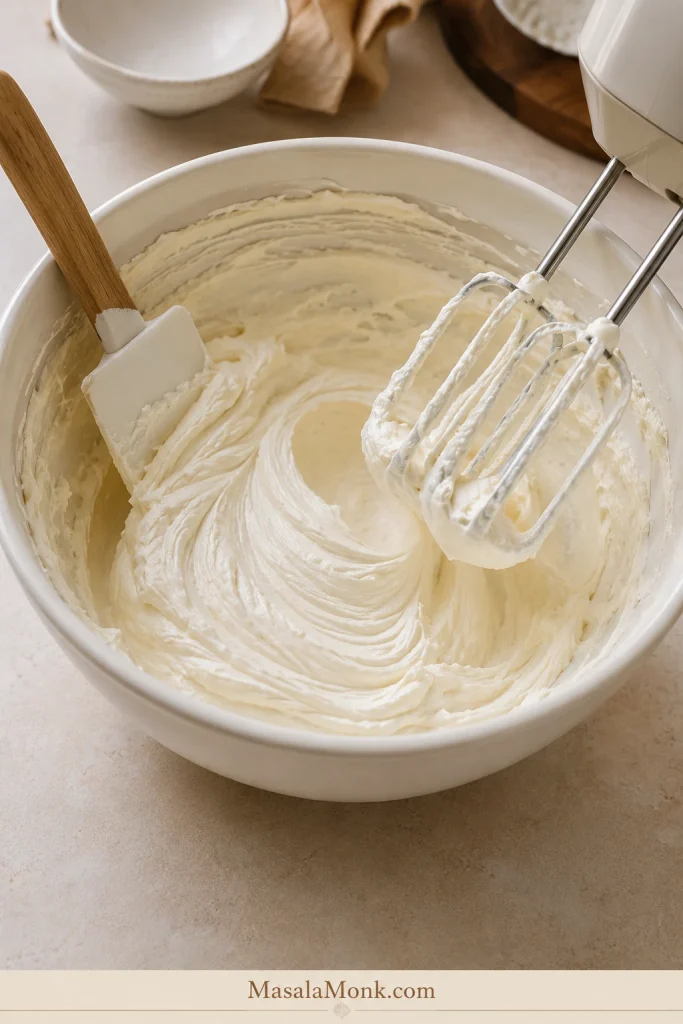
Beat the cream cheese first. Add the softened but still cool cream cheese to a mixing bowl. Beat until smooth and creamy, scraping the sides and bottom of the bowl so no firm pieces remain.
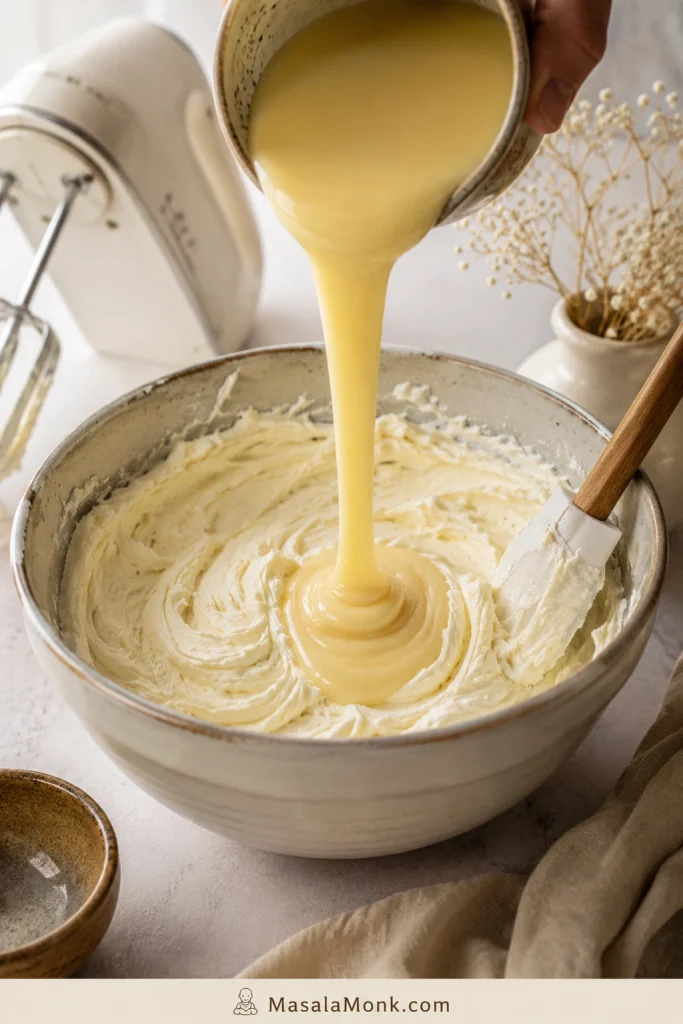
Add the condensed milk slowly. Pour in the sweetened condensed milk gradually while mixing on low to medium speed. Scrape the bowl again.
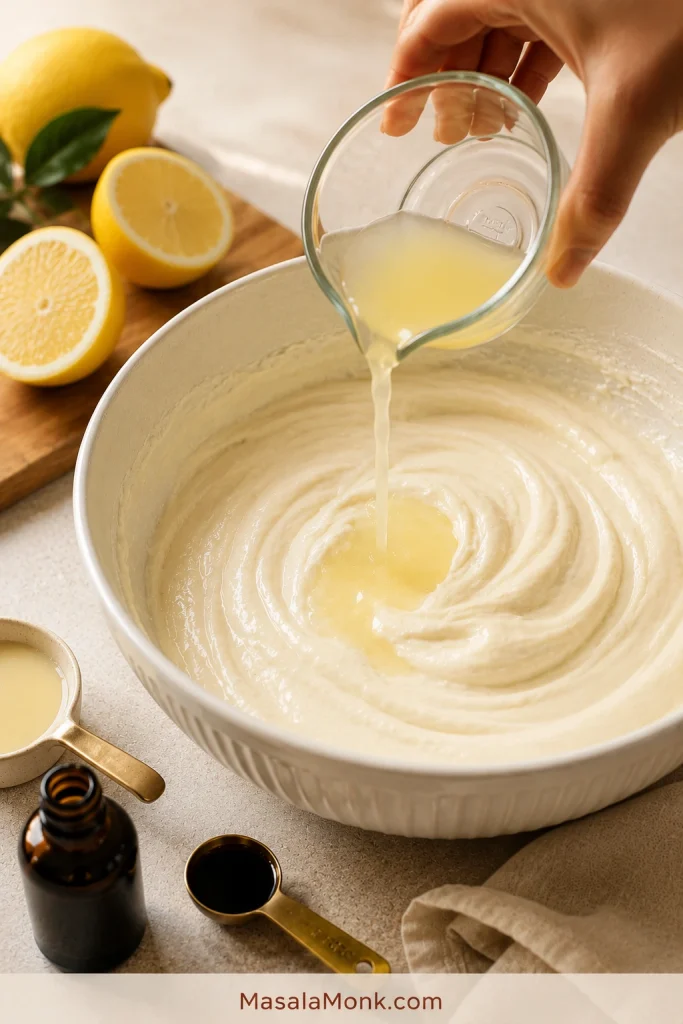
Mix in lemon juice and vanilla. Add the lemon juice and vanilla. Mix only until the cream layer is smooth and combined.
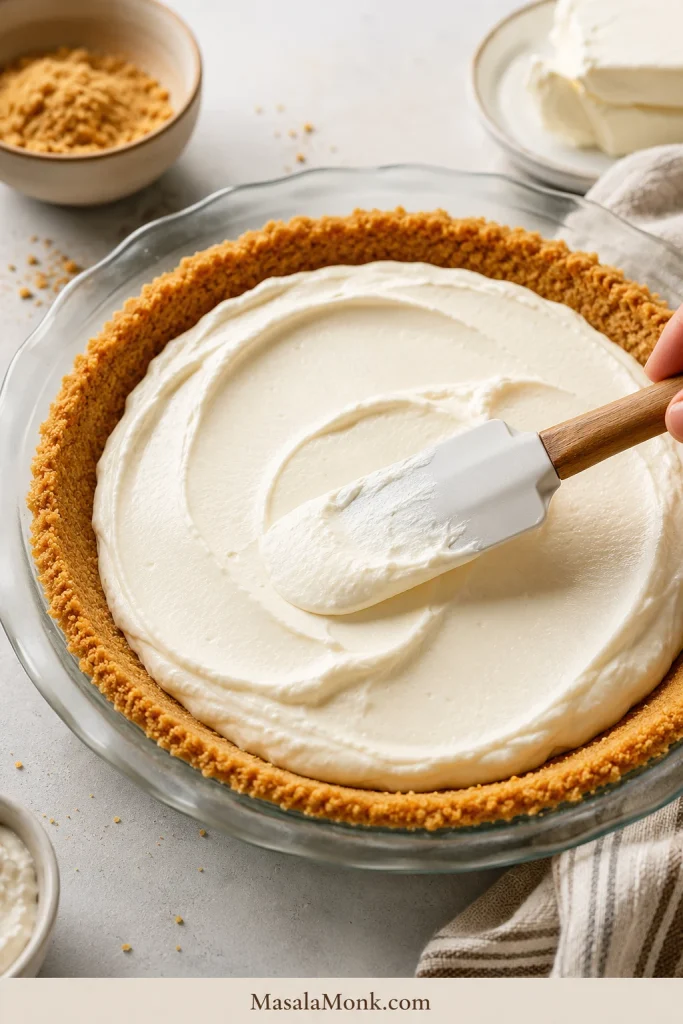
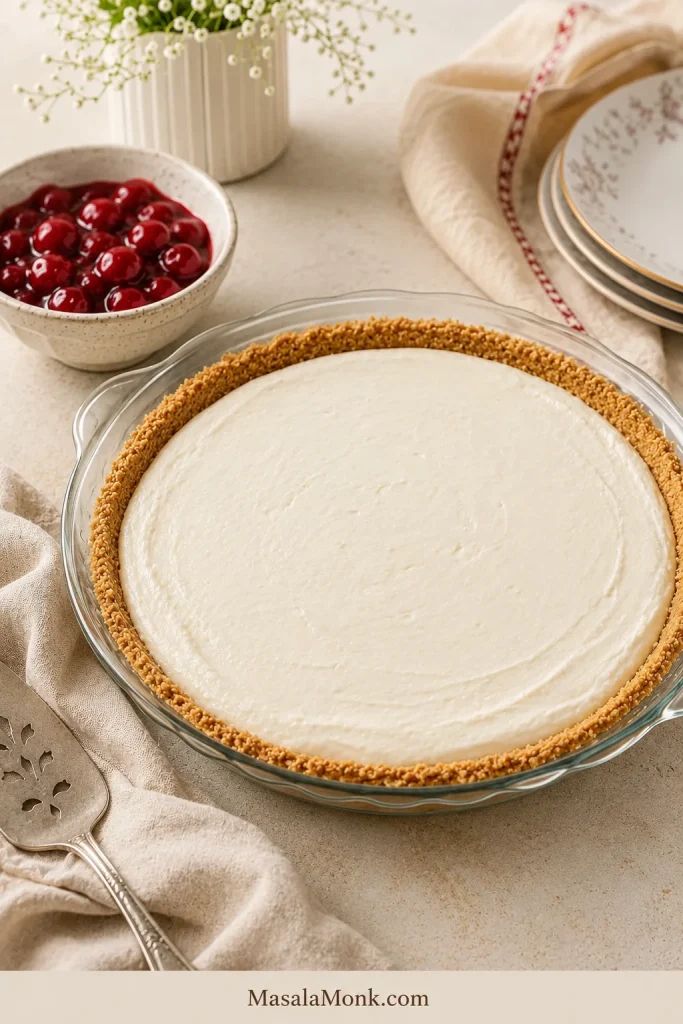
Fill the crust. Spoon the mixture into the graham cracker crust and smooth the top.
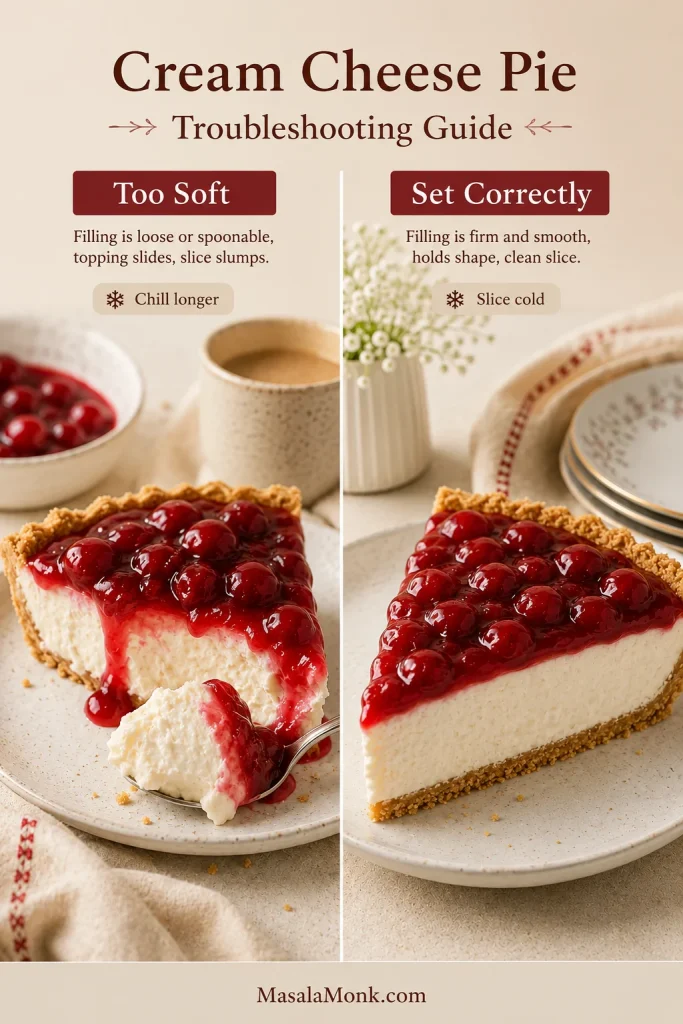
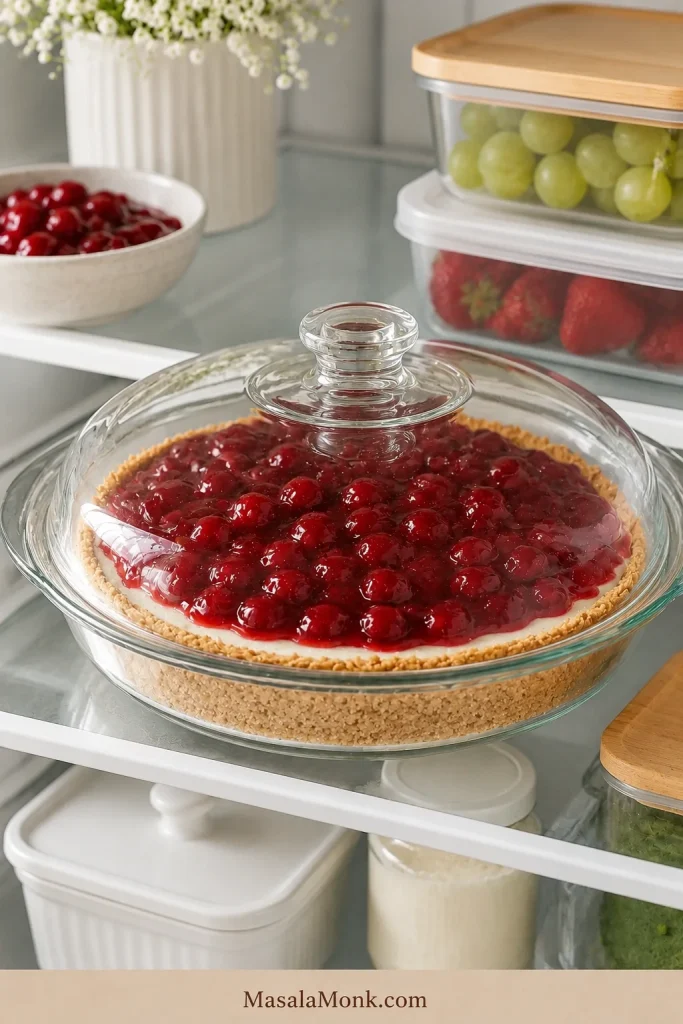
Chill until set. Cover and refrigerate for at least 6 hours, preferably overnight, until the center is firm enough to slice.
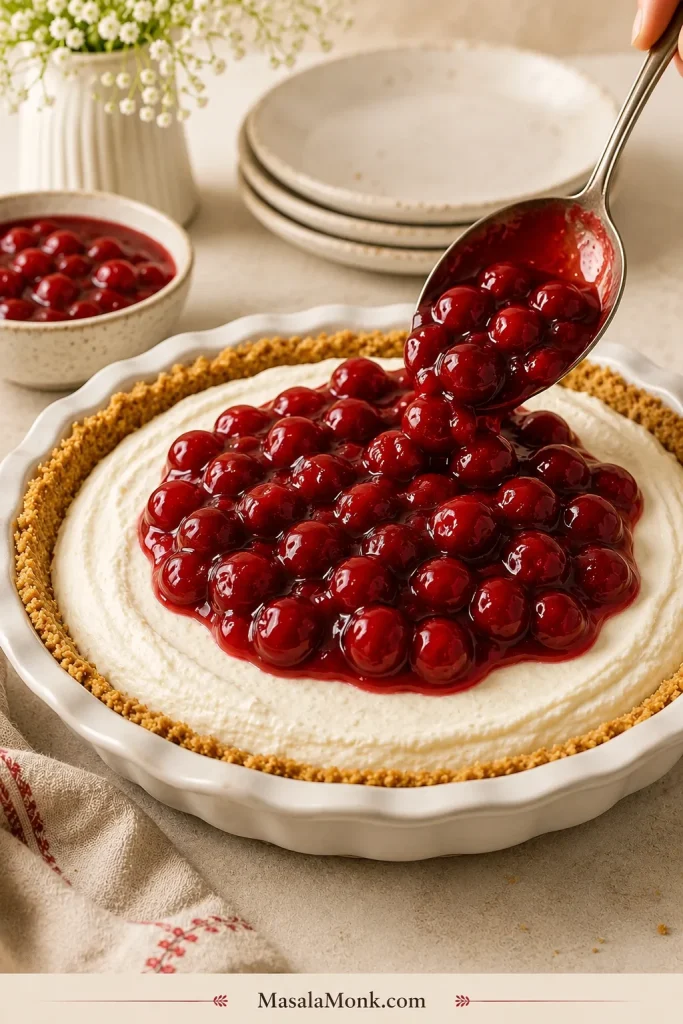
Add the topping. Spread cherry pie filling over the chilled base after it has set. For the cleanest look, add it 1 to 2 hours before serving.
Slice cold. Cut with a clean, sharp knife while the pie is cold. Wipe the knife between slices for neater wedges.
Recipe Notes
Use full-fat brick cream cheese, not whipped cream cheese or spreadable tub cream cheese.
Lemon juice helps the condensed milk mixture thicken, but chill time and full-fat cream cheese still matter.
If your topping is very sweet, keep the filling as written and do not add extra sugar.
Two to four hours may give you a soft set; 6 to 8 hours gives cleaner slices.
Add fruit topping after the creamy center is firm, especially for a clean white layer under the fruit.
Keep the pie cold until serving.
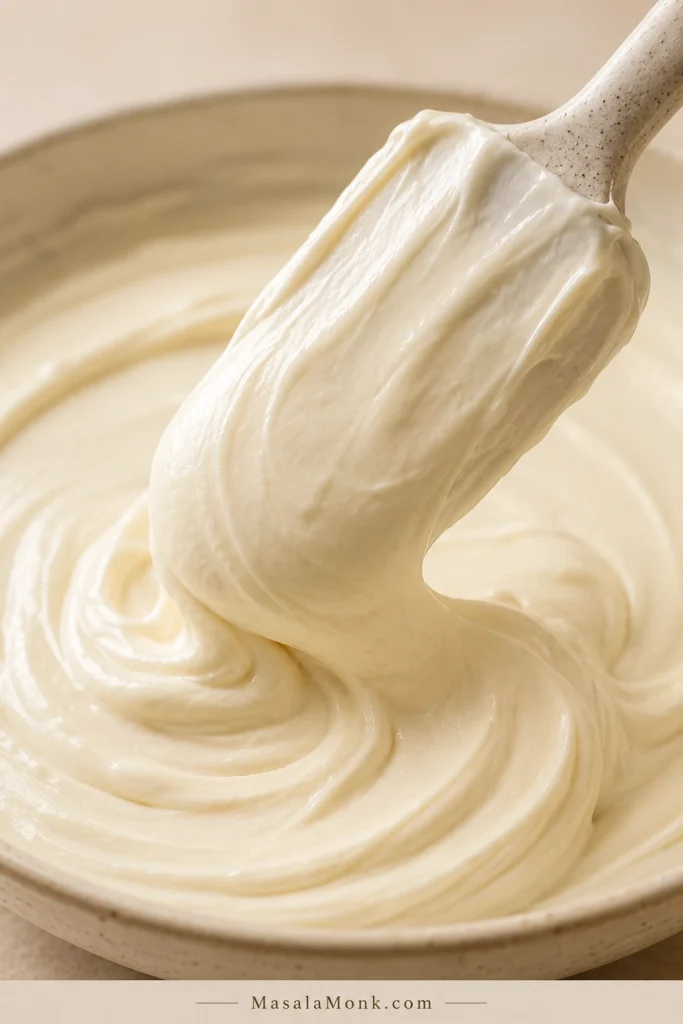
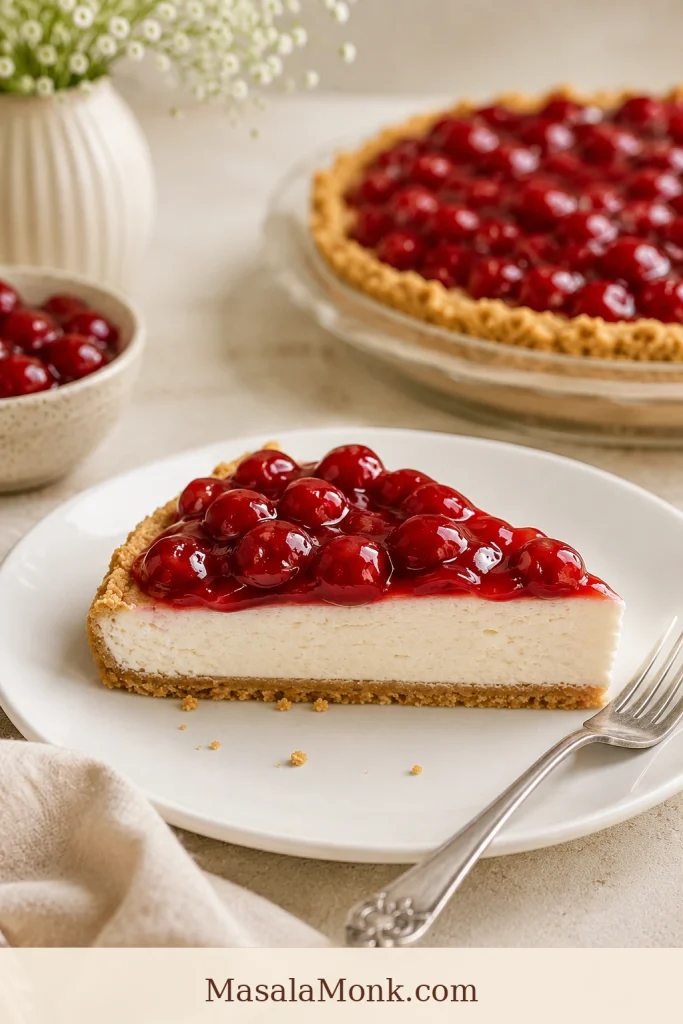
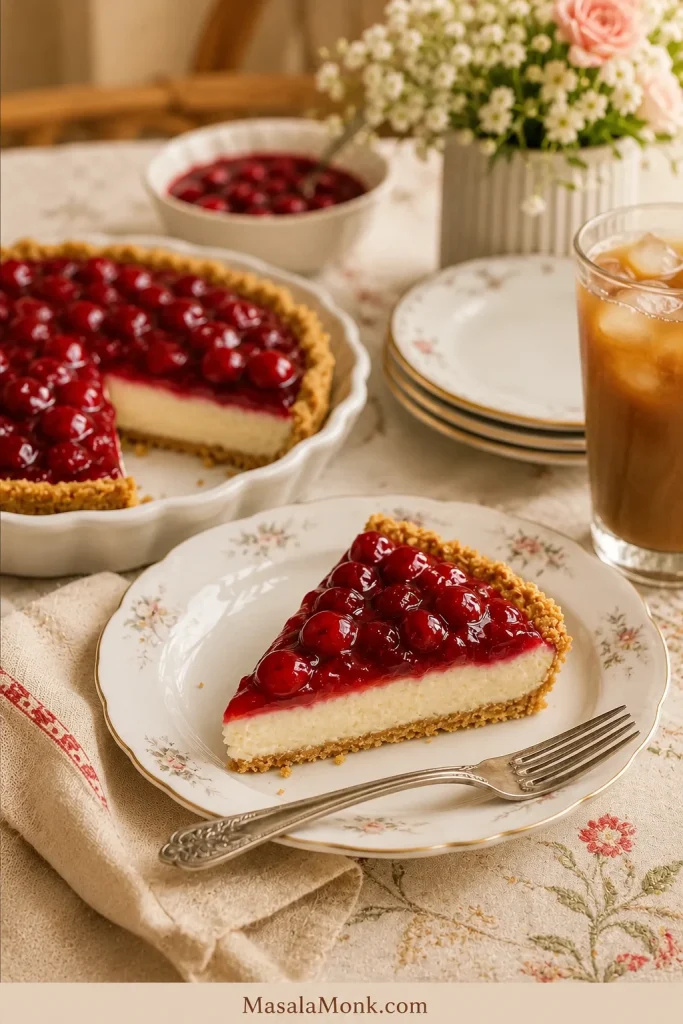
Before the detailed tips begin, this is the finished texture you are aiming for: a cold, creamy slice that holds together without feeling as dense as baked cheesecake.
This is the slice you are aiming for: cold enough to stand neatly, but still softer and creamier than a baked cheesecake.
Equipment You’ll Need
You do not need a springform pan, water bath, or special dessert tools. A bowl, mixer, spatula, and pie crust are enough — the important part is getting the cream cheese smooth before anything thinner goes in.
9-inch / 23 cm pie plate or prepared graham cracker crust
Mixing bowl
Hand mixer or stand mixer
Rubber spatula
Measuring cups and spoons
Sharp knife for slicing
Small saucepan, only for a cooked strawberry or blueberry topping
Do This, Not That
This is still an easy pie. A few small choices simply make the difference between neat chilled wedges and a softer spoonable dessert.
Do This
Not This
Why It Matters
Use full-fat brick cream cheese
Use spreadable tub cream cheese
Brick cream cheese gives the filling better body
Soften cream cheese until cool-soft
Use it fridge-hard or warm and greasy
Too cold causes lumps; too warm can make the mixture loose
Beat cream cheese before adding condensed milk
Add everything at once
Smoothing the cream cheese first prevents hidden lumps
Use lemon juice in the condensed milk filling
Skip it and expect the same texture
Lemon balances sweetness and helps the filling thicken
Chill 6 to 8 hours
Rush it after 2 hours
The center needs time to firm up all the way through
Add fruit topping after the filling sets
Add watery topping before chilling
This keeps the white layer clean and helps protect the crust
Slice the pie cold
Let it sit warm before cutting
The filling softens at room temperature
Here is the visual checklist after the rule table: smooth the cream cheese first, keep the lemon juice, chill fully, and add fruit only after the filling firms.
Use these success rules as your quick checkpoint: smooth cream cheese first, lemon for balance, full chill time, and topping after the filling firms.
Why This Recipe Works
Cream cheese gives the pie tang, richness, and body. Sweetened condensed milk adds sweetness and a thick, smooth base. Lemon juice cuts through the richness and helps the condensed milk mixture firm up as it chills. Vanilla rounds out the flavor so the filling tastes creamy, not flat.
The refrigerator finishes the job. Once the filling sits cold for long enough, the center catches up with the edges and the pie becomes sliceable. Overnight chilling is not just a waiting step; it is when the pie becomes itself.
What a Good Slice Should Look Like
A good slice should stand on the plate without slumping. Look for a smooth white cream layer, a topping that sits mostly on top, and a crust that cuts cleanly instead of turning into wet crumbs.
Before chilling, the mixture should look glossy and thick enough to hold soft waves from the spatula. After chilling, the center should feel firm when gently touched.
At this stage, look for soft waves in the filling; that texture means it is smooth enough to spread and thick enough to set.
Choose Your Version
If you have opened a few cream cheese pie recipes and they all look different, this is why: the same name can point to several different styles. Choose the one you actually want before you start mixing.
This is where the recipe becomes flexible instead of one fixed formula.
Choose the version before you mix: condensed milk makes the classic pie, Cool Whip makes it fluffier, and baking gives a firmer set.
You Want…
Make This Style
What to Expect
Classic cherry cream cheese pie
No-bake condensed milk filling
Smooth, tangy, sweet, nostalgic
A lighter, fluffier pie
Cool Whip filling
Softer and mousse-like
No condensed milk
Cool Whip + powdered sugar filling
Still creamy, less dense
Firmer cheesecake-style pie
Baked cream cheese pie
Richer, firmer, custard-like
Fresh strawberry or blueberry pie
No-bake base + cooled fruit topping
Brighter and more seasonal
Pineapple cream cheese pie
No-bake base + very well-drained pineapple
Retro, tropical, softer if fruit is wet
Lemon cream cheese pie
No-bake base with more lemon zest or lemon curd topping
Brighter and tangier
For a first attempt, start with the no-bake condensed milk filling. It gives the familiar flavor and is the easiest to get right when it chills long enough.
No-Bake vs Baked
The no-bake pie is softer, colder, and more like an icebox dessert. Baked cream cheese pie is firmer and closer to cheesecake. Choose no-bake for the easiest cherry-topped dessert; choose baked when you want eggs, sour cream, and a more custard-like center.
No-bake cream cheese pie stays colder and creamier, whereas the baked version sets firmer with a more custard-like center.
For a full baked cheesecake with a crumb crust and denser texture, this salted caramel cheesecake recipe goes completely in that direction.
Ingredients You’ll Need
Once you know the style you want, the ingredients are simple. The main thing is using the right kind of cream cheese and giving the filling enough time to rest cold.
Before mixing, set up the simple base: cream cheese for body, condensed milk for sweetness, lemon for brightness, and vanilla for a rounder flavor.
Cream Cheese
Use full-fat brick cream cheese for the best structure. Spreadable cream cheese from a tub is softer and can make the filling loose. Whipped cream cheese changes the density too, so it is better saved for spreading, not setting a pie.
The cream cheese should be softened but still cool. If it is too cold, it can leave lumps. When it gets too warm, it can become greasy and thin. Your finger should press into it easily, but the block should still hold its shape.
For fewer lumps, let the cream cheese soften until it dents under light pressure; cold blocks fight the mixer and leave tiny bits behind.
Sweetened Condensed Milk
Sweetened condensed milk gives the filling sweetness, body, and that familiar no-bake texture. Use one standard 14 oz / 397 g can.
Do not replace it with evaporated milk. Evaporated milk is unsweetened, thinner, and will not give the same structure.
Lemon Juice
Lemon juice balances the sweetness of the condensed milk and helps the filling thicken as it chills. Fresh lemon juice gives the cleanest flavor, but bottled lemon juice can work when that is what you have.
The finished pie should not taste sharply lemony. Lemon is there to brighten the filling, not to turn the whole dessert into lemon pie. For a dessert that leans fully into tart citrus, this key lime pie recipe is the brighter direction.
Vanilla Extract
Vanilla rounds out the tangy cream cheese and makes the filling taste fuller. It is a small ingredient, but the pie tastes flatter without it.
Graham Cracker Crust
Graham cracker crust is the usual choice for a no-bake cream cheese pie. Store-bought crust keeps the recipe fast, while a homemade crust gives more flavor and a firmer bite when you pre-bake it.
Cherry Pie Filling
Cherry pie filling is optional, but it is the most familiar topping for this style of pie. Add it after the creamy base has set so the red topping stays distinct from the white filling.
You may not need the entire can. Use enough to cover the top without making the pie feel heavy. If you prefer homemade topping, this cherry pie filling recipe works well here; just cool it fully before spreading it over the chilled filling.
Choose the Right Filling
Most of the confusion with cream cheese pie starts with the filling. Condensed milk gives a smooth, tangy, sliceable pie. Cool Whip makes it lighter and softer. Homemade whipped cream tastes fresher but needs a gentle hand. Baked fillings use eggs and sour cream for a firmer texture.
Now that the finished style is clear, here is what changes inside the bowl.
Filling Style
Uses
Result
Watch-Out
Cream cheese + condensed milk + lemon juice
Classic no-bake pie
Smooth, tangy, sweet, sliceable
Needs proper chill time
Cream cheese + Cool Whip + powdered sugar
No-condensed-milk style
Light, fluffy, softer
Less rich and less tangy
Cream cheese + homemade whipped cream
More homemade fluffy filling
Creamy, airy, less processed
Must be folded gently so it stays light
Cream cheese + eggs + sour cream
Baked cream cheese pie
Firmer and cheesecake-like
Needs baking, cooling, and chilling
Cream cheese + pudding or gelatin mix
Shortcut pie variations
Sweeter and more stable
More processed flavor
Cool Whip Filling Without Condensed Milk
Use this route for a lighter no-bake filling or for the days when there is no sweetened condensed milk in the pantry.
If you want cream cheese pie without condensed milk, the Cool Whip version gives a lighter filling, but it still needs a long chill.
Ingredient
Amount
Full-fat brick cream cheese
8 oz / 226 g
Powdered sugar
½ cup / about 60 to 65 g
Vanilla extract
1 tsp / 5 ml
Lemon juice
1 tbsp / 15 ml, optional
Cool Whip or whipped topping
1½ to 2 cups
Graham cracker crust
1 9-inch / 23 cm crust
Beat the cream cheese, powdered sugar, vanilla, and lemon juice until smooth. Fold in the whipped topping gently, spoon the filling into the crust, and chill until set. It feels lighter than the condensed milk pie, but it still needs a long cold rest for neat slices.
Start with ½ cup powdered sugar. Add more only if you want a sweeter, dessert-dip-style filling.
Homemade Whipped Cream Filling
Homemade whipped cream also works in place of Cool Whip. Beat cold heavy cream to medium-stiff peaks, then fold it gently into the sweetened cream cheese mixture. Do not beat aggressively after the whipped cream goes in.
For the right peak stage, this homemade whipped cream recipe shows when to stop while the cream still looks glossy and soft, not dry or grainy.
This filling tastes fresher than whipped topping, but it can be slightly less stable when the whipped cream is too soft. Chill it well and slice it cold.
How to Make No-Bake Cream Cheese Pie
With the filling style chosen, the method is straightforward. The main trick is beating the cream cheese smooth before adding the thinner ingredients.
1. Beat the Cream Cheese First
Add the cream cheese to a mixing bowl and beat it before adding anything else. Once the condensed milk goes in, hidden lumps are harder to smooth out.
First, beat the cream cheese by itself until smooth; once the sweetened condensed milk goes in, hidden lumps are harder to remove.
Scrape the sides and bottom of the bowl with a spatula. Cream cheese often hides there in small firm patches, and those patches can show up later in the finished pie.
2. Add the Condensed Milk Slowly
Pour in the sweetened condensed milk gradually and mix until the filling looks smooth and glossy. Keep the mixer on low to medium speed. Smooth is the goal, not overbeaten.
Next, pour in the condensed milk gradually so the filling stays thick, glossy, and evenly blended instead of turning loose at the edges.
3. Add Lemon Juice and Vanilla Last
Add the lemon juice and vanilla after the cream cheese and condensed milk are already smooth. Mix just until combined. The mixture may thicken slightly as the lemon juice blends in.
Then add lemon juice so the filling tastes bright instead of flat; it also helps the condensed milk mixture chill into a firmer pie.
4. Fill the Crust
Spoon the filling into the graham cracker crust and smooth the top with a spatula. For the cleanest white layer, wait to add fruit topping until after the pie has chilled.
Once the filling is smooth, level it inside the graham cracker crust so the cream cheese pie chills evenly from edge to center.
5. Chill Until the Center Is Firm
Cover the pie and refrigerate it for at least 6 hours. Overnight is even better. The center needs time to catch up with the edges.
6. Add the Topping and Slice Cold
Spread cherry pie filling or another topping over the chilled base. Slice while cold, using a clean, sharp knife. For neat wedges, wipe the knife between cuts.
Chill Time for Clean Slices
Give the pie enough refrigerator time for the center, not just the edges, to firm up. It may taste good after a shorter chill, but it will not always lift out in neat wedges.
Chill Time
Result
Use It When
2 to 4 hours
Soft set
You do not mind softer slices
6 to 8 hours
Cleaner slices
You want the pie to hold its shape
Overnight
Best texture
You are serving guests or making it ahead
Here is the saveable chill-time recap: soft set is fine for spooning, but clean cream cheese pie slices need 6 to 8 hours or overnight.
Use chill time as your texture guide: soft set works for spooning, while clean cream cheese pie slices need 6 to 8 hours or overnight.
For gatherings, overnight chilling is the easiest insurance. The first slice is the test; the second is usually cleaner once the knife has opened the pie.
Overnight is the clean-slice move because the center gets time to set as firmly as the edges before slicing.
A short freezer rest can help in an emergency, but it is not a perfect shortcut. Too much freezer time can make the texture icy or change the way the filling softens later.
How to Get a Filling That Sets
If you want the cleanest slices, focus on a few things: full-fat brick cream cheese, lemon juice, enough refrigerator time, and toppings that are not watery.
Beat the cream cheese smooth first. This prevents hidden lumps before thinner ingredients go in.
Keep it cool-soft, not warm. Warm cream cheese can make the mixture loose and greasy.
Use the lemon juice. It balances the sweetness and helps the condensed milk filling thicken.
Let the center chill through. The edges firm first; the middle needs more time.
Keep wet toppings for later. Add cherry topping, berries, or pineapple after the creamy base is firm.
Clean-slice cue: the pie is ready when the center feels firm to a gentle touch and a knife can cut through without dragging loose cream into the crust.
This plain chilled stage matters: a firm base keeps cherry or fruit topping from staining the white filling too early.
Graham Cracker Crust, Pie Crust, or Cream Cheese Pie Crust?
After the filling, the crust is where texture can change most. Graham cracker crust is the easiest and most traditional choice for this recipe. It pairs well with the tangy filling and does not need a long bake.
One phrase can be confusing: “cream cheese pie” usually means a pie with cream cheese in the filling. “Cream cheese pie crust” is different. That is a pastry dough made with cream cheese. It can be delicious, but it is not the same thing as this no-bake dessert.
If you were looking for pastry dough made with cream cheese, that is a different recipe; this page focuses on the creamy pie-filling style.
Meanwhile, the crust changes the whole bite: graham cracker crust keeps it classic, while regular pie crust leans better for baked versions.
Crust
Best For
Notes
Store-bought graham cracker crust
Fastest no-bake pie
Easy, classic, and convenient
Homemade chilled graham crust
No-bake homemade version
Softer than pre-baked but flavorful
Pre-baked graham cracker crust
Cleaner slices
Bake 10 minutes at 350°F / 177°C, then cool fully
Regular pie crust
Baked cream cheese pie
Blind bake if the filling recipe needs a pre-baked shell
Digestive biscuit crust
Graham cracker substitute
Useful where graham crackers are not common
Simple Homemade Graham Cracker Crust
A simple homemade graham crust only needs:
1½ cups / about 170 to 180 g graham cracker crumbs
2 to 4 tbsp sugar, depending on how sweet you like the crust
6 to 7 tbsp / 85 to 100 g melted butter
Press the crumbs into a 9-inch / 23 cm pie plate. Chill the crust for a no-bake version, or bake it at 350°F / 177°C for about 10 minutes and cool completely before adding the cream cheese filling.
When making your own graham crust, aim for compact, not compressed; that balance keeps the base sturdy without turning hard.
Do not pack the crust rock-hard. Press it firmly enough to hold together, but not so tightly that it becomes dense and difficult to cut. For more detail on crumb crusts, King Arthur Baking has a helpful graham cracker crust guide.
Another easy no-bake pie with a crumb crust is this banoffee pie recipe, a chilled make-ahead dessert with banana, toffee, and cream.
Cherry, Strawberry, Blueberry, Lemon, and Pineapple Toppings
After the filling and crust are settled, the topping is where the pie becomes personal. Cherry feels old-fashioned, strawberry and blueberry feel fresh and summery, lemon keeps it bright, and pineapple turns it retro and tropical.
Once the base is chilled, one cream cheese pie can turn into cherry, strawberry, blueberry, lemon, pineapple, or chocolate dessert.
Topping
How to Use It
Best Note
Cherry pie filling
Spread over the chilled filling
The familiar old-fashioned topping
Strawberry topping
Use fresh sliced strawberries or a cooked strawberry glaze
Best for spring and summer
Blueberry topping
Use cooked blueberry sauce, cooled before adding
Excellent with a little lemon zest
Lemon curd
Spread a thin layer over the set pie
Bright, tangy, and less heavy
Pineapple
Drain very well before using
Too much liquid can loosen the filling or soften the crust
Chocolate or Oreo
Use cookie crumbs, ganache, or chocolate drizzle
Best when you want a richer, sweeter pie
Pumpkin
Use as a fall cheesecake-pie style variation
Best for fall or holiday baking
When to Add Cherry Pie Filling
For the cleanest look, chill the creamy base first and add cherry pie filling 1 to 2 hours before serving. This keeps the white layer distinct and prevents the topping from bleeding into the filling too much.
After the filling firms, add cherry topping with a light hand; the goal is a glossy red layer that stays on top.
For convenience, the cherry topping can go on earlier and the whole pie can be refrigerated. It will still taste good, but the topping may stain the cream cheese layer slightly.
A baked fruit pie is a different dessert altogether. This cherry pie recipe that sets is the fuller baked-pie route when you want deep ruby filling inside a flaky crust.
How to Use Fresh Fruit Without Making the Pie Watery
Fresh fruit gives the pie a brighter, more seasonal feel; it just needs better timing because berries and pineapple release juice as they sit.
Strawberries: add sliced fresh berries close to serving, or cook part of the berries into a thicker glaze and cool it completely before adding.
Blueberries: use a cooked topping with a little lemon juice and cornstarch because it holds better than loose fresh berries.
Pineapple: drain it extremely well, and press out extra liquid when needed.
Lemon curd: use a thin layer so it brightens the pie without overpowering the cream cheese.
Mixed fruit: add it close to serving unless it has been cooked into a thicker topping.
For another fresh-strawberry dessert where timing matters, this strawberry shortcake recipe keeps the berries and cream separate until serving so the texture stays fresh.
No matter which topping you use, let the filling firm first. Cold filling underneath and cooled topping on top give the cleanest slice.
For fresh fruit toppings, timing matters: add strawberries late, cook blueberries first, drain pineapple well, and keep lemon curd thin.
Baked Cream Cheese Pie Variation
Choose this baked route for a firmer old-fashioned pie that tastes closer to cheesecake. It uses eggs and sour cream for a richer, custard-like texture.
Baked Version Ingredients
Ingredient
Amount
Full-fat brick cream cheese
16 oz / 452 g
Granulated sugar
½ cup / 100 g
Sour cream
¼ cup / 60 g
Large eggs
2
Vanilla extract
1 tsp / 5 ml
Lemon juice
1 tsp / 5 ml
Graham cracker crust
1 9-inch / 23 cm crust
How to Bake It
Pre-bake the graham cracker crust at 350°F / 177°C for about 10 minutes. Cool slightly.
Lower the oven to 325°F / 163°C.
Beat the cream cheese and sugar until smooth.
Mix in sour cream, vanilla, and lemon juice.
Add the eggs one at a time, mixing gently after each addition.
Pour the filling into the crust.
Bake for about 30 to 35 minutes, or until the edges are set and the center has a gentle wobble.
Cool at room temperature for 1 hour.
Refrigerate for at least 2 hours, preferably longer, before slicing.
The center should wobble slightly, not ripple like liquid. It will firm more as it cools and chills.
For a retro sour cream topping, spread a thin sweetened sour cream layer over the baked pie near the end of baking or after the filling has set, depending on the style you prefer. Keep the layer light so it complements the cream cheese instead of overwhelming it.
Texture Cues at Every Stage
Use this as a visual check before serving. The filling changes as it chills, so do not judge the pie by the first hour in the fridge.
Stage
What You See
What It Means
Before chilling
Smooth, glossy filling with soft spatula waves
Good. It should spread easily but not look watery.
Before chilling
Loose, pourable filling
It may be too warm, overmixed, or made with the wrong ingredient.
After a short chill
Edges are firmer but center is still soft
Normal. Give it more time before expecting clean slices.
After a full chill
Center feels cold and firm to a gentle touch
Ready to slice while cold.
After topping
Fruit sits mostly on top
Good. The creamy base was firm before topping.
After topping
Red streaks or watery edges
Topping may have been added too early, too warm, or too wet.
Troubleshooting
Most cream cheese pie problems are easy to read once you know what stage caused them. If your pie is softer than expected, do not panic; it may need more time, colder filling, or a different serving plan.
Why Is My Cream Cheese Pie Runny?
The most common reason is not enough chill time. After a couple of hours, the top may look set while the center is still too soft to slice.
Other possible causes are cream cheese that was too warm, low-fat or spreadable cream cheese, not enough lemon juice in the condensed milk filling, overmixing, or adding a watery fruit topping too early.
If your cream cheese pie is too soft, start with more chill time; a properly set filling should hold a clean slice when served cold.
What to do now: when the pie is only slightly soft, refrigerate it longer. When it is very loose, serve it as an icebox-style dessert with extra graham crumbs and fruit instead of forcing neat slices.
Why Is My Filling Lumpy?
The cream cheese was probably too cold or not beaten smooth before the condensed milk was added. Beat the cream cheese first, scrape the bowl well, and only then add the thinner ingredients.
Why Did My Crust Get Soggy?
The topping may have been too wet, added too early, or left on the pie for too long. Homemade graham crust can also become soft when it was not pressed firmly enough or did not chill or bake long enough before filling.
Can I Freeze Cream Cheese Pie to Make It Set Faster?
In an emergency, a short freezer rest can help, but it is not a full replacement for refrigerator chilling. If the filling is loose because of ingredient balance, freezing only hides the problem temporarily.
Why Does the Slice Collapse?
The pie probably needs more chill time, or it sat at room temperature too long before slicing. Slice it cold and keep it refrigerated until shortly before serving.
Can I Fix a Pie That Did Not Set?
When the filling is only a little soft, give it more refrigerator time. Very loose filling is better served as a soft icebox dessert with fruit and crumbs rather than forced into neat wedges.
Make Ahead, Storage, and Freezing
This is one of those desserts that rewards patience, which is why making it ahead is usually the better plan.
Keep it covered and cold after making it ahead; cream cheese pie slices cleanest when it stays chilled until serving.
Best Make-Ahead Timing
Prepare the cream cheese layer the day before, then add the topping closer to serving for the cleanest look. This gives the pie time to firm up while keeping the fruit layer fresh.
How Long It Keeps in the Fridge
Store the pie covered in the refrigerator for 3 to 4 days. During the first day or two, the crust will be firmest, especially when fruit topping is added later.
Freezing: What Happens to the Texture?
Freeze the pie preferably without the fruit topping. Wrap it well, freeze until firm, and thaw in the refrigerator before serving. The texture may be slightly softer after thawing, but it will still taste good.
How Long It Can Sit Out
Because this pie contains cream cheese, keep it chilled until serving. For food safety, follow the general FoodSafety.gov guidance for perishable foods: do not leave cream cheese desserts out for more than 2 hours, or 1 hour in very hot weather. Return leftovers to the refrigerator promptly.
What to Serve With Cream Cheese Pie
Serve cream cheese pie with coffee after dinner, iced tea for a summer meal, or fresh berries when you are keeping the topping simple. A little lemon zest is especially good with blueberry topping, while a spoonful of whipped cream works best when the pie is plain, lemon-topped, or lightly fruited.
Finally, serve the pie cold with coffee or iced tea; this is the simple make-ahead dessert people return to for a second slice.
If a pie turns out softer than planned, serve it in small bowls or cups with extra graham cracker crumbs and fruit. It will feel intentional instead of like a failed slice.
On a dessert table, this pie works best beside sharper fruit desserts, chocolate bakes, or something crisp, because its own texture is cool and creamy.
FAQ
Cream Cheese Pie vs Cheesecake: What Is the Difference?
Cream cheese pie is usually easier, shallower, and softer than cheesecake. The no-bake version is chilled in a pie crust, while cheesecake is usually denser and often baked in a springform pan.
Baked or No-Bake: Which One Should I Make?
Choose the no-bake pie for the easiest chilled dessert. Make the baked pie when you want a firmer, more cheesecake-like texture.
What Kind of Cream Cheese Is Best?
Full-fat brick cream cheese is best. Spreadable tub cream cheese, whipped cream cheese, and low-fat versions can make the pie softer and less stable.
Why Lemon Juice Matters
In the condensed milk filling, lemon juice balances the sweetness and helps the mixture thicken as it chills. The pie should taste bright, not sharply lemony.
Can I Make Cream Cheese Pie Without Lemon Juice?
You can, but the condensed milk version may taste sweeter and set less firmly. If you skip lemon juice, use a Cool Whip-style filling or another recipe designed without it.
How Long Does It Take to Set?
Give it at least 6 hours for clean slices. Overnight is best. A 2 to 4 hour chill usually gives a softer set.
Best Substitute for Sweetened Condensed Milk
Use the Cool Whip filling with cream cheese, powdered sugar, vanilla, optional lemon juice, and whipped topping. It will be lighter and fluffier than the condensed milk version.
Does Cool Whip Work?
Yes. Cool Whip makes a lighter, fluffier no-bake filling. Fold it in gently after beating the cream cheese with powdered sugar and flavorings.
Best Time to Add Cherry Pie Filling
Add cherry pie filling after the pie has chilled and the filling is firm. For the cleanest look, add it 1 to 2 hours before serving.
Fresh Fruit or Canned Pie Filling: Which Is Better?
Canned pie filling is easier and more stable. Fresh fruit tastes brighter, but it can release juice, so add it close to serving or cook it into a thicker topping first.
Can I Use a Store-Bought Graham Cracker Crust?
Yes. A store-bought graham cracker crust works well for no-bake cream cheese pie and keeps the recipe fast. For a firmer crust, use a homemade crust and pre-bake it before adding the filling.
Graham Cracker Crust or Regular Pie Crust?
Graham cracker crust is the traditional choice for no-bake cream cheese pie. Regular pie crust works better for baked cream cheese pie or a more pastry-style dessert.
Making It the Day Before
Making the pie the day before is ideal. Chill the plain pie overnight, then add fruit topping closer to serving.
Does It Freeze Well?
It can be frozen, especially without topping. Thaw it in the refrigerator and expect a slightly softer texture after thawing.
Final Thoughts
The best cream cheese pie does not need to be fancy. It just needs to be cold, smooth, lightly tangy, and firm enough that the slice holds together on the plate.
Make the no-bake condensed milk pie when you want something easy and nostalgic, use the Cool Whip filling when you want it lighter, or bake the old-fashioned variation when you want a firmer cheesecake-style dessert. However you top it, the goal is the same: a cold, creamy slice that disappears quickly once it reaches the table.
It is humble in the best way: a crumb crust, a cold creamy middle, and a topping that makes the whole table notice. Try the classic cherry topping first, then change the fruit the next time. This is one of those pies that becomes a house version quickly.
A good cherry pie should slice into deep ruby filling, not collapse into a puddle the moment the knife goes in. This cherry pie recipe is built around that exact problem: flaky golden crust, bright cherry flavor, and a thick filling that holds together after cooling.
You do not need perfect fresh cherries to make it work. This guide gives you a clear path for fresh cherries, frozen cherries, canned cherries, sweet cherries, sour cherries, and even a shortcut version with canned cherry pie filling. You can make the crust from scratch or use store-bought pie dough. The filling is where the confidence matters most.
If pie crust is the part that makes you hesitate, this flaky homemade pie crust guide has the same cold-dough, lattice, and no-soggy-bottom logic you need here.
Cherry pie asks for a little patience, but not guesswork. Once you know how to manage the juice, thicken the filling, bake until the center is active, and let the pie cool before slicing, the whole thing becomes much easier. The hardest part is not the lattice. It is leaving the pie alone when the kitchen already smells like dessert.
To make cherry pie that sets, use about 5 1/2 cups pitted cherries, enough sugar for the type of cherries you have, lemon juice for brightness, and cornstarch to thicken the juices. Let the cherries sit with sugar and lemon first so they release some liquid, then reduce that liquid briefly and whisk in the cornstarch before adding it back to the fruit.
This small juice-control step keeps the filling from turning loose. The cherries still taste fresh and juicy, but the syrup starts in a more controlled place before the pie goes into the oven.
Bake at 425°F / 220°C for 20 minutes, then reduce the oven to 375°F / 190°C and bake for another 35 to 45 minutes. The pie is done when the crust is deep golden and the center filling bubbles through the lattice or vents for at least 5 minutes. Cool for at least 3 hours, ideally 4 hours, before slicing.
Keep loose cherry liquid out of the crust until it has been reduced or thickened.
Bake until the center bubbles, not just the edges.
Cool the pie before slicing.
Taste canned filling before adding anything sweet.
Fix the filling first; the lattice can be simple.
What a properly baked cherry pie should show
Use this as the visual goal after the quick method: deep color on the crust and filling activity in the center, not only at the edges.
A golden lattice looks beautiful, but the real doneness cue is cherry filling that bubbles through the center openings before the pie comes out.
Cherry Pie at a Glance
Pie size
Standard 9-inch pie
Cherries
5 1/2 cups pitted cherries, about 800–850g / 28–30 oz
Fresh cherries to buy
About 2 to 2 1/4 lb / 900g to 1kg whole cherries before pitting
Best default thickener
Cornstarch
Oven temperature
425°F / 220°C first, then 375°F / 190°C
Bake time
55–65 minutes total
Done cue
Center filling bubbles through lattice or vents for at least 5 minutes
Cooling time
3 hours minimum; 4 hours for cleaner slices
Fastest version
Two 21-ounce cans cherry pie filling with store-bought crust
Choose Your Cherry Pie Path
Before you start measuring, choose the version that matches the cherries in your kitchen. A fresh summer pie, a frozen cherry pie, and a canned-filling shortcut can all work. They just need different handling.
If this is your first cherry pie, start with the parts that matter most: active filling, a golden crust, and enough cooling time. A neat lattice is lovely, but it is not what makes the slice hold.
What You Want
Best Path
Why It Works
Best classic flavor
Use sour/tart cherries or a sweet-tart mix
Bright, old-fashioned pie flavor.
Fresh summer pie
Use fresh sweet cherries, less sugar, and extra lemon
Sweet cherries need brightness more than extra sugar.
Easiest homemade version
Use frozen cherries and cook the filling briefly
Cooking controls the extra liquid.
Fastest pie
Use canned cherry pie filling and store-bought crust
Already thickened; needs flavor balance.
Cleanest slices
Reduce or cook the filling and cool for 4 hours
Thickening and cooling both help the slice hold.
Least crust stress
Use store-bought crust or a crumb topping
Filling matters most.
Choose the cherry path before you measure
The right method depends on whether your cherries are fresh, frozen, canned in liquid, or already made into pie filling.
Start by matching the method to the cherries you have, because fresh cherries, frozen cherries, canned cherries, and canned cherry pie filling all behave differently in a pie.
If you are nervous, choose the path that gives you the most control: use fresh or frozen cherries, reduce the juice, and give the pie the full cooling time. A slightly messy edge is not a failed pie. A watery filling is what disappoints people, and this recipe is built to avoid that.
This classic cherry pie has a flaky double crust and thick, ruby-red cherry filling. The main method works with fresh or frozen cherries, with notes below for canned cherries and canned cherry pie filling. It is intentionally built to show you the juice before it goes into the crust, so you are not guessing once the pie is already baking.
Yield
1 9-inch pie, about 8 slices
Prep Time
35 minutes
Bake Time
55 to 65 minutes
Cooling Time
3 to 4 hours
Total Time
About 4 1/2 to 5 1/2 hours
Difficulty
Moderate, but beginner-friendly with the notes
Ingredients
1 double pie crust, homemade or store-bought, enough for a 9-inch pie
5 1/2 cups pitted cherries, about 800 to 850g / 28 to 30 oz
Granulated sugar: use 2/3 cup / 135g for sweet cherries, or 3/4 to 1 cup / 150 to 200g for sour or tart cherries
1/4 cup cornstarch, about 30 to 32g
2 to 3 tablespoons cold water, for making the cornstarch slurry
1 to 2 tablespoons lemon juice, 15 to 30ml
1 teaspoon vanilla extract, 5ml
1/4 teaspoon almond extract, optional but recommended
1/4 teaspoon fine salt
1 to 2 tablespoons unsalted butter, 14 to 28g, cut into small pieces
1 egg, for egg wash
1 tablespoon milk or water, for egg wash
1 tablespoon coarse sugar, optional, for sprinkling
Almond note: Almond extract is optional. Skip it for nut allergies or replace it with a little extra vanilla.
The ingredients that make the filling work
The filling depends on balance: fruit for body, sugar for sweetness, lemon for brightness, cornstarch for set, butter for richness, and cold dough for a flaky crust.
Each ingredient has a job: lemon keeps the cherries bright, cornstarch helps the juices set, butter adds richness, and cold dough protects the crust.
Instructions
Release and separate the cherry juice
1. Prepare the bottom crust. Roll out the bottom pie crust and fit it into a 9-inch pie plate. Leave a little overhang around the edge. Keep the lined pie plate chilled while you make the filling. A standard or slightly deep 9-inch pie plate is easiest; a very shallow plate may overflow.
2. Mix the cherries. In a large bowl, combine the pitted cherries, sugar, lemon juice, vanilla extract, almond extract, and salt. Use the lower sugar amount for sweet cherries and the higher amount for sour or tart cherries.
3. Let the cherries rest. Set the bowl aside for 10 to 15 minutes. The fruit will release juice. This short rest shows you how much liquid you are dealing with before anything goes into the crust.
4. Separate the juice. Use a slotted spoon to lift the cherries into another bowl, leaving the collected juice behind. Pour the juice into a small saucepan.
Reduce and thicken the filling
5. Reduce the juice. Simmer the cherry juice for 3 to 5 minutes, stirring often, until it looks slightly syrupy and more concentrated. When the cherries release less than 1/2 cup juice, keep the reduction brief. For much more than 3/4 cup, simmer until it is closer to 1/2 cup before thickening.
6. Make the slurry. In a small bowl, whisk the cornstarch with 2 to 3 tablespoons cold water until smooth. A slurry blends into hot juice more smoothly than dry cornstarch.
7. Thicken the juice. Whisk the cornstarch slurry into the simmering cherry juice. Cook for 30 to 60 seconds, stirring constantly, until the mixture looks shiny, thickened, and no longer cloudy. If it tightens too much, stir in a spoonful of cherry juice or water to loosen it.
8. Finish the filling. Pour the thickened cherry syrup back over the cherries and stir gently. The fruit should look coated, not soupy. Let the filling cool for a few minutes if it feels very hot.
Assemble the pie
9. Fill the pie. Spoon the cherry filling into the chilled bottom crust. Dot the top with small pieces of butter.
10. Add the top crust. Roll out the second crust and cut it into strips for a lattice, or place it over the pie as a full top crust. If using a full top crust, cut several vents in the center so steam can escape.
11. Seal and chill. Trim, fold, and crimp the edges. Chill the assembled pie for 15 to 20 minutes while the oven heats.
12. Heat the oven. Preheat the oven to 425°F / 220°C. Place a rimmed baking sheet on the lower-middle rack to catch drips and help the bottom crust bake well.
13. Brush the crust. Beat the egg with 1 tablespoon milk or water. Brush lightly over the top crust and sprinkle with coarse sugar if using.
Bake and cool
14. Start hot. Place the pie on the hot baking sheet and bake at 425°F / 220°C for 20 minutes.
15. Lower and finish. Reduce the oven temperature to 375°F / 190°C. Bake for another 35 to 45 minutes, until the crust is deep golden and the center filling bubbles through the lattice or vents for at least 5 minutes. If the crust edges brown too quickly, cover them with foil or a pie shield.
16. Cool before slicing. Transfer the pie to a cooling rack. Cool for at least 3 hours, ideally 4 hours, before slicing.
Cherry Notes
Fresh cherries: If buying whole cherries, start with about 2 to 2 1/4 lb / 900g to 1kg so you have enough after pitting.
Frozen cherries: Measure after thawing and draining. You want about 5 1/2 cups drained fruit, not 5 1/2 cups including a lot of thawed liquid.
Canned cherries: If using canned cherries that are not already pie filling, aim for about 5 1/2 cups drained cherries. Reserve 1/2 to 3/4 cup of the canning liquid to reduce and thicken. If you come up short, combine canned cherries with thawed frozen cherries rather than adding extra liquid to fill the pie.
The same thickened-sauce idea works for other fruit fillings too. This apple pie filling recipe shows how a cooked fruit filling thickens with a cornstarch slurry before it goes into pies, crisps, or freezer desserts.
This recipe works because it manages the part that usually causes trouble: the cherry juice. Cherries are naturally juicy, and that syrup needs enough thickener, enough oven heat, and enough cooling time to become sliceable.
The short resting step lets the fruit release juice before it goes into the crust. Reducing that juice concentrates the flavor. Whisking the cornstarch into a slurry gives the filling a smooth, thickened start instead of a lumpy one.
Let the cherries show you their juice first
This step turns guesswork into a visible cue. Once the cherries release liquid, you know what needs reducing or thickening.
Once cherries sit with sugar and lemon, the juice collects in the bowl, showing exactly how much liquid needs to be managed before baking.
Separate the fruit before thickening the syrup
Keeping the cherries out of the pan for this step helps the fruit stay plump while the extra juice becomes a controlled filling base.
Next, lift the cherries out before thickening the syrup so the fruit stays plump while the loose juice becomes filling.
Reduce the cherry juice for stronger flavor
A short simmer concentrates the juice before thickening, which helps the pie taste more like cherries and less like sweet liquid.
As the juice simmers, it becomes more concentrated and flavorful, giving the cornstarch slurry a stronger base to thicken.
The lemon juice keeps sweet cherries from tasting flat, the almond extract adds a classic cherry-pie aroma, and the hot-start bake helps the crust set before the filling can make it soggy. Even then, the pie still needs to cool. It smells finished long before the filling has settled.
Why this method is safer: Raw cherry filling can work, but very ripe, frozen, or canned cherries often release more liquid than expected. Fully cooking the filling gives more control, but it can soften the fruit. This recipe uses a middle path: the cherries stay plump and juicy, while the extra liquid is reduced and thickened before it reaches the crust. It is built for the messy middle most home bakers actually face — cherries that are juicy, uneven, frozen, canned, or sweeter than expected.
What good filling looks like: Before baking, the cherries should look shiny and coated, not dry and not swimming. After baking, the bubbles should look thick and slow, not thin and watery.
Which Cherries Should You Use?
Fresh, frozen, canned, sweet, and tart cherries can all make good pie. The difference is how much liquid they release and how much sugar or lemon they need.
Cherries You Have
How to Use Them
Fresh sweet cherries
Use less sugar, add lemon juice, and keep the full thickener amount.
Fresh sour or tart cherries
Use more sugar and keep the filling bright and thick.
Frozen cherries
Thaw and drain them, or cook down the extra liquid before filling the pie.
Cherries packed in juice or water
Drain the cherries, reserve some liquid, and thicken the liquid into a filling.
Syrup-packed cherries
Drain well, reduce the sugar, and add lemon juice to balance the sweetness.
Prepared cherry pie filling
Use as a shortcut, but improve the flavor with lemon, vanilla or almond extract, salt, and butter.
Mixed sweet and tart cherries
Use them together for deeper flavor. Start with moderate sugar and adjust to taste.
Best Cherries for Cherry Pie
Sour or tart cherries give the most classic flavor. They are bright, sharp, and strong enough to stand up to sugar, crust, and baking. Frozen tart cherries or canned tart cherries are often excellent when fresh sour cherries are hard to find.
Sweet cherries are easier to find and still make a beautiful pie, especially with less sugar and a little extra lemon juice. A mix of sweet and tart cherries gives some of the best flavor: round, juicy, and lively without tasting flat.
Best first choice: If you are not sure what to buy, frozen tart cherries or fresh sweet cherries are both good starting points. Frozen tart cherries give a more classic pie flavor; fresh sweet cherries are easier to find and need a little extra lemon to stay bright.
Fresh, Frozen, Canned, or Canned Filling?
This is where the recipe becomes flexible. The method stays mostly the same, but the way you handle the fruit changes. Cherry pie usually goes wrong not because it is hard, but because cherries look harmless while they are quietly releasing a lot of juice.
Fresh Cherries
Fresh cherries give the pie a juicy fruit texture. Pit them first, then taste them. Sweet fresh cherries usually need less sugar and more lemon juice. Sour fresh cherries need more sugar but bring that classic cherry-pie brightness.
Very ripe fresh cherries can release a lot of juice. Letting them rest with sugar and lemon shows you how much syrup is in the bowl before the filling goes into the oven.
Fresh cherries: pit before measuring
Fresh cherries give the pie a juicy bite, but measuring them after pitting keeps the fruit amount honest and easier to thicken.
For fresh cherry pie, measure the fruit after pitting so the filling has enough cherries without overloading the center of the crust.
Frozen Cherries
Frozen cherries are not second-best. They are often the calmer choice because they are already pitted and ready. The tradeoff is extra liquid, and that liquid needs somewhere to go before the fruit lands in the crust.
Keep the thawed liquid out of the crust until you know how much you need. Good-tasting liquid can be reduced and used. Watery liquid is better partly discarded.
Frozen cherries: thaw and drain first
Frozen cherries are convenient, but they often release extra liquid. Draining them first keeps that liquid from flooding the crust.
Meanwhile, thawed frozen cherries often release extra juice, so draining them first helps prevent watery filling and gives you better control.
Canned Cherries
Canned cherries are different from canned cherry pie filling. If the cherries are packed in juice, water, or syrup, drain them first. Reserve some of the liquid and cook it with sugar and cornstarch slurry to make a thick filling before adding the cherries back.
Cherries packed in syrup may already be quite sweet. Taste first, then decide how much sugar the filling really needs. Most syrup-packed fruit benefits more from lemon than from extra sweetness.
Canned Cherry Pie Filling
Canned filling is not cheating. It is just already sweetened and thickened, which means the job changes from “make the filling” to “make the filling taste brighter.” Lemon juice, vanilla or almond extract, a pinch of salt, and a little butter do that better than extra sugar.
Canned Cherries vs Canned Cherry Pie Filling
This is one of the most common cherry pie mix-ups. Canned cherries and canned cherry pie filling are not the same product, and using them the same way can make the pie too watery, too sweet, or too flat.
How the shortcut products differ
This is the shortcut decision that matters most. One product still needs a filling made from its liquid; the other is already thickened.
Canned cherries still need a thickened syrup, while canned cherry pie filling already has one; that difference changes how much sugar and lemon you add.
How to read the can label
Label on the Can
What It Means
What to Do
Pitted tart cherries in water
Cherries only, not filling
Drain, reserve liquid, add sugar, and thicken.
Cherries in juice
Cherries with usable liquid
Reserve some juice, reduce it, and thicken it.
Cherries in syrup
Sweeter canned cherries
Use less sugar and add lemon.
Dark sweet cherries
Milder, sweeter fruit
Use less sugar, more lemon, and full thickener.
Cherry pie filling
Already sweetened and thickened
Use as a shortcut. Add flavor, not more sugar.
More-fruit cherry pie filling
Shortcut filling with more cherries
Best canned-filling option for better texture.
Quick label check: If the can lists cherries in water, juice, or syrup, you still need to make a filling. If it says cherry pie filling, it is already thickened and sweetened.
Shortcut rule: For a 9-inch pie, use two 21-ounce cans of cherry pie filling. Stir in 1 tablespoon lemon juice, 1 teaspoon vanilla extract or a few drops of almond extract, and a small pinch of salt. Dot with 1 tablespoon butter before adding the top crust.
Once the fruit is chosen, the rest of the pie becomes much simpler. The next job is keeping that cherry flavor in the slice instead of on the plate.
Cherries
Use about 5 1/2 cups pitted cherries for a 9-inch pie. That usually means around 800 to 850g after pitting. Slightly more or less is fine, but avoid piling in so much fruit that the center cannot heat and bubble properly.
Sugar
Sugar is not one-size-fits-all here. Sweet cherries usually need restraint; sour cherries need enough sugar to taste bright instead of sharp. Taste the fruit before you choose the final amount.
Cherry Type
Sugar Starting Point
Best Adjustment
Sweet cherries
2/3 cup / 135g
Add 1 to 2 tablespoons lemon juice.
Very sweet cherries
1/2 cup / 100g
Use more lemon and a pinch of salt.
Sour or tart cherries
3/4 to 1 cup / 150 to 200g
Taste and adjust before filling the crust.
Mixed sweet and tart cherries
2/3 to 3/4 cup / 135 to 150g
Usually the most balanced option.
Syrup-packed cherries
Start lower
Drain well and add lemon first.
Prepared cherry pie filling
No extra sugar
Add lemon juice and salt instead.
Cornstarch
For most home bakers, cornstarch is the easiest way to turn cherry juice into a sliceable filling. It gives the filling a clear, shiny set, but it needs enough heat to activate. That is why center bubbling matters.
Make a slurry before the starch hits heat
Cornstarch thickens cleanly when it is mixed with cold water first, then whisked into the hot cherry juice.
For smoother cherry pie filling, mix cornstarch with cold water first so it blends into the hot syrup without clumps.
Lemon Juice
Lemon juice makes the cherries taste brighter. Use less with sour cherries and more with sweet cherries. The goal is not to make the pie taste lemony; it is to make the cherry flavor feel awake.
Vanilla and Almond Extract
Vanilla makes the filling round and warm. Almond extract is classic with cherries, but it is strong, so use only a little. A quarter teaspoon gives that bakery-style cherry aroma without making the pie taste artificial.
Butter
A few dots of butter melt into the filling and add richness. Butter will not thicken the pie, but it makes the cherry syrup taste fuller and softer.
Pie Crust
Homemade pie crust is lovely, but store-bought crust is absolutely acceptable here. Keep it cold, handle it gently, and focus on getting the filling right. A good cherry filling can make even a simple crust feel special.
Best Thickener for a Sliceable Cherry Pie
Once the fruit and sugar are sorted, the next job is simple: hold the juice in place without turning the filling stiff. The pie should not feel jammy or tight. It should still look generous and juicy, just not loose enough to run.
Thickener
Best For
Watch Out For
Cornstarch
Clear, shiny filling
Needs the filling to bubble fully.
Tapioca starch or tapioca flour
Very juicy cherries
Can become gummy if overused.
Quick-cooking tapioca
Frozen cherries
Granules can show if not softened.
All-purpose flour
Emergency pantry option
Makes the filling cloudier and softer.
For this recipe, stick with cornstarch unless you already know you prefer tapioca. The more important detail is not just which thickener you use, but whether the center gets hot enough to activate it.
Crust color is only half the cue; the center bubbling matters just as much. You want visible, active bubbling through the lattice or vents before you call the pie done.
How to Make Thick Cherry Pie Filling Without Lumps
Good filling should feel generous, not controlled to the point of being stiff. You still want juicy cherries. You just want loose juice to become filling before it can run under the crust.
The safest method is to let the cherries release juice first, reduce that juice, then thicken it with a cornstarch slurry. This avoids the common problem of dry cornstarch hitting hot liquid and turning lumpy.
For frozen or canned cherries, you can cook the filling a little more fully. Warm the fruit with sugar and lemon, reduce the extra liquid, whisk in the slurry, and cook until the mixture looks clear, red, and slow-moving. Let it cool slightly before adding it to the crust so it does not soften the dough too quickly.
Filling cue: Wondering if it is thick enough? Look for syrup that clings to the cherries instead of pooling at the bottom of the bowl. If it looks cloudy, keep stirring and cooking briefly. If it looks shiny, red, and slow-moving, it is ready for the crust.
Use the spoon test for thickened syrup
The spoon gives a quick visual check before the filling goes into the crust: thin syrup runs away, while thickened syrup clings.
At the spoon-test stage, the syrup should coat the spoon instead of dripping away like thin juice.
The filling should coat the cherries, not flood them
Right before baking, look at the bowl. A controlled cherry pie filling should cling to the fruit with little loose liquid underneath.
Before baking, look for cherries that are coated and shiny, with syrup clinging to the fruit instead of pooling underneath.
Cherry pie becomes easier when you know what to look for. Use these visual cues as you move from juicy fruit to a sliceable pie.
Stage
What to Look For
After resting cherries
Juice collected at the bottom of the bowl.
After reducing juice
Slightly syrupy, not thin or watery.
After adding slurry
Glossy, red, and free of cloudy streaks.
Before baking
Cherries coated, not swimming.
Done baking
Thick bubbles in the center, not only around the edges.
After cooling
Filling moves slowly when sliced.
Raw vs Cooked Cherry Filling: Which One Sets Better?
Both raw and cooked cherry fillings can work. Raw filling gives a fresher fruit texture, but it can be risky when the cherries are very juicy. Cooked filling gives more control, especially with frozen cherries, canned cherries, or very ripe fruit.
Raw cherries with reduced juice: best for fresh cherries when you want a fresher fruit texture.
Lightly cooked filling: best for frozen, canned, or very juicy cherries when you want more control.
Canned pie filling shortcut: best for a fast pie, especially when you brighten the flavor first.
The hybrid method in this recipe gives you the best of both: fresh cherry texture with less risk of a runny pie. You are not making the pie less homemade by choosing the safer filling method.
How to Assemble Cherry Pie Without Making the Crust Soggy
Now that the filling is under control, the crust only has one job: stay cold until it hits the oven. Start with a chilled bottom crust in a 9-inch pie plate. Add the cherry filling, dot it with butter, then cover it with lattice strips or a full top crust.
Lattice is beautiful, but it is not the test of a good pie. Steam needs a way out, and the filling needs to bubble. A full crust with vents can do that perfectly well.
After the top crust is in place, trim and crimp the edges. Chill the assembled pie for 15 to 20 minutes before baking. Cold dough goes into the oven with a better chance of turning flaky instead of slumping.
Add thick filling to a chilled crust
Once the filling is under control, the crust has a better chance of staying flaky instead of soaking up loose juice.
Once the filling looks controlled, add it to the chilled crust and dot with butter for richness without making the pie wetter.
A lattice top helps steam escape
The lattice does not need to be perfect. Its real job is to vent steam and let you see the filling bubble.
Then add a simple lattice or vented top so steam can escape and the center filling can show when it starts bubbling.
Finish the crust before baking
Egg wash and coarse sugar are small steps, but they help the top crust look golden, crisp, and bakery-style.
After assembly, egg wash and coarse sugar help the top crust bake glossy, crisp, and deeply golden.
Want an Easier Topping?
Use a crumb topping instead of a top crust. Keep the bottom crust and cherry filling the same, then cover the filling with a buttery crumble. This turns the recipe into more of a cherry crumb pie and removes the pressure of making lattice strips.
For a full crumb-topped pie example, this Dutch apple pie recipe shows how a buttery crumb topping can replace a second crust while still giving the fruit filling enough structure underneath.
Store-bought crust is also fine here. A homemade crust is wonderful, but a properly thickened cherry filling in a ready-made crust is still a pie worth serving.
The oven step is where patience matters more than the timer. The pie needs enough heat to set the crust and enough time for the center filling to bubble. A hot start followed by a lower finish gives you both.
Step
Temperature
Time
Start baking
425°F / 220°C
20 minutes
Finish baking
375°F / 190°C
35 to 45 minutes
Cooling
Room temperature
3 to 4 hours
Bake on a parchment-lined rimmed baking sheet. Cherry filling can bubble over even when everything is done right. That is not disaster; that is cherry pie being cherry pie, and it is why the baking sheet is there.
Bake on a rimmed sheet pan
A sheet pan catches sticky cherry drips and helps the bottom crust get steady heat as the pie bakes.
Before baking, set the pie on a rimmed sheet pan to catch cherry drips and give the bottom crust steady heat.
Use a pie shield or foil only when you need it. When the edges are browning before the center has bubbled, cover the edges and keep baking. The filling needs time, not just a golden border.
The Doneness Cue That Prevents Runny Cherry Pie
Look for two signs before pulling the pie from the oven: a deep golden crust and thick bubbling in the center. A bubbling pie can look a little dramatic in the oven. That is fine. Thick cherry bubbles are a sign that the filling is finally doing what it needs to do.
Check the center for thick bubbles
The edge can bubble before the middle is ready. The center openings are where you confirm the filling has heated enough.
During the final bake, check the center openings; thick active bubbles there mean the filling has heated enough to set.
Check the middle, not just the edges. Let the filling bubble for at least 5 minutes before removing the pie from the oven. The bubbles should look thick and slow, not thin and watery.
Using a full top crust and cannot see the filling clearly? An instant-read thermometer inserted into the center should read about 213°F / 100°C. You do not need a thermometer, but it is helpful if you want a more exact doneness cue.
How Long Cherry Pie Must Cool for Clean Slices
Cool the pie for at least 3 hours before slicing. Four hours is better if you want the neatest slices. This waiting step is what turns hot cherry syrup into pie filling.
Cut too soon, and the filling will flood the plate. Wait long enough, and it will move slowly with the knife instead of chasing it across the dish.
Cooling is part of the recipe
The pie may smell ready as soon as it leaves the oven, but the filling needs time to settle before slicing.
After baking, let the pie rest until the hot syrup settles, because slicing too soon is the fastest way to lose the filling.
If your pie usually runs after slicing, check the runny cherry pie fixes before changing the recipe.
Serving cue: If you want slightly warm pie, let it cool completely first, then gently rewarm individual slices. That gives you warmth without sacrificing the set filling.
Why Is My Cherry Pie Runny?
Runny pie is usually not a mystery or a failure. Most runny cherry pies come down to one of three things: too much liquid went into the crust, the center did not bubble long enough, or the pie was sliced before the filling cooled.
Compare runny filling with a set slice
This visual troubleshooting cue shows the difference between a filling that spills and one that moves slowly after cooling.
If the filling runs across the plate, check the three usual causes: too much liquid, not enough center bubbling, or not enough cooling time.
Problem
Likely Cause
Fix
Filling runs across the plate
Sliced too warm
Cool for 3 to 4 hours before slicing.
Filling is thin
Not enough thickener
Use the full cornstarch amount.
Filling stayed loose
Underbaked center
Bake until the center bubbles for 5 minutes.
Frozen cherry pie is watery
Extra thawed liquid
Thaw, drain, or cook down the liquid first.
Canned cherry pie is too sweet
Syrup or canned filling already had sugar
Add lemon and salt; skip extra sugar.
Bottom crust is soggy
Wet filling or low starting heat
Reduce extra juice and bake on a hot sheet.
Filling is gummy
Too much cornstarch or tapioca
Measure thickener carefully.
Pie tastes flat
Not enough lemon or salt
Add lemon juice and a small pinch of salt.
Crust browns before filling bubbles
Edges exposed too long
Shield the crust and keep baking.
The most common mistake is slicing too soon. It feels unfair because the pie looks finished and smells finished, but the filling is still settling. Give it time and the same pie will slice much more cleanly.
You can make cherry pie with canned cherry pie filling. It will not have the same fresh fruit texture as homemade filling, but it can still bake into a satisfying pie when you brighten the flavor first.
For a 9-inch pie, use two 21-ounce cans of cherry pie filling. Stir in 1 tablespoon lemon juice, 1 teaspoon vanilla extract or a few drops of almond extract, and a small pinch of salt. Spoon the filling into the crust, dot with 1 tablespoon butter, cover with lattice or a top crust, and bake until the crust is golden and the filling bubbles.
Mostly gel and very few cherries? Fold in 1 cup drained canned cherries or thawed frozen cherries. That small addition makes the pie taste fruitier and less flat.
Taste canned filling first. Most cans need brightness, not more sweetness. Lemon, salt, vanilla, almond, and butter do more for the flavor than extra sugar.
Simple Tools That Make Cherry Pie Easier
You do not need a drawer full of pastry tools for this pie. The helpful tools are the ones that keep the crust cold, the juice controlled, and the oven mess contained.
9-inch pie plate: A standard or slightly deep pie plate gives the filling room to bubble.
Rimmed baking sheet: Catches sticky drips and helps the bottom crust bake better.
Cherry pitter, chopstick, or sturdy straw: Useful for pitting fresh cherries without crushing them.
Small saucepan: Needed for reducing and thickening the cherry juice.
Slotted spoon: Helps separate cherries from the collected liquid.
Pie shield or foil strips: Protects crust edges if they brown too quickly.
Cooling rack: Helps the pie cool evenly before slicing.
Instant-read thermometer: Optional, but helpful if you are using a full top crust.
Make Ahead, Storage, Freezing, and Reheating
Making Cherry Pie Ahead
This is a good make-ahead dessert because it needs time to cool. Bake it earlier in the day or the night before serving. Once fully cool, keep it loosely covered. The waiting time works in your favor here; the filling becomes cleaner and calmer as it rests.
Room Temperature and Refrigeration
Cherry pie can sit loosely covered at room temperature for up to 2 days if your kitchen is cool. For longer storage, refrigerate it for 4 to 5 days. The crust will soften slightly in the refrigerator, but the filling will stay set.
For food-safety guidance, Illinois Extension’s pie storage guidance notes that fruit pies without dairy can be stored loosely covered at room temperature for up to two days, while pies with dairy or eggs need refrigeration.
Freezing Cherry Pie
Baked cherry pie can be frozen for up to 3 months. Cool it completely, wrap it well, and freeze. Thaw overnight in the refrigerator, then reheat in the oven until warmed through.
Freezing Cherry Pie Filling
Cooked cherry pie filling also freezes well for up to 3 months. Cool it completely before freezing. After thawing, warm it in a saucepan for a few minutes if it looks loose.
Reheating Slices
For the best crust, reheat slices in a 325°F / 160°C oven or air fryer until warm. The microwave works for speed, but it softens the crust.
Cherry Pie Variations
Once you understand the filling, cherry pie becomes easy to adapt. Keep the same method in mind: bright fruit, controlled juice, enough oven heat, and enough cooling time for the slice to hold.
Sweet cherry pie: Use fresh sweet cherries, less sugar, and extra lemon juice for a softer summer flavor.
Sour cherry pie: Use tart cherries and increase the sugar for a bright, old-fashioned pie.
Homemade cherry pie filling: Make just the filling for cakes, cheesecakes, bars, pancakes, or ice cream.
Shortcut canned cherry pie: Use canned filling and store-bought crust for the fastest version.
Crumb-topped cherry pie: Use a bottom crust and add a buttery, crisp crumble topping instead of lattice.
Cherry almond pie: Keep the almond extract and add sliced almonds for a bakery-style aroma.
Vanilla cherry pie: Skip almond extract and use a little extra vanilla for a softer, rounder flavor.
Mixed berry cherry pie: Replace 1 to 2 cups cherries with blueberries, raspberries, or blackberries for a deeper, jammy fruit flavor.
Mini cherry pies: Use the filling in muffin-pan pie crusts for small, party-friendly pies.
Cherry hand pies: Use a thicker cooked filling so the pies are easier to seal and share.
Whichever version you make, the same rule applies: keep the cherry flavor bright, give the juice somewhere to go, and let the filling settle before you ask it to hold a slice.
Serving Ideas
Serve cherry pie plain, with vanilla ice cream, or with softly whipped cream. It works beautifully as a summer dessert, a holiday pie, a potluck dessert, or a weekend bake when you want something classic but still bright and fruit-forward.
If you want a homemade topping, this whipped cream recipe gives you soft, fluffy cream that works well with pies, fruit desserts, and chilled sweets.
Serve after the filling has set
Once the pie has cooled, the slice can handle a simple topping while keeping the ruby cherry filling visible.
Finally, serve the cooled pie with vanilla ice cream or whipped cream beside the slice so the cherry filling stays visible.
The only real serving rule is to let it cool first. Warm cherry pie sounds tempting, but a properly set slice is much more satisfying than a hot slice that loses all its filling on the plate.
FAQ
If you are still second-guessing the cherries, thickener, or cooling time, these are the questions that usually come up right before baking.
Do frozen cherries work for cherry pie?
Yes. Thaw and drain them first, or cook them until the extra liquid reduces and the filling starts to thicken.
Should frozen cherries be thawed before baking?
Thawing gives you more control because you can drain or reduce the extra juice. For a cooked filling, you can start from frozen and simmer until the juices thicken.
What cherries make the best cherry pie?
Sour or tart cherries give the most classic flavor. Sweet cherries also work well, especially with lemon juice for balance. A sweet-tart mix gives excellent depth.
Why did my cherry pie turn runny?
Usually, too much fruit liquid went into the crust, the center did not bubble long enough, or the pie was sliced too warm.
How do you keep cherry pie from being watery?
Reduce extra cherry juice, thicken it with a cornstarch slurry, bake until the center bubbles, and cool the pie fully before slicing.
Cornstarch or tapioca: which is better?
Cornstarch is easiest for most home bakers and gives a clear, shiny filling. Tapioca also works, but it can become gummy if overused.
How do you make canned cherry pie filling taste better?
Add lemon juice, vanilla or almond extract, a pinch of salt, and a few small pieces of butter. If the can is mostly gel, fold in extra drained cherries.
What is the easiest shortcut version?
Use two 21-ounce cans of cherry pie filling and a store-bought double crust. Brighten the filling with lemon, vanilla or almond extract, salt, and butter.
Are canned cherries the same as canned cherry pie filling?
No. Canned cherries are whole cherries packed in water, juice, or syrup. Canned pie filling is already sweetened and thickened.
How long should cherry pie cool before slicing?
Cool it for at least 3 hours, ideally 4 hours. Slicing too soon is one of the main reasons the filling runs across the plate.
How do you know when cherry pie is done?
The crust should be deep golden and the center filling should bubble thickly for at least 5 minutes. With a full top crust, the center should be about 213°F / 100°C.
Should cherry pie be refrigerated?
It can sit loosely covered at room temperature for up to 2 days if your kitchen is cool. Refrigerate for longer storage.
Can cherry pie be frozen?
Yes. Cool it completely, wrap it well, and freeze for up to 3 months. Thaw overnight in the refrigerator and reheat in the oven for the best crust texture.
Before You Slice: The Cherry Pie Rule Worth Remembering
Cherry pie does not need perfect lattice or bakery-sharp edges to feel special. What matters is the moment the knife goes in and the filling stays ruby-red, generous, and slow-moving instead of running across the plate.
Give the cherries a little control, give the crust enough heat, and give the pie enough time to settle. That is the difference between a good-tasting pie and a cherry pie people remember by the slice.