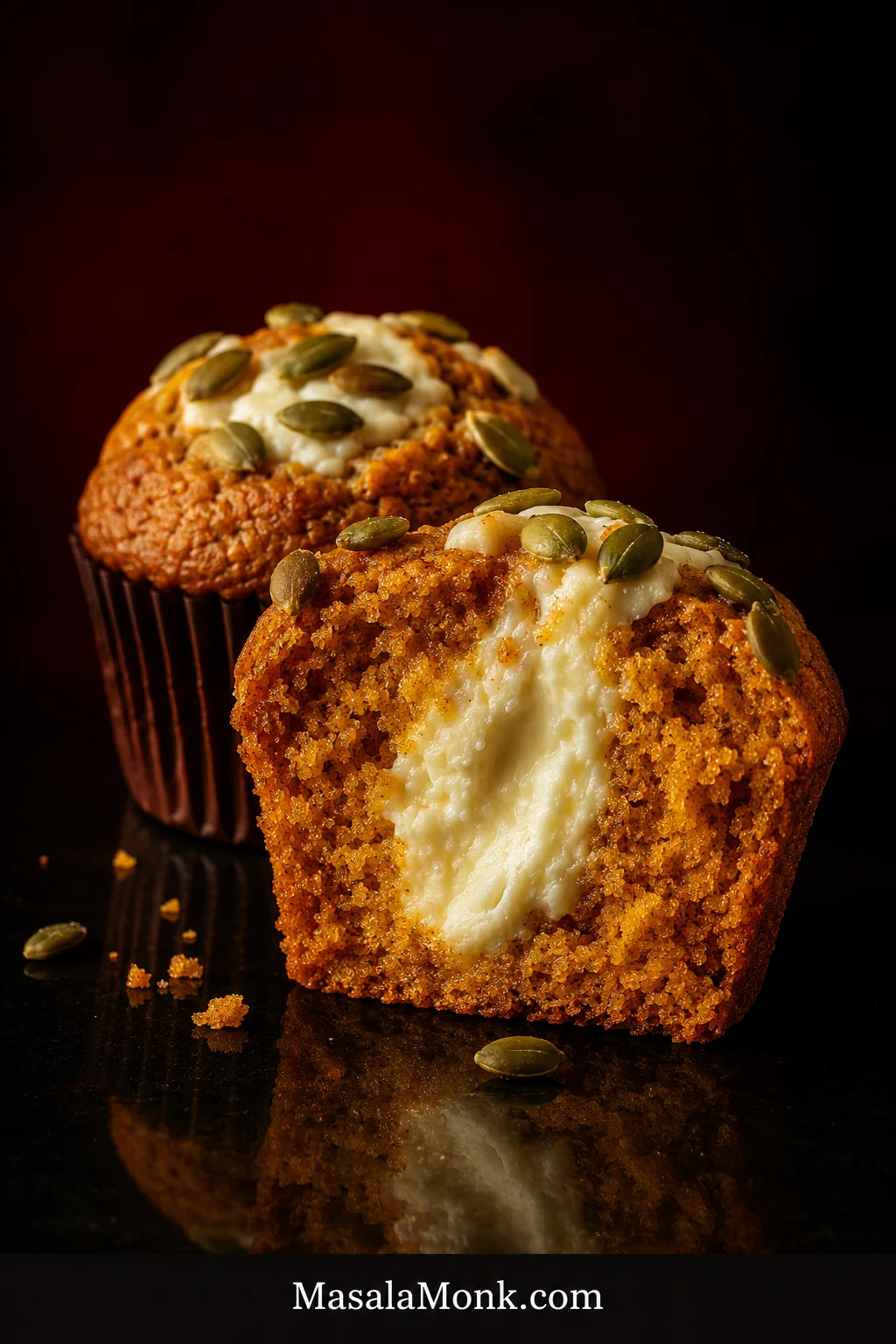
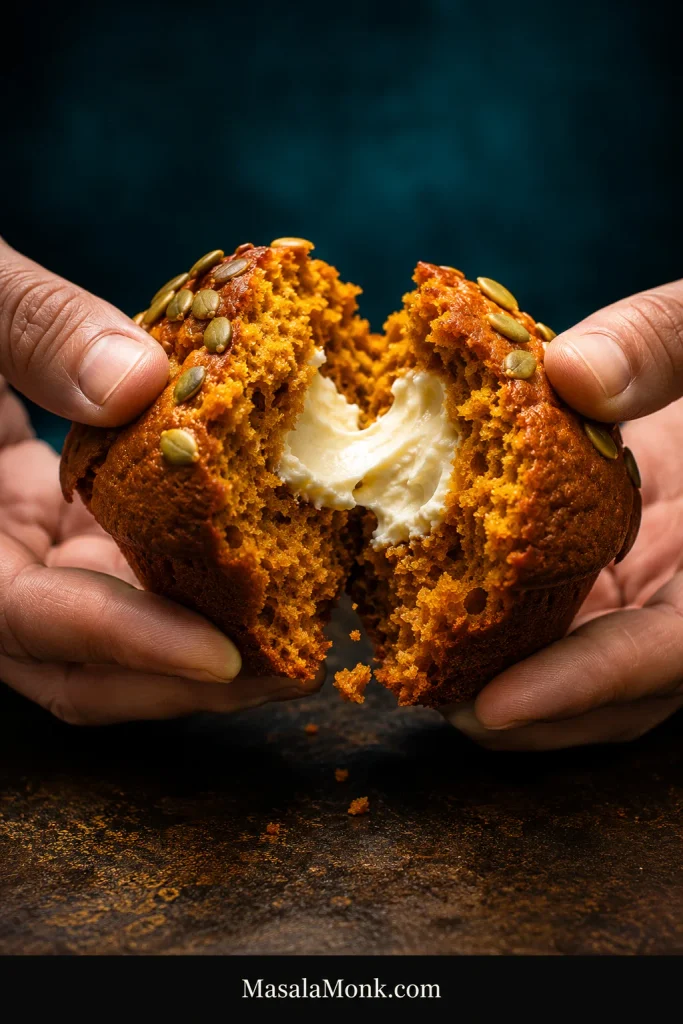
Cut one of these pumpkin cream cheese muffins open after it has cooled a little and the best part should be obvious: a creamy white filling inside a tender, warmly spiced pumpkin muffin. Roasted pepitas bring a salty crunch to the top, while tangy cream cheese keeps the sweetness in balance.
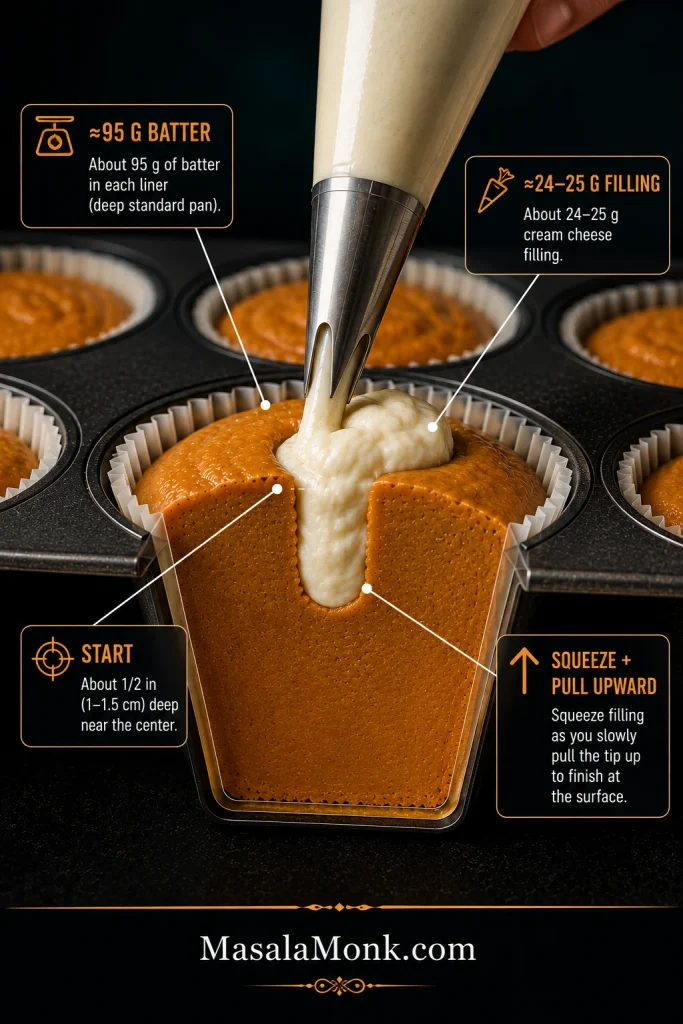
The disappointing version looks promising from above and then gives you bite after bite of pumpkin with barely a streak of cream cheese inside. Here, each standard muffin gets about 1 1/2 tablespoons of filling, piped into the raw batter rather than left as a small dollop at the crown.
There’s no need to freeze the filling first or rest the batter. Once the cream cheese is smooth, the rest is whisk, fold, pipe and bake.
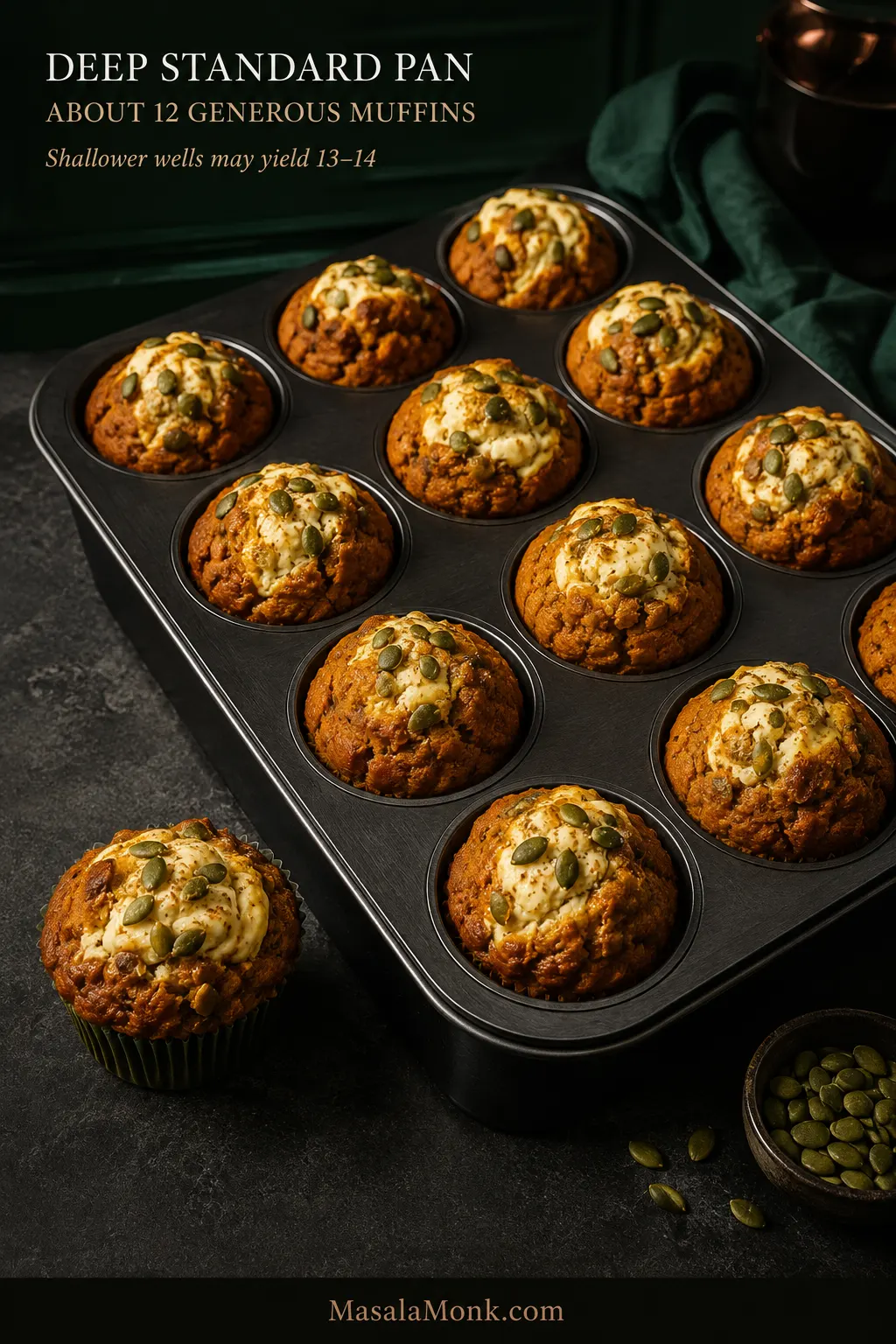
This batch makes about 12 generously filled muffins in a deep standard 12-cup pan. Shallower wells may give you 13 or 14. Let the pan decide the final yield instead of forcing every bit of batter into 12 cups.
Use the pan, not the recipe yield, as the final portioning guide. If a shallower cup already looks comfortably full around 85–90 g of batter, move the rest into another liner rather than forcing a taller muffin into too little space.
The target is a tender, warmly spiced pumpkin crumb with enough structure to hold the cream cheese without turning dense or gummy.
Yield: about 12 standard muffins; 13–14 in shallower wells
Prep: about 25 minutes
Bake: about 19–23 minutes
Cool before a clean first cut: about 20–30 minutes
Conventional oven: 425°F / 220°C, then 350°F / 175°C
Fan/convection: as a starting point, reduce both temperatures by about 25°F / 15°C—roughly 400°F / 205°C, then 325°F / 165°C—and begin checking a little earlier; ovens vary
Batter rest: none
You will need: a standard muffin pan, liners, two large mixing bowls, a small bowl for the filling, a whisk, a flexible spatula and a piping bag or sturdy zip-top bag. A handheld mixer is convenient for smoothing the cream cheese, but properly softened cream cheese can also be stirred smooth by hand. A kitchen scale is especially useful for the flour and filling.
Cream Cheese Filling
8 oz (226 g) full-fat block cream cheese, softened until pliable but still cool
1/2 cup (60 g) confectioners’ sugar (powdered or icing sugar)
1 tablespoon (8 g) all-purpose flour
1 teaspoon (5 ml) vanilla extract
1/8 teaspoon fine salt
Pumpkin Muffin Batter
2 1/4 cups (280 g) all-purpose flour
2 teaspoons pumpkin pie spice
1 teaspoon ground cinnamon
1 teaspoon baking powder
1 teaspoon baking soda
1/2 teaspoon fine salt
2 large eggs
3/4 cup packed light brown sugar (150 g); dark brown sugar also works
1/3 cup granulated sugar (67 g)
1 1/3 cups (330 g) 100% pumpkin purée
1/2 cup (120 ml) neutral oil, such as vegetable, canola, sunflower or mild avocado oil
Heat the oven. Position a rack in the middle and preheat a conventional oven to 425°F / 220°C. Line the muffin pan.
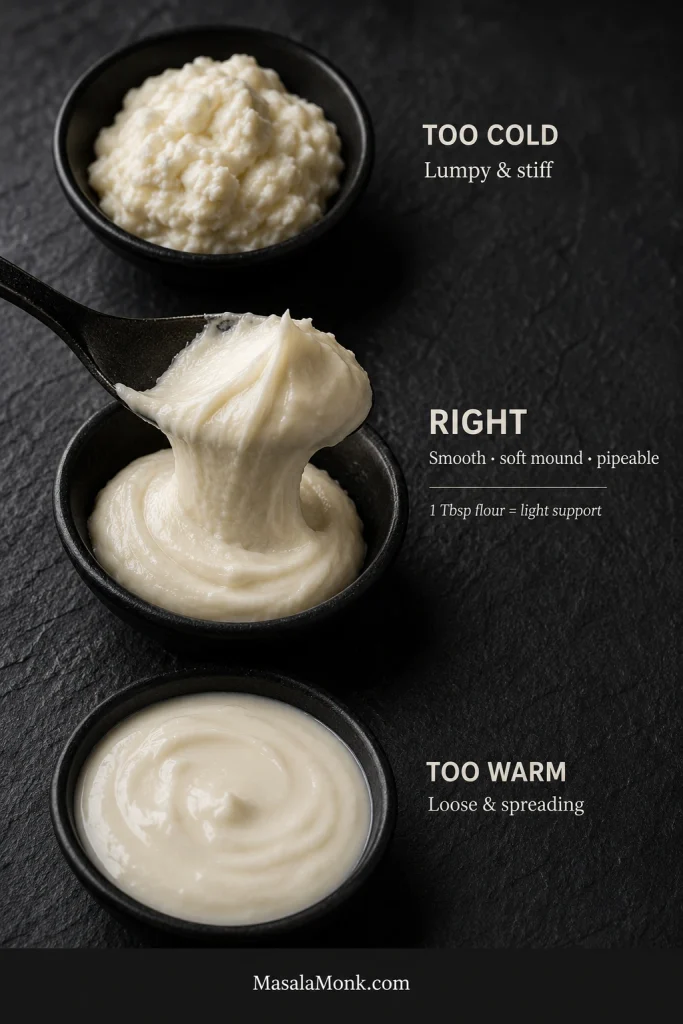
Mix the filling. Smooth the softened cream cheese, then mix in the confectioners’ sugar, flour, vanilla and salt. Scoop some up with a spoon: it should sit in a soft mound briefly instead of running flat. Chill for 15–20 minutes if it has become loose. Transfer to a piping bag or sturdy zip-top bag and cut an opening about 1/2 inch / 1–1.5 cm wide.
Temperature usually explains the filling before flour does. Lumpy filling is often still too cold; filling that spreads immediately has usually become too warm. Correct the temperature first so the center stays creamy rather than turning pasty.
Whisk the dry ingredients. Combine the flour, pumpkin pie spice, cinnamon, baking powder, baking soda and salt.
Mix the pumpkin base. In the second large bowl, whisk the eggs and both sugars until smooth. Add the pumpkin purée, oil, milk and vanilla and whisk again.
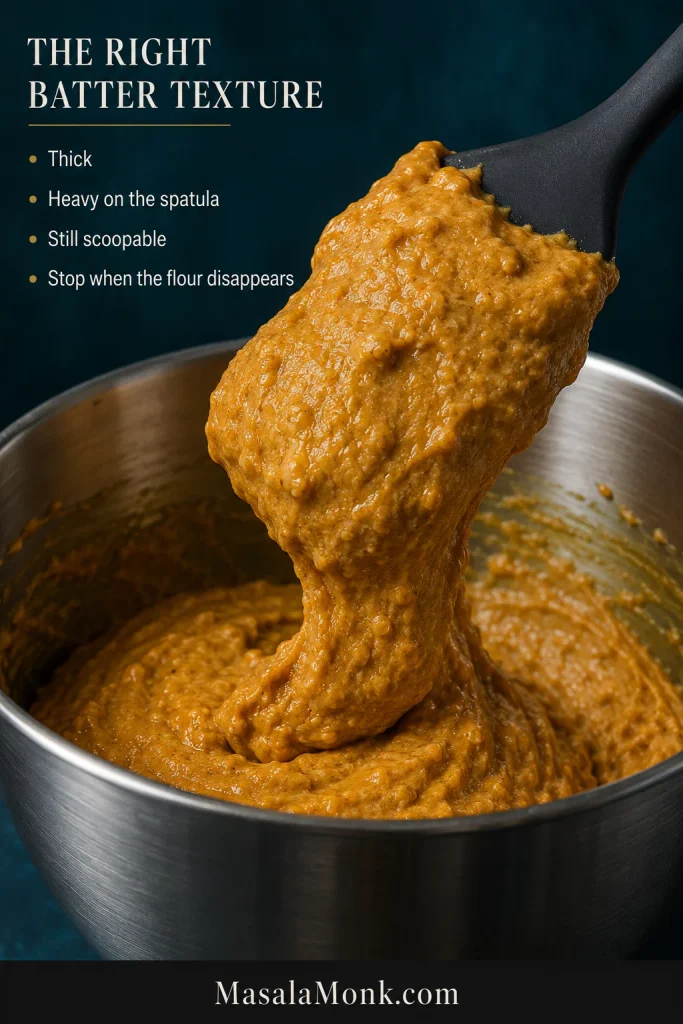
Fold the batter. Add the dry ingredients to the pumpkin mixture and switch to a spatula. Fold until the last visible flour disappears. The batter should sit heavily on the spatula but still scoop easily. A few small lumps are fine. Stop there.
A few small lumps are a better stopping point than a perfectly smooth batter. Once the flour is incorporated, extra folding can tighten the pumpkin crumb long before the batter starts looking obviously overmixed.
Fill and Top the Muffins
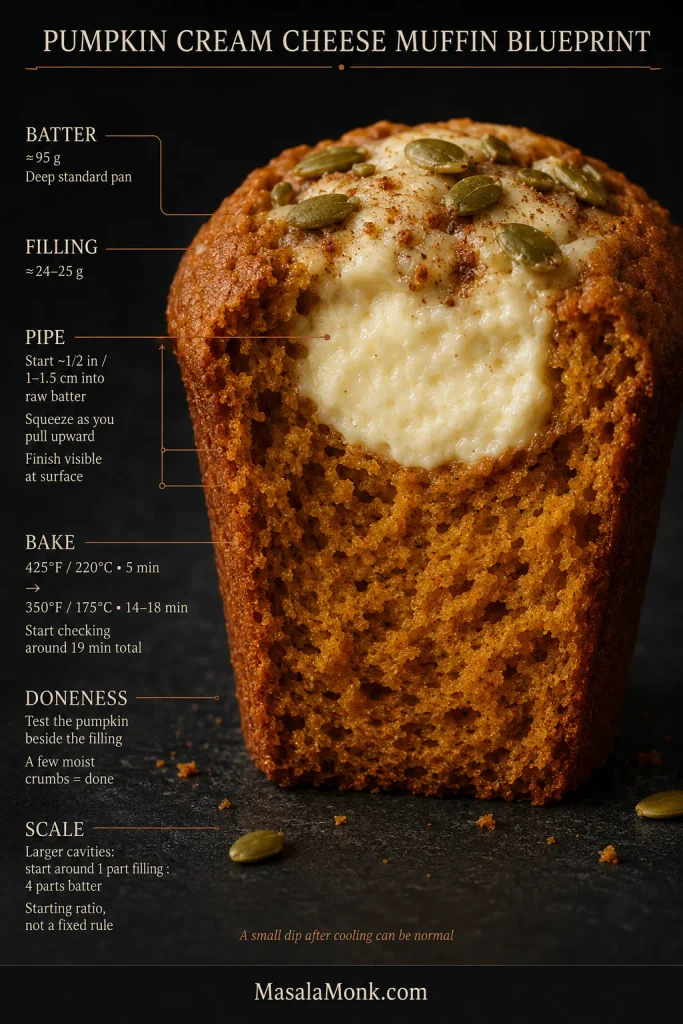
Fill the muffin wells. In a deep standard pan, divide the batter among 12 wells, about 95 g each. Shallower cups may already look full at 85–90 g; use a 13th or 14th liner instead of squeezing in the rest.
Pipe in the cream cheese. Divide the filling among the muffins, about 24–25 g each when making 12. Insert the tip about 1/2 inch / 1–1.5 cm into the batter. Squeeze as you slowly pull the bag upward, finishing with some cream cheese visible at the surface. Keep the filling away from the liner.
Piping upward creates a narrower vertical pocket instead of a broad cheese layer. That helps preserve pumpkin underneath and around the filling, which matters just as much as getting plenty of cream cheese into the muffin.
Add the pepitas. Toss the pepitas with the optional 1/4 teaspoon pumpkin pie spice, if using, then scatter them around the exposed cream cheese and press very lightly. The white crowns will vary a bit from muffin to muffin. That’s fine.
Bake, Check and Cool
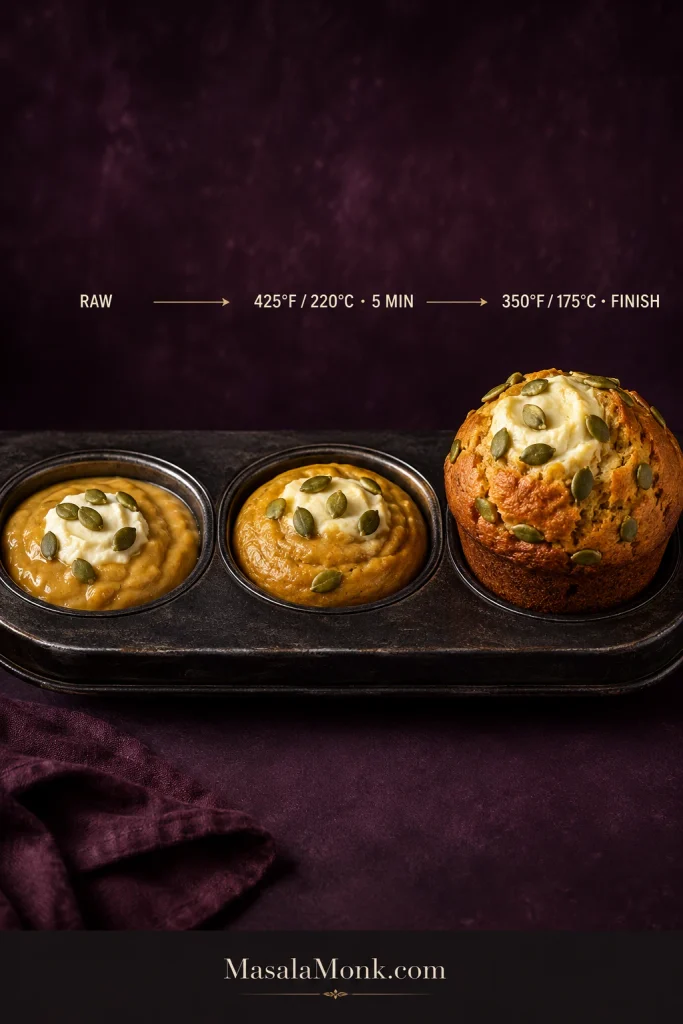
Start hot. Bake at 425°F / 220°C for 5 minutes. The early heat encourages the thick batter to rise quickly. Without opening the oven, reduce the temperature to 350°F / 175°C so the centers can finish without overbaking the tops.
Finish baking. Continue for another 14–18 minutes. Start checking near the early end of the range.
The two-temperature bake works as part of the whole system, not as a shortcut. Thick batter, sensible portioning and fresh leaveners still determine whether the muffin rises well; the hot start simply gives them an early advantage.
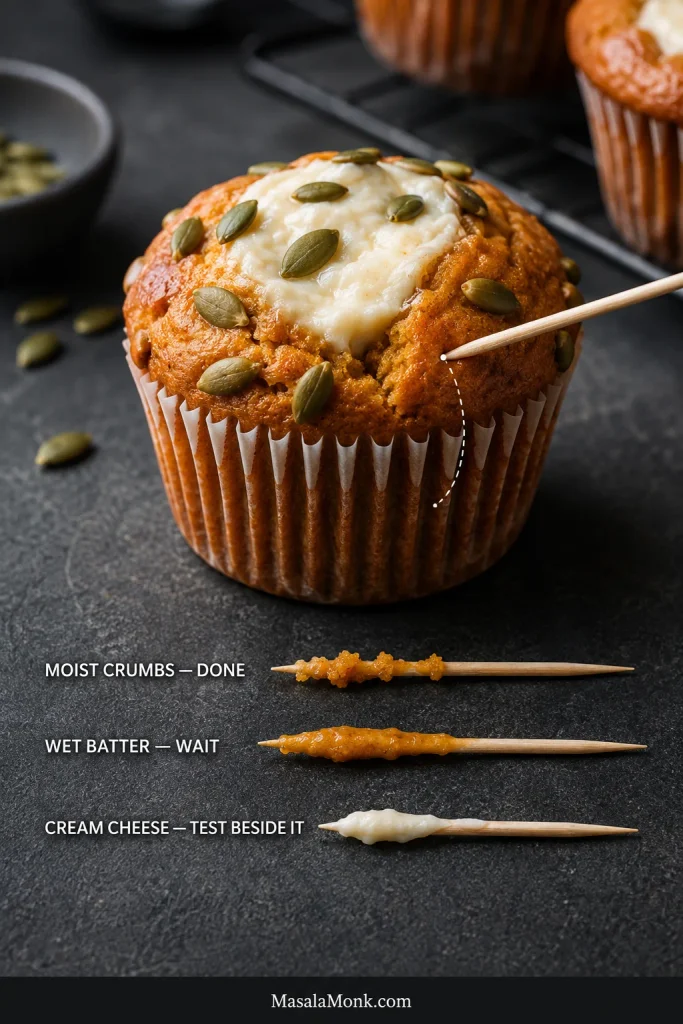
Check beside the filling. Insert a toothpick into the pumpkin portion just off-center. A few moist crumbs are fine; wet batter isn’t. The top should spring back lightly and the exposed cream cheese should look set and more matte than glossy.
Cool before cutting. Leave the muffins in the pan for about 5–10 minutes, then move them to a wire rack. Give the filling another 15–20 minutes to settle if you want a cleaner first cut.
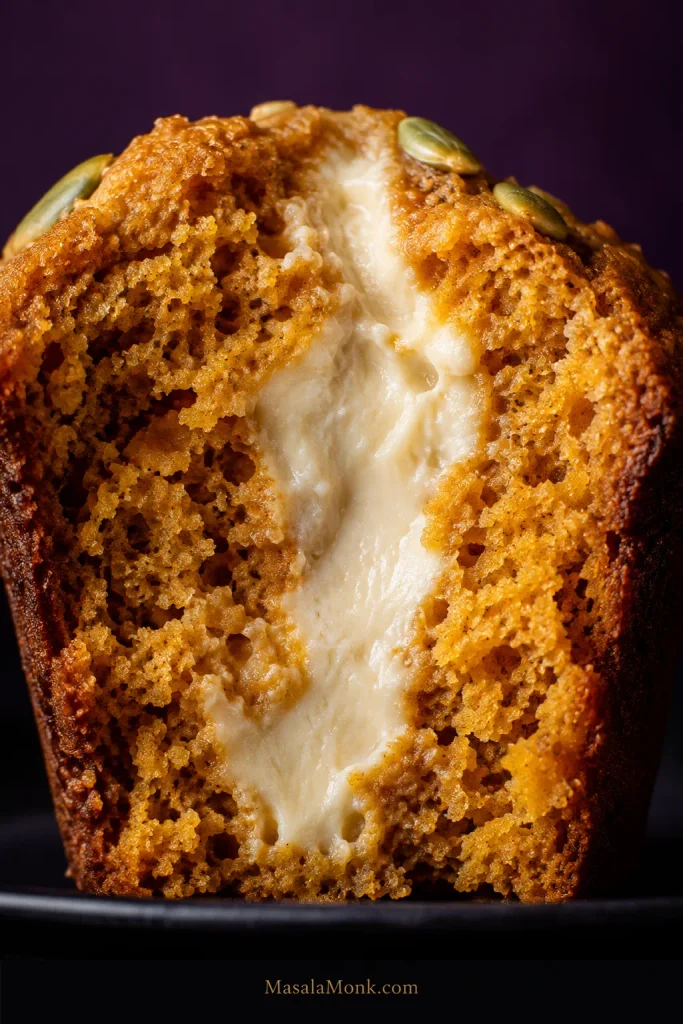
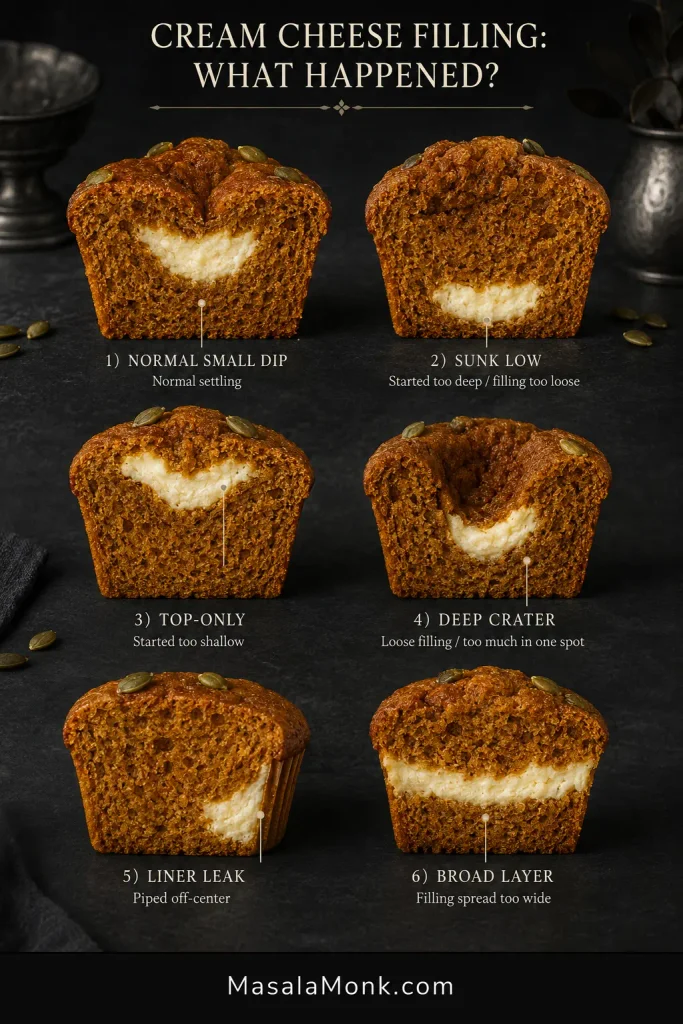
That first cut tells you more than the top does. Cream cheese settling slightly to one side is normal; a deep crater or filling pooled near the bottom is a different story.
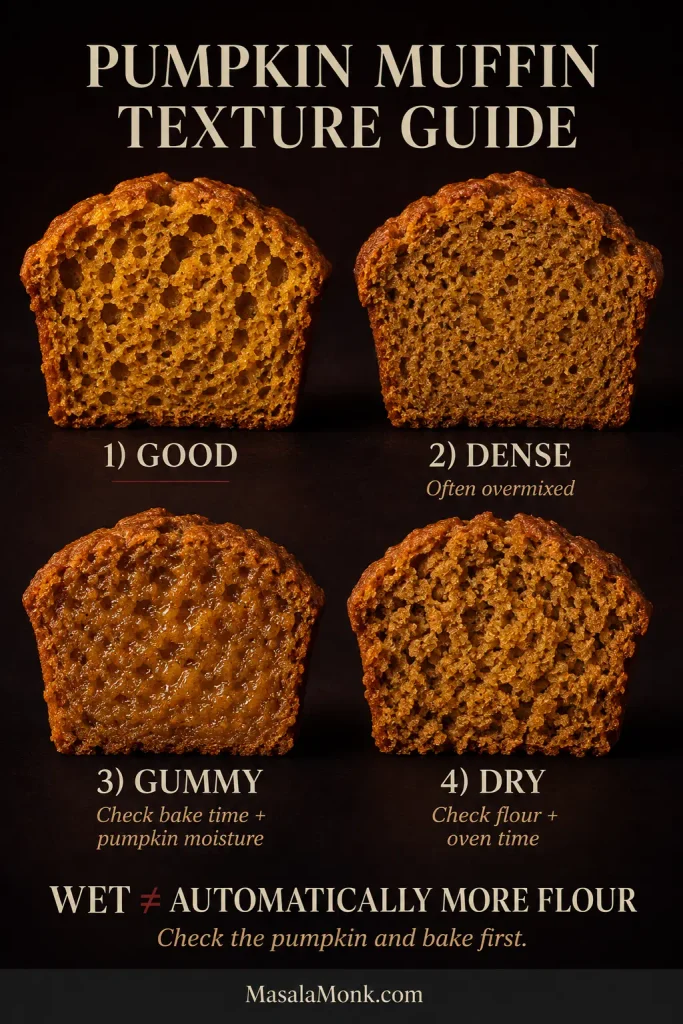
The pumpkin crumb around the center should stay open and tender; a shiny, compressed band suggests excess moisture or underbaking.
That white center and pepita crown may look familiar.
Are These Starbucks Pumpkin Cream Cheese Muffins a Copycat?
They’re Starbucks-inspired rather than an exact replica. Starbucks’ 2026 Pumpkin Cream Cheese Muffin combines spiced pumpkin muffin, sweet cream-cheese filling and spiced pepitas. This recipe keeps that recognizable white center and pumpkin-seed top while using its own eggless filling, proportions and method.
If that seasonal coffee-shop muffin is what brought you here, homemade has one obvious advantage: you decide when the season starts—and how much cream cheese goes into the middle.
What Keeps the Muffins Tender and the Filling Creamy
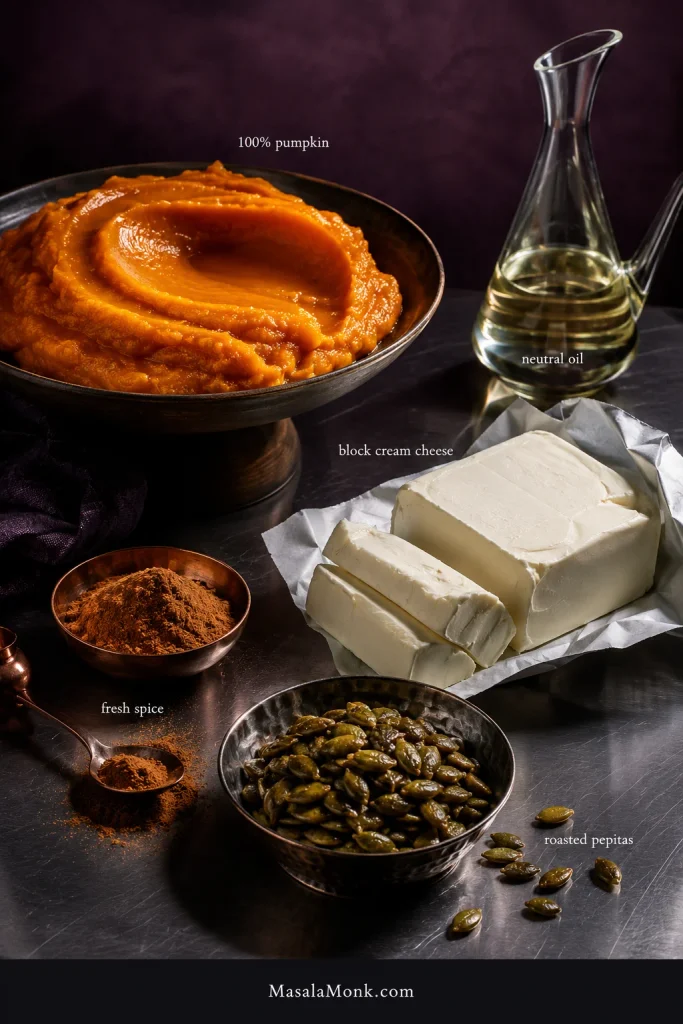
A few ingredient choices do most of the work here: thick pumpkin keeps excess water in check, block cream cheese makes the center more predictable, oil helps the crumb stay tender after chilling, and fresh spices keep the pumpkin tasting lively after baking.
Ingredient form matters more than brand here: thick purée, block cream cheese and neutral oil give the recipe its intended balance.
Use Thick Pumpkin Purée
Use plain 100% pumpkin purée, not pumpkin pie filling. Pie filling already contains sugar, spices and other ingredients, so it changes both flavor and moisture.
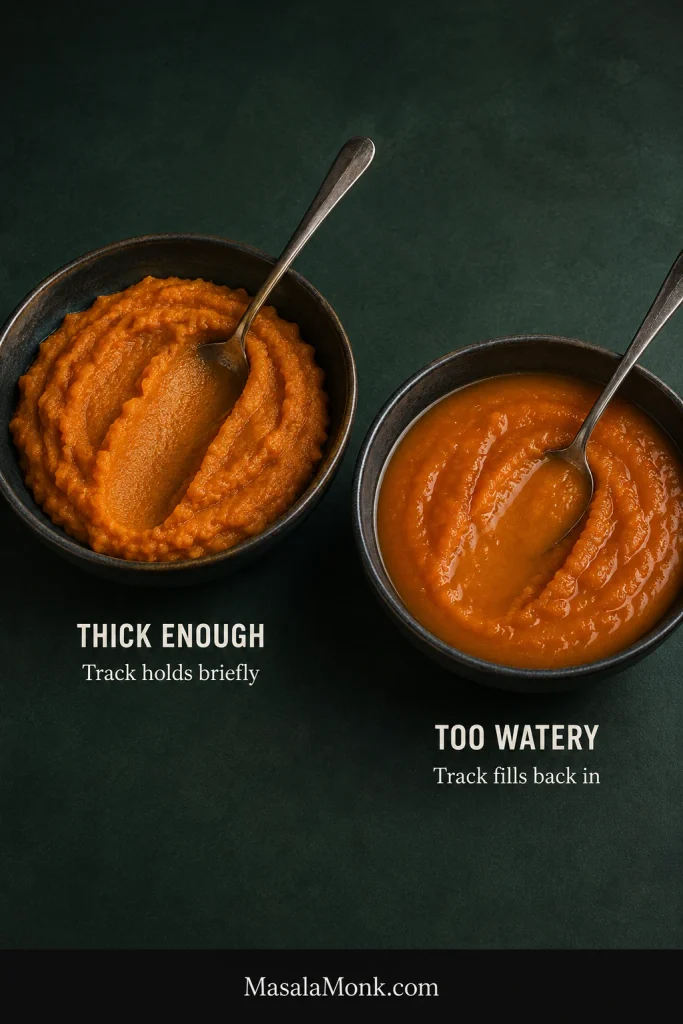
Homemade purée works when it is roughly as thick as canned pumpkin. Drag a spoon through it; the track should stay visible briefly instead of flooding straight back in. Our pumpkin bread recipe has more detail on canned versus fresh pumpkin and handling a watery homemade purée.
If homemade pumpkin purée closes over the spoon track almost immediately, deal with the excess water at the source. Draining or gently reducing it protects pumpkin flavor better than correcting a wet batter later with extra flour.
A typical 15 oz / 425 g can leaves roughly 95 g after you measure what this recipe needs. Save it for oatmeal, pancakes, soup, smoothies or a healthy pumpkin spice latte. Adding the remainder here would throw off the moisture balance.
Keep the Cream Cheese Cool Enough to Hold Its Shape
Use full-fat block or brick-style cream cheese. Tub-style, whipped and reduced-fat products may contain more water, stabilizers or incorporated air, making the filling less predictable.
You want the block pliable enough to mix without stubborn lumps while it still feels cool. Leave it in a hot kitchen too long and the mixture loosens noticeably.
Oil for Tenderness, Flour Measured Carefully
Neutral oil helps these muffins stay tender after cooling and refrigeration. Melted butter brings more buttery richness, but the texture firms more once chilled.
Weigh the flour if you can: 280 g. With cups, loosen it, spoon it in and level without packing. Extra flour makes this batter heavy surprisingly quickly.
Use Spices You Can Actually Smell
Smell your pumpkin pie spice before measuring it.
Pumpkin and cream cheese can mute a timid blend, so stale spices leave the finished muffins noticeably flat. Fresh cinnamon and ginger should announce themselves as soon as the jar opens and become even more noticeable once the pan is in the oven.
If you need a fresh blend, use our homemade pumpkin pie spice. In a pinch, replace the 2 teaspoons here with approximately 1 teaspoon cinnamon, 1/2 teaspoon ginger, 1/4 teaspoon nutmeg, 1/8 teaspoon cloves and 1/8 teaspoon allspice, then keep the additional teaspoon of cinnamon already listed in the batter.
How to Get a Creamy Center That Stays Put
Keep the filling creamy but pipeable. The tablespoon of flour already in the recipe gives the eggless center enough support; adding more can make it pasty. If the mixture stops holding a soft mound in a warm kitchen, chill it briefly instead of adding extra flour.
Pipe through the center. Start around the middle and squeeze as you pull upward, keeping pumpkin batter between the filling and liner. A small dip or slightly off-center cream-cheese crown after cooling is normal.
How to Tell When Pumpkin Cream Cheese Muffins Are Done
A toothpick pushed straight through the cream cheese may come back coated even when the muffin is fully baked. Test just beside it.
Press the top. It should spring back lightly.
Check the pumpkin portion. A few moist crumbs are fine; wet batter isn’t.
Look at the exposed cream cheese. It should appear set and more matte than glossy.
Do not wait for a bone-dry tester. A few moist crumbs from the pumpkin portion are a better endpoint than baking until every trace disappears, especially with a cream cheese center that naturally stays soft.
Troubleshooting Pumpkin Cream Cheese Muffins
The hardest part is sometimes knowing when to stop fixing something that isn’t broken. A small dip, an off-center white crown or two muffins that rise differently can still be completely good muffins.
For a real problem, match the symptom you saw and change one thing at a time.
Leave it alone if the surrounding muffin is baked.
Cream cheese sinks toward the bottom
Piping started too deep, or the filling was very loose
Start nearer the middle and briefly chill loose filling.
Most cream cheese stays on top
Piping began too close to the surface
Insert the bag a little farther before squeezing.
Deep crater
Loose filling or too much filling concentrated in one spot
Chill the filling and spread it vertically as you withdraw the bag.
Filling leaks to the liner
It was piped off-center
Keep pumpkin batter between the cream cheese and paper.
Lumpy filling
Cream cheese was too cold
Soften it until pliable before mixing.
Muffin separates around the cream-cheese layer
The filling spread into a broad horizontal layer
Keep the pocket narrower and more central.
Treat filling position as evidence. A problem that is mostly about where the cream cheese ended up usually points toward piping depth or direction; a loose cratered center suggests you should look at filling consistency instead.
Muffin Texture & Rise Problems: Dense, Gummy, Dry or Flat
What you see
Likely cause
Next time
Dense or rubbery
Too much mixing after the flour went in
Fold only until the last dry streak disappears.
Dry and heavy
Too much flour or too much oven time
Weigh the flour and begin checking earlier.
Wet or gummy
Underbaking or watery pumpkin purée
Use thick purée and test beside the filling.
Flat tops
Weak leavener, underheated oven or very loose batter
Use fresh baking powder and soda and fully preheat the oven.
Lopsided tops
Uneven portions, off-center filling or uneven oven heat
Portion carefully and keep the filling near the middle.
The crumb tells you which direction to investigate. Tight pores suggest density, a shiny compressed interior points toward gumminess, and rough fragile crumb suggests dryness—three different problems that should not receive one generic fix.
A wet, heavy muffin doesn’t automatically need more flour. Check the pumpkin and baking time first, or an underbaking problem can easily become a dry-muffin problem on the next batch.
Once the muffin is baked through, the center should still be creamy while the pumpkin around it pulls apart cleanly rather than compressing into a wet, gummy band.
This is the payoff: soft pumpkin crumb pulling away from a thick creamy center, with pepitas adding crunch at the top.
Once the base muffin works for you, these variations change one element at a time—the center, the crown or the mix-ins—without rebuilding the whole recipe.
Filled, Cheesecake-Style or Swirled?
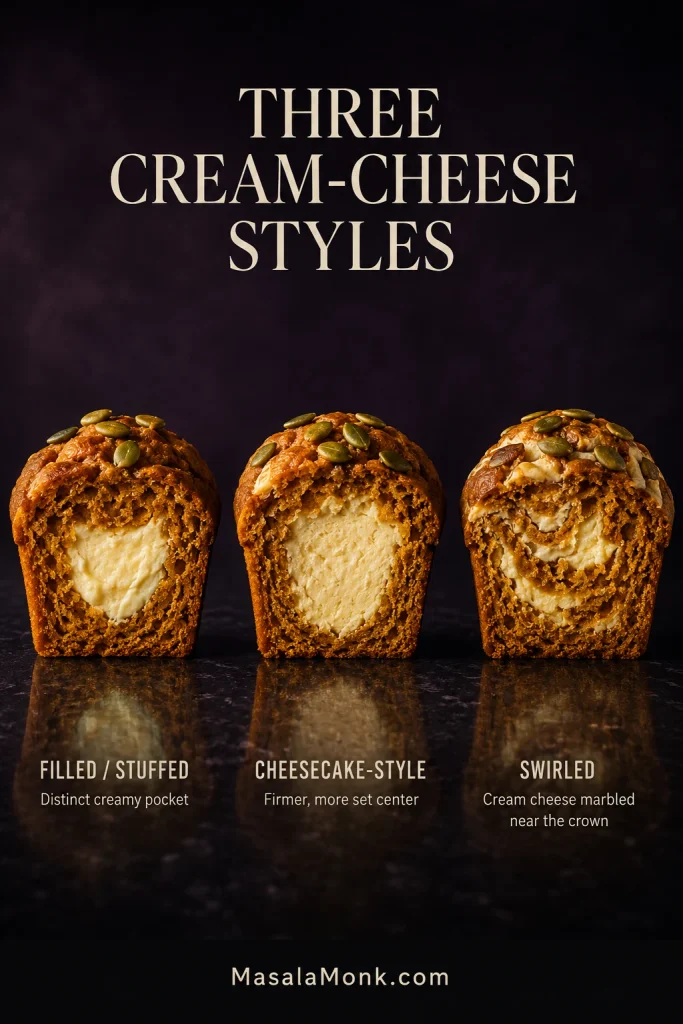
They’re related, but they don’t give you the same muffin. The main recipe is a filled or stuffed pumpkin cream cheese muffin with a distinct creamy pocket inside. Add egg or egg yolk to a filling and it sets more firmly, closer to baked cheesecake. A surface swirl keeps more of the cream cheese near the top and gives the crown a marbled look.
Filled gives the strongest cream-cheese pocket, cheesecake-style sets firmer, and a swirl spreads the tangy richness through more of the crown.
Keep the Pepitas for Salty Crunch
The muffin and filling are already sweet, so roasted salted pepitas bring welcome contrast without adding another sugary layer. Toss them with the optional pumpkin pie spice for a slightly more aromatic top.
Use Streusel for a Sweeter Bakery Muffin
Leave off the pepitas and mix:
1/2 cup (63 g) all-purpose flour
1/4 cup packed brown sugar (50 g)
1 teaspoon cinnamon
3 tablespoons (42 g) melted unsalted butter
Stir with a fork until irregular crumbs form, then divide the streusel evenly among the muffins, scattering it around rather than directly over the cream cheese.
Swirl the Cream Cheese for a Creamier Crown
A surface swirl needs only half of the main filling: 113 g cream cheese, 30 g confectioners’ sugar, about 1 1/2 teaspoons (4 g) flour, 1/2 teaspoon vanilla and a pinch of salt.
Divide it over the pumpkin batter and make a few loose passes with a toothpick or thin skewer. Stop while clear streaks of white and orange remain. Bake on the same standard-muffin schedule and test the pumpkin portion for doneness.
Chocolate Chip Pumpkin Cream Cheese Muffins
Fold 1/2 cup (about 85 g) semisweet chocolate chips into the pumpkin batter before filling the pan. Keep the cream-cheese quantity and baking method unchanged.
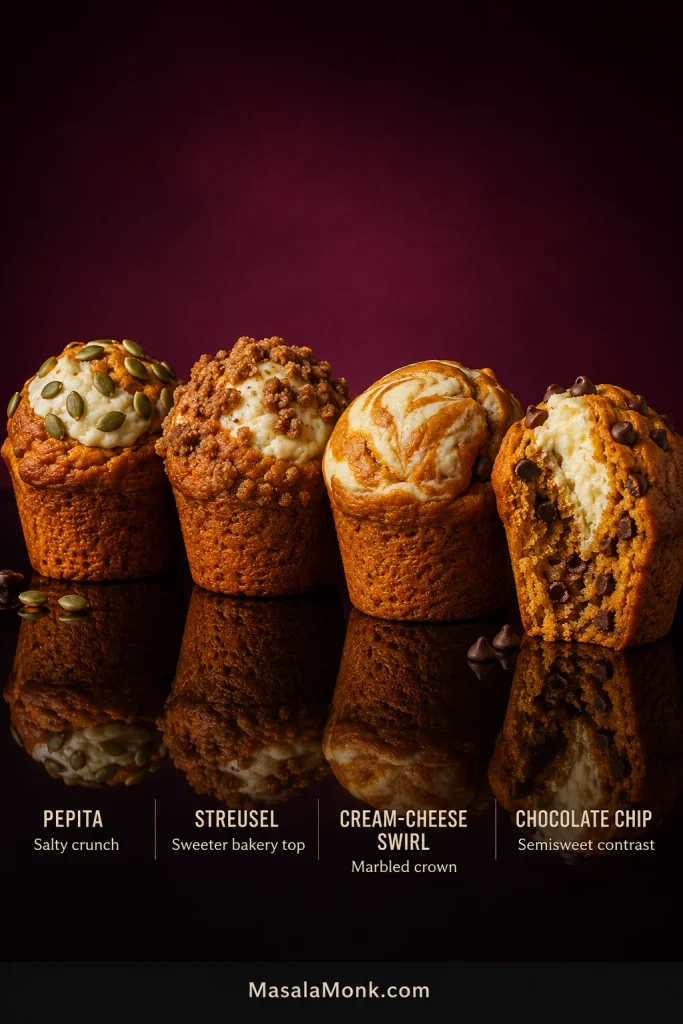
If you’re deciding which version to make, this final lineup shows how the four easiest finishes change the look and balance of the same pumpkin cream cheese muffin.
Pepitas keep the top least sweet; streusel makes it richer, a cream-cheese swirl emphasizes tang, and semisweet chocolate adds deeper contrast.
Mini and Jumbo Pumpkin Cream Cheese Muffins
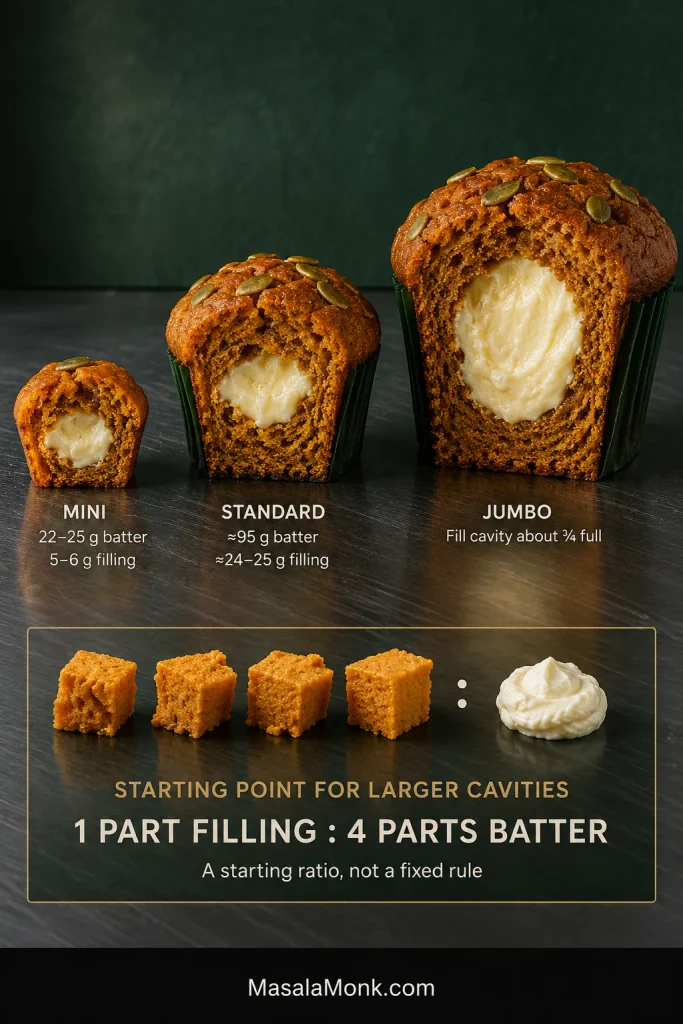
The standard and mini portions suggest a useful starting point for larger muffins: roughly 1 part cream-cheese filling for every 4 parts batter by weight. Use that as a starting point for larger cavities, not a fixed rule.
Scaling up is not just a matter of adding more filling. If cream cheese increases faster than the pumpkin batter around it, the shell becomes thinner and craters or leaks become more likely—so both parts should grow together.
Size
Starting point
Bake
Standard
About 95 g batter + 24–25 g filling in a deep 12-cup pan
425°F / 220°C for 5 min, then 350°F / 175°C; start checking around 19 min total
Mini
About 22–25 g batter + 5–6 g filling; roughly 48 minis from the full batch, depending on the pan
350°F / 175°C throughout; start checking at 11–12 min, with many pans finishing around 12–14 min
Jumbo
Fill each cavity roughly three-quarters full, then use the 1:4 filling-to-batter ratio as a starting point
425°F / 220°C for 5 min, then 350°F / 175°C; begin checking around 27 min total, with deeper pans sometimes needing longer
Jumbo cavities vary too much for one universal gram amount or bake time to be genuinely useful. Let the pan and the same doneness cues from the standard muffins guide you.
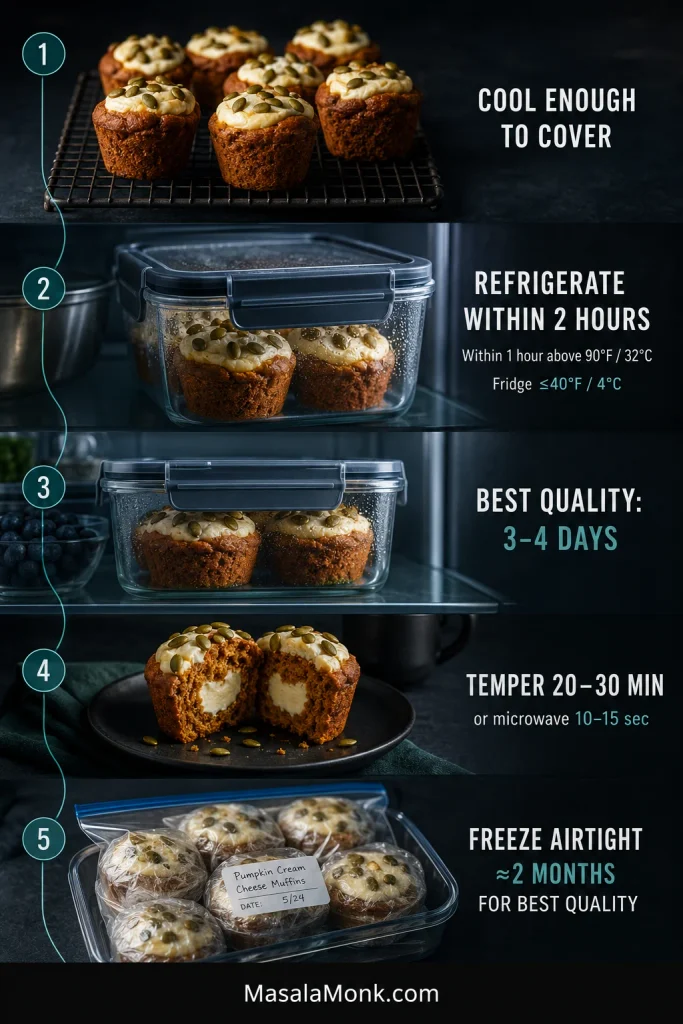
Because the filling is dairy-based, the timeline below separates cooling, refrigeration, serving and freezing so each stage is easy to follow.
Storage changes texture as well as shelf life. Once chilled, the pumpkin crumb firms and the cream cheese loses some softness; a short temper at room temperature restores much of the freshly baked eating texture.
Do Pumpkin Cream Cheese Muffins Need to Be Refrigerated?
Yes. Let the muffins stop steaming and cool enough to cover, then refrigerate them while keeping the total room-temperature time under 2 hours. If the room or outdoor temperature is above 90°F / 32°C, keep that time under 1 hour. The FDA recommends keeping the refrigerator at 40°F / 4°C or below.
For the best quality, use the refrigerated muffins within about 3–4 days, consistent with USDA guidance for refrigerated leftovers. Give a chilled muffin 20–30 minutes at room temperature and it softens again while the filling loses its hard chill. A brief 10–15 second microwave warm-up works too.
Can You Freeze Pumpkin Cream Cheese Muffins?
Yes. Cool them completely, wrap well and freeze airtight for up to about 2 months for best quality. The filling may thaw slightly softer or a bit more granular than it was fresh.
Can You Make Them Ahead?
The cream-cheese filling can be mixed ahead and refrigerated separately; let it loosen just enough to pipe before assembling. For the muffins themselves, bake ahead rather than holding the fully mixed pumpkin batter overnight.
Pumpkin Cream Cheese Muffins FAQ
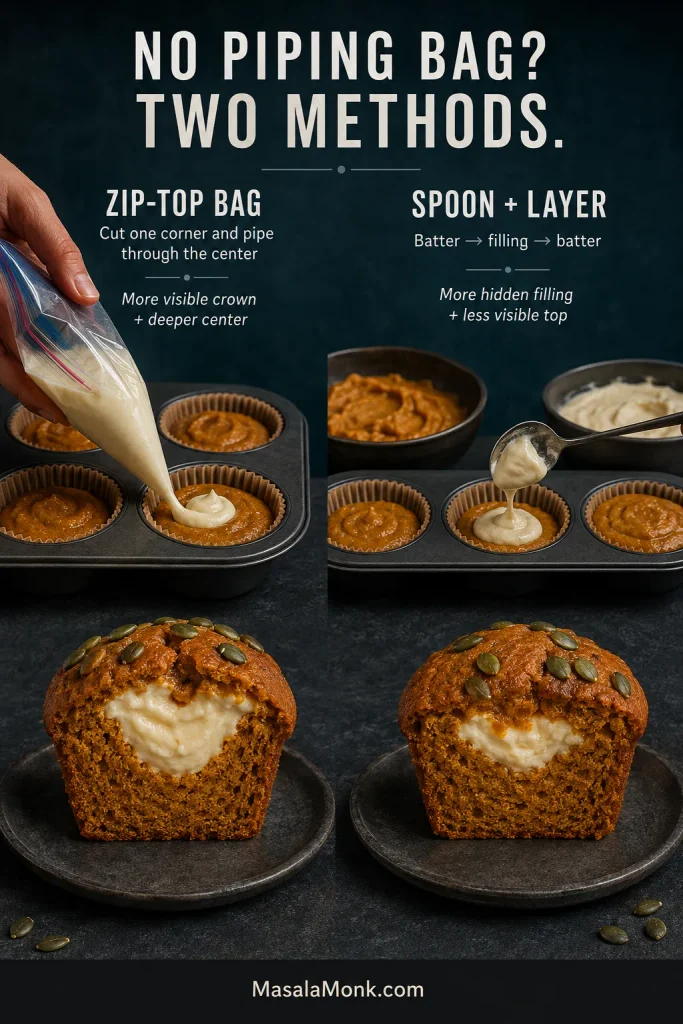
Can I Make Them Without a Piping Bag?
Yes. A sturdy zip-top bag with a corner cut off works well. You can also spoon in some pumpkin batter, add cream cheese to the middle and cover it with more batter. That gives you a more hidden pocket with less filling visible on top.
Choose the workaround according to the result you want. A cut zip-top bag gives better control over a visible crown and central filling path; spoon-and-layer assembly is simpler when a hidden cream cheese pocket is perfectly fine.
Can I Replace the Oil With Butter?
Yes. Replace the 1/2 cup oil with 1/2 cup (113 g) melted unsalted butter and let it cool slightly before mixing it with the wet ingredients. You’ll get more buttery richness, but the muffin will firm somewhat more after cooling and refrigeration.
Can I Add Even More Cream Cheese?
The main recipe already uses a generous amount. Packing substantially more cream cheese into the same-size muffin leaves less pumpkin batter around it and makes craters, leaks and gummy edges more likely. For a bigger cream-cheese pocket, move to a larger muffin and scale the batter and filling together.
If you want one visual reference to keep beside the pan, the blueprint below is the most useful place to start.
Use this as a troubleshooting map rather than a second recipe card. When a batch looks different, compare the batter-to-filling balance, piping position, bake sequence and doneness check before changing the formula itself.
Let the first one cool enough for the filling to settle, then cut straight through the middle. The tender pumpkin crumb should pull apart around a creamy white center, with salty pepitas cracking across the top. Take another bite, and there should still be cream cheese there.
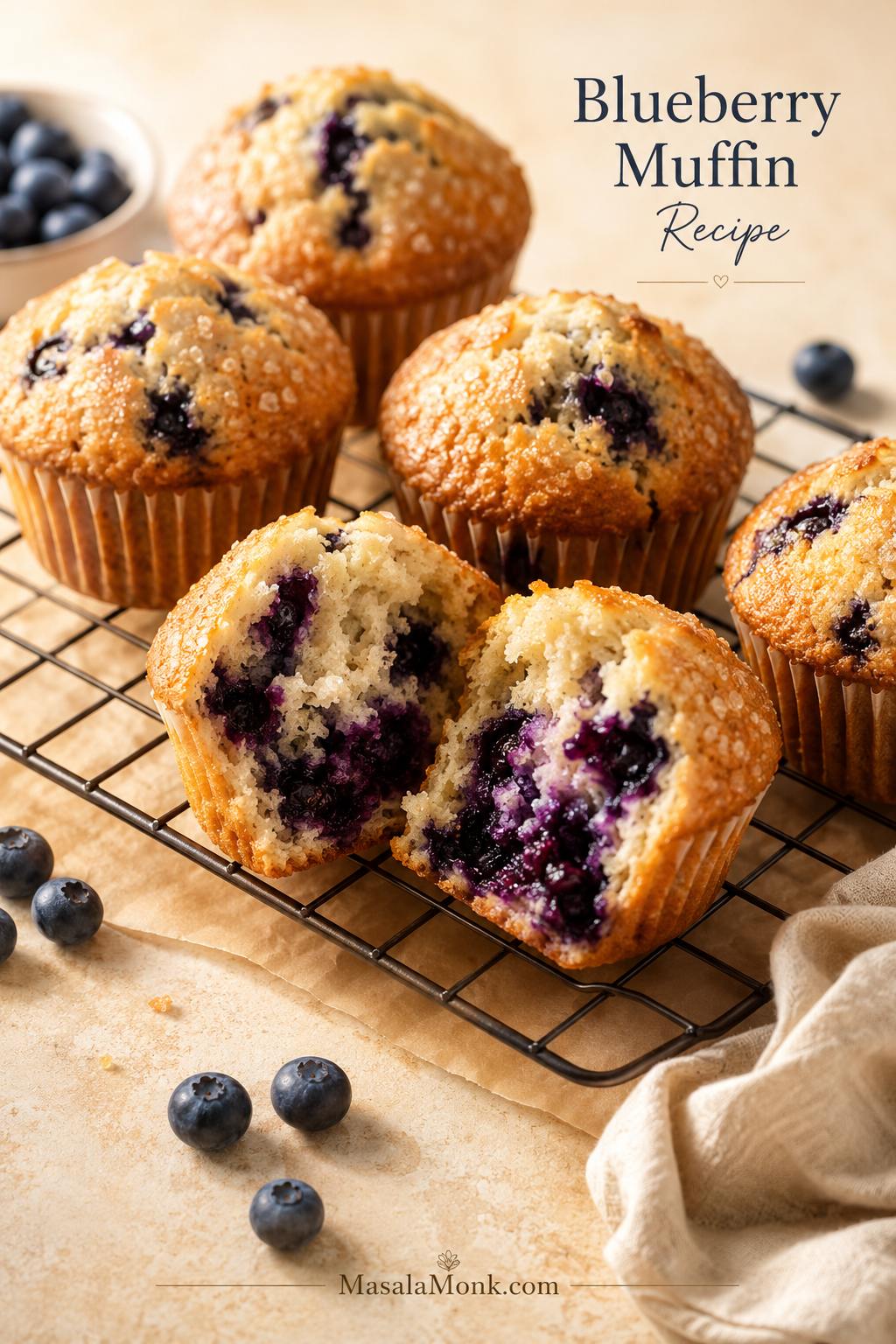
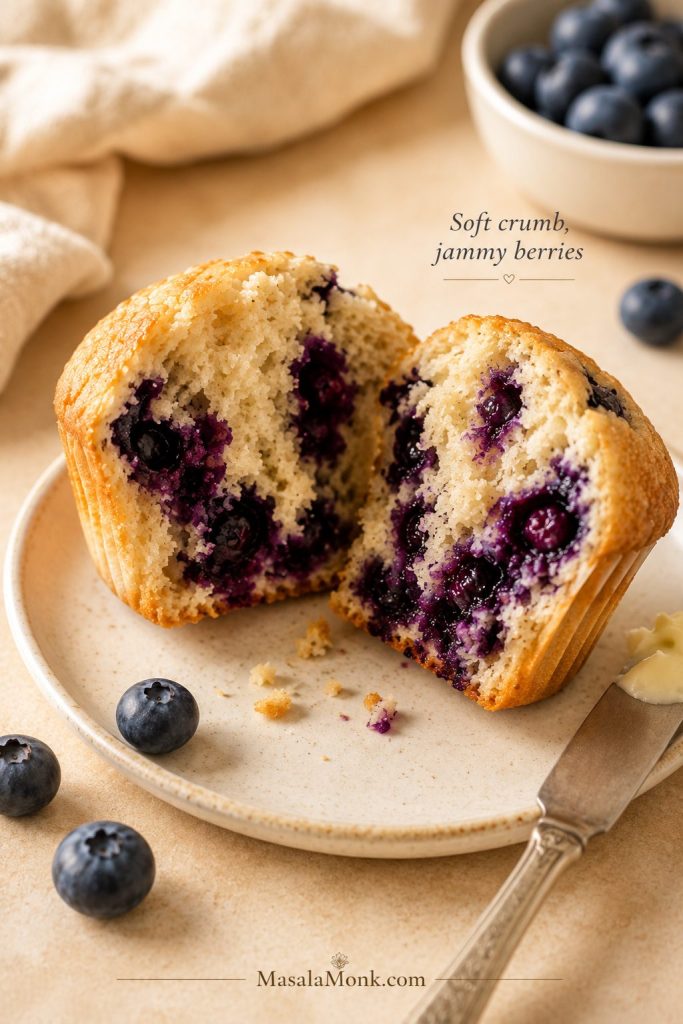
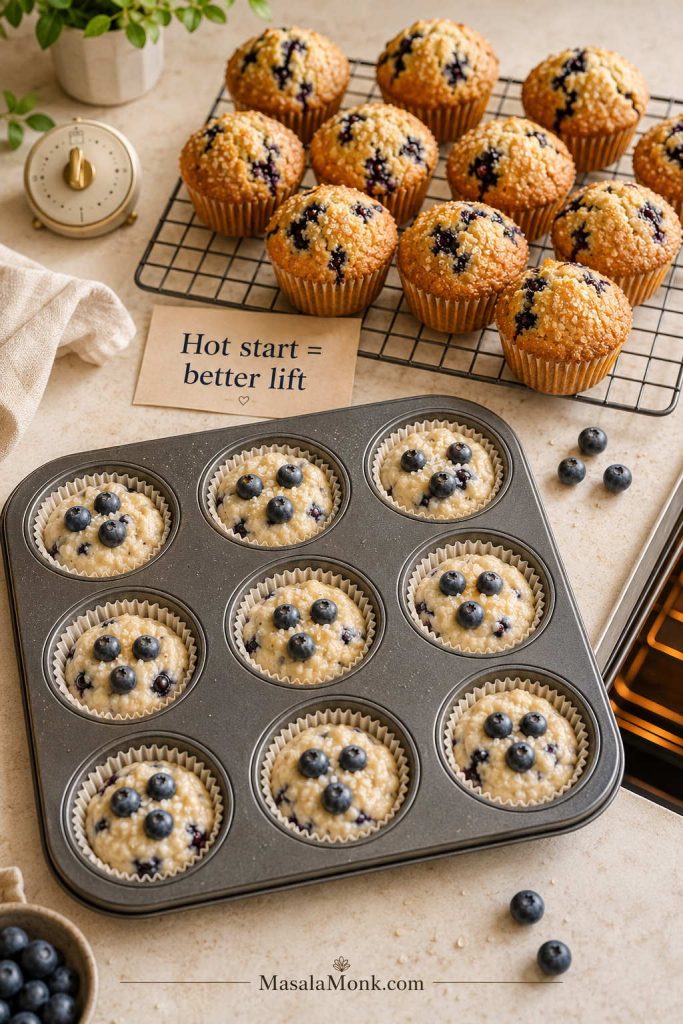
A good blueberry muffin recipe should give you that warm bakery moment at home: golden tops, soft centers, juicy blueberries, and a crumb tender enough to pull apart while the muffin is still a little warm. The top should have a light sugar crunch, the center should stay plush, and the berries should burst into little jammy pockets instead of sinking into one wet layer.
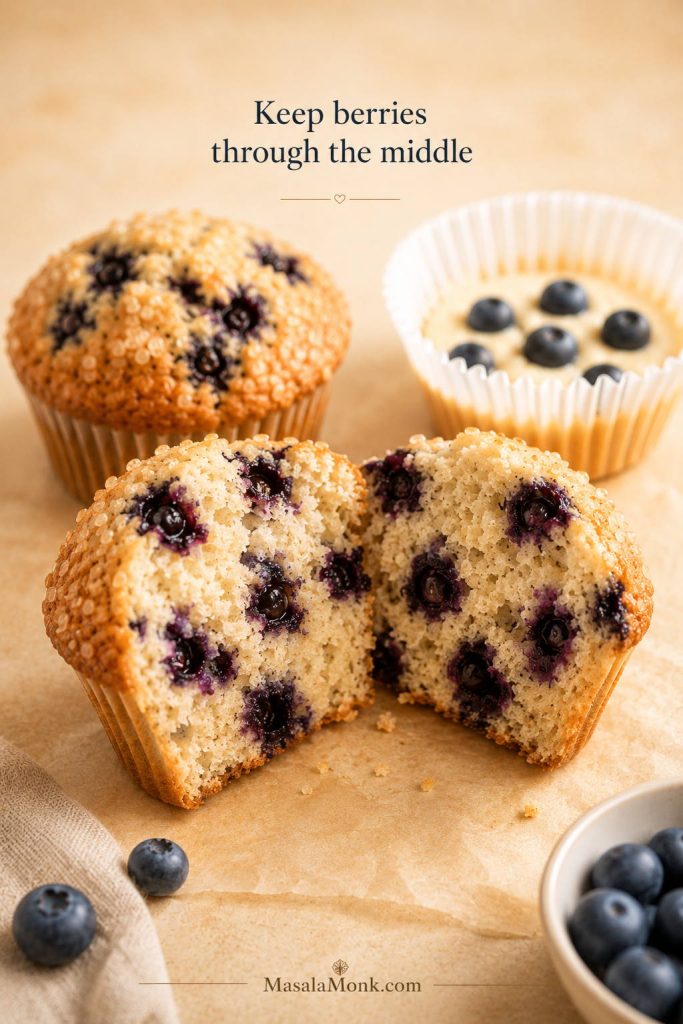
Look for a crumb that pulls apart softly but still holds together. When the berries look jammy instead of watery, the muffins have enough moisture without turning soggy.
Blueberry muffins can look simple and still go wrong in familiar ways: dry, flat, dense, or streaked purple. Usually, the difference comes down to small choices — how much flour you use, how gently you mix, how cold the berries are, and how hot the oven starts.
The method stays easy. First, melted butter brings the flavor; then a small amount of oil keeps the crumb soft, sour cream adds tenderness, and a hot-start oven helps the tops rise tall and golden. Finally, use fresh berries when you have them, frozen berries when you need them, and coarse sugar or streusel depending on the kind of muffin you want today.
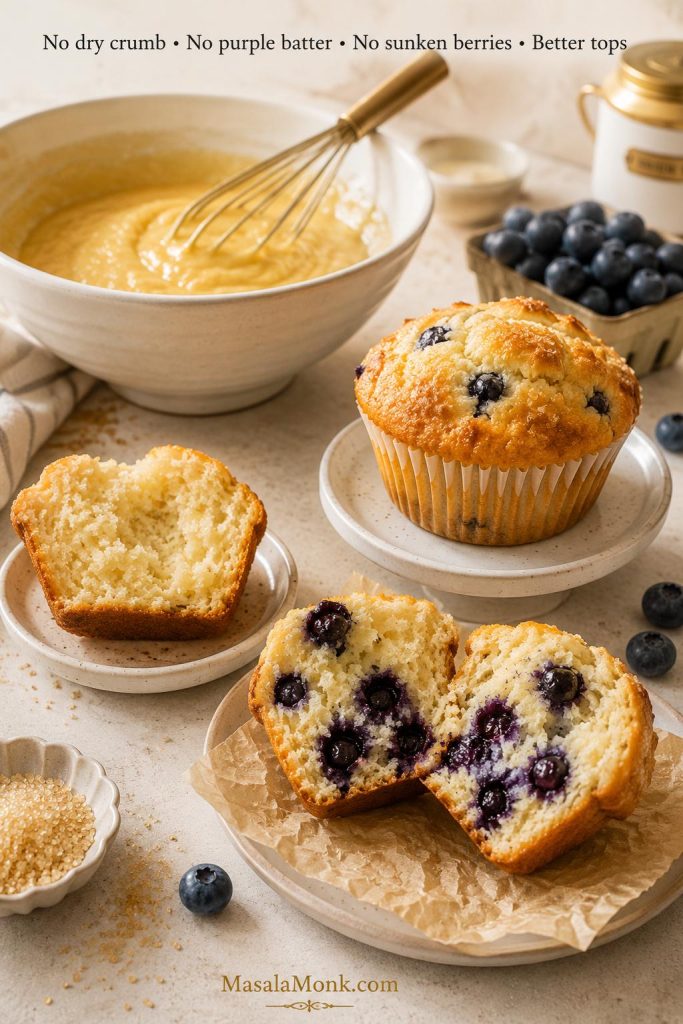
Think of this as the comfort of classic blueberry muffins with fewer of the usual disappointments: no dry crumb, no purple batter, no sunken berry layer, and no flat little tops hiding under the liner.
This is the promise of the recipe: fewer dry crumbs, fewer purple streaks, fewer sunken berries, and better tops. The method stays simple, but each step protects the final texture.
For moist, fluffy blueberry muffins, this recipe uses a thick, scoopable batter made with melted butter, a little oil, sour cream, milk, and 1½ cups of blueberries. Then, fill the muffin cups almost to the top, bake at 425°F / 220°C for 5 minutes, and reduce the oven to 375°F / 190°C until the tops are golden and the centers are set.
Fresh blueberries give the cleanest-looking crumb, but frozen blueberries work well too. Keep them frozen until the last moment, fold them in gently, and bake right away so the batter stays bright instead of turning streaky purple.
The result should feel like a real bakery muffin: domed, golden, soft in the middle, and full of berries without turning wet at the bottom.
The key idea: you do not need a mixer or a bakery kitchen to get soft, tall blueberry muffins. A batter with enough body, a hot-start oven, and gentle blueberry folding do most of the work.
Blueberry Muffins at a Glance
Dry, flat, dense, or streaky muffins usually come from a few fixable choices. This quick overview shows what keeps the batch on track before you start mixing.
Yield
12 standard blueberry muffins
Prep time
15 minutes; add 3–5 minutes if making streusel
Optional rest
10–15 minutes for slightly taller tops
Bake time
18–22 minutes
Total time
35–40 minutes without rest; 45–55 minutes with optional rest; add 3–5 minutes if making streusel
Oven method
425°F / 220°C for 5 minutes, then 375°F / 190°C
Blueberries
Fresh or frozen
Texture
Soft, tender, golden, and blueberry-packed
Topping
Coarse sugar by default, optional streusel
Mixer needed?
No
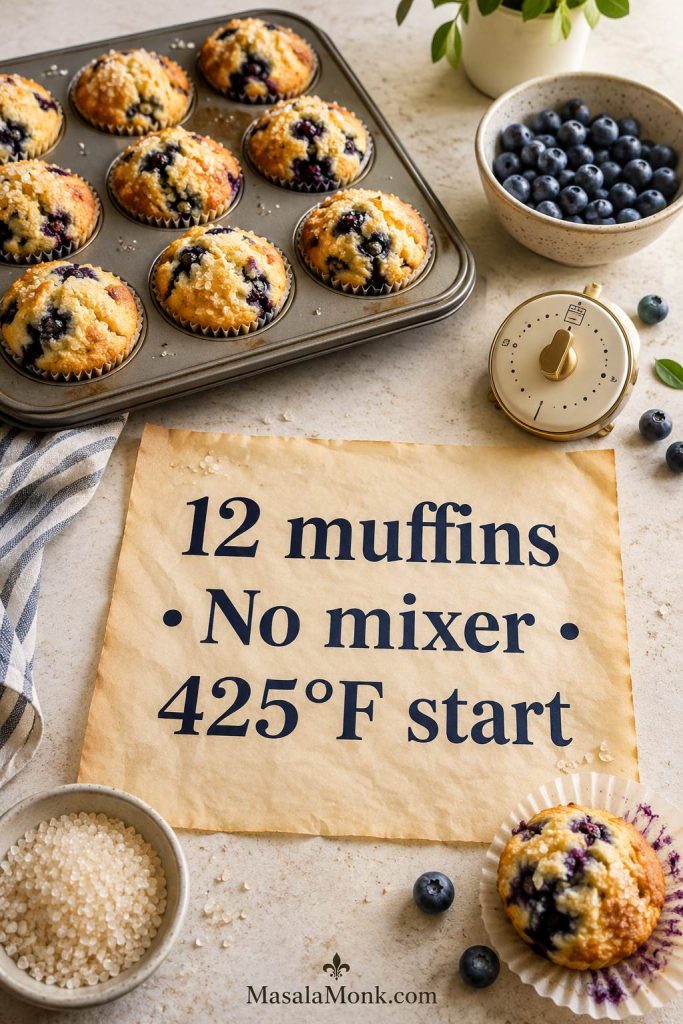
Before mixing, lock in the big decisions: 12 muffins, no mixer, and a hot 425°F start. That simple structure keeps the recipe easy while helping the muffins rise higher.
Why This Blueberry Muffin Recipe Works
Because this muffin recipe balances butter, oil, sour cream, and a hot-start bake, the blueberry muffins come out soft, lifted, and flavorful without needing a mixer.
Butter gives flavor, oil keeps the crumb soft
Butter gives blueberry muffins that rich homemade flavor. A small amount of oil keeps the crumb soft after cooling. The amount is small on purpose: enough for tenderness, not so much that the muffins feel greasy.
Sour cream gives the batter enough body
Sour cream adds richness, tenderness, and light tang. Full-fat sour cream gives the softest crumb, while low-fat sour cream can work if that is what you have. It also gives the batter enough structure to hold the berries instead of letting them slide straight to the bottom. The finished muffin should taste soft and buttery, not wet or oily.
A hot-start bake helps create taller tops
The muffins begin in a hot oven, which gives the batter an early lift. After 5 minutes, the temperature drops so the centers can bake through without drying out. That first burst of heat helps create a taller, more golden top without making the method complicated.
The plain-batter cushion keeps berries from sinking
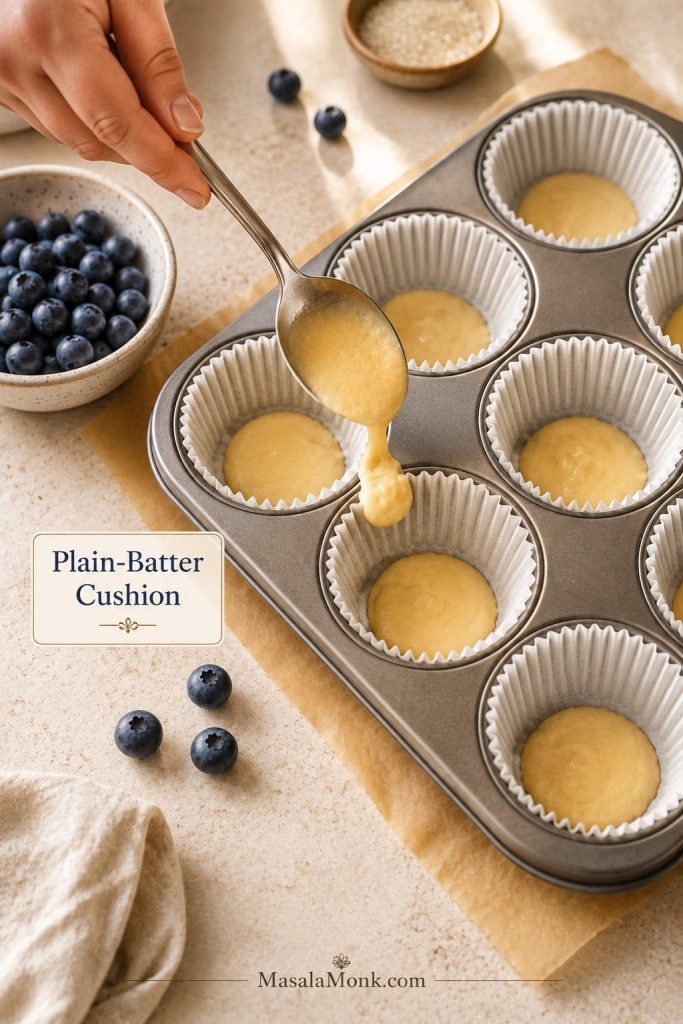
This is the little step most blueberry muffin recipes skip. Before the blueberries go into the batter, spoon a small amount of plain batter into the bottom of each muffin cup. Then fold the berries into the remaining batter and fill the cups. It takes less than a minute, but it helps prevent that wet, sticky berry layer that can glue itself to the liner.
This idea is also discussed in Serious Eats’ blueberry muffin testing, and it is more useful than relying only on the old “toss the berries in flour” trick.
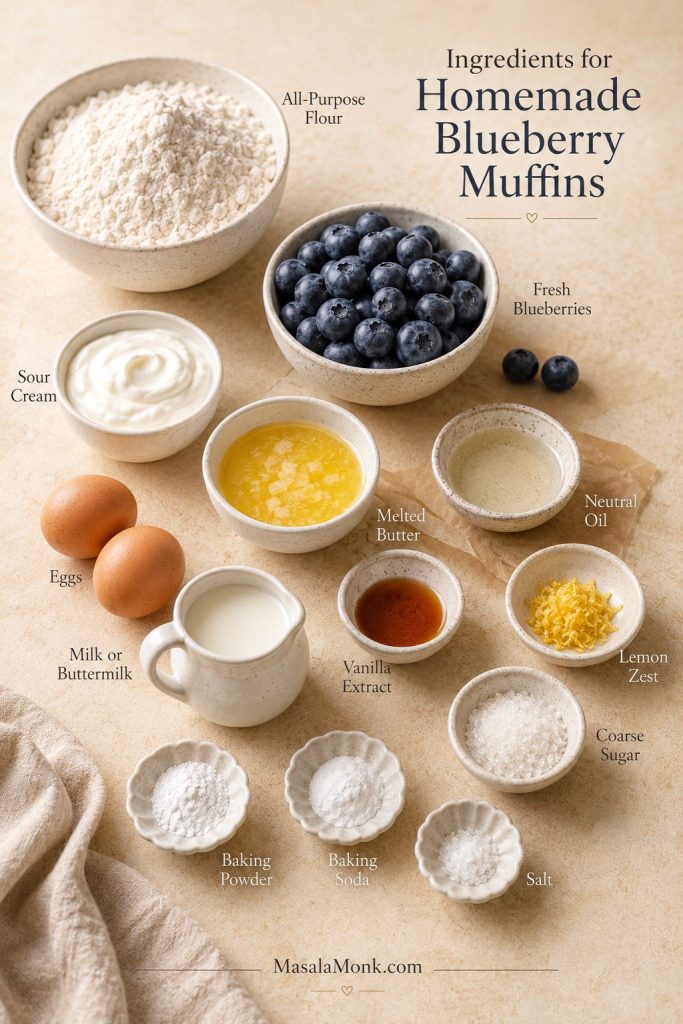
Ingredients for Homemade Blueberry Muffins
The ingredients are simple, but each one has a job. Together, they create a soft crumb, steady lift, and enough support to keep the blueberries evenly distributed.
Every ingredient has a job. Butter and vanilla build flavor, sour cream and oil protect softness, and the flour-liquid balance helps the blueberries stay suspended in the batter.
All-purpose flour
Use regular all-purpose flour for a tender, familiar muffin crumb. Weigh the flour if possible, because too much flour is one of the fastest ways to make muffins dry, dense, or heavy. When measuring by cups, spoon the flour into the cup and level it off instead of scooping directly from the bag.
Baking powder and baking soda
Baking powder gives the muffins lift, while baking soda works with the sour cream to help the batter rise and brown. Make sure both are fresh. Old leavening can give you flat muffins even when the mixture looks right.
Sugar
Three-quarters cup of granulated sugar keeps these muffins sweet enough for breakfast or brunch without pushing them into cupcake territory. Coarse sugar on top adds a light crunch and a bakeshop-style finish.
Melted butter and neutral oil
Melted butter keeps the method easy because you do not need a mixer. A small amount of neutral oil adds softness. Use a mild oil such as canola, vegetable, sunflower, or another neutral baking oil.
Eggs
Two large eggs help the muffins rise and hold together. Very cold eggs can be placed in a bowl of warm water for a few minutes while you prepare the dry ingredients.
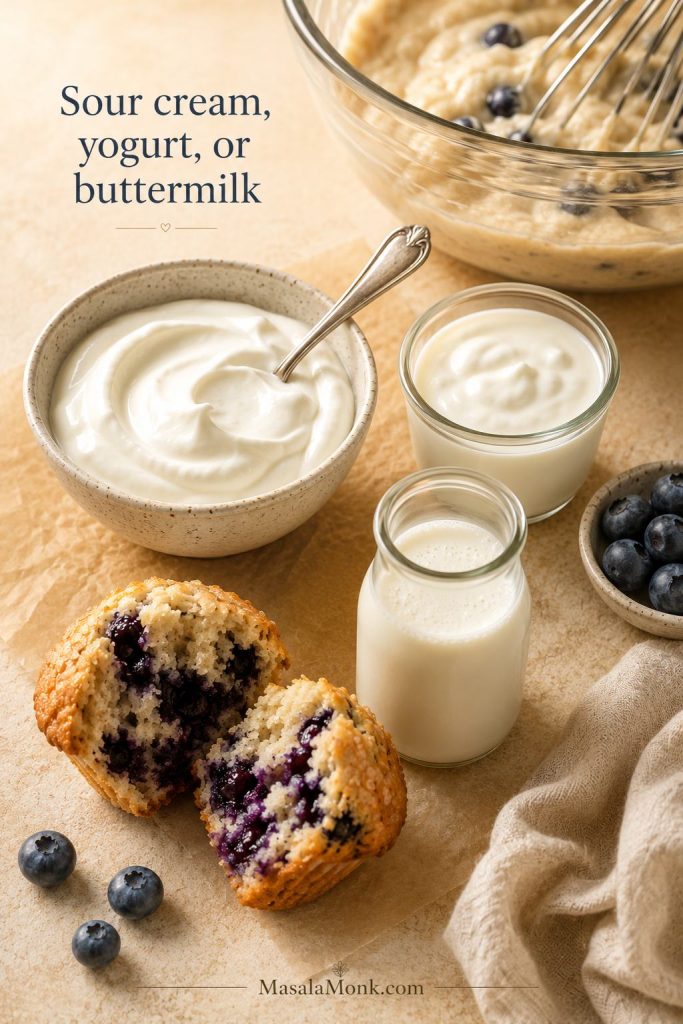
Sour cream, milk, buttermilk, or Greek yogurt
Sour cream gives the muffins tenderness and moisture. Milk loosens the batter just enough so it folds together without becoming runny. Buttermilk can replace the milk if you want a slightly tangier crumb, and plain Greek yogurt can replace the sour cream if it is thick rather than watery.
Sour cream gives the richest crumb, while thick Greek yogurt or buttermilk adds a gentle tang. Either way, the batter needs enough body so the muffins bake plush, not loose.
If you are mainly trying to make muffins more filling, keep this classic version as the texture benchmark first. Then use our high protein muffins guide for versions built around Greek yogurt, protein powder, cottage cheese, and freezer-friendly breakfast prep.
Blueberries
Use 1½ cups of blueberries for juicy muffins that still bake evenly. Smaller berries distribute more evenly, while large berries give bigger jammy pockets. Fresh blueberries are easiest, though frozen berries are completely fine when handled gently. For an extra berry-packed batch, you can increase to 1¾ cups, but the muffins will be softer and a little more delicate.
Using frozen berries today? Read the fresh vs frozen blueberry guide before folding them in, because handling matters more than the berries themselves.
If blueberries are the breakfast flavor you keep coming back to, these blueberry pancakes are another easy way to use fresh or frozen berries without turning breakfast into a project.
Coarse sugar or streusel
Coarse sugar is the cleanest default topping because it gives the muffins a light crunch without making them heavy. Use the quick streusel variation in the recipe card when you want a sweeter bakery-style crumb topping.
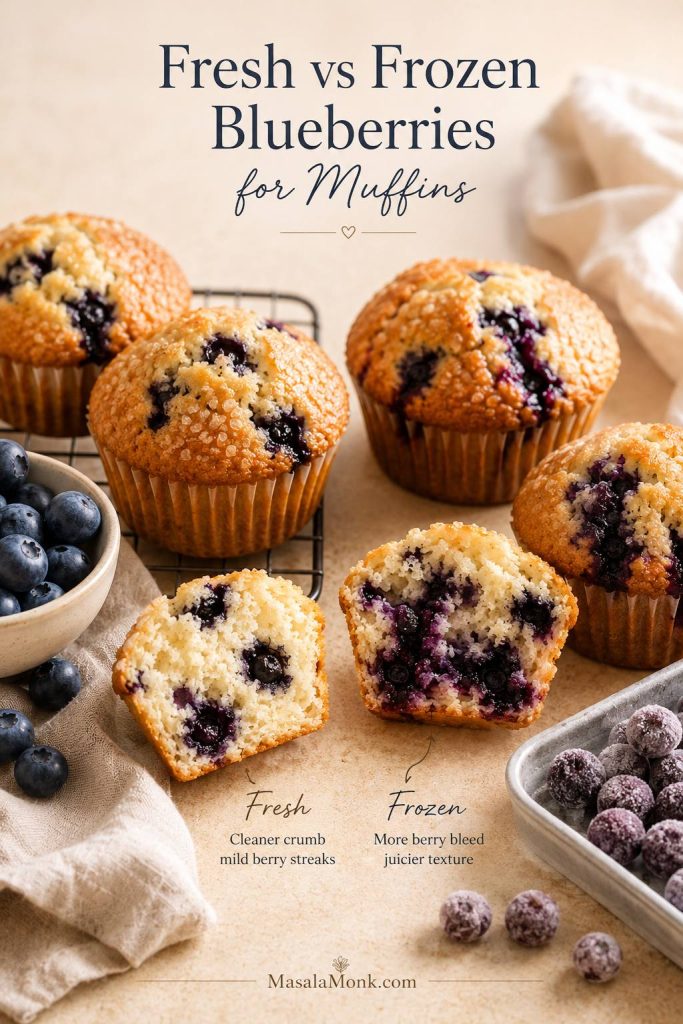
Fresh vs Frozen Blueberries for Muffins
Both fresh and frozen blueberries work in this muffin recipe. The real difference is how much color and moisture they release into the batter.
Use fresh berries when presentation matters most. Use frozen berries when convenience matters most. If you want the cleanest crumb with frozen berries, use the rinse-and-dry method; otherwise, frozen-from-the-freezer is the fastest reliable route.
Fresh blueberries usually give the cleanest-looking crumb. Frozen berries are just as useful, but they need colder handling because they release color and juice quickly once they soften.
Blueberry type
Best use
How to handle it
Fresh blueberries
Cleanest batter and easiest folding
Rinse, dry well, and fold gently
Frozen blueberries, fast method
Convenience and year-round baking
Add straight from the freezer
Frozen blueberries, cleanest batter method
Less purple streaking
Rinse briefly, dry very well, fold gently, and bake right away
Wild blueberries
More even berry distribution
Use slightly less if they are very small or juicy
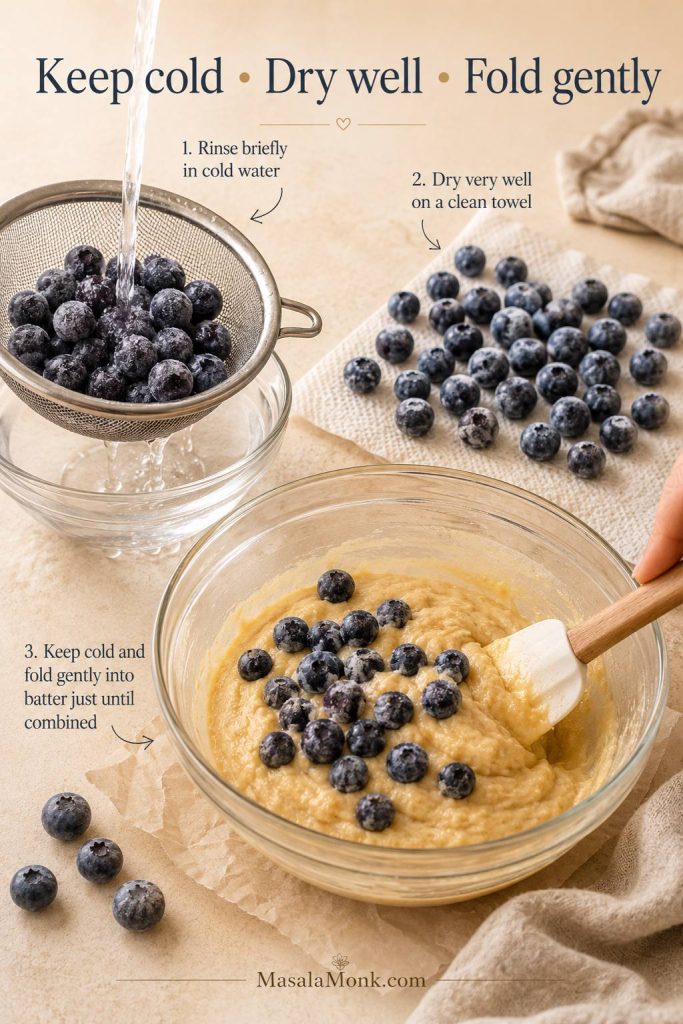
For the fastest method, use frozen blueberries straight from the freezer. Once they thaw, they release juice quickly, which can turn the batter purple and make the muffins wetter.
For the cleanest golden batter, you can briefly rinse frozen blueberries in cold water, dry them very well, and fold them in gently. King Arthur Baking’s frozen-blueberry guide explains this method in more detail.
For frozen blueberries, cold and dry is the rule. Add them at the end, fold gently, and bake soon after mixing so the batter stays golden instead of turning purple.
Best practical rule: fresh berries should be dry, and frozen berries should be cold. Wet berries and overmixing are what usually lead to streaky purple batter.
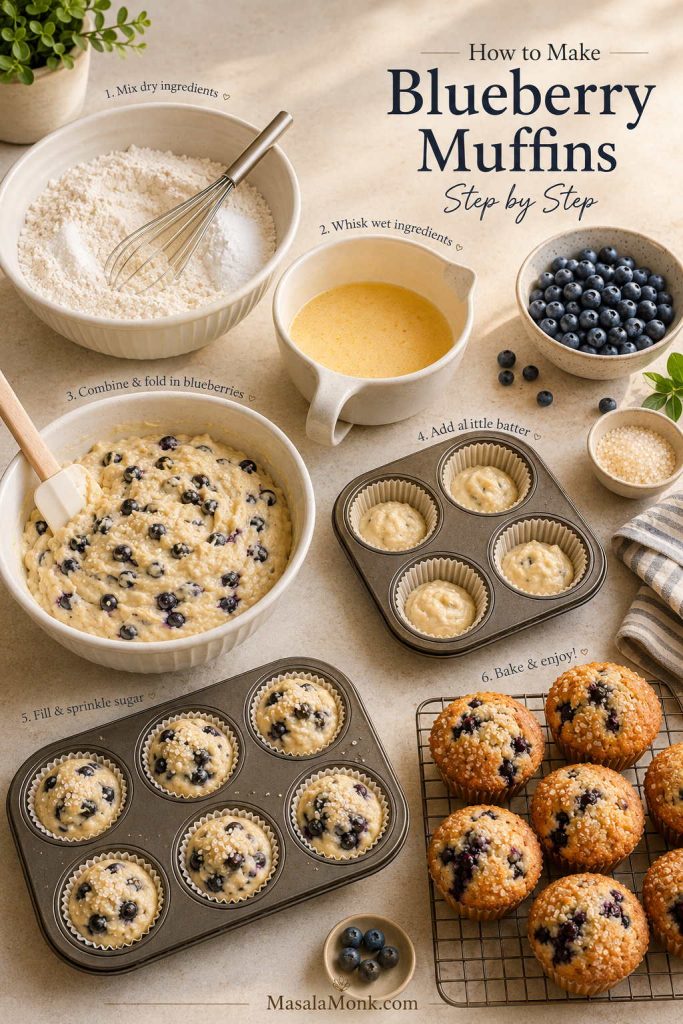
How to Make Blueberry Muffins
Before you start: preheat the oven fully, dry fresh blueberries well, keep frozen blueberries frozen, mix the batter gently, and fill the muffin cups almost to the top. These five steps prevent most dry, dense, flat, purple, or sunken blueberry muffins.
The method is simple, but the order matters. First, mix the dry and wet ingredients separately; then fold them together gently so the muffins stay tender.
The order is what makes this method different. Add the plain-batter cushion before folding in the blueberries, then fill the cups high so the fruit stays better distributed.
1. Prepare the pan and oven
Line a standard 12-cup muffin pan with paper liners. Then, heat the oven to 425°F / 220°C. To protect high muffin tops from sticking, lightly spray the top surface of the pan before filling the cups.
2. Mix the dry ingredients
In a large bowl, whisk together the flour, baking powder, baking soda, and salt. This helps distribute the leavening evenly so the muffins rise consistently.
3. Whisk the wet ingredients
In another bowl or large measuring jug, whisk the sugar, melted butter, oil, eggs, sour cream, milk, vanilla, and lemon zest if using until smooth. Let the butter cool slightly first, so it does not scramble the eggs.
4. Combine into a heavy, spoonable batter
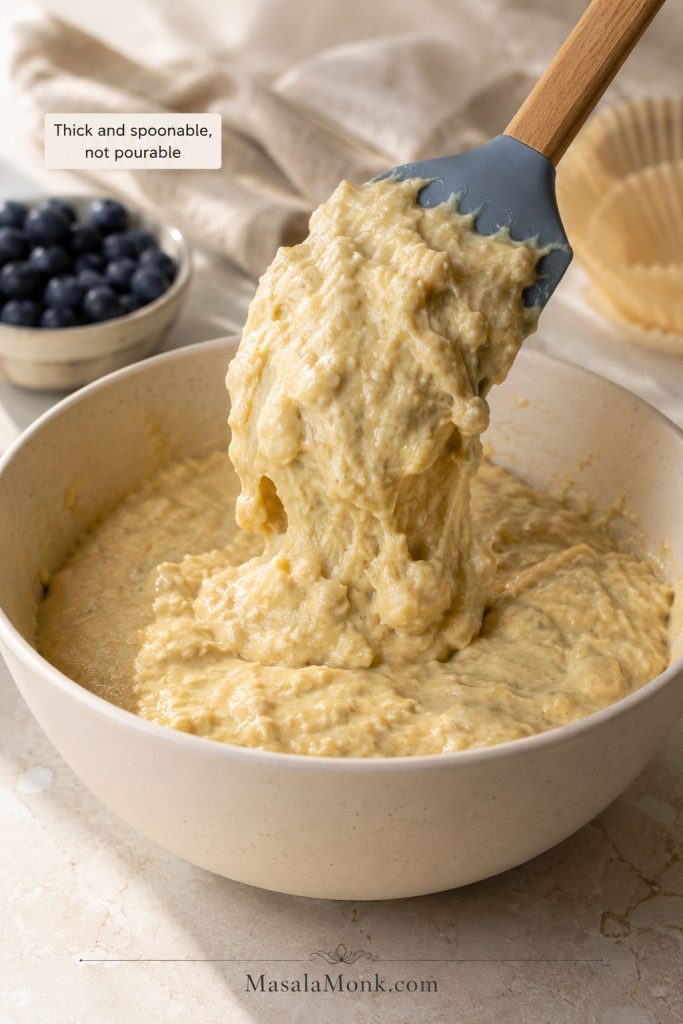
Pour the wet ingredients into the dry ingredients and fold with a spatula until no dry pockets of flour remain. A few small lumps are fine. At this point, the batter should look thick and spoonable, not pourable; when you lift the spatula, it should fall slowly in heavy ribbons.
The batter should mound on the spatula and fall slowly. That thick, spoonable texture helps create taller muffin tops and keeps the blueberries from sliding straight down.
A 10–15 minute rest can help if you have time. Let the plain batter sit before filling the muffin cups or folding in the blueberries; the short rest lets the flour hydrate and can make the batter bake up a little taller. The muffins still work without it.
5. Add the plain-batter cushion
Before adding blueberries to the bowl, spoon about 1 tablespoon of plain batter into the bottom of each muffin cup. You are not filling the cup yet — just covering the bottom so the first berries do not bake directly against the liner.
This small base layer helps protect the muffin bottoms. Because the first spoonful has no berries, the fruit is less likely to bake into one sticky layer against the liner.
Want to see why this matters? The blueberries sinking section shows how this step keeps the fruit from collecting at the bottom.
6. Fold in the blueberries
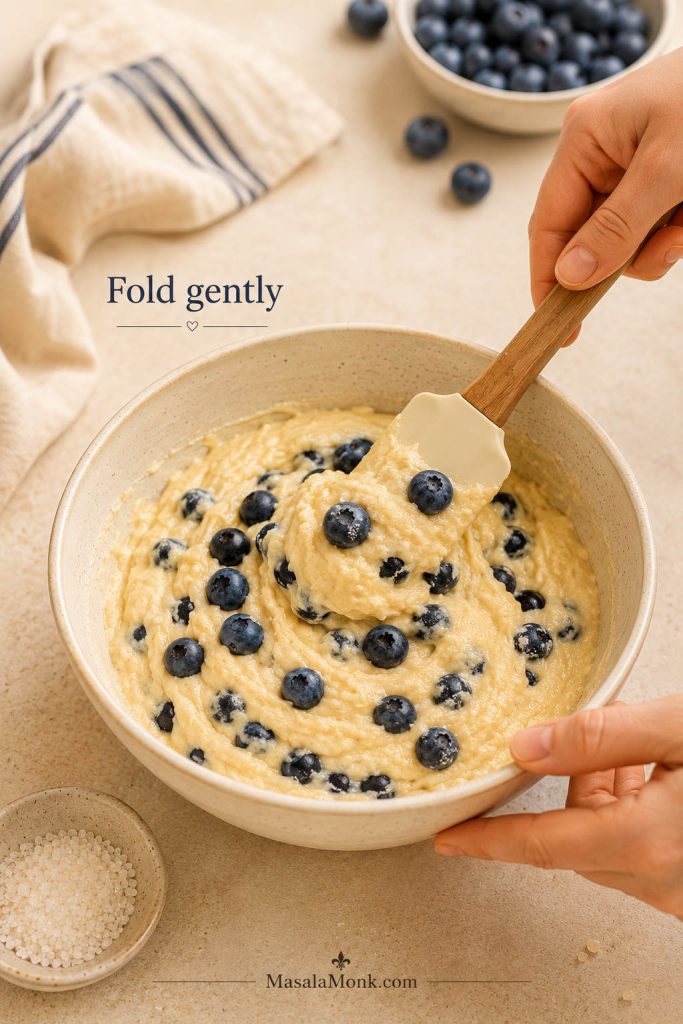
Add the blueberries to the remaining batter and fold gently. Use as few strokes as possible, especially with frozen berries. The goal is to distribute the fruit without crushing it or staining the batter.
Fold gently once the blueberries go in. Overmixing can burst the berries, stain the batter purple, and make the finished muffins denser than they need to be.
7. Fill and top
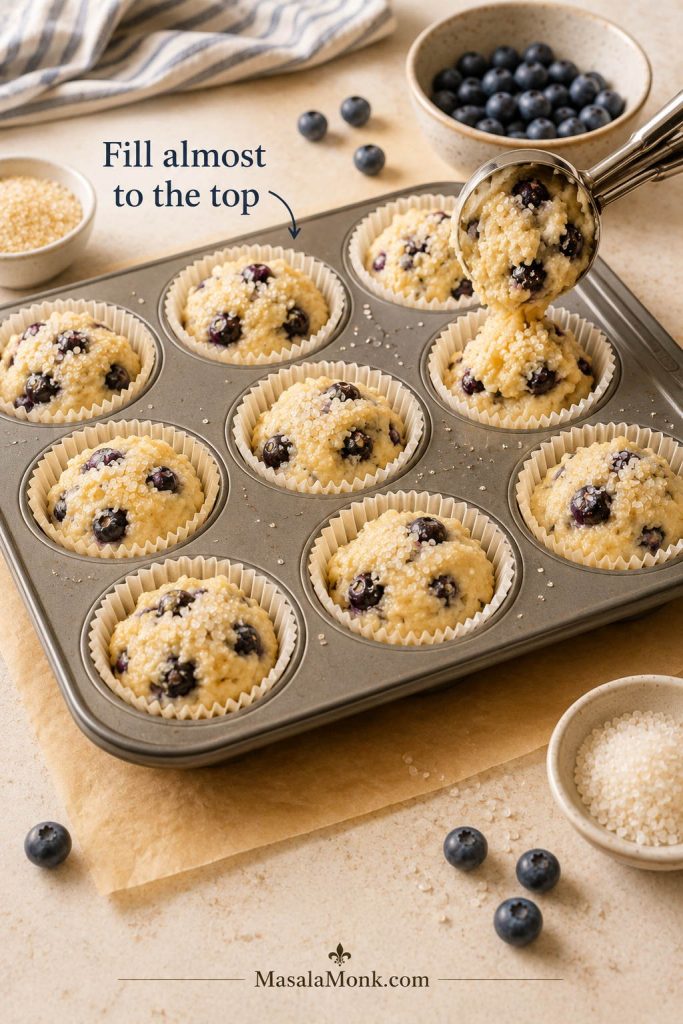
Divide the batter between the muffin cups, filling each one almost to the top. Then, sprinkle with coarse sugar, or add the streusel topping if using.
Fill level matters more than most people think. For bakery-style blueberry muffin tops, the batter needs to sit close to the top of the liner before it goes into the oven.
Bake at 425°F / 220°C for 5 minutes. Without opening the oven door, reduce the temperature to 375°F / 190°C and bake for another 13–17 minutes, or until the tops are golden and a toothpick inserted into the center comes out clean or with a few moist crumbs. Start checking at the early end of the range if your oven runs hot, and expect the upper end if your berries are frozen or very large.
The hot-start bake gives the batter its first lift, while the lower temperature finishes the centers more gently. Together, those two stages help prevent flat, dry muffins.
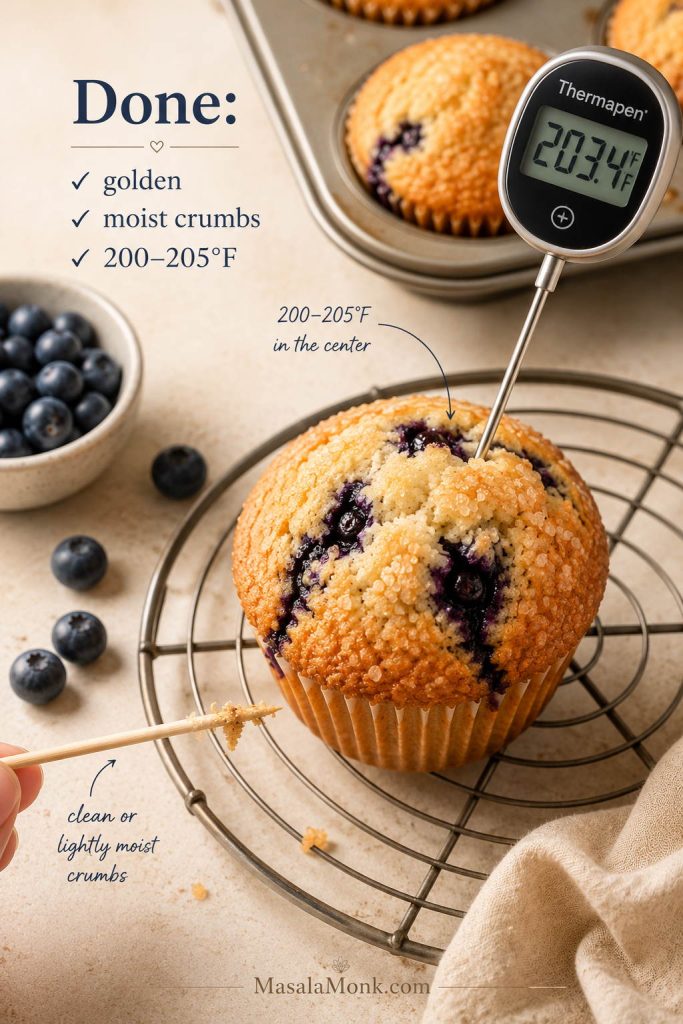
When they are ready, the tops should look set and lightly golden, and the muffins should spring back gently when touched near the center. For extra precision, the center of a fully baked muffin should register about 200–205°F / 93–96°C on an instant-read thermometer.
Use more than color to check doneness. A finished muffin should spring back lightly, show clean or moist crumbs on a toothpick, and read about 200–205°F in the center.
9. Cool before serving
Let the muffins cool in the pan for 5–10 minutes, then move them to a wire rack. Although they are wonderful warm, the crumb sets better if they get a few minutes to settle before you tear one open.
The first muffin is worth eating while it is still a little warm. Split it open, let the steam escape, and you should see a soft crumb with blueberries tucked through the center instead of pooled at the bottom.
Blueberry Muffin Recipe Card
Keep the core method simple: 12 muffins, fresh or frozen berries, and a hot oven start. Once those are right, sugar tops, streusel, or lemon zest become easy choices.
Blueberry Muffin Recipe
This blueberry muffin recipe makes soft, fluffy muffins with golden tops, juicy blueberries, and a simple no-mixer batter. Use fresh or frozen blueberries, finish with coarse sugar, or add the optional streusel topping.
Yield12 muffins
Prep15 minutes
Bake18–22 minutes
Total35–40 minutes, or 45–55 minutes with optional rest
Equipment
Standard 12-cup muffin pan
Paper liners
Large mixing bowl
Medium bowl or large measuring jug
Whisk
Silicone spatula
Large cookie scoop or ⅓-cup measure, optional
Wire cooling rack
Ingredients
2 cups / 250g all-purpose flour
2 teaspoons / about 8g baking powder
½ teaspoon / about 2–3g baking soda
½ teaspoon / about 3g fine salt
¾ cup / 150g granulated sugar
½ cup / 113g unsalted butter, melted and slightly cooled
2 tablespoons / 30ml neutral oil
2 large eggs, about 100g without shells
½ cup / 120g sour cream
¼ cup / 60ml milk or buttermilk
2 teaspoons / 10ml vanilla extract
Optional: 1 teaspoon finely grated lemon zest, for a brighter blueberry flavor
1½ cups / 210–225g / about 7½–8 oz blueberries, fresh or frozen
1–2 tablespoons coarse sugar or turbinado sugar, for topping
Optional Streusel Topping
⅓ cup / 42g all-purpose flour
⅓ cup / 65g brown sugar or granulated sugar
½ teaspoon cinnamon
3 tablespoons / 42g melted butter
Instructions
Line a standard 12-cup muffin pan with paper liners. Heat the oven to 425°F / 220°C.
In a large bowl, whisk together the flour, baking powder, baking soda, and salt.
In a separate bowl, whisk the sugar, melted butter, oil, eggs, sour cream, milk, vanilla, and lemon zest if using until smooth.
Pour the wet ingredients into the dry ingredients. Fold gently with a spatula until no dry pockets of flour remain. A few small lumps are fine. The batter should be thick and spoonable, not dry or pourable.
For slightly taller tops, let the plain batter rest for 10–15 minutes before folding in the blueberries. This step helps, but the muffins still work without it.
Spoon about 1 tablespoon of plain batter into the bottom of each muffin cup.
Fold the blueberries into the remaining batter with as few strokes as possible.
Divide the batter among the muffin cups, filling each almost to the top.
Sprinkle with coarse sugar. For streusel, stir the flour, sugar, cinnamon, and melted butter together until crumbly, then sprinkle over the muffins instead.
Bake at 425°F / 220°C for 5 minutes. Without opening the oven, reduce the temperature to 375°F / 190°C and bake for another 13–17 minutes, until the tops are golden and a toothpick inserted in the center comes out clean or with a few moist crumbs. The center should be about 200–205°F / 93–96°C if checked with an instant-read thermometer.
Cool in the pan for 5–10 minutes, then transfer to a wire rack.
Recipe Notes
Frozen blueberries: use straight from the freezer for the fastest method.
Cleanest batter with frozen berries: rinse briefly, dry very well, fold gently, and bake right away.
Plain-batter cushion: spoon a little plain batter into each cup before folding in the blueberries. This helps keep berries from baking directly against the liner.
For taller tops: let the plain batter rest for 10–15 minutes before folding in the blueberries.
With streusel: add about 3–5 minutes to the prep time.
For extra-tall bakery-style muffins: bake only 6 muffins at a time, using every other cup in the pan.
For more berries: increase to 1¾ cups / about 245g blueberries, but the muffins will be softer and slightly more delicate.
If the batter feels unusually stiff: fold in 1 extra tablespoon of milk. The batter should be thick and spoonable, not dry.
Storage
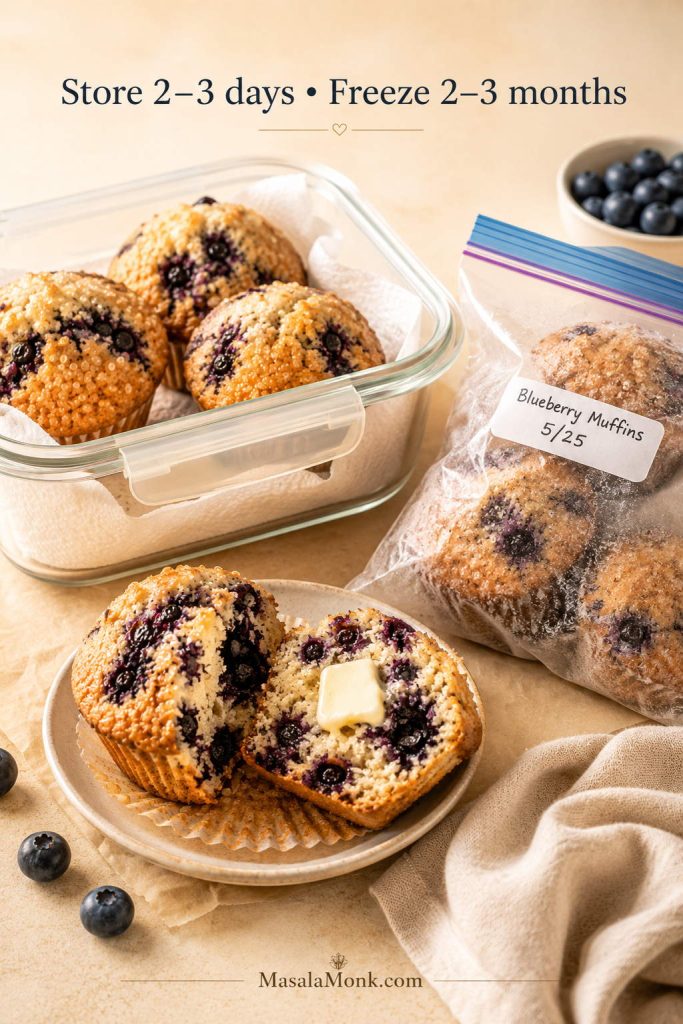
Store cooled muffins in an airtight container at room temperature for 2–3 days. Add a paper towel to absorb extra moisture and keep the tops from turning sticky. Freeze for up to 2–3 months.
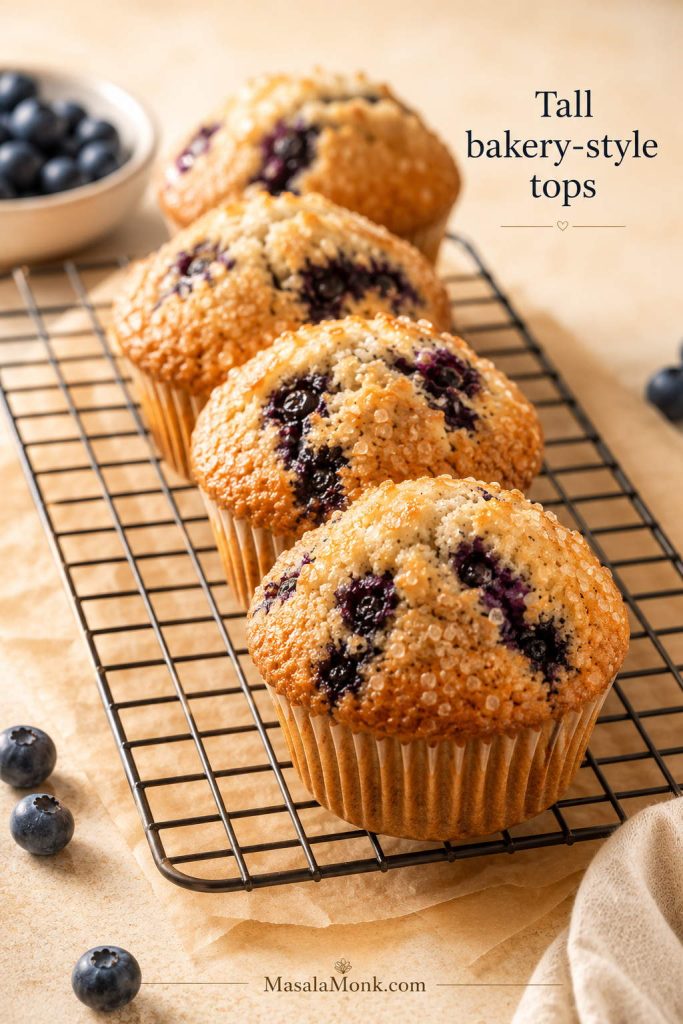
How to Get Tall Bakery-Style Blueberry Muffin Tops
Tall muffin tops come from a few small habits working together: a batter with enough body, full muffin cups, and a hot oven at the beginning. This is the difference between a good homemade muffin and the one people reach for first on the brunch table.
Bakery-style blueberry muffin tops come from stacking small advantages: thick batter, high fill, a hot oven start, and enough sugar on top for light crunch.
Use a batter that mounds instead of pours. Thin batter spreads before it rises.
Fill the cups almost to the top. Underfilled cups make shorter muffins.
Start with high heat. The first 5 minutes at 425°F / 220°C help push the tops upward.
Keep the oven closed when lowering the temperature. Just reduce the dial and let the muffins keep baking.
Use coarse sugar. It helps the tops bake with a light crunch.
Rest the plain batter for 10–15 minutes if you have time. This lets the flour hydrate and the batter thicken slightly before the berries go in.
For an extra bakery-style lift, bake only 6 muffins at a time and use every other cup in the muffin pan. This gives each muffin more heat circulation. It is optional, but helpful when you want especially tall domes.
If your muffins still bake up flat, the troubleshooting table will help you check oven heat, fill level, and leavening.
How to Keep Blueberries from Sinking
The most common advice is to toss blueberries in flour, but that is not always enough. Instead, the better approach is to build a batter that can actually support the berries and use the plain-batter cushion before the fruit goes in.
When blueberries stay through the middle, the batter had enough support. The plain-batter cushion adds one more safeguard by keeping the first berries off the bottom.
Use a heavy, spoonable batter. This is the biggest help.
Dry fresh berries well. Wet berries slide and bleed more easily.
Keep frozen berries frozen. Once they thaw, they release juice quickly.
Use a reasonable amount of fruit. More berries are delicious, but too many can make muffins wet or fragile.
Add plain batter to the cups first. This keeps berries from sitting directly on the bottom.
A teaspoon of flour can help a little, but the plain-batter cushion does more of the real work.
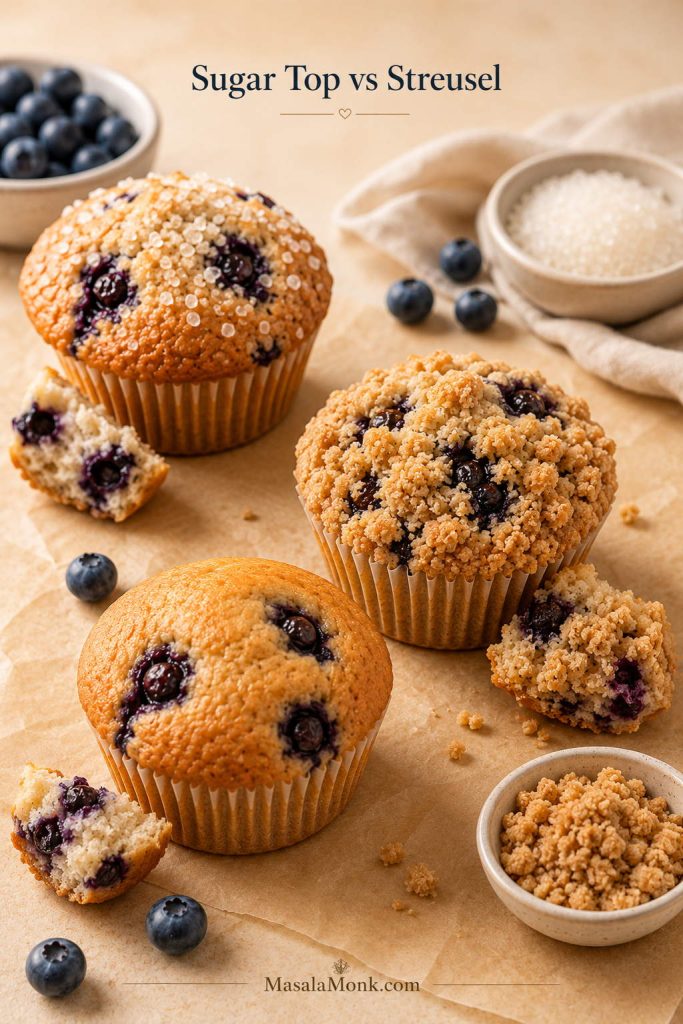
Sugar Top vs Streusel Topping
Choose the topping based on the kind of muffin you want today: a simple breakfast muffin, a sweeter bakery-style muffin, or a soft everyday snack.
Coarse sugar is the everyday choice. Streusel is the “people will ask where you bought these” choice. Either way, the topping should make the muffin more inviting without hiding the blueberries.
Coarse sugar keeps muffins crisp, simple, and breakfast-friendly. Streusel makes them sweeter and more bakery-style, so the best topping depends on the mood of the batch.
Topping
Best for
Texture
Coarse sugar
Simple breakfast muffins
Light crunch, golden top, not too sweet
Streusel
Bakery-style muffins
Buttery crumb topping, sweeter finish
No topping
Everyday breakfast muffins
Softer top, less sweetness
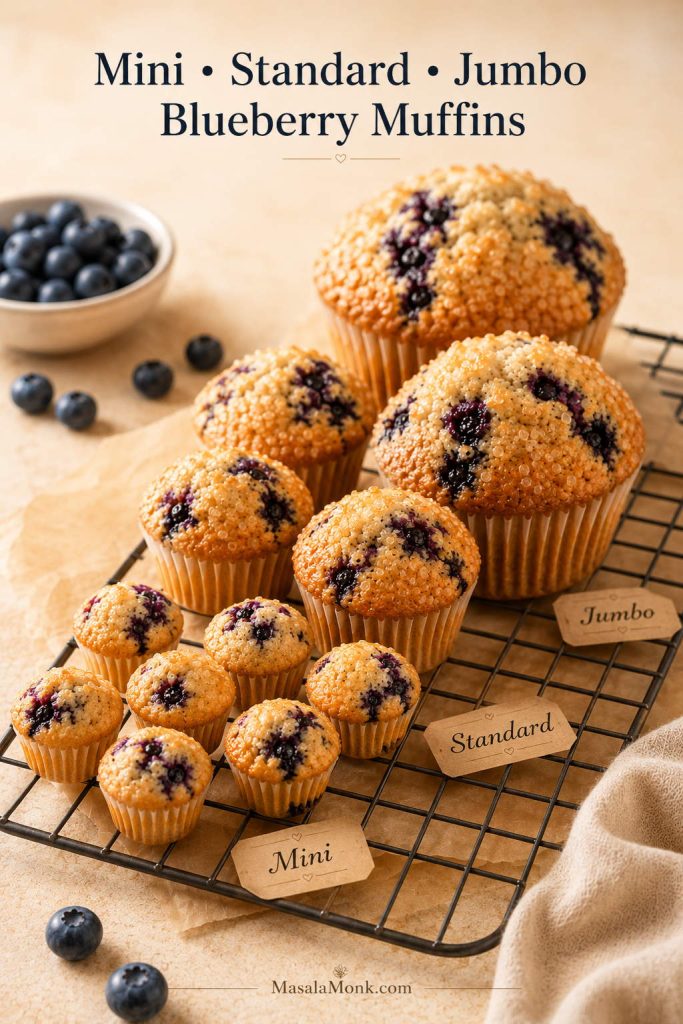
Mini, Standard, and Jumbo Blueberry Muffin Bake Times
The amounts below fit a regular 12-cup muffin pan, but you can use the same mixture for mini or jumbo muffins with a few timing changes.
The same batter can work in mini, standard, or jumbo pans. Smaller muffins finish fast, while jumbo muffins need more time for the centers to set properly.
Muffin size
Fill level
Temperature
Bake time
Mini muffins
About ¾ full
350°F / 175°C throughout
11–14 minutes
Standard muffins
Almost to the top
425°F / 220°C for 5 minutes, then 375°F / 190°C
18–22 minutes total
Jumbo muffins
Almost to the top
425°F / 220°C for 5 minutes, then 350°F / 175°C
26–30 minutes total
Always check early the first time you use a new pan. Dark pans, thin pans, and frozen blueberries can all change the bake time slightly.
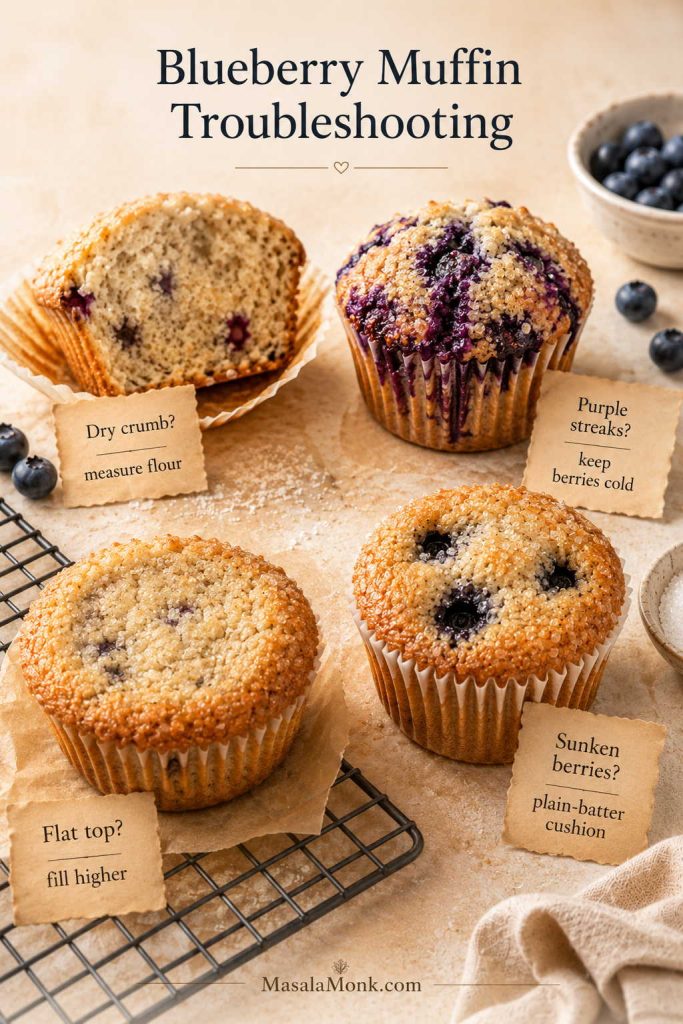
Blueberry Muffin Troubleshooting
Most blueberry muffin problems are fixable once you know what caused them. So, if a batch from this recipe ever turns out differently than expected, use this table to adjust the next one.
If your last batch was dry and purple, start with flour measurement and frozen-berry handling before changing the whole recipe. If it was flat, look first at fill level, oven heat, and whether your leavening is still fresh.
Blueberry muffin troubleshooting usually starts with five things: flour measurement, mixing, berry temperature, fill level, and oven heat. Fix those before changing the full recipe.
Problem
Likely cause
Fix next time
Dry muffins
Too much flour or overbaking
Use grams if possible, spoon-and-level flour, and check the muffins early
Dense muffins
Overmixed batter
Fold gently and stop when no dry pockets of flour remain
Flat tops
Oven not hot enough or cups underfilled
Preheat fully, fill cups almost to the top, and use the hot-start bake
Purple batter
Frozen berries thawed or batter overmixed after berries were added
Add frozen berries cold, fold gently, and bake right away
Sunken blueberries
Thin batter, wet berries, or berries sitting at the bottom
Add a spoonful of plain batter to each cup first and avoid thinning the batter
Soggy bottoms
Too many berries or wet berries at the base
Dry berries well and use the plain-batter cushion
Pale tops
Low oven heat or no topping
Use the hot start and sprinkle with coarse sugar
Muffins stuck to the pan
Pan not lined or greased enough
Use liners or grease the pan well, including the top surface if filling high
How to Store and Freeze Blueberry Muffins
Room temperature
Once the muffins cool completely, store them in an airtight container at room temperature for 2–3 days. When stacking, add a paper towel to the bottom of the container and another between layers. This helps absorb moisture from the blueberries and keeps the tops from turning sticky too quickly.
They are best the day they are baked, but the next morning they should still be soft enough to split and warm with a little butter.
Cool muffins fully before storing, or trapped steam can make the tops sticky. For longer storage, freeze them once cool and reheat gently when you want a quick breakfast.
Refrigerator
The refrigerator is not ideal because it can dry out the crumb. Use it only if your kitchen is very warm or humid.
Freezer
Freeze fully cooled muffins in a freezer-safe bag or container for up to 2–3 months. For the neatest muffins, freeze them in a single layer first, then pack them together once firm.
Reheating
Warm a room-temperature muffin in the microwave for 10–15 seconds. Meanwhile, warm a frozen muffin for 25–40 seconds, or reheat in a low oven until soft and warmed through.
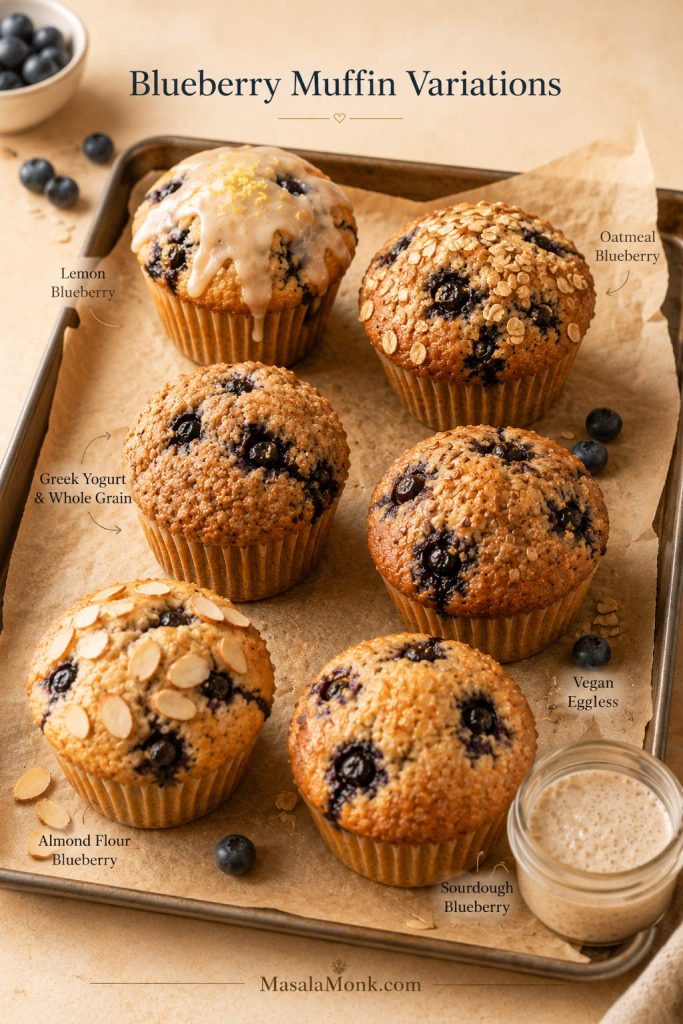
Blueberry Muffin Variations
Once you have the basic method down, you can take blueberry muffins in several directions. Lemon zest and topping changes are easy. Oats, almond flour, eggless, vegan, cottage cheese, and sourdough versions need more adjustment, but the same goal stays the same: a soft crumb, berries through the middle, and a top that rises instead of spreading.
Lemon zest, oats, yogurt, and streusel are easy ways to change the flavor. Bigger swaps like almond flour, eggless, vegan, or sourdough need a batter balanced for that style.
Lemon Blueberry Muffins
Add 1–2 teaspoons of fresh lemon zest to the batter for a brighter muffin. If you want a sweeter bakery finish, skip the coarse sugar and use a light lemon glaze after the muffins cool. Keep the lemon modest if you want blueberry to stay in front.
Blueberry Oatmeal Muffins
For a light oatmeal direction, replace ¼ cup of the flour with quick oats and add 1–2 tablespoons extra milk if the batter feels too stiff. For a true oat-heavy muffin, use a dedicated formula because oats absorb more moisture than flour. If you are choosing between rolled, quick, or oat-flour-style baking, this guide to oats will help you pick the right type before making an oatmeal version.
Healthy Blueberry Muffins
A lighter blueberry muffin usually leans on whole wheat flour, oats, Greek yogurt, applesauce, maple syrup, or less refined sugar. Do not cut all the fat at once; a little butter or oil is what keeps the crumb from tasting dry. The goal is a muffin that feels soft and satisfying, not worthy-but-disappointing.
Eggless Blueberry Muffins
Eggless blueberry muffins need enough moisture, lift, and structure to replace what eggs do. Yogurt, milk, vinegar, baking soda, and flax can all help, depending on the formula. If you are testing egg-free bakes, start with this flax egg guide so the swap is measured instead of guessed.
Vegan Blueberry Muffins
For vegan blueberry muffins, keep the spirit of this recipe — tender crumb, enough fat, and a batter that can hold berries — but use a formula built around plant milk and oil from the start. A straight swap for the butter, sour cream, milk, and eggs may work in small tweaks, but a fully vegan version needs its own balance.
Almond Flour Blueberry Muffins
Almond flour is not a 1:1 swap for all-purpose flour because it has no gluten and carries more fat. It can make tender low-carb bakes, but the batter needs more structural support. Before adapting this recipe, read this keto flour for baking guide so you understand how almond flour, coconut flour, binders, moisture, and lift work together.
Blueberry Cottage Cheese Muffins
Cottage cheese can add protein and moisture, especially when blended smooth before mixing. It works best when the batter is adjusted around it, because too much cottage cheese can make muffins heavy or damp instead of tender.
Blueberry Sourdough Muffins
Sourdough discard can add light tang and moisture to blueberry muffins, but it changes the flour-liquid balance. Add it only when the rest of the batter has been adjusted for the extra moisture and acidity. If you are still building or maintaining your starter, start with this sourdough starter recipe before using discard in sweet bakes.
What to Serve with Blueberry Muffins
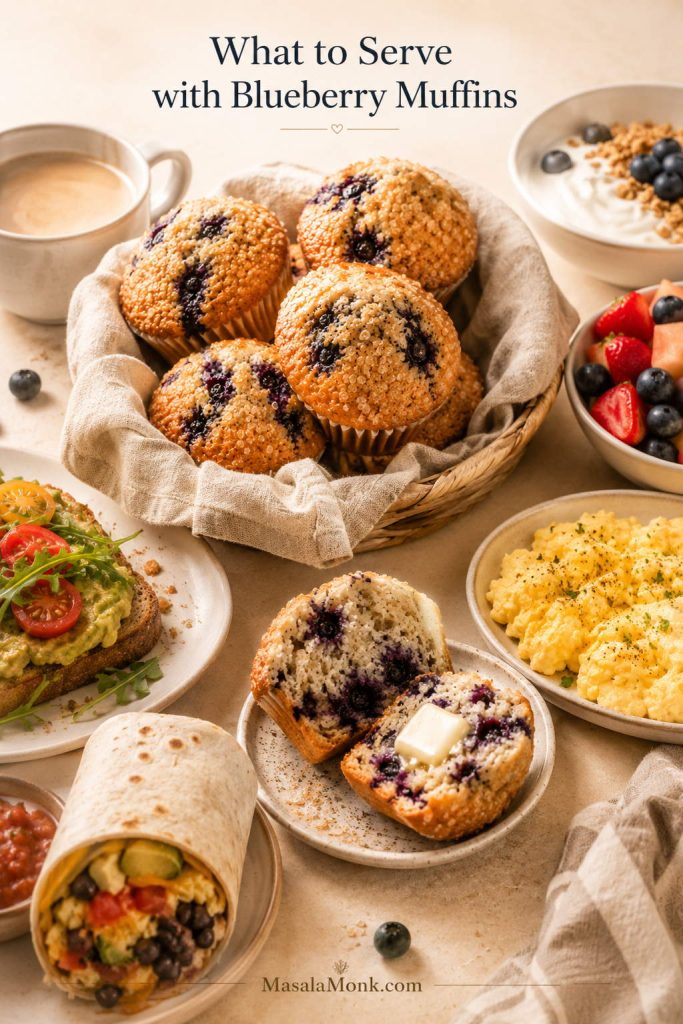
For a cozy breakfast, split one warm and let a little butter melt into the center. For brunch, pile the muffins into a basket with fruit, yogurt, eggs, and coffee so they feel like part of the table rather than a quick side.
Blueberry muffins feel more complete when the table has contrast. Pair them with something savory, something creamy, and something fresh so brunch does not lean only sweet.
Blueberry muffins also work well with something savory, especially if you are serving them for brunch or meal prep. Try them with breakfast egg muffins, soft scrambled eggs, a simple yogurt bowl, or freezer-friendly meal prep breakfast burritos so the table has something sweet, something savory, and something fresh.
FAQs About Blueberry Muffins
Fresh or frozen blueberries: which is better for muffins?
Fresh blueberries are easiest because they release less color into the batter. Frozen blueberries are still a good option, especially when berries are out of season. Keep them cold, fold gently, and bake the muffins soon after mixing.
Should frozen blueberries be thawed before baking?
Keep them frozen until the last moment. Once frozen berries soften, they leak into the batter before the oven can set the crumb, which is why thawed berries often create purple streaks and wetter pockets.
Why did my blueberry muffin batter turn purple?
This usually happens when frozen berries thaw, when berries are wet, or when the batter is mixed too much after the fruit is added. Add blueberries last and fold with as few strokes as possible.
What keeps blueberry muffins moist?
These blueberry muffins stay moist because the recipe uses butter for flavor, a little oil for softness, sour cream for tenderness, and careful baking so the centers set without drying out.
Can I make these blueberry muffins with buttermilk?
Yes. Buttermilk can replace the milk in this recipe. It gives the muffins a slightly tangier flavor and works well with the baking soda and sour cream. The batter should still look thick and spoonable, so add only a small splash more milk if it feels unusually stiff.
Can I use Greek yogurt instead of sour cream?
Yes. Plain Greek yogurt can replace the sour cream in this recipe. Use full-fat or 2% yogurt for the softest crumb, and avoid very thin yogurt because it can loosen the batter too much.
How full should muffin cups be?
For tall standard muffins, fill the cups almost to the top. If you fill them only halfway, the muffins will usually bake up shorter and flatter.
Why are my blueberry muffins dense?
Dense muffins usually come from overmixing, too much flour, or old baking powder. Fold the batter gently, use grams if possible, and stop mixing as soon as no dry pockets of flour remain.
How do I make the muffin tops taller?
Fill the cups almost to the top and start the muffins in a hot oven. A short batter rest and baking every other cup can help even more if you want extra-tall tops.
Is streusel necessary?
No. Coarse sugar is enough for a blueberry muffin with a light crunchy top. Streusel is the sweeter bakery-style option when you want a crumb topping.
How do I know when blueberry muffins are done?
The tops should be golden and set, and a toothpick inserted into the center should come out clean or with a few moist crumbs. If you use an instant-read thermometer, aim for about 200–205°F / 93–96°C in the center.
Do blueberry muffins freeze well?
They freeze very well. Cool them completely first, then pack them in a freezer-safe bag or container for up to 2–3 months. Reheat gently in the microwave or a low oven.
Once you understand the batter texture, berry handling, and hot-start bake, blueberry muffins stop feeling unpredictable. The first batch gives you soft centers, golden tops, and berries through the middle; the next one lets you decide whether you are a coarse-sugar person, a streusel person, or a lemon-zest person.
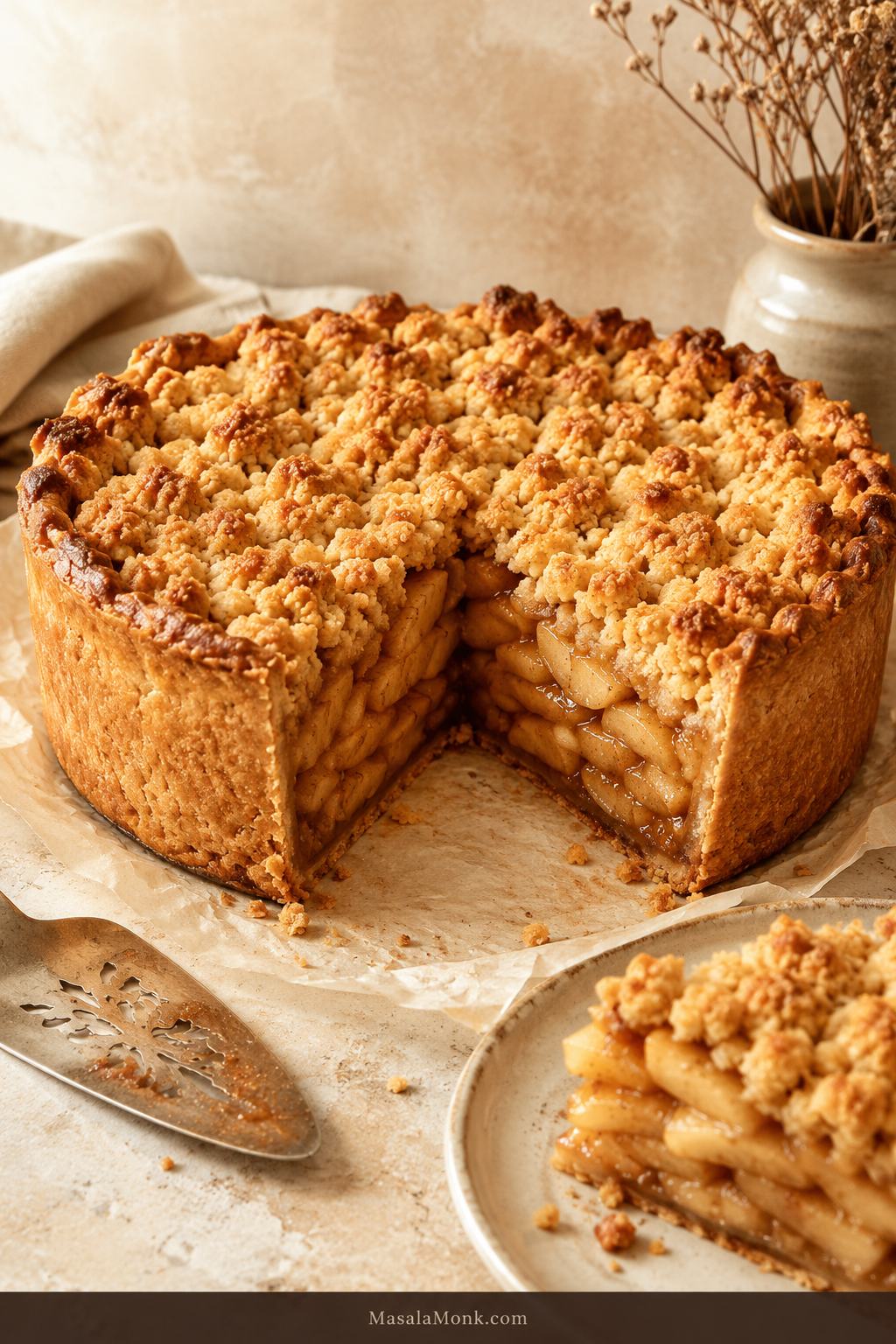
This Dutch apple pie recipe is for the slice everyone wants: a flaky bottom crust, tender cinnamon apples that still hold their shape, and a buttery brown-sugar crumb topping that bakes into golden clusters. It is easier than a lattice apple pie, richer than a plain crumble, and sturdy enough to slice cleanly once it cools.
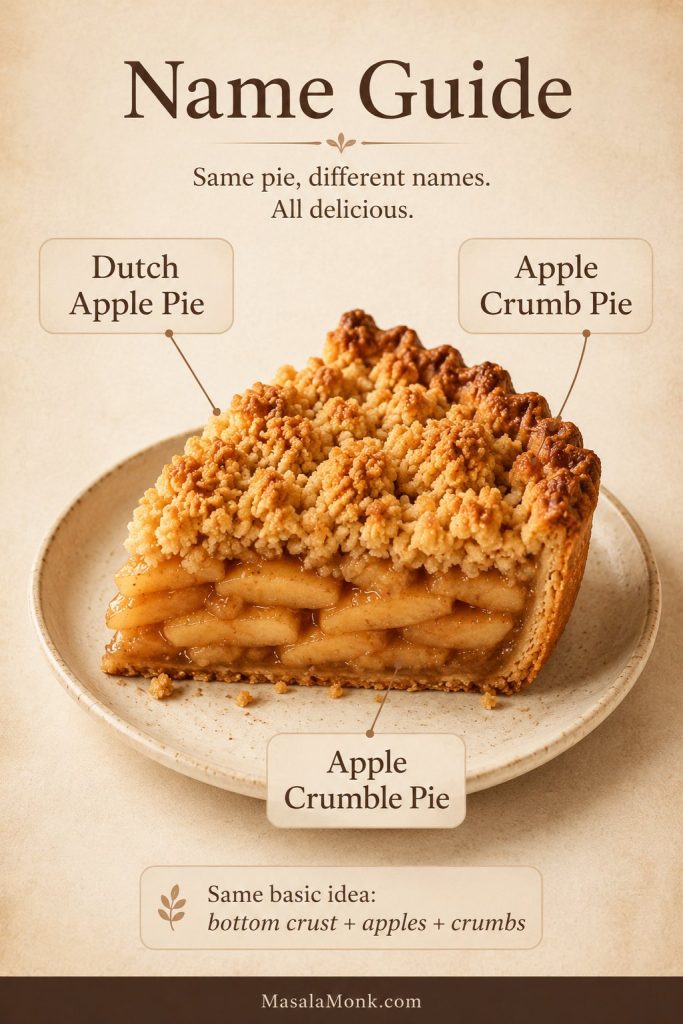
If you have seen this dessert called apple crumb pie, apple crumble pie, or apple pie with crumb topping, you are in the right place. Although the names overlap, the structure is simple: one bottom crust, a generous apple filling, and a thick layer of cinnamon crumbs on top.
The method below is built for the problems that usually ruin this kind of pie: a soft bottom crust, apples that shrink under the crumbs, and topping that browns before the center is done. A hot-start bake, lower oven rack, firm apple blend, and full cooling window give the pie its best chance to bake through and slice neatly.
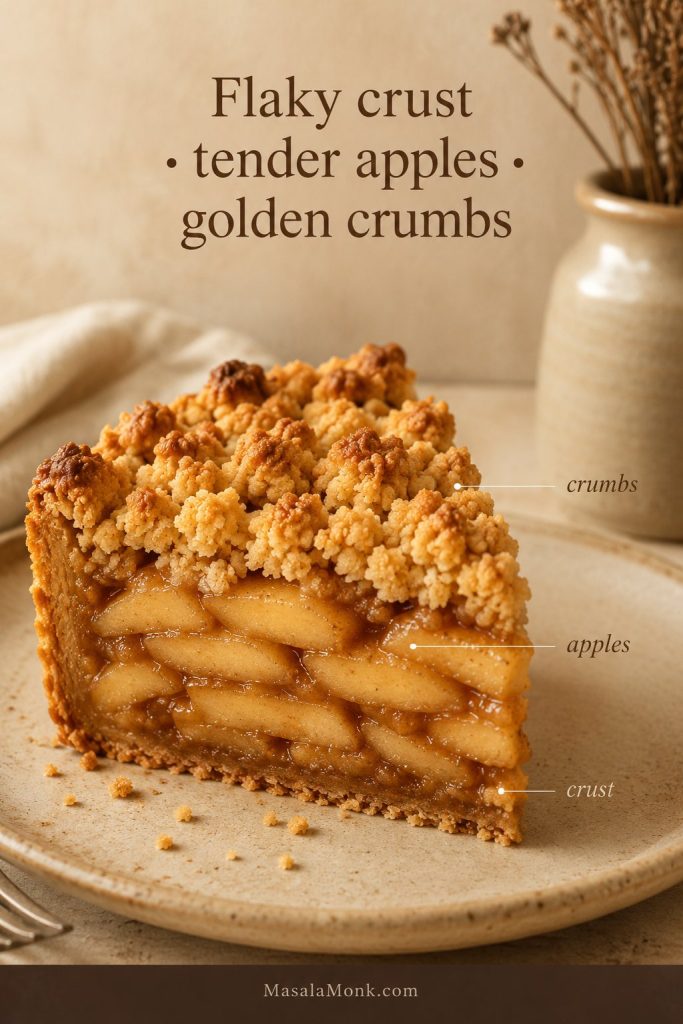
When it works, every forkful gives you the whole point of the pie: flaky crust underneath, soft spiced apples in the middle, and golden buttery crumbs on top.
This is the version to make when you want the comfort of apple crisp, the structure of pie, and a slice that can actually stand up on a plate.
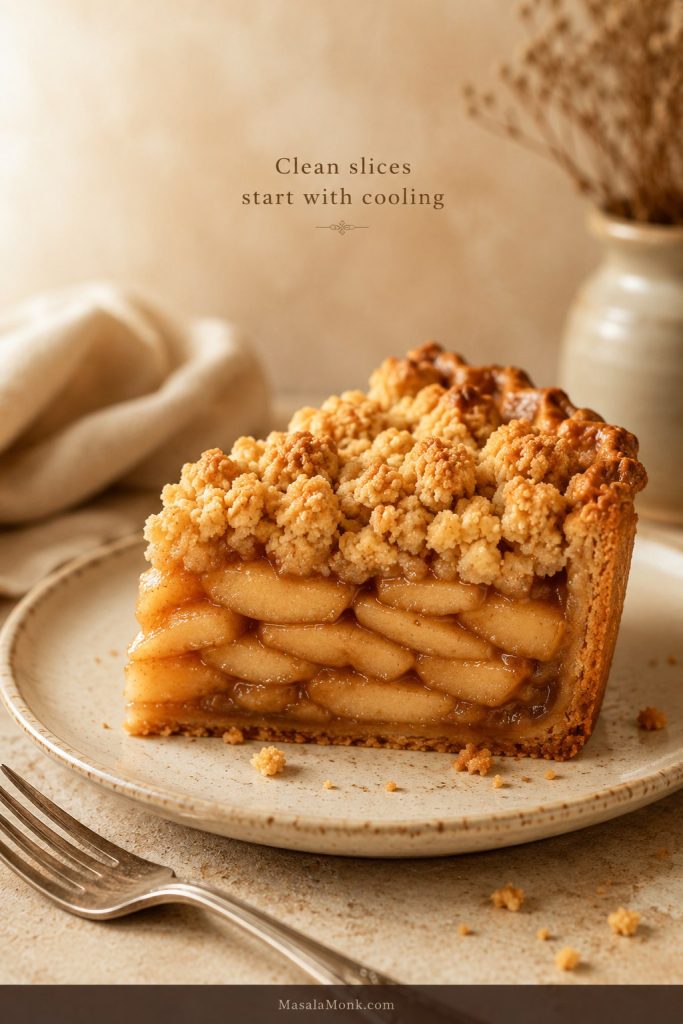
Clean Slice Cue
Clean slice cue: For a slice that stands up on the plate, let the filling settle before cutting. Serve it warm if you like, but not bubbling-hot from the oven.
Cooling turns the apple layer from loose and glossy into a filling that can hold a clean slice.
Why the Layers Matter
Layer cue: Before baking, check the three jobs: heat for the crust, structure from the apples, and enough butter for clustered crumbs.
Use the layers as a quick check: structure below, tender apples in the middle, and clustered crumbs on top.
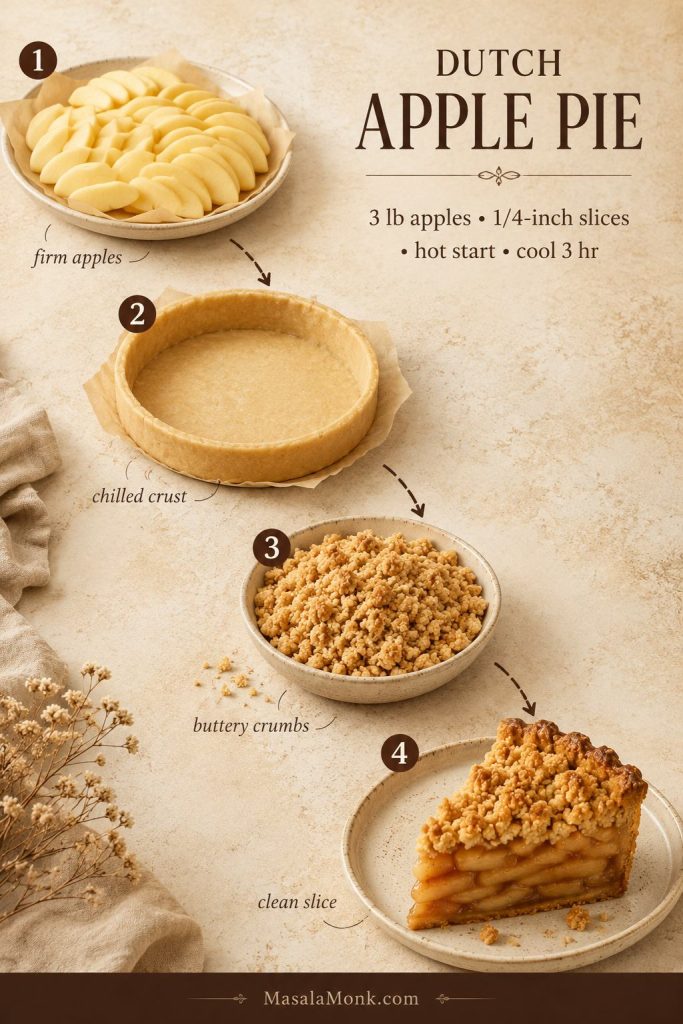
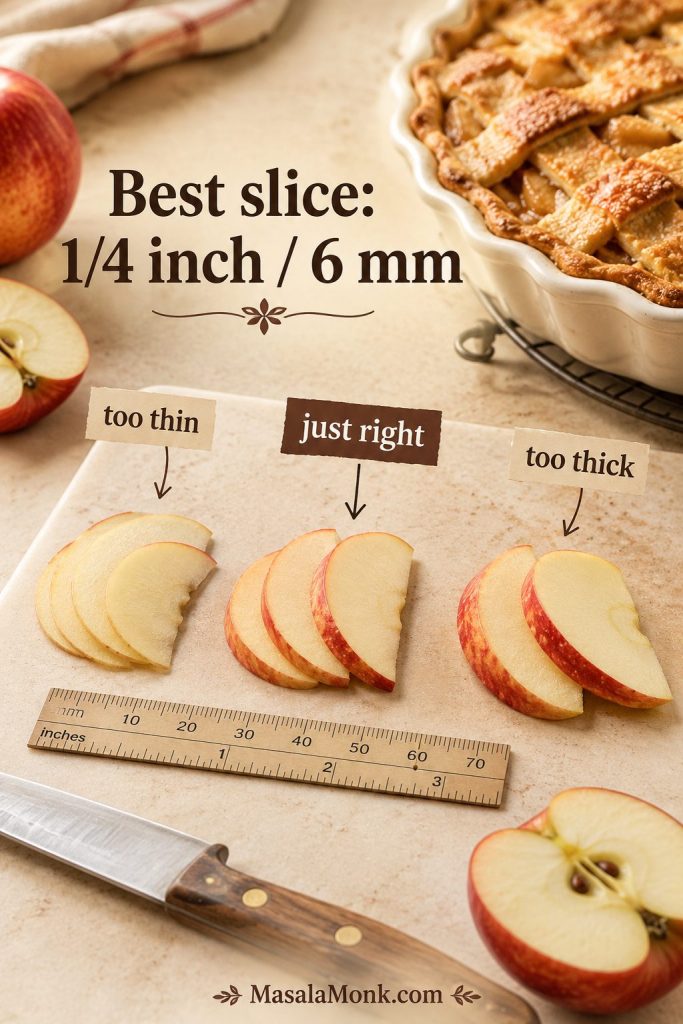
This Dutch apple pie recipe is built around a single-crust apple pie topped with buttery crumbs instead of a second sheet of pastry. For the best homemade version, use about 3 lb / 48 oz / 1.35 kg firm apples sliced 1/4 inch / 6 mm thick. Add them to a chilled single crust in a 9-inch deep-dish pie plate, cover with crumb topping, and bake for 55–65 minutes.
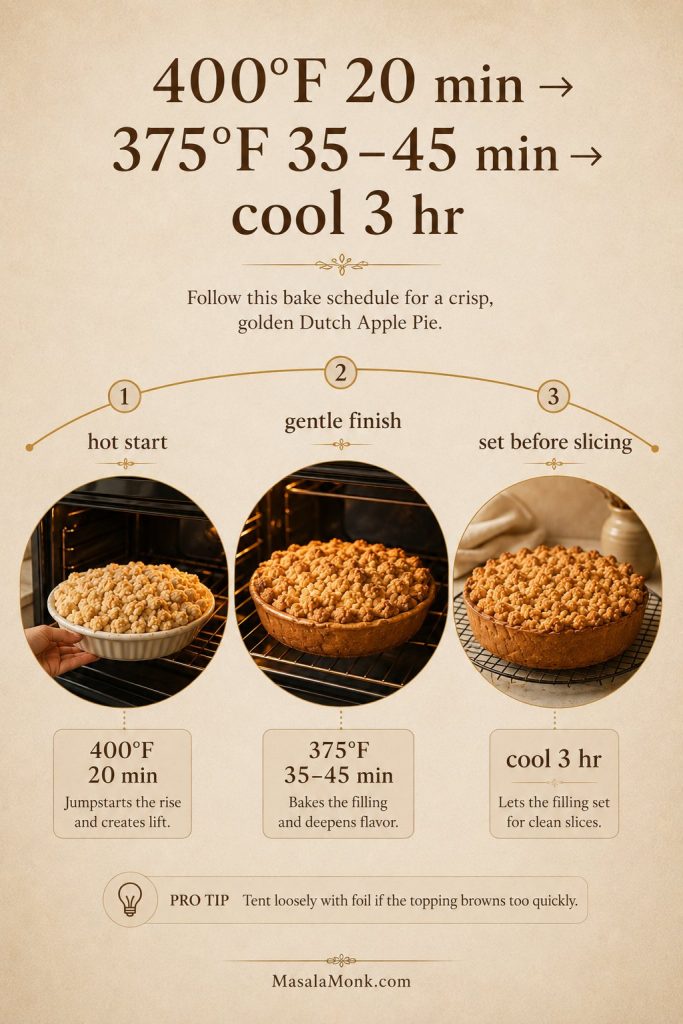
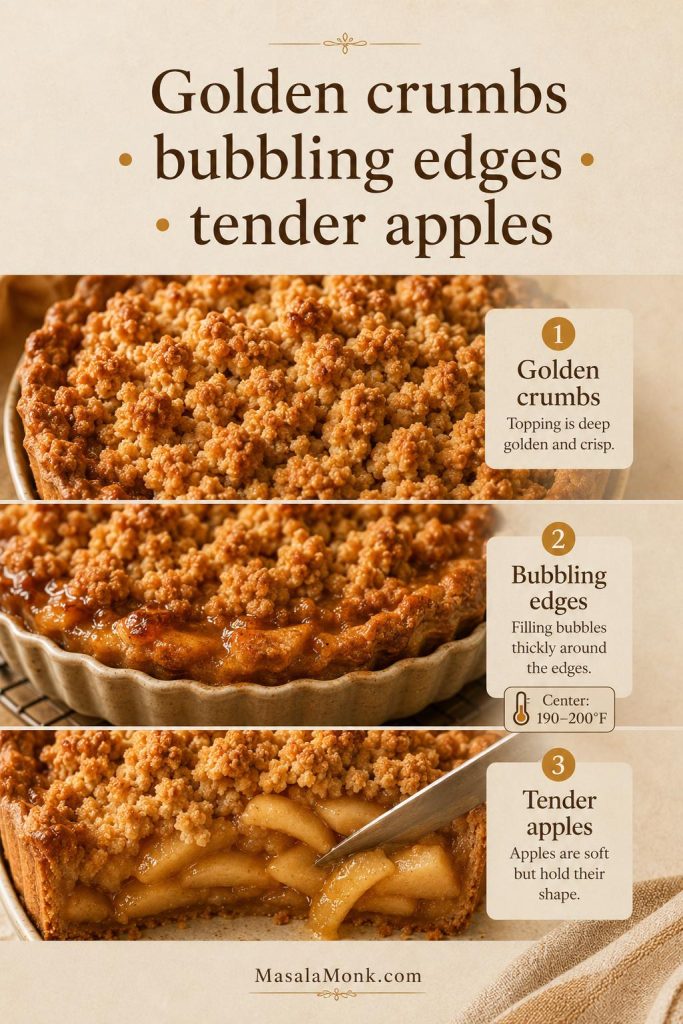
The most reliable oven schedule is 400°F / 200°C for 20 minutes, then 375°F / 190°C for 35–45 minutes more. The pie is done when the topping is golden, the filling bubbles around the edges, and the apples are tender. Let it cool for at least 3 hours before slicing so the filling sets.
Formula cue: Keep the short version in mind before baking: firm apples, even slices, a hot-start oven, and a full cooling window.
When these four cues are in place, the pie has a better chance of baking through without turning loose or runny.
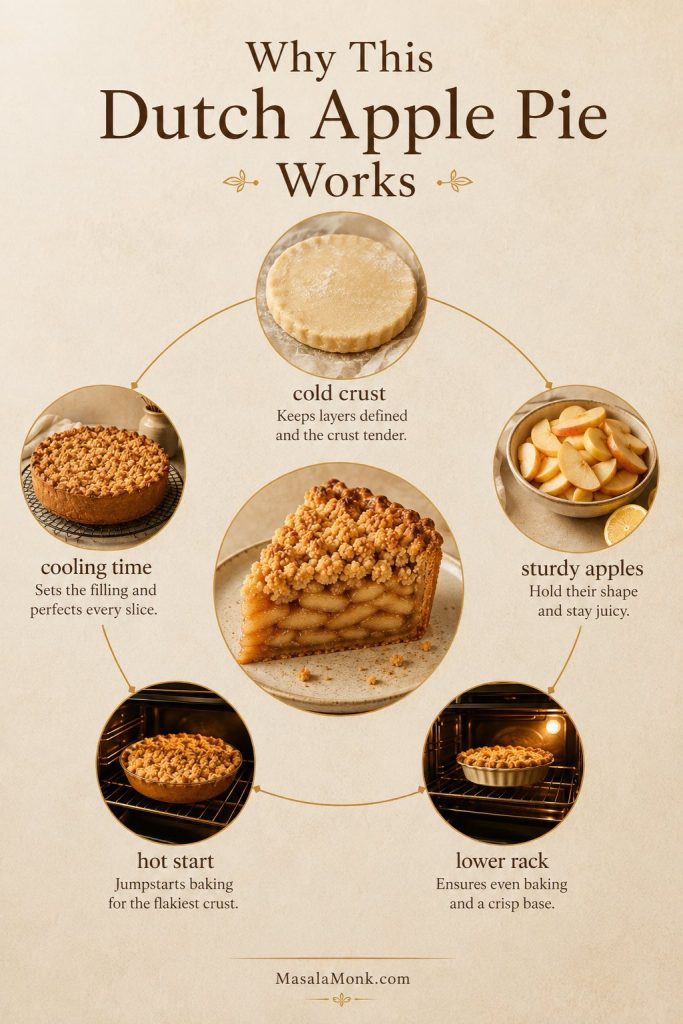
This pie is simple, but a few small details make the difference between a clean slice and a runny scoop. Too much loose apple juice softens the crust, too little butter makes the topping sandy, and soft apples can collapse before the filling sets. The method here keeps those problems in check so you get tender apples, crisp-edged crumbs, and slices that hold together.
Five Details That Protect the Pie
A hot-start bake gives the crust a head start. The first 20 minutes at 400°F / 200°C helps the bottom crust set before the apples release too much liquid.
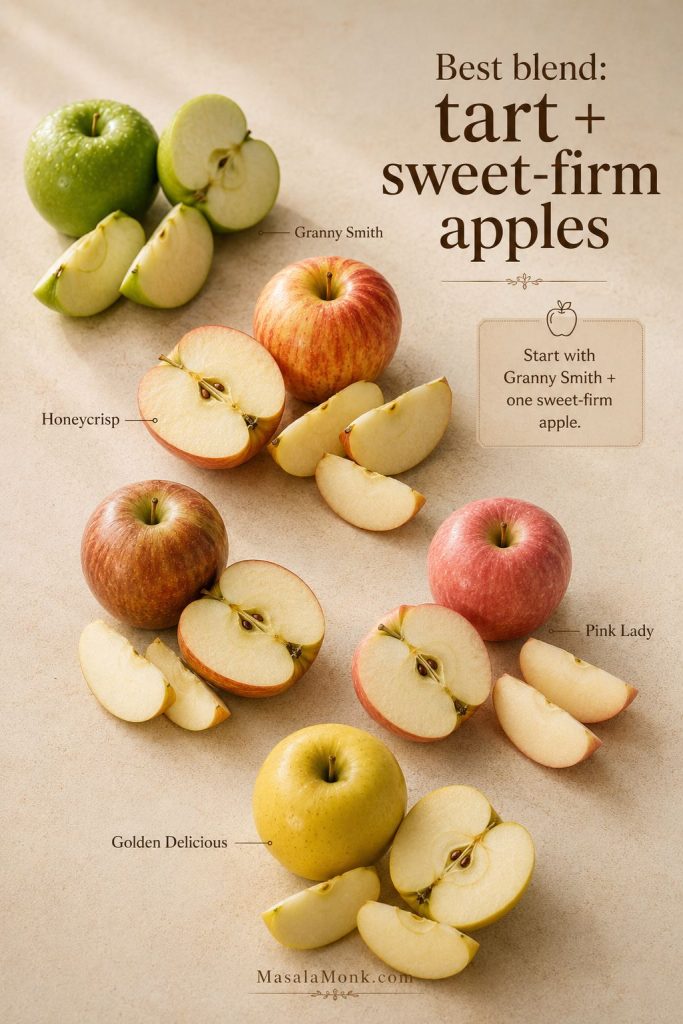
Apples with structure keep the filling from collapsing. Granny Smith with Honeycrisp, Braeburn, or Pink Lady gives tartness, sweetness, and shape.
Flour thickens the apple juices gently. It gives the filling a classic apple pie texture without turning the center gummy.
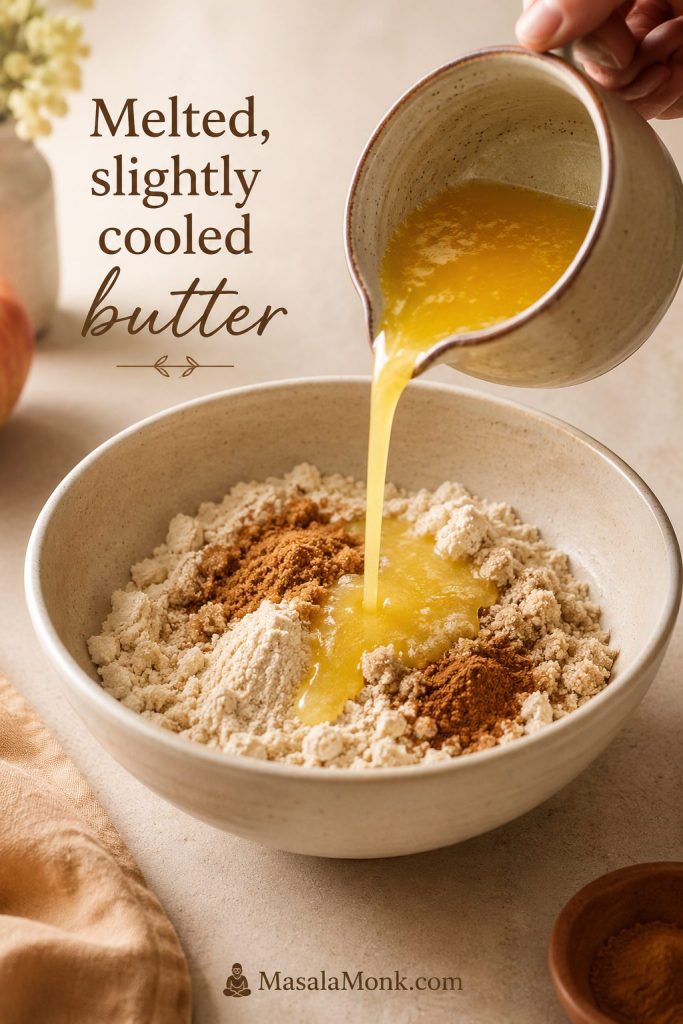
Melted, slightly cooled butter makes easy crumb clumps. The topping holds together without needing a pastry cutter.
A full cooling window gives cleaner slices. The pie tastes wonderful warm, but it slices much better after the filling has had time to settle.
The method works because the protections stack: cold crust, sturdy apples, lower oven rack, hot-start bake, and enough cooling time. Skip one and the pie can still work; skip several and you are much more likely to get a soggy bottom or runny filling.
The Method at a Glance
Method cue: This recipe protects the usual weak spots: a soft bottom crust, collapsed apples, over-browned crumbs, and filling that runs when sliced too soon.
Those safeguards work together, so the pie does not depend on one perfect step to bake and slice well.
Dutch apple pie is the crumb-topped cousin of classic apple pie: the same bottom crust and spiced apple filling, but with buttery streusel instead of a second pastry crust. That makes it easier to assemble because you do not have to roll, lattice, vent, or seal a pastry top.
What makes this pie distinct is the topping. It bakes into buttery clumps with crisp edges and a soft cinnamon-brown-sugar center. Meanwhile, the apples underneath soften and release enough juice to make a saucy filling without turning into applesauce.
A chilled bottom crust gives structure, firm apples keep the filling shapely, and the cinnamon crumbs bring the buttery texture that makes this pie so comforting. That is why the top eats a little like apple crisp while the bottom still feels like pie.
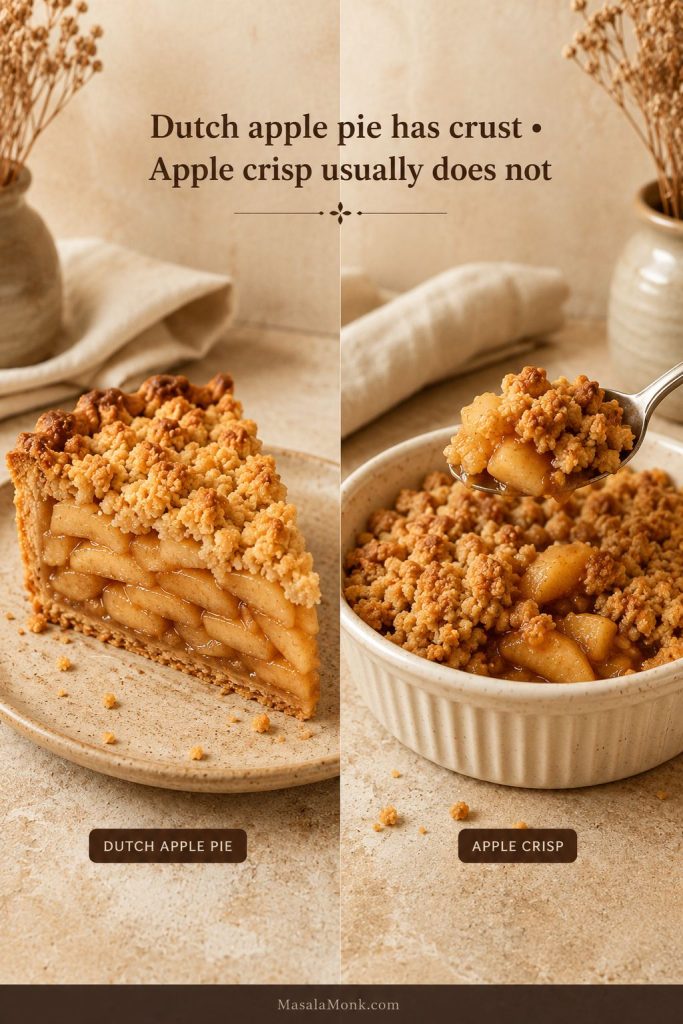
Pie vs crisp cue: If the topping reminds you of apple crisp, that is the point. The difference is underneath: Dutch apple pie has a bottom crust, while apple crisp usually does not.
Dutch apple pie and apple crisp share a buttery crumb feel, but the bottom crust changes everything. That crust gives the dessert structure, sliceability, and a true pie identity.
Dutch Apple Pie vs Apple Crumble Pie vs Apple Crumb Pie
These names are often used for similar desserts, especially in home baking. The main idea is the same: apples, a bottom crust, and a crumb topping instead of a second pastry crust.
Name
Usually Means
What to Expect
Dutch apple pie
Apple pie with a bottom crust and crumb topping
The most common name for this style of pie
Apple crumb pie
Apple pie with a crumb topping
Same basic dessert, with emphasis on the topping
Apple crumble pie
Apple pie with a crumble-style topping
Often used when the topping is thicker or more rustic
Apple crisp
Baked apples with a crisp or oat-style topping, usually without pie crust
More of a baked fruit dessert than a pie
This version is a Dutch apple pie, but it also fits what many bakers mean by apple crumb pie or apple crumble pie: a flaky crust, tender apples, and a generous crumb topping.
Name cue: Searchers use these names differently, but most are looking for the same dessert style: apples in a bottom crust with a crumb, crumble, or streusel-style top.
The names often overlap, especially in home baking. Whether someone says Dutch apple pie, apple crumb pie, or apple crumble pie, they usually mean apples, bottom crust, and a crumb-style top.
Ingredients for Dutch Apple Pie
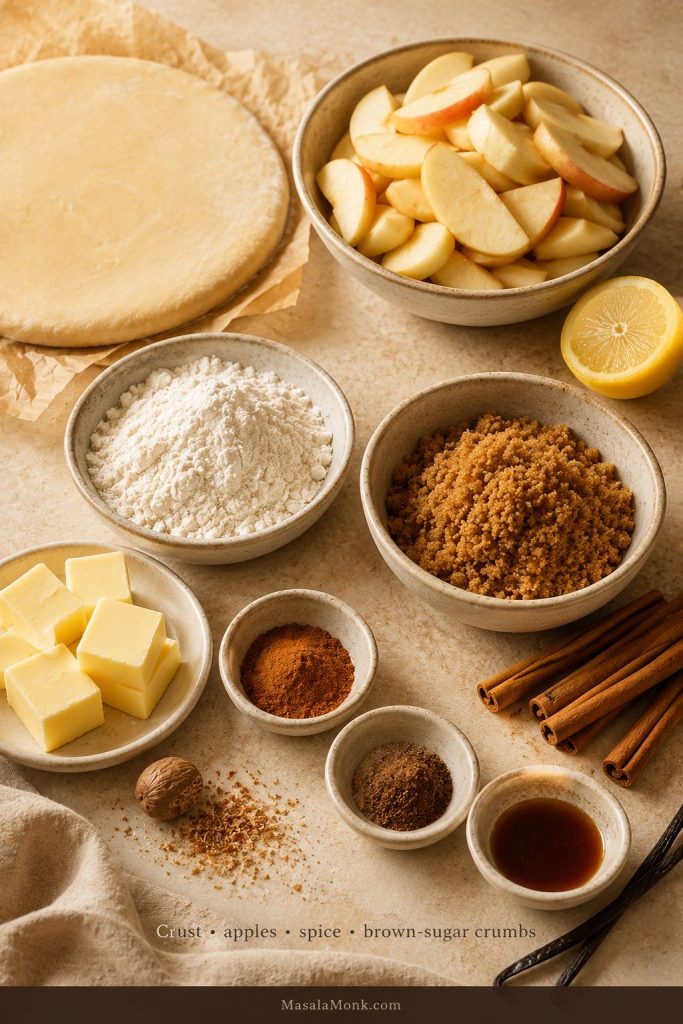
The ingredient list is short, but each part has to pull its weight. The crust needs to stay cold, the apples need enough structure, the filling needs just enough thickener, and the topping needs enough butter to bake into real crumbs instead of loose sugar-flour dust.
Ingredient cue: This recipe does not rely on a long ingredient list. Instead, the results come from handling the basics well: cold dough, firm apples, bright lemon, warm spice, flour, brown sugar, and butter.
The best results come from simple ingredients handled well: cold dough for structure, firm apples for shape, lemon for brightness, and butter for clustered crumbs.
One Bottom Pie Crust
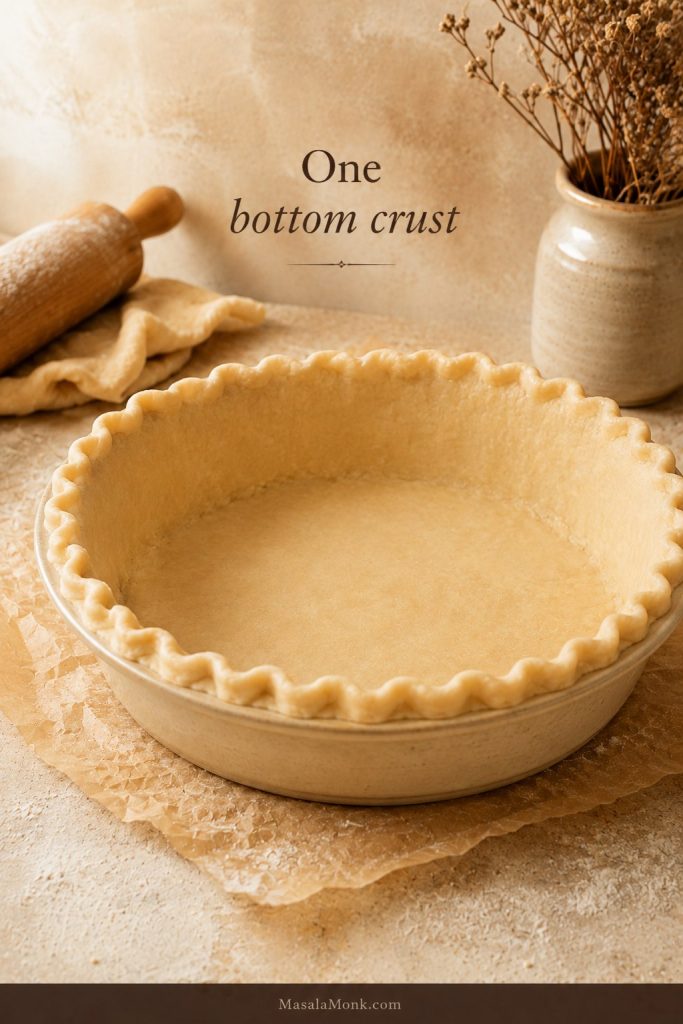
You need one chilled 9-inch pie crust. Homemade crust gives the best flavor and flake, but a good store-bought crust works if you are focused on the apple filling and crumb topping.
If you want a fully homemade base, use this apple pie crust recipe. For this style, you only need a single bottom crust, not a double crust.
Crust cue: Because there is no top pastry crust, the bottom crust has to carry the slice. Keep it chilled before filling so it has a better chance to set in the oven.
Since there is no top pastry crust, the bottom crust has to do the structural work while the crumb layer brings the buttery finish.
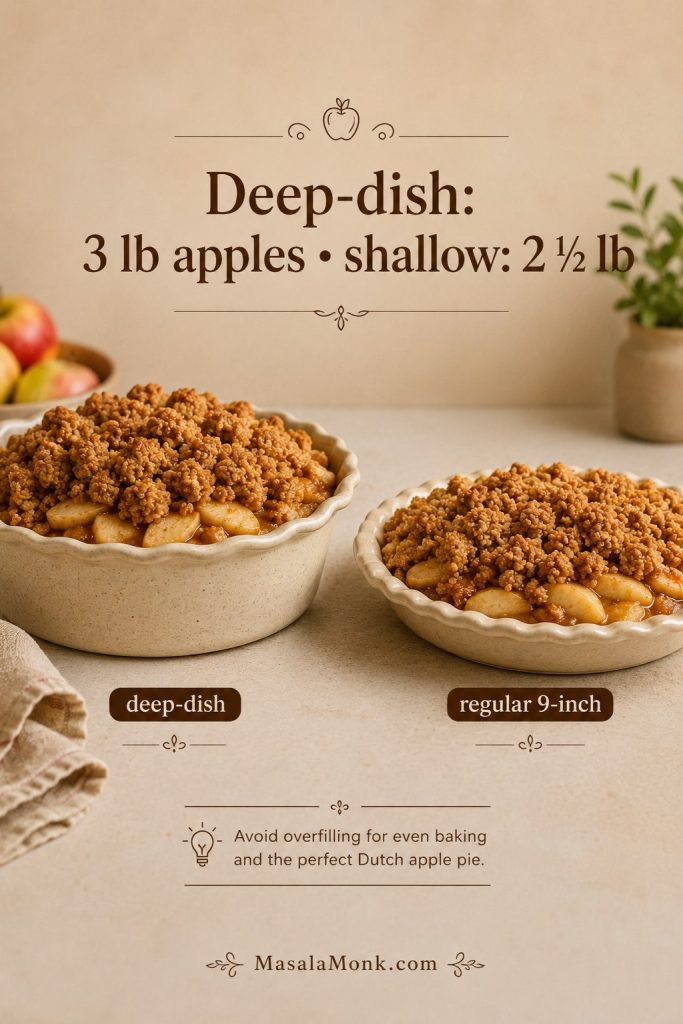
Using a shallow pie plate instead of deep-dish? Check the pan-size notes before adding all the apples.
Firm Apples
Use firm baking apples that hold their shape. Granny Smith gives tart structure, while Honeycrisp, Braeburn, Pink Lady, or Golden Delicious can round out the flavor.
The best all-purpose blend is 2 lb Granny Smith plus 1 lb Honeycrisp, Braeburn, or Pink Lady. For a sweeter pie, use half Granny Smith and half Honeycrisp or Golden Delicious.
Peeling gives the smoothest, most classic filling. You can leave the skins on if you like a more rustic pie, but the slices will feel chewier and the skins may separate slightly from the softened apple flesh.
Sugar, Lemon, Flour, and Spices
Granulated sugar sweetens the apples, brown sugar adds warmth, lemon juice brightens the filling, and flour helps thicken the juices as the pie bakes. Cinnamon is essential, while a little nutmeg gives the filling a classic bakery-style aroma.
All-purpose flour works best here because it gives a classic apple pie texture. Cornstarch can work in many fruit fillings, but it can become gummy when overused in a long-baked apple pie.
Buttery Crumb Topping
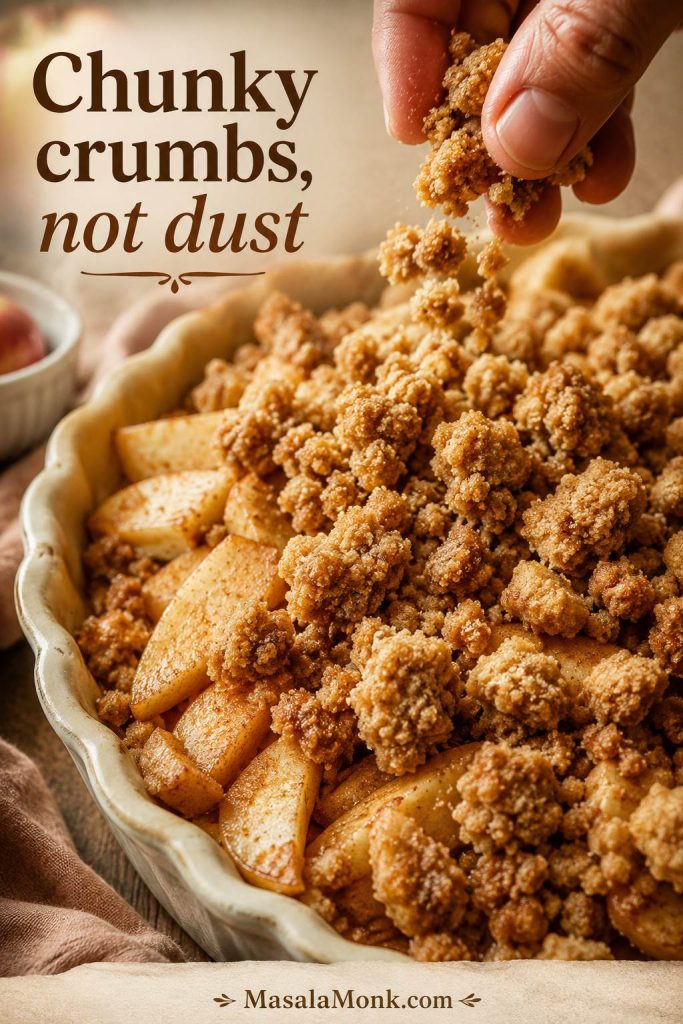
The crumb layer is made with flour, brown sugar, a little granulated sugar, cinnamon, salt, and melted butter. Once mixed, it should hold together in soft clumps when squeezed. If it looks dusty or powdery, it needs to be worked together a little more.
Best Apples for Dutch Apple Pie
Apple Varieties That Hold Shape
Apple choice cue: A good apple blend needs both flavor and structure. Start with tart Granny Smith, then add one sweet-firm apple so the filling tastes balanced and still holds shape.
The best apple blend gives you both flavor and structure. Start with tart Granny Smith, then add a sweet-firm apple such as Honeycrisp, Braeburn, or Pink Lady.
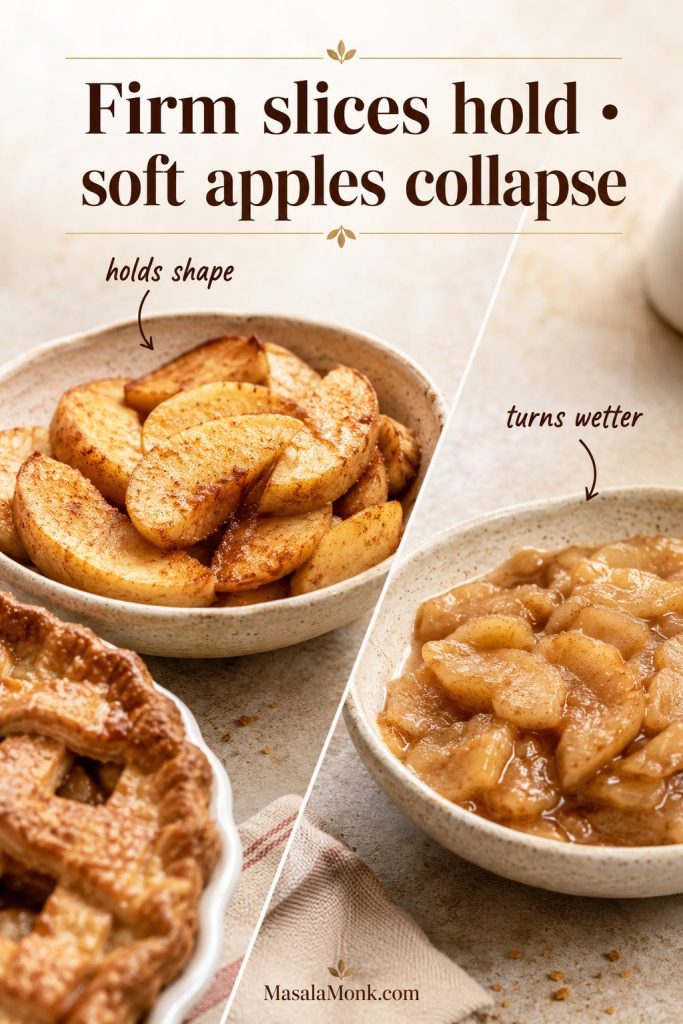
The best apples are firm, flavorful varieties that can survive a long bake without collapsing. Because this pie spends nearly an hour in the oven, avoid soft, mealy, or overripe apples that break down too quickly.
Apple
Best Use
Flavor / Texture
Granny Smith
Best tart backbone
Firm, sharp, holds shape well
Honeycrisp
Best sweet-tart partner
Juicy, crisp, fragrant
Braeburn
Best balanced baking apple
Sweet-tart, firm, aromatic
Pink Lady
Best bright flavor
Tart-sweet, firm, lively
Golden Delicious
Best softer sweet blend apple
Mellow, sweet, less tart
Avoid very soft, mealy, or overripe apples here. They may taste fine raw, but they can collapse during the long bake and leave you with a flatter, wetter filling.
Apple structure cue: Soft apples can taste fine raw but collapse during a long bake. For this pie, firmer slices give you a filling that stays tender instead of turning flat and watery.
Apples that taste good raw do not always bake well. For this long-baked apple pie, firm slices are safer because they soften without collapsing into a watery layer.
Slice the apples about 1/4 inch / 6 mm thick. Very thin slices soften faster but can turn compact and jammy. Thick slices can stay firm even when the crust and topping are done.
Slice Thickness for Even Baking
Slice thickness cue: The goal is not paper-thin slices or chunky wedges. Aim for even 1/4-inch slices so the apples soften at the same pace as the crust and crumb topping bake.
Even 1/4-inch apple slices bake more predictably. Thin slices can turn jammy, while thick slices may stay too firm after the crust and crumbs are already done.
The crumble layer is not just decoration. It is the main reason this pie tastes different from a regular apple pie: buttery, cinnamon-scented, lightly crisp on top, and soft enough underneath to melt into the apples. The goal is chunky crumbs, not loose sugar-flour dust.
Crumb topping cue: The topping should already look like real crumbs before it goes into the oven. If it looks like dry flour and sugar, keep working in the butter until clusters form.
Once those clumps toast, they become the signature golden top of an apple crumb pie.
For one 9-inch deep-dish pie, use:
1 cup / 4.4 oz / 125 g all-purpose flour
1/2 cup / 3.5 oz / 100 g packed light brown sugar
2 tablespoons / 0.9 oz / 25 g granulated sugar
1 teaspoon ground cinnamon
1/4 teaspoon fine salt
1/2 cup / 4 oz / 113 g unsalted butter, melted and cooled slightly
Optional: 1/2 cup / 2 oz / 55–60 g chopped pecans or walnuts
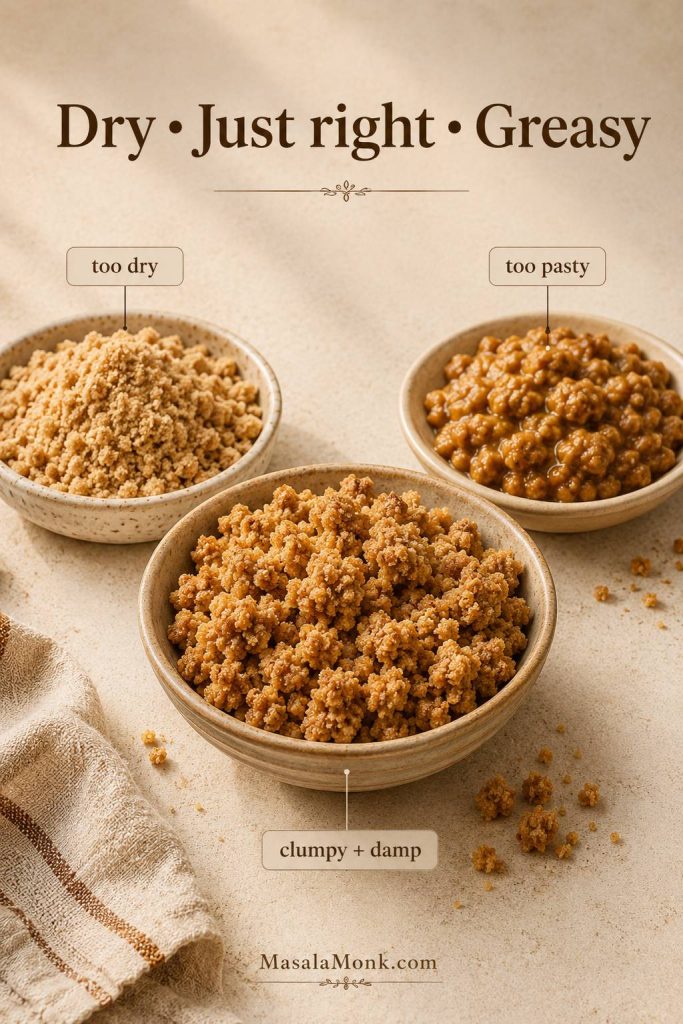
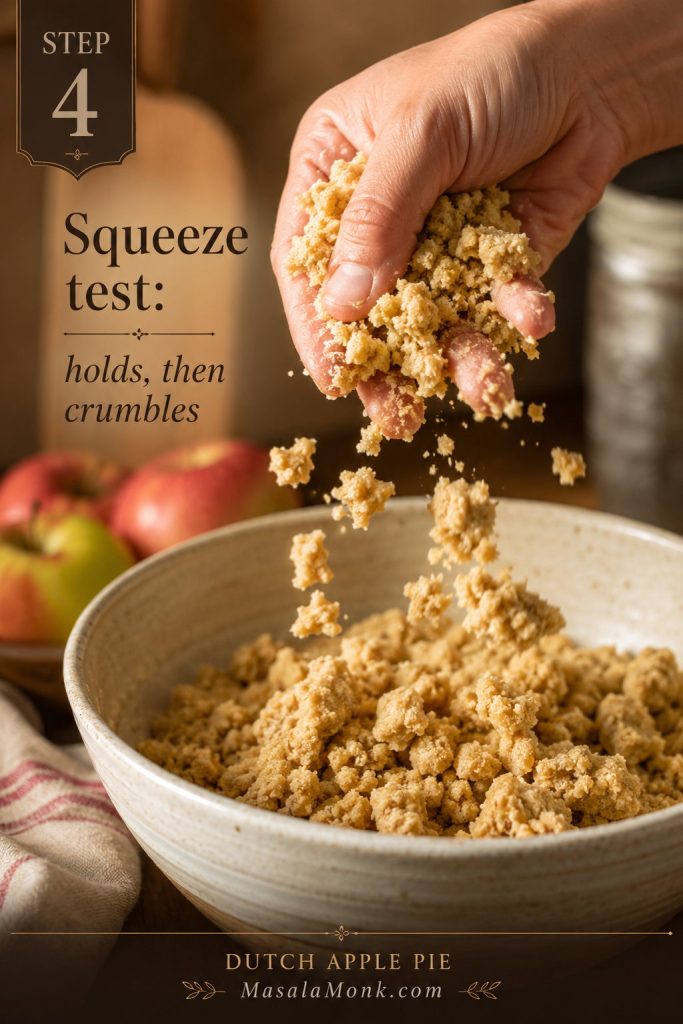
Stir the dry ingredients first, then add the melted butter. Mix until the topping forms damp crumbs. It should not look like loose flour, and it should not become one greasy paste. When squeezed, it should hold together, then break into chunky crumbs.
Melted Butter vs Cold Butter
Melted butter is easiest for this style of topping because it quickly coats the flour and sugar. Let it cool slightly before mixing. Boiling-hot butter can make the crumbs pasty or greasy instead of clumpy.
Butter cue: Melted butter is the easy route here, but it should be slightly cooled. Boiling-hot butter can make the topping pasty instead of crumbly.
Slightly cooled butter coats the flour and sugar without turning the mixture greasy.
Oats or No Oats?
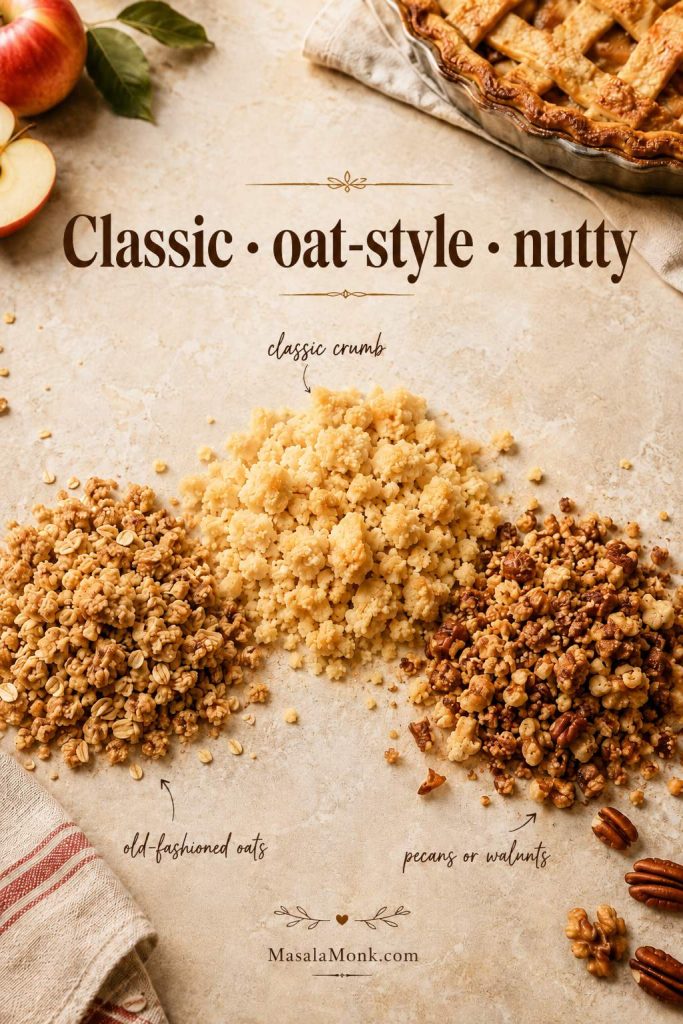
Classic Dutch apple pie often uses a flour-based topping without oats. For a more apple-crisp-style texture, replace 1/4 cup / 1 oz / 30 g of the flour with 1/4 cup / 0.9 oz / 25 g old-fashioned oats. Do not use instant oats; they can make the topping feel dusty.
Nuts or No Nuts?
Pecans or walnuts add crunch and a deeper toasted flavor. Leave them out for a smoother, more classic crumb topping, or add them when you want the pie to feel richer and more holiday-ready.
Variation cue: Keep the classic flour crumb for the most traditional Dutch apple pie texture. Add oats for a more apple-crisp feel, or nuts when you want extra toasted crunch.
Classic crumbs keep the pie closer to a traditional Dutch apple pie. However, oats make the topping feel more like apple crisp, while nuts add toasted crunch.
Crumb Topping Texture Guide
Texture cue: Use the crumb texture as a quick check before assembly. Sandy topping needs more mixing, while greasy topping needs a brief chill so the crumbs separate again.
If the topping looks sandy, keep working in the butter; if it looks greasy, chill it briefly so the crumbs can separate again.
What You See
What It Means
How to Fix It
Dry and sandy
The butter has not been worked in enough
Press the mixture with your fingers until clumps form
Wet and pasty
The butter was too hot or the topping was overmixed
Chill 10 minutes, then break into crumbs
Huge greasy chunks
The topping was over-compressed
Break apart gently before adding to the pie
Browning too fast
The topping is exposed to heat before the apples are done
Tent loosely with foil once golden
Soft after storage
The pie was covered warm or refrigerated
Reheat slices uncovered in the oven
Crumb topping cue: The topping should feel like damp, clumpy sand. Keep mixing and pressing when it will not hold together after a squeeze. A greasy mixture only needs a brief chill before you break it back into crumbs.
For sandy, greasy, or overly dark crumbs, the troubleshooting section gives quick fixes without changing the whole recipe.
The Pan and Tools That Matter Most
You do not need anything fancy. The three tools worth caring about most are a deep-dish pie plate, a rimmed baking sheet, and something to protect the crust edges if they brown early.
9-inch deep-dish pie plate: holds the full 3 lb / 48 oz / 1.35 kg apple filling.
Rimmed baking sheet: catches drips and gives the pie a stable surface in the oven.
Foil or pie shield: protects the crust edge or crumbs if they brown before the apples are tender.
Large mixing bowl: gives the apples room to coat evenly with sugar, flour, lemon, and spices.
Small mixing bowl: keeps the topping separate until assembly.
Rolling pin: needed if you are using homemade pie crust.
Apple peeler, corer, or sharp knife: helps keep the slices even.
Instant-read thermometer: optional, but useful if you want a doneness cue beyond color and bubbling.
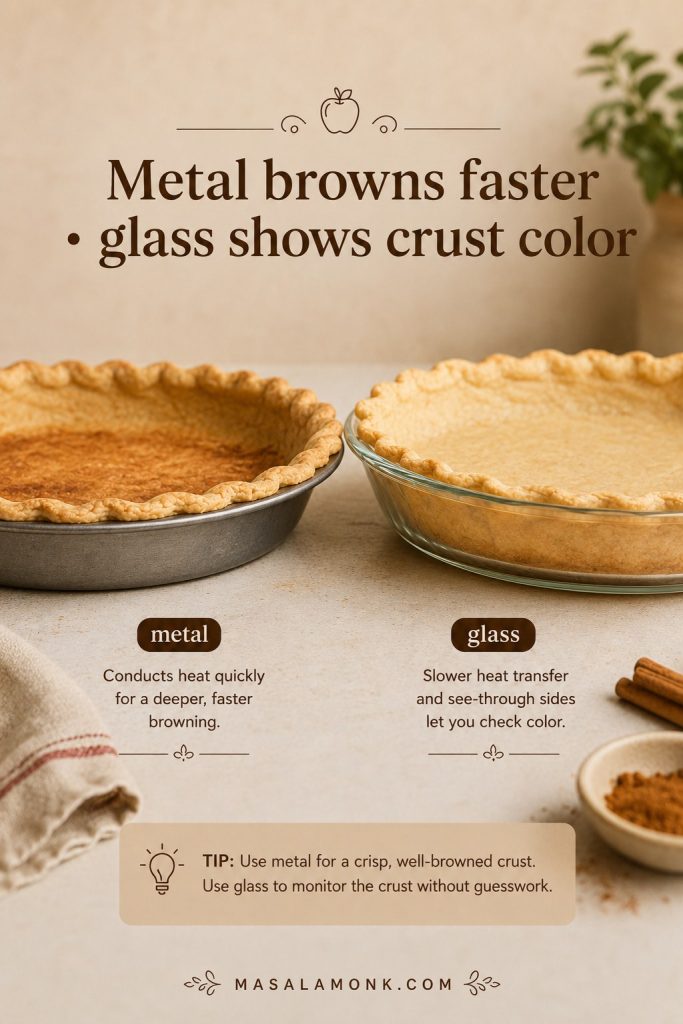
A metal pie plate browns the bottom crust more quickly, while glass lets you see the crust color but heats more slowly. With glass, the lower rack and full bake time matter even more.
Choosing Metal or Glass
Pan cue: Your pie plate changes how the bottom crust bakes. Metal gives the crust faster heat, while glass lets you check color but often needs the full bake time.
Metal gives the bottom crust a faster start, which helps browning. Glass lets you watch the crust color, but it usually needs the full bake time to perform well.
Using a Regular 9-Inch Pie Plate?
The amounts here are sized for a deep-dish 9-inch pie plate. For a shallow or standard-depth plate, use about 2 1/2 lb / 40 oz / 1.1 kg apples instead of the full 3 lb. Do not force every apple slice into the crust; an overfilled shallow pie can overflow, bake unevenly, and soften the bottom crust.
Pan-size cue: The apple amount depends on the depth of your plate. A deep-dish pan can take the full 3 pounds, but a shallow 9-inch plate needs less filling to bake cleanly.
A deep-dish pie plate can handle more apples. In a shallow 9-inch plate, reduce the filling so the pie bakes evenly instead of overflowing or softening the bottom crust.
You can also use slightly less crumb topping if the pie is very full. Place the pie on a rimmed baking sheet and start checking for doneness around 50 minutes.
How to Make Dutch Apple Pie
Once the crust is cold, the apples are sliced evenly, and the crumbs hold together when squeezed, the assembly is straightforward. The main thing is to keep the crust chilled and give the pie enough time in the oven for the filling to bubble.
Step 1: Roll and Chill the Crust
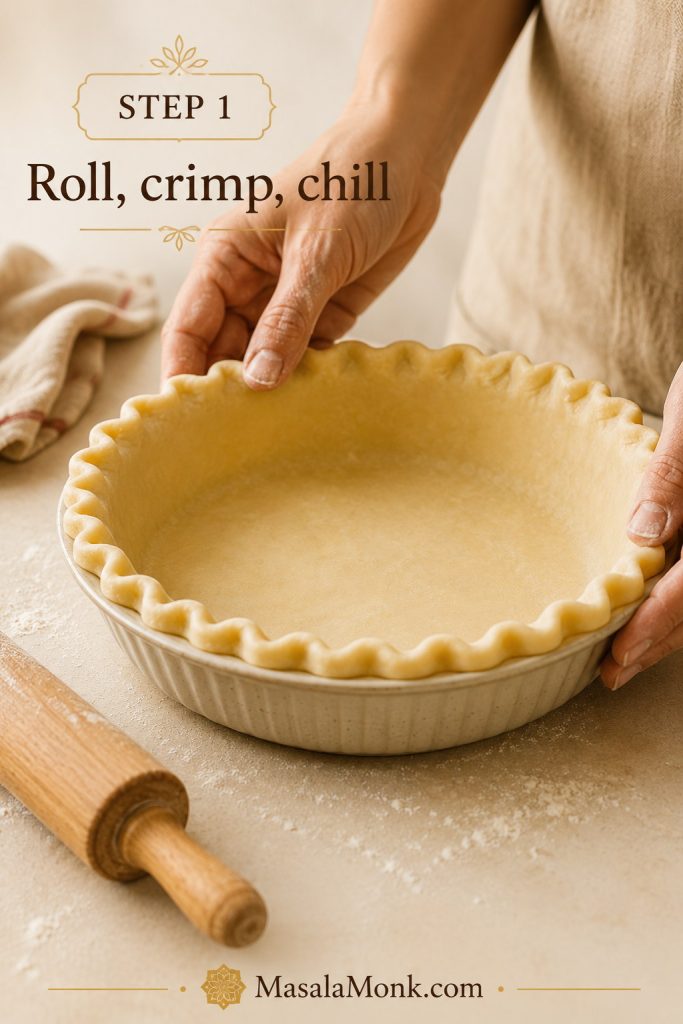
Roll one pie crust into a 12-inch circle and fit it into a 9-inch deep-dish pie plate. Trim and crimp the edges, then chill the crust while you prepare the apples and crumb topping.
Chilling gives the bottom crust a better chance to set before the apple juices release fully.
Step 1 cue: Start with the crust cold and shaped before you deal with the filling. That gives the dough structure before the apples release moisture.
A cold, crimped crust gives the pie a stronger base before the apples release moisture and the crumb topping begins to brown.
Step 2: Peel, Core, and Slice the Apples
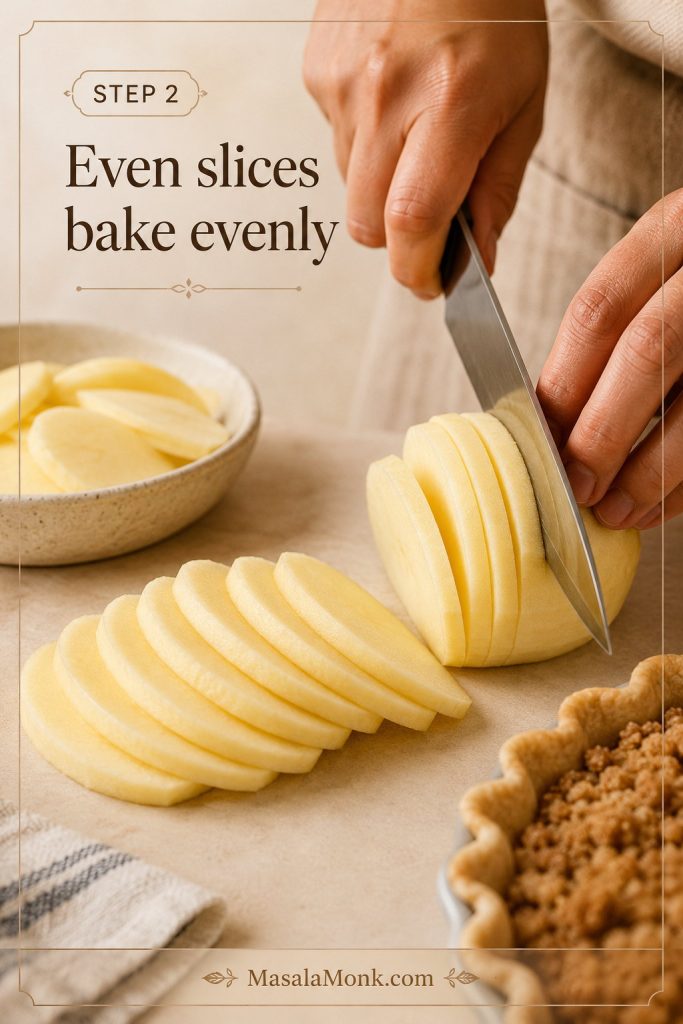
Peel and core the apples, then slice them about 1/4 inch / 6 mm thick. Keep the slices as even as possible so they soften at the same rate.
Step 2 cue: Even slicing is more important than perfect-looking slices. When the apple pieces are similar in thickness, they soften together instead of baking unevenly.
Even apple slices soften at the same pace. As a result, the filling bakes more evenly and avoids the mix of mushy pieces and underbaked chunks.
Step 3: Toss the Apple Filling
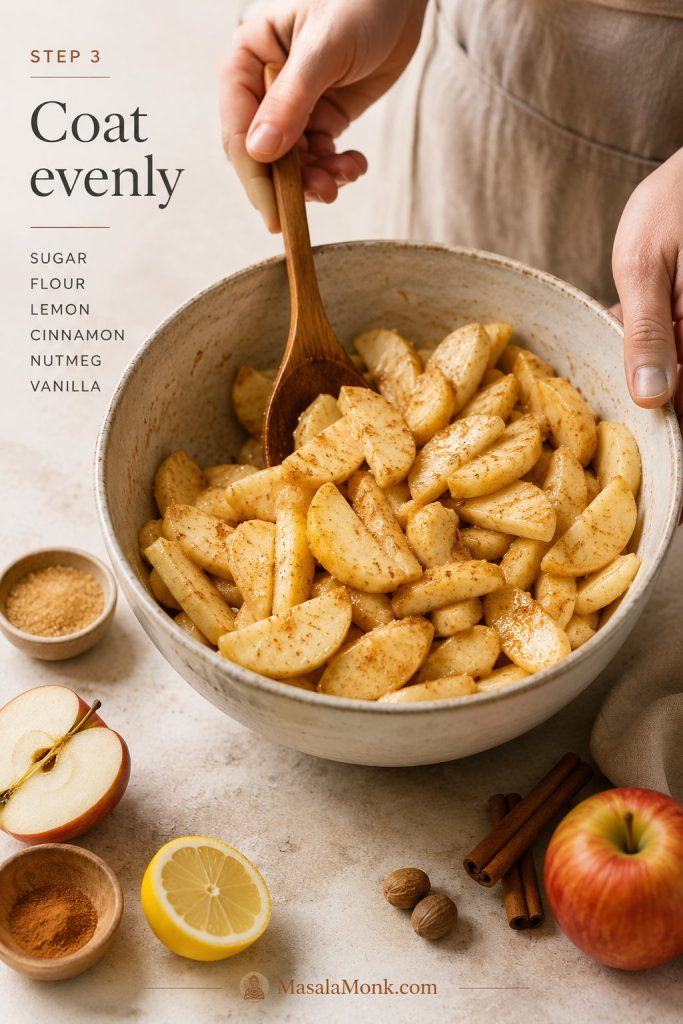
In a large bowl, toss the sliced apples with granulated sugar, brown sugar, flour, lemon juice, cinnamon, nutmeg, salt, and vanilla. Let the mixture sit for 10 minutes while you make the topping.
Step 3 cue: Coat the slices evenly before they go into the crust. Flour, sugar, lemon, and spice need to reach the apples throughout the bowl, not sit in dry patches.
Even coating matters because the flour cannot thicken the apple juices properly if it stays in dry patches at the bottom of the bowl.
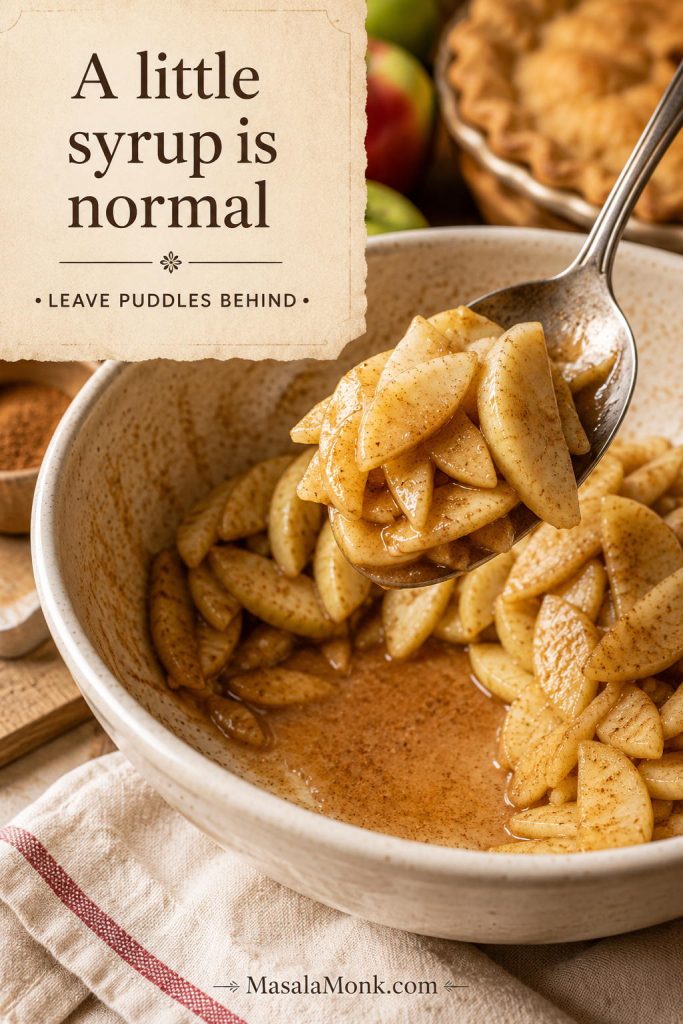
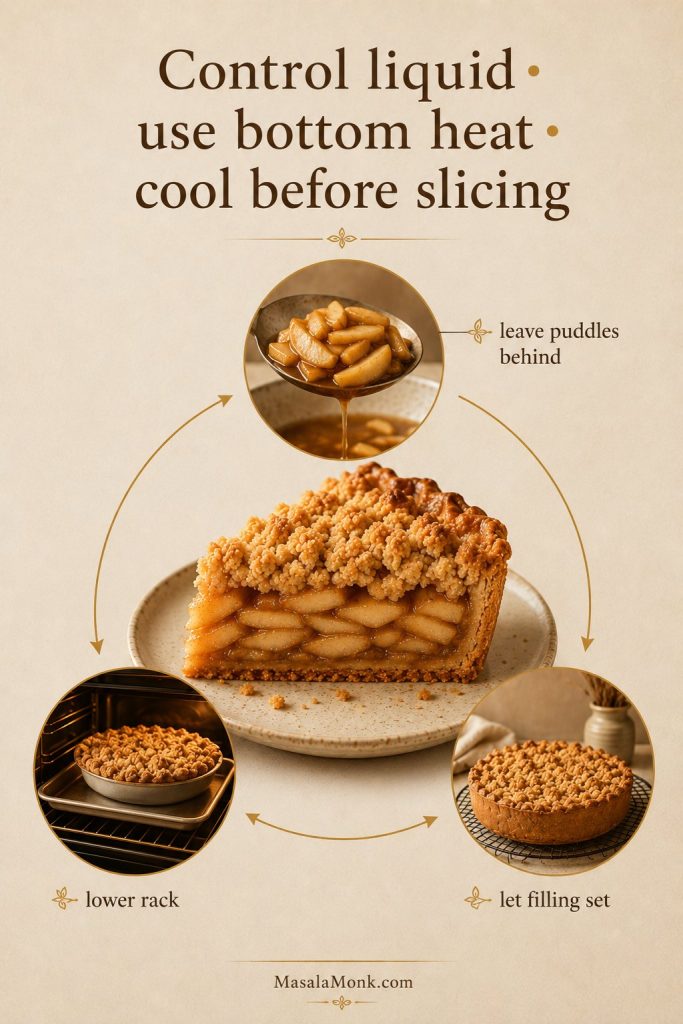
That short rest lets the sugar begin drawing moisture from the apples. A little syrup in the bottom of the bowl is normal; if the slices are sitting in a visible puddle, lift the apples into the crust and leave most of that liquid behind.
Liquid control cue: After the apples rest, some syrup is normal. When you see a real puddle, spoon the apples into the crust and leave the extra liquid behind.
This is the moment to protect the crust: spoon in the apples, not the full syrup at the bottom of the bowl.
Stir flour, brown sugar, granulated sugar, cinnamon, and salt in a bowl. Add melted, slightly cooled butter and mix until the topping forms chunky crumbs. When squeezed in your hand, it should hold together, then break apart easily.
Step 4 cue: The squeeze test tells you if the topping is ready. It should hold together in your hand, then break apart into irregular brown-sugar crumbs over the apples.
Use the squeeze test before topping the pie. The mixture should hold together in your hand, then break into chunky brown-sugar crumbs over the apples.
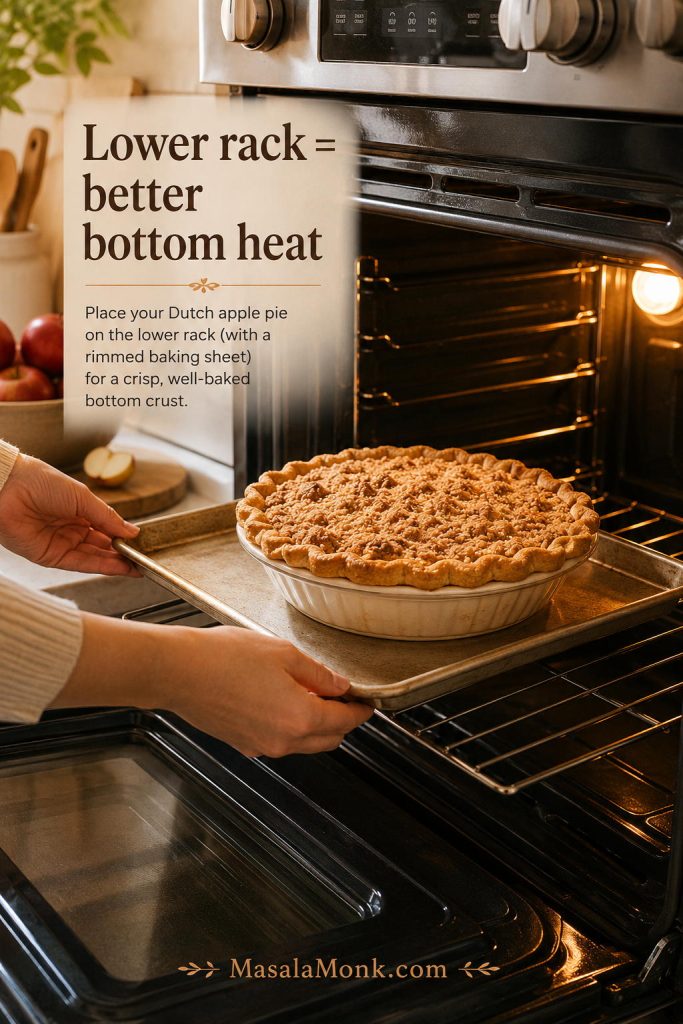
Now place a rack in the lower third of the oven and heat the oven to 400°F / 200°C. The lower rack gives the bottom crust more direct heat, while the crumbs still brown from above.
Oven rack cue: Use the lower rack for stronger bottom heat, and keep the pie on a rimmed baking sheet to catch bubbling juices.
Think of the rimmed sheet as support and insurance: it steadies the pie, catches drips, and lets the bottom crust get stronger heat.
Step 5: Fill the Pie
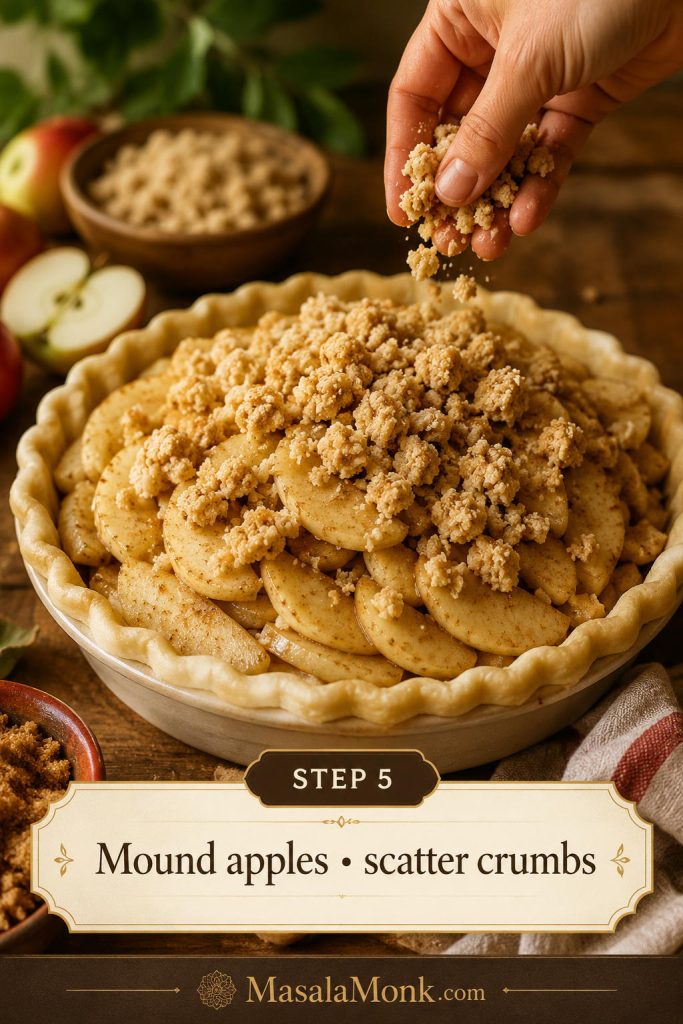
Spoon the apples into the chilled crust, mounding them slightly in the center. Do not worry if the apples sit a little high before baking; they settle as they soften. Scatter the crumb topping over the apples and press it just lightly enough to stay in place without compacting it.
Assembly cue: A slight apple mound is fine before baking because the slices settle in the oven. Scatter the crumbs gently so the topping stays textured instead of packed flat.
Mound the apples gently, then scatter the crumbs without pressing hard; that way, the filling can settle while the topping keeps its texture.
Step 6: Bake Hot, Then Lower the Heat
Place the assembled pie on a rimmed baking sheet and bake at 400°F / 200°C for 20 minutes. Without removing the pie, reduce the oven temperature to 375°F / 190°C and bake for 35–45 minutes more.
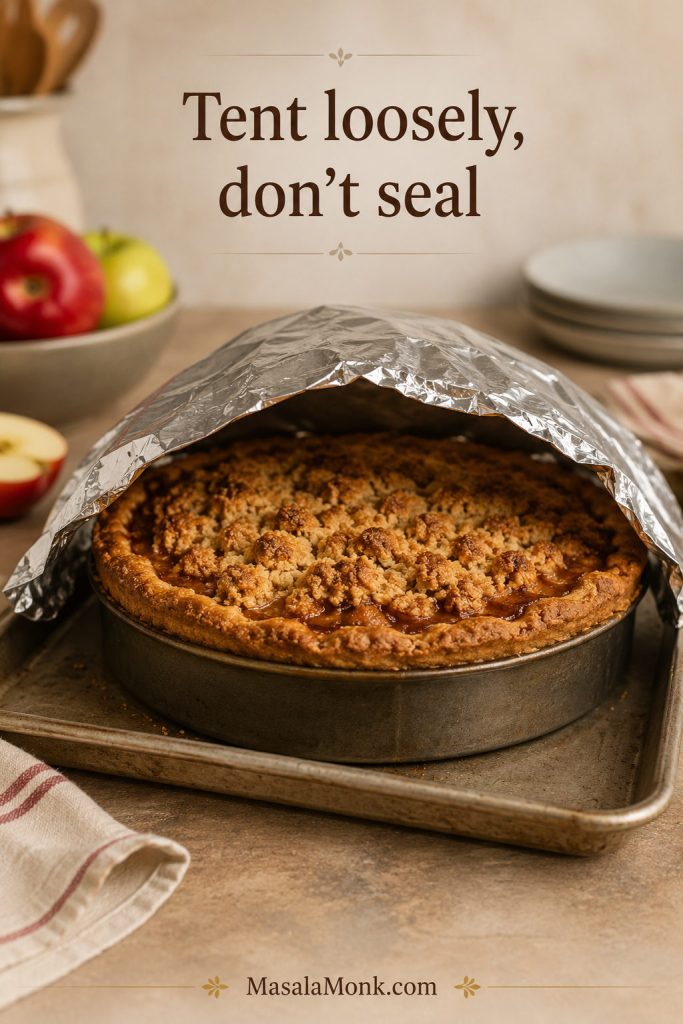
If the crumbs or crust edges brown too quickly, usually after the first 30–35 minutes, tent the pie loosely with foil. Do not seal it tightly, or trapped steam can soften the top.
Foil cue: Use foil as a shield, not a lid. A loose tent protects the crumbs and crust edge without sealing in steam.
The foil should hover over the pie, protecting the top while still letting steam escape.
Not sure whether the pie is fully baked? Use the bake time and doneness cues before pulling it from the oven.
Step 7: Cool Before Slicing
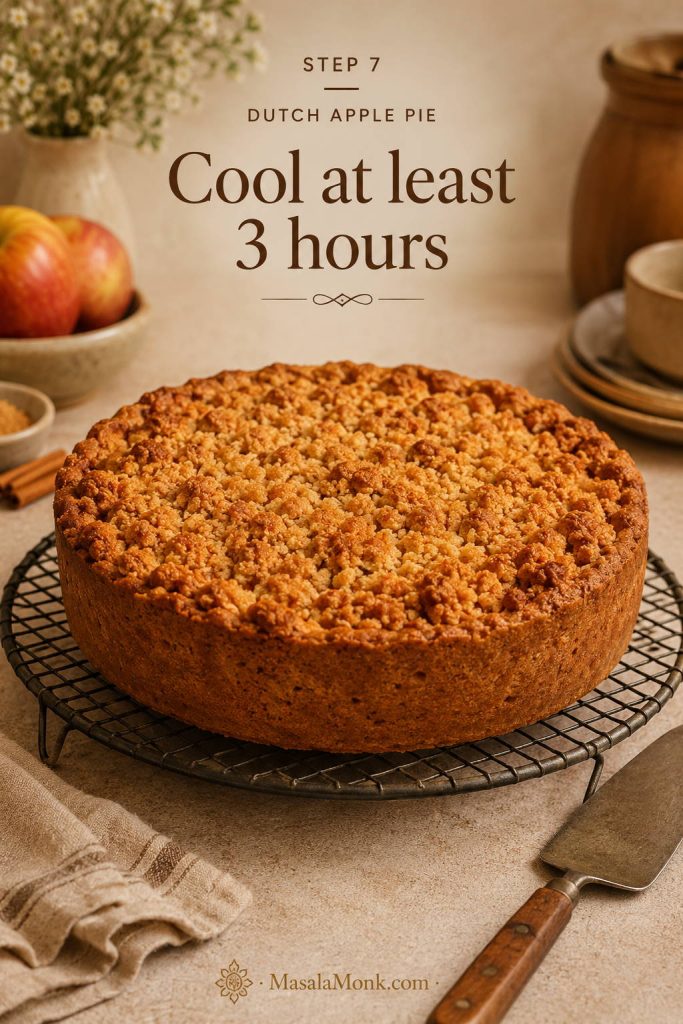
Cool the pie for at least 3 hours before slicing. As the pie cools, the filling keeps thickening. The pie can be warm when served, but not straight-from-the-oven hot if you want clean slices.
Cooling cue: When the pie comes out of the oven, the filling is still setting. Give it the cooling window so the apple layer thickens before you cut into it.
Treat cooling as part of the recipe; this is when the filling becomes sliceable.
How Long to Bake Dutch Apple Pie
A deep-dish pie made with raw sliced apples usually needs 55–65 minutes total bake time.
Two-Temperature Bake Schedule
Bake-time cue: The two-temperature bake has a purpose: strong heat first for the crust, then gentler heat so the apples can finish without scorching the crumb topping.
The two-temperature bake gives the pie a better balance: strong heat first for the crust, then gentler heat so the apples finish without scorching the crumbs.
Stage
Temperature
Time
What It Does
Hot start
400°F / 200°C
20 minutes
Gives the crust a head start and begins browning
Gentle finish
375°F / 190°C
35–45 minutes
Softens apples and thickens filling without burning topping
Cooling
Room temperature
At least 3 hours
Lets the filling settle for cleaner slices
Do not pull the pie just because the crumbs look golden. The filling also needs to bubble and the apples need to feel tender; otherwise, the crust and topping may look done while the center still needs time.
Look for golden brown crumbs, bubbling juices around the edges, and apples that feel tender when pierced with a thin knife. An instant-read thermometer is optional, but the center of the filling should be about 190–200°F / 88–93°C.
Doneness Cues Beyond Color
Doneness cue: Golden crumbs are only part of the test. Look for bubbling edges and tender apples before pulling the pie from the oven.
Color is only the first clue; bubbling edges and tender apples confirm the filling has had enough time to thicken.
Should You Par-Bake the Crust for Dutch Apple Pie?
You can usually skip par-baking for this raw-apple Dutch apple pie recipe as long as the crust gets three protections: a cold start, a lower oven rack, and enough total bake time. The apples need nearly an hour in the oven anyway, so the bottom crust has time to cook through.
Par-baking becomes more helpful when the filling is already cooked, canned, or unusually wet. In those cases, the filling may not need as much oven time after assembly, so the crust benefits from a head start.
Par-bake cue: Par-baking is not a blanket rule for this pie. Raw apples need a long bake anyway, while cooked, canned, or very wet fillings may need extra crust protection.
Par-baking depends on the filling. Raw apples need the long bake, while pre-cooked or canned filling may benefit from giving the crust a head start.
Situation
Par-Bake?
Why
Raw apple filling, this recipe
Usually no
The long bake gives the crust enough time to cook
Pre-cooked apple filling
Helpful
The filling is already soft, so the assembled pie may bake for less time
Canned apple pie filling
Helpful
Canned filling is soft, sweet, and already thickened
Very juicy apples
Optional
Par-baking adds extra protection against a soft bottom crust
Glass pie plate
More helpful
Glass heats more slowly than metal
Metal pie plate
Less necessary
Metal conducts heat faster and helps the bottom crust brown
How to Keep Dutch Apple Pie from Getting Soggy
A soggy bottom usually comes from one of three places: too much loose apple juice, not enough heat under the crust, or slicing before the filling has settled. This style of pie is especially vulnerable because it has a juicy fruit filling and only one crust.
Three Causes to Control
Soggy-bottom cue: A soft bottom crust usually comes from too much loose apple juice, not enough heat under the pie, or slicing before the filling has set. Control those three points and the pie becomes easier to trust.
Use this as a quick pre-bake check: manage liquid first, then rely on lower-rack heat and cooling time.
Chill the crust before filling. Cold dough holds its structure better in the oven.
Choose apples with structure. Soft apples collapse quickly and release more liquid.
Do not pour in all pooled apple juice. Spoon in the apples, but leave excess liquid behind if the bowl is very wet.
Use enough thickener. Flour helps bind the juices as the pie bakes.
Bake on a lower rack. This gives the bottom crust more direct heat.
Use a rimmed baking sheet. It catches drips and keeps the pie stable.
Give the filling a full cooling window. Cutting too early makes even a well-baked pie look runny.
Do not cover while warm. Trapped steam softens the crumb layer and crust.
Optional Crust Barrier
For an extra barrier against fruit juices, King Arthur Baking suggests using a thin layer of “crust dust” on the bottom crust before adding fruit filling. It is optional, but useful if you often struggle with soggy pie bottoms. You can read their technique here: King Arthur Baking’s crust dust method.
Raw Apples vs Pre-Cooked Apple Filling
All three routes can work, but they give you different pies. Fresh apple slices taste brighter and more classic, pre-cooked filling slices more neatly, and canned filling is the fastest shortcut when you want the crumb-topped version with less prep.
Filling route cue: The filling route changes the final pie. Fresh slices taste brighter, cooked filling can slice more neatly, and canned apple pie filling is the fastest shortcut.
Choose fresh slices for brighter flavor, pre-cooked filling for neater pieces, or canned apple pie filling when time matters most.
Method
Best For
Tradeoff
Raw sliced apples
Easiest classic pie
More shrinkage and more juice management
Pre-cooked apple filling
Neater slices, make-ahead baking, less gap under topping
Extra step; filling must cool before going into crust
Canned apple pie filling
Fastest shortcut
Softer, sweeter, less fresh-tasting
I use raw apples here because the full 55–65 minute bake gives them enough time to soften while keeping the flavor fresher and less jammy. Even slices, enough thickener, and visible bubbling are the keys.
Pre-cooked filling is better when you want less shrinkage, fewer hollow gaps under the topping, or cleaner slices for a holiday table. It is also useful if you want to make the filling ahead. Just cool it completely before adding it to the crust; warm filling can melt the butter in the dough and make the bottom crust heavy.
If you want the make-ahead route, use cooled homemade filling from this apple pie filling recipe.
Dutch Apple Pie with Canned Apple Pie Filling
Canned apple pie filling works when you want the shortcut version, but it needs a lighter hand. Because it is already sweetened, softened, and thickened, skip the flour, reduce the sugar, and wake it up with lemon juice, cinnamon, and a small pinch of salt.
Shortcut cue: Canned filling is already soft, sweet, and thickened, so it needs balance more than more sugar. Lemon, cinnamon, and salt make the shortcut taste brighter.
Canned apple pie filling works better after a few small fixes. Lemon brightens it, cinnamon warms it, and a pinch of salt balances the sweetness.
If you are using canned filling because you need a faster pie, the par-bake section is worth checking before you assemble it.
How to Adjust Canned Apple Pie Filling
Use about 2 cans, 20–21 oz each, for one 9-inch pie.
Do not add the flour from the raw-apple filling.
Skip most or all of the added sugar in the apple layer.
Brighten the flavor with 1 tablespoon / 0.5 fl oz / 15 ml lemon juice.
Stir in 1/2 teaspoon cinnamon if the filling tastes flat.
Balance the sweetness with a small pinch of salt.
Use the same brown-sugar crumb topping listed above.
Consider par-baking the crust because canned filling needs less time in the oven.
If your pie plate is shallow, do not force in both full cans; leave a little behind rather than overfilling.
Bake Time for the Shortcut Version
A canned-filling version may bake closer to 45–55 minutes, depending on the crust, pan, and whether the filling went in cold or at room temperature. Bake until the crumb topping is golden and the filling bubbles. Cool fully before slicing, because canned filling can look thick while hot but loosen once cut.
How to Serve Dutch Apple Pie: Warm, Room Temperature, or Reheated
Dutch apple pie is best after it has cooled long enough to slice cleanly. Serve it at room temperature, gently warmed, or with vanilla ice cream if you want the contrast of warm apples and cold cream. A small drizzle of caramel works too, but the pie is already sweet enough that it does not need much.
For the cleanest slices, cool the pie completely first, then rewarm individual pieces in a 325°F / 160°C oven for 10–15 minutes before serving.
Dutch apple pie is best the day it is baked, after it has cooled enough to slice cleanly. You can still make several parts ahead, which is helpful for Thanksgiving, fall dinners, and holiday baking days.
Make-ahead cue: For a holiday workflow, do not wrap or freeze the pie while it is hot. Bake it, cool it fully, then freeze or reheat uncovered when needed.
For the smoothest holiday workflow, prepare the dough and crumbs early, then bake the pie fully before freezing or reheating.
What to Prep Ahead
Part
Make-Ahead / Storage
What Matters
Pie dough
Refrigerate 2–3 days or freeze up to 3 months
Let it soften slightly before rolling
Crumb topping
Refrigerate up to 2 days
Break into crumbs again before using
Raw apple filling
Best made the same day
Apples release liquid as they sit
Cooked apple filling
Refrigerate 2–3 days
Cool completely before filling crust
Baked pie
Room temperature up to 2 days; refrigerate leftovers 3–4 days
Keep loosely covered once fully cool
Baked pie, frozen
Freeze fully cooled pie up to 2–3 months
Thaw overnight in the refrigerator, then reheat uncovered at 325°F / 160°C
Reheating
325°F / 160°C for 15–20 minutes
Reheat uncovered to help the topping crisp
For a holiday workflow, make the pie dough and crumb topping ahead, then bake the pie the day before you need it. Let it cool fully, keep it loosely covered, and rewarm slices or the whole pie uncovered before serving.
Freezing and Reheating the Baked Pie
For the best texture, freeze the pie after baking and cooling. Wrap it well once completely cool, freeze for up to 2–3 months, thaw overnight in the refrigerator, and reheat uncovered so the buttery crumbs can crisp back up. An unbaked pie can be frozen too, but raw apples release more liquid as they thaw, so the baked-and-cooled route is easier to control.
Can You Make Dutch Apple Pie the Day Before Thanksgiving?
Yes. Bake the pie the day before, cool it completely, and keep it loosely covered. Reheat it uncovered at 325°F / 160°C until warmed through. The crumb topping is crispest the day the pie is baked, but reheating uncovered helps bring back some texture.
Refrigeration is useful after the first couple of days, but it will soften the crumb topping. For the best texture, reheat slices in the oven instead of the microwave.
For food-safety storage guidance, Iowa State University Extension notes that fruit pies made with sugar can be stored at room temperature for up to two days, then refrigerated for additional storage. See their pie storage guidance here: ISU Extension pie storage guide.
Troubleshooting Dutch Apple Pie
Do not judge the pie while it is still hot. Many problems that look serious right out of the oven, especially loose filling, improve as the pie cools and the juices thicken.
Most real issues come down to moisture, timing, or crumb texture. Once you know which one caused the problem, the fix is usually simple.
Troubleshooting cue: Most problems trace back to moisture, timing, or crumb texture. Match the symptom first, then adjust the next bake.
Match the symptom first, then adjust moisture, timing, or crumb texture without rebuilding the whole recipe.
Filling and Crust Problems
Problem
Likely Cause
Fix
Soggy bottom crust
Too much apple juice, underbaked crust, or pie cut too soon
Use lower rack, hot start, sturdy apples, and a full cooling window
Runny filling
Not enough thickener, underbaked apples, or sliced while too hot
Bake until bubbling and let the filling fully settle before slicing
Apples stay too firm
Slices too thick or bake time too short
Slice 1/4 inch / 6 mm thick and bake until the juices bubble
Large gap under the crumbs
Raw apples shrank during baking
Mound the apples slightly, slice them evenly, or use cooled pre-cooked filling
Filling tastes flat
Apples were very sweet or the filling needed more balance
Add lemon juice and a pinch of salt next time
Crumb Topping and Baking Problems
Problem
Likely Cause
Fix
Crumb topping is sandy
Butter was not worked into the dry ingredients enough
Press the mixture into clumps, then break it into crumbs
Crumb topping is greasy
Butter was too hot or the topping was overmixed
Chill the topping for 10 minutes, then crumble it again
Topping burns before apples soften
Top heat is too strong or the pie needs a longer bake
Tent loosely with foil after the crumbs turn golden
Crust edge burns
The edge was exposed too long
Use foil or a pie shield after the first 20–30 minutes
Pie overflows
Pie plate was too shallow or the filling had too much liquid
Use a deep-dish plate, leave excess juice behind, and bake on a rimmed sheet
Most of these problems are easy to prevent once you control moisture, heat, and cooling time. With sturdy apples, a cold crust, and a full cooling window, the oven does most of the work; the reward is a pie that smells like cinnamon, cuts cleanly, and still tastes like real apples.
Before you slice: The pie should look settled, not loose and bubbling-hot. The crumbs will be golden, the apple juices will have thickened around the edges, and the filling will hold better after a full cooling window.
Dutch Apple Pie Recipe
This deep-dish Dutch apple pie has tender spiced apples, a flaky bottom crust, and a buttery brown-sugar crumb topping that bakes into golden clusters.
Yield1 deep-dish 9-inch pie
Servings8–10
Prep Time35 minutes
Bake Time55–65 minutes
Cooling Time3 hours
Total TimeAbout 4 hours 30–40 minutes
Oven400°F, then 375°F
Pan9-inch deep-dish pie plate
Ingredients
Crust
1 unbaked 9-inch pie crust, chilled
Apple Filling
3 lb / 48 oz / 1.35 kg firm apples, peeled, cored, and sliced 1/4 inch / 6 mm thick
1/2 cup / 3.5 oz / 100 g granulated sugar
2 tablespoons / 0.9 oz / 25 g packed light brown sugar
3 tablespoons / 0.85 oz / 24 g all-purpose flour
1 tablespoon / 0.5 fl oz / 15 ml fresh lemon juice
1 1/2 teaspoons ground cinnamon
1/4 teaspoon ground nutmeg
1/4 teaspoon fine salt
1 teaspoon / 5 ml vanilla extract
Optional: 1 tablespoon / 0.5 oz / 14 g melted unsalted butter
Crumb Topping
1 cup / 4.4 oz / 125 g all-purpose flour
1/2 cup / 3.5 oz / 100 g packed light brown sugar
2 tablespoons / 0.9 oz / 25 g granulated sugar
1 teaspoon ground cinnamon
1/4 teaspoon fine salt
1/2 cup / 4 oz / 113 g unsalted butter, melted and cooled slightly
Optional: 1/2 cup / 2 oz / 55–60 g chopped pecans or walnuts
Instructions
Prepare the crust. Roll the pie dough into a 12-inch circle and fit it into a 9-inch deep-dish pie plate. Trim, crimp, and chill while you prepare the filling.
Slice the apples. Peel, core, and slice apples about 1/4 inch / 6 mm thick.
Make the filling. In a large bowl, toss apples with granulated sugar, brown sugar, flour, lemon juice, cinnamon, nutmeg, salt, vanilla, and melted butter if using. Let sit for 10 minutes; leave behind excess pooled liquid if the bowl looks very wet.
Make the crumb topping. In another bowl, mix flour, brown sugar, granulated sugar, cinnamon, and salt. Add melted cooled butter and stir until clumpy crumbs form. Add nuts if using.
Prepare the oven. Place a rack in the lower third of the oven and heat to 400°F / 200°C. Set a rimmed baking sheet nearby for baking the pie.
Fill the crust. Spoon apples into the chilled crust, leaving behind excess pooled liquid if the bowl is very wet. Mound apples slightly in the center.
Add topping. Sprinkle crumb topping evenly over the apples. Press lightly so the crumbs sit in place without compacting them.
Bake. Place the pie on the rimmed baking sheet. Bake at 400°F / 200°C for 20 minutes. Reduce heat to 375°F / 190°C and bake 35–45 minutes more, until the topping is golden and the filling bubbles around the edges.
Protect if needed. If the crumbs or crust edges brown too quickly, usually after the first 30–35 minutes, tent loosely with foil.
Cool. Let the pie cool at least 3 hours before slicing.
Notes
Best apple blend: Use 2 lb Granny Smith plus 1 lb Honeycrisp, Braeburn, or Pink Lady.
Regular pie plate: For a shallow 9-inch pie plate, use about 2 1/2 lb / 40 oz / 1.1 kg apples.
Do not overfill: Extra apples in a shallow plate can cause overflow and a softer bottom crust.
Very juicy apples: Use 1 extra tablespoon / about 0.3 oz / 8 g flour and be strict about leaving pooled liquid behind.
Optional butter in filling: Add it for a slightly richer apple layer, or leave it out for a cleaner fruit flavor.
Salted butter: If using salted butter in the crumb topping, reduce the added salt to a small pinch.
Oat crumb variation: Replace 1/4 cup / 1 oz / 30 g flour with 1/4 cup / 0.9 oz / 25 g old-fashioned oats.
Canned filling shortcut: Use 2 cans of apple pie filling, skip the flour and most added sugar in the apple layer, and consider par-baking the crust.
Cleaner slices: Cool completely, then rewarm individual pieces before serving.
FAQs
What makes Dutch apple pie different from regular apple pie?
Dutch apple pie has a bottom crust and a crumb or streusel topping. Regular apple pie usually has a second pastry crust on top, either solid, vented, or arranged as a lattice.
Is Dutch apple pie the same as apple crumb pie or apple crumble pie?
In many home-baking recipes, yes. Apple crumb pie and apple crumble pie usually emphasize the crumb layer, while Dutch apple pie is the more common name for the full pie style with a bottom crust, apple filling, and streusel-style top.
Should the apples be cooked before baking?
Raw apples work well in this recipe because the pie bakes long enough for them to soften. Pre-cooked apples are useful when you want less shrinkage, fewer gaps under the topping, or a make-ahead filling.
Should the crust for this Dutch apple pie recipe be par-baked?
For the raw-apple version, par-baking is usually not required. A chilled crust, hot-start bake, and lower oven rack are enough for most pies. Par-baking is more useful with canned filling, pre-cooked filling, glass pie plates, or very juicy apples.
Do I have to peel the apples?
Peeling gives the smoothest, most classic filling. Unpeeled apples work if you like a rustic texture, but the skins can feel chewy after baking.
Why is there a gap under my crumb topping?
A gap usually means the raw apples shrank while baking. Mound the apples slightly, slice them evenly, and avoid overly soft apples. For the most compact filling, use cooled pre-cooked apple filling.
Why did my crumb topping turn sandy?
The butter probably was not worked into the flour and sugar enough. Press the mixture between your fingers until it forms clumps before sprinkling it over the apples.
How long should Dutch apple pie cool before slicing?
Give it at least 3 hours. The filling thickens as it cools, so a pie that would run if sliced hot can still cut beautifully later.
Can I bake Dutch apple pie the day before Thanksgiving?
Yes. Bake it the day before, cool it completely, and keep it loosely covered. Reheat uncovered at 325°F / 160°C before serving if you want the pie warm and the crumbs a little crisper.
Can I use canned apple pie filling?
Canned apple pie filling works well for a shortcut version, especially when you brighten it with lemon juice and balance the sweetness with a pinch of salt. Use about two 20–21 oz cans for a 9-inch pie, skip most added sugar, and do not add flour to the filling.
What is the best way to reheat Dutch apple pie?
Reheat slices uncovered in a 325°F / 160°C oven for 15–20 minutes. The oven helps revive the crumb topping better than the microwave.
If you make this pie, I’d love to know which apple blend you used. Did you go classic with Granny Smith and Honeycrisp, or sweeter with Golden Delicious?