
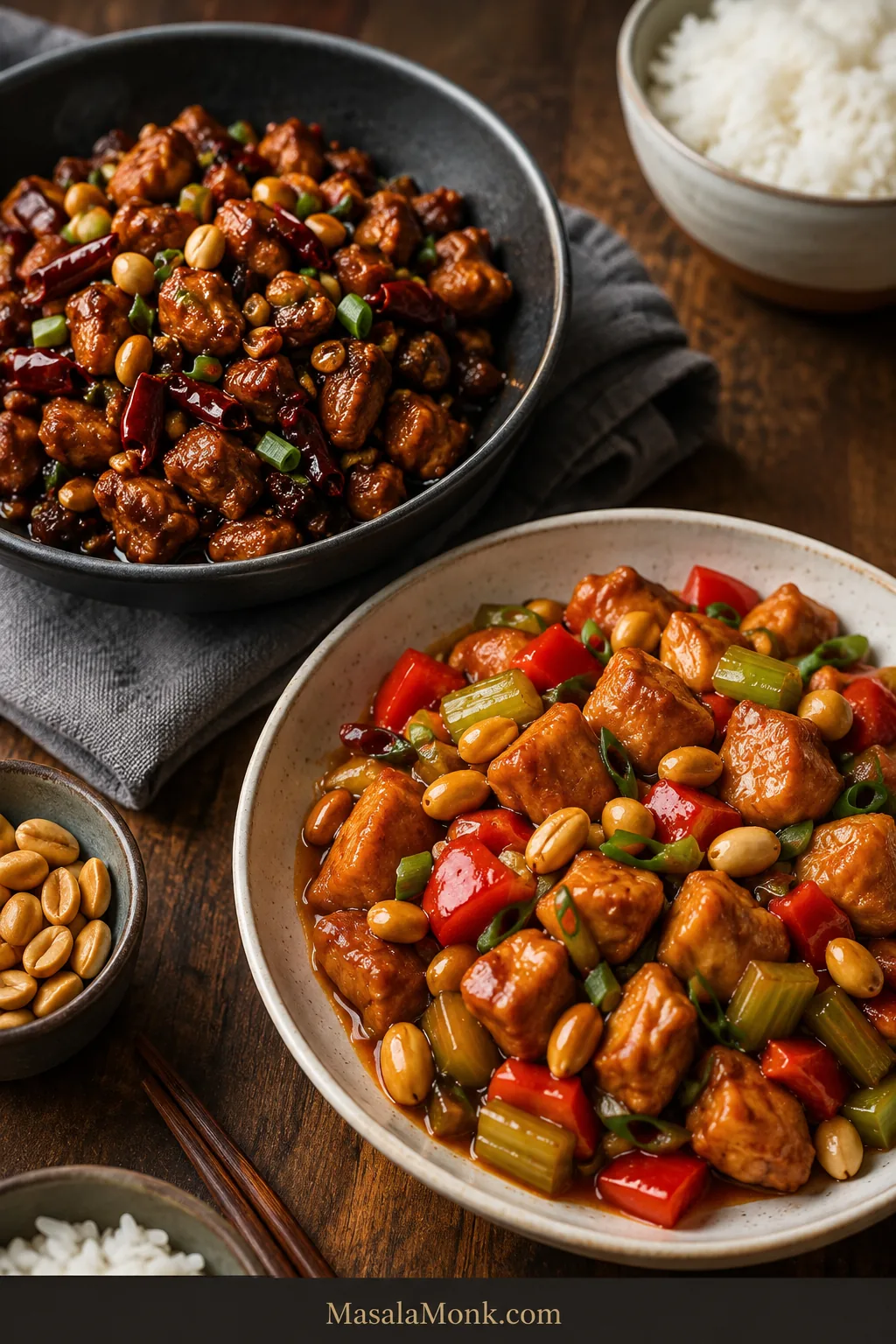
Kung Pao chicken can mean two very different dinners.
You may be looking for the dark, tangy Sichuan dish with dried chillies, black vinegar and a citrusy peppercorn tingle. Or perhaps you are craving the sweeter, saucier takeout version with bell pepper, celery and enough sauce for rice.
Both can be delicious. They are simply not the same dinner.
Either way, the pleasure arrives quickly once the pan is hot: tender chicken turns glossy, ginger and garlic meet the toasted chillies, and crisp peanuts crack between softer bites.
This page gives you two complete recipes instead of forcing both preparations into one method. Choose the dinner you want, follow that recipe from top to bottom and cook it in a wok or an ordinary wide skillet.
Quick answer
Kung Pao chicken is a stir-fry of diced chicken, dried chillies, peanuts and a balanced sweet-sour-savoury sauce. The Sichuan recipe below takes about 35–40 minutes. The vegetable-filled takeout-style recipe takes about 40–45 minutes. Both work in a wide skillet when the chicken is cooked in batches.
Choose Sichuan for a tight black-vinegar glaze and a clear Sichuan-pepper tingle. Choose takeout-style for gentler heat, crisp vegetables and a more generous sauce.
The rule: Pick the plate first, keep the pan hot and stop when the sauce clings.
Which Kung Pao Chicken Do You Want?
Choose by the flavour, heat and amount of sauce you want beside your rice.
| Decision | Sichuan Kung Pao | Takeout-style Kung Pao |
|---|---|---|
| Flavour | Tangier, chilli-fragrant and lightly numbing | Slightly sweeter, milder and familiar |
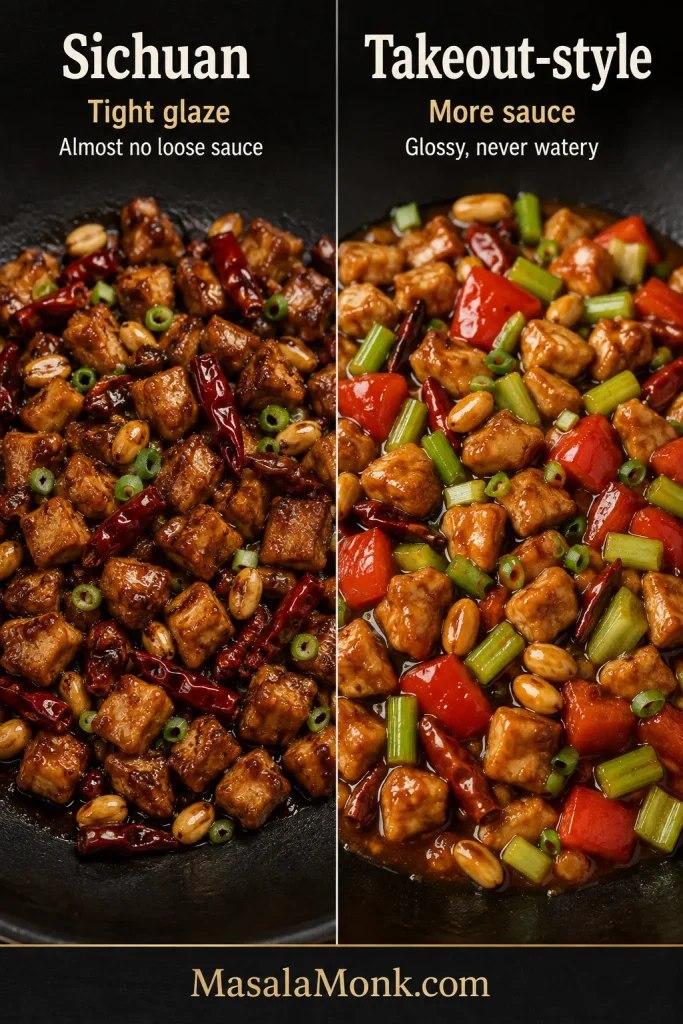
| Sauce | A thin glaze with almost no loose liquid | A more generous glossy coating |
| Heat | Dried chillies plus a clear Sichuan-pepper tingle | Adjustable chilli heat; peppercorn is optional |
| Vegetables | Scallions and aromatics | Bell pepper and celery |
| Best when | You want black-vinegar tang and Sichuan character | You want a saucier restaurant-style rice dinner |
Choose Sichuan
Black-vinegar tang, peppercorn tingle and a thin glaze with no bulky vegetables.
Choose takeout-style
More sauce, gentler heat, crisp bell pepper and celery.
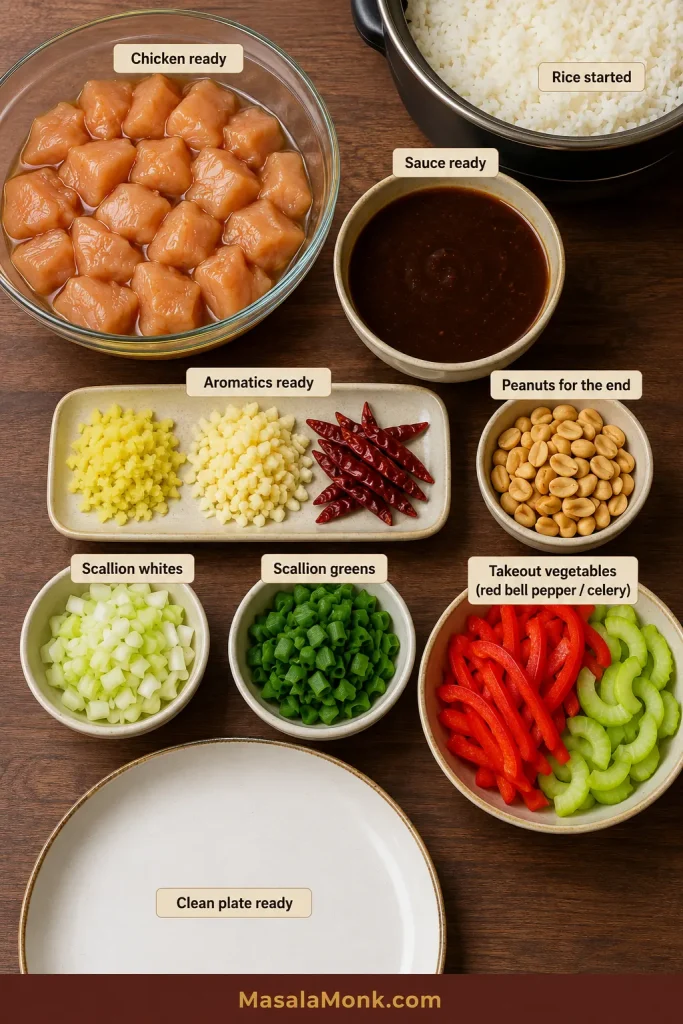
Set up before the pan gets hot. Once you have chosen a version, arrange every ingredient in the order it will enter the wok or skillet.
Sichuan Kung Pao Chicken
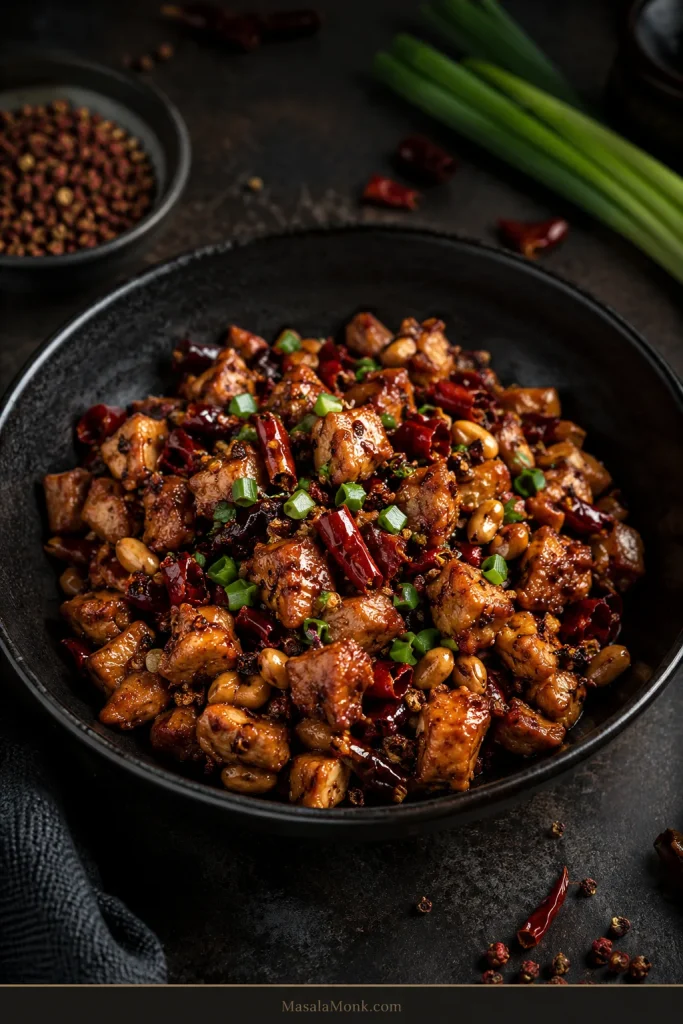
This is the tighter, tangier preparation: diced chicken, black vinegar, dried chillies, Sichuan peppercorn, scallions and roasted peanuts, with almost no loose sauce left in the pan.
Equipment: Use a 14-inch or 35-centimetre flat-bottomed wok, or a wide 12-inch or 30-centimetre skillet. Turn on the exhaust fan before heating the pan, especially when using opened dried chillies.
Carbon steel, stainless steel and cast iron suit sustained high heat. Don’t aggressively preheat an empty nonstick skillet; follow the manufacturer’s heat guidance instead.
Sichuan ingredients by stage
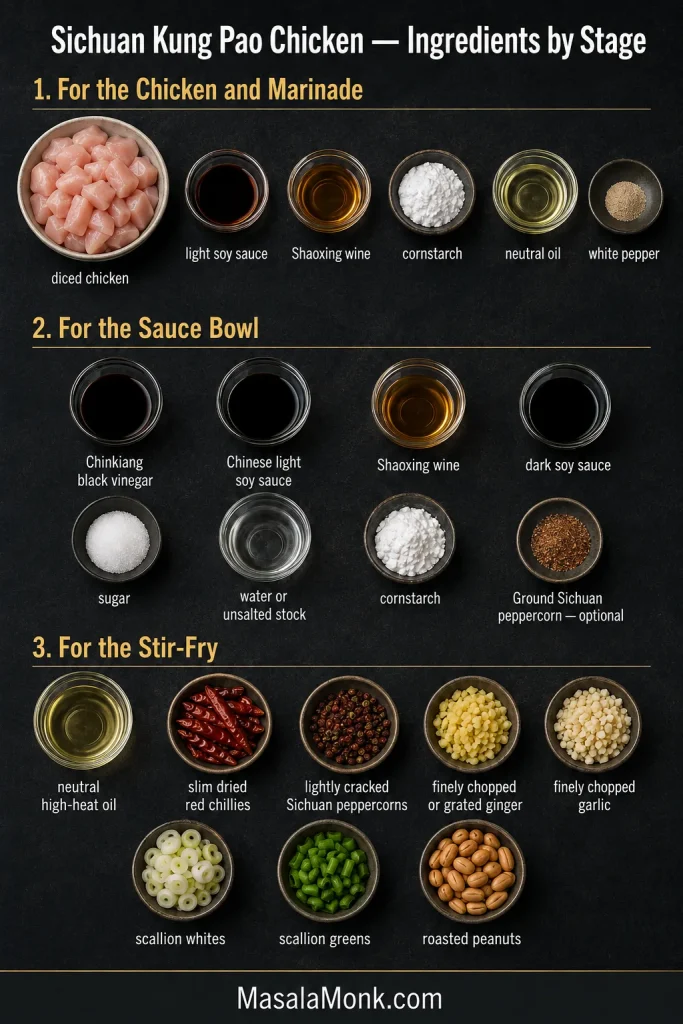
For the chicken and marinade
- 1¼ pounds boneless, skinless chicken breast or thigh, 570 grams, cut into ¾-inch or 2-centimetre pieces
- 1 tablespoon Chinese light soy sauce or regular soy sauce, 15 millilitres
- 1 tablespoon Shaoxing wine or dry sherry, 15 millilitres
- 2 teaspoons cornstarch, called cornflour in India and the UK, about 6 grams
- 1 teaspoon neutral high-heat oil, 5 millilitres
- ¼ teaspoon ground white pepper
For the sauce bowl
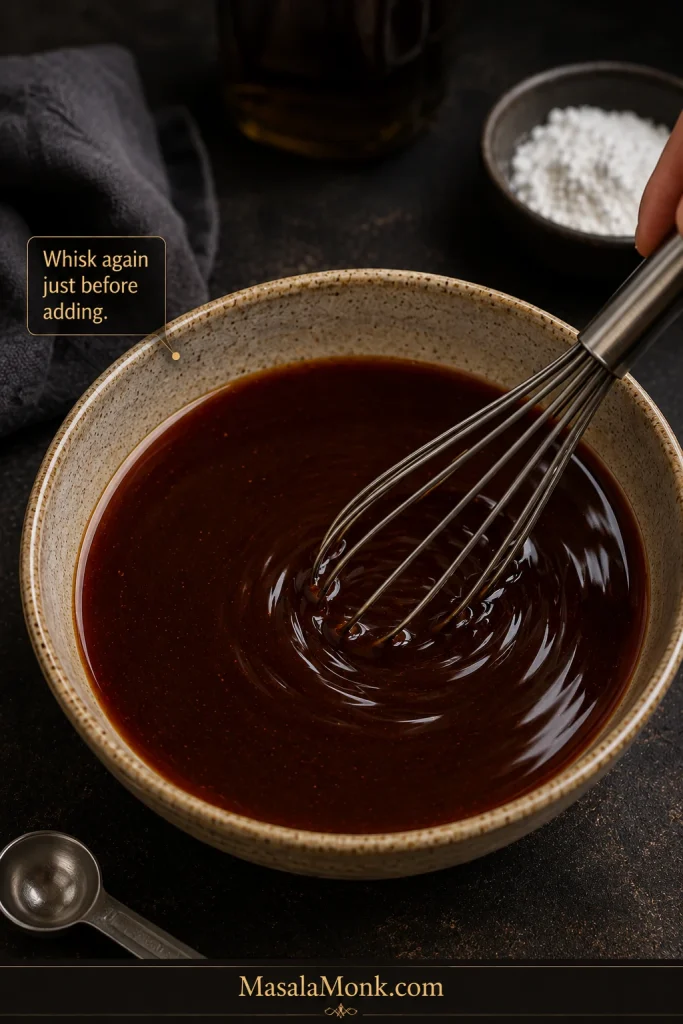
- 2 tablespoons Chinkiang black vinegar, 30 millilitres
- 1 tablespoon Chinese light soy sauce, 15 millilitres
- 1 tablespoon Shaoxing wine, 15 millilitres
- 1 teaspoon dark soy sauce, 5 millilitres
- 2 teaspoons sugar, about 8 grams
- 2 tablespoons water or unsalted chicken stock, 30 millilitres
- 1 teaspoon cornstarch, about 3 grams
- ¼ teaspoon finely ground Sichuan peppercorn, only when using ground rather than lightly cracked peppercorns
For the stir-fry
- 2½ tablespoons neutral high-heat cooking oil, divided
- 6–8 slim dried red chillies, stemmed and left whole or snipped open for more heat
- ¾ teaspoon Sichuan peppercorns, lightly cracked, only when using these rather than ground peppercorn
- 2 tablespoons finely chopped or grated ginger, about 15 grams
- 4 medium garlic cloves, finely chopped, about 12 grams
- 6 scallions or spring onions, cut into 1-inch or 2.5-centimetre pieces, whites and greens separated
- ½ cup roasted unsalted peanuts, about 70 grams
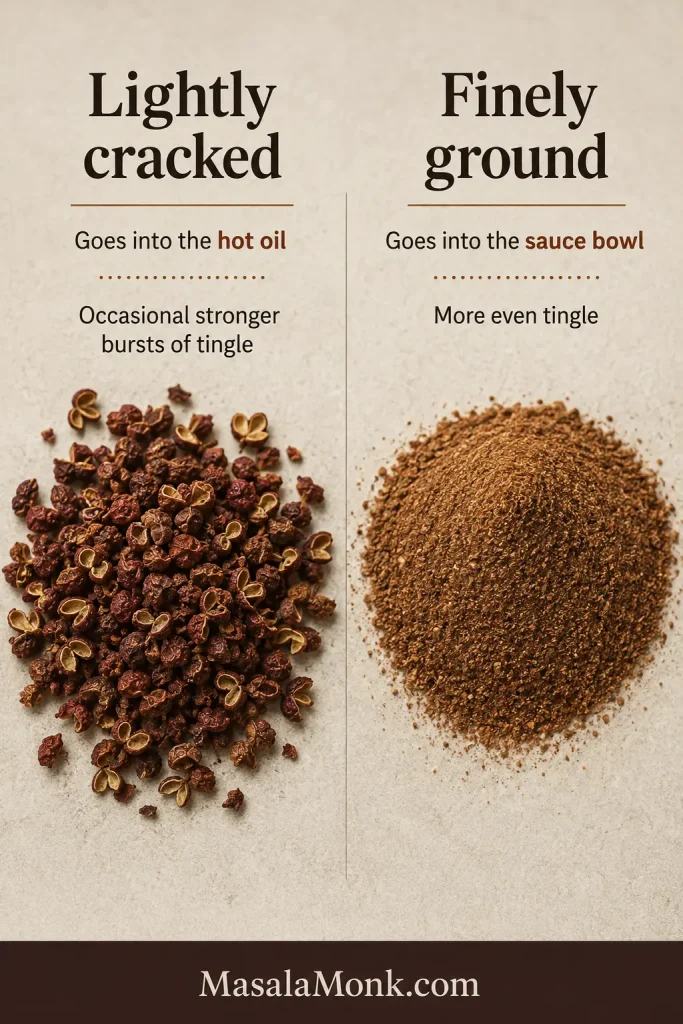
Lightly cracked or ground peppercorn? Lightly cracked peppercorns remain in the dish and create occasional stronger bursts of tingle. Use finely ground peppercorn in the sauce bowl for a more even sensation without larger pieces.
Salt: Do not add extra salt before tasting the finished dish. Soy sauces vary considerably by brand.
Method
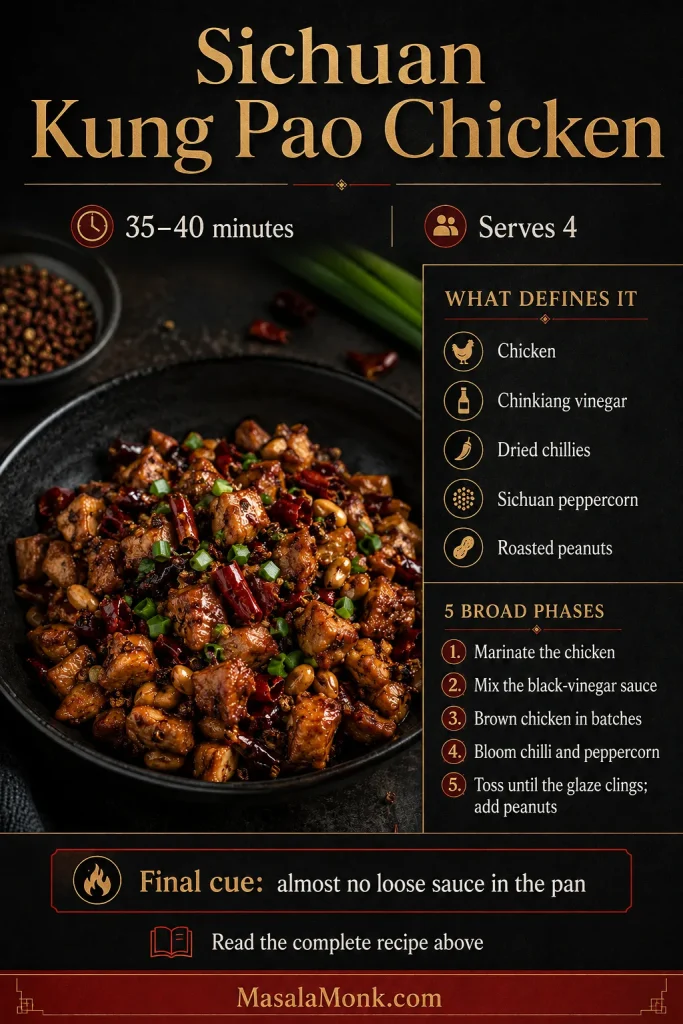
Prep before the wok
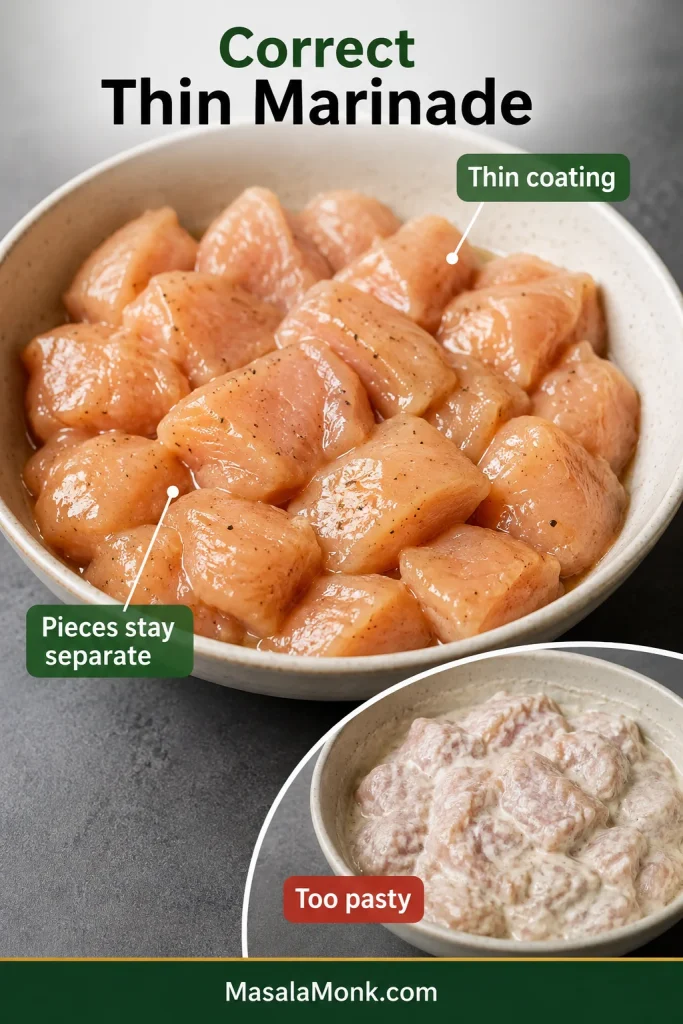
- Marinate the chicken. Mix the chicken with the soy sauce, Shaoxing wine, cornstarch, oil and white pepper. The pieces should remain separate under a thin coating rather than sitting in a thick paste. Rest for 15–20 minutes while preparing the sauce and aromatics. For advance preparation, cover and refrigerate the chicken for a few hours, then keep it chilled until cooking.
- Make the sauce. Whisk together everything listed under “For the sauce bowl.” Keep it beside the stove and whisk again immediately before adding it because the cornstarch settles quickly.
- Set up the meal. Start the rice before heating the pan and have any cold side ready. Separate the scallion whites from the greens, place every stir-fry ingredient within reach and put a clean plate beside the stove for the partly cooked chicken.
Brown the chicken
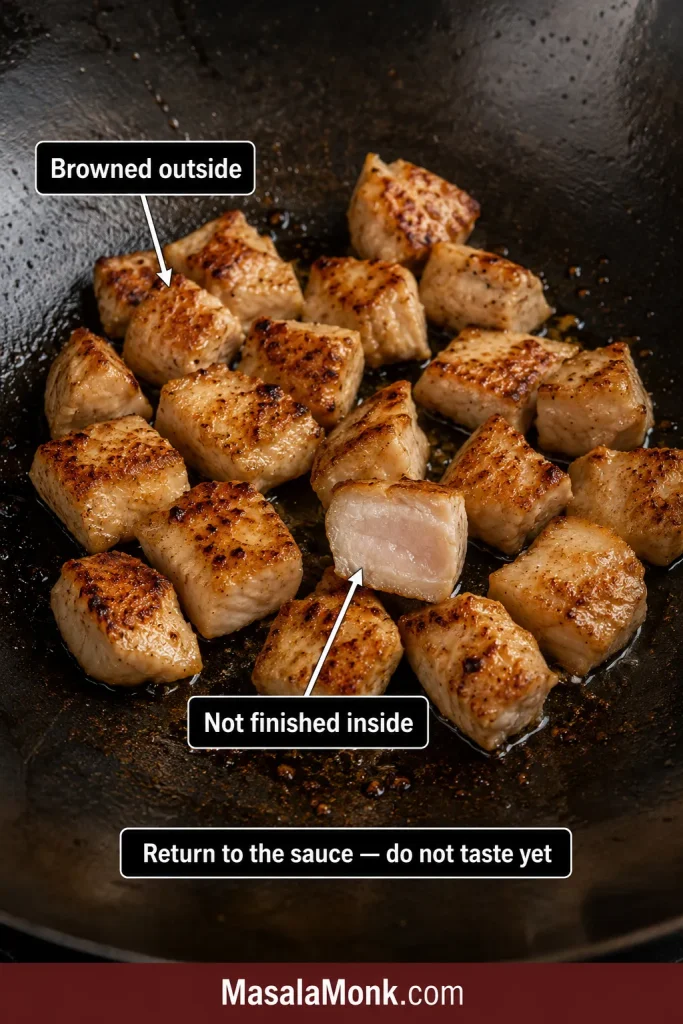
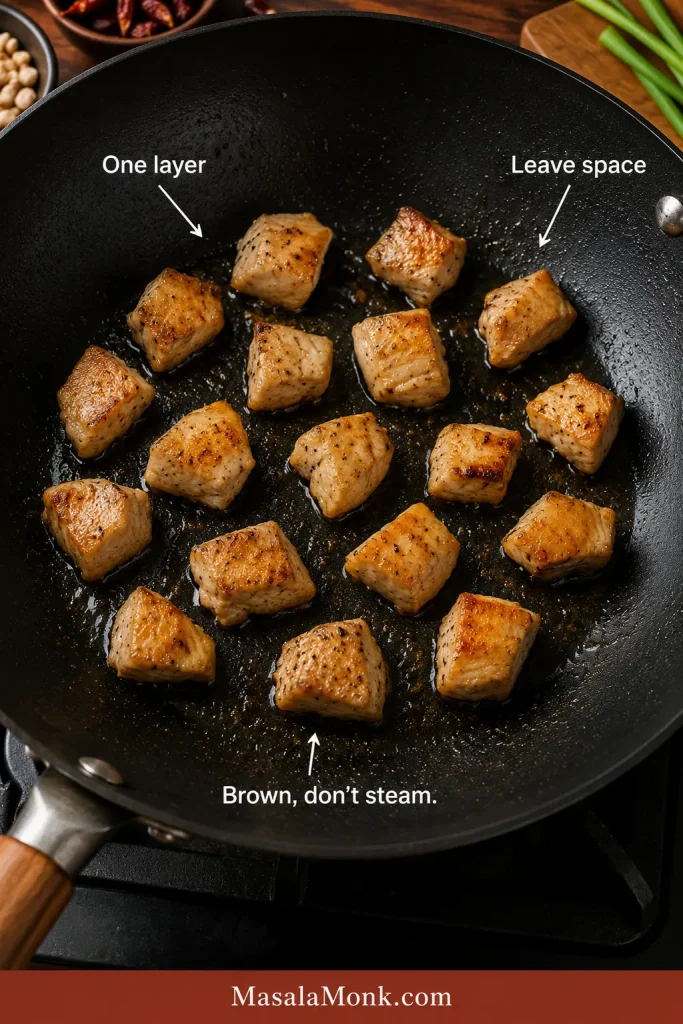
- Cook the first chicken batch. Heat the empty wok or suitable skillet over high or medium-high heat. Add 1 tablespoon oil. When it shimmers, add no more than 10–12 ounces or 280–340 grams chicken in one layer. Leave it undisturbed for 45–60 seconds, then stir-fry for another 1–2 minutes.
- Cook the second batch. Transfer the first batch to the clean plate. Add 1 teaspoon oil, then let the pan heat again until the oil shimmers. Repeat with the remaining chicken. The exterior should be browned while the centre remains just shy of fully opaque. Do not taste it yet; it finishes immediately when returned to the bubbling sauce.
Bloom, glaze and finish
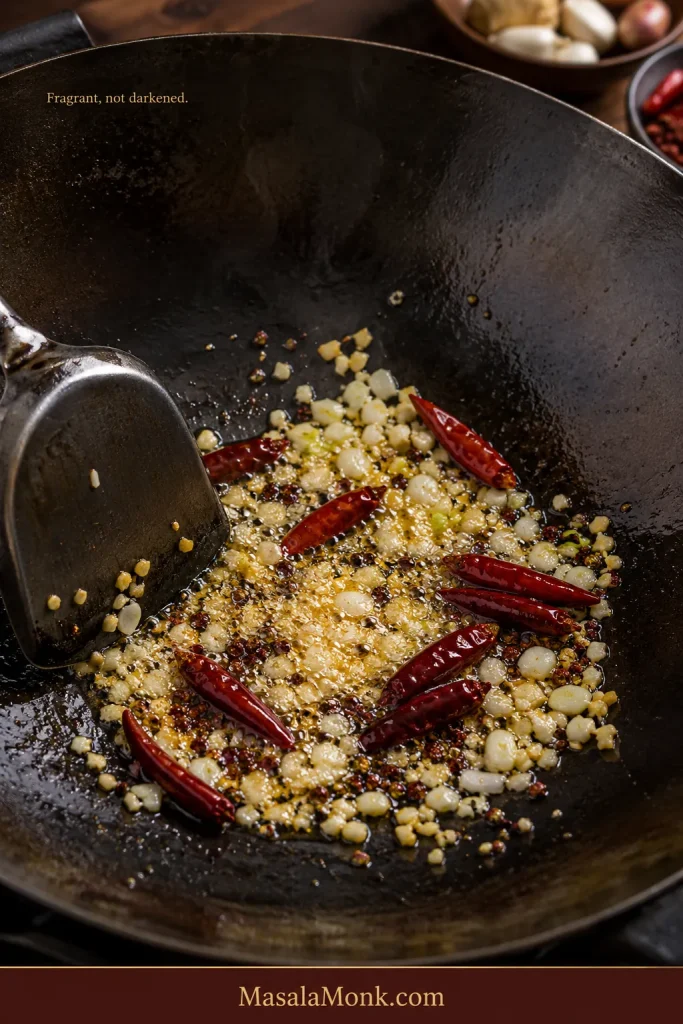
Bloom the chillies and peppercorns first; add the wetter aromatics only after they smell fragrant.
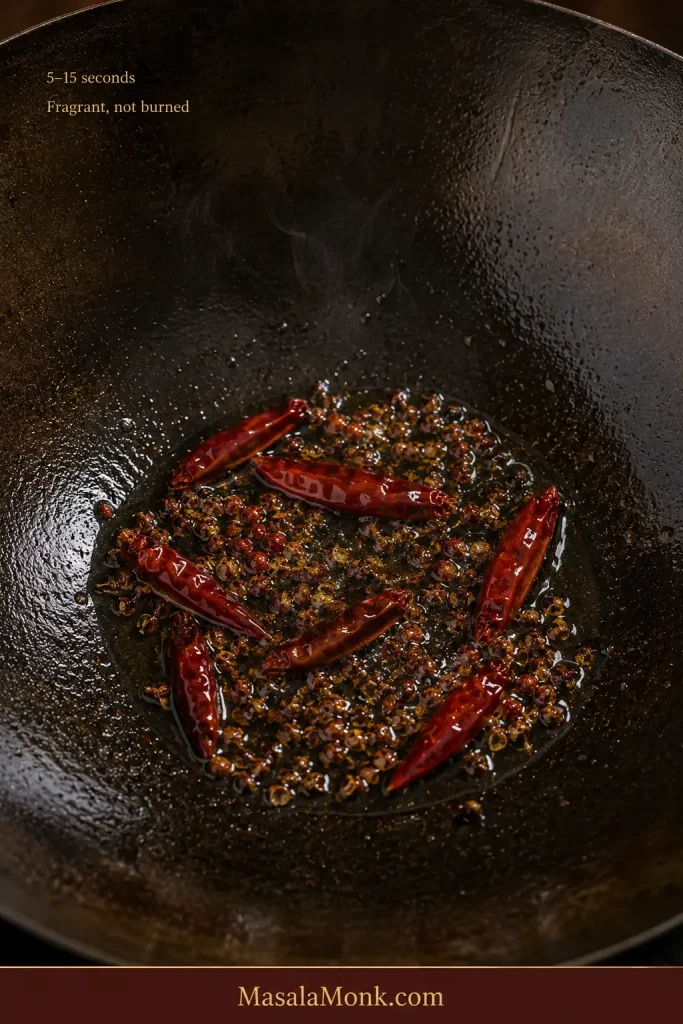
- Bloom the chillies and peppercorns. Add the remaining 1 tablespoon plus ½ teaspoon oil. Add the lightly cracked peppercorns, when using, and the dried chillies. Stir for 5–15 seconds, just until fragrant. Add the ginger, garlic and scallion whites before the chillies darken, then stir for about 10 seconds.
- Bring it together. Return the chicken. Whisk the sauce, pour it into the pan and toss immediately. The loose liquid should bubble and turn glossy within 20–45 seconds, coating the chicken in a thin glaze.
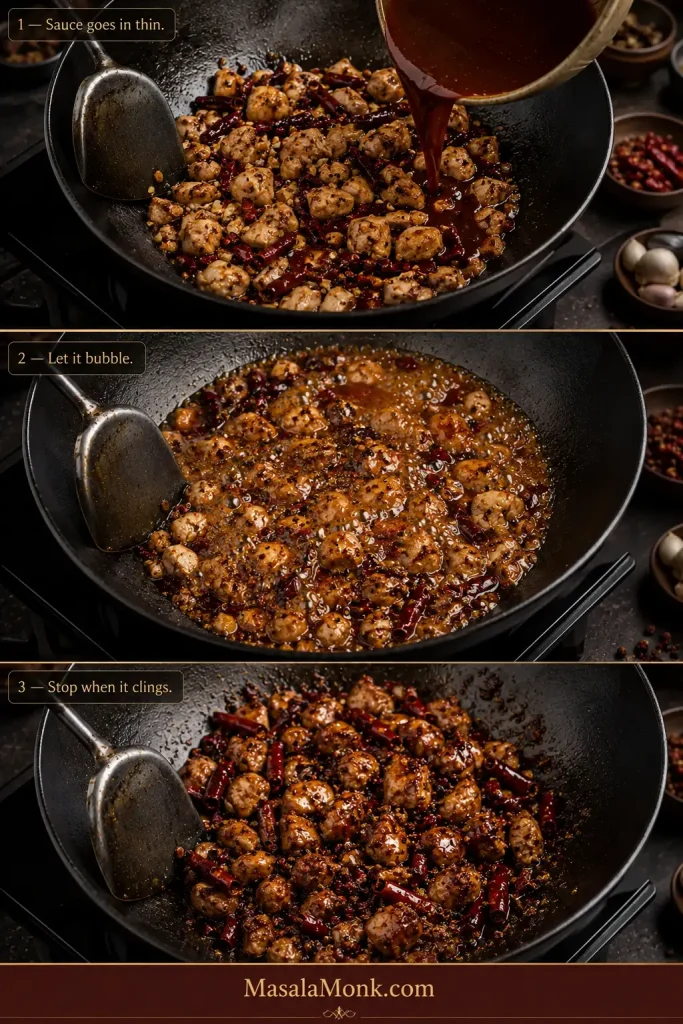
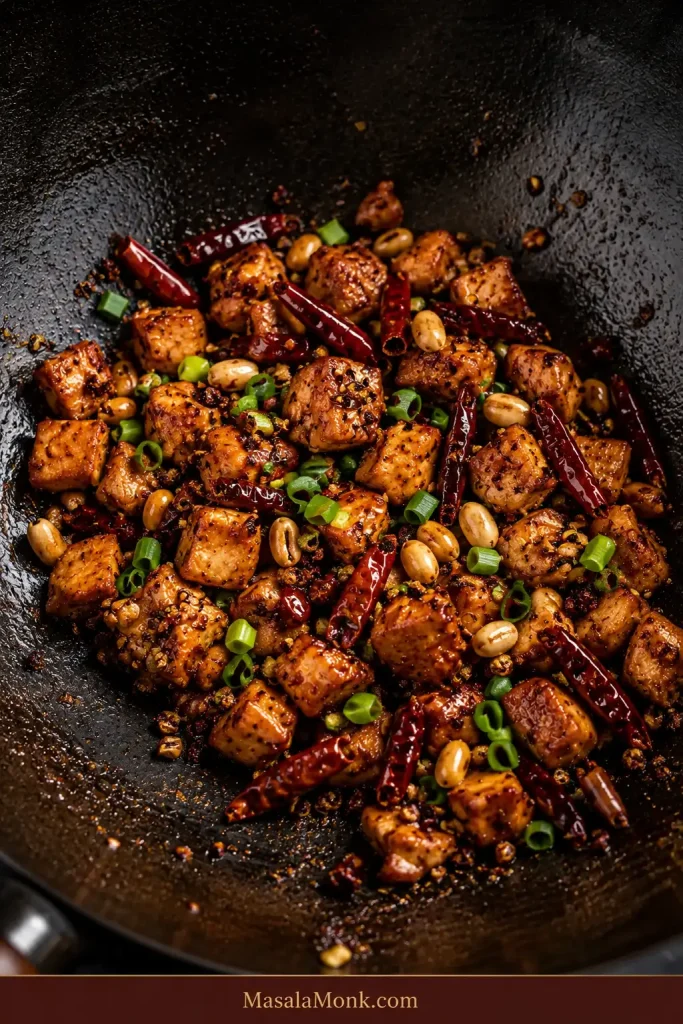
- Finish and serve. Fold in the peanuts and scallion greens for the final 10–15 seconds. Remove the pan from the heat. The largest chicken piece should be opaque throughout and reach 165°F or 74°C. Serve immediately; the glaze should cling tightly, with almost nothing pooling in the pan.
Made the Sichuan recipe? Skip the second recipe and continue to why the method works, or go directly to troubleshooting.
Takeout-Style Kung Pao Chicken
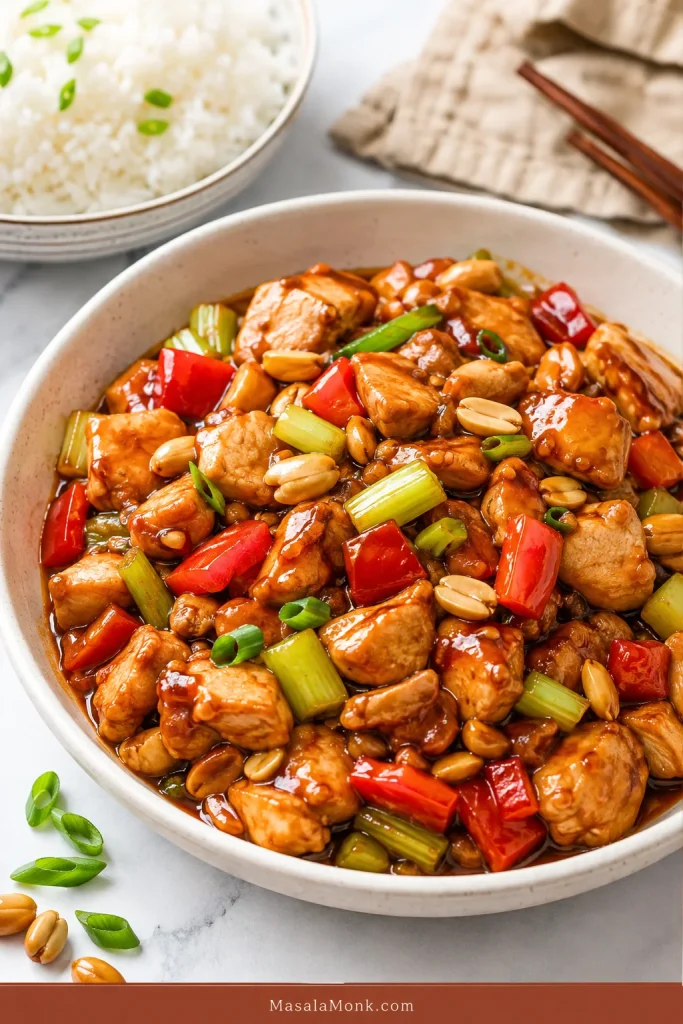
This is the familiar saucier dish with juicy chicken, crisp bell pepper and celery, roasted peanuts and a sweet-savoury coating made for rice.
Equipment: Use a wide 12-inch or 30-centimetre skillet, or a 14-inch or 35-centimetre flat-bottomed wok. Turn on the exhaust fan before heating the pan.
Carbon steel, stainless steel and cast iron suit sustained high heat. Don’t aggressively preheat an empty nonstick skillet; follow the manufacturer’s heat guidance instead.
Takeout-style ingredients by stage
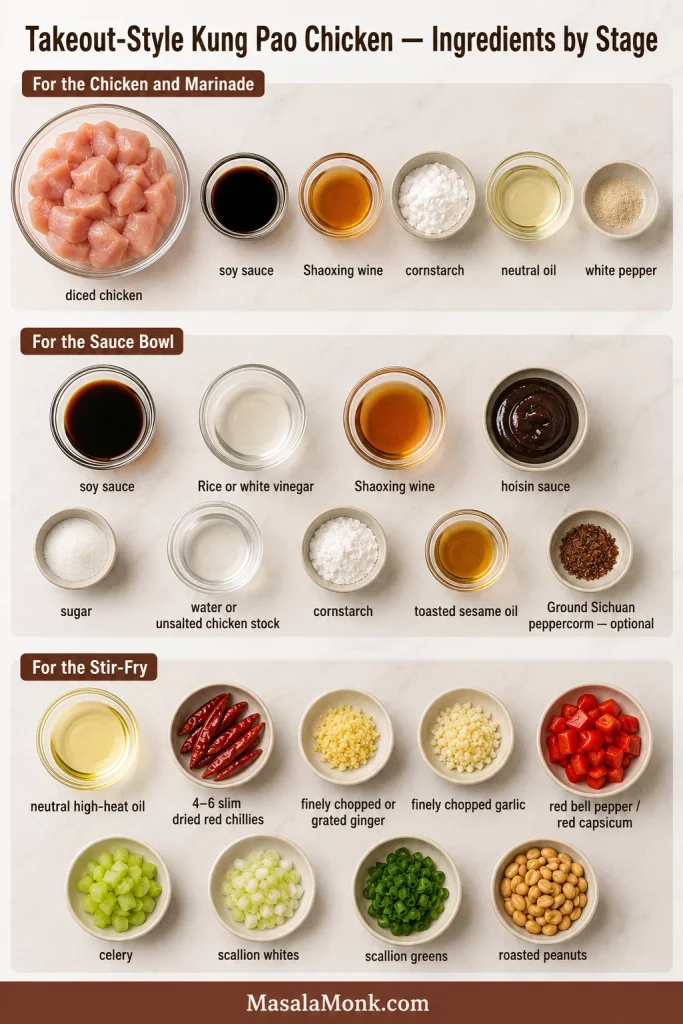
For the chicken and marinade
- 1¼ pounds boneless, skinless chicken thigh or breast, 570 grams, cut into ¾-inch or 2-centimetre pieces
- 1 tablespoon soy sauce, 15 millilitres
- 1 tablespoon Shaoxing wine or dry sherry, 15 millilitres
- 2 teaspoons cornstarch, called cornflour in India and the UK, about 6 grams
- 1 teaspoon neutral high-heat oil, 5 millilitres
- ¼ teaspoon ground white pepper
For the sauce bowl
- 2 tablespoons soy sauce, preferably reduced-sodium if your hoisin is salty, 30 millilitres
- 1 tablespoon unseasoned rice vinegar or distilled white vinegar, 15 millilitres
- 1 tablespoon Shaoxing wine or dry sherry, 15 millilitres
- 1 tablespoon hoisin sauce, 15 millilitres
- 1 tablespoon sugar, about 12 grams
- ⅓ cup water or unsalted chicken stock, 80 millilitres
- 2 teaspoons cornstarch, about 6 grams
- 1 teaspoon toasted sesame oil, 5 millilitres
- ¼ teaspoon finely ground Sichuan peppercorn, optional
For the stir-fry
- 3 tablespoons neutral high-heat cooking oil, divided
- 4–6 slim dried red chillies, stemmed and mostly left whole
- 2 tablespoons finely chopped or grated ginger, about 15 grams
- 4 medium garlic cloves, finely chopped, about 12 grams
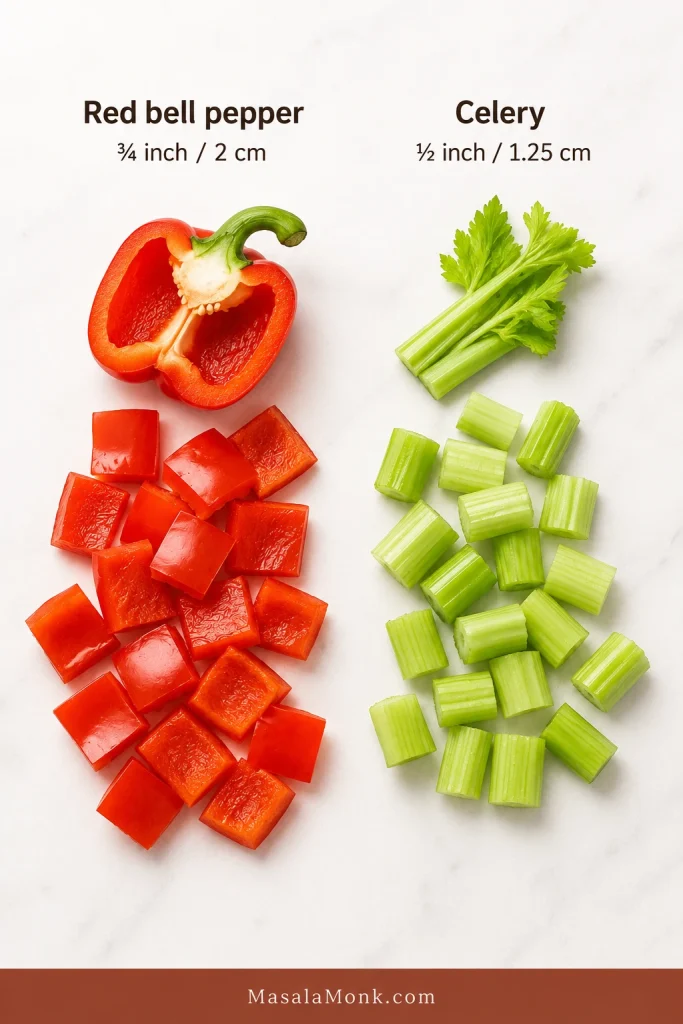
- 1 medium red bell pepper or red capsicum, cut into ¾-inch or 2-centimetre pieces, about 150 grams
- 2 celery stalks, cut into ½-inch or roughly 1.25-centimetre pieces, about 100 grams
- 4 scallions or spring onions, cut into 1-inch or 2.5-centimetre pieces, whites and greens separated
- ½ cup roasted unsalted peanuts, about 70 grams
Choose the vinegar: Rice vinegar gives the sauce a softer, rounder tang. Distilled white vinegar gives it the sharper edge associated with many takeout-style sauces.
Salt: Do not add extra salt before tasting the finished dish. Soy sauce and hoisin vary substantially by brand.
Method
Prep before the skillet
- Marinate the chicken. Mix the chicken with the soy sauce, Shaoxing wine, cornstarch, oil and white pepper. The coating should remain thin. Rest for 15–20 minutes while preparing the vegetables and sauce. For advance preparation, cover and refrigerate the chicken for a few hours, then keep it chilled until cooking.
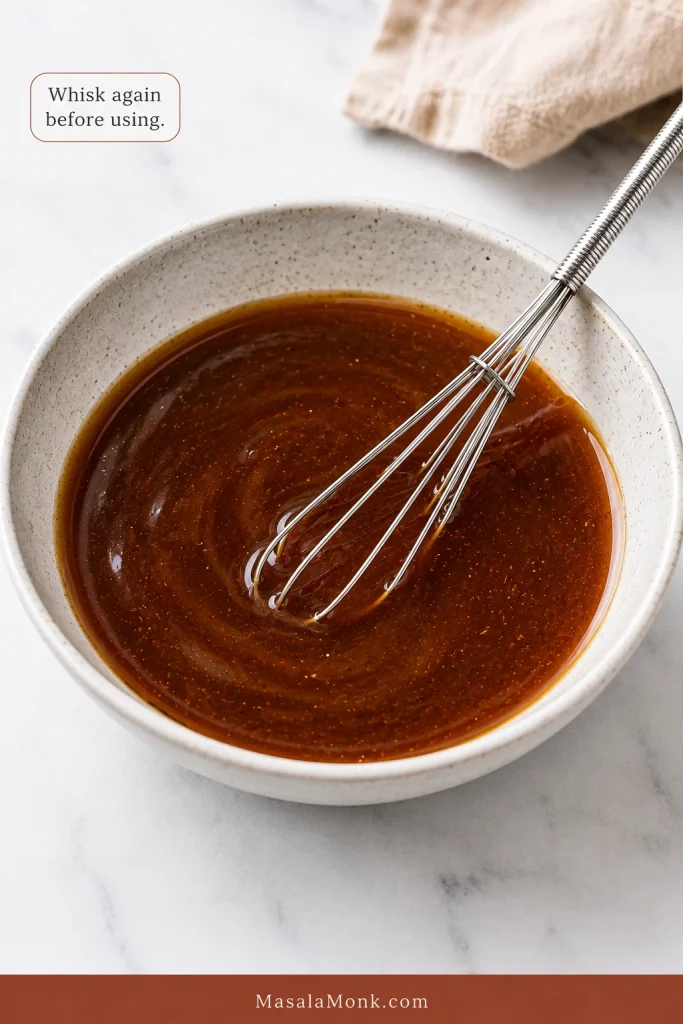
- Make the sauce. Whisk together everything listed under “For the sauce bowl.” Keep it beside the stove and whisk again immediately before using it because the cornstarch settles quickly.
- Set up the meal. Start the rice before heating the pan and have any cold side ready. Keep the chicken, vegetables, aromatics, peanuts and sauce within reach. Put a clean plate beside the stove.
Brown the chicken
- Cook the first chicken batch. Heat the empty wok or suitable skillet over high or medium-high heat. Add 1 tablespoon oil. When it shimmers, add no more than 10–12 ounces or 280–340 grams chicken in one layer. Leave it undisturbed for 45–60 seconds, then stir-fry for another 1–2 minutes and transfer it to the clean plate.
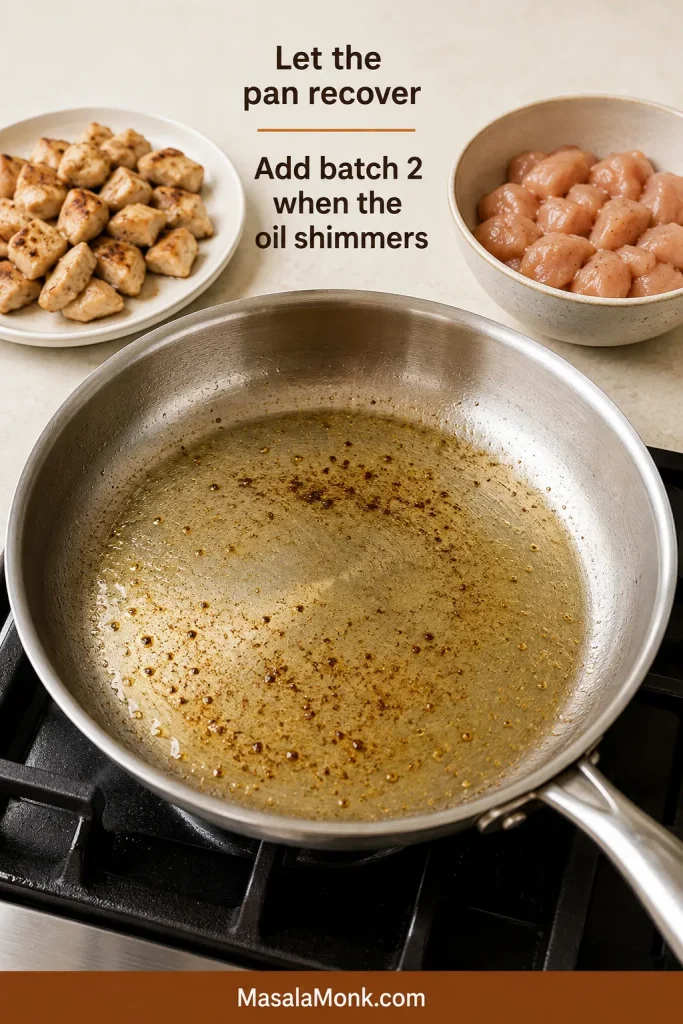
- Cook the second batch. Add 2 teaspoons oil and let the pan recover until the oil shimmers again. Add the remaining chicken and repeat. The exterior should be browned while the centre remains just shy of fully opaque. Do not taste it yet; it finishes later in the bubbling sauce.
Cook the vegetables and aromatics
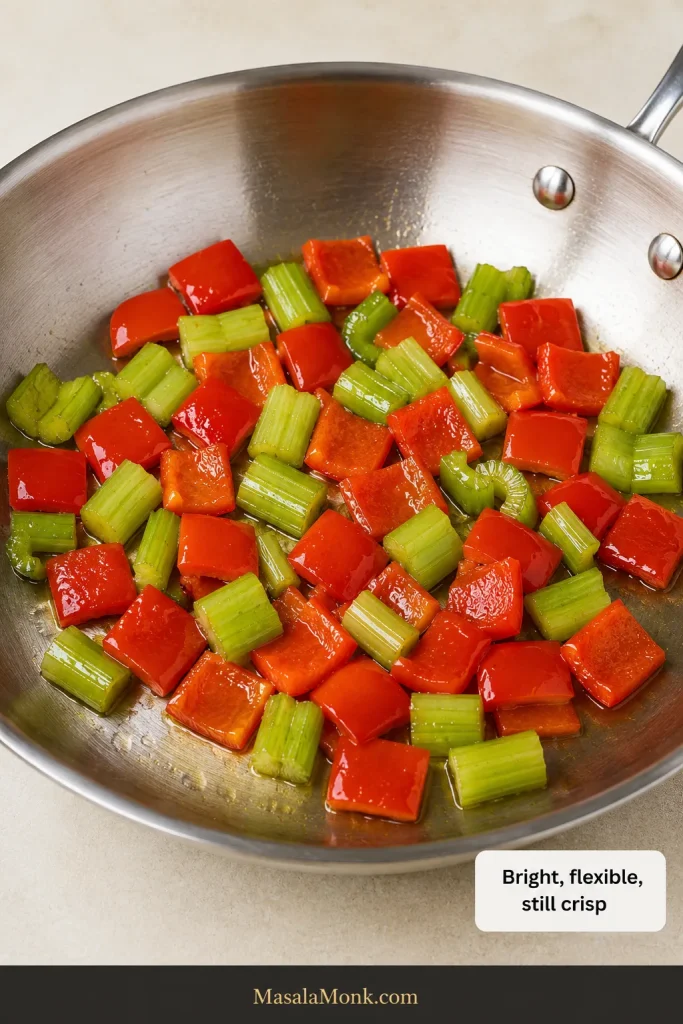
- Cook the vegetables. Add 2 teaspoons oil. Stir-fry the bell pepper and celery for 3–4 minutes, until bright and crisp-tender. The celery should bend slightly while retaining a clear snap. Transfer the vegetables to the plate with the chicken.
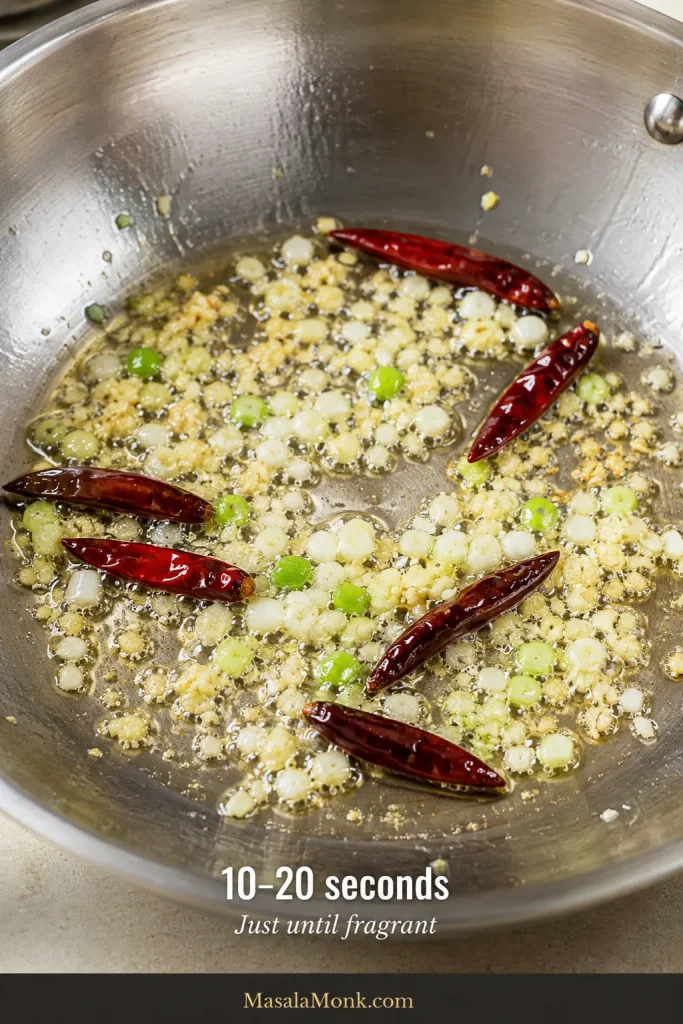
- Cook the aromatics. Add the remaining 2 teaspoons oil, followed by the dried chillies, ginger, garlic and scallion whites. Stir for 10–20 seconds, just until fragrant.
Bubble, finish and serve
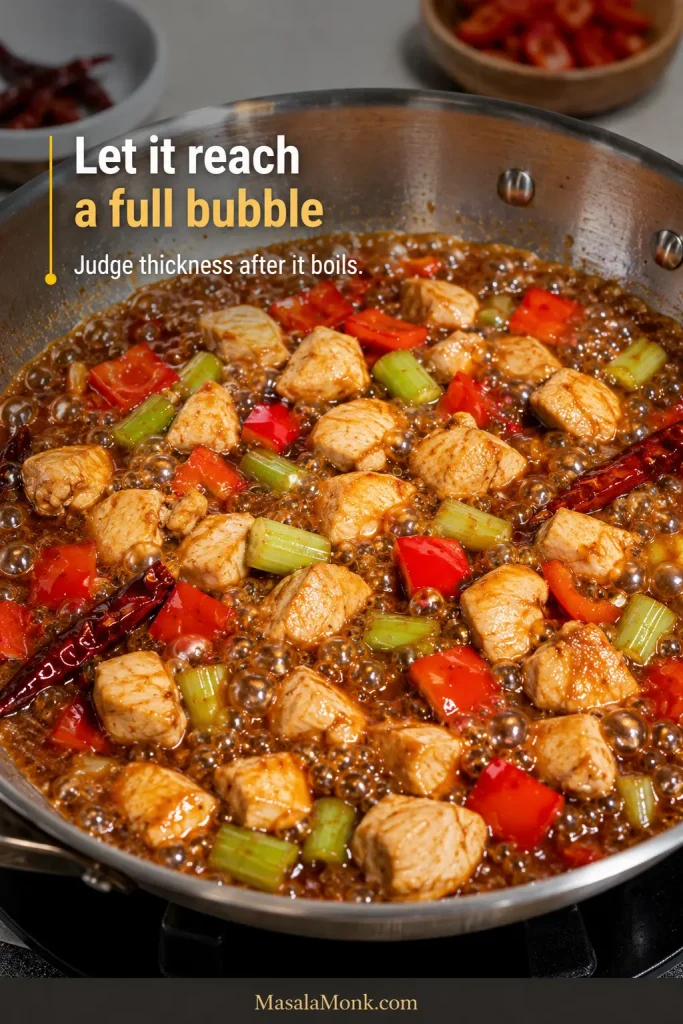
- Bring it together. Return the chicken and vegetables. Whisk the sauce, pour it into the pan and toss immediately. Let it reach a full bubble, then toss for 30–60 seconds. The loose sauce will become glossy and coat the chicken and vegetables.
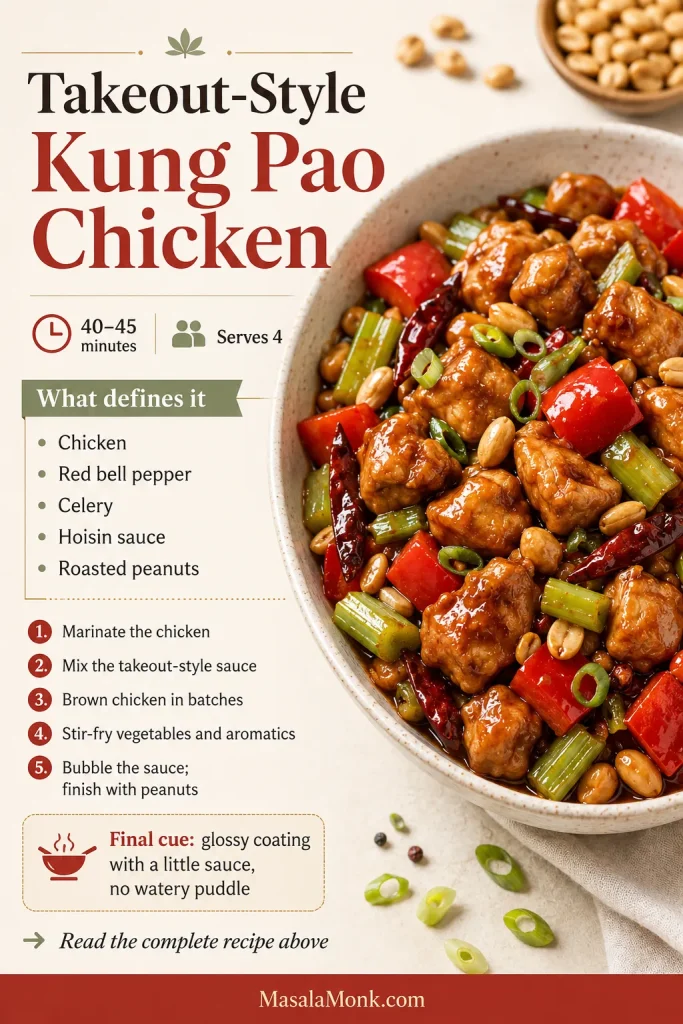
- Finish and serve. Fold in the peanuts and scallion greens, then remove the pan from the heat. The largest chicken piece should be opaque throughout and reach 165°F or 74°C. Serve immediately with a modest amount of sauce remaining around the food, but no watery puddle.
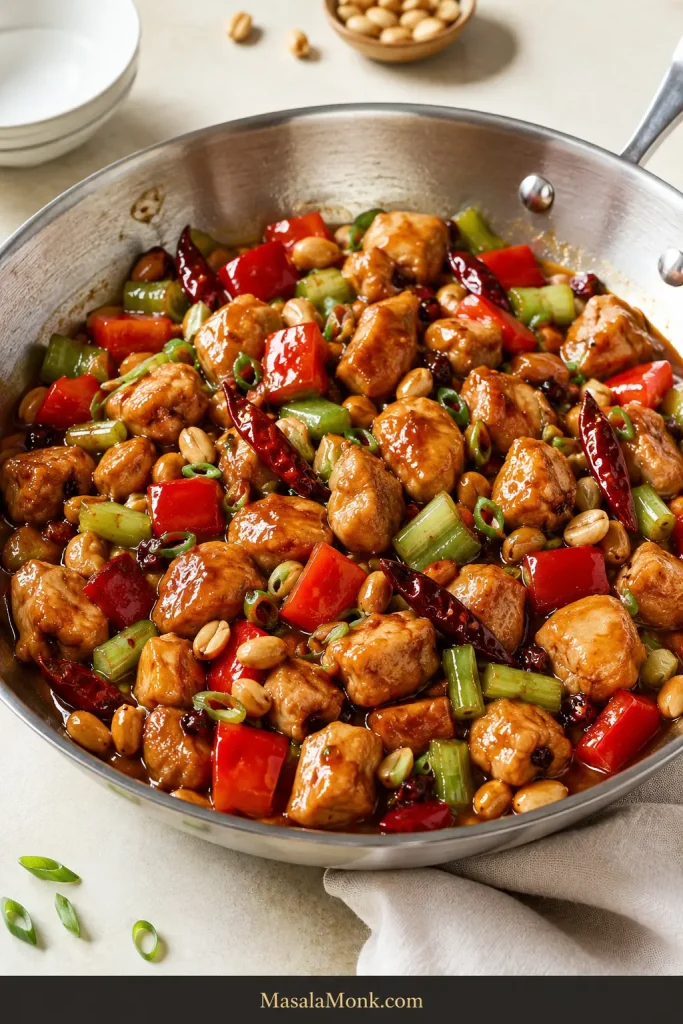
Made the takeout-style recipe? Continue to why the method works, or go directly to troubleshooting.
When the sauce hits the hot pan, the separate ingredients begin looking like dinner almost at once. It bubbles, tightens around the chicken and is ready for the peanuts within seconds.
Why This Method Works in a Home Kitchen
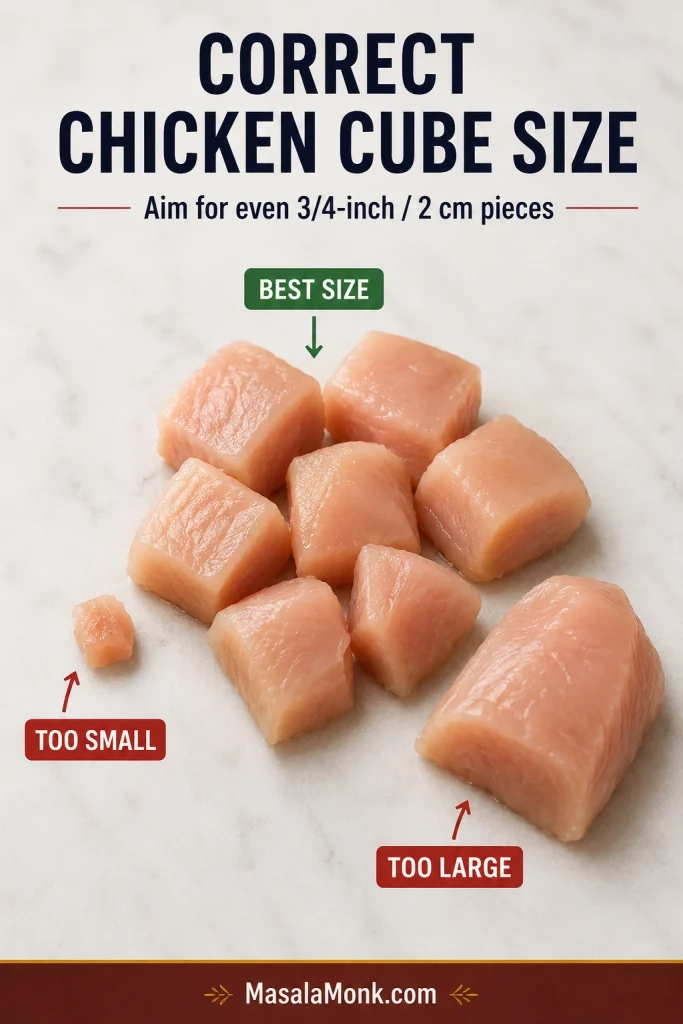
Even ¾-inch pieces keep the cooking window manageable. Smaller pieces can dry before they colour, while much larger pieces may remain raw inside when the sauce is ready.
A thin cornstarch marinade protects without breading. It helps the chicken stay tender through the first sear and gives the sauce a surface to hold onto.
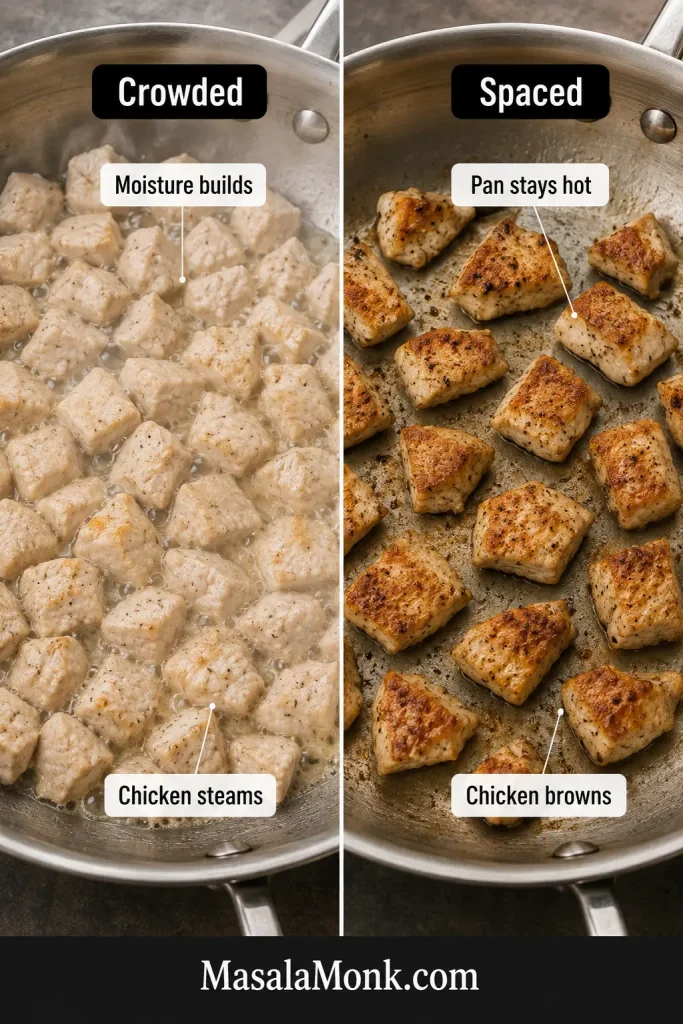
Cooking in stages protects the pan’s heat. Chicken browns in batches, the takeout vegetables cook separately and the aromatics get only the few seconds they need.
Finally, add the sauce and peanuts. That timing lets the sauce coat quickly while the peanuts retain their clean crunch.
Ingredients and Practical Substitutions
Buying black vinegar or Sichuan peppercorn for one dinner can feel like a commitment. Knowing what each ingredient contributes makes it easier to decide which bottles are worth bringing into your kitchen.
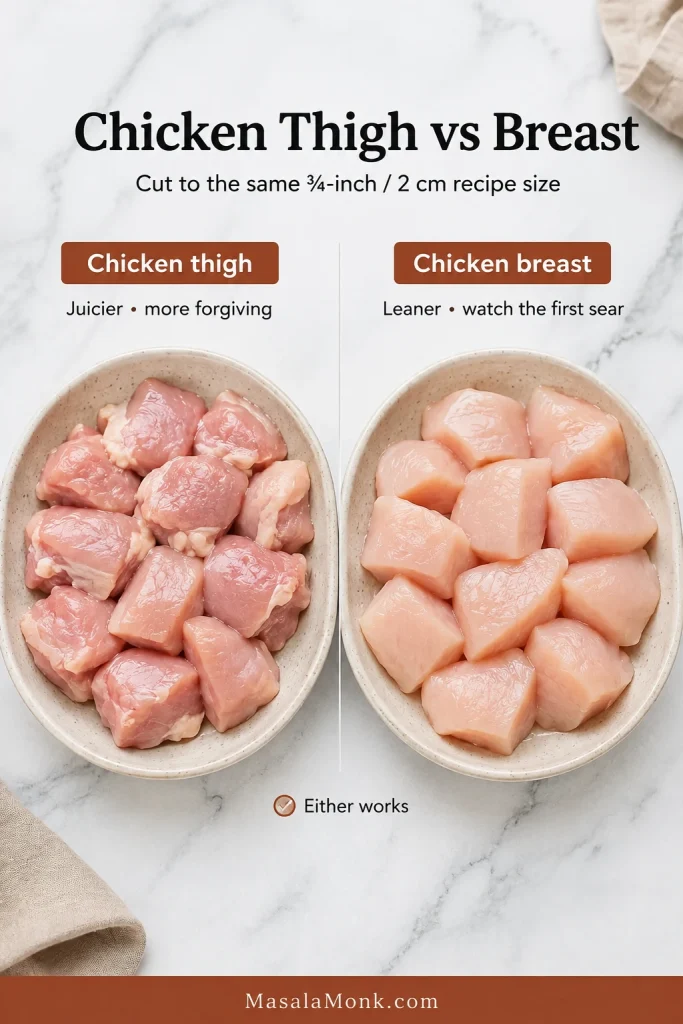
Chicken thigh or breast?
Thigh stays juicier and gives you more margin during a fast stir-fry. Breast is leaner and slightly firmer, and works especially well when you stop the first sear before the centre is fully cooked. Either is a good choice; for the most even batch, use one cut throughout rather than mixing thigh and breast in the same pan.
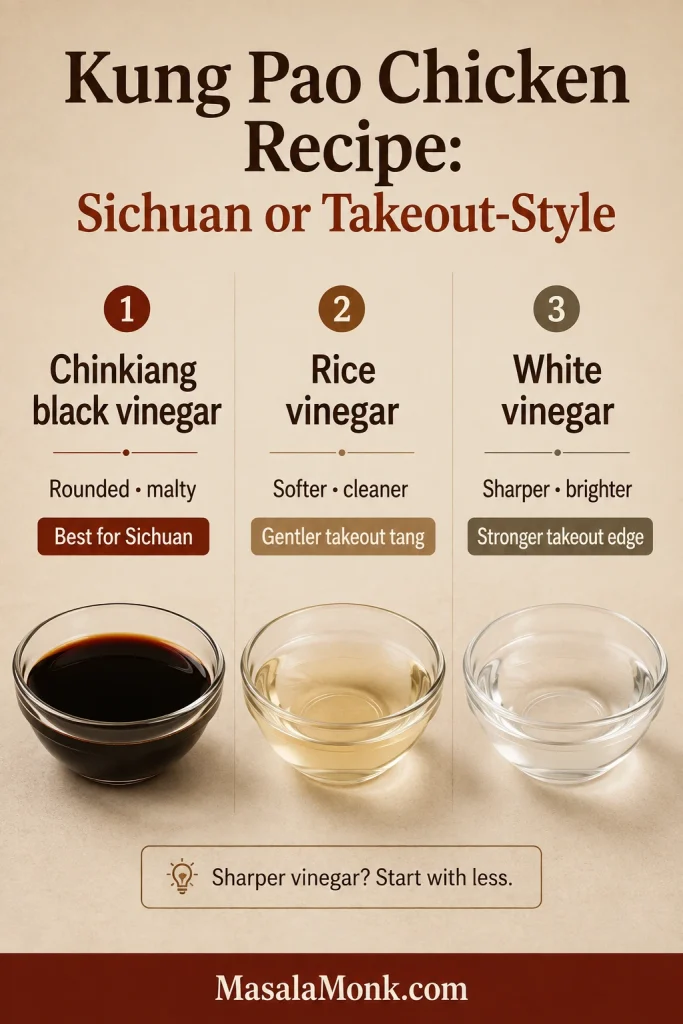
The bottles that shape the sauce
Soy supplies the savoury base, vinegar keeps the flavour bright and Shaoxing wine adds a deeper fermented note beneath them. Chinkiang black vinegar tastes rounded and slightly malty; rice vinegar is cleaner and softer; distilled white vinegar is sharper.
Chinese light soy is the thin, salty everyday style. Dark soy is thicker and used here mainly for colour. Reduced-sodium soy is a separate product and can help when your hoisin is particularly salty.
Sichuan peppercorn and dried chillies
Sichuan peppercorn brings a floral, citrusy tingle rather than ordinary chilli burn. Dried chillies vary enormously in size and heat: leaving them whole keeps most of the membrane enclosed, while snipping them open releases more heat into the oil.
Chile de árbol can be substantially hotter than many Chinese dried chillies, so begin with fewer pods when substituting it.
Substitution guide
| Original ingredient | Practical replacement | Starting quantity and change |
|---|---|---|
| 2 tablespoons Chinkiang black vinegar | Unseasoned rice vinegar | Use the same amount for lighter, cleaner acidity. |
| 2 tablespoons Chinkiang black vinegar | Distilled white vinegar | Begin with 1½ tablespoons; add more only after tasting. The acidity is sharper. |
| Shaoxing wine | Dry sherry | Use the same amount for a similar fermented warmth. |
| Shaoxing wine | Water or unsalted stock | Use the same amount. The result will be less aromatic but alcohol-free. |
| Chinese dried chillies | Chile de árbol | Begin with roughly half as many pods because the heat may be much stronger. |
| Sichuan peppercorn | Omit it | The floral, numbing character disappears, but the sweet-sour chilli balance still works. |
| Peanuts | Cashews | Use the same volume for a richer flavour and slightly softer crunch. |
Substitution is not failure; it simply changes the dish.
Wok or Skillet?
Fast stir-fries can make a careful cook feel behind before anything has actually gone wrong. Cooking in batches slows the decisions down enough for you to see the chicken brown, smell the chillies and judge the sauce separately.
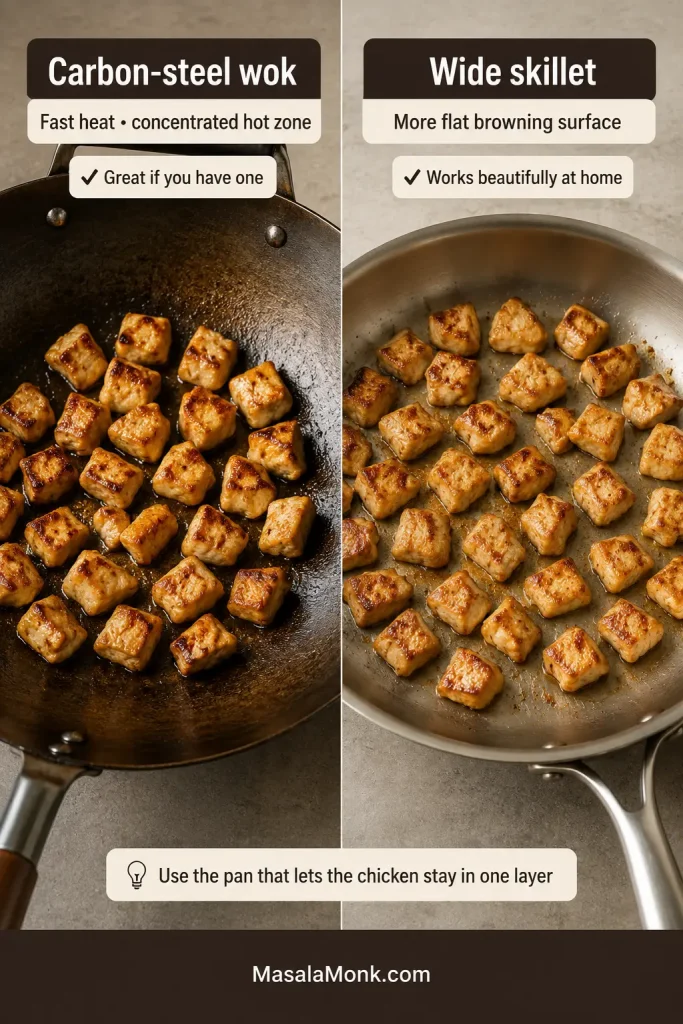
With a flat-bottomed wok, preheat it thoroughly, spread the chicken across the hot lower surface and work in separate rounds when scaling the recipe.
With a wide skillet, cook the chicken in two batches, allow the pan to regain heat between them and cook the takeout vegetables separately.
A skillet does not ruin Kung Pao chicken. Crowding it does.
Make It Mild, Medium or Hot
The hot pan browns the chicken. Dried chillies bring the burn, while Sichuan peppercorn creates a separate citrusy buzz around the lips.
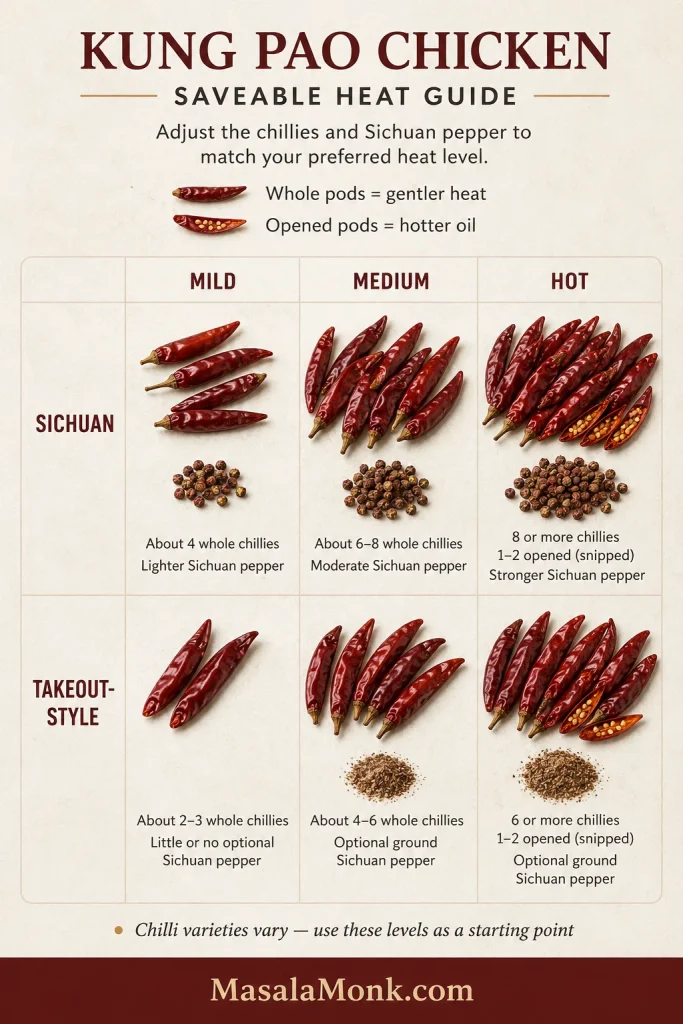
These ranges assume moderately hot Chinese dried chillies. Begin with fewer pods when using chile de árbol or another especially hot variety.
For Sichuan Kung Pao:
Mild but fragrant: Use 4–6 mostly whole chillies with ½ teaspoon lightly cracked peppercorn, or ⅛ teaspoon finely ground.
Medium—the recipe default: Use 6–8 chillies with ¾ teaspoon lightly cracked peppercorn, or ¼ teaspoon finely ground.
Hot: Use 8–10 chillies with several snipped open and up to 1 teaspoon lightly cracked peppercorn, or ⅓ teaspoon finely ground.
For takeout-style Kung Pao: Use 2–4 mostly whole chillies for mild heat, 4–6 for medium, or 6–8 with one or two snipped open for hotter heat. Keep the ground Sichuan peppercorn optional.
When cooking for a mixed table, begin modestly and offer chilli oil separately.
How to Tell When It Is Done
Timers help, but the chicken and the pan should agree before you stop.
Check the chicken. The largest piece should be opaque throughout, firm but still yielding, and free from a glossy raw centre. Insert a thin thermometer probe sideways into the thickest piece when checking small cubes; it should reach 165°F or 74°C.
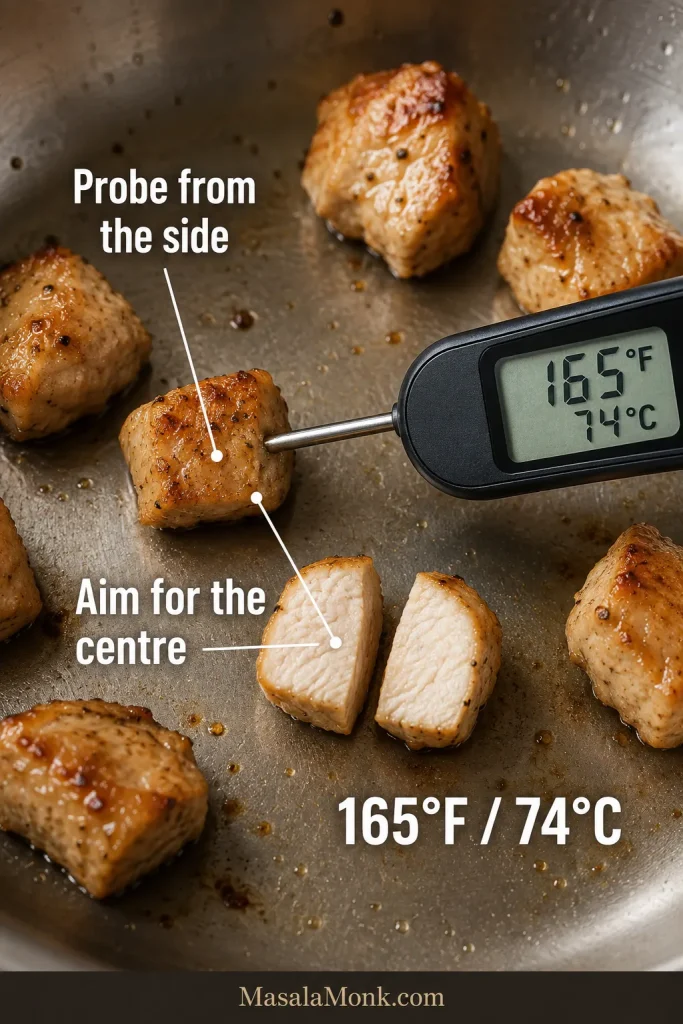
This follows the USDA safe minimum internal-temperature guidance for poultry.
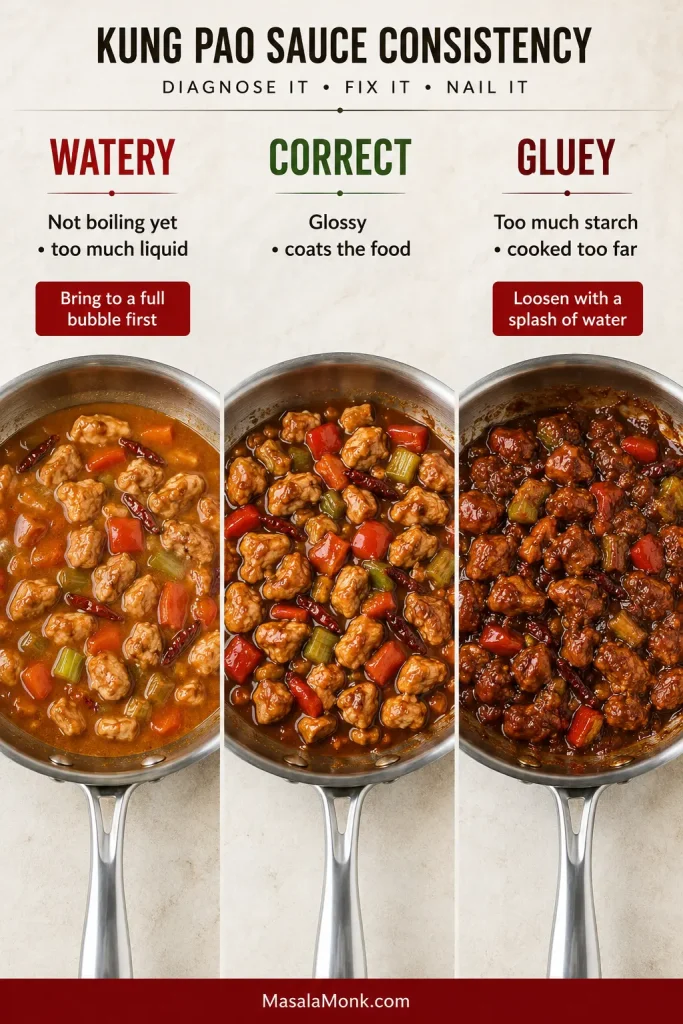
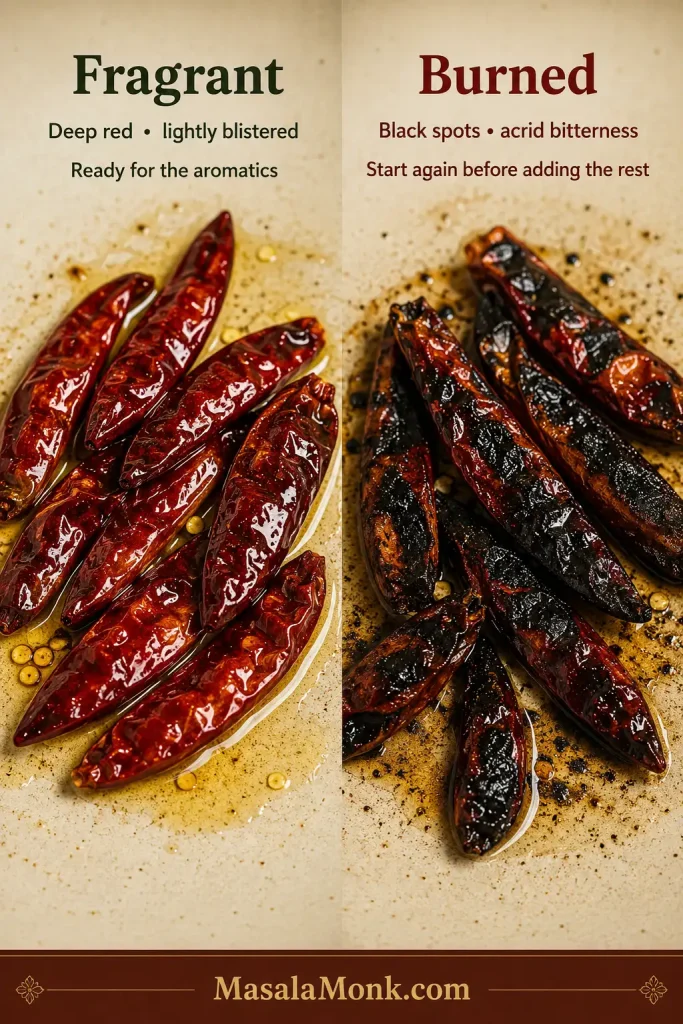
Check the pan. The chillies should smell toasted rather than acrid. The sauce should bubble across the surface, coat the food evenly and remain glossy without tightening into a stiff gel.
Troubleshooting
Is the sauce watery, gluey or simply out of balance? Most final-minute problems are still recoverable once you identify what you are seeing or tasting.
Sauce texture and balance problems
| Problem | Likely cause | What to do |
|---|---|---|
| Watery sauce | The pan was cool, the chicken was crowded or the cornstarch settled. | Let the sauce reach a full bubble first. If it remains watery and the chicken is already cooked through, transfer the solids and reduce the liquid briefly before returning everything to the pan. |
| Gluey sauce | Too much starch or too much time after boiling. | Add hot water or unsalted stock, one tablespoon at a time, while tossing. |
| Too salty | Strong soy sauce or excessive reduction. | Add water or unsalted stock, then restore brightness with a few drops of vinegar. |
| Too sweet | Too much sugar or hoisin. | Add vinegar gradually, tasting after each small addition. |
| Too sour | The vinegar balance is too sharp. | Add sugar in small pinches. |
| Flat flavour | Too little acidity or insufficient savoury depth. | Add a few drops of vinegar, toss and taste. Add a small amount of soy only if it still lacks savoury depth. |
Chicken, peanuts and burned chillies
| Problem | Likely cause | What to do |
|---|---|---|
| Dry chicken | The pieces were too small or fully cooked before returning to the pan. | Shorten the first cooking stage and let the chicken finish in the sauce. |
| Soft peanuts | They entered too early. | Add a fresh handful after cooking and reserve some for serving. |
| Bitter chillies | They burned in the oil. | Remove them and wipe out the pan if they are blackened. Badly burned chilli or garlic is the one flavour worth starting over for. |
Most of these problems are small. A spoonful of water can loosen a tight sauce, a short boil can concentrate a thin one and fresh peanuts can restore lost crunch.
Sichuan recipe · Takeout-style recipe · Back to the top ↑
Why Sichuan and Takeout Kung Pao Taste Different
Kung Pao chicken—also written as Kung Po chicken and known as Gong Bao Ji Ding—began as a Sichuan dish of diced chicken, dried chillies, peanuts and aromatics. Black vinegar, Shaoxing wine and Sichuan peppercorn give it its sharp, fragrant flavour, although exact ratios vary among cooks and restaurants.
Chinese-American restaurants developed a sweeter, saucier preparation that often includes bell pepper, celery, zucchini or onion. It is different in practice, but it has become a familiar dish in its own right—and may be exactly the one you remember.
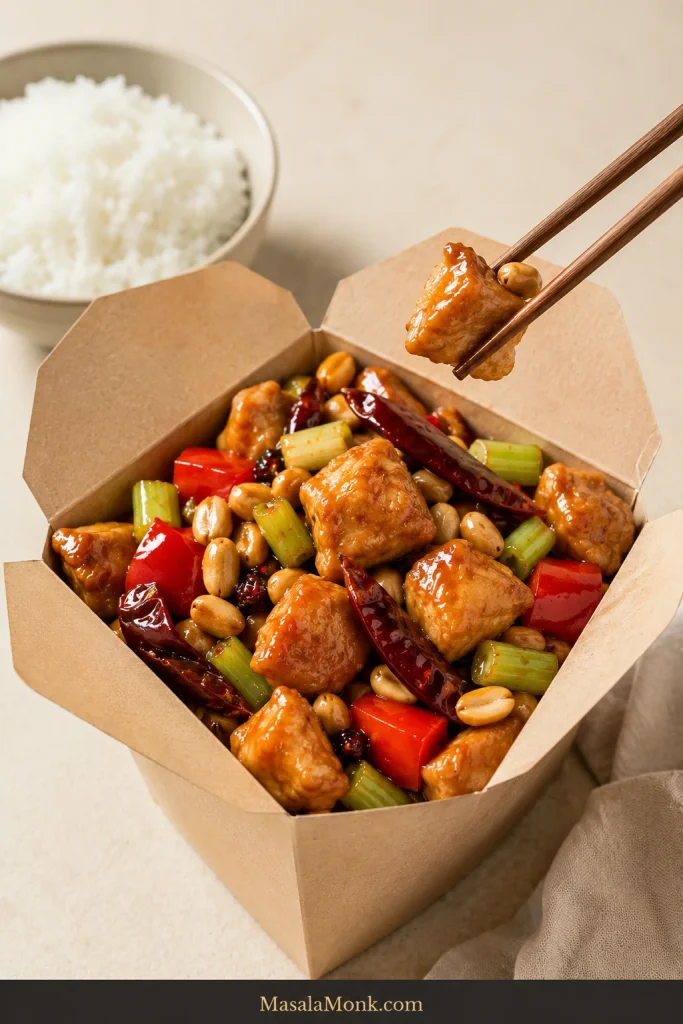
Sichuan cooking is broader than chilli heat alone. This introduction to Sichuan cuisine provides useful context for the region’s wider range of flavours.
How the sauce finish changes
Peanut-Free and Other Adaptations
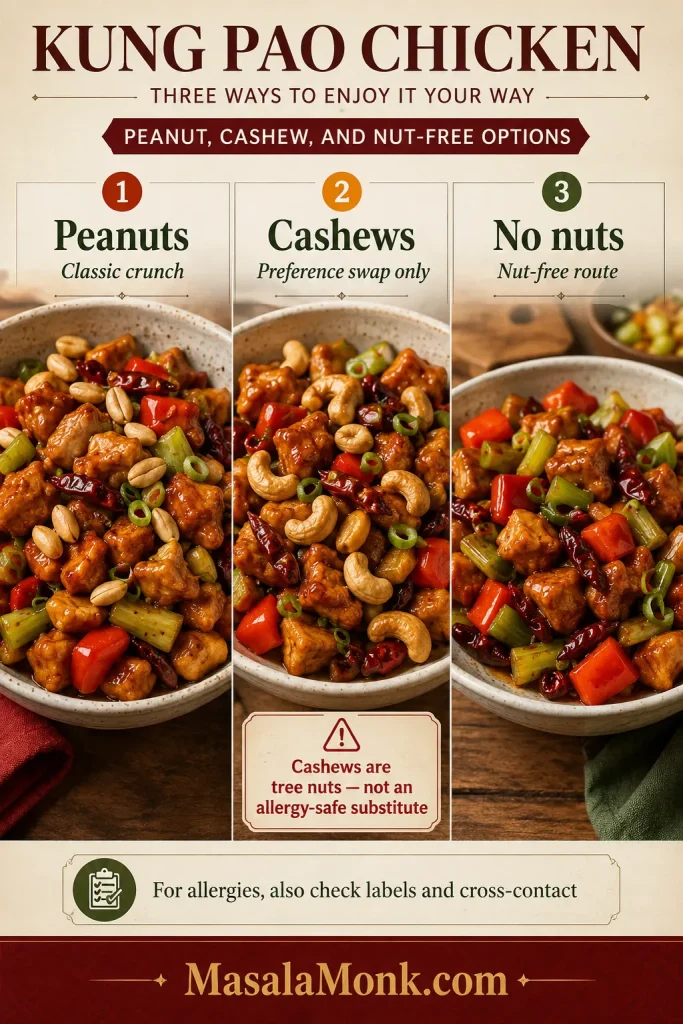
If you simply prefer another nut, cashews provide a richer, slightly softer crunch.
For a peanut allergy, omit the peanuts completely and check the labels on bottled sauces and chilli oils. The Sichuan dish will lose its nutty crunch but remain balanced; bell pepper and celery provide some of the missing contrast in the takeout recipe.
A gluten-free preparation needs certified gluten-free tamari and hoisin, plus a dry sherry or cooking-wine substitute that is clearly labelled gluten-free. Check every bottled label rather than assuming a sauce is safe.
When using bottled Kung Pao sauce, taste it before adding soy, sugar or cornstarch because many commercial sauces already contain all three. Cook the chicken and vegetables with the same staged method, then add only enough sauce to coat them.
For a flexible sauce you can use across other dishes, see this stir-fry sauce guide.
What to Serve With Kung Pao Chicken
This is a dish that wants rice nearby. The Sichuan glaze needs only a modest spoonful; the takeout sauce gives the grains more to catch.
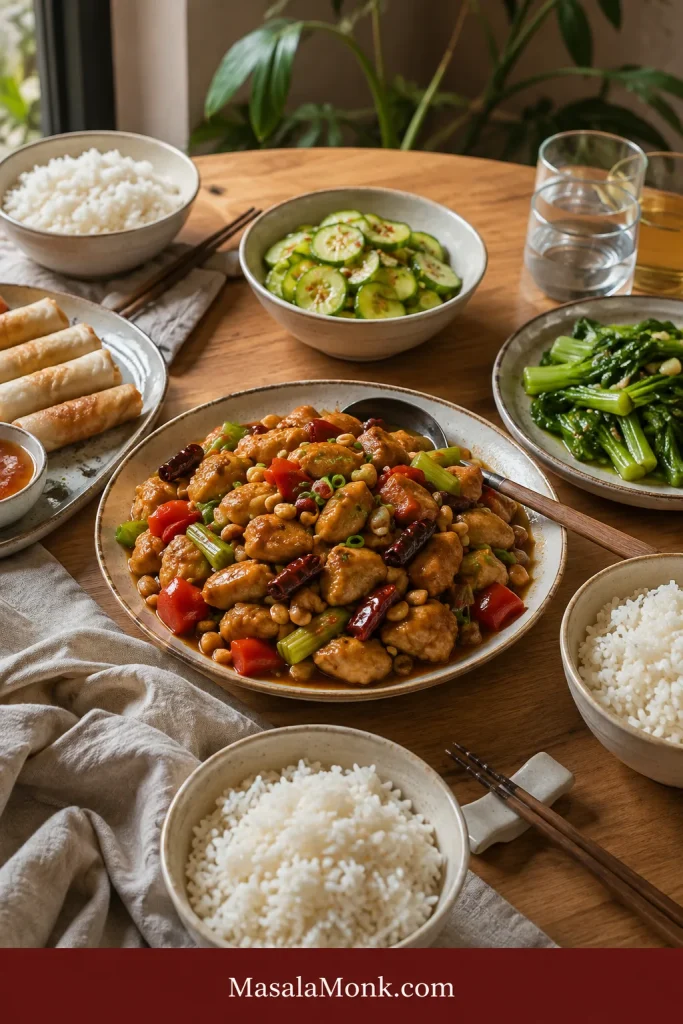
The hotter dish is especially good beside this crisp cucumber salad. Its cold crunch and light acidity reset the palate between bites.
- Steamed jasmine rice: the easiest choice for either recipe.
- Plain long-grain rice: neutral, practical and widely available.
- Fried rice: add shrimp fried rice for a fuller takeout-style spread, keeping the Kung Pao coating on the lighter side so the meal does not become too saucy.
- Garlicky greens: a simple way to add vegetables without crowding the stir-fry pan.
- Crispy spring rolls: prepare these vegetable spring rolls first, then cook the Kung Pao chicken last.
Spoon the chicken over rice and put something cold and crisp beside it. The contrast is enough; the meal does not need another heavy sauce.
Make Ahead, Storage, Freezing and Reheating
Prepare ahead: Mix either sauce up to two days in advance. Fifteen to twenty minutes is enough for the marinade, though the chicken can be covered and refrigerated for a few hours earlier the same day. Cut vegetables and aromatics one day ahead and keep the peanuts sealed separately.
Store leftovers: Refrigerate within two hours in a covered container and use within three to four days. The sauce thickens as it chills, while the vegetables and peanuts gradually soften.
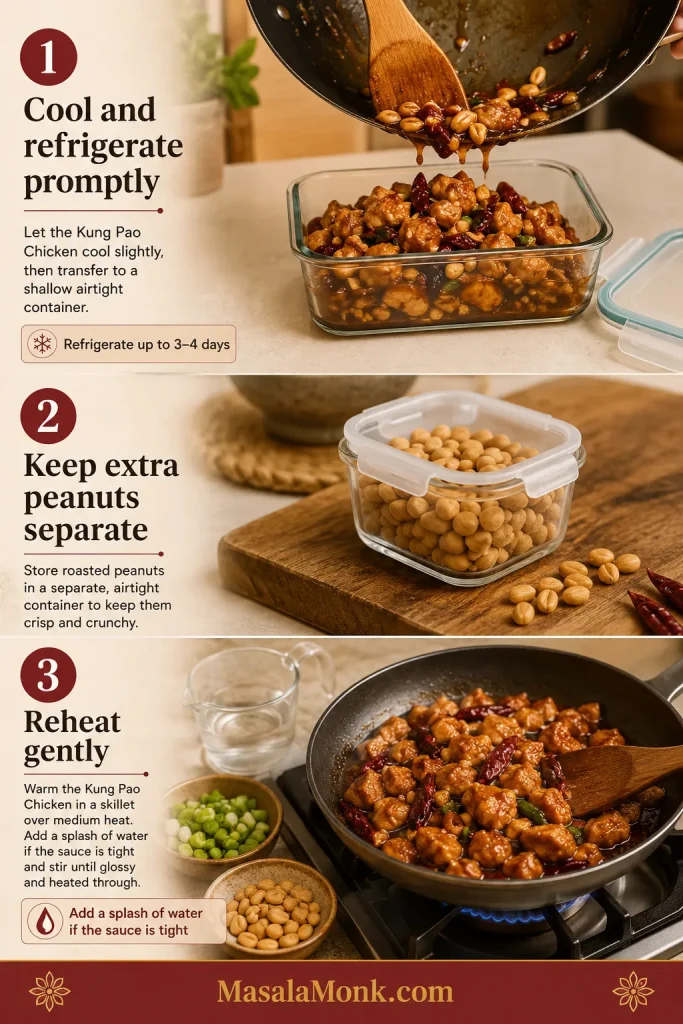
Freeze with realistic expectations: The chicken and sauce can be frozen, but cornstarch-thickened sauce may loosen and the vegetables will lose much of their snap. For a better result, freeze the chicken and sauce without the vegetables or peanuts, then add freshly cooked vegetables and roasted peanuts after reheating.
Reheat gently: Warm the chicken in a wide skillet over medium heat with one or two spoonfuls of water or unsalted stock, or microwave it in short intervals. Reheat leftovers to 165°F or 74°C, then add fresh scallion greens and reserved peanuts.
Frequently Asked Questions
Is Kung Pao chicken fried or stir-fried?
Classic Kung Pao chicken is stir-fried. The chicken receives a thin cornstarch marinade rather than a thick coating for deep-frying.
Do you eat the dried chillies and peppercorns?
The dried chillies flavour the oil, but most diners leave the large whole pieces on the plate. Lightly cracked Sichuan peppercorns are edible and remain in the Sichuan recipe, though using finely ground peppercorn gives a more even tingle without larger pieces.
What is Kung Pao sauce made of?
Kung Pao sauce balances soy sauce, vinegar, sugar, Shaoxing wine and cornstarch. The Sichuan recipe uses black vinegar and less liquid for a tight glaze, while the takeout recipe adds hoisin and more stock or water for a saucier coating.
Can I double the recipe?
Double the ingredients, but cook the chicken, vegetables and sauce in separate rounds. Doubling everything in one pan lowers the heat and creates a watery result.
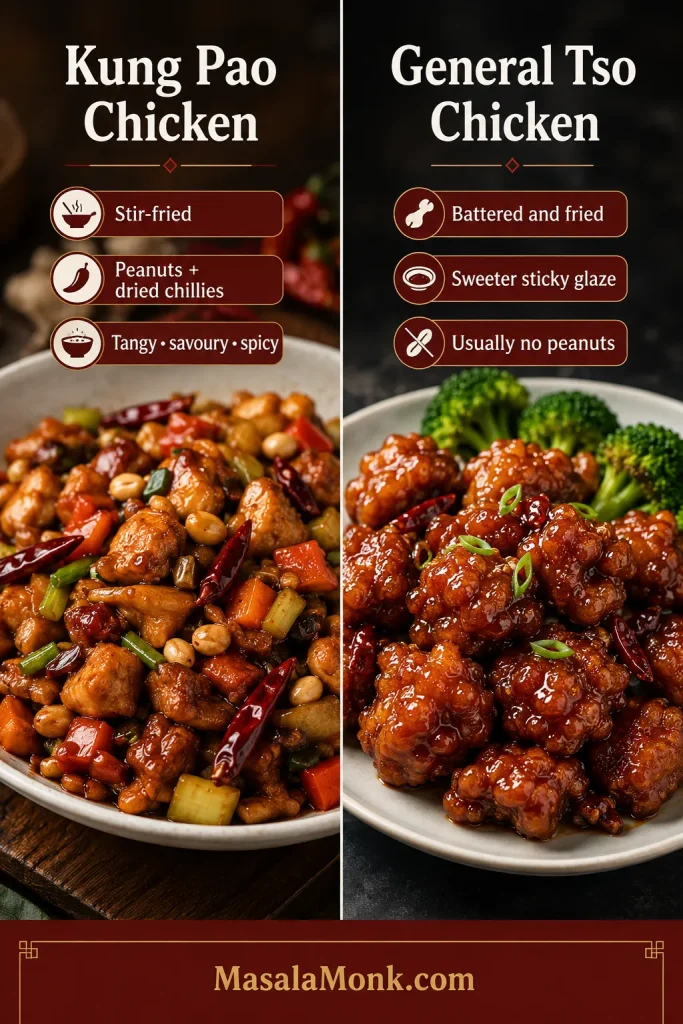
What is the difference between Kung Pao and General Tso chicken?
Kung Pao chicken is a stir-fry built around diced chicken, dried chillies, peanuts and a tangy sauce. General Tso chicken is generally coated or battered, fried and finished in a sweeter, stickier glaze.
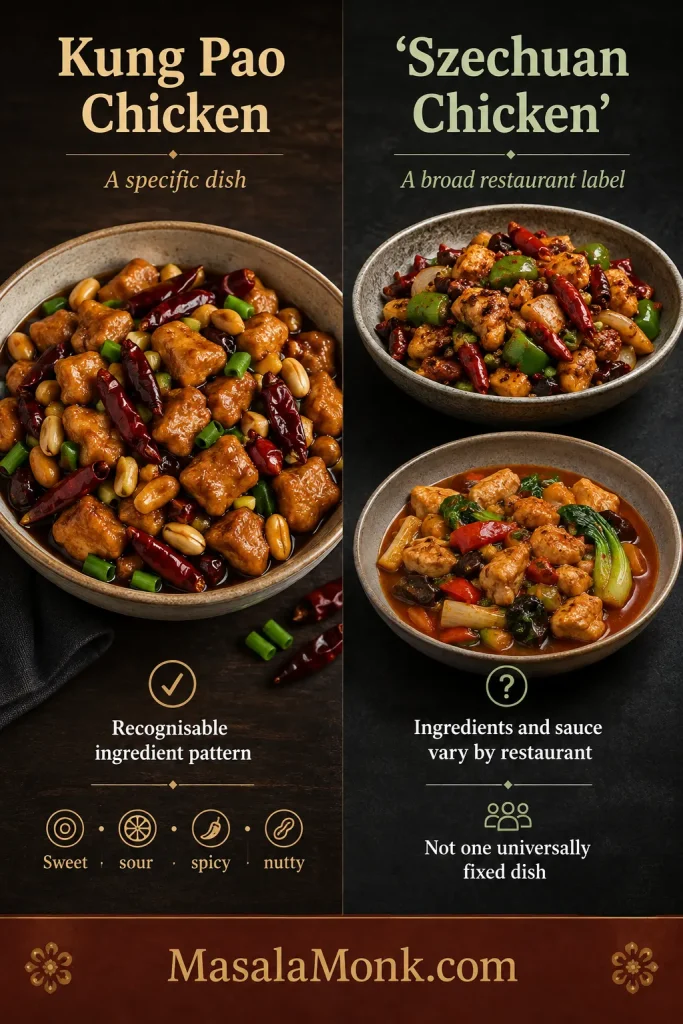
What is the difference between Kung Pao and Szechuan chicken?
Kung Pao chicken is a specific Sichuan dish with peanuts, dried chillies and a balanced sweet-sour sauce. “Szechuan chicken” is a broader restaurant label that may describe several spicy chicken stir-fries, often with more vegetables and a different sauce.
Serve as soon as the chicken is cooked through and the sauce clings lightly to every piece.
A good first bite should bring tender chicken, tangy sauce, toasted chilli fragrance and a piece of crisp peanut.
Whether you chose the tighter Sichuan dish or the saucier takeout dinner, it should taste like the Kung Pao chicken you meant to make.








