
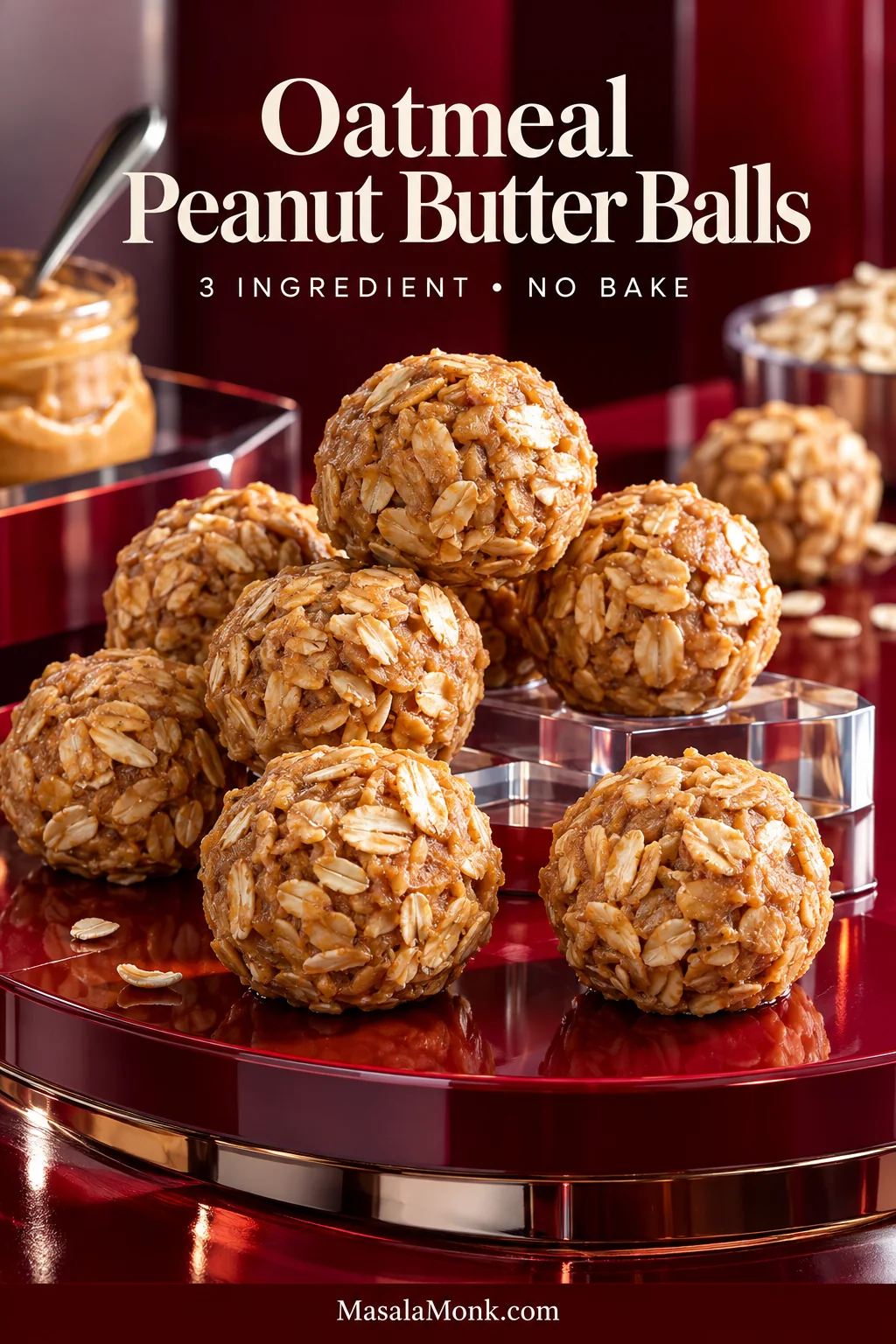
These oatmeal peanut butter balls are nutty, lightly sweet and chewy, with visible rolled oats and plenty of peanut-butter flavor. You need just three essential ingredients: oats, peanut butter, and honey. The whole thing takes about 10 minutes, with no baking and no food processor to clean afterwards.
You may also know these as energy balls or oatmeal bites. This version keeps plenty of rolled-oat texture. Looking for the fudgy chocolate-peanut-butter kind that sets on parchment? Our chocolate peanut butter no-bake cookies are the better match.
Before you roll, check whether the mixture holds when you squeeze it.
The One Test Before You Roll
You are looking for something soft and slightly tacky that stays together when pressed. Squeeze about 1 tablespoon firmly in your palm.
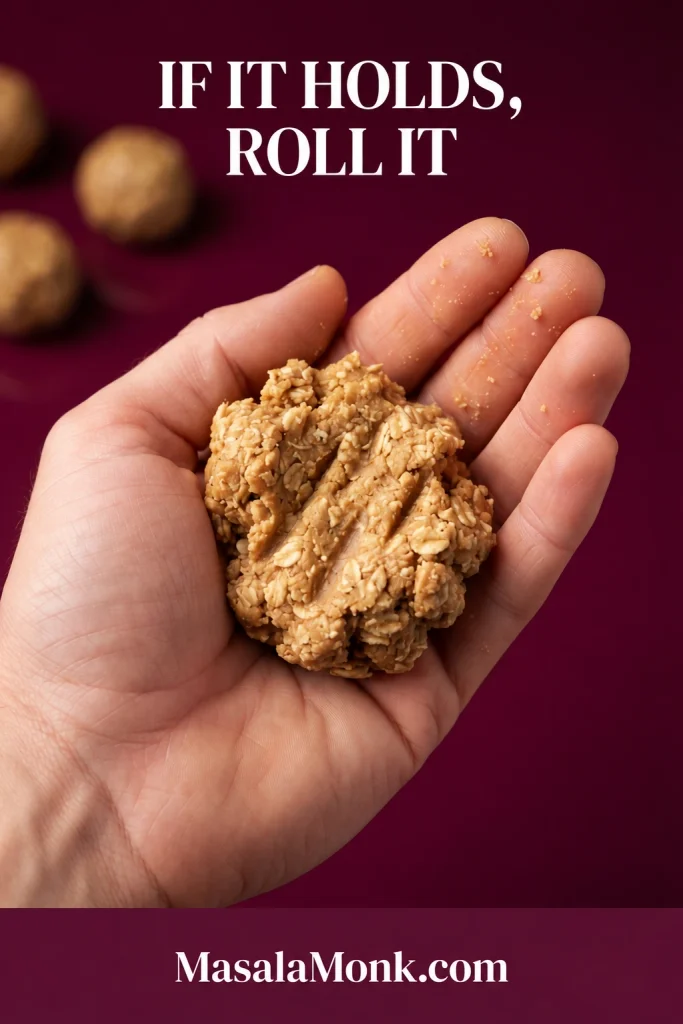
- It holds: roll it.
- It crumbles: add a little binder. Peanut butter is usually the first thing to try.
- It holds but feels very soft: chill it before reaching for more oats.
Chilling can firm something that already stays together. It will not make a dry, crumbly portion suddenly stick.
Oatmeal Peanut Butter Balls Recipe
These 3-ingredient no-bake oatmeal peanut butter balls are chewy, lightly sweet, and ready in about 10 minutes. Rolled oats stay visible in every bite, while peanut butter and honey hold everything together.
Ingredients
- 1½ cups (120 g) old-fashioned rolled oats
- ¾ cup (190 g) smooth peanut butter, thoroughly stirred and spoonable
- ¼ cup (85 g) honey
- 1 teaspoon vanilla extract, optional but recommended
- ⅛ teaspoon fine salt, optional; reduce or omit if the peanut butter is already salty
- ¼ cup (40–45 g) mini chocolate chips, optional
Instructions
- Mix the peanut butter and honey. If the peanut butter is very stiff, warm the measured amount for about 10–20 seconds, just enough to loosen it. Then stir the peanut butter and honey together in a medium bowl until smooth and evenly combined. Add the vanilla and salt, if using.
- Add the oats. Stir until the flakes are evenly coated and there are no obvious dry pockets. Fold in mini chocolate chips now, if using. If you warmed the peanut butter and the mixture still feels warm, let it cool for a few minutes before judging the texture.
- Check before adjusting. Firmly press about 1 tablespoon in your palm. Leave it alone if it holds. If it crumbles, add peanut butter 1 teaspoon at a time. A portion that stays together but feels very soft or sticky should be refrigerated for about 10 minutes before adding more oats. See the troubleshooting guide if the texture still seems off.
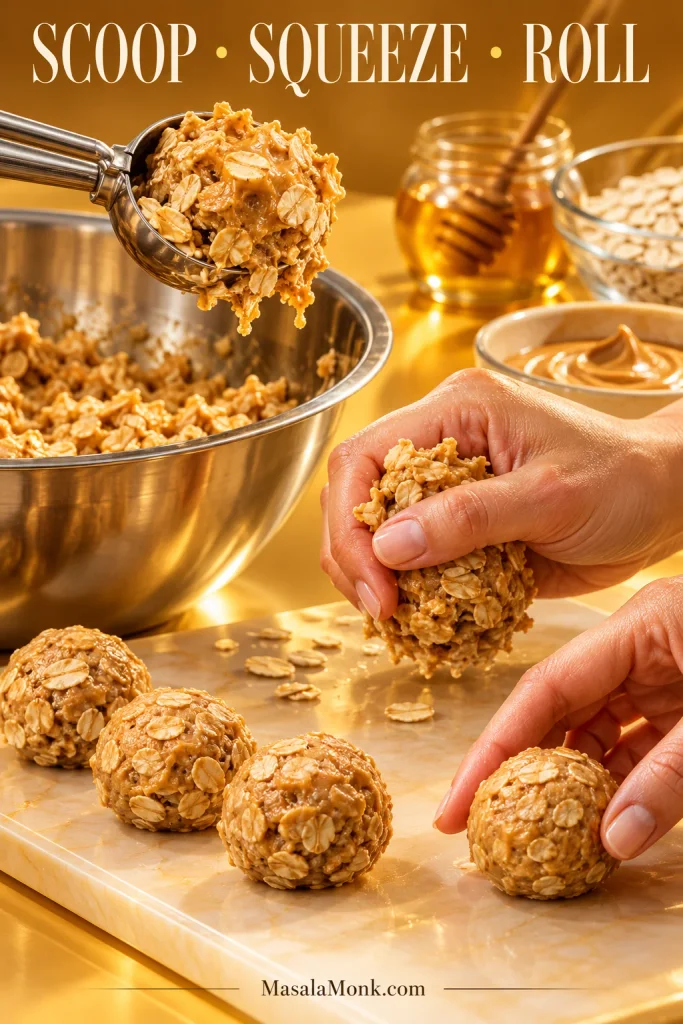
- Scoop, squeeze, then roll. Portion about 1 heaped tablespoon, or roughly 22 g, at a time. Compress it firmly first, then roll it between your palms. They do not need to be perfectly smooth or round. If your hands get tacky, rinse them and lightly dampen them with cool water. Once the first couple feel right, the rest usually go quickly.
- Eat one now, or chill the rest. They are soft and chewy straight away. Refrigerate for 20–30 minutes if you prefer a firmer bite.
Recipe Notes
- Oats: rolled oats give more chew; quick oats make softer, tighter balls. Do not substitute steel-cut oats.
- Without honey: use the same amount of maple syrup and chill the mixture briefly if needed.
- Storage: refrigerate in an airtight container for about 1 week or freeze for 2–3 months.
Approximate nutrition: for an 18-ball batch without the optional chocolate chips, one ball is roughly 100–105 calories, 4 g protein, 1–1.5 g fiber, and about 5 g sugar. Exact values vary with the ingredients and finished portion size.
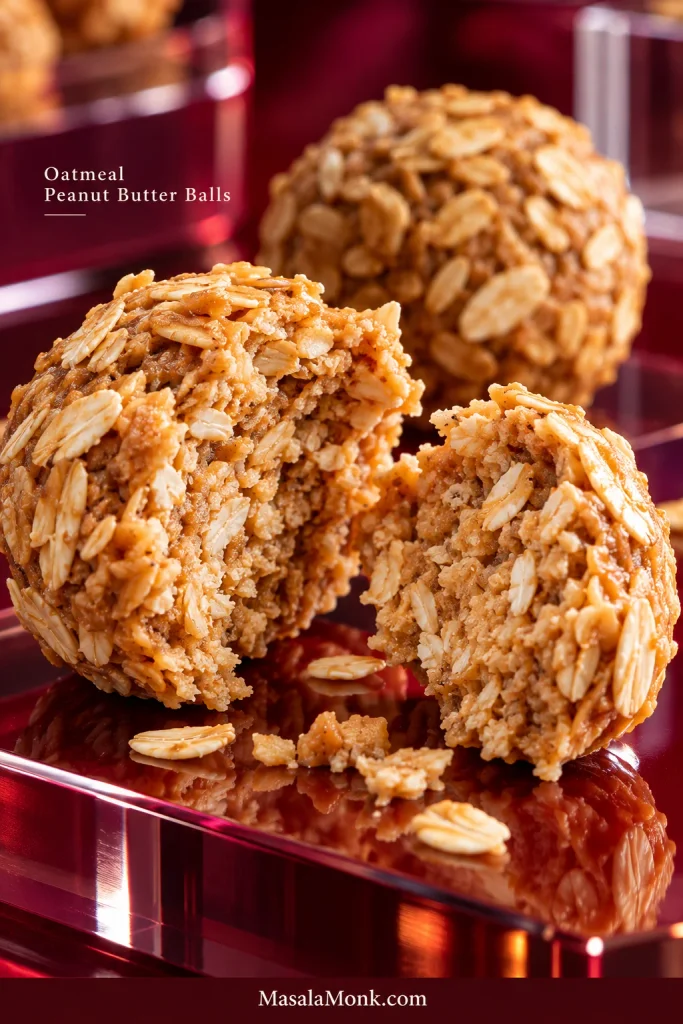
What the Finished Texture Should Look Like
If you want to check the finished texture, break one open after rolling. The center should stay together cleanly without turning into a smooth paste.
Need Help With This Batch?
Most batches roll just fine as mixed. If yours doesn’t, the fix is usually small. Jump to the problem you’re seeing or the variation you want.
If Your Oatmeal Balls Crumble, Stick or Flatten
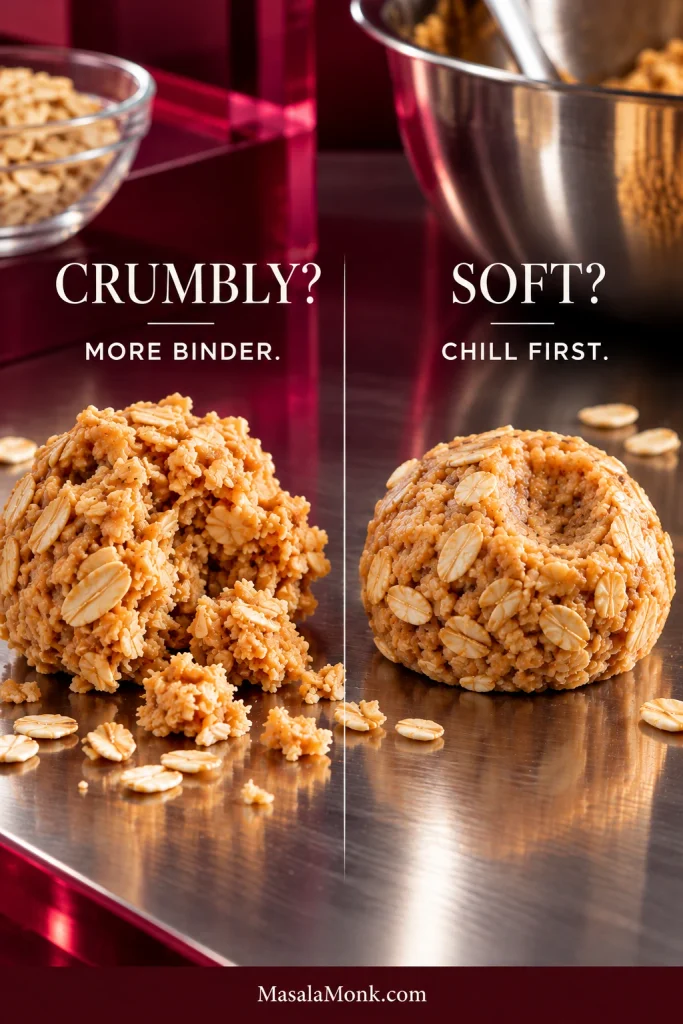
Oats and peanut butter vary from one brand to another, so two batches won’t always look identical. If a pressed portion stays together, you’re already there. Use the table only when yours won’t roll cleanly.
| What yours is doing | What to do |
|---|---|
| Looks dry or shaggy but stays together when pressed | Leave it alone and roll it. Coarse flakes can make a workable mixture look drier than it really is. |
| Cracks or falls apart | Add peanut butter 1 teaspoon at a time. The oats need a little more help staying together. |
| Crumbly and not sweet enough | Add honey 1 teaspoon at a time. It adds sweetness and helps everything stick. |
| Stays together but smears or slumps | Chill for about 10 minutes first. It already forms a ball, so do not add more oats yet. |
| Still sticky after chilling | Add rolled oats 1 tablespoon at a time. Mix fully before adding another spoonful. |
| Gets drier while you finish rolling | Mix in a very small amount of peanut butter. The oats are still taking up moisture as they sit. |
| Balls flatten after shaping | Refrigerate until firmer. The peanut butter is probably too warm. |
Crumbly needs binding. Soft needs cooling first.
Once the mixture holds together, stop adjusting it and roll the rest.
Rolled Oats vs. Quick Oats
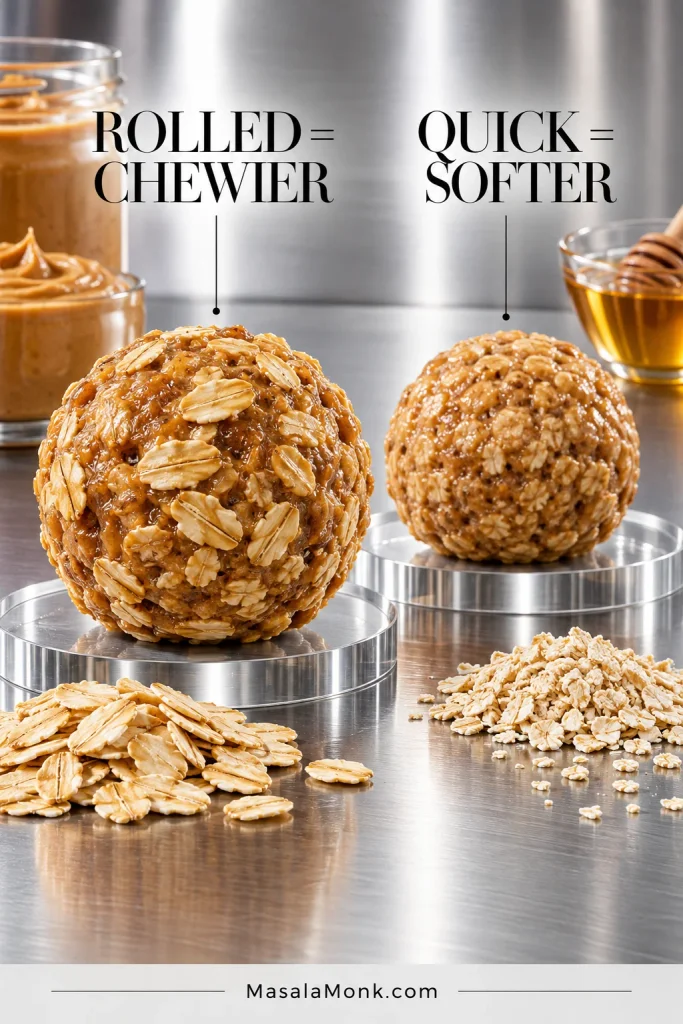
Rolled oats are the default here because they give the balls more chew. Quick oats work too, but their smaller flakes absorb moisture faster and make the texture softer and tighter, closer to oatmeal cookie dough. Steel-cut oats stay too hard for this short no-cook method.
You do not need to cook rolled or quick oats first. MasalaMonk’s guide to rolled, quick, instant, and steel-cut oats goes deeper into how the common types differ and where each works best.
Need the recipe gluten-free? Choose oats specifically labeled gluten-free and check the remaining ingredient labels too.
What Kind of Peanut Butter Works Best?
Peanut butter is the other big texture variable. Smooth, thoroughly stirred, spoonable peanut butter works best, and natural or conventional peanut butter can both work. Consistency matters more than the label. A separate slick of oil can make the mixture unexpectedly loose, while refrigerator-cold peanut butter can make the same recipe seem much drier.
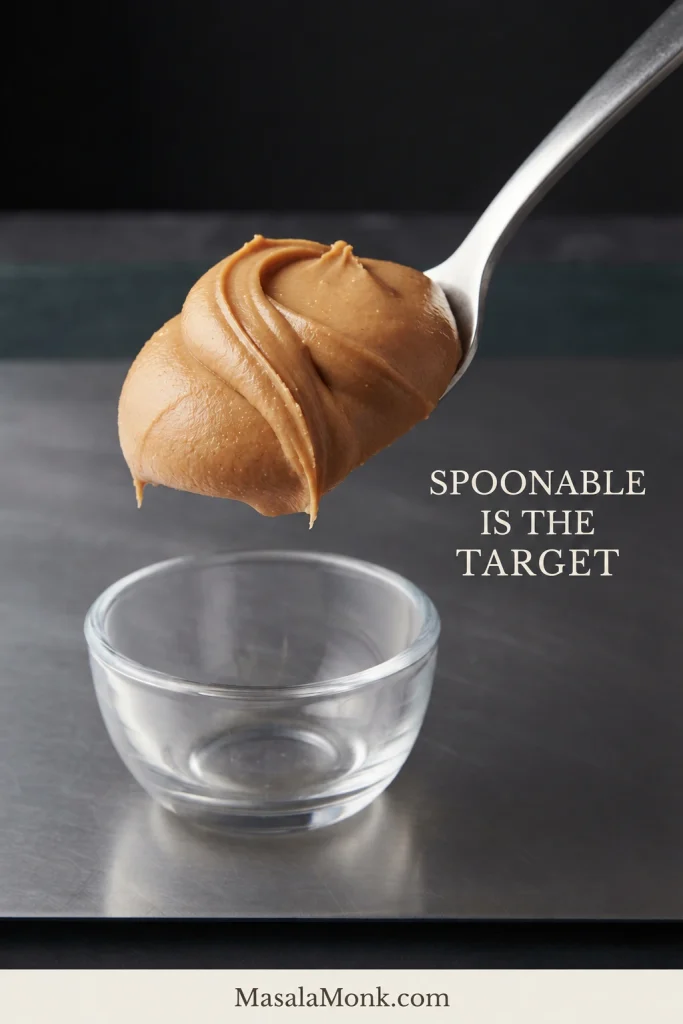
Very runny peanut butter usually calls for patience, not another handful of oats. Give it a short chill first. With a particularly thick jar, the opposite can happen and a teaspoon or two more peanut butter may be all you need.
Crunchy peanut butter works too. Part of each spoonful is peanut pieces rather than creamy peanut butter, so that version may need a touch more help forming a ball.
Honey, Maple Syrup & Making Them Less Sweet
Honey affects both sweetness and binding. Reduce it too much and the flavor may be right while the dough still falls apart.
Prefer them less sweet? Reduce the honey modestly. Once the flavor is where you want it, add a little peanut butter if the oats still need help forming a ball.
Can I Use Maple Syrup Instead of Honey?
Yes. Start with the same amount of maple syrup, but expect a slightly softer mixture. After 10–15 minutes in the refrigerator it will usually feel firmer; only then decide whether it needs more oats.
Chocolate, Seeds, Fruit & Other Add-Ins
Easy Add-Ins That Can Go Straight In
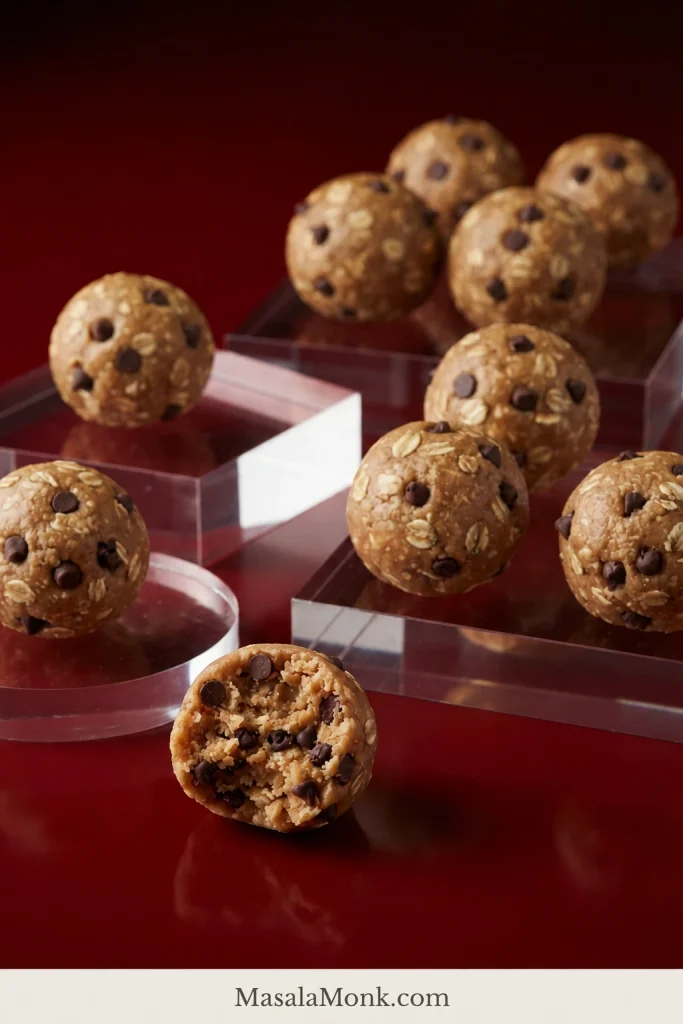
Mini chocolate chips, cinnamon, chopped nuts, and finely chopped dried fruit can usually be added without changing the basic recipe.
Mini chips are especially good here. They give you little pockets of chocolate without large pieces breaking through the surface as you roll.
Absorbent Add-Ins Need a Little More Care
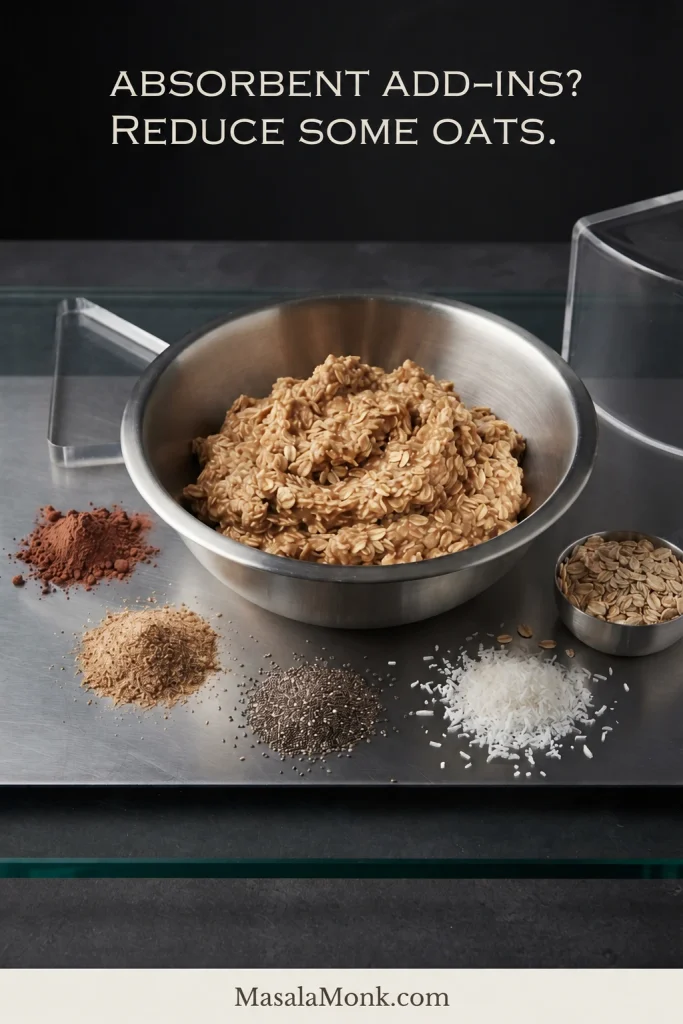
Cocoa, ground flax, chia, and coconut all soak up moisture as they sit.
Absorbent dry add-ins replace some oats; wet add-ins change the recipe. For more than a spoonful or two of cocoa, ground flax, chia, or coconut, reduce the oats slightly and check the texture before adding more.
Banana, Applesauce & Other Wet Fruit
Wet fruit changes the balance much more than dried fruit. Banana, for example, needs the oat ratio built around it from the start. If you want a banana-and-oats recipe designed around that extra moisture, our banana oatmeal muffins are a better fit.
Dried or freeze-dried fruit is the easier choice here when you want fruit flavor without making the balls soft or mushy.
Using Sunflower Seed Butter
To make the recipe without peanut butter, sunflower seed butter is the simplest starting swap. Use the same amount and press one portion in your palm before changing anything.
If you’re preparing these for someone with a peanut allergy, check every ingredient label and any cross-contact information rather than relying on the substitution alone.
Higher-Protein Oatmeal Peanut Butter Balls
For a higher-protein batch, start with 1 cup (80 g) rolled oats plus 50 g protein powder, keeping the ¾ cup peanut butter and ¼ cup honey the same. The regular balls already contain some protein from oats and peanut butter, but they are not especially protein-dense. Protein powders vary quite a bit, so treat that ratio as a starting point.
Chalky dough usually needs peanut butter by the teaspoon. When it is only slightly dry and already sweet enough, 1 teaspoon of water may be enough. A soft mixture usually firms after a short chill, so cool it before adding more dry ingredients.
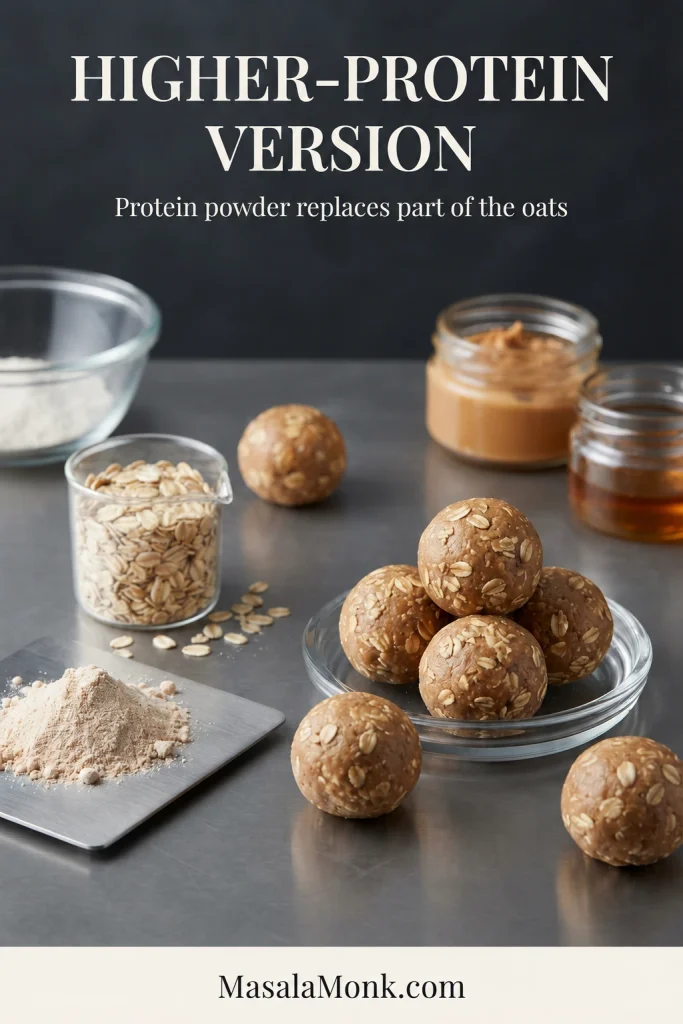
With a typical protein powder, an 18-ball batch should land somewhere around 5–6 g protein per ball, though the exact amount depends on the powder and peanut butter you use.
If you’re mainly looking for a higher-protein breakfast, MasalaMonk’s high-protein oatmeal guide goes much further.
How to Store and Freeze Them
Keep the balls in the refrigerator for about 1 week, or freeze them for 2–3 months.
In the Refrigerator
Store them in an airtight container. Straight from the fridge they will be noticeably firmer; after about 5–10 minutes at room temperature, the peanut butter softens and the chewier bite comes back.
For Lunchboxes and Travel
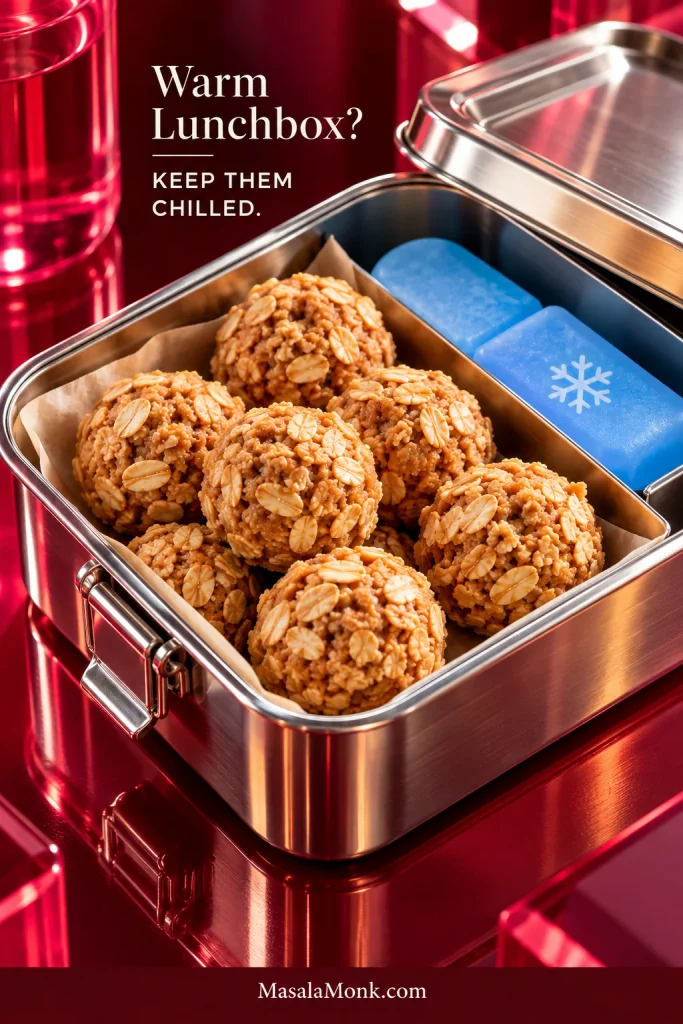
A chilled ball gradually softens as the peanut butter warms, so one in a warm bag or car will be softer than one taken straight from the refrigerator. For longer trips or warm lunchboxes, keep them chilled until you’re ready to eat.
In the Freezer
Freeze them in a well-sealed container for about 2–3 months. Place parchment between stacked layers so individual balls are easy to remove.
Thaw them in the refrigerator or leave one at room temperature until the center loses its frozen firmness.
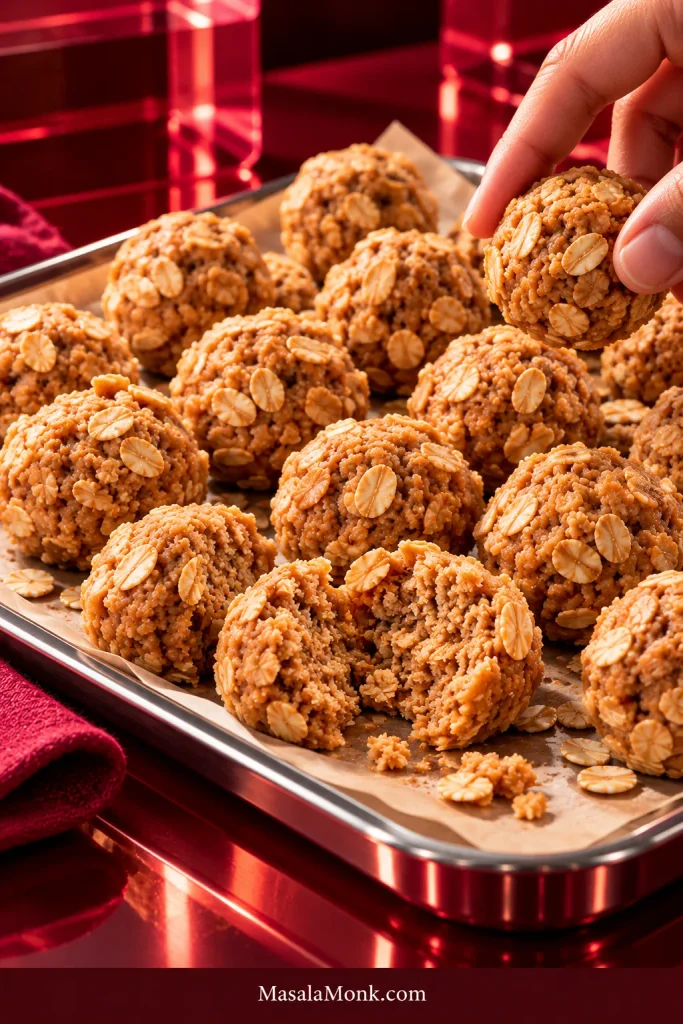
The base recipe makes a generous batch without requiring perfectly uniform shapes.
If you make them, tell us which oats and peanut butter you used — and whether you liked them soft or chilled.








