
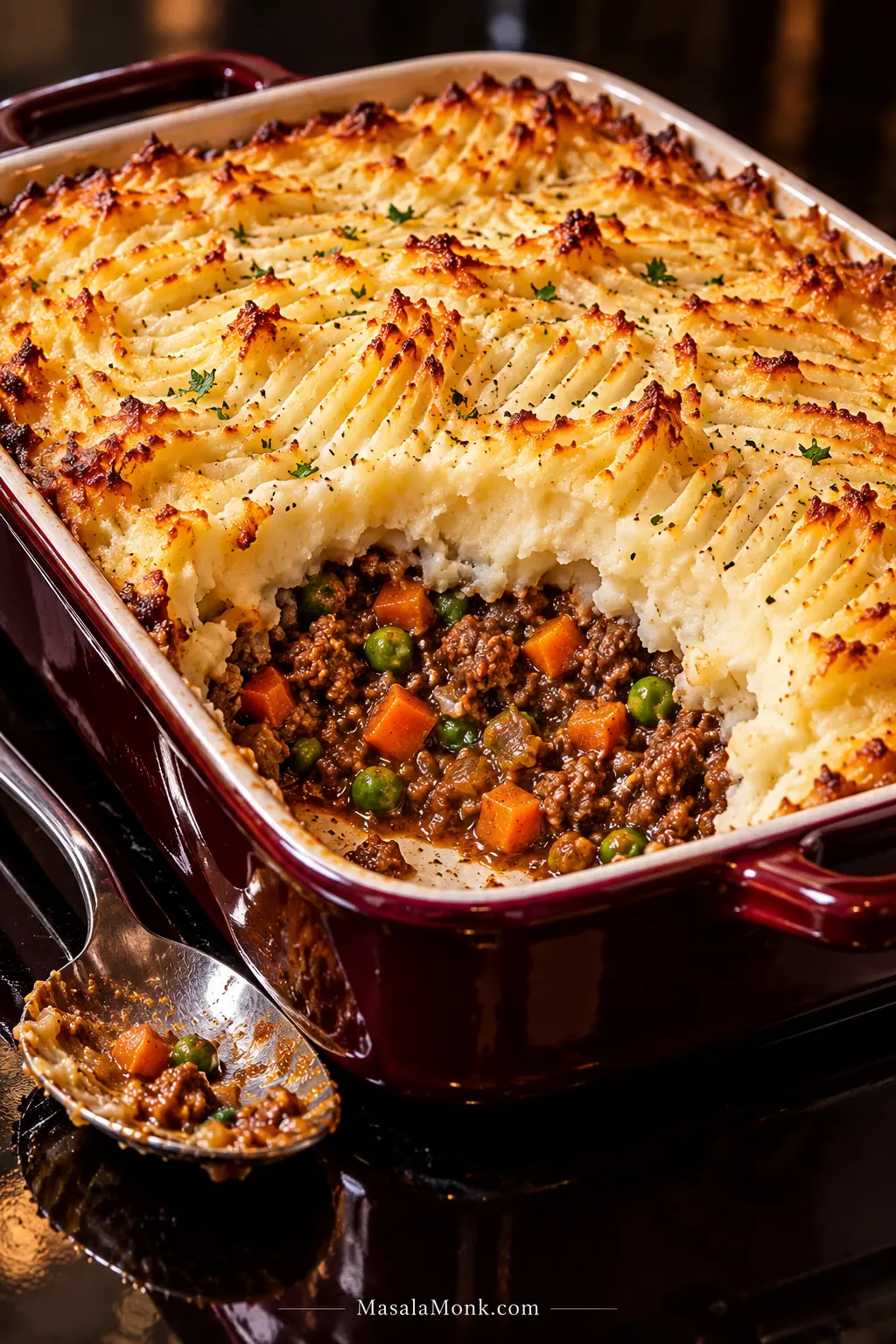
A good spoonful of shepherd’s pie gives you creamy mashed potatoes, crisp golden ridges and rich lamb gravy that stays with the meat and vegetables underneath. The topping should hold its place without becoming stiff, while the filling stays saucy without running across the plate.
This easy shepherd’s pie recipe uses ground lamb, carrots and peas in a savory gravy, finished with a generous layer of buttery mashed potatoes. Most of the important work happens before the casserole reaches the oven: give the lamb some real color, let the gravy reduce, and keep the mash creamy without making it loose.
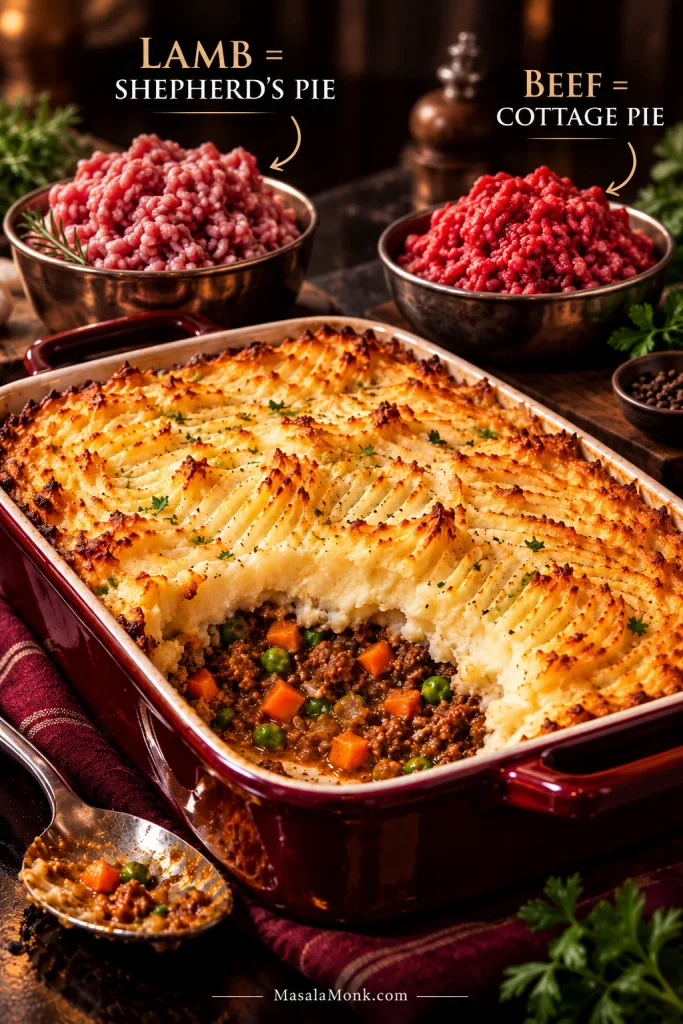
Shepherd’s pie traditionally uses lamb; make the same style of dish with ground beef and it becomes cottage pie.
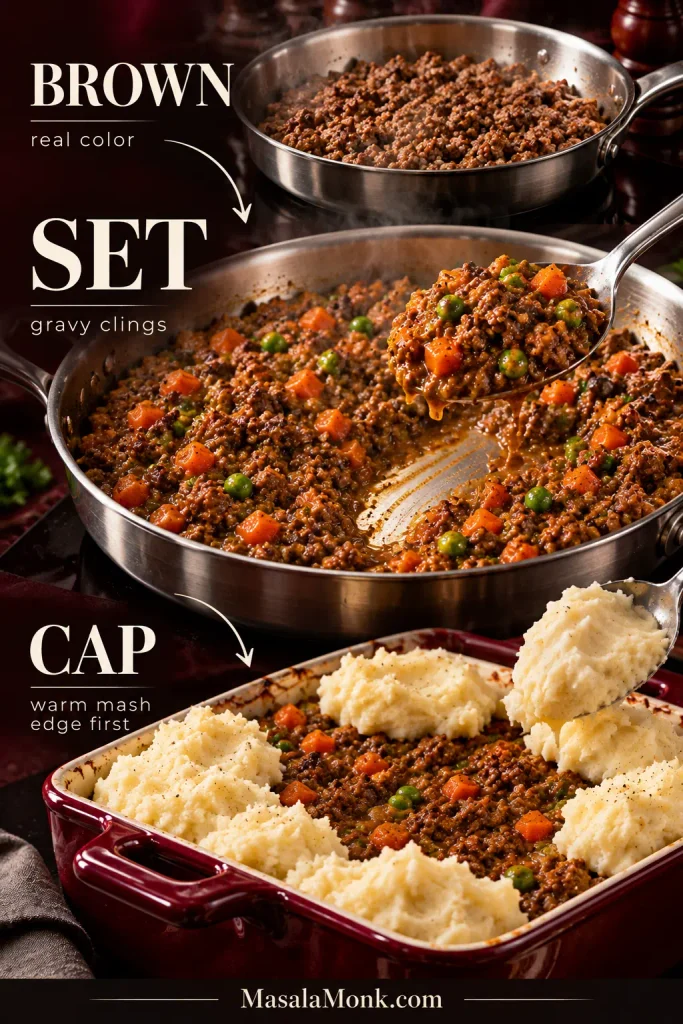
Brown. Set. Cap.
Three stages make the biggest difference to the finished pie.
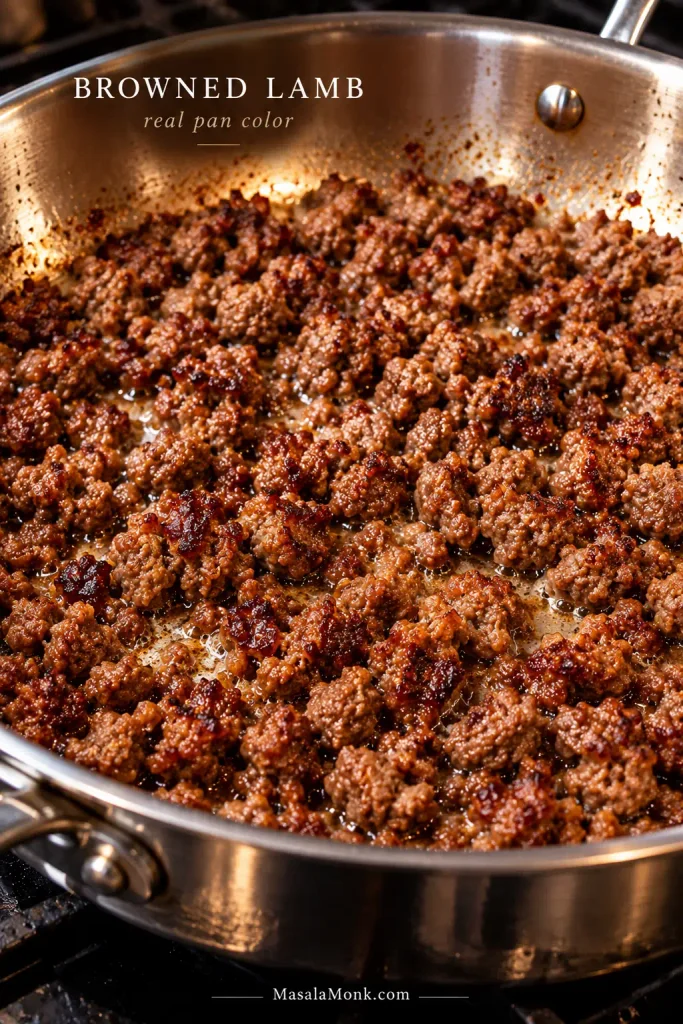
- Brown: give the lamb enough uninterrupted pan contact to develop real color. Stir it constantly and it is more likely to steam.
- Set: finish the filling on the stovetop. The gravy should stay with the lamb and vegetables, with no loose liquid gathering underneath.
- Cap: use warm mashed potatoes that spread easily but still hold their shape. Add them in smaller spoonfuls so you do not push them down into the filling.
Get those moments in place and the rest is mostly assembly, oven time and the patience to let the finished pie rest before you spoon into it.
Ready to cook? Jump to the Shepherd’s Pie recipe.
Shepherd’s Pie Recipe
Easy Lamb Shepherd’s Pie
Ground lamb, carrots and peas in thick savory gravy, topped with creamy Russet potatoes and baked at 400°F / 200°C / 180°C fan for 25–30 minutes, until the filling bubbles and the top turns golden.
Equipment
- 12-inch / 30 cm skillet or wide sauté pan; if yours is smaller, brown the lamb in two batches
- Large saucepan for the potatoes
- Colander
- Potato masher or ricer
- 2½- to 3-quart / 2.4- to 2.8-L baking dish, such as a deep 9×9-inch casserole or another dish of similar capacity
- Rimmed sheet pan if the casserole dish is fairly full
Lamb Filling
- 1½ lb / 24 oz / 680 g ground lamb
- 1 teaspoon olive oil, only if the skillet is dry after browning
- 1 large yellow onion, finely diced
- 2 medium carrots, diced small
- 1 large celery rib, diced small
- 3 garlic cloves, minced
- 2 tablespoons / about 30 g tomato paste
- 2 tablespoons / about 16 g all-purpose flour
- ½ cup / 4 fl oz / 120 ml dry red wine, optional
- 1¼ cups / 10 fl oz / 300 ml low-sodium beef or lamb stock
- Additional ½ cup / 120 ml stock if omitting the wine
- 1 tablespoon / 15 ml Worcestershire sauce
- 1 teaspoon dried thyme
- ½ teaspoon dried rosemary, crushed between your fingers
- ¾ teaspoon fine salt, divided, plus more if needed
- ½ teaspoon freshly ground black pepper, plus more to taste
- 1 cup / about 140 g frozen peas
Mashed Potato Topping
- 2 lb / 32 oz / 900 g Russet potatoes, weighed before peeling, peeled and cut into roughly 1½-inch / 4 cm chunks
- 4 tablespoons / 2 oz / 57 g unsalted butter
- ⅓ to ½ cup / 80–120 ml whole milk, warmed
- ¾ teaspoon fine salt, plus salt for the cooking water and more if needed
- Freshly ground black pepper
- Optional: ¼ cup / about 25 g finely grated Parmesan or 1 tablespoon melted butter for the top
Instructions
Start the Potatoes and Brown the Lamb
- Start the potatoes. Put the potato chunks in a large saucepan and cover with cold water by about 1 inch / 2.5 cm. Salt the water generously. Bring to a boil, lower to a steady simmer and cook until a knife passes easily through the center, usually about 15–18 minutes once boiling. As soon as the potatoes are tender, drain them. Return them to the warm saucepan off the heat with the lid slightly ajar until you are ready to finish the mash.
- Brown the lamb. While the potatoes cook, heat a 12-inch / 30 cm skillet over medium-high heat. Add the lamb and spread it across the pan. Leave some areas alone long enough to develop brown patches, then break the meat apart and continue cooking until no raw meat remains. If the pan is crowded or the lamb is simmering in its own liquid, brown it in two batches.
- Adjust the fat. If a noticeable pool of lamb fat collects in the skillet, spoon off the excess and leave a thin coating behind. If the pan looks dry instead, add up to 1 teaspoon olive oil.
Build and Reduce the Lamb Filling
- Cook the vegetables. Add the onion, carrots, celery and ½ teaspoon of the filling salt. Cook for 6–8 minutes, stirring occasionally, until the onion is translucent and the carrots have started to soften. Add the garlic and cook for another 30 seconds.
- Build the base. Stir in the tomato paste, thyme and rosemary. Cook for about 2 minutes, until the paste darkens, smells sweeter and begins clinging to the lamb and vegetables. Sprinkle over the flour and cook for another minute.
- Add the liquids. If using wine, pour it in and scrape up the browned bits from the skillet. Let it bubble for 2–3 minutes, until the volume has reduced and the sharp wine smell has softened. Add the stock, Worcestershire sauce and black pepper. If you skipped the wine, add the extra ½ cup / 120 ml stock instead.
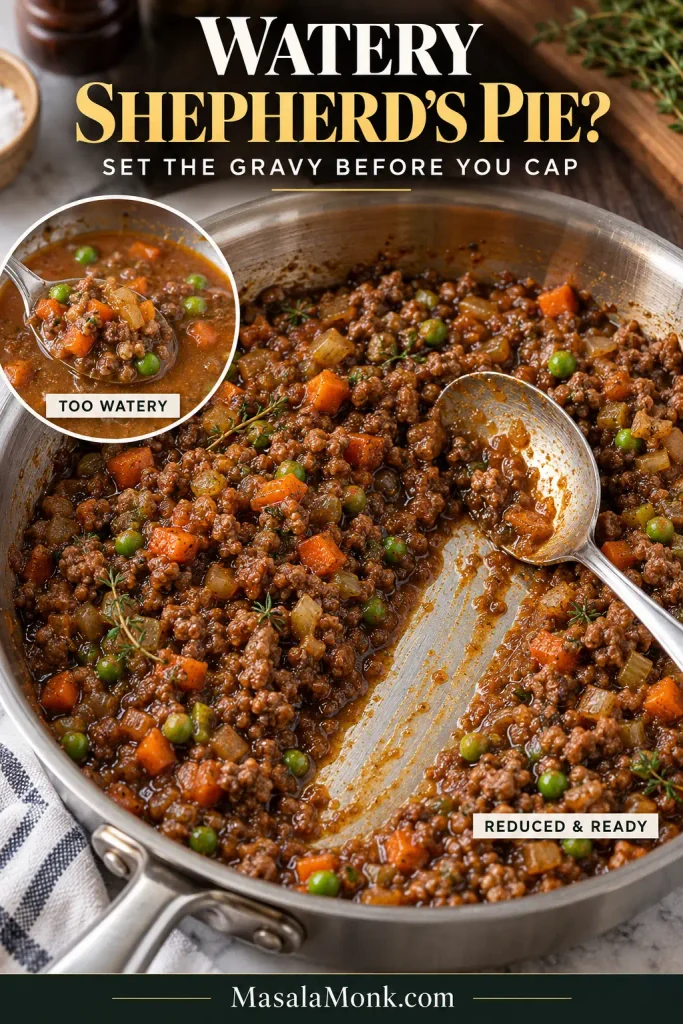
- Reduce the gravy and preheat the oven. Heat the oven to 400°F / 200°C / 180°C fan. Simmer the lamb mixture uncovered over medium to medium-low heat for roughly 8–12 minutes, stirring from time to time. A spoonful should sit in a soft mound, with the gravy staying around the meat and vegetables instead of quickly spreading into a watery ring. If it goes too far and starts looking dry, stir in stock 1–2 tablespoons / 15–30 ml at a time.
- Finish the filling. Stir in the frozen peas and cook for about 1 minute. Taste after the gravy has reduced and add the remaining ¼ teaspoon salt if needed, plus more pepper to taste. Transfer the filling to the baking dish if necessary and leave it to settle while you finish the potatoes. Once the gravy looks right, the hardest part is done.
Finish the Mash, Assemble and Bake
- Steam-dry the potatoes. Set the saucepan back over low heat for 1–2 minutes, shaking gently, until obvious surface moisture has steamed away.
- Make the mash. Add the butter, ¾ teaspoon salt and black pepper. Mash until smooth. Pour in the first ⅓ cup / 80 ml warm milk, then add more only if needed. Stop when the potatoes are creamy and spreadable but still hold soft peaks. If the mash feels stiff, add warm milk a tablespoon at a time.
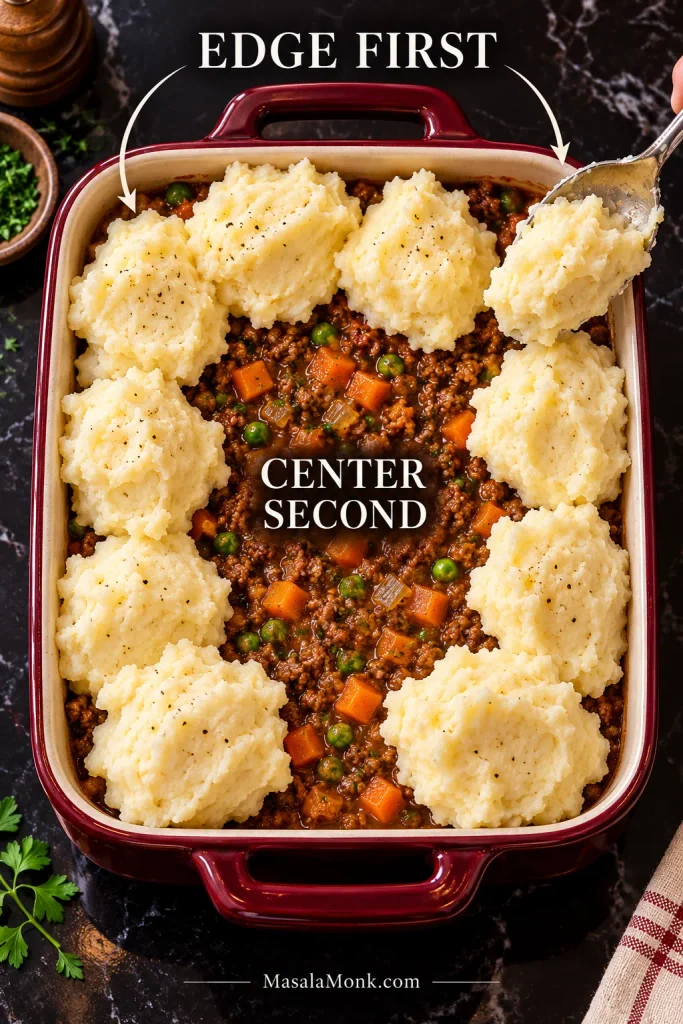
- Add the potato topping. Spoon small amounts of warm mash around the outside edge of the filling first, then distribute the rest across the center. Gently join the spoonfuls into a complete layer without pressing hard into the lamb. Run a fork over the surface to make ridges. Sprinkle with Parmesan, or lightly brush or drizzle the ridges with melted butter, if using.
- Bake. Set the casserole on a rimmed sheet pan if it is fairly full. Bake for 25–30 minutes, until the edges are bubbling, the center is thoroughly hot and the potato top is lightly golden. A little gravy bubbling up at one corner is fine. For more color, broil the top for 1–3 minutes if your baking dish is broiler-safe, watching constantly; otherwise leave it in the regular oven a few minutes longer.
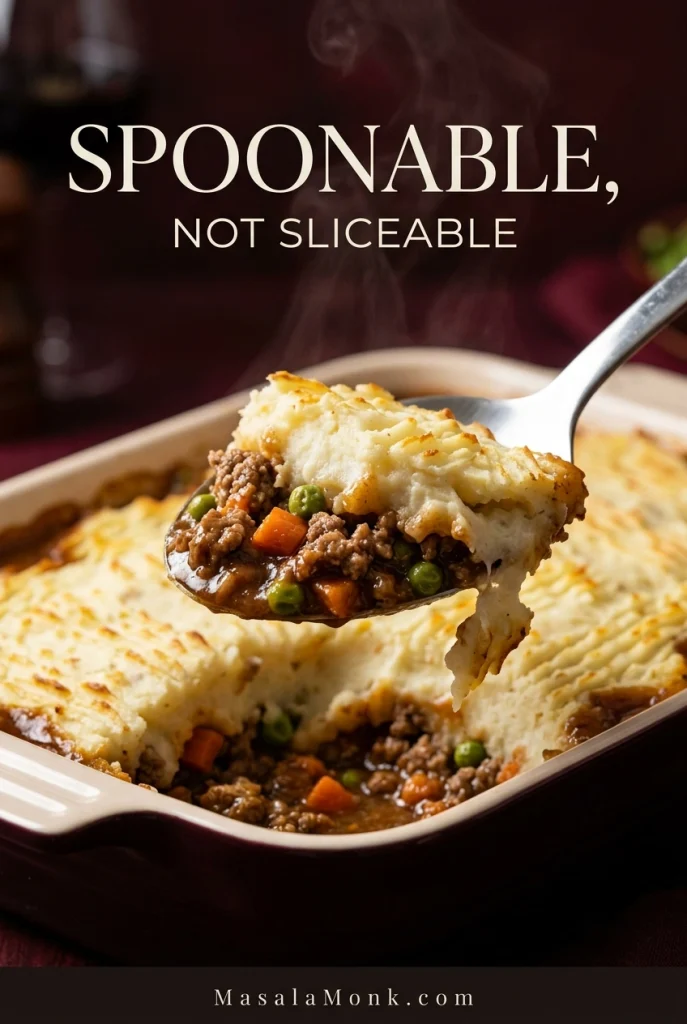
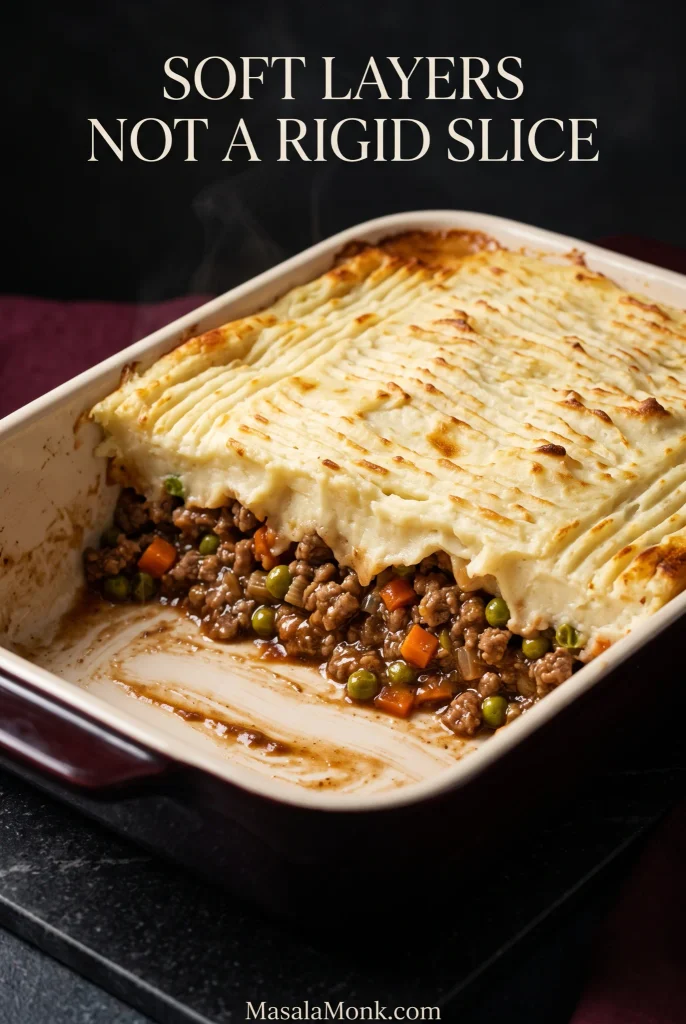
- Rest. Give the shepherd’s pie 10–15 minutes before serving. The bubbling settles and the gravy tightens just enough for the potato and lamb to come up together on the spoon. Do not expect perfectly cut squares; shepherd’s pie should still be softly spoonable.
Need help with texture or assembly? Read the Shepherd’s Pie Guide · Fix a problem.
Shepherd’s Pie Guide
The recipe gives you the method. What follows focuses on the choices that can actually change the finished pie—and the places where you have room to adapt.
Know the Pie
Lamb, Beef and What Makes It Shepherd’s Pie
In the traditional distinction, shepherd’s pie uses lamb and cottage pie uses beef. The cooking method is otherwise very similar.
American recipes often use “shepherd’s pie” more loosely for the beef version, so both names turn up for very similar casseroles. Lamb is the first choice here because its richer flavor works particularly well with rosemary, thyme and Worcestershire.
If ground beef is what you have, use the same amount. For a beef-first version built around the slow cooker, try our slow cooker cottage pie.
Shepherd’s Pie Ingredients
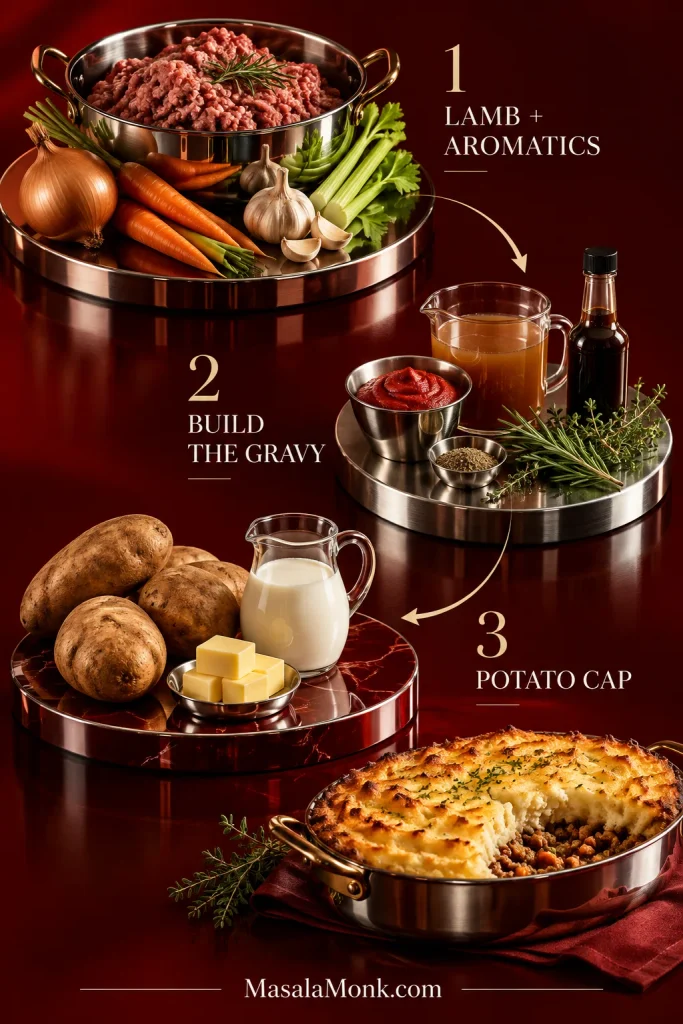
Ground lamb gives the pie its identity. Onion, carrot, celery and garlic build the savory base. Use ground or minced lamb here; whole lamb shoulder is better suited to a slow cook such as Irish stew.
Tomato paste adds concentration without turning the filling into tomato sauce. Worcestershire sauce deepens the lamb gravy, while rosemary and thyme suit the meat without overwhelming it.
Two tablespoons of flour help give the gravy body. The rest comes from simmering until the liquid has reduced around the lamb. The wine is optional; stock works perfectly well in its place. Add the peas once the gravy is ready—they only need time to heat through.
For the topping, Russet potatoes are the better fit because they cook up fluffy and keep the mash relatively light. Yukon Golds still work if you prefer a denser, naturally buttery topping. Butter adds richness; add the milk gradually to control the texture. Parmesan is optional, adding saltiness and helping the top brown.
Build a Filling That Can Hold the Mash
Pan width changes how quickly moisture escapes. A crowded skillet makes lamb simmer; a wide one gives the meat room to brown and makes the gravy easier to control. The lamb and vegetables also release different amounts of liquid from batch to batch, so resist adding extra stock simply for “more gravy.”
When the Gravy Is Ready
| What the filling looks like | What to do |
|---|---|
| Loose gravy gathers around the meat | Keep simmering uncovered. |
| The lamb is coated in glossy gravy and a spoonful holds together | Ready for the baking dish. |
| The mixture looks dull or crumbly | Stir in a small splash of stock. |
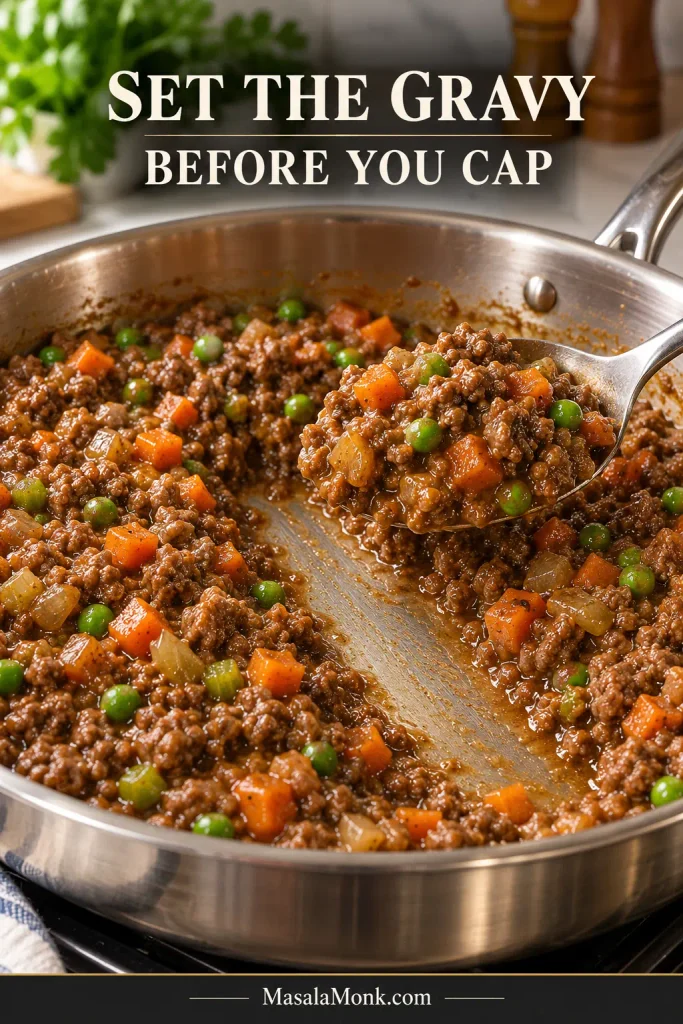
Keep enough gravy to stay rich beneath the potatoes when you spoon into the pie.
Mash That Spreads Without Slumping
The topping needs to spread easily while still holding soft peaks. Steam-drying the potatoes matters because surface water loosens the mash before any milk goes in; from there, add warm milk gradually and stop while the potatoes still hold their shape.
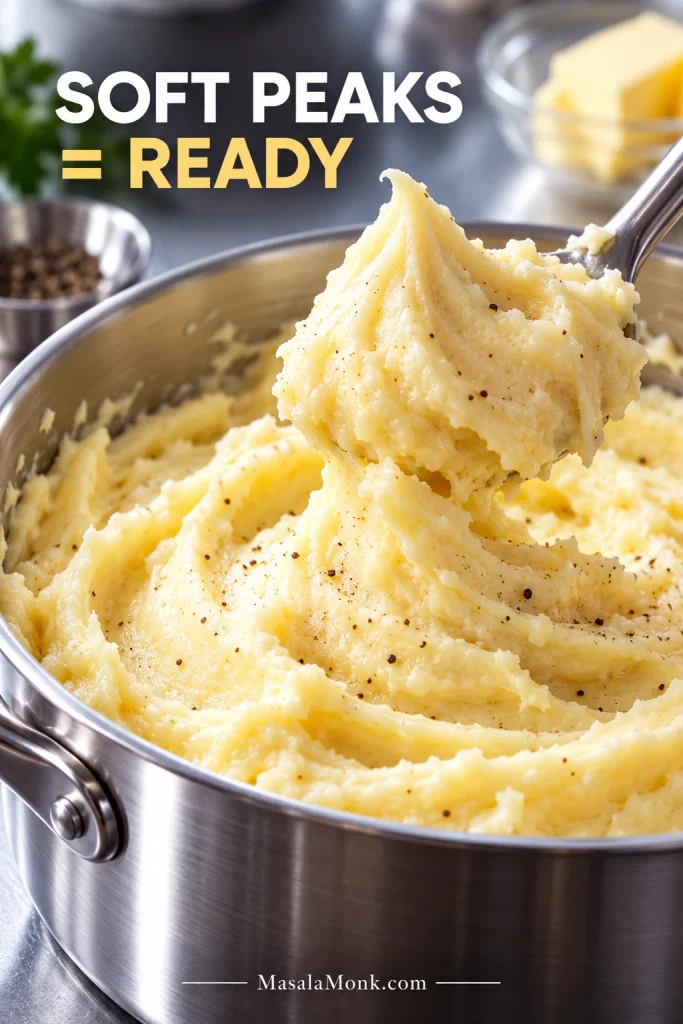
Use a masher or ricer. A blender or food processor can overwork the starch and turn the potatoes gluey.
For more detail on potato varieties, dairy and texture, see our guide to creamy mashed potatoes.
You should now have two good things on their own: rich lamb filling and warm, buttery mash. Assembly is gentle rather than technical.
Assembling and Baking the Pie
Let the filling settle while you finish the mash, and keep the potatoes warm. Cold mash gets stiff and needs more pressure to spread.
Place smaller spoonfuls around the perimeter first, then cover the center. Join them gently with the back of a spoon or spatula and take the potatoes right to the edge of the dish.
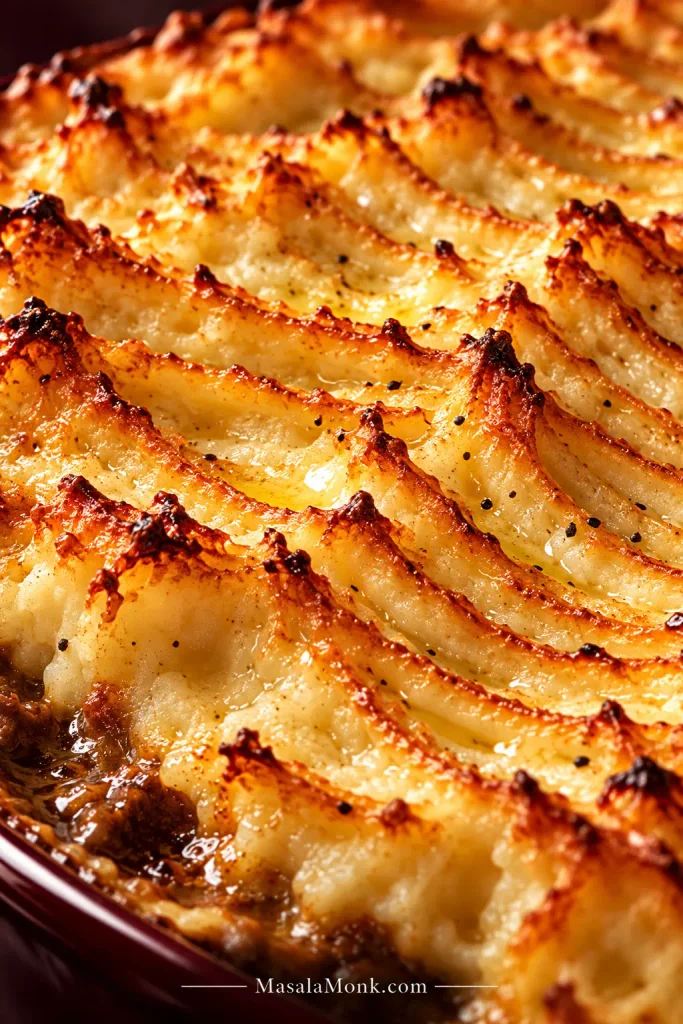
Do not chase a perfectly smooth top. Fork ridges give you more golden, toasted edges while the mash underneath stays creamy.
Leave enough room at the top of the casserole for the filling to bubble. A 2½- to 3-quart / 2.4- to 2.8-L dish gives this batch the space it needs without being packed right to the rim.
What the Finished Layers Should Look Like
A finished serving should show a generous potato cap with slightly more lamb filling underneath. The layers should stay recognizable, but the mash should relax over the cut edge rather than stand like a rigid wall.
Shortcuts and Substitutions
For a faster weeknight version, replace the carrots and peas with a frozen peas-and-carrots mix and start with leftover or refrigerated mashed potatoes. You still make the lamb gravy from scratch, but you skip the potato prep and some of the chopping.
| Shortcut or swap | What to change |
|---|---|
| Ground beef | Use the same amount and method. The finished dish is cottage pie. |
| No wine | Replace the ½ cup / 120 ml wine with the same amount of additional stock. |
| Frozen peas and carrots | Use about 2 cups frozen peas and carrots in place of the fresh carrots and frozen peas. Add them during the final 4–5 minutes of filling preparation and simmer until the carrots are hot and tender and any extra water has cooked away. |
| Leftover or refrigerated mashed potatoes | Warm until spreadable; add only a small splash of milk if stiff. |
| Instant mashed potatoes | Prepare them slightly firmer than you would for serving on the side. |
| Oven-safe skillet | Skip the transfer if the skillet is deep enough to hold the filling and mash with some headroom left at the top. |
Ground Lamb or Leftover Roast Lamb
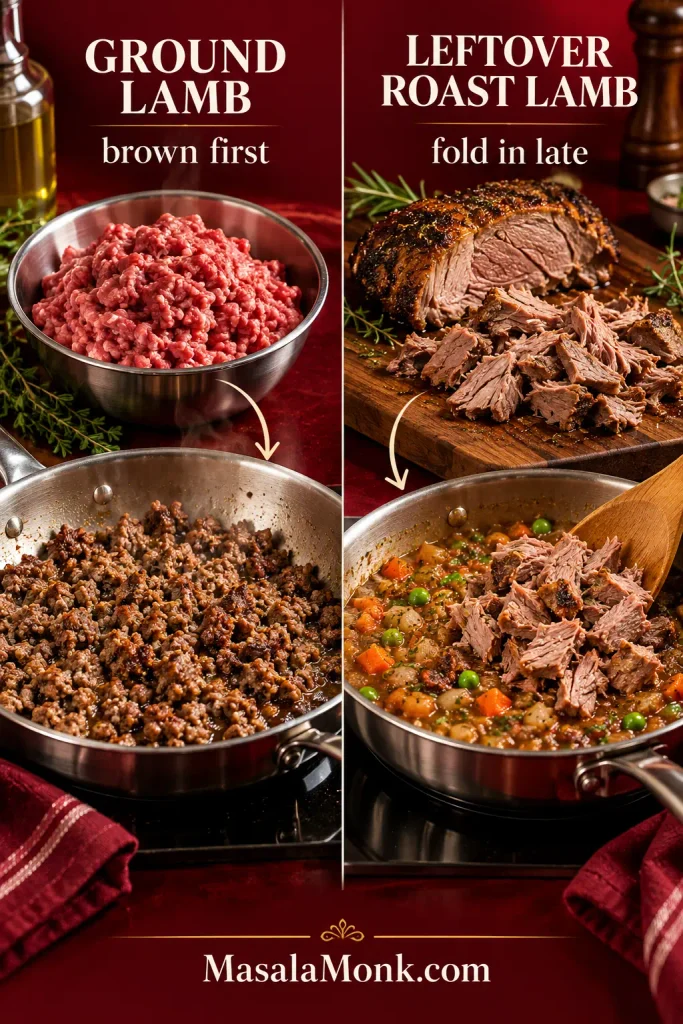
Already-cooked lamb needs a gentler route. Start the vegetables in about 1 tablespoon olive oil, build and reduce the gravy, then fold in 18–21 oz / 500–600 g chopped or shredded cooked lamb near the end. Leftover roast leg of lamb works particularly well; there is no need to brown the cooked meat again.
For a meat-free version, do not replace the lamb with dry lentils and leave everything else unchanged. Lentils absorb liquid differently and need their own cooking method. Our lentil shepherd’s pie is built around that balance.
Make Ahead, Freeze and Reheat
For the best texture, make the filling ahead and the mash fresh. Transfer the cooked lamb filling to a shallow container and refrigerate it promptly rather than leaving it on the counter to reach room temperature. When you are ready to eat, make the mashed potatoes, assemble the pie and bake. Starting with cold filling usually adds about 10–15 minutes; use bubbling edges and a center that reaches 165°F / 74°C as the final cues.
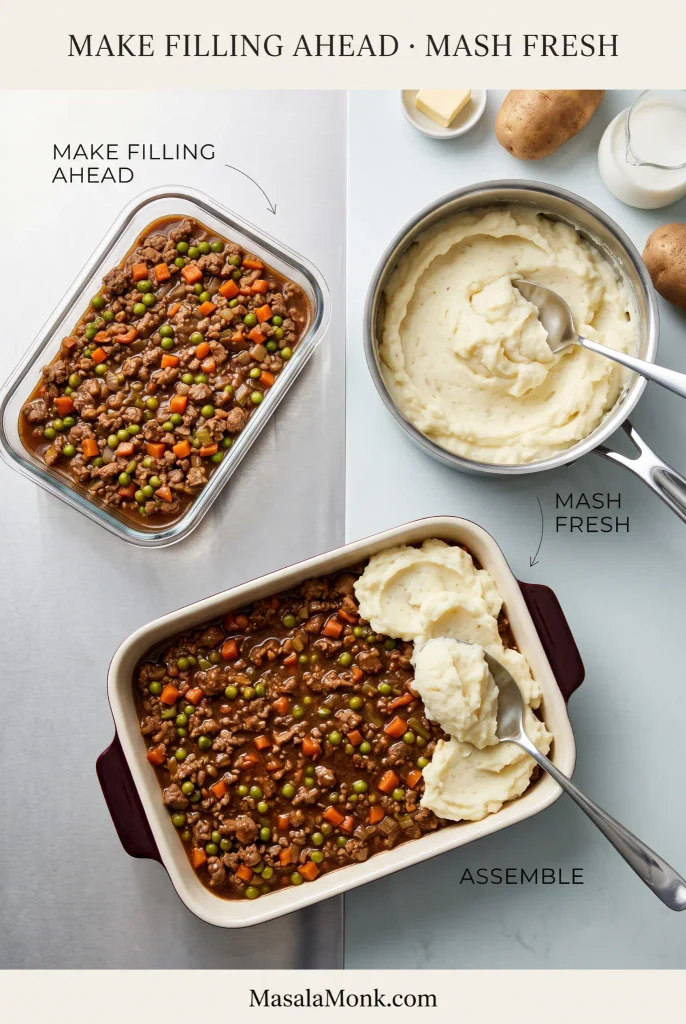
Assembled Pie, Freezer and Leftovers
If dinner is tomorrow, cool the filling promptly in a shallow container first. Once chilled, assemble the pie with the mashed potatoes, cover and refrigerate for up to a day. Bake from chilled, allowing roughly 10–15 extra minutes and using bubbling edges plus a 165°F / 74°C center as the final cues. Use bakeware rated for refrigerator-to-oven temperature changes, or follow the manufacturer’s instructions.
For longer storage, freeze before the final bake. Cool the filling promptly in a shallow container, assemble the pie, then refrigerate until cold. Wrap well and freeze for up to about 2 months for the best potato texture. Thaw overnight in the refrigerator and bake as a chilled assembled pie. Freezing can soften the mash somewhat, so refrigeration is the better choice when you only need to work a day ahead.
Leftovers: refrigerate promptly in a covered container and use within about 3–4 days. Microwave individual portions, or reheat a larger amount covered in the oven until the center reaches 165°F / 74°C. For oven reheating, uncover near the end to dry the potato top and regain some color. The USDA recommends reheating leftovers to 165°F / 74°C.
Troubleshooting Shepherd’s Pie
Watery Filling: Check the Movement
Before changing the heat or adding more thickener, look at how the gravy moves around the lamb. The pan itself gives you a quick consistency check.
Other Shepherd’s Pie Problems
| What you see | Likely reason | What to do |
|---|---|---|
| Sinking potato topping | The filling was very hot or loose, or the mash was too soft. | Let the filling settle for a few minutes and use mash that still holds soft peaks. |
| Gravy breaking through the top | The filling is loose or there are gaps in the potato layer. | Reduce the gravy fully and spread the mash right to the edge of the dish. |
| Greasy filling | The lamb released more fat than the filling needed. | Spoon off obvious pooling fat after browning. |
| Gluey mash | The potatoes were overworked. | Use a masher or ricer instead of a blender or food processor. |
| Pale topping | The surface is very smooth or needs stronger top heat. | Add fork ridges. If the dish is broiler-safe, broil for 1–3 minutes once the casserole is already hot. |
| Pie spreads when served | The filling may be loose, or the pie was served immediately. | Give it the full 10–15 minute rest. It should be softly spoonable, not stiff enough to cut like lasagna. |
| Cold center when reheating | The center is heating more slowly than the surface. | Thaw frozen pies overnight when possible and cover the top loosely with foil while the middle catches up. |
If the Pie Is Already Baking
If the pie is already in the oven and you realize the filling was looser than it should have been, do not keep turning up the heat. Let it finish and give it the full resting time. It may be softer on the plate, but dinner is hardly ruined.
Problem solved? Back to the recipe · Back to the top.
What to Serve with Shepherd’s Pie
Good sides for shepherd’s pie include green beans, roasted Brussels sprouts, broccoli or a sharp leafy salad. Because the pie already brings meat, potatoes, vegetables and gravy to the plate, a lighter side usually works better than another rich dish.
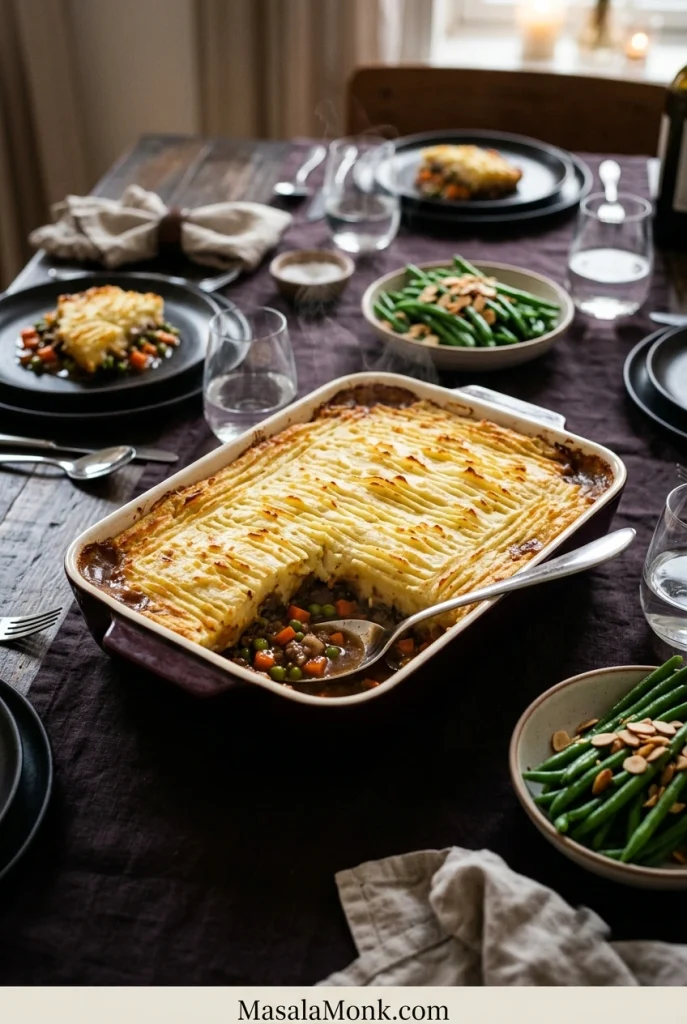
Green Beans Almondine are a particularly good match because the beans keep some bite while lemon and toasted almonds cut through the lamb and potatoes.
Roasted Brussels Sprouts bring crisp browned edges and a slight bitterness that works well beside the lamb gravy.
For something lighter, a simple leafy salad with a sharp vinaigrette is plenty.
After the rest, bring the casserole to the table while the potato ridges are still crisp at the edges and the lamb gravy underneath is rich and steaming.
Brown the lamb. Set the gravy. Cap it gently. Get those three stages right and the gravy stays with the meat, the potatoes stay on top, and every spoonful gets a little of both.








