Posted on Leave a comment

Beyond Chicken: 5 Hemp Seed High Protein Tofu Meal Prep Ideas

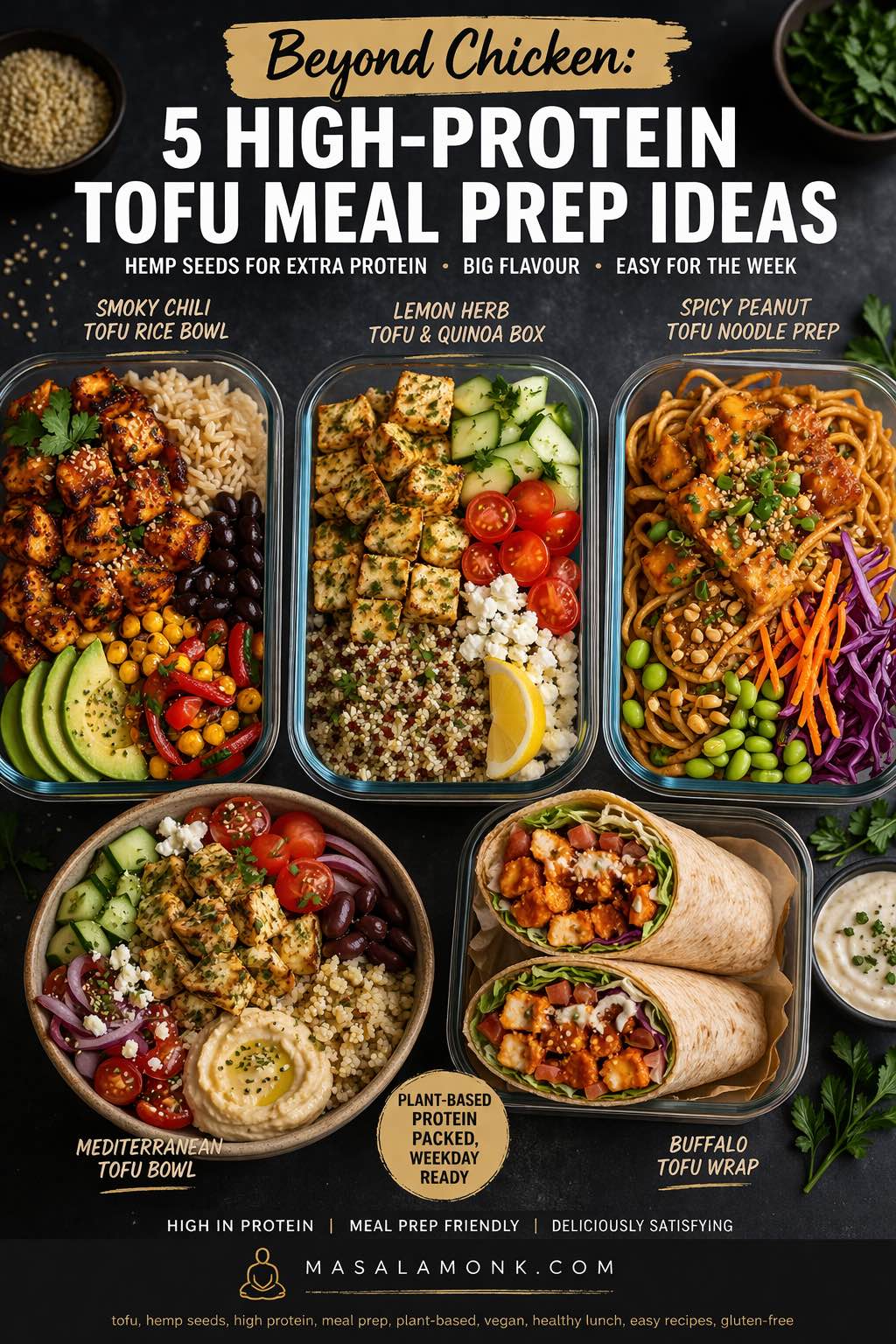
Beyond Chicken cover image showing five hemp seed high-protein tofu meal prep ideas, including a smoky chili tofu rice bowl, lemon herb quinoa box, spicy peanut tofu noodle prep, Mediterranean tofu bowl, and buffalo tofu wrap.

Tofu meal prep can be substantial, flavorful, and still worth opening on day four. That is exactly what this guide is built to deliver.

These lunches are designed for real weekday life. They are filling enough to count as proper lunch, varied enough to keep the week from feeling repetitive, and practical enough to prep ahead without sliding into bland tofu, soggy vegetables, or disappointing containers by midweek.

Just as importantly, the hemp seeds are doing real work throughout the lineup. Rather than sitting on top like a token healthy ingredient, they show up as a nutty crust, a creamy dressing base, a richer sauce builder, a fresh herby crunch, and a proper ranch-style finish that makes wraps feel complete instead of merely assembled.

If you want to build a broader plant-based lunch system beyond this page, MasalaMonk’s guide to plant-based protein sources for high-protein meal prep is a natural companion.

Quick answers before you cook

Can tofu be meal prepped? Yes. Tofu is one of the best meal-prep proteins because it roasts well, absorbs flavor, and works naturally in rice bowls, quinoa bowls, noodles, and wraps.

What tofu is best for meal prep? Extra-firm tofu is the easiest and most reliable option because it holds shape well and develops better edges after roasting. Firm tofu also works when you want a slightly softer bite.

How long does tofu meal prep last? Most tofu meal prep keeps well for 3 to 4 days in the fridge when sauces, watery vegetables, and crunchy toppings are packed separately.

What is the biggest mistake? Packing hot tofu with wet vegetables or dressing too early. As a result, a good meal-prep container can turn soggy by day three.

What is the key rule for better tofu meal prep? Press well, roast until it has real color, cool before sealing, and keep wet and dry elements separate whenever texture matters.

Also Read: Easy English Scone Recipe

Tofu Meal Prep at a Glance

Use this as your fast decision guide before choosing a recipe. When you already know you want something warm, cold, craveable, or easy to eat on the go, this section makes the choice quicker. Better yet, it helps you match the right lunch to the right point in the week instead of rereading every recipe section once time is already tight.
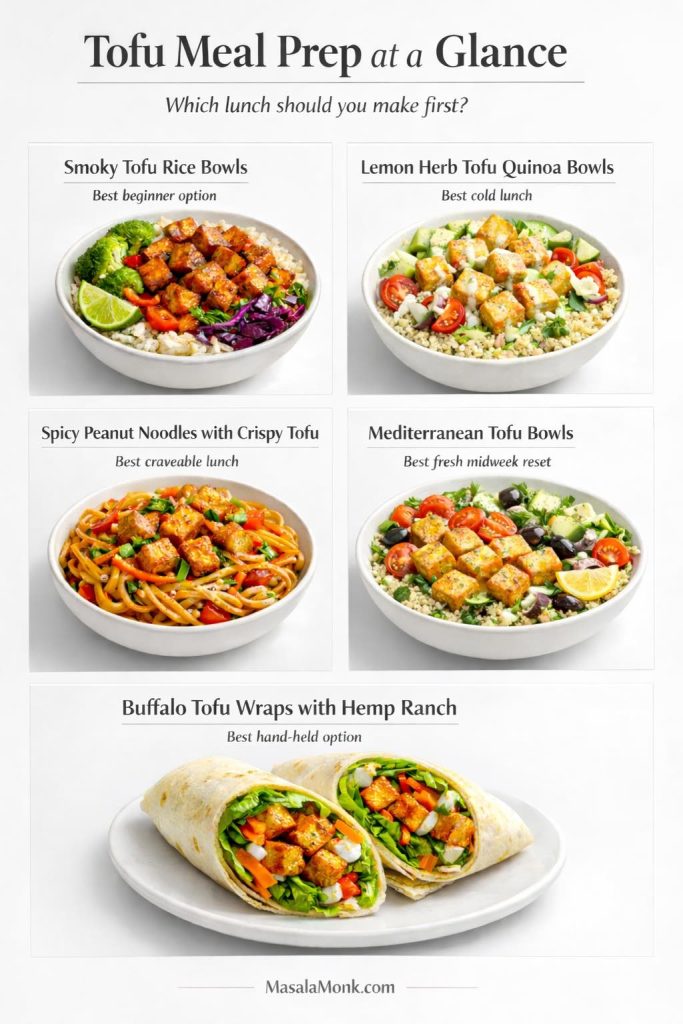
Tofu meal prep comparison graphic showing five lunch ideas: smoky tofu rice bowls, lemon herb tofu quinoa bowls, spicy peanut noodles with crispy tofu, Mediterranean tofu bowls, and buffalo tofu wraps with hemp ranch.
Use this tofu meal prep at-a-glance guide to choose the right lunch for your week: smoky rice bowls for a familiar warm option, lemon herb quinoa bowls for cold lunches, spicy peanut noodles when you want something craveable, Mediterranean bowls for a fresher reset, and buffalo wraps for an easy hand-held meal.
  • Best beginner option: Smoky Tofu Rice Bowls
  • Best cold lunch: Lemon Herb Tofu Quinoa Bowls
  • Best reheated lunch: Smoky Tofu Rice Bowls
  • Best craveable lunch: Spicy Peanut Noodles with Crispy Tofu
  • Best fresh midweek reset: Mediterranean Tofu Bowls
  • Best hand-held option: Buffalo Tofu Wraps with Hemp Ranch
  • Best choice if you are tired of bowls: Buffalo Tofu Wraps with Hemp Ranch
  • Best day-three or day-four option: Lemon Herb Tofu Quinoa Bowls

New to tofu meal prep? Start with the smoky rice bowls. They are the clearest proof that tofu can feel just as satisfying as the classic protein-rice-and-vegetable lunch people usually build around chicken. From there, branching into the colder, fresher, or more sauce-driven options becomes much easier.

Why Tofu Meal Prep Often Disappoints by Day Three — and How This Guide Fixes It

Too often, tofu meal prep falls off by day three because moisture builds, texture softens, and the containers start tasting repetitive. Sometimes the tofu was never pressed or browned enough to begin with. In other cases, the real problem is packing hot ingredients with wet vegetables or dressing too early, which quietly sets everything up to turn soggy in the fridge.

This guide fixes that by treating texture and packing order as part of the recipe, not as an afterthought. Instead of stretching one baked-tofu method across several near-identical boxes, it gives you five genuinely different lunches with different textures, different flavor directions, and different kinds of lunch appeal. Consequently, the week feels less repetitive, while the food itself holds up better.

Hemp seeds make that system stronger. Here, they are not just included for nutrition. They help create a nutty crust, a creamier dressing, a fuller sauce, a brighter finishing crunch, and a better ranch-style spread. In practice, that means the recipes eat better as the week goes on instead of feeling like containers you are forcing yourself to finish.

Also Read: Sourdough English Muffins Recipe

Best Tofu for Meal Prep and How to Prep It

For these recipes, extra-firm tofu is the easiest place to start. It gives you stronger edges, cleaner pieces, and better structure after cooking. Firm tofu also works well, particularly when you want a slightly softer center or a more delicate bite in the finished meal. If you can get super-firm tofu, that is even better because it usually needs less pressing and holds its shape beautifully.

However, silken tofu is not the right fit here. It can be useful in sauces or creamy blends, but it is not built for bowls, noodles, and wraps like these. Even if it sounds convenient, it will not give you the kind of meal-prep texture that keeps well through the week.
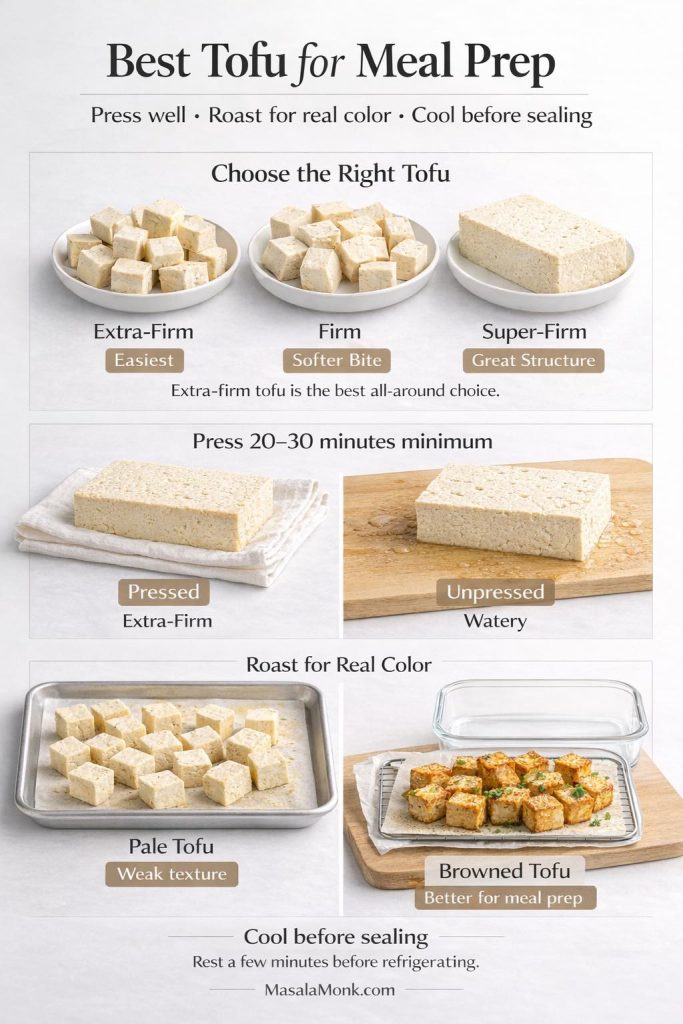
Best tofu for meal prep guide comparing extra-firm, firm, and super-firm tofu, plus pressed vs unpressed tofu and pale vs browned tofu for better meal prep texture.
Extra-firm tofu gives the most reliable meal-prep texture, especially when it is pressed well, roasted until properly browned, and cooled before sealing so it stays firmer through the week.

The prep matters just as much as the type you choose. First, press the tofu until it no longer feels waterlogged when you cut it. Twenty to thirty minutes is a good minimum, and longer is even better if time allows. Then season it with more intention than just a splash of soy sauce and hope for the best. Tofu responds well to layered flavor: salt or soy, aromatics, acid, herbs, spices, and a finishing element.

Most importantly, cook for texture rather than mere doneness. Pale tofu rarely improves in the fridge. Instead, what you want is visible browning, firmer edges, and enough structure that the tofu can survive storage and reheating without collapsing into softness. Once cooked, let it cool before sealing it into containers. That pause protects more texture than most people expect.

If you like crisp, prep-friendly plant-based lunches in general, MasalaMonk’s high-protein vegan meal prep ideas using an air fryer are worth a look too.

How to Make Tofu Meal Prep More Filling Without Making It Heavy

One of the easiest ways to improve tofu meal prep is to make it more filling without turning it into a heavy lunch you stop looking forward to by Wednesday. The answer is not to pile in random extras until the meal feels joyless. Rather, build in staying power with a proper base, a good texture contrast, and a sauce or dressing that adds body without flooding the container.

In practice, that usually means tofu plus rice, quinoa, or noodles for structure; vegetables that either roast well or stay crisp; and hemp seeds, yogurt, tahini, or peanut-based sauces that make the lunch feel complete instead of sparse. That is where these recipes work especially well. Tofu carries the main protein role, while hemp seeds add richness, body, and texture in ways that improve the actual eating experience.
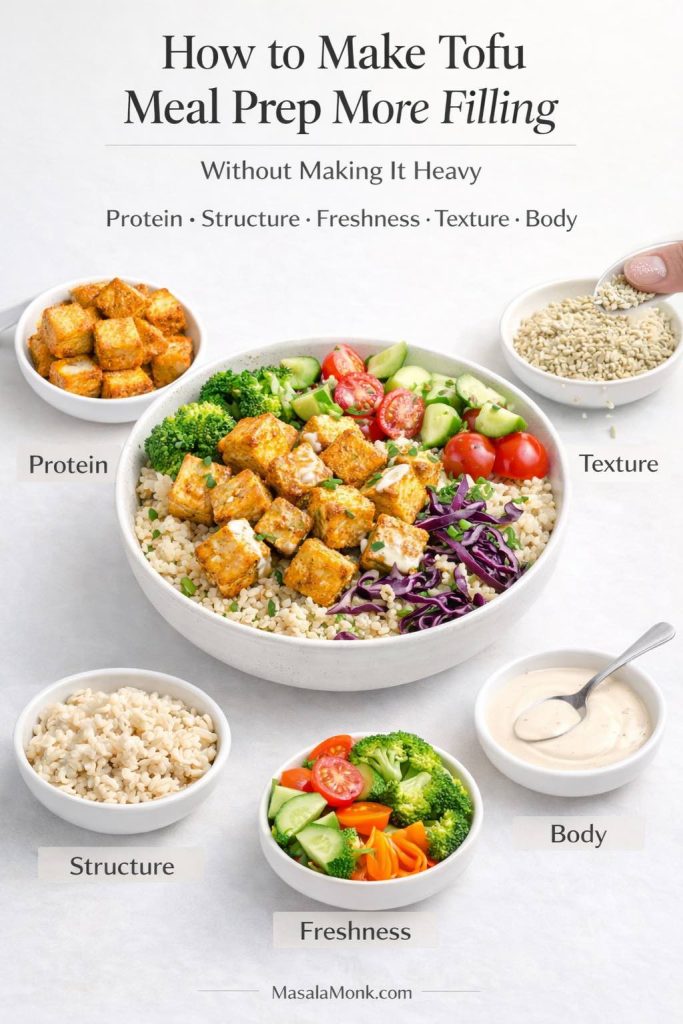
Guide to making tofu meal prep more filling without making it heavy, showing protein, structure, freshness, texture, and body with tofu, grains, vegetables, hemp seeds, and sauce.
A satisfying tofu lunch depends less on piling in more ingredients and more on balancing the right five roles: protein for staying power, a base for structure, vegetables for freshness, hemp seeds for texture, and sauce or dressing for body.

This matters because the best tofu meal prep recipes are the ones you actually want to repeat. A filling lunch should still feel bright, balanced, and easy to eat. That is precisely why these bowls, noodles, and wraps are designed to hold well in the fridge while still eating like lunch first and meal prep second.

For a grain-forward prep angle, MasalaMonk’s plant-based meal prep ideas using quinoa as a protein source pair especially well with the quinoa bowls below.

Also Read: White Russian Recipe: 7 Variants to Try, From Classic to Frozen

The 5 Tofu Meal Prep Recipes

The recipes below are built to cover different lunch moods across the week, from a warm rice bowl to a bright quinoa bowl, spicy noodles, a crisp Mediterranean option, and a hand-held buffalo wrap. Protein estimates are approximate and based on generic ingredient values, so they can vary slightly depending on the tofu, noodles, tortillas, and yogurt you use.

If you landed here mainly for the recipes, you can jump straight into the one that fits your week best. On the other hand, if you are still deciding, the short intros and quick snapshots will help you match the right lunch mood to the right container.

1) Smoky Tofu Rice Bowls

Choose this bowl when you want the most familiar lunch format in the post. If your idea of dependable tofu meal prep still looks like some version of protein, rice, and vegetables, this one gives you that same structure with much more character.

The tofu roasts into something smoky, toasty, and lightly nutty from the hemp crust, while roasted broccoli and bell peppers bring sweetness and body. Shredded cabbage keeps the bowl from feeling too soft, and a sharp lime yogurt drizzle wakes everything back up after reheating. For that reason, this is the easiest recipe here to trust on the first try.

Quick recipe snapshot

  • Best served: Warm, with cool toppings added after reheating
  • Fridge life: 4 days
  • Reheats well: Yes
  • Pack separately: Lime yogurt drizzle, avocado, and lime wedges
  • Best texture trait: Smoky, browned tofu with rough hemp-crusted edges
  • Approximate protein per serving: about 29 g

Yield: 4 bowls

Prep time: 25 minutes

Cook time: 30 minutes

Total time: 55 minutes, plus tofu pressing time

Ingredients

Hemp-crusted tofu

  • 2 (14-ounce / 396 g) blocks extra-firm tofu, pressed and cubed
  • 1 tablespoon soy sauce or tamari
  • 1 tablespoon olive oil
  • 1 tablespoon cornstarch
  • 1 teaspoon smoked paprika
  • 1 teaspoon chili powder
  • 1/2 teaspoon garlic powder
  • 1/2 teaspoon onion powder
  • 1/4 teaspoon black pepper
  • 1/3 cup hemp seeds

Rice bowl base

  • 4 cups cooked rice
  • 2 cups broccoli florets
  • 1 red bell pepper, sliced
  • 2 cups shredded cabbage
  • 1 avocado, sliced for serving
  • Lime wedges

Lime yogurt drizzle

  • 1/2 cup plain yogurt
  • 1 tablespoon lime juice
  • 1 teaspoon hot sauce
  • Pinch of salt

Method

  1. Heat the oven to 425°F and line two trays.
  2. Toss the tofu with soy sauce, olive oil, cornstarch, smoked paprika, chili powder, garlic powder, onion powder, and black pepper.
  3. Add the hemp seeds and toss again so they cling to the tofu.
  4. Spread the tofu on one tray in a single layer.
  5. Toss the broccoli and bell pepper with a little oil and salt and spread them on the second tray.
  6. Roast for 25 to 30 minutes, flipping the tofu once, until the tofu is browned at the edges and the hemp seeds smell lightly toasted.
  7. Stir together the yogurt, lime juice, hot sauce, and salt.
  8. Cool the hot ingredients slightly, then divide the rice, tofu, vegetables, and cabbage among containers.
  9. Pack the drizzle, avocado, and lime wedges separately.

What you should notice

The tofu should have darkened corners, a lightly rough hemp crust, and a savory smoky aroma. Meanwhile, the cabbage and lime should keep the bowl from feeling too dense. Once you open the container later in the week, the bowl should still feel balanced rather than heavy.

Best storage tip

Keep the drizzle separate until serving. That one move helps the tofu keep more of its edge and keeps the cabbage crisp longer. In turn, the reheated bowl feels much closer to freshly built lunch rather than day-four leftovers.
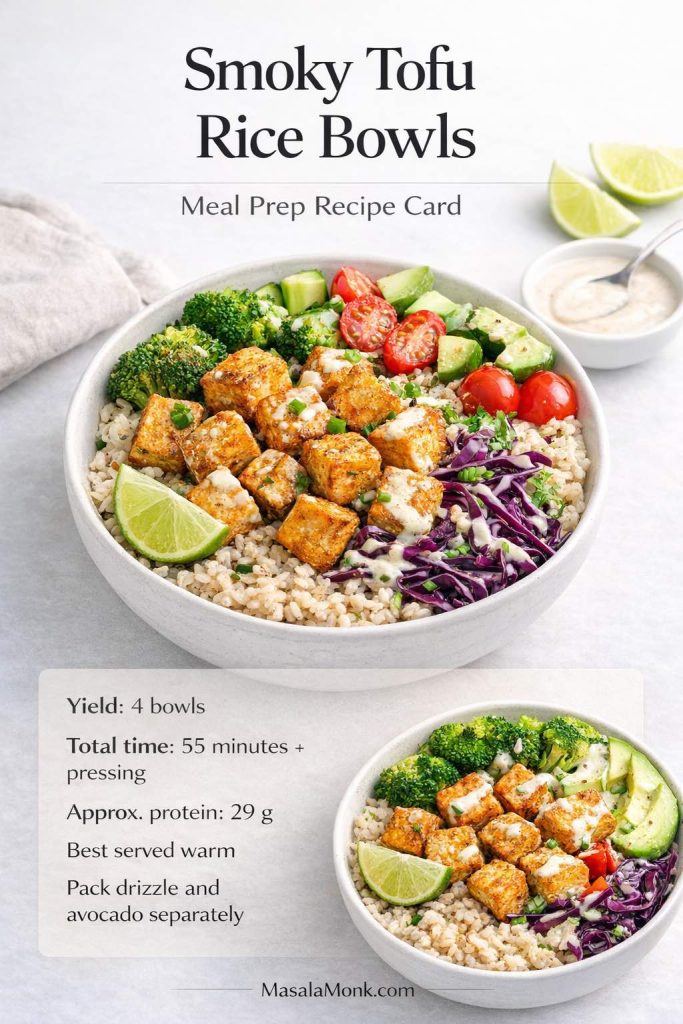
Smoky tofu rice bowls recipe card showing browned tofu over rice with broccoli, cabbage, lime, and creamy drizzle for tofu meal prep.
Built for readers who want the most familiar place to start, this smoky tofu rice bowl turns a classic warm lunch format into something more interesting with browned tofu, rice, vegetables, and a limey creamy finish.

Also Read: Mango Sorbet Recipe: Healthy & Plant Based Dessert

2) Lemon Herb Tofu Quinoa Bowls

Reach for this bowl when you want a cold lunch that still feels full, bright, and properly satisfying instead of dry and dutiful. At the same time, it stays calm and clean enough to work especially well later in the week.

The tofu is seasoned simply so the lemon, herbs, and creamy hemp dressing can lead. Quinoa gives the bowl structure and extra staying power, while the fresh herbs keep the flavor from flattening in the fridge. As a result, this becomes one of the smartest later-week lunches in the lineup and one of the easiest to eat straight from the container.

Quick recipe snapshot

  • Best served: Cold
  • Fridge life: 4 days
  • Reheats well: Not necessary
  • Pack separately: Creamy hemp dressing
  • Best texture trait: Bright, herby, fresh-tasting quinoa bowl with creamy finish
  • Approximate protein per serving: about 31 g

Yield: 4 bowls

Prep time: 20 minutes

Cook time: 25 minutes

Total time: 45 minutes, plus tofu pressing time

Ingredients

Lemon-herb tofu

  • 2 (14-ounce / 396 g) blocks firm tofu, pressed and cubed
  • 1 tablespoon olive oil
  • 1 tablespoon lemon juice
  • 1 teaspoon dried oregano
  • 1 teaspoon garlic powder
  • 1/2 teaspoon salt
  • 1/4 teaspoon black pepper

Quinoa bowl base

  • 4 cups cooked quinoa
  • 1 cucumber, chopped
  • 1 1/2 cups cherry tomatoes, halved
  • 1/2 red onion, thinly sliced
  • 1 cup chopped parsley
  • 1/4 cup chopped dill or mint
  • 3 tablespoons hemp seeds, for topping

Creamy hemp dressing

  • 1/3 cup hemp seeds
  • 3 tablespoons plain yogurt
  • 2 tablespoons lemon juice
  • 1 tablespoon olive oil
  • 1 teaspoon Dijon mustard
  • 1 small garlic clove
  • 2 to 4 tablespoons water
  • Salt and pepper to taste

Method

  1. Heat the oven to 425°F.
  2. Toss the tofu with olive oil, lemon juice, oregano, garlic powder, salt, and black pepper.
  3. Roast for about 25 minutes, flipping once, until lightly golden and firm.
  4. Blend or whisk together the dressing ingredients until smooth and lightly creamy.
  5. Divide the quinoa among containers, then add the cucumber, tomatoes, red onion, herbs, and tofu.
  6. Sprinkle with hemp seeds.
  7. Pack the dressing separately and spoon it over just before eating.

What you should notice

When you open this bowl cold, it should smell lemony and herby right away. At the same time, the dressing should coat the quinoa and tofu without making the container loose or watery. Ideally, the whole bowl should feel bright first and creamy second, not the other way around.

Best storage tip

Do not toss everything with the dressing in advance unless you are eating it within a day. Keeping it separate makes the bowl feel fresher for longer. More importantly, it stops the herbs and vegetables from collapsing too early.
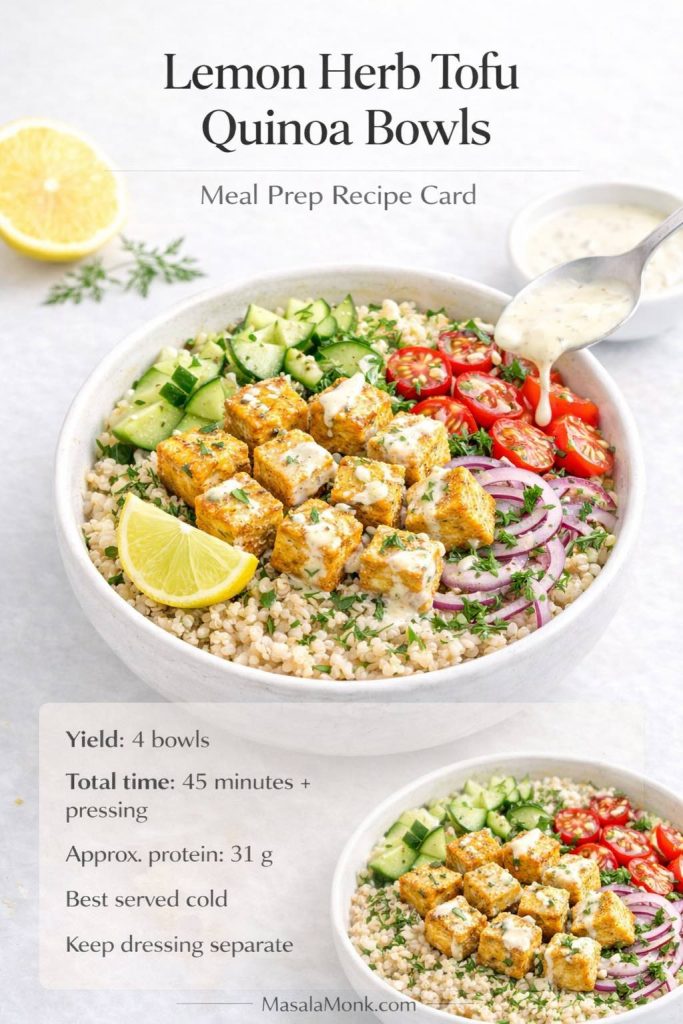
Lemon herb tofu quinoa bowls recipe card showing quinoa, golden tofu, cucumber, cherry tomatoes, red onion, herbs, and creamy lemon dressing for cold tofu meal prep.
Cold lunches hold up especially well when they stay bright and composed, and this lemon herb tofu quinoa bowl does exactly that with quinoa, fresh vegetables, herbs, and a creamy dressing packed separately.

Also Read: Protein Ice Cream Recipe: 10 Creamy Homemade Recipes

3) Spicy Peanut Noodles with Crispy Tofu

Pick this one when you want the least “meal prep feeling” lunch in the lineup. Sometimes the smartest way to stay consistent with prep is to make at least one meal that feels saucy, bold, and a little indulgent.

Here, the sauce is the whole point. Peanut butter gives it body, the hemp seeds make it feel fuller and smoother, the tofu brings chew, and the noodles give the whole thing real comfort-food energy without turning it heavy or dull. Since it works cold, at room temperature, or lightly warm, it is also one of the most flexible containers in the entire post.

Quick recipe snapshot

  • Best served: Cold, room temperature, or gently warmed
  • Fridge life: 3 to 4 days
  • Reheats well: Lightly, but also good cold
  • Pack separately: Spicy peanut-hemp sauce
  • Best texture trait: Glossy noodles with crisp-edged tofu and rich clingy sauce
  • Approximate protein per serving: about 34 g

Yield: 4 containers

Prep time: 25 minutes

Cook time: 25 minutes

Total time: 50 minutes, plus tofu pressing time

Ingredients

Crispy tofu

  • 2 (14-ounce / 396 g) blocks extra-firm tofu, pressed and torn into chunks
  • 1 tablespoon soy sauce
  • 1 tablespoon neutral oil
  • 1 tablespoon cornstarch
  • 1 teaspoon garlic powder

Noodle base

  • 12 ounces dry noodles, such as wheat noodles or rice noodles
  • 2 cups shredded cabbage
  • 2 cups shredded carrots
  • 1 red bell pepper, thinly sliced
  • 3 green onions, sliced
  • Cilantro, optional

Spicy peanut-hemp sauce

  • 1/3 cup peanut butter
  • 2 tablespoons soy sauce
  • 1 tablespoon rice vinegar
  • 1 tablespoon maple syrup
  • 1 to 2 teaspoons sriracha
  • 1 teaspoon sesame oil
  • 1/4 cup hemp seeds
  • Warm water, as needed

Method

  1. Heat the oven to 425°F.
  2. Toss the tofu with soy sauce, oil, cornstarch, and garlic powder.
  3. Roast for about 25 minutes, flipping once, until crisp at the edges.
  4. Cook the noodles until just tender, then drain and cool slightly.
  5. Blend or whisk together the sauce ingredients, adding warm water until the sauce is smooth, glossy, and thick enough to cling.
  6. Divide the noodles and vegetables among containers, then add the tofu and green onions.
  7. Pack the sauce separately and toss through just before eating.
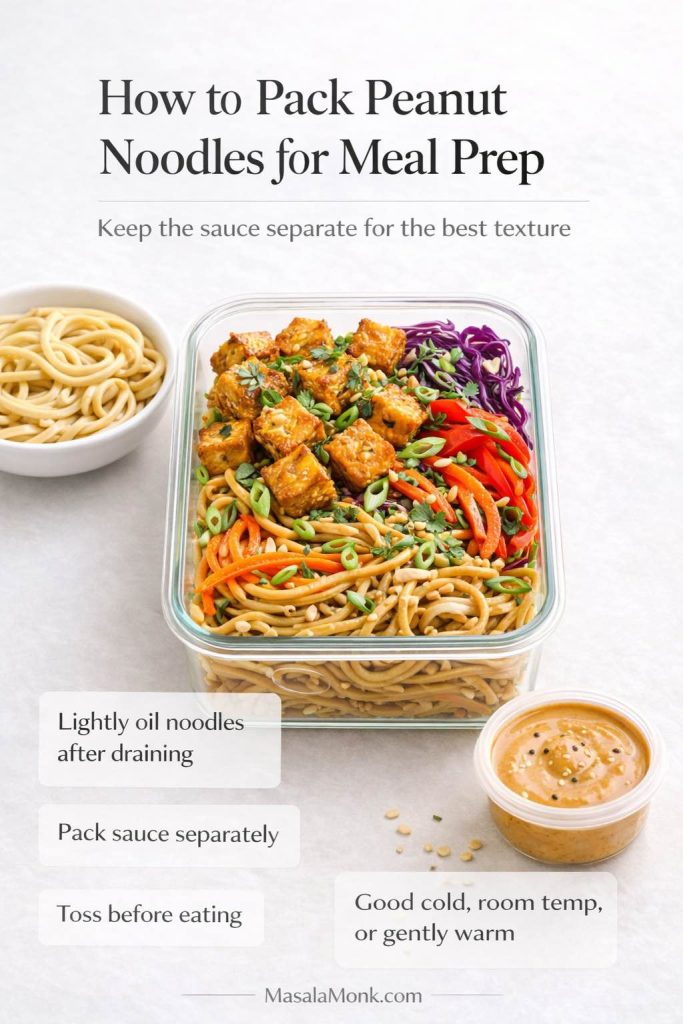
How to pack peanut noodles for meal prep guide showing noodles, crispy tofu, vegetables, and peanut sauce packed separately for better texture.
Packing spicy peanut noodles well matters almost as much as making them well, especially when you want the noodles to stay loose, the vegetables to keep some life, and the sauce to coat everything only when you are ready to eat.

What you should notice

The sauce should coat the back of a spoon. The tofu should have crisp edges and a slightly chewy center. Once everything is tossed together, the noodles should look glossy and coated, not soupy. Even so, the whole bowl should still feel lively because of the raw vegetables, not weighed down by the sauce.

Best storage tip

A tiny bit of oil on the noodles after draining helps keep them from clumping in the fridge. After that, keeping the sauce separate gives you much more control over texture when it is time to eat.
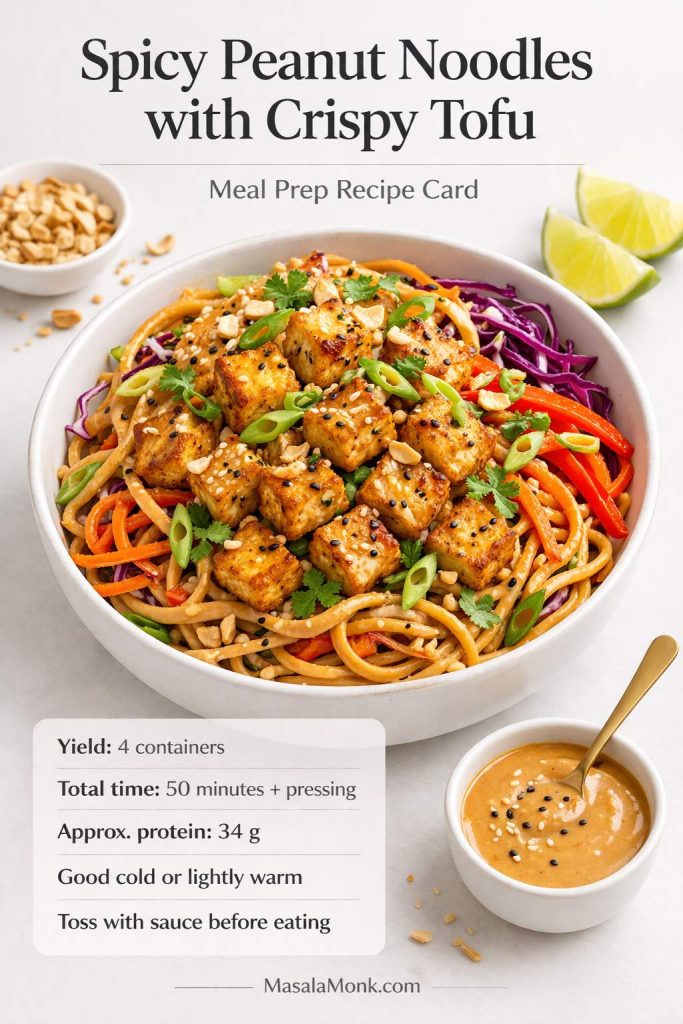
Spicy peanut noodles with crispy tofu recipe card showing glossy noodles, browned tofu, cabbage, carrots, bell pepper, green onion, and peanut sauce for tofu meal prep.
When tofu meal prep needs to feel more craveable than dutiful, spicy peanut noodles with crispy tofu bring the right kind of comfort: glossy sauce-coated noodles, browned tofu, and plenty of crunch, with the sauce packed separately so the texture stays under your control.

Also Read: Homemade Mango Ice Cream Recipe

4) Mediterranean Tofu Bowls

Go with this bowl when richer lunches start feeling repetitive. By the middle of the week, something brighter and sharper often sounds much more appealing.

The tofu is warmly spiced and roasted, but the real lift comes from the finish. A lemony herbed hemp crunch gives the bowl a clear texture role instead of hiding quietly in the background, while cucumbers, tomatoes, olives, and romaine keep everything crisp, savory, and bright. By contrast with the noodle prep, this lunch is not trying to comfort you. It is trying to refresh you, which is exactly why it works so well in the same lineup.

Quick recipe snapshot

  • Best served: Cold or cool room temperature
  • Fridge life: 3 to 4 days
  • Reheats well: Not ideal once assembled
  • Pack separately: Romaine, dressing, and herbed hemp crunch for best texture
  • Best texture trait: Crisp, briny, lemony contrast with nutty finishing crunch
  • Approximate protein per serving: about 33 g

Yield: 4 bowls

Prep time: 25 minutes

Cook time: 30 minutes

Total time: 55 minutes, plus tofu pressing time

Ingredients

Spiced tofu

  • 2 (14-ounce / 396 g) blocks firm tofu, pressed and cubed
  • 1 tablespoon olive oil
  • 1 tablespoon lemon juice
  • 1 teaspoon smoked paprika
  • 1 teaspoon ground cumin
  • 1/2 teaspoon garlic powder
  • 1/2 teaspoon salt
  • Black pepper to taste

Mediterranean bowl base

  • 4 cups cooked quinoa
  • 1 cucumber, chopped
  • 1 1/2 cups chopped tomatoes
  • 1/2 cup sliced olives
  • 1 cup shredded romaine
  • 1 cup roasted chickpeas

Creamy lemon dressing

  • 3 tablespoons tahini
  • 2 tablespoons lemon juice
  • 1 small garlic clove
  • 2 to 4 tablespoons water
  • Salt and pepper to taste

Herbed hemp crunch

  • 1/3 cup hemp seeds
  • 2 tablespoons chopped parsley
  • 1 tablespoon chopped dill
  • 1 teaspoon lemon zest
  • Pinch of salt
  • Black pepper

Method

  1. Roast the tofu at 425°F for 25 to 30 minutes until browned and firm.
  2. Whisk together the dressing ingredients.
  3. Stir together the hemp crunch ingredients in a small bowl.
  4. Divide the quinoa among containers and add the cucumber, tomatoes, olives, tofu, and roasted chickpeas.
  5. Pack the romaine, dressing, and hemp crunch separately when possible for the best texture.
  6. Add the fresh elements just before serving.

What you should notice

The hemp topping should smell lemony and fresh and add a real nutty bite. As a result, the finished bowl should feel crisp, bright, and layered rather than soft and one-note. Even on day three, it should still taste awake rather than tired.

Best storage tip

Store the romaine outside the main hot ingredients if you want the best texture on days three and four. In the same way, keeping the crunch and dressing separate protects the part of this bowl that makes it feel fresh in the first place.
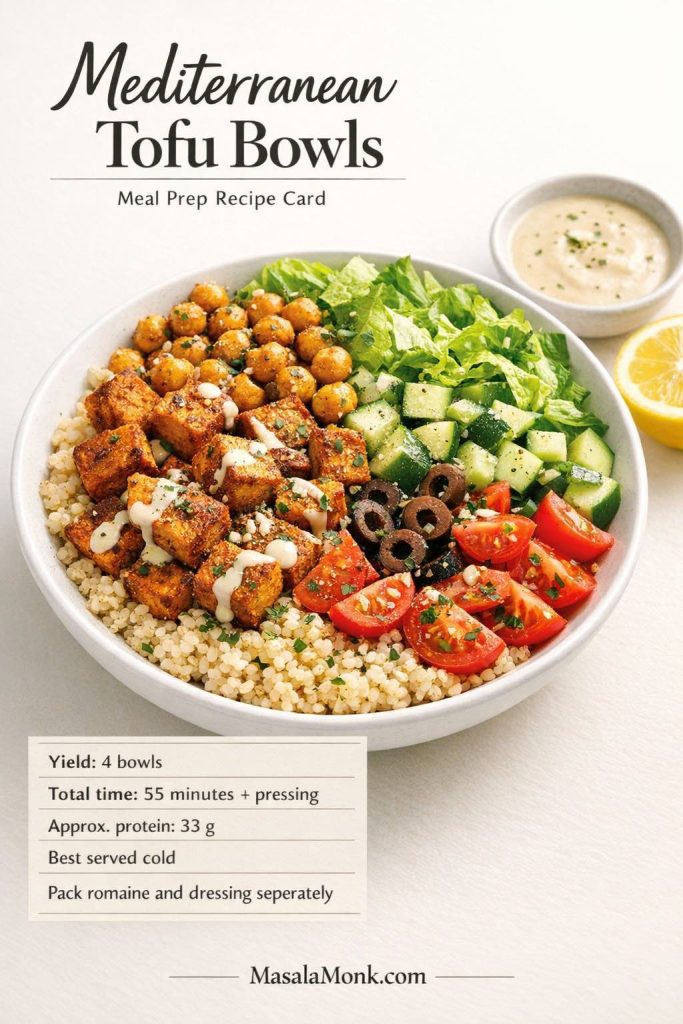
Mediterranean tofu bowls recipe card showing quinoa, spiced tofu, roasted chickpeas, romaine, cucumber, tomatoes, olives, and creamy dressing for cold tofu meal prep.
Sharper, brinier lunches can be the difference between finishing your meal prep happily and getting bored by midweek, and this Mediterranean tofu bowl leans into that with spiced tofu, quinoa, crisp vegetables, olives, roasted chickpeas, and a lemony creamy finish.

Also Read: Cookie Pie Recipe: 10 Best Flavors, Fillings and Variations

5) Buffalo Tofu Wraps with Hemp Ranch

This is the lunch that breaks the bowl rhythm. After several container-style meals, that shift alone makes the lineup feel more useful.

Buffalo tofu brings heat and punch, the fresh vegetables add crunch and lift, and the hemp ranch gives the wrap its real identity by cooling the buffalo heat and adding creamy body. Using shredded or finely crumbled tofu also makes the filling feel more natural inside a wrap rather than like bowl tofu folded into a tortilla at the last second. That difference matters, because this lunch is supposed to feel packed on purpose.

Quick recipe snapshot

  • Best served: Cold, assembled fresh
  • Fridge life: 3 to 4 days for components
  • Reheats well: Not as a full wrap
  • Pack separately: Buffalo tofu, wrap vegetables, tortillas, and hemp ranch
  • Best texture trait: Sticky spicy tofu balanced by cool creamy ranch and fresh crunch
  • Approximate protein per serving: about 28 g

Yield: 4 wraps

Prep time: 20 minutes

Cook time: 20 minutes

Total time: 40 minutes, plus tofu pressing time

Ingredients

Buffalo tofu

  • 2 (14-ounce / 396 g) blocks extra-firm tofu, pressed and shredded or finely crumbled
  • 1 tablespoon olive oil
  • 1/2 teaspoon garlic powder
  • 1/2 teaspoon paprika
  • 1/2 teaspoon salt
  • Black pepper to taste
  • 1/3 cup buffalo sauce

Wrap filling

  • 4 large flour tortillas or wraps
  • 2 cups shredded lettuce
  • 1 cup shredded carrots
  • 1 cup finely chopped celery
  • 1/2 red onion, thinly sliced
  • 2 tablespoons hemp seeds, for sprinkling

Hemp ranch

  • 1/4 cup hemp seeds
  • 1/2 cup plain yogurt
  • 1 tablespoon lemon juice
  • 1 teaspoon Dijon mustard
  • 1 tablespoon chopped parsley or dill
  • Pinch of garlic powder
  • Salt and pepper to taste
  • Splash of water, if needed

Method

  1. Heat the oven to 425°F.
  2. Toss the shredded or finely crumbled tofu with olive oil, garlic powder, paprika, salt, and black pepper.
  3. Spread it out on a tray and roast for about 20 minutes, stirring once, until the edges are lightly browned.
  4. Toss the hot tofu with buffalo sauce and let it cool slightly.
  5. Blend or whisk together the hemp ranch ingredients until creamy and spreadable.
  6. For the best texture, store the wrap filling separately and assemble fresh before eating.
  7. To serve, spread hemp ranch on the wrap, then layer the lettuce, carrots, celery, onion, tofu, and a light sprinkle of hemp seeds before rolling tightly.
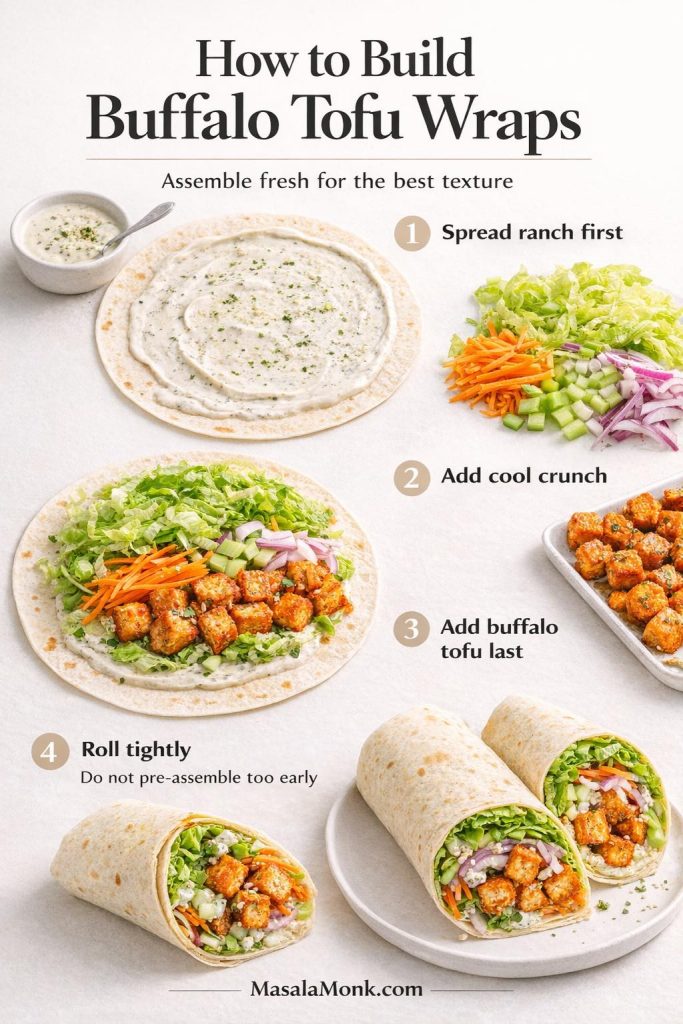
How to build buffalo tofu wraps guide showing hemp ranch spread on a tortilla, crunchy vegetables, buffalo tofu, and the finished wrap rolled tightly for meal prep.
Building the wrap in the right order makes the difference between a crisp, satisfying lunch and a soft one, which is why the ranch goes down first, the cool vegetables create the crunch, and the buffalo tofu gets added last before rolling everything tightly.

What you should notice

The tofu should look sticky and spicy at the edges, while the ranch should be thick enough to spread without making the wrap soggy. Once assembled, the wrap should feel cool, crisp, creamy, and sharp in the right order, not like a sauce-heavy bundle that falls flat after two bites.

Best storage tip

If you fully assemble these on day one, they soften much faster. Therefore, they are better when the components are prepped ahead and wrapped fresh. That way, you keep the convenience without giving up the texture that makes the wrap worth eating.
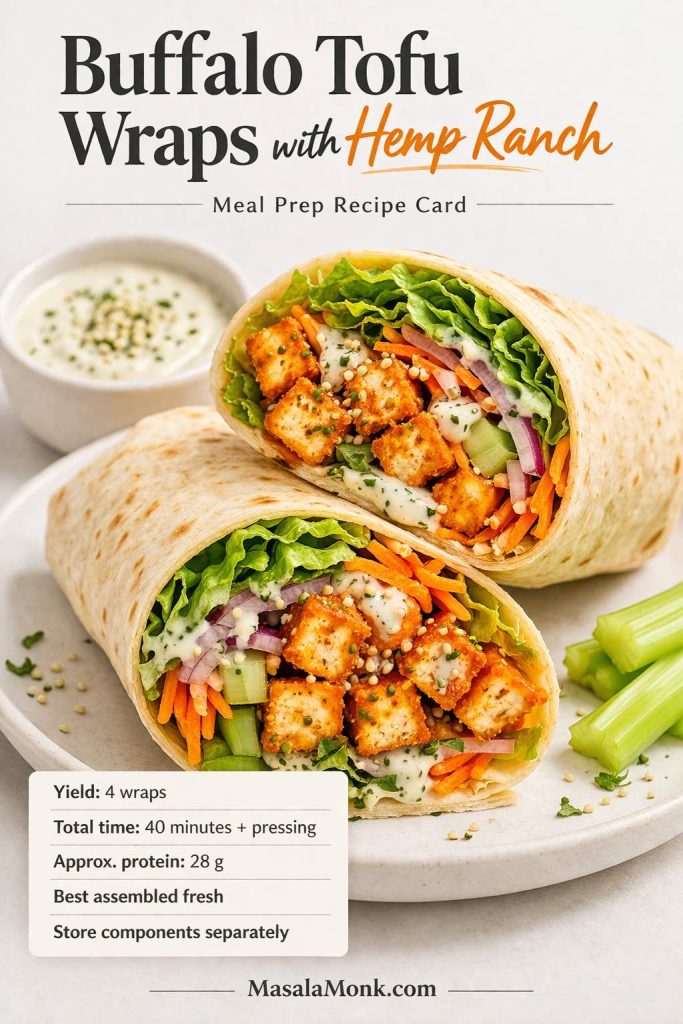
Buffalo tofu wraps with hemp ranch recipe card showing cut wraps filled with spicy tofu, lettuce, carrots, celery, red onion, and creamy ranch for tofu meal prep.
A meal-prep wrap only earns its place when it still feels crisp, creamy, and worth eating, and these buffalo tofu wraps do that by pairing punchy tofu with cool hemp ranch, crunchy vegetables, and fresh assembly right before lunch.

Also Read: Punjabi Mutton Bhuna – Amritsari Village-Style Gosht Recipe

Which Tofu Meal Prep Recipes Are Best Hot, Cold, or Build-Fresh?

The Smoky Tofu Rice Bowls reheat best because the rice and roasted vegetables are built for warmth, and the bowl can be refreshed with cool cabbage and lime yogurt drizzle afterward. So if you want the most classic microwave-friendly tofu meal prep option in the post, start there.

Meanwhile, the Spicy Peanut Noodles with Crispy Tofu work both ways. Some people prefer them cold or at room temperature, while others like them gently warmed before tossing with sauce. Because of that flexibility, they are one of the easiest lunches here to fit into different workday setups.
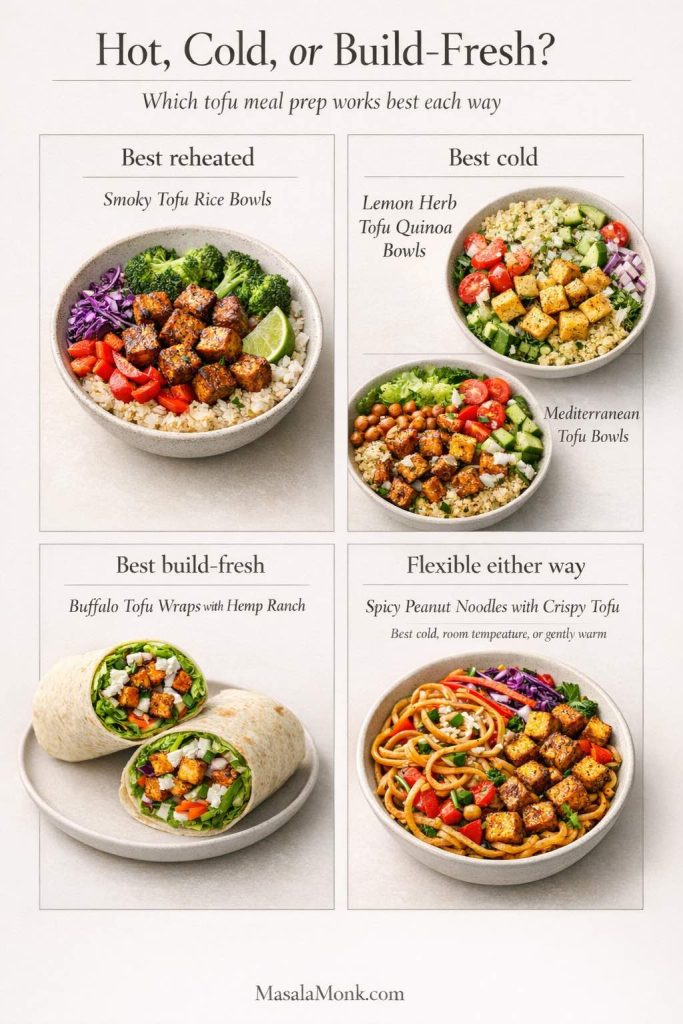
Tofu meal prep comparison guide showing which recipes are best reheated, best cold, best build-fresh, or flexible either way, including smoky tofu rice bowls, lemon herb tofu quinoa bowls, Mediterranean tofu bowls, buffalo tofu wraps, and spicy peanut noodles.
How you want to eat lunch changes which tofu meal prep recipe makes the most sense, and this guide helps you choose fast: smoky rice bowls for reheating, lemon herb and Mediterranean bowls for colder meals, buffalo wraps for fresh assembly, and spicy peanut noodles when you want the most flexibility.

For cold lunches, the Lemon Herb Tofu Quinoa Bowls are excellent. Likewise, the Mediterranean Tofu Bowls are at their best when the romaine, dressing, and herbed hemp crunch stay fresh until serving. In both cases, the freshness is the point, so there is no need to force reheating into the equation.

By contrast, the Buffalo Tofu Wraps with Hemp Ranch are best assembled from cold components just before eating. They can still be fully meal-prepped, of course. Even so, the smartest move is to treat them as a build-fresh lunch rather than a fully wrapped make-ahead one.

Also Read: Peach Cobbler with Canned Peaches (Dessert Recipe)

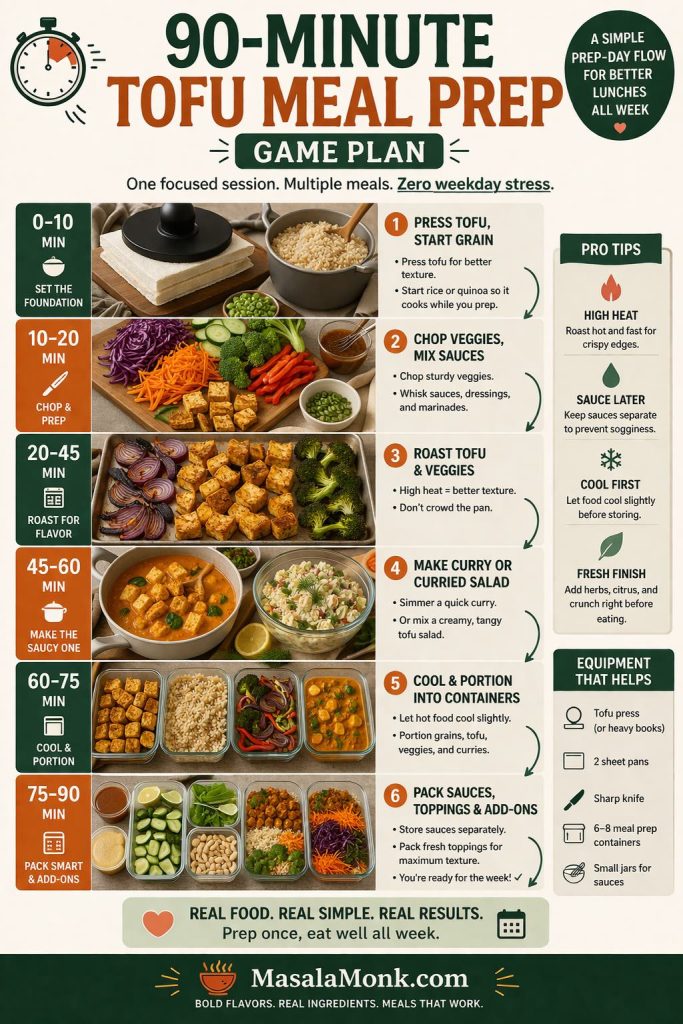
How to Meal Prep Tofu for the Week in Under 90 Minutes

You do not need to treat this like five separate cooking projects. Instead, the smarter move is to overlap the work so the whole prep session stays manageable.

Start by pressing all the tofu first. While that happens, get your grains cooking. Then preheat the oven and prep your vegetables. Once the tofu goes in, mix the sauces and dressings while everything roasts. Meanwhile, chop herbs and pack the fresh components during that same window. In practice, that overlap is what keeps a big prep session from turning into an all-afternoon chore.

A practical workflow looks like this:
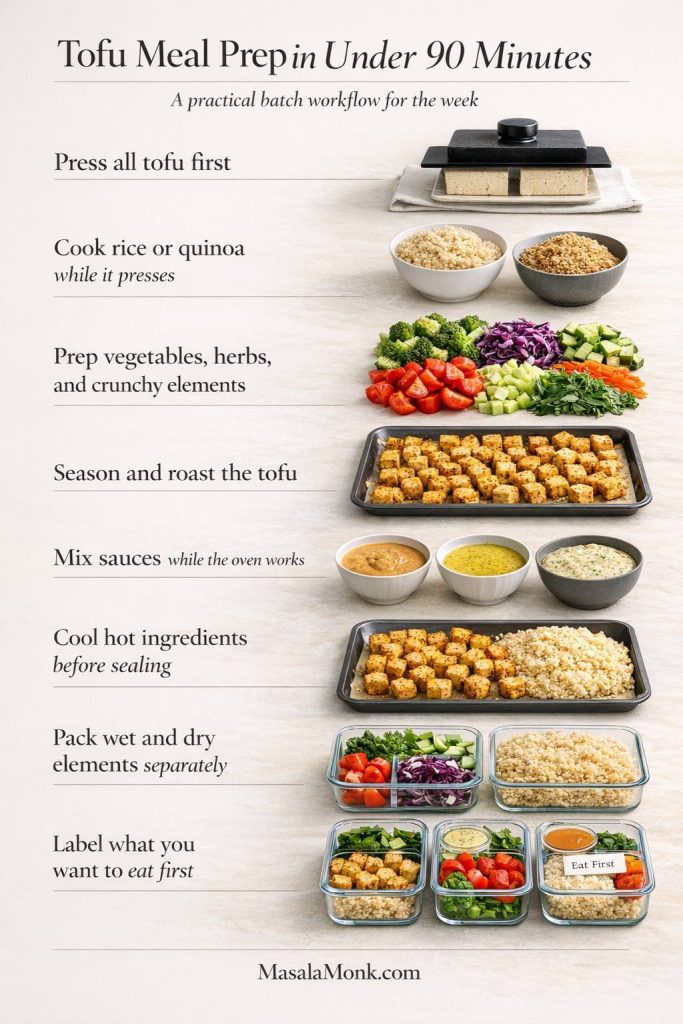
Tofu meal prep workflow guide showing how to prep lunches in under 90 minutes by pressing tofu, cooking grains, chopping vegetables, roasting tofu, mixing sauces, cooling ingredients, packing containers, and labeling what to eat first.
A good tofu meal prep session runs better when the work overlaps, and this under-90-minute workflow shows the smartest order: press tofu first, cook grains while it presses, prep vegetables during that window, roast and cool the hot components, then pack and label everything with texture in mind.
  1. Press all the tofu first.
  2. Cook rice or quinoa while it presses.
  3. Preheat the oven and line your trays.
  4. Chop vegetables, herbs, and crunchy toppings.
  5. Season the tofu and roast it.
  6. Mix the hemp dressing, peanut sauce, tahini dressing, and hemp ranch while the oven is working.
  7. Cool the hot components before closing containers.
  8. Pack wet and dry elements separately wherever texture matters.
  9. Label the containers you want to eat first.

That kind of workflow keeps the prep manageable and makes the whole post more useful in real life. It also makes a big difference in texture, because cooling before packing is one of the easiest ways to avoid condensation and sogginess. Once you start overlapping the work instead of treating every recipe like a separate task, the whole system becomes much more realistic.

Also Read: Masterclass in Chai: How to Make the Perfect Masala Chai (Recipe)

Troubleshooting Tofu Meal Prep

Use this as a quick check before blaming tofu itself. In most cases, the problem is moisture, weak seasoning, or packing order.
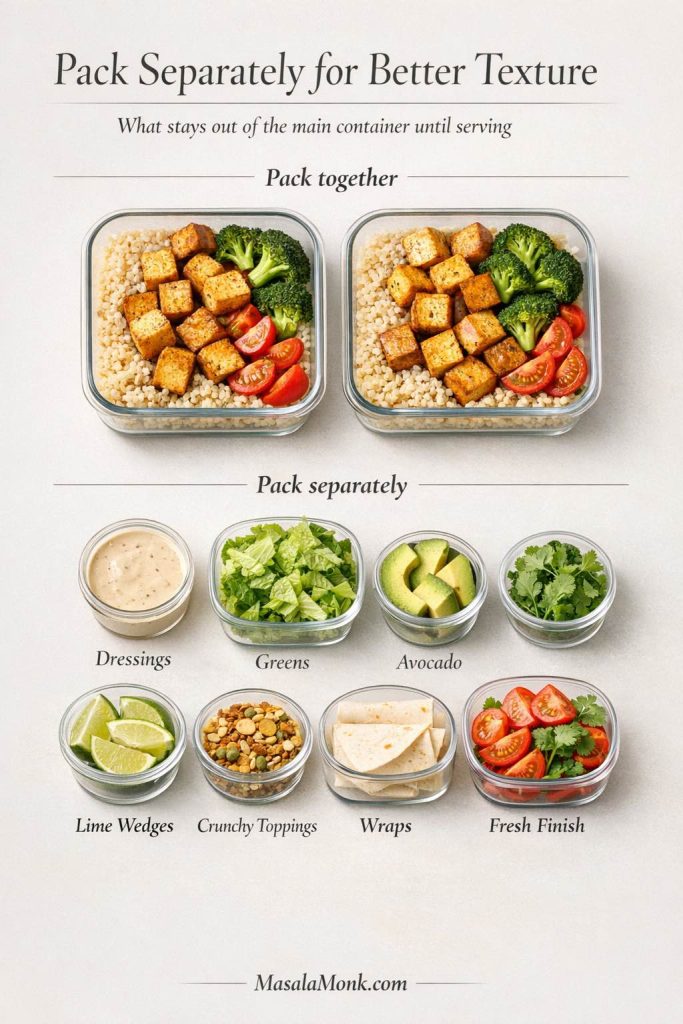
Tofu meal prep packing guide showing which ingredients can be packed together and which should be packed separately, including dressings, greens, avocado, lime wedges, crunchy toppings, wraps, and fresh finishing elements.
Texture usually falls apart long before flavor does, so this tofu meal prep packing guide shows what can stay in the main container and what is better held back until serving, from dressings and greens to avocado, wraps, lime wedges, and crunchy toppings.

If tofu turns soggy

The most likely reason is too much moisture or sauce added too early. So press longer, roast longer, and sauce later. In many cases, the fix is not dramatic at all. It is simply a matter of letting the tofu get drier before you ask it to hold texture for several days.

If tofu tastes bland

The issue is usually weak seasoning or under-salted sauce. So use soy, acid, garlic, herbs, chili, and enough salt where needed. More specifically, do not expect one last-minute sauce to rescue tofu that never had enough flavor built into it from the start.

If the container turns watery

Wet vegetables were probably packed too early or against hot ingredients. Therefore, keep cucumbers, tomatoes, lettuce, and dressings separate whenever possible. Once the hot ingredients cool, you can combine more confidently without setting off that slow soggy slide in the fridge.

If reheated tofu turns rubbery

It was probably overcooked twice or reheated too aggressively. Instead, reheat more gently and stop once warm rather than blasting it until very hot. That small change alone usually keeps the texture much more pleasant.

If noodles clump

They were likely packed dry and cooled too tightly. In that case, toss them with a tiny bit of oil after draining and keep the sauce separate. Then, when it is time to eat, the noodles loosen more easily and the sauce coats them more evenly.

If wraps go soft too fast

They were assembled too early or loaded with too much wet sauce. So pack the filling and the wraps separately and build them fresh. That way, you still get the convenience of prep without sacrificing the crisp bite that makes the wrap work.

Also Read: Air Fryer Salmon Recipe (Time, Temp, and Tips for Perfect Fillets)
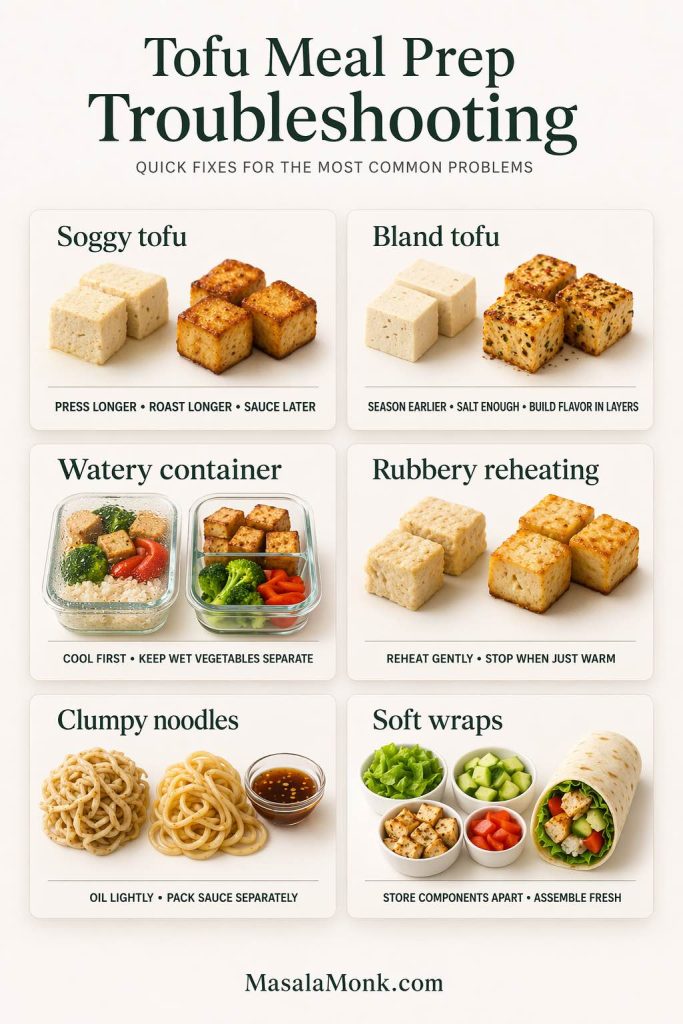
Tofu meal prep troubleshooting guide showing quick fixes for soggy tofu, bland tofu, watery containers, rubbery reheating, clumpy noodles, and soft wraps.
When tofu meal prep starts going wrong, the fix is usually more about handling than the recipe itself: press and roast tofu longer, season earlier, cool containers before sealing, keep sauce separate, reheat gently, and assemble wraps fresh instead of too far ahead.

How Long Does Tofu Meal Prep Last?

For both quality and practicality, these meals are best treated as a 3-to-4-day refrigerator plan. That way, the textures still feel intentional rather than tired. Meals like the quinoa bowls and Mediterranean bowls tend to hold especially well when the dressing stays separate. Meanwhile, the rice bowl and noodle prep also sit comfortably in that window. For wraps, the components are best prepped ahead and assembled fresh.
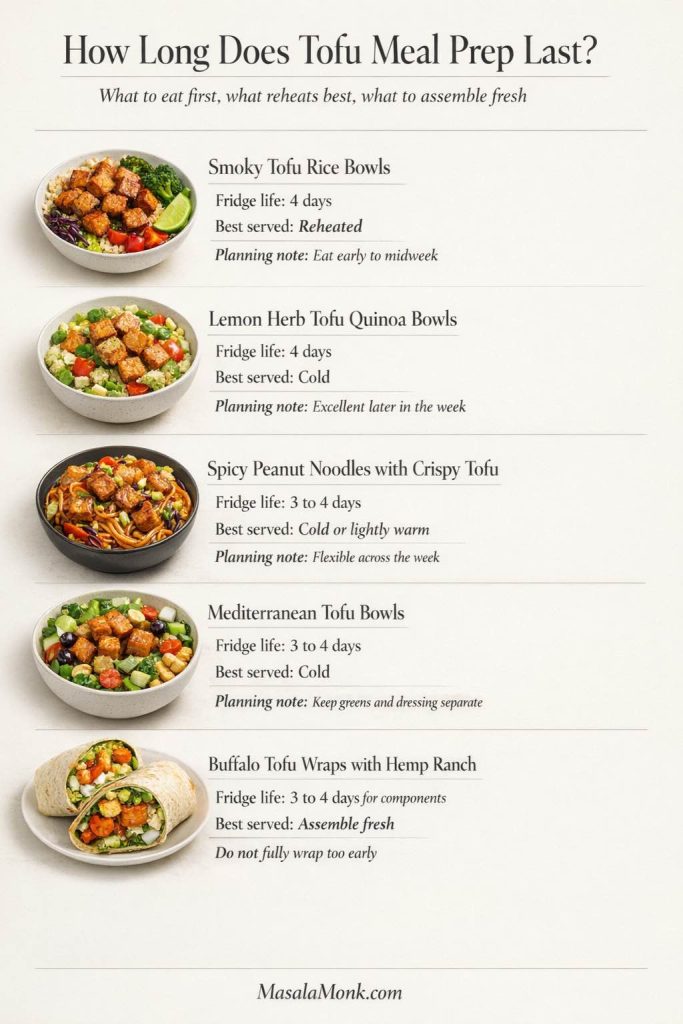
Tofu meal prep storage guide showing how long smoky tofu rice bowls, lemon herb tofu quinoa bowls, spicy peanut noodles, Mediterranean tofu bowls, and buffalo tofu wraps last in the fridge and how each is best served.
Planning the week gets easier when you know which lunches hold strongest: smoky rice bowls and lemon herb quinoa bowls can comfortably carry four days, peanut noodles stay flexible, Mediterranean bowls need greens and dressing held back, and buffalo wraps are best kept in components until you assemble them fresh.

Planning for a full five-day workweek? The easiest move is either to prep a smaller second batch midweek or to freeze part of the cooked tofu early and rotate it in later. That approach usually works better than asking one big Sunday prep to stay perfect longer than it really should. For general food-safety guidance on refrigerated leftovers, the USDA’s leftovers and food safety guidance is a useful reference point.
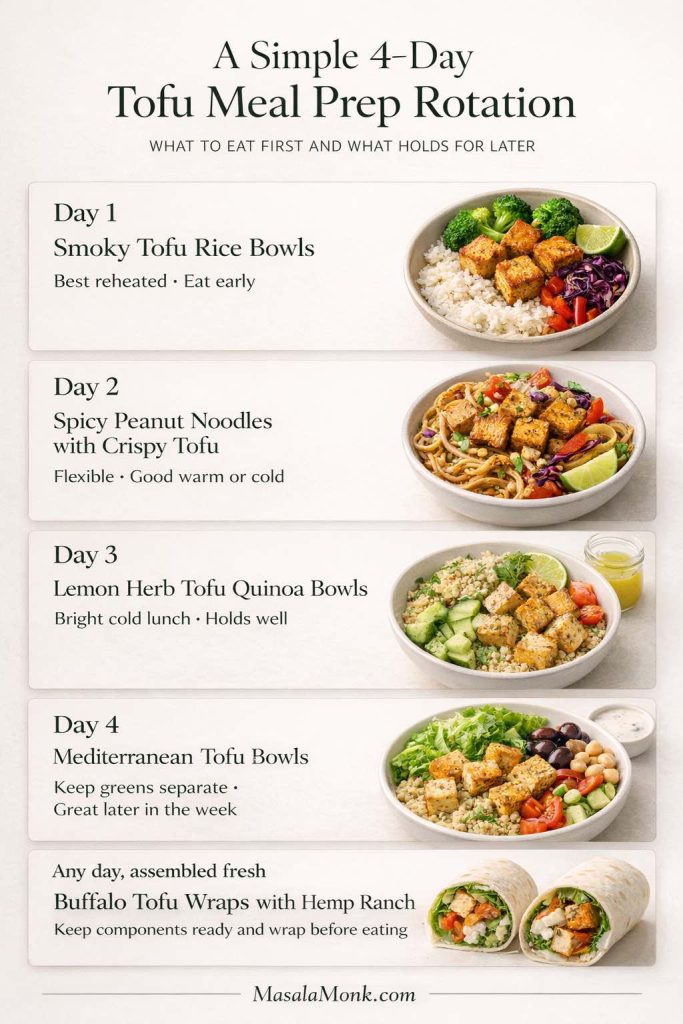
4-day tofu meal prep rotation guide showing a suggested order for smoky tofu rice bowls, spicy peanut noodles with crispy tofu, lemon herb tofu quinoa bowls, Mediterranean tofu bowls, and buffalo tofu wraps with hemp ranch.
A smart tofu meal prep week gets easier when the lunches are eaten in the right order, starting with the warm smoky rice bowls, moving through the more flexible peanut noodles, then into the colder quinoa and Mediterranean bowls, while the buffalo wraps stay best as fresh-built components on any day.

Final thoughts on tofu meal prep

These tofu meal prep ideas work because they treat tofu like a genuinely useful weekday protein instead of a backup option. Once the texture is handled properly, the sauces are built with intention, and the wet elements are packed separately where needed, tofu stops feeling like the compromise lunch and starts feeling like one of the smartest things you can prep for the week.

A practical place to start is the Smoky Tofu Rice Bowls, then follow with the Lemon Herb Tofu Quinoa Bowls or Mediterranean Tofu Bowls later in the week when colder, brighter lunches sound more appealing. Likewise, if you want a different flavor direction for the same weekday problem, these high-protein Indian meal prep ideas are worth bookmarking too. Above all, strong texture, smart packing, and enough variety to keep lunch interesting will take your tofu meal prep much further than novelty alone.

Also Read: Tapas Recipe With a Twist: 5 Indian-Inspired Small Plates
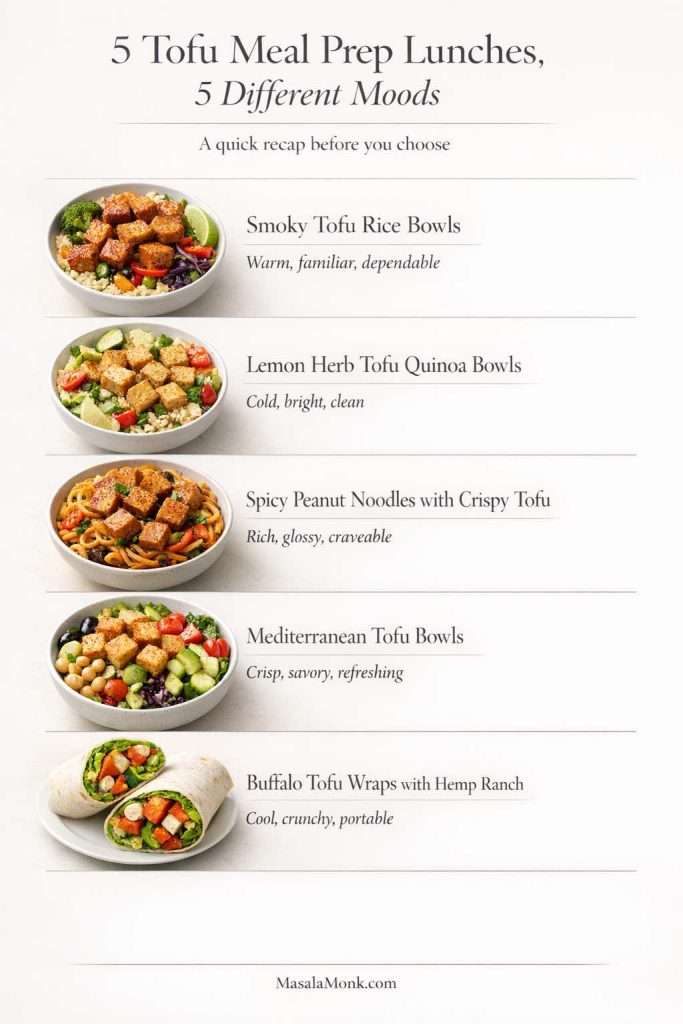
Tofu meal prep recap guide showing five lunch options and their moods: smoky tofu rice bowls, lemon herb tofu quinoa bowls, spicy peanut noodles with crispy tofu, Mediterranean tofu bowls, and buffalo tofu wraps with hemp ranch.
Some tofu lunches feel warm and dependable, others stay brightest cold, and a few are all about craveability or portability, so this quick recap helps you match each recipe to the kind of lunch mood you actually want that week.

Tofu Meal Prep FAQs

1. Is tofu meal prep good for high-protein lunches?

Yes. Tofu meal prep works well for high-protein lunches, especially when you pair tofu with ingredients like hemp seeds, quinoa, chickpeas, yogurt- or tahini-based sauces, or peanut sauce. More importantly, it can still feel like real food rather than a protein project when the texture and seasoning are handled properly.

2. What tofu is best for meal prep?

Extra-firm tofu is usually the best choice because it holds shape well and roasts into stronger edges. However, firm tofu also works well when you want a slightly softer bite. Silken tofu, by contrast, is not the right fit for bowls, noodles, and wraps like these.

3. How do I keep tofu from getting soggy in meal prep?

Press it well, avoid drowning it in marinade, roast it until it has real color, cool it before sealing, and keep sauces separate whenever crispness matters. Taken together, those steps solve most soggy tofu meal prep problems. In other words, the answer is usually better moisture control, not giving up on tofu.

4. Can I eat these tofu meal prep ideas cold?

Yes. Lemon Herb Tofu Quinoa Bowls and Mediterranean Tofu Bowls are especially good cold. Meanwhile, the noodle prep also works well cold or at room temperature. By contrast, rice bowls usually benefit most from reheating.

5. Do hemp seeds really help in meal prep, or are they just for nutrition?

They help with both. Hemp seeds add protein, but they also add creaminess, nuttiness, body, and texture. In this post, they matter most because they improve the actual eating experience, not just the nutrition label. That is precisely why they belong here.

6. Which recipe is best if I am new to tofu meal prep?

Start with the Smoky Tofu Rice Bowls. They feel the most familiar, reheat well, and give you the clearest sense of how satisfying tofu meal prep can be when the texture is right. After that, the other recipes make much more sense because you already trust the base ingredient.
Posted on Leave a comment

Beyond Chicken: 5 Tofu Meal Prep Ideas for High-Protein Meals

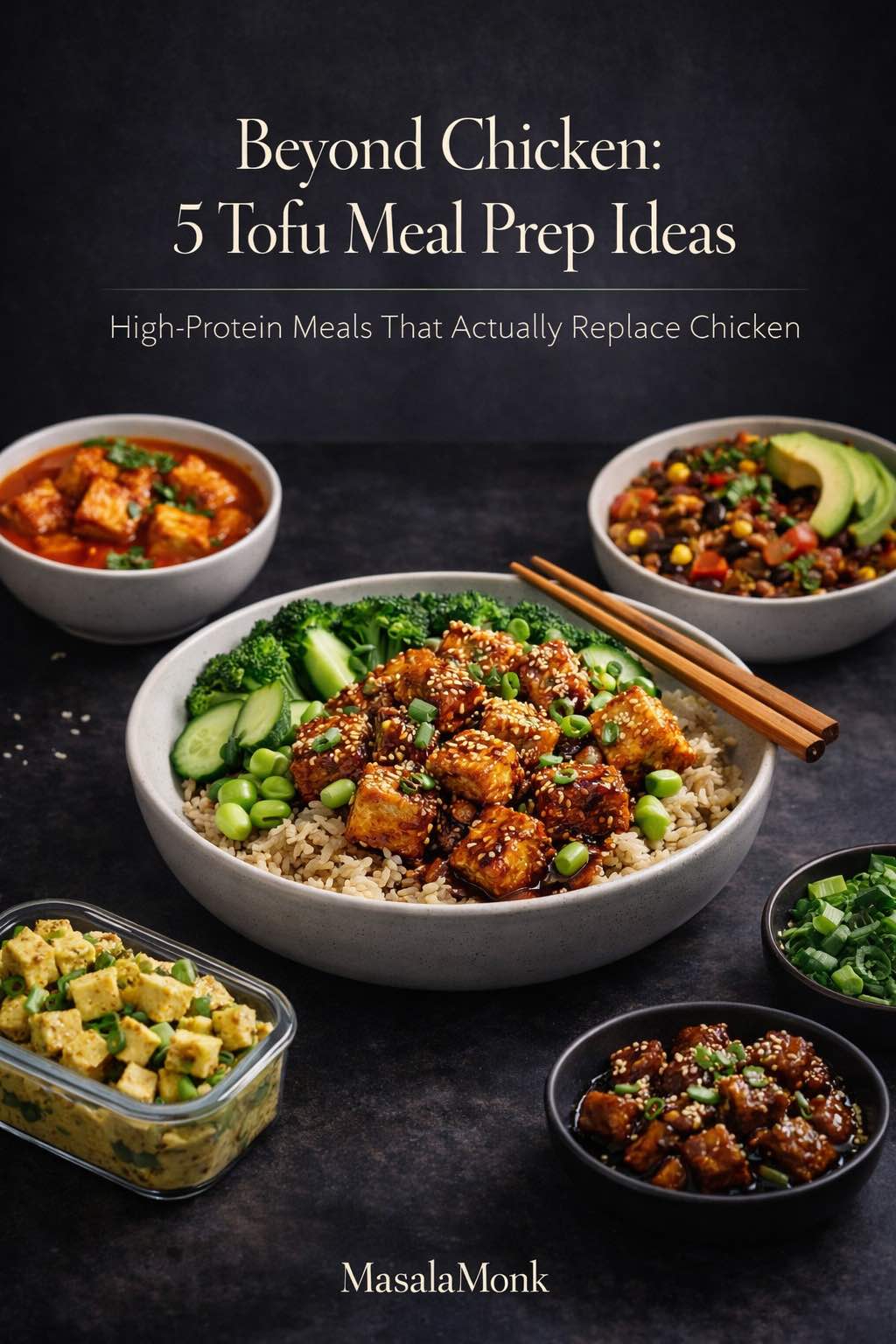
Beyond Chicken cover image showing five tofu meal prep ideas, including crispy sesame tofu bowls, sticky soy garlic tofu, curried tofu salad, taco-style tofu crumbles, and red curry tofu as high-protein chicken-free meals.

If you want tofu meal prep ideas that can genuinely take the place of your usual chicken lunches, the problem usually is not tofu itself. More often, the tofu stays too wet, the seasoning lands too softly, or the finished box never feels as satisfying as the chicken version it is meant to replace.

This post is built to fix that.

Instead of offering another vague tofu roundup, it gives you five practical tofu meal prep ideas based on the chicken lunches people already repeat in real life: sesame bowls, taco bowls, sticky glazed rice boxes, creamy lunch salads, and curry meal prep. The goal is not to make tofu imitate chicken badly. The goal is to use tofu in the meal formats where it can replace chicken confidently, repeatedly, and with far better flavor.

Start with the tofu format that matches the chicken lunch you already rely on most. The sesame bowl is the strongest first move for anyone who wants crisp texture. Smoky tofu crumbles fit best when taco-bowl lunches are already part of the weekly routine. Sticky soy garlic tofu makes the most sense for takeout-style sweet-savory meal prep. Curried tofu salad is the most practical option for cold desk lunches. Coconut red curry tofu is the easiest fit for reheatable comfort food.

Why Most Tofu Meal Prep Fails

When tofu meal prep goes wrong, the pattern is usually predictable. Sometimes the tofu is barely pressed. Just as often, the seasoning is too timid. In other cases, sauce goes on too early, so the tofu steams instead of browning. Meanwhile, some lunch boxes fall flat because they have no crunch, no acid, and no real contrast.

Those same issues show up again and again across successful tofu recipes, whether the format is a sesame bowl, taco crumbles, or a curry box. In other words, the problem is usually not that tofu “cannot replace chicken.” The problem is that tofu needs better handling from the beginning.

Once moisture, seasoning, browning, and box structure improve, tofu meal prep stops feeling like a compromise. It starts feeling like one of the most flexible, economical, and repeatable proteins in a weekly lunch rotation.

Also Read: White Russian Recipe: 7 Variants to Try, From Classic to Frozen

What These Tofu Meal Prep Ideas Do Differently

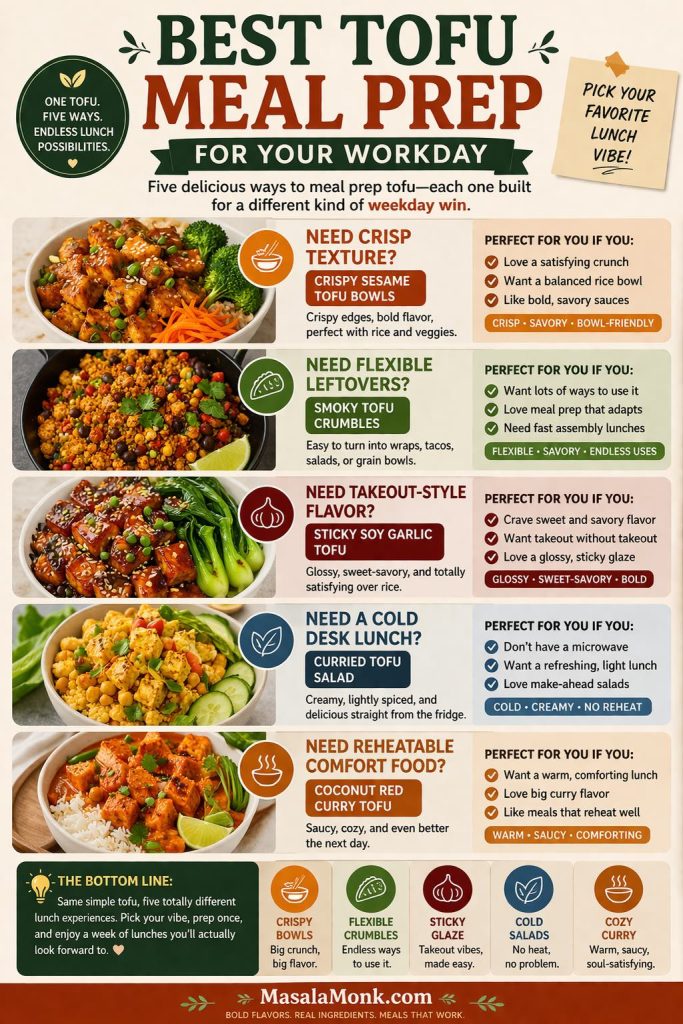
The five recipes in this post were chosen for a reason. Each one maps onto a chicken meal-prep habit people already have, which makes the switch easier to trust.

  • Sesame chicken bowls → Crispy sesame tofu bowls → best for readers who want texture, roasted vegetables, and a sauce-driven rice bowl
  • Taco bowls or shredded chicken bowls → Smoky tofu crumbles taco bowls → best for bold seasoning, flexible leftovers, and burrito-style lunches
  • Honey garlic or soy-glazed chicken → Sticky soy garlic tofu meal prep → best for takeout-style sweet-savory rice boxes
  • Chicken salad lunches → Curried tofu salad meal prep → best for cold lunches, wraps, crackers, and desk lunches
  • Chicken curry meal prep → Coconut red curry tofu boxes → best for reheatable comfort food and sauce-first meal prep

That structure matters because it lets you begin with a lunch format you already trust instead of changing everything about meal prep at once. You are not asking tofu to win in a random role. You are choosing the lane where it naturally works.

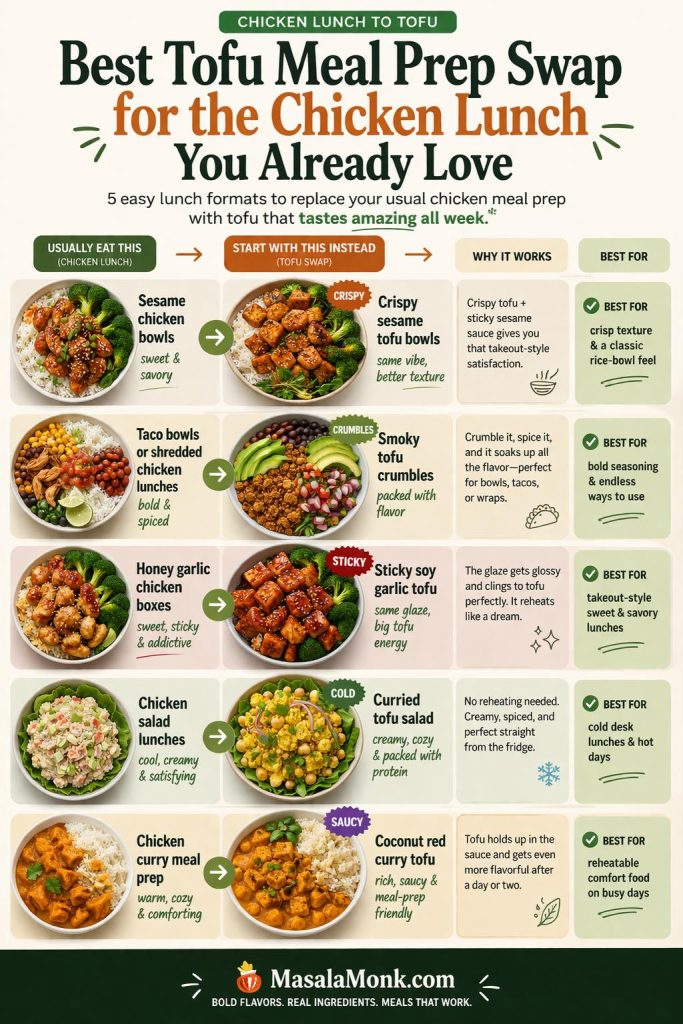
Editorial infographic showing the best tofu meal prep swap for the chicken lunch you already love, including crispy sesame tofu bowls, smoky tofu crumbles, sticky soy garlic tofu, curried tofu salad, and coconut red curry tofu, with quick notes on why each option works and which lunch style each one suits best.
Start with the tofu lunch style that already matches how you like to meal prep. Crispy bowls, taco-style crumbles, sticky glazed rice boxes, cold curried salad lunches, and reheatable curry boxes all solve a different weekday need, so choosing the right format first makes tofu easier to enjoy and repeat. Save this guide for your next meal-prep session, and share it with someone trying to eat less chicken without giving up satisfying lunches.

There is a strong nutritional case for building more lunches this way as well. Harvard’s Nutrition Source notes that soy foods are nutrient-dense protein sources and are especially useful when they replace red and processed meat, which makes tofu a practical protein choice within a broader meal-prep routine. For that bigger-picture context, Harvard’s guide to soy as a nutrient-dense protein source is worth reading. Internally, MasalaMonk’s guide to plant-based protein sources for high-protein meal prep fits naturally alongside this post.

Why Tofu Works as a Chicken Meal Prep Replacement

Chicken usually does three jobs in meal prep: it brings protein, gives the box substance, and carries seasoning well. Tofu can do those same jobs. It simply gets there differently.

Tofu is not at its strongest when the exact meat-like bite is the whole point of the meal. It is strongest where bowls, sauces, spice blends, crunch, vegetables, and repeatable lunch structure do a lot of the work. That is why tofu becomes so convincing in crisp sesame bowls, smoky taco crumbles, sticky glazed rice boxes, creamy curried lunch salads, and reheatable curry meal prep.

The biggest mistake people make is trying to treat tofu exactly like chicken without changing the rest of the meal. If the whole lunch depends on the natural savoriness and bite of chicken, tofu will feel flat unless you compensate with better moisture control, stronger seasoning, and more thoughtful box building. Once that shift happens, tofu stops feeling like a backup plan and starts feeling deliberate.

For a broader vegetarian meal-prep perspective, MasalaMonk’s guide to high-protein Indian meal prep ideas is a strong internal companion.

How to Make Tofu Meal Prep Ideas Taste Good All Week

Choose the best tofu for meal prep

For most of the recipes below, firm or extra-firm tofu is the right choice. These styles hold shape better, brown more easily, and survive refrigeration more gracefully than softer tofu. Soft and silken tofu are far better suited to soups, sauces, smoothies, and desserts.

That distinction matters because beginner frustration often starts with the wrong tofu, not the wrong recipe. EatRight’s guidance on vegetarian protein foods makes the same basic point: firmer tofu works best in roasting, grilling, and sautéing applications, while softer tofu belongs in gentler preparations. Their article on vegetarian protein foods and tofu texture is a useful reader-friendly reference.

Why pressing tofu matters for meal prep texture

Pressing tofu is one of the simplest upgrades you can make. You do not need to remove every trace of moisture. You just need to remove enough excess water that the tofu can brown, crisp, and absorb seasoning without steaming itself into bland softness.

Wrap the tofu in a clean towel or paper towels, place it on a plate or board, and weigh it down for 20 to 30 minutes. In most cases, that is enough. The improvement in texture is immediate, especially in crisp bowls, tofu crumbles, and sticky glazed tofu.

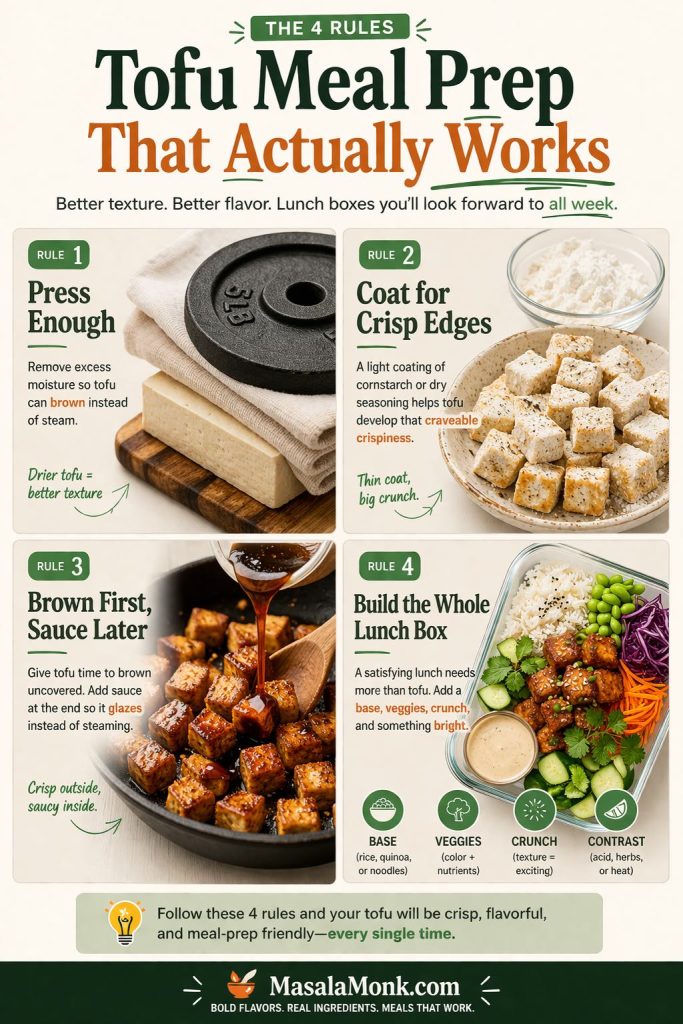
Premium editorial tofu meal prep infographic showing four practical rules for better tofu lunches: press enough to remove excess moisture, coat tofu for crisp edges, brown first and sauce later, and build the whole lunch box with a base, vegetables, crunch, and contrast for better texture and flavor all week.
Better tofu meal prep starts long before the sauce goes on. Pressing properly, creating crisp edges, browning before glazing, and building a lunch box with texture, vegetables, and contrast are the small moves that make tofu taste more satisfying through the week. Save this post for your next prep day, and share it with someone who still thinks tofu meal prep has to be bland, soggy, or boring.

Brown tofu first, then add sauce

This is one of the most important rules in the entire article. Sauce added too early creates steam. Steam ruins browning. So tofu should be roasted, air-fried, or pan-browned before it is glazed or tossed.

That sequence matters most in crispy bowls and sticky tofu meal prep. The Kitchn’s method for making crispy tofu without deep-frying reinforces exactly why pressing, coating, and cooking before saucing works so reliably.

How to season tofu so it does not taste bland

Tofu rewards assertive seasoning. Salt helps, but it is rarely enough on its own. Soy sauce adds umami, vinegar or lime add lift, garlic and ginger add depth, chili brings edge, and a little sweetness often helps bring a glaze together. The best tofu meal prep ideas build flavor from several directions at once rather than relying on one sauce at the end.

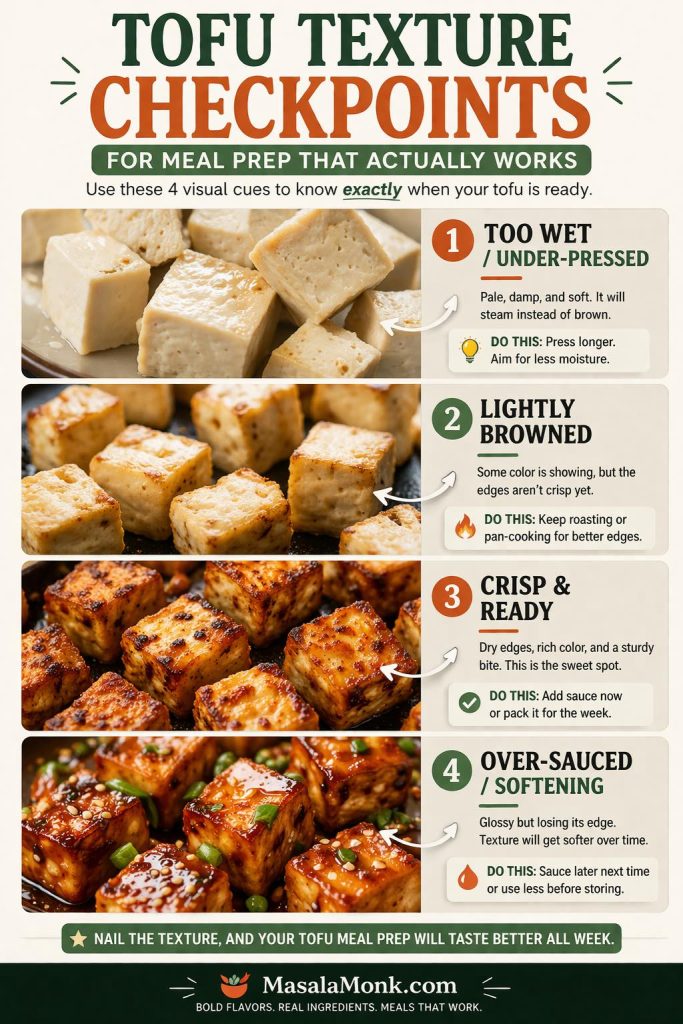
Editorial tofu texture guide for meal prep showing four visual stages: too wet and under-pressed tofu, lightly browned tofu, crisp and ready tofu, and over-sauced tofu softening after glazing, with quick cues for when to keep cooking, when to sauce, and when tofu is ready to pack for the week.
Good tofu meal prep gets much easier once you know what to look for in the pan or on the tray. Pale tofu usually needs more time, lightly browned tofu still needs better edges, properly crisp tofu is the right point for glazing or packing, and over-sauced tofu loses the texture that makes lunch satisfying later in the week. Save this post for your next prep day, and share it with someone who keeps ending up with tofu that turns soft before the week is over.

Build the whole meal prep box, not just the protein

The best tofu meal prep ideas are not just tofu plus rice. They are tofu plus a base, vegetables, texture contrast, and a dressing or sauce that makes the meal feel complete.

Rice, quinoa, soba, wraps, chopped salads, and curry-style boxes all work well as foundations. Broccoli, cabbage, peppers, carrots, cucumbers, edamame, onions, herbs, seeds, and pickled elements keep the lunches from going flat. For more base-building inspiration, MasalaMonk’s guide to plant-based meal prep ideas using quinoa as a protein source fits naturally here.

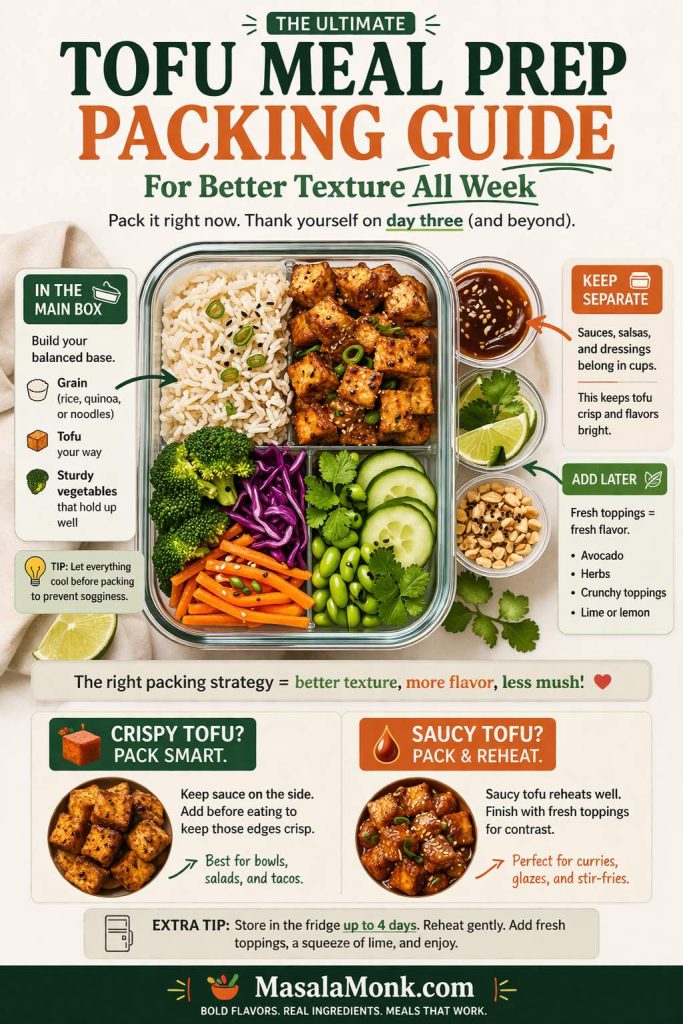
Editorial tofu meal prep packing guide showing how to pack tofu lunches for better texture all week, including what to keep in the main box, which sauces and dressings to store separately, what fresh toppings to add later, and how crispy tofu and saucy tofu should be packed differently for the best meal prep results.
Packing matters just as much as cooking when you want tofu meal prep to hold up through the week. Keep grains, tofu, and sturdy vegetables in the main box, store sauces separately, and add fresh toppings like herbs, lime, avocado, or crunchy elements closer to eating so the lunch keeps more texture and contrast. Save this post for your next prep day, and share it with someone who keeps blaming tofu when the real problem is the packing.

How to pack tofu meal prep so it still tastes good on day three

Packing order matters more than many people expect.

  • Keep sauce separate for crispy meals whenever possible.
  • Let hot tofu, rice, and vegetables cool before sealing the containers.
  • Add wet toppings like salsa, cucumber, and avocado closer to serving time.
  • Refresh older meal prep with acid, herbs, chili, seeds, or crunch rather than assuming the tofu itself is the only issue.

That last point matters. Cold or reheated lunches naturally lose some brightness, so a squeeze of lime, a little vinegar, fresh spring onion, or a spoonful of crunchy topping can make day-three tofu meal prep taste far more alive.

Also Read: Mango Sorbet Recipe: Healthy & Plant Based Dessert

5 Tofu Meal Prep Ideas That Actually Make a Strong Replacement for Chicken

The five recipes below are arranged from the easiest texture-first tofu win to the most comfort-driven sauce-based lunch. Start with the one that matches your usual chicken habit most closely, then branch out once you find the format you actually want to repeat.

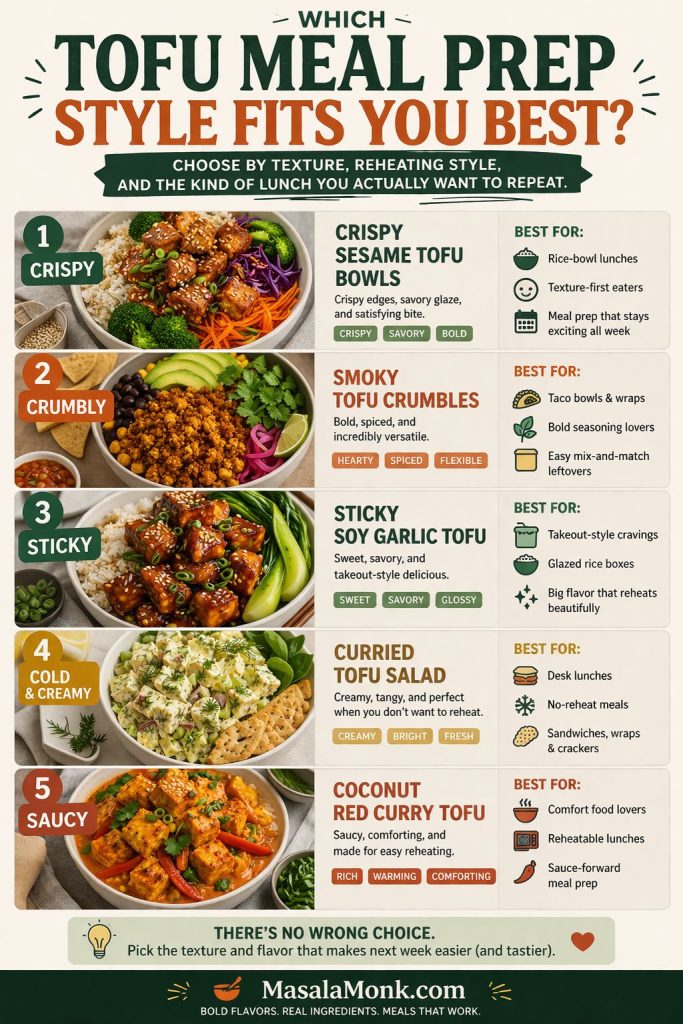
Premium editorial tofu meal prep style chooser infographic comparing five lunch formats: crispy sesame tofu bowls, smoky tofu crumbles, sticky soy garlic tofu, curried tofu salad, and coconut red curry tofu, with notes on texture, reheating style, and which type of lunch each option suits best.
The best tofu meal prep is usually the one that fits how you actually like to eat during the week. Crispy sesame bowls work well for texture-first lunches, smoky crumbles are great for taco bowls and wraps, sticky soy garlic tofu suits takeout-style cravings, curried tofu salad covers cold desk lunches, and coconut red curry tofu is the easiest fit for reheatable comfort food. Save this post for your next meal-prep session, and share it with someone who wants more variety without ending up with another week of boring lunches.

Crispy Sesame Tofu Meal Prep Bowls

Best tofu swap for sesame chicken bowls

If you usually prep sesame chicken, crispy stir-fry bowls, or takeout-style rice boxes, this is the strongest place to start. Crisp tofu gives you bite, structure, and sauce-holding power in a way soft cubes never will. Better still, the whole format still feels familiar, which makes the switch easier to trust.

Among all the tofu meal prep ideas in this post, this is one of the most beginner-friendly because it solves several problems at once: texture, strong sauce, roasted vegetables, and a dependable rice-bowl format. If someone thinks tofu always feels soggy or forgettable, this is the recipe most likely to change that opinion early.

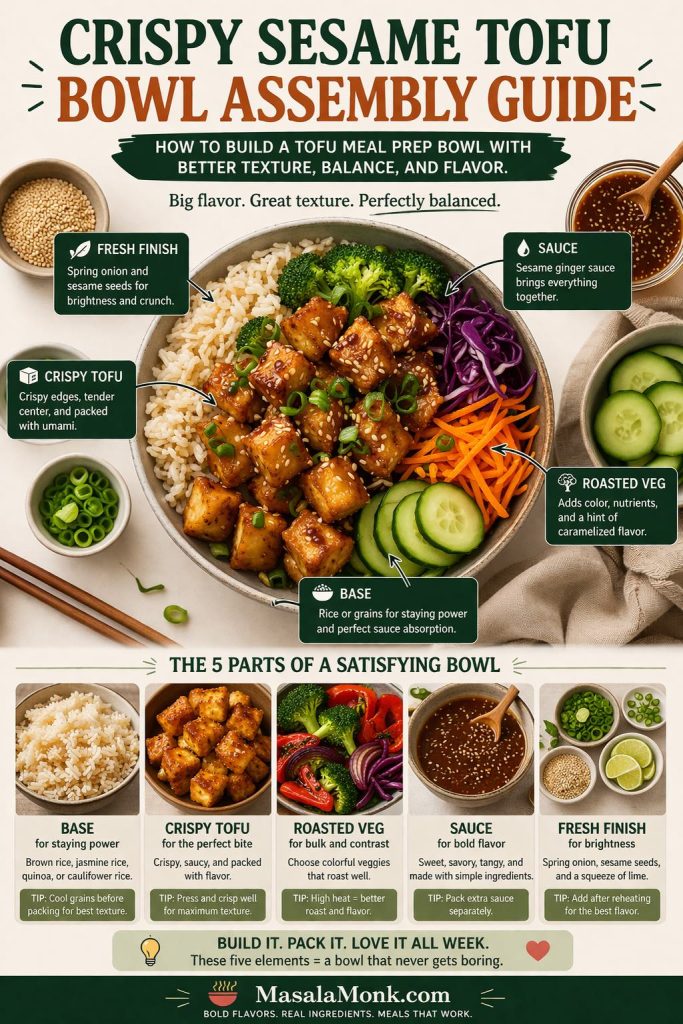
Premium editorial guide showing how to build a crispy sesame tofu meal prep bowl with a grain base, crispy tofu, roasted vegetables, sesame ginger sauce, and a fresh finish like spring onion and sesame seeds for better texture, balance, and flavor all week.
A satisfying tofu meal prep bowl works best when every part has a job: a solid base for staying power, crispy tofu for bite, roasted vegetables for bulk and contrast, a bold sesame-style sauce for flavor, and a fresh finish to keep the lunch from tasting heavy by day three. Save this post for your next prep day, and share it with someone who wants high-protein lunches that feel balanced, flavorful, and worth repeating through the week.

Recipe Card: Crispy Sesame Tofu Meal Prep Bowls

Prep time: 25 minutes
Cook time: 30 minutes
Yield: 4 bowls
Approximate protein: about 18 to 22 grams per serving before rice and toppings, depending on tofu brand

Ingredients

For the tofu

  • 2 blocks extra-firm tofu
  • 1 tablespoon neutral oil
  • 1 tablespoon soy sauce
  • 2 tablespoons cornstarch
  • 1 teaspoon garlic powder
  • 1/2 teaspoon black pepper

For the sesame ginger sauce

  • 3 tablespoons soy sauce
  • 1 tablespoon rice vinegar
  • 1 tablespoon maple syrup or honey
  • 1 tablespoon toasted sesame oil
  • 1 tablespoon grated ginger
  • 2 garlic cloves, minced
  • 1 to 2 teaspoons chili crisp or chili flakes
  • 2 tablespoons water

And for the bowls

  • 3 cups cooked rice
  • 1 large head broccoli, cut into florets
  • 2 bell peppers, sliced
  • 2 carrots, sliced thin
  • 1 tablespoon neutral oil
  • 2 tablespoons sesame seeds
  • 3 spring onions, sliced

Method

  1. Press the tofu for 20 to 30 minutes, then cut it into cubes.
  2. Toss the tofu with oil, soy sauce, cornstarch, garlic powder, and pepper. The coating should look light and powdery rather than wet.
  3. Spread on a lined tray and roast at 220°C / 425°F for 25 to 30 minutes, turning once, until the edges look dry, browned, and lightly blistered.
  4. Toss broccoli, peppers, and carrots with a little oil and roast on a second tray until tender with some color.
  5. Whisk together the sauce ingredients and taste before using.
  6. Once the tofu is hot and crisp, toss it lightly in enough sauce to coat.
  7. Divide rice among four containers, then add vegetables and tofu.
  8. Finish with sesame seeds and spring onion.

Best texture checkpoint

The tofu is ready when the cubes release easily from the tray, the corners look browned rather than pale, and the exterior feels lightly firm instead of damp.

Why this recipe works

Crisp texture plus a sesame-ginger sauce gives tofu a role people already trust from chicken bowls. The sauce goes on after roasting, which protects the edges instead of destroying them. Roasted vegetables keep the bowl from tasting one-note, while rice gives the whole meal the same dependable structure that makes sesame chicken lunch prep so popular.

Do not mess this up

Do not pour all the sauce onto the tofu before roasting. It will steam instead of crisp. Also, do not under-roast it. Pale tofu softens too quickly once sauced and feels disappointing by day two.

Storage and reheating

Store for up to 4 days. For the best texture, keep extra sauce separate and add it after reheating. Microwave works fine for the rice and vegetables, but an air fryer or hot skillet is the best way to recover crispness in the tofu. For the best day-three texture, pack sauce in a small container and toss just before eating.

Easy swaps

  • use quinoa instead of rice
  • swap peppers for cabbage or snap peas
  • add edamame for more protein
  • finish with lime for more brightness

For another bowl direction later in the week, MasalaMonk’s Thai-style vegan bowl with peanut butter dressing works well as a follow-on internal read.

Smoky Tofu Crumbles Taco Bowls

Best tofu swap for shredded chicken taco bowls

If your usual lunch prep leans toward taco bowls, burrito bowls, or shredded chicken rice boxes, tofu crumbles are one of the smartest replacements you can make. Because the tofu is broken into small irregular pieces, it catches spice more evenly and feels closer to the structure of seasoned minced or shredded protein.

This is also one of the most believable chicken-to-tofu swaps in the post. Ease, strong seasoning, and leftover flexibility are exactly what make it so repeatable. Once you make a good batch of tofu crumbles, you are not limited to one kind of lunch box.

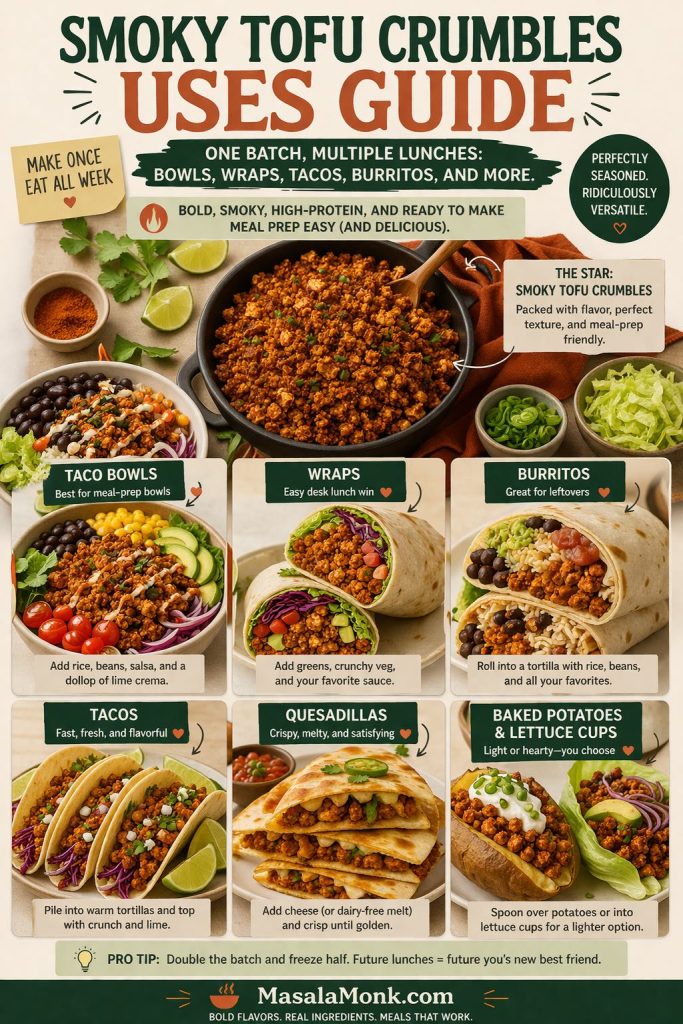
Editorial infographic showing multiple ways to use smoky tofu crumbles for meal prep, including taco bowls, wraps, burritos, tacos, quesadillas, and baked potatoes or lettuce cups, with notes on why this tofu crumble format works well for flexible high-protein lunches through the week.
One good batch of smoky tofu crumbles can carry much more than a single lunch. Use it for taco bowls early in the week, then turn the leftovers into wraps, burritos, tacos, quesadillas, or even baked potatoes when you want something different without starting from scratch again. Save this post for your next prep day, and share it with someone who wants more variety from one simple, high-protein tofu meal prep base.

Recipe Card: Smoky Tofu Crumbles Taco Bowls

Prep time: 20 minutes
Cook time: 25 minutes
Yield: 4 bowls
Approximate protein: about 20 to 24 grams per serving depending on tofu and beans used

Ingredients

  • 2 blocks firm or extra-firm tofu
  • 2 teaspoons olive oil
  • 1 tablespoon soy sauce
  • 1 tablespoon tomato paste
  • 2 teaspoons chili powder
  • 1 teaspoon smoked paprika
  • 1 teaspoon cumin
  • 1 teaspoon garlic powder
  • 1 teaspoon onion powder
  • 1/2 teaspoon black pepper
  • juice of 1 lime
  • 3 cups cooked rice
  • 1 can black beans, drained and rinsed
  • 1 cup corn
  • 2 cups shredded cabbage or lettuce
  • 1 cup salsa or pico de gallo
  • 1 avocado, sliced or mashed
  • coriander leaves for serving

Method

  1. Press the tofu well, then crumble it by hand into irregular pieces roughly the size of cooked ground meat rather than big chunks.
  2. Mix olive oil, soy sauce, tomato paste, chili powder, smoked paprika, cumin, garlic powder, onion powder, black pepper, and lime juice.
  3. Toss the tofu crumbles in the seasoning mixture until evenly coated.
  4. Spread on a baking tray and roast at 220°C / 425°F for 20 to 25 minutes, stirring once, until the tray looks mostly dry and the edges are browned.
  5. Divide rice among containers.
  6. Add black beans, corn, cabbage, and tofu crumbles.
  7. Pack salsa and avocado separately if possible.
  8. Finish with coriander and extra lime at serving time.

Best texture checkpoint

The crumbles are ready when the tray looks mostly dry, the edges have browned, and the mixture no longer gives off visible steam. They should look concentrated and lightly chewy at the edges rather than soft and damp.

Why this recipe works

Strong seasoning does a lot of the heavy lifting here. Even more importantly, the crumble texture makes tofu feel more integrated into the bowl, which helps a lot if someone is still skeptical about large tofu cubes. Beans, corn, cabbage, salsa, and avocado also create the kind of layered bowl that makes taco meal prep satisfying beyond the protein itself.

Do not mess this up

Do not stop cooking the crumbles too early. If they still look wet, they will taste flat and soften badly in storage. Do not crowd the tray either, or the mixture will steam. Also, do not skip the lime, because the acid helps the whole bowl feel brighter and less heavy.

Storage and serving

These bowls hold well for 3 to 4 days. Add avocado fresh if possible. If you want the crumbles darker and a little chewier, roast them 3 to 5 minutes longer after stirring.

Other ways to use the crumbles

  • spoon into wraps
  • roll into burritos
  • use in tacos
  • add to quesadillas
  • pile onto baked potatoes
  • turn into lettuce cups

Easy swaps

  • use quinoa instead of rice
  • add jalapeños or pickled onions
  • swap black beans for pinto beans
  • stir chipotle into the salsa for more smoke

Also Read: Protein Ice Cream Recipe: 10 Creamy Homemade Recipes

Sticky Soy Garlic Tofu Meal Prep

Best tofu swap for honey garlic or soy-glazed chicken bowls

If you like sticky, glossy, sweet-savory chicken bowls, this is the tofu version to try first. The key is simple: crisp the tofu first, then glaze it. That way you keep contrast instead of ending up with soft, saucy cubes.

This recipe works especially well for readers who love takeout-style lunches but want something they can batch at home without losing all the texture by the next day. The crisp shell gives the glaze something to cling to, while the garlic, ginger, soy, and a little sweetness create the familiar savory payoff many people usually chase in honey garlic chicken or soy-glazed bowls.

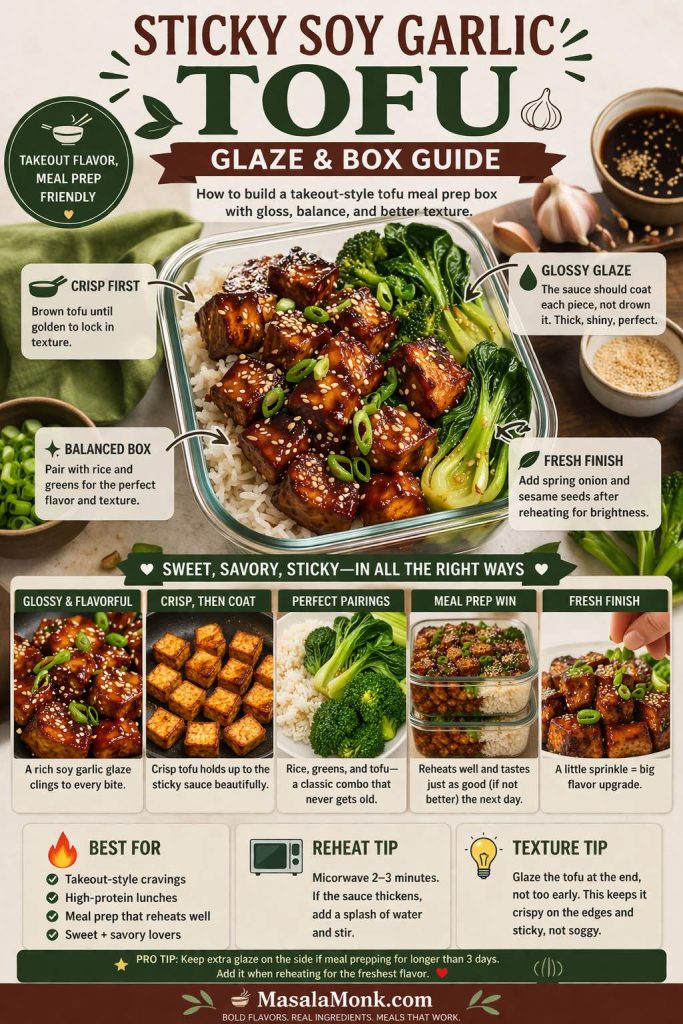
Premium editorial infographic showing a sticky soy garlic tofu meal prep box with glossy glazed tofu, rice, and greens, plus tips on crisping tofu first, coating with glaze at the end, pairing it with a balanced lunch box, reheating gently, and finishing with spring onion and sesame for better texture and flavor.
Sticky soy garlic tofu is the lunch to make when you want a meal-prep box that feels closer to takeout than another plain rice bowl. Crisping the tofu first, glazing it at the end, and pairing it with rice, greens, and a fresh finish keeps the box glossy, savory, and satisfying without turning everything soft too early. Save this post for your next prep day, and share it with someone who wants sweet-savory high-protein lunches that still taste good after reheating.

Recipe Card: Sticky Soy Garlic Tofu Meal Prep

Prep time: 20 minutes
Cook time: 30 minutes
Yield: 4 bowls
Approximate protein: about 18 to 22 grams per serving before rice, depending on tofu brand

Ingredients

For the tofu

  • 2 blocks extra-firm tofu
  • 1 tablespoon neutral oil
  • 2 tablespoons cornstarch
  • 1/2 teaspoon black pepper

For the glaze

  • 4 tablespoons soy sauce
  • 1 tablespoon rice vinegar
  • 1 tablespoon maple syrup or brown sugar
  • 1 tablespoon sesame oil
  • 4 garlic cloves, minced
  • 1 teaspoon grated ginger
  • 1 teaspoon chili flakes or chili crisp
  • 4 tablespoons water

And for the bowls

  • 3 cups cooked jasmine rice
  • 2 cups green beans or broccoli
  • 1 bell pepper, sliced
  • 2 spring onions, sliced
  • sesame seeds for garnish
  • shelled edamame, optional, for extra protein

Method

  1. Press the tofu and cut it into cubes.
  2. Toss with oil, cornstarch, and pepper.
  3. Roast or air-fry at 220°C / 425°F until crisp and golden, about 25 minutes.
  4. Roast or sauté the vegetables until just tender.
  5. In a saucepan, combine soy sauce, rice vinegar, maple or brown sugar, sesame oil, garlic, ginger, chili, and water. Simmer until glossy and lightly thickened.
  6. Toss the hot tofu gently in the glaze.
  7. Divide rice and vegetables into containers, then top with glazed tofu.
  8. Finish with spring onion and sesame seeds.

Best texture checkpoint

The tofu should be crisp and well browned before it ever touches the glaze. The glaze should look shiny and lightly syrupy, thick enough to coat the back of a spoon but not so reduced that it turns gummy after chilling.

Why this recipe works

The glaze gives tofu the familiar sticky, savory-sweet finish people often associate with takeout-style chicken bowls. Crisping first prevents the meal from turning heavy and soggy, while the rice and vegetables keep the lunch grounded in a familiar meal-prep structure. That balance between crispness and glaze is what makes the recipe satisfying rather than merely saucy.

Do not mess this up

Do not glaze the tofu before it is properly browned. Otherwise, you lose the contrast that makes the recipe worth making. Also, avoid reducing the glaze too far, or it can become overly sticky after chilling and reheating.

Storage and reheating

Store for up to 4 days. Reheat gently. For the best texture, toss only part of the tofu in glaze before packing and carry extra glaze separately to spoon over after reheating. Fresh spring onion or sesame added at the end helps restore contrast.

Easy swaps

  • use teriyaki instead of soy-garlic
  • swap in mushrooms, cabbage, or snap peas
  • add toasted peanuts for crunch
  • serve with brown rice if you prefer

MasalaMonk’s teriyaki sauce recipe is a natural internal link here if you want to vary the glaze later.

Curried Tofu Salad for High-Protein Lunch Meal Prep

Best tofu swap for curried chicken salad lunches

If you rely on creamy chicken salad for sandwiches, wraps, crackers, or desk lunches, this is the tofu format that replaces it most directly. Because the recipe depends on dressing, crunch, and mix-ins, tofu feels natural here rather than forced.

This is also one of the most practical tofu meal prep ideas for people who do not want to reheat lunch at work. It travels well, tastes good cold, and solves the problem of protein-forward desk lunches without relying on deli meat or another day of chicken.

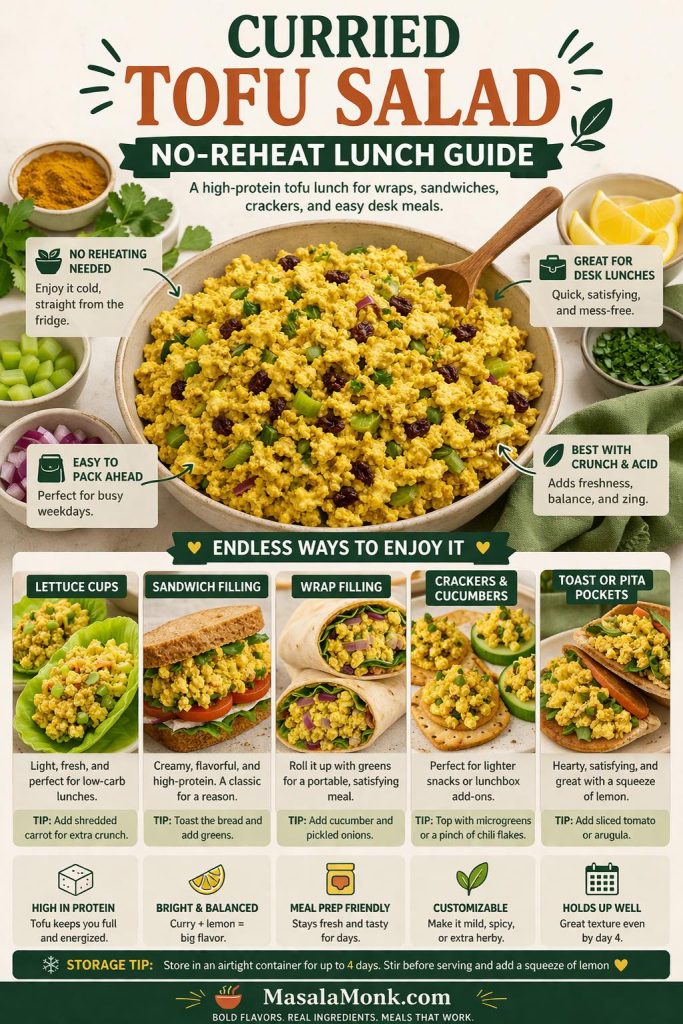
Premium editorial infographic showing a curried tofu salad no-reheat lunch guide with serving ideas for lettuce cups, sandwich filling, wrap filling, crackers or cucumber slices, and toast or pita pockets, plus notes on easy packing, desk-lunch use, added crunch and acid, and meal-prep storage.
Curried tofu salad is one of the easiest ways to make tofu meal prep work for real weekday lunches because it packs well, tastes good cold, and fits more than one kind of meal. Use it in wraps, sandwiches, lettuce cups, snack-box lunches, or on toast when you want something high in protein without depending on a microwave. Save this post for your next prep day, and share it with someone who needs an easy no-reheat lunch that still feels flavorful, fresh, and worth repeating.

Recipe Card: Curried Tofu Salad Meal Prep

Prep time: 20 minutes
Cook time: optional 10 minutes if you lightly bake the tofu first
Yield: 4 lunches
Approximate protein: about 16 to 20 grams per serving, depending on tofu and dressing choices

Ingredients

  • 2 blocks firm tofu
  • 1/3 cup vegan mayo
  • 1 tablespoon lemon juice
  • 2 teaspoons curry powder
  • 1/4 teaspoon turmeric, optional
  • 1 teaspoon Dijon mustard
  • 2 celery stalks, finely chopped
  • 2 spring onions or 1/4 small red onion, finely chopped
  • 2 tablespoons chopped coriander or parsley
  • 2 tablespoons raisins or finely chopped apple, optional
  • 2 tablespoons toasted sunflower seeds or chopped cashews, optional
  • salt and black pepper to taste
  • greens, wraps, bread, or crackers for serving

Method

  1. Press the tofu lightly so it is not watery, then crumble or finely chop it.
  2. In a bowl, whisk together vegan mayo, lemon juice, curry powder, turmeric if using, Dijon, salt, and pepper.
  3. Fold in the tofu, celery, onion, herbs, and any optional raisins or apple.
  4. Taste and adjust with more lemon, salt, or curry powder.
  5. Chill for at least 20 to 30 minutes before packing.
  6. Portion into containers with greens, wraps, sandwich bread, crackers, or cucumber slices.

Best texture checkpoint

The salad should hold together lightly without looking wet or loose. Finely crumbled tofu gives a more classic chicken-salad feel, while a slightly chunkier chop gives more bite.

Why this recipe works

This recipe replaces the function of chicken salad directly. It is practical, portable, and easy to repeat without reheating. The crunch from celery and seeds, the acid from lemon, and the creaminess from the dressing help tofu feel deliberate rather than plain, which is exactly why this format works so well for cold lunches.

Do not mess this up

Do not leave the tofu too wet before mixing. Excess moisture dilutes the dressing and shortens the storage life. Also, do not overdo the mayo at the start, because the salad loosens slightly as it sits.

Storage

Keeps well for 3 to 4 days. Stir before serving if needed. Keep greens and breads separate until you are ready to eat.

Best ways to serve it

  • spoon into wraps
  • pack with crackers
  • turn into a sandwich filling
  • serve with cucumber slices
  • pile onto toast with tomato
  • use in pita pockets

Easy swaps

  • use a yogurt-style dressing for a lighter version
  • add chopped grapes instead of apple
  • spoon into lettuce cups
  • use as a pita filling
  • add more herbs for a fresher finish

If you keep the mayo-based version, MasalaMonk’s homemade mayo recipe is the cleanest internal fit here.

Coconut Red Curry Tofu Meal Prep Boxes

Best tofu swap for chicken curry meal prep

If your weekly lunches usually include chicken curry, this is the tofu version most likely to satisfy you. Sauce-driven meal prep is one of tofu’s strongest lanes, because the tofu absorbs flavor without needing to imitate the exact texture of chicken.

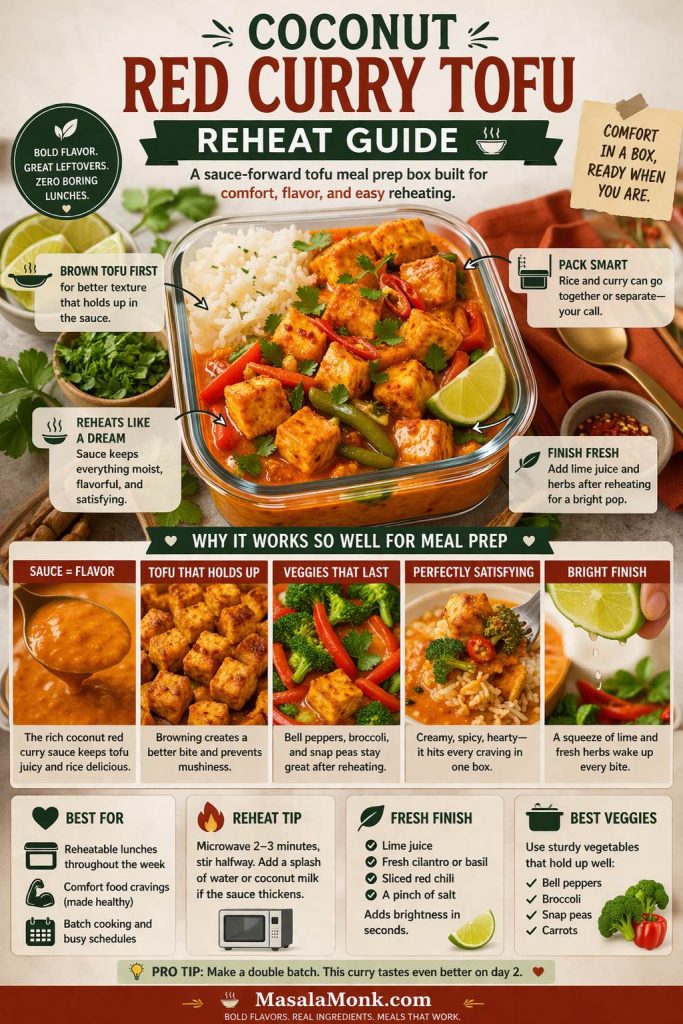
This is also the best option in the post for readers who care more about reheating performance than crispness. Curry already depends on sauce, aromatics, vegetables, and rice for a large part of its appeal. That means tofu does not have to behave like chicken to feel right. It only has to hold shape, carry flavor, and reheat well.

Premium editorial infographic showing a coconut red curry tofu meal prep box with reheating tips, including browning tofu before simmering, packing curry with rice, finishing with lime and herbs after reheating, and using sturdy vegetables for a sauce-forward tofu lunch that stays satisfying through the week.
Coconut red curry tofu is one of the easiest tofu meal prep ideas to trust when you want a warm lunch that still feels good after reheating. Browning the tofu first, using vegetables that hold up well, and finishing with fresh lime or herbs after heating keeps the box rich, comforting, and balanced instead of heavy. Save this post for your next prep day, and share it with someone who wants a reheatable high-protein lunch that still tastes vibrant later in the week.

Recipe Card: Coconut Red Curry Tofu Meal Prep Boxes

Prep time: 20 minutes
Cook time: 30 minutes
Yield: 4 servings
Approximate protein: about 18 to 22 grams per serving before rice, depending on tofu and any added edamame

Ingredients

  • 2 blocks firm tofu
  • 1 tablespoon neutral oil
  • 1 onion, sliced
  • 3 garlic cloves, minced
  • 1 tablespoon grated ginger
  • 2 to 3 tablespoons red curry paste
  • 1 can full-fat coconut milk
  • 1 tablespoon soy sauce or tamari
  • 1 teaspoon maple syrup or brown sugar, optional
  • 1 bell pepper, sliced
  • 2 carrots, sliced
  • 1 to 2 cups green beans or broccoli
  • juice of 1/2 lime
  • fresh basil or coriander
  • 3 cups cooked rice for serving
  • shelled edamame, optional, for more protein

Method

  1. Press the tofu and cut it into cubes.
  2. Brown the tofu in a skillet with a little oil or roast it until lightly golden, then set aside.
  3. In a large pan, cook the onion until softened.
  4. Add garlic and ginger and cook briefly.
  5. Stir in the red curry paste and cook until fragrant.
  6. Add coconut milk, soy sauce, and the optional maple or brown sugar, then bring to a gentle simmer.
  7. Add bell pepper, carrots, and green beans or broccoli. Simmer until just tender.
  8. Return the tofu to the curry and simmer gently for a few minutes.
  9. Finish with lime juice and herbs.
  10. Portion with cooked rice into containers.

Best texture checkpoint

The tofu should be lightly browned before it enters the sauce, and the vegetables should be tender but not collapsing. The finished curry should look rich and fluid rather than watery or aggressively boiled down.

Why this recipe works

Sauce-driven meal prep is one of tofu’s strongest lanes. In this case, the curry gives you depth, comfort, and leftovers that still taste good several days later. Browning the tofu first helps it hold its structure in the sauce and keeps the final meal from tasting flat.

Do not mess this up

Do not skip browning the tofu first. Even a light browning step makes the final curry taste fuller and less flat. Also, avoid boiling the curry too hard once the tofu goes back in, or the vegetables can over-soften and the sauce can separate.

Storage and reheating

Store for up to 4 days. Reheat gently in the microwave or on the stove. Pack rice separately if you want the curry to reheat more evenly and avoid over-soft rice by day three. Add fresh herbs or extra lime closer to serving time if possible.

Easy swaps

  • use green curry paste
  • add mushrooms, baby corn, or snap peas
  • add edamame for more protein
  • use more lime and herbs for a brighter finish

Also Read: Homemade Mango Ice Cream Recipe

How to Make These Tofu Meal Prep Ideas Even Higher in Protein

Tofu already gives these lunches a solid protein base, but the easiest way to make them more filling is to support the tofu intelligently.

  • add shelled edamame to sesame bowls, sticky bowls, and curry boxes
  • use quinoa instead of rice in some meals
  • pair tofu crumbles with beans or lentils
  • use higher-protein wraps for salad or crumble fillings
  • add roasted chickpeas, hemp hearts, or seeds for extra protein and texture
  • slightly increase the tofu portion in the meals you repeat most often

That kind of adjustment helps the “high-protein” promise feel more real in practice, not just in the title. It also lets you adapt the same tofu meal prep ideas to different hunger levels without reinventing the whole week.

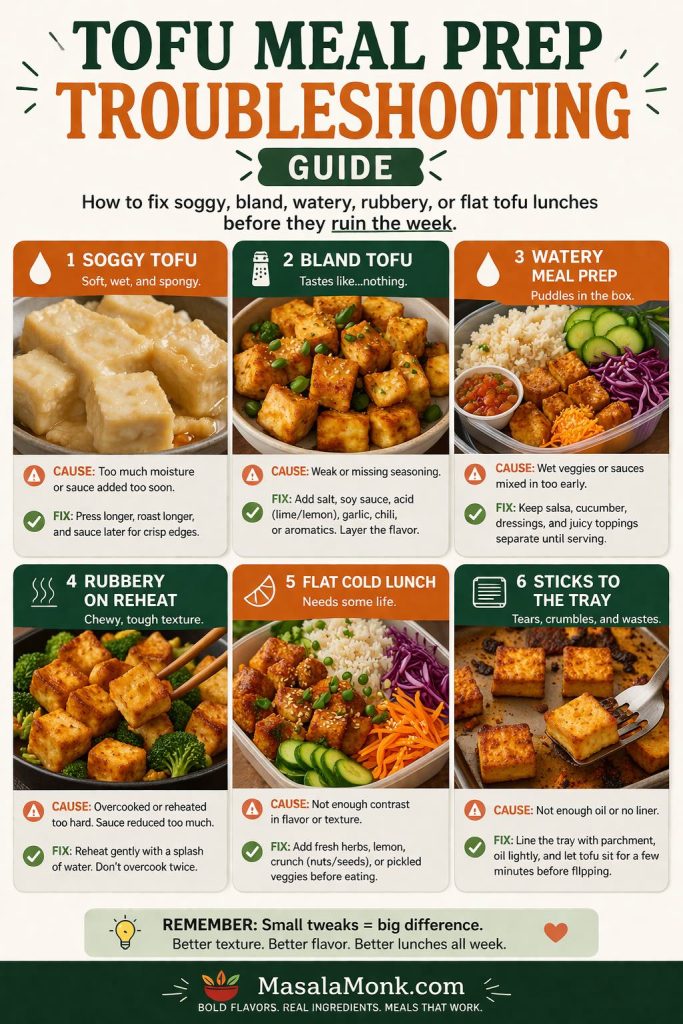
Tofu Meal Prep Troubleshooting: How to Fix the Problems That Ruin the Week

Use this section as a quick check before blaming tofu itself. In most cases, the problem comes down to moisture, weak seasoning, or packing order.

Premium tofu meal prep troubleshooting infographic showing common tofu lunch problems and fixes, including soggy tofu, bland tofu, watery meal prep boxes, rubbery tofu on reheat, flat cold lunches, and tofu sticking to the tray, with clear cause-and-fix notes for better texture and flavor all week.
When tofu meal prep goes wrong, the problem is usually fixable. Too much moisture, weak seasoning, wet add-ins, harsh reheating, or not enough contrast can turn a good lunch into a disappointing one, but small adjustments make a big difference. Save this post for your next prep session, and share it with someone who wants tofu lunches that stay flavorful, balanced, and worth eating all week.
  • Tofu turns soggy: Too much moisture or sauce was added too early. Press longer, roast longer, and sauce later.
  • Tofu tastes bland: The seasoning is too weak or the glaze is under-salted. Use soy, acid, aromatics, chili, and enough salt.
  • Meal prep turns watery: Wet vegetables were packed too early. Store cucumbers, salsa, and similar add-ins separately.
  • Tofu goes rubbery on reheat: It was either overcooked twice or reheated too harshly. Reheat gently and avoid over-reducing sauces.
  • Crispy tofu loses its edge by day three: It was fully dressed too early. Keep extra sauce separate until serving.
  • Salad-style tofu lunch tastes flat: It needs more crunch or acid. Add celery, herbs, lemon, seeds, or pickled elements.
  • Tofu sticks to the tray: There was not enough oil or no lining. Line the tray and let the tofu sit briefly before turning.
  • Tofu tastes watery even when seasoned: It was not pressed enough before cooking or mixing. Press longer and let the exterior dry slightly before seasoning.
  • Tofu falls apart in bowls: The cubes were too soft or handled too much after cooking. Use firm or extra-firm tofu and toss gently after browning.
  • Tofu tastes fine hot but disappointing cold: Cold food dulls flavor. Add more acid, herbs, crunch, or a sharper sauce when serving.

Also Read: Cookie Pie Recipe: 10 Best Flavors, Fillings and Variations

Tofu Meal Prep Ideas for Beginners: Batch-Cook Once and Eat All Week

How to batch-cook tofu meal prep in one session

The best tofu meal prep ideas often share the same foundation. Instead of cooking five unrelated lunches from scratch, cook components once and turn them in different directions.

A practical session looks like this:

  • press and cook 3 to 4 blocks of tofu in two different styles
  • cook a big batch of rice or quinoa
  • roast two trays of vegetables
  • mix one creamy dressing and one glaze
  • prep raw crunchy vegetables for cold lunches

A good order helps. Press the tofu first so it can drain while you start rice or quinoa. Roast one tray of tofu and one tray of vegetables together if your oven space allows. Mix sauces while everything cooks. Then cool components before packing, because steam trapped in containers shortens the life of the meal prep and softens textures faster than people expect.

Premium editorial infographic showing a 90-minute tofu meal prep game plan with six time blocks: press tofu and start grain, chop vegetables and mix sauces, roast tofu and vegetables, make curry or curried tofu salad, cool and portion containers, and pack sauces and add-ons for better lunches all week.
A good tofu meal prep session gets much easier when the work has a clear order. Start by pressing tofu and cooking your grain, move into chopping and sauces, roast tofu and vegetables together, then finish with one saucy option, portioning, and packed toppings so weekday lunches feel organized instead of repetitive. Save this post for your next prep day, and share it with someone who wants a simpler way to batch-cook better tofu lunches all week.

A sample 90-minute batch-cook plan

  • 0 to 10 minutes: press tofu and start rice or quinoa
  • 10 to 20 minutes: chop vegetables and mix sauces
  • 20 to 45 minutes: roast tofu and vegetables
  • 45 to 60 minutes: cook the curry or mix the curried tofu salad
  • 60 to 75 minutes: cool the hot components and portion containers
  • 75 to 90 minutes: label containers, portion sauces, and prep add-ons like herbs, lime, or crunchy toppings

That kind of system is what makes meal prep sustainable. Once the foundation is cooked, you are no longer building every lunch from zero.

How to mix and match these tofu meal prep ideas across the week

One tofu batch can cover more than one meal. Crispy tofu can become sesame bowls on Monday and sticky glazed tofu on Tuesday. Crumbles can go into taco bowls first, then wraps later. Curried tofu salad can cover desk lunches, while curry boxes handle dinners or heavier lunches.

That means the five recipes do not have to live in isolation. They can work as a system. Once you understand that, meal prep gets easier because you are no longer cooking from scratch every time. You are simply building new lunches from the same small set of components.

How long tofu meal prep lasts in the fridge

Most cooked tofu meal prep keeps well for 3 to 4 days. However, the storage method matters just as much as the recipe itself.

  • crispy tofu holds best when sauce is separate
  • salad-style prep holds best when watery vegetables are added later
  • curry and glazed tofu usually reheat well
  • avocado and fresh herbs are best added close to serving time

Even strong tofu meal prep ideas can disappoint if wet ingredients sit on everything for four days straight. Good packing is part of good cooking.

Also Read: Peach Cobbler with Canned Peaches (Dessert Recipe)

Final Thoughts on Using Tofu as a Chicken Replacement

Tofu does not replace chicken by copying it perfectly. It replaces chicken by working especially well in the meal formats where texture, sauce, seasoning, vegetables, and lunch structure matter more than one exact meat-like bite.

That is why these tofu meal prep ideas work. Crispy bowls give you bite. Crumbles give you familiarity. Sticky glazed tofu brings the takeout-style payoff many people want. Curried tofu salad solves cold lunches. Curry boxes bring reheatable comfort and strong leftovers.

If chicken has been your default meal-prep protein simply because it feels easy and dependable, start with the tofu format that matches the chicken lunch you already rely on most. That is usually the simplest way to make the switch actually stick. If you want another plant-based lunch lane after tofu, MasalaMonk’s guide to plant-based meal prep ideas using lentils instead of chicken is the cleanest next internal read.

Premium editorial infographic showing the best tofu meal prep for your workday, comparing crispy sesame tofu bowls, smoky tofu crumbles, sticky soy garlic tofu, curried tofu salad, and coconut red curry tofu by texture, reheating style, and the kind of weekday lunch each option suits best.
The best tofu meal prep is usually the one that fits your workday, not just the one that sounds good in theory. Crispy sesame tofu bowls suit texture-first lunches, smoky tofu crumbles work well for flexible leftovers, sticky soy garlic tofu covers takeout-style cravings, curried tofu salad makes a strong no-reheat desk lunch, and coconut red curry tofu is the easiest fit for warm, comforting meal prep. Save this post for your next prep day, and share it with someone who wants high-protein lunches that actually match the way they like to eat through the week.

FAQs About Tofu Meal Prep Ideas

1. What is the best type of tofu for meal prep?

For most tofu meal prep ideas, firm or extra-firm tofu is the best place to start. These styles hold their shape better, brown more easily, and stay more stable in the fridge than softer tofu. Soft and silken tofu are better suited to soups, sauces, smoothies, and gentler dishes.

2. Do you have to press tofu before meal prep?

Usually, yes. Pressing tofu removes excess surface moisture, which helps it brown better, hold seasoning more effectively, and resist turning soggy too quickly. That matters most for crispy tofu bowls, tofu crumbles, and sticky glazed tofu. Curry and salad-style tofu are a little more forgiving, but even there, lightly pressing the tofu improves the result.

3. How do you keep tofu meal prep from getting soggy?

Press the tofu, brown it properly, and add sauce later rather than earlier. It also helps to store wet ingredients like salsa, cucumbers, and extra dressing separately until serving. For crispy tofu meal prep in particular, packing the sauce on the side is one of the easiest ways to protect texture for several days.

4. How long does tofu meal prep last in the fridge?

Most tofu meal prep keeps well for about 3 to 4 days in the fridge when stored in airtight containers. Crispy tofu usually lasts best when the sauce is kept separate, while curry and salad-style tofu meal prep tend to hold especially well because they are already built around moisture and dressing.

5. Are tofu meal prep ideas actually high in protein?

They can be, especially when the recipes use firm or extra-firm tofu in generous portions and pair it with ingredients like edamame, beans, quinoa, lentils, or higher-protein wraps. The meals also feel more filling when the box includes a solid base, strong seasoning, and enough texture contrast.

6. What are the best tofu meal prep ideas for beginners?

For beginners, the easiest tofu meal prep ideas are usually crispy tofu bowls, sticky glazed tofu bowls, and tofu crumbles. Those formats are forgiving, flavorful, and easy to pair with rice, vegetables, wraps, or tacos. More importantly, they feel familiar if you are coming from sesame chicken bowls, taco bowls, or takeout-style rice boxes.

7. Why does tofu taste bland sometimes?

Tofu usually tastes bland when it is under-seasoned or when the meal around it is weak. Because tofu starts out mild, it needs more help from salt, umami, acid, aromatics, spice, and sauce than many people initially expect. Once the seasoning gets stronger and the meal includes more contrast, tofu becomes much more satisfying.

Posted on 6 Comments

Vegan Mayo Recipe Guide: 5 Plant-Based Mayonnaise

Vegan mayo promotional cover for MasalaMonk.com: a stacked vegan burger and a small bowl of glossy vegan mayonnaise on a matte ceramic plate, with a hand dipping a French fry into the sauce, set against a sage and terracotta colour-block background with the text “Vegan Mayo, Reinvented – 5 Creamy Bases, Zero Eggs”.

If you love the way mayonnaise turns simple ingredients into something rich and satisfying, learning a good vegan mayo recipe might honestly change how you cook. You still get that silky texture, the comforting tang, and the way it pulls burgers, salads, and sandwiches together. Yet now everything is entirely plant-based, adaptable to allergies, and open to endless flavour experiments. Whether you tend to call it vegan mayo, vegan mayonnaise or simply egg-free mayo, the idea is the same: a rich, creamy, completely plant-based spread that behaves like classic mayo but fits vegan, dairy-free and egg-free diets.

Although store-bought vegan mayo is easy to find, homemade versions give you far more control. You decide the base, the oil, the flavour, the thickness, and even the level of richness. You can create a classic-style vegan mayonnaise recipe that tastes like the kind you grew up with, or you can build lighter, high-protein, cashew-based or avocado-based versions that fit a more whole-food approach.

In this guide, you’ll walk through:

  • What vegan mayo actually is and how it compares to regular mayonnaise
  • A classic soy milk vegan mayo recipe that behaves just like traditional mayo
  • A vegan mayo recipe with aquafaba (chickpea liquid) that feels airy and eggless
  • A tofu vegan mayo recipe for high-protein, lower-fat spreads
  • A cashew vegan mayo recipe for rich, gourmet-style creaminess
  • An avocado-based vegan mayo recipe for fresh, whole-food fat
  • Over fifteen variations and ways to twist each recipe of vegan mayo into new flavours
  • Practical ideas for using these vegan mayo recipes in real meals
  • Honest talk on whether vegan mayo is healthier than regular mayo
  • Storage, safety, and how long homemade vegan mayonnaise really lasts
  • Smart substitutes for days when you want a creamy element but not mayo at all

Along the way, you’ll see places where vegan mayo naturally plugs into other MasalaMonk recipes – such as eggless mayo, potato salad variations, spinach dips, vegan Som Tam salad, Thai-style vegan bowls, tzatziki and pesto variations.

A rustic bowl of creamy plant-based vegan mayo beside traditional mayonnaise, surrounded by soy milk, tofu, avocado, chickpeas and lemon on a wooden table.

Vegan Mayo Recipe Basics: What Exactly Is Vegan Mayonnaise?

How Classic Mayonnaise Works

Before you look at any detailed vegan mayo recipes, it really helps to understand what mayonnaise actually is. At its core, traditional mayonnaise is an emulsion: a stable mixture of oil and water-based liquid that normally don’t want to mix.

Tall glass jar showing oil and liquid mayo separating while an immersion blender sits inside, with lemon, egg yolk and mustard nearby to illustrate how a mayonnaise emulsion forms.
Seeing the layers of oil and liquid before they blend makes the idea of an emulsion real, which helps when you later switch to vegan mayo and rely on plant proteins instead of egg to hold everything together.

In regular mayo, egg yolk acts as the emulsifier. It keeps tiny droplets of oil suspended in water, which is what gives you that thick, creamy sauce that clings to a spoon.

Vegan Mayo Ingredients: What’s Really in Veg Mayonnaise?

Most vegan mayo ingredients lists look a lot like the classic ingredients of mayonnaise, just with plant-based swaps. When people look for veg mayonnaise ingredients, what they’re really asking is how to recreate that familiar mix of oil, acid, emulsifier and seasoning using soy milk, aquafaba, tofu, cashew cream or avocado instead of eggs.

To put it another way, classic mayo is basically:

  • Oil
  • A water-based liquid (often from the egg itself)
  • Acid (like lemon juice or vinegar)
  • An emulsifier (egg yolk)
  • Seasonings (salt, mustard, sometimes a touch of sugar)

When all of these elements are in balance, the mixture turns glossy and stable. However, if the ratio shifts or the oil is added too fast, the emulsion can split and turn greasy or watery.

A top-down view of vegan mayo ingredients in small bowls, including soy milk, chickpea water, tofu, cashews, avocado, lemon, white vinegar, Dijon mustard and salt arranged on a wooden surface.
These are the main building blocks you’ll mix and match for different vegan mayonnaise recipes—swap the base between soy milk, aquafaba, tofu, cashews or avocado, then keep the acid, mustard and seasoning similar to get the texture you like.

How a Vegan Mayo Recipe Recreates the Emulsion

In a vegan mayonnaise recipe, the egg disappears completely. Even so, you still need something to do the emulsifying work. Instead of egg yolk, the structure comes from plant-based ingredients such as:

  • Proteins and lecithins in soy milk
  • Starches and proteins in aquafaba – the liquid from cooked or canned chickpeas
  • The soft protein and fat structure of silken tofu
  • The smooth fat and fibre mix of cashew cream
  • The natural oils and emulsifiers inside avocado

Because of this, a good vegan mayo recipe is not simply “regular mayo without eggs.” Rather, it becomes a fresh balance of:

  • Fat – usually oil, sometimes nuts or avocado
  • Water-based liquid – from soy milk, chickpea water, tofu or nuts
  • Acid – lemon juice, vinegar, or both
  • Emulsifying compounds – plant proteins, starches and natural lecithins
  • Seasonings – mustard, garlic, herbs, salt, pepper, and occasionally sugar

When these pieces work together, your sauce thickens and turns silky. If they drift out of balance, the mixture can separate or feel oily. Even then, vegan mayo is often easier to rescue than egg-based mayo, because you can simply blend the broken emulsion into a small amount of fresh base liquid and rebuild it.

Why Vegan Mayo Is Naturally Egg-Free and Dairy-Free

There’s also an important nutritional difference. Regular mayonnaise is technically dairy-free – it doesn’t contain milk – yet it does contain eggs and therefore cholesterol. As the breakdown on mayonnaise and whether it’s dairy from WebMD explains, most classic mayo is egg-based, not milk-based.

Vegan mayo, by contrast, relies only on plant ingredients. As a result, it is:

  • Naturally egg-free
  • Automatically cholesterol-free
  • Completely dairy-free
  • Often soy-optional, depending on which base you choose

In practice, that means a vegan mayonnaise recipe can slot easily into vegan, eggless and lactose-free diets, and even stand in for a more traditional vegetarian mayo wherever you’d usually use mayonnaise. If you need a soy free vegan mayo or a completely dairy and egg free mayo, the fix is simple: choose a base like aquafaba, cashew cream or avocado instead of soy milk. That way, your dairy free mayo recipe can be tweaked to suit soy-free, nut-free or multi-allergy households without losing the creamy, tangy feel.

Also Read: How to Make Eggless Mayo at Home (Egg Free Mayonnaise Recipe)


The Emulsion Blueprint Behind Every Vegan Mayo Recipe

Because recipes can sometimes feel overwhelming, it’s useful to build a mental blueprint first. You can think of almost every vegan mayo recipe as some variation of this formula:

Base liquid + Acid + Flavour + Oil = Vegan Mayo

Where:

  • The base liquid might be soy milk, aquafaba, blended tofu, or blended cashews.
  • The acid usually comes from lemon juice, white vinegar, apple cider vinegar, or rice vinegar.
  • The flavour comes from mustard, garlic, herbs, black pepper, nutritional yeast, or spices.
  • The oil is often a neutral vegetable oil (sunflower, canola, rice bran, grapeseed), or occasionally a mild olive oil.
A wooden board holding four glass bowls of base liquid, lemon wedges, chopped herbs and neutral oil in front of a jar of creamy vegan mayo, showing the simple formula behind vegan mayonnaise.
Seeing vegan mayo broken into base liquid, acid, flavour and oil makes it easier to swap soy milk for aquafaba, tofu, cashews or avocado and still end up with a thick, reliable vegan mayonnaise recipe.

You can also switch up the oil depending on what you keep in your kitchen. Some people enjoy using avocado oil because it gives a soft, buttery flavour, while others like the mild fruitiness of light olive oil. Both options blend into the emulsion easily, so you can make a batch with avocado oil or a gentle olive-oil version whenever you want something slightly more aromatic. Once you understand that, you suddenly realise you can adapt almost any recipe of vegan mayo to your own needs. For instance:

  • If soy is a problem, you simply use aquafaba or cashew cream as the base.
  • If you want to reduce fat, you switch some of the oil for silken tofu.
  • If you prefer whole-food fats, you choose cashews or avocado instead.

Because the structure is the same, you’re free to swap and experiment while still staying within the safe, stable emulsion framework.

Also Read: Upma Recipe: 10+ Easy Variations (Rava, Millet, Oats, Semiya & More)


Classic Soy Milk Vegan Mayo Recipe (Your Everyday Base)

Let’s start with the most familiar vegan mayo recipe – the soy milk version that behaves almost exactly like standard mayonnaise. This is the one to master first, because it’s an easy vegan mayo that many people end up treating as their best vegan mayo recipe: quick to blend, reliable, and neutral enough to work anywhere you’d use regular mayo.

If you don’t usually keep soy milk at home, you can make the same recipe with other plant milks too. Almond milk creates a slightly lighter version that still emulsifies well, and oat milk gives you a smooth, mellow flavour. Both work beautifully if you ever want to try a vegan mayo made with almond milk or an oat-milk version that stays completely dairy-free and egg-free. In fact you can make both Almond and Oat milk at home, do read our posts on How to make Almond Milk at Home & Easy Homemade Oats Milk with just One Ingredient- Non Slimy, at last.

Ingredients for the Classic Soy Milk Vegan Mayo

For about 1½ cups of mayonnaise:

  • ½ cup unsweetened soy milk
  • 1–2 tablespoons lemon juice or white vinegar
  • 1 teaspoon Dijon mustard or mild yellow mustard
  • ½–¾ teaspoon salt, plus more to taste
  • 1–2 teaspoons sugar (or a mild sweetener), optional but helpful for balance
  • 1–1¼ cups neutral oil (sunflower, canola, rice bran, or grapeseed)
  • 1 small clove garlic, smashed (optional)
  • A pinch of black pepper
Recipe card for a 5-minute soy milk vegan mayo showing a jar of creamy plant-based mayonnaise with metric ingredients, quick blender steps and a pro tip about using unsweetened room-temperature soy milk.
This card gives you the base ratio for a classic soy milk vegan mayo in ml and grams, so you can scale the recipe up or down, keep the texture consistent, and quickly see why unsweetened room-temperature soy milk is essential for a thick, stable emulsion.

Step-by-Step Vegan Mayonnaise with Soy Milk

First, make sure your soy milk and lemon juice are relatively close in temperature. They don’t need to be warm, however they shouldn’t be ice-cold if the oil is room temperature.

  1. Blend the soy milk base.
    Pour the soy milk, lemon juice, mustard, salt, sugar, garlic and pepper into a tall jar or blender jug. Then blend for 10–15 seconds. The mixture will look thin, yet you’ll notice it already feels slightly thicker than plain soy milk.
  2. Slowly add the oil.
    With the blender running on low, start to drizzle in the oil in a thin, steady stream. As you continue, the mixture will gradually lighten in colour. Eventually, it will suddenly thicken and cling to the sides of the container.
  3. Check thickness and adjust.
    Stop the blender and check the texture. If it is too thin, blend in a little more oil. If it’s thicker than you like, blend in a teaspoon or two of soy milk.
  4. Taste and refine.
    Dip in a spoon and taste. Perhaps it needs more acid; maybe it wants a little more salt. Keep adjusting in small increments until it tastes balanced.
  5. Chill before serving.
    Finally, transfer the soy milk vegan mayonnaise to a clean glass jar, seal it, and refrigerate for at least one hour. It will firm up slightly as it chills.

Because this is the most neutral vegan mayonnaise recipe, it’s your best starting point for sandwiches, burgers, salads and dips. If you want to explore egg-free yet not fully vegan mayo options with curd or condensed milk versions as well, you can cross-reference MasalaMonk’s detailed guide on how to make eggless mayo at home, which covers non-vegan but egg-free methods too.

Also Read: Double Chocolate Chip Cookies – Easy Recipe with 7 Variations


Aquafaba Vegan Mayo Recipe: Eggless, Light, and Zero-Waste

Next, let’s turn to aquafaba – the liquid from cooked or canned chickpeas. At first glance it looks like something you’d pour down the sink. Yet, as many home cooks have discovered, it behaves in surprisingly egg-like ways. It can whip into meringue, foam for cocktails, and emulsify sauces.

If you’d like a broader introduction, you can read about what aquafaba is and how it works on The Vegan Society, where they explain the science behind its foaming and binding properties in eggless recipes.

Ingredients for the Aquafaba Based Vegan Mayo

For around 1¼ cups of mayo:

  • ¼ cup aquafaba (from a can of chickpeas, ideally thickened slightly by gentle reduction)
  • 1–2 tablespoons lemon juice or apple cider vinegar
  • 1 teaspoon mustard
  • ½ teaspoon salt
  • 1–2 teaspoons sugar or maple syrup
  • 1 cup neutral oil
  • A pinch of black salt (kala namak), optional, for an “eggy” aroma
Recipe card for aquafaba vegan mayo showing a jar of creamy eggless mayonnaise with metric ingredients, quick blending steps and a pro tip about thickening chickpea water for better texture.
Using chickpea water instead of eggs gives you a light, eggless mayo that’s ideal for allergy-friendly cooking; this card shows the exact aquafaba-to-oil ratio and explains why reducing very thin aquafaba first makes the flavour cleaner and the texture fluffier.

Step-by-Step Recipe of Vegan Mayo Using Aquafaba

First, strain your chickpeas and catch the liquid. If it looks very thin, simmer it gently until it coats the back of a spoon, then let it cool fully.

  1. Blend the aquafaba base.
    Combine aquafaba, lemon juice, mustard, salt and sugar in a tall jar. Then blend until slightly frothy.
  2. Drizzle in the oil.
    With the blender running, add the oil in a thin stream. Eventually, the mixture will thicken and turn into a pale, fluffy vegan mayonnaise.
  3. Season and tweak.
    Taste carefully. If it feels a little beany, add a touch more acid and sugar. If you want that classic eggy note without any actual egg, sprinkle in a pinch of black salt.
  4. Chill and use.
    Store in a jar in the fridge. It will often thicken a bit further as it cools.

Because this vegan mayo recipe with aquafaba is naturally egg-free, dairy-free and nut-free, it’s incredibly useful if you’re cooking for people with multiple allergies. Furthermore, it feels great to use an ingredient that many people treat as waste. You can also use the chickpeas themselves to make salads, patties, or hummus, so nothing is wasted.

Also Read: One-Pot Chicken Bacon Ranch Pasta (Easy & Creamy Recipe)


Tofu Vegan Mayo Recipe: High-Protein and Lower-Oil

After you’ve tried classic and aquafaba-based versions, you might start craving a vegan mayo recipe that feels a little lighter. In those moments, a tofu vegan mayonnaise recipe is a smart move. It still tastes creamy and satisfying, but the fat content usually ends up lower, which makes it a great base for a low fat vegan mayo recipe or a generally healthy vegan mayo you can use more regularly.

Ingredients for a Tofu Vegan Mayonnaise

For roughly 1½–2 cups:

  • 200 g silken tofu, drained
  • 2–3 tablespoons neutral oil or mild olive oil
  • 2–3 tablespoons lemon juice
  • 1–2 teaspoons mustard
  • 1 small clove garlic, optional
  • ½–¾ teaspoon salt
  • 1–2 teaspoons nutritional yeast, optional
  • A bit of plant milk or water if necessary
A tofu vegan mayo recipe card showing a jar of smooth high-protein mayo with metric ingredients, step-by-step blending instructions and a pro tip about draining silken tofu for a lower-oil creamy spread.
This tofu-based mayo is the one to reach for when you want a high-protein vegan mayo or a lighter, low-fat vegan mayo recipe for grain bowls, wraps and salads—the card spells out the tofu-to-acid ratio so you can tweak the texture without losing creaminess.

Step-by-Step Vegan Mayonnaise Recipe with Tofu

First, pat the tofu dry. It doesn’t need to be perfectly dry, although removing excess water helps your vegan mayo recipe thicken more reliably.

  1. Add everything to the blender.
    Combine tofu, oil, lemon juice, mustard, garlic, salt and nutritional yeast in a blender.
  2. Blend until fully smooth.
    Blitz until the mixture looks silky with no visible tofu pieces. If it’s extremely thick, add a tablespoon of plant milk or water and blend again.
  3. Taste and balance.
    Because tofu is neutral, it can handle plenty of acidity and salt. Adjust until it tastes bright, slightly tangy and savoury.
  4. Chill to firm.
    After chilling, tofu vegan mayo will set and feel somewhere between a dip and classic mayonnaise. For salad dressings, you can always thin it a bit later.

This style of vegan mayo recipe is ideal for wraps, grain bowls and salads where you want a creamy element that also contributes protein. For instance, you can use tofu mayo to dress a bowl similar to the Thai-style vegan bowl with peanut butter dressing, either mixing it into the peanut sauce or drizzling it alongside.

Also Read: Katsu Curry Rice (Japanese Recipe, with Chicken Cutlet)


Cashew Vegan Mayo Recipe: Rich, Tangy and Dairy-Free

If you enjoy sauces that feel indulgent, a cashew vegan mayo recipe may become your favourite. Soaked cashews blend into an ultra-smooth cream, which you can then season to resemble mayonnaise. The result is thick, tangy, and deeply satisfying.

Ingredients for a Cashew Vegan Mayonnaise Recipe

For around 1½ cups:

  • 1 cup raw cashews, soaked in hot water for 20–30 minutes
  • ½ cup water (plus more if needed)
  • 3 tablespoons lemon juice
  • 1 tablespoon apple cider vinegar or white vinegar
  • 1–2 tablespoons oil (optional but adds silkiness)
  • 1 teaspoon mustard
  • 1 teaspoon salt
  • ½ teaspoon garlic powder or 1 small clove garlic
A cashew vegan mayo recipe card with a jar of thick, creamy mayo on a wooden surface, listing metric ingredients, simple blending steps and a pro tip for soaking cashews to make a rich, soy-free mayonnaise.
This cashew-based mayo is the “gourmet” option in your vegan mayo toolkit—naturally soy-free, very creamy and perfect for roasted vegetables, grain bowls and sandwiches when you want a richer plant-based mayonnaise.

Step-by-Step Cashew Vegan Mayo Recipe

First, soak the cashews. That step softens them so they blend smooth.

  1. Drain and rinse the cashews.
    After soaking, drain off the hot water and rinse the cashews in cold water.
  2. Blend the cashew base.
    Add cashews, water, lemon juice, vinegar, oil, mustard, salt and garlic to a high-speed blender. Blend until absolutely smooth, scraping down sides as needed.
  3. Adjust thickness.
    If it looks too thick, add a splash of water and blend again. If it feels thin, add a couple of extra cashews (or chill it to see if it sets).
  4. Taste and refine.
    Cashews love acid and salt. Therefore, don’t hesitate to sharpen the flavour with another small squeeze of lemon or a pinch of salt.

This cashew-based vegan mayonnaise recipe is naturally soy-free, so it’s a great option when you’re avoiding soy but still want something rich and creamy. It’s excellent as a topping for roasted vegetables and as a dressing for crunchy salads. It pairs especially well with bold, spicy dishes such as the vegan Som Tam raw papaya salad, where a cool cashew mayo drizzle provides contrast.

Also Read: Green Bean Casserole Recipe Ideas (Classic, Cheesy, Dairy-Free & More)


Avocado Vegan Mayo Recipe: Fresh, Green and Whole-Food Focused

Beyond all these emulsions, there is another kind of vegan mayo recipe that relies on whole-food fat: avocado. While it doesn’t behave exactly like classic mayo, it offers incredible creaminess, beneficial fats, and a bright flavour that feels perfect in many plant-based meals.

Ingredients for an Avocado based Vegan Mayonnaise

For about 1 cup:

  • 2 ripe avocados
  • 2–3 tablespoons lemon or lime juice
  • 1–2 tablespoons olive oil or water
  • ½ teaspoon salt
  • 1 small clove garlic, minced (optional)
  • A handful of fresh coriander or parsley, chopped (optional)
A recipe card for avocado vegan mayo showing a jar of bright green creamy mayo with metric ingredients, simple blending steps and a pro tip on storing avocado-based mayonnaise to slow browning.
This avocado mayo card gives readers a whole-food vegan mayo option that skips bottled oil altogether, with exact avocado-to-acid ratios and storage tips so the sauce stays bright and green for tacos, burgers, wraps and grain bowls.

Step-by-Step Vegan Mayo Recipe with Avocado

First, choose avocados that give slightly when pressed. They should be ripe but not mushy.

  1. Scoop and mash.
    Halve the avocados, remove the pits, and scoop the flesh into a bowl. Mash with a fork until mostly smooth.
  2. Blend with flavour and acid.
    Add lemon or lime juice, olive oil or water, salt and garlic. Then blend with a small blender or whisk well until smooth and creamy.
  3. Adjust to taste.
    Because avocados vary, keep tasting. Perhaps you need more lemon to brighten things or more salt to pop the flavour. If you like herbs, stir in coriander or parsley.
  4. Use promptly.
    Avocado-based sauces brown over time, even with acid. Therefore, try to make only as much as you’ll use within a day or two and store it tightly covered in the fridge.

This avocado-focused vegan mayo recipe suits burgers, wraps, tacos, and grain bowls, especially where other ingredients are fresh and crisp. It works particularly well in meals that already lean towards guacamole-style flavours.

Also Read: Crispy Homemade French Fries From Fresh Potatoes (Recipe Plus Variations)


Vegan Mayonnaise Variations: 15+ Flavours from Any Base

Once you’re comfortable with at least one recipe of vegan mayo, you can start treating it as a blank canvas. With a few extra ingredients, you can transform a plain vegan mayo recipe into many distinct sauces. Below, assume you’re starting with 1 cup of any base vegan mayo (soy, aquafaba, tofu, cashew or avocado, as appropriate).

1. Garlic Vegan Mayonnaise (Aioli Style)

  • 1 cup vegan mayo
  • 1–2 cloves garlic, finely grated or mashed
  • 1 tablespoon lemon juice
  • 1 tablespoon chopped parsley
  • Salt and pepper

This garlic version works beautifully as a dip for fries, roasted potatoes, steamed vegetables and crusty bread.

A garlic herb vegan mayo recipe card in an aioli style, showing a jar of creamy herb-speckled mayo with ingredients, simple steps and a tip about grating the garlic finely and chilling the sauce so the flavour turns mellow.
This garlic herb vegan mayo card gives readers an easy aioli-style dip for fries, burgers, roasted vegetables and snack boards, with the garlic-to-herb ratios laid out so the sauce tastes bright and savoury instead of harsh or overpowering.

2. Herb and Dill Vegan Mayo Recipe

  • 1 cup vegan mayo
  • 2–3 tablespoons mixed fresh herbs (dill, parsley, chives, coriander)
  • 1 tablespoon lemon juice or white wine vinegar
  • ½ teaspoon garlic powder
  • Salt and pepper

This version is perfect for potato salads, pasta salads and sandwiches. You can also thin it with a bit of water to create a pourable dressing inspired by the ideas in MasalaMonk’s potato salad recipes.

3. Spicy Vegan Mayonnaise Recipe with Sriracha or Peri-Peri

  • 1 cup vegan mayo
  • 1–2 tablespoons sriracha, peri-peri, or other chilli sauce
  • ½ teaspoon smoked paprika
  • A squeeze of lime

This spicy mayo, especially when made with sriracha, is excellent on burgers, in wraps, or drizzled over roasted cauliflower and crispy tofu. It also doubles as a simple vegan spicy mayo for sushi, giving you a quick vegan sushi mayo drizzle for poke bowls, rolls and rice bowls.

A spicy vegan mayo for sushi recipe card showing a jar of creamy orange chilli mayo with metric ingredients, simple mixing steps and a pro tip about using a thicker vegan mayo base so the sauce clings to rolls, poke bowls and fries.
This variation card turns any of your base vegan mayo recipes into a quick spicy mayo for sushi, poke bowls, burgers or fries, with the sriracha-to-mayo ratio laid out so you can nudge the heat level up or down without losing that thick, clingy texture.

4. Curry Vegan Mayonnaise

  • 1 cup vegan mayo
  • 1–2 teaspoons curry powder or garam masala
  • ½ teaspoon garlic powder
  • 1 tablespoon lemon juice
  • Pinch of sugar

You can use this with chickpea salads, roasted vegetables, or baked wedges. It also tastes great spread inside sandwiches with roasted potatoes or cauliflower.

5. Tahini Vegan Mayo

  • ¾ cup vegan mayo
  • ¼ cup tahini
  • 2 tablespoons lemon juice
  • 1 clove garlic, grated
  • Cold water to thin

This Tahini-based vegan mayo recipe works wonderfully with falafel, roasted vegetables, and grain bowls. It can easily form the creamy heart of a Mediterranean-style bowl.

6. Chipotle-Style Vegan Mayo (Smoky Chipotle Version)

  • 1 cup vegan mayo
  • 1–2 teaspoons chipotle paste or smoked chilli paste
  • 1 teaspoon tomato paste
  • Lime juice to taste

This smoky chipotle version is the kind of vegan mayo that instantly lifts tacos, quesadillas, nachos and grilled vegetables, giving you a bold, warm flavour without any effort.

Recipe card for chipotle vegan mayo showing a jar of smoky orange plant-based mayo with ingredients, simple steps and a pro tip about letting the chipotle and lime flavours develop in the fridge for tacos, bowls and burgers.
This chipotle vegan mayo variation gives you a smoky, spicy sauce you can build from any of the base vegan mayonnaise recipes, with the chipotle-to-mayo ratio and resting time spelled out so it tastes bold without overpowering your tacos, burrito bowls or burgers.

7. Japanese-Style Vegan Mayo Recipe

  • 1 cup soy-based vegan mayo
  • 1–1½ tablespoons rice vinegar
  • 1 teaspoon sugar
  • A small pinch of mustard powder

This Japanese-style twist is smooth, slightly sweet and tangy. You can drizzle it over sushi bowls, shredded cabbage salads or crispy tofu.

8. Ranch-Style Vegan Mayo Recipe

  • ½ cup tofu or cashew mayo
  • ½ cup thick plant-based yogurt
  • 2 tablespoons chopped dill and parsley
  • 1 tablespoon lemon juice
  • Garlic powder, onion powder, salt and pepper

This ranch-style vegan mayo is ideal for dipping vegetables and chips, or for dressing crunchy salads.

A ranch-style vegan mayo recipe card from MasalaMonk showing a jar of creamy herb-flecked dip with ingredients, simple steps and a pro tip about using thick plant yogurt for a rich dairy-free dressing.
This ranch-style vegan mayo card shows exactly how to turn your base vegan mayonnaise into a creamy, dairy-free dip or salad dressing, with the mayo-to-yogurt ratio dialled in so it coats potatoes, pasta and crunchy vegetables without going thin or watery.

9. Lemon-Pepper Vegan Mayo Recipe

  • 1 cup vegan mayo
  • Zest of 1 lemon
  • 1–2 tablespoons lemon juice
  • ½ teaspoon coarsely ground black pepper

This version feels bright, clean and elegant. You can serve it with steamed vegetables, asparagus, or oven-baked potato wedges.

10. Green “Chimichurri” Vegan Mayo

  • ½ cup vegan mayo
  • ½ cup finely chopped fresh herbs (parsley, coriander, a little oregano)
  • Garlic, chilli flakes and lemon juice

This herb-heavy version is a great spread for sandwiches and burgers, especially when you want a punch of fresh green flavour.

11. Harissa Vegan Mayo Recipe

  • 1 cup vegan mayo
  • 1–2 tablespoons harissa paste
  • Lemon juice to taste

This North African-style twist goes beautifully with roasted carrots, chickpeas, couscous and grilled flatbreads.

12. Pesto Vegan Mayo Recipe

  • ¾ cup vegan mayo
  • ¼ cup pesto

This is a brilliant way to stretch pesto further and make it sandwich-friendly. For more ideas on flavour, you can look at MasalaMonk’s pesto recipe variations.

13. Sweet Chilli Vegan Mayo Recipe

  • 1 cup vegan mayo
  • 2–3 tablespoons sweet chilli sauce
  • 1 tablespoon lime juice

This rings all the right bells next to spring rolls, grilled corn, and vegetable fritters.

14. Mustard-Pickle “Burger Sauce” Vegan Mayo Recipe

  • ½ cup vegan mayo
  • 2 tablespoons mustard
  • 2 tablespoons ketchup
  • 1 tablespoon chopped pickles
  • 1 tablespoon pickle brine

This burger-style vegan mayo works incredibly well on plant-based patties such as the lentil patties that are better than meat.

15. Garlic-Herb Spinach Vegan Mayo

  • 1 cup vegan mayo
  • 2 cloves garlic, grated
  • 2 tablespoons chopped fresh spinach (squeezed dry)
  • 2 tablespoons parsley

This variation becomes a natural base for spinach dips. If you want more ideas around textures and mix-ins, you can explore MasalaMonk’s spinach dip recipes.


How to Use Your Vegan Mayo in Everyday Meals

Once you’ve made a few jars of sauce, the most important question becomes simple: where do you actually use them? Thankfully, vegan mayo recipes fit into everyday meals in more ways than you might expect.

Burgers, Wraps and Sandwiches

First, consider burgers and wraps. A thin layer of vegan mayonnaise on the bread not only adds flavour, but also helps create a barrier against moisture.

  • For burgers, use garlic or burger-sauce-style vegan mayo, then layer in patties, lettuce, tomatoes and onions.
  • For wraps, spread herb mayo inside, then add roasted vegetables, beans and greens.
  • For sandwiches, choose a milder vegan mayonnaise recipe and let ingredients such as tomato and cucumber shine.

Because the sauce is vegan, you can use it confidently alongside plant-based burger patties, grilled tofu or lentil patties without any clash of flavour.

Potato Salad, Coleslaw and “Creamy” Classics

Next, think about classic creamy salads. Vegan mayonnaise can replace regular mayo one-to-one in most recipes.

  • Toss boiled potato cubes in a herb-heavy vegan mayonnaise recipe, plus a little extra vinegar and mustard, to create a comforting potato salad.
  • Fold vegan mayo into shredded cabbage, carrots and onions to make coleslaw.
  • Mix tofu or aquafaba mayo into chickpea, bean or pasta salads for easy meal prep.

For quick lunches, you can also mash chickpeas with spring onions, herbs and a few spoonfuls of mayo to make an easy vegan tuna mayo–style filling. Using aquafaba or tofu-based mayo turns it into a high-protein chickpea tuna mayo that works beautifully in sandwiches and wraps.

Moreover, if you want deeper guidance and variations, MasalaMonk’s potato salad recipe collection walks through multiple styles – classic, Russian, German and vegan – that you can easily adapt by swapping in your favourite vegan mayo.

Bowls and Meal Prep

Beyond salads, vegan mayo recipes shine in meal-prep bowls.

  • Stir a spoonful of cashew or tofu mayo into a peanut dressing to make it feel extra silky for something like the Thai-style vegan bowl.
  • Toss grains like quinoa or brown rice with a little vegan mayo, lemon, and herbs for a creamy grain salad.
  • Use spicy mayo as a drizzle over roasted vegetables and beans to build quick dinner bowls.

Because the sauce keeps well for a few days, you can add it at the last moment, just before eating, so your grains and vegetables don’t get soggy.

Snack Boards and Dips

Vegan mayonnaise also works brilliantly as a base for dips on party boards.

  • Combine garlic mayo with chopped spinach and herbs for a warm or cold spinach dip.
  • Serve several flavoured vegan mayo recipes – such as garlic, spicy, and herb – in small bowls for dipping bread, chips and vegetable sticks.
  • Mix vegan mayo into creamy dips inspired by MasalaMonk’s spinach dip recipes, replacing sour cream or regular mayo where necessary.

Because you can vary the base (soy, tofu, cashew), the same flavour profile can feel lighter or richer depending on the occasion.

Mayo-Free Contrasts

While vegan mayonnaise recipes are versatile, they are not the only creamy element in your toolkit. On days when you want something lighter or sharper, you might reach for:

Those mayo-free sides balance rich, creamy dishes very nicely.


Is a Vegan Mayo Really Healthier Than Regular Mayo?

Now that you have a whole collection of recipes, it’s fair to ask whether a vegan mayo recipe is “healthier” than traditional mayonnaise. The answer isn’t as simple as yes or no.

Regular mayonnaise is usually made from oil, egg yolk and acid. It is high in fat and it contains cholesterol from the egg yolk, although it usually has no milk and is technically dairy-free. As WebMD’s overview explains, the presence of eggs makes it non-vegan but still dairy-free.

Vegan mayonnaise recipes remove the egg yolk entirely. They typically use a plant-based emulsifier like soy milk or aquafaba plus oil. Therefore:

  • They are free from cholesterol, since cholesterol comes only from animal products.
  • They may still be high in calories and fat if oil is the main ingredient.
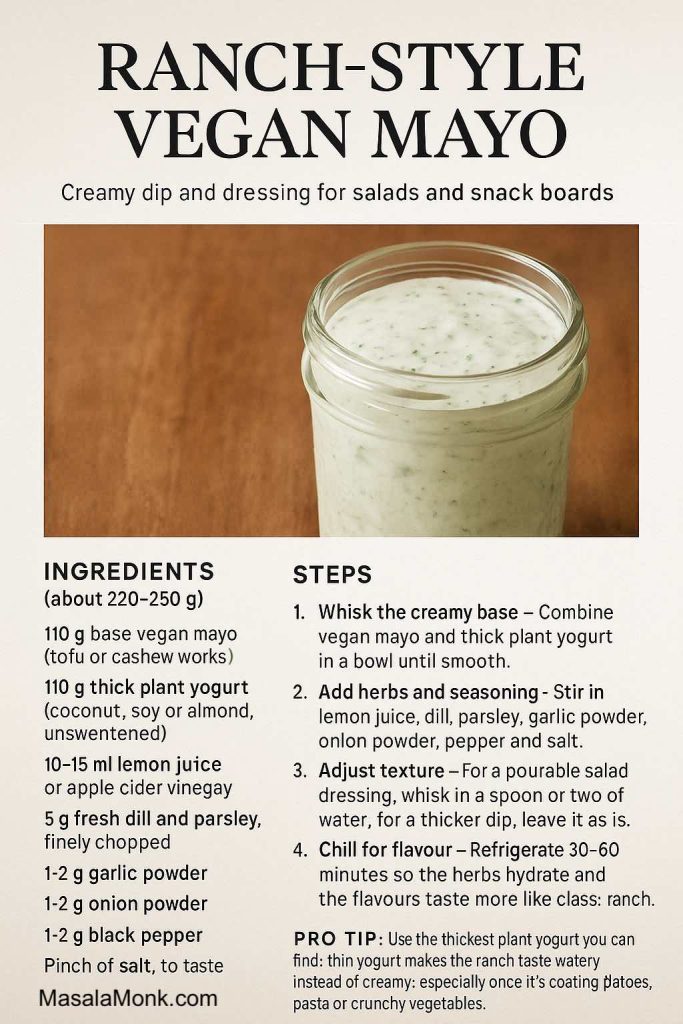
  • They can be lighter when built around tofu, aquafaba with less oil, or avocado.

If you look at nutrition data for commercial vegan mayos, many sit in the range of 50–100 calories per tablespoon, almost all from fat. Healthline’s guide to mayonnaise substitutes notes that vegan versions often have a similar calorie count but no cholesterol and sometimes healthier fat profiles. That means a vegan mayo recipe isn’t automatically a “diet food”.

Even so, the healthiest versions tend to be the ones built on tofu, aquafaba or avocado, because they rely less on added oil and more on whole ingredients. Richer cashew-based batches often end up being the best-tasting ones for special meals, while the lighter options are ideal for everyday cooking.

How to make Vegan Mayo healthy or lighter?

That said, you can nudge things in a lighter direction if you want something closer to a low calorie vegan mayo, an almost fat free vegan mayo, or an oil free vegan mayo for everyday use. And if you ever need something even simpler—both low-oil and soy-free—you can combine aquafaba with a splash of lemon and a tiny amount of oil for a very light version that keeps the texture without relying on soy. You can make it much more aligned with your goals by:

  • Choosing tofu or thick yogurt-style bases work well when you’re chasing a low fat vegan mayo recipe that still tastes rich.
  • Using aquafaba with just a splash of oil gets you close to an oil free vegan mayonnaise.
  • Treating full-oil or cashew versions can be treated as more indulgent options for burgers and special dinners
  • Using mayonnaise as a flavour boost rather than as the main component of the meal.

If you’re following a particular way of eating, you can also adapt the base. A high-fat, low-carb blend with avocado or oil works well as a keto vegan mayo (a true vegan mayo keto option), while avocado-oil, egg-free versions without sugar can double as a paleo vegan mayo or even a vegan mayo Whole30 style sauce when you stick to compliant ingredients.

When you think about it that way, vegan mayo becomes one tool among many, rather than something you either avoid or overuse.

Also Read: What to Mix with Jim Beam: Best Mixers & Easy Cocktails


Storage, Safety and How Long Vegan Mayo Recipes Last

Even though these vegan mayo recipes are egg-free, they are still perishable. Because they contain water, plant proteins and sometimes fresh ingredients like garlic and herbs, they can spoil if left too long or stored badly.

“How Long Does Vegan Mayo Last?” storage graphic showing jars of soy, aquafaba, tofu, cashew and avocado mayo with fridge times and simple food safety tips about using clean spoons, keeping jars closed and discarding anything that smells off.
This fridge guide helps you see at a glance how long different homemade vegan mayo recipes really last—soy and aquafaba versions keep the longest, tofu and cashew sit in the middle, and avocado mayo is the one to enjoy within a day or two while it’s still fresh and bright.

How Long Is Vegan Mayo Good For in the Fridge?

Food safety advice for homemade mayonnaise made with eggs usually recommends using it within a few days if it’s kept refrigerated, since it can be a risk for food-borne illness if mishandled. In simple terms, if you’re wondering how long vegan mayo is good for or how long vegan mayo is good after opening, the answer is that it keeps surprisingly well when chilled, but it’s still a fresh, perishable sauce that deserves a bit of care.

Vegan mayo, missing raw egg, tends to be a little safer in that specific regard. However, it can still develop off flavours and microbial growth. Because of that, a cautious and practical guideline for your homemade vegan mayo recipes is:

  • 3–7 days in the refrigerator, in a tightly sealed jar
  • Shorter (3–4 days) for avocado-heavy or herb-heavy versions
  • Longer (up to a week) for plain soy or aquafaba-based versions using only dry spices

In addition, you should:

  • Always use a clean spoon to scoop mayo from the jar, never one that has touched other foods.
  • Keep jars in the coolest part of the fridge instead of the door.
  • Discard any mayo that smells sour, yeasty or odd, or that shows any sign of mould.

Because these sauces are relatively cheap and quick to blend up, it isn’t worth trying to “save” a jar that seems questionable.

Also Read: 10 Best Espresso Martini Recipe Variations (Bar-Tested)


When You Don’t Want Mayo: Creamy Vegan Alternatives

Even in a vegan mayo guide, there will be days when you’d rather skip mayonnaise completely. It’s useful then to have a go-to vegan replacement for mayo – a few creamy options that can act as a vegan mayo replacement in sandwiches, salads and bowls when you want the same comfort but a different flavour profile.

Infographic titled “Vegan Mayo Alternatives” showing hummus, mashed avocado, plant yogurt sauces, tahini dressings and herby pesto-style sauces as creamy vegan substitutes for mayo, with brief notes on when to use each.
This alternatives chart gives readers quick ideas for a vegan mayo substitute when they’d rather build creaminess from hummus, avocado, yogurt sauces, tahini or pesto, matching the spread to the dish instead of forcing mayonnaise into every recipe.

These options all work as easy replacements whenever you want a creamy spread or dressing without using mayonnaise at all.

For example:

  • Hummus delivers creaminess plus protein and fibre. It’s excellent on sandwiches, in wraps, and as a dip. Healthline’s list of mayonnaise substitutes highlights hummus as one of the best alternatives, especially when you want a more nutrient-dense spread.
  • Mashed avocado is perfect on toast or burgers. With a little lemon, salt and pepper, it often replaces mayonnaise completely in sandwiches.
  • Plant-based yogurt sauces bring tang and lightness. You can add garlic, herbs and spices to make them more complex.
  • Tahini dressings use sesame paste, lemon juice and water to produce a rich, nutty sauce. It behaves differently from mayo but plays a similar role in grain bowls and roasted vegetable dishes.
  • Tzatziki-style dips, like the variations in MasalaMonk’s Greek tzatziki master recipe, combine yogurt, cucumber and herbs to create a cooling, refreshing element that works beautifully with pita, grilled vegetables and salads.
  • Pesto-style sauces, such as those in the pesto recipe collection, give you intensely flavoured herb-based spreads that can stand in for mayonnaise in many sandwiches and bowls.

Having these alternatives in mind means you’re never forced to use mayo just because you want creaminess. Instead, you can match the sauce to the dish and your mood.

Also Read: Tres Leches – Mexican 3 Milk Cake Recipe


Bringing Your Vegan Mayo Recipe Collection Together

What You’ve Built So Far

By now, you’re holding far more than one vegan mayo recipe. In fact, you’ve built a small toolkit. You have:

  • A classic soy milk vegan mayonnaise recipe that behaves like the original
  • An aquafaba vegan mayo recipe that reuses chickpea liquid and stays eggless
  • A tofu vegan mayo recipe that leans high-protein and low-oil
  • A cashew vegan mayonnaise recipe that feels rich, tangy and gourmet
  • An avocado vegan mayo recipe that focuses on whole-food fats
Infographic titled “Which Vegan Mayo Base Should I Choose?” comparing soy milk mayo, aquafaba mayo, tofu mayo, cashew mayo and avocado mayo, with notes on which base is best for closest-to-regular flavour, egg-free and nut-free batches, higher protein, rich soy-free spreads or whole-food fats.
This comparison guide helps you quickly decide which vegan mayo base to use—soy for the closest classic flavour, aquafaba for egg-free and nut-free jars, tofu when you want higher protein and lower fat, cashew for rich soy-free spreads, and avocado when you’re chasing whole-food fats and fresh, same-day meals.

Beyond the bases, you’ve also created:

  • More than fifteen flavour variations you can apply to any recipe of vegan mayo
  • A clear picture of where vegan mayo recipes fit into real meals: burgers, wraps, salads, bowls, dips and snacks
  • A realistic sense of how vegan mayo compares nutritionally with regular mayo
  • Practical storage rules to keep your jars safe, fresh and tasty
  • Several non-mayo alternatives for days when you want creaminess from something else

At that point, it hardly matters whether you are looking for the best vegan mayonnaise, a simple vegan mayo for everyday sandwiches, or a detailed vegan mayonnaise recipe for a special occasion – you’ve built a set of bases and methods you can bend in whatever direction your week needs. Taken together, that’s not just one recipe – it’s an entire system you can lean on week after week.

Turning Your Vegan Mayo Recipes Into a Weekly Rhythm

From here, the easiest way to turn all of this from theory into daily cooking is to slide it into a simple rhythm. Instead of making vegan mayo at random, you can fold it into how you plan your meals.

For example, you might decide that each week you will:

  1. Choose one base – soy milk this week, tofu next week, cashew for a dinner party, or avocado when you want something especially fresh.
  2. Pick one or two flavours – perhaps garlic herb for everyday sandwiches, plus a spicy vegan mayo recipe for burgers, tacos or roasted potatoes.
  3. Plan two or three dishes around that batch – maybe lentil burgers with garlic mayo one night, a potato salad dressed with herb mayo the next, and a grain bowl finished with a drizzle of spicy vegan mayo later in the week.
  4. Make only as much as you’ll genuinely finish in a few days, then mix a fresh batch with a different twist the following week.

As you repeat this pattern, something subtle starts to happen. Gradually, you stop checking exact measurements for every vegan mayonnaise recipe. Instead, you begin to pour, taste, and adjust by instinct. You nudge the acid up when a sauce feels flat, ease the salt down when a dish already has salty elements, and tweak the thickness simply by feel.

Over time, vegan mayo stops feeling like a “special vegan product” you have to think about and starts behaving like what it truly is: a flexible, everyday, deeply useful part of how you cook – no eggs needed, and no stress attached.

Troubleshooting infographic titled “Fixing Split or Runny Vegan Mayo” from MasalaMonk, showing common problems like thin mayo, split emulsion, mayo not thickening and grainy tofu or cashew mayo, with simple fixes such as adding more oil, starting with fresh base liquid, matching temperatures and blending longer.
This quick troubleshooting sheet makes it easy to rescue a runny or split vegan mayo—whether the emulsion never thickened, curdled halfway or turned grainy with tofu or cashews, you can match the problem to a practical fix instead of throwing the whole batch away.

FAQs

1. What is a vegan mayo recipe?

A vegan mayo recipe is a method for making mayonnaise without eggs or dairy, using plant-based ingredients like soy milk, aquafaba, tofu, cashews or avocado. The basic vegan mayo ingredients are the same each time – a base liquid, oil, acid, seasoning and an emulsifier – but all of them come from plants. Instead of egg yolk, it relies on plant proteins and natural emulsifiers to thicken the sauce, so you still get a creamy, tangy spread that behaves very much like traditional mayonnaise.

2. How is vegan mayonnaise different from regular mayo?

Regular mayo uses egg yolks as the emulsifier, while vegan mayonnaise uses plant-based ingredients such as soy milk or aquafaba. As a result, vegan mayo is egg-free and usually cholesterol-free, yet it still has that familiar creamy texture. Even so, both versions can be rich in fat if they are oil-based.

3. Is vegan mayo healthier than regular mayonnaise?

Often, vegan mayo is free from cholesterol and may use healthier oils, which can be a plus for heart health. Even so, many vegan mayo recipes still contain a good amount of fat and calories, especially if they are oil-heavy. Therefore, the healthiest option is usually a lighter base like tofu, aquafaba, or avocado with moderate portions.

4. What ingredients do I need for a basic vegan mayo recipe?

Generally, you need a base liquid (such as unsweetened soy milk or aquafaba), a neutral oil, an acid like lemon juice or vinegar, mustard, salt and sometimes a touch of sugar. Those are the classic vegan mayo ingredients, and they mirror the usual ingredients of vegan mayonnaise, just without eggs. Together, they create a stable emulsion that tastes very close to classic mayo. Additionally, you can add garlic, herbs or spices for extra flavour.

5. Can I make vegan mayonnaise without soy?

Yes, you absolutely can make a soy free vegan mayo. Instead of soy milk, you can use aquafaba, cashew cream, silken tofu made from other legumes, or even avocado as the main base. All of these still emulsify beautifully when blended with oil and acid. Consequently, you get a vegan mayonnaise recipe that fits a soy-free diet without sacrificing texture or flavour.

6. How do I make an aquafaba vegan mayo recipe?

To make aquafaba mayo, you blend chickpea liquid with lemon juice, mustard, salt and a little sweetener until frothy. Then you gradually stream in oil while blending until the mixture thickens into a creamy vegan mayonnaise. Finally, you chill it so the texture sets and the flavours meld.

7. Why did my vegan mayo recipe split or stay runny?

Most of the time, vegan mayo splits because the oil was added too quickly or the ratio of oil to liquid was off. Sometimes, a big temperature difference between ingredients can also make the emulsion unstable. Instead of discarding it, you can often rescue it by starting with a spoon or two of fresh base liquid in a new jar and slowly blending the broken mixture into that.

8. How can I thicken a vegan mayo recipe that turned out too thin?

If your vegan mayonnaise recipe is too thin, you can blend in a little more oil slowly until it thickens. Alternatively, you can add more base ingredient, such as tofu or blended cashews, to give it more body. Afterwards, chilling the mayo in the fridge usually helps it firm up even more.

9. How long does homemade vegan mayonnaise last in the fridge?

Homemade vegan mayo is usually good for about 3–7 days in the fridge when stored in an airtight container. Shorter storage times make sense for avocado-based or fresh-herb-heavy versions, which spoil faster, while plain soy or aquafaba vegan mayo recipes can sometimes last closer to a week if handled carefully. In other words, if you’re wondering how long vegan mayo is good for after opening, treat it like any fresh sauce: keep it cold, use clean spoons only, and throw it out if the smell, taste or appearance seems off.

10. Can you freeze vegan mayo?

Freezing vegan mayo is not usually recommended, because the emulsion tends to break once it thaws. The texture often becomes grainy or watery, even if the flavour remains similar. Consequently, it’s better to make smaller batches of your favourite vegan mayonnaise recipe more frequently instead of freezing it.

11. Is vegan mayonnaise safe for people with egg allergies?

Yes, because a properly made vegan mayo recipe contains no egg at all, it is generally safe for people with egg allergies. Nevertheless, it is wise to check labels or recipe ingredients to make sure no egg-derived additives are used. In addition, cross-contamination in commercial kitchens can be an issue for very sensitive individuals.

12. Does vegan mayo taste like real mayonnaise?

A good vegan mayonnaise recipe can taste very close to regular mayo, especially when made with soy milk or aquafaba and seasoned well. Naturally, different bases bring slightly different flavours: tofu is neutral, cashews are a bit nutty, and avocado has its own distinct taste. Even so, once it’s inside a burger, salad or sandwich, most people find it just as satisfying.

13. What is the best oil to use for a vegan mayo recipe?

Neutral oils like sunflower, canola, rice bran or grapeseed work best because they let the other flavours shine. Occasionally, you can blend in a little light olive oil for aroma, although very strong olive oils may dominate the taste. Therefore, choosing a mild oil usually gives you the most versatile vegan mayonnaise recipe.

14. Can I make an oil-free vegan mayonnaise recipe?

Yes, you can create an oil-free vegan mayo recipe by relying on whole ingredients such as silken tofu, cashews or avocado instead of added oil. These ingredients provide natural fat and creaminess, so the sauce still feels rich. Of course, the texture may be slightly different from classic mayo, but many people enjoy the lighter feel.

15. How do I make a garlic vegan mayo recipe?

To make garlic mayo, you simply stir minced or grated garlic into a basic vegan mayo, along with a little extra lemon juice and perhaps some chopped herbs. Consequently, the flavour becomes bolder and more savoury, making it perfect for fries, burgers and roasted vegetables. For best results, let it sit for a while so the garlic softens and mellows.

16. Can I use vegan mayo in a potato salad recipe?

Absolutely, vegan mayo works beautifully in potato salad and other creamy salads. You just replace the regular mayonnaise with your chosen vegan mayo recipe in equal amounts, then adjust seasoning as needed. As a bonus, you can mix in herbs, mustard or pickles to match whatever style of potato salad you like.

17. How can I make a low-fat vegan mayo recipe?

To lower the fat content, you can use silken tofu or thick plant yogurt as most of the base and add only a small amount of oil. Alternatively, you can combine aquafaba with a modest splash of oil to keep calories in check. Over time, you can experiment with ratios until you find a lighter vegan mayonnaise recipe that still feels creamy enough.

18. Is vegan mayo gluten-free?

Most vegan mayo recipes are naturally gluten-free because they are based on oil, plant milks or legumes, plus acid and seasoning. Nonetheless, you should still check mustard, vinegars and any added flavourings in case they contain gluten or have been processed with gluten-containing ingredients. When in doubt, choosing certified gluten-free products keeps things safer.

19. How do I make a spicy vegan mayo recipe?

For a spicy vegan mayo recipe, you can mix chilli sauce, hot sauce, peri-peri, or sriracha into your base mayo. Additionally, you might add smoked paprika, cayenne pepper or chipotle paste for extra depth. Gradually increasing the heat lets you tailor the spice level to your own taste buds.

20. Can vegan mayo be used in baking?

Sometimes, vegan mayo can be used in baking to add moisture and richness, just like regular mayo in certain cake recipes. However, it’s best to choose a neutral-tasting vegan mayonnaise recipe so the flavour doesn’t overpower the dessert. As a guideline, start by replacing a portion of the fat or eggs in a recipe rather than all of them at once.

21. What is the difference between a vegan mayo recipe and an eggless mayo recipe?

An eggless mayo recipe may still include dairy products like milk or cream, while a vegan mayo recipe excludes all animal products completely. In other words, egg free mayonnaise isn’t always vegan, but vegan mayo is always both egg-free and dairy-free. As a result, vegan mayo is suitable for vegan and lactose-free diets, whereas eggless mayo might not be. Reading ingredient lists carefully helps you understand which category a recipe falls into.

22. How can I make a creamy vegan mayo recipe without nuts?

If you need a nut-free option, you can rely on soy milk, aquafaba or tofu as your base instead of cashews or other nuts. These ingredients still emulsify beautifully when blended with oil and acid. Therefore, you can enjoy a creamy vegan mayonnaise recipe that fits both nut-free and egg-free requirements.

23. Can I flavour vegan mayo with herbs and spices?

Yes, vegan mayo is a fantastic blank canvas for herbs and spices. You can fold in dill, parsley, coriander, basil, smoked paprika, curry powder, or garlic and onion powder to build any profile you like. Consequently, one basic vegan mayo recipe can become several different sauces without much extra work.

24. How do I make a lemon vegan mayo recipe for salads?

To make a lemon-focused vegan mayo recipe, you can increase the lemon juice, add some lemon zest, and keep the seasoning light and fresh. This style of mayo works particularly well on green salads, potato salads and grain bowls. In addition, you can thin it slightly with water or plant milk to turn it into a pourable dressing.

25. What equipment do I need for a vegan mayo recipe?

Usually, you just need a blender, immersion blender or small food processor, plus a tall jar or jug. You also need a measuring cup, a spoon, and a spatula for scraping the sides. Although you can whisk by hand, an electric tool makes the emulsion much easier and more consistent.

26. Can I make a vegan mayo recipe without mustard?

Yes, you can leave out mustard if you dislike it or are allergic, though the flavour and stability will change slightly. To compensate, you might add a bit more acid and salt, or a tiny pinch of garlic powder for complexity. Even without mustard, the vegan mayonnaise recipe can still work if the emulsion forms properly.

27. How can I make my vegan mayo recipe taste less “beany”?

If your aquafaba or tofu-based mayo tastes a bit beany, you can reduce that flavour by adding more lemon juice, a touch of sugar, and some garlic or herbs. Additionally, chilling the mayo overnight often softens any sharp notes. Over time, you can also experiment with different brands of chickpeas or tofu to find a milder base.

28. Is it possible to make a keto-friendly vegan mayo recipe?

Yes, it’s possible to create a keto-style vegan mayo recipe by focusing on high-fat, low-carb ingredients such as oil, avocado and certain nut or seed bases. However, you’ll want to avoid sugars and high-carb thickeners, using only low-carb flavourings instead. Consequently, you still get a rich, creamy sauce that fits within a keto framework.

29. Can I turn my vegan mayo into a dip or sauce for snacks?

Definitely, you can easily turn a plain vegan mayo recipe into a dip by adding garlic, herbs, roasted peppers, or caramelised onions. Then you can adjust the thickness: keep it thicker for dipping chips and veggies, or thin it slightly for drizzling over roasted potatoes and snack boards. In this way, one batch of vegan mayo can support several different snacks.

30. How do I know which vegan mayo recipe base is right for me?

Choosing a base depends on your taste, dietary needs and how you plan to use the mayo. If you want something closest to classic mayo, soy milk or aquafaba is a good starting point; if you prefer lighter or higher-protein options, tofu works well; if you enjoy richness, cashew or avocado is ideal. Eventually, trying each style once will show you which vegan mayonnaise recipe feels most at home in your own kitchen.

Posted on 4 Comments

How to Make Pineapple Chia Pudding: A Refreshing Low-Carb Breakfast Option

LOW-CARB PINEAPPLE CHIA PUDDING

Are you tired of the same old eggs or overnight oats for breakfast? Do you crave something light, refreshing, and tropical, but still want to keep your carbs in check? Look no further—pineapple chia pudding is about to become your new favorite!


Why Pineapple Chia Pudding?

Chia pudding is a superstar in the world of healthy breakfasts. With just a handful of ingredients, you get a creamy, satisfying dish that’s loaded with fiber, healthy fats, and protein. When you add pineapple into the mix, you get a burst of sunshine in every bite—tart, sweet, and absolutely invigorating.

But here’s the kicker: most tropical puddings are loaded with sugar or carb-heavy ingredients. This version keeps carbs to a minimum while maximizing flavor, texture, and satiety.


What Makes This Breakfast Low-Carb and Healthy?

  • Chia Seeds: Nearly all carbs in chia seeds are fiber, which doesn’t spike blood sugar and helps you stay full longer. Chia is also a source of omega-3 fats and plant-based protein.
  • Pineapple: Used sparingly for flavor and nutrition—just enough for a sweet, tangy pop without going overboard on sugar.
  • Unsweetened Non-Dairy Milk: Almond or coconut milk keeps things creamy and super low in carbs compared to dairy milk or fruit juice.
  • Natural Sweeteners: Swap out honey or maple syrup for monk fruit, erythritol, or stevia for a guilt-free treat.

Ingredients: What You’ll Need

Let’s break down everything you’ll need to whip up a perfect low-carb pineapple chia pudding:

IngredientWhy Use It?Carb Impact
Chia seeds (3 tbsp)Thickens, fiber, protein, omega-3s~2-3g net per serving
Unsweetened almond/coconut milk (3/4 cup)Creamy, low-cal, low-carb~1g net per serving
Fresh/frozen pineapple (2-3 tbsp)Tangy, tropical flavor~3-4g net per serving
Monk fruit/stevia/erythritolAdds sweetness, no sugar0g
Lime juice (optional)Brightness, balances flavorsNegligible
Vanilla extract (optional)Depth, classic pudding flavorNegligible
Unsweetened coconut flakes (optional)Texture, more tropical vibesMinimal
Greek yogurt (optional, topping)Creaminess, protein boostCheck label for carbs

PINEAPPLE CHIA
PUDDING
PINEAPPLE CHIA PUDDING

Step-by-Step Guide: From Ingredients to Bowl

1. Prep the Pineapple

  • Use fresh or frozen pineapple, but keep the serving to about 2–3 tablespoons per portion. Dice it small, or better yet, blend it with a little of your chosen milk for a smooth “pineapple milk.” This gives every bite a burst of flavor without overloading on carbs.

2. Mix the Chia Pudding

  • In a jar or bowl, add:
    • 3 tablespoons chia seeds
    • 3/4 cup unsweetened almond or coconut milk
    • 1/2 teaspoon vanilla extract
    • 1–2 teaspoons low-carb sweetener (to taste)
    • Optional: juice from half a lime for zing
  • Stir vigorously. Wait 5 minutes, stir again to break up clumps.

3. Let It Set

  • Cover the container and refrigerate for at least 2 hours (overnight is best). Chia seeds absorb the liquid and become thick, creating a pudding texture.
  • Pro Tip: For an ultra-smooth, quick version, blend everything (including chia) before chilling. This gives a silky “Dole Whip” vibe, as seen in new 2025 recipe trends.

4. Assemble and Top

  • Before serving, give your pudding a stir.
  • Top with your diced/blended pineapple and sprinkle with unsweetened coconut flakes. A dollop of Greek yogurt makes it extra creamy and satisfying.
  • Want to get fancy? Garnish with a mint leaf or a wedge of lime!

How to Keep It Low-Carb (And Delicious!)

  • Watch your pineapple portion. Pineapple is higher in sugar than berries, so moderation is key.
  • Always use unsweetened milks and yogurts. Sweetened versions can double or triple your carb count.

  • Sweeten smartly. A few drops of monk fruit or stevia goes a long way!
  • Protein boost: Add a scoop of your favorite low-carb protein powder, or swirl in Greek yogurt for extra staying power.
  • Make it your own: Add a hint of cinnamon, lime zest, or even a few toasted pumpkin seeds for crunch.

Meal Prep & Storage Tips

  • Batch-friendly: Make a few jars at once; pudding keeps in the fridge for up to 4 days.
  • Travel-ready: Perfect for grab-and-go breakfasts or snacks.
  • Add fruit just before eating to keep it fresh and vibrant.

  • Texture: If pudding is too thick after chilling, just stir in a splash more milk.

Nutrition Facts (Approximate per serving)

  • Calories: 120–160
  • Net carbs: 6–8g (with 3 Tbsp pineapple and low-carb sweetener)
  • Protein: 3–5g
  • Fiber: 5–7g
  • Fat: 5–7g

(Exact numbers will depend on your ingredients and serving sizes—always check labels if you’re carb counting strictly.)


Why Pineapple Chia Pudding Works—And Why You’ll Love It

  • Hydrating and filling: Chia seeds soak up liquid, so you get a sense of fullness that lasts.
  • Gut-friendly: The fiber helps keep your digestion on track.
  • Vegan, dairy-free, and gluten-free: Works for most diets!
  • Versatile: Easily swap in strawberries, mango, or kiwi for variety—or try a coconut‑lime version for a twist.

Common Questions & Troubleshooting

Q: My pudding isn’t thick! What happened?
A: You may need to add a bit more chia, or let it chill longer. Sometimes different brands of chia absorb liquid differently.

Q: Can I use canned pineapple?
A: Fresh or frozen is best—canned often has added sugar. If using canned, look for “in juice, not syrup” and rinse well.

Q: Is this really filling?
A: Yes! The combination of fiber, fat, and a little protein will keep you satisfied for hours.


Variations to Try

  1. Piña Colada Chia Pudding: Use coconut milk, pineapple, and a drop of coconut extract.
  2. Green Power: Add a handful of baby spinach to the blender for a boost (you won’t taste it!).
  3. Berry-Pineapple Swirl: Mix in a tablespoon of chopped strawberries or raspberries.
  4. Spicy Tropic: Add a pinch of cayenne for a fun kick!

Final Thoughts: Your Low-Carb Breakfast Upgrade

With just a few minutes of prep and a handful of pantry staples, you can wake up to a breakfast that’s bright, satisfying, and actually good for you. Pineapple chia pudding is endlessly adaptable—try it for a week, and you’ll never get bored.

Ready to try it? Let me know your favorite twists—or if you need help adapting this for keto, vegan, or nut-free diets! And don’t forget to tag your pudding pics #TropicalChia on Instagram so we can cheer you on.


Printable Recipe Card

Pineapple Chia Pudding (Low-Carb)

  • 3 tbsp chia seeds
  • 3/4 cup unsweetened almond or coconut milk
  • 2–3 tbsp diced pineapple
  • Sweetener (monk fruit/stevia), to taste
  • 1/2 tsp vanilla extract (optional)
  • 1 tsp lime juice (optional)

Directions:

  1. Blend or stir all ingredients except chia, then mix in chia seeds.
  2. Stir well, chill 2+ hours or overnight.
  3. Top with pineapple & coconut before serving. Enjoy!

Try this once, and you’ll see why pineapple chia pudding is the low-carb breakfast that delivers on taste, nutrition, and pure tropical joy—all in one bowl!

10 FAQs for Pineapple Chia Pudding (Low-Carb)

1. Can I use canned pineapple instead of fresh or frozen?
Yes, but choose pineapple canned in its own juice (not syrup) and drain/rinse well. Be aware canned pineapple is often slightly higher in sugar than fresh or frozen.


2. How can I make my chia pudding creamier?
Use full-fat coconut milk or a spoonful of Greek yogurt. Blending the pudding before chilling also results in a smoother, silkier texture.


3. Is this recipe suitable for keto diets?
With careful portioning (1-2 tablespoons pineapple) and zero-carb sweetener, you can keep net carbs low enough for most keto plans. Substitute even lower-carb berries if stricter keto compliance is needed.


4. How long does chia pudding keep in the fridge?
It keeps well for up to 4 days. Store in an airtight container and add fresh toppings just before serving for the best texture and flavor.


5. Why isn’t my chia pudding thickening properly?
Either not enough chia seeds were used, the milk ratio was off, or the pudding needs more time. Stir well after the first 10 minutes, and if it’s still runny after several hours, add an extra teaspoon of chia and let it sit longer.


6. Can I meal-prep pineapple chia pudding for the week?
Yes! Portion individual servings into jars for grab-and-go breakfasts. Add pineapple and toppings the day you plan to eat them for maximum freshness.


7. Are there nut-free options for the milk?
Absolutely. Use unsweetened coconut milk (carton or canned) or oat milk (if carbs are not a concern). Hemp milk is also a low-carb, nut-free alternative.


8. Is pineapple chia pudding suitable for kids?
Yes! It’s a fun, nutritious, and naturally sweet breakfast or snack for children. Consider using less sweetener if your child already enjoys fruit as-is.


9. Can I freeze chia pudding?
You can, but the texture may change upon thawing (it can get a bit watery). Freezing in popsicle molds is a great summer treat option!


10. How do I add more protein to this recipe?
Stir in a scoop of protein powder, use Greek yogurt, or add a layer of cottage cheese. You can also top with chopped nuts or seeds for a protein boost.

Posted on Leave a comment

Carrots for Weight Loss: Nature’s Crunchy Slimming Superfood 🌱🥕

Carrots for Weight Loss

If you’re searching for a natural, tasty, and affordable way to support your weight loss journey, look no further than the humble carrot. Whether you like them raw, roasted, purple, orange, or even shredded into your salad, carrots are so much more than a lunchbox staple—they’re a nutritional powerhouse with science-backed benefits for weight management, gut health, and beyond. Let’s crunch into the details!


Why Carrots? The Nutritional Powerhouse

Carrots have a reputation for being good for your eyes, but they’re even better for your waistline. Here’s why:

  • Low in Calories, High in Volume: One cup of raw carrots contains only about 50 calories—but fills you up thanks to its fiber and water content (carrots are about 88% water!).
  • Rich in Fiber: With about 3.6 grams of fiber per cup, carrots slow digestion, promote fullness, and help keep those snack cravings at bay.
  • Packed with Antioxidants: Orange carrots are loaded with beta-carotene (a vitamin A precursor). Purple and black carrots go a step further, containing anthocyanins—powerful plant compounds linked to weight and metabolic benefits.
  • Blood Sugar Friendly: The glycemic index (GI) of raw carrots is low (~16), meaning they won’t spike your blood sugar and cause hunger rebound.

The Science: How Carrots Support Weight Loss

1. Satiety and Calorie Control

The fiber in carrots is your secret weapon against overeating. Studies show that fiber-rich veggies, like carrots, slow down digestion and trigger stretch receptors in your stomach, helping you feel full sooner and for longer.

Real-world tip: Eat a handful of carrot sticks 20 minutes before lunch or dinner (“veggie preload”). Research shows this can naturally reduce how many calories you eat at your main meal!

2. Gut Health: The Microbiome Connection

A 2025 animal study found that carrots fed to mice on a high-fat diet led to a healthier gut microbiome and better blood sugar control—without changing total calorie intake. Why does this matter? Because a happy gut microbiome is linked to easier weight management in humans, too.

3. Anthocyanins & Purple Carrots: Next-Level Benefits

Move over, orange—purple and black carrots contain anthocyanins, shown in observational studies to help with weight control and improved metabolic health. Roasted purple carrots, in particular, retain their antioxidant punch.

4. Small Changes, Big Impact

A 2024 study found that eating just baby carrots three times per week increased skin carotenoid levels (a marker of veggie intake and health) by over 10% in just one month. That’s a measurable change from a snack most of us love anyway!


Practical Ways to Eat More Carrots (and Love It)

1. Snack Smart

  • Raw carrot sticks are perfect for dipping in hummus, Greek yogurt, or salsa.
  • Make your own “carrot fries” by slicing and roasting with herbs—way lower in calories than potato fries.

2. Add Color to Your Plate

  • Grate carrots into salads, slaws, and wraps.
  • Toss purple carrot coins into roasted veggie trays for a rainbow of antioxidants.

3. Power Up Your Meals

  • Add shredded carrots to oatmeal for natural sweetness and a vitamin A boost.
  • Simmer chopped carrots into soups, stews, or even spaghetti sauce for extra fiber.

4. Try Carrot-Based Recipes

  • Carrot Smoothie: Blend carrot, apple, spinach, and a splash of orange juice.
  • Carrot & Lentil Soup: Fiber, protein, and comfort in a bowl.
  • Carrot Muffins: Use whole wheat flour and minimal sugar for a healthy breakfast treat.

Carrots vs. Other Snack Foods (Why They Win)

Snack (1 cup)CaloriesFiber (g)Sugar (g)Nutrient Quality
Carrots~503.6~6High
Potato chips~15010Low
Pretzels~10811Low
Grapes~1041.4~23Moderate

Action Plan: How to Add Carrots for Weight Loss

  1. Start Small: Swap one daily snack for raw or roasted carrots.
  2. Preload Meals: Eat a cup of carrot sticks before lunch/dinner.
  3. Mix It Up: Try different carrot colors (orange, purple, black) for variety and antioxidants.
  4. Snack Prep: Pre-slice carrots and store in water in your fridge for grab-and-go snacking.

The Bottom Line

Carrots are an easy, delicious, and affordable addition to any weight loss plan. They fill you up, satisfy cravings, nurture your gut, and support long-term health in ways few foods can match. Whether you’re counting calories, carbs, or just looking to eat healthier, carrots belong in your kitchen and on your plate.

So next time you reach for a snack—make it a carrot. Your waistline (and taste buds) will thank you. 🥕

1. Are carrots really effective for weight loss?

Yes. Carrots are low in calories, high in fiber, and have a high water content, which helps keep you full with fewer calories. Scientific studies also show that adding carrots to meals or as snacks can help reduce overall calorie intake.


2. Can eating too many carrots make you gain weight?

Carrots are very low in calories, so it’s unlikely unless you eat excessive amounts with high-calorie dips or toppings. Moderation and balanced portions are always key.


3. Is there a difference between eating raw and cooked carrots for weight loss?

Both forms are healthy. Raw carrots are slightly lower in calories and have a lower glycemic index. Cooking can enhance the absorption of certain antioxidants (like beta-carotene) but may raise the glycemic index slightly—still low compared to many foods.


4. Do carrots have too much sugar for people with diabetes or on low-carb diets?

No. Carrots contain natural sugars, but their overall carbohydrate content and glycemic load are low. Most people with diabetes can safely include carrots in their diets. As always, individual needs may vary.


5. Can eating carrots turn my skin orange?

Only if consumed in extremely high amounts (several pounds daily for weeks). This is called carotenemia and is harmless and reversible. For most people, this is not a concern.


6. Are purple and black carrots better for weight loss than orange carrots?

Purple and black carrots contain extra antioxidants (anthocyanins), which have been linked in studies to metabolic health. However, all carrot colors are low in calories and high in fiber, making them great for weight loss.


7. How many carrots should I eat per day for health benefits?

A serving a day (about 1 cup or 2 medium carrots) is beneficial. Eating carrots a few times a week, even in snack-sized portions, has been shown to improve health markers.


8. Are baby carrots as nutritious as regular carrots?

Yes! Baby carrots are just regular carrots cut and polished into smaller pieces. The nutrient content is nearly identical.


9. What’s the best way to include carrots in my diet for weight loss?

Snack on raw carrots, use them in salads, soups, or as a veggie “preload” before meals to curb appetite. Roasted, boiled, and grated carrots all work—just avoid high-calorie dips or frying.


10. Can I juice carrots for weight loss?

Carrot juice contains many nutrients, but juicing removes most of the fiber, which is essential for satiety and blood sugar control. Eating whole carrots is generally better for weight loss.