Posted on Leave a comment

Beyond Chicken: 5 Hemp Seed High Protein Tofu Meal Prep Ideas

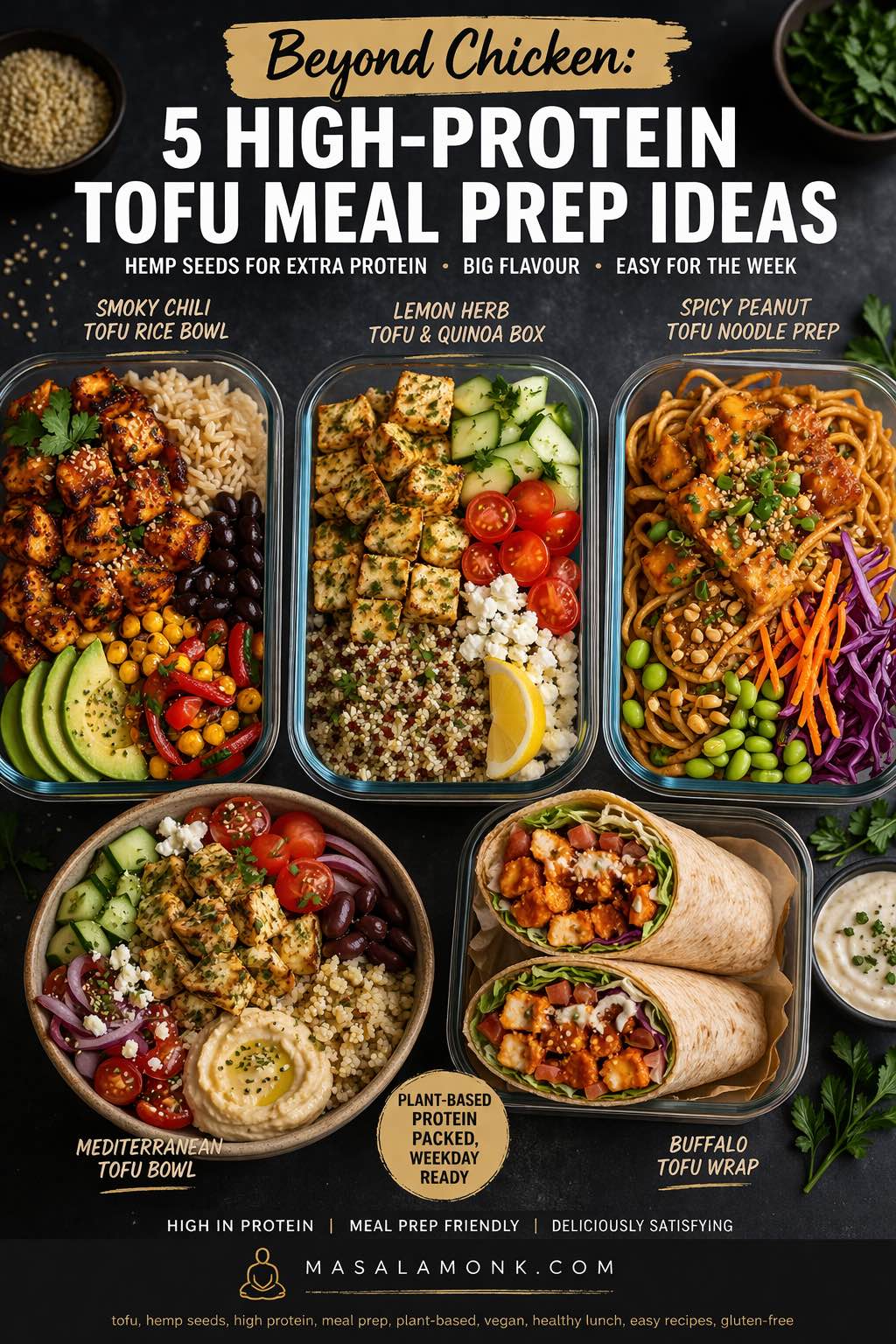
Beyond Chicken cover image showing five hemp seed high-protein tofu meal prep ideas, including a smoky chili tofu rice bowl, lemon herb quinoa box, spicy peanut tofu noodle prep, Mediterranean tofu bowl, and buffalo tofu wrap.

Tofu meal prep can be substantial, flavorful, and still worth opening on day four. That is exactly what this guide is built to deliver.

These lunches are designed for real weekday life. They are filling enough to count as proper lunch, varied enough to keep the week from feeling repetitive, and practical enough to prep ahead without sliding into bland tofu, soggy vegetables, or disappointing containers by midweek.

Just as importantly, the hemp seeds are doing real work throughout the lineup. Rather than sitting on top like a token healthy ingredient, they show up as a nutty crust, a creamy dressing base, a richer sauce builder, a fresh herby crunch, and a proper ranch-style finish that makes wraps feel complete instead of merely assembled.

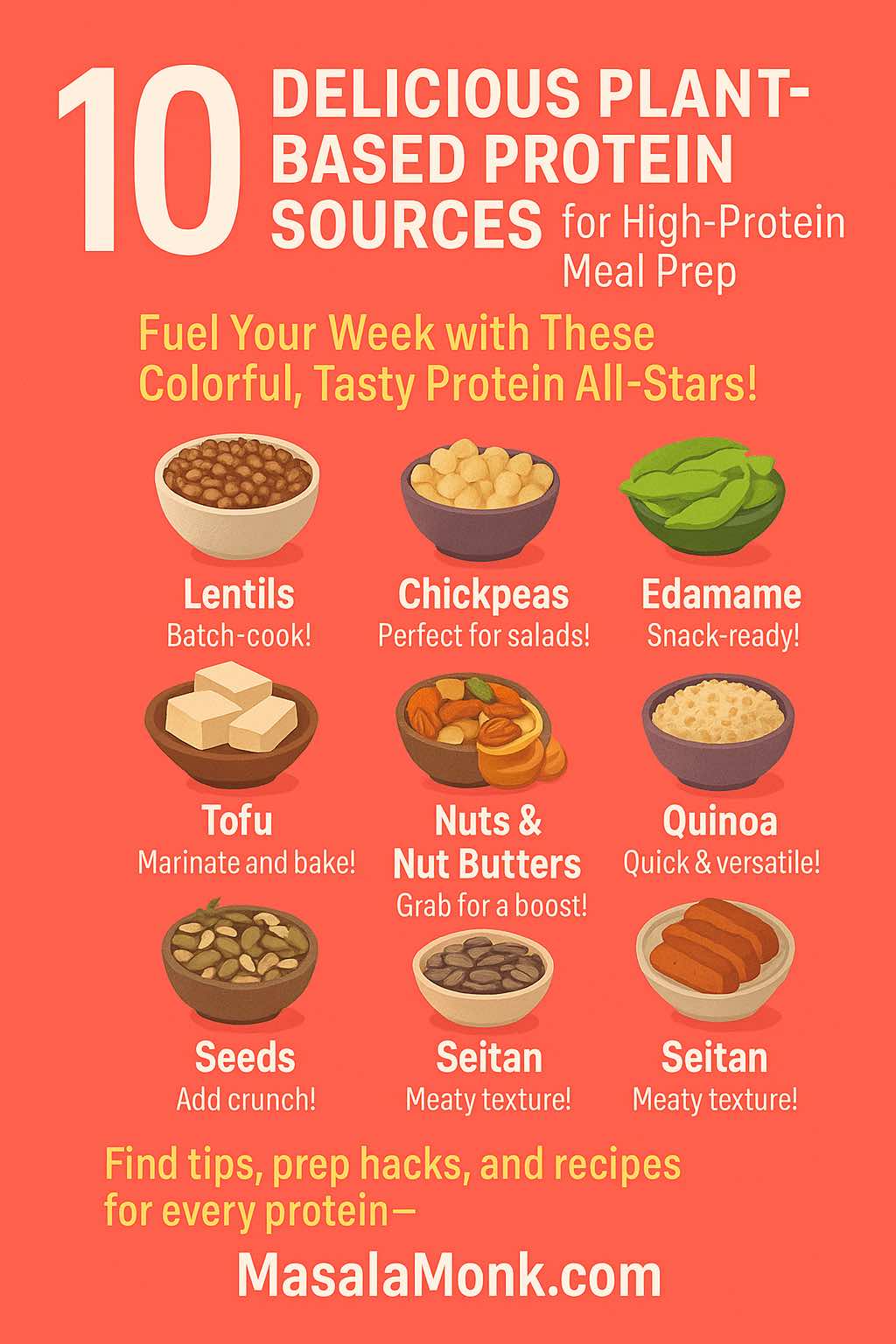
If you want to build a broader plant-based lunch system beyond this page, MasalaMonk’s guide to plant-based protein sources for high-protein meal prep is a natural companion.

Quick answers before you cook

Can tofu be meal prepped? Yes. Tofu is one of the best meal-prep proteins because it roasts well, absorbs flavor, and works naturally in rice bowls, quinoa bowls, noodles, and wraps.

What tofu is best for meal prep? Extra-firm tofu is the easiest and most reliable option because it holds shape well and develops better edges after roasting. Firm tofu also works when you want a slightly softer bite.

How long does tofu meal prep last? Most tofu meal prep keeps well for 3 to 4 days in the fridge when sauces, watery vegetables, and crunchy toppings are packed separately.

What is the biggest mistake? Packing hot tofu with wet vegetables or dressing too early. As a result, a good meal-prep container can turn soggy by day three.

What is the key rule for better tofu meal prep? Press well, roast until it has real color, cool before sealing, and keep wet and dry elements separate whenever texture matters.

Also Read: Easy English Scone Recipe

Tofu Meal Prep at a Glance

Use this as your fast decision guide before choosing a recipe. When you already know you want something warm, cold, craveable, or easy to eat on the go, this section makes the choice quicker. Better yet, it helps you match the right lunch to the right point in the week instead of rereading every recipe section once time is already tight.

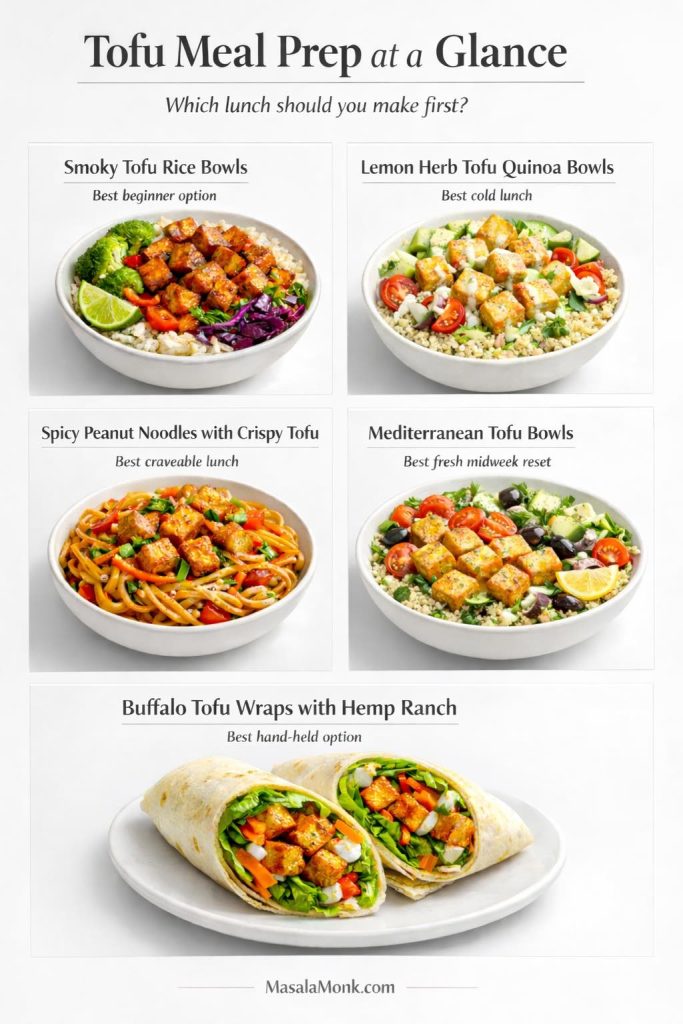
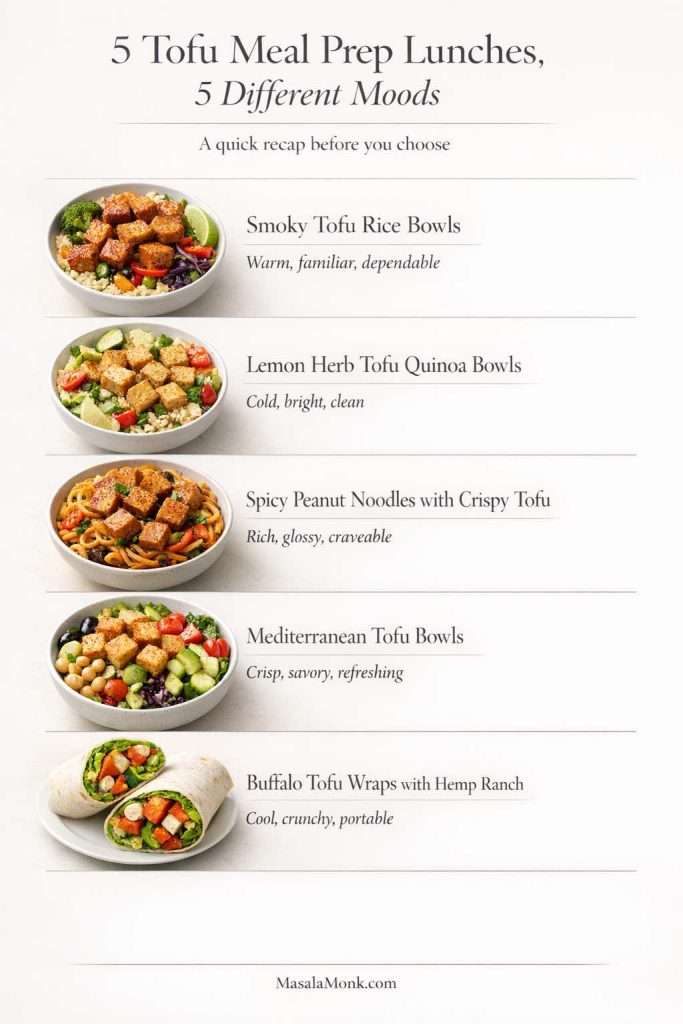
Tofu meal prep comparison graphic showing five lunch ideas: smoky tofu rice bowls, lemon herb tofu quinoa bowls, spicy peanut noodles with crispy tofu, Mediterranean tofu bowls, and buffalo tofu wraps with hemp ranch.
Use this tofu meal prep at-a-glance guide to choose the right lunch for your week: smoky rice bowls for a familiar warm option, lemon herb quinoa bowls for cold lunches, spicy peanut noodles when you want something craveable, Mediterranean bowls for a fresher reset, and buffalo wraps for an easy hand-held meal.
  • Best beginner option: Smoky Tofu Rice Bowls
  • Best cold lunch: Lemon Herb Tofu Quinoa Bowls
  • Best reheated lunch: Smoky Tofu Rice Bowls
  • Best craveable lunch: Spicy Peanut Noodles with Crispy Tofu
  • Best fresh midweek reset: Mediterranean Tofu Bowls
  • Best hand-held option: Buffalo Tofu Wraps with Hemp Ranch
  • Best choice if you are tired of bowls: Buffalo Tofu Wraps with Hemp Ranch
  • Best day-three or day-four option: Lemon Herb Tofu Quinoa Bowls

New to tofu meal prep? Start with the smoky rice bowls. They are the clearest proof that tofu can feel just as satisfying as the classic protein-rice-and-vegetable lunch people usually build around chicken. From there, branching into the colder, fresher, or more sauce-driven options becomes much easier.

Why Tofu Meal Prep Often Disappoints by Day Three — and How This Guide Fixes It

Too often, tofu meal prep falls off by day three because moisture builds, texture softens, and the containers start tasting repetitive. Sometimes the tofu was never pressed or browned enough to begin with. In other cases, the real problem is packing hot ingredients with wet vegetables or dressing too early, which quietly sets everything up to turn soggy in the fridge.

This guide fixes that by treating texture and packing order as part of the recipe, not as an afterthought. Instead of stretching one baked-tofu method across several near-identical boxes, it gives you five genuinely different lunches with different textures, different flavor directions, and different kinds of lunch appeal. Consequently, the week feels less repetitive, while the food itself holds up better.

Hemp seeds make that system stronger. Here, they are not just included for nutrition. They help create a nutty crust, a creamier dressing, a fuller sauce, a brighter finishing crunch, and a better ranch-style spread. In practice, that means the recipes eat better as the week goes on instead of feeling like containers you are forcing yourself to finish.

Also Read: Sourdough English Muffins Recipe

Best Tofu for Meal Prep and How to Prep It

For these recipes, extra-firm tofu is the easiest place to start. It gives you stronger edges, cleaner pieces, and better structure after cooking. Firm tofu also works well, particularly when you want a slightly softer center or a more delicate bite in the finished meal. If you can get super-firm tofu, that is even better because it usually needs less pressing and holds its shape beautifully.

However, silken tofu is not the right fit here. It can be useful in sauces or creamy blends, but it is not built for bowls, noodles, and wraps like these. Even if it sounds convenient, it will not give you the kind of meal-prep texture that keeps well through the week.

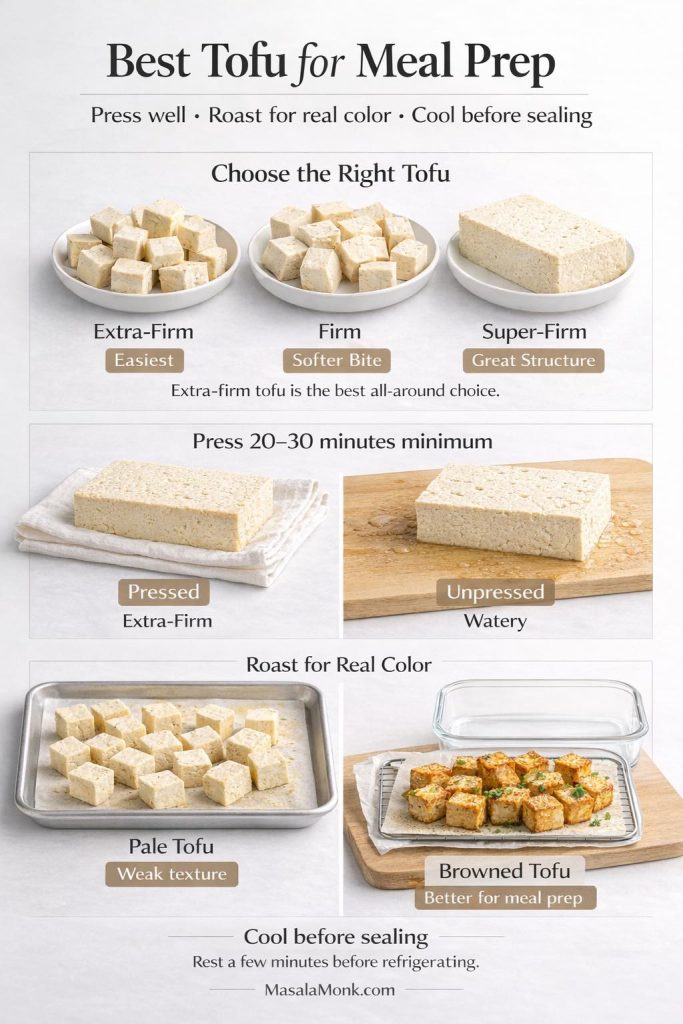
Best tofu for meal prep guide comparing extra-firm, firm, and super-firm tofu, plus pressed vs unpressed tofu and pale vs browned tofu for better meal prep texture.
Extra-firm tofu gives the most reliable meal-prep texture, especially when it is pressed well, roasted until properly browned, and cooled before sealing so it stays firmer through the week.

The prep matters just as much as the type you choose. First, press the tofu until it no longer feels waterlogged when you cut it. Twenty to thirty minutes is a good minimum, and longer is even better if time allows. Then season it with more intention than just a splash of soy sauce and hope for the best. Tofu responds well to layered flavor: salt or soy, aromatics, acid, herbs, spices, and a finishing element.

Most importantly, cook for texture rather than mere doneness. Pale tofu rarely improves in the fridge. Instead, what you want is visible browning, firmer edges, and enough structure that the tofu can survive storage and reheating without collapsing into softness. Once cooked, let it cool before sealing it into containers. That pause protects more texture than most people expect.

If you like crisp, prep-friendly plant-based lunches in general, MasalaMonk’s high-protein vegan meal prep ideas using an air fryer are worth a look too.

How to Make Tofu Meal Prep More Filling Without Making It Heavy

One of the easiest ways to improve tofu meal prep is to make it more filling without turning it into a heavy lunch you stop looking forward to by Wednesday. The answer is not to pile in random extras until the meal feels joyless. Rather, build in staying power with a proper base, a good texture contrast, and a sauce or dressing that adds body without flooding the container.

In practice, that usually means tofu plus rice, quinoa, or noodles for structure; vegetables that either roast well or stay crisp; and hemp seeds, yogurt, tahini, or peanut-based sauces that make the lunch feel complete instead of sparse. That is where these recipes work especially well. Tofu carries the main protein role, while hemp seeds add richness, body, and texture in ways that improve the actual eating experience.

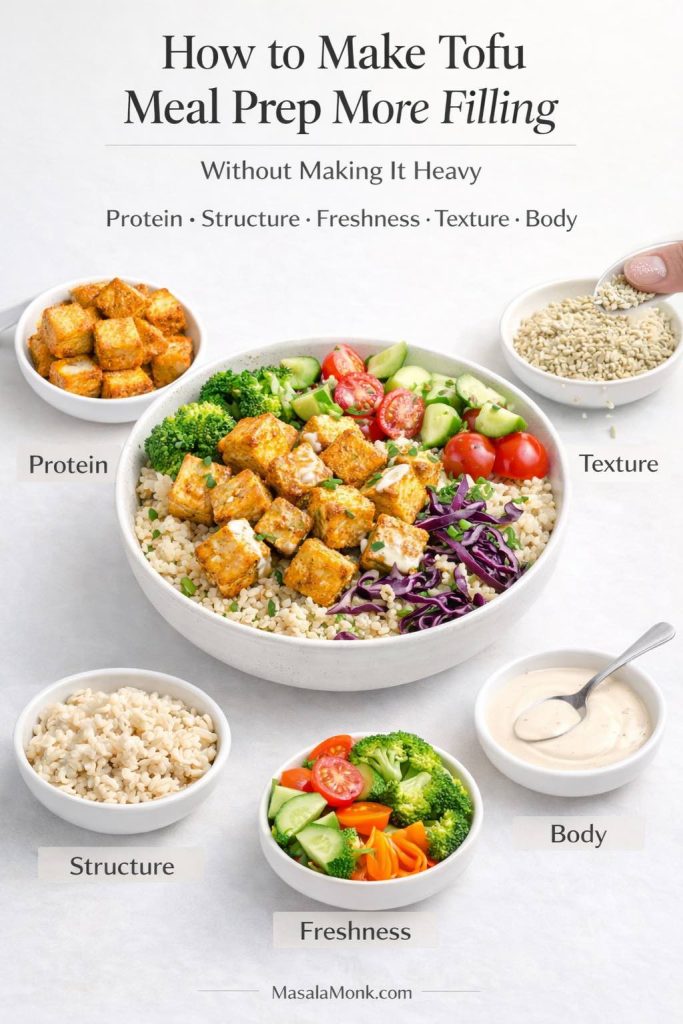
Guide to making tofu meal prep more filling without making it heavy, showing protein, structure, freshness, texture, and body with tofu, grains, vegetables, hemp seeds, and sauce.
A satisfying tofu lunch depends less on piling in more ingredients and more on balancing the right five roles: protein for staying power, a base for structure, vegetables for freshness, hemp seeds for texture, and sauce or dressing for body.

This matters because the best tofu meal prep recipes are the ones you actually want to repeat. A filling lunch should still feel bright, balanced, and easy to eat. That is precisely why these bowls, noodles, and wraps are designed to hold well in the fridge while still eating like lunch first and meal prep second.

For a grain-forward prep angle, MasalaMonk’s plant-based meal prep ideas using quinoa as a protein source pair especially well with the quinoa bowls below.

Also Read: White Russian Recipe: 7 Variants to Try, From Classic to Frozen

The 5 Tofu Meal Prep Recipes

The recipes below are built to cover different lunch moods across the week, from a warm rice bowl to a bright quinoa bowl, spicy noodles, a crisp Mediterranean option, and a hand-held buffalo wrap. Protein estimates are approximate and based on generic ingredient values, so they can vary slightly depending on the tofu, noodles, tortillas, and yogurt you use.

If you landed here mainly for the recipes, you can jump straight into the one that fits your week best. On the other hand, if you are still deciding, the short intros and quick snapshots will help you match the right lunch mood to the right container.

1) Smoky Tofu Rice Bowls

Choose this bowl when you want the most familiar lunch format in the post. If your idea of dependable tofu meal prep still looks like some version of protein, rice, and vegetables, this one gives you that same structure with much more character.

The tofu roasts into something smoky, toasty, and lightly nutty from the hemp crust, while roasted broccoli and bell peppers bring sweetness and body. Shredded cabbage keeps the bowl from feeling too soft, and a sharp lime yogurt drizzle wakes everything back up after reheating. For that reason, this is the easiest recipe here to trust on the first try.

Quick recipe snapshot

  • Best served: Warm, with cool toppings added after reheating
  • Fridge life: 4 days
  • Reheats well: Yes
  • Pack separately: Lime yogurt drizzle, avocado, and lime wedges
  • Best texture trait: Smoky, browned tofu with rough hemp-crusted edges
  • Approximate protein per serving: about 29 g

Yield: 4 bowls

Prep time: 25 minutes

Cook time: 30 minutes

Total time: 55 minutes, plus tofu pressing time

Ingredients

Hemp-crusted tofu

  • 2 (14-ounce / 396 g) blocks extra-firm tofu, pressed and cubed
  • 1 tablespoon soy sauce or tamari
  • 1 tablespoon olive oil
  • 1 tablespoon cornstarch
  • 1 teaspoon smoked paprika
  • 1 teaspoon chili powder
  • 1/2 teaspoon garlic powder
  • 1/2 teaspoon onion powder
  • 1/4 teaspoon black pepper
  • 1/3 cup hemp seeds

Rice bowl base

  • 4 cups cooked rice
  • 2 cups broccoli florets
  • 1 red bell pepper, sliced
  • 2 cups shredded cabbage
  • 1 avocado, sliced for serving
  • Lime wedges

Lime yogurt drizzle

  • 1/2 cup plain yogurt
  • 1 tablespoon lime juice
  • 1 teaspoon hot sauce
  • Pinch of salt

Method

  1. Heat the oven to 425°F and line two trays.
  2. Toss the tofu with soy sauce, olive oil, cornstarch, smoked paprika, chili powder, garlic powder, onion powder, and black pepper.
  3. Add the hemp seeds and toss again so they cling to the tofu.
  4. Spread the tofu on one tray in a single layer.
  5. Toss the broccoli and bell pepper with a little oil and salt and spread them on the second tray.
  6. Roast for 25 to 30 minutes, flipping the tofu once, until the tofu is browned at the edges and the hemp seeds smell lightly toasted.
  7. Stir together the yogurt, lime juice, hot sauce, and salt.
  8. Cool the hot ingredients slightly, then divide the rice, tofu, vegetables, and cabbage among containers.
  9. Pack the drizzle, avocado, and lime wedges separately.

What you should notice

The tofu should have darkened corners, a lightly rough hemp crust, and a savory smoky aroma. Meanwhile, the cabbage and lime should keep the bowl from feeling too dense. Once you open the container later in the week, the bowl should still feel balanced rather than heavy.

Best storage tip

Keep the drizzle separate until serving. That one move helps the tofu keep more of its edge and keeps the cabbage crisp longer. In turn, the reheated bowl feels much closer to freshly built lunch rather than day-four leftovers.

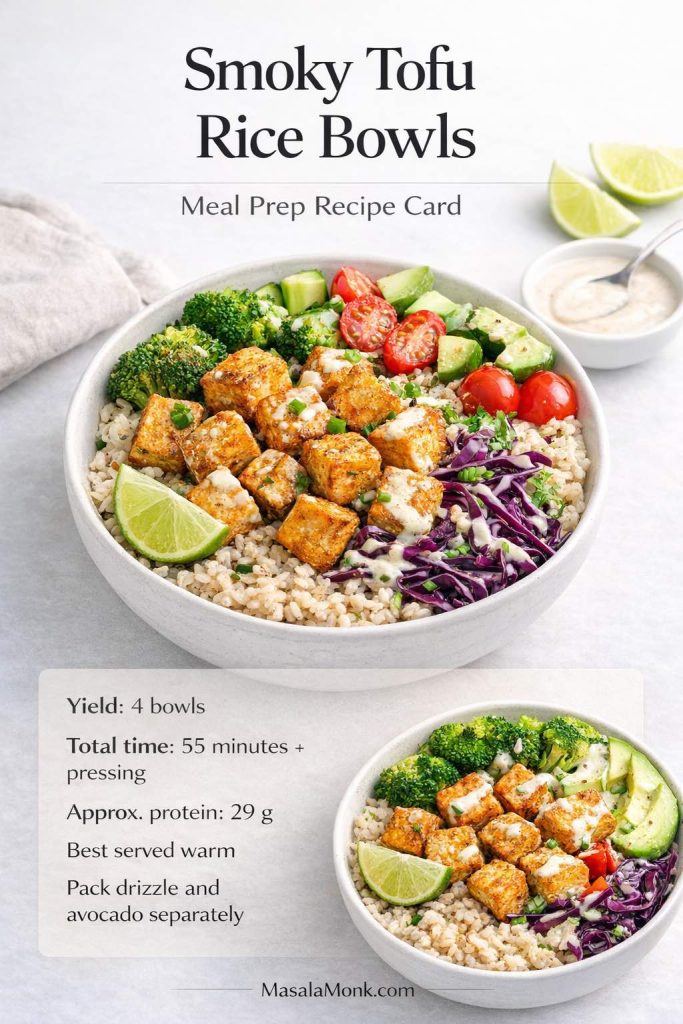
Smoky tofu rice bowls recipe card showing browned tofu over rice with broccoli, cabbage, lime, and creamy drizzle for tofu meal prep.
Built for readers who want the most familiar place to start, this smoky tofu rice bowl turns a classic warm lunch format into something more interesting with browned tofu, rice, vegetables, and a limey creamy finish.

Also Read: Mango Sorbet Recipe: Healthy & Plant Based Dessert

2) Lemon Herb Tofu Quinoa Bowls

Reach for this bowl when you want a cold lunch that still feels full, bright, and properly satisfying instead of dry and dutiful. At the same time, it stays calm and clean enough to work especially well later in the week.

The tofu is seasoned simply so the lemon, herbs, and creamy hemp dressing can lead. Quinoa gives the bowl structure and extra staying power, while the fresh herbs keep the flavor from flattening in the fridge. As a result, this becomes one of the smartest later-week lunches in the lineup and one of the easiest to eat straight from the container.

Quick recipe snapshot

  • Best served: Cold
  • Fridge life: 4 days
  • Reheats well: Not necessary
  • Pack separately: Creamy hemp dressing
  • Best texture trait: Bright, herby, fresh-tasting quinoa bowl with creamy finish
  • Approximate protein per serving: about 31 g

Yield: 4 bowls

Prep time: 20 minutes

Cook time: 25 minutes

Total time: 45 minutes, plus tofu pressing time

Ingredients

Lemon-herb tofu

  • 2 (14-ounce / 396 g) blocks firm tofu, pressed and cubed
  • 1 tablespoon olive oil
  • 1 tablespoon lemon juice
  • 1 teaspoon dried oregano
  • 1 teaspoon garlic powder
  • 1/2 teaspoon salt
  • 1/4 teaspoon black pepper

Quinoa bowl base

  • 4 cups cooked quinoa
  • 1 cucumber, chopped
  • 1 1/2 cups cherry tomatoes, halved
  • 1/2 red onion, thinly sliced
  • 1 cup chopped parsley
  • 1/4 cup chopped dill or mint
  • 3 tablespoons hemp seeds, for topping

Creamy hemp dressing

  • 1/3 cup hemp seeds
  • 3 tablespoons plain yogurt
  • 2 tablespoons lemon juice
  • 1 tablespoon olive oil
  • 1 teaspoon Dijon mustard
  • 1 small garlic clove
  • 2 to 4 tablespoons water
  • Salt and pepper to taste

Method

  1. Heat the oven to 425°F.
  2. Toss the tofu with olive oil, lemon juice, oregano, garlic powder, salt, and black pepper.
  3. Roast for about 25 minutes, flipping once, until lightly golden and firm.
  4. Blend or whisk together the dressing ingredients until smooth and lightly creamy.
  5. Divide the quinoa among containers, then add the cucumber, tomatoes, red onion, herbs, and tofu.
  6. Sprinkle with hemp seeds.
  7. Pack the dressing separately and spoon it over just before eating.

What you should notice

When you open this bowl cold, it should smell lemony and herby right away. At the same time, the dressing should coat the quinoa and tofu without making the container loose or watery. Ideally, the whole bowl should feel bright first and creamy second, not the other way around.

Best storage tip

Do not toss everything with the dressing in advance unless you are eating it within a day. Keeping it separate makes the bowl feel fresher for longer. More importantly, it stops the herbs and vegetables from collapsing too early.

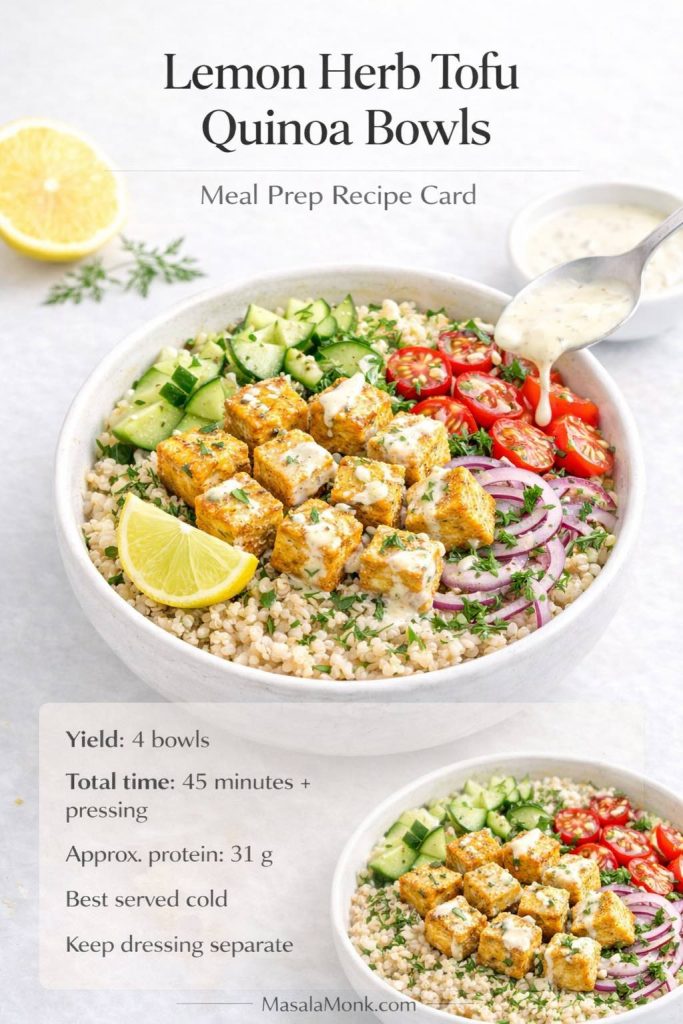
Lemon herb tofu quinoa bowls recipe card showing quinoa, golden tofu, cucumber, cherry tomatoes, red onion, herbs, and creamy lemon dressing for cold tofu meal prep.
Cold lunches hold up especially well when they stay bright and composed, and this lemon herb tofu quinoa bowl does exactly that with quinoa, fresh vegetables, herbs, and a creamy dressing packed separately.

Also Read: Protein Ice Cream Recipe: 10 Creamy Homemade Recipes

3) Spicy Peanut Noodles with Crispy Tofu

Pick this one when you want the least “meal prep feeling” lunch in the lineup. Sometimes the smartest way to stay consistent with prep is to make at least one meal that feels saucy, bold, and a little indulgent.

Here, the sauce is the whole point. Peanut butter gives it body, the hemp seeds make it feel fuller and smoother, the tofu brings chew, and the noodles give the whole thing real comfort-food energy without turning it heavy or dull. Since it works cold, at room temperature, or lightly warm, it is also one of the most flexible containers in the entire post.

Quick recipe snapshot

  • Best served: Cold, room temperature, or gently warmed
  • Fridge life: 3 to 4 days
  • Reheats well: Lightly, but also good cold
  • Pack separately: Spicy peanut-hemp sauce
  • Best texture trait: Glossy noodles with crisp-edged tofu and rich clingy sauce
  • Approximate protein per serving: about 34 g

Yield: 4 containers

Prep time: 25 minutes

Cook time: 25 minutes

Total time: 50 minutes, plus tofu pressing time

Ingredients

Crispy tofu

  • 2 (14-ounce / 396 g) blocks extra-firm tofu, pressed and torn into chunks
  • 1 tablespoon soy sauce
  • 1 tablespoon neutral oil
  • 1 tablespoon cornstarch
  • 1 teaspoon garlic powder

Noodle base

  • 12 ounces dry noodles, such as wheat noodles or rice noodles
  • 2 cups shredded cabbage
  • 2 cups shredded carrots
  • 1 red bell pepper, thinly sliced
  • 3 green onions, sliced
  • Cilantro, optional

Spicy peanut-hemp sauce

  • 1/3 cup peanut butter
  • 2 tablespoons soy sauce
  • 1 tablespoon rice vinegar
  • 1 tablespoon maple syrup
  • 1 to 2 teaspoons sriracha
  • 1 teaspoon sesame oil
  • 1/4 cup hemp seeds
  • Warm water, as needed

Method

  1. Heat the oven to 425°F.
  2. Toss the tofu with soy sauce, oil, cornstarch, and garlic powder.
  3. Roast for about 25 minutes, flipping once, until crisp at the edges.
  4. Cook the noodles until just tender, then drain and cool slightly.
  5. Blend or whisk together the sauce ingredients, adding warm water until the sauce is smooth, glossy, and thick enough to cling.
  6. Divide the noodles and vegetables among containers, then add the tofu and green onions.
  7. Pack the sauce separately and toss through just before eating.
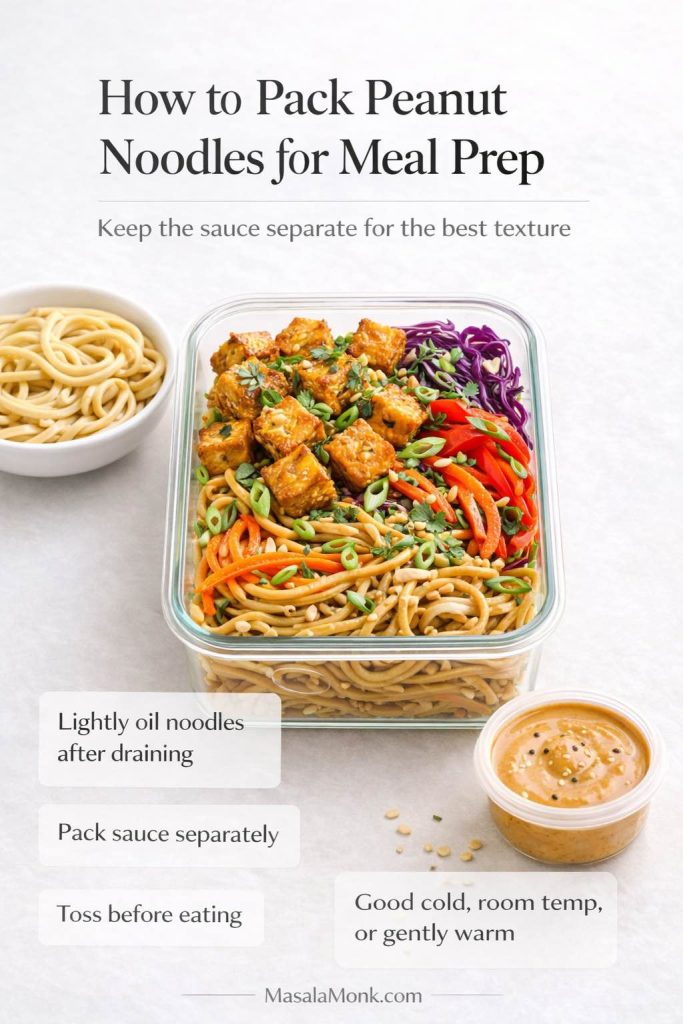
How to pack peanut noodles for meal prep guide showing noodles, crispy tofu, vegetables, and peanut sauce packed separately for better texture.
Packing spicy peanut noodles well matters almost as much as making them well, especially when you want the noodles to stay loose, the vegetables to keep some life, and the sauce to coat everything only when you are ready to eat.

What you should notice

The sauce should coat the back of a spoon. The tofu should have crisp edges and a slightly chewy center. Once everything is tossed together, the noodles should look glossy and coated, not soupy. Even so, the whole bowl should still feel lively because of the raw vegetables, not weighed down by the sauce.

Best storage tip

A tiny bit of oil on the noodles after draining helps keep them from clumping in the fridge. After that, keeping the sauce separate gives you much more control over texture when it is time to eat.

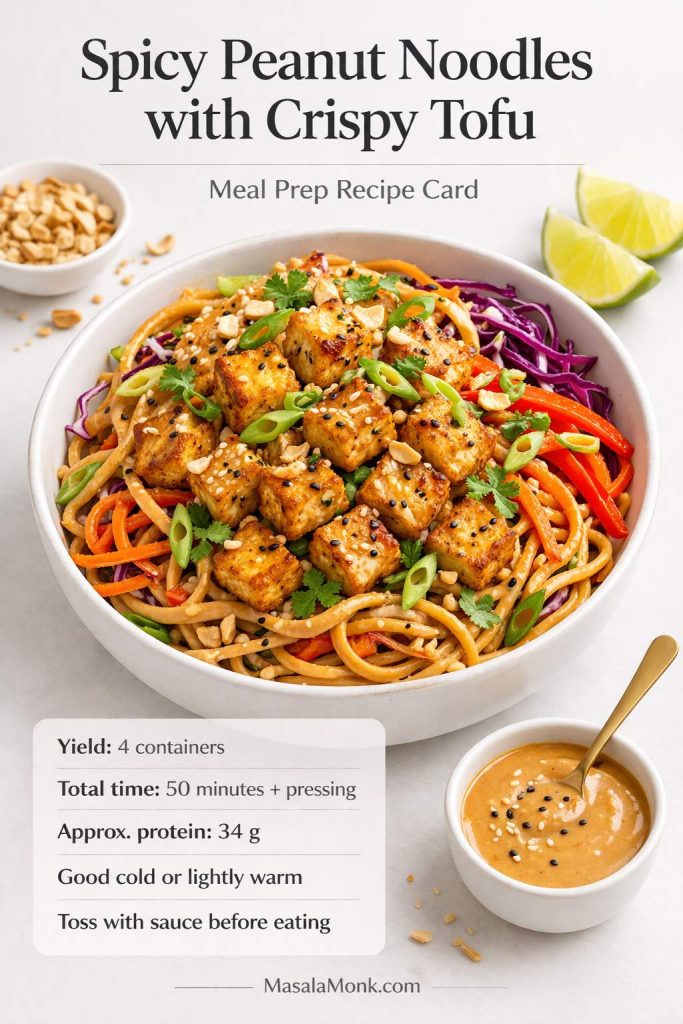
Spicy peanut noodles with crispy tofu recipe card showing glossy noodles, browned tofu, cabbage, carrots, bell pepper, green onion, and peanut sauce for tofu meal prep.
When tofu meal prep needs to feel more craveable than dutiful, spicy peanut noodles with crispy tofu bring the right kind of comfort: glossy sauce-coated noodles, browned tofu, and plenty of crunch, with the sauce packed separately so the texture stays under your control.

Also Read: Homemade Mango Ice Cream Recipe

4) Mediterranean Tofu Bowls

Go with this bowl when richer lunches start feeling repetitive. By the middle of the week, something brighter and sharper often sounds much more appealing.

The tofu is warmly spiced and roasted, but the real lift comes from the finish. A lemony herbed hemp crunch gives the bowl a clear texture role instead of hiding quietly in the background, while cucumbers, tomatoes, olives, and romaine keep everything crisp, savory, and bright. By contrast with the noodle prep, this lunch is not trying to comfort you. It is trying to refresh you, which is exactly why it works so well in the same lineup.

Quick recipe snapshot

  • Best served: Cold or cool room temperature
  • Fridge life: 3 to 4 days
  • Reheats well: Not ideal once assembled
  • Pack separately: Romaine, dressing, and herbed hemp crunch for best texture
  • Best texture trait: Crisp, briny, lemony contrast with nutty finishing crunch
  • Approximate protein per serving: about 33 g

Yield: 4 bowls

Prep time: 25 minutes

Cook time: 30 minutes

Total time: 55 minutes, plus tofu pressing time

Ingredients

Spiced tofu

  • 2 (14-ounce / 396 g) blocks firm tofu, pressed and cubed
  • 1 tablespoon olive oil
  • 1 tablespoon lemon juice
  • 1 teaspoon smoked paprika
  • 1 teaspoon ground cumin
  • 1/2 teaspoon garlic powder
  • 1/2 teaspoon salt
  • Black pepper to taste

Mediterranean bowl base

  • 4 cups cooked quinoa
  • 1 cucumber, chopped
  • 1 1/2 cups chopped tomatoes
  • 1/2 cup sliced olives
  • 1 cup shredded romaine
  • 1 cup roasted chickpeas

Creamy lemon dressing

  • 3 tablespoons tahini
  • 2 tablespoons lemon juice
  • 1 small garlic clove
  • 2 to 4 tablespoons water
  • Salt and pepper to taste

Herbed hemp crunch

  • 1/3 cup hemp seeds
  • 2 tablespoons chopped parsley
  • 1 tablespoon chopped dill
  • 1 teaspoon lemon zest
  • Pinch of salt
  • Black pepper

Method

  1. Roast the tofu at 425°F for 25 to 30 minutes until browned and firm.
  2. Whisk together the dressing ingredients.
  3. Stir together the hemp crunch ingredients in a small bowl.
  4. Divide the quinoa among containers and add the cucumber, tomatoes, olives, tofu, and roasted chickpeas.
  5. Pack the romaine, dressing, and hemp crunch separately when possible for the best texture.
  6. Add the fresh elements just before serving.

What you should notice

The hemp topping should smell lemony and fresh and add a real nutty bite. As a result, the finished bowl should feel crisp, bright, and layered rather than soft and one-note. Even on day three, it should still taste awake rather than tired.

Best storage tip

Store the romaine outside the main hot ingredients if you want the best texture on days three and four. In the same way, keeping the crunch and dressing separate protects the part of this bowl that makes it feel fresh in the first place.

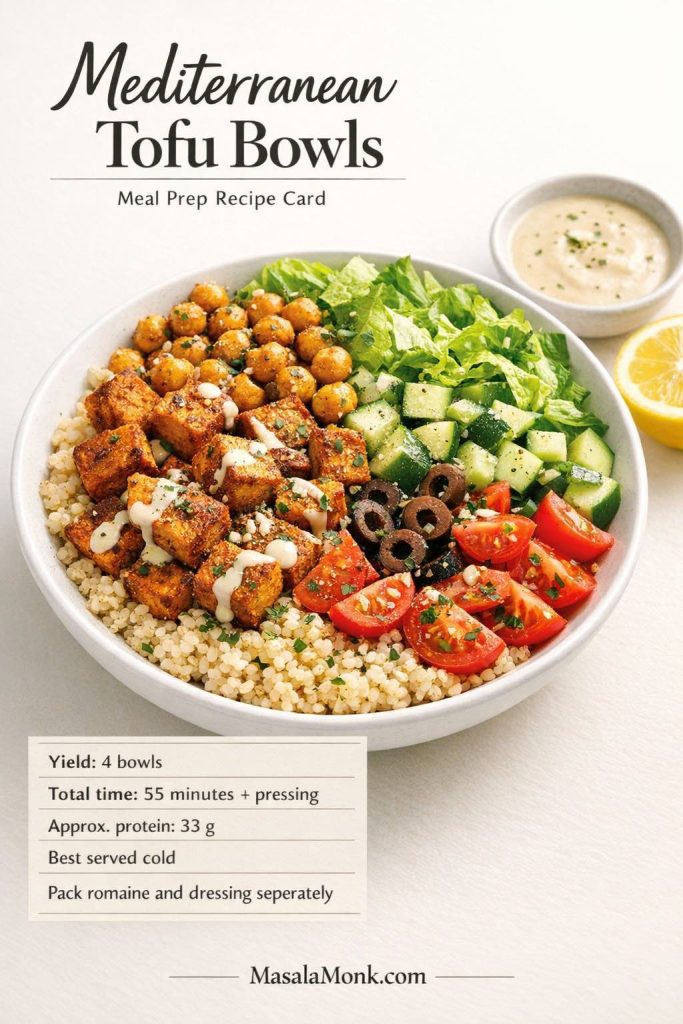
Mediterranean tofu bowls recipe card showing quinoa, spiced tofu, roasted chickpeas, romaine, cucumber, tomatoes, olives, and creamy dressing for cold tofu meal prep.
Sharper, brinier lunches can be the difference between finishing your meal prep happily and getting bored by midweek, and this Mediterranean tofu bowl leans into that with spiced tofu, quinoa, crisp vegetables, olives, roasted chickpeas, and a lemony creamy finish.

Also Read: Cookie Pie Recipe: 10 Best Flavors, Fillings and Variations

5) Buffalo Tofu Wraps with Hemp Ranch

This is the lunch that breaks the bowl rhythm. After several container-style meals, that shift alone makes the lineup feel more useful.

Buffalo tofu brings heat and punch, the fresh vegetables add crunch and lift, and the hemp ranch gives the wrap its real identity by cooling the buffalo heat and adding creamy body. Using shredded or finely crumbled tofu also makes the filling feel more natural inside a wrap rather than like bowl tofu folded into a tortilla at the last second. That difference matters, because this lunch is supposed to feel packed on purpose.

Quick recipe snapshot

  • Best served: Cold, assembled fresh
  • Fridge life: 3 to 4 days for components
  • Reheats well: Not as a full wrap
  • Pack separately: Buffalo tofu, wrap vegetables, tortillas, and hemp ranch
  • Best texture trait: Sticky spicy tofu balanced by cool creamy ranch and fresh crunch
  • Approximate protein per serving: about 28 g

Yield: 4 wraps

Prep time: 20 minutes

Cook time: 20 minutes

Total time: 40 minutes, plus tofu pressing time

Ingredients

Buffalo tofu

  • 2 (14-ounce / 396 g) blocks extra-firm tofu, pressed and shredded or finely crumbled
  • 1 tablespoon olive oil
  • 1/2 teaspoon garlic powder
  • 1/2 teaspoon paprika
  • 1/2 teaspoon salt
  • Black pepper to taste
  • 1/3 cup buffalo sauce

Wrap filling

  • 4 large flour tortillas or wraps
  • 2 cups shredded lettuce
  • 1 cup shredded carrots
  • 1 cup finely chopped celery
  • 1/2 red onion, thinly sliced
  • 2 tablespoons hemp seeds, for sprinkling

Hemp ranch

  • 1/4 cup hemp seeds
  • 1/2 cup plain yogurt
  • 1 tablespoon lemon juice
  • 1 teaspoon Dijon mustard
  • 1 tablespoon chopped parsley or dill
  • Pinch of garlic powder
  • Salt and pepper to taste
  • Splash of water, if needed

Method

  1. Heat the oven to 425°F.
  2. Toss the shredded or finely crumbled tofu with olive oil, garlic powder, paprika, salt, and black pepper.
  3. Spread it out on a tray and roast for about 20 minutes, stirring once, until the edges are lightly browned.
  4. Toss the hot tofu with buffalo sauce and let it cool slightly.
  5. Blend or whisk together the hemp ranch ingredients until creamy and spreadable.
  6. For the best texture, store the wrap filling separately and assemble fresh before eating.
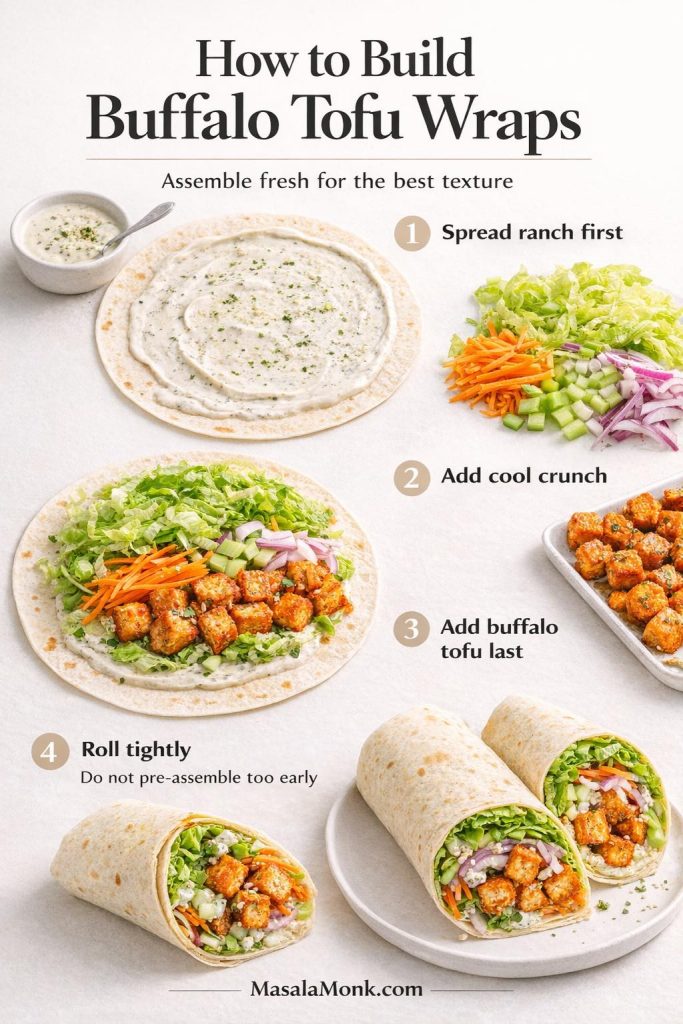
  7. To serve, spread hemp ranch on the wrap, then layer the lettuce, carrots, celery, onion, tofu, and a light sprinkle of hemp seeds before rolling tightly.
How to build buffalo tofu wraps guide showing hemp ranch spread on a tortilla, crunchy vegetables, buffalo tofu, and the finished wrap rolled tightly for meal prep.
Building the wrap in the right order makes the difference between a crisp, satisfying lunch and a soft one, which is why the ranch goes down first, the cool vegetables create the crunch, and the buffalo tofu gets added last before rolling everything tightly.

What you should notice

The tofu should look sticky and spicy at the edges, while the ranch should be thick enough to spread without making the wrap soggy. Once assembled, the wrap should feel cool, crisp, creamy, and sharp in the right order, not like a sauce-heavy bundle that falls flat after two bites.

Best storage tip

If you fully assemble these on day one, they soften much faster. Therefore, they are better when the components are prepped ahead and wrapped fresh. That way, you keep the convenience without giving up the texture that makes the wrap worth eating.

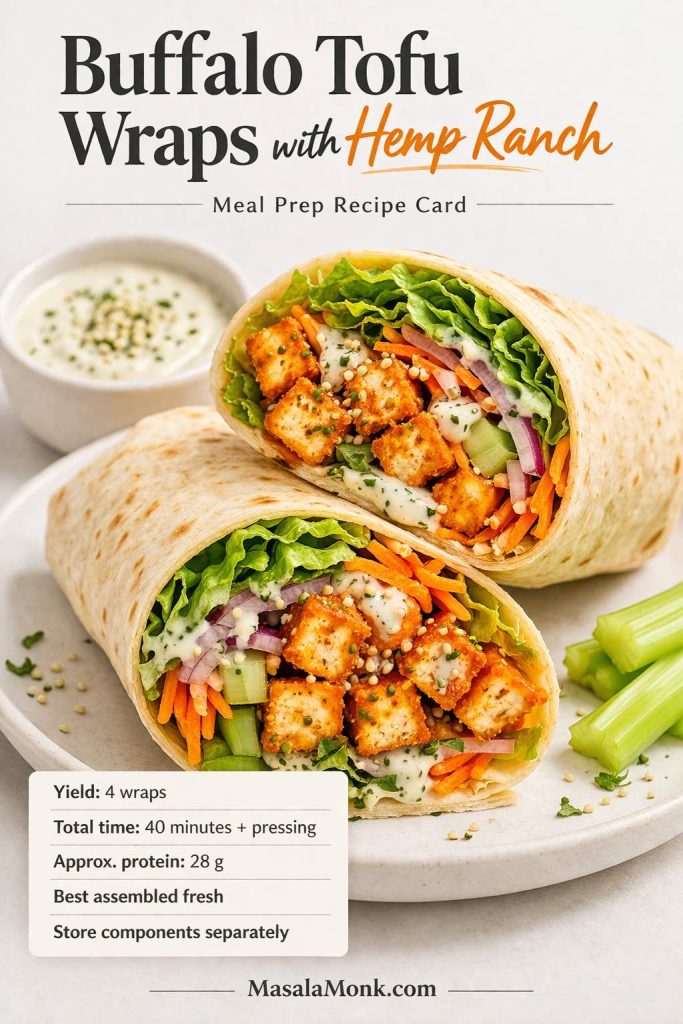
Buffalo tofu wraps with hemp ranch recipe card showing cut wraps filled with spicy tofu, lettuce, carrots, celery, red onion, and creamy ranch for tofu meal prep.
A meal-prep wrap only earns its place when it still feels crisp, creamy, and worth eating, and these buffalo tofu wraps do that by pairing punchy tofu with cool hemp ranch, crunchy vegetables, and fresh assembly right before lunch.

Also Read: Punjabi Mutton Bhuna – Amritsari Village-Style Gosht Recipe

Which Tofu Meal Prep Recipes Are Best Hot, Cold, or Build-Fresh?

The Smoky Tofu Rice Bowls reheat best because the rice and roasted vegetables are built for warmth, and the bowl can be refreshed with cool cabbage and lime yogurt drizzle afterward. So if you want the most classic microwave-friendly tofu meal prep option in the post, start there.

Meanwhile, the Spicy Peanut Noodles with Crispy Tofu work both ways. Some people prefer them cold or at room temperature, while others like them gently warmed before tossing with sauce. Because of that flexibility, they are one of the easiest lunches here to fit into different workday setups.

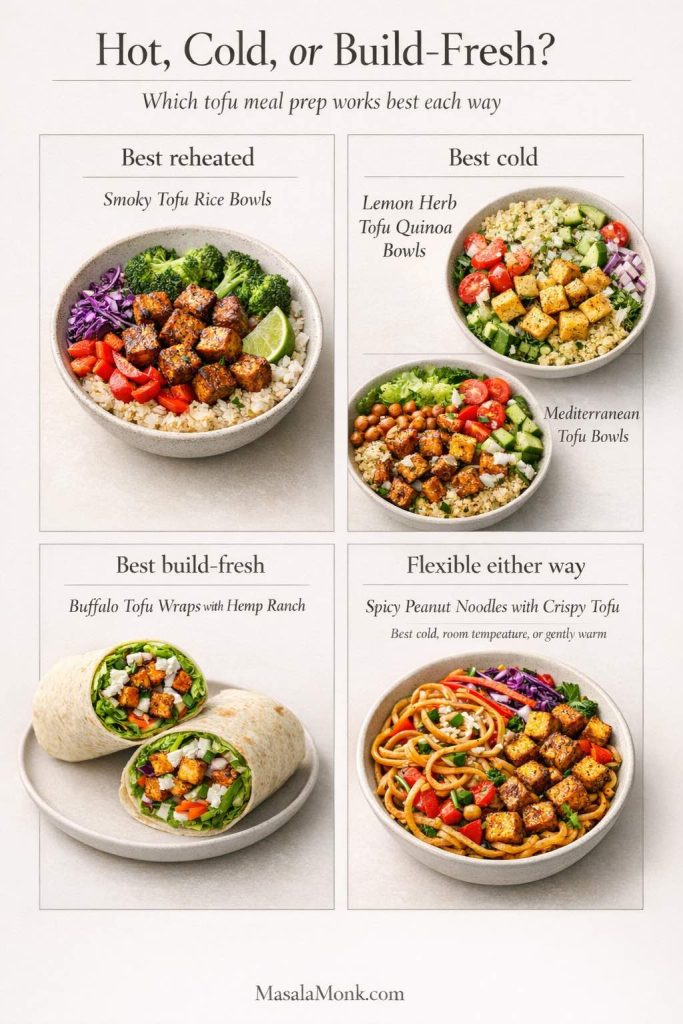
Tofu meal prep comparison guide showing which recipes are best reheated, best cold, best build-fresh, or flexible either way, including smoky tofu rice bowls, lemon herb tofu quinoa bowls, Mediterranean tofu bowls, buffalo tofu wraps, and spicy peanut noodles.
How you want to eat lunch changes which tofu meal prep recipe makes the most sense, and this guide helps you choose fast: smoky rice bowls for reheating, lemon herb and Mediterranean bowls for colder meals, buffalo wraps for fresh assembly, and spicy peanut noodles when you want the most flexibility.

For cold lunches, the Lemon Herb Tofu Quinoa Bowls are excellent. Likewise, the Mediterranean Tofu Bowls are at their best when the romaine, dressing, and herbed hemp crunch stay fresh until serving. In both cases, the freshness is the point, so there is no need to force reheating into the equation.

By contrast, the Buffalo Tofu Wraps with Hemp Ranch are best assembled from cold components just before eating. They can still be fully meal-prepped, of course. Even so, the smartest move is to treat them as a build-fresh lunch rather than a fully wrapped make-ahead one.

Also Read: Peach Cobbler with Canned Peaches (Dessert Recipe)

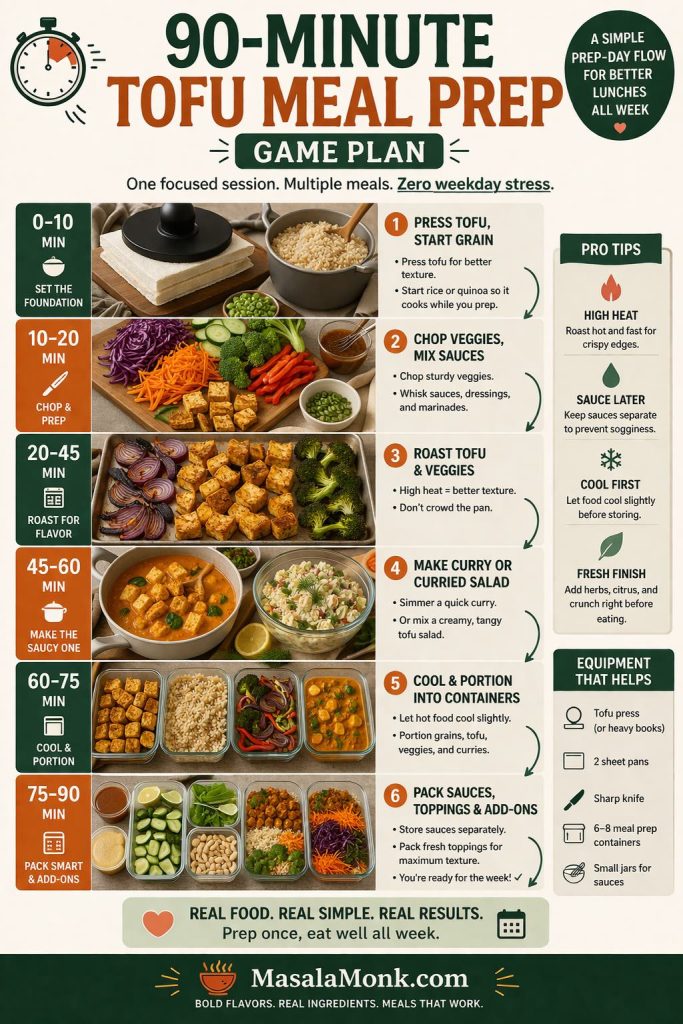
How to Meal Prep Tofu for the Week in Under 90 Minutes

You do not need to treat this like five separate cooking projects. Instead, the smarter move is to overlap the work so the whole prep session stays manageable.

Start by pressing all the tofu first. While that happens, get your grains cooking. Then preheat the oven and prep your vegetables. Once the tofu goes in, mix the sauces and dressings while everything roasts. Meanwhile, chop herbs and pack the fresh components during that same window. In practice, that overlap is what keeps a big prep session from turning into an all-afternoon chore.

A practical workflow looks like this:

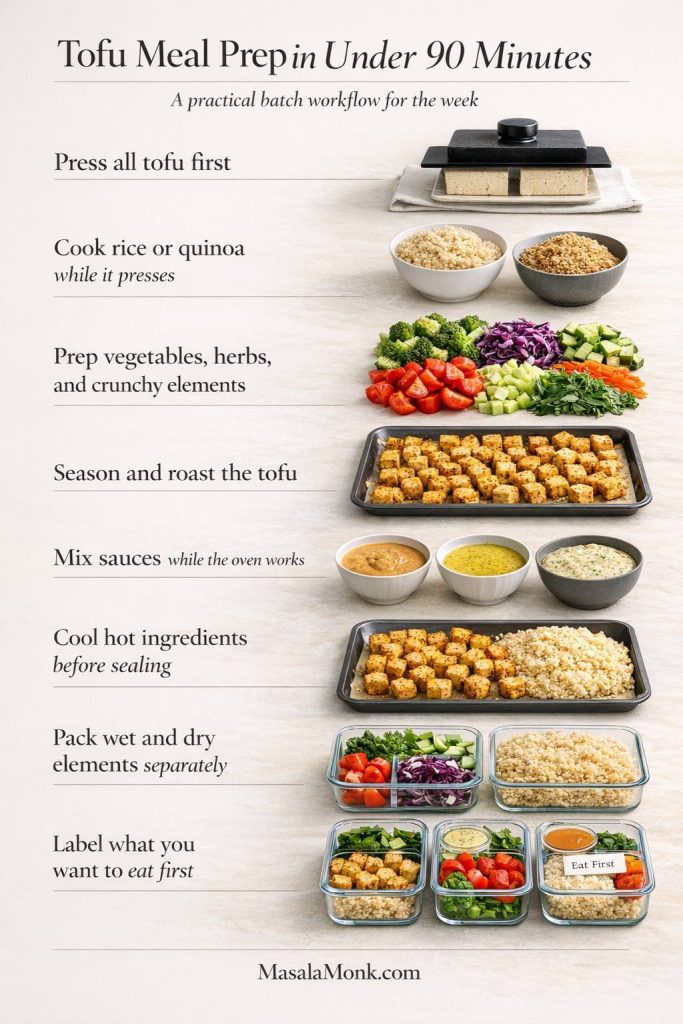
Tofu meal prep workflow guide showing how to prep lunches in under 90 minutes by pressing tofu, cooking grains, chopping vegetables, roasting tofu, mixing sauces, cooling ingredients, packing containers, and labeling what to eat first.
A good tofu meal prep session runs better when the work overlaps, and this under-90-minute workflow shows the smartest order: press tofu first, cook grains while it presses, prep vegetables during that window, roast and cool the hot components, then pack and label everything with texture in mind.
  1. Press all the tofu first.
  2. Cook rice or quinoa while it presses.
  3. Preheat the oven and line your trays.
  4. Chop vegetables, herbs, and crunchy toppings.
  5. Season the tofu and roast it.
  6. Mix the hemp dressing, peanut sauce, tahini dressing, and hemp ranch while the oven is working.
  7. Cool the hot components before closing containers.
  8. Pack wet and dry elements separately wherever texture matters.
  9. Label the containers you want to eat first.

That kind of workflow keeps the prep manageable and makes the whole post more useful in real life. It also makes a big difference in texture, because cooling before packing is one of the easiest ways to avoid condensation and sogginess. Once you start overlapping the work instead of treating every recipe like a separate task, the whole system becomes much more realistic.

Also Read: Masterclass in Chai: How to Make the Perfect Masala Chai (Recipe)

Troubleshooting Tofu Meal Prep

Use this as a quick check before blaming tofu itself. In most cases, the problem is moisture, weak seasoning, or packing order.

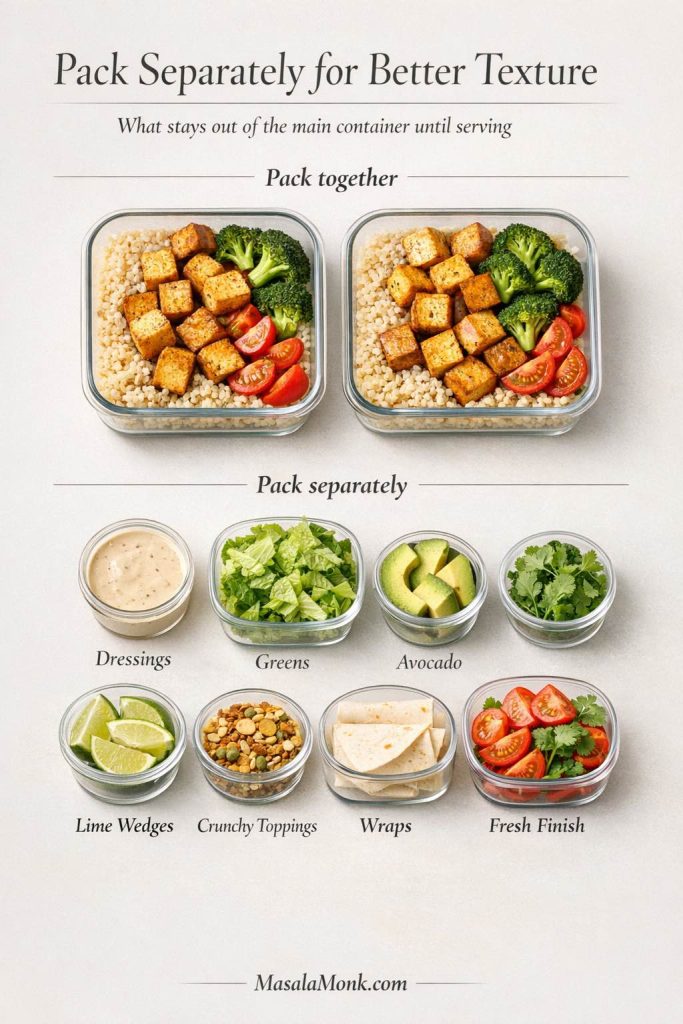
Tofu meal prep packing guide showing which ingredients can be packed together and which should be packed separately, including dressings, greens, avocado, lime wedges, crunchy toppings, wraps, and fresh finishing elements.
Texture usually falls apart long before flavor does, so this tofu meal prep packing guide shows what can stay in the main container and what is better held back until serving, from dressings and greens to avocado, wraps, lime wedges, and crunchy toppings.

If tofu turns soggy

The most likely reason is too much moisture or sauce added too early. So press longer, roast longer, and sauce later. In many cases, the fix is not dramatic at all. It is simply a matter of letting the tofu get drier before you ask it to hold texture for several days.

If tofu tastes bland

The issue is usually weak seasoning or under-salted sauce. So use soy, acid, garlic, herbs, chili, and enough salt where needed. More specifically, do not expect one last-minute sauce to rescue tofu that never had enough flavor built into it from the start.

If the container turns watery

Wet vegetables were probably packed too early or against hot ingredients. Therefore, keep cucumbers, tomatoes, lettuce, and dressings separate whenever possible. Once the hot ingredients cool, you can combine more confidently without setting off that slow soggy slide in the fridge.

If reheated tofu turns rubbery

It was probably overcooked twice or reheated too aggressively. Instead, reheat more gently and stop once warm rather than blasting it until very hot. That small change alone usually keeps the texture much more pleasant.

If noodles clump

They were likely packed dry and cooled too tightly. In that case, toss them with a tiny bit of oil after draining and keep the sauce separate. Then, when it is time to eat, the noodles loosen more easily and the sauce coats them more evenly.

If wraps go soft too fast

They were assembled too early or loaded with too much wet sauce. So pack the filling and the wraps separately and build them fresh. That way, you still get the convenience of prep without sacrificing the crisp bite that makes the wrap work.

Also Read: Air Fryer Salmon Recipe (Time, Temp, and Tips for Perfect Fillets)

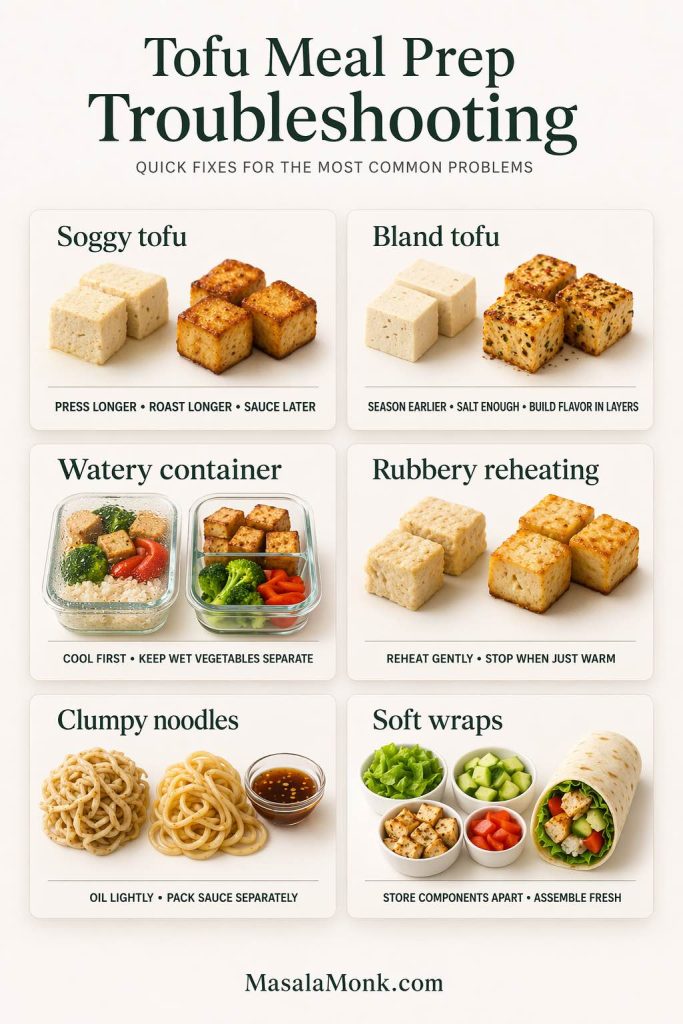
Tofu meal prep troubleshooting guide showing quick fixes for soggy tofu, bland tofu, watery containers, rubbery reheating, clumpy noodles, and soft wraps.
When tofu meal prep starts going wrong, the fix is usually more about handling than the recipe itself: press and roast tofu longer, season earlier, cool containers before sealing, keep sauce separate, reheat gently, and assemble wraps fresh instead of too far ahead.

How Long Does Tofu Meal Prep Last?

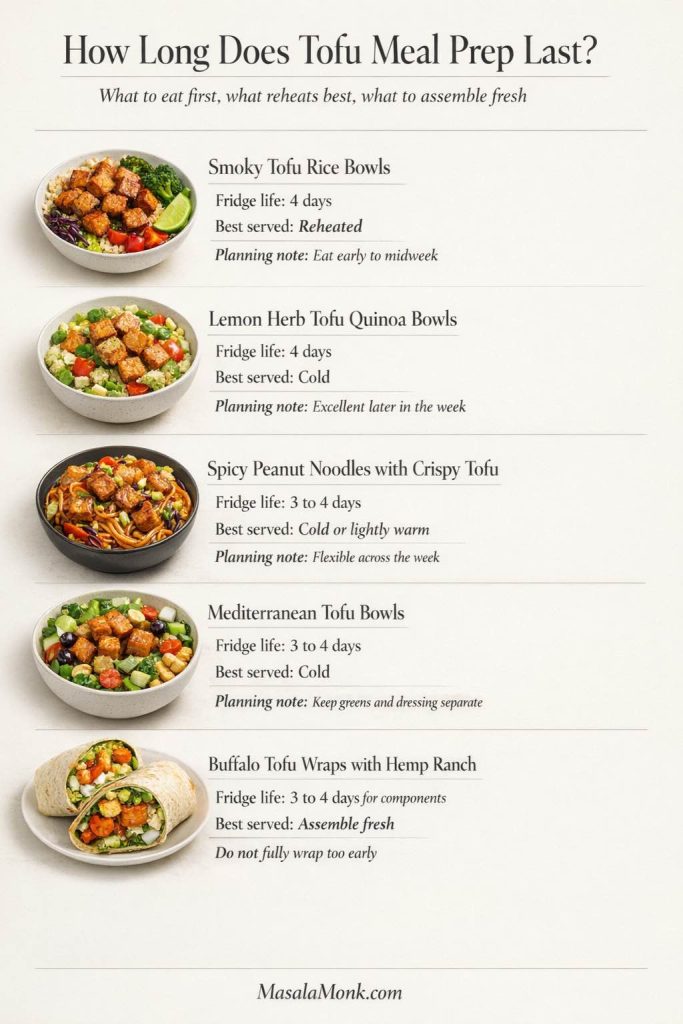
For both quality and practicality, these meals are best treated as a 3-to-4-day refrigerator plan. That way, the textures still feel intentional rather than tired. Meals like the quinoa bowls and Mediterranean bowls tend to hold especially well when the dressing stays separate. Meanwhile, the rice bowl and noodle prep also sit comfortably in that window. For wraps, the components are best prepped ahead and assembled fresh.

Tofu meal prep storage guide showing how long smoky tofu rice bowls, lemon herb tofu quinoa bowls, spicy peanut noodles, Mediterranean tofu bowls, and buffalo tofu wraps last in the fridge and how each is best served.
Planning the week gets easier when you know which lunches hold strongest: smoky rice bowls and lemon herb quinoa bowls can comfortably carry four days, peanut noodles stay flexible, Mediterranean bowls need greens and dressing held back, and buffalo wraps are best kept in components until you assemble them fresh.

Planning for a full five-day workweek? The easiest move is either to prep a smaller second batch midweek or to freeze part of the cooked tofu early and rotate it in later. That approach usually works better than asking one big Sunday prep to stay perfect longer than it really should. For general food-safety guidance on refrigerated leftovers, the USDA’s leftovers and food safety guidance is a useful reference point.

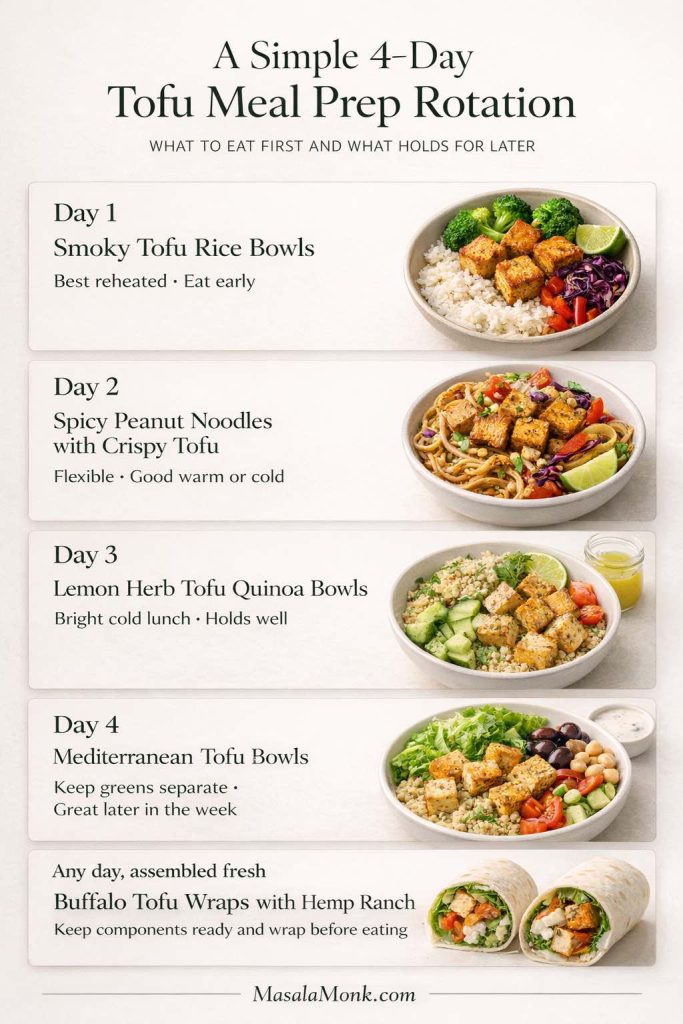
4-day tofu meal prep rotation guide showing a suggested order for smoky tofu rice bowls, spicy peanut noodles with crispy tofu, lemon herb tofu quinoa bowls, Mediterranean tofu bowls, and buffalo tofu wraps with hemp ranch.
A smart tofu meal prep week gets easier when the lunches are eaten in the right order, starting with the warm smoky rice bowls, moving through the more flexible peanut noodles, then into the colder quinoa and Mediterranean bowls, while the buffalo wraps stay best as fresh-built components on any day.

Final thoughts on tofu meal prep

These tofu meal prep ideas work because they treat tofu like a genuinely useful weekday protein instead of a backup option. Once the texture is handled properly, the sauces are built with intention, and the wet elements are packed separately where needed, tofu stops feeling like the compromise lunch and starts feeling like one of the smartest things you can prep for the week.

A practical place to start is the Smoky Tofu Rice Bowls, then follow with the Lemon Herb Tofu Quinoa Bowls or Mediterranean Tofu Bowls later in the week when colder, brighter lunches sound more appealing. Likewise, if you want a different flavor direction for the same weekday problem, these high-protein Indian meal prep ideas are worth bookmarking too. Above all, strong texture, smart packing, and enough variety to keep lunch interesting will take your tofu meal prep much further than novelty alone.

Also Read: Tapas Recipe With a Twist: 5 Indian-Inspired Small Plates

Tofu meal prep recap guide showing five lunch options and their moods: smoky tofu rice bowls, lemon herb tofu quinoa bowls, spicy peanut noodles with crispy tofu, Mediterranean tofu bowls, and buffalo tofu wraps with hemp ranch.
Some tofu lunches feel warm and dependable, others stay brightest cold, and a few are all about craveability or portability, so this quick recap helps you match each recipe to the kind of lunch mood you actually want that week.

Tofu Meal Prep FAQs

1. Is tofu meal prep good for high-protein lunches?

Yes. Tofu meal prep works well for high-protein lunches, especially when you pair tofu with ingredients like hemp seeds, quinoa, chickpeas, yogurt- or tahini-based sauces, or peanut sauce. More importantly, it can still feel like real food rather than a protein project when the texture and seasoning are handled properly.

2. What tofu is best for meal prep?

Extra-firm tofu is usually the best choice because it holds shape well and roasts into stronger edges. However, firm tofu also works well when you want a slightly softer bite. Silken tofu, by contrast, is not the right fit for bowls, noodles, and wraps like these.

3. How do I keep tofu from getting soggy in meal prep?

Press it well, avoid drowning it in marinade, roast it until it has real color, cool it before sealing, and keep sauces separate whenever crispness matters. Taken together, those steps solve most soggy tofu meal prep problems. In other words, the answer is usually better moisture control, not giving up on tofu.

4. Can I eat these tofu meal prep ideas cold?

Yes. Lemon Herb Tofu Quinoa Bowls and Mediterranean Tofu Bowls are especially good cold. Meanwhile, the noodle prep also works well cold or at room temperature. By contrast, rice bowls usually benefit most from reheating.

5. Do hemp seeds really help in meal prep, or are they just for nutrition?

They help with both. Hemp seeds add protein, but they also add creaminess, nuttiness, body, and texture. In this post, they matter most because they improve the actual eating experience, not just the nutrition label. That is precisely why they belong here.

6. Which recipe is best if I am new to tofu meal prep?

Start with the Smoky Tofu Rice Bowls. They feel the most familiar, reheat well, and give you the clearest sense of how satisfying tofu meal prep can be when the texture is right. After that, the other recipes make much more sense because you already trust the base ingredient.

Posted on Leave a comment

Beyond Chicken: 5 Tofu Meal Prep Ideas for High-Protein Meals

Beyond Chicken cover image showing five tofu meal prep ideas, including crispy sesame tofu bowls, sticky soy garlic tofu, curried tofu salad, taco-style tofu crumbles, and red curry tofu as high-protein chicken-free meals.

If you want tofu meal prep ideas that can genuinely take the place of your usual chicken lunches, the problem usually is not tofu itself. More often, the tofu stays too wet, the seasoning lands too softly, or the finished box never feels as satisfying as the chicken version it is meant to replace.

This post is built to fix that.

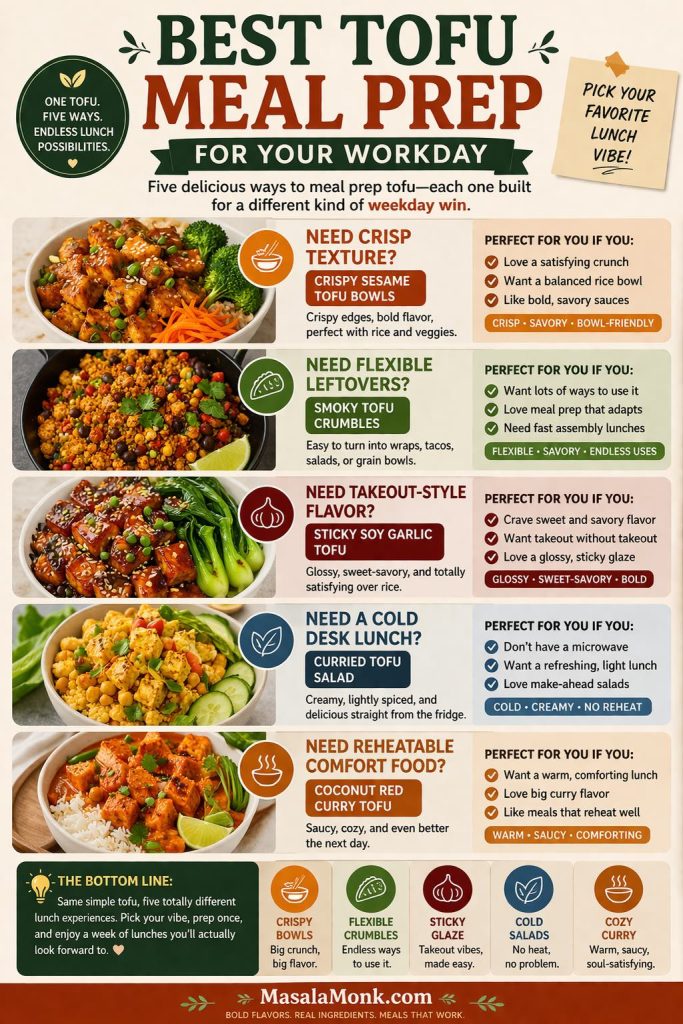
Instead of offering another vague tofu roundup, it gives you five practical tofu meal prep ideas based on the chicken lunches people already repeat in real life: sesame bowls, taco bowls, sticky glazed rice boxes, creamy lunch salads, and curry meal prep. The goal is not to make tofu imitate chicken badly. The goal is to use tofu in the meal formats where it can replace chicken confidently, repeatedly, and with far better flavor.

Start with the tofu format that matches the chicken lunch you already rely on most. The sesame bowl is the strongest first move for anyone who wants crisp texture. Smoky tofu crumbles fit best when taco-bowl lunches are already part of the weekly routine. Sticky soy garlic tofu makes the most sense for takeout-style sweet-savory meal prep. Curried tofu salad is the most practical option for cold desk lunches. Coconut red curry tofu is the easiest fit for reheatable comfort food.

Why Most Tofu Meal Prep Fails

When tofu meal prep goes wrong, the pattern is usually predictable. Sometimes the tofu is barely pressed. Just as often, the seasoning is too timid. In other cases, sauce goes on too early, so the tofu steams instead of browning. Meanwhile, some lunch boxes fall flat because they have no crunch, no acid, and no real contrast.

Those same issues show up again and again across successful tofu recipes, whether the format is a sesame bowl, taco crumbles, or a curry box. In other words, the problem is usually not that tofu “cannot replace chicken.” The problem is that tofu needs better handling from the beginning.

Once moisture, seasoning, browning, and box structure improve, tofu meal prep stops feeling like a compromise. It starts feeling like one of the most flexible, economical, and repeatable proteins in a weekly lunch rotation.

Also Read: White Russian Recipe: 7 Variants to Try, From Classic to Frozen

What These Tofu Meal Prep Ideas Do Differently

The five recipes in this post were chosen for a reason. Each one maps onto a chicken meal-prep habit people already have, which makes the switch easier to trust.

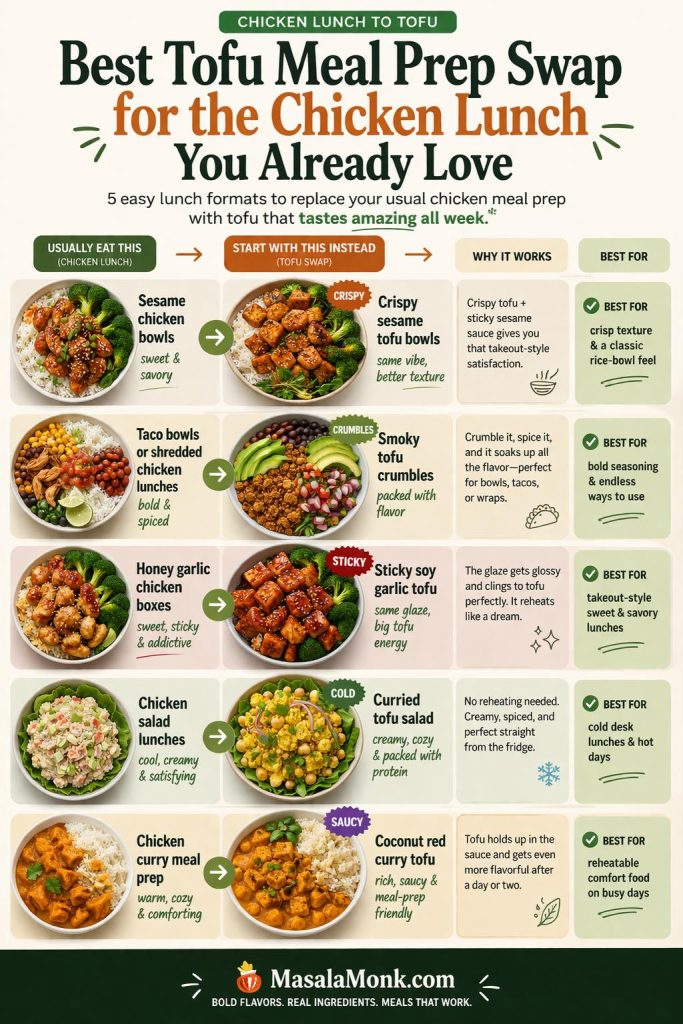
  • Sesame chicken bowls → Crispy sesame tofu bowls → best for readers who want texture, roasted vegetables, and a sauce-driven rice bowl
  • Taco bowls or shredded chicken bowls → Smoky tofu crumbles taco bowls → best for bold seasoning, flexible leftovers, and burrito-style lunches
  • Honey garlic or soy-glazed chicken → Sticky soy garlic tofu meal prep → best for takeout-style sweet-savory rice boxes
  • Chicken salad lunches → Curried tofu salad meal prep → best for cold lunches, wraps, crackers, and desk lunches
  • Chicken curry meal prep → Coconut red curry tofu boxes → best for reheatable comfort food and sauce-first meal prep

That structure matters because it lets you begin with a lunch format you already trust instead of changing everything about meal prep at once. You are not asking tofu to win in a random role. You are choosing the lane where it naturally works.

Editorial infographic showing the best tofu meal prep swap for the chicken lunch you already love, including crispy sesame tofu bowls, smoky tofu crumbles, sticky soy garlic tofu, curried tofu salad, and coconut red curry tofu, with quick notes on why each option works and which lunch style each one suits best.
Start with the tofu lunch style that already matches how you like to meal prep. Crispy bowls, taco-style crumbles, sticky glazed rice boxes, cold curried salad lunches, and reheatable curry boxes all solve a different weekday need, so choosing the right format first makes tofu easier to enjoy and repeat. Save this guide for your next meal-prep session, and share it with someone trying to eat less chicken without giving up satisfying lunches.

There is a strong nutritional case for building more lunches this way as well. Harvard’s Nutrition Source notes that soy foods are nutrient-dense protein sources and are especially useful when they replace red and processed meat, which makes tofu a practical protein choice within a broader meal-prep routine. For that bigger-picture context, Harvard’s guide to soy as a nutrient-dense protein source is worth reading. Internally, MasalaMonk’s guide to plant-based protein sources for high-protein meal prep fits naturally alongside this post.

Why Tofu Works as a Chicken Meal Prep Replacement

Chicken usually does three jobs in meal prep: it brings protein, gives the box substance, and carries seasoning well. Tofu can do those same jobs. It simply gets there differently.

Tofu is not at its strongest when the exact meat-like bite is the whole point of the meal. It is strongest where bowls, sauces, spice blends, crunch, vegetables, and repeatable lunch structure do a lot of the work. That is why tofu becomes so convincing in crisp sesame bowls, smoky taco crumbles, sticky glazed rice boxes, creamy curried lunch salads, and reheatable curry meal prep.

The biggest mistake people make is trying to treat tofu exactly like chicken without changing the rest of the meal. If the whole lunch depends on the natural savoriness and bite of chicken, tofu will feel flat unless you compensate with better moisture control, stronger seasoning, and more thoughtful box building. Once that shift happens, tofu stops feeling like a backup plan and starts feeling deliberate.

For a broader vegetarian meal-prep perspective, MasalaMonk’s guide to high-protein Indian meal prep ideas is a strong internal companion.

How to Make Tofu Meal Prep Ideas Taste Good All Week

Choose the best tofu for meal prep

For most of the recipes below, firm or extra-firm tofu is the right choice. These styles hold shape better, brown more easily, and survive refrigeration more gracefully than softer tofu. Soft and silken tofu are far better suited to soups, sauces, smoothies, and desserts.

That distinction matters because beginner frustration often starts with the wrong tofu, not the wrong recipe. EatRight’s guidance on vegetarian protein foods makes the same basic point: firmer tofu works best in roasting, grilling, and sautéing applications, while softer tofu belongs in gentler preparations. Their article on vegetarian protein foods and tofu texture is a useful reader-friendly reference.

Why pressing tofu matters for meal prep texture

Pressing tofu is one of the simplest upgrades you can make. You do not need to remove every trace of moisture. You just need to remove enough excess water that the tofu can brown, crisp, and absorb seasoning without steaming itself into bland softness.

Wrap the tofu in a clean towel or paper towels, place it on a plate or board, and weigh it down for 20 to 30 minutes. In most cases, that is enough. The improvement in texture is immediate, especially in crisp bowls, tofu crumbles, and sticky glazed tofu.

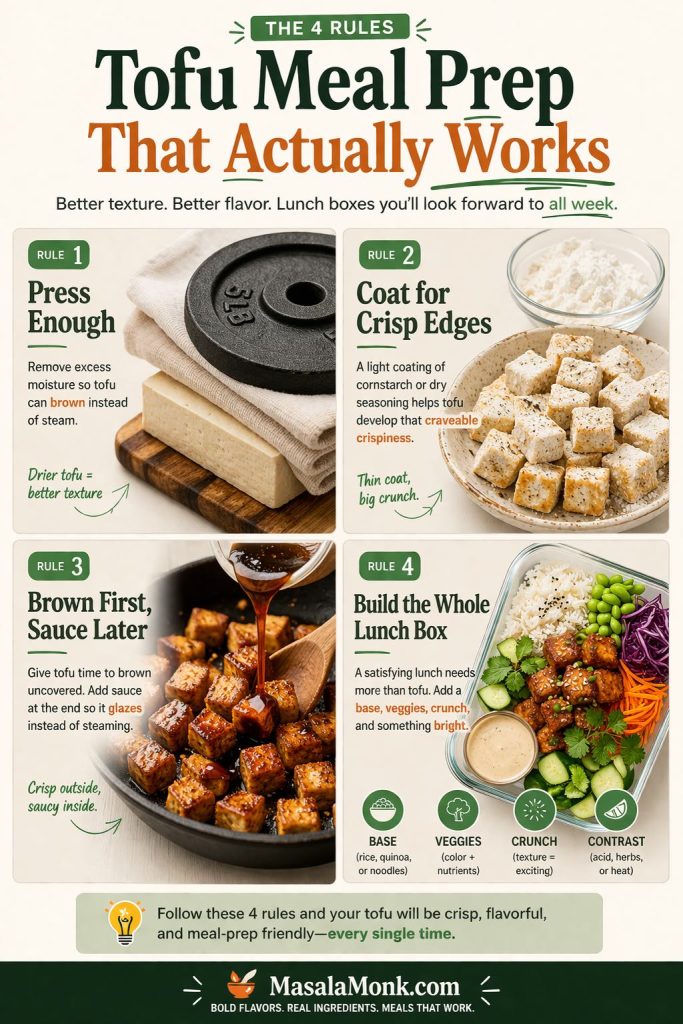
Premium editorial tofu meal prep infographic showing four practical rules for better tofu lunches: press enough to remove excess moisture, coat tofu for crisp edges, brown first and sauce later, and build the whole lunch box with a base, vegetables, crunch, and contrast for better texture and flavor all week.
Better tofu meal prep starts long before the sauce goes on. Pressing properly, creating crisp edges, browning before glazing, and building a lunch box with texture, vegetables, and contrast are the small moves that make tofu taste more satisfying through the week. Save this post for your next prep day, and share it with someone who still thinks tofu meal prep has to be bland, soggy, or boring.

Brown tofu first, then add sauce

This is one of the most important rules in the entire article. Sauce added too early creates steam. Steam ruins browning. So tofu should be roasted, air-fried, or pan-browned before it is glazed or tossed.

That sequence matters most in crispy bowls and sticky tofu meal prep. The Kitchn’s method for making crispy tofu without deep-frying reinforces exactly why pressing, coating, and cooking before saucing works so reliably.

How to season tofu so it does not taste bland

Tofu rewards assertive seasoning. Salt helps, but it is rarely enough on its own. Soy sauce adds umami, vinegar or lime add lift, garlic and ginger add depth, chili brings edge, and a little sweetness often helps bring a glaze together. The best tofu meal prep ideas build flavor from several directions at once rather than relying on one sauce at the end.

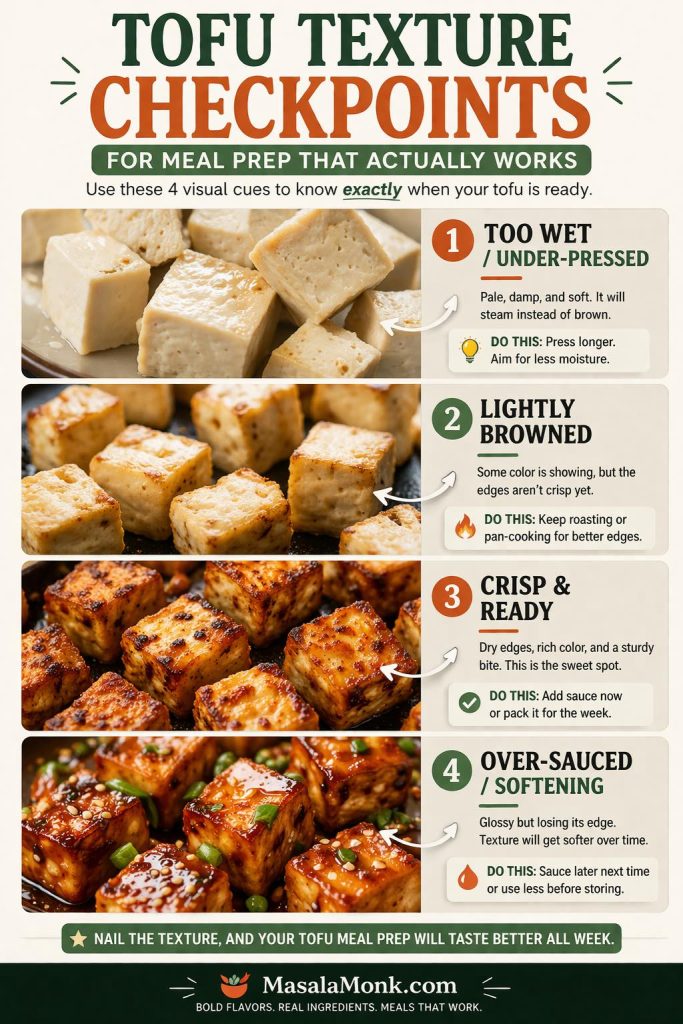
Editorial tofu texture guide for meal prep showing four visual stages: too wet and under-pressed tofu, lightly browned tofu, crisp and ready tofu, and over-sauced tofu softening after glazing, with quick cues for when to keep cooking, when to sauce, and when tofu is ready to pack for the week.
Good tofu meal prep gets much easier once you know what to look for in the pan or on the tray. Pale tofu usually needs more time, lightly browned tofu still needs better edges, properly crisp tofu is the right point for glazing or packing, and over-sauced tofu loses the texture that makes lunch satisfying later in the week. Save this post for your next prep day, and share it with someone who keeps ending up with tofu that turns soft before the week is over.

Build the whole meal prep box, not just the protein

The best tofu meal prep ideas are not just tofu plus rice. They are tofu plus a base, vegetables, texture contrast, and a dressing or sauce that makes the meal feel complete.

Rice, quinoa, soba, wraps, chopped salads, and curry-style boxes all work well as foundations. Broccoli, cabbage, peppers, carrots, cucumbers, edamame, onions, herbs, seeds, and pickled elements keep the lunches from going flat. For more base-building inspiration, MasalaMonk’s guide to plant-based meal prep ideas using quinoa as a protein source fits naturally here.

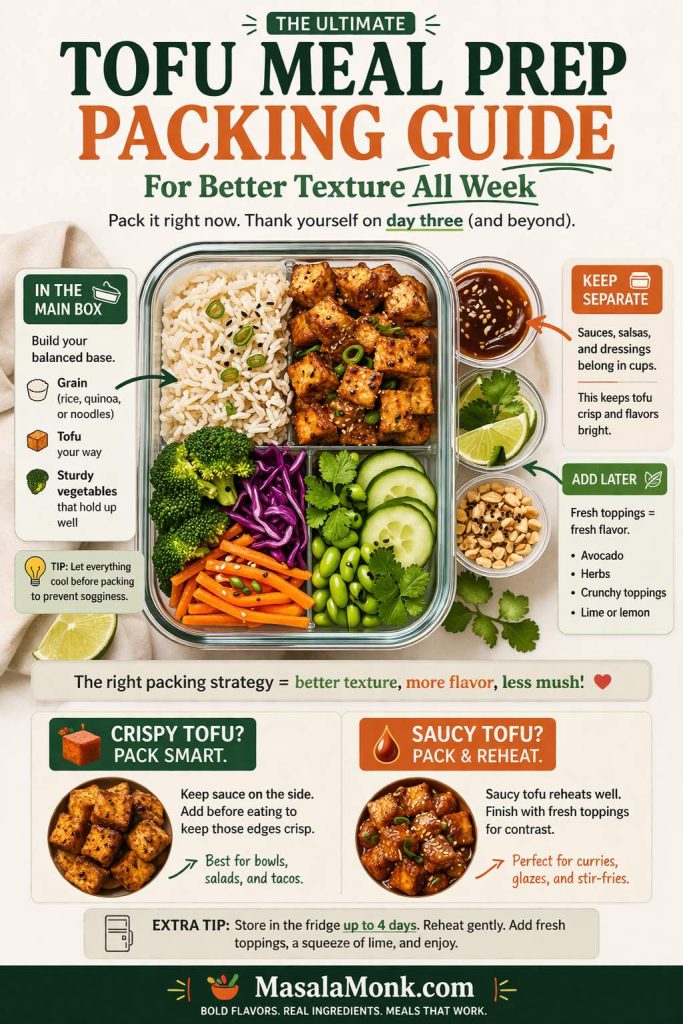
Editorial tofu meal prep packing guide showing how to pack tofu lunches for better texture all week, including what to keep in the main box, which sauces and dressings to store separately, what fresh toppings to add later, and how crispy tofu and saucy tofu should be packed differently for the best meal prep results.
Packing matters just as much as cooking when you want tofu meal prep to hold up through the week. Keep grains, tofu, and sturdy vegetables in the main box, store sauces separately, and add fresh toppings like herbs, lime, avocado, or crunchy elements closer to eating so the lunch keeps more texture and contrast. Save this post for your next prep day, and share it with someone who keeps blaming tofu when the real problem is the packing.

How to pack tofu meal prep so it still tastes good on day three

Packing order matters more than many people expect.

  • Keep sauce separate for crispy meals whenever possible.
  • Let hot tofu, rice, and vegetables cool before sealing the containers.
  • Add wet toppings like salsa, cucumber, and avocado closer to serving time.
  • Refresh older meal prep with acid, herbs, chili, seeds, or crunch rather than assuming the tofu itself is the only issue.

That last point matters. Cold or reheated lunches naturally lose some brightness, so a squeeze of lime, a little vinegar, fresh spring onion, or a spoonful of crunchy topping can make day-three tofu meal prep taste far more alive.

Also Read: Mango Sorbet Recipe: Healthy & Plant Based Dessert

5 Tofu Meal Prep Ideas That Actually Make a Strong Replacement for Chicken

The five recipes below are arranged from the easiest texture-first tofu win to the most comfort-driven sauce-based lunch. Start with the one that matches your usual chicken habit most closely, then branch out once you find the format you actually want to repeat.

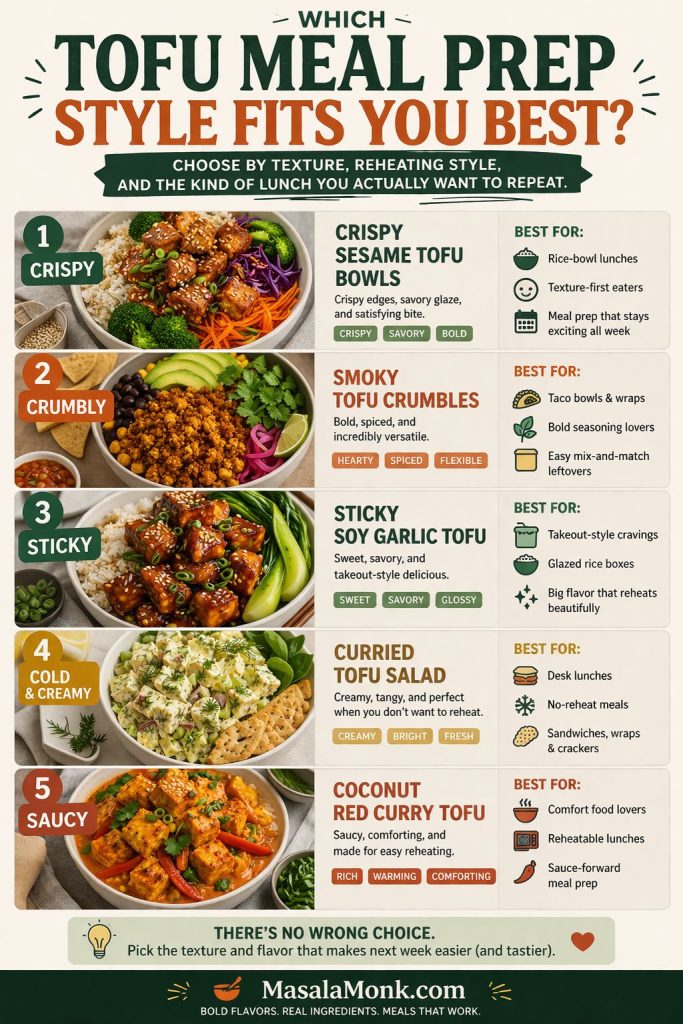
Premium editorial tofu meal prep style chooser infographic comparing five lunch formats: crispy sesame tofu bowls, smoky tofu crumbles, sticky soy garlic tofu, curried tofu salad, and coconut red curry tofu, with notes on texture, reheating style, and which type of lunch each option suits best.
The best tofu meal prep is usually the one that fits how you actually like to eat during the week. Crispy sesame bowls work well for texture-first lunches, smoky crumbles are great for taco bowls and wraps, sticky soy garlic tofu suits takeout-style cravings, curried tofu salad covers cold desk lunches, and coconut red curry tofu is the easiest fit for reheatable comfort food. Save this post for your next meal-prep session, and share it with someone who wants more variety without ending up with another week of boring lunches.

Crispy Sesame Tofu Meal Prep Bowls

Best tofu swap for sesame chicken bowls

If you usually prep sesame chicken, crispy stir-fry bowls, or takeout-style rice boxes, this is the strongest place to start. Crisp tofu gives you bite, structure, and sauce-holding power in a way soft cubes never will. Better still, the whole format still feels familiar, which makes the switch easier to trust.

Among all the tofu meal prep ideas in this post, this is one of the most beginner-friendly because it solves several problems at once: texture, strong sauce, roasted vegetables, and a dependable rice-bowl format. If someone thinks tofu always feels soggy or forgettable, this is the recipe most likely to change that opinion early.

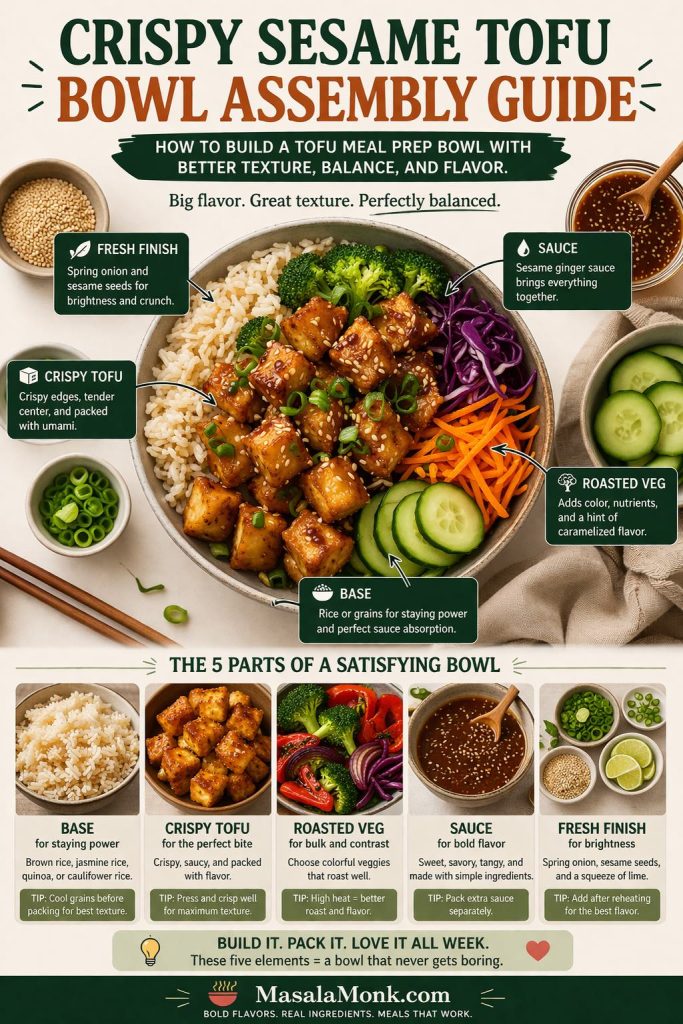
Premium editorial guide showing how to build a crispy sesame tofu meal prep bowl with a grain base, crispy tofu, roasted vegetables, sesame ginger sauce, and a fresh finish like spring onion and sesame seeds for better texture, balance, and flavor all week.
A satisfying tofu meal prep bowl works best when every part has a job: a solid base for staying power, crispy tofu for bite, roasted vegetables for bulk and contrast, a bold sesame-style sauce for flavor, and a fresh finish to keep the lunch from tasting heavy by day three. Save this post for your next prep day, and share it with someone who wants high-protein lunches that feel balanced, flavorful, and worth repeating through the week.

Recipe Card: Crispy Sesame Tofu Meal Prep Bowls

Prep time: 25 minutes
Cook time: 30 minutes
Yield: 4 bowls
Approximate protein: about 18 to 22 grams per serving before rice and toppings, depending on tofu brand

Ingredients

For the tofu

  • 2 blocks extra-firm tofu
  • 1 tablespoon neutral oil
  • 1 tablespoon soy sauce
  • 2 tablespoons cornstarch
  • 1 teaspoon garlic powder
  • 1/2 teaspoon black pepper

For the sesame ginger sauce

  • 3 tablespoons soy sauce
  • 1 tablespoon rice vinegar
  • 1 tablespoon maple syrup or honey
  • 1 tablespoon toasted sesame oil
  • 1 tablespoon grated ginger
  • 2 garlic cloves, minced
  • 1 to 2 teaspoons chili crisp or chili flakes
  • 2 tablespoons water

And for the bowls

  • 3 cups cooked rice
  • 1 large head broccoli, cut into florets
  • 2 bell peppers, sliced
  • 2 carrots, sliced thin
  • 1 tablespoon neutral oil
  • 2 tablespoons sesame seeds
  • 3 spring onions, sliced

Method

  1. Press the tofu for 20 to 30 minutes, then cut it into cubes.
  2. Toss the tofu with oil, soy sauce, cornstarch, garlic powder, and pepper. The coating should look light and powdery rather than wet.
  3. Spread on a lined tray and roast at 220°C / 425°F for 25 to 30 minutes, turning once, until the edges look dry, browned, and lightly blistered.
  4. Toss broccoli, peppers, and carrots with a little oil and roast on a second tray until tender with some color.
  5. Whisk together the sauce ingredients and taste before using.
  6. Once the tofu is hot and crisp, toss it lightly in enough sauce to coat.
  7. Divide rice among four containers, then add vegetables and tofu.
  8. Finish with sesame seeds and spring onion.

Best texture checkpoint

The tofu is ready when the cubes release easily from the tray, the corners look browned rather than pale, and the exterior feels lightly firm instead of damp.

Why this recipe works

Crisp texture plus a sesame-ginger sauce gives tofu a role people already trust from chicken bowls. The sauce goes on after roasting, which protects the edges instead of destroying them. Roasted vegetables keep the bowl from tasting one-note, while rice gives the whole meal the same dependable structure that makes sesame chicken lunch prep so popular.

Do not mess this up

Do not pour all the sauce onto the tofu before roasting. It will steam instead of crisp. Also, do not under-roast it. Pale tofu softens too quickly once sauced and feels disappointing by day two.

Storage and reheating

Store for up to 4 days. For the best texture, keep extra sauce separate and add it after reheating. Microwave works fine for the rice and vegetables, but an air fryer or hot skillet is the best way to recover crispness in the tofu. For the best day-three texture, pack sauce in a small container and toss just before eating.

Easy swaps

  • use quinoa instead of rice
  • swap peppers for cabbage or snap peas
  • add edamame for more protein
  • finish with lime for more brightness

For another bowl direction later in the week, MasalaMonk’s Thai-style vegan bowl with peanut butter dressing works well as a follow-on internal read.

Smoky Tofu Crumbles Taco Bowls

Best tofu swap for shredded chicken taco bowls

If your usual lunch prep leans toward taco bowls, burrito bowls, or shredded chicken rice boxes, tofu crumbles are one of the smartest replacements you can make. Because the tofu is broken into small irregular pieces, it catches spice more evenly and feels closer to the structure of seasoned minced or shredded protein.

This is also one of the most believable chicken-to-tofu swaps in the post. Ease, strong seasoning, and leftover flexibility are exactly what make it so repeatable. Once you make a good batch of tofu crumbles, you are not limited to one kind of lunch box.

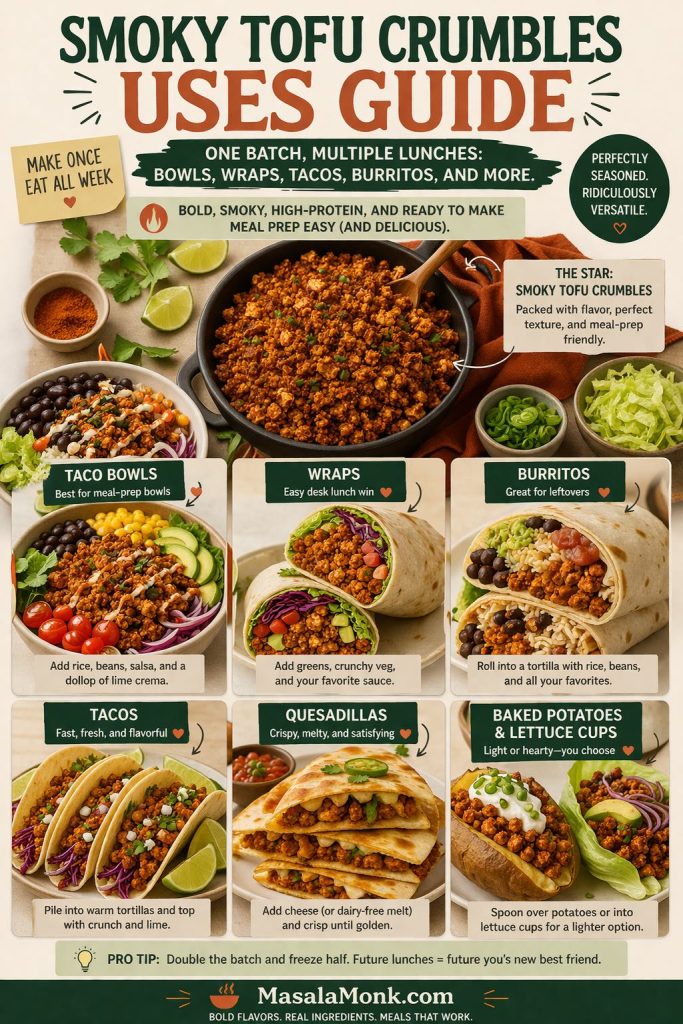
Editorial infographic showing multiple ways to use smoky tofu crumbles for meal prep, including taco bowls, wraps, burritos, tacos, quesadillas, and baked potatoes or lettuce cups, with notes on why this tofu crumble format works well for flexible high-protein lunches through the week.
One good batch of smoky tofu crumbles can carry much more than a single lunch. Use it for taco bowls early in the week, then turn the leftovers into wraps, burritos, tacos, quesadillas, or even baked potatoes when you want something different without starting from scratch again. Save this post for your next prep day, and share it with someone who wants more variety from one simple, high-protein tofu meal prep base.

Recipe Card: Smoky Tofu Crumbles Taco Bowls

Prep time: 20 minutes
Cook time: 25 minutes
Yield: 4 bowls
Approximate protein: about 20 to 24 grams per serving depending on tofu and beans used

Ingredients

  • 2 blocks firm or extra-firm tofu
  • 2 teaspoons olive oil
  • 1 tablespoon soy sauce
  • 1 tablespoon tomato paste
  • 2 teaspoons chili powder
  • 1 teaspoon smoked paprika
  • 1 teaspoon cumin
  • 1 teaspoon garlic powder
  • 1 teaspoon onion powder
  • 1/2 teaspoon black pepper
  • juice of 1 lime
  • 3 cups cooked rice
  • 1 can black beans, drained and rinsed
  • 1 cup corn
  • 2 cups shredded cabbage or lettuce
  • 1 cup salsa or pico de gallo
  • 1 avocado, sliced or mashed
  • coriander leaves for serving

Method

  1. Press the tofu well, then crumble it by hand into irregular pieces roughly the size of cooked ground meat rather than big chunks.
  2. Mix olive oil, soy sauce, tomato paste, chili powder, smoked paprika, cumin, garlic powder, onion powder, black pepper, and lime juice.
  3. Toss the tofu crumbles in the seasoning mixture until evenly coated.
  4. Spread on a baking tray and roast at 220°C / 425°F for 20 to 25 minutes, stirring once, until the tray looks mostly dry and the edges are browned.
  5. Divide rice among containers.
  6. Add black beans, corn, cabbage, and tofu crumbles.
  7. Pack salsa and avocado separately if possible.
  8. Finish with coriander and extra lime at serving time.

Best texture checkpoint

The crumbles are ready when the tray looks mostly dry, the edges have browned, and the mixture no longer gives off visible steam. They should look concentrated and lightly chewy at the edges rather than soft and damp.

Why this recipe works

Strong seasoning does a lot of the heavy lifting here. Even more importantly, the crumble texture makes tofu feel more integrated into the bowl, which helps a lot if someone is still skeptical about large tofu cubes. Beans, corn, cabbage, salsa, and avocado also create the kind of layered bowl that makes taco meal prep satisfying beyond the protein itself.

Do not mess this up

Do not stop cooking the crumbles too early. If they still look wet, they will taste flat and soften badly in storage. Do not crowd the tray either, or the mixture will steam. Also, do not skip the lime, because the acid helps the whole bowl feel brighter and less heavy.

Storage and serving

These bowls hold well for 3 to 4 days. Add avocado fresh if possible. If you want the crumbles darker and a little chewier, roast them 3 to 5 minutes longer after stirring.

Other ways to use the crumbles

  • spoon into wraps
  • roll into burritos
  • use in tacos
  • add to quesadillas
  • pile onto baked potatoes
  • turn into lettuce cups

Easy swaps

  • use quinoa instead of rice
  • add jalapeños or pickled onions
  • swap black beans for pinto beans
  • stir chipotle into the salsa for more smoke

Also Read: Protein Ice Cream Recipe: 10 Creamy Homemade Recipes

Sticky Soy Garlic Tofu Meal Prep

Best tofu swap for honey garlic or soy-glazed chicken bowls

If you like sticky, glossy, sweet-savory chicken bowls, this is the tofu version to try first. The key is simple: crisp the tofu first, then glaze it. That way you keep contrast instead of ending up with soft, saucy cubes.

This recipe works especially well for readers who love takeout-style lunches but want something they can batch at home without losing all the texture by the next day. The crisp shell gives the glaze something to cling to, while the garlic, ginger, soy, and a little sweetness create the familiar savory payoff many people usually chase in honey garlic chicken or soy-glazed bowls.

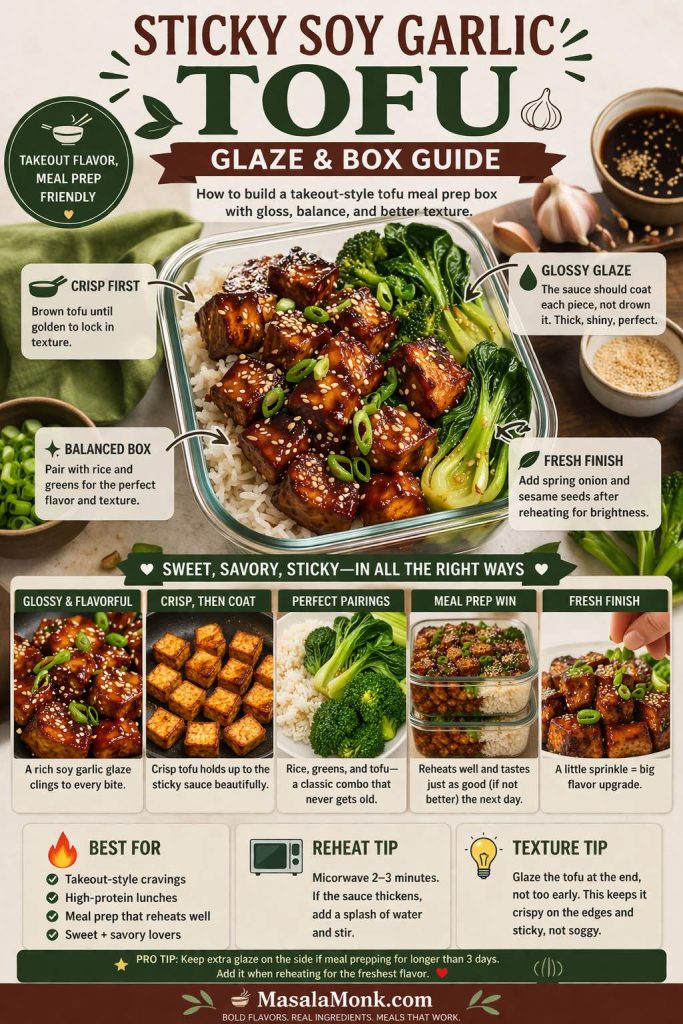
Premium editorial infographic showing a sticky soy garlic tofu meal prep box with glossy glazed tofu, rice, and greens, plus tips on crisping tofu first, coating with glaze at the end, pairing it with a balanced lunch box, reheating gently, and finishing with spring onion and sesame for better texture and flavor.
Sticky soy garlic tofu is the lunch to make when you want a meal-prep box that feels closer to takeout than another plain rice bowl. Crisping the tofu first, glazing it at the end, and pairing it with rice, greens, and a fresh finish keeps the box glossy, savory, and satisfying without turning everything soft too early. Save this post for your next prep day, and share it with someone who wants sweet-savory high-protein lunches that still taste good after reheating.

Recipe Card: Sticky Soy Garlic Tofu Meal Prep

Prep time: 20 minutes
Cook time: 30 minutes
Yield: 4 bowls
Approximate protein: about 18 to 22 grams per serving before rice, depending on tofu brand

Ingredients

For the tofu

  • 2 blocks extra-firm tofu
  • 1 tablespoon neutral oil
  • 2 tablespoons cornstarch
  • 1/2 teaspoon black pepper

For the glaze

  • 4 tablespoons soy sauce
  • 1 tablespoon rice vinegar
  • 1 tablespoon maple syrup or brown sugar
  • 1 tablespoon sesame oil
  • 4 garlic cloves, minced
  • 1 teaspoon grated ginger
  • 1 teaspoon chili flakes or chili crisp
  • 4 tablespoons water

And for the bowls

  • 3 cups cooked jasmine rice
  • 2 cups green beans or broccoli
  • 1 bell pepper, sliced
  • 2 spring onions, sliced
  • sesame seeds for garnish
  • shelled edamame, optional, for extra protein

Method

  1. Press the tofu and cut it into cubes.
  2. Toss with oil, cornstarch, and pepper.
  3. Roast or air-fry at 220°C / 425°F until crisp and golden, about 25 minutes.
  4. Roast or sauté the vegetables until just tender.
  5. In a saucepan, combine soy sauce, rice vinegar, maple or brown sugar, sesame oil, garlic, ginger, chili, and water. Simmer until glossy and lightly thickened.
  6. Toss the hot tofu gently in the glaze.
  7. Divide rice and vegetables into containers, then top with glazed tofu.
  8. Finish with spring onion and sesame seeds.

Best texture checkpoint

The tofu should be crisp and well browned before it ever touches the glaze. The glaze should look shiny and lightly syrupy, thick enough to coat the back of a spoon but not so reduced that it turns gummy after chilling.

Why this recipe works

The glaze gives tofu the familiar sticky, savory-sweet finish people often associate with takeout-style chicken bowls. Crisping first prevents the meal from turning heavy and soggy, while the rice and vegetables keep the lunch grounded in a familiar meal-prep structure. That balance between crispness and glaze is what makes the recipe satisfying rather than merely saucy.

Do not mess this up

Do not glaze the tofu before it is properly browned. Otherwise, you lose the contrast that makes the recipe worth making. Also, avoid reducing the glaze too far, or it can become overly sticky after chilling and reheating.

Storage and reheating

Store for up to 4 days. Reheat gently. For the best texture, toss only part of the tofu in glaze before packing and carry extra glaze separately to spoon over after reheating. Fresh spring onion or sesame added at the end helps restore contrast.

Easy swaps

  • use teriyaki instead of soy-garlic
  • swap in mushrooms, cabbage, or snap peas
  • add toasted peanuts for crunch
  • serve with brown rice if you prefer

MasalaMonk’s teriyaki sauce recipe is a natural internal link here if you want to vary the glaze later.

Curried Tofu Salad for High-Protein Lunch Meal Prep

Best tofu swap for curried chicken salad lunches

If you rely on creamy chicken salad for sandwiches, wraps, crackers, or desk lunches, this is the tofu format that replaces it most directly. Because the recipe depends on dressing, crunch, and mix-ins, tofu feels natural here rather than forced.

This is also one of the most practical tofu meal prep ideas for people who do not want to reheat lunch at work. It travels well, tastes good cold, and solves the problem of protein-forward desk lunches without relying on deli meat or another day of chicken.

Premium editorial infographic showing a curried tofu salad no-reheat lunch guide with serving ideas for lettuce cups, sandwich filling, wrap filling, crackers or cucumber slices, and toast or pita pockets, plus notes on easy packing, desk-lunch use, added crunch and acid, and meal-prep storage.
Curried tofu salad is one of the easiest ways to make tofu meal prep work for real weekday lunches because it packs well, tastes good cold, and fits more than one kind of meal. Use it in wraps, sandwiches, lettuce cups, snack-box lunches, or on toast when you want something high in protein without depending on a microwave. Save this post for your next prep day, and share it with someone who needs an easy no-reheat lunch that still feels flavorful, fresh, and worth repeating.

Recipe Card: Curried Tofu Salad Meal Prep

Prep time: 20 minutes
Cook time: optional 10 minutes if you lightly bake the tofu first
Yield: 4 lunches
Approximate protein: about 16 to 20 grams per serving, depending on tofu and dressing choices

Ingredients

  • 2 blocks firm tofu
  • 1/3 cup vegan mayo
  • 1 tablespoon lemon juice
  • 2 teaspoons curry powder
  • 1/4 teaspoon turmeric, optional
  • 1 teaspoon Dijon mustard
  • 2 celery stalks, finely chopped
  • 2 spring onions or 1/4 small red onion, finely chopped
  • 2 tablespoons chopped coriander or parsley
  • 2 tablespoons raisins or finely chopped apple, optional
  • 2 tablespoons toasted sunflower seeds or chopped cashews, optional
  • salt and black pepper to taste
  • greens, wraps, bread, or crackers for serving

Method

  1. Press the tofu lightly so it is not watery, then crumble or finely chop it.
  2. In a bowl, whisk together vegan mayo, lemon juice, curry powder, turmeric if using, Dijon, salt, and pepper.
  3. Fold in the tofu, celery, onion, herbs, and any optional raisins or apple.
  4. Taste and adjust with more lemon, salt, or curry powder.
  5. Chill for at least 20 to 30 minutes before packing.
  6. Portion into containers with greens, wraps, sandwich bread, crackers, or cucumber slices.

Best texture checkpoint

The salad should hold together lightly without looking wet or loose. Finely crumbled tofu gives a more classic chicken-salad feel, while a slightly chunkier chop gives more bite.

Why this recipe works

This recipe replaces the function of chicken salad directly. It is practical, portable, and easy to repeat without reheating. The crunch from celery and seeds, the acid from lemon, and the creaminess from the dressing help tofu feel deliberate rather than plain, which is exactly why this format works so well for cold lunches.

Do not mess this up

Do not leave the tofu too wet before mixing. Excess moisture dilutes the dressing and shortens the storage life. Also, do not overdo the mayo at the start, because the salad loosens slightly as it sits.

Storage

Keeps well for 3 to 4 days. Stir before serving if needed. Keep greens and breads separate until you are ready to eat.

Best ways to serve it

  • spoon into wraps
  • pack with crackers
  • turn into a sandwich filling
  • serve with cucumber slices
  • pile onto toast with tomato
  • use in pita pockets

Easy swaps

  • use a yogurt-style dressing for a lighter version
  • add chopped grapes instead of apple
  • spoon into lettuce cups
  • use as a pita filling
  • add more herbs for a fresher finish

If you keep the mayo-based version, MasalaMonk’s homemade mayo recipe is the cleanest internal fit here.

Coconut Red Curry Tofu Meal Prep Boxes

Best tofu swap for chicken curry meal prep

If your weekly lunches usually include chicken curry, this is the tofu version most likely to satisfy you. Sauce-driven meal prep is one of tofu’s strongest lanes, because the tofu absorbs flavor without needing to imitate the exact texture of chicken.

This is also the best option in the post for readers who care more about reheating performance than crispness. Curry already depends on sauce, aromatics, vegetables, and rice for a large part of its appeal. That means tofu does not have to behave like chicken to feel right. It only has to hold shape, carry flavor, and reheat well.

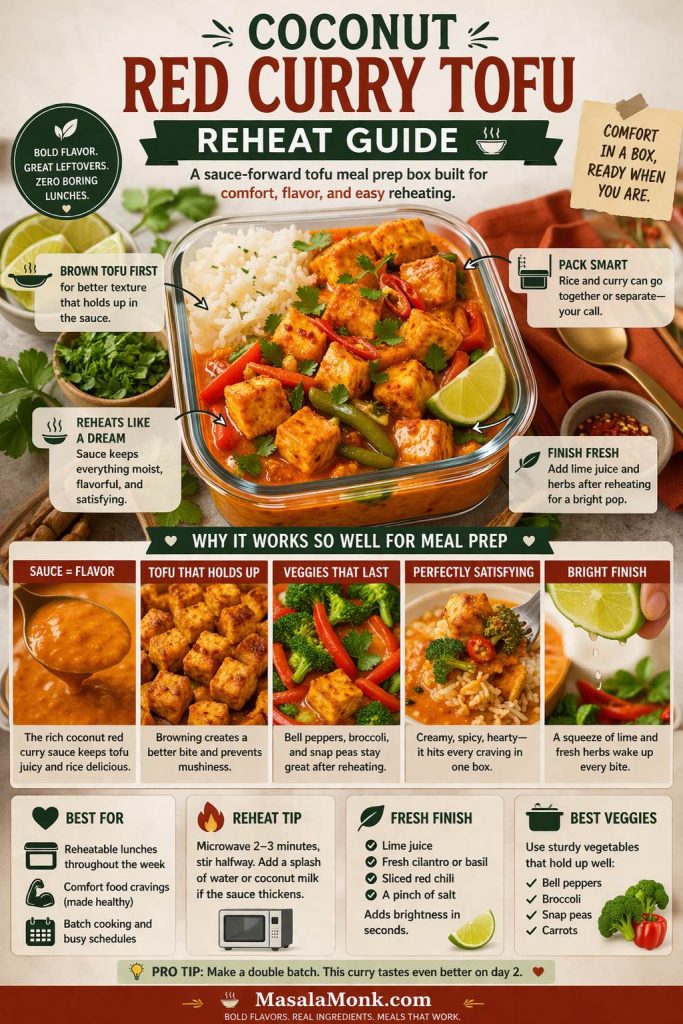
Premium editorial infographic showing a coconut red curry tofu meal prep box with reheating tips, including browning tofu before simmering, packing curry with rice, finishing with lime and herbs after reheating, and using sturdy vegetables for a sauce-forward tofu lunch that stays satisfying through the week.
Coconut red curry tofu is one of the easiest tofu meal prep ideas to trust when you want a warm lunch that still feels good after reheating. Browning the tofu first, using vegetables that hold up well, and finishing with fresh lime or herbs after heating keeps the box rich, comforting, and balanced instead of heavy. Save this post for your next prep day, and share it with someone who wants a reheatable high-protein lunch that still tastes vibrant later in the week.

Recipe Card: Coconut Red Curry Tofu Meal Prep Boxes

Prep time: 20 minutes
Cook time: 30 minutes
Yield: 4 servings
Approximate protein: about 18 to 22 grams per serving before rice, depending on tofu and any added edamame

Ingredients

  • 2 blocks firm tofu
  • 1 tablespoon neutral oil
  • 1 onion, sliced
  • 3 garlic cloves, minced
  • 1 tablespoon grated ginger
  • 2 to 3 tablespoons red curry paste
  • 1 can full-fat coconut milk
  • 1 tablespoon soy sauce or tamari
  • 1 teaspoon maple syrup or brown sugar, optional
  • 1 bell pepper, sliced
  • 2 carrots, sliced
  • 1 to 2 cups green beans or broccoli
  • juice of 1/2 lime
  • fresh basil or coriander
  • 3 cups cooked rice for serving
  • shelled edamame, optional, for more protein

Method

  1. Press the tofu and cut it into cubes.
  2. Brown the tofu in a skillet with a little oil or roast it until lightly golden, then set aside.
  3. In a large pan, cook the onion until softened.
  4. Add garlic and ginger and cook briefly.
  5. Stir in the red curry paste and cook until fragrant.
  6. Add coconut milk, soy sauce, and the optional maple or brown sugar, then bring to a gentle simmer.
  7. Add bell pepper, carrots, and green beans or broccoli. Simmer until just tender.
  8. Return the tofu to the curry and simmer gently for a few minutes.
  9. Finish with lime juice and herbs.
  10. Portion with cooked rice into containers.

Best texture checkpoint

The tofu should be lightly browned before it enters the sauce, and the vegetables should be tender but not collapsing. The finished curry should look rich and fluid rather than watery or aggressively boiled down.

Why this recipe works

Sauce-driven meal prep is one of tofu’s strongest lanes. In this case, the curry gives you depth, comfort, and leftovers that still taste good several days later. Browning the tofu first helps it hold its structure in the sauce and keeps the final meal from tasting flat.

Do not mess this up

Do not skip browning the tofu first. Even a light browning step makes the final curry taste fuller and less flat. Also, avoid boiling the curry too hard once the tofu goes back in, or the vegetables can over-soften and the sauce can separate.

Storage and reheating

Store for up to 4 days. Reheat gently in the microwave or on the stove. Pack rice separately if you want the curry to reheat more evenly and avoid over-soft rice by day three. Add fresh herbs or extra lime closer to serving time if possible.

Easy swaps

  • use green curry paste
  • add mushrooms, baby corn, or snap peas
  • add edamame for more protein
  • use more lime and herbs for a brighter finish

Also Read: Homemade Mango Ice Cream Recipe

How to Make These Tofu Meal Prep Ideas Even Higher in Protein

Tofu already gives these lunches a solid protein base, but the easiest way to make them more filling is to support the tofu intelligently.

  • add shelled edamame to sesame bowls, sticky bowls, and curry boxes
  • use quinoa instead of rice in some meals
  • pair tofu crumbles with beans or lentils
  • use higher-protein wraps for salad or crumble fillings
  • add roasted chickpeas, hemp hearts, or seeds for extra protein and texture
  • slightly increase the tofu portion in the meals you repeat most often

That kind of adjustment helps the “high-protein” promise feel more real in practice, not just in the title. It also lets you adapt the same tofu meal prep ideas to different hunger levels without reinventing the whole week.

Tofu Meal Prep Troubleshooting: How to Fix the Problems That Ruin the Week

Use this section as a quick check before blaming tofu itself. In most cases, the problem comes down to moisture, weak seasoning, or packing order.

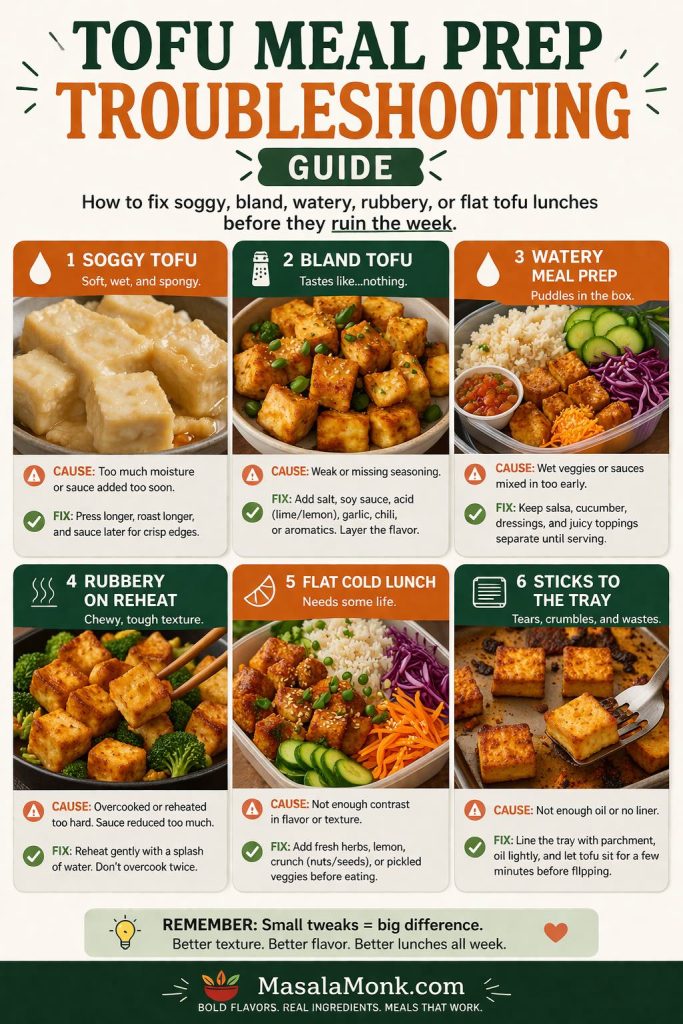
Premium tofu meal prep troubleshooting infographic showing common tofu lunch problems and fixes, including soggy tofu, bland tofu, watery meal prep boxes, rubbery tofu on reheat, flat cold lunches, and tofu sticking to the tray, with clear cause-and-fix notes for better texture and flavor all week.
When tofu meal prep goes wrong, the problem is usually fixable. Too much moisture, weak seasoning, wet add-ins, harsh reheating, or not enough contrast can turn a good lunch into a disappointing one, but small adjustments make a big difference. Save this post for your next prep session, and share it with someone who wants tofu lunches that stay flavorful, balanced, and worth eating all week.
  • Tofu turns soggy: Too much moisture or sauce was added too early. Press longer, roast longer, and sauce later.
  • Tofu tastes bland: The seasoning is too weak or the glaze is under-salted. Use soy, acid, aromatics, chili, and enough salt.
  • Meal prep turns watery: Wet vegetables were packed too early. Store cucumbers, salsa, and similar add-ins separately.
  • Tofu goes rubbery on reheat: It was either overcooked twice or reheated too harshly. Reheat gently and avoid over-reducing sauces.
  • Crispy tofu loses its edge by day three: It was fully dressed too early. Keep extra sauce separate until serving.
  • Salad-style tofu lunch tastes flat: It needs more crunch or acid. Add celery, herbs, lemon, seeds, or pickled elements.
  • Tofu sticks to the tray: There was not enough oil or no lining. Line the tray and let the tofu sit briefly before turning.
  • Tofu tastes watery even when seasoned: It was not pressed enough before cooking or mixing. Press longer and let the exterior dry slightly before seasoning.
  • Tofu falls apart in bowls: The cubes were too soft or handled too much after cooking. Use firm or extra-firm tofu and toss gently after browning.
  • Tofu tastes fine hot but disappointing cold: Cold food dulls flavor. Add more acid, herbs, crunch, or a sharper sauce when serving.

Also Read: Cookie Pie Recipe: 10 Best Flavors, Fillings and Variations

Tofu Meal Prep Ideas for Beginners: Batch-Cook Once and Eat All Week

How to batch-cook tofu meal prep in one session

The best tofu meal prep ideas often share the same foundation. Instead of cooking five unrelated lunches from scratch, cook components once and turn them in different directions.

A practical session looks like this:

  • press and cook 3 to 4 blocks of tofu in two different styles
  • cook a big batch of rice or quinoa
  • roast two trays of vegetables
  • mix one creamy dressing and one glaze
  • prep raw crunchy vegetables for cold lunches

A good order helps. Press the tofu first so it can drain while you start rice or quinoa. Roast one tray of tofu and one tray of vegetables together if your oven space allows. Mix sauces while everything cooks. Then cool components before packing, because steam trapped in containers shortens the life of the meal prep and softens textures faster than people expect.

Premium editorial infographic showing a 90-minute tofu meal prep game plan with six time blocks: press tofu and start grain, chop vegetables and mix sauces, roast tofu and vegetables, make curry or curried tofu salad, cool and portion containers, and pack sauces and add-ons for better lunches all week.
A good tofu meal prep session gets much easier when the work has a clear order. Start by pressing tofu and cooking your grain, move into chopping and sauces, roast tofu and vegetables together, then finish with one saucy option, portioning, and packed toppings so weekday lunches feel organized instead of repetitive. Save this post for your next prep day, and share it with someone who wants a simpler way to batch-cook better tofu lunches all week.

A sample 90-minute batch-cook plan

  • 0 to 10 minutes: press tofu and start rice or quinoa
  • 10 to 20 minutes: chop vegetables and mix sauces
  • 20 to 45 minutes: roast tofu and vegetables
  • 45 to 60 minutes: cook the curry or mix the curried tofu salad
  • 60 to 75 minutes: cool the hot components and portion containers
  • 75 to 90 minutes: label containers, portion sauces, and prep add-ons like herbs, lime, or crunchy toppings

That kind of system is what makes meal prep sustainable. Once the foundation is cooked, you are no longer building every lunch from zero.

How to mix and match these tofu meal prep ideas across the week

One tofu batch can cover more than one meal. Crispy tofu can become sesame bowls on Monday and sticky glazed tofu on Tuesday. Crumbles can go into taco bowls first, then wraps later. Curried tofu salad can cover desk lunches, while curry boxes handle dinners or heavier lunches.

That means the five recipes do not have to live in isolation. They can work as a system. Once you understand that, meal prep gets easier because you are no longer cooking from scratch every time. You are simply building new lunches from the same small set of components.

How long tofu meal prep lasts in the fridge

Most cooked tofu meal prep keeps well for 3 to 4 days. However, the storage method matters just as much as the recipe itself.

  • crispy tofu holds best when sauce is separate
  • salad-style prep holds best when watery vegetables are added later
  • curry and glazed tofu usually reheat well
  • avocado and fresh herbs are best added close to serving time

Even strong tofu meal prep ideas can disappoint if wet ingredients sit on everything for four days straight. Good packing is part of good cooking.

Also Read: Peach Cobbler with Canned Peaches (Dessert Recipe)

Final Thoughts on Using Tofu as a Chicken Replacement

Tofu does not replace chicken by copying it perfectly. It replaces chicken by working especially well in the meal formats where texture, sauce, seasoning, vegetables, and lunch structure matter more than one exact meat-like bite.

That is why these tofu meal prep ideas work. Crispy bowls give you bite. Crumbles give you familiarity. Sticky glazed tofu brings the takeout-style payoff many people want. Curried tofu salad solves cold lunches. Curry boxes bring reheatable comfort and strong leftovers.

If chicken has been your default meal-prep protein simply because it feels easy and dependable, start with the tofu format that matches the chicken lunch you already rely on most. That is usually the simplest way to make the switch actually stick. If you want another plant-based lunch lane after tofu, MasalaMonk’s guide to plant-based meal prep ideas using lentils instead of chicken is the cleanest next internal read.

Premium editorial infographic showing the best tofu meal prep for your workday, comparing crispy sesame tofu bowls, smoky tofu crumbles, sticky soy garlic tofu, curried tofu salad, and coconut red curry tofu by texture, reheating style, and the kind of weekday lunch each option suits best.
The best tofu meal prep is usually the one that fits your workday, not just the one that sounds good in theory. Crispy sesame tofu bowls suit texture-first lunches, smoky tofu crumbles work well for flexible leftovers, sticky soy garlic tofu covers takeout-style cravings, curried tofu salad makes a strong no-reheat desk lunch, and coconut red curry tofu is the easiest fit for warm, comforting meal prep. Save this post for your next prep day, and share it with someone who wants high-protein lunches that actually match the way they like to eat through the week.

FAQs About Tofu Meal Prep Ideas

1. What is the best type of tofu for meal prep?

For most tofu meal prep ideas, firm or extra-firm tofu is the best place to start. These styles hold their shape better, brown more easily, and stay more stable in the fridge than softer tofu. Soft and silken tofu are better suited to soups, sauces, smoothies, and gentler dishes.

2. Do you have to press tofu before meal prep?

Usually, yes. Pressing tofu removes excess surface moisture, which helps it brown better, hold seasoning more effectively, and resist turning soggy too quickly. That matters most for crispy tofu bowls, tofu crumbles, and sticky glazed tofu. Curry and salad-style tofu are a little more forgiving, but even there, lightly pressing the tofu improves the result.

3. How do you keep tofu meal prep from getting soggy?

Press the tofu, brown it properly, and add sauce later rather than earlier. It also helps to store wet ingredients like salsa, cucumbers, and extra dressing separately until serving. For crispy tofu meal prep in particular, packing the sauce on the side is one of the easiest ways to protect texture for several days.

4. How long does tofu meal prep last in the fridge?

Most tofu meal prep keeps well for about 3 to 4 days in the fridge when stored in airtight containers. Crispy tofu usually lasts best when the sauce is kept separate, while curry and salad-style tofu meal prep tend to hold especially well because they are already built around moisture and dressing.

5. Are tofu meal prep ideas actually high in protein?

They can be, especially when the recipes use firm or extra-firm tofu in generous portions and pair it with ingredients like edamame, beans, quinoa, lentils, or higher-protein wraps. The meals also feel more filling when the box includes a solid base, strong seasoning, and enough texture contrast.

6. What are the best tofu meal prep ideas for beginners?

For beginners, the easiest tofu meal prep ideas are usually crispy tofu bowls, sticky glazed tofu bowls, and tofu crumbles. Those formats are forgiving, flavorful, and easy to pair with rice, vegetables, wraps, or tacos. More importantly, they feel familiar if you are coming from sesame chicken bowls, taco bowls, or takeout-style rice boxes.

7. Why does tofu taste bland sometimes?

Tofu usually tastes bland when it is under-seasoned or when the meal around it is weak. Because tofu starts out mild, it needs more help from salt, umami, acid, aromatics, spice, and sauce than many people initially expect. Once the seasoning gets stronger and the meal includes more contrast, tofu becomes much more satisfying.

Posted on 8 Comments

Healthy Tuna Salad – 10 Easy Recipes (Avocado, Mediterranean, No Mayo & More)

Person holding a fork over a large bowl of healthy tuna salad with eggs, avocado, potatoes, beans and greens, with the text Healthy Tuna Salad, 10 Ways and MasalaMonk.com

Healthy tuna salad is one of those quiet workhorse recipes that can shape-shift into almost anything you need. Some days it’s a classic deli tuna salad sandwich on soft bread; on others it becomes a bright Mediterranean tuna salad with beans and olives, or a quick avocado tuna salad piled onto toast. When you want comfort, there’s tuna macaroni salad. When you want light and fresh, there’s tuna salad on salad with crunchy cucumber and apple. And when you’re skipping fish entirely, a vegan “tuna” made from chickpeas steps in without anyone feeling short-changed.

At the same time, tuna brings a lot of nutrition to the table. It’s naturally rich in protein and provides omega-3 fats that support heart and brain health when eaten in reasonable amounts. The FDA’s own advice about eating fish puts canned light tuna in the “Best Choices” group and suggests that most adults, including many who are pregnant, can safely enjoy it two to three times per week as part of a mixed seafood pattern, as long as they keep overall portions within the limits they outline. When you combine tuna with vegetables, beans, whole grains and lighter dressings, you end up with meals that feel like comfort food but behave more like smart nutrition.

This guide pulls together ten different healthy tuna salad recipes and all their useful cousins: no-mayo Greek yogurt tuna salad, avocado tuna salad, Mediterranean tuna and bean salad, Italian tuna with chickpeas, tuna Niçoise salad, tuna pasta salad and tuna mac, tuna and egg salad, crunchy apple and cucumber tuna salad, and finally a vegan tuna salad built from chickpeas. You can treat these as ten discrete recipes or as ten patterns you customise with whatever you’ve got in your kitchen.


1. Light Deli-Style Healthy Tuna Salad (Your Everyday Base)

Most people’s mental picture of tuna salad is the classic deli tuna fish salad: creamy, a little tangy, speckled with celery and onion, sometimes a touch sweet from relish. Instead of banishing that flavour in the name of health, it’s much more satisfying to keep the same general profile and simply rebalance the dressing so it becomes a genuinely healthy tuna salad you can eat more often.

Light deli-style healthy tuna salad made with tuna, celery, red onion and a Greek yogurt dressing in a bowl with bread and lemon.
Light deli-style healthy tuna salad made lighter with Greek yogurt instead of loads of mayo – perfect for sandwiches, wraps or spooned over a crunchy green salad.

Ingredients (2–3 servings)

  • 2 cans light tuna in water, well drained
  • 3–4 tablespoons plain Greek yogurt
  • 2–3 tablespoons mayonnaise
  • 1–2 ribs celery, finely chopped
  • 2 tablespoons red onion, very finely minced
  • 1–2 tablespoons sweet relish or finely chopped pickles
  • 1 teaspoon Dijon mustard
  • Juice of half a lemon
  • 1–2 tablespoons chopped fresh dill or parsley
  • Salt and freshly ground black pepper

Greek yogurt stands in for a chunk of the mayonnaise here. Compared with mayo, Greek yogurt is naturally higher in protein and significantly lower in calories and saturated fat, yet it has enough body to keep the dressing thick and satisfying. That little swap moves this toward a low fat tuna salad without making it taste “diet”.

How to make it

  1. Tip the drained tuna into a medium bowl and flake it with a fork so there are no large clumps.
  2. In a separate bowl, whisk the Greek yogurt, mayonnaise, mustard, lemon juice, herbs, salt and pepper until smooth.
  3. Stir celery, onion and relish into the dressing so all the crunchy bits are lightly coated.
  4. Fold the dressing mixture into the tuna and stir until everything looks evenly combined.
  5. Taste and adjust; a splash more lemon brightens everything, while a spoon of relish sweetens and softens the edges.
  6. Let the bowl chill for at least 15–20 minutes if you have the patience. It’s even better the next day.

Once you’ve got this base healthy tuna salad, you can spin it in several directions:

  • Pile it onto toast with lettuce and tomato for a quick tuna salad sandwich.
  • Spoon it over mixed greens for an easy salad and tuna combo.
  • Stuff it into a croissant and suddenly you’ve got a croissant tuna sandwich that feels like café food.
  • Serve it with crackers and sliced veggies as a tuna lunch on the go.

If you’re curious how bowls like this fit into a more general “eat more plants” direction, you might enjoy MasalaMonk’s piece on the perks of eating salads everyday, which talks through fibre, micronutrients and why salad isn’t a throwaway side dish at all.

Treat this bowl as your basic tuna salad recipe, everything else is a tweak.

Also Read: Upma Recipe: 10+ Easy Variations (Rava, Millet, Oats, Semiya & More)


2. No-Mayo Greek Yogurt Healthy Tuna Salad Recipe

There are days when “lighter” still isn’t quite what you’re after; you want a tuna salad without mayo altogether. Maybe you’re chasing a low calorie tuna salad recipe, perhaps you simply prefer the clean tang of yogurt. In either case, a Greek yogurt tuna salad steps up nicely.

Why Greek yogurt works so well

Greek yogurt is strained, so it ends up thicker and creamier than regular yogurt while packing more protein per spoonful. At the same time, it typically has fewer calories and less fat, particularly if you choose a lower-fat version. Paired against mayonnaise, the difference is stark: Greek yogurt contains a fraction of the calories and dramatically less saturated fat, while bringing its own dose of protein and calcium. Used as the main base for tuna salad, it turns a standard tuna fish salad into a high protein tuna salad with far fewer calories than a traditional mayo-heavy version.

No-mayo Greek yogurt tuna salad with tuna, cucumber and celery in a white bowl, garnished with dill, with extra yogurt and cucumber slices on the side.
Creamy Greek yogurt tuna salad made with zero mayonnaise, extra crunch from cucumber and celery, and enough protein to work for light lunches or high-protein meal prep.

Ingredients

  • 2 cans light tuna, well drained
  • ½ cup plain Greek yogurt
  • 1 rib celery, finely diced
  • 2 tablespoons cucumber, seeded and chopped
  • 1–2 tablespoons red onion, minced
  • 1 teaspoon Dijon mustard
  • Juice of half a lemon
  • 1 tablespoon chopped fresh dill, chives or parsley
  • Salt and pepper

Method

  1. Whisk Greek yogurt, lemon juice, mustard, herbs, salt and pepper together in a bowl until smooth.
  2. Stir in celery, cucumber and onion so the vegetables are lightly coated.
  3. Fold in the tuna, breaking up any remaining chunks, and mix gently until everything comes together.
  4. Taste and adjust seasoning. A little extra lemon juice or a pinch more salt can make the flavours pop.
  5. Chill briefly before serving.

This is the bowl that naturally satisfies all the no mayo or tuna fish salad recipe without mayonnaise needs. Moreover, because the dressing is so light, it fits neatly into days when you’re focused on weight management without feeling like a punishment.

Cottage cheese tuna salad variation

If you’d like to push the protein even higher, you can replace a couple of tablespoons of the yogurt with cottage cheese. The result is a cottage cheese and tuna salad that still feels creamy but loads up the protein even more. On days when you’re aiming for big protein numbers, that sort of mix can easily become part of a 100-grams-of-protein plan. If you’re curious how to sketch an entire day’s meals around that target, MasalaMonk’s guide on how to eat 100 grams of protein a day lays out practical examples.

Also Read: Double Chocolate Chip Cookies – Easy Recipe with 7 Variations


3. Avocado Tuna Salad, From Three Ingredients to Fully Loaded

As soon as avocado walks into the room, the tuna salad world shifts. Bringing avocado into the mix and your healthy tuna salad suddenly starts feeling like café food. It’s creamy, naturally dairy-free and works whether you’re in a hurry or feeling like layering flavours.

Two bowls of avocado tuna salad, one simple 3-ingredient version and one loaded with egg and herbs, served with toasted bread and lemon on a wooden table.
Avocado-based, no-mayo tuna salad shown two ways: a quick 3-ingredient base and a loaded version with egg, herbs and crunch, perfect for tunacado toast, wraps or low-carb lunch bowls.

Ultra-simple three-ingredient avocado tuna salad Recipe

When you want something you can stir together while the kettle boils, this is the one:

  • 1 ripe avocado
  • 1 can light tuna, drained
  • Juice of half a lemon (or lime)
  • Salt and pepper

Mash the avocado with the lemon, salt and pepper until it’s smooth but not totally pureed. Fold in the tuna, taste and tweak the seasoning. That’s really all there is to it.

You can:

  • Spoon it into lettuce cups for a low-carb tuna lunch.
  • Spread it over toast for a quick tunacado-style open sandwich.
  • Serve it with sliced cucumber and carrots as an easy tuna lunch idea when you don’t want bread.

Despite the tiny ingredient list, this still satisfies the search for a 3 ingredient tuna avocado salad and does it with zero mayo.

Loaded avocado and tuna salad recipe

On other days, you might want something closer to a full healthy tuna salad recipe built on avocado rather than yogurt or mayo.

Start with:

  • The three-ingredient base above

Then add:

  • 1–2 boiled eggs, chopped (for an avocado and tuna egg salad spin)
  • 1 rib celery, finely chopped
  • 2 tablespoons red onion
  • Optional: ¼ of a crisp apple, finely diced, for sweetness and crunch
  • A handful of chopped parsley, coriander or chives

Fold all of that through the avocado and tuna mix. The eggs make it especially satisfying, so this bowl covers everything from tuna and egg salad for weight loss days to avocado tuna salad wraps for hungrier ones.

Because both tuna and avocado show up regularly in pregnancy diets, this style of salad can sit happily in a pregnancy meal rotation as long as you pay attention to overall fish portions and choose lower-mercury tuna. For more context on that, MasalaMonk has a detailed guide on eating tuna while pregnant plus a recipe-focused piece, Motherhood and Meals: 5 Omega-3 Rich Seafood Recipes for Pregnancy, which includes a quick tuna–avocado idea.

Also Read: Carbonara Recipe: Italian Pasta (Creamy, Veggie, Chicken, Shrimp, Tuna & Keto)


4. Mediterranean Tuna and White Bean Salad Recipe

If your taste buds wander toward olives, beans, herbs and lemon, you’re firmly in Mediterranean tuna territory. Next up: a Mediterranean tuna salad recipe that combines tuna, white beans, vegetables, olive oil and herbs. This style of salad is filling, colourful and very meal-prep friendly. Fortunately, it’s one of the easiest and most nutritious patterns to build.

Why this style is such a win

Mediterranean-style eating, which emphasises fish, olive oil, vegetables, legumes and whole grains, has been repeatedly associated with better heart health and long-term disease prevention. Tuna and white beans together give you a double hit of protein plus plenty of fibre and complex carbohydrates from the beans, while olive oil supplies heart-friendly fats.

Mediterranean tuna and white bean salad with cherry tomatoes, olives, cucumber and herbs in a white bowl, served with olive oil and lemon on a stone background.
Mediterranean-style tuna and white bean salad with olives, tomatoes and lemony olive oil – a protein- and fibre-rich bowl that works for meal prep, warm pitas or simple lunch bowls.

Ingredients

  • 2 cans tuna (light tuna in water works, or tuna in olive oil for a richer version)
  • 1½–2 cups cooked white beans (cannellini, navy or a mix)
  • 1 cup cherry tomatoes, halved
  • 1 small cucumber, diced
  • ¼ red onion, very thinly sliced
  • A handful of olives
  • Fresh parsley and/or basil

For the dressing

  • 3–4 tablespoons extra-virgin olive oil
  • 1½–2 tablespoons lemon juice
  • 1 teaspoon Dijon mustard
  • 1 clove garlic, finely minced or grated
  • ½ teaspoon dried oregano
  • Salt and pepper

How to make this Mediterranean tuna salad recipe

  1. In a large bowl, whisk together olive oil, lemon juice, mustard, garlic, oregano, salt and pepper.
  2. Add the beans, tuna, tomatoes, cucumber, onion and olives.
  3. Toss gently, trying not to mash the tuna too much.
  4. Sprinkle over herbs and toss once more.
  5. Taste and adjust seasoning.

You can serve this Mediterranean tuna salad over mixed greens, spooned onto crunchy toast, or tucked into a warm pita with a bit of lettuce. It keeps well for several days in the fridge, which makes it perfect for meal prep if you like to batch healthy tuna salad lunches ahead of time.

Beans bring plenty of fibre and minerals along with their plant protein, so they help this salad feel more filling and support gut health and blood sugar control at the same time. If you’d like more ideas for gut-friendly meals that use the same logic, you can have a look at Top 10 Foods for Gut Health and Boosting Your Fiber Intake with Sandwiches. Both pieces show how salad-style ingredients can slip into everyday meals without a lot of fuss.

Also Read: Carbonara Recipe: Italian Pasta (Creamy, Veggie, Chicken, Shrimp, Tuna & Keto)


5. Italian Tuna Salad with Chickpeas Recipe

Slide a little further around the Mediterranean map and you arrive at Italian tuna salad territory. This Italian-leaning salad recipe shifts away from creaminess and toward bright, briny flavours: roasted red peppers, capers, herbs and chickpeas. It’s essentially a pantry-friendly tuna salad that just happens to be very high in fibre.

Italian tuna salad with chickpeas, roasted red peppers, capers and red onion in a white bowl, garnished with parsley, with olive oil and bread on a rustic surface.
Italian-style tuna salad made with tuna in olive oil, chickpeas, roasted peppers and capers – a hearty chickpea tuna salad that’s perfect over rocket, in crusty rolls or spooned onto warm couscous.

Ingredients

  • 2 cans tuna, ideally in olive oil
  • 1½ cups cooked chickpeas, rinsed and drained
  • ½ cup roasted red peppers, sliced into strips
  • ¼ cup red onion, thinly sliced
  • 2 tablespoons capers, rinsed and drained
  • A good handful of chopped fresh parsley

Dressing

  • 3 tablespoons olive oil (use some of the oil from the tuna cans if they’re packed in oil)
  • 1½ tablespoons red wine vinegar or lemon juice
  • 1 small clove garlic, very finely grated
  • ½ teaspoon dried oregano
  • Salt and pepper

Method

  1. Add tuna, chickpeas, roasted peppers, onion, capers and parsley to a large bowl.
  2. In a small jug or bowl, whisk together olive oil, vinegar or lemon, garlic, oregano, salt and pepper until slightly thickened.
  3. Pour the dressing over the salad ingredients.
  4. Toss gently, folding rather than stirring roughly, so the tuna stays in nice bite-sized pieces.

This version of tuna salad is lovely over rocket or baby spinach, and it’s equally happy spooned into a crusty roll for a more substantial lunch. If you like couscous, you can serve it over a bed of warm couscous to create a rio mare couscous-style dish using pantry ingredients.

Chickpeas deserve a bit of attention in their own right here. They’re high in fibre and plant protein and have been linked to better satiety, improved cholesterol and improved blood sugar control when they show up regularly in place of more refined starches. If you enjoy this way of cooking, MasalaMonk’s pieces on using chickpeas instead of sardines and using seitan instead of tuna are packed with similar high-protein, Mediterranean-leaning meal prep ideas.

Also Read: Authentic Louisiana Red Beans and Rice Recipe (Best Ever)


6. Tuna Niçoise Salad (Everyday and Occasion-Ready)

Every now and then, a simple bowl isn’t enough, and you want a full tuna Niçoise salad laid out on a big platter. The same tuna, eggs and vegetables, but laid out on a platter with potatoes, beans and olives so it looks like something you’d order in a bistro.

Tuna Niçoise salad platter with baby potatoes, green beans, cherry tomatoes, olives, hard-boiled eggs and tuna arranged on lettuce on a large plate.
Classic tuna Niçoise salad with baby potatoes, green beans, cherry tomatoes, olives, eggs and tuna arranged on greens, then finished with a 3:1 olive oil to lemon garlic vinaigrette for a full dinner salad.

What you’ll need

  • Mixed lettuce or baby greens
  • 8–10 small new potatoes, boiled until just tender and halved
  • A couple of handfuls of green beans, trimmed and blanched
  • 1 cup cherry tomatoes, halved
  • 3–4 hard-boiled eggs, cut into halves or quarters
  • A handful of olives
  • 2 cans tuna in olive oil, or seared fresh tuna steaks sliced thickly

For the Niçoise dressing

  • 3 tablespoons olive oil
  • 1½ tablespoons red wine vinegar or lemon juice
  • 1 teaspoon Dijon mustard
  • 1 clove garlic, finely grated
  • A pinch of dried thyme or oregano
  • Salt and pepper

Method

  1. Arrange the lettuce over a large serving platter.
  2. Nestle the potatoes, green beans, tomatoes, eggs, olives and tuna on top in little piles or rows so you get that classic composed look.
  3. Whisk together the olive oil, vinegar or lemon, mustard, garlic, herbs, salt and pepper until emulsified.
  4. Taste the dressing and adjust the acid and salt until it feels bright but balanced.
  5. Drizzle the dressing over everything just before you bring the platter to the table.

Because this salad leans so heavily on vegetables, olive oil, legumes and fish, it fits beautifully into the Mediterranean diet pattern that many large studies have associated with reduced risk of heart disease and other chronic illnesses. It’s also a neat answer for all the tuna nicoise salad, salade nicoise recipe and dressing for tuna nicoise searches that pop up whenever the weather warms up and people start craving big bowls.

Also Read: One-Pot Chicken Bacon Ranch Pasta (Easy & Creamy Recipe)


7. Healthy Tuna Pasta Salad and Old-School Tuna Macaroni Salad

Comfort food time. A tuna pasta salad recipe can easily turn into a calorie bomb, but a few tweaks give you the same creamy vibe in a more balanced way. Then, when nostalgia hits, you can slide back toward the classic tuna macaroni salad version by adjusting the dressing.

The trick is that you can make it as light or as old-school as you like just by sliding the dressing along the Greek yogurt ↔ mayo spectrum.

Large bowl of creamy tuna pasta salad with peas, with small bowls of Greek yogurt dressing and mayo-rich tuna mac on a light background.
Healthy tuna pasta salad made with al dente short pasta, tuna and peas plus a 50:50 Greek yogurt–mayo dressing, with a more nostalgic, mayo-rich tuna mac option shown on the side so you can slide between lighter and old-fashioned versions.

Lighter, creamy tuna pasta salad recipe

For a bowl that feels indulgent but still sits in the healthy tuna salad camp:

  • 3 cups cooked short pasta (elbow macaroni, shells or fusilli)
  • 2 cans tuna, drained
  • 1 cup peas or sweetcorn (frozen is fine; just thaw and drain)
  • ½ cup finely chopped celery
  • ¼ cup finely chopped red onion

Dressing

  • ½ cup Greek yogurt
  • 2–3 tablespoons mayonnaise
  • 1–2 teaspoons Dijon mustard
  • Juice of half a lemon
  • 2 tablespoons chopped fresh dill or parsley
  • Salt and pepper

How to make it

  1. Stir together yogurt, mayonnaise, mustard, lemon, herbs, salt and pepper until smooth.
  2. Combine pasta, tuna, peas, celery and onion in a large bowl.
  3. Pour the dressing over the top and toss until everything is well coated.
  4. Chill for at least 30 minutes before serving.

Old-fashioned recipe for macaroni salad with tuna

If your heart belongs to old fashioned macaroni salad with tuna, you can easily nudge the dressing in that direction:

  • Increase the mayonnaise and reduce or omit the yogurt.
  • Add 2–3 chopped hard-boiled eggs to the salad.
  • Stir in a generous amount of sweet relish.
  • Throw in diced bell peppers and grated carrot for colour.

Now you’ve got a tuna mac salad that mirrors the macaroni salad with tuna fish many of us grew up with, while still giving you the option to sneak in more vegetables. That’s the version that belongs next to barbecues and potluck tables, the “best tuna mac salad recipe” in your head.

How to cook the pasta for this recipe

For cold pasta salads, slightly undercooked pasta that still has some bite tends to hold up better. Cook the pasta just to al dente, rinse briefly under cold water to stop the cooking and remove excess starch, then drain very well before combining it with the tuna and dressing.

Potato and tuna salad spin-off

For days when potato salad tuna feels more appealing than pasta, it’s simple to swap some or all of the noodles for boiled baby potatoes or cubes of sweet potato. Both can be part of a healthy plate when paired with lean protein and vegetables. If you’re wondering how sweet potatoes compare with white potatoes in terms of calories, glycaemic index and suitability for weight-focused or diabetes-friendly eating, MasalaMonk breaks it down in Sweet Potato Nutrition Facts and The Potato Debate: White vs Sweet. For even more potato inspiration, their collection of potato salad recipes walks through classic, German, Russian and vegan potato salads you can easily adapt with tuna.


8. Tuna and Egg Salad (For Bowls, Sandwiches and Breakfast)

Another very popular direction involves eggs. Merging tuna salad and egg salad into one bowl gives you something that feels almost decadent despite being very straightforward. It’s rich, savoury and incredibly satisfying.

Bowl of creamy tuna and egg salad with peas and diced vegetables, topped with a halved hard-boiled egg, served beside whole eggs, toasted bagel slices and a small dish of dressing.
Creamy tuna and egg salad made with Greek yogurt, a little mayo, mustard and lemon, folded with chopped eggs, peas and crunchy veg – ideal for high-protein bowls, sandwiches or a savoury breakfast on toasted bagels.

How to make Basic tuna and egg salad

  • 2 cans tuna, well drained
  • 3 hard-boiled eggs, chopped
  • ¼ cup Greek yogurt
  • 2–3 tablespoons mayonnaise
  • 1 rib celery, finely chopped
  • 2 tablespoons onion, finely minced
  • 1–2 tablespoons relish or chopped pickles
  • 1 teaspoon mustard
  • Juice of half a lemon
  • Salt and pepper

Mix the yogurt, mayonnaise, mustard, lemon juice, salt and pepper into a smooth dressing. Stir in the celery, onion and relish, then fold in the tuna and chopped eggs.

How to serve this recipe

You can scoop this mixture:

  • Over lettuce for a boiled egg and tuna salad bowl
  • Into sandwiches as a tuna and egg salad sandwich filling
  • Onto toasted bagels or English muffins when you want something that covers tuna breakfast ideas as well as lunch

Because tuna and eggs are both rich in protein, this salad fits especially well into high-protein days. To keep the rest of your day balanced, you might pair it with something like Protein Oatmeal or a jar of High Protein Overnight Oats in the morning so that you hit your protein targets with real meals rather than relying entirely on supplements. For egg-cooking perfection, aim for 9–11 minutes in gently boiling water for hard-boiled eggs, followed by an ice bath. That timing usually gives firm whites and yolks without the grey ring.

Also Read: Sheet Pan Chicken Fajitas Recipe (Easy One-Pan Oven Fajitas)


9. Crunchy Apple and Cucumber Healthy Tuna Salad

Not all healthy tuna salad recipes revolve around what you swap into the dressing. Sometimes the biggest difference comes from loading the bowl with fruit and vegetables so each bite feels fresher and more textured. That’s exactly what’s happening in the apple and cucumber corner of tuna fish salad: you can make this with both apples and cucumber or you can just do apples or cucumbers – both rely on the same idea.

Apple and cucumber healthy tuna salad in a white bowl with diced apple, cucumber, peas and celery, surrounded by apple slices, cucumber rounds and lettuce on a light background.
Lightly creamy tuna salad packed with diced apple, cucumber, celery and peas for sweetness and crunch – a fibre-rich option you can spoon over greens, tuck into pita pockets or roll into wraps for fresh, portable lunches.

Ingredients

  • 2 cans tuna, drained
  • ½ a crisp apple (Granny Smith, Pink Lady or similar), finely diced
  • ½ cup diced cucumber
  • 1 rib celery, finely chopped
  • ¼ cup Greek yogurt
  • 1–2 tablespoons mayonnaise or sour cream (optional, for richness)
  • 1–2 teaspoons lemon juice
  • 1 teaspoon honey or maple syrup (optional, to balance the lemon)
  • 1 tablespoon chopped fresh dill
  • Salt and pepper

Method

  1. In a small bowl, whisk the Greek yogurt, mayonnaise or sour cream (if using), lemon juice, honey, dill, salt and pepper until smooth.
  2. Add the tuna, apple, cucumber and celery to a larger bowl.
  3. Pour the dressing over the top and fold gently until everything is lightly coated.
  4. Taste and adjust with extra lemon or a tiny bit more honey to find your perfect sweet-tart balance.

Where this recipe shines

  • As a salad topping over mixed leaves.
  • Stuffed into pita or wraps for a bit of crunch in every bite.
  • As a side dish next to grilled chicken or roasted vegetables.

Apples and cucumbers add not only texture but also hydration and fibre. Verywell Health’s list of high-fibre foods is a good reminder of how simple ingredients like apples can quietly support digestion and blood sugar balance when they show up regularly.

If you want to make your everyday sandwiches and salad recipes more fibre-rich in general, MasalaMonk’s blog post on boosting fibre with sandwiches has lots of real-world combinations.

Also Read: Negroni Recipe: Classic Cocktail & Its Variation Drinks


10. Vegan “Tuna” Chickpea Salad Recipe

Finally, even in a tuna-focused world, there’s a big audience for vegan tuna salad, tuna vegan, tuna vegetarian and vegetarian tuna salad. Many of them still want a tuna salad sandwich experience; they simply don’t want fish in it. Chickpeas are perfect for this because they mimic the slightly chunky, creamy texture and bring plenty of nutrition of their own.

Why chickpeas are such a strong base

Chickpeas provide a mix of complex carbohydrates, protein and fibre plus micronutrients like folate, iron and manganese. When they replace refined grains or processed meats in the diet, they’ve been linked with better blood sugar control, improved satiety and lower cholesterol. All of that makes them a natural fit for anyone who wants their vegan tuna salad to feel like more than a compromise.

Bowl of vegan chickpea ‘tuna’ salad with herbs and diced vegetables, surrounded by toast topped with the salad, a small bowl of chickpeas, vegan mayo and lemon wedges on a light background.
Chunky chickpea “tuna” salad made with lightly mashed chickpeas, vegan mayo or tahini, celery, red onion and herbs – an easy plant-based filling for sandwiches, wraps or lettuce cups when you want a high-fibre alternative to tuna.

Vegan tuna salad with chickpeas

  • 2 cups cooked chickpeas, drained and rinsed
  • ¼–⅓ cup vegan mayonnaise, or a mix of tahini and lemon juice
  • 1 rib celery, finely chopped
  • 2 tablespoons red onion, finely diced
  • 1–2 tablespoons chopped pickles or capers
  • 1 teaspoon mustard
  • Juice of half a lemon
  • A pinch of nori flakes or other dried seaweed (optional)
  • Salt, pepper, dill or parsley

Mash the chickpeas with a fork or potato masher until they’re mostly broken down but still have some texture. Stir in vegan mayo (or tahini and extra lemon), mustard, salt, pepper and herbs. Fold through celery, onion and pickles and taste.

Serve this vegan tuna salad in sandwiches with lettuce and tomato, spooned into lettuce cups, or over a bowl of mixed greens with chickpeas instead of tuna carrying the protein load.

If you’d like more ways to keep your week high in protein without leaning on animal foods, MasalaMonk has plenty of ideas, including Chickpeas Instead of Sardines and plant-based high-protein meal prep ideas using lentils instead of chicken. Between those and this chickpea tuna salad, you can cover a surprising number of “tuna-style” cravings with zero actual tuna.

Also Read: Whole Chicken in Crock Pot Recipe (Slow Cooker “Roast” Chicken with Veggies)


A Few Extra Ways to Play with Healthy Tuna Salad

By now you’ve got ten distinct healthy tuna salad recipes and at least as many ways to serve them. However, once you get comfortable with the basic patterns, it becomes easy to create your own riffs that still sit inside a healthy tuna salad framework.

A few ideas to keep exploring:

  • Use Greek yogurt, sour cream or hung curd in place of most mayo for a lighter sour cream tuna salad, or mix yogurt and mayo for a balanced, creamy sauce that doesn’t overload calories.
  • Swap part of the tuna for extra beans, chickpeas or lentils when you want a high-fibre, higher-bulk salad that stretches a single can further.
  • Lean into herbs like dill in tuna salad, parsley in Italian versions, or oregano in Mediterranean tuna recipes to change the flavour without adding heaviness.
  • Play with serving formats: croissant tuna sandwiches for brunch, bagel tuna melts, tuna with crackers on a snack board, or even a tunacado sandwich layered with avocado, tuna and greens.
  • When you’re eating tuna more than once a week, keep an eye on variety and portion size, and lean more often on canned light tuna rather than big predatory species to respect mercury guidance.

If you like the feeling of having a set of “templates” rather than memorising dozens of separate recipes, you can think of these ten as your master pattern library.

Also Read: Cheesy Chicken Broccoli Rice – 4 Ways Recipe (One Pot, Casserole, Crockpot & Instant Pot)


Putting It All Together

Taken as a whole, these ten recipes give you a full toolkit for turning a can of tuna—or a bowl of chickpeas—into exactly the sort of meal you’re in the mood for.

On a busy weekday, you might stick with the light deli-style healthy tuna salad recipe and turn it into simple tuna sandwiches for everyone. Later in the week, when you crave something more vibrant, the Mediterranean tuna and white bean salad or Italian tuna with chickpeas will happily take over. When comfort is the priority, the healthy tuna pasta salad and the more nostalgic tuna mac salad version step up. On hotter days, crunchy apple and cucumber tuna salad or a big tuna Niçoise platter feel right, while avocado tuna salad is there for every rushed lunch when the only things you can manage to mash together are tuna, avocado and lemon.

Alongside these fish-based bowls, you’ve got the option of skipping tuna completely and relying on a vegan tuna salad built on chickpeas instead. As long as you pay attention to overall fish intake and choose lower-mercury options such as canned light tuna most of the time, salads like these can sit comfortably in a week that’s trying to balance health, flavour and real-life constraints. Between the recipes here and the extra reading on salad benefits, gut-friendly foods, seafood and pregnancy and high-protein meal planning, you’ve got more than enough to keep your healthy tuna salad rotation interesting for a very long time.

And if all else fails, you can always fall back on that three-ingredient tuna avocado salad, because sometimes the best healthy tuna salad is simply the one you can make in the two minutes between meetings.

Also Read: Crispy Homemade French Fries From Fresh Potatoes (Recipe Plus Variations)

FAQs

1. Is tuna salad healthy?

Often yes, tuna salad can be very healthy, especially when you treat tuna as lean protein and not just a vehicle for mayonnaise. When you build a healthy tuna salad with light tuna, Greek yogurt or avocado, plenty of crunchy vegetables and sensible portions, you get a high protein, nutrient-dense meal. On the other hand, a tuna salad recipe loaded with only mayo and no veg will lean more heavy than wholesome.


2. What is a good basic healthy tuna salad recipe?

To put it simply, a solid healthy tuna salad recipe starts with drained light tuna, Greek yogurt, a spoon or two of mayo, lemon juice, mustard, salt and pepper. After that, you fold in celery, onion and maybe a little relish or pickles for deli-style flavour. This kind of bowl covers “tuna salad recipe healthy” and works just as well in a tuna salad sandwich as it does over a green salad.


3. How do I make tuna salad without mayo?

If you want a tuna salad without mayo, Greek yogurt is the easiest swap. You mix tuna with plain Greek yogurt, lemon, mustard, herbs, salt and pepper, then add celery, cucumber and onion for texture. Alternatively, you can make a no mayo tuna salad with mashed avocado or a simple olive oil and lemon dressing if you prefer a lighter, Mediterranean feel.


4. What can I use instead of mayonnaise in tuna salad?

There are several tasty options. Greek yogurt gives you a creamy, tangy base for Greek yogurt tuna salad, while avocado creates a rich avocado tuna salad without any dairy. In addition, cottage cheese, hummus or a vinaigrette made from olive oil and lemon all work as alternative dressings, especially in Mediterranean tuna salad or tuna and bean salad recipes.


5. Which type of tuna is best for a healthy tuna salad?

Generally, light canned tuna in water is the most practical choice for a healthy tuna salad recipe because it’s lean and mild in flavour. Nevertheless, tuna packed in olive oil is lovely when you’re making Italian tuna salad or tuna nicoise salad, since the oil adds richness. For everyday healthy tuna, most people stick to light tuna and then adjust the dressing to suit their goals.


6. Can tuna salad help with weight loss?

In many cases, yes, especially when you build a healthy tuna salad that’s high in protein and full of vegetables. Because tuna and Greek yogurt or egg keep you satisfied, you’re less likely to overeat later. However, if your tuna salad recipe is mostly mayonnaise with very little tuna or veg, it can quickly become too calorie-dense for weight-loss plans.


7. How much protein is usually in a serving of tuna salad?

As a rough guide, a small can of tuna alone often provides around 25–30 grams of protein. Once you stir in Greek yogurt, cottage cheese or egg, a generous serving of high protein tuna salad can easily deliver 20–30 grams of protein. Consequently, recipes like tuna and egg salad, cottage cheese tuna salad or avocado tuna salad fit very neatly into high-protein meal plans.


8. How often can I eat tuna salad each week?

Typically, having tuna salad a couple of times per week is reasonable for most people, especially when you choose light tuna and vary your other protein sources. In practice, lots of people rotate healthy tuna salad lunches with chickpea salads, lentil dishes, chicken or vegan tuna salad to keep variety high. If you have pregnancy or medical concerns, it’s wise to keep portions moderate and mix in more plant-based recipes.


9. How long does homemade tuna salad keep in the fridge?

As a rule of thumb, homemade tuna salad keeps well for about 2–3 days in the fridge in a sealed container. After that, the texture of the dressing and vegetables usually starts to deteriorate. To keep things fresher, you can store lettuce, cucumber and tomato separately and add them to your tuna salad sandwich or salad bowl just before eating.


10. Can I freeze tuna salad?

Technically you can, but it isn’t ideal. Once thawed, the dressing often separates, and crunchy ingredients like celery, cucumber or apple lose their texture. Instead, a better approach is to freeze plain canned tuna portions and then mix a fresh healthy tuna salad recipe with yogurt, avocado or mayo on the day you plan to eat it.


11. How do I make a healthy tuna pasta salad?

For a healthier tuna pasta salad, you start with short pasta cooked al dente, then add tuna, peas or sweetcorn, celery and onion. After that, make a dressing that’s mostly Greek yogurt with just a little mayonnaise, plus lemon juice, mustard, salt, pepper and dill. This way, your healthy tuna pasta salad recipe stays creamy but lighter than a traditional tuna macaroni salad.


12. How can I lighten an old fashioned macaroni salad with tuna?

If you love old fashioned macaroni salad with tuna but want it less heavy, there are several simple tweaks. Firstly, swap part of the mayo for Greek yogurt to cut calories and add more protein. Secondly, stir in extra vegetables like celery, bell pepper and grated carrot so your tuna mac salad has more bulk from low-calorie ingredients. Finally, serve sensible portions and pair it with a green salad to balance the plate.


13. What can I add for extra crunch in tuna salad?

There are plenty of choices. Celery and cucumber are classic, while finely chopped bell peppers, red onion and radishes also add bite. Moreover, diced apple or pickles give you both crunch and contrast, so an apple and tuna salad or cucumber tuna salad feels fresh even when the dressing is creamy.


14. How do I make a Mediterranean tuna salad?

To create a Mediterranean tuna salad, mix tuna with white beans or chickpeas, cherry tomatoes, cucumber, olives and red onion. Then, dress it all with olive oil, lemon juice, garlic, oregano, salt and pepper. This kind of tuna and beans salad is naturally high in fibre and fits beautifully into “tuna recipes healthy” searches.


15. What goes into an Italian tuna salad?

An Italian tuna salad usually leans on tuna in olive oil, roasted red peppers, capers, red onion and fresh herbs like parsley. You then toss everything with a sharp red wine vinegar or lemon dressing and sometimes add chickpeas or cannellini beans. As a result, you get an Italian tuna salad that’s bold, savoury and perfect over greens or in a hearty sandwich.


16. How is tuna nicoise salad different from regular tuna salad?

Tuna nicoise salad is more of a composed meal than a simple spread. It usually includes lettuce, boiled potatoes, green beans, tomatoes, olives, hard-boiled eggs and tuna, all dressed with a garlicky vinaigrette. By contrast, a basic tuna salad recipe tends to be a mixed bowl used for tuna salad sandwiches or wraps, rather than a full platter.


17. Can I use fresh tuna instead of canned tuna in salad?

Yes, absolutely. You can sear fresh tuna steaks quickly so they stay pink inside, then slice or flake them into a salad with your usual dressing. Fresh tuna works especially well in tuna nicoise salad, Italian tuna salad or a gourmet healthy tuna salad recipe, though canned tuna remains more convenient for everyday use.


18. How do I make avocado tuna salad?

To put it briefly, avocado tuna salad starts with mashing a ripe avocado with lemon, salt and pepper, then folding in flaked tuna. Afterward, you can add celery, red onion, herbs and even chopped egg or apple for extra interest. Whether you keep it as a 3 ingredient tuna avocado salad or turn it into a loaded avocado and tuna salad recipe, it’s a great no-mayo option.


19. What can I add to make a high protein tuna salad?

Beyond tuna itself, there are several high-protein add-ins. Greek yogurt, cottage cheese, boiled eggs and chickpeas all boost protein levels, so bowls like tuna and egg salad, cottage cheese tuna salad or chickpea tuna salad are naturally more filling. Additionally, serving your healthy tuna salad alongside a protein-rich soup or bean salad turns the whole meal into a serious protein hit.


20. Is tuna salad suitable for breakfast?

Surprisingly, yes. A small portion of tuna and egg salad on toast, a tuna breakfast wrap with avocado, or a lighter healthy tuna salad on rye bread can make a savoury, protein-rich breakfast. Granted, it’s not everyone’s first thought, yet on busy days it’s a quick way to get protein in early without resorting to sugary options.
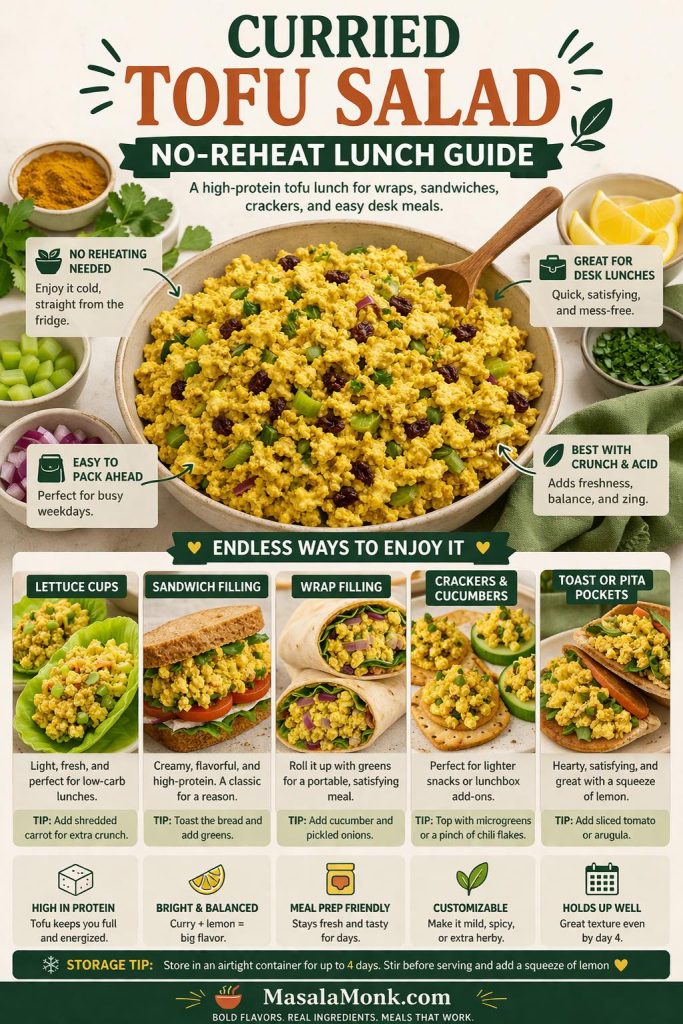

21. How do I build a healthier tuna salad sandwich?

Start with wholegrain or seeded bread for more fibre. Next, use a healthy tuna salad recipe based on Greek yogurt or avocado instead of just mayo, and layer in lettuce, tomato and cucumber. In addition, keeping an eye on portion sizes and pairing the tuna sandwich with a simple side salad rather than fries keeps the whole meal in the “tuna sandwich recipe healthy” category.


22. How can I stop tuna salad sandwiches from going soggy?

One simple approach is to create a barrier between the bread and the filling. You can line the bread with lettuce, cheese slices or even a thin layer of hummus before adding your tuna salad sandwich filling. Alternatively, pack the bread and tuna fish salad separately for lunch and assemble the sandwich when you’re ready to eat.


23. What are some quick tuna lunch ideas besides sandwiches?

There are plenty of easy options. For instance, you can spoon healthy tuna salad onto a big bowl of greens, tuck it into lettuce wraps, mix it with warm rice or quinoa, or stir it through pasta for a quick tuna noodle salad. Likewise, a simple tuna and bean salad with olive oil and lemon makes a fast high-protein lunch that travels well.


24. How can I make vegan tuna salad?

For a vegan tuna salad, mash cooked chickpeas until partly broken down, then mix them with vegan mayo or a tahini-lemon dressing. After that, add celery, onion, pickles, mustard and herbs so it resembles classic tuna salad in flavour and texture. This kind of tuna vegan recipe works brilliantly in sandwiches, wraps and salad bowls when you want a vegetarian tuna salad stand-in.


25. Is tuna salad good for meal prep?

Yes, tuna salad can be a useful meal prep option, particularly for lunches. You can prepare a batch of healthy tuna salad, divide it into containers and store it in the fridge for two or three days. Even so, it’s better to add delicate ingredients like lettuce, tomato or cucumber just before serving, so they stay crisp.


26. How do I make tuna salad more kid-friendly?

Generally, kids prefer simpler flavours and softer textures. So, keep the seasonings gentle, use a smoother dressing, and chop vegetables very finely. You might also try adding sweetcorn or a little grated cheese and serving the tuna fish salad sandwich on soft bread or as small tuna mac salad portions to make it more familiar.


27. How can I turn tuna salad into a full dinner?

One straightforward way is to build a large salad bowl or platter. Place your healthy tuna salad on top of greens, roasted vegetables, potatoes, beans or pasta to create a more substantial tuna casserole salad or tuna nicoise-style meal. Alternatively, bake a tuna salad casserole with wholegrain pasta and vegetables for a warm dinner version.


28. Which herbs and spices go best in tuna salad?

Dill, parsley, chives and coriander are classic herbs for a healthy tuna salad recipe. Meanwhile, dried oregano and thyme work well in Mediterranean tuna salad, and paprika, black pepper or a pinch of chilli flakes add depth. Ultimately, a squeeze of lemon and a little mustard tie everything together without overpowering the tuna.


29. How can I cut calories in tuna pasta salad or tuna mac?

To start, use more Greek yogurt and less mayonnaise in the dressing. Then, add plenty of vegetables—peas, celery, peppers, cucumber—so your healthy tuna macaroni salad feels generous without relying on huge amounts of pasta. Finally, serving smaller portions alongside a green salad lets you enjoy tuna mac salad without overdoing calories.


30. What are some creative healthy tuna salad ideas beyond the basics?

Besides the usual deli-style bowl, you can experiment with tuna and avocado salad wraps, Mediterranean tuna and white bean salad jars, Italian tuna and chickpea salad over couscous, or crunchy apple and tuna salad pitas. You could also explore vegan tuna salad made from chickpeas on some days and high protein tuna salad with egg or cottage cheese on others. In the end, rotating these ideas keeps “healthy tuna salad” interesting instead of repetitive.

Posted on 10 Comments

10 Delicious Plant-Based Protein Sources for High-Protein Meal Prep

Plant-Based Protein Sources for High-Protein Meal Prep

Why Plant-Based Protein? Because Food Should Fuel and Delight You

Let’s be real: figuring out what to eat every week—especially when you want more protein and less animal stuff—can feel overwhelming. Most of us aren’t training for a bodybuilding competition, but we still want to feel energized, satisfied, and maybe even impress ourselves (or our friends!) with how good plant-based meals can taste.

The truth? Plant protein isn’t just “good enough”—it’s powerful, varied, and, honestly, pretty fun once you know your options. Whether you’re a meal prepper, a busy parent, a fitness buff, or just egged out from food sensitivities, this guide is here to spark new ideas and keep your meals hearty, high-protein, and stress-free.

If you’re new to all this, you’ll love our explainer: What Is Protein? (It’s not as intimidating as it sounds!)


The 10 Best Plant-Based Protein Sources for Meal Prep

These aren’t just “swap this for that” suggestions. We’re talking about whole foods that deliver on flavor, nutrition, and convenience—plus, ways to actually use them without getting bored.


1. Lentils: The Weeknight Wonder

  • Protein: About 18g per cooked cup
  • Why they rock: Lentils are affordable, easy to cook in big batches, and come in varieties (green, brown, red, black) for any recipe mood.
  • How to use: Whip up a comforting dal, a French-style lentil salad, or simply stir into soups for extra heft.
  • Meal Prep Magic: Cook a large pot and use it for salads, bowls, and wraps all week.
Lentils: The ultimate plant-based protein for meal prep! Batch-cook for hearty salads, curries, and nourishing bowls. High in protein and fiber, perfect for vegetarians and vegans. | Find more at MasalaMonk.com

Love lentils? Try: Plant-Based High-Protein Meal Prep Ideas Using Lentils Instead of Chicken


2. Chickpeas: The All-Rounder

  • Protein: About 15g per cooked cup
  • Why they rock: Nutty, filling, and versatile. Perfect for curries, hummus, or crispy roasted snacks.
  • How to use: Mash for “tuna” salad, blend into creamy dips, or add whole to grain bowls.
  • Meal Prep Magic: Batch-cook and freeze portions for quick meals or salads.
Chickpeas: A high-protein vegan staple you can roast, mash, or toss in salads. Versatile, satisfying, and a favorite for healthy meal prep. | See more plant-based meal ideas at MasalaMonk.com

Bonus pasta hack: High-Protein Pasta Dishes: 10 Plant-Based Meal Prep Ideas


3. Black Beans & Kidney Beans: The Pantry Heroes

  • Protein: Black beans ~15g/cup, Kidney beans ~13g/cup
  • Why they rock: Hearty, satisfying, packed with fiber and iron.
  • How to use: Chili, burritos, salads, even brownies (yes, really!).
  • Meal Prep Magic: Simmer a big batch and portion out for the freezer.
Black Beans & Kidney Beans: Batch-cook these plant-based proteins for protein-packed chili, salads, and burritos. Rich in fiber and flavor, ideal for vegetarian meal prep. | Get inspired at MasalaMonk.com

4. Tofu: The Chameleon

  • Protein: About 10g per half-cup (firm tofu)
  • Why it rocks: Takes on any flavor—think crispy baked, silken in smoothies, or scrambled like eggs.
  • How to use: Marinate and bake, stir-fry, or blend for creamy sauces.
  • Meal Prep Magic: Press, cube, and marinate tofu on Sunday for quick meals all week.
Tofu: The chameleon of vegan meal prep! Marinate, bake, or scramble tofu for any high-protein plant-based meal. | Discover delicious tofu recipes at MasalaMonk.com

Go deeper: The Power of Tempeh: 10 High-Protein Plant-Based Meal Prep Ideas as an Alternative to Pork


5. Tempeh: The Gut-Friendly Powerhouse

  • Protein: About 16g per 3 ounces
  • Why it rocks: Firm, nutty, and fermented for easy digestion and gut health.
  • How to use: Sauté, grill, crumble in tacos, or toss into stir-fries.
  • Meal Prep Magic: Slice and marinate for easy lunchbox sandwiches or quick Buddha bowls.
Tempeh: The gut-friendly, protein powerhouse. Slice, sauté, and toss into stir-fries or bowls for easy vegetarian meal prep. | Explore tempeh ideas at MasalaMonk.com

Need more inspiration? Tempeh Instead of Shrimp: 5 High-Protein Plant-Based Meal Prep Ideas


6. Edamame: The Snack You Didn’t Know You Needed

  • Protein: About 17g per cooked cup (shelled)
  • Why it rocks: Sweet, bright, and fun to eat. Perfect for salads, stir-fries, or solo snacking.
  • How to use: Toss on salads, blend into dips, or stir into grain bowls.
  • Meal Prep Magic: Keep bags of frozen edamame on hand—boil or microwave in minutes.
Edamame: Snack, toss in salads, or add to bowls for a fresh, high-protein, plant-based boost. Perfect for healthy, easy meal prep! | More protein inspiration at MasalaMonk.com
7. Quinoa: The Tiny-but-Mighty Grain

  • Protein: About 8g per cooked cup
  • Why it rocks: A rare complete plant protein, cooks fast, and works in sweet or savory meals.
  • How to use: Breakfast porridge, salads, veggie burgers, or as a side.
  • Meal Prep Magic: Make a double batch and use in everything from lunch bowls to morning oats.
Quinoa: The tiny-but-mighty grain and complete plant protein. Use as a base for bowls, salads, and breakfast meal prep. | Find quinoa recipes at MasalaMonk.com

More ways to use it: 10 Plant-Based Meal Prep Ideas Using Quinoa as a Protein Source
Or try: Quinoa Instead of Chicken: 5 High-Protein Plant-Based Meal Prep Ideas


8. Nuts & Nut Butters: The Satisfying Snackers

  • Protein: Almonds ~6g/oz, Peanut butter ~8g/2 Tbsp
  • Why they rock: Portable, craveable, and loaded with healthy fats.
  • How to use: Snack packs, breakfast toppers, or creamy sauces for noodles.
  • Meal Prep Magic: Portion nut butter in small jars for quick snacks, or sprinkle chopped nuts on meals for crunch and extra protein.
Nuts & Nut Butters: Satisfying, protein-rich snacks and breakfast toppers. Perfect for sauces and plant-based meal prep. | Healthy recipe ideas at MasalaMonk.com

Learn more: Benefits of Nuts and Seeds – Protein-Packed Superfoods


9. Seeds: Tiny Titans of Nutrition

  • Protein: Hemp ~10g/3 Tbsp, Chia ~5g/2 Tbsp, Flax ~3g/2 Tbsp
  • Why they rock: High in protein, fiber, and essential fats. Great for gut and brain.
  • How to use: Add to overnight oats, smoothies, or homemade energy bars.
  • Meal Prep Magic: Make a week’s worth of chia pudding, or keep a “super seed mix” in the fridge to add to any meal.
Seeds (Hemp, Chia, Flax): Stir into oats, smoothies, and energy bars for an easy, high-protein vegan boost. | More superfood meal prep tips at MasalaMonk.com
Deep dive: The Power of Chia Seeds: 5 Plant-Based High-Protein Meal Prep Ideas


10. Seitan: The Secret to Meatiness (for Gluten Lovers)
  • Protein: About 21g per 3 ounces
  • Why it rocks: Made from wheat gluten, seitan is unbelievably high in protein and has a chewy, meaty texture.
  • How to use: Stir-fry, grill, skewer, or add to hearty stews.
  • Meal Prep Magic: Sauté a big batch in your favorite marinade and use in wraps or power bowls.
Seitan: The secret to meatiness for plant-based protein lovers! Grill, stir-fry, or add to wraps for hearty vegan meals. | Explore high-protein recipes at MasalaMonk.com

Honorable Mentions & New Favorites


How to Meal Prep Like a Plant-Based Pro

  • Batch cooking is your best friend.
    Cook lentils, beans, quinoa, and tofu in large amounts and freeze or refrigerate in portioned containers.
  • Mix and match.
    Rotate protein sources each week to keep meals exciting and nutritionally balanced.
  • Invest in seasoning.
    Spices, herbs, citrus, and bold dressings keep things far from boring. Your taste buds deserve variety!
  • Snack smart.
    Make your own trail mixes, roasted chickpeas, or chia seed pudding for high-protein snacks you can grab anytime.
  • Be flexible.
    Forgot to cook beans? Tofu, tempeh, or edamame to the rescue—quick and easy!
  • Cultural inspiration.
    Explore protein-rich Indian dishes: 10 Vegetarian and High-Protein Meal Prep Ideas from Indian Cuisine

Let’s Talk Protein Quality and Variety

Don’t let the “complete/incomplete protein” myth stress you out. Most plant foods offer all essential amino acids in some amount, and variety ensures you get what you need. Want to geek out? The Science of Protein: Maximizing Muscle Growth and Recovery has you covered.

Goal tip: Spread your protein throughout the day (aim for 20–30g per meal if you’re active).


Real-Life Meal Prep Ideas (You’ll Actually Want to Eat!)

  • Chickpea salad wraps (chickpeas, crunchy veg, tahini)
  • Lentil & quinoa bowls (bulk cooked, add greens and roasted veggies)
  • Spicy tofu stir-fry (with edamame and brown rice)
  • Tempeh tacos (crumbled tempeh, spices, salsa, slaw)
  • Breakfast chia pudding (chia seeds, plant milk, berries, nuts)

Smoothie lover? Try: 5 Turmeric and Moringa Smoothies for Weight Loss


Why Plant-Based Protein Meal Prep is a Life-Changer

It’s not just about protein grams—it’s about feeling nourished, saving money, and genuinely enjoying your food. Plant-based meal prep can help you:

  • Save time during busy weeks
  • Reduce food waste
  • Hit your protein goals without animal products
  • Get creative in the kitchen and discover new favorites

For even more protein strategies: How to Eat 100 Grams of Protein a Day


Final Thoughts: Build Your Own Protein-Packed Plate

It doesn’t matter if you’re a lifelong vegan, an adventurous omnivore, or just protein-curious—these plant-based foods belong in every kitchen. High-protein meal prep isn’t about perfection. It’s about showing up for yourself, one delicious meal at a time.

What’s your favorite plant protein hack? Drop a comment, tag us in your meal prep creations, and let’s keep inspiring each other to eat well—together.


Hungry for more? Browse our meal prep and protein archives, and don’t be afraid to try something new next week. Your future self (and your taste buds) will thank you.

FAQs: Plant-Based Protein for High-Protein Meal Prep

1. Can I get enough protein on a plant-based diet?
Yes! With variety and a little planning, you can easily meet your protein needs using foods like beans, lentils, tofu, tempeh, nuts, seeds, quinoa, and more. Many athletes and active individuals thrive on plant-based protein sources.

2. Which plant foods are complete proteins?
Quinoa, soy products (tofu, tempeh, edamame), hemp seeds, chia seeds, and amaranth are all complete proteins, meaning they contain all nine essential amino acids.

3. How much protein do I need each day?
Most adults need 0.8–1.2 grams of protein per kilogram of body weight, but active people may require more. That’s about 50–80g for most. Spreading intake across meals helps with absorption and muscle maintenance.

4. What’s the best way to meal prep plant-based proteins?
Batch-cook staples like lentils, beans, and quinoa. Roast chickpeas or tofu, and make sauces or dressings ahead. Freeze portions for quick meals all week.

5. Do I need protein powder on a plant-based diet?
Not necessarily! Whole foods usually provide plenty, but protein powder is a convenient option if you struggle to meet your needs or have higher protein goals.

6. Can I combine different plant proteins for better nutrition?
Yes—combining foods like rice and beans, or hummus with whole-grain pita, can create a complete protein profile, but variety over the day is usually enough.

7. Are there plant-based protein options for people with soy or gluten allergies?
Absolutely. Lentils, beans, quinoa, nuts, seeds, and buckwheat are all soy- and gluten-free options rich in protein.

8. Will eating more plant protein help with weight loss?
Plant-based proteins are often lower in calories and higher in fiber, which can help you feel fuller for longer and support healthy weight loss.

9. What about iron and B12 on a plant-based diet?
Beans, lentils, seeds, and greens are great iron sources, but plant iron isn’t as easily absorbed. Pair with vitamin C-rich foods. B12 needs to come from fortified foods or supplements, since plants don’t provide it.

10. Are there quick plant-based high-protein snacks I can prep?
Yes! Try roasted chickpeas, nut butter with fruit, chia pudding, trail mix, or protein balls made from oats, seeds, and dried fruit.

Posted on Leave a comment

Instant Pot Lentil Recipes for Effortless Weight Loss and Quick Meals

Instant Pot Lentil Recipes

In our fast-paced world, finding meals that are both healthy and convenient can be a struggle. For those aiming to shed pounds without sacrificing flavor or time, lentils cooked in an Instant Pot offer an ideal solution. These tiny legumes are nutritional powerhouses: high in protein, fiber-rich, and incredibly versatile. Whether you’re seeking hearty soups, spicy curries, or savory stews, the Instant Pot simplifies the process and delivers consistently delicious results.


Why Lentils Are a Smart Choice for Weight Loss

Lentils are a top-tier ingredient for anyone focused on healthful eating and weight management. Here’s why:

  • High in Protein: Keeps you full longer, curbs hunger pangs.
  • Rich in Fiber: Aids digestion, promotes satiety, and helps regulate blood sugar levels.
  • Low in Calories: You can eat a generous portion without overloading on calories.
  • Nutrient-Dense: Packed with iron, folate, magnesium, and B vitamins.
  • Budget-Friendly: A cost-effective protein source, ideal for batch cooking and meal prep.

Instant Pot: The Time-Saving Game Changer

The Instant Pot revolutionizes how we cook lentils. Traditional stovetop methods can take up to an hour and require constant supervision. With the Instant Pot:

  • Cook time is reduced to as little as 10-20 minutes.
  • Hands-off process: Set it and walk away.
  • Reliable texture every time—no mush, no undercooked centers.
  • Great for meal prepping: Cook in bulk and refrigerate or freeze.

5 Instant Pot Lentil Recipes You’ll Love

1. Moroccan-Inspired Lentils

Flavor Profile: Warm, spicy, and subtly sweet.

Ingredients:

  • Green or brown lentils
  • Diced sweet potato
  • Carrots, onions
  • Crushed tomatoes
  • Spices: cumin, cinnamon, paprika, ginger, cayenne
  • Lemon juice

How to Make: Add all ingredients to the Instant Pot. Cook on high pressure for 15 minutes, then let it naturally release for 10 minutes. Garnish with parsley and a squeeze of lemon.

Health Perks: Anti-inflammatory spices and fiber-rich vegetables support metabolism and digestion.


2. Classic French-Style Lentil Soup

Flavor Profile: Savory, aromatic, and comforting.

Ingredients:

  • Green or French lentils
  • Onion, garlic, carrot, celery
  • Fire-roasted tomatoes
  • Fresh thyme, bay leaves
  • Kale or spinach (added after cooking)

How to Make: Sauté aromatics using the Sauté function. Add lentils, tomatoes, broth, and spices. Cook on high pressure for 15 minutes and let release naturally. Stir in greens before serving.

Health Perks: A bowl full of vitamins, antioxidants, and fiber.


3. Smoky Vegan Lentils

Flavor Profile: Bold, rich, and slightly smoky.

Ingredients:

  • Brown lentils
  • Tomato paste, garlic, onion
  • Paprika, cumin, coriander
  • Liquid smoke or smoked paprika
  • Maple syrup (optional)

How to Make: Sauté aromatics and spices, then add lentils and broth. Cook for 10 minutes on high pressure, natural release. Serve over rice or baked sweet potatoes.

Health Perks: A hearty plant-based option with depth of flavor and minimal fat.


4. Hearty Lentil and Potato Stew

Flavor Profile: Thick, satisfying, and earthy.

Ingredients:

  • Green lentils
  • Diced potatoes, carrots, onions
  • Tomato paste, garlic
  • Vegetable broth, bay leaves, thyme

How to Make: Add everything to the pot and cook on high pressure for 12 minutes. Natural release. Use an immersion blender for a partially blended, thick texture.

Health Perks: Potatoes add volume without excessive calories; excellent for portion control.


5. Instant Pot Lentil Curry

Flavor Profile: Fragrant, spicy, and deeply savory.

Ingredients:

  • Red or brown lentils
  • Onion, garlic, ginger
  • Curry powder, turmeric, garam masala
  • Diced tomatoes
  • Coconut milk or light coconut milk

How to Make: Sauté aromatics and spices. Add remaining ingredients. Cook for 10 minutes on high pressure, quick release. Serve with brown rice or quinoa.

Health Perks: Anti-inflammatory spices, and a rich taste without added fats.


Tips for Weight-Loss Friendly Lentil Cooking

  1. Skip Heavy Oils: Use a non-stick pot insert or minimal olive oil for sautéing.
  2. Boost with Greens: Add spinach, kale, or collard greens at the end of cooking.
  3. Use Low-Sodium Broth: Controls salt while enhancing flavor.
  4. Portion Smart: Divide into containers to avoid overeating.
  5. Add Acidity: A dash of lemon juice or vinegar brightens flavor and supports digestion.

Batch Cooking & Storage Tips

  • Refrigeration: Keeps well for 4-5 days.
  • Freezing: Portion into containers or silicone trays; freeze for up to 3 months.
  • Reheating: Use stovetop or microwave with a splash of water or broth.
  • Repurposing: Use leftovers as filling for wraps, stuffing for bell peppers, or over baked potatoes.

Final Thoughts

With the Instant Pot, healthy eating doesn’t have to be complicated or time-consuming. These lentil-based meals are proof that nutritious, weight-loss-friendly food can also be comforting, flavorful, and easy to prepare. Whether you’re a busy professional, a student, or just someone trying to eat better, lentils are a humble yet powerful ally in your kitchen.

Try a few of these recipes this week—your taste buds (and waistline) will thank you.

FAQs

1. Can I use canned lentils in these Instant Pot recipes?
Answer: While canned lentils are pre-cooked and don’t require pressure cooking, they can be added at the end of the Instant Pot cycle. Reduce the cook time and liquid slightly to prevent overcooking.

2. What type of lentils works best in the Instant Pot?
Answer: Green and brown lentils hold their shape well and are ideal for soups and stews. Red lentils cook faster and break down, making them perfect for curries and thicker dishes.

3. How much water or broth should I use per cup of lentils?
Answer: A standard ratio is 1 cup of lentils to 2.5–3 cups of liquid, depending on how brothy or thick you want the final result.

4. Are these recipes suitable for freezing and reheating?
Answer: Yes! All recipes are freezer-friendly. Cool completely before freezing in airtight containers. Reheat with a splash of water or broth to refresh the texture.

5. How can I make the lentils taste less bland?
Answer: Spices, aromatics (like garlic, onion, and ginger), and acidic finishers (lemon juice, vinegar) dramatically enhance lentil flavor. Sautéing spices before pressure cooking boosts depth.

6. Can I add meat or other proteins to these recipes?
Answer: Absolutely. Chicken, turkey, or lean ground meat can be browned using the Sauté function first, then pressure cooked with the lentils. Adjust liquid and timing slightly as needed.

7. Are these lentil dishes gluten-free?
Answer: Yes, lentils are naturally gluten-free. Just ensure that broth and spices used are certified gluten-free to avoid cross-contamination.

8. How do I avoid mushy lentils in the Instant Pot?
Answer: Stick to recommended cooking times (usually 10–15 minutes under high pressure) and do a natural pressure release. For firmer texture, reduce cook time by 2–3 minutes.

9. What should I serve with these lentil meals?
Answer: Serve over brown rice, quinoa, cauliflower rice, or roasted veggies. You can also enjoy them with whole grain flatbread or in lettuce wraps for a low-carb option.

10. Can I make these recipes oil-free?
Answer: Yes! Use water or vegetable broth to sauté aromatics instead of oil. This keeps the meals lighter without compromising on flavor.