Posted on Leave a comment

Beyond Chicken: 5 Hemp Seed High Protein Tofu Meal Prep Ideas

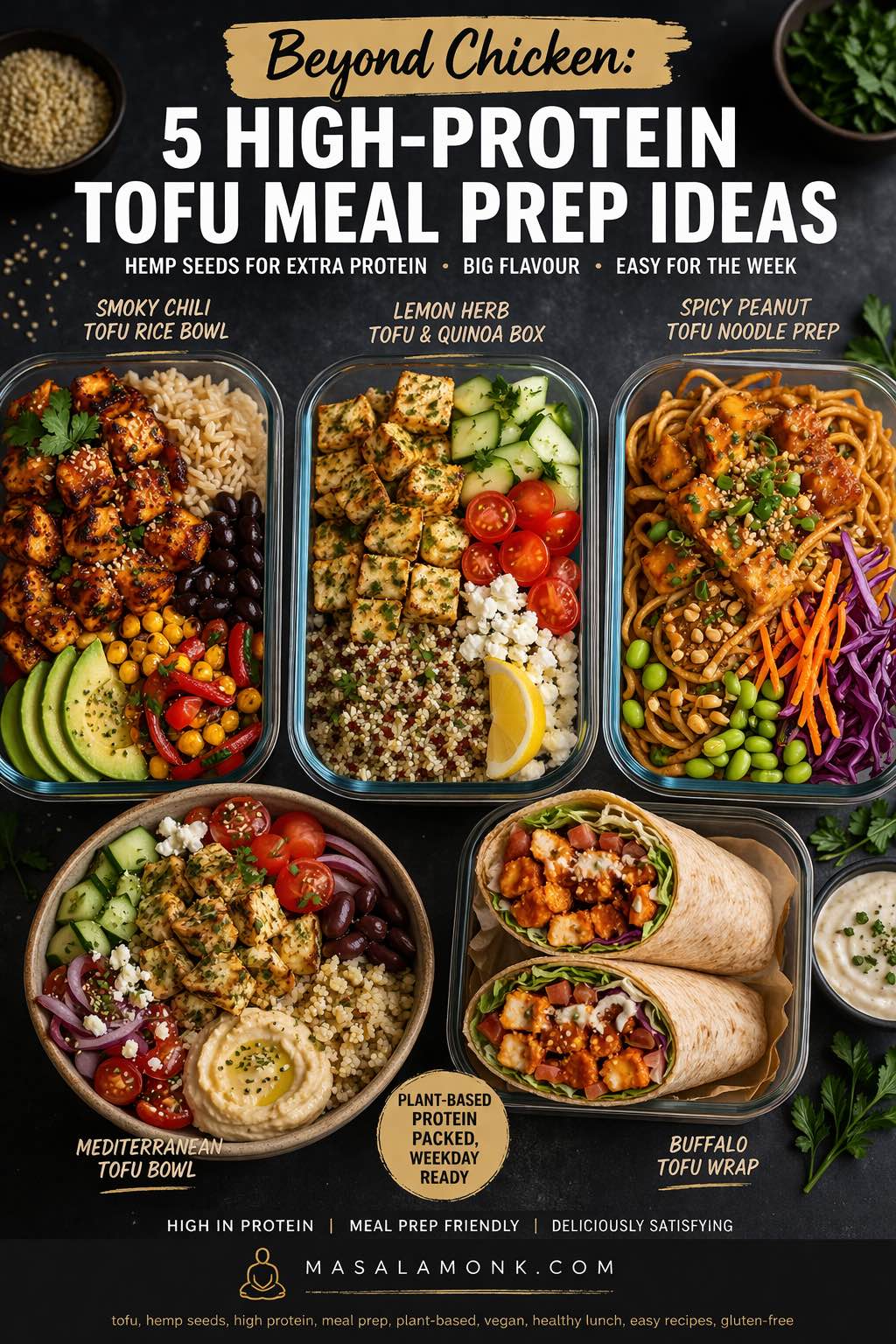
Beyond Chicken cover image showing five hemp seed high-protein tofu meal prep ideas, including a smoky chili tofu rice bowl, lemon herb quinoa box, spicy peanut tofu noodle prep, Mediterranean tofu bowl, and buffalo tofu wrap.

Tofu meal prep can be substantial, flavorful, and still worth opening on day four. That is exactly what this guide is built to deliver.

These lunches are designed for real weekday life. They are filling enough to count as proper lunch, varied enough to keep the week from feeling repetitive, and practical enough to prep ahead without sliding into bland tofu, soggy vegetables, or disappointing containers by midweek.

Just as importantly, the hemp seeds are doing real work throughout the lineup. Rather than sitting on top like a token healthy ingredient, they show up as a nutty crust, a creamy dressing base, a richer sauce builder, a fresh herby crunch, and a proper ranch-style finish that makes wraps feel complete instead of merely assembled.

If you want to build a broader plant-based lunch system beyond this page, MasalaMonk’s guide to plant-based protein sources for high-protein meal prep is a natural companion.

Quick answers before you cook

Can tofu be meal prepped? Yes. Tofu is one of the best meal-prep proteins because it roasts well, absorbs flavor, and works naturally in rice bowls, quinoa bowls, noodles, and wraps.

What tofu is best for meal prep? Extra-firm tofu is the easiest and most reliable option because it holds shape well and develops better edges after roasting. Firm tofu also works when you want a slightly softer bite.

How long does tofu meal prep last? Most tofu meal prep keeps well for 3 to 4 days in the fridge when sauces, watery vegetables, and crunchy toppings are packed separately.

What is the biggest mistake? Packing hot tofu with wet vegetables or dressing too early. As a result, a good meal-prep container can turn soggy by day three.

What is the key rule for better tofu meal prep? Press well, roast until it has real color, cool before sealing, and keep wet and dry elements separate whenever texture matters.

Also Read: Easy English Scone Recipe

Tofu Meal Prep at a Glance

Use this as your fast decision guide before choosing a recipe. When you already know you want something warm, cold, craveable, or easy to eat on the go, this section makes the choice quicker. Better yet, it helps you match the right lunch to the right point in the week instead of rereading every recipe section once time is already tight.
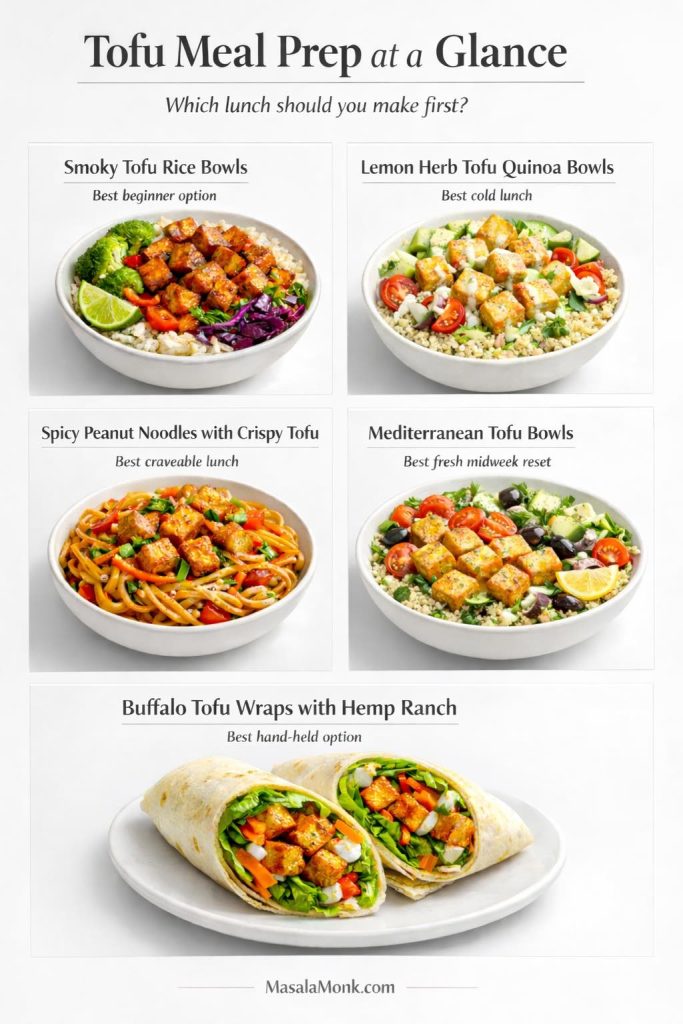
Tofu meal prep comparison graphic showing five lunch ideas: smoky tofu rice bowls, lemon herb tofu quinoa bowls, spicy peanut noodles with crispy tofu, Mediterranean tofu bowls, and buffalo tofu wraps with hemp ranch.
Use this tofu meal prep at-a-glance guide to choose the right lunch for your week: smoky rice bowls for a familiar warm option, lemon herb quinoa bowls for cold lunches, spicy peanut noodles when you want something craveable, Mediterranean bowls for a fresher reset, and buffalo wraps for an easy hand-held meal.
  • Best beginner option: Smoky Tofu Rice Bowls
  • Best cold lunch: Lemon Herb Tofu Quinoa Bowls
  • Best reheated lunch: Smoky Tofu Rice Bowls
  • Best craveable lunch: Spicy Peanut Noodles with Crispy Tofu
  • Best fresh midweek reset: Mediterranean Tofu Bowls
  • Best hand-held option: Buffalo Tofu Wraps with Hemp Ranch
  • Best choice if you are tired of bowls: Buffalo Tofu Wraps with Hemp Ranch
  • Best day-three or day-four option: Lemon Herb Tofu Quinoa Bowls

New to tofu meal prep? Start with the smoky rice bowls. They are the clearest proof that tofu can feel just as satisfying as the classic protein-rice-and-vegetable lunch people usually build around chicken. From there, branching into the colder, fresher, or more sauce-driven options becomes much easier.

Why Tofu Meal Prep Often Disappoints by Day Three — and How This Guide Fixes It

Too often, tofu meal prep falls off by day three because moisture builds, texture softens, and the containers start tasting repetitive. Sometimes the tofu was never pressed or browned enough to begin with. In other cases, the real problem is packing hot ingredients with wet vegetables or dressing too early, which quietly sets everything up to turn soggy in the fridge.

This guide fixes that by treating texture and packing order as part of the recipe, not as an afterthought. Instead of stretching one baked-tofu method across several near-identical boxes, it gives you five genuinely different lunches with different textures, different flavor directions, and different kinds of lunch appeal. Consequently, the week feels less repetitive, while the food itself holds up better.

Hemp seeds make that system stronger. Here, they are not just included for nutrition. They help create a nutty crust, a creamier dressing, a fuller sauce, a brighter finishing crunch, and a better ranch-style spread. In practice, that means the recipes eat better as the week goes on instead of feeling like containers you are forcing yourself to finish.

Also Read: Sourdough English Muffins Recipe

Best Tofu for Meal Prep and How to Prep It

For these recipes, extra-firm tofu is the easiest place to start. It gives you stronger edges, cleaner pieces, and better structure after cooking. Firm tofu also works well, particularly when you want a slightly softer center or a more delicate bite in the finished meal. If you can get super-firm tofu, that is even better because it usually needs less pressing and holds its shape beautifully.

However, silken tofu is not the right fit here. It can be useful in sauces or creamy blends, but it is not built for bowls, noodles, and wraps like these. Even if it sounds convenient, it will not give you the kind of meal-prep texture that keeps well through the week.
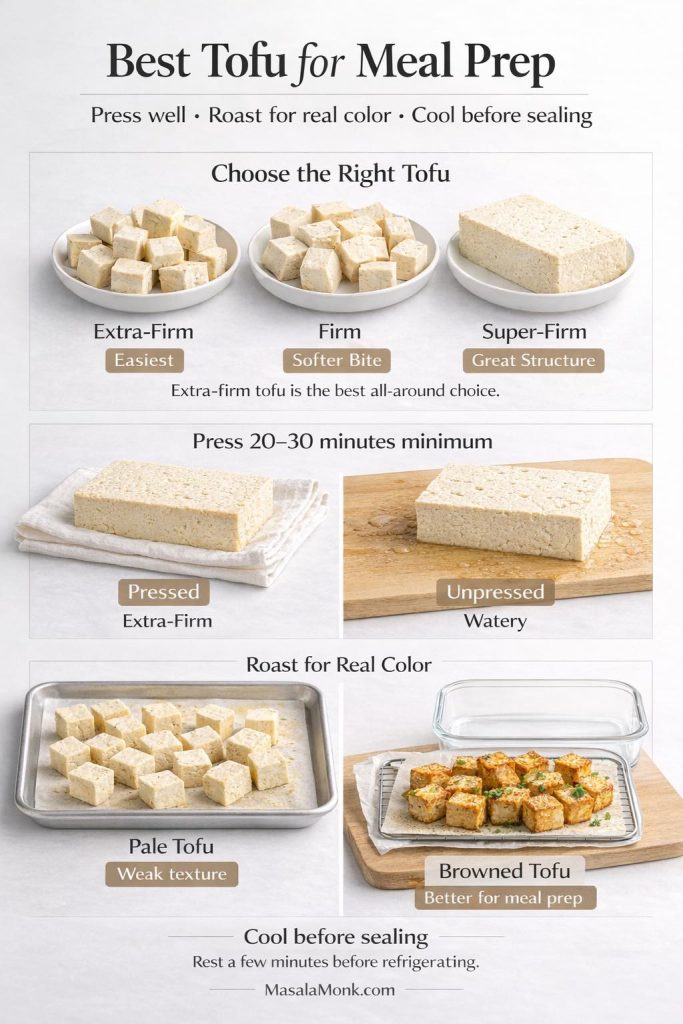
Best tofu for meal prep guide comparing extra-firm, firm, and super-firm tofu, plus pressed vs unpressed tofu and pale vs browned tofu for better meal prep texture.
Extra-firm tofu gives the most reliable meal-prep texture, especially when it is pressed well, roasted until properly browned, and cooled before sealing so it stays firmer through the week.

The prep matters just as much as the type you choose. First, press the tofu until it no longer feels waterlogged when you cut it. Twenty to thirty minutes is a good minimum, and longer is even better if time allows. Then season it with more intention than just a splash of soy sauce and hope for the best. Tofu responds well to layered flavor: salt or soy, aromatics, acid, herbs, spices, and a finishing element.

Most importantly, cook for texture rather than mere doneness. Pale tofu rarely improves in the fridge. Instead, what you want is visible browning, firmer edges, and enough structure that the tofu can survive storage and reheating without collapsing into softness. Once cooked, let it cool before sealing it into containers. That pause protects more texture than most people expect.

If you like crisp, prep-friendly plant-based lunches in general, MasalaMonk’s high-protein vegan meal prep ideas using an air fryer are worth a look too.

How to Make Tofu Meal Prep More Filling Without Making It Heavy

One of the easiest ways to improve tofu meal prep is to make it more filling without turning it into a heavy lunch you stop looking forward to by Wednesday. The answer is not to pile in random extras until the meal feels joyless. Rather, build in staying power with a proper base, a good texture contrast, and a sauce or dressing that adds body without flooding the container.

In practice, that usually means tofu plus rice, quinoa, or noodles for structure; vegetables that either roast well or stay crisp; and hemp seeds, yogurt, tahini, or peanut-based sauces that make the lunch feel complete instead of sparse. That is where these recipes work especially well. Tofu carries the main protein role, while hemp seeds add richness, body, and texture in ways that improve the actual eating experience.
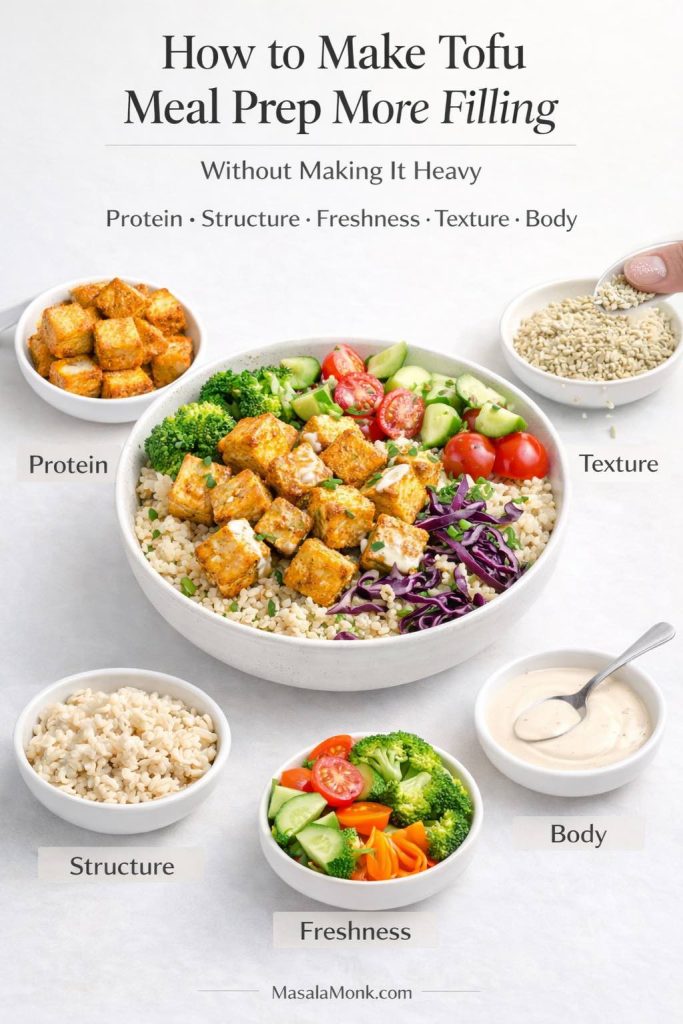
Guide to making tofu meal prep more filling without making it heavy, showing protein, structure, freshness, texture, and body with tofu, grains, vegetables, hemp seeds, and sauce.
A satisfying tofu lunch depends less on piling in more ingredients and more on balancing the right five roles: protein for staying power, a base for structure, vegetables for freshness, hemp seeds for texture, and sauce or dressing for body.

This matters because the best tofu meal prep recipes are the ones you actually want to repeat. A filling lunch should still feel bright, balanced, and easy to eat. That is precisely why these bowls, noodles, and wraps are designed to hold well in the fridge while still eating like lunch first and meal prep second.

For a grain-forward prep angle, MasalaMonk’s plant-based meal prep ideas using quinoa as a protein source pair especially well with the quinoa bowls below.

Also Read: White Russian Recipe: 7 Variants to Try, From Classic to Frozen

The 5 Tofu Meal Prep Recipes

The recipes below are built to cover different lunch moods across the week, from a warm rice bowl to a bright quinoa bowl, spicy noodles, a crisp Mediterranean option, and a hand-held buffalo wrap. Protein estimates are approximate and based on generic ingredient values, so they can vary slightly depending on the tofu, noodles, tortillas, and yogurt you use.

If you landed here mainly for the recipes, you can jump straight into the one that fits your week best. On the other hand, if you are still deciding, the short intros and quick snapshots will help you match the right lunch mood to the right container.

1) Smoky Tofu Rice Bowls

Choose this bowl when you want the most familiar lunch format in the post. If your idea of dependable tofu meal prep still looks like some version of protein, rice, and vegetables, this one gives you that same structure with much more character.

The tofu roasts into something smoky, toasty, and lightly nutty from the hemp crust, while roasted broccoli and bell peppers bring sweetness and body. Shredded cabbage keeps the bowl from feeling too soft, and a sharp lime yogurt drizzle wakes everything back up after reheating. For that reason, this is the easiest recipe here to trust on the first try.

Quick recipe snapshot

  • Best served: Warm, with cool toppings added after reheating
  • Fridge life: 4 days
  • Reheats well: Yes
  • Pack separately: Lime yogurt drizzle, avocado, and lime wedges
  • Best texture trait: Smoky, browned tofu with rough hemp-crusted edges
  • Approximate protein per serving: about 29 g

Yield: 4 bowls

Prep time: 25 minutes

Cook time: 30 minutes

Total time: 55 minutes, plus tofu pressing time

Ingredients

Hemp-crusted tofu

  • 2 (14-ounce / 396 g) blocks extra-firm tofu, pressed and cubed
  • 1 tablespoon soy sauce or tamari
  • 1 tablespoon olive oil
  • 1 tablespoon cornstarch
  • 1 teaspoon smoked paprika
  • 1 teaspoon chili powder
  • 1/2 teaspoon garlic powder
  • 1/2 teaspoon onion powder
  • 1/4 teaspoon black pepper
  • 1/3 cup hemp seeds

Rice bowl base

  • 4 cups cooked rice
  • 2 cups broccoli florets
  • 1 red bell pepper, sliced
  • 2 cups shredded cabbage
  • 1 avocado, sliced for serving
  • Lime wedges

Lime yogurt drizzle

  • 1/2 cup plain yogurt
  • 1 tablespoon lime juice
  • 1 teaspoon hot sauce
  • Pinch of salt

Method

  1. Heat the oven to 425°F and line two trays.
  2. Toss the tofu with soy sauce, olive oil, cornstarch, smoked paprika, chili powder, garlic powder, onion powder, and black pepper.
  3. Add the hemp seeds and toss again so they cling to the tofu.
  4. Spread the tofu on one tray in a single layer.
  5. Toss the broccoli and bell pepper with a little oil and salt and spread them on the second tray.
  6. Roast for 25 to 30 minutes, flipping the tofu once, until the tofu is browned at the edges and the hemp seeds smell lightly toasted.
  7. Stir together the yogurt, lime juice, hot sauce, and salt.
  8. Cool the hot ingredients slightly, then divide the rice, tofu, vegetables, and cabbage among containers.
  9. Pack the drizzle, avocado, and lime wedges separately.

What you should notice

The tofu should have darkened corners, a lightly rough hemp crust, and a savory smoky aroma. Meanwhile, the cabbage and lime should keep the bowl from feeling too dense. Once you open the container later in the week, the bowl should still feel balanced rather than heavy.

Best storage tip

Keep the drizzle separate until serving. That one move helps the tofu keep more of its edge and keeps the cabbage crisp longer. In turn, the reheated bowl feels much closer to freshly built lunch rather than day-four leftovers.
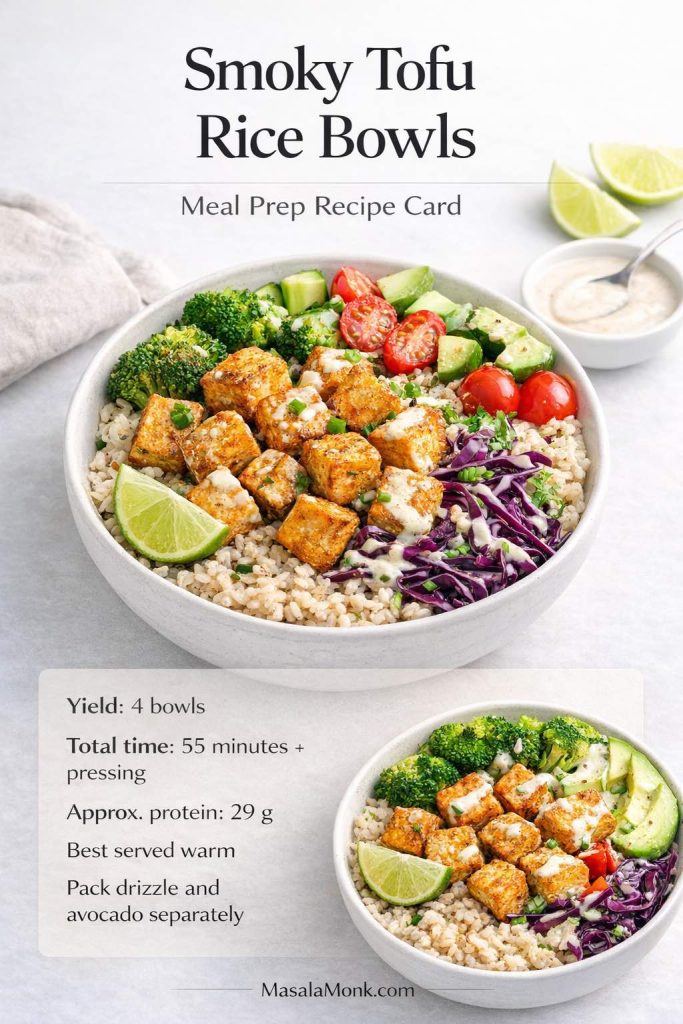
Smoky tofu rice bowls recipe card showing browned tofu over rice with broccoli, cabbage, lime, and creamy drizzle for tofu meal prep.
Built for readers who want the most familiar place to start, this smoky tofu rice bowl turns a classic warm lunch format into something more interesting with browned tofu, rice, vegetables, and a limey creamy finish.

Also Read: Mango Sorbet Recipe: Healthy & Plant Based Dessert

2) Lemon Herb Tofu Quinoa Bowls

Reach for this bowl when you want a cold lunch that still feels full, bright, and properly satisfying instead of dry and dutiful. At the same time, it stays calm and clean enough to work especially well later in the week.

The tofu is seasoned simply so the lemon, herbs, and creamy hemp dressing can lead. Quinoa gives the bowl structure and extra staying power, while the fresh herbs keep the flavor from flattening in the fridge. As a result, this becomes one of the smartest later-week lunches in the lineup and one of the easiest to eat straight from the container.

Quick recipe snapshot

  • Best served: Cold
  • Fridge life: 4 days
  • Reheats well: Not necessary
  • Pack separately: Creamy hemp dressing
  • Best texture trait: Bright, herby, fresh-tasting quinoa bowl with creamy finish
  • Approximate protein per serving: about 31 g

Yield: 4 bowls

Prep time: 20 minutes

Cook time: 25 minutes

Total time: 45 minutes, plus tofu pressing time

Ingredients

Lemon-herb tofu

  • 2 (14-ounce / 396 g) blocks firm tofu, pressed and cubed
  • 1 tablespoon olive oil
  • 1 tablespoon lemon juice
  • 1 teaspoon dried oregano
  • 1 teaspoon garlic powder
  • 1/2 teaspoon salt
  • 1/4 teaspoon black pepper

Quinoa bowl base

  • 4 cups cooked quinoa
  • 1 cucumber, chopped
  • 1 1/2 cups cherry tomatoes, halved
  • 1/2 red onion, thinly sliced
  • 1 cup chopped parsley
  • 1/4 cup chopped dill or mint
  • 3 tablespoons hemp seeds, for topping

Creamy hemp dressing

  • 1/3 cup hemp seeds
  • 3 tablespoons plain yogurt
  • 2 tablespoons lemon juice
  • 1 tablespoon olive oil
  • 1 teaspoon Dijon mustard
  • 1 small garlic clove
  • 2 to 4 tablespoons water
  • Salt and pepper to taste

Method

  1. Heat the oven to 425°F.
  2. Toss the tofu with olive oil, lemon juice, oregano, garlic powder, salt, and black pepper.
  3. Roast for about 25 minutes, flipping once, until lightly golden and firm.
  4. Blend or whisk together the dressing ingredients until smooth and lightly creamy.
  5. Divide the quinoa among containers, then add the cucumber, tomatoes, red onion, herbs, and tofu.
  6. Sprinkle with hemp seeds.
  7. Pack the dressing separately and spoon it over just before eating.

What you should notice

When you open this bowl cold, it should smell lemony and herby right away. At the same time, the dressing should coat the quinoa and tofu without making the container loose or watery. Ideally, the whole bowl should feel bright first and creamy second, not the other way around.

Best storage tip

Do not toss everything with the dressing in advance unless you are eating it within a day. Keeping it separate makes the bowl feel fresher for longer. More importantly, it stops the herbs and vegetables from collapsing too early.
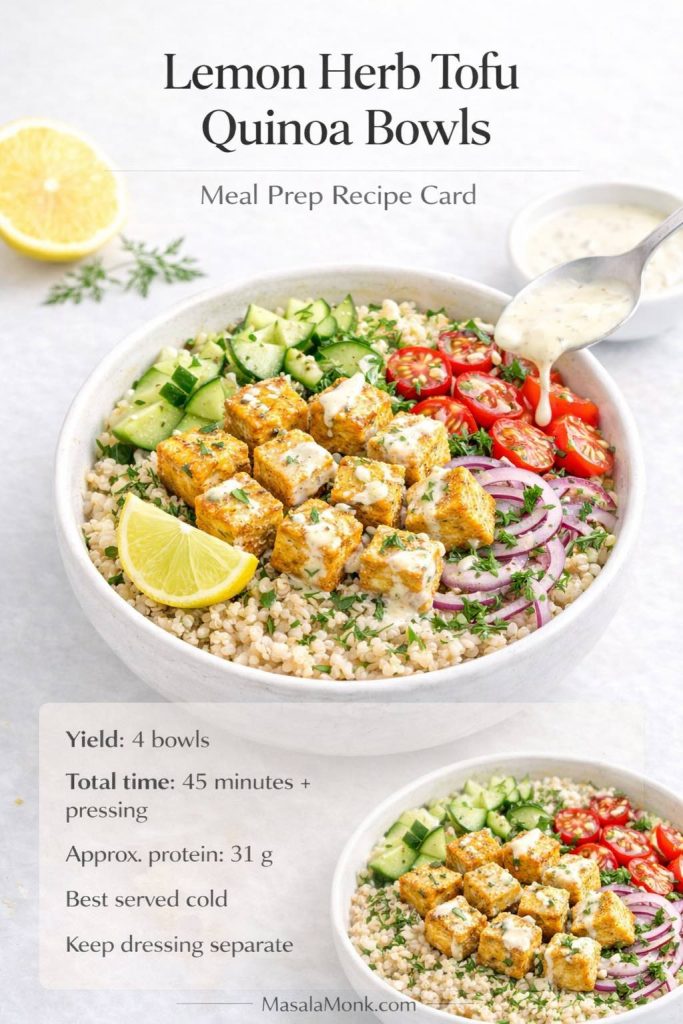
Lemon herb tofu quinoa bowls recipe card showing quinoa, golden tofu, cucumber, cherry tomatoes, red onion, herbs, and creamy lemon dressing for cold tofu meal prep.
Cold lunches hold up especially well when they stay bright and composed, and this lemon herb tofu quinoa bowl does exactly that with quinoa, fresh vegetables, herbs, and a creamy dressing packed separately.

Also Read: Protein Ice Cream Recipe: 10 Creamy Homemade Recipes

3) Spicy Peanut Noodles with Crispy Tofu

Pick this one when you want the least “meal prep feeling” lunch in the lineup. Sometimes the smartest way to stay consistent with prep is to make at least one meal that feels saucy, bold, and a little indulgent.

Here, the sauce is the whole point. Peanut butter gives it body, the hemp seeds make it feel fuller and smoother, the tofu brings chew, and the noodles give the whole thing real comfort-food energy without turning it heavy or dull. Since it works cold, at room temperature, or lightly warm, it is also one of the most flexible containers in the entire post.

Quick recipe snapshot

  • Best served: Cold, room temperature, or gently warmed
  • Fridge life: 3 to 4 days
  • Reheats well: Lightly, but also good cold
  • Pack separately: Spicy peanut-hemp sauce
  • Best texture trait: Glossy noodles with crisp-edged tofu and rich clingy sauce
  • Approximate protein per serving: about 34 g

Yield: 4 containers

Prep time: 25 minutes

Cook time: 25 minutes

Total time: 50 minutes, plus tofu pressing time

Ingredients

Crispy tofu

  • 2 (14-ounce / 396 g) blocks extra-firm tofu, pressed and torn into chunks
  • 1 tablespoon soy sauce
  • 1 tablespoon neutral oil
  • 1 tablespoon cornstarch
  • 1 teaspoon garlic powder

Noodle base

  • 12 ounces dry noodles, such as wheat noodles or rice noodles
  • 2 cups shredded cabbage
  • 2 cups shredded carrots
  • 1 red bell pepper, thinly sliced
  • 3 green onions, sliced
  • Cilantro, optional

Spicy peanut-hemp sauce

  • 1/3 cup peanut butter
  • 2 tablespoons soy sauce
  • 1 tablespoon rice vinegar
  • 1 tablespoon maple syrup
  • 1 to 2 teaspoons sriracha
  • 1 teaspoon sesame oil
  • 1/4 cup hemp seeds
  • Warm water, as needed

Method

  1. Heat the oven to 425°F.
  2. Toss the tofu with soy sauce, oil, cornstarch, and garlic powder.
  3. Roast for about 25 minutes, flipping once, until crisp at the edges.
  4. Cook the noodles until just tender, then drain and cool slightly.
  5. Blend or whisk together the sauce ingredients, adding warm water until the sauce is smooth, glossy, and thick enough to cling.
  6. Divide the noodles and vegetables among containers, then add the tofu and green onions.
  7. Pack the sauce separately and toss through just before eating.
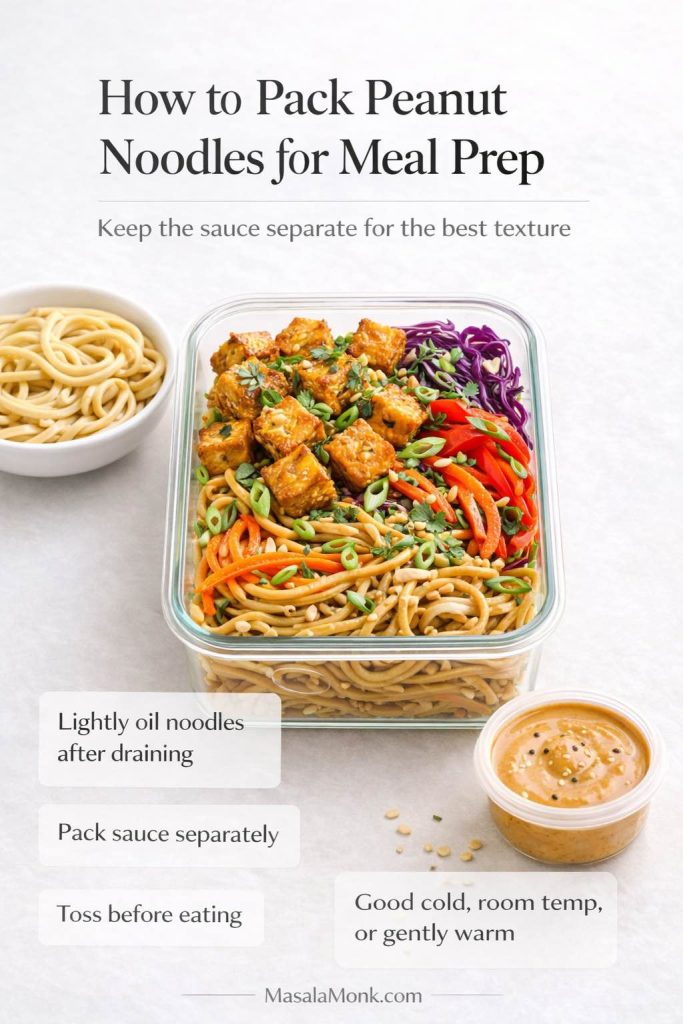
How to pack peanut noodles for meal prep guide showing noodles, crispy tofu, vegetables, and peanut sauce packed separately for better texture.
Packing spicy peanut noodles well matters almost as much as making them well, especially when you want the noodles to stay loose, the vegetables to keep some life, and the sauce to coat everything only when you are ready to eat.

What you should notice

The sauce should coat the back of a spoon. The tofu should have crisp edges and a slightly chewy center. Once everything is tossed together, the noodles should look glossy and coated, not soupy. Even so, the whole bowl should still feel lively because of the raw vegetables, not weighed down by the sauce.

Best storage tip

A tiny bit of oil on the noodles after draining helps keep them from clumping in the fridge. After that, keeping the sauce separate gives you much more control over texture when it is time to eat.
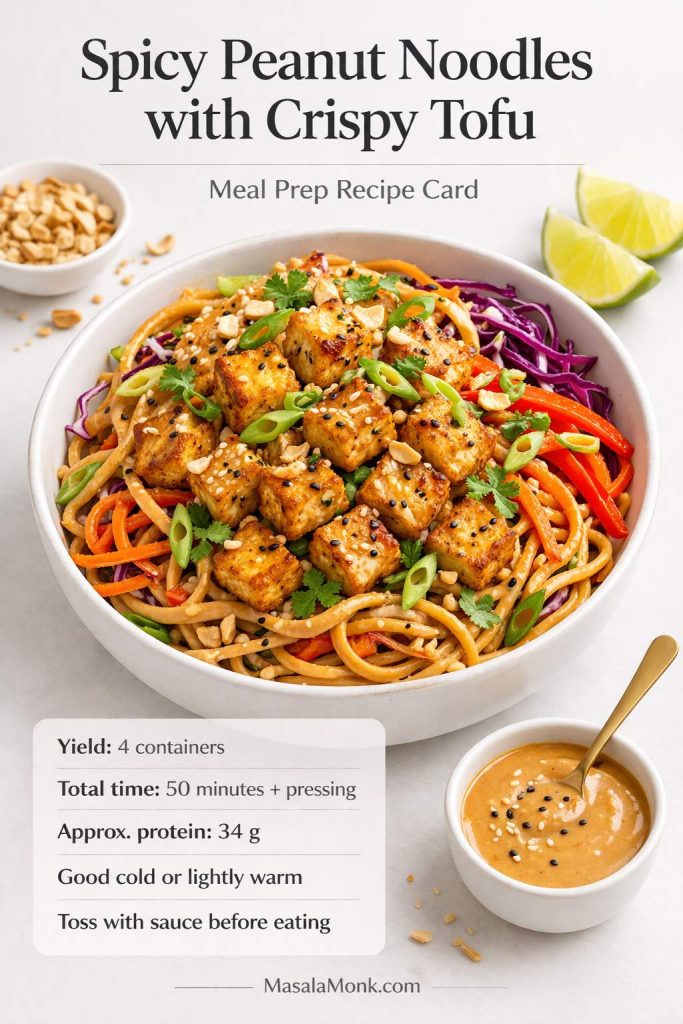
Spicy peanut noodles with crispy tofu recipe card showing glossy noodles, browned tofu, cabbage, carrots, bell pepper, green onion, and peanut sauce for tofu meal prep.
When tofu meal prep needs to feel more craveable than dutiful, spicy peanut noodles with crispy tofu bring the right kind of comfort: glossy sauce-coated noodles, browned tofu, and plenty of crunch, with the sauce packed separately so the texture stays under your control.

Also Read: Homemade Mango Ice Cream Recipe

4) Mediterranean Tofu Bowls

Go with this bowl when richer lunches start feeling repetitive. By the middle of the week, something brighter and sharper often sounds much more appealing.

The tofu is warmly spiced and roasted, but the real lift comes from the finish. A lemony herbed hemp crunch gives the bowl a clear texture role instead of hiding quietly in the background, while cucumbers, tomatoes, olives, and romaine keep everything crisp, savory, and bright. By contrast with the noodle prep, this lunch is not trying to comfort you. It is trying to refresh you, which is exactly why it works so well in the same lineup.

Quick recipe snapshot

  • Best served: Cold or cool room temperature
  • Fridge life: 3 to 4 days
  • Reheats well: Not ideal once assembled
  • Pack separately: Romaine, dressing, and herbed hemp crunch for best texture
  • Best texture trait: Crisp, briny, lemony contrast with nutty finishing crunch
  • Approximate protein per serving: about 33 g

Yield: 4 bowls

Prep time: 25 minutes

Cook time: 30 minutes

Total time: 55 minutes, plus tofu pressing time

Ingredients

Spiced tofu

  • 2 (14-ounce / 396 g) blocks firm tofu, pressed and cubed
  • 1 tablespoon olive oil
  • 1 tablespoon lemon juice
  • 1 teaspoon smoked paprika
  • 1 teaspoon ground cumin
  • 1/2 teaspoon garlic powder
  • 1/2 teaspoon salt
  • Black pepper to taste

Mediterranean bowl base

  • 4 cups cooked quinoa
  • 1 cucumber, chopped
  • 1 1/2 cups chopped tomatoes
  • 1/2 cup sliced olives
  • 1 cup shredded romaine
  • 1 cup roasted chickpeas

Creamy lemon dressing

  • 3 tablespoons tahini
  • 2 tablespoons lemon juice
  • 1 small garlic clove
  • 2 to 4 tablespoons water
  • Salt and pepper to taste

Herbed hemp crunch

  • 1/3 cup hemp seeds
  • 2 tablespoons chopped parsley
  • 1 tablespoon chopped dill
  • 1 teaspoon lemon zest
  • Pinch of salt
  • Black pepper

Method

  1. Roast the tofu at 425°F for 25 to 30 minutes until browned and firm.
  2. Whisk together the dressing ingredients.
  3. Stir together the hemp crunch ingredients in a small bowl.
  4. Divide the quinoa among containers and add the cucumber, tomatoes, olives, tofu, and roasted chickpeas.
  5. Pack the romaine, dressing, and hemp crunch separately when possible for the best texture.
  6. Add the fresh elements just before serving.

What you should notice

The hemp topping should smell lemony and fresh and add a real nutty bite. As a result, the finished bowl should feel crisp, bright, and layered rather than soft and one-note. Even on day three, it should still taste awake rather than tired.

Best storage tip

Store the romaine outside the main hot ingredients if you want the best texture on days three and four. In the same way, keeping the crunch and dressing separate protects the part of this bowl that makes it feel fresh in the first place.
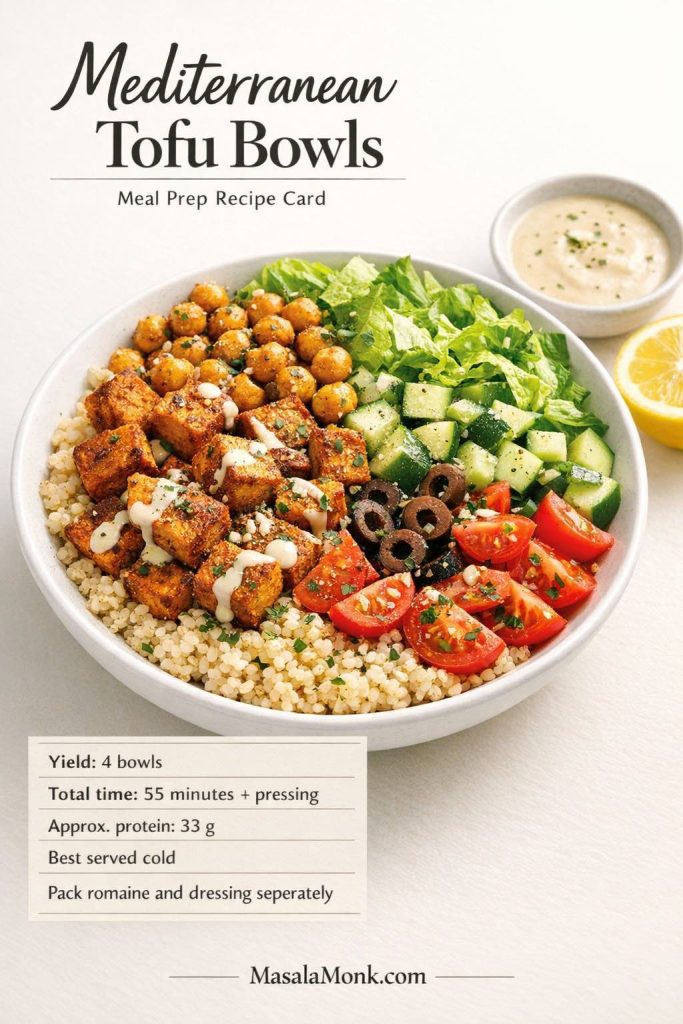
Mediterranean tofu bowls recipe card showing quinoa, spiced tofu, roasted chickpeas, romaine, cucumber, tomatoes, olives, and creamy dressing for cold tofu meal prep.
Sharper, brinier lunches can be the difference between finishing your meal prep happily and getting bored by midweek, and this Mediterranean tofu bowl leans into that with spiced tofu, quinoa, crisp vegetables, olives, roasted chickpeas, and a lemony creamy finish.

Also Read: Cookie Pie Recipe: 10 Best Flavors, Fillings and Variations

5) Buffalo Tofu Wraps with Hemp Ranch

This is the lunch that breaks the bowl rhythm. After several container-style meals, that shift alone makes the lineup feel more useful.

Buffalo tofu brings heat and punch, the fresh vegetables add crunch and lift, and the hemp ranch gives the wrap its real identity by cooling the buffalo heat and adding creamy body. Using shredded or finely crumbled tofu also makes the filling feel more natural inside a wrap rather than like bowl tofu folded into a tortilla at the last second. That difference matters, because this lunch is supposed to feel packed on purpose.

Quick recipe snapshot

  • Best served: Cold, assembled fresh
  • Fridge life: 3 to 4 days for components
  • Reheats well: Not as a full wrap
  • Pack separately: Buffalo tofu, wrap vegetables, tortillas, and hemp ranch
  • Best texture trait: Sticky spicy tofu balanced by cool creamy ranch and fresh crunch
  • Approximate protein per serving: about 28 g

Yield: 4 wraps

Prep time: 20 minutes

Cook time: 20 minutes

Total time: 40 minutes, plus tofu pressing time

Ingredients

Buffalo tofu

  • 2 (14-ounce / 396 g) blocks extra-firm tofu, pressed and shredded or finely crumbled
  • 1 tablespoon olive oil
  • 1/2 teaspoon garlic powder
  • 1/2 teaspoon paprika
  • 1/2 teaspoon salt
  • Black pepper to taste
  • 1/3 cup buffalo sauce

Wrap filling

  • 4 large flour tortillas or wraps
  • 2 cups shredded lettuce
  • 1 cup shredded carrots
  • 1 cup finely chopped celery
  • 1/2 red onion, thinly sliced
  • 2 tablespoons hemp seeds, for sprinkling

Hemp ranch

  • 1/4 cup hemp seeds
  • 1/2 cup plain yogurt
  • 1 tablespoon lemon juice
  • 1 teaspoon Dijon mustard
  • 1 tablespoon chopped parsley or dill
  • Pinch of garlic powder
  • Salt and pepper to taste
  • Splash of water, if needed

Method

  1. Heat the oven to 425°F.
  2. Toss the shredded or finely crumbled tofu with olive oil, garlic powder, paprika, salt, and black pepper.
  3. Spread it out on a tray and roast for about 20 minutes, stirring once, until the edges are lightly browned.
  4. Toss the hot tofu with buffalo sauce and let it cool slightly.
  5. Blend or whisk together the hemp ranch ingredients until creamy and spreadable.
  6. For the best texture, store the wrap filling separately and assemble fresh before eating.
  7. To serve, spread hemp ranch on the wrap, then layer the lettuce, carrots, celery, onion, tofu, and a light sprinkle of hemp seeds before rolling tightly.
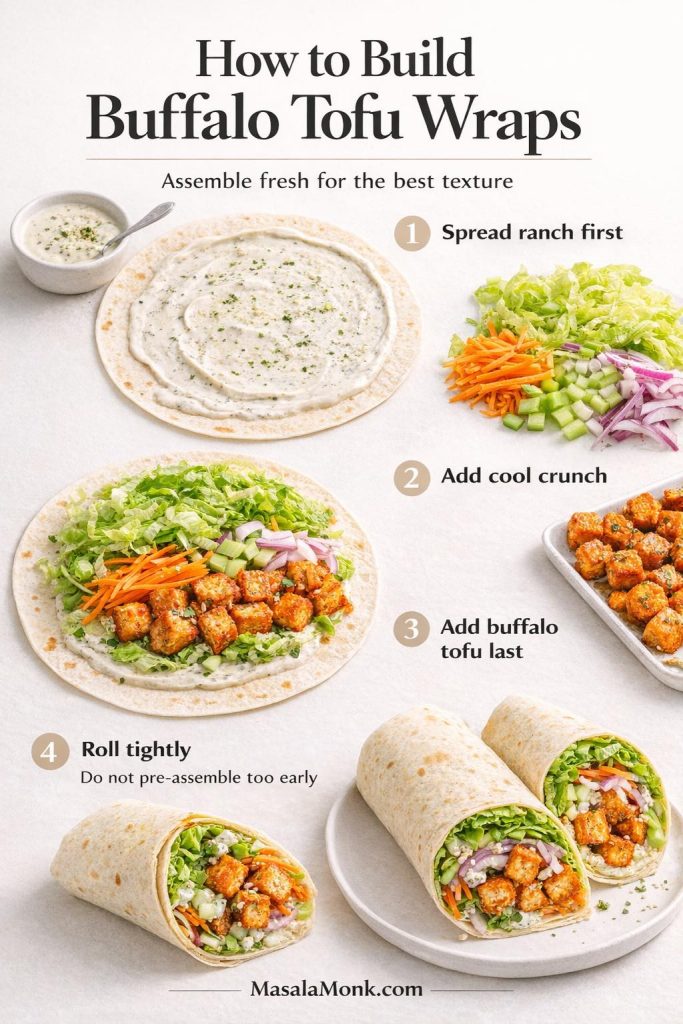
How to build buffalo tofu wraps guide showing hemp ranch spread on a tortilla, crunchy vegetables, buffalo tofu, and the finished wrap rolled tightly for meal prep.
Building the wrap in the right order makes the difference between a crisp, satisfying lunch and a soft one, which is why the ranch goes down first, the cool vegetables create the crunch, and the buffalo tofu gets added last before rolling everything tightly.

What you should notice

The tofu should look sticky and spicy at the edges, while the ranch should be thick enough to spread without making the wrap soggy. Once assembled, the wrap should feel cool, crisp, creamy, and sharp in the right order, not like a sauce-heavy bundle that falls flat after two bites.

Best storage tip

If you fully assemble these on day one, they soften much faster. Therefore, they are better when the components are prepped ahead and wrapped fresh. That way, you keep the convenience without giving up the texture that makes the wrap worth eating.
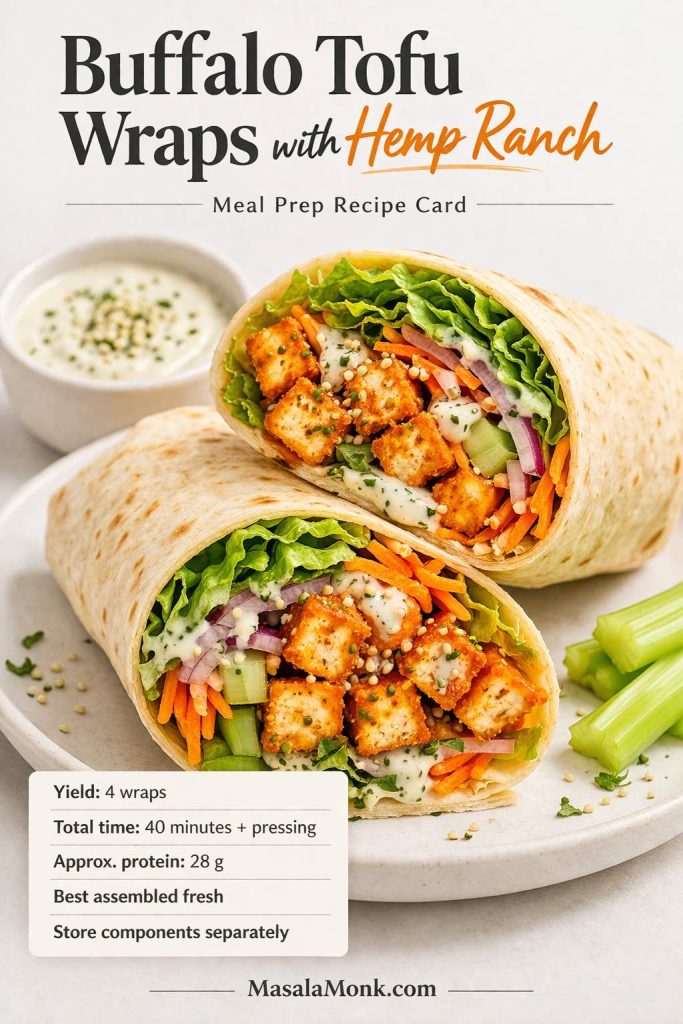
Buffalo tofu wraps with hemp ranch recipe card showing cut wraps filled with spicy tofu, lettuce, carrots, celery, red onion, and creamy ranch for tofu meal prep.
A meal-prep wrap only earns its place when it still feels crisp, creamy, and worth eating, and these buffalo tofu wraps do that by pairing punchy tofu with cool hemp ranch, crunchy vegetables, and fresh assembly right before lunch.

Also Read: Punjabi Mutton Bhuna – Amritsari Village-Style Gosht Recipe

Which Tofu Meal Prep Recipes Are Best Hot, Cold, or Build-Fresh?

The Smoky Tofu Rice Bowls reheat best because the rice and roasted vegetables are built for warmth, and the bowl can be refreshed with cool cabbage and lime yogurt drizzle afterward. So if you want the most classic microwave-friendly tofu meal prep option in the post, start there.

Meanwhile, the Spicy Peanut Noodles with Crispy Tofu work both ways. Some people prefer them cold or at room temperature, while others like them gently warmed before tossing with sauce. Because of that flexibility, they are one of the easiest lunches here to fit into different workday setups.
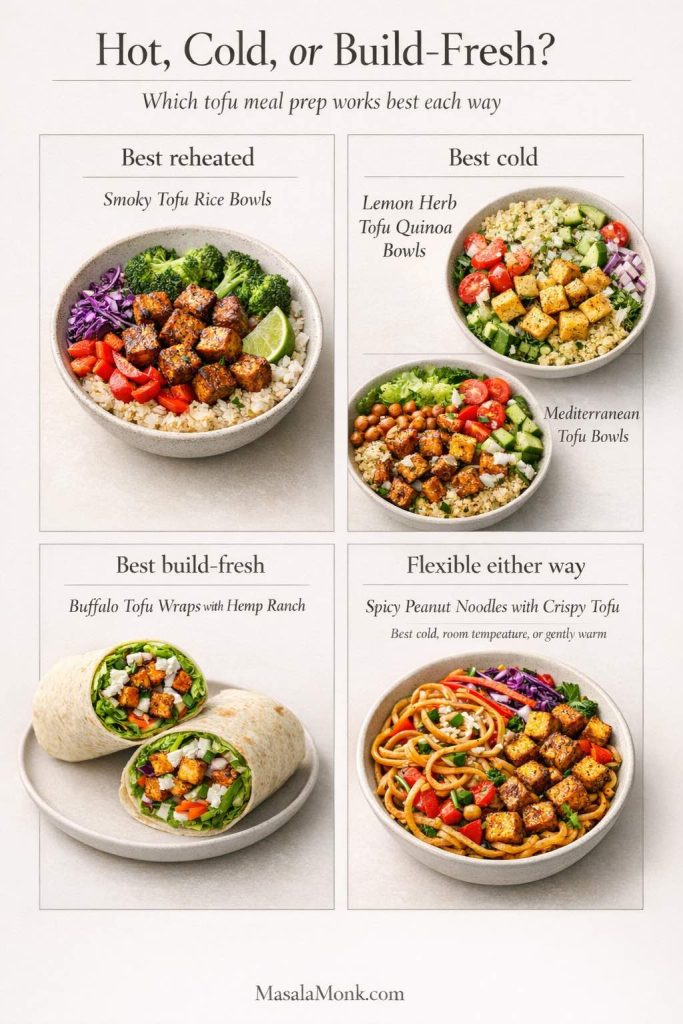
Tofu meal prep comparison guide showing which recipes are best reheated, best cold, best build-fresh, or flexible either way, including smoky tofu rice bowls, lemon herb tofu quinoa bowls, Mediterranean tofu bowls, buffalo tofu wraps, and spicy peanut noodles.
How you want to eat lunch changes which tofu meal prep recipe makes the most sense, and this guide helps you choose fast: smoky rice bowls for reheating, lemon herb and Mediterranean bowls for colder meals, buffalo wraps for fresh assembly, and spicy peanut noodles when you want the most flexibility.

For cold lunches, the Lemon Herb Tofu Quinoa Bowls are excellent. Likewise, the Mediterranean Tofu Bowls are at their best when the romaine, dressing, and herbed hemp crunch stay fresh until serving. In both cases, the freshness is the point, so there is no need to force reheating into the equation.

By contrast, the Buffalo Tofu Wraps with Hemp Ranch are best assembled from cold components just before eating. They can still be fully meal-prepped, of course. Even so, the smartest move is to treat them as a build-fresh lunch rather than a fully wrapped make-ahead one.

Also Read: Peach Cobbler with Canned Peaches (Dessert Recipe)

How to Meal Prep Tofu for the Week in Under 90 Minutes

You do not need to treat this like five separate cooking projects. Instead, the smarter move is to overlap the work so the whole prep session stays manageable.

Start by pressing all the tofu first. While that happens, get your grains cooking. Then preheat the oven and prep your vegetables. Once the tofu goes in, mix the sauces and dressings while everything roasts. Meanwhile, chop herbs and pack the fresh components during that same window. In practice, that overlap is what keeps a big prep session from turning into an all-afternoon chore.

A practical workflow looks like this:
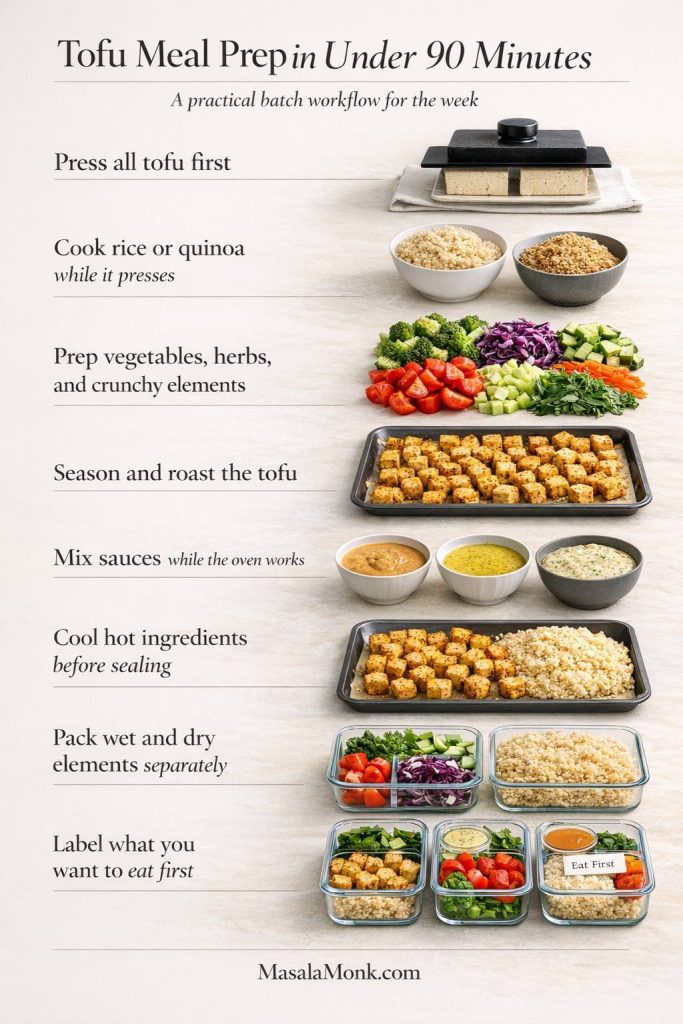
Tofu meal prep workflow guide showing how to prep lunches in under 90 minutes by pressing tofu, cooking grains, chopping vegetables, roasting tofu, mixing sauces, cooling ingredients, packing containers, and labeling what to eat first.
A good tofu meal prep session runs better when the work overlaps, and this under-90-minute workflow shows the smartest order: press tofu first, cook grains while it presses, prep vegetables during that window, roast and cool the hot components, then pack and label everything with texture in mind.
  1. Press all the tofu first.
  2. Cook rice or quinoa while it presses.
  3. Preheat the oven and line your trays.
  4. Chop vegetables, herbs, and crunchy toppings.
  5. Season the tofu and roast it.
  6. Mix the hemp dressing, peanut sauce, tahini dressing, and hemp ranch while the oven is working.
  7. Cool the hot components before closing containers.
  8. Pack wet and dry elements separately wherever texture matters.
  9. Label the containers you want to eat first.

That kind of workflow keeps the prep manageable and makes the whole post more useful in real life. It also makes a big difference in texture, because cooling before packing is one of the easiest ways to avoid condensation and sogginess. Once you start overlapping the work instead of treating every recipe like a separate task, the whole system becomes much more realistic.

Also Read: Masterclass in Chai: How to Make the Perfect Masala Chai (Recipe)

Troubleshooting Tofu Meal Prep

Use this as a quick check before blaming tofu itself. In most cases, the problem is moisture, weak seasoning, or packing order.
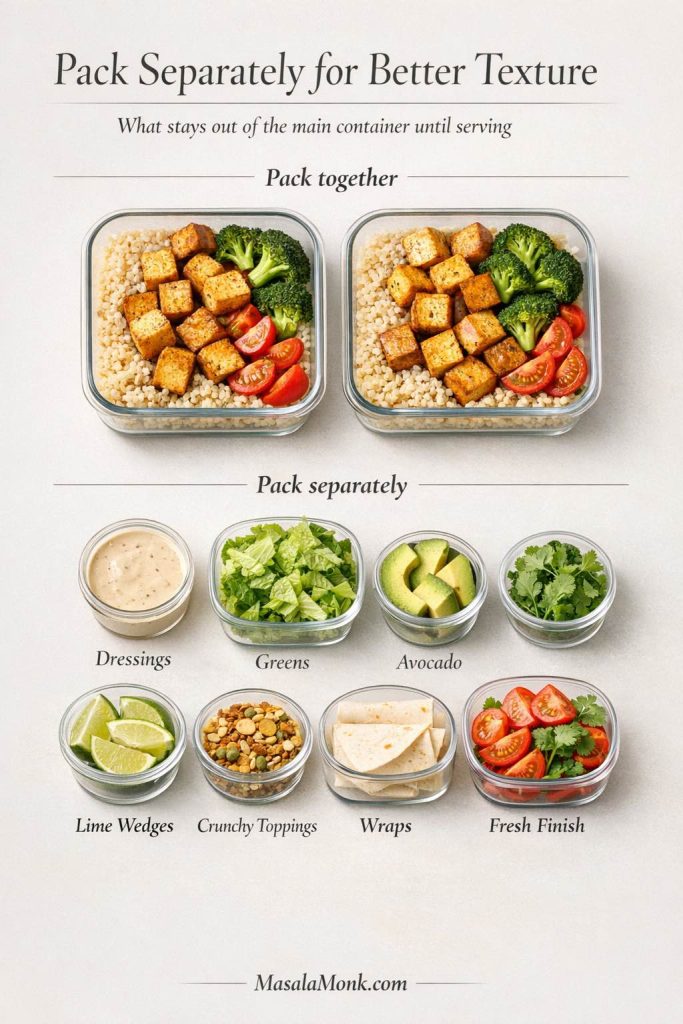
Tofu meal prep packing guide showing which ingredients can be packed together and which should be packed separately, including dressings, greens, avocado, lime wedges, crunchy toppings, wraps, and fresh finishing elements.
Texture usually falls apart long before flavor does, so this tofu meal prep packing guide shows what can stay in the main container and what is better held back until serving, from dressings and greens to avocado, wraps, lime wedges, and crunchy toppings.

If tofu turns soggy

The most likely reason is too much moisture or sauce added too early. So press longer, roast longer, and sauce later. In many cases, the fix is not dramatic at all. It is simply a matter of letting the tofu get drier before you ask it to hold texture for several days.

If tofu tastes bland

The issue is usually weak seasoning or under-salted sauce. So use soy, acid, garlic, herbs, chili, and enough salt where needed. More specifically, do not expect one last-minute sauce to rescue tofu that never had enough flavor built into it from the start.

If the container turns watery

Wet vegetables were probably packed too early or against hot ingredients. Therefore, keep cucumbers, tomatoes, lettuce, and dressings separate whenever possible. Once the hot ingredients cool, you can combine more confidently without setting off that slow soggy slide in the fridge.

If reheated tofu turns rubbery

It was probably overcooked twice or reheated too aggressively. Instead, reheat more gently and stop once warm rather than blasting it until very hot. That small change alone usually keeps the texture much more pleasant.

If noodles clump

They were likely packed dry and cooled too tightly. In that case, toss them with a tiny bit of oil after draining and keep the sauce separate. Then, when it is time to eat, the noodles loosen more easily and the sauce coats them more evenly.

If wraps go soft too fast

They were assembled too early or loaded with too much wet sauce. So pack the filling and the wraps separately and build them fresh. That way, you still get the convenience of prep without sacrificing the crisp bite that makes the wrap work.

Also Read: Air Fryer Salmon Recipe (Time, Temp, and Tips for Perfect Fillets)
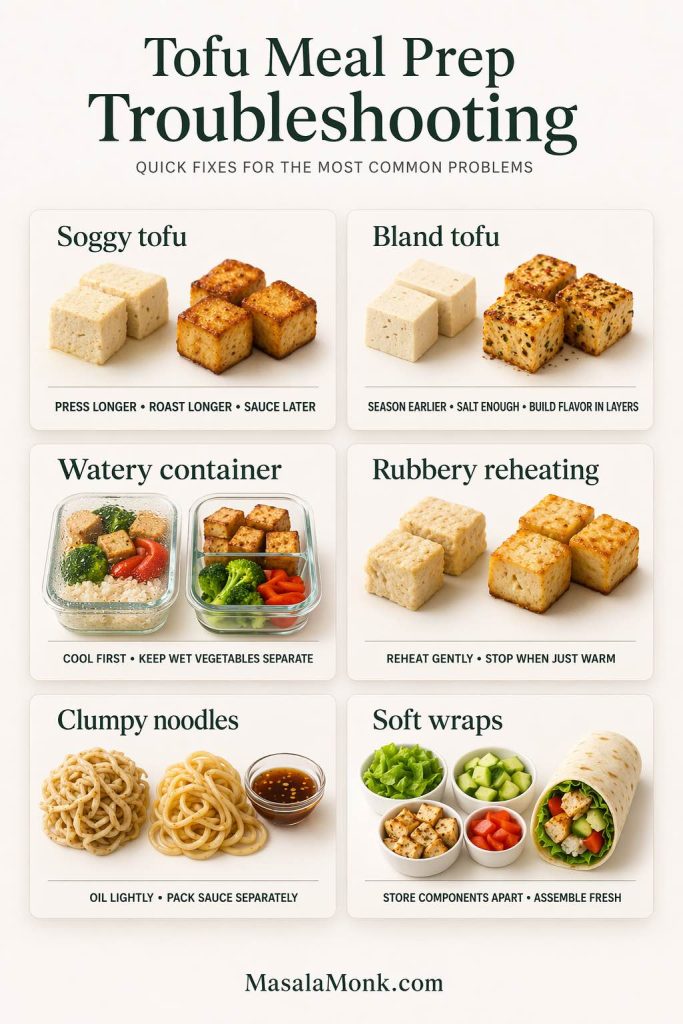
Tofu meal prep troubleshooting guide showing quick fixes for soggy tofu, bland tofu, watery containers, rubbery reheating, clumpy noodles, and soft wraps.
When tofu meal prep starts going wrong, the fix is usually more about handling than the recipe itself: press and roast tofu longer, season earlier, cool containers before sealing, keep sauce separate, reheat gently, and assemble wraps fresh instead of too far ahead.

How Long Does Tofu Meal Prep Last?

For both quality and practicality, these meals are best treated as a 3-to-4-day refrigerator plan. That way, the textures still feel intentional rather than tired. Meals like the quinoa bowls and Mediterranean bowls tend to hold especially well when the dressing stays separate. Meanwhile, the rice bowl and noodle prep also sit comfortably in that window. For wraps, the components are best prepped ahead and assembled fresh.
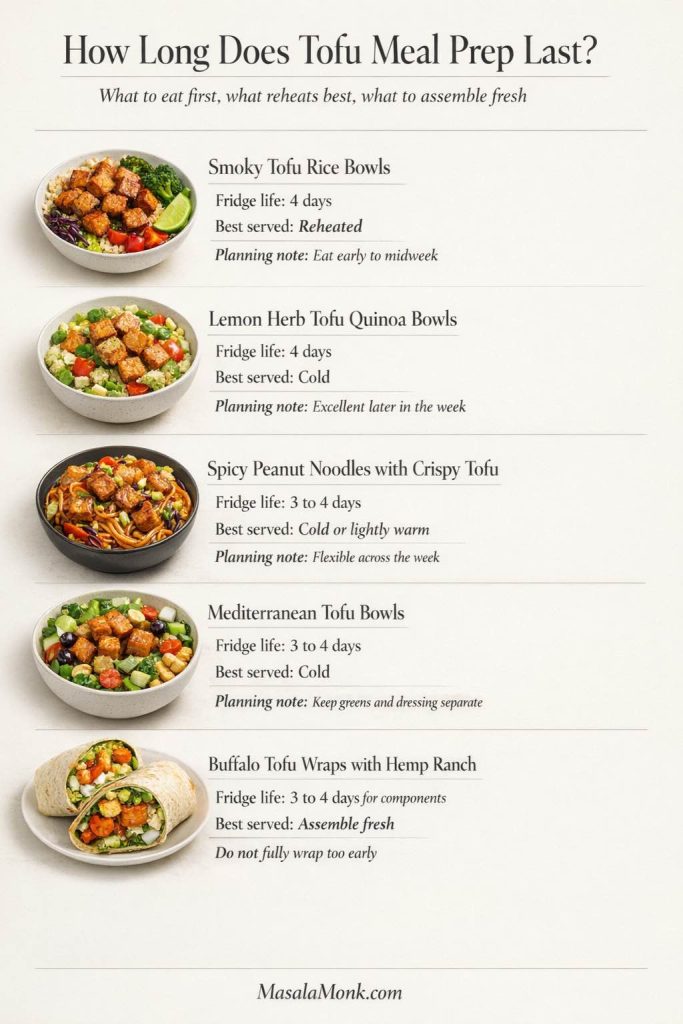
Tofu meal prep storage guide showing how long smoky tofu rice bowls, lemon herb tofu quinoa bowls, spicy peanut noodles, Mediterranean tofu bowls, and buffalo tofu wraps last in the fridge and how each is best served.
Planning the week gets easier when you know which lunches hold strongest: smoky rice bowls and lemon herb quinoa bowls can comfortably carry four days, peanut noodles stay flexible, Mediterranean bowls need greens and dressing held back, and buffalo wraps are best kept in components until you assemble them fresh.

Planning for a full five-day workweek? The easiest move is either to prep a smaller second batch midweek or to freeze part of the cooked tofu early and rotate it in later. That approach usually works better than asking one big Sunday prep to stay perfect longer than it really should. For general food-safety guidance on refrigerated leftovers, the USDA’s leftovers and food safety guidance is a useful reference point.
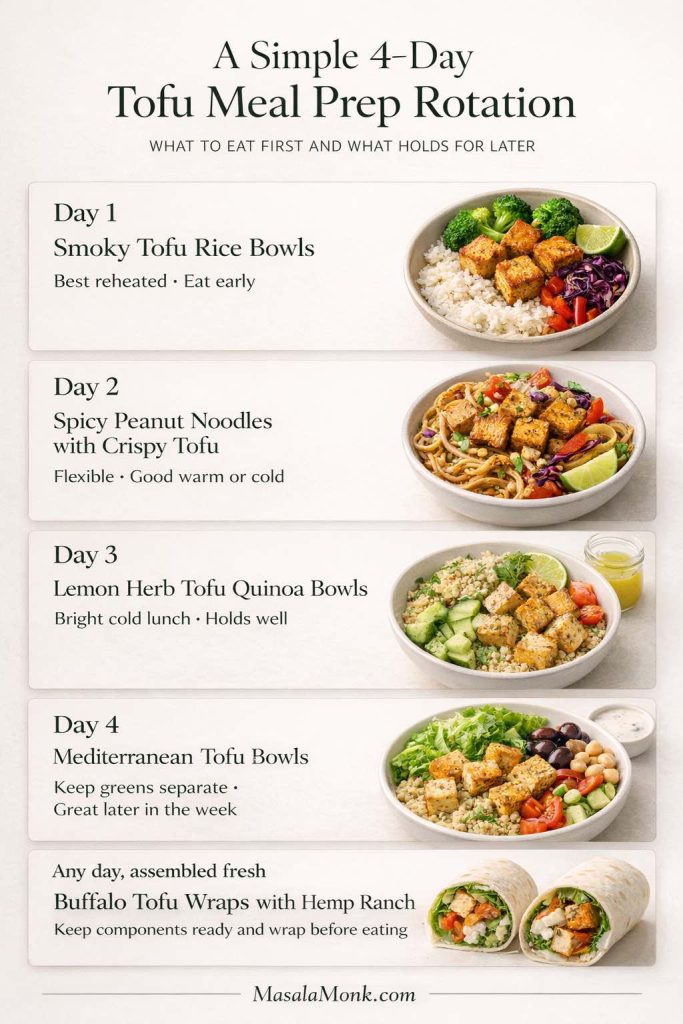
4-day tofu meal prep rotation guide showing a suggested order for smoky tofu rice bowls, spicy peanut noodles with crispy tofu, lemon herb tofu quinoa bowls, Mediterranean tofu bowls, and buffalo tofu wraps with hemp ranch.
A smart tofu meal prep week gets easier when the lunches are eaten in the right order, starting with the warm smoky rice bowls, moving through the more flexible peanut noodles, then into the colder quinoa and Mediterranean bowls, while the buffalo wraps stay best as fresh-built components on any day.

Final thoughts on tofu meal prep

These tofu meal prep ideas work because they treat tofu like a genuinely useful weekday protein instead of a backup option. Once the texture is handled properly, the sauces are built with intention, and the wet elements are packed separately where needed, tofu stops feeling like the compromise lunch and starts feeling like one of the smartest things you can prep for the week.

A practical place to start is the Smoky Tofu Rice Bowls, then follow with the Lemon Herb Tofu Quinoa Bowls or Mediterranean Tofu Bowls later in the week when colder, brighter lunches sound more appealing. Likewise, if you want a different flavor direction for the same weekday problem, these high-protein Indian meal prep ideas are worth bookmarking too. Above all, strong texture, smart packing, and enough variety to keep lunch interesting will take your tofu meal prep much further than novelty alone.

Also Read: Tapas Recipe With a Twist: 5 Indian-Inspired Small Plates
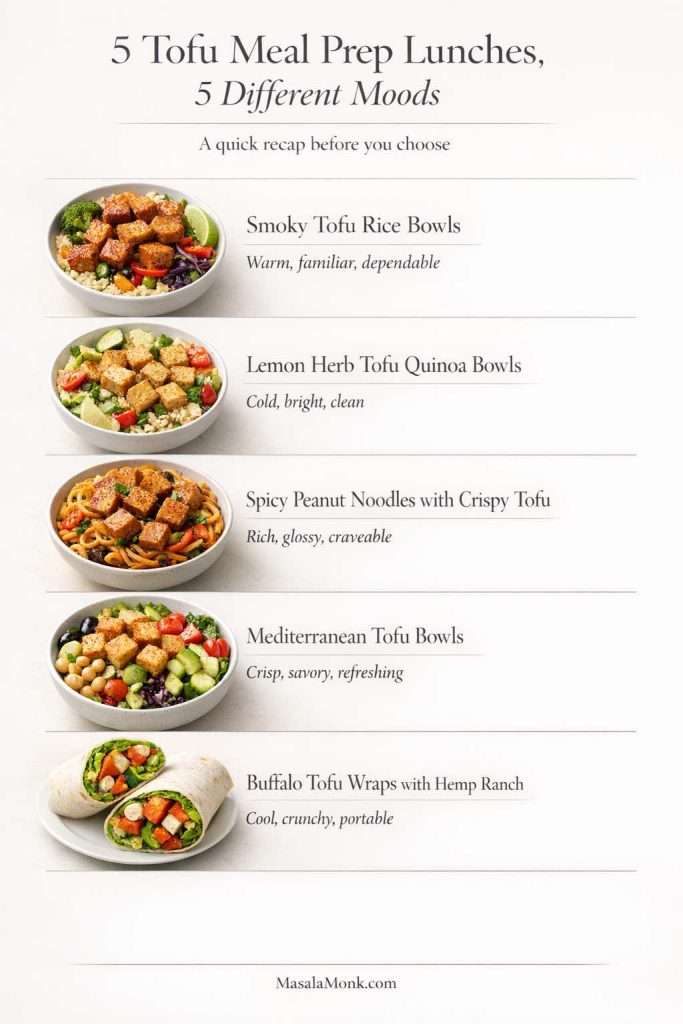
Tofu meal prep recap guide showing five lunch options and their moods: smoky tofu rice bowls, lemon herb tofu quinoa bowls, spicy peanut noodles with crispy tofu, Mediterranean tofu bowls, and buffalo tofu wraps with hemp ranch.
Some tofu lunches feel warm and dependable, others stay brightest cold, and a few are all about craveability or portability, so this quick recap helps you match each recipe to the kind of lunch mood you actually want that week.

Tofu Meal Prep FAQs

1. Is tofu meal prep good for high-protein lunches?

Yes. Tofu meal prep works well for high-protein lunches, especially when you pair tofu with ingredients like hemp seeds, quinoa, chickpeas, yogurt- or tahini-based sauces, or peanut sauce. More importantly, it can still feel like real food rather than a protein project when the texture and seasoning are handled properly.

2. What tofu is best for meal prep?

Extra-firm tofu is usually the best choice because it holds shape well and roasts into stronger edges. However, firm tofu also works well when you want a slightly softer bite. Silken tofu, by contrast, is not the right fit for bowls, noodles, and wraps like these.

3. How do I keep tofu from getting soggy in meal prep?

Press it well, avoid drowning it in marinade, roast it until it has real color, cool it before sealing, and keep sauces separate whenever crispness matters. Taken together, those steps solve most soggy tofu meal prep problems. In other words, the answer is usually better moisture control, not giving up on tofu.

4. Can I eat these tofu meal prep ideas cold?

Yes. Lemon Herb Tofu Quinoa Bowls and Mediterranean Tofu Bowls are especially good cold. Meanwhile, the noodle prep also works well cold or at room temperature. By contrast, rice bowls usually benefit most from reheating.

5. Do hemp seeds really help in meal prep, or are they just for nutrition?

They help with both. Hemp seeds add protein, but they also add creaminess, nuttiness, body, and texture. In this post, they matter most because they improve the actual eating experience, not just the nutrition label. That is precisely why they belong here.

6. Which recipe is best if I am new to tofu meal prep?

Start with the Smoky Tofu Rice Bowls. They feel the most familiar, reheat well, and give you the clearest sense of how satisfying tofu meal prep can be when the texture is right. After that, the other recipes make much more sense because you already trust the base ingredient.

Posted on Leave a comment

6 Benefits of Hemp Seeds During Pregnancy

Introduction

Navigating the world of nutrition during pregnancy can often feel like walking through a maze with an ever-shifting layout. Among the myriad of choices, one particular superfood has been steadily gaining recognition for its remarkable benefits for expecting mothers: hemp seeds. While the name might initially raise eyebrows due to their botanical relationship to the cannabis plant, these tiny seeds are a powerhouse of nutrients, completely safe and incredibly beneficial during pregnancy.

Despite their tiny size, hemp seeds pack a nutritional punch that is hard to overlook. Renowned for their rich profile of essential fatty acids, proteins, and a host of vitamins and minerals, they stand out as an excellent addition to a prenatal diet. But what exactly makes these seeds a must-have for pregnant women? And how can they positively impact both the mother’s health and the crucial developmental stages of the unborn child?

As we delve into the world of hemp seeds, it’s important to dispel any misconceptions. Unlike their cannabis counterparts, hemp seeds contain negligible amounts of THC (tetrahydrocannabinol), the psychoactive component found in marijuana. Instead, what they offer is a symphony of nutrients essential for a healthy pregnancy. From supporting fetal brain and eye development to bolstering the mother’s health, the benefits of including hemp seeds in your diet during pregnancy are both diverse and significant.

In this post, we’re going to explore the top six benefits of hemp seeds during pregnancy. Each point is backed by scientific research and expert opinions, ensuring that you get the most reliable and up-to-date information. Whether you’re an expectant mother looking to optimize your prenatal nutrition, or simply curious about the potential of these little seeds, you’re in the right place. So, let’s embark on this journey together and uncover the remarkable ways in which hemp seeds can contribute to a healthy and joyful pregnancy.

Overview of Hemp Seeds

Before we delve into the specific benefits of hemp seeds for pregnant women, let’s first understand what these seeds are and why they have become a topic of interest in the world of prenatal nutrition.

Hemp seeds, sometimes referred to as hemp hearts when they are shelled, come from the hemp plant, scientifically known as Cannabis sativa. This plant is indeed a relative of the cannabis plant, but hemp seeds are entirely different in nature and function. Unlike the leaves or flowers of certain cannabis varieties, hemp seeds contain no or negligible amounts of THC, the psychoactive compound commonly associated with marijuana. What they do contain, however, is an impressive array of nutrients that are essential for overall health, particularly so during pregnancy.

Nutritionally, hemp seeds are a powerhouse. They are exceptionally rich in essential fatty acids, including omega-3 and omega-6, which are crucial for maintaining heart health and promoting proper brain and eye development in fetuses. They also boast a high protein content, with all nine essential amino acids present, making them a complete protein source. This is especially beneficial for vegetarians and vegans who may struggle to find complete plant-based proteins. Additionally, hemp seeds are a good source of dietary fiber, which aids in digestion and can help prevent the common pregnancy discomfort of constipation.

Beyond these macronutrients, hemp seeds are also laden with a variety of micronutrients. They contain significant amounts of vitamin E, a potent antioxidant, and minerals such as phosphorus, potassium, magnesium, and iron. These minerals play diverse roles, from bone health to oxygen transport in the blood, and are often needed in greater amounts during pregnancy.

The safety of consuming hemp seeds during pregnancy has been a topic of some debate, primarily due to the association of the hemp plant with cannabis. However, modern research and food safety authorities have clarified that hemp seeds are safe and beneficial for consumption. The trace amounts of THC, if present at all, are so low that they have no psychoactive effect. Moreover, the seeds are not known to contain any compounds that would pose a risk to pregnant women or their babies when consumed as part of a balanced diet.

In fact, the nutritional profile of hemp seeds aligns well with the increased nutritional demands of pregnancy. Pregnant women require more protein, healthy fats, fiber, and certain vitamins and minerals than non-pregnant individuals, and hemp seeds offer an easy and versatile way to help meet these needs. Whether sprinkled on salads, blended into smoothies, or incorporated into baked goods, they can be a convenient and nutritious addition to the diet of an expecting mother.

In the following sections, we will explore in detail the six specific benefits of incorporating hemp seeds into a pregnancy diet, each backed by scientific evidence and expert advice. Stay tuned as we uncover the impressive ways in which these small but mighty seeds can make a big impact on prenatal health.

Benefit 1: Essential Fatty Acids for Fetal Development

One of the most celebrated benefits of hemp seeds during pregnancy lies in their rich content of essential fatty acids, particularly omega-3 and omega-6. These fatty acids are not just beneficial; they are crucial for the healthy development of a fetus, especially for the brain and eyes.

Understanding Omega-3 and Omega-6 Fatty Acids

  • Omega-3 Fatty Acids: Hemp seeds are a valuable source of alpha-linolenic acid (ALA), a type of omega-3 fatty acid. ALA is particularly important because it serves as a precursor to other omega-3 fatty acids, namely eicosapentaenoic acid (EPA) and docosahexaenoic acid (DHA). DHA, in particular, plays a critical role in the development of the fetal brain and retina. It contributes to the neural and cognitive development of the baby and supports the development of vision.
  • Omega-6 Fatty Acids: While often less highlighted than omega-3s, omega-6 fatty acids, such as linoleic acid found in hemp seeds, are equally important. They are involved in cellular function and play a role in skin health, bone growth, and maintaining the reproductive system.

The Balance of Fatty Acids

What sets hemp seeds apart is their ideal ratio of omega-6 to omega-3 fatty acids, which is close to the 3:1 ratio recommended for optimal human health. This balance is crucial as it ensures that both types of fatty acids can perform their functions effectively without one overshadowing the other. An imbalance, especially an excess of omega-6 fatty acids, is linked to various health issues.

Impact on Maternal Health

For the mother, these fatty acids are not only beneficial for carrying a healthy pregnancy but also for her own health. They contribute to cardiovascular health, aid in reducing inflammation, and may help in managing symptoms of postpartum depression. Furthermore, adequate intake of essential fatty acids during pregnancy can also have long-term health benefits for the child, potentially reducing the risk of allergies and improving immune health.

Incorporating Hemp Seeds in the Diet

To reap these benefits, expecting mothers can easily incorporate hemp seeds into their diets. They can be sprinkled over yogurt, added to smoothies, or used in baking. The versatility of hemp seeds makes it easy to include them in various meals, ensuring a regular intake of these essential fatty acids.

In conclusion, the omega-3 and omega-6 fatty acids in hemp seeds play a vital role in both fetal and maternal health. Their contribution to the development of the baby’s brain and eyes, along with the health benefits they offer to the mother, make them an invaluable addition to a pregnancy diet. As we move on to the next benefit, it becomes increasingly clear how hemp seeds can be a nutritional cornerstone during this crucial phase of life.

Benefit 2: High-Quality Plant Protein for Growth and Development

Protein is a cornerstone nutrient in any diet, but it becomes particularly vital during pregnancy. It’s the building block of the body’s cells and is crucial for the growth and development of the fetus. Hemp seeds emerge as an exceptional source of plant-based protein, offering a plethora of benefits for both the mother and the developing baby.

The Significance of Protein During Pregnancy

  • Fetal Development: Protein is fundamental for the growth of fetal tissue, including the brain and other organs. It plays a pivotal role in the development of the placenta and is integral to the expansion of maternal blood volume, a critical factor for nourishing the fetus throughout pregnancy.
  • Maternal Health: For the mother, adequate protein intake is essential for supporting the myriad of physiological changes that occur during pregnancy. It helps in the development of breast and uterine tissues and is crucial in maintaining a healthy pregnancy.

Why Hemp Seeds Stand Out as a Protein Source

  • Complete Protein: One of the unique aspects of hemp seed protein is that it is ‘complete’, meaning it contains all nine essential amino acids. These amino acids are termed ‘essential’ because the body cannot produce them on its own; they must be obtained through diet. This is particularly important for vegetarians and vegans, who may find it challenging to get complete protein from plant sources.
  • Ease of Digestion: Hemp protein is easily digestible, making it an excellent option for pregnant women who may experience digestive sensitivities. This ease of digestion ensures that the body can efficiently utilize the protein for fetal and maternal health.
  • Amino Acid Profile: Hemp seeds contain a significant amount of the amino acid arginine, which plays a role in immune function, wound healing, and heart health. This is particularly beneficial during pregnancy, a time when the body’s demand for these physiological processes is heightened.

Practical Ways to Include Hemp Seeds for Protein

  • Dietary Integration: Integrating hemp seeds into the diet is remarkably simple. They can be sprinkled onto salads, blended into smoothies, or incorporated into baked goods. Their mild, nutty flavor complements a variety of dishes, making them a versatile ingredient in the kitchen.
  • Portion Guidance: Just three tablespoons of hemp seeds can provide about 10 grams of protein, making a significant contribution to the daily protein requirements of a pregnant woman.

In summary, the high-quality plant protein in hemp seeds plays a critical role in supporting both fetal development and maternal health during pregnancy. Their status as a complete protein, coupled with their ease of digestion and rich amino acid profile, makes hemp seeds an invaluable dietary addition for expecting mothers. As we move forward to explore the next benefit, the multifaceted advantages of hemp seeds in a prenatal diet become even more apparent.

Benefit 3: Abundant in Magnesium and Phosphorus for Maternal and Fetal Health

Hemp seeds are not only celebrated for their essential fatty acids and protein but also for being a rich source of vital minerals, particularly magnesium and phosphorus. These minerals play a critical role in both maternal and fetal health during pregnancy, offering a range of benefits that are too significant to overlook.

The Importance of Magnesium in Pregnancy

  • Prevention of Preterm Birth and Preeclampsia: Magnesium is known for its role in preventing complications such as preterm birth and preeclampsia, a condition characterized by high blood pressure and damage to other organ systems. Adequate magnesium intake supports vascular function and helps to maintain healthy blood pressure levels.
  • Bone Health and Energy Production: It also contributes to bone health and is involved in energy production, making it crucial for the increased energy demands of pregnancy. Magnesium aids in hundreds of biochemical reactions in the body, including protein synthesis, muscle and nerve function, blood glucose control, and blood pressure regulation.

The Role of Phosphorus During Pregnancy

  • Fetal Bone and Teeth Development: Phosphorus, while less discussed, is equally important. It plays a significant role in the formation of bones and teeth in the fetus. This mineral is essential for the growth and repair of cells and tissues and is also involved in the production of DNA and RNA.
  • Energy Storage and Utilization: Phosphorus is a component of ATP (adenosine triphosphate), the molecule that stores and releases energy in bodily processes. Its presence is vital for maintaining energy levels and supporting the metabolic needs of both the mother and the developing fetus.

Nutritional Content and Recommendations

  • Nutritional Density of Hemp Seeds: Just a small serving of hemp seeds can contribute significantly to the daily requirements of these minerals. For instance, three tablespoons of hemp seeds provide approximately 50% of the Recommended Daily Allowance (RDA) for magnesium and about 60% for phosphorus for pregnant women.
  • Incorporation into Diet: The ease with which hemp seeds can be incorporated into the diet makes them an ideal choice for boosting the intake of these essential minerals. They can be added to a variety of dishes, from breakfast cereals to smoothies, salads, and even desserts.

Addressing Common Deficiencies

Many pregnant women may unknowingly suffer from magnesium deficiency due to increased requirements and dietary limitations. By incorporating hemp seeds into their daily diet, they can help address this gap and ensure adequate intake of these critical nutrients.

In conclusion, the abundant presence of magnesium and phosphorus in hemp seeds underscores their value in a pregnancy diet. These minerals contribute to vital functions and developmental processes, emphasizing the importance of a well-rounded diet for expecting mothers. As we progress to the next benefit, it becomes increasingly evident how each nutrient in hemp seeds plays a synergistic role in supporting a healthy pregnancy.

Benefit 4: Preventing Iron Deficiency and Supporting Healthy Blood Flow

Iron is a critical nutrient in pregnancy, essential for producing hemoglobin, the protein in red blood cells that carries oxygen to other cells in your body. During pregnancy, the need for iron increases significantly as the mother’s blood volume expands and the fetus and placenta grow. Hemp seeds are a valuable dietary addition for their iron content, helping to prevent iron deficiency anemia, a common concern during pregnancy.

Understanding Iron’s Role in Pregnancy

  • Supporting Fetal and Placental Development: Iron is crucial for the development of the placenta and fetus. It supports the baby’s brain development and is essential for the production of myoglobin, a protein that supplies oxygen to muscles.
  • Reducing Risks of Preterm Delivery and Low Birth Weight: Adequate iron intake is associated with a reduced risk of preterm delivery and low birth weight. These are key factors in ensuring the health and well-being of the newborn.
  • Enhancing Maternal Health: For the mother, sufficient iron levels help in maintaining energy, preventing fatigue, and boosting immunity. During pregnancy, the body’s blood volume increases by about 50%, escalating the demand for iron to produce more hemoglobin.

Hemp Seeds as a Source of Iron

  • Iron Content in Hemp Seeds: Hemp seeds provide a plant-based source of iron. Consuming a serving of hemp seeds can help meet a significant portion of the daily iron requirements for pregnant women. For example, three tablespoons of hemp seeds contain about 2.5 mg of iron, which is about 14% of the daily recommended intake for pregnant women.
  • Synergistic Nutrient Absorption: The vitamin C content in many fruits and vegetables can enhance the absorption of plant-based iron when consumed together. Adding hemp seeds to a salad with vitamin C-rich ingredients like bell peppers or citrus fruits can be an effective way to maximize iron uptake.

Addressing Iron Deficiency Anemia in Pregnancy

  • Prevalence and Implications: Iron deficiency anemia is one of the most common nutritional deficiencies in pregnant women, leading to complications such as fatigue, increased susceptibility to infections, and in severe cases, implications for the baby’s growth.
  • Dietary Strategies: Incorporating hemp seeds into the diet can be an effective strategy in preventing this condition. They can be easily added to a variety of dishes, from breakfast cereals and smoothies to salads and baked goods, providing a convenient way to boost iron intake.

In conclusion, hemp seeds offer a significant benefit in preventing iron deficiency anemia in pregnant women through their iron content. This role is vital in supporting the health and development of both the mother and the fetus. With their versatility in culinary use, hemp seeds provide an accessible means of enhancing the nutritional quality of a pregnancy diet. As we continue to explore the remaining benefits, the comprehensive nutritional profile of hemp seeds becomes increasingly apparent, showcasing their importance in supporting a healthy pregnancy journey.

Benefit 5: Provides Vital Micronutrients for Comprehensive Prenatal Care

In addition to their macronutrient content, hemp seeds are a treasure trove of essential micronutrients that play pivotal roles in prenatal health. This section delves into the spectrum of vitamins and minerals found in hemp seeds, highlighting how they contribute to the well-being of both the expectant mother and the developing fetus.

The Spectrum of Micronutrients in Hemp Seeds

  • Vitamins for Development and Immunity: Hemp seeds are a good source of various vitamins, including vitamin E and B vitamins like B6. Vitamin E acts as a powerful antioxidant, protecting cells from oxidative stress. B vitamins, particularly B6, are crucial for fetal brain development and aiding in the mother’s metabolism, ensuring efficient energy utilization.
  • Minerals for Structural Integrity and Functionality: They also contain minerals such as manganese, potassium, calcium, and zinc. Manganese plays a role in healthy bone formation and cartilage development, important as the fetus grows. Potassium helps in maintaining fluid balance and proper nerve and muscle function. Calcium is vital for building the baby’s bones and teeth. Zinc is essential for cell growth, immune function, and the synthesis of DNA.

Impact on Pregnancy Health

  • Supporting Fetal Growth: These micronutrients contribute significantly to the overall growth and development of the fetus. They ensure that the baby’s structural, cognitive, and physiological aspects develop optimally.
  • Enhancing Maternal Health: For the mother, these micronutrients aid in maintaining her health during pregnancy. They support immune function, help in the prevention of certain pregnancy-related complications, and contribute to overall vitality and wellness.

Dietary Considerations and Integration

  • Balancing Nutrient Intake: While hemp seeds contain these essential micronutrients, it’s important to consume them as part of a balanced diet. They should complement other nutrient sources to ensure a comprehensive intake of all necessary vitamins and minerals.
  • Culinary Versatility of Hemp Seeds: The versatility of hemp seeds makes them an easy addition to many dishes. They can be sprinkled on fruits, added to smoothies, or incorporated into salads and baked items, allowing for a diverse and nutrient-rich diet.

Addressing Nutritional Gaps in Pregnancy

  • Filling Common Nutritional Gaps: Many pregnant women face challenges in meeting their increased nutritional needs. Hemp seeds offer a convenient and efficient way to fill potential gaps, especially for micronutrients that are crucial for healthy pregnancy outcomes.
  • Consultation with Healthcare Providers: As with any dietary change during pregnancy, it’s advisable for expectant mothers to consult with their healthcare providers. This ensures that their diet is tailored to their specific nutritional needs and any medical considerations.

In conclusion, the provision of vital micronutrients by hemp seeds underlines their significant role in prenatal nutrition. These micronutrients contribute to the comprehensive care necessary for a healthy pregnancy, supporting both the mother and the fetus in various critical ways. As we proceed to explore the final benefit of hemp seeds in pregnancy, their contribution to a balanced and nutritious prenatal diet becomes even more evident.

Benefit 6: High Fiber Content for Digestive Health and Weight Management

The final, yet equally important benefit of hemp seeds in pregnancy revolves around their high dietary fiber content. Fiber is an essential component of a healthy diet, particularly during pregnancy, where it plays a crucial role in maintaining digestive health and aiding in weight management.

The Role of Fiber in Pregnancy

  • Digestive Health and Constipation Relief: One of the common discomforts during pregnancy is constipation, which can be attributed to hormonal changes and the physical pressure of a growing uterus. Dietary fiber, particularly the insoluble type found in hemp seeds, helps in promoting regular bowel movements and preventing constipation by adding bulk to the stool.
  • Blood Sugar Regulation: Fiber also plays a vital role in regulating blood sugar levels. It slows down the digestion of carbohydrates, preventing spikes in blood sugar, which is particularly beneficial in managing gestational diabetes, a condition characterized by high blood sugar during pregnancy.
  • Satiety and Weight Management: Additionally, fiber contributes to a feeling of fullness, helping to manage appetite and prevent excessive weight gain during pregnancy. This is important for maintaining a healthy weight, which is linked to better outcomes for both the mother and the baby.

Nutritional Profile of Hemp Seeds

  • Fiber Content in Hemp Seeds: Hemp seeds, especially when consumed with their shells, are an excellent source of fiber. Just three tablespoons can provide a significant portion of the daily recommended intake of dietary fiber for pregnant women.
  • Complementing Other Dietary Sources: While hemp seeds are a great source of fiber, they should be part of a fiber-rich diet that includes fruits, vegetables, whole grains, and legumes. This ensures a diverse intake of both soluble and insoluble fibers, catering to all the digestive and metabolic benefits fiber offers.

Incorporating Hemp Seeds into the Diet

  • Easy Addition to Meals: Hemp seeds can be easily incorporated into various meals throughout the day. Sprinkling them on breakfast cereals, blending them into smoothies, or adding them to salads and baked goods are simple ways to increase dietary fiber intake.
  • Gradual Introduction and Hydration: For those not used to high fiber diets, it’s advisable to introduce hemp seeds gradually to allow the digestive system to adjust. Additionally, increasing water intake alongside fiber consumption is important to avoid digestive discomfort.

Considerations and Recommendations

  • Balancing Fiber Intake: While a high-fiber diet is beneficial during pregnancy, excessive fiber intake can lead to bloating, gas, or discomfort. Finding the right balance that suits one’s individual digestive system is key.
  • Consultation with Healthcare Providers: As always, consulting with healthcare providers before making significant dietary changes during pregnancy is recommended. This is particularly important for women with pre-existing digestive issues or those on specific dietary plans.

In conclusion, the high fiber content of hemp seeds offers significant benefits for digestive health and weight management during pregnancy. This, combined with their rich nutrient profile, makes them a valuable addition to a prenatal diet. Through their multiple health benefits, hemp seeds stand out as a superfood, playing a supportive role in ensuring a healthy and comfortable pregnancy experience.

Having explored the multifaceted benefits of hemp seeds for expectant mothers, it’s now essential to address some key considerations and best practices for incorporating these nutrient-rich seeds into a pregnancy diet.

Considerations When Adding Hemp Seeds to Your Pregnancy Diet

  1. Start Slowly: If you’re not used to hemp seeds in your diet, it’s wise to start with small amounts. This gradual introduction helps your body adjust to the increased fiber and nutrient intake, minimizing any digestive discomfort.
  2. Quality Matters: Opt for organic and unprocessed hemp seeds to ensure you’re getting the highest quality without any added chemicals or preservatives. This is particularly important during pregnancy, where the focus is on clean and wholesome nutrition.
  3. Allergy Awareness: While rare, some individuals may have allergies to hemp seeds. If you experience any unusual symptoms after consuming hemp seeds, such as rashes, digestive discomfort, or breathing difficulties, consult your healthcare provider immediately.
  4. Balanced Diet Integration: Hemp seeds should be a part of a balanced and varied diet. Relying solely on hemp seeds for certain nutrients isn’t advisable. They should complement other food sources rich in proteins, vitamins, minerals, and other nutrients necessary during pregnancy.

Best Practices for Incorporating Hemp Seeds

  • Diverse Usage: Hemp seeds can be used in a variety of ways. Sprinkle them on your morning yogurt or oatmeal, add them to your smoothies, or include them in your baking recipes for an extra nutritional boost.
  • Combining with Other Nutrients: Pair hemp seeds with foods high in vitamin C to enhance iron absorption. Similarly, combining them with calcium-rich foods can support bone health for both mother and baby.
  • Storing Hemp Seeds: Store hemp seeds in a cool, dry place or in the refrigerator to maintain their freshness. Proper storage is key to preserving their nutritional value and preventing rancidity.

Creative Culinary Ideas

  1. Hemp Seed Pesto: Blend hemp seeds with fresh basil, garlic, Parmesan cheese, and olive oil for a nutritious twist on traditional pesto.
  2. Hemp-Infused Smoothies: Add a scoop of hemp seeds to your fruit or green smoothies for an extra protein and fiber kick.
  3. Hemp Seed Energy Bites: Mix hemp seeds with oats, peanut butter, honey, and dark chocolate chips for a quick and healthy snack.
  4. Salad Topping: Sprinkle hemp seeds over salads for added texture and nutrients.
  5. Hemp Seed Oatmeal: Stir hemp seeds into your morning oatmeal along with fruits and nuts for a wholesome breakfast.

Consulting with Healthcare Professionals

It is crucial to discuss any dietary changes with your healthcare provider, especially during pregnancy. They can provide personalized advice based on your health history and nutritional needs.

Final Thoughts

Incorporating hemp seeds into your pregnancy diet can offer numerous health benefits, from essential nutrient intake to improved digestive health. By following these considerations and best practices, you can safely and effectively make the most of what hemp seeds have to offer, contributing positively to your prenatal nutrition and overall well-being during this vital stage of life.

Engaging Conclusion and Forward-Looking Considerations

As we wrap up our exploration of the numerous benefits of hemp seeds during pregnancy, it’s clear that these small seeds pack a significant nutritional punch. From essential fatty acids crucial for fetal development to the high-quality plant protein needed for both maternal and fetal health, hemp seeds emerge as a superfood in the truest sense. Their rich content of vital micronutrients, coupled with the benefits of their high fiber content, underscores their potential as a key component of prenatal nutrition.

Reflecting on the Journey

We’ve navigated through the diverse nutritional landscape of hemp seeds, uncovering their multifaceted benefits. Each point illuminated a different aspect of why incorporating hemp seeds into a pregnancy diet can be so advantageous. From aiding in fetal development to supporting maternal health, the seeds’ benefits are as varied as they are significant.

Looking Beyond Pregnancy

The benefits of hemp seeds extend beyond pregnancy. Postpartum mothers can also benefit from their nutrient-dense profile, which can aid in recovery and provide the necessary energy and nutrients during breastfeeding. Their role in supporting overall health makes them a valuable dietary addition for anyone looking to enhance their nutritional intake.

Encouraging Personal Research and Consultation

While this exploration provides a comprehensive overview of the benefits of hemp seeds during pregnancy, it’s important to remember that personal dietary needs can vary. Expectant mothers are encouraged to conduct further research and, most importantly, consult with their healthcare providers to tailor their diets to their specific needs and conditions.

A Call to Share Experiences and Recipes

The versatility of hemp seeds in culinary applications makes them a joy to experiment with in the kitchen. Readers are invited to share their own experiences of incorporating hemp seeds into their diets and exchange recipes that have worked for them. This sharing of knowledge and experience can be a wonderful way to support each other in the journey towards a healthier lifestyle.

Final Words of Encouragement

Incorporating hemp seeds into your pregnancy diet is about more than just adding a new ingredient to your meals; it’s about making a conscious choice towards better health and well-being for both you and your baby. With their impressive nutritional profile, hemp seeds offer a simple yet effective way to enhance your prenatal diet, laying the foundation for a healthy pregnancy and beyond.

As we conclude, let this exploration be a starting point for your journey with hemp seeds. May it inspire you to embrace a diet rich in diverse, wholesome, and nutritious foods, supporting you through one of life’s most beautiful and transformative experiences – pregnancy.

FAQs on Hemp Seeds During Pregnancy

  1. Q: Are hemp seeds safe to consume during pregnancy?
    • A: Yes, hemp seeds are safe and beneficial during pregnancy. They are a rich source of nutrients essential for fetal development and maternal health, and contain negligible amounts of THC.
  2. Q: How much hemp seeds should I eat per day during pregnancy?
    • A: A recommended serving is about 2-3 tablespoons per day. This amount provides a good balance of nutrients without overconsumption.
  3. Q: Can hemp seeds help with pregnancy-related constipation?
    • A: Absolutely. The high fiber content in hemp seeds aids in digestion and can help alleviate constipation, a common issue during pregnancy.
  4. Q: Do hemp seeds provide enough protein for pregnant women?
    • A: Hemp seeds are an excellent source of plant-based protein. While they provide a significant amount of protein, they should be part of a balanced diet to meet the complete protein needs during pregnancy.
  5. Q: Are there any risks associated with consuming hemp seeds during pregnancy?
    • A: Hemp seeds are generally safe. However, it’s important to start with small amounts to ensure you don’t have any allergic reactions and consult with your healthcare provider, especially if you have pre-existing health conditions.
  6. Q: Can hemp seeds improve my baby’s brain development?
    • A: Yes, the omega-3 fatty acids, particularly DHA in hemp seeds, are crucial for the healthy brain and eye development of the fetus.
  7. Q: Will eating hemp seeds affect my baby’s or my own weight?
    • A: Hemp seeds can help manage weight during pregnancy due to their high fiber content that promotes a feeling of fullness and their balanced nutrient profile.
  8. Q: Can I use hemp seeds in cooking and baking?
    • A: Yes, hemp seeds are versatile and can be used in various recipes, including salads, smoothies, yogurt toppings, and baked goods.
  9. Q: Is it possible to develop an allergy to hemp seeds during pregnancy?
    • A: Hemp seed allergies are rare but possible. If you experience any allergic symptoms, stop consumption and consult your healthcare provider.
  10. Q: Can hemp seeds help in reducing the risk of pregnancy complications?
    • A: Hemp seeds contain nutrients like magnesium and omega-3 fatty acids that can support overall health and may help reduce the risk of certain pregnancy complications like preeclampsia and preterm birth. However, they should not be seen as a standalone solution but as part of a healthy, balanced diet.

Blog Tags for the Post

pregnancy nutrition, hemp seeds benefits, prenatal health, plant-based protein, omega-3 fatty acids, digestive health, fetal development, iron source, healthy pregnancy diet, natural superfoods

Posted on Leave a comment

Neuro-Nourishing with Chia, Hemp, Flax, and Pumpkin Seeds

In an enlightening exposition, The Nerve Doctors – Neuropathy Pain Treatment unveils the remarkable neuro-nourishing potentials hidden within four extraordinary seeds. This insightful video explores the profound benefits of Chia, Hemp, Flax, and Pumpkin seeds, each a powerhouse of nutrients essential for nerve health and overall vitality.

Video: The Hidden Power of these 4 seeds can repair nerves – The Nerve Doctors
Credits: The Nerve Doctors – Neuropathy Pain Treatment

Caption: Dive deep into the world of seeds with The Nerve Doctors, exploring the incredible neuro-nourishing potentials of Chia, Hemp, Flax, and Pumpkin seeds.

Chia Seeds: Ancient Seeds of Wisdom

Chia seeds, a revered ancient superfood, are a bountiful source of omega-3 fatty acids, antioxidants, and soluble fiber. Their unique composition makes them a formidable ally in promoting gut health, reducing inflammation, and supporting the nourishment and repair of nerves.

Hemp Seeds: Nature’s Protein Jewel

Hemp seeds dazzle with their complete protein profile, offering all nine essential amino acids necessary for optimal health. Rich in magnesium and zinc, these seeds play a pivotal role in enhancing nerve function, immune health, and overall vitality.

Flax Seeds: The Heart’s Guardian

Flax seeds, laden with lignans and omega-3 fatty acids, emerge as guardians of heart health. Their potent anti-inflammatory properties, coupled with a rich fiber content, make them a valuable asset in supporting nerve health and combating oxidative stress.

Pumpkin Seeds: The Mineral-Rich Maestro

Pumpkin seeds, a mineral-rich maestro, bring a concert of magnesium, zinc, and anti-inflammatory benefits. Their nutritional symphony plays a vital role in supporting nerve health, prostate wellness, and overall immune function.

Conclusion: A Harmonious Ensemble of Seeds

In the harmonious ensemble presented by The Nerve Doctors – Neuropathy Pain Treatment, each seed plays a vital role in orchestrating a melody of health, vitality, and neuro-nourishment. Their video serves as a gateway to exploring the remarkable potentials of these seeds in nurturing and revitalizing our nervous system.

FAQs

  1. What makes these seeds essential for nerve health and overall vitality?
    Chia, Hemp, Flax, and Pumpkin seeds are nutritional powerhouses, each packed with unique compounds such as omega-3 fatty acids, proteins, and essential minerals that collectively support nerve function, reduce inflammation, and promote overall vitality.
  2. How do Chia seeds contribute to gut health and nerve nourishment?
    Chia seeds are rich in soluble fiber and antioxidants, which foster a healthy gut environment and reduce oxidative stress. Their omega-3 fatty acid content further supports nerve health, making them a multifaceted contributor to neurological well-being.
  3. What unique benefits do Hemp seeds offer in supporting nerve function?
    Hemp seeds are celebrated for their complete protein profile and rich magnesium content. These attributes make Hemp seeds instrumental in enhancing nerve function, supporting immune health, and promoting overall body wellness.
  4. How do Flax seeds act as guardians of heart health?
    Flax seeds, laden with omega-3 fatty acids and lignans, play a protective role in heart health by reducing inflammation and combating oxidative stress. Their rich fiber content also contributes to a healthy cardiovascular system.
  5. What role do Pumpkin seeds play in supporting prostate and immune health?
    Pumpkin seeds are a rich source of essential minerals and anti-inflammatory compounds that support prostate health and bolster the immune system. Their nutritional composition makes them a valuable asset in promoting overall body health and function.

Blog Tags

Nerve Health, Nutritional Seeds, Chia Seeds, Hemp Seeds, Flax Seeds, Pumpkin Seeds, Neuro-Nourishment, Dietary Wellness, The Nerve Doctors, Neuropathy Pain Treatment, Holistic Health, Seed Nutrition

Posted on Leave a comment

Hemp Seeds: A Plant-Based Protein for Weight Loss

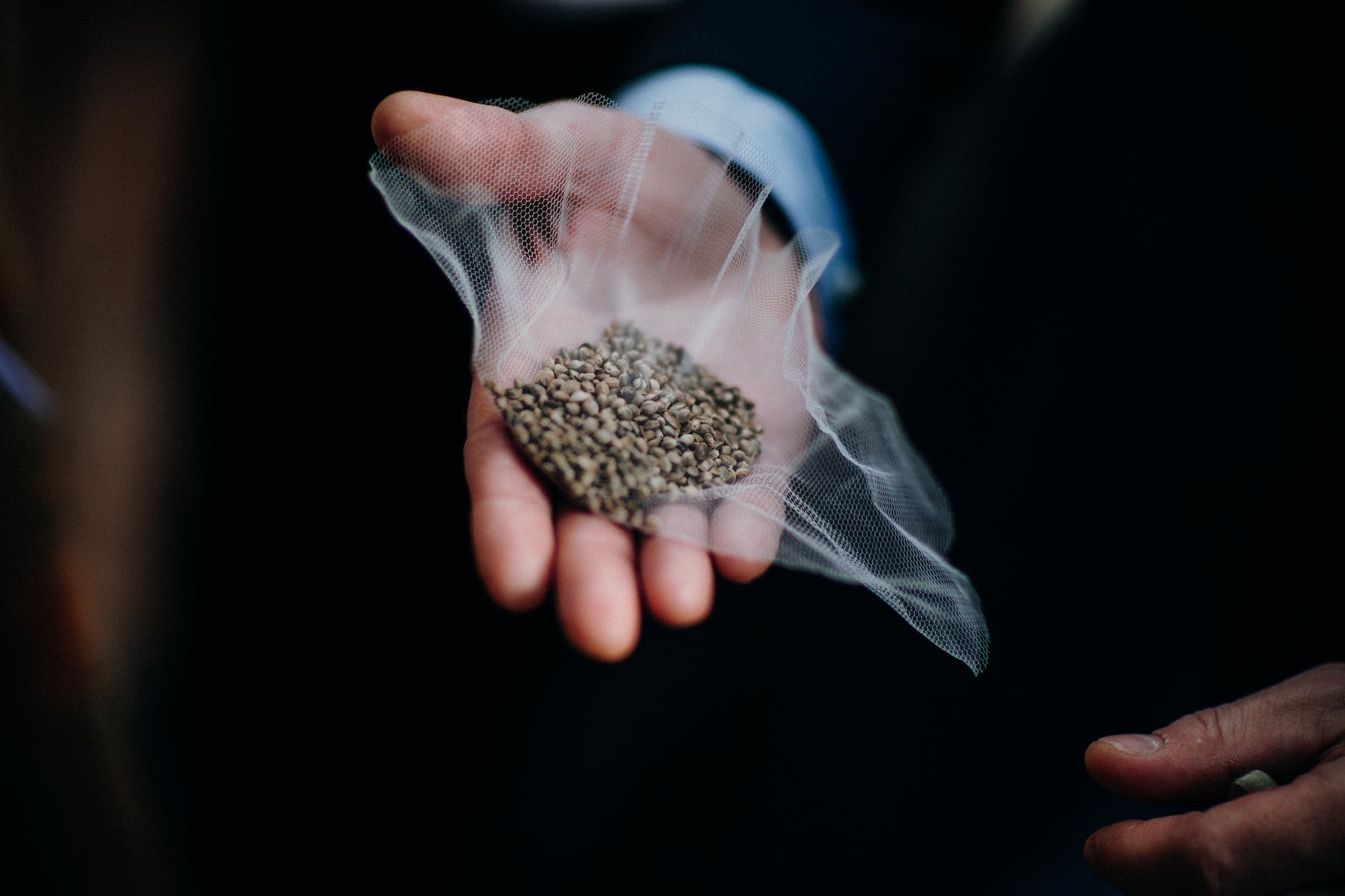
seeds in hand

Are you looking for a natural and nutritious way to support your weight loss journey? Consider incorporating hemp seeds into your diet. These tiny powerhouses are packed with essential nutrients, including protein, healthy fats, and fiber, making them a valuable addition to a healthy eating plan. In this comprehensive guide, we will explore the potential benefits of hemp seeds for weight loss, how to incorporate them into your meals, and address common questions about hemp protein. Get ready to discover the weight loss potential of this versatile superfood!

Understanding Hemp Seeds: A Nutrient-Dense Superfood

Hemp seeds, derived from the Cannabis sativa plant, are nutrient-dense and offer a wide array of health benefits. It’s important to note that hemp seeds contain only trace amounts of tetrahydrocannabinol (THC), the psychoactive compound found in marijuana, making them safe and legal to consume.

1. Protein Powerhouse: Fueling Weight Loss and Muscle Maintenance

Hemp seeds are an excellent source of plant-based protein, making them a valuable addition to a weight loss diet. Protein plays a crucial role in weight management by promoting satiety, preserving lean muscle mass, and supporting overall metabolic function.

2. Healthy Fats for Satiety and Nutrient Absorption

Hemp seeds are rich in healthy fats, including omega-3 and omega-6 fatty acids. These fats provide satiety, helping you feel fuller for longer and reducing the urge to overeat. Additionally, the presence of healthy fats aids in the absorption of fat-soluble vitamins, further enhancing the nutritional value of your meals.

3. Fiber for Digestive Health and Weight Management

Hemp seeds are an excellent source of dietary fiber, which is essential for maintaining digestive health and supporting weight loss efforts. Fiber promotes feelings of fullness, regulates blood sugar levels, and aids in proper digestion, ultimately contributing to a healthy weight management plan.

4. Nutrient Rich: A Multitude of Essential Vitamins and Minerals

In addition to protein and healthy fats, hemp seeds are packed with essential vitamins and minerals. They are particularly rich in vitamin E, magnesium, phosphorus, and potassium, all of which play vital roles in supporting overall health and well-being.

Incorporating Hemp Seeds into Your Weight Loss Diet: Tips and Ideas

Now that you understand the potential benefits of hemp seeds for weight loss, it’s time to explore how to incorporate them into your daily meals. Here are some tips and ideas to get you started:

1. Sprinkle Them on Salads and Yogurt: Add a crunchy texture and nutty flavor to your salads and yogurt by sprinkling hemp seeds on top. They can complement a range of ingredients and elevate the nutritional profile of your meals.

2. Blend Them into Smoothies: Boost the protein content of your smoothies by adding a tablespoon or two of hemp seeds. They blend seamlessly, adding a creaminess and a nutritional punch to your favorite blends.

3. Create Homemade Energy Bars: Whip up your own energy bars by combining hemp seeds with other nutrient-dense ingredients like dates, nuts, and nut butter. These bars make for convenient and healthy snacks on the go.

4. Use Them in Baking: Experiment with baking recipes by incorporating hemp seeds into muffins, cookies, or bread. They add a delightful crunch and nutritional boost to your homemade treats.

5. Make a Hemp Seed Pesto: Replace traditional pine nuts with hemp seeds in your favorite pesto recipe. The result is a flavorful and nutrient-packed sauce that pairs well with pasta, vegetables, or as a spread on sandwiches.

Addressing Common Questions About Hemp Seeds

Q1. How much hemp protein is in 100g of hemp seeds?

Approximately 30 grams of hemp seeds contain around 9-10 grams of protein. This means that 100 grams of hemp seeds will provide approximately 30 grams of protein.

Q2. Are hemp seeds beneficial for weight loss?

Yes, hemp seeds can be beneficial for weight loss. They are rich in protein, fiber, and healthy fats, which contribute to feelings of fullness and support a balanced diet for weight management.

Q3. Are there any side effects of consuming hemp seeds?

Hemp seeds are generally safe for consumption, but some individuals may experience digestive discomfort if consumed in large quantities. Start with smaller portions and gradually increase to assess your tolerance.

Q4. Can hemp seeds help with muscle building and recovery?

Hemp seeds are a plant-based protein source that can contribute to muscle building and recovery. They contain essential amino acids needed for protein synthesis, making them a valuable addition to a muscle-building diet.

Q5. Are hemp seeds suitable for individuals with nut allergies?

Hemp seeds are considered a seed rather than a nut, and allergies to hemp seeds are relatively rare. However, if you have a known seed allergy, it’s best to consult with a healthcare professional before incorporating them into your diet.

In Conclusion: Embrace the Nutritional Power of Hemp Seeds

Hemp seeds are a versatile and nutritious addition to a weight loss diet. Packed with protein, healthy fats, and fiber, they offer a range of benefits, including satiety, muscle support, and overall well-being. By incorporating hemp seeds into your meals, you can enhance the nutritional profile of your diet and support your weight loss goals. Remember to start with smaller portions and listen to your body’s needs. Enjoy the benefits of this plant-based superfood and embark on a healthy and nourishing weight loss journey.

Tags: hemp seed for weight loss, hemp for weight loss, hemp protein, benefits of hemp seeds, weight loss diet, healthy fats, plant-based protein, nutrient-dense, weight management, muscle support

Posted on 2 Comments

5 Edible Seeds that are good for Weight Loss

blue tape measuring on clear glass square weighing scale

Seeds are the unsung heroes of the nutritional world. Packed with a potent mix of essential nutrients, these tiny powerhouses are a must-have in your daily diet. From flaxseeds to chia, sunflower to pumpkin, each seed brings its unique blend of health benefits to the table. In this blog post, we’ll delve into the world of edible seeds, their health benefits, and how they can aid in weight loss and muscle growth.

🌾 Types of Edible Seeds 🌾

There are numerous types of edible seeds that you can incorporate into your diet. Here are five popular ones:

  1. Chia Seeds: These tiny black seeds are rich in fiber, protein, and omega-3 fatty acids. They also contain a good amount of minerals like calcium and magnesium. Chia seeds are also known for their ability to absorb water, which can help you feel fuller for longer.
  2. Flaxseeds: Known for their high omega-3 fatty acids content, flaxseeds are also a great source of dietary fiber. They’re also packed with lignans, which have antioxidant properties. Ground flaxseeds can be easily added to your diet and are a great source of plant-based protein.
  3. Pumpkin Seeds: These are loaded with antioxidants and a rich source of magnesium, iron, zinc, and protein. Pumpkin seeds also contain high levels of essential fatty acids that help maintain healthy blood vessels and lower unhealthy cholesterol in the blood.
  4. Sunflower Seeds: High in vitamin E and selenium, sunflower seeds are excellent for your heart health. They also provide a good amount of dietary fiber. Sunflower seeds are also rich in B vitamins, which are necessary for a healthy metabolism.
  5. Hemp Seeds: These seeds are a great source of protein and contain all nine essential amino acids. They’re also packed with omega-3 and omega-6 fatty acids. Hemp seeds are also known for their high levels of gamma-linolenic acid (GLA), a type of omega-6 fatty acid that has several health benefits.

🏋️‍♀️ Seeds for Weight Loss 🏋️‍♀️

Seeds can be a great addition to your diet if you’re trying to lose weight. They’re high in fiber and protein, which can help you feel fuller for longer, reducing the likelihood of overeating. Here are some of the best seeds for weight loss:

  1. Chia Seeds: The high fiber content in chia seeds can help you feel full and satisfied, reducing your calorie intake. They also expand in your stomach, which can help reduce hunger.
  2. Flaxseeds: Flaxseeds are packed with dietary fiber, which aids in weight loss by promoting a feeling of fullness. They also contain protein, which can help maintain muscle mass while you’re losing weight.
  3. Pumpkin Seeds: These seeds are a good source of protein, which can help curb your appetite and keep you from overeating. They’re also low in calories, making them a healthy snack choice.
  4. Sunflower Seeds: Sunflower seeds are high in healthy fats and fiber, which can help you feel full and satisfied. They’re also packed with protein, which can help maintain muscle mass during weight loss.

💪 Seeds for Muscle Growth 💪

Seeds are not just for weight loss; they can also support muscle growth. They are a good source of protein, a key nutrient for muscle development. Hemp seeds, for instance, are a complete protein, meaning they contain all nine essential amino acids necessary for muscle growth and repair. Incorporating seeds into your post-workout meal can provide your body with the protein it needs to repair and build new muscle tissue.

🍽️ How to Eat Seeds 🍽️

Seeds are incredibly versatile and can be incorporated into your diet in various ways. You can sprinkle them on your salads, yogurt, or cereal. They can also be blended into smoothies or used as a topping for your toast. Some people prefer to eat seeds like pumpkin and sunflower seeds on their own as a snack.

🤔 Addressing Common Questions about Seeds 🤔

  • Can thyroid patients eat chia seeds? Yes, chia seeds are safe for thyroid patients to consume. They are a good source of essential nutrients like fiber and omega-3 fatty acids.
  • Are hemp seeds good for weight loss? Yes, hemp seeds can support weight loss as they are high in protein and fiber, which can help you feel full and satisfied.
  • Which seeds should you eat for weight loss? Chia seeds, flaxseeds, pumpkin seeds, and sunflower seeds are all excellent choices for weight loss due to their high fiber and protein content.
  • Are pumpkin seeds good for weight loss? Yes, pumpkin seeds can be a great addition to a weight loss diet. They are high in fiber and protein, which can help keep you feeling full.
  • Is sunflower seeds good for weight loss? Yes, sunflower seeds can be beneficial for weight loss. They are high in fiber and healthy fats, which can help you feel satisfied.

🌈 Conclusion 🌈

Seeds are a nutritional powerhouse that can provide a host of health benefits. Whether you’re looking to lose weight, build muscle, or simply improve your overall health, incorporating seeds into your diet can be a great step towards achieving your health goals. So, why not start sprinkling some into your meals today? 🌱💪🥗