
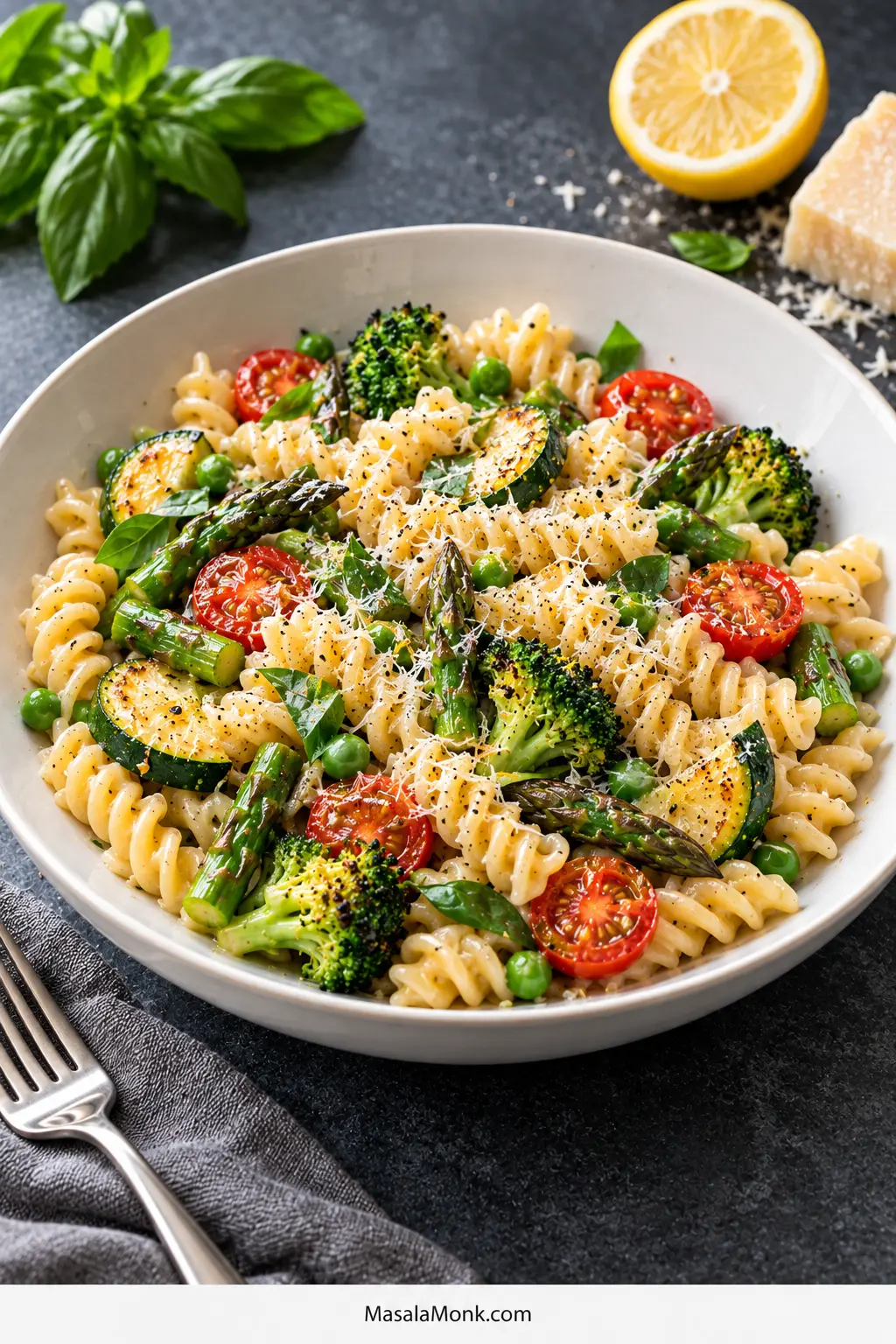
A good Pasta Primavera is the kind of dinner that makes a slightly chaotic vegetable drawer feel intentional: creamy pasta, sweet peas, tender zucchini, asparagus with some spring left, and lemon cutting through the Parmesan. It sounds almost too simple to go wrong. Then the broccoli is still firm, the zucchini is soft, and the skillet has filled with water.
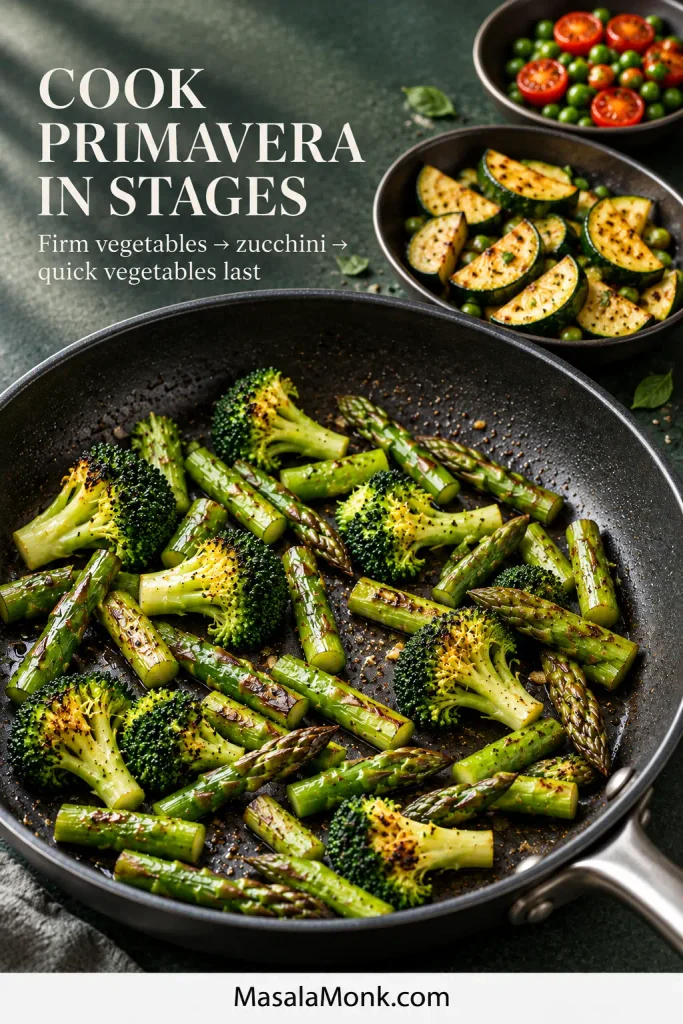
The trick is letting the vegetables cook at their own pace. Broccoli and asparagus get a head start, zucchini gets its own short turn in the hot pan, and peas and tomatoes wait until the end. The browned vegetables don’t come back until the sauce is nearly ready, so they keep the texture you worked for. Then Parmesan, lemon, butter, and basil pull the whole skillet together.
Make the Primavera
Use What You Have
What Is Pasta Primavera?
Primavera means “spring” in Italian, but Pasta Primavera is an Italian-American dish and doesn’t require one particular mix of spring vegetables. What matters is the finished bowl: pasta with some bite, vegetables that still have their own character, and enough sauce to pull everything together.
Pasta Primavera Recipe
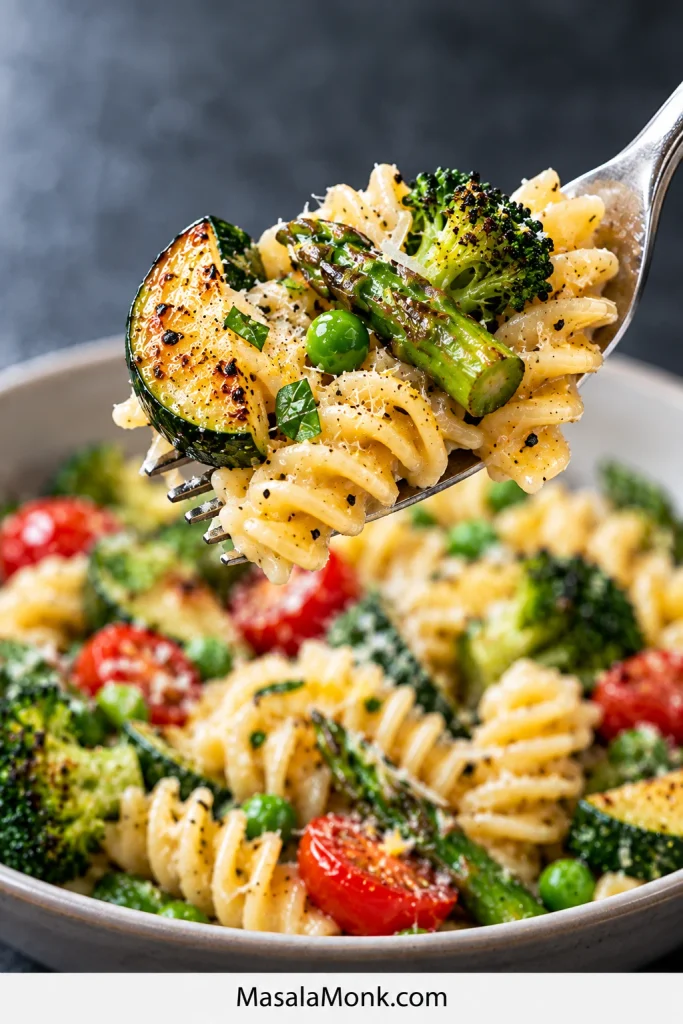
Creamy, lemony Pasta Primavera in 35–40 minutes, with vegetables cooked in stages so they stay distinct instead of turning soft or watery.
Pan: wide, deep 12-inch / 30-cm skillet or sauté pan
Pasta: 12 oz / 340 g dry pasta
Best served: straight from the final toss
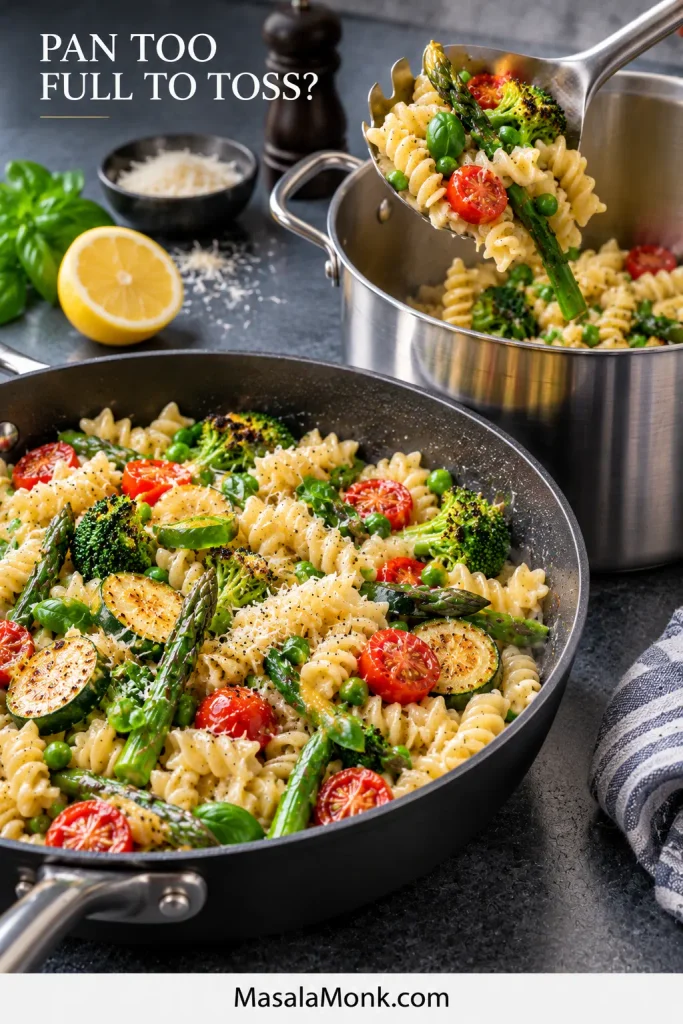
Using a shallow skillet? Brown the vegetables in it, then use the pasta pot for the final toss.
Equipment
- Large pasta pot, ideally 6 qt / 5.7 L or larger
- Wide, deep 12-inch / 30-cm skillet or sauté pan
- Fine grater or Microplane
- Wide plate or shallow bowl for holding the browned vegetables
Set up before the skillet gets hot. Grate the Parmesan, zest and juice the lemon, tear the basil, measure the cream, and keep a measuring cup ready for the pasta water.
Ingredients
Pasta & Vegetables
- 12 oz / 340 g fusilli, penne, rotini, or another medium short pasta
- 5½ oz / 155 g asparagus, trimmed and cut into 1-inch / 2.5-cm pieces, about 1 small bunch
- 4½ oz / 125 g broccoli florets, cut small, about ¾–1 inch / 2–2.5 cm, about 2 cups
- 5¼ oz / 150 g zucchini, cut into ½-inch / 1.25-cm half-moons, about 1 small zucchini
- 3½ oz / 100 g cherry tomatoes, halved, about 1 cup
- 3½ oz / 100 g green peas, fresh or frozen, about ⅔ cup
Aromatics & Sauce
- 1 small yellow onion, about 4 oz / 115 g, finely diced
- 4 garlic cloves, finely minced
- 1½ tbsp / 22 ml extra-virgin olive oil
- 2 tbsp / 28 g unsalted butter, divided
- ½ cup / 120 ml heavy cream
- 2 oz / 57 g finely grated Parmesan, plus more for serving
- 1 lemon, finely zested, with 2 tbsp / 30 ml juice to start
- ⅓ cup loosely packed fresh basil, torn or thinly sliced
- ½ tsp freshly ground black pepper, plus more to taste
- ¼ tsp red pepper flakes, optional
- Salt, for the pasta water, vegetables, and final seasoning
Season in layers, but lightly. The pasta water and Parmesan both bring salt to the finished dish. Taste again after the Parmesan goes in before deciding what it still needs.
Method
1. Prep the Vegetables
Have everything cut before you start cooking. Keep the broccoli and asparagus together, the zucchini separate, and the peas and tomatoes ready for later.
The pieces don’t need to match perfectly. Keep the broccoli florets small enough to cook through without a long stay in the skillet.
2. Start the Pasta
Bring a large pot of well-salted water to a rolling boil. Add the pasta and begin checking it about 2 minutes before the package’s stated al dente time.
Drain when the center is still firmer than you want to eat. Before draining, scoop out at least 1½ cups / 360 ml pasta water. Do not rinse the pasta.
Save more pasta water than you’ll probably use. The extra is there if the sauce needs loosening later.
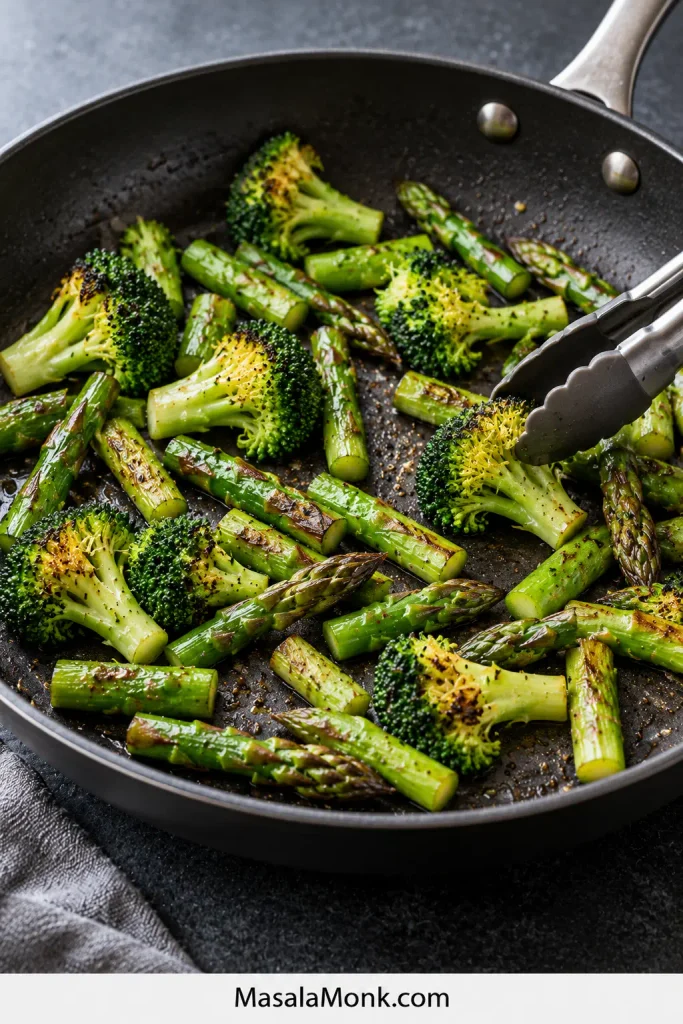
3. Brown the Broccoli and Asparagus
While the pasta cooks, heat the olive oil in the skillet over medium-high heat. Add the broccoli and asparagus with a light pinch of salt and black pepper.
Cook uncovered for about 4–5 minutes, tossing occasionally. The broccoli should turn bright green with browned edges and be nearly tender when pierced. The thick end of the asparagus should be just tender with some spring left.
If the broccoli is well browned but still distinctly firm inside, add 1 tbsp / 15 ml water and let it evaporate uncovered. Transfer the vegetables to the wide plate or shallow bowl.
4. Brown the Zucchini
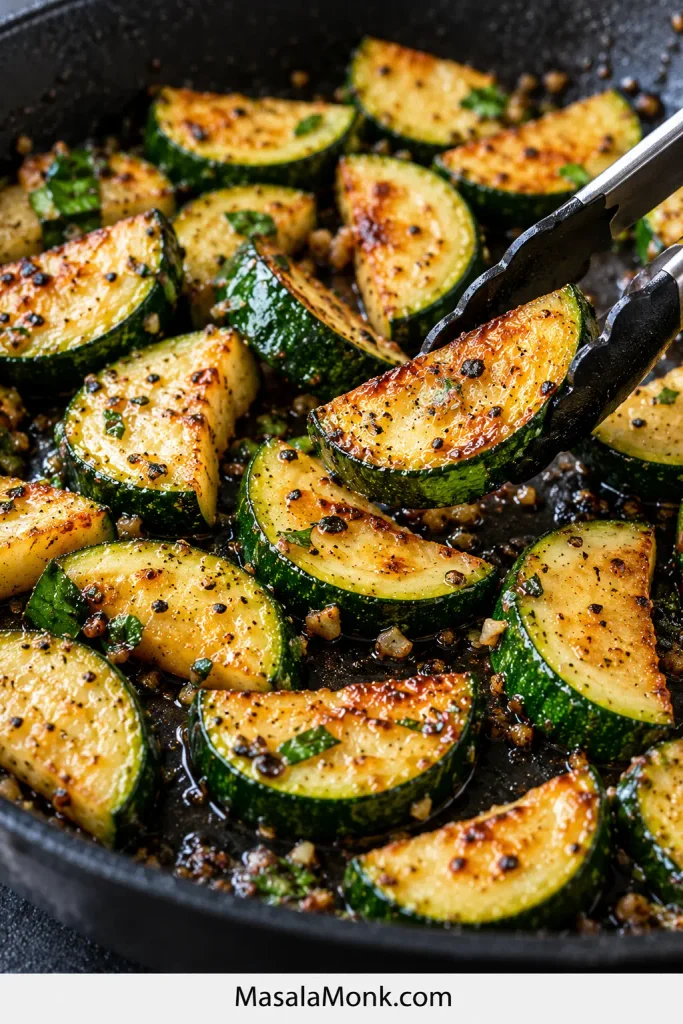
Keep the skillet over medium-high heat. Add the zucchini with a small pinch of salt.
Cook for about 3 minutes, turning occasionally. Stop when the cut sides have browned but the centers still feel firm. Transfer the zucchini to the plate with the broccoli and asparagus.
5. Soften the Onion and Garlic
Lower the heat to medium. Add 1 tbsp / 14 g butter, followed by the onion and a small pinch of salt.
Cook for 3–4 minutes, stirring occasionally, until the onion is soft and translucent. Add the garlic and red pepper flakes, if using, and cook for 30–45 seconds, just until fragrant.
Keep the garlic pale.
6. Build the Sauce and Finish the Pasta
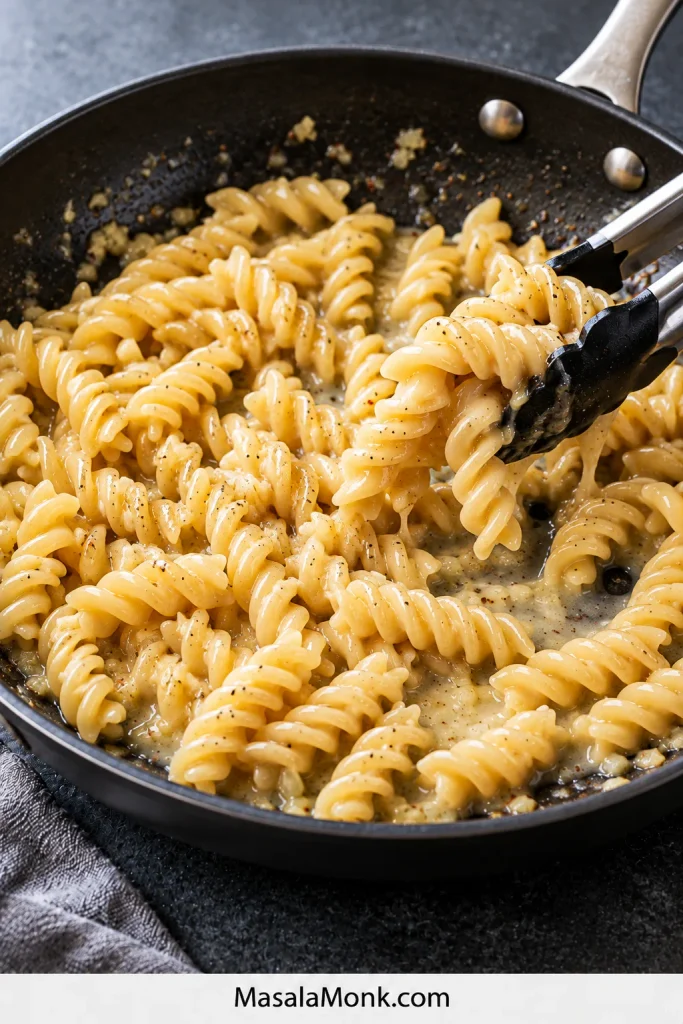
Lower the heat to medium-low. Pour in the heavy cream and bring it to a gentle simmer for about 1 minute.
Add the drained pasta and ⅓ cup / 80 ml reserved pasta water. Toss for 1–2 minutes, until the pasta is al dente and the sauce begins to coat it. Add more pasta water only if the pasta looks tight or dry.
7. Add the Peas and Tomatoes
Add the peas and cherry tomatoes. Toss over medium-low heat for about 1 minute, until the peas are hot and the tomatoes begin to soften around their cut edges.
Keep the tomatoes recognizable. Their juicy centers are especially good against the creamy sauce.
8. Bring the Browned Vegetables Back
Return the broccoli, asparagus, and zucchini to the skillet. Toss for about 1 minute, just long enough to heat them through and coat them with sauce.
If the pan feels crowded, move everything to the warm pasta pot for this last toss.
9. Finish Off the Heat
Turn off the heat. Add the remaining 1 tbsp / 14 g butter, Parmesan, lemon zest, 2 tbsp / 30 ml lemon juice, basil, and black pepper.
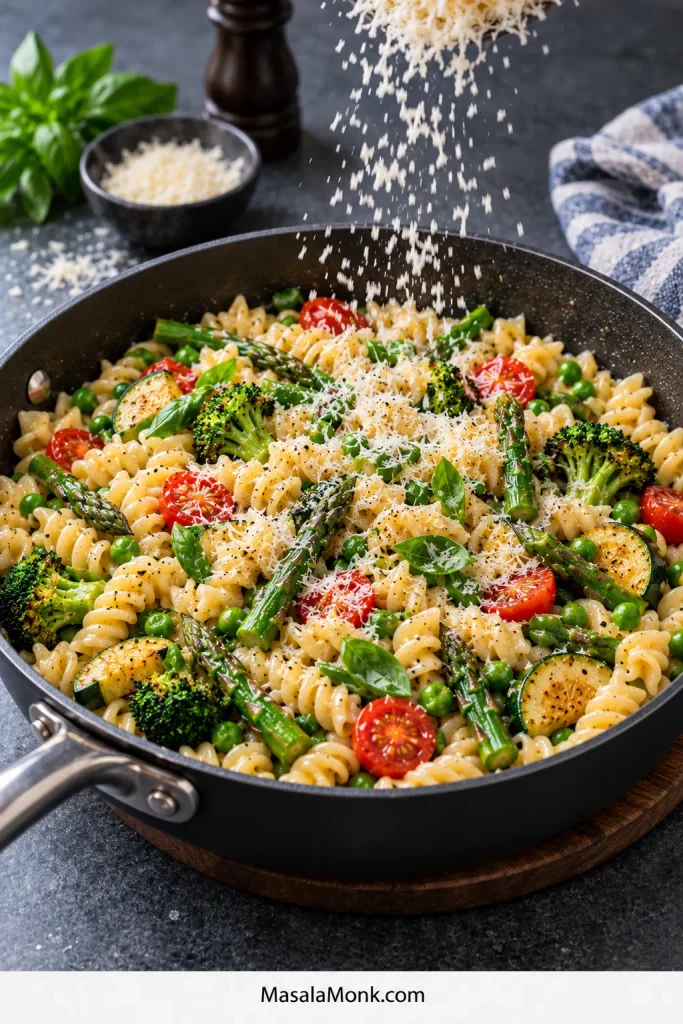
Toss vigorously until the cheese melts into the sauce. It should coat the pasta without leaving a watery puddle underneath. Add reserved pasta water a tablespoon at a time only if it needs loosening.
Taste a forkful with both pasta and vegetables. Add salt first if it needs seasoning. If the seasoning is right but the sauce still tastes heavy, give it another squeeze of lemon.
Serve immediately, with more Parmesan and black pepper if you want them.
Changing the vegetable mix? See Vegetables & Swaps →
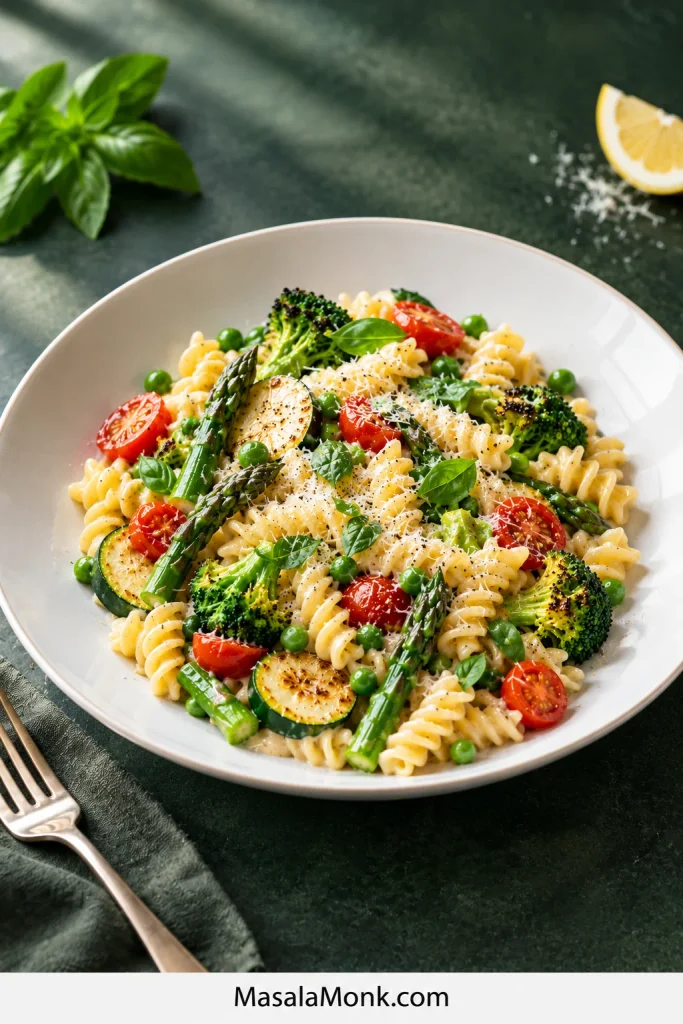
Before you move on, look at the finished bowl. The vegetables should still read as separate pieces, with enough sauce to gloss the pasta without covering their color and texture.
Read the Skillet
A timer gets you close. The food tells you when to move on.
| Look for | What it tells you |
|---|---|
| Broccoli is bright green with browned edges | Ready for the brief final toss. |
| Asparagus is just tender at the thick end and still springy | Tender now; still firm enough to return later. |
| Zucchini is browned outside and firm through the middle | Browned without going soft. |
| Pasta has a slightly firm center | Ready to finish in the sauce. |
| Tomatoes soften around their cut edges | Hot and juicy, not collapsed. |
How to Get the Creamy Lemon-Parmesan Sauce Right
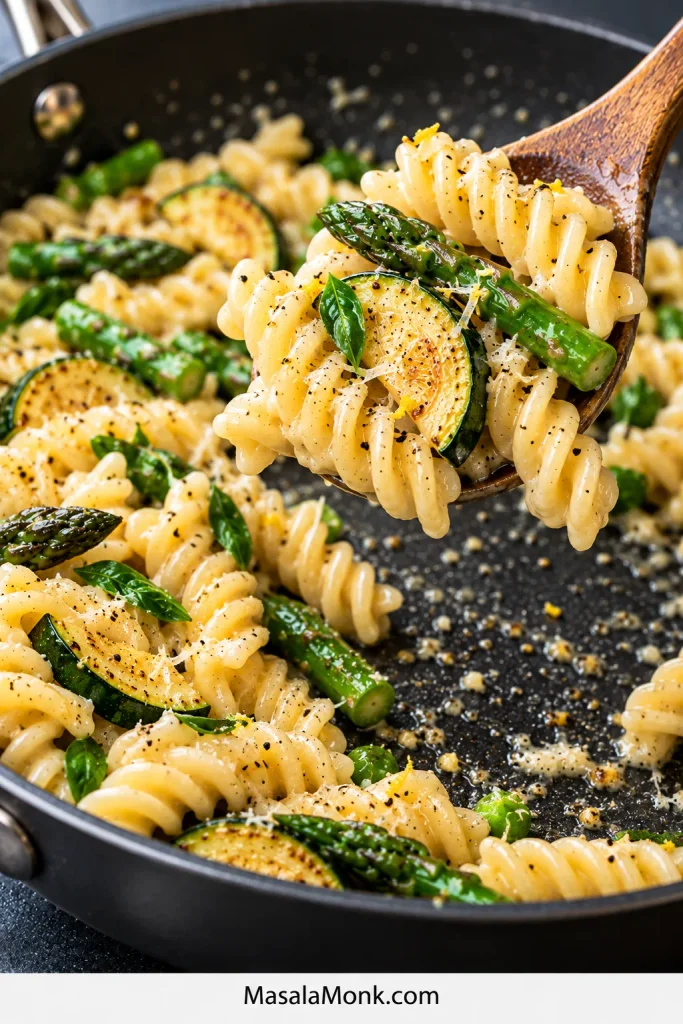
Watch how the sauce moves. It should travel with the pasta when you toss it, coating the noodles rather than collecting underneath. That is the point where you stop adjusting.
Keep the Parmesan and lemon for the off-heat finish. Residual heat is enough to melt finely grated cheese more gently, while the lemon stays bright instead of disappearing into the simmer.
If the sauce is already too loose, thick, or clumpy, jump to troubleshooting →
Vegetables & Swaps
This is where Pasta Primavera earns its keep as a refrigerator dinner. The exact vegetable mix can change; what matters is when each one belongs in the pan.
Thick asparagus may need another minute; a small zucchini may need less.
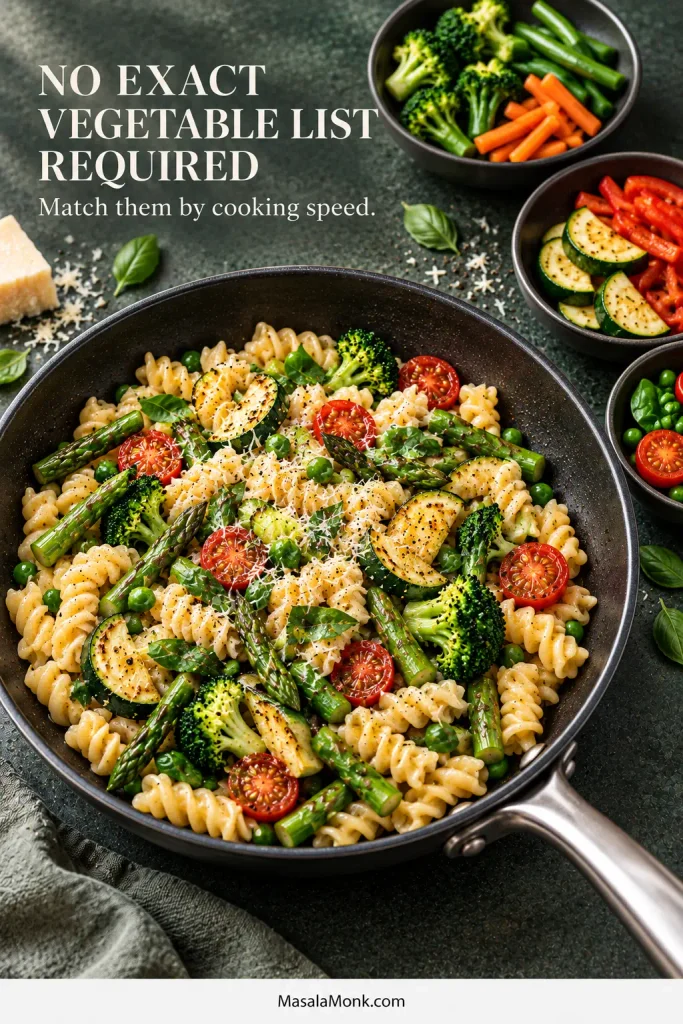
| Vegetable | Good cut | When to add |
|---|---|---|
| Carrots | Thin slices or small matchsticks | Early |
| Broccoli | Small florets | Early |
| Green beans | 1-inch / 2.5-cm pieces | Early |
| Asparagus | 1-inch / 2.5-cm pieces | Early to middle |
| Bell pepper | Thin strips or small pieces | Middle |
| Zucchini / yellow squash | ½-inch / 1.25-cm pieces | Middle |
| Mushrooms | Slices or quarters | Early, with plenty of pan space |
| Peas / snap peas | Whole | Late |
| Spinach | Leaves | Final minute |
| Cherry tomatoes | Halved | Late |
Keep the total prepared vegetables around 1¼–1½ lb / 570–680 g. Change the mix rather than replacing every omitted vegetable with another full portion.
Three or four vegetables are plenty.
Working from the freezer? See how to handle frozen vegetables →
Build It Around What You Have
Which Pasta Shape Works Best?
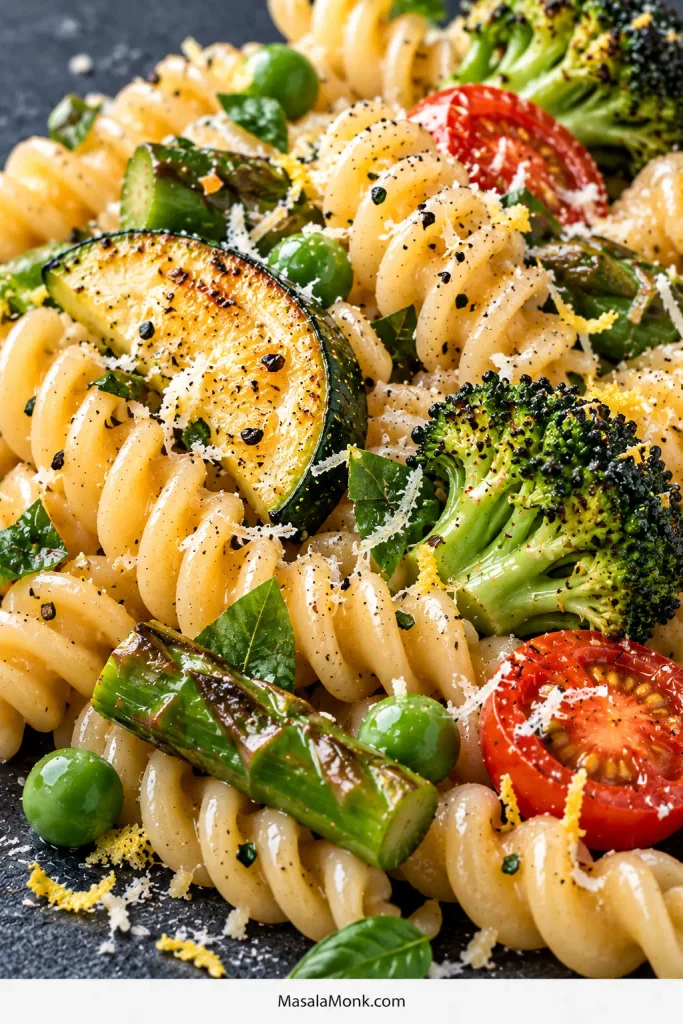
Fusilli, penne, rotini, and small shells are easiest because small pieces of vegetables settle into their ridges and curves. Spaghetti and linguine work too; toss them well enough that the vegetables don’t stay behind in the pan.
If basil is what you have in abundance, pesto pasta takes dinner in a different direction.
Can You Use Frozen Vegetables?
Yes, but treat them according to how much water they carry.
- Peas: add straight from frozen.
- Corn: add straight from frozen and heat through.
- Broccoli: thaw and drain well, or cook it separately until the excess moisture is gone.
- Spinach: thaw and squeeze it dry before adding near the end.
- Zucchini: skip the frozen version here if you want browned pieces with distinct texture; fresh works much better.
Can You Make Pasta Primavera Without Heavy Cream?
Yes. The sauce will be lighter, but butter, Parmesan, and pasta water can still give it a smooth coating.
- Half-and-half: the closest lighter swap; keep the heat gentle.
- Whole milk: makes a thinner sauce. Keep the heat low and add the lemon only after the pan is off the heat.
- No cream: use butter, Parmesan, lemon, and reserved pasta water for a lighter coating.
- Dairy-free: use olive oil instead of butter. If using a dairy-free Parmesan-style cheese, choose one that melts reasonably well; otherwise use it as a finishing seasoning rather than expecting the same creamy sauce.
Chicken, Shrimp & Other Additions
Cook proteins separately and add them once the sauce and vegetables are nearly finished.
- Chicken: cook to 165°F / 74°C in the thickest piece, rest briefly, then slice. For another lemon-and-butter chicken dinner, try chicken piccata.
- Shrimp: cook just until opaque and curled, then take it out before it becomes firm. Shrimp scampi puts the garlic, lemon, butter, and shrimp at the center of the meal.
- Sausage: cook raw sausage completely before adding it; precooked sausage only needs browning and reheating.
- White beans: drain well and warm gently so they stay intact.
↑ Back to the Pasta Primavera recipe
Make Ahead, Storage & Reheating
If you want dinner mostly ready ahead of time, chop the vegetables, grate the Parmesan, and zest and juice the lemon earlier. Wash and dry the basil too, but tear or slice it close to cooking. Save the sauce and final toss for serving time, when the vegetables and pasta are at their best.
For leftovers, get the pasta into the refrigerator within 2 hours and eat it within 3–4 days. Reheat leftovers thoroughly to 165°F / 74°C. The USDA leftovers guidance has the full food-safety recommendations.
The pasta will keep drinking up sauce while it sits. Reheat gently with 1–2 tbsp / 15–30 ml water, broth, or milk per serving, then taste again for lemon or Parmesan.
When Pasta Primavera Goes Wrong
Most Pasta Primavera problems are recoverable.
| What happened | Likely reason | What to do |
|---|---|---|
| Vegetables are mushy | They cooked too long | Take each batch out as soon as it reaches the right texture |
| Vegetables won’t brown | The pan is crowded or wet | Give them more space and cook in batches |
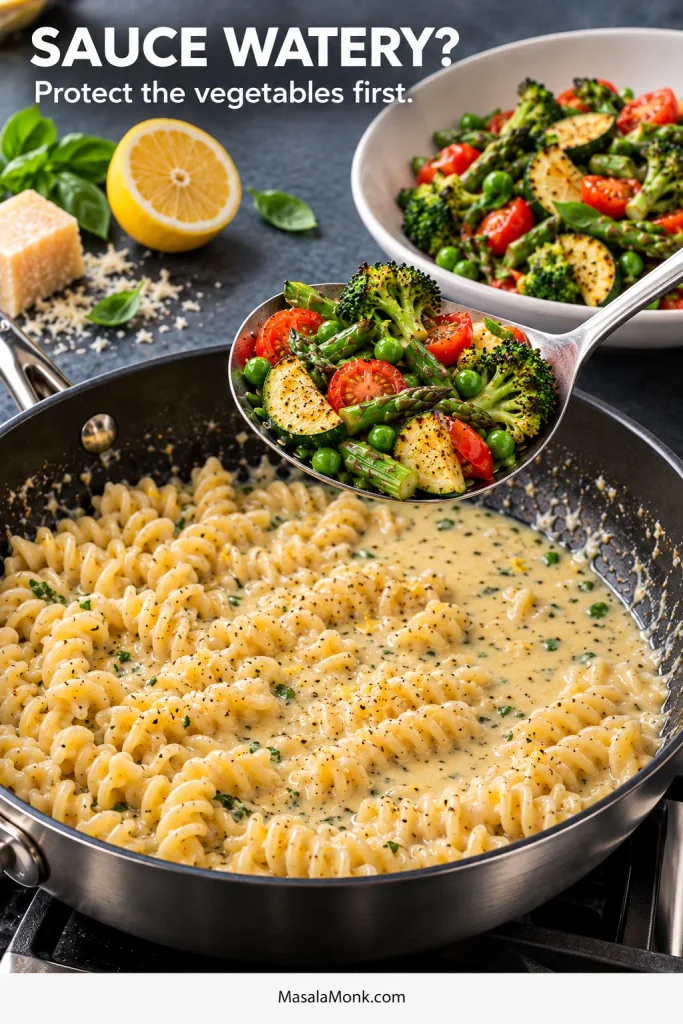
| Sauce is watery | Wet vegetables or too much added liquid | Stop adding water and reduce gently |
| Sauce is too thick | The pasta absorbed more liquid | Loosen it with reserved pasta water a tablespoon at a time |
| Parmesan clumped | The pan was too hot | Take it off the heat, add a splash of pasta water, and toss |
| The pasta tastes bland | It needs seasoning or acidity | Correct the salt first, then Parmesan or lemon as needed |
The Sauce Is Watery
Tomatoes, zucchini, mushrooms, and frozen vegetables can all bring extra water into the skillet. Let the sauce reduce briefly over medium-low heat. If the vegetables are already exactly where you want them, lift them out first. There’s no reason to turn good zucchini soft while you fix the sauce.
The Parmesan Turned Sticky or Clumpy
Take the skillet completely off the heat and add a small splash of pasta water. Vigorous tossing can often bring a slightly clumpy sauce back together. Large, tight cheese clumps may only soften rather than disappear completely. Next time, grate the Parmesan finely and let the burner go off before the cheese goes in.
The Primavera Tastes Bland
Taste a forkful that includes both pasta and vegetables. If everything tastes muted, start with salt. When the seasoning is right but the dish still feels rich and dull, reach for lemon. For more savory depth, add Parmesan. Don’t ask the lemon to do the salt’s job.
One Vegetable Is Still Too Firm
Don’t keep cooking everything for one stubborn vegetable. Give that piece or batch another minute or two on its own, then bring it back. The vegetables that are already right get to stay that way.
What to Serve With Pasta Primavera
Because the pasta is already creamy and vegetable-heavy, keep the rest of dinner crisp or simple. A green salad or chickpea salad adds something cool and crunchy, while homemade focaccia is good for catching the last streaks of lemon-Parmesan sauce.
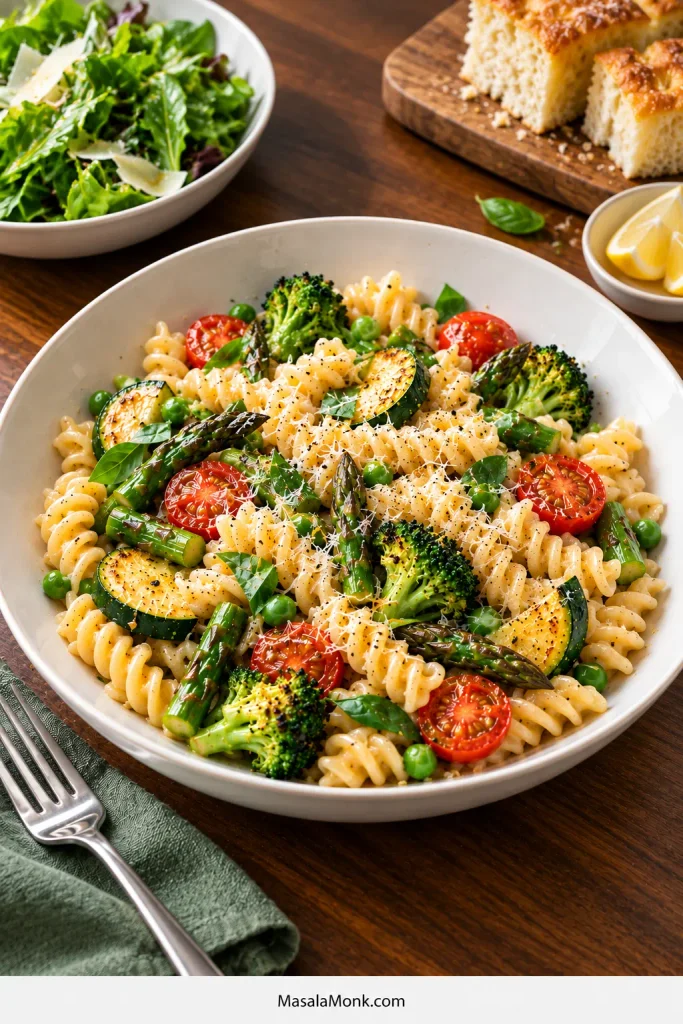
The best part of Pasta Primavera is how easily it turns a refrigerator full of small amounts into a dinner that feels deliberate. You don’t need every vegetable in the recipe or a perfect shopping list. A few good vegetables, cooked with a little attention, are enough to make the whole bowl feel generous.








