Posted on 1 Comment

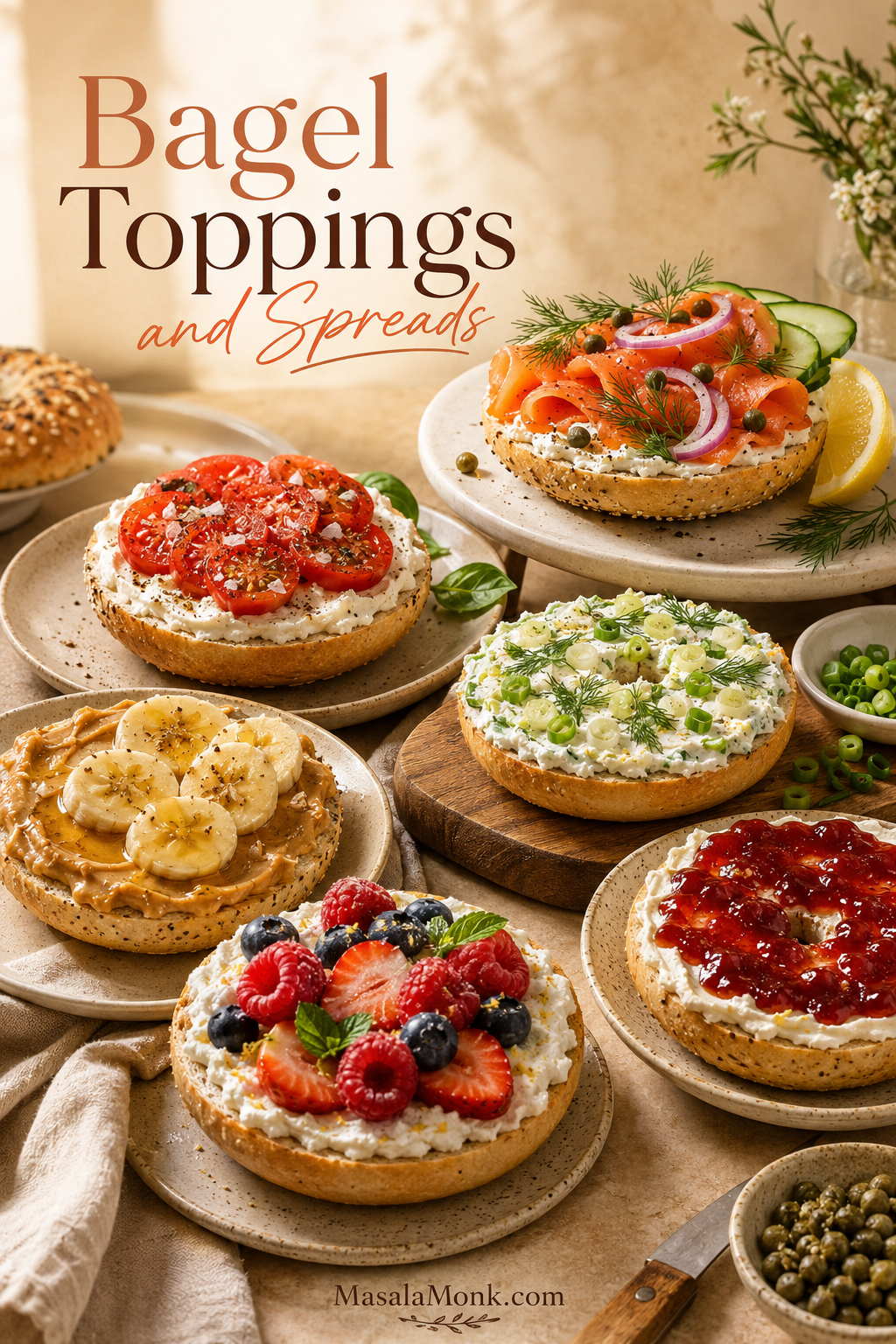
Bagel Toppings and Spreads

Assorted open-faced bagels with smoked salmon, scallion schmear, tomato, peanut butter banana, ricotta berries, and jam.

Bagel toppings and spreads can make the difference between dry bread with stuff on it and the bagel everyone reaches for first. A plain bagel can become breakfast, lunch, a sweet snack, or a full brunch board with one good spread, one useful topping, and one small finish. Usually, the best ones have the right mix of creamy, crisp, salty, sweet, fresh, or bright.

Along the way, this guide covers the best bagel toppings and spreads for every kind of craving: classic cream cheese schmear, smoked salmon and lox, sweet bagel toppings, savory combinations, healthy ideas, breakfast bagels, and bagel bar toppings for brunch. You will also get an easy homemade bagel schmear recipe with sweet and savory flavor variations, plus exact amounts for schmear, smoked salmon, and brunch boards.

Whether you are using a fresh bakery bagel, a freezer bagel, or the last plain bagel in the bag, the right spread and one good finish can make it feel intentional. In practice, the spread does more than add flavor; it gives the toppings something to hold onto and helps the whole bagel eat better.

Quick Answer: Best Bagel Toppings and Spreads

Start a classic bagel with cream cheese or scallion schmear. When you want something savory, it is hard to beat a tangy spread with smoked salmon, capers, red onion, dill, and lemon. For a sweet bagel, try cream cheese with jam, peanut butter with banana and honey, or ricotta with berries.

If you only remember one rule, choose the spread first. The best bagel toppings and spreads usually work together: the spread gives moisture, while the toppings add flavor, texture, and a final finish.

Beyond that, other easy bagel toppings include butter, avocado, eggs, hummus, tuna salad, egg salad, turkey, cucumber, tomato, cottage cheese, Nutella, berries, apple slices, honey walnut cream cheese, and everything bagel seasoning.
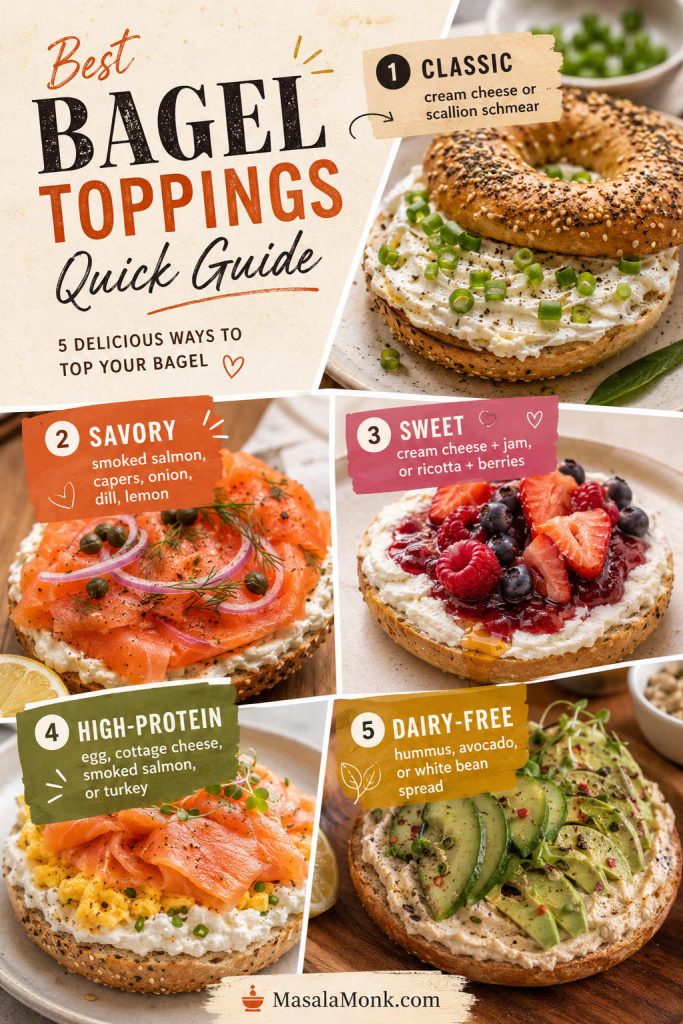
Quick guide showing classic, savory, sweet, high-protein, and dairy-free bagel topping ideas.
Use this quick guide when you know you want a bagel but not the direction. A classic schmear, smoked salmon, ricotta berries, egg, hummus, or avocado can each turn the same bagel into a different kind of meal.
CravingReliable bagel topping idea
ClassicCream cheese, scallion schmear, butter, or jam
Deli-styleCream cheese, smoked salmon, capers, red onion, dill, lemon
BreakfastEgg, cheese, bacon, avocado, tomato, sausage, or turkey
SweetCream cheese and jam, peanut butter and banana, ricotta and honey, Nutella and strawberries
HealthyHummus, avocado, cottage cheese, smoked salmon, turkey, egg, Greek yogurt cream cheese
Brunch boardAssorted schmears, smoked salmon, cucumber, tomato, onion, capers, eggs, fruit, herbs

Making brunch instead of one bagel? Jump to the easy bagel schmear recipe or the bagel bar quantities before you shop.

What bagel toppings and spreads should you use right now?

When you do not know what you want yet, start with the spread. Once that is chosen, the rest of the bagel usually becomes obvious.

If you want…Use this topping combination
The fastest classic bagelScallion cream cheese + black pepper
A filling breakfastEgg + cheese + avocado or bacon
A brunch-style bagelCream cheese + smoked salmon + capers + red onion + dill
Something sweetCream cheese + jam, or peanut butter + banana + honey
A lighter lunchHummus + cucumber + tomato + sprouts
A high-protein optionCottage cheese + tomato, or smoked salmon + cucumber

Best bagel toppings by situation

  • Best fast breakfast: scallion cream cheese, tomato, black pepper, and flaky salt.
  • High-protein pick: cottage cheese with tomato, or smoked salmon with cucumber.
  • Sweet favorite: cream cheese with jam, or ricotta with berries and honey.
  • Brunch favorite: cream cheese, smoked salmon, capers, onion, dill, and lemon.
  • Dairy-free pick: hummus with cucumber, tomato, sprouts, olive oil, and paprika.
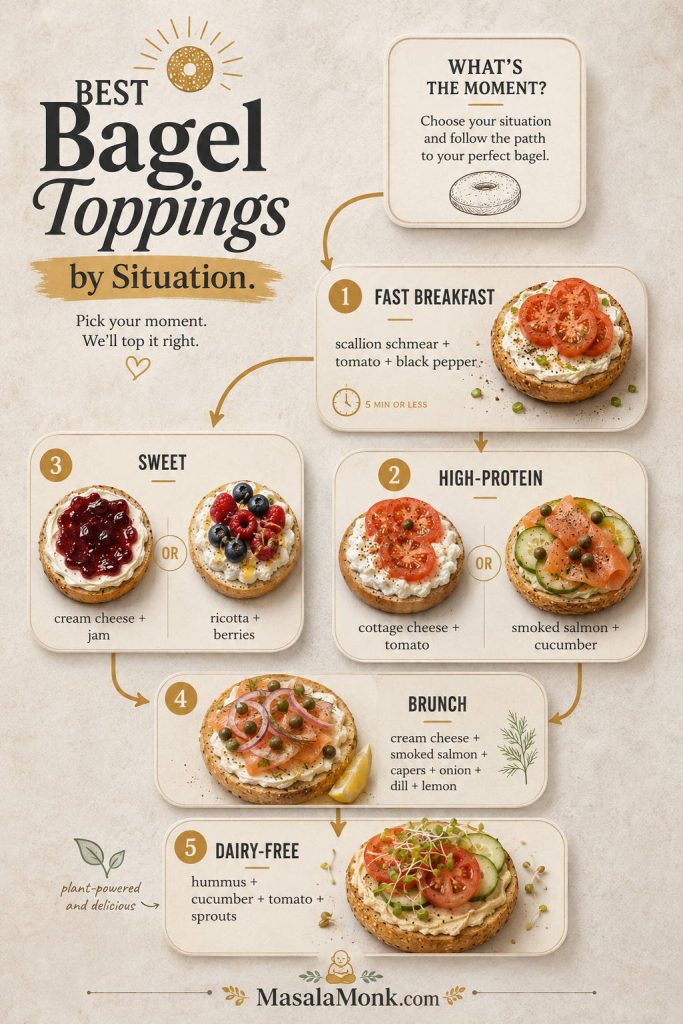
Bagel topping guide organized by situation, including fast breakfast, high-protein, sweet, brunch, and dairy-free options.
Instead of choosing toppings at random, start with the situation: fast breakfast, brunch, packed lunch, sweet snack, or dairy-free meal. From there, the best bagel toppings become much easier to narrow down.

Quick fix: if a bagel tastes unfinished, do not automatically add more toppings. Instead, add the missing piece: lemon for lift, capers for sharpness, flaky salt for tomato, herbs for creaminess, honey for sweet spreads, or crunch for soft fillings.

How to Build a Better Bagel

A good bagel is not just a pile of toppings. It tastes better when the layers make sense together. Use this simple formula:

Spread + main topping + crunch + brightness + seasoning.
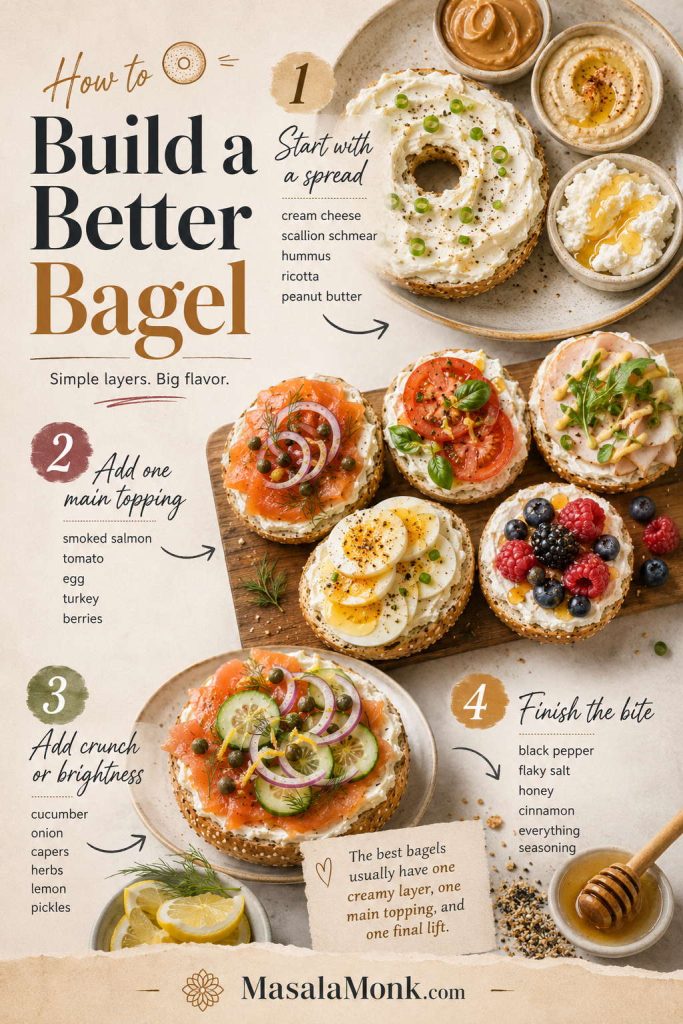
Step-by-step bagel-building guide with a spread, main topping, crunch or brightness, and final seasoning.
Once the spread is chosen, the bagel becomes easier to build. Add one main topping, then use cucumber, onion, lemon, capers, honey, herbs, or seasoning to shape the final bite.

However, you do not need all five parts every time. Even two or three good layers can keep the bagel from becoming dry, heavy, soggy, or one-note.

Start with a bagel spread

The spread gives the bagel moisture and flavor. It also helps small toppings stay in place.

  • Classic: plain cream cheese, whipped cream cheese, scallion schmear
  • Savory: garlic herb spread, hummus, avocado, labneh, goat cheese
  • Sweet: butter, peanut butter, almond butter, ricotta, mascarpone, cream cheese with jam
  • Lighter: Greek yogurt cream cheese, cottage cheese, tofu cream cheese, white bean spread

Add one main bagel topping

The main topping decides whether the bagel feels like breakfast, lunch, snack, or brunch. It can be as simple as an egg, a few slices of tomato, smoked salmon, tuna salad, turkey, banana, berries, or roasted vegetables.

For a quick weekday bagel, one spread and one main topping may be enough. However, for a brunch bagel or open-faced bagel, a finishing layer helps every bite feel more complete.

Finish bagel toppings with crunch, brightness, or seasoning

This is the small step that makes a bagel taste finished. A plain schmear becomes brighter with chives or lemon. Smoked salmon becomes cleaner and sharper with capers, onion, and a squeeze of lemon. Peanut butter becomes more interesting with banana, honey, cinnamon, or a tiny pinch of salt.

Bagel finishing ingredients including lemon, capers, flaky salt, pepper, herbs, chili flakes, honey, cinnamon, and everything seasoning.
When a bagel tastes dull, it usually needs a small finisher rather than another full topping. Lemon, capers, pepper, herbs, honey, cinnamon, or everything seasoning can add lift without crowding the bagel.
  • Crunch: cucumber, onion, radish, sprouts, toasted nuts, granola, crispy bacon
  • Brightness: lemon, pickled onions, capers, tomatoes, berries, apple slices
  • Seasoning: black pepper, chili flakes, flaky salt, everything bagel seasoning, cinnamon, herbs

The bagel test: When the bite feels too rich, add cucumber, tomato, herbs, lemon, or pickled onion. An unfinished bite usually needs one small finish: flaky salt, black pepper, capers, chili flakes, honey, cinnamon, or everything seasoning. Messy builds are easier to control when toppings are sliced thinner and the spread works like glue.

When bagels turn soggy, messy, or dull, the bagel topping mistakes section will help you fix the texture before adding more ingredients.

One small detail makes a big difference: press capers gently into the creamy layer before adding smoked salmon so they stick instead of rolling off. For wet toppings like tomato or cucumber, slice thinly and pat dry before layering.

Bagel Topping Mistakes That Make Bagels Soggy, Messy, or Flat

A bagel can have great toppings and still eat badly if the texture is off. These are the small mistakes that turn a good idea into a soggy, slippery, or bland bagel.
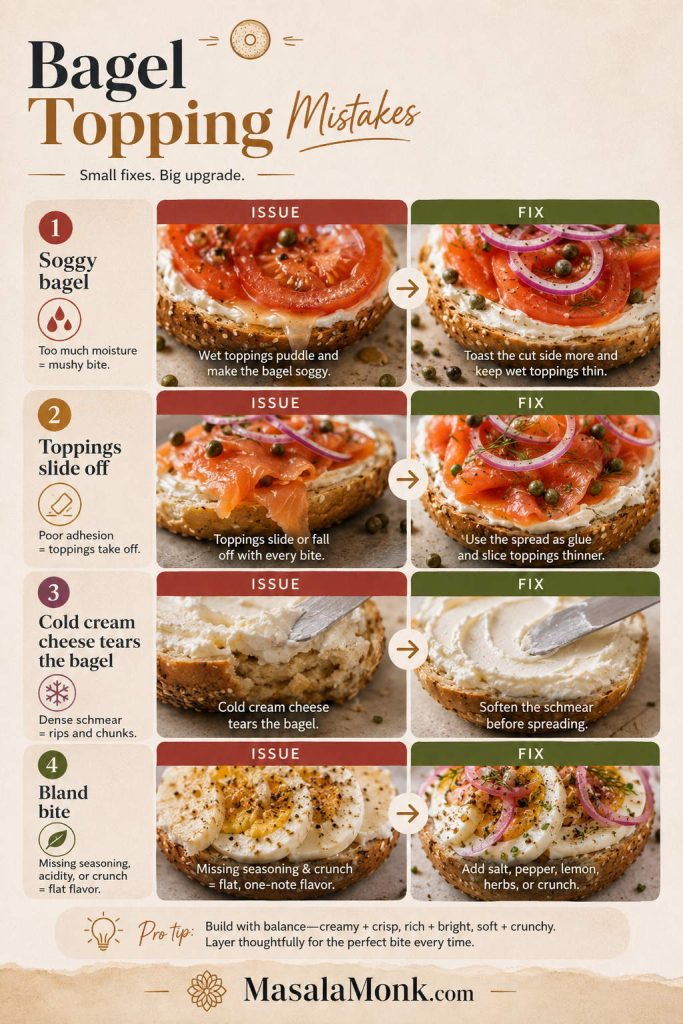
Bagel topping mistakes and fixes showing soggy bagels, sliding toppings, cold cream cheese, and bland bites.
Most disappointing bagels fail because of texture, not flavor. Toast the cut side, soften the schmear, slice wet toppings thinly, and use small finishes so the bagel stays crisp, stable, and satisfying.
MistakeWhat happensBetter move
Using cold block cream cheeseIt tears the bagel and spreads unevenly.Let cream cheese soften first, or beat it into a schmear.
Piling on wet tomatoes or cucumbersThe cut side gets soggy before you finish eating.Slice thinly, pat dry, and use a thick spread, hummus, avocado, or butter as a barrier.
Adding delicate toppings to a piping-hot bagelThe spread melts, herbs wilt, and smoked salmon can feel greasy.Let the bagel cool for a minute before adding schmear, fish, herbs, or fresh vegetables.
Overloading a closed sandwichThe filling slides out and the bagel becomes hard to bite.Keep tall builds open-faced, or use fewer toppings and slice them thinner.
Skipping the final finishThe bagel tastes like bread plus spread instead of a finished bite.Add lemon, herbs, black pepper, flaky salt, capers, honey, cinnamon, or chili flakes.
Using loose tuna, egg, or chicken saladThe filling slides off the bagel.Use a thicker salad, add lettuce as a barrier, or serve it open-faced.

How to keep wet toppings from making bagels soggy

In most cases, the two biggest fixes are simple: toast the cut side enough to create a barrier, and keep wet toppings thin. Tomato, cucumber, avocado, pickles, and loose salads are all good on bagels, but they need structure underneath them. A thick schmear, hummus, avocado, butter, or even lettuce can help protect the bread from turning soft too quickly.

For more detail on getting the cut side sturdy, see the toasting guide before adding tomato, cucumber, eggs, avocado, hummus, or smoked salmon.
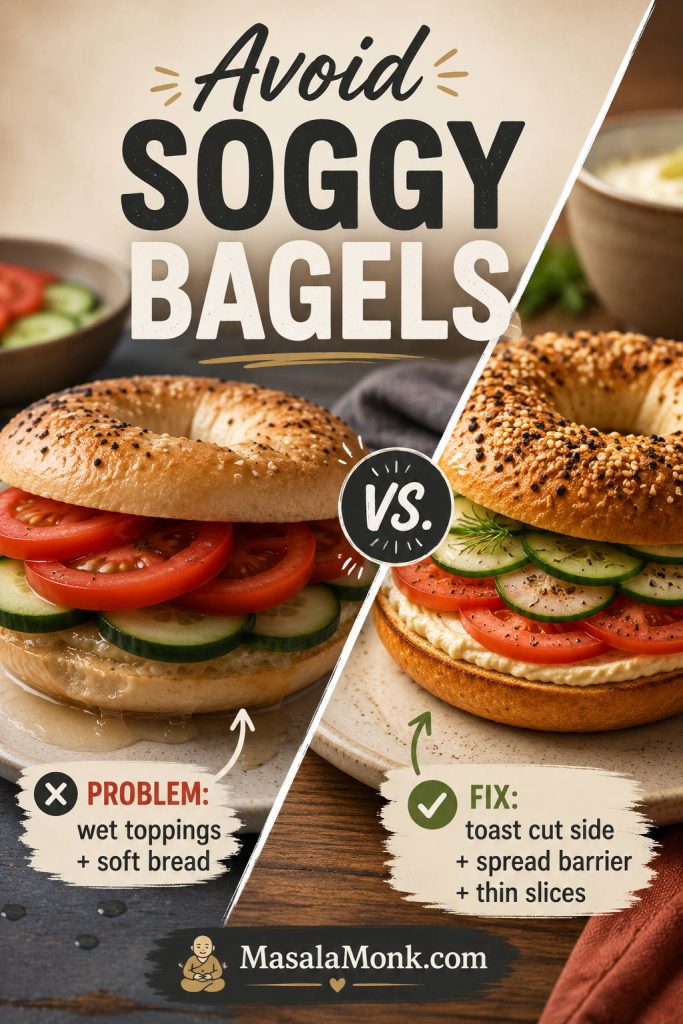
Before-and-after comparison showing a soggy bagel and a better bagel with toasted bread, a spread barrier, and thin tomato slices.
Juicy tomato and cucumber are great on bagels, but they need a toasted surface and a creamy barrier underneath so the bread stays firm.

Texture rule: the wetter the topping, the sturdier the bagel needs to be. Toast a little longer, use a thicker spread, and keep juicy toppings thin.

15 Bagel Topping Ideas to Try First

Think of these as the safe bets — the combinations to try before you start inventing anything complicated. They cover the classics, quick breakfasts, sweet cravings, and the “I need this to feel like lunch” moments.

These are the bagels I would put in front of someone who says, “Just tell me what works.” They are not the weirdest ideas; instead, they are the bagel toppings and spreads that taste complete without needing ten toppings.

To keep this practical, effort is rated from 1 to 5, with 1 being almost no prep and 5 needing more cooking or assembly.

Classic bagel toppings and spreads to try first

Start with these before getting creative; each one gives the bagel a clear base, one main topping, and a small detail that makes the bite feel intentional.
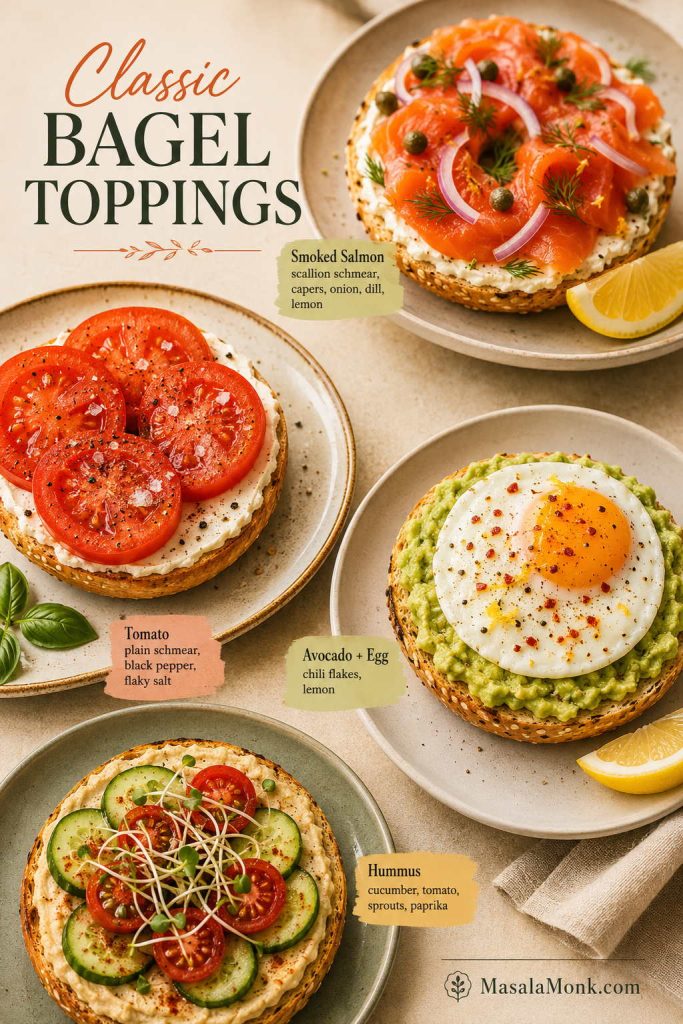
Four classic bagel toppings including smoked salmon with schmear, tomato with cream cheese, avocado egg, and hummus cucumber.
Classic bagel toppings work because they cover the essentials: creamy schmear, salty or fresh toppings, crisp vegetables, and a small finish. Start here before moving into more creative spreads.
Bagel combinationBest momentEffortGood bagel choicesWhy it tastes balanced
Scallion cream cheese + smoked salmon + capers + red onionBrunch / lunch2/5Plain, everything, poppy, pumpernickelSalmon brings salt, capers and onion add bite, and the schmear keeps the bagel rich without feeling dry.
Plain schmear + tomato + black pepper + flaky saltFast breakfast1/5Plain, sesame, onionJuicy tomato, creamy spread, and enough salt make it feel complete.
Avocado + fried egg + chili flakes + lemonFilling breakfast3/5Everything, whole wheat, sesameEgg makes it filling, avocado keeps it creamy, and lemon/chili stop it from feeling heavy.
Hummus + cucumber + tomato + sproutsLight lunch1/5Sesame, whole wheat, plainCool cucumber and sprouts keep the hummus from feeling dense.

Breakfast and lunch bagel topping ideas

These builds are meant to eat like real meals, so the spread, protein, vegetables, and toast level need to help the bagel hold together.
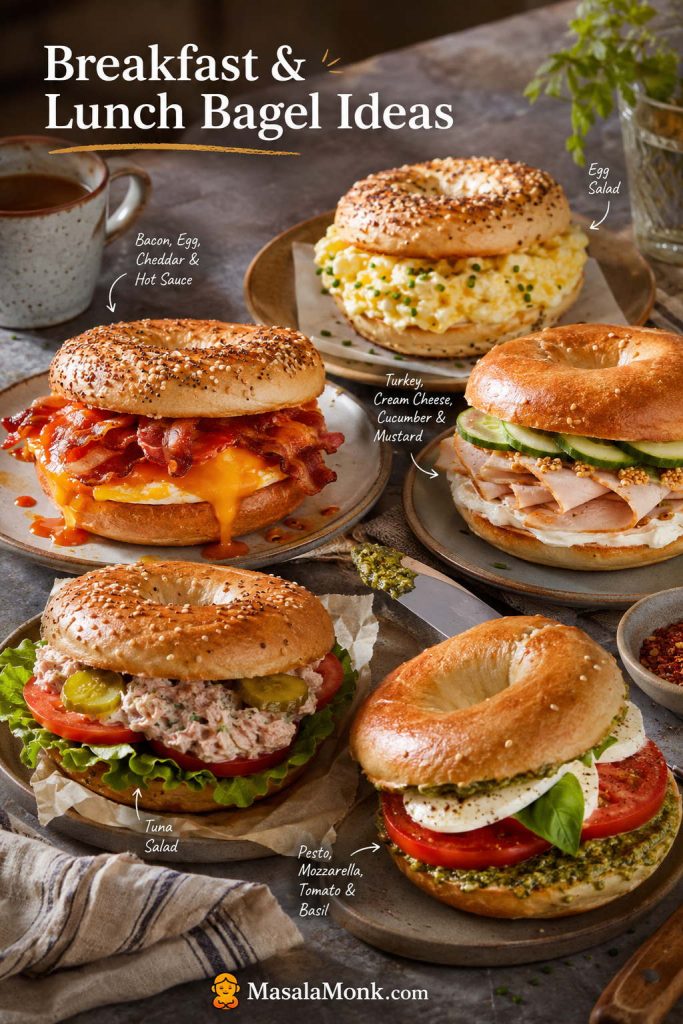
Breakfast and lunch bagels with bacon egg cheese, turkey cucumber, tuna salad, egg salad, and pesto mozzarella tomato.
Meal-style bagels hold together better when the cut side is toasted, the spread is thick, and crisp vegetables sit between the bread and creamy fillings.
Bagel combinationBest momentEffortGood bagel choicesWhy it tastes balanced
Bacon + egg + cheddar + hot sauceWeekend breakfast3/5Plain, everything, AsiagoCheddar and egg make it rich; hot sauce cuts through the breakfast heaviness.
Turkey + cream cheese + cucumber + mustardEasy lunch1/5Plain, sesame, whole wheatCucumber keeps the turkey from eating dry, while mustard gives the sandwich some bite.
Tuna salad + tomato + lettuce + picklesMeal-style lunch2/5Plain, poppy, whole wheatCreamy filling tastes better with crisp, briny, and juicy layers.
Egg salad + chives + everything seasoningMake-ahead lunch2/5Plain, everything, poppyChives and everything seasoning make soft egg salad taste more like a proper deli bagel.
Pesto + mozzarella + tomato + basilVegetarian lunch2/5Plain, sesame, AsiagoPesto seasons the cheese, tomato adds juiciness, and basil keeps it from feeling flat.

Sweet bagel toppings and spreads to try

Sweet bagels taste better when the topping has a little tang, salt, nuttiness, or fruit instead of only more sugar.
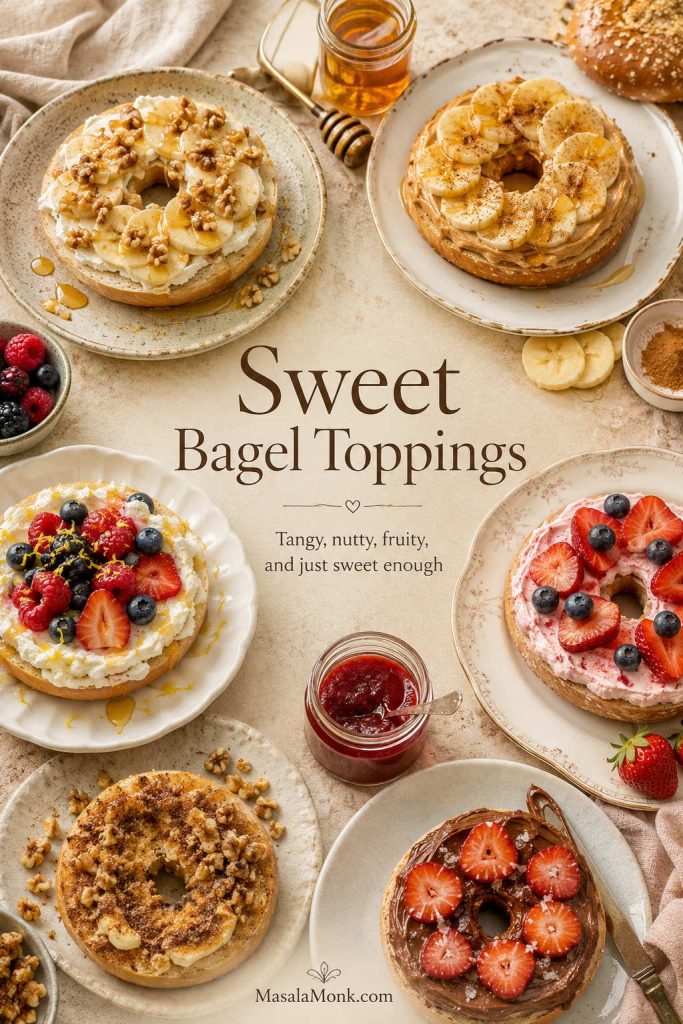
Sweet bagel topping ideas including peanut butter banana, ricotta berries, strawberry cream cheese, cinnamon sugar, and Nutella strawberries.
A sweet bagel should still feel like breakfast, not frosting on bread. Tangy cream cheese, soft ricotta, berries, toasted nuts, cinnamon, lemon zest, or a pinch of salt keep the sweetness in check.
Bagel combinationBest momentEffortGood bagel choicesWhy it tastes balanced
Honey walnut cream cheese + bananaSweet breakfast1/5Cinnamon raisin, plain, whole wheatBanana makes it filling, honey walnut schmear adds sweetness, and cinnamon keeps it cozy.
Peanut butter + banana + honey + cinnamonFast filling snack1/5Plain, cinnamon raisin, whole wheatPeanut butter gives staying power, banana softens the bite, and honey/cinnamon make it feel finished.
Ricotta + berries + honey + lemon zestSweet brunch1/5Plain, blueberry, whole wheatRicotta gives softness, berries add juice, and lemon zest keeps the sweetness clean.
Strawberry cream cheese + fresh berriesBakery-style breakfast1/5Plain, blueberryFresh berries keep the strawberry spread from tasting too candy-sweet.
Butter + cinnamon sugar + toasted walnutsCozy snack1/5Cinnamon raisin, plainButter melts into the toasted cut side, while cinnamon sugar and walnuts add cozy crunch.
Nutella + strawberries + pinch of saltDessert-style bagel1/5Plain, blueberry, mini bagelsStrawberries brighten the chocolate spread, and salt keeps it from tasting one-note.

How to choose from this list

If the Caprese-style bagel is the one you want to build, use a thick pesto rather than a loose sauce so it spreads cleanly. This homemade pesto recipe and variations guide has basil pesto, red pesto, vegan pesto, nut-free pesto, pesto dip, pesto butter, and sandwich-friendly ideas.

Creative bagel upgrades when you want something different

After the basics, these are the bagels to try when plain cream cheese is not enough and you want something more snacky, brunchy, global, or restaurant-style without making the whole thing complicated.
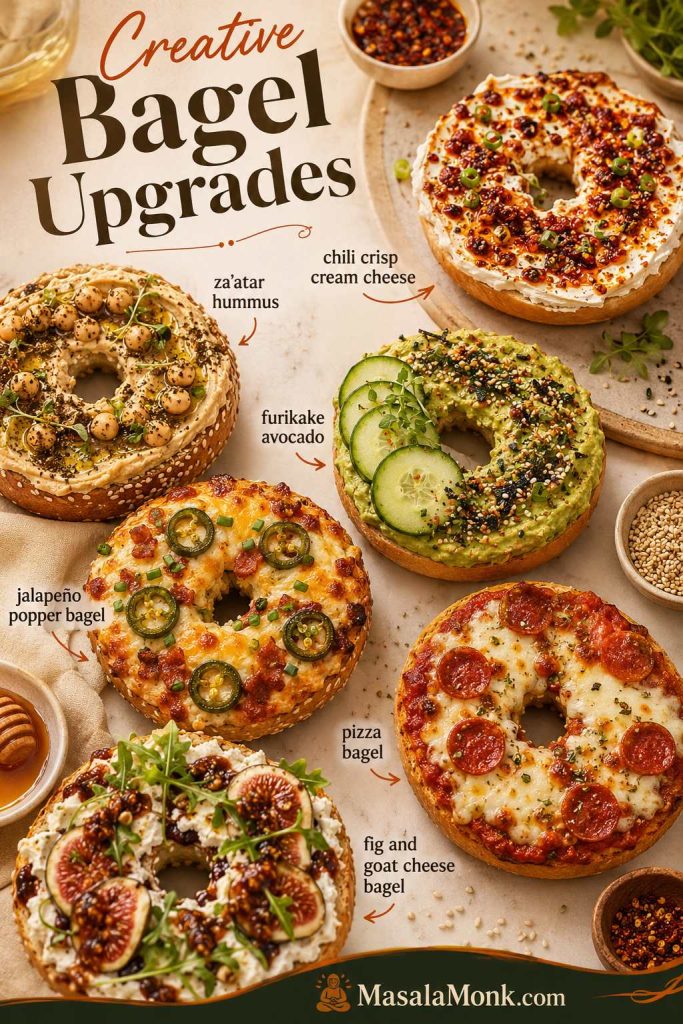
Creative bagel upgrades with chili crisp cream cheese, za’atar hummus, furikake avocado, jalapeño popper, pizza bagel, and fig goat cheese.
After the classics, creative bagel upgrades make a simple bagel feel restaurant-style. Chili crisp, za’atar, furikake, fig, goat cheese, jalapeño, and pizza toppings bring big flavor without needing a complicated build.

Warm and toasted

  • Jalapeño popper bagel: cream cheese, cheddar, jalapeño, scallion, garlic powder, toasted until warm.
  • Pizza bagel: marinara, mozzarella, Parmesan, basil, and a quick toast until the cheese melts.
  • Maple bacon breakfast bagel: cream cheese, crispy bacon, maple drizzle, and black pepper.
  • Tuna melt bagel: thick tuna salad, cheddar, tomato, and a short toast until the cheese softens.
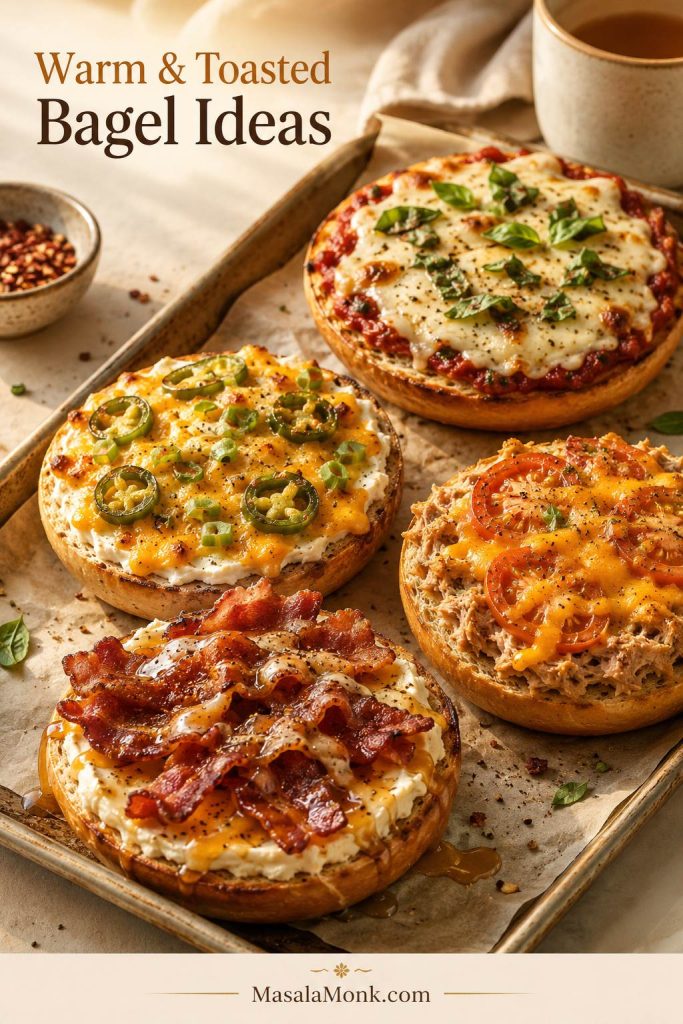
Warm toasted bagel ideas with pizza bagels, jalapeño popper bagels, tuna melt bagels, and maple bacon breakfast bagels.
Warm toppings taste best when they melt into a firm toasted cut side. That is why pizza bagels, tuna melts, jalapeño popper bagels, and bacon breakfast bagels need heat before the toppings go on.

Fresh and savory

  • Za’atar hummus bagel: hummus, cucumber, tomato, olive oil, za’atar, and lemon.
  • Whipped feta cucumber bagel: whipped feta, cucumber ribbons, dill, black pepper, and lemon.
  • Cucumber dill labneh bagel: labneh, cucumber, dill, lemon zest, and flaky salt.
  • Roasted red pepper bagel: goat cheese or hummus, roasted red peppers, basil, and a little olive oil.

Bold and snacky

  • Chili crisp cream cheese bagel: plain schmear, chili crisp, scallions, cucumber, and sesame seeds.
  • Furikake avocado bagel: mashed avocado, furikake, cucumber, lime, and a little chili oil.
  • Pickle-everything schmear: cream cheese, chopped pickles, everything seasoning, and scallion.
  • Sun-dried tomato cream cheese: cream cheese, chopped sun-dried tomatoes, basil, black pepper, and lemon zest.

Sweet-salty

  • Honey pecan bagel: cream cheese, honey, cinnamon, and toasted pecans.
  • Fig and goat cheese bagel: goat cheese, fig jam, walnuts, honey, and black pepper.

Easy Bagel Schmear Recipe

A good bagel schmear is softer and more spreadable than cold cream cheese straight from the block. It should glide over a toasted bagel without tearing it apart, and it should taste lightly seasoned even before you add toppings.
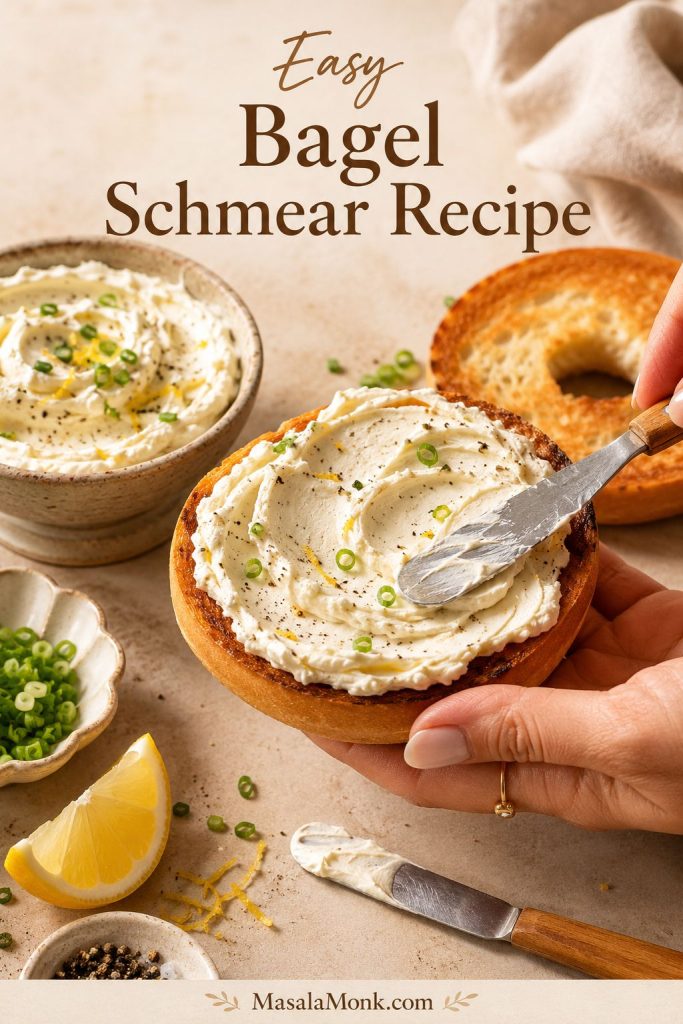
Homemade bagel schmear being spread on a toasted bagel with lemon, scallions, pepper, and a bowl of creamy spread nearby.
Soft schmear should spread in smooth strokes instead of tearing the bagel. Let the cream cheese soften first, then loosen it with lemon, herbs, or tangy dairy before adding toppings.

This base recipe makes about 1 cup / 9 oz / 255 g, enough for roughly 4 to 6 bagels, depending on how generously you spread it. Because schmear is one of the most useful bagel spreads, it also works as the base for many sweet and savory toppings.

The finished texture should be soft enough to spread easily but thick enough to hold herbs, capers, onions, or chopped salmon without turning loose.

Bagel schmear ingredients

The base is simple, but each small addition changes how the schmear spreads, tastes, and holds toppings.
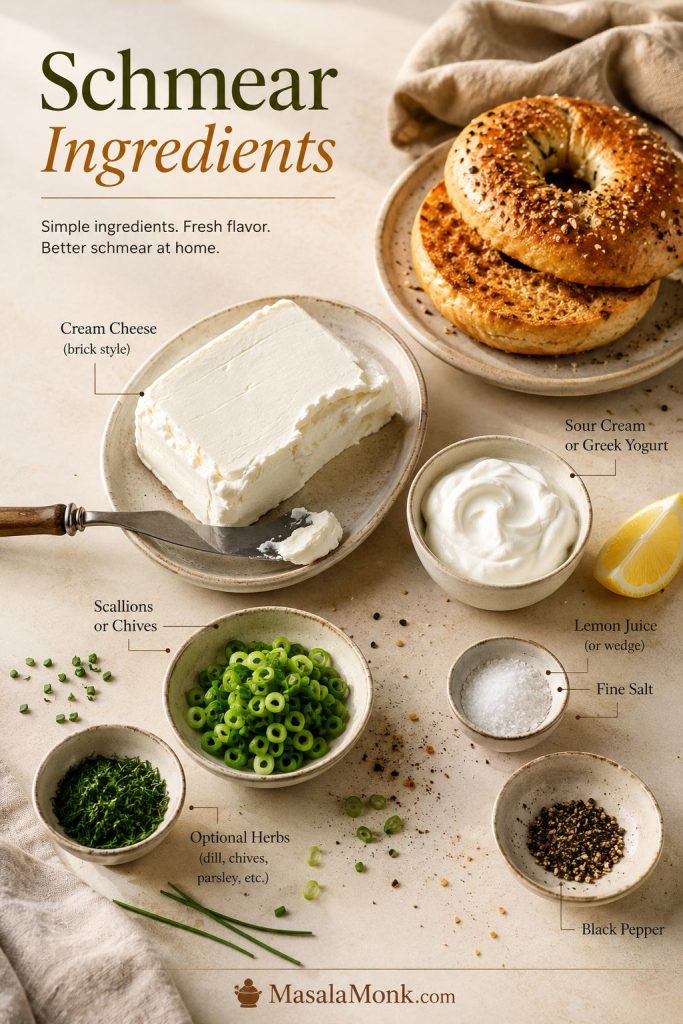
Bagel schmear ingredients including cream cheese, Greek yogurt or sour cream, lemon, salt, pepper, scallions, herbs, and bagel halves.
A simple bagel schmear does not need many ingredients. However, lemon, salt, pepper, scallions, and a little Greek yogurt or sour cream make cream cheese softer, brighter, and easier to pair with toppings.
IngredientUS amountMetric amount
Brick cream cheese, softened8 oz225 g
Sour cream, Greek yogurt, or crème fraîche2 tbsp30 g / 30 ml
Fresh lemon juice½ tsp2.5 ml
Fine saltPinch to ⅛ tspTo taste
Black pepperOptionalOptional

How to make bagel schmear

The goal is a spreadable texture first; once the base is smooth, herbs, smoked salmon, honey walnut, or berries fold in more evenly.
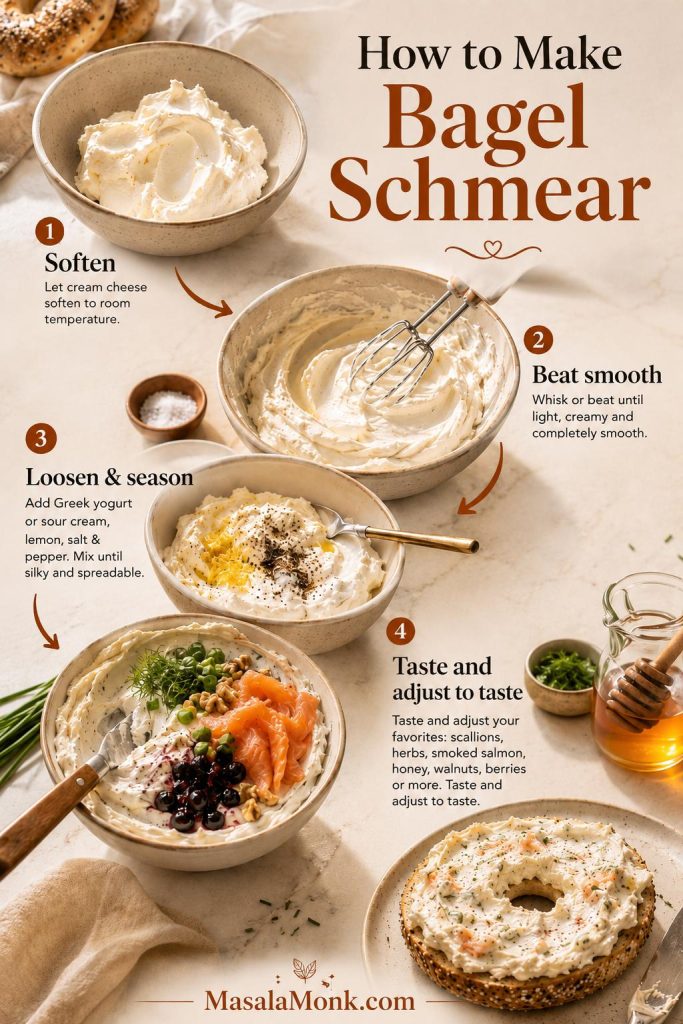
Four-step bagel schmear process showing softened cream cheese, beaten cream cheese, seasoning, and folded-in flavorings.
Homemade schmear is easiest when you build it in stages: soften, beat smooth, loosen and season, then fold in flavor. After that, the same base can become scallion, smoked salmon dill, honey walnut, or berry schmear.
  1. Soften the cream cheese. Leave it at room temperature for about 30 minutes, or until it gives slightly when pressed.
  2. Beat until smooth. Use a hand mixer, stand mixer, or sturdy spoon. The texture should look creamy, not lumpy.
  3. Loosen it slightly. Mix in sour cream, Greek yogurt, or crème fraîche.
  4. Season it. Add lemon juice and salt. Then taste before adding more salt, especially if you plan to add smoked salmon, capers, bacon, cheddar, or everything seasoning.
  5. Keep it plain or add flavor. Finally, fold in one of the flavored cream cheese ideas below.

Once the base is smooth, use the flavored cream cheese ideas to turn one batch into savory, sweet, or smoked salmon schmear.

How much schmear do you need per bagel?

Use the amount as a texture decision: lighter for everyday breakfasts, thicker for deli-style bagels, and a little extra when guests are sampling flavors.
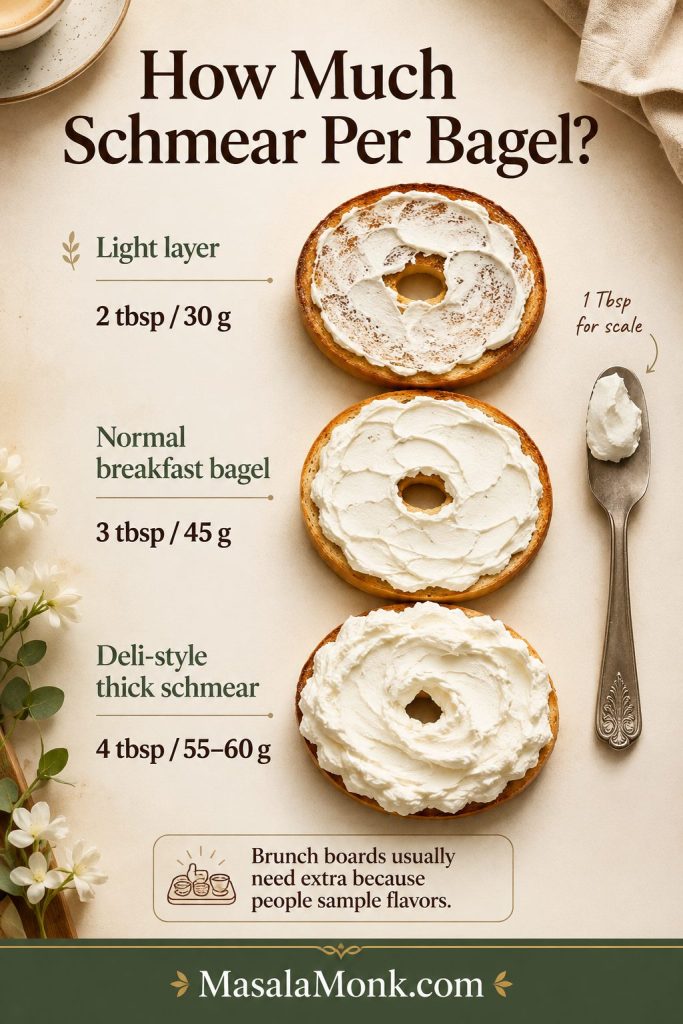
Schmear amount guide showing light, normal, and deli-style cream cheese layers on toasted bagel halves.
Schmear amount changes the whole bagel. Use a light layer for quick breakfasts, a normal layer for everyday bagels, and a thicker deli-style schmear for smoked salmon bagels or brunch boards.
StyleAmount per whole bagel
Light layer2 tbsp / 30 g
Normal breakfast bagel3 tbsp / 45 g
Deli-style thick schmear4 tbsp / 55–60 g
Open-faced bagel halves1–2 tbsp / 15–30 g per half

If you are serving a bagel bar, plan slightly more spread than you think you need. People usually take more schmear when there are several flavors to try.

Flavored Cream Cheese Ideas for Bagels

Think of flavored cream cheese as the easiest way to make a plain bagel feel planned. One good mix-in can do the work of several loose toppings.
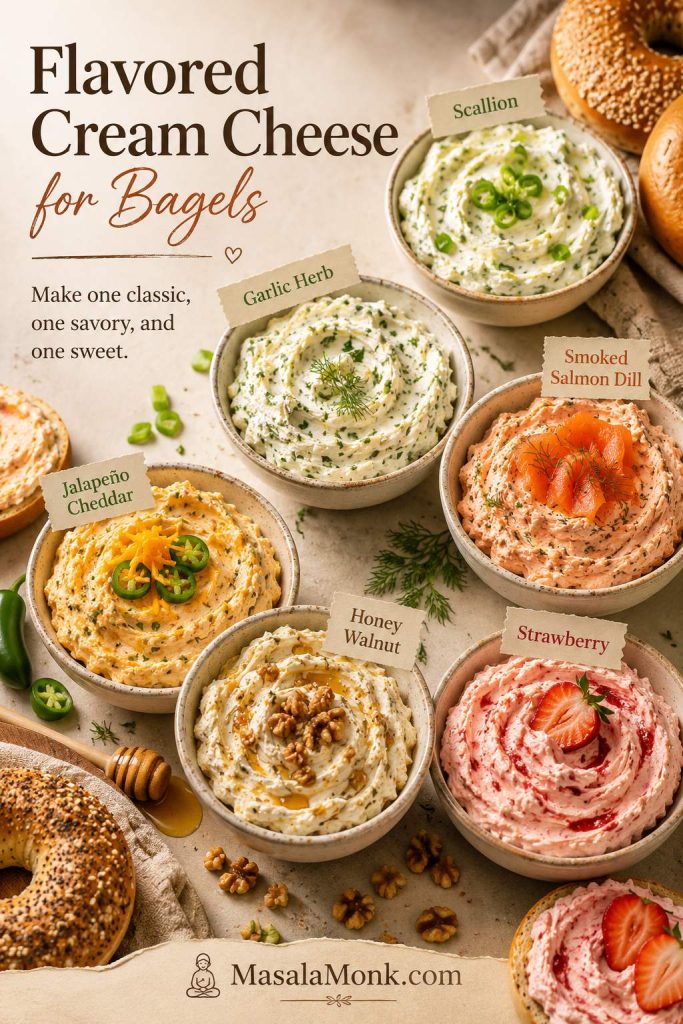
Flavored cream cheese bowls for bagels, including scallion, garlic herb, smoked salmon dill, jalapeño cheddar, honey walnut, and strawberry.
Flavored cream cheese can do the work of several loose toppings. For a balanced bagel bar, make one classic flavor, one savory flavor, and one sweet flavor so every guest has an easy starting point.

Once the base is smooth, flavored cream cheese is easy. Start with 8 oz / 225 g cream cheese, then fold in one flavor direction. If you are making more than one flavor, keep one plain or scallion, one savory, and one sweet. That way, the board works for both breakfast people and dessert-leaning people.

If you are only making two flavors, make one scallion or garlic-herb schmear and one honey walnut or strawberry cream cheese. That way, you cover the savory people, the sweet people, and the person who wants to try both.

Best flavored cream cheese ideas for bagels

FlavorAdd to 8 oz / 225 g schmear baseGood bagel choices
Scallion schmear¼ cup finely sliced scallions or chives + black pepperEverything, sesame, plain
Garlic herb1 small grated garlic clove + 2 tbsp chopped dill, parsley, or chives + lemon zestPlain, sesame, whole wheat
Smoked salmon dill3–4 oz / 85–115 g chopped smoked salmon + dill + lemonPlain, poppy, pumpernickel
Jalapeño cheddar1 minced jalapeño + ½ cup shredded cheddar + scallionEverything, cheese, plain
Honey walnut2 tbsp honey + ¼ cup chopped walnuts + pinch of cinnamonCinnamon raisin, plain, whole wheat
Strawberry2–3 tbsp strawberry jam or ½ cup chopped berries + 1 tbsp powdered sugar if neededPlain, blueberry, whole wheat
Everything bagel1–2 tbsp everything bagel seasoningPlain, sesame
Veggie cream cheese⅓ cup finely diced cucumber, carrot, bell pepper, or celery + herbsPlain, whole wheat, sesame

How to make one cream cheese base work harder

Once you understand the base formula, you can also play with sun-dried tomato, olive-herb, maple cinnamon, cranberry orange walnut, lemon pepper, or pickle-everything cream cheese. One simple base can cover several bagel toppings and spreads without much extra work.

Make-ahead tip: flavored cream cheese usually tastes better after chilling for at least 1 hour. For brunch, make the schmears the night before, then let them soften for 15–30 minutes before serving.

Bagel Spreads Besides Cream Cheese When You Want Something Different

What bagel spreads to use when cream cheese is not the answer

This is the section for the morning when the cream cheese tub is empty, or when you want the bagel to feel more like lunch than a bakery breakfast.
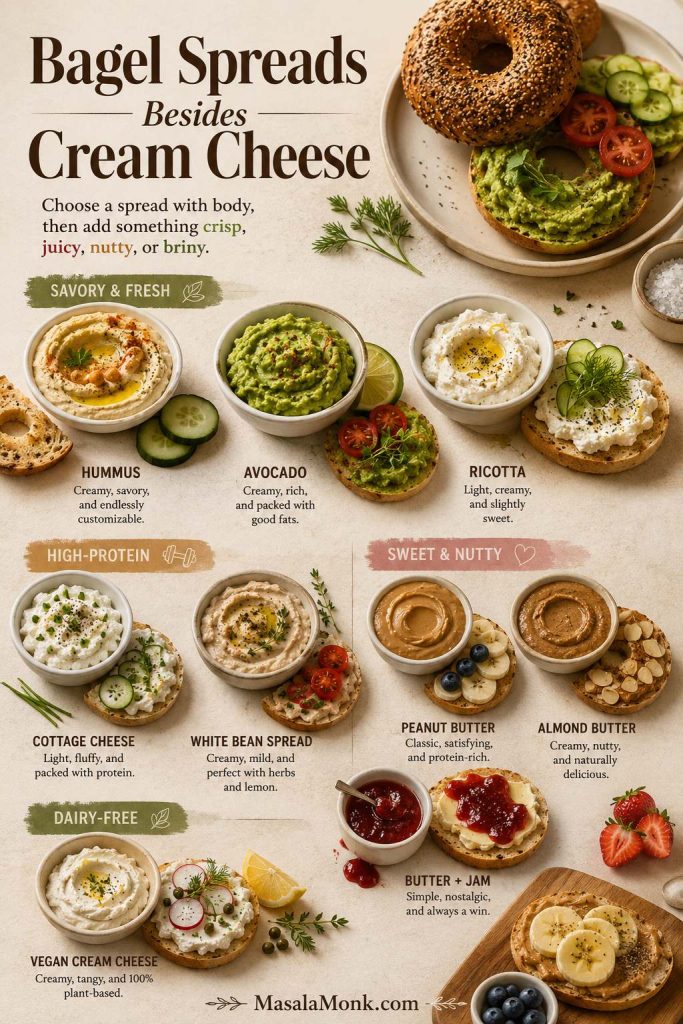
Bagel spreads besides cream cheese, including hummus, avocado, ricotta, cottage cheese, nut butter, jam, and vegan cream cheese.
Cream cheese is classic, although hummus, avocado, ricotta, cottage cheese, nut butter, white bean spread, jam, and vegan cream cheese can each push the same bagel in a new direction.

Of course, cream cheese is the classic, but it is not the only spread that belongs on a bagel. The easiest way to replace it is to choose another spread that gives the bagel moisture: hummus for savory crunch, avocado for breakfast, ricotta for sweet toppings, peanut butter for a filling snack, and white bean spread for a dairy-free lunch bagel.

If you want the bagel to feel like lunch, choose hummus, avocado, white bean spread, tuna salad, turkey, or a thick savory salad. On the other hand, if you want it to feel like breakfast, choose butter, ricotta, peanut butter, cottage cheese, egg, or a fruit-friendly spread.

For plant-based builds, the vegan bagel toppings section has hummus, avocado, tofu cream cheese, white bean spread, and nut butter ideas.

For example, hummus works best when cucumber, tomato, sprouts, or paprika keep the bite from feeling dense. Meanwhile, ricotta and cottage cheese work better when fruit, honey, lemon zest, pepper, or herbs give them a clear direction.

Best bagel spreads to pair with toppings

SpreadToppings to addGood bagel choices
HummusCucumber, tomato, sprouts, paprika, olive oilSesame, plain, whole wheat
AvocadoEgg, chili flakes, lemon, tomato, everything seasoningEverything, sesame, whole wheat
RicottaHoney, berries, lemon zest, pistachiosPlain, blueberry, whole wheat
Peanut butterBanana, honey, cinnamon, chia seeds, jamPlain, cinnamon raisin, whole wheat
Cottage cheeseTomato, black pepper, cucumber, berries, honeyPlain, whole wheat, sesame
ButterJam, cinnamon sugar, honey, flaky saltPlain, cinnamon raisin, blueberry
White bean spreadTomato, herbs, olive oil, lemon, roasted peppersPlain, sesame, whole wheat
MascarponeBerries, honey, citrus zest, toasted nutsPlain, blueberry, mini bagels

How to make mild bagel spreads taste finished

Spread first, then toppings: a mild spread like ricotta, cottage cheese, or white bean spread usually needs a stronger finish. Add lemon, herbs, pepper, honey, cinnamon, flaky salt, or fruit so the bagel does not taste unfinished.

Savory Bagel Toppings

If your savory bagel tastes heavy after three bites, it usually does not need more meat or more cheese. Instead, it needs something crisp, sharp, juicy, or herbal to cut through the richness. A classic schmear and smoked salmon are iconic, but hummus, avocado, eggs, tuna salad, turkey, chicken salad, pesto, goat cheese, and crisp vegetables can be just as satisfying.
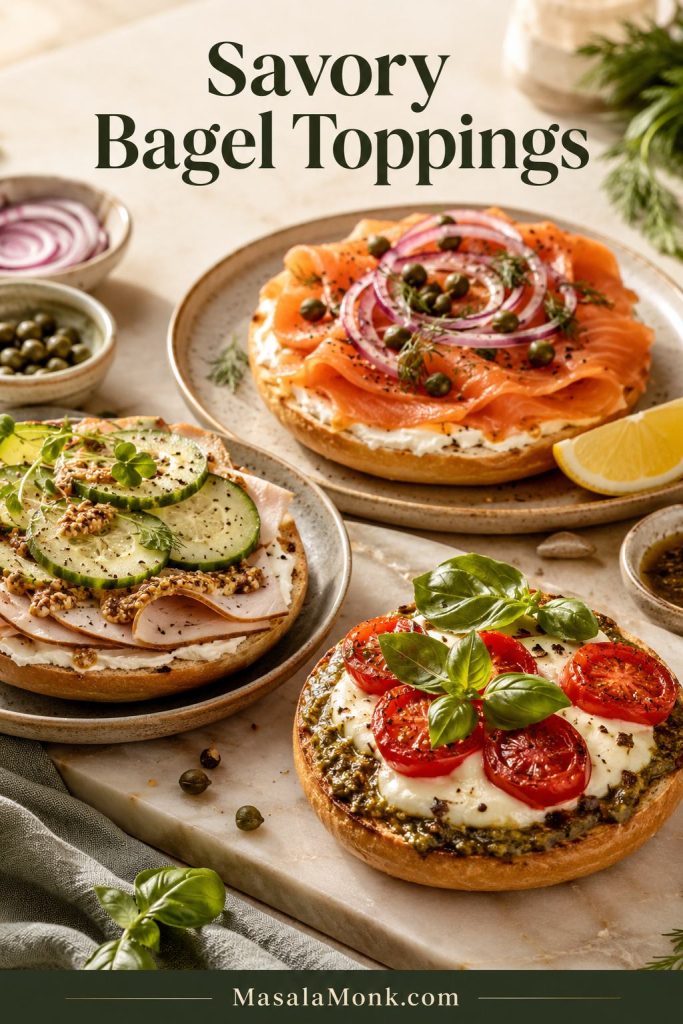
Savory bagels with smoked salmon, turkey cucumber, pesto mozzarella tomato, cream cheese, capers, herbs, and vegetables.
Savory bagel toppings taste better with contrast: crisp cucumber, juicy tomato, sharp onion, lemon, herbs, mustard, or capers can cut through smoked salmon, turkey, pesto, tuna, or egg salad.

At the same time, the lunch bagel should not collapse halfway through. If you are using tomato, cucumber, pickles, roasted peppers, or avocado, keep the slices thin and use a creamy spread underneath to protect the toasted surface.

Classic savory topping ideas

  • Plain schmear + tomato + black pepper
  • Scallion schmear + cucumber + dill
  • Smoked salmon + capers + red onion + lemon
  • Hummus + cucumber + tomato + paprika
  • Avocado + fried egg + chili flakes
  • Tuna salad + lettuce + pickles
  • Egg salad + chives + everything seasoning
  • Turkey + cream cheese + cucumber + mustard
  • Chicken salad + celery + herbs
  • Pesto + tomato + mozzarella
  • Goat cheese + roasted peppers + basil
  • Bacon + cream cheese + tomato

If tuna salad is your easy lunch topping, this healthy tuna salad guide has lighter deli-style, avocado, Mediterranean, no-mayo, tuna-and-egg, and sandwich-friendly variations you can spoon onto toasted bagels.

Savory combinations worth making

Use these when you want a bagel that eats more like a meal than a snack. Each one has creaminess, a main topping, and a sharper or fresher finish. In other words, these bagel toppings and spreads are built to hold up beyond the first bite.

CombinationBuild
Lox-style bagelCream cheese, smoked salmon, capers, red onion, dill, lemon
Avocado egg bagelMashed avocado, fried or scrambled egg, chili flakes, lemon, salt
Hummus crunch bagelHummus, cucumber, tomato, sprouts, paprika, olive oil
Deli turkey bagelCream cheese, turkey, cucumber, lettuce, mustard, black pepper
Tuna melt bagelTuna salad, cheddar, tomato, toasted until warm
Caprese bagelMozzarella, tomato, pesto, basil, black pepper

Chicken salad, tuna salad, and egg salad all need the same thing on a bagel: a thick enough texture to stay put. If the filling is loose, serve the bagel open-faced or add lettuce as a barrier.

Packing a savory bagel for later? Use the work and lunchbox toppings guide so juicy or slippery toppings do not soak the bread.

Bagel Toppings That Travel Well for Work or Lunchboxes

For packed lunches, choose bagel toppings that stay firm and do not leak into the bread. Thick hummus, cream cheese, turkey, peanut butter, firm egg salad, thick tuna salad, and sliced cheese travel better than watery tomatoes, loose salads, avocado, or overfilled smoked salmon builds.

A good lunchbox bagel should still taste good a few hours later: a sturdy toasted base, a spread that acts like a barrier, and fresh toppings packed separately when they are juicy or slippery.
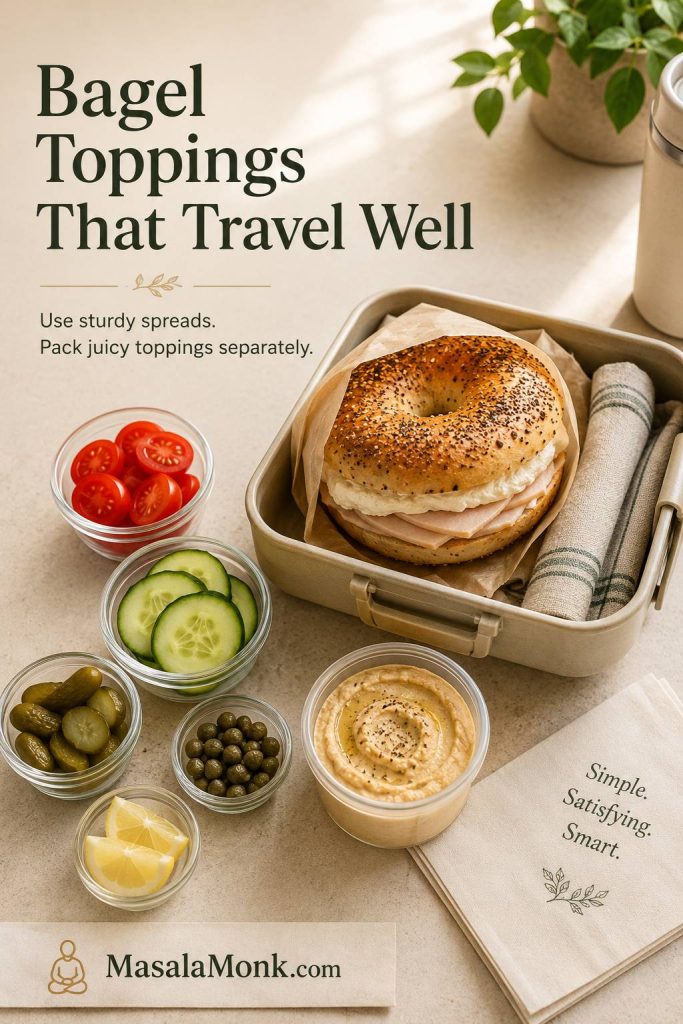
Packed lunch bagel with sturdy spread and separate containers of cucumber, tomato, pickles, capers, lemon, and hummus.
For work or lunchbox bagels, sturdy spreads matter most. Pack tomato, cucumber, pickles, capers, lemon, and other juicy toppings separately so the bread stays firm until lunch.
Pack it nowPack separatelySkip for packed bagels
Cream cheese, hummus, turkey, cheese, peanut butter, thick tuna or egg saladTomato, cucumber, avocado, pickles, capers, lemon wedgesWatery tomatoes, loose salads, overfilled lox bagels, very wet spreads

Sweet Bagel Toppings

In general, sweet bagel toppings are more satisfying when they have a little contrast instead of tasting only sweet. Tangy cream cheese, toasted nuts, salt, lemon zest, cinnamon, berries, and honey can make a sweet bagel feel more like breakfast and less like frosting on bread.
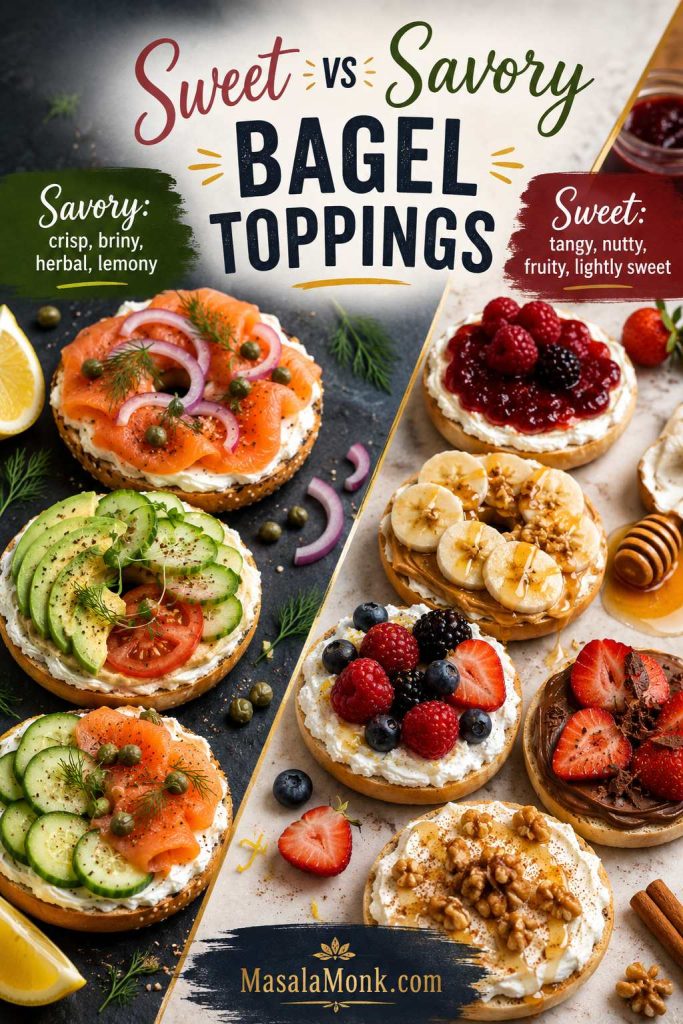
Sweet and savory bagel topping comparison with smoked salmon, avocado, cucumber, berries, jam, peanut butter banana, honey, and ricotta.
Sweet and savory bagel toppings need different kinds of contrast. Savory bagels usually want crunch, herbs, lemon, or briny toppings, while sweet bagels benefit from tangy cheese, fruit, nuts, honey, cinnamon, or salt.

That said, sweet bagels need a lighter hand when the bagel itself already has cinnamon, raisins, or blueberries. Start with tangy or lightly salted toppings first, then move sweeter only if the bagel itself is plain.

If you are starting with cinnamon raisin, blueberry, or another flavored bagel, check the bagel type pairings before adding a very sweet spread.

Easy sweet bagel ideas

  • Plain cream cheese + strawberry jam
  • Butter + cinnamon sugar
  • Peanut butter + banana + honey
  • Almond butter + apple slices + cinnamon
  • Ricotta + honey + pistachios
  • Mascarpone + berries
  • Nutella + strawberries
  • Cream cheese + brown sugar + cinnamon
  • Greek yogurt cream cheese + berries + granola
  • Honey walnut cream cheese + banana
  • Apple butter + cream cheese
  • Peanut butter + jam + flaky salt

If you want a fruit spread that feels brighter than regular strawberry jam, this pineapple jam recipe makes a glossy sweet-tart spread for toast, scones, waffles, yogurt, and breakfast-style bagels.

Fruit spreads are especially good on plain or lightly toasted bagels because they bring both sweetness and brightness. A warm toasted cut side with cream cheese and glossy fruit spread feels completely different from a cold, overloaded sweet bagel.

Sweet topping tip: cinnamon raisin and blueberry bagels already bring sweetness, so they usually taste best with tangy or lightly salted toppings like plain cream cheese, butter, peanut butter, ricotta, or honey walnut cream cheese rather than very sugary spreads alone.

In fact, for sweet bagels, a tiny pinch of salt often does more than extra sugar. It makes peanut butter, honey, berries, chocolate-hazelnut spread, and sweet cream cheese taste fuller without making the bagel heavy.

Sweet bagel combinations by mood

Choose the topping based on whether you want the bagel to feel like breakfast, dessert, or something in between. This is also where bagel spreads matter most, because a tangy or lightly salted base keeps sweet toppings from becoming too much.

MoodTry this
Bakery-styleStrawberry cream cheese + fresh berries + lemon zest
CozyButter + cinnamon sugar + toasted walnuts
Protein-friendlyPeanut butter + banana + chia seeds
Dessert-likeNutella + strawberries + pinch of salt
Light and creamyRicotta + honey + berries
Fall-styleApple butter + cream cheese + cinnamon

Healthy and High-Protein Bagel Toppings That Still Taste Good

A bagel is best treated like a bigger, denser bread base, not a breakfast problem to apologize for. The toppings matter because they decide whether it feels like a quick carb moment or a breakfast that holds you for a while. For a lighter plate, use one half open-faced instead of building a heavy closed sandwich.

The goal is not to make the bagel smaller; it is to make the topping smarter, more satisfying, and still good enough to look forward to.
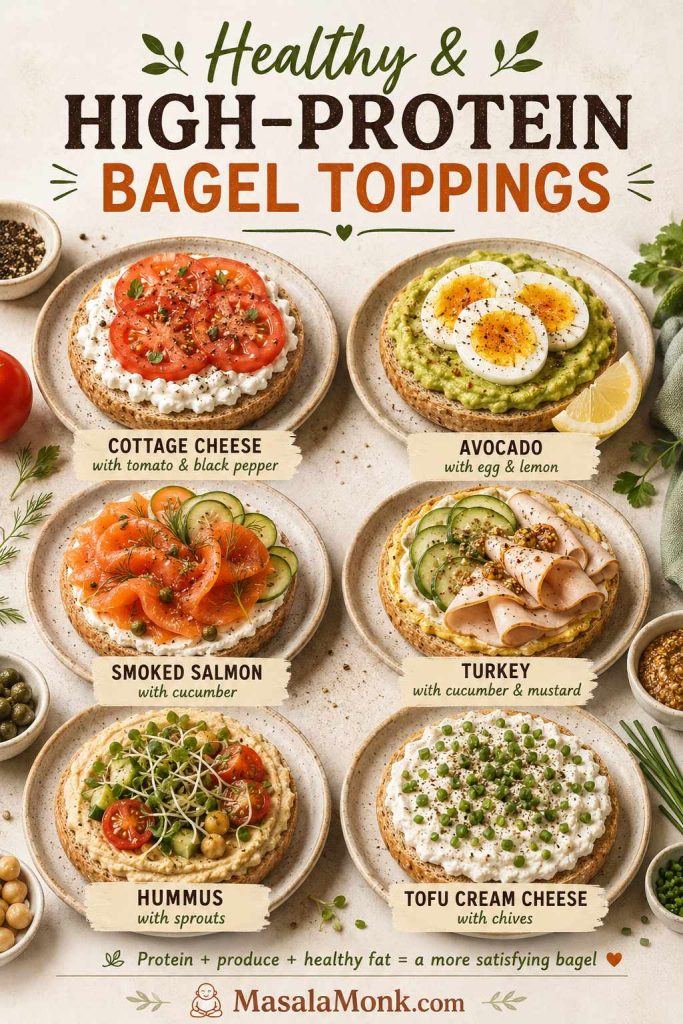
Healthy high-protein bagel toppings with cottage cheese tomato, avocado egg, smoked salmon cucumber, turkey mustard, hummus sprouts, and tofu cream cheese.
Healthy bagel toppings should still taste like something you want to eat. Cottage cheese, egg, smoked salmon, turkey, hummus, tofu cream cheese, avocado, and vegetables add protein, texture, and staying power.

For dairy-free or higher-protein variations, tofu cream cheese, cashew cream cheese, white bean spread, egg whites, turkey slices, smoked salmon, and Greek yogurt-style spreads all work with the same spread-plus-finish formula.

Balanced bagel toppings for protein, produce, and healthy fats

IdeaWhy it feels balanced
Cottage cheese + tomato + pepperCreamy, fresh, and high in protein
Avocado + egg + lemonRich, filling, and bright
Hummus + cucumber + sproutsDairy-free, crunchy, and easy
Smoked salmon + cucumberProtein-rich and classic
Greek yogurt cream cheeseTangier and lighter than a heavy spread
Tuna salad with Greek yogurtMore protein and less heaviness
Turkey + cucumber + mustardLean, savory, and crisp
Ricotta + berriesSweet, creamy, and lighter than frosting-like spreads
White bean spread + tomatoVegan, filling, and good with herbs
Tofu cream cheese + chivesDairy-free and bagel-friendly

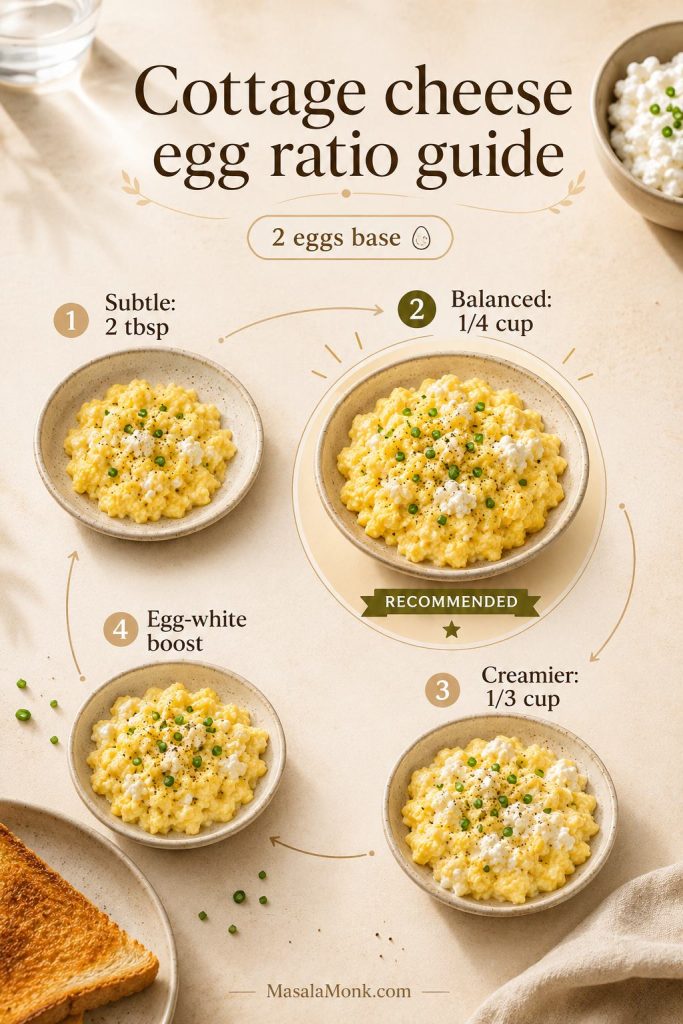
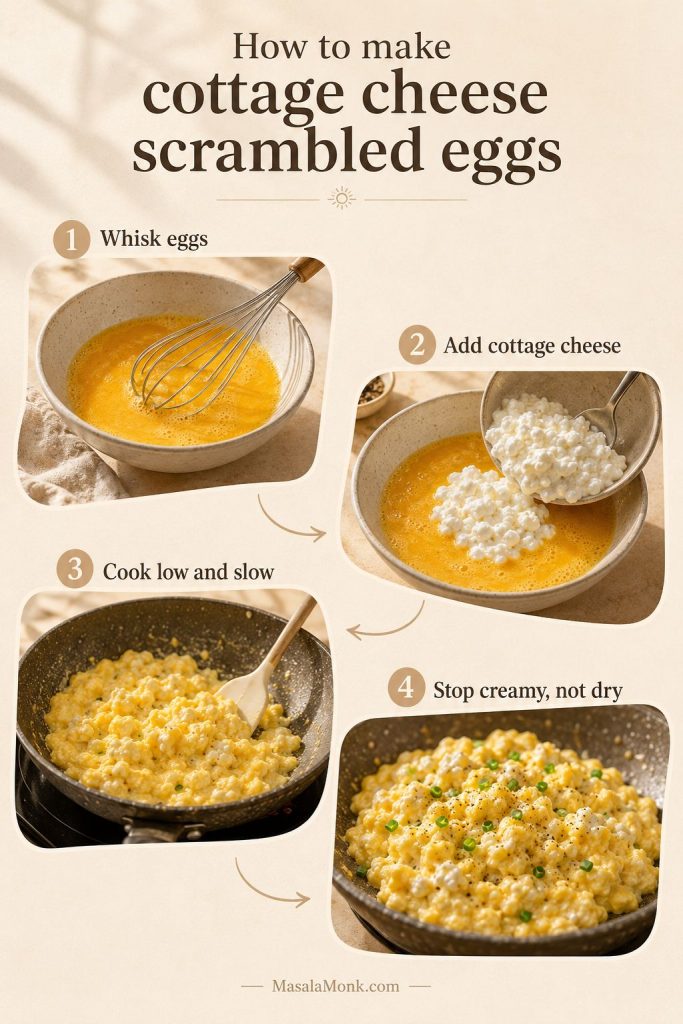
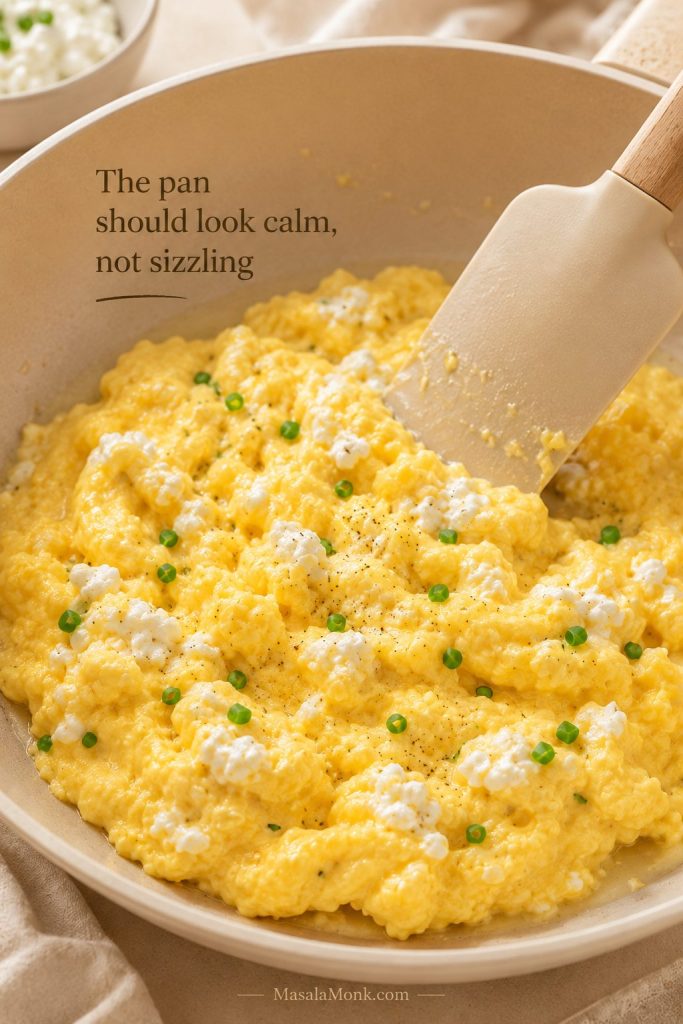
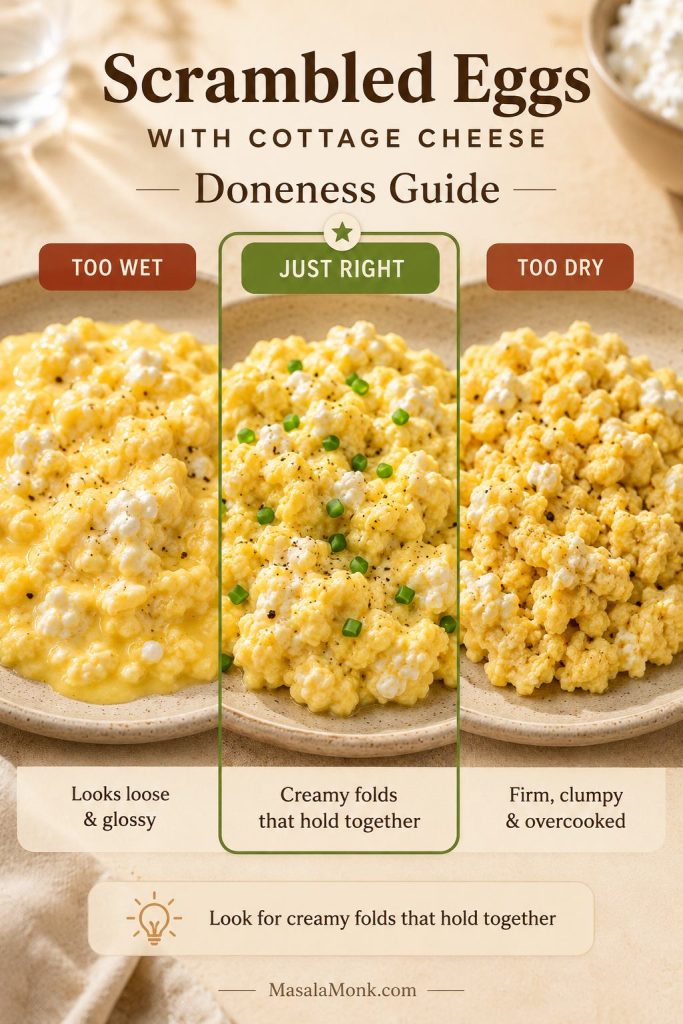
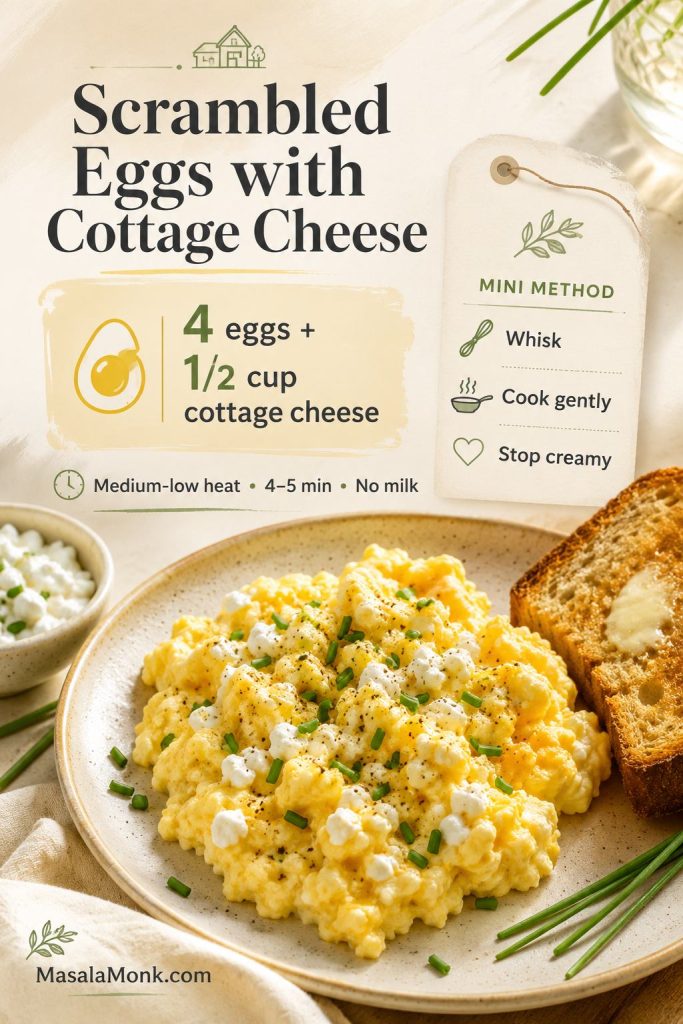
If you want a warmer high-protein breakfast bagel, spoon soft eggs over a toasted half and finish with chives, tomato, or hot sauce. These scrambled eggs with cottage cheese are especially useful when you want creamy eggs with more protein.

Balance tip: if the bagel itself is large, use an open-faced style. One bagel split into two halves with protein and vegetables often feels more satisfying than a closed sandwich overloaded with spread.

Vegan bagel toppings and spreads

Vegan bagel toppings do not need to feel like substitutes. A thick swipe of hummus with cucumber and paprika, avocado with lemon and everything seasoning, or white bean spread with roasted peppers can taste just as complete as a cream cheese bagel.
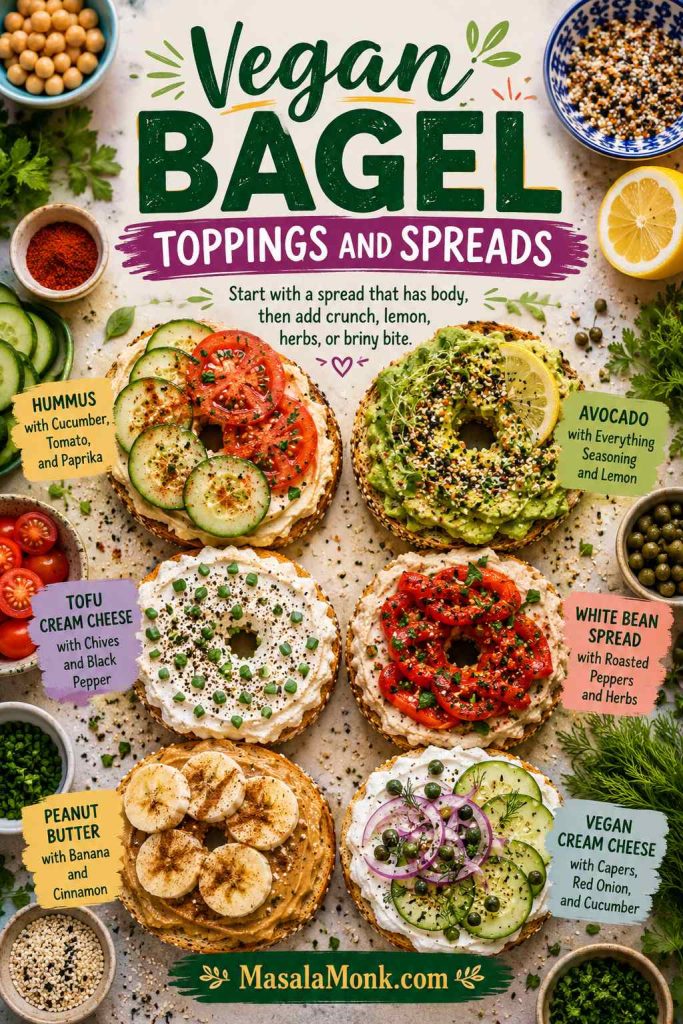
Vegan bagel toppings including hummus cucumber, avocado, tofu cream cheese, white bean spread, peanut butter banana, and vegan cream cheese.
Vegan bagel toppings do not need to feel like substitutes. Start with hummus, avocado, tofu cream cheese, white bean spread, or nut butter, then add crunch, lemon, herbs, or briny bite.

Start with a spread that already has body, then add something crisp, juicy, nutty, or briny. Hummus, avocado, tofu cream cheese, white bean spread, peanut butter, almond butter, jam, olive tapenade, and vegan cream cheese all give the bagel enough moisture before you add fresh toppings.

  • Hummus + cucumber + tomato + paprika
  • Avocado + everything seasoning + lemon
  • Tofu cream cheese + chives + black pepper
  • White bean spread + roasted peppers + herbs
  • Peanut butter + banana + cinnamon
  • Vegan cream cheese + capers + red onion + cucumber

How to Toast Bagels for Toppings and Boards

Because many toppings are wet, creamy, or warm, toasting matters more than it seems. A lightly toasted bagel is fine for butter and jam, but a bagel with cream cheese, tomato, egg, avocado, smoked salmon, or hummus needs a firmer surface.
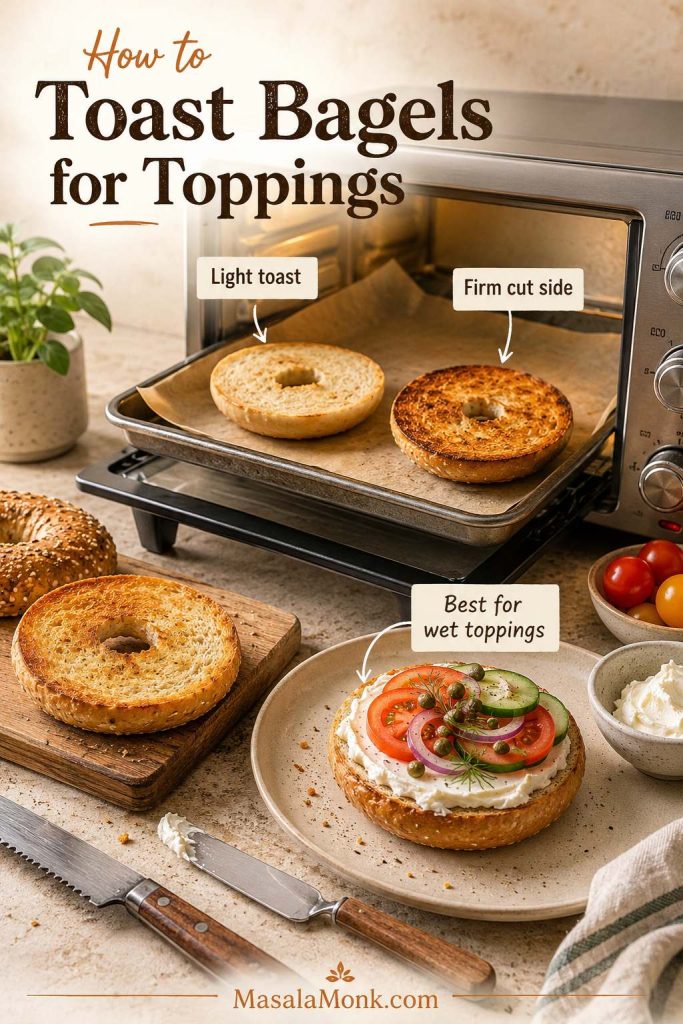
Toaster oven scene showing light toast, firm toasted cut side, and a topped bagel with cream cheese, tomato, cucumber, onion, and capers.
Toast level should match the toppings. Butter and jam only need light toast, but wet or creamy toppings like tomato, cucumber, avocado, hummus, eggs, or smoked salmon need a firmer cut side.
MethodTime / temperatureUse it for
Regular toaster2–5 minutes, depending on toaster strengthEveryday bagels, breakfast bagels, cream cheese bagels
Toaster oven375°F / 190°C for 4–6 minutes, cut side upOpen-faced bagels and warm toppings
Bagel chips or small pieces375°F / 190°C for 8–10 minutesBoards, dips, smoked salmon spread, cream cheese boards
Garlic-toasted bagel pieces400°F / 200°C for 8–10 minutesBrunch boards, savory spreads, party trays

For a soft-but-sturdy bagel, toast only the cut side. For a loaded open-faced bagel, toast a little longer so the surface can hold cream cheese, tomato, cucumber, avocado, or eggs without going soggy.

Day-old bagels only need enough heat to firm the cut side. Over-toasting makes thick schmear and dry toppings feel heavier.

Breakfast Bagel Ideas

For breakfast, the bagel needs to do a little more than taste good for five minutes. A spread plus protein — eggs, smoked salmon, cottage cheese, turkey, peanut butter, or Greek yogurt cream cheese — makes it feel more like a real meal.
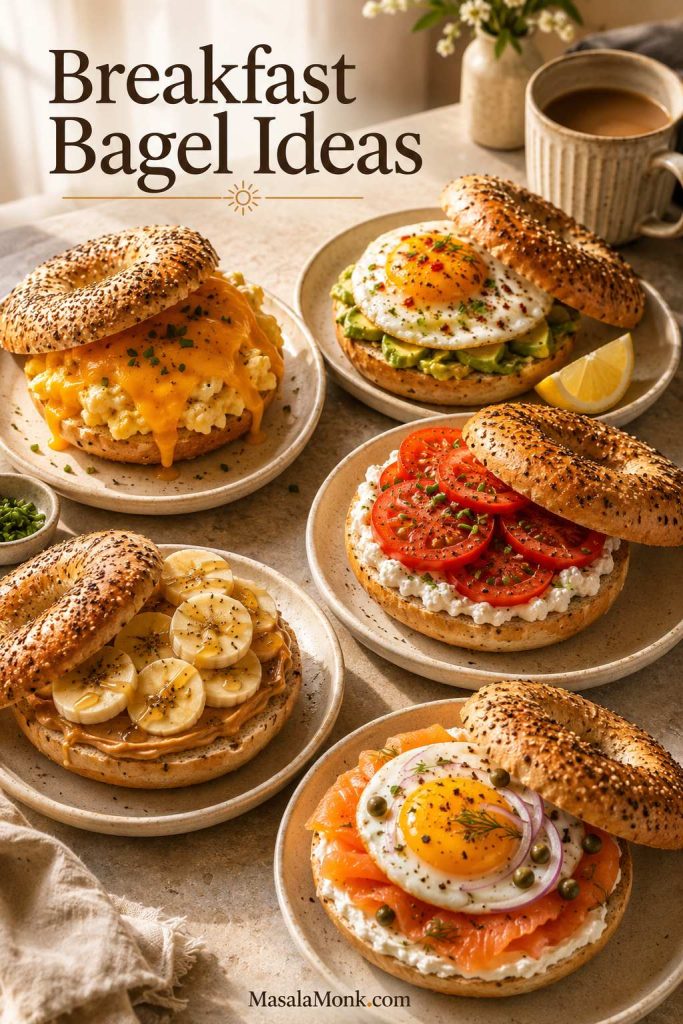
Breakfast bagels with egg and cheese, avocado egg, cottage cheese tomato, peanut butter banana, and smoked salmon egg.
Breakfast bagels become more satisfying when protein, fruit, vegetables, or warmth join the spread. Egg, cheese, avocado, cottage cheese, peanut butter, banana, tomato, and smoked salmon all make the bite more filling.

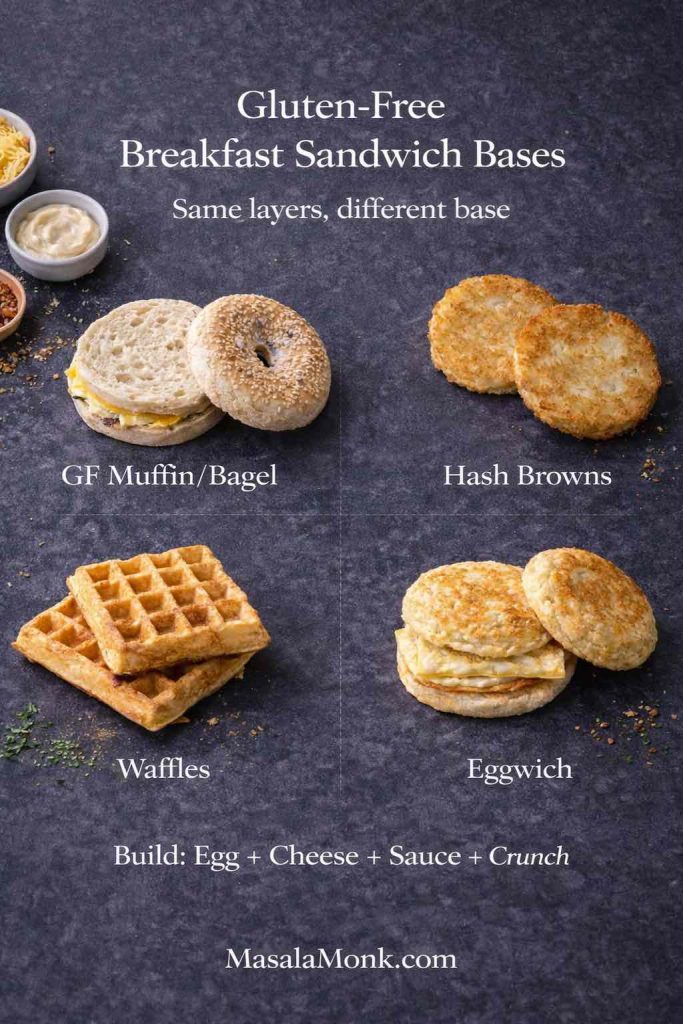
This is where a bagel is especially useful: it can hold eggs, cheese, avocado, hash browns, or smoked salmon without needing much cooking beyond the filling.

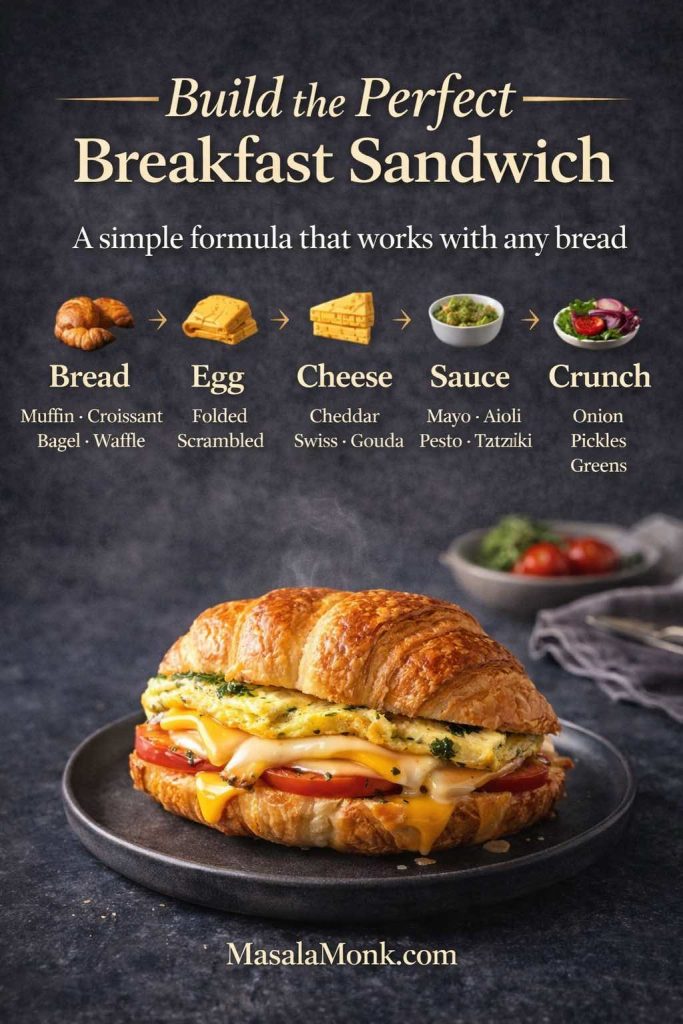
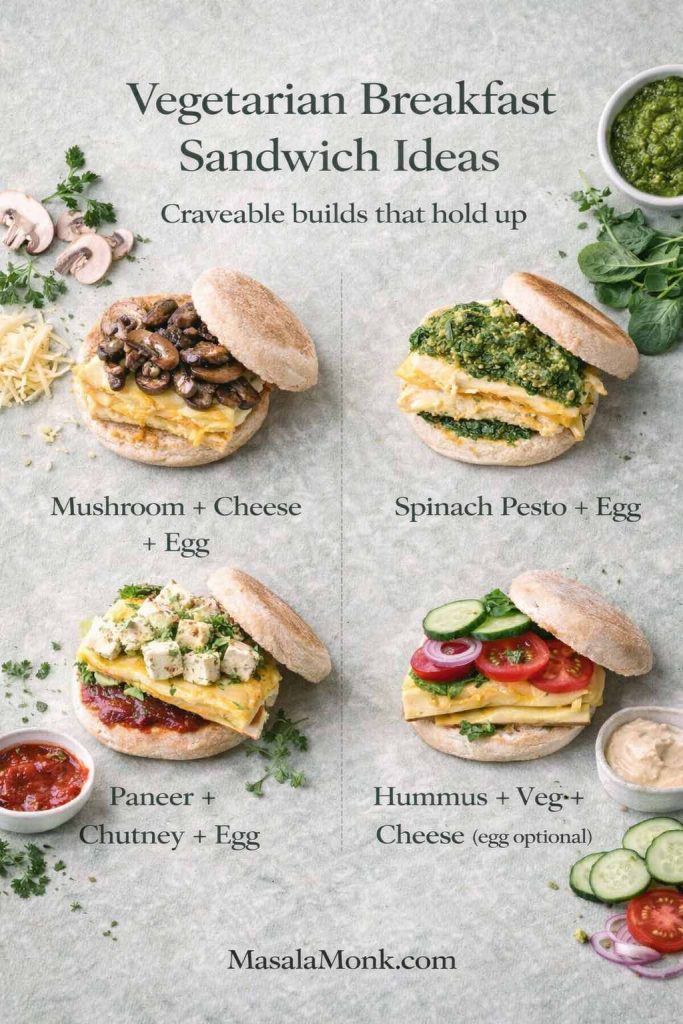
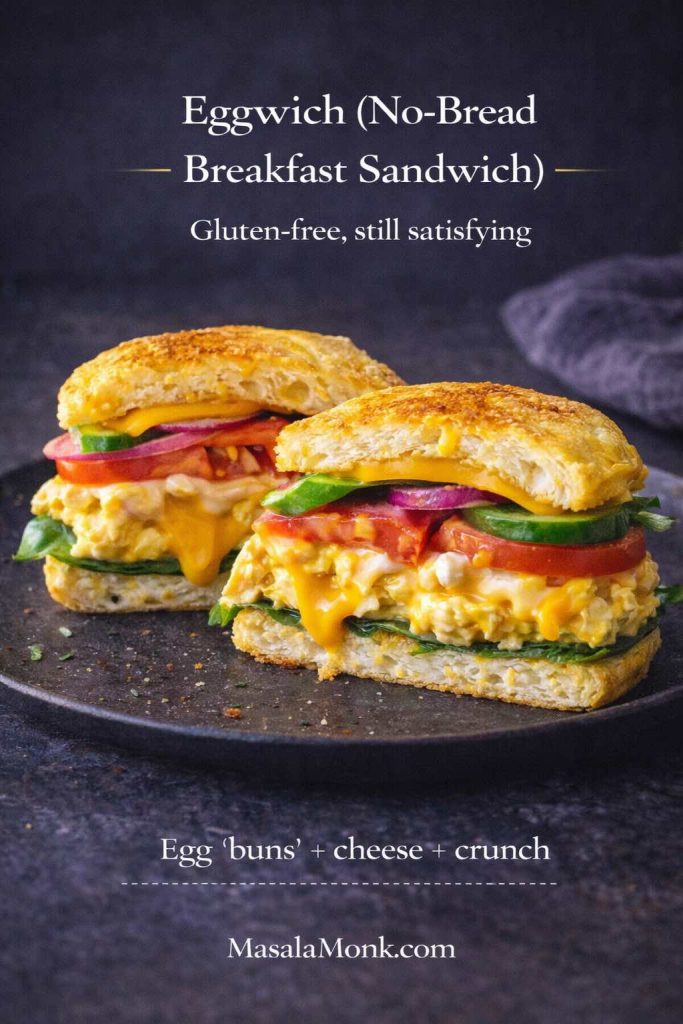
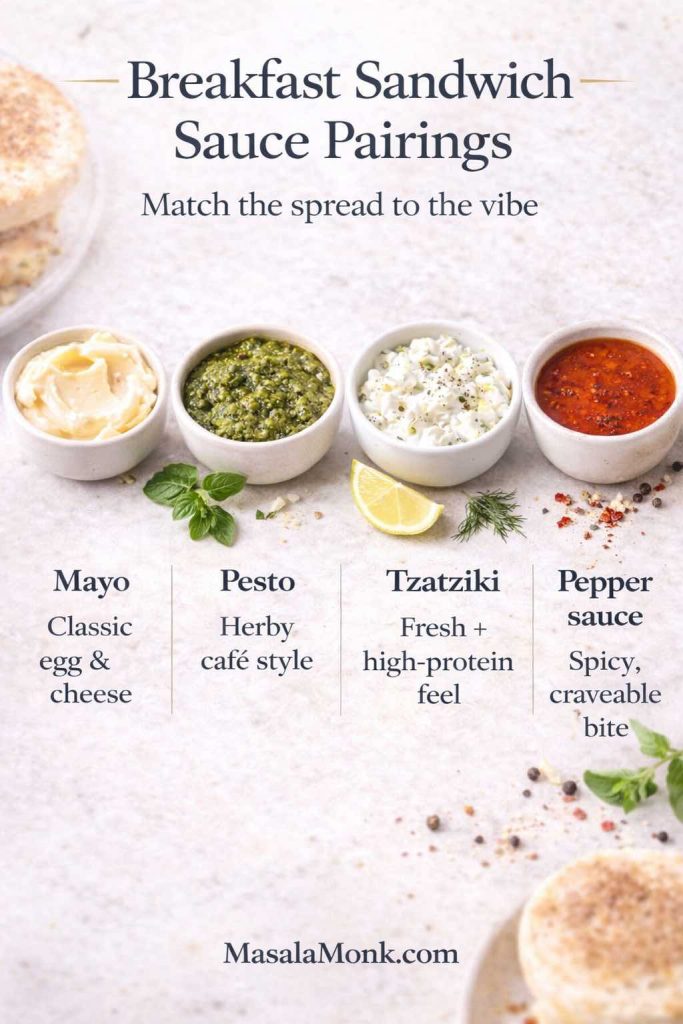
For more morning ideas, this breakfast sandwich recipe guide has more ways to build a hearty breakfast around eggs, cheese, spreads, and add-ons.

Basic egg and cheese bagel formula

IngredientAmount for 1 bagel
Bagel1, split and toasted
Egg1–2 large eggs
Butter or oil1 tsp / 5 g
Cheese1 slice or ¼ cup shredded
Cream cheese, sauce, or avocado1–2 tbsp / 15–30 g
Fresh toppingTomato, onion, herbs, spinach, or avocado

Breakfast bagel combinations

  • Bacon, egg, and cheese
  • Egg, cheddar, avocado, and tomato
  • Scrambled egg with scallion cream cheese
  • Sausage, egg, and cheddar
  • Smoked salmon, egg, dill, and cream cheese
  • Peanut butter, banana, and honey
  • Greek yogurt cream cheese, berries, and granola
  • Hummus, egg, cucumber, and paprika
  • Cottage cheese, tomato, black pepper, and chives

For smaller servings, see the kids’ bagel toppings or mini bagel toppings sections.

Bagel Toppings for Kids

For kids, keep the bagel toppings simple, familiar, and easy to hold. Cream cheese with jam, peanut butter with banana, butter with cinnamon sugar, strawberry cream cheese, egg and cheese, mini bagel pizzas, and Nutella with strawberries all work because they are flavorful without being hard to bite.
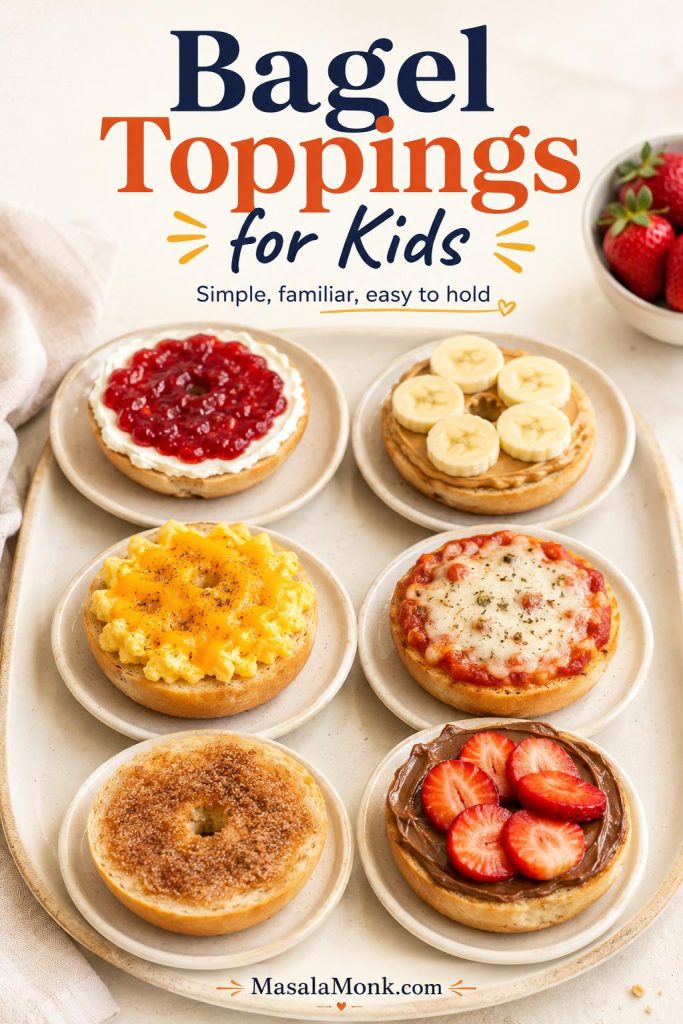
Kid-friendly bagel toppings with cream cheese jam, peanut butter banana, egg cheese, mini pizza, cinnamon sugar, and Nutella strawberries.
Kid-friendly bagel toppings should be simple, familiar, and easy to hold. Cream cheese with jam, peanut butter banana, egg and cheese, mini pizza bagels, cinnamon sugar, and strawberry chocolate spread all keep the choices approachable.

For a crisp diner-style breakfast bagel, add a small hash brown patty or a thin layer of crispy shredded potatoes with egg and cheese. This air fryer hash browns guide is useful when you want golden potatoes without babysitting a skillet.

Toasting tip: toast the cut sides well if you are adding egg, avocado, tomato, or warm fillings. A firmer toasted surface keeps the bagel from turning soggy.

Smoked Salmon, Lox, and Cream Cheese Bagels

A smoked salmon bagel is one of the most reliable savory combinations because every piece has a job. Cream cheese adds richness, salmon adds salt and protein, cucumber or tomato adds freshness, capers add sharpness, onion adds bite, dill adds fragrance, and lemon wakes everything up.

Ideally, the best bites have cool cucumber, soft cream cheese, salty salmon, sharp onion, and a little lemon all at once. A smoked salmon bagel should taste like a deli order, not just fish on bread.
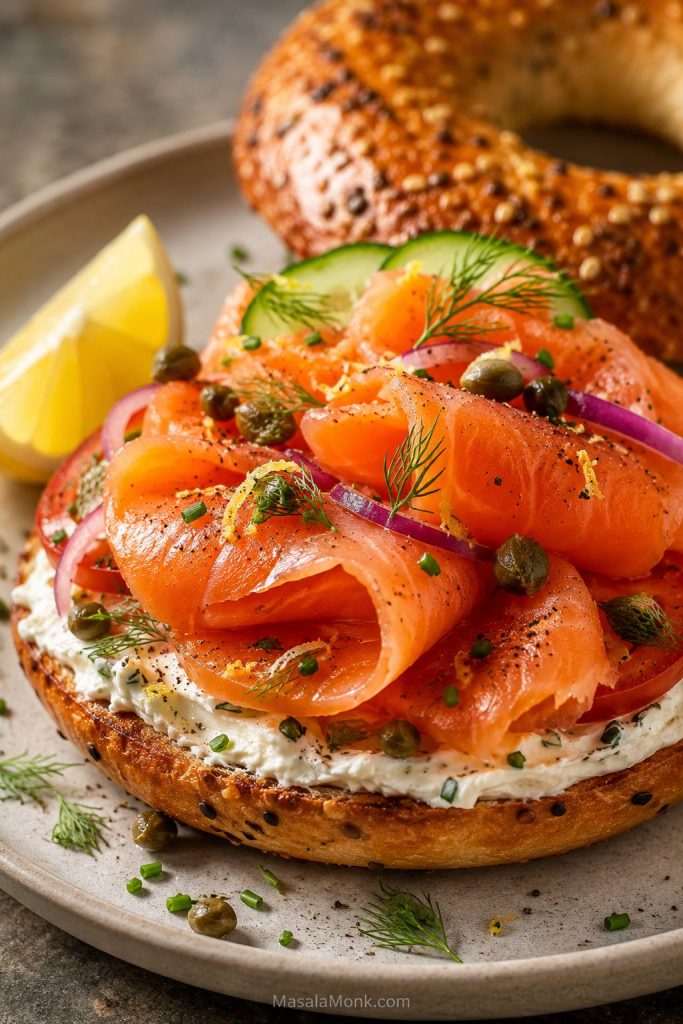
Close-up smoked salmon bagel with cream cheese, capers, red onion, cucumber, dill, lemon, and black pepper.
A smoked salmon bagel should taste creamy, salty, crisp, sharp, and lemony in the same bite. Thin onion, capers, cucumber, dill, pepper, and lemon keep the silky salmon feeling fresh.

Smoked salmon vs lox vs gravlax: which one goes on a bagel?

People often use these names loosely, but they do not taste exactly the same. The best choice depends on whether you want smoky, salty, herbal, or flaky fish.
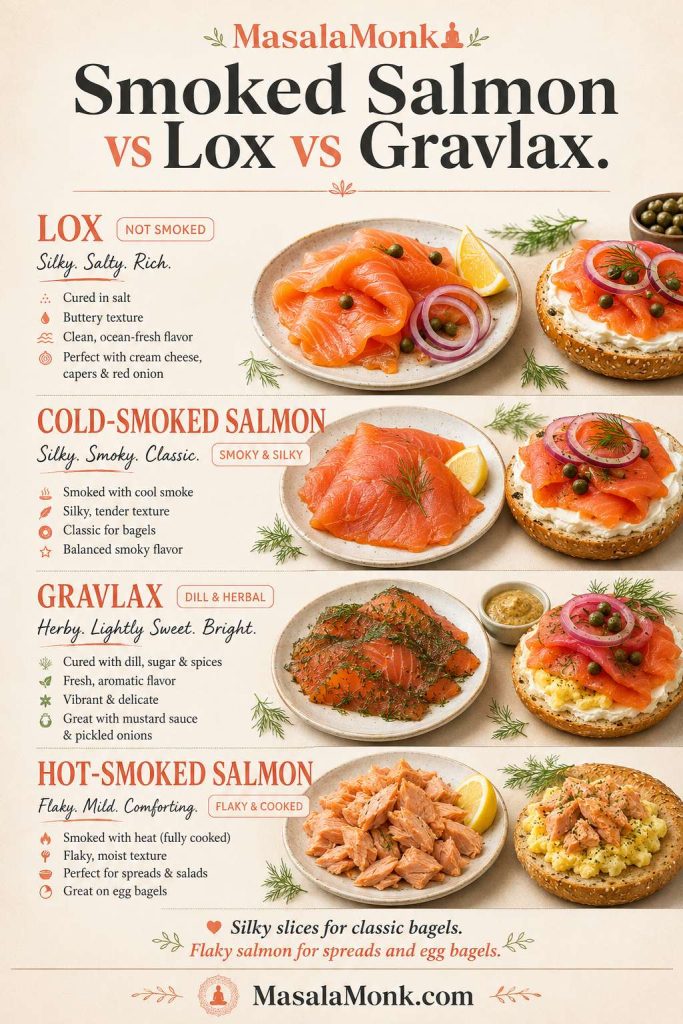
Comparison of lox, cold-smoked salmon, gravlax, and hot-smoked salmon with bagel serving suggestions.
Lox, cold-smoked salmon, gravlax, and hot-smoked salmon are not interchangeable. Silky slices suit classic cream cheese bagels, while flaky hot-smoked salmon works better in spreads, salads, and egg bagels.
TypeWhat it tastes likeBest bagel build
Smoked salmonSilky or firmer depending on style, with a smoky flavorCream cheese, cucumber, red onion, capers, dill, lemon
LoxSalty, silky, rich, and usually not smokyPlain schmear, tomato or cucumber, red onion, capers
GravlaxHerbal, slightly sweet, and dill-forwardLabneh or cream cheese, cucumber, dill, lemon zest
Hot-smoked salmonFlaky, cooked-tasting, and more robustFlaked into schmear, added to egg bagels, or served on brunch boards

For the easiest first smoked salmon bagel, buy cold-smoked salmon or lox-style salmon if you want silky folds. Use hot-smoked salmon when you want a flakier, more filling brunch spread, egg bagel, or smoked salmon schmear. For a deeper breakdown of the terms, this Food & Wine guide to lox, gravlax, and smoked salmon explains how the curing and smoking methods differ.

One-bagel smoked salmon formula

IngredientAmount
Bagel1, split and toasted
Cream cheese or schmear2–4 tbsp / 30–60 g
Smoked salmon or lox2–3 oz / 55–85 g
Capers1–2 tsp
Red onion3–5 thin rings or 1–2 tbsp sliced
Cucumber or tomato4–6 thin slices
Dill or chives1–2 tsp
Lemon1 wedge or ½ tsp zest

Serving smoked salmon for a group? Use the bagel bar quantities and keep the storage tips in mind so the salmon stays chilled.

How to layer a smoked salmon bagel

Layering matters because the smallest toppings are the easiest to lose; press them into the schmear before adding larger salmon folds.
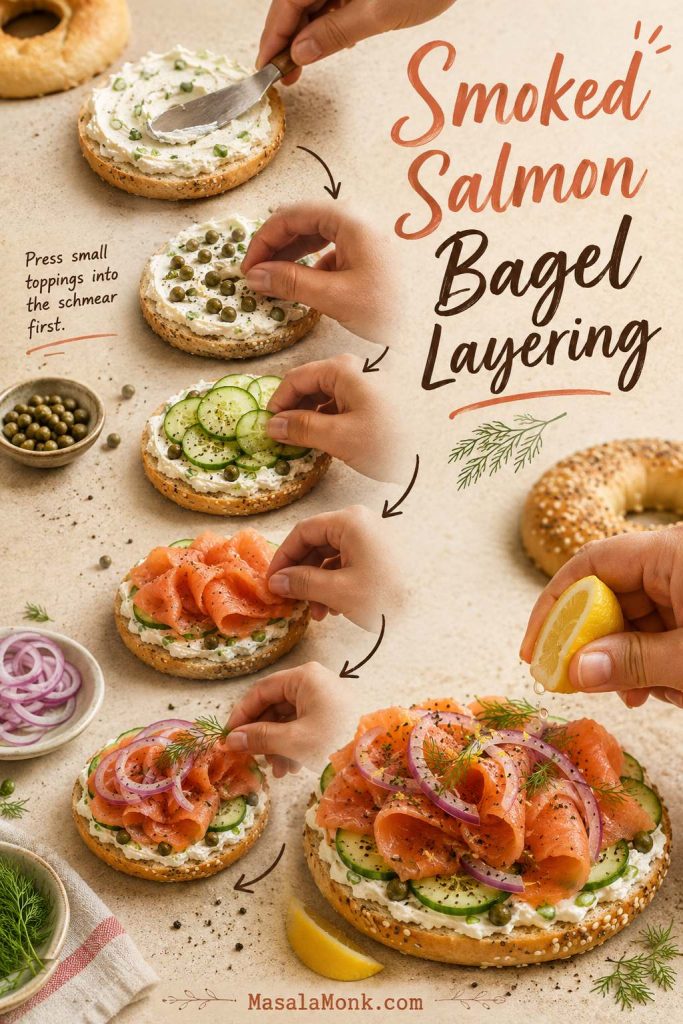
Step-by-step smoked salmon bagel layering guide with schmear, capers, cucumber, smoked salmon, red onion, dill, and lemon.
Layer a smoked salmon bagel from small to large. Press capers and herbs into the schmear first, then add cucumber, salmon folds, onion, dill, pepper, and lemon so the toppings stay in place.
  1. Toast the bagel and let it cool for a minute so the spread does not melt immediately.
  2. Spread cream cheese or scallion schmear on both cut sides.
  3. Press capers lightly into the creamy layer.
  4. Add cucumber or tomato if using.
  5. Layer smoked salmon in loose folds instead of flat sheets.
  6. Finish with red onion, dill, black pepper, and lemon.

Loose folds of salmon make the bagel feel fuller without needing a huge amount of fish. For a softer, spreadable version, chop smoked salmon and fold it into the schmear base with dill, lemon zest, and chives. This is especially useful for a bagel bar because guests can spread it quickly without pulling apart delicate salmon slices.

If you have extra smoked salmon, cucumber, avocado, or lemony sauce after brunch, turn the same flavors into a simple bowl later. This salmon bowl recipe includes a no-cook smoked salmon direction with cucumber, avocado, and a bright yogurt-style sauce.

Best Bagel Toppings by Bagel Type

At this point, bagel choice really matters. A cinnamon raisin bagel needs a different topping than an everything bagel, and a pumpernickel bagel can handle stronger, saltier flavors.
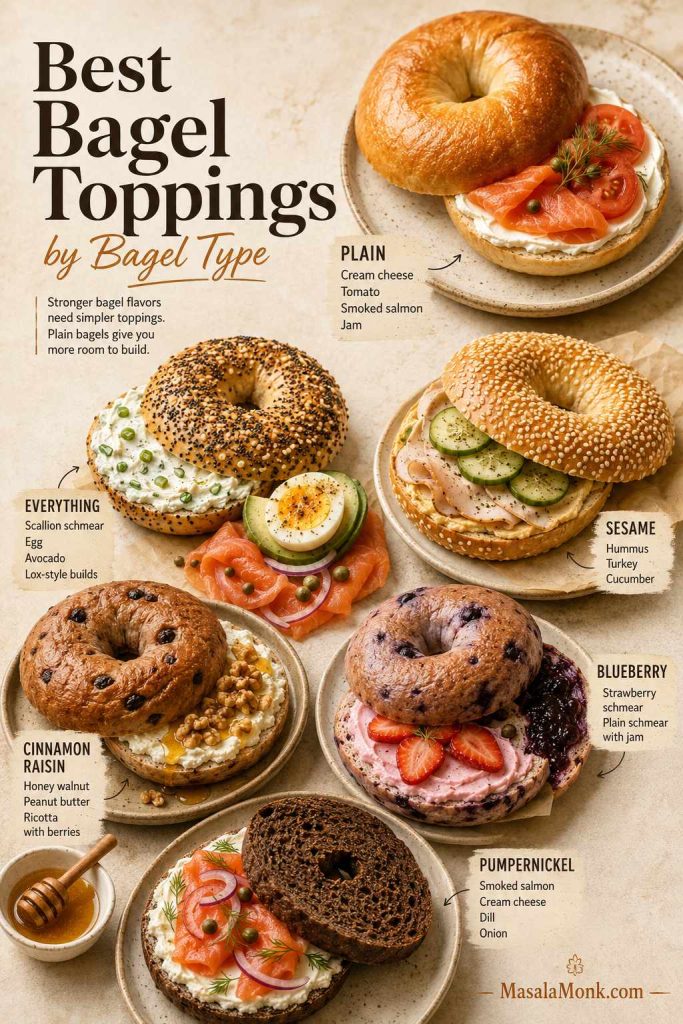
Bagel type pairing guide with plain, everything, sesame, cinnamon raisin, blueberry, and pumpernickel bagels with matching toppings.
The bagel itself already brings flavor. Plain bagels can handle almost anything, while everything, cinnamon raisin, blueberry, sesame, and pumpernickel bagels usually shine with more focused toppings.

Because stronger bagels already have personality, the topping should usually be simpler. Everything, onion, cheese, cinnamon raisin, blueberry, and pumpernickel bagels bring flavor on their own; plain and whole wheat bagels give you more room to build.

If the bagel is already salty or garlicky, keep the spread calmer and let the toppings do less work. If the bagel is sweet, use tangy, creamy, or lightly salted toppings so the whole bite does not become sugary.

Bagel typeToppings that pair well
PlainAny cream cheese, smoked salmon, egg, avocado, butter, jam
EverythingScallion cream cheese, lox, egg and cheese, avocado, hummus
SesameHummus, smoked salmon, turkey, cucumber, peanut butter
Poppy seedCream cheese, lox, egg salad, tuna salad
Cinnamon raisinButter, honey walnut cream cheese, peanut butter, apple, ricotta
Whole wheatHummus, avocado, turkey, cottage cheese, tuna, egg
OnionCream cheese, tomato, egg, bacon, deli turkey
Asiago or cheeseEgg, bacon, tomato, garlic herb cream cheese, turkey
BlueberryPlain cream cheese, strawberry cream cheese, butter, honey, ricotta
PumpernickelSmoked salmon, horseradish cream cheese, cucumber, dill

When in doubt, let the bagel lead. Plain and whole wheat bagels are flexible; everything, onion, cheese, blueberry, cinnamon raisin, and pumpernickel bagels already have a point of view.

Bagel Bar Toppings, Spreads, and Brunch Board Quantities

A bagel bar should feel generous without becoming chaotic. You do not need every topping on the table at once; you need the right mix of bagels, spreads, proteins, fresh toppings, and small bowls that are easy to refill.

This is low-pressure brunch food. Instead of cooking every guest a separate breakfast, you are giving everyone enough good pieces to build the bagel they actually want.
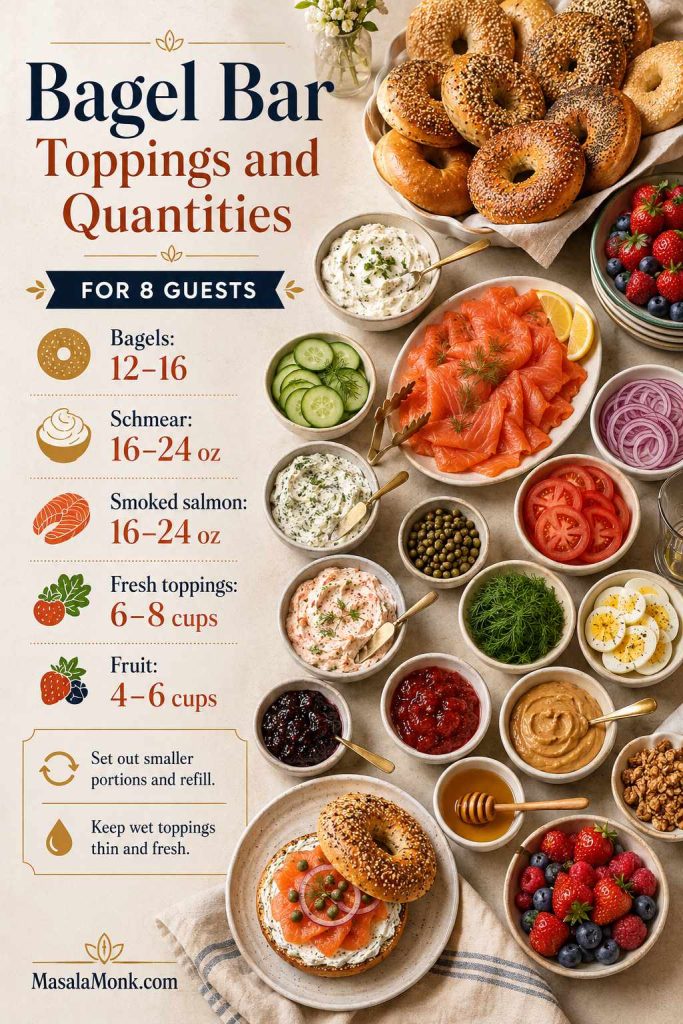
Bagel bar quantity guide for eight guests with bagels, schmear, smoked salmon, sliced vegetables, herbs, eggs, fruit, jam, peanut butter, and honey.
A bagel bar should look generous without turning messy. For eight guests, plan 12–16 bagels, 16–24 oz schmear, 16–24 oz smoked salmon, and plenty of fresh toppings, then refill smaller bowls as needed.

How many bagels per person?

Serving styleBagels per personGood for
Light brunch1 bagelWhen serving fruit, salad, eggs, pastries, or sides
Main meal1½ bagelsHungry guests or fewer side dishes
Mini bagels2 mini bagelsGrazing boards and mixed toppings

Bagel bar quantity table

The bagels are easy. The part people misjudge is the spread, salmon, and fresh toppings. A good board should look full when it lands on the table, but still be easy to refill without everything getting wet or messy.

The exact mix depends on your crowd, but these numbers keep you from underbuying the expensive parts and overbuying the things that wilt or get soggy. If your guests love smoked salmon, eggs, or thick cream cheese, round up slightly.

Sliced fresh toppings means cucumber, tomato, onion, radish, lettuce, herbs, fruit, or similar add-ons.

For make-ahead timing, use the storage and prep guide so schmear, salmon, sliced vegetables, and bagels stay fresh.

Mini Bagel Toppings for Brunch Boards and Kids

Mini bagels work best with toppings that do not slide around. Use thick schmears, small slices, and easy spreads so guests can pick them up without losing half the topping on the board.
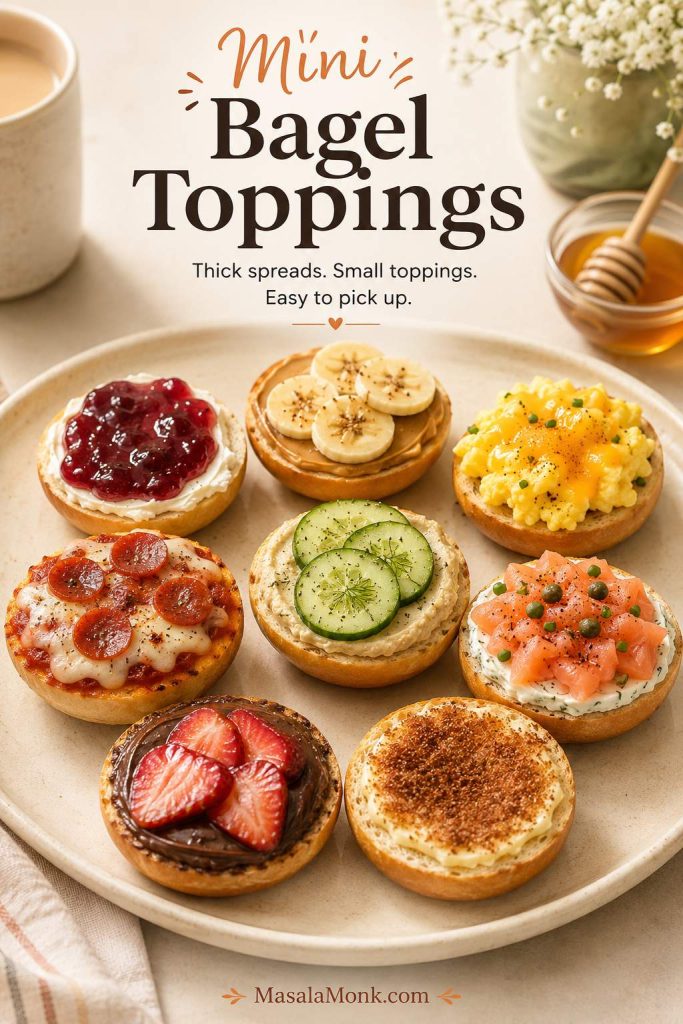
Mini bagel toppings including cream cheese jam, peanut butter banana, egg cheese, mini pizza, hummus cucumber, and Nutella strawberries.
Mini bagels are best for brunch boards, kids, and grazing because guests can try more than one topping. Use thick spreads, small slices, and toppings that stay put when picked up.
  • Cream cheese + jam
  • Peanut butter + banana
  • Egg + cheese
  • Mini pizza bagels
  • Hummus + cucumber
  • Smoked salmon chopped into schmear
  • Nutella + strawberries
  • Butter + cinnamon sugar
GuestsBagelsCream cheese / spreadsSmoked salmonSliced fresh toppings
22–34–6 oz / 115–170 g4–6 oz / 115–170 g1–2 cups
44–68–12 oz / 225–340 g8–12 oz / 225–340 g3–4 cups
88–1216–24 oz / 450–680 g1–1½ lb / 450–680 g6–8 cups
1212–1824–32 oz / 680–900 g1½–2 lb / 680–900 g8–12 cups

What to put on a bagel bar

  • Bagels: plain, everything, sesame, whole wheat, cinnamon raisin, poppy, mini bagels
  • Spreads: plain cream cheese, scallion schmear, garlic herb cream cheese, honey walnut cream cheese, hummus, butter, jam
  • Proteins: smoked salmon, hard-boiled eggs, scrambled eggs, bacon, turkey, tuna salad, egg salad
  • Fresh toppings: cucumber, tomato, red onion, avocado, radish, lettuce, sprouts, herbs
  • Finishes: capers, lemon wedges, everything seasoning, flaky salt, black pepper, chili flakes, honey
  • Sweet side: berries, banana slices, apple slices, Nutella, peanut butter, cinnamon sugar

The board should look abundant, but it should still feel easy to use: spreads in bowls, wet toppings contained, bagels sliced, and the brightest ingredients where people can see them.

For the egg option on a bagel bar, cook the eggs ahead and slice them right before serving. This air fryer hard-boiled eggs guide is handy when you want easy peeled eggs for brunch plates, toast, deviled eggs, or snack boards.

Bagel bar equipment

  • Large board, tray, platter, or sheet pan
  • Small bowls or ramekins for capers, onions, jams, nuts, and seasonings
  • Spreader knives for each cream cheese flavor
  • Serrated knife for slicing bagels
  • Toaster or toaster oven
  • Serving spoons and small tongs
  • Parchment paper for easy cleanup
  • Airtight containers for make-ahead spreads

For a bagel bar, smaller bowls are not just prettier. They keep wet toppings from soaking into the bread and make the board easier to refill.

Hosting tip: do not put every topping directly on the board if it will make things wet. Keep capers, jams, honey, pickled onions, and chopped herbs in small bowls so guests can build cleaner bagels.

Make-Ahead, Storage, and Food Safety

Most bagel toppings are easy to prep ahead. However, they do not all hold the same way. Cream cheese spreads are great make-ahead items, while sliced tomatoes, cucumbers, avocado, and toasted bagels are better closer to serving time.

To keep a bagel bar calm, prep the sturdy things early and leave the wet, fresh, or delicate things for last.
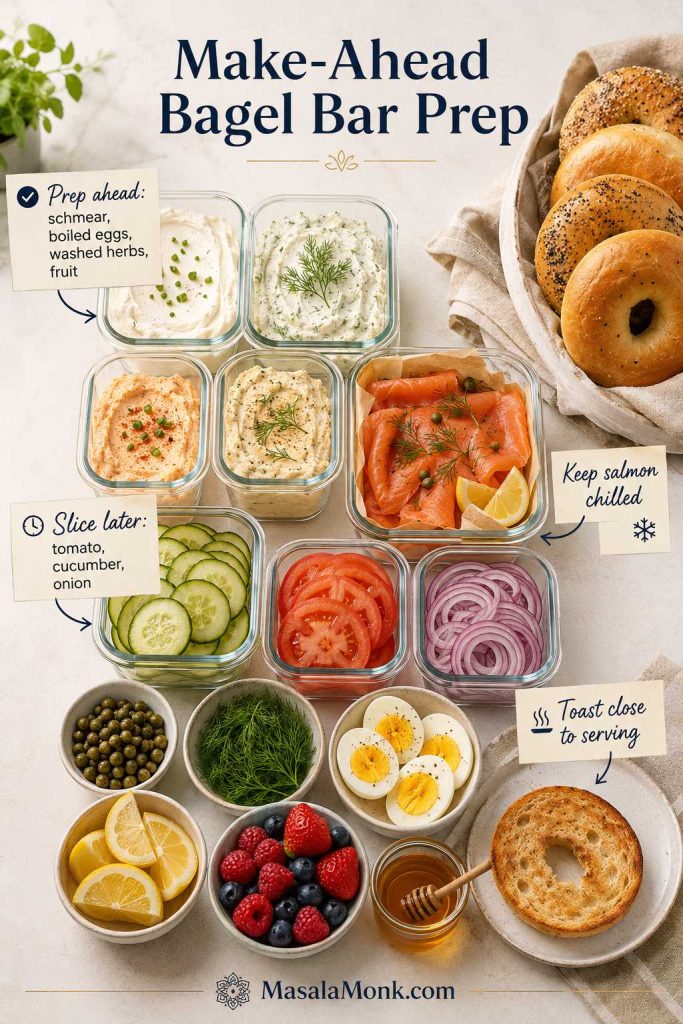
Make-ahead bagel bar prep with containers of schmear, smoked salmon, vegetables, herbs, boiled eggs, berries, lemons, honey, and bagels.
Make-ahead bagel bar prep works best when sturdy items are done early and delicate toppings wait. Prep schmear, eggs, herbs, and fruit ahead; slice wet toppings later, keep salmon chilled, and toast bagels close to serving.

Storage guide

ItemBest storage
Plain schmearAbout 5–7 days refrigerated in an airtight container
Flavored cream cheeseBest within 3–5 days
Smoked salmon cream cheeseBest within 2–3 days, or sooner if the smoked salmon package says so
Cut tomatoes and cucumbersBest same day; pat dry before serving
Pickled onions3–5 days refrigerated
Toasted bagelsBest fresh
Frozen bagelsSlice first, then freeze in a sealed bag

What to prep ahead

  • 1 day ahead: schmear flavors, pickled onions, boiled eggs, washed herbs, washed fruit
  • Morning of serving: slice tomatoes, cucumbers, onions, radishes, fruit, and bagels
  • Right before serving: toast bagels, slice avocado, arrange smoked salmon, add lemon wedges

How long can a bagel bar sit out?

If your bagel bar includes cream cheese, smoked salmon, eggs, meat, or cut produce, keep everything chilled until serving. According to FDA food safety guidance, perishable foods that need refrigeration should not sit at room temperature for more than 2 hours, or more than 1 hour when the temperature is above 90°F / 32°C.

During a longer brunch, set out smaller portions and refill from the refrigerator as needed. That keeps the board fresher and the toppings do not sit out longer than they should.

Recipe Card: Easy Bagel Schmear with 6 Flavor Variations

Use this as the base recipe for the schmear ideas above. It starts with softened cream cheese, a little sour cream or Greek yogurt, lemon, and salt, then turns into sweet or savory flavored cream cheese.
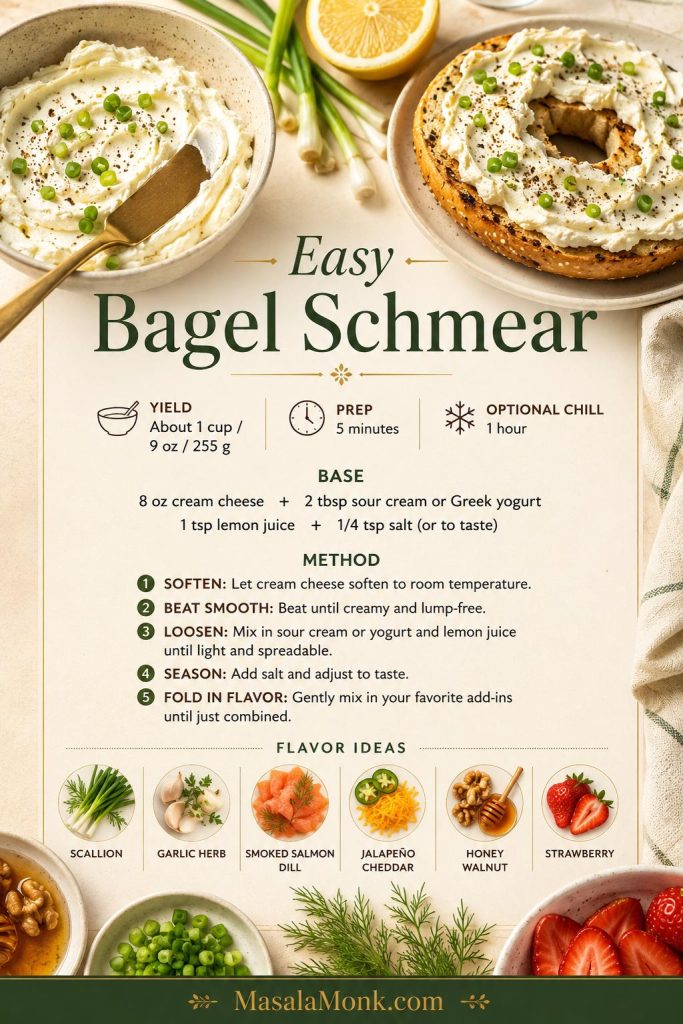
Saveable bagel schmear recipe card with yield, prep time, base ingredients, method, and flavor ideas.
Keep one batch of plain schmear, then flavor smaller portions for different bagel toppings. That way, one easy cream cheese base can support savory, sweet, smoked salmon, and brunch-board combinations.
Prep Time5 minutes
Optional Chill1 hour
YieldAbout 1 cup / 9 oz / 255 g
Serves4–6 bagels

Equipment

  • Medium mixing bowl
  • Hand mixer, stand mixer, or sturdy spoon
  • Rubber spatula
  • Measuring spoons
  • Airtight container

Ingredients

  • 8 oz / 225 g brick cream cheese, softened
  • 2 tbsp / 30 g sour cream, Greek yogurt, or crème fraîche
  • ½ tsp / 2.5 ml fresh lemon juice
  • Pinch to ⅛ tsp fine salt, to taste
  • Black pepper, optional

Instructions

  1. Add softened cream cheese to a mixing bowl.
  2. Beat until smooth, creamy, and slightly lighter.
  3. Add sour cream, Greek yogurt, or crème fraîche.
  4. Add lemon juice and salt, then mix again until spreadable.
  5. Fold in one flavor variation from the list below.
  6. Taste and adjust with more lemon, salt, herbs, honey, or seasoning as needed.
  7. Chill for 1 hour if you want the flavor to deepen.
  8. Store refrigerated in an airtight container.

Six Easy Flavor Variations

VariationAdd to the base schmear
Scallion schmear¼ cup sliced scallions or chives + black pepper
Garlic herb schmear1 small grated garlic clove + 2 tbsp chopped herbs + lemon zest
Smoked salmon dill schmear3–4 oz / 85–115 g chopped smoked salmon + dill + lemon
Jalapeño cheddar schmear1 minced jalapeño + ½ cup shredded cheddar + scallion
Honey walnut schmear2 tbsp honey + ¼ cup chopped walnuts + pinch of cinnamon
Strawberry cream cheese2–3 tbsp strawberry jam or ½ cup chopped berries + 1 tbsp powdered sugar if needed

Notes

  • Use brick-style cream cheese for the thickest, creamiest result.
  • Greek yogurt makes the schmear tangier; sour cream makes it softer and richer.
  • Add salty mix-ins slowly. Smoked salmon, capers, bacon, cheddar, and everything seasoning can make the spread salty fast.
  • For a bagel bar, make 2–3 different schmear flavors so guests can build sweet and savory bagels.
  • For a full bagel build, pair this schmear with one main topping, one crunchy or fresh topping, and one finishing detail such as lemon, pepper, herbs, honey, or flaky salt.

Still deciding? Start with the bagel type, then choose the spread. Plain bagels give you the most freedom, everything bagels want creamy or savory toppings, and sweet bagels usually need something tangy, salty, or nutty to stay balanced.

FAQs About Bagel Toppings and Spreads

What are the most popular bagel toppings?

The most popular bagel toppings are cream cheese, butter, jam, smoked salmon or lox, capers, red onion, egg and cheese, avocado, peanut butter, tuna salad, egg salad, hummus, tomato, cucumber, and everything bagel seasoning. However, the best choice depends on the bagel itself: plain bagels can take almost anything, while everything, cinnamon raisin, blueberry, and pumpernickel bagels usually need more thoughtful pairings.

What goes on a bagel besides cream cheese?

For a simple breakfast bagel, use butter or jam. For a savory dairy-free option, choose hummus or white bean spread; for something filling, use avocado or eggs; and for sweet or high-protein builds, try ricotta, cottage cheese, peanut butter, or almond butter. Tuna salad, egg salad, turkey, smoked salmon, pesto, goat cheese, honey, Nutella, and fresh fruit also work when the spread and toppings support each other.

What is schmear?

Schmear usually means a spread for bagels, especially cream cheese. In everyday bagel-shop language, asking for a schmear usually means you want a generous layer of cream cheese, not a thin scrape. A good homemade schmear is softer and easier to spread because it is mixed until creamy and sometimes loosened with sour cream, Greek yogurt, crème fraîche, lemon, herbs, or seasonings.

What is the best spread for an everything bagel?

Everything bagels pair especially well with scallion cream cheese, plain schmear, lox spread, garlic herb cream cheese, avocado, egg, hummus, or tuna salad. Since the bagel already has garlic, onion, sesame, poppy, and salt, the spread can stay simple.

What goes best on a plain bagel?

Plain bagels are the most flexible because they do not compete with the toppings. Use them when you want the spread or filling to stand out: scallion schmear, smoked salmon, egg and cheese, avocado, butter and jam, hummus with cucumber, ricotta and honey, or peanut butter with banana.

What goes best on an everything bagel?

Everything bagels already bring garlic, onion, sesame, poppy, and salt, so the best toppings are creamy, fresh, or protein-rich rather than heavily seasoned. Scallion cream cheese, smoked salmon, egg and cheese, avocado, hummus, tuna salad, cucumber, and plain spread with tomato all work because they support the seasoning instead of fighting it.

What goes best on a cinnamon raisin bagel?

Cinnamon raisin bagels are already sweet and spiced, so they usually need tangy, creamy, nutty, or lightly salted toppings. Plain cream cheese, butter, peanut butter, ricotta, honey walnut schmear, apple slices, and a small pinch of flaky salt all keep the sweetness from feeling too heavy.

What goes best on a blueberry bagel?

Blueberry bagels work best with toppings that either sharpen the fruit or keep it creamy. Try plain schmear, lemon cream cheese, strawberry cream cheese, butter, ricotta, mascarpone, honey, fresh berries, or almond butter.

What are good sweet bagel toppings?

Good sweet bagel toppings include cream cheese and jam, honey walnut cream cheese, peanut butter and banana, almond butter and apple, ricotta and honey, Nutella and strawberries, butter and cinnamon sugar, mascarpone with berries, and Greek yogurt cream cheese with granola. That said, a pinch of salt, lemon zest, cinnamon, or toasted nuts helps sweet toppings taste more complete.

What are healthy bagel toppings?

The healthiest bagel toppings are usually the ones that add protein, produce, or healthy fat instead of only more spread. Eggs, avocado, smoked salmon, hummus, cottage cheese, Greek yogurt cream cheese, turkey, tuna, tofu cream cheese, white bean spread, cucumber, tomato, sprouts, herbs, and fresh fruit can all make a bagel more satisfying.

How much cream cheese do you need per bagel?

Use about 2 tbsp / 30 g for a light layer, 3 tbsp / 45 g for a normal breakfast bagel, and 4 tbsp / 55–60 g for a thick deli-style schmear. For open-faced bagel halves, use 1–2 tbsp / 15–30 g per half.

Should bagels be toasted before adding toppings?

Toast bagels when the toppings are wet, creamy, warm, or heavy. A firmer cut side helps hold cream cheese, tomato, cucumber, eggs, avocado, hummus, tuna salad, and smoked salmon without turning soggy.

How do you keep bagel toppings from sliding off?

Use the spread as glue, slice toppings thinly, and press small toppings like capers, scallions, herbs, seeds, or everything seasoning into the creamy layer. If the build is tall, wet, or slippery, serve the bagel open-faced instead of closing it.

How long can a bagel bar sit out?

A bagel bar with cream cheese, smoked salmon, eggs, meat, or cut produce should not sit out for more than 2 hours. In hot weather above 90°F / 32°C, keep it to 1 hour. For longer gatherings, set out smaller portions and refill from the refrigerator.

Final Thoughts

Ultimately, a better bagel does not always need more toppings. Often, it needs one smarter finishing detail: lemon on smoked salmon, flaky salt on tomato, cinnamon with peanut butter, herbs in cream cheese, or cucumber with hummus.

Start with the spread, then let the rest of the bagel answer one simple question: what would make this bite more satisfying? A plain bagel with cream cheese and tomato may only need black pepper and flaky salt. A smoked salmon bagel comes alive with capers, onion, dill, and lemon. Peanut butter feels more finished with banana, cinnamon, and a tiny pinch of salt.

Once you know the rhythm, almost any bagel in the kitchen can become something worth sitting down for: a fast breakfast, a proper lunch, a sweet snack, or a brunch board that feels generous without being complicated.
Back to top

Posted on Leave a comment

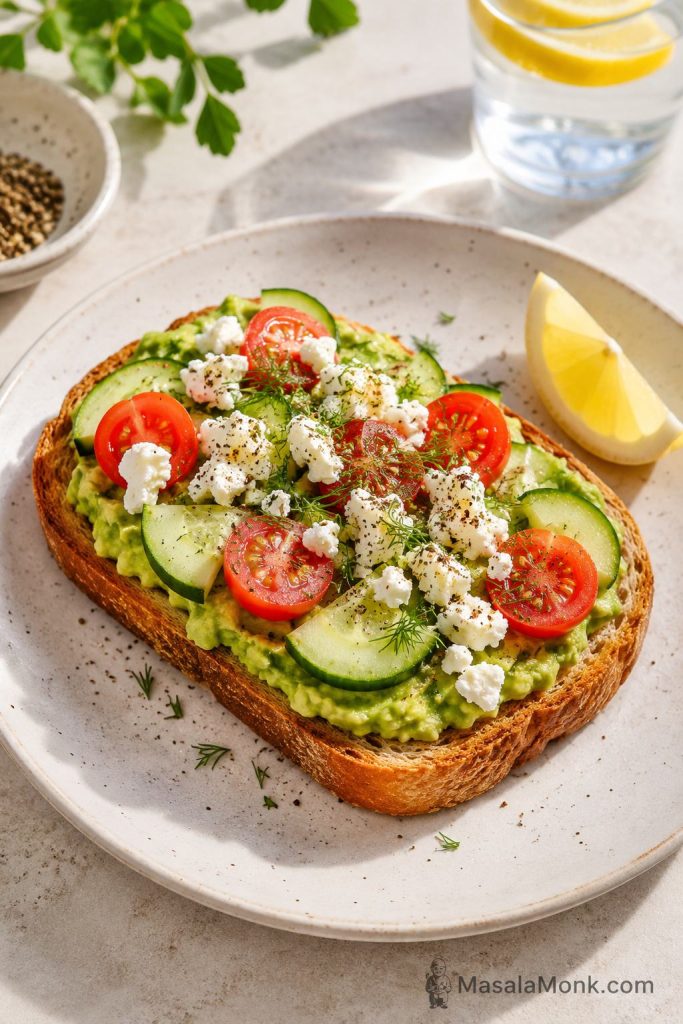
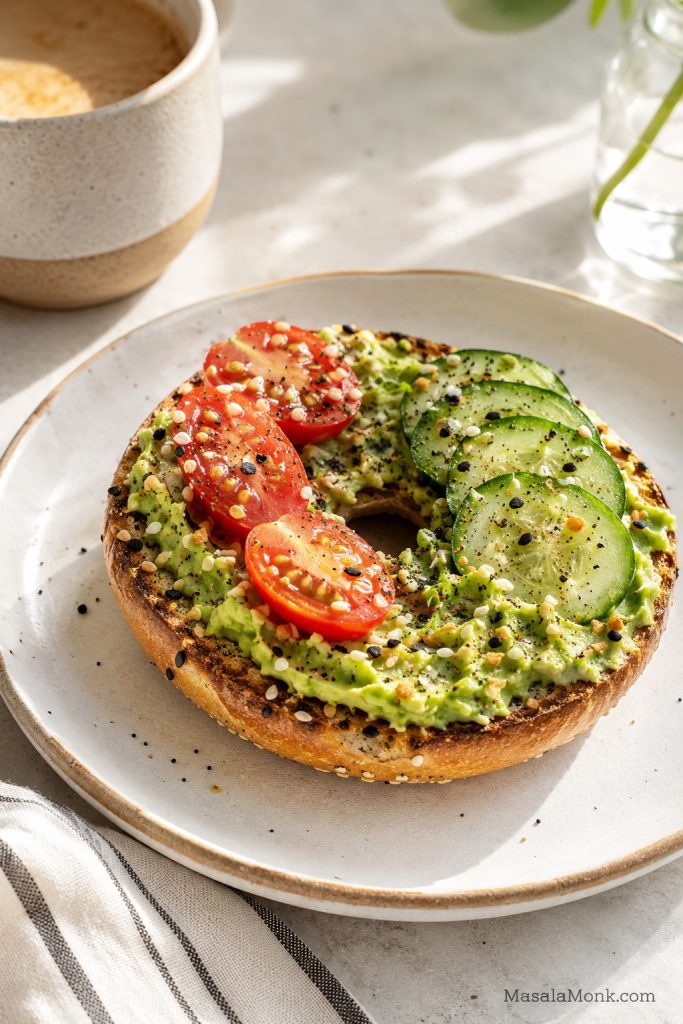
Avocado Toast Recipe

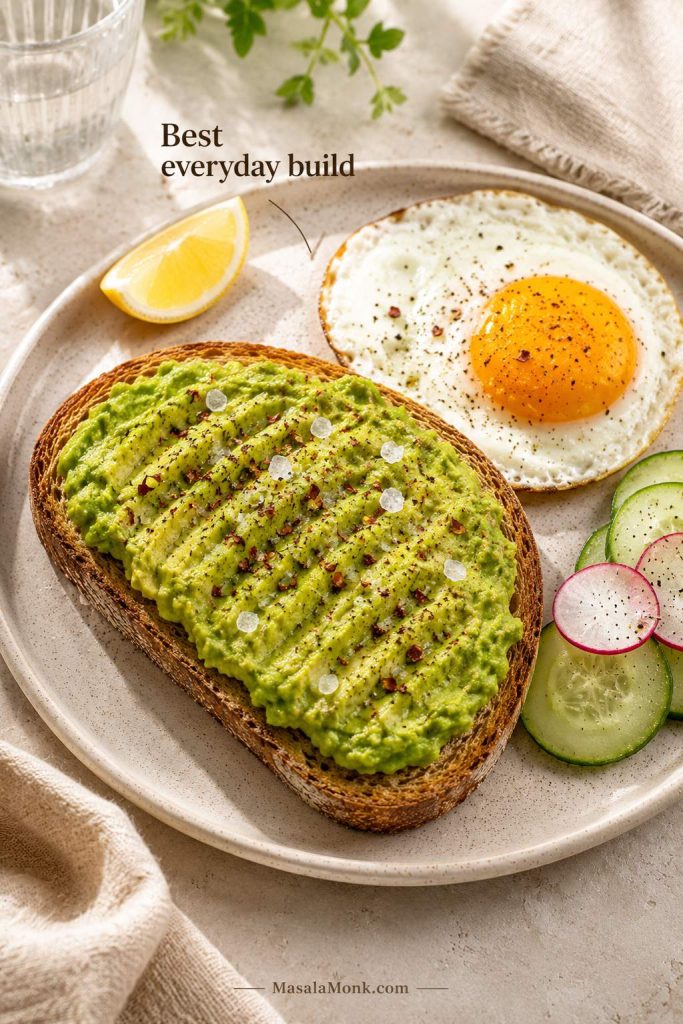
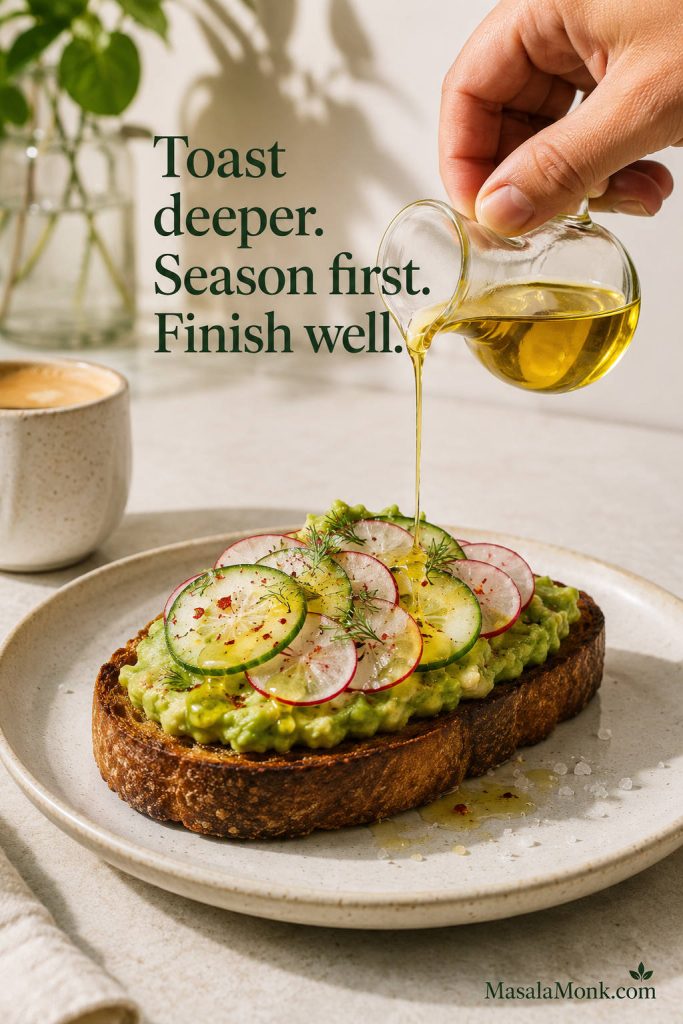
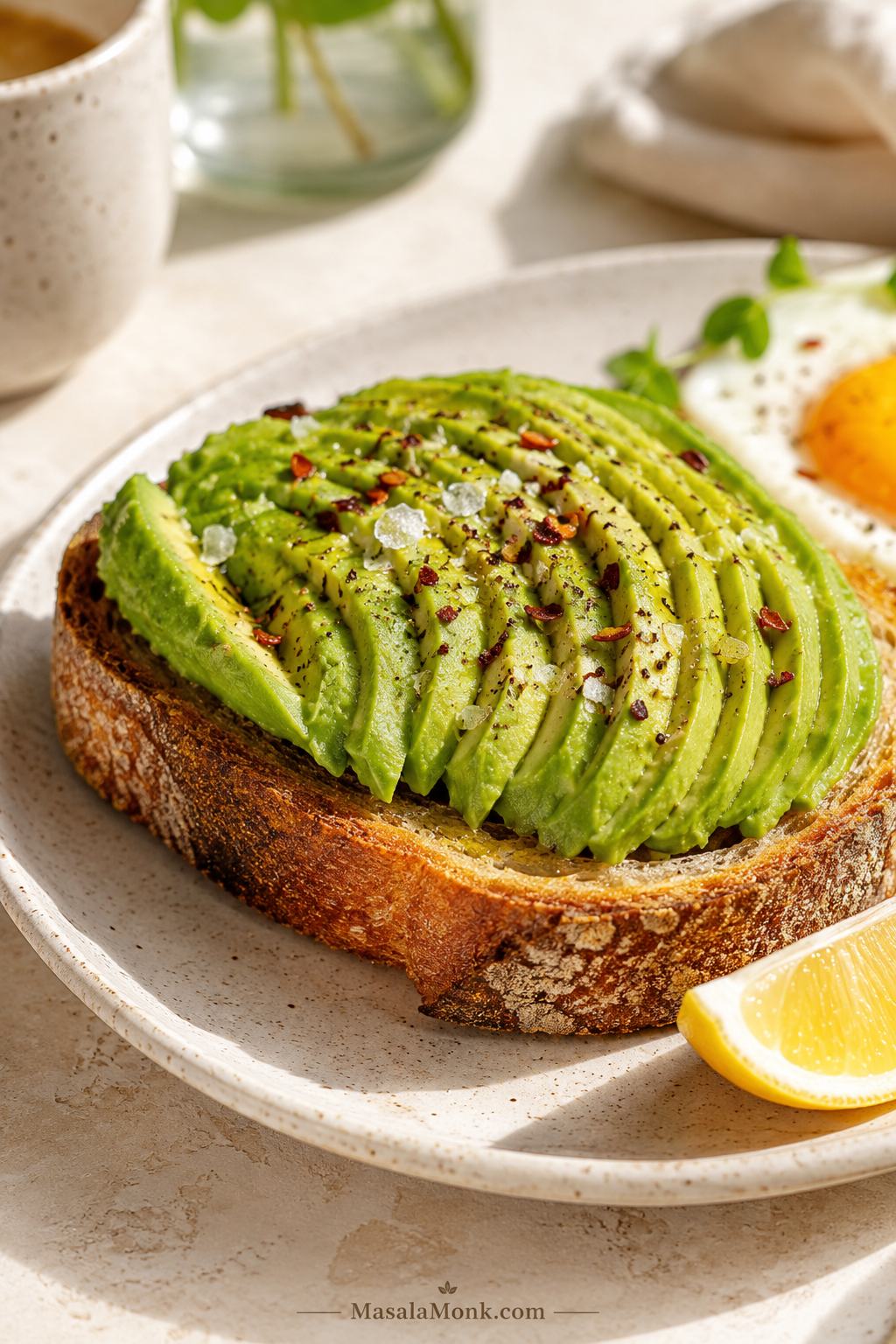
Avocado toast on thick sourdough with seasoned avocado, chili flakes, flaky salt, lemon, and a soft fried egg on a café plate.

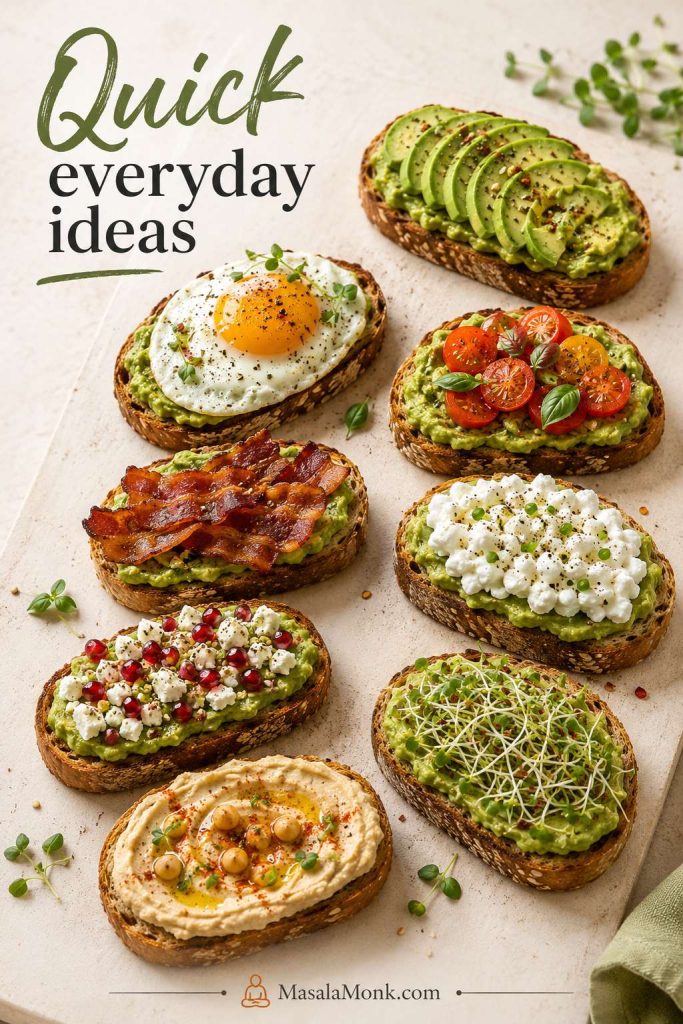
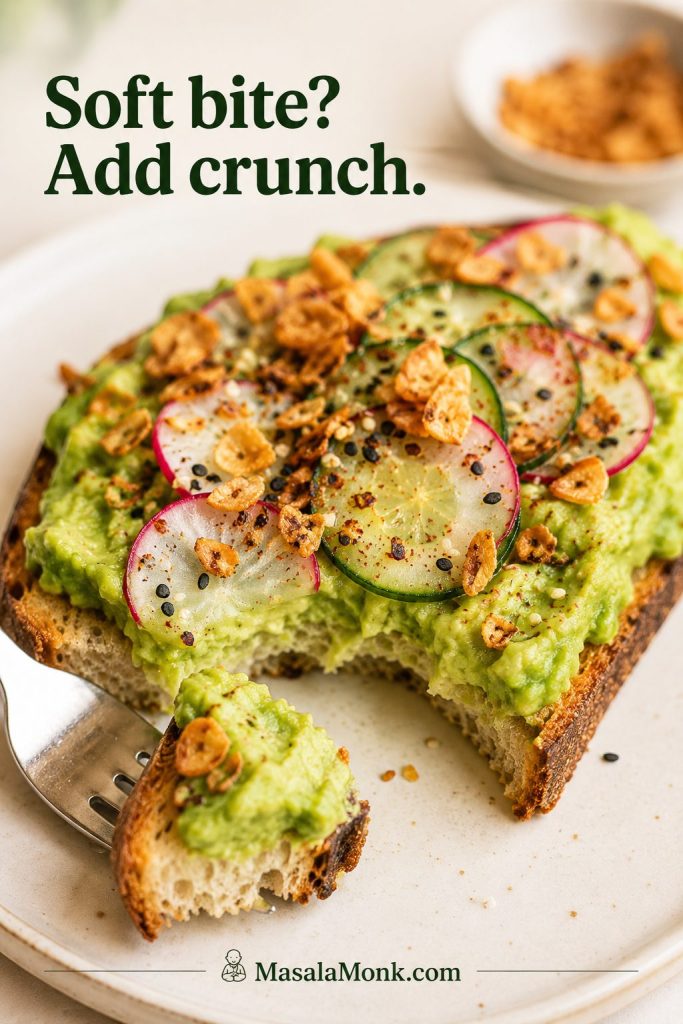
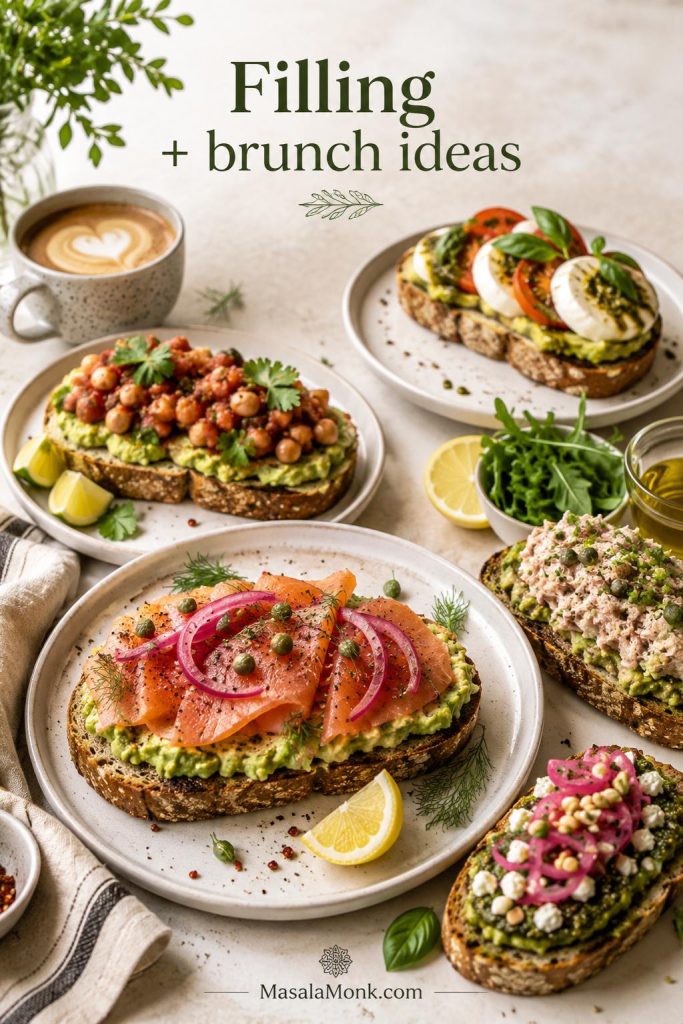
A good avocado toast recipe should not taste like plain mashed avocado on dry bread. The best version is creamy, bright, salty, crisp at the edges, and finished with just enough contrast to make the next bite interesting. That contrast can be as simple as chili flakes and lemon, or as filling as egg, cottage cheese, smoked salmon, or crisp vegetables.

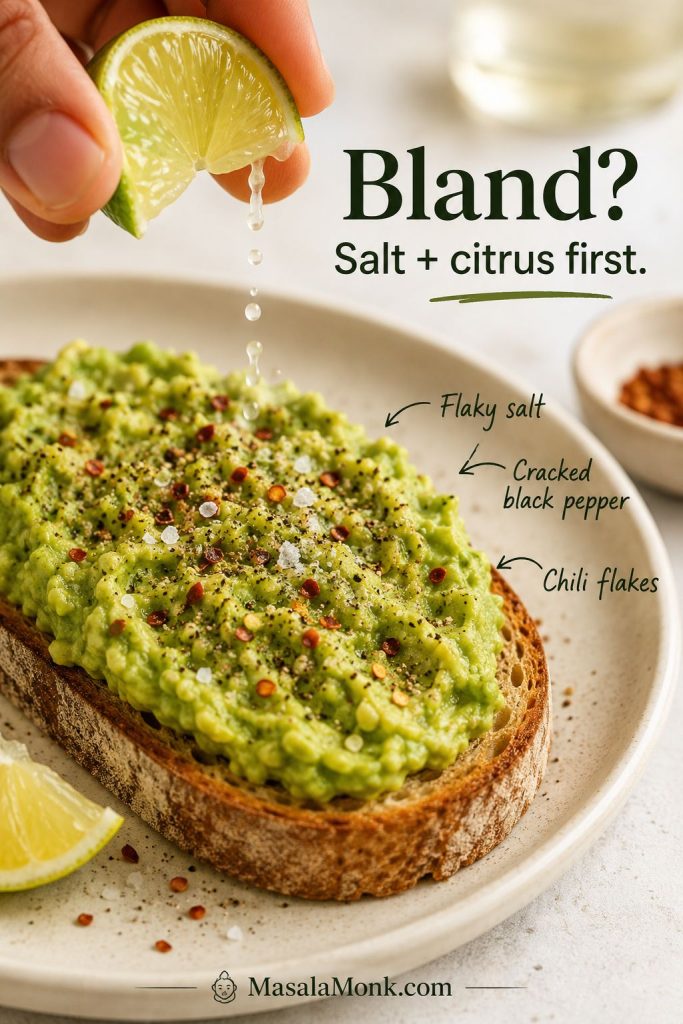
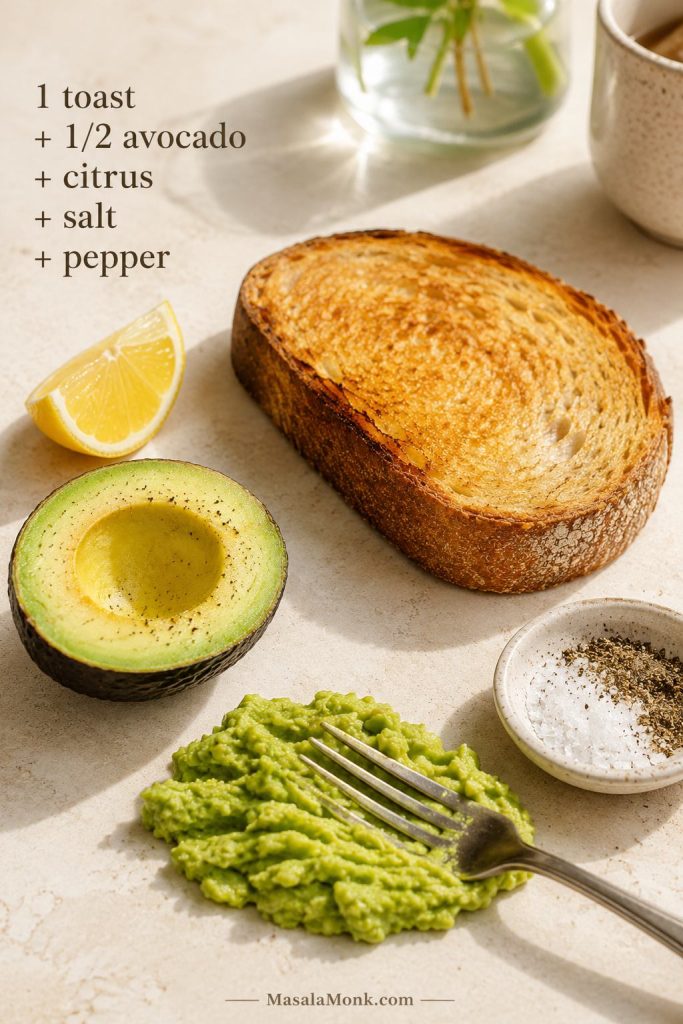
The everyday formula is easy: 1 thick slice of toast + 1/2 ripe avocado + 1–2 teaspoons lemon or lime juice + salt + pepper. Once that base tastes right, you can turn it into a fast breakfast, a high-protein toast, a brunch plate, or a simple lunch without making the recipe complicated.
If your toast usually tastes bland, soft, or overrated, the fix is rarely more avocado. It is better bread, a riper avocado, enough salt, enough citrus, and one topping that changes the bite.

The goal is not to pile everything on. The goal is to make the base so good that toppings feel like a choice, not a rescue mission.

Quick Answer: Best Ratio

For one slice, use 1 thick piece of well-toasted bread, 1/2 ripe avocado, 1–2 teaspoons lemon or lime juice, a generous pinch of salt, and black pepper. Mash the avocado with the citrus and seasoning, spread it over hot sturdy toast, and eat it right away.

Avocado toast ratio guide with one toast, half an avocado, citrus, salt, pepper, and mashed avocado on a pale café surface.
Use this base ratio first because balanced avocado toast depends more on seasoning and texture than on extra toppings.

In a hurry, stop there. Toast well, season the avocado properly, spread it thickly, and finish with pepper, chili flakes, flaky salt, or everything bagel seasoning.

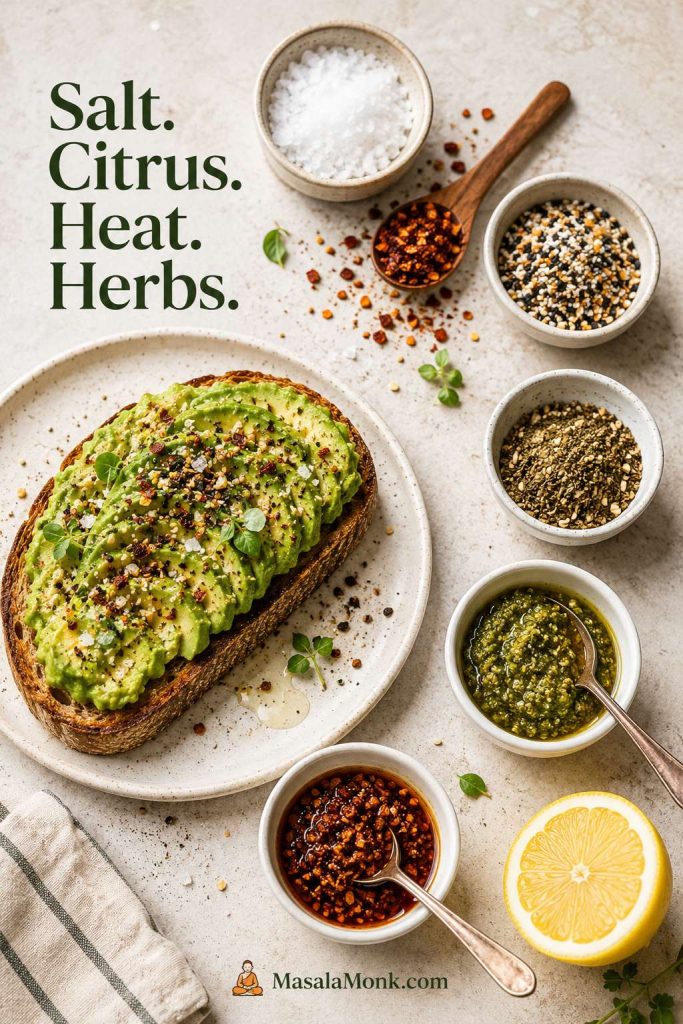
Best everyday build: Start with sourdough or seeded bread, 1/2 avocado, lemon or lime, fine salt, black pepper, flaky salt, and chili flakes. Add a fried egg when you want breakfast, or cucumber/radish when the slice needs crunch.

Everyday avocado toast build with seasoned avocado, chili flakes, lemon, fried egg, cucumber, and radish as topping options.
Once the base tastes bright and salty enough, choose one direction: egg for breakfast or crisp vegetables for crunch.

This is the version to make before you start loading on toppings. If this tastes good, every variation after it gets easier.

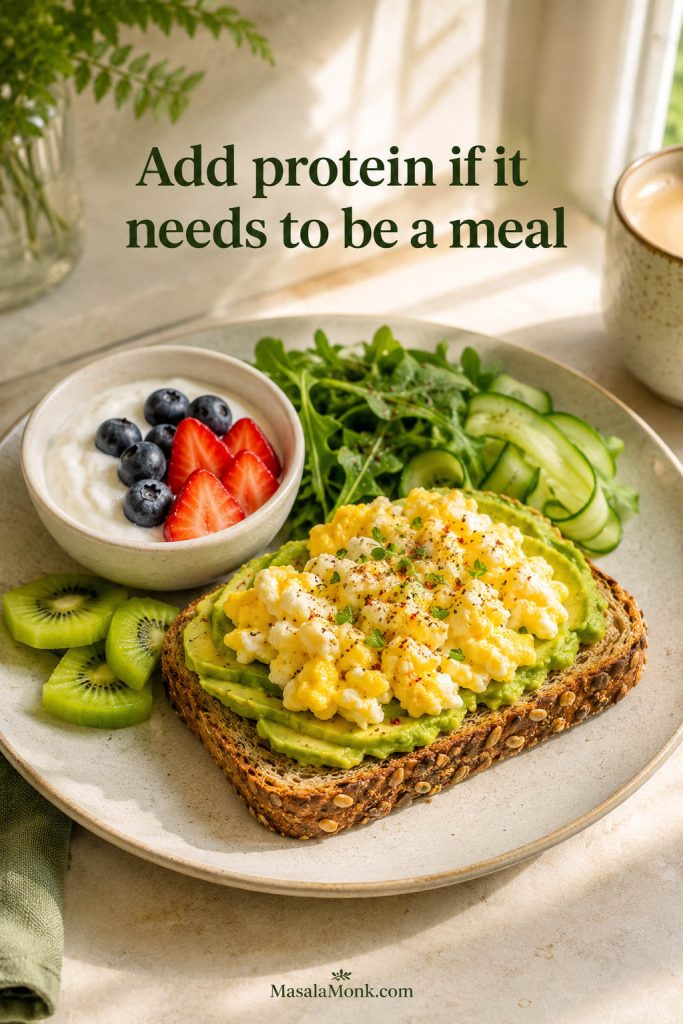
For two toasts, use 2 slices bread, 1 ripe avocado, 2–4 teaspoons lemon or lime juice, 1/4 teaspoon fine salt, and black pepper. Egg makes it breakfast, cottage cheese makes it more filling, and smoked salmon turns it into brunch.

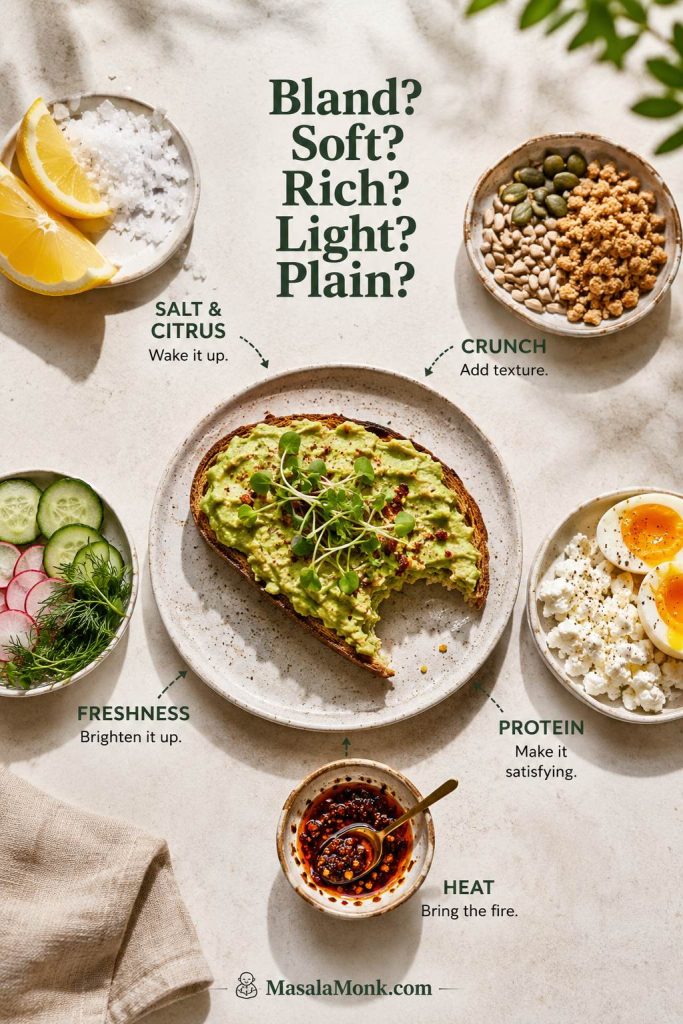
Not sure what to add next? Jump to What Your Toast Needs to choose by crunch, salt, freshness, protein, or heat.

Base Formula

For 1 toast1 thick slice bread
Avocado1/2 ripe avocado
Citrus1–2 tsp lemon/lime
Time5–8 minutes

Use this base: 1 thick slice sourdough or whole-grain bread, 1/2 ripe avocado, 1–2 teaspoons lemon or lime juice, 1/8 teaspoon fine salt, black pepper, and optional flaky salt, olive oil, chili flakes, or one topping for contrast.

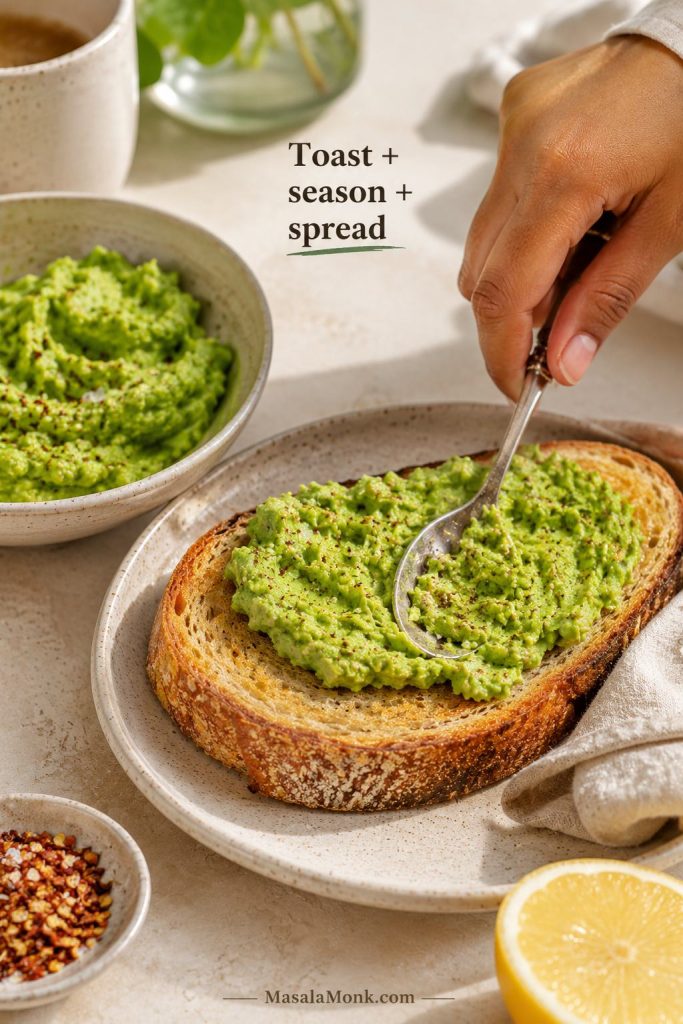
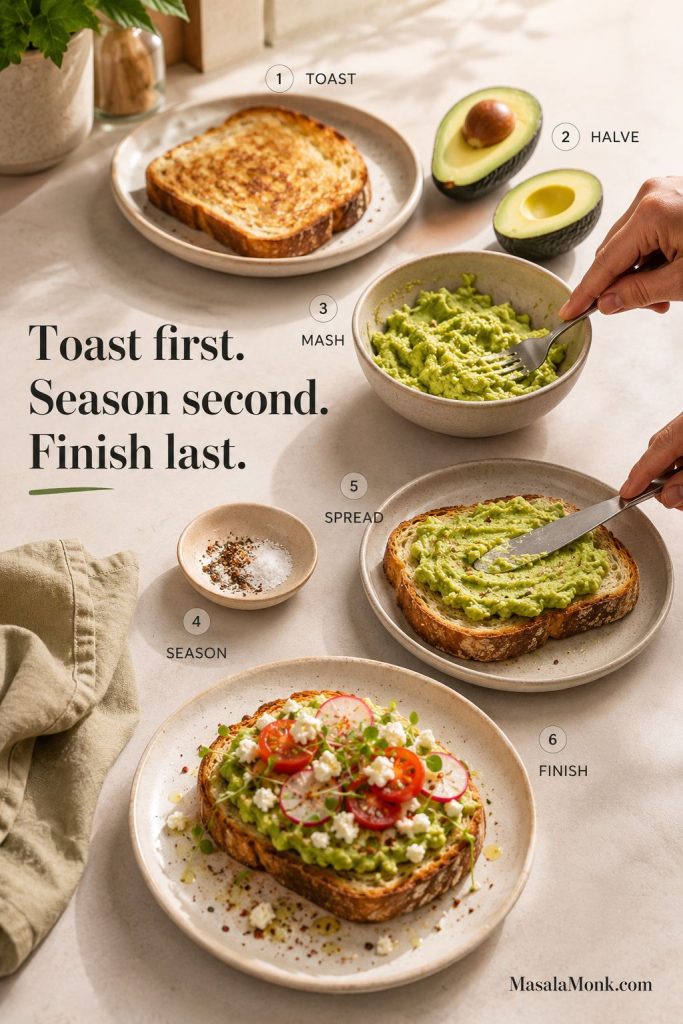
Avocado toast process scene with crisp toast, seasoned avocado mash, and avocado being spread onto bread.
Build the base in order: crisp the bread, season the mash, then spread it while the toast still has bite.

Once the base tastes right, use the toast ideas or the Fix the Bite guide to choose a topping.

That is the difference between toast that tastes like a café breakfast and toast that tastes like avocado spread on bread.

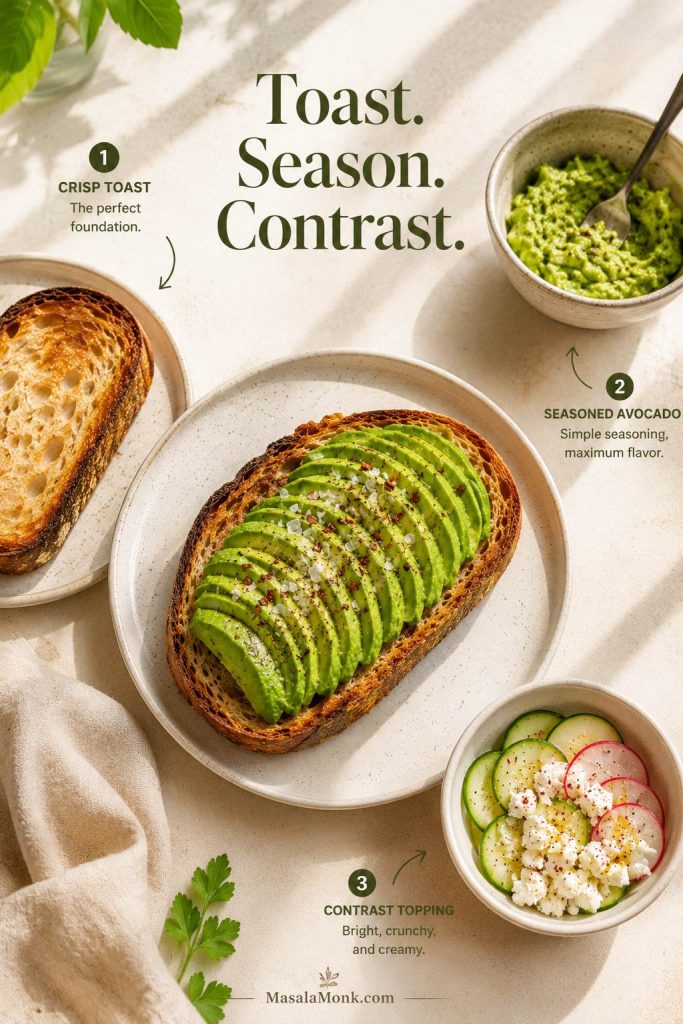
The Rule: Toast, Season, Contrast

The best version follows one simple rule: toast, season, contrast. Toast the bread deeply enough to hold the avocado. Season the avocado before it touches the bread. Then add one topping that changes the bite.

Toast, Season, Contrast

  • Toast: Use bread with enough structure, and toast it until the edges have crunch.
  • Season: Mash the avocado with lemon or lime, fine salt, and black pepper before spreading.
  • Contrast: Add one thing that changes the bite: egg for fullness, cucumber for crunch, feta for salt, tomato for freshness, or chili crisp for heat.
Toast Season Contrast guide with avocado toast, seasoned mash, crisp bread, and contrast toppings arranged around the toast.
A contrast topping should solve a real problem: add crunch, salt, freshness, heat, or fullness.

The first bite should feel creamy and crisp. If the second bite already feels boring, the toast needs contrast.

Once the base tastes good on its own, toppings become optional upgrades instead of rescue attempts.

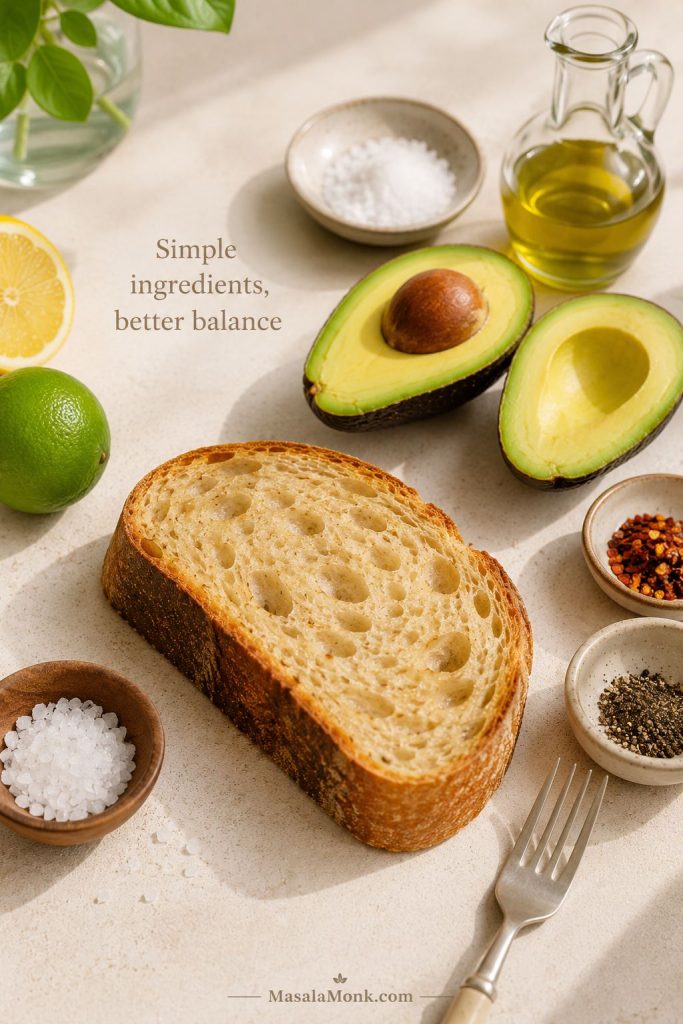
Ingredients

Avocado toast ingredients including bread, ripe avocado, lemon, olive oil, salt, pepper, chili flakes, and flaky salt.
Do not try to fix weak bread or underripe avocado with extra toppings; better ingredients make the simple version work.

This recipe is simple, so there is nowhere for weak ingredients to hide. The avocado should be ripe, the bread should be sturdy, and the seasoning should be bold enough to wake up the mild, creamy avocado. Lemon or lime gives brightness, salt brings the flavor forward, and pepper, chili, herbs, seeds, or crunchy vegetables keep each bite from feeling one-note.

Use the table as a starting point, then taste the avocado before it goes on the bread. That one small step is what keeps the whole slice from tasting flat.

Ingredient Amount for 2 toasts Why it matters
Thick bread 2 slices Gives the avocado somewhere to sit without turning the whole slice soft.
Ripe avocado 1 medium-large avocado, about 140–160 g flesh Mashes smoothly and gives the toast a creamy, buttery base.
Lemon or lime juice 2–4 tsp / 10–20 ml, to taste Cuts through the creamy avocado so the toast tastes fresh, not flat.
Fine salt 1/4 tsp, plus more to taste Brings the avocado forward instead of leaving it muted.
Black pepper 1/8 tsp Adds a warm, sharp finish.
Extra-virgin olive oil 1–2 tsp, optional Adds café-style richness, especially with sourdough.
Red pepper flakes Pinch, optional Adds a small kick so the avocado does not feel too creamy or quiet.
Flaky salt To finish Gives the top a crisp, salty pop.

How to Pick a Ripe Avocado

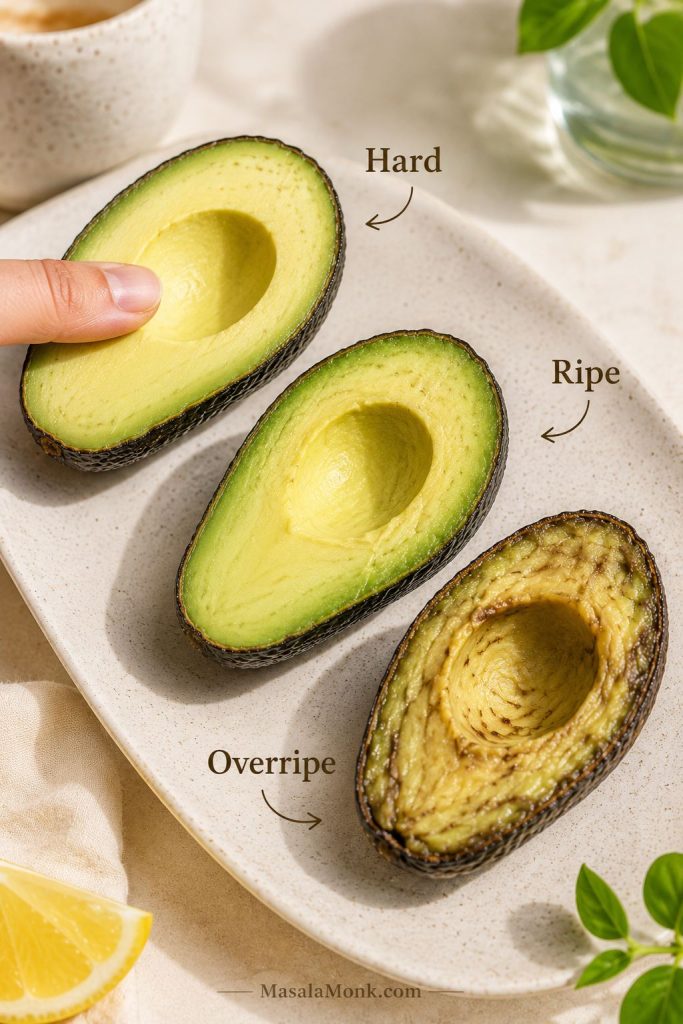
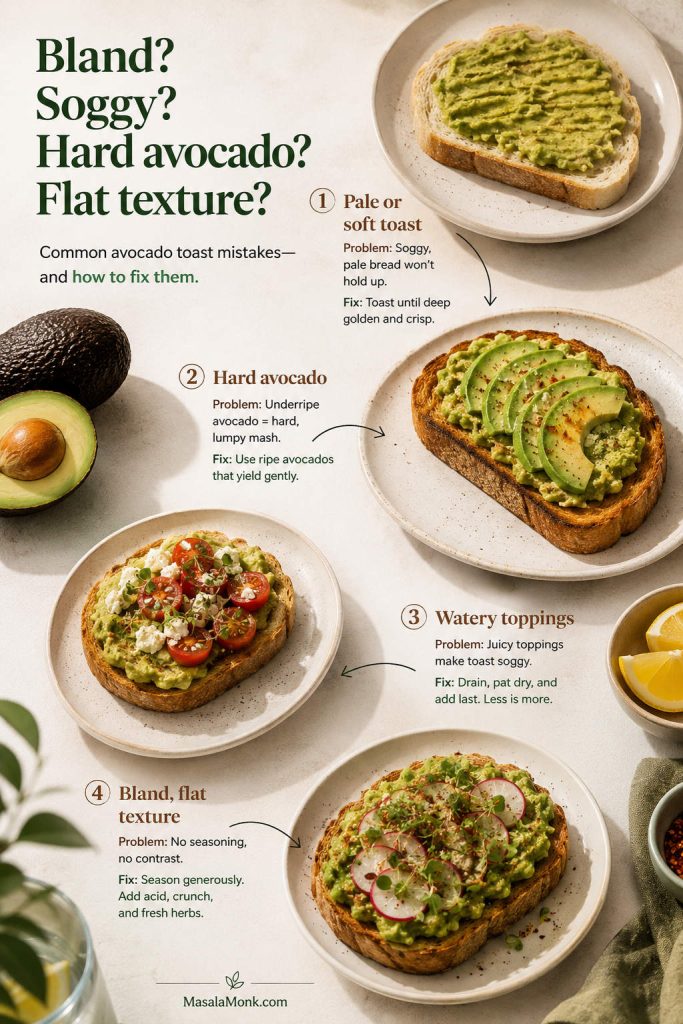
Look for fruit that gives slightly when pressed near the top or side. It should not feel rock-hard, hollow, wrinkled, or mushy. Underripe avocado tastes grassy and firm, while overripe avocado can taste dull and may have brown stringy patches inside.

Avocado ripeness guide showing hard, ripe, and overripe avocado examples with cut flesh and pressure cues.
A ripe avocado should give slightly; otherwise, the finished toast can turn grassy, dull, or hard to mash.

If the small stem nub comes off easily and the flesh underneath looks green, the avocado is usually close. If it looks brown underneath or the fruit feels very soft, it may be overripe.

Not ripe yet? Leave it at room temperature. To speed things up, place it in a paper bag with a banana or apple. Once ripe, refrigerate it to slow things down.

If your avocado is hard, make something else today. Toast cannot fix fruit that is not ready.

Best Bread

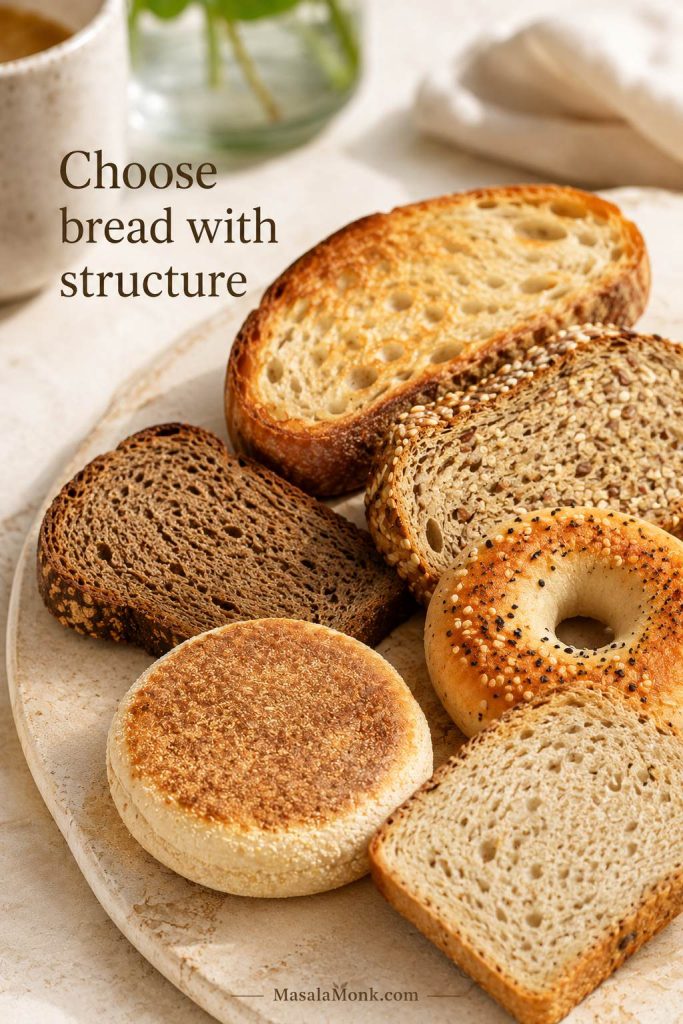
Bread is where many avocado toasts quietly fail. It has to do more than sit underneath the avocado. It needs enough structure to hold the mash, enough crunch to stay interesting, and enough flavor that the toast still tastes good after the first bite.

Toasted bread choices for avocado toast including sourdough, seeded bread, rye, bagel, English muffin, and gluten-free bread.
Choose bread with structure, because soft bread turns a good avocado topping into a soggy slice.

Sourdough is the best all-around choice, but whole grain, seeded bread, rye, bagels, English muffins, and gluten-free bread can all work if you toast them well.

Bread Best for Tip
Sourdough Classic café-style toast Toast until deeply golden so the center stays firm.
Whole grain Everyday healthy breakfast Choose a sturdy slice with good texture, not soft sandwich bread.
Seeded bread Crunch, fiber, and extra flavor Excellent with egg, tomato, cottage cheese, or cucumber.
Rye or pumpernickel Smoked salmon avocado toast Pairs well with capers, dill, onion, and lemon.
Bagel Bigger brunch-style serving Use half a bagel if you want a balanced portion.
English muffin Smaller breakfast portion Good with poached egg or cottage cheese.
Gluten-free bread Gluten-free avocado toast Toast it longer than usual so it does not turn soft.
Low-carb bread Lower-carb version Add protein so the meal feels complete.

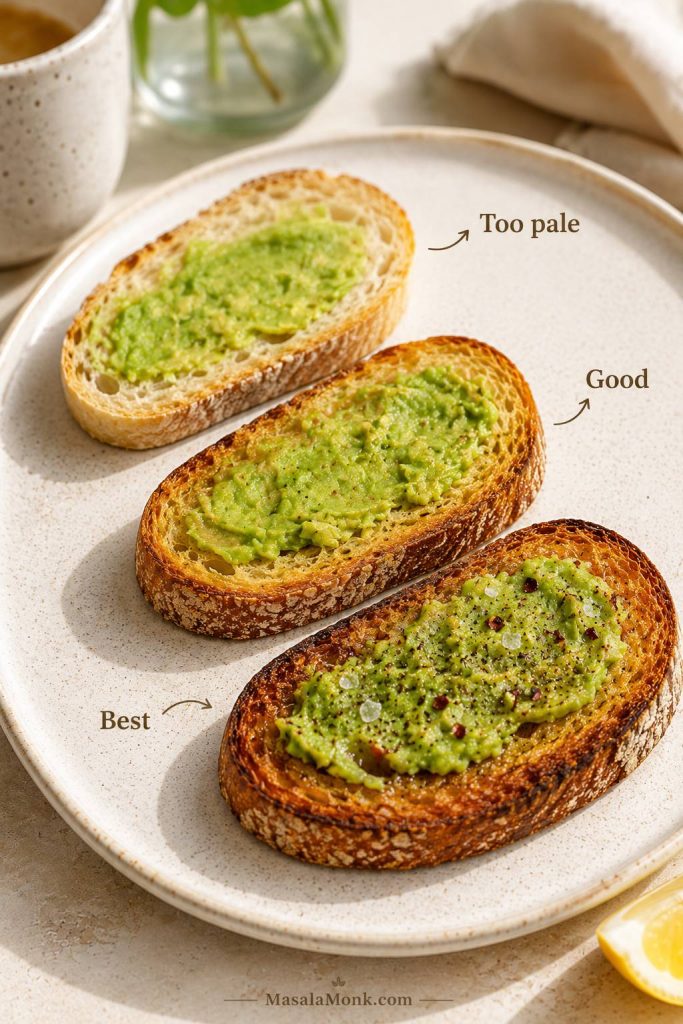
Whatever bread you choose, toast it a little more than you would for buttered toast. Avocado is soft and rich, so the bread needs extra structure.

Toast doneness guide for avocado toast showing pale toast, golden toast, and deeply golden toast with avocado spread.
Toast the bread a little darker than usual so it can hold creamy avocado without collapsing.

Soft sandwich bread can work in a pinch, but only if you toast it harder than usual; otherwise, the avocado will flatten it quickly.

If sogginess is the main issue, jump to How to Keep It from Getting Soggy.

If you like making toast from homemade bread, this sourdough bread recipes guide is a useful place to start, especially if you want a loaf, sandwich bread, English muffin bread, or bagel that works well for breakfast toast.

How to Toast Bread Properly

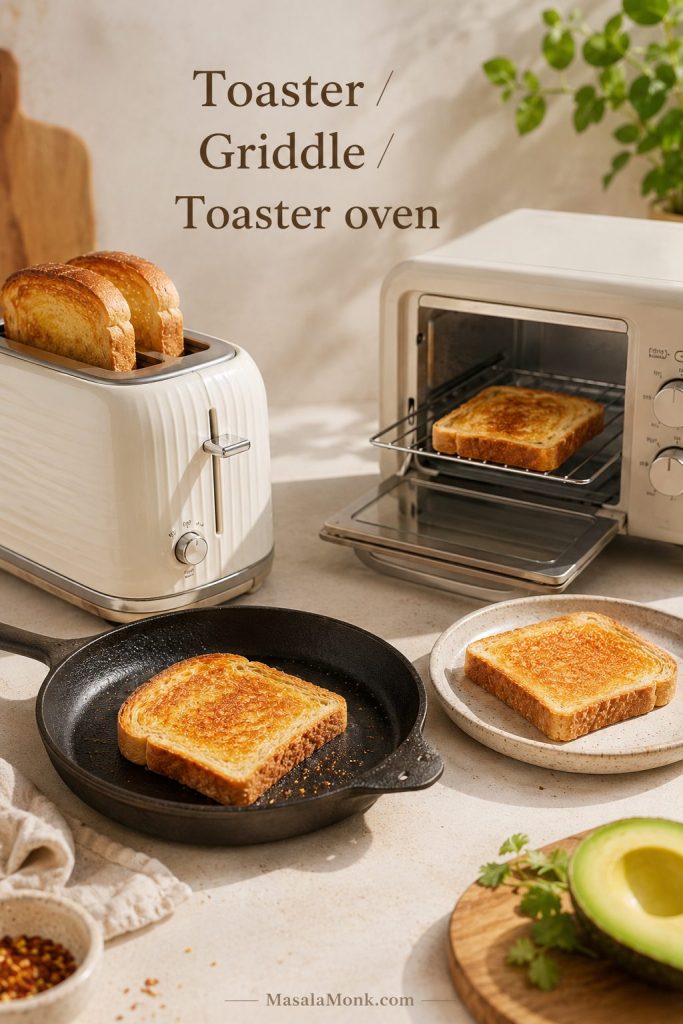
Most disappointing slices start with bread that is too soft. The toast should be firm enough to resist the avocado, especially if you are adding tomato, cucumber, poached egg, smoked salmon, pickled onions, or cottage cheese.

Bread toasting options for avocado toast with a toaster, griddle, toaster oven, and golden toasted bread.
Whether you use a toaster, griddle, or toaster oven, aim for firm golden bread with crisp edges.
  • Toaster: Best for fast everyday toast. Toast until golden and firm, not just warm.
  • Skillet or griddle: Best for thicker sourdough or café-style toast. Use medium heat and toast for 2–3 minutes per side.
  • Toaster oven: Best for multiple slices. Toast until the edges have crunch and the center feels sturdy.
  • Garlic rub: Rub hot toast lightly with the cut side of a garlic clove for extra savory flavor.
  • Olive oil or butter: Use a thin layer before pan-toasting, or a light drizzle after toasting, for a richer café-style finish.

Restaurant-style upgrade: Rub the hot toast lightly with garlic, brush or drizzle with a little olive oil, season the avocado before spreading, and finish with flaky salt. Those small details make the toast taste brighter and more complete.

Do not cook the avocado mixture in the skillet. Toast the bread first, then add the avocado after. Warm bread is good; cooked avocado mash usually tastes dull.

How to Make It

It works best when the bread is hot and sturdy, the avocado is seasoned before spreading, and the finished toast is eaten while the edges still have crunch. The method is short, but the order matters: toast first, season the avocado second, then build the toppings right before serving.

Step-by-step avocado toast method showing bread, avocado, mashing, seasoning, spreading, and finishing the toast.
Assemble only after the toast is ready, because avocado and wet toppings soften bread quickly.
  1. Toast the bread. Toast until golden and firm, not pale and soft.
  2. Prepare the avocado. Halve the avocado, remove the pit, and scoop the flesh into a small bowl.
  3. Season the mash. Add lemon or lime juice, salt, and black pepper. Mash with a fork until mostly smooth but still a little textured.
  4. Taste before spreading. Add more salt, citrus, pepper, or chili flakes if it tastes flat.
  5. Spread over hot toast. Use about 1/2 avocado per thick slice.
  6. Finish and serve. Add flaky salt, olive oil, chili flakes, herbs, egg, cottage cheese, smoked salmon, feta, or another topping with contrast. Eat immediately.

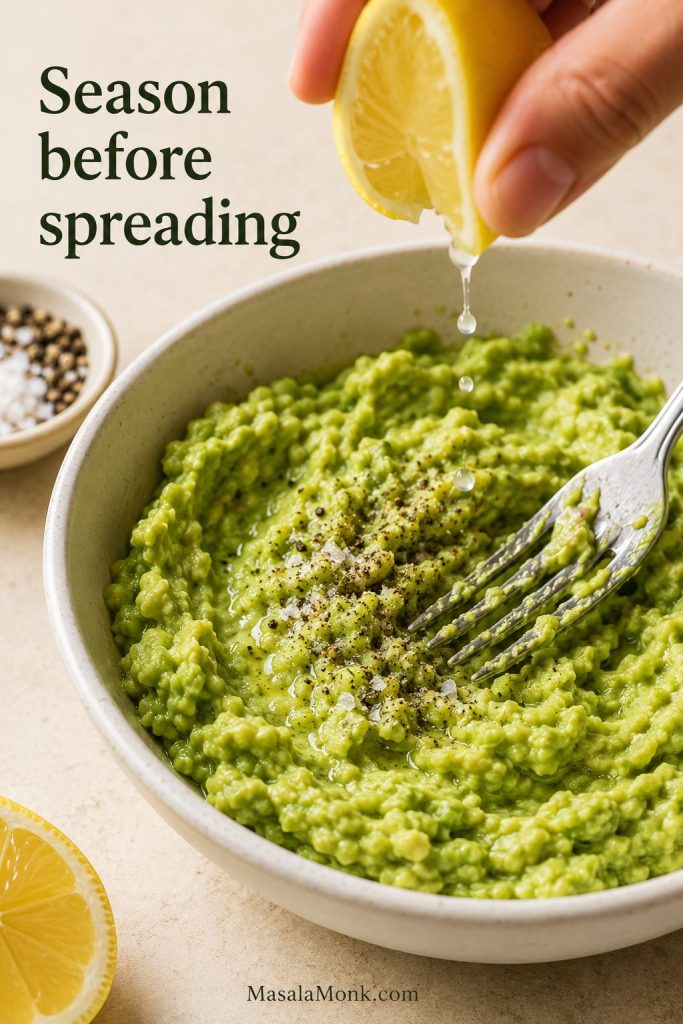
Season before spreading: This small step helps the avocado taste bright and balanced before it ever touches the bread.

Close-up of avocado mash being seasoned with lemon juice, salt, pepper, and a fork before spreading.
Season the mash before spreading it; otherwise, the top may look good while the avocado still tastes flat.

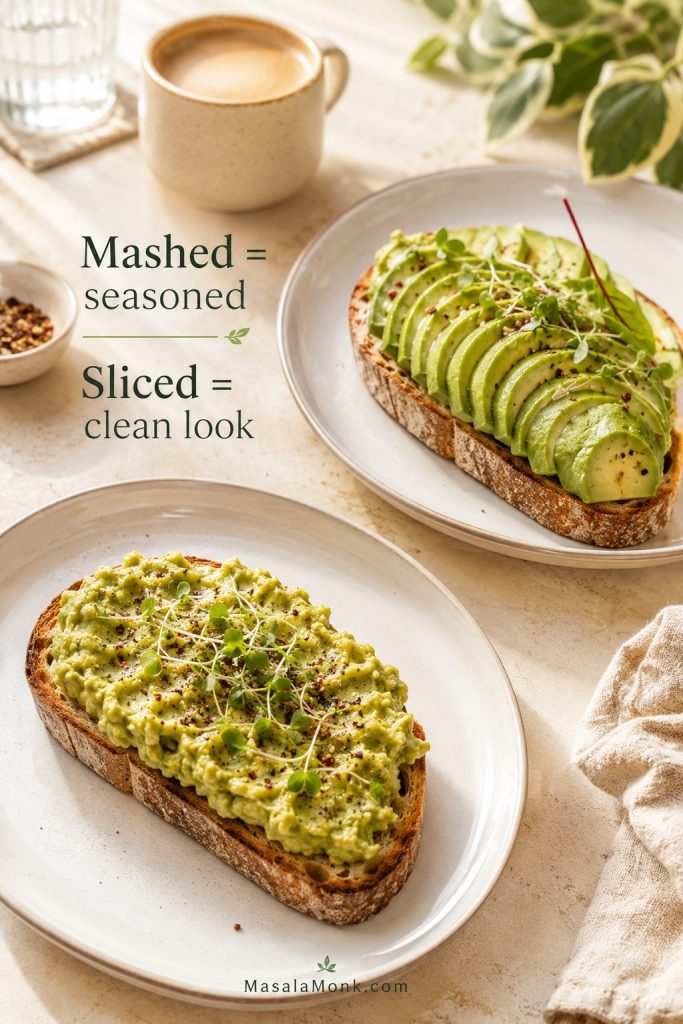
Texture tip: Mash the avocado in a bowl if you want even seasoning and a creamier bite. Slice it if you want a cleaner café-style look, especially with smoked salmon, feta, tomato, or poached egg. Either way, season it before you add the toppings.

Two avocado toasts comparing mashed seasoned avocado with clean sliced avocado on café plates.
Mashed avocado holds seasoning better, while sliced avocado gives a cleaner café-style finish.

Avocado Toast with Egg

Egg turns the slice into breakfast, not a snack. One egg is enough for most slices. Two makes sense when the toast is the meal, not the side.

Avocado toast with a fried egg, soft yolk, herbs, chili flakes, and crisp sourdough edge.
Avocado toast with egg works best when the yolk adds richness without hiding the seasoned avocado.
Egg style Choose it when you want Watch out for
Fried egg Classic café-style toast with a rich yolk Do not over-salt if using bacon, feta, capers, or smoked salmon.
Poached egg Brunch-style toast Drain well or the bread gets wet.
Scrambled egg Soft, filling breakfast Keep the eggs creamy, not dry.
Jammy egg Meal-prep-friendly breakfast Slice gently so the yolk stays neat.
Egg whites Lighter high-protein toast Season more because egg whites are mild.

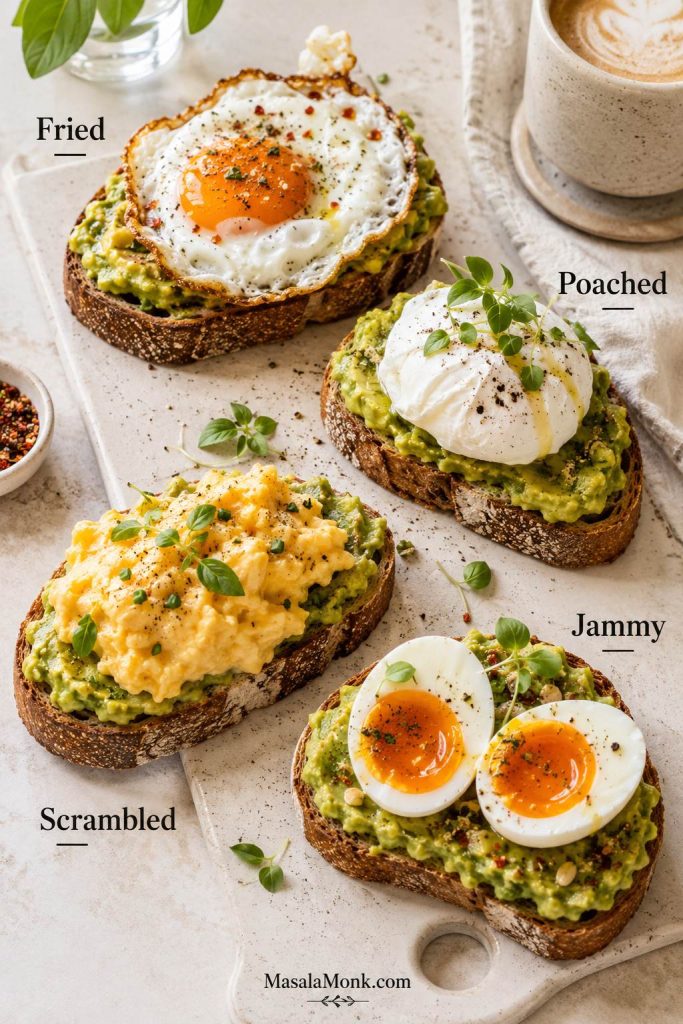
For the safest first version, choose fried egg. It gives the toast richness without making the method fussy. Poached egg is prettier for brunch, scrambled is softer and more filling, and jammy egg is the easiest make-ahead option.

Egg styles for avocado toast showing fried, poached, scrambled, and jammy egg versions on small toasts.
Each egg style changes the meal: fried is rich, poached feels brunchy, scrambled is cozy, and jammy is prep-friendly.

Want a no-cook protein version instead? Jump to the Cottage Cheese Version.

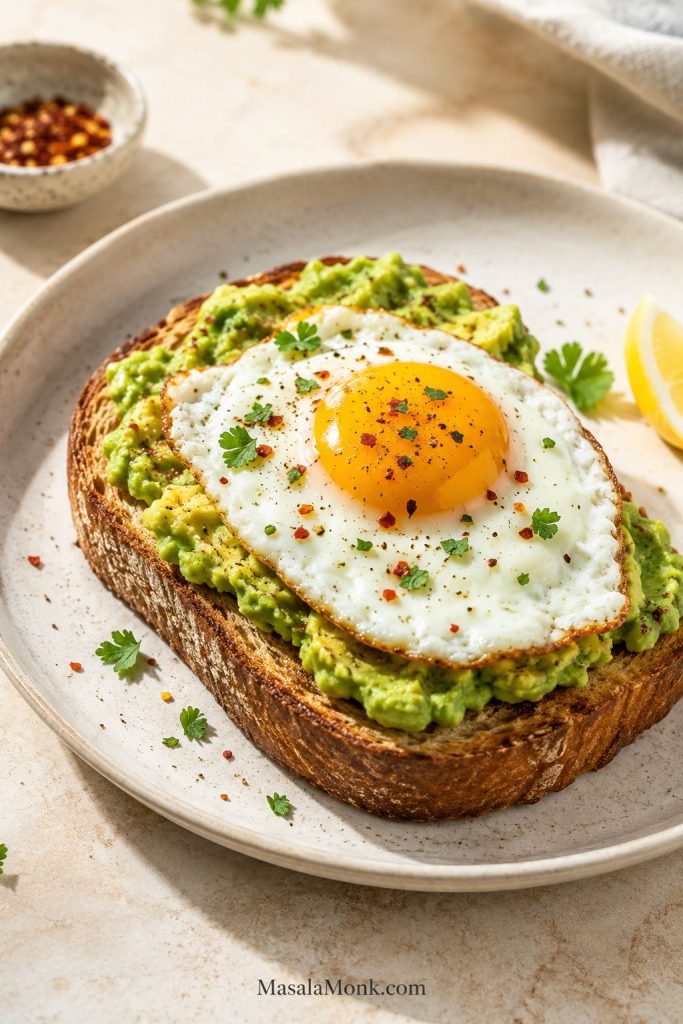
Fried Egg Version

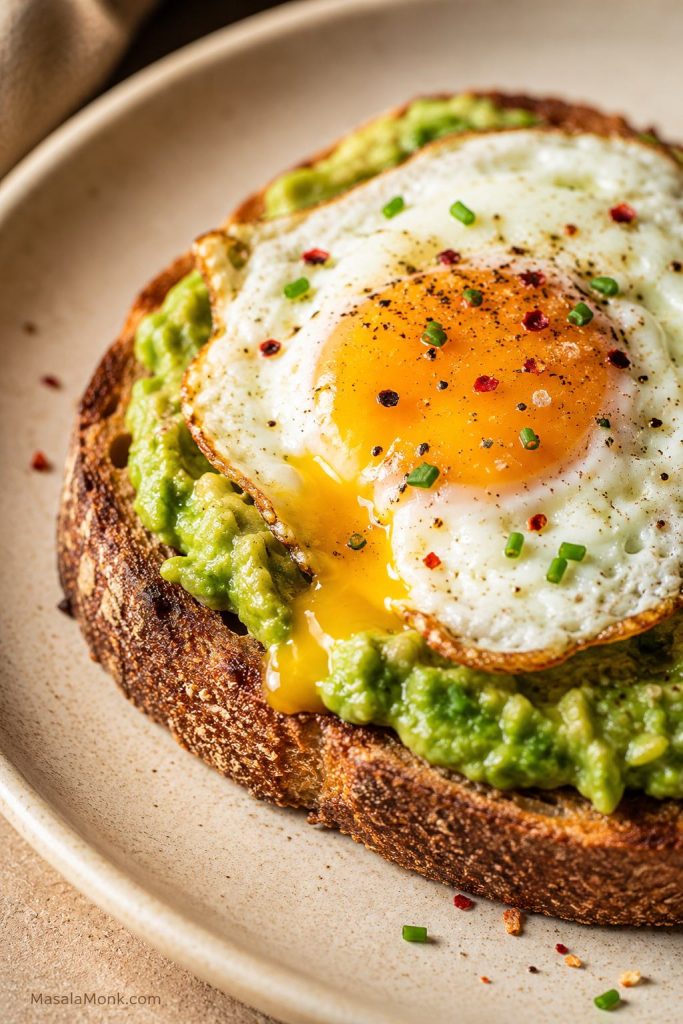
Spread 1/2 mashed avocado over one slice of toast, then top with one fried egg. Cook the egg on medium heat until the white is set and the yolk is still soft, about 2–3 minutes if covered, or a little longer if your pan runs cooler. Finish with salt, pepper, chili flakes, and herbs.

Close-up fried egg avocado toast with a soft yolk, seasoned avocado, chili flakes, and crisp bread crust.
A fried egg is the easiest upgrade when you want the slice to feel like a real breakfast.

Poached Egg Version

Poach the egg at a bare simmer for 3–4 minutes, then drain it well before placing it on the toast. This version is excellent with chives, flaky salt, black pepper, lemon, and a little chili oil.

Poached egg avocado toast with chives, flaky salt, black pepper, lemon, and seasoned avocado.
Drain poached eggs well before serving, so the yolk adds richness without soaking the toast.

Scrambled Egg Version

Use soft scrambled eggs rather than dry curds. Cook them on low to medium-low heat for 2–3 minutes, then spoon them over the avocado base. Chives, black pepper, chili flakes, and a little feta work well here.

Scrambled egg avocado toast with soft eggs, seasoned avocado, chives, black pepper, and toasted bread.
Soft scrambled eggs make the toast warmer and more filling, especially when the avocado base is already seasoned.

Boiled or Jammy Egg Version

For a jammy egg, lower the egg into simmering water and cook for 6–7 minutes, then cool briefly before peeling. For clean hard-boiled slices, cook for 9–10 minutes. This is the best egg version when you want to prep part of breakfast ahead.

Jammy egg avocado toast with sliced boiled egg, golden yolk, microgreens, black pepper, and a peeled egg nearby.
Jammy eggs are a smart make-ahead topping because they add protein without another pan in the morning.

If you are cooking for more than one person, a toast bar can get messy fast. For a bigger egg breakfast, this frittata recipe is easier to prep ahead than building every slice one by one.

Cottage Cheese Version

The cottage cheese version is the no-cook protein route: cool, creamy, tangy, and more filling without another pan of eggs. Choose it when you want the toast to feel like a real breakfast but do not want to cook anything.

Cottage cheese avocado toast with seasoned avocado, creamy cottage cheese, cucumber or tomato, chili flakes, and crisp bread.
Cottage cheese adds cool tang and protein, but it works best when the texture is creamy rather than wet.

One thick slice needs 1/4 to 1/2 avocado, 1/3 cup / about 75 g cottage cheese, 1 teaspoon lemon or lime juice, salt, black pepper, and chili flakes. Watery cottage cheese should be drained first so the bread stays firm.

Cottage cheese avocado toast guide showing one-third cup or about 75 grams of cottage cheese with avocado and lemon.
Use about 1/3 cup cottage cheese per toast; however, drain it first if it looks watery.

Low-fat cottage cheese is usually lighter but can be wetter. Full-fat cottage cheese is creamier and richer. Both work, but season carefully because cottage cheese is already salty. For contrast, add something crisp, spicy, or fresh.

For a warmer version of the same high-protein idea, these scrambled eggs with cottage cheese give you a creamy breakfast option without relying on toast.

Brunch Versions: Smoked Salmon, Feta, and Bagel

Once the base is right, richer versions are easy. The trick is restraint: smoked salmon, feta, bagels, and cheese can make the toast feel special, but they also add salt, richness, or weight. Let one main topping lead, then use lemon, herbs, pepper, or crunchy vegetables to keep the bite balanced.

Smoked Salmon Version

For brunch, keep the avocado quieter and let salmon, lemon, capers, onion, and dill lead. Because smoked salmon is already salty, season the mash more lightly and use citrus or herbs for lift.

For one toast, use 1 slice sourdough, rye, seeded bread, or 1/2 toasted bagel; 1/2 avocado; 1–2 ounces / 30–60 g smoked salmon; 1 teaspoon lemon juice; 1 teaspoon capers; thin red onion or shallot; and dill, chives, or microgreens. Cream cheese, goat cheese, or cottage cheese can go under the avocado if you want a richer version.

Smoked salmon avocado toast with folded salmon, capers, dill, red onion, lemon, and mashed avocado on sourdough.
Smoked salmon brings brunch richness, so lemon, dill, capers, and onion help keep the slice balanced.

Feta Version

Feta is the fastest fix for a mild, creamy base. It brings salt and edge, especially when you add tomato, cucumber, herbs, black pepper, or a little lemon.

For one toast, spread 1/2 avocado over sturdy toast, then add 1–2 tablespoons crumbled feta. If using olives, capers, or pickled onions too, reduce the salt in the avocado mash.

Feta avocado toast with crumbled feta, cucumber, tomato, dill, black pepper, lemon, and seasoned avocado.
Feta brings salt and sharpness, so it quickly makes a mild avocado base taste brighter.

Bagel Version

A bagel turns this into a bigger breakfast, so the build needs more restraint. Toast the cut side well, use 1/2 avocado per bagel half, and choose one main direction: egg, cottage cheese, smoked salmon, tomato, or everything bagel seasoning.

If the bagel is large, start with half. A full bagel with avocado and toppings can become very filling quickly.

Avocado bagel toast on half a toasted bagel with seasoned avocado, cucumber, tomato, and everything seasoning.
A bagel makes the toast more filling; therefore, half a bagel with focused toppings often feels more balanced.

If you like the bagel direction, MasalaMonk’s breakfast sandwich ideas have more ways to build egg, cheese, avocado, sauce, and toasted bread into a fuller morning meal.

What Your Toast Needs: Fix the Bite

Do not choose toppings randomly. Choose them by what the bite is missing. If the base already tastes good, one topping is usually enough.

Take one bite of the base first; the answer is usually obvious once you notice whether it needs crunch, salt, heat, freshness, or protein.

Diagnostic avocado toast guide with a bitten toast and surrounding cues for salt, citrus, crunch, freshness, protein, and heat.
Before adding more, decide what is missing: salt, crunch, freshness, protein, or heat.

What Your Toast Needs

  • Bland? Add salt, lemon or lime, chili flakes, hot sauce, flaky salt, or everything bagel seasoning.
  • Soft-on-soft? Add cucumber, radish, seeds, crispy garlic, toasted nuts, or crisp bacon.
  • Too rich? Add tomato, herbs, pickled onion, lemon or lime, capers, sprouts, or cucumber.
  • Not filling? Add egg, cottage cheese, beans, tuna, smoked salmon, tofu, or seeds.
  • Too plain? Add feta, goat cheese, za’atar, pesto, chili crisp, hot sauce, or a garlic rub on the toast.

15 Ideas That Actually Work

Think of these as starting points, not rules. A weekday toast might only need lemon and chili flakes, while a weekend brunch version can handle egg, smoked salmon, capers, herbs, and a little extra crunch.

Quick Everyday Ideas

Board of quick avocado toast ideas with classic, egg, tomato, bacon, cottage cheese, feta, hummus, and sprout toppings.
For quick avocado toast ideas, pick one main topping and one fresh or crunchy finish instead of overloading the slice.
Idea What to add Why it works
Classic café toast Avocado, lemon, flaky salt, chili flakes, olive oil The cleanest version when the avocado is ripe and well-seasoned.
Fried egg avocado toast Avocado, fried egg, pepper, chives Rich yolk makes it feel like a full breakfast.
Tomato avocado toast Avocado, tomato, basil or coriander/cilantro, black pepper Tomato makes the toast feel juicy and summery.
Bacon avocado toast Avocado, crisp bacon, egg, hot sauce Salty crunch cuts through the creamy avocado.
Cottage cheese avocado toast Avocado, cottage cheese, cucumber, chili flakes Cool, creamy, tangy, and more filling without cooking another egg.
Feta avocado toast Avocado, feta, cucumber, tomato, oregano or za’atar Salty cheese and fresh vegetables balance the avocado.
Hummus avocado toast Hummus, avocado, olive oil, paprika Creamy, savory, and vegan-friendly.
Sprouts avocado toast Avocado, sprouts, cucumber, seeds, lemon Crunchy, fresh, and lighter.

Filling, Brunch, and Bigger Ideas

Brunch avocado toast spread with smoked salmon, beans, caprese toppings, tuna, pesto, pickled onion, lemon, and herbs.
Brunch versions can handle bigger flavors, but one main topping should still lead so the slice stays balanced.
Idea What to add Why it works
Smoked salmon avocado toast Avocado, salmon, capers, dill, red onion Premium brunch flavor with salt, tang, and herbs.
Black bean salsa avocado toast Avocado, black beans, salsa, coriander/cilantro, lime Filling, bright, vegan-friendly, and strong enough for brunch.
White bean avocado toast Avocado, white beans, lemon, herbs, pepper Creamy, mellow, and more satisfying without egg or cheese.
Caprese avocado toast Avocado, tomato, mozzarella or burrata, basil Fresh, creamy, and summer-friendly.
Tuna avocado toast Avocado, tuna, lemon, pepper, onion Protein-heavy and lunch-friendly.
Pickled onion avocado toast Avocado, pickled onions, herbs, black pepper Sharp, colorful, and useful when the toast tastes too rich.
Pesto avocado toast Avocado, pesto, tomato, flaky salt Herby, savory, and a fast way to make the base taste more complete.

You do not need to turn every slice into a loaded café plate. Most days, one strong direction is enough: egg and pepper, tomato and basil, cottage cheese and cucumber, or beans and salsa.

Crunch fix for avocado toast with cucumber, radish, crispy garlic, seeds, and a fork bite showing crisp bread.
When the bite feels soft all the way through, add cucumber, radish, seeds, or crispy garlic for contrast.

Still unsure what to add? Use What Your Toast Needs to choose by texture, salt, freshness, protein, or heat.

For the bacon version, keep the bacon crisp and the portion modest; the crunch matters more than piling it on. This air fryer bacon recipe is handy when you want a few crisp strips for breakfast without standing over a skillet.

Best Seasoning

If the toast tastes bland, it usually needs more salt, citrus, heat, or crunch — not more avocado. Start with salt and lemon or lime, then build from there. The seasoning should make the avocado taste brighter, not cover it completely.

Close-up of bland avocado toast being fixed with lime juice, flaky salt, black pepper, and chili flakes.
When the avocado tastes bland, start with salt and citrus before reaching for more toppings.
  • Classic: flaky salt, black pepper, red pepper flakes, and olive oil.
  • Bagel-style: everything bagel seasoning, garlic powder, onion powder, or sesame seeds.
  • Fresh and herby: lemon pepper, za’atar, dill, basil, coriander/cilantro, or chives.
  • Warm and smoky: smoked paprika, chili flakes, chili crisp, or hot sauce.
  • Rich and savory: pesto, garlic rub, goat cheese, feta, or a light drizzle of olive oil.

For a safe first version, use lemon, flaky salt, black pepper, and chili flakes. For a bigger savory finish, try everything bagel seasoning, pesto, chili crisp, or a light garlic rub on the hot toast.

Seasoning palette for avocado toast with flaky salt, chili flakes, everything seasoning, za’atar, pesto, chili crisp, lemon, and herbs.
The best seasoning for avocado toast should brighten the avocado, not hide it; start with salt, citrus, heat, and herbs.

If seasoning does not fix the problem, check Mistakes & Fixes next.

Healthy & High-Protein Notes

This can be a healthy breakfast, but it depends on how you build it. Avocado brings fiber and mostly unsaturated fat, while the bread, toppings, and portion size decide whether the toast feels light, balanced, or too heavy.

Plain avocado toast can be delicious, but it is not automatically a full breakfast. Protein is what turns it from a good slice into a meal.

High-protein avocado toast breakfast with seeded toast, avocado, scrambled egg, yogurt with berries, greens, cucumber, and kiwi.
Protein is what turns avocado toast from a light slice into a breakfast that keeps you satisfied longer.

Think of avocado as the creamy fat-and-fiber part of the meal; then add egg, cottage cheese, beans, tuna, tofu, seeds, or smoked salmon if you want it to keep you full longer.

A good everyday version is 1 slice of whole-grain or seeded toast, 1/2 avocado, lemon or lime, salt, pepper, egg or cottage cheese, and tomato, cucumber, sprouts, herbs, or seeds. For a deeper nutrition read, Harvard’s avocado nutrition guide is a helpful reference.

If you are making it for weight loss, focus on portion and protein rather than treating one version as automatically “diet-friendly.” Use one slice of sturdy bread, about 1/2 avocado, plenty of lemon or lime, and a protein topping. Be careful with oversized bread, extra oil, heavy cheese, bacon, or several rich toppings at once.

For days when you want another protein-focused breakfast that is not toast, this high-protein oatmeal guide gives you a warmer bowl-style option with yogurt, egg whites, cottage cheese, tofu, or protein powder.

For practical protein builds in this post, jump to Avocado Toast with Egg or the Cottage Cheese Version.

Restaurant-Style Ideas

Restaurant-style versions work best when you borrow the method, not every exact detail. Toast the bread deeply, season the avocado before spreading, finish with flaky salt or olive oil, and add one fresh or crunchy topping so the slice tastes finished.

Restaurant-style avocado toast with olive oil being drizzled over avocado, radish, cucumber, herbs, and crisp bread.
Café-style toast usually wins on small details: deeper toast, seasoned avocado, and a deliberate final finish.

Dunkin-Style Version

For a Dunkin-style version, use toasted sourdough, a smooth avocado spread, lemon juice, sea salt, black pepper, and a generous finish of everything bagel seasoning. The official Dunkin avocado toast announcement confirms those signature details, which makes this one of the easiest copycat versions to echo at home.

Dunkin-style avocado toast with smooth avocado spread on sourdough, everything seasoning, lemon, and black pepper.
For a Dunkin-style avocado toast, keep the spread smooth and finish generously with everything seasoning.

Café-Style Whole-Grain Version

For a café-style whole-grain version, use thick toast, smashed avocado, extra-virgin olive oil, lemon, flaky salt, and eggs. It gives you the bigger breakfast-plate feel without needing a restaurant copycat.

Why Your Avocado Toast Tastes Bland, Soggy, or Boring

Avocado toast gets mocked when it is made badly: pale bread, underripe avocado, no salt, no lemon, no crunch, and nothing to break up the creaminess. Fortunately, the fix is usually simple. Toast the bread harder, season the avocado before spreading, and add one topping that changes the bite.

Avocado toast mistakes and fixes guide showing pale toast, hard avocado, watery toppings, bland mash, and improved toast examples.
If the slice tastes disappointing, check the bread, avocado ripeness, and seasoning before blaming the toppings.
Problem Why it happens Fix
Bland avocado toast Not enough salt, citrus, or seasoning Add salt, lemon or lime, black pepper, chili flakes, hot sauce, or everything seasoning.
Soggy toast Bread is too soft or toppings are wet Use thicker bread, toast it darker, drain wet toppings, and assemble right before eating.
Hard avocado Avocado is underripe Wait until it gives slightly when pressed. Do not force hard avocado into toast.
Brown avocado Avocado was cut too early or exposed to air Add lemon or lime and use it fresh. Press wrap directly onto leftovers if needed.
Too rich Too much avocado, oil, cheese, or creamy topping Add tomato, cucumber, herbs, pickled onion, lemon, or capers.
Not filling No protein Add egg, cottage cheese, smoked salmon, beans, tofu, tuna, or seeds.
Flat texture Everything is soft Add radish, cucumber, seeds, crispy garlic, onions, or toasted nuts.

When the toast tastes too rich, freshness is the fix. Tomato, herbs, pickled onion, lemon, capers, cucumber, or radish cut through the creamy base without making the slice heavier.

Too-rich avocado toast freshness fix with tomato, herbs, pickled onion, lemon, capers, cucumber, radish, and seasoned avocado.
When the toast tastes too rich, add freshness with tomato, herbs, pickled onion, lemon, capers, cucumber, or radish.

If sogginess is the main issue, the next section shows how to protect the bread.

How to Keep It from Getting Soggy

Toast the bread until it is deeply golden, not just warm. Thick sourdough, seeded bread, rye, and bagels hold up better than soft sandwich bread. If using tomato, cucumber, poached egg, pickled onion, or smoked salmon, drain or pat the topping before adding it. For tomatoes, remove watery seeds or pat slices dry before they hit the toast.

Soggy avocado toast prevention guide with tomato slices being dried, crisp toast, cottage cheese, poached egg, and a finished toast.
To keep avocado toast from getting soggy, remove extra moisture first and assemble only when you are ready to eat.

Do not let wet toppings do the bread’s job. The bread should carry the avocado; the toppings should add contrast, not soak the slice.

The safest rule is simple: assemble right before eating. Avocado softens the bread as it sits, and wet toppings speed that up. If you are making breakfast for several people, toast the bread, prep the toppings, and mash the avocado last.

Storage and Make-Ahead Tips

This toast is best fresh. The bread loses its edge, the avocado browns, and wet toppings can make the slice soft. However, you can still prep the parts ahead.

Make-ahead avocado toast prep with boiled eggs, sliced cucumber, radish, whole avocado, lemon, bread, seasonings, and herbs.
Prep toppings ahead, but save the avocado and toast for last so the finished slice stays bright and crisp.
  • Boil eggs ahead and refrigerate them.
  • Slice cucumber, radish, onion, or tomato shortly before serving.
  • Toast the bread right before eating.
  • Mash avocado with lemon or lime as close to serving time as possible.
  • If you must store avocado mash briefly, press plastic wrap directly onto the surface and refrigerate.

Do not freeze assembled avocado toast. It will not come back with a good texture.

Ready to make it now? Use the saveable guide below, then jump into the recipe card for the full amounts and steps.

Avocado toast recipe card with finished toast, yield for two toasts, five-to-eight-minute timing, base ratio, and six steps.
Save the base avocado toast recipe first; then choose egg, cottage cheese, smoked salmon, vegetables, or seasoning based on the bite you want.

Avocado Toast Recipe

This easy avocado toast recipe gives you a bright, well-seasoned base first: crisp bread, ripe avocado, lemon or lime, salt, and pepper. Keep it simple, or choose one direction: egg for breakfast, cottage cheese for protein, smoked salmon for brunch, or tomato and cucumber for freshness.

Yield2 toasts
Prep Time5 minutes
Toast Time2–3 minutes
Total Time5–8 minutes

Ingredients

  • 2 thick slices sourdough, whole-grain, seeded, or multigrain bread
  • 1 ripe avocado, about 140–160 g flesh
  • 2–4 tsp lemon or lime juice / 10–20 ml, to taste
  • 1/4 tsp fine salt, plus more to taste
  • 1/8 tsp black pepper
  • 1–2 tsp extra-virgin olive oil, optional
  • Pinch red pepper flakes, optional
  • Flaky salt, for finishing
  • Optional toppings: egg, cottage cheese, smoked salmon, feta, tomato, cucumber, herbs, or your favorite seasoning

Instructions

  1. Toast the bread until crisp and golden.
  2. Mash the avocado with lemon or lime juice, fine salt, and black pepper until creamy but still slightly textured.
  3. Taste and adjust with more salt, citrus, pepper, or chili flakes if needed.
  4. Spread the avocado over the hot toast, using about half an avocado per slice.
  5. Finish with flaky salt, olive oil, chili flakes, herbs, egg, cottage cheese, smoked salmon, feta, or your chosen topping.
  6. Serve immediately while the bread still has bite.

Notes

  • Use 1/2 avocado per thick slice of toast as the base ratio.
  • For the egg version, add 1 fried, poached, scrambled, boiled, jammy, or egg-white topping per toast.
  • For the cottage cheese version, use 1/3 cup / about 75 g cottage cheese per toast and drain it if watery.
  • For the smoked salmon version, use 1–2 oz / 30–60 g smoked salmon per toast and reduce the added salt.
  • Toast the bread deeply enough to stay crisp under the avocado.
  • Assembled toast does not store well. Eat it right away.

FAQs

Most avocado toast questions come back to the same few problems: the bread got soft, the avocado tasted flat, or the toast did not feel filling enough.

What is the best bread?

Sourdough is the best all-around bread because it gets crisp, tastes slightly tangy, and holds the avocado well. Whole grain, seeded bread, rye, bagels, English muffins, and gluten-free bread also work if you toast them properly.

How much avocado do you need per slice?

Use about 1/2 medium-large avocado per thick slice. That is usually 70–80 g avocado flesh per toast. Use less if you are adding cottage cheese, egg, smoked salmon, or another rich topping.

Should avocado be mashed or sliced?

Mashed avocado is better for everyday toast because it spreads evenly and holds seasoning well. Sliced avocado looks cleaner and works nicely with smoked salmon, feta, tomato, or a poached egg. Either way, season it with salt and lemon or lime.

Do you cook the avocado?

No. Toast the bread first, then add the avocado after. Cooking the avocado mixture in a skillet can make it taste dull. The bread should be hot and crisp, but the avocado should stay fresh and seasoned.

What seasoning is best?

Start with salt, black pepper, and lemon or lime. Then add one stronger finish if needed: everything bagel seasoning, chili crisp, hot sauce, pesto, za’atar, smoked paprika, or flaky salt.

Why does it taste bland?

It usually tastes bland when the avocado is underripe or under-seasoned. Add more salt, lemon or lime, black pepper, chili flakes, or something crunchy. A little citrus and enough salt make a much bigger difference than adding more avocado.

What can I add for protein?

Egg and cottage cheese are the easiest breakfast options. For lunch or brunch, smoked salmon, tuna, beans, tofu, seeds, or egg whites can also make the toast more filling.

What goes with it besides egg?

Choose one direction: cottage cheese for creamy protein, tomato or cucumber for freshness, feta for salt, beans or hummus for a plant-based version, or chili crisp, pesto, and seeds for more flavor and texture.

Is cottage cheese good here?

Yes. Cottage cheese adds protein, tang, and creaminess. Use about 1/3 cup / 75 g cottage cheese per toast, and drain it first if it looks watery.

Is this healthy?

It can be a healthy breakfast when it uses sturdy whole-grain or seeded bread, about half an avocado, and a protein or vegetable topping. The avocado brings creaminess and healthy fats; the extra protein or vegetables make the meal more balanced.

Is it enough for breakfast?

It can be enough for a light breakfast. For a longer-lasting meal, add egg or cottage cheese so the toast has more staying power.

Is it good for weight loss?

It can fit into a weight-loss breakfast if the portion is sensible. Use one slice of bread, about 1/2 avocado, lemon or lime, and a protein topping such as egg or cottage cheese. Be careful with oversized bread, extra oil, heavy cheese, bacon, or too many rich toppings together.

Can you meal prep it?

You can prep the toppings, but assembled toast is best fresh. Boil eggs, slice vegetables, and keep toppings ready, then toast the bread and mash the avocado right before eating.

How do you keep it from getting soggy?

Use thick bread, toast it until crisp, drain wet toppings, and assemble right before serving. If using poached egg, tomato, cucumber, pickled onion, or smoked salmon, remove excess moisture before adding it.

Why do restaurant versions taste better?

Restaurant versions usually taste better because each small detail is handled well: the bread is toasted harder, the avocado gets enough salt and citrus, and the top has a finishing touch like olive oil, flaky salt, herbs, chili flakes, or something crunchy.

How do you make the Dunkin-style version?

Use toasted sourdough, mashed avocado, lemon juice, sea salt, black pepper, and everything bagel seasoning. Keep the avocado spread smooth and finish with enough seasoning to give the toast a savory, garlicky crunch.

Final Thoughts

Good avocado toast comes down to that same rule: crisp bread, seasoned avocado, and one topping that changes the bite. That will beat a loaded but bland slice every time.

Egg makes it breakfast, cottage cheese makes it more filling, smoked salmon makes it brunch, feta brings salt, and cucumber or radish brings crunch. Once the base is right, your best version can be simple, loaded, spicy, crunchy, or somewhere in between.

What is your go-to avocado toast topping — fried egg, cottage cheese, smoked salmon, feta, chili crisp, pesto, everything bagel seasoning, or something I should try next? Share it in the comments so other readers can try it too.

Posted on 1 Comment

Scrambled Eggs with Cottage Cheese Recipe

Scrambled eggs with cottage cheese served on a plate with toast, chives, and black pepper.

Scrambled eggs with cottage cheese can go one of two ways: creamy, soft, and surprisingly good, or loose and a little strange. The difference is not luck. It is the ratio, the cottage cheese you use, and how gently you cook the eggs.

This recipe is built for the good version: high-protein scrambled eggs that stay tender, creamy, and satisfying without turning wet or rubbery. It walks you through the ratio, the smoother blended option, the egg-white version, microwave method, add-ins, and the fixes that keep cottage cheese eggs from turning watery.

This is especially useful if you want a higher-protein breakfast but still want food that feels warm, familiar, and satisfying. It is not trying to turn eggs into a diet trick; it is just a better, creamier scramble with more staying power.

Quick Answer: How to Make Scrambled Eggs with Cottage Cheese

To make scrambled eggs with cottage cheese, whisk 2 large eggs with 1/4 cup cottage cheese, then cook the mixture gently in a nonstick skillet over medium-low heat. Push the eggs slowly with a silicone spatula until they are thickened, creamy, and just set through.

Best Starting Ratio

The best starting ratio is 1/4 cup cottage cheese for every 2 eggs. Small-curd 2% cottage cheese gives the most reliable texture, while full-fat cottage cheese tastes richer. If the eggs look loose in the pan, use less cottage cheese next time, drain very liquid cottage cheese, avoid high heat, and cook gently long enough for extra moisture to evaporate.

The full cottage cheese egg ratio guide below shows how to make the eggs subtler, creamier, or better suited to egg whites.

You do not need milk here. Cottage cheese already adds moisture and body, so milk can push the eggs toward watery instead of creamy.

If your last batch turned loose or watery, skip ahead to the watery cottage cheese egg fixes before you cook again.

At a glance: Use 4 large eggs, 1/2 cup / 110–120g cottage cheese, and 1 tablespoon / 14g butter for 2 servings. Cook in a nonstick skillet over medium-low heat for 4–5 minutes. Most reliable cottage cheese: small-curd 2% or full-fat. Texture goal: creamy, soft, and fully set, not runny.

Ratio guide showing 2 eggs with 1/4 cup cottage cheese and 4 eggs with 1/2 cup cottage cheese.
For the easiest cottage cheese egg ratio, start with 1/4 cup cottage cheese for every 2 large eggs. Then adjust slightly if your cottage cheese is extra thick or watery.

What the Texture Should Look Like

The goal is not a runny protein hack or a rubbery diet scramble. The best version should taste like soft scrambled eggs with a little extra creaminess, body, and staying power.

Done right, the eggs taste creamy and lightly savory, not aggressively cheesy. The curds soften into the scramble, the pepper gives it a little lift, and a handful of chives or scallions makes the whole plate feel fresher.

A good plate feels simple but a little upgraded: soft eggs, gentle creaminess from the cottage cheese, enough protein to hold you over, and a texture that still feels like breakfast instead of a food trend.

Close-up of creamy scrambled eggs with cottage cheese showing soft folds, chives, pepper, and no pooling liquid.
Look for soft folds that hold together on the fork. That texture means the eggs are creamy and set, rather than loose, wet, or overcooked.

Why Add Cottage Cheese to Scrambled Eggs?

Cottage cheese changes scrambled eggs in three useful ways: it adds protein, makes the eggs more satisfying, and gives them a creamy texture when cooked gently. It is also mild enough that the eggs still taste like eggs, especially if you use a balanced ratio and season them well.

More Protein Without Protein Powder

Eggs are already a strong breakfast ingredient, but cottage cheese makes them more filling. That is why cottage cheese eggs are popular with people looking for high-protein breakfasts, lighter brunch ideas, and quick post-workout meals.

The exact protein will depend on your eggs and cottage cheese brand. If you are tracking closely, use the nutrition label on your cottage cheese and a food database such as USDA FoodData Central.

For another breakfast built around everyday protein-rich ingredients, this protein oatmeal guide uses options like eggs, yogurt, cottage cheese, paneer, nuts, and seeds without relying only on protein powder.

Creamier Texture When Cooked Gently

Cottage cheese adds moisture and body to the eggs. With medium-low heat, the curds soften into the scramble and help the eggs stay tender. With high heat, the eggs can tighten too quickly and turn rubbery before the cottage cheese has a chance to settle into the mixture.

Mild Flavor, Easy Add-Ins

These eggs do not have to taste strongly of cottage cheese. If you use small-curd cottage cheese and whisk it in well, the flavor is mild, creamy, and lightly savory. Chives, scallions, black pepper, hot sauce, chili crisp, avocado, spinach, and toast all work well with the flavor.

Ingredients for Scrambled Eggs with Cottage Cheese

You only need a few ingredients, but each one affects the final texture. In a simple recipe like this, small choices matter: the cottage cheese style, pan heat, and amount of salt all change the result.

Ingredients for scrambled eggs with cottage cheese including eggs, cottage cheese, butter, pepper, salt, and chives.
Because this recipe uses only a few ingredients, each choice matters. Thick cottage cheese, light salt, black pepper, and fresh chives help the scramble taste balanced.

Eggs

Use large eggs. Four large eggs make two servings, while two large eggs plus 1/4 cup cottage cheese make a good single serving. Whole eggs give the best flavor, color, and structure. You can add egg whites for more protein, but an all-egg-white cottage cheese scramble is easier to overcook and can turn thin if the ratio is not controlled.

Cottage Cheese

Use 1/2 cup / about 4 oz / 110–120g cottage cheese for 4 eggs, or 1/4 cup / 55–60g cottage cheese for 2 eggs. Small-curd cottage cheese is the easiest choice because it blends into the eggs more naturally. Large-curd cottage cheese works, but the curds stay more visible.

For the most reliable texture, use 2% cottage cheese. Full-fat cottage cheese gives richer eggs. Fat-free cottage cheese can work, but it often contains more moisture, so it can make the eggs wetter if you use too much.

Butter, Oil, or Cooking Spray

Butter gives the richest flavor and helps the eggs cook into soft folds. Use 1 tablespoon / 1/2 oz / 14g butter for 4 eggs. Olive oil works well if you want something lighter; use 1–2 teaspoons / 5–10ml. Cooking spray is fine for a lower-calorie version, but use a truly nonstick pan and keep the heat gentle.

Salt, Pepper, and Herbs

Cottage cheese is already salty, so season carefully. Start with black pepper and only a tiny pinch of salt, then taste after cooking. Chives, scallions, dill, parsley, and cracked black pepper are especially good here.

Best Cottage Cheese for Scrambled Eggs

The most reliable cottage cheese for scrambled eggs is small-curd 2% cottage cheese. It is creamy enough to soften into the eggs but not so rich that the scramble feels heavy. It also tends to behave better in the pan than watery fat-free cottage cheese.

Three bowls comparing small-curd, full-fat, and watery fat-free cottage cheese for scrambled eggs.
For most batches, 2% small-curd cottage cheese is the safest starting point because it softens into the eggs more evenly, while watery cottage cheese can loosen the scramble.

Small-Curd vs Large-Curd Cottage Cheese

The smaller curd disperses more evenly and gives a softer texture. Large-curd cottage cheese is fine if you like visible curds, but it can make the eggs look more uneven.

Small-curd and large-curd cottage cheese scrambled eggs compared side by side.
A smaller curd gives smoother scrambled eggs, while large-curd cottage cheese keeps more visible texture. Choose the one that matches how much curd you want to notice.

If you are cooking for someone who is skeptical of cottage cheese, use small-curd cottage cheese or blend the eggs and cottage cheese together for a smoother scramble.

For the full texture breakdown, compare the whisk, blend, and fold methods.

2%, Full-Fat, or Fat-Free?

Cottage Cheese Type Result in Scrambled Eggs Best Use
2% Creamy, balanced, reliable Best everyday choice
Full-fat Richest and softest Best for extra-creamy eggs
Low-fat Can work well, depending on brand Good if it is thick, not watery
Fat-free More likely to release moisture Use less and cook gently

If your cottage cheese looks especially liquidy, spoon off a little of the excess before adding it to the eggs. Thick, creamy cottage cheese gives you a much easier path to a soft scramble.

Should You Blend the Cottage Cheese First?

Blend the cottage cheese with the eggs if you want a smooth texture with no visible curds. Do not blend if you like the soft, slightly cheesy texture of cottage cheese eggs. For most people, whisking small-curd cottage cheese directly into the eggs is enough.

Scrambled Eggs with Cottage Cheese Ratio Guide

Start with the Balanced Ratio

The safest starting ratio is 1/4 cup cottage cheese for every 2 large eggs. Another way to think of it is about 1–2 tablespoons cottage cheese per egg, depending on how creamy or subtle you want the scramble.

If you are nervous about curds or wateriness, start with 2 tablespoons cottage cheese for 2 eggs. Then, if you love cottage cheese and want a creamier, more filling scramble, increase slightly without overloading the eggs.

Ratio Options by Texture

Style Eggs Cottage Cheese Metric Best For
Subtle / beginner 2 large eggs 2 tbsp 25–30g Less curdy, safer first try
Balanced default 2 large eggs 1/4 cup 55–60g Creamy, high-protein everyday eggs
Family batch 4 large eggs 1/2 cup / about 4 oz 110–120g Main recipe-card version
Extra creamy 2 large eggs 1/3 cup 75–80g More cottage-cheese-forward
Egg-white boosted 2 eggs + 1/4–1/3 cup egg whites 1/4 cup 60–80ml egg whites + 55–60g cottage cheese Higher-protein version
Cottage cheese scrambled eggs ratio guide showing subtle, balanced, extra creamy, and egg-white boosted versions.
The ratio changes the whole scramble. Start balanced, then go lighter for subtle cottage cheese flavor or creamier when you want a more filling breakfast.

What Testing Showed

After testing the whisked, blended, and folded versions, the tradeoff is simple: the whisked 2-eggs-to-1/4-cup cottage cheese ratio is the most reliable everyday balance. Blending makes the smoothest scramble, but it tastes a little less like classic soft eggs. Folding the cottage cheese in near the end gives the most visible curds and works only when the cottage cheese is thick, not watery.

For your first try, choose the balanced default. Once you know how your cottage cheese behaves in the pan, you can go lighter, smoother, or more cottage-cheese-forward next time.

Make this first: If this is your first time making scrambled eggs with cottage cheese, use 2 eggs, 1/4 cup / 55–60g cottage cheese, 1/2 tablespoon butter, black pepper, and medium-low heat. It is the safest balance of creamy, high-protein, and not too wet.

Once the ratio is set, use the gentle stovetop method to keep the eggs creamy instead of dry.

How to Make Scrambled Eggs with Cottage Cheese

The whole recipe comes down to gentle heat and patience. A few quiet minutes in the pan can turn the eggs into soft, creamy folds instead of dry curds or a loose scramble.

Step-by-step guide showing eggs being whisked, cottage cheese being added, eggs cooking gently, and the finished scramble.
The steps are simple, but the heat does the real work. Cook slowly so the eggs gather into soft folds instead of tightening into dry curds.

Step 1: Whisk the Eggs

Crack the eggs into a mixing bowl and whisk until the yolks and whites are fully combined. This helps the cottage cheese distribute evenly instead of sitting in pockets.

Step 2: Add the Cottage Cheese

Whisk in the cottage cheese, black pepper, and only a small pinch of salt. If you want smoother eggs, blend the eggs and cottage cheese for a few seconds instead of whisking by hand.

Step 3: Heat the Pan Gently

Warm a nonstick skillet over medium-low heat. For 2 eggs, an 8-inch skillet works well. For 4 eggs, use a 10-inch skillet. Add butter or oil and let it melt without browning.

Step 4: Cook Slowly Into Soft Folds

Pour in the egg mixture. Let the edges set for 10–20 seconds, then use a silicone spatula to slowly push the eggs from the outside of the pan toward the center. Keep moving gently so the eggs gather into soft, creamy folds instead of breaking into tiny dry curds. The pan should look calm, not sizzling.

Scrambled eggs with cottage cheese cooking gently in a nonstick pan with a silicone spatula.
A quiet pan is a good sign. When the eggs move slowly under the spatula, they have time to turn creamy before they dry out.

Step 5: Stop While Creamy, Not Runny

Remove the eggs from the heat when they are thickened, creamy, and set through. They will keep cooking slightly from residual heat, so do not wait until they look completely dry in the pan.

You will know they are ready when the eggs hold soft folds on the spatula, look creamy instead of shiny-wet, and slide onto the plate without liquid pooling behind them. If the eggs look glossy but hold together, they are usually ready; if liquid runs around them, give them a little more time over gentle heat.

Doneness guide for cottage cheese scrambled eggs showing too wet, just right, and too dry textures.
“Just right” is creamy but not runny. If the eggs still slide apart with liquid around them, keep them on gentle heat a little longer.

If the eggs still look shiny, separated, or loose, the troubleshooting section will help you fix the next batch.

For food safety, scrambled eggs should be cooked until they are not runny. The FDA’s egg safety guidance recommends cooking egg dishes thoroughly, especially when serving children, older adults, pregnant people, or anyone with a weakened immune system.

Whisk, Blend, or Fold? Three Texture Options

There is more than one way to add cottage cheese to scrambled eggs. The best method depends on whether you want the cottage cheese to disappear into the eggs or stay slightly visible.

Method How to Do It Texture Best For
Whisk Whisk cottage cheese into raw eggs Soft, lightly curdy, fluffy Best everyday version
Blend Blend eggs and cottage cheese briefly Smooth and creamy Cottage-cheese skeptics
Fold Cook eggs first, then fold cottage cheese near the end More visible curds People who like cottage cheese texture
Whisk, blend, and fold methods for adding cottage cheese to scrambled eggs.
Whisking is the everyday method, blending makes the smoothest cottage cheese eggs, and folding gives the most noticeable curd texture.

Choose blended if visible curds bother you, whisked for the easiest weekday scramble, and folded only if you actually enjoy the cottage cheese texture.

Using egg whites changes the texture, so check the egg-white version before swapping out too many yolks.

When Should You Add the Cottage Cheese?

Add cottage cheese before cooking for the whisked or blended versions. Fold it in near the end only if you want a more visible cottage cheese texture and your cottage cheese is thick enough not to loosen the eggs.

Egg Whites with Cottage Cheese

Egg whites with cottage cheese are useful if you want a lighter, higher-protein scramble, but the ratio matters. Because they contain more water than yolks, they need a little more care in the pan. Use too many whites with too much cottage cheese, and the eggs can turn thin.

Best Egg-White Ratio

For the creamiest texture, keep at least some whole egg in the scramble. The yolk adds flavor, color, and a little structure, which helps the egg whites feel less flat.

Version Use This Ratio Texture
Balanced egg-white boost 2 eggs + 1/4 cup / 60ml egg whites + 1/4 cup / 55–60g cottage cheese Creamy, lighter, still flavorful
Leaner version 1 egg + 1/2 cup / 120ml egg whites + 2–3 tbsp cottage cheese Lighter, less rich, more delicate
All egg whites 3/4 cup / 180ml egg whites + 2 tbsp cottage cheese Leanest, but easiest to overcook or make watery
Egg-white cottage cheese scrambled eggs ratio guide with balanced, leaner, and all-egg-white versions.
Egg whites add protein, but they also add water. Keeping one yolk in the mix helps cottage cheese eggs stay creamy, structured, and less likely to turn thin.

If your egg-white scramble turns thin, the watery egg fixes explain how to adjust the cottage cheese and heat.

Lighter High-Protein Version

For a lighter plate, use 1 whole egg, 1/2 cup / 120ml egg whites, and 2–3 tablespoons cottage cheese. Serve it with spinach, tomatoes on the side, or avocado toast depending on whether you want a lower-calorie breakfast or a more filling meal. It is not a shortcut or a promise; it is simply a protein-rich breakfast that can fit into many eating styles depending on what you serve with it.

How to Keep Egg-White Cottage Cheese Eggs from Getting Watery

Use a thick cottage cheese, skip the milk, and cook over medium-low heat until the eggs are set through. If liquid starts pooling in the pan, keep the heat gentle and give the eggs a little more time. Do not crank the heat up to rush them; that usually makes the eggs rubbery before the moisture cooks off.

Macro-Friendly Add-Ins

Spinach, mushrooms, scallions, tomatoes on the side, hot sauce, and herbs all work well. If you are adding mushrooms, peppers, or vegetables that release moisture, cook them first so they do not loosen the eggs.

Microwave Cottage Cheese Scrambled Eggs

The skillet version tastes best, but microwave cottage cheese eggs are useful for busy mornings, office breakfasts, and quick solo meals. The texture will be firmer than stovetop scrambled eggs, so cook in short bursts and stir often.

Mug Method for One

Whisk 1 large egg with 1 tablespoon / about 15g cottage cheese in a large microwave-safe mug. Add black pepper and a tiny pinch of salt if needed. Microwave for 30 seconds, stir, then microwave in 15–30 second bursts until the egg is just set through.

Microwave cottage cheese scrambled eggs made in a mug with a whisked egg mixture and a finished bowl of eggs.
For microwave cottage cheese eggs, short bursts are safer than one long cook. Stirring between rounds helps the center set without turning spongy.

Microwave Texture Tips

  • Use a bigger mug than you think you need.
  • Stir between bursts so the egg cooks evenly.
  • Microwave power varies, so treat the final 15–30 seconds as flexible.
  • Stop when the egg is just set, then let it stand for 20–30 seconds before eating.
  • Add herbs, hot sauce, or chives after cooking.
  • For 2 eggs, use a small microwave-safe bowl instead of a narrow mug.

Add-Ins and Serving Ideas

Scrambled eggs with cottage cheese are mild enough to go savory, spicy, herby, or brunch-style. Avoid adding raw vegetables that release a lot of water directly to the pan in large amounts. Instead, cook them first or serve them on the side.

Best Add-Ins for the Eggs

Add-In How to Use It Notes
Spinach Wilt before or during cooking Adds volume and color
Mushrooms Cook first Prevents loose eggs
Bell pepper Dice small and sauté first Good for veggie scrambles
Scallions or chives Add near the end Fresh, simple, and not watery
Tomatoes Serve on the side or add cooked Raw tomatoes can release water
Chili crisp or hot sauce Add after cooking Best for flavor contrast
Everything bagel seasoning Sprinkle after cooking Use lightly because it is salty
Add-ins for cottage cheese scrambled eggs including cooked spinach, mushrooms, chives, tomatoes, and hot sauce.
Add-ins work best after the moisture is under control. Cook mushrooms, spinach, and peppers first, then finish with herbs, hot sauce, or chili crisp.

Three Easy Ways to Serve Them

  • Simple weekday plate: cottage cheese eggs, buttered toast, black pepper, and chives.
  • Avocado toast version: mashed avocado, creamy eggs, chili crisp, and scallions on sourdough.
  • Breakfast taco version: warm tortilla, cottage cheese eggs, potatoes, salsa, and hot sauce.
Three serving ideas for cottage cheese scrambled eggs with toast, avocado toast, and a breakfast taco.
Once the base scramble is right, it can go three ways: a simple toast plate, creamy avocado toast, or a breakfast taco with potatoes and salsa.

What to Serve with Cottage Cheese Eggs

  • Buttered sourdough toast
  • Avocado toast
  • Breakfast tacos
  • Roasted potatoes or air fryer hash browns
  • Sautéed spinach or mushrooms
  • Fresh tomatoes
  • Fruit on the side
  • Hot sauce, chili crisp, or salsa

For the easiest plate, keep it simple: creamy eggs, crisp toast, something fresh, and something sharp or spicy. A little hot sauce, salsa, chili crisp, or black pepper keeps the cottage cheese from making the plate taste too mild.

Cottage cheese scrambled eggs served with crispy potatoes, fresh tomatoes, and hot sauce.
A few sides make the eggs feel complete. Crisp potatoes add contrast, tomatoes add freshness, and hot sauce cuts through the creamy cottage cheese.

If you want to turn the eggs into a handheld breakfast, tuck them into a tortilla with potatoes, peppers, salsa, or avocado. This breakfast burrito recipe has more ideas for building a filling wrap without making it soggy.

How to Fix Watery or Loose Cottage Cheese Eggs

If your first batch is not perfect, do not write off the recipe. Cottage cheese brands vary a lot, and one small ratio or heat adjustment usually fixes it.

This is the section to read if you tried cottage cheese eggs once and wondered why everyone else seemed to be getting a creamy scramble while yours looked loose, shiny, or separated.
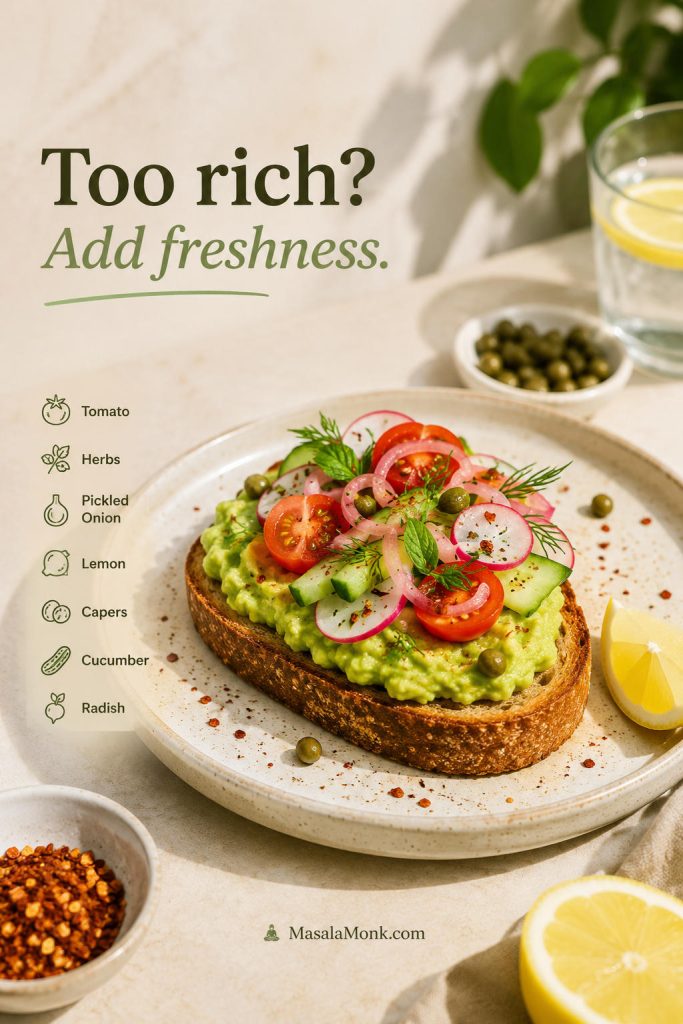
If your eggs tasted good but looked loose, shiny, or a little separated, the recipe probably does not need to be abandoned. It usually just needs less liquid, thicker cottage cheese, or gentler heat.

Watery cottage cheese scrambled eggs compared with creamy set eggs in a troubleshooting guide.
Watery cottage cheese eggs usually come from too much liquid, high heat, or a loose cottage cheese brand. Fix those first before changing the whole recipe.

Why Cottage Cheese Eggs Turn Watery

  • Too much cottage cheese
  • Very liquid cottage cheese
  • Watery fat-free or low-fat cottage cheese
  • Heat that was too high
  • Not enough gentle cooking time
  • Raw mushrooms, tomatoes, or peppers
  • Too many egg whites
  • Added milk

Troubleshooting Watery Cottage Cheese Eggs

What Happened Most Likely Cause Next Batch Fix
Eggs tasted good but looked loose Too much liquid in the cottage cheese Drain the cottage cheese or use 2 tbsp per 2 eggs
Eggs turned rubbery and wet Heat was too high Use medium-low heat and cook a little longer
Eggs looked separated Curds released moisture before the eggs set Whisk better, use thicker cottage cheese, and stir gently
Egg-white version turned thin Too much water from whites plus cottage cheese Keep one yolk or reduce cottage cheese to 2 tbsp
Diagnostic guide showing fixes for loose, rubbery, separated, and thin egg-white cottage cheese eggs.
Use the pan clues to fix the next batch: drain liquidy cottage cheese, lower the heat, stir gently, or keep one yolk when using egg whites.

Fixes Before Cooking

Problem to Prevent What to Do
Cottage cheese looks liquidy Spoon off excess liquid or use slightly less cottage cheese
You dislike curds Blend the cottage cheese with the eggs
You want less moisture Use 2 tbsp cottage cheese per 2 eggs
Using vegetables Cook moisture-heavy vegetables first
Using egg whites Keep at least one yolk or cook gently a little longer

Fixes While Cooking

What You See Fix
Liquid pooling in the pan Keep cooking gently and fold slowly until the extra moisture evaporates
Eggs setting too fast Lower the heat or remove the pan briefly
Curds separating Stir less aggressively and use lower heat
Eggs getting rubbery Pull from the heat sooner next time and use medium-low heat

What Not to Do

  • Skip the milk; cottage cheese already brings moisture.
  • Avoid high heat, which can make the eggs tighten before the moisture cooks off.
  • Do not start with an extra-heavy cottage cheese ratio on your first try.
  • Cook mushrooms, tomatoes, or peppers first if you are adding more than a small handful.
  • Once soft folds form, stir gently instead of aggressively breaking the eggs apart.

Once the ratio and heat are right, the recipe is simple: whisk, cook gently, stop while creamy, and serve while the eggs are still soft and warm.

Scrambled Eggs with Cottage Cheese Recipe

Soft, creamy scrambled eggs with cottage cheese for a protein-rich breakfast that feels cozy, filling, and ready in about 10 minutes.

Prep Time5 minutes
Cook Time4–5 minutes
Total Time10 minutes
Yield2 servings

Approximate nutrition: One serving, made with 2 large eggs, 1/4 cup cottage cheese, and 1/2 tablespoon butter, is usually around 220–270 calories with about 18–22g protein. Exact numbers depend on your cottage cheese brand and cooking fat. Because cottage cheese brands vary widely in protein, sodium, and moisture, treat these numbers as an estimate unless you calculate with your exact label.

Equipment

  • Mixing bowl
  • Whisk or fork
  • 10-inch nonstick skillet
  • Silicone spatula

Ingredients

  • 4 large eggs
  • 1/2 cup cottage cheese, about 4 oz / 110–120g, preferably small-curd 2% or full-fat
  • 1 tablespoon butter, about 1/2 oz / 14g, or 1–2 teaspoons / 5–10ml olive oil
  • 1/8 teaspoon fine salt, optional
  • Black pepper, to taste
  • 1 tablespoon chopped chives or scallions, optional

Method

  1. Crack the eggs into a mixing bowl and whisk until the yolks and whites are fully combined.
  2. Whisk in the cottage cheese, black pepper, and a tiny pinch of salt if using.
  3. Place a nonstick skillet over medium-low heat. Add the butter or oil and let it melt without browning.
  4. Pour in the egg mixture and let the edges begin to set for 10–20 seconds.
  5. Use a silicone spatula to slowly push the eggs from the outside of the pan toward the center, forming soft folds. The pan should look calm, not sizzling.
  6. Keep cooking gently until the eggs are thickened, creamy, and set through. If liquid runs around the eggs, give them another minute over gentle heat.
  7. Remove from the heat, sprinkle with chives or scallions if using, and serve immediately.

Notes

  • Blend the cottage cheese with the eggs first for a smoother texture.
  • Use 2 tablespoons cottage cheese per 2 eggs if you want less cottage cheese texture.
  • For an egg-white boosted version, use 2 eggs, 1/4 cup / 60ml egg whites, and 1/4 cup / 55–60g cottage cheese.
  • Salt lightly because cottage cheese is already salty.
  • Use medium-low heat. High heat can make the eggs rubbery.
  • Do not add milk; cottage cheese already adds moisture.
Saveable recipe card for scrambled eggs with cottage cheese showing the main ratio, cooking time, and method notes.
This saveable version keeps the formula simple: four eggs, half a cup of cottage cheese, medium-low heat, and no milk for a creamy two-serving scramble.

Once you make it once, adjust the ratio to match your cottage cheese and your pan. Some brands melt in softly, some release more liquid, and some taste saltier than others. The recipe gets easier after the first batch.

Storage and Reheating

These are absolutely best right from the pan, so treat leftovers as a backup breakfast rather than the main plan. Still, if you have extra, they can work if you cool and reheat them gently.

For the freshest texture, make the main recipe card version right before serving.

How Long Do They Keep?

Store leftover cottage cheese scrambled eggs in an airtight container in the refrigerator for up to 2 days. Let them cool before closing the container so steam does not create extra moisture.

How to Reheat Without Making Them Rubbery

Reheat in the microwave at reduced power in 15–30 second bursts, stirring gently between bursts. Stop as soon as the eggs are warm. You can also reheat them in a nonstick skillet over low heat.

For a freezer-friendly breakfast instead of fresh scrambled eggs, use the same soft-cooked egg logic in meal prep breakfast burritos, where the eggs need to stay tender without making the tortilla soggy.

Can You Freeze Cottage Cheese Scrambled Eggs?

I would not freeze them. Eggs and cottage cheese can both release moisture after thawing, so the texture usually suffers. For a better make-ahead breakfast, try egg muffins or a sliceable frittata instead.

When you need breakfast for a table instead of one skillet, a breakfast casserole with hash browns is a better make-ahead option than stovetop scrambled eggs.

Final Serving Texture Cue

Before you leave the recipe, remember the main visual cue: the eggs should look creamy, softly folded, and set enough to hold together on the plate.

Final serving of scrambled eggs with cottage cheese with toast, a fork, cottage cheese, and a warm breakfast table setting.
A good cottage cheese scramble should feel warm and familiar, with enough protein and creaminess to make breakfast last longer than plain eggs.

FAQs About Scrambled Eggs with Cottage Cheese

What does cottage cheese do to scrambled eggs?

Cottage cheese adds protein, creaminess, and a mild savory flavor. When cooked gently, it softens into the eggs and makes them more filling without needing milk or cream.

Do scrambled eggs with cottage cheese taste like cottage cheese?

They taste creamy, lightly savory, and only a little tangy. With the balanced ratio, the eggs still taste like eggs; the cottage cheese mostly adds body and richness.

Is it better to blend cottage cheese into eggs?

Blend it if you want smooth eggs with no visible curds. This is the best choice for anyone who likes the protein boost but does not want the cottage cheese texture. Whisk it in if you like a soft, lightly curdy scramble.

Why did my cottage cheese scrambled eggs turn watery?

They probably had too much cottage cheese, a very liquidy brand, too many egg whites, raw watery vegetables, milk, or not enough gentle cooking time. Use 1/4 cup cottage cheese per 2 eggs, choose a thicker cottage cheese, and cook over medium-low heat until the eggs are set through.

What type of cottage cheese works best?

Small-curd 2% cottage cheese is the most reliable everyday choice. Full-fat cottage cheese gives richer eggs. Fat-free cottage cheese can work, but it is more likely to release moisture.

Should I add milk to cottage cheese scrambled eggs?

Skip the milk here. Cottage cheese already brings moisture and body, and adding milk can push the scramble from creamy into loose or wet.

Are cottage cheese eggs good for a high-protein breakfast?

They are a strong high-protein breakfast, especially if you use the balanced ratio of eggs plus cottage cheese instead of stretching the scramble with milk. The exact protein depends on your egg size and cottage cheese label.

Do egg whites work with cottage cheese?

Egg whites work, but the best texture usually comes from keeping at least one whole egg in the mixture. The yolk adds flavor, color, and structure, so the scramble feels creamy instead of thin.

Can I make cottage cheese scrambled eggs in the microwave?

Yes. For one serving, whisk 1 large egg with 1 tablespoon cottage cheese in a large microwave-safe mug. Microwave for 30 seconds, stir, then cook in 15–30 second bursts until set. Let it stand briefly before eating so the center finishes without becoming spongy.

What is the best ratio of cottage cheese to eggs?

The best balanced ratio is 1/4 cup cottage cheese for every 2 large eggs. Use 2 tablespoons for a subtler version, or up to 1/3 cup if you want a richer cottage-cheese-forward scramble.

Can I use boiled eggs with cottage cheese instead?

Yes, but that becomes a different kind of meal. Boiled eggs with cottage cheese work as a quick snack plate, while chopped boiled eggs mixed with blended cottage cheese become a high-protein cottage cheese egg salad.

Back to top

Posted on 4 Comments

Easy English Scone Recipe

Split English scone topped with strawberry jam and clotted cream for an easy English scone recipe cover image.

This English scone recipe is built for the classic result: round scones with a light, tender crumb, gently golden tops, and just enough sweetness to work beautifully with jam and clotted cream. If you want an easy English scone recipe that stays close to the traditional style, this is the version to make.

The charm of English scones is that they do not ask for much. They ask for a dough that stays soft, handling that stays light, and shaping that gives them enough height to rise properly in the oven. Get those choices right, and the result feels balanced, familiar, and unmistakably classic.

Served warm or at room temperature with strawberry jam and clotted cream, these scones feel instantly at home on an afternoon tea table. They are especially lovely with masala chai recipes if you want a warmer spiced pairing, or with a cappuccino recipe if you are serving them for breakfast or brunch.

English Scone Recipe Ingredients

The ingredient list is short on purpose. Nothing here is decorative, and each ingredient has a clear job in the finished bake.

Dry Ingredients for English Scones

You will need:

  • 250 g self-raising flour
  • 1 tsp baking powder
  • 30 g caster sugar
  • 1 pinch salt

Self-raising flour keeps the method simple and gives the dough the kind of lift that suits classic English scones especially well. The extra baking powder adds support and helps keep the rise reliable. The sugar stays modest because this is not meant to be a sugary café pastry. It is meant to leave room for jam and cream at the table.

If you do not have self-raising flour, use 250 g plain flour plus 3 tsp baking powder in total for a close substitute. That will get you much nearer the intended texture than trying to improvise the swap.

English scone ingredients guide showing self-raising flour baking powder sugar butter milk egg wash jam and clotted cream with ingredient role notes.
The structure of a good English scone starts here: flour and baking powder for lift, cold butter for tenderness, milk for a soft dough, and a finishing setup built around jam and clotted cream rather than extra sweetness in the base.

Butter, Milk, and Egg

You will need:

  • 60 g cold unsalted butter, cubed
  • 150 to 170 ml whole milk
  • 1 tsp vanilla extract, optional
  • 1 egg, beaten, for egg wash

Cold butter helps create the tender crumb that makes a good scone feel light rather than heavy. It should be rubbed into the flour until the mixture looks airy and crumbly, not greasy or paste-like. The milk brings the dough together, though the exact amount can vary slightly depending on your flour and your kitchen conditions. The egg does not go into the dough here. Instead, it is brushed over the tops so the scones bake with a soft shine and a gentle golden finish.

Classic English Scone Toppings: Jam and Clotted Cream

For the classic serving style, use:

  • strawberry jam
  • clotted cream

That pairing is not just a serving suggestion. It is part of the logic of the bake itself. English scones stay plainer and less sweet because they are designed to be completed at the table rather than to carry all the richness on their own.

Traditional cream tea is built around scones, jam, clotted cream, and tea, which is one reason this style remains so restrained and balanced. For a more useful reference point than a generic explainer, the protected Cornish clotted cream specification shows why it is treated as a distinct product, while the National Trust’s fruit scones recipe reflects the same classic jam-and-clotted-cream serving tradition.

If clotted cream is difficult to find where you live, mascarpone is the neatest substitute. Thick lightly whipped cream also works, though it gives a looser and less traditional finish.

Small Variations That Still Keep Them English-Style

If you want a little variation without changing the character of the recipe too much, keep it restrained. A small handful of currants or sultanas fits naturally, and a little lemon zest can work well too.

What does not belong in this version is a heavy fruit load, thick glaze, chocolate chips, or any shortcut that turns the bake into something else altogether.

Also Read: Punjabi Mutton Bhuna – Amritsari Village-Style Gosht Recipe

Easy English Scones Recipe Card

Yield: 8 scones
Prep time: 15 minutes
Bake time: 12 to 15 minutes
Total time: about 30 minutes
Oven temperature: 220°C / 425°F

Ingredients

  • 250 g self-raising flour
  • 1 tsp baking powder
  • 30 g caster sugar
  • 1 pinch salt
  • 60 g cold unsalted butter, cubed
  • 150 to 170 ml whole milk
  • 1 tsp vanilla extract, optional
  • 1 egg, beaten, for egg wash
  • strawberry jam, for serving
  • clotted cream, for serving
English scone recipe card showing ingredients, quick method, and classic scones served with jam and clotted cream.
Use this recipe card when you want the ingredient list, bake temperature, and quick method in one place. It is most useful once you know the flow and want to make a batch without scrolling through the full guide.

How to Make English Scones Step by Step

The method is simple, but the small cues matter. Most disappointing batches trace back to dough that was too dry, too heavily handled, or shaped too thin before baking.

1. Heat the Oven and Prepare the Tray

Heat the oven to 220°C / 425°F and line a baking tray with parchment paper. A fully preheated oven matters here because the scones need strong early heat to rise before the structure sets.

Step 1 English scone recipe graphic showing a lined baking tray and oven preheated to 220C 425F before baking.
Starting with a fully heated oven gives English scones a better chance of rising quickly before the structure sets. That early burst of heat matters more than many people expect when the goal is a lighter, taller result.

Use a middle rack unless your oven runs unusually hot at the top.

2. Mix the Dry Ingredients

In a large bowl, whisk together the self-raising flour, baking powder, caster sugar, and salt. This takes almost no time, but it helps distribute the lift evenly before the butter goes in.

Step 2 English scone recipe graphic showing flour, baking powder, sugar, and salt being mixed in a bowl before the butter is added
A quick whisk here helps distribute the baking powder, sugar, and salt more evenly through the dough, which gives the scones a more consistent start.

3. Rub in the Butter

Add the cold butter cubes and rub them into the flour mixture with your fingertips until the texture looks like coarse crumbs.

You want a mixture that feels sandy and airy, with a few tiny buttery pieces still visible. If you squeeze a little in your hand, it should briefly clump, then fall apart again. Once the butter turns greasy or starts smearing into the flour, you have gone too far. If large cubes remain untouched, keep working a little longer.

Step 3 English scone recipe graphic showing cold butter being rubbed into flour until the mixture looks sandy and crumbly.
The butter should be rubbed in only until the mixture looks sandy and crumbly, with a few tiny buttery pieces still visible. That is what helps the finished scones stay tender instead of turning heavy or tight.

4. Add the Milk and Bring the Dough Together Gently

Pour in 150 ml milk and the vanilla, if using. Stir with a butter knife, fork, or spatula until the mixture starts to gather into a dough. Add more milk only if needed, a little at a time.

The dough should feel soft, slightly tacky, and easy to press together. It should not feel dry and stubborn, and it should not slump like batter either.

Step 4 English scone recipe dough guide showing too dry, just right, and too wet dough after adding milk.
This is the most important texture check in the recipe. The dough should look soft, rough, and cohesive enough to hold together without becoming sticky or slumped.

This is where many batches go wrong. People often stop early because they are nervous about stickiness, then end up with a dough that seems tidy but bakes up heavier than it should. In practice, slightly softer is usually safer than slightly dry.

5. Pat the Dough Thick Without Kneading

Turn the dough onto a lightly floured surface. With lightly floured hands, bring it together with a few gentle presses, then pat it into a round or rectangle about 2.5 to 3 cm thick.

Step 5 English scone recipe graphic showing dough patted 2.5 to 3 cm thick before cutting the scones.
Patting the dough thick gives the scones room to rise upward instead of baking flatter than you want. That one choice changes the final look more than many people expect.

Do not knead the dough like bread. Do not press it into a smooth, tight disc. It only needs to come together neatly enough to cut.

6. Cut Out the Scones

Use a 5 to 6 cm round cutter dipped lightly in flour. Press straight down, then lift cleanly.

Do not twist the cutter. Twisting compresses the edge and makes a clean rise harder. It seems like a small detail, but it shows up clearly in the oven.

Step 6 English scone recipe graphic showing a round cutter pressed straight down into thick dough without twisting.
A straight downward cut keeps the edges cleaner than a twisting motion, which gives the scones a better chance of rising neatly in the oven.

Place the cut scones on the lined tray with a little space between them. Gather the scraps gently, pat them together once, and cut again. The last few may look slightly less neat than the first ones, but they will still bake well if you do not keep reworking the dough.

If the cut rounds look soft or slightly slack at this stage, chill them for 10 minutes before baking. That short rest can help them hold their shape better.

7. Egg Wash and Bake

Brush only the tops with beaten egg. Try not to let the egg wash run down the sides, because that can limit the rise by sealing the edges.

Step 7 English scone recipe graphic showing scones on a lined tray with egg wash and the correct lightly golden baked finish.
Do not judge doneness by color alone. The best batch should have lightly golden tops, sides that look set rather than damp, and bottoms that feel dry and baked through without turning hard.

Bake for 12 to 15 minutes. They are done when the tops are lightly golden, the sides look set rather than damp, and the bottoms look dry and lightly colored rather than pale and wet.

If they still look slightly heavy after 12 minutes, give them another minute or two and check again. When in doubt, break open the least tidy one from the batch. The center should look tender and set, not wet or gummy.

8. Cool Slightly and Serve

Let the scones cool for about 10 minutes before splitting and serving. They are excellent still slightly warm, when the crumb feels especially soft and the contrast with jam and clotted cream is at its best.

Step 8 English scone recipe graphic showing a split scone served with jam clotted cream and tea.
A short cooling time helps the crumb settle before serving, and it also keeps the jam and clotted cream from sliding around too much on a steaming-hot scone. This last pause improves the final experience more than it seems.

For a colder-day pairing, they also work beautifully with homemade hot chocolate with cocoa powder.

Why These English Scones Stay Light and Tender

The result stays light because the method avoids the three mistakes that most often drag scones down: dry dough, heavy handling, and shaping that is too thin.

A dough that feels slightly soft will usually bake better than one that feels overly tidy and controlled. Extra pressing and rerolling tighten the crumb. Thin shaping leaves less room for upward lift. Add those problems together, and even a good ingredient list can still produce a disappointing batch.

That is why the method stays restrained. It gives the dough enough structure to hold shape, but not so much handling that the finished scones lose their tenderness.

English Scones vs American Scones

Although they share a name, English scones and American scones usually aim for very different results. English scones are typically round, lightly sweet, and softer in character, while American scones are often larger, richer, more heavily flavored, and shaped in wedges.

In the English style, the scones are usually served as part of afternoon tea, split and spread with jam and clotted cream. On their own, they are modest by design.

Comparison graphic showing English scones with jam and clotted cream beside sweeter glazed American scones with key differences in shape texture and serving style.
This side-by-side guide shows why this post stays firmly in the English-scone lane. English scones are rounder, lighter, and built for jam and clotted cream, while American scones are usually sweeter, wedge-shaped, and more pastry-like.

American scones, by contrast, tend to be larger, sweeter, and richer. They are more likely to include chocolate, berries, glaze, nuts, citrus, or stronger mix-ins, and they are often treated as a standalone pastry to eat with coffee rather than as part of a cream-tea table.

That difference is exactly why this recipe stays deliberately restrained. The goal is not to make the richest or most dramatic scone possible. The goal is to make one that feels unmistakably English-style and succeeds on those terms.

Also Read: Cookie Pie Recipe: 10 Best Flavors, Fillings and Variations

How to Serve English Scones with Jam and Clotted Cream

The classic serving style is part of the point, not an afterthought. These scones feel most like themselves when they are split and served with strawberry jam and clotted cream, whether you arrange them before serving or set everything out so people can build their own.

Serving guide for English scones showing how to split the scone, add strawberry jam, top with clotted cream, and serve with tea.
Classic English scones are meant to be finished at the table, not treated like a sweeter standalone pastry. Use this guide to see the traditional flow clearly: split the scone, add jam, top with clotted cream, and serve with tea.

Split them gently rather than crushing them flat, then add the jam and clotted cream just before serving. If you are building a full cream-tea setup, keep the tea hot and the scones lightly warm or fully cooled rather than steaming, so the toppings sit neatly instead of sliding off.

Slightly warm scones are often the most satisfying because the crumb feels softer and the butteriness comes through more clearly. Room-temperature scones are just as traditional and often more practical for a fuller afternoon tea spread. What matters most is that they still feel fresh enough to split cleanly and tender enough inside to welcome jam and cream.

This is also where the restrained sweetness of the dough proves its value. A heavily sweetened scone would compete with the toppings, while a classic English scone leaves room for them and lets the full serving feel balanced rather than overdone. For a more heritage-led British reference point, the National Trust’s traditional fruit scones recipe follows the same broader jam-and-clotted-cream serving direction.

Tea is the obvious partner, though coffee works beautifully too. If you want something warm alongside them, masala chai recipes and a cappuccino recipe both fit naturally.

English Scone Troubleshooting Guide

If your batch turns out dense, dry, flat, or uneven, the cause is usually easier to trace than it first seems.

English scone troubleshooting guide showing common problems like dense dry flat and pale scones with quick causes and fixes.
Keep this troubleshooting guide nearby when a batch turns out dense, dry, flat, or pale. Most problems trace back to dough texture, thickness, cutter technique, or baking cues, so spotting the likely cause makes the next batch much easier to fix.

Why Did My Scones Turn Out Dense?

Dense scones usually come from dough that was too dry or too heavily worked. If the mixture felt stiff before baking, cracked when pressed, or needed force to come together, that is the clearest clue.

Keep the dough softer next time, stop mixing earlier, and handle the scraps as little as possible. Also make sure the oven is fully hot before the tray goes in.

Why Are My English Scones Dry?

Dry scones are usually the result of dough that began too stiff or baking that ran too long. If the tops went deeper brown than intended, the crumb may have dried out before you pulled them.

Use enough milk to keep the dough soft, and take them out when they are lightly golden rather than deeply browned. Once they are fully cool, store them promptly instead of leaving them exposed on the counter.

Why Didn’t My Scones Rise Properly?

Poor rise usually points to one of four things: old baking powder, dough patted too thin, a cutter twisted instead of pressed straight down, or an oven that was not fully hot.

Use fresh raising ingredients, keep the dough thick, cut cleanly, and bake in a properly preheated oven.

Why Did They Spread Instead of Rising Tall?

Spreading is usually a sign that the dough was too warm, too wet, or too thin. If the cut rounds looked soft and a little slack on the tray before baking, that is your clue.

Hold back some of the milk until you know the dough needs it, keep the thickness at 2.5 to 3 cm, and chill the cut scones briefly if they seem very soft.

Why Are the Tops Pale or Uneven?

Pale tops usually mean the egg wash was too light, the oven heat was a little low, or the dough thickness varied across the batch. Uneven tops can also happen when the scraps are handled more roughly than the first cuts.

Brush the tops carefully, keep the dough even, and make sure the oven is fully hot.

How Do I Keep English Scones Soft After Baking?

Do not overbake them, let them cool only as long as needed, then store them airtight once fully cool. A brief reheat before serving helps a lot.

Also Read: White Russian Recipe: 7 Variants to Try, From Classic to Frozen

How to Store, Freeze, and Reheat English Scones

English scones are best the day they are baked, when the crumb is softest and the structure still feels freshest. Even so, they store and freeze better than many people expect if you handle them properly.

If freshness matters most to you, freezing shaped unbaked scones is usually the better move than storing baked ones for too long. That way you keep more of the just-baked texture and get much closer to the original result.

Storage guide for English scones showing room temperature storage, freezing baked scones, freezing dough, and reheating in a low oven.
Use this guide to keep English scones worth eating after the first bake. Room-temperature storage works best for the short term, freezing baked scones helps with leftovers, freezing shaped dough gives you the freshest later result, and gentle reheating brings back more of the soft crumb.

Room-Temperature Storage for English Scones

Once fully cool, store the scones in an airtight container at room temperature. They are best within 24 hours and still pleasant on day two if gently rewarmed.

Should You Refrigerate Them?

Refrigeration is usually not the best choice for plain baked scones because it can make them feel firmer and less fresh. Room temperature for a short window or freezing for longer storage is usually the better route.

How to Freeze a Baked English Scone

Let the baked scones cool completely, then wrap them well and freeze them in an airtight container or freezer bag. Thaw them, then warm them gently until just heated through.

How to Freeze Unbaked English Scone Dough

Freezing shaped dough is often the better option if you want fresh-baked scones later. Cut the scones, place them on a tray until firm, then transfer them to a freezer-safe container or bag. Bake from frozen, giving them about 2 to 4 extra minutes as needed.

How to Reheat English Scones Without Drying Them Out

Warm the scones in a low oven just until heated through. Do not blast them with high heat or leave them in too long. Gentle reheating brings back some softness without drying out the crumb.

How to Turn These English Scones Into Fruit Scones

If you want to adapt this recipe into a fruit version, fold in a small handful of currants or sultanas after the butter has been rubbed in and before the milk goes in. If you enjoy bakes that lean more fruit-forward and comforting, peach cobbler with canned peaches is another good one to bookmark.

Variation guide showing how to turn English scones into fruit scones with currants or sultanas without overloading the dough.
A fruit-scone variation works best when it stays restrained. Adding about 40 to 60 grams of currants or sultanas gives the dough a classic fruit note without weighing it down too much, though the crumb will be slightly denser than the plain version.

The key is restraint. A little dried fruit works beautifully. Too much starts to weigh the dough down and changes the balance of the bake. As a guide, around 40 to 60 g is enough for this quantity of dough.

Fold the fruit through gently so it spreads evenly without overworking the dough. You want enough in each scone to taste it, but not so much that the mixture turns heavy, patchy, or harder to cut cleanly.

Final Thoughts

A good English scone recipe does not need extra drama. It needs the right decisions at the right moments.

Keep the dough soft, shape it thick enough to rise well, cut it cleanly, and bake it in a properly heated oven. Do that, and you end up with the kind of scone people actually want: tender, gently risen, lightly sweet, and ready for jam and clotted cream.

That is why this version stays so focused. It is not trying to cover every possible style. It is trying to help you make one classic batch well, and that clarity is what makes a recipe worth returning to. If you enjoy classic bakes that reward small technique choices, sourdough English muffins are another strong next bake.

Also Read: White Russian Recipe: 7 Variants to Try, From Classic to Frozen

English Scone FAQs

1. Can I make English scones without self-raising flour?

Yes. For this recipe, use 250 g plain flour plus 3 tsp baking powder in total for the closest substitute. That will get you much nearer the intended texture than trying to guess the swap.

2. What can I use instead of clotted cream?

Mascarpone is the neatest substitute if clotted cream is hard to find. Thick lightly whipped cream also works, though it gives a softer, looser, and less traditional finish.

3. Why didn’t my English scones rise properly?

The most common causes are dough that was patted too thin, old baking powder, twisting the cutter instead of pressing straight down, or putting the tray into an oven that was not fully preheated. Keeping the dough thick and the oven properly hot makes a big difference.
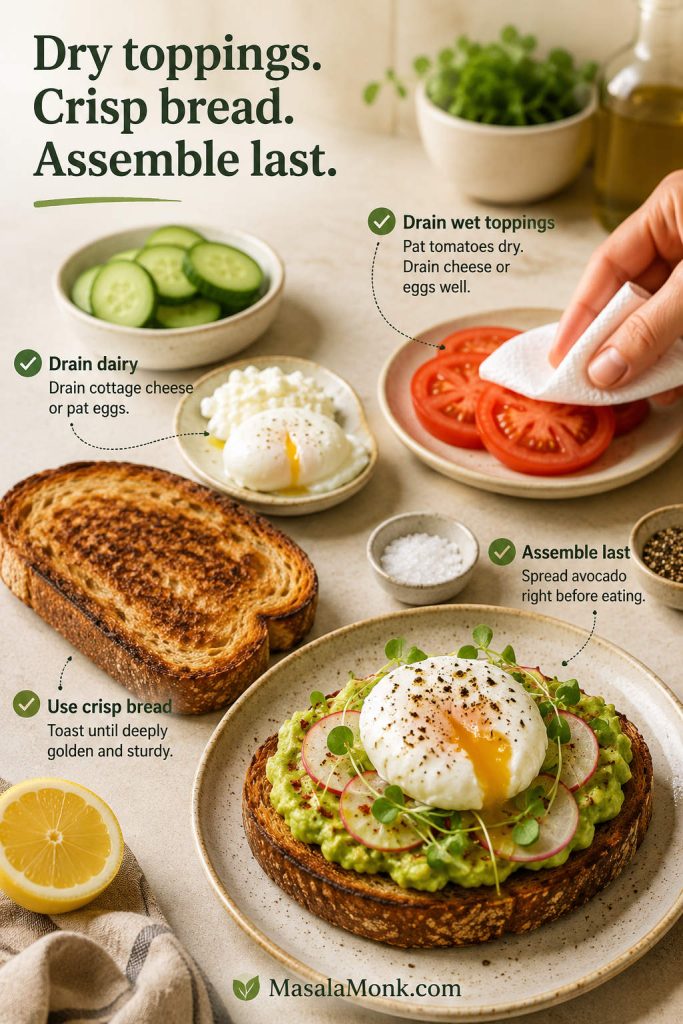
4. Can I freeze English scone dough?

Yes. Shape and cut the scones first, freeze them until firm, then transfer them to a freezer-safe container or bag. Bake them from frozen and add about 2 to 4 extra minutes as needed.
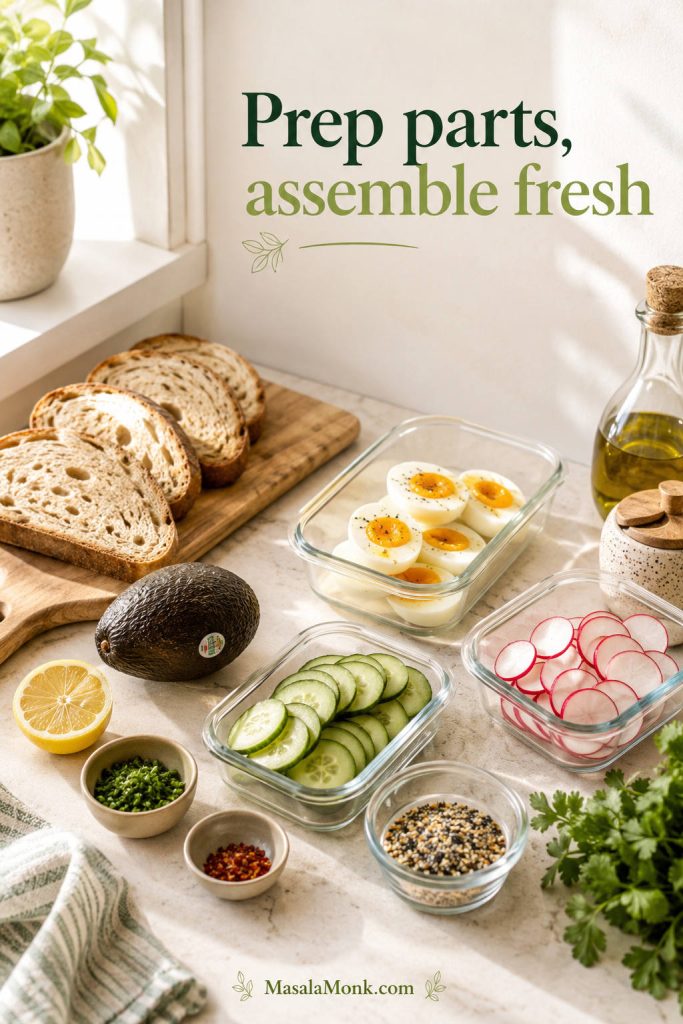
Posted on 15 Comments

Sandwich for Breakfast: Breakfast Sandwich Recipe + 10 Variations

Breakfast sandwich recipe cover image showing an English muffin egg and cheese sandwich with sausage, melted cheddar, and a fried egg.

A really good breakfast sandwich does two things at once. First, it tastes like you treated yourself—melty cheese, a warm egg, something crisp, something creamy. Then, almost secretly, it makes your morning easier because you can build it with whatever bread you already have: an English muffin, a croissant, a bagel, even waffles.

That’s the heart of this breakfast sandwich recipe. Instead of giving you one rigid version, we’ll start with a simple master build you can repeat, and then we’ll branch into the most-loved styles people actually search for and crave: egg and cheese, English muffin breakfast sandwich, breakfast croissant, croissant sandwiches, bagel with egg and cheese, scrambled egg sandwich, fried egg sandwich, high protein breakfast sandwich, vegetarian breakfast sandwich, gluten free breakfast sandwich, plus make-ahead frozen breakfast sandwiches for meal prep.

Along the way, we’ll lean on sauces and spreads that make a sandwich feel “finished” without being fussy—like a quick homemade mayo, a punchy pepper sauce, a bright pesto, or a thick tzatziki-style yogurt sauce—so every bite stays balanced instead of flat.


Breakfast sandwich: the master formula that works every time

Before we get into variations, it helps to have a dependable “base.” Think of it as a choose-your-own-adventure breakfast sandwich where each layer has a job.

Infographic showing the breakfast sandwich formula—bread, egg, cheese, sauce, and crunch—with a croissant egg and cheese sandwich on a plate.
Use this breakfast sandwich formula to mix and match your favorites—choose a bread base, add eggs and cheese, finish with a sauce, then layer on crunch for the perfect bite every time.

The five layers

  1. Bread (or bread substitute)
    English muffin, croissant, bagel, biscuit, sliced bread, waffles, or an egg-based “eggwich.”
  2. Eggs for sandwiches (the engine)
    Fried egg, scrambled egg, folded omelet, baked egg patty, or boiled eggs turned into a spread.
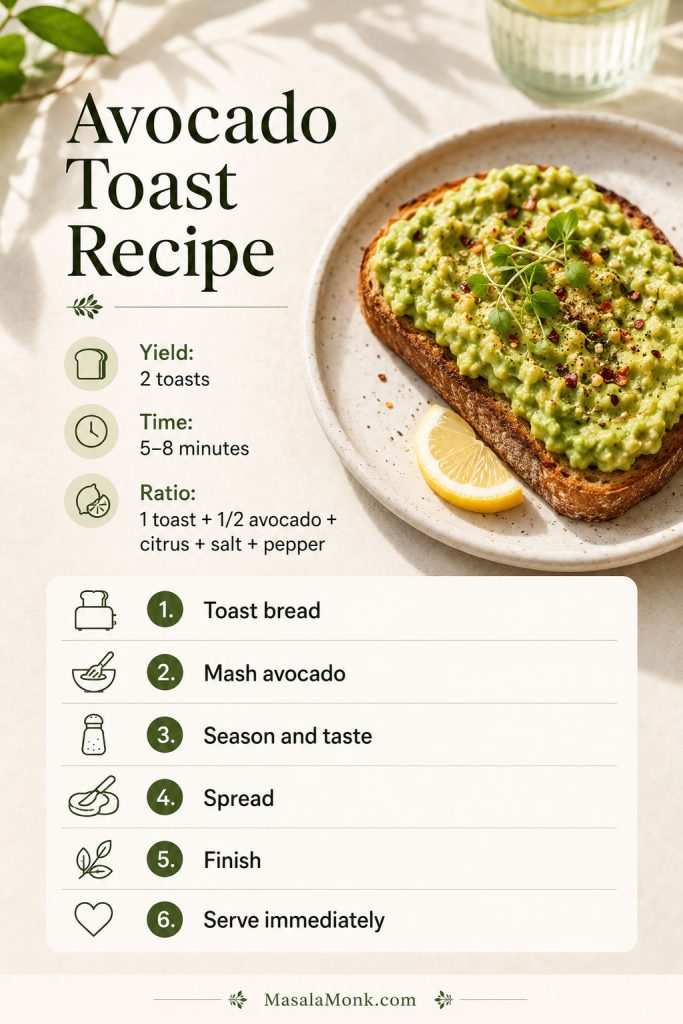
  3. Cheese (the glue)
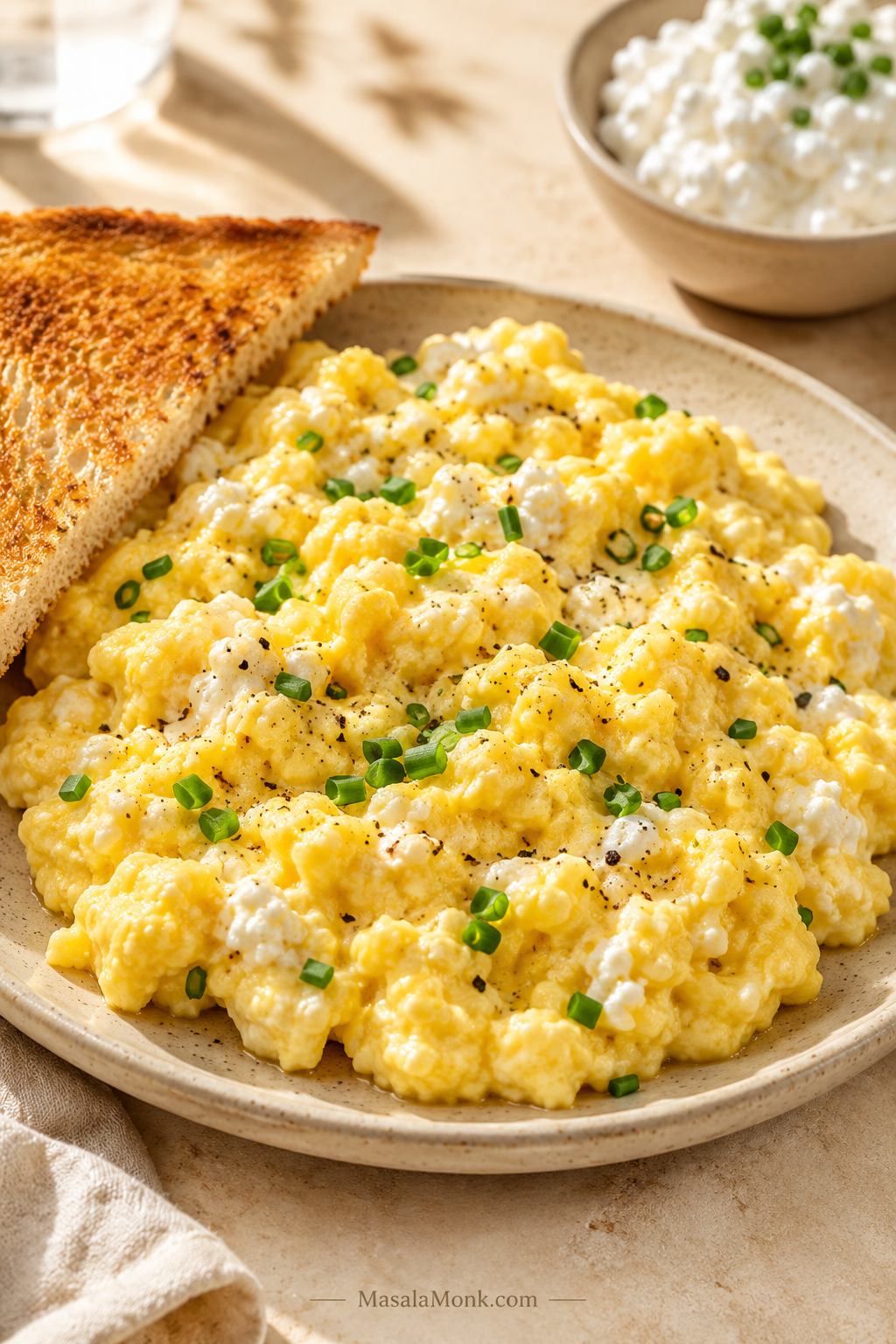
    Cheddar, mozzarella, gouda, pepper jack, or whatever melts well.
  4. Sauce or spread (the comfort layer)
    Mayo, eggless mayo, vegan mayo, pesto, tzatziki, or a quick chili-mayo.
  5. Texture + freshness (the wake-up layer)
    Crisp veggies, pickles, herbs, peppery greens, onions, tomatoes, even a little crunchy spice mix.

Once you understand those roles, breakfast sandwich ideas become effortless: swap the bread, switch the egg style, keep the sauce, change the crunch—suddenly you have a new breakfast without starting over.

Also Read: 10 Best Chicken Sandwich Recipes (BBQ, Parm, Buffalo & More)


Breakfast sandwich recipe: the base method (one sandwich)

Ingredients (flexible, not fussy)

  • Bread of choice (English muffin / croissant / bagel / waffles / 2 slices bread)
  • 1–2 eggs
  • 1 slice cheese (or a small handful grated)
  • 1–2 tablespoons spread or sauce
  • Salt and pepper
  • Optional add-ons: tomato, onion, spinach, cucumber, avocado, herbs, hot sauce, pickles

Method

First, toast or warm your bread. You’re not just adding crunch—you’re building a barrier so the sandwich doesn’t go soggy.

Next, cook your eggs in the style you want (fried or scrambled sections are coming up). While they’re still hot, add cheese and let it melt.

Then, spread sauce on the bread while it’s warm. That small detail matters: warm bread helps spreads cling instead of sliding.

After that, stack egg + cheese, add your texture layer, close the sandwich, and press gently for a few seconds so everything holds together.

Breakfast sandwich fixes infographic showing quick solutions for soggy bread, rubbery eggs, cheese not melting, fillings sliding, and adding crunch, with an English muffin egg and cheese sandwich on a cutting board.
Save this breakfast sandwich fixes guide: toast bread well to prevent sogginess, cook eggs low and pull early for softness, cover briefly to melt cheese fast, spread sauce on both sides to stop slipping, and add pickles/greens/onion for crunch.

If you like checking food safety temps (especially when you’re batch-cooking), egg dishes are commonly cooked to 160°F / 71°C, and leftovers reheated to 165°F / 74°C—guidance you can see on the USDA safe temperature chart and on FoodSafety.gov’s chart.

Also Read: Food for Constipation Relief & Gut Health : 6 High-Fiber Sandwiches


Egg and cheese: the classic egg & cheese breakfast sandwich

Sometimes you don’t want a “creative” breakfast. You want the one that always works: egg and cheese, warm bread, a little seasoning, done.

Fried egg sandwich recipe (crispy edges, runny or set yolk)

Heat a pan, add butter or oil, crack in an egg, season it. Let the edges crisp; cover briefly if you want the top to set faster. Once it’s nearly where you want it, lay cheese on top and cover for 20–30 seconds so it melts smoothly.

Fried egg sandwich recipe card showing a toasted sandwich cut in half with crispy-edged fried egg, melted cheese, and optional runny or set yolk, with MasalaMonk.com branding.
For the best fried egg sandwich, aim for crispy edges and melted cheese—choose a runny yolk for richness or cover the pan briefly for a set yolk that travels better.

This version is ideal when you want a clean, structured bite—especially on an English muffin or bagel.

Scrambled egg sandwich (soft, fluffy, and forgiving)

Whisk 2 eggs with salt and pepper. Cook on low heat, stirring slowly. Pull the eggs off the heat while they’re still slightly glossy; the residual heat finishes them.

A scrambled egg sandwich is the best make-ahead egg sandwich—cook low and slow for soft, fluffy eggs that reheat well, then melt the cheese onto the eggs so every bite stays creamy instead of dry.

Scrambled egg sandwiches are particularly good when you’re packing breakfast for later, because the eggs stay tender instead of turning rubbery.

Also Read: Cottage Cheese Lasagna Recipe | Chicken, Spinach, & Ricotta


Choose Your Bread Base for the Perfect Breakfast Sandwich

Before you cook a single egg, pick the bread. It decides almost everything: how tidy the sandwich feels, how rich the bite is, and whether it holds up for meal prep or needs to be eaten right away. Once the base is locked in, the “best” egg and sauce choices become obvious—so you’re not building a great filling on the wrong foundation.

Best breakfast sandwich breads infographic showing an English muffin, croissant, bagel, and waffle with notes on what each bread is best for.
Pick your base first: English muffin for tidy stacking, croissant for a flaky breakfast croissant, bagel for a hearty breakfast bagel sandwich, or waffle for sweet-savory brunch sandwiches.

English muffin: the neat, classic breakfast sandwich

If you want a café-style breakfast sandwich that’s easy to hold and doesn’t slide around, the English muffin is the safest bet. It toasts beautifully, stays sturdy under egg and cheese, and naturally supports the “stacked” look most people want in an English muffin breakfast sandwich.

Croissant: the premium, flaky breakfast croissant

A croissant makes breakfast feel like a treat. It’s buttery and delicate, so it works best when your fillings are bold but not watery. Choose it when you want croissant sandwiches with a “bakery morning” vibe—just keep sauces and fresh veggies controlled so it doesn’t turn soft.

Bagel: the hearty breakfast bagel sandwich

Bagels are dense and satisfying, which is why a bagel with egg and cheese can feel like a full meal. They shine when you want contrast—soft egg, melty cheese, plus something bright and crunchy like onion, cucumber, or pickles. If you’re hungry-hungry, this is the base that delivers.

Waffles: sweet-savory waffle breakfast sandwich energy

Waffles turn the same ingredients into brunch. Because waffles carry a gentle sweetness, they pair especially well with salty cheese, peppery sauces, and savory fillings. Pick this base when you want a waffle breakfast sandwich that feels fun, dramatic, and very shareable.

Quick rule to decide in 5 seconds

For a tidy, classic bite, choose an English muffin. For luxury and flaky layers, reach for a croissant. When you want something big and seriously filling, go with a bagel. And if you’re craving brunch-style sweet-savory energy, waffles are the move.


English muffin breakfast sandwich (café-style, sturdy, and easy to hold)

The English muffin breakfast sandwich is popular for a reason: it’s compact, it toasts beautifully, and it doesn’t fall apart mid-commute.

How to make round eggs for breakfast sandwiches (without special gear)

If you want that neat “egg patty” look, you don’t need a fancy ring. A wide mason jar lid ring, a cleaned metal cookie cutter, or even a DIY foil ring works.

Step-by-step guide showing how to make round eggs for breakfast sandwiches using a mason jar lid ring, covering the pan, and stacking the egg patty on an English muffin with cheese.
Want café-style egg patties? This quick method shows how to make round eggs for breakfast sandwiches using a simple jar-lid ring—perfect for an English muffin breakfast sandwich that stacks neatly and stays easy to hold.

Warm the ring in the pan, grease it lightly, crack in the egg, and cover. As the egg sets, it becomes the perfect shape for English muffins.

Build: egg and cheese on English muffin

  • Toast muffin halves until crisp
  • Spread sauce on both sides
  • Add egg + cheese
  • Add one crisp layer (thin onion, tomato slice, spinach, or pickles)
  • Close, press gently, eat
English muffin egg and cheese breakfast sandwich recipe card, cut in half to show a round egg patty, melted cheese, spinach, and red onion, with café-style text overlay and MasalaMonk.com footer.
This English muffin egg and cheese breakfast sandwich stacks neatly with a round egg patty and melty cheese—add a thin layer of spinach and onion for crunch and freshness without making the muffin soggy.

For a creamy base that can swing classic or spicy, a simple homemade mayo is hard to beat. If you want a versatile one with a lot of variations you can reuse for other sandwiches too, this guide is handy: homemade mayonnaise with 15+ easy variations.

If you’re feeding a mixed crowd—some people avoiding eggs in spreads or preferring egg-free condiments—you can also keep a jar of eggless mayonnaise or a fully dairy-free vegan mayo in rotation.


Breakfast croissant: when you want croissant sandwiches that feel like a treat

A breakfast croissant sandwich is the “I went out for breakfast” vibe—without leaving home. Because croissants are rich and flaky, the best versions keep fillings bold but not watery.

Croissant egg and cheese (the simple starter)

  • Warm the croissant (don’t over-toast—just warm and lightly crisp)
  • Add a soft scrambled egg layer
  • Add cheese while eggs are hot
  • Finish with pepper or chili flakes

Bacon egg and cheese croissant

Crisp bacon, melt cheese onto the egg, then add something fresh so it doesn’t feel heavy: a thin tomato slice, peppery greens, or even quick-pickled onions.

Bacon egg and cheese croissant breakfast sandwich recipe card showing a flaky croissant filled with egg, melted cheese, and crispy bacon, with “Bakery-style breakfast” text overlay and MasalaMonk.com footer.
This bacon egg and cheese croissant delivers the classic breakfast croissant vibe at home—keep the croissant lightly warmed (not over-toasted), melt the cheese onto the eggs, then add crisp bacon and one fresh layer so it stays rich but balanced.
Sausage egg and cheese croissant

Sausage + egg + cheese is a classic breakfast sandwich trio for a reason. The croissant turns it into a weekend-level meal. If your sausage is strongly seasoned, keep the sauce simple—mayo or a yogurt-based spread—so it doesn’t clash.

Ham egg and cheese croissant

Ham loves mustard-mayo or herby mayo. Even a thin swipe makes the whole sandwich taste “designed,” not accidental.

If you want a sandwich spread that’s creamy yet tangy, Greek yogurt-style sauces are perfect on croissants too. This Greek tzatziki sauce recipe with variations gives you a thick, garlicky option that stays put instead of leaking out the sides.

Also Read: Strawberry Smoothie Recipes (12 Easy Blends + Bowls & Protein Shakes)


Bagel with egg and cheese: the breakfast bagel sandwich that actually feels balanced

A bagel with egg and cheese is dense and satisfying, so it helps to build contrast—soft + crisp, rich + fresh, salty + bright.

This bagel with egg and cheese gets an easy avocado upgrade—add creamy avocado plus a sharp, crunchy layer like pickled onions to balance the richness and make a more satisfying breakfast bagel sandwich.

Bagel with egg and cheese (the core build)

Toast the bagel cut sides well. Spread sauce on both halves. Add egg + cheese, then add one “fresh” element: tomato, cucumber, avocado, or herbs.

Avocado egg sandwich on a bagel

Avocado and egg are a natural pair. Add black pepper, a squeeze of lemon, and something crunchy (onion or cucumber). The result feels like a healthy breakfast sandwich, even though it’s still comforting.

For a flavor blueprint you can borrow directly, this one is built for mornings: avocado, basil, and grilled tomato sandwich. You can adapt the same idea onto a bagel and add egg + cheese to turn it into a bigger breakfast.

Egg sandwich spread for bagels (when you want it creamy)

Instead of a whole egg, use a spreadable egg layer (egg mayo / egg salad style). It’s easier to eat, especially if you’re walking out the door.

We’ll do that properly in the egg mayo sandwich recipe section below.

Also Read: Classic Deviled Eggs (Easy) + 8 Flavorful Variations


Breakfast muffin sandwich: egg, cheese, and a sturdy base

“Breakfast muffin sandwich” can mean an English muffin sandwich, or it can mean a muffin-shaped bread base you toast and fill. Either way, the goal is the same: structure.

Egg and cheese muffin-style sandwich

Toast the base, add a folded omelet or egg patty, add cheese, then add a little sauce. Because this style is compact, it’s great for meal prep breakfast sandwiches as well.

If you’re making eggs in bulk for this, an easy workflow is to cook and peel a batch of eggs quickly. An air fryer is surprisingly effective for that—here’s a reliable method: air fryer hard boiled eggs.

Also Read: How to Make Pineapple Chia Pudding: A Refreshing Low-Carb Breakfast Option


Waffle breakfast sandwich: sweet-savory brunch energy

A waffle breakfast sandwich is where brunch gets playful. The key is using waffles that are crisp enough to hold fillings.

If you want to make waffles that stay golden and crisp even without dairy, this is a solid base: waffle recipe without milk. For more adventurous directions (including Indian twists that still feel natural), this is fun inspiration: Belgian waffle recipe + Indian twists.

Waffle breakfast sandwich recipe card showing a stacked waffle sandwich with egg, melted cheese, and spicy mayo, plus text overlay for a sweet-savory brunch build.

This waffle breakfast sandwich turns a simple egg and cheese into a sweet-savory brunch—keep the waffles crisp, add melty cheese, then finish with spicy mayo for a bold contrast that still feels breakfast-friendly.

Waffle sandwich build ideas

  • Egg + cheese + spicy mayo
  • Scrambled egg + herbs + pepper sauce
  • Egg + cheese + avocado for a more “healthy breakfast sandwich” feel

Because waffles lean slightly sweet, a bright sauce works especially well. If you like heat, a pepper sauce can turn waffles and eggs into something unforgettable. This is a deep rabbit hole if you want options: pepper sauce recipe guide.


Egg sandwiches recipes: choosing the egg style that matches your morning

It’s easy to treat eggs like “one ingredient,” yet the cooking method changes the entire sandwich. So, instead of guessing, pick based on the kind of morning you’re having.

Best eggs for sandwiches infographic comparing fried, scrambled, folded omelet, and boiled egg spread with suggested bread pairings and a bagel egg and cheese sandwich.
Not all egg sandwiches eat the same—use this guide to pick the best eggs for sandwiches (fried, scrambled, folded omelet, or boiled spread) and match them to the right bread for a better breakfast sandwich every time.

Fried egg sandwich (best for immediate eating)

Fried eggs are at their peak right out of the pan. That’s when the edges stay crisp and the yolk is still luscious. Consequently, this version shines for weekends or slow mornings.

Scrambled egg sandwich (best for reheating)

Scrambled eggs hold better than fried eggs in the fridge and reheat more evenly. Therefore, if you’re thinking meal prep, scrambled is your friend.

Folded omelet-style egg (best for neat layers)

Beat eggs, cook into a thin sheet, fold into a rectangle. This makes a tidy “egg patty” without tools. It’s also ideal for breakfast slider sandwiches because the pieces cut cleanly.

Boiled eggs for sandwiches (best for cold breakfast)

Boiled eggs can become a spread, which means you can eat your breakfast sandwich cold and still enjoy it. This is where egg mayo sandwich recipes, egg salad sandwiches, and even tuna egg sandwich variations come in.

If you want a broader set of ideas for using small egg counts creatively, this list can spark options: egg dishes with 2 eggs.

Also Read: Top 10 Foods for Gut Health (+ Pre/Probiotics, Best Drinks, Gut-Reset Plan)


Egg mayo sandwich recipe: creamy, fast, and surprisingly breakfast-friendly

Egg mayo often gets treated as “lunch food,” yet it’s one of the best solutions for busy mornings. It’s fast, it’s filling, and it turns into a portable sandwich without needing to reheat anything.

Ingredients (2 sandwiches)

  • 2 hard-boiled eggs, chopped
  • 2–3 tablespoons mayo
    (or use eggless mayo or vegan mayo if that fits your needs)
  • Salt and pepper
  • Optional: chopped onion, dill, cucumber, chili flakes, a squeeze of lemon
This egg mayo sandwich filling doubles as a simple egg salad sandwich recipe—mix chopped boiled eggs with mayo (or Greek yogurt), then add dill and pickles for crunch and a fresher, lighter bite.

Method

Mash the eggs lightly, stir in mayo, season, then adjust texture. If you want it looser, add a tiny splash of milk or lemon. If you want it thicker, add more egg or a little grated cheese.

Turn egg mayo into egg salad sandwich recipe territory

If you want the “egg salad” vibe, fold in crunch: finely chopped celery (if you like), onion, pickles, or cucumber. Add a pinch of curry powder for a curried egg sandwich direction, or add paprika for a classic style.

Curried egg salad upgrade recipe card showing a bowl of curried egg salad with pickles, onion, and lemon, plus a seeded bread egg salad sandwich; text overlay lists curry powder, pickles, onion, and lemon.
Turn a basic egg mayo sandwich into a curried egg sandwich by stirring in curry powder, chopped pickles, onion, and a squeeze of lemon—an easy upgrade that adds brightness, crunch, and bold flavor.

Egg salad with greek yogurt (lighter, tangier)

Instead of all mayo, use thick yogurt or hung curd for part of the spread. It stays creamy, tastes fresher, and feels closer to a healthy breakfast sandwich.

If you like the flavor logic of yogurt-based fillings, this is a great reference point: healthy hung curd spinach cheese sandwich.

Also Read: Vodka Pasta (Penne alla Vodka) + Spicy Rigatoni, Chicken, and Gigi Recipes


Breakfast sandwich ideas that borrow from “real sandwich culture”

A breakfast sandwich doesn’t have to be only egg + cheese + meat. It can borrow from classic sandwich styles and still feel totally breakfast-appropriate.

The Bombay-inspired breakfast sandwich

If you’ve ever loved a spicy, chutney-forward sandwich, you can bring that energy to breakfast: toast bread, add green chutney or herby mayo, add egg + cheese, then add thin-sliced onion and tomato.

For a full flavor blueprint, this is the classic: authentic grilled Bombay sandwich recipe. Use the same “layering logic,” then make the egg the star.

The mushroom-and-cheese breakfast upgrade

Sauté mushrooms, add pepper, add cheese, then add egg. It turns basic egg sandwiches into something deeper and more savory.

If you want the mushroom direction fully mapped out, this is a great base: mushroom cheese sandwich recipe.

The hummus-and-veg morning sandwich (egg optional)

Some mornings you want breakfast without eggs. A hummus-based sandwich gives you protein and staying power while keeping things fresh.

Here’s a straightforward build to borrow: hummus veggie sandwich. Add a fried egg if you want it heartier, or keep it egg-free for a vegetarian breakfast sandwich that still satisfies.

Also Read: Protein Oatmeal: Turn Plain Oats into a High-Protein Meal


Healthy breakfast sandwich and high protein breakfast sandwich variations

“Healthy” can mean a lot of things. For some people it means higher protein; for others it means lighter sauces; for many it means fewer ultra-processed ingredients. Thankfully, breakfast sandwiches can adapt without losing their comfort-food soul.

Healthy high-protein breakfast sandwich swaps infographic showing mayo swapped for tzatziki, one egg swapped for a folded omelet with two eggs, plain cheese swapped for higher-protein cheese, and crunch added with pickles, greens, and onions.
Build a healthy high-protein breakfast sandwich with simple swaps—use tzatziki or Greek yogurt sauce instead of mayo, double the eggs with a folded omelet layer, choose a more filling cheese, and add crunch with pickles, greens, or onions.

High protein breakfast sandwich (simple ways to level up)

  • Use 2 eggs instead of 1
  • Add an extra slice of cheese or use a higher-protein cheese
  • Add thick yogurt-based sauce (like tzatziki)
  • Add paneer or tofu as an additional filling

If you’re curious about egg protein numbers, this breakdown is a useful reference: how much protein in two boiled eggs.

Healthy breakfast sandwich (lighter sauces that still taste rich)

Instead of drowning the sandwich in mayo, try:

  • A thin layer of pesto
  • Thick yogurt sauce
  • A small swipe of mayo plus lemon juice for brightness

For pesto options you can tweak to your taste, this is a strong starting point: pesto recipe guide with variations. If you want a specific dairy-free pesto, this one is fast and flavorful: fresh basil pesto vegan recipe.


Vegetarian breakfast sandwich: options that don’t feel like “second place”

A vegetarian breakfast sandwich can be just as craveable as any meat-based version—provided you build for texture and seasoning.

Save these vegetarian breakfast sandwich ideas for easy morning variety—mushroom and cheese with egg, spinach pesto with egg, paneer with chutney, or hummus with crunchy veggies (egg optional) for a satisfying vegetarian breakfast sandwich.

Vegetarian breakfast sandwich (easy templates)

  • Egg + cheese + mushrooms + pepper sauce
  • Egg + cheese + spinach + pesto
  • Hummus + veggies + cheese (egg optional)
  • Paneer + egg + chutney (if you like a bigger, spiced bite)

If you want a leftover-friendly option that turns dinner into breakfast, this is a smart template: paneer sabji sandwich recipe. Add a fried egg and it becomes a powerful breakfast sandwich meal prep option.

Also Read: Classic Rum Punch + 9 Recipes (Pitcher & Party-Friendly)


Gluten free breakfast sandwich: easy swaps that still feel satisfying

Going gluten free doesn’t mean giving up the breakfast sandwich experience. It simply means switching the base while keeping the same layers.

Gluten-free breakfast sandwich bases guide showing GF muffin or bagel, hash brown buns, waffles, and an eggwich, with a simple build formula and MasalaMonk.com footer.
For a gluten free breakfast sandwich, swap the base—not the whole idea: use a gluten-free muffin or bagel, crispy hash brown “buns,” gluten-free waffles, or an eggwich, then build with egg, cheese, sauce, and crunch.

Gluten free breakfast sandwich bases

  • Gluten-free English muffins or bagels
  • Hash brown “buns” (crispy potato rounds)
  • Waffles made with a gluten-free mix
  • Egg “buns” (eggwich style)

Once you pick the base, the rest is identical: egg + cheese + sauce + crunch. In other words, you’re not learning a new recipe—you’re just changing the vehicle.

Also Read: Moscow Mule Recipe (Vodka Mule): The Master Formula + 9 Variations


Eggwich: a breakfast sandwich without bread

An eggwich is essentially an egg sandwich where eggs replace bread. If you want a lower-carb or gluten-free breakfast sandwich that still feels indulgent, this is a strong move.

Eggwich no-bread breakfast sandwich guide showing egg “buns” with melted cheese, veggies, and sauce on a dark slate background, labeled as a gluten-free breakfast sandwich.
An eggwich is the easiest no-bread breakfast sandwich—use two thin egg “buns,” add melty cheese and a crunchy veggie layer, then finish with a sauce so it eats like a real breakfast sandwich while staying gluten-free.

How to build it

Cook two thin omelet “rounds,” let them cool slightly so they firm up, then use them as top and bottom. Add cheese, add filling, add sauce, press gently, and eat with a napkin because it’s joyfully messy.

Also Read: 7 Pizza Sauce Recipes | Marinara, White Garlic, Alfredo, Buffalo, BBQ, Vodka & Ranch


Breakfast sandwich homemade sauces that make everything taste intentional

A sandwich can have perfect eggs and still taste “unfinished” without a good spread. Sauce isn’t extra; it’s the layer that ties everything together.

Breakfast sandwich sauce pairings infographic with bowls of mayo, pesto, tzatziki, and pepper sauce and quick notes on which breakfast sandwiches each spread suits.
Use these breakfast sandwich sauce pairings to change the flavor fast—mayo for classic egg and cheese, pesto for a herby café-style sandwich, tzatziki for a fresh high-protein feel, and pepper sauce for a spicy, craveable bite.

Mayo: classic, versatile, and endlessly adaptable

If you want one foundational sauce that can become spicy mayo, garlic mayo, herby mayo, and more, start here: homemade mayonnaise with 15+ variations.

Eggless mayo and vegan mayo: inclusive options without compromise

If you’d rather avoid raw eggs in homemade spreads, or you’re serving someone who prefers egg-free condiments, these are useful:

If you’re cooking for pregnancy or generally avoiding raw-egg preparations, the FDA’s guidance for higher-risk groups is worth reading: Food Safety for Moms-to-Be.

Pepper sauce: the fastest way to make breakfast taste exciting

A little heat transforms egg and cheese into something you crave instead of something you tolerate. If you want options ranging from tangy vinegar hot sauces to creamy peppercorn-style sauces, this is a complete guide: pepper sauce recipe guide.

Tzatziki: cooling, thick, and perfect for breakfast sandwiches

Yogurt-based sauces are especially good when you’re building a healthy breakfast sandwich. They add creaminess without feeling heavy, and they pair beautifully with herbs and cucumbers: Greek tzatziki sauce recipe with variations.

Also Read: Pesto Recipe: Classic Basil Pesto Sauce & 10 Variations


Frozen breakfast sandwiches: make-ahead meal prep you’ll actually use

Frozen breakfast sandwiches have one job: save your morning when you have no time. The secret is building them in a way that reheats well. That means slightly drier eggs, sturdy bread, and sauces added after reheating.

Frozen breakfast sandwiches meal prep infographic showing wrapped make-ahead egg and cheese sandwiches with freezer-friendly ingredients, what to add later, and a reheat method for crisp bread.
Make-ahead frozen breakfast sandwiches work best when you freeze sturdy bread with a folded omelet or scrambled patty and melty cheese, then add fresh veggies and creamy sauces after reheating for the best texture.

What freezes well

  • English muffin breakfast sandwich builds
  • Bagel breakfast sandwich builds (slice thin so it reheats faster)
  • Biscuit-style builds (best reheated in oven/air fryer)
  • Folded omelet egg layers (they hold shape beautifully)

What to add later

Fresh tomato, cucumber, lettuce, delicate herbs, and most creamy sauces are better after reheating. Otherwise, you risk soggy bread or watery textures.

How to assemble frozen breakfast sandwiches

Cook eggs (scrambled patties or folded omelets work best). Melt cheese onto the eggs. Assemble on toasted bread. Wrap tightly. Freeze.

How to reheat

  • Microwave for speed, then finish in a pan or toaster oven for texture
  • Oven/toaster oven for the best overall result
  • Air fryer for crisp edges (especially on biscuits and croissants)
Reheat breakfast sandwiches without rubbery bread infographic showing a three-step method: microwave to warm, pan/oven/air fryer to crisp, then add fresh crunch.
Reheat frozen breakfast sandwiches the café way: warm the center first in the microwave, crisp the outside in a pan or oven/air fryer, then finish with fresh toppings like pickled onions or greens for the best texture.

If you ever want a quick reference on storage timelines beyond “it seems fine,” the FoodKeeper app is a practical tool developed with USDA FSIS partners to help with fridge/freezer guidance.

For egg-specific safety basics, USFDA’s guidelines are clear and straightforward, including: methods for cooking eggs safely.

Also Read: Oat Pancakes Recipe (Healthy Oatmeal Pancakes)


Meal prep breakfast sandwiches: a one-hour batch that changes your week

If you’re doing sandwich meal prep, it helps to commit to a single batch session. The goal isn’t perfection—it’s making weekday mornings almost automatic.

A simple batch plan

  • Toast a stack of English muffins or bagels
  • Cook eggs as folded omelets (fast, neat, scalable)
  • Melt cheese on top of eggs in the pan
  • Assemble and wrap
  • Freeze what you won’t eat within a day or two

If you like a broader framework for planning and portioning without stress, this guide is a solid foundation: Mastering Meal Prep: a beginner’s guide.


Breakfast sandwiches for a crowd: the easiest way to feed everyone without chaos

Sometimes you’re not making one breakfast sandwich. You’re making breakfast sandwiches—plural—because family is hungry, guests are over, or you want leftovers that actually feel useful.

Breakfast sandwiches for a crowd infographic showing sheet-pan eggs cut into squares and slider rolls assembled with egg and cheese using a bake-slice-stack method.
Feeding a group? Use sheet-pan eggs for sandwiches: bake one large egg slab, slice into squares, then stack into slider rolls with cheese and warm—fast, tidy, and perfect for breakfast slider sandwiches.

Breakfast slider sandwiches (the party-friendly move)

Use a sheet of rolls, slice horizontally, layer eggs and cheese across the whole surface, add fillings, close, and bake until warm.

Sheet-pan eggs for sandwiches guide showing a baked egg slab cut into squares in a tray with a knife slicing portions, plus a whisk-bake-slice-stack timeline and MasalaMonk.com footer.
Sheet-pan eggs for sandwiches are the fastest way to prep a crowd—bake one tray, slice into tidy squares, then stack into breakfast sliders or meal prep breakfast sandwiches without the mess of cooking eggs one-by-one.

Sheet pan eggs for sandwiches (the cleanest bulk method)

Whisk eggs, season, pour into a sheet pan, bake until set, then cut into squares. This gives you uniform pieces that stack easily into every sandwich format: croissants, bagels, English muffins, and even waffles.

Also Read: Mimosa Recipe: 10 Easy Versions from Classic to Caramel Apple


Bringing it all together

The reason breakfast sandwiches stay popular isn’t just convenience. It’s the way they adapt. On a slow day, you can make a fried egg sandwich with crisp edges and melty cheese. On a packed morning, you can grab a frozen breakfast sandwich, reheat it, and still feel like you ate something real. When you’re trying to eat lighter, you can pivot to yogurt sauces and veggie layers. When you’re craving comfort, you can go full breakfast croissant mode and lean into it.

If you take only one thing from this: build your breakfast sandwich recipe around layers with purpose—bread for structure, eggs for richness, cheese for glue, sauce for harmony, and crunch for contrast. Once that clicks, the rest becomes a rotation you can enjoy all year.

Also Read: 10 Best Espresso Martini Recipe Variations (Bar-Tested)

FAQs about Sandwich for Breakfast

1) What is the best breakfast sandwich recipe for beginners?

The best breakfast sandwich recipe for beginners is a simple egg and cheese sandwich on toasted bread. Start with one fried or scrambled egg, add a slice of cheese while the egg is still hot, and finish with a light spread so the sandwich stays moist without turning soggy.

2) How do I make egg sandwiches that don’t fall apart?

To keep egg sandwiches from falling apart, toast the bread well, use cheese as a “glue” layer, and avoid overfilling with watery ingredients. If you’re adding tomato or cucumber, blot them first and keep the slices thin so the sandwich holds its shape.

3) What’s the easiest way to make round eggs for an English muffin breakfast sandwich?

For an English muffin breakfast sandwich, crack an egg into a lightly greased ring (a mason jar ring or cookie cutter works) and cover the pan so the top sets quickly. In this way, the egg cooks into a neat patty that matches the muffin size.

4) Which egg style works best for a breakfast sandwich: fried egg or scrambled egg?

A fried egg sandwich is ideal when you’re eating right away and want crisp edges or a runny yolk. By contrast, a scrambled egg sandwich is better for reheating and meal prep because the texture stays softer after warming.

5) Can I use boiled eggs for sandwiches?

Yes—boiled eggs for sandwiches are great when you want a no-reheat option. Simply chop or mash the eggs and mix with a spread to make an egg sandwich filling that’s easy to pack and quick to assemble.

6) What is an eggwich, and how is it different from an egg sandwich?

An eggwich is a breakfast sandwich made without bread, where eggs act as the “bun.” In other words, it’s a gluten free breakfast sandwich option that still includes classic fillings like cheese, veggies, and a sauce layer.

7) How do I make a high protein breakfast sandwich without changing the flavor too much?

A high protein breakfast sandwich can be made by using two eggs instead of one, adding an extra slice of cheese, or including a protein-forward filling like paneer or a thick yogurt-based spread. As a result, you get more staying power while keeping the taste familiar.

8) What’s the best bread for a breakfast sandwich?

The best bread depends on the texture you want. English muffins create a tidy breakfast muffin sandwich feel, croissants make a rich breakfast croissant, bagels give a chewy bite for a breakfast bagel sandwich, and waffles create a crisp-sweet waffle breakfast sandwich.

9) How do I keep croissant sandwiches from getting soggy?

Because croissants are delicate, warm them lightly, avoid watery fillings, and keep spreads thin. Additionally, add fresh items like tomato only right before eating so the layers stay flaky instead of soft.

10) What’s the simplest bagel with egg and cheese build?

Toast the bagel cut sides, spread a small amount of sauce, add egg and cheese, then finish with one fresh layer like tomato, cucumber, or avocado. Consequently, you get a bagel breakfast sandwich that feels balanced rather than heavy.

11) How can I make a healthy breakfast sandwich that still tastes satisfying?

A healthy breakfast sandwich can stay satisfying by focusing on texture and seasoning rather than extra fat. For example, use toasted bread, a well-seasoned egg, plenty of crunchy veggies, and a tangy spread such as yogurt-style sauce or a lighter mayo blend.

12) What are easy vegetarian breakfast sandwich options?

Vegetarian breakfast sandwich options include egg and cheese with sautéed mushrooms, egg with spinach and herbs, hummus with veggies (with or without egg), or paneer with onions and spices. Likewise, adding a crisp layer keeps it lively.

13) How do I make a gluten free breakfast sandwich at home?

For a gluten free breakfast sandwich, use gluten-free bread, a gluten-free bagel, or swap bread entirely by making an eggwich. Alternatively, you can use waffles made with a gluten-free mix for a sturdier base.

14) What are the best breakfast sandwich ideas when I’m bored of egg and cheese?

If you’re bored of egg and cheese, switch just one layer: try pesto instead of mayo, add mushrooms instead of bacon, use a croissant instead of an English muffin, or add avocado for a creamy contrast. Similarly, a peppery sauce can change the flavor without changing the structure.

15) Can I make frozen breakfast sandwiches for busy mornings?

Yes—frozen breakfast sandwiches are one of the easiest meal prep wins. Assemble sandwiches with egg and cheese, skip watery vegetables, wrap tightly, and freeze. Then reheat and add fresh toppings afterward for better texture.

16) What’s the best method for meal prep breakfast sandwiches that reheat well?

For meal prep breakfast sandwiches, use scrambled eggs or a folded omelet layer because they reheat evenly. Furthermore, toast the bread first, keep sauce minimal before freezing, and wrap each sandwich tightly to reduce freezer burn.

17) How long do frozen breakfast sandwiches last in the freezer?

Frozen breakfast sandwiches typically keep their best quality for about 1–2 months, although they can remain safe longer if stored properly. Even so, using airtight wrapping helps prevent dry edges and off flavors.

18) How do I reheat frozen breakfast sandwiches without making the bread rubbery?

To avoid rubbery bread, thaw slightly, microwave briefly to warm the center, then finish in a pan, toaster oven, or air fryer to crisp the outside. In short, heat for speed first, then crisp for texture.

19) What’s the difference between breakfast sandwich ideas and breakfast sandwich recipes?

Breakfast sandwich ideas are quick combinations or swaps you can try, whereas breakfast sandwich recipes include clear steps, timings, and a method you can repeat. Consequently, recipes are better when you want consistent results.

20) How do I make breakfast sandwiches for a crowd?

To make breakfast sandwiches for a crowd, cook eggs in a larger batch (scrambled or sheet-pan style), lay out bread bases, and assemble an assembly line. Afterwards, keep sandwiches warm in a low oven so everyone can eat together.