Posted on — Leave a comment

Green Shakshuka Recipe with Spinach, Herbs, Feta & Eggs

Scoop through this green shakshuka and the spoon should catch soft spinach and herbs, salty feta and enough warm yolk to coat the greens underneath. Tear off a piece of bread and you get all three in one bite. Instead of the familiar tomato base, this version builds the pan around spinach, leek and herbs.

The spinach starts as a heap and quickly folds down around the sweet leek and warm spices. Watch the pan most closely before the eggs: the greens should still be juicy, but there should not be loose water underneath them. After that, the skillet is forgiving. Feta, reserved herbs and a little extra lemon turn a handful of ordinary ingredients into a meal that feels surprisingly generous.

Green Shakshuka Recipe

Spinach and leek cook down with warm spices, herbs and lemon before four eggs settle into deep wells and cook gently under a lid. The whole skillet comes together in about 30 minutes, with feta, the remaining herbs and extra lemon added at the end.

Serves
2 as a main dish or 4 smaller brunch portions

Prep
About 10 minutes

Cook
About 20 minutes

Total
About 30 minutes

Pan
10-inch / 25 cm skillet with lid

Eggs
Covered stovetop

Useful equipment: a 10-inch / 25 cm skillet, a lid (clear if you have one), a flexible spatula or wooden spoon, and a small bowl or ramekin for cracking the eggs. Without a matching lid, use another heatproof lid that covers the skillet or tent it snugly with foil.

Ingredients

For the skillet

  • 2 tablespoons / 30 ml extra-virgin olive oil
  • 1 large leek, about 6 oz / 170 g trimmed white and light-green parts, washed thoroughly and thinly sliced
  • 3 garlic cloves, about 9 g, finely chopped
  • 1 teaspoon ground cumin
  • ½ teaspoon ground coriander
  • ½ teaspoon Aleppo pepper, optional
  • 10 oz / 285 g baby spinach
  • ½ oz / 15 g flat-leaf parsley, roughly one generous handful, chopped and divided
  • ⅓ oz / 10 g fresh dill, roughly one small handful, chopped and divided
  • Finely grated zest of ½ lemon
  • 1 tablespoon / 15 ml fresh lemon juice, plus more to taste
  • ¼ teaspoon fine salt, plus more to taste
  • Freshly ground black pepper
  • 4 large eggs

For the table

  • 3 oz / 85 g feta, crumbled
  • Lemon wedges
  • Harissa, Aleppo pepper or chile oil, optional
  • Warm pita or crusty bread
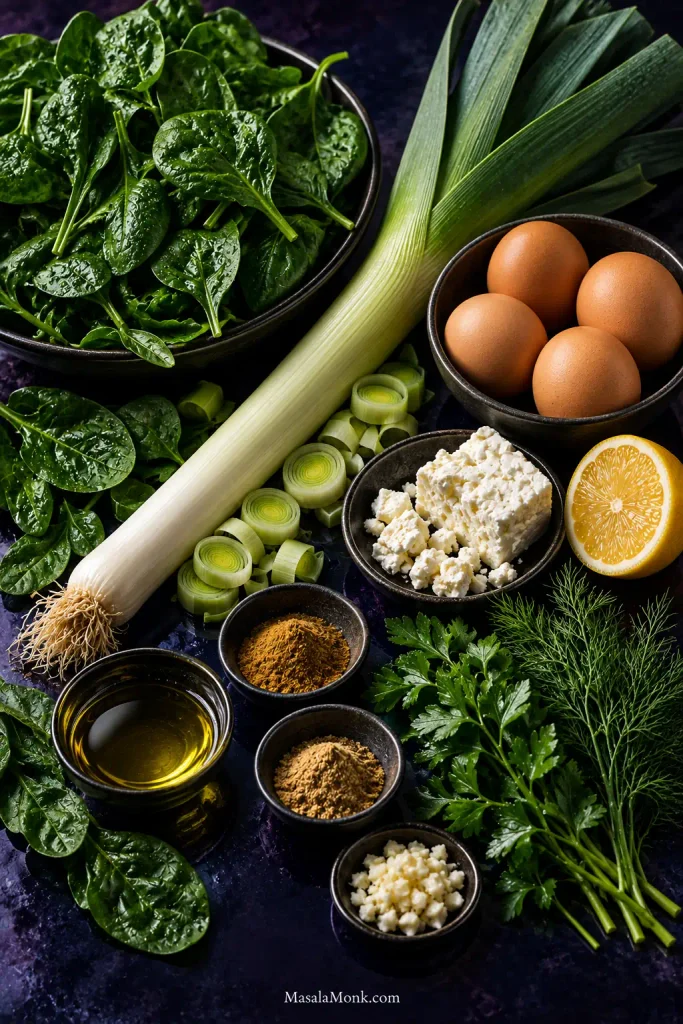
Baby spinach, leek, four eggs, feta, lemon, parsley, dill, olive oil, chopped garlic and small bowls of ground spices arranged on a dark blue-purple surface.
Leek and warm spices build the base; meanwhile, lemon, herbs and feta arrive later so the spinach stays fresh and distinctly green.

Method

Build the Green Base

  1. Soften the leek. Heat the olive oil over medium heat. Add the leek and ¼ teaspoon salt. Cook for 5–7 minutes, until soft and sweet-smelling. A little color is fine.
  1. Add the garlic and spices. Stir in the garlic, cumin, coriander and optional Aleppo pepper. Cook for about 30 seconds, until fragrant.
  1. Wilt the spinach in batches. Add several handfuls at a time, folding them into the leek as they collapse.
  1. Cook away the loose water. Leave the skillet uncovered and stir occasionally. Make a hollow with the back of a spoon. Thin liquid rushing straight into it means the spinach needs longer.
  1. Season, then check the pan. Stir in about half of the parsley and dill, the lemon zest and 1 tablespoon / 15 ml lemon juice. Add black pepper, taste, and add more salt only if needed. Make another hollow with the spoon. The spinach is ready for the eggs when no loose puddle remains, the spoon-made well mostly holds, and the spinach tastes properly seasoned.
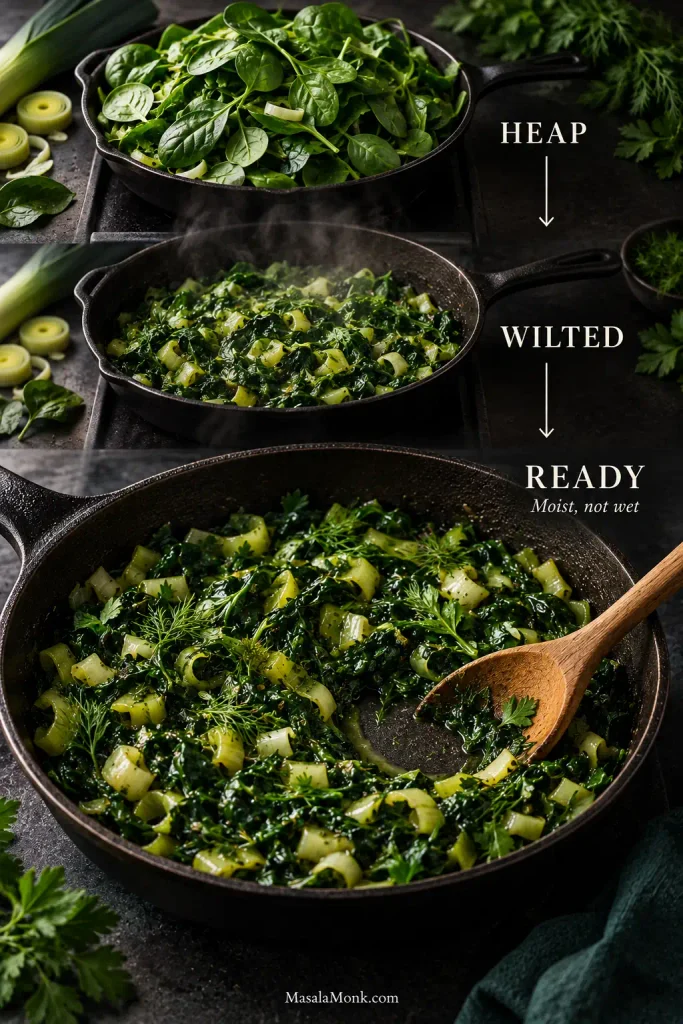
Three stages of spinach cooking in a skillet: a large heap of fresh spinach, wilted spinach with visible moisture, and cooked spinach with a spoon making a hollow that holds its shape. Labels read “HEAP,” “WILTED,” “READY,” and “Moist, not wet.”
Use the right-hand “READY” stage as the cue: the greens should look glossy rather than puddled, and the spoon track should stay visible for a moment. Volume alone is misleading because spinach collapses long before all of its released water is gone.

Load the Eggs

  1. Make four deep wells. Take the skillet off the heat. Crack each egg into a small bowl first, then slide it into a well. Loading all four eggs off heat keeps the first from cooking far ahead of the last.
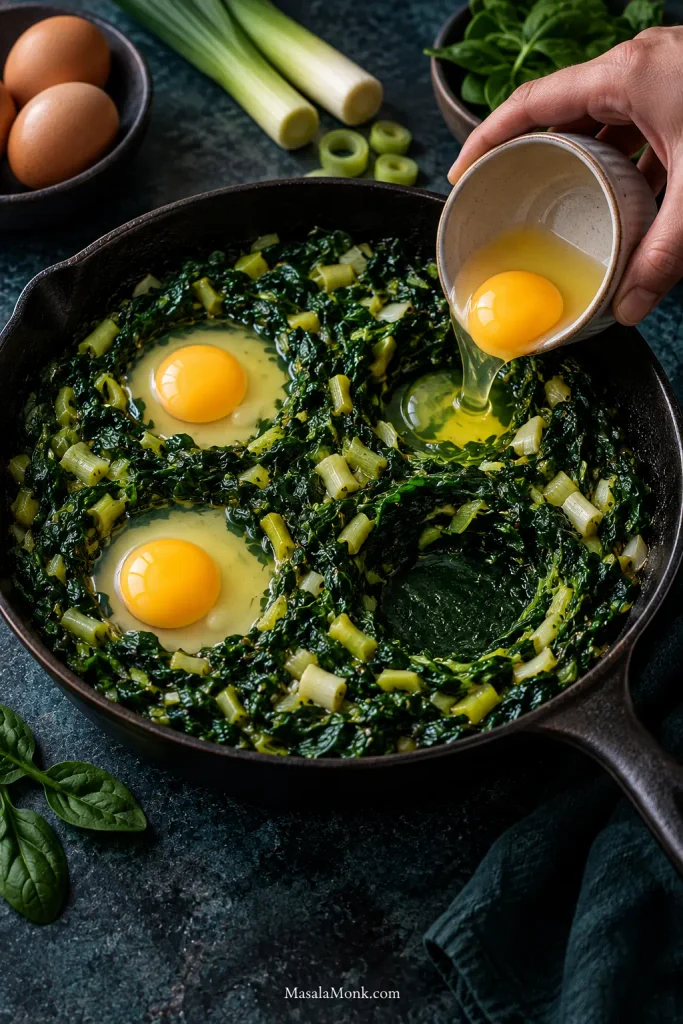
Raw eggs being added to deep wells in cooked spinach and leek. Two eggs are already in place, another is being poured from a small bowl, and one empty well is visible.
Aim to keep most of each white inside its well while the yolk sits near the surface. If a white starts running sideways, deepen the next well rather than trying to push the egg back through the greens.

Cook and Finish

  1. Cover and cook gently. Return the skillet to low or medium-low heat and check at around 3 minutes. For soft yolks, look for set whites and moving yolks. Rotate the pan if one side is cooking faster, then remove it just before the yolks reach the texture you want. The hot skillet will carry them a little farther.
  1. Add the feta and serve. Scatter over the feta and remaining herbs. Taste the spinach around an egg, then add more lemon, salt or chile if needed.

Spoon into one of the eggs while the skillet is still hot and let the yolk run through the spinach.
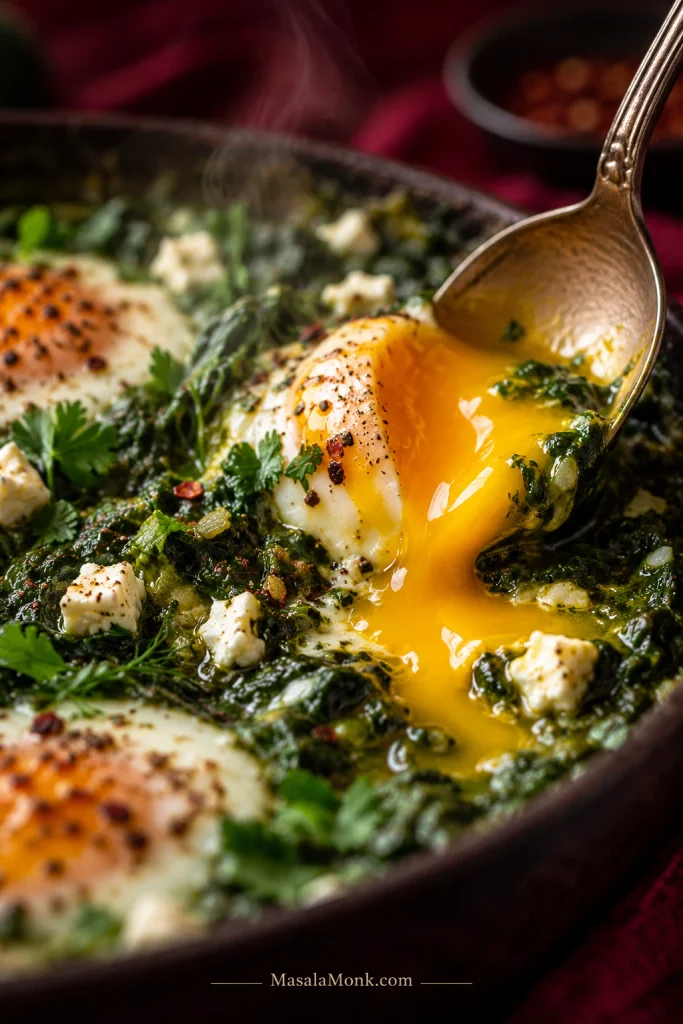
Close-up of a spoon breaking a soft egg yolk in green shakshuka, with golden yolk flowing through cooked spinach, herbs and small pieces of feta.
Once the yolk breaks, it becomes part of the sauce. That is why a little lemon at the finish matters: its acidity keeps the combination of soft yolk, feta and cooked greens rich without feeling heavy.

Want softer yolks? See the egg-doneness guide ↓

Pan Size Changes How the Spinach Cooks

A 10-inch / 25 cm skillet gives this amount of spinach enough depth without trapping too much water underneath it. Wider skillets dry the greens faster; smaller ones hold water longer.

The same principle matters when scaling up. Twice the spinach packed into the original skillet takes longer to reduce, so a wider pan—or two skillets—is easier to manage.

Smaller Batches

Reduce the pan size along with the food. For roughly half the spinach and two eggs, an 8-inch / 20 cm skillet is a useful starting point. Spread that smaller amount through the original 10-inch pan and it will reduce faster.
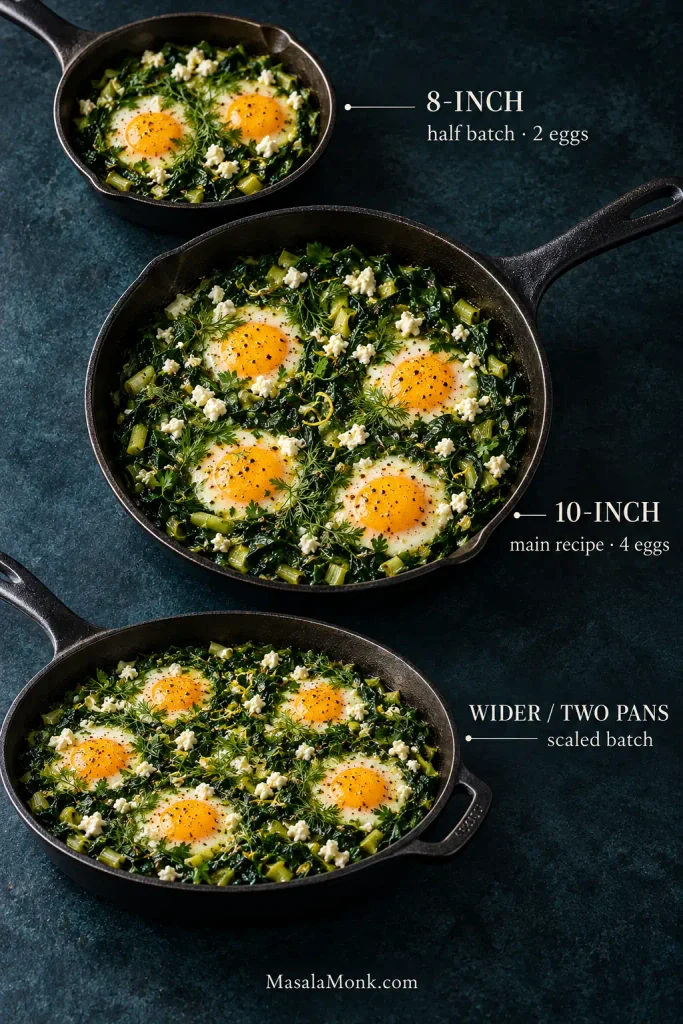
Three skillets showing green shakshuka at different scales: an 8-inch pan with two eggs for a half batch, a 10-inch pan with four eggs for the main recipe, and a wider pan for a larger batch.
Use the 10-inch pan as the depth reference when scaling: the greens should spread in a similarly shallow layer. Keeping roughly the same depth preserves evaporation better than simply adding more cooking time.

The target is simple: not soup, and not a pan of dry sautéed spinach. Get that balance right and the yolk clings to the greens instead of disappearing into liquid underneath them.

Set Whites, Soft Yolks

For soft yolks, pull the skillet when the whites are set but the yolks still move when the pan is gently nudged.
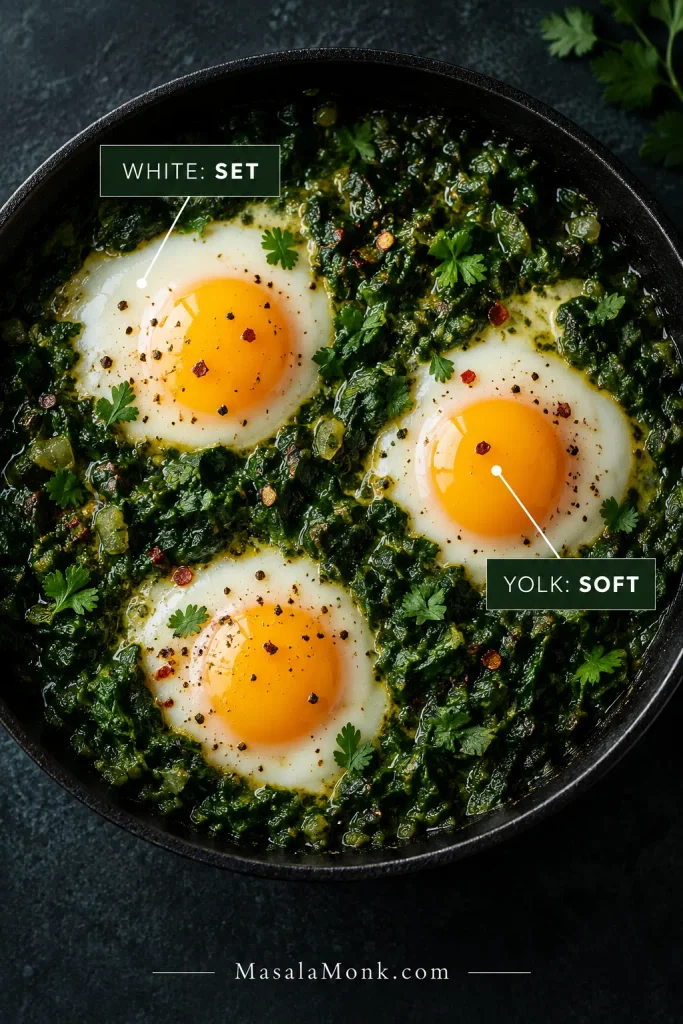
Close view of eggs in green shakshuka with opaque set whites and glossy soft yolks. Callouts identify “WHITE: SET” and “YOLK: SOFT.”
With a clear lid, watch the whites turn opaque without releasing the steam that sets their tops. Pull the pan while the yolks are still glossy; carryover heat will firm them further.

A little unevenness is normal when four eggs share one skillet. Heat reaches the eggs from below while steam sets the tops, and some burners or pans run hotter on one side.

If one side gets ahead, rotate the skillet. A heavy pan keeps cooking after it leaves the burner, too. Cast iron makes this especially obvious: a yolk that looks loose when you switch off the heat can be noticeably firmer by the time the pan reaches the table.

If everyone wants roughly the same doneness, add the eggs together as in the main recipe. When preferences differ, stagger them deliberately: give the eggs destined for firm yolks a short head start, then add the softer-yolk eggs later. Dinner survives and everyone gets the yolk they wanted.

Egg safety: When cooking for someone who needs fully cooked eggs, take both whites and yolks through until firm. FDA guidance recommends firm whites and yolks; pasteurized eggs are the safer choice when eggs are served undercooked, especially for people at higher risk from foodborne illness.

When the Burner Is Too Uneven

An oven can take the burner out of the equation. Preheat it to 375°F / 190°C, use an oven-safe skillet and transfer the pan once the eggs are in. Start checking at about 4 minutes; many pans will need longer, so judge the eggs by the whites and yolks rather than the clock.

Still fighting uneven eggs? Go to troubleshooting ↓

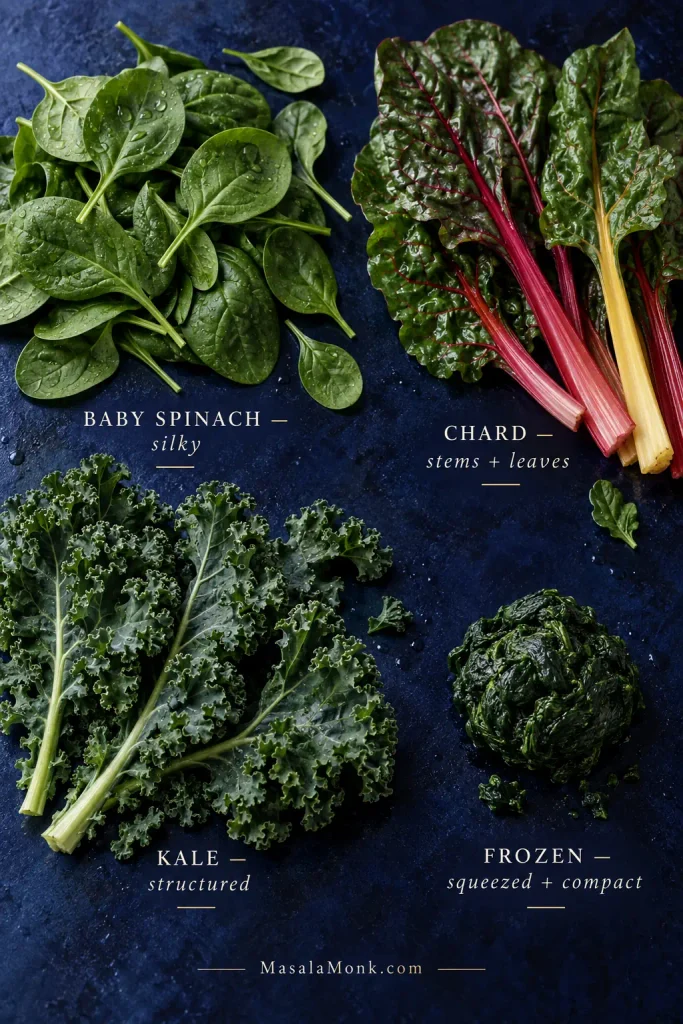
Spinach, Chard or Kale?

GreenHow It BehavesWhat to Change
Baby spinachSoftest and fastest; collapses dramatically and releases plenty of water.Cook uncovered until the loose liquid is gone.
Swiss chardMore structure, with tender leaves and useful stems.Slice the stems finely and cook them with the leek before adding the leaves.
KaleHeartier and chewier; keeps more of its shape.Remove tough stems, slice finely and give it longer to soften.
Frozen spinachAlready collapsed and much more compact than fresh spinach.Use about 6–7 oz / 170–200 g by package weight as a starting point. Thaw completely, squeeze very dry and add it after the aromatics. Brands vary, so treat this as a practical starting quantity rather than an exact fresh-spinach equivalent.
Baby spinach, Swiss chard with colored stems, curly kale and a compact portion of squeezed frozen spinach arranged on a dark blue surface with labels identifying each green.
Choose greens by the cooked texture you want: baby spinach turns silky, chard stays more substantial, kale keeps the most structure, and squeezed frozen spinach starts compact.

Frozen spinach looks surprisingly small after a proper squeeze. That’s useful here: the water left in the towel is water you no longer have to drive out of the skillet. The same issue shows up in homemade spanakopita, where wet spinach can soften both the filling and the pastry around it.

When mixing greens, give chard or kale a head start and add tender spinach later. Save some parsley and dill for scattering over the cooked eggs so the herbs still taste lively when the skillet reaches the table.

What You Can Swap

Leek: a medium yellow or white onion is fine. Let it soften before adding the garlic.

Feta: goat cheese gives a similar tangy contrast. Thick yogurt or labneh works better spooned alongside than stirred into the spinach.

Dill: use more parsley, some cilantro, or a smaller amount of mint.

Heat: skip the Aleppo pepper for a mild skillet, or add harissa or chile oil to individual portions.

Back to the recipe ↑

Fix My Green Shakshuka

Most problems here come down to two things: moisture and heat. If the greens are swimming, deal with the water before the eggs go in. Eggs racing ahead usually mean the heat needs lowering or redistributing.
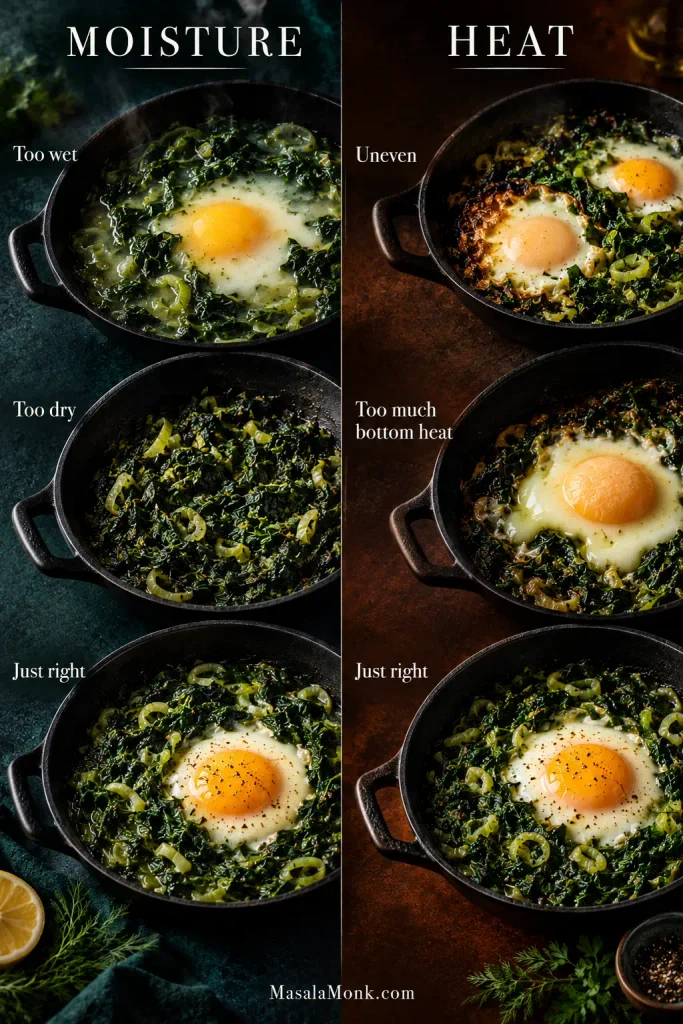
Two-column guide comparing moisture and heat problems in green shakshuka. The moisture side shows a wet base, dry greens and a properly moist base; the heat side shows uneven cooking, excessive bottom heat and properly cooked eggs.
Use timing to diagnose the pan: problems before the eggs usually point to moisture; problems during egg cooking usually point to heat. Fix the cause, not the clock.
What You SeeLikely CauseWhat to Do
Water pooling under the spinachThe leaves have wilted but their released liquid has not evaporated.Keep cooking uncovered before adding the eggs.
Spinach looks dryThe pan reduced too far.Add water 1 tablespoon / 15 ml at a time until the greens loosen.
The spinach tastes flatIt may need freshness or acidity more than another layer of seasoning.Try lemon and fresh herbs before reaching for more spice or salt.
An egg spreads through the spinachThe greens are too wet, the well is too shallow, or both.Reduce remaining liquid and make the next wells deeper.
One side cooks much fasterThe burner or skillet has a hot spot.Rotate the skillet or move it to the oven.
Yolk is firm while the white still looks looseStrong bottom heat is cooking the yolk faster than steam sets the top, or the egg is sitting too high.Use deeper wells, gentler heat and a snug cover. Move to the oven if the same problem keeps returning.

Fixed it? Back to the recipe ↑

Make the Spinach Ahead, Not the Eggs

Yes, you can make green shakshuka ahead—just stop before the eggs. Cook the leek, spices and spinach, cool and refrigerate the mixture, then reheat it and add fresh eggs shortly before serving. Add the feta after the eggs are cooked.

Keep the cooked spinach refrigerated and use it within 3–4 days. That matches USDA guidance for most cooked leftovers.

Leftover shakshuka can be reheated, but the yolks will firm up. For freezing, portion the cooked spinach mixture without eggs or feta, thaw it in the refrigerator, reheat thoroughly and add fresh eggs at the end.

If you want an egg dish that reheats well as a whole, an oven-baked frittata is a better fit.

What to Serve With Green Shakshuka

Bread earns its place here. Warm homemade pita, sourdough or another crusty loaf is ideal for scooping the greens and wiping up the yolk left around the edges of the skillet.

Greek lemon potatoes turn it into a more substantial meal. Thick yogurt, labneh or a plate of crisp raw vegetables bring something cool alongside.
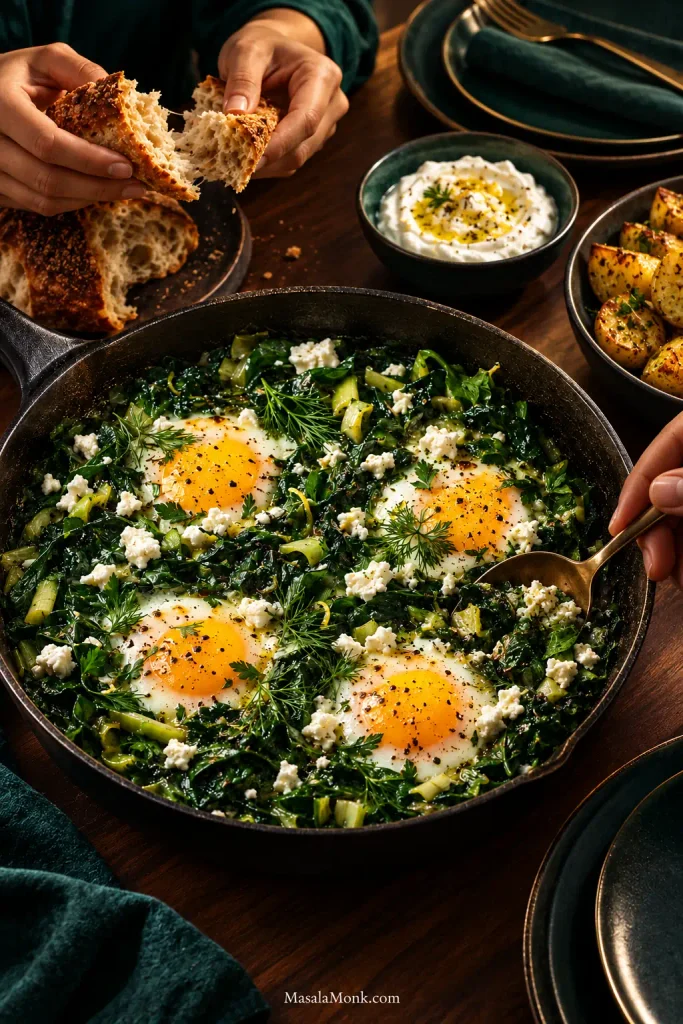
Green shakshuka with four eggs served in a skillet on a dark wooden table, with hands tearing bread and serving the dish beside labneh or yogurt and roasted lemon potatoes.
Green shakshuka suits the middle of the table: every scoop lands a little differently—more yolk, more feta, more greens—while bread turns whatever is left in the skillet into the best part of the meal.

Put the skillet in the middle and let the bread do most of the serving.

At that point, stop cooking and eat.
Back to the recipe ↑  ·  Back to top ↑

Posted on — 3 Comments

10 Most Popular Mediterranean Breakfasts

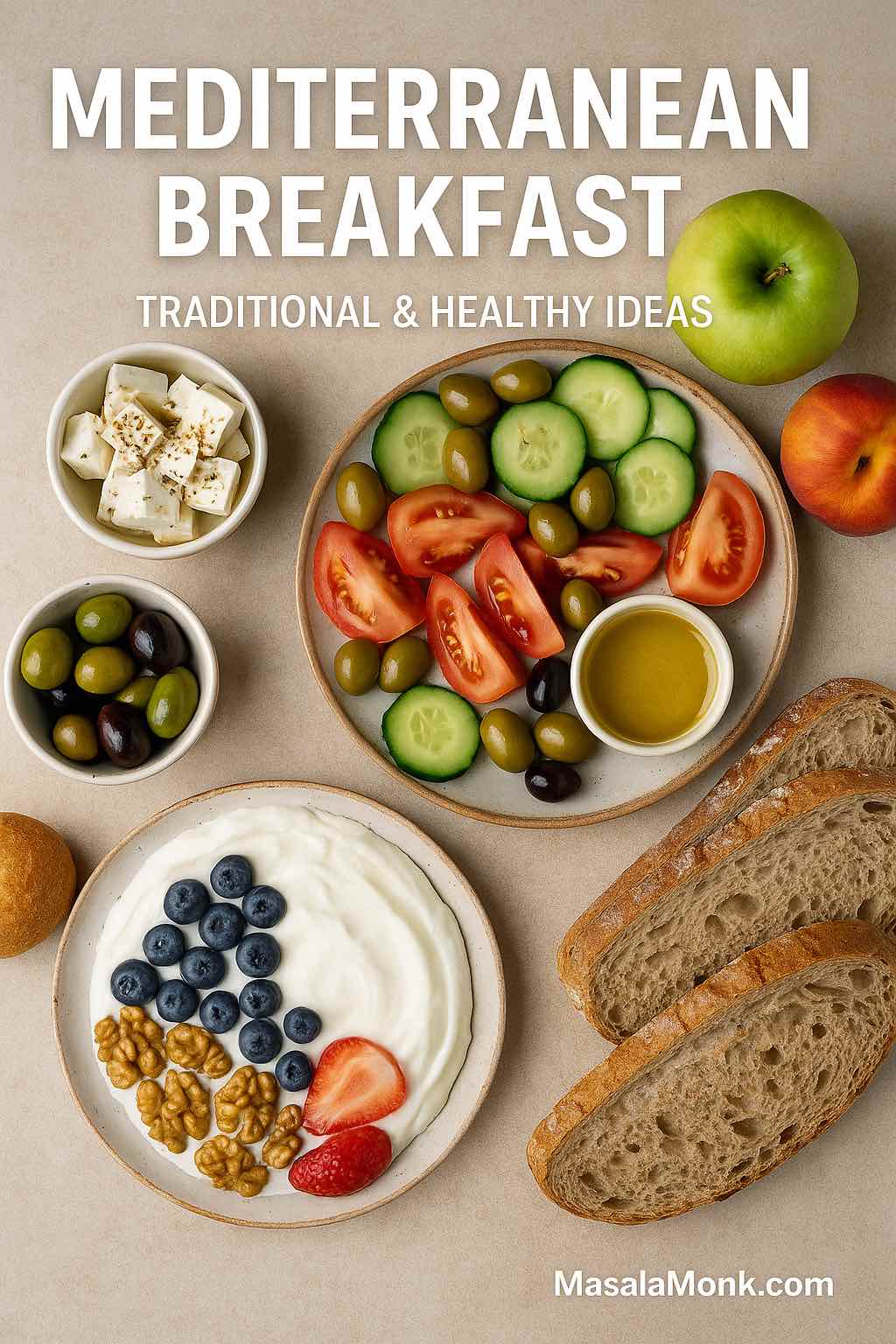
Photorealistic portrait of a Mediterranean breakfast spread with bread, olives, cheese, yogurt, fruit, and coffee, styled like a premium magazine cover.

If you’ve ever wondered “What do Mediterraneans really eat for breakfast?” you’re not alone. A Mediterranean breakfast isn’t just food on a plate—it’s a ritual, a slower start to the day, and a celebration of simple, nourishing ingredients. Think ripe fruit, creamy yogurt, a drizzle of golden olive oil, and just enough bread to soak it all up.

The beauty of this style of eating is its balance. Some mornings are as light as a Greek yogurt bowl with honey and nuts, while others are heartier, like shakshuka simmering away in a pan. Whether your goal is to enjoy a traditional spread, follow the Mediterranean diet for better health, or pick up a few quick breakfast ideas for busy mornings, you’ll find inspiration here.

The Mediterranean diet isn’t just delicious—it’s also one of the most studied and recommended eating patterns in the world. Research shows it helps lower the risk of heart disease, diabetes, and even some cancers, while supporting long-term health and longevity (Mayo Clinic; NCBI Review).

For a deeper dive, check out our own Mediterranean diet guide or download a free Mediterranean diet meal plan.

So, let’s begin by exploring what a typical Mediterranean breakfast looks like across the region—because once you see the variety, you’ll realize there’s no one-size-fits-all.


What is a Typical Mediterranean Breakfast?

When people ask about a “typical” or “traditional” Mediterranean breakfast, the truth is—it depends on where you are. The Mediterranean is a patchwork of cultures and flavors, and breakfast looks a little different in each country. What they all share, though, is a love for fresh, seasonal food and the art of keeping things simple.

Here’s a quick tour:

Greek Breakfast

Mornings in Greece are often slow and satisfying. Imagine a bowl of thick Greek yogurt topped with honey, nuts, and figs, or a slice of fresh bread with cheese, olives, and a drizzle of olive oil. Coffee, of course, is always nearby.

Turkish Breakfast (Kahvaltı)

If you love variety, you’ll fall in love with a Turkish breakfast. It’s not just a meal, it’s a spread—plates of tomatoes, cucumbers, olives, cheeses, and bread fill the table. Eggs might be served boiled or as menemen (scrambled with tomatoes and peppers). Black tea in little tulip-shaped glasses ties it all together.

Italian Breakfast

In Italy, breakfast is more about a quick bite than a feast. A strong espresso or cappuccino, maybe paired with fresh fruit, yogurt, or a slice of wholemeal toast drizzled with olive oil. Simple, light, and elegant—just like the Italian lifestyle.

Spanish Breakfast

Spain leans toward hearty simplicity. The classic pan con tomate—toasted bread rubbed with fresh tomato and olive oil—is often topped with cheese or ham. Add a piece of fruit and a cup of coffee, and you’ve got a perfect Mediterranean morning.


In many Eastern Mediterranean countries, mornings begin with a generous spread of cheese, olives, hummus, and beans like ful medames—a tradition highlighted by Oldways.

👉 As you can see, there isn’t one “correct” Mediterranean breakfast. Instead, it’s a celebration of fresh produce, wholesome grains, and healthy fats—delicious proof that eating well can also feel joyful.

Mediterranean Diet Breakfast Ideas for Every Lifestyle

The Mediterranean diet isn’t a strict set of rules—it’s more of a lifestyle. And that’s exactly why breakfast on this diet can be so flexible. Whether you’re looking for something quick and easy, healthy and balanced, or even a little indulgent, there’s always an option that feels doable.

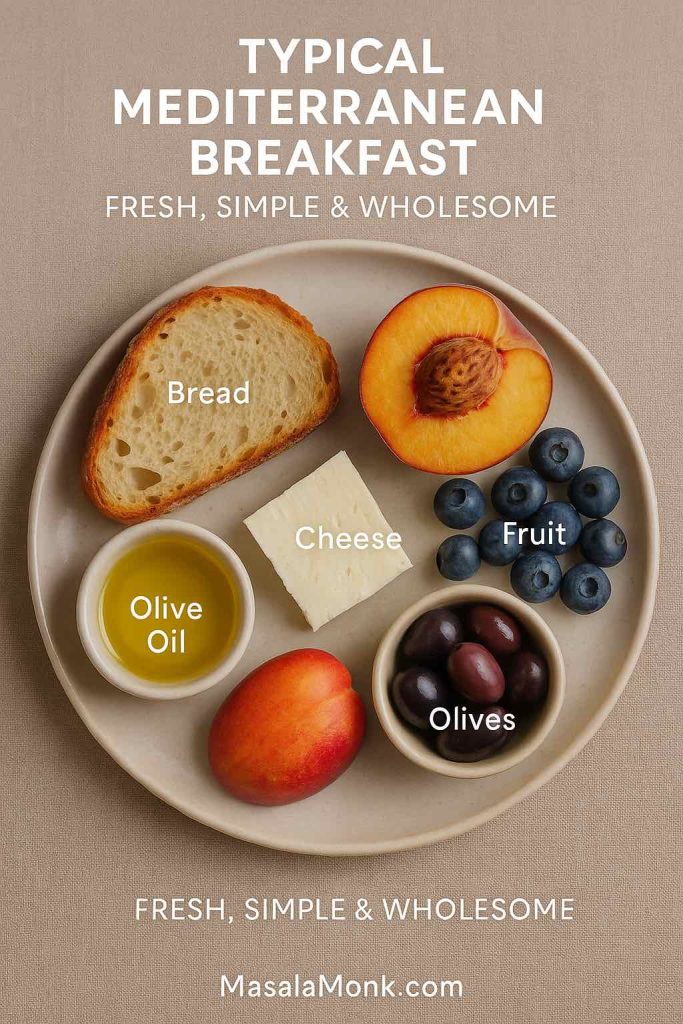
Educational photograph of a typical Mediterranean breakfast plate featuring bread, olive oil, cheese, olives, and fresh fruit, labeled for clarity.
This typical Mediterranean breakfast plate brings together bread, olive oil, cheese, olives, and fruit—simple staples that transition beautifully into a healthy start.

Here are a few ways you can bring the Mediterranean morning to your own kitchen:


Healthy Mediterranean Breakfast Ideas

If you want to start the day feeling energized, focus on whole foods and natural flavors. Some simple but powerful options include:

  • Greek yogurt with berries and chia seeds – creamy, tangy, and full of protein.
  • Whole-grain toast with hummus and veggies – a savory option packed with fiber.
  • Fruit with nuts and a drizzle of olive oil – yes, olive oil on fruit! It adds a silky richness and healthy fats.

These choices are light, refreshing, and perfect if you like to feel fueled but not heavy in the morning.


Easy Mediterranean Diet Breakfast Recipes

Not a morning person? No problem. These quick breakfasts can be ready in minutes—or prepped ahead for grab-and-go ease:

  • Overnight oats with figs and walnuts – soak your oats in almond milk overnight, then top with Mediterranean favorites like figs and nuts.
  • Mediterranean smoothie – blend spinach, Greek yogurt, banana, and flaxseeds for a fast, nutrient-packed drink.
  • Avocado toast with olives and tomato – the ultimate 5-minute breakfast with all the flavors of the Mediterranean coast.

When You Want Something Cozy

Some mornings call for a little extra comfort. On those days, go for:

  • Warm oatmeal with honey and pistachios
  • A slice of rustic bread with olive oil and za’atar
  • A cup of herbal tea or Turkish-style coffee to complete the ritual.

👉 The best part? You can mix and match these ideas all week long. One day might be yogurt and fruit, the next a hearty smoothie, and the next something as simple as bread with olive oil. That’s the beauty of the Mediterranean diet—it’s flexible, joyful, and endlessly adaptable to your lifestyle.

Mediterranean Breakfast Recipes with Eggs

Eggs are a big part of Mediterranean mornings, and for good reason—they’re affordable, versatile, and a fantastic source of protein. In many Mediterranean countries, eggs are combined with fresh vegetables, herbs, and olive oil to create dishes that are both comforting and nourishing.

Here are a few classic recipes you’ll want to try:


Shakshuka

If there’s one Mediterranean egg dish that has gone global, it’s shakshuka. Originating in North Africa and popular across the Middle East, shakshuka features eggs gently poached in a sauce of tomatoes, onions, peppers, and spices. Serve it right out of the skillet with crusty bread to scoop up every last bite—it’s hearty, flavorful, and perfect for brunch or a lazy weekend morning.


Menemen (Turkish Scrambled Eggs)

Menemen is Turkey’s answer to comfort food. It’s made by slowly cooking tomatoes, peppers, and onions until soft, then scrambling in eggs with a drizzle of olive oil. Creamy, slightly sweet, and full of vegetables, it’s a dish that feels indulgent yet light at the same time. Pair it with warm bread and olives for a true Turkish-style breakfast.


Vegetable Omelet with Feta and Herbs

Sometimes, simple is best. A classic Mediterranean omelet often includes fresh vegetables like spinach, zucchini, or peppers, finished with a sprinkle of crumbled feta and fragrant herbs like dill or parsley. It’s quick enough for weekdays but tasty enough to impress guests at brunch.


Looking for more exciting egg options, read our post on 10 Examples of Egg Dishes, with 2 Eggs.

👉 These egg dishes are more than just recipes—they’re traditions, often shared at the table with family or friends. And the beauty of them is how flexible they are: add more veggies if you want a lighter meal, or pair them with whole-grain bread if you need something more filling.

Mediterranean Breakfast Without Eggs

Not everyone is an egg lover—and that’s completely fine. The good news? The Mediterranean diet offers plenty of delicious, satisfying breakfasts without a single egg in sight. These meals are light, nourishing, and just as authentic as their egg-based counterparts.

Here are some of the best ideas:


Greek Yogurt with Nuts and Honey

Creamy, protein-rich Greek yogurt topped with walnuts, almonds, or pistachios and a drizzle of honey is a classic choice. Add fresh fruit like figs, grapes, or berries for natural sweetness. It’s quick, filling, and feels like a little treat.


Oatmeal with Olive Oil and Fruit

Yes, you read that right—olive oil on oatmeal! In the Mediterranean, it’s common to drizzle good extra-virgin olive oil over warm oats, then top with dried figs, dates, or pomegranate seeds. It’s earthy, slightly sweet, and packed with fiber and healthy fats.

Olive oil is more than just a fat—it’s one of the Mediterranean diet’s true superfoods, known for its anti-inflammatory benefits.


Hummus and Veggie Toast

A slice of whole-grain bread spread with creamy hummus and layered with tomatoes, cucumbers, or roasted peppers makes for a savory, egg-free option that keeps you satisfied. Sprinkle a little za’atar or paprika for extra flavor. Here is a simple recipe to help you out: Hummus Veggie Sandwich: A Nutritious and Delicious Delight.


Chia Pudding with Almond Milk

If you’re looking for something you can prep the night before, chia pudding is a perfect fit. Mix chia seeds with almond milk, let it thicken overnight, and top with fruit, nuts, or even a spoonful of tahini in the morning.

Fan of Chia Pudding – explore 10 Creative Chia Pudding Recipes for Every Taste.


For more Egg Free and Vegan variety, here are some more plant-based High Protein breakfast ideas.

👉 As you can see, skipping eggs doesn’t mean missing out. These breakfasts are fresh, wholesome, and incredibly versatile, making them perfect for anyone who prefers plant-based meals or simply wants to switch things up.

Mediterranean Diet Breakfast for Weight Loss

One of the reasons the Mediterranean diet is so popular is because it’s naturally supportive of weight loss. Instead of focusing on restrictions, it encourages balance—lots of fresh vegetables, fruits, whole grains, lean proteins, and of course, heart-healthy fats like olive oil and nuts. The result? Meals that keep you satisfied without feeling heavy.

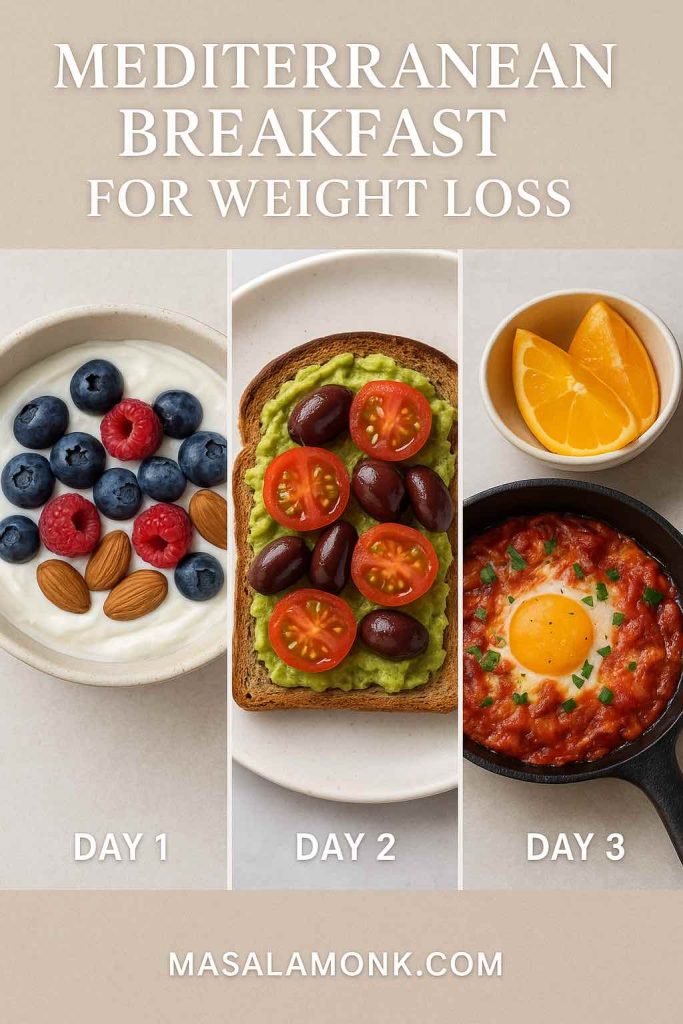
Infographic showing three Mediterranean breakfast ideas for weight loss: Day 1 yogurt with berries and nuts, Day 2 avocado toast with olives and tomatoes, Day 3 shakshuka with a side of oranges.
Follow this easy 3-day Mediterranean breakfast plan for weight loss—moving from protein-rich yogurt bowls to avocado toast and shakshuka for balance.

When it comes to breakfast, the trick is to combine protein + healthy fats + fiber so you feel full for hours and avoid mid-morning cravings. Here’s a simple 3-day Mediterranean breakfast plan for weight loss you can try:


First Day – Fresh & Protein-Packed

  • Breakfast: Greek yogurt topped with a handful of walnuts, blueberries, and a drizzle of honey.
  • Why it works: High in protein and antioxidants, this bowl balances creaminess with crunch while keeping sugar levels stable.

Second Day – Light & Energizing

  • Breakfast: Whole-grain toast with smashed avocado, sliced tomatoes, olives, and a sprinkle of feta.
  • Why it works: Packed with fiber, healthy fats, and just enough protein to keep you energized until lunch.

Third Day – Hearty & Comforting

  • Breakfast: Shakshuka (eggs poached in tomato and pepper sauce) served with a side of fruit.
  • Why it works: A filling yet nutrient-dense meal that’s rich in protein and perfect for days when you need extra energy.

Why it helps: Mediterranean-style eating is linked to a healthier gut microbiome, which plays an important role in weight regulation. In a controlled non-human primate study, animals fed a Mediterranean diet self-regulated their intake and avoided overeating compared with those on a Western diet (PubMed: Obesity study; Wake Forest News Release). Adding seasonal produce like tomatoes to support weight-loss makes these meals even more effective.

Bonus for brain health: In a large U.S. cohort (92,383 adults), consuming at least 7 g/day of olive oil (about half a tablespoon) was associated with a 28% lower risk of dementia-related death, independent of overall diet quality (JAMA Network Open; NIA Summary).

👉 These breakfasts aren’t about cutting calories to the extreme—they’re about eating smart, flavorful meals that naturally support weight management. By focusing on whole foods and keeping portions balanced, the Mediterranean diet makes weight loss feel less like a “diet” and more like a lifestyle you’ll actually enjoy.

Mediterranean Breakfast Menu & Meal Prep Ideas

One of the best things about the Mediterranean diet is how easy it is to plan ahead. With just a little prep, you can set yourself up for a whole week of nourishing breakfasts—whether you prefer sweet, savory, quick, or sit-down meals.

Here are some Mediterranean breakfast menu ideas and meal prep tips to make your mornings stress-free:


Weekly Mediterranean Breakfast Menu (Sample)

  • Monday – Greek yogurt with figs, almonds, and a drizzle of honey
  • Tuesday – Whole-grain toast with hummus, cucumbers, and olive oil
  • Wednesday – Vegetable omelet with feta and fresh herbs
  • Thursday – Overnight oats with dates, walnuts, and a splash of almond milk
  • Friday – Pan con tomate (Spanish tomato toast) with a side of fruit
  • Saturday – Shakshuka served with wholemeal bread
  • Sunday – Chia pudding with pomegranate seeds and pistachios

Mediterranean Breakfast Meal Prep Tips

  • Yogurt jars for the week: Portion Greek yogurt into small containers, then just add toppings in the morning.
  • Overnight oats in batches: Prep 3–4 jars at once so you always have a grab-and-go option.
  • Shakshuka base ready to go: Cook the tomato-pepper sauce ahead of time, then reheat and crack in eggs when you’re ready to eat.
  • Pre-chopped veggies: Keep cucumbers, peppers, and tomatoes washed and ready in the fridge for quick toasts or salads.
  • Homemade hummus: Make a batch on Sunday and use it all week for toast, wraps, or veggie dips.

👉 With these ideas, your Mediterranean breakfast isn’t just healthy—it’s also quick, practical, and adaptable. By mixing and matching simple staples like yogurt, bread, eggs, hummus, and fresh produce, you’ll never run out of delicious combinations.

FAQs About Mediterranean Breakfasts

What is a traditional Mediterranean breakfast?

A traditional Mediterranean breakfast often includes simple, fresh foods such as bread with olive oil, cheese, olives, fruit, and yogurt. In some regions, eggs, tomatoes, and herbs are added too. The focus is always on whole, minimally processed ingredients.


What do Mediterraneans eat for breakfast?

It varies by country, but common choices include Greek yogurt with honey and nuts, pan con tomate (Spanish tomato toast), Turkish menemen (eggs with tomatoes and peppers), or just fresh fruit with bread and olive oil.


Can you eat eggs on the Mediterranean diet?

Yes, absolutely. Eggs are a healthy source of protein and are widely used in Mediterranean breakfasts—think omelets with herbs, shakshuka, or simply boiled eggs with olives and bread.


What is a good Mediterranean breakfast for weight loss?

A weight-loss-friendly Mediterranean breakfast combines protein, fiber, and healthy fats. Examples include Greek yogurt with fruit and nuts, avocado toast with vegetables, or oatmeal topped with seeds and olive oil. These keep you full and satisfied without excess calories.


What are examples of Mediterranean breakfasts without eggs?

Great egg-free options include Greek yogurt bowls, hummus and veggie toast, chia pudding with almond milk, or oatmeal with figs and olive oil. They’re just as filling and perfectly aligned with the Mediterranean diet.

Conclusion

A Mediterranean breakfast can be as simple as bread with olive oil or as hearty as shakshuka bubbling away on the stove. What makes it special is the balance of fresh ingredients, healthy fats, and vibrant flavors.

Whether you’re after something traditional, diet-friendly, egg-free, or quick and easy, there’s a Mediterranean breakfast waiting to brighten your morning. So why not bring a little sunshine from the Mediterranean coast to your own kitchen tomorrow? 🌿🍅🥖

If you’d like to dive deeper, the Cleveland Clinic offers an excellent overview of the Mediterranean diet food list and benefits.