
Scoop through this green shakshuka and the spoon should catch soft spinach and herbs, salty feta and enough warm yolk to coat the greens underneath. Tear off a piece of bread and you get all three in one bite. Instead of the familiar tomato base, this version builds the pan around spinach, leek and herbs.
The spinach starts as a heap and quickly folds down around the sweet leek and warm spices. Watch the pan most closely before the eggs: the greens should still be juicy, but there should not be loose water underneath them. After that, the skillet is forgiving. Feta, reserved herbs and a little extra lemon turn a handful of ordinary ingredients into a meal that feels surprisingly generous.
Green Shakshuka Recipe
Spinach and leek cook down with warm spices, herbs and lemon before four eggs settle into deep wells and cook gently under a lid. The whole skillet comes together in about 30 minutes, with feta, the remaining herbs and extra lemon added at the end.
Serves
2 as a main dish or 4 smaller brunch portions
Prep
About 10 minutes
Cook
About 20 minutes
Total
About 30 minutes
Pan
10-inch / 25 cm skillet with lid
Eggs
Covered stovetop
Useful equipment: a 10-inch / 25 cm skillet, a lid (clear if you have one), a flexible spatula or wooden spoon, and a small bowl or ramekin for cracking the eggs. Without a matching lid, use another heatproof lid that covers the skillet or tent it snugly with foil.
Ingredients
For the skillet
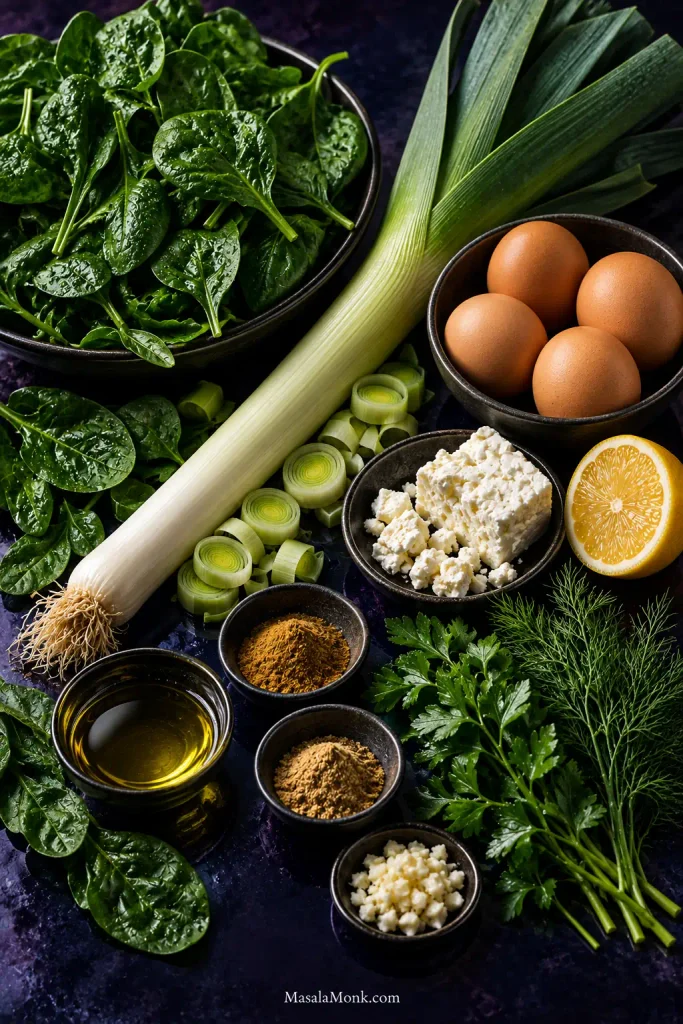
- 2 tablespoons / 30 ml extra-virgin olive oil
- 1 large leek, about 6 oz / 170 g trimmed white and light-green parts, washed thoroughly and thinly sliced
- 3 garlic cloves, about 9 g, finely chopped
- 1 teaspoon ground cumin
- ½ teaspoon ground coriander
- ½ teaspoon Aleppo pepper, optional
- 10 oz / 285 g baby spinach
- ½ oz / 15 g flat-leaf parsley, roughly one generous handful, chopped and divided
- ⅓ oz / 10 g fresh dill, roughly one small handful, chopped and divided
- Finely grated zest of ½ lemon
- 1 tablespoon / 15 ml fresh lemon juice, plus more to taste
- ¼ teaspoon fine salt, plus more to taste
- Freshly ground black pepper
- 4 large eggs
For the table
- 3 oz / 85 g feta, crumbled
- Lemon wedges
- Harissa, Aleppo pepper or chile oil, optional
- Warm pita or crusty bread
Method
Build the Green Base
- Soften the leek. Heat the olive oil over medium heat. Add the leek and ¼ teaspoon salt. Cook for 5–7 minutes, until soft and sweet-smelling. A little color is fine.
- Add the garlic and spices. Stir in the garlic, cumin, coriander and optional Aleppo pepper. Cook for about 30 seconds, until fragrant.
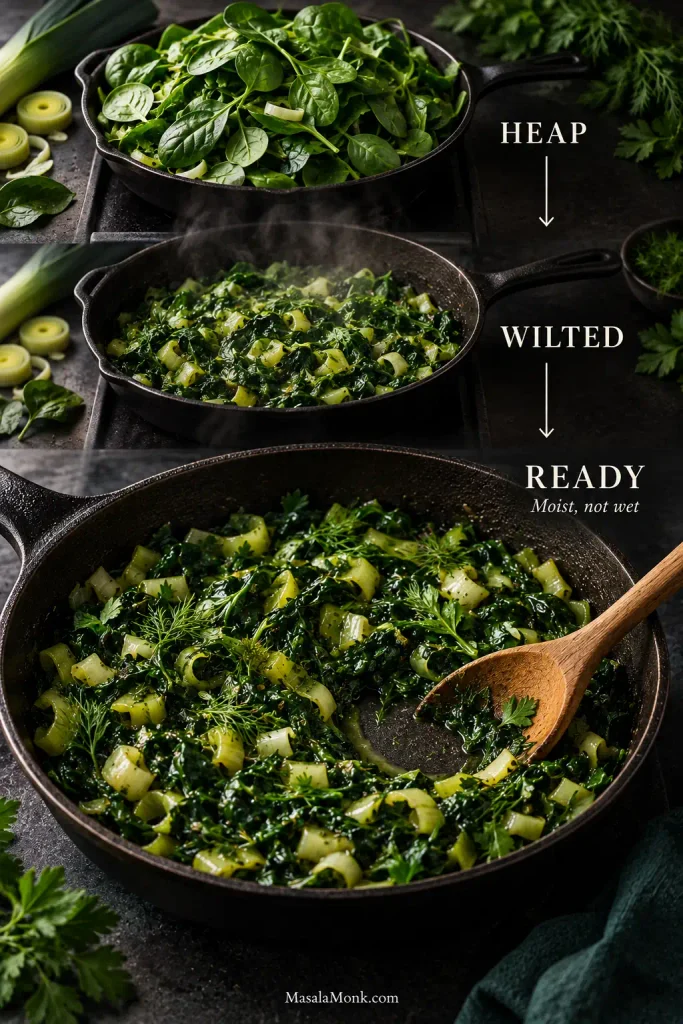
- Wilt the spinach in batches. Add several handfuls at a time, folding them into the leek as they collapse.
- Cook away the loose water. Leave the skillet uncovered and stir occasionally. Make a hollow with the back of a spoon. Thin liquid rushing straight into it means the spinach needs longer.
- Season, then check the pan. Stir in about half of the parsley and dill, the lemon zest and 1 tablespoon / 15 ml lemon juice. Add black pepper, taste, and add more salt only if needed. Make another hollow with the spoon. The spinach is ready for the eggs when no loose puddle remains, the spoon-made well mostly holds, and the spinach tastes properly seasoned.
Load the Eggs
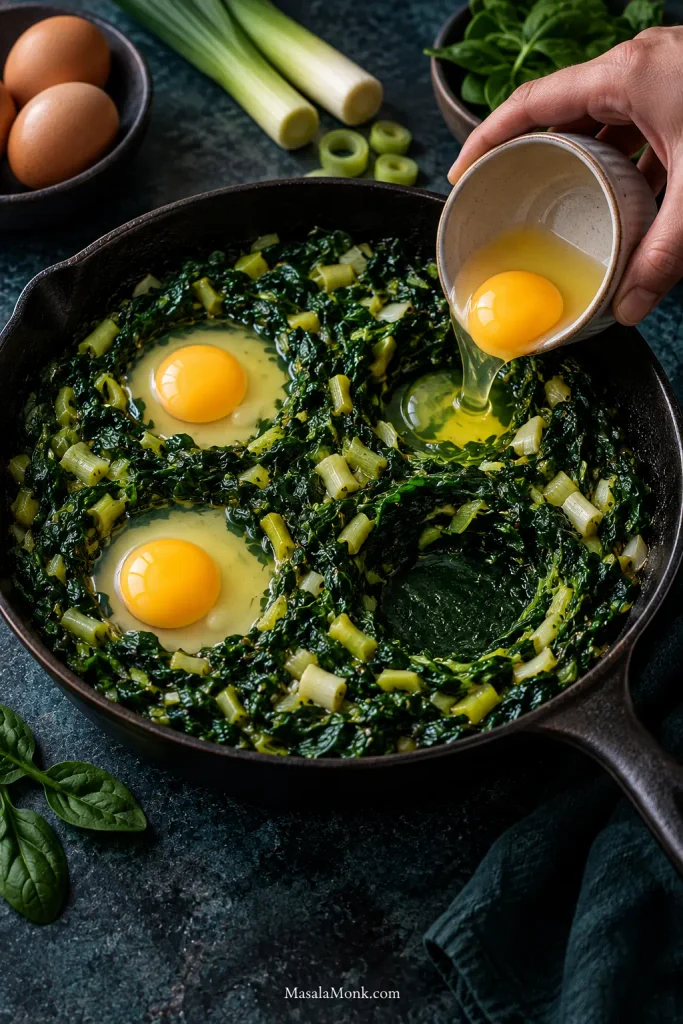
- Make four deep wells. Take the skillet off the heat. Crack each egg into a small bowl first, then slide it into a well. Loading all four eggs off heat keeps the first from cooking far ahead of the last.
Cook and Finish
- Cover and cook gently. Return the skillet to low or medium-low heat and check at around 3 minutes. For soft yolks, look for set whites and moving yolks. Rotate the pan if one side is cooking faster, then remove it just before the yolks reach the texture you want. The hot skillet will carry them a little farther.
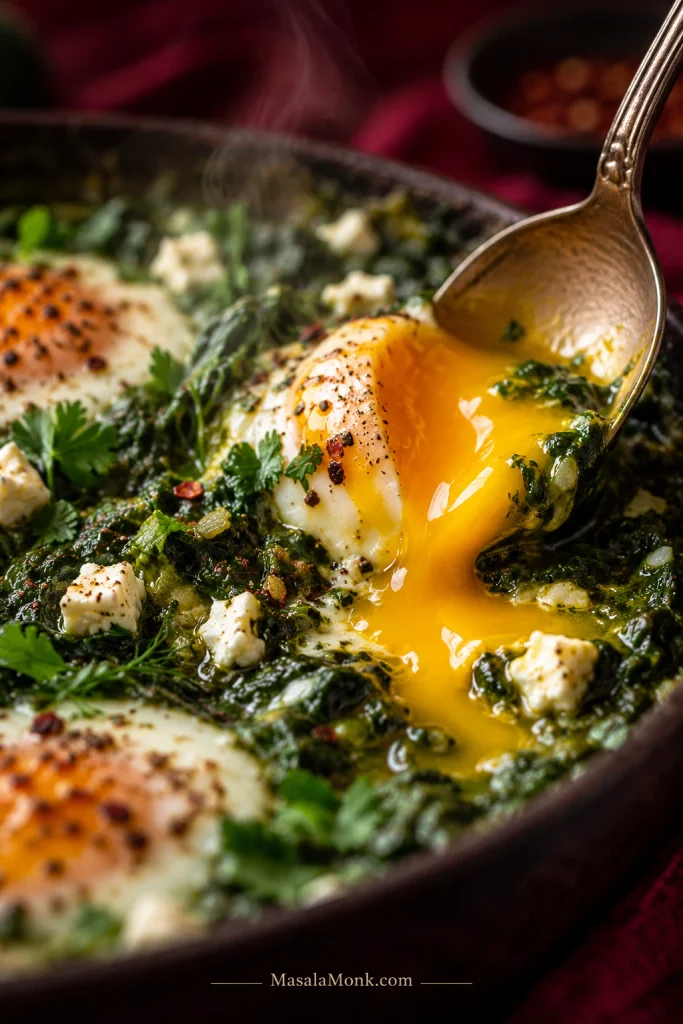
- Add the feta and serve. Scatter over the feta and remaining herbs. Taste the spinach around an egg, then add more lemon, salt or chile if needed.
Spoon into one of the eggs while the skillet is still hot and let the yolk run through the spinach.
Want softer yolks? See the egg-doneness guide ↓
Pan Size Changes How the Spinach Cooks
A 10-inch / 25 cm skillet gives this amount of spinach enough depth without trapping too much water underneath it. Wider skillets dry the greens faster; smaller ones hold water longer.
The same principle matters when scaling up. Twice the spinach packed into the original skillet takes longer to reduce, so a wider pan—or two skillets—is easier to manage.
Smaller Batches
Reduce the pan size along with the food. For roughly half the spinach and two eggs, an 8-inch / 20 cm skillet is a useful starting point. Spread that smaller amount through the original 10-inch pan and it will reduce faster.
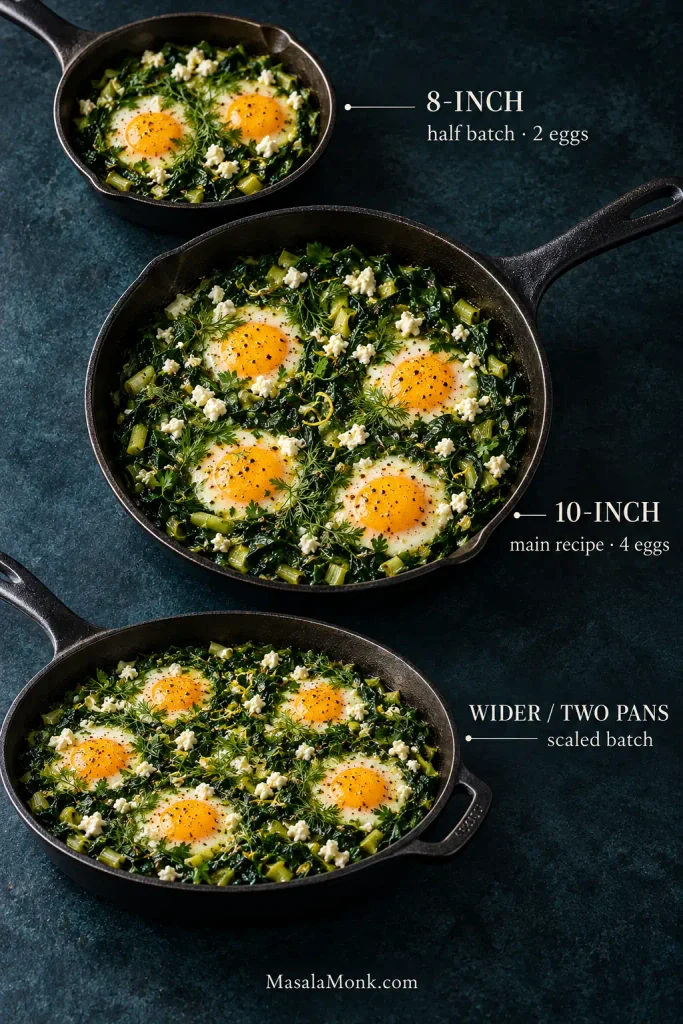
The target is simple: not soup, and not a pan of dry sautéed spinach. Get that balance right and the yolk clings to the greens instead of disappearing into liquid underneath them.
Set Whites, Soft Yolks
For soft yolks, pull the skillet when the whites are set but the yolks still move when the pan is gently nudged.

A little unevenness is normal when four eggs share one skillet. Heat reaches the eggs from below while steam sets the tops, and some burners or pans run hotter on one side.
If one side gets ahead, rotate the skillet. A heavy pan keeps cooking after it leaves the burner, too. Cast iron makes this especially obvious: a yolk that looks loose when you switch off the heat can be noticeably firmer by the time the pan reaches the table.
If everyone wants roughly the same doneness, add the eggs together as in the main recipe. When preferences differ, stagger them deliberately: give the eggs destined for firm yolks a short head start, then add the softer-yolk eggs later. Dinner survives and everyone gets the yolk they wanted.
Egg safety: When cooking for someone who needs fully cooked eggs, take both whites and yolks through until firm. FDA guidance recommends firm whites and yolks; pasteurized eggs are the safer choice when eggs are served undercooked, especially for people at higher risk from foodborne illness.
When the Burner Is Too Uneven
An oven can take the burner out of the equation. Preheat it to 375°F / 190°C, use an oven-safe skillet and transfer the pan once the eggs are in. Start checking at about 4 minutes; many pans will need longer, so judge the eggs by the whites and yolks rather than the clock.
Still fighting uneven eggs? Go to troubleshooting ↓
Spinach, Chard or Kale?
| Green | How It Behaves | What to Change |
|---|---|---|
| Baby spinach | Softest and fastest; collapses dramatically and releases plenty of water. | Cook uncovered until the loose liquid is gone. |
| Swiss chard | More structure, with tender leaves and useful stems. | Slice the stems finely and cook them with the leek before adding the leaves. |
| Kale | Heartier and chewier; keeps more of its shape. | Remove tough stems, slice finely and give it longer to soften. |
| Frozen spinach | Already collapsed and much more compact than fresh spinach. | Use about 6–7 oz / 170–200 g by package weight as a starting point. Thaw completely, squeeze very dry and add it after the aromatics. Brands vary, so treat this as a practical starting quantity rather than an exact fresh-spinach equivalent. |
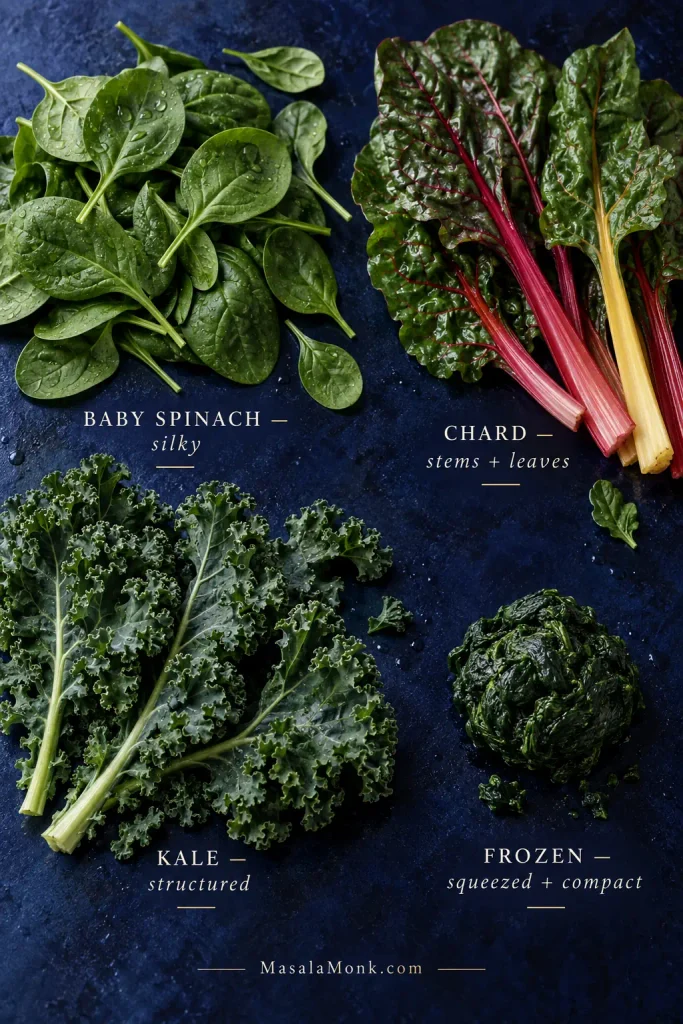
Frozen spinach looks surprisingly small after a proper squeeze. That’s useful here: the water left in the towel is water you no longer have to drive out of the skillet. The same issue shows up in homemade spanakopita, where wet spinach can soften both the filling and the pastry around it.
When mixing greens, give chard or kale a head start and add tender spinach later. Save some parsley and dill for scattering over the cooked eggs so the herbs still taste lively when the skillet reaches the table.
What You Can Swap
Leek: a medium yellow or white onion is fine. Let it soften before adding the garlic.
Feta: goat cheese gives a similar tangy contrast. Thick yogurt or labneh works better spooned alongside than stirred into the spinach.
Dill: use more parsley, some cilantro, or a smaller amount of mint.
Heat: skip the Aleppo pepper for a mild skillet, or add harissa or chile oil to individual portions.
Fix My Green Shakshuka
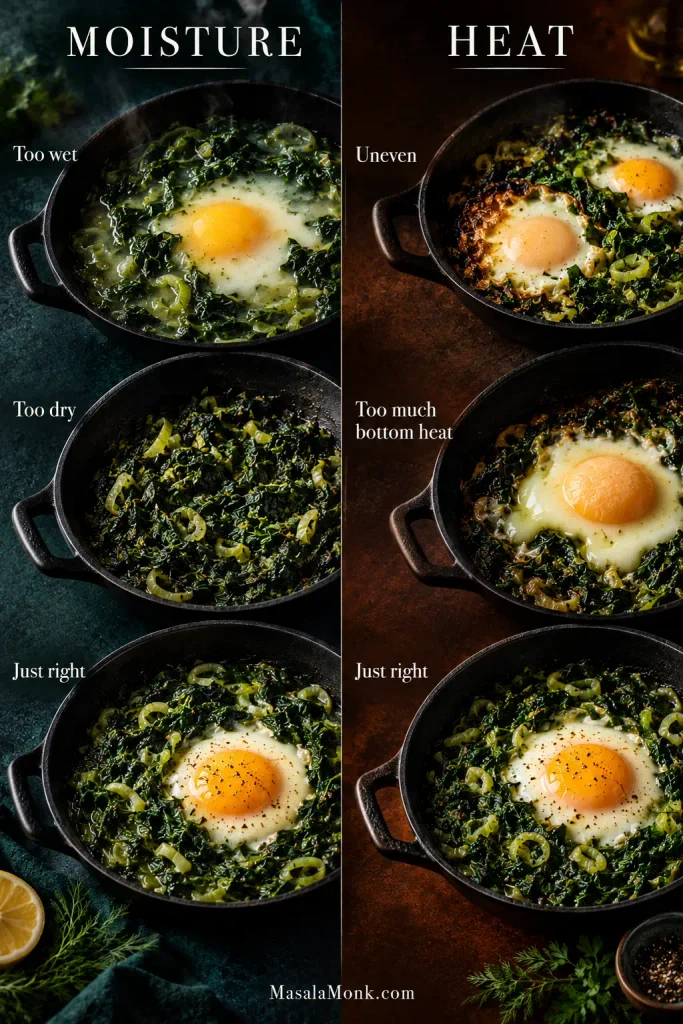
Most problems here come down to two things: moisture and heat. If the greens are swimming, deal with the water before the eggs go in. Eggs racing ahead usually mean the heat needs lowering or redistributing.
| What You See | Likely Cause | What to Do |
|---|---|---|
| Water pooling under the spinach | The leaves have wilted but their released liquid has not evaporated. | Keep cooking uncovered before adding the eggs. |
| Spinach looks dry | The pan reduced too far. | Add water 1 tablespoon / 15 ml at a time until the greens loosen. |
| The spinach tastes flat | It may need freshness or acidity more than another layer of seasoning. | Try lemon and fresh herbs before reaching for more spice or salt. |
| An egg spreads through the spinach | The greens are too wet, the well is too shallow, or both. | Reduce remaining liquid and make the next wells deeper. |
| One side cooks much faster | The burner or skillet has a hot spot. | Rotate the skillet or move it to the oven. |
| Yolk is firm while the white still looks loose | Strong bottom heat is cooking the yolk faster than steam sets the top, or the egg is sitting too high. | Use deeper wells, gentler heat and a snug cover. Move to the oven if the same problem keeps returning. |
Fixed it? Back to the recipe ↑
Make the Spinach Ahead, Not the Eggs
Yes, you can make green shakshuka ahead—just stop before the eggs. Cook the leek, spices and spinach, cool and refrigerate the mixture, then reheat it and add fresh eggs shortly before serving. Add the feta after the eggs are cooked.
Keep the cooked spinach refrigerated and use it within 3–4 days. That matches USDA guidance for most cooked leftovers.
Leftover shakshuka can be reheated, but the yolks will firm up. For freezing, portion the cooked spinach mixture without eggs or feta, thaw it in the refrigerator, reheat thoroughly and add fresh eggs at the end.
If you want an egg dish that reheats well as a whole, an oven-baked frittata is a better fit.
What to Serve With Green Shakshuka
Bread earns its place here. Warm homemade pita, sourdough or another crusty loaf is ideal for scooping the greens and wiping up the yolk left around the edges of the skillet.
Greek lemon potatoes turn it into a more substantial meal. Thick yogurt, labneh or a plate of crisp raw vegetables bring something cool alongside.
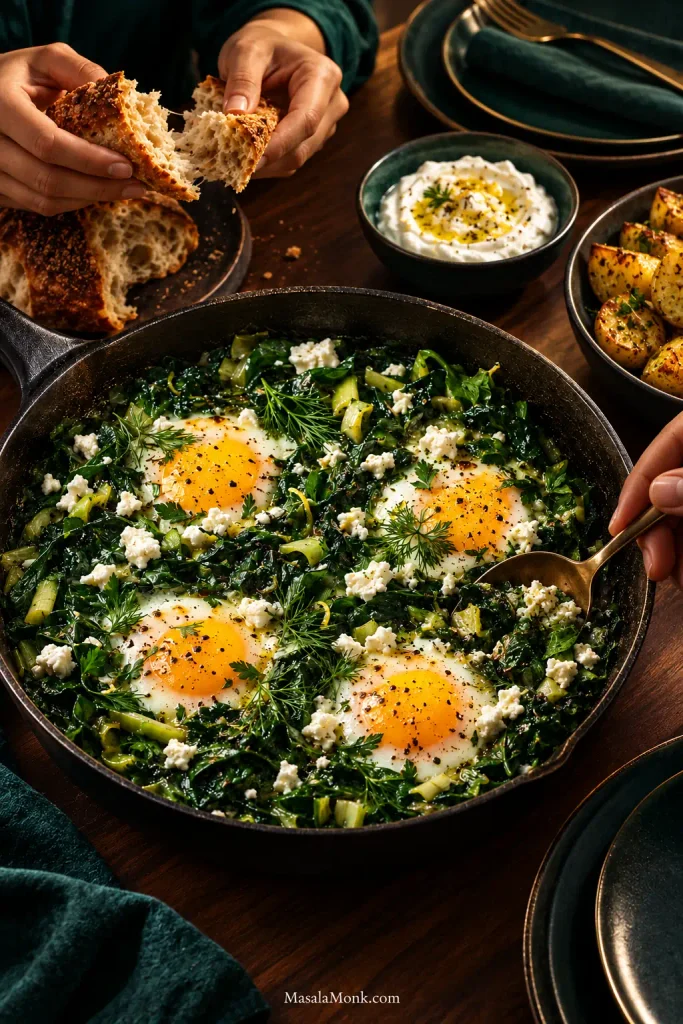
Put the skillet in the middle and let the bread do most of the serving.
At that point, stop cooking and eat.








