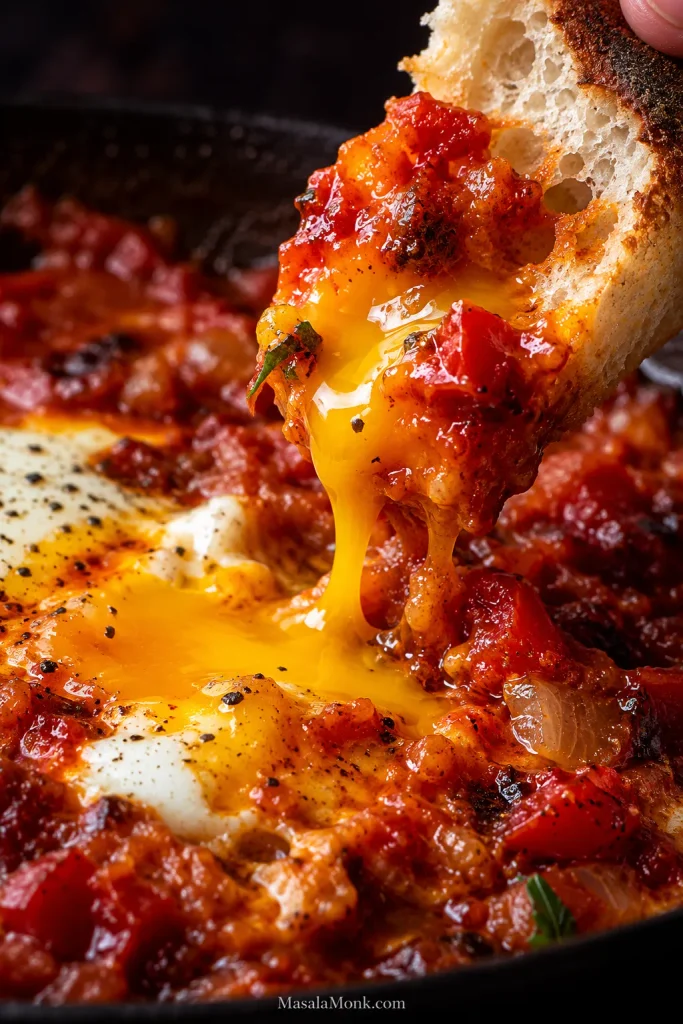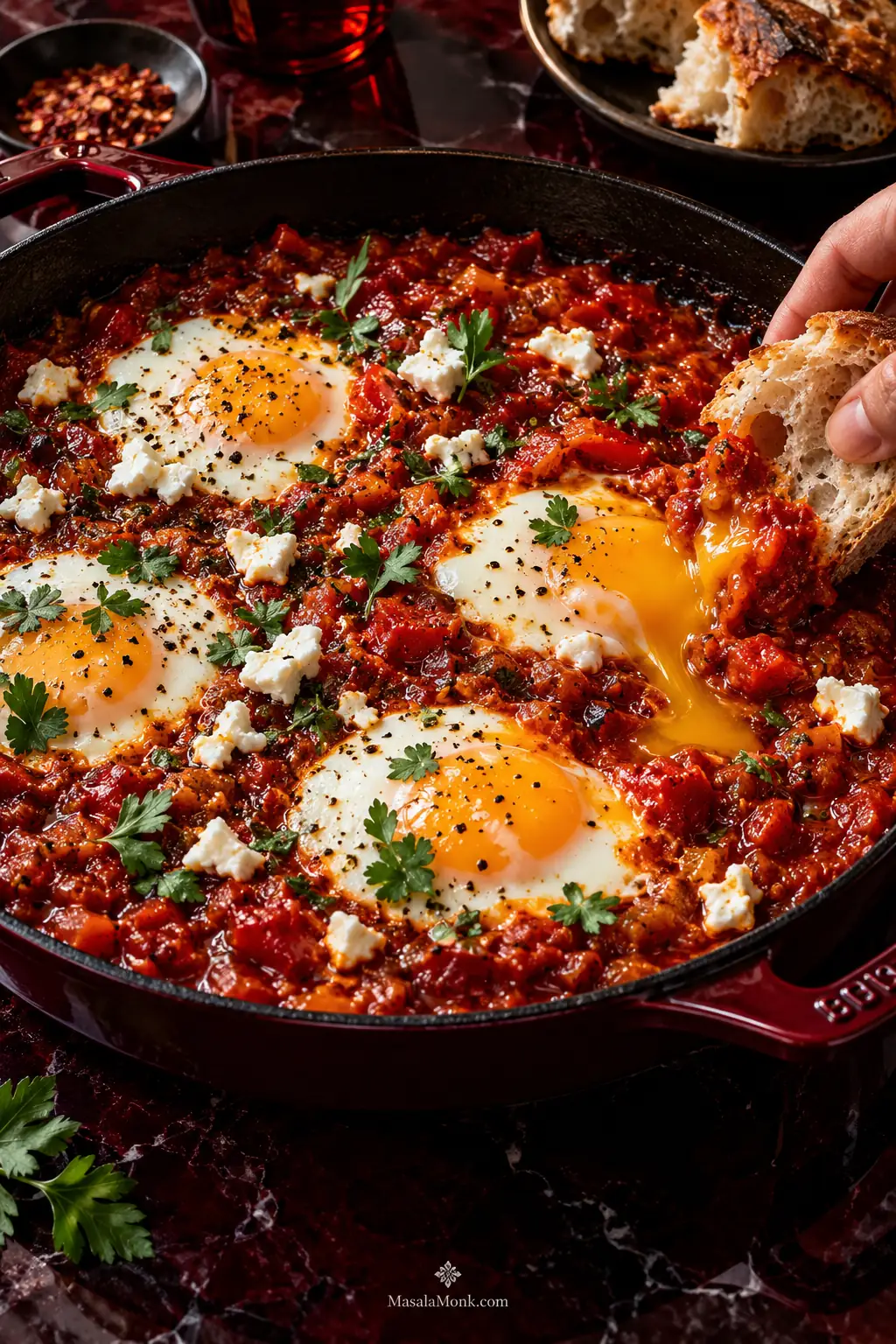
Shakshuka is at its best when the tomato sauce clings to a piece of torn bread, the whites are just set, and the yolk spills into the sauce as soon as you break it. Onion, pepper, garlic, cumin and paprika make the base, but the real trick is knowing when the sauce is ready for the eggs.
Shakshuka is a one-pan dish of eggs gently poached in a spiced tomato and pepper sauce, with roots in North Africa and versions now eaten widely across the Middle East and beyond. The handoff is the heart of this shakshuka recipe: finish the sauce first, then change how you cook.
Shakshuka Recipe
Onion and bell pepper soften with cumin, paprika and garlic before tomatoes cook down into a thick, scoopable sauce. Six eggs go in off the heat, then finish gently until the whites are set and the yolks are as soft or firm as you like.
Ingredients
- 2 tablespoons / 30 mL olive oil
- 1 medium yellow onion, diced, about 5½–6 oz / 150–170 g prepared
- 1 medium-large red bell pepper, diced, about 5½–7 oz / 160–200 g prepared; green also works for a sharper flavor
- ½ teaspoon fine sea salt, plus more after the sauce has reduced
- 3 garlic cloves, finely chopped, about 12 g
- 1 teaspoon ground cumin
- 1 teaspoon sweet paprika
- ¼ teaspoon red pepper flakes, or to taste
- 2 tablespoons / about 30 g tomato paste
- 1 can whole peeled tomatoes, 28 oz / 794 g, crushed with their juices, or the same weight of good crushed tomatoes
- ¼ teaspoon freshly ground black pepper
- 6 large eggs
- 2–3 oz / 60–85 g feta, crumbled, optional
- 2–4 tablespoons chopped flat-leaf parsley or cilantro, optional
Method
- Soften the onion and pepper. Heat the olive oil in a 12-inch / 30 cm skillet over medium heat. Add the onion, bell pepper and ½ teaspoon salt. Cook for about 7–8 minutes, stirring occasionally, until the onion is translucent, a little gold is appearing at the edges and the pepper has lost its raw crunch.
- Bloom the aromatics. Add the garlic, cumin, paprika and red pepper flakes. Stir for about 30 seconds, until the garlic and spices smell aromatic.
- Cook the tomato paste. Stir it through the vegetables for 1–2 minutes, until the paste turns a deeper brick red and loses its raw canned smell.
- Add the tomatoes. Pour in the crushed tomatoes with their juices and add the black pepper. Bring everything to a lively simmer, then adjust the heat so the sauce bubbles steadily without spitting aggressively.
- Finish the sauce. Start checking after about 10 minutes. In a 12-inch / 30 cm skillet, the sauce often reaches the right consistency in 10–15 minutes; wetter tomatoes or a narrower pan can take longer. Drag a spoon across the bottom and look for a trail that stays open briefly. Press a shallow well into the sauce; it should not immediately flood. Lift a spoonful and it should still slump back into the pan. Taste now. Canned tomatoes vary considerably in saltiness, so season until the sauce tastes finished, staying slightly conservative if you plan to add feta at the end.
Add and Cook the Eggs
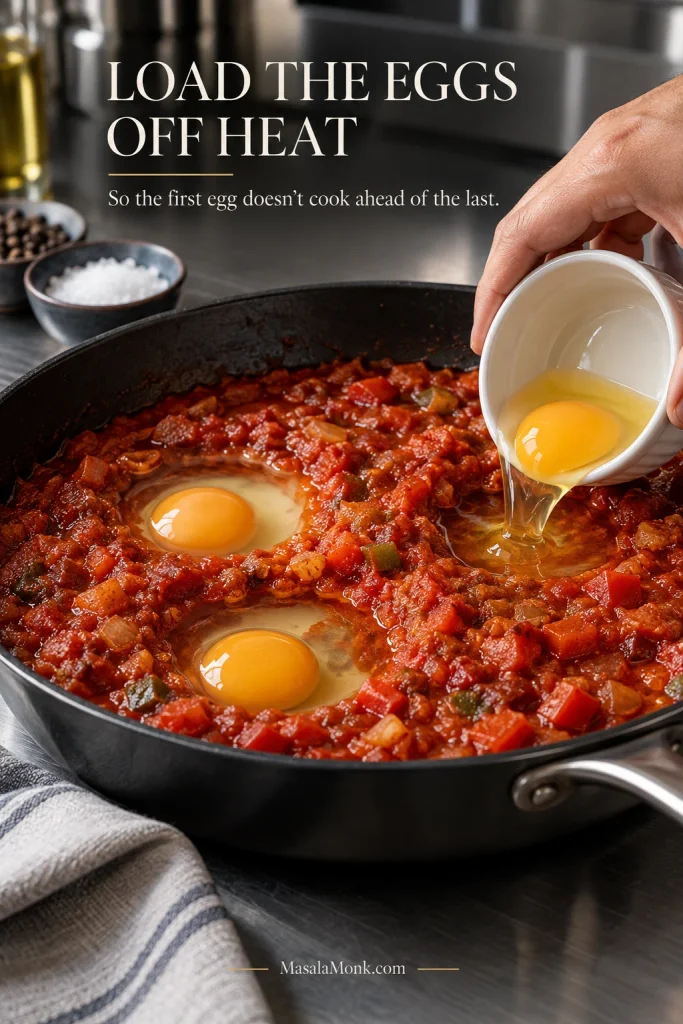
- Take the skillet off the heat and add all six eggs. Make six broad, shallow wells. Crack each egg into a small bowl or ramekin first, then slide it gently into place. Loading them away from the burner keeps the first egg from cooking while you are still placing the last.
- Return the skillet to low heat. Cover and start checking after about 4 minutes. The eggs often take about 4–8 minutes after the skillet returns to the heat. If a thick patch of white beside a yolk still looks glassy, spoon a little hot tomato sauce over that white only, leave the yolk exposed, cover briefly and check again.
- Stop where you like the yolks. The whites should be opaque and tender rather than rubbery. Soft yolks still move clearly when the skillet is nudged; jammy yolks move less; firm yolks barely move at all. Pull the skillet a little early because the hot tomato sauce and pan continue cooking the eggs after the burner is off.
- Finish and serve. Scatter with feta and herbs if using. The feta should begin to soften against the hot tomatoes while the herbs stay bright on top. Bring the skillet straight to the table.
Useful Method Notes
Fresh tomatoes: start with about 1.75–2 lb / 800–900 g ripe tomatoes, weighed after coring, then roughly chopped. Their water content varies, so cook to the same trail, well and scoop cues instead of copying the canned-tomato timing.
Oven finish: preheat the oven to 375°F / 190°C before making the egg wells. Transfer the oven-safe skillet after adding the eggs and start checking around 7–8 minutes.
Smaller batch: about 8 inches / 20 cm suits two eggs; roughly 9–10 inches / 23–25 cm works well for three or four. See Shakshuka for One or Two for the full scaling guide.
Need fully cooked eggs? Continue until both whites and yolks are firm. The FDA’s egg-safety guidance gives conservative cooking advice and information about pasteurized eggs for dishes served with softer yolks.
The Pan Changes Jobs When the Eggs Go In
Before the eggs, moisture is the problem. Onion and pepper need time to soften. Tomato paste needs a brief cook. The tomatoes need steady bubbling and uncovered surface area so excess water can escape. Taste and finish the seasoning here too.
After the eggs, excessive heat is the problem. The sauce is already finished. Lower heat gives the whites time to set without pushing every yolk farther than you wanted.
A wide skillet of canned tomatoes may reach the right consistency quickly; juicy fresh tomatoes in a narrower pan can take considerably longer. The clock changes with the pan and tomatoes. The finished sauce should not.

Build a Tomato-Pepper Sauce That Can Hold an Egg
The finished sauce should taste ready to eat: savory from onion and garlic, sweet from the softened pepper, warmly spiced and concentrated enough to stand on its own.
Fresh vs Canned Tomatoes for Shakshuka
For the most predictable result, use whole peeled or crushed canned tomatoes. Whole tomatoes let you control how chunky the sauce stays; crushed tomatoes save that step. Diced tomatoes work too, although some brands stay firmer and may need breaking down with the spoon. Passata gives the smoothest sauce and can reduce a little faster.
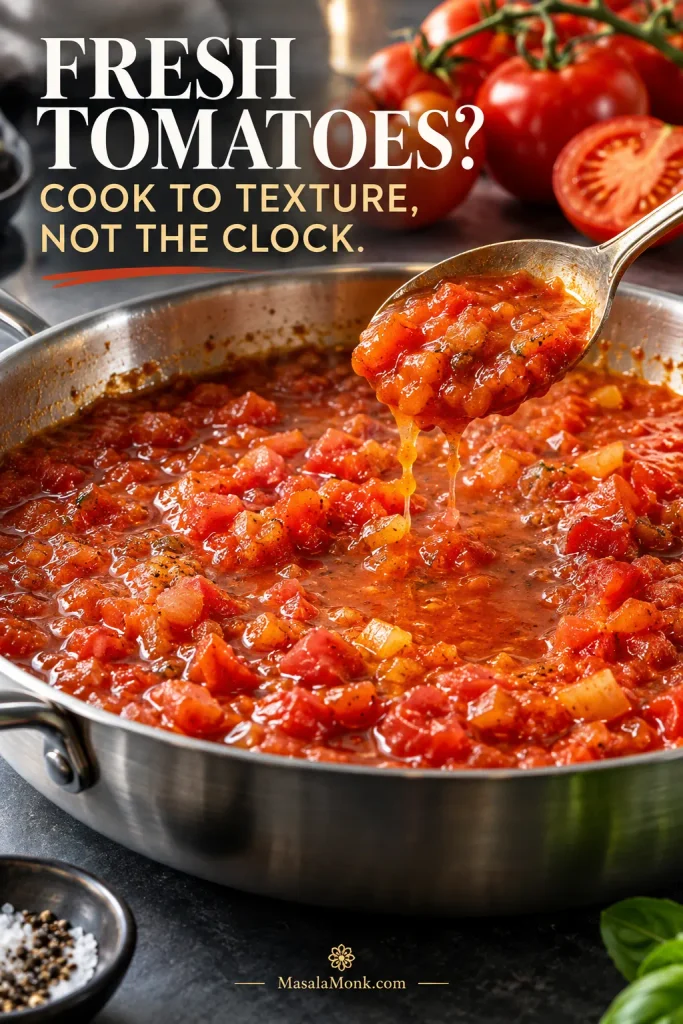
Fresh tomatoes deserve different treatment because their water content changes so much. Start with roughly 1.75–2 lb / 800–900 g ripe tomatoes, weighed after coring, then roughly chopped. Cook them until the sauce reaches the same consistency as the canned version. A juicy summer tomato may take much longer than a dense Roma. If the pan suddenly looks wetter than expected, nothing is wrong; give it time. For larger batches, our tomato sauce from fresh tomatoes guide goes deeper into choosing tomatoes and reducing excess water.
Build Flavor and Control the Reduction
Tomato paste gives the sauce more depth without demanding a long simmer. Cook 2 tablespoons / 30 g with the softened vegetables until it turns brick red and loses its raw canned smell. Leave it out and the tomatoes may need longer to reach the same body.
Cumin brings the earthy note, sweet paprika deepens the pepper flavor, and chile controls the heat. Smoked paprika works too if you want the whole pan noticeably smokier.
Crowd this amount of sauce into a small, deep skillet and you will wait longer for the tomatoes to reduce. A 12-inch / 30 cm skillet gives roughly 28 oz / 794 g tomatoes enough exposed surface while still leaving room for six eggs; spread the sauce much wider and it can dry sooner. Material matters less than shape here; stainless-steel, enameled, nonstick and well-seasoned cast-iron skillets can all work.
How Thick Should Shakshuka Be?
Check three things before the eggs go in.
Trail: drag a spoon through the sauce. The line across the bottom should stay visible for a moment before the tomatoes slowly move back.
Well: press a shallow hollow into the sauce. It should remain open instead of immediately filling with watery liquid.
Scoop: lift some sauce with the spoon. It should slump and fall back into the skillet, not sit in a stiff mound.
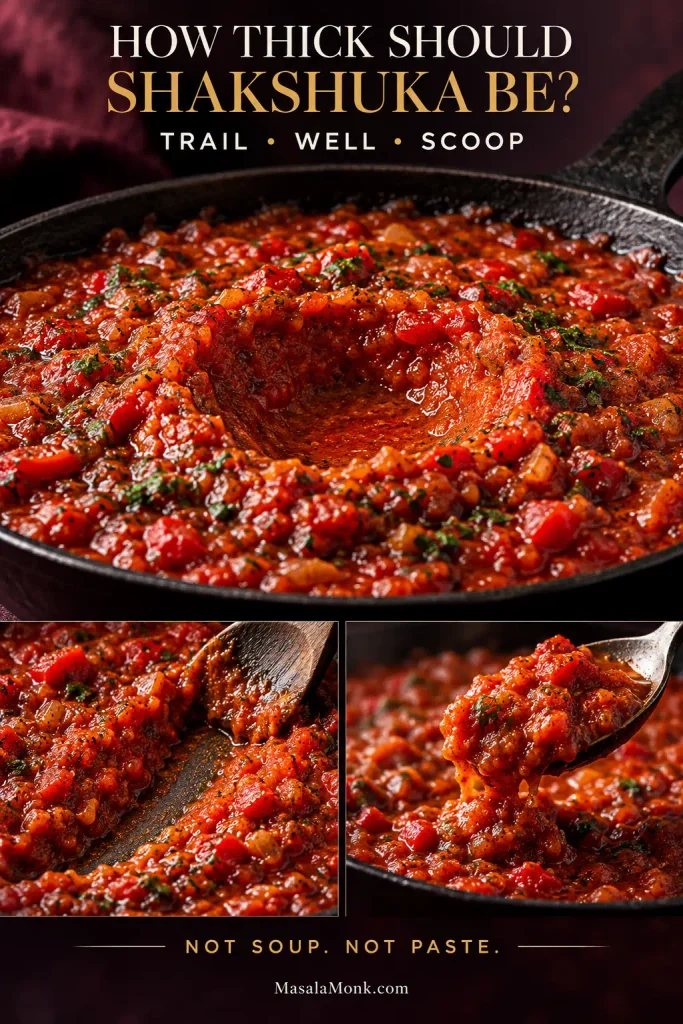
You want the middle ground: not soup, not tomato paste. Taste it too. The tomatoes should feel rounded and concentrated, the sweet pepper should still sit behind them, and the cumin should come through clearly. Once yours does that, the eggs can go in.
Too thick? Stir in water 1 tablespoon / 15 mL at a time until the sauce loosens without becoming runny.
Set the Whites Without Sacrificing the Yolks
This is the annoying part of shakshuka: a yolk can look perfect while the thick white beside it is still translucent. Turning the burner higher usually punishes the yolk first.
Add the Eggs Evenly
Take the skillet off the burner. Make broad, shallow wells and slide in the eggs one by one from small bowls or ramekins.
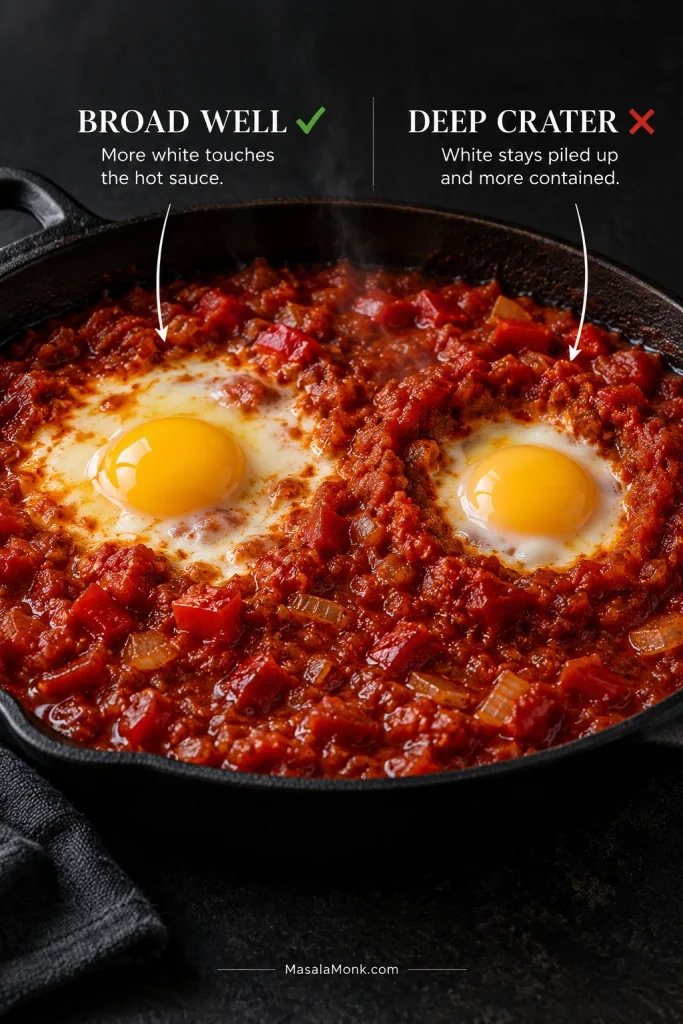
Deep craters hold a thick mass of white close to the yolk, where it takes longer to set. Broad wells let some of that white spread across the hot tomato sauce.
Help the Whites Set Without Overcooking the Yolks
Return the loaded skillet to low heat and cover it. Start checking after about four minutes.
A glassy patch of thick white does not mean the whole pan needs more heat. Spoon a little hot tomato sauce over the white and leave the yolk uncovered. Do not chase one stubborn white by cooking the other five yolks to death.

One side of the skillet may run hotter than the other. Rotate the pan and judge the eggs individually; they do not all need to be done at once.
Soft, Jammy or Firm Eggs
| Target | White | Yolk |
|---|---|---|
| Soft / runny | Opaque and softly set | Domed and clearly moving when the pan is nudged |
| Jammy | Fully set | Thicker with a smaller, slower jiggle |
| Firm | Completely set | Little or no visible movement |
Take the skillet off the heat slightly before the yolks look completely finished. The hot tomato sauce and skillet will carry them a little further.

Finish Shakshuka in the Oven
An oven can help when your burner has obvious hot spots or the bottoms of the eggs repeatedly firm before the tops of the whites.
Preheat to 375°F / 190°C before adding the eggs. Once the loaded oven-safe skillet goes in, start checking around 7–8 minutes. Some batches need longer; use the whites and yolks to make the final call.
Rescue the Pan
When something goes wrong, first check whether the eggs are already in the skillet.
Before the Eggs Go In
The sauce is watery or the wells immediately disappear. Keep simmering uncovered. The eggs can wait.
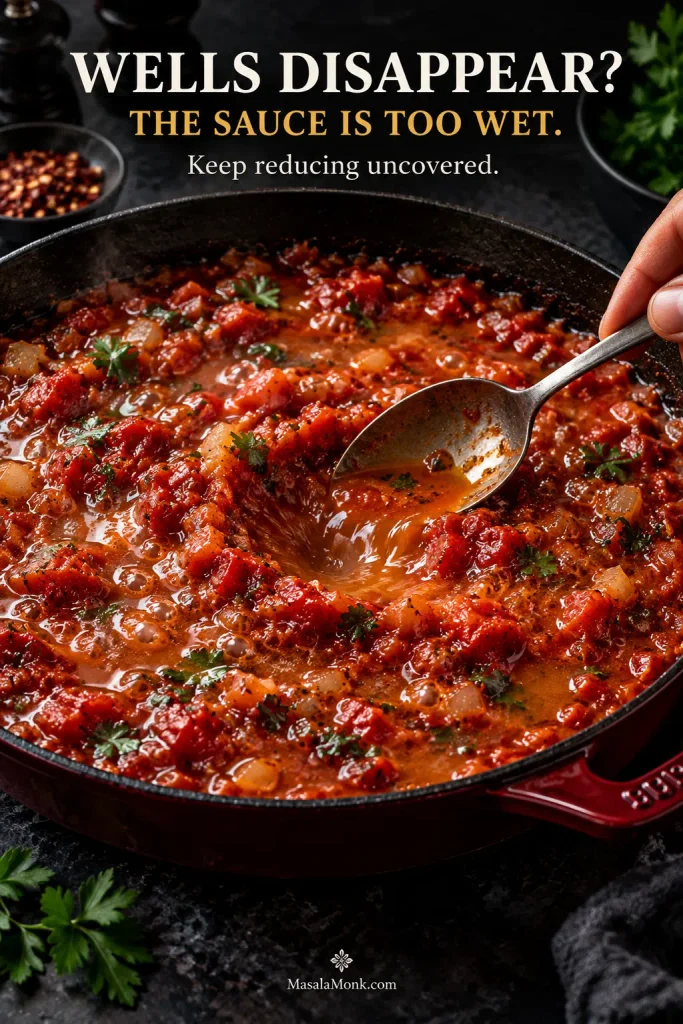
Fresh tomatoes have flooded the skillet. Nothing has necessarily gone wrong; they may contain more water. Keep cooking until the sauce reaches the same consistency cues.
The sauce is too thick. Add water 1 tablespoon / 15 mL at a time until it becomes scoopable again.
The flavor is weak. Check the consistency first. A loose sauce can make the tomatoes, pepper, salt and spices all taste muted.
The tomatoes taste sharply acidic. Cook them fully and check the salt. Once the sauce is properly reduced, a tiny pinch of sugar can soften an unusually harsh batch without making it sweet.
After the Eggs Go In
White translucent, yolk nearly ready? Treat that white locally with a little hot tomato sauce; do not keep cooking the whole pan.
One side is cooking faster. Rotate the skillet.
The yolks keep going hard. Check earlier and take the pan off sooner. Carryover heat will finish them a little further.
The bottom is catching. Lower the burner. The sauce no longer needs hard bubbling.
The lid leaves the surface watery. Uncover briefly. Next time, reduce the sauce a little further before adding the eggs, or use the oven finish if your stovetop repeatedly gives you trouble.
Shakshuka for One or Two
The same pan control matters when you scale shakshuka down. A smaller batch needs a smaller skillet: put two eggs and a little sauce in the same 12-inch pan used for six and everything becomes shallow, fast-cooking and harder to control.
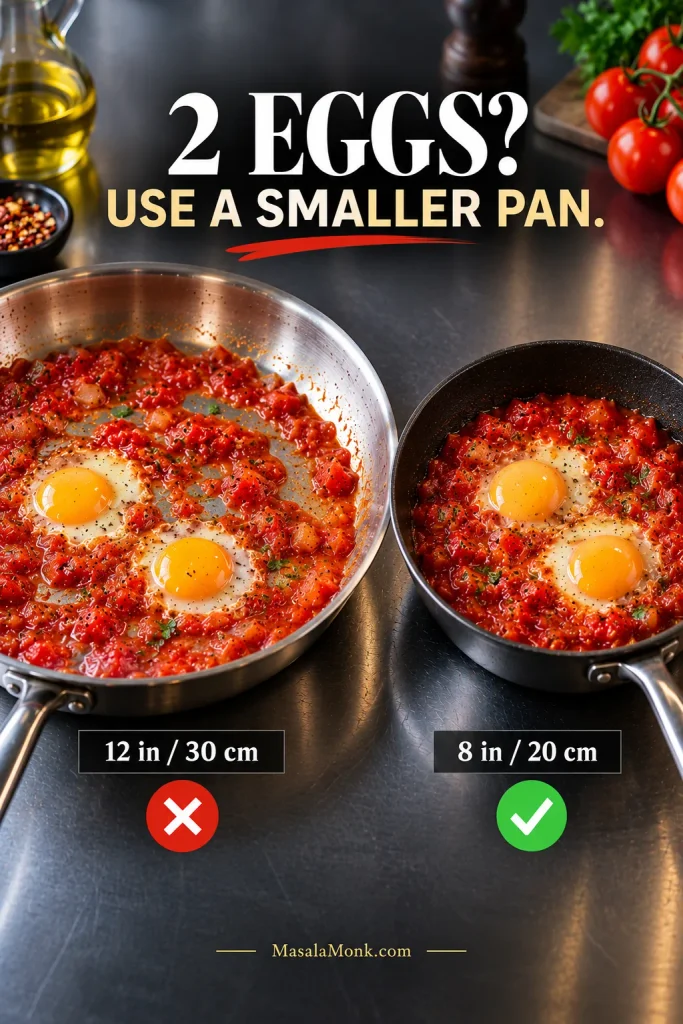
For one
2 eggs
About 8 in / 20 cm skillet
For two
3–4 eggs
About 9–10 in / 23–25 cm skillet
Full pan
6 eggs
About 12 in / 30 cm skillet
The simplest small-batch system is to make the sauce once. Reheat enough to form a generous layer that can hold broad, shallow egg wells, then add only the eggs you plan to eat. A container of finished sauce in the fridge turns tomorrow’s breakfast into a few minutes of eggs instead of another round of chopping onion, pepper and garlic.
Make Ahead and Store the Sauce
Stop before the eggs. Cool the finished tomato-pepper sauce promptly and refrigerate it in a covered container. Reheat the portion you need until bubbling, then add fresh eggs.
Use refrigerated cooked leftovers within 3–4 days, following USDA guidance for handling leftovers safely. Finished shakshuka can be reheated, but its yolks will become firmer.
For longer storage, freeze the sauce without eggs. Thaw it in the refrigerator, reheat it in a skillet and finish with fresh eggs.
Shakshuka Variations
- Feta: crumble 2–3 oz / 60–85 g over the pan near the end for salty, creamy contrast.
- Harissa: stir harissa in with the aromatics or into the tomato sauce, adjusting it to taste and easing back on the separate chile flakes.
- Chickpeas or white beans: stir drained cooked beans into the reduced sauce before making the egg wells.
- Spinach: wilt it into the sauce before the eggs and cook off the water it releases.
Ground coriander can join the cumin and paprika if you like its citrusy warmth, and the bell pepper can be left out for a more tomato-forward pan.
For a version built around greens instead of tomatoes, our Green Shakshuka Recipe with Spinach, Herbs, Feta & Eggs uses leek, greens, herbs and lemon as the base.
What to Serve With Shakshuka
Bread gets first place beside the skillet. Warm pita, flatbread or a crusty loaf can scoop the thick tomato sauce and catch the yolk when it breaks. Our homemade pita bread recipe includes both oven and stovetop methods.
Shakshuka may be known as breakfast or brunch food, but it is just as comfortable at lunch or dinner. Thick yogurt or labneh, olives and extra feta can round out the table.
Something cold and crisp is especially welcome beside hot tomatoes and a rich yolk. Our cucumber salad with vinegar, dill and onion adds crunch and acidity without asking you to cook another dish.

Put the skillet in the middle of the table. Shakshuka is easier to love when nobody is trying to carve six perfect restaurant portions out of it. Spoon an egg and plenty of sauce into shallow bowls, tear the bread, pass it around, and go back for whatever is left between the eggs.
Then break a yolk. Let it run through the cumin-scented tomatoes, drag a warm piece of bread through both, and take the next bite while the skillet is still hot.