
A good mango lassi recipe should taste clearly of mango, feel thick and creamy, and stay balanced between sweet, tangy, and cold. The best versions are rich enough to feel satisfying, but still easy to drink.
This mango lassi recipe is built for that result. It works with fresh mango, frozen mango, or canned mango pulp, and it shows you how to adjust the texture, sweetness, and tang so the drink stays smooth, cold, and properly mango-forward. For the closest restaurant-style Indian mango lassi, use full-fat yogurt and mango pulp.
At a glance: 10 minutes, 2 to 3 servings, thick and creamy, best served very cold.
Mango Lassi Recipe Quick Answer
Mango lassi is a cold yogurt-based Indian drink made by blending mango, yogurt, a little milk or water, and sweetener until smooth and creamy. Britannica gives helpful background on lassi as a traditional yogurt-based drink from India. A good mango lassi recipe should be thick but pourable, strongly mango-flavored, and lightly balanced by yogurt tang. Fresh ripe mango gives the best natural flavor, frozen mango gives extra chill and thickness, and mango pulp is the easiest way to get a richer, more restaurant-style result at home.
If you want a milk-based mango drink instead, try this mango shake for a creamier, less tangy option.
Fresh vs frozen vs mango pulp · Best mangoes and yogurt · Skip to full recipe
Why This Mango Lassi Recipe Works
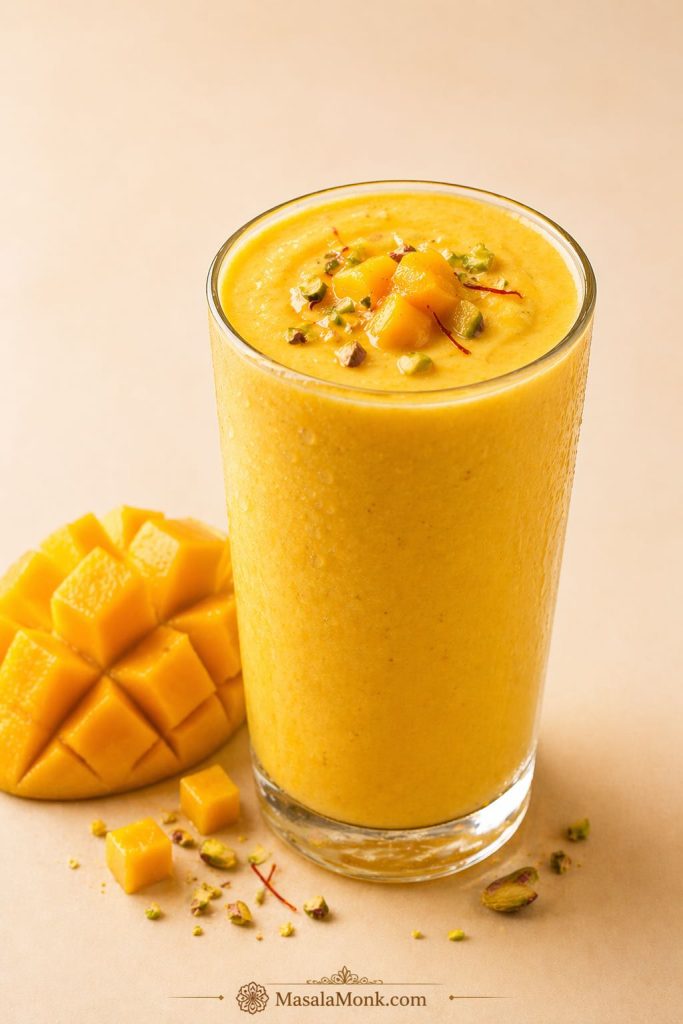
The difference between an average mango lassi and a very good one usually comes down to balance. A good mango lassi tastes clearly of mango first, not just yogurt and sugar. It feels creamy and rich without turning heavy, and it stays cold enough to be refreshing without becoming watery from too much ice.
The base is simple, but it is flexible enough to work with fresh mango, frozen mango, or canned mango pulp. That matters because small changes in mango type, yogurt thickness, and sweetener can noticeably change the final glass.
Balanced, not overly sweet
A good mango lassi recipe should taste naturally sweet and lightly tangy, not candy-like. Mangoes vary a lot in sweetness, and canned mango pulp is often already sweetened, so the best approach gives you room to adjust instead of forcing the same amount of sugar every time. Starting lighter and correcting after blending gives you a cleaner, more mango-forward result.
Thick but still pourable
The best texture lands somewhere between a smoothie and a milkshake. It should pour easily into a glass, but still look creamy and substantial. Yogurt gives the drink body, mango adds natural thickness, and just enough milk or water loosens it without washing out the flavor. For that reason, this mango lassi recipe works best when the liquid is added carefully instead of all at once.
Works with fresh mango, frozen mango, or pulp
One of the biggest reasons mango lassi recipes disappoint is that they pretend every mango works the same way. They do not. Ripe fresh mango gives the best flavor when it is excellent, frozen mango gives reliable cold thickness, and mango pulp gives the most dependable restaurant-style color and concentrated mango taste. This recipe is designed so you can get a good result with any of the three.
Easy to adjust to taste
Once everything is blended, you can still fix almost anything in seconds. A splash of milk loosens a lassi that feels too thick. More sweetness helps when it tastes too tart, while extra yogurt or mango can fix a thinner-than-expected texture. If the flavor seems flat, the drink usually needs stronger mango, not just more sugar. That flexibility makes this a much more dependable home recipe than a one-note formula.
Mango Lassi Recipe Ingredients
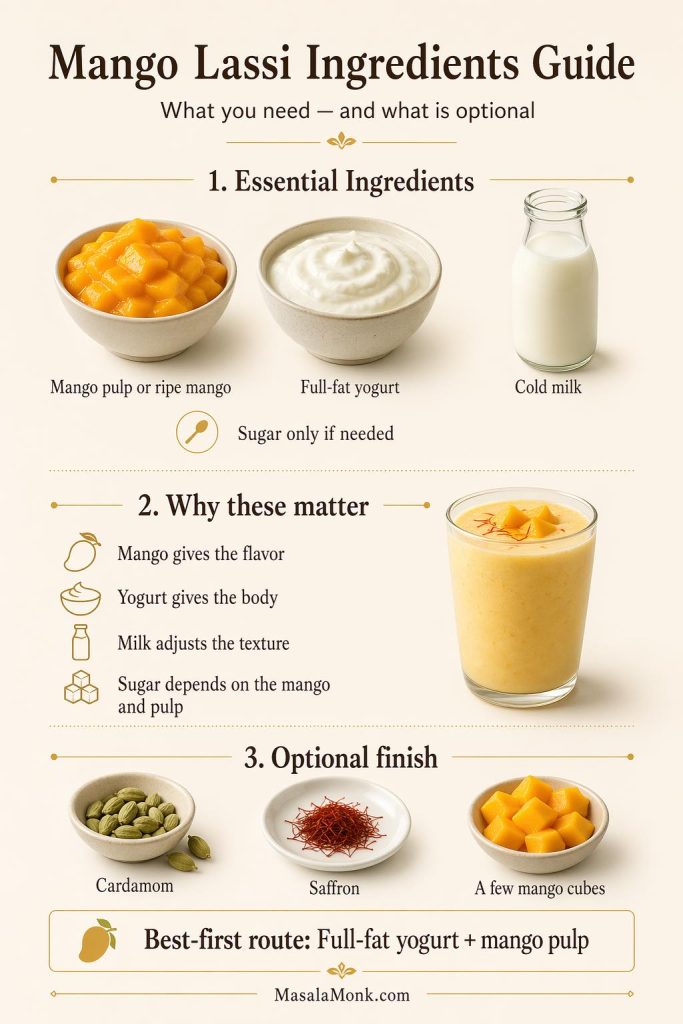
Mango lassi uses a short ingredient list, which means each ingredient matters more. This is not the kind of recipe where average fruit and random yogurt disappear into the background. The mango sets the flavor, the yogurt sets the body, and the liquid and sweetener determine whether the drink feels balanced or diluted.
Mango
You can use ripe fresh mango, frozen mango, or canned mango pulp here. Fresh mango gives the best flavor when it is truly ripe and sweet. Frozen mango is excellent when you want the drink colder and thicker without relying on a lot of ice. Mango pulp is the easiest way to get that bright restaurant-style mango flavor and color, especially when your fresh mangoes are only decent instead of exceptional.
Yogurt
Yogurt gives mango lassi its body and tang. Full-fat yogurt makes the drink smoother and richer, while low-fat yogurt can taste thinner and sharper. Traditional dahi gives a softer tang and looser texture, while Greek yogurt makes a thicker lassi and often needs more liquid. Taste the yogurt before blending, because very sour yogurt can throw off the whole drink.
Milk or water
A small amount of milk loosens the yogurt and mango without stripping out richness. Water works too, especially if the mango and yogurt are already full-bodied, but milk usually gives a rounder result. The important thing is restraint. Too much liquid is one of the fastest ways to turn mango lassi from creamy to forgettable.
Sweetener
Sugar is the most straightforward option, but honey can work if you like its flavor. The amount depends on your mangoes and on whether your pulp is already sweetened. The best approach is to start low, blend, and then add more only if the drink still tastes too tart or muted. A good mango lassi recipe should taste sweet enough to feel comforting, not so sweet that it buries the fruit.
Cardamom and optional flavor additions
Cardamom is the classic optional addition, and a small amount can make the drink feel more finished without taking over. Saffron or a tiny drop of rose water can also work in richer versions, but both should stay in the background. This is still a mango drink first.
Best Mangoes and Yogurt for Mango Lassi
This is where ingredient choice matters most. When the mango and yogurt are right, the drink tastes smooth, balanced, and easy to love. When one is off, the lassi needs more correction than most people expect.
Best mangoes for flavor
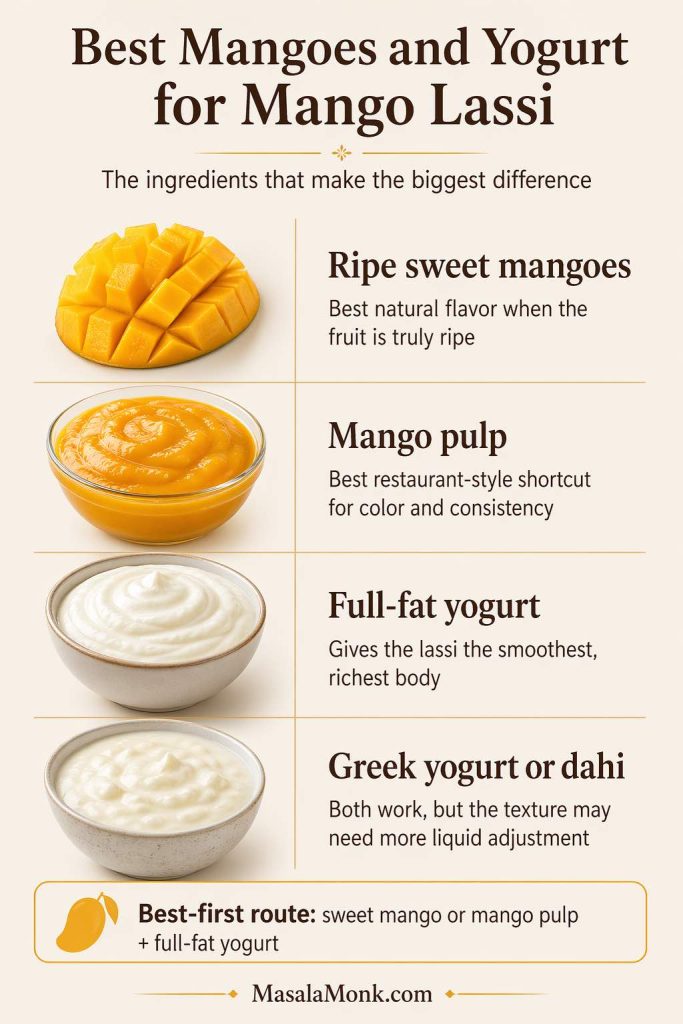
The best fresh mangoes for mango lassi are ripe, sweet, fragrant, and low in fibrous texture. If the mango tastes flat, watery, or slightly sour on its own, the lassi will usually need extra help from sugar or pulp. Soft, fully ripe mangoes give a rounder, more dessert-like result, while underripe fruit tends to make the drink taste sharper and less luxurious.
Alphonso and Kesar mango for restaurant-style lassi recipe
When people talk about restaurant-style mango lassi, they are often chasing the intense color and concentrated flavor associated with Alphonso or Kesar mango pulp. The National Horticulture Board’s mango varieties material is a useful reference for Indian varieties such as Alphonso and Kesar. That does not mean you need those mangoes every time, but it does explain why a lassi made with canned Indian mango pulp can taste more vivid and familiar than one made with average supermarket mangoes. If your fresh fruit is just okay, pulp can help bridge that gap.
Dahi vs Greek yogurt
Dahi usually gives a softer tang and a naturally looser consistency, which makes it very easy to blend into a smooth drinking texture. Greek yogurt gives more body and richness, but it can also make the lassi too thick or slightly too tart if you do not add enough liquid. Both work well. You just want to respect the difference instead of assuming they behave the same way.
What to do if your yogurt is too sour
If your yogurt tastes noticeably sharp, the finished lassi may taste more tangy than creamy even after sweetener is added. The easiest fixes are to use a sweeter mango, add a little more sweetener, reduce the yogurt slightly, or soften the tartness with a spoonful of mango pulp. In other words, do not fight sour yogurt with sugar alone. It is better to rebalance the drink from more than one direction.
Fresh Mango vs Frozen Mango vs Mango Pulp
This choice changes the drink more than almost anything else. Fresh mango gives the best natural flavor when the fruit is excellent. Frozen mango gives easy chill and thickness. Mango pulp gives the most reliable shortcut to the deeper color and fuller flavor many people expect from restaurant-style mango lassi.
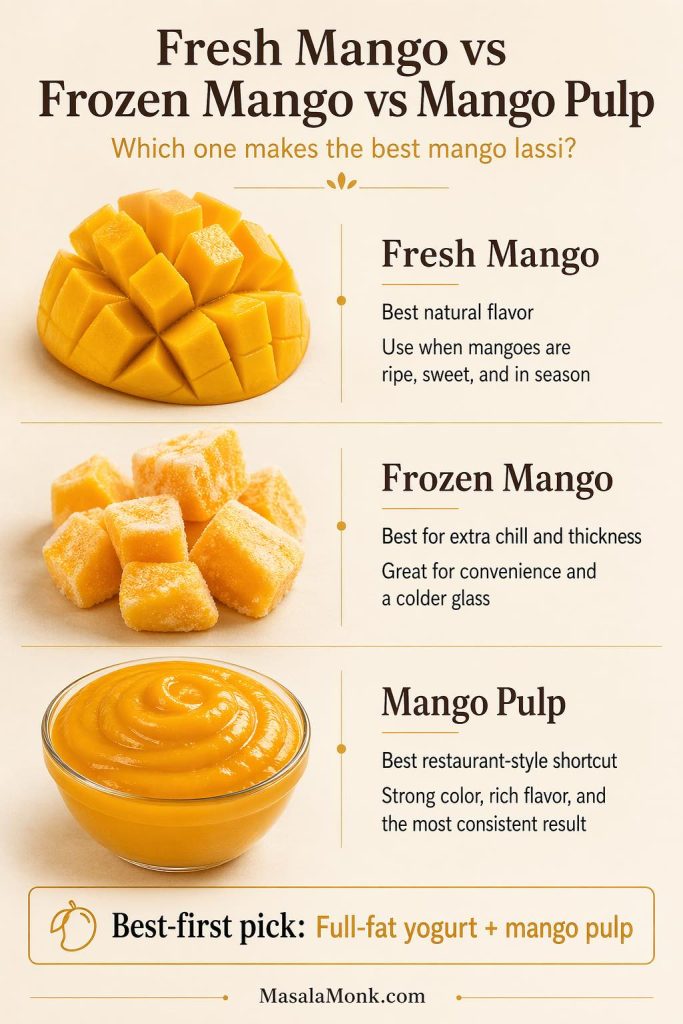
Fresh mango: best flavor
Use fresh mango when your fruit is ripe, sweet, and actually worth showcasing. This is usually the best route when mangoes are in season and full of flavor. The main caution is that room-temperature fresh mango often makes the lassi less cold and slightly looser, so you may want colder yogurt, a little ice, or a brief chill before serving.
Frozen mango: best convenience and chill
Frozen mango is one of the easiest ways to make mango lassi feel thick and very cold without leaning too hard on ice. It is convenient, consistent, and often better than mediocre fresh mango. If you like a thicker glass with a colder finish, frozen mango is often the easiest choice. Just remember that heavily frozen fruit can also make the drink thicker than expected, so add liquid gradually.
The same “start with less liquid, then adjust” idea also helps with smoothie-style blends, and this strawberry smoothie recipe uses that logic well.
Mango pulp: best restaurant-style shortcut
Mango pulp is the easiest shortcut when you want a richer, more restaurant-style mango lassi. It gives stronger color, fuller mango flavor, and a more predictable result than average fresh fruit. Even a small amount can make the drink taste more complete.
How sweetened mango pulp changes the recipe
Most canned mango pulp is already sweetened, which means it does two jobs at once: it adds mango flavor and it adds sweetness. Because of that, you should not treat it like unsweetened fresh mango. Start with less added sugar than you think you need, blend first, and only sweeten more if the drink still tastes too tart. That one adjustment keeps the lassi from becoming cloying.
Go to recipe snapshot · Go to restaurant-style tips · Skip to full recipe
Mango Lassi Recipe Snapshot
This mango lassi recipe makes a thick, creamy, restaurant-style Indian drink with a strong mango flavor and a balanced sweet-tangy finish. The best-first version uses full-fat yogurt and canned Alphonso or Kesar mango pulp.
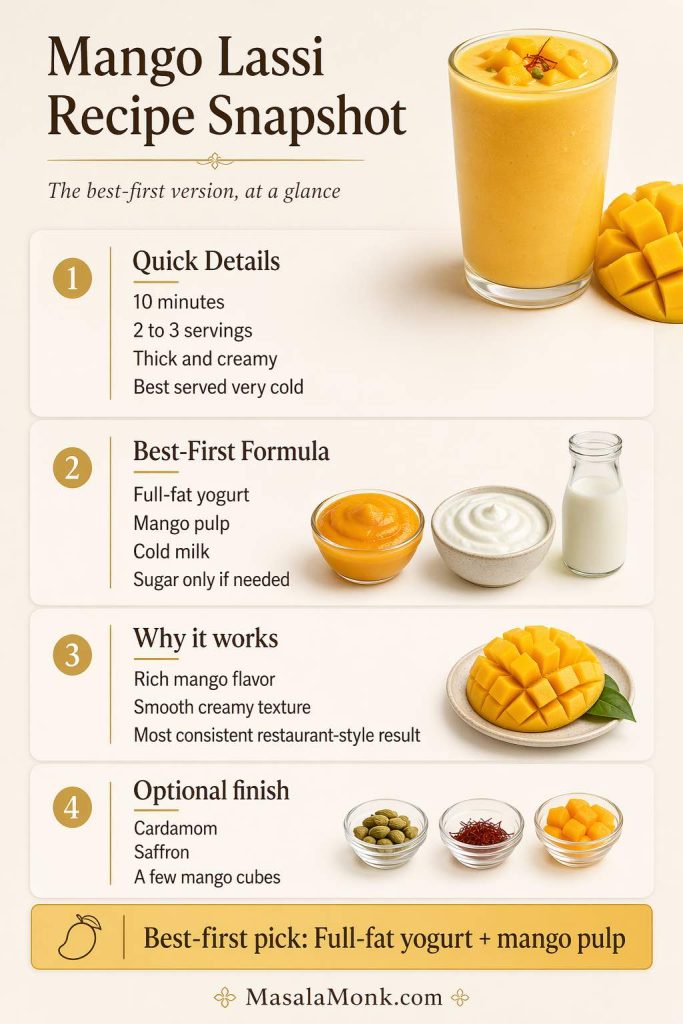
- Prep time: 10 minutes
- Total time: 10 minutes
- Yield: 2 to 3 servings
- Category: Drink
- Cuisine: Indian
- Texture: Thick and creamy
- Best served: Very cold
- Best-first formula: Full-fat yogurt plus canned mango pulp
Jump to full recipe · Go to the method · Compare mango options
How to Make This Mango Lassi Recipe
This mango lassi recipe is easiest to control when you start with less liquid than you think you need. Once the mango, yogurt, and sweetener are blended smooth, you can fine-tune the thickness and flavor in seconds.

Add everything to the blender
Add the mango, yogurt, milk or water, sweetener, and cardamom if using to the blender. If you are using fresh mango and want the drink especially cold, add a few ice cubes or make sure the yogurt and liquid are well chilled before blending. If you are using canned mango pulp, start with less sweetener since the pulp may already be sweet.
Blend until fully smooth
Blend until the mixture looks silky and completely uniform, with no yogurt streaks or visible fruit pieces left behind. This usually takes less time than people expect, especially with mango pulp or very ripe mango. If the drink looks too thick to move well in the blender, add a small splash of liquid rather than a large pour.
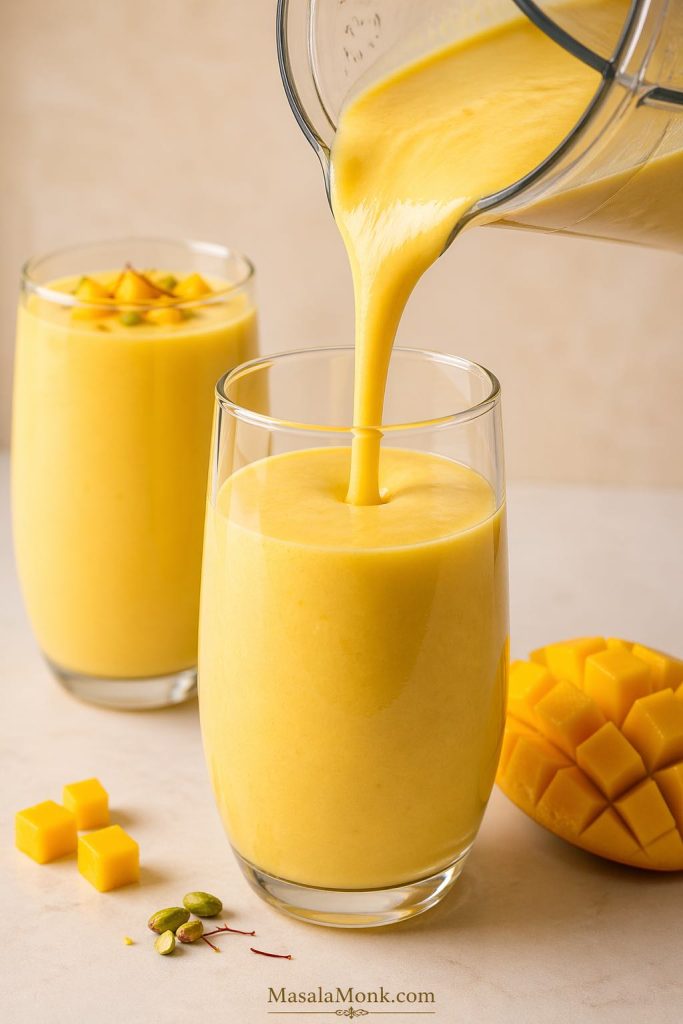
Taste and adjust
Before pouring, taste the lassi once. This is where the drink starts to feel finished instead of merely acceptable. Add more sweetness a little at a time if needed. If the texture feels too thick, loosen it with a small splash of milk. When the yogurt tastes too sharp, extra mango or mango pulp usually works better than sugar alone.
Serve very cold
Pour into glasses and serve right away while the texture is at its best. Mango lassi is most satisfying when it is very cold, smooth, and freshly blended. If you want, finish with a tiny pinch of cardamom or a few saffron strands, but keep the garnish light so the mango stays at the center.
How to Make It Taste More Restaurant-Style
If you want an authentic mango lassi with a more restaurant-style finish, the answer is usually not more sugar or more ice. It is better ingredient choice, colder serving temperature, and a thicker final texture. Mango pulp and full-fat yogurt do most of the heavy lifting.
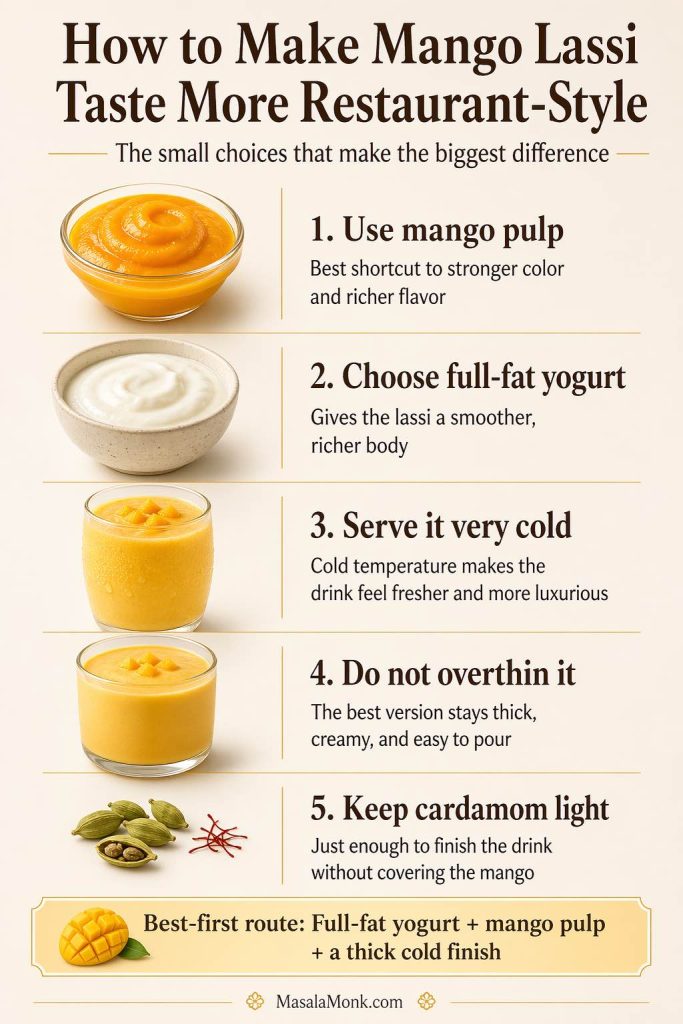
Use mango pulp for the closest restaurant-style flavor
When homemade mango lassi does not quite taste like the restaurant version, mango pulp is often the missing link. It gives deeper color, fuller mango flavor, and a more consistent result than average fresh fruit. You do not have to use only pulp, either. Even combining a little pulp with ripe fresh mango can bring the drink much closer to that restaurant-style result.
Use full-fat yogurt
Full-fat yogurt gives the drink a smoother, richer feel and helps it stay creamy instead of sharp or thin. Low-fat yogurt can still work, but it usually needs more help from good mango and careful sweetening. If you want the most satisfying texture, full-fat yogurt is the simplest upgrade.
Serve colder than you think
A lukewarm mango lassi tastes flatter and heavier. Cold temperature sharpens the refreshment and makes the texture feel more luxurious. Chill the yogurt, chill the liquid, and use frozen mango or a little ice when needed, but do not water the drink down just to make it colder.
Do not overthin the drink
A restaurant-style mango lassi should feel rich and creamy, not like thin juice with yogurt mixed in. Add liquid gradually and stop as soon as the drink becomes pourable. It is much easier to loosen a thick lassi than to fix one that has already become diluted.
Use cardamom lightly
Cardamom can make mango lassi feel finished and fragrant, but too much turns the drink perfumed and distracts from the fruit. A light hand works best. The same is true for rose water and saffron in richer versions. They should support the mango, not compete with it.
How to Fix Thickness, Sweetness, and Tang
Small adjustments make the biggest difference here. Mangoes vary, yogurt varies, and canned pulp changes the sweetness level a lot. A quick adjustment after blending is normal, not a sign that anything went wrong.
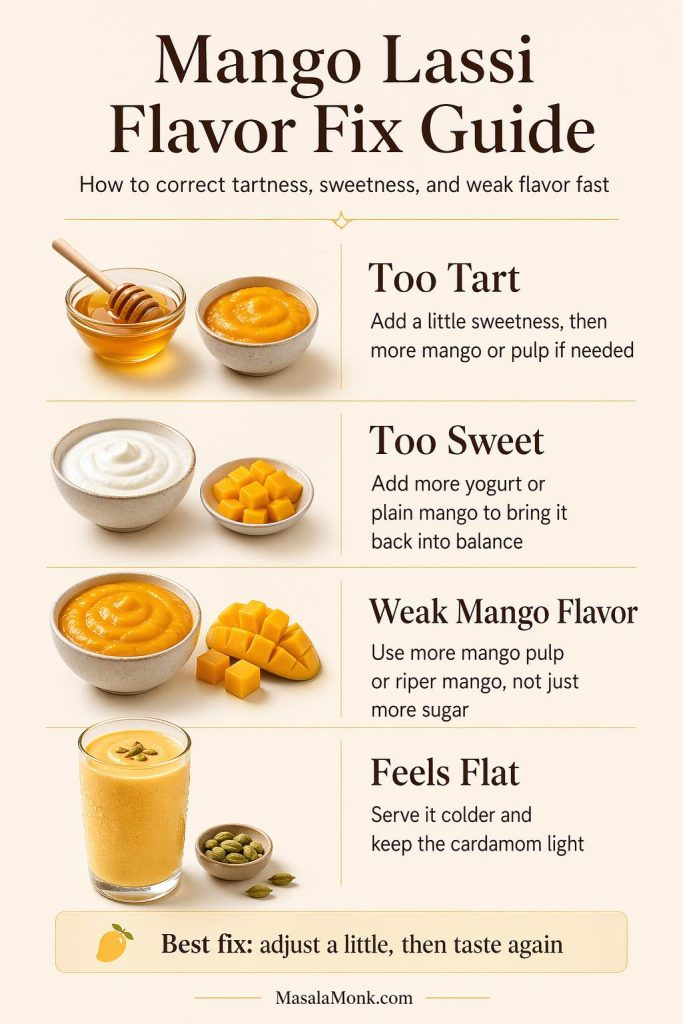
If it is too thick
Add milk or water a splash at a time and blend briefly after each addition. Greek yogurt and frozen mango can make the lassi thicker than expected, so small adjustments are usually all you need. The goal is not a thin drink. It is a creamy one that pours easily.
If it is too thin
Add more yogurt for body or more mango for both body and flavor. Mango pulp can also help because it thickens and boosts mango taste at the same time. Avoid solving thinness with ice, since melting ice usually weakens the drink further.
If it is too tart
A tart lassi usually comes from sour yogurt, not from a lack of sugar alone. Start with a little more sweetener, but also consider adding more mango or mango pulp to round out the flavor. If the yogurt is especially sharp, reducing it slightly next time can give a better balance than simply pouring in more sugar.
If it is too sweet
Add more yogurt or a little more plain mango to pull the drink back into balance. This happens most often when canned pulp is already sweetened and extra sugar gets added too soon. A tiny pinch of salt can also make the sweetness feel less one-dimensional without making the drink taste salty.
If the mango flavor feels weak
More sugar is rarely the best fix here. What the drink usually needs is more mango, riper mango, or some mango pulp for concentration. This is especially useful when fresh mango looks good but tastes milder than expected. Strengthening the fruit works better than trying to sweeten your way into a fuller flavor.
Mango Lassi Recipe Variations
The best way to handle variations is to keep the classic version central and make small, controlled changes from there. That keeps the page useful for the main mango lassi search while still giving readers a few practical ways to adapt the recipe.
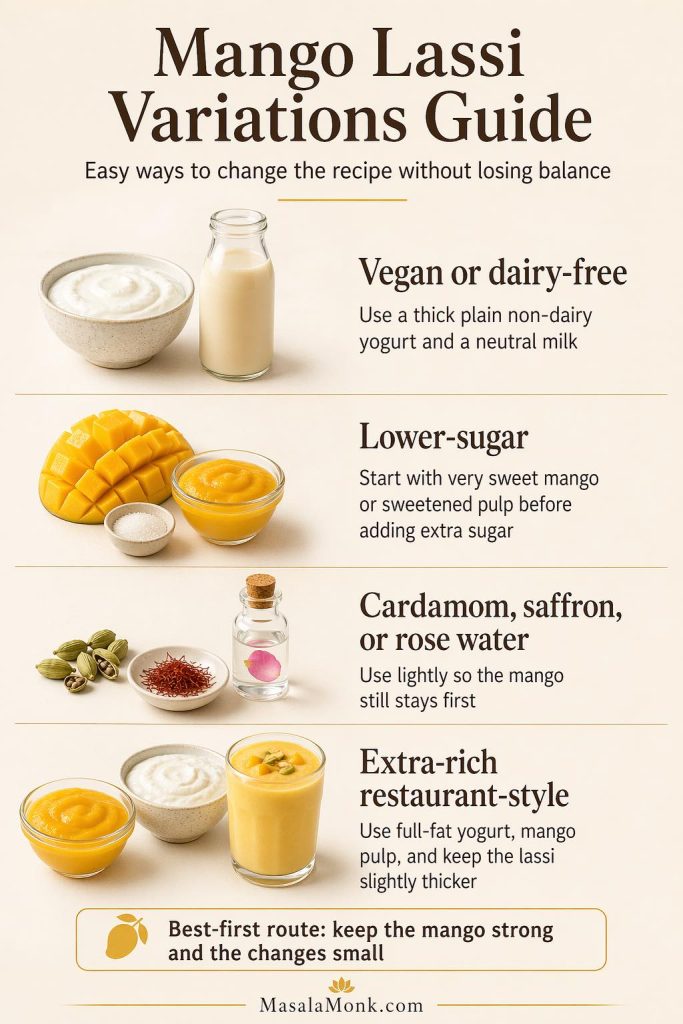
Vegan mango lassi
Use a thick plain non-dairy yogurt and enough mango to keep the drink creamy and fruit-forward. Coconut yogurt gives the richest result, but it also adds its own flavor, so it works best when you do not mind that extra note in the background. Taste carefully before adding sweetener because some non-dairy yogurts are already lightly sweet.
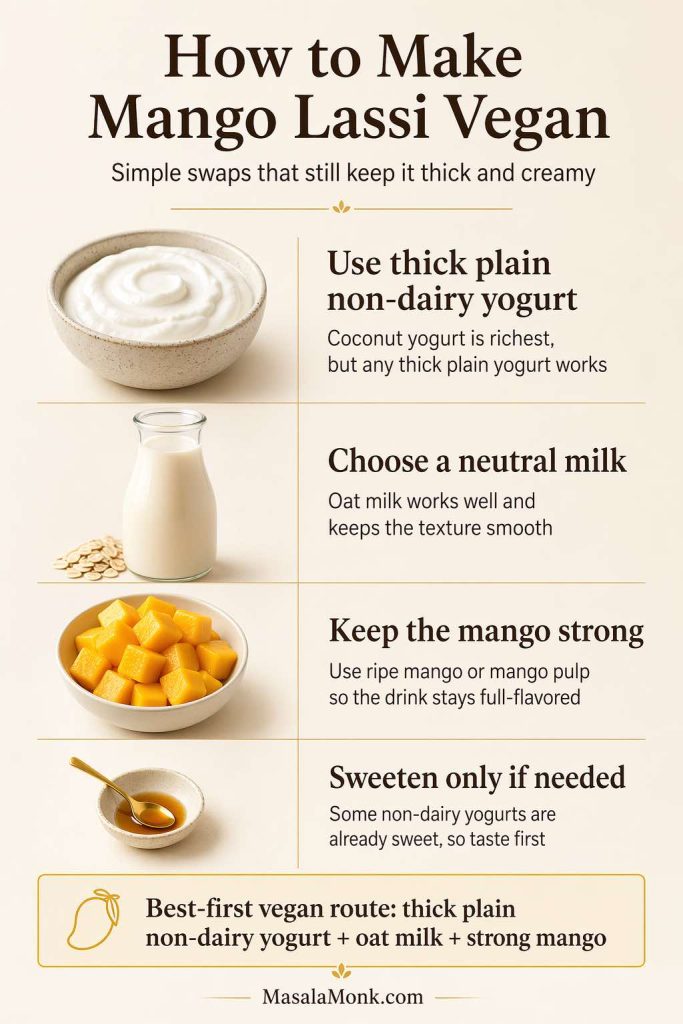
Dairy-free option
This works much like the vegan version, but the main goal is simply replacing the dairy while keeping the body of the drink intact. Use a plain dairy-free yogurt and a neutral or lightly creamy liquid so the mango still leads. Oat milk can work well here because it softens the texture without overpowering the drink.
Healthy or lower-sugar mango lassi
The easiest way to make mango lassi feel lighter is to rely on very sweet ripe mango and reduce the added sugar rather than stripping out all richness. You can also skip extra sweetener entirely if your mango or mango pulp is already sweet enough. Just remember that a lower-sugar version still needs enough mango flavor and enough yogurt body to taste complete.
Cardamom, saffron, or rose water
These are small finishing choices, not full identity changes. Cardamom is the easiest and most classic. Saffron adds warmth and a slightly more festive feel. Rose water can make the drink feel more perfumed and luxurious, but it needs a very light hand. In every case, the mango should still remain the first thing you taste.
Extra-rich restaurant-style Mango Lassi Recipe
If you want the richest, plushest version, use full-fat yogurt and mango pulp, and keep the drink slightly thicker than usual. Some people also like a little condensed milk in this style, but it should be added carefully because it sweetens very quickly. Even then, the goal is still a mango lassi, not a dessert that happens to be drinkable.
For a more tangy, spiced Indian summer drink, aam ka panna is a very different direction built around raw mango instead of ripe mango.
If you want something savory, cooling, and cumin-forward instead of creamy, jal jeera is another classic Indian summer drink worth making.
Continue to storage tips · Go to FAQs · Skip to full recipe
Storage and Make-Ahead
Mango lassi is at its best right after blending, when the drink is cold, smooth, and fully aerated. That fresh texture is part of what makes it feel rich and refreshing at the same time.
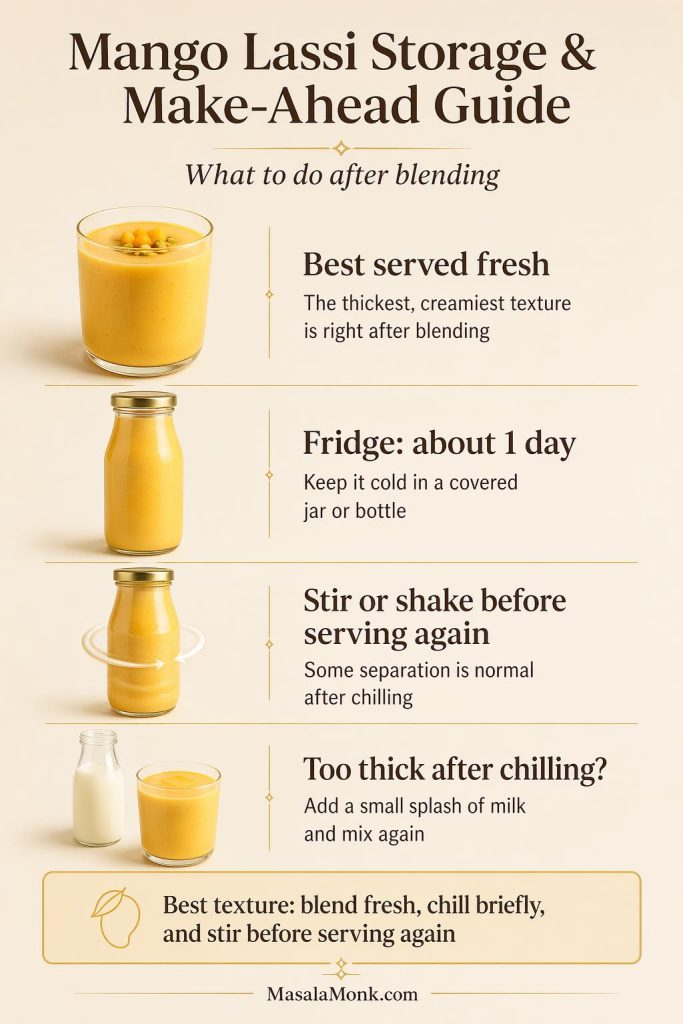
Best served fresh
If you want the thickest, creamiest texture, serve mango lassi as soon as it is blended. This is especially true when you are using fresh mango or ice, since the drink can loosen as it sits.
How long it keeps in the fridge
You can refrigerate mango lassi for about 1 day if needed. Store it in a covered jar or bottle and keep it cold.
What to do before serving again
Stir or shake well before serving again, because some separation is normal. If it feels too thick after chilling, add a small splash of milk and mix again.
If you want more traditional cooling drinks for hot weather, these Indian sharbats are a good next place to explore.
Mango Lassi Recipe FAQs
Can I make mango lassi with canned mango pulp?
Yes. Canned mango pulp is one of the easiest ways to make mango lassi taste more restaurant-style. It gives a concentrated mango flavor and strong color, but many brands are already sweetened, so add extra sugar carefully and only after tasting.
Can I use frozen mango instead of fresh?
Yes. Frozen mango works very well and often gives a thicker, colder lassi than fresh fruit. It is especially useful when fresh mangoes are out of season or not very flavorful. Just add liquid gradually because frozen fruit can make the drink thicker than expected.
What yogurt is best for mango lassi?
Plain full-fat yogurt usually gives the best balance of richness and smoothness. Dahi gives a softer tang and a looser texture, while Greek yogurt makes a thicker lassi and often needs more liquid. Any plain yogurt can work, but very sour yogurt may need more adjustment.
Why is my mango lassi too thick or too tart?
A too-thick lassi usually comes from Greek yogurt, frozen mango, or not enough liquid. A too-tart lassi usually comes from sour yogurt or mango that is not sweet enough. Both are easy to fix after blending with small, careful adjustments.
Can I make mango lassi without milk?
Yes. You can use water instead of milk, especially if your mango and yogurt already give the drink enough body. Milk makes the texture rounder and richer, but it is not essential. The key is to add only enough liquid to make the lassi pourable.
How do I make vegan mango lassi?
Use a thick plain non-dairy yogurt and a small amount of dairy-free milk or water. Coconut yogurt gives the richest texture, while oat milk can help keep the drink creamy without overpowering the mango too much. Taste before sweetening because some non-dairy products are already sweetened.
Can I make it ahead of time?
You can make it a few hours ahead, but it is best the same day and ideally soon after blending. If you make it ahead, keep it chilled and stir or shake it well before serving.
Is mango lassi supposed to be thick?
Yes. Mango lassi should be thick enough to feel creamy and substantial, but still pourable and easy to drink. It should not be watery, and it should not be so dense that it feels like spoonable yogurt.
Full Mango Lassi Recipe
Mango Lassi Recipe (Restaurant-Style, Thick and Creamy)
This restaurant-style Indian mango lassi recipe is thick, creamy, cold, and strongly mango-forward. For the best-first version, use full-fat yogurt and canned Alphonso or Kesar mango pulp.
- Prep time: 10 minutes
- Total time: 10 minutes
- Yield: 2 to 3 servings
- Category: Drink
- Cuisine: Indian
Ingredients
- 1 1/2 cups canned Alphonso or Kesar mango pulp
- 1 cup plain full-fat yogurt
- 1/4 to 1/2 cup cold milk, as needed
- 1 to 2 tablespoons sugar or honey, only if needed
- 1/8 teaspoon ground cardamom, optional
- Ice only if needed for extra chill
Fresh mango option: use 1 cup ripe mango plus 1/2 cup mango pulp for a fresher flavor with similar depth.
Method
- Add the mango pulp, yogurt, 1/4 cup cold milk, sweetener if using, and cardamom if using to a blender.
- Blend until completely smooth and creamy.
- Add a little more milk only if needed to loosen the drink.
- Taste and adjust. Add more sweetener only if needed, or a little more mango pulp if the flavor needs more depth.
- Add a little ice and blend briefly only if you want the lassi colder and slightly frothier.
- Pour into glasses and serve immediately.
Notes
- Best-first route: full-fat yogurt plus canned mango pulp gives the closest restaurant-style result.
- Fresh mango: best when the fruit is very ripe, sweet, and fragrant.
- Frozen mango: gives a colder, thicker lassi and works well when fresh mango is not at its best.
- Dahi vs Greek yogurt: dahi gives a looser, softer-tang result, while Greek yogurt makes a thicker lassi and may need more milk.
- Too thick: add milk a splash at a time.
- Too thin: add more yogurt or more mango.
- Too tart: add a little more sweetener and, if needed, more mango pulp.
- Vegan version: use a thick plain non-dairy yogurt and dairy-free milk or water.
Storage
Mango lassi is best served right after blending, but you can refrigerate it for about 1 day. Stir or shake well before serving again, and add a small splash of milk if it thickens too much in the fridge.
For a colder mango finish, this mango sorbet recipe is a good next step when you want something fruit-forward but not creamy.








