Posted on 1 Comment

Mango Lassi Recipe (Restaurant-Style, Thick and Creamy)

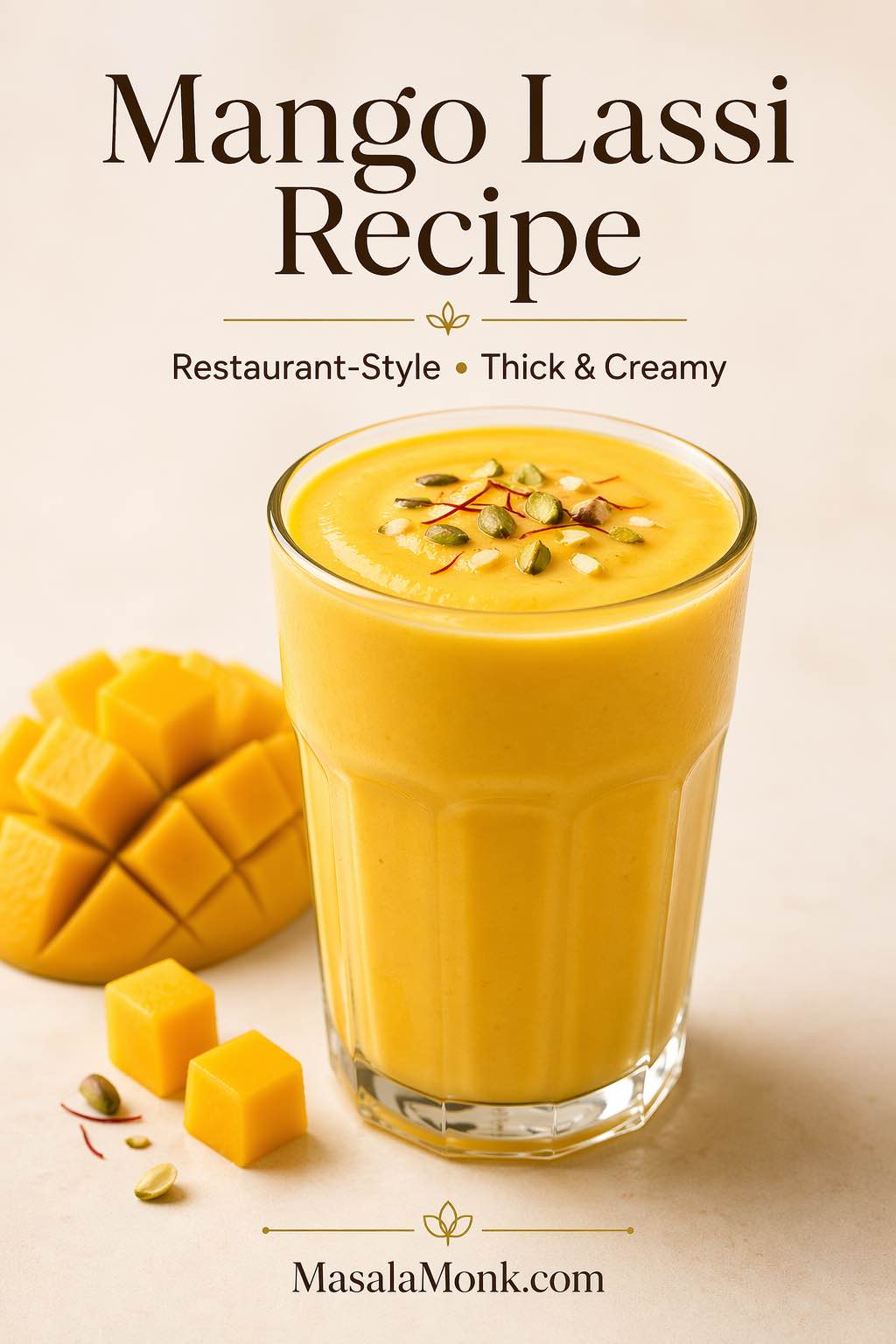
Social-share cover image for mango lassi recipe showing a thick creamy restaurant-style glass of mango lassi

A good mango lassi recipe should taste clearly of mango, feel thick and creamy, and stay balanced between sweet, tangy, and cold. The best versions are rich enough to feel satisfying, but still easy to drink.

This mango lassi recipe is built for that result. It works with fresh mango, frozen mango, or canned mango pulp, and it shows you how to adjust the texture, sweetness, and tang so the drink stays smooth, cold, and properly mango-forward. For the closest restaurant-style Indian mango lassi, use full-fat yogurt and mango pulp.

At a glance: 10 minutes, 2 to 3 servings, thick and creamy, best served very cold.

Mango Lassi Recipe Quick Answer

Mango lassi is a cold yogurt-based Indian drink made by blending mango, yogurt, a little milk or water, and sweetener until smooth and creamy. Britannica gives helpful background on lassi as a traditional yogurt-based drink from India. A good mango lassi recipe should be thick but pourable, strongly mango-flavored, and lightly balanced by yogurt tang. Fresh ripe mango gives the best natural flavor, frozen mango gives extra chill and thickness, and mango pulp is the easiest way to get a richer, more restaurant-style result at home.

If you want a milk-based mango drink instead, try this mango shake for a creamier, less tangy option.

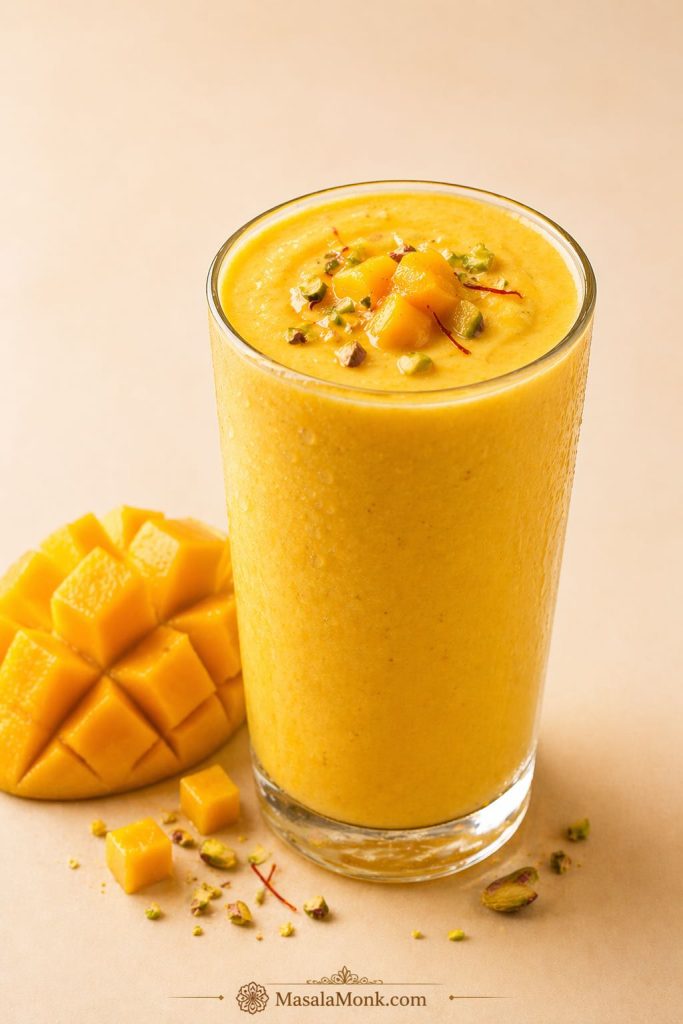
Glass of thick creamy mango lassi topped with mango cubes, pistachios, and saffron, with a scored mango half beside it.
A thick, creamy mango lassi made with a restaurant-style look and a rich mango finish.

Why This Mango Lassi Recipe Works

The difference between an average mango lassi and a very good one usually comes down to balance. A good mango lassi tastes clearly of mango first, not just yogurt and sugar. It feels creamy and rich without turning heavy, and it stays cold enough to be refreshing without becoming watery from too much ice.

The base is simple, but it is flexible enough to work with fresh mango, frozen mango, or canned mango pulp. That matters because small changes in mango type, yogurt thickness, and sweetener can noticeably change the final glass.

Balanced, not overly sweet

A good mango lassi recipe should taste naturally sweet and lightly tangy, not candy-like. Mangoes vary a lot in sweetness, and canned mango pulp is often already sweetened, so the best approach gives you room to adjust instead of forcing the same amount of sugar every time. Starting lighter and correcting after blending gives you a cleaner, more mango-forward result.

Thick but still pourable

The best texture lands somewhere between a smoothie and a milkshake. It should pour easily into a glass, but still look creamy and substantial. Yogurt gives the drink body, mango adds natural thickness, and just enough milk or water loosens it without washing out the flavor. For that reason, this mango lassi recipe works best when the liquid is added carefully instead of all at once.

Works with fresh mango, frozen mango, or pulp

One of the biggest reasons mango lassi recipes disappoint is that they pretend every mango works the same way. They do not. Ripe fresh mango gives the best flavor when it is excellent, frozen mango gives reliable cold thickness, and mango pulp gives the most dependable restaurant-style color and concentrated mango taste. This recipe is designed so you can get a good result with any of the three.

Easy to adjust to taste

Once everything is blended, you can still fix almost anything in seconds. A splash of milk loosens a lassi that feels too thick. More sweetness helps when it tastes too tart, while extra yogurt or mango can fix a thinner-than-expected texture. If the flavor seems flat, the drink usually needs stronger mango, not just more sugar. That flexibility makes this a much more dependable home recipe than a one-note formula.

Mango Lassi Recipe Ingredients

Mango lassi uses a short ingredient list, which means each ingredient matters more. This is not the kind of recipe where average fruit and random yogurt disappear into the background. The mango sets the flavor, the yogurt sets the body, and the liquid and sweetener determine whether the drink feels balanced or diluted.
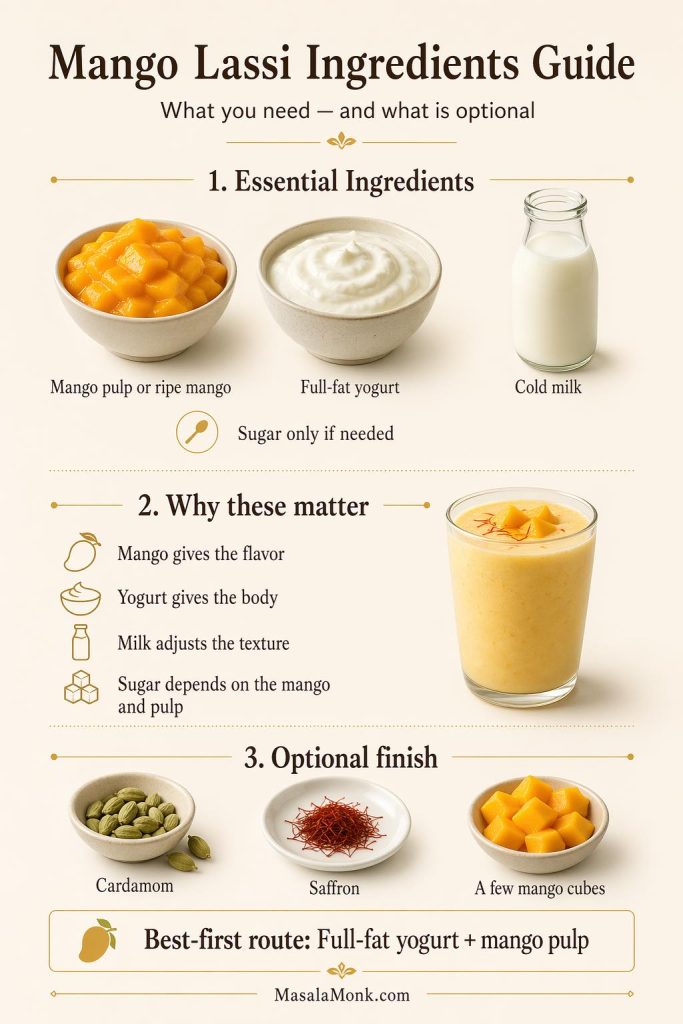
Mango lassi ingredients guide showing mango pulp or ripe mango, full-fat yogurt, cold milk, optional cardamom and saffron, and the best-first route with mango pulp.
Start with mango pulp or ripe mango for flavor, full-fat yogurt for body, and cold milk to loosen the texture without making the lassi watery.

Mango

You can use ripe fresh mango, frozen mango, or canned mango pulp here. Fresh mango gives the best flavor when it is truly ripe and sweet. Frozen mango is excellent when you want the drink colder and thicker without relying on a lot of ice. Mango pulp is the easiest way to get that bright restaurant-style mango flavor and color, especially when your fresh mangoes are only decent instead of exceptional.

Yogurt

Yogurt gives mango lassi its body and tang. Full-fat yogurt makes the drink smoother and richer, while low-fat yogurt can taste thinner and sharper. Traditional dahi gives a softer tang and looser texture, while Greek yogurt makes a thicker lassi and often needs more liquid. Taste the yogurt before blending, because very sour yogurt can throw off the whole drink.

Milk or water

A small amount of milk loosens the yogurt and mango without stripping out richness. Water works too, especially if the mango and yogurt are already full-bodied, but milk usually gives a rounder result. The important thing is restraint. Too much liquid is one of the fastest ways to turn mango lassi from creamy to forgettable.

Sweetener

Sugar is the most straightforward option, but honey can work if you like its flavor. The amount depends on your mangoes and on whether your pulp is already sweetened. The best approach is to start low, blend, and then add more only if the drink still tastes too tart or muted. A good mango lassi recipe should taste sweet enough to feel comforting, not so sweet that it buries the fruit.

Cardamom and optional flavor additions

Cardamom is the classic optional addition, and a small amount can make the drink feel more finished without taking over. Saffron or a tiny drop of rose water can also work in richer versions, but both should stay in the background. This is still a mango drink first.

Best Mangoes and Yogurt for Mango Lassi

This is where ingredient choice matters most. When the mango and yogurt are right, the drink tastes smooth, balanced, and easy to love. When one is off, the lassi needs more correction than most people expect.
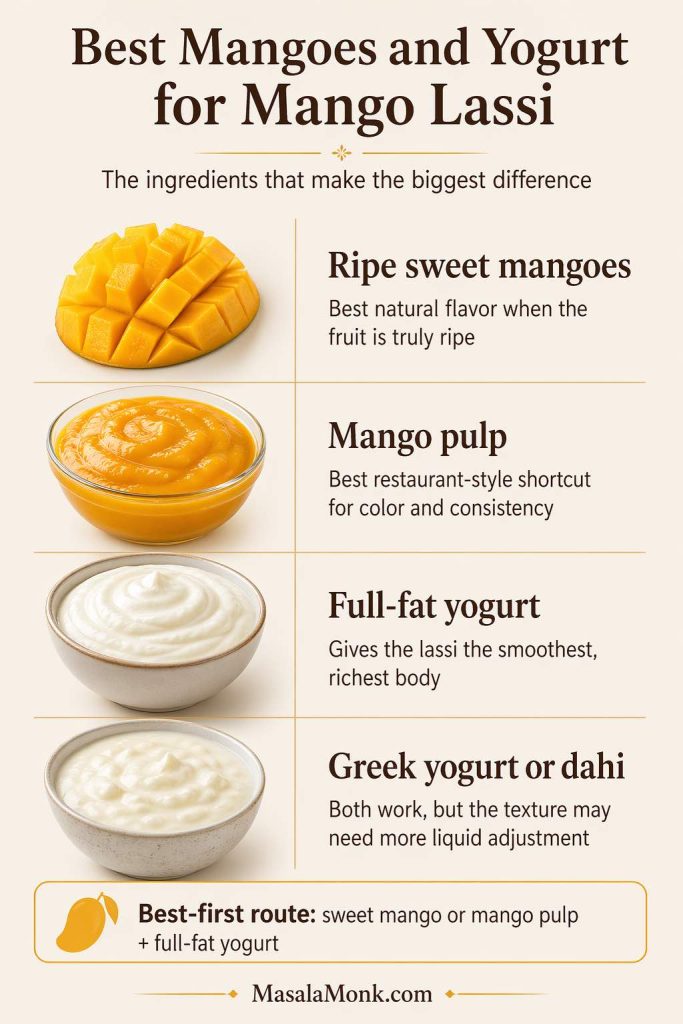
Guide comparing ripe sweet mangoes, mango pulp, full-fat yogurt, and Greek yogurt or dahi for mango lassi.
Sweet ripe mangoes give the best natural flavor, mango pulp gives the easiest restaurant-style shortcut, and full-fat yogurt gives mango lassi its smoothest, richest body.

Best mangoes for flavor

The best fresh mangoes for mango lassi are ripe, sweet, fragrant, and low in fibrous texture. If the mango tastes flat, watery, or slightly sour on its own, the lassi will usually need extra help from sugar or pulp. Soft, fully ripe mangoes give a rounder, more dessert-like result, while underripe fruit tends to make the drink taste sharper and less luxurious.

Alphonso and Kesar mango for restaurant-style lassi recipe

When people talk about restaurant-style mango lassi, they are often chasing the intense color and concentrated flavor associated with Alphonso or Kesar mango pulp. The National Horticulture Board’s mango varieties material is a useful reference for Indian varieties such as Alphonso and Kesar. That does not mean you need those mangoes every time, but it does explain why a lassi made with canned Indian mango pulp can taste more vivid and familiar than one made with average supermarket mangoes. If your fresh fruit is just okay, pulp can help bridge that gap.

Dahi vs Greek yogurt

Dahi usually gives a softer tang and a naturally looser consistency, which makes it very easy to blend into a smooth drinking texture. Greek yogurt gives more body and richness, but it can also make the lassi too thick or slightly too tart if you do not add enough liquid. Both work well. You just want to respect the difference instead of assuming they behave the same way.

What to do if your yogurt is too sour

If your yogurt tastes noticeably sharp, the finished lassi may taste more tangy than creamy even after sweetener is added. The easiest fixes are to use a sweeter mango, add a little more sweetener, reduce the yogurt slightly, or soften the tartness with a spoonful of mango pulp. In other words, do not fight sour yogurt with sugar alone. It is better to rebalance the drink from more than one direction.

Fresh Mango vs Frozen Mango vs Mango Pulp

This choice changes the drink more than almost anything else. Fresh mango gives the best natural flavor when the fruit is excellent. Frozen mango gives easy chill and thickness. Mango pulp gives the most reliable shortcut to the deeper color and fuller flavor many people expect from restaurant-style mango lassi.
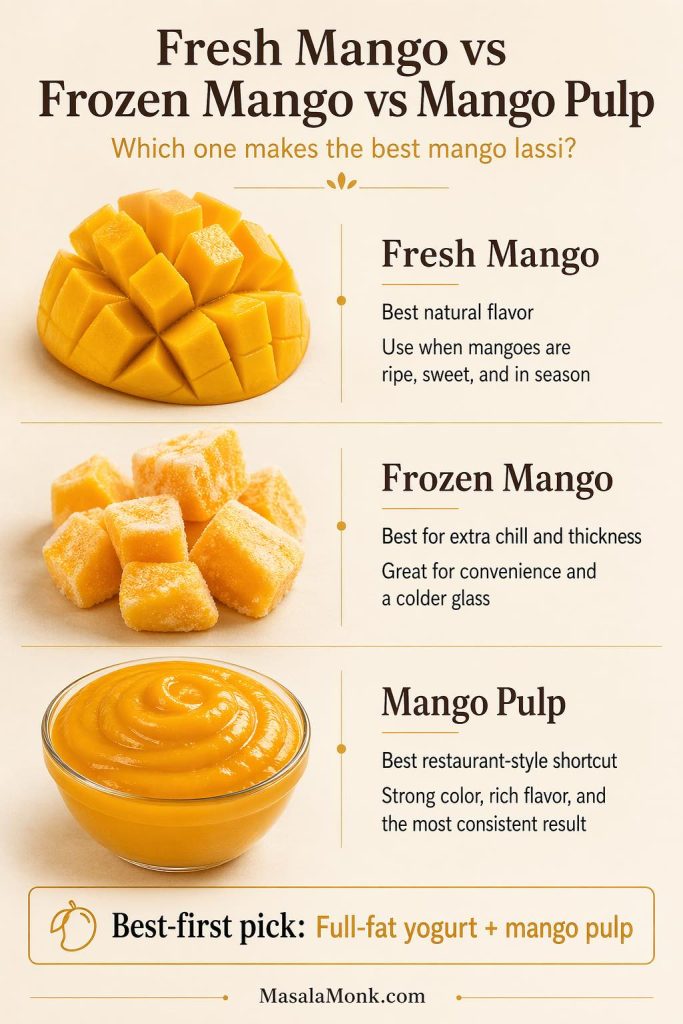
Comparison of fresh mango, frozen mango, and mango pulp for making mango lassi, with notes on flavor, thickness, and restaurant-style results.
Fresh mango gives the best natural flavor, frozen mango adds extra chill and thickness, and mango pulp is the easiest route to a richer restaurant-style mango lassi.

Fresh mango: best flavor

Use fresh mango when your fruit is ripe, sweet, and actually worth showcasing. This is usually the best route when mangoes are in season and full of flavor. The main caution is that room-temperature fresh mango often makes the lassi less cold and slightly looser, so you may want colder yogurt, a little ice, or a brief chill before serving.

Frozen mango: best convenience and chill

Frozen mango is one of the easiest ways to make mango lassi feel thick and very cold without leaning too hard on ice. It is convenient, consistent, and often better than mediocre fresh mango. If you like a thicker glass with a colder finish, frozen mango is often the easiest choice. Just remember that heavily frozen fruit can also make the drink thicker than expected, so add liquid gradually.

The same “start with less liquid, then adjust” idea also helps with smoothie-style blends, and this strawberry smoothie recipe uses that logic well.

Mango pulp: best restaurant-style shortcut

Mango pulp is the easiest shortcut when you want a richer, more restaurant-style mango lassi. It gives stronger color, fuller mango flavor, and a more predictable result than average fresh fruit. Even a small amount can make the drink taste more complete.

How sweetened mango pulp changes the recipe

Most canned mango pulp is already sweetened, which means it does two jobs at once: it adds mango flavor and it adds sweetness. Because of that, you should not treat it like unsweetened fresh mango. Start with less added sugar than you think you need, blend first, and only sweeten more if the drink still tastes too tart. That one adjustment keeps the lassi from becoming cloying.

Mango Lassi Recipe Snapshot

This mango lassi recipe makes a thick, creamy, restaurant-style Indian drink with a strong mango flavor and a balanced sweet-tangy finish. The best-first version uses full-fat yogurt and canned Alphonso or Kesar mango pulp.
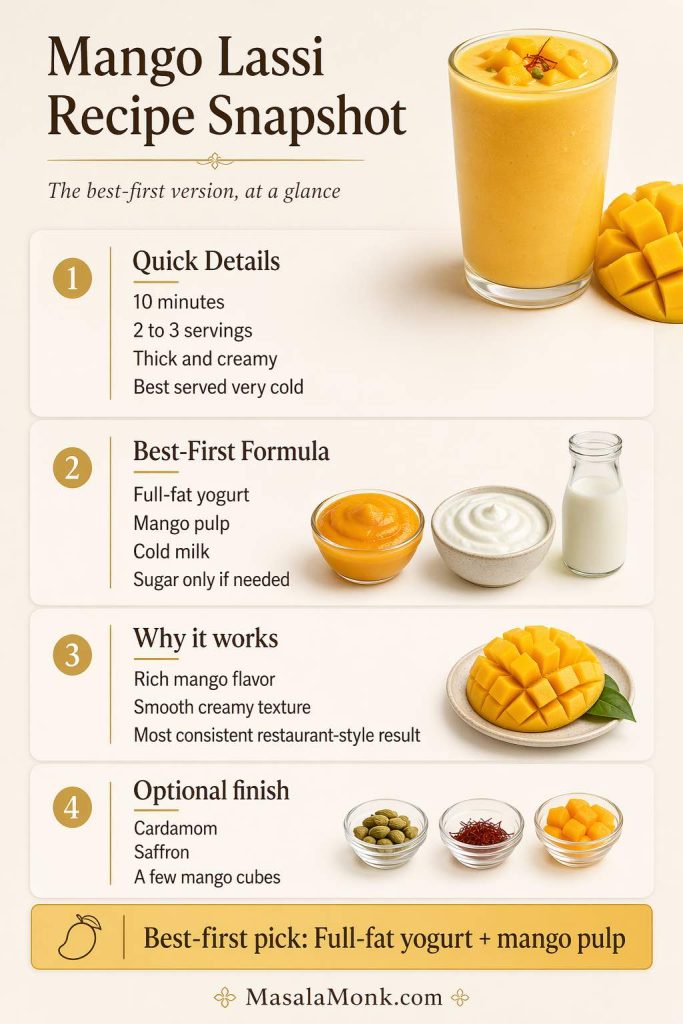
Mango lassi recipe snapshot showing time, servings, best-first formula with full-fat yogurt and mango pulp, and optional finish ingredients.
This mango lassi recipe snapshot shows the best-first route at a glance: full-fat yogurt, mango pulp, cold milk, and just enough sweetness for a thick, creamy restaurant-style result.
  • Prep time: 10 minutes
  • Total time: 10 minutes
  • Yield: 2 to 3 servings
  • Category: Drink
  • Cuisine: Indian
  • Texture: Thick and creamy
  • Best served: Very cold
  • Best-first formula: Full-fat yogurt plus canned mango pulp

How to Make This Mango Lassi Recipe

This mango lassi recipe is easiest to control when you start with less liquid than you think you need. Once the mango, yogurt, and sweetener are blended smooth, you can fine-tune the thickness and flavor in seconds.

Mango lassi texture guide showing too thick, just right, and too thin consistency with quick fixes.
Aim for a mango lassi that feels thick, creamy, and easy to pour, then adjust with a splash of milk if it is too thick or more yogurt or mango pulp if it turns too thin.

Add everything to the blender

Add the mango, yogurt, milk or water, sweetener, and cardamom if using to the blender. If you are using fresh mango and want the drink especially cold, add a few ice cubes or make sure the yogurt and liquid are well chilled before blending. If you are using canned mango pulp, start with less sweetener since the pulp may already be sweet.

Blend until fully smooth

Blend until the mixture looks silky and completely uniform, with no yogurt streaks or visible fruit pieces left behind. This usually takes less time than people expect, especially with mango pulp or very ripe mango. If the drink looks too thick to move well in the blender, add a small splash of liquid rather than a large pour.
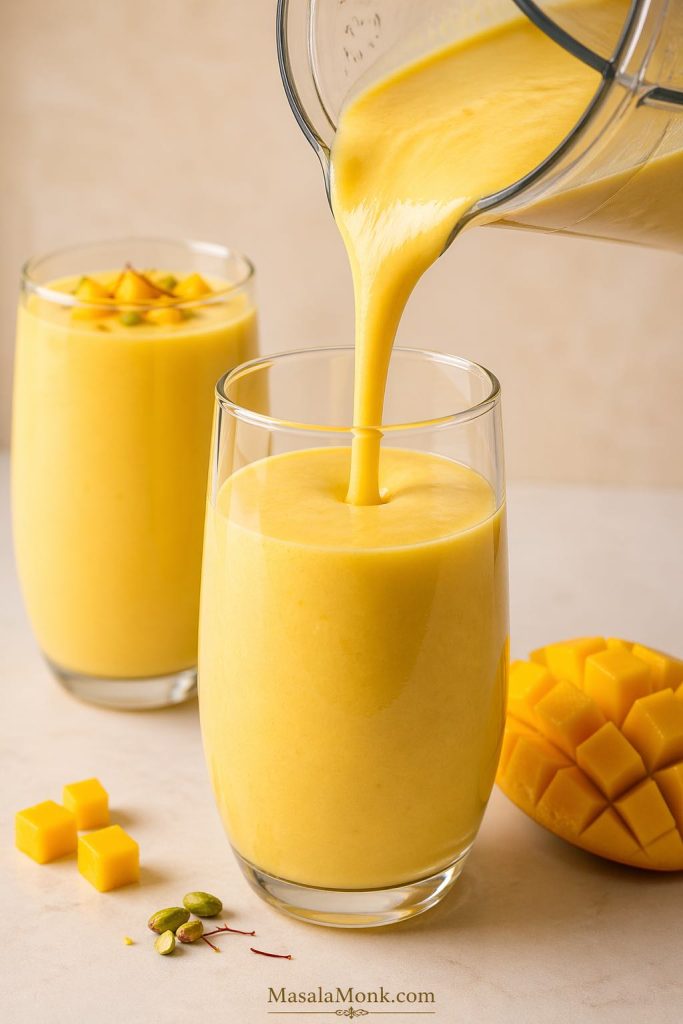
Thick smooth mango lassi being poured from a blender jar into a glass, with a finished glass and mango pieces nearby.
Pour the lassi when it flows in a thick, smooth stream and settles into the glass without looking watery, stiff, or grainy.

Taste and adjust

Before pouring, taste the lassi once. This is where the drink starts to feel finished instead of merely acceptable. Add more sweetness a little at a time if needed. If the texture feels too thick, loosen it with a small splash of milk. When the yogurt tastes too sharp, extra mango or mango pulp usually works better than sugar alone.

Serve very cold

Pour into glasses and serve right away while the texture is at its best. Mango lassi is most satisfying when it is very cold, smooth, and freshly blended. If you want, finish with a tiny pinch of cardamom or a few saffron strands, but keep the garnish light so the mango stays at the center.

How to Make It Taste More Restaurant-Style

If you want an authentic mango lassi with a more restaurant-style finish, the answer is usually not more sugar or more ice. It is better ingredient choice, colder serving temperature, and a thicker final texture. Mango pulp and full-fat yogurt do most of the heavy lifting.
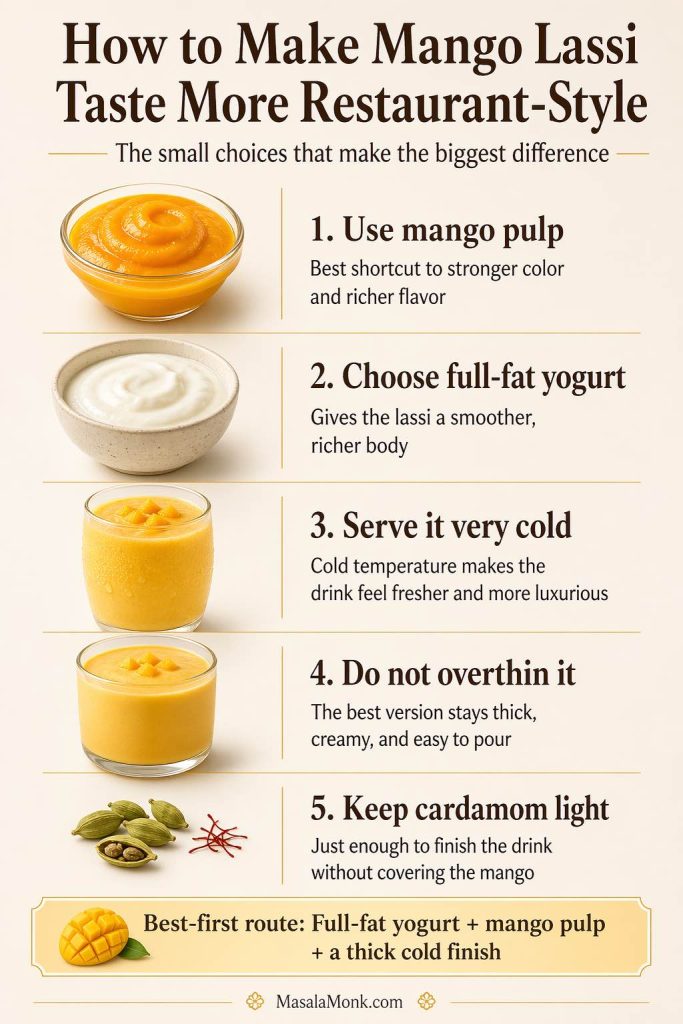
Guide showing how to make mango lassi taste more restaurant-style with mango pulp, full-fat yogurt, a thick cold finish, and light cardamom.
Use mango pulp for richer flavor, full-fat yogurt for body, and a thick cold finish to bring mango lassi closer to the restaurant-style version, then keep the cardamom light so the mango stays in front.

Use mango pulp for the closest restaurant-style flavor

When homemade mango lassi does not quite taste like the restaurant version, mango pulp is often the missing link. It gives deeper color, fuller mango flavor, and a more consistent result than average fresh fruit. You do not have to use only pulp, either. Even combining a little pulp with ripe fresh mango can bring the drink much closer to that restaurant-style result.

Use full-fat yogurt

Full-fat yogurt gives the drink a smoother, richer feel and helps it stay creamy instead of sharp or thin. Low-fat yogurt can still work, but it usually needs more help from good mango and careful sweetening. If you want the most satisfying texture, full-fat yogurt is the simplest upgrade.

Serve colder than you think

A lukewarm mango lassi tastes flatter and heavier. Cold temperature sharpens the refreshment and makes the texture feel more luxurious. Chill the yogurt, chill the liquid, and use frozen mango or a little ice when needed, but do not water the drink down just to make it colder.

Do not overthin the drink

A restaurant-style mango lassi should feel rich and creamy, not like thin juice with yogurt mixed in. Add liquid gradually and stop as soon as the drink becomes pourable. It is much easier to loosen a thick lassi than to fix one that has already become diluted.

Use cardamom lightly

Cardamom can make mango lassi feel finished and fragrant, but too much turns the drink perfumed and distracts from the fruit. A light hand works best. The same is true for rose water and saffron in richer versions. They should support the mango, not compete with it.

How to Fix Thickness, Sweetness, and Tang

Small adjustments make the biggest difference here. Mangoes vary, yogurt varies, and canned pulp changes the sweetness level a lot. A quick adjustment after blending is normal, not a sign that anything went wrong.
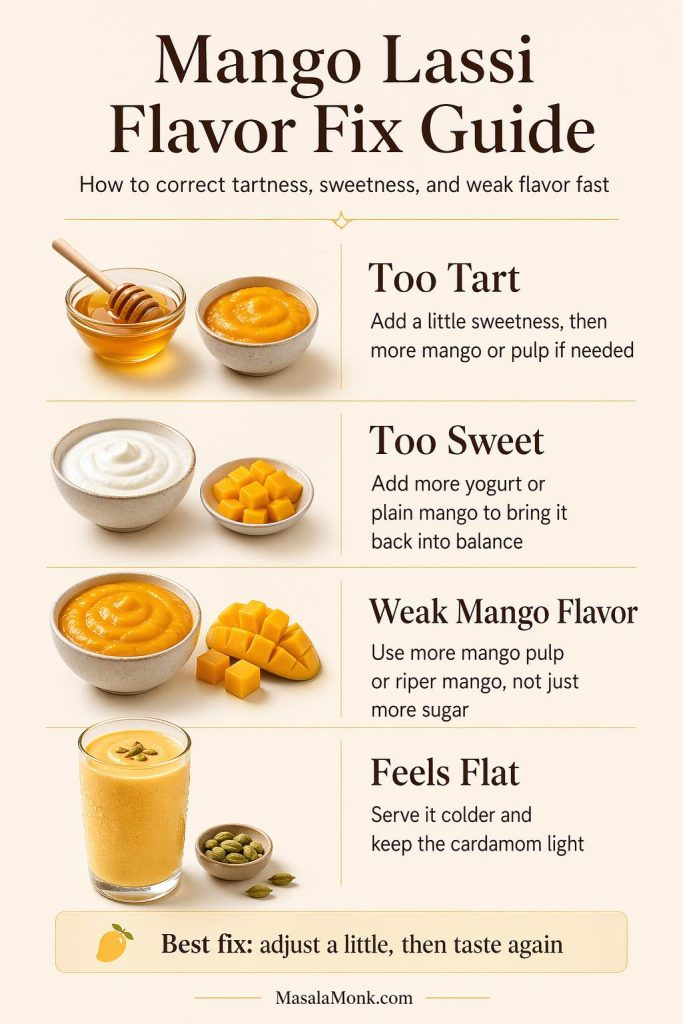
Mango lassi flavor fix guide showing how to correct tart, sweet, weak, or flat flavor with simple adjustments.
Fix a tart mango lassi with a little sweetness and more mango or pulp, bring back an overly sweet batch with yogurt or plain mango, and make flat flavor feel brighter by serving it colder and keeping the cardamom light.

If it is too thick

Add milk or water a splash at a time and blend briefly after each addition. Greek yogurt and frozen mango can make the lassi thicker than expected, so small adjustments are usually all you need. The goal is not a thin drink. It is a creamy one that pours easily.

If it is too thin

Add more yogurt for body or more mango for both body and flavor. Mango pulp can also help because it thickens and boosts mango taste at the same time. Avoid solving thinness with ice, since melting ice usually weakens the drink further.

If it is too tart

A tart lassi usually comes from sour yogurt, not from a lack of sugar alone. Start with a little more sweetener, but also consider adding more mango or mango pulp to round out the flavor. If the yogurt is especially sharp, reducing it slightly next time can give a better balance than simply pouring in more sugar.

If it is too sweet

Add more yogurt or a little more plain mango to pull the drink back into balance. This happens most often when canned pulp is already sweetened and extra sugar gets added too soon. A tiny pinch of salt can also make the sweetness feel less one-dimensional without making the drink taste salty.

If the mango flavor feels weak

More sugar is rarely the best fix here. What the drink usually needs is more mango, riper mango, or some mango pulp for concentration. This is especially useful when fresh mango looks good but tastes milder than expected. Strengthening the fruit works better than trying to sweeten your way into a fuller flavor.

Mango Lassi Recipe Variations

The best way to handle variations is to keep the classic version central and make small, controlled changes from there. That keeps the page useful for the main mango lassi search while still giving readers a few practical ways to adapt the recipe.
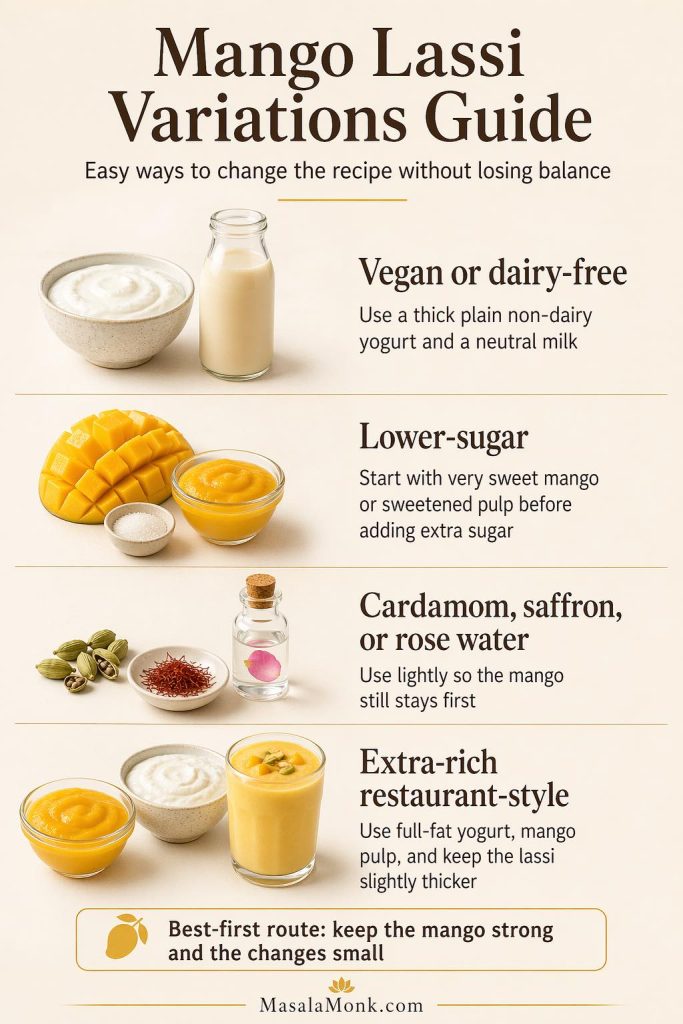
Mango lassi variations guide showing vegan or dairy-free, lower-sugar, lightly spiced, and extra-rich restaurant-style options.
Switch mango lassi toward vegan, lower-sugar, lightly spiced, or extra-rich restaurant-style versions by changing only one or two elements at a time and keeping the mango flavor strong.

Vegan mango lassi

Use a thick plain non-dairy yogurt and enough mango to keep the drink creamy and fruit-forward. Coconut yogurt gives the richest result, but it also adds its own flavor, so it works best when you do not mind that extra note in the background. Taste carefully before adding sweetener because some non-dairy yogurts are already lightly sweet.
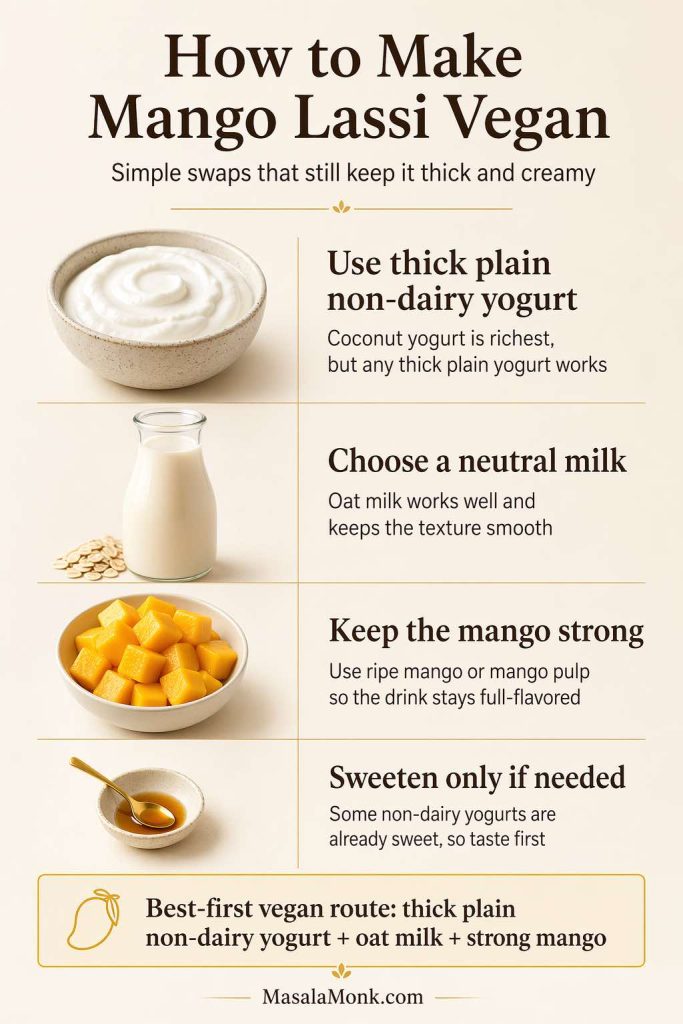
Guide showing how to make mango lassi vegan with thick plain non-dairy yogurt, oat milk, strong mango, and sweetener tips.
Keep vegan mango lassi thick and creamy with plain non-dairy yogurt, a neutral milk like oat milk, and enough ripe mango or mango pulp to carry the flavor.

Dairy-free option

This works much like the vegan version, but the main goal is simply replacing the dairy while keeping the body of the drink intact. Use a plain dairy-free yogurt and a neutral or lightly creamy liquid so the mango still leads. Oat milk can work well here because it softens the texture without overpowering the drink.

Healthy or lower-sugar mango lassi

The easiest way to make mango lassi feel lighter is to rely on very sweet ripe mango and reduce the added sugar rather than stripping out all richness. You can also skip extra sweetener entirely if your mango or mango pulp is already sweet enough. Just remember that a lower-sugar version still needs enough mango flavor and enough yogurt body to taste complete.

Cardamom, saffron, or rose water

These are small finishing choices, not full identity changes. Cardamom is the easiest and most classic. Saffron adds warmth and a slightly more festive feel. Rose water can make the drink feel more perfumed and luxurious, but it needs a very light hand. In every case, the mango should still remain the first thing you taste.

Extra-rich restaurant-style Mango Lassi Recipe

If you want the richest, plushest version, use full-fat yogurt and mango pulp, and keep the drink slightly thicker than usual. Some people also like a little condensed milk in this style, but it should be added carefully because it sweetens very quickly. Even then, the goal is still a mango lassi, not a dessert that happens to be drinkable.

For a more tangy, spiced Indian summer drink, aam ka panna is a very different direction built around raw mango instead of ripe mango.

If you want something savory, cooling, and cumin-forward instead of creamy, jal jeera is another classic Indian summer drink worth making.

Storage and Make-Ahead

Mango lassi is at its best right after blending, when the drink is cold, smooth, and fully aerated. That fresh texture is part of what makes it feel rich and refreshing at the same time.
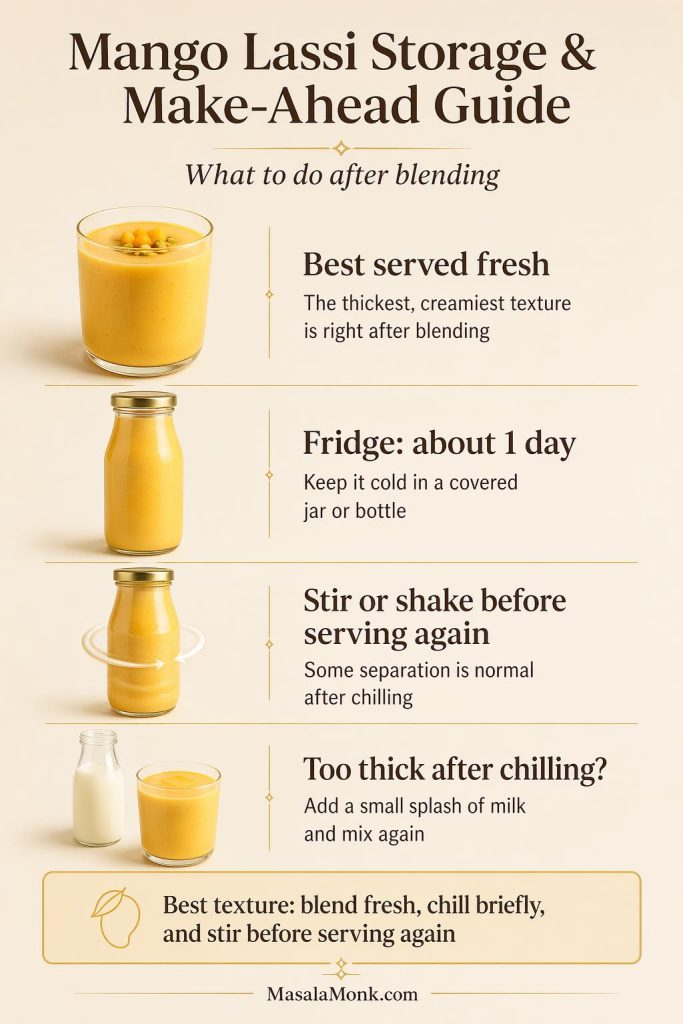
Storage and make-ahead guide for mango lassi showing best served fresh, fridge storage for about 1 day, stirring before serving again, and adding milk if it thickens after chilling.
Serve mango lassi fresh for the best texture, refrigerate leftovers only briefly, then stir well and loosen with a splash of milk if it thickens after chilling.

Best served fresh

If you want the thickest, creamiest texture, serve mango lassi as soon as it is blended. This is especially true when you are using fresh mango or ice, since the drink can loosen as it sits.

How long it keeps in the fridge

You can refrigerate mango lassi for about 1 day if needed. Store it in a covered jar or bottle and keep it cold.

What to do before serving again

Stir or shake well before serving again, because some separation is normal. If it feels too thick after chilling, add a small splash of milk and mix again.

If you want more traditional cooling drinks for hot weather, these Indian sharbats are a good next place to explore.

Mango Lassi Recipe FAQs

Can I make mango lassi with canned mango pulp?

Yes. Canned mango pulp is one of the easiest ways to make mango lassi taste more restaurant-style. It gives a concentrated mango flavor and strong color, but many brands are already sweetened, so add extra sugar carefully and only after tasting.

Can I use frozen mango instead of fresh?

Yes. Frozen mango works very well and often gives a thicker, colder lassi than fresh fruit. It is especially useful when fresh mangoes are out of season or not very flavorful. Just add liquid gradually because frozen fruit can make the drink thicker than expected.

What yogurt is best for mango lassi?

Plain full-fat yogurt usually gives the best balance of richness and smoothness. Dahi gives a softer tang and a looser texture, while Greek yogurt makes a thicker lassi and often needs more liquid. Any plain yogurt can work, but very sour yogurt may need more adjustment.

Why is my mango lassi too thick or too tart?

A too-thick lassi usually comes from Greek yogurt, frozen mango, or not enough liquid. A too-tart lassi usually comes from sour yogurt or mango that is not sweet enough. Both are easy to fix after blending with small, careful adjustments.

Can I make mango lassi without milk?

Yes. You can use water instead of milk, especially if your mango and yogurt already give the drink enough body. Milk makes the texture rounder and richer, but it is not essential. The key is to add only enough liquid to make the lassi pourable.

How do I make vegan mango lassi?

Use a thick plain non-dairy yogurt and a small amount of dairy-free milk or water. Coconut yogurt gives the richest texture, while oat milk can help keep the drink creamy without overpowering the mango too much. Taste before sweetening because some non-dairy products are already sweetened.

Can I make it ahead of time?

You can make it a few hours ahead, but it is best the same day and ideally soon after blending. If you make it ahead, keep it chilled and stir or shake it well before serving.

Is mango lassi supposed to be thick?

Yes. Mango lassi should be thick enough to feel creamy and substantial, but still pourable and easy to drink. It should not be watery, and it should not be so dense that it feels like spoonable yogurt.

Full Mango Lassi Recipe

Mango Lassi Recipe (Restaurant-Style, Thick and Creamy)

This restaurant-style Indian mango lassi recipe is thick, creamy, cold, and strongly mango-forward. For the best-first version, use full-fat yogurt and canned Alphonso or Kesar mango pulp.

  • Prep time: 10 minutes
  • Total time: 10 minutes
  • Yield: 2 to 3 servings
  • Category: Drink
  • Cuisine: Indian

Ingredients

  • 1 1/2 cups canned Alphonso or Kesar mango pulp
  • 1 cup plain full-fat yogurt
  • 1/4 to 1/2 cup cold milk, as needed
  • 1 to 2 tablespoons sugar or honey, only if needed
  • 1/8 teaspoon ground cardamom, optional
  • Ice only if needed for extra chill

Fresh mango option: use 1 cup ripe mango plus 1/2 cup mango pulp for a fresher flavor with similar depth.

Method

  1. Add the mango pulp, yogurt, 1/4 cup cold milk, sweetener if using, and cardamom if using to a blender.
  2. Blend until completely smooth and creamy.
  3. Add a little more milk only if needed to loosen the drink.
  4. Taste and adjust. Add more sweetener only if needed, or a little more mango pulp if the flavor needs more depth.
  5. Add a little ice and blend briefly only if you want the lassi colder and slightly frothier.
  6. Pour into glasses and serve immediately.

Notes

  • Best-first route: full-fat yogurt plus canned mango pulp gives the closest restaurant-style result.
  • Fresh mango: best when the fruit is very ripe, sweet, and fragrant.
  • Frozen mango: gives a colder, thicker lassi and works well when fresh mango is not at its best.
  • Dahi vs Greek yogurt: dahi gives a looser, softer-tang result, while Greek yogurt makes a thicker lassi and may need more milk.
  • Too thick: add milk a splash at a time.
  • Too thin: add more yogurt or more mango.
  • Too tart: add a little more sweetener and, if needed, more mango pulp.
  • Vegan version: use a thick plain non-dairy yogurt and dairy-free milk or water.

Storage

Mango lassi is best served right after blending, but you can refrigerate it for about 1 day. Stir or shake well before serving again, and add a small splash of milk if it thickens too much in the fridge.

For a colder mango finish, this mango sorbet recipe is a good next step when you want something fruit-forward but not creamy.


↑ Back to top

Posted on Leave a comment

Saffron-infused Milk: A Golden Elixir of Health and Wellness

SAFFRON MILK!

From the royal courts of ancient Persia to cozy kitchens in modern India, saffron-infused milk (often called Kesar Doodh) has woven a golden thread through the tapestry of human culture and wellness. But what is it about this aromatic, sun-hued drink that has captured hearts—and sparked scientific curiosity—for centuries? Let’s explore the tradition, science, and simple pleasures of this remarkable beverage, and see how you can bring its benefits into your own life.


What is Saffron-Infused Milk?

Saffron-infused milk is a warm, comforting drink made by steeping saffron threads—the world’s most expensive spice—in milk (dairy or plant-based). Often enhanced with cardamom, nuts, and a touch of sweetener, this beverage delivers not only a sensory delight but also a host of potential health benefits.

Traditionally enjoyed during celebrations, as a nightcap, or as a tonic for mothers and children, Kesar Doodh has recently reemerged as a trendy superfood in the wellness world.


The Science Behind the Gold: What Does Research Say?

1. Mood, Stress, and Sleep

Modern clinical studies have confirmed what Ayurveda and Unani medicine have long claimed: saffron can uplift mood, reduce mild to moderate depression, and help you sleep better. Saffron’s main bioactives—crocin, safranal, and picrocrocin—support neurotransmitter balance, enhancing serotonin activity and promoting relaxation. Some research even suggests saffron’s effects can rival low-dose prescription antidepressants, with the bonus of fewer side effects.

Practical Tip: Enjoying a cup of saffron milk about an hour before bedtime can be a gentle, natural way to unwind after a stressful day.


2. Blood Sugar and Metabolic Health

A recent 2024 meta-analysis found that saffron supplementation over 8–12 weeks can significantly reduce fasting blood glucose and HbA1c levels in people with type 2 diabetes. The effect is mild but meaningful—likely due to saffron’s antioxidant and anti-inflammatory properties rather than direct effects on insulin.

Practical Tip: For those managing blood sugar, saffron milk (with minimal or no added sweetener) could be a supportive addition to a balanced diet.


3. Eye Health and Cognitive Support

Saffron’s antioxidants, especially crocin, have shown promise in supporting retinal function in early age-related macular degeneration (AMD) and may also protect brain cells against oxidative damage—potentially benefiting memory and cognitive function.

Practical Tip: Consistent, long-term consumption may support both eye and brain health, especially for older adults.


4. Immunity, Skin, and Overall Vitality

Saffron is rich in carotenoids and flavonoids, which help neutralize free radicals and modulate immune responses. Many believe this contributes to the “glow” attributed to saffron milk, both for skin and general vitality.

Practical Tip: In India, saffron milk is often given to new mothers and children (in modest amounts) as a nourishing tonic.


5. Women’s Health

Saffron’s reputation for supporting hormonal balance and alleviating PMS symptoms is now supported by several clinical trials. Its soothing effect on cramps and mood swings makes it a thoughtful, natural option for women’s health.


The Ritual: How to Prepare Perfect Saffron Milk

Making saffron milk is a mindful ritual in itself. Here’s a basic recipe, plus options for customization.

Classic Saffron Milk (Kesar Doodh)

Ingredients:

  • 1 cup whole milk (or oat/almond milk for vegan option)
  • 3–6 strands of high-quality saffron
  • 2–4 cardamom pods, lightly crushed (optional)
  • 1–2 tsp honey or jaggery (optional; skip for sugar control)
  • 1 tbsp slivered almonds or pistachios (optional)

Instructions:

  1. Bloom the saffron: Warm a tablespoon of milk and soak the saffron strands for 5–10 minutes, until the milk turns a rich golden color.
  2. Heat the milk: In a small saucepan, heat the rest of the milk with cardamom until just below boiling.
  3. Combine: Stir in the bloomed saffron and its soaking milk. Simmer gently for 3–5 minutes.
  4. Sweeten & garnish: Turn off heat, add honey or jaggery (if using), and top with nuts.
  5. Serve: Enjoy hot as a soothing nightcap or chill for a refreshing summer drink.

Variations:

  • For kids: Use less saffron and a touch of honey.
  • For diabetes: Skip sweetener, use cinnamon or stevia, and stick to dairy/unsweetened plant milk.
  • For a latte twist: Froth the milk and serve in a mug with a pinch of ground turmeric for extra color.

Practical Questions Answered

How much saffron is safe?

Culinary use (3–6 strands per cup) is very safe. Clinical studies use up to 30 mg/day. Avoid exceeding 1.5 g/day, and pregnant women should avoid medicinal doses, especially in the first trimester.

Can I use plant-based milk?

Absolutely! Oat, almond, and cashew milks all work. Note: flavor and color may be slightly milder.

What does real saffron taste and smell like?

It’s floral, slightly earthy, and subtly sweet—never bitter. Always buy from trusted sources to avoid adulteration.

Does saffron milk really make skin glow?

There’s no magic, but its antioxidants do support skin health from within. Combined with good hydration and nutrition, you’ll notice the difference over time.


Saffron Milk in Modern Life: Trends and Innovations

Saffron milk is experiencing a global revival! You’ll find it:

  • In ready-to-drink bottles by premium brands.
  • Blended into “golden lattes” at cafés.
  • Infused into ice creams, breakfast bowls, and even skincare products.
  • Highlighted in new research as a functional beverage for stress, beauty, and metabolism.

Choosing and Storing Saffron

  • Look for: Deep red threads with a honeyed aroma and slight bitterness; avoid bright yellow or very cheap “saffron.”
  • Store: In an airtight container, away from light and moisture.
  • Test purity: Soak a strand in warm water—it should slowly release color (not instantly, which can signal dye).

Conclusion: A Golden Tradition, Backed by Science

Saffron-infused milk is more than a drink; it’s a ritual of nourishment, comfort, and connection. Today, science is revealing why this ancient “elixir” deserves a spot in your modern wellness routine. Whether for sleep, skin, mood, or simply the joy of sipping something beautiful, Kesar Doodh offers warmth in every golden drop.


Ready to try it yourself? Steep a few saffron threads tonight, sip mindfully, and let the ancient gold work its gentle magic—body and soul.

10 FAQs About Saffron-Infused Milk

1. What is saffron milk and how is it different from turmeric milk?
Saffron milk (Kesar Doodh) is made by steeping saffron strands in milk, sometimes with cardamom or nuts. Turmeric milk (Golden Milk) uses turmeric as its main ingredient. Both are traditional wellness drinks, but saffron milk has a unique floral aroma and is famed for its mood and skin benefits, while turmeric milk is better known for its anti-inflammatory effects.


2. Is saffron milk safe for children and pregnant women?
In culinary amounts (3–6 strands per cup), saffron milk is generally safe for children and for pregnant women after the first trimester. However, very high doses of saffron should be avoided during pregnancy, especially in the early months, as excessive saffron may cause uterine contractions.


3. How much saffron should I use per cup of milk?
3–6 saffron threads per cup are enough for flavor, color, and health benefits. More is not necessarily better; higher amounts can be wasteful and unnecessary.


4. Can I drink saffron milk daily?
Yes, you can enjoy saffron milk daily, as long as you stick to culinary doses. Regular intake may gently support mood, sleep, and general wellness.


5. Does saffron milk help with sleep?
Yes, studies show that saffron can improve sleep quality and help with insomnia. Having a cup of warm saffron milk about an hour before bed may promote relaxation and better sleep.


6. Will saffron milk help improve my skin complexion?
Saffron contains antioxidants that support skin health from within. Regular consumption, combined with a healthy diet, may help your skin appear more radiant and refreshed.


7. Is it okay to make saffron milk with plant-based milks?
Absolutely. Oat, almond, cashew, and soy milk all work well. The flavor may be a bit different, but you’ll still get the color and many benefits.


8. Can I sweeten saffron milk?
Yes! Traditional recipes use honey, jaggery, or sugar. For blood sugar concerns, use a little stevia, monk fruit, or simply enjoy it unsweetened.


9. How do I know if my saffron is genuine?
Genuine saffron threads are deep red, slightly moist, and have a floral, honeyed aroma. They should release color slowly in warm liquid—not instantly. Buy from reputable sellers to avoid adulteration.


10. Are there any side effects of drinking saffron milk?
In normal amounts, side effects are rare. Excessive intake (several grams daily) can cause nausea, dizziness, or, in extreme cases, toxicity. Always use only a few strands per cup and consult your doctor if pregnant, breastfeeding, or on medication.

Posted on 6 Comments

5 Natural Alternatives for Commercial Processed Drinks this Summer

Natural Summer Drinks

Summer in India (and much of the world) means intense heat, rising humidity, and a constant search for something cool, satisfying, and hydrating. Yet most commercial processed drinks—think sodas, bottled iced teas, energy drinks, and “fruit” beverages—are loaded with refined sugar, artificial flavors, and preservatives that often leave you feeling sluggish, not refreshed.

This year, we challenge you to #ReimagineRefreshment. Skip the processed, and turn to natural, wholesome, and on-trend alternatives—each carefully chosen for taste, nutrition, and practicality in your everyday routine. Let’s discover the top 5, why they work, how you can make them at home, and how each fits with a modern wellness lifestyle.


1. Cortisol Cocktail: Social Media’s Favorite Stress‑Busting Summer Sipper

What is it?
A “cortisol cocktail” is a hydrating, mineral-rich, non-alcoholic drink trending everywhere from TikTok to wellness podcasts. Despite the name, it contains no hormones—just a combination of natural ingredients that support hydration, electrolytes, and calm.

Key Ingredients:

  • Coconut water (natural electrolytes & potassium)
  • Citrus juice (vitamin C boost)
  • Magnesium powder (supports calm, sleep, and nerve function)
  • Sea salt (mineral replenishment)
  • Sparkling water (just for fizz!)

How to Make It (1 glass):

  1. Pour 200ml coconut water into a tall glass.
  2. Squeeze in the juice of half an orange or lime.
  3. Stir in 1/4 tsp magnesium powder (or as per supplement label).
  4. Add a small pinch of sea salt.
  5. Top with sparkling water and a few ice cubes. Garnish with mint or orange wedge.

Why you’ll love it:
It’s lightly sweet, super hydrating, has no added sugar, and the minerals help with both energy and relaxation—a perfect afternoon pick-me-up or post-workout cooler.

Pro Tip: If you take medication or have kidney issues, check with your doctor before using magnesium supplements.


2. Prebiotic Soda: Gut-Friendly, Fizzy, and Fun

What’s new in 2025?
Big beverage brands and indie startups are rolling out “prebiotic sodas”—fiber-infused, naturally sweetened fizzy drinks made for gut health and a lighter summer vibe.

What makes it different?

  • Contains plant-based prebiotic fiber (like inulin) for digestion.
  • Lower in sugar than regular sodas.
  • Naturally flavored with real fruit.
  • Some use stevia or monk fruit for sweetness.

How to Make Your Own:

  1. Add a few fresh orange and strawberry slices to a glass.
  2. Pour chilled sparkling water over.
  3. Stir in 1 tsp inulin powder (available online/health stores).
  4. Add a tiny pinch of sea salt and a dash of stevia or honey if desired.

Why it’s great:
You get the satisfaction of bubbles without the sugar crash. Prebiotics feed the good bacteria in your gut, supporting overall digestion and wellness.

Pro Tip: Start with a small amount of inulin to let your system adjust.


3. Matcha Cooler: Energize with Antioxidants

Why matcha?
Matcha is a finely ground green tea powder rich in antioxidants, L-theanine (for calm focus), and a mild caffeine lift—ideal for summer afternoons or a healthy “mocktail hour.”

Trendy variations:

  • Classic Iced Matcha: Whisk 1 tsp matcha powder with a splash of cold water until frothy. Pour over ice, top with more cold water, and add honey or maple syrup if needed.
  • Pineapple Matcha Fizz: Whisk matcha, add pineapple juice, sparkling water, and ice for a tropical green twist.
  • Matcha Lemonade: Mix matcha with lemon juice, a touch of agave, and plenty of ice.

Why you’ll love it:
Matcha is naturally energizing but gentle on the system—no jitters. It looks beautiful in the glass and tastes bright and grassy.

Pro Tip: Use ceremonial-grade matcha for best color and flavor.


4. Chaas / Buttermilk: India’s Traditional Summer Hero

Why is chaas a classic?
This yogurt-based drink, known as chaas, is the ultimate Indian cooler—full of probiotics, protein, minerals, and natural cooling properties. It’s the perfect digestif after a heavy meal or a sweltering day.

Simple recipe:

  1. Blend 1 cup plain dahi (curd/yogurt) with 1.5 cups cold water.
  2. Add 1/2 tsp roasted cumin powder, a pinch of black salt, and a handful of fresh mint or coriander.
  3. Pour over ice and serve immediately.

Why you’ll love it:
Chaas hydrates, replenishes lost electrolytes, and is ultra-satisfying after spicy food or long hours outside.

Pro Tip:
Add grated ginger, chopped cucumber, or even a dash of chaat masala for variety.


5. Turmeric & Ginger Tonic: Anti-Inflammatory and Zesty

Why this tonic?
Both turmeric and ginger are scientifically proven to fight inflammation, boost immunity, and aid digestion—plus, they make a beautifully golden, Instagram-ready drink.

How to Make:

  1. Boil a 2-inch piece of ginger in 2 cups water for 5 minutes.
  2. Stir in 1 tsp turmeric powder, juice of half a lemon, and 1 tbsp honey or jaggery.
  3. Add a pinch of black pepper (boosts turmeric’s benefits), strain, and chill.
  4. Serve over ice with lemon slices.

Why you’ll love it:
This drink delivers a vibrant flavor punch, supports your health, and looks gorgeous. Perfect as a midday refreshment or post-dinner “digestive.”

Pro Tip:
Make a batch ahead and store in the fridge—it’s even better cold!


Conclusion: Hydrate Smarter, Live Better

This summer, skip the commercial drinks aisle and embrace these natural, practical, and deeply satisfying alternatives. Whether you’re after hydration, gut health, energy, tradition, or an immune boost, there’s a perfect glass waiting for you.

Try them at home, share with family and friends, and tag your creations with #MasalaMonkDrinks for a chance to get featured!


Share Your Favorite

Which drink will you try first? Have your own healthy summer sipper?
Drop your recipes, questions, and reviews in the comments below.


Stay cool, stay hydrated, and enjoy every sip—naturally.
MasalaMonk.com

10 FAQs for Natural Summer Drinks

1. Are these drinks suitable for kids and seniors?
Yes, all drinks can be enjoyed by kids and seniors, but adjust the amount of added salt, spices, or supplements (like magnesium) for age and dietary needs. Always consult a doctor for any chronic health issues.

2. Can I prepare these drinks ahead of time?
Absolutely! Drinks like chaas, turmeric & ginger tonic, and infused prebiotic soda can be refrigerated for up to 24–48 hours. Just stir before serving and add fresh herbs/ice at the end.

3. Are these drinks vegan?
Most are vegan by default. For chaas, use plant-based yogurt. For sweeteners, replace honey with agave or maple syrup.

4. Do I need special equipment to make these drinks?
No special equipment needed! A blender or whisk is helpful for chaas and matcha, but all drinks can be made with basic kitchen tools like a pitcher, knife, and glass.

5. Where can I find inulin powder or magnesium powder?
These are available at health food stores, large supermarkets, or online. Choose a reputable brand and start with small quantities.

6. Can I use bottled coconut water or does it have to be fresh?
Bottled coconut water is fine—just choose unsweetened and no-added-flavor versions for the healthiest option.

7. How much sugar do these drinks contain?
Most drinks are naturally low in sugar. You control sweetness—add fruits, stevia, or minimal natural sweeteners if desired.

8. Are these drinks safe for people with diabetes?
Most are safe in moderation, but always check with your doctor. Use unsweetened versions and low-GI sweeteners if needed.

9. Can I make a big batch for a party or picnic?
Definitely! All recipes can be multiplied, made in pitchers, and served chilled. Add ice and herbs just before serving for freshness.

10. How do I store leftovers?
Store in a covered container or bottle in the fridge for 24–48 hours. Shake or stir well before pouring.

Posted on 1 Comment

How to make Aam ka Panna? Here is a Step-by-Step Guide

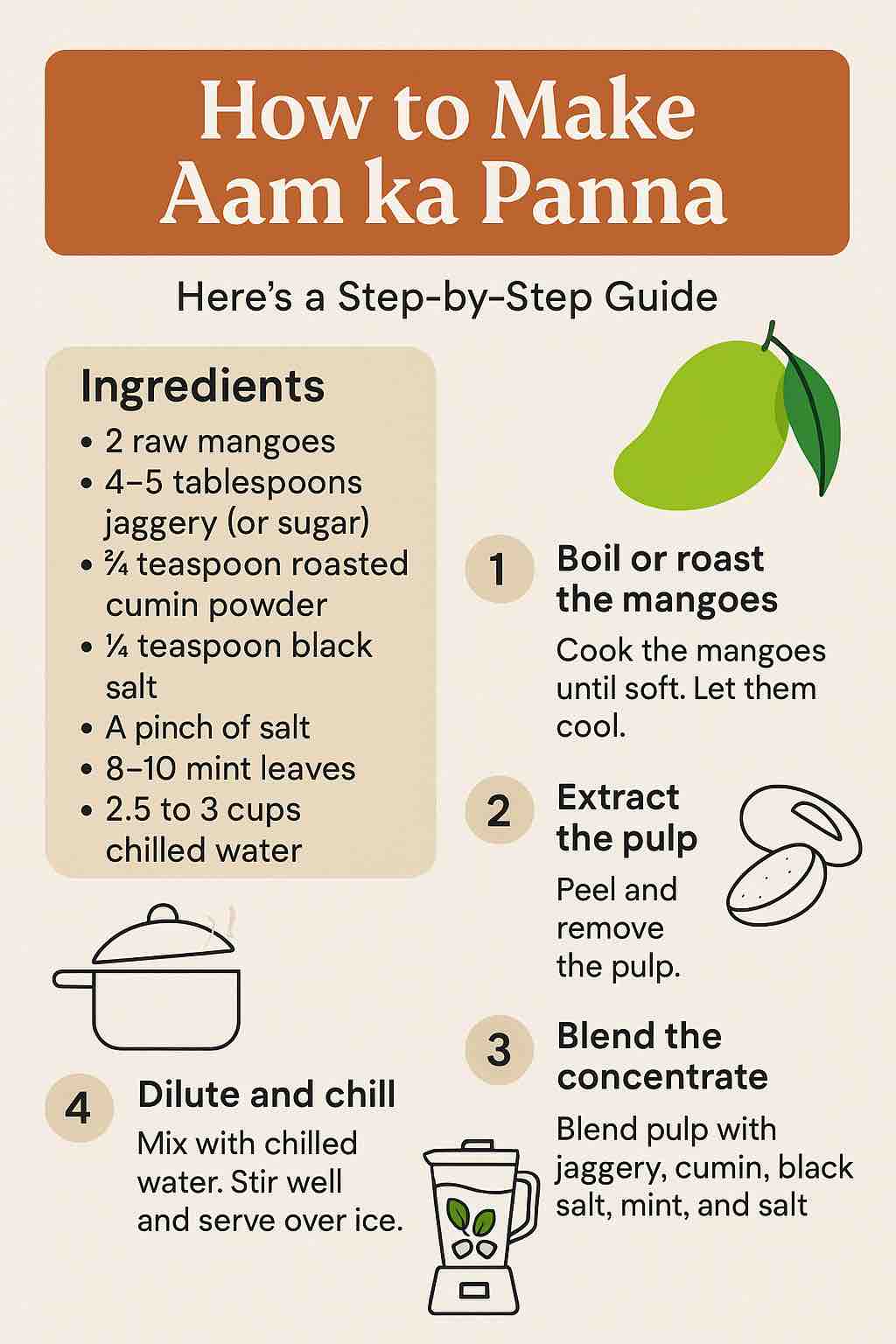
How to Make Aam ka Panna Here's a Step-by-Step Guide

As summer blazes on, there’s one drink that every Indian household turns to—not just for its refreshing taste but also for its cooling and hydrating powers: Aam ka Panna.

Made with raw mangoes and infused with spices, this traditional Indian summer cooler isn’t just delicious—it’s a natural remedy against heatstroke, dehydration, and fatigue. In this post, we bring you a step-by-step guide to making Aam ka Panna, along with variations, tips, and answers to your most common questions.

Let’s dive into the tangy world of raw mango magic.


🍋 What is Aam ka Panna?

Aam ka Panna is a North Indian summer drink made from green (raw) mangoes, flavored with cumin, black salt, and mint. It’s tangy, slightly sweet, and deeply cooling, making it a go-to remedy during the scorching Indian summer.

Traditionally, it was made in clay pots and stored chilled for family members to sip through the day. It’s known for balancing electrolytes, aiding digestion, and preventing heatstroke.


🛒 Ingredients You’ll Need

For about 4 servings:

  • 2 medium-sized raw mangoes (firm and green)
  • 4–5 tablespoons jaggery (or sugar, to taste)
  • ½ teaspoon roasted cumin powder
  • ¼ teaspoon black salt (kala namak)
  • A pinch of regular salt
  • 8–10 fresh mint leaves
  • 2.5 to 3 cups chilled water
  • Optional: Ice cubes, lemon juice (for an extra zing)

🔪 Step-by-Step Guide to Making Aam ka Panna

Step 1: Boil or roast the mangoes

  • Wash the mangoes thoroughly.
  • Boil them in a pressure cooker (2–3 whistles) or in a pot until soft. You can also roast them over an open flame for a smoky flavor.
  • Let them cool completely.

Step 2: Extract the pulp

  • Once cooled, peel off the skin.
  • Squeeze out the pulp and discard the seed.

Step 3: Blend the concentrate

  • In a blender, add:
    • Raw mango pulp
    • Jaggery/sugar
    • Mint leaves
    • Roasted cumin powder
    • Black salt and regular salt
  • Blend to form a thick, smooth concentrate.

Step 4: Dilute and chill

  • Add chilled water (start with 2.5 cups and adjust to taste).
  • Blend again or stir well.

Step 5: Serve it fresh

  • Pour into glasses, add ice cubes, and garnish with a sprig of mint or a slice of lime.

Storage Tip: You can store the concentrate in the fridge for up to 1 week. Just dilute as needed!


🌀 Variations to Try

💚 Minty Aam Panna

Add more mint and a splash of lemon juice for a sharp, fresh twist.

🧂 Spiced Aam Panna

Add crushed black pepper or chaat masala for an extra layer of flavor.

🌿 Sugar-Free Version

Use stevia or soaked dates instead of sugar for a diabetic-friendly version.


✅ Health Benefits of Aam ka Panna

  • Prevents heatstroke
  • Boosts hydration
  • Aids digestion
  • Rich in Vitamin C
  • Natural electrolyte balance

Unlike sodas or bottled juices, this drink is 100% natural and deeply restorative.


💬 Final Thoughts

There’s nothing quite like a glass of chilled Aam ka Panna on a hot afternoon. It’s not just a drink—it’s tradition, health, and comfort in a glass. Whether you’re serving it to guests or sipping solo after a long day, this summer staple always delivers.

So the next time raw mangoes show up at your local market, grab a few and try this easy, cooling recipe.


📸 Share Your Panna!

Tried this recipe? Share your Aam ka Panna photos on Instagram with the tag #AamKaPannaVibes and inspire others to beat the heat the desi way.

❓ FAQs – All About Aam ka Panna

1. Can I use ripe mangoes instead of raw mangoes for Aam ka Panna?

No, ripe mangoes are too sweet and lack the tangy flavor needed for Aam ka Panna. Stick to green, firm raw mangoes for authentic taste and cooling properties.


2. Is Aam ka Panna good for health?

Yes! It’s rich in Vitamin C, prevents heatstroke, aids digestion, and replenishes electrolytes. It’s a natural summer remedy packed with health benefits.


3. Can I store Aam ka Panna concentrate?

Yes, the concentrate can be refrigerated in a glass bottle for up to 7–10 days. Just dilute with cold water before serving.


4. How do I make sugar-free Aam ka Panna?

Use natural sweeteners like stevia, erythritol, or soaked dates instead of jaggery or sugar. Adjust quantity to balance the tanginess.


5. Can I make Aam ka Panna without boiling the mangoes?

Yes, you can roast the mangoes over open flame or grill them for a smoky version. This method also softens the mangoes for pulp extraction.


6. Can kids drink Aam ka Panna?

Absolutely. Just ensure the spice levels are mild. It’s a great hydrating and immunity-boosting drink for children during summer.


7. What are the side effects of Aam ka Panna?

When consumed in moderation, there are no known side effects. Overconsumption may cause acidity in some due to raw mango’s sourness.


8. What’s the best time to drink Aam ka Panna?

Best consumed midday or early evening during hot weather. It refreshes the body and prevents heat fatigue.


9. Can I add other ingredients like ginger or fennel?

Yes! Ginger adds a slight zing, while fennel seeds add cooling effects. Feel free to experiment with flavor variations.


10. Is Aam ka Panna vegan and gluten-free?

Yes. It’s 100% vegan, dairy-free, and gluten-free—perfect for a variety of diets when made with plant-based sweeteners.

Posted on 2 Comments

How to make Mango Shake? Classic, Vegan & Sugar Free Options Inside

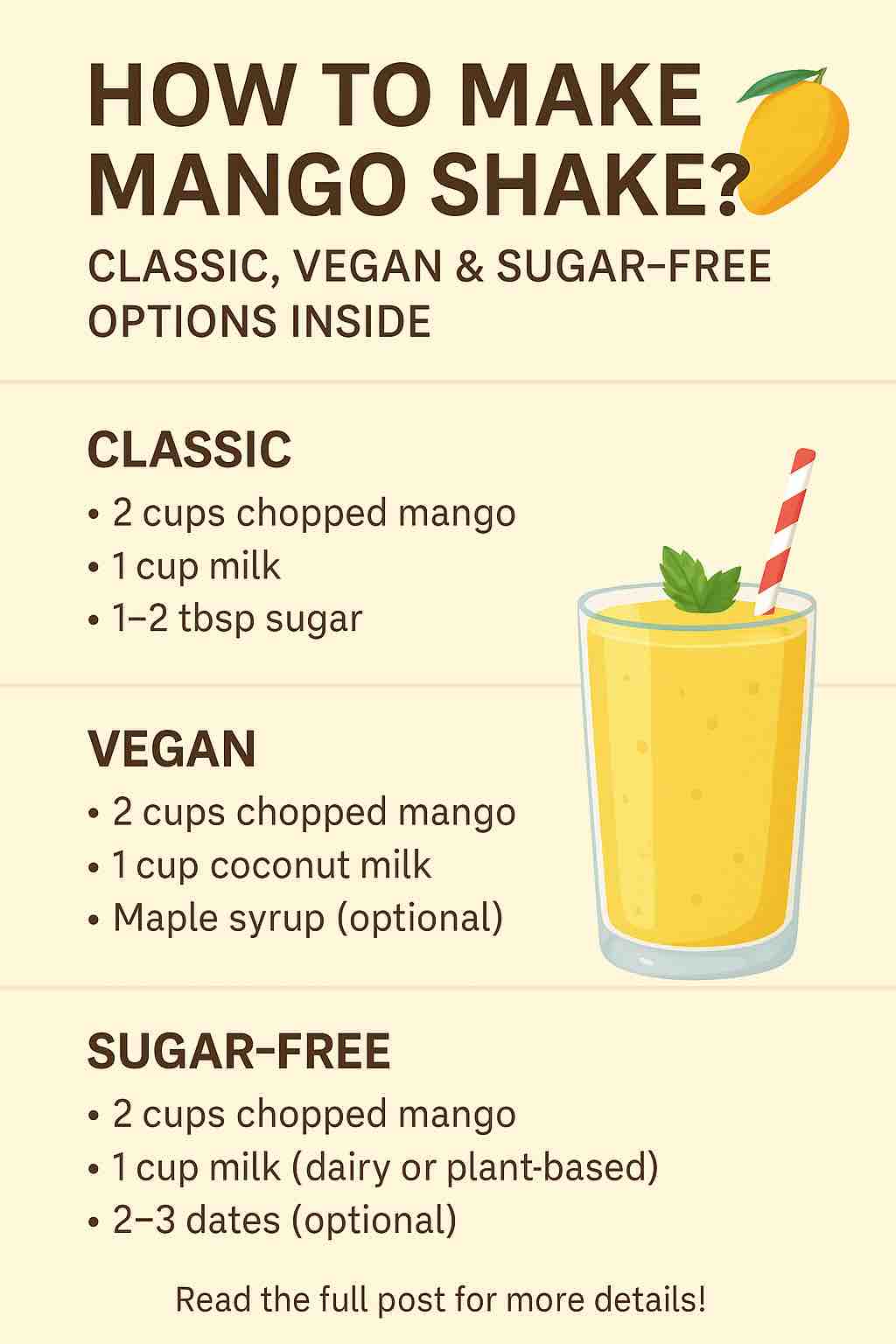
HOW TO MAKE MANGO SHAKE? CLASSIC, VEGAN & SUGAR-FREE OPTIONS INSIDE

Welcome to the season of sunshine and sweet indulgence!
As summer unfolds its golden warmth, there’s one fruit that becomes the star of every kitchen—the mighty mango. Whether you enjoy it sliced, pickled, juiced, or churned into desserts, mangoes are a tropical treasure that bring pure joy to our taste buds.

And what better way to enjoy them than with a glass of chilled Mango Shake—a drink so refreshing, it tastes like summer in a cup.

In this post, we’ll walk you through not just the classic mango shake, but also healthy alternatives, including vegan and sugar-free versions, so everyone can savor this golden delight. Let’s get blending!


🍹 Why Mango Shake?

Mango shakes aren’t just delicious—they’re also:

  • Nutrient-rich: High in Vitamin C, Vitamin A, and antioxidants.
  • Energizing: Perfect for post-workout recovery or as a breakfast smoothie.
  • Versatile: Easily customizable with milk substitutes, sweeteners, or even protein powder.
  • Kid-approved: Naturally sweet and creamy, it’s a favorite among children.

1️⃣ The Classic Mango Shake Recipe

Let’s start with the timeless version that many of us grew up sipping on during sweltering afternoons.

🛒 Ingredients:

  • 2 ripe mangoes (Alphonso or Kesar are best)
  • 1 cup chilled full-fat milk
  • 1–2 tbsp sugar (adjust to taste)
  • A few ice cubes
  • Optional garnish: chopped pistachios, almonds, or a scoop of vanilla ice cream

🧑‍🍳 Instructions:

  1. Prep the mangoes: Peel and cube them, removing the pit.
  2. Blend: Add mango chunks, milk, sugar, and ice cubes into a blender.
  3. Whizz until creamy and smooth.
  4. Pour & garnish: Serve immediately with nuts or ice cream for extra indulgence.

✅ Tips:

  • If your mangoes are very sweet, skip or reduce the sugar.
  • For a thicker shake, reduce the milk or use frozen mango chunks.

Fun Fact: Alphonso mangoes are often called the “King of Mangoes” in India for their rich flavor and buttery texture.


2️⃣ Vegan Mango Shake (Dairy-Free)

Whether you’re lactose-intolerant, plant-based, or simply want to try something different, this version is just as dreamy.

🛒 Ingredients:

  • 1 cup ripe mango cubes
  • 1 cup plant-based milk (coconut, almond, oat, or soy milk)
  • 1–2 tsp maple syrup or soaked dates (optional)
  • Ice cubes
  • A pinch of cardamom or vanilla extract (for extra flavor)

🧑‍🍳 Instructions:

  1. Add mango cubes and plant-based milk to a blender.
  2. Toss in your sweetener and ice.
  3. Blend until smooth and creamy.
  4. Serve chilled. Top with coconut flakes or chia seeds if desired.

✅ Pro Tips:

  • Coconut milk adds richness and a tropical twist.
  • Want it thicker? Add a frozen banana or avocado.

Health Note: Plant-based milks are often fortified with calcium and Vitamin D, making this a nutritious drink too.


3️⃣ Sugar-Free Mango Shake (Diabetic Friendly)

Trying to cut down on refined sugar? This version relies on the natural sweetness of mangoes, with optional natural sweeteners.

🛒 Ingredients:

  • 1 cup ripe mangoes
  • 1 cup milk (dairy or plant-based)
  • A few ice cubes
  • Optional: 2–3 soaked dates or a few drops of stevia

🧑‍🍳 Instructions:

  1. Blend mangoes with milk and ice.
  2. Add natural sweetener if needed and blend again.
  3. Serve cold, optionally topped with chopped mint for a fresh touch.

✅ Low-Carb Ideas:

  • Use unsweetened almond milk and avoid bananas or additional fruit.
  • Try adding cinnamon or ginger powder for flavor without sugar.

Pro Tip: Overripe mangoes are naturally sweeter—perfect for sugar-free recipes.


🌀 Bonus Variations to Try

Take your mango shake to the next level with these creative spins:

💪 Mango Protein Shake

  • Add 1 scoop of vanilla or unflavored protein powder.
  • Great post-workout drink.

🍨 Mango Lassi Twist

  • Add ½ cup yogurt, a pinch of salt, and a dash of cardamom for a classic Indian-style treat.

🍧 Mango Smoothie Bowl

  • Blend with less milk to keep it thick.
  • Top with berries, granola, and coconut shreds.

🌿 Mango-Turmeric Detox Shake

  • Add a pinch of turmeric and black pepper for anti-inflammatory benefits.

📦 Storage & Meal Prep

Can you store mango shake?

  • Yes, for up to 24 hours in an airtight jar in the fridge. Shake before serving.
  • For meal prep: Freeze mango chunks ahead of time and blend fresh when needed.

🥭 Final Thoughts: Blend, Sip, Smile

Mango shakes are more than just a summer beverage—they’re a nostalgic, mood-lifting treat that can be enjoyed by anyone, in any form. Whether you’re reaching for a classic dairy-based shake, going plant-based, or ditching sugar for a healthier choice, there’s a mango shake recipe here for you.

Don’t forget to experiment and share your unique twists in the comments. And remember—mango season doesn’t last forever. Make the most of it while you can!


📸 Share Your Mango Moment!

Tried one of these? Post your shake on Instagram and tag #MangoShakeMagic or drop a comment below with your favorite version.

🧐 FAQs – Mango Shake Edition

1. Can I use frozen mangoes for mango shake?

Absolutely! Frozen mango chunks are great for thicker, creamier shakes and help eliminate the need for ice. Just reduce the amount of liquid slightly to keep the consistency right.


2. What is the best type of mango for shakes?

Alphonso, Kesar, or Ataulfo mangoes are ideal due to their sweetness, smooth texture, and rich flavor. Avoid fibrous varieties like Haden unless you’re straining the shake.


3. Can I make mango shake ahead of time?

Yes, you can refrigerate mango shake for up to 24 hours in an airtight container. However, it may slightly separate, so shake or stir before serving. For best flavor and texture, consume fresh.


4. How do I make my mango shake thicker?

Use less milk, more mango, or frozen mango chunks. You can also add ingredients like banana, yogurt (for non-vegan versions), or soaked chia seeds for extra thickness.


5. Is mango shake healthy?

Yes, when made without added sugars or heavy ice creams. It’s rich in vitamins A and C, antioxidants, and fiber. Use plant-based milk and natural sweeteners for a healthier version.


6. Can diabetics drink mango shake?

In moderation. Use naturally sweet ripe mangoes and opt for a sugar-free version with almond or oat milk. Dates, stevia, or erythritol can be used sparingly as sweeteners.


7. Which plant-based milk is best for a vegan mango shake?

Coconut milk gives a rich, creamy tropical flavor. Almond, oat, and soy milks are also excellent, depending on your preference and dietary needs.


8. Can I add other fruits to mango shake?

Yes! Great additions include banana (for creaminess), pineapple (for a tropical twist), or berries (for a tangy contrast). Just ensure the flavor of mango remains dominant.


9. How can I turn mango shake into a smoothie bowl?

Use less liquid to keep the shake thick. Pour into a bowl and top with granola, fresh fruits, nuts, or seeds. This makes for a nutritious and Insta-worthy breakfast.


10. Can I add protein powder to mango shake?

Definitely! Vanilla or unflavored protein powders blend well with mango. Great for post-workout recovery or a high-protein breakfast. Adjust sweetness if your protein is sweetened.