Posted on 1 Comment

Iced Matcha Latte Recipe

Tall glass of iced matcha latte with matcha swirled into cold milk and ice on a pale café counter.

A homemade iced matcha latte should not taste like cold milk with dry green specks drifting through it. The best version is cold, creamy, bright green, and smooth from the first sip to the last. The trick is simple: sift the matcha, whisk it with a small amount of hot water, then pour it over cold milk and ice.

This recipe gives you the everyday version first, then shows you how to adjust it: stronger, less sweet, Starbucks-style, vanilla, oat milk, cold foam, or strawberry. The goal is a chilled, milky green tea drink that tastes clean from the first sip — not powdery, bitter, or watered down.
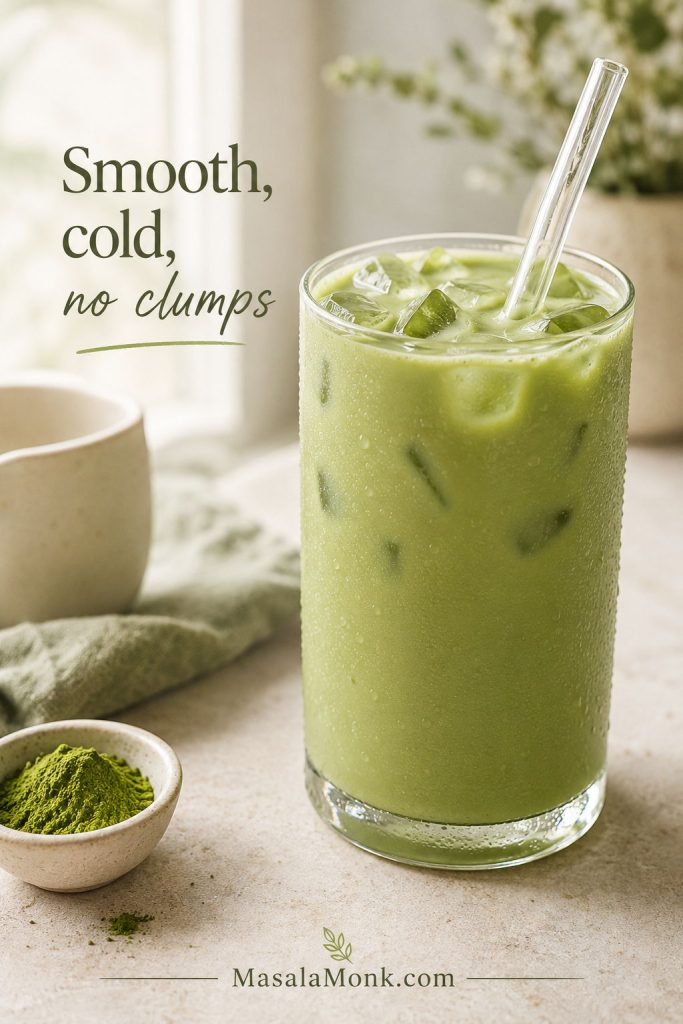
Close-up of a smooth iced matcha latte with ice and no visible matcha clumps
Blending the matcha before adding milk keeps the texture silky, so you do not get dry green specks floating through the drink.

Quick Answer

To make an iced matcha latte, sift 1 teaspoon matcha powder into a small bowl or cup, whisk it with 2 tablespoons hot water until smooth, then pour it over a glass filled with ice, cold milk, and a little simple syrup or vanilla syrup if you like it sweet.

  • Matcha: 1 teaspoon / about 2 grams
  • Water: 2 tablespoons / 30 ml hot water, not boiling
  • Milk: ¾ to 1 cup / 180 to 240 ml cold milk
  • Sweetener: 1 to 2 teaspoons simple syrup, maple syrup, or vanilla syrup
  • Ice: about 1 cup, enough to fill a 12 to 16 oz glass

Use the visual formula below as a quick scan of the base iced matcha latte before you adjust sweetness or milk.
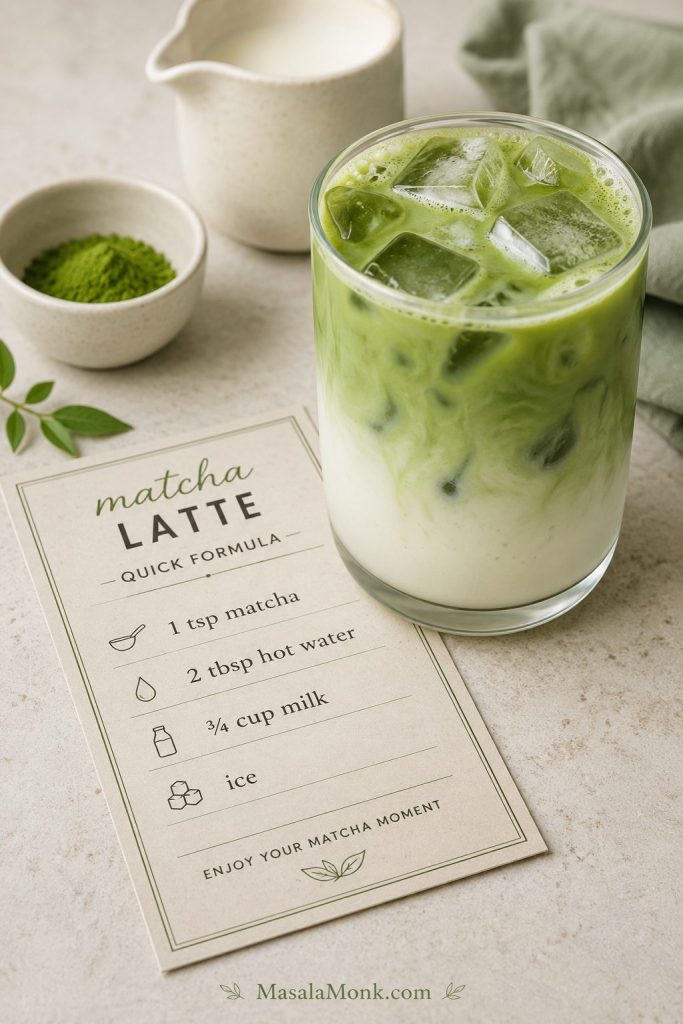
Iced matcha latte beside a quick formula card showing matcha, hot water, milk, and ice
Begin with the base formula, then change only one thing at a time so you know whether matcha, milk, or syrup made the difference.

Start here: Choose 1 teaspoon matcha, 2 tablespoons hot water, ¾ cup cold milk, 1 teaspoon syrup, and a full glass of ice the first time.

The small 2-tablespoon matcha shot is the key: enough water to smooth the powder, not so much that it thins the latte. Starting with ¾ cup milk also leaves room to soften the drink after tasting instead of making it too pale from the beginning.

Already know the basic method? You can also jump to the ratio guide, which version to make first, or quick fixes.

Keep this 2-tablespoon hot-water shot in mind: it is the difference between a creamy latte and a watered-down glass.
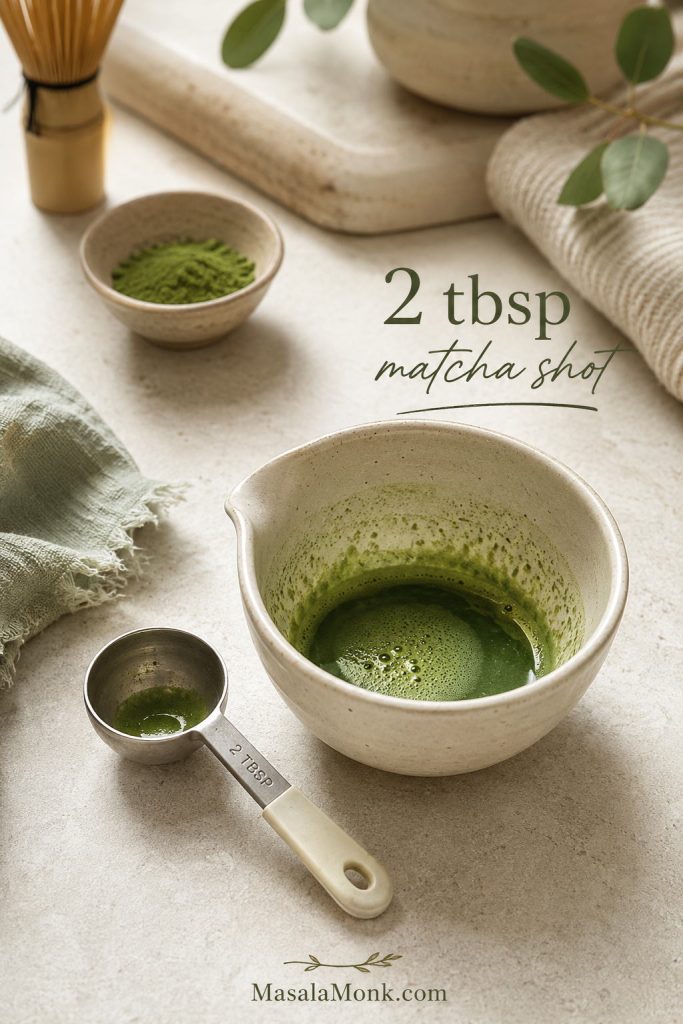
Small concentrated matcha shot in a cup with a tablespoon measure beside it
This small hot-water shot gives the powder enough room to smooth out while keeping the finished latte creamy instead of thin.

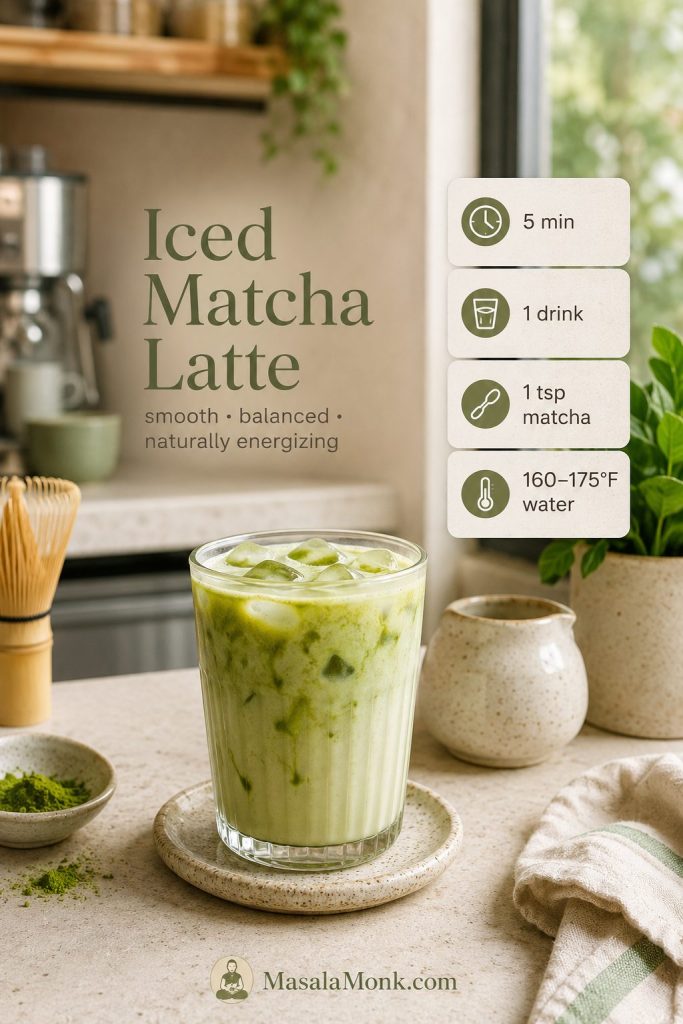
Iced Matcha Latte at a Glance

Yield1 drink, about 12 to 16 oz depending on milk and ice
Total time5 minutes
Matcha amount1 teaspoon / about 2 grams
Water temperature160 to 175°F / 70 to 80°C
Milk amountStart with ¾ cup / 180 ml, then add more if needed
ToolsBamboo whisk, handheld frother, shaker jar, or blender
Main fixSift first, then whisk matcha with water before adding milk

Use this quick reference to check the timing, water temperature, and base ratio before you start whisking.
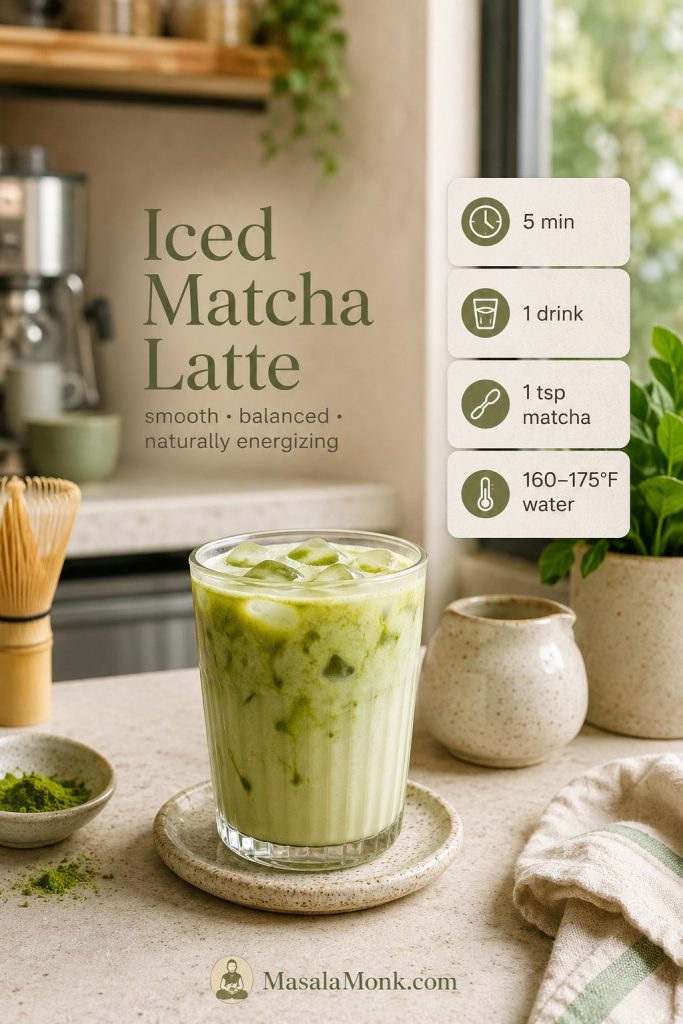
Iced matcha latte with quick recipe details for time, yield, matcha amount, and water temperature
A clear starting point saves guesswork: the right powder amount, warm water, cold milk, and ice make the first glass much easier.

After a couple of tries, the order becomes easy: sift, whisk, ice, milk, pour. Matcha does not dissolve like instant coffee; it stays suspended in the drink. That is why it can settle as it sits, why the last few sips may taste stronger, and why stirring before drinking helps.
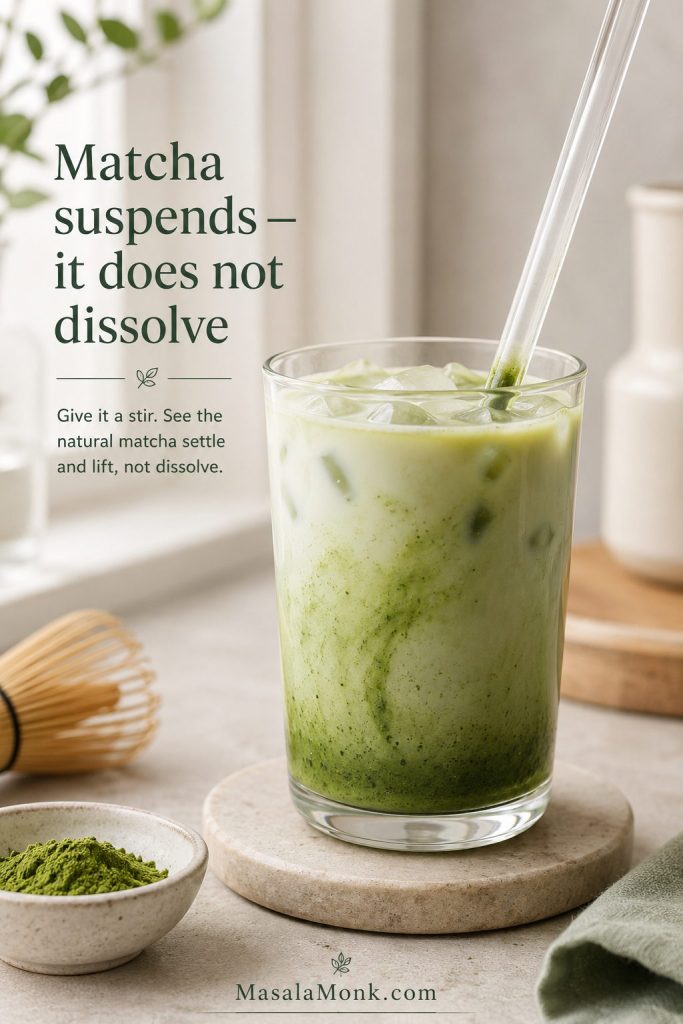
Side-view iced matcha latte showing matcha settling slightly while being stirred back into the drink
Since matcha is finely ground tea leaf, stirring before drinking helps redistribute the green tea flavor through the milk.

Why This Method Works

The key move is the concentrated matcha shot: just 2 tablespoons hot water, enough to blend the powder without watering down the glass. Think of it like a small green espresso shot: smooth, concentrated, and strong enough to flavor the milk without turning the latte thin.

You want a smooth matcha base, not a diluted cup of tea. Cold milk keeps the drink soft and refreshing, while a little syrup rounds off the earthy edge without covering the green tea flavor.
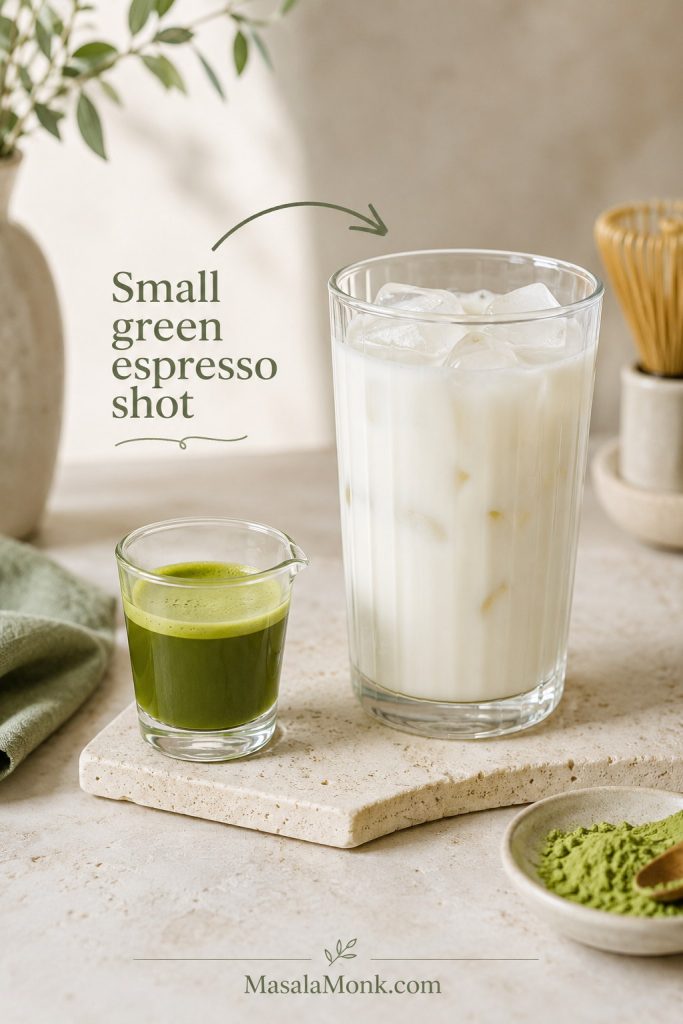
Small concentrated matcha shot beside a larger glass of milk and ice
Treat the prepared matcha like a concentrated base: strong enough to carry the milk, but small enough to keep the drink refreshing.

Iced Matcha Latte Ingredients

Before you start, set up the matcha, hot water, milk, ice, and syrup in the same order the drink comes together.
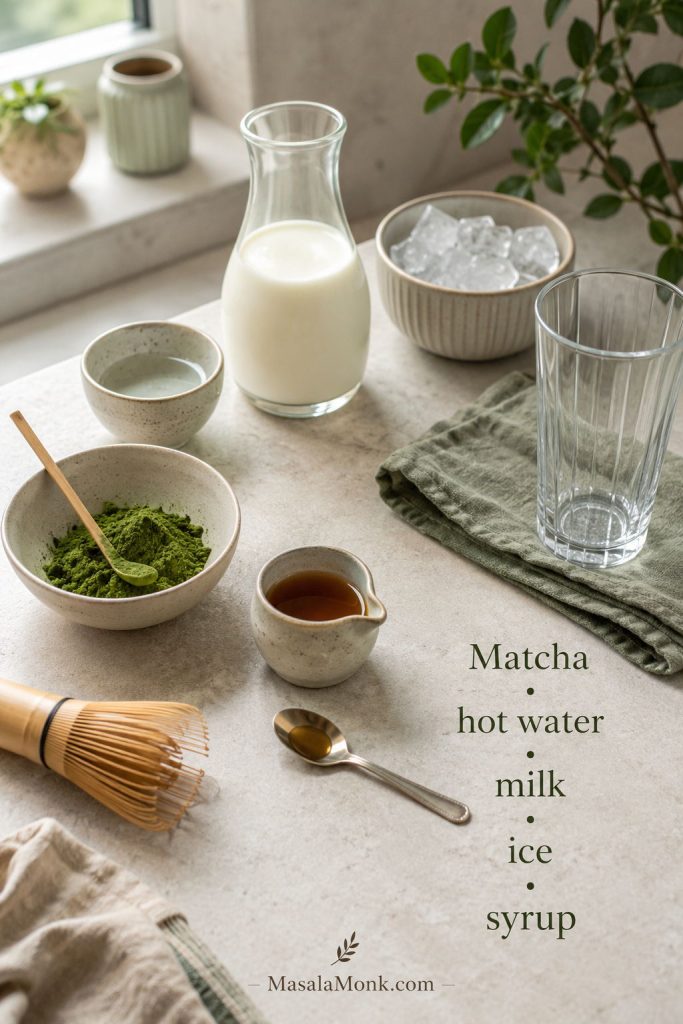
Matcha powder, hot water, milk, ice, syrup, and a glass arranged on a pale counter
A short ingredient list still needs the right sequence: loosen the powder first, then build the cold milk drink around it.

Matcha powder

Plain, unsweetened matcha powder gives you the most control. One teaspoon / about 2 grams makes a balanced drink. If you have a small kitchen scale, 2 grams is more reliable than a packed teaspoon. For a stronger version, increase the matcha to 1½ teaspoons. If you are new to matcha or your powder tastes intense, start with ½ to ¾ teaspoon and increase next time.

Some matcha blends already contain sugar. If yours is sweetened, reduce or skip the syrup so the finished latte does not taste too sweet.

Hot water

A small amount of hot water turns the powder into a smooth matcha shot before it touches the cold milk. The water should be hot but not boiling, which keeps the flavor smoother and less harsh. If you do not have a thermometer, boil the water, turn off the heat, and wait about 1 to 2 minutes before using it.
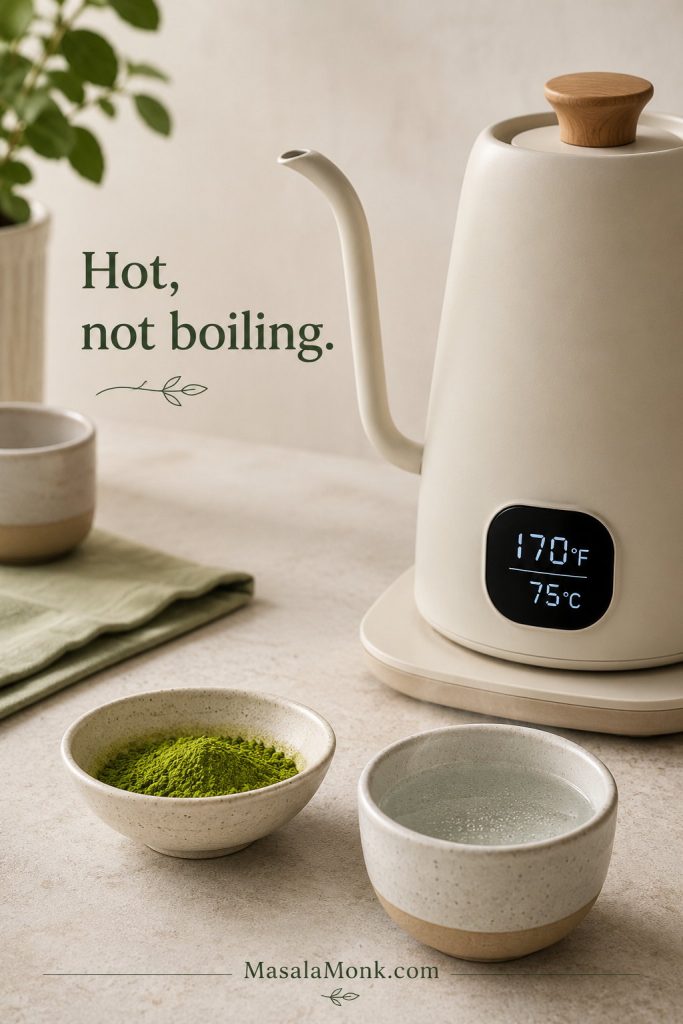
Digital kettle showing 170°F and 75°C beside matcha powder and hot water
Warm water helps the powder blend quickly; however, boiling water can push matcha toward a sharper, more bitter finish.

Milk

Dairy milk, oat milk, almond milk, coconut milk, and soy milk all work. Whole milk gives the richest texture, 2% milk feels balanced and familiar, and barista oat milk is usually the creamiest dairy-free choice.

Ice

About 1 cup ice is enough for a 12 to 16 oz glass. A full glass keeps the milk cold and helps the matcha pour slowly over the top. Large cubes melt more slowly, while crushed ice feels extra refreshing but waters the drink down faster.

Sweetener

Simple syrup, vanilla syrup, maple syrup, honey, or agave all work. Liquid sweeteners are easier to mix into cold drinks than granulated sugar. If you choose honey, whisk it into the warm matcha shot first so it blends evenly.

If your first sip tastes too grassy, that does not mean you did anything wrong. A little more milk, a touch of vanilla syrup, or fresher matcha can make the drink softer and more rounded.

How to Make an Iced Matcha Latte

The whole drink depends on the matcha shot. When that little green base is smooth, the milk and ice have an easy job.

1. Sift the matcha

Sift 1 teaspoon matcha powder into a small bowl, cup, or measuring jug. This step takes only a few seconds, but it prevents the powdery clumps that often float through homemade matcha drinks.
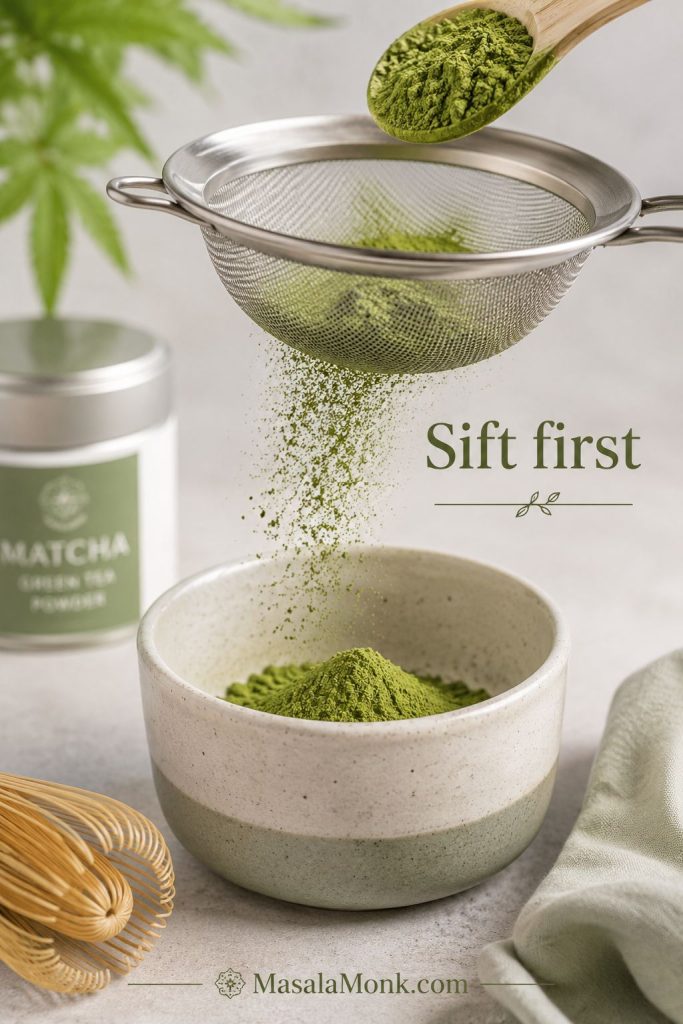
Matcha powder falling through a fine mesh sieve into a bowl
Sifting breaks up compacted powder before whisking, which is why this tiny step makes such a big difference in clump control.

2. Add hot water

Add 2 tablespoons / 30 ml hot water. If you have a temperature-controlled kettle, aim for 160 to 175°F / 70 to 80°C. If not, boil the water, turn off the heat, and let it sit for about 1 to 2 minutes.

3. Whisk until smooth

Whisk for 15 to 20 seconds, using a quick W or M motion if you have a bamboo matcha whisk. A handheld milk frother also works well. The matcha should look blended and lightly foamy, with no dry powder stuck to the sides.
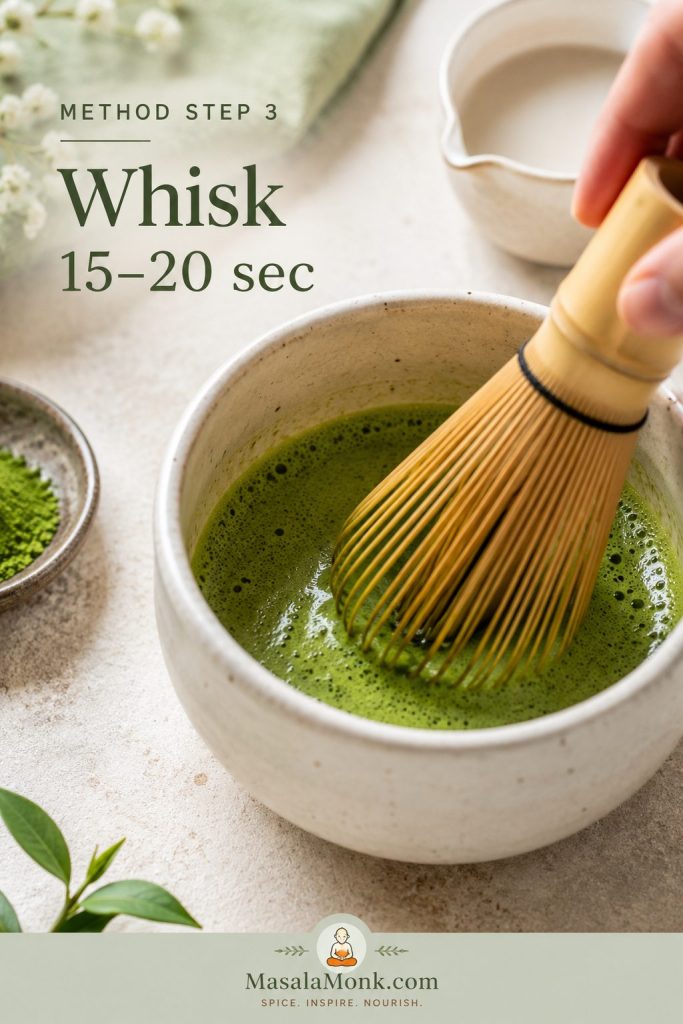
Matcha being whisked with hot water in a small bowl until smooth and lightly foamy
Look for a glossy, lightly foamy surface before adding milk; that tells you the matcha is hydrated and ready to pour.

4. Add ice and milk

Fill a tall glass with ice, then pour in ¾ cup cold milk. Taste after the matcha is added, then add up to ¼ cup more milk if you want the drink softer and creamier. This is easier than trying to rescue a latte that started too milky.

5. Sweeten

Add 1 to 2 teaspoons simple syrup, maple syrup, or vanilla syrup. You can stir it into the milk or whisk it into the warm matcha shot. For a sweeter drink, start with 1 tablespoon syrup and adjust from there.

6. Pour and stir

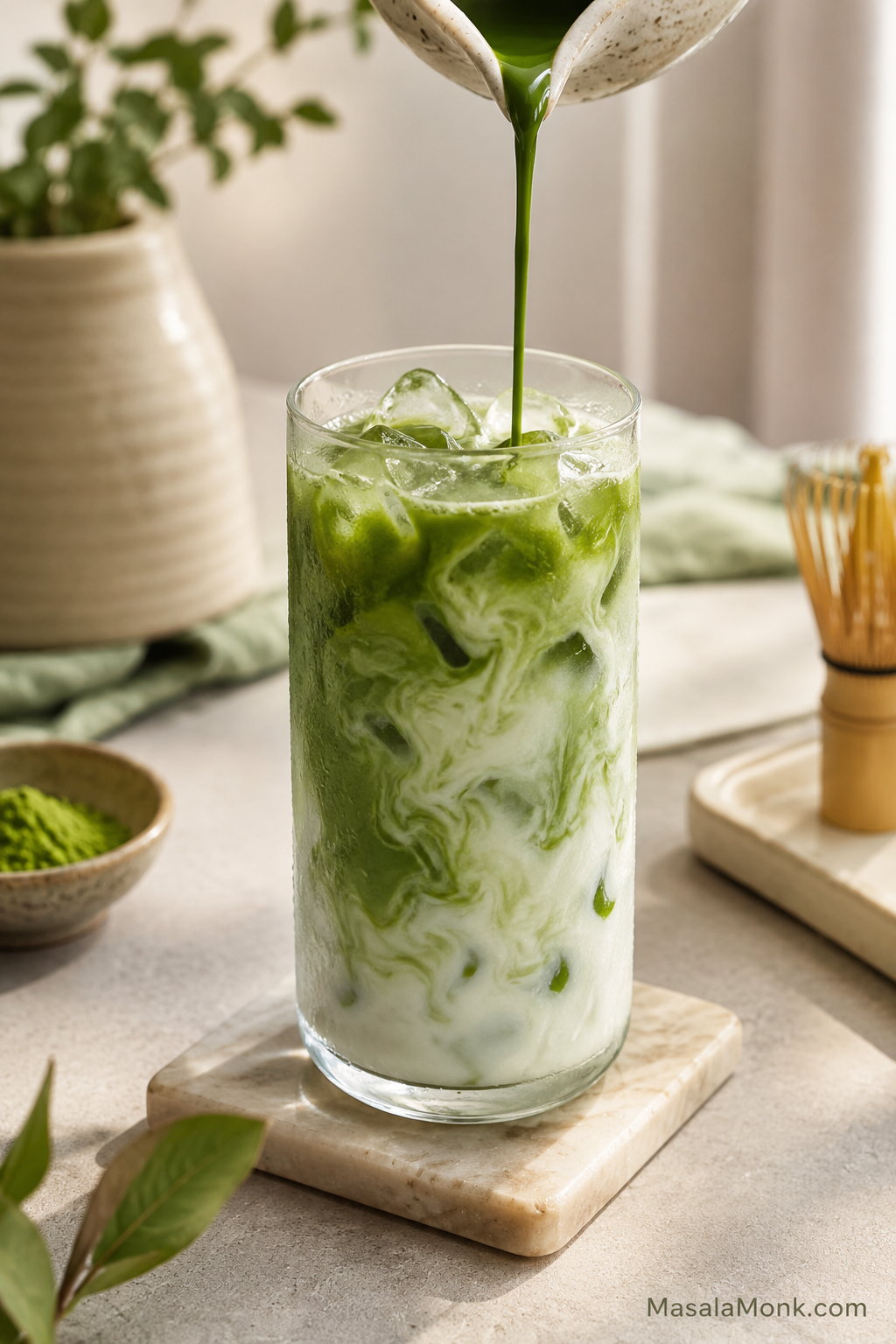
Slowly pour the matcha shot over the milk and ice. At first, the pour gives you the pretty green layer; after that, stirring gives you the best flavor. The layered glass is pretty for a minute, but the stirred glass is better: cold milk, soft sweetness, and a clean green tea finish without powder at the bottom of the glass.
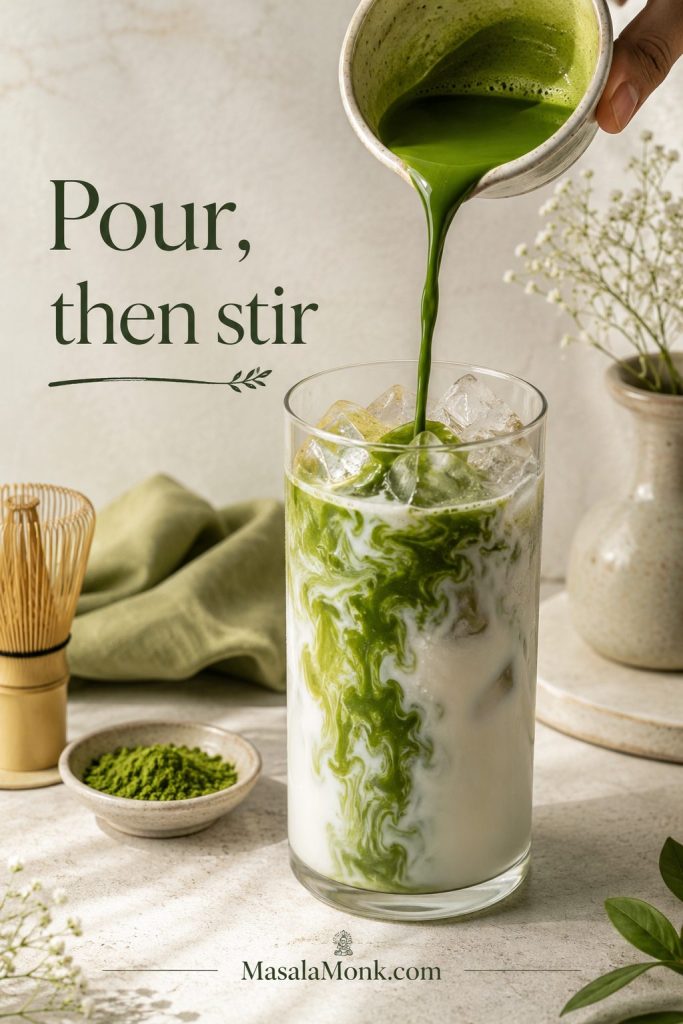
Matcha shot being poured over cold milk and ice in a clear glass
A green ribbon gives the glass its café look, but the real test comes after stirring, when the flavor should taste even.

This comparison shows why the layered look is only the starting point and the stirred glass gives the better sip.
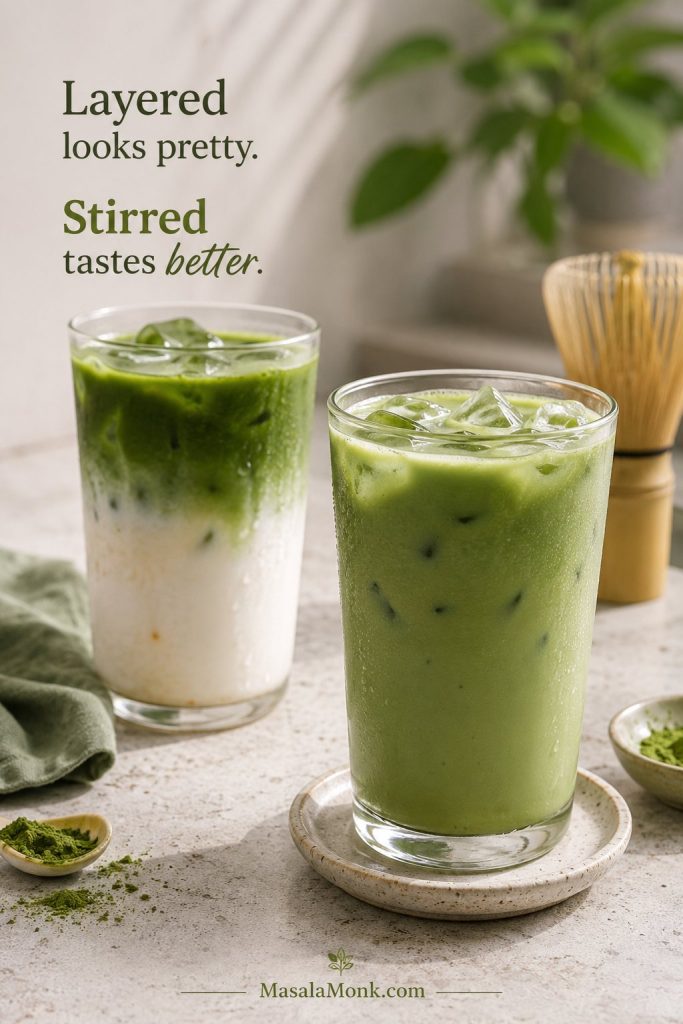
Layered iced matcha latte beside a stirred iced matcha latte on a café counter
Layers are beautiful for serving photos, while the stirred glass is usually the one that tastes balanced all the way down.

Iced Matcha Latte Recipe

This iced matcha latte is cold, milky, lightly earthy, and easy to adjust. Start with 1 teaspoon matcha for a balanced drink or 1½ teaspoons for a stronger version.

Yield
1 drink
Prep Time
5 minutes
Total Time
5 minutes
Skill Level
Easy

Ingredients

  • 1 teaspoon matcha powder / about 2 grams
  • 2 tablespoons hot water / 30 ml, 160 to 175°F / 70 to 80°C
  • ¾ to 1 cup cold milk / 180 to 240 ml
  • 1 to 2 teaspoons simple syrup, maple syrup, or vanilla syrup
  • About 1 cup ice, enough to fill a 12 to 16 oz glass

Instructions

  1. Sift the matcha powder into a small bowl, cup, or measuring jug.
  2. Add the hot water and whisk for 15 to 20 seconds, until blended and lightly foamy.
  3. Fill a tall 12 to 16 oz glass with ice.
  4. Pour in ¾ cup cold milk.
  5. Add the sweetener to the milk or whisk it into the warm matcha shot.
  6. Pour the matcha over the milk and ice.
  7. Stir, taste, and add up to ¼ cup more milk if you want a softer drink.

Notes

  • The 2-tablespoon hot-water shot keeps the drink smooth without making it watery.
  • A stronger glass starts with 1½ teaspoons matcha.
  • For a sweeter coffee-shop style drink, use about 1 tablespoon simple syrup or vanilla syrup.
  • Clumps are easiest to prevent before they start: sift first, then whisk.
  • If your matcha is already sweetened, reduce or skip the syrup.

Use the saveable recipe-card visual below when you want the base method without rereading the full guide.
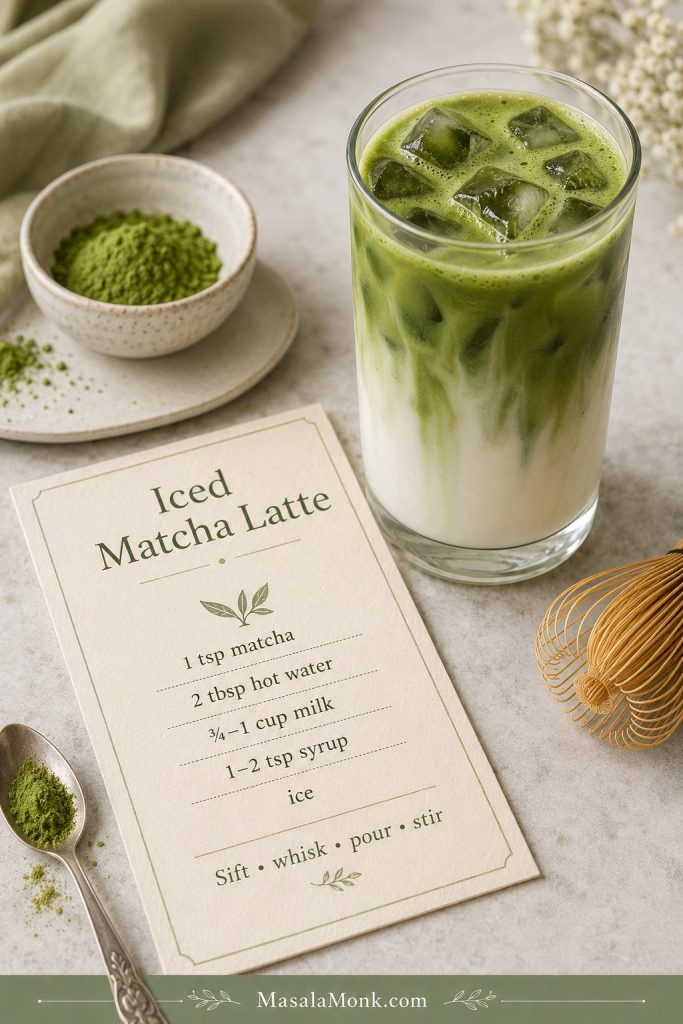
Iced matcha latte with a recipe card showing matcha, hot water, milk, syrup, ice, and method steps
Keep the base recipe handy; once this version works, every variation becomes an adjustment instead of a new drink to relearn.

That is the whole base drink. When the matcha shot is right, the glass looks café-pretty, but more importantly, it tastes smooth all the way down. After you have made it this way once or twice, it stops feeling like a café trick: you know how strong you like the matcha, how much milk softens it, and exactly when to stir. From here, use the ratio guide if you want to adjust strength, the no-whisk tools if you want an easier method, and the matcha powder guide if your drink tastes flat or bitter.

Hot Water vs Cold Water for Iced Matcha

The main texture question is whether the matcha gets mixed with hot water, cold water, or milk. For the most reliable result, whisk the powder with a small amount of hot water first, then pour it over cold milk and ice.

This same sequence — sift, whisk with warm water, then combine with cold milk and ice — also appears in Ippodo’s iced matcha latte method. See Ippodo’s iced matcha latte method here.

MethodBest forDownside
Hot water firstSilky texture, fewer clumps, balanced flavorNeeds hot water
Cold water firstFast shaker or bottle methodCan clump if the matcha is not sifted well
Directly into milkFastest methodHighest chance of clumps
Blender methodFoamy, lump-free, no-whisk versionExtra cleanup

Water amount matters: Two tablespoons hot water makes a stronger, creamier latte. Up to ¼ cup / 60 ml is easier to whisk, but the drink will taste lighter and more tea-forward.

If clumps are your main issue, the no-whisk tool options and troubleshooting section will help you choose the easiest fix.

This method comparison shows why warm water is more reliable than adding dry matcha straight to cold milk.
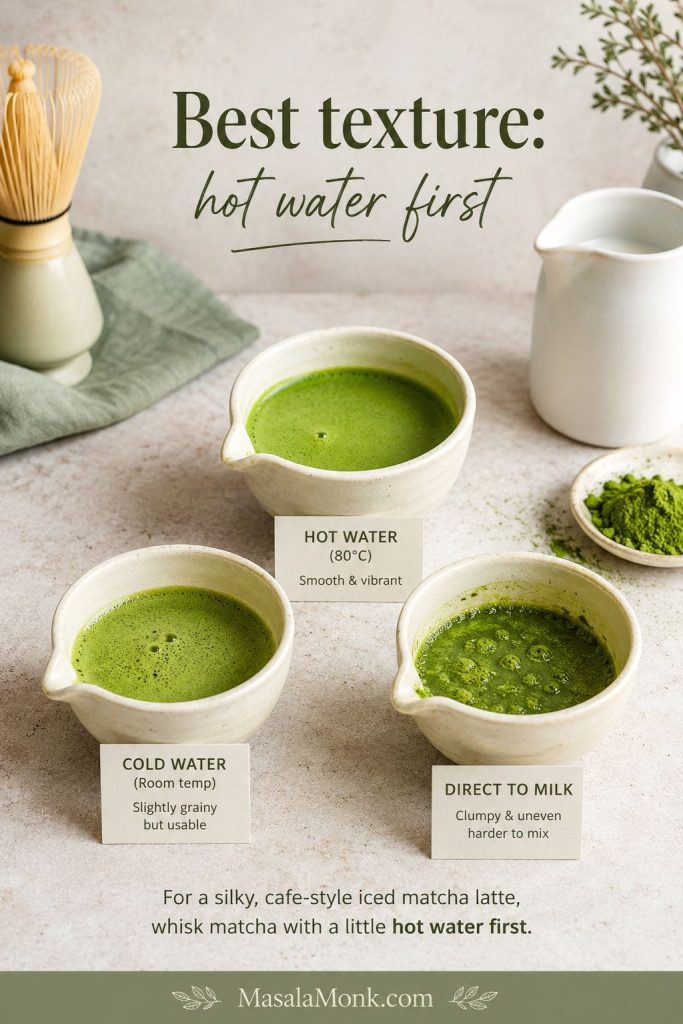
Three matcha mixing methods showing hot water, cold water, and direct-to-milk results
Cold water can work with enough shaking, but warm water gives the powder a better start before it meets cold milk.

How to Make an Iced Matcha Latte Without a Whisk

You do not need a full matcha setup. The only real mistake is expecting dry matcha and cold milk to become silky on their own.

A bamboo matcha whisk is lovely, but it is not required. You can also make a lump-free drink with a frother, shaker jar, or blender if the powder is sifted first.
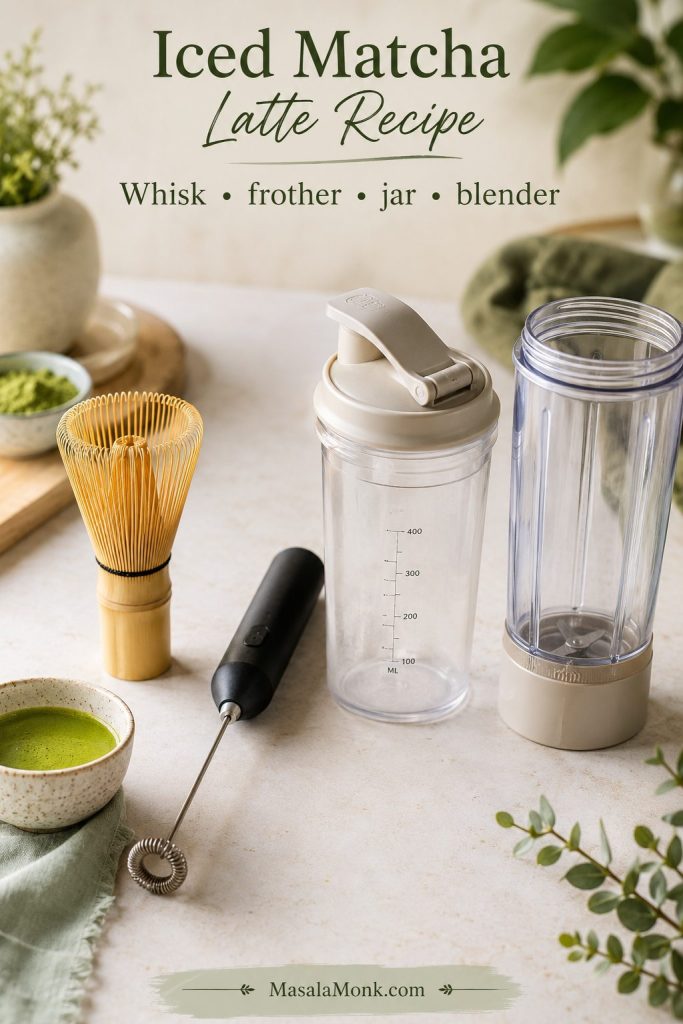
Bamboo whisk, handheld frother, shaker jar, and blender cup for making iced matcha latte
Traditional bamboo whisking is helpful, yet a frother, shaker jar, or blender can still make a smooth matcha latte when used in the right order.
ToolBest useHow to use it
Bamboo matcha whiskBest traditional textureSift matcha, add hot water, then whisk quickly in a W or M motion.
Handheld milk frotherFast everyday methodFroth the matcha shot in a tall cup for 15 to 20 seconds.
Shaker jarNo-whisk iced matchaShake sifted matcha with water first, then add milk and ice.
BlenderSmoothest, foamiest versionBlend the matcha shot or the full latte briefly.
Spoon or forkLast resortMake a paste first, then slowly loosen it with more water.

A narrow cup gives the frother less room to splash and more control over the small matcha base.
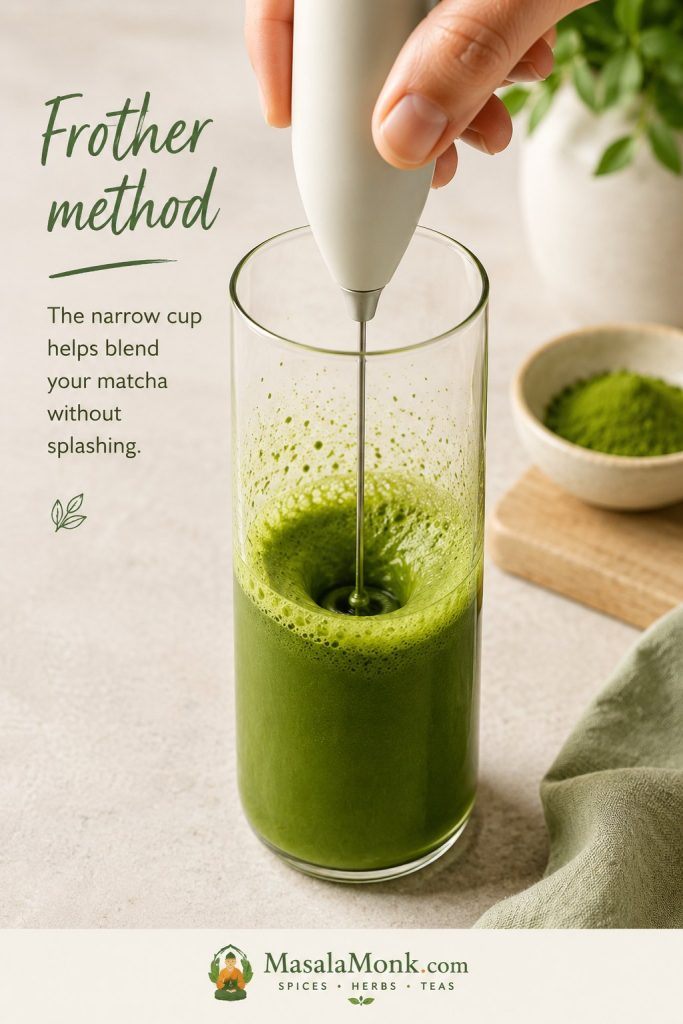
Handheld frother blending matcha in a tall narrow cup
A tall narrow cup keeps the frother’s motion focused, so the matcha blends faster and splashes less.

With the jar method, the order still matters: shake the matcha with water first, then add milk and ice.
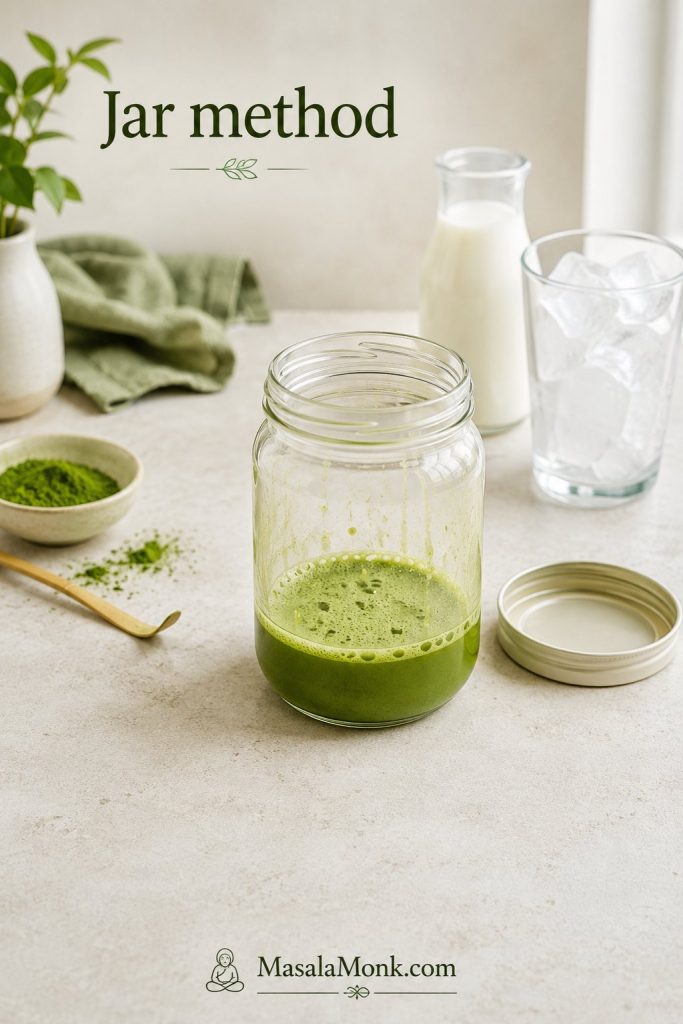
Foamy matcha shot in a clear shaker jar with milk and ice nearby
Shake the matcha with water first; after that, milk and ice can chill the drink without trapping dry powder.

Best Matcha Powder for This Latte

What to look for in the powder

Technique matters most, but the powder still matters. A good method can smooth out matcha, but it cannot completely hide powder that tastes stale before it reaches the glass.

For this recipe, the best buy is usually a fresh, vivid green latte-grade matcha from a seller with good turnover. Save the expensive ceremonial tin for plain matcha if you drink it that way. Good matcha makes the drink feel clean and fresh; tired matcha often makes you keep adding syrup and milk, trying to soften a flavor that has already lost its brightness.

Do not judge matcha only by the word “ceremonial” on the label. Color, aroma, freshness, and taste matter more than marketing language. Vivid green matcha usually gives a cleaner drink, while dull olive, yellow-green, or brownish matcha is more likely to taste flat or muddy.
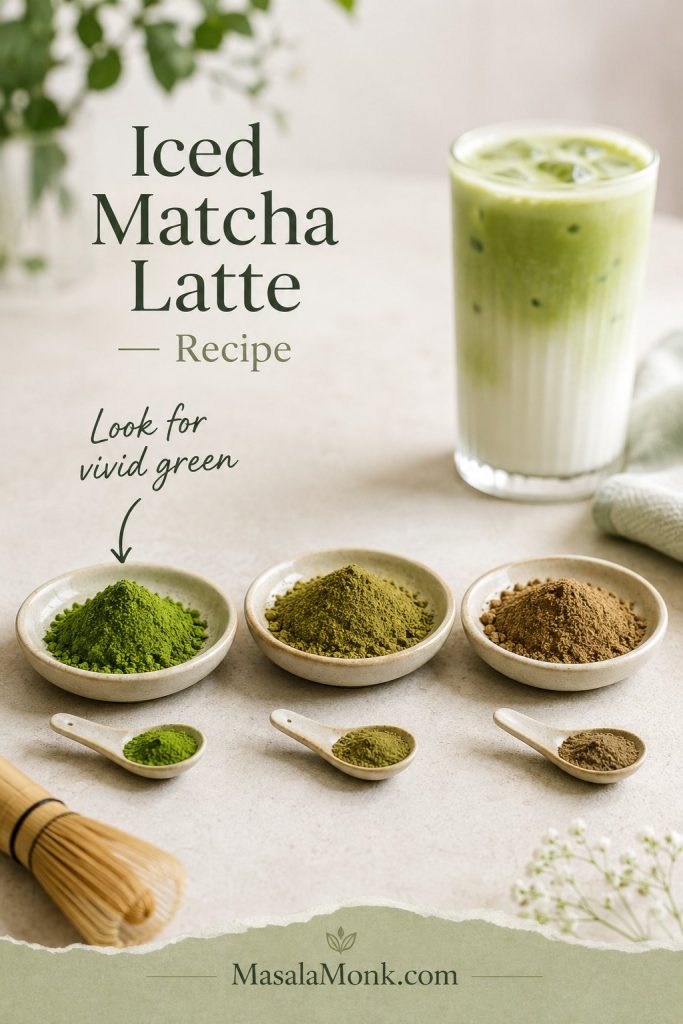
Three matcha powder samples comparing vivid green, dull olive, and brownish matcha
Color is not everything, but vivid green powder is often a good sign that your latte will taste cleaner and fresher.

Ceremonial vs latte-grade matcha

Matcha typeBest useWhat to know
Ceremonial matchaBest for drinkingSmooth, bright, and usually less bitter. Good if you drink matcha often.
Latte-grade matchaBest everyday valueOften the smartest choice for milk drinks if it is fresh and vivid green.
Culinary matchaBaking, smoothies, stronger milk drinksNot automatically bad, but it should not taste muddy, stale, or overly bitter.

For milk drinks, this comparison helps separate everyday latte value from labels that only sound more expensive.
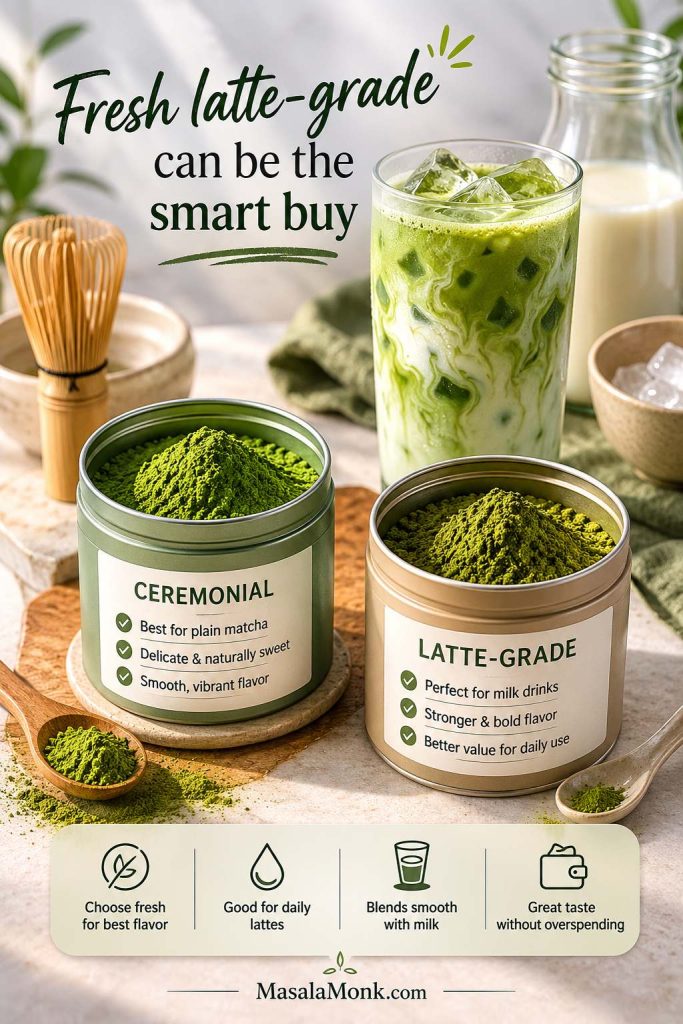
Ceremonial and latte-grade matcha containers compared beside an iced matcha latte
For milk drinks, freshness matters more than prestige, so a bright latte-grade matcha can be the better everyday buy.

Keep matcha fresh after opening

If you only make matcha occasionally, buy a smaller tin so it stays fresh. Store it airtight, cool, dark, and dry. Matcha loses its color and aroma when it sits too long near heat, light, or moisture.

If your matcha tastes strong but not stale, use the ratio guide to soften the drink with milk or reduce the powder before adding extra syrup.
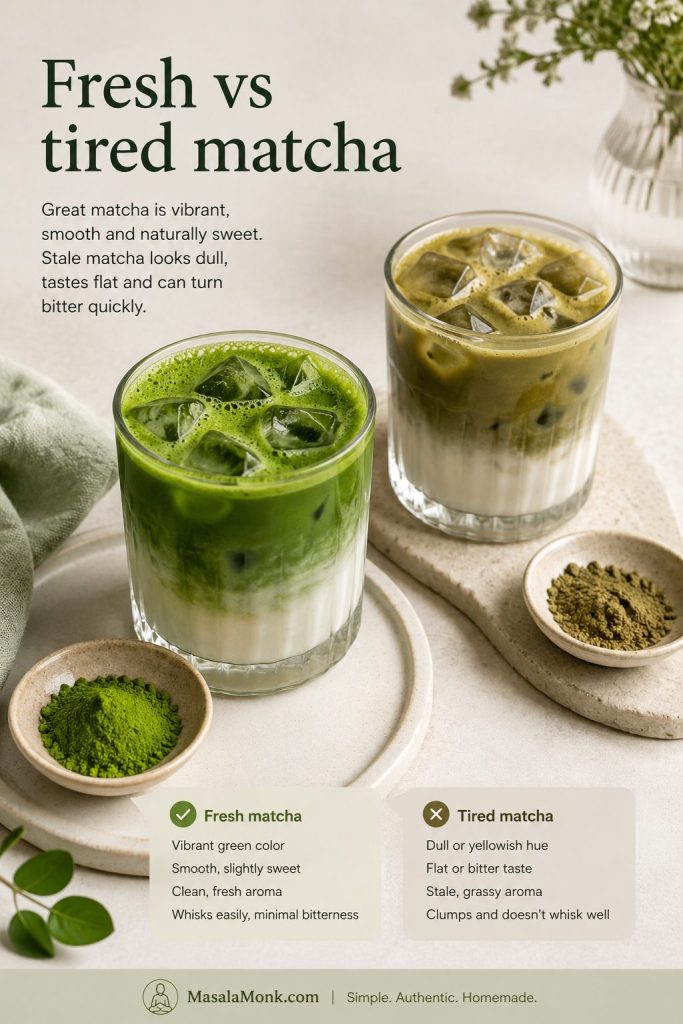
Fresh green iced matcha latte compared with a dull tired matcha latte and powder samples
If the drink tastes flat even after adjusting milk and syrup, the problem may be tired matcha rather than your method.

Iced Matcha Latte Ratio Guide

Use the table below to adjust after your first glass. For most people, the balanced version is the best starting point.

If you are still finding your ideal glass, adjust only one thing at a time. More matcha makes it greener and stronger, more milk makes it softer, and more syrup makes it rounder.
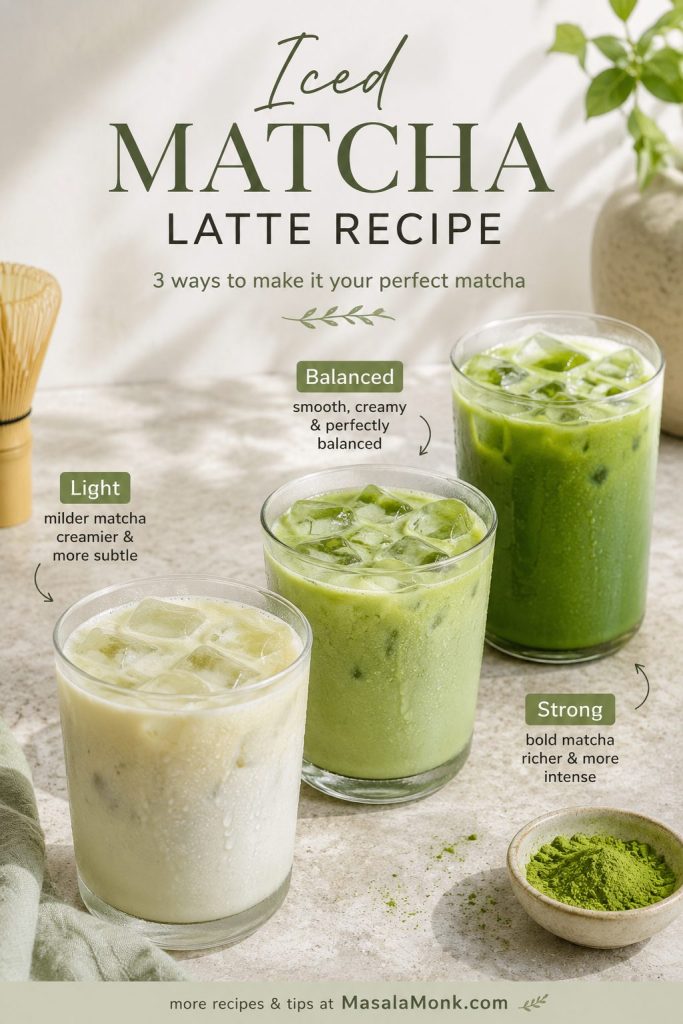
Three iced matcha lattes showing light, balanced, and strong matcha color differences
Strength is not only about color; a stronger version should taste more tea-forward without needing to become overly sweet.
StyleMatchaWaterMilkSweetener
Light½ to ¾ tsp2 tbsp / 30 ml1 cup / 240 ml1 tsp
Balanced1 tsp / about 2 g2 tbsp / 30 ml¾ to 1 cup / 180 to 240 ml1 to 2 tsp
Strong1½ tsp / about 3 g2 to 3 tbsp / 30 to 45 ml¾ cup / 180 ml1 to 2 tsp, then add more only if it tastes too sharp
Less sweet1 tsp2 tbsp / 30 ml¾ to 1 cup / 180 to 240 ml0 to 1 tsp
Starbucks-style1½ tsp1 to 2 tbsp hot water if whisking first1 cup / 240 ml1 to 2 tbsp syrup

Use the ratio board as a saveable shortcut for light, balanced, strong, and coffee-shop style drinks.
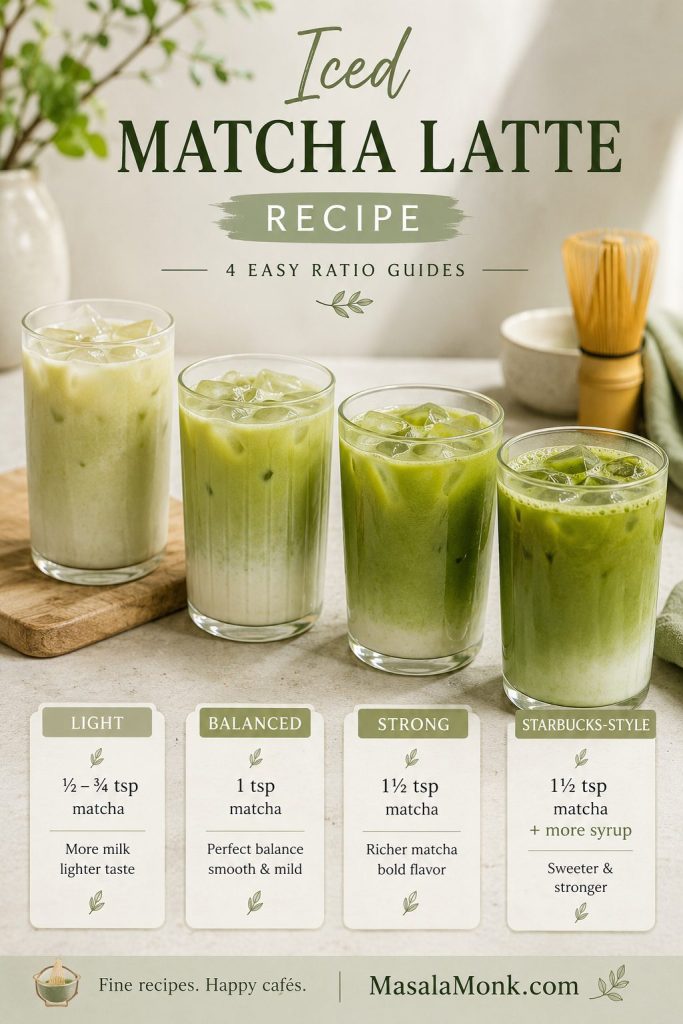
Four iced matcha latte glasses showing light, balanced, strong, and Starbucks-style ratios
The ratio guide helps you steer the drink: more powder for a greener taste, more milk for softness, and more syrup for a café-style finish.

Still unsure where to start? The which version guide turns these ratios into quick choices for gentle, strong, café-style, or dairy-free drinks.

Which Version Should You Make First?

Once you know your ratio, the rest is personal. Make the balanced version once, then use this table to move the drink toward your own taste. Some days you want the cleaner green tea version; other days you want the sweeter café-style glass with more milk, more ice, and vanilla syrup. The method stays the same — only the mood changes.

If you want…Start with…
A gentle first matcha latte½ to ¾ teaspoon matcha, 1 cup milk, and 1 teaspoon syrup
The best balanced everyday version1 teaspoon matcha, ¾ cup milk, and 1 to 2 teaspoons syrup
A stronger green tea flavor1½ teaspoons matcha, ¾ cup milk, and 1 to 2 teaspoons syrup; add more only if it tastes too sharp
A sweeter coffee-shop drink1½ teaspoons matcha, 1 cup milk, and 1 tablespoon vanilla syrup
The creamiest dairy-free version1 teaspoon matcha, barista oat milk, and 1 teaspoon syrup
The least clumpy methodSift first, then use the hot-water shot with a frother, whisk, shaker, or blender

This chooser helps you pick a first version before you start changing matcha, milk, or syrup.
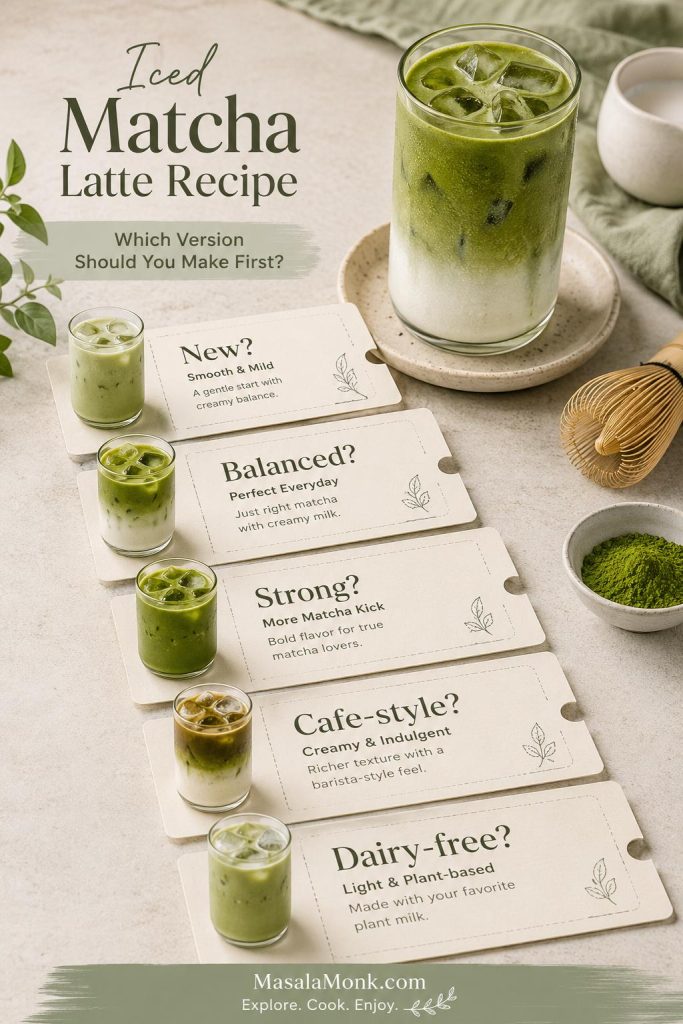
Café order cards showing different iced matcha latte choices for new, balanced, strong, café-style, and dairy-free versions
Pick the version that matches your mood first, then use the same method to move the drink lighter, stronger, sweeter, or creamier.

Starbucks-Style Iced Matcha Latte

Copy the profile, not the exact sweetness

For a Starbucks-style iced matcha latte at home, the main thing to copy is the sweet, milky profile — not the exact sweetness level. Starbucks’ U.S. iced matcha latte listing includes milk, ice, matcha, and classic syrup, so syrup is what gives the homemade version that sweeter coffee-shop profile. You can see the official Starbucks iced matcha latte page here.

This is where homemade is nicer: you can keep the café feel while choosing exactly how sweet you want the glass.
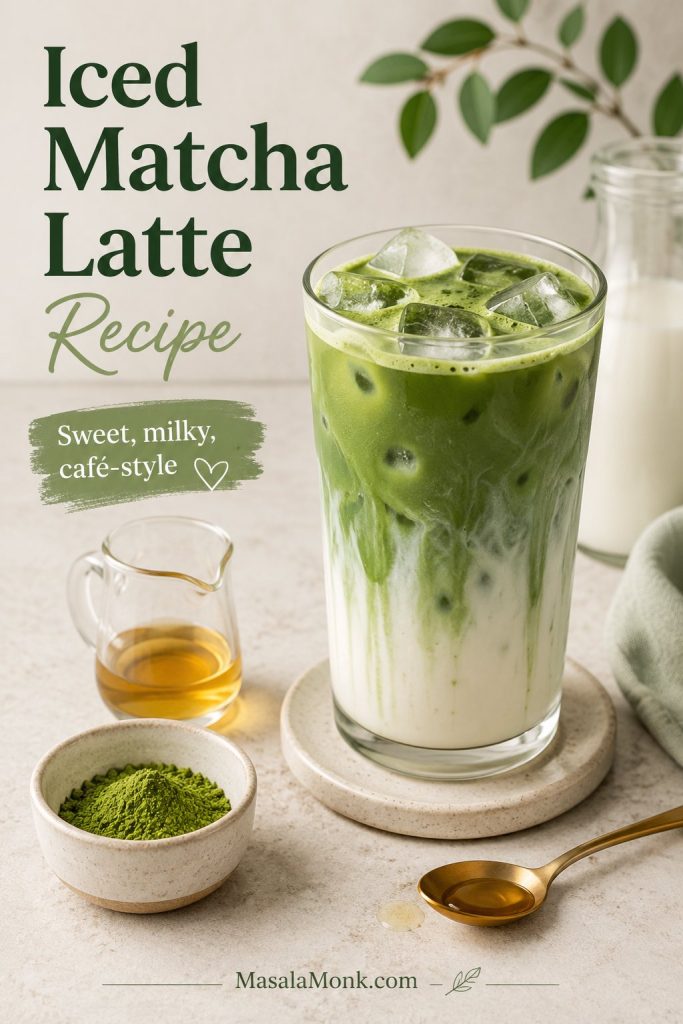
Unbranded café-style iced matcha latte with syrup, matcha powder, and milk on a pale counter
A coffee-shop style glass is mainly about a sweeter milk profile, so start with less syrup and build up only if needed.

Adjust sweetness and texture

GoalWhat to do
Sweeter Starbucks-style flavorAdd 1 to 2 tablespoons simple syrup or vanilla syrup.
Stronger matcha flavorIncrease the matcha to 1½ teaspoons.
Creamier textureChoose whole milk, 2% milk, or barista oat milk.
Less sweetnessStart with 1 teaspoon syrup and add more only after tasting.
Fewer clumpsWhisk matcha with hot water before adding milk and ice.

Add syrup in stages so you can stop when the latte tastes rounded instead of overly sweet.
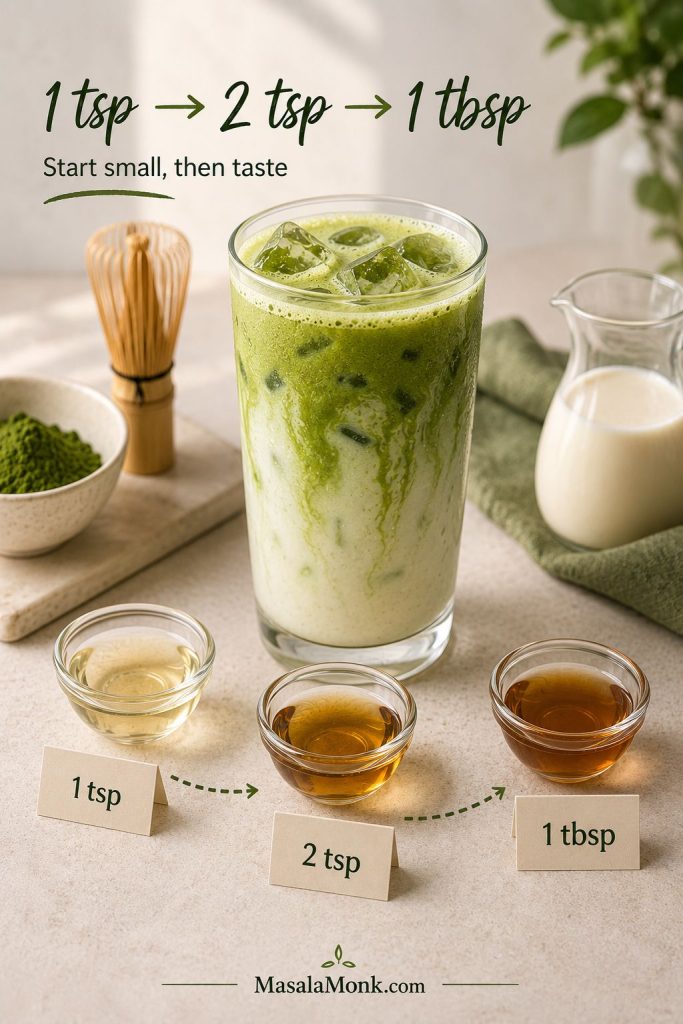
Iced matcha latte with syrup amounts labeled one teaspoon, two teaspoons, and one tablespoon
Sweetness is easiest to control in stages; once the drink is too sweet, the only real fix is more unsweetened milk.

To fine-tune the coffee-shop profile, compare the milk and sweetener options before adding more syrup.

Make a 16-ounce-style glass

A 16-ounce-style drink works well with 1½ teaspoons matcha, 1 cup milk, 1 cup ice, and 1 to 2 tablespoons simple syrup or vanilla syrup. For the most even texture, whisk the matcha with 1 to 2 tablespoons hot water first instead of shaking dry powder directly into cold milk.

Once the method is smooth, the rest of the drink becomes personal. At this point, milk changes the body, sweetener changes the finish, and small adjustments can make the same matcha taste clean, cozy, café-style, or dessert-like.

Milk and Sweetener Choices

After the matcha shot, milk and sweetener decide the mood of the drink: clean and tea-forward, soft and milky, or sweet like a coffee-shop treat.

Choose your milk

MilkResultBest for
Whole milkRich, creamy, roundedClassic creamy version
2% milkLighter but still roundedBalanced everyday version
Barista oat milkCreamy, slightly sweet, full-bodiedBest dairy-free option
Almond milkLighter, thinner, nuttyLower-calorie or lighter version
Coconut milkRich, tropical, more noticeable flavorCoconut variation
Soy milkCreamy and neutral if unsweetenedBalanced dairy-free option

Compare the milks by body as much as flavor: some soften matcha, while others keep it sharper and more tea-forward.
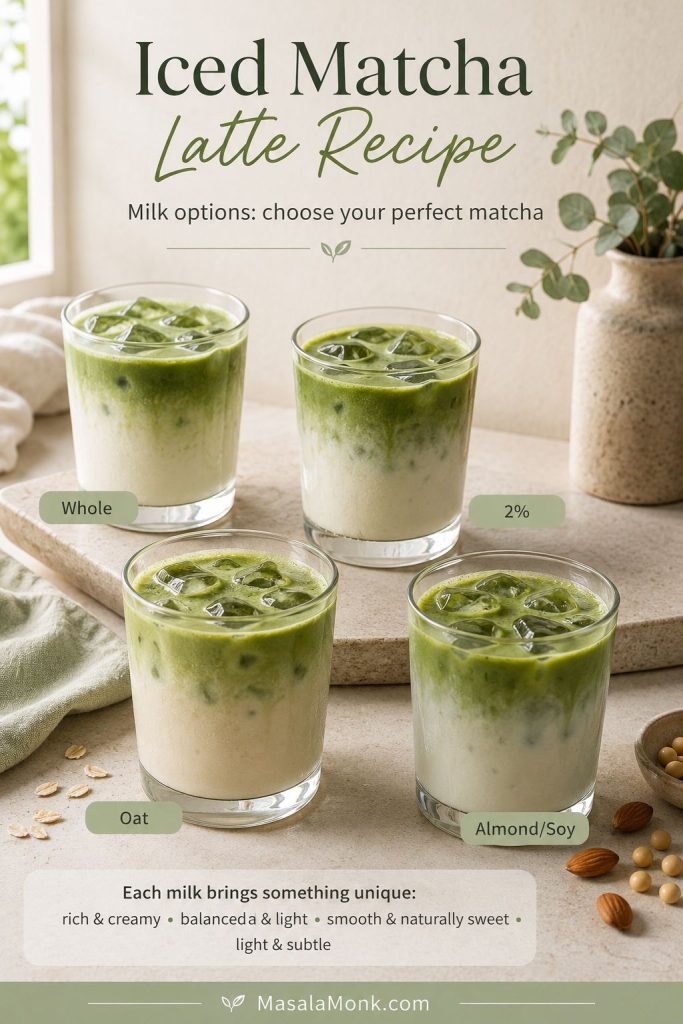
Four iced matcha latte glasses comparing whole milk, two percent milk, oat milk, and almond or soy milk
This comparison shows more than color: richer milks soften green tea flavor, while lighter milks keep the drink sharper.

For the creamiest dairy-free drink, barista oat milk is the easiest choice. For a cleaner, less sweet finish, go with unsweetened dairy milk or unsweetened soy milk.

Sweeteners that mix well

Liquid sweeteners work best here because cold milk will not dissolve granulated sugar evenly. Simple syrup keeps the flavor clean; vanilla syrup makes the drink softer and more dessert-like.

SweetenerFlavorAmount
Simple syrupClean, neutral sweetness1 to 2 tsp, or 1 tbsp for sweeter
Vanilla syrupSoft, sweet, rounded1 to 2 tsp
Maple syrupWarm and rounded1 to 2 tsp
HoneyFloral and stronger1 tsp, whisked into warm matcha first
AgaveMild and smooth1 to 2 tsp
Sugar-free syrupDepends on brandTo taste

Choose a liquid sweetener when possible, since it blends into cold matcha more evenly than dry sugar.
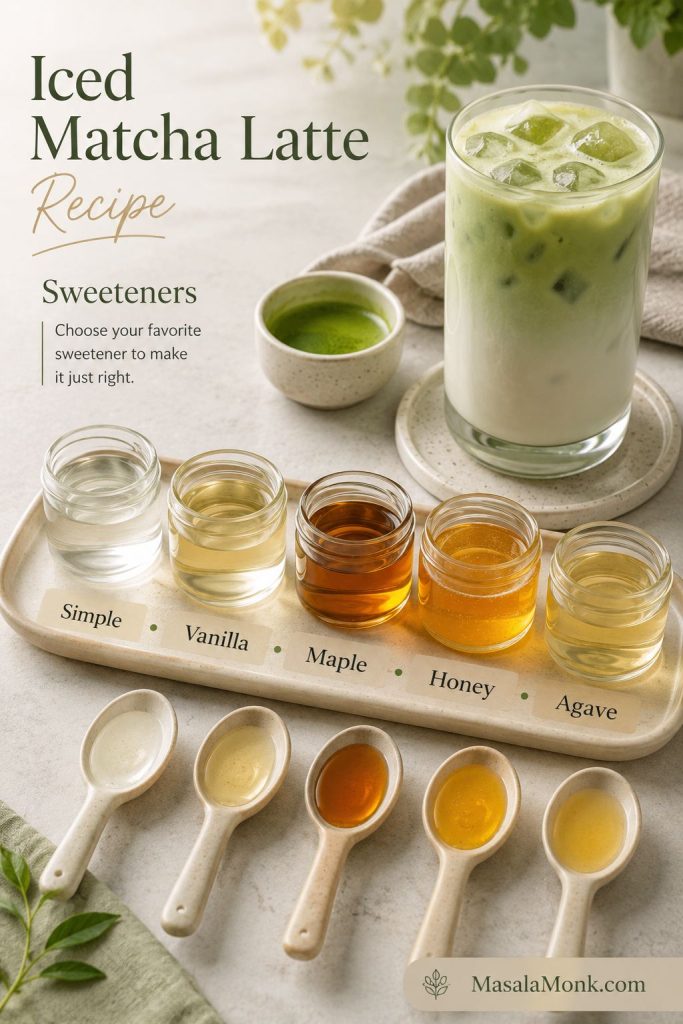
Simple syrup, vanilla syrup, maple syrup, honey, and agave arranged beside an iced matcha latte
Liquid sweeteners mix into cold drinks more evenly, whereas dry sugar can settle before it has a chance to dissolve.

Quick simple syrup: Stir equal parts sugar and hot water until dissolved, then cool before using. Keep it in the fridge for quick iced matcha, iced coffee, lemonade, and other cold drinks.

Variations

This is where the drink starts feeling less like a formula and more like your own café order: the same smooth matcha base, shifted with vanilla, oat milk, fruit, foam, coffee, or coconut.

If a variation tastes too strong, too sweet, or too thin, use the quick fixes instead of starting over.

Vanilla iced matcha latte

Vanilla is the easiest coffee-shop adjustment. Add 1 to 2 teaspoons vanilla syrup to the milk or warm matcha shot; it rounds off the grassy edge without making the drink taste like dessert. It is the best first variation if plain matcha tastes a little too green but you do not want the drink to become sugary.
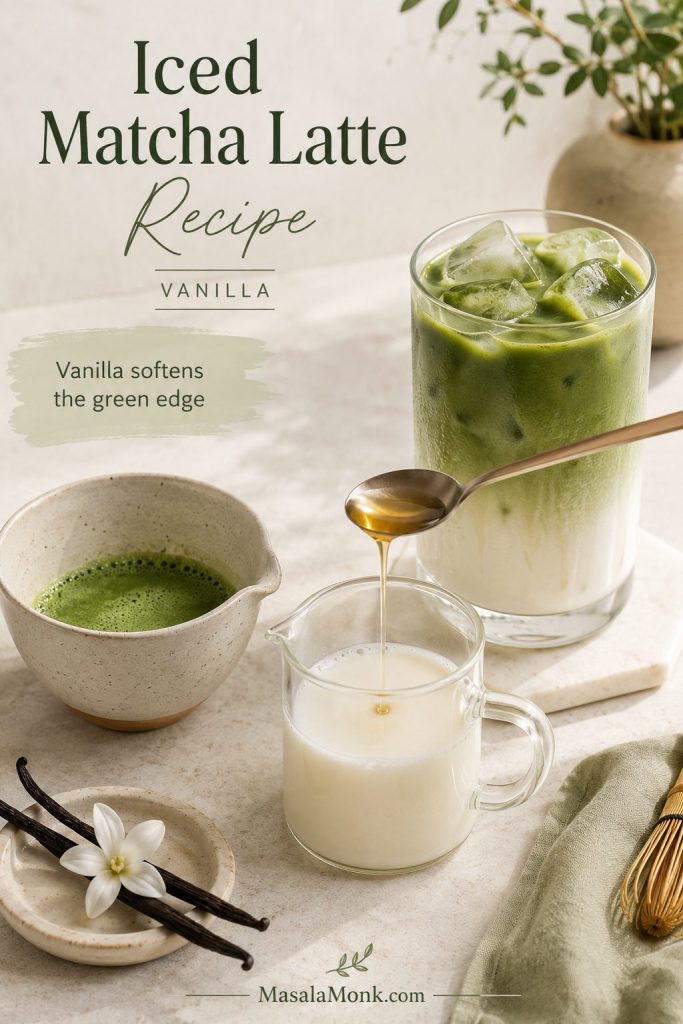
Vanilla syrup being added near an iced matcha latte and matcha bowl
Vanilla rounds the edges of grassy matcha, making it a smart first variation when plain green tea flavor feels too strong.

Oat milk iced matcha latte

Barista oat milk makes the latte rounder and fuller, especially if almond milk makes your matcha taste a little sharp. Because oat milk has natural sweetness, start with less syrup and add more only after tasting. It also helps the drink feel fuller without needing as much syrup.
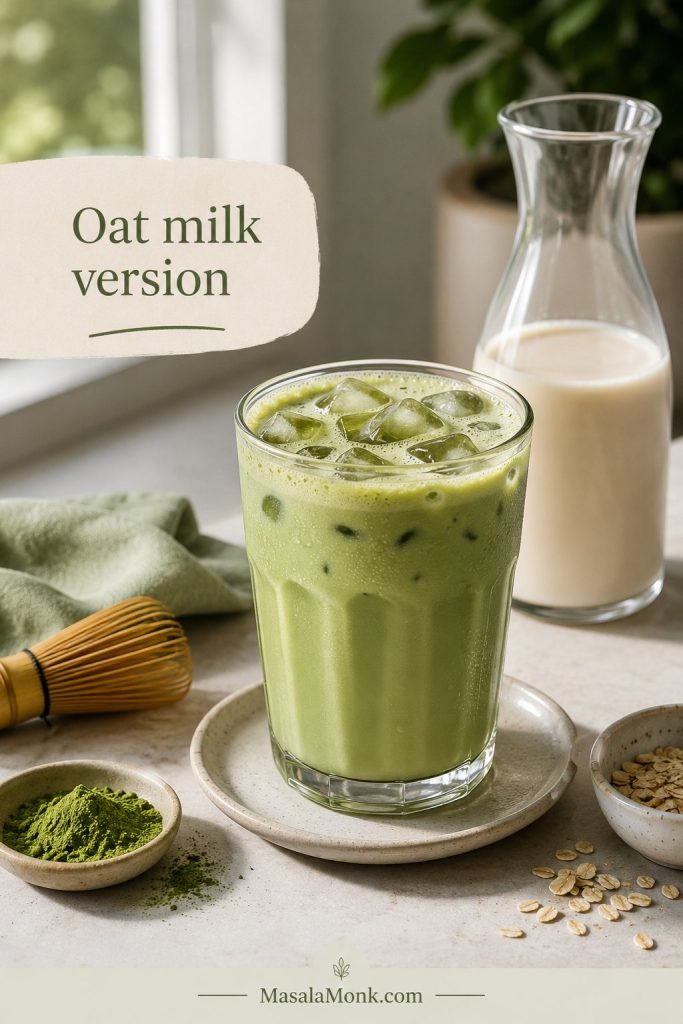
Creamy oat milk iced matcha latte with ice and an unbranded milk carafe
Oat milk is especially useful when you want a dairy-free matcha latte that still feels full, creamy, and lightly sweet.

Iced matcha latte with cold foam

Cold foam turns this into a slower, dessert-leaning drink. Make the base latte, then top it with 2 to 3 tablespoons vanilla cold foam. Keep the foam soft and pourable rather than piling it on like whipped cream.
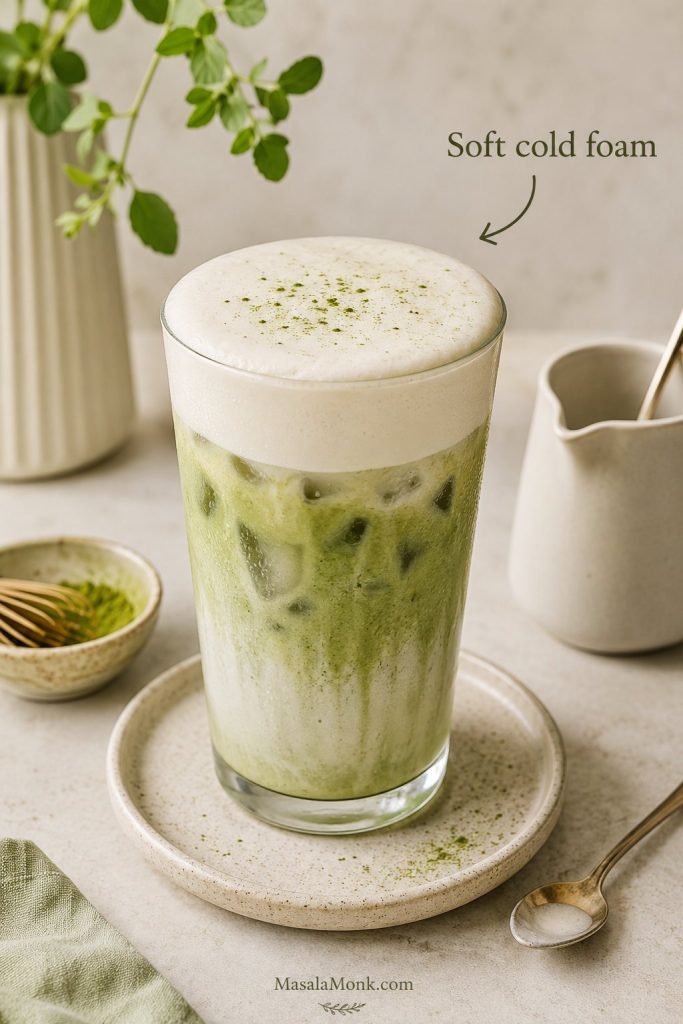
Iced matcha latte topped with soft cold foam and a light dusting of matcha
Cold foam adds a café-style finish, but it should stay soft enough to blend into the latte rather than sit like whipped cream.

Strawberry iced matcha latte

Spoon strawberry puree or strawberry syrup into the glass first, add ice and milk, then pour the matcha shot over the top. A thicker fruit layer gives you the café look; stirring gives you the better sip. For the full layered version with strawberry base options, ratios, and fixes, see MasalaMonk’s strawberry matcha latte recipe.
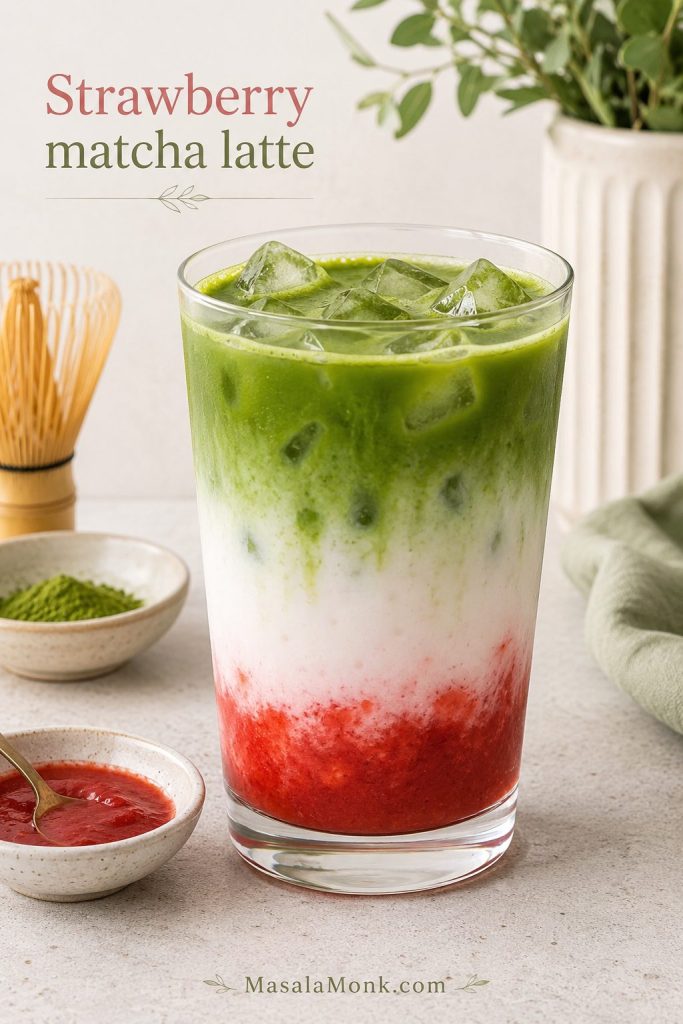
Strawberry iced matcha latte with red strawberry puree, milk, matcha, and ice in visible layers
The thicker the strawberry layer, the cleaner the visual contrast; after stirring, the fruit should support the matcha instead of hiding it.

Dirty iced matcha latte

Add one shot of espresso to the milk before pouring over the matcha. This version is stronger, slightly bitter, and more coffee-forward. Vanilla syrup or oat milk helps soften the edges.
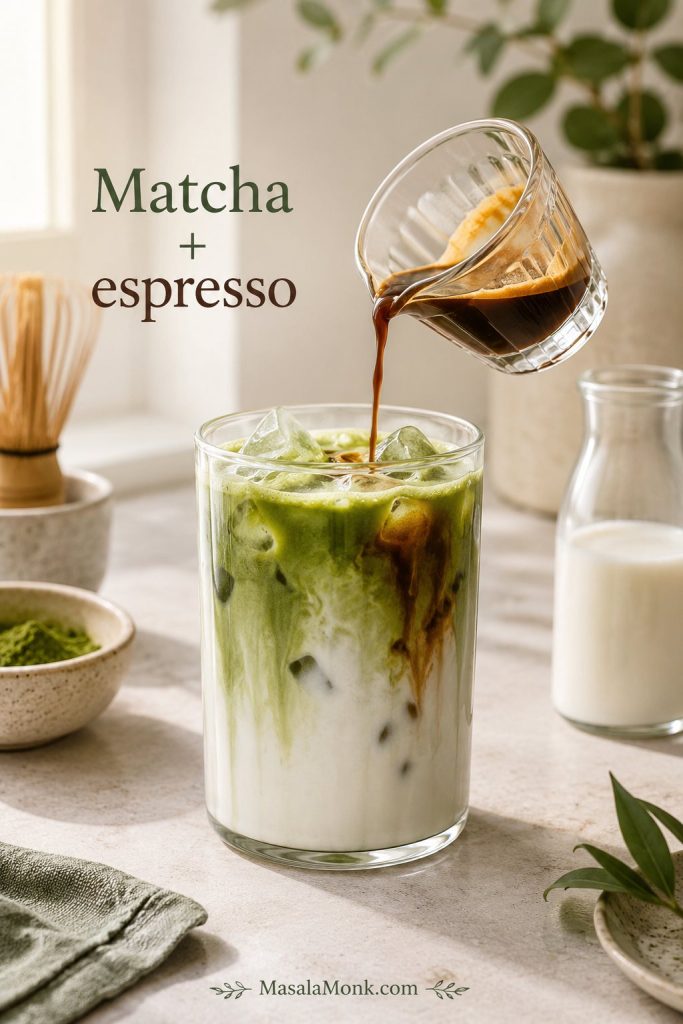
Espresso being poured into an iced matcha latte with milk and ice
Espresso adds a stronger coffee note, so a creamy milk or a little vanilla helps keep the dirty matcha from tasting harsh.

Coconut iced matcha latte

Use coconut milk with a small amount of maple syrup or vanilla syrup. Because coconut milk is richer and more noticeable, it works best if you enjoy a clear tropical flavor.
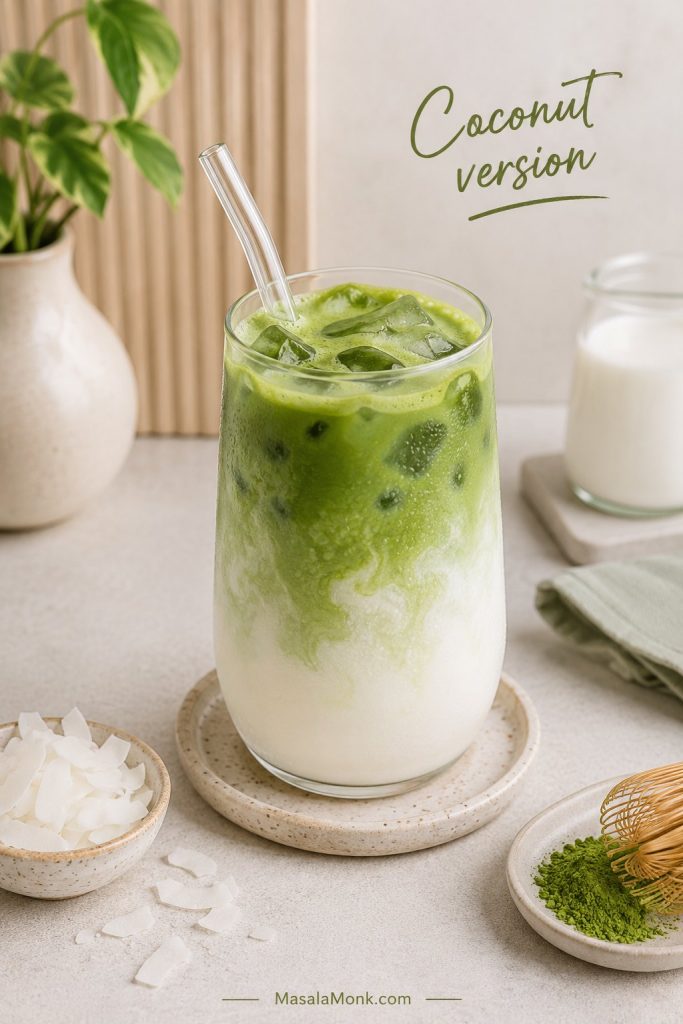
Coconut iced matcha latte with coconut flakes, matcha powder, milk, and ice
This version brings a richer body and a clear tropical note, which makes it best when you want coconut flavor to show.

When you want another chilled café-style drink, MasalaMonk’s iced coffee recipes guide has ideas for iced lattes, cold brew, frappes, syrups, and cold foam.

How to Fix an Iced Matcha Latte

The drink is rarely ruined. Most problems are one small adjustment away from working.

If your first glass is not perfect, do not throw it out. Matcha lattes are unusually easy to correct once you know what went wrong.
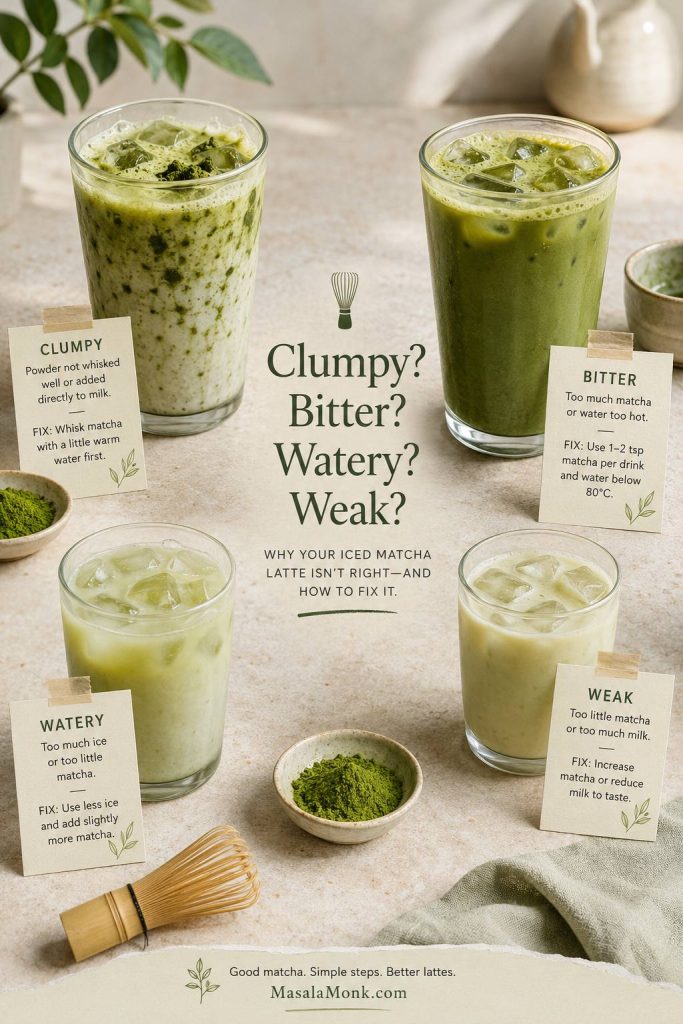
Four iced matcha latte problems shown with labels for clumpy, bitter, watery, and weak drinks
Troubleshooting gets easier when you identify the issue first: texture, bitterness, dilution, and weak flavor each need a different fix.

Quick fixes by problem

Most issues come from the same few places: dry matcha hitting cold milk, water that is too hot, too much melted ice, or a ratio that does not match your taste.

Texture and dilution fixes

ProblemLikely causeFix
Clumpy matchaMatcha was not sifted or was added directly to cold milkSift first, then whisk with hot water before adding milk.
Watery latteToo much water or melted iceUse 2 tablespoons water, cold milk, and fresh ice.
Layers disappearMatcha was poured too fast or the glass had too little iceFill the glass with ice and pour matcha slowly over the top.

Flavor balance fixes

ProblemLikely causeFix
Bitter tasteWater was too hot, matcha is old, or too much powder was usedCooler water and fresher matcha usually fix the harsh edge; if it still tastes strong, reduce the powder to ¾ teaspoon.
Weak matcha flavorToo much milk or too little matchaIncrease the matcha to 1½ teaspoons or reduce milk to ¾ cup.
Too grassyStrong matcha, stale matcha, or not enough milk/sweetnessAdd vanilla syrup, use oat milk, start with less matcha, or switch to fresher matcha if the flavor tastes harsh rather than pleasantly earthy.
Too sweetToo much syrup or sweetened matcha/milkAdd more unsweetened milk and stir well. Next time, start with 1 teaspoon syrup and taste before adding more.

Bitter and watery examples

When bitterness shows up, check water temperature, powder freshness, and matcha amount before adding more syrup.
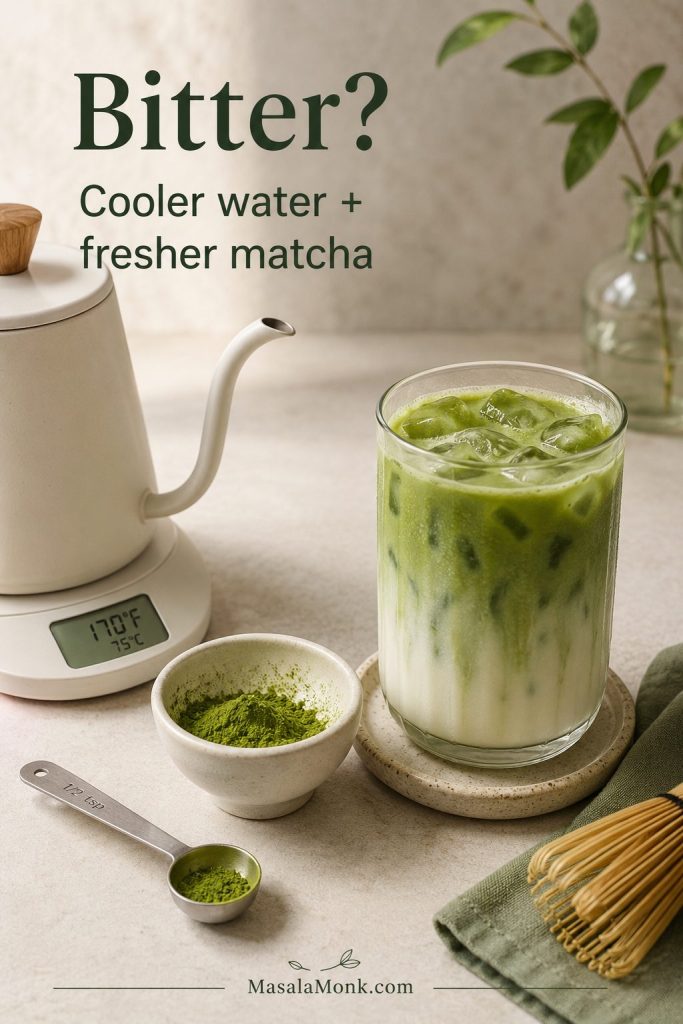
Iced matcha latte beside kettle temperature reading, matcha powder, and a small measuring spoon
If the latte tastes bitter, try cooler water or less powder before adding more sweetener; syrup can cover bitterness, but it rarely solves it.

When the latte tastes thin, look at dilution first: too much water or melted ice can flatten even good matcha.
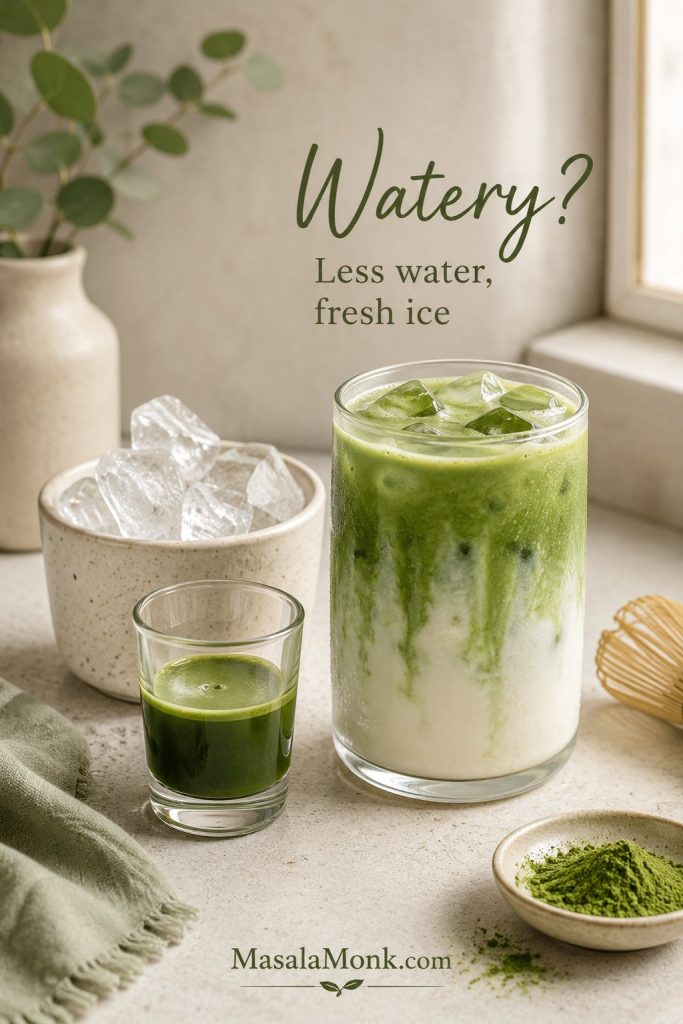
Iced matcha latte beside a bowl of fresh ice and a small concentrated matcha shot
Watery matcha usually comes from too much dilution, so fresh ice and a smaller water amount keep the green tea flavor clearer.

Still clumpy after whisking?

If the drink is still clumpy even after whisking, check the details: the powder may not have been sifted, the cup may be too wide for a frother, the matcha may have stuck to wet sides before whisking, or the milk may have been added before the powder had a chance to fully blend with water.
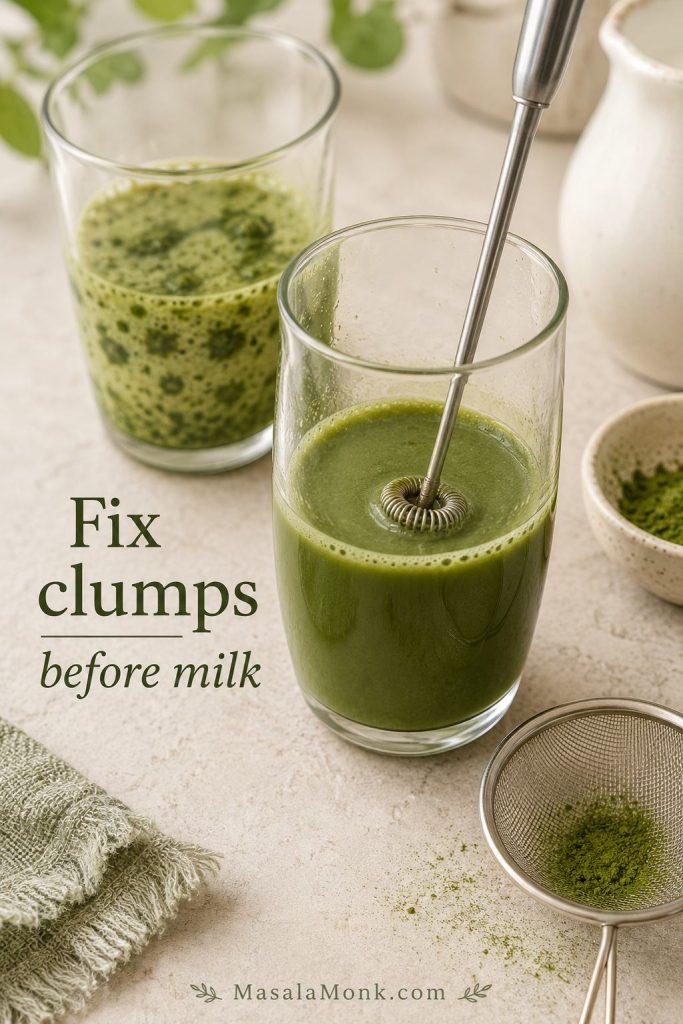
Smooth matcha shot being mixed with a frother beside a clumpy matcha drink and sieve
Fix clumps at the source: sift dry powder, hydrate it with water, then add milk only after the matcha looks smooth.

Can You Make It Ahead?

This drink tastes best right after you make it. Once the ice sits in the milk, the latte slowly becomes watery. However, a few parts can be prepped ahead.

  • Simple syrup: Make it ahead and keep it in the fridge.
  • Matcha shot: Whisk matcha with water and chill it for a few hours if needed.
  • Milk: Keep it cold until serving.
  • Finished drink: Assemble with ice right before drinking.

For make-ahead success, prep the stable parts early and save the ice for the moment you serve.
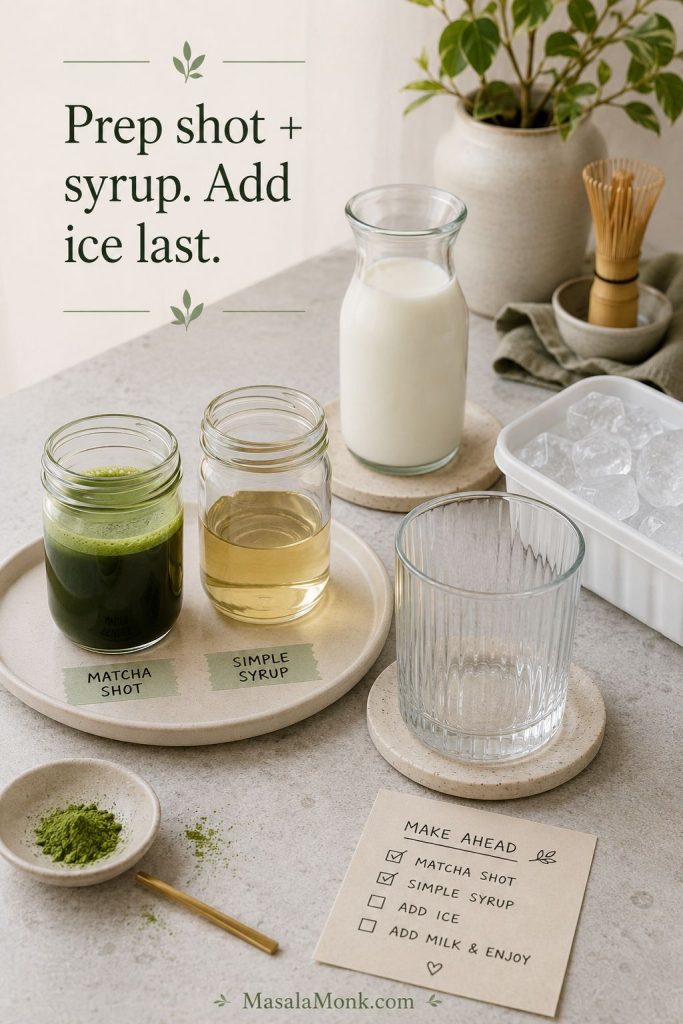
Make-ahead setup with matcha shot, simple syrup, milk, ice tray, and an empty glass
Make ahead the parts that hold well, such as syrup and the matcha base; however, add ice only when you are ready to drink.

If a chilled matcha shot settles in the fridge, shake or whisk it again before using. Since matcha stays suspended in liquid, a little settling is normal.

FAQs

No whisk? Use a frother, jar, or blender

A handheld frother is the easiest swap, but a shaker jar or blender also works. Sift the matcha first, mix it with water, then add milk and ice.

Hot water or cold water — which is better?

Hot water usually makes a smoother matcha shot. Cold water can work if you sift well and shake or froth strongly, but it is less forgiving if your matcha is compacted or slightly clumpy.

Why the drink gets clumpy

It usually happens when dry matcha is added directly to cold milk, when the powder is not sifted, or when the matcha sticks to the sides of the cup before whisking. Sift the powder, whisk it with hot water first, then pour it over milk and ice.

Does matcha dissolve in milk?

Not exactly. Matcha is finely ground tea leaf, so it suspends in liquid rather than dissolving like sugar or instant coffee. That is why a whisk, frother, shaker, or blender helps — and why stirring before drinking keeps the flavor even.

How much matcha goes in one iced latte?

One teaspoon / about 2 grams gives a balanced drink. For a stronger version, increase the matcha to 1½ teaspoons. If you are new to matcha, start with ½ to ¾ teaspoon and build up from there.

Best milk for a creamy iced matcha latte

Whole milk is richest, 2% milk tastes balanced, and barista oat milk is the best dairy-free option for a full-bodied texture. Unsweetened soy milk is another good choice if you want a dairy-free drink with less natural sweetness than oat milk.

How to make it taste more like Starbucks

Use 1½ teaspoons matcha, 1 cup milk, 1 cup ice, and 1 tablespoon simple syrup or vanilla syrup. Add more syrup only after tasting. The syrup gives the drink its sweeter coffee-shop profile.

How to make a sugar-free iced matcha latte

Skip the syrup or use a sugar-free liquid sweetener, and check that both your matcha powder and milk are unsweetened. Vanilla extract plus unsweetened oat milk or soy milk can make the drink taste softer without adding much sweetness. MasalaMonk’s keto mocktails guide also has a matcha latte spritz for another low-carb matcha drink idea.
Sugar-free iced matcha latte setup with unsweetened milk, vanilla extract, matcha shot, and optional syrup
For a sugar-free version, check both the matcha and milk first, then use vanilla to soften the flavor without adding regular syrup.

Caffeine in matcha lattes

Matcha naturally contains caffeine because it is made from finely ground green tea leaves. A latte made with 1 teaspoon matcha usually feels like a moderate-caffeine drink, while 1½ teaspoons will taste and feel stronger. If you are sensitive to caffeine, use ½ to ¾ teaspoon matcha or drink it earlier in the day.
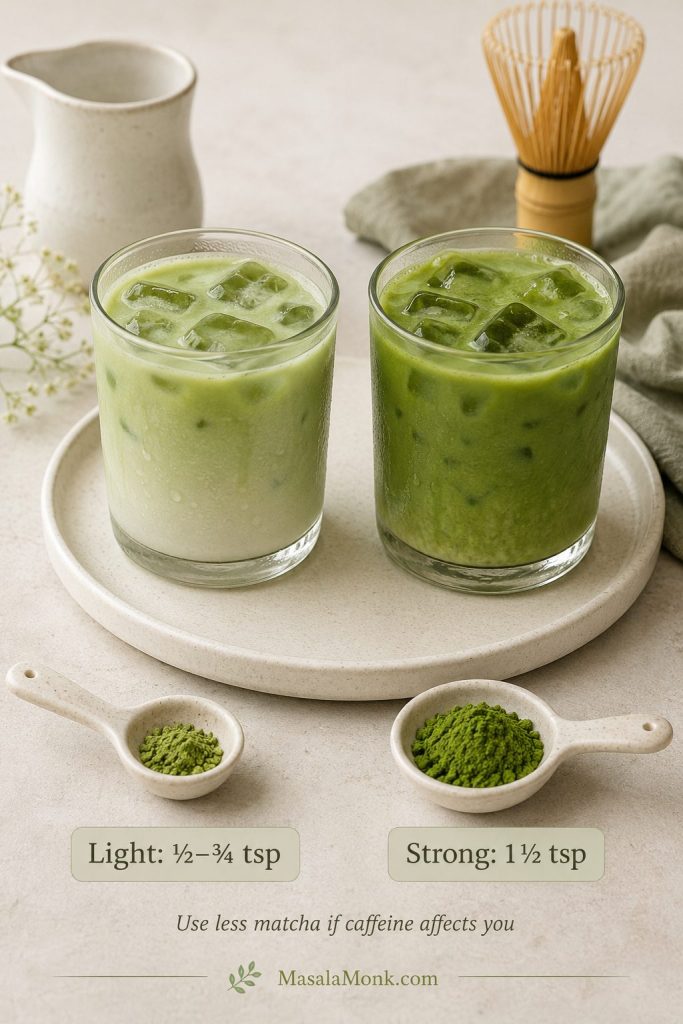
Two iced matcha lattes showing light and strong matcha amounts with matcha powder spoons
Adjusting the powder amount is the simplest way to make the drink gentler or stronger without changing the whole recipe.

Strawberry version

Add strawberry puree or syrup to the bottom of the glass, then add ice, milk, and the matcha shot. Stir before drinking, or leave it layered for a pretty green-and-pink drink. A thicker puree gives cleaner layers, while a thinner syrup blends faster. For exact strawberry amounts and step-by-step layering, use the full strawberry matcha latte recipe.

Final Thoughts

Once the matcha shot is smooth, the rest is easy. Pour it over cold milk and ice, sweeten only as much as you like, and you have the kind of iced matcha latte that feels calm, creamy, and worth making again tomorrow.

The small details matter most: sift the matcha, whisk it before adding milk, and avoid boiling water. Those three steps turn a clumpy green drink into something cold, balanced, and genuinely satisfying — the kind of iced matcha latte that tastes like you finally figured out the café version at home.
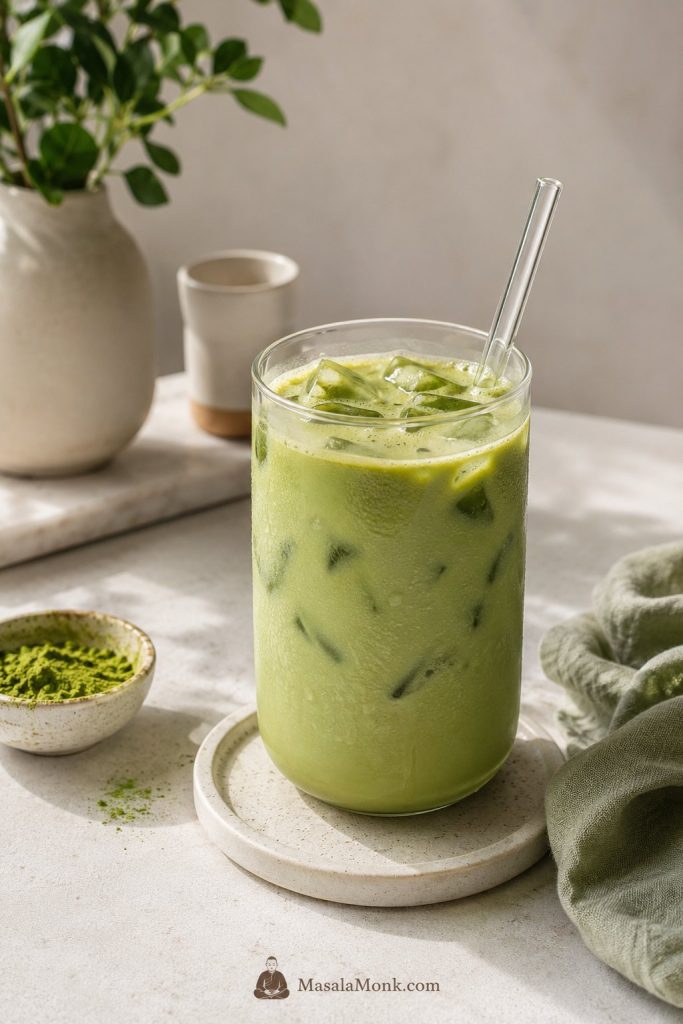
Finished iced matcha latte in a clear glass with ice, matcha powder, glass straw, and sage napkin
Once you understand the matcha base, the final glass becomes repeatable: cold, creamy, balanced, and easy to make again.
Posted on 2 Comments

Strawberry Matcha Latte Recipe

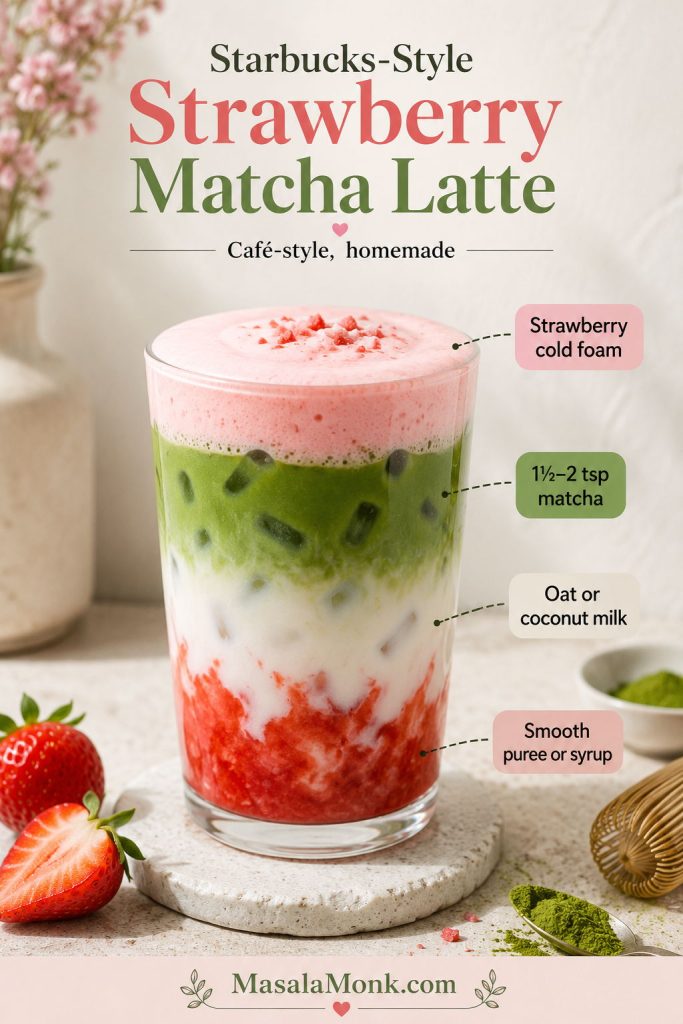
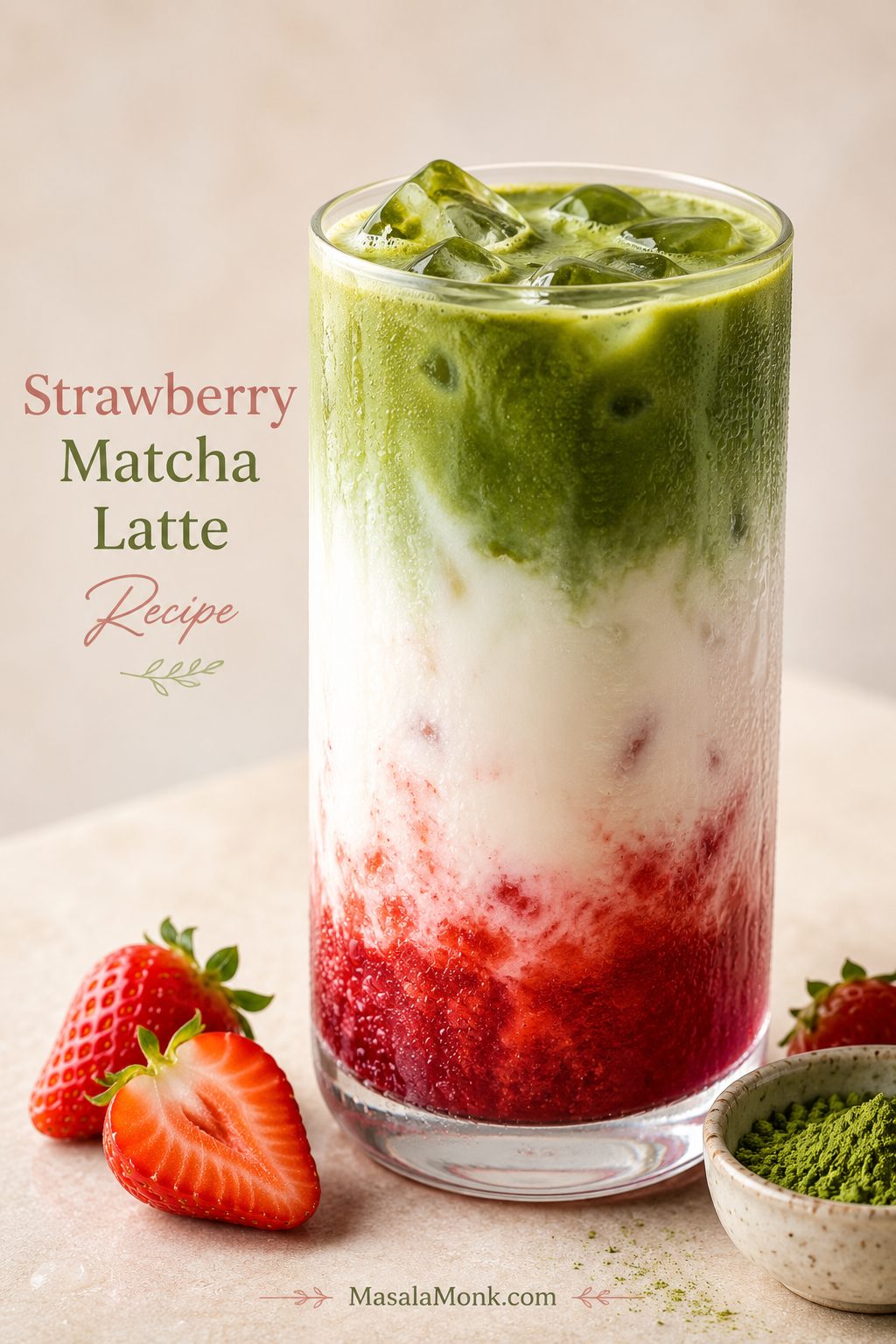
Tall iced strawberry matcha latte in a clear glass with red strawberry base, cold milk, green matcha, ice, strawberries, and matcha powder nearby.

The first thing you notice is the color: juicy red strawberry at the bottom, cold milk turning pale and creamy in the middle, and a glossy green matcha pour floating over the top. Then you stir it, take a sip, and the drink finally makes sense: fresh strawberry, smooth milk, and earthy green tea all in one cold glass.

It is the kind of iced drink that feels like a small afternoon reset: pretty enough to slow down for, but simple enough to make before the ice in your glass even thinks about melting.

This strawberry matcha latte recipe is for the drink you want when a plain iced matcha feels a little too serious and strawberry milk feels a little too sweet. It gives you the pretty layered look, but more importantly, it gives you a balanced glass that tastes creamy, fruity, refreshing, and smooth.

It takes about 10 minutes, needs no cooking for the main version, and feels much more special than the effort suggests. Make the strawberry base, whisk the matcha separately, build the glass over ice, and pour slowly. Warm—not boiling—water keeps the matcha gentler, a thicker berry mixture helps the colors stay separated, and enough ice slows the pour.

Quick Answer: Best Ratio

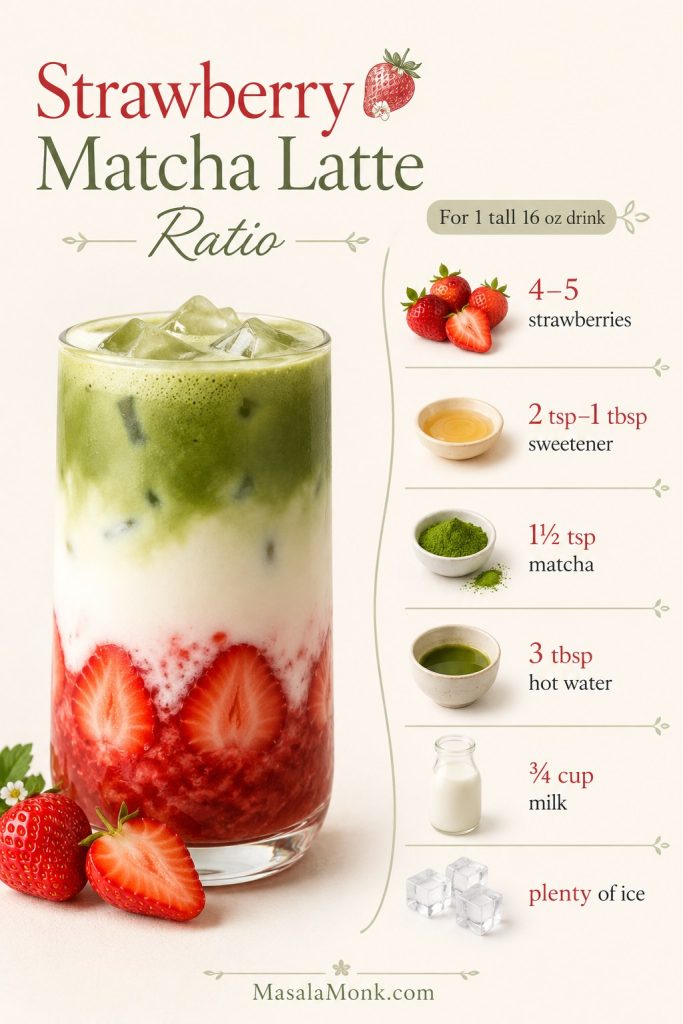
For one tall iced strawberry matcha latte, use 4–5 strawberries, 2 teaspoons to 1 tablespoon sweetener, 1½ teaspoons matcha, 3 tablespoons hot water, ¾ cup milk, and plenty of ice.

At a glance: 10 minutes, no cooking for the main version, 1 tall glass, fresh or frozen strawberries, dairy or non-dairy milk.

Quick method

Muddle or blend the strawberries with sweetener, spoon them into the bottom of a clear glass, add ice, pour in the milk, then slowly pour whisked matcha over the top. The gentlest flavor comes from whisking the matcha with hot water around 175°F / 80°C, not boiling water.

Matcha strength

A milder drink works best with 1 teaspoon matcha. For a stronger, more matcha-forward latte, use 2 teaspoons. Serve it layered if you want the dramatic red-white-green look, then stir before drinking so the strawberry, milk, and matcha taste balanced in every sip.

16 oz ratio

For 1 tall 16 oz drink Use this amount Why it works
Strawberries 4–5 medium / 70–90 g Enough fruit for a visible base and real strawberry flavor.
Sweetener 2 tsp to 1 tbsp Start lower. Add more only if the berries are tart.
Matcha 1½ tsp / about 3 g Balanced strength for milk and strawberry.
Hot water 3 tbsp / 45 ml Makes a concentrated matcha pour without thinning the latte.
Milk ¾ cup / 180 ml Creamy enough for a tall iced latte.
Ice 1 cup, or enough to fill the glass halfway to three-quarters full Helps keep the strawberry, milk, and matcha separated.

Keep the simple rule in mind: thick berries, warm-not-boiling matcha, plenty of ice, a slow pour, and one good stir before judging the flavor.

After one round, you will know exactly where your taste sits: more strawberry if you want it fruitier, more milk if you want it softer, or a little more matcha if you want that green tea finish to lead.

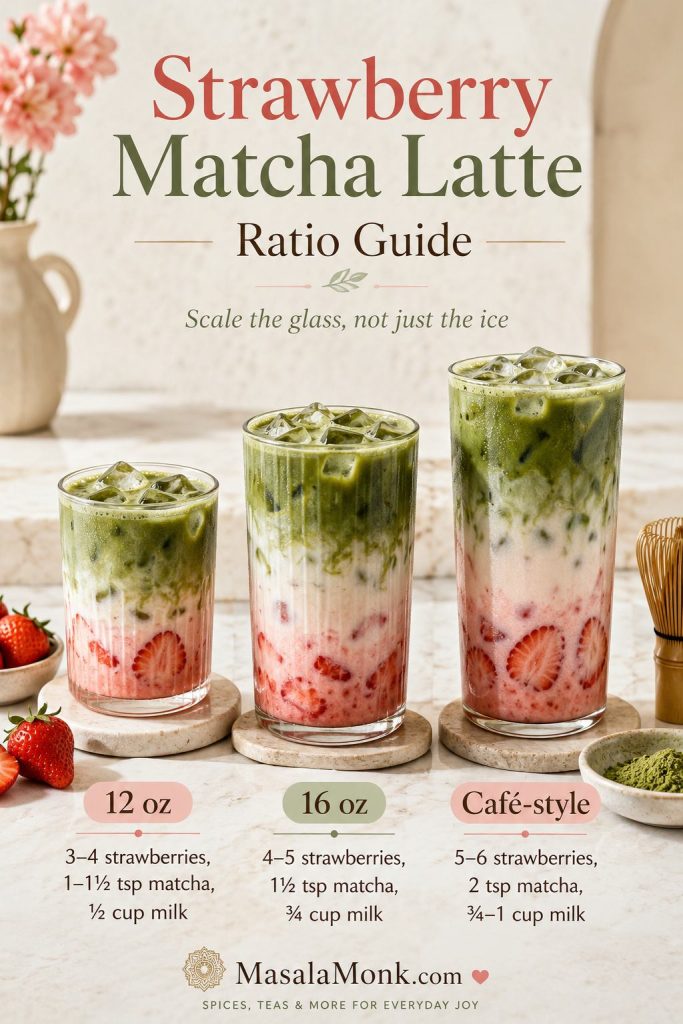
Need to scale the drink up or down? See the 12 oz, 16 oz, and café-style ratio guide.

Strawberry matcha latte ratio guide showing one layered drink with strawberries, sweetener, matcha, hot water, milk, and ice amounts.
Start with this 16-ounce strawberry matcha latte ratio, then adjust sweetness, berry flavor, or matcha strength after tasting the drink stirred.

Strawberry Matcha Latte Recipe

Creamy Iced Strawberry Matcha Latte

A layered café-style latte with a bright berry base, cold milk, and glossy whisked matcha — pretty enough for a café moment, easy enough for home.

Yield1 tall drink
Prep Time10 minutes
Cook Time0 minutes
Total Time10 minutes

Ingredients

  • 4–5 medium strawberries, hulled and chopped, about 70–90 g
  • 2 teaspoons sweetener, plus up to 1 tablespoon total if the berries are tart
  • 1½ teaspoons matcha powder, about 3 g
  • 3 tablespoons / 45 ml hot water, about 175°F / 80°C
  • ¾ cup / 180 ml cold milk, dairy or non-dairy
  • 1 cup ice, or enough to fill the glass halfway to three-quarters full

Instructions

  1. Make the strawberry base. Add chopped strawberries and sweetener to a small bowl or glass. Muddle until juicy, or blend for a smoother base.
  2. Prepare the matcha. Sift matcha into a small bowl. Add hot water and whisk until glossy and lightly frothy.
  3. Build the drink. Spoon the strawberry mixture into a tall clear glass. Add ice. Pour milk slowly over the ice.
  4. Pour the matcha. Slowly pour the whisked matcha over the back of a spoon or directly over the ice so it settles on top.
  5. Serve and stir. Serve layered, then stir before drinking so the strawberry, milk, and matcha taste balanced.

Notes

  • Use 1 teaspoon matcha for mild, 1½ teaspoons for balanced, or 2 teaspoons for strong.
  • For clear layers, keep the berry base thick and pour over plenty of ice.
  • If using jam, start with 1 tablespoon and reduce the added sweetener.
  • The matcha is concentrated on purpose; more water makes the latte thinner.

If the matcha turns clumpy, bitter, watery, or the layers mix too fast, use the troubleshooting guide.

What Is a Strawberry Matcha Latte?

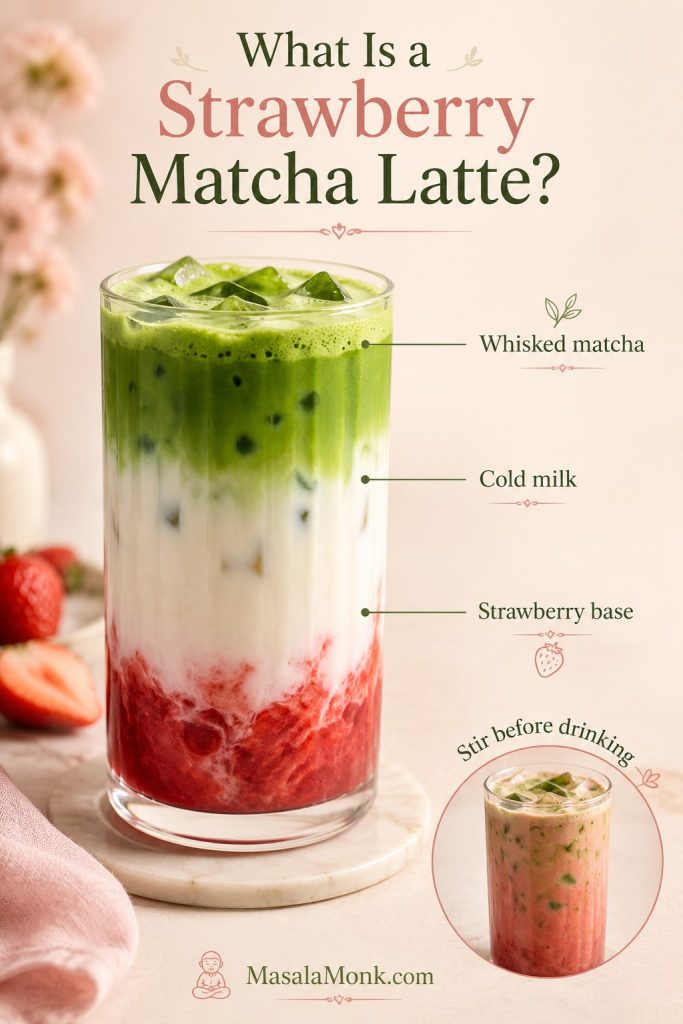
A strawberry matcha latte is an iced matcha drink made with a strawberry base, milk, ice, and whisked matcha. The popular version is layered: red strawberry at the bottom, white milk in the middle, and green matcha on top.

Labeled strawberry matcha latte showing strawberry base, cold milk, whisked matcha, and a small stirred drink inset.
Think of the layers as a map: fruit gives the base, milk softens the middle, and matcha brings the green tea finish.

It is not just strawberry milk with matcha poured over it, and it is not only a plain iced matcha with syrup. The best version keeps each part doing a job: strawberry brings fruit and color, milk softens the sip, and matcha gives the clean green tea finish.

The layered look is mostly for the first impression; the real flavor happens after stirring.

Homemade also gives you control. You can keep the strawberry base fresh instead of candy-sweet, make the matcha stronger or softer, and choose a milk that makes the whole glass taste the way you like it.

Why This Latte Works

This latte works because it is pretty without being fussy, sweet without becoming syrupy, and creamy without hiding the matcha. You get the pretty layered look, but the real win is the way the flavors come together after stirring.

  • The fruit base is thick enough to stay visible. It gives the drink real strawberry flavor instead of a candy-syrup taste.
  • The sweetness starts low. You can adjust based on your berries instead of making the latte syrupy from the start.
  • The matcha is whisked separately. That keeps dry green clumps out of the milk.
  • The water is warm, not boiling. This helps the matcha taste smoother and less harsh.
  • The ice does real work. It slows the milk and matcha as they pour, which helps the colors stay separated.

The best part of making it at home is control: the strawberry can taste like real fruit, the matcha can stay smooth instead of harsh, and the sweetness does not have to hit like a syrup pump.

That balance is the goal; here is what to taste for once the drink is stirred.

What It Should Taste Like

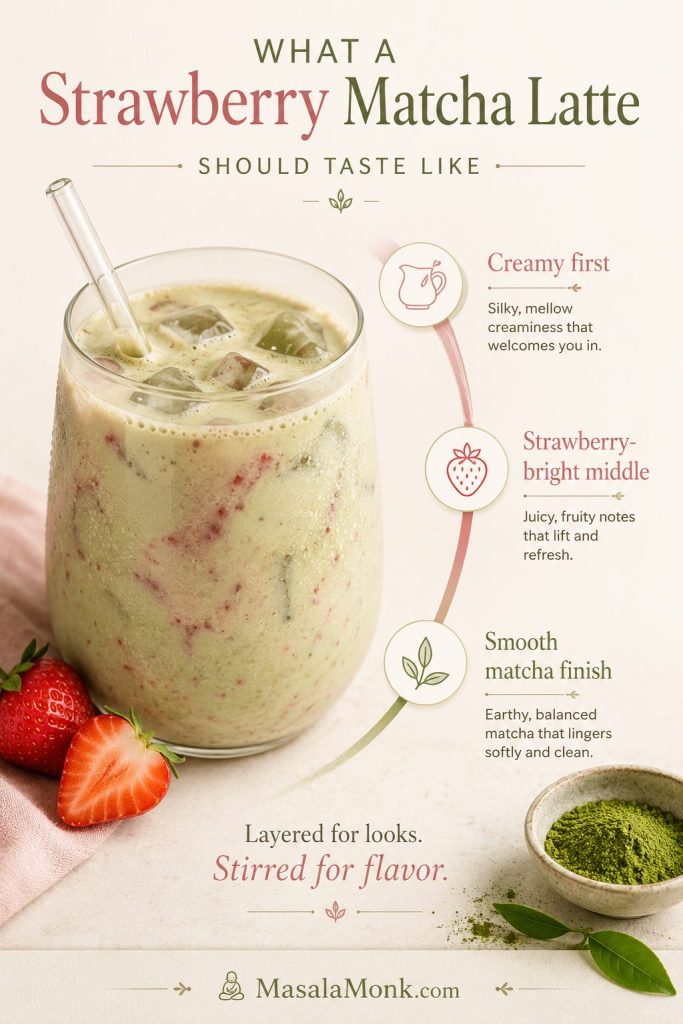
Once stirred, the latte should taste cold and creamy first, then bright with strawberry, with matcha finishing gently instead of taking over. It should not taste like strawberry syrup with green tea on top, or like bitter matcha hiding behind milk. The sweet spot is fruit, creaminess, and a smooth green-tea finish in the same sip.

Stirred strawberry matcha latte with flavor callouts for creamy first, strawberry-bright middle, and smooth matcha finish.
A balanced strawberry matcha latte should taste like one drink after stirring, not three separate layers competing in the glass.

Ingredients You Need

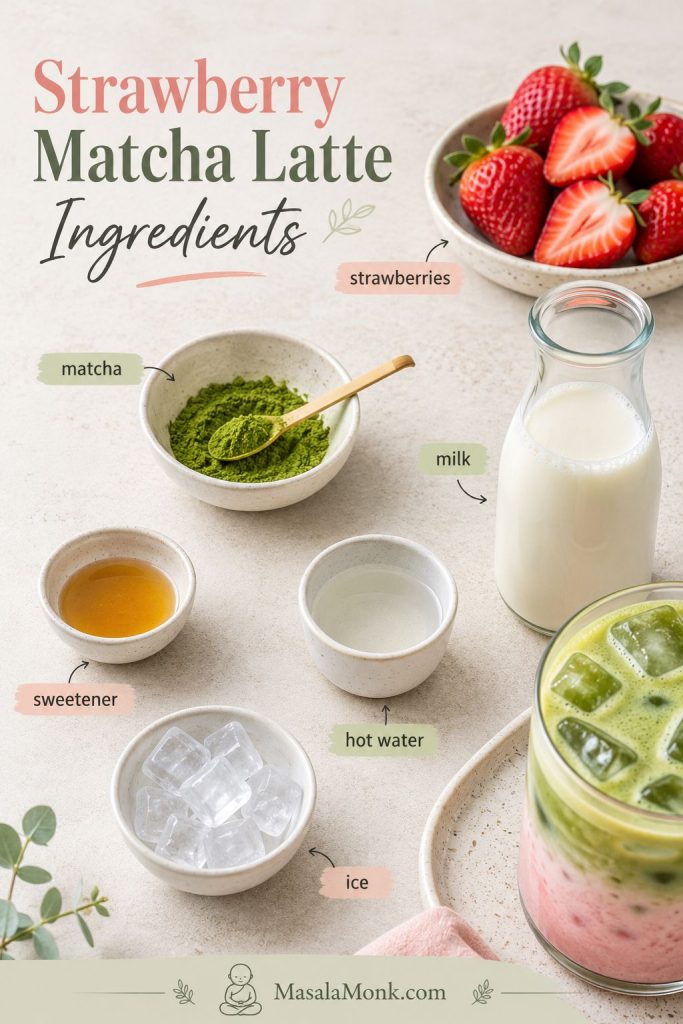
You only need a few ingredients, but each one changes the final latte. Choose the strawberries, matcha, milk, and sweetener with the kind of sip you want in mind.

Ingredients for strawberry matcha latte including strawberries, matcha powder, milk, sweetener, hot water, ice, and a partial finished drink.
Because the ingredient list is short, each choice matters: ripe berries, fresh matcha, cold milk, and restrained sweetness shape the final sip.

Strawberries

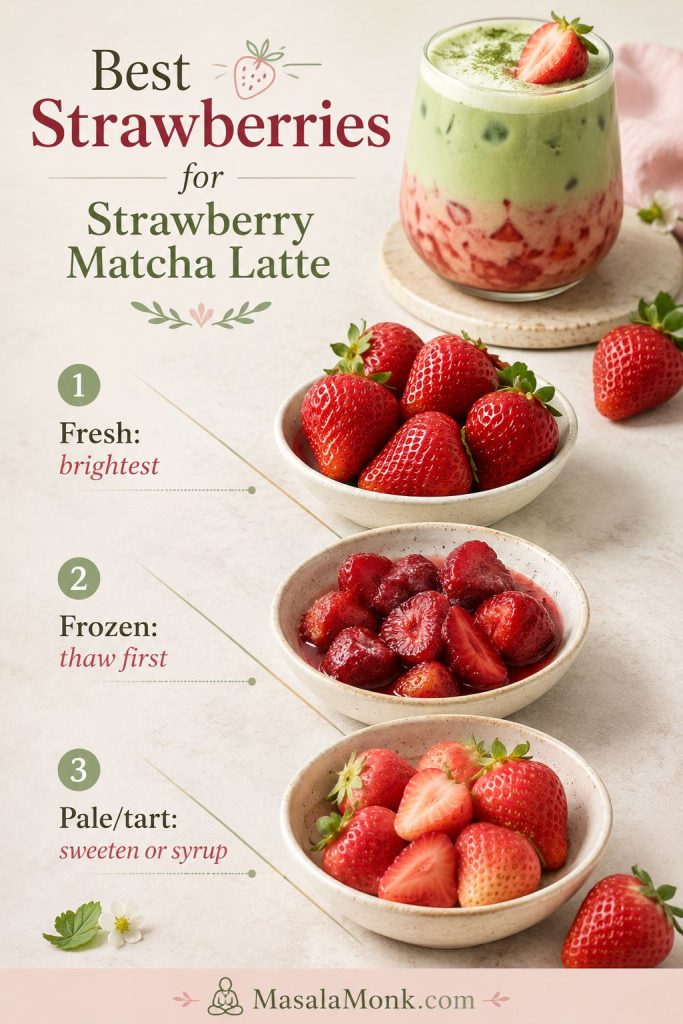
Fresh strawberries give this latte the brightest flavor and color. If the berries smell sweet before you cut them, the drink will taste fresher and need less sugar. Pale, watery, or tart berries can still work, but they usually need a little more sweetener or a quick syrup treatment.

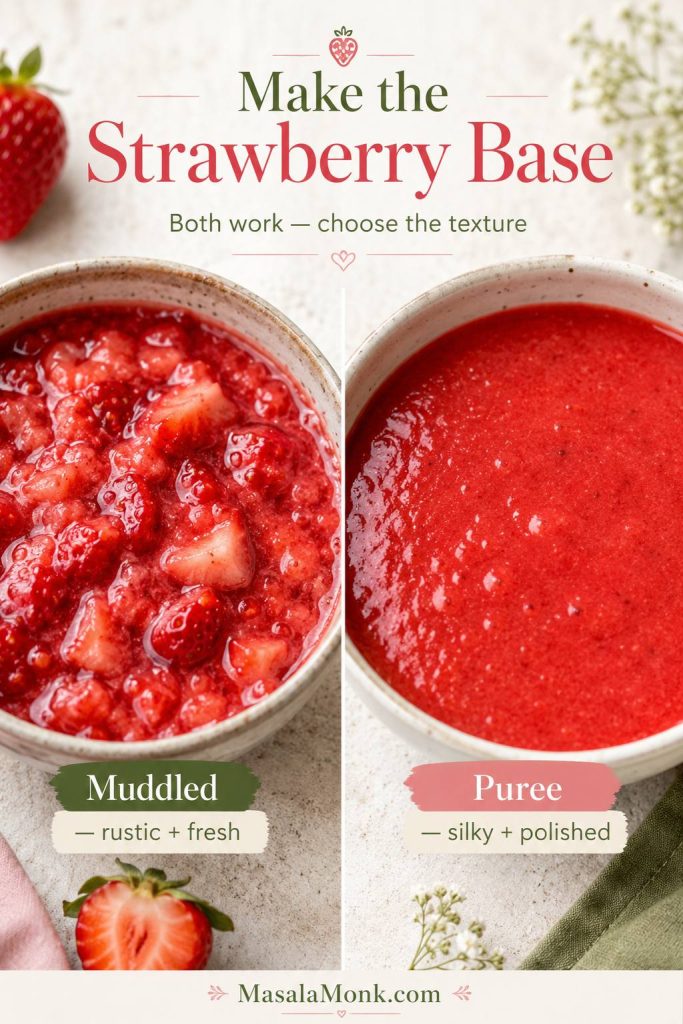
Frozen strawberries are useful when fresh berries are out of season. Thaw them first, then blend or mash them with sweetener. For the silkiest red base, strain the puree so it sits evenly at the bottom of the cup.

For a deeper comparison of muddled berries, puree, syrup, and jam, see the strawberry base options.

Comparison of fresh ripe strawberries, thawed frozen strawberries, and pale tart strawberries for strawberry matcha latte.
Ripe fresh strawberries give the brightest flavor, while frozen berries need thawing and pale berries usually need extra sweetness or syrup.

If your strawberries are especially ripe and you have extra, this strawberry shortcake recipe is another simple way to use them while they are still fresh and juicy.

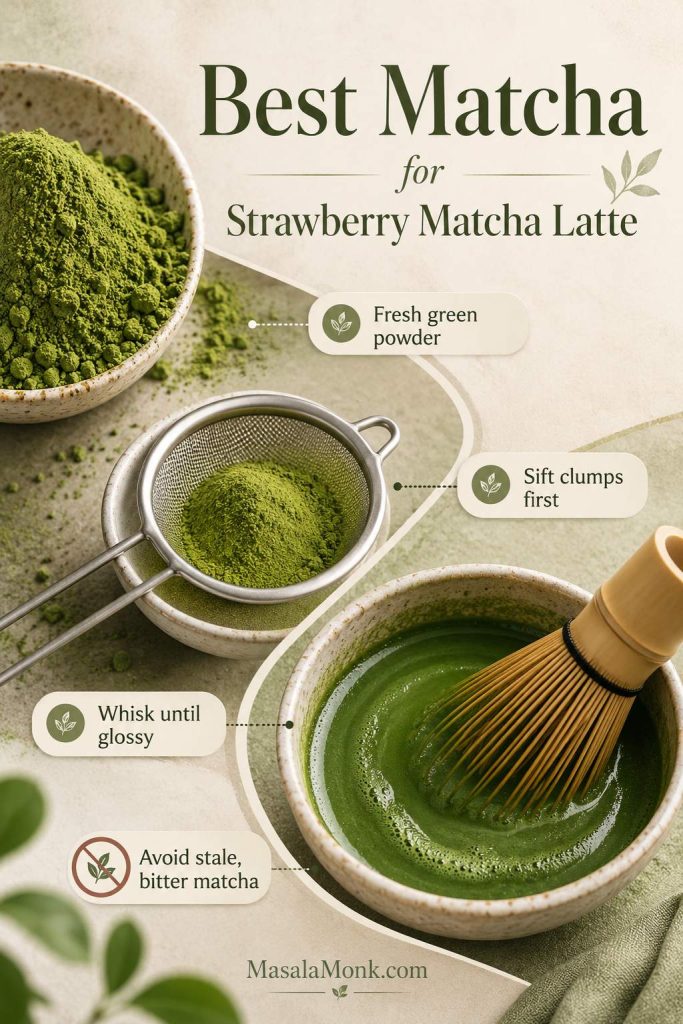
Matcha powder

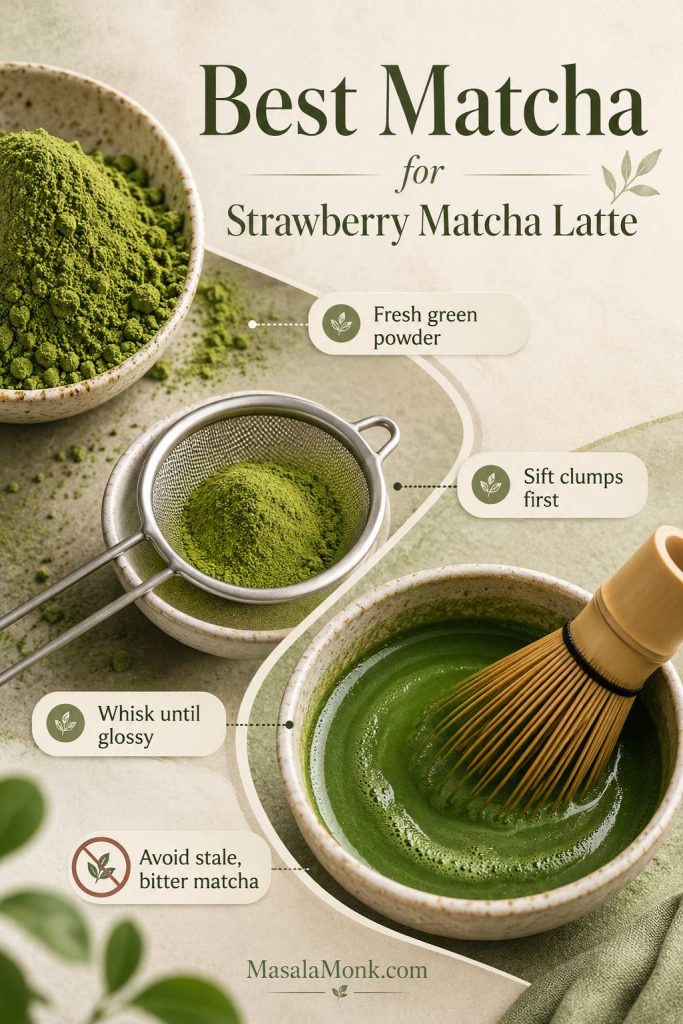
Choose a matcha powder you enjoy drinking, not the stale green powder hiding at the back of the pantry. Ceremonial-style matcha gives the smoothest flavor, but a good latte-grade matcha is usually enough for an iced drink with milk and strawberry.

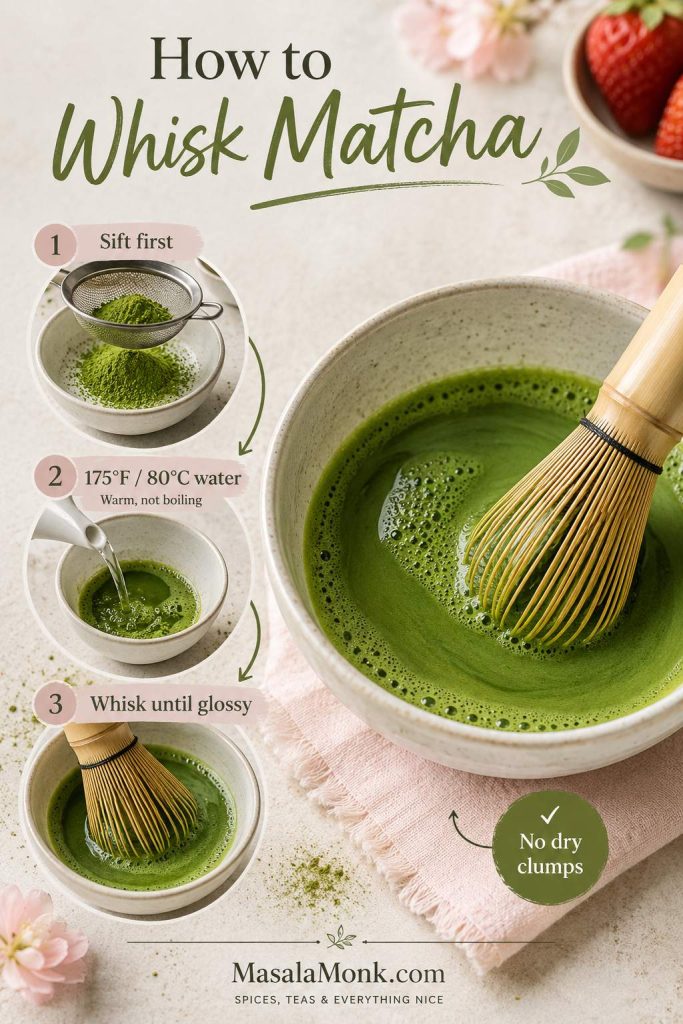
Sift the matcha before whisking if it looks clumpy. Matcha does not dissolve like instant coffee; it suspends in water, so whisking matters. The goal is a smooth, balanced sip, not a bitter powdery one.

Matcha guide with fresh matcha powder, sifted matcha, glossy whisked matcha, and a clump-prevention cue.
Fresh matcha and proper whisking matter because milk can soften bitterness, but it cannot fully hide stale powder or dry green clumps.
Matcha temperature tip: Use hot water around 175°F / 80°C, not boiling water. This keeps the matcha smoother and less sharp; Ippodo’s matcha latte guide uses the same 80°C / 176°F benchmark.

If matcha usually tastes harsh to you, this one change helps most: let boiling water cool for a minute before whisking. The finished latte should taste fresh instead of flat or sharp.

Why the main recipe uses only 3 tablespoons water: This is a concentrated matcha pour for one 16 oz iced strawberry latte, not a full plain matcha tea. The drink already has strawberry, milk, and ice, so less water keeps the final glass creamy instead of thin. If you use 2 teaspoons matcha for a larger glass, you can increase the water to ¼ cup / 60 ml.

If clumps are your main problem, the step-by-step matcha whisking section is the fastest fix.

Milk

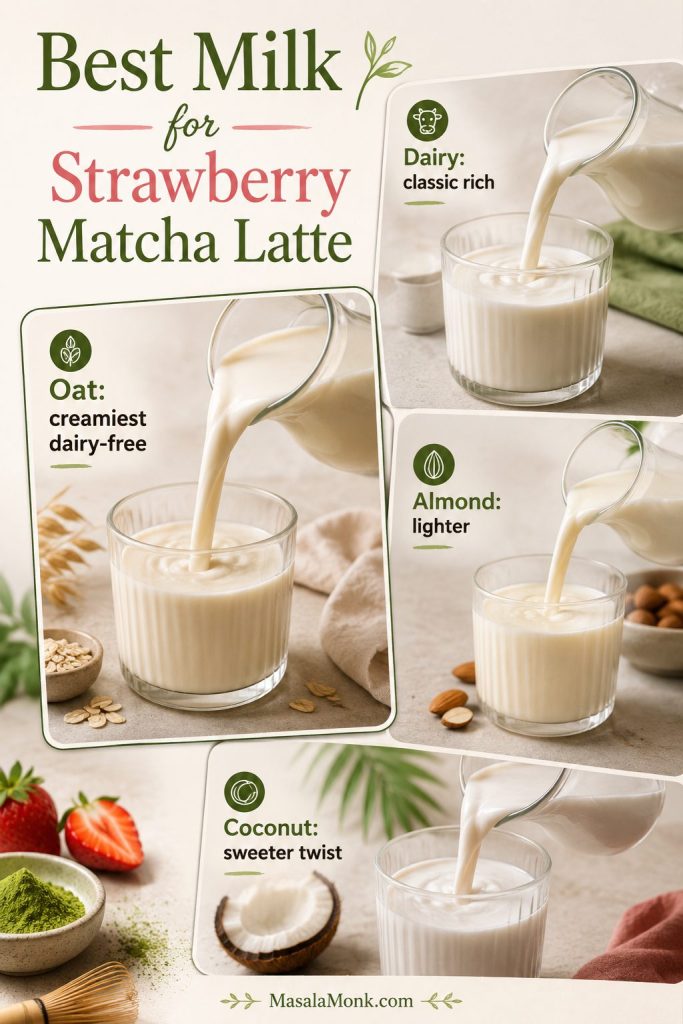
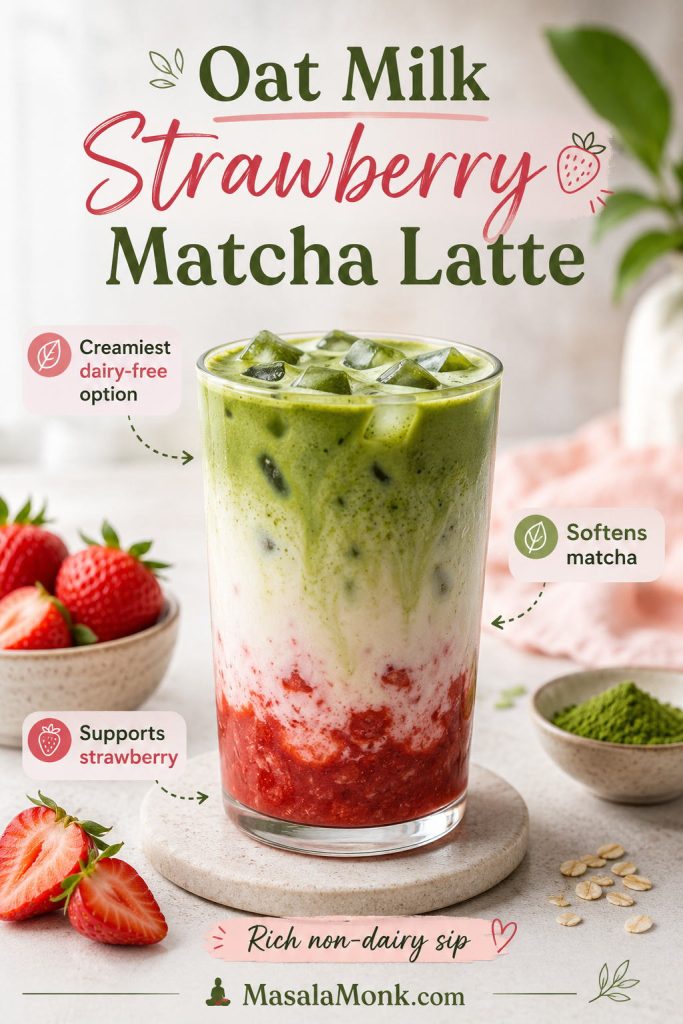
Oat milk gives the creamiest dairy-free version. Dairy milk tastes clean and rich. Almond milk makes a lighter drink, while coconut milk gives a sweeter, more tropical flavor that works well with strawberry.

Think of the milk as the soft middle. It should round out the fruit and matcha without making the latte taste flat. Cold milk and plenty of ice also help the colors stay separated.

Milk comparison for strawberry matcha latte with dairy milk, oat milk, almond milk, and coconut milk options.
Milk changes the body of the latte: oat milk tastes creamiest, dairy feels classic, almond keeps it lighter, and coconut adds a sweeter twist.

Sweetener

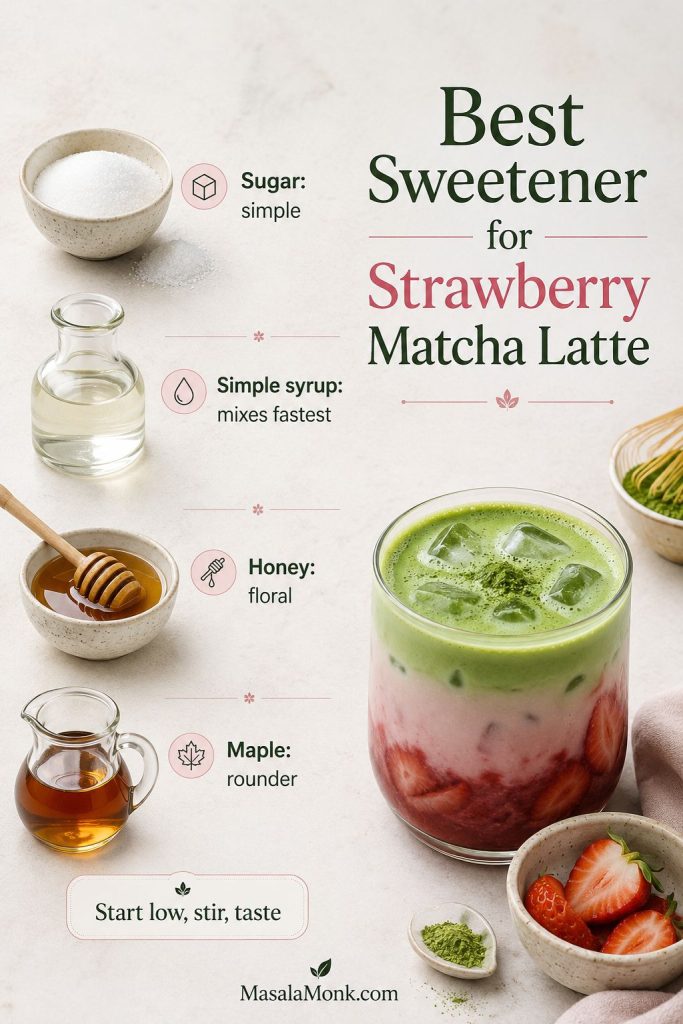
Sugar, honey, maple syrup, or simple syrup all work. Granulated sugar is fine if you muddle it into juicy strawberries. Simple syrup mixes fastest. Honey and maple syrup add their own flavor, so they are better when you want a softer, rounder sweetness.

Start with 2 teaspoons for one drink. Add more only after tasting the fruit. Many café-style versions are very sweet, but this homemade latte tastes better when the berries, milk, and matcha stay in balance.

Before adding more sweetener, stir and taste once. The strawberry tastes sweetest at the bottom, the matcha tastes strongest at the top, and the final flavor only makes sense after everything is mixed.

Sweetener guide for strawberry matcha latte with sugar, simple syrup, honey, maple syrup, and a small drink cue.
Start with less sweetener than you think, because the strawberry base tastes stronger once the latte is fully stirred.

If the latte still tastes too sweet, weak, or flat after stirring, check the troubleshooting table before changing the whole recipe.

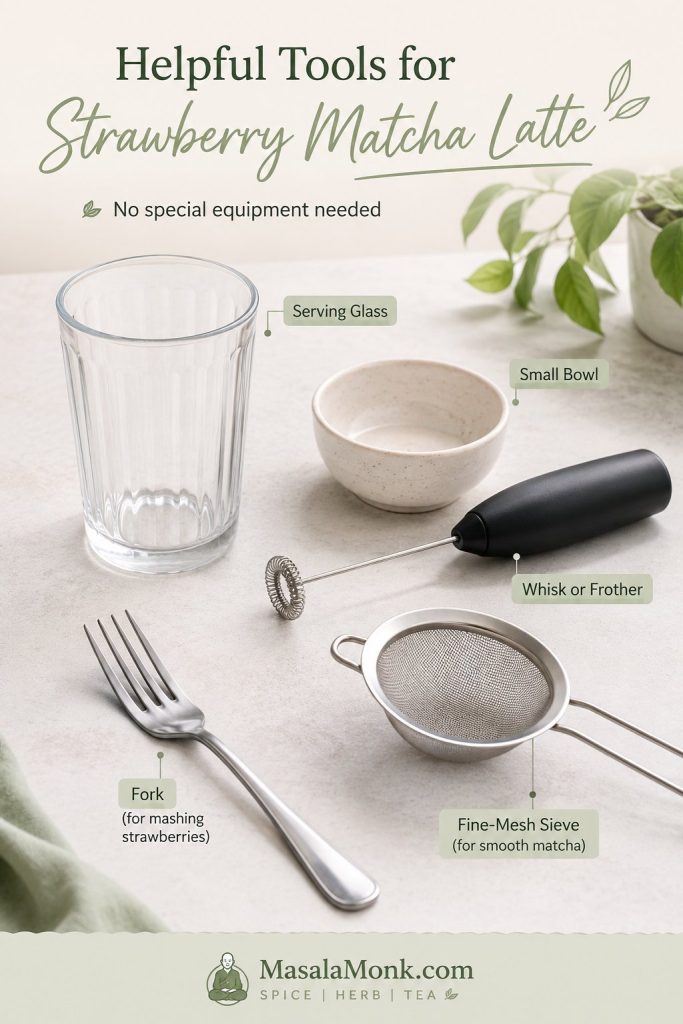
Helpful Tools

You do not need special equipment for this drink. A clear glass, small bowl, and whisk or frother are enough; a sieve, blender, thermometer, and long spoon simply make the finish smoother and neater.

  • Clear glass: Shows the layers and gives you room for ice.
  • Small bowl: Makes it easier to whisk matcha before pouring.
  • Whisk or frother: Helps prevent dry green clumps.
  • Muddler, fork, or blender: Use whichever fits the strawberry texture you want.
  • Fine-mesh sieve: Optional, but useful for sifted matcha or smoother puree.
No matcha whisk? Use a handheld frother or shake the sifted matcha with hot water in a small jar. The goal is a glossy matcha pour with no dry green clumps.
Tools for making strawberry matcha latte including clear glass, small bowl, whisk or frother, fork, and fine-mesh sieve.
You do not need café equipment; a clear glass, small bowl, and whisk or frother are enough to build clean layers.

Ratio Guide for 12 oz, 16 oz, and Café-Style Drinks

The right ratio depends on your cup size and how strong you like matcha. A 12 oz serving needs less milk and ice. A 16 oz serving gives you more room for dramatic colors and a creamier drink.

Glass size Strawberry base Matcha Hot water Milk Ice
12 oz 3–4 strawberries + 1½–2 tsp sweetener 1–1½ tsp 2½–3 tbsp / 37–45 ml ½ cup / 120 ml About ¾ cup
16 oz 4–5 strawberries + 2 tsp–1 tbsp sweetener 1½ tsp 3 tbsp / 45 ml ¾ cup / 180 ml About 1 cup
Large café-style 5–6 strawberries + 1 tbsp sweetener 2 tsp ¼ cup / 60 ml ¾–1 cup / 180–240 ml Enough to fill the glass
Three strawberry matcha lattes in 12-ounce, 16-ounce, and café-style sizes with ratio labels for berries, matcha, and milk.
Once the 16-ounce strawberry matcha latte tastes right, scaling up or down is easier than guessing with extra ice.

Do not treat the numbers like a test. The 16 oz version is your baseline; the next glass is where you make it yours.

To make two drinks, double the strawberries, milk, matcha, and sweetener, but whisk the matcha in one slightly larger bowl so it stays even. Build each serving separately if you want the colors to stay clear.

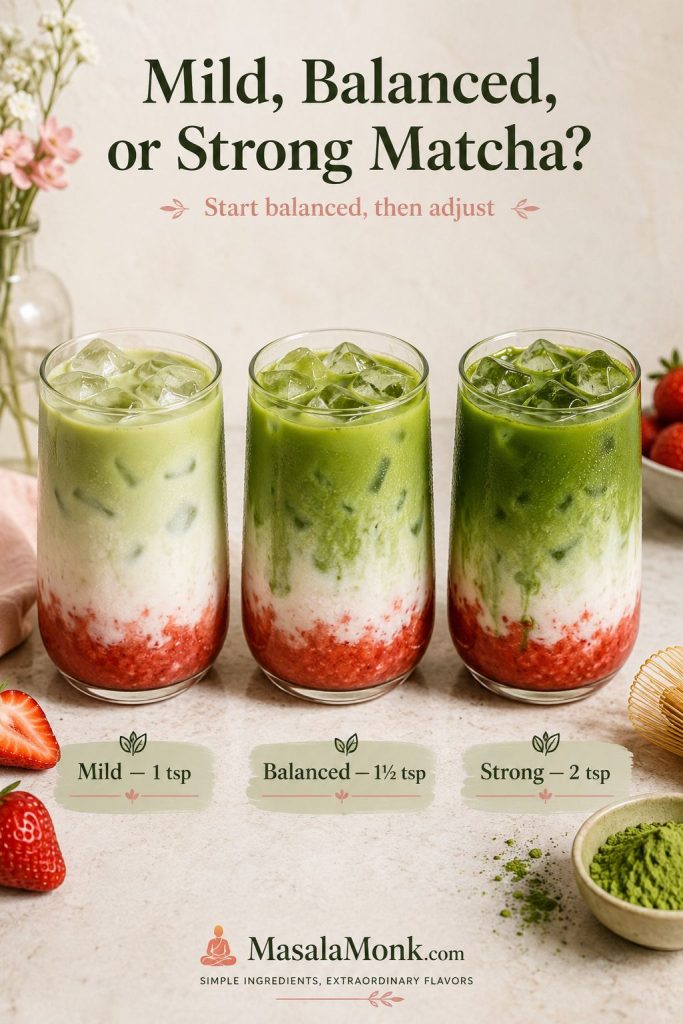
Mild, Balanced, or Strong Matcha?

New to matcha? Start mild. Already love iced matcha? Use the balanced amount. Want the green tea flavor to lead even after milk and strawberry are added? Go stronger.

Matcha strength Amount for 1 drink Works well for
Mild 1 tsp / about 2 g Beginners, sweeter strawberry drinks, lighter almond milk versions.
Balanced 1½ tsp / about 3 g Most 16 oz iced strawberry matcha lattes.
Strong 2 tsp / about 4 g Oat milk drinks, extra ice, and stronger matcha flavor.

Start with the balanced 16 oz version once, then adjust by taste: more berries for a fruitier sip, more milk for a softer sip, or more matcha when you want the green tea flavor to lead.

Three strawberry matcha lattes showing mild, balanced, and strong matcha levels from 1 teaspoon to 2 teaspoons.
Matcha strength changes the whole drink, so begin balanced and move stronger only when you want the green tea flavor to lead.

How to Make an Iced Strawberry Matcha Latte

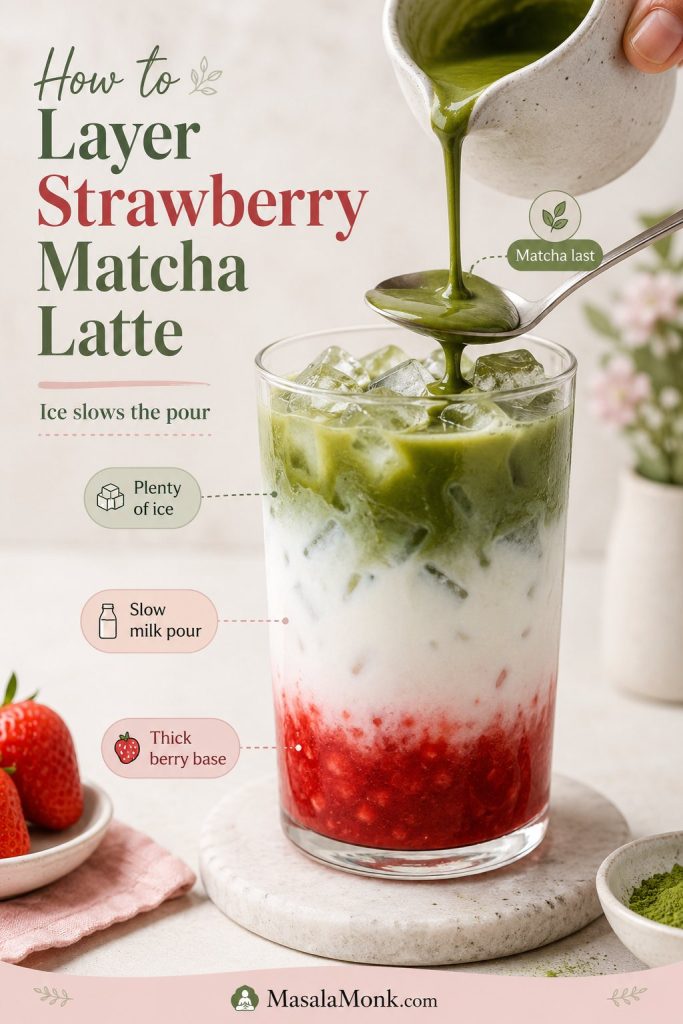
The order matters. If everything goes in at once, the drink will taste fine but look muddy. For clear separation, build from heaviest to lightest: strawberry, ice, milk, then matcha.

There is also a small pleasure in the pour: the milk softens the red strawberry base, then the matcha slides over the ice and settles into green. It looks fancy, but it is really just a few careful steps.

Build it like a little stack: fruit first, ice next, milk slowly, matcha last.

Step-by-step strawberry matcha latte process showing strawberry base, ice, milk pour, and matcha pour ending with a finished drink.
Build from heavy to light so the strawberry stays low, the milk cushions the middle, and the matcha finishes on top.

Step 1: Make the strawberry base

Hull and chop 4–5 medium strawberries. Add them to a small bowl or directly to the bottom of a sturdy glass with 2 teaspoons sweetener. Muddle until the berries release their juice and look saucy.

For a smoother base, blend the strawberries with the sweetener, then spoon the puree into the cup. Strain it if you want the neatest red stripe at the bottom.

Close-up comparison of muddled strawberry base with fruit pieces and smooth strawberry puree in bowls.
Muddled berries taste fresh and rustic, while puree gives a smoother strawberry base for cleaner layers and a more polished finish.

Step 2: Whisk the matcha

Sift 1½ teaspoons matcha into a small bowl. Add 3 tablespoons hot water around 175°F / 80°C. Whisk until the matcha is glossy and lightly frothy. There should be no dry clumps left at the bottom of the bowl.

A bamboo whisk works beautifully, but a small whisk, handheld frother, or shaker jar can also do the job. With a frother, keep the head fully submerged at first so the matcha does not splash.

Matcha whisking guide showing sifted matcha, warm water, whisking, glossy matcha, and no dry clumps.
Sift first and use warm-not-boiling water, because smooth matcha before pouring means a better latte after stirring.

Step 3: Build the drink

Spoon the strawberry mixture into the bottom of a tall clear glass. Add ice until the glass is at least halfway full. Pour the milk slowly over the ice, not directly into the fruit.

Finally, pour the whisked matcha over the ice or over the back of a spoon. This slows the pour and helps the green matcha sit above the milk for that red-white-green look.

Tall strawberry matcha latte being layered with strawberry base, milk, ice, and matcha poured slowly over a spoon.
Plenty of ice slows the pour, which helps the milk and matcha settle into layers instead of turning muddy immediately.

Step 4: Serve, then stir

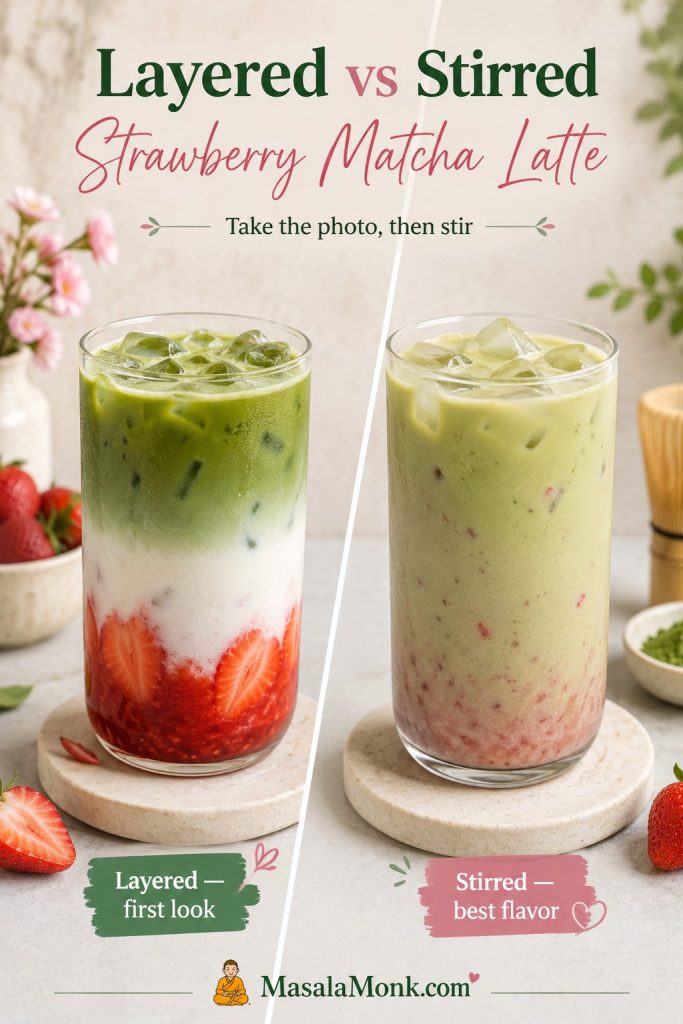
Serve it layered for the first beautiful moment, then stir before drinking. The sip gets better once the berry, milk, and matcha stop sitting in separate lanes.

If you do not care about visible colors, simply stir the strawberry, milk, and matcha together after building the drink. The flavor will be just as good, and the drink is easier to sip evenly from the start.

Do not worry if the first pour is not perfect. The colors are fun, but this latte is forgiving; once you stir it, the flavor matters much more than the stripes.

Side-by-side comparison of a layered strawberry matcha latte and a stirred strawberry matcha latte ready to drink.
The layered version wins the first look, while the stirred version gives you strawberry, milk, and matcha in one balanced sip.

If the layers disappear too quickly, the fixes section covers ice, pouring speed, and berry thickness.

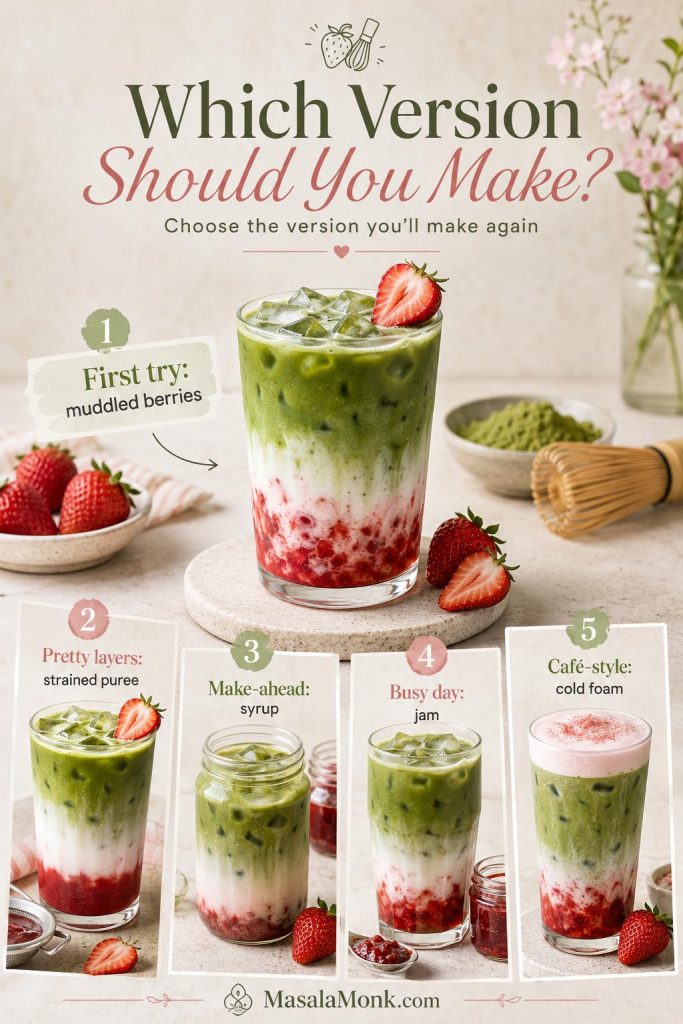
Which Version Should You Make?

For your first try, start with muddled berries. For the cleanest layers, strain the puree. On a busy day, jam is completely fine; the point is a balanced latte you would actually make again.

  • Best everyday version: fresh muddled berries for the brightest, quickest flavor.
  • Best pretty layered version: strained strawberry puree for a cleaner red base.
  • Best make-ahead version: cooked strawberry syrup chilled in a jar.
  • Best busy-day shortcut: 1–2 tablespoons strawberry jam with less extra sweetener.
  • Best café-style version: smooth puree or syrup with oat milk, stronger matcha, and optional cold foam.
Version chooser for strawberry matcha latte with first try, pretty layers, make-ahead syrup, busy-day jam, and café-style cold foam.
Choose the version that fits the moment: fresh berries for everyday, puree for layers, syrup for prep, jam for speed, or cold foam for café style.

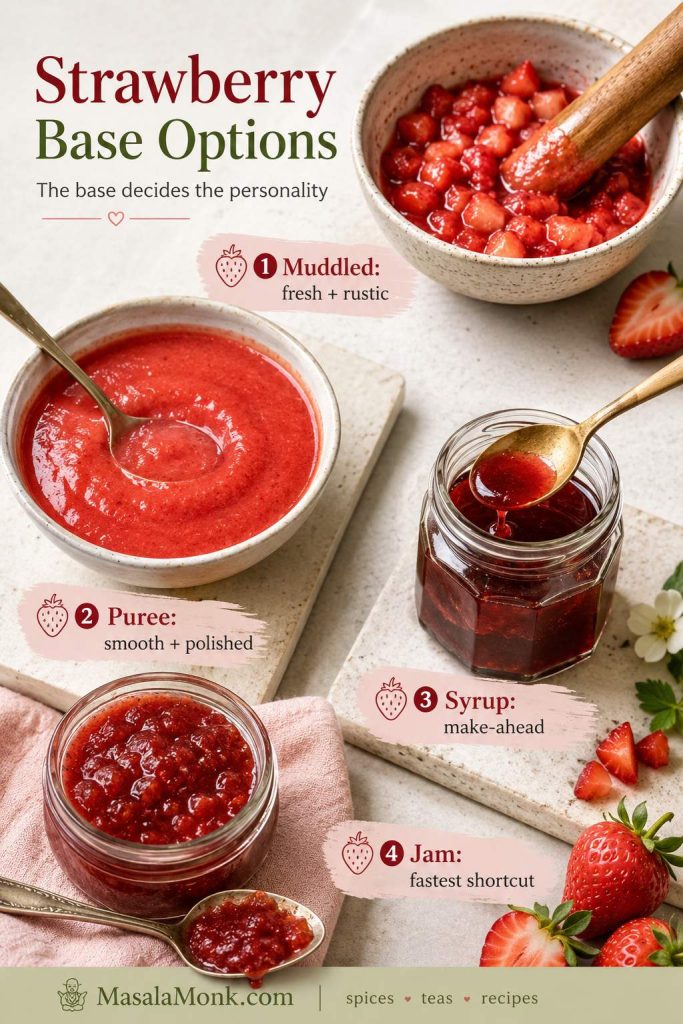
Strawberry Base Options

Once you know which direction you want, the strawberry base is where the latte gets its personality: rustic and fresh, smooth and polished, syrupy and make-ahead, or fast and jammy.

Four strawberry base options for strawberry matcha latte including muddled berries, puree, syrup, and jam shortcut.
The strawberry base decides the personality of the drink, from fresh and rustic to silky, syrupy, or fast and jammy.

Fresh muddled strawberries

Ripe strawberries are where this version shines. It tastes fresh, takes only a few minutes, and keeps the drink from feeling too syrupy. The texture is slightly rustic, which can be lovely if you enjoy real fruit in the glass.

Smooth strawberry puree

Blend strawberries with sweetener for a silkier fruit base. This gives the latte a more polished look and makes the strawberry flavor spread more evenly once stirred. If seeds bother you, strain the puree before adding it to the glass.

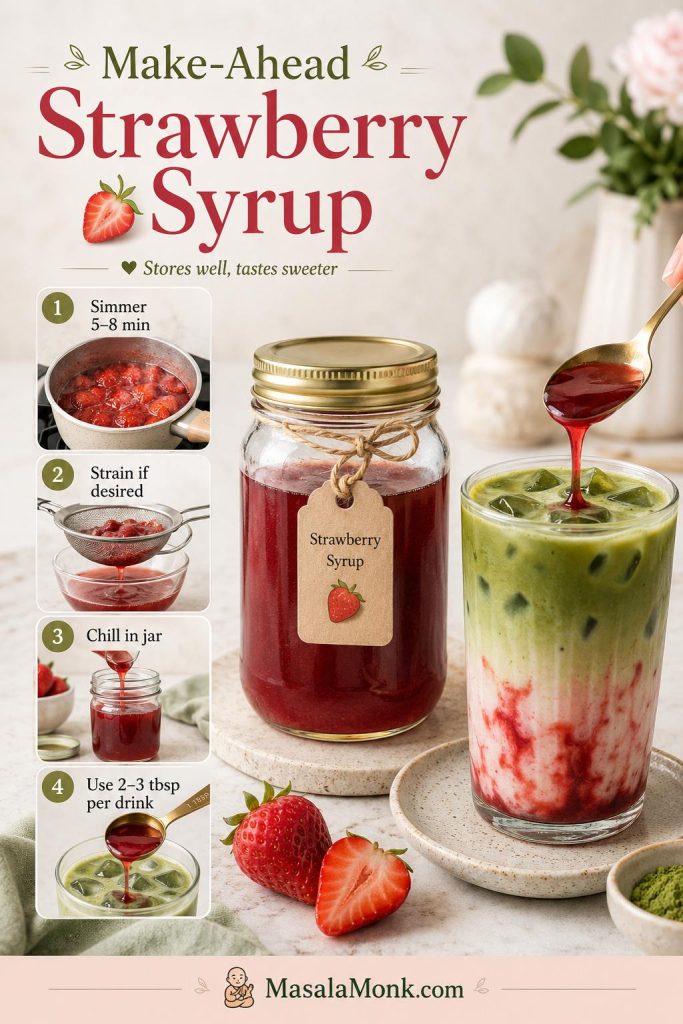
Make-ahead strawberry syrup

To make syrup ahead, simmer 1 cup chopped strawberries, about 140–160 g, with ¼ cup sugar and ¼ cup water for 5–8 minutes, until the fruit softens and the liquid turns red. Mash, strain if desired, cool, and refrigerate. Use 2–3 tablespoons syrup per drink.

This makes roughly enough syrup for 3–4 drinks, depending on how much you reduce it. Syrup stores well and gives stronger strawberry flavor, but it tastes sweeter and less fresh than muddled berries. Store-bought syrup can work in a pinch; start with less than you think you need.

That jammy berry flavor also works beautifully in desserts; this strawberry ice cream recipe uses the same idea of concentrating juicy strawberries before they water things down.

Make-ahead strawberry syrup guide with simmered strawberries, straining, syrup in a jar, and syrup spooned into a matcha latte.
Use strawberry syrup when convenience matters more than fresh berry texture, especially for repeat lattes during the week.

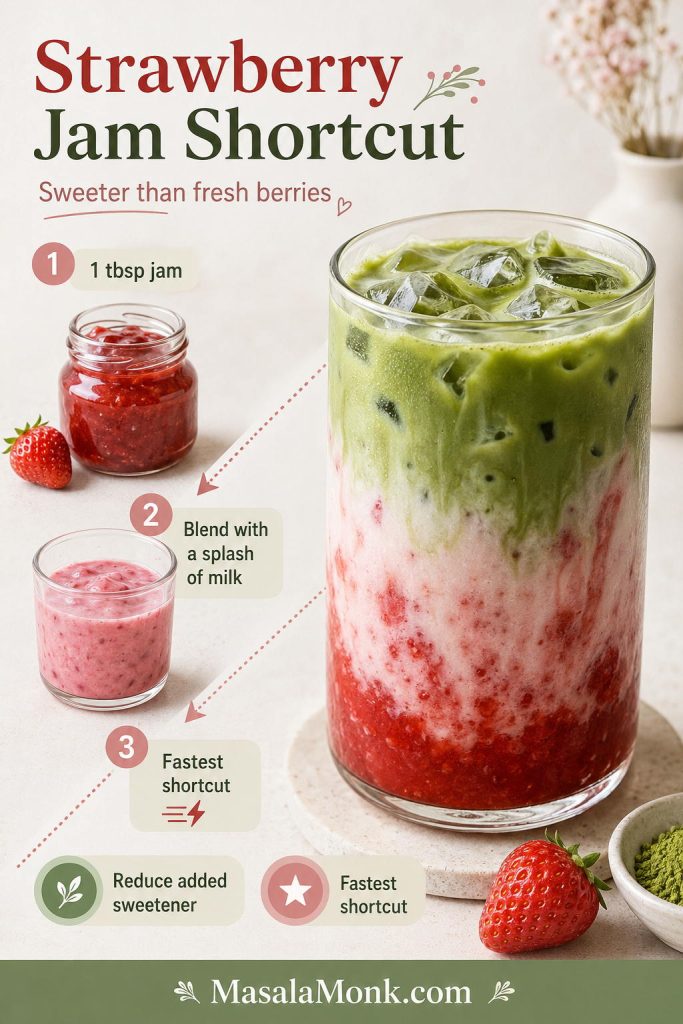
Strawberry jam shortcut

Jam works when speed matters, but it gives the drink more candy-shop sweetness than fresh berry lift. Start with 1 tablespoon, stir or blend it with a spoonful of milk, then add the rest of the milk and matcha.

Strawberry jam shortcut guide showing jam, jam mixed with milk, and a finished strawberry matcha latte.
Jam is the fastest shortcut when fresh berries are not available, but reduce added sweetener because the base is already sweet.

Starbucks-Style Notes

For a Starbucks-style strawberry matcha latte, use smooth strawberry puree or syrup, oat milk or coconut milk, 1½–2 teaspoons matcha, and strawberry cold foam if you want the café-style finish.

Puree or syrup gives you more café polish; muddled berries give you the fresher homemade sip.

For the homemade version that fits your situation, compare the fresh, syrup, jam, and café-style options.

The exact Starbucks version can vary by country, season, and custom order. Starbucks EMEA announced an Iced Strawberry Matcha Tea Latte with strawberry cream cold foam, while in other places people often recreate the flavor through custom orders or homemade copycat versions.

Café-style strawberry matcha latte with strawberry cold foam, matcha layer, milk, strawberry base, and callouts for puree, milk, and matcha.
For a Starbucks-style direction, use a smoother strawberry base, slightly stronger matcha, creamy milk, and strawberry cold foam on top.

Variations

Once you know the base ratio, this iced matcha drink is easy to adapt. Keep the same building order, then change the milk, fruit base, or topping.

For the basic build before changing the milk, foam, or fruit base, start with the main method.

Strawberry Milk Matcha

Blend strawberries or strawberry jam directly into the milk, then pour whisked matcha over the top. Choose this when you care more about a creamy, evenly fruity latte than the dramatic red-white-green layers.

Creamiest Dairy-Free Version

Oat milk gives you the creamiest dairy-free glass. Because it is naturally a little sweet and rich, it works especially well with 1½–2 teaspoons matcha and a lightly sweetened strawberry base.

Oat milk strawberry matcha latte in a clear glass with strawberry base, milk, matcha, ice, and dairy-free callouts.
Oat milk is usually the easiest dairy-free choice because it softens matcha while keeping the strawberry layer creamy and full.

Strawberry Cold Foam Matcha

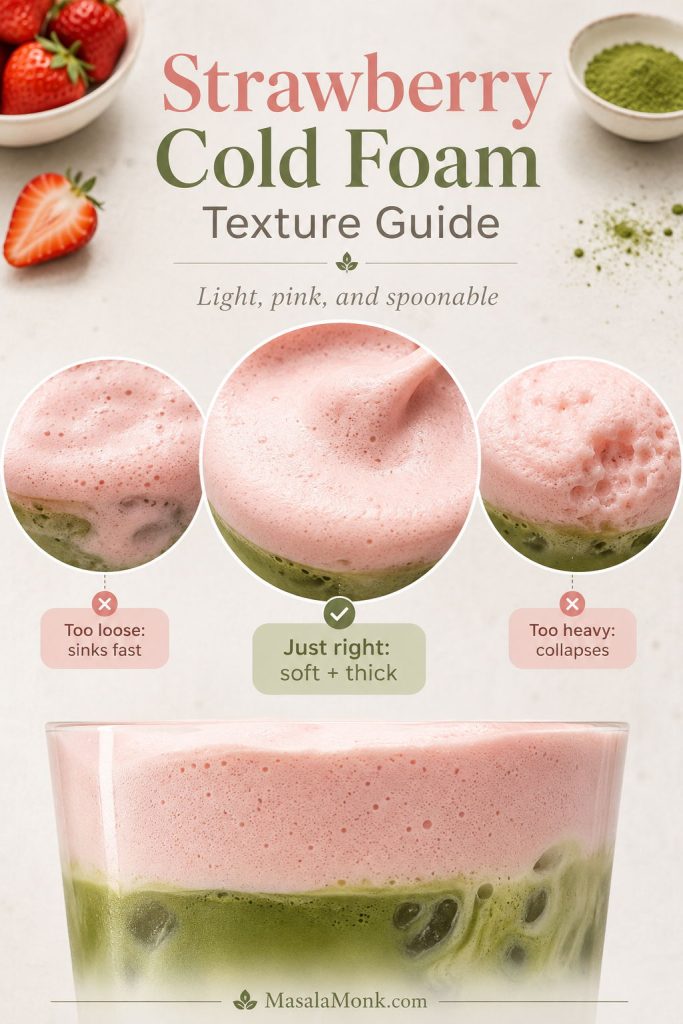
For a creamier cold foam variation, froth 3 tablespoons heavy cream or barista-style milk with 1 tablespoon strawberry puree or jam and ½ teaspoon vanilla. Spoon it over an iced matcha latte, or use it on top of the layered strawberry-matcha drink.

If fresh strawberry puree makes the foam too loose, use freeze-dried strawberry powder or a small amount of thick strawberry jam instead. The goal is a pink, lightly sweet foam that tastes like strawberry without sinking straight into the glass.

For a thicker topping, the same timing cues from this whipped cream recipe can help you stop before the foam turns heavy.

Strawberry cold foam texture guide showing too loose, just right, and too heavy foam on matcha drinks.
Good strawberry cold foam should be light and spoonable, not runny enough to sink or heavy enough to feel like frosting.

Boba-Shop Style Strawberry Matcha

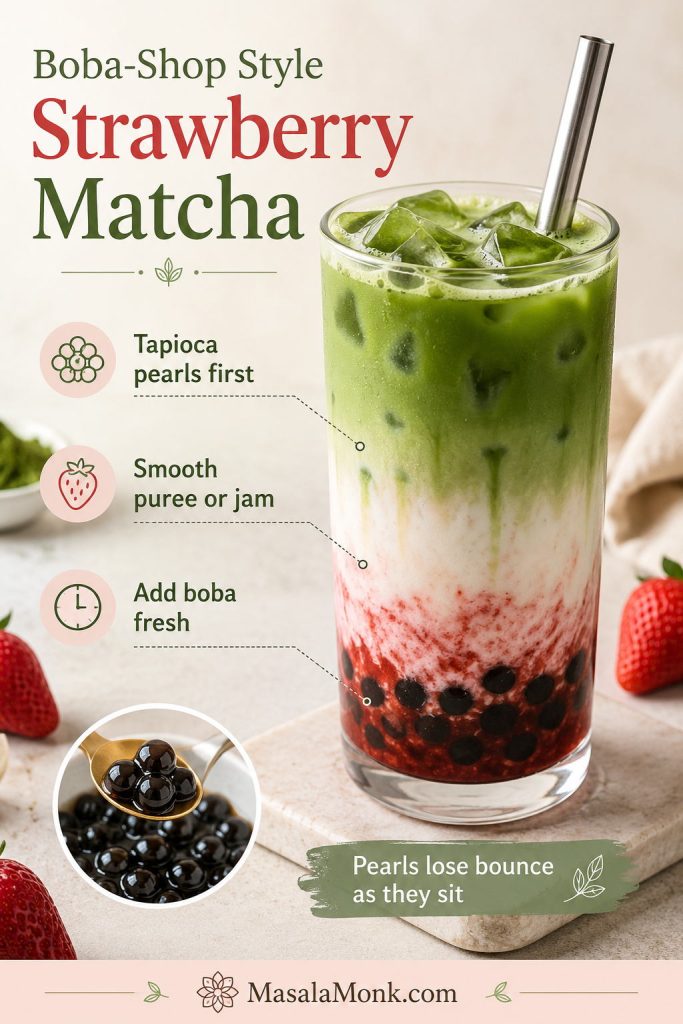
Add cooked tapioca pearls to the bottom before the strawberry base, then build with ice, milk, and matcha. Use a smooth puree or jam so the cup does not feel too busy, and add boba fresh because cooked tapioca pearls lose their bounce as they sit.

Boba-style strawberry matcha drink with tapioca pearls, strawberry base, milk, matcha, ice, and a wide straw.
Add tapioca pearls fresh and keep the strawberry base smooth, because boba already brings plenty of texture to the glass.

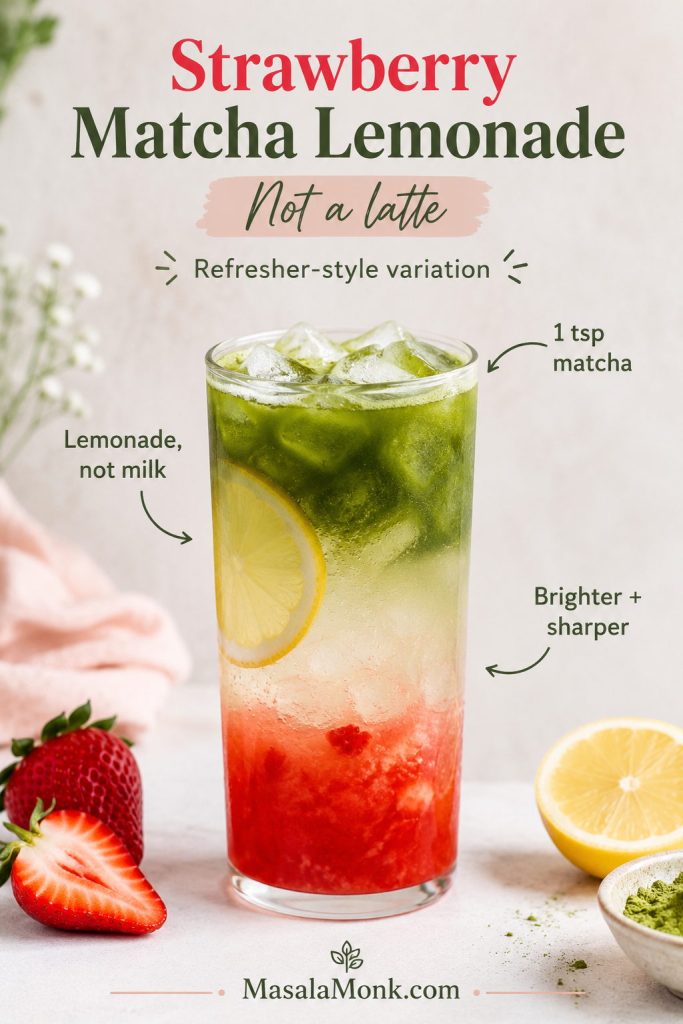
Strawberry Matcha Lemonade, Not a Latte

For a brighter refresher-style variation, replace the milk with cold lemonade and keep the strawberry base at the bottom. This is a separate summer drink, not a creamy latte. Use 1 teaspoon matcha because the acidity makes the green tea taste stronger.

Strawberry matcha lemonade with strawberry base, lemonade layer, matcha top, ice, lemon slice, and not-a-latte label.
This variation leaves latte territory; instead of creamy milk, lemonade makes the drink brighter, sharper, and more refreshing.

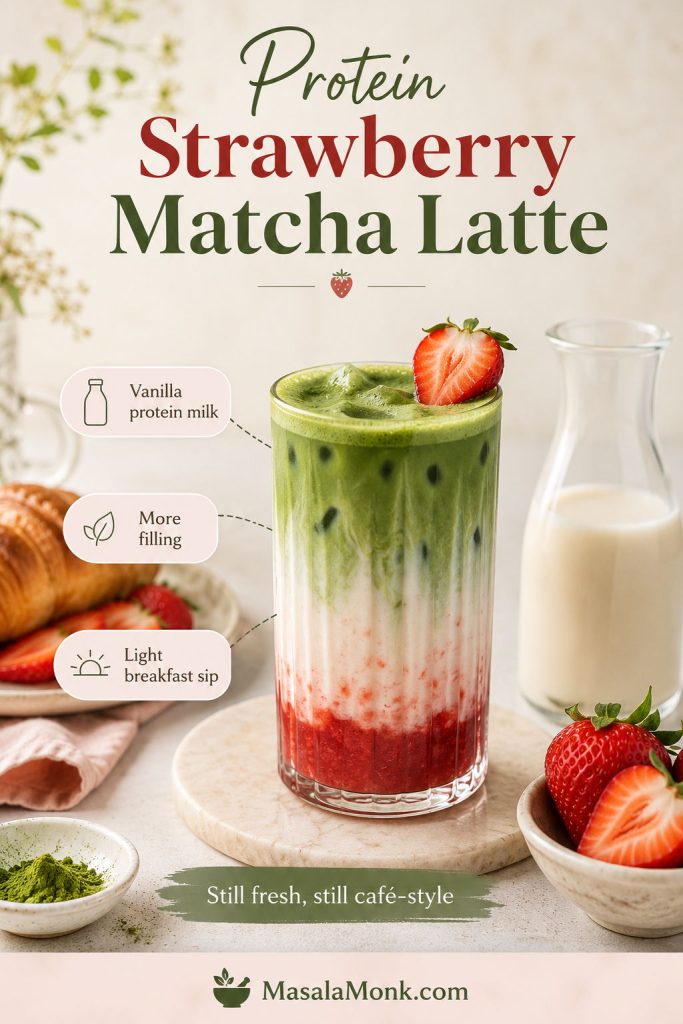
More Filling Protein Version

Use vanilla protein milk or a vanilla protein shake for part of the milk. This is the version to make when you want the drink to act more like a light breakfast than a pretty afternoon sip. For a more fruit-forward breakfast drink, this berry smoothie recipe is a better direction.

Protein strawberry matcha latte with vanilla protein milk, strawberry base, milk layer, matcha, ice, strawberries, and breakfast props.
Vanilla protein milk turns the drink into a more filling option, while the strawberry and matcha keep it tasting fresh rather than heavy.

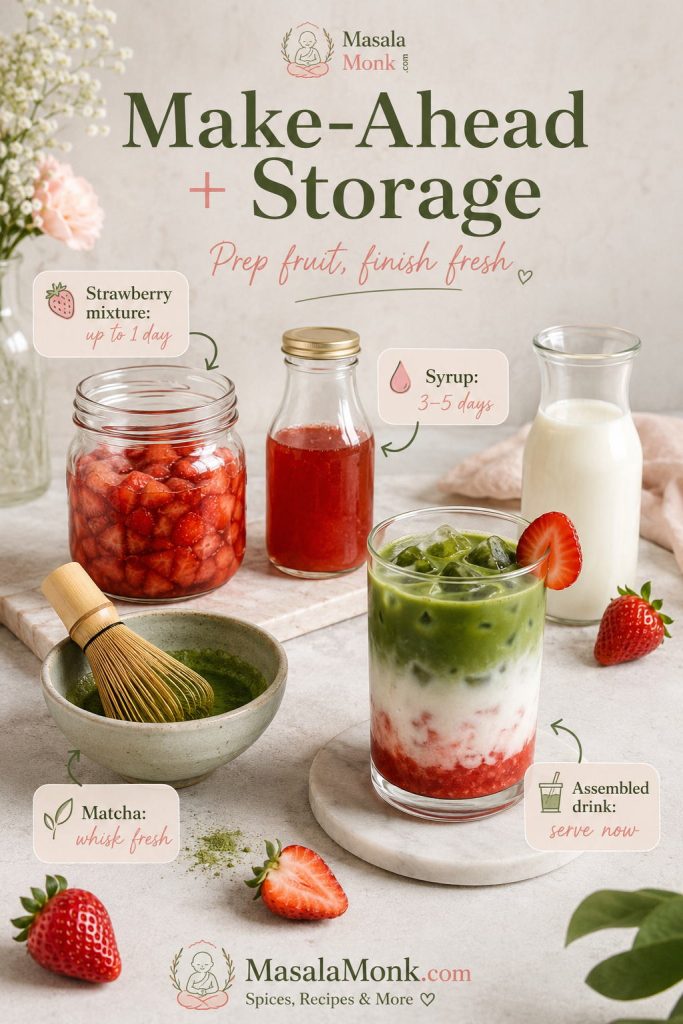
Make-Ahead and Storage

This drink tastes best right after it is assembled, but you can prepare the parts ahead. Keep the strawberry mixture and matcha separate until you are ready to build the glass.

The best make-ahead plan is simple: prep the strawberry part, chill the milk, and leave the matcha for the last minute. The matcha is the part worth making fresh; whisk it at the end so the top tastes bright instead of dull.

Component Make-ahead timing Storage tip
Fresh strawberry mixture Up to 1 day Refrigerate in a covered jar. Stir before using.
Cooked strawberry syrup 3–5 days Refrigerate in a clean jar and use a clean spoon each time.

Whisked matcha Best fresh Whisk right before serving for the smoothest texture.
Fully assembled drink Serve immediately The colors fade and the ice waters it down over time.

If you want to make several drinks for guests, prepare the strawberry base ahead and chill the milk. Whisk the matcha fresh, then assemble each serving just before serving.

Make-ahead and storage guide with strawberry mixture, strawberry syrup, milk, fresh-whisked matcha, and assembled strawberry matcha latte.
Make-ahead works best when the fruit is ready and the matcha is fresh, so the drink still tastes bright when assembled.
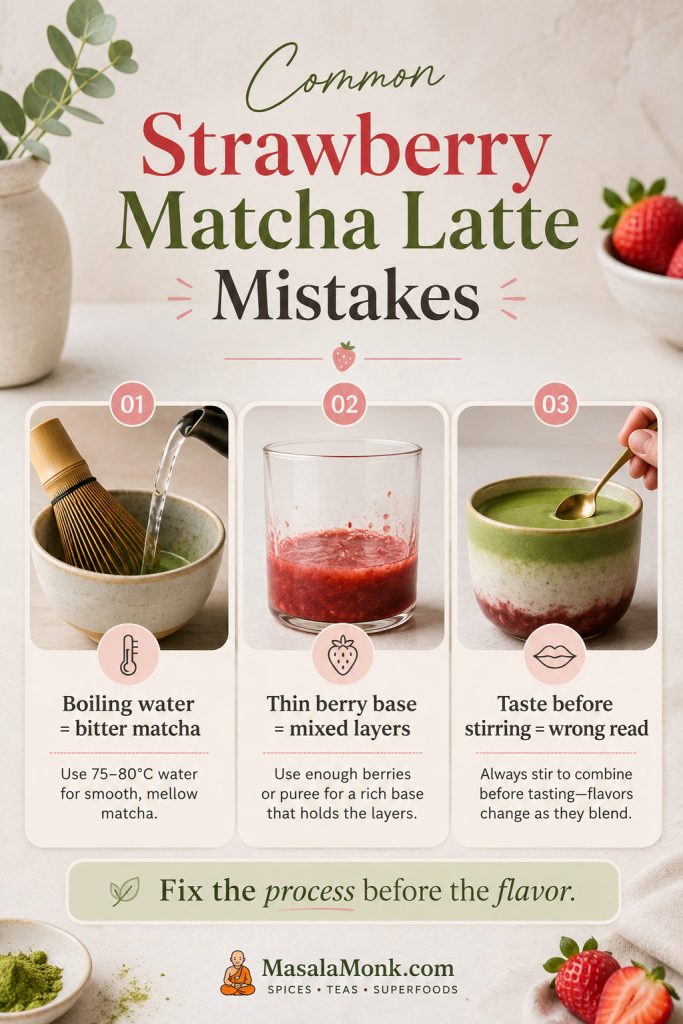
Avoid the three easiest mistakes: do not use boiling water for matcha, do not pour milk directly into a thin strawberry mixture if you want visible separation, and do not judge the sweetness until the drink has been stirred.
Common strawberry matcha latte mistakes showing boiling water, thin berry base, and tasting before stirring.
Most mistakes happen before the first sip, so fix the process: avoid boiling water, thicken the berry base, and stir before judging.

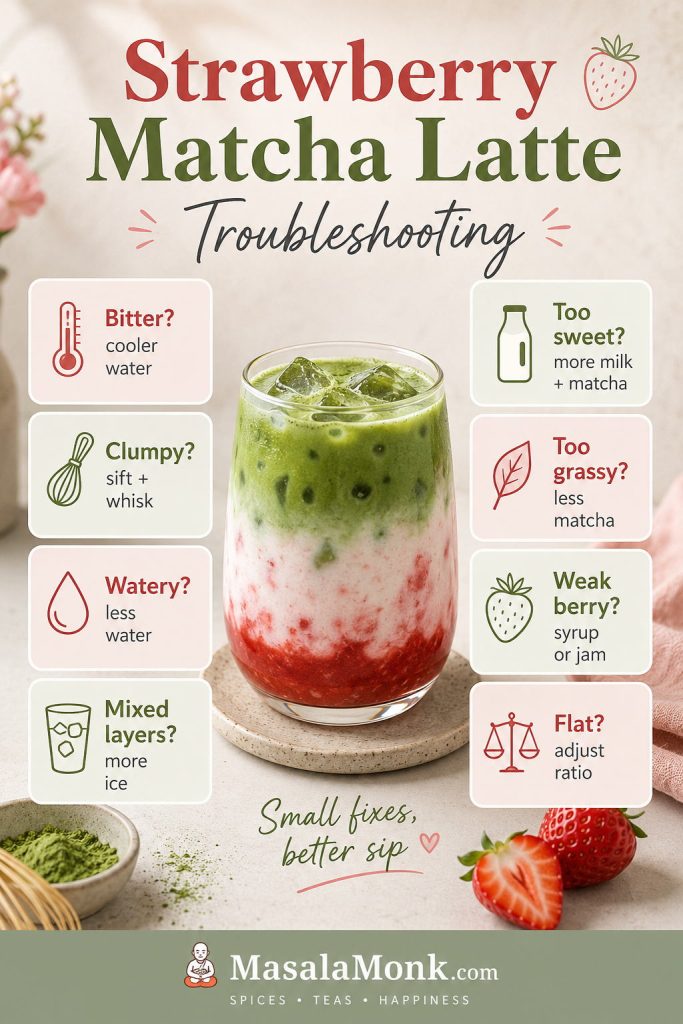
Troubleshooting: Bitter, Clumpy, Watery, or Mixed Layers

Even if the glass does not look perfect, it is usually easy to fix the flavor. Most problems come down to heat, sweetness, ice, or how fast everything was poured.

A messy glass is not a failed latte. If the flavor is balanced, you are already close.

Fix matcha problems first

When a strawberry matcha latte tastes bitter, clumpy, or watery, start with the matcha. The water temperature, whisking, and dilution usually explain the problem.

Problem Likely cause How to fix it
Matcha tastes bitter Water was too hot, matcha was low quality, or too much matcha was used. Use water around 175°F / 80°C, start with 1 tsp matcha, and add more milk if needed.
Matcha is clumpy Powder was not sifted or whisked enough. Sift first, add hot water gradually, and whisk until glossy before pouring.
Drink tastes watery Too much water in the matcha or too much melted ice. Use 3 tbsp water for the matcha and serve immediately after building.

Fix layers, sweetness, and berry flavor

If the matcha is smooth but the latte still feels off, check the strawberry base, ice, sweetness, and milk balance next.

Problem Likely cause How to fix it
Colors disappeared Not enough ice, thin strawberry mixture, or pouring too fast. Use more ice, make the fruit base thicker, and pour milk and matcha slowly over the ice.
Too sweet Too much syrup, jam, or sweetened milk. Use fresh strawberries next time. For this glass, add more milk and a little extra matcha.
Too grassy Matcha is too strong for your taste. Use 1 tsp matcha, add more milk, or sweeten the fruit base slightly.
Not enough strawberry flavor Berries were pale or watery. Use a cooked syrup, add 1 extra strawberry, or mix in 1 tsp strawberry jam.
Drink tastes flat Not enough strawberry, weak matcha, or too much milk. Add a spoonful of strawberry mixture, use 1½–2 tsp matcha, or reduce the milk slightly next time.
Troubleshooting guide for strawberry matcha latte with fixes for bitter, clumpy, watery, mixed layers, too sweet, too grassy, weak berry, and flat flavor.
If the latte tastes off, the fix is usually small: cooler water, more ice, better whisking, or a quick adjustment to sweetness and matcha.

When it is right, the first sip is creamy and cool, then berry-bright, with just enough matcha to keep the sweetness in check.

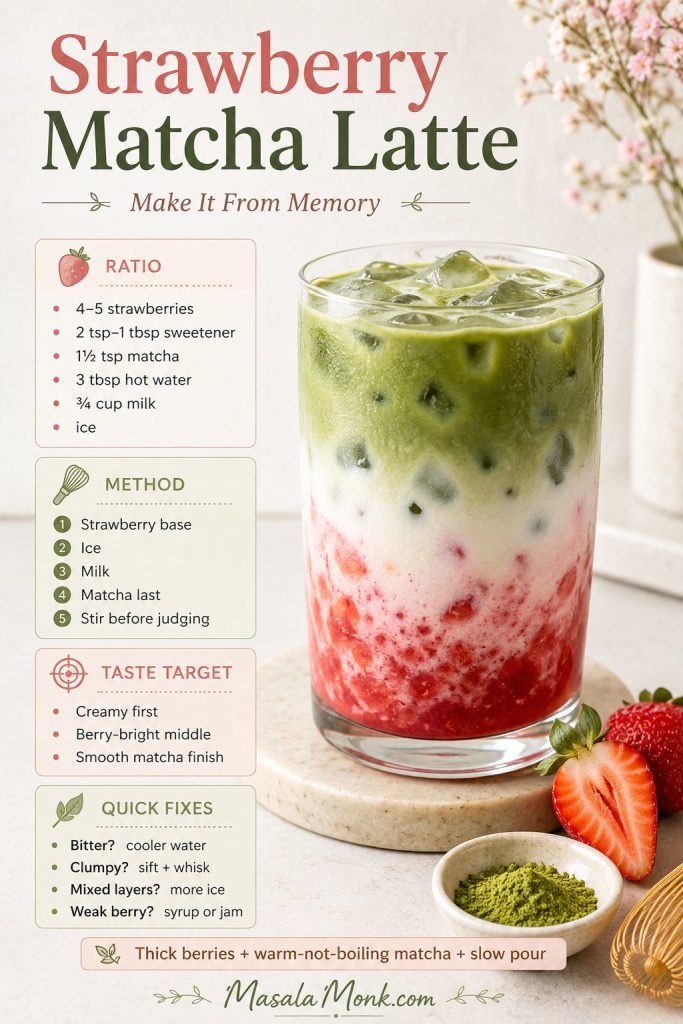
Make it from memory

After the troubleshooting guide, this saveable card brings the core ratio, build order, taste target, and quick fixes into one easy reference.

Saveable strawberry matcha latte recipe card with ratio, method order, taste target, quick fixes, and a layered drink.
This card turns the full recipe into a memory system: ratio, build order, flavor target, and the fixes that matter most.

FAQs

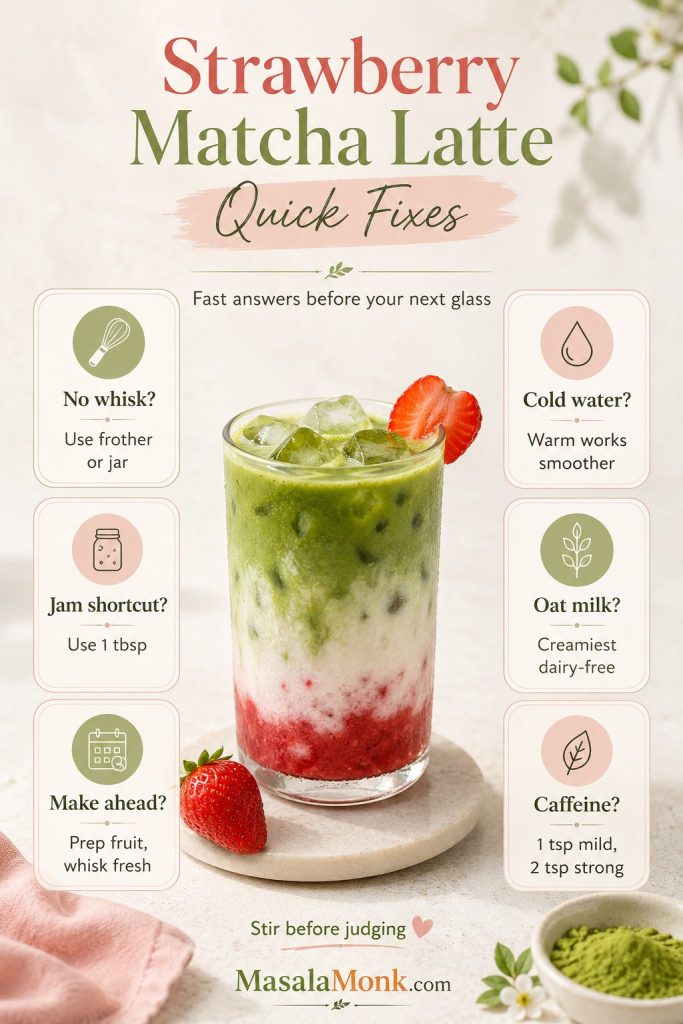
These quick answers cover the practical questions readers usually have once they start making the drink, from whisking matcha to using jam, oat milk, and make-ahead parts.

Quick fixes board for strawberry matcha latte with answers about whisking, warm water, jam, oat milk, make-ahead prep, and caffeine strength.
These quick answers help the next glass taste better, especially if you need a no-whisk method, jam shortcut, oat milk option, or caffeine adjustment.

Does strawberry taste good with matcha?

Strawberry works well with matcha because its sweet-tart flavor softens matcha’s grassy edge. Milk brings the two together, so the drink tastes fruity, creamy, and lightly earthy instead of sharp.

No bamboo whisk?

A bamboo whisk gives the best traditional texture, but a small whisk, handheld milk frother, blender, or shaker jar can also make glossy matcha. Sifting the powder first helps no matter which tool you use.

Cold water or warm water for matcha?

Cold water can work with a shaker or handheld frother, but warm water usually makes matcha easier to whisk smooth. For this recipe, a small amount of hot water gives the matcha a smoother texture before it hits the ice.

Fresh strawberries or jam?

Fresh berries or puree usually taste brighter and less sugary. Strawberry jam is the fastest shortcut. Use 1–2 tablespoons and blend or stir it with a little milk before adding the rest.

Why is my latte bitter?

The matcha may have been whisked with water that was too hot, or you may have used too much matcha for your taste. Use hot water around 175°F / 80°C, avoid boiling water, and start with 1 teaspoon matcha if you are new to the flavor.

Why did the colors mix together?

The glass probably needed more ice, a thicker strawberry mixture, or a slower pour. Add the strawberries first, fill the glass with ice, pour milk slowly over the ice, then pour matcha gently over the top.

Do I have to layer the drink?

No. The layered look is pretty, but the best flavor comes after stirring. Take the beautiful first look, then mix it so the strawberry, milk, and matcha land in the same sip.

If you want a fully blended matcha drink instead of an iced latte, these matcha smoothie recipes are a better fit.

Oat milk and vegan options

Oat milk works especially well because it is creamy enough to soften the matcha and naturally sweet enough to pair with strawberries. For a vegan version, use oat milk, almond milk, coconut milk, or another non-dairy milk, and sweeten the strawberries with sugar, maple syrup, or simple syrup instead of honey.

Is this the same as strawberry milk matcha?

Not exactly. A layered version keeps the strawberry at the bottom, milk in the middle, and matcha on top. Strawberry milk matcha blends the strawberry into the milk first, so the drink tastes creamier and more evenly fruity but looks less dramatic.

How strong is the caffeine?

The caffeine depends on the matcha powder and how much you use, but this is definitely a caffeinated latte. A 1-teaspoon version is gentler; a 2-teaspoon version tastes closer to the stronger café-style matcha people expect when they want the green tea to show up.

Make-ahead plan

Prepare the strawberry mixture or syrup ahead, but whisk the matcha and assemble the latte fresh. Once ice, milk, fruit, and matcha sit together, the colors fade and the texture turns watery.

How to double it

Double the strawberry mixture, milk, matcha, and sweetener, then build two glasses separately. If everything goes into one pitcher, the flavor will still be good, but the layered look will disappear.

Start with the fresh strawberry version first. Stir before judging, then adjust only one thing in the next glass: more berry, stronger matcha, oat milk, cold foam, or the jam shortcut on a busy day. Once the balance clicks, this becomes the kind of small café drink you can make from memory.

Back to top

Posted on 6 Comments

5 Natural Alternatives for Commercial Processed Drinks this Summer

Natural Summer Drinks

Summer in India (and much of the world) means intense heat, rising humidity, and a constant search for something cool, satisfying, and hydrating. Yet most commercial processed drinks—think sodas, bottled iced teas, energy drinks, and “fruit” beverages—are loaded with refined sugar, artificial flavors, and preservatives that often leave you feeling sluggish, not refreshed.

This year, we challenge you to #ReimagineRefreshment. Skip the processed, and turn to natural, wholesome, and on-trend alternatives—each carefully chosen for taste, nutrition, and practicality in your everyday routine. Let’s discover the top 5, why they work, how you can make them at home, and how each fits with a modern wellness lifestyle.


1. Cortisol Cocktail: Social Media’s Favorite Stress‑Busting Summer Sipper

What is it?
A “cortisol cocktail” is a hydrating, mineral-rich, non-alcoholic drink trending everywhere from TikTok to wellness podcasts. Despite the name, it contains no hormones—just a combination of natural ingredients that support hydration, electrolytes, and calm.

Key Ingredients:

  • Coconut water (natural electrolytes & potassium)
  • Citrus juice (vitamin C boost)
  • Magnesium powder (supports calm, sleep, and nerve function)
  • Sea salt (mineral replenishment)
  • Sparkling water (just for fizz!)

How to Make It (1 glass):

  1. Pour 200ml coconut water into a tall glass.
  2. Squeeze in the juice of half an orange or lime.
  3. Stir in 1/4 tsp magnesium powder (or as per supplement label).
  4. Add a small pinch of sea salt.
  5. Top with sparkling water and a few ice cubes. Garnish with mint or orange wedge.

Why you’ll love it:
It’s lightly sweet, super hydrating, has no added sugar, and the minerals help with both energy and relaxation—a perfect afternoon pick-me-up or post-workout cooler.

Pro Tip: If you take medication or have kidney issues, check with your doctor before using magnesium supplements.


2. Prebiotic Soda: Gut-Friendly, Fizzy, and Fun

What’s new in 2025?
Big beverage brands and indie startups are rolling out “prebiotic sodas”—fiber-infused, naturally sweetened fizzy drinks made for gut health and a lighter summer vibe.

What makes it different?

  • Contains plant-based prebiotic fiber (like inulin) for digestion.
  • Lower in sugar than regular sodas.
  • Naturally flavored with real fruit.
  • Some use stevia or monk fruit for sweetness.

How to Make Your Own:

  1. Add a few fresh orange and strawberry slices to a glass.
  2. Pour chilled sparkling water over.
  3. Stir in 1 tsp inulin powder (available online/health stores).
  4. Add a tiny pinch of sea salt and a dash of stevia or honey if desired.

Why it’s great:
You get the satisfaction of bubbles without the sugar crash. Prebiotics feed the good bacteria in your gut, supporting overall digestion and wellness.

Pro Tip: Start with a small amount of inulin to let your system adjust.


3. Matcha Cooler: Energize with Antioxidants

Why matcha?
Matcha is a finely ground green tea powder rich in antioxidants, L-theanine (for calm focus), and a mild caffeine lift—ideal for summer afternoons or a healthy “mocktail hour.”

Trendy variations:

  • Classic Iced Matcha: Whisk 1 tsp matcha powder with a splash of cold water until frothy. Pour over ice, top with more cold water, and add honey or maple syrup if needed.
  • Pineapple Matcha Fizz: Whisk matcha, add pineapple juice, sparkling water, and ice for a tropical green twist.
  • Matcha Lemonade: Mix matcha with lemon juice, a touch of agave, and plenty of ice.

Why you’ll love it:
Matcha is naturally energizing but gentle on the system—no jitters. It looks beautiful in the glass and tastes bright and grassy.

Pro Tip: Use ceremonial-grade matcha for best color and flavor.


4. Chaas / Buttermilk: India’s Traditional Summer Hero

Why is chaas a classic?
This yogurt-based drink, known as chaas, is the ultimate Indian cooler—full of probiotics, protein, minerals, and natural cooling properties. It’s the perfect digestif after a heavy meal or a sweltering day.

Simple recipe:

  1. Blend 1 cup plain dahi (curd/yogurt) with 1.5 cups cold water.
  2. Add 1/2 tsp roasted cumin powder, a pinch of black salt, and a handful of fresh mint or coriander.
  3. Pour over ice and serve immediately.

Why you’ll love it:
Chaas hydrates, replenishes lost electrolytes, and is ultra-satisfying after spicy food or long hours outside.

Pro Tip:
Add grated ginger, chopped cucumber, or even a dash of chaat masala for variety.


5. Turmeric & Ginger Tonic: Anti-Inflammatory and Zesty

Why this tonic?
Both turmeric and ginger are scientifically proven to fight inflammation, boost immunity, and aid digestion—plus, they make a beautifully golden, Instagram-ready drink.

How to Make:

  1. Boil a 2-inch piece of ginger in 2 cups water for 5 minutes.
  2. Stir in 1 tsp turmeric powder, juice of half a lemon, and 1 tbsp honey or jaggery.
  3. Add a pinch of black pepper (boosts turmeric’s benefits), strain, and chill.
  4. Serve over ice with lemon slices.

Why you’ll love it:
This drink delivers a vibrant flavor punch, supports your health, and looks gorgeous. Perfect as a midday refreshment or post-dinner “digestive.”

Pro Tip:
Make a batch ahead and store in the fridge—it’s even better cold!


Conclusion: Hydrate Smarter, Live Better

This summer, skip the commercial drinks aisle and embrace these natural, practical, and deeply satisfying alternatives. Whether you’re after hydration, gut health, energy, tradition, or an immune boost, there’s a perfect glass waiting for you.

Try them at home, share with family and friends, and tag your creations with #MasalaMonkDrinks for a chance to get featured!


Share Your Favorite

Which drink will you try first? Have your own healthy summer sipper?
Drop your recipes, questions, and reviews in the comments below.


Stay cool, stay hydrated, and enjoy every sip—naturally.
MasalaMonk.com

10 FAQs for Natural Summer Drinks

1. Are these drinks suitable for kids and seniors?
Yes, all drinks can be enjoyed by kids and seniors, but adjust the amount of added salt, spices, or supplements (like magnesium) for age and dietary needs. Always consult a doctor for any chronic health issues.

2. Can I prepare these drinks ahead of time?
Absolutely! Drinks like chaas, turmeric & ginger tonic, and infused prebiotic soda can be refrigerated for up to 24–48 hours. Just stir before serving and add fresh herbs/ice at the end.

3. Are these drinks vegan?
Most are vegan by default. For chaas, use plant-based yogurt. For sweeteners, replace honey with agave or maple syrup.

4. Do I need special equipment to make these drinks?
No special equipment needed! A blender or whisk is helpful for chaas and matcha, but all drinks can be made with basic kitchen tools like a pitcher, knife, and glass.

5. Where can I find inulin powder or magnesium powder?
These are available at health food stores, large supermarkets, or online. Choose a reputable brand and start with small quantities.

6. Can I use bottled coconut water or does it have to be fresh?
Bottled coconut water is fine—just choose unsweetened and no-added-flavor versions for the healthiest option.

7. How much sugar do these drinks contain?
Most drinks are naturally low in sugar. You control sweetness—add fruits, stevia, or minimal natural sweeteners if desired.

8. Are these drinks safe for people with diabetes?
Most are safe in moderation, but always check with your doctor. Use unsweetened versions and low-GI sweeteners if needed.

9. Can I make a big batch for a party or picnic?
Definitely! All recipes can be multiplied, made in pitchers, and served chilled. Add ice and herbs just before serving for freshness.

10. How do I store leftovers?
Store in a covered container or bottle in the fridge for 24–48 hours. Shake or stir well before pouring.

Posted on Leave a comment

The Ultimate Summer Chai Party: Refreshing Frozen Chai & Its Exciting Variants

Ah, chai! This cherished beverage, hailing from the vibrant lands of the Indian subcontinent, has captured hearts around the globe. The tantalizing medley of robust tea and warming spices like cardamom, cinnamon, cloves, and ginger, mellowed with a touch of creamy milk and sweetened just right, is a sensory dance few can resist. 🍵💃

But when the sun reigns supreme, and the world dons the colors of summer, sipping on a hot chai might be the last thing on your mind. That’s when frozen chai steps in, transforming the cherished warmth of chai into a frosty, refreshing delight perfect for basking in the summer sun. 🌞🍹

A classic frozen chai is a simple symphony of chai tea, milk, sweetener, and ice, all blended together until smooth. But that’s just the beginning. The realm of frozen chai is as diverse as it is delicious. From lattes and smoothies to vegan delights and even coffee-infused dirty chai, there’s a frosty chai experience waiting for everyone. 🌈🥤

Spices, the soul of chai, play a significant role in these chilly variations. Changing your spices can completely transform your frozen chai, allowing you to explore a new world of flavors. Here are some spice-centric variants that’ll make your frozen chai adventure absolutely thrilling:

  • Vanilla and Cinnamon Frozen Chai: Vanilla’s sweet whispers and cinnamon’s warm undertones bring a comforting depth to the vibrant chai spices. This variant is like a cozy hug on a bright summer day. ☀️🤗
  • Cardamom Frozen Chai: Cardamom, with its unmistakably aromatic and slightly minty notes, shines in this variant. It’s like a cool breeze on a hot day, invigorating and refreshing. 🍃💨
  • Ginger Frozen Chai: For adventurous souls who love a spicy kick, the zing of fresh or steeped ginger is an exhilarating ride. It’s a jolt of excitement in every sip! 🎢⚡
  • Anise Frozen Chai: Star anise, with its unique, licorice-like flavor, offers a mysterious twist to your frozen chai. It’s an unexpected turn on your flavor journey, one that’s worth taking. 🌟🔮
  • Peppercorn Frozen Chai: A sprinkle of ground pepper or whole peppercorns steeped with your chai tea can introduce a spicy, slightly pungent edge. It’s a bold move for the daring chai enthusiasts. 🌶️💥
  • Turmeric Frozen Chai: Turmeric, with its vibrant color and mild, earthy flavor, can transform your chai into a golden elixir. Add in its potential health benefits, and you’ve got a true summer champion. 🏆🌅

Whether you’re a vegan seeking a plant-based summer treat 🌱🥥, a fitness enthusiast looking for a post-workout refresher 🏋️‍♀️💦, or a coffee aficionado aiming to unite your love for coffee and chai ☕❤️, there’s a frozen chai calling your name.

As the days get warmer and the sun shines brighter, it’s the perfect time to embark on your frozen chai adventure. Each sip is a new discovery, a new story, a new delight. So get blending, and let the summer of chai begin! 🌈#

Here are five more ideas for making frozen chai at home:

  1. Basic Frozen Chai: Start with a basic recipe that includes chai tea, milk, sweetener, and ice. Steep a bag of chai tea in hot water, then chill it. Blend the chilled tea with milk, a sweetener like sugar or honey, and a handful of ice until smooth.
  2. Frozen Chai Latte: This is similar to the basic recipe but uses a stronger concentration of chai tea. You can steep two chai tea bags in a small amount of hot water, then blend this concentrated tea with milk, sweetener, and ice. You can top it off with whipped cream for an extra treat.
  3. Frozen Chai Smoothie: For a healthier twist, blend a chai tea concentrate (like in the latte recipe) with a banana, a handful of spinach or kale, a spoonful of honey, and ice. This can make for a nutritious and satisfying breakfast or snack.
  4. Frozen Chai with Espresso (Dirty Chai): This variation is for coffee lovers. Add a shot of espresso or a small amount of strong coffee to your frozen chai for an extra kick.
  5. Vegan Frozen Chai: Use a plant-based milk, like almond milk or oat milk, and a vegan sweetener, like maple syrup or agave nectar, to make a vegan version of frozen chai. Some people also like to add a scoop of vegan protein powder for a post-workout treat.

Remember, the beauty of making frozen chai at home is that you can adjust the ingredients and proportions to suit your taste. Enjoy experimenting with these recipes!