Posted on Leave a comment

Pineapple Jam Recipe and Pineapple Preserves

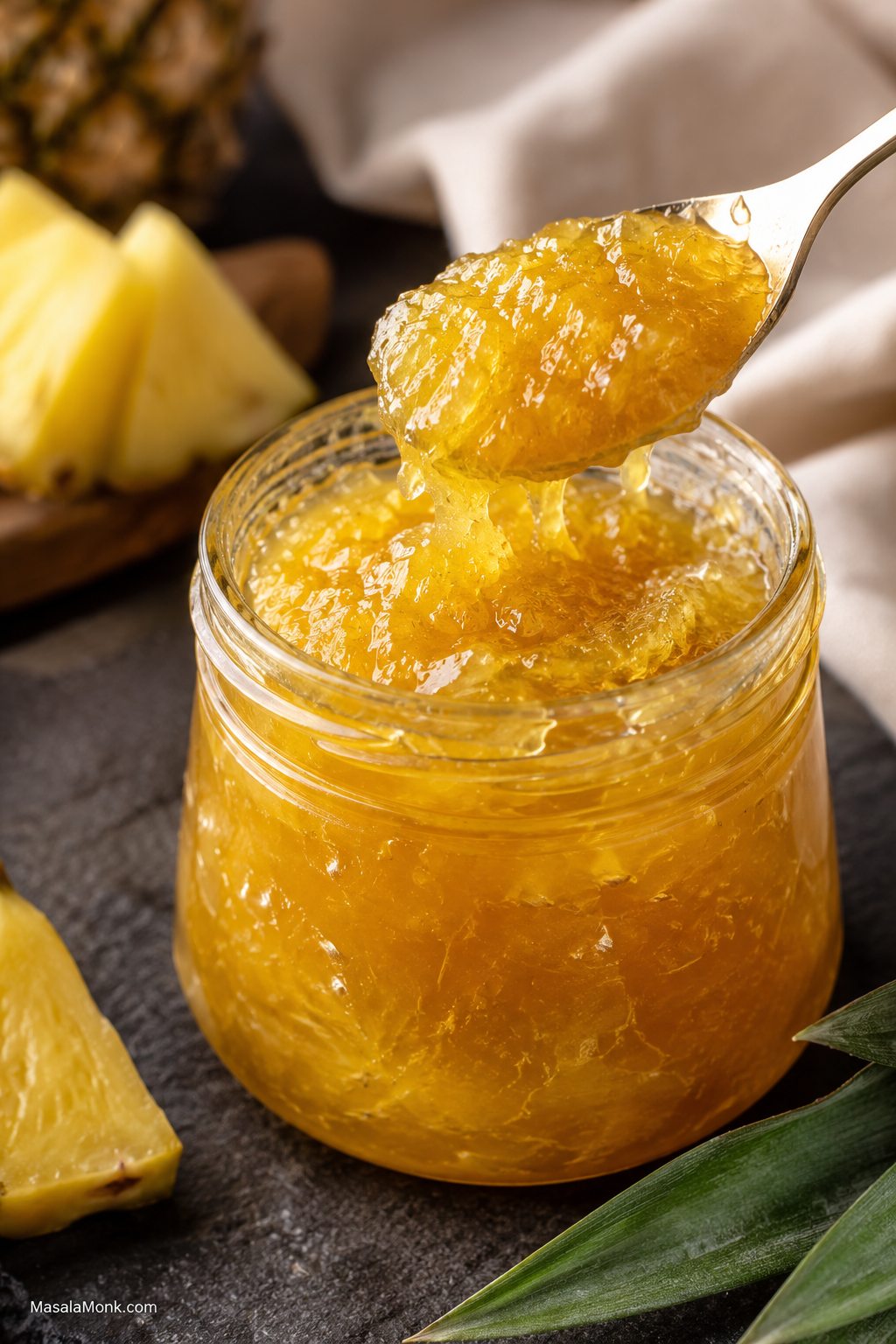
Open glass jar of glossy golden pineapple jam with a spoon lifting thick jam and fresh pineapple wedges behind it

This pineapple jam recipe turns fresh pineapple or canned crushed pineapple into a glossy, golden spread that tastes bright, tropical, and properly homemade. Make it smooth and spoonable for toast, leave it chunkier for pineapple preserves, or cook it down further when you need a thick filling for tarts, cookies, and pastries.

The main version is a simple no-pectin pineapple jam for the fridge or freezer. Pineapple, sugar, lemon or lime juice, and a pinch of salt cook down into a sweet-tart fruit spread that thickens as it cools and stays soft enough to spread.

Once you know what the bubbles, spoon trail, and cold-plate test should look like, the recipe becomes very forgiving. Use crushed pineapple for jam, diced pineapple for preserves, canned pineapple for a quick pantry batch, or a wider pan and longer cooking time for pineapple tart filling.

The best part is that the recipe does not fall apart if your pineapple is extra juicy, your can is a little watery, or you want a softer spoonable finish instead of a firm jar. The texture tests below will tell you when to stop.

Table of Contents

Use this guide to choose between smooth pineapple jam, chunkier pineapple preserves, a quick canned pineapple batch, or a thicker filling for tarts and pastries.

Quick Answer

For an easy pineapple jam recipe, simmer crushed pineapple with sugar, lemon or lime juice, and a pinch of salt until it turns shiny, golden, and thick enough to mound softly on a spoon. If you want pineapple preserves instead, use diced pineapple and stop cooking while the fruit pieces are still visible in a thick syrup.

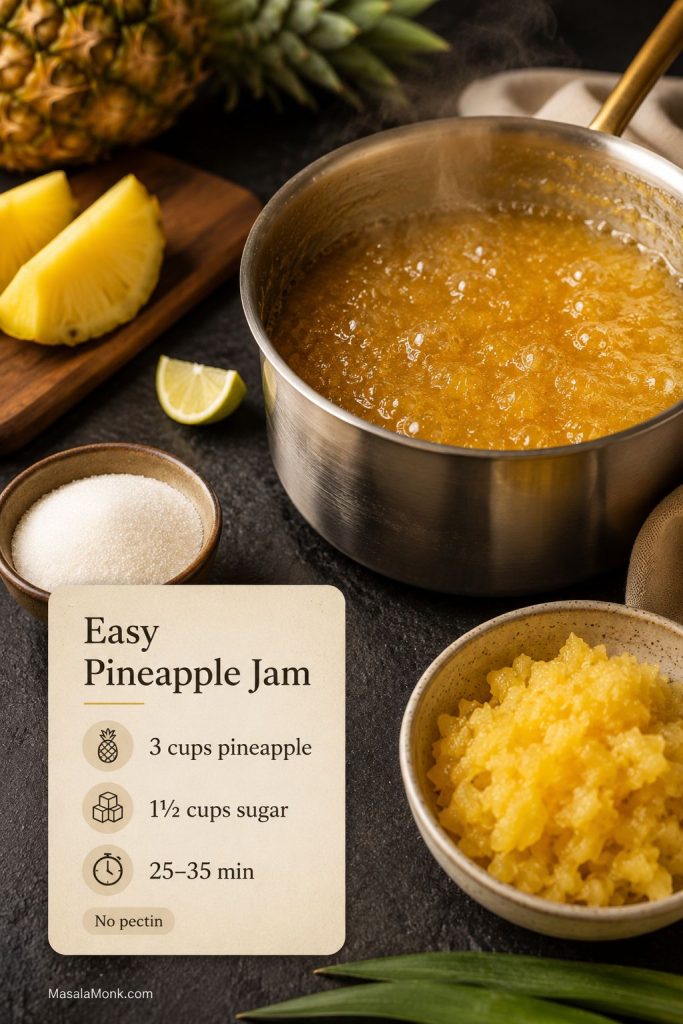
The easiest no-pectin ratio is 3 cups crushed pineapple, 1½ cups sugar, and 1–2 tablespoons lemon or lime juice. Cook for about 25–35 minutes. The jam is ready when it leaves a brief trail in the pan, passes the cold-plate test, or reaches about 220°F / 104°C at sea level.

However, do not worry if it looks a little loose while hot. Pineapple jam thickens as it cools, so the goal is glossy and spreadable rather than stiff or rubbery. For the safest first batch, make the crushed pineapple version and refrigerate it.

Best first batch: Start with the no-pectin pineapple jam made with crushed pineapple. After that, try diced preserves, canned pineapple jam, or a thicker filling for tarts and pastries.
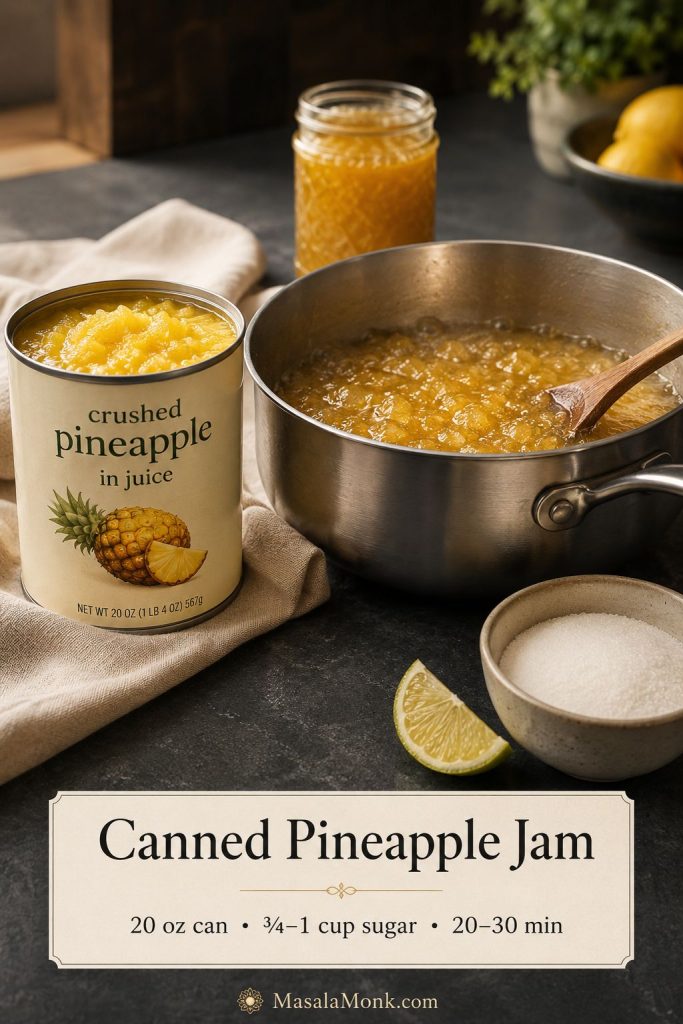
Saucepan of bubbling pineapple jam with crushed pineapple, sugar, citrus, and a quick ratio guide
Start with the simple no-pectin pineapple jam ratio, then let the pan tell you when it is done. As the fruit reduces, the bubbles slow down and the mixture turns shiny instead of watery.

Pineapple Jam Recipe at a Glance

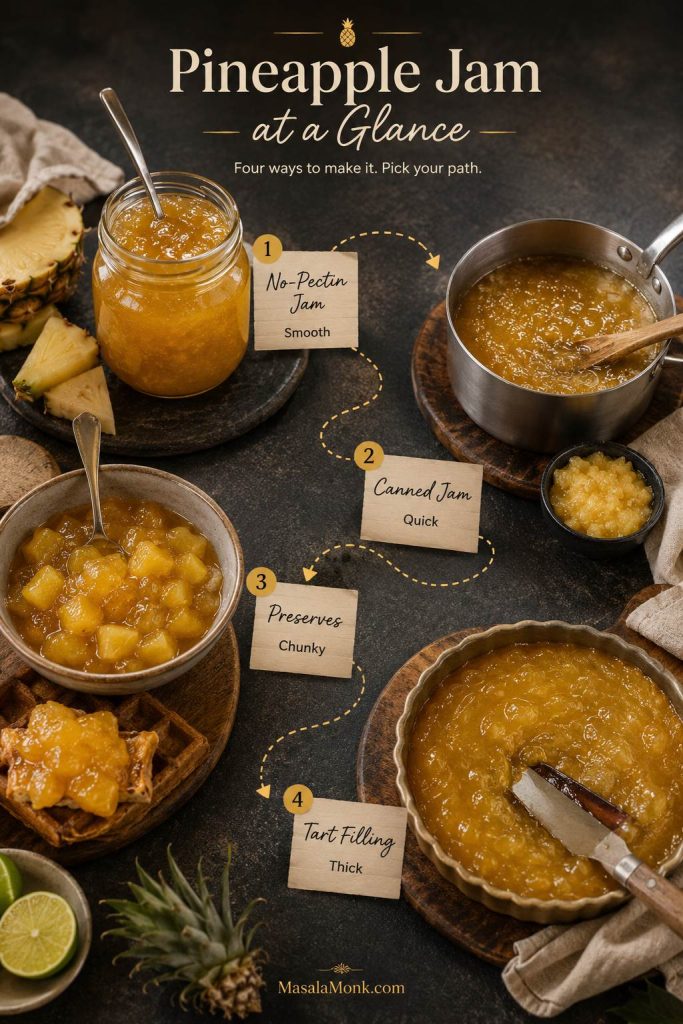
This pineapple jam recipe can go in four useful directions: soft-set jam, chunkier preserves, quick canned pineapple jam, or a much thicker tart filling. Start with the version that matches how you plan to serve it.

Pineapple jam at-a-glance guide showing no-pectin jam, canned jam, preserves, and tart filling routes
One pineapple jam recipe can become a breakfast spread, chunky preserve, canned-pineapple batch, or tart filling. As a result, choosing the route first helps you cook toward the right texture.
Version Pineapple Sugar Cook Time Best For
No-pectin pineapple jam 3 cups / about 680 g crushed pineapple 1½ cups / 300 g 25–35 minutes Toast, cookies, cakes, yogurt, everyday spreading
Canned pineapple jam 1 can / 20 oz / 567 g crushed pineapple in juice ¾–1 cup / 150–200 g 20–30 minutes Quick pantry batch, small jars, beginner version
Pineapple preserves 5½–6 cups diced pineapple ⅔–1 cup 30–40 minutes Biscuits, waffles, ice cream, cheese boards, glazes
Pineapple tart filling 4 cups grated or finely pulsed pineapple ½–¾ cup, then adjust 1–2½ hours Pineapple tarts, pastry filling, thumbprint cookies
Choose your version: Use crushed pineapple for soft, spreadable jam; diced pineapple for chunkier preserves; canned crushed pineapple for the quickest small batch; and finely pulsed pineapple cooked much longer for tart or pastry filling. For pantry storage, do not use the flexible recipe as written — follow a tested canning method instead.

Pineapple Jam vs Pineapple Preserves

Although pineapple jam and pineapple preserves use similar ingredients, they do not eat the same way. This pineapple jam recipe gives you both paths, so you can choose the texture that fits how you plan to use it.

A smoother jam is easier to spread because the fruit is crushed, finely chopped, pulsed, or mashed as it cooks. Choose this version for toast, scones, thumbprint cookies, cake layers, yogurt bowls, and everyday spooning.

Meanwhile, preserves are chunkier. The fruit is usually diced into small, even pieces and cooked until tender in a thick syrup. Choose this version when you want visible pineapple pieces on biscuits, pancakes, waffles, cheesecake, ice cream, cheese boards, or savory glazes.

Another easy way to think about it: jam should glide across toast, while preserves should give you soft little pineapple pieces in each spoonful.

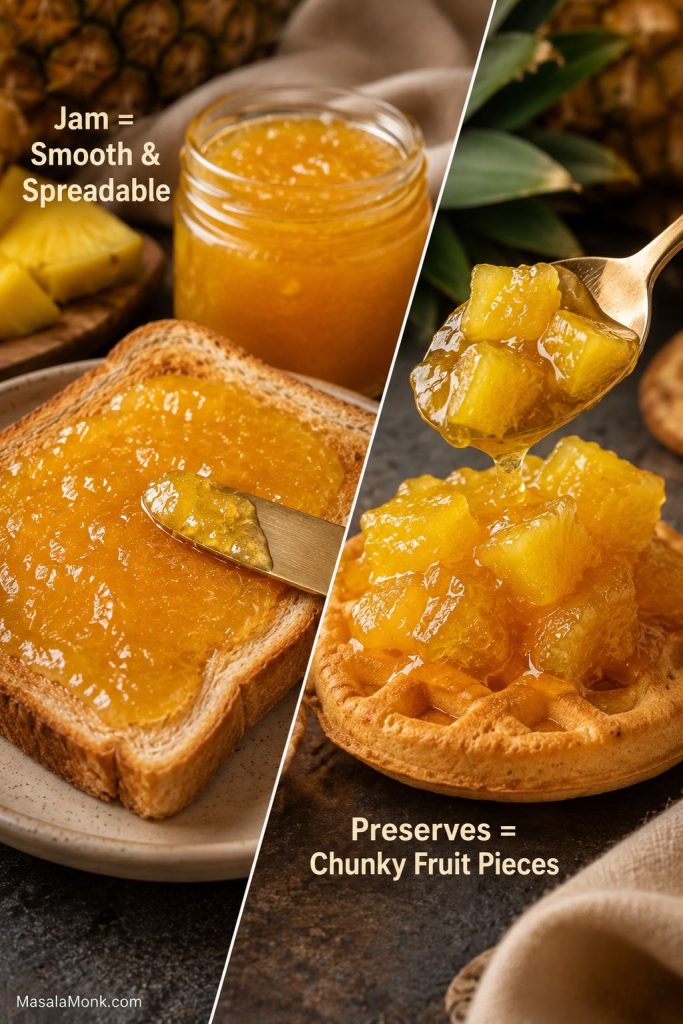
Diagonal comparison of smooth pineapple jam spread on toast and chunky pineapple preserves spooned over a biscuit or waffle
Pineapple jam and pineapple preserves are separated by texture more than ingredients. Crushed pineapple gives a smoother spread, while diced pineapple keeps soft fruit pieces in the finished preserve.
Version Fruit Cut Texture Best Uses
Pineapple jam Crushed, finely chopped, or pulsed Smoother, soft-set, glossy, spreadable Toast, scones, cookies, cake filling, yogurt, pastries
Pineapple preserves Small dice, about ¼–½ inch Chunkier fruit pieces in thick syrup Biscuits, waffles, ice cream, cheese boards, glazes
Pineapple tart filling Grated, finely pulsed, or cooked down further Very thick, sticky, paste-like Pineapple tarts, cookies, pastry filling, filled buns

Ingredients for Pineapple Jam and Preserves

You only need a few ingredients, but each one has a job. Pineapple brings the fruit and acidity, sugar helps the mixture thicken and shine, citrus keeps the flavor lively, and salt balances the sweetness. Because this pineapple jam recipe is flexible, the fruit cut matters as much as the ingredient list.

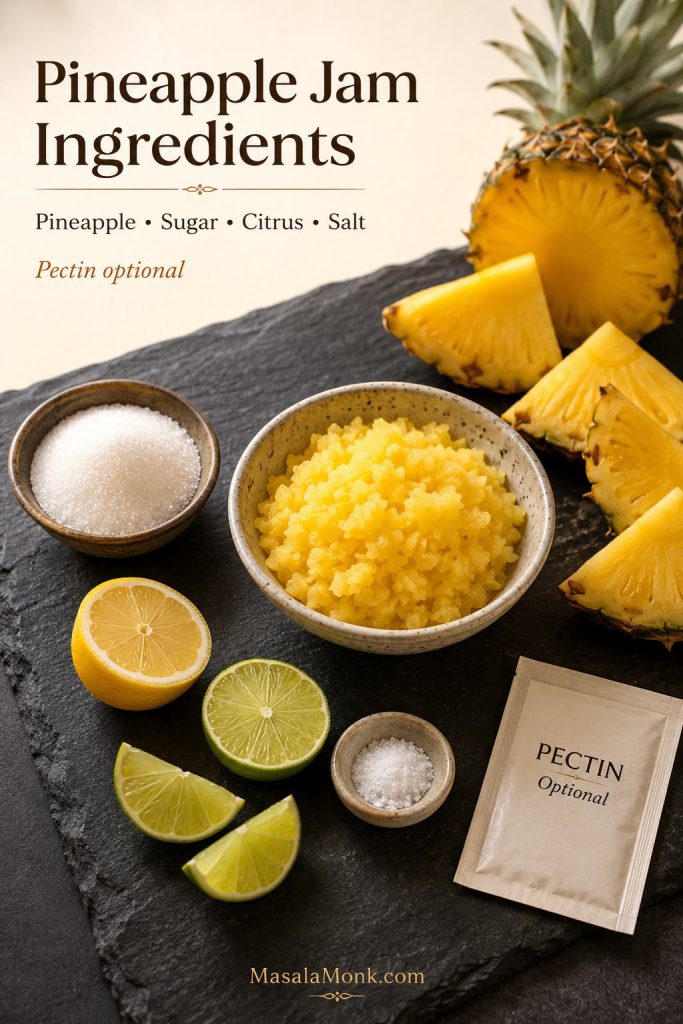
Pineapple jam ingredients including fresh pineapple, crushed pineapple, sugar, lemon, lime, salt, and optional pectin
Pineapple, sugar, citrus, and salt are enough for a flexible refrigerator jam. However, pectin can help when you want a firmer set, a faster cook, or a tested canning-style formula.

Pineapple

Fresh ripe pineapple gives the brightest flavor and color. Canned crushed pineapple works well when you want a faster batch. For jam, crush or finely chop the fruit. For preserves, cut it into small even pieces so everything softens at the same rate.

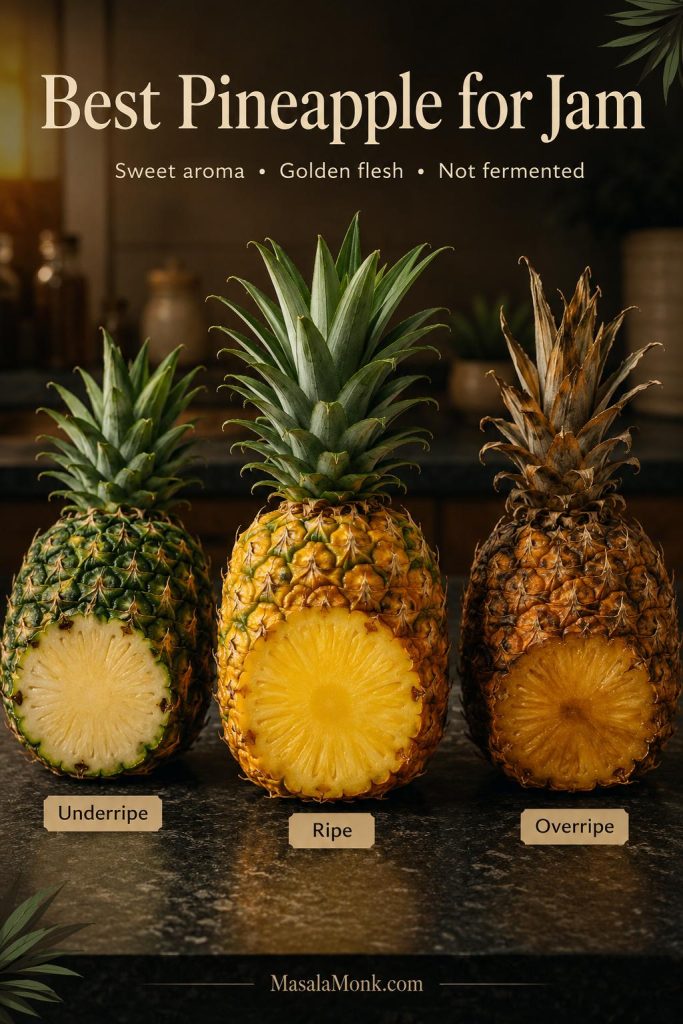
Choose pineapple that smells sweet and fruity, not fermented. Very underripe pineapple can taste sharp, while overripe pineapple may make the jam darker and softer. A very sweet pineapple gives a rounder jam; a sharper one may need the higher end of the sugar range. If the fruit tastes flat, lime juice usually wakes it up better than more sugar.

Pineapple selection guide comparing underripe, ripe, and overripe pineapple for jam making
Ripe pineapple gives homemade pineapple jam the brightest color and flavor. Meanwhile, underripe fruit can taste sharp, and overripe pineapple may cook down darker and softer.

Sugar

Sugar does more than sweeten the jar. It helps create body, improves the glossy finish, and supports the spreadable texture. For the main no-pectin version, start with 1½ cups sugar for 3 cups crushed pineapple. Use up to 2 cups if you prefer a firmer, sweeter jam.

Lemon or Lime Juice

Lemon juice gives a clean, classic fruit-spread flavor. Lime juice tastes a little more tropical and works especially well if you plan to use the jam with coconut desserts, pineapple tart filling, or drink-inspired pairings.

Salt

A small pinch of salt will not make the jam salty. Instead, it rounds out the sugar and helps the pineapple taste brighter.

Pectin, Optional

You can make pineapple jam without pectin, but pectin is useful when you want a quicker set, a firmer jar, or a lower-sugar method designed for that purpose. Different pectin types need different sugar levels and cooking steps, so follow the instructions on the package if you use it.

Fresh vs Canned Pineapple

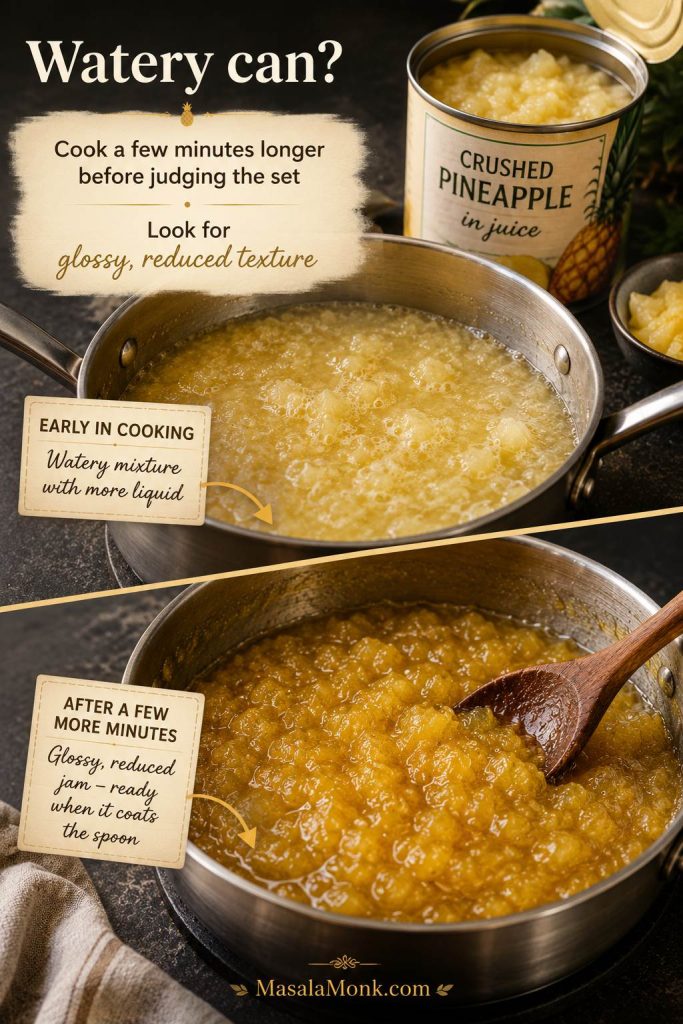
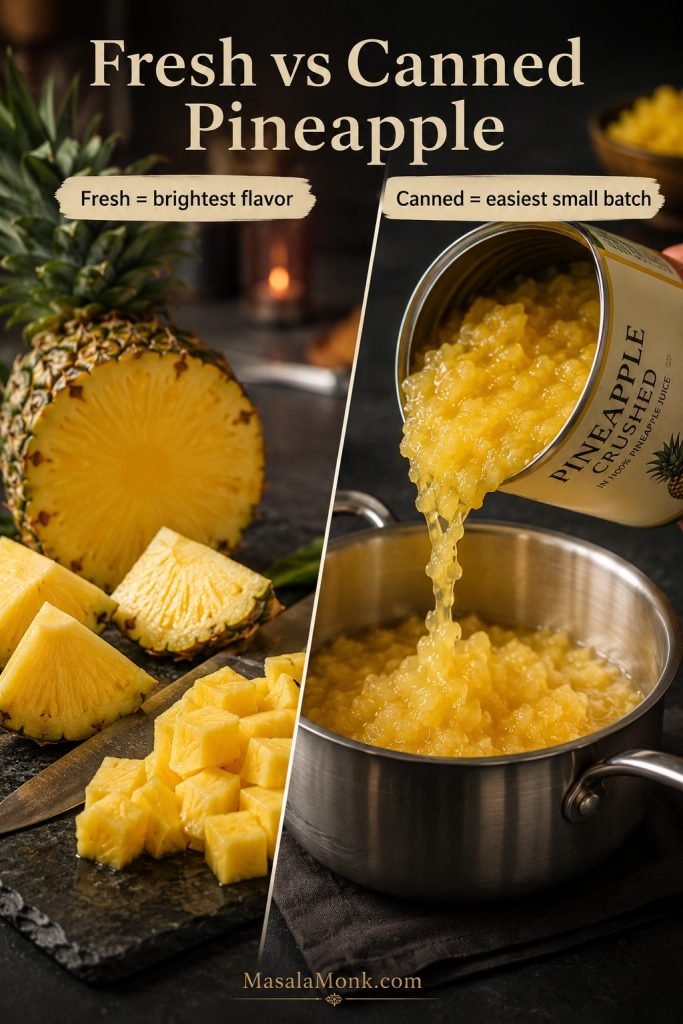
Fresh pineapple gives the brightest aroma and color, but canned pineapple is not a failure shortcut. It is fast, consistent, available year-round, and especially useful for a small-batch pineapple jam recipe. In fact, canned crushed pineapple is the easiest beginner version because the fruit is already evenly cut. The only real adjustment is moisture: if the can looks watery, cook a few minutes longer before judging the set.

Fresh pineapple being chopped beside canned crushed pineapple being poured into a saucepan for jam
Fresh pineapple gives the most vivid aroma, but canned crushed pineapple makes the easiest small-batch pineapple jam. Since the fruit is already evenly cut, it reduces with less prep work.

How to Prep Fresh Pineapple for Jam

When using fresh pineapple, peel, core, and chop the fruit first. Then, pulse it in a food processor for jam or dice it by hand for preserves. Try not to leave large pieces of tough core in the mixture because they can stay fibrous even after cooking.

Best Canned Pineapple to Use

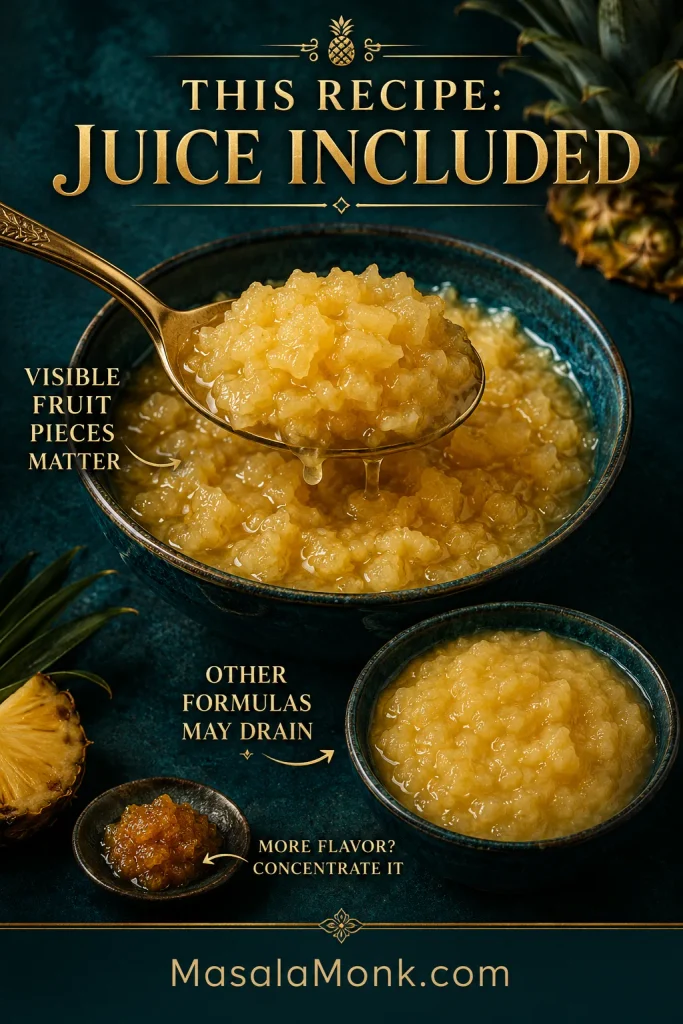
For canned pineapple jam, choose crushed pineapple or pineapple chunks packed in juice rather than heavy syrup. Drain only if the can is extremely watery. Some juice helps the fruit cook down evenly and keeps the sugar from catching too early.

Watery canned crushed pineapple in juice reducing into thicker glossy pineapple jam in a saucepan
Canned pineapple jam can look loose at first because some cans carry more juice than others. Instead of adding thickeners too soon, simmer a little longer and wait for a glossy, reduced texture.
Pineapple Type Best For How to Use It
Fresh pineapple Brightest flavor, best color, homemade preserves Peel, core, chop, then crush or dice depending on texture
Canned crushed pineapple in juice Quick pineapple jam, small batches, pantry version Use with juice unless very watery; simmer longer if needed
Canned pineapple chunks Preserves or jam after chopping Chop smaller or pulse briefly before cooking
Pineapple in syrup Last-resort option Reduce added sugar and expect a sweeter final jam

If you are working with extra pineapple juice, save it for drinks, smoothies, marinades, or a tropical party bowl like this punch with pineapple juice.

Small-Batch Pineapple Jam

A small batch is perfect when you have one can of pineapple or a little fresh fruit left after cutting a whole pineapple. Since this is a small flexible batch, keep it chilled instead of treating it as pantry-stable.

Small batches are also helpful when you are learning the texture cues. They reduce faster, are easier to stir, and give you a low-pressure way to understand how pineapple changes as it cooks. If you are standing in the kitchen with one 20-ounce can of crushed pineapple, this is the easiest place to start.

Small-batch canned pineapple jam setup with a 20-ounce can of crushed pineapple in juice, saucepan, sugar, citrus, and finished jar
A 20-ounce can of crushed pineapple is a practical shortcut for small-batch pineapple jam. Because the fruit is already crushed, the key is reducing the juice until the spread looks shiny and spoonable.

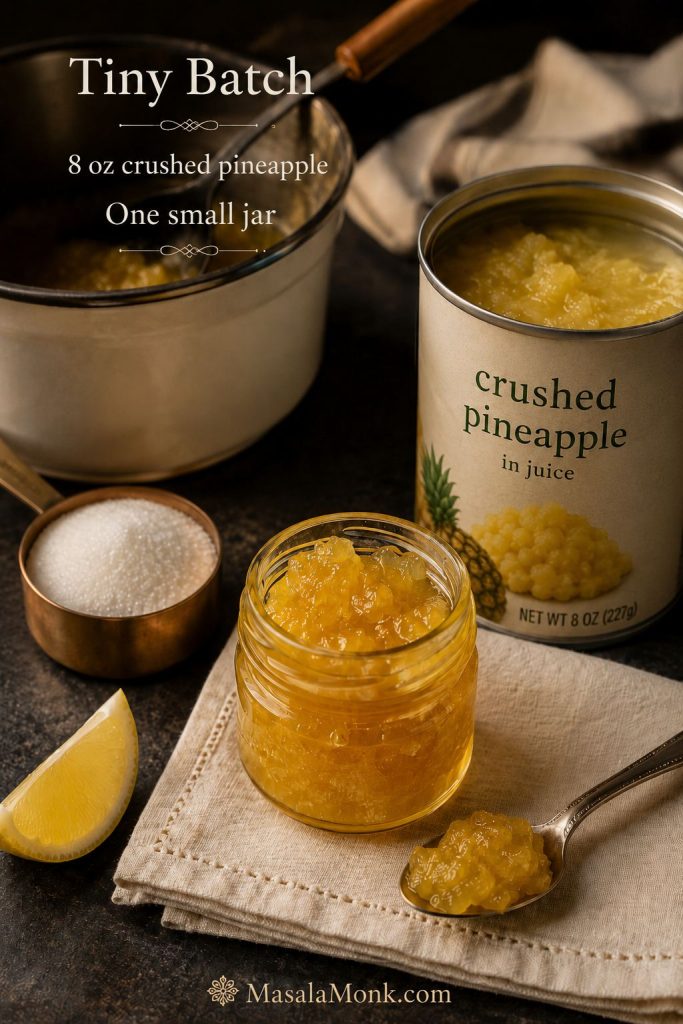
Tiny 8-Ounce Can Version

  • 1 can / 8 oz / 227 g crushed pineapple in juice
  • ⅓–½ cup / 65–100 g sugar
  • 1–2 teaspoons lemon or lime juice
  • Small pinch of salt

Simmer everything in a small saucepan for 15–25 minutes, stirring often, until shiny and jammy. This makes roughly one small jar, depending on how much you reduce it.

Tiny batch pineapple jam setup with an 8-ounce can of crushed pineapple in juice, small jar, lemon wedge, sugar, and saucepan
The 8-ounce can version is a smart tiny batch when you only want one small jar. It also gives you a low-risk way to practice the cold-plate test before making more.

20-Ounce Can Version

  • 1 can / 20 oz / 567 g crushed pineapple in juice
  • ¾–1 cup / 150–200 g sugar
  • 1 tablespoon / 15 ml lemon or lime juice
  • Pinch of salt

Cook for 20–30 minutes, or until the bubbles look slower and the fruit has reduced into a soft-set spread. If the canned pineapple is very juicy, the batch may need a few extra minutes.

Pineapple Jam Without Pectin

This no-pectin pineapple jam recipe is all about patience, not complicated technique. As the pineapple simmers, excess moisture cooks off, the sugar concentrates, and the mixture slowly changes from juicy fruit sauce into a glossy spread.

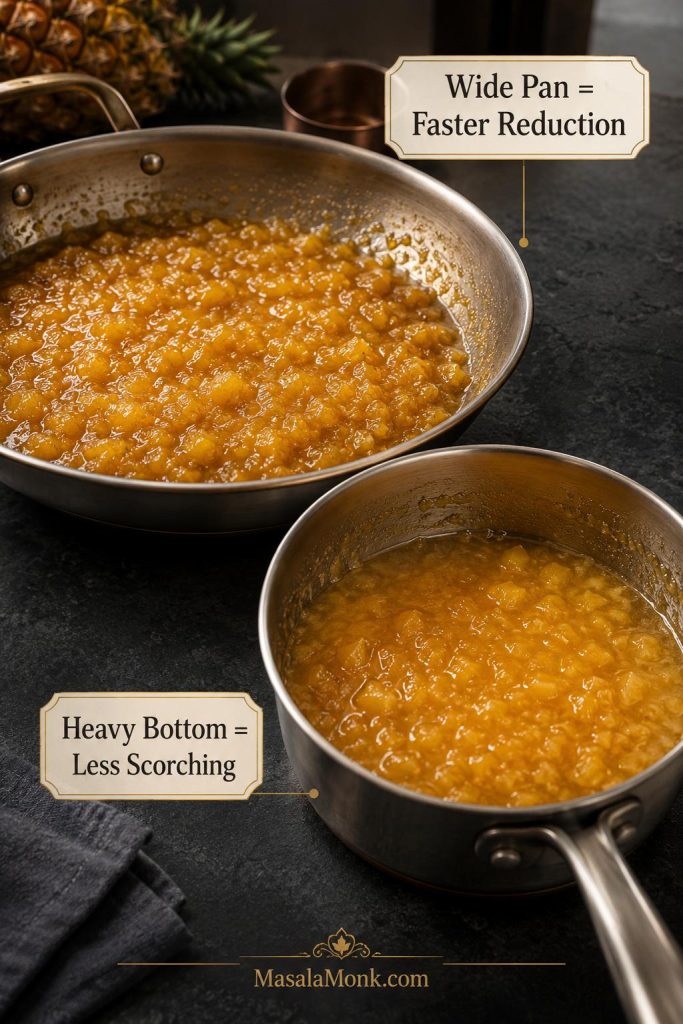
Because pineapple is not naturally high in pectin, the mixture needs enough time to reduce. A heavy-bottomed saucepan helps prevent scorching, while a wider pan speeds up evaporation.

Wide pan and heavy-bottom saucepan comparison for reducing pineapple jam without scorching
A wide pan speeds up pineapple jam because more surface area lets moisture evaporate. At the same time, a heavy bottom helps protect the sugar and fruit from scorching.

No-pectin pineapple jam sets by reduction rather than by a strong natural pectin gel. That means the finished texture is usually softer and more spoonable than commercial jam, but the flavor is more concentrated because the fruit cooks down slowly.

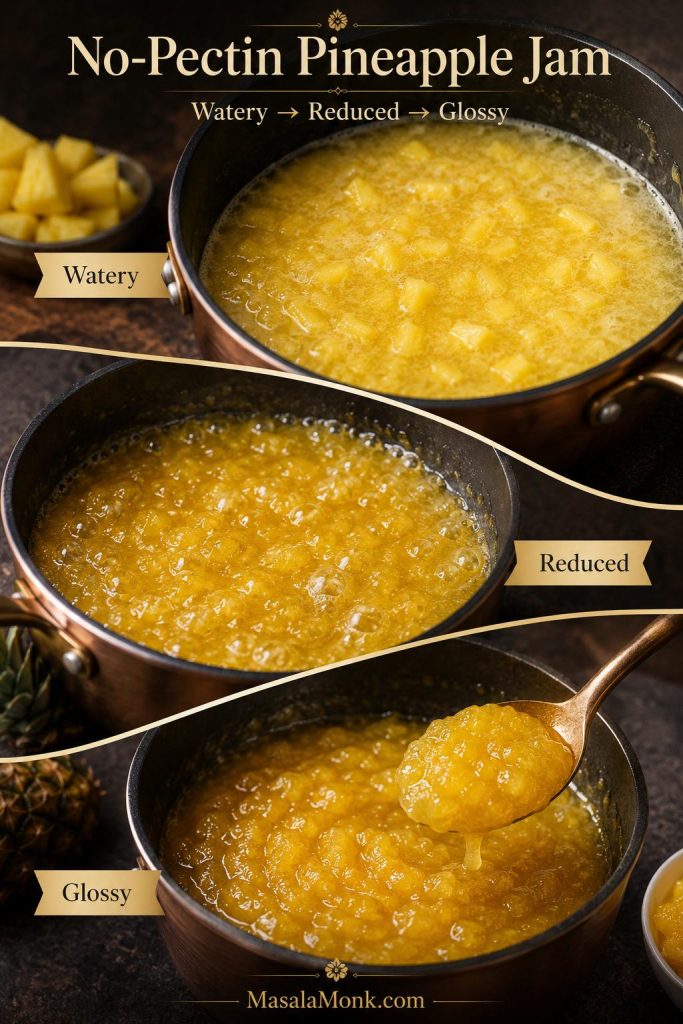
Three cooking stages of no-pectin pineapple jam changing from watery fruit to reduced sauce and glossy jam
No-pectin pineapple jam thickens by reduction rather than a strong commercial-style gel. Therefore, the texture should move from juicy fruit sauce to glossy spread as water cooks off.

The method is simple: combine crushed pineapple, sugar, lemon or lime juice, and salt. Bring the mixture to a boil, then simmer and stir often. As it cooks, the fruit will look less watery, the bubbles will become slower and shinier, and the jam will start leaving a brief trail when you drag a spatula across the bottom of the pan.

Texture tip: Pineapple jam thickens more as it cools. Therefore, stop when it is slightly looser than the final texture you want.

How to Make Pineapple Preserves

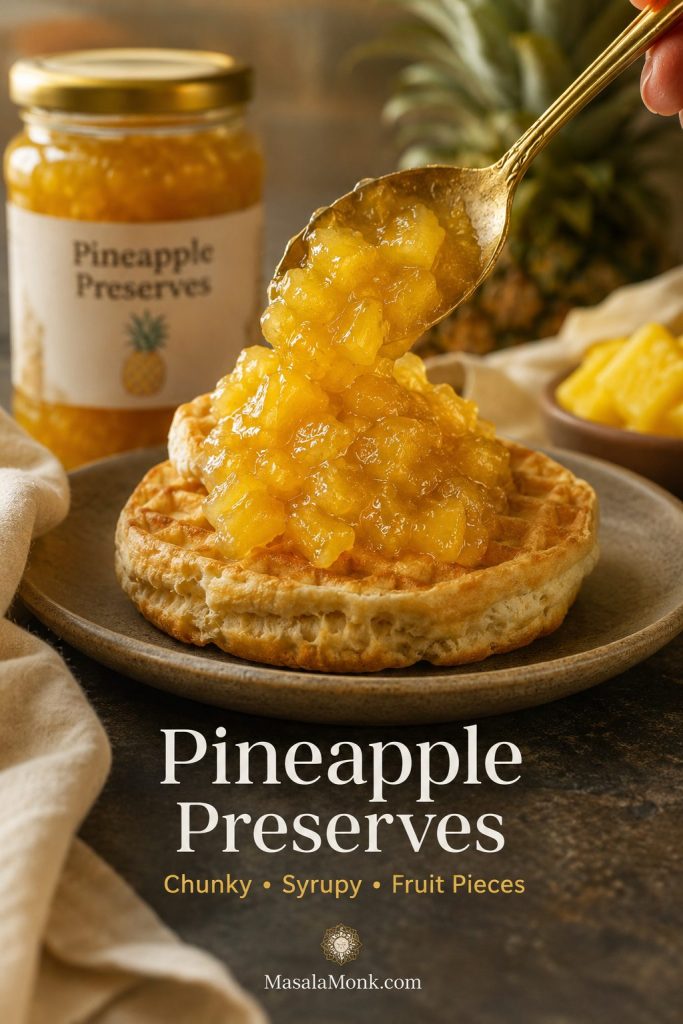
Make preserves when you want little golden pieces of pineapple in every spoonful. They are chunkier than jam, a little more syrupy, and especially good over biscuits, waffles, yogurt, ice cream, or cheesecake.

Chunky pineapple preserves being spooned over a waffle with visible pineapple pieces in glossy syrup
Pineapple preserves should keep visible fruit pieces in a thick syrup. For the best result, dice the fruit evenly and avoid mashing it so much that it turns into smooth jam.

Think of this as the pineapple preserve recipe path: diced fruit, less mashing, and a syrupy finish with visible golden pieces instead of a smoother spread.

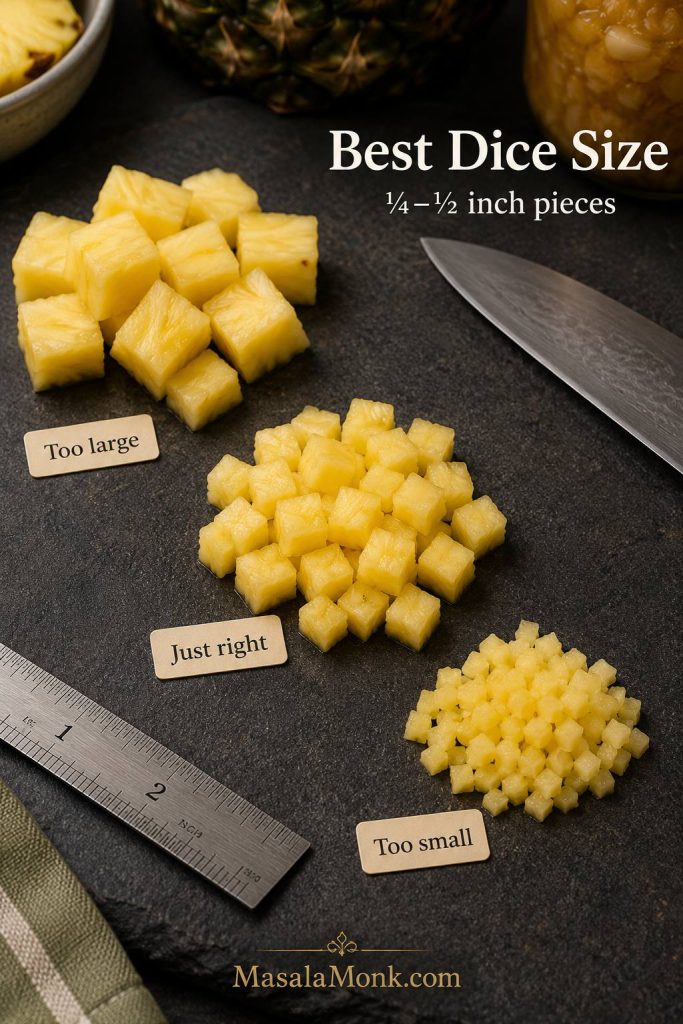
Then, cut the fruit into small pieces, about ¼–½ inch. Pieces that are too large can feel chewy or slide off toast; however, pieces that are too small will collapse into jam.

Pineapple dice-size guide with too-large, just-right, and too-small pieces for preserves
Even pineapple pieces cook more predictably. Aim for ¼–½ inch dice so the preserves stay spoonable, tender, and chunky without becoming chewy or collapsing completely.

Do not pulse preserves too finely unless you want jam. The whole point is to keep small pineapple pieces visible.

For a fruit-forward batch, use less sugar than the classic no-pectin jam. A good starting point is 5½–6 cups diced pineapple, ⅔–1 cup sugar, 2 tablespoons lemon juice, and a pinch of salt.

Cook the mixture in a wide pan for about 30–40 minutes, stirring often, until the pineapple turns tender and golden and the liquid reduces to a thick syrup. If the fruit starts breaking down too much, lower the heat and stir more gently.

For a middle texture, mash only part of the fruit. As a result, you get preserves with body: chunky enough for biscuits and waffles, but still thick enough to spoon over yogurt, cheesecake, or ice cream.

How to Tell When Pineapple Jam Is Done

Because hot jam looks looser than cooled jam, the most common mistake is stopping too early. Instead of relying only on the clock, use the texture cues below.

If this is your first time making pineapple jam, judge it by texture rather than time alone. Some pineapples are juicier than others, and canned pineapple can vary from can to can, so a batch may need a few extra minutes.

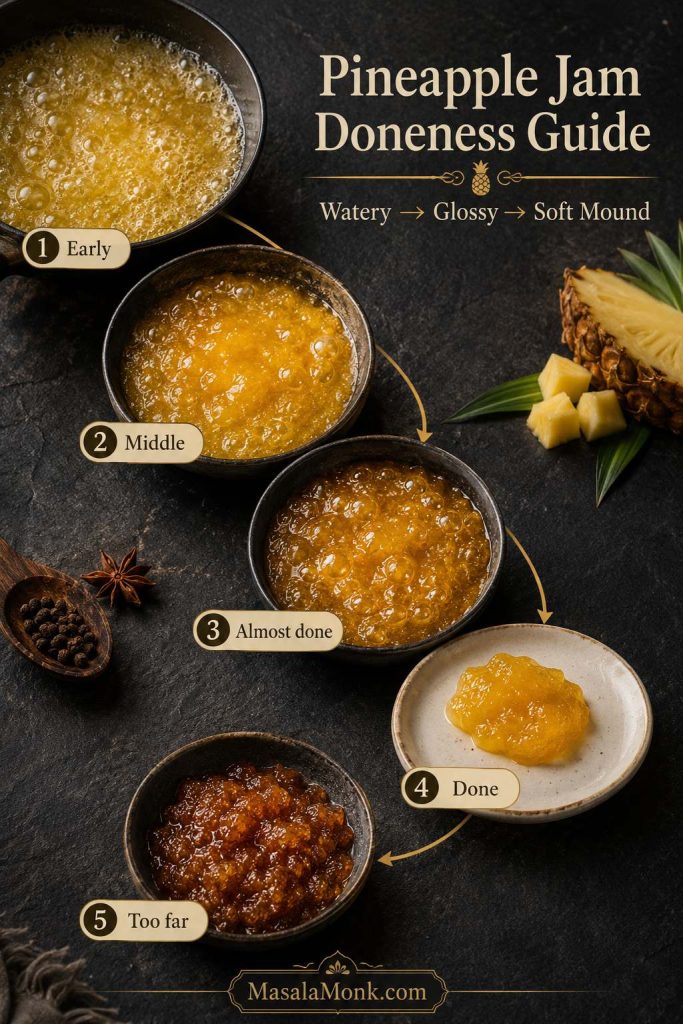
Doneness at a glance: Fast watery bubbles mean it is too early. Slower glossy bubbles mean it is close. A soft mound on a cold plate means it is ready. If the jam slides like syrup, cook it a few minutes longer.
Stage Visual Cue What It Means
Early Fast, watery bubbles Keep cooking; too much moisture remains
Middle Thicker fruit sauce Stir more often so the bottom does not catch
Almost done Slow, glossy bubbles Start testing with a spoon trail or cold plate
Done Soft mound on a cold plate Jar and cool; it will thicken more as it chills
Too far Sticky, dark, stiff texture Loosen gently with a splash of pineapple juice or water
Pineapple jam doneness guide showing early watery bubbles, thicker sauce, glossy bubbles, soft mound, and overcooked jam
Doneness is easier to judge by texture than by minutes alone. Watery bubbles mean keep cooking, slow glossy bubbles mean start testing, and a soft mound means the jam is ready.

Spoon Trail Test

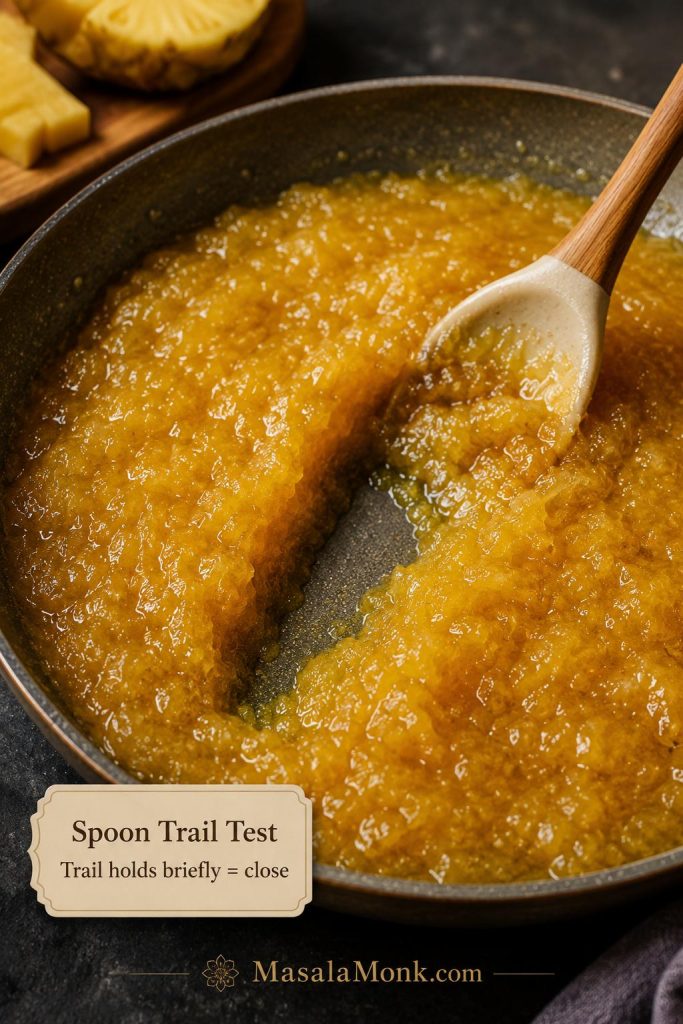
Drag a spatula or wooden spoon across the bottom of the pan. If the jam leaves a clean trail for a moment before slowly filling in, it is close. If liquid rushes back immediately, keep cooking.

Spoon trail test in a pan of thick pineapple jam with a spatula leaving a visible path through the jam
When a spoon or spatula leaves a brief trail across the pan, the pineapple jam is close. However, the mixture should still look glossy and spreadable, not dry or paste-like.

Cold Plate Test

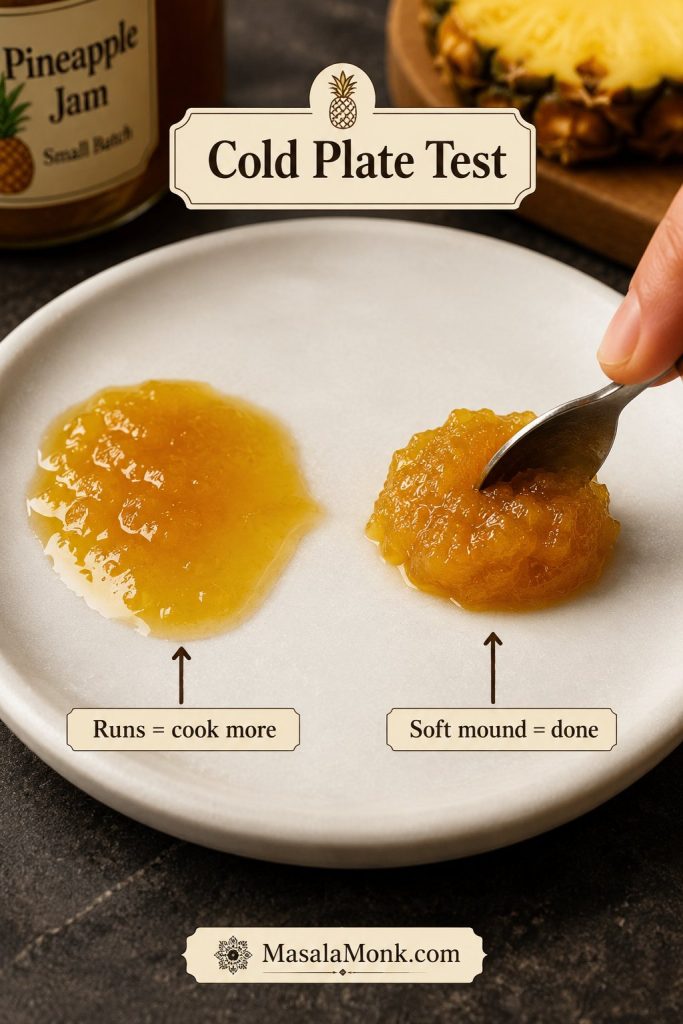
Place a small plate in the freezer before you start cooking. When the jam looks thick, spoon a little onto the cold plate and wait 30–60 seconds. Then, push it with your finger. It should thicken, wrinkle slightly, or hold a soft mound instead of running like juice.

Cold plate test showing one runny pineapple jam sample and one soft mound sample being pushed with a spoon
The cold-plate test shows how pineapple jam will behave after cooling. If the sample runs like syrup, continue cooking; if it mounds softly, stop before it turns sticky.

Thermometer Cue

A classic jam-style set usually lands around 220°F / 104°C at sea level. This is a useful guide, but it should not be your only test. Pineapple type, pan width, sugar level, and altitude can all affect the final texture.

If you live at a higher elevation, the finishing temperature can be slightly lower. Therefore, use the cold-plate test and spoon trail along with the thermometer.

Bubble Cue

At the beginning, the mixture bubbles quickly and looks watery. Near the end, the bubbles become larger, slower, and glossier. The jam will look more like a thick fruit spread than a simmering fruit sauce.

Texture What It Looks Like What to Do
Too runny Liquid rushes back after stirring; cold-plate sample runs Cook 5–10 minutes longer, stirring often
Just right Shiny, soft-set, spoonable, gentle mound on cold plate Remove from heat and jar while warm
Too thick Stiff, sticky, hard to spread, darkening quickly Stir in 1–2 tablespoons water or pineapple juice and warm gently

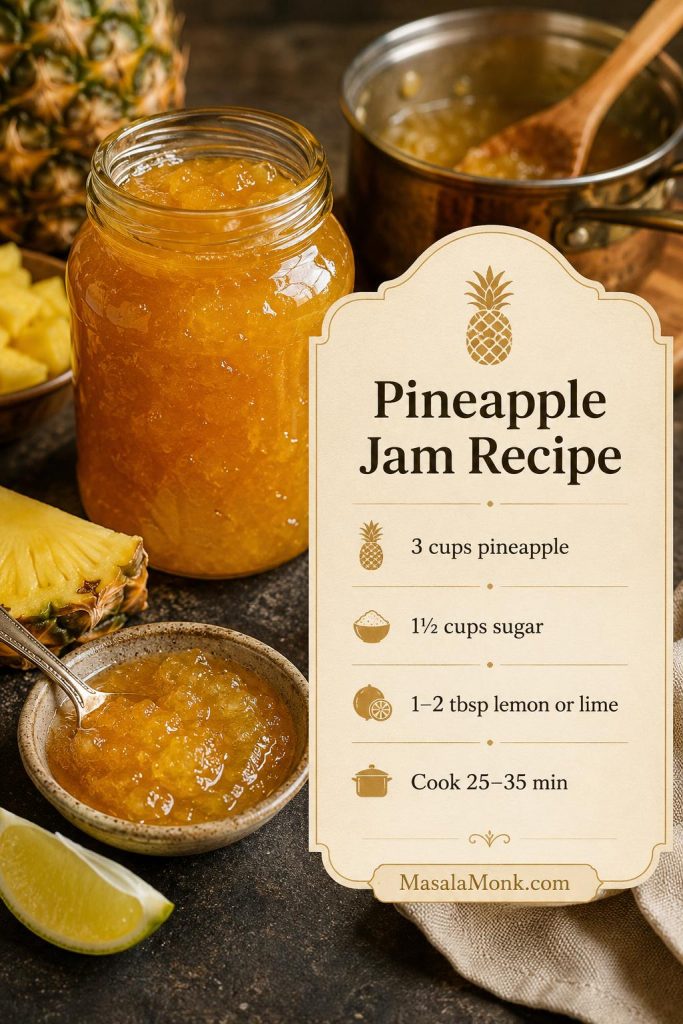
Use this quick visual recipe card as a saveable reminder before the full method below.

Saveable pineapple jam recipe card with pineapple, sugar, lemon or lime, cooking time, jar, saucepan, and pineapple pieces
Use the base pineapple jam recipe first, then adjust the fruit cut to match your final texture. Crushed pineapple gives a smooth spread, while diced pineapple creates chunkier preserves.

Pineapple Jam Recipe Card: No-Pectin Jam or Chunky Preserves

This base pineapple jam recipe makes soft-set no-pectin jam. Use crushed pineapple for jam or diced pineapple for chunkier preserves.

Prep Time10 minutes
Cook TimeJam: 25–35 minutes; preserves: 30–40 minutes
YieldJam: about 2½–3 cups / about three 8-ounce jars; preserves: about 3–4 cups
StorageFridge or freezer

Ingredients for Pineapple Jam

  • 3 cups / about 680 g crushed pineapple, fresh or canned in juice
  • 1½ cups / 300 g granulated sugar
  • 1–2 tablespoons / 15–30 ml lemon or lime juice
  • ⅛ teaspoon fine salt, or a small pinch

For a firmer, sweeter jam: increase sugar up to 2 cups / 400 g.

For Pineapple Preserves Instead

  • Use 5½–6 cups small diced pineapple, about ¼–½ inch pieces
  • Use ⅔–1 cup sugar, depending on sweetness
  • Use 2 tablespoons / 30 ml lemon juice
  • Add a pinch of salt

Equipment

  • Heavy-bottomed saucepan or wide pan
  • Food processor, blender, knife, or potato masher
  • Silicone spatula or wooden spoon
  • Measuring cups or digital scale
  • Jam thermometer, optional
  • Small freezer plate for testing
  • Clean jars with lids

Method

  1. Prepare the pineapple. For jam, crush or finely chop the pineapple. For preserves, dice it into small even pieces.
  2. Combine the ingredients. Add pineapple, sugar, lemon or lime juice, and salt to a heavy saucepan.
  3. Start cooking. Bring to a boil over medium-high heat, stirring often so the sugar dissolves evenly.
  4. Simmer and reduce. For jam, cook for 25–35 minutes, stirring frequently. For preserves, cook for 30–40 minutes, or until the pineapple pieces are tender and suspended in thick syrup. Scrape the bottom and sides of the pan so the mixture does not scorch.
  5. Check the texture. Jam is ready when it looks shiny, thickened, and spoonable. It should leave a brief trail in the pan, mound softly on a cold plate, or reach about 220°F / 104°C at sea level. Preserves should look syrupy with visible fruit pieces.
  6. Jar and cool. Spoon the hot jam or preserves into clean jars. Let cool, then cover and refrigerate. The mixture will thicken more as it chills.

Notes

  • This flexible no-pectin recipe is intended for refrigerator or freezer storage.
  • For shelf-stable canning, follow a tested preservation method and proper processing instructions.
  • If using canned pineapple packed in syrup, reduce the sugar and taste as it cooks.
  • For a smoother jam, use an immersion blender briefly before the jam gets too thick.
  • Avoid doubling the batch in the same pan the first time. Larger batches take longer to reduce and are easier to scorch, so make two separate batches if you need more.

Pineapple Jam With Pectin

If you want a firmer version of this pineapple jam recipe, pectin can help you get there without cooking the fruit as long. It can also help if you are using a lower-sugar method designed for pectin.

However, pectin is not one-size-fits-all. Regular powdered pectin, liquid pectin, low-sugar pectin, and calcium-activated pectin all behave differently. Some require a high sugar ratio, while others are designed for lower-sugar spreads.
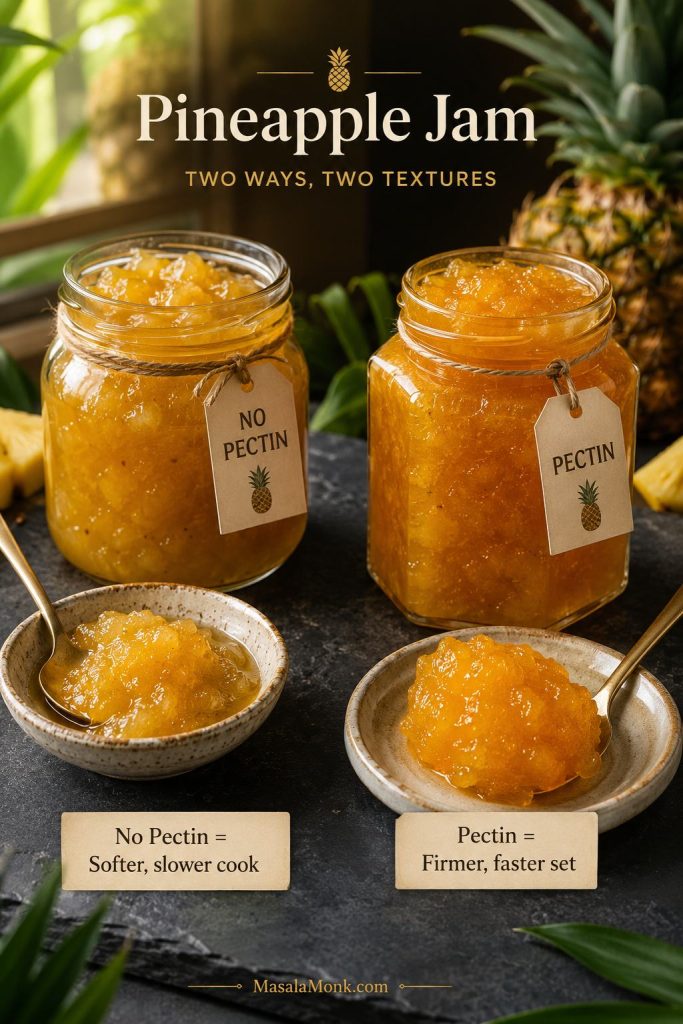
Two jars of pineapple jam comparing softer no-pectin jam with firmer pectin-set jam
Pectin is useful when you want a faster, firmer pineapple jam, but it is not always necessary. For a softer homemade spread, the no-pectin method gives a more spoonable finish.

Pectin versions are not automatically better; they are simply faster and firmer. If you use pectin, follow the specific package instructions for fruit amount, sugar amount, boiling time, and jar processing. Otherwise, the jam may turn too stiff, too loose, overly sweet, or unsuitable for pantry storage if you are trying to can it.

Fresh pineapple note: Some pectin methods recommend boiling fresh pineapple first because fresh pineapple contains enzymes that can interfere with gel formation. If your pectin brand gives pineapple-specific instructions, follow them.

Canning Pineapple Jam and Preserves Safely

Important: The recipe card above is written for refrigerator or freezer storage. Do not treat it as a shelf-stable canning recipe unless you switch to a tested canning formula and follow the exact fruit, acid, sugar, pectin, jar size, headspace, and processing time.

Pineapple jam can be canned, but pantry storage needs a tested method, not a flexible refrigerator-jam formula. The amount of sugar, acid, pectin, fruit, headspace, jar size, and processing time all matter.

Because this is a flexible pineapple jam recipe, treat the main batch as a refrigerator or freezer pineapple jam. If you want pantry storage, use a tested preservation method and follow the jar size, headspace, and processing time exactly.

For shelf-stable jars, Ball’s pineapple jam canning recipe is a useful reference. In addition, the National Center for Home Food Preservation guide to jams, jellies, and marmalades is a good place to check broader home-preservation safety guidance.

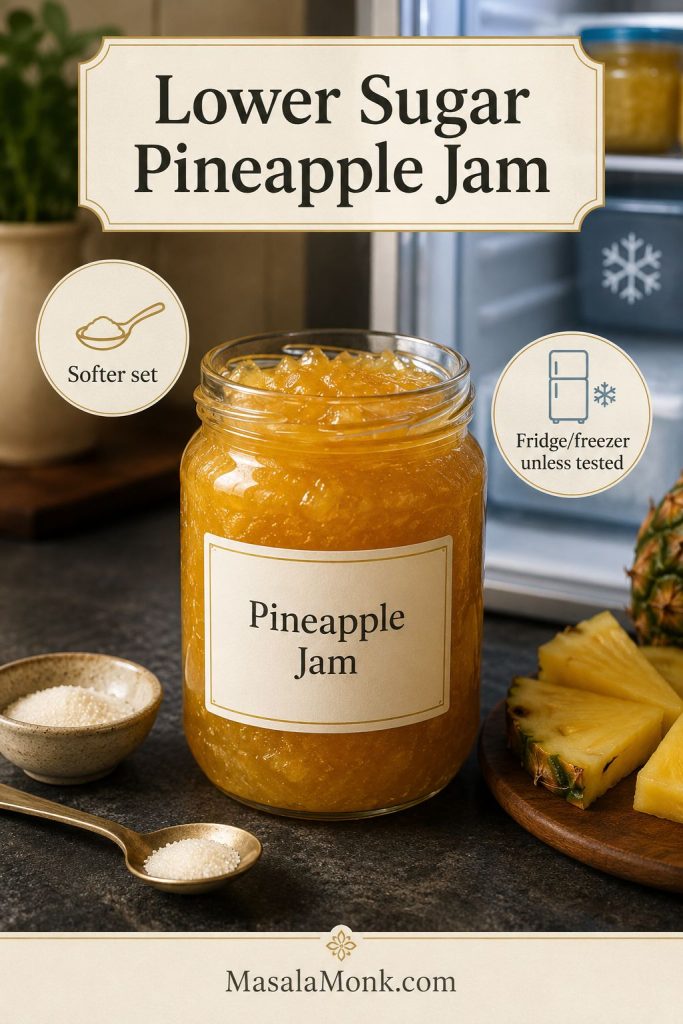
Be especially careful with low-sugar or sugar-free pineapple jam. Reducing sugar can affect set, texture, and storage safety. If you want a lower-sugar version, use a pectin and method designed for low-sugar jam, then refrigerate, freeze, or process only according to the instructions for that exact style.

Lower-sugar pineapple jam jar with small sugar cue and refrigerator-freezer storage reminder
Lower-sugar pineapple jam often sets softer because sugar helps with body and preservation. Unless you are using a tested low-sugar method, store it in the refrigerator or freezer.

Pineapple Jam for Tarts and Filling

You can also adapt this pineapple jam recipe into a thicker filling for tarts, cookies, and pastries. Unlike spreadable jam, tart filling cooks until most of the liquid evaporates and the mixture becomes sticky, concentrated, and paste-like.

Tart Filling Ratio

For a small tart-filling batch, start with about 4 cups finely pulsed or grated pineapple, ½–¾ cup sugar, 1 tablespoon lemon or lime juice, and a pinch of salt. Add sugar after some of the pineapple liquid has cooked off, then keep reducing until the filling is thick, sticky, and no longer watery.

How Thick Tart Filling Should Be

Cook it in a wide pan so moisture evaporates quickly. Then, continue cooking over medium-low heat until the mixture is darker, concentrated, and able to hold its shape when cooled.

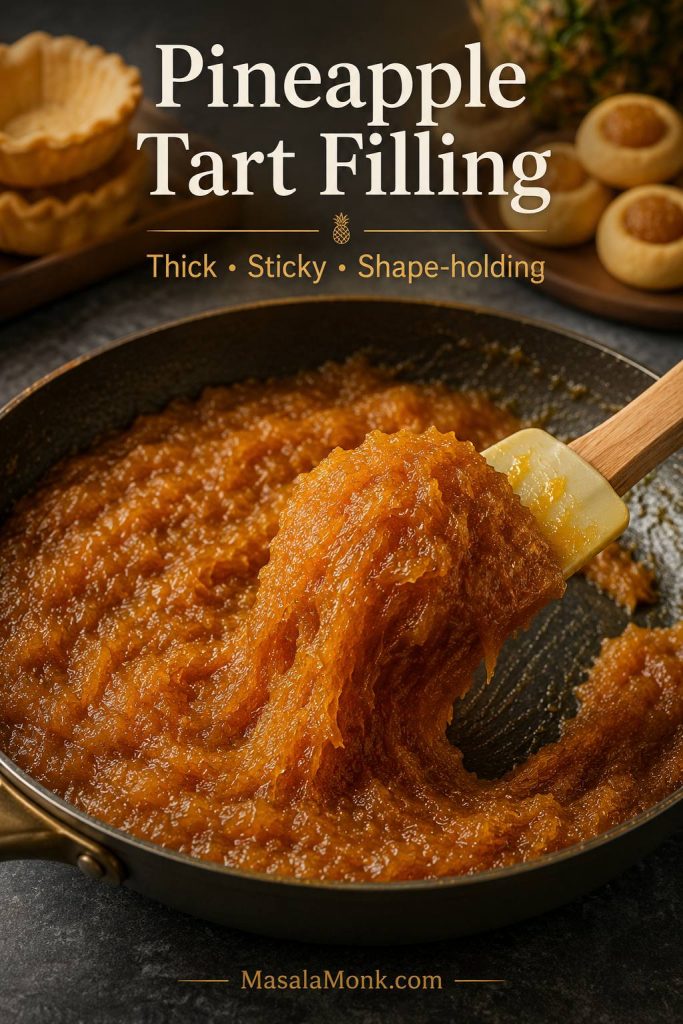
For tart filling, the mixture should not slide around the pan like jam. It should move as a sticky mass, leave the pan bottom visible for longer, and hold its shape once cooled.

Thick pineapple tart filling being lifted from a pan with a spatula while tart shells sit in the background
Pineapple tart filling needs to be thicker than breakfast jam. Cook it until it moves as one sticky mass, holds its shape, and no longer releases watery juice around the edges.

Near the end, stir more often and lower the heat if the filling starts catching on the bottom. Tart filling is ready when it looks darker, moves together as one sticky mass, and no longer releases watery juice around the edges.

This can take much longer than jam for toast. Depending on pineapple quantity and juiciness, tart filling may need 1–2½ hours. It is ready when a cooled spoonful holds its shape and does not leak liquid. For rolled pineapple tarts, the cooled filling should be thick enough to portion and shape.

Flavor Options for Pineapple Tart Filling

Finally, optional spices such as cinnamon, clove, star anise, ginger, or vanilla can make pineapple filling warmer and more dessert-like. Use them lightly so the fruit stays the main flavor.

How to Store Pineapple Jam and Preserves

After cooking, let the jam cool before sealing and storing. It will thicken as it cools, so do not judge the final texture while it is still boiling hot.

Because this pineapple jam recipe is written as a flexible refrigerator or freezer method, storage depends on sugar level, cleanliness, and how the jars are handled after cooling.

Storage Method How Long Best For
Refrigerator For best quality, use within about 2 weeks. Higher-sugar batches handled only with clean utensils may last longer. Everyday no-pectin pineapple jam and preserves
Freezer About 2–3 months for best texture Small batches, lower-sugar versions, extra jars
Shelf-stable pantry storage Only with a tested canning method Properly processed jam using safe canning instructions

Use clean jars and utensils every time. If the jam smells fermented, looks moldy, becomes fizzy, or changes in a way that feels off, discard it.

Ways to Use Pineapple Jam and Preserves

The fun of pineapple jam is that it moves easily between breakfast, dessert, and savory food. It can be the bright layer in a cake, the glossy topping on cheesecake, or the sweet-tart glaze that wakes up grilled chicken or pork.

Serving spread showing pineapple jam on toast, cheesecake, waffles, ice cream, and a savory glaze dish
Pineapple jam works beyond toast because its sweet-tart flavor cuts through rich foods. Try it with cheesecake, waffles, coconut ice cream, cheese boards, or a quick glaze for chicken, pork, shrimp, or tofu.
  • Spread on toast, biscuits, English muffins, or scones.
  • Spoon over pancakes, waffles, French toast, yogurt, or oatmeal.
  • Use as a filling for thumbprint cookies, sandwich cookies, cakes, cupcakes, or tart shells.
  • Spoon over chilled cheesecake, especially a simple no bake cheesecake where the bright pineapple cuts through the creamy filling.
  • Serve chunky pineapple preserves with vanilla ice cream, yogurt, or a scoop of homemade coconut ice cream.
  • Brush over grilled chicken, pork chops, ham, shrimp, or tofu as a sweet-tart glaze.
  • Pair with cream cheese, goat cheese, or brie for a quick appetizer.
  • Use a spoonful in tropical mocktails, cocktails, or fruit punches when you want pineapple sweetness and texture.

Best Version for Each Use

Use Best Version Why It Works
Toast, scones, biscuits Soft-set pineapple jam Spreads easily without large fruit pieces falling off
Waffles, pancakes, ice cream Pineapple preserves Chunky fruit pieces feel more generous as a topping
Thumbprint cookies or tart shells Thicker jam Holds better and does not run as much during serving
Pineapple tarts and pastry filling Tart filling Cooked longer until sticky, concentrated, and shape-holding
Pork, chicken, shrimp, or tofu glaze Preserves or looser jam Melts into a sweet-tart glaze with visible fruit if desired
Cheesecake or coconut desserts Jam or preserves Bright pineapple cuts through rich, creamy desserts

Troubleshooting Pineapple Jam

Pineapple jam is forgiving. However, the texture can shift depending on pineapple ripeness, water content, pan size, sugar level, and cooking time.

If your batch does not look right at first, do not panic. Most texture issues can be fixed by cooking a little longer, adding a splash of liquid, or balancing the sweetness with citrus and salt.

Quick Fixes for Common Problems

Problem Likely Cause Fix
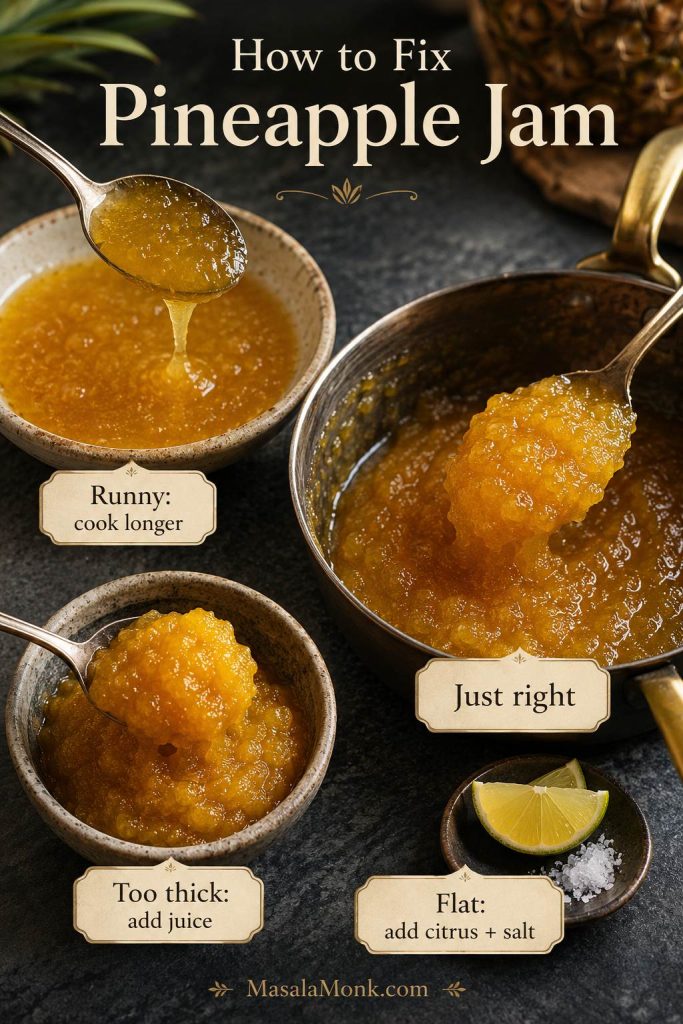
Jam is runny Not cooked long enough, pineapple was very juicy, or sugar was reduced too much Return to the pan and simmer 5–10 minutes longer. Test on a cold plate before jarring again.
Jam is too thick Over-reduced or cooked at too high a heat Warm gently with 1–2 tablespoons water, pineapple juice, or lemon juice until spreadable.
Jam tastes too sweet Pineapple was very ripe or canned in syrup Add a little more lemon or lime juice and a tiny pinch of salt. Next time, reduce sugar slightly.
Jam tastes flat Not enough acid or salt Add lemon or lime juice in small amounts, then taste again.
Preserves are tough or chewy Pineapple pieces were too large or included too much core Chop smaller next time. For this batch, cook gently with a splash of water until softer.
Jam is browning too fast Heat is too high or pan bottom is too thin Lower the heat, stir more often, and use a heavier pan next time.
Canned pineapple flavor tastes dull Pineapple was packed in syrup or tasted muted from the can Add lime juice, lemon zest, ginger, or a small splash of pineapple juice to brighten it.
Troubleshooting guide showing runny pineapple jam, just-right jam, too-thick jam, citrus, salt, and fix labels
Most pineapple jam problems are fixable. Cook runny jam longer, loosen an overly thick batch with a splash of juice, and brighten flat flavor with citrus plus a tiny pinch of salt.

The Most Common Texture Mistake

The easiest mistake is judging the jam while it is still hot. If it slides across the cold plate like syrup, give it another few minutes. If it mounds softly and looks shiny, stop before it turns sticky or overly firm.

Pineapple Jam Variations

Once you have the basic method, this recipe is easy to adapt. Keep the first batch simple, then try one of these variations.

Pineapple Lime Jam

Use lime juice instead of lemon juice and add ½–1 teaspoon lime zest near the end. This gives the jam a brighter tropical finish.

Pineapple Ginger Jam

Add 1–2 teaspoons freshly grated ginger while the fruit cooks. Ginger works especially well if you plan to use the jam as a glaze for chicken, pork, shrimp, or tofu.

Pineapple Vanilla Jam

Stir in ½–1 teaspoon vanilla after removing the jam from the heat. This makes it softer and more dessert-like, especially for pancakes, yogurt, cakes, or thumbprint cookies.

Pineapple Coconut Jam

Add 2–4 tablespoons finely shredded coconut near the end of cooking, or stir in toasted coconut after the jam cools. This leans into a piña colada-style flavor, especially if you like the pineapple-coconut pairing in these piña colada variations.

Pineapple Jalapeño Jam

Add 1–2 tablespoons finely minced jalapeño for a sweet-hot condiment. This is excellent with cream cheese, grilled meats, tacos, sandwiches, and cheese boards. For a shelf-stable spicy jam, use a tested canning method rather than improvising the acid and pepper ratio.

Brown Sugar Pineapple Preserves

Replace 2–4 tablespoons of the white sugar with brown sugar for a deeper caramel flavor. This version works especially well as a glaze for ham, pork, or grilled pineapple desserts.

Thicker Pineapple Pastry Filling

Cook the jam longer over low heat until it is thick enough to hold its shape. This is the better version for pineapple tarts, filled cookies, pastry pockets, and cake layers that need a firmer filling.

FAQs

Jam or preserves: what is the real difference?

The difference is mostly texture. Pineapple jam is smoother because the fruit is crushed or finely chopped. Pineapple preserves are chunkier, with small pieces of fruit suspended in syrup.

Do you need pectin for pineapple jam?

No, not for a refrigerator or freezer version. Pineapple, sugar, and citrus can cook down into a soft-set jam on their own. However, pectin is helpful if you want a firmer set, a quicker recipe, a lower-sugar method, or a canning formula designed for that purpose.

When is pineapple jam safe for pantry storage?

Pineapple jam is safe for pantry storage only when you follow a tested canning method with the correct sugar, acid, pectin if required, jar size, headspace, and processing time. The flexible no-pectin recipe on this page should be treated as refrigerator or freezer jam unless you switch to a tested canning formula.

What is the safest way to make lower-sugar pineapple jam?

Use a lower-sugar pectin method or keep the jam refrigerated or frozen. Reducing sugar in a regular no-pectin batch can make the texture softer, and it should not be treated as shelf-stable unless the recipe is designed for that kind of storage.

What changes when you use canned pineapple?

Canned pineapple is usually softer and wetter than fresh pineapple, so it may cook down faster or need a few extra minutes depending on how much juice is in the can. Use pineapple packed in juice when possible, and simmer until it becomes shiny, reduced, and spoonable.

What is the best pineapple for jam?

Fresh ripe pineapple gives the brightest flavor. Canned crushed pineapple in juice is the easiest option and works well for small-batch pineapple jam. Avoid syrup-packed pineapple unless you are prepared to reduce the sugar.

Should you use crushed pineapple or chunks for preserves?

Use chunks or diced pineapple for preserves because you want visible fruit pieces. Crushed pineapple is better for a smoother jam. If using canned chunks, cut them smaller so they soften evenly and spoon easily over biscuits, waffles, yogurt, or ice cream.

Why is my pineapple jam runny?

Runny pineapple jam usually needs more cooking time. Pineapple can release a lot of liquid, especially if it is very ripe or canned with juice. Return the jam to the pan and simmer until it looks reduced, shiny, and spoonable. Then test it on a cold plate before jarring again.

How long does homemade pineapple jam last?

For best quality, use refrigerator pineapple jam within about 2 weeks. Higher-sugar batches handled only with clean utensils may last longer, but discard the jar if you see mold, fizzing, fermentation, off smells, or any change that feels unsafe.

How do you make pineapple jam thicker for tarts?

Cook it longer in a wide pan over medium-low heat until most of the moisture evaporates. Tart filling should be much thicker than spreadable jam. It should move as a sticky mass, leave the pan bottom visible for longer, and hold its shape once cooled.

Where does pineapple jam taste best besides toast?

Pineapple jam is excellent with biscuits, scones, pancakes, waffles, yogurt, ice cream, cheesecake, thumbprint cookies, cakes, pork, chicken, shrimp, cheese boards, and tropical desserts. Chunkier pineapple preserves are especially good when you want visible fruit pieces.

Final Thoughts

The best pineapple jam tastes like concentrated pineapple: bright, tropical, sweet-tart, and just thick enough to spoon generously over whatever needs a little sunshine. Start with crushed pineapple for the easiest jam, switch to diced fruit when you want preserves, and cook it longer when you need a sturdy filling for tarts or pastries.

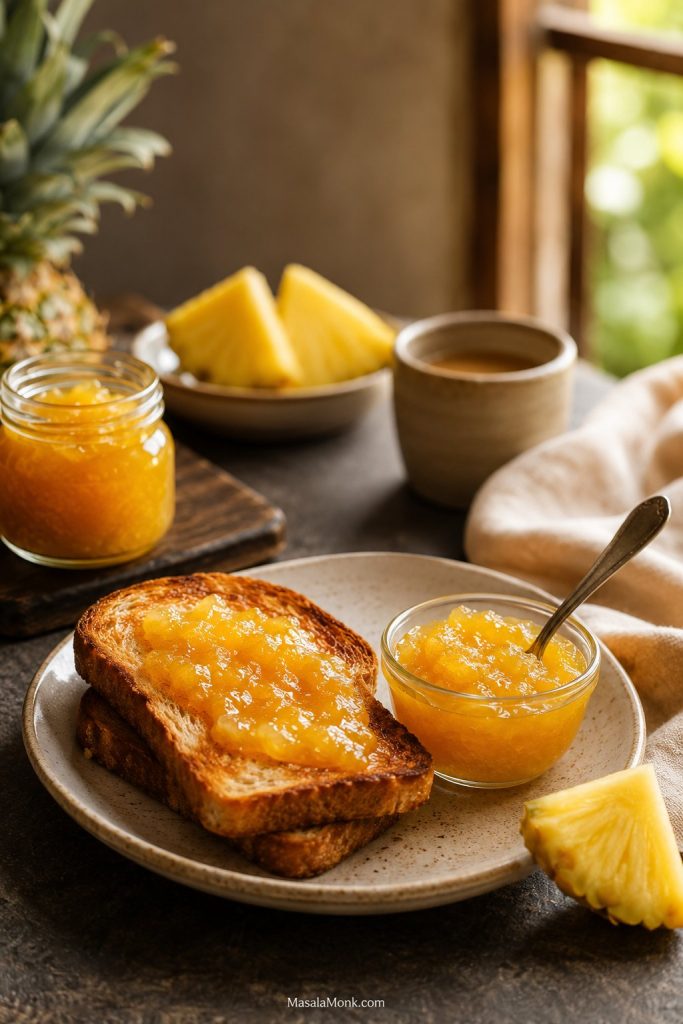
Toast spread with homemade pineapple jam beside a small bowl of chunky preserves, pineapple wedges, spoon, and warm breakfast setting
Once you understand the texture cues, pineapple jam becomes easy to customize. Keep it smooth for breakfast toast, or leave it chunkier when you want a dessert-style preserve.

After one batch, the texture cues become much easier to recognize. The bubbles slow down, the color deepens, the spoon leaves a trail, and the jam turns shiny enough to jar. That is the moment to stop, cool it, and decide where the first spoonful is going.

If you make it, notice whether you preferred fresh pineapple, canned crushed pineapple, or diced preserves. That one choice changes the texture more than anything else, and it is usually the difference between a smooth breakfast jam and a chunkier dessert-style preserve.

Posted on 8 Comments

Piña Colada: Classic Recipe + 10 Variations (Virgin & On the Rocks)

Moody piña colada in a hurricane glass with pineapple and cherry—classic recipe and variations by MasalaMonk.

Some drinks whisper “holiday,” yet the piña colada practically sings it. If you love that beach-in-a-glass feeling, you’re in the right place. First, we’ll lock in the frozen classic that tastes like sunshine. Next, we’ll switch to an easy piña colada on the rocks for no-blender nights. Then, because it’s fun to play, we’ll explore practical pina colada variations you can master in minutes—strawberry, mango, blue curaçao, coconut-rum, spiced-rum, vodka, tequila, skinny, keto-leaning, and frozen pineapple. Finally, since not every occasion calls for alcohol, we’ll craft a zero-proof version that’s indulgent without spirits.

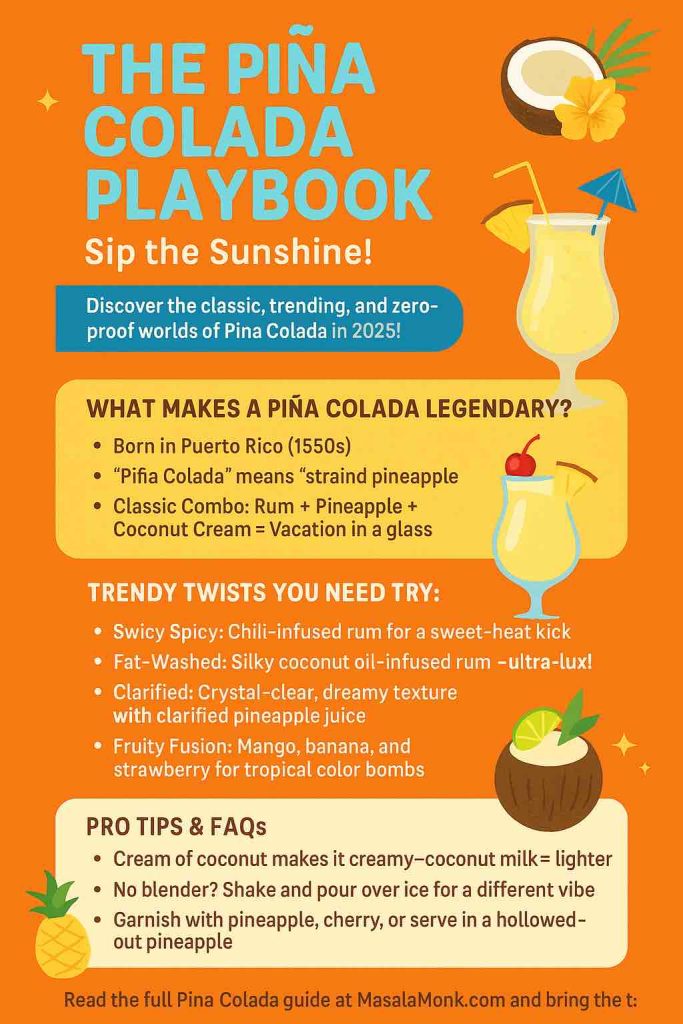
Before we blend, a tiny language detour helps. In Spanish, piña colada literally means “strained pineapple,” a nod to the pressed juice at the drink’s core — see Etymonline’s word history and the concise entry at Merriam-Webster. Meanwhile, let’s keep the focus on flavor and technique.

What does piña colada mean?
Piña colada means “strained pineapple.” Traditionally, it pairs pineapple with coconut and rum; however, you can easily make a virgin piña colada by skipping the rum and balancing sweetness with a little lime or a splash of coconut water.

Because stories matter almost as much as flavor, here’s the short origin postcard. Puerto Rico celebrates the piña colada as its national cocktail, and San Juan still debates where it was first poured. Many point to Ramón “Monchito” Marrero at the Caribe Hilton in the 1950s, while others mention competing claims across town. For a friendly primer, read Discover Puerto Rico’s guide, and for the hotel’s version of events, browse the Caribe Hilton history page.


Frozen vs. On the Rocks: choose your texture before you start

First, decide your vibe. Frozen is creamy, slushy, and a touch dessert-leaning—perfect for lingering afternoons or sunny patios. On the rocks, by contrast, is shaken hard with ice and served over fresh cubes; it’s quicker, brighter, and lets rum aromas peek through. As a result, many people pick frozen for weekends and rocks for weeknights.

If you often serve a crowd, prep a thick frozen base and, meanwhile, keep extra pineapple juice chilled. Then, when someone wants a lighter drink, shake a single serving with a splash of juice and strain it over ice for an instant piña colada on the rocks. If you prefer a visual of the shaken style, this walkthrough for a Piña Colada on the Rocks (Shaken) mirrors the method below.


Classic Piña Colada (Frozen)

Why it works. Pineapple brings tang and perfume; cream of coconut adds velvety body and gentle sweetness; white rum lifts aromatics so the finish feels sunny rather than heavy. For proportions, the classic split of rum + pineapple + cream of coconut gives a balanced canvas; from there, adjust to your blender and your preferred sweetness.

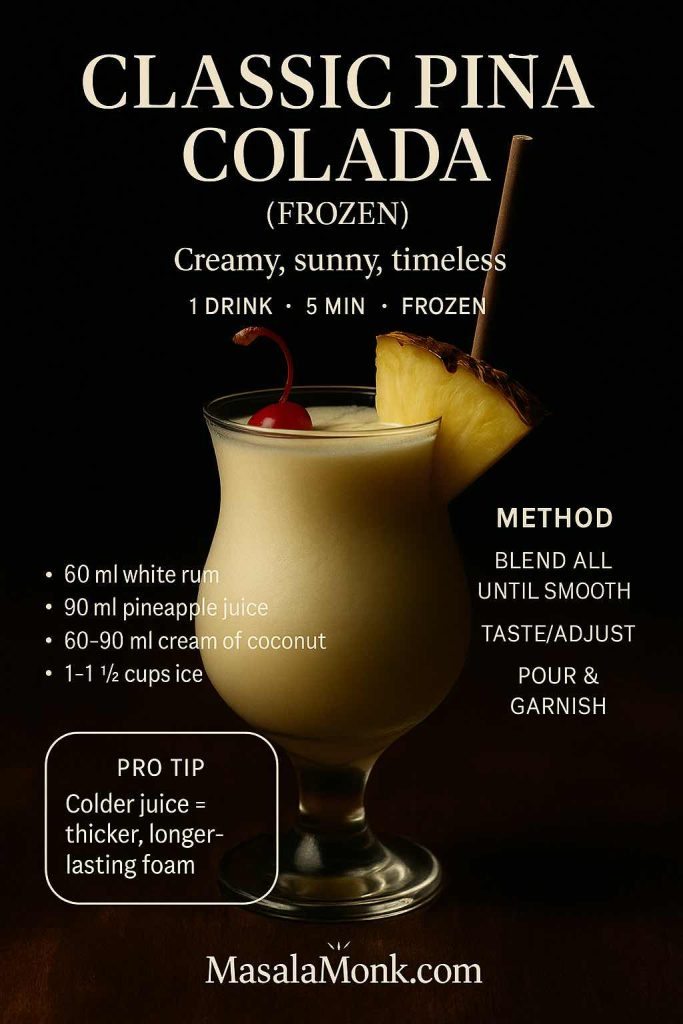
Classic frozen piña colada recipe card in a hurricane glass with pineapple and cherry—MasalaMonk footer
Creamy, sunny, timeless. Use pre-chilled juice for thicker, longer-lasting foam and that luxe, dessert-leaning texture.

Ingredients (1 drink)

  • 60 ml white rum (¼ cup)
  • 90 ml pineapple juice (⅜ cup)
  • 60–90 ml cream of coconut (¼–⅜ cup), to taste
  • 1–1½ cups ice
  • Pineapple wedge and cherry, to garnish

Method

  1. Chill a tall glass; meanwhile, add rum, pineapple juice, and cream of coconut to the blender.
  2. Add ice and blend until smooth and pourable. If the blades stall, loosen with a small splash of juice.
  3. Taste and adjust—if it’s too thick, a little more juice helps; if sweetness lingers, a few drops of lime tidy the finish.
  4. Pour, garnish, and serve immediately for maximum frostiness.

Coconut note. Cream of coconut isn’t the same as coconut milk or unsweetened coconut cream. Because cream of coconut is sweetened and thicker, it creates that signature silky texture. If you choose coconut milk for a “skinny” profile, add a touch of simple syrup and expect a lighter body.

Quick upgrades. Keep pineapple juice cold; colder inputs blend better and hold foam longer. Use frozen pineapple in place of some ice for louder fruit with less dilution. If your blender hesitates, pulse first, then blend continuously; layering liquids before ice prevents cavitation.


Piña Colada on the Rocks (Quick Method)

If you want the flavor without the thickness, the shaken version is a weeknight hero. It preserves the tropical profile, trims the richness, and—because it’s fast—fits Tuesday just as well as Saturday.

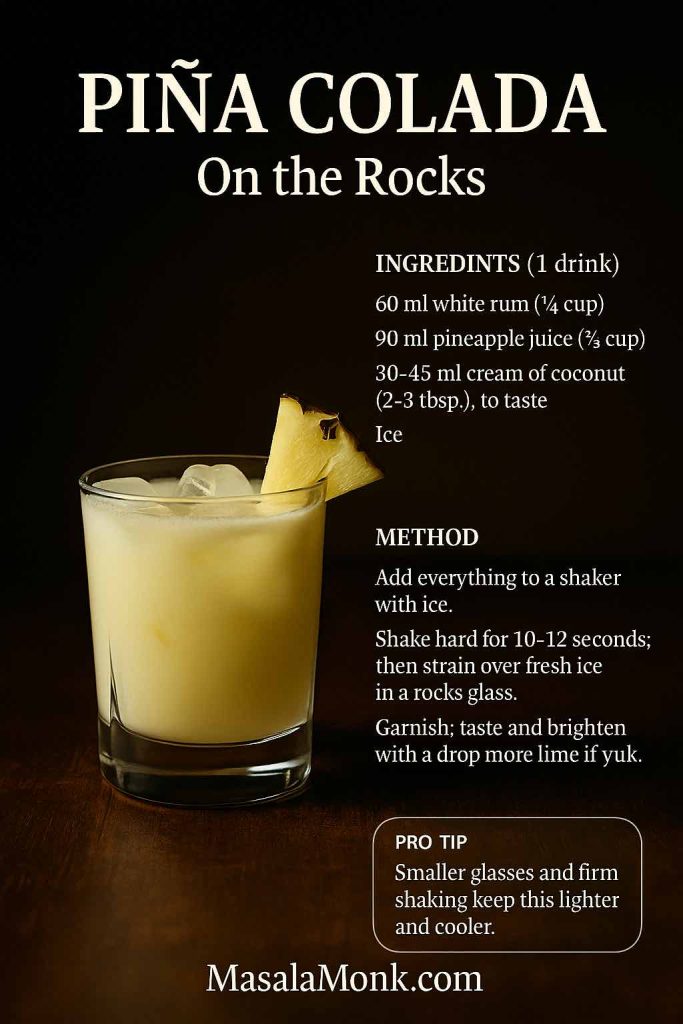
Piña Colada on the Rocks recipe card in moody portrait—rocks glass with pineapple wedge, MasalaMonk footer.
On-the-rocks keeps the colada bright: hard shake, fresh ice, compact glass. Perfect for quick weeknights without the blender.

Ingredients (1 drink)

  • 60 ml white rum (¼ cup)
  • 90 ml pineapple juice (⅜ cup)
  • 30–45 ml cream of coconut (2–3 tbsp), to taste
  • 10 ml fresh lime juice (2 tsp, optional)
  • Ice
  • Pineapple wedge or citrus peel, to garnish

Method

  1. Add everything to a shaker with ice.
  2. Shake hard for 10–12 seconds; then strain over fresh ice in a rocks glass.
  3. Garnish; taste and brighten with a drop more lime if you like.

Why you’ll love it. Shaking gently aerates and adds just enough dilution to feel refreshing, not heavy. Smaller glasses (180–240 ml / 6–8 oz) keep the drink cold and focused. Moreover, when you’re making rounds, you can pre-mix pineapple juice + cream of coconut in a bottle; then just add rum and shake to order.


Virgin Piña Colada (and Virgin Piña Colada on the Rocks)

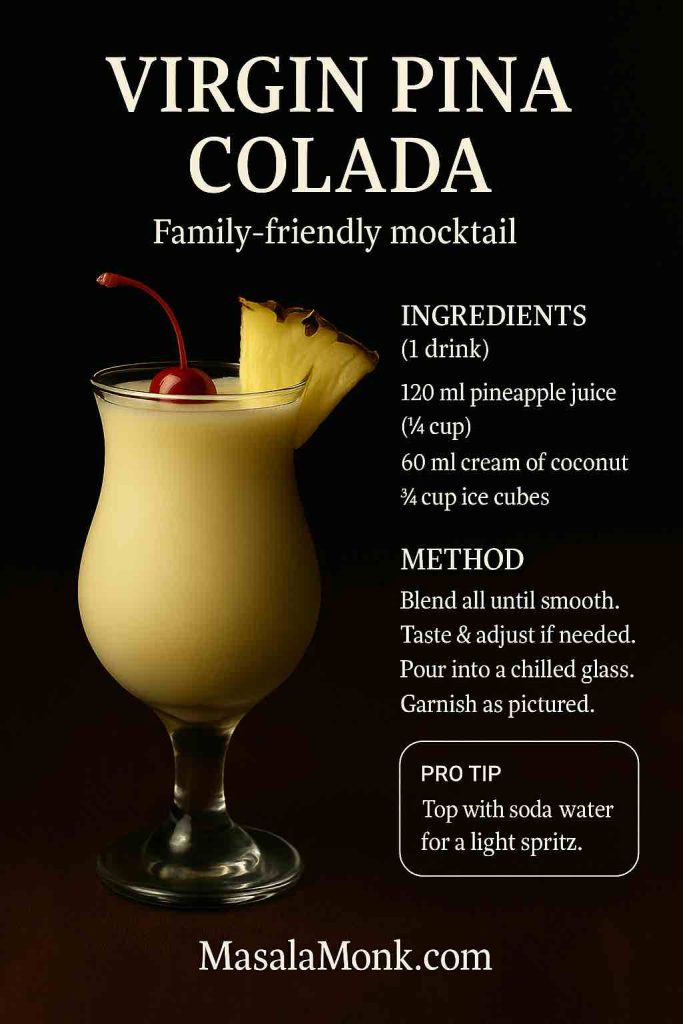
Virgin piña colada meaning: a non-alcoholic piña colada that keeps pineapple and coconut while skipping rum. For a lighter texture, shake on the rocks and finish with lime.

Virgin piña colada recipe card—non-alcoholic, moody portrait with MasalaMonk footer
Zero-proof, 100% tropical; balance sweetness with lime or a splash of chilled coconut water.

Ingredients (1 drink)

  • 120 ml pineapple juice (½ cup)
  • 45–60 ml cream of coconut (3–4 tbsp), to taste
  • ½–1 cup ice (for frozen) or a shaker of ice (for rocks)
  • Optional: 10–15 ml fresh lime (2–3 tsp) or 30–60 ml coconut water (2–4 tbsp)

Method

  • Frozen: add juice and cream of coconut to a blender; add ice; blend until smooth. Adjust with a splash of juice or coconut water if needed.
  • On the rocks: shake juice and cream of coconut with ice; strain over fresh ice. Add lime to taste.

Keep exploring (internal). For lighter, long drinks that echo these flavors, see Coconut Water Cocktails. If you enjoy mint and tang, try Pineapple Mojito Mocktails. For low-sugar days, browse Keto Mocktails.


How to build pina colada variations without a recipe

Because once you nail the base, it’s easy to improvise. First, keep the triangle of pineapple–coconut–spirit intact. Next, add an accent (fruit, spice, citrus, or liqueur). Then, adjust sweetness and texture in small steps. Finally, decide on frozen or rocks, and garnish with intention. With that in mind, here are ten reliable pina colada variations you can pour anytime.


Top 10 Pina Colada Variations

1) Strawberry Piña Colada (Lava-Flow: Fruity Pina Colada Variation)

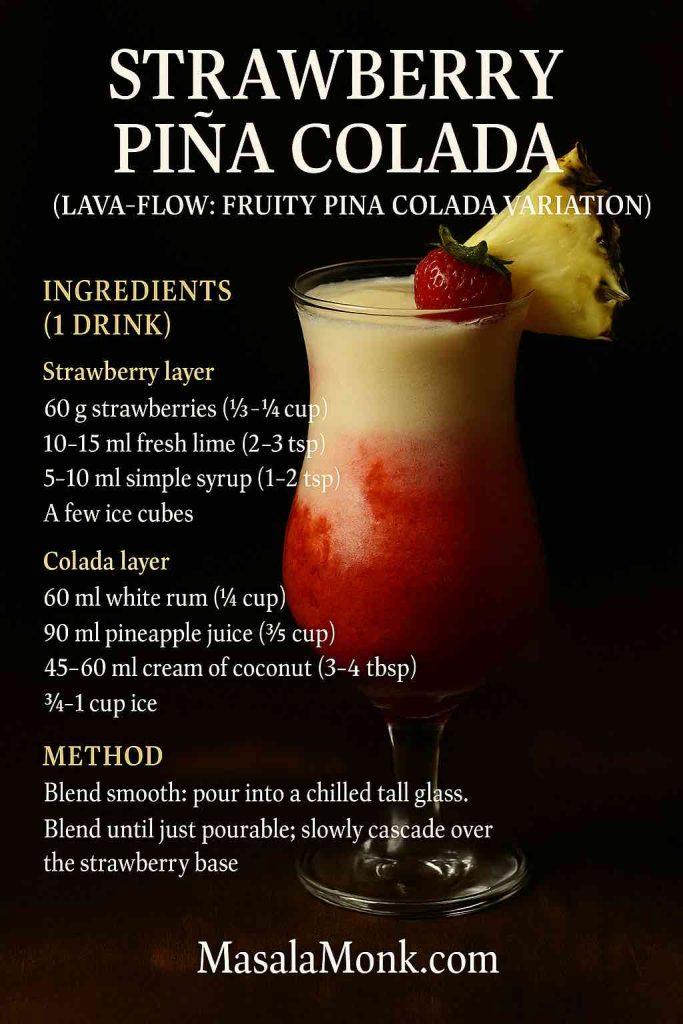
When you want playful drama, strawberry is the simplest path. First, blend a thick strawberry base; next, blend your colada until silky; then, slowly pour it over the red layer so the “lava” rises in ribbons. As a result, you get classic coconut-pineapple comfort lifted by bright berry zip. Finally, keep both layers fairly thick so they ripple instead of mixing.

Strawberry Lava-Flow piña colada layered recipe card—red strawberry base and creamy colada, MasalaMonk footer.
Playful drama, classic comfort: keep both layers thick so the red “lava” ribbons instead of mixing—instant showstopper.

Strawberry layer (1 drink)

  • 60 g strawberries (⅓–½ cup)
  • 10–15 ml fresh lime (2–3 tsp)
  • 5–10 ml simple syrup (1–2 tsp)
  • A few ice cubes
    Blend smooth; pour into a chilled tall glass.

Colada layer

  • 60 ml white rum (¼ cup)
  • 90 ml pineapple juice (⅜ cup)
  • 45–60 ml cream of coconut (3–4 tbsp)
  • ¾–1 cup ice
    Blend until just pourable; slowly cascade over the strawberry base.

Pro tip. If berries are peak-sweet, reduce or skip syrup; conversely, if they’re tart, add an extra teaspoon.


2) Mango Colada (Tropical Pina Colada Variation)

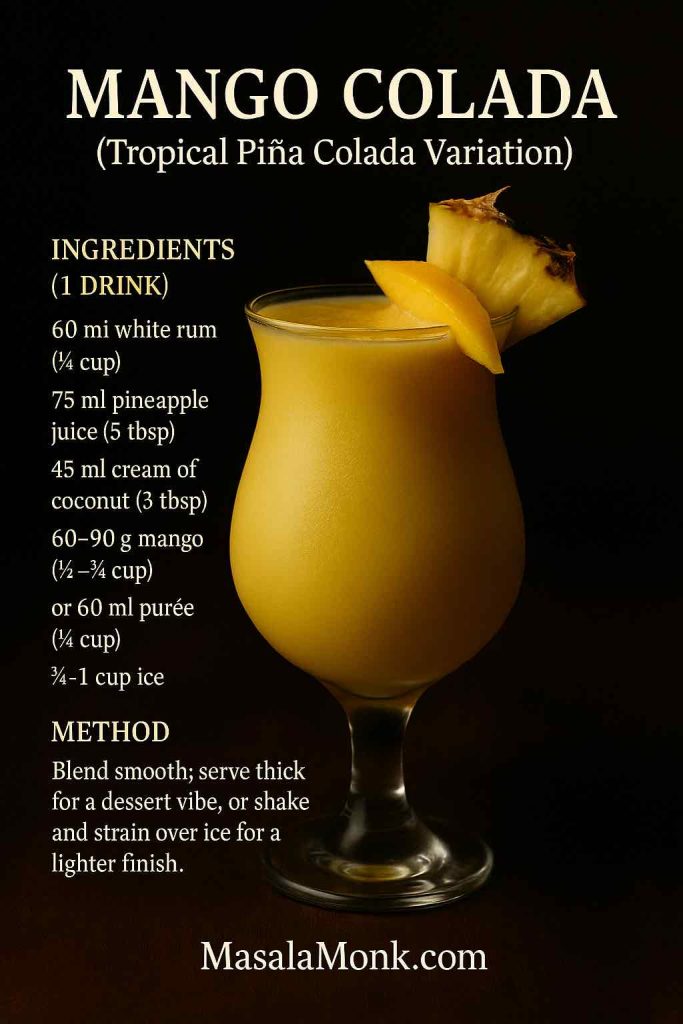
Mango slides in silkily and, meanwhile, softens acidity. Next, use ripe fruit or a quality purée; if the texture feels dense, loosen with a splash of pineapple juice. Finally, a tiny pinch of salt heightens the mango’s aroma without reading “salty,” and a teaspoon of lime adds sparkle.

Mango Colada recipe card—golden cocktail with mango and pineapple garnish, moody portrait, MasalaMonk footer
Mango slides in silkily and softens acidity; loosen with pineapple juice if dense, add a pinch of salt and 1 tsp lime to make aromas pop.

For 1 drink

  • 60 ml white rum (¼ cup)
  • 75 ml pineapple juice (5 tbsp)
  • 45 ml cream of coconut (3 tbsp)
  • 60–90 g mango (½–¾ cup) or 60 ml purée (¼ cup)
  • ¾–1 cup ice
    Blend smooth; serve thick for a dessert vibe, or shake and strain over ice for a lighter finish.

Love mango + vodka? Try these riffs: Mango Vodka Cocktail Drinks (Base + 7 Variations).


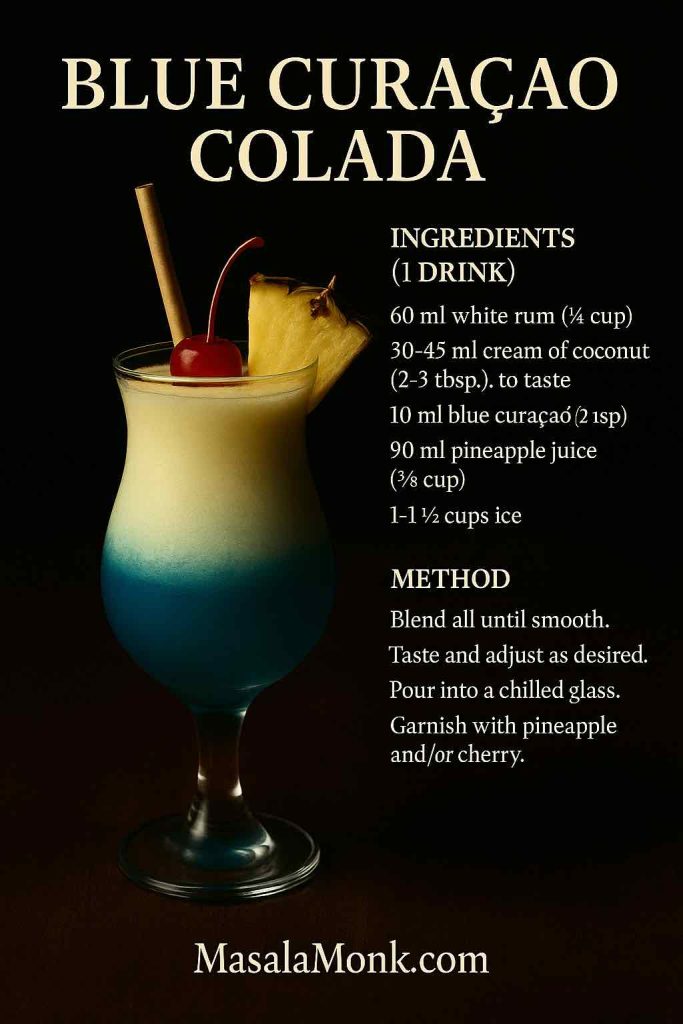
3) Blue Curaçao Colada (Blue Pina Colada Variation)

Sometimes you want familiar comfort and a little showmanship. Blue curaçao adds gentle citrus notes and that ocean-blue hue. Importantly, this isn’t a Blue Hawaii (a sharper, vodka-leaning sour); instead, it lands closer to a Blue Hawaiian, where coconut and pineapple still lead — compare Blue Hawaiian vs. Blue Hawaii.

Blue curaçao piña colada recipe card—ocean-blue hue, premium moody lighting
Coconut-pineapple comfort with coastal color—keep dilution low so the blue stays vivid.

For 1 drink

  • 45 ml white rum (3 tbsp)
  • 15 ml blue curaçao (1 tbsp)
  • 90 ml pineapple juice (⅜ cup)
  • 45–60 ml cream of coconut (3–4 tbsp)
  • ¾–1 cup ice
    Blend or shake; add a few drops of lime only if sweetness lingers.

Color tip. Add ice gradually. Over-dilution can dull the blue.


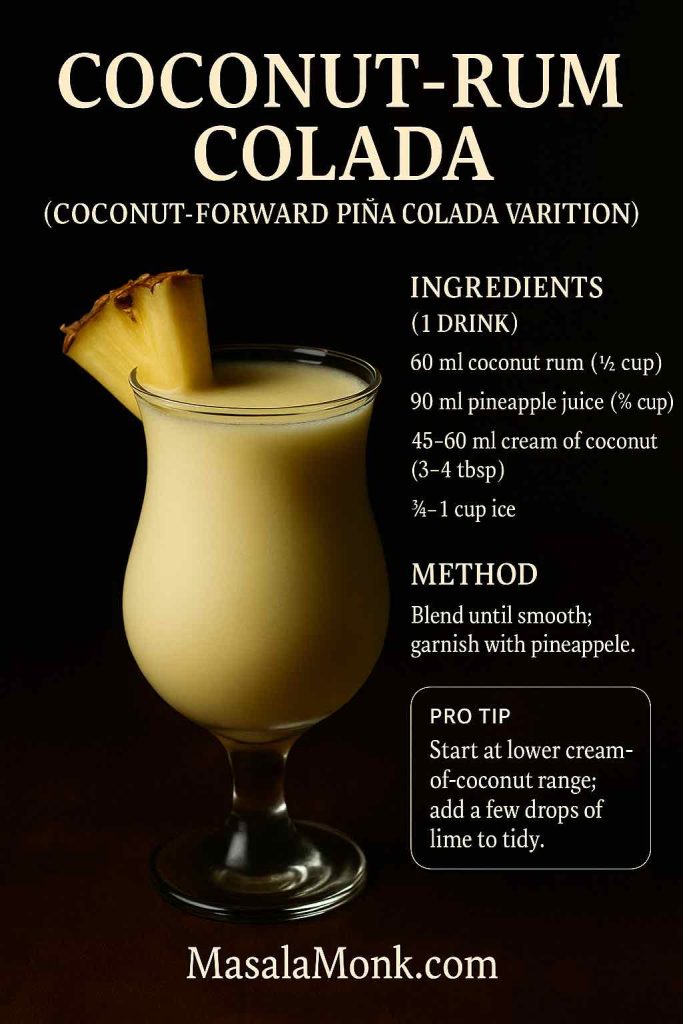
4) Coconut-Rum Colada (Coconut-Forward Pina Colada Variation)

If you’re craving even more coconut, this is your lane. First, switch to coconut rum; then, because it’s sweeter than white rum, start at the lower end of the cream-of-coconut range. Afterward, taste and—if needed—counter with a few drops of lime so the finish stays tidy. Consequently, the drink reads lush and aromatic rather than sugary.

Coconut-Rum Colada recipe card—coconut-forward piña colada in a hurricane glass, moody portrait, MasalaMonk footer
Coconut-forward and lush: start at the lower cream-of-coconut range (coconut rum is sweeter); tidy the finish with a few drops of lime.

For 1 drink

  • 60 ml coconut rum (¼ cup)
  • 90 ml pineapple juice (⅜ cup)
  • 45–60 ml cream of coconut (3–4 tbsp)
  • ¾–1 cup ice
    Blend until smooth; garnish with pineapple.

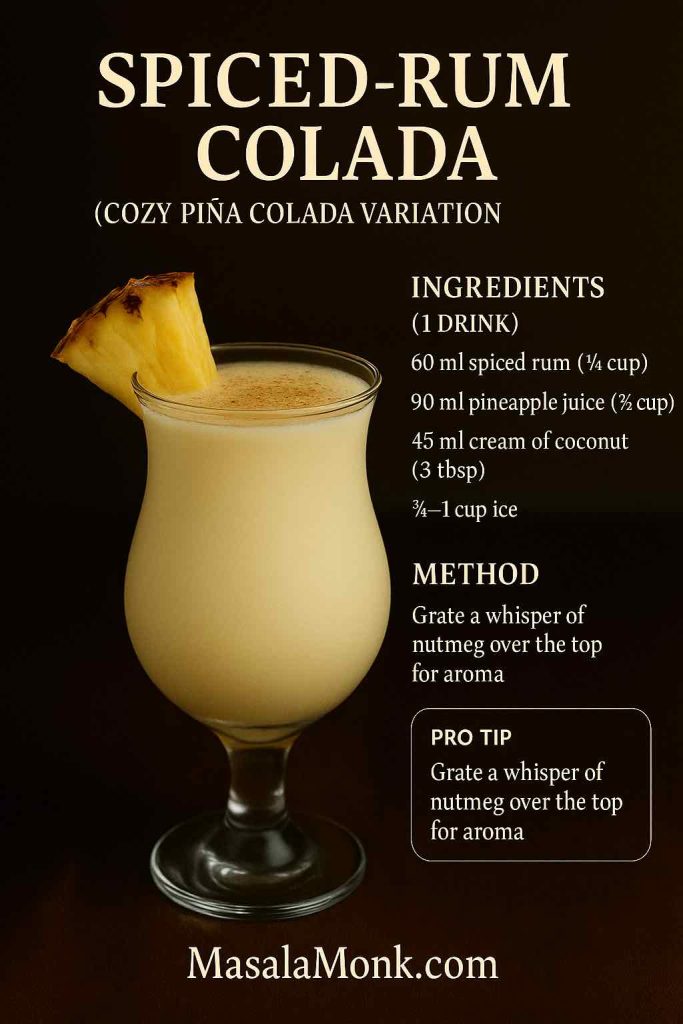
5) Spiced-Rum Colada (Cozy Pina Colada Variation)

When you want warmth and depth, spiced rum brings vanilla and baking-spice notes that cozy up to pineapple and coconut. Next, keep the cream of coconut moderate so the spices shine; then, grate a whisper of nutmeg over the top for aroma. Overall, you get a beachy drink with sweater-weather soul.

Spiced-Rum Colada recipe card—creamy cocktail with nutmeg and pineapple garnish, moody portrait, MasalaMonk footer
Vanilla and baking-spice notes meet pineapple-coconut; keep cream of coconut moderate and finish with a whisper of nutmeg.

For 1 drink

  • 60 ml spiced rum (¼ cup)
  • 90 ml pineapple juice (⅜ cup)
  • 45 ml cream of coconut (3 tbsp)
  • ¾–1 cup ice
    Blend, taste, and add 1 tsp lime if you want extra lift; serve frozen or shake and strain over ice.

6) Vodka Colada (Chi-Chi: Clean Pina Colada Variation)

Prefer a cleaner finish? In that case, swap rum for vodka. Because vodka is neutral, balance depends on your pineapple and coconut; therefore, taste before you pour. Meanwhile, serving tall over fresh ice emphasizes that breezy, easy-drinking feel, and a small pinch of salt can quietly boost pineapple.

For 1 drink

  • 60 ml vodka (¼ cup)
  • 90 ml pineapple juice (⅜ cup)
  • 45–60 ml cream of coconut (3–4 tbsp)
  • ¾–1 cup ice
    Blend or shake; adjust with a few drops of lime if it tastes flat.

7) Tequila Colada (Crisp Pina Colada Variation)

When you’re in the mood for tropical with a little edge, tequila adds bright minerality that pairs beautifully with pineapple and coconut. Generally, blanco keeps it crisp; meanwhile, a tiny pinch of salt makes the fruit sing. Finally, a lime wheel garnish sets the tone.

For 1 drink

  • 60 ml blanco tequila (¼ cup)
  • 90 ml pineapple juice (⅜ cup)
  • 45–60 ml cream of coconut (3–4 tbsp)
  • Small pinch of salt (optional)
  • ¾–1 cup ice
    Blend until silky; garnish and serve.

Variation. For a Margarita-leaning twist, add 10–15 ml triple sec and shake on the rocks.


8) Skinny Colada (Light Pina Colada Variation)

Sometimes you want the flavor without the heft. So, swap in coconut milk and use just enough syrup to keep things balanced. Additionally, a squeeze of lime adds lift without extra calories; furthermore, shaking and serving on the rocks keeps it especially light and bright. Because coconut milk is thinner than cream of coconut, expect a silkier, less dessert-like body.

Nutrition-curious? See Coconut Milk Nutrition Facts & Glycemic Index.

For 1 drink

  • 60 ml white rum (¼ cup)
  • 90 ml pineapple juice (⅜ cup)
  • 45 ml coconut milk (3 tbsp)
  • 5–15 ml simple syrup (1–3 tsp), to taste
  • ¾–1 cup ice
    Blend or shake; sweeten a teaspoon at a time until it lands just right.

9) Keto-Leaning Colada (Lower-Sugar Pina Colada Variation)

If you’re watching sugar, this is the smart pivot. First, keep pineapple modest. Next, use unsweetened coconut cream. Then, sweeten with your preferred keto option. Finally, swap some ice for frozen pineapple so body improves without a big sugar bump. For more low-carb ideas, browse Keto Mocktails.

For 1 drink

  • 60 ml white rum (¼ cup)
  • 60–75 ml pineapple juice (¼–⅓ cup) or a mix of juice + water
  • 45 ml unsweetened coconut cream (3 tbsp)
  • Keto sweetener, to taste
  • ¾–1 cup ice
    Blend smooth; finish with a squeeze of lime to sharpen the edges.

Optional. A drop or two of coconut extract boosts aroma without adding carbs.


10) Frozen Pineapple Colada (Maximum-Fruit Pina Colada Variation)

For maximum fruit and minimal dilution, frozen pineapple replaces much of the ice. Consequently, the texture stays lush, the flavor gets louder, and the chill lasts to the final sip. If your blender struggles, pulse a few times before running continuously; then, loosen with a splash of juice only if necessary.

For 1 drink

  • 60 ml white rum (¼ cup)
  • 60 ml pineapple juice (¼ cup)
  • 45–60 ml cream of coconut (3–4 tbsp)
  • 1 heaping cup frozen pineapple chunks
    Blend thick and silky; pour into a tall, well-chilled glass.

Types of Coladas (Piña Colada Type Drinks)

Although the piña colada is the icon, there’s a whole colada family. For example, try:

  • Piña Verde: herbal green notes over the pineapple-coconut base.
  • Banana Colada: thicker, softer mouthfeel from ripe banana.
  • Champagne Colada: topped with sparkling wine for a celebratory finish.
  • Mango Colada: silkier fruit body and perfume.
  • Blue Colada: blue curaçao for citrus notes and a vivid hue.

Consequently, you can match mood—lush and frozen for weekends, or bright and shaken on busy nights. Moreover, these quick pivots turn the classic into a set of pina colada variations that never feel repetitive.


Drinks Similar to a Piña Colada

If you enjoy the piña colada, you’ll likely love drinks similar to a piña colada. First, try the Miami Vice—half strawberry daiquiri, half piña colada, fully festive; the recipe on Liquor.com is reliable. Next, mix a Painkiller—rum, pineapple, orange, and cream of coconut with a nutmeg finish—using the official spec on Pusser’s Rum.

Finally, for fast color gradients and sweet-tart layers, explore Mocktails with Grenadine for non-alcoholic ideas you can adapt.


Ingredient buying guide (quick but useful)

Pineapple juice. Fresh-pressed tastes bright and aromatic; however, high-quality canned juice blends smoothly and is wonderfully consistent. Keep it chilled and use it within a few days for the best foam and flavor.

Cream of coconut vs. coconut milk. Coconut milk is unsweetened and lighter; cream of coconut is sweetened and thicker, designed for cocktails. If you substitute, rebalance sweetness and expect a different mouthfeel. For clarity, this guide to cream of coconut vs. coconut milk explains the swap smartly.

Rum. A clean white rum is the classic choice. If you prefer deeper flavor, aged or spiced rum works beautifully—just reduce cream of coconut slightly or add a little lime so sweetness doesn’t dominate.

Citrus. Fresh lime is your editor. Even a teaspoon or two can transform a heavy finish into a bright one.

Salt. A literal pinch can make fruit taste “riper.” Use sparingly and always taste.


Technique tips that instantly upgrade your glass

  • Chill everything. Cold inputs blend smoother and hold foam longer.
  • Liquids first, ice last. In blenders, layering liquids before ice helps avoid cavitation.
  • Pulse, then finish. Short pulses break big pieces; a brief continuous blend polishes texture.
  • Shake like you mean it. For rocks versions, firm shaking (10–12 seconds) delivers perfect chill and dilution.
  • Mind your glassware. Tall glasses flatter frozen drinks; compact rocks glasses keep shaken versions bright and cold.
  • Garnish with intent. Pineapple fronds, a fresh wedge, or even a citrus peel add aroma where your nose meets the glass.

Make-ahead, batching, and easy swaps

No cream of coconut? Substitute coconut milk plus simple syrup, adjusting in tiny steps. The texture will be lighter but still silky.

No blender? Shake the on-the-rocks version hard with cracked ice. If you want extra body, add a small spoon of coconut milk before shaking.

Dairy-free needs? These recipes are naturally dairy-free; if you add ice cream for a dessert riff, reduce sweetener and add a pinch of salt.

Batching for parties. Blend a quadruple-size base without ice; chill deeply. Just before serving, either blend portions with ice for frozen service or shake portions with ice for rocks service. Because melted ice thins sweetness, taste after chilling and bump cream of coconut or lime by a teaspoon if needed.

Make-ahead shortcut. Pre-blend a “colada mix” by stirring equal parts cream of coconut and pineapple juice; keep it cold. During service, add spirit and ice, then blend or shake. This saves time and keeps ratios consistent across a long evening.

Prefer lighter long pours? Skim ideas in Tropic Like It’s Hot: Coconut Water Cocktails for Summer.


Pina colada flavored drinks: quick pivots you can do in 60 seconds

Sometimes you don’t want a whole new recipe—just a shift in mood. Therefore, try these tiny changes: add a teaspoon of lime for snap; swap in coconut milk for a lighter feel; drop in 15 ml blue curaçao for color; stir in 30 ml mango purée for silk; or finish with grated nutmeg for warmth. In short, these micro-moves turn the base into pina colada variations that stay familiar yet fresh.


A friendly close

You now have a complete island toolkit: a dependable classic, a quick piña colada on the rocks, a zero-proof path, and ten flexible pina colada variations that keep things interesting. Start with the frozen original; then try the lighter rocks version on a weeknight. Once you know which texture feels most like you, branch into strawberry, mango, or blue curaçao and see what sticks.

When you land on a new favorite—or discover a clever garnish—share it so others can try it too. Tropical, relaxed, and simple—that’s the piña colada at its best.

FAQs

1) What does “piña colada” mean?

Simply put, it means “strained pineapple.” In other words, the name points to fresh or pressed pineapple juice at the drink’s heart. From there, coconut and rum complete the classic trio; however, you can skip the rum for a virgin version and still keep the sunny flavor.

2) Is the piña colada Puerto Rican?

Yes. Most stories trace the cocktail to San Juan, Puerto Rico. Consequently, you’ll often see it called the island’s national drink. While the inventor is debated, the flavor profile—pineapple, coconut, and rum—clearly began there and then traveled the world.

3) Frozen vs. on the rocks: which piña colada should I choose?

It depends on mood. Frozen is lush, creamy, and a little dessert-like; meanwhile, piña colada on the rocks feels lighter and brighter because hard shaking adds chill and subtle dilution. So, choose frozen for lazy afternoons and rocks for quick weeknights.

4) How do I make a virgin piña colada (including on the rocks)?

It’s easy. First, combine pineapple juice with cream of coconut; then, either blend with ice for a frosty treat or shake hard and serve over fresh ice for a lighter sip. Finally, a squeeze of lime balances sweetness, and a splash of coconut water lengthens the drink without extra sugar.

5) What are the most popular pina colada variations?

Start with simple winners: Strawberry (lava-flow), Mango, Blue Curaçao (Blue Colada), Coconut-Rum, Spiced-Rum, Vodka (Chi-Chi), Tequila, Skinny, Keto-leaning, and Frozen Pineapple. Because each keeps the pineapple-coconut core, you can swap spirits or fruit and still taste “piña colada.”

6) Which rum is best—white, coconut, or spiced?

As a rule, white rum is clean and versatile. Coconut rum adds extra coconut sweetness; therefore, reduce cream of coconut slightly or add a few drops of lime. Spiced rum brings vanilla and baking-spice notes; consequently, the drink feels cozier, especially with a pinch of nutmeg.

7) Can I make a piña colada with vodka or tequila?

Absolutely. Vodka creates a silky, neutral canvas where pineapple shines; meanwhile, tequila (especially blanco) adds crisp minerality that many love. Accordingly, both are recognized pina colada variations—great for guests who don’t usually choose rum.

8) Cream of coconut vs. coconut milk: what’s the difference?

Cream of coconut is sweetened and thick, which yields that classic, velvety texture. Coconut milk is unsweetened and lighter. Therefore, if you substitute coconut milk, add a little simple syrup and expect a silkier, less dessert-like body—perfect for skinny riffs.

9) How can I make a skinny or keto piña colada?

For skinny, use coconut milk and sweeten lightly, then brighten with lime. For keto-leaning, use unsweetened coconut cream, keep pineapple juice modest (or cut with water), and sweeten with your preferred keto option. Finally, blending a few frozen pineapple chunks boosts body without a big sugar hit.

10) Can I make a piña colada without a blender?

Yes—shake it. First, combine pineapple juice, cream of coconut, and spirit in a shaker with plenty of ice; next, shake hard for 10–12 seconds; then, strain over fresh ice. As a result, you’ll get a piña colada on the rocks that’s fast, cold, and refreshingly light.

11) What drinks are similar to a piña colada?

If you like the style, try a Miami Vice (half strawberry daiquiri, half colada) or a Painkiller (rum, pineapple, orange, cream of coconut, nutmeg). Likewise, explore the broader family of coladas and easy pina colada variations like Blue Colada or Banana Colada when you want something familiar yet new.

12) What are the main “types of coladas” (piña colada type drinks)?

Think of “colada” as a creamy coconut family. For example, there’s Piña Verde (herbal), Banana Colada (thicker and softer), Champagne Colada (bubbly and celebratory), Mango Colada (silky and perfumed), and Blue Colada (citrusy and vivid). Accordingly, you can match the drink to the moment.

13) How do I fix a piña colada that’s too sweet, too thin, or too thick?

If it’s too sweet, add a few drops of lime or a splash of pineapple juice for acidity, if it’s too thin, blend in frozen pineapple or a bit more ice and if it’s too thick, loosen with a small splash of juice. Meanwhile, a tiny pinch of salt can quietly make fruit taste “riper.”

14) What garnish works best—and does it change the flavor?

A pineapple wedge, fronds, or a lime wheel adds aroma right where you sip. Additionally, a gentle nutmeg grate complements spiced-rum coladas. Because your nose leads the experience, even simple garnishes make each of your pina colada variations feel more polished.

15) Can I batch piña coladas for a party?

Definitely. First, blend a big base of pineapple juice and cream of coconut (without ice) and chill it well. Next, add rum to individual portions and either blend with ice for frozen drinks or shake on the rocks to order. Finally, taste after chilling; you may need a touch more lime or cream of coconut to keep balance.
16) What’s the easiest way to try multiple pina colada variations in one night?

Start with a classic base and pour it into two small blenders or shakers. Then, split accents: add strawberry to one and mango to the other; or try blue curaçao in one and tequila in the next. Consequently, you’ll compare flavors side by side without remaking the whole recipe.

17) Are “pina colada flavored drinks” different from full coladas?

Sometimes, yes. Think of them as quick pivots: add mango purée, a dash of blue curaçao, a squeeze of lime, or even coconut milk instead of cream of coconut. In short, these small tweaks turn the base into pina colada flavored drinks that stay familiar yet feel brand new.

18) What glass should I use—tall or rocks?

Use a tall, chilled glass for frozen coladas to keep the slush cold and lively. Conversely, choose a compact rocks glass (about 180–240 ml) for piña colada on the rocks so the flavors stay focused while the ice chills, not waters down, the drink.

19) How do I keep my piña colada cold outdoors without watering it down?

First, chill your glassware. Next, use pre-chilled juice and spirit. Then, for frozen versions, swap part of the ice for frozen pineapple so flavor stays loud as the drink warms. Finally, enjoy promptly—because even the best slush softens in the sun.

20) What single tip improves every pina colada variation?

Taste, then tweak in tiny steps. Add sweetness in teaspoons, lime in ½-teaspoon splashes, and ice in small handfuls. As a result, mouthfeel, balance, and aroma land exactly where you want—no matter which pina colada variations you’re trying tonight.

Posted on 2 Comments

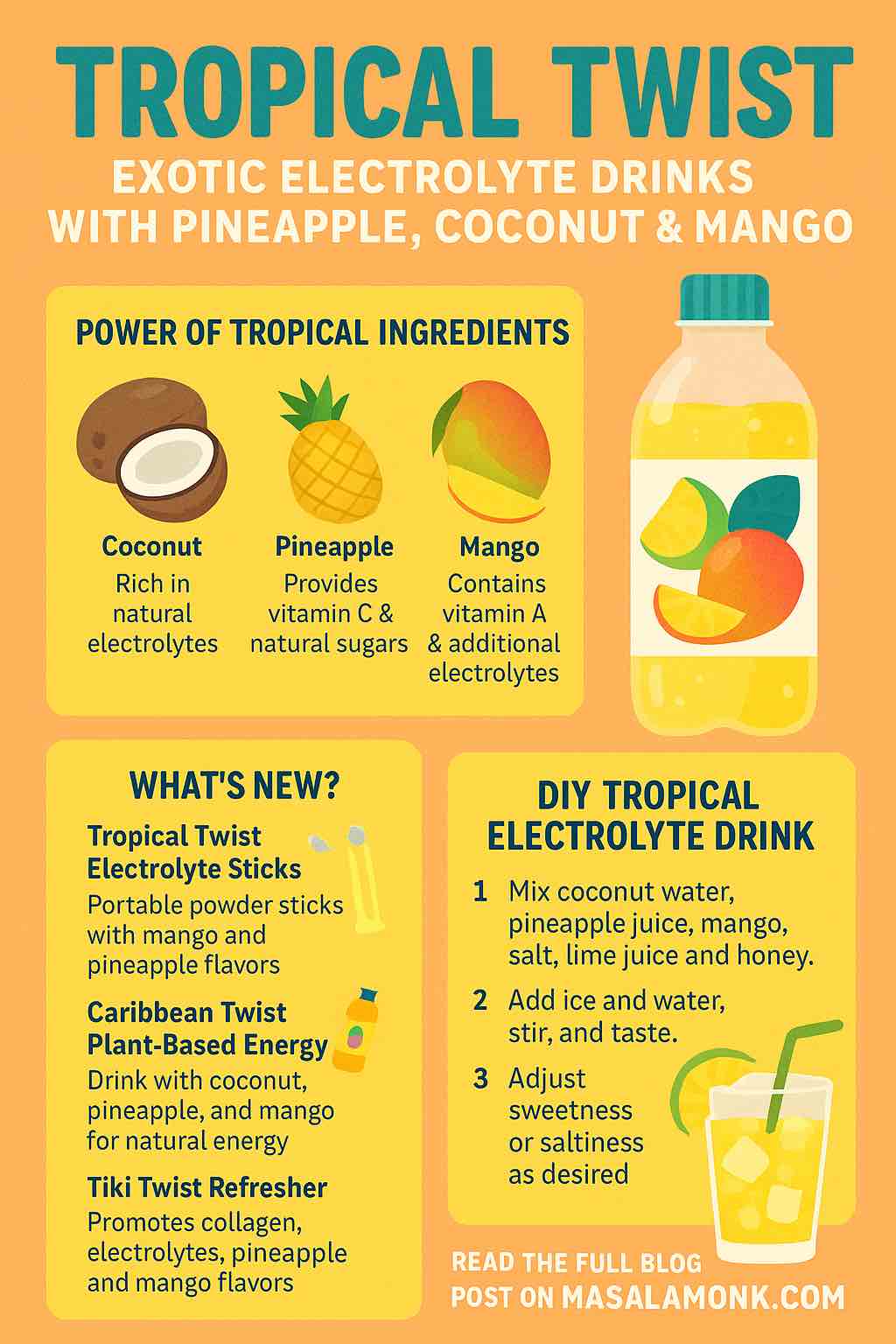
Tropical Twist: Exotic Electrolyte Drinks with Pineapple, Coconut, and Mango

ELECTROLYTE DRINKS WITH PINEAPPLE, COCONUT & MANGO

Imagine a hot afternoon—sweat on your brow, energy dipping, and your water bottle just isn’t cutting it. Now, picture a cold, vibrant drink bursting with pineapple, coconut, and mango, instantly reviving you with the taste of the tropics and the science of smart hydration. Welcome to the world of Tropical Twist electrolyte drinks!

Why the Hype? The Power of Tropical Fruits in Hydration

The global thirst for tropical flavors is exploding. Walk into any gym, café, or supermarket, and you’ll spot brightly colored bottles and sachets promising “island vibes” and “ultra hydration.” But this isn’t just a trend. Combining coconut, pineapple, and mango isn’t just delicious—it’s scientifically smart.

Let’s break down the benefits:

  • Coconut water is naturally rich in potassium, magnesium, and sodium—electrolytes crucial for hydration, nerve function, and muscle recovery.
  • Pineapple adds vitamin C, manganese, and natural sugars for quick energy, with a tangy punch that makes any drink irresistible.
  • Mango brings a creamy texture, vitamin A, and additional electrolytes, along with that unmistakable sweetness.

Put together, they offer a refreshing drink that hydrates, energizes, and delights your taste buds—all at once.


What’s New? The Latest in Tropical Electrolyte Drinks (2025)

Fresh on the Shelves

  • Tropical Twist Electrolyte Sticks: These portable powders launched just weeks ago, blending mango and pineapple with a science-backed mix of electrolytes. Perfect for gym bags, travel, or work commutes—just rip, pour, and shake into water.
  • Caribbean Twist Plant-Based Energy: Combining coconut, pineapple, and mango for a new kind of “clean energy,” these drinks hit the market as plant-based, natural alternatives to traditional energy drinks.
  • Tiki Twist Refresher: The latest “functional beverage” trend, these mix pineapple, mango, and coconut water with added collagen and extra electrolytes for a beautifying, hydrating pick-me-up.

Trending DIY Recipes

On platforms like TikTok and Lemon8, homemade recipes are trending hard. Influencers show off mixes like:

  • Pineapple juice + coconut water + fresh mango cubes (sometimes with a squeeze of lime or a hint of Himalayan salt)
  • Kombucha-based “dirty energy” twists using pre-made tropical kombucha, coconut creamer, and fruit chunks for flavor and probiotics

Why the DIY love? People want control over ingredients, less sugar, and the satisfaction of making something vibrant and healthy at home.


How Do They Stack Up? Nutrition, Taste, and Performance

Here’s what sets these drinks apart from regular sports drinks or plain water:

Drink TypeElectrolytesSugar ContentAdd-onsCaffeine?Best For
Ready-to-DrinkHigh (medical)LowB-vitamins, collagenNone/OptionalIntense workouts, rehydration
Powdered MixesModerate/HighLow/NoneOrganic, vegan, vitaminsNoneEveryday use, travel
Sparkling/EnergyModerateModerateCaffeine, natural flavor70–110 mgMidday pick-me-up, focus
DIY BlendsCustomizableAs per mixFresh fruit, probioticsOptional (tea)Families, home hydration

Key practical tip: Always check the nutrition label for sodium and potassium levels—these are the main electrolytes you lose through sweat. For intense workouts or summer days, drinks with 300–600mg sodium per serving are ideal. If you’re avoiding added sugars, look for “unsweetened” or “no added sugar” options or make your own.

How to Make Your Own Tropical Electrolyte Drink (DIY Guide)

You don’t need to spend big bucks or search specialty stores to enjoy a Tropical Twist. Here’s a practical, tried-and-tested recipe anyone can make at home:

DIY Tropical Twist Electrolyte Drink

Ingredients:

  • 1 cup coconut water (the fresher, the better)
  • 1/2 cup pineapple juice (preferably fresh or 100% juice)
  • 1/2 cup mango (pureed or diced small)
  • 1/8 teaspoon Himalayan pink salt or sea salt (for sodium)
  • 1–2 teaspoons honey or agave (optional, for sweetness)
  • Juice of 1/2 lime (for a tangy kick and added potassium)
  • 1 cup cold water or ice

Instructions:

  1. Blend mango and pineapple juice until smooth (skip this step if using pure juice).
  2. Mix in coconut water, lime juice, salt, and sweetener.
  3. Add cold water and ice, stir, and taste. Adjust sweetness or saltiness as needed.
  4. Pour into your favorite bottle or glass, garnish with a pineapple wedge or mint, and enjoy!

Pro Tip: For extra electrolytes, add a splash of orange juice or a pinch of magnesium powder. For a “sports drink” effect, use more salt (up to 1/4 teaspoon) and less honey.


Who Needs These Drinks? (Hint: Probably You!)

  • Athletes & Fitness Fans: Rapid rehydration, less muscle cramping, and quick energy after runs, yoga, or the gym.
  • Kids & Families: Natural, tasty alternative to sodas and commercial sports drinks (plus, you can sneak in more fruit!).
  • Travelers & Office Warriors: Beat jet lag, hot days, and air conditioning with a bottle of tropical hydration.
  • Anyone in a Heatwave: Electrolytes + tropical flavor = the perfect summer rescue.

Where to Find the Best? (And What to Watch For)

Ready-to-Drink & Powdered Options

  • ROAR Complete Hydration Powder Plus (Tropical Twist)
  • Biolyte Tropical
  • Remedy Drinks Tropical Twist Energy
  • Sunshine Beverages Tropical Pineapple
  • Caribbean Twist by Tropical Sno

Look for these online or in supermarkets—many ship internationally.

DIY: Make It Your Signature Drink

  • Experiment with ratios, use sparkling water for fizz, add chia seeds for texture, or infuse with mint or basil.
  • Try freezing into popsicles for kids!

Final Thoughts: Bring Paradise to Your Hydration Routine

Whether you’re sipping a store-bought mix, shaking up a homemade blend, or exploring the latest “Tiki Twist” creation, these pineapple, coconut, and mango electrolyte drinks are more than a trend. They’re a practical, delicious, and healthy way to support hydration and bring a taste of the tropics wherever you are.

Ready to try your own Tropical Twist? Grab your ingredients, shake it up, and let the sunshine in!


Have a favorite tropical recipe, a question about hydration, or a product you want reviewed? Drop it in the comments! Let’s keep the conversation fresh, fun, and—most importantly—hydrated.


Want more? Subscribe for updates on the latest in functional beverages, wellness recipes, and smart hydration hacks!

FAQs: Tropical Twist Electrolyte Drinks

1. What are electrolyte drinks, and why are they important?
Electrolyte drinks help replenish minerals like sodium, potassium, and magnesium that you lose through sweat. They’re vital for hydration, muscle function, and preventing cramps, especially during hot weather or after intense exercise.

2. Why combine pineapple, coconut, and mango in an electrolyte drink?
Pineapple, coconut, and mango not only taste great together but each contributes natural electrolytes, vitamins, and antioxidants, making the drink both flavorful and effective for hydration.

3. Are Tropical Twist electrolyte drinks good for kids?
Yes, homemade versions with minimal added sugar and natural ingredients are safe and enjoyable for kids. Avoid high-caffeine or artificial varieties for young children.

4. How much should I drink after exercise or on a hot day?
Most adults benefit from 300–600ml after exercise, or as needed for thirst. For intense sweating, one serving after activity is a good starting point. Always listen to your body and adjust accordingly.

5. Can I make a sugar-free version at home?
Absolutely. Simply omit honey or agave and use pure fruit juices. Coconut water provides a hint of natural sweetness even without added sugar.

6. Are these drinks suitable for people with diabetes?
Use caution: opt for low-sugar or unsweetened versions, and consult your doctor if you’re unsure. Homemade blends let you control the amount and type of sweetener.

7. What’s the best time to drink a Tropical Twist electrolyte beverage?
These drinks are ideal before or after workouts, during outdoor activities, when you’re feeling dehydrated, or just for a refreshing afternoon pick-me-up.

8. How do Tropical Twist drinks compare to traditional sports drinks?
Tropical Twist drinks can be lower in added sugar, free of artificial dyes/flavors, and provide extra vitamins and antioxidants from real fruit—making them a healthier choice for many.

9. How long can I store homemade electrolyte drinks?
Homemade drinks are best enjoyed within 24–48 hours when refrigerated. Shake well before drinking, as ingredients may settle.

10. Where can I find ready-made Tropical Twist electrolyte drinks?
Look in supermarkets, health food stores, or online retailers for brands like ROAR, Biolyte, Remedy, and Sunshine Beverages. Always check the ingredient label for the best options.

Posted on 1 Comment

Pineapple: The Tropical Treasure for Your Skin – Benefits, Myths, and 5 Invigorating Recipes for a Smooth Complexion

pineapple fruit on rock taken under white clouds

Introduction:

Pineapples, with their sweet and tangy flavor, have always been a favorite fruit for many. But beyond their delightful taste, they hold a treasure trove of benefits, especially for the skin. In this article, we’ll dive deep into the world of pineapples, debunking myths and exploring their incredible benefits for skin health.


1. The Pineapple Myth Debunked:

Pineapples have often been surrounded by myths, especially when it comes to skincare. Some believe that they are too acidic for the skin, while others think they can magically cure all skin ailments. Let’s set the record straight:

  • Myth: Pineapples are too acidic for the skin. While pineapples are naturally acidic, when used correctly and in the right amounts, they can offer exfoliating benefits without harming the skin.
  • Myth: Pineapples can treat all skin issues. Pineapples are beneficial, but they aren’t a cure-all. It’s essential to understand their specific benefits and use them accordingly.

2. Top Proven Benefits of Pineapple for Skin:

Pineapples are more than just a tasty treat. They are packed with nutrients and compounds that can work wonders for the skin.

  • Rich in Vitamin C: Pineapples are a powerhouse of Vitamin C, essential for collagen production. Collagen is a protein that helps keep our skin firm and youthful. Regular application of pineapple or its juice can boost collagen production, reducing the appearance of fine lines and wrinkles.
  • Natural Exfoliation with Bromelain: This unique enzyme found in pineapples acts as a natural exfoliant. It helps in removing dead skin cells, leaving the skin refreshed and radiant.
  • Anti-Inflammatory Properties: Pineapples have anti-inflammatory properties that can help reduce skin redness and inflammation. This makes it beneficial for conditions like acne or rosacea.
  • Hydration and Healing: The natural enzymes in pineapples aid in healing scars and hydrating the skin, making it look more vibrant and refreshed.

3. How to Use Pineapple for Maximum Skin Benefits:

Harnessing the benefits of pineapples for your skin is easy. Here are some ways to incorporate it into your skincare routine:

  • Pineapple Face Masks: Mix pineapple juice with a bit of honey and apply it as a mask. Leave it on for 10-15 minutes and then rinse. This mask will leave your skin feeling refreshed and rejuvenated.
  • Pineapple Juice Toner: After cleansing your face, use a cotton ball to apply pineapple juice gently. It acts as a natural toner, tightening pores and giving the skin a radiant glow.
  • Precautions: While pineapples offer numerous benefits, they can be potent. Always do a patch test before applying any new pineapple-based product or remedy to your face. If you feel any irritation, rinse immediately.

4. Common Questions about Pineapple and Skin Health:

  • Is pineapple juice good for acne? While pineapple has anti-inflammatory properties that can help reduce acne inflammation, it’s not a standalone treatment. It’s best used in conjunction with other acne treatments.
  • Can I use pineapple on my face every day? While pineapples offer exfoliating benefits, daily use might be too harsh for some skin types. It’s best to use it 2-3 times a week.

5. Conclusion:

Pineapples are a gift of nature, offering a range of benefits for our skin. From exfoliation to boosting collagen, this tropical fruit can be a fantastic addition to your skincare routine. However, as with all natural remedies, it’s essential to use it wisely and listen to your skin’s needs.


Call to Action (CTA):

Have you tried using pineapples in your skincare routine? Share your experiences in the comments below or spread the word about the incredible benefits of this tropical fruit by sharing this article!


Blog Tags:

Pineapple, Skin Health, Natural Skincare, Fruit Benefits, Exfoliation, Vitamin C, Bromelain, DIY Skincare

Posted on Leave a comment

Benefits of Pineapple and Cucumber Juice

close up photo of a watermelon smoothie drink

In the world of nutrition, few duos are as harmonious as pineapple and cucumber. These two fruits complement each other not only in taste but also in the myriad of health benefits they offer. In this blog post, we’ll delve into the fascinating world of pineapple and cucumber, exploring their unique qualities and how they work together to boost your well-being.

Pineapple: A Tropical Delight with Nutritional Goodness

Pineapple is not just a delightful tropical fruit; it is a nutritional powerhouse that brings a burst of flavor and health benefits to your plate. Let’s delve deeper into why you should make pineapple a regular part of your diet:

  1. Rich in Vitamin C: Pineapple is loaded with Vitamin C, an essential nutrient known for its immune-boosting properties. Regular consumption of pineapple can help strengthen your immune system and protect your body against various infections.
  2. Digestive Aid – Bromelain: One of the key components of pineapple is bromelain, a group of enzymes that aids in digestion. Bromelain helps break down proteins and supports a healthy digestive system, reducing bloating and discomfort.
  3. Anti-Inflammatory Properties: Bromelain also exhibits powerful anti-inflammatory properties, which can help alleviate inflammation in the body. It may be particularly beneficial for individuals with inflammatory conditions such as arthritis.
  4. Manganese Content: Pineapple is an excellent source of manganese, a trace mineral essential for bone health, collagen production, and enzyme function.
  5. Rich in Fiber: Pineapple contains dietary fiber that promotes regular bowel movements and supports gut health.

Cucumber: The Ultimate Hydrator and Low-Calorie Snack

Cucumber is not only incredibly refreshing but also offers an array of health benefits. Here’s why you should add cucumber to your daily diet:

  1. Hydration Booster: Cucumber is composed of about 95% water, making it an excellent choice to keep you hydrated, especially during hot summer days. Staying well-hydrated is essential for overall health and maintaining optimal body functions.
  2. Low in Calories, High in Nutrients: If you’re watching your calorie intake, cucumber is a fantastic option. It is low in calories but rich in essential nutrients like potassium, magnesium, and Vitamin K. These nutrients contribute to heart health, muscle function, and bone health.
  3. Freshens Breath: Cucumber’s high water content stimulates saliva production, which helps wash away bacteria in the mouth and freshens your breath naturally.
  4. Supports Skin Health: Cucumbers contain silica, a compound that promotes skin health by supporting collagen production and keeping the skin hydrated.
  5. Anti-Inflammatory and Antioxidant Properties: Cucumbers contain antioxidants such as beta-carotene and flavonoids that help fight inflammation and oxidative stress.
  6. Promotes Weight Management: Due to its low calorie and high water content, cucumber is an excellent choice for those looking to manage their weight.

A Perfect Detox and Cleanse Duo: Pineapple and Cucumber

When combined, pineapple and cucumber create a powerful duo for detoxifying and cleansing the body:

  • Pineapple’s Bromelain Breaks Down Toxins: Bromelain in pineapple is known for its ability to break down toxins and waste products in the body, promoting better detoxification.
  • Cucumber Flushes Out Impurities: Cucumber’s high water content acts as a natural diuretic, helping to flush out toxins and impurities through urine. This aids in cleansing the urinary system.
  • Alkalizing Properties: Both pineapple and cucumber have alkalizing properties, which can help balance the body’s pH levels and support a healthy internal environment.

The Magic of Pineapple Cucumber Juice: Refreshing and Nutrient-Packed

Creating a revitalizing juice by blending pineapple and cucumber is a wonderful way to enjoy their health benefits. Here’s why pineapple cucumber juice is a must-try:

  • Hydrates and Detoxifies: Pineapple cucumber juice is incredibly hydrating, thanks to the high water content of both fruits. It helps keep you refreshed and well-hydrated throughout the day.
  • Natural Energy Boost: This juice is a natural source of essential vitamins and minerals, such as Vitamin C, Vitamin K, and potassium, which provide a natural energy boost.
  • Rich in Antioxidants: The combination of pineapple and cucumber provides a healthy dose of antioxidants, which help neutralize free radicals and protect your cells from oxidative damage.
  • Supports Skin Health: The high Vitamin C content in pineapple cucumber juice supports collagen production and contributes to healthy, radiant skin.
  • Aids in Weight Management: The low calorie and nutrient-rich nature of the juice make it a great addition to your weight management journey.

The Blissful Pineapple Cucumber Smoothie: Creamy and Nutrient-Rich

For a more substantial and creamy option, consider blending pineapple and cucumber into a delicious smoothie:

  • Pre or Post-Workout Delight: The smoothie’s nutrient density makes it an ideal pre or post-workout beverage, providing your body with the necessary nutrients to fuel your fitness journey.
  • Family-Friendly: The creamy texture of the smoothie appeals to both kids and adults, making it a family-friendly treat that even picky eaters will love.
  • Customizable and Versatile: You can easily customize the smoothie by adding other fruits, greens, or protein sources to suit your taste and nutritional needs.

Detox and Cleanse: A Nourishing Journey

Incorporating pineapple and cucumber into your detox journey offers an array of health benefits:

  • Hydration and Nutrients: The high water content of cucumber and the richness of vitamins in pineapple contribute to overall hydration and nourishment during your cleanse.
  • Digestive Support: Pineapple’s bromelain and cucumber’s fiber content support healthy digestion and regular bowel movements, aiding in detoxification.
  • Elimination of Toxins: The combination of pineapple’s enzymes and cucumber’s diuretic properties helps eliminate toxins and waste from the body.
  • Alkalizing the Body: Both pineapple and cucumber have alkalizing effects, promoting a balanced pH level and creating an environment less conducive to harmful microorganisms.

Frequently Asked Questions (FAQs)

1. What are the health benefits of pineapple and cucumber together?

Combining pineapple and cucumber provides a range of health benefits, including hydration, digestive support, immune system boost, and antioxidant protection.

2. Can pineapple and cucumber juice help with weight management?

Yes, pineapple cucumber juice can be beneficial for weight management due to its low calorie and nutrient-dense nature, making it a healthy and refreshing beverage option.

3. Are there any potential side effects of consuming pineapple cucumber juice?

While pineapple and cucumber are generally safe for most people, excessive consumption may lead to digestive discomfort in some individuals. Moderation is key.

4. Can pineapple cucumber smoothies be a good pre or post-workout option?

Absolutely! Pineapple cucumber smoothies offer a great mix of hydration, natural energy, and essential nutrients, making them an excellent choice for pre or post-workout nourishment.

5. How do pineapple and cucumber contribute to detoxification and cleansing?

Pineapple’s bromelain helps break down toxins, while cucumber’s high water content acts as a natural diuretic, promoting detoxification through urine.

6. Can pineapple cucumber juice aid in skin health?

Yes, the high Vitamin C content in the juice supports collagen production, contributing to healthy and radiant skin.

7. Are there any specific recipes for pineapple cucumber juice and smoothies?

There are countless delicious recipes available online. Experiment with different fruit combinations, add greens or herbs, and adjust sweetness to suit your taste preferences.

8. Can pregnant women consume pineapple cucumber juice?

Pregnant women can enjoy pineapple and cucumber in moderate amounts, but it’s essential to consult with a healthcare professional for personalized advice.

9. Does pineapple cucumber juice help with hydration?

Yes, both pineapple and cucumber are high in water content, making the juice an excellent hydrating option, especially during hot weather or after physical activity.

10. Are there any potential allergens in pineapple cucumber juice?

While pineapple and cucumber are not common allergens, individuals with known allergies to these fruits should avoid consuming the juice.

11. Can pineapple cucumber juice be beneficial for digestive health?

Yes, the bromelain in pineapple and the fiber in cucumber contribute to healthy digestion and support regular bowel movements.

12. Can pineapple cucumber juice be a part of a balanced diet?

Absolutely! Pineapple cucumber juice, when consumed as part of a well-balanced diet, provides valuable nutrients and hydration.

13. Are there any particular health conditions where pineapple cucumber juice should be avoided?

Individuals with certain medical conditions, such as kidney issues or allergies, should consult with a healthcare professional before incorporating pineapple cucumber juice into their diet.

14. Is pineapple cucumber juice a suitable option for improving skin complexion?

The Vitamin C and hydrating properties of pineapple cucumber juice can contribute to skin health and a more radiant complexion.

15. Can pineapple cucumber juice help with reducing inflammation?

Pineapple’s bromelain possesses anti-inflammatory properties, which, combined with cucumber’s hydrating effects, can help reduce inflammation in the body.

16. Can children enjoy pineapple cucumber juice?

Yes, children can enjoy this delicious and nutritious beverage, but parents should be mindful of portion sizes and any individual sensitivities.

17. Can pineapple cucumber juice be used as a base for smoothies with added ingredients?

Absolutely! Pineapple cucumber juice can serve as a fantastic base for smoothies, allowing you to add various fruits, vegetables, and supplements to enhance its nutritional value.

18. Are there any alternative ways to consume pineapple and cucumber together?

Yes, you can enjoy them sliced, diced, or blended into salads, salsas, or as a topping for yogurt or ice cream.

19. Can pineapple cucumber juice be beneficial for the hair?

While pineapple cucumber juice provides essential vitamins, minerals, and hydration that promote overall health, specific benefits for hair require further research.

20. Does pineapple cucumber juice have any impact on blood sugar levels?

Pineapple has a higher natural sugar content, so individuals with diabetes should monitor their intake and consider consuming the juice in moderation.

Remember, always consult with a healthcare professional before making significant changes to your diet or if you have specific health concerns. Enjoy the goodness of pineapple and cucumber in various forms, and savor their unique flavors and health benefits.

Conclusion: A Refreshing Path to Better Health

Pineapple and cucumber, two flavorful and nutrient-packed fruits, have earned their place as an essential part of a healthy diet. Whether you enjoy them in juice or smoothie form or incorporate them into your detox journey, their combined benefits make them an incredible addition to your wellness routine. Embrace the dynamic duo of pineapple and cucumber to refresh, hydrate, and nourish your body from within.

Blog Tags: Pineapple, Cucumber, Tropical Fruits, Health Benefits, Detox, Cleanse, Nutrition, Hydration, Digestive Health, Smoothie, Juice, Wellness, Anti-Inflammatory, Bromelain, Vitamins, Minerals, Refreshing, Family-Friendly.