Posted on Leave a comment

Mango Daiquiri Recipe

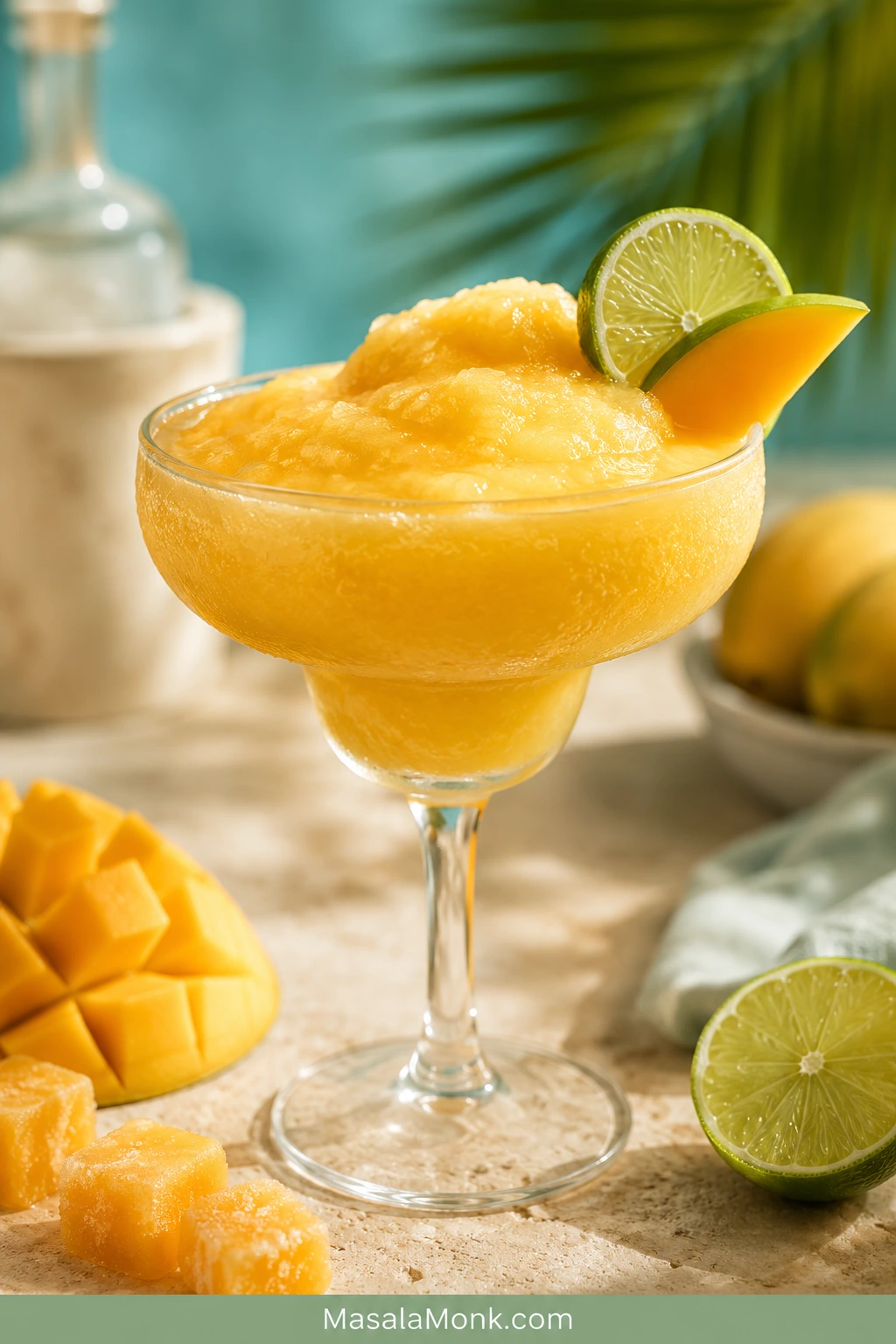
Frozen mango daiquiri in a chilled stemmed glass with a lime wheel, mango garnish, frozen mango chunks, lime halves, and crushed ice on a sunlit stone surface.

A mango daiquiri sounds easy until the blender turns it into a watery mango slush, a spoon-thick smoothie, or a drink that tastes sweet but flat. Mango, rum, lime, ice — the ingredient list is short, but the balance matters.

This recipe is built for the glass you actually want: cold, golden, lime-bright, mango-forward, and still cocktail-like. It is not a boozy smoothie, melted mango ice, or a bottled-mix drink hiding under too much sugar.

The best version should pour slowly, smell like ripe mango and fresh lime, and taste cold before it tastes sweet. Frozen fruit gives the drink body, lime keeps it awake, white rum keeps the finish crisp, and simple syrup lets you adjust for the mango you have.

Quick Answer

A mango daiquiri is made with mango, rum, fresh lime juice, sweetness, and ice. For the best frozen version, blend frozen mango chunks with white rum, lime juice, simple syrup, and crushed ice until smooth, frosty, and still loose enough to sip.

The easiest ratio for 2 drinks is 2 cups frozen mango, 4 oz white rum, 1½ oz fresh lime juice, 1 oz simple syrup, and 1 cup crushed ice. Frozen mango gives the thickest blender texture. For deeper aroma, use ripe fresh mango, but chill or freeze the cubes first so the drink does not melt too quickly.

When the balance is right, the first sip should taste like mango and lime before it tastes like alcohol. The rum should support the fruit, not bully it.

The core rule: ice makes a frozen daiquiri cold. Frozen fruit makes it taste like mango.
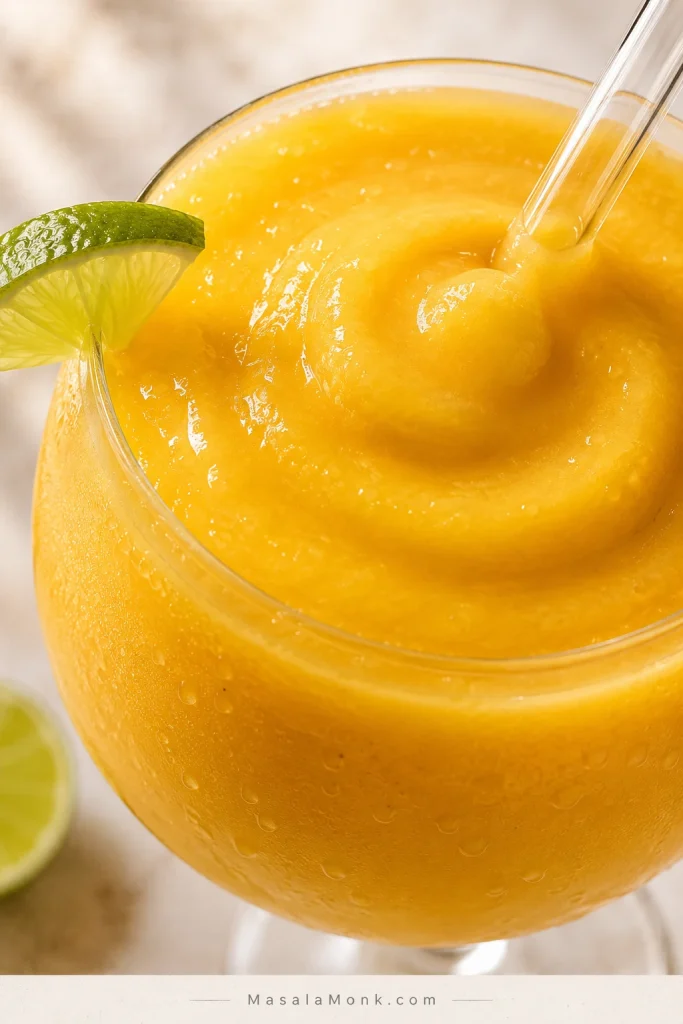
Close-up of a thick golden mango daiquiri with a lime garnish, condensation on the glass, and a clear straw touching the glossy frozen surface.
Look for a glossy texture that moves slowly but still drinks easily through a straw. If it looks scoopable, loosen it slightly; if it looks runny, blend in more frozen mango.

Make It Now

Already holding the blender jar? Liquids first, mango next, ice last. Blend only until it looks like a soft frozen cocktail, then taste before you pour.
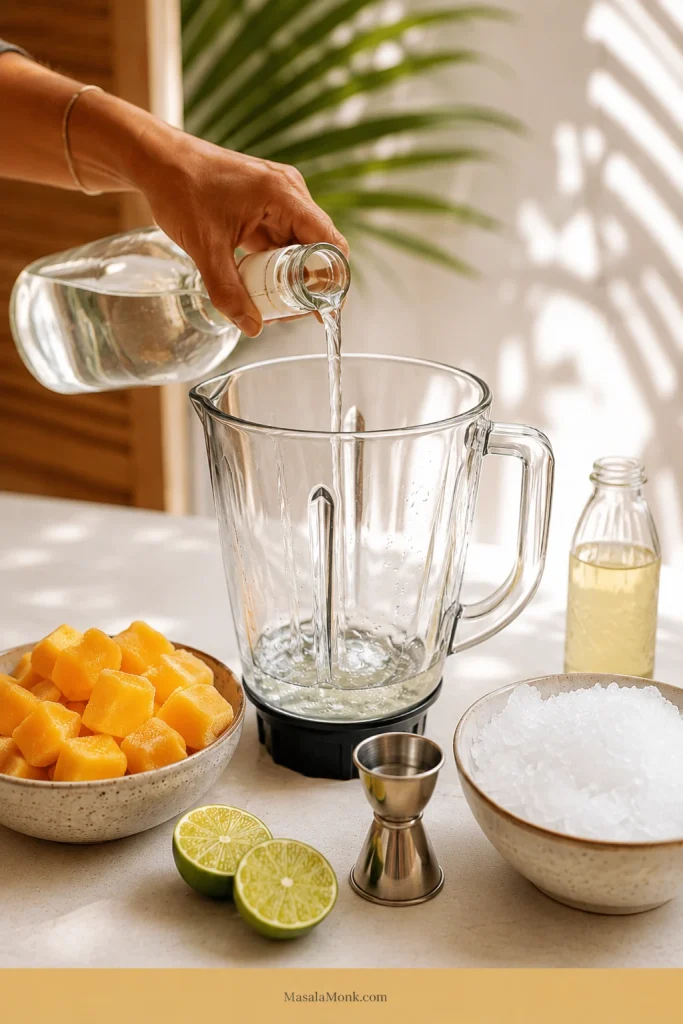
Clear liquid being poured into a blender jar with frozen mango chunks, crushed ice, lime halves, a jigger, and syrup nearby.
Start with the liquids so the blades have something to pull through the jar. After that, the frozen mango blends faster and the finished drink turns smoother.
  • Base ratio: 2 cups frozen mango, 4 oz white rum, 1½ oz lime juice, 1 oz simple syrup, 1 cup crushed ice.
  • Blend time: 20–30 seconds, just until frosty and slow-pouring.
  • Syrup range: ½ oz for very sweet mango or bottled mix; up to 1½ oz for tart or flat fruit.
  • Fast fix: lime sharpens, syrup softens, frozen fruit thickens, and 1 tablespoon liquid loosens the blender.
  • Serve: pour right away.

Recipe Card

Yield: 2 drinks · Prep time: 5 minutes · Total time: 5 minutes · Method: blender · Serve: immediately

This is the full frozen mango daiquiri recipe in one place. Start with frozen mango for the easiest texture, use fresh lime for the brightest flavor, and serve in a chilled coupe, margarita glass, martini glass, or rocks glass.

Ingredients

IngredientUS measureMetric measure
Frozen mango chunks2 cupsAbout 300 g
White rum or light rum4 oz120 ml
Fresh lime juice1½ oz / 3 tbsp45 ml
Simple syrup1 oz / 2 tbsp30 ml
Crushed ice1 cupAbout 150 g
Mango nectar, pineapple juice, coconut water, or cold water, optional1–2 tbsp, only if needed15–30 ml
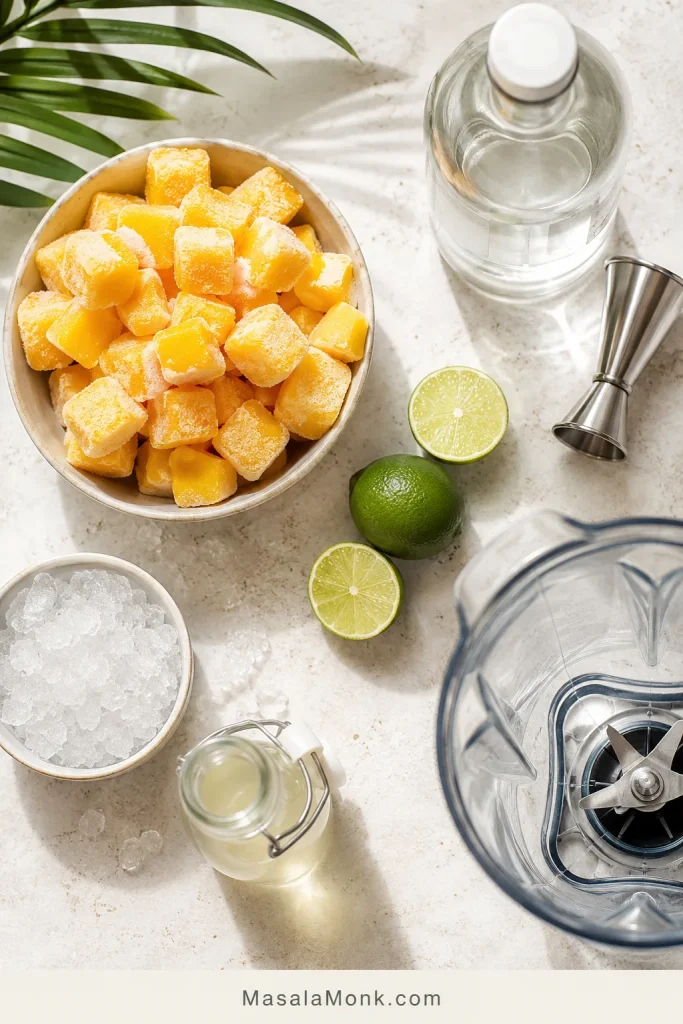
Overhead layout of frozen mango chunks, crushed ice, fresh limes, clear rum, simple syrup, a jigger, and a blender jar for a mango daiquiri.
This short ingredient list works because nothing is decorative. Frozen mango builds body, lime cuts sweetness, syrup rounds the edges, and rum keeps the drink in daiquiri territory.

Lighter drink: use 3 oz / 90 ml rum total for 2 drinks instead of 4 oz / 120 ml.

Sweeter mango or bottled mix: start with ½ oz / 15 ml simple syrup, then add more only if needed.

Instructions

  1. Chill 2 glasses in the freezer.
  2. Pour the rum, lime juice, and simple syrup into the blender.
  3. Add the frozen mango chunks.
  4. Top with crushed ice.
  5. Blend for 20–30 seconds, until smooth, slushy, and slow-pouring.
  6. Taste and adjust: lime for brightness, syrup for sweetness, frozen fruit for thickness, or 1 tbsp liquid if too thick.
  7. Pour into chilled glasses, garnish if you like, and serve immediately.

Notes

  • Fresh lime juice gives the brightest flavor.
  • Crushed ice blends better than large cubes.
  • Do not blend too long or the drink will warm and thin out.
  • Lime wheel, mango wedge, mint, or chili-lime rim all work as garnishes.
  • For the best texture, serve right away.

Need to adjust the drink? Fix the texture, choose fresh vs frozen mango, or pick a version.

Choose Your Mango Daiquiri

Once the base glass tastes right, the variations are easy. Use the same balance to make it lighter, stronger, fruitier, coconut-leaning, or alcohol-free.
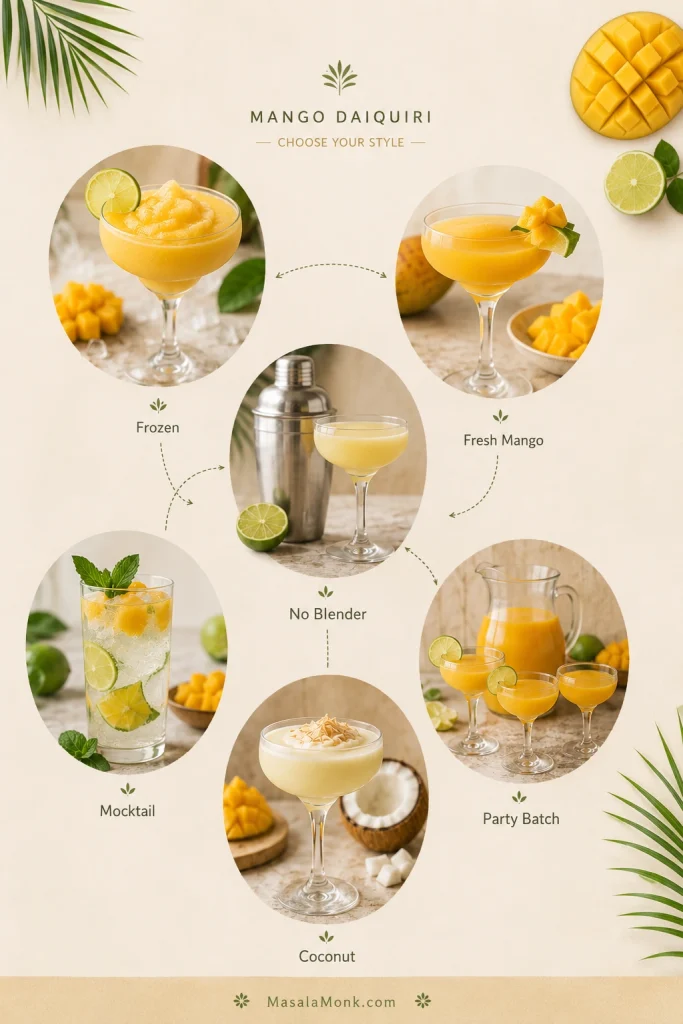
Guide board showing frozen, fresh mango, no-blender, mocktail, coconut, and party batch mango daiquiri versions with small drink and ingredient photos.
Once the mango-lime base tastes balanced, choose the version by need: frozen for texture, fresh for aroma, shaken for no blender, mocktail for a lighter glass, or coconut for a softer tropical finish.
What you wantBest version
Thick frozen cocktailUse the main frozen recipe
Fresh ripe mango flavorCube fresh mango and freeze 30–60 minutes before blending
No blenderShake mango puree or thick juice with rum, lime, and syrup
Sweeter tropical versionUse coconut rum or Malibu, then reduce syrup and add lime
Non-alcoholic drinkUse frozen mango, lime, pineapple juice or coconut water, and sparkling water
Party batchPrep liquids ahead and blend in batches right before serving

At its best, this is not a sugary frozen drink. It is mango with a lime edge, a crisp rum finish, and just enough sweetness to make the next sip feel easy.

What Is a Mango Daiquiri?

A mango daiquiri is a fruit version of the classic daiquiri, a rum cocktail built around rum, lime juice, and sweetness. At its core, the classic drink is just rum, fresh lime, and sugar; the International Bartenders Association’s daiquiri formula is a useful reference for that simple base.

The mango version can be frozen and blended, or shaken and strained when made with puree or juice. Either way, it should still taste like a cocktail: fruit first, lime brightness next, and a crisp rum finish.

For a broader look at the drink family, see our Daiquiri Recipe guide. This page stays focused on keeping the mango version balanced at home.

Why This Works

This drink works because frozen fruit does the heavy lifting, not the ice. It gives the daiquiri body, so you do not have to rely on flavor-diluting cubes to create texture.
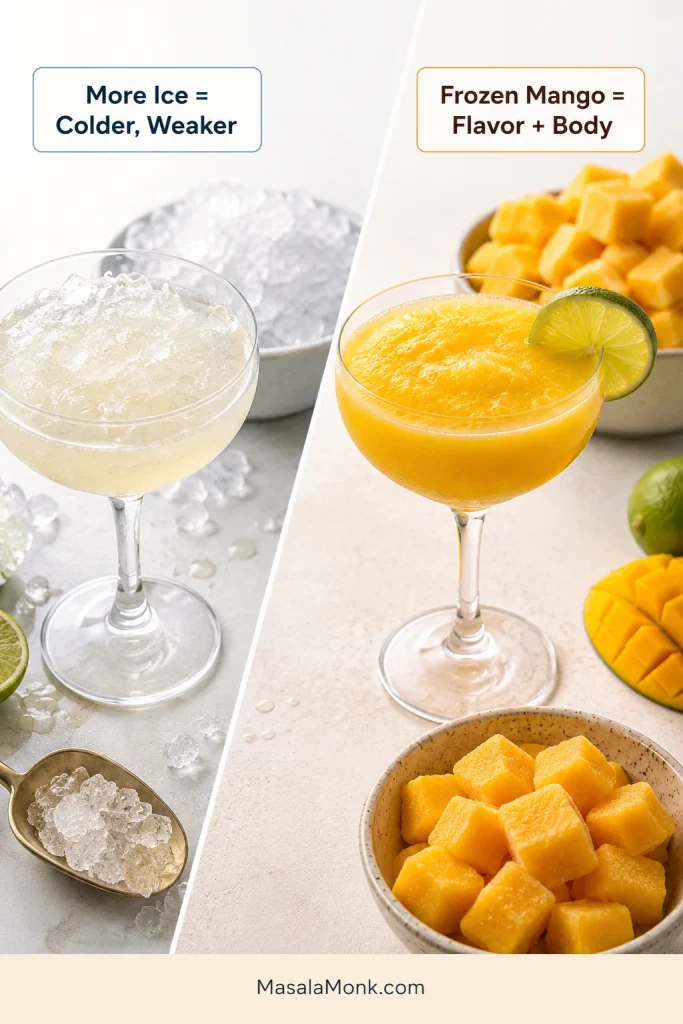
Comparison guide with a pale icy drink beside a thicker golden mango drink, showing how ice and frozen mango affect texture.
More ice can chill the drink, but it can also thin the flavor. Instead, let frozen fruit handle most of the body and use ice only for coldness and lift.

Fresh lime keeps the sweetness lively. White rum gives structure without hiding the mango. Simple syrup stays adjustable because mangoes are unpredictable — one batch may be candy-sweet, the next may be tart or flat.

The blender order matters more than it seems: liquids first, fruit second, ice last. That small step makes the mixture easier to blend and reduces the urge to pour in extra liquid too early.

Ingredients You Need

With a drink this simple, every ingredient shows up in the glass. The goal is not to bury the mango under sugar or ice. It is to let the fruit, lime, rum, cold, and sweetness show up in the right order, so every sip tastes bright instead of heavy.

Mango

Frozen chunks are the easiest win because they give the drink body without watering it down. They also make the texture more predictable from batch to batch.
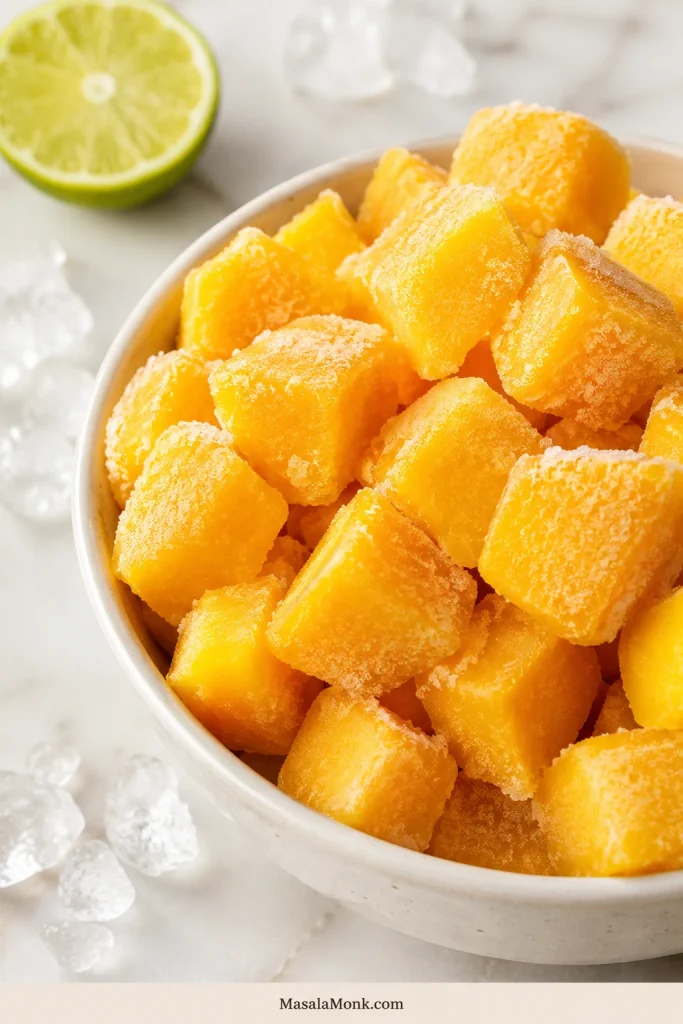
Frosty frozen mango chunks in a ceramic bowl with scattered ice pieces and a lime half on a light countertop.
Frozen mango gives the blender a head start: it chills, thickens, and flavors the drink before the crushed ice goes in.

Fresh mango is lovely when it is ripe, fragrant, and sweet. Taste a piece first. If it tastes bland, the drink will need more lime, a little more syrup, and possibly a tiny pinch of salt. For better texture, cube it and freeze for 30–60 minutes.

If your mango is fibrous, puree it first or use frozen chunks for a smoother blend. For another look at how mango changes texture in drinks, our Mango Lassi Recipe also works through fresh mango, frozen mango, and mango pulp.

Rum

Reach for white rum or light rum first. It keeps the mango and lime clear. Aged rum gives a warmer flavor. Dark rum can work in a richer tropical version, but it can cover the fruit. Coconut rum is sweeter, so pull the syrup back if you add it. Avoid overproof rum unless you deliberately want a stronger drink.

If you like crisp rum-and-lime drinks, our Mojito Recipe is another useful ratio to keep in rotation.

Fresh Lime Juice

Lime is what wakes the whole glass up. It gives the drink its proper daiquiri shape and keeps mango from tasting heavy. Lime is better than lemon here because it gives a sharper cocktail edge. Bottled lime works in a pinch, but fresh juice tastes brighter in a drink this simple.

Simple Syrup

Simple syrup smooths the lime and fruit. Start with 1 oz / 30 ml for 2 drinks, then taste. Very sweet mango may only need ½ oz / 15 ml. Tart or flat fruit may need up to 1½ oz / 45 ml.

To make a small batch, stir ¼ cup sugar with ¼ cup hot water until dissolved. Cool it before using. Store the rest in the fridge for more drinks.

Ice

Crushed ice gives the blender a head start, especially when the mango is rock-solid. Large cubes work in a strong blender, but they can leave chunks if the blender struggles. Add more only after tasting, because ice fixes texture for a moment but weakens flavor as it melts.

Fresh vs Frozen Mango for Daiquiris

The mango you start with decides the kind of drink you get. Choose based on whether you want thick frozen texture, fresh aroma, a shaken cocktail, or a shortcut.
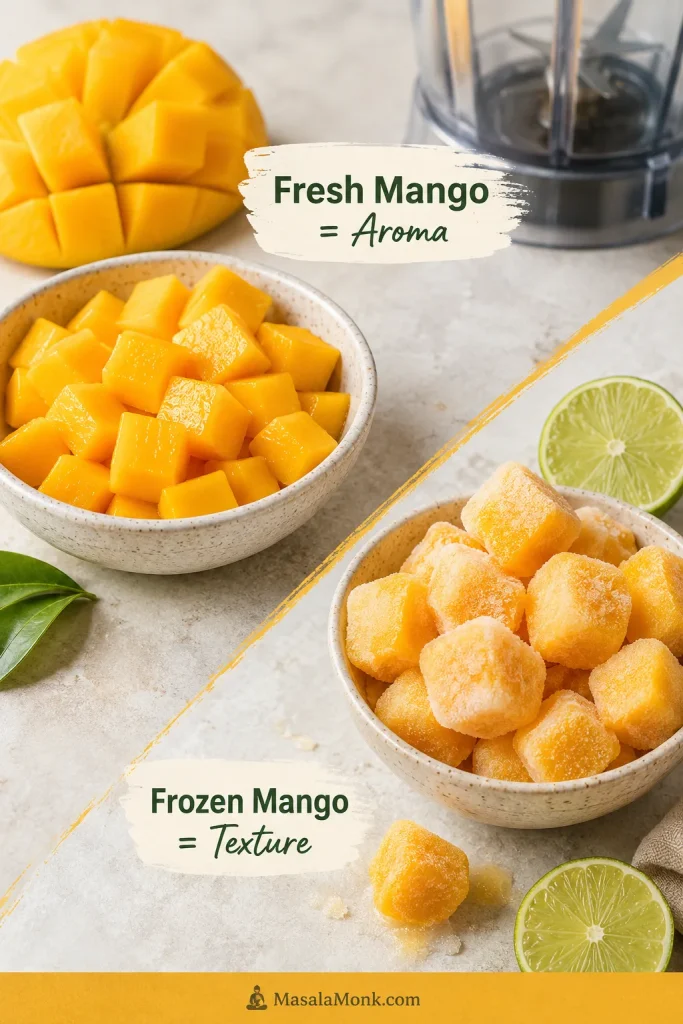
Fresh mango cubes and a scored mango cheek shown beside frosty frozen mango chunks with lime and a blender jar in the background.
Fresh mango gives perfume and ripe fruit flavor, while frozen mango gives dependable texture. For the best balance, cube fresh mango and freeze it briefly before blending.
Mango formBest forHow to adjust
Frozen mango chunksThick frozen drinksStart with less ice because the fruit already thickens the blend.
Fresh ripe mangoBest fresh flavorChill or freeze the cubes first; add ice gradually.
Mango pureeSmooth blender drinks or shaken versionsPull back the syrup because puree is often concentrated and sweet.
Mango nectarShortcut flavor or loosening a thick blendAdd lime and reduce syrup because nectar is usually sweet.
Bottled daiquiri mixConvenienceSkip or reduce syrup, then add fresh lime and frozen fruit.
Mango juiceLight shaken versionExpect a thinner drink; keep the lime strong.

Best default: frozen chunks for the main recipe. They give the easiest texture and the strongest flavor after blending.

If you actually want a creamy breakfast-style drink instead of a cocktail, this Mango Smoothie Recipe is the better direction.

Once you know what your mango is bringing, the fixes get simple: more lime to balance sweetness, less syrup for nectar, and more frozen fruit for body.

Using Mango Nectar, Puree, or Bottled Mix

Mango nectar can help when your blender needs liquid, but it should not take over the drink. Think of it as a mango boost, not the base.
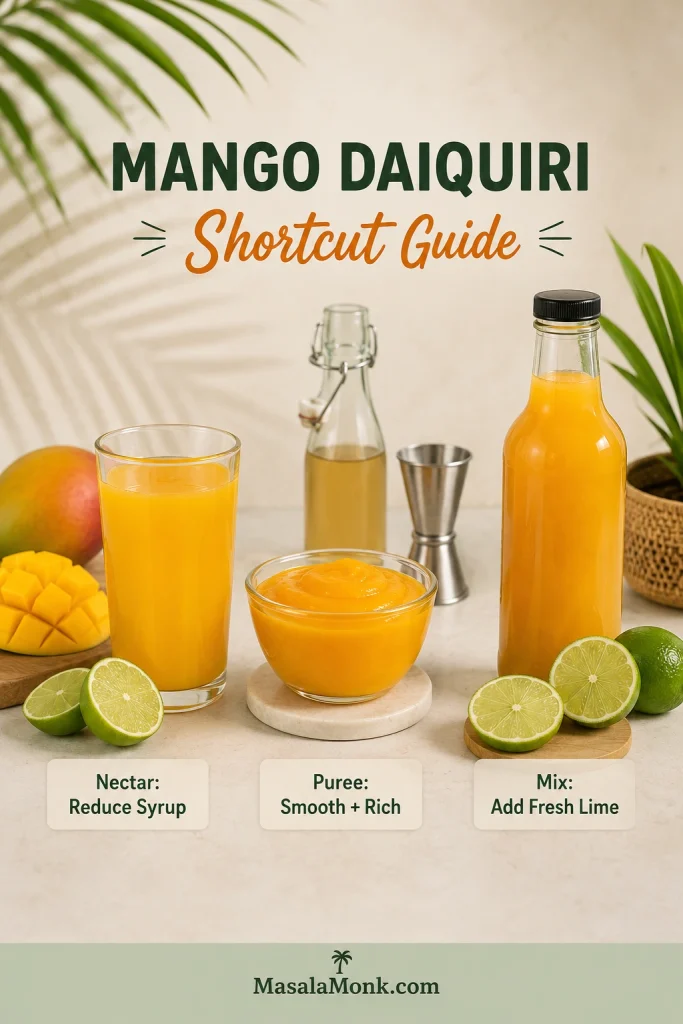
Mango daiquiri shortcut guide showing mango nectar, mango puree, bottled mix, lime halves, syrup, and a jigger on a cream background.
Mango nectar, puree, and bottled mix can all work, but they usually bring extra sweetness. Reduce the syrup first, then use fresh lime to bring the cocktail back into balance.

Puree gives a smooth texture and works especially well in the shaken version. Bottled mixes are usually sweet, so skip or reduce the syrup, add fresh lime, and blend in frozen fruit if the flavor tastes thin or artificial.

For another mango cocktail that handles fresh fruit, nectar, frozen texture, and pitcher options, see our Mango Margarita Recipe.

Back to top

How to Make a Mango Daiquiri Less Watery

You should be able to sip it, not scoop it. The ideal texture is thick enough to feel frozen, but loose enough to pour slowly from the blender. If it behaves like juice, it needs more frozen fruit. When it behaves like sorbet, it needs a small splash of liquid.
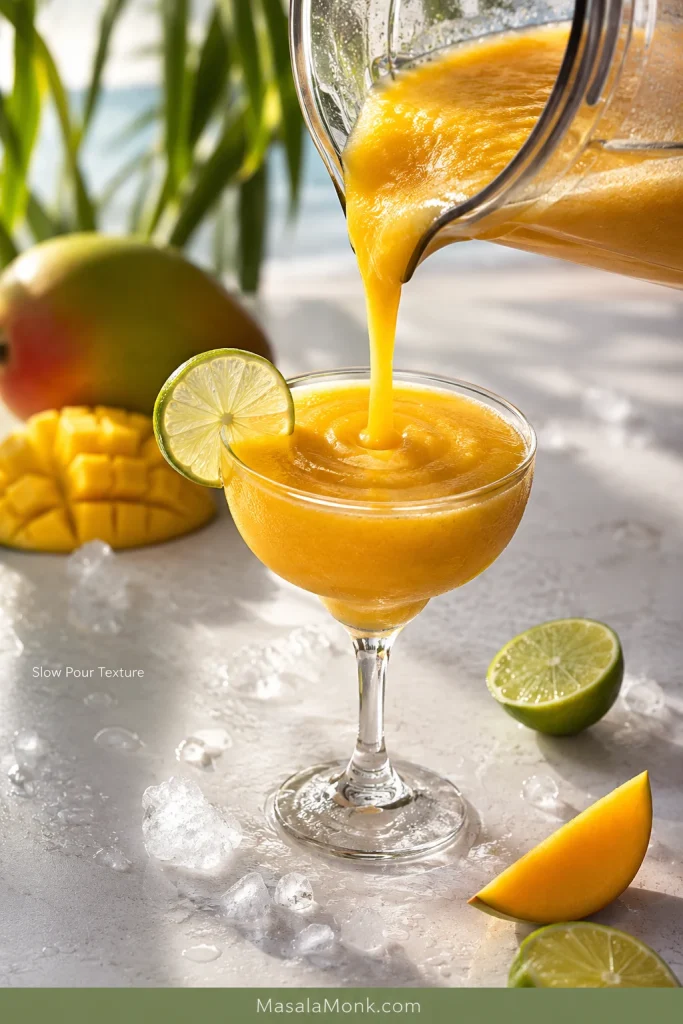
Thick golden mango daiquiri pouring slowly from a blender jar into a chilled stemmed glass with lime, mango, and ice nearby.
The best texture pours slowly, then settles into the glass without collapsing into juice. If it rushes out too quickly, add frozen mango before adding more ice.

Watery vs Perfect Mango Daiquiri Texture

Use this visual check before adding more ice. A watery daiquiri usually needs more frozen mango, while a scoop-thick one needs a small splash of liquid.
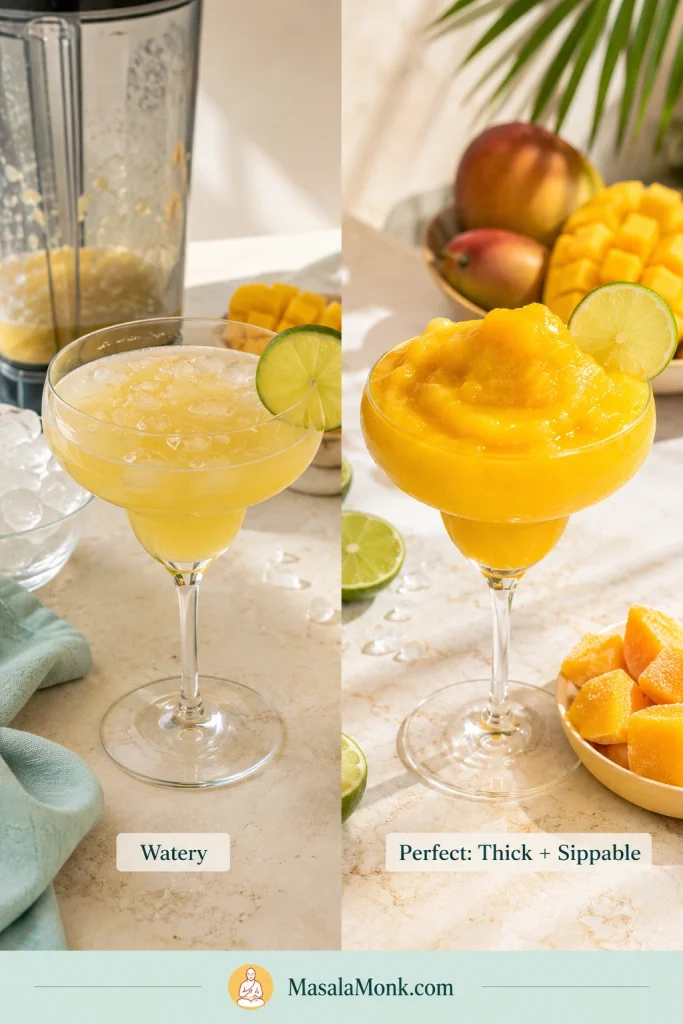
Side-by-side comparison of a watery pale mango daiquiri and a thick golden mango daiquiri with lime garnishes, ice, and mango nearby.
Watery texture usually comes from too much ice or too little frozen fruit. The better glass stays thick and bright because mango, not ice, does the heavy lifting.

The common mistake is trying to fix a thin daiquiri with more ice. That makes it colder for a minute, then more watery. Frozen fruit is the better fix because it adds body and flavor at the same time.

The same fruit-first idea is what keeps our Frozen Strawberry Daiquiri Recipe thick and bright without leaning too hard on ice.

Quick Texture Fixes

GoalWhat to do
ThickerAdd frozen fruit.
SlushierAdd crushed ice gradually.
SmootherBlend 5–10 seconds more, but avoid warming the drink.
LooserAdd 1 tbsp mango nectar, pineapple juice, coconut water, or cold water.
BrighterAdd lime juice.
SweeterAdd syrup.
More fruit-forwardReduce ice and add more mango.
Less flatAdd lime and a tiny pinch of salt.

That pinch of salt is optional, but useful when frozen fruit tastes dull. The drink should not taste salty; the salt simply makes the mango and lime feel more awake.

Once the texture is right, the pour should look slow, glossy, and still loose enough to drink through a straw.

Blender Help

A powerful blender makes this easier, but you do not need a bar machine to make a good frozen drink. The right order and small corrections matter more. For a Thermomix, use the same ingredients and blend only until slushy; if the machine struggles, let the fruit soften for a few minutes first.

  • Liquids first: rum, lime juice, and syrup help the blades start moving.
  • Fruit second: frozen chunks should be close to the blades, but not packed too tightly.
  • Crushed ice last: it blends faster than large cubes.
  • Pause before adding liquid: if the blender forms an air pocket, stop and stir first.
  • Small corrections: add liquid only 1 tablespoon at a time.
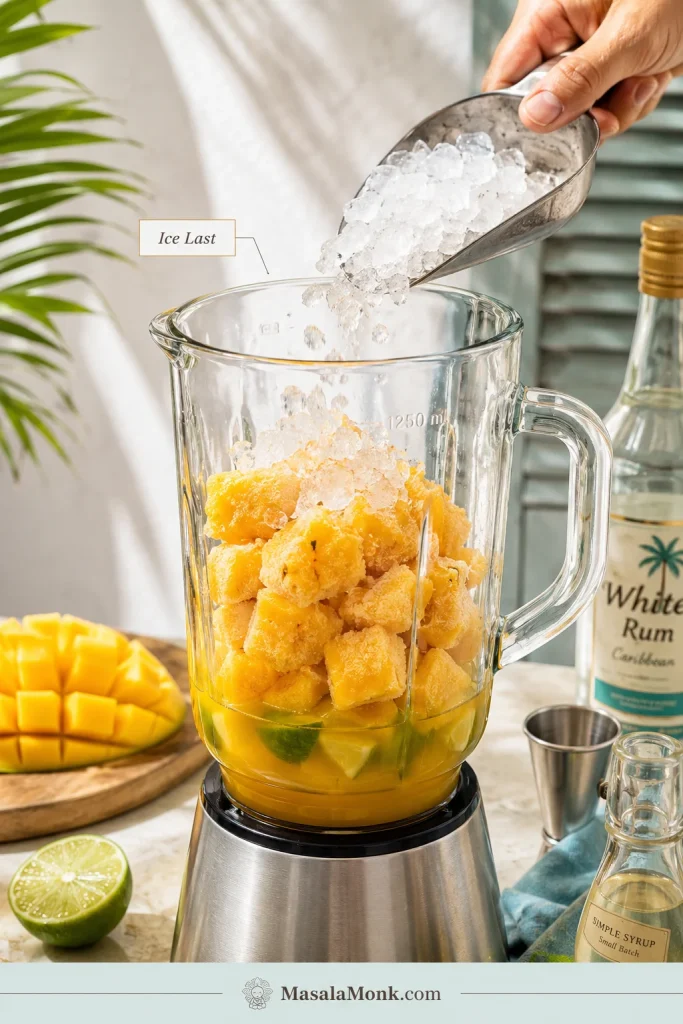
Crushed ice being poured from a metal scoop into a blender filled with frozen mango, lime, and liquid for a mango daiquiri.
Add crushed ice last so it chills the mixture without blocking the blades. This helps even weaker blenders make a smoother frozen daiquiri.

If the blender stalls, it is not a failure. Stop, stir, and only then add liquid. Extra liquid fixes movement, but it also thins the drink fast.

No crushed ice? Wrap cubes in a clean towel and tap them smaller, or pulse the ice briefly before adding the mango. For a weaker blender, let the frozen chunks sit at room temperature for 3–5 minutes.

No blender or still struggling? Try the shaken mango daiquiri, or return to the main recipe.

Back to top

Mango Daiquiri Without a Blender

For a lighter, cocktail-bar-style drink, use mango puree or thick juice and shake it instead of blending. This no-blender mango daiquiri is smooth and chilled, not frozen.

It will not have the plush frozen texture of the blender version, but it should feel cleaner, sharper, and more cocktail-bar-like.
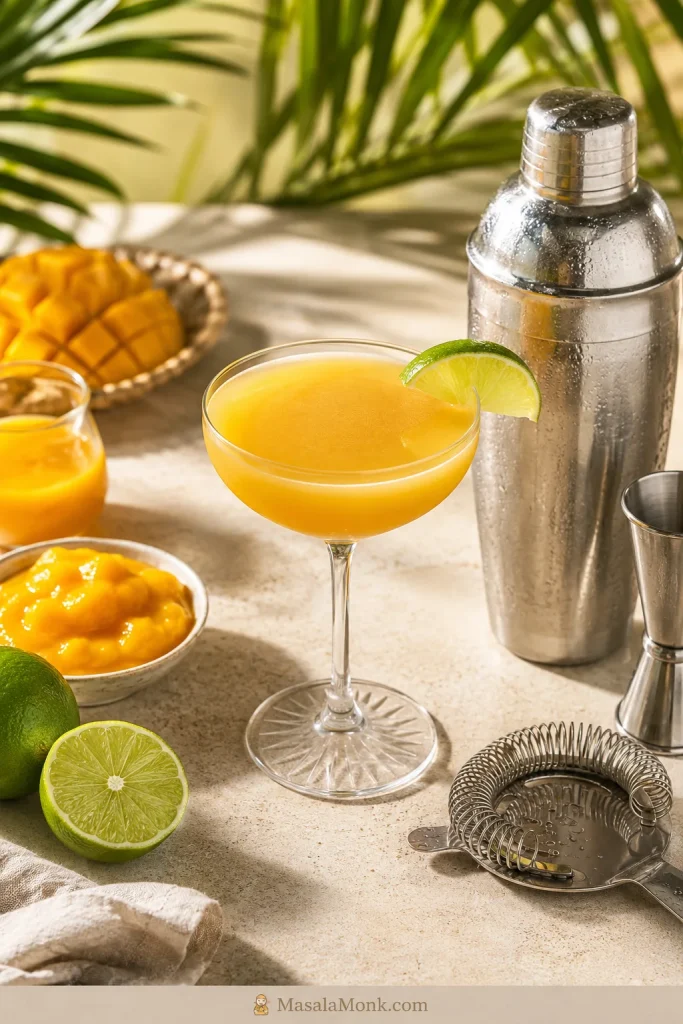
Smooth mango daiquiri in a coupe glass beside a cocktail shaker, strainer, jigger, lime, mango puree, and mango pieces.
A no-blender mango daiquiri is lighter and smoother than the frozen version. Use mango puree or nectar here, because frozen chunks need a blender to turn silky.
For 1 drinkAmount
White rum2 oz / 60 ml
Mango puree or thick mango juice1–1½ oz / 30–45 ml
Fresh lime juice¾ oz / 22 ml
Simple syrup½ oz / 15 ml
IceFor shaking

Add everything to a cocktail shaker with ice. Shake hard for 10–15 seconds, then strain into a chilled coupe or martini glass. Reduce the syrup if your puree is already sweet. Add a little more lime if the drink tastes flat.

Variations

Once the base tastes good, the fun part starts. Strawberries make it fruitier, pineapple makes it sharper, coconut makes it softer, passion fruit makes it tangier, and chili-lime makes it party-ready.

Looking for a specific version? Jump to the mocktail, mango strawberry, coconut rum, or spicy mango version.

Virgin Mango Daiquiri / Mocktail Version

For a non-alcoholic version, do not simply leave out the rum. Without the spirit, the drink still needs lift. Pineapple juice, coconut water, lime, and a splash of sparkling water keep it from becoming just a smoothie.

  • 2 cups / 300 g frozen mango
  • ⅓ cup / 80 ml pineapple juice, orange juice, or coconut water
  • 1½ oz / 45 ml fresh lime juice
  • 1–2 tbsp simple syrup, honey syrup, or maple syrup
  • ½–1 cup ice
  • Optional splash of sparkling water or lime seltzer after blending

Blend the fruit, juice or coconut water, lime, syrup, and ice until slushy. Add sparkling water after blending if you want it to feel more like a mocktail. Pineapple juice and orange juice are already sweet, so start with less syrup.
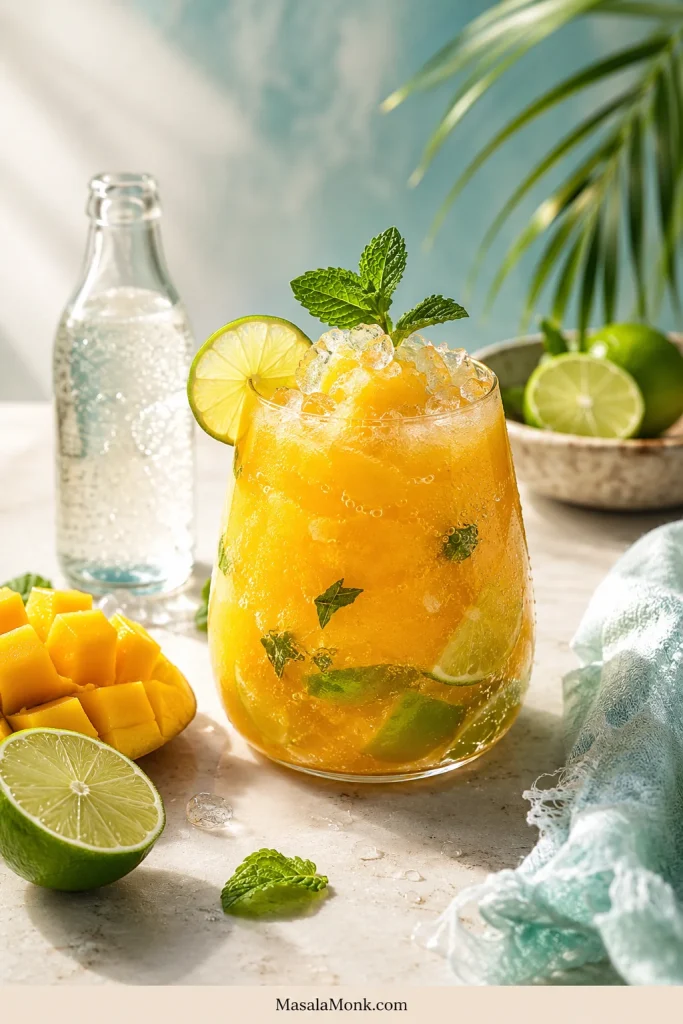
Non-alcoholic mango daiquiri mocktail in a stemless glass with crushed ice, lime, mint, mango pieces, and an unbranded sparkling water bottle.
In a virgin mango daiquiri, bubbles help replace the lift you normally get from rum. Add sparkling water gently so the mocktail stays bright, cold, and refreshing.

If coconut water is your favorite way to lighten tropical drinks, these Coconut Water Cocktails give you more rum, tequila, vodka, and mocktail-style directions.

Mango Strawberry

Replace half the mango with frozen strawberries. The drink turns brighter, pinker, and a little tarter, so taste before adding extra lime. Keep the same rum and syrup base, then add ice only as needed.
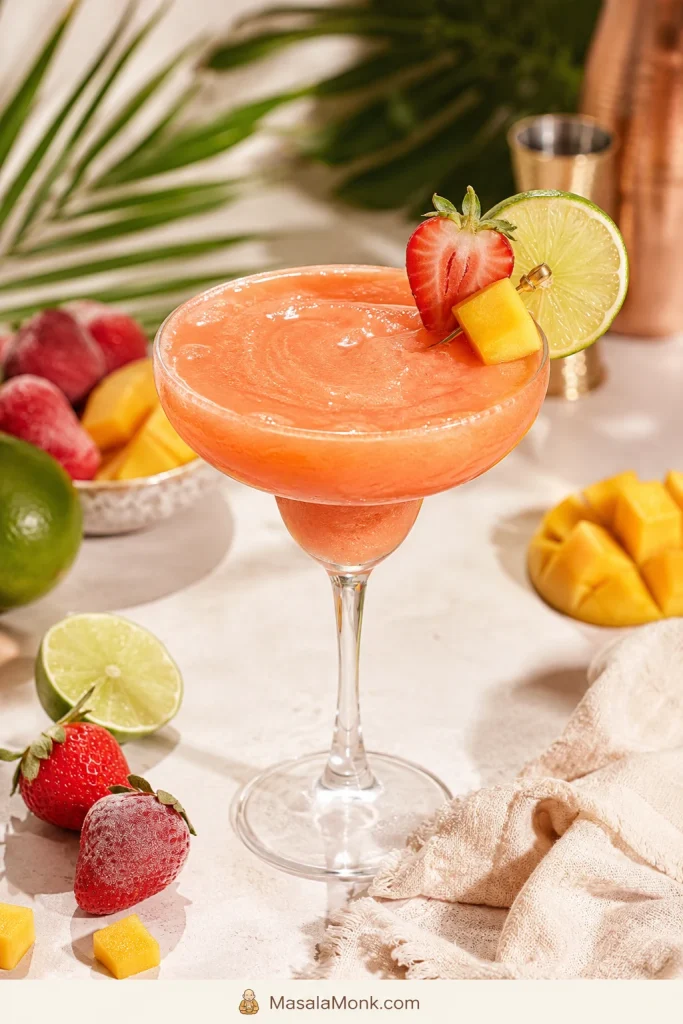
Pink-orange mango strawberry daiquiri in a stemmed glass with strawberry, lime, mango garnish, strawberries, mango chunks, and limes around it.
Strawberries make this mango daiquiri pinker, tarter, and more playful. However, the drink still needs lime for contrast, or it can drift toward smoothie territory.

Mango Pineapple

Replace 1 cup mango with 1 cup frozen pineapple. Pineapple is naturally sweet and acidic, so taste before adding extra syrup.

Mango Daiquiri with Malibu or Coconut Rum

Use coconut water as the optional thinning liquid, or replace part of the white rum with coconut rum or Malibu. Coconut rum is sweet, so reduce the syrup and add lime if the drink tastes heavy. If you want to move creamier and more pineapple-coconut, our Piña Colada Variations are the better next stop.
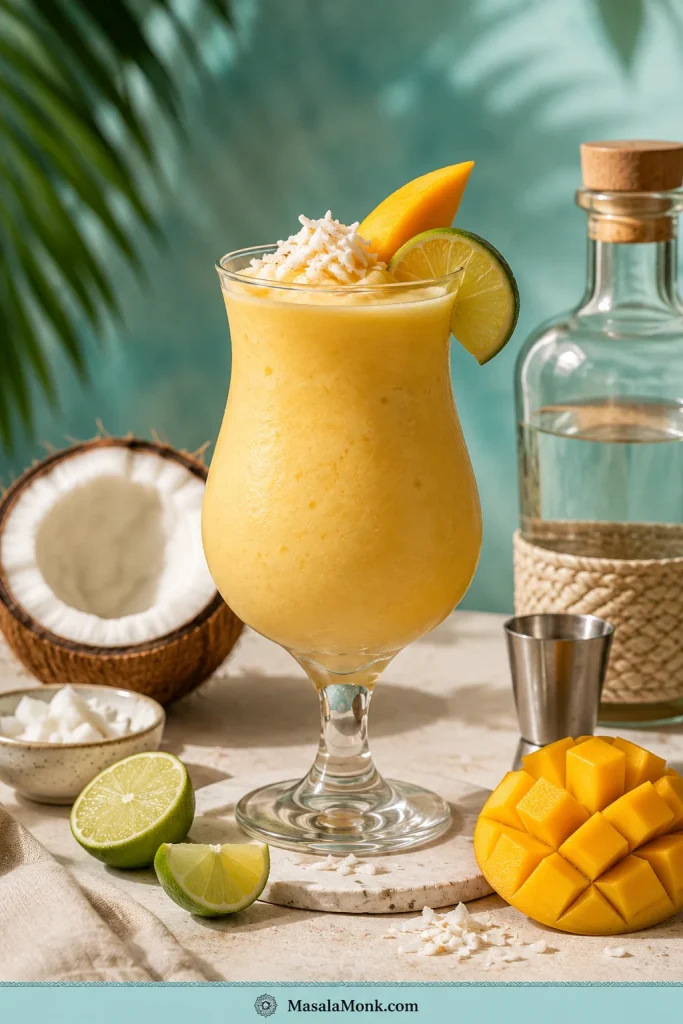
Creamy mango coconut daiquiri in a tall glass with shredded coconut, mango garnish, lime, coconut half, coconut pieces, jigger, and a clear bottle nearby.
Coconut rum or coconut water makes mango taste softer and rounder. Because coconut adds sweetness, use less syrup and let fresh lime keep the finish clean.

Mango Passion Fruit

Add 1–2 tablespoons passion fruit pulp or puree. Passion fruit is tart, so taste before adding extra lime. This version is sharp, fragrant, and very tropical.

Spicy Mango

Add a chili-lime rim, a pinch of Tajín, or one very thin slice of jalapeño to the blender. Start small. Mango takes spice well, but too much heat can overpower the lime and rum.
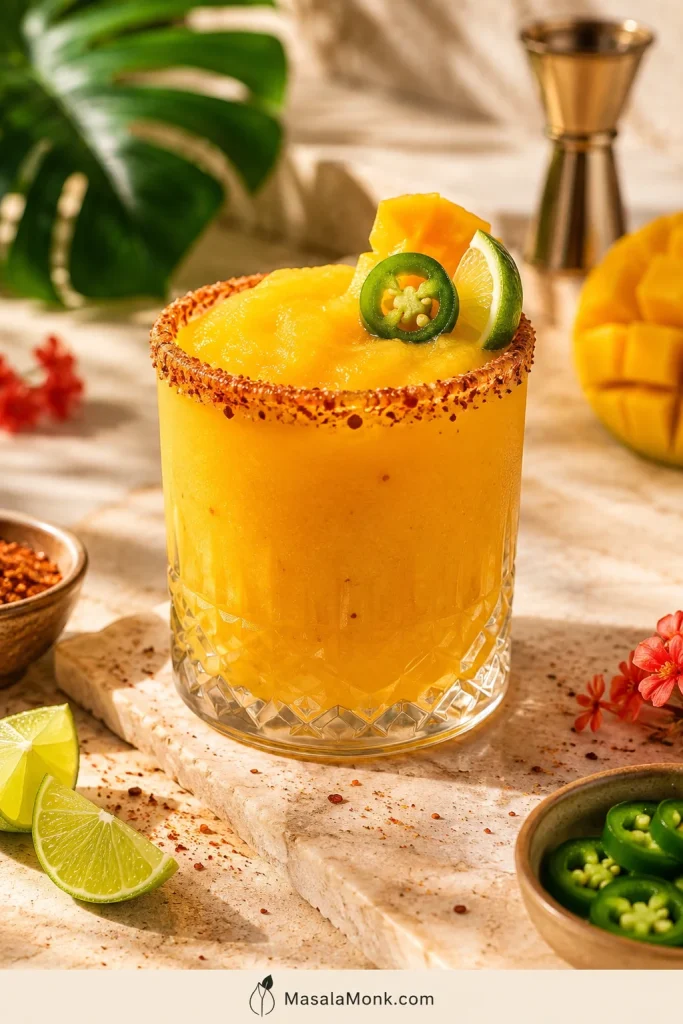
Spicy mango daiquiri in a rocks glass with a chili-lime rim, jalapeño slice, mango garnish, lime wedges, chili flakes, and sliced peppers.
A chili-lime rim turns sweet mango into a sharper party cocktail. The salt wakes up the fruit, while the chile keeps every sip from feeling too soft.

For a full chili-lime cocktail built around jalapeño and a Tajín-style rim, try the Spicy Margarita Recipe.

Vodka Mango

Vodka works as a 1:1 swap for rum, but the result is technically a mango vodka frozen cocktail rather than a daiquiri. The flavor will be cleaner and less rummy, so keep the lime strong.

Back to top

Pitcher Batch and Make-Ahead Tips

Scale the ingredients, but blend close to serving time. Frozen cocktails are best in the first few frosty minutes, before the ice melts and the fruit starts to separate.
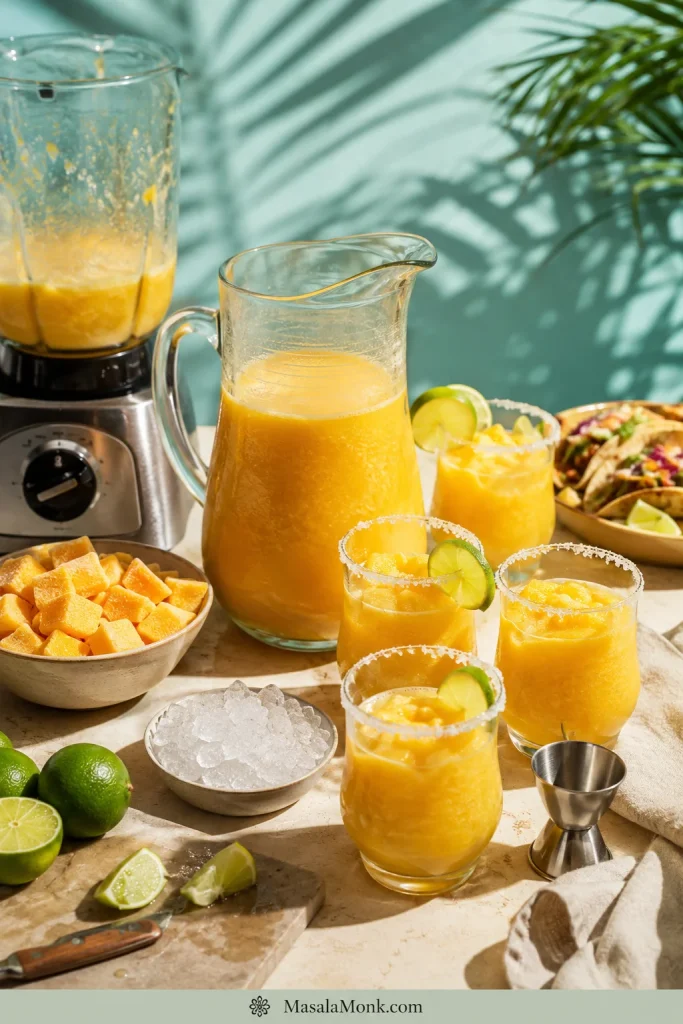
Mango daiquiri pitcher batch setup with a blender, glass pitcher, multiple glasses, frozen mango, crushed ice, limes, tacos, a jigger, and a linen napkin.
For a pitcher batch, prep the mango, lime, syrup, and rum mixture ahead, then blend close to serving. That way, the drinks stay cold, thick, and fresh for guests.

For 4 Drinks

Frozen mango4 cups / about 600 g
White rum8 oz / 240 ml
Fresh lime juice3 oz / 90 ml
Simple syrup2 oz / 60 ml
Crushed ice2 cups / about 300 g

For 8 Drinks

Frozen mango8 cups / about 1.2 kg
White rum16 oz / 480 ml
Fresh lime juice6 oz / 180 ml
Simple syrup4 oz / 120 ml
Crushed ice4 cups / about 600 g

Blend in batches if your blender jar is smaller than 64 oz / 1.9 L. Do not fill the blender to the top with frozen ingredients; leave room for movement or the blades will struggle. For parties, prep the fruit, juice the limes, make the syrup, and chill the rum mixture ahead of time. Blend only when guests are ready for drinks.

  • Best texture: serve immediately after blending.
  • Mango prep: peel, cube, and freeze fresh mango ahead.
  • Syrup prep: make simple syrup ahead and keep it chilled.
  • Avoid the fridge: a blended frozen drink will melt, separate, and lose texture.
  • Leftovers: freeze in a container, then re-blend briefly before serving.

If you want a rum drink that can sit chilled in a pitcher instead of being blended at the last minute, our Rum Punch Recipe is the easier party option.

Troubleshooting

Most mango daiquiri problems are easy to fix while the drink is still in the blender. A little lime, a little syrup, a little frozen fruit — that is usually enough to bring the glass back into balance.
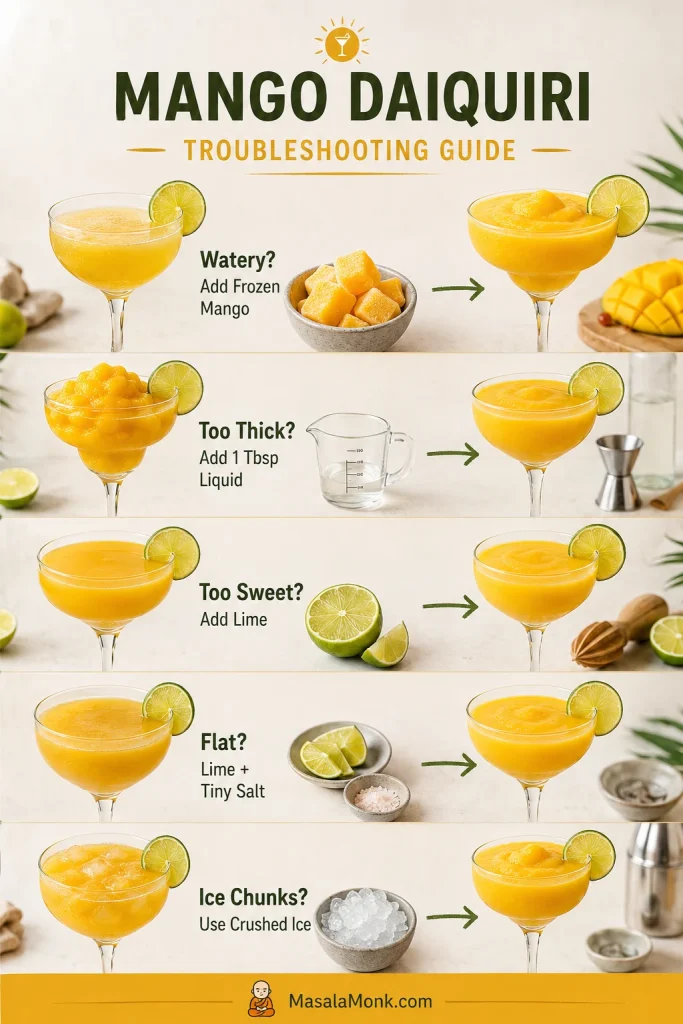
Mango daiquiri troubleshooting guide showing fixes for watery, too thick, too sweet, flat, and icy drinks using mango, lime, liquid, salt, and crushed ice.
Most texture and flavor problems can be fixed before the drink leaves the blender. Use frozen mango to fix watery texture, lime to balance sweetness, and crushed ice for smoother blending.
ProblemLikely causeFix
WateryToo much ice, melted ice, or blended too earlyAdd frozen fruit and serve immediately.
Overly thickToo much frozen fruit or not enough liquidAdd 1 tbsp liquid at a time and blend briefly.
Too sweetVery ripe mango, sweetened nectar, bottled mix, or too much syrupAdd lime juice.
Overly sharpTart mango or too much limeAdd syrup or a splash of mango nectar.
Weak fruit flavorToo much iceAdd more mango and reduce ice next time.
Smoothie-likeNot enough lime or rum structureAdd lime and check the sweetness balance.
Ice chunks remainLarge cubes or weak blenderUse crushed ice, pulse first, or soften frozen mango for a few minutes.
Too boozyRum is too high for your tasteAdd fruit, ice, or a splash of juice.
Flat flavorFruit is dull or lime is lowAdd lime and a tiny pinch of salt.
Separates quicklyThe drink sat too long after blendingRe-blend briefly with a little frozen fruit.

Back to top

What to Serve with It

This drink loves salty, spicy, grilled, and tropical food. Anything salty or chili-lime makes the mango taste even brighter.

Pairing styleServe with mango daiquiris
Salty snacksChips, guacamole, salted nuts, tortilla chips
Spicy foodShrimp Tacos, spicy chicken skewers, paneer tikka
Grilled seafoodGrilled shrimp, fish tacos, limey prawns
Fresh sidesMango Salsa, pineapple salsa, cucumber salad
Party spreadTacos, nachos, grilled corn, sliders
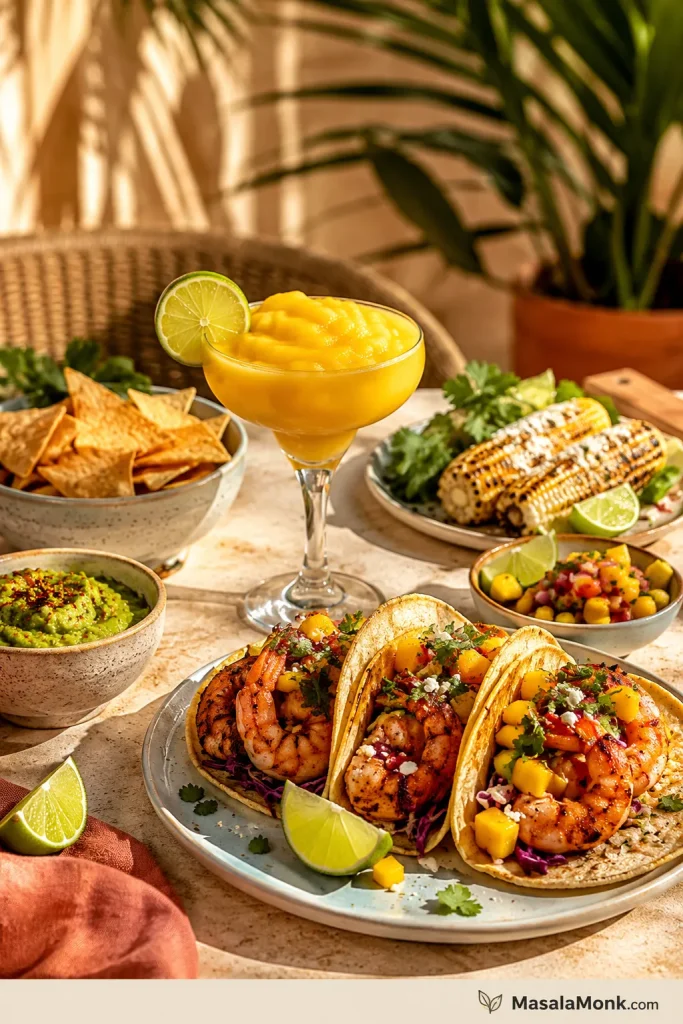
Mango daiquiri served with shrimp tacos, mango salsa, tortilla chips, guacamole, grilled corn, lime wedges, and cilantro on a sunlit table.
Mango daiquiris pair best with salty, spicy, and limey food. Shrimp tacos, mango salsa, chips, guacamole, and grilled corn all make the cocktail taste brighter.

This is where the drink becomes a poolside glass, a taco-night cocktail, or the cold thing people reach for between spicy bites.

FAQs

Is this always a frozen drink?

No. It can be frozen and blended or shaken and strained. The frozen version is more common at home because mango gives the drink a naturally thick texture.

Fresh or frozen mango: which is better?

Frozen mango is better for thick frozen drinks. Fresh mango has stronger ripe flavor, but it needs more ice or a short chill in the freezer before blending.

What rum works best?

White rum or light rum is the best default. It keeps the cocktail crisp and lets mango and lime stand out.

How do you keep it from getting watery?

Use frozen fruit, control the ice, blend briefly, and serve right away. If the blend gets thin, add more frozen mango instead of more ice.

Do you need simple syrup?

Usually, yes, but the amount depends on the fruit. Very sweet mango may need little or no syrup. Tart mango may need a little extra.

What if I only have mango puree?

Mango puree works well. Use it in the shaken version, or use it in the blender version with less syrup.

Is mango nectar okay?

Yes. Use it as a shortcut or thinning liquid, but reduce syrup and add fresh lime because nectar is usually sweet.

How do you make a virgin mango daiquiri?

Blend frozen mango with fresh lime juice, pineapple juice or coconut water, a little syrup, and ice. Add sparkling water after blending for a brighter mocktail feel.

Does vodka work instead of rum?

Yes, vodka works as a 1:1 swap, but the drink becomes a mango vodka frozen cocktail rather than a classic daiquiri.

How far ahead can you make it?

Prep the ingredients ahead, but blend right before serving. Once blended, the ice starts melting and the drink loses its thick texture.

Next Drinks to Try

Next, try the Lychee Martini Recipe for another tropical fruit cocktail, the Lemon Drop Martini Recipe for a sharper citrus-sweet balance, or the Appletini Recipe when you want something crisp, cold, and shaken instead of frozen.

Once you stop asking ice to do all the work, the drink becomes what it should be: golden, frosty, mango-bright, and sharp enough with lime to stay refreshing. That is the glass people finish quickly — and ask you to make again.
Posted on 9 Comments

Piña Colada: Classic Recipe + 10 Variations (Virgin & On the Rocks)

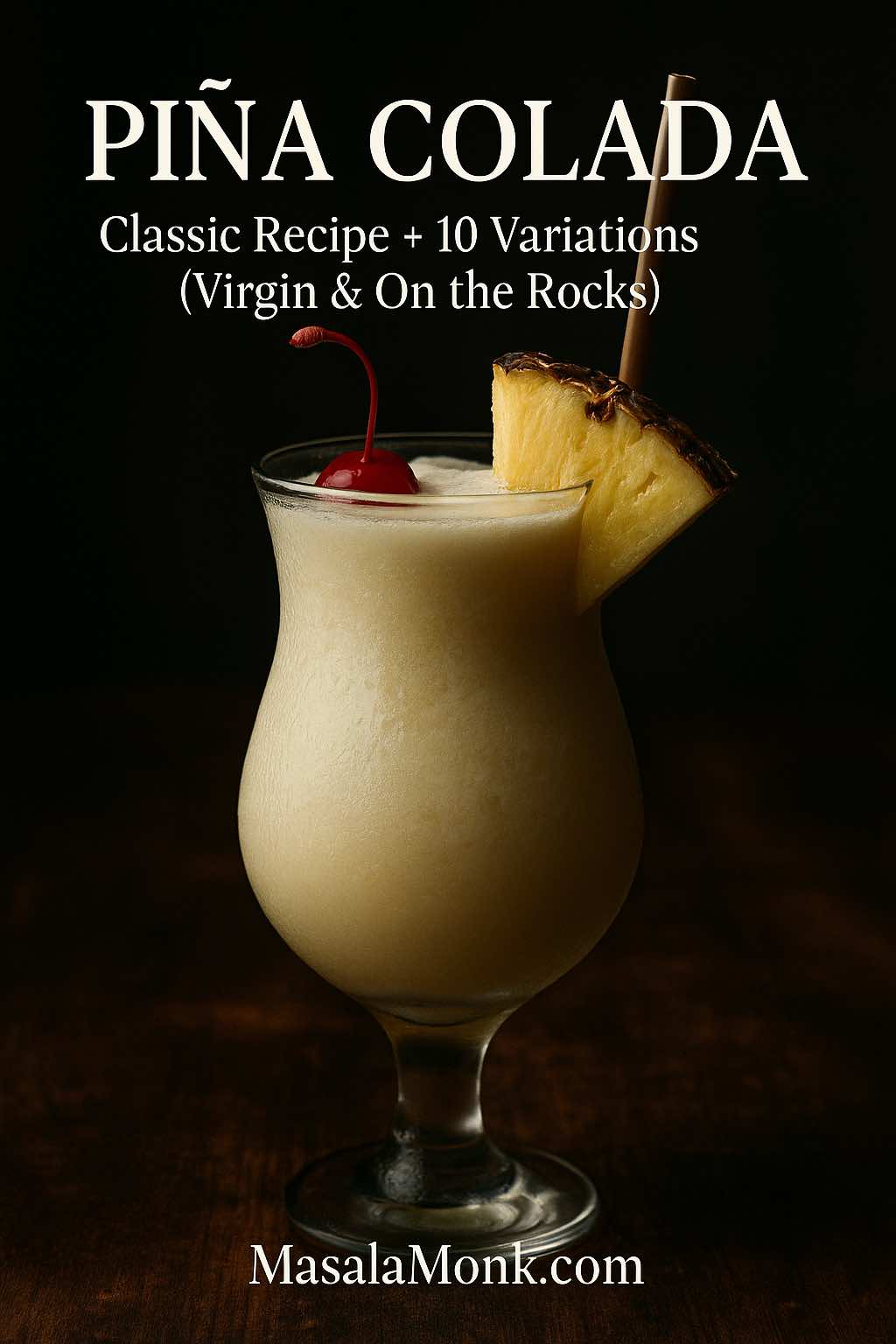
Moody piña colada in a hurricane glass with pineapple and cherry—classic recipe and variations by MasalaMonk.

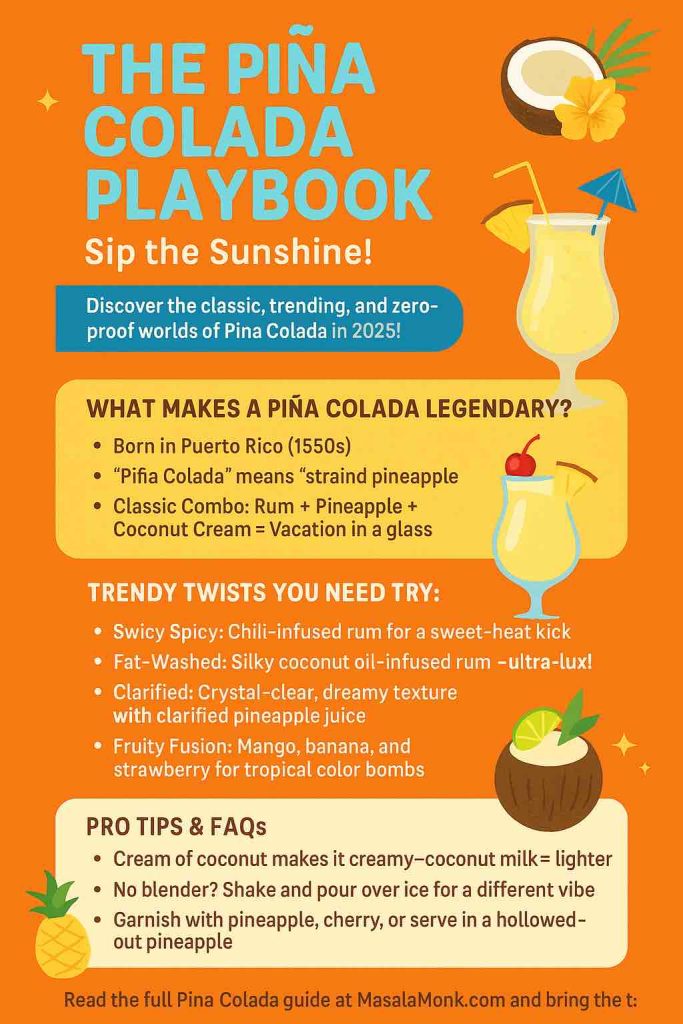
Some drinks whisper “holiday,” yet the piña colada practically sings it. If you love that beach-in-a-glass feeling, you’re in the right place. First, we’ll lock in the frozen classic that tastes like sunshine. Next, we’ll switch to an easy piña colada on the rocks for no-blender nights. Then, because it’s fun to play, we’ll explore practical pina colada variations you can master in minutes—strawberry, mango, blue curaçao, coconut-rum, spiced-rum, vodka, tequila, skinny, keto-leaning, and frozen pineapple. Finally, since not every occasion calls for alcohol, we’ll craft a zero-proof version that’s indulgent without spirits.

Before we blend, a tiny language detour helps. In Spanish, piña colada literally means “strained pineapple,” a nod to the pressed juice at the drink’s core — see Etymonline’s word history and the concise entry at Merriam-Webster. Meanwhile, let’s keep the focus on flavor and technique.

What does piña colada mean?
Piña colada means “strained pineapple.” Traditionally, it pairs pineapple with coconut and rum; however, you can easily make a virgin piña colada by skipping the rum and balancing sweetness with a little lime or a splash of coconut water.

Because stories matter almost as much as flavor, here’s the short origin postcard. Puerto Rico celebrates the piña colada as its national cocktail, and San Juan still debates where it was first poured. Many point to Ramón “Monchito” Marrero at the Caribe Hilton in the 1950s, while others mention competing claims across town. For a friendly primer, read Discover Puerto Rico’s guide, and for the hotel’s version of events, browse the Caribe Hilton history page.


Frozen vs. On the Rocks: choose your texture before you start

First, decide your vibe. Frozen is creamy, slushy, and a touch dessert-leaning—perfect for lingering afternoons or sunny patios. On the rocks, by contrast, is shaken hard with ice and served over fresh cubes; it’s quicker, brighter, and lets rum aromas peek through. As a result, many people pick frozen for weekends and rocks for weeknights.

If you often serve a crowd, prep a thick frozen base and, meanwhile, keep extra pineapple juice chilled. Then, when someone wants a lighter drink, shake a single serving with a splash of juice and strain it over ice for an instant piña colada on the rocks. If you prefer a visual of the shaken style, this walkthrough for a Piña Colada on the Rocks (Shaken) mirrors the method below.


Classic Piña Colada (Frozen)

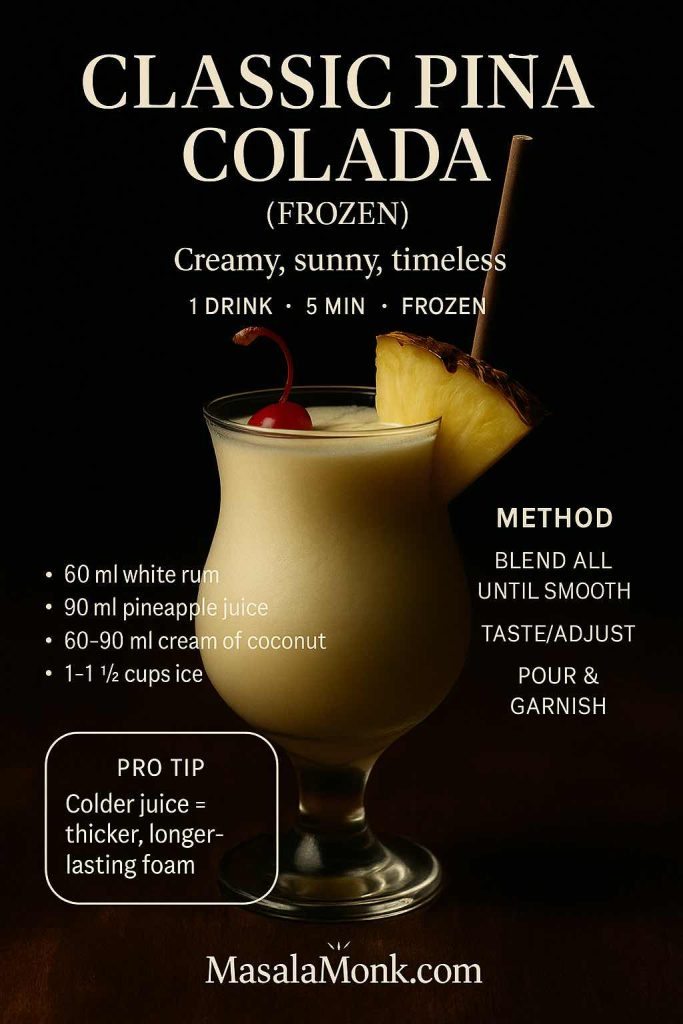
Why it works. Pineapple brings tang and perfume; cream of coconut adds velvety body and gentle sweetness; white rum lifts aromatics so the finish feels sunny rather than heavy. For proportions, the classic split of rum + pineapple + cream of coconut gives a balanced canvas; from there, adjust to your blender and your preferred sweetness.

Classic frozen piña colada recipe card in a hurricane glass with pineapple and cherry—MasalaMonk footer
Creamy, sunny, timeless. Use pre-chilled juice for thicker, longer-lasting foam and that luxe, dessert-leaning texture.

Ingredients (1 drink)

  • 60 ml white rum (¼ cup)
  • 90 ml pineapple juice (⅜ cup)
  • 60–90 ml cream of coconut (¼–⅜ cup), to taste
  • 1–1½ cups ice
  • Pineapple wedge and cherry, to garnish

Method

  1. Chill a tall glass; meanwhile, add rum, pineapple juice, and cream of coconut to the blender.
  2. Add ice and blend until smooth and pourable. If the blades stall, loosen with a small splash of juice.
  3. Taste and adjust—if it’s too thick, a little more juice helps; if sweetness lingers, a few drops of lime tidy the finish.
  4. Pour, garnish, and serve immediately for maximum frostiness.

Coconut note. Cream of coconut isn’t the same as coconut milk or unsweetened coconut cream. Because cream of coconut is sweetened and thicker, it creates that signature silky texture. If you choose coconut milk for a “skinny” profile, add a touch of simple syrup and expect a lighter body.

Quick upgrades. Keep pineapple juice cold; colder inputs blend better and hold foam longer. Use frozen pineapple in place of some ice for louder fruit with less dilution. If your blender hesitates, pulse first, then blend continuously; layering liquids before ice prevents cavitation.


Piña Colada on the Rocks (Quick Method)

If you want the flavor without the thickness, the shaken version is a weeknight hero. It preserves the tropical profile, trims the richness, and—because it’s fast—fits Tuesday just as well as Saturday.

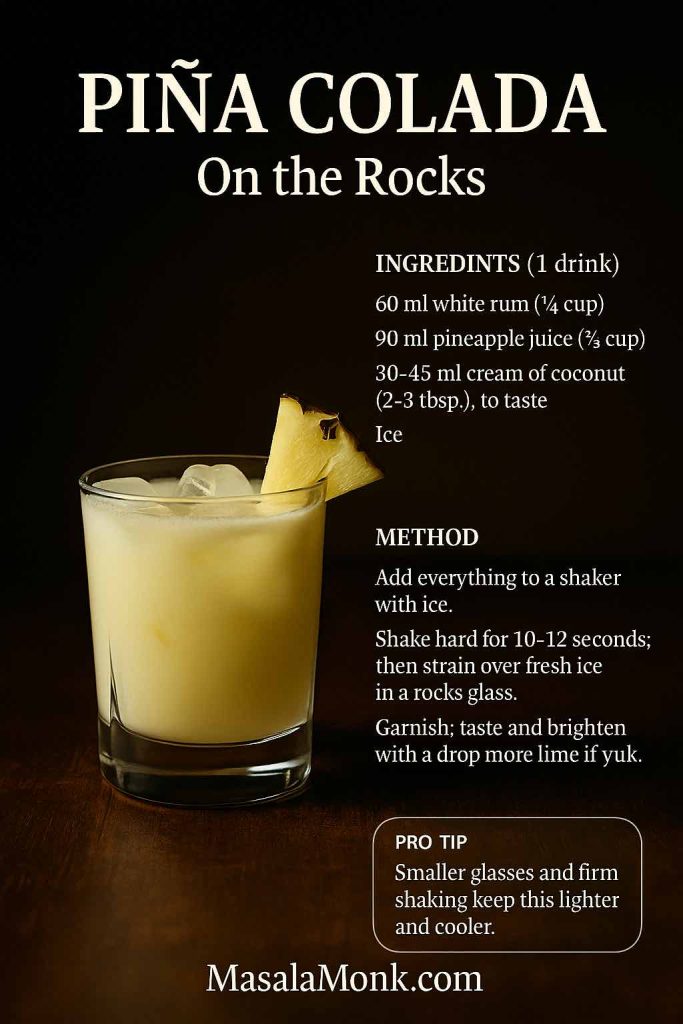
Piña Colada on the Rocks recipe card in moody portrait—rocks glass with pineapple wedge, MasalaMonk footer.
On-the-rocks keeps the colada bright: hard shake, fresh ice, compact glass. Perfect for quick weeknights without the blender.

Ingredients (1 drink)

  • 60 ml white rum (¼ cup)
  • 90 ml pineapple juice (⅜ cup)
  • 30–45 ml cream of coconut (2–3 tbsp), to taste
  • 10 ml fresh lime juice (2 tsp, optional)
  • Ice
  • Pineapple wedge or citrus peel, to garnish

Method

  1. Add everything to a shaker with ice.
  2. Shake hard for 10–12 seconds; then strain over fresh ice in a rocks glass.
  3. Garnish; taste and brighten with a drop more lime if you like.

Why you’ll love it. Shaking gently aerates and adds just enough dilution to feel refreshing, not heavy. Smaller glasses (180–240 ml / 6–8 oz) keep the drink cold and focused. Moreover, when you’re making rounds, you can pre-mix pineapple juice + cream of coconut in a bottle; then just add rum and shake to order.


Virgin Piña Colada (and Virgin Piña Colada on the Rocks)

Virgin piña colada meaning: a non-alcoholic piña colada that keeps pineapple and coconut while skipping rum. For a lighter texture, shake on the rocks and finish with lime.

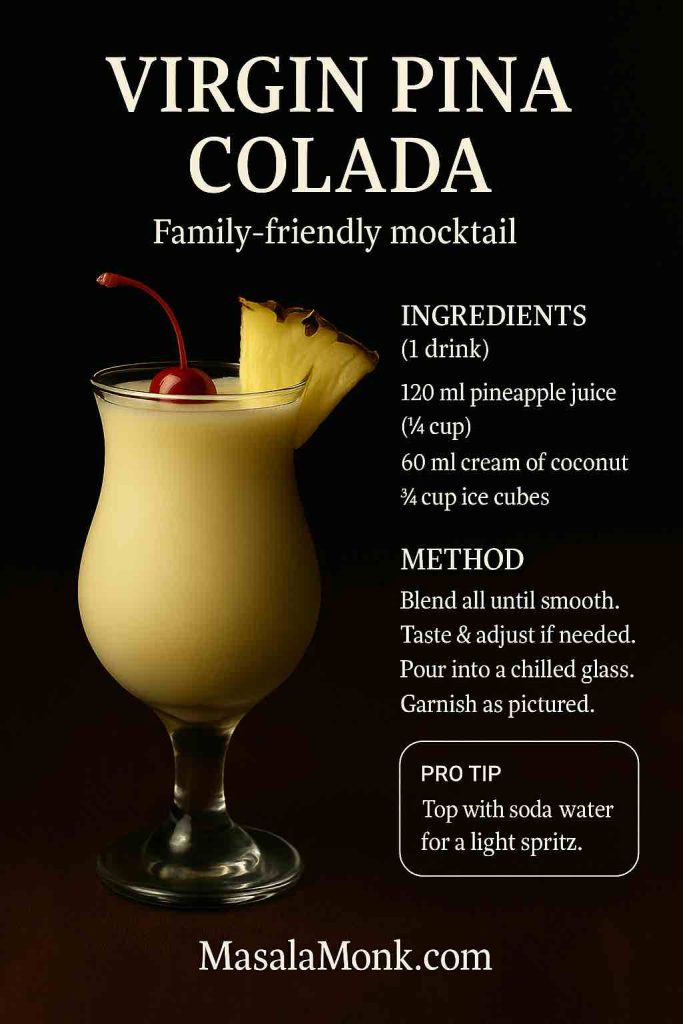
Virgin piña colada recipe card—non-alcoholic, moody portrait with MasalaMonk footer
Zero-proof, 100% tropical; balance sweetness with lime or a splash of chilled coconut water.

Ingredients (1 drink)

  • 120 ml pineapple juice (½ cup)
  • 45–60 ml cream of coconut (3–4 tbsp), to taste
  • ½–1 cup ice (for frozen) or a shaker of ice (for rocks)
  • Optional: 10–15 ml fresh lime (2–3 tsp) or 30–60 ml coconut water (2–4 tbsp)

Method

  • Frozen: add juice and cream of coconut to a blender; add ice; blend until smooth. Adjust with a splash of juice or coconut water if needed.
  • On the rocks: shake juice and cream of coconut with ice; strain over fresh ice. Add lime to taste.

Keep exploring (internal). For lighter, long drinks that echo these flavors, see Coconut Water Cocktails. If you enjoy mint and tang, try Pineapple Mojito Mocktails. For low-sugar days, browse Keto Mocktails.


How to build pina colada variations without a recipe

Because once you nail the base, it’s easy to improvise. First, keep the triangle of pineapple–coconut–spirit intact. Next, add an accent (fruit, spice, citrus, or liqueur). Then, adjust sweetness and texture in small steps. Finally, decide on frozen or rocks, and garnish with intention. With that in mind, here are ten reliable pina colada variations you can pour anytime.


Top 10 Pina Colada Variations

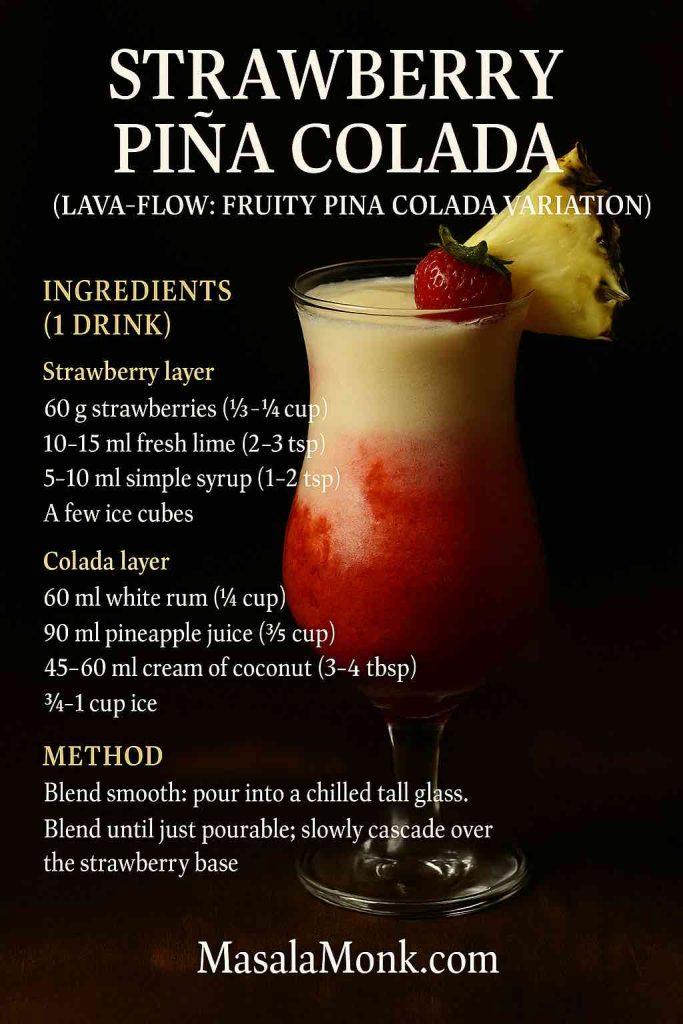
1) Strawberry Piña Colada (Lava-Flow: Fruity Pina Colada Variation)

When you want playful drama, strawberry is the simplest path. First, blend a thick strawberry base; next, blend your colada until silky; then, slowly pour it over the red layer so the “lava” rises in ribbons. As a result, you get classic coconut-pineapple comfort lifted by bright berry zip. Finally, keep both layers fairly thick so they ripple instead of mixing.

Strawberry Lava-Flow piña colada layered recipe card—red strawberry base and creamy colada, MasalaMonk footer.
Playful drama, classic comfort: keep both layers thick so the red “lava” ribbons instead of mixing—instant showstopper.

Strawberry layer (1 drink)

  • 60 g strawberries (⅓–½ cup)
  • 10–15 ml fresh lime (2–3 tsp)
  • 5–10 ml simple syrup (1–2 tsp)
  • A few ice cubes
    Blend smooth; pour into a chilled tall glass.

Colada layer

  • 60 ml white rum (¼ cup)
  • 90 ml pineapple juice (⅜ cup)
  • 45–60 ml cream of coconut (3–4 tbsp)
  • ¾–1 cup ice
    Blend until just pourable; slowly cascade over the strawberry base.

Pro tip. If berries are peak-sweet, reduce or skip syrup; conversely, if they’re tart, add an extra teaspoon.


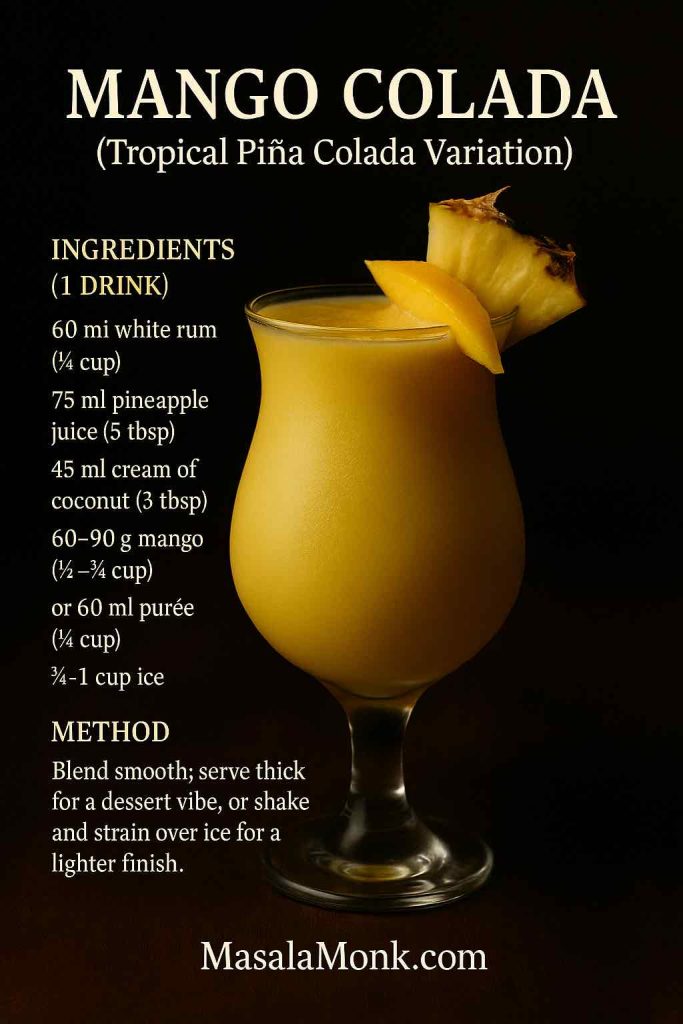
2) Mango Colada (Tropical Pina Colada Variation)

Mango slides in silkily and, meanwhile, softens acidity. Next, use ripe fruit or a quality purée; if the texture feels dense, loosen with a splash of pineapple juice. Finally, a tiny pinch of salt heightens the mango’s aroma without reading “salty,” and a teaspoon of lime adds sparkle.

Mango Colada recipe card—golden cocktail with mango and pineapple garnish, moody portrait, MasalaMonk footer
Mango slides in silkily and softens acidity; loosen with pineapple juice if dense, add a pinch of salt and 1 tsp lime to make aromas pop.

For 1 drink

  • 60 ml white rum (¼ cup)
  • 75 ml pineapple juice (5 tbsp)
  • 45 ml cream of coconut (3 tbsp)
  • 60–90 g mango (½–¾ cup) or 60 ml purée (¼ cup)
  • ¾–1 cup ice
    Blend smooth; serve thick for a dessert vibe, or shake and strain over ice for a lighter finish.

Love mango + vodka? Try these riffs: Mango Vodka Cocktail Drinks (Base + 7 Variations).


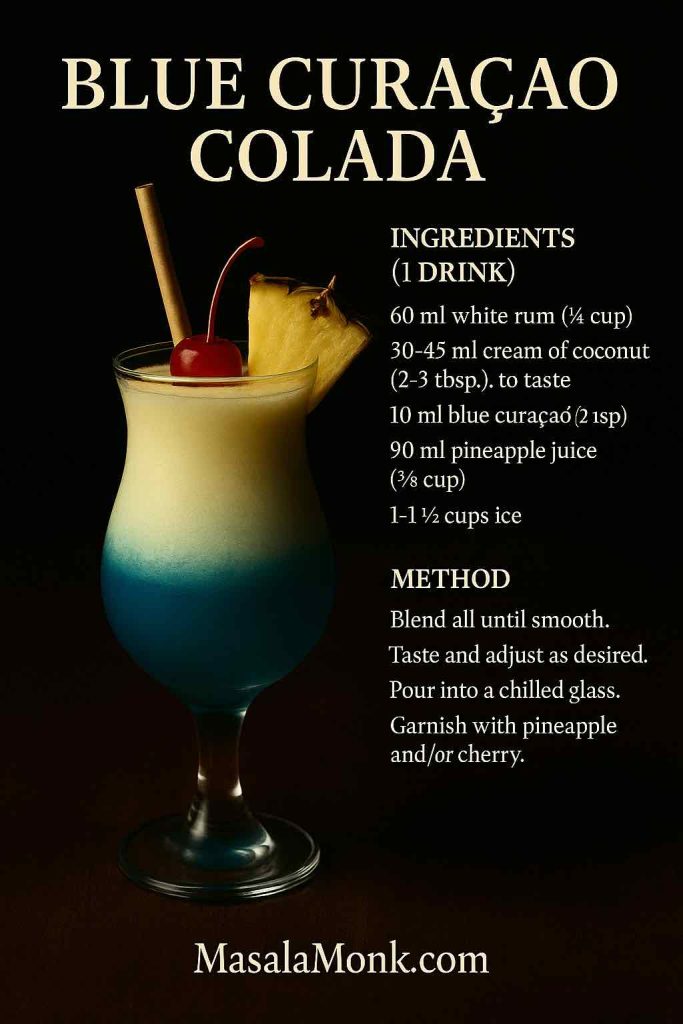
3) Blue Curaçao Colada (Blue Pina Colada Variation)

Sometimes you want familiar comfort and a little showmanship. Blue curaçao adds gentle citrus notes and that ocean-blue hue. Importantly, this isn’t a Blue Hawaii (a sharper, vodka-leaning sour); instead, it lands closer to a Blue Hawaiian, where coconut and pineapple still lead — compare Blue Hawaiian vs. Blue Hawaii.

Blue curaçao piña colada recipe card—ocean-blue hue, premium moody lighting
Coconut-pineapple comfort with coastal color—keep dilution low so the blue stays vivid.

For 1 drink

  • 45 ml white rum (3 tbsp)
  • 15 ml blue curaçao (1 tbsp)
  • 90 ml pineapple juice (⅜ cup)
  • 45–60 ml cream of coconut (3–4 tbsp)
  • ¾–1 cup ice
    Blend or shake; add a few drops of lime only if sweetness lingers.

Color tip. Add ice gradually. Over-dilution can dull the blue.


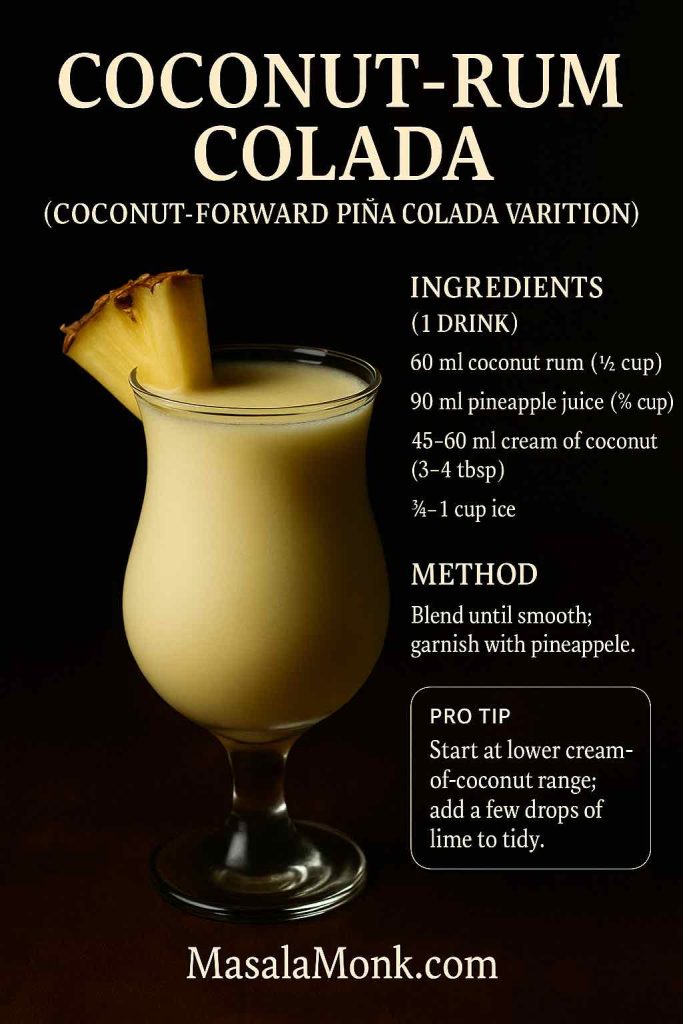
4) Coconut-Rum Colada (Coconut-Forward Pina Colada Variation)

If you’re craving even more coconut, this is your lane. First, switch to coconut rum; then, because it’s sweeter than white rum, start at the lower end of the cream-of-coconut range. Afterward, taste and—if needed—counter with a few drops of lime so the finish stays tidy. Consequently, the drink reads lush and aromatic rather than sugary.

Coconut-Rum Colada recipe card—coconut-forward piña colada in a hurricane glass, moody portrait, MasalaMonk footer
Coconut-forward and lush: start at the lower cream-of-coconut range (coconut rum is sweeter); tidy the finish with a few drops of lime.

For 1 drink

  • 60 ml coconut rum (¼ cup)
  • 90 ml pineapple juice (⅜ cup)
  • 45–60 ml cream of coconut (3–4 tbsp)
  • ¾–1 cup ice
    Blend until smooth; garnish with pineapple.

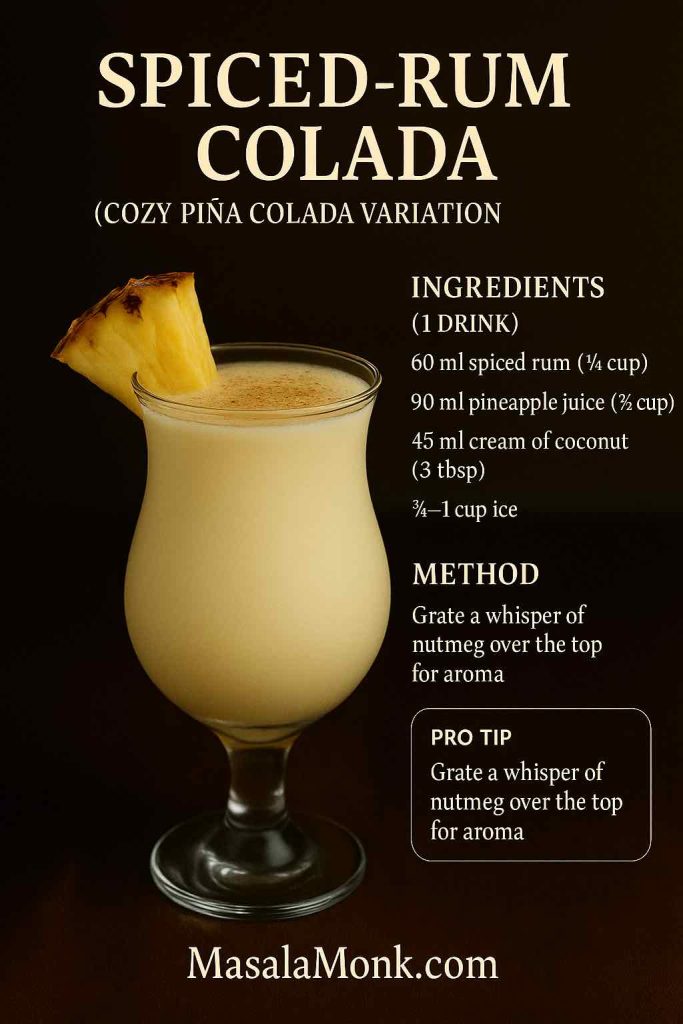
5) Spiced-Rum Colada (Cozy Pina Colada Variation)

When you want warmth and depth, spiced rum brings vanilla and baking-spice notes that cozy up to pineapple and coconut. Next, keep the cream of coconut moderate so the spices shine; then, grate a whisper of nutmeg over the top for aroma. Overall, you get a beachy drink with sweater-weather soul.

Spiced-Rum Colada recipe card—creamy cocktail with nutmeg and pineapple garnish, moody portrait, MasalaMonk footer
Vanilla and baking-spice notes meet pineapple-coconut; keep cream of coconut moderate and finish with a whisper of nutmeg.

For 1 drink

  • 60 ml spiced rum (¼ cup)
  • 90 ml pineapple juice (⅜ cup)
  • 45 ml cream of coconut (3 tbsp)
  • ¾–1 cup ice
    Blend, taste, and add 1 tsp lime if you want extra lift; serve frozen or shake and strain over ice.

6) Vodka Colada (Chi-Chi: Clean Pina Colada Variation)

Prefer a cleaner finish? In that case, swap rum for vodka. Because vodka is neutral, balance depends on your pineapple and coconut; therefore, taste before you pour. Meanwhile, serving tall over fresh ice emphasizes that breezy, easy-drinking feel, and a small pinch of salt can quietly boost pineapple.

For 1 drink

  • 60 ml vodka (¼ cup)
  • 90 ml pineapple juice (⅜ cup)
  • 45–60 ml cream of coconut (3–4 tbsp)
  • ¾–1 cup ice
    Blend or shake; adjust with a few drops of lime if it tastes flat.

7) Tequila Colada (Crisp Pina Colada Variation)

When you’re in the mood for tropical with a little edge, tequila adds bright minerality that pairs beautifully with pineapple and coconut. Generally, blanco keeps it crisp; meanwhile, a tiny pinch of salt makes the fruit sing. Finally, a lime wheel garnish sets the tone.

For 1 drink

  • 60 ml blanco tequila (¼ cup)
  • 90 ml pineapple juice (⅜ cup)
  • 45–60 ml cream of coconut (3–4 tbsp)
  • Small pinch of salt (optional)
  • ¾–1 cup ice
    Blend until silky; garnish and serve.

Variation. For a Margarita-leaning twist, add 10–15 ml triple sec and shake on the rocks.


8) Skinny Colada (Light Pina Colada Variation)

Sometimes you want the flavor without the heft. So, swap in coconut milk and use just enough syrup to keep things balanced. Additionally, a squeeze of lime adds lift without extra calories; furthermore, shaking and serving on the rocks keeps it especially light and bright. Because coconut milk is thinner than cream of coconut, expect a silkier, less dessert-like body.

Nutrition-curious? See Coconut Milk Nutrition Facts & Glycemic Index.

For 1 drink

  • 60 ml white rum (¼ cup)
  • 90 ml pineapple juice (⅜ cup)
  • 45 ml coconut milk (3 tbsp)
  • 5–15 ml simple syrup (1–3 tsp), to taste
  • ¾–1 cup ice
    Blend or shake; sweeten a teaspoon at a time until it lands just right.

9) Keto-Leaning Colada (Lower-Sugar Pina Colada Variation)

If you’re watching sugar, this is the smart pivot. First, keep pineapple modest. Next, use unsweetened coconut cream. Then, sweeten with your preferred keto option. Finally, swap some ice for frozen pineapple so body improves without a big sugar bump. For more low-carb ideas, browse Keto Mocktails.

For 1 drink

  • 60 ml white rum (¼ cup)
  • 60–75 ml pineapple juice (¼–⅓ cup) or a mix of juice + water
  • 45 ml unsweetened coconut cream (3 tbsp)
  • Keto sweetener, to taste
  • ¾–1 cup ice
    Blend smooth; finish with a squeeze of lime to sharpen the edges.

Optional. A drop or two of coconut extract boosts aroma without adding carbs.


10) Frozen Pineapple Colada (Maximum-Fruit Pina Colada Variation)

For maximum fruit and minimal dilution, frozen pineapple replaces much of the ice. Consequently, the texture stays lush, the flavor gets louder, and the chill lasts to the final sip. If your blender struggles, pulse a few times before running continuously; then, loosen with a splash of juice only if necessary.

For 1 drink

  • 60 ml white rum (¼ cup)
  • 60 ml pineapple juice (¼ cup)
  • 45–60 ml cream of coconut (3–4 tbsp)
  • 1 heaping cup frozen pineapple chunks
    Blend thick and silky; pour into a tall, well-chilled glass.

Types of Coladas (Piña Colada Type Drinks)

Although the piña colada is the icon, there’s a whole colada family. For example, try:

  • Piña Verde: herbal green notes over the pineapple-coconut base.
  • Banana Colada: thicker, softer mouthfeel from ripe banana.
  • Champagne Colada: topped with sparkling wine for a celebratory finish.
  • Mango Colada: silkier fruit body and perfume.
  • Blue Colada: blue curaçao for citrus notes and a vivid hue.

Consequently, you can match mood—lush and frozen for weekends, or bright and shaken on busy nights. Moreover, these quick pivots turn the classic into a set of pina colada variations that never feel repetitive.


Drinks Similar to a Piña Colada

If you enjoy the piña colada, you’ll likely love drinks similar to a piña colada. First, try the Miami Vice—half strawberry daiquiri, half piña colada, fully festive; the recipe on Liquor.com is reliable. Next, mix a Painkiller—rum, pineapple, orange, and cream of coconut with a nutmeg finish—using the official spec on Pusser’s Rum.

Finally, for fast color gradients and sweet-tart layers, explore Mocktails with Grenadine for non-alcoholic ideas you can adapt.


Ingredient buying guide (quick but useful)

Pineapple juice. Fresh-pressed tastes bright and aromatic; however, high-quality canned juice blends smoothly and is wonderfully consistent. Keep it chilled and use it within a few days for the best foam and flavor.

Cream of coconut vs. coconut milk. Coconut milk is unsweetened and lighter; cream of coconut is sweetened and thicker, designed for cocktails. If you substitute, rebalance sweetness and expect a different mouthfeel. For clarity, this guide to cream of coconut vs. coconut milk explains the swap smartly.

Rum. A clean white rum is the classic choice. If you prefer deeper flavor, aged or spiced rum works beautifully—just reduce cream of coconut slightly or add a little lime so sweetness doesn’t dominate.

Citrus. Fresh lime is your editor. Even a teaspoon or two can transform a heavy finish into a bright one.

Salt. A literal pinch can make fruit taste “riper.” Use sparingly and always taste.


Technique tips that instantly upgrade your glass

  • Chill everything. Cold inputs blend smoother and hold foam longer.
  • Liquids first, ice last. In blenders, layering liquids before ice helps avoid cavitation.
  • Pulse, then finish. Short pulses break big pieces; a brief continuous blend polishes texture.
  • Shake like you mean it. For rocks versions, firm shaking (10–12 seconds) delivers perfect chill and dilution.
  • Mind your glassware. Tall glasses flatter frozen drinks; compact rocks glasses keep shaken versions bright and cold.
  • Garnish with intent. Pineapple fronds, a fresh wedge, or even a citrus peel add aroma where your nose meets the glass.

Make-ahead, batching, and easy swaps

No cream of coconut? Substitute coconut milk plus simple syrup, adjusting in tiny steps. The texture will be lighter but still silky.

No blender? Shake the on-the-rocks version hard with cracked ice. If you want extra body, add a small spoon of coconut milk before shaking.

Dairy-free needs? These recipes are naturally dairy-free; if you add ice cream for a dessert riff, reduce sweetener and add a pinch of salt.

Batching for parties. Blend a quadruple-size base without ice; chill deeply. Just before serving, either blend portions with ice for frozen service or shake portions with ice for rocks service. Because melted ice thins sweetness, taste after chilling and bump cream of coconut or lime by a teaspoon if needed.

Make-ahead shortcut. Pre-blend a “colada mix” by stirring equal parts cream of coconut and pineapple juice; keep it cold. During service, add spirit and ice, then blend or shake. This saves time and keeps ratios consistent across a long evening.

Prefer lighter long pours? Skim ideas in Tropic Like It’s Hot: Coconut Water Cocktails for Summer.


Pina colada flavored drinks: quick pivots you can do in 60 seconds

Sometimes you don’t want a whole new recipe—just a shift in mood. Therefore, try these tiny changes: add a teaspoon of lime for snap; swap in coconut milk for a lighter feel; drop in 15 ml blue curaçao for color; stir in 30 ml mango purée for silk; or finish with grated nutmeg for warmth. In short, these micro-moves turn the base into pina colada variations that stay familiar yet fresh.


A friendly close

You now have a complete island toolkit: a dependable classic, a quick piña colada on the rocks, a zero-proof path, and ten flexible pina colada variations that keep things interesting. Start with the frozen original; then try the lighter rocks version on a weeknight. Once you know which texture feels most like you, branch into strawberry, mango, or blue curaçao and see what sticks.

When you land on a new favorite—or discover a clever garnish—share it so others can try it too. Tropical, relaxed, and simple—that’s the piña colada at its best.

FAQs

1) What does “piña colada” mean?

Simply put, it means “strained pineapple.” In other words, the name points to fresh or pressed pineapple juice at the drink’s heart. From there, coconut and rum complete the classic trio; however, you can skip the rum for a virgin version and still keep the sunny flavor.

2) Is the piña colada Puerto Rican?

Yes. Most stories trace the cocktail to San Juan, Puerto Rico. Consequently, you’ll often see it called the island’s national drink. While the inventor is debated, the flavor profile—pineapple, coconut, and rum—clearly began there and then traveled the world.

3) Frozen vs. on the rocks: which piña colada should I choose?

It depends on mood. Frozen is lush, creamy, and a little dessert-like; meanwhile, piña colada on the rocks feels lighter and brighter because hard shaking adds chill and subtle dilution. So, choose frozen for lazy afternoons and rocks for quick weeknights.

4) How do I make a virgin piña colada (including on the rocks)?

It’s easy. First, combine pineapple juice with cream of coconut; then, either blend with ice for a frosty treat or shake hard and serve over fresh ice for a lighter sip. Finally, a squeeze of lime balances sweetness, and a splash of coconut water lengthens the drink without extra sugar.

5) What are the most popular pina colada variations?

Start with simple winners: Strawberry (lava-flow), Mango, Blue Curaçao (Blue Colada), Coconut-Rum, Spiced-Rum, Vodka (Chi-Chi), Tequila, Skinny, Keto-leaning, and Frozen Pineapple. Because each keeps the pineapple-coconut core, you can swap spirits or fruit and still taste “piña colada.”

6) Which rum is best—white, coconut, or spiced?

As a rule, white rum is clean and versatile. Coconut rum adds extra coconut sweetness; therefore, reduce cream of coconut slightly or add a few drops of lime. Spiced rum brings vanilla and baking-spice notes; consequently, the drink feels cozier, especially with a pinch of nutmeg.

7) Can I make a piña colada with vodka or tequila?

Absolutely. Vodka creates a silky, neutral canvas where pineapple shines; meanwhile, tequila (especially blanco) adds crisp minerality that many love. Accordingly, both are recognized pina colada variations—great for guests who don’t usually choose rum.

8) Cream of coconut vs. coconut milk: what’s the difference?

Cream of coconut is sweetened and thick, which yields that classic, velvety texture. Coconut milk is unsweetened and lighter. Therefore, if you substitute coconut milk, add a little simple syrup and expect a silkier, less dessert-like body—perfect for skinny riffs.

9) How can I make a skinny or keto piña colada?

For skinny, use coconut milk and sweeten lightly, then brighten with lime. For keto-leaning, use unsweetened coconut cream, keep pineapple juice modest (or cut with water), and sweeten with your preferred keto option. Finally, blending a few frozen pineapple chunks boosts body without a big sugar hit.

10) Can I make a piña colada without a blender?

Yes—shake it. First, combine pineapple juice, cream of coconut, and spirit in a shaker with plenty of ice; next, shake hard for 10–12 seconds; then, strain over fresh ice. As a result, you’ll get a piña colada on the rocks that’s fast, cold, and refreshingly light.

11) What drinks are similar to a piña colada?

If you like the style, try a Miami Vice (half strawberry daiquiri, half colada) or a Painkiller (rum, pineapple, orange, cream of coconut, nutmeg). Likewise, explore the broader family of coladas and easy pina colada variations like Blue Colada or Banana Colada when you want something familiar yet new.

12) What are the main “types of coladas” (piña colada type drinks)?

Think of “colada” as a creamy coconut family. For example, there’s Piña Verde (herbal), Banana Colada (thicker and softer), Champagne Colada (bubbly and celebratory), Mango Colada (silky and perfumed), and Blue Colada (citrusy and vivid). Accordingly, you can match the drink to the moment.

13) How do I fix a piña colada that’s too sweet, too thin, or too thick?

If it’s too sweet, add a few drops of lime or a splash of pineapple juice for acidity, if it’s too thin, blend in frozen pineapple or a bit more ice and if it’s too thick, loosen with a small splash of juice. Meanwhile, a tiny pinch of salt can quietly make fruit taste “riper.”

14) What garnish works best—and does it change the flavor?

A pineapple wedge, fronds, or a lime wheel adds aroma right where you sip. Additionally, a gentle nutmeg grate complements spiced-rum coladas. Because your nose leads the experience, even simple garnishes make each of your pina colada variations feel more polished.

15) Can I batch piña coladas for a party?

Definitely. First, blend a big base of pineapple juice and cream of coconut (without ice) and chill it well. Next, add rum to individual portions and either blend with ice for frozen drinks or shake on the rocks to order. Finally, taste after chilling; you may need a touch more lime or cream of coconut to keep balance.

16) What’s the easiest way to try multiple pina colada variations in one night?

Start with a classic base and pour it into two small blenders or shakers. Then, split accents: add strawberry to one and mango to the other; or try blue curaçao in one and tequila in the next. Consequently, you’ll compare flavors side by side without remaking the whole recipe.

17) Are “pina colada flavored drinks” different from full coladas?

Sometimes, yes. Think of them as quick pivots: add mango purée, a dash of blue curaçao, a squeeze of lime, or even coconut milk instead of cream of coconut. In short, these small tweaks turn the base into pina colada flavored drinks that stay familiar yet feel brand new.

18) What glass should I use—tall or rocks?

Use a tall, chilled glass for frozen coladas to keep the slush cold and lively. Conversely, choose a compact rocks glass (about 180–240 ml) for piña colada on the rocks so the flavors stay focused while the ice chills, not waters down, the drink.

19) How do I keep my piña colada cold outdoors without watering it down?

First, chill your glassware. Next, use pre-chilled juice and spirit. Then, for frozen versions, swap part of the ice for frozen pineapple so flavor stays loud as the drink warms. Finally, enjoy promptly—because even the best slush softens in the sun.

20) What single tip improves every pina colada variation?

Taste, then tweak in tiny steps. Add sweetness in teaspoons, lime in ½-teaspoon splashes, and ice in small handfuls. As a result, mouthfeel, balance, and aroma land exactly where you want—no matter which pina colada variations you’re trying tonight.