Posted on 2 Comments

Cucumber Salad Recipe with Vinegar, Dill, and Onion

Bowl of cucumber salad with thin cucumber slices, red onion, fresh dill, black pepper, and a light vinegar dressing.

This cucumber salad recipe is cold, crisp, tangy, and exactly the kind of no-cook side dish you want when a meal needs something fresh. Thin cucumber slices, red onion, fresh dill, and a bright vinegar dressing come together quickly, without mayo, heavy cream, or cooking.

Ideally, the finished salad should taste cool and snappy, with enough vinegar to wake up the cucumbers but not so much that every bite feels sharp.

Because the method is flexible, you can make it in 10 minutes when dinner is already on the table, chill it for 15–20 minutes when the dressing needs time to settle into the cucumbers, or salt and drain the slices first for a crisper make-ahead version.

Although the simple version is refreshing on its own, the recipe gets better when you understand the small details: which cucumbers to choose, how thin to slice them, when to peel or seed them, what vinegar tastes best, and how to keep the salad from turning watery in the fridge.

Table of Contents

Use the quick sections to make the salad now, then use the deeper notes to adjust the dressing, keep the cucumbers crisp, and make it ahead without losing texture.

Quick Answer: How to Make Cucumber Salad

At a glance: Start with 2 large cucumbers, ½ red onion, ¼ cup vinegar, 1 tablespoon sugar or honey, ½ teaspoon salt, black pepper, and fresh dill. Toss and serve right away for speed, chill 15–20 minutes for better flavor, or salt and drain the cucumbers first for the crispest make-ahead version.

To make an easy cucumber salad recipe, thinly slice 2 large English cucumbers and ½ red onion. Toss them with ¼ cup vinegar, 1 tablespoon sugar or honey, ½ teaspoon salt, black pepper, and 2–3 tablespoons fresh dill. Serve the salad right away for maximum crunch, or chill it for 15–20 minutes for better flavor.

Quick guide showing how to make cucumber salad three ways: serve immediately, chill briefly, or salt and drain first.
If you need speed, toss and serve right away; for better flavor, chill briefly, and for the crispest make-ahead cucumber salad, salt and drain the slices first.

For the crispest version, especially when making the salad ahead, salt the cucumber slices first. Let them drain for 20–30 minutes, pat them dry, and then add the dressing. This removes excess water before it can thin out the vinegar dressing.

Version Best for Total time
Fast cucumber salad Last-minute side dish 10 minutes
Best-flavor cucumber salad Fresh salad with better dressing absorption 25–30 minutes
Crispest make-ahead cucumber salad Parties, picnics, meal prep, less watery texture 40–50 minutes

Why This Cucumber Salad Works

This recipe works because the flavor stays clean and balanced. Thin cucumber slices soak up the dressing quickly, while red onion adds bite, dill brings freshness, and a little sweetness softens the vinegar without making the salad taste sugary.

Explainer board showing thin cucumber slices, red onion, fresh dill, and balanced vinegar dressing as the main reasons the salad works.
Thin slices absorb the dressing quickly, while onion, dill, and a little sweetness keep the vinegar bright without making the salad harsh.

The recipe also gives you control over texture. For the fastest version, toss and serve. For better flavor, chill the salad briefly. When you need a snappier make-ahead texture, salt and drain the cucumber slices before dressing them.

That flexibility matters because cucumbers naturally release water after slicing. Instead of letting the dressing turn diluted, you can choose the method that fits your timing.

Cucumber Salad Ingredients

Cucumbers, onion, vinegar, dill, salt, pepper, and a small amount of sweetener do most of the work here. Still, each ingredient affects the final bite, so it helps to choose carefully.

Ingredients for cucumber salad arranged on a light surface: cucumbers, red onion, vinegar, dill, sugar or honey, salt, pepper, and optional olive oil.
Since the ingredient list is short, each choice matters: the cucumber brings crunch, the vinegar brings tang, and the dill keeps everything fresh.

Cucumbers

English cucumbers and Persian cucumbers are the easiest choices because they have thin skins, fewer seeds, and a clean crunch. Regular garden cucumbers also work, but they may need peeling, seeding, and salting when the skin is thick or the center is watery.

For the coldest, crunchiest salad, use chilled cucumbers straight from the fridge. Room-temperature cucumbers still work, though the finished salad will taste fresher after a short chill.

Onion

Red onion gives cucumber salad color and bite. Sweet onion or Vidalia onion tastes softer and more old-fashioned. White onion works especially well in cucumbers and onions in vinegar, while scallions are useful when you want a milder onion flavor.

If raw onion tastes too strong, soak the slices in cold water for 10 minutes, then drain them well. Alternatively, let the onion sit in the vinegar dressing for a few minutes before adding the cucumbers.

Vinegar

White wine vinegar is the best balanced first choice. Rice vinegar is milder and lightly sweet, while apple cider vinegar tastes fruitier and distilled white vinegar gives a sharper old-fashioned flavor. If you use distilled white vinegar, dilute it with a little water so the dressing does not overpower the cucumbers.

Sweetener

A small amount of sugar or honey balances the vinegar. In most batches, one tablespoon is enough. For no-sugar cucumber salad, skip the sweetener or use rice vinegar, which tastes gentler on its own.

Dill and Herbs

Fresh dill is the classic herb for cucumber dill salad. It tastes cool, grassy, and bright. Chives, parsley, or a little basil can also work, but dill gives this version its most familiar flavor.

If you only have dried dill, start with 1 teaspoon. Although fresh dill tastes brighter, dried dill is useful when you need a pantry-friendly version.

Salt and Pepper

Salt seasons the salad and helps manage water. For the fast version, use ½ teaspoon salt in the dressing. For the crispest version, salt the cucumbers separately, drain them, and season lightly at the end.

Optional Olive Oil

This cucumber vinegar salad is best without oil when you want the lightest, sharpest, most refreshing version. However, 1 tablespoon olive oil gives the dressing a rounder vinaigrette feel for a softer bite.

Cucumber Salad Dressing

The dressing should coat the cucumber slices lightly, so the salad tastes tangy, lightly sweet, and fresh rather than wet or heavy.

If you are not sure which vinegar to choose, start with white wine vinegar for balance, rice vinegar for a milder salad, or apple cider vinegar for a fruitier bite. The full vinegar comparison below gives you more options.

Simple Cucumber Salad Dressing Ratio

For every 2 large English cucumbers or 5–6 Persian cucumbers, use this simple dressing ratio:

Dressing ratio guide for cucumber salad with cucumbers, vinegar, sugar or honey, salt, pepper, dill, and optional olive oil.
Start with this cucumber salad dressing ratio, then fine-tune it after tossing because the cucumbers naturally soften the vinegar and loosen the seasoning balance.
Ingredient Amount Metric
Vinegar ¼ cup 60 ml
Sugar or honey 1 tablespoon 12–13 g sugar or about 21 g honey
Fine sea salt ½ teaspoon if not pre-salting about 3 g
Black pepper ¼ teaspoon, or to taste about 0.5 g
Fresh dill 2–3 tablespoons about 3–6 g, loosely packed
Optional olive oil 1 tablespoon 15 ml

How to Adjust the Dressing

Problem Fix
Sharp dressing Balance it with 1–2 teaspoons sugar or honey.
Sweet dressing Brighten it with 1–2 teaspoons vinegar.
Watery salad First, drain excess liquid; then serve with tongs or a slotted spoon.
Salty salad Add more sliced cucumber. If needed, briefly rinse drained cucumbers and pat them dry.
Flat flavor Finish with more dill, black pepper, a splash of vinegar, or a squeeze of lemon.
Troubleshooting board showing fixes for cucumber salad dressing that is too sharp, too sweet, too watery, too salty, or too flat.
Instead of starting over, fix the dressing in small steps: add sweetness for sharpness, vinegar for sweetness, or fresh dill and pepper when the salad tastes flat.

Equipment You Need

You do not need special equipment for this cucumber salad recipe, but the right tools make the texture easier to control, especially when you want very even slices or plan to salt and drain the cucumbers first.

Basic tools for making cucumber salad, including a knife, mandoline, cutting board, mixing bowl, dressing jar, colander, and tongs.
You do not need special equipment, although a mandoline, colander, and tongs make even slicing, draining, and serving much easier.
  • Sharp knife or mandoline
  • Cutting board
  • Large mixing bowl
  • Small bowl or jar for the dressing
  • Colander or fine mesh strainer if salting the cucumbers
  • Tongs or a slotted spoon for serving

Use this base recipe when you want cucumber salad for a quick dinner, a picnic table, or a make-ahead meal. Keep the formula as your starting point, then adjust the vinegar, herbs, onion, and salting method as needed.

Saveable cucumber salad recipe card with prep time, chill time, servings, ingredients, method steps, and a salt-and-drain note.
Use this recipe card when you want the full cucumber salad recipe in one glance, especially if you need the ingredient amounts, short method, and make-ahead note together.

Cucumber Salad Recipe Card

A crisp, no-cook cucumber salad with thin cucumbers, red onion, fresh dill, and a tangy vinegar dressing. Serve it right away, chill it briefly for better flavor, or salt the cucumbers first for the crispest make-ahead version.

Prep Time 10 minutes
Cook Time 0 minutes
Chill Time 15–20 minutes
Total Time 25–30 minutes
Servings 4 side servings or 6 small servings

Ingredients

  • 2 large English cucumbers, about 600–680 g / 21–24 oz, thinly sliced, or 5–6 Persian cucumbers, about 600 g / 21 oz
  • ½ small to medium red onion, about 50–75 g / 1.8–2.6 oz, very thinly sliced
  • ¼ cup / 60 ml white wine vinegar, rice vinegar, or apple cider vinegar
  • 1 tablespoon sugar, or 1 tablespoon honey
  • ½ teaspoon fine sea salt, plus more to taste
  • ¼ teaspoon black pepper, or to taste
  • 2–3 tablespoons chopped fresh dill, loosely packed
  • Optional: 1 tablespoon / 15 ml olive oil for a softer vinaigrette
  • Optional: 1–2 tablespoons chopped chives or parsley

Salt note: Use ½ teaspoon salt for the regular version. If you salt and drain the cucumbers first, use 1 teaspoon salt for draining, then add extra salt to the dressing only after tasting.
Instructions: Best-Flavor Version

  1. Slice the cucumbers about ⅛ inch / 3 mm thick. Slice the red onion very thinly.
  2. In a small bowl or jar, mix the vinegar, sugar or honey, salt, black pepper, and dill. Add olive oil only if using.
  3. Add the cucumbers and onion to a large bowl. Pour the dressing over the top.
  4. Toss gently until the cucumber slices are evenly coated.
  5. Chill for 15–20 minutes so the cucumbers absorb the dressing.
  6. Toss once more, then taste and adjust with more vinegar, salt, pepper, or dill if needed.
  7. Serve with tongs or a slotted spoon, leaving excess liquid behind in the bowl.

Fast 10-Minute Version

Slice the cucumbers and onion, mix the dressing, toss everything together, and serve immediately. The salad will taste lighter and crunchier, but less marinated.

Crispest Make-Ahead Version

  1. Toss the sliced cucumbers with 1 teaspoon fine sea salt.
  2. Place them in a colander or fine mesh strainer for 20–30 minutes.
  3. Pat them dry with a clean towel or paper towels.
  4. Mix the dressing without adding the extra ½ teaspoon salt at first.
  5. Toss the drained cucumbers with onion, dressing, dill, and pepper.
  6. Taste and add salt only if needed.
  7. Do not add the full dressing salt automatically after pre-salting; the cucumbers will already carry some salt.

Notes

  • This amount makes about 4 generous side servings or 6 smaller picnic-style servings.
  • Use English or Persian cucumbers for the easiest texture.
  • Use chilled cucumbers for the coldest, crunchiest salad.
  • Use white wine vinegar for the cleanest balanced flavor.
  • Use rice vinegar for a milder, slightly sweeter salad.
  • Use distilled white vinegar only if you like a sharper old-fashioned style; dilute it with water if needed.
  • For no-sugar cucumber salad, skip the sweetener or use rice vinegar.
  • For low-calorie cucumber salad, skip the optional oil.
  • Best eaten the same day, but leftovers keep 2–3 days in the fridge.

How to Make Cucumber Salad Step by Step

This recipe gives cucumber salad the best balance of speed, flavor, and texture because a short rest seasons the slices without turning them limp. You get a brighter salad without needing a long marinade.

Step-by-step board showing seven steps for cucumber salad: slice cucumbers, slice onion, mix dressing, toss, chill, taste, and serve.
This step overview helps you see the whole cucumber salad recipe at once, so the timing, chilling, and final serving steps make sense before you begin.

Step 1: Slice the Cucumbers

Wash and dry the cucumbers, then slice them about ⅛ inch / 3 mm thick. A mandoline gives the most even slices, although a sharp knife works well too. If you are using large garden cucumbers, peel them first if the skin is thick, then cut them lengthwise and scrape out the seeds if the center looks watery.

Thin cucumber rounds being sliced evenly on a clean surface for cucumber salad.
Even cucumber slices season more consistently; as a result, every bite has the same crunch, tang, and freshness.

Even slices matter because they help the salad marinate evenly. Very thin slices absorb flavor faster, while slightly thicker slices stay firmer.

Step 2: Slice the Onion Thinly

Thinly slice the red onion so it blends into the salad rather than overpowering it. If raw onion tastes too strong to you, soak the slices in cold water for 10 minutes, then drain and pat dry before adding them.

Thinly sliced red onion for cucumber salad, with cucumber and dill nearby.
Thin onion slices blend into the salad better, whereas thick pieces can taste sharp and dominate the cucumbers.

That way, the onion keeps its crunch while losing some of its harsh bite.

Step 3: Mix the Dressing

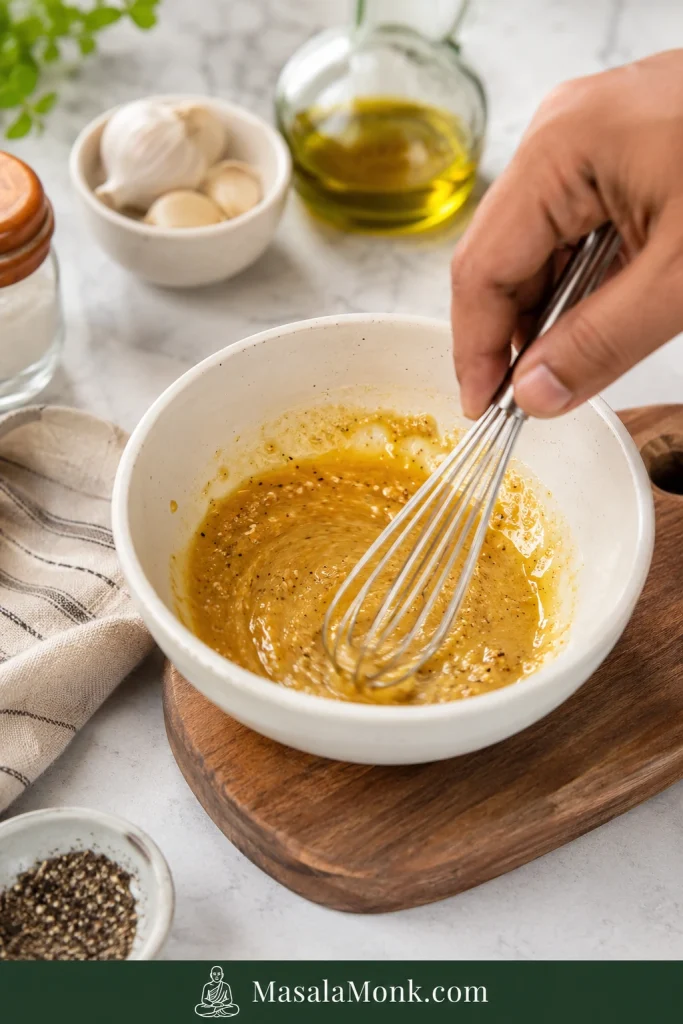
In a small bowl or jar, combine the vinegar, sugar or honey, salt, black pepper, and fresh dill. Stir or shake until the sweetener is dissolved. If you prefer a rounder dressing, add the optional olive oil here.

Light vinegar dressing being mixed with dill, pepper, salt, and sweetener for cucumber salad.
Taste the dressing before tossing because it should seem slightly sharper at first; the cucumbers will soften it as they sit.

Taste the dressing before adding it to the vegetables. Ideally, it should taste slightly sharper and saltier than you want the finished salad to taste, because the cucumbers will dilute it a little as they rest.

Step 4: Toss the Cucumbers and Onion with the Dressing

Add the sliced cucumbers and onion to a large bowl, pour the dressing over the top, and toss gently until everything is evenly coated. Use your hands, salad tongs, or two large spoons so the slices stay intact.

Cucumber slices, red onion, dill, and vinegar dressing being gently tossed in a bowl.
Toss gently so the dressing coats the slices without bruising them or turning the salad watery too quickly.

At this point, the salad is already good enough to serve when you need a very fast version.
Step 5: Chill Briefly for Better Flavor

For the best everyday version, chill the salad for 15–20 minutes. That short rest helps the cucumber slices absorb the dressing and lets the onion mellow slightly.

Bowl of cucumber salad chilling briefly with a 15 to 20 minute timing cue.
A short 15–20 minute chill lets the vinegar dressing settle in, yet the cucumber salad still keeps its fresh crunch.

If you are in a rush, you can skip this and serve the salad right away. The texture will be a little crisper, while the flavor will be a little lighter.

Step 6: Taste and Adjust Before Serving

After the salad has rested, toss it once more and taste it again. Add a splash more vinegar if it needs brightness, a small pinch of salt if it tastes flat, or more dill if you want a fresher herbal note.

Cucumber salad being tasted and adjusted with extra vinegar, dill, pepper, and salt nearby.
Once the salad rests, taste it again because the cucumbers release water and the balance may need a small final adjustment.

This second taste matters because the cucumber slices release water as they sit, which can change the balance of the dressing before serving.

Step 7: Serve with a Slotted Spoon or Tongs

Lift the salad out of the bowl with tongs or a slotted spoon instead of pouring everything out at once. That way, you leave behind excess liquid and the finished serving looks cleaner and tastes brighter.

Cucumber salad being lifted from a bowl with tongs or a slotted serving utensil.
Use tongs or a slotted spoon when serving so the salad tastes fresh on the plate instead of sitting in extra liquid.

Serve cold, ideally on the same day, for the best crunch.

Quick tip: If you are making this salad for dinner right now, the short-chill method is enough. If you are making it for a party or later in the day, salt and drain the cucumbers first.

Best Cucumbers for Cucumber Salad

The best cucumbers for cucumber salad are English cucumbers and Persian cucumbers. They are crisp, thin-skinned, and less seedy, so they can usually be sliced without peeling or seeding.

Garden cucumbers and regular slicing cucumbers can still make a good salad. However, because they are often thicker-skinned and more watery, they may need a little extra prep before they go into the bowl.

Guide comparing English, Persian, mini, garden, and Kirby cucumbers for cucumber salad.
English and Persian cucumbers are the easiest for cucumber salad, although garden cucumbers still work when you peel, seed, or salt them to control excess water.
Cucumber type Use it? Peel? Seed? Salt/drain?
English cucumber Best first choice Usually no No Optional
Persian cucumber Best crisp choice No No Optional
Mini cucumber Good choice Usually no No Optional
Garden cucumber Good if handled well If thick or waxy If seedy or watery Yes, for best texture
Regular slicing cucumber Works Often yes Often yes Yes, especially for make-ahead
Kirby or pickling cucumber Works, but firmer Usually no No Optional

Should You Peel or Seed Cucumbers?

You do not need to peel English or Persian cucumbers unless the skin tastes bitter. Their skins are usually tender enough for salad.

Regular garden cucumbers are different. First, remove the peel if it feels thick, waxy, or tough. Next, if the center looks watery or full of large seeds, cut the cucumber lengthwise and scrape out the seeds with a small spoon. Then, slice the cucumber into half-moons.

Decision guide showing when to peel or seed English, Persian, garden, or regular cucumbers for salad.
Usually, thin-skinned cucumbers need little prep; however, thick-skinned or watery garden cucumbers may need peeling or seeding.

If a cucumber tastes very bitter, peeling can help slightly, but it may be better to use another cucumber. A harsh cucumber can overpower the clean vinegar dressing.

How Thin Should You Slice Cucumbers?

Slice thickness changes the whole salad. Very thin slices taste more marinated. Slightly thicker slices stay crunchier. For the best all-purpose cucumber salad, aim for about ⅛ inch / 3 mm.

Measurement guide showing cucumber slices at 1 to 2 millimeters, 3 millimeters, 6 millimeters, half-moons, and dice.
Slice thickness changes the whole cucumber salad: thinner slices taste more marinated, while thicker slices stay crunchier.
Slice style Approximate thickness Best for
Paper-thin 1–2 mm Quick marinated cucumber salad
Thin slices ⅛ inch / 3 mm Best all-purpose cucumber salad
Crunchy slices ¼ inch / 6 mm Immediate serving and extra crunch
Half-moons ⅛–¼ inch / 3–6 mm Large garden cucumbers
Cubes Small dice Lunch bowls and less traditional versions

Mandoline note: A mandoline gives even slices, but always use the guard. Cucumbers become slippery once they start releasing moisture.

Should You Salt Cucumbers First?

You do not always need to salt cucumbers before making cucumber salad. For example, if you are serving the salad right away or chilling it for only 15–20 minutes, you can usually skip this step, especially with English or Persian cucumbers.

However, salting is worth it when you are making cucumber salad ahead, using watery garden cucumbers, or trying to keep the dressing from becoming diluted. Salt pulls excess water from the cucumber slices before they go into the salad, so the finished bowl tastes brighter instead of watered down. For a deeper look at the technique, see this guide on how to drain cucumbers.

Salt-or-skip guide showing when to salt cucumbers first and when salting is optional.
Salting first matters most for make-ahead cucumber salad or watery cucumbers, whereas a quick same-day version often does fine without it.

How to Salt Cucumbers for Salad

  1. Slice the cucumbers.
  2. Toss them with 1 teaspoon fine sea salt.
  3. Place them in a colander or fine mesh strainer.
  4. Let them drain for 20–30 minutes.
  5. Pat them dry with a clean towel or paper towels.
  6. Toss with dressing, then taste before adding more salt.
Process board showing cucumber slices being salted, drained for 20 to 30 minutes, patted dry, and dressed.
For a crisper make-ahead cucumber salad, salt the slices, drain them for 20–30 minutes, and pat them dry before dressing so the bowl stays bright instead of diluted.

After salting, do not squeeze the cucumber slices aggressively. Pat them dry instead, since pressing too hard can bruise the slices and make the texture less pleasant.

Situation Salt first?
Serving immediately Optional
Chilling 15–20 minutes Optional
Making ahead Yes
Using garden cucumbers Yes
Using English or Persian cucumbers Optional
Wanting the crispest texture Yes

How to Keep Cucumber Salad from Getting Watery or Soggy

Cucumber salad gets soggy when the cucumber slices release too much water into the dressing. Fortunately, the fix is simple: manage the water before serving, especially if the salad needs to sit.

Troubleshooting board showing ways to keep cucumber salad from getting watery, including salting, draining, serving with tongs, and keeping dressing separate.
Watery cucumber salad is usually a timing or cucumber-choice issue, so draining well, serving with tongs, and keeping the dressing separate can all help preserve texture.
Problem Best fix
Watery cucumbers Salt and drain the sliced cucumbers before dressing.
Too much liquid in the bowl Serve with tongs or a slotted spoon, leaving liquid behind.
Making cucumber salad ahead Keep the dressing separate or salt/drain the cucumbers first.
Using garden cucumbers Peel if thick-skinned, seed if watery, and salt before dressing.
Leftovers softened overnight Drain excess liquid and refresh with dill, pepper, or a splash of vinegar.
Salad became too salty Add more cucumber, or briefly rinse drained cucumbers and pat them dry.

Common Cucumber Salad Mistakes to Avoid

  • Slicing too thick for a quick salad: thick slices need more time to absorb dressing.
  • Dressing too early for make-ahead: cucumbers release water as they sit, so keep dressing separate if making the salad the day before.
  • Adding all the salt twice: if you pre-salt the cucumbers, taste before salting the dressing.
  • Pouring all the bowl liquid onto the plate: serve with tongs or a slotted spoon for a cleaner salad.
  • Using harsh vinegar without balancing it: dilute strong white vinegar or add a little sweetener.
Mistakes guide showing fixes for thick slices, dressing too early, double salting, too much liquid, and harsh vinegar.
Small technique changes make a big difference: slice thinner, salt only once, and serve without pouring all the liquid onto the plate.

How Long Should Cucumber Salad Sit Before Serving?

Cucumber salad can be eaten right away, but a short rest improves the flavor. As it sits longer, it becomes more marinated and less crunchy.

Timing guide showing how cucumber salad changes from immediate serving to 15–20 minutes, 1 hour, overnight, and the next day.
The longer cucumber salad sits, the more marinated it becomes, so serve it sooner for crunch or later for a softer, more vinegary bite.
Timing Result
Serve immediately Crispest bite, lighter flavor
15–20 minutes Best fresh-salad balance
1 hour More marinated, stronger vinegar flavor
Several hours Good if cucumbers were salted and drained first
Overnight Softer texture, still usable for vinegar-style salad
Next day Good flavor, less crunch

Best Vinegar for Cucumber Salad

The best vinegar for cucumber salad depends on whether you want the dressing balanced, mild, fruity, or old-fashioned. White wine vinegar is the safest first choice because it tastes bright without becoming too sharp.

Vinegar guide comparing white wine vinegar, rice vinegar, apple cider vinegar, distilled white vinegar, champagne vinegar, and lemon juice for cucumber salad.
White wine vinegar gives the most balanced classic flavor, while rice vinegar is softer and distilled white vinegar tastes sharper and more old-fashioned.
Vinegar Flavor Best use
White wine vinegar Clean, bright, balanced Best first choice for classic cucumber salad
Rice vinegar Mild, lightly sweet Gentler salad and no-sugar versions
Apple cider vinegar Fruity, sharper Rustic tangy cucumber salad
Distilled white vinegar Strong, sharp, old-fashioned Cucumbers and onions in vinegar; best diluted with water
Champagne vinegar Delicate, elegant Lighter premium variation
Lemon juice Fresh and citrusy Works, but tastes less like classic vinegar cucumber salad

Old-Fashioned Cucumbers and Onions in Vinegar

Old-fashioned cucumbers and onions in vinegar are slightly different from the fresh cucumber salad recipe above. Instead of a light toss, the cucumbers and onions sit in a vinegar-water-sugar brine until they taste more marinated.

Think of this as a brinier, more marinated cucumber onion salad, not a shelf-stable pickle. It still belongs in the fridge and is best eaten within a few days.

Glass bowl of old-fashioned cucumbers and onions in clear vinegar brine with dill and a slotted spoon.
This old-fashioned cucumber onion salad is brinier than the fresh version, but it still belongs in the fridge and is not a shelf-stable pickle.

This version is especially good with barbecue, pulled pork, burgers, sandwiches, grilled chicken, and summer cookout meals. It is also useful when you want a sharper, pickle-like cucumber side.

Old-Fashioned Vinegar Cucumber Salad Formula

  • ½ cup distilled white vinegar
  • ½ cup water
  • 1–2 tablespoons sugar
  • 1 teaspoon salt
  • 2 large cucumbers or 5–6 small cucumbers, sliced
  • ½ sweet onion or white onion, thinly sliced
  • Optional: garlic, dill, celery seed, or mustard seed

Mix the vinegar, water, sugar, and salt until dissolved. Add the cucumbers and onion, then refrigerate for at least 1 hour. Serve with a slotted spoon because this style is intentionally brinier than the fresh cucumber salad recipe.

For the best texture, eat this old-fashioned version within 2–3 days. The flavor gets stronger as it sits, but the cucumber slices soften over time.

Easy Cucumber Salad Variations

Once you know the basic cucumber salad formula, you can adjust it in several directions without losing the fresh, cooling character of the dish. Use the table as a quick map, then read the notes below for the variations that need extra handling.

Variation board showing cucumber onion, cucumber tomato, creamy, Asian, Korean, Japanese sunomono, Chinese smashed, Thai, ranch, low-calorie, and old-fashioned vinegar cucumber salads.
Once the base cucumber salad works for you, it becomes easy to branch into creamy, tomato, sesame, spicy, ranch, or old-fashioned vinegar versions.
Variation How to adjust it
Cucumber onion salad Use extra red onion, sweet onion, or white onion.
Cucumber dill salad Increase fresh dill to 3–4 tablespoons.
Cucumber vinegar salad Skip the oil and keep the dressing vinegar-forward.
No-sugar cucumber salad Skip sweetener or use mild rice vinegar.
Low-calorie cucumber salad Use no oil and reduce or skip the sugar.
Creamy cucumber salad Use sour cream, yogurt, or mayo.
Cucumber tomato salad Add tomatoes shortly before serving because they release juice.
Asian cucumber salad Use rice vinegar, sesame, soy sauce, ginger, and scallions.
Spicy cucumber salad Add chili flakes, fresh chili, chili crisp, or chili oil.
German cucumber salad / Gurkensalat Use dill and either a vinegar dressing or a creamy sour cream-style dressing.

Cucumber Onion Salad

For a stronger cucumber onion salad, increase the onion to ¾ cup and use red onion for bite, sweet onion for a softer flavor, or white onion for an old-fashioned vinegar version. Slice the onion very thinly so it blends into the cucumbers instead of taking over the bowl.
If the onion tastes too sharp, soak the slices in cold water for 10 minutes or let them sit in the vinegar dressing for a few minutes before adding the cucumbers.

Cucumber Tomato Salad

For cucumber tomato salad, add 1½–2 cups halved cherry tomatoes or chopped ripe tomatoes to the base salad. Add them shortly before serving because tomatoes release juice quickly and can soften the dressing.

This version works best with red onion, dill, parsley, or basil. If the tomatoes are very juicy, serve with a slotted spoon and refresh the bowl with a little extra vinegar, salt, and pepper.

Creamy Cucumber Salad

For creamy cucumber salad, replace the vinegar dressing with ½ cup sour cream, Greek yogurt, or a yogurt-mayo mix. Then add 1 tablespoon vinegar or lemon juice, 1 small grated garlic clove, 2–3 tablespoons dill, salt, and black pepper.

Because creamy dressings loosen as cucumbers release water, salt and drain the slices first for the best texture. For a yogurt-cucumber direction, see this Greek tzatziki sauce recipe.

Asian Cucumber Salad

For Asian cucumber salad, use rice vinegar instead of white wine vinegar, then add 1 tablespoon soy sauce, 1 tablespoon toasted sesame oil, 1 teaspoon grated ginger, 1 small garlic clove, scallions, and sesame seeds.

This variation works best with Persian or English cucumbers and a short chill. If you want a spicy cucumber salad, add chili oil, chili crisp, or red pepper flakes after tossing.

Spicy Cucumber Salad

For spicy cucumber salad, keep the base vinegar dressing and add red pepper flakes, sliced fresh chili, chili oil, or chili crisp. Start small, then taste again after 10 minutes because the heat spreads as the cucumbers sit.

For a more savory version, use rice vinegar, soy sauce, sesame oil, garlic, scallions, and sesame seeds instead of the classic dill dressing.

Korean Cucumber Salad

For Korean cucumber salad, use rice vinegar, sesame oil, soy sauce, garlic, scallions, sesame seeds, and gochugaru. Because the dressing is bold, keep the cucumber slices slightly thicker so the salad stays crunchy after tossing.

This version works especially well with rice bowls, grilled meats, tofu, noodles, and spicy meals because the cucumber keeps the salad cool while the dressing brings heat.

Japanese Cucumber Salad / Sunomono

For Japanese cucumber salad, keep the dressing lighter: rice vinegar, a small amount of sugar, a pinch of salt, and optional sesame seeds. Then slice the cucumbers very thinly and let them rest briefly so they soften just enough to absorb the dressing.

This version is cleaner and more delicate than spicy Asian or Korean cucumber salad. For that reason, avoid heavy garlic, chili oil, or strong herbs here.

Chinese Smashed Cucumber Salad

For Chinese smashed cucumber salad, lightly smash the cucumbers before cutting them into bite-size pieces. The cracked edges catch more dressing than smooth slices, which makes the salad taste bolder.

Use rice vinegar, soy sauce, sesame oil, garlic, a little sugar, chili oil, and sesame seeds. Serve this version soon after tossing so the cucumber pieces stay crisp.

Thai Cucumber Salad

For Thai cucumber salad, use rice vinegar, lime juice, a little sugar, sliced shallot or red onion, fresh chili, cilantro, and crushed roasted peanuts. If you are not keeping the salad vegetarian, a small splash of fish sauce can add depth.

This version works especially well with grilled foods, satay-style meals, fried snacks, rice bowls, and spicy mains because the salad tastes sweet, sharp, crunchy, and fresh at the same time.

Ranch Cucumber Salad

For ranch cucumber salad, toss sliced cucumbers with a creamy ranch-style dressing, extra dill, black pepper, and red onion or scallions. Serve it soon after mixing because creamy dressings loosen as cucumbers release water.

For a lighter ranch-style recipe, use Greek yogurt, lemon juice, garlic powder, onion powder, dill, parsley, salt, and pepper instead of bottled dressing.

German Cucumber Salad / Gurkensalat

For German cucumber salad, keep the dill but choose either a light vinegar dressing or a creamy sour cream-style dressing. Slice the cucumbers thinly, salt and drain them first if possible, then toss with dill, onion, vinegar or sour cream, salt, pepper, and a small amount of sugar if needed.

This version tastes softer and more old-fashioned than the Asian or spicy variations, so keep the seasoning simple and let the cucumber, dill, and tangy dressing lead.

Low-Calorie Cucumber Salad

For low-calorie cucumber salad, skip the olive oil and reduce or omit the sugar. Because rice vinegar tastes naturally milder, the dressing does not need as much sweetener to feel balanced.

Instead, add more dill, black pepper, lemon juice, scallions, or chili flakes when you want bigger flavor without making the dressing heavier.

If you want a more snack-style Indian salad with cucumber, onion, tomato, roasted peanuts, lemon, cumin, and chaat masala, try this crunchy tangy spicy salad.

Classic Add-Ins for Cucumber Salad

These add-ins keep the salad close to the classic cucumber salad lane. Use one or two at a time instead of crowding the bowl.

Add-ins for cucumber salad arranged in small bowls, including garlic, celery seed, mustard seed, Dijon mustard, chives, parsley, red pepper flakes, and sesame seeds.
Add-ins work best in small amounts because garlic, chives, sesame, or mustard can deepen the flavor without covering up the cucumber itself.
  • Garlic: for a sharper dressing.
  • Celery seed: for old-fashioned deli-style flavor.
  • Mustard seed: for a pickle-like note.
  • Dijon mustard: for a more vinaigrette-style dressing.
  • Chives: for mild onion flavor.
  • Parsley: for a cleaner herbal flavor.
  • Red pepper flakes: for gentle heat.
  • Sesame seeds: for light crunch, though the flavor starts leaning Asian.

What to Serve with Cucumber Salad

Cucumber salad works especially well next to rich, spicy, smoky, grilled, or fried foods because it brings coolness and acidity. It can also act like a quick pickle-style topping when you want crunch without making actual pickles.

Serving ideas board showing cucumber salad with burgers, grilled chicken, barbecue, sandwiches, falafel, rice bowls, spicy meals, and picnic sides.
Because cucumber salad is cool, crisp, and tangy, it balances richer foods like burgers, barbecue, grilled chicken, falafel, and spicy meals.

For example, it works especially well beside air fryer burgers, where the cool vinegar crunch balances the richness of the patty and cheese. It also makes sense with sandwiches, including a chicken salad sandwich, because the tangy cucumbers cut through creamy fillings.

For a fuller cookout or picnic table, pair this crisp cucumber salad with a heartier side from MasalaMonk’s potato salad recipe guide. The fresh vinegar crunch also works well beside other cold picnic sides.

It also works well with pita meals, wraps, and homemade falafel.

  • Grilled chicken
  • Salmon or other fish
  • Barbecue and pulled pork
  • Rice bowls
  • Spicy curries
  • Dal and rice
  • Roti or paratha meals
  • As a pickle-like topping for sandwiches

How to Store Cucumber Salad

This recipe tastes best the day the cucumber salad is made because the slices soften as they sit in the dressing. For whole cucumbers before you slice them, Purdue Extension has practical cucumber storage guidance; once the salad is sliced and dressed, however, it is best eaten sooner for texture.

Storage guide for cucumber salad showing airtight containers, same-day best texture, up to 2 days for leftovers, up to 3 days for vinegar style, and do not freeze.
Cucumber salad is best on day one, although airtight storage and a quick drain before serving can still keep leftovers worth eating for another day or two.
Storage need Best guidance
Best texture Eat the same day.
Good leftovers Store up to 2 days in the fridge.
Still usable Up to 3 days for vinegar cucumber salad, though softer.
Container Use an airtight container.
Before serving leftovers Drain excess liquid and refresh with dill, pepper, or vinegar.
Freezing Do not freeze; cucumbers turn mushy.

Can You Make Cucumber Salad Ahead?

Yes, you can make cucumber salad ahead, but the best method depends on how far ahead you are preparing it. For the crispest texture, keep the cucumbers and dressing separate until shortly before serving. It can also work as a fresh side for high-protein Indian vegetarian meal prep, especially when you want something cool and sharp beside richer components.

Make-ahead guide showing sliced cucumbers, red onion, dressing in jars, airtight containers, and final tossed cucumber salad.
For the best make-ahead cucumber salad, prep the cucumbers and dressing separately, then toss them closer to serving so the slices stay crisp longer.
Make-ahead need Best method
1–2 hours ahead Salt and drain cucumbers if possible, then dress.
Same day Dress and chill, then serve with tongs or a slotted spoon.
Next day Keep sliced cucumbers/onion and dressing separate.
Meal prep Slice cucumbers and onion, store dressing separately, and toss before eating.
Dressing ahead Mix vinegar, sweetener, salt, pepper, and optional oil in a jar 4–5 days ahead. Add dill closer to serving.

Diet Notes: Low-Calorie, Keto, Vegan, Gluten-Free, and No Sugar

This vinegar cucumber salad is naturally light because it is built around cucumbers, herbs, and a simple dressing instead of mayo or cream. A few small swaps can also make it fit different preferences without changing the basic recipe.

Diet notes board for cucumber salad showing low-calorie, no sugar, vegan, gluten-free, keto or low-carb, and no-mayo options.
This cucumber salad stays flexible because you can skip oil, adjust the sweetener, or keep it mayo-free while still holding onto the same fresh, crisp texture.
  • Low-calorie cucumber salad: skip the optional olive oil and reduce or skip the sugar.
  • No-sugar cucumber salad: use rice vinegar and leave out the sweetener, or add only a tiny pinch.
  • Vegan cucumber salad: use sugar, maple syrup, or agave instead of honey.
  • Gluten-free cucumber salad: the recipe is naturally gluten-free if you use plain vinegar and check packaged ingredients.
  • Keto or low-carb cucumber salad: use a keto-friendly sweetener such as monk fruit or erythritol, or skip the sweetener.
  • No-mayo cucumber salad: this recipe is already mayo-free.

For more on why cucumbers are such a light, hydrating ingredient, read MasalaMonk’s guide to cucumber nutrition and weight loss.

FAQs About Cucumber Salad

Cucumber salad being served from a large bowl onto a small plate with thin cucumber slices, red onion, dill, and a light vinegar sheen.
This is the texture to aim for: glossy cucumber slices, fresh dill, thin onion, and just enough dressing to coat the salad without pooling at the bottom.

Do you peel cucumbers for cucumber salad?

You do not need to peel English or Persian cucumbers because their skins are thin. Peel regular garden cucumbers if the skin is thick, waxy, tough, or bitter.

What cucumber is best for cucumber salad?

English cucumbers are the best all-purpose choice. Persian cucumbers are also excellent because they are small, crisp, and thin-skinned. Garden cucumbers work well if you peel, seed, and salt them when needed.

Should you seed cucumbers for cucumber salad?

Seed cucumbers if the center is watery or full of large seeds. English and Persian cucumbers usually do not need seeding, but regular garden cucumbers often benefit from it.

How thin should cucumbers be sliced?

For the best all-purpose cucumber salad, slice cucumbers about ⅛ inch / 3 mm thick. Slice them thinner for a more marinated salad, or thicker if you want more crunch.

Should you salt cucumbers before making cucumber salad?

Salt cucumbers first if you are making the salad ahead, using watery garden cucumbers, or trying to prevent a diluted dressing. If you are serving it right away, salting is optional.

How do you keep cucumber salad from getting watery?

Salt and drain the cucumber slices for 20–30 minutes, then pat them dry before adding dressing. Also, serve the salad with tongs or a slotted spoon so extra liquid stays behind in the bowl.

What vinegar is best for cucumber salad?

White wine vinegar is the best balanced choice. Rice vinegar is milder, apple cider vinegar is fruitier, and distilled white vinegar gives a sharper old-fashioned flavor when diluted with water.

Can I make cucumber salad without sugar?

Yes. Skip the sugar completely or use rice vinegar for a milder dressing. You can also use a small amount of monk fruit, erythritol, maple syrup, or agave depending on your preference.

Can I use dried dill instead of fresh dill?

Yes, but use less. Start with 1 teaspoon dried dill for this recipe, then add more only if needed. Fresh dill tastes brighter and is better when available.

How long does cucumber salad last in the fridge?

This salad is best the day it is made. However, the cucumbers can still hold up for about 2 days, and leftovers may be usable up to 3 days, although the texture softens over time.

Can cucumber salad be made ahead?

Yes. For the best make-ahead cucumber salad, keep the dressing separate or salt and drain the cucumbers before dressing them. Toss everything 15–20 minutes before serving when possible.

Can you freeze cucumber salad?

No. Cucumber salad does not freeze well because cucumbers become soft and watery after thawing.

What onion is best for cucumber salad?

Red onion is best for color and bite. Sweet onion is best for a milder old-fashioned cucumber salad. White onion works well in cucumbers and onions in vinegar.

Is cucumber salad healthy?

Vinegar cucumber salad is a light, hydrating side dish, especially when made without oil or mayo. To keep it lighter, reduce the sugar and skip the optional olive oil.

Is cucumber salad the same as pickled cucumbers?

No. Cucumber salad is usually a fresh side dish tossed with vinegar dressing and eaten soon. Pickled cucumbers sit in a stronger brine and are meant to taste more preserved or pickle-like.

Posted on 2 Comments

Apple Pie Filling Recipe for Pies, Crisps and Freezing

Homemade apple pie filling recipe with glossy cinnamon-coated apple slices lifted on a spoon.

A good apple pie filling recipe should give you tender apple pieces, warm cinnamon flavor, and a thick, glossy sauce that holds together without turning gluey. This stovetop method cooks the filling before baking, so you can control the apple texture, sauce thickness, sweetness, and final use before anything goes into pie crust, crisp topping, hand pies, turnovers, freezer bags, or breakfast bowls.

The best part is that one batch can do several jobs. Use sliced apple filling for classic pie and crisp, diced apple filling for hand pies and turnovers, or a softer spoonable version for pancakes, waffles, oatmeal, yogurt, and ice cream.

Because this recipe makes a cooked apple filling before it ever reaches pie crust, you can taste, thicken, cool, and portion the batch with much more control. As a result, the same recipe works for a full apple pie, canned-style replacement portions, freezer bags, crisps, toppings, and small pastries without guessing later.

Quick Answer: How to Make Apple Pie Filling

To make apple pie filling, cook peeled and sliced or diced apple pieces with butter, brown sugar, granulated sugar, cinnamon, lemon juice, and a pinch of salt. Once the apple pieces begin to soften and release their juices, stir in a cornstarch slurry and cook briefly until the sauce turns glossy and coats the filling.

This apple pie filling recipe makes about 6 cups / 1.4 liters of homemade filling. That is enough for one generous 9-inch pie, one 9×9 apple crisp, several hand pies, or a few smaller freezer portions. For a canned-style replacement, portion about 2 to 2 1/2 cups into a container or freezer bag.

In other words, this recipe gives you apple filling that can go straight into pie or be saved for later desserts. Since the filling is cooked first, it is easier to adjust than a raw apple mixture that releases liquid inside the oven.

Close-up spoon lifting glossy cinnamon apple pie filling, with thick sauce clinging to sliced apples.
Before cooling, the sauce should cling to the apples but still move when spooned. If it looks slightly loose while hot, that is fine because the filling thickens more as it rests.

Apple Pie Filling at a Glance

Yield
About 6 cups / 1.4 liters
Apple Amount
8 medium firm apples
Cook Time
10–12 minutes
Storage
3–4 days fridge, 3 months freezer
Apple pie filling guide showing 6 cups yield, 8 apples, 10 to 12 minutes cook time, 3 to 4 days refrigerator storage, and 3 months freezer storage.
One full batch gives about 6 cups from 8 medium apples. Plan on 10–12 minutes of cooking, then store the cooled filling for 3–4 days in the fridge or up to 3 months in the freezer.
Detail Best Choice
Best apple cut for pie 1/4-inch / 6 mm slices
Best apple cut for hand pies and toppings 1/2-inch / 1.25 cm dice
Best thickener for this recipe Cornstarch slurry
Canned filling replacement 2 to 2 1/2 cups replaces one 20–21 oz can
Canning Do not can this recipe; use tested canning guidance

Why This Apple Pie Filling Recipe Works

This recipe works because the apple filling thickens in the pan instead of releasing extra liquid inside the pie. Rather than hoping raw apple pieces bake down evenly under the crust, you soften the fruit briefly on the stovetop and thicken the juices before baking.

As the apple pieces cook, they release enough liquid to form a cinnamon-apple sauce. From there, the cornstarch slurry turns those juices glossy and spoonable. Therefore, the recipe is easier to fix if the filling looks too loose, too stiff, or too sweet before it goes into pie.

  • The apple pieces stay tender, not mushy. They cook only until they begin to soften, so they can still hold their shape in pies, crisps, and pastries.
  • The sauce turns glossy. A cornstarch slurry thickens the apple juices into a smooth filling without making it heavy.
  • The cut changes the use. Slices are best for pie, while diced apple filling works better for hand pies, turnovers, and toppings.
  • The batch size is practical. Six cups gives you enough for one generous 9-inch pie or several smaller freezer portions.
  • The texture can be adjusted. For toppings, use slightly less cornstarch; for pies and turnovers, keep the filling thicker.

Ingredients for Apple Pie Filling

Although this recipe uses simple ingredients, the timing and balance matter. Choose firm apples, brighten them with lemon, let the sugar pull out their juices, and then thicken those juices with a smooth slurry once the apples have started to soften.

Ingredient guide for apple pie filling with firm apples, lemon, butter, brown sugar, granulated sugar, cinnamon, nutmeg, salt, cornstarch slurry, and vanilla.
Use firm apples as the base, then thicken the released juices with 4 tablespoons cornstarch mixed into 1/3 cup water or apple juice. Add extra liquid only if the sauce tightens too much.

Firm Apples

Start with firm baking apples that can soften without collapsing. Granny Smith, Honeycrisp, Pink Lady, Braeburn, and similar firm apples all work well. For deeper flavor, use a mix of tart and sweet apples instead of relying on only one variety.

For pie, this recipe works best when the apple filling has enough structure to survive a second bake. That is why very soft or mealy apples are better saved for applesauce-style toppings, not a filling that needs to hold its shape.

Lemon Juice

Lemon juice keeps the filling bright and balances the sweetness. It also helps slow browning while you prep the apples. For a fuller prep guide, see MasalaMonk’s guide on how to prevent sliced apples from turning brown. Use 1 1/2 to 2 tablespoons lemon juice in this filling, depending on how tart your apples are.

For example, this recipe uses lemon juice to keep the apple flavor bright while cornstarch helps the filling set cleanly in pie. That said, if you are following a tested canning recipe, use the type and amount of acid that source specifies because acidity matters for shelf-stable storage.

Brown Sugar and Granulated Sugar

Brown sugar gives the filling a warmer, slightly caramel-like flavor, while granulated sugar keeps the sweetness cleaner and helps draw juice from the apple pieces. If your apples are already very sweet, reduce the granulated sugar first before cutting the brown sugar.

Together, the two sugars give the sauce enough body without making it taste heavy. As the apples cook, they release juice into the pan, which then becomes the base of the glossy cinnamon sauce.

Butter

A little butter gives the sauce a richer finish without making it greasy or heavy. It also helps the cinnamon and sugar taste rounder once the filling cools.

Cinnamon, Nutmeg and Salt

Cinnamon is the main spice here. Nutmeg is optional, but a small amount adds warmth. Salt is just as important because it keeps the filling from tasting flat and makes the apple flavor clearer.

Cornstarch Slurry

This is an apple pie filling with cornstarch, so the sauce should turn glossy once it bubbles. Before adding the thickener to the pan, mix the cornstarch with water or apple juice until smooth. Do not sprinkle dry cornstarch directly into the apple pieces, because it can clump.

At this stage, the change should be easy to see. The sauce will go from thin and slightly cloudy to shiny and thicker within a minute or two. The apple pieces should look coated with filling, not buried in a heavy paste.

Once the slurry goes in, the recipe should turn the apple juices into a glossy filling that can hold its shape in pie. However, long overcooking can make the sauce too stiff or cloudy, so stop once the filling thickens and coats the fruit.

Can You Make Apple Pie Filling Without Cornstarch?

You can make refrigerator or freezer apple filling without cornstarch, but the recipe will behave differently in pie. Tapioca starch can give a slightly more elastic finish, arrowroot can look glossy but may thin if overheated, and flour makes the sauce more opaque and rustic.

For the cleanest stovetop apple pie filling, cornstarch is still the easiest choice. If you are making shelf-stable canned pie filling, do not swap thickeners casually; use a tested canning recipe with the approved thickener and processing method.

Vanilla

Vanilla is optional. It works especially well when the cooked apple filling will be used as a topping for pancakes, waffles, oatmeal, yogurt, or ice cream.

Best Apples for Apple Pie Filling

The best apples for apple pie filling are firm apples that hold their shape after cooking. A blend of tart and sweet apples usually tastes better than a single variety because the filling gets both brightness and natural sweetness.

In most kitchens, you do not need one perfect apple variety to make this work. The best flavor usually comes from mixing one tart apple with one sweeter, firmer apple. In addition, a mixed-apple recipe gives the filling more depth once it bakes inside pie.

Best apples for apple pie filling, including Granny Smith, Honeycrisp, Pink Lady, Braeburn, and Golden Delicious, with a tart and firm apple balance note.
For better pie texture, pair a tart firm apple such as Granny Smith with a sweeter firm apple such as Honeycrisp, Pink Lady, or Braeburn. That mix gives brightness, sweetness, and structure.
Apple Flavor Texture Best Use
Granny Smith Tart Very firm Best tart base for pies
Honeycrisp Sweet-tart Firm and juicy Great blended with Granny Smith
Pink Lady Bright and balanced Firm Good all-purpose filling apple
Braeburn Sweet-tart and aromatic Holds well Good for pies and crisps
Golden Delicious Sweet and mellow Softer Best blended, not used alone
Comparison of firm apples holding their shape in apple pie filling and soft apples breaking down into a looser texture.
Firm apples are best when the filling will be baked again in pie, crisp, hand pies, or turnovers. Softer apples can work for toppings, but they break down faster and give a looser texture.

Avoid very soft or mealy apples if you want distinct apple pieces. Softer apples can work for toppings, but they are more likely to break down if you cook them on the stovetop and then bake them again in a pie or crisp.

Sliced vs Diced Apples for Apple Pie Filling

The apple cut may seem like a small detail, but it changes how the filling behaves once it goes into pastry, crisp topping, or a spoonable dessert. Before cooking, decide whether this recipe is headed for a full apple pie or a diced filling for smaller pastries.

For pie, this recipe works best when the apple filling is sliced thin enough to layer neatly inside the crust. For hand pies, turnovers, and toppings, diced apple filling is easier to spoon, seal, freeze, and reheat.

Once you know how you want to use the filling, the cut becomes much easier to choose: slices for pie, dice for pastries, and smaller pieces for toppings. That small choice matters, because a slice that feels perfect in a pie can be awkward inside a hand pie.

Guide comparing sliced apples for pie with diced apples for hand pies, turnovers, waffles, and toppings.
Use 1/4-inch slices when the filling is headed for a classic 9-inch pie. Use 1/2-inch dice for hand pies, turnovers, oatmeal, waffles, yogurt bowls, or anything that needs spoonable pieces.
Final Use Best Apple Cut Why It Works
Classic apple pie 1/4-inch / 6 mm slices Layers neatly and feels like pie
Deep-dish pie 1/4- to 1/3-inch slices Holds structure in a taller pie
Apple crisp or crumble Slices or chunky dice Both work depending on texture
Hand pies 1/2-inch / 1.25 cm dice Easier to seal inside pastry
Turnovers 1/2-inch dice Prevents large pieces from tearing pastry
Cinnamon roll bake Small dice or chopped slices Mixes better with dough
Pancakes, waffles and oatmeal Dice Easier to spoon and serve
Apple cut-size guide showing 1/4-inch slices for pie and 1/2-inch diced apples for toppings and small pastries.
Even cutting matters more than perfect cutting. Thick apple pieces may stay firm after the sauce is done, while very thin or uneven pieces can soften too much before the filling thickens.

When in doubt, dice the apples if you want the most flexible batch. Diced filling is easier to freeze, spoon, seal into pastry, and reheat for quick desserts.

How to Make Apple Pie Filling

This stovetop method is simple, but the texture cues matter. First, cook the apple pieces until they begin to soften. Next, thicken the juices briefly. Finally, cool the filling before using it in pastry so the crust does not soften too early.

The goal is not applesauce, though. You only want firm apple pieces to become partly tender, with enough structure left to survive a second bake in pie, crisp, or pastry.

Five-step apple pie filling board showing apples cut, cooked with butter, sugar and spice, thickened with slurry, simmered until glossy, and cooled before pastry.
Cook the apples covered for 4–6 minutes until they start releasing juice, then add the slurry and simmer 1–2 minutes. After the sauce turns glossy, cool the filling completely before pastry.

1. Peel, Core and Cut the Apples

First, peel and core the apples. Then slice or dice them depending on how you plan to use the filling. For pie, cut 1/4-inch / 6 mm slices. For hand pies, turnovers, cinnamon roll bakes, pancakes, waffles, or oatmeal, use 1/2-inch / 1.25 cm dice.

2. Toss with Lemon Juice

After cutting the apples, toss them with lemon juice right away. This keeps the flavor bright and slows browning while you prepare the rest of the ingredients.

3. Cook the Apples with Butter, Sugar and Spices

Melt the butter in a wide pan over medium heat. Add the apples, brown sugar, granulated sugar, cinnamon, nutmeg, and salt. Cook covered for 4 to 6 minutes, stirring once or twice, until the apple pieces begin to release juice and soften slightly.

At this stage, the apples should bend a little when stirred, but they should not be falling apart. Meanwhile, a wide pan helps the pieces cook more evenly and gives the juices room to reduce slightly before the slurry goes in.

4. Add the Cornstarch Slurry

Before adding the thickener, whisk the cornstarch with water or apple juice until smooth. From there, stir the slurry into the apples. This helps it blend into the filling more evenly than dry cornstarch and gives the sauce a cleaner, glossier finish.

Smooth cornstarch slurry being poured into simmering apple pie filling, with a warning to mix slurry first and not add dry cornstarch.
Whisk cornstarch with water or apple juice before adding it to the pan. Dry cornstarch can clump quickly, but a smooth slurry blends into the apple juices and thickens the sauce evenly.

5. Cook Until Glossy

After the slurry goes in, cook for 1 to 2 minutes, stirring gently. The filling is ready when the sauce turns glossy, the liquid thickens enough to coat the apple pieces, and the pieces still hold their shape.

A good cue is the spoon test: drag a spoon through the filling and watch the sauce cling lightly to the apples instead of running back into a thin puddle. If it looks pasty, loosen it with a small splash of apple juice or water.

Spoon test for apple pie filling showing glossy sauce coating sliced apples while the apple pieces stay intact.
After the slurry goes in, use texture rather than time alone. If the sauce coats the apples and looks shiny, stop cooking; if it still runs like syrup, simmer 1 minute more.

By the end of cooking, this recipe should give you apple filling that looks glossy enough for toppings and sturdy enough for pie. If it still looks watery, let it bubble for another minute before adding more starch.

6. Cool Before Using

Remove the pan from the heat and stir in vanilla, if using. Spread the filling in a shallow dish so it cools faster. Before adding it to pie crust, hand pies, turnovers, or freezer bags, cool it completely.

Do not overcook the apples: This recipe should make apple pie filling, not applesauce. Stop when the apple pieces are partly tender and the sauce is glossy, because the filling may cook again in pie, crisp, or pastry.

How Thick Should Apple Pie Filling Be?

The best apple pie filling should look shiny and loose enough to spoon, but thick enough that the sauce clings to the apple pieces. In other words, the hot filling should look a little looser than the final cooled filling because it will thicken more as it rests.

For pie, this recipe should give you apple filling that mounds softly on a spoon instead of running like syrup. However, if you are using the recipe as a topping, the filling can stay slightly looser and more spoonable.

By the time it cools, the apple filling should look glossy and thick enough to sit inside a pie crust without spreading everywhere. If it turns stiff or pasty, loosen it gently with apple juice or water before using.

Three-texture apple pie filling guide comparing too runny, just right, and too thick, with the best texture labeled glossy and spoonable.
For a softer topping, use about 3 tablespoons cornstarch. For an all-purpose batch, use 4 tablespoons; for pie, hand pies, or turnovers that need more hold, use 4–5 tablespoons.
Use Cornstarch for 6 Cups Filling Texture Goal
Pancakes, waffles, oatmeal, yogurt 3 tbsp / 24 g Soft and spoonable
Crisps, crumbles, cobblers 3 1/2 to 4 tbsp / 28–32 g Glossy but not stiff
Pies, hand pies, turnovers 4 to 5 tbsp / 32–40 g Holds shape better
Canning Do not use this recipe Use tested canning guidance

The base version uses 4 tablespoons / about 32 g cornstarch, which is the best middle ground for pies, crisps, freezer portions, and spoonable desserts. For a softer topping-style filling, reduce the cornstarch slightly.

Since apple juiciness varies, start with 1/3 cup liquid in the slurry and add more only if the filling becomes too stiff. It is much easier to loosen a thick filling than to fix one that starts watery.

How Much Apple Pie Filling for One Pie?

For one generous apple pie, this recipe gives you about 5 to 6 cups of filling. A shallower 8- or 9-inch pie may need closer to 4 to 5 cups, while a deep-dish pie may need 6 to 7 cups.

At this point, the filling becomes easier to use if you think in portions. The right amount depends less on the dessert name and more on the pan size, crust style, and how full you want the finished bake to be.

For a shallower pie, this recipe may need only 4 to 5 cups of apple filling. For deep-dish pie, the recipe may need to be scaled so you have closer to 6 to 7 cups of filling.

Portion guide for apple pie filling showing 2 to 2 1/2 cups for one can, 5 to 6 cups for a 9-inch pie, 7 to 8 cups for a 9x13 crisp, and 1/2 cup for topping.
Portion before storing so the filling is easy to use later: 2–2 1/2 cups replaces one can, 5–6 cups fills a 9-inch pie, 7–8 cups works for a 9×13 crisp, and 1/2 cup is enough for one topping.
Use Filling Amount
Standard 8- or 9-inch pie 4–5 cups
Generous 9-inch pie 5–6 cups
Deep-dish 9-inch pie 6–7 cups
One 20–21 oz can replacement 2 to 2 1/2 cups
8×8 apple crisp 3–4 cups
9×9 apple crisp 4–5 cups
9×13 apple crisp 7–8 cups
Hand pies 2–3 cups
Turnovers 2–3 cups
Large 9×13 cinnamon roll bake 4 1/2–5 1/2 cups
Pancake or waffle topping About 1/2 cup per serving

Using the filling right away? Go to how to use it in apple pie, ways to use apple pie filling, or freezer portions.

Small-Batch Apple Pie Filling

If you only need enough apple pie filling for pancakes, waffles, oatmeal, mini desserts, or one small crisp, make a half batch instead of freezing leftovers. Use 4 medium firm apples, 3/4 to 1 tablespoon lemon juice, 1 tablespoon butter, 1/4 cup brown sugar, 2 tablespoons granulated sugar, 3/4 teaspoon cinnamon, a pinch of salt, 2 tablespoons cornstarch, and 3 to 4 tablespoons water or apple juice.

The method stays the same, but the cooking time may be slightly shorter because there are fewer apples in the pan. From there, add the slurry and cook just until the sauce turns glossy.

This smaller recipe is handy when you want apple filling for a quick dessert or a small pie-style topping without committing to a full batch.

Can This Replace Canned Apple Pie Filling?

Yes. This homemade filling can replace canned filling in many desserts. Use about 2 to 2 1/2 cups as a rough replacement for one standard 20- to 21-ounce can. For one generous 9-inch pie, use about 5 to 6 cups.

Homemade apple pie filling beside a plain can, showing that 2 to 2 1/2 cups replaces one can and 5 to 6 cups makes one generous pie.
Replace one 20–21 oz can with 2–2 1/2 cups homemade filling. For recipes that call for two cans, start with about 4 1/2–5 cups, then adjust if the dessert needs more sauce.

In many desserts, this recipe can replace canned apple pie filling without making the final dish overly syrupy. Compared with canned filling, the homemade version is usually less sweet, less gelled, and easier to adjust with lemon juice or a pinch of salt.

For one standard can, use about 2 to 2 1/2 cups of apple filling from this recipe in pie-style desserts. If a dessert calls for two cans of apple pie filling, this recipe usually replaces them with about 4 1/2 to 5 cups.

The full 6-cup batch gives you a little extra, which helps if you want a fuller pie, a deeper crisp, or a small topping portion left over. If you are replacing canned filling in a dessert, check the quick use chart for pie, crisp, cinnamon roll bake, dump cake, and toppings.

How to Use This Apple Pie Filling in a Pie

Although this is not a full pie-crust recipe, you can use the filling to make a classic apple pie. The key is to cool the batch first so it does not soften the crust before the pie goes into the oven.

For pie, this recipe works best when the apple filling is cooled completely before it meets the dough. Use the timing below as a starting point because pie crust thickness, pie plate material, and oven behavior can all change the final bake time.

Cooled apple pie filling being spooned into an unbaked pie crust before baking.
Use cooled or chilled filling before it touches pie dough. For a full pie, bake 20 minutes at 400°F, then reduce to 375°F for 30–35 minutes, until the crust is golden and the center bubbles.
Step What to Do
Filling amount Use 5–6 cups cooled filling for one generous 9-inch pie
Crust Use one bottom crust and one top crust, lattice, or crumble topping
Filling temperature Use cooled or chilled filling, not hot filling
Oven temperature Start at 400°F / 200°C, then reduce to 375°F / 190°C
Bake time Bake 20 minutes at 400°F, then 30–35 minutes at 375°F
Done when The crust is deep golden and the filling bubbles through the vents
Cooling Cool at least 2–3 hours before slicing

With the apple filling already cooked, the oven time is mostly about baking the crust and heating the pie until the center bubbles. If the crust browns too quickly, cover the edges with foil or a pie shield.

Recipes with Apple Pie Filling: How to Use It

Once the apple filling is cooked and cooled, it can go far beyond pie. In real use, the important part is matching the cut, thickness, and amount to the dessert you are making.

Ways to use apple pie filling in apple pie, apple crisp, hand pies, waffles, and oatmeal.
Match the amount to the dessert: 5–6 cups for pie, 3–4 cups for an 8×8 crisp, 4 1/2–5 1/2 cups for a 9×13 cinnamon roll bake, or about 1/2 cup per breakfast serving.

Use this chart as a starting point, not a full recipe card for every dessert. That way, you can quickly see how much filling to use, what temperature usually works, and what “done” should look like before you commit to a separate recipe.

Use Filling Amount Temperature Approx. Time Done When
9-inch apple pie 5–6 cups 400°F, then 375°F 20 min, then 30–35 min Crust golden, filling bubbling
8×8 apple crisp 3–4 cups 350°F / 175°C 25–35 min Topping browned, edges bubbling
9×9 apple crisp 4–5 cups 350°F / 175°C 30–40 min Topping golden, filling hot
9×13 cinnamon roll bake 4 1/2–5 1/2 cups 350°F / 175°C 45–50 min Center dough baked through
Dump cake 4 1/2–5 1/2 cups 350°F / 175°C 45–60 min Top golden, filling bubbling
Pancake or waffle topping 1/2 cup per serving Low stovetop heat 3–5 min Warm and spoonable

Apple Pie

For one generous 9-inch apple pie, 5 to 6 cups of cooled filling is usually the right amount. Since the apple pieces are already cooked, focus on baking the crust until deeply golden and crisp. Do not add hot filling to chilled pie dough, or the bottom crust can soften before baking.

Apple Crisp or Apple Crumble with Apple Pie Filling

Apple crisp is one of the easiest desserts to make with this filling because the apple pieces are already cooked and the sauce is already thickened. Use 3 to 4 cups for an 8×8 pan, 4 to 5 cups for a 9×9 pan, or 7 to 8 cups for a larger 9×13 dessert. Spread the filling evenly, add a buttery oat crumble or simple flour crumble, and bake until the topping is golden and the edges are bubbling.

Apple crisp with golden crumble topping and glossy apple pie filling underneath.
For an 8×8 apple crisp, spread 3–4 cups filling in the dish and bake at 350°F for 25–35 minutes. The topping should brown and the filling should bubble around the edges.

For a quick crumble topping, mix 3/4 cup oats, 1/2 cup flour, 1/2 cup brown sugar, 1/2 teaspoon cinnamon, a pinch of salt, and 6 tablespoons cold butter until crumbly. Then scatter it over 3 to 4 cups of filling for an 8×8 crisp and bake until the edges bubble and the topping is golden.

Because this homemade apple filling is usually less syrupy than canned pie filling, do not make the crumble topping too dry. If the recipe has thickened a lot after chilling, loosen the filling with a spoonful of apple juice or water before baking.

Hand Pies and Turnovers

Small pastries do not forgive large apple slices. For hand pies and turnovers, diced filling is easier to seal inside pastry and less likely to leak. After the cooked apple filling cools completely, use a modest spoonful in each pastry so it does not push through the edges.

Diced apple pie filling used in small pastries, with open, sealed, and baked hand pie or turnover stages.
For hand pies and turnovers, diced filling is easier to seal than long slices. Use modest spoonfuls; 2–3 cups of filling is usually enough for a batch of small pastries.

Mini Apple Pies

Diced filling works better than long slices for muffin-tin mini pies. Since the pieces are smaller, they sit neatly inside small crust rounds and make the pies easier to eat.

Cinnamon Roll Bake

For a large 9×13 cinnamon roll bake, use about 4 1/2 to 5 1/2 cups of chopped or diced apple pie filling with two tubes of cinnamon roll dough. For a smaller one-tube bake, use about 2 to 2 1/2 cups. If the filling has long slices, chop them roughly before combining so the center can bake through more evenly.

Apple Dump Cake

Use about 4 1/2 to 5 1/2 cups of this homemade filling as a replacement for two standard cans in many dump cake-style desserts. Homemade filling may be less syrupy than canned filling, so spread it evenly before adding the topping.

Pancakes, Waffles, Oatmeal, Yogurt and Ice Cream

If the filling is headed for breakfast bowls or ice cream, keep it a little softer. It should spoon easily over pancakes, waffles, oatmeal, yogurt, or ice cream instead of sitting stiffly on top. It works especially well over fluffy buttermilk pancakes, oat pancakes, almond flour pancakes, or a warm bowl of protein oatmeal.

Making the filling ahead instead? Jump to make-ahead tips, freezing and portioning, or the recipe card.

Low-Sugar and No-Added-Sugar Apple Pie Filling

If you want a lower-sugar version, you can reduce the sugar, but the texture will change slightly. Sugar does more than sweeten the apples; it also helps pull out juice and gives the sauce a fuller, glossier finish. As a result, a low-sugar batch may taste brighter and less syrupy than a classic pie filling.

For a lower-sugar recipe, use naturally sweet apple varieties and keep enough thickener for the filling to hold in pie. Reduce the granulated sugar first, keep some brown sugar for warmth if possible, and use lemon juice, cinnamon, vanilla, and a pinch of salt so the filling does not taste flat.

Low-sugar apple pie filling with sweet firm apples, lemon, cinnamon, vanilla, and a small amount of sugar.
For a lightly reduced-sugar batch, use 1/2 cup brown sugar and skip the granulated sugar. For a lower-sugar version, start with 1/4–1/3 cup brown sugar and adjust with lemon, salt, cinnamon, or vanilla.
Version How to Adjust Best Use
Lightly reduced sugar Use 1/2 cup brown sugar and skip the granulated sugar Pies, crisps, toppings
Low sugar Use 1/4 to 1/3 cup brown sugar total Breakfast bowls, pancakes, oatmeal
No-added-sugar style Use sweet apples and a heat-stable sweetener to taste, or skip sweetener for a tart topping Toppings and freezer portions

If you remove most of the sugar, taste the filling before cooling. A little extra lemon juice can make it brighter, while a pinch of salt and a splash of vanilla can make the apple flavor taste rounder without adding more sweetness.

Can You Make Apple Pie Filling Ahead?

Yes. This filling is a strong make-ahead option because the cooked batch chills, portions, and freezes well. After cooking, cool it completely and refrigerate it in an airtight container for 3 to 4 days.

Make-ahead apple pie filling in an airtight container for refrigerator storage, with a note to cool completely and refrigerate 3 to 4 days.
Cool the filling completely before storing, then refrigerate it airtight for 3–4 days. For pie dough, hand pies, or turnovers, use the filling chilled or at room temperature instead of hot.

For pie, hand pies, turnovers, or other pastry desserts, use the filling chilled or at room temperature rather than hot. Hot filling can soften dough before baking, especially in bottom crusts and small pastries.

Because this recipe freezes well, you can portion the apple filling for one pie, one can replacement, or small breakfast toppings. However, when the batch is meant specifically for pie, sliced apple filling gives you a more classic texture.

For apple-cinnamon meal prep, this same flavor direction also works well in oat-based snacks like healthy oat protein bars. Keep this filling softer if you plan to spoon it over bars, bowls, or breakfast jars instead of baking it inside pastry.

Freezer shortcut: If you freeze this filling in 2 to 2 1/2 cup portions, each bag can work like one can of apple pie filling for quick desserts.

How to Freeze Apple Pie Filling

The most useful freezer bag is the one you can use without thinking later. Since this batch makes about 6 cups, you can freeze it as one full pie batch or divide it into smaller canned-style replacement portions.

Before freezing, decide how you will use the apple filling later. For example, a 1-cup breakfast topping portion is very different from a full pie batch, so label each bag by amount as well as date.

  1. Cook the filling until glossy and thickened.
  2. Spread it in a shallow dish and cool completely.
  3. Portion it into freezer bags or airtight freezer-safe containers.
  4. Label each portion with the date and amount.
  5. If using bags, freeze them flat so they stack easily.
  6. Use within 3 months for best quality.
  7. Before using in pastry, thaw overnight in the refrigerator.
Freezer portions of apple pie filling labeled 1 cup, 2 to 2 1/2 cups, and 5 to 6 cups.
Freeze by future use: 1-cup bags for toppings, 2–2 1/2 cup bags for canned-style replacement, and 5–6 cup bags for one 9-inch pie. Flat freezer bags stack better and thaw faster.

Best Freezer Portions

For later pie baking, freeze the recipe in a 5- to 6-cup apple filling portion so the full batch is ready to thaw at once. For quick desserts, smaller bags are easier to thaw than one full pie-size portion.

Portion Best Use
1 cup Oatmeal, waffles, pancakes, yogurt
2 to 2 1/2 cups One-can replacement
3 to 4 cups Small apple crisp or crumble
5 to 6 cups One 9-inch apple pie
7 to 8 cups 9×13 crisp or larger dessert

How to Thaw Frozen Apple Pie Filling

For pastry, thaw frozen filling overnight in the refrigerator and use it cold or at room temperature. That way, the filling is thick enough to handle and does not soften the dough before baking.

For small breakfast portions, 1-cup bags are the most useful. They thaw quickly and can be warmed for pancakes, yogurt bowls, or oatmeal. For a cold breakfast option, spoon a small amount over high protein overnight oats.

If using a rigid freezer container, leave a little headspace because the filling can expand as it freezes. If using freezer bags, press out excess air before sealing.

How to Reheat Apple Pie Filling

For toppings, reheat apple pie filling gently in a small pan over low heat. Add a splash of water or apple juice if the sauce has thickened in the refrigerator, then stir often and warm only until the filling is spoonable.

Apple pie filling reheated gently in a pan with a splash of water or apple juice.
For toppings, reheat over low heat for 3–5 minutes, stirring often. Add a small splash of water or apple juice only if the sauce has tightened too much in the fridge.

For pie, hand pies, turnovers, and other pastry desserts, thaw frozen filling overnight in the refrigerator and use it cold or at room temperature rather than hot. This helps protect the pastry and keeps the filling from loosening too much before baking.

Can You Can This Apple Pie Filling?

Not this version. This is a refrigerator and freezer apple pie filling recipe, not a shelf-stable canning recipe. Don’t water-bath can this cornstarch-thickened filling. Safe home-canned pie fillings require tested formulas, correct acidity, proper processing, and approved thickeners such as cook-type Clear Jel®.
Canning safety guide for apple pie filling warning not to water-bath can this cornstarch-thickened recipe, with refrigerator, freezer, and tested Clear Jel recipe guidance.
Do not water-bath can this cornstarch-thickened filling. Keep it refrigerated for 3–4 days, freeze it up to 3 months, or use a tested Clear Jel® formula when you want pantry-safe jars.

Instead, keep this recipe as a refrigerator or freezer apple filling, and use tested canning guidance for pantry-safe pie filling. If you want to can apple pie filling for pantry storage, use a trusted extension or food-preservation source, such as the National Center for Home Food Preservation apple pie filling instructions.

Troubleshooting Apple Pie Filling

Most filling problems are fixable before the apples go into pastry. If the sauce looks too loose, too thick, or too cloudy, adjust it in the pan instead of hoping the oven will solve it later.

Usually, the cause is apple choice, cut size, cooking time, or starch. Luckily, the fix is often simple if you catch it before baking the filling into pie, crisp, or pastry.

Troubleshooting guide for apple pie filling with fixes for runny filling, too-thick filling, mushy apples, apples that are too firm, and soggy crust.
Fix texture before the filling goes into pastry. If it is runny, simmer 1–2 minutes more or add a small slurry; if it is too thick, loosen it with apple juice or water.
Problem Why It Happened Fix
Filling is runny Not enough starch, not bubbled long enough, or very juicy apples Simmer 1–2 minutes more or add a small cornstarch slurry
Filling is too thick Too much cornstarch or overcooking Loosen with a splash of apple juice or water
Apple pieces are mushy Soft apples or too much cooking Use firmer apples and cook only until partly tender
Apple pieces are too firm Pieces are too thick or undercooked Slice thinner or cook covered a few minutes longer
Filling is too sweet Very sweet apples plus too much sugar Add lemon juice and a pinch of salt
Filling is too tart All tart apples or too much lemon Add brown sugar or blend in sweeter apples next time
Pie crust gets soggy Hot filling added to pastry Cool the filling completely before filling the pie
Filling looks cloudy Starch was overheated, clumped, or flour was used Use a smooth cornstarch slurry and simmer briefly

If the recipe gives you apple filling that looks runny before it goes into pie, fix it in the pan. After baking, the same problem is much harder to correct.

Apple Pie Filling Recipe

Recipe card for homemade apple pie filling with yield, prep and cook time, ingredients, method, storage, and pie-use notes.
The full recipe uses 8 medium apples, 4 tablespoons cornstarch, and 10–12 minutes of cooking to make about 6 cups. For a softer topping, reduce the cornstarch to 3 tablespoons.

Homemade Apple Pie Filling

This apple pie filling recipe makes about 6 cups of thick, glossy cinnamon apple filling for pies, crisps, hand pies, turnovers, toppings, and freezer portions.

Prep Time
20 minutes
Cook Time
10–12 minutes
Total Time
30–35 minutes, plus cooling
Yield
About 6 cups / 1.4 liters

Ingredients

  • 8 medium firm apples, about 3 lb / 1.35 kg whole apples, or about 900 g to 1 kg after peeling and coring, sliced or diced
  • 1 1/2 to 2 tablespoons lemon juice / 22–30 ml
  • 2 tablespoons unsalted butter / 28 g
  • 1/2 cup packed brown sugar / 100 g
  • 1/4 cup granulated sugar / 50 g
  • 1 1/2 teaspoons ground cinnamon / about 4 g
  • 1/8 to 1/4 teaspoon ground nutmeg, optional
  • 1/4 teaspoon fine salt
  • 4 tablespoons cornstarch / about 32 g
  • 1/3 to 1/2 cup water or apple juice / 80–120 ml
  • 1 teaspoon vanilla extract / 5 ml, optional

Method

  1. Peel, core, and cut the apples. Use 1/4-inch / 6 mm slices for pie or 1/2-inch / 1.25 cm dice for hand pies, turnovers, toppings, and cinnamon roll bakes.
  2. Toss the apples with lemon juice.
  3. Melt the butter in a wide pan over medium heat. Add the apples, brown sugar, granulated sugar, cinnamon, nutmeg, and salt.
  4. Cook covered for 4–6 minutes, stirring once or twice, until the apple pieces begin to release juice and soften slightly. They should bend a little but still hold their shape.
  5. Meanwhile, in a small bowl, whisk the cornstarch with 1/3 cup water or apple juice until smooth.
  6. Stir the slurry into the apples. Cook for 1–2 minutes, stirring gently, until the sauce turns glossy and thick enough to coat the apple pieces. Add a little more water or apple juice only if the filling looks too stiff.
  7. Remove the pan from the heat and stir in vanilla, if using.
  8. Spread the filling in a shallow dish and cool it completely before using in pie crust, hand pies, turnovers, or freezer bags.

Notes

  • For one generous 9-inch pie, use 5 to 6 cups of filling.
  • For a softer topping-style filling, reduce cornstarch to 3 tablespoons.
  • For hand pies or turnovers, dice the apples instead of slicing them.
  • Cool the filling before adding it to pastry to reduce sogginess.
  • This recipe is for refrigerator or freezer storage, not shelf-stable canning.

Storage

Refrigerate cooled filling in an airtight container for 3–4 days, or freeze in labeled portions for best quality within 3 months. Thaw overnight in the refrigerator before using.

Slice of apple pie with thick glossy homemade apple filling holding together inside a flaky crust.
Let a baked pie cool for at least 2–3 hours before slicing. That resting time helps the filling set so the slice holds together instead of spilling out of the crust.

FAQs About Apple Pie Filling

How much apple pie filling do I need for one pie?

For one apple pie, this recipe gives you about 5 to 6 cups of filling. A shallower pie may need 4 to 5 cups, while a deep-dish pie may need 6 to 7 cups.

How many apples do I need for apple pie filling?

For this apple pie filling recipe, use about 8 medium firm apples, or about 3 pounds / 1.35 kg whole apples. After peeling and coring, that gives enough apple pieces for about 6 cups of cooked filling.

Do you have to peel apples for apple pie filling?

For classic apple pie filling, peeling the apples gives the smoothest texture. That said, you can leave the peels on for a more rustic filling, especially if you are using it for crisps, oatmeal, yogurt, or pancake toppings.

Can I use this instead of canned apple pie filling?

For most recipes, use about 2 to 2 1/2 cups of this homemade filling as a rough replacement for one standard 20- to 21-ounce can of apple pie filling. For a full 9-inch pie, use about 5 to 6 cups.

Can I freeze apple pie filling?

To freeze the recipe, cool the apple filling completely, portion it into bags, and thaw it overnight before using it in pie. For best quality, use frozen portions within 3 months.

Can I make apple pie filling ahead?

For make-ahead baking, prepare the filling 3 to 4 days in advance and keep it refrigerated in an airtight container. Before using it in pies, hand pies, turnovers, or other pastry desserts, let it stay chilled or come to room temperature rather than adding it hot.

Should I slice or dice the apples?

Slice the apples for classic apple pie and crisps. Dice the apples for hand pies, turnovers, cinnamon roll bakes, pancakes, waffles, oatmeal, yogurt, and ice cream toppings.

Can I use apple pie spice instead of cinnamon?

Yes. Replace the cinnamon and nutmeg with about 1 1/2 to 2 teaspoons apple pie spice. Start with the smaller amount if your blend contains cloves, allspice, or ginger, because those spices can become strong quickly.

Should apple pie filling be cooked before baking?

For this recipe, yes. Cooking the filling first gives you better control over apple texture and sauce thickness. It also helps prevent surprises like watery pie filling after baking.

Is cornstarch or flour better for apple pie filling?

Cornstarch gives apple pie filling a glossier, cleaner sauce. Flour gives a duller, more rustic filling and can look cloudier. For this stovetop filling, cornstarch is the better choice.

Why is my apple pie filling runny?

Apple pie filling is usually runny because there was too little thickener, the slurry did not bubble long enough, or the apples released more juice than expected. The easiest fix is to simmer the filling a little longer, or add a small extra cornstarch slurry if needed.

Can I make apple pie filling without cornstarch?

You can make refrigerator or freezer apple filling without cornstarch, but the recipe will behave differently in pie. Arrowroot, tapioca starch, or flour can work in some cases, although each one thickens differently. If you are making shelf-stable canned filling, do not substitute casually; use a tested canning recipe.

Can I make low-sugar apple pie filling?

For a lower-sugar recipe, use naturally sweet apple varieties and keep enough thickener for the filling to hold in pie. Since a lower-sugar filling may be less syrupy, taste before cooling and adjust with lemon juice, salt, cinnamon, or vanilla as needed.

Can I can this apple pie filling?

Not this version. This cornstarch-thickened filling is for refrigerator or freezer storage only. For shelf-stable canning, use a tested canning formula with approved ingredients and processing instructions.
What can I make with apple pie filling?

You can use apple pie filling in apple pie, apple crisp, apple crumble, hand pies, turnovers, mini pies, cinnamon roll bakes, dump cakes, pancakes, waffles, oatmeal, yogurt bowls, cheesecake topping, or ice cream topping.

Warm apple pie slice served with a bowl of homemade apple pie filling and a spoon.
Extra filling is useful beyond pie: reheat it over low heat for 3–5 minutes and serve about 1/2 cup over pancakes, waffles, oatmeal, yogurt, or ice cream.

Back to top

Posted on 5 Comments

Punjabi Mutton Bhuna – Amritsari Village-Style Gosht Recipe

Punjabi mutton bhuna in a brass kadhai with thick reduced onion-tomato masala, styled as an Amritsari village-style recipe cover image with MasalaMonk branding

There are some dishes that belong to more than a kitchen. They belong to a season, a place, and a way of living. This Punjabi mutton bhuna is one of them. It brings to mind cold November days in the village, wheat sowing in the fields, smoke rising from open flame, and a meal coming together through many hands rather than one. Onions roast over the fire, tomatoes char and soften, garlic gets crushed fresh, and the mutton is watched patiently as it cooks. By the time everything is ready, the food tastes far richer than its short ingredient list suggests.

This recipe is shared with due credit to Dr. Aman Singh Kahlon, Amritsar, who remembers this style of mutton from childhood village visits during the winter sowing season. That memory explains the dish well. This is not a restaurant-style curry built on cream, curd, or a crowded masala base. It is a rustic bhuna shaped by mustard oil, charred onions, charred tomatoes, ginger, garlic, mutton fat, and patient reduction.

The result is thick, smoky, savory, and deeply comforting. The masala clings to the meat instead of floating around it. The spices support the flavor rather than overpower it. If you enjoy old-school Punjabi cooking that feels grounded and full of character, this is the kind of recipe that earns its place quickly.

Punjabi mutton bhuna recipe snapshot

Prep time: 25 to 30 minutes
Cook time: 1 hour 15 minutes to 1 hour 45 minutes
Serves: 4 to 6
Course: Main course
Cuisine: Punjabi / North Indian
Texture: Thick, reduced, masala-coated
Spice level: Mild to medium
Best for: Winter lunches, family dinners, slow weekend cooking

Punjabi mutton bhuna recipe snapshot showing a glossy, thick Punjabi-style mutton bhuna in a kadhai with bone-in pieces, deep reduced masala, and text overlay with prep time, cook time, serves, and texture notes.
This is the kind of mutton dish that should finish thick, smoky, and close-clinging rather than loose and gravy-heavy. Before you start, keep that texture target in mind, because the whole recipe is built around reduction, not excess sauce.

Also Read: Peach Cobbler with Canned Peaches (Dessert Recipe)

What makes this Punjabi mutton bhuna special

Charred onions and tomatoes change the base

Many mutton recipes begin with sliced onions fried in oil and tomatoes cooked down in the same pan. This one takes a more distinctive route. The onions are roasted directly over flame until soft and smoky, then pounded into a rough pulp. The tomatoes are charred until blistered and softened, then peeled and mashed the same way.

That one decision changes the flavor of the whole dish. The onions become sweeter and deeper. The tomatoes lose some of their raw sharpness and gain a fuller, fire-kissed savoriness. Once bhunoed together, they create a masala that tastes smokier, richer, and more elemental than a standard curry base.

Charred onion and tomato base guide for Punjabi mutton bhuna showing fire-roasted onions and blistered tomatoes turned into a rustic pulp that gives the dish its smoky, deep, village-style masala base.
This fire-roasted onion-tomato base is what separates this bhuna from a more standard curry. The onions should soften under the char, the tomatoes should blister and sweeten, and both should stay slightly rustic so the final masala keeps its village-style character.

Bhuna mutton in Punjabi style is defined by technique

The word bhuna refers less to a fixed list of ingredients and more to a method built around frying, scraping, reducing, and concentrating flavor with very little free liquid. In South Asian cooking, bhuna-style dishes develop depth through repeated caramelization and minimal-moisture cooking rather than through a loose gravy. (Epicurious)

That is exactly why this recipe is finished as a thick, clingy preparation rather than a runny curry. The masala is meant to grip the meat.

Why mustard oil and mutton fat matter

Mustard oil gives this dish much of its backbone. Once heated properly, its raw edge mellows and leaves behind a bold, earthy depth that suits this style of Punjabi cooking beautifully.

The small amount of kidney fat matters too. It is not there to make the dish greasy. It is there to enrich the stock, deepen the masala, and give the finished bhuna a rounder, more savory body.

Why this Punjabi mutton bhuna recipe tastes different

This recipe does not depend on yogurt, cream, cashew paste, or a long list of spices. It trusts smoke, meat, mustard oil, and reduction to do most of the work. That simplicity is not a limitation. It is the reason the dish tastes so assured.

Also Read: Avocado Chocolate Mousse Recipe

Best ingredients for Punjabi mutton bhuna

  • 1 kg mutton, bone-in preferred
  • 50 grams mutton kidney fat, chopped
  • 3 large onions
  • 3 medium to large tomatoes
  • 2 to 4 green chillies
  • 10 to 12 garlic cloves, crushed
  • 1 tablespoon ginger paste
  • 3 tablespoons mustard oil
  • 1 teaspoon cumin powder
  • 1 tablespoon coriander powder
  • 1 to 1½ teaspoons Kashmiri red chilli powder
  • 1 to 1½ teaspoons salt, or to taste
  • 1 cup water, plus a little more only if needed
Punjabi mutton bhuna ingredients laid out and labeled, including bone-in mutton, kidney fat, onions, tomatoes, green chillies, garlic, ginger paste, mustard oil, salt, cumin powder, coriander powder, and Kashmiri red chilli powder.
The beauty of this Punjabi mutton bhuna lies in how focused the ingredient list is. Bone-in mutton gives the curry depth, kidney fat brings richness, mustard oil adds character, and the onion-tomato base carries the smoky rustic heart of the dish. Garlic, ginger, green chillies, cumin, coriander, and Kashmiri red chilli powder do not overcrowd the recipe; instead, they support the bhuna and help it cook down into a thick, glossy masala that clings to the meat instead of sitting loose around it.

Also Read: Falafel Recipe: Crispy Homemade, Air Fryer and Baked Falafel

Ingredient notes for the best Punjabi mutton bhuna

Best cut of mutton for this bhuna mutton recipe

Bone-in mutton works best here because it gives a fuller stock and holds up well through the two-stage cooking process. Medium pieces are better than very small ones, since tiny pieces can overcook by the time the bhuna is fully reduced.

Why kidney fat helps

The quantity is small, but it makes a real difference. As it cooks, the fat enriches both the early stock and the final masala. The result is more savory depth and better mouthfeel without making the dish heavy.

Key ingredient notes graphic for Punjabi mutton bhuna showing bone-in mutton, kidney fat, mustard oil, charred onions and tomatoes, and patient bhunai as the elements that build a thick, smoky, glossy Punjabi-style mutton bhuna.
What makes this Punjabi mutton bhuna memorable is not a long ingredient list but the way a few powerful choices shape the final dish. Bone-in mutton gives the curry a fuller, meatier base, kidney fat adds the kind of richness that makes the bhuna feel deep and old-school, and mustard oil brings the sharp backbone that keeps the masala from tasting flat. From there, the charred onions and tomatoes build the smoky sweetness that sets this recipe apart, while patient bhunai cooks everything down into the thick, glossy, clingy finish that should coat the meat rather than pool around it.

Mustard oil, chillies, and texture notes

Mustard oil is strongly recommended because it suits the flavor profile of this dish so well. Heat it properly before adding aromatics so the raw smell softens.

Kashmiri chilli powder brings color and gentle warmth rather than aggressive heat. The sharper heat comes from the green chillies, so adjust them to taste.

Keep the charred onion and tomato mixture slightly coarse. A completely smooth puree will push the dish toward generic restaurant-style gravy, while a rougher pulp keeps it true to its rustic identity.

Also Read: Mango Margarita Recipe (Frozen or On the Rocks)

How to make Punjabi mutton bhuna (step by step recipe)

This recipe becomes straightforward once you understand the sequence. First, the mutton is partially cooked. Then the onions and tomatoes are charred and pounded. After that, the masala is built in mustard oil, the spices are cooked into the base patiently, and the meat is finished in the reduced masala until everything turns thick, glossy, and deeply flavorful.

Quick method summary for Punjabi mutton bhuna

If you want the full flow at a glance before you begin, this is the sequence that matters most.

  1. Part-cook the bone-in mutton with kidney fat, salt, and a little water until it is about 80 percent done. Keep the stock.
  2. Char the onions until softened inside, then peel and pound them with green chillies into a rough pulp.
  3. Char the tomatoes until blistered and soft, peel them, and pound them into a coarse rustic pulp.
  4. Heat mustard oil and fry the garlic and ginger briefly to remove their raw edge.
  5. Add the onion mixture and bhuno it patiently until it tightens, deepens, and smells sweeter.
  6. Add cumin, coriander, and Kashmiri chilli powder, then stir in the tomato pulp.
  7. Cook the masala until it thickens, darkens slightly, and begins showing traces of oil around the edges.
  8. Return the mutton and stock to the pan, then reduce everything until the masala turns thick, glossy, and clingy around the meat.
  9. Rest briefly before serving so the bhuna settles and coats the mutton even better.

That is the full structure of the dish. The detailed step by step method below will help you judge each stage more confidently.

Step 1: Part-cook the mutton for Punjabi-style bhuna mutton

Place the mutton and chopped kidney fat in a pressure cooker or heavy-bottomed pan. Add 1 cup water and about 1 teaspoon of salt.

If using a pressure cooker, cook until the meat is about 80 percent done. In many home cookers, this may be around 4 to 6 whistles on medium heat, though the exact timing depends on the cut and age of the meat. Go by texture rather than whistle count alone. The meat should feel mostly cooked but still offer slight resistance.

Step 1 image for Punjabi mutton bhuna showing bone-in mutton partially cooked in a pressure cooker with light stock before the final bhuna stage.
Step 1 in this Punjabi mutton bhuna recipe is to part-cook the bone-in mutton until it is about 80% done, then keep the stock for the final bhuna. This early stage builds the base of the dish without overcooking the meat, so the mutton can finish properly later in the thick onion-tomato masala.

If using a pan, cover and cook over medium to medium-low heat for about 35 to 50 minutes, checking occasionally. Add a small splash of water only if the pan begins to dry too much.

Once nearly done, set the meat and stock aside. Keep all the stock. It becomes part of the final bhuna.

Step 2: Char the onions and tomatoes

Roast the onions directly over open flame or hot coals until the outside blackens in patches and the insides soften well. You want smoke and sweetness, not a harsh burnt bitterness.

When cool enough to handle, peel away the burnt outer layer and keep the softened onion flesh. Pound it with the green chillies into a rough pulp. A mortar and pestle is ideal, but a blender on pulse mode works too.

Step 2 image for Punjabi mutton bhuna showing onions and tomatoes charred over flame, peeled, and prepared into a rustic base for the bhuna.
Step 2 is where this Punjabi mutton bhuna starts building its signature flavor. The onions are charred till soft and smoky, the tomatoes are blistered and peeled, and both are kept rustic rather than pureed smooth. That fire-roasted base is what gives the final bhuna its deeper, smokier character.

Now char the tomatoes until their skins blister and loosen and the flesh softens visibly. Peel away the skins and pound the tomatoes into a coarse pulp.

Both mixtures should look rustic rather than polished. A little uneven texture is a good thing here.

Step 3: Build the bhuna mutton masala base

Heat the mustard oil in a heavy kadhai until it comes up to temperature and the raw smell mellows. Reduce the heat slightly and add the crushed garlic and ginger paste.

Fry for 1 to 2 minutes, stirring so the garlic does not catch. You want the rawness to leave without pushing the aromatics into bitterness.

Step 3 is where Punjabi mutton bhuna starts taking on its real character. The mustard oil heats the pan, the ginger and garlic lose their raw edge, and the charred onion mixture begins to bhuno into a deeper, richer base. This stage should start loose and glossy, then slowly tighten as the flavors deepen before any powdered spices are added.

Add the charred onion and green chilli pulp. Also add any soft fatty bits or rendered fat from the partially cooked mutton. Start bhunoing this mixture over medium heat.

At first the onion mixture will look loose and wet. Keep stirring and scraping the pan. Over the next 8 to 12 minutes, it should darken slightly, tighten, and smell sweeter and deeper. Lower the heat a little if it begins sticking too fast. The onion base needs time to fry properly before the powdered spices go in.

Step 4: Add the spices and bhuno patiently

Add the cumin powder, coriander powder, and Kashmiri red chilli powder to the onion base. Stir right away so the spices bloom evenly in the fat.

Cook for about a minute, then add the charred tomato pulp. The mixture will loosen again. Keep cooking over medium heat, stirring often, and do not let the masala catch at the bottom.

Step 4 image for Punjabi mutton bhuna showing powdered spices bhunoed in the onion base first, then charred tomato pulp added as the masala loosens before tightening again.
Step 4 is where the bhuna masala deepens and changes character. First the cumin, coriander, and Kashmiri chilli powders are bhunoed briefly in the fried onion base, then the charred tomato pulp is added. The mixture loosens at first, but as it cooks down, the masala tightens, darkens, and begins moving toward the rich, clingy finish that defines Punjabi mutton bhuna.

As the moisture cooks away, the masala will begin to tighten. The color will deepen, the aroma will round out, and traces of oil will start appearing around the edges. That is the sign that the bhunai is moving in the right direction.

This stage usually takes another 8 to 10 minutes. When you drag a spoon through the pan, the masala should briefly part and gather back more thickly rather than flow like a thin sauce.

Step 5: Finish the Punjabi mutton bhuna until thick and clingy

Add the partially cooked mutton and all the remaining stock. Mix thoroughly so the meat gets coated in the bhuna base.

Cook over medium heat, stirring often, until the stock reduces and the masala begins to cling closely to the meat. This stage is not only about reheating the meat. It is where the dish turns from cooked ingredients into a finished bhuna.

Step 5 image for Punjabi mutton bhuna showing the final bhuna stage, where bone-in mutton cooks in a thick glossy masala until the coating clings to the meat.
Step 5 is where Punjabi mutton bhuna becomes what it is meant to be: thick, glossy, and deeply reduced. The partially cooked mutton goes back into the masala with the stock, then cooks down until the sauce no longer runs like curry and instead clings closely to every piece. This is the stage that gives bhuna mutton its rich, concentrated finish.

Depending on how much stock remains, this may take 10 to 20 minutes. Taste for salt during the last few minutes, since reduction will intensify seasoning.

The finished dish should look glossy and deeply colored. The masala should coat the meat rather than drip off it. There should be enough moisture to keep every bite juicy, but not enough for the dish to feel like a loose curry.

Texture guide for Punjabi mutton bhuna showing three stages of doneness: too wet, just right, and too dry, with the ideal thick glossy bhuna texture highlighted.
The sweet spot is a masala that holds to the meat without turning dry. Too much liquid and the dish feels diluted; too little and the richness turns heavy instead of balanced.

Also Read: Sourdough Pizza Dough Recipe (Crispy Crust & Easy Pizza Base)

Pressure cooker vs pan method for Punjabi mutton bhuna

Pressure cooker method for bhuna mutton in Punjabi style

A pressure cooker is the more practical route for most home kitchens. It tenderizes the mutton efficiently and shortens the first stage significantly. That fits this recipe well because pressure cookers are especially suited to foods that are naturally tough or require longer cooking times. (ISU Extension and Outreach Blogs)

The key is to stop before the meat is fully done. Once the mutton returns to the pan for the bhuna, it still needs time to absorb the masala and finish properly.

Comparison image for Punjabi mutton bhuna showing pressure cooker and heavy pan methods side by side, highlighting faster cooking versus slower more controlled cooking.
Choosing between a pressure cooker and a heavy pan changes the pace of the recipe more than the final flavor. The cooker gets the mutton close to tender faster, while the pan gives you a slower, steadier route with a little more control before the bhuna stage does its real work.

Pan method

A heavy pan gives you more gradual control and feels closer to the slower rhythm of the dish’s original setting. It suits cooks who do not mind spending a bit more time and paying closer attention to liquid levels.

This method can give excellent results, but it asks for more patience. You need to watch the meat, stir occasionally, and make sure the pan never dries out too far.

Which one should you choose for Punjabi-style bhuna mutton

Choose a pressure cooker when time matters. Choose a pan when you want slower control. In either case, the final flavor depends more on the quality of the bhuna than on the first cooking vessel. Save the stock, do not overcook the meat early, and let the reduction stage do its work.

Also Read: Balti Paneer Gravy (Restaurant-Style, Creamy + Bold Recipe)

Tips for the best Punjabi mutton bhuna

Roast for softness, not just blackening

The onions and tomatoes should not merely look charred. They must soften properly too. That softened interior is what gives the dish sweetness and body.

Tips graphic for Punjabi mutton bhuna showing six cooking tips: roast onions and tomatoes for softness, keep the pulp rustic, bhuno the onion base properly, avoid adding too much water late, check salt twice, and let the finished bhuna rest before serving.
The best Punjabi mutton bhuna comes from restraint as much as flavor. Roast the onions and tomatoes until they soften, not just blacken, keep the pulp rough instead of blending it smooth, and give the onion base enough time to bhuno before the spices go in. Just as importantly, do not loosen the pan late with extra water, taste again for salt after reduction sharpens everything, and let the finished bhuna rest briefly so the masala settles and clings more beautifully to the meat.

Keep the pulp rustic

A completely smooth puree makes the dish feel more generic. A rougher pulp gives the bhuna more character and a more grounded texture.

Bhuno the onion base properly first

Do not rush into the spice stage. The onion mixture needs time to fry, tighten, and deepen before the cumin, coriander, and chilli go in.

Do not flood the pan late

This is a bhuna, not a flowing curry. Too much extra water at the end will flatten the texture and dilute the concentration you worked to build.

Taste twice for salt

Salt lightly in the first stage, then check again near the end. Reduction sharpens everything.

Let the dish rest briefly

Even 10 minutes off the heat helps the masala settle and cling more beautifully before serving.

Also Read: Mojito Recipe (Classic) + Ratios, Pitcher, Mocktail & Easy Variations

What to serve with bhuna mutton in Punjabi style

Best breads and rice

This dish likes simple company. Hot rotis are an excellent match, especially if they are sturdy enough to scoop up the thick masala. Plain parathas work very well too.

If you prefer rice, keep it uncomplicated. Plain steamed rice or jeera rice lets the bhuna stay the focus of the plate.

Serving suggestions for Punjabi mutton bhuna showing the dish with roti, plain rice, sliced onions, green chillies, lemon, and pickle.
Punjabi mutton bhuna pairs best with simple sides that let the rich masala stay at the center of the meal. Roti, paratha, or plain rice work beautifully, while sliced onions, green chillies, and a squeeze of lemon add the sharp contrast that this deep, smoky dish loves.

Sides and finishing touches

Sliced onions, green chillies, and a wedge of lemon fit the spirit of the dish especially well. They cut through the richness without distracting from it. A sharp pickle can also work, though use it lightly because the bhuna already carries plenty of depth.

Related Punjabi comfort dishes

If you enjoy this kind of hearty North Indian cooking, you may also want to explore Punjabi-style rajma curry on days when you want something comforting but meat-free. For another bold gravy-style main, Balti Paneer Gravy is a good next stop. And for a classic favorite in a richer, creamier lane, butter chicken offers a very different but equally satisfying dinner mood.

Also Read: Paloma Recipe: 12 Paloma Cocktail Drinks

How to store and reheat Punjabi mutton bhuna

This bhuna stores well, and like many reduced meat dishes, it often tastes even better after a little rest. The smoke, stock, fat, and spice settle into each other more fully, and the masala seems to grip the meat even better the next day.

Let the dish cool fully, then refrigerate it in an airtight container for up to 2 days.

Storage and reheating guide for Punjabi mutton bhuna showing how to cool fully, refrigerate in an airtight container, and reheat gently with only a small splash of water if needed.
Punjabi mutton bhuna keeps well when the rich masala is handled gently after cooking. Let it cool fully before refrigerating, store it airtight, and reheat slowly so the thick bhuna texture loosens just enough without turning back into a thin curry.

To reheat, transfer it to a pan and warm gently over low heat. Add only a small splash of water if needed. The goal is to loosen the masala just enough, not turn it back into a thin curry.

If you know you want leftovers, you can stop the final reduction a touch earlier, since reheating will tighten the dish slightly more.

Also Read: Air Fryer Donuts Recipe (2 Ways): Glazed Homemade Donuts + Biscuit Donuts

Final thoughts on Punjabi mutton bhuna

Some dishes impress through abundance. This one impresses through confidence. It uses very little that feels unnecessary. There is no attempt to hide the mutton under excess spice or smooth everything into a polished restaurant gravy. Instead, it leans into smoke, mustard oil, fat, and reduction.

That is what gives the recipe its grounded appeal. The charred onions bring sweetness, the tomatoes bring depth, the mutton fat gives savoriness, and the bhuna ties everything together into one thick, flavorful coating.

With due credit to Dr. Aman Singh Kahlon, Amritsar, this recipe preserves a beautiful style of winter village cooking in a form that still makes perfect sense in a home kitchen today. Serve it hot, serve it slowly, and let the masala do what it is meant to do.

Step-by-step infographic showing how to make Punjabi mutton bhuna, including part-cooking the mutton, charring onions and tomatoes, building the masala base, bhunoing the spices, and finishing until thick and clingy.
Use this as a quick visual map of the recipe, but let the written method guide the details. The real success of this dish comes from texture cues: partly cooked meat, softened charred vegetables, a properly fried base, and a final reduction that turns clingy and glossy.

Also Read: Chicken Pesto Pasta (Easy Base Recipe + Creamy, One-Pot, Baked & More)

Punjabi mutton bhuna FAQs

1. Can I make punjabi mutton bhuna without a pressure cooker?

Yes. A heavy pan works well too. It simply takes longer and needs more attention.

2. Can I use lamb instead of goat meat in punjabi mutton bhuna?

Yes. The flavor will be slightly milder and fattier, but the method still works.

3. Can I make it without kidney fat?

Yes, though the finished punjabi mutton bhuna may taste a little less rich and rounded.

4. Why are the onions and tomatoes charred first?

Because that is one of the defining flavor moves in this recipe of punjabi bhuna mutton. Charring adds smoke, sweetness, and depth before the bhunai even begins.

5. Can I skip charring if I do not have open flame?

You can roast the onions and tomatoes on a very hot tawa, under a broiler, or in a hot oven until blistered and softened. That still gives you some roasted depth.

6. Can I make punjabi mutton bhuna without mustard oil?

Yes, but the character changes. A neutral oil will work, though the dish loses some of its Punjabi rustic edge.

7. How do I know when the bhuna stage is done?

The masala should look thick, glossy, and cohesive. It should cling to the meat, with small traces of oil visible around the edges.

8. Why does my bhuna taste watery?

Usually because the final reduction was not taken far enough or too much water was added late.

9. Is punjabi mutton bhuna very spicy?

Not necessarily. The Kashmiri chilli powder mainly adds color and mild warmth. The sharper heat comes from the green chillies.

10. Can I make it ahead?

Yes. Punjabi mutton bhuna often tastes even better after a few hours or the next day.

11. Is there a safe temperature reference for mutton or goat?

For whole cuts of goat or similar red meats, USDA guidance uses 145°F / 62.8°C with a rest period, while ground meat should reach 160°F / 71.1°C. In a dish like this, though, tenderness usually comes from cooking well past bare-minimum doneness until the meat softens properly in the bhuna. (Food Safety and Inspection Service)

Also Read: Tapas Recipe With a Twist: 5 Indian-Inspired Small Plates

Posted on 8 Comments

Peach Cobbler with Canned Peaches (Dessert Recipe)

Peach cobbler with canned peaches can look every bit as inviting as it tastes, and this cover image captures exactly that warm, buttery, golden comfort. If you are craving an easy homemade dessert that feels classic without needing fresh peaches, this recipe delivers. Read the full post for the full peach cobbler with canned peaches recipe, step-by-step method, tips to keep it from turning watery, and plenty of serving ideas. Save it, share it, and come back when you need a simple peach dessert that still feels special.

There is something deeply reassuring about a warm fruit dessert, and this peach cobbler with canned peaches belongs squarely in that comforting category. It asks very little from you, yet it still manages to feel generous, homemade, and worthy of setting down in the middle of the table while everyone leans in for a closer look. Peach cobbler has always had that kind of charm. It fits just as naturally at a casual family dinner as it does at a holiday meal, and it carries that wonderful mix of ease and nostalgia that makes people reach for another spoonful almost before the first one is finished.

Even so, cobbler can become oddly complicated once real life enters the picture. Fresh peaches are wonderful when they are ripe, fragrant, and abundant, but they are not always in season, and they are certainly not always ready when you are ready. Frozen peaches can help, although they bring their own texture questions. Canned peaches, by contrast, are already peeled, already sliced, already soft, and already sitting in the pantry waiting for you. That is exactly why a good peach cobbler with canned peaches deserves a permanent place in your dessert rotation.

This peach cobbler with canned peaches is a buttery batter-style cobbler baked in a 9×13-inch dish at 350°F until the top turns deeply golden and the fruit bubbles around the edges. Better still, this is not a “good enough for now” version of cobbler. When the fruit is drained properly, the sweetness is balanced, and the topping is given the right structure, a canned peach cobbler can taste every bit as cozy and satisfying as the kind people remember from church suppers, family reunions, summer weekends, and old-fashioned Sunday dinners.

Peach cobbler with canned peaches recipe at a glance

Before we get into the richer details, here is the shape of the recipe in simple terms.

  • Serves 8 to 10
  • Prep time: about 15 minutes
  • Bake time: 40 to 50 minutes
  • Resting time: 20 minutes
  • Oven temperature: 350°F
  • Baking dish: 9×13-inch
  • Style: buttery batter-style peach cobbler
  • Best fruit: canned peaches in juice or light syrup

Those details matter because they set expectations early. The dessert is not fussy, though it does ask for a little care. Once you know the pan size, the temperature, and the texture you are aiming for, the rest becomes much easier.

Recipe card for peach cobbler with canned peaches showing a plated serving with vanilla ice cream, ingredient measurements, bake time, prep time, pan size, and simple method steps, including the tip to drain canned peaches first for the best texture.
This peach cobbler with canned peaches recipe card gives you the full bake at a glance: ingredient measurements, prep and bake time, pan size, and the simple method that keeps the cobbler buttery, golden, and easy to follow. It is especially helpful if you want a quick visual reference while baking or a saveable guide for later. Just as importantly, it highlights one of the biggest texture tips in the whole post: drain the canned peaches first for the best cobbler.

Why this peach cobbler with canned peaches feels worth making

It solves the real-life version of dessert

For many home cooks, the easiest route to a truly reliable cobbler is not through perfect fresh fruit at all. It is through a well-made peach cobbler with canned peaches recipe that understands how to turn pantry ingredients into something warm, golden, and worth sharing. That is what this recipe sets out to do.

Rather than giving you a vague shortcut and hoping everything works out, it walks you into the process in a way that helps the dessert come out buttery on top, tender underneath, and pleasantly peachy without tipping into a watery mess. Along the way, it answers the practical questions that actually matter when canned fruit is involved. Should you drain the peaches? Can you use peaches in syrup? How sweet should the batter be? What makes the difference between a simple peach cobbler with canned peaches and one that tastes flat or overly sweet? Most importantly, how do you make something that feels homemade even when the peaches came from a can?

Small decisions make the biggest difference

The answer lies in a handful of choices done well. A little draining. A measured hand with liquid. Enough butter to give the cobbler a rich base. A batter that stays tender rather than heavy. A baking time that allows the topping to turn properly golden. A rest at the end so the filling can settle instead of running across the plate.

None of those choices is difficult. Taken together, however, they change everything. They are the reason one cobbler tastes like a rushed pantry dessert while another tastes warm, balanced, and fully intentional. Because of that, this recipe does not ask for perfection. It simply asks for care in the places where care matters most.

A recipe that meets several cravings at once

So whether you were hoping for an easy peach cobbler with canned peaches, a homemade peach cobbler using canned peaches, an old fashioned peach cobbler recipe with canned peaches, or simply a dependable dessert you can make without waiting for peach season, you are in exactly the right place.

This version is warm, practical, and generous. It tastes like the kind of dessert someone made because they wanted everybody at the table to feel looked after. That quality is part of what makes cobbler so enduring. It is not only about sweetness. It is also about comfort, familiarity, and the quiet pleasure of setting down something that feels both humble and deeply welcome.

Also Read: Avocado Chocolate Mousse Recipe

Why this peach cobbler with canned peaches belongs in your kitchen

It removes the friction that keeps dessert from happening

A good cobbler earns its place not because it is flashy, but because it is useful in the loveliest possible way. It solves dessert without ever feeling like a compromise, turning ingredients you already have into something that fills the house with the smell of butter, vanilla, and fruit. Before long, there is every reason to pull out the ice cream, set the kettle on for coffee, or call people into the kitchen because something wonderful is coming out of the oven.

This particular peach cobbler recipe with canned peaches is especially useful because it removes several of the friction points that make fruit desserts feel like too much work on an ordinary day. No peeling is required, no blanching is needed, and there is no need to guess whether the peaches are ripe enough, sweet enough, or still stubbornly firm in the middle. Instead, the fruit is ready to go, which lets you focus on the part that matters most: turning those peaches into a cobbler that tastes rich, balanced, and deeply comforting.

It keeps the homemade feeling intact

Just as importantly, this recipe does not lean on artificial shortcuts that strip away the homemade feel. It is not a dump cake, although that style certainly has its place, nor is it a biscuit mix cobbler, even if that option can be helpful on a rushed day. Rather than becoming a three ingredient peach cobbler with canned peaches where convenience pushes the dessert too far from its roots, this version keeps the process easy while still delivering the warmth and character of a true cobbler.

A few ordinary pantry ingredients are all it takes to build a batter-style topping that rises around the fruit and turns into that soft, buttery, golden layer people associate with a classic cobbler. Accordingly, the result still feels easy, but it also feels cooked, considered, and made on purpose.

It gives you ease without sacrificing character

That balance is the real appeal here. You get the ease people want from a quick peach cobbler with canned peaches without losing the warmth and tenderness that make cobbler feel special in the first place. Nothing about it is fussy, yet the dessert still tastes intentional. The method is simple, though never bare, and the final result is easy enough for a weeknight, welcome at a potluck, and entirely worthy of the words homemade and old-fashioned.

It changes the way you think about pantry fruit

There is another reason this kind of recipe matters: it lets you make peace with the pantry in a much more satisfying way. Too often, canned fruit gets pushed into the category of emergency ingredient, something you use only because fresh is not available. In truth, canned peaches can be a gift. They are consistent, soft, and ready.

When used carefully, they give you a filling that already has the tenderness cobbler wants. What they need is a recipe that understands their strengths and corrects their weaknesses. That is what this one does. It does not apologize for the pantry. It makes the pantry feel smart.

Also Read: Falafel Recipe: Crispy Homemade, Air Fryer and Baked Falafel

Can you really make excellent peach cobbler with canned peaches?

Yes, and a peach cobbler with canned peaches can taste fully homemade

You absolutely can, and not in a reluctant, second-best sort of way. A peach cobbler with canned peaches can come out golden at the edges, soft in the middle, fragrant with vanilla and cinnamon, and beautifully spoonable. With the right handling, it tastes homemade, feels old-fashioned, and becomes exactly the kind of dessert people ask about after dinner.

That matters, because many cooks begin with quiet doubts. They assume canned peaches will only ever produce a serviceable dessert, never a memorable one. Yet cobbler does not demand perfect fruit. It demands warm fruit, balanced sweetness, and a topping that bakes into something tender and rich. Canned peaches can absolutely deliver on that promise when they are treated properly.

Why people hesitate

The hesitation usually comes from a reasonable place. Canned fruit is packed with liquid, sometimes syrupy liquid, and cobbler is notoriously unforgiving when too much moisture gets into the pan. Because of that, it is easy to imagine the whole thing turning soupy, over-sweet, or strangely flat.

That is not really a canned peach problem so much as a handling problem. Once you understand how to treat the fruit, the rest becomes straightforward. In other words, the problem is rarely the peach itself. The problem is almost always what the extra liquid does to the batter and the bake.

The short answer

Yes, canned peaches work beautifully in cobbler as long as they are drained well, sweetened thoughtfully, and baked long enough for the topping to fully set. Peaches packed in juice or light syrup are usually the easiest to manage, while heavy syrup peaches often need a bit more draining and a lighter hand with sugar.

The small act of control that changes the outcome

Peaches packed in juice or light syrup are often the easiest option because they give you more control. Heavy syrup peaches can still work, though they ask for a little restraint elsewhere. Either way, the crucial step is not simply dumping the can into the dish.

The peaches need to be drained and given a moment to shed excess liquid. From there, you can decide whether the fruit needs a little of its own juices added back in. Sometimes it does. Quite often, it does not. That small act of control is one of the main reasons this canned peach cobbler recipe turns out juicy rather than watery.

From fallback ingredient to smart ingredient

So the better question is not whether you can use canned peaches. The better question is how to use them so the cobbler tastes like you meant it to, not like you settled for it. Once that shift happens, canned peaches stop feeling like a fallback and start feeling like one of the smartest ways to make cobbler well.

If you enjoy baking that balances comfort with a little practical know-how, you might also like the way MasalaMonk’s tres leches cake recipe approaches a crowd-pleasing dessert: generous, clear, and deeply reader-friendly.

Also Read: Mango Margarita Recipe (Frozen or On the Rocks)

What Kind of Peach Cobbler with Canned Peaches Is This?

Cobbler is one word for several traditions

One of the quiet confusions around cobbler is that the word sounds singular while the desserts themselves are not. Ask five people what peach cobbler should be, and you may get five different answers. Some want a biscuit topping with distinct mounds of dough. Others expect a more cake-like layer that rises around the fruit. Some think of cobbler as nearly pie-like, while others fold it into the broader family of fruit bakes that includes crisp, crumble, buckle, and slump.

That variety is part of the charm, but it can also make recipes feel unclear. A person expecting a biscuit cobbler may be surprised by a batter-style one. Someone hoping for a crisp may wonder where the oat topping went. Clarity helps.

This is a batter-style peach cobbler with canned peaches

This recipe is a batter-style peach cobbler with canned peaches, and that tells you what to expect before you even pick up the flour. Rather than heading into biscuit territory, cake mix territory, or the world of oat-topped crisps and streusel-like crumbles, you are making the kind of cobbler that pours into the pan, welcomes the peaches over the top, and bakes into a soft, buttery layer around the fruit.

What this cobbler is not

It is not a biscuit cobbler with separate rounds on top, and it is not a cake mix peach cobbler with canned peaches that behaves more like a dump cake. Nor is it a peach crisp with oats or a crumble with a streusel topping. Instead, it lands in that cozy middle where the batter rises around the fruit and creates a spoonable dessert with golden edges and a tender center.

Comparison graphic showing the difference between peach cobbler, peach crisp, and dump cake, with three dessert panels highlighting a soft batter-style cobbler, a crumbly oat-topped peach crisp, and a more uniform cake-mix style dump cake.
Not every baked peach dessert is the same, and this comparison makes the differences easier to see at a glance. Peach cobbler has a softer batter-style topping that feels juicy and spoonable, peach crisp has a more textured crumb topping often made with oats, and dump cake has a more uniform cake-mix style top. If you have ever wondered why a peach cobbler with canned peaches looks and bakes differently from a crisp or a dump cake, this guide helps clarify it quickly before you bake.

Why canned peaches work especially well in this style

That style works especially well when the peaches come from a can. Because the fruit is already soft, it nestles into the batter without needing much encouragement. The batter, in turn, rises gently as it bakes, creating those lovely areas where the top is crisp at the edge and soft closer to the fruit.

The whole dessert ends up feeling rustic, warm, and familiar. It does not need decorative flourishes to feel complete. Instead, it leans on contrast: juicy fruit, soft topping, rich edges, warm spice, and just enough sweetness to make the peaches feel fuller without drowning them.

Why one recipe can satisfy several cravings

That distinction also helps explain why this version satisfies so many closely related cravings at once. It works beautifully as an easy peach cobbler recipe with canned peaches, while still delivering the comfort and fullness of a homemade peach cobbler with canned peaches. For anyone who grew up with batter-style Southern cobblers, it may even strike the same familiar note as a southern peach cobbler with canned peaches, especially when served warm with vanilla ice cream melting into the corners.

For a broader look at how cobbler styles differ, King Arthur Baking’s piece on different peach cobbler styles is genuinely helpful. It explains why one person’s “real cobbler” may look very different from another’s. That said, the method here stays reassuringly simple: buttery batter, drained peaches, no stirring, patient bake.

Also Read: Sourdough Pizza Dough Recipe (Crispy Crust & Easy Pizza Base)

Ingredients for Homemade Peach Cobbler with Canned Peaches

The recipe ingredients

Here is the full ingredient list with amounts that make the method easier to follow.

Photoreal ingredient card for peach cobbler with canned peaches showing sliced peaches, reserved peach liquid, flour, sugar, milk, butter, baking powder, salt, vanilla, cinnamon, and nutmeg with measured labels and MasalaMonk.com footer branding.
This ingredients card for peach cobbler with canned peaches shows the full ingredient lineup at a glance, from sliced canned peaches and reserved peach liquid to flour, sugar, milk, butter, vanilla, and warm baking spices. It is especially useful before you start mixing, because it helps you quickly check the measured ingredients for the buttery batter and peach filling without scanning the whole recipe line by line. For readers who like a visual prep reference, this makes the recipe easier to organize, save, and follow.
  • 2 cans sliced peaches, about 15 ounces each, drained
  • 1/4 to 1/3 cup reserved peach liquid, only if needed
  • 1 cup all-purpose flour, about 120 grams
  • 3/4 to 1 cup granulated sugar, 150 to 200 grams, depending on the peaches
  • 1 1/2 teaspoons baking powder
  • 1/4 teaspoon salt
  • 1 cup milk, 240 ml
  • 1/2 cup unsalted butter, 113 grams
  • 1 teaspoon vanilla extract
  • 1/2 teaspoon ground cinnamon
  • Pinch of nutmeg, optional

Nothing about this ingredient list is extravagant. That is part of the charm. The dessert relies on ordinary baking staples arranged with a little care, which is exactly why it feels so approachable.

The peaches and the topping base

The peaches provide the fruit body of the dessert. Because they are already soft, they do not need much from the oven besides warmth and enough time for their juices to settle into the batter around them.

Flour gives the topping structure. It should not be heavy or dense, which is why all-purpose flour works beautifully here. Baking powder lifts the batter, turning it from a flat liquid into the tender golden top that defines this cobbler style. Milk loosens everything into a pourable consistency and helps the topping bake into something soft and tender rather than stiff.

The ingredients that bring balance

Sugar sweetens both the topping and, indirectly, the whole dessert. However, the exact amount can and should respond to your peaches. Fruit packed in heavy syrup needs less additional sugar than fruit packed in juice. That is one of the easiest ways to keep a peach cobbler made from canned peaches from becoming cloying.

Salt matters more than it may first appear. A small amount keeps the sweetness lively rather than one-note. Vanilla and cinnamon round everything out. They do not need to shout. Their job is simply to make the whole dessert smell and taste more complete.

The ingredient that gives peach cobbler with canned peaches its richest edges

Butter does several jobs at once. It enriches the flavor, supports browning, and creates the sort of edge texture people love most in a cobbler—the places where the topping goes almost crisp before giving way to softer spoonfuls underneath.

That buttery edge is one of the quiet pleasures that makes cobbler feel homemade in a deeper way. It is not only about sweetness or fruit. It is also about those golden corners, those slightly richer bites, and that unmistakable smell when butter and batter meet heat at the bottom of the dish.

Also Read: Balti Paneer Gravy (Restaurant-Style, Creamy + Bold Recipe)

The Best Canned Peaches for Peach Cobbler

A peach cobbler with canned peaches can only be as balanced as the fruit allows, so it is worth taking a moment to understand what you are opening.

Choosing the right canned peaches can make a big difference in how your peach cobbler tastes and bakes. This guide compares peaches packed in juice, light syrup, and heavy syrup, and also covers when jarred peaches can work. If you want the cleanest peach flavor and the easiest sweetness control, peaches in juice are usually the best choice. Light syrup is still a very good option, while heavy syrup needs more draining and a lighter hand with added sugar. Save this before shopping so your peach cobbler with canned peaches starts with the right fruit.

How Many Cans for Peach Cobbler with Canned Peaches?

For a standard 9×13-inch peach cobbler with canned peaches, two 15-ounce cans of sliced peaches usually give the best fruit-to-topping balance. If your cans are unusually full or the slices are packed loosely, adjust by eye so the batter is comfortably covered without being overloaded.

Peaches packed in juice

Canned peaches in juice are often the easiest and cleanest choice. They taste fruity rather than syrupy, which means the cobbler has a better chance of tasting like peaches instead of sugar. They also let you add sweetness where you want it rather than accepting whatever intensity came in the can.

Peaches packed in light syrup

Peaches packed in light syrup are also a very good option. They have a little more built-in sweetness, though not usually so much that the dessert becomes overwhelming. In many kitchens, these are the happy middle ground.

Peaches packed in heavy syrup

Heavy syrup peaches can still be used successfully. However, they benefit from extra draining and a lighter hand with sugar in the batter. If that adjustment is ignored, the final result can feel both too sweet and too loose, which is one of the most frustrating combinations in a cobbler.

Jarred peaches

You may also see jarred peaches from time to time. If you have been wondering about peach cobbler with jarred peaches, they can work in much the same way as canned peaches, provided the fruit is soft and the liquid is handled carefully. The same principle applies: drain first, assess later.

Slice size and texture

If the peaches are sliced evenly and not too thin, so much the better. Very soft or broken slices are not a disaster, though they will create a more jammy filling. That can be lovely in its own way, especially if what you want is comfort rather than presentation.

Also Read: Mojito Recipe (Classic) + Ratios, Pitcher, Mocktail & Easy Variations

Do You Drain Canned Peaches for Peach Cobbler?

Yes. Not always to the point of dryness, but yes, you should drain them.

This is one of the most important decisions in the recipe, and it is the main reason so many cobblers either succeed beautifully or miss the mark. Too much liquid in the pan makes it difficult for the batter to rise and set properly. The topping may remain pale or gummy. The peaches may bubble furiously and still never seem to settle. The dessert may smell wonderful and yet spoon out like sweet soup.

How Long to Drain Canned Peaches for Peach Cobbler

Drain the peaches for 5 to 10 minutes before using them. If they are packed in heavy syrup, lean toward the longer end. You are not trying to dry them out completely. Instead, you are removing enough excess liquid to keep the cobbler from becoming watery.

Infographic showing how to keep peach cobbler with canned peaches from getting watery by draining canned peaches for 5 to 10 minutes, adding syrup back only if needed, baking until deep golden, and resting for 20 minutes before serving.
Wondering why peach cobbler with canned peaches sometimes turns runny? This guide shows the steps that make the biggest difference: drain the peaches well, add syrup back only if the fruit needs it, bake until the top is deeply golden, and let the cobbler rest before serving. It is one of the easiest ways to keep a canned peach cobbler rich, buttery, and beautifully spoonable instead of watery. Save this as a quick visual reference before baking.

When to add some liquid back

Draining gives you control. Once the peaches sit in a colander for several minutes, you can see what you are actually working with. If they still look glossy and juicy, that is often all you need. If they look strangely dry, reserve a few tablespoons of their liquid and add it back with intention rather than by accident.

Why this matters so much

This is the point at which a homemade peach cobbler using canned peaches starts to feel more like actual cooking and less like a shortcut. You are not obeying the can. You are reading the fruit and adjusting accordingly.

For the same reason, you do not want to treat every can the same way. Juice-packed peaches behave differently from peaches in heavy syrup. A fruit cup’s worth of extra liquid may seem harmless, yet it changes the cobbler dramatically. A measured hand is kinder to the final dessert than generosity in this particular case.

Also Read: Paloma Recipe: 12 Paloma Cocktail Drinks

How to make peach cobbler with canned peaches

This is where everything comes together. The process is easy, though not careless. Each step builds on the one before it, and none of them is difficult.

Step-by-step infographic showing how to make peach cobbler with canned peaches in 8 easy steps, including draining peaches, melting butter, mixing batter, adding peaches, baking until golden, and resting before serving.
This step-by-step peach cobbler with canned peaches guide turns the full method into a quick visual roadmap, from draining the peaches and melting butter to baking until deeply golden and letting the cobbler rest before serving. It is especially useful if you want to see the flow of the recipe at a glance before starting, and it reinforces the small technique details that make the biggest difference in texture, color, and overall success.

Step 1: Drain the peaches for 5 to 10 minutes

Open the peaches and pour them into a colander set over the sink or a bowl. Leave them there while you prepare the batter and preheat the oven. If the peaches are in heavy syrup, letting them sit a little longer is helpful. At this stage, you are not trying to dry them out completely; you are simply removing the excess that would otherwise flood the cobbler.

If you like, save a small amount of the drained liquid. It may come in handy later, although quite often you will discover the fruit does not need it.

This Step 1 peach cobbler with canned peaches technique card shows one of the most important moves in the whole recipe: drain the peaches for 5 to 10 minutes before they go into the dish. That small step helps control excess syrup, keeps the batter from getting flooded, and gives you a cobbler that bakes up juicy, golden, and spoonable instead of watery. If the peaches are packed in heavy syrup, draining well matters even more.

Step 2: Heat the oven to 350°F and melt the butter in a 9×13-inch baking dish

Place the butter in the baking dish and let it melt in the warming oven. This is one of those tiny old-fashioned moves that makes the finished dessert feel richer and more complete. The butter coats the bottom of the pan, helps the batter spread, and creates beautifully browned edges.

Meanwhile, because the dish is warming and the butter is melting, you can make the batter without feeling rushed.

Step 2 peach cobbler with canned peaches technique card showing butter melting in a hot glass baking dish in the oven, with guidance that the butter should fully melt and coat the dish evenly before the batter is added.
This Step 2 peach cobbler with canned peaches technique card shows why melting the butter directly in the baking dish matters before the batter goes in. That hot buttery base helps the batter spread properly, encourages rich golden edges, and gives the cobbler more of the classic buttery texture people expect from an old-fashioned batter-style peach cobbler. It is a small step, but it sets up the structure of the whole dessert.

Step 3: Mix the dry ingredients

In a bowl, whisk together the flour, baking powder, salt, cinnamon, and nutmeg if you are using it. Mixing the dry ingredients first keeps everything evenly distributed, which matters more than people often realize. A pocket of baking powder in one corner and none in another is not the kind of rustic touch anybody actually wants.

Step 3 peach cobbler with canned peaches technique card showing flour, sugar, baking powder, salt, and spice being whisked together in a bowl before adding the liquid ingredients.
This Step 3 peach cobbler with canned peaches technique card shows why whisking the dry ingredients first is worth doing before the milk and vanilla go in. It helps distribute the baking powder, salt, sugar, and spice more evenly through the batter, which gives the cobbler a more consistent rise, better texture, and fewer clumps or uneven pockets in the finished topping. It may look like a small step, but it helps set up a smoother, more reliable batter-style peach cobbler from the very beginning.

Step 4: Combine the wet ingredients and make the batter

In a separate bowl or large measuring cup, stir together the milk, vanilla, and sugar. Once the sugar is largely dissolved, add the dry mixture and stir just until the batter comes together.

What the batter should feel like

The batter should be smooth and pourable, closer to thick pancake batter than to cream. If it looks too stiff, add 1 tablespoon of milk at a time until it loosens slightly. If it seems unusually thin, let it stand for 1 to 2 minutes so the flour can hydrate before deciding whether it needs adjustment.

Step 4 peach cobbler with canned peaches technique card showing smooth, pourable batter in a mixing bowl, with guidance that the batter should be thick like pancake batter, not stiff and not watery.
This Step 4 peach cobbler with canned peaches batter guide shows the texture you want before the batter goes into the baking dish: smooth, thick, and pourable, closer to pancake batter than to thin cream. It is a useful visual checkpoint if you have ever wondered whether your cobbler batter is too thick or too loose, because getting this consistency right helps the topping bake up tender, buttery, and evenly set instead of dense or heavy.

Step 5: Pour the batter over the melted butter and do not stir

Remove the dish from the oven carefully. The butter should be fully melted and fragrant. Pour the batter evenly over the butter. Do not stir. That instruction matters because the layered arrangement is part of what helps the topping form as it should.

This Step 5 peach cobbler with canned peaches technique card shows one of the most important parts of the recipe: pour the batter over the melted butter and do not stir. That layering is what helps create the classic buttery batter-style cobbler texture, with tender topping, rich golden edges, and juicy peaches settling in as the dessert bakes. If you have ever wondered why some cobblers turn out heavy or lose that old-fashioned texture, this is one of the key moments that makes the difference.

Step 6: Spoon the peaches over the batter

Scatter the drained peaches across the surface of the batter. Try to distribute them fairly evenly so every part of the cobbler gets some fruit. If the peaches look as though they need a little moisture, drizzle over just 1 to 3 tablespoons of reserved liquid. The important point is restraint. The peaches should look glossy and comfortable, not submerged.

This Step 6 peach cobbler with canned peaches technique card shows how the fruit should be added before baking: spoon the drained peaches evenly over the batter, keep the surface well covered without crowding, and add back only a little reserved liquid if the peaches seem dry. It is a helpful visual for getting the fruit-to-batter balance right, which is one of the biggest keys to a cobbler that bakes up juicy, golden, and spoonable instead of watery.

Step 7: Bake for 40 to 50 minutes, until deeply golden and bubbling

Slide the dish into the oven and bake for about 40 to 50 minutes. Start checking at around 40 minutes, but let color and bubbling guide you more than the clock. The cobbler is ready when the top is deeply golden, the edges are bubbling, and the center looks set rather than pale or shiny.

If it browns quickly on top but still seems underdone in the middle, lay a piece of foil loosely over the dish and keep going. It is far better to protect the top than to remove the cobbler too early.

Step 7 peach cobbler with canned peaches doneness guide showing a baked cobbler in the oven with a deeply golden top, bubbling edges, and a set center to show when the cobbler is ready to come out.
This Step 7 peach cobbler with canned peaches doneness guide shows the visual cues that matter most before you pull the dish from the oven: a deeply golden top, bubbling edges, and a center that looks set rather than pale or shiny. It is especially helpful if you want to judge doneness by sight instead of relying only on the timer, because this is one of the biggest differences between a cobbler that turns out rich, buttery, and beautifully spoonable and one that comes out underbaked or too loose.

Step 8: Rest for at least 20 minutes before serving

This may be the most underrated step in the whole recipe. Let the cobbler sit for at least 20 minutes once it comes out of the oven. During that time, the juices settle, the topping firms gently, and the whole dessert becomes more coherent. The difference between immediately scooped cobbler and properly rested cobbler is surprisingly large.

Once it has rested, serve it warm.

Step 8 peach cobbler with canned peaches technique card showing the baked cobbler resting for 20 minutes before serving so the filling can settle and the dessert becomes spoonable instead of runny.
This Step 8 peach cobbler with canned peaches technique card shows why resting the cobbler before serving matters so much. Giving it at least 20 minutes lets the filling settle, helps the center firm up, and makes the dessert easier to scoop without turning watery or loose. It is one of the simplest ways to get a peach cobbler that feels richer, more cohesive, and beautifully spoonable when it finally reaches the table.

What the Batter for Peach Cobbler with Canned Peaches Should Look Like

Recipes often tell you what to do without telling you what to look for. That can make even easy recipes feel uncertain. With this peach cobbler with canned peaches recipe, a few visual cues are especially helpful.

This peach cobbler batter guide shows the visual cues that matter most while baking: a pourable batter before the cobbler goes into the oven, golden edges with a softer center midway through baking, and a deeply golden top with a set center when the cobbler is done. It is a helpful reference if you are making peach cobbler with canned peaches and want to judge doneness by sight instead of guessing from the clock alone. Save it for the next time you want a cobbler that looks right, bakes evenly, and finishes beautifully.

Before baking

The batter should be pourable but not thin. It should spread with minimal encouragement when poured into the buttered dish, yet it should not race to the edges like cream. Think of something soft enough to settle but substantial enough to hold itself.

The peaches should look juicy, not dripping. After draining, they should glisten a bit. They should not sit in a puddle.

Halfway through baking

Halfway through baking, the cobbler will look uneven in a good way. The edges usually rise and color first. The center may still seem softer and paler. Resist the urge to panic at that stage. Cobbler often looks unfinished until it suddenly does not.

When the cobbler is done

Your peach cobbler with canned peaches is ready when the top is deep golden rather than pale, the edges bubble clearly, and the center looks set instead of shiny or wet. A spoon dipped into the middle should lift soft topping, not raw batter.

After resting

Once rested, each spoonful should hold a little shape before giving way. It is still cobbler, so it is not meant to slice like a cake, yet it should not pour either. That balance is exactly what makes it so satisfying.

Also Read: Tapas Recipe With a Twist: 5 Indian-Inspired Small Plates

Why this easy peach cobbler with canned peaches tastes homemade

Homemade flavor is not magic. More often than not, it comes from restraint and care. This recipe tastes homemade because nothing about it is trying too hard. The peaches remain the star. The cinnamon is present but not overwhelming. The vanilla softens the edges of the sweetness rather than turning the whole thing into dessert perfume. The butter is generous enough to matter without drowning the fruit.

Just as importantly, the sweetness, butter, and fruit stay in balance. In many rushed versions, the fruit is too sweet, the topping too bland, or the liquid so uncontrolled that the whole dessert seems muddled. Here, the batter has enough salt to stay lively. The topping bakes long enough to develop color. The peaches stay juicy but not chaotic. Those choices give the dessert definition.

There is also something undeniably homemade about a cobbler that knows what it is. It does not try to be a pie. It does not lean on packets or mixes for identity. Instead, it becomes what cobbler has always promised to be: warm fruit under a golden topping, ready to be spooned into bowls while everyone hovers nearby.

How to keep peach cobbler with canned peaches from getting watery

A watery cobbler is disappointing not only because of texture, but also because it steals confidence from the cook. The dessert may smell wonderful. The top may look promising. Then the spoon goes in, and all at once the fruit floods the bowl. Fortunately, this is usually preventable.

Watery peach cobbler with canned peaches is usually caused by too much liquid, underbaking, or cutting into it too soon. This troubleshooting guide shows the four steps that make the biggest difference: drain the peaches well, add syrup back only if the fruit needs it, bake until the cobbler is deeply golden and set, and let it rest before serving. Keep this visual nearby when baking if you want a peach cobbler that stays juicy, rich, and spoonable without turning soupy.

To avoid a watery cobbler

Drain the peaches well, add reserved liquid only a tablespoon or two at a time, bake until the top is deeply golden and the center looks set, and let the cobbler rest before serving. Those four steps solve most texture problems before they begin.

The first safeguard: draining

It is impossible to say too often because it matters that much. If you pour peaches and all their liquid directly into the pan, you are gambling. Sometimes the dessert will still set. Sometimes it will not. Draining takes the odds firmly in your favor.

The second safeguard: restraint with liquid

If the peaches need some moisture back, add it by the tablespoon rather than by instinctive splashing. A little can make the filling lush. Too much makes it loose.

The third safeguard: full baking time

Do not underbake the cobbler. A pale top and an under-set center are invitations to watery spoonfuls. Let the dessert become deeply golden and visibly bubbling before you call it done.

The fourth safeguard: proper rest

Fruit desserts are not at their most stable the instant they leave the oven. They need a little time to collect themselves. Give them that time.

The fifth safeguard: balanced sweetness

Peaches in heavy syrup often create the illusion that more sugar equals more flavor. In reality, too much sugar can make the filling taste exaggerated and somewhat slick. A more balanced sweetness lets the fruit and topping hold their shape better in flavor as well as texture.

If you want another thoughtful take on peach cobbler structure and fruit handling, King Arthur Baking’s Southern-style peach cobbler recipe is a useful reference.

Also Read: Air Fryer Salmon Recipe (Time, Temp, and Tips for Perfect Fillets)

Making this old fashioned peach cobbler recipe with canned peaches feel even more classic

This recipe already lands in a very comforting, old-fashioned place. Even so, there are a few ways to nudge it further in that direction if that is the mood you want.

This old-fashioned peach cobbler with canned peaches tips card shows the small details that give a pantry-friendly cobbler a richer homemade feel. Draining the peaches well, using vanilla and cinnamon with a light hand, baking until the top is deeply golden, and letting the cobbler rest before serving all help the dessert taste more balanced, buttery, and comforting. It is a useful quick-reference guide if you want your peach cobbler with canned peaches to feel less like a shortcut and more like a true old-fashioned dessert.
A few small choices make a canned peach cobbler feel far more old-fashioned: drain the peaches well, keep the vanilla and cinnamon gentle, bake until the top turns deeply golden, and let the cobbler rest before serving. Those details help the fruit taste brighter, the topping feel more buttery, and the whole dessert come across as warm, balanced, and truly homemade rather than rushed.

Deepen the warmth

A touch of brown sugar in place of some of the white sugar can deepen the flavor and make the dessert feel slightly more rustic. Extra cinnamon can do the same, though too much will flatten the peach flavor rather than enhance it, so keep it gentle. A tiny bit of nutmeg is especially lovely when you want warmth without obvious spice.

Serve it simply

Warm cobbler in simple bowls has a charm all its own. A scoop of vanilla ice cream is classic for good reason. If you are in the mood to make the pairing extra special, MasalaMonk’s guide on how to make ice cream with a KitchenAid mixer is a natural companion.

Let the edges go a little darker

You can also lean old-fashioned by baking the cobbler until the edges get a bit deeper in color than you might first think necessary. Those darker buttery spots are often the most delicious parts of the pan.

Also Read: Fish and Chips Reimagined: 5 Indian Twists (Recipe + Method)

How this recipe compares with quick, simple, and shortcut versions

There is a reason phrases like quick peach cobbler with canned peaches and simple peach cobbler with canned peaches sound so appealing. They promise a dessert that fits into real life. This recipe honors that spirit, although it does not strip the process down to the point where the dessert loses character.

Biscuit mix and Bisquick versions

Yes, you can make a peach cobbler with biscuit mix, and a Bisquick canned peach cobbler is certainly possible too. Those versions can be useful when speed matters most. Still, they tend to produce a different topping character and a more shortcut-style flavor than a batter-style cobbler like this one.

This Bisquick vs from-scratch peach cobbler with canned peaches comparison helps you see the trade-off before you bake. A from-scratch batter cobbler gives you the more classic homemade feel, buttery golden edges, and better control over sweetness, while a Bisquick version can save time and cut down on pantry steps. If you have been deciding between a quicker shortcut and a more old-fashioned batter-style cobbler, this guide makes the difference much easier to understand at a glance.

Cake mix and dump cake versions

Cake mix versions, dump cake versions, and recipes built around astonishing brevity all have their place. A cake mix peach cobbler with canned peaches can be comforting in its own right. So can a peach dump cake with canned peaches. Yet those desserts move farther away from the tender, integrated topping that makes a classic batter-style cobbler feel so homemade.

Three-way comparison infographic showing cake mix peach cobbler vs dump cake vs classic cobbler, explaining that classic cobbler has a from-scratch batter-style topping, cake mix cobbler has a more cake-like shortcut topping, and dump cake is the easiest pantry-style dessert.
This cake mix peach cobbler vs dump cake vs classic cobbler comparison makes the shortcut differences much easier to understand before you bake. A classic cobbler gives you the most old-fashioned batter-style texture, a cake mix cobbler leans more cakey and convenience-driven, and dump cake is the easiest pantry dessert of the three. If you have been deciding between a true peach cobbler with canned peaches and the quicker cake-mix or dump-cake routes, this guide helps you see exactly how the texture, method, and overall feel change from one version to the next.

Why this middle ground works so well

All this recipe really asks for is a bowl, a whisk, a baking dish, and a handful of pantry ingredients. Special equipment is unnecessary, advanced technique is not required, and the process does not turn the kitchen upside down. Even so, that small bit of extra effort gives you something far more satisfying than many three-ingredient or four-ingredient versions manage: a better topping, deeper flavor, and much better control over the fruit.

Three-way comparison infographic showing 3-ingredient vs 4-ingredient vs from-scratch peach cobbler, explaining that the 3-ingredient version is fastest, the 4-ingredient version is a simple pantry dessert, and the from-scratch version gives the best buttery old-fashioned texture.
This 3-ingredient vs 4-ingredient vs from-scratch peach cobbler comparison helps you see how the shortcut spectrum changes the final dessert. A 3-ingredient peach cobbler is the fastest route and often the most shortcut-style, a 4-ingredient version gives you a little more control while still staying easy, and a from-scratch peach cobbler with canned peaches delivers the best flavor, texture, and old-fashioned buttery feel. If you have been deciding between quick convenience and a more homemade result, this guide makes the trade-offs much easier to understand at a glance.

What about frozen peaches?

Frozen peaches work well in cobbler, though they usually need thawing and draining first. Because they release moisture differently from canned peaches, they belong more naturally in their own recipe framework. The same is true for peach cobbler using frozen peaches or peach cobbler recipe using frozen peaches. The spirit is similar, but the details deserve their own treatment.

Comparison infographic showing canned peaches vs frozen peaches for peach cobbler, explaining that canned peaches are already peeled and sliced and easiest for this recipe, while frozen peaches should be thawed and drained because they release more moisture.
This canned vs frozen peaches for peach cobbler comparison helps you choose the right fruit before you bake. Canned peaches are the easiest fit for this recipe because they are already peeled, sliced, and pantry-friendly, while frozen peaches can work well too but usually need thawing, draining, and a little more moisture control. If you have ever wondered which option gives you the smoothest path to a juicy, not watery, peach cobbler, this guide makes the trade-offs much easier to see at a glance.

Easy Variations on Peach Cobbler with Canned Peaches Recipe

One of the nicest things about a good cobbler base is that it can flex without losing itself.

Lemon zest

A little lemon zest can brighten peaches that taste dull or flat. This is especially helpful if the fruit feels sweet but not particularly peachy.

Photoreal peach cobbler with canned peaches variations guide showing four versions: classic cinnamon vanilla, brown sugar, lemon bright, and peach berry, with golden cobbler topping, glossy peach filling, and MasalaMonk.com branding.
This peach cobbler with canned peaches variations guide shows four easy ways to change the flavor without losing the buttery, old-fashioned cobbler feel. From classic cinnamon vanilla and deeper brown sugar notes to a brighter lemon version and a peach berry twist, it helps readers see how flexible the base recipe can be before they start baking. It works especially well here because the section is about easy variations, and this card turns those ideas into a quick visual reference readers can save, compare, and come back to later.

Brown sugar

A spoonful or two of brown sugar can make the topping feel richer and more caramel-like.

Almond extract

A bit of almond extract, used sparingly, can lend a lovely bakery note. Use much less than you would vanilla because it is powerful.

Mixed berries

A few raspberries or blueberries scattered among the peaches can make the filling feel summery and a little more vivid, though the cobbler will then become a peach-forward mixed fruit dessert rather than a pure peach version.
A slightly thicker filling

If you prefer a slightly thicker fruit layer, toss the drained peaches with 1 to 2 teaspoons of cornstarch before adding them to the batter. Many cobblers do not need this if the fruit has been drained properly and the bake is given enough time, but it can be helpful with particularly soft fruit.

Also Read: Ravioli Recipe Reinvented: 5 Indian-Inspired Twists on the Italian Classic

What to serve with peach cobbler with canned peaches

Warm peach cobbler knows how to carry a dessert course on its own, but the right accompaniments make it feel even more complete.

Wondering what to serve with peach cobbler with canned peaches? This old fashioned serving guide shows the classic pairings that make a warm cobbler feel even more special: a scoop of vanilla ice cream, a little whipped cream, and a hot cup of coffee on the side. Use it as a quick visual reminder when you want your peach cobbler to feel cozy, generous, and beautifully served for family dinner, holidays, or an easy dessert night at home.

Vanilla ice cream with peach cobbler with canned peaches

Vanilla ice cream is the classic choice for obvious reason. The cream softens the sweetness, the cold contrasts beautifully with the warm topping, and the melting edges mingle with the fruit in a way that feels almost unfairly good. If you like homemade pairings, MasalaMonk’s guide to making ice cream at home is a lovely place to wander next.

Whipped cream

Whipped cream is another easy option, especially if you want something lighter than ice cream. Softly whipped cream with very little sugar lets the cobbler remain the center of attention.
Coffee with this peach cobbler with canned peaches

Coffee is wonderful beside peach cobbler, particularly in cooler weather or after dinner. A warm mug turns the whole dessert into more of an occasion. If that sounds appealing, MasalaMonk’s cappuccino recipe makes an especially nice pairing.
Iced coffee or brighter drinks

On a warmer day, or if you are serving cobbler after lunch, something chilled can feel more refreshing. In that case, these iced coffee recipes are an easy next stop.

If you are serving the cobbler at a summer gathering and want a brighter drink on the table, a fresh cocktail can make the whole dessert spread feel more playful. MasalaMonk’s Paloma recipe or mojito recipe would suit that mood beautifully.

Also Read: Croquettes Recipe: One Master Method + 10 Popular Variations

Storing and reheating leftovers of peach cobbler with canned peaches

Leftover cobbler is one of life’s small luxuries. The texture changes a little, of course. The topping softens as it sits. Even so, the flavor remains lovely, and a gently reheated bowl the next day can be unexpectedly perfect.

Photoreal storage and reheating guide for peach cobbler with canned peaches showing four steps: cool completely, cover and refrigerate, enjoy within 2 to 3 days, and reheat gently in the microwave or oven, with MasalaMonk.com branding in the footer.
This storage and reheating guide for peach cobbler with canned peaches shows the simple steps that help leftovers stay as enjoyable as possible: let the cobbler cool completely, cover and refrigerate it once fully cooled, enjoy it within 2 to 3 days, and reheat gently before serving. It is especially useful if you want a quick visual reminder after baking, because peach cobbler tastes wonderful the next day too, but the topping softens over time and reheating method makes a difference. Microwave works for speed, while the oven helps recover some of the cobbler’s texture.

How long peach cobbler with canned peaches keeps

Once the cobbler has cooled, cover it and refrigerate it. It is best within 2 to 3 days. If you plan to eat it within a day or two, the pan can stay as it is. For longer storage within that short window, individual portions make reheating simpler.

How to reheat peach cobbler with canned peaches

The microwave works well enough for convenience, especially if you are warming a single serving. If you want the top to recover a little of its edge, the oven is better. Warm the cobbler gently until heated through rather than blasting it at a high temperature.

A brief food-safety note

For broader kitchen guidance, the FDA’s pages on safe food handling and safe food storage are useful references. Not every recipe needs those reminders, yet dessert made with fruit and dairy-based batter is still food that deserves proper care.

Also Read: How to Make a Flax Egg (Recipe & Ratio for Vegan Baking)

More desserts to make when this cobbler puts you in a baking mood

Once a warm fruit dessert comes out well, there is often a pleasant temptation to keep going. If that mood strikes, there are several rich, substantive MasalaMonk recipes that fit beautifully into the same comforting, reader-friendly spirit.

For something milky, generous, and celebration-ready, the tres leches cake recipe is a natural next bake. If you want a dessert with crisp edges and a different kind of warmth, homemade churros are deeply satisfying. If chocolate sounds more tempting than fruit, these vegan chocolate cake recipes offer another inviting direction.

The point is not to rush away from cobbler. Quite the opposite. It is to enjoy the way one good homemade dessert often opens the door to another.
Final thoughts on making a peach cobbler with canned peaches

Peach cobbler with canned peaches works because it meets you where you are while still giving you something that feels warm, generous, and deeply real. There is no need to wait for a perfect season, insist on ideal fruit, or treat dessert like a performance. Instead, a few pantry ingredients, a little care with the liquid, and enough patience to let butter, flour, peaches, and heat do what they have always done so beautifully together are enough to produce something genuinely comforting.

The result is the kind of dessert that earns its keep. It is easy enough for an ordinary evening, lovely enough for company, and comforting enough to make the kitchen feel briefly softer and kinder. That is no small thing.

So the next time you see canned peaches in the pantry and wonder whether they can become something more than a backup ingredient, let the answer be yes. With the right recipe, they can turn into a peach cobbler with canned peaches that tastes homemade, an easy peach cobbler with canned peaches recipe you return to without hesitation, or the kind of old fashioned canned peach cobbler that disappears from the table faster than expected. More than that, they can become the sort of dessert that reminds you how often the simplest things, handled well, are the ones that stay with people longest.

Also Read: Pork Tenderloin in Oven (Juicy, Easy, 350°F or 400°F) Recipe

FAQs about Peach Cobbler with Canned Peaches

1. Can you make peach cobbler with canned peaches?

Absolutely. A well-made peach cobbler with canned peaches can turn out buttery, golden, soft around the fruit, and every bit as comforting as a version made with fresh peaches. In fact, canned peaches make the recipe easier and more consistent because the fruit is already peeled, sliced, and tender.

2. Do you drain canned peaches for peach cobbler?

Yes, draining the peaches is usually the better choice. Otherwise, too much liquid can leave the cobbler watery and overly sweet. After draining, you can always add back a small amount of the peach liquid if the fruit looks too dry, but starting with control gives you a much better result.

3. What canned peaches are best for peach cobbler?

Canned peaches packed in juice or light syrup are usually the best option. They give you enough sweetness and moisture without making the dessert heavy or syrupy. Peaches in heavy syrup can still work, though you will usually want to drain them very well and reduce the sugar in the recipe slightly.

4. Can I use peaches in heavy syrup for peach cobbler?

Yes, you can. Even so, they need a little more care. Drain them thoroughly, taste the fruit, and use less added sugar in the batter if needed. That way, the peach cobbler with canned peaches still tastes balanced rather than overly sweet.

5. Why is my peach cobbler with canned peaches watery?

Most often, a watery cobbler comes down to too much liquid, not enough baking time, or skipping the resting period. If the peaches are not drained well, the batter struggles to set properly. Likewise, if the cobbler is pulled from the oven too early, the center may stay loose. Letting it rest after baking also helps the filling settle.

6. How do I keep peach cobbler with canned peaches from getting soggy?

Start by draining the peaches well. After that, avoid pouring all the syrup or juice back into the dish. Bake the cobbler until the top is deeply golden and the edges are bubbling, then let it rest before serving. Those small steps keep the topping tender without turning it soggy.

7. Can I make an easy peach cobbler with canned peaches ahead of time?

Yes, although cobbler is usually at its best on the day it is baked. If needed, you can make it earlier in the day and reheat it gently before serving. The flavor stays lovely, while the topping may soften a little as it sits.

8. Can I make a homemade peach cobbler using canned peaches that still tastes old-fashioned?

Definitely. The key is not the source of the peaches alone, but how the cobbler is built around them. A buttery batter, balanced sweetness, warm spice, and proper baking time go a long way toward making the dessert taste homemade and old-fashioned rather than rushed.

9. What is the difference between peach cobbler with canned peaches and peach crisp?

The difference is mostly in the topping. Peach cobbler with canned peaches has a soft batter-style or biscuit-style topping, depending on the recipe. Peach crisp, by comparison, usually has a crumbly topping made with butter, flour, sugar, and often oats. Cobbler feels softer and more spoonable, whereas crisp leans more crumbly and textured.

10. Can I make peach cobbler with canned peaches without fresh peaches at all?

Yes, completely. That is one of the best things about this dessert. You do not need fresh peaches for the recipe to work beautifully. As long as the canned peaches are drained well and the liquid is handled carefully, the cobbler can taste warm, juicy, and fully finished.

11. Can I turn this into an old fashioned peach cobbler recipe with canned peaches?

Yes, very easily. To give the cobbler more of an old-fashioned feel, keep the flavors simple, use a little cinnamon and vanilla, and bake it until the edges are richly golden. Serving it warm with vanilla ice cream also helps create that classic cobbler experience.

12. Can I use self-rising flour in peach cobbler with canned peaches?

You can, although you will need to adjust the recipe. Since self-rising flour already contains leavening and salt, it should replace both the all-purpose flour and part of the baking powder-and-salt structure. If you use it without adjusting anything else, the topping may not bake the way you expect.

13. Can I make peach cobbler with canned peaches and biscuit mix instead?

Yes, you can, and many people do. A peach cobbler made with biscuit mix or a Bisquick canned peach cobbler usually has a slightly different flavor and texture from a batter-style cobbler. It can still be good, but it will not have quite the same homemade character as a from-scratch version.

14. Is cake mix peach cobbler with canned peaches the same as regular cobbler?

Not exactly. A cake mix peach cobbler with canned peaches is usually closer to a dump cake in style. It is quicker and more shortcut-driven, whereas a traditional batter-style cobbler has a softer, more integrated topping. Both can be delicious, though they are different desserts.

15. How long does peach cobbler with canned peaches last in the fridge?

Usually, it keeps well for 2 to 3 days when covered and refrigerated. The topping will soften over time, but the flavor remains very good. Reheating individual portions before serving often brings back some of the warmth and comfort that make cobbler so appealing.

16. Can I freeze peach cobbler with canned peaches?

Yes, although the texture is best when freshly baked or gently reheated after refrigeration. Freezing is possible, but the topping may soften more after thawing. Even then, the dessert can still be very enjoyable, especially if warmed before serving.

17. What should I serve with peach cobbler with canned peaches?

Vanilla ice cream is the classic answer, and for good reason. Whipped cream is another lovely option. On cooler evenings, coffee pairs beautifully with peach cobbler, while warmer days may call for something chilled alongside it.

18. Why does my peach cobbler topping stay pale?

Usually, that happens when the cobbler needs more time in the oven or when the liquid level is too high. A proper bake gives the topping enough time to rise, brown, and set. If the top is coloring too slowly, keep baking until the edges are clearly golden and the center looks finished.

19. Can I make a simple peach cobbler with canned peaches less sweet?

Certainly. The easiest way is to reduce the sugar slightly, especially if the peaches are packed in syrup. Choosing peaches in juice or light syrup also helps keep the dessert more balanced from the start.

20. Is peach cobbler with canned peaches good for holidays and potlucks?

Very much so. Since the recipe is easy to scale, easy to transport, and familiar to most people, it works especially well for gatherings. Better yet, it holds onto that homemade, comforting feel that makes cobbler such a welcome dessert on any table.

Posted on 6 Comments

Chicken Adobo — Step-by-Step Recipe — Classic Filipino Adobong Manok

A close-up fork lifts a juicy bite of chicken adobo over a bowl of rice, with a thick glossy soy-vinegar sauce dripping from the bite. The chicken is coated in dark caramelized sauce with visible garlic bits and peppercorns against a moody black background, with the text “Chicken Adobo” and “Glossy sauce, every time” plus MasalaMonk.com at the bottom.

This chicken adobo recipe is the kind of dinner that feels like it’s doing you a favor: rich, tangy, and deeply savory, yet built from pantry staples and one dependable method. Even when the day has been long, you can still end up with tender chicken in a glossy adobo sauce that tastes like it took far more effort than it did.

What makes Filipino chicken adobo so beloved is the balance. Vinegar keeps everything bright. Soy sauce brings depth and color. Garlic turns sweet and mellow as it simmers, while bay leaves and peppercorns give that unmistakable “adobo” perfume. Then, right at the end, the sauce is reduced until it clings—so each bite carries the full flavor instead of leaving it behind in the pot.

Just as importantly, once you learn the rhythm of this chicken adobo recipe—sear, simmer, reduce—you can adjust it without stress. You can make it saucier or drier, sweeter or sharper, with potato for a one-pot feel, or with coconut milk for a creamy finish. For now, though, we’ll start with a classic chicken adobo recipe that’s clear, measured, and reliable, with enough detail that you’ll cook it confidently the first time.

Also Read: Sweetened Condensed Milk Fudge: 10 Easy Recipes


Chicken Adobo Recipe Ingredients and Measurements (Adobo Sangkap)

A traditional adobo recipe can look slightly different from home to home, yet the core stays recognizable. Think of these ingredients as the backbone of an adobong manok recipe that tastes right whether you’re cooking for yourself or feeding a table.

Overhead flatlay of chicken adobo ingredients on a dark surface: raw bone-in chicken, soy sauce, vinegar, water, smashed garlic, bay leaves, peppercorns, and ginger. Text overlay reads “Chicken Adobo Ingredients + Measurements (Adobo Sangkap)” with quantities for classic adobong manok (serves 4–5), including soy sauce, vinegar, water, garlic, bay leaves, and peppercorns, plus optional sugar, onion, oyster sauce, and chili.
The easiest way to make classic chicken adobo taste “right” is getting the base ratios nailed before you even turn on the stove. This quick Adobo Sangkap card is your cook-along checklist for adobong manok—chicken, garlic, bay, peppercorns, plus the soy–vinegar–water balance that becomes that glossy adobo sauce after reduction. Save it for your next grocery run, and when you’re ready, follow the full step-by-step method here, in this blog post.

Chicken adobo recipe ingredients list (for classic adobong manok)

Chicken

  • 1.2 to 1.5 kg chicken, preferably bone-in thighs and drumsticks (skin-on optional)

For browning

  • 1 tbsp neutral oil (canola, sunflower, rice bran)

For the adobo braise

  • 10–12 cloves garlic, smashed (keep them chunky, not minced)
  • 3 bay leaves
  • 1 to 1½ tsp whole black peppercorns (or ¾ tsp coarsely cracked pepper)
  • ½ cup (120 ml) soy sauce
  • ⅓ cup (80 ml) vinegar (cane vinegar is classic; white vinegar works; coconut vinegar is lovely)
  • ¾ to 1 cup (180–240 ml) water

Optional, depending on the style

  • 1–2 tsp brown sugar (for sweet chicken adobo)
  • 1 small onion, sliced (softens the sauce and adds gentle sweetness)
  • 1 tbsp oyster sauce (extra depth; use carefully because it adds salt)
  • 1-inch knob ginger (luya), sliced (clean warmth)
  • 1–2 small chilies, whole (warmth without turning the whole pot fiery)

If you ever find yourself wondering why your soy sauce tastes saltier than expected—or why one bottle makes the sauce darker and another stays lighter—this MasalaMonk guide makes the basics easy to understand: Soy Sauce Saga: Are You Drizzling, Dipping, and Cooking Right?.

Choosing the chicken for this chicken adobo recipe

Bone-in thighs and drumsticks are the most forgiving cut for Filipino style adobo. They stay juicy, they tolerate simmering without drying out, and they contribute richness to the sauce as they cook. In contrast, chicken breast can work, though it needs gentler timing and a slightly different finish so it stays tender.

Infographic showing the best chicken cuts for chicken adobo on a wooden board: thighs, drumsticks, wings, and chicken breast, each labeled with a short tip. Thighs are noted as juiciest and most forgiving, drumsticks as classic with great glaze, wings as fastest for a sticky “tuyo” finish, and breast as workable if pulled early and glazed at the end. Bay leaves, peppercorns, and garlic appear as adobo aromatics, with MasalaMonk.com in the footer.
Not all cuts cook the same in Filipino chicken adobo—and choosing the right one is the easiest way to guarantee tender meat and a glossy adobo sauce. Use thighs for the juiciest, most forgiving result, drumsticks for a classic adobong manok feel, wings for a faster sticky “tuyo” finish, or breast if you pull it early and glaze at the end. Save this cut guide for your next adobo night, then follow the full step-by-step recipe in this post.

Wings are another great option if you love sticky, glossy adobo. Because they’re smaller, they cook faster, and they glaze beautifully when you reduce the sauce into an adobong manok na tuyo style finish.

Vinegar and soy sauce: how the balance actually works

Vinegar is the brightness. Soy sauce is the depth. Water is the buffer that prevents the dish from feeling aggressively salty or sharply sour before reduction brings everything together.

Cane vinegar is often used in classic Filipino chicken adobo because it’s bright yet not harsh. White vinegar works too—especially if you like a crisp tang—although you may want to start with the lower end of the water range (or add vinegar gradually near the end) so the sharpness doesn’t dominate early.

Infographic explaining Filipino adobo sauce balance on a dark stone surface: three small bowls show soy sauce, vinegar, and water labeled “Soy = depth,” “Vinegar = brightness,” and “Water = buffer.” Arrows point to “Reduce = glossy sauce,” with a spoon holding shiny reduced adobo sauce at the bottom. Text reads “Adobo Sauce Ratio That Works Every Time” and includes MasalaMonk.com.
If your chicken adobo ever tastes too sharp, too salty, or just “not quite right,” it usually comes down to balance. This quick adobo sauce ratio guide shows what each part does—soy for depth, vinegar for brightness, water as the buffer—then the real secret: reduce at the end until the sauce turns glossy and clings to the chicken. Save this for your next adobong manok night.

Coconut vinegar, if you have it, can taste softer and rounder. As a result, it pairs especially well when you plan to add coconut milk later.

Also Read: Sourdough Recipe: 10 Easy Bread Bakes (Loaves, Rolls & Bagels)


Chicken Adobo Recipe Step by Step (Procedure in Cooking Adobo)

This is the chicken adobo recipe step by step method you can follow without guessing. You’ll build flavor with browning, tenderness with simmering, and that glossy finish with reduction.

Step 1: Prep the chicken so it browns instead of steaming

Pat the chicken dry with paper towels. That small step changes everything: moisture on the surface turns into steam, and steam prevents browning. Meanwhile, check the pieces. If you’re working with large leg quarters, separate them into thighs and drumsticks so they cook evenly.

Infographic showing how to brown chicken for adobo so it doesn’t steam. Photo shows hands patting raw chicken pieces dry with a paper towel on a wooden board, with a wide pan heating in the background. Text overlay lists four tips: pat chicken dry, use a wide pan, don’t crowd (cook in batches), and don’t move too soon (let it release naturally). Note says browned bits add instant flavor for adobo sauce, with MasalaMonk.com in the footer.
Want chicken adobo with deeper flavor and a richer adobo sauce? It starts before the simmer. This quick guide shows the 4 fixes that stop chicken from steaming: pat it dry, use a wide pan, cook in batches, and leave it alone long enough to brown and release naturally. Those golden browned bits become pure flavor once you deglaze and build the braise—so your adobong manok tastes bold even with simple pantry ingredients. Save this browning checklist, then follow the full step-by-step recipe here, in this post.

At this point, avoid salting heavily. Since soy sauce already brings salt, you’ll get a better final balance by waiting until the sauce has reduced before deciding if it needs anything.

Step 2: Optional short marinade (adobo marinade recipe, simplified)

Some cooks marinate, others skip it completely. For a practical middle path, you can do a short marinade that builds flavor without turning dinner into a project.

Recipe-card infographic for a 15-minute adobo marinade for chicken adobo. Photo shows chicken pieces in a bowl with soy sauce and vinegar being poured over smashed garlic. Text overlay lists the quick mix: 2 tbsp soy sauce, 1 tbsp vinegar, 3–4 smashed garlic cloves. Instructions say to toss with chicken for 15–30 minutes, keep covered, then cook as usual (brown, simmer, reduce). MasalaMonk.com appears in the footer.
Optional but useful: a quick 15–30 minute adobo marinade (soy, vinegar, smashed garlic) deepens the garlic flavor before you brown, simmer, and reduce into glossy adobo sauce.

In a bowl, combine:

  • 2 tbsp soy sauce
  • 1 tbsp vinegar
  • 3–4 smashed garlic cloves

Toss the chicken and let it sit for 15–30 minutes while you prepare everything else. Even so, if you skip this step, the dish still works—because the braise does the real seasoning.

Step 3: Brown the chicken (build the base, not the final color)

Heat 1 tablespoon oil in a wide, heavy pan over medium-high heat. Once the oil shimmers, place chicken pieces in a single layer. Don’t crowd the pan; otherwise, the chicken releases moisture and steams.

Side-by-side infographic showing browning levels for chicken adobo. Left panel labeled “Too pale” shows chicken pieces that look steamed with little color. Right panel labeled “Right level of browning” shows chicken with golden-brown patches in the pan. Text below lists tips: golden patches (not fully dark), single layer only, brown 2–4 minutes per side then flip, and browned bits create the flavor base for adobo sauce. MasalaMonk.com appears at the bottom.
Aim for golden patches—not deep dark crust. This is the browning level that builds flavor for chicken adobo without turning the sauce bitter when you deglaze and simmer.

Let the chicken sit for a few minutes without moving it. When it’s ready, it will release easily and show golden patches. Turn and brown the other side briefly, then transfer to a plate.

You are not trying to cook it through here. Instead, you’re creating a flavor foundation that will melt into the adobo sauce later.

Step 4: Bloom the garlic, then add bay and peppercorn

Lower heat to medium. Add smashed garlic (and onion, if using). Stir for 30–60 seconds until fragrant.

Split-panel infographic about garlic for chicken adobo. Left panel labeled “Fragrant” shows lightly cooked chopped garlic in oil, pale-golden and aromatic. Right panel labeled “Bitter” shows garlic browned too dark and scorched. Text overlay reads “Garlic for Adobo: Fragrant, Not Bitter” and lists tips: lower heat after browning chicken, stir 30–60 seconds until aromatic, if it browns fast add a splash of water then aromatics, then add bay leaves and peppercorns. MasalaMonk.com is in the footer.
Keep the garlic lightly golden and aromatic—if it darkens too fast, lower the heat and add liquid sooner so your adobo sauce stays rich, not bitter.

Keep it gentle. Garlic should smell sweet and aromatic, not bitter. If it starts to brown too quickly, lower the heat and add a splash of water to calm the pan.

Next, add bay leaves and peppercorns. At this stage, the kitchen smell shifts into something instantly recognizable: warm bay, peppery lift, and garlic at the center.

Step 5: Build the braise (soy + vinegar + water)

Pour in the water first and scrape up the browned bits. Those little stuck-on pieces are concentrated flavor; they belong in the sauce, not on the pan.

Infographic titled “Deglaze for Adobo Sauce (Don’t Waste the Flavor Bits).” Photo shows water being poured into a hot pan while a wooden spoon scrapes up browned bits (fond) from the bottom. Text overlay lists steps: add water first, scrape browned bits into the liquid, then add soy sauce and vinegar, and bring to a lively simmer. MasalaMonk.com appears in the footer.
Deglazing pulls the browned bits into the pot—so the flavor you built while searing turns into the foundation of a richer, more savory adobo sauce.

Then add soy sauce and vinegar. Bring the pot to a lively simmer.

A classic habit in many kitchens is to let the vinegar simmer briefly before stirring aggressively. In practice, giving it 1–2 minutes at a simmer helps soften that raw sharpness so the final sauce tastes integrated rather than harsh.

Step 6: Simmer chicken adobo until tender

Return the chicken (and any juices on the plate) to the pot. Once it returns to a simmer, reduce heat to low, cover, and cook gently.

Infographic titled “Chicken Adobo Simmer Times (By Cut).” Photo shows chicken pieces gently simmering in adobo sauce in a pan with a glass lid and a bay leaf visible. Text lists cook times: thighs/drumsticks 25–35 minutes (gentle simmer), wings 18–25 minutes, and chicken breast 12–18 minutes (pull early, glaze later). A doneness cue says “Knife slides in easily / 165°F (74°C).” MasalaMonk.com appears in the footer.
Use these simmer times as your guide—then finish by reducing the sauce so it turns glossy and coats the chicken instead of staying thin.

Use these times as a guide:

  • Bone-in thighs and drumsticks: 25–35 minutes
  • Wings: 18–25 minutes
  • Chicken breast pieces: 12–18 minutes, then remove early
Infographic titled “Chicken Breast Adobo (Stay Tender)” with two pan photos: on the left, chicken breast pieces simmering in adobo liquid while tongs lift one out; on the right, chicken breast glazed in a thicker, glossy adobo sauce. Text tips say: simmer 12–18 minutes only, pull breast when just done, reduce sauce separately, and return chicken to glaze for 1–2 minutes. MasalaMonk.com appears in the footer.
For tender chicken breast adobo, simmer briefly, pull the breast as soon as it’s done, then reduce the sauce separately and return the chicken for a quick 1–2 minute glaze.

If you’re using chicken breast, don’t try to “force” tenderness by cooking longer. Instead, pull it when it’s just done, then finish reducing the sauce separately and return the chicken briefly to glaze.

If you prefer certainty, chicken is considered safely cooked at 165°F / 74°C. (Food Safety and Inspection Service)

Step 7: Reduce the sauce into glossy adobo sauce (classic or “tuyo”)

Once the chicken is tender, remove the lid. Raise heat to medium and simmer uncovered.

At first the liquid looks thin, almost broth-like. However, as it reduces, it becomes shiny and sauce-like. Turn the chicken once or twice so it glazes evenly, and stir occasionally so nothing sticks.

Split comparison infographic titled “Reduce Adobo Sauce: Classic vs ‘Tuyo’ Finish.” Left panel shows chicken simmering in a thinner, saucy adobo with bay leaves, labeled “Classic saucy.” Right panel shows adobong manok na tuyo (dry-style) with chicken coated in thick, lacquered sauce. A spoon inset shows sauce coating. Text notes: thin to glossy (coats a spoon), classic reduction 8–12 minutes, tuyo 12–18 minutes (clings and lacquered), and to turn chicken to glaze evenly. MasalaMonk.com appears in the footer.
Reduce the braising liquid until it turns glossy and coats a spoon—stop earlier for a saucier chicken adobo, or go longer for adobong manok na tuyo with a sticky, lacquered glaze.
  • For a classic saucy finish, reduce 8–12 minutes until the sauce coats the back of a spoon.
  • For adobong manok na tuyo (drier finish), reduce longer—12–18 minutes—until the sauce clings tightly and looks lacquered.
Three-panel instructional infographic titled “Adobong Manok na Tuyo (Extra Glossy Glaze).” Panel 1 shows chicken being lifted from the pan with tongs while the sauce simmers. Panel 2 shows the adobo sauce reducing vigorously in the pan. Panel 3 shows chicken returned to the pan and coated in a thick, lacquered, sticky glaze. Text steps read: remove chicken when tender, reduce sauce hard 3–5 minutes, return chicken and toss to coat, stop when lacquered + sticky. MasalaMonk.com is in the footer.
For extra-glossy adobong manok na tuyo, lift the chicken once it’s tender, reduce the sauce hard for a few minutes, then return the chicken and toss until it’s lacquered and sticky.

If you want sweet chicken adobo, stir in 1–2 teaspoons brown sugar during the final few minutes of reduction. Added late, it melts into the sauce and tastes rounded; added early, it can taste flat.

Step 8: Rest before serving (it really helps)

Turn off the heat and rest the chicken in the pan for about 5 minutes. During that pause, the sauce settles into its final texture, and the chicken reabsorbs juices.

Instructional card titled “Rest Chicken Adobo 5 Minutes (Then Serve).” Photo shows two pieces of chicken adobo on a bowl of white rice while a spoon pours glossy adobo sauce over the chicken. Text notes: sauce thickens slightly as it settles, chicken reabsorbs juices, spoon sauce over hot rice, and an optional finish with a pinch of sugar for sweet adobo or chili on the side. MasalaMonk.com appears in the footer.
Resting the chicken adobo for a few minutes helps the sauce settle and cling—then spoon it over hot rice so every bite gets that glossy, savory finish.

Serve hot with rice and spoon the sauce over everything.

If you want rice that behaves perfectly under a bold sauce—fluffy, not gummy—this MasalaMonk guide makes the timings easy whether you’re using stovetop, a rice cooker, or Instant Pot: How to Cook Perfect Rice (Stovetop, Cooker, Instant Pot).

Also Read: Kahlua Drinks: 10 Easy Cocktail Recipes (Milk, Vodka, Coffee)


Chicken Adobo Recipe Flavor Balance (So It Tastes “Right” Every Time)

Even a perfect method can land slightly differently depending on vinegar strength, soy sauce saltiness, chicken size, and how hard you reduce the sauce. Fortunately, this chicken adobo recipe is easy to steer back on track—especially if you make adjustments at the right moment.

Infographic titled “Fix Your Chicken Adobo (Fast Flavor Adjustments).” Photo shows chicken adobo in a pan with a spoon pouring glossy adobo sauce over the chicken. Below, three columns give quick fixes: “Too sour?” reduce longer then add a tiny pinch of sugar, or splash water and re-simmer; “Too salty?” add a splash of water, simmer uncovered, and taste again; “Too thin?” reduce uncovered, or remove chicken, reduce sauce harder, then return chicken to glaze. MasalaMonk.com is in the footer.
A quick rescue guide for chicken adobo: adjust by reducing longer for body, adding a small splash of water to soften salt or sharpness, and glazing the chicken after reducing for the richest sauce.

If the adobo tastes too sour

Before changing ingredients, reduce the sauce a little longer. Often the dish tastes overly sharp simply because there’s still too much water in the pot.

If, after reduction, it still tastes too tangy, you have a few gentle options:

  • Add a small pinch of brown sugar and simmer 1–2 minutes.
  • Add a splash of water, then simmer uncovered again to re-balance.
  • Add a spoonful of chicken fat (skin-on pieces help naturally) to soften the edges.

The goal isn’t to erase vinegar. Rather, it’s to make the tang feel woven into the sauce.

If the adobo tastes too salty

Saltiness is usually a concentration issue. Add a splash of water, simmer uncovered, and taste again. That may feel backward at first, yet it works because you’re diluting salt while still keeping flavor from the aromatics and reduction.

Next time, use a slightly less salty soy sauce, or start with a bit less soy and add it gradually near the end. If you want to understand what kind of soy sauce you’re working with, the quick breakdown in Soy Sauce Saga can save you a lot of guesswork later.

If the sauce feels thin

Keep reducing. That’s the simplest fix, and it’s usually the correct one. Meanwhile, make sure your pan is wide enough that evaporation can happen at a steady pace.

If you want an even clingier finish, you can:

  1. Remove the chicken when tender
  2. Reduce the sauce more aggressively for a few minutes
  3. Return the chicken to glaze

That approach gives you maximum shine without overcooking the meat.

If the garlic tastes bitter

Bitterness usually comes from garlic browning too hard early on. Next time, lower heat after browning chicken, stir garlic briefly, then add liquid sooner so it doesn’t scorch.

Still, if you’re already mid-cook and the garlic tastes sharp, reduction and resting often mellow it. In addition, serving with rice and something creamy on the side can soften that perception.

If the chicken feels tough

Toughness can happen if the simmer is too hard (boiling can tighten protein), or if the chicken pieces are particularly mature. If you’re using native chicken, longer gentle simmering helps, and thighs/drumsticks are far more forgiving than breast.

Instead of turning the heat up, keep it at a lazy simmer and extend the cooking time. Once the chicken is tender, proceed with the reduction as usual so the sauce still turns glossy.

Also Read: 10 Vegan Chocolate Cake Recipes (Easy, Moist, & Dairy-Free)


Chicken Adobo Recipe Serving Ideas (What to Eat With Adobo)

Rice is the classic partner because it absorbs adobo sauce like it was built for it. That said, the dish becomes even more satisfying when you add contrast: something crisp, something creamy, or something spicy on the side.

Infographic titled “What to Eat With Chicken Adobo (Best Sides).” Photo shows a bowl of chicken adobo on steamed white rice, with small bowls of crisp cucumber/quick pickles and chili sauce on the side, plus an optional creamy side resembling potato salad. Text suggests pairings: steamed rice (classic), crisp cucumber or quick pickles (fresh contrast), chili on the side (heat control), and an optional creamy side (potato salad/coconut adobo night). MasalaMonk.com appears in the footer.
Chicken adobo loves contrast—serve it with hot steamed rice, something crisp and tangy like cucumber or quick pickles, and chili on the side so everyone can dial in their own heat.

The rice that makes adobo feel complete

For everyday bowls, plain white rice is perfect. For a weekend feel, you can cook jasmine or basmati and let the aroma do extra work. Either way, if you want clean, fluffy grains—especially if you’re cooking rice alongside the simmer—MasalaMonk’s rice guide keeps it simple across methods: How to Cook Perfect Rice.

A creamy side that loves tangy sauce

A potato salad might not be the first thing you think of, yet it works surprisingly well. The creaminess softens the vinegar edge, while the tang makes the potatoes taste brighter.

If you want options beyond one “standard” bowl, this guide gives you several directions: Potato Salad Recipe: Classic, Russian, German, Vegan & More.

Heat on the side, not in the whole pot

One of the nicest ways to serve adobo is letting everyone control their own heat. A bright, vinegar-based chili sauce makes each bite feel sharper and more alive without changing the entire pot.

If you enjoy exploring different chili styles—from thin hot pepper vinegar to chipotle-based sauces—this MasalaMonk guide is a fun rabbit hole: Pepper Sauce Recipe | Ultimate Guide: 30+ Hot & Chili Sauces.

Also Read: Cold Brew Espresso Martini: How to Make It (Step-by-Step Recipe)


Chicken Adobo Recipe Variations (Same Method, Different Mood)

Once you’ve cooked the classic once, variations become easy because the core doesn’t change. You still brown, braise, and reduce. After that, one ingredient or one timing shift can take the dish somewhere new.

Infographic titled “Chicken Adobo Variations (Same Method, Different Mood)” showing a 2x3 grid of six Filipino chicken adobo styles. The tiles are labeled: adobong manok na tuyo (dry-style), adobo with potato (one-pot comfort), sweet chicken adobo (1–2 tsp brown sugar), adobo with pineapple (bright sweet-sour), adobo with oyster sauce (deeper umami), and adobo with luya (ginger warmth). MasalaMonk.com appears in the footer.
Once you know the classic method, chicken adobo becomes endlessly flexible—choose a dry-style tuyo finish, add potatoes, go subtly sweet, brighten with pineapple, deepen with oyster sauce, or warm it up with ginger.

Chicken adobo recipe: adobong manok na tuyo (dry-style)

If you love sticky chicken, this is the finish to aim for. Follow the classic method, then reduce longer until the sauce clings tightly and looks lacquered.

For an even more dramatic glaze, remove the chicken when it’s tender, reduce the sauce harder for a few minutes, then return the chicken and toss until it shines.

Chicken adobo recipe with potato (one-pot comfort)

Potatoes make the pot feel heartier and more generous, and they soak up sauce like sponges.

Add 2 medium potatoes, peeled and cut into chunks, right after you return chicken to simmer. Then simmer covered as usual until chicken is tender and potatoes are cooked through. Finally, reduce the sauce uncovered and let the potatoes glaze slightly at the edges.

Sweet chicken adobo (subtle, not sugary)

Sweet adobo chicken is best when it’s restrained. You’re aiming to round out the tang, not turn the dish into a sticky dessert.

Two-panel infographic titled “Sweet Chicken Adobo (Subtle, Not Sugary).” Left panel shows a spoon adding brown sugar into simmering adobo sauce; right panel shows chicken pieces coated in glossy adobo glaze. Text tips say: reduce sauce first until glossy, stir in 1–2 tsp brown sugar near the end, simmer 1–2 minutes to melt in, and taste—stop when the tang feels “rounded.” MasalaMonk.com appears in the footer.
For sweet chicken adobo, reduce the sauce until glossy first, then add a small amount of brown sugar right at the end so it melts in and rounds the vinegar tang without turning the dish sugary.

Add 1–2 teaspoons brown sugar during the final reduction. That timing matters because it melts cleanly into the glossy sauce and tastes integrated.

Chicken adobo with pineapple (bright sweet-sour)

Pineapple brings a playful sweetness and a tropical edge that pairs beautifully with garlic and soy.

Two-panel infographic titled “Chicken Adobo with Pineapple (Bright Sweet-Sour).” Left panel shows pineapple chunks being added to simmering chicken adobo sauce in a pan. Right panel shows finished chicken adobo pieces coated in glossy sauce with pineapple chunks. Text tips say: add ½–1 cup pineapple near the end, simmer 10 minutes so it stays juicy, use a splash of juice only if needed, and reduce briefly to glaze. MasalaMonk.com appears in the footer.
Add pineapple near the end so it stays juicy and bright—then reduce briefly to glaze, giving chicken adobo a clean sweet-sour lift without turning the sauce syrupy.

Add ½ to 1 cup pineapple chunks during the last 10 minutes of simmering, then reduce as usual. If you use canned pineapple, a small splash of juice can help, though too much can push the sauce toward syrupy, so go lightly.

Chicken adobo with oyster sauce (deeper umami)

This is a modern variation rather than a classic, yet it can be delicious when you want extra savory depth.

Two-panel infographic titled “Adobo with Oyster Sauce (Deeper Umami).” Left panel shows oyster sauce being poured into simmering chicken adobo after the liquids are added; right panel shows finished chicken coated in glossy dark adobo sauce. Text tips say: stir in 1 tbsp oyster sauce after adding liquids, start with slightly less soy, simmer as usual, then reduce, taste, and adjust at the end. MasalaMonk.com appears in the footer.
Oyster sauce adds deeper umami to chicken adobo—stir it in after the braising liquids, start with a little less soy, then reduce and taste at the end so the sauce stays balanced, not overly salty.

Stir in 1 tablespoon oyster sauce after adding soy, vinegar, and water. Because oyster sauce adds salt, consider starting with a little less soy sauce, then adjust near the end.

Adobo with luya (ginger)

Ginger makes the sauce feel cleaner and warmer without shouting “ginger.” It’s especially comforting on a cool day.

Two-panel infographic titled “Adobo with Luya (Ginger) — Clean Warmth.” Left panel shows sliced ginger being added to a pan with garlic after browning chicken. Right panel shows chicken adobo simmering in glossy sauce with visible ginger slices, peppercorns, and bay. Text tips say: add 1-inch ginger sliced, sauté with garlic after browning chicken, simmer as usual, then reduce and taste-adjust at the end. MasalaMonk.com appears in the footer.
Adding sliced ginger (luya) with the garlic gives chicken adobo a cleaner, warmer aroma—simmer as usual, then reduce at the end so the sauce turns glossy and the ginger flavor stays balanced.

Add a 1-inch knob of sliced ginger with the garlic, then proceed as usual.

Adobong puti (white adobo)

White adobo skips soy sauce and leans into vinegar, garlic, bay, and pepper. It tastes brighter, sharper, and a bit more minimalist.

Recipe-card infographic titled “Adobong Puti (White Adobo) — No Soy Sauce.” Photo shows chicken pieces simmering in a light vinegar-based broth with whole garlic cloves, bay leaves, and peppercorns. Text tips say: vinegar + garlic + bay + peppercorn, season with salt gradually, keep water a bit higher at first, and reduce at the end for body. MasalaMonk.com appears in the footer.
Adobong puti (white adobo) skips soy sauce and leans on vinegar, garlic, bay leaves, and peppercorns—start with a bit more water, season with salt gradually, then reduce at the end for a flavorful, silky broth.

To adapt this chicken adobo recipe into adobong puti:

  • Omit soy sauce
  • Add salt gradually (start with 1 to 1½ teaspoons)
  • Keep water closer to the higher end at first
  • Reduce near the end for body

Because soy sauce isn’t there to deepen the sauce, reduction becomes even more important.

Chicken adobo sa gata (coconut milk adobo)

Coconut milk turns the dish creamy and luxurious while still keeping the adobo backbone.

Instructional infographic titled “Adobo sa Gata (Creamy Coconut Adobo).” Two photos show chicken adobo in a pan: left image shows coconut milk being poured into cooked adobo near the end, and right image shows the finished creamy coconut adobo sauce coating the chicken. Text tips say: cook adobo until chicken is tender, stir in ¾ cup coconut milk near the end, simmer gently 5–8 minutes (don’t hard-boil), and reduce slightly for a creamy, glossy sauce. MasalaMonk.com is in the footer.
For adobo sa gata, cook the chicken adobo until tender first, then stir in coconut milk near the end and simmer gently—no hard boiling—so the sauce turns creamy, glossy, and smooth.

Cook the chicken until tender using the classic steps. Then, once you remove the lid and begin reducing, stir in ¾ cup coconut milk. Simmer gently for 5–8 minutes. Avoid a hard boil because coconut milk can split if pushed.

If you ever want to make coconut milk yourself, this step-by-step guide is straightforward: How to Make Coconut Milk at Home.

Also Read: Peanut Butter Fudge: Recipes & Guide (8 Methods + Easy Variations)


Chicken Adobo Recipe Storage and Reheating (So Leftovers Stay Great)

One of the best things about chicken adobo is that it often tastes even better the next day. The sauce settles, the garlic mellows, and the whole pot feels more cohesive.

Still, leftovers deserve a little care.

Infographic titled “Store + Reheat Chicken Adobo (So It Stays Glossy).” Top photo shows leftover chicken adobo stored in an airtight container inside a refrigerator. Bottom photo shows chicken adobo reheating in a saucepan while water is poured in from a spoon. Text tips include: cool fast and store airtight, fridge 3–4 days, reheat gently on stovetop, add a splash of water if needed, and simmer uncovered 1–2 minutes to restore a glossy adobo sauce. MasalaMonk.com appears in the footer.
Leftover chicken adobo reheats best on the stovetop—add a small splash of water and simmer uncovered briefly so the sauce turns glossy again instead of drying out.

Cool promptly and refrigerate within two hours

Food-safety guidance commonly emphasizes the “danger zone” and the two-hour window for refrigeration, especially for cooked meats. (Food Safety and Inspection Service)

A practical way to cool faster is to transfer adobo into shallower containers rather than leaving a deep pot on the counter. The sauce cools more quickly, and you’re not waiting on a dense mass of food to drop in temperature. (Food Safety and Inspection Service)

How long cooked chicken keeps

USDA guidance recommends using cooked chicken within three to four days when refrigerated (40°F / 4°C or lower). (Ask USDA)

If you want longer storage, freezing is an option. For best texture, freeze in portions with enough sauce to protect the meat from drying out when reheated.

Reheating chicken adobo the right way

Reheat until steaming hot, and if you like certainty, bring it back to 165°F / 74°C. (Food Safety and Inspection Service)

For texture, stovetop reheating is the gentlest:

  • Add a small splash of water
  • Warm over medium-low until hot
  • Then simmer uncovered briefly so the sauce becomes glossy again

That last step matters because the sauce thickens in the fridge. A quick uncovered simmer wakes it up and restores its shine.

Also Read: Manhattan Cocktail Recipe (Classic + 6 Variations)


Make-Ahead and Next-Day Ideas (So One Pot Feeds You Well)

If you like cooking once and eating twice, this chicken adobo recipe is a natural fit. In fact, adobo is one of those dishes that doesn’t mind being made ahead; it often rewards you for it.

The simplest make-ahead plan

Cook the adobo fully, including the reduction. Cool and refrigerate. The next day, reheat gently and add a splash of water only if the sauce feels too thick. Then simmer uncovered briefly to re-gloss.

Step-by-step infographic titled “Crispy Skin Adobo (Without Changing the Sauce).” Three photos show leftover chicken adobo lifted from the sauce onto a rack, then crisped in a hot pan, and finally served over rice while reduced adobo sauce is spooned on top. Text instructions say: lift chicken from sauce, pat dry lightly, crisp in hot pan or broiler 1–2 minutes, and spoon reduced adobo sauce over the crispy skin. MasalaMonk.com appears in the footer.
For next-day chicken adobo, crisp the cooked chicken briefly in a hot pan or under the broiler, then spoon the reduced adobo sauce over the top—crispy skin and glossy sauce in the same bite.

Crispy skin option (without changing the sauce)

If you used skin-on chicken and you miss that crispness after simmering, there’s an easy workaround:

  • Remove cooked chicken pieces from the sauce
  • Pat dry lightly
  • Crisp under a broiler or in a hot pan for a minute or two
  • Then spoon reduced sauce over the top

This way, you get crisp edges and glossy sauce together, rather than choosing one over the other.

Instructional graphic titled “Leftover Chicken Adobo Rice Bowl (Fast Remix).” A bowl of white rice is topped with chopped or shredded chicken adobo and a glossy adobo sauce, with sliced cucumber and fresh herbs on the side and a red chili pepper. Text steps say: chop or shred leftover adobo chicken, warm with a spoon of sauce, pile over hot rice, add fresh cucumber/herbs for contrast, and optional chili on the side. MasalaMonk.com appears in the footer.
Turn leftover chicken adobo into a fast rice bowl—warm shredded chicken with a spoon of sauce, pile over hot rice, then add fresh cucumber and herbs for crisp contrast.

Leftovers that feel like a new meal

Sometimes the best “variation” is simply serving the same pot differently.

  • Adobo rice bowl: Chop leftover chicken, warm with a spoonful of sauce, pile over rice, and add fresh cucumber or herbs for contrast.
  • Shredded adobo chicken: Pull meat from the bone, toss with sauce, and use it as a savory filling.
Instructional graphic titled “Shredded Chicken Adobo (Easy Filling Idea).” A white bowl holds shredded chicken adobo coated in glossy adobo sauce. Beside it, a wrap is being filled with the shredded adobo chicken, shredded cabbage, sliced cucumber, carrots, and green onions, with a red chili nearby. Text tips say: pull meat from the bone, toss with warm adobo sauce, use in wraps/sandwiches/bao/lettuce cups, and add crunchy vegetables and chili on the side. MasalaMonk.com appears in the footer.
Shred leftover chicken adobo, warm it with a spoon of sauce, and use it as a savory filling—wraps, sandwiches, or lettuce cups all work, especially with crunchy vegetables on the side.

If you’re already in a chicken-for-the-week mindset, these internal recipes can keep things varied without leaving the comfort zone:

And if you end up with extra rice, turning it into something crisp and snacky the next day is a satisfying upgrade: How to Turn Leftover Rice into Gourmet Arancini Balls.

Also Read: Rob Roy Drink Recipe: Classic Scotch Cocktail (Perfect + Dry + Sweet Variations)


A Few Trusted References for Classic Filipino Chicken Adobo (If You Like Comparing Styles)

Every family has a “best adobo” version, and that’s part of the charm. Still, if you enjoy seeing how other well-tested recipes handle ratios and method choices, these are strong baselines:

For food-safety references on temperatures and cooling guidance:

Also Read: Sandwich for Breakfast: Breakfast Sandwich Recipe + 10 Variations


Closing: why this chicken adobo recipe keeps earning its place

A good chicken adobo recipe doesn’t need theatrics. It needs the right balance, a patient simmer, and a final reduction that turns the pot into something glossy and irresistible. Once you’ve cooked it this way, you’ll start to see how adaptable it is: classic and saucy one night, dry-style and sticky the next, then creamy coconut adobo when you want comfort.

Most of all, it stays true to what makes adobong manok special—bold flavor from simple ingredients, built with a method you can repeat whenever you want dinner to feel like it went exactly right.

Also Read: Classic Rum Punch + 9 Recipes (Pitcher & Party-Friendly)

FAQs

1) What is the best chicken adobo recipe for beginners?

If you’re new to adobo, start with a classic chicken adobo recipe using bone-in thighs and drumsticks. Because those cuts stay juicy during simmering, you get tender meat and a flavorful adobo sauce without needing perfect timing. In addition, the method is forgiving: sear for depth, simmer for tenderness, then reduce for a glossy finish.

2) What are the chicken adobo ingredients in a classic adobong manok?

A traditional ingredient list for adobong manok usually includes chicken, garlic, soy sauce, vinegar, bay leaves, and whole peppercorns. Meanwhile, water helps balance the sauce while it simmers. Optionally, you can add onion for softness or a small amount of sugar for a sweeter chicken adobo.

3) What is the vinegar and soy sauce ratio for Filipino chicken adobo?

A common starting point is more soy sauce than vinegar, often around 1/2 cup soy sauce to 1/3 cup vinegar, plus water to mellow the mixture early on. However, the ideal ratio depends on your vinegar strength and soy sauce saltiness. As a result, it’s smart to reduce the sauce at the end, then adjust only if needed.

4) Is marinating required for an authentic adobo recipe?

Not necessarily. Many authentic adobo recipes skip a long marinade and rely on simmering to season the chicken thoroughly. Still, a short 15–30 minute rest in soy, vinegar, and garlic can deepen flavor. Either way, the final sauce reduction is what makes the dish taste cohesive.

5) How do you cook chicken adobo step by step without overcooking it?

First, brown the chicken lightly for deeper flavor. Next, simmer gently until the meat is tender. Finally, reduce the sauce uncovered until it turns glossy and coats the chicken. For chicken breast, shorten the simmer time and finish the reduction after pulling the breast pieces, then return them briefly to glaze.

6) What is the correct procedure in cooking adobo if my sauce tastes too sour?

Before changing anything, let the sauce reduce longer; often, extra liquid makes vinegar seem louder than it really is. If it still tastes sharp afterward, add a splash of water and simmer again, or stir in a tiny amount of sugar to round the edges. Moreover, serving with rice naturally softens the tang.

7) How can I make low sodium adobo without losing flavor?

Use a low-sodium soy sauce, then build flavor with garlic, bay leaves, peppercorns, and a proper reduction. Additionally, browning the chicken first adds depth, so you won’t rely only on saltiness for taste. If needed, finish with a small squeeze of citrus or a pinch of sugar for balance rather than extra soy.

8) How long should you simmer chicken adobo for tender results?

For bone-in thighs and drumsticks, simmering often takes about 25–35 minutes at a gentle bubble. Meanwhile, wings can finish sooner, and chicken breast needs less time to avoid drying out. Instead of boiling hard, keep the heat low so the meat stays juicy and the sauce stays smooth.

9) Why is my chicken adobo tough even after simmering?

Usually, the heat is too high or the cut needs more time at a gentle simmer. Toughness can also happen with older or leaner chicken. Therefore, lower the heat, cover, and extend the simmer until a knife slides in easily. After that, reduce the sauce only once the chicken is tender.

10) How do you make adobong manok na tuyo (dry-style chicken adobo)?

Cook the chicken adobo recipe as usual, then reduce the sauce longer until it clings tightly and looks lacquered. For an even drier finish, remove the chicken when tender, reduce the sauce more aggressively, and return the chicken to coat. Consequently, you get a sticky glaze rather than a pool of sauce.

11) How do I make sweet chicken adobo without making it sugary?

Add only a small amount of sugar—often 1–2 teaspoons—during the final reduction so it melts into the sauce instead of tasting separate. Alternatively, a few pineapple chunks near the end can add sweetness with a brighter flavor. Either way, the goal is to round the tang, not overpower it.

12) Can I cook chicken adobo with potato in the same pot?

Yes. Add peeled potato chunks after returning the chicken to the braise, then simmer until both are tender. As the potatoes cook, they also slightly thicken the sauce. Later, reduce the liquid uncovered so the potatoes and chicken get coated in glossy adobo sauce.

13) What is adobo sa gata, and when do you add coconut milk?

Adobo sa gata is a creamy version of Filipino adobo made by adding coconut milk near the end. After the chicken is tender, stir in coconut milk and simmer gently for a few minutes. Importantly, avoid a hard boil, because coconut milk can split if cooked too aggressively.

14) What is adobong puti, and how is it different from classic adobo?

Adobong puti (white adobo) usually skips soy sauce, relying on vinegar, garlic, bay leaves, and peppercorns instead. Because it’s brighter and more vinegar-forward, careful simmering and reduction matter even more. As a result, it tastes clean, sharp, and aromatic—yet still unmistakably adobo.

15) What are the most common mistakes in a classic chicken adobo recipe?

Common issues include skipping browning (which can make the sauce taste flatter), boiling too hard (which can toughen the chicken), and reducing too early (before the chicken is tender). Also, adding too much vinegar or soy without tasting after reduction can throw off balance. Instead, simmer gently, reduce at the end, then adjust in small steps.

16) How do I know chicken adobo is fully cooked?

The chicken should be tender and the juices should run clear. Additionally, the safest check is temperature: the thickest part should reach 74°C / 165°F. Once that’s done, you can focus on reducing the sauce for texture and flavor.

17) Can I make chicken adobo ahead of time?

Definitely. In fact, chicken adobo often tastes better the next day because the flavors settle and the sauce thickens slightly. Reheat gently with a splash of water if the sauce is too thick, then simmer uncovered briefly to bring back the glossy finish.

18) How do you store and reheat leftover chicken adobo?

Cool leftovers promptly, then store in an airtight container in the fridge. When reheating, warm gently on the stovetop so the sauce doesn’t scorch. Finally, simmer uncovered for a minute or two to restore the glossy adobo sauce texture.

19) What is the best cut for Filipino chicken breast adobo?

If you prefer breast, use larger pieces and shorten the simmer time. Then finish reducing the sauce separately and return the breast briefly to coat. Consequently, you keep the chicken tender while still getting the full flavor of the sauce.

20) What does “adobo” mean in Filipino cooking?

In Filipino cooking, “adobo” generally refers to the method: braising in vinegar and salt (often soy sauce), along with garlic, bay leaves, and peppercorns. Because it’s both flavorful and practical, the technique has become one of the most iconic Filipino dishes—especially chicken adobo and pork adobo.