Posted on 1 Comment

Salsa Verde Recipe: Easy Roasted Tomatillo Salsa

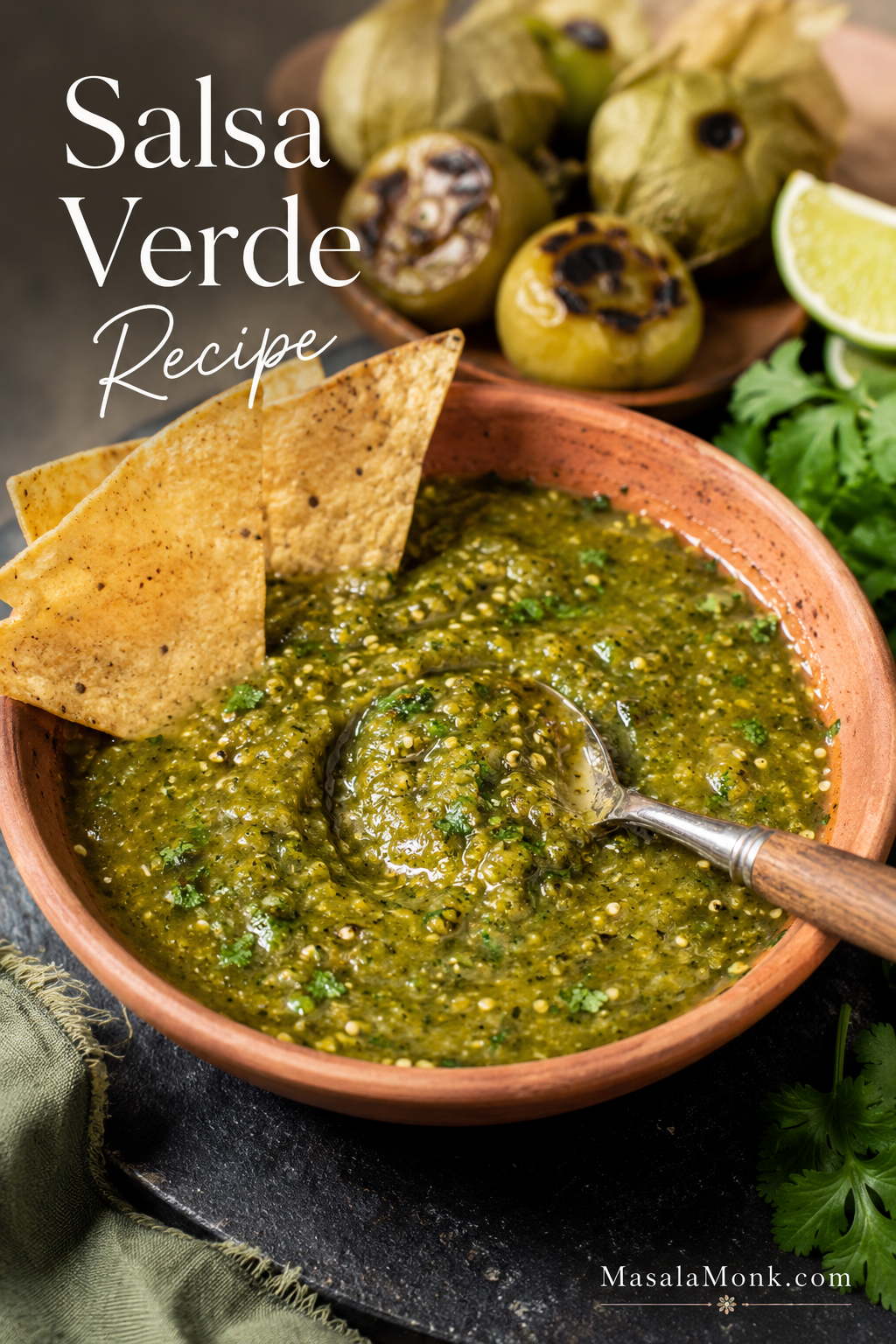
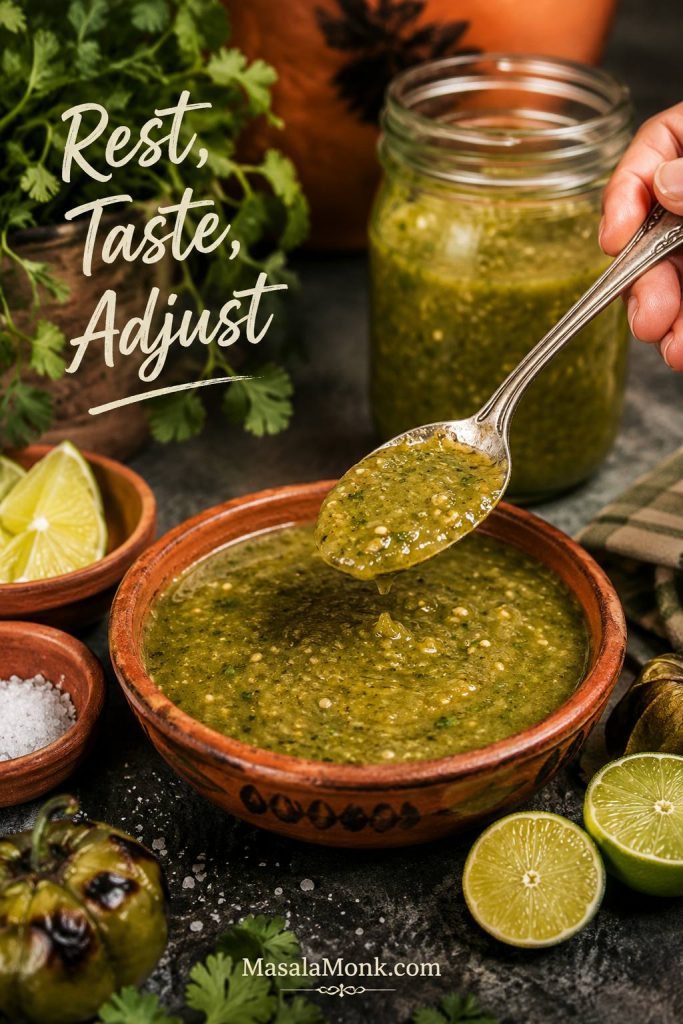
Bowl of roasted salsa verde with tortilla chips, lime, roasted tomatillos, and a spoon showing chunky green texture.

Some sauces sit politely on the side. Salsa verde wakes the plate up. It is bright, green, and alive — the kind of sauce that makes tacos taste fresher, eggs feel less ordinary, grilled chicken more exciting, and tortilla chips almost impossible to leave alone.

At its simplest, this is a one-pan, one-blender salsa: roast the tomatillos, blend everything together, then taste for salt and lime. It should be bright enough to wake up the plate, salty enough to keep you going back for one more chip, and balanced enough to spoon over dinner without thinking twice.

This recipe is made with tomatillos, green chiles, garlic, onion, cilantro, lime, and salt. The roasted version is the one to make first because it softens the tomatillos’ tart edge and gives the salsa a deeper, rounder flavor. Boiled, raw, and charred options are included later, but they are backup help — not homework.

One quick clarification before we start: this is Mexican salsa verde, not Italian salsa verde. Mexican salsa verde is usually made with tomatillos and green chiles. Italian salsa verde is an herb sauce made with parsley, capers, garlic, olive oil, and vinegar or lemon. Both are green sauces, but they are completely different in flavor and use.

In This Guide

Use this as a quick map for the recipe, method choices, heat control, fixes, storage, and serving ideas.

Quick Answer: What Is Salsa Verde?

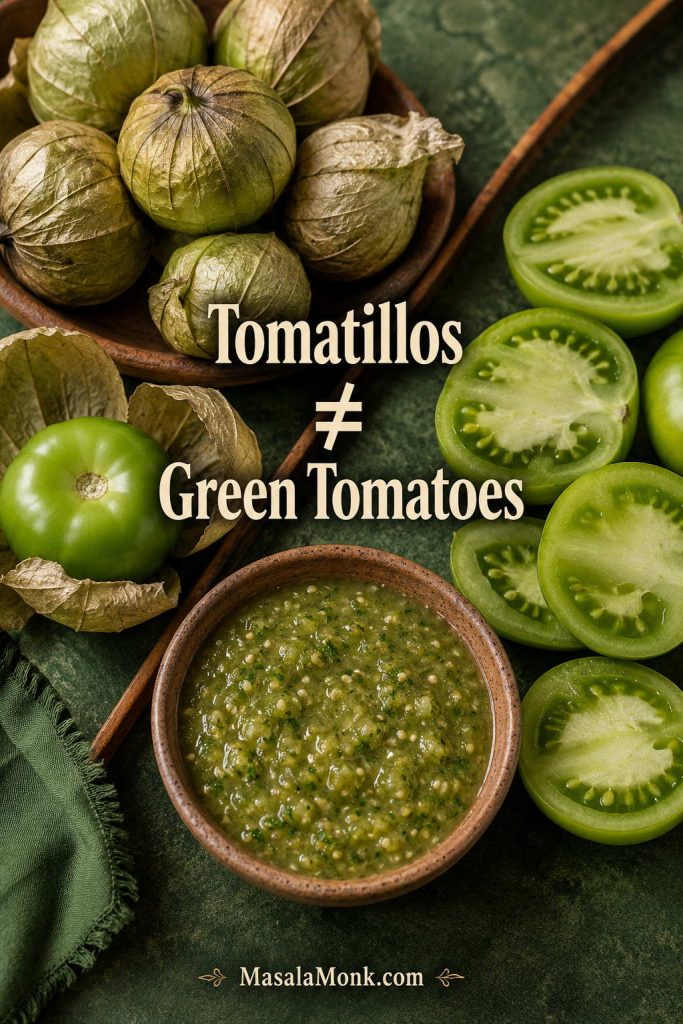
Salsa verde means “green sauce,” but in Mexican cooking it usually refers to a green salsa made with tomatillos, green chiles, onion, garlic, cilantro, salt, and sometimes lime. Tomatillos are not green tomatoes; they have papery husks and a naturally tangy, slightly fruity flavor that makes them perfect for a lively green salsa.

For the fastest path, go straight to the roasted tomatillo salsa recipe. If you are deciding between raw, boiled, roasted, or charred, use the method guide first.

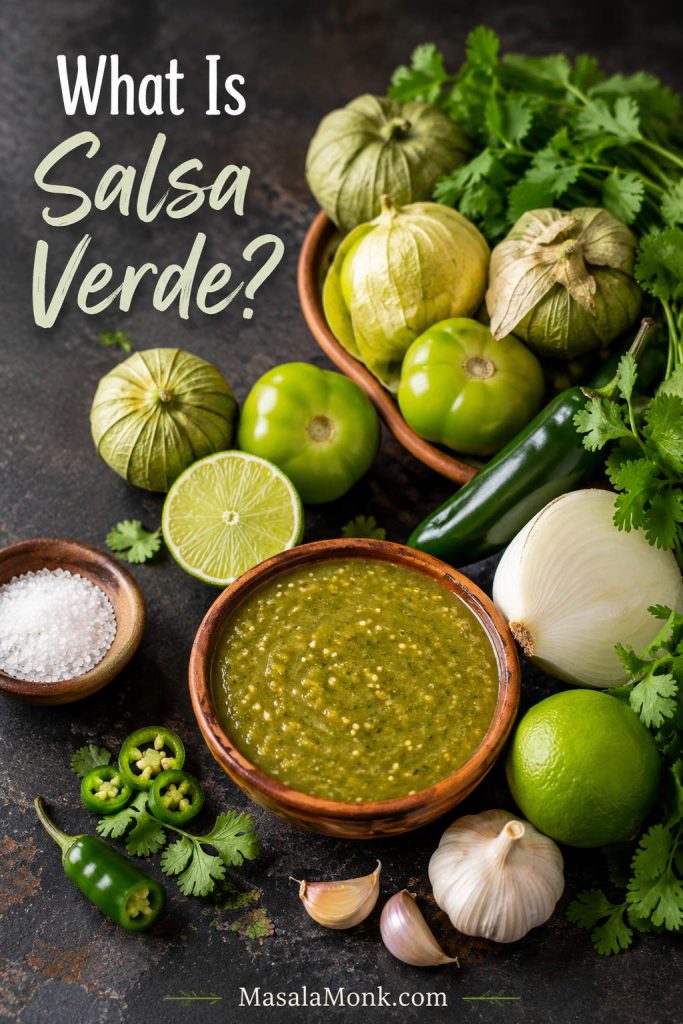
Tomatillos in papery husks with green chiles, cilantro, onion, garlic, lime, salt, and a bowl of salsa verde
Tomatillos and green chiles give Mexican salsa verde its lively backbone; compared with tomato salsa, the flavor is greener, sharper, and more citrus-friendly.
Start here: If this is your first batch, roast the tomatillos. It is the easiest method to love because it keeps the salsa bright while taking away the harshest raw edge.

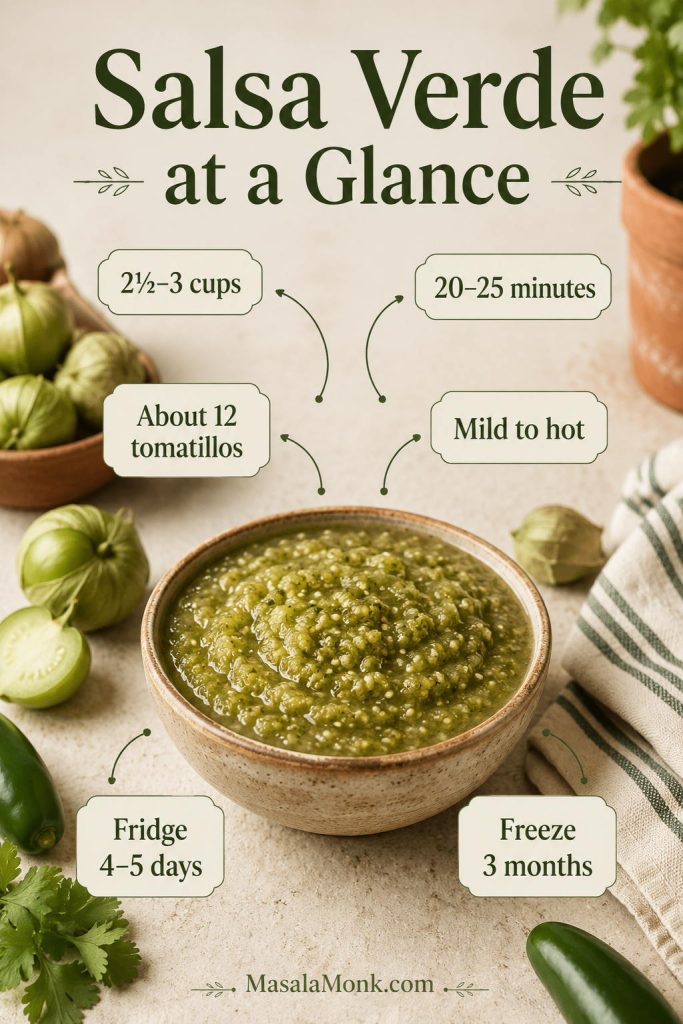
At a Glance

This is the kind of salsa that earns a permanent jar spot in the fridge: thick enough for chips, bright enough for tacos, and easy to loosen into a sauce when dinner needs help.

Start withRoasted tomatillo salsa verde
YieldAbout 2½ to 3 cups
Total time20 to 25 minutes under the broiler, or about 25 to 30 minutes with the oven-roasted method
Heat levelMild, medium, or hot depending on jalapeño or serrano amount
Ideal textureSpoonable, lightly textured, not watery
Works withTacos, chips, eggs, enchiladas, chicken, chilaquiles, bowls, nachos
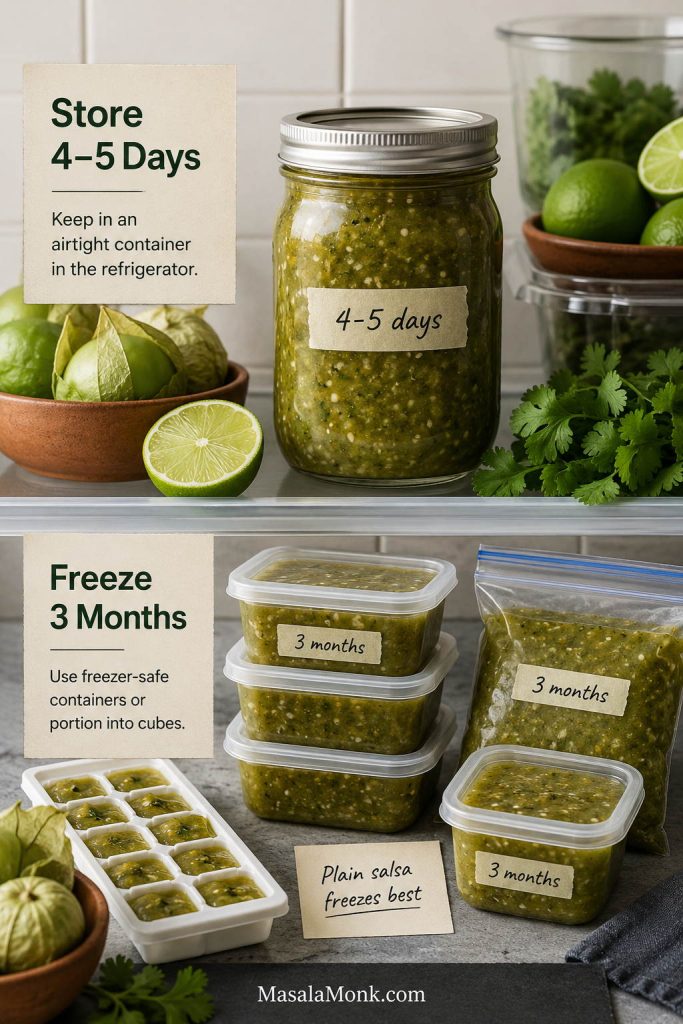
Storage4 to 5 days in the fridge, up to 3 months in the freezer
Salsa verde jar with callouts for yield, time, tomatillo count, heat level, refrigerator storage, and freezer storage
One roasted batch gives about 2½ to 3 cups, so you can serve it with chips now and still have enough left for tacos, eggs, or enchiladas later.

Why This Works

This version is built around the things that usually go wrong: watery texture, harsh garlic, too much tartness, unpredictable heat, and flat flavor. The small details — roasting the garlic, holding back pan juices, tasting before adding extra lime, and resting before the final adjustment — keep the salsa balanced instead of thin, sharp, or dull.

  • Roasting softens the tomatillos. It keeps their tangy flavor but rounds off the sharpest raw edge.
  • Pan juices are added gradually. Roasted tomatillos can release more liquid than expected, so holding some back keeps the salsa from turning watery.
  • Salt comes before extra lime. Under-salted salsa tastes flat, while too much lime can make already-tart tomatillos taste harsh.
  • The method can match the meal. Roasted is the main recipe, but boiled, raw, and charred styles help you make the salsa smoother, brighter, smokier, or more sauce-like.

What You Need

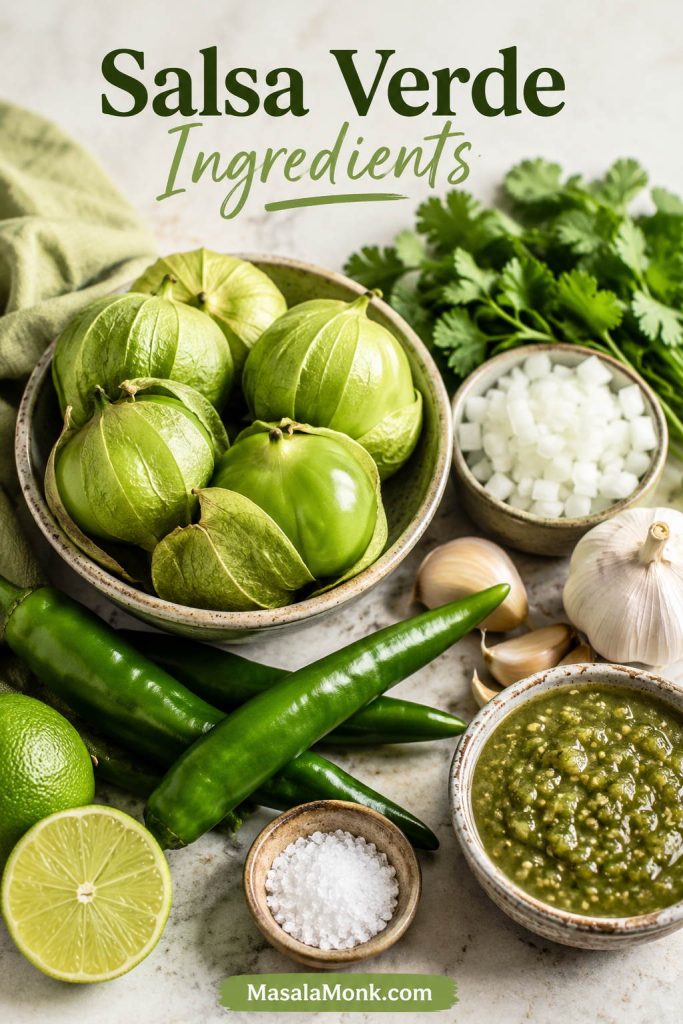
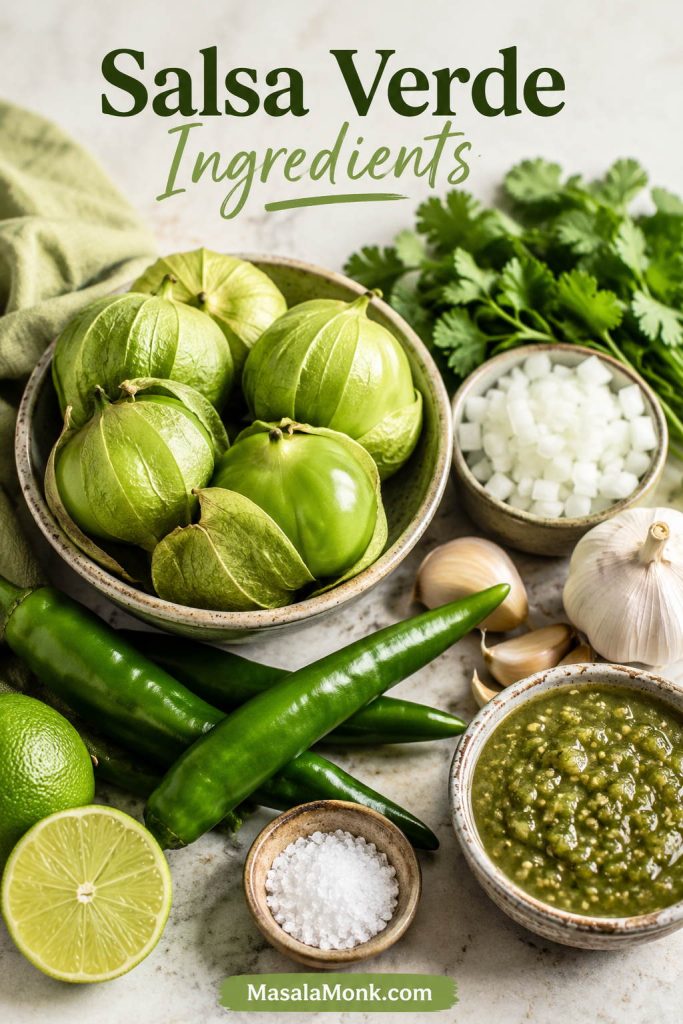
A good batch does not need a long ingredient list. The flavor comes from balancing tangy tomatillos, green chile heat, fresh cilantro, enough salt, and a little lime.

Tomatillos, green chiles, garlic, white onion, cilantro, lime, salt, and finished salsa verde arranged on a prep surface
A good salsa verde recipe does not need many ingredients, but each one has a job: tomatillos bring tang, chiles bring heat, and salt wakes everything up.

Tomatillos

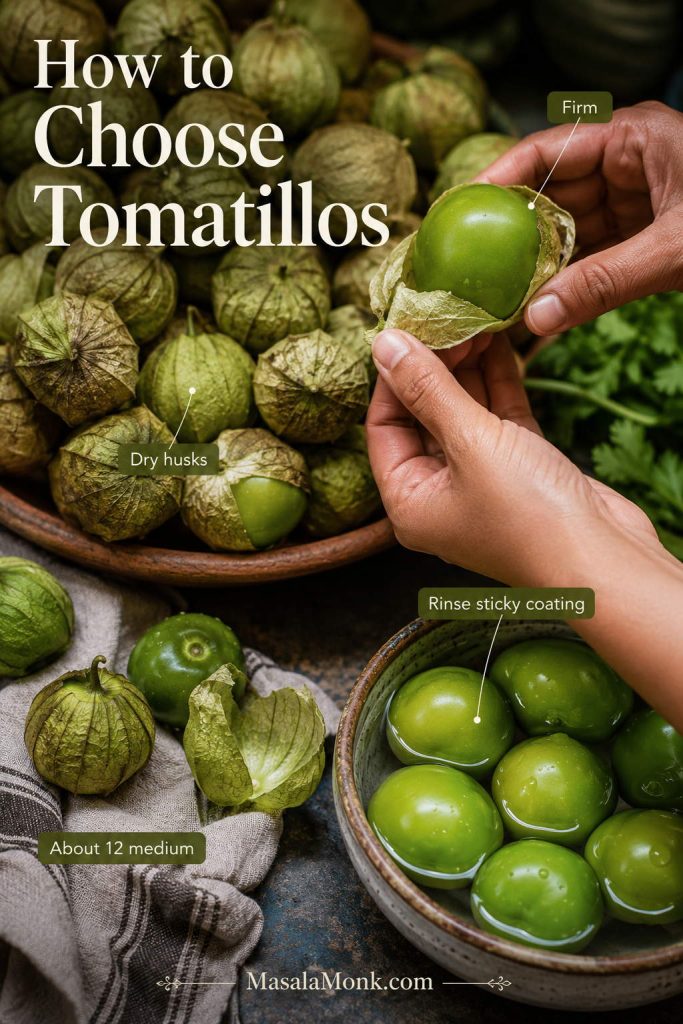
Look for firm tomatillos with dry papery husks. A little stickiness under the husk is normal; rinse it off before cooking or blending. You need 1½ pounds / 680 g tomatillos, usually about 12 medium tomatillos, for about 2½ to 3 cups salsa.

Tomatillos with papery husks beside sliced green tomatoes and a bowl of green tomatillo salsa
Tomatillos are not green tomatoes; instead, they bring the tart, fruity base that gives classic tomatillo salsa verde its lively flavor.

To prep them, remove the husks, rinse the sticky coating, and trim away any damaged spots. Large tomatillos can be halved before roasting so they soften evenly.

Hands choosing fresh tomatillos with papery husks, peeled tomatillos, and labels for firmness, dry husks, and rinsing
Firm tomatillos with dry husks usually roast best; after peeling, rinse the sticky coating so the finished salsa tastes clean rather than tacky or dull.

Jalapeño or Serrano

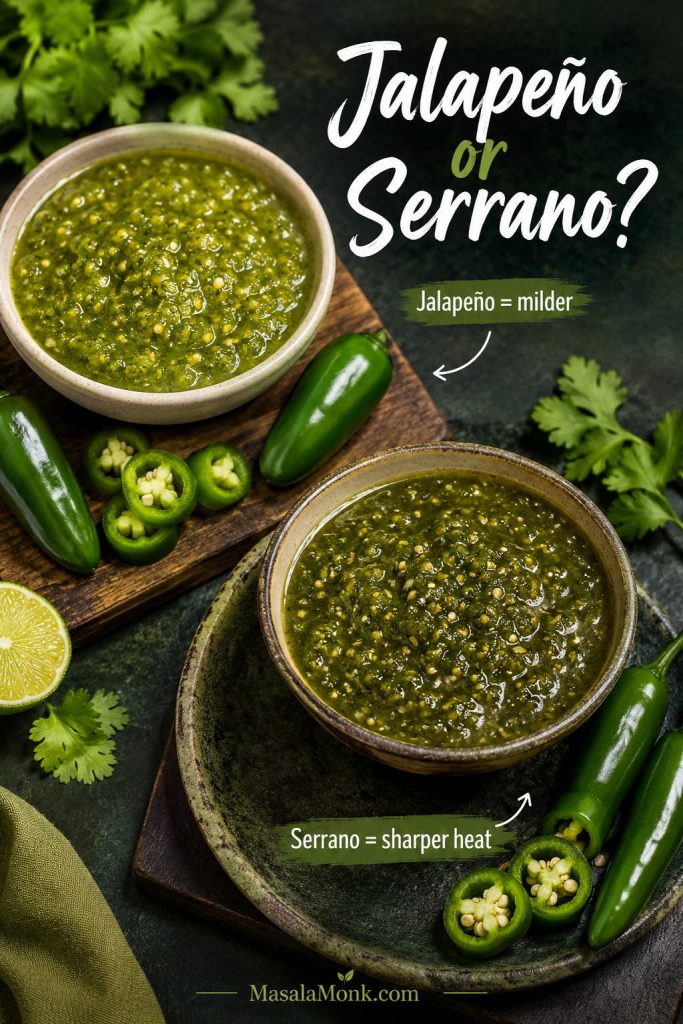
Jalapeño makes a milder, more approachable salsa. Serrano gives a sharper, more intense green-chile heat. Use one pepper for mild to medium, two serranos for hot, or three to four serranos for a very spicy batch.

Remove the seeds and white ribs for gentler heat before blending. Keep some seeds for a sharper salsa, then adjust after tasting.

Need exact mild, medium, and hot options? Use the heat level guide before blending.

Jalapeños and serrano peppers beside two bowls of salsa verde with labels comparing milder and sharper heat
Jalapeño makes the sauce milder and rounder, while serrano gives sharper green-chile heat, so choose based on who will be eating it.

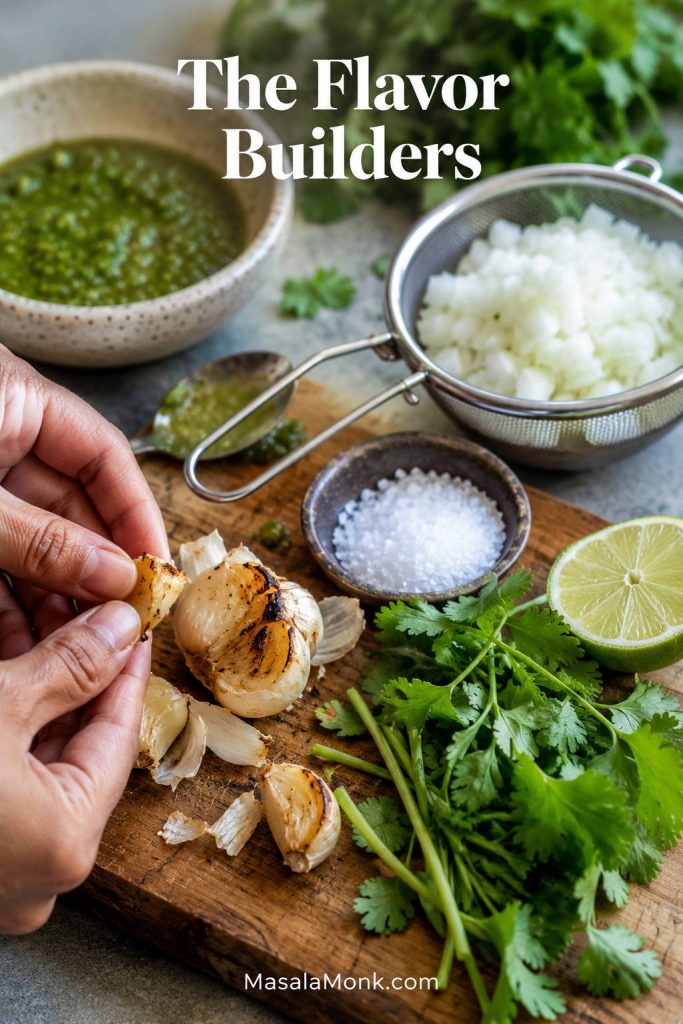
Onion, Garlic, Cilantro, Lime, and Salt

White onion gives the salsa a clean bite. Rinsing chopped onion under cold water softens harsh raw onion flavor without making the sauce dull. Garlic roasts with the tomatillos in the main recipe so it turns mellow instead of sharp.

Cilantro brings the classic fresh green finish, and tender stems are fine because they carry plenty of flavor. Lime brightens the batch, but tomatillos are already tart, so add it with a light hand and adjust after tasting.

Roasted garlic, rinsed chopped onion, cilantro, lime, salt, and salsa verde arranged as flavor-building ingredients
Garlic, onion, cilantro, lime, and salt build balance around the tomatillos, so the finished green salsa tastes layered instead of flat.

How to Make It

Roast the tomatillos, chile, and garlic until blistered, then blend them with onion, cilantro, lime, and salt. Keep the texture lightly spoonable and add water only at the end when the salsa is too thick.

Four-step salsa verde process showing tomatillo prep, roasting, blending, and tasting to adjust flavor
This four-step flow keeps the recipe simple: prep clean tomatillos, roast for flavor, blend for texture, and adjust only after the salsa settles.

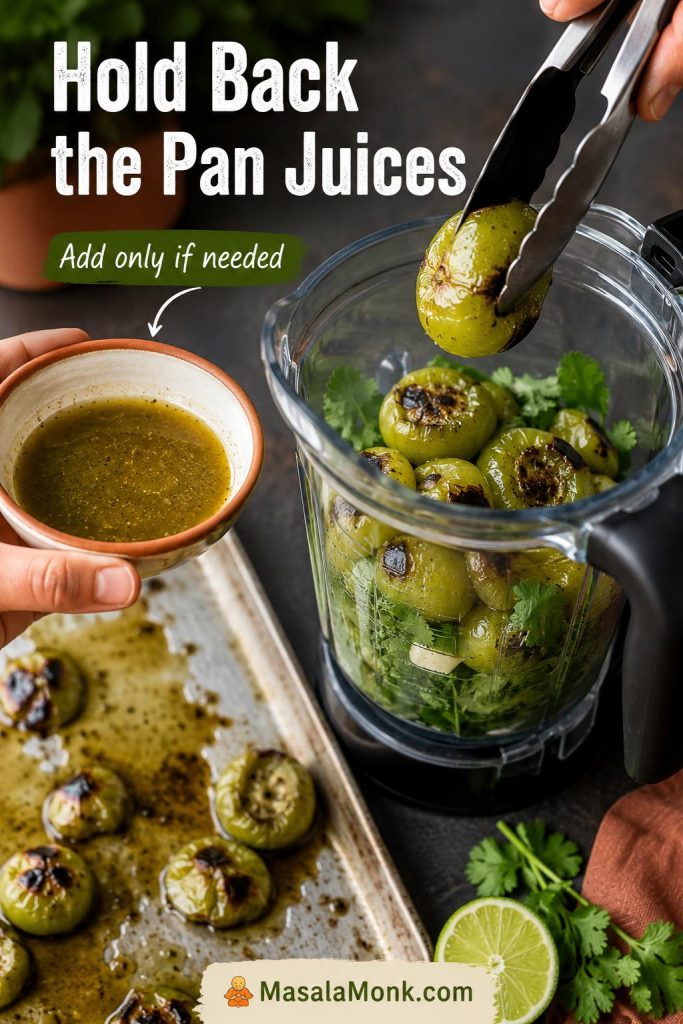
The one thing to watch is liquid. Roasted tomatillos can release a lot of juice, so add the tomatillos first, pulse, and use the pan juices gradually only if the salsa needs them.

Roasted tomatillos going into a blender with reserved pan juices held aside in a small cup
The roasted juices carry flavor, but adding them slowly gives you control over thickness before the salsa turns too loose for chips or tacos.

Do not worry if one batch tastes a little brighter, smokier, or spicier than the last. Tomatillos and chiles vary, so the final taste check is part of making the salsa yours.
Spoon tasting salsa verde with lime wedges, salt, and a jar of green salsa nearby
A short rest makes the flavors easier to read, so taste again before adding more lime, salt, or heat.

Roasted Tomatillo Salsa Verde Recipe

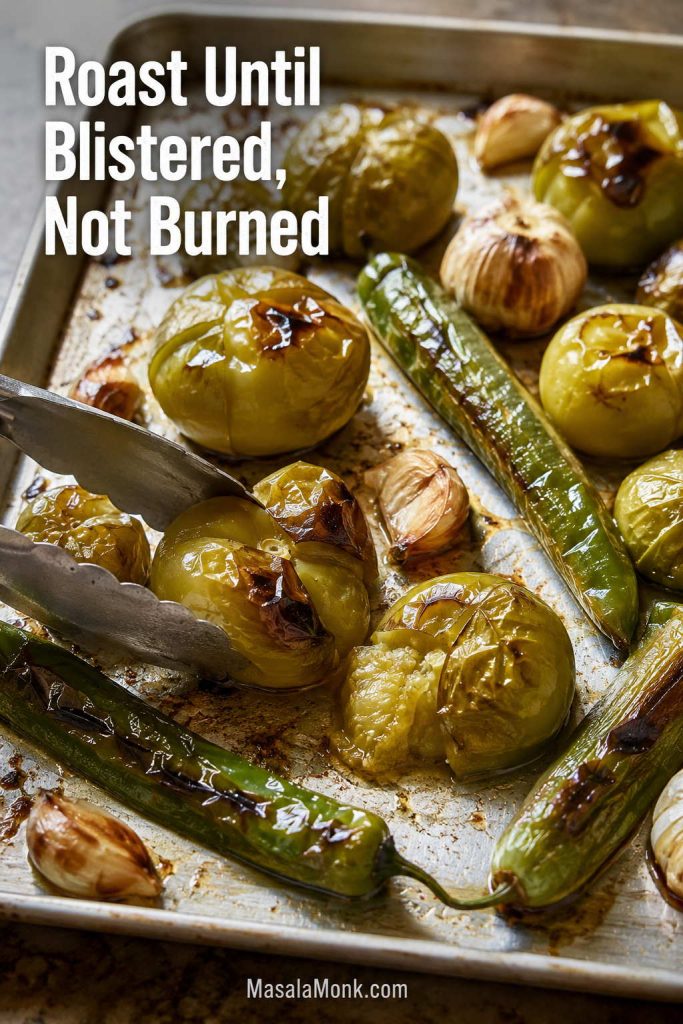
Tomatillos, green chiles, and unpeeled garlic blistered on a sheet pan for roasted salsa verde
Roast the tomatillos until they blister and soften; this rounds off their raw edge while keeping enough acidity for tacos and chips.

Roasted Tomatillo Salsa

This roasted tomatillo salsa is tangy, lightly smoky, and spoonable, with enough body for chips and enough brightness for tacos, eggs, chicken, chilaquiles, bowls, and nachos.

Prep Time 10 minutes
Cook Time About 10 to 13 minutes
Total Time 20 to 25 minutes under the broiler
Yield About 2½ to 3 cups

Equipment

  • Rimmed baking sheet
  • Foil or a bare baking sheet for broiling
  • Blender or food processor
  • Tongs
  • Fine-mesh strainer, optional, for rinsing onion
  • Airtight jar or container

Blender or food processor? Use a food processor for a lightly textured salsa and a blender for a smoother sauce-style salsa.

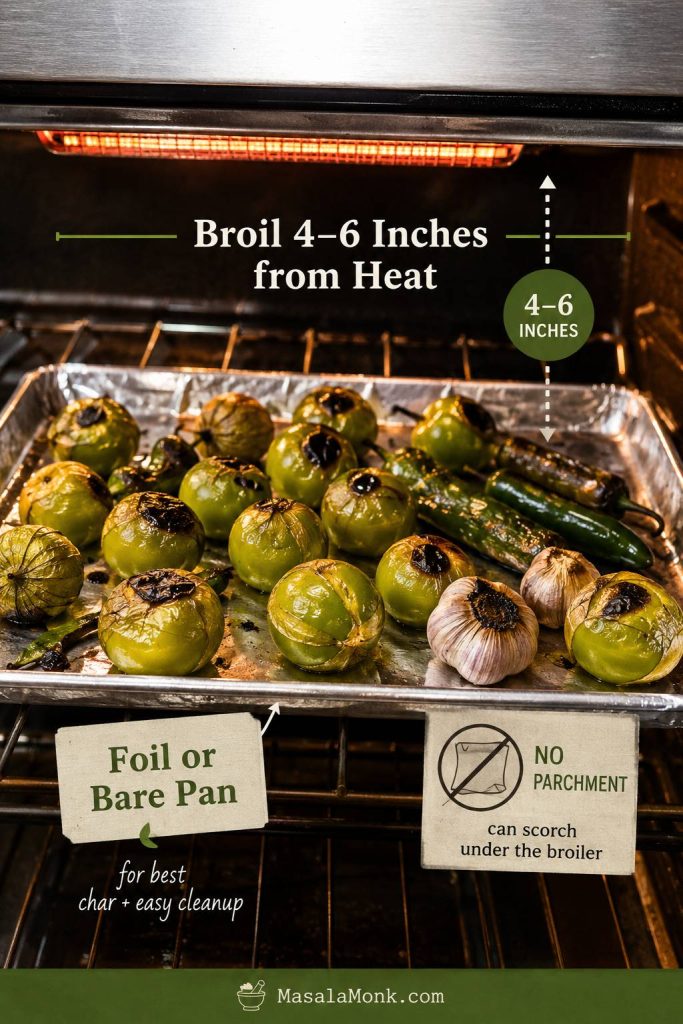
Broiler note: Use foil or a bare rimmed baking sheet under the broiler. Do not place parchment directly under the broiler. Parchment is only for the 450°F oven method when rated for that heat.

Ingredients

  • 1½ pounds tomatillos, husked and rinsed, about 680 g or 12 medium tomatillos
  • 1 to 2 jalapeños or serranos, roughly 15 to 40 g depending on size
  • 2 to 3 garlic cloves, unpeeled for roasting
  • ½ cup chopped white onion, about 70 g
  • ½ cup chopped cilantro leaves and tender stems, about 8 to 12 g
  • 1 to 2 tablespoons fresh lime juice, 15 to 30 ml, to taste
  • Âľ teaspoon fine salt, about 4 g, plus more to taste
  • 1 to 3 tablespoons water, broth, cooking liquid, or pan juices, only as needed

Instructions

  1. Prep the tomatillos. Remove the papery husks and rinse off the sticky coating. Pat dry before roasting.
  2. Set up the pan. Place tomatillos, jalapeño or serrano, and unpeeled garlic cloves on a foil-lined or bare rimmed baking sheet. Halve large tomatillos and place them cut-side down.
  3. Broil the first side. Broil 4 to 6 inches from the heat for 5 to 7 minutes, until the tomatillos begin to blister and soften.
  4. Finish roasting. Use tongs to turn the chile and garlic as needed, then broil another 4 to 6 minutes. The tomatillos may collapse; that is fine. You are looking for browned spots and a tangy-sweet smell instead of a raw, grassy one.
  5. Cool briefly. Let the roasted ingredients cool for a few minutes. Peel the garlic. Stem the chile. Remove seeds for milder salsa.
  6. Rinse the onion, optional. For a cleaner onion flavor, rinse the chopped onion under cold water and drain well.
  7. Blend carefully. Add the roasted tomatillos, chile, garlic, onion, cilantro, 1 tablespoon lime juice, and salt to a blender or food processor. When there is a lot of liquid on the pan, hold some of it back at first.
  8. Set the texture. Pulse until mostly smooth but still lightly textured. Blend longer only for a thinner sauce-style salsa.
  9. Adjust liquid. Add pan juices, water, broth, or cooking liquid 1 tablespoon at a time only when the salsa is too thick.
  10. Taste. Rest 10 to 15 minutes, then taste again. Add salt first when it tastes dull. Add more lime only when it needs brightness.
  11. Serve or store. Serve warm, room temperature, or chilled. Refrigerate leftovers in an airtight jar.

Notes

  • For mild salsa, use 1 seeded jalapeño.
  • For medium heat, use 1 whole jalapeño or 1 seeded serrano.
  • For a hot batch, use 2 serranos.
  • Without a broiler, roast at 450°F / 230°C for 15 to 20 minutes. Total time will be closer to 25 to 30 minutes.
  • For storage details, see how to store and freeze it. For shelf-stable jars, read the canning safety note before changing the recipe.

Before broiling, pan setup matters: keep the tomatillos close enough to blister, and use foil or a bare rimmed pan instead of parchment.

Sheet pan of tomatillos, green chile, and garlic under a broiler with guidance for heat distance and foil or bare pan
Broiling close to the heat helps tomatillos blister quickly; meanwhile, foil or a bare pan is safer under the broiler than parchment.

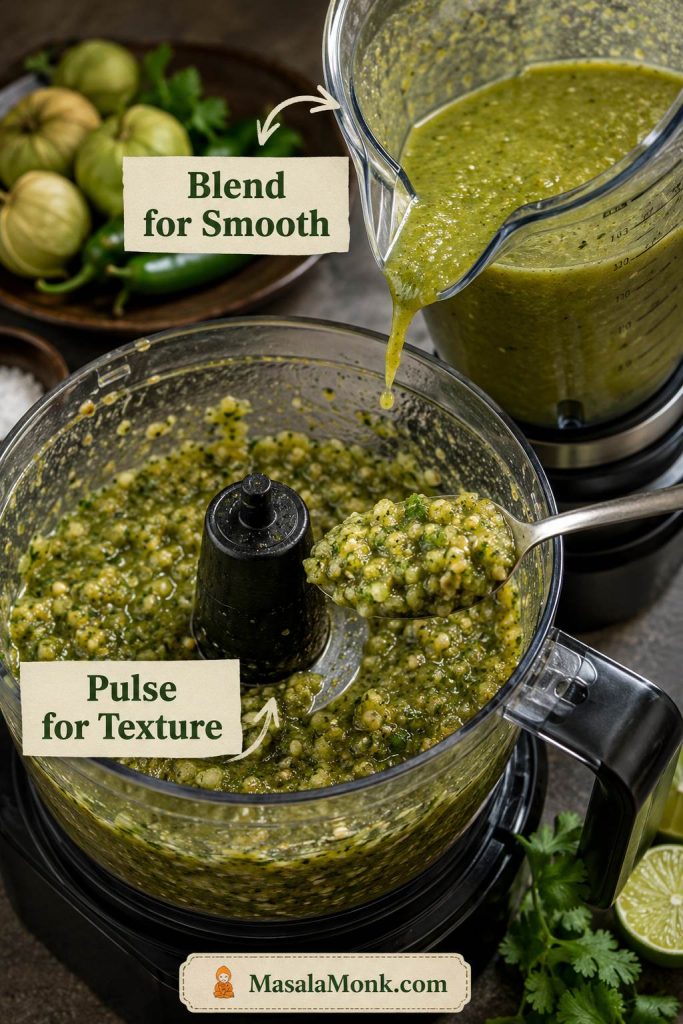
Texture depends on the tool: a food processor keeps the salsa lightly textured, while a blender makes it smoother and more sauce-like.

Salsa verde in a food processor with a spoonful of chunky salsa and a blender nearby for a smoother texture
Use a food processor for lightly textured tomatillo salsa, but use a blender when you want a smoother sauce-style finish.

You can stop with the roasted recipe above and be happy. Everything after this point is optional help for method, texture, heat, and use cases.

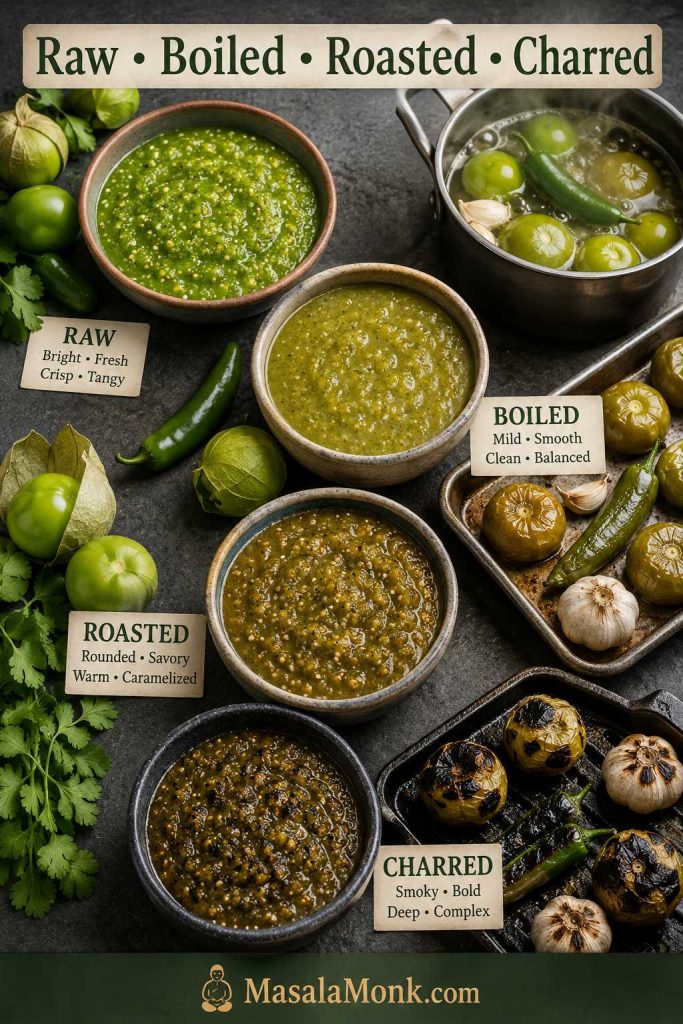
Raw, Boiled, Roasted, or Charred?

Once you know the base recipe, the method becomes your style choice: raw for sharp and fresh, boiled for smooth, roasted for balanced, and charred for smoky.

Four bowls of salsa verde showing raw, boiled, roasted, and charred versions with different colors and textures
Once you know the base recipe, the method becomes a style choice: raw is sharp, boiled is smooth, roasted is balanced, and charred is smoky.
MethodHow to Do ItFlavorWorks With
RawBlend raw tomatillos, chile, onion, cilantro, lime, and salt.Sharp, tart, fresh, grassy.Tacos, grilled meats, rich or fatty fillings.
BoiledSimmer tomatillos, chile, and garlic for 5 to 12 minutes, then blend.Smoother, cleaner, softer.Taqueria-style salsa, enchiladas, chilaquiles, chicken.
RoastedBroil 9 to 13 minutes total, or roast at 450°F for 15 to 20 minutes.Balanced, rounded, lightly smoky.The most flexible homemade version.
CharredBroil until deeply blistered, blend, then optionally simmer in 1 tablespoon oil for 2 to 3 minutes.Smoky, deeper, more intense.Restaurant-style salsa, tacos, grilled meats, bold bowls.

If you are unsure, choose roasted. It behaves best on a normal weeknight: bright enough for tacos, thick enough for chips, and rounded enough to spoon over dinner.

If the salsa looks too thick or too loose after blending, check the texture guide before adding more liquid.

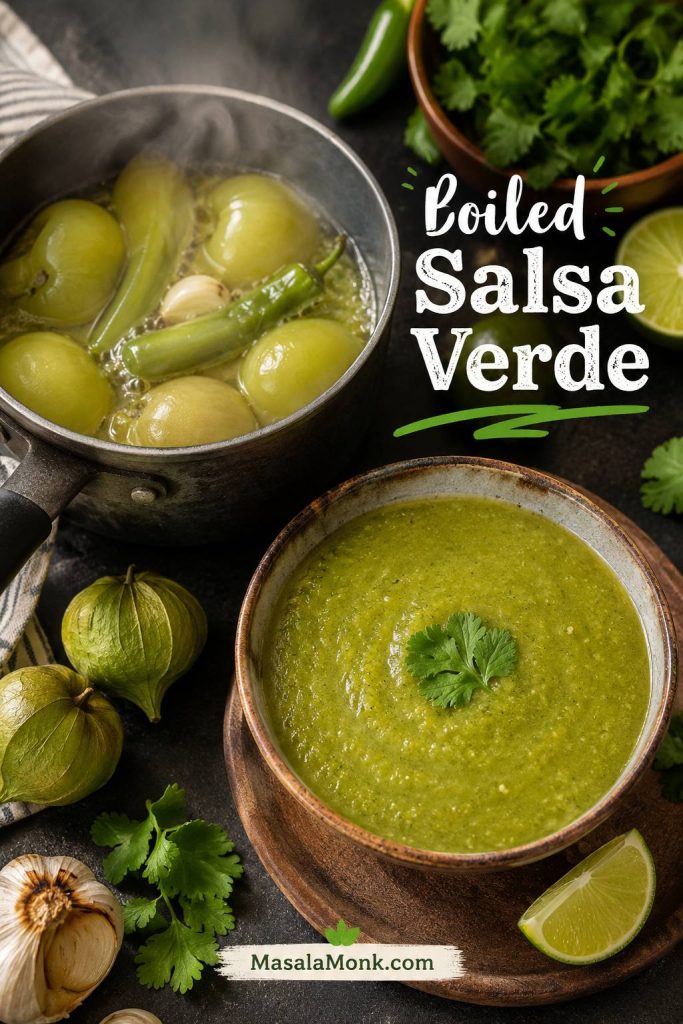
Boiled Version

The boiled version is smooth, clean, and useful when you need a green salsa that behaves more like a sauce. Place the tomatillos, chile, and garlic in a saucepan, cover with water, and simmer until the tomatillos turn dull green and soften. This usually takes 5 to 12 minutes depending on size.

Stop when the tomatillos are soft but not completely falling apart. Drain them, save a little cooking liquid, then blend with onion, cilantro, salt, and lime to taste. Add the reserved liquid only as needed. This style is especially good for enchiladas, chilaquiles, simmered chicken, and everyday taco-shop-style salsa.

Tomatillos and green chile simmering in a pot beside a bowl of smooth boiled salsa verde
Boiled salsa verde is smoother and cleaner than roasted salsa, which makes it useful for enchiladas, chilaquiles, simmered chicken, and taqueria-style sauces.

Raw Version

Raw salsa verde, also called salsa verde cruda, is the fastest style. It is bracing and fresh, with a sharper edge than cooked salsa verde. Use it for a fresh taco salsa when a more assertive tomatillo flavor sounds good.

Because raw tomatillos can be quite tangy, taste carefully before adding much lime. Salt is usually more important than extra acid in this version.

Bright raw salsa verde cruda spooned over tacos with raw tomatillos and green chile nearby
Raw salsa verde cruda has the sharpest bite, so it works especially well when rich taco fillings need a clean green finish.

Charred Version

The charred version is for deeper flavor. Let the tomatillos and chiles blister more aggressively under the broiler. After blending, heat 1 tablespoon neutral oil in a saucepan, add the salsa, and simmer it for 2 to 3 minutes. The color will darken slightly and the flavor will become more rounded.

This step is optional, but it is excellent for tacos, grilled meats, chilaquiles, or chicken.

Charred tomatillos, green chiles, garlic, and a bowl of dark smoky salsa verde
Charring deepens the flavor of tomatillo salsa, but the vegetables should look blistered and smoky rather than burned.

Mild, Medium, or Hot

For a table of mixed heat levels, start gentler than your own taste. You can always make the next batch sharper, but once this batch is too hot, you need extra tomatillos, avocado, or crema to bring it back.

Heat LevelUse ThisWorks For
Mild1 seeded jalapeñoKids, parties, chips, mild tacos.
Medium1 whole jalapeño or 1 seeded serranoEveryday salsa with a gentle kick.
Hot2 serranosTacos, grilled meats, spicy bowls.
Very hot3 to 4 serranos, with some seeds includedHeat lovers and bold taqueria-style salsa.

If the batch is already hotter than you wanted, go straight to the too-spicy fix instead of adding water.

Mild, medium, and hot salsa verde bowls with jalapeño and serrano pepper amounts shown as labels
For a crowd-friendly salsa verde, start with jalapeño or a seeded serrano; then move hotter only when you know the table wants it.

If you like building heat with different chiles, MasalaMonk’s pepper sauce guide goes deeper into jalapeño, habanero, chipotle, and other chile-based sauces.

Once the salsa is already blended and too spicy, do not add water first. Water will thin the sauce without softening the burn much. Instead, blend in more cooked tomatillo, avocado, sour cream, Mexican crema, or a little more roasted onion, depending on the flavor you want.

The Right Texture

Good salsa verde should be spoonable, lightly glossy, and a little textured. It should not pour like water, but it should not be stiff like guacamole either.

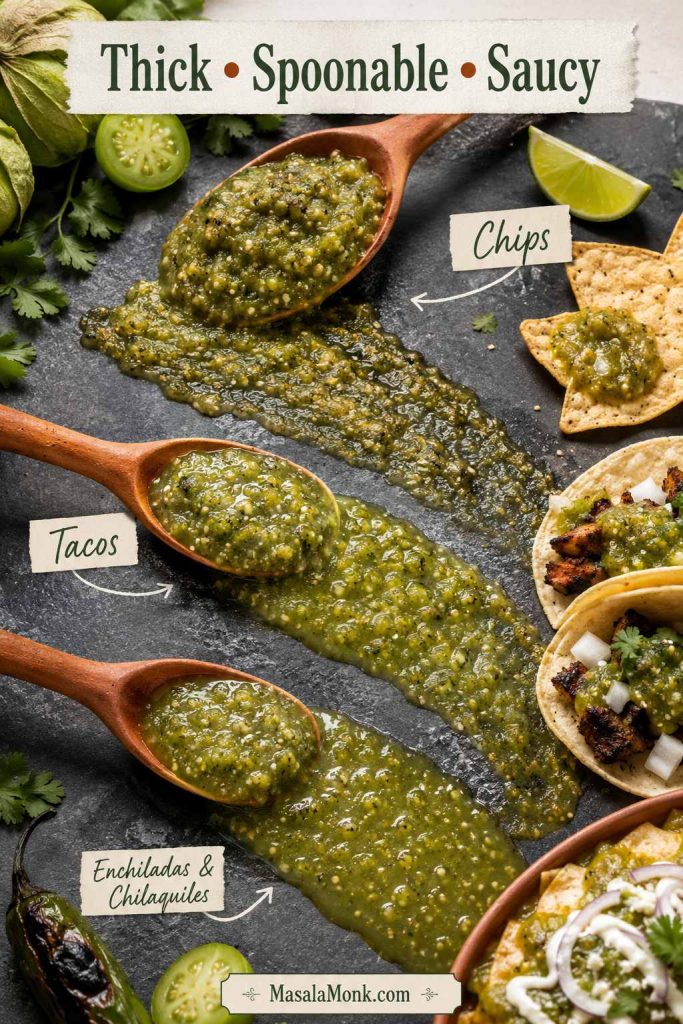
For chips, keep it medium-thick so it clings. On tacos, it should be spoonable and a little loose, so it runs slightly into the filling. For enchiladas or chilaquiles, thin it with broth, water, or cooking liquid so it coats instead of clumping. Bowls and nachos need a thicker salsa so it does not flood the plate.

Serving temperature changes the way it feels, too. Chilled works best for chips, room temperature is great for tacos, and warm is useful when the salsa acts like a sauce for eggs, chicken, enchiladas, or chilaquiles.

If the texture has already gone wrong, the troubleshooting section covers watery, too thick, bland, bitter, tart, and too-spicy salsa.

Three salsa verde textures labeled thick, spoonable, and saucy for chips, tacos, enchiladas, and chilaquiles
A thicker salsa clings to chips, a spoonable one sits better on tacos, and a looser version spreads more evenly through enchiladas or chilaquiles.

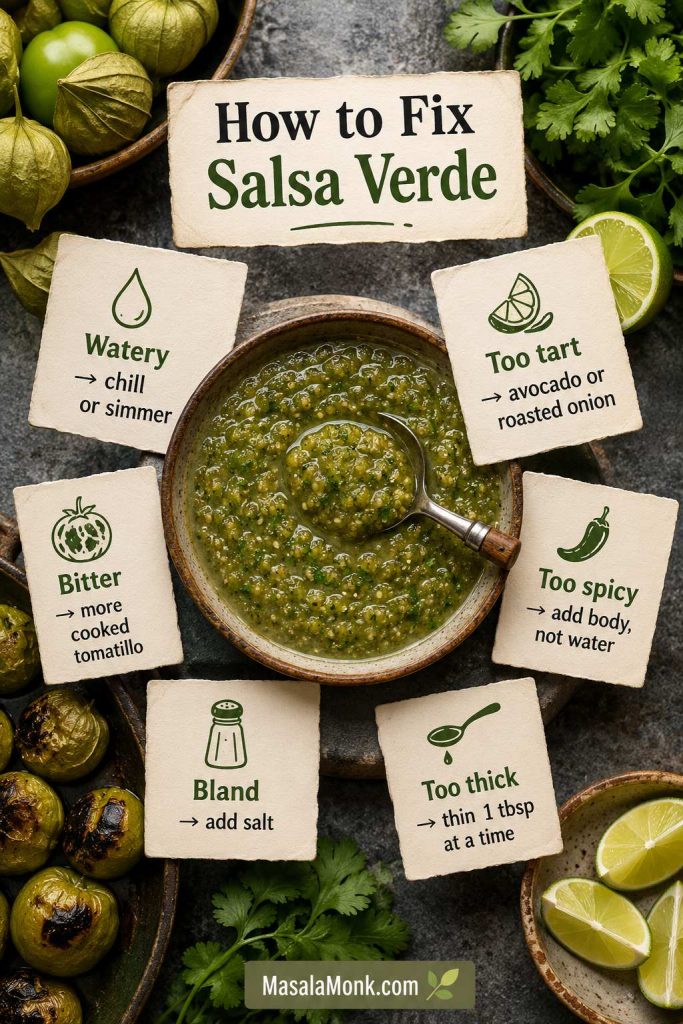
How to Fix the Flavor or Texture

Most salsa problems are not disasters. They are usually small balance issues: too much liquid, not enough salt, too much heat, or tomatillos that were sharper than expected.

ProblemLikely CauseHow to Fix It
Watery salsaToo much liquid, hot salsa not rested, or over-blending.Chill first. If still loose, simmer briefly to reduce or blend in avocado for a creamy style.
Too tartVery sharp tomatillos or too much lime.Add roasted onion, a tiny pinch of sugar, or avocado.
BitterOld tomatillos, over-charred skins, or harsh raw garlic.Add more cooked tomatillo, cilantro, salt, or a little lime. Next time, roast until blistered, not scorched.
Too spicyToo many serranos or too many seeds.Blend in more cooked tomatillo, avocado, crema, sour cream, or roasted onion.
BlandUsually not enough salt.Add salt in small pinches, rest for a few minutes, then taste again.
Too thickNot enough liquid or salsa chilled very thick.Add water, broth, cooking liquid, or reserved pan juices 1 tablespoon at a time.
Troubleshooting board for salsa verde with fixes for watery, tart, bitter, spicy, bland, and thick salsa
Most salsa verde problems are balance problems, so the fix is usually small: chill, simmer, salt, thin slowly, or add body instead of starting over.
If you only remember one fix: adjust salt before lime. Under-salted salsa tastes flat, but too much lime can make already-tangy tomatillos taste harsh.

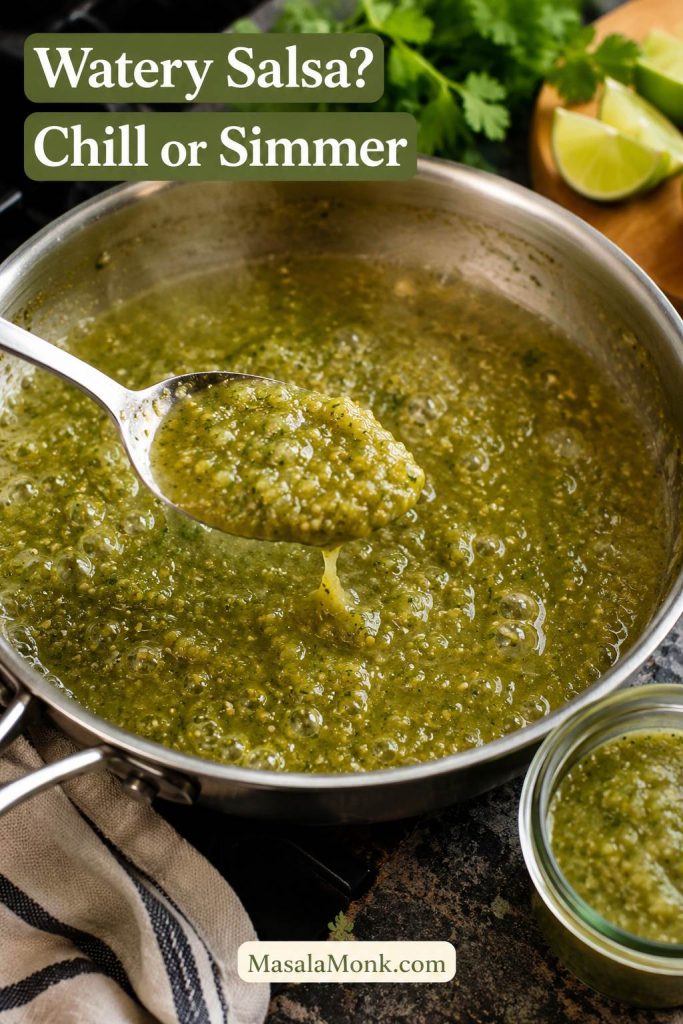
Watery Salsa Verde

Watery salsa verde is usually easy to rescue. Tomatillos release liquid as they cook, and warm salsa can seem thinner than chilled salsa. First, let it cool or refrigerate it for 30 minutes. When it is still too loose, simmer it in a small saucepan for a few minutes until it thickens.

Watery salsa verde simmering in a pan with a spoonful of thicker salsa lifted above the surface
If the salsa looks thin after cooling, a brief simmer concentrates the tomatillo flavor and brings the texture back to spoonable.

For tacos and chips, you want salsa that clings. For enchiladas and chilaquiles, a looser sauce is actually useful.

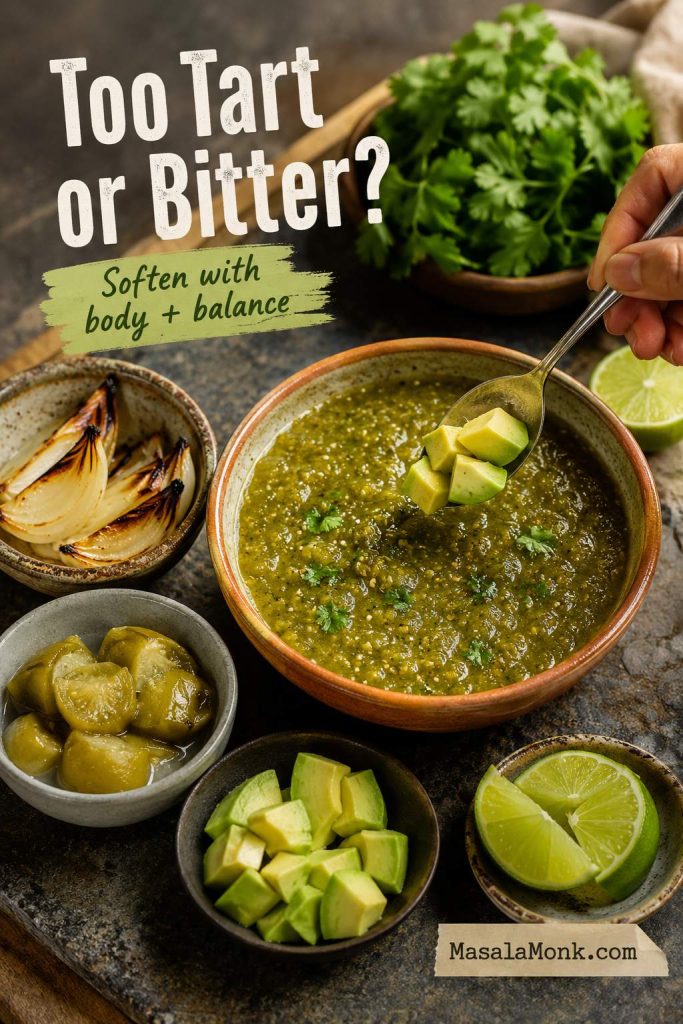
Bitter or Too Tart

Tomatillos are naturally tart, so add lime slowly. When the salsa tastes too sharp, add roasted onion, a tiny pinch of sugar, or avocado. Avocado is especially helpful because it softens both tartness and heat.

Salsa verde with avocado, roasted onion, cooked tomatillo, cilantro, and lime used to fix bitter or tart flavor
If the sauce tastes too tart or bitter, ingredients with body and sweetness, such as avocado, roasted onion, or cooked tomatillo, can soften the edge.

Bitterness usually comes from old tomatillos, over-charred skins, or too much raw garlic. Next time, use firm fresh tomatillos and roast until blistered and browned in spots, not blackened all over.

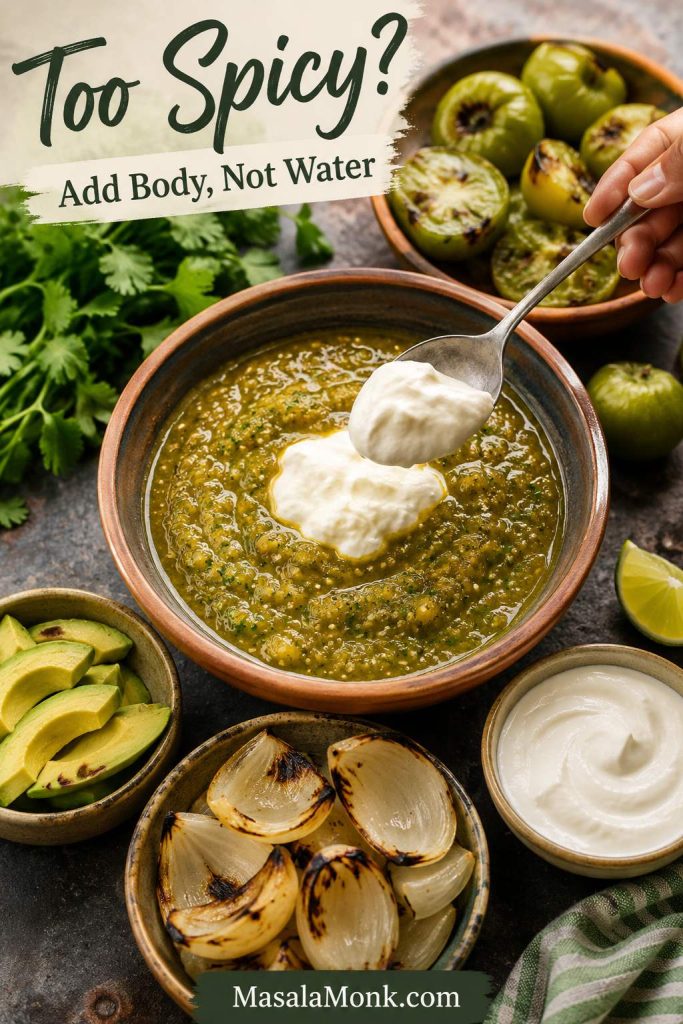
Too Spicy

The easiest way to cool down heat is to add body, not water. Cooked tomatillos, avocado, sour cream, Mexican crema, or roasted onion will calm the burn while keeping the sauce useful.

Salsa verde with avocado, crema, roasted onion, and cooked tomatillos used to reduce heat
When the salsa is too spicy, add body with avocado, crema, roasted onion, or more tomatillo instead of thinning the sauce with water.

Served with rich foods like pork, fried eggs, cheese, or grilled chicken, a slightly spicy batch may taste more balanced once it is on the food.

Bland or Flat

When the salsa tastes dull, add salt in small pinches, stir, and wait a minute before tasting again. Once the tomatillo and chile flavor wakes up, you can decide whether it needs more brightness.

Ways to Use It Beyond Chips

Chips may be the first thing that comes to mind, but this is where the jar starts earning its space in the fridge. It can wake up eggs, rescue leftover chicken, make plain rice or tortillas feel intentional, and turn a simple plate into dinner.

Use the sections below for quick details on tacos, enchiladas, salsa verde chicken, chilaquiles verdes, and eggs, bowls, and nachos.

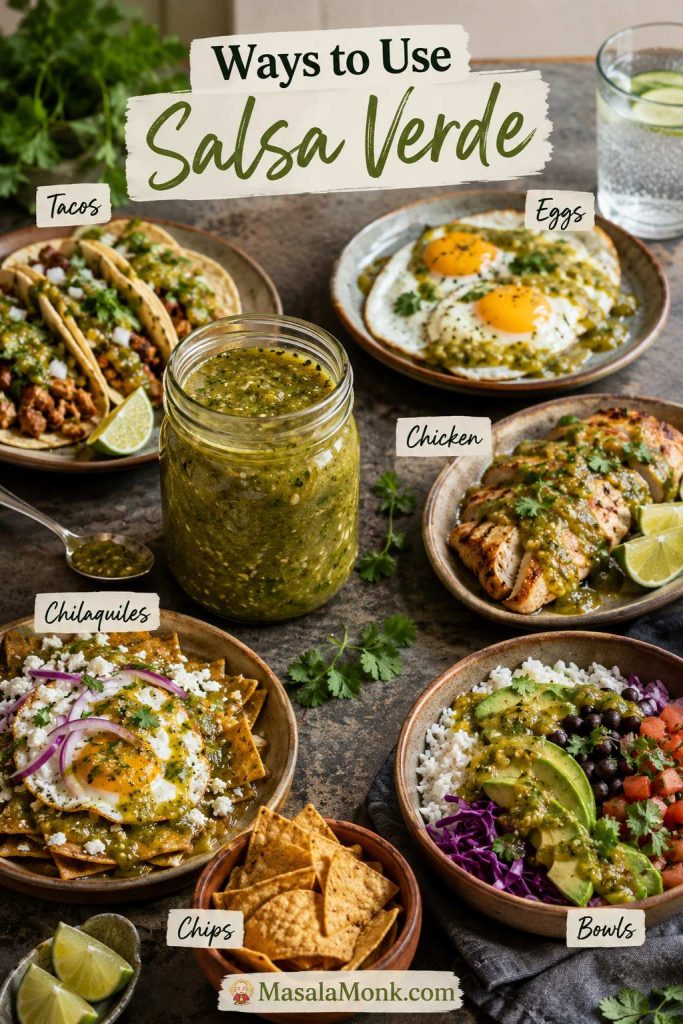
Salsa verde jar surrounded by tacos, eggs, chicken, chilaquiles, chips, and a bowl meal
Once there is a jar in the fridge, salsa verde becomes the green shortcut for tacos, eggs, chicken, chilaquiles, bowls, nachos, and chips.
UsePractical GuideTexture to Aim For
ChipsServe chilled or room temperature with tortilla chips or vegetables.Medium-thick and scoopable.
TacosUse 1 to 2 tablespoons per taco.Spoonable, bright, salty.
EnchiladasUse about 2 cups for a small 8-inch pan, or 2½ to 3 cups for a 9×13-inch pan.Looser, simmered, saucy.
ChickenUse 1½ to 2 cups salsa for about 1½ pounds boneless chicken.Thicker for spooning, looser for simmering.
ChilaquilesWarm 2 cups salsa with ½ to 1 cup broth or water.Loose enough to coat chips.
EggsUse about ÂĽ cup warm salsa per serving.Spoonable and warm or room temperature.
Bowls and nachosSpoon over at the end, not too early.Thicker so it does not flood the plate.

That is the real value of a good batch: it starts as salsa, then quietly becomes the sauce that helps you finish the week’s tacos, eggs, bowls, and chicken.

Tacos

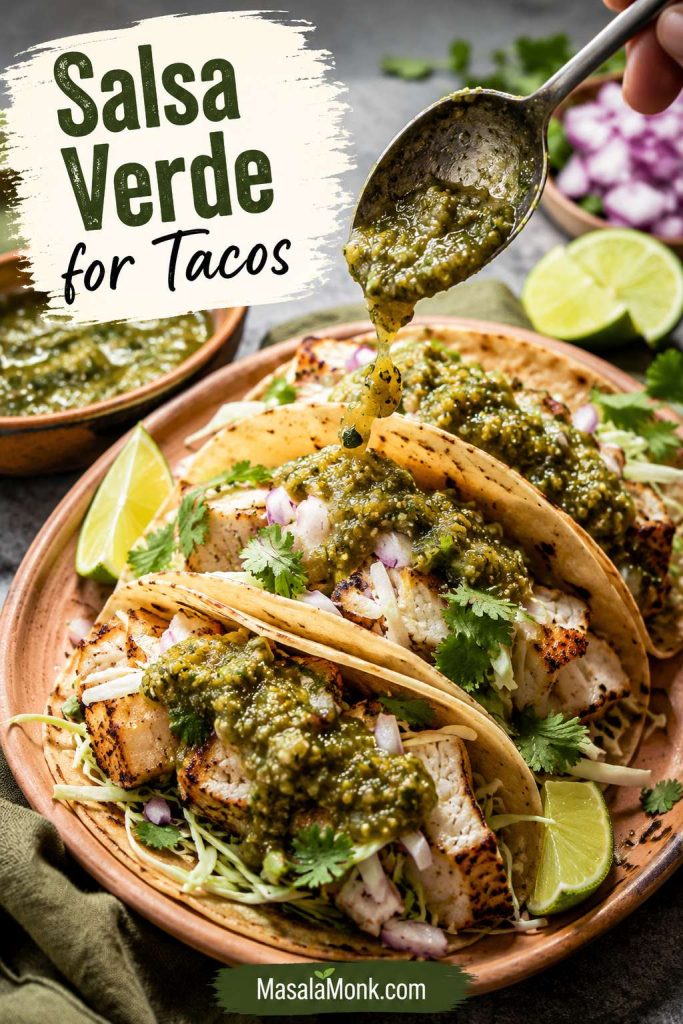
On tacos, the salsa should be bold enough to cut through rich fillings. Raw salsa is sharp and fresh. Roasted is more rounded. Charred is excellent with grilled meats, crispy potatoes, mushrooms, chicken, pork, or eggs. It works beautifully on fish tacos when you want a clean, bright topping.

Salsa verde being spooned over tacos with lime, cilantro, onion, and warm tortillas
For tacos, the sauce should be bold enough to cut through the filling while still tasting fresh, tangy, and spoonable.

Enchiladas

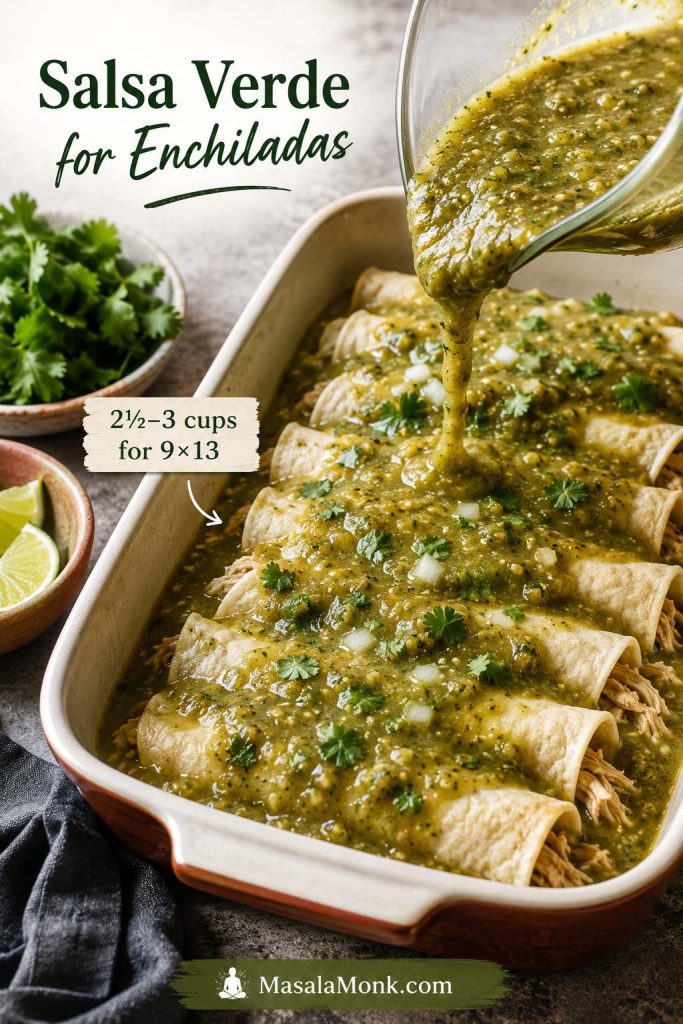
For enchiladas, make the salsa looser than you would for chips. Simmer it briefly in a little oil or broth, then use enough to coat the tortillas well. Use about 2 cups for a small 8-inch pan, or 2½ to 3 cups for a 9×13-inch pan, depending on how saucy you like your enchiladas.

Salsa verde being poured over rolled tortillas in a baking dish with a note for a 9 by 13 inch pan
For enchiladas, make salsa verde looser than a dip so it can coat the tortillas evenly instead of sitting in thick clumps.

Salsa Verde Chicken

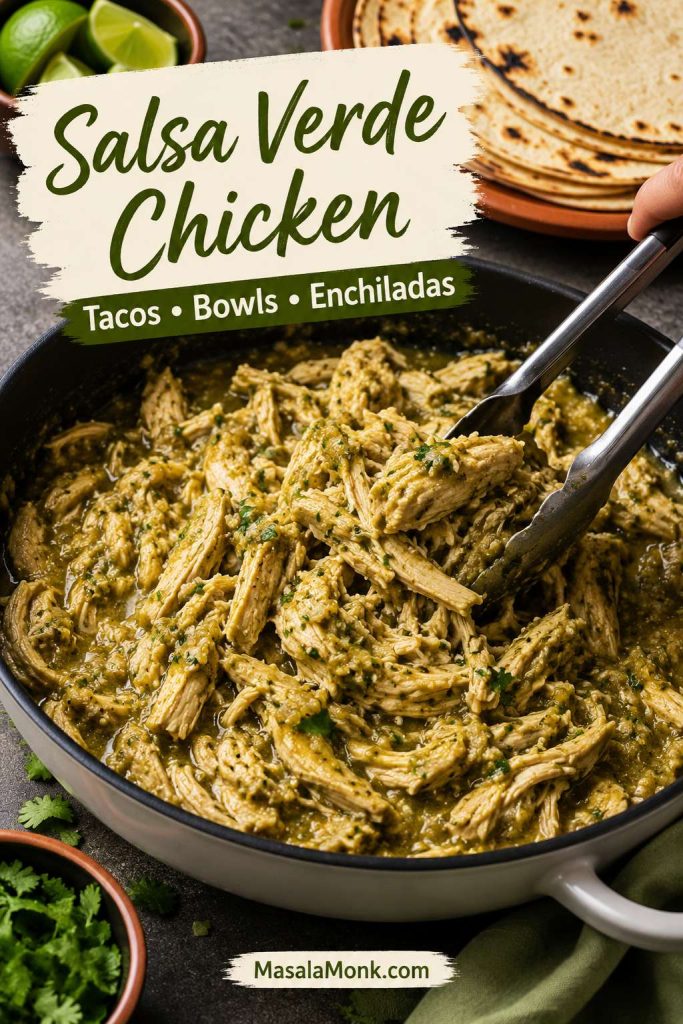
Salsa verde chicken is one of the easiest ways to turn this sauce into dinner. Use 1½ to 2 cups for about 1½ pounds boneless chicken, whether you simmer raw chicken until cooked through or spoon the sauce over sliced baked chicken breast.

Once shredded, the chicken works in tacos, bowls, nachos, quesadillas, or enchilada filling.

Shredded chicken tossed with salsa verde in a skillet with tortillas nearby
Salsa verde chicken is an easy dinner shortcut because the sauce seasons shredded chicken and turns it into filling for tacos, bowls, nachos, or enchiladas.

Chilaquiles Verdes

Chilaquiles verdes need a looser sauce than tacos. Warm 2 cups salsa with ½ to 1 cup broth or water, then add tortilla chips just long enough to coat them. Keep the chips slightly tender but not completely mushy. Finish with eggs, crema, onion, cilantro, and cheese if you like.

Chilaquiles verdes in a skillet with tortilla chips, salsa verde, egg, crema, cilantro, onion, and cheese
For chilaquiles verdes, warm the sauce first so the chips get coated quickly without soaking until they collapse.

Eggs, Bowls, and Nachos

With eggs, this salsa tastes best slightly warm or at room temperature. It is also a strong add-on for breakfast burritos, especially with eggs, potatoes, cheese, beans, or chorizo. For bowls and nachos, keep it thicker so it acts like a topping instead of a puddle.

Breakfast burrito filled with eggs, potatoes, beans, and cheese with salsa verde spooned over the top
Salsa verde wakes up eggs, potatoes, beans, and breakfast burritos, especially when the sauce is served slightly warm or at room temperature.

Creamy, Avocado, Green Tomato, and Hatch Chile Versions

Once the base salsa tastes balanced, the variations become easy. You are not starting over — you are simply changing the richness, heat, or chile character.

Because creamy and avocado versions store differently, check the storage notes before making a large batch.

Creamy Version

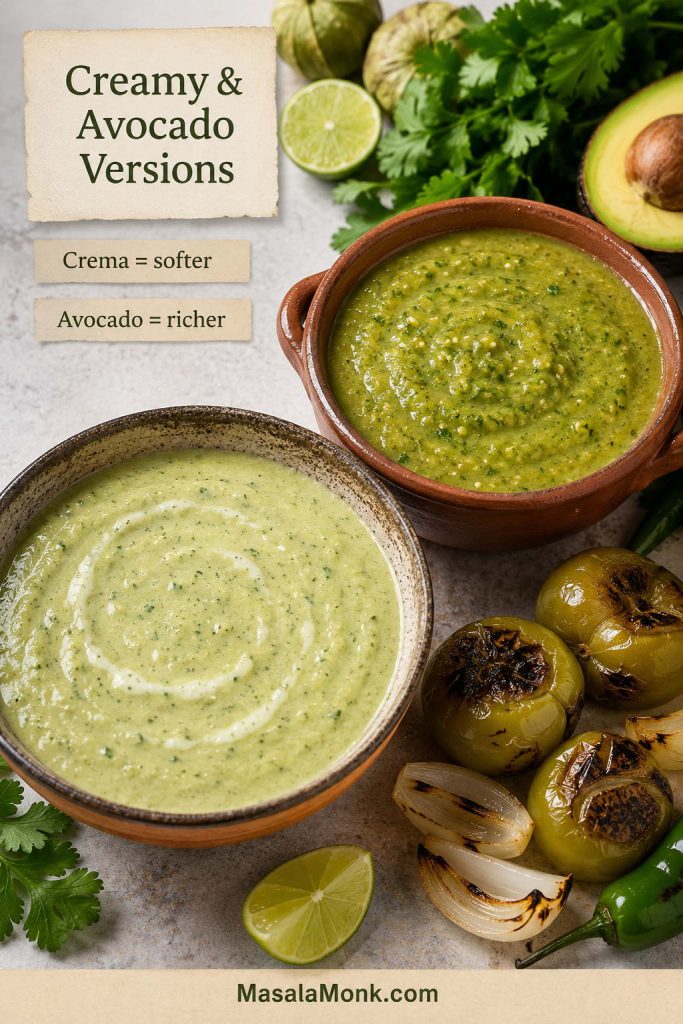
To make it creamy, blend ½ cup sour cream or Mexican crema into 1½ to 2 cups cooled salsa. This makes a softer taco sauce that is especially good with grilled chicken, fish tacos, potatoes, roasted vegetables, and breakfast burritos.

Do not can creamy salsa verde. Dairy changes the safety and storage rules. Keep it refrigerated and use it within 2 to 3 days.

Avocado Version

Avocado turns the sauce richer and softer. Blend 1 ripe avocado into 1½ to 2 cups cooled salsa, then thin it one tablespoon at a time only when needed. This is a good fix for a batch that tastes too sharp or too spicy.

Avocado salsa verde is best eaten the same day or within 1 to 2 days. Press plastic wrap directly against the surface before refrigerating to slow browning.

Two bowls of salsa verde showing a pale creamy version and a thicker avocado version with avocado, lime, cilantro, and roasted tomatillos
Creamy salsa verde tastes softer and tangier with crema, while avocado salsa verde becomes richer and helps tame sharpness or heat.

Green Tomato Version

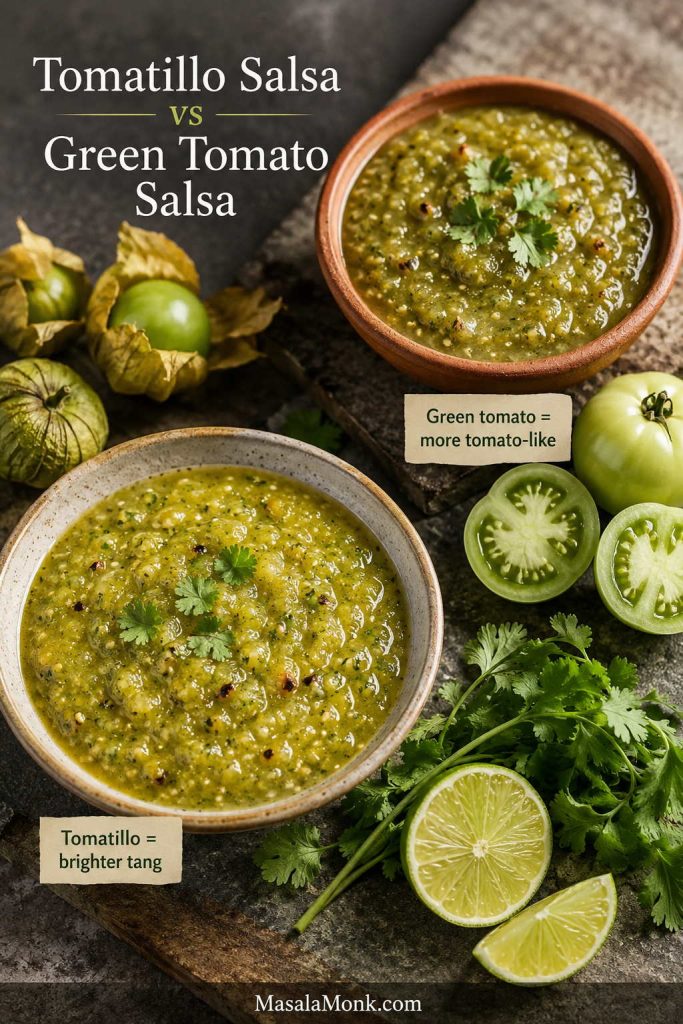
Tomatillos are best for classic Mexican salsa verde. Green tomatoes can make a tangy green salsa, but the flavor is different: more tomato-like, less fruity, and often less naturally bright. Use green tomatoes as a variation when you have them, not as the first choice for this recipe.

When using green tomatoes, roast them well and taste carefully. They may need more lime, salt, or chile to get the same lively balance.

Finished tomatillo salsa and green tomato salsa in separate bowls with tomatillos, husks, sliced green tomatoes, cilantro, and lime
Green tomato salsa can work as a variation, but tomatillos give classic salsa verde its brighter, fruitier tang.

Hatch Green Chile Version

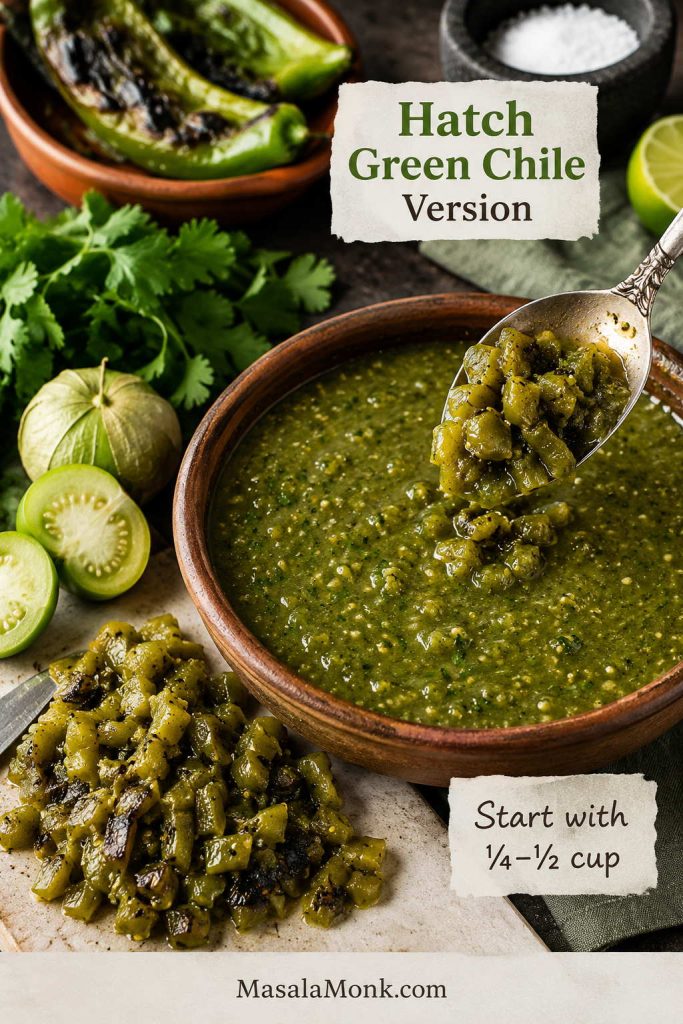
Roasted Hatch green chiles give the salsa a deeper green-chile flavor. Start with ¼ to ½ cup chopped roasted green chile for this batch, then adjust to taste. Hatch chiles can vary widely in heat, so taste before adding extra serrano or jalapeño.

Roasted Hatch green chiles being added to a bowl of salsa verde with tomatillos, cilantro, lime, and salt nearby
Hatch green chiles add deeper roasted chile flavor, so start with a small amount and taste before adding more heat.

For a sweeter, fruitier salsa for tacos, fish, shrimp, or grilled chicken, MasalaMonk’s mango salsa recipe is the better direction. This salsa is tangy and green; mango salsa is juicy, chunky, and fruit-forward.

Salsa Verde and Other Green Sauces

“Salsa verde” simply means green sauce, so different cuisines use the name for different things. The table below is not saying these sauces are interchangeable. It is here to help you recognize which green sauce a recipe or restaurant menu might mean.

SauceMain IngredientsWorks With
Mexican salsa verdeTomatillos, green chiles, onion, garlic, cilantro, salt, sometimes lime.Tacos, chips, enchiladas, chicken, eggs, chilaquiles.
Italian salsa verdeParsley, capers, garlic, olive oil, vinegar or lemon, sometimes anchovy.Fish, steak, roasted vegetables, boiled meats.
Peruvian aji verdeCilantro, green chile or aji amarillo-style heat, lime, mayo or cheese-style creaminess.Roast chicken, fries, grilled meats, rice bowls.
Chile verdeUsually pork or meat cooked with green chiles and tomatillo-style sauce.A stew or main dish, not just a table salsa.

How to Store and Freeze It

Store the salsa in an airtight jar or container in the refrigerator. Plain salsa verde is often even better after 30 minutes to a few hours because the salt, chile, cilantro, and tomatillo flavors settle together.

If you want shelf-stable jars instead of refrigerator salsa, read the canning safety section before changing the ingredients or acid.

Storage MethodHow LongStorage Tip
Refrigerator4 to 5 daysKeep it in a clean airtight jar and stir before serving.
FreezerUp to 3 monthsFreeze in small portions so you can thaw only what you need.
Avocado or creamy version1 to 2 days for avocado, 2 to 3 days for creamyKeep refrigerated and do not freeze if texture matters.
Salsa verde stored in a refrigerator jar, freezer containers, freezer bag, and ice cube tray with storage time labels
Plain salsa verde stores well in the refrigerator and freezer, but add avocado, sour cream, or crema only after thawing for the best texture.

Freeze the plain version before adding avocado, sour cream, or crema. Dairy and avocado versions do not freeze as cleanly and can turn grainy or dull after thawing. When the salsa smells off, looks fizzy, shows mold, or changes in a way that makes you unsure, throw it out.

Can You Can Salsa Verde?

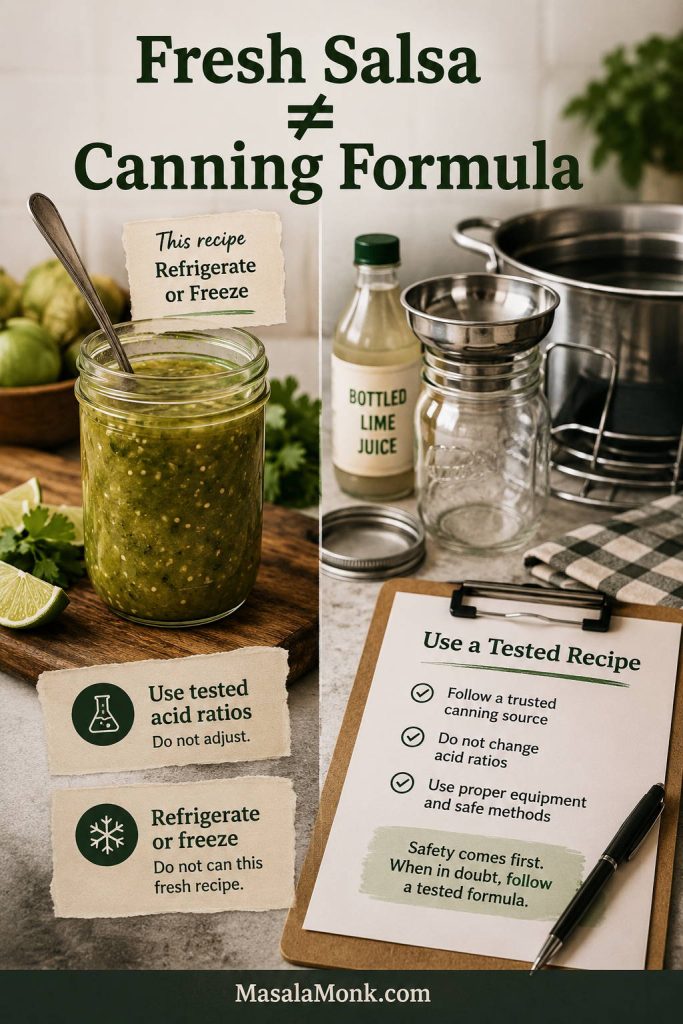
Important: This fresh salsa verde recipe is for the refrigerator or freezer. Do not water-bath can this exact recipe unless you are following a tested canning formula with the correct acid level, jar size, headspace, and processing time.
Canning safety graphic with fresh salsa verde, bottled lime juice, jars, canning equipment, and notes to refrigerate or freeze this recipe
Fresh salsa verde belongs in the refrigerator or freezer unless you are using a tested canning recipe with verified acid, jar, and processing guidance.

Shelf-stable salsa is different from fresh salsa. Tomatillos are acidic, but salsa also contains low-acid ingredients like onions, garlic, and chiles. Safe canning recipes use tested ratios and added acid. The National Center for Home Food Preservation provides a tested tomatillo green salsa formula with measured tomatillos, chiles, onions, and bottled lemon or lime juice. New Mexico State University also publishes salsa canning guidance with tested processing information.

For shelf-stable salsa verde, use a tested canning recipe from a university extension, NCHFP, USDA-style source, or another reputable canning authority. Do not simply add vinegar or lemon juice to this fresh recipe and assume it is safe. Do not change the tomatillo, onion, chile, or acid ratios in a tested canning recipe unless the source specifically says that change is safe.

FAQs

Is salsa verde the same as green salsa?

In Mexican cooking, salsa verde usually means green salsa made with tomatillos and green chiles. The phrase can mean different green sauces in other cuisines, so “Mexican salsa verde” or “tomatillo salsa verde” is the clearer name.

Are tomatillos the same as green tomatoes?

Tomatillos and green tomatoes are different ingredients. Tomatillos have papery husks and a tart, fruity flavor, while green tomatoes are unripe tomatoes. You can make a green tomato salsa, but it will not taste exactly like classic tomatillo salsa verde.

Do you have to cook tomatillos?

You do not have to cook them. Raw salsa verde is sharp and fresh, boiled salsa verde is smooth and clean, roasted salsa verde is rounder, and charred salsa verde tastes deeper and smokier. When in doubt, roast them first; it is the easiest method to love.

Is roasted or boiled better?

Roasted is usually the most flexible homemade version because it tastes rounder and lightly smoky. Boiled is smoother and cleaner, which makes it excellent for taqueria-style salsa, enchiladas, chilaquiles, and simmered chicken.

Is it spicy?

The heat depends on the chile. Start with one seeded jalapeño for a gentle batch, especially when serving a crowd. You can always add more heat next time.

How do I make it less spicy?

The easiest way to cool down the heat is to add body, not water. Blend in more cooked tomatillo, avocado, sour cream, Mexican crema, or roasted onion. Plain water will thin the salsa without balancing the burn very much.

Can I use it as enchilada sauce?

For enchiladas, make the salsa looser than you would for chips. Simmer it briefly, then use enough to coat the tortillas well: about 2 cups for a small 8-inch pan, or 2½ to 3 cups for a 9×13-inch pan.

Why is my salsa verde watery?

Watery salsa usually has too much added liquid or has not cooled yet. Chill it first. If it is still loose, simmer it briefly to reduce. For a creamy fix, blend in avocado instead.

Why is my salsa verde bitter?

Bitterness can come from old tomatillos, over-charred skins, or too much harsh raw garlic. Add more cooked tomatillo, cilantro, salt, or a little lime. Next time, roast until blistered and browned in spots, not blackened all over.

Can I make it without cilantro?

You can leave cilantro out if it is not your thing. The flavor will be less classic, but the salsa can still work with enough chile, onion, lime, and salt. Flat-leaf parsley gives a green herb note, but it will not taste the same.

Can I use canned tomatillos?

Fresh tomatillos are best, but canned tomatillos can help when that is what you have. Drain them well, then blend with chile, onion, garlic, cilantro, lime, and salt. The flavor is usually softer, so taste carefully before serving.

Can I freeze it?

Plain salsa freezes well in small portions for up to 3 months. Thaw it in the refrigerator and stir before serving. Add avocado, sour cream, or crema after thawing, not before freezing.

Can I can this recipe?

This is a fresh refrigerator/freezer recipe, not a canning formula. For shelf-stable canning, use a tested recipe with the correct acid, jar size, headspace, and processing time from a reputable canning authority.

What is the difference between salsa verde and chile verde?

Salsa verde is a green salsa or sauce. Chile verde usually refers to a cooked dish, often pork or another meat simmered with green chiles and tomatillo-style sauce. They are related, but they are not the same thing.

Once you make salsa verde this way, you will start noticing how many meals need it. Keep it thick for chips and tacos, loosen it for enchiladas or chilaquiles, or blend in avocado when you want something softer and creamy. After a few batches, you will know your house style: raw and sharp, boiled and smooth, roasted and round, or charred and smoky. The best version is the one your table keeps reaching for first.

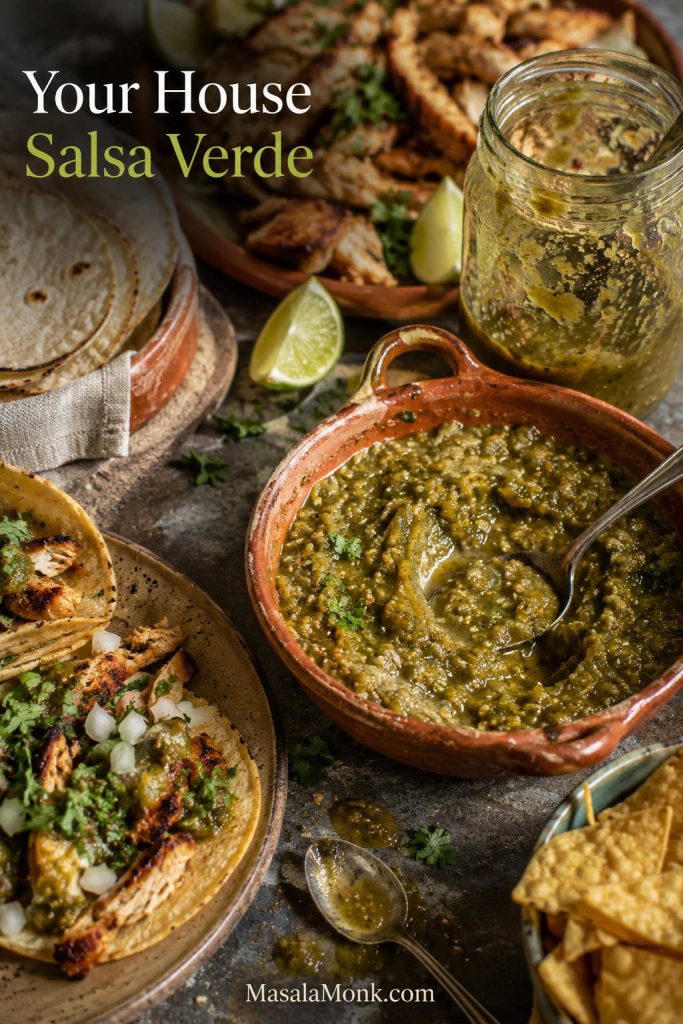
Used table scene with a bowl and jar of salsa verde, tacos, tortilla chips, lime wedges, tortillas, and grilled chicken
After a few batches, salsa verde becomes a house sauce: keep it chunky for tacos, loosen it for saucy meals, or adjust the method until it fits your table.

Back to top

Posted on Leave a comment

Watermelon Juice Recipe

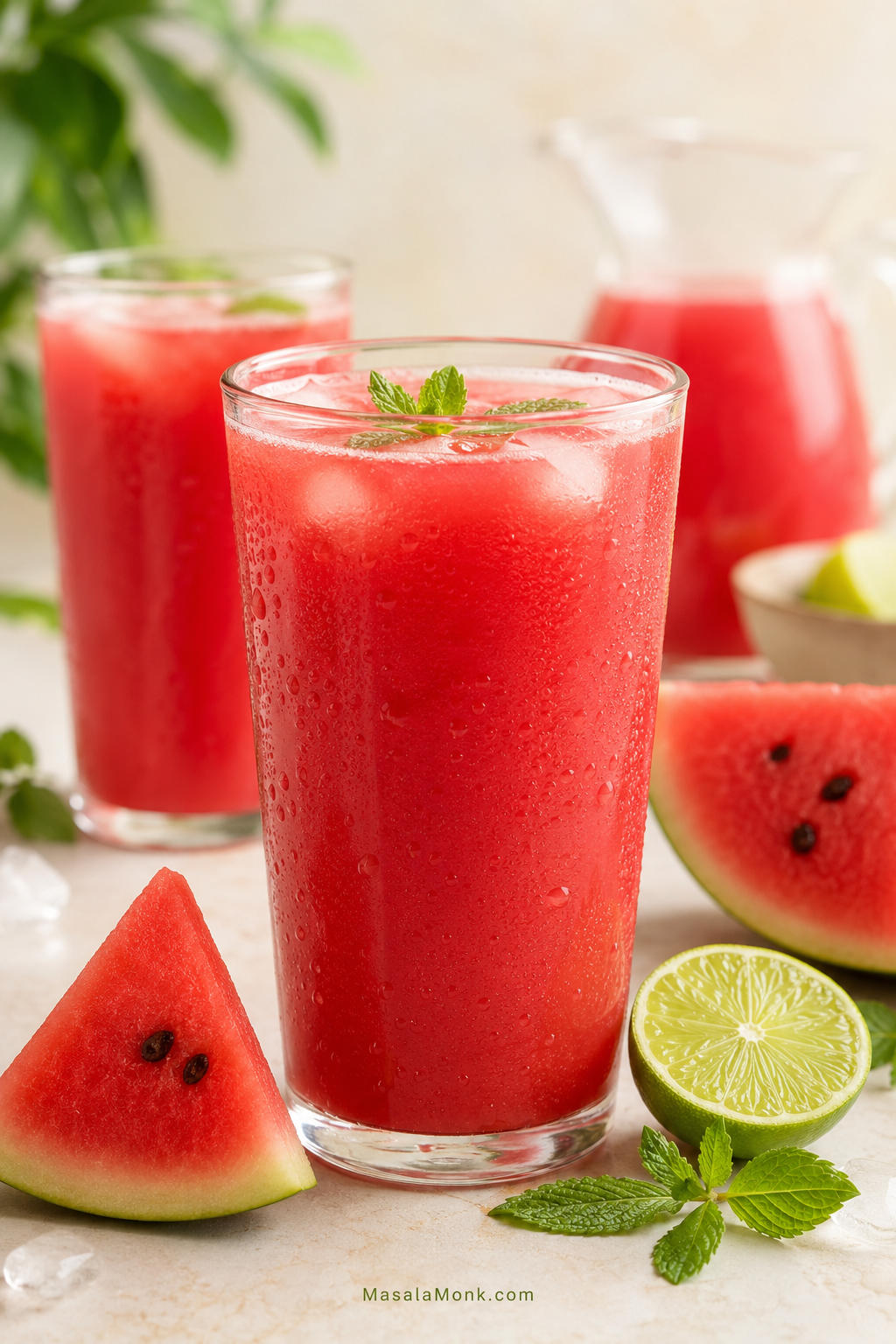
Cold watermelon juice served in clear glasses with ice, watermelon wedges, lime, and mint on a bright summer surface.

There are days when a cold glass of watermelon juice feels better than dessert: icy, ruby-red, naturally sweet, and bright enough to wake you up in a few sips. The only catch is that it can turn flat or watery if you blend it the wrong way.

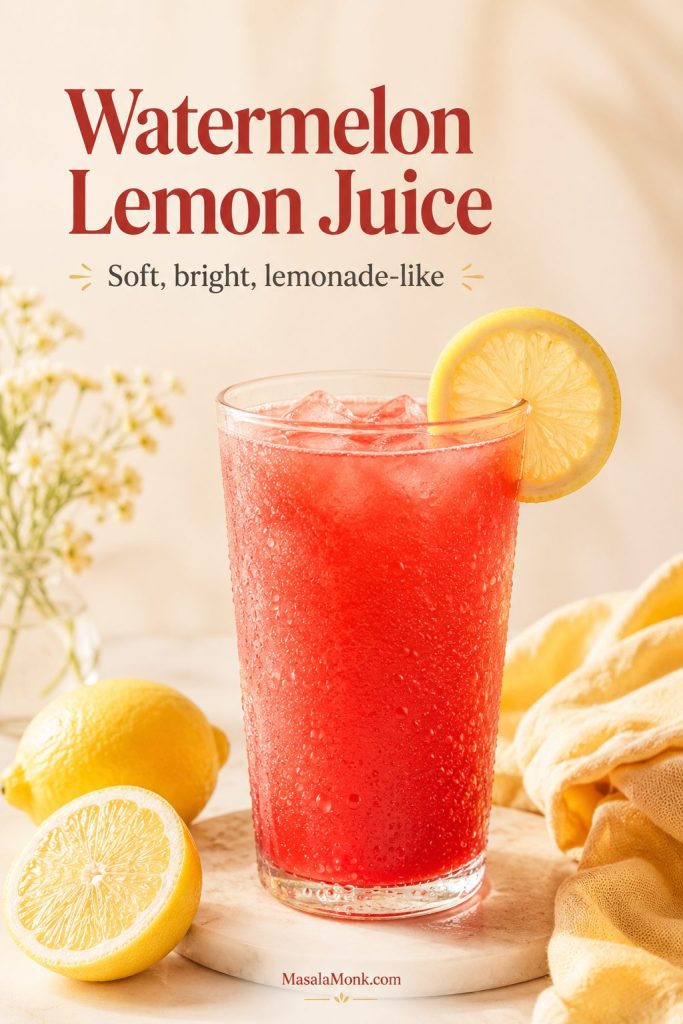
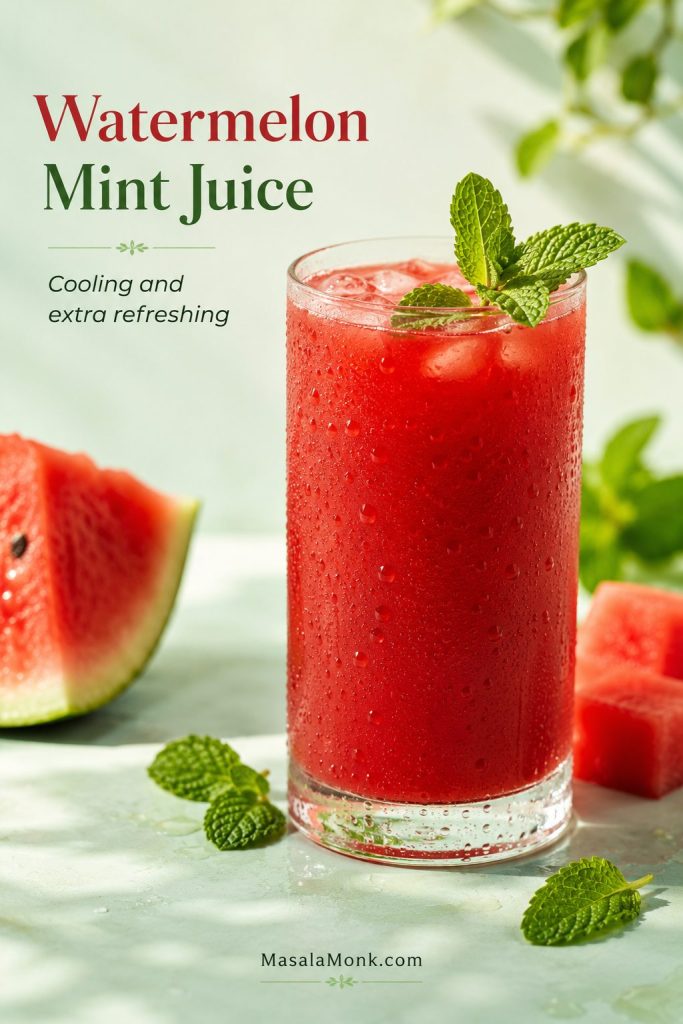
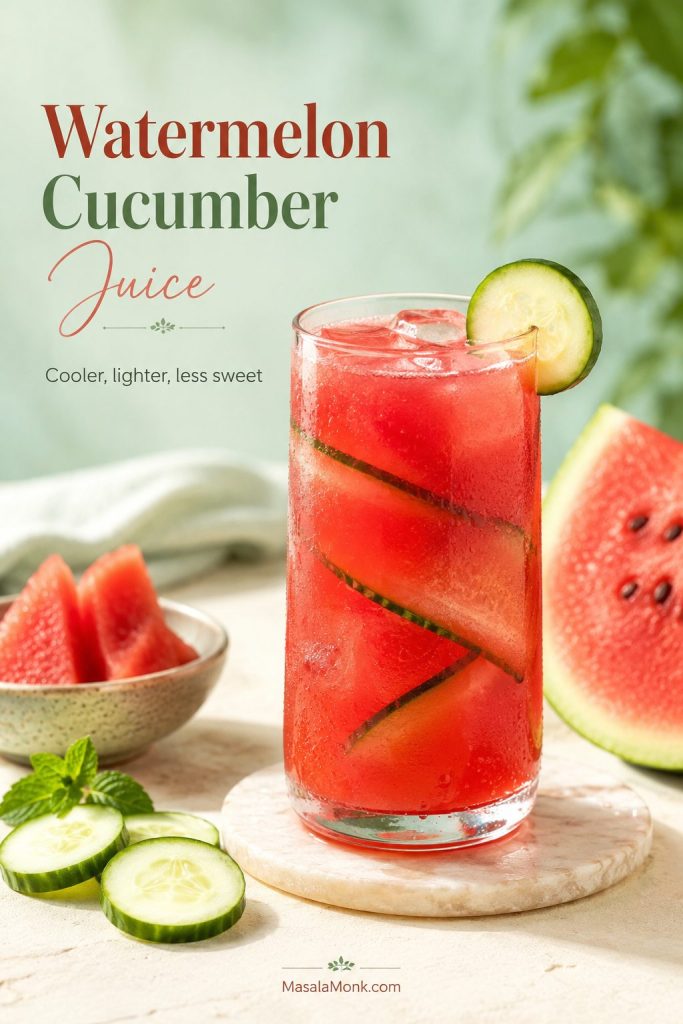
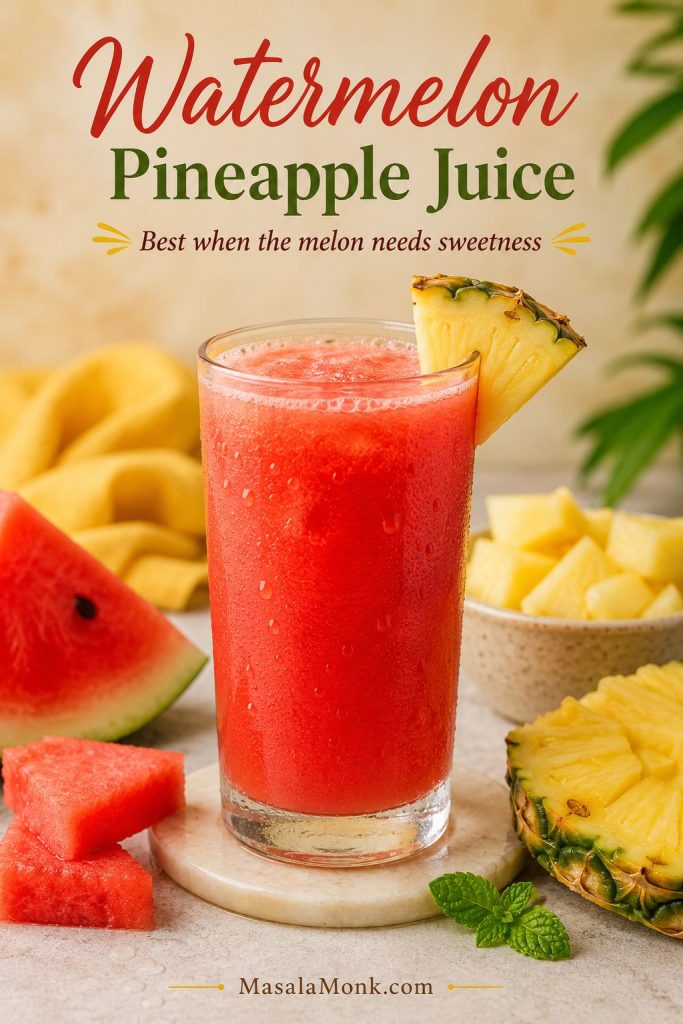
This watermelon juice recipe keeps the flavor bold by blending cold watermelon without added water, then balancing it with lime or lemon and a small pinch of salt. You do not need a juicer, and you can leave it pulpy, strain it smooth, or turn the same base into watermelon cucumber juice, watermelon pineapple juice, mint watermelon juice, or Indian-style tarbooz juice with black salt.

The best glass should taste like biting into cold watermelon, not like watermelon-flavored water. That is why this method starts with chilled fruit, skips added water, and adjusts only after you taste: citrus for lift, a tiny pinch of salt for brightness, and more cold fruit for body.

Quick Answer: How to Make Watermelon Juice

Blend 4 cups cold seedless watermelon cubes with 1 tablespoon fresh lime or lemon juice and a small pinch of salt. Do not add water at first. Strain the juice if you want it smooth, or leave it unstrained for a thicker, pulpy, fresh-fruit texture. Serve it over ice right away, or chill it briefly and stir before pouring.

Sweet watermelon needs very little help. Bland fruit is where the lime-and-salt trick matters most. That small adjustment is what turns watery blended fruit into a bright, cold glass that actually tastes alive.

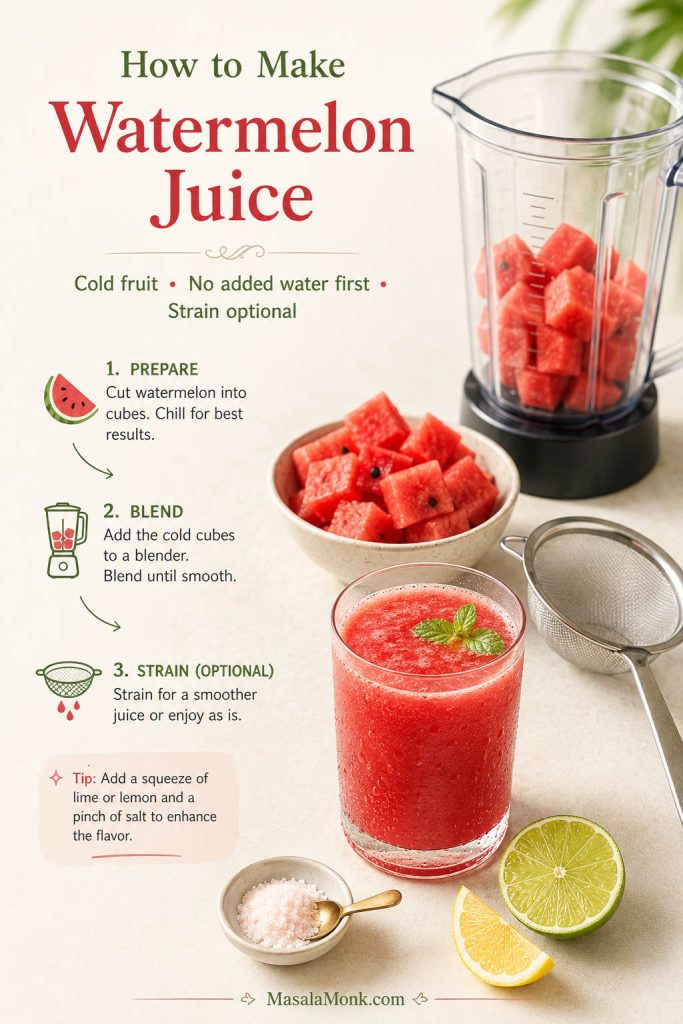
Quick guide showing watermelon cubes, lime, lemon, salt, a blender, and optional strainer for making watermelon juice.
Blend cold watermelon first, then taste before adding anything else. That small pause helps you fix the fruit you actually have instead of diluting the glass too early.

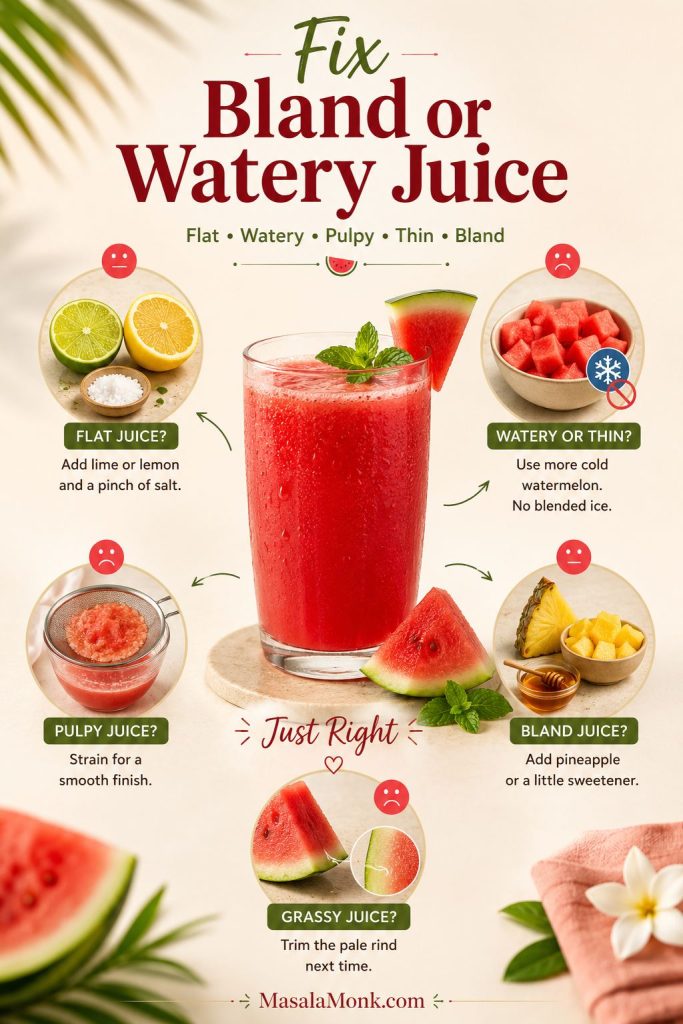
If your juice tastes flat, thin, or pulpy after blending, use the flavor fixes before adding more ice or sugar.

Why This Watermelon Juice Works

The best version should taste like cold, ripe watermelon first: clean, juicy, and bright. Everything else in this recipe is there to protect that flavor, not cover it up.

  • No juicer needed: Watermelon blends easily because it is naturally full of juice.
  • No added water: The drink stays sweet, fresh, and concentrated instead of diluted.
  • Lime or lemon wakes it up: A little acidity lifts even average watermelon.
  • A small pinch of salt helps: Regular salt sharpens the sweetness; black salt gives an Indian-style summer cooler flavor.
  • Straining is optional: Keep the pulp for body, or strain the juice for a cleaner pitcher-style drink.

Because the base is so clean, you can use it for everyday drinking, mocktails, brunch drinks, popsicles, or cocktails like a watermelon margarita.

Ingredients for Watermelon Juice

You only need watermelon for the simplest version, but lime or lemon and a little salt make the drink taste much more alive.

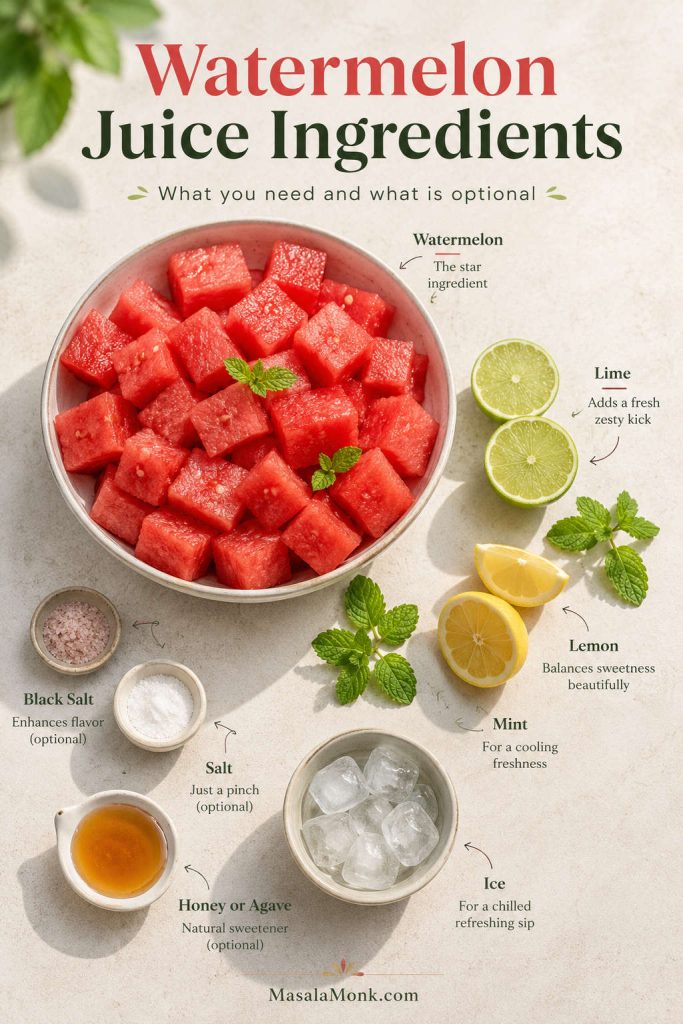
Watermelon juice ingredients arranged with watermelon cubes, lime, lemon, mint, salt, black salt, sweetener, and ice.
Watermelon does most of the work, while the small additions shape the flavor. Lime or lemon adds lift, salt sharpens sweetness, and mint or black salt changes the mood.
Ingredient US Measure Metric Why It Matters
Cold seedless watermelon cubes 4 cups About 600 g The main body, sweetness, and color of the drink.
Fresh lime or lemon juice 1 tablespoon 15 ml Lifts the flavor and fixes flat-tasting fruit.
Fine salt or black salt Small pinch, up to 1/8 teaspoon About 0.5 g Makes the fruit taste sweeter and more refreshing.
Fresh mint leaves 6–10 leaves Optional Adds a cooling summer flavor.
Honey, sugar, or agave 1–2 teaspoons Optional Use only if the watermelon is not sweet enough.
Ice As needed Optional Serve over ice, but avoid blending in too much ice because it waters down the flavor.

Seedless vs Seeded Watermelon

Seedless watermelon is easiest because you can cube and blend it quickly. If you have seeded watermelon, remove as many black seeds as possible before blending. A few small white seeds are usually fine in a blender, especially if you plan to strain the juice.

Lime or Lemon?

Lime gives the drink a sharper, more tropical edge. Lemon tastes softer and more familiar, especially if you are making watermelon lemonade or Indian-style tarbooz juice. Either works, so use what you have.

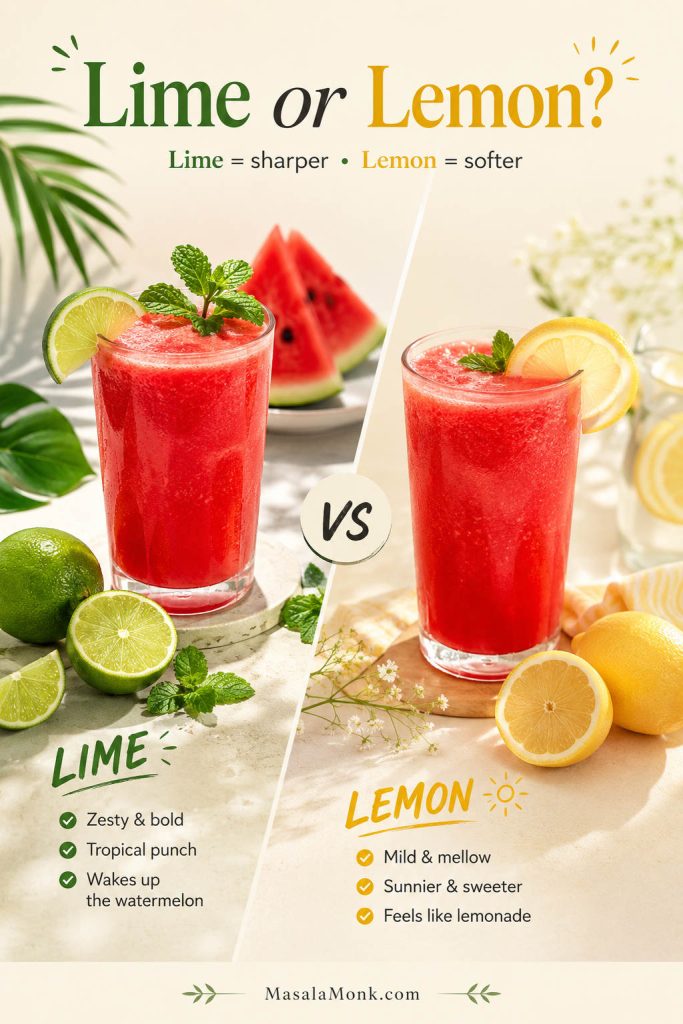
Split comparison showing lime and lemon options for watermelon juice, with lime shown as sharper and lemon as softer.
Lime gives the glass a sharper, cleaner edge, while lemon makes it softer and more lemonade-like. Choose lime for crispness and lemon for a gentler summer drink.

Do You Need Sugar?

Usually, no. A ripe watermelon should be sweet enough. However, if the fruit is pale, bland, or not fully ripe, add 1–2 teaspoons of honey, sugar, simple syrup, or agave. Start small because the drink should still taste fresh, not syrupy.

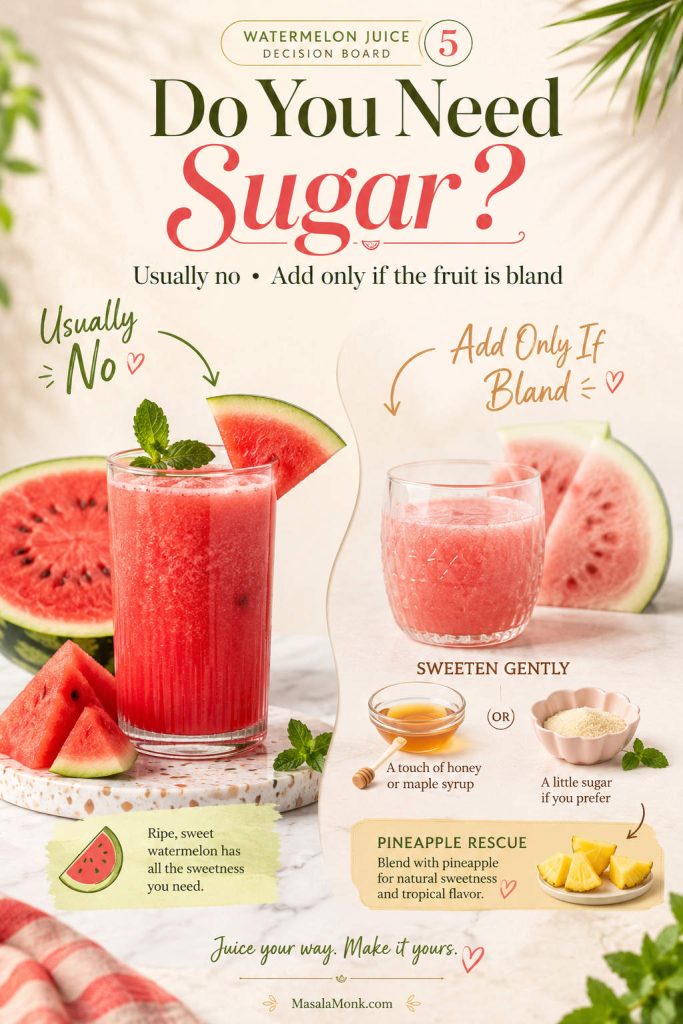
Decision board showing ripe watermelon needing no sugar and bland watermelon with optional sweetener or pineapple.
Ripe watermelon usually needs no sugar. When the fruit tastes pale or flat, pineapple or a tiny amount of sweetener can rescue the juice without making it syrupy.

If your watermelon needs help but you do not want to lean on sugar, pineapple is one of the easiest fruit fixes. For another naturally sweet tropical drink, this pineapple mango juice follows the same fruit-forward idea.

How to Pick a Sweet Watermelon

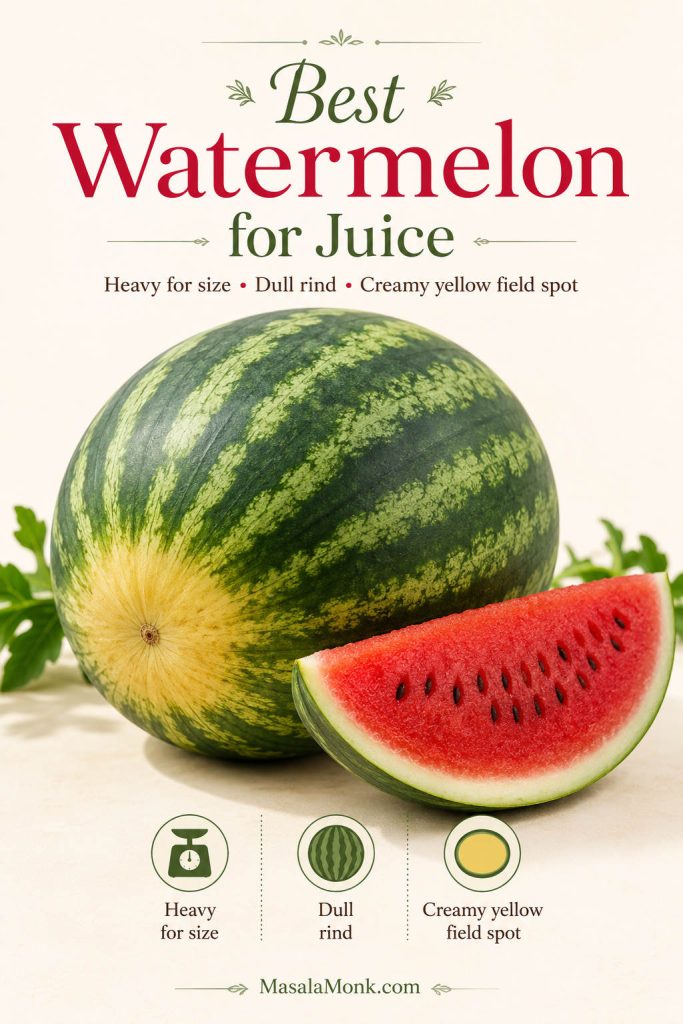
The best juice starts before the blender. If the melon is sweet and ripe, the recipe needs almost no help. If you only check two things, choose one that feels heavy for its size and has a creamy yellow field spot.

Whole watermelon with a creamy yellow field spot and ripe red cut fruit used as a guide for choosing watermelon for juice.
Better juice starts with better fruit. Choose a watermelon that feels heavy for its size and has a creamy yellow field spot for the best chance at sweetness.
  • Heavy for its size: A juicy watermelon should feel heavier than it looks.
  • Dull rind: A shiny rind can mean the fruit is underripe.
  • Creamy yellow field spot: This is where the melon rested on the ground. A deeper yellow spot usually suggests better ripeness.
  • Symmetrical shape: Avoid oddly dented or misshapen fruit when possible.
  • No soft spots or sour smell: Once cut, the flesh should smell fresh and sweet, not fermented.

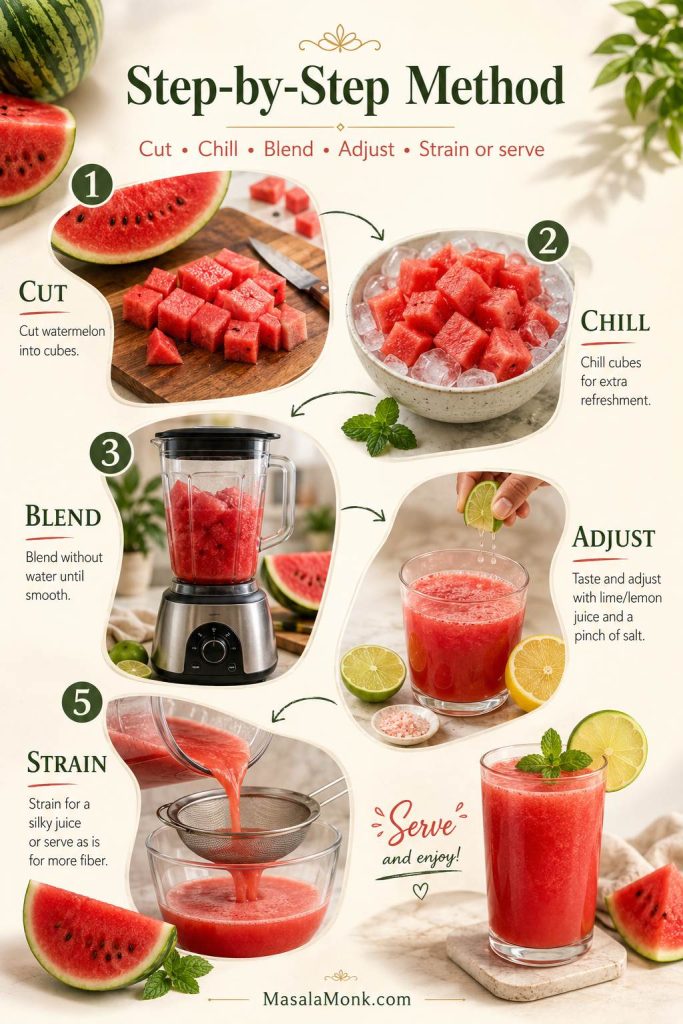
How to Make Watermelon Juice in a Blender Without a Juicer

This is the easiest clean method because it is fast, low-effort, and does not require special equipment. You do not need a perfect watermelon for it to work. A great melon needs almost nothing; an average one can still become a good drink with citrus, salt, cold temperature, or a little pineapple.

Step-by-step board showing watermelon being cut, chilled, blended, adjusted with citrus and salt, then strained or served.
The method is simple, but the order matters. Chill and blend the fruit first, then adjust the flavor before deciding whether to strain or serve.

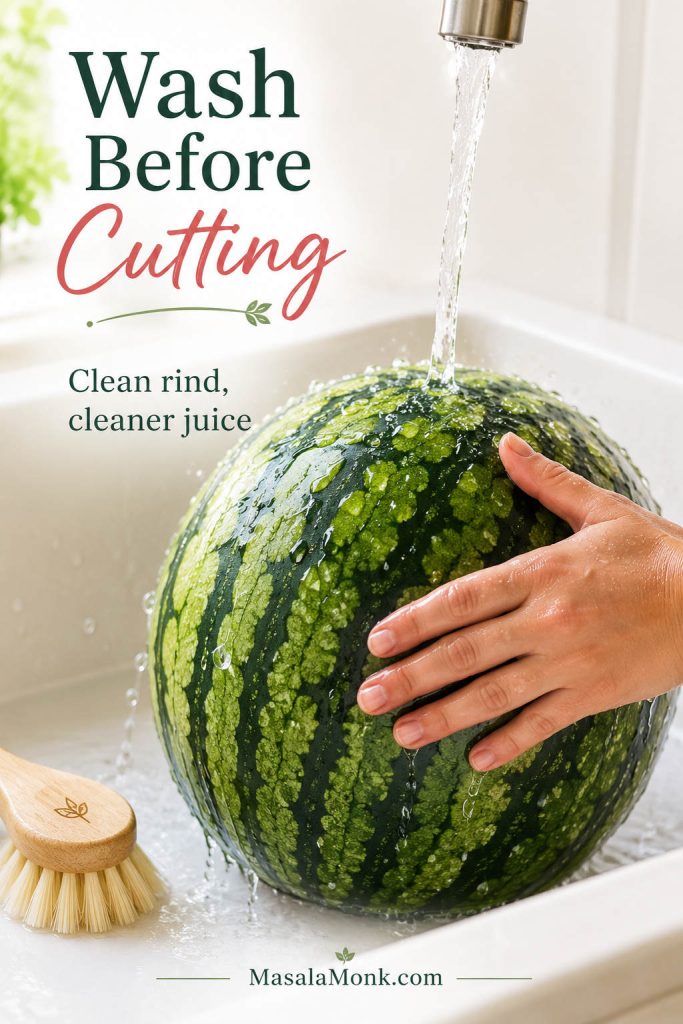
Wash the Watermelon Before Cutting

Rinse the outside before cutting, and scrub the rind under running water if it feels dusty or dirty. You do not eat the rind, but the knife passes through it into the fruit, so a clean outside matters. Food-safety guidance also recommends washing produce before cutting, even when you do not eat the skin.

Whole watermelon being washed under running water before cutting for fresh juice.
Wash the rind before cutting, even though you will not eat it. As the knife passes through the outside into the flesh, a clean rind helps keep juice prep cleaner.

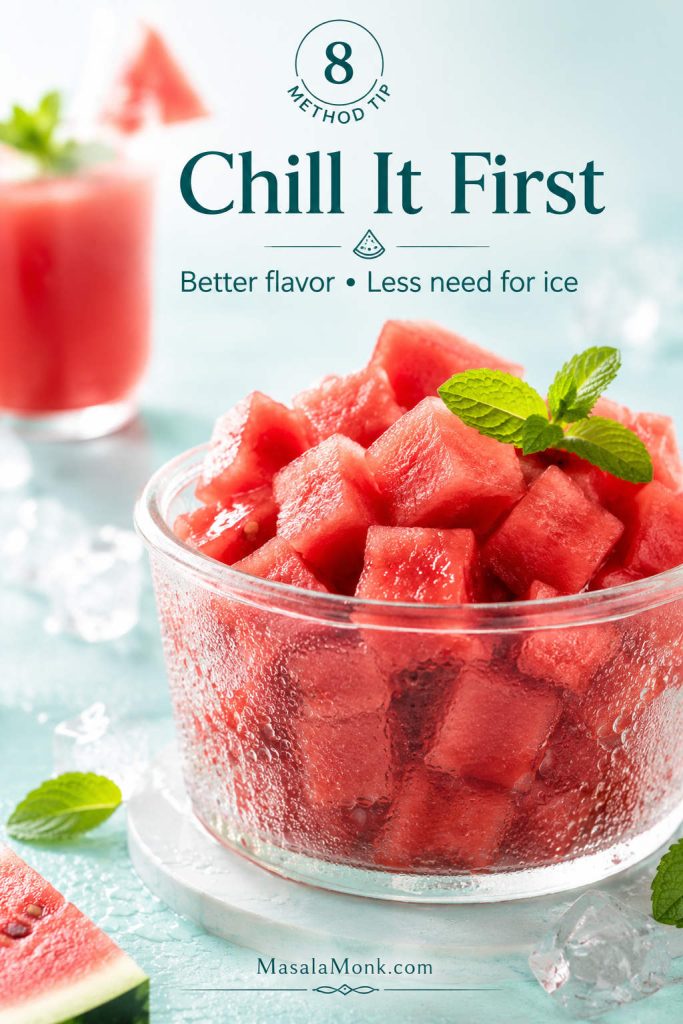
Chill the Watermelon

Cold fruit makes better juice. If the watermelon is already cold, you can serve the drink right away without blending in extra ice. If it is room temperature, cube it and chill the pieces for 30 minutes before blending, or chill the finished pitcher briefly before serving.

Cold watermelon cubes chilled in a glass bowl before blending into watermelon juice.
Cold fruit gives the drink better body and a cleaner first sip. It also reduces the need for blended ice, which can make the juice taste watery.

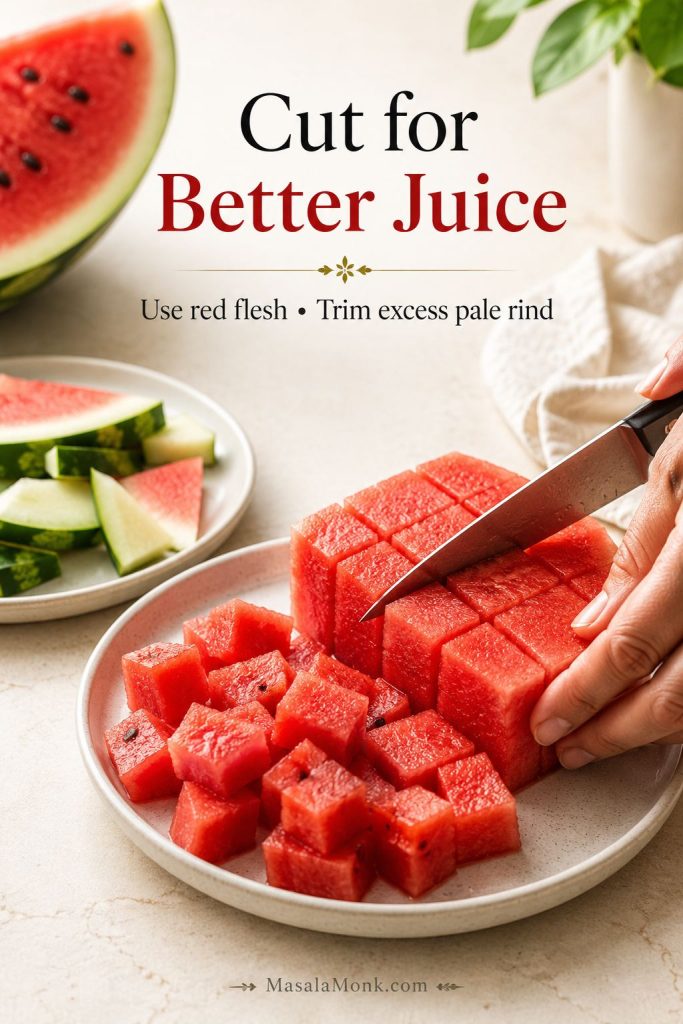
Cut Away the Rind

Slice off the green rind and the pale white part underneath it. A little pale edge will not ruin the drink, but too much white rind can make it taste grassy or thin.

Watermelon being cut into red cubes with the pale rind trimmed away for making juice.
Use mostly the red flesh for the cleanest flavor. Too much pale rind can make fresh watermelon juice taste grassy, thin, or less naturally sweet.

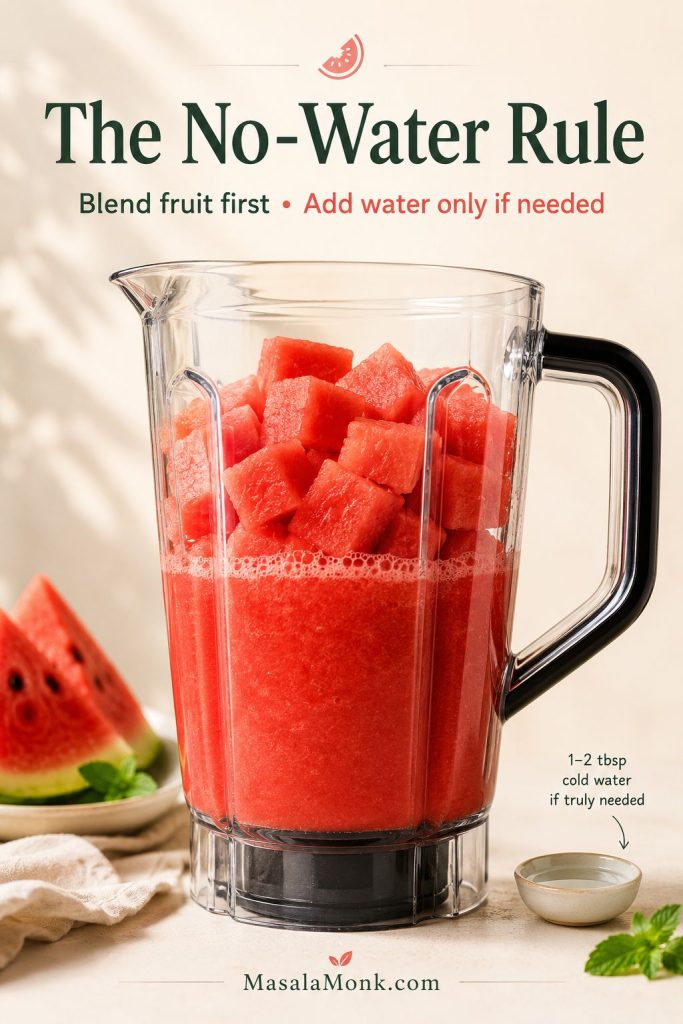
Blend Without Water

Add the watermelon cubes to a blender and blend for 30–60 seconds, until smooth. Do not add water at first. The fruit releases plenty of liquid as it blends.

The No-Water Rule

Blend the watermelon by itself first. Extra water makes the drink thinner before you know whether it needs help. If the blender struggles, pulse a few times, press the fruit down with a tamper if your blender has one, or add only 1–2 tablespoons cold water to get the blades moving.

Blender filled with watermelon for the no-water method, with a small water cue only if needed.
Watermelon releases plenty of liquid once the blades catch. Start without water and use only the smallest splash of cold water if your blender refuses to move.

If the first blend tastes weak or watery, taste and adjust before adding ice or extra water.

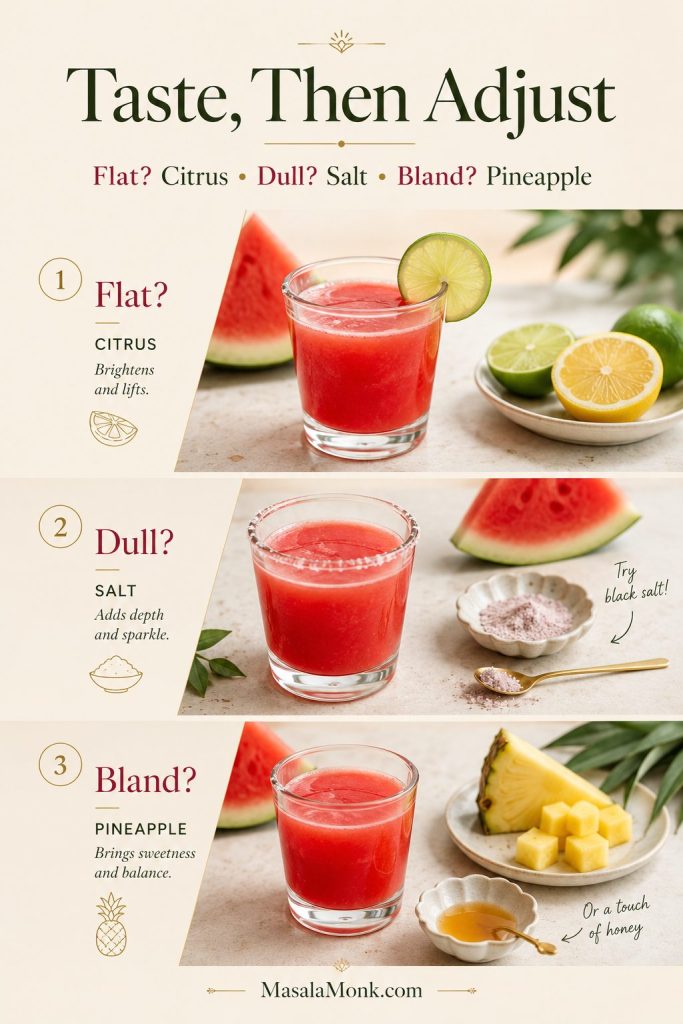
Taste, Then Adjust

Taste before adding anything else. Sweet but flat? Add lime or lemon. Dull? Try a tiny pinch of salt or black salt. Not sweet enough? Add a teaspoon or two of honey, sugar, agave, or a little pineapple.

Taste-and-adjust guide showing citrus for flat juice, salt for dull juice, and pineapple for bland watermelon juice.
A quick taste tells you what the glass needs. Citrus brightens, salt sharpens, and pineapple adds sweetness plus acidity when the melon tastes weak.

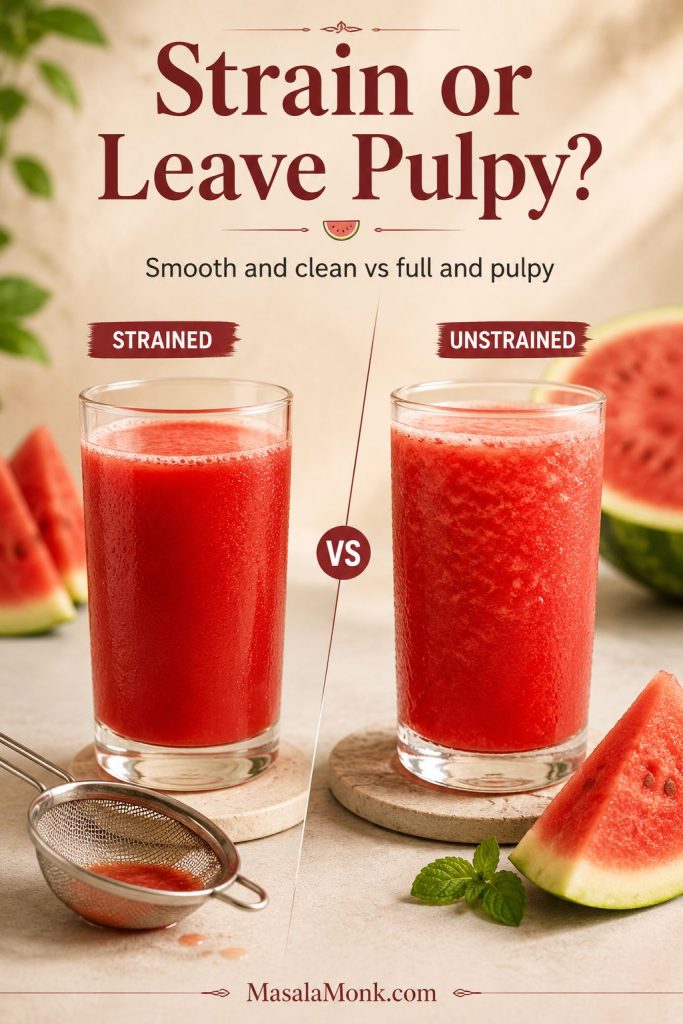
Strain If You Want It Smooth

Pour the juice through a fine-mesh strainer for a clean, smooth glass. Leave it unstrained if you like a thicker, pulpy, fresh-fruit texture.

Serve Cold

Pour into glasses over ice and enjoy soon after blending. Garnish with mint, lime, lemon, or small watermelon wedges if you want it to look more polished.

Should You Strain Watermelon Juice?

Straining is optional. The right choice depends on the texture you want and how you plan to serve the drink.

If you want a juice-bar-style glass, strain it. If you want more body and less waste, leave it pulpy.

Comparison of strained watermelon juice and unstrained pulpy watermelon juice in clear glasses.
For a pitcher or mocktail, strained juice looks cleaner. When you are drinking it right away, the pulp adds body and keeps more of the fruit in the glass.
Style Texture Best For
Unstrained Thicker, pulpy, more body Everyday drinking, less waste, a fuller fruit texture
Fine-mesh strained Smooth but still fresh Pitchers, guests, cleaner glasses
Cheesecloth or nut milk bag Very smooth and polished Mocktails, cocktails, party drinks, or extra-smooth juice

For a quick glass at home, unstrained is perfectly fine. For a pitcher, mocktail, or cocktail, straining gives a cleaner finish.

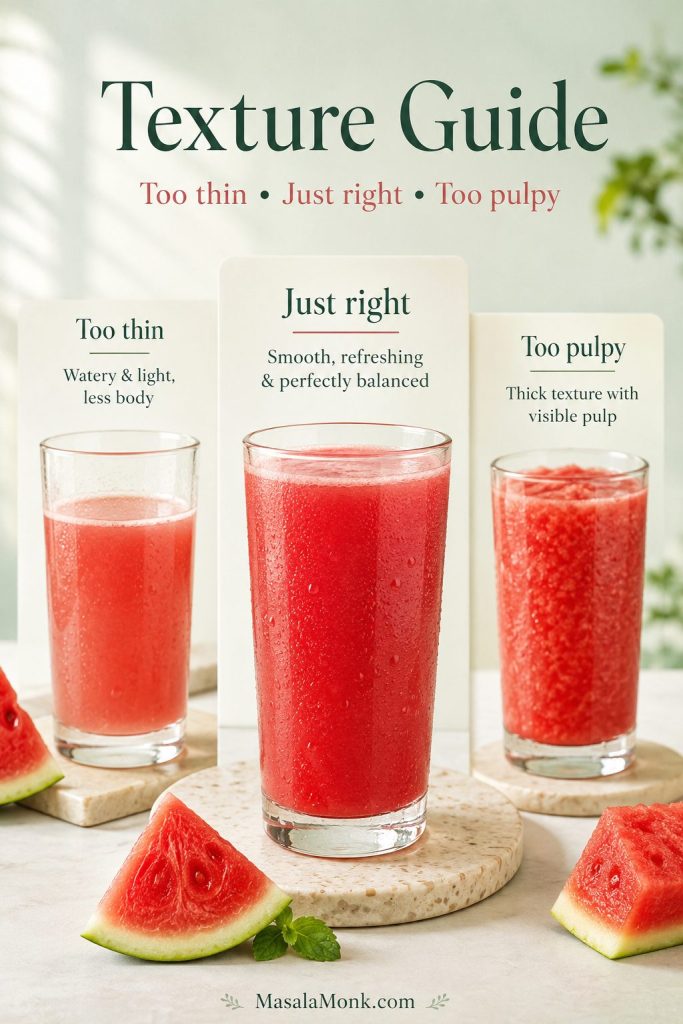
Still not sure about texture? See the texture guide for thin, just-right, and pulpy juice.

How to Fix Bland, Watery, or Pulpy Watermelon Juice

This is where homemade watermelon juice either becomes excellent or stays forgettable. Watermelon changes from fruit to fruit, so taste the blended juice before adding anything. Then fix the exact problem instead of dumping in ice, sugar, or water.

If the first sip is not right, do not panic and do not add more ice. Flat juice needs citrus and salt, thin juice needs more cold fruit, and pulpy juice needs straining.

Troubleshooting board showing fixes for bland, watery, pulpy, thin, and flat watermelon juice.
Do not rescue a dull batch with more ice. Instead, fix the actual problem: brighten the flavor, rebuild the body, or strain the texture until the glass tastes balanced.
Problem Best Fix
Tastes flat Add 1 tablespoon lime or lemon juice and a small pinch of salt.
Not sweet enough Add 1–2 teaspoons honey, sugar, or agave. Pineapple also helps.
Too sweet Add lime, lemon, cucumber, or sparkling water.
Too watery Chill it, stir it, and serve over ice instead of blending ice into it. For more body, blend in extra cold watermelon.
Too pulpy Strain through a fine-mesh sieve, cheesecloth, or nut milk bag.
Too thin after straining Blend in more cold watermelon, not more ice.
Separated in the fridge Stir or shake before serving. Separation is normal.
Slightly grassy Use less of the pale white part near the rind next time.

What not to do: Do not fix thin, bland juice by blending in a lot of ice or water. That makes the flavor even weaker. Use lime or lemon for brightness, a small pinch of salt for lift, pineapple for sweetness, or more cold watermelon for body.

What the Right Texture Looks Like

The ideal texture is bright and full without becoming thick. Use this guide after blending or straining, especially if the juice tastes thin or feels too pulpy.

Three glasses comparing watermelon juice that is too thin, just right, and too pulpy.
The best texture is bright and full without feeling thick. If the juice is too thin, blend in more cold watermelon; if it is too pulpy, strain it.

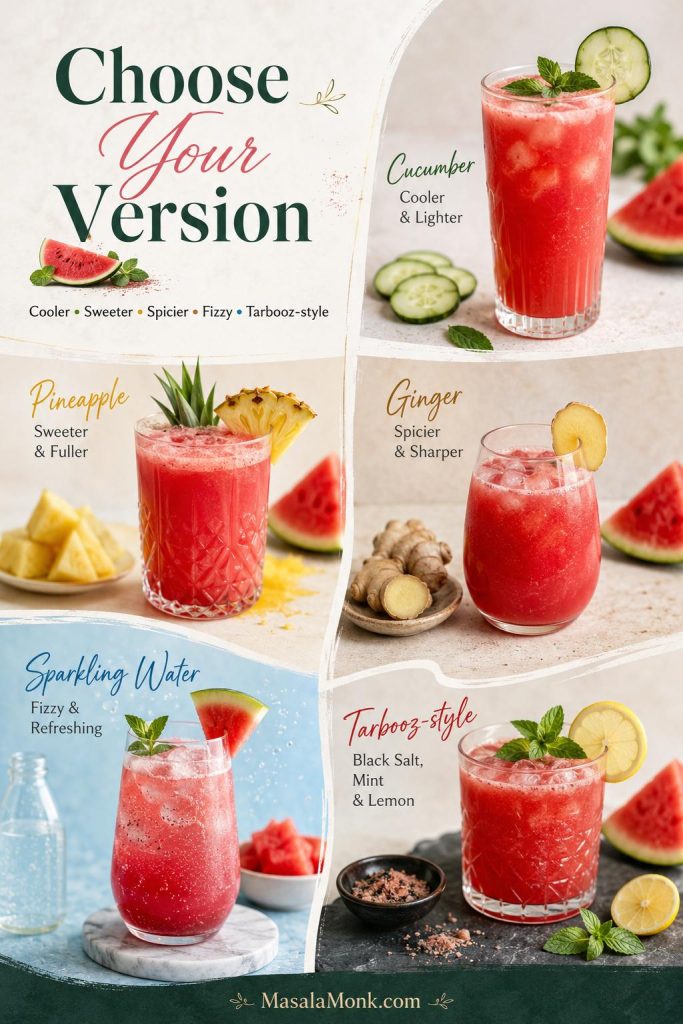
Watermelon Juice Variations

Once the basic glass tastes bright, choose the variation by mood: cucumber for cooler and lighter, pineapple for sweeter and fuller, ginger for bite, sparkling water for a mocktail feel, and black salt for Indian-style tarbooz juice.

Variation guide showing cucumber, pineapple, ginger, sparkling, and tarbooz-style watermelon juice options.
Once the basic glass tastes balanced, choose the variation by mood. Cucumber cools it down, pineapple adds sweetness, ginger gives bite, and black salt makes it tarbooz-style.
What You Want Make This Version
Bright, crisp, and classic Watermelon lime juice
Cooler and less sweet Watermelon cucumber juice
Sweet-tart and tropical Watermelon pineapple juice
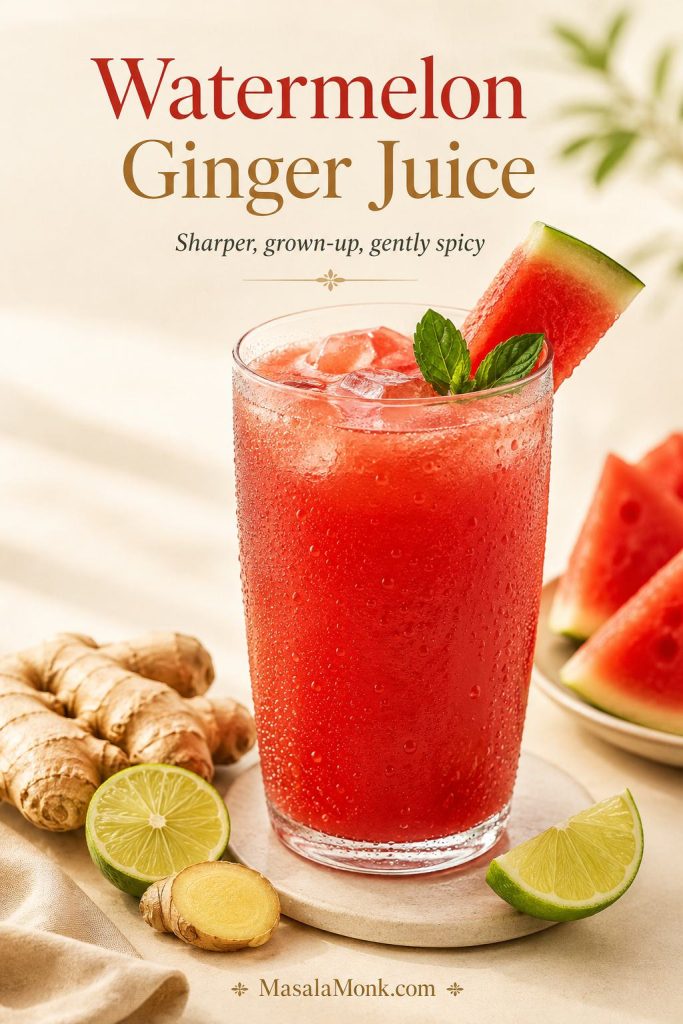
A little bite Watermelon ginger juice
Light, fizzy, and mocktail-like Sparkling watermelon juice
Tangy Indian summer-cooler flavor Tarbooz juice with black salt, mint, and lemon

If you are making a pitcher or party batch, check the yield guide before scaling any variation.

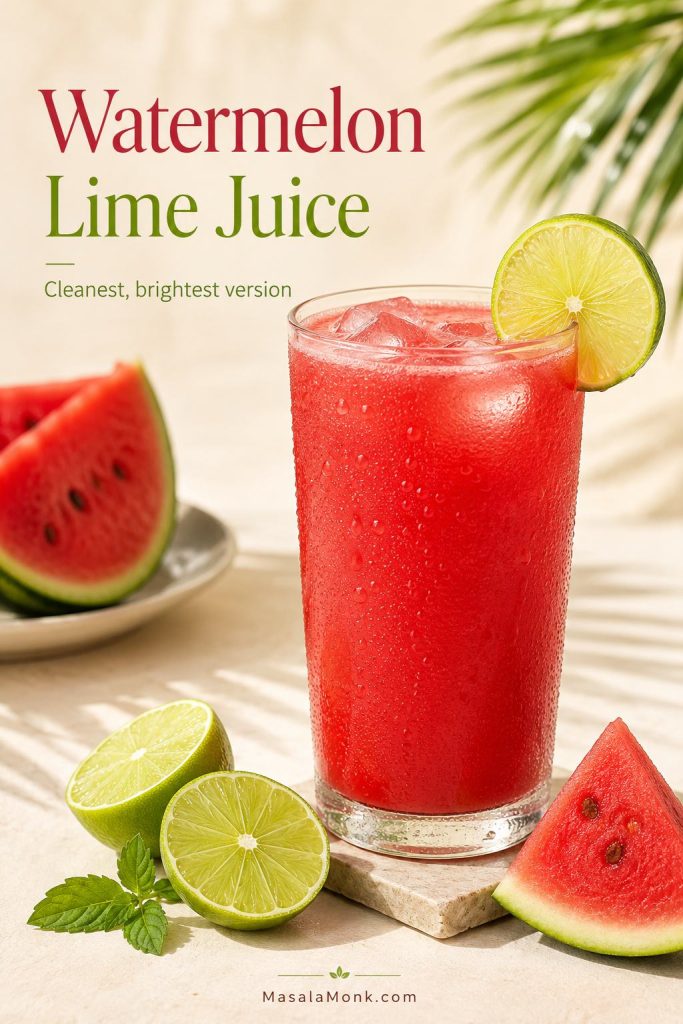
Watermelon Lime Juice

Choose this when you want the cleanest, brightest glass. Blend 4 cups watermelon with 1 tablespoon lime juice and a small pinch of salt. It tastes crisp, cold, and not too sweet.

Watermelon lime juice served cold with lime garnish, watermelon wedges, and condensation on the glass.
Choose watermelon lime juice when you want the crispest version. Lime cuts through the sweetness quickly, so the glass tastes clean, bright, and not too heavy.

Watermelon Lemon Juice

Lemon gives the base a softer, lemonade-like brightness. Use 1 tablespoon lemon juice instead of lime. This is the simplest version of watermelon and lemon juice, and it works especially well with mint or black salt.

Watermelon lemon juice served cold with lemon slices and a soft lemonade-style presentation.
Lemon gives the drink a softer kind of brightness. Because it tastes gentler than lime, this version works well when you want a watermelon lemonade feel.

Watermelon Mint Juice

Mint makes the drink taste colder and more refreshing, especially on very hot days. Blend 4 cups watermelon with 6–10 fresh mint leaves and 1 tablespoon lime juice. Start with fewer leaves if your mint is strong, because too much can turn the flavor herbal instead of fresh.

Watermelon mint juice served cold with fresh mint leaves and watermelon pieces.
Mint makes the drink feel cooler without adding sweetness. Start with a few leaves first, then add more only if you want a stronger herbal finish.

If mint and lime are your favorite part of the glass, you may also like this mojito recipe for the same cooling, citrusy direction.

Watermelon Cucumber Juice

When you want something cooler and less sweet, add cucumber. Blend 4 cups watermelon with 1/2 to 1 cup peeled cucumber, 1 tablespoon lime or lemon juice, and a small pinch of salt. This also covers the same idea people search for as watermelon and cucumber juice.

Watermelon cucumber juice served cold with cucumber slices, watermelon pieces, and mint.
Cucumber makes the juice lighter and less sweet, which helps when the watermelon is very ripe. It also gives the glass a cleaner, spa-water-style finish.

Watermelon Pineapple Juice

For bland watermelon, pineapple is the easiest rescue. It brings both sweetness and acidity, so the blend tastes fuller without needing much added sugar. Use 2 cups watermelon with 1 cup pineapple, then add lime if you want more sharpness. If you are looking for watermelon and pineapple juice, this 2:1 fruit ratio is the easiest place to start.

Watermelon pineapple juice served cold with pineapple pieces, watermelon, and mint.
Pineapple is the easiest fruit fix when watermelon tastes bland. It adds both sweetness and acidity, so the juice tastes fuller without needing much added sugar.

Watermelon Ginger Juice

For a sharper, more grown-up glass, add fresh ginger. It cuts through the sweetness and gives the juice a warm little kick. Blend 4 cups watermelon with 1 to 2 teaspoons fresh grated ginger and 1 tablespoon lemon or lime juice.

Watermelon ginger juice served cold with ginger root, citrus, mint, and watermelon.
Fresh ginger gives the drink a sharper, more grown-up finish. Start small because ginger can quickly overpower watermelon’s clean sweetness.

Watermelon Coconut Water

For a softer, slightly tropical version, blend 3 cups watermelon with 1/2 cup coconut water, lime, and mint. Use less coconut water at first because it thins the drink quickly.

Sparkling Watermelon Juice

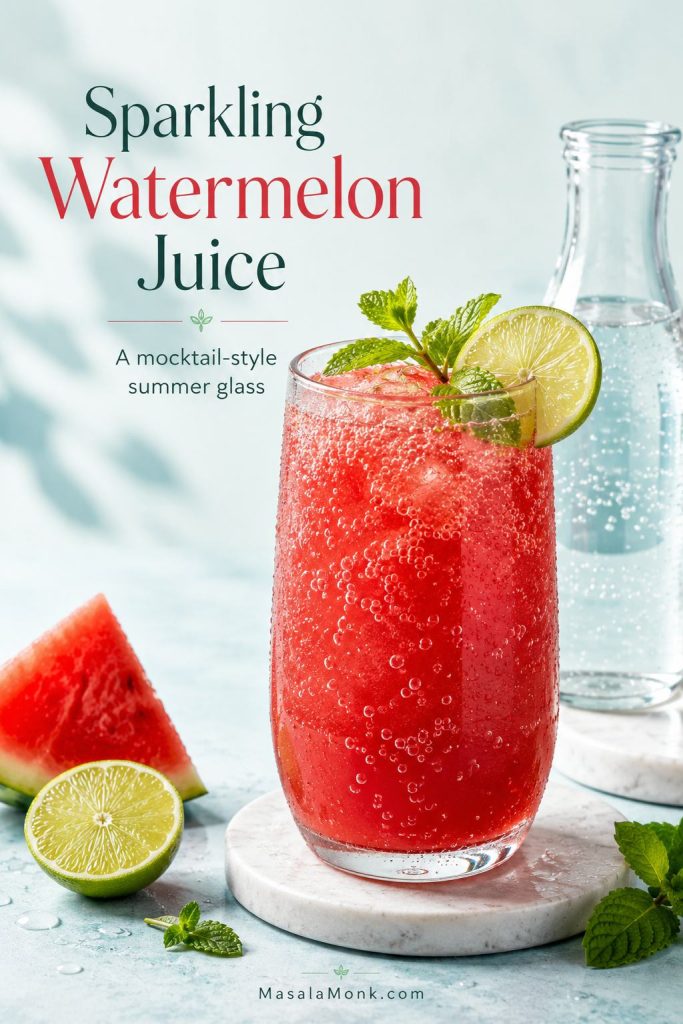
For a mocktail-style glass, fill a cup about two-thirds full with cold watermelon juice, then top with chilled sparkling water. Add lime and mint for a cleaner finish.

Sparkling watermelon juice with visible bubbles, lime, mint, watermelon, and sparkling water.
Add sparkling water right before serving so the bubbles stay lively. This turns fresh watermelon juice into an easy mocktail-style summer drink.

For more non-alcoholic summer drink ideas, use this juice as a base for watermelon mocktails, especially versions with lime, mint, coconut water, or bubbles.

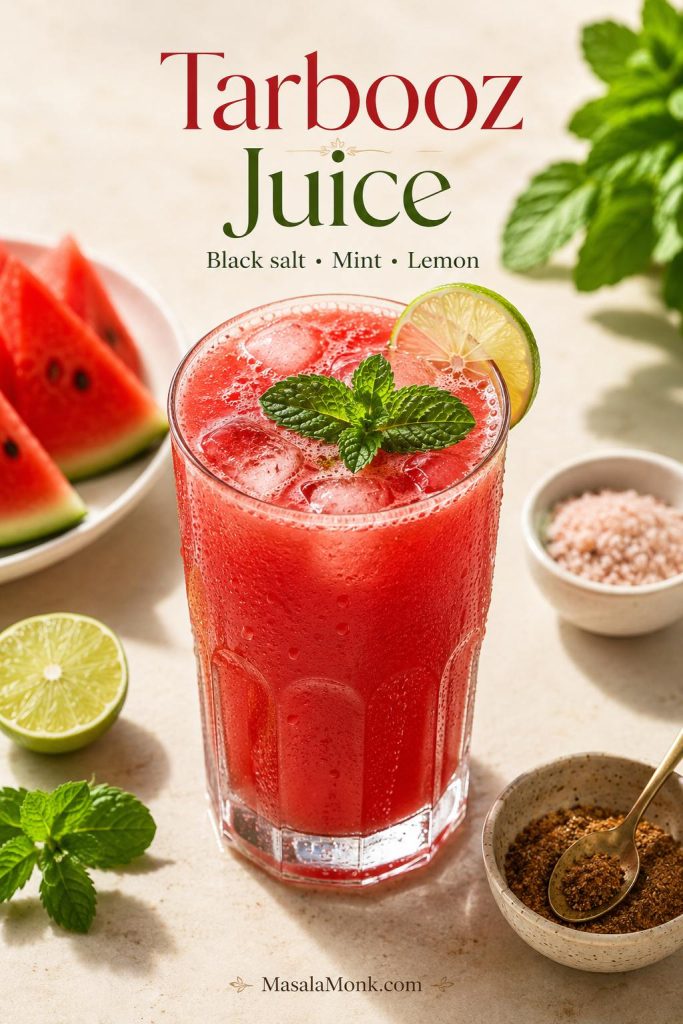
Indian-Style Tarbooz Juice

For an Indian summer-cooler flavor, blend watermelon with lemon or lime, mint, and a small pinch of black salt. Add only a tiny pinch of roasted cumin, black pepper, or chaat masala if you want that street-style edge. Keep the seasoning light so the fruit tastes cooler and brighter, not salty.

Indian-style tarbooz juice with watermelon juice, black salt, mint, lemon or lime, and small spice bowls.
Black salt gives tarbooz juice its tangy Indian summer-cooler edge. Keep the seasoning light, though, so the drink still tastes like cold watermelon first.

Juicing Watermelon: Blender vs Juicer Method

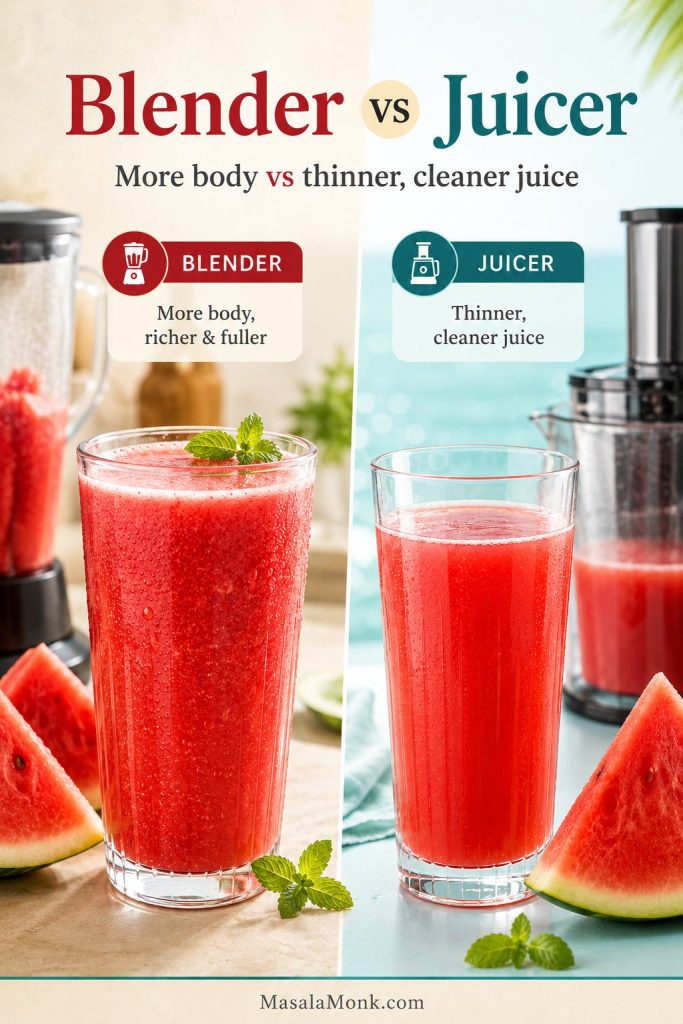
For watermelon, a blender is usually the better first choice because the fruit is already soft, juicy, and easy to break down. A juicer can work, but it often gives you a thinner, cleaner drink rather than the cold, full-bodied glass most people want at home.

Comparison of blender and juicer methods for watermelon juice, showing fuller blended juice and thinner juiced watermelon.
A blender gives watermelon juice more body, while a juicer makes it thinner and cleaner. For most home batches, blending first is easier and more satisfying.
Method Result Best For
Blender, unstrained Thicker juice with more body Everyday drinking and less waste
Blender, strained Smooth, clean juice Pitchers, guests, mocktails, cocktails
Juicer Thinner, clearer juice People who already own a juicer and prefer a lighter drink

If you use a juicer, remove the rind and feed the pieces through slowly. If you use a blender, you can decide after blending whether you want to strain the juice or keep the pulp.

For a more filling drink, unstrained blended juice has an advantage because it keeps more of the fruit’s body. Mayo Clinic notes that juicing is not healthier than eating whole fruits and vegetables, and that blending edible parts can retain more fiber and plant compounds than extracting juice alone. You can read their general juicing guidance for more context.

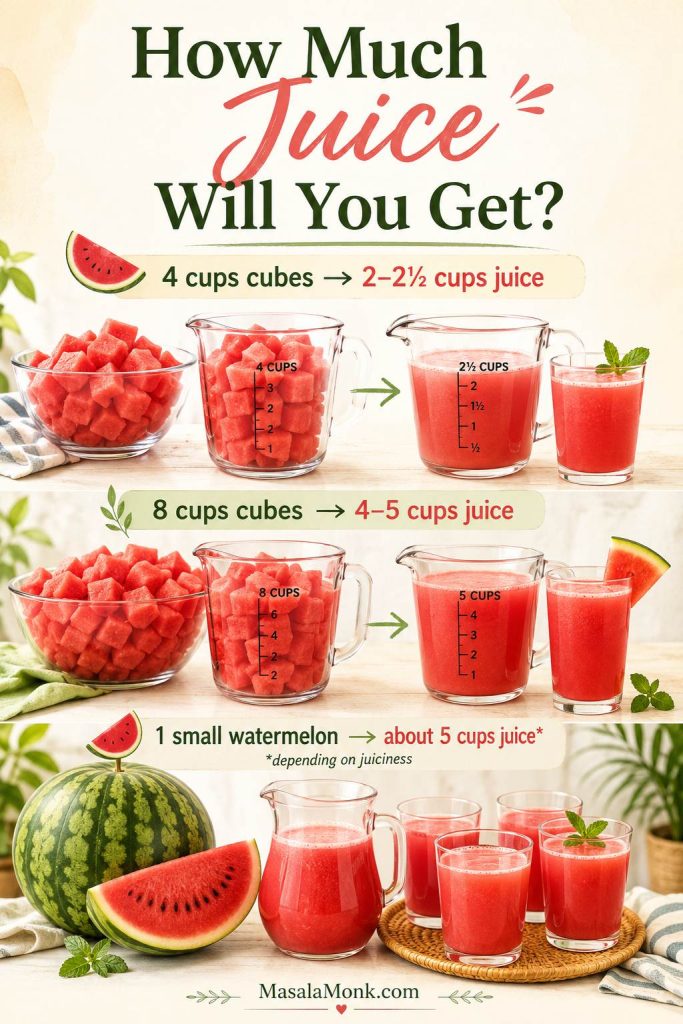
How Much Juice Does One Watermelon Make?

The exact yield depends on ripeness, juiciness, and whether you strain. These estimates will help you plan.

Watermelon juice yield guide showing juice amounts from 4 cups of cubes, 8 cups of cubes, and one small watermelon.
Watermelon yield changes with ripeness and juiciness, but 4 cups of cubes usually gives about 2 to 2½ cups of juice. Use this guide when scaling for a pitcher.
Watermelon Amount Approximate Juice Yield
4 cups cubed watermelon / about 600 g About 2–2½ cups / 480–600 ml
8 cups cubed watermelon / about 1.2 kg About 4–5 cups / 950 ml–1.2 L
1 small watermelon, about 6–6.5 lb About 5 cups, depending on juiciness

If you are making a pitcher for a group, start with 8 cups of cold cubed watermelon. That usually gives enough for about 4 glasses, especially if you serve it over ice or top some glasses with sparkling water.

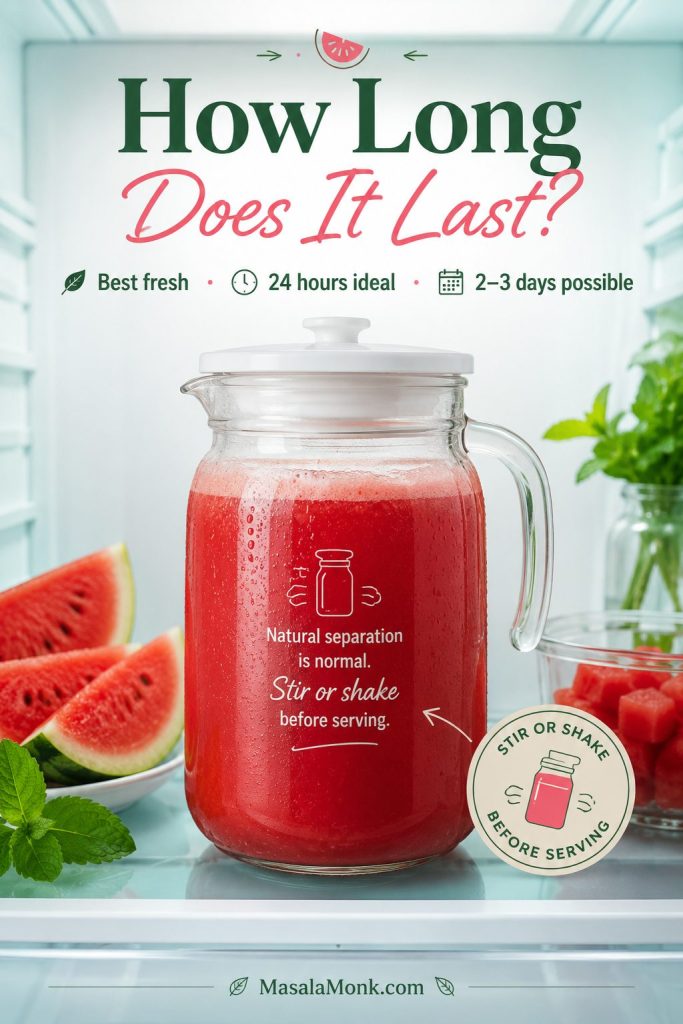
How to Store Watermelon Juice

This drink tastes best right after blending. The flavor is brightest, the color is freshest, and the texture has not had time to settle.

Storage guide for watermelon juice in a covered jar showing best fresh, 24 hours ideal, and 2 to 3 days possible.
Fresh is the peak, but a short fridge rest can still work. Keep the jar covered, serve it cold, and stir well before pouring because the pulp naturally settles.

Storage Rule

For the best make-ahead flavor, refrigerate watermelon juice in a clean covered jar for up to 24 hours. It can keep for 2–3 days if properly chilled, but the flavor fades and the juice naturally separates. Stir or shake before serving.
If you are serving guests, blend it the same day if possible. If you make it ahead, keep it covered and cold, then stir well and taste again before pouring.

  • Best: drink it right away.
  • Best make-ahead window: up to 24 hours in the fridge.
  • Possible: 2–3 days in a clean airtight jar, if kept cold.
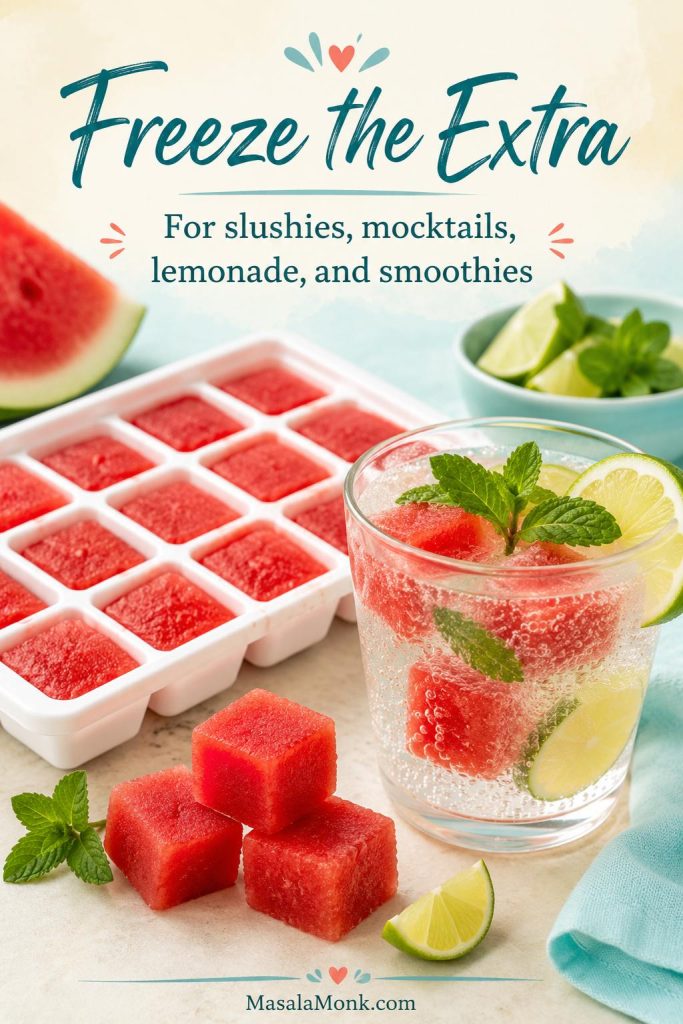
  • Freeze: pour into ice cube trays for smoothies, mocktails, lemonade, or slushies.
  • Do not leave it out: fresh fruit juice should not sit at room temperature for long.

Separation is normal. It does not mean the juice has gone bad unless it smells sour, tastes fizzy, looks spoiled, or has been stored too long.

Freeze Extra Juice Into Cubes

Freezing is the best option when you have extra juice but do not want to drink it plain later. The cubes work better as a mixer than as thawed juice.

Frozen watermelon juice cubes in an ice cube tray with cubes added to a clear drink with lime and mint.
Freeze extra juice into cubes instead of wasting it. Later, use the cubes in lemonade, sparkling water, smoothies, slushies, or mocktails.

For more serving ideas, see the ways to use watermelon juice section.

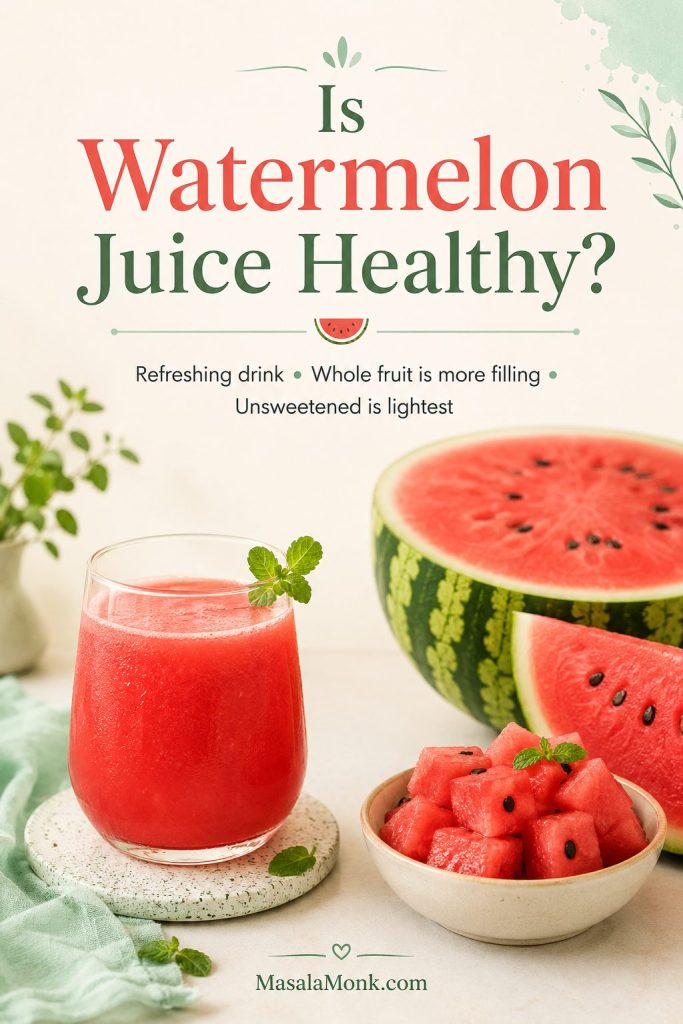
Is Watermelon Juice Healthy?

Think of watermelon juice as a fresh summer drink, not a health shortcut. You do not have to turn it into a wellness claim for it to be worth making; a cold, unsweetened glass can simply taste like real fruit and feel better than soda.

Modest glass of watermelon juice beside whole watermelon pieces for a balanced health comparison.
Unsweetened watermelon juice can be a refreshing fruit drink, but whole watermelon is usually more filling. So, enjoy the juice, but keep portions in mind.

It is naturally sweet, colorful, and hydrating. However, it is still fruit juice, so whole watermelon is usually more filling because you chew it and keep more of the fruit’s natural structure. Unstrained blended juice keeps more body than fully strained juice, but it is still easier to drink quickly than eating watermelon pieces.

A modest glass of unsweetened watermelon juice is mostly blended fruit, so the calories and natural sugars depend on how much watermelon you drink. The main practical point is portion size: it is easier to drink several cups of juice than to slowly eat the same amount of fruit.

If you want a lighter drink, keep it unsweetened and add lime, mint, cucumber, or sparkling water instead of extra sugar. For a deeper nutrition-focused read, see our guide to watermelon juice benefits.

For a lighter glass, you can also try the watermelon cucumber juice or sparkling watermelon juice variations.

Is Watermelon Juice Good for Weight Loss?

It can fit into a balanced diet, especially if it replaces soda or heavily sweetened drinks. However, it does not cause weight loss by itself. For fullness, whole watermelon is usually better because it contains more intact fiber and takes longer to eat.

If weight management is your goal, keep the drink unsweetened, avoid oversized portions, and treat it as one refreshing glass within the rest of your day.

Ways to Use Watermelon Juice

Once there is a cold pitcher in the fridge, it disappears quickly. Drink it plain, stretch it with bubbles, freeze it into cubes, or use it as the base for summer drinks.

Ways to use watermelon juice, including an everyday glass, mocktail, lemonade, frozen cubes, and cocktail-style drink.
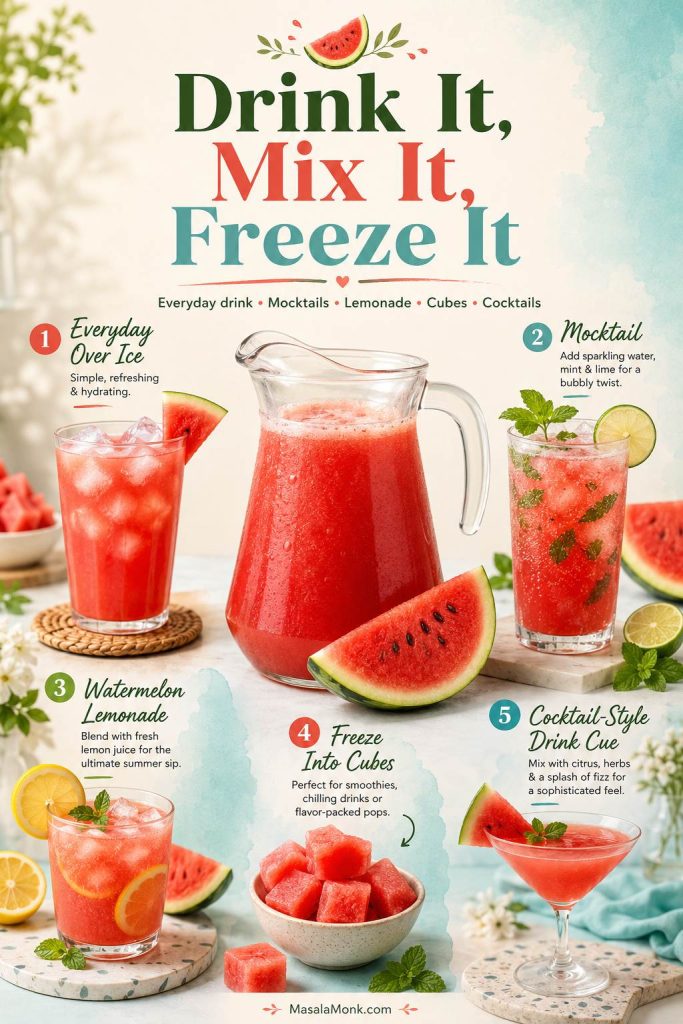
A pitcher can do more than fill one glass. Use it for everyday drinks, sparkling mocktails, watermelon lemonade, frozen cubes, or summer cocktails.
  • Everyday drink: serve cold over ice with lime.
  • Mocktail base: top with sparkling water, mint, cucumber, or coconut water.
  • Watermelon lemonade: mix with lemon juice and a little sweetener if needed.
  • Frozen cubes: use in lemonade, slushies, smoothies, and summer pitchers.
  • Cocktails: strain first for cleaner margaritas, mojitos, and daiquiris.

If you are making cocktails, strained juice usually works better because it gives a cleaner texture. For a frozen cocktail direction, strained watermelon juice also works well in a watermelon daiquiri.

Make the simple version once: cold watermelon, lime or lemon, and a pinch of salt. After that first bright, icy glass, you will know exactly how to adjust the cucumber, pineapple, mint, ginger, and black salt versions by taste.

Watermelon Juice Recipe Card

Here is the quick-reference version of the recipe, with the no-water rule and taste-before-adjusting step built in.

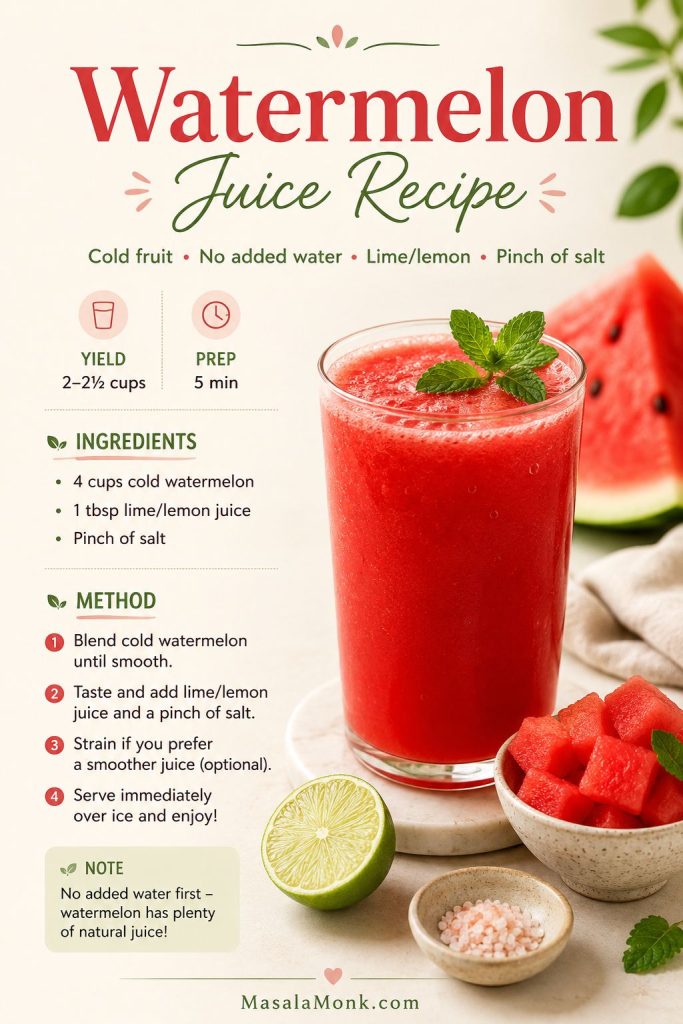
Saveable watermelon juice recipe card with yield, prep time, ingredients, and blender method beside a glass of juice.
This is the formula to remember: cold fruit first, no added water first, citrus for lift, and a tiny pinch of salt only after you taste the blended juice.

Watermelon Juice Recipe

Fresh watermelon juice made in a blender with cold fruit, no added water, lime or lemon, and a small pinch of salt for a bright, not-watery glass.

Prep Time5 minutes
Cook Time0 minutes
Total Time5 minutes
Yield2–2½ cups / 480–600 ml

Equipment

  • Blender
  • Knife and cutting board
  • Measuring cup
  • Fine-mesh strainer, optional
  • Pitcher or jar

Ingredients

  • 4 cups cold seedless watermelon cubes, about 600 g
  • 1 tablespoon fresh lime or lemon juice, 15 ml
  • Small pinch fine salt or black salt, up to 1/8 teaspoon
  • 6–10 fresh mint leaves, optional
  • 1–2 teaspoons honey, sugar, or agave, only if needed
  • Ice, for serving

Instructions

  1. Rinse the outside of the watermelon before cutting.
  2. Chill the watermelon if possible. Cold fruit makes better juice and reduces the need for extra ice.
  3. Cut away the rind and pale white part, then cube the red flesh.
  4. Add the cubes to a blender. Blend for 30–60 seconds, until smooth. Do not add water at first.
  5. Taste the juice. Add lime or lemon juice and a small pinch of salt or black salt. Add mint if using.
  6. Blend briefly again. If the fruit is not sweet enough, add 1–2 teaspoons honey, sugar, or agave.
  7. Strain through a fine-mesh sieve if you want smooth juice, or leave it unstrained for a thicker texture.
  8. Serve immediately over ice, or chill for 30 minutes and stir before serving.

Notes

  • Do not add water unless your blender truly cannot move. Add only 1–2 tablespoons if needed.
  • For watermelon cucumber juice, add 1/2 to 1 cup peeled cucumber.
  • For watermelon pineapple juice, use 2 cups watermelon and 1 cup pineapple.
  • For watermelon ginger juice, add 1–2 teaspoons fresh grated ginger.
  • For Indian-style tarbooz juice, use lemon or lime, mint, black salt, and a tiny pinch of roasted cumin or chaat masala.
  • The juice naturally separates. Stir or shake before serving.

Storage

Watermelon juice is best fresh. Refrigerate it in a clean covered jar for up to 24 hours for best flavor, or up to 2–3 days if properly chilled. Stir before serving.

For extra help beyond the card, see straining, storage, and watermelon juice variations.

FAQs

Do you need a juicer to make watermelon juice?

No. A blender is enough because watermelon is soft and naturally juicy. Blend the cubes until smooth, then strain only if you want a cleaner texture.

Should watermelon juice be strained?

Only if you want a smoother glass. Unstrained juice has more body; strained juice looks cleaner in pitchers, mocktails, and cocktails.

Can I make watermelon juice without sugar?

Usually, yes. Ripe watermelon is sweet enough on its own, especially when lime or lemon and a tiny pinch of salt brighten the flavor.

Why does watermelon juice separate?

Fresh blended fruit naturally separates as it sits because the pulp and liquid settle at different rates. Stir or shake before serving. Separation alone does not mean the juice has spoiled.

How long does fresh watermelon juice last?

It tastes best immediately. For the best make-ahead flavor, refrigerate it in a clean covered jar for up to 24 hours. It may keep for 2–3 days if properly chilled, but the flavor fades and separation increases.
Can I freeze watermelon juice?

Yes. Freeze it in ice cube trays, then use the cubes in lemonade, sparkling water, smoothies, mocktails, or slushies. The texture changes after thawing, so frozen cubes are better for mixing than drinking plain.

Can I use lemon instead of lime?

Yes. Lime tastes sharper and more tropical, while lemon gives a softer lemonade-style brightness. Use 1 tablespoon lemon or lime juice for every 4 cups of watermelon.

Can I make watermelon juice with seeds?

You can use seeded watermelon, but remove as many black seeds as possible before blending. A few small white seeds are usually fine, especially if you plan to strain.

What can I mix with watermelon juice?

The easiest mixers are lime, lemon, mint, cucumber, pineapple, ginger, coconut water, sparkling water, black salt, and a little roasted cumin. For mocktails and cocktails, strain it first so the drink tastes cleaner.

Is watermelon juice the same as watermelon agua fresca?

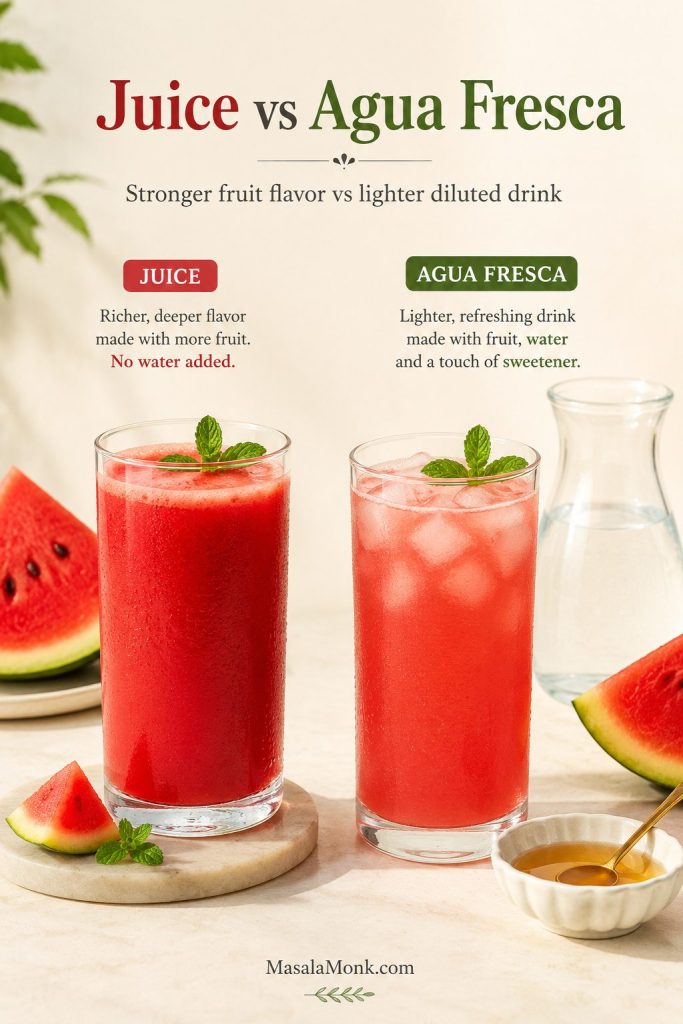
Not exactly. Watermelon juice is usually mostly blended watermelon, sometimes with citrus or salt. Watermelon agua fresca is usually lighter because it is diluted with water and often sweetened. For stronger fruit flavor, use this recipe without added water; for a lighter Mexican-style agua fresca, dilute and sweeten to taste.

Comparison of watermelon juice and watermelon agua fresca, showing a richer undiluted drink and a lighter diluted drink.
Choose undiluted juice when you want stronger watermelon flavor. Choose agua fresca when you want a lighter, softer drink that is usually diluted and gently sweetened.

Back to top

Posted on Leave a comment

Pineapple Jam Recipe and Pineapple Preserves

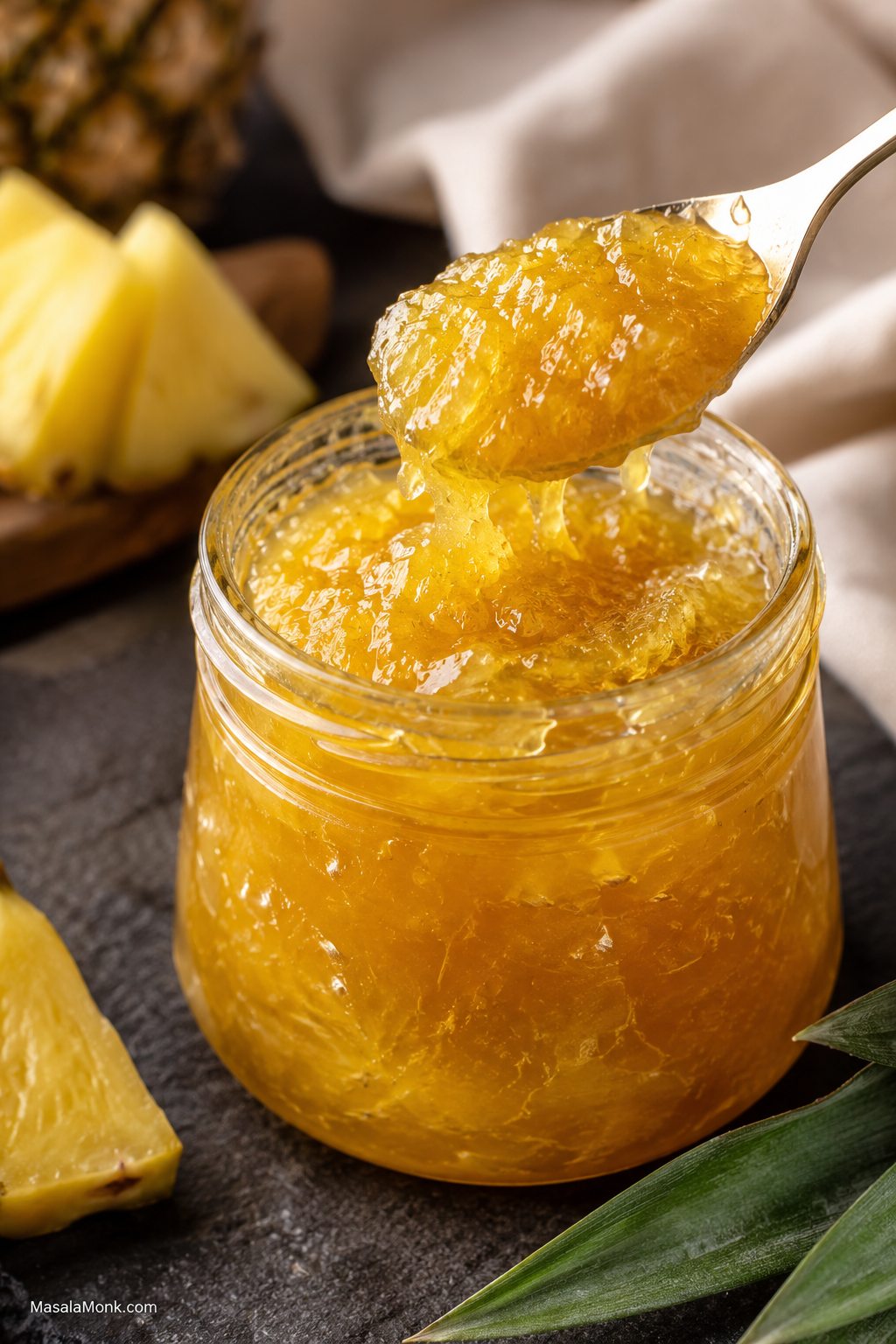
Open glass jar of glossy golden pineapple jam with a spoon lifting thick jam and fresh pineapple wedges behind it

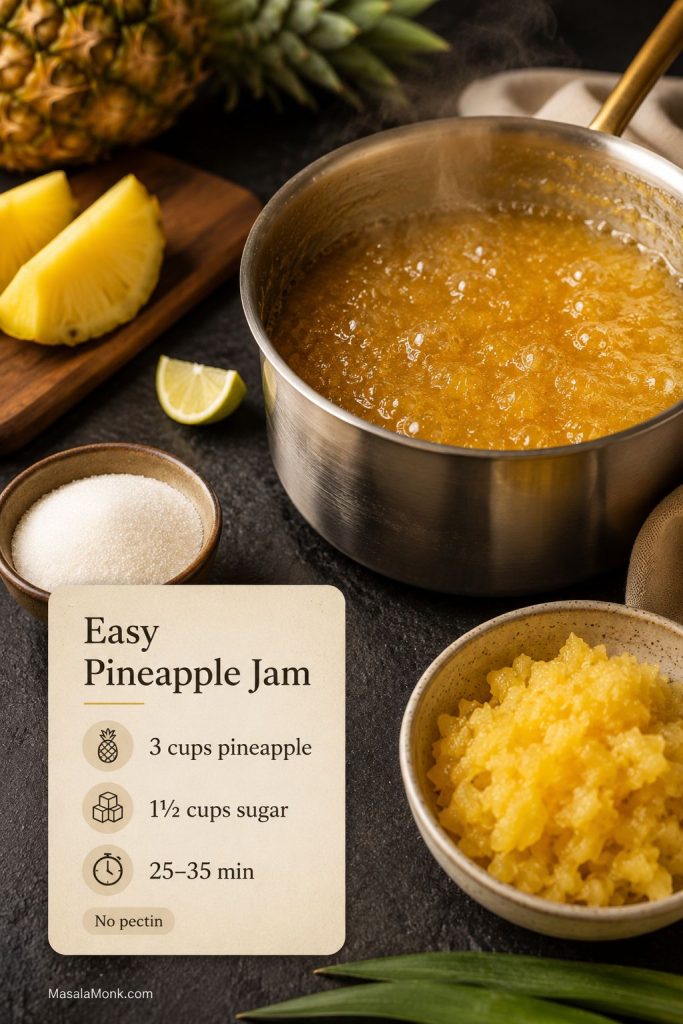
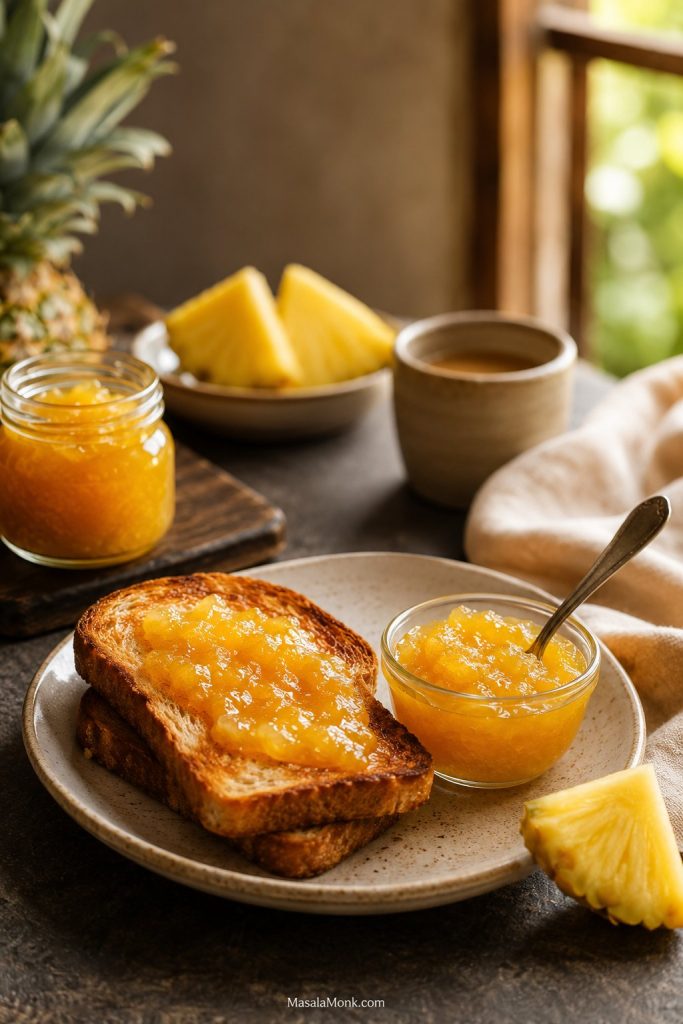
This pineapple jam recipe turns fresh pineapple or canned crushed pineapple into a glossy, golden spread that tastes bright, tropical, and properly homemade. Make it smooth and spoonable for toast, leave it chunkier for pineapple preserves, or cook it down further when you need a thick filling for tarts, cookies, and pastries.

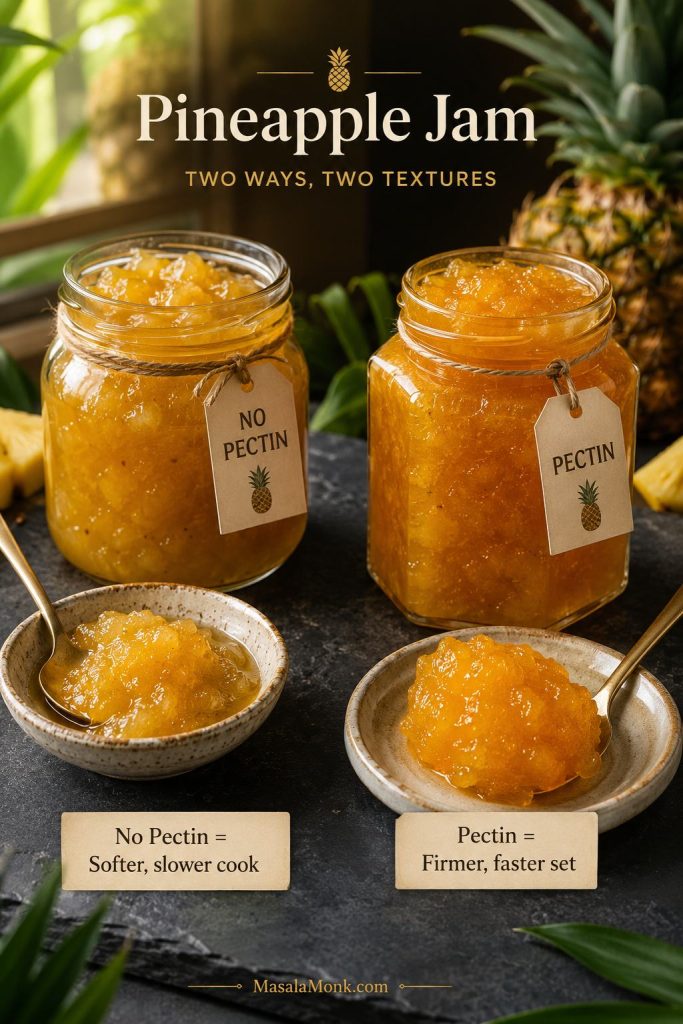
The main version is a simple no-pectin pineapple jam for the fridge or freezer. Pineapple, sugar, lemon or lime juice, and a pinch of salt cook down into a sweet-tart fruit spread that thickens as it cools and stays soft enough to spread.

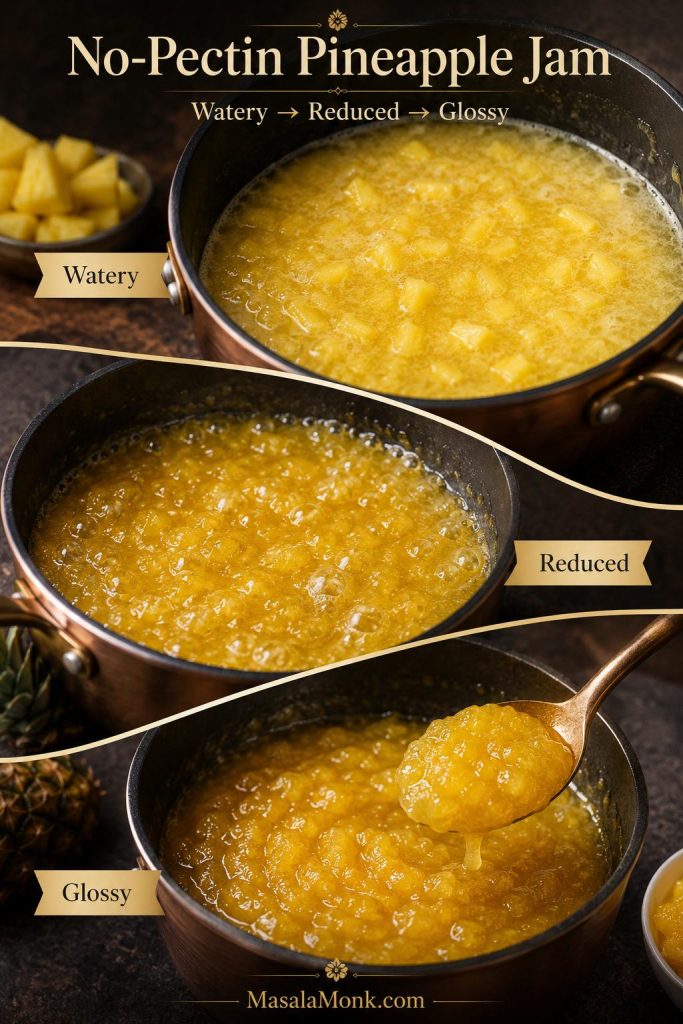
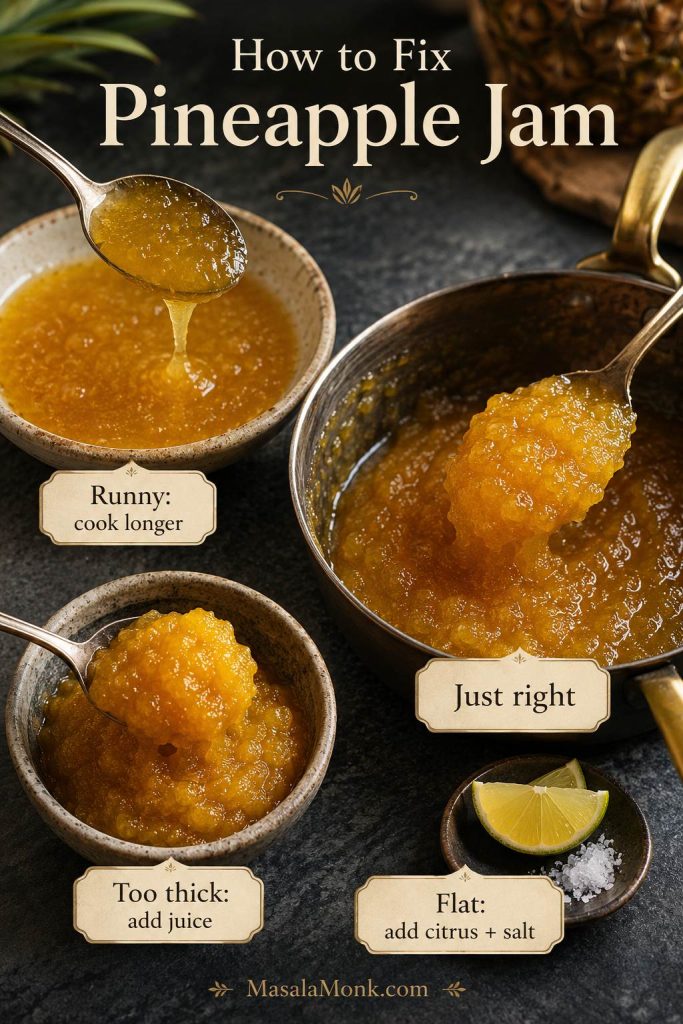
Once you know what the bubbles, spoon trail, and cold-plate test should look like, the recipe becomes very forgiving. Use crushed pineapple for jam, diced pineapple for preserves, canned pineapple for a quick pantry batch, or a wider pan and longer cooking time for pineapple tart filling.

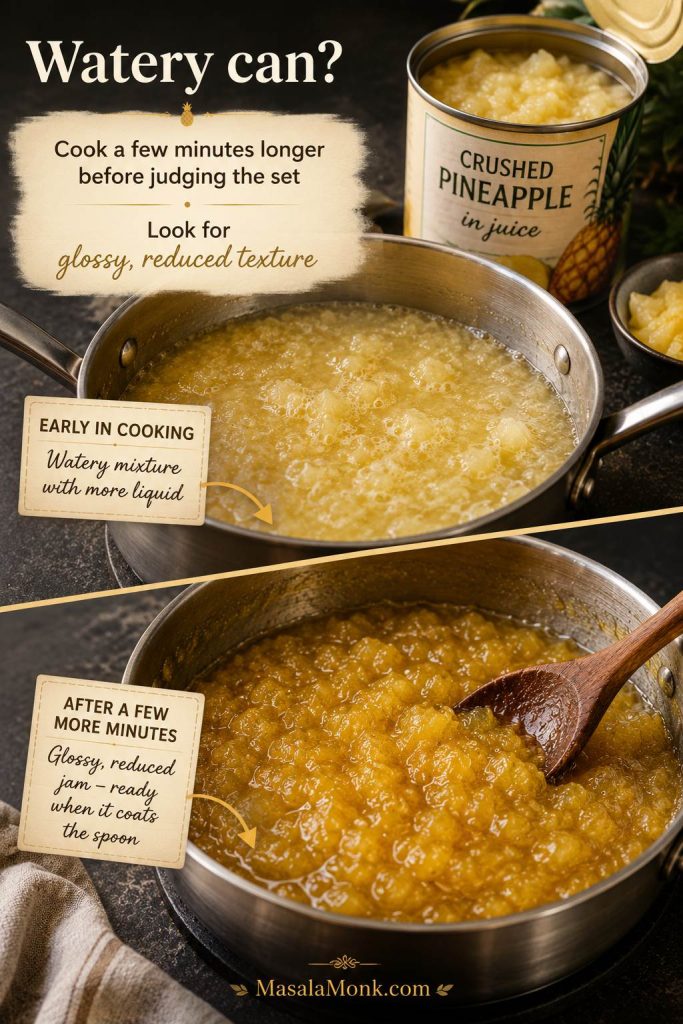
The best part is that the recipe does not fall apart if your pineapple is extra juicy, your can is a little watery, or you want a softer spoonable finish instead of a firm jar. The texture tests below will tell you when to stop.

Table of Contents

Use this guide to choose between smooth pineapple jam, chunkier pineapple preserves, a quick canned pineapple batch, or a thicker filling for tarts and pastries.

Quick Answer

For an easy pineapple jam recipe, simmer crushed pineapple with sugar, lemon or lime juice, and a pinch of salt until it turns shiny, golden, and thick enough to mound softly on a spoon. If you want pineapple preserves instead, use diced pineapple and stop cooking while the fruit pieces are still visible in a thick syrup.

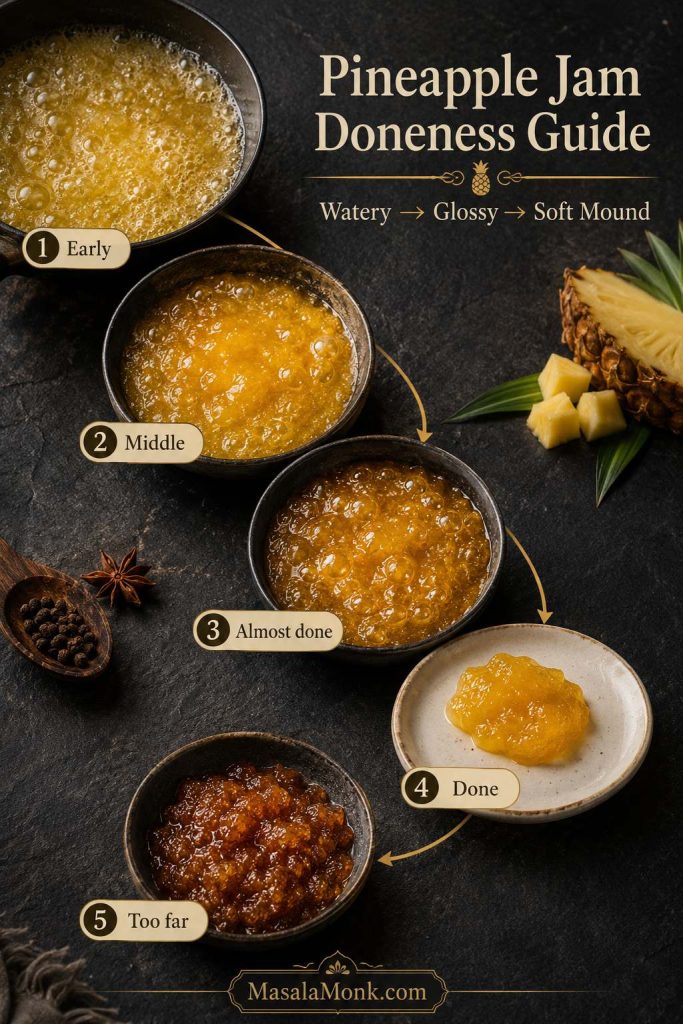
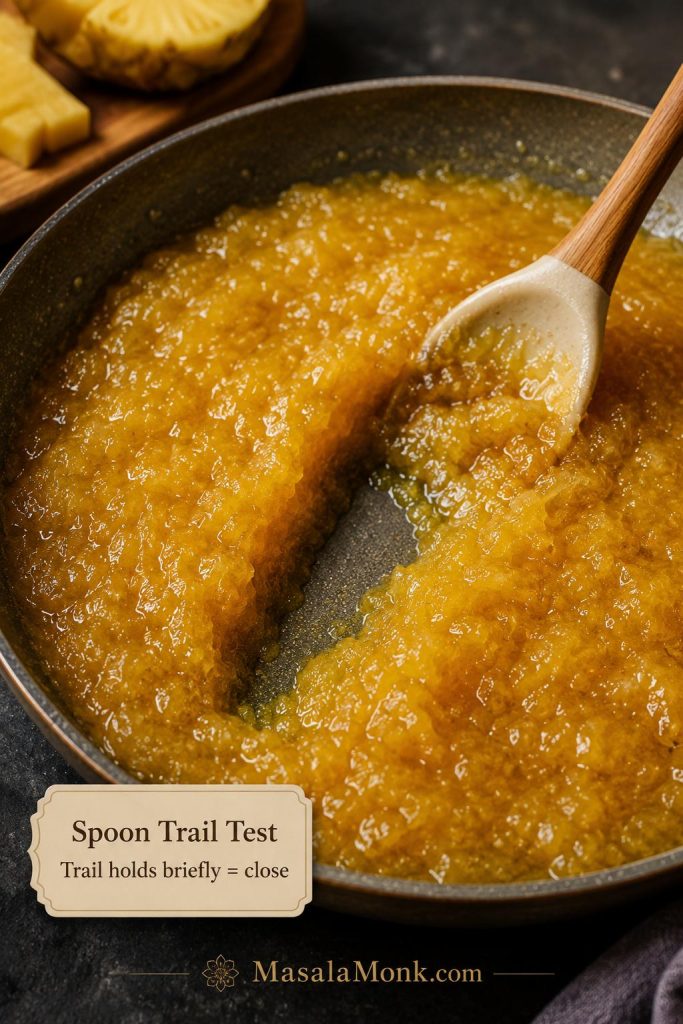
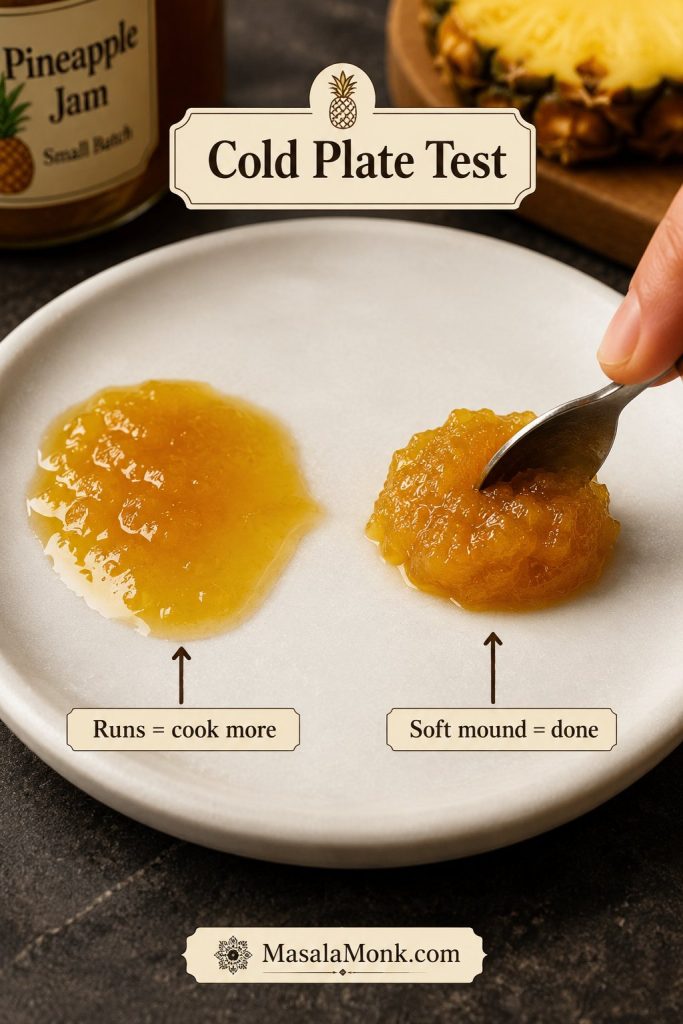
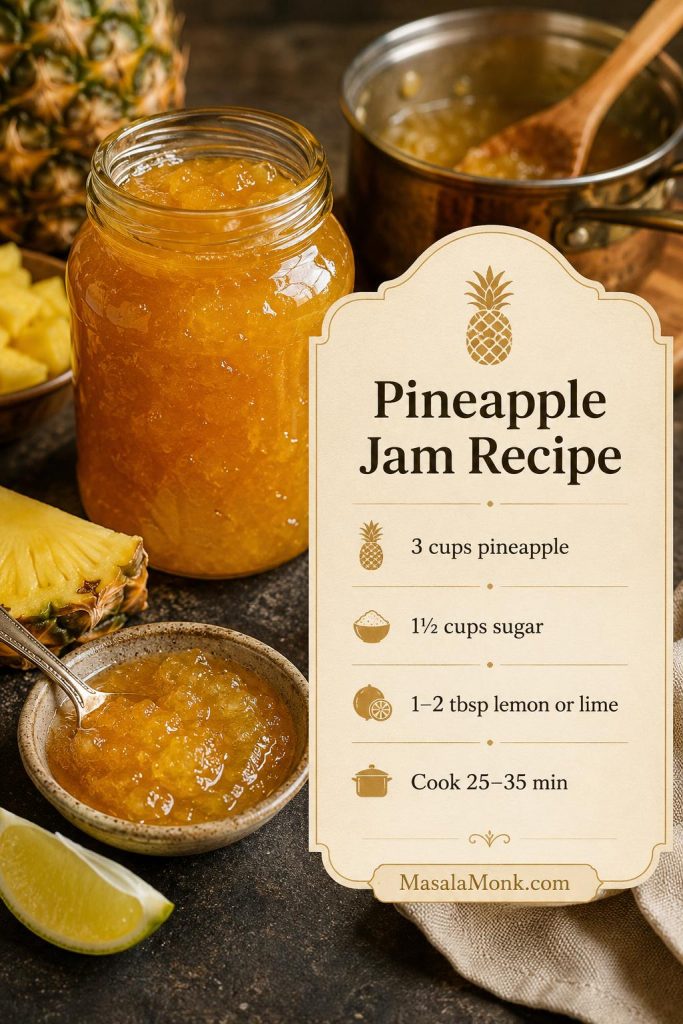
The easiest no-pectin ratio is 3 cups crushed pineapple, 1½ cups sugar, and 1–2 tablespoons lemon or lime juice. Cook for about 25–35 minutes. The jam is ready when it leaves a brief trail in the pan, passes the cold-plate test, or reaches about 220°F / 104°C at sea level.

However, do not worry if it looks a little loose while hot. Pineapple jam thickens as it cools, so the goal is glossy and spreadable rather than stiff or rubbery. For the safest first batch, make the crushed pineapple version and refrigerate it.

Best first batch: Start with the no-pectin pineapple jam made with crushed pineapple. After that, try diced preserves, canned pineapple jam, or a thicker filling for tarts and pastries.
Saucepan of bubbling pineapple jam with crushed pineapple, sugar, citrus, and a quick ratio guide
Start with the simple no-pectin pineapple jam ratio, then let the pan tell you when it is done. As the fruit reduces, the bubbles slow down and the mixture turns shiny instead of watery.

Pineapple Jam Recipe at a Glance

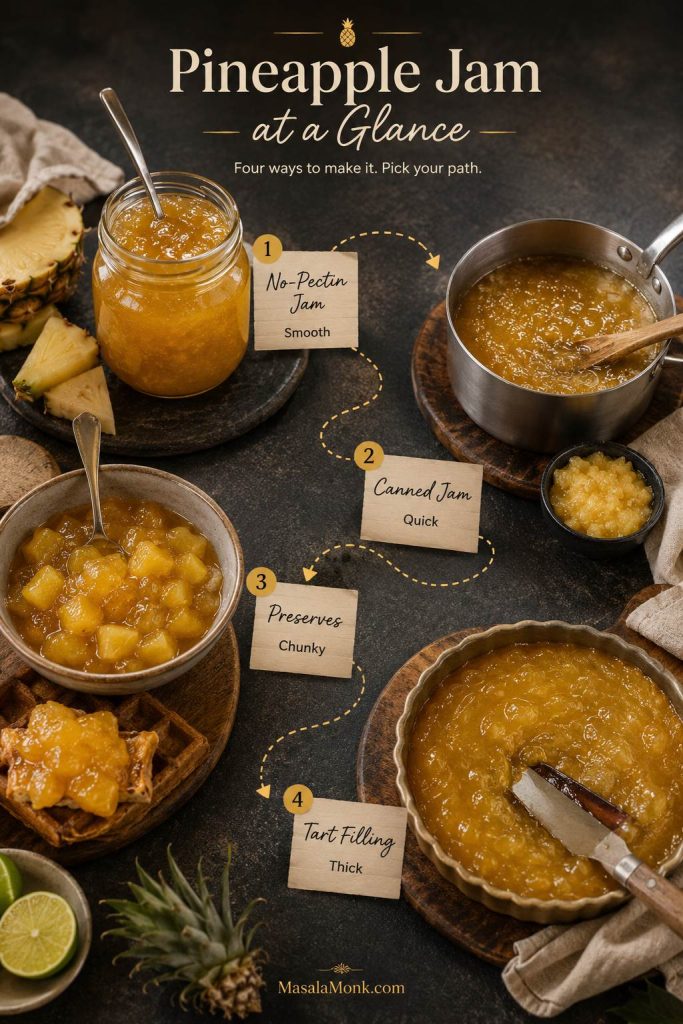
This pineapple jam recipe can go in four useful directions: soft-set jam, chunkier preserves, quick canned pineapple jam, or a much thicker tart filling. Start with the version that matches how you plan to serve it.

Pineapple jam at-a-glance guide showing no-pectin jam, canned jam, preserves, and tart filling routes
One pineapple jam recipe can become a breakfast spread, chunky preserve, canned-pineapple batch, or tart filling. As a result, choosing the route first helps you cook toward the right texture.
Version Pineapple Sugar Cook Time Best For
No-pectin pineapple jam 3 cups / about 680 g crushed pineapple 1½ cups / 300 g 25–35 minutes Toast, cookies, cakes, yogurt, everyday spreading
Canned pineapple jam 1 can / 20 oz / 567 g crushed pineapple in juice ¾–1 cup / 150–200 g 20–30 minutes Quick pantry batch, small jars, beginner version
Pineapple preserves 5½–6 cups diced pineapple ⅔–1 cup 30–40 minutes Biscuits, waffles, ice cream, cheese boards, glazes
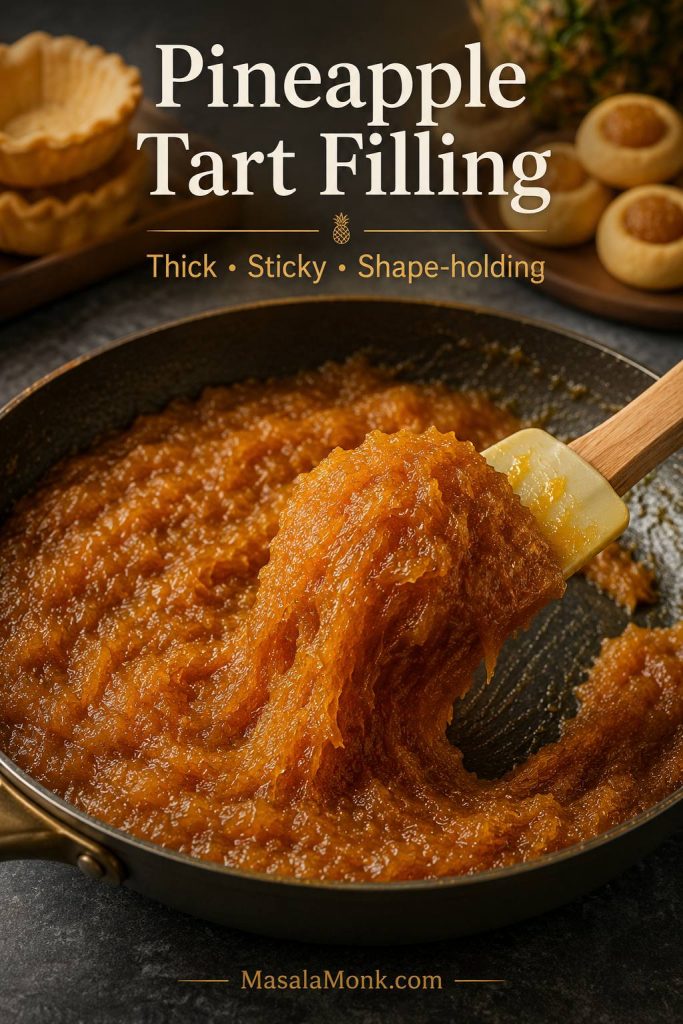
Pineapple tart filling 4 cups grated or finely pulsed pineapple ½–¾ cup, then adjust 1–2½ hours Pineapple tarts, pastry filling, thumbprint cookies
Choose your version: Use crushed pineapple for soft, spreadable jam; diced pineapple for chunkier preserves; canned crushed pineapple for the quickest small batch; and finely pulsed pineapple cooked much longer for tart or pastry filling. For pantry storage, do not use the flexible recipe as written — follow a tested canning method instead.

Pineapple Jam vs Pineapple Preserves

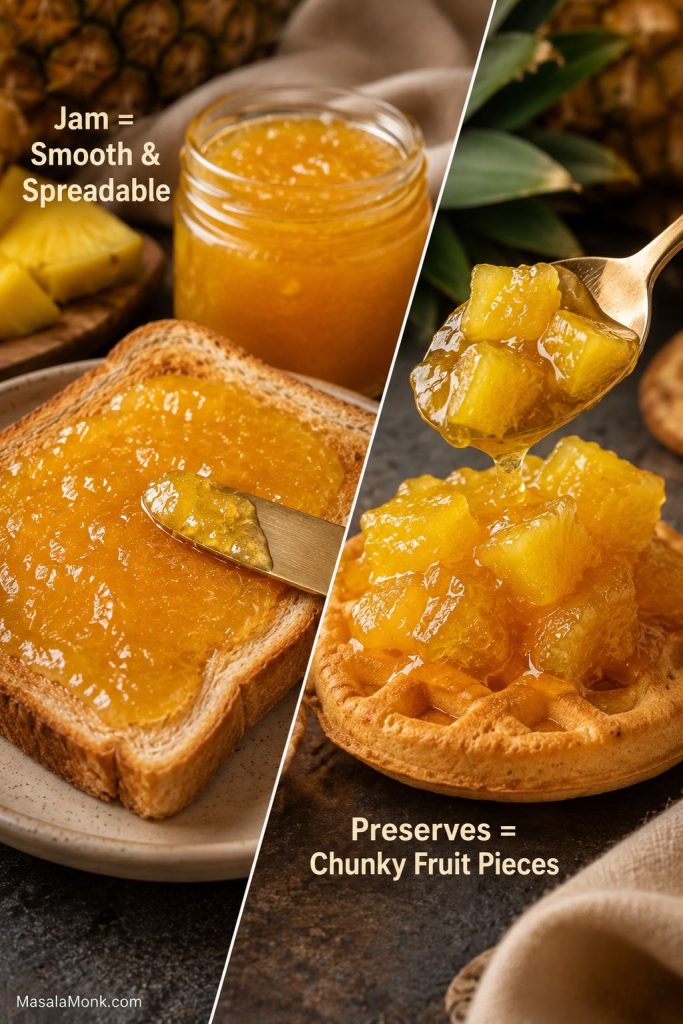
Although pineapple jam and pineapple preserves use similar ingredients, they do not eat the same way. This pineapple jam recipe gives you both paths, so you can choose the texture that fits how you plan to use it.

A smoother jam is easier to spread because the fruit is crushed, finely chopped, pulsed, or mashed as it cooks. Choose this version for toast, scones, thumbprint cookies, cake layers, yogurt bowls, and everyday spooning.

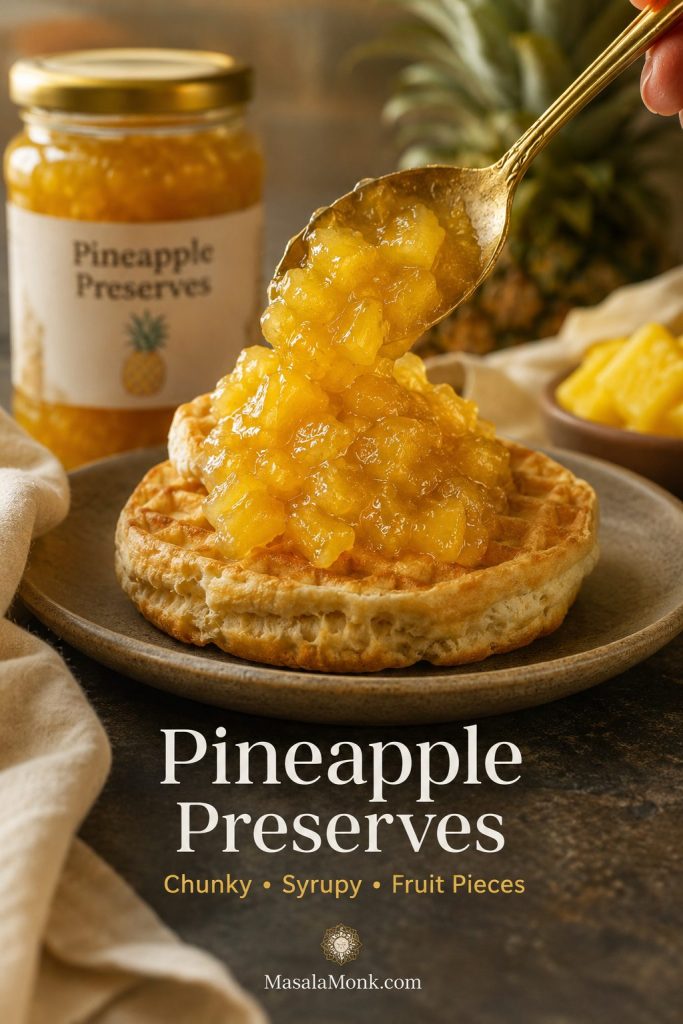
Meanwhile, preserves are chunkier. The fruit is usually diced into small, even pieces and cooked until tender in a thick syrup. Choose this version when you want visible pineapple pieces on biscuits, pancakes, waffles, cheesecake, ice cream, cheese boards, or savory glazes.

Another easy way to think about it: jam should glide across toast, while preserves should give you soft little pineapple pieces in each spoonful.

Diagonal comparison of smooth pineapple jam spread on toast and chunky pineapple preserves spooned over a biscuit or waffle
Pineapple jam and pineapple preserves are separated by texture more than ingredients. Crushed pineapple gives a smoother spread, while diced pineapple keeps soft fruit pieces in the finished preserve.
Version Fruit Cut Texture Best Uses
Pineapple jam Crushed, finely chopped, or pulsed Smoother, soft-set, glossy, spreadable Toast, scones, cookies, cake filling, yogurt, pastries
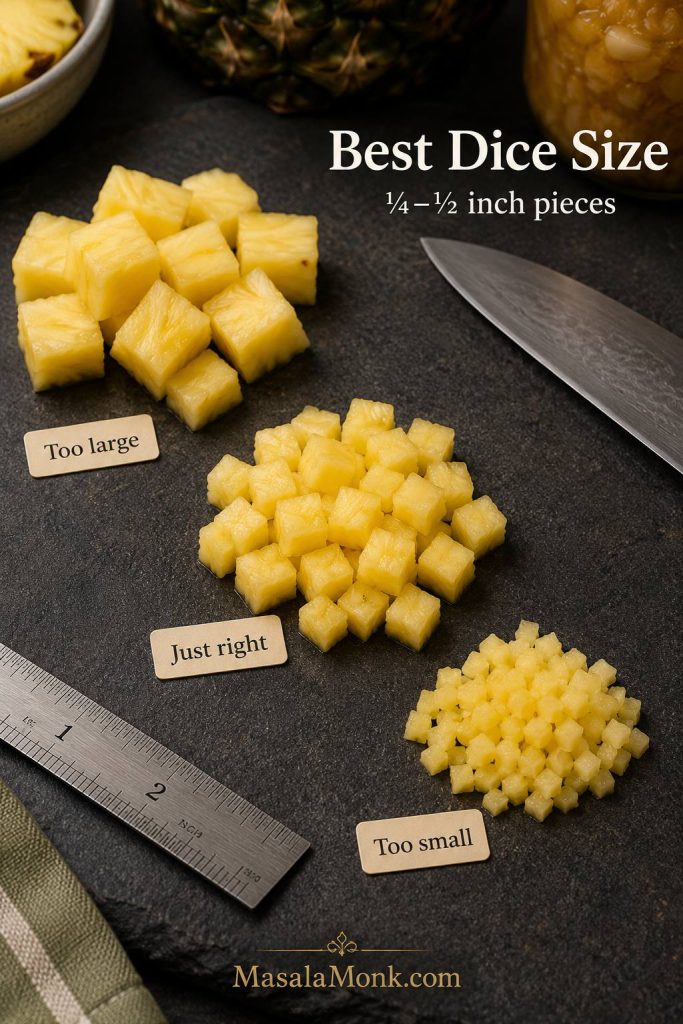
Pineapple preserves Small dice, about ¼–½ inch Chunkier fruit pieces in thick syrup Biscuits, waffles, ice cream, cheese boards, glazes
Pineapple tart filling Grated, finely pulsed, or cooked down further Very thick, sticky, paste-like Pineapple tarts, cookies, pastry filling, filled buns

Ingredients for Pineapple Jam and Preserves

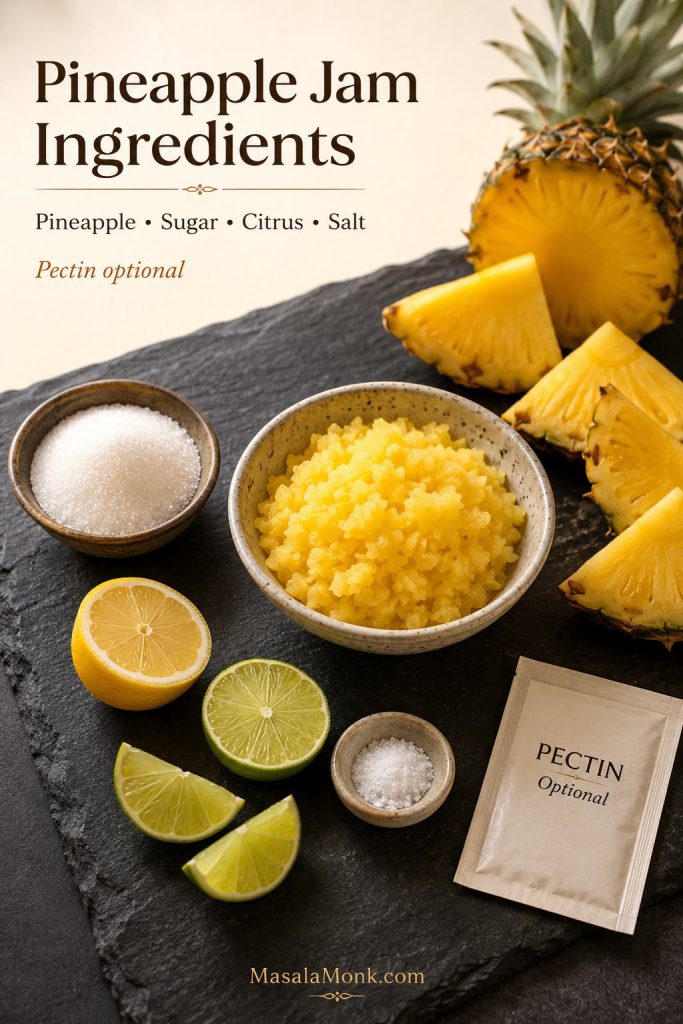
You only need a few ingredients, but each one has a job. Pineapple brings the fruit and acidity, sugar helps the mixture thicken and shine, citrus keeps the flavor lively, and salt balances the sweetness. Because this pineapple jam recipe is flexible, the fruit cut matters as much as the ingredient list.

Pineapple jam ingredients including fresh pineapple, crushed pineapple, sugar, lemon, lime, salt, and optional pectin
Pineapple, sugar, citrus, and salt are enough for a flexible refrigerator jam. However, pectin can help when you want a firmer set, a faster cook, or a tested canning-style formula.

Pineapple

Fresh ripe pineapple gives the brightest flavor and color. Canned crushed pineapple works well when you want a faster batch. For jam, crush or finely chop the fruit. For preserves, cut it into small even pieces so everything softens at the same rate.

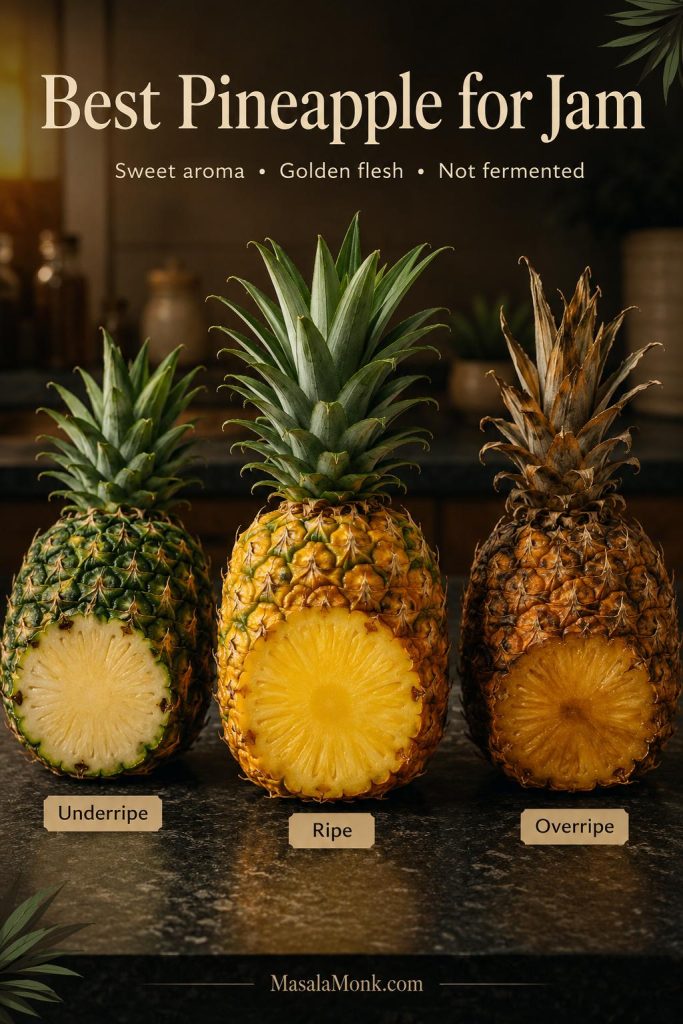
Choose pineapple that smells sweet and fruity, not fermented. Very underripe pineapple can taste sharp, while overripe pineapple may make the jam darker and softer. A very sweet pineapple gives a rounder jam; a sharper one may need the higher end of the sugar range. If the fruit tastes flat, lime juice usually wakes it up better than more sugar.

Pineapple selection guide comparing underripe, ripe, and overripe pineapple for jam making
Ripe pineapple gives homemade pineapple jam the brightest color and flavor. Meanwhile, underripe fruit can taste sharp, and overripe pineapple may cook down darker and softer.

Sugar

Sugar does more than sweeten the jar. It helps create body, improves the glossy finish, and supports the spreadable texture. For the main no-pectin version, start with 1½ cups sugar for 3 cups crushed pineapple. Use up to 2 cups if you prefer a firmer, sweeter jam.

Lemon or Lime Juice

Lemon juice gives a clean, classic fruit-spread flavor. Lime juice tastes a little more tropical and works especially well if you plan to use the jam with coconut desserts, pineapple tart filling, or drink-inspired pairings.

Salt

A small pinch of salt will not make the jam salty. Instead, it rounds out the sugar and helps the pineapple taste brighter.

Pectin, Optional

You can make pineapple jam without pectin, but pectin is useful when you want a quicker set, a firmer jar, or a lower-sugar method designed for that purpose. Different pectin types need different sugar levels and cooking steps, so follow the instructions on the package if you use it.

Fresh vs Canned Pineapple

Fresh pineapple gives the brightest aroma and color, but canned pineapple is not a failure shortcut. It is fast, consistent, available year-round, and especially useful for a small-batch pineapple jam recipe. In fact, canned crushed pineapple is the easiest beginner version because the fruit is already evenly cut. The only real adjustment is moisture: if the can looks watery, cook a few minutes longer before judging the set.

Fresh pineapple being chopped beside canned crushed pineapple being poured into a saucepan for jam
Fresh pineapple gives the most vivid aroma, but canned crushed pineapple makes the easiest small-batch pineapple jam. Since the fruit is already evenly cut, it reduces with less prep work.

How to Prep Fresh Pineapple for Jam

When using fresh pineapple, peel, core, and chop the fruit first. Then, pulse it in a food processor for jam or dice it by hand for preserves. Try not to leave large pieces of tough core in the mixture because they can stay fibrous even after cooking.

Best Canned Pineapple to Use

For canned pineapple jam, choose crushed pineapple or pineapple chunks packed in juice rather than heavy syrup. Drain only if the can is extremely watery. Some juice helps the fruit cook down evenly and keeps the sugar from catching too early.

Watery canned crushed pineapple in juice reducing into thicker glossy pineapple jam in a saucepan
Canned pineapple jam can look loose at first because some cans carry more juice than others. Instead of adding thickeners too soon, simmer a little longer and wait for a glossy, reduced texture.
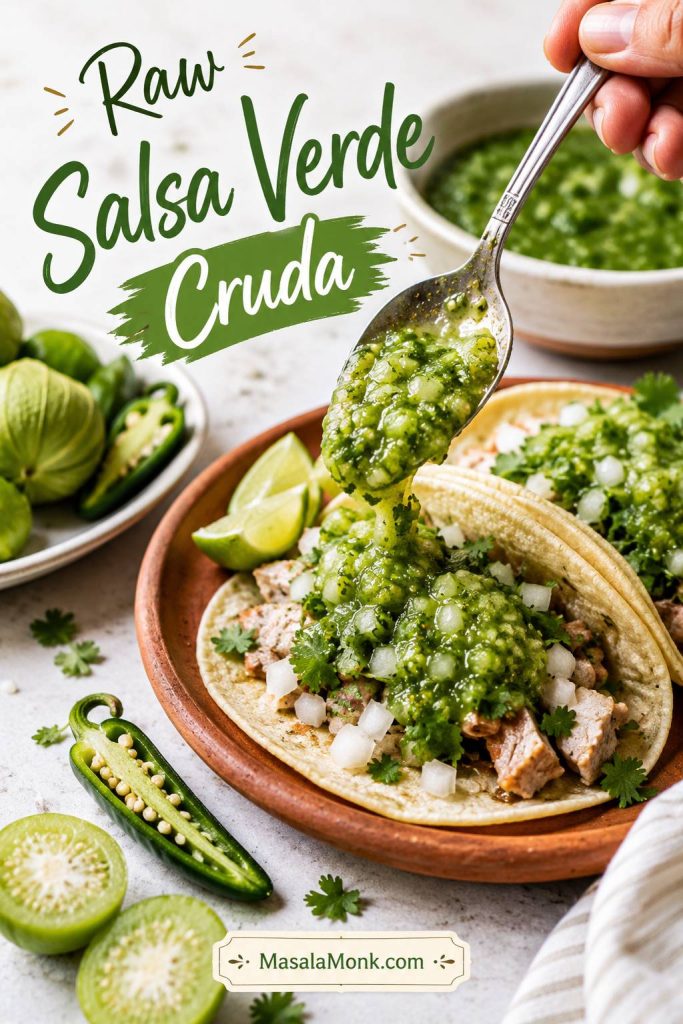
Pineapple Type Best For How to Use It
Fresh pineapple Brightest flavor, best color, homemade preserves Peel, core, chop, then crush or dice depending on texture
Canned crushed pineapple in juice Quick pineapple jam, small batches, pantry version Use with juice unless very watery; simmer longer if needed
Canned pineapple chunks Preserves or jam after chopping Chop smaller or pulse briefly before cooking
Pineapple in syrup Last-resort option Reduce added sugar and expect a sweeter final jam

If you are working with extra pineapple juice, save it for drinks, smoothies, marinades, or a tropical party bowl like this punch with pineapple juice.

Small-Batch Pineapple Jam

A small batch is perfect when you have one can of pineapple or a little fresh fruit left after cutting a whole pineapple. Since this is a small flexible batch, keep it chilled instead of treating it as pantry-stable.

Small batches are also helpful when you are learning the texture cues. They reduce faster, are easier to stir, and give you a low-pressure way to understand how pineapple changes as it cooks. If you are standing in the kitchen with one 20-ounce can of crushed pineapple, this is the easiest place to start.
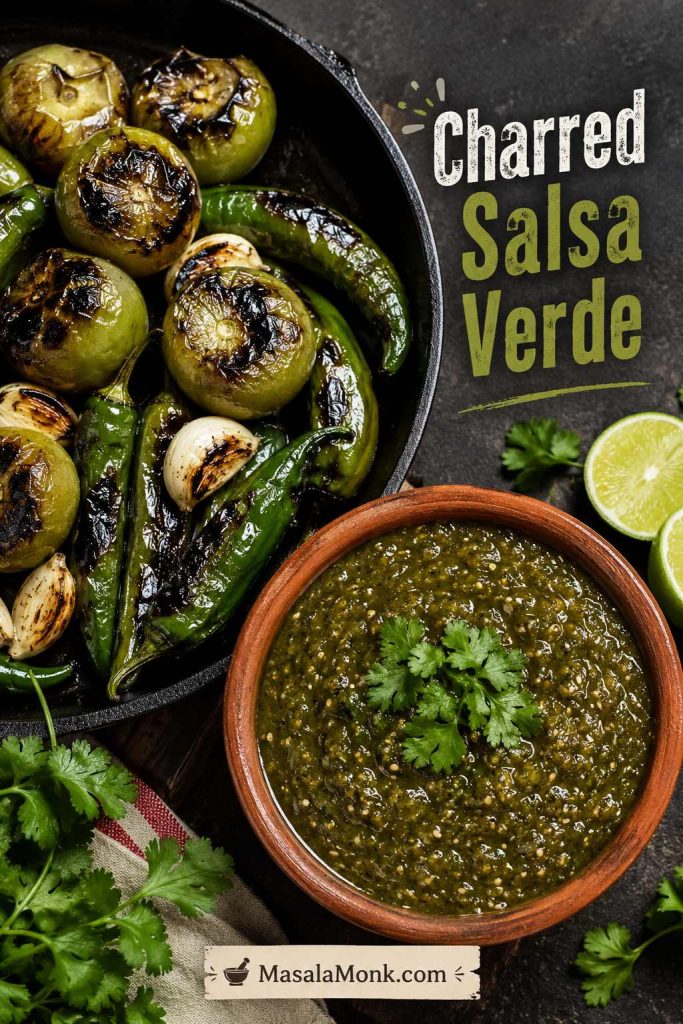
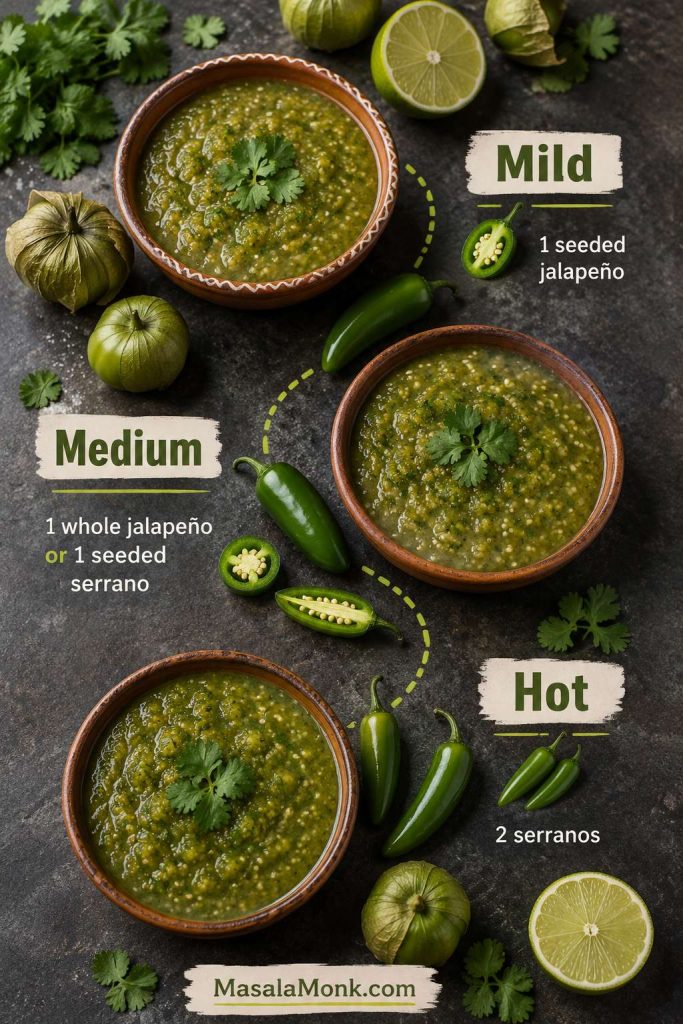
Small-batch canned pineapple jam setup with a 20-ounce can of crushed pineapple in juice, saucepan, sugar, citrus, and finished jar
A 20-ounce can of crushed pineapple is a practical shortcut for small-batch pineapple jam. Because the fruit is already crushed, the key is reducing the juice until the spread looks shiny and spoonable.

Tiny 8-Ounce Can Version

  • 1 can / 8 oz / 227 g crushed pineapple in juice
  • ⅓–½ cup / 65–100 g sugar
  • 1–2 teaspoons lemon or lime juice
  • Small pinch of salt

Simmer everything in a small saucepan for 15–25 minutes, stirring often, until shiny and jammy. This makes roughly one small jar, depending on how much you reduce it.

Tiny batch pineapple jam setup with an 8-ounce can of crushed pineapple in juice, small jar, lemon wedge, sugar, and saucepan
The 8-ounce can version is a smart tiny batch when you only want one small jar. It also gives you a low-risk way to practice the cold-plate test before making more.

20-Ounce Can Version

  • 1 can / 20 oz / 567 g crushed pineapple in juice
  • ¾–1 cup / 150–200 g sugar
  • 1 tablespoon / 15 ml lemon or lime juice
  • Pinch of salt

Cook for 20–30 minutes, or until the bubbles look slower and the fruit has reduced into a soft-set spread. If the canned pineapple is very juicy, the batch may need a few extra minutes.

Pineapple Jam Without Pectin

This no-pectin pineapple jam recipe is all about patience, not complicated technique. As the pineapple simmers, excess moisture cooks off, the sugar concentrates, and the mixture slowly changes from juicy fruit sauce into a glossy spread.

Because pineapple is not naturally high in pectin, the mixture needs enough time to reduce. A heavy-bottomed saucepan helps prevent scorching, while a wider pan speeds up evaporation.

Wide pan and heavy-bottom saucepan comparison for reducing pineapple jam without scorching
A wide pan speeds up pineapple jam because more surface area lets moisture evaporate. At the same time, a heavy bottom helps protect the sugar and fruit from scorching.

No-pectin pineapple jam sets by reduction rather than by a strong natural pectin gel. That means the finished texture is usually softer and more spoonable than commercial jam, but the flavor is more concentrated because the fruit cooks down slowly.

Three cooking stages of no-pectin pineapple jam changing from watery fruit to reduced sauce and glossy jam
No-pectin pineapple jam thickens by reduction rather than a strong commercial-style gel. Therefore, the texture should move from juicy fruit sauce to glossy spread as water cooks off.

The method is simple: combine crushed pineapple, sugar, lemon or lime juice, and salt. Bring the mixture to a boil, then simmer and stir often. As it cooks, the fruit will look less watery, the bubbles will become slower and shinier, and the jam will start leaving a brief trail when you drag a spatula across the bottom of the pan.

Texture tip: Pineapple jam thickens more as it cools. Therefore, stop when it is slightly looser than the final texture you want.

How to Make Pineapple Preserves

Make preserves when you want little golden pieces of pineapple in every spoonful. They are chunkier than jam, a little more syrupy, and especially good over biscuits, waffles, yogurt, ice cream, or cheesecake.

Chunky pineapple preserves being spooned over a waffle with visible pineapple pieces in glossy syrup
Pineapple preserves should keep visible fruit pieces in a thick syrup. For the best result, dice the fruit evenly and avoid mashing it so much that it turns into smooth jam.

Think of this as the pineapple preserve recipe path: diced fruit, less mashing, and a syrupy finish with visible golden pieces instead of a smoother spread.

Then, cut the fruit into small pieces, about ¼–½ inch. Pieces that are too large can feel chewy or slide off toast; however, pieces that are too small will collapse into jam.

Pineapple dice-size guide with too-large, just-right, and too-small pieces for preserves
Even pineapple pieces cook more predictably. Aim for ¼–½ inch dice so the preserves stay spoonable, tender, and chunky without becoming chewy or collapsing completely.

Do not pulse preserves too finely unless you want jam. The whole point is to keep small pineapple pieces visible.

For a fruit-forward batch, use less sugar than the classic no-pectin jam. A good starting point is 5½–6 cups diced pineapple, ⅔–1 cup sugar, 2 tablespoons lemon juice, and a pinch of salt.

Cook the mixture in a wide pan for about 30–40 minutes, stirring often, until the pineapple turns tender and golden and the liquid reduces to a thick syrup. If the fruit starts breaking down too much, lower the heat and stir more gently.

For a middle texture, mash only part of the fruit. As a result, you get preserves with body: chunky enough for biscuits and waffles, but still thick enough to spoon over yogurt, cheesecake, or ice cream.

How to Tell When Pineapple Jam Is Done

Because hot jam looks looser than cooled jam, the most common mistake is stopping too early. Instead of relying only on the clock, use the texture cues below.

If this is your first time making pineapple jam, judge it by texture rather than time alone. Some pineapples are juicier than others, and canned pineapple can vary from can to can, so a batch may need a few extra minutes.

Doneness at a glance: Fast watery bubbles mean it is too early. Slower glossy bubbles mean it is close. A soft mound on a cold plate means it is ready. If the jam slides like syrup, cook it a few minutes longer.
Stage Visual Cue What It Means
Early Fast, watery bubbles Keep cooking; too much moisture remains
Middle Thicker fruit sauce Stir more often so the bottom does not catch
Almost done Slow, glossy bubbles Start testing with a spoon trail or cold plate
Done Soft mound on a cold plate Jar and cool; it will thicken more as it chills
Too far Sticky, dark, stiff texture Loosen gently with a splash of pineapple juice or water
Pineapple jam doneness guide showing early watery bubbles, thicker sauce, glossy bubbles, soft mound, and overcooked jam
Doneness is easier to judge by texture than by minutes alone. Watery bubbles mean keep cooking, slow glossy bubbles mean start testing, and a soft mound means the jam is ready.

Spoon Trail Test

Drag a spatula or wooden spoon across the bottom of the pan. If the jam leaves a clean trail for a moment before slowly filling in, it is close. If liquid rushes back immediately, keep cooking.

Spoon trail test in a pan of thick pineapple jam with a spatula leaving a visible path through the jam
When a spoon or spatula leaves a brief trail across the pan, the pineapple jam is close. However, the mixture should still look glossy and spreadable, not dry or paste-like.

Cold Plate Test

Place a small plate in the freezer before you start cooking. When the jam looks thick, spoon a little onto the cold plate and wait 30–60 seconds. Then, push it with your finger. It should thicken, wrinkle slightly, or hold a soft mound instead of running like juice.

Cold plate test showing one runny pineapple jam sample and one soft mound sample being pushed with a spoon
The cold-plate test shows how pineapple jam will behave after cooling. If the sample runs like syrup, continue cooking; if it mounds softly, stop before it turns sticky.

Thermometer Cue

A classic jam-style set usually lands around 220°F / 104°C at sea level. This is a useful guide, but it should not be your only test. Pineapple type, pan width, sugar level, and altitude can all affect the final texture.

If you live at a higher elevation, the finishing temperature can be slightly lower. Therefore, use the cold-plate test and spoon trail along with the thermometer.

Bubble Cue

At the beginning, the mixture bubbles quickly and looks watery. Near the end, the bubbles become larger, slower, and glossier. The jam will look more like a thick fruit spread than a simmering fruit sauce.

Texture What It Looks Like What to Do
Too runny Liquid rushes back after stirring; cold-plate sample runs Cook 5–10 minutes longer, stirring often
Just right Shiny, soft-set, spoonable, gentle mound on cold plate Remove from heat and jar while warm
Too thick Stiff, sticky, hard to spread, darkening quickly Stir in 1–2 tablespoons water or pineapple juice and warm gently

Use this quick visual recipe card as a saveable reminder before the full method below.

Saveable pineapple jam recipe card with pineapple, sugar, lemon or lime, cooking time, jar, saucepan, and pineapple pieces
Use the base pineapple jam recipe first, then adjust the fruit cut to match your final texture. Crushed pineapple gives a smooth spread, while diced pineapple creates chunkier preserves.

Pineapple Jam Recipe Card: No-Pectin Jam or Chunky Preserves

This base pineapple jam recipe makes soft-set no-pectin jam. Use crushed pineapple for jam or diced pineapple for chunkier preserves.

Prep Time10 minutes
Cook TimeJam: 25–35 minutes; preserves: 30–40 minutes
YieldJam: about 2½–3 cups / about three 8-ounce jars; preserves: about 3–4 cups
StorageFridge or freezer

Ingredients for Pineapple Jam

  • 3 cups / about 680 g crushed pineapple, fresh or canned in juice
  • 1½ cups / 300 g granulated sugar
  • 1–2 tablespoons / 15–30 ml lemon or lime juice
  • â…› teaspoon fine salt, or a small pinch

For a firmer, sweeter jam: increase sugar up to 2 cups / 400 g.

For Pineapple Preserves Instead

  • Use 5½–6 cups small diced pineapple, about ¼–½ inch pieces
  • Use ⅔–1 cup sugar, depending on sweetness
  • Use 2 tablespoons / 30 ml lemon juice
  • Add a pinch of salt

Equipment

  • Heavy-bottomed saucepan or wide pan
  • Food processor, blender, knife, or potato masher
  • Silicone spatula or wooden spoon
  • Measuring cups or digital scale
  • Jam thermometer, optional
  • Small freezer plate for testing
  • Clean jars with lids

Method

  1. Prepare the pineapple. For jam, crush or finely chop the pineapple. For preserves, dice it into small even pieces.
  2. Combine the ingredients. Add pineapple, sugar, lemon or lime juice, and salt to a heavy saucepan.
  3. Start cooking. Bring to a boil over medium-high heat, stirring often so the sugar dissolves evenly.
  4. Simmer and reduce. For jam, cook for 25–35 minutes, stirring frequently. For preserves, cook for 30–40 minutes, or until the pineapple pieces are tender and suspended in thick syrup. Scrape the bottom and sides of the pan so the mixture does not scorch.
  5. Check the texture. Jam is ready when it looks shiny, thickened, and spoonable. It should leave a brief trail in the pan, mound softly on a cold plate, or reach about 220°F / 104°C at sea level. Preserves should look syrupy with visible fruit pieces.
  6. Jar and cool. Spoon the hot jam or preserves into clean jars. Let cool, then cover and refrigerate. The mixture will thicken more as it chills.

Notes

  • This flexible no-pectin recipe is intended for refrigerator or freezer storage.
  • For shelf-stable canning, follow a tested preservation method and proper processing instructions.
  • If using canned pineapple packed in syrup, reduce the sugar and taste as it cooks.
  • For a smoother jam, use an immersion blender briefly before the jam gets too thick.
  • Avoid doubling the batch in the same pan the first time. Larger batches take longer to reduce and are easier to scorch, so make two separate batches if you need more.

Pineapple Jam With Pectin

If you want a firmer version of this pineapple jam recipe, pectin can help you get there without cooking the fruit as long. It can also help if you are using a lower-sugar method designed for pectin.

However, pectin is not one-size-fits-all. Regular powdered pectin, liquid pectin, low-sugar pectin, and calcium-activated pectin all behave differently. Some require a high sugar ratio, while others are designed for lower-sugar spreads.

Two jars of pineapple jam comparing softer no-pectin jam with firmer pectin-set jam
Pectin is useful when you want a faster, firmer pineapple jam, but it is not always necessary. For a softer homemade spread, the no-pectin method gives a more spoonable finish.

Pectin versions are not automatically better; they are simply faster and firmer. If you use pectin, follow the specific package instructions for fruit amount, sugar amount, boiling time, and jar processing. Otherwise, the jam may turn too stiff, too loose, overly sweet, or unsuitable for pantry storage if you are trying to can it.

Fresh pineapple note: Some pectin methods recommend boiling fresh pineapple first because fresh pineapple contains enzymes that can interfere with gel formation. If your pectin brand gives pineapple-specific instructions, follow them.

Canning Pineapple Jam and Preserves Safely

Important: The recipe card above is written for refrigerator or freezer storage. Do not treat it as a shelf-stable canning recipe unless you switch to a tested canning formula and follow the exact fruit, acid, sugar, pectin, jar size, headspace, and processing time.

Pineapple jam can be canned, but pantry storage needs a tested method, not a flexible refrigerator-jam formula. The amount of sugar, acid, pectin, fruit, headspace, jar size, and processing time all matter.

Because this is a flexible pineapple jam recipe, treat the main batch as a refrigerator or freezer pineapple jam. If you want pantry storage, use a tested preservation method and follow the jar size, headspace, and processing time exactly.

For shelf-stable jars, Ball’s pineapple jam canning recipe is a useful reference. In addition, the National Center for Home Food Preservation guide to jams, jellies, and marmalades is a good place to check broader home-preservation safety guidance.

Be especially careful with low-sugar or sugar-free pineapple jam. Reducing sugar can affect set, texture, and storage safety. If you want a lower-sugar version, use a pectin and method designed for low-sugar jam, then refrigerate, freeze, or process only according to the instructions for that exact style.

Lower-sugar pineapple jam jar with small sugar cue and refrigerator-freezer storage reminder
Lower-sugar pineapple jam often sets softer because sugar helps with body and preservation. Unless you are using a tested low-sugar method, store it in the refrigerator or freezer.

Pineapple Jam for Tarts and Filling

You can also adapt this pineapple jam recipe into a thicker filling for tarts, cookies, and pastries. Unlike spreadable jam, tart filling cooks until most of the liquid evaporates and the mixture becomes sticky, concentrated, and paste-like.

Tart Filling Ratio

For a small tart-filling batch, start with about 4 cups finely pulsed or grated pineapple, ½–¾ cup sugar, 1 tablespoon lemon or lime juice, and a pinch of salt. Add sugar after some of the pineapple liquid has cooked off, then keep reducing until the filling is thick, sticky, and no longer watery.

How Thick Tart Filling Should Be

Cook it in a wide pan so moisture evaporates quickly. Then, continue cooking over medium-low heat until the mixture is darker, concentrated, and able to hold its shape when cooled.

For tart filling, the mixture should not slide around the pan like jam. It should move as a sticky mass, leave the pan bottom visible for longer, and hold its shape once cooled.

Thick pineapple tart filling being lifted from a pan with a spatula while tart shells sit in the background
Pineapple tart filling needs to be thicker than breakfast jam. Cook it until it moves as one sticky mass, holds its shape, and no longer releases watery juice around the edges.

Near the end, stir more often and lower the heat if the filling starts catching on the bottom. Tart filling is ready when it looks darker, moves together as one sticky mass, and no longer releases watery juice around the edges.

This can take much longer than jam for toast. Depending on pineapple quantity and juiciness, tart filling may need 1–2½ hours. It is ready when a cooled spoonful holds its shape and does not leak liquid. For rolled pineapple tarts, the cooled filling should be thick enough to portion and shape.
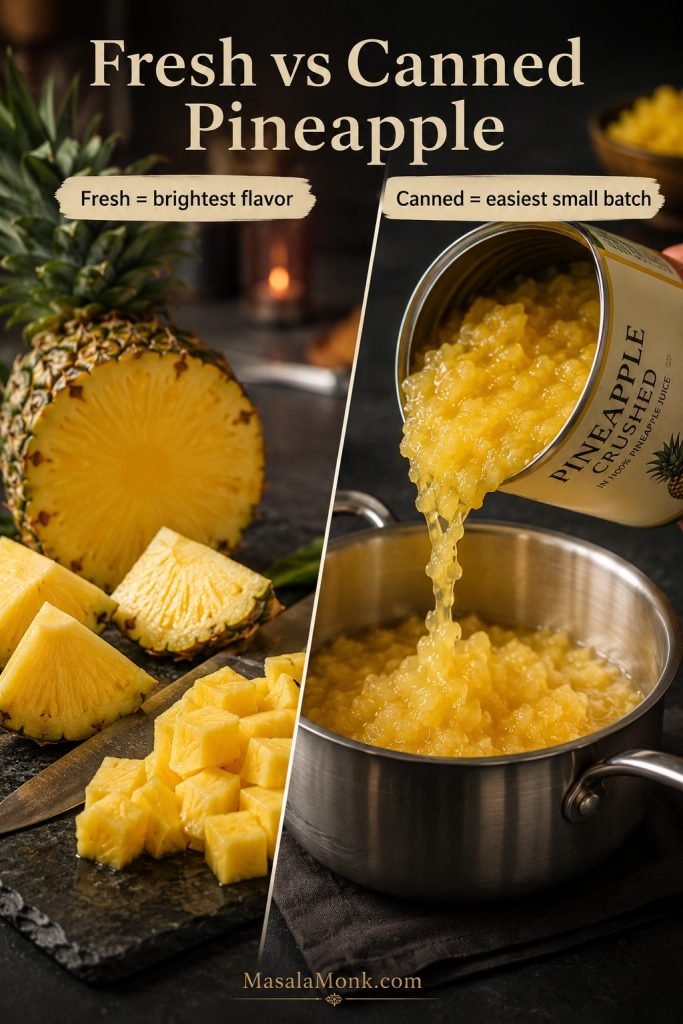
Flavor Options for Pineapple Tart Filling

Finally, optional spices such as cinnamon, clove, star anise, ginger, or vanilla can make pineapple filling warmer and more dessert-like. Use them lightly so the fruit stays the main flavor.

How to Store Pineapple Jam and Preserves

After cooking, let the jam cool before sealing and storing. It will thicken as it cools, so do not judge the final texture while it is still boiling hot.

Because this pineapple jam recipe is written as a flexible refrigerator or freezer method, storage depends on sugar level, cleanliness, and how the jars are handled after cooling.

Storage Method How Long Best For
Refrigerator For best quality, use within about 2 weeks. Higher-sugar batches handled only with clean utensils may last longer. Everyday no-pectin pineapple jam and preserves
Freezer About 2–3 months for best texture Small batches, lower-sugar versions, extra jars
Shelf-stable pantry storage Only with a tested canning method Properly processed jam using safe canning instructions

Use clean jars and utensils every time. If the jam smells fermented, looks moldy, becomes fizzy, or changes in a way that feels off, discard it.

Ways to Use Pineapple Jam and Preserves

The fun of pineapple jam is that it moves easily between breakfast, dessert, and savory food. It can be the bright layer in a cake, the glossy topping on cheesecake, or the sweet-tart glaze that wakes up grilled chicken or pork.

Serving spread showing pineapple jam on toast, cheesecake, waffles, ice cream, and a savory glaze dish
Pineapple jam works beyond toast because its sweet-tart flavor cuts through rich foods. Try it with cheesecake, waffles, coconut ice cream, cheese boards, or a quick glaze for chicken, pork, shrimp, or tofu.
  • Spread on toast, biscuits, English muffins, or scones.
  • Spoon over pancakes, waffles, French toast, yogurt, or oatmeal.
  • Use as a filling for thumbprint cookies, sandwich cookies, cakes, cupcakes, or tart shells.
  • Spoon over chilled cheesecake, especially a simple no bake cheesecake where the bright pineapple cuts through the creamy filling.
  • Serve chunky pineapple preserves with vanilla ice cream, yogurt, or a scoop of homemade coconut ice cream.
  • Brush over grilled chicken, pork chops, ham, shrimp, or tofu as a sweet-tart glaze.
  • Pair with cream cheese, goat cheese, or brie for a quick appetizer.
  • Use a spoonful in tropical mocktails, cocktails, or fruit punches when you want pineapple sweetness and texture.

Best Version for Each Use

Use Best Version Why It Works
Toast, scones, biscuits Soft-set pineapple jam Spreads easily without large fruit pieces falling off
Waffles, pancakes, ice cream Pineapple preserves Chunky fruit pieces feel more generous as a topping
Thumbprint cookies or tart shells Thicker jam Holds better and does not run as much during serving
Pineapple tarts and pastry filling Tart filling Cooked longer until sticky, concentrated, and shape-holding
Pork, chicken, shrimp, or tofu glaze Preserves or looser jam Melts into a sweet-tart glaze with visible fruit if desired
Cheesecake or coconut desserts Jam or preserves Bright pineapple cuts through rich, creamy desserts

Troubleshooting Pineapple Jam

Pineapple jam is forgiving. However, the texture can shift depending on pineapple ripeness, water content, pan size, sugar level, and cooking time.

If your batch does not look right at first, do not panic. Most texture issues can be fixed by cooking a little longer, adding a splash of liquid, or balancing the sweetness with citrus and salt.

Quick Fixes for Common Problems

Problem Likely Cause Fix
Jam is runny Not cooked long enough, pineapple was very juicy, or sugar was reduced too much Return to the pan and simmer 5–10 minutes longer. Test on a cold plate before jarring again.
Jam is too thick Over-reduced or cooked at too high a heat Warm gently with 1–2 tablespoons water, pineapple juice, or lemon juice until spreadable.
Jam tastes too sweet Pineapple was very ripe or canned in syrup Add a little more lemon or lime juice and a tiny pinch of salt. Next time, reduce sugar slightly.
Jam tastes flat Not enough acid or salt Add lemon or lime juice in small amounts, then taste again.
Preserves are tough or chewy Pineapple pieces were too large or included too much core Chop smaller next time. For this batch, cook gently with a splash of water until softer.
Jam is browning too fast Heat is too high or pan bottom is too thin Lower the heat, stir more often, and use a heavier pan next time.
Canned pineapple flavor tastes dull Pineapple was packed in syrup or tasted muted from the can Add lime juice, lemon zest, ginger, or a small splash of pineapple juice to brighten it.
Troubleshooting guide showing runny pineapple jam, just-right jam, too-thick jam, citrus, salt, and fix labels
Most pineapple jam problems are fixable. Cook runny jam longer, loosen an overly thick batch with a splash of juice, and brighten flat flavor with citrus plus a tiny pinch of salt.

The Most Common Texture Mistake

The easiest mistake is judging the jam while it is still hot. If it slides across the cold plate like syrup, give it another few minutes. If it mounds softly and looks shiny, stop before it turns sticky or overly firm.

Pineapple Jam Variations

Once you have the basic method, this recipe is easy to adapt. Keep the first batch simple, then try one of these variations.

Pineapple Lime Jam

Use lime juice instead of lemon juice and add ½–1 teaspoon lime zest near the end. This gives the jam a brighter tropical finish.

Pineapple Ginger Jam

Add 1–2 teaspoons freshly grated ginger while the fruit cooks. Ginger works especially well if you plan to use the jam as a glaze for chicken, pork, shrimp, or tofu.

Pineapple Vanilla Jam

Stir in ½–1 teaspoon vanilla after removing the jam from the heat. This makes it softer and more dessert-like, especially for pancakes, yogurt, cakes, or thumbprint cookies.

Pineapple Coconut Jam

Add 2–4 tablespoons finely shredded coconut near the end of cooking, or stir in toasted coconut after the jam cools. This leans into a piña colada-style flavor, especially if you like the pineapple-coconut pairing in these piña colada variations.

Pineapple Jalapeño Jam

Add 1–2 tablespoons finely minced jalapeño for a sweet-hot condiment. This is excellent with cream cheese, grilled meats, tacos, sandwiches, and cheese boards. For a shelf-stable spicy jam, use a tested canning method rather than improvising the acid and pepper ratio.

Brown Sugar Pineapple Preserves

Replace 2–4 tablespoons of the white sugar with brown sugar for a deeper caramel flavor. This version works especially well as a glaze for ham, pork, or grilled pineapple desserts.

Thicker Pineapple Pastry Filling

Cook the jam longer over low heat until it is thick enough to hold its shape. This is the better version for pineapple tarts, filled cookies, pastry pockets, and cake layers that need a firmer filling.

FAQs

Jam or preserves: what is the real difference?

The difference is mostly texture. Pineapple jam is smoother because the fruit is crushed or finely chopped. Pineapple preserves are chunkier, with small pieces of fruit suspended in syrup.

Do you need pectin for pineapple jam?

No, not for a refrigerator or freezer version. Pineapple, sugar, and citrus can cook down into a soft-set jam on their own. However, pectin is helpful if you want a firmer set, a quicker recipe, a lower-sugar method, or a canning formula designed for that purpose.

When is pineapple jam safe for pantry storage?

Pineapple jam is safe for pantry storage only when you follow a tested canning method with the correct sugar, acid, pectin if required, jar size, headspace, and processing time. The flexible no-pectin recipe on this page should be treated as refrigerator or freezer jam unless you switch to a tested canning formula.

What is the safest way to make lower-sugar pineapple jam?

Use a lower-sugar pectin method or keep the jam refrigerated or frozen. Reducing sugar in a regular no-pectin batch can make the texture softer, and it should not be treated as shelf-stable unless the recipe is designed for that kind of storage.

What changes when you use canned pineapple?

Canned pineapple is usually softer and wetter than fresh pineapple, so it may cook down faster or need a few extra minutes depending on how much juice is in the can. Use pineapple packed in juice when possible, and simmer until it becomes shiny, reduced, and spoonable.

What is the best pineapple for jam?

Fresh ripe pineapple gives the brightest flavor. Canned crushed pineapple in juice is the easiest option and works well for small-batch pineapple jam. Avoid syrup-packed pineapple unless you are prepared to reduce the sugar.

Should you use crushed pineapple or chunks for preserves?

Use chunks or diced pineapple for preserves because you want visible fruit pieces. Crushed pineapple is better for a smoother jam. If using canned chunks, cut them smaller so they soften evenly and spoon easily over biscuits, waffles, yogurt, or ice cream.

Why is my pineapple jam runny?

Runny pineapple jam usually needs more cooking time. Pineapple can release a lot of liquid, especially if it is very ripe or canned with juice. Return the jam to the pan and simmer until it looks reduced, shiny, and spoonable. Then test it on a cold plate before jarring again.

How long does homemade pineapple jam last?

For best quality, use refrigerator pineapple jam within about 2 weeks. Higher-sugar batches handled only with clean utensils may last longer, but discard the jar if you see mold, fizzing, fermentation, off smells, or any change that feels unsafe.

How do you make pineapple jam thicker for tarts?

Cook it longer in a wide pan over medium-low heat until most of the moisture evaporates. Tart filling should be much thicker than spreadable jam. It should move as a sticky mass, leave the pan bottom visible for longer, and hold its shape once cooled.

Where does pineapple jam taste best besides toast?

Pineapple jam is excellent with biscuits, scones, pancakes, waffles, yogurt, ice cream, cheesecake, thumbprint cookies, cakes, pork, chicken, shrimp, cheese boards, and tropical desserts. Chunkier pineapple preserves are especially good when you want visible fruit pieces.

Final Thoughts

The best pineapple jam tastes like concentrated pineapple: bright, tropical, sweet-tart, and just thick enough to spoon generously over whatever needs a little sunshine. Start with crushed pineapple for the easiest jam, switch to diced fruit when you want preserves, and cook it longer when you need a sturdy filling for tarts or pastries.

Toast spread with homemade pineapple jam beside a small bowl of chunky preserves, pineapple wedges, spoon, and warm breakfast setting
Once you understand the texture cues, pineapple jam becomes easy to customize. Keep it smooth for breakfast toast, or leave it chunkier when you want a dessert-style preserve.

After one batch, the texture cues become much easier to recognize. The bubbles slow down, the color deepens, the spoon leaves a trail, and the jam turns shiny enough to jar. That is the moment to stop, cool it, and decide where the first spoonful is going.

If you make it, notice whether you preferred fresh pineapple, canned crushed pineapple, or diced preserves. That one choice changes the texture more than anything else, and it is usually the difference between a smooth breakfast jam and a chunkier dessert-style preserve.

Posted on Leave a comment

The Lime – Nutrition, Benefits, and 5 Practical Ways for Weight Loss

hand holding cup of iced lemonade

Introduction

Lime is a small, round, green-color citrus fruit known for its acidic, tart flavor. Originating in Southeast Asia, it’s now cultivated in warm climates worldwide and is a staple in many culinary traditions.

Nutrition in Limes

Limes, like other citrus fruits, are a great source of several essential vitamins and minerals. They are low in calories and high in dietary fiber, making them a nutritious addition to your diet. Here is the nutritional content of 1 medium lime (approximately 67 grams):

  • Calories: 20
  • Protein: 0.5 grams
  • Fat: 0.1 grams
  • Carbohydrates: 7 grams
  • Dietary fiber: 1.9 grams
  • Sugars: 1.1 grams
  • Vitamin C: 19.5 milligrams (32% of the Daily Value)

In addition to these nutrients, limes also contain small amounts of iron, calcium, vitamin B6, thiamine, potassium, and folate. They are particularly known for their high vitamin C content. Vitamin C is a powerful antioxidant that helps protect your body from damage by free radicals.

Limes also contain flavonoids, which are compounds found in many fruits and vegetables. These flavonoids have antioxidant, anti-inflammatory, anti-cancer, and neuroprotective properties.

It’s important to remember that while nutritious, limes are usually consumed in small quantities and should be part of a balanced diet that includes a variety of foods to meet your nutritional needs.

Health Benefits of Limes

Limes offer a wealth of health benefits:

  • Rich in Antioxidants: Limes are packed with antioxidants, including flavonoids, limonoids, kaempferol, quercetin, and ascorbic acid, which can help combat free radicals in the body.
  • Promotes Healthy Skin: The vitamin C in limes is vital for collagen synthesis, which can help keep your skin healthy and delay the signs of aging.
  • Boosts Immunity: Thanks to their high vitamin C content, limes can strengthen your immune system, helping to ward off or hasten recovery from illnesses.

Potential Warnings

While limes are safe for most people, there are a few potential considerations:

  • Acidic Nature: Limes are highly acidic, which can aggravate gastroesophageal reflux disease (GERD) or cause discomfort for people with sensitive stomachs.
  • Phytophotodermatitis: This is a skin reaction that occurs in some individuals after touching citrus juice and then exposing the skin to sunlight.

Weight Loss Benefits

Limes can be a great addition to a weight-loss diet due to the following factors:

  • Low in Calories: Limes are low in calories yet provide many essential vitamins and minerals.
  • High in Fiber: The fiber in limes can help you feel full, potentially aiding in weight control.

How to use Lime for Weight Loss?

Lime is a versatile fruit that can be used in various ways to support weight loss efforts. It’s packed with vitamin C and contains other beneficial nutrients, but remember, it isn’t a magic bullet for weight loss. Instead, consider it a tool to supplement a balanced diet and regular exercise. Here are some ways you can incorporate lime into your weight loss plan:

  1. Lime Water: As mentioned before, lime water is a refreshing, low-calorie beverage that can be a good substitute for sugary drinks. You can start your day with a glass of lime water to kick-start your metabolism or sip it throughout the day to stay hydrated and support overall health.
  2. Salad Dressings: Use lime juice to prepare homemade salad dressings. It not only adds a tangy flavor but also helps to cut down on calories that might come from store-bought dressings that are often high in fats and sugars. A simple dressing can be made with lime juice, olive oil, honey, salt, and pepper.
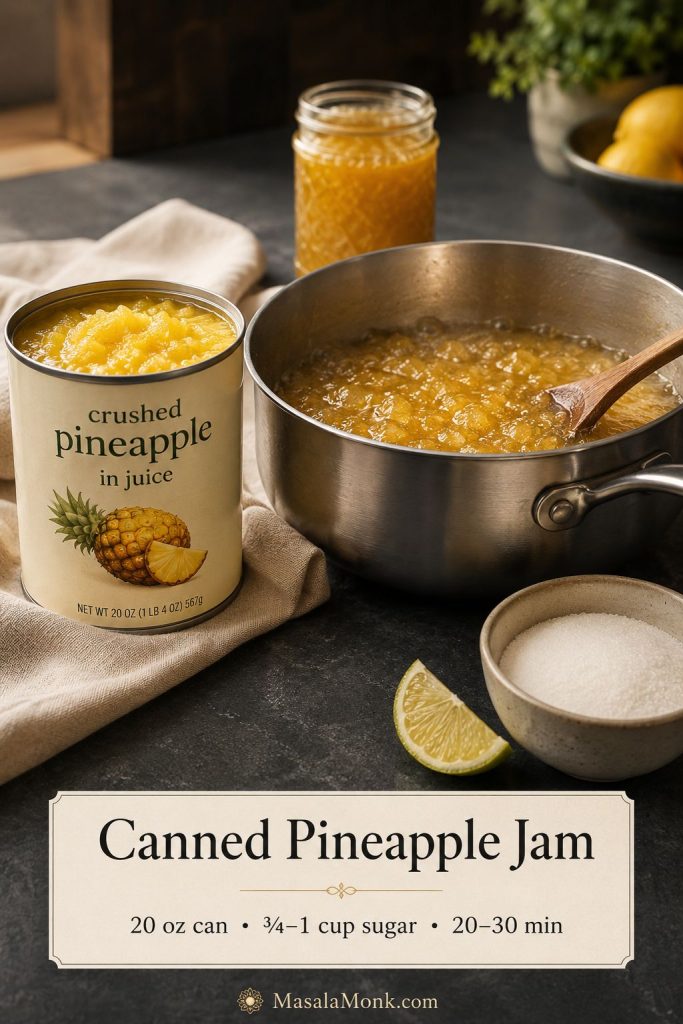
  3. Cooking: Lime can enhance the flavor of various dishes, allowing you to use less salt or fat without sacrificing taste. Try using lime in your marinades for meats or tofu, in stir-fry recipes, or even when grilling vegetables.
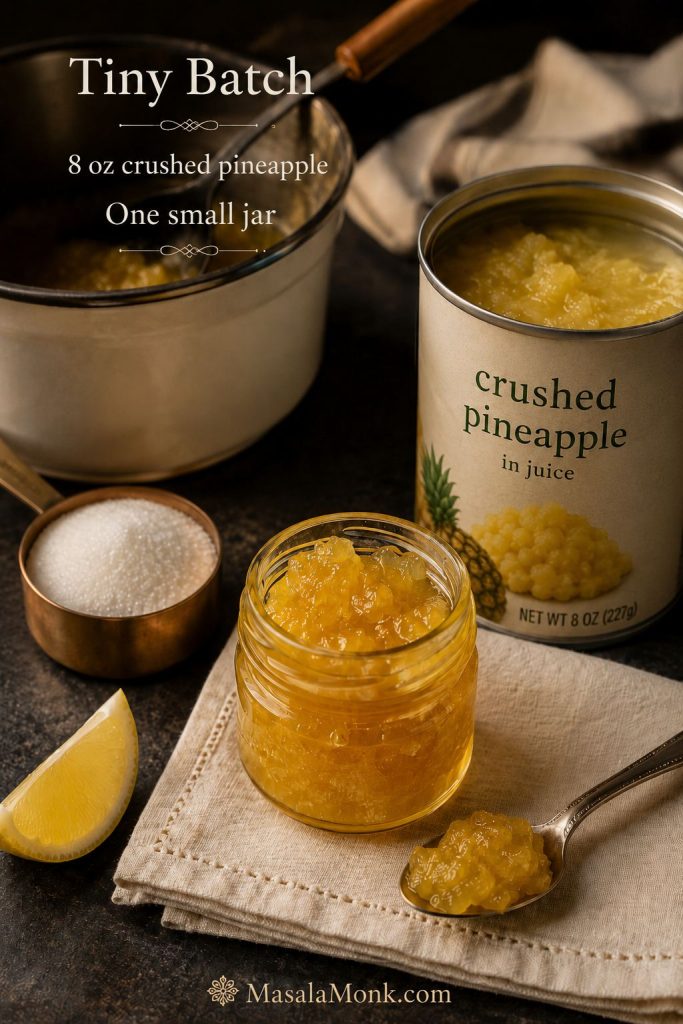
  4. Smoothies: Adding lime to your green smoothies can give them a refreshing taste while adding the nutritional benefits of this citrus fruit.
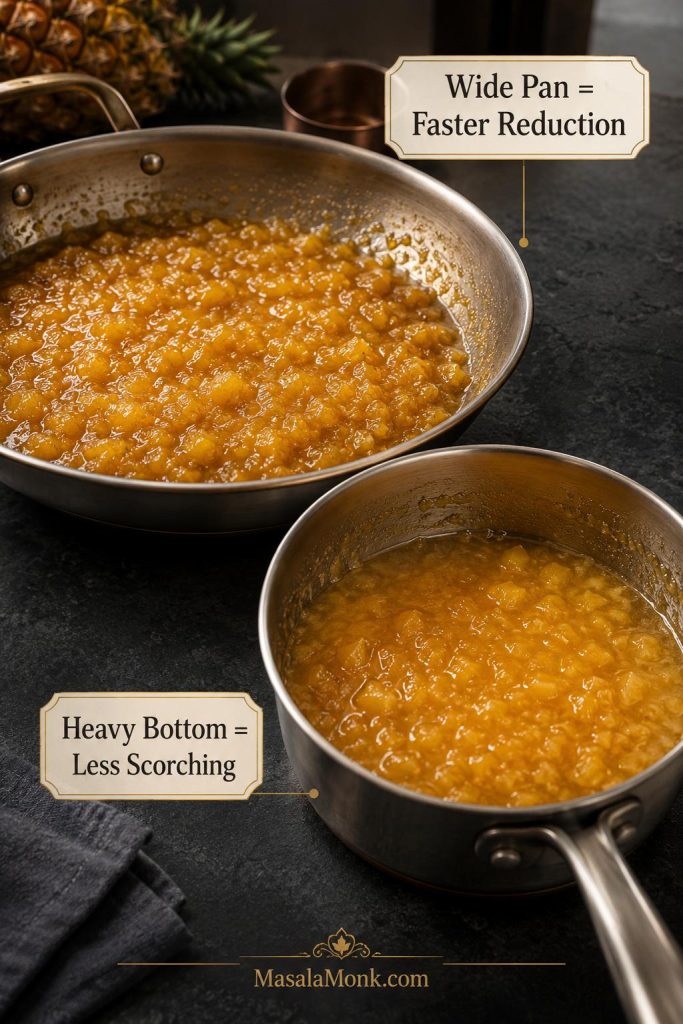
  5. Detox Drinks: You can make a detox drink using lime, along with other ingredients like cucumber, mint, and watermelon. These drinks are usually low in calories and can help promote hydration.
  6. Tea: You can add lime juice to your tea. Whether it’s green tea or herbal tea, a dash of lime can make your cup more enjoyable.

While these methods can help you incorporate lime into your diet, the key to weight loss is maintaining a calorie deficit (burning more calories than you consume), eating a balanced diet, and exercising regularly. Limes are a fantastic way to enhance the flavor of your food and drinks, making your healthy diet more enjoyable. However, they are just a part of a comprehensive lifestyle strategy for weight loss. Always consult with a healthcare provider before starting any weight loss plan to ensure it’s appropriate for your personal health needs.

How to make Lime Water for Weight Loss?

Lime water can be a refreshing, low-calorie beverage to include in a healthy weight loss plan. It’s important to note that while it’s a healthy drink choice, it isn’t a magic solution for weight loss. Weight loss should come from a combination of a balanced diet and regular physical activity. Nonetheless, lime water can certainly be a part of your healthy lifestyle. Here’s a simple recipe for lime water:

Ingredients:

  • 1-2 fresh limes
  • 1 liter of water
  • Optional: A teaspoon of honey or a natural sweetener of your choice

Steps:

  1. đź§Ľ Clean the limes: Before using, wash the limes thoroughly under running water to remove any possible dirt or pesticides.
  2. 🍋 Juice the limes: Cut the limes in half and squeeze out the juice. Depending on your taste preferences, you can adjust the amount of lime. Typically, the juice of one lime is enough for one liter of water.
  3. đźš° Mix lime juice with water: Pour the freshly squeezed lime juice into a liter of water and stir well.
  4. 🍯 Add sweetener (optional): If desired, you can add a teaspoon of honey or another natural sweetener to your lime water. Remember, though, that adding sweeteners will also add calories. For weight loss, it’s best to consume lime water unsweetened.
  5. ❄️ Chill or serve over ice: You can drink the lime water immediately, but many people prefer it chilled. Place it in the fridge for an hour or so, or simply serve over ice.
  6. 🎉 Enjoy!: Sip this refreshing beverage throughout the day.

Remember, adding lime water to your diet can promote hydration, provide you with vitamin C, and make for a tastier alternative to plain water, but it’s not a standalone solution for weight loss. Regular exercise and a balanced, calorie-controlled diet are essential for healthy weight loss.

If you’re considering making major changes to your diet for weight loss or health reasons, it’s always a good idea to talk to a dietitian or your healthcare provider. They can provide personalized advice that takes into account your overall health, lifestyle, and goals. 🏋️‍♀️🥗👨‍⚕️

Conclusion

Lime is a small citrus fruit with big benefits. Packed with antioxidants and high in vitamin C, it boosts immunity and supports skin health, all while helping manage your weight. From a warm glass of lime water to kick-start your day to a zesty lime-infused dish or a refreshing smoothie, there are myriad ways to incorporate this tangy fruit into your diet.