Posted on Leave a comment

Watermelon Juice Recipe

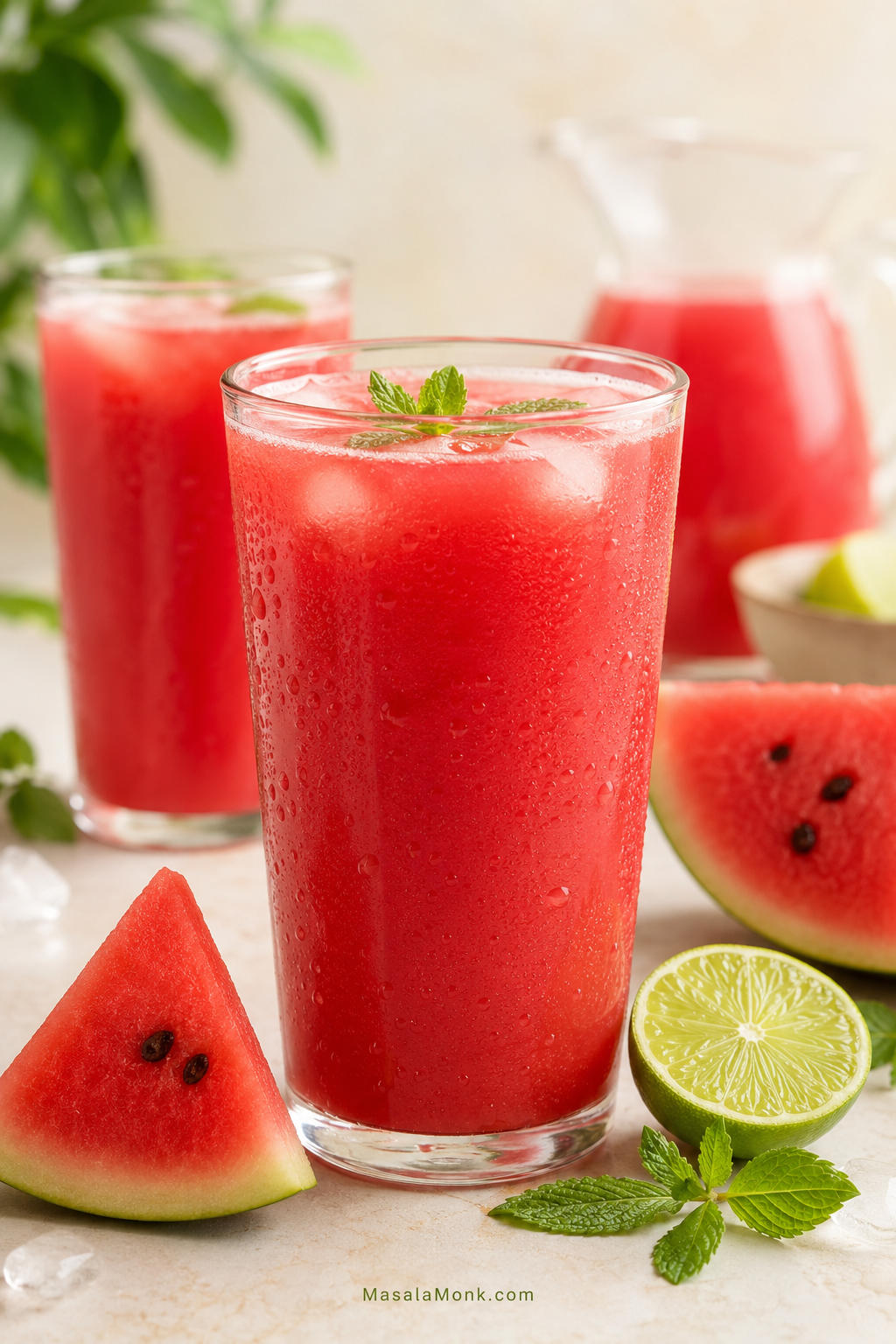
Cold watermelon juice served in clear glasses with ice, watermelon wedges, lime, and mint on a bright summer surface.

There are days when a cold glass of watermelon juice feels better than dessert: icy, ruby-red, naturally sweet, and bright enough to wake you up in a few sips. The only catch is that it can turn flat or watery if you blend it the wrong way.

This watermelon juice recipe keeps the flavor bold by blending cold watermelon without added water, then balancing it with lime or lemon and a small pinch of salt. You do not need a juicer, and you can leave it pulpy, strain it smooth, or turn the same base into watermelon cucumber juice, watermelon pineapple juice, mint watermelon juice, or Indian-style tarbooz juice with black salt.

The best glass should taste like biting into cold watermelon, not like watermelon-flavored water. That is why this method starts with chilled fruit, skips added water, and adjusts only after you taste: citrus for lift, a tiny pinch of salt for brightness, and more cold fruit for body.

Quick Answer: How to Make Watermelon Juice

Blend 4 cups cold seedless watermelon cubes with 1 tablespoon fresh lime or lemon juice and a small pinch of salt. Do not add water at first. Strain the juice if you want it smooth, or leave it unstrained for a thicker, pulpy, fresh-fruit texture. Serve it over ice right away, or chill it briefly and stir before pouring.

Sweet watermelon needs very little help. Bland fruit is where the lime-and-salt trick matters most. That small adjustment is what turns watery blended fruit into a bright, cold glass that actually tastes alive.
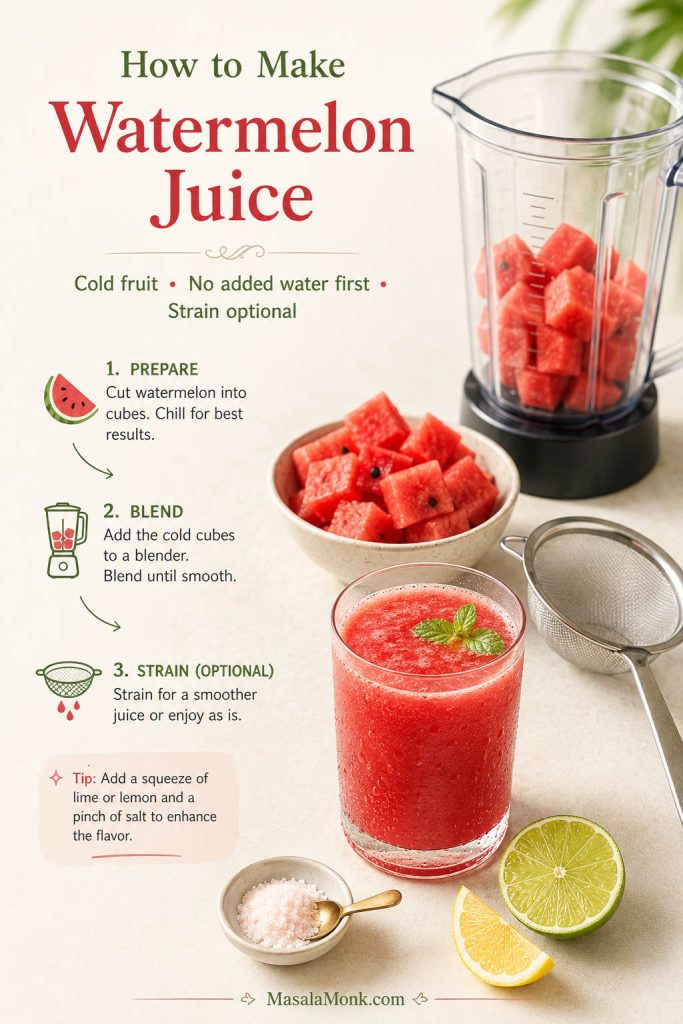
Quick guide showing watermelon cubes, lime, lemon, salt, a blender, and optional strainer for making watermelon juice.
Blend cold watermelon first, then taste before adding anything else. That small pause helps you fix the fruit you actually have instead of diluting the glass too early.

If your juice tastes flat, thin, or pulpy after blending, use the flavor fixes before adding more ice or sugar.

Why This Watermelon Juice Works

The best version should taste like cold, ripe watermelon first: clean, juicy, and bright. Everything else in this recipe is there to protect that flavor, not cover it up.

  • No juicer needed: Watermelon blends easily because it is naturally full of juice.
  • No added water: The drink stays sweet, fresh, and concentrated instead of diluted.
  • Lime or lemon wakes it up: A little acidity lifts even average watermelon.
  • A small pinch of salt helps: Regular salt sharpens the sweetness; black salt gives an Indian-style summer cooler flavor.
  • Straining is optional: Keep the pulp for body, or strain the juice for a cleaner pitcher-style drink.

Because the base is so clean, you can use it for everyday drinking, mocktails, brunch drinks, popsicles, or cocktails like a watermelon margarita.

Ingredients for Watermelon Juice

You only need watermelon for the simplest version, but lime or lemon and a little salt make the drink taste much more alive.
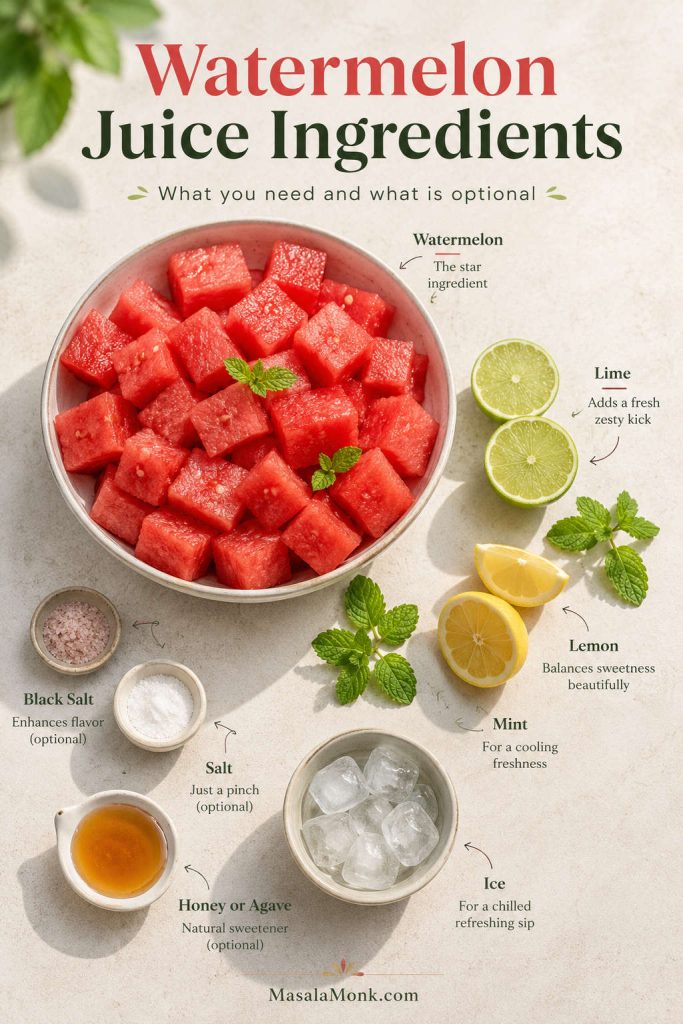
Watermelon juice ingredients arranged with watermelon cubes, lime, lemon, mint, salt, black salt, sweetener, and ice.
Watermelon does most of the work, while the small additions shape the flavor. Lime or lemon adds lift, salt sharpens sweetness, and mint or black salt changes the mood.
Ingredient US Measure Metric Why It Matters
Cold seedless watermelon cubes 4 cups About 600 g The main body, sweetness, and color of the drink.
Fresh lime or lemon juice 1 tablespoon 15 ml Lifts the flavor and fixes flat-tasting fruit.
Fine salt or black salt Small pinch, up to 1/8 teaspoon About 0.5 g Makes the fruit taste sweeter and more refreshing.
Fresh mint leaves 6–10 leaves Optional Adds a cooling summer flavor.
Honey, sugar, or agave 1–2 teaspoons Optional Use only if the watermelon is not sweet enough.
Ice As needed Optional Serve over ice, but avoid blending in too much ice because it waters down the flavor.

Seedless vs Seeded Watermelon

Seedless watermelon is easiest because you can cube and blend it quickly. If you have seeded watermelon, remove as many black seeds as possible before blending. A few small white seeds are usually fine in a blender, especially if you plan to strain the juice.

Lime or Lemon?

Lime gives the drink a sharper, more tropical edge. Lemon tastes softer and more familiar, especially if you are making watermelon lemonade or Indian-style tarbooz juice. Either works, so use what you have.
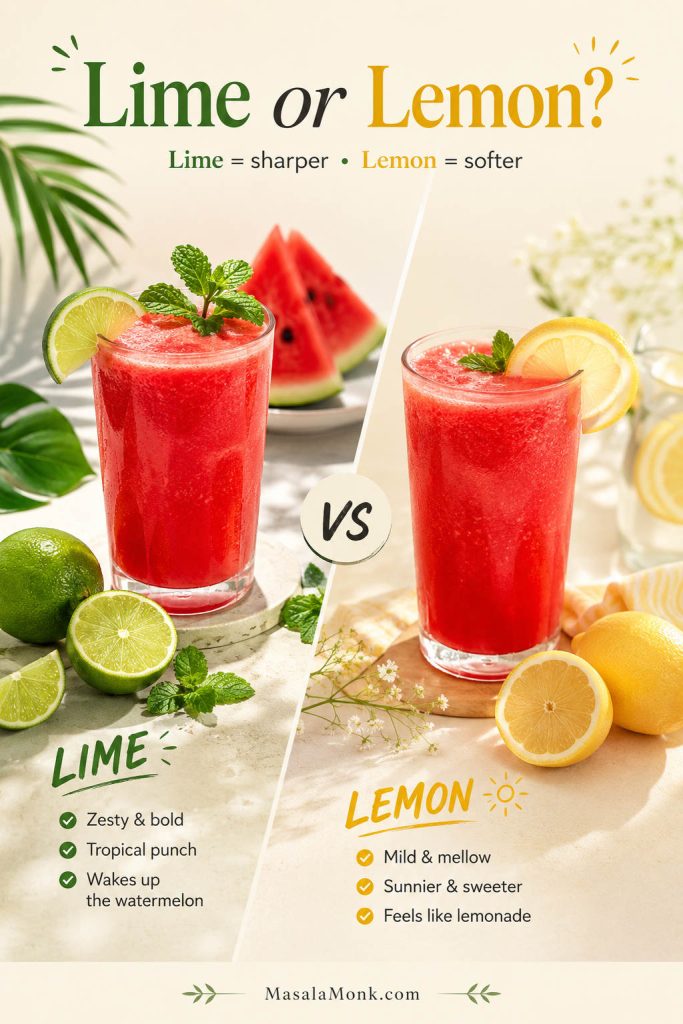
Split comparison showing lime and lemon options for watermelon juice, with lime shown as sharper and lemon as softer.
Lime gives the glass a sharper, cleaner edge, while lemon makes it softer and more lemonade-like. Choose lime for crispness and lemon for a gentler summer drink.

Do You Need Sugar?

Usually, no. A ripe watermelon should be sweet enough. However, if the fruit is pale, bland, or not fully ripe, add 1–2 teaspoons of honey, sugar, simple syrup, or agave. Start small because the drink should still taste fresh, not syrupy.
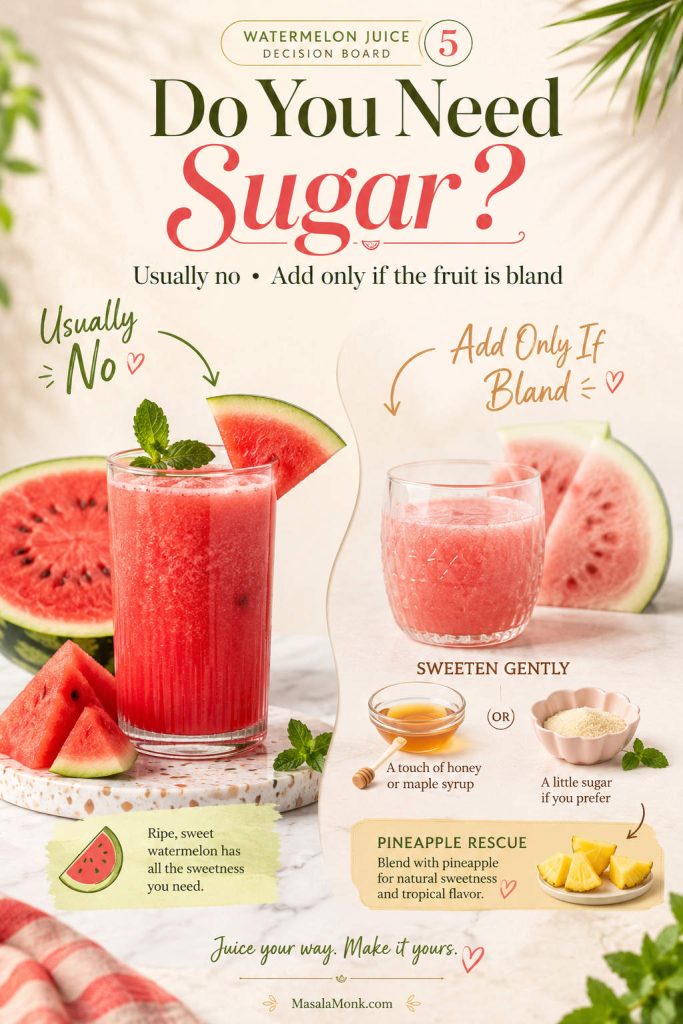
Decision board showing ripe watermelon needing no sugar and bland watermelon with optional sweetener or pineapple.
Ripe watermelon usually needs no sugar. When the fruit tastes pale or flat, pineapple or a tiny amount of sweetener can rescue the juice without making it syrupy.

If your watermelon needs help but you do not want to lean on sugar, pineapple is one of the easiest fruit fixes. For another naturally sweet tropical drink, this pineapple mango juice follows the same fruit-forward idea.

How to Pick a Sweet Watermelon

The best juice starts before the blender. If the melon is sweet and ripe, the recipe needs almost no help. If you only check two things, choose one that feels heavy for its size and has a creamy yellow field spot.
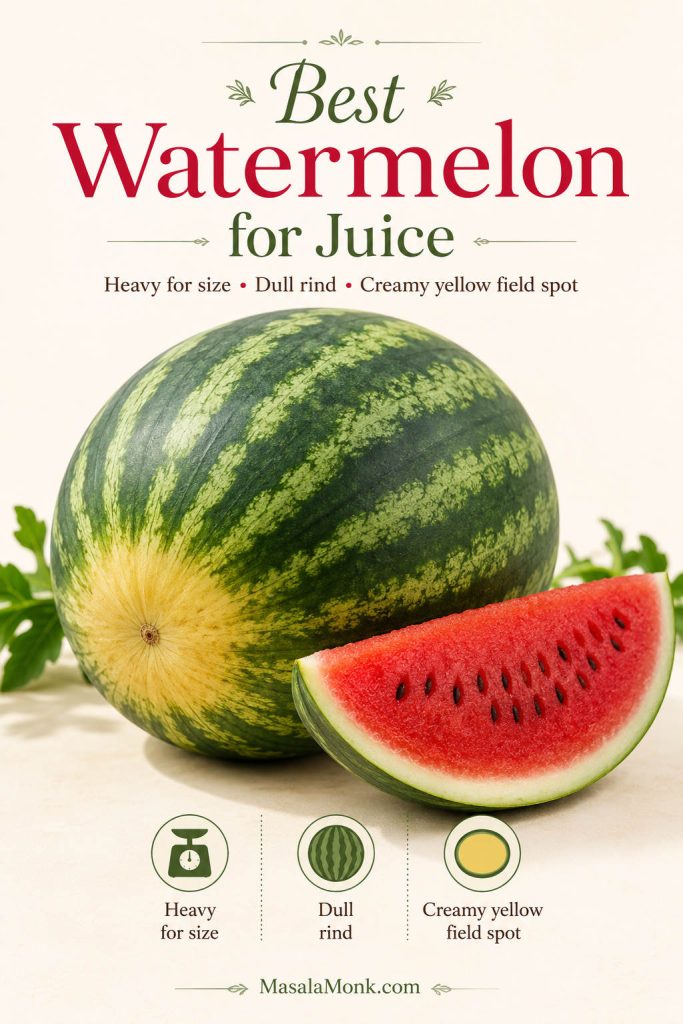
Whole watermelon with a creamy yellow field spot and ripe red cut fruit used as a guide for choosing watermelon for juice.
Better juice starts with better fruit. Choose a watermelon that feels heavy for its size and has a creamy yellow field spot for the best chance at sweetness.
  • Heavy for its size: A juicy watermelon should feel heavier than it looks.
  • Dull rind: A shiny rind can mean the fruit is underripe.
  • Creamy yellow field spot: This is where the melon rested on the ground. A deeper yellow spot usually suggests better ripeness.
  • Symmetrical shape: Avoid oddly dented or misshapen fruit when possible.
  • No soft spots or sour smell: Once cut, the flesh should smell fresh and sweet, not fermented.

How to Make Watermelon Juice in a Blender Without a Juicer

This is the easiest clean method because it is fast, low-effort, and does not require special equipment. You do not need a perfect watermelon for it to work. A great melon needs almost nothing; an average one can still become a good drink with citrus, salt, cold temperature, or a little pineapple.
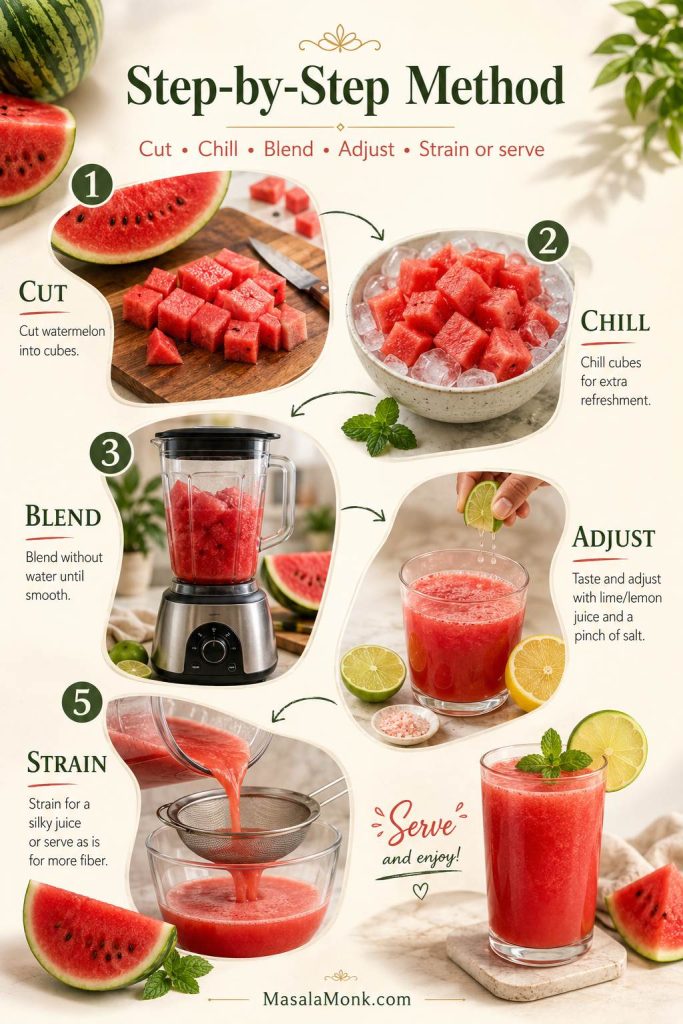
Step-by-step board showing watermelon being cut, chilled, blended, adjusted with citrus and salt, then strained or served.
The method is simple, but the order matters. Chill and blend the fruit first, then adjust the flavor before deciding whether to strain or serve.

Wash the Watermelon Before Cutting

Rinse the outside before cutting, and scrub the rind under running water if it feels dusty or dirty. You do not eat the rind, but the knife passes through it into the fruit, so a clean outside matters. Food-safety guidance also recommends washing produce before cutting, even when you do not eat the skin.

Whole watermelon being washed under running water before cutting for fresh juice.
Wash the rind before cutting, even though you will not eat it. As the knife passes through the outside into the flesh, a clean rind helps keep juice prep cleaner.

Chill the Watermelon

Cold fruit makes better juice. If the watermelon is already cold, you can serve the drink right away without blending in extra ice. If it is room temperature, cube it and chill the pieces for 30 minutes before blending, or chill the finished pitcher briefly before serving.
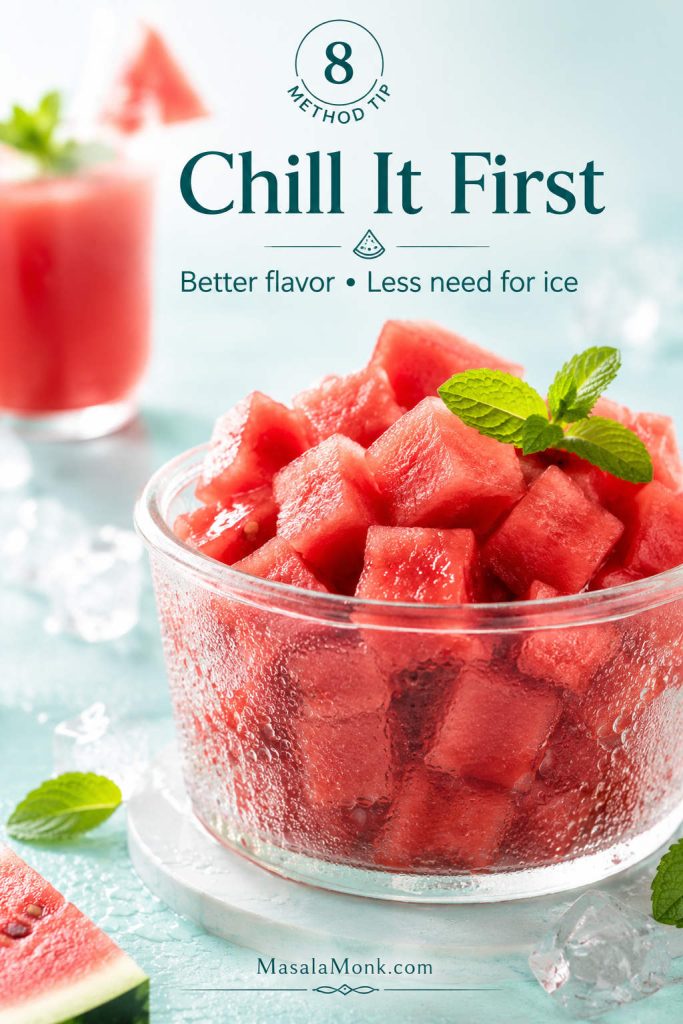
Cold watermelon cubes chilled in a glass bowl before blending into watermelon juice.
Cold fruit gives the drink better body and a cleaner first sip. It also reduces the need for blended ice, which can make the juice taste watery.

Cut Away the Rind

Slice off the green rind and the pale white part underneath it. A little pale edge will not ruin the drink, but too much white rind can make it taste grassy or thin.
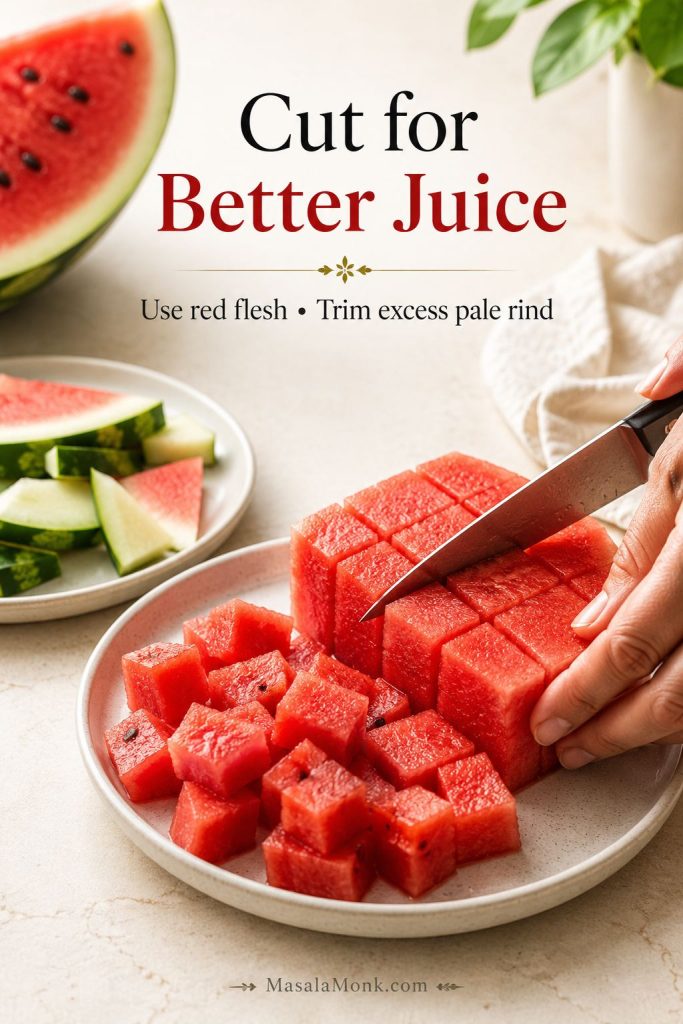
Watermelon being cut into red cubes with the pale rind trimmed away for making juice.
Use mostly the red flesh for the cleanest flavor. Too much pale rind can make fresh watermelon juice taste grassy, thin, or less naturally sweet.

Blend Without Water

Add the watermelon cubes to a blender and blend for 30–60 seconds, until smooth. Do not add water at first. The fruit releases plenty of liquid as it blends.

The No-Water Rule

Blend the watermelon by itself first. Extra water makes the drink thinner before you know whether it needs help. If the blender struggles, pulse a few times, press the fruit down with a tamper if your blender has one, or add only 1–2 tablespoons cold water to get the blades moving.
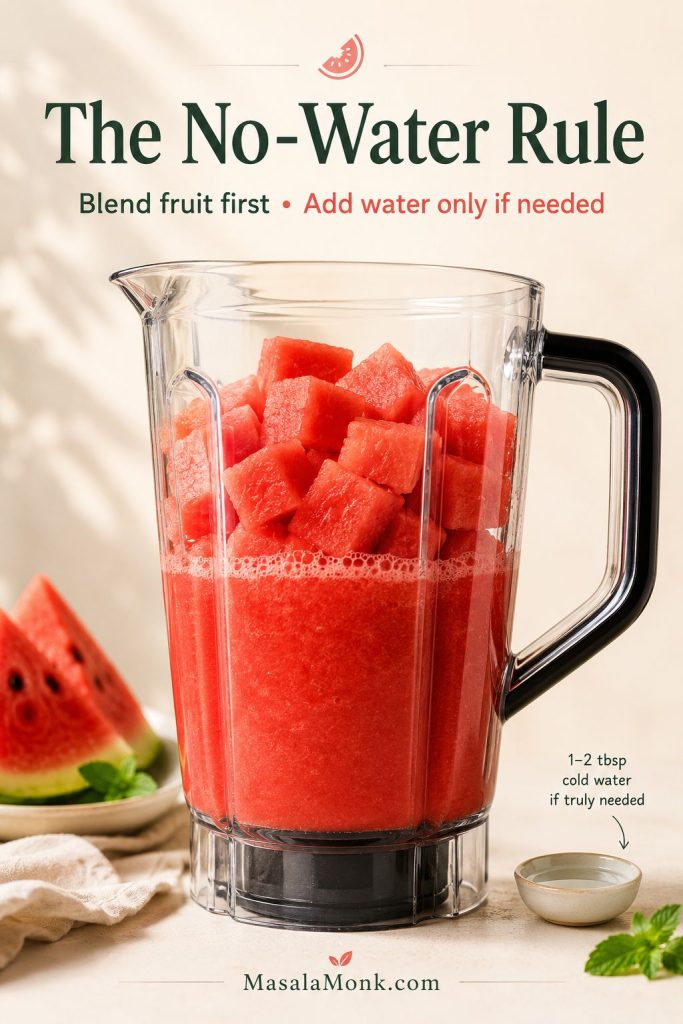
Blender filled with watermelon for the no-water method, with a small water cue only if needed.
Watermelon releases plenty of liquid once the blades catch. Start without water and use only the smallest splash of cold water if your blender refuses to move.

If the first blend tastes weak or watery, taste and adjust before adding ice or extra water.

Taste, Then Adjust

Taste before adding anything else. Sweet but flat? Add lime or lemon. Dull? Try a tiny pinch of salt or black salt. Not sweet enough? Add a teaspoon or two of honey, sugar, agave, or a little pineapple.
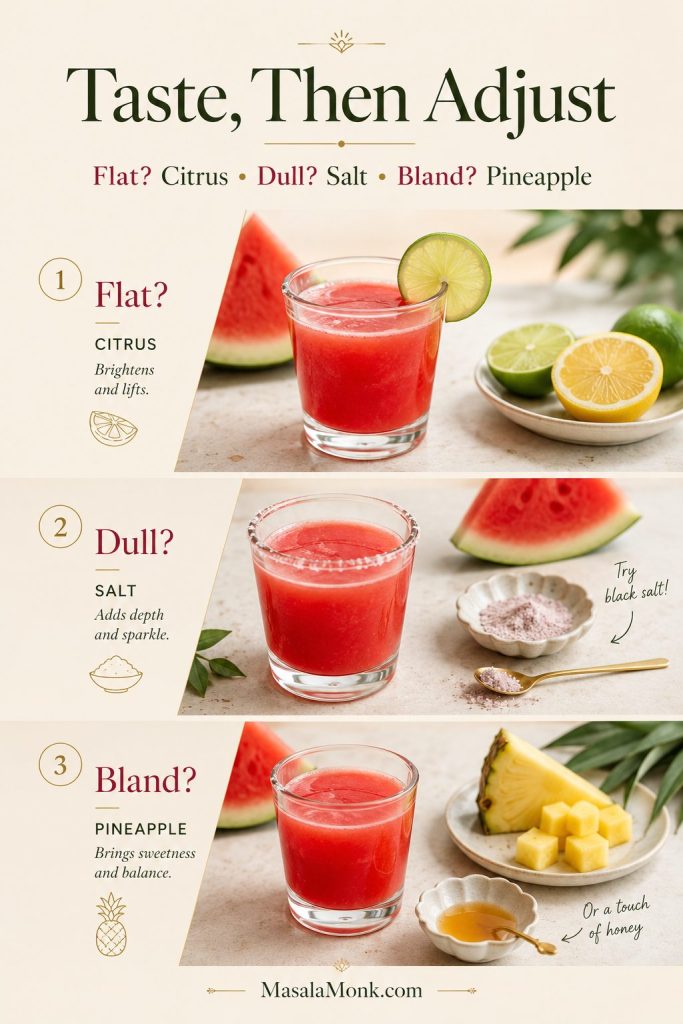
Taste-and-adjust guide showing citrus for flat juice, salt for dull juice, and pineapple for bland watermelon juice.
A quick taste tells you what the glass needs. Citrus brightens, salt sharpens, and pineapple adds sweetness plus acidity when the melon tastes weak.

Strain If You Want It Smooth

Pour the juice through a fine-mesh strainer for a clean, smooth glass. Leave it unstrained if you like a thicker, pulpy, fresh-fruit texture.

Serve Cold

Pour into glasses over ice and enjoy soon after blending. Garnish with mint, lime, lemon, or small watermelon wedges if you want it to look more polished.

Should You Strain Watermelon Juice?

Straining is optional. The right choice depends on the texture you want and how you plan to serve the drink.

If you want a juice-bar-style glass, strain it. If you want more body and less waste, leave it pulpy.
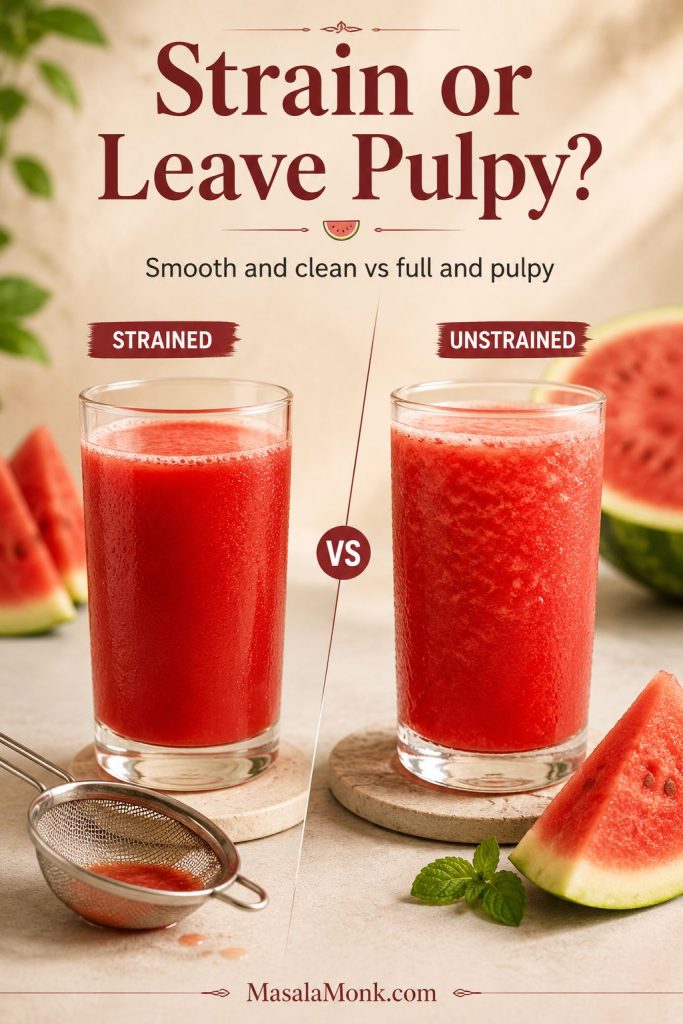
Comparison of strained watermelon juice and unstrained pulpy watermelon juice in clear glasses.
For a pitcher or mocktail, strained juice looks cleaner. When you are drinking it right away, the pulp adds body and keeps more of the fruit in the glass.
Style Texture Best For
Unstrained Thicker, pulpy, more body Everyday drinking, less waste, a fuller fruit texture
Fine-mesh strained Smooth but still fresh Pitchers, guests, cleaner glasses
Cheesecloth or nut milk bag Very smooth and polished Mocktails, cocktails, party drinks, or extra-smooth juice

For a quick glass at home, unstrained is perfectly fine. For a pitcher, mocktail, or cocktail, straining gives a cleaner finish.

Still not sure about texture? See the texture guide for thin, just-right, and pulpy juice.

How to Fix Bland, Watery, or Pulpy Watermelon Juice

This is where homemade watermelon juice either becomes excellent or stays forgettable. Watermelon changes from fruit to fruit, so taste the blended juice before adding anything. Then fix the exact problem instead of dumping in ice, sugar, or water.

If the first sip is not right, do not panic and do not add more ice. Flat juice needs citrus and salt, thin juice needs more cold fruit, and pulpy juice needs straining.
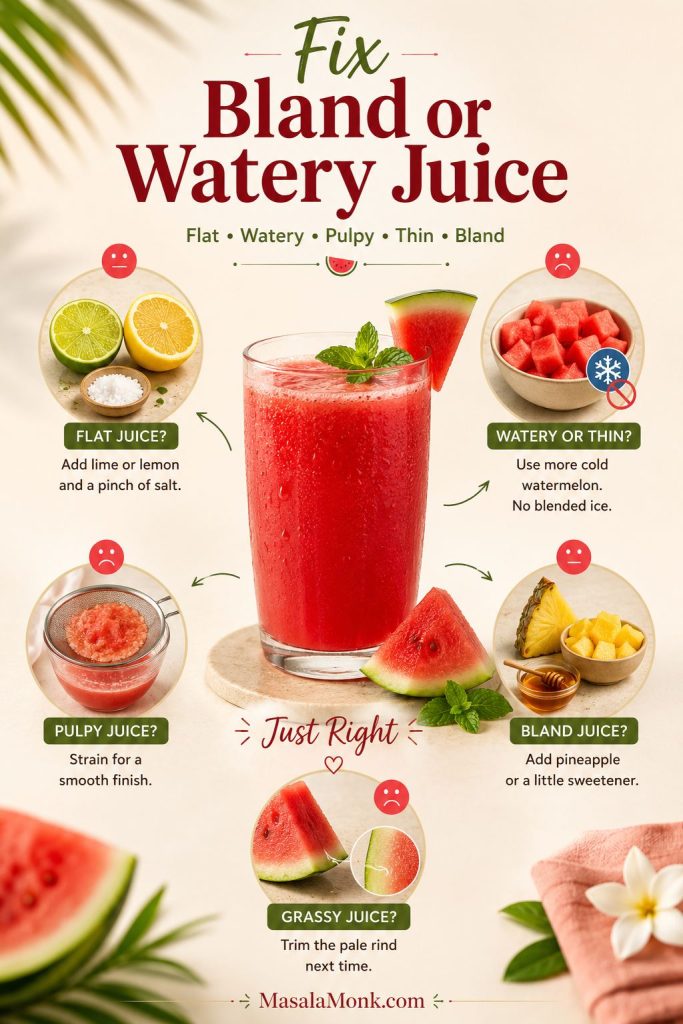
Troubleshooting board showing fixes for bland, watery, pulpy, thin, and flat watermelon juice.
Do not rescue a dull batch with more ice. Instead, fix the actual problem: brighten the flavor, rebuild the body, or strain the texture until the glass tastes balanced.
Problem Best Fix
Tastes flat Add 1 tablespoon lime or lemon juice and a small pinch of salt.
Not sweet enough Add 1–2 teaspoons honey, sugar, or agave. Pineapple also helps.
Too sweet Add lime, lemon, cucumber, or sparkling water.
Too watery Chill it, stir it, and serve over ice instead of blending ice into it. For more body, blend in extra cold watermelon.
Too pulpy Strain through a fine-mesh sieve, cheesecloth, or nut milk bag.
Too thin after straining Blend in more cold watermelon, not more ice.
Separated in the fridge Stir or shake before serving. Separation is normal.
Slightly grassy Use less of the pale white part near the rind next time.

What not to do: Do not fix thin, bland juice by blending in a lot of ice or water. That makes the flavor even weaker. Use lime or lemon for brightness, a small pinch of salt for lift, pineapple for sweetness, or more cold watermelon for body.

What the Right Texture Looks Like

The ideal texture is bright and full without becoming thick. Use this guide after blending or straining, especially if the juice tastes thin or feels too pulpy.

Three glasses comparing watermelon juice that is too thin, just right, and too pulpy.
The best texture is bright and full without feeling thick. If the juice is too thin, blend in more cold watermelon; if it is too pulpy, strain it.

Watermelon Juice Variations

Once the basic glass tastes bright, choose the variation by mood: cucumber for cooler and lighter, pineapple for sweeter and fuller, ginger for bite, sparkling water for a mocktail feel, and black salt for Indian-style tarbooz juice.

Variation guide showing cucumber, pineapple, ginger, sparkling, and tarbooz-style watermelon juice options.
Once the basic glass tastes balanced, choose the variation by mood. Cucumber cools it down, pineapple adds sweetness, ginger gives bite, and black salt makes it tarbooz-style.
What You Want Make This Version
Bright, crisp, and classic Watermelon lime juice
Cooler and less sweet Watermelon cucumber juice
Sweet-tart and tropical Watermelon pineapple juice
A little bite Watermelon ginger juice
Light, fizzy, and mocktail-like Sparkling watermelon juice
Tangy Indian summer-cooler flavor Tarbooz juice with black salt, mint, and lemon

If you are making a pitcher or party batch, check the yield guide before scaling any variation.

Watermelon Lime Juice

Choose this when you want the cleanest, brightest glass. Blend 4 cups watermelon with 1 tablespoon lime juice and a small pinch of salt. It tastes crisp, cold, and not too sweet.
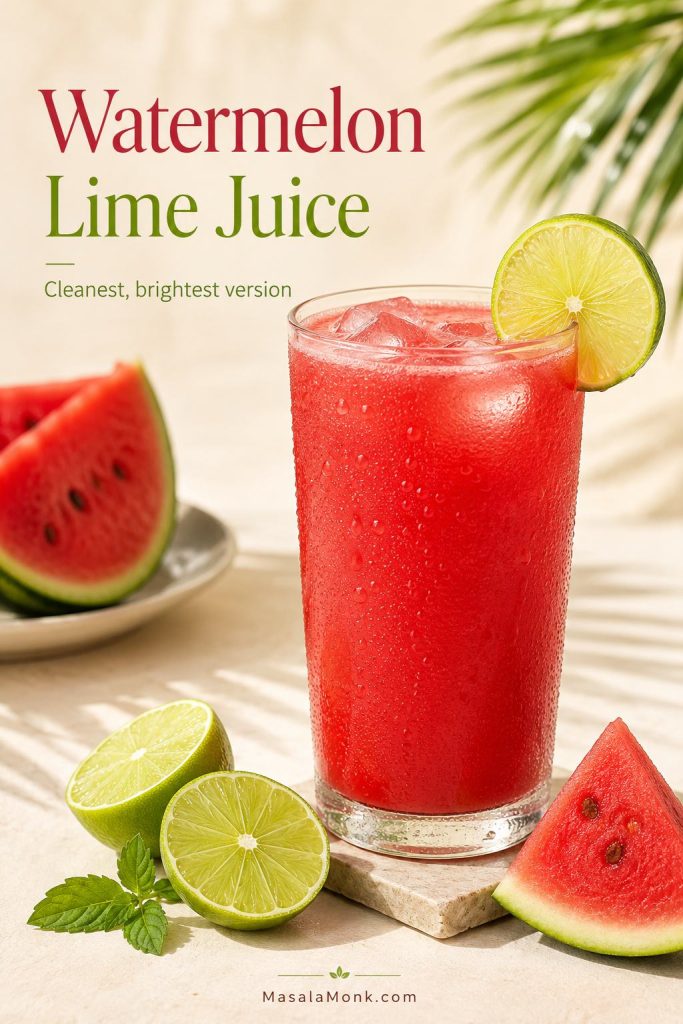
Watermelon lime juice served cold with lime garnish, watermelon wedges, and condensation on the glass.
Choose watermelon lime juice when you want the crispest version. Lime cuts through the sweetness quickly, so the glass tastes clean, bright, and not too heavy.

Watermelon Lemon Juice

Lemon gives the base a softer, lemonade-like brightness. Use 1 tablespoon lemon juice instead of lime. This is the simplest version of watermelon and lemon juice, and it works especially well with mint or black salt.
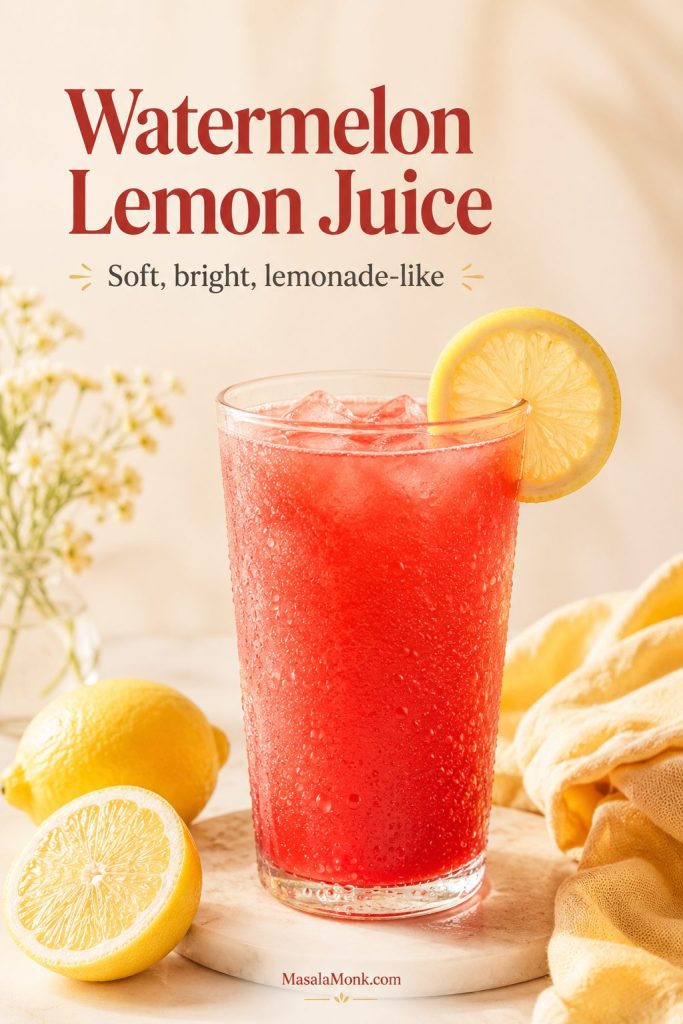
Watermelon lemon juice served cold with lemon slices and a soft lemonade-style presentation.
Lemon gives the drink a softer kind of brightness. Because it tastes gentler than lime, this version works well when you want a watermelon lemonade feel.

Watermelon Mint Juice

Mint makes the drink taste colder and more refreshing, especially on very hot days. Blend 4 cups watermelon with 6–10 fresh mint leaves and 1 tablespoon lime juice. Start with fewer leaves if your mint is strong, because too much can turn the flavor herbal instead of fresh.
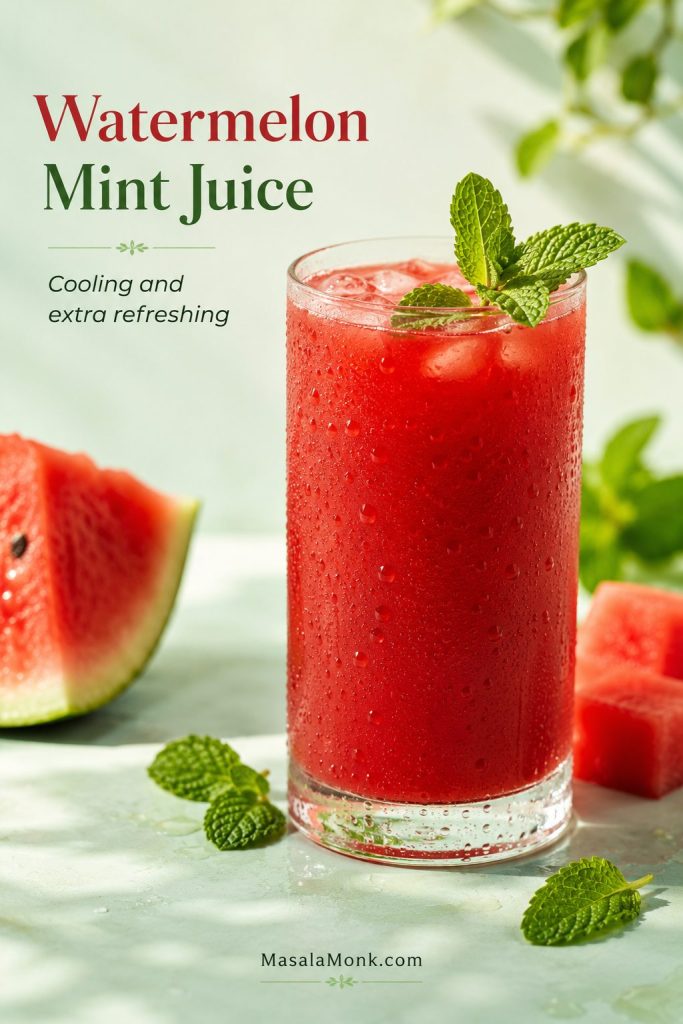
Watermelon mint juice served cold with fresh mint leaves and watermelon pieces.
Mint makes the drink feel cooler without adding sweetness. Start with a few leaves first, then add more only if you want a stronger herbal finish.

If mint and lime are your favorite part of the glass, you may also like this mojito recipe for the same cooling, citrusy direction.

Watermelon Cucumber Juice

When you want something cooler and less sweet, add cucumber. Blend 4 cups watermelon with 1/2 to 1 cup peeled cucumber, 1 tablespoon lime or lemon juice, and a small pinch of salt. This also covers the same idea people search for as watermelon and cucumber juice.
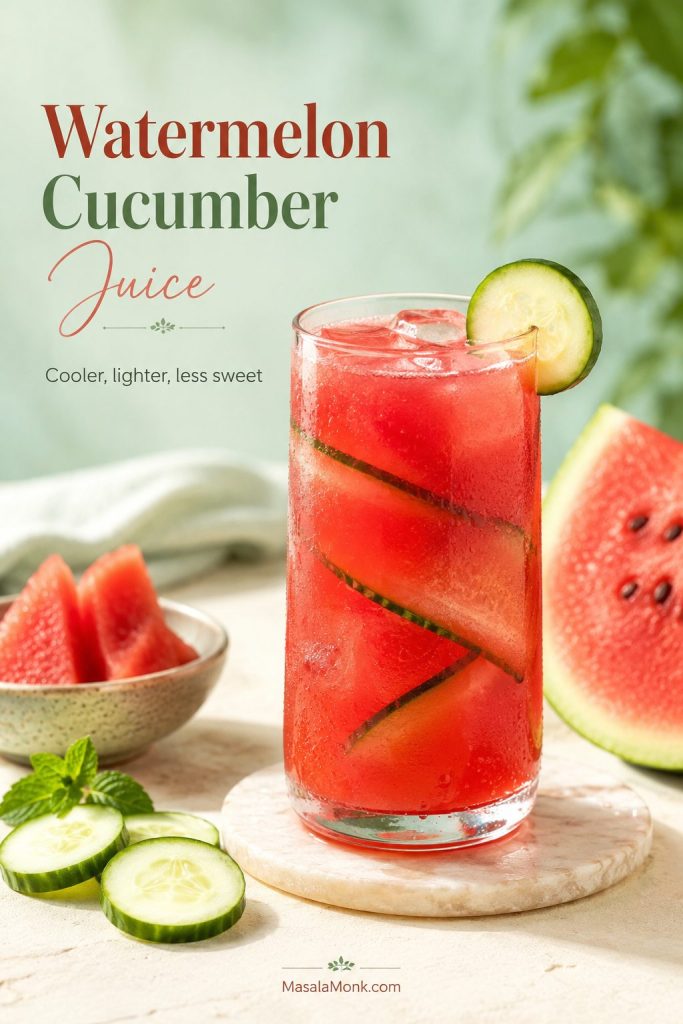
Watermelon cucumber juice served cold with cucumber slices, watermelon pieces, and mint.
Cucumber makes the juice lighter and less sweet, which helps when the watermelon is very ripe. It also gives the glass a cleaner, spa-water-style finish.

Watermelon Pineapple Juice

For bland watermelon, pineapple is the easiest rescue. It brings both sweetness and acidity, so the blend tastes fuller without needing much added sugar. Use 2 cups watermelon with 1 cup pineapple, then add lime if you want more sharpness. If you are looking for watermelon and pineapple juice, this 2:1 fruit ratio is the easiest place to start.
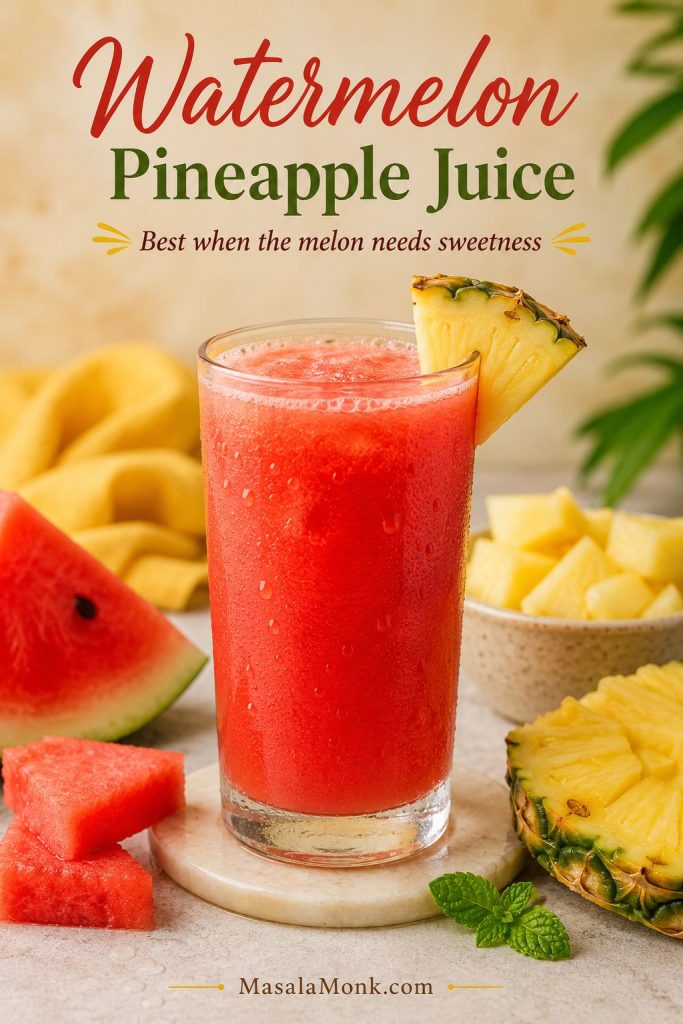
Watermelon pineapple juice served cold with pineapple pieces, watermelon, and mint.
Pineapple is the easiest fruit fix when watermelon tastes bland. It adds both sweetness and acidity, so the juice tastes fuller without needing much added sugar.

Watermelon Ginger Juice

For a sharper, more grown-up glass, add fresh ginger. It cuts through the sweetness and gives the juice a warm little kick. Blend 4 cups watermelon with 1 to 2 teaspoons fresh grated ginger and 1 tablespoon lemon or lime juice.
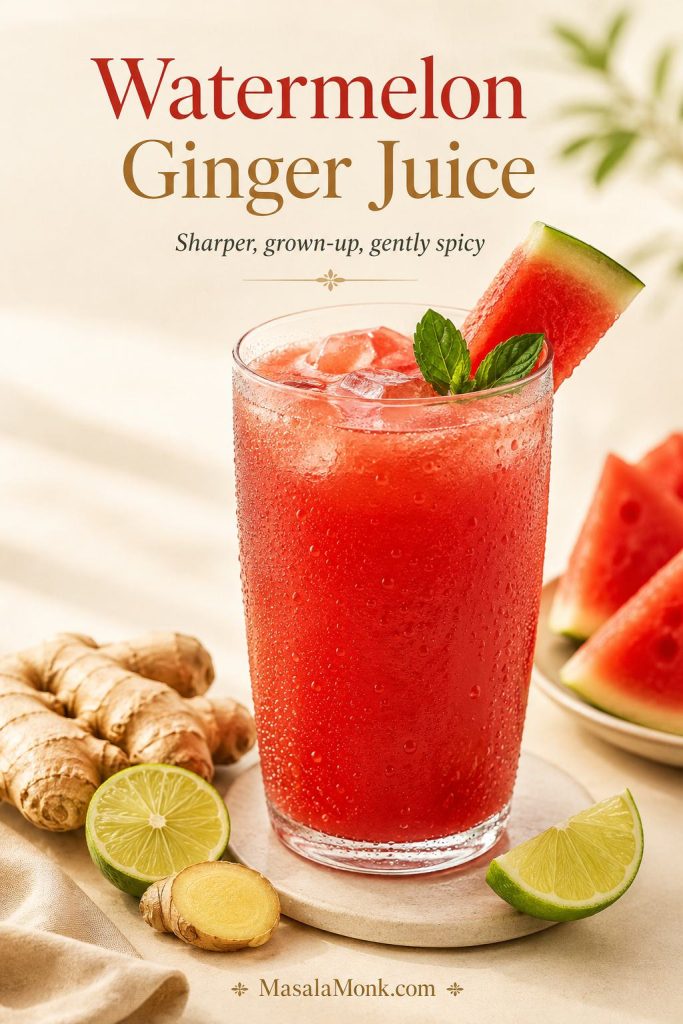
Watermelon ginger juice served cold with ginger root, citrus, mint, and watermelon.
Fresh ginger gives the drink a sharper, more grown-up finish. Start small because ginger can quickly overpower watermelon’s clean sweetness.

Watermelon Coconut Water

For a softer, slightly tropical version, blend 3 cups watermelon with 1/2 cup coconut water, lime, and mint. Use less coconut water at first because it thins the drink quickly.

Sparkling Watermelon Juice

For a mocktail-style glass, fill a cup about two-thirds full with cold watermelon juice, then top with chilled sparkling water. Add lime and mint for a cleaner finish.

Sparkling watermelon juice with visible bubbles, lime, mint, watermelon, and sparkling water.
Add sparkling water right before serving so the bubbles stay lively. This turns fresh watermelon juice into an easy mocktail-style summer drink.

For more non-alcoholic summer drink ideas, use this juice as a base for watermelon mocktails, especially versions with lime, mint, coconut water, or bubbles.

Indian-Style Tarbooz Juice

For an Indian summer-cooler flavor, blend watermelon with lemon or lime, mint, and a small pinch of black salt. Add only a tiny pinch of roasted cumin, black pepper, or chaat masala if you want that street-style edge. Keep the seasoning light so the fruit tastes cooler and brighter, not salty.
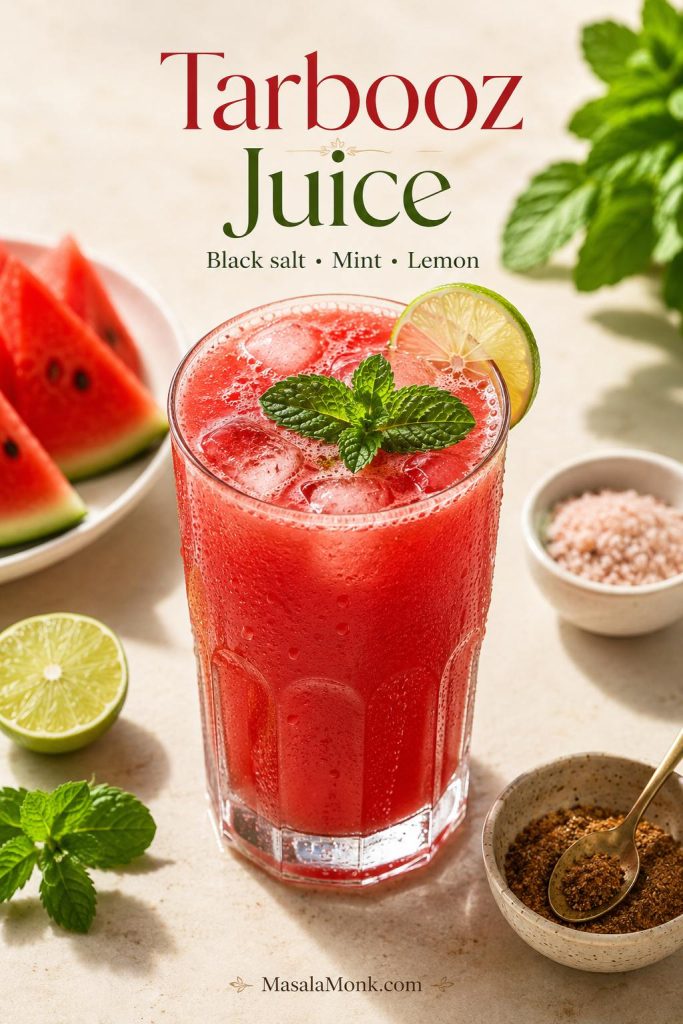
Indian-style tarbooz juice with watermelon juice, black salt, mint, lemon or lime, and small spice bowls.
Black salt gives tarbooz juice its tangy Indian summer-cooler edge. Keep the seasoning light, though, so the drink still tastes like cold watermelon first.

Juicing Watermelon: Blender vs Juicer Method

For watermelon, a blender is usually the better first choice because the fruit is already soft, juicy, and easy to break down. A juicer can work, but it often gives you a thinner, cleaner drink rather than the cold, full-bodied glass most people want at home.
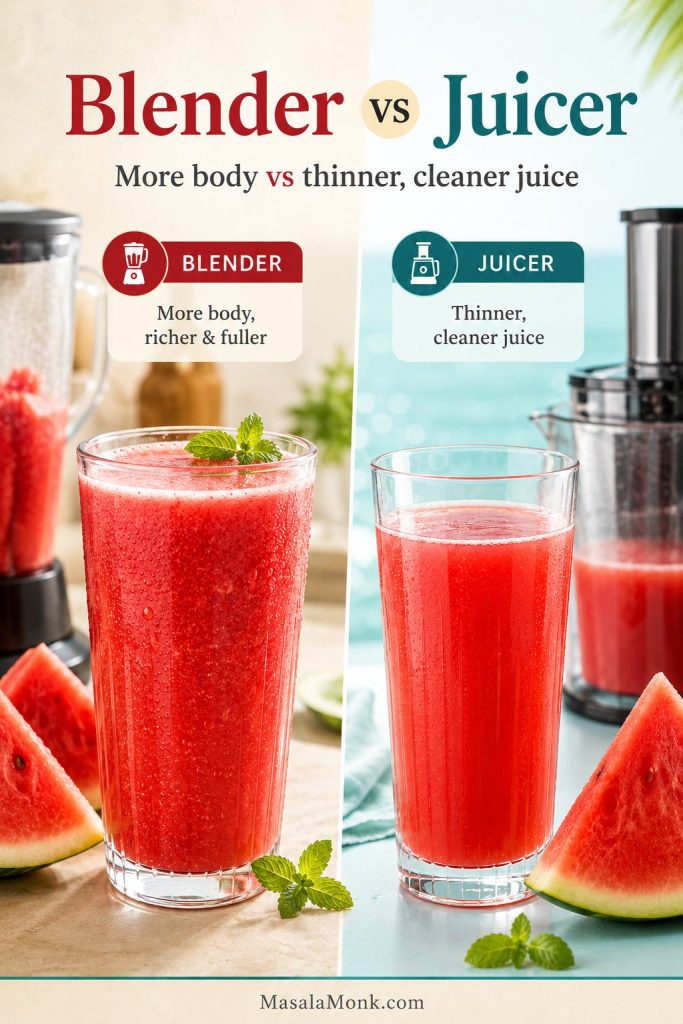
Comparison of blender and juicer methods for watermelon juice, showing fuller blended juice and thinner juiced watermelon.
A blender gives watermelon juice more body, while a juicer makes it thinner and cleaner. For most home batches, blending first is easier and more satisfying.
Method Result Best For
Blender, unstrained Thicker juice with more body Everyday drinking and less waste
Blender, strained Smooth, clean juice Pitchers, guests, mocktails, cocktails
Juicer Thinner, clearer juice People who already own a juicer and prefer a lighter drink

If you use a juicer, remove the rind and feed the pieces through slowly. If you use a blender, you can decide after blending whether you want to strain the juice or keep the pulp.

For a more filling drink, unstrained blended juice has an advantage because it keeps more of the fruit’s body. Mayo Clinic notes that juicing is not healthier than eating whole fruits and vegetables, and that blending edible parts can retain more fiber and plant compounds than extracting juice alone. You can read their general juicing guidance for more context.

How Much Juice Does One Watermelon Make?

The exact yield depends on ripeness, juiciness, and whether you strain. These estimates will help you plan.
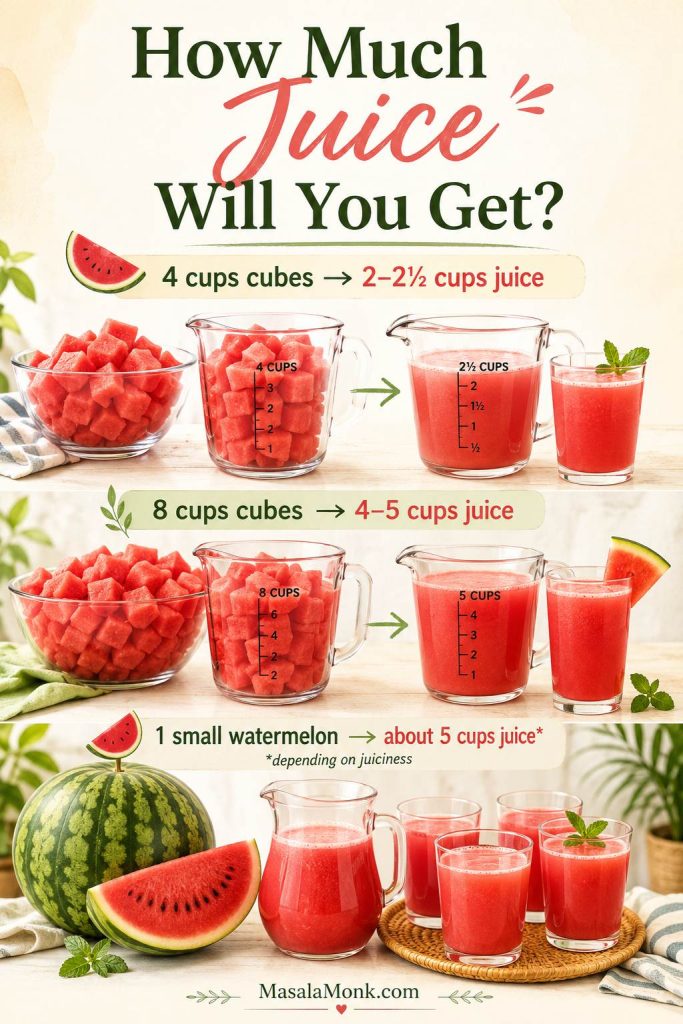
Watermelon juice yield guide showing juice amounts from 4 cups of cubes, 8 cups of cubes, and one small watermelon.
Watermelon yield changes with ripeness and juiciness, but 4 cups of cubes usually gives about 2 to 2½ cups of juice. Use this guide when scaling for a pitcher.
Watermelon Amount Approximate Juice Yield
4 cups cubed watermelon / about 600 g About 2–2½ cups / 480–600 ml
8 cups cubed watermelon / about 1.2 kg About 4–5 cups / 950 ml–1.2 L
1 small watermelon, about 6–6.5 lb About 5 cups, depending on juiciness

If you are making a pitcher for a group, start with 8 cups of cold cubed watermelon. That usually gives enough for about 4 glasses, especially if you serve it over ice or top some glasses with sparkling water.

How to Store Watermelon Juice

This drink tastes best right after blending. The flavor is brightest, the color is freshest, and the texture has not had time to settle.
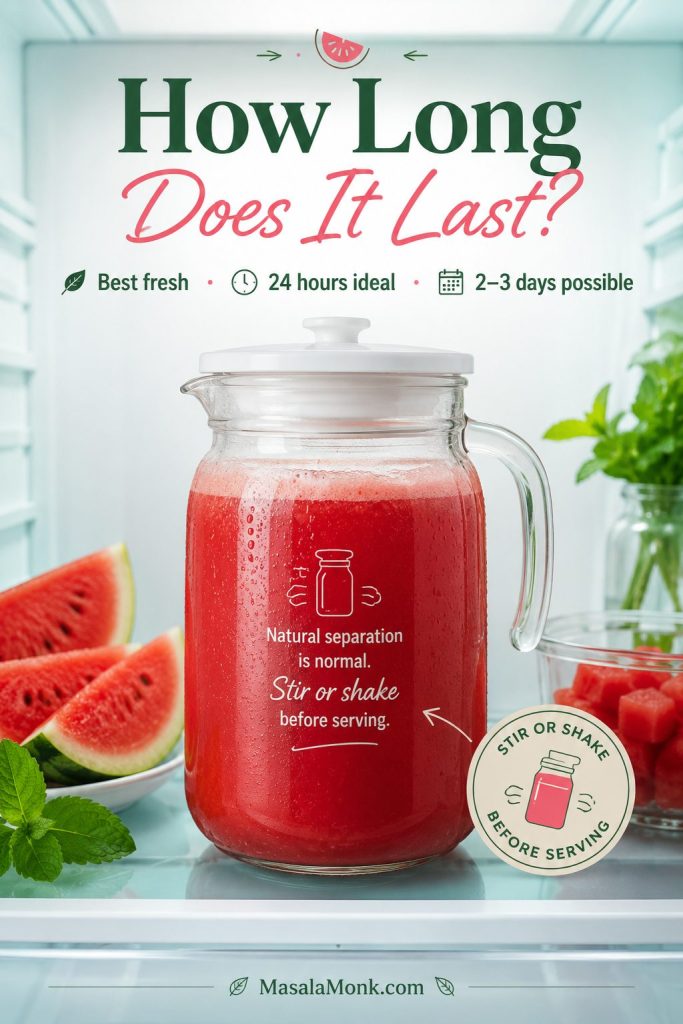
Storage guide for watermelon juice in a covered jar showing best fresh, 24 hours ideal, and 2 to 3 days possible.
Fresh is the peak, but a short fridge rest can still work. Keep the jar covered, serve it cold, and stir well before pouring because the pulp naturally settles.

Storage Rule

For the best make-ahead flavor, refrigerate watermelon juice in a clean covered jar for up to 24 hours. It can keep for 2–3 days if properly chilled, but the flavor fades and the juice naturally separates. Stir or shake before serving.

If you are serving guests, blend it the same day if possible. If you make it ahead, keep it covered and cold, then stir well and taste again before pouring.

  • Best: drink it right away.
  • Best make-ahead window: up to 24 hours in the fridge.
  • Possible: 2–3 days in a clean airtight jar, if kept cold.
  • Freeze: pour into ice cube trays for smoothies, mocktails, lemonade, or slushies.
  • Do not leave it out: fresh fruit juice should not sit at room temperature for long.

Separation is normal. It does not mean the juice has gone bad unless it smells sour, tastes fizzy, looks spoiled, or has been stored too long.

Freeze Extra Juice Into Cubes

Freezing is the best option when you have extra juice but do not want to drink it plain later. The cubes work better as a mixer than as thawed juice.
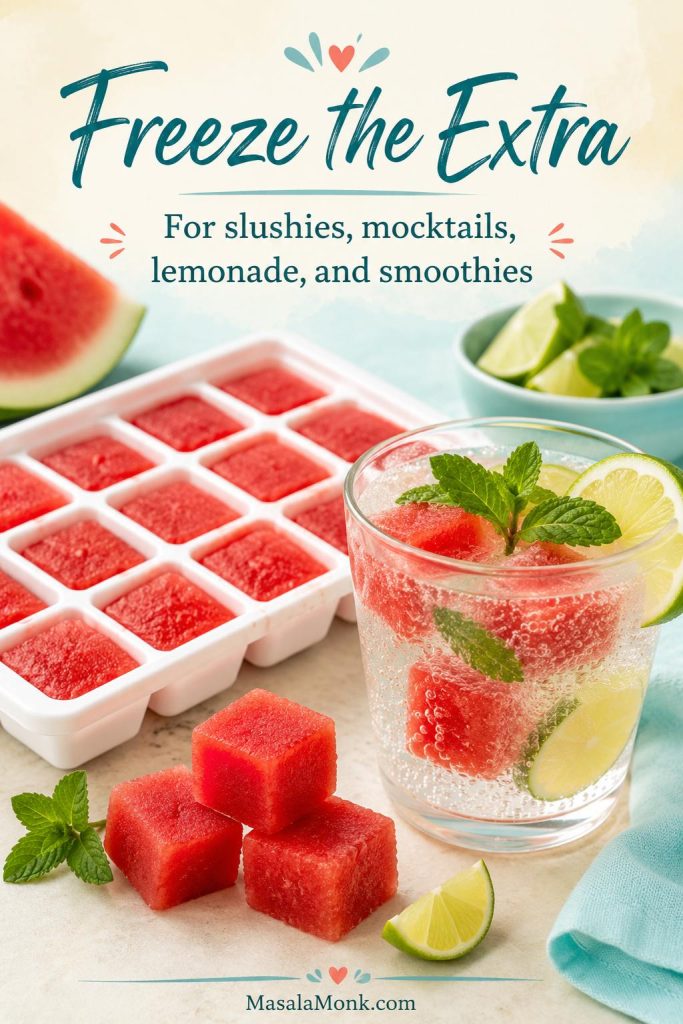
Frozen watermelon juice cubes in an ice cube tray with cubes added to a clear drink with lime and mint.
Freeze extra juice into cubes instead of wasting it. Later, use the cubes in lemonade, sparkling water, smoothies, slushies, or mocktails.

For more serving ideas, see the ways to use watermelon juice section.

Is Watermelon Juice Healthy?

Think of watermelon juice as a fresh summer drink, not a health shortcut. You do not have to turn it into a wellness claim for it to be worth making; a cold, unsweetened glass can simply taste like real fruit and feel better than soda.
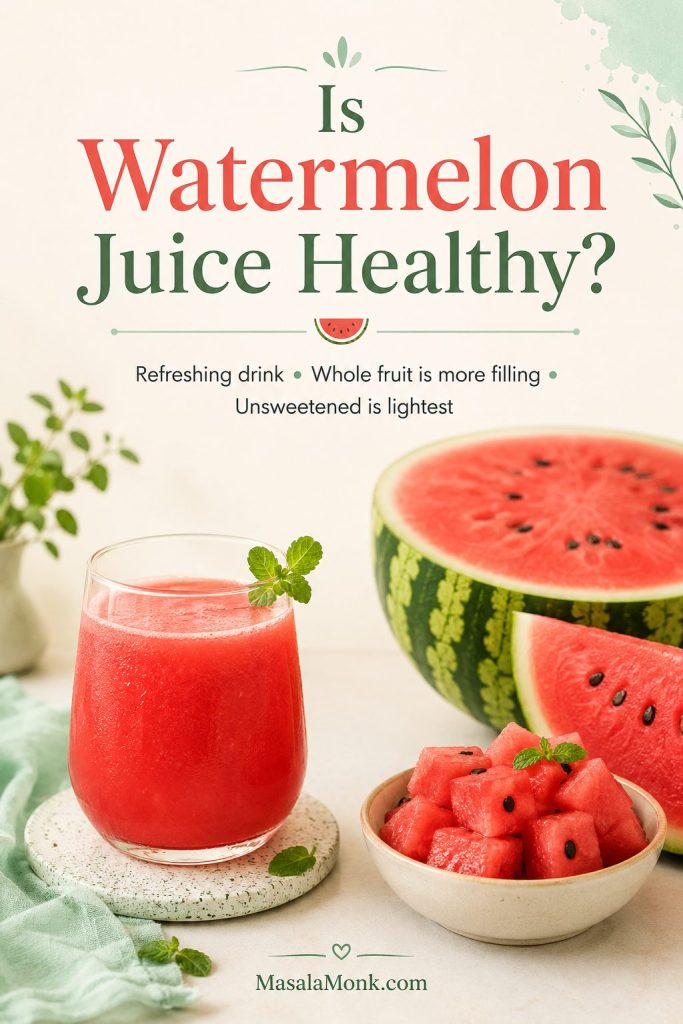
Modest glass of watermelon juice beside whole watermelon pieces for a balanced health comparison.
Unsweetened watermelon juice can be a refreshing fruit drink, but whole watermelon is usually more filling. So, enjoy the juice, but keep portions in mind.

It is naturally sweet, colorful, and hydrating. However, it is still fruit juice, so whole watermelon is usually more filling because you chew it and keep more of the fruit’s natural structure. Unstrained blended juice keeps more body than fully strained juice, but it is still easier to drink quickly than eating watermelon pieces.

A modest glass of unsweetened watermelon juice is mostly blended fruit, so the calories and natural sugars depend on how much watermelon you drink. The main practical point is portion size: it is easier to drink several cups of juice than to slowly eat the same amount of fruit.

If you want a lighter drink, keep it unsweetened and add lime, mint, cucumber, or sparkling water instead of extra sugar. For a deeper nutrition-focused read, see our guide to watermelon juice benefits.

For a lighter glass, you can also try the watermelon cucumber juice or sparkling watermelon juice variations.

Is Watermelon Juice Good for Weight Loss?

It can fit into a balanced diet, especially if it replaces soda or heavily sweetened drinks. However, it does not cause weight loss by itself. For fullness, whole watermelon is usually better because it contains more intact fiber and takes longer to eat.

If weight management is your goal, keep the drink unsweetened, avoid oversized portions, and treat it as one refreshing glass within the rest of your day.

Ways to Use Watermelon Juice

Once there is a cold pitcher in the fridge, it disappears quickly. Drink it plain, stretch it with bubbles, freeze it into cubes, or use it as the base for summer drinks.
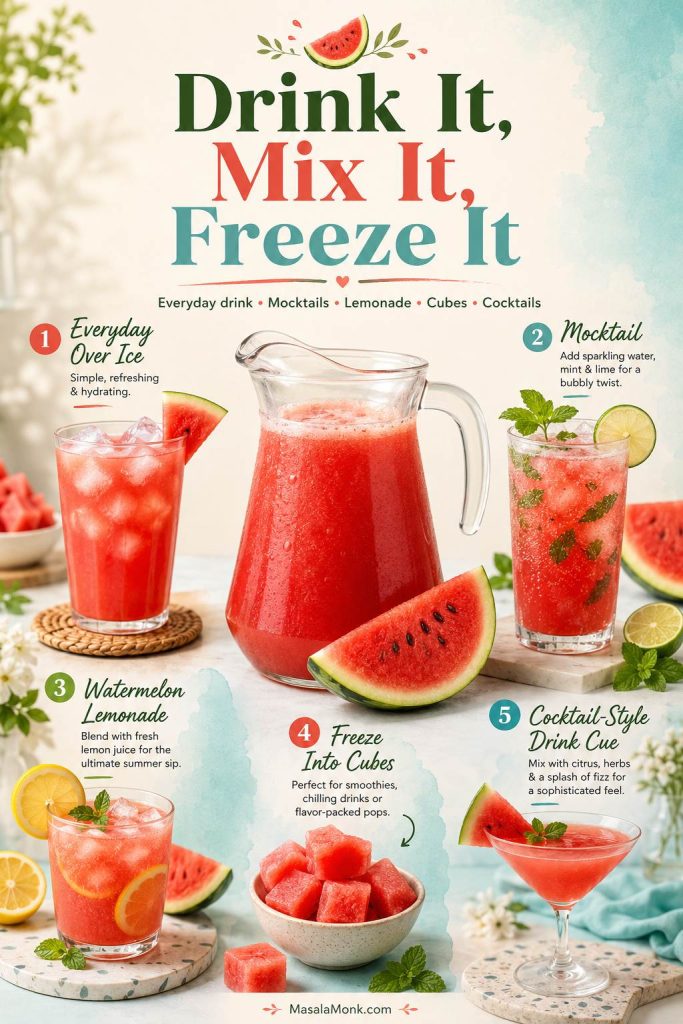
Ways to use watermelon juice, including an everyday glass, mocktail, lemonade, frozen cubes, and cocktail-style drink.
A pitcher can do more than fill one glass. Use it for everyday drinks, sparkling mocktails, watermelon lemonade, frozen cubes, or summer cocktails.
  • Everyday drink: serve cold over ice with lime.
  • Mocktail base: top with sparkling water, mint, cucumber, or coconut water.
  • Watermelon lemonade: mix with lemon juice and a little sweetener if needed.
  • Frozen cubes: use in lemonade, slushies, smoothies, and summer pitchers.
  • Cocktails: strain first for cleaner margaritas, mojitos, and daiquiris.

If you are making cocktails, strained juice usually works better because it gives a cleaner texture. For a frozen cocktail direction, strained watermelon juice also works well in a watermelon daiquiri.

Make the simple version once: cold watermelon, lime or lemon, and a pinch of salt. After that first bright, icy glass, you will know exactly how to adjust the cucumber, pineapple, mint, ginger, and black salt versions by taste.

Watermelon Juice Recipe Card

Here is the quick-reference version of the recipe, with the no-water rule and taste-before-adjusting step built in.
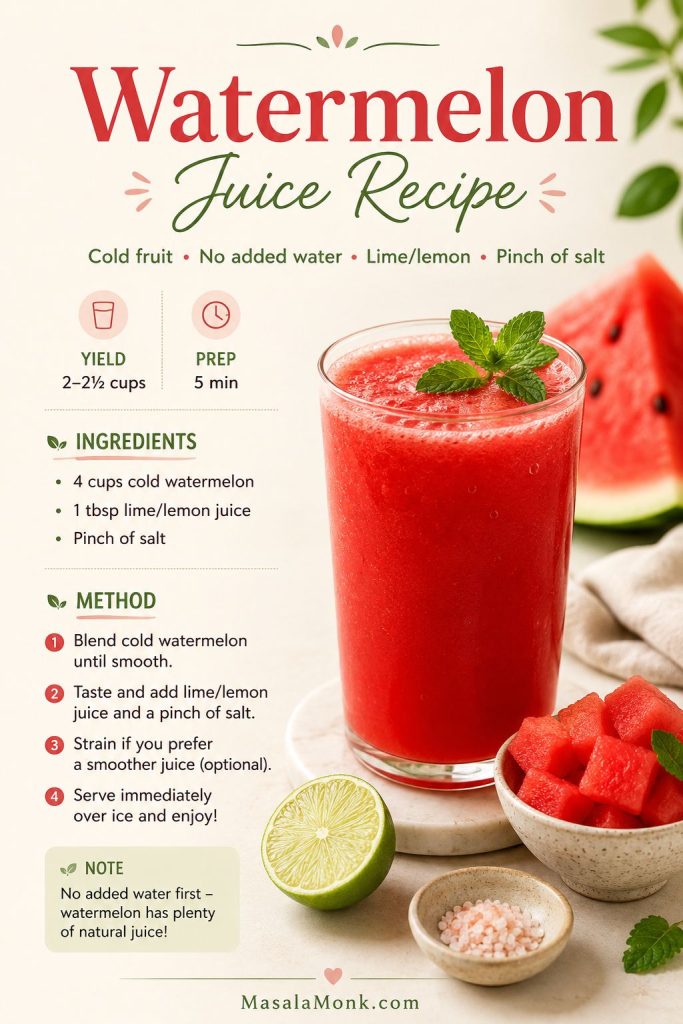
Saveable watermelon juice recipe card with yield, prep time, ingredients, and blender method beside a glass of juice.
This is the formula to remember: cold fruit first, no added water first, citrus for lift, and a tiny pinch of salt only after you taste the blended juice.

Watermelon Juice Recipe

Fresh watermelon juice made in a blender with cold fruit, no added water, lime or lemon, and a small pinch of salt for a bright, not-watery glass.

Prep Time5 minutes
Cook Time0 minutes
Total Time5 minutes
Yield2–2½ cups / 480–600 ml

Equipment

  • Blender
  • Knife and cutting board
  • Measuring cup
  • Fine-mesh strainer, optional
  • Pitcher or jar

Ingredients

  • 4 cups cold seedless watermelon cubes, about 600 g
  • 1 tablespoon fresh lime or lemon juice, 15 ml
  • Small pinch fine salt or black salt, up to 1/8 teaspoon
  • 6–10 fresh mint leaves, optional
  • 1–2 teaspoons honey, sugar, or agave, only if needed
  • Ice, for serving

Instructions

  1. Rinse the outside of the watermelon before cutting.
  2. Chill the watermelon if possible. Cold fruit makes better juice and reduces the need for extra ice.
  3. Cut away the rind and pale white part, then cube the red flesh.
  4. Add the cubes to a blender. Blend for 30–60 seconds, until smooth. Do not add water at first.
  5. Taste the juice. Add lime or lemon juice and a small pinch of salt or black salt. Add mint if using.
  6. Blend briefly again. If the fruit is not sweet enough, add 1–2 teaspoons honey, sugar, or agave.
  7. Strain through a fine-mesh sieve if you want smooth juice, or leave it unstrained for a thicker texture.
  8. Serve immediately over ice, or chill for 30 minutes and stir before serving.

Notes

  • Do not add water unless your blender truly cannot move. Add only 1–2 tablespoons if needed.
  • For watermelon cucumber juice, add 1/2 to 1 cup peeled cucumber.
  • For watermelon pineapple juice, use 2 cups watermelon and 1 cup pineapple.
  • For watermelon ginger juice, add 1–2 teaspoons fresh grated ginger.
  • For Indian-style tarbooz juice, use lemon or lime, mint, black salt, and a tiny pinch of roasted cumin or chaat masala.
  • The juice naturally separates. Stir or shake before serving.

Storage

Watermelon juice is best fresh. Refrigerate it in a clean covered jar for up to 24 hours for best flavor, or up to 2–3 days if properly chilled. Stir before serving.

For extra help beyond the card, see straining, storage, and watermelon juice variations.

FAQs

Do you need a juicer to make watermelon juice?

No. A blender is enough because watermelon is soft and naturally juicy. Blend the cubes until smooth, then strain only if you want a cleaner texture.

Should watermelon juice be strained?

Only if you want a smoother glass. Unstrained juice has more body; strained juice looks cleaner in pitchers, mocktails, and cocktails.

Can I make watermelon juice without sugar?

Usually, yes. Ripe watermelon is sweet enough on its own, especially when lime or lemon and a tiny pinch of salt brighten the flavor.

Why does watermelon juice separate?

Fresh blended fruit naturally separates as it sits because the pulp and liquid settle at different rates. Stir or shake before serving. Separation alone does not mean the juice has spoiled.

How long does fresh watermelon juice last?

It tastes best immediately. For the best make-ahead flavor, refrigerate it in a clean covered jar for up to 24 hours. It may keep for 2–3 days if properly chilled, but the flavor fades and separation increases.

Can I freeze watermelon juice?

Yes. Freeze it in ice cube trays, then use the cubes in lemonade, sparkling water, smoothies, mocktails, or slushies. The texture changes after thawing, so frozen cubes are better for mixing than drinking plain.

Can I use lemon instead of lime?

Yes. Lime tastes sharper and more tropical, while lemon gives a softer lemonade-style brightness. Use 1 tablespoon lemon or lime juice for every 4 cups of watermelon.

Can I make watermelon juice with seeds?

You can use seeded watermelon, but remove as many black seeds as possible before blending. A few small white seeds are usually fine, especially if you plan to strain.

What can I mix with watermelon juice?

The easiest mixers are lime, lemon, mint, cucumber, pineapple, ginger, coconut water, sparkling water, black salt, and a little roasted cumin. For mocktails and cocktails, strain it first so the drink tastes cleaner.

Is watermelon juice the same as watermelon agua fresca?

Not exactly. Watermelon juice is usually mostly blended watermelon, sometimes with citrus or salt. Watermelon agua fresca is usually lighter because it is diluted with water and often sweetened. For stronger fruit flavor, use this recipe without added water; for a lighter Mexican-style agua fresca, dilute and sweeten to taste.
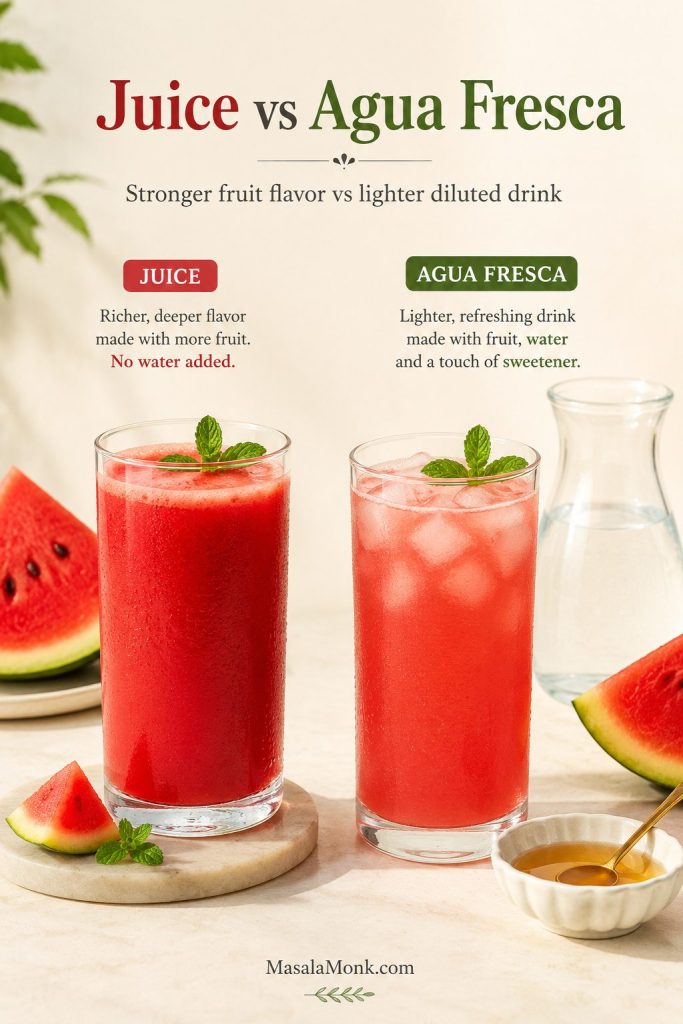
Comparison of watermelon juice and watermelon agua fresca, showing a richer undiluted drink and a lighter diluted drink.
Choose undiluted juice when you want stronger watermelon flavor. Choose agua fresca when you want a lighter, softer drink that is usually diluted and gently sweetened.

Back to top

Posted on 1 Comment

Health Benefits of Watermelon Juice: Nutrition, Daily Uses & Side Effects

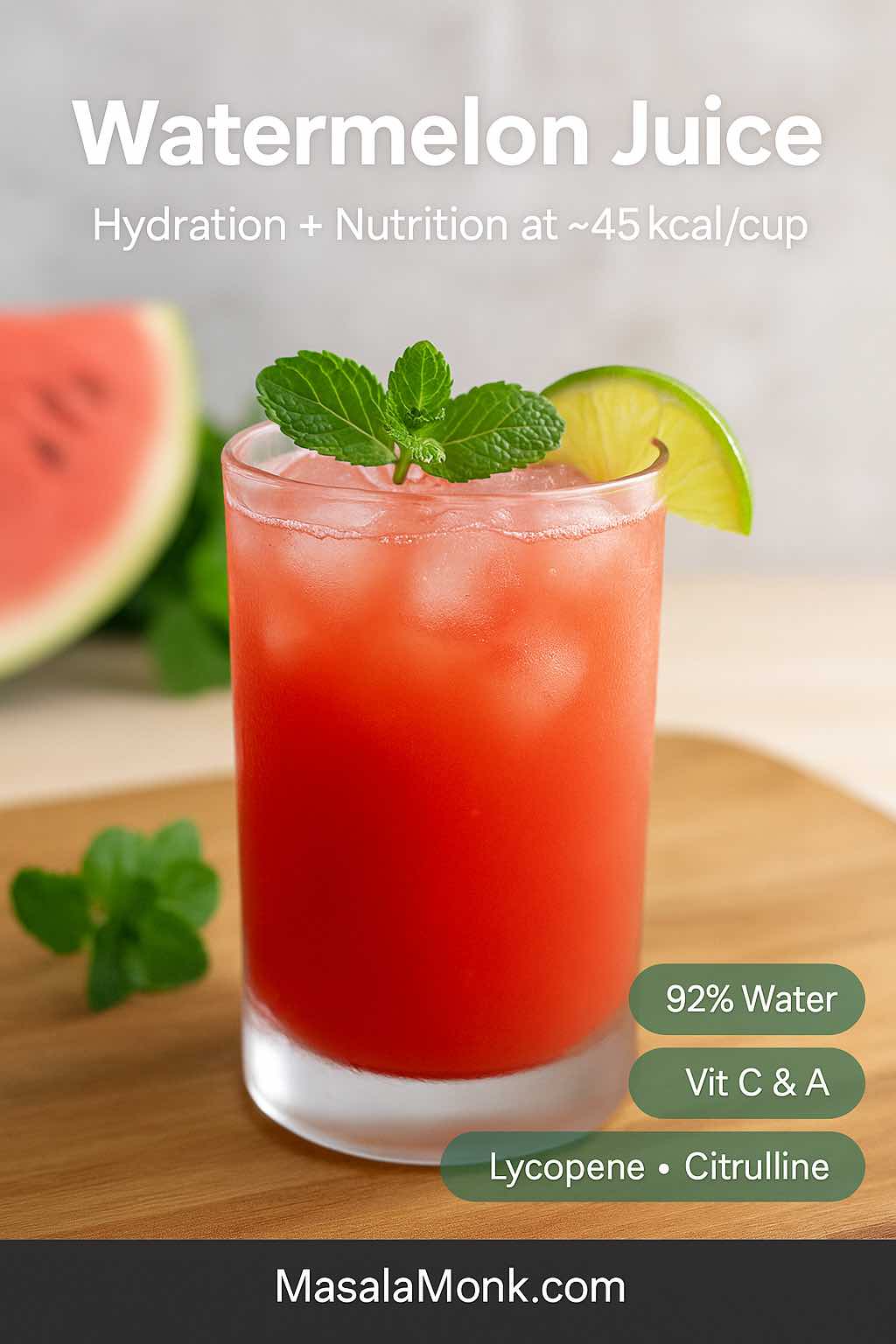
Fresh watermelon juice on ice, garnished with mint and a lime wedge; summer hydration drink to show its benefits.

When the summer sun beats down and you’re craving something that’s refreshing yet genuinely nourishing, few drinks feel as right as a tall glass of watermelon juice. Sweet and cooling with that ruby glow, it’s more than a seasonal indulgence. Watermelon juice delivers hydration, vitamins, minerals, and antioxidants in a form your body recognizes and loves. If you’ve wondered, “What are the benefits of watermelon juice—and is watermelon juice good for health?” this guide puts everything in one place: the nutrition, the daily uses, the gender-specific advantages, and the side effects you should know before making it a habit.

Watermelon has always had a practical role in hot climates. Traditionally, people turned to it to quench thirst, calm digestion, and revive tired muscles after fieldwork. Today, modern nutrition explains why that wisdom works: watermelon juice combines a very high water content with vitamin C, vitamin A (as beta-carotene), small amounts of B-vitamins, potassium and magnesium, plus two star compounds—lycopene and citrulline—that support circulation, recovery, and long-term wellness. That’s the head start. Now let’s translate it into everyday benefits you can actually feel.


Nutritional Benefits of Watermelon Juice

The real magic of watermelon juice begins with its impressive nutritional profile. While it may seem like a simple, water-rich fruit, each glass is loaded with compounds that nourish your body from the inside out. At breakfast, between meetings, after a walk in the heat—whenever the body whispers for fluids—this is a quick, easy yes. Here’s what makes it such a valuable drink:

Low in Calories, High in Hydration

One cup (about 240 ml) of fresh watermelon juice contains just 45 calories — far fewer than most packaged juices or sodas. At the same time, it’s made up of over 90% water, making it one of the best natural drinks for hydration. This is why many people choose it as a lighter alternative to energy drinks or sugary beverages. (MyFoodData)

Packed with Vitamins

Beyond the water, the vitamin C content is a quiet overachiever. In just one cup you cover over a fifth of your daily needs, enough to support immune function and help your skin look brighter. Vitamin A (from beta-carotene) works alongside it, aiding skin renewal and eye health. You also get a touch of vitamin B6, useful for energy metabolism and a steady mood.

  • Vitamin C: One cup provides more than 20% of your daily needs, supporting your immune system and helping your skin stay radiant.
  • Vitamin A (beta-carotene): Promotes healthy eyes and glowing skin.
  • Vitamin B6: Helps with energy metabolism and brain function.

These vitamins make the health benefits of drinking watermelon juice especially attractive if you want a natural way to support immunity and skin health.

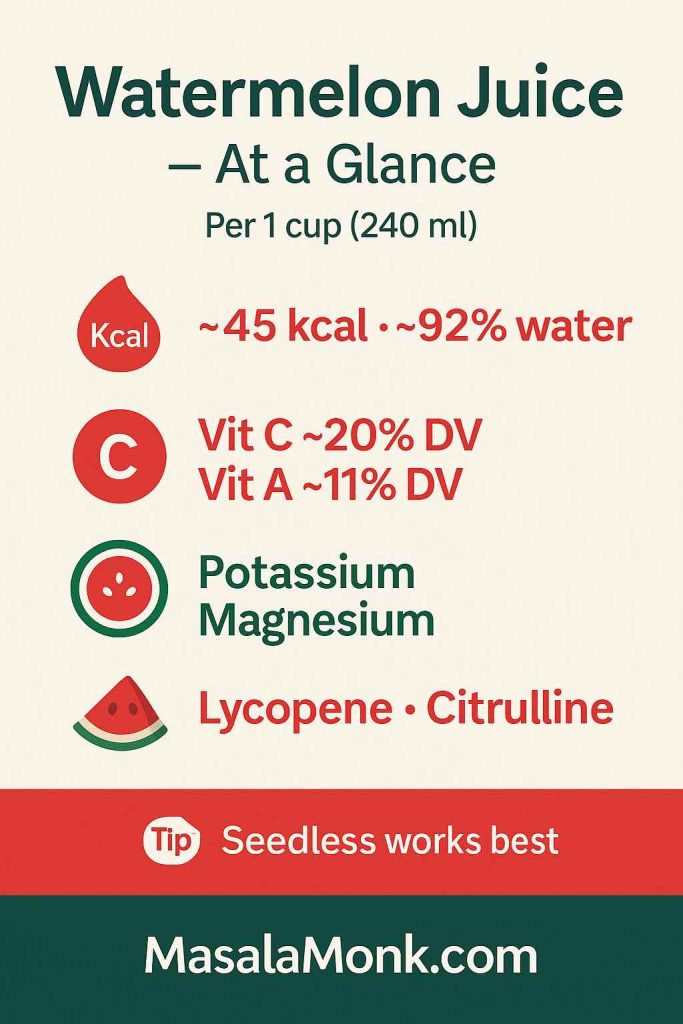
Infographic summarizing watermelon juice per 1 cup: ~45 kcal, ~92% water, vitamins C & A, potassium, magnesium, lycopene, citrulline.
At a glance: calories, water %, vitamins, minerals, and key antioxidants in 1 cup (240 ml).

Rich in Minerals

Minerals round out the picture. Potassium helps maintain normal blood pressure and healthy muscle function, while magnesium supports nerves, recovery, and a calmer, steadier energy. These aren’t massive doses—but they add up, especially if you’re swapping watermelon juice for sugary sodas or heavy packaged juices.

  • Potassium: Regulates blood pressure and supports muscle function.
  • Magnesium: Important for nerve health, muscle recovery, and maintaining energy levels.

Because of these minerals, the advantages of watermelon juice go beyond hydration — it actually supports your heart and muscles, too.

Antioxidants That Heal and Protect

Then come the two heavy hitters. Lycopene, the red carotenoid that gives watermelon its color, is associated with a healthier heart and lower oxidative stress—think of it as part of your internal “rust protection.” Citrulline, a naturally occurring amino acid, is converted in the body to arginine and then to nitric oxide, which helps relax blood vessels and improve blood flow. For you, that often shows up as better circulation and less post-exercise soreness.

  • Lycopene: A carotenoid that gives watermelon its red color and is linked to heart health and reduced inflammation. Studies also suggest lycopene may play a role in protecting against certain cancers.
  • Citrulline: An amino acid that improves blood circulation and helps reduce muscle soreness after exercise.

These compounds give watermelon juice an edge over other fruit juices, especially for those interested in fitness, recovery, and long-term wellness.

A Quick Nutrition Snapshot (per 1 cup / 240 ml):

  • Calories: ~45
  • Water: ~92%
  • Vitamin A: 11% DV
  • Vitamin C: 21% DV
  • Vitamin B6: 5% DV
  • Potassium: 4% DV
  • Magnesium: 4% DV
  • Lycopene: ~6,500 mcg
  • Citrulline: 200–300 mg

This simple breakdown highlights why so many nutritionists recommend watermelon juice as part of a balanced diet. It’s light, nutrient-dense, and deeply hydrating — all the qualities you want in a natural health drink.

Read more about The Watermelon – Nutrition, Benefits, and 5 Practical Ways for Weight Loss.

From Nutrition to Daily Life

Knowing the nutrients is one thing, but understanding how they actually translate into real-world benefits is even more important. Whether you’re someone who works long hours outdoors, a gym enthusiast, or simply looking for a healthier drink to enjoy with meals, the uses of watermelon juice go far beyond quenching thirst.

In the next section, we’ll dive into the top health benefits of drinking watermelon juice, and explore how this sweet red fruit can boost your energy, support your heart, keep your skin radiant, and much more.


Top Health Benefits of Drinking Watermelon Juice

Now that we’ve seen just how nutrient-rich this fruit is, let’s talk about what it actually does for your body. The health benefits of watermelon juice are backed not just by tradition, but also by science. From keeping you hydrated to helping your muscles recover, here’s why this refreshing drink deserves a regular spot in your diet.

1. Boosts Hydration Naturally

One of the most obvious — and most powerful — benefits of watermelon juice is hydration. With more than 90% water content, it works almost like nature’s own sports drink. Unlike plain water, watermelon juice also contains potassium, magnesium, and natural sugars that help replenish electrolytes lost through sweat.

Because watermelon juice carries electrolytes along with water—particularly potassium and magnesium—it does more than slosh through the system. On a still, heavy afternoon, a chilled glass can lift that dull fatigue far better than a can of cola. After a sweaty commute or a quick run, it restores fluid balance without a synthetic aftertaste.

2. Supports Heart Health

Heart disease is one of the leading health concerns worldwide, and diet plays a huge role in prevention. The advantages of watermelon juice for cardiovascular health come mainly from lycopene and citrulline.

  • Lycopene, the antioxidant responsible for watermelon’s red color, has been linked to lower cholesterol levels and reduced oxidative stress — both key factors in heart health.
  • Citrulline helps relax blood vessels and improves circulation, which can reduce blood pressure levels over time.
  • Potassium supports healthy heart rhythms and prevents excess fluid retention. (American Heart Association)

Lycopene helps counter day-to-day oxidative stress, while citrulline supports the nitric-oxide pathway that relaxes blood vessels. Add in potassium’s role in fluid balance and healthy heart rhythm, and you have a gentle, food-first way to look after your cardiovascular system. It’s not a substitute for medication or lifestyle changes, of course, but as a daily habit alongside movement and a balanced plate, it’s smart.

3. Aids Digestion and Eases Bloating

Another lesser-known benefit of drinking watermelon juice daily is how gentle it is on digestion. While the juice itself is low in fiber, its high water content helps soften stools and keep the digestive system moving smoothly.

If you ever feel bloated after heavy or salty meals, watermelon juice can help. Its natural diuretic effect encourages your body to flush out excess water and sodium, reducing puffiness and discomfort. This makes it especially useful for people prone to water retention.

4. Improves Skin and Hair Health

Looking for a natural beauty booster? One of the sweetest health benefits of watermelon juice is how it nourishes your skin and hair from the inside out.

  • Vitamin C stimulates collagen production, which keeps skin firm and youthful.
  • Vitamin A helps repair skin cells and prevent dryness.
  • Hydration keeps your skin plump and glowing.
  • Antioxidants reduce oxidative stress, slowing down premature aging.

Many women swear by a glass of watermelon juice in their morning routine for that extra glow. Men also benefit — hydration and circulation improvements can reduce dullness and dryness caused by long days outdoors.

Hydration softens edges—tiredness shows less on your face; skin looks smoother. Vitamin C supports collagen formation; vitamin A helps with cell turnover; antioxidants mop up some of the stress your skin battles daily. The change isn’t dramatic overnight, but after a few weeks of consistent intake, many people notice a quiet, healthy glow.

5. Helps Muscle Recovery and Energy

If you’ve ever hit the gym hard or spent a long day doing physical work, you’ll know the pain of sore muscles. Here’s where watermelon juice really shines.

Thanks to citrulline, one of the key amino acids in watermelon, the juice has been shown to reduce muscle soreness and speed up recovery after workouts. Small human trials even suggest that athletes who drink watermelon juice before or after training report less fatigue, quicker rebound times, and less next-day muscle soreness. (J. Agric. Food Chem. – 2013)

Pair this with its natural sugars and minerals, and you’ve got a post-exercise drink that hydrates, energizes, and helps your body bounce back — no need for synthetic sports drinks. Find 5 Ways to Incorporate Watermelon into Your Summer Fitness Routine: Stay Refreshed and Reap the Benefits.

6. Boosts Immunity and Fights Inflammation

Beyond hydration and recovery, the nutritional benefits of watermelon juice extend to your immune system. Vitamin C, lycopene, and other antioxidants fight free radicals that can weaken immunity and contribute to chronic inflammation.

Regularly drinking watermelon juice may help your body fend off minor infections, speed up healing, and protect against long-term health risks caused by inflammation.

Putting the Benefits of Watermelon Juice Into Perspective

When you think about it, these benefits of watermelon juice aren’t isolated perks. They connect to everyday life:

  • Quenching your thirst on hot days.
  • Giving your heart and muscles the nutrients they need.
  • Supporting skin health for a natural glow.
  • Helping your body recover from stress or exercise.

That’s why so many people are turning to watermelon juice as a daily habit, not just a seasonal treat. And speaking of daily habits — let’s look closer at what happens when you make this juice a regular part of your routine.


Benefits of Drinking Watermelon Juice Daily

We’ve all heard the saying, “Consistency is key,” and when it comes to health, this couldn’t be more true. While an occasional glass of watermelon juice is refreshing, making it a part of your daily routine unlocks even greater rewards. Let’s explore the benefits of drinking watermelon juice daily and why it could be one of the easiest healthy habits to adopt.

A Morning Hydration Boost

After hours of sleep, your body wakes up slightly dehydrated. Instead of reaching immediately for coffee or tea, try starting your day with a small glass of fresh watermelon juice – maybe with a squeeze of lime. Its high water content rehydrates your body gently, while natural sugars and vitamins give you a light energy boost. You feel more alert without the jitter.

This habit not only makes mornings feel fresher but also ensures that your digestive system kicks into gear smoothly. Many people find that this practice reduces sluggishness and sets the tone for a more energized day.

Natural Support for Weight Management

If weight management is on your radar, this is a friendly ally. At ~45 calories per cup, it soothes a sweet tooth and heads off snack-ish impulses. Swap a mid-afternoon pastry for a chilled glass and watch the difference over a month. It’s not a trick; it’s simply easier to choose better when you’re hydrated and satisfied. For deeper tips, see our guide to watermelon for weight management (Nutrition + 5 Practical Ways).

One of the biggest advantages of watermelon juice for daily consumption is its role in weight control. Since it’s low in calories yet naturally sweet, it can replace sugary drinks without leaving you feeling deprived. Sipping a glass mid-morning or mid-afternoon can curb cravings and keep you from reaching for packaged snacks and other junk food.

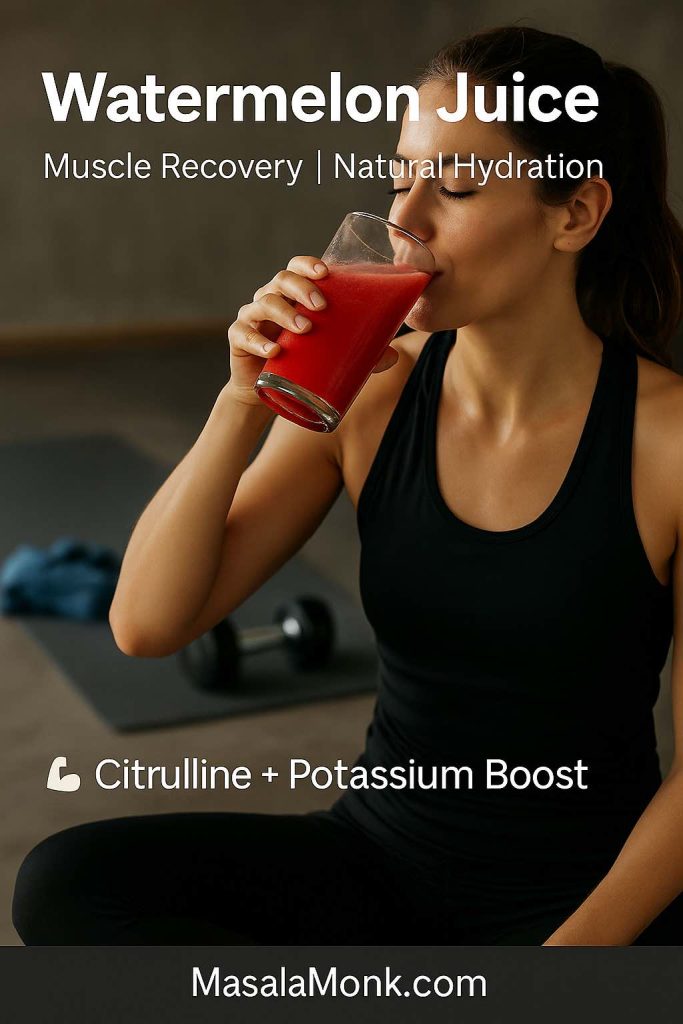
Woman in sportswear drinking watermelon juice after workout for muscle recovery and hydration.
Watermelon juice for muscle recovery and natural hydration — a citrulline and potassium boost after workouts.

Better Post-Workout Recovery

If you exercise regularly, watermelon juice makes an excellent daily recovery drink. Its citrulline content reduces soreness, while potassium and magnesium help muscles relax and replenish. Drinking it after workouts can help your body bounce back faster, so you’re ready for the next session. (Tarazona-Díaz 2013. PubMed)

A Gentle Detox for Your Body

Thanks to its water and antioxidant content, watermelon juice acts as a natural detoxifier. Daily intake encourages your body to flush out toxins, reduce bloating, and maintain smoother digestion. Unlike harsh detox fads, this is a gentle, sustainable way to support your system.


Is Watermelon Juice Good on an Empty Stomach?

This is one of the most common questions people ask: “Can I drink watermelon juice on an empty stomach?” The answer is yes — and in many cases, it’s actually one of the best times to enjoy it.

Why It Works in the Morning

Drinking watermelon juice first thing in the morning hydrates your body after a night’s rest, delivers vitamins quickly, and provides a refreshing start without being too heavy. It’s especially beneficial in hot weather, when your body is prone to losing fluids quickly.

Things to Keep in Mind

However, moderation is important. For most people, a small to medium glass is ideal. Since watermelon juice contains natural sugars, consuming it in very large quantities on an empty stomach might cause a temporary spike in blood sugar. If you’re diabetic, insulin-resistant, managing blood sugar or tend to feel woozy with fruit first thing, simply pair your juice with a light breakfast—yogurt, eggs, a handful of nuts. You’ll still enjoy the benefits of watermelon juice on an empty stomach, but with a softer impact on glucose. (Harvard Health – GI vs GL)

Practical Tip

Try blending watermelon juice with a squeeze of lime in the morning. The lime adds a zesty twist and extra vitamin C, making the drink even more refreshing and digestion-friendly.


Daily Uses of Watermelon Juice

Think beyond “juice with breakfast.” Keep a bottle in the fridge and use it like a tool. A small glass before you head into the sun; a glass when the 4 p.m. slump hits; a splash at dinner instead of soda. Kids usually adore it (the color helps), and older family members—who are more vulnerable to dehydration—find it easier to sip regularly when it tastes this good. Fold it into your day wherever hydration would make the next hour better. Beyond mornings and workouts, there are many practical uses of watermelon juice in daily life:

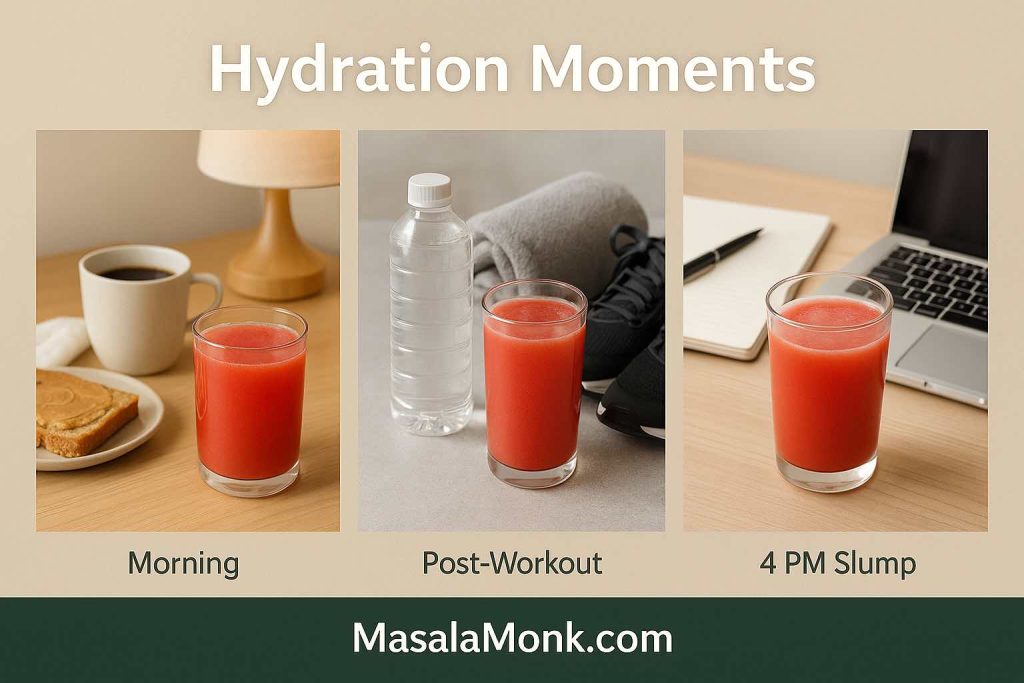
Three glasses of watermelon juice shown at different hydration moments — breakfast with coffee, post-workout with water bottle, and afternoon desk with laptop.
Hydrate smart: start your morning, refuel post-workout, or beat the 4 PM slump with a glass of watermelon juice.
  • As a mid-day refresher: Keeps you hydrated when energy levels dip.
  • As a mealtime drink: A healthier alternative to sodas or artificially flavored juices.
  • As a family-friendly beverage: Kids love the natural sweetness, and it’s a safer option than sugary store-bought drinks.
  • As a skin-friendly routine: Regular intake provides hydration and nutrients that show up in your skin over time.

These everyday uses highlight why so many people now see watermelon juice not just as a seasonal treat, but as a daily health practice.

Moving on

So, whether you sip it first thing in the morning, after your workout, or simply as a refreshing break during the day, the benefits of drinking watermelon juice daily are undeniable. But daily routines can look different for everyone — which is why it’s helpful to also explore how watermelon juice may specifically support women and men in unique ways.


Watermelon Juice Benefits for Women

For many women, the advantages of watermelon juice show up as steadier energy and bloating relief during hormonal shifts. That mild diuretic effect can ease water retention, and the vitamin C + A combo is great for glow. Because it’s low in calories but naturally sweet, it also makes weight-management choices feel less punitive. If your routine includes yoga, runs, or strength classes, the potassium and magnesium help guard against cramps, and citrulline supports endurance and recovery—quietly, in the background, the way the best habits do.

Skin Glow and Anti-Aging Support

One of the biggest advantages of watermelon juice for women is its impact on skin. The mix of vitamin C, vitamin A, and lycopene works together to promote collagen production, reduce oxidative stress, and fight the early signs of aging. Women who drink watermelon juice regularly often notice healthier, more radiant skin without relying solely on expensive skincare products.

Know more about its benefits for skin and explore some exciting recipe in: Watermelon: The Hydration Hero for Your Skin – Benefits, Myths, and 5 Quenching Recipes for Dewy Skin

Smiling woman holding a glass of watermelon juice, highlighting skin benefits like hydration, vitamin C, and lycopene.
Drink your way to radiant, dewy skin — watermelon juice is rich in vitamin C, lycopene, and hydration.

Weight Management and Craving Control

Women juggling work, family, and self-care often struggle with snacking or sugary cravings. Watermelon juice provides natural sweetness without excess calories — just around 45 per cup. It’s filling, hydrating, and a much better alternative to sodas or packaged juices. Making it a daily ritual can help support weight management goals.

Relief from Bloating and Water Retention

Hormonal changes during menstrual cycles can sometimes cause bloating and puffiness. Because watermelon juice has mild diuretic properties, it helps the body release excess sodium and water, bringing a sense of lightness and comfort.

Nutrient Boost for Active Lifestyles

For active women — whether in fitness, yoga, or simply balancing busy days — watermelon juice provides potassium and magnesium that prevent fatigue and muscle cramps. The citrulline content also helps with endurance and recovery.

Watermelon Juice Benefits for Men

Men often notice the benefits of drinking watermelon juice daily in performance and recovery. Better circulation (that citrulline-to-nitric-oxide pathway again) can translate to improved stamina; the electrolyte + water mix reduces post-workout drag. For men working long hours in the heat or on physically demanding sites, it’s a practical hydration choice—quick relief without the syrupy sugar load of many “sports” drinks. Over the long run, antioxidants like lycopene matter for heart and prostate wellness; they’re not a cure-all, but they’re a wise daily bet. (Bailey 2016. PubMed)

Improved Circulation and Stamina

The amino acid citrulline found in watermelon juice supports nitric oxide production in the body, which helps relax blood vessels and improve circulation. This is not only beneficial for heart health but can also enhance stamina and physical performance.

Faster Post-Workout Recovery

Men who lift weights, run, or engage in sports can benefit from watermelon juice as a natural recovery drink. Citrulline reduces muscle soreness, while potassium helps prevent cramps. Its combination of hydration and antioxidants makes it one of the best post-training beverages.

Hydration for Outdoor and Active Jobs

For men working outdoors or in physically demanding roles, dehydration is a constant challenge. Watermelon juice provides quick relief by restoring fluids, electrolytes, and energy at the same time. It’s a practical choice for construction workers, athletes, or anyone exposed to long hours in the sun.

Heart and Prostate Support

Antioxidants like lycopene in watermelon juice are particularly important for men, as they have been linked to cardiovascular wellness and prostate health. Regular intake can support long-term vitality. (Vincellette 2021. PMC)


Is Watermelon Juice Good for Hydration?

If there’s one thing watermelon juice is famous for, it’s hydration. With over 90% water, plus a good balance of natural sugars and electrolytes, it’s one of the best drinks to keep your body refreshed. It won’t replace plain water, but it’s a superb companion—particularly when you’re sweating. Compared with water alone, watermelon juice offers quick energy and electrolytes; compared with many sports drinks, it offers the same hydration logic without loud colors or artificial flavors. It’s also family-friendly: children who resist plain water usually don’t resist watermelon. But let’s break down why the hydration benefits of watermelon juice go beyond plain water.

Better Than Plain Water in Some Cases

While nothing replaces clean drinking water, watermelon juice offers added perks. The natural sugars give you quick energy, while potassium and magnesium replenish electrolytes lost through sweat. This makes it especially useful on hot summer days, after workouts, or anytime you’re prone to dehydration.

How It Compares to Sports Drinks

Many sports drinks claim to restore electrolytes, but they often come loaded with artificial flavors, added sugars, or preservatives. A glass of fresh watermelon juice does the same job naturally, without any chemicals. If you’ve ever felt dizzy or drained after a run or yoga session, sipping watermelon juice can help restore balance quickly.

Hydration for All Ages

The advantages of watermelon juice for hydration aren’t limited to adults. Kids who refuse plain water often love the sweet taste of watermelon juice, making it an easy way to keep them hydrated during playtime. Seniors also benefit, since dehydration risk increases with age.


Side Effects of Drinking Too Much Watermelon Juice

Like most good things, watermelon juice works best in moderation. Every healthy habit has a sensible range. With watermelon juice, the sweet spot for most adults is 1–2 cups a day, ideally earlier in the day. While the health benefits of watermelon juice are undeniable, drinking too much can cause some discomfort. Here are a few possible side effects of watermelon juice to keep in mind:

Excess Sugar Intake

Even though it’s natural sugar, watermelon is still sweet. Drinking large amounts of watermelon juice daily may raise blood sugar levels — something diabetics need to monitor carefully.

Digestive Upset

Because watermelon is rich in water and has mild diuretic properties, overconsumption can lead to bloating, loose stools, or frequent trips to the bathroom.

Night-Time Discomfort

Many people enjoy a chilled glass of watermelon juice at night, but its diuretic effect can disrupt sleep with multiple bathroom breaks. It’s better to enjoy it earlier in the day.

Allergic Reactions (Rare)

While uncommon, some people may be sensitive to watermelon. If you experience itching, swelling, or discomfort after drinking it, consult a doctor.

Balancing Benefits and Precautions

When consumed in moderation — one to two cups a day for most healthy adults — the advantages of watermelon juice far outweigh the side effects. The key is to enjoy it as part of a varied diet, not as a replacement for other fruits, vegetables, or balanced meals.


What Does Watermelon Juice Do for the Body?

At this point, you might be asking: “Okay, but in simple terms, what are the real effects of watermelon juice on the body?” The short answer is — it hydrates, nourishes, and protects. The long answer is where things get exciting.

  • Hydration & Energy: Watermelon juice replenishes fluids faster than plain water, thanks to its balance of natural sugars and electrolytes. This makes you feel more alert and energized.
  • Heart & Circulation: Lycopene and citrulline in watermelon juice improve blood flow and support cardiovascular health.
  • Immunity & Repair: Vitamins A and C boost your body’s ability to fight infections and heal tissues.
  • Skin & Hair: Regular intake contributes to brighter, healthier-looking skin and stronger hair.
  • Muscle Support: For anyone active, citrulline helps muscles recover faster and reduces soreness.

So, in practical terms, the effects of watermelon juice can be felt in how hydrated you feel, how quickly you recover after activity, and even how your skin glows after a few weeks of making it a habit.


How to Make Fresh Watermelon Juice at Home

One of the biggest advantages of watermelon juice is how easy it is to make. Unlike complicated juices that need multiple ingredients, watermelon juice requires almost no effort.

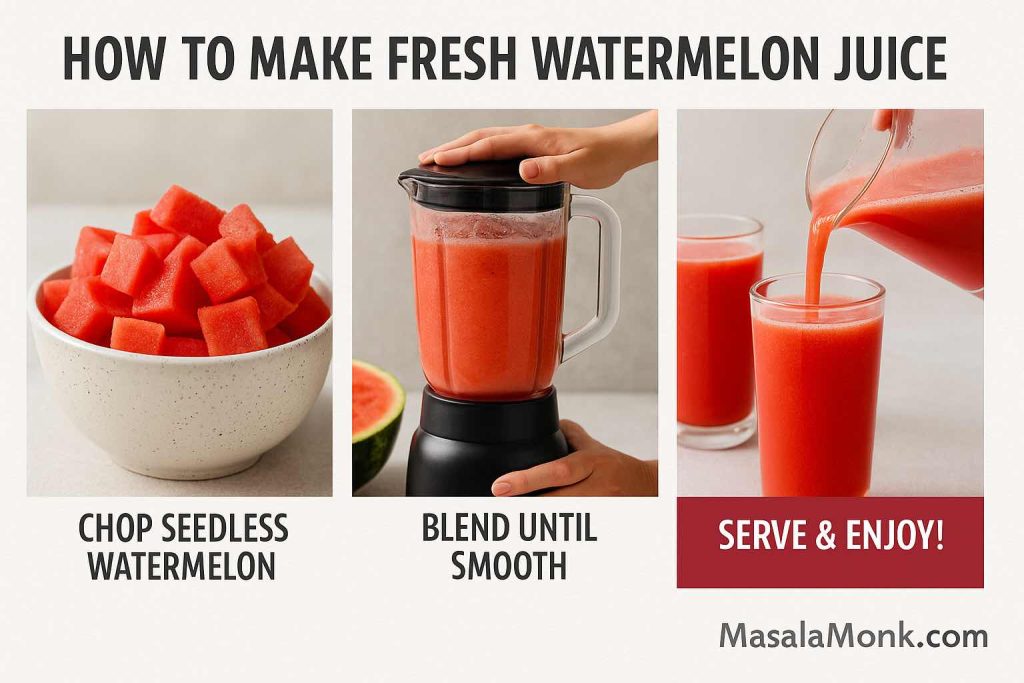
Three-step guide to make fresh watermelon juice: chop seedless watermelon, blend until smooth, pour and serve.
Three steps: chop, blend (strain optional), serve chilled with a squeeze of lime.

Basic Fresh Watermelon Juice Recipe

Keep it simple. Add 2–3 cups of chilled, seedless watermelon cubes to a blender and blend until smooth. Strain if you prefer a silkier texture, or keep the pulp for body. Serve very cold.

  1. Take 2–3 cups of chilled watermelon cubes (seedless if possible).
  2. Blend until smooth.
  3. Strain if you prefer a thinner texture, though many enjoy it pulpy.
  4. Serve chilled.

That’s it — fresh, pure, and naturally sweet. This simple version already gives you all the nutritional benefits of watermelon juice without additives or preservatives.


Delicious Variations of Watermelon Juice

While pure watermelon juice is delightful on its own, you can easily upgrade it with a few simple ingredients to add flavor, enhance nutrition, or create variety in your daily routine.

If you enjoy variations, try a squeeze of lime (zesty, digestion-friendly), a handful of mint (cooling, bloating-relief), or a half-cup of cucumber (ultra-hydrating). For heavy-sweat days, blend with coconut water for a natural electrolyte boost. Need an iron-leaning, stamina-friendly version? Add a small beetroot chunk and a sliver of ginger. Prefer a picnic pitcher? Stir in lemon and a touch of honey for a bright watermelon lemonade that still feels grown-up.

Watermelon Lime Juice

Adding a splash of lime juice enhances flavor, boosts vitamin C, and aids digestion. It’s one of the most popular uses of watermelon juice in tropical regions.

Watermelon Mint Juice

A handful of fresh mint leaves blended with watermelon juice turns it into a refreshing cooler. Mint also aids digestion and reduces bloating. To explore more, have a look at 5 Fun and Refreshing Watermelon Mocktails for Summer Celebrations.

Watermelon Cucumber Juice

Perfect for summer detoxing, cucumber adds even more hydration and minerals. This combination is cooling, light, and excellent after workouts or yoga. Infact this one words very well with Mint as well, find it in Optimize Digestion with These 5 Fruit Juice Recipes.

Watermelon Coconut Water Drink

Blend watermelon with fresh coconut water for an electrolyte-packed energy drink. It’s a natural alternative to sports drinks, loved by athletes. Read more about Coconut and its precious water in our The Ultimate Guide to Coconut Water: Benefits, Nutrition, and How to Choose the Best One.

Watermelon Beetroot Juice

Adding beetroot enhances iron content and boosts stamina. Some people also mix in a touch of ginger for digestion and an immunity boost.

Watermelon Lemonade

For a tangy twist, combine watermelon juice with lemon and a touch of honey. It makes a great family-friendly drink and is a healthier alternative to packaged lemonades.

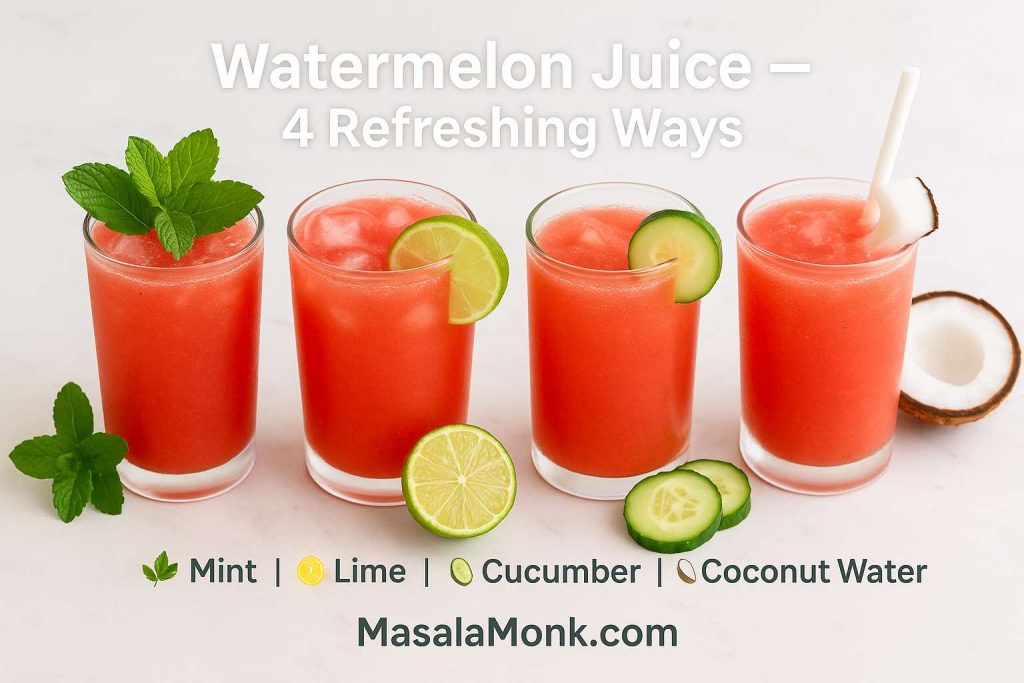
Four glasses of watermelon juice with mint, lime, cucumber, and coconut water variations on a white background.
Watermelon Juice in can be enjoyed in different refreshing ways for e.g. — with mint, lime, cucumber, and coconut water for a hydrating summer twist.

Why Fresh Watermelon Juice Is Best

While bottled juices are convenient, nothing beats the benefits of drinking fresh watermelon juice. Store-bought options may contain added sugar, preservatives, or concentrate that reduce nutritional value. Fresh juice, on the other hand, retains all the vitamins, antioxidants, and natural enzymes that your body thrives on.

If you’re short on time and buying, pick cold-pressed bottles labeled “100% watermelon juice” and “no added sugar.” The taste should be clean and the ingredient list short enough to memorize.


Conclusion

Refreshing, nutrient-rich, and incredibly versatile, watermelon juice is more than just a seasonal drink — it’s a natural health tonic you can enjoy year-round. From keeping you hydrated on hot days to supporting your heart, skin, and muscles, the benefits of watermelon juice are backed by both tradition and modern nutrition science.

Drinking it daily in moderation — whether first thing in the morning, after a workout, or as a mid-day refresher — can make a noticeable difference in your energy, digestion, and overall wellness. And with so many delicious variations, from lime and mint blends to cucumber and coconut water combinations, there’s no shortage of ways to keep things exciting.

At the same time, it’s important to remember that moderation matters. While the advantages of watermelon juice are many, drinking it in very large quantities can cause discomfort for some people. Think of it as part of a balanced lifestyle: one to two cups daily is usually perfect for most adults.

So, the next time you’re craving something that quenches thirst and nourishes the body, skip the packaged sodas and juices — and pour yourself a glass of fresh, homemade watermelon juice instead. Your body (and taste buds) will thank you.


Frequently Asked Questions About Watermelon Juice

What are the main benefits of watermelon juice?

The health benefits of watermelon juice include hydration, improved heart health, muscle recovery, better digestion, glowing skin, and stronger immunity. It’s also low in calories and naturally sweet, making it a healthier alternative to packaged drinks.

Is watermelon juice good for health?

Yes, watermelon juice is considered very healthy when consumed in moderation. It contains vitamins A, C, and B6, minerals like potassium and magnesium, and antioxidants such as lycopene and citrulline that support circulation, skin, and immunity.

Can I drink watermelon juice daily?

Absolutely. Drinking one to two cups of fresh watermelon juice daily can help with hydration, energy, and nutrient intake. Just avoid overconsumption, especially if you have diabetes, as it contains natural sugars.

Is watermelon juice good on an empty stomach?

Yes, drinking watermelon juice on an empty stomach — especially in the morning — is a great way to rehydrate after sleep and kickstart digestion. However, if you’re sensitive to natural sugars or prone to blood sugar spikes, pair it with a light breakfast.

Is watermelon juice good for hydration?

Yes. With over 90% water content, plus electrolytes like potassium and magnesium, watermelon juice is one of the best natural hydration drinks. It’s especially effective after workouts, in hot weather, or during long days outdoors.

What are the side effects of drinking too much watermelon juice?

Overconsumption may cause bloating, digestive upset, or frequent urination due to its diuretic effect. It can also raise blood sugar if consumed in large quantities, so people with diabetes should be cautious.

What does watermelon juice do for the body?

Watermelon juice hydrates the body, supports heart and muscle health, nourishes skin, and boosts immunity. Its nutrients and antioxidants provide energy and help reduce inflammation.

Is fresh watermelon juice better than bottled?

Yes. Fresh watermelon juice benefits are greater because it contains no added sugars or preservatives, and all vitamins, minerals, and antioxidants remain intact. Bottled or processed versions often lose nutrients during production.

What are the benefits of watermelon juice for women?

Women benefit from improved skin health, hydration, weight management support, and reduced bloating during hormonal cycles. Regular intake can also enhance energy levels and reduce fatigue.

What are the benefits of watermelon juice for men?

For men, the advantages of watermelon juice include faster muscle recovery, better circulation and stamina, hydration during physically demanding work, and antioxidants like lycopene that support prostate and heart health.

Posted on Leave a comment

Watermelon Juice for Weight Loss: 5 Facts Explored

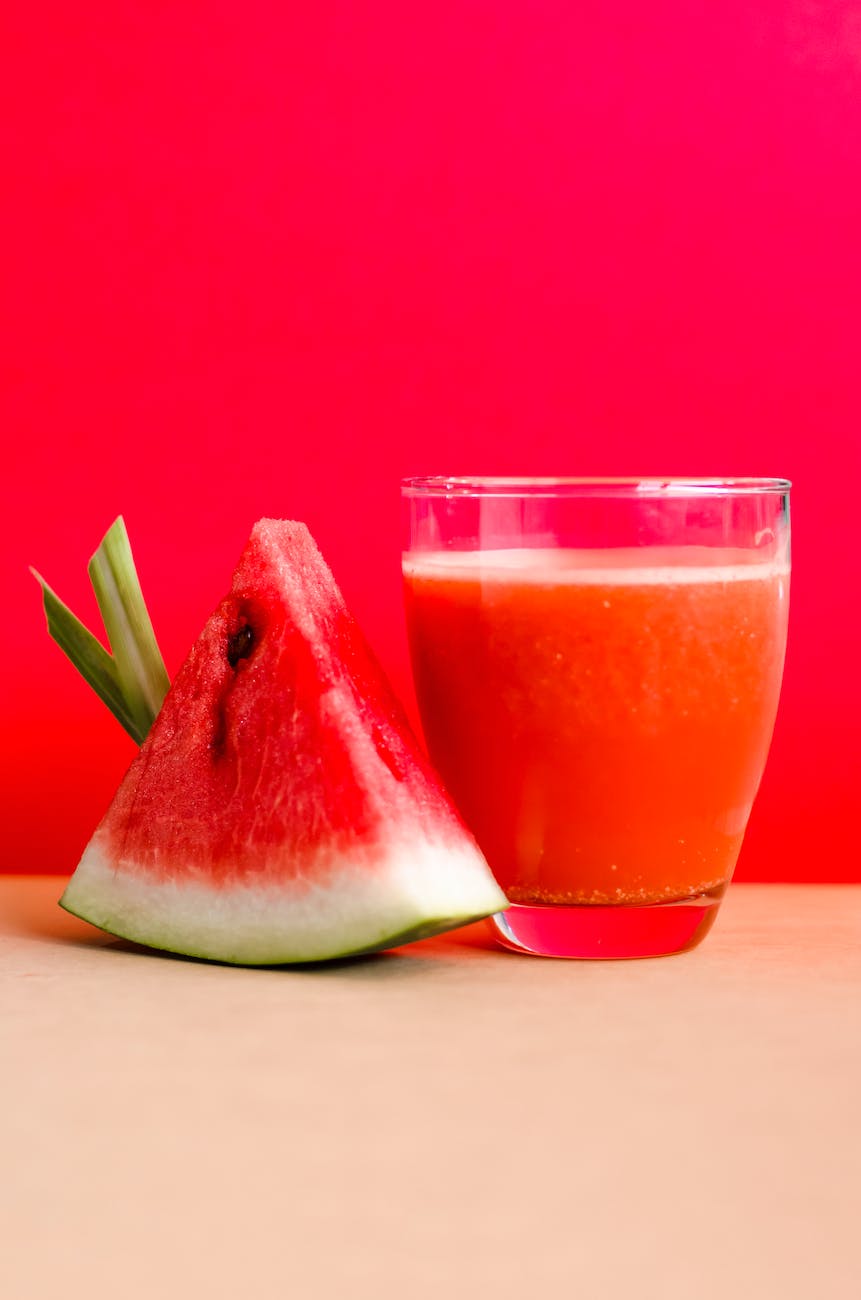
watermelon shake filled glass cup beside sliced watermelon fruit on brown surface

When it comes to refreshing and hydrating fruits, watermelon is a summertime favorite. Its juicy and sweet nature makes it a popular choice for a refreshing snack, but did you know that watermelon juice can also be a beneficial addition to your weight loss journey? In this blog post, we’ll explore five key facts about watermelon juice and how it may support your weight loss goals. So grab a glass of chilled watermelon juice and let’s dive in!

Nutrition Facts of Watermelon Juice:

Before we explore the weight loss benefits, let’s take a moment to appreciate the nutritional composition of watermelon juice. Here’s a breakdown of the macronutrients found in a typical 8-ounce (240 ml) serving of watermelon juice:

MacronutrientAmount
Calories71
Carbohydrates (g)18
Fiber (g)0
Sugar (g)17
Protein (g)1
Fat (g)0

1. 🍉 Hydration and Satiety: A Powerful Duo for Weight Loss 💦💪

Watermelon juice is incredibly hydrating due to its high water content, which can help keep you feeling full and satisfied. Staying hydrated is essential for weight loss as it can help regulate appetite, support proper digestion, and enhance overall metabolic function. By incorporating watermelon juice into your diet, you can hydrate your body while promoting a feeling of fullness, which may help control calorie intake.

2. 🌞 Low in Calories, High in Flavor: Ideal for Weight Management 🍉🌿

Watermelon juice is naturally low in calories and fat, making it a weight-conscious choice. It provides a burst of sweetness and flavor without significantly contributing to your daily calorie intake. By substituting high-calorie beverages with watermelon juice, you can enjoy a satisfying drink while reducing overall calorie consumption, which is crucial for weight loss.

3. 🌿 Nutrient-Dense: Fueling Your Body with Essential Nutrients 🌱🍉

While watermelon juice is low in fiber, it is rich in essential vitamins and minerals. It is an excellent source of vitamin C, which supports immune function and collagen production, as well as vitamin A, which promotes healthy skin and vision. Additionally, watermelon juice contains potassium, a mineral important for fluid balance and muscle function. By including watermelon juice in your weight loss journey, you can provide your body with vital nutrients to support overall health and well-being.

4. ✨ Natural Diuretic Properties: Reducing Water Retention 🚰🍉

Watermelon has natural diuretic properties, which means it may help reduce water retention in the body. Excess water weight can contribute to bloating and discomfort, and by incorporating watermelon juice into your diet, you can support a healthy fluid balance. However, it’s important to note that water weight loss is temporary and may vary from person to person.

5. 🌿 Versatility and Enjoyment: Making Weight Loss Delicious 🍉🍹

One of the significant advantages of watermelon juice for weight loss is its versatility. You can enjoy watermelon juice on its own, mix it with other fruits for a refreshing blend, or incorporate it into smoothies or popsicles. The delicious taste and vibrant color of watermelon juice make it a delightful addition to your weight loss journey, allowing you to indulge in a guilt-free treat while supporting your health goals.

Analysis:

While watermelon juice can be a refreshing and supportive addition to your weight loss efforts, it’s important to remember that weight loss is best achieved through a comprehensive approach. This includes adopting a balanced and nutritious diet, engaging in regular physical activity, managing stress levels, and getting adequate rest. Watermelon juice can complement these healthy lifestyle choices, but it shouldn’t be relied upon as a sole weight loss solution.

Additionally, be mindful of portion sizes and your overall calorie intake. While watermelon juice is relatively low in calories, excessive consumption can still contribute to caloric excess. Aim for moderation and incorporate watermelon juice as part of a well-rounded, nutrient-dense diet.

Remember to consult with a healthcare professional or registered dietitian for personalized advice, especially if you have any underlying health conditions or concerns.