Posted on Leave a comment

Mango Daiquiri Recipe

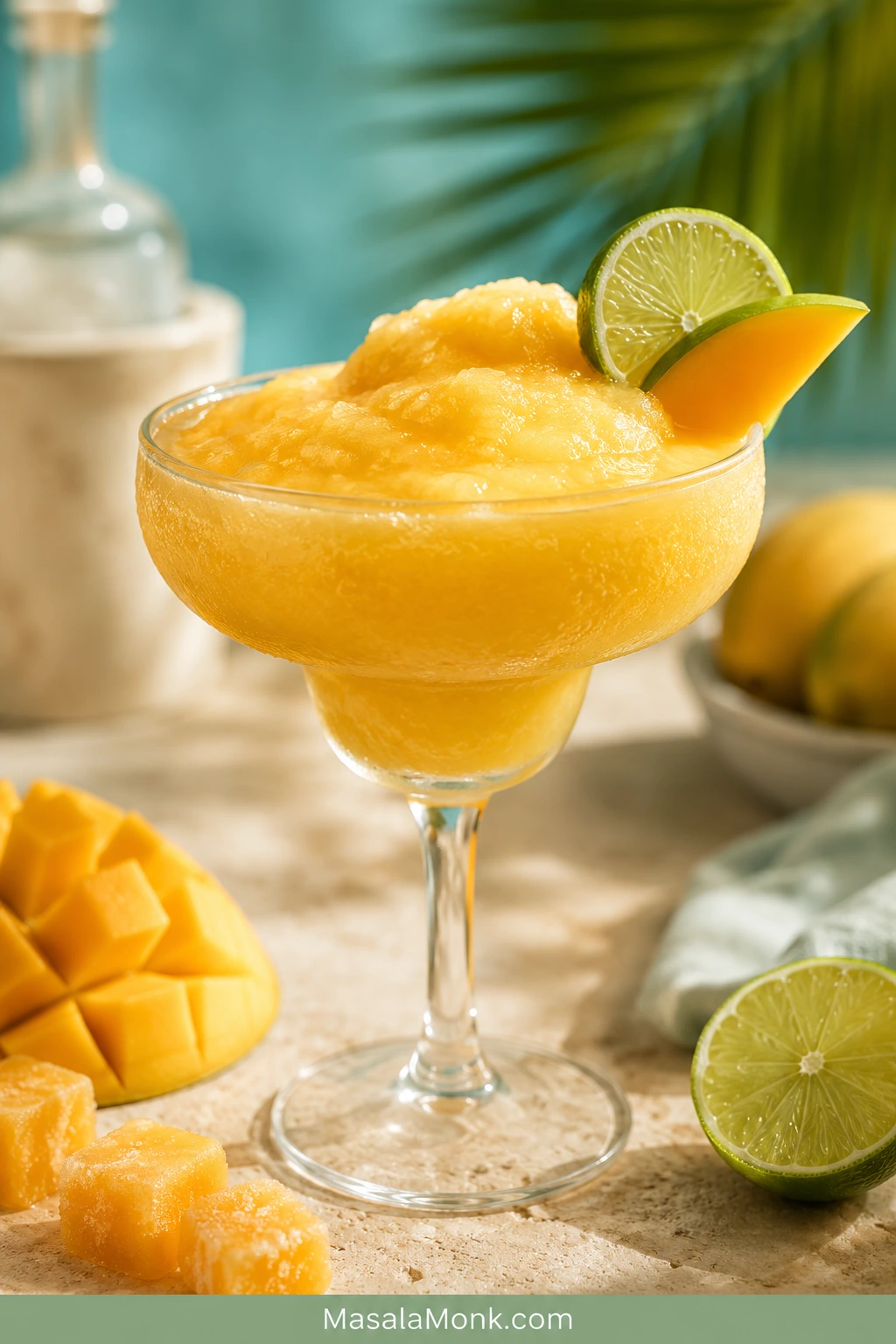
Frozen mango daiquiri in a chilled stemmed glass with a lime wheel, mango garnish, frozen mango chunks, lime halves, and crushed ice on a sunlit stone surface.

A mango daiquiri sounds easy until the blender turns it into a watery mango slush, a spoon-thick smoothie, or a drink that tastes sweet but flat. Mango, rum, lime, ice — the ingredient list is short, but the balance matters.

This recipe is built for the glass you actually want: cold, golden, lime-bright, mango-forward, and still cocktail-like. It is not a boozy smoothie, melted mango ice, or a bottled-mix drink hiding under too much sugar.

The best version should pour slowly, smell like ripe mango and fresh lime, and taste cold before it tastes sweet. Frozen fruit gives the drink body, lime keeps it awake, white rum keeps the finish crisp, and simple syrup lets you adjust for the mango you have.

Quick Answer

A mango daiquiri is made with mango, rum, fresh lime juice, sweetness, and ice. For the best frozen version, blend frozen mango chunks with white rum, lime juice, simple syrup, and crushed ice until smooth, frosty, and still loose enough to sip.

The easiest ratio for 2 drinks is 2 cups frozen mango, 4 oz white rum, 1½ oz fresh lime juice, 1 oz simple syrup, and 1 cup crushed ice. Frozen mango gives the thickest blender texture. For deeper aroma, use ripe fresh mango, but chill or freeze the cubes first so the drink does not melt too quickly.

When the balance is right, the first sip should taste like mango and lime before it tastes like alcohol. The rum should support the fruit, not bully it.

The core rule: ice makes a frozen daiquiri cold. Frozen fruit makes it taste like mango.
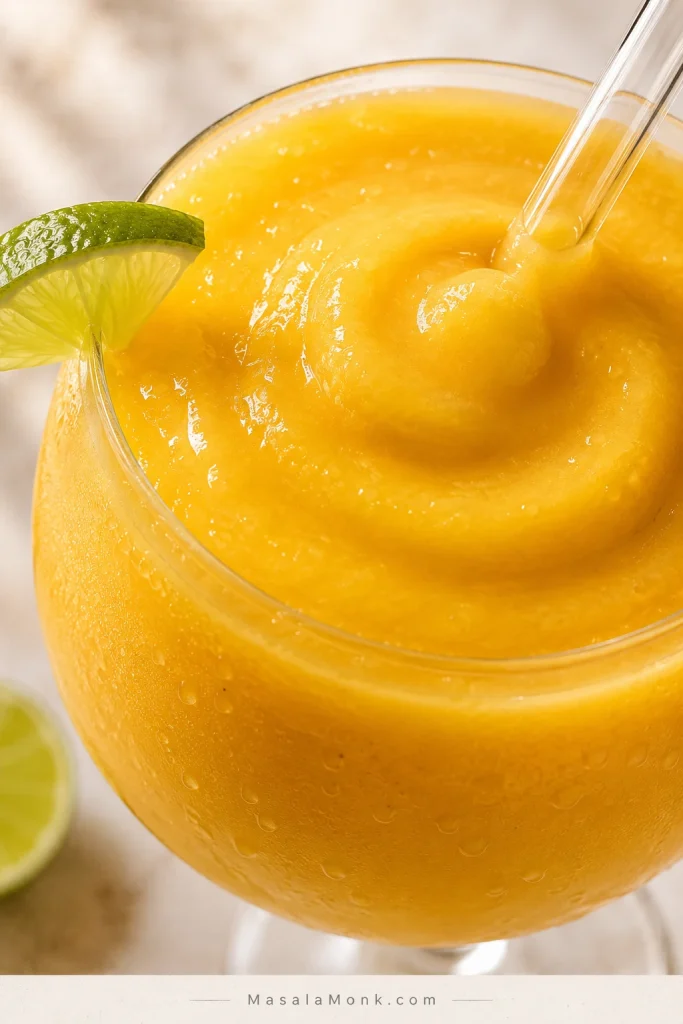
Close-up of a thick golden mango daiquiri with a lime garnish, condensation on the glass, and a clear straw touching the glossy frozen surface.
Look for a glossy texture that moves slowly but still drinks easily through a straw. If it looks scoopable, loosen it slightly; if it looks runny, blend in more frozen mango.

Make It Now

Already holding the blender jar? Liquids first, mango next, ice last. Blend only until it looks like a soft frozen cocktail, then taste before you pour.
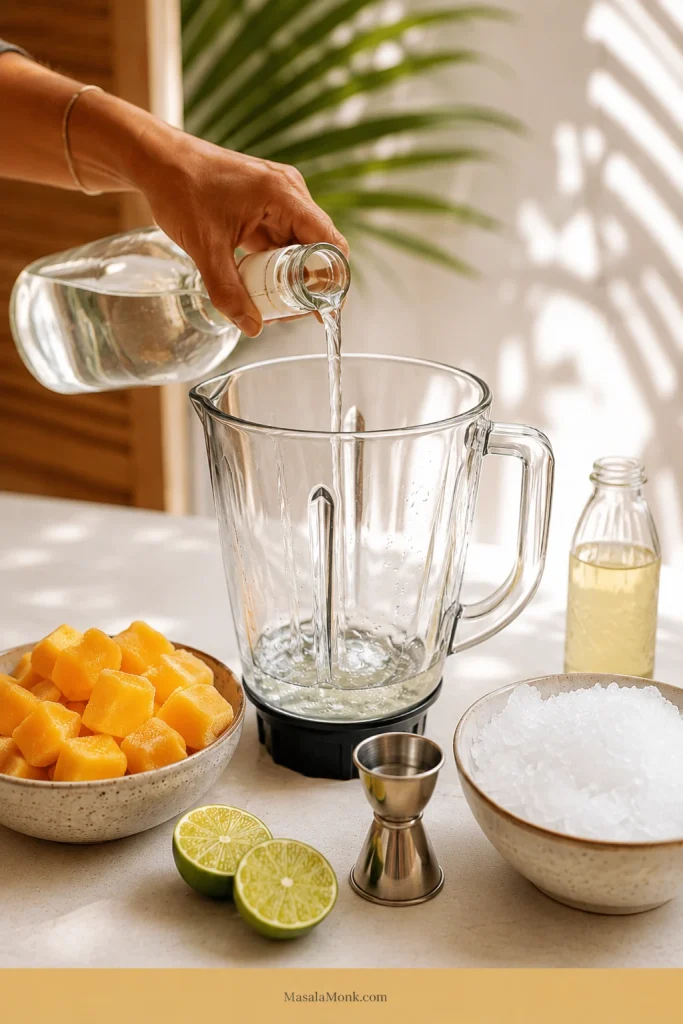
Clear liquid being poured into a blender jar with frozen mango chunks, crushed ice, lime halves, a jigger, and syrup nearby.
Start with the liquids so the blades have something to pull through the jar. After that, the frozen mango blends faster and the finished drink turns smoother.
  • Base ratio: 2 cups frozen mango, 4 oz white rum, 1½ oz lime juice, 1 oz simple syrup, 1 cup crushed ice.
  • Blend time: 20–30 seconds, just until frosty and slow-pouring.
  • Syrup range: ½ oz for very sweet mango or bottled mix; up to 1½ oz for tart or flat fruit.
  • Fast fix: lime sharpens, syrup softens, frozen fruit thickens, and 1 tablespoon liquid loosens the blender.
  • Serve: pour right away.

Recipe Card

Yield: 2 drinks · Prep time: 5 minutes · Total time: 5 minutes · Method: blender · Serve: immediately

This is the full frozen mango daiquiri recipe in one place. Start with frozen mango for the easiest texture, use fresh lime for the brightest flavor, and serve in a chilled coupe, margarita glass, martini glass, or rocks glass.

Ingredients

IngredientUS measureMetric measure
Frozen mango chunks2 cupsAbout 300 g
White rum or light rum4 oz120 ml
Fresh lime juice1½ oz / 3 tbsp45 ml
Simple syrup1 oz / 2 tbsp30 ml
Crushed ice1 cupAbout 150 g
Mango nectar, pineapple juice, coconut water, or cold water, optional1–2 tbsp, only if needed15–30 ml
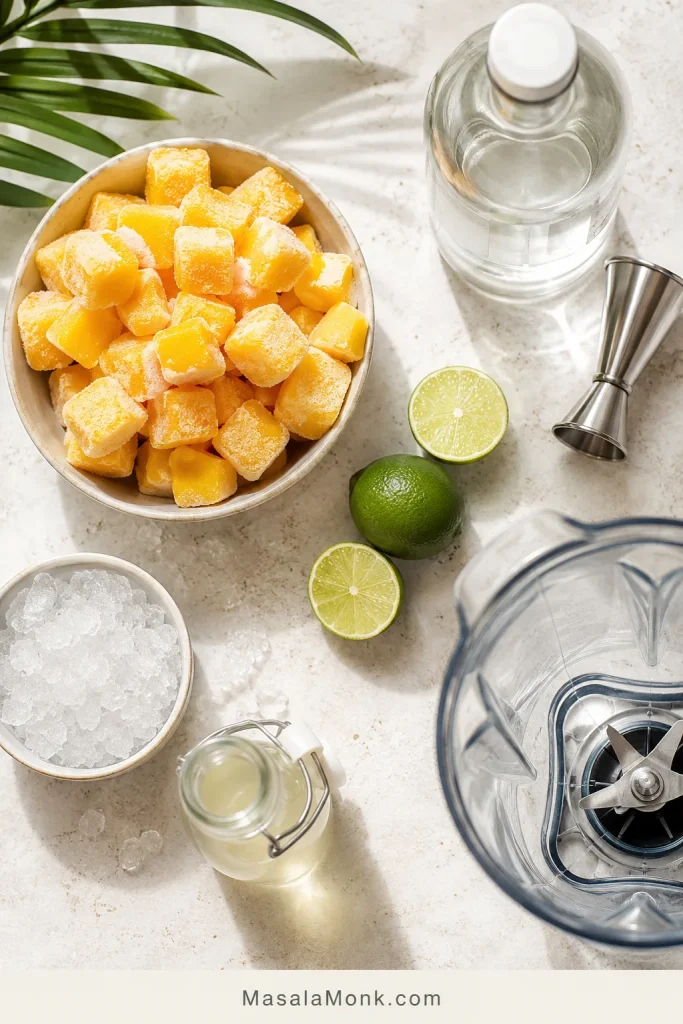
Overhead layout of frozen mango chunks, crushed ice, fresh limes, clear rum, simple syrup, a jigger, and a blender jar for a mango daiquiri.
This short ingredient list works because nothing is decorative. Frozen mango builds body, lime cuts sweetness, syrup rounds the edges, and rum keeps the drink in daiquiri territory.

Lighter drink: use 3 oz / 90 ml rum total for 2 drinks instead of 4 oz / 120 ml.

Sweeter mango or bottled mix: start with ½ oz / 15 ml simple syrup, then add more only if needed.

Instructions

  1. Chill 2 glasses in the freezer.
  2. Pour the rum, lime juice, and simple syrup into the blender.
  3. Add the frozen mango chunks.
  4. Top with crushed ice.
  5. Blend for 20–30 seconds, until smooth, slushy, and slow-pouring.
  6. Taste and adjust: lime for brightness, syrup for sweetness, frozen fruit for thickness, or 1 tbsp liquid if too thick.
  7. Pour into chilled glasses, garnish if you like, and serve immediately.

Notes

  • Fresh lime juice gives the brightest flavor.
  • Crushed ice blends better than large cubes.
  • Do not blend too long or the drink will warm and thin out.
  • Lime wheel, mango wedge, mint, or chili-lime rim all work as garnishes.
  • For the best texture, serve right away.

Need to adjust the drink? Fix the texture, choose fresh vs frozen mango, or pick a version.

Choose Your Mango Daiquiri

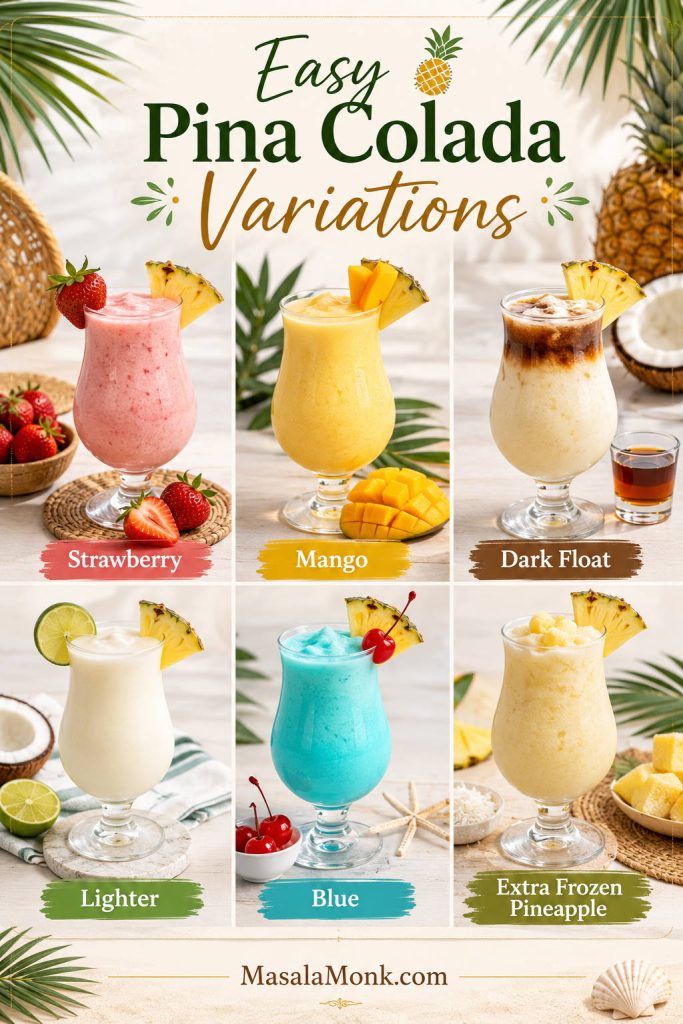
Once the base glass tastes right, the variations are easy. Use the same balance to make it lighter, stronger, fruitier, coconut-leaning, or alcohol-free.
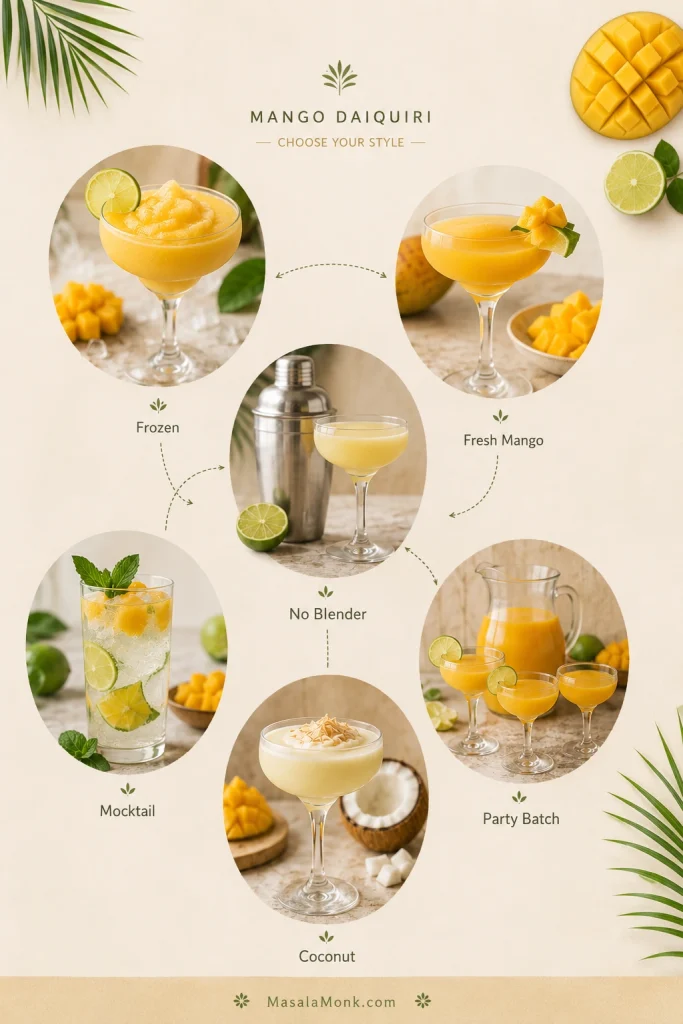
Guide board showing frozen, fresh mango, no-blender, mocktail, coconut, and party batch mango daiquiri versions with small drink and ingredient photos.
Once the mango-lime base tastes balanced, choose the version by need: frozen for texture, fresh for aroma, shaken for no blender, mocktail for a lighter glass, or coconut for a softer tropical finish.
What you wantBest version
Thick frozen cocktailUse the main frozen recipe
Fresh ripe mango flavorCube fresh mango and freeze 30–60 minutes before blending
No blenderShake mango puree or thick juice with rum, lime, and syrup
Sweeter tropical versionUse coconut rum or Malibu, then reduce syrup and add lime
Non-alcoholic drinkUse frozen mango, lime, pineapple juice or coconut water, and sparkling water
Party batchPrep liquids ahead and blend in batches right before serving

At its best, this is not a sugary frozen drink. It is mango with a lime edge, a crisp rum finish, and just enough sweetness to make the next sip feel easy.

What Is a Mango Daiquiri?

A mango daiquiri is a fruit version of the classic daiquiri, a rum cocktail built around rum, lime juice, and sweetness. At its core, the classic drink is just rum, fresh lime, and sugar; the International Bartenders Association’s daiquiri formula is a useful reference for that simple base.

The mango version can be frozen and blended, or shaken and strained when made with puree or juice. Either way, it should still taste like a cocktail: fruit first, lime brightness next, and a crisp rum finish.

For a broader look at the drink family, see our Daiquiri Recipe guide. This page stays focused on keeping the mango version balanced at home.

Why This Works

This drink works because frozen fruit does the heavy lifting, not the ice. It gives the daiquiri body, so you do not have to rely on flavor-diluting cubes to create texture.
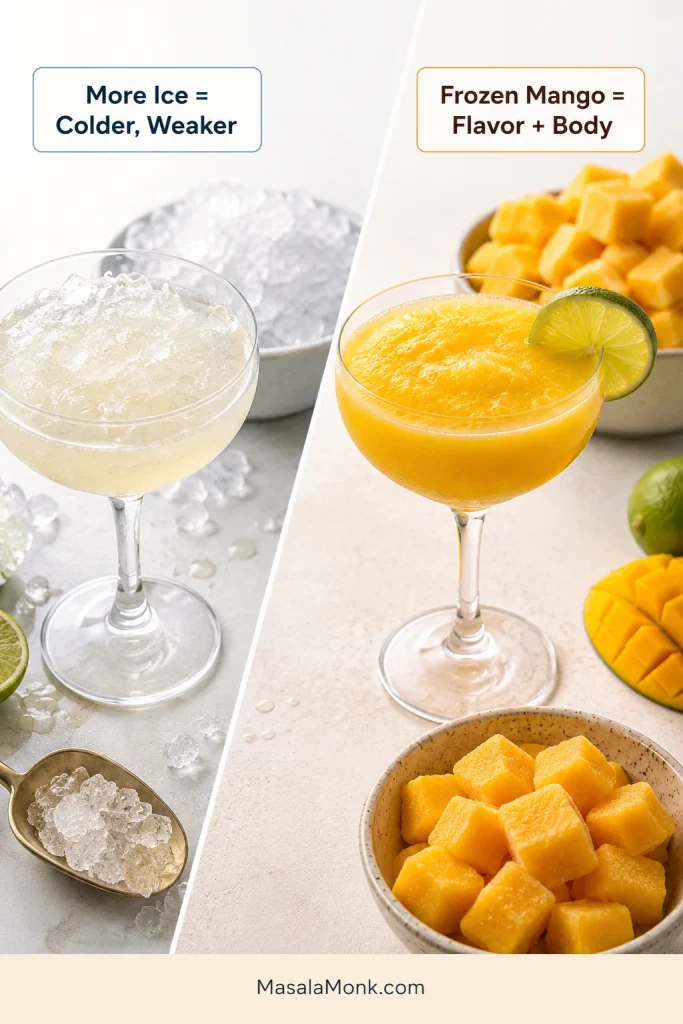
Comparison guide with a pale icy drink beside a thicker golden mango drink, showing how ice and frozen mango affect texture.
More ice can chill the drink, but it can also thin the flavor. Instead, let frozen fruit handle most of the body and use ice only for coldness and lift.

Fresh lime keeps the sweetness lively. White rum gives structure without hiding the mango. Simple syrup stays adjustable because mangoes are unpredictable — one batch may be candy-sweet, the next may be tart or flat.

The blender order matters more than it seems: liquids first, fruit second, ice last. That small step makes the mixture easier to blend and reduces the urge to pour in extra liquid too early.

Ingredients You Need

With a drink this simple, every ingredient shows up in the glass. The goal is not to bury the mango under sugar or ice. It is to let the fruit, lime, rum, cold, and sweetness show up in the right order, so every sip tastes bright instead of heavy.

Mango

Frozen chunks are the easiest win because they give the drink body without watering it down. They also make the texture more predictable from batch to batch.
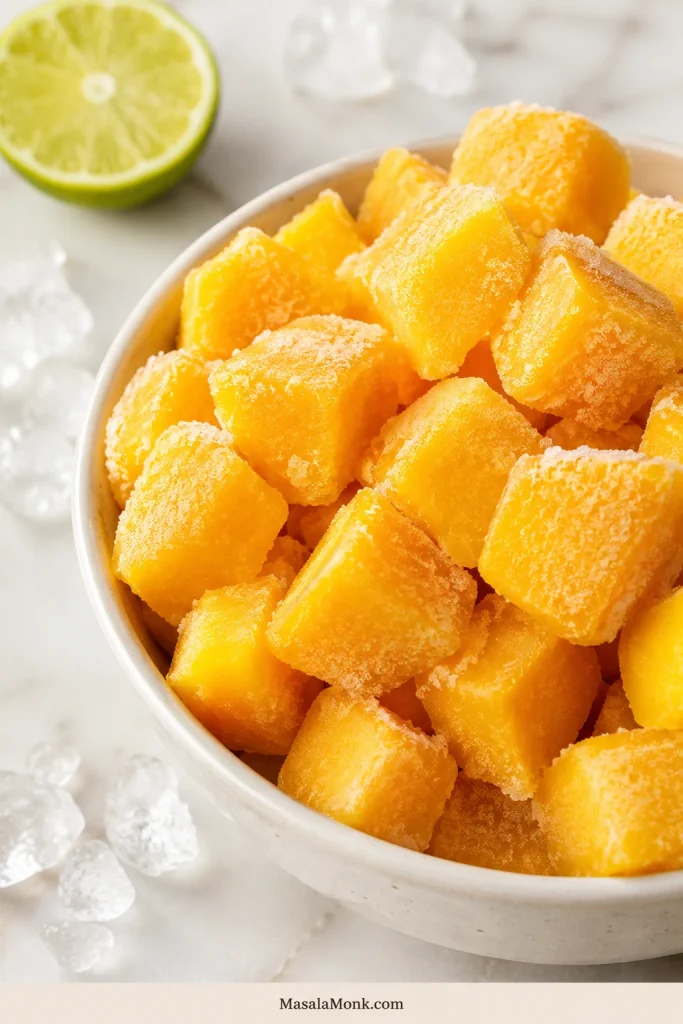
Frosty frozen mango chunks in a ceramic bowl with scattered ice pieces and a lime half on a light countertop.
Frozen mango gives the blender a head start: it chills, thickens, and flavors the drink before the crushed ice goes in.

Fresh mango is lovely when it is ripe, fragrant, and sweet. Taste a piece first. If it tastes bland, the drink will need more lime, a little more syrup, and possibly a tiny pinch of salt. For better texture, cube it and freeze for 30–60 minutes.

If your mango is fibrous, puree it first or use frozen chunks for a smoother blend. For another look at how mango changes texture in drinks, our Mango Lassi Recipe also works through fresh mango, frozen mango, and mango pulp.

Rum

Reach for white rum or light rum first. It keeps the mango and lime clear. Aged rum gives a warmer flavor. Dark rum can work in a richer tropical version, but it can cover the fruit. Coconut rum is sweeter, so pull the syrup back if you add it. Avoid overproof rum unless you deliberately want a stronger drink.

If you like crisp rum-and-lime drinks, our Mojito Recipe is another useful ratio to keep in rotation.

Fresh Lime Juice

Lime is what wakes the whole glass up. It gives the drink its proper daiquiri shape and keeps mango from tasting heavy. Lime is better than lemon here because it gives a sharper cocktail edge. Bottled lime works in a pinch, but fresh juice tastes brighter in a drink this simple.

Simple Syrup

Simple syrup smooths the lime and fruit. Start with 1 oz / 30 ml for 2 drinks, then taste. Very sweet mango may only need ½ oz / 15 ml. Tart or flat fruit may need up to 1½ oz / 45 ml.

To make a small batch, stir ¼ cup sugar with ¼ cup hot water until dissolved. Cool it before using. Store the rest in the fridge for more drinks.

Ice

Crushed ice gives the blender a head start, especially when the mango is rock-solid. Large cubes work in a strong blender, but they can leave chunks if the blender struggles. Add more only after tasting, because ice fixes texture for a moment but weakens flavor as it melts.

Fresh vs Frozen Mango for Daiquiris

The mango you start with decides the kind of drink you get. Choose based on whether you want thick frozen texture, fresh aroma, a shaken cocktail, or a shortcut.
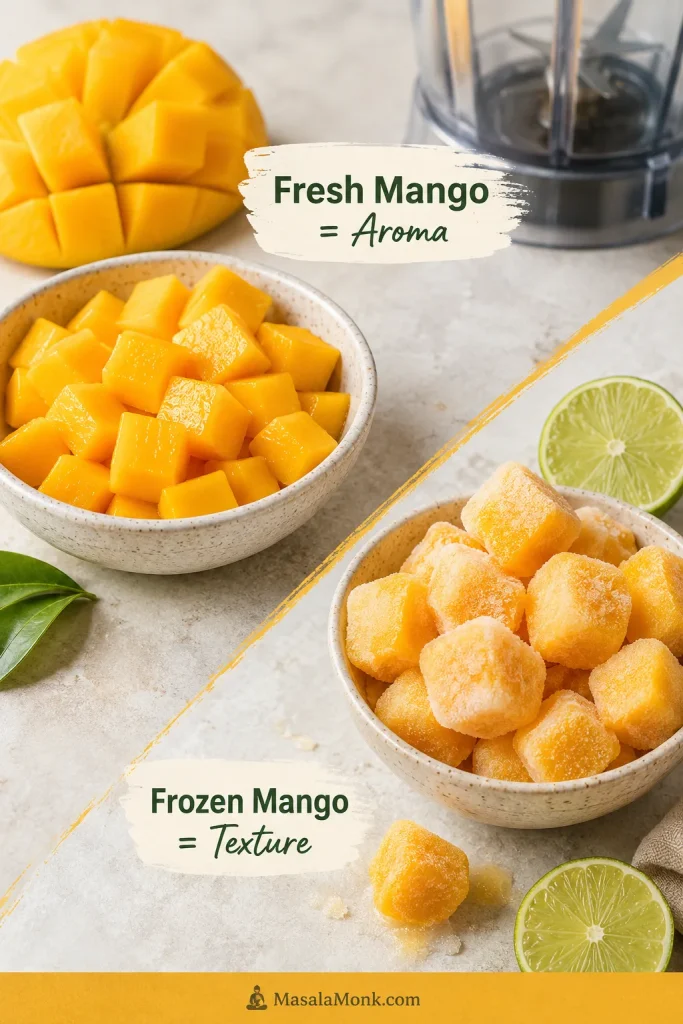
Fresh mango cubes and a scored mango cheek shown beside frosty frozen mango chunks with lime and a blender jar in the background.
Fresh mango gives perfume and ripe fruit flavor, while frozen mango gives dependable texture. For the best balance, cube fresh mango and freeze it briefly before blending.
Mango formBest forHow to adjust
Frozen mango chunksThick frozen drinksStart with less ice because the fruit already thickens the blend.
Fresh ripe mangoBest fresh flavorChill or freeze the cubes first; add ice gradually.
Mango pureeSmooth blender drinks or shaken versionsPull back the syrup because puree is often concentrated and sweet.
Mango nectarShortcut flavor or loosening a thick blendAdd lime and reduce syrup because nectar is usually sweet.
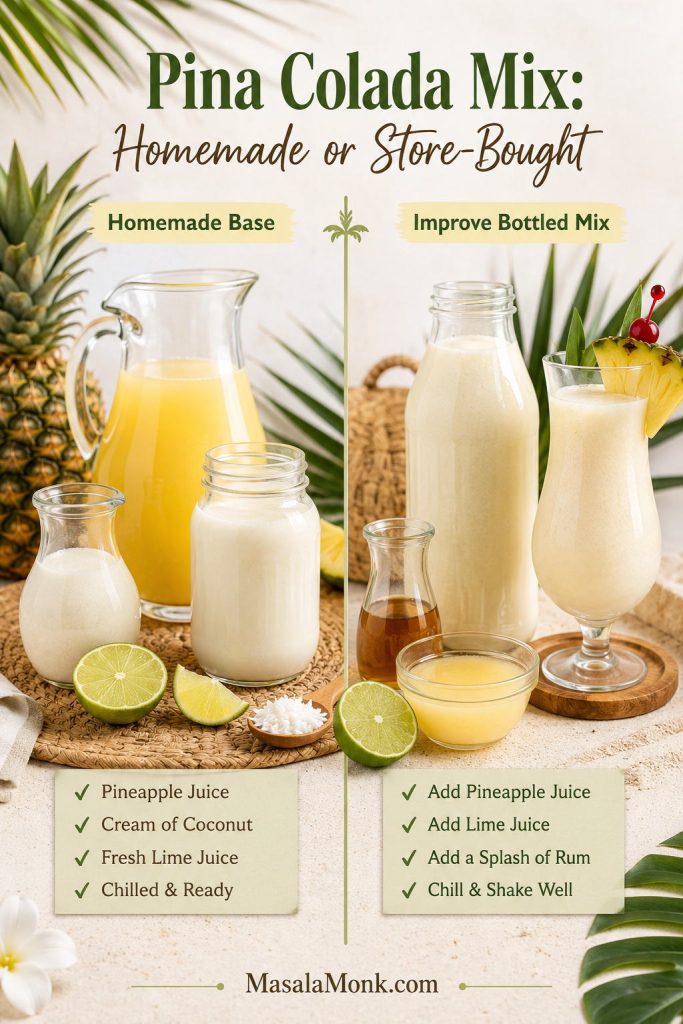
Bottled daiquiri mixConvenienceSkip or reduce syrup, then add fresh lime and frozen fruit.
Mango juiceLight shaken versionExpect a thinner drink; keep the lime strong.

Best default: frozen chunks for the main recipe. They give the easiest texture and the strongest flavor after blending.

If you actually want a creamy breakfast-style drink instead of a cocktail, this Mango Smoothie Recipe is the better direction.

Once you know what your mango is bringing, the fixes get simple: more lime to balance sweetness, less syrup for nectar, and more frozen fruit for body.

Using Mango Nectar, Puree, or Bottled Mix

Mango nectar can help when your blender needs liquid, but it should not take over the drink. Think of it as a mango boost, not the base.
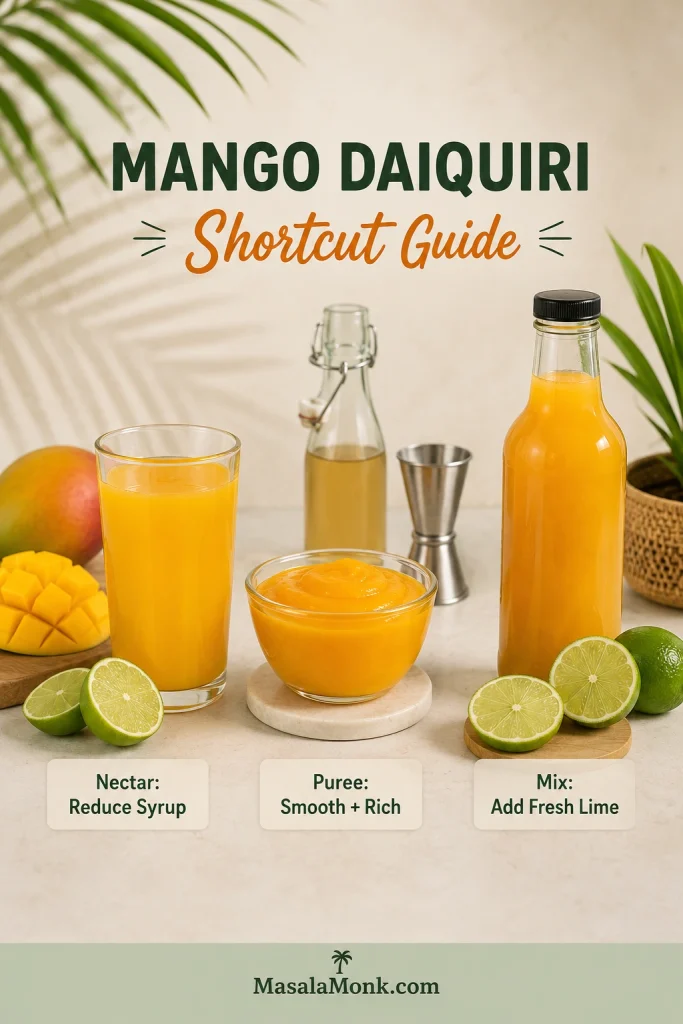
Mango daiquiri shortcut guide showing mango nectar, mango puree, bottled mix, lime halves, syrup, and a jigger on a cream background.
Mango nectar, puree, and bottled mix can all work, but they usually bring extra sweetness. Reduce the syrup first, then use fresh lime to bring the cocktail back into balance.

Puree gives a smooth texture and works especially well in the shaken version. Bottled mixes are usually sweet, so skip or reduce the syrup, add fresh lime, and blend in frozen fruit if the flavor tastes thin or artificial.

For another mango cocktail that handles fresh fruit, nectar, frozen texture, and pitcher options, see our Mango Margarita Recipe.

Back to top

How to Make a Mango Daiquiri Less Watery

You should be able to sip it, not scoop it. The ideal texture is thick enough to feel frozen, but loose enough to pour slowly from the blender. If it behaves like juice, it needs more frozen fruit. When it behaves like sorbet, it needs a small splash of liquid.
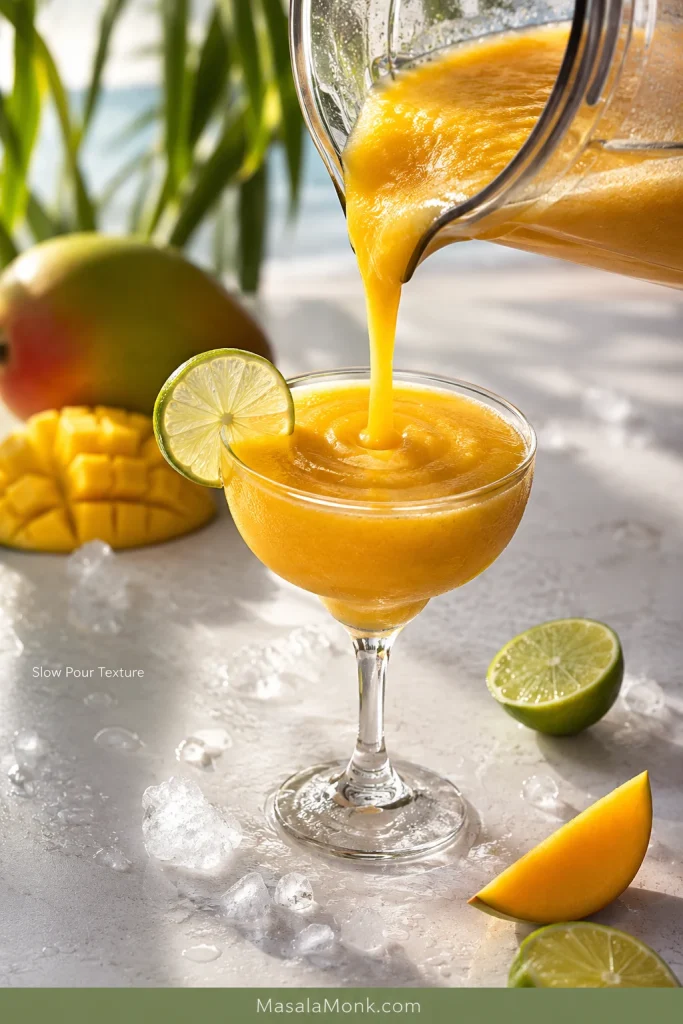
Thick golden mango daiquiri pouring slowly from a blender jar into a chilled stemmed glass with lime, mango, and ice nearby.
The best texture pours slowly, then settles into the glass without collapsing into juice. If it rushes out too quickly, add frozen mango before adding more ice.

Watery vs Perfect Mango Daiquiri Texture

Use this visual check before adding more ice. A watery daiquiri usually needs more frozen mango, while a scoop-thick one needs a small splash of liquid.
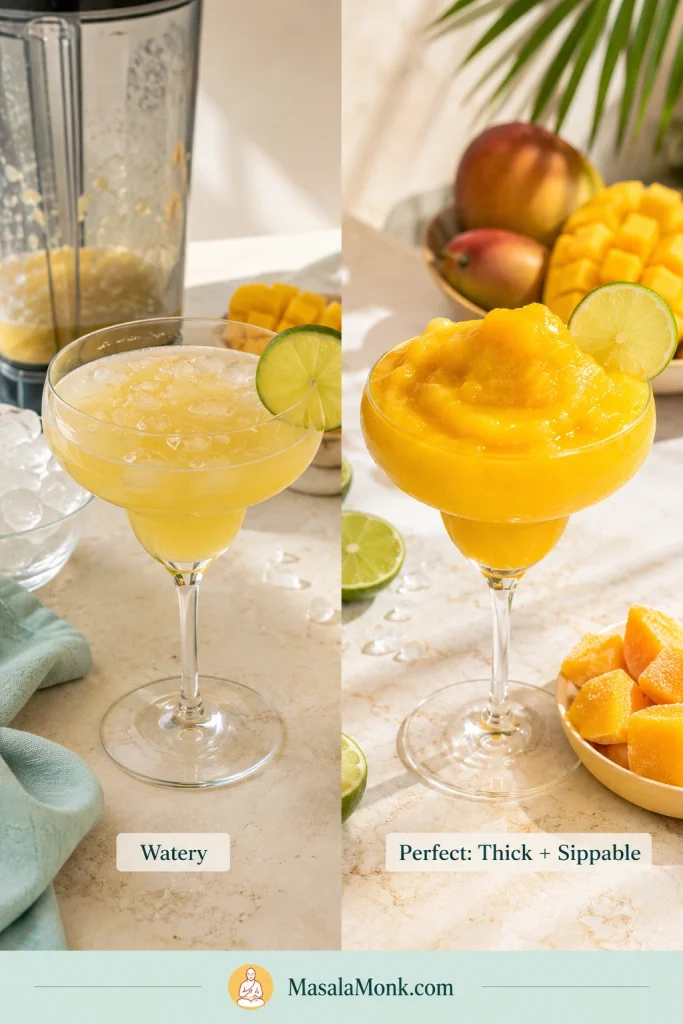
Side-by-side comparison of a watery pale mango daiquiri and a thick golden mango daiquiri with lime garnishes, ice, and mango nearby.
Watery texture usually comes from too much ice or too little frozen fruit. The better glass stays thick and bright because mango, not ice, does the heavy lifting.

The common mistake is trying to fix a thin daiquiri with more ice. That makes it colder for a minute, then more watery. Frozen fruit is the better fix because it adds body and flavor at the same time.

The same fruit-first idea is what keeps our Frozen Strawberry Daiquiri Recipe thick and bright without leaning too hard on ice.

Quick Texture Fixes

GoalWhat to do
ThickerAdd frozen fruit.
SlushierAdd crushed ice gradually.
SmootherBlend 5–10 seconds more, but avoid warming the drink.
LooserAdd 1 tbsp mango nectar, pineapple juice, coconut water, or cold water.
BrighterAdd lime juice.
SweeterAdd syrup.
More fruit-forwardReduce ice and add more mango.
Less flatAdd lime and a tiny pinch of salt.

That pinch of salt is optional, but useful when frozen fruit tastes dull. The drink should not taste salty; the salt simply makes the mango and lime feel more awake.

Once the texture is right, the pour should look slow, glossy, and still loose enough to drink through a straw.

Blender Help

A powerful blender makes this easier, but you do not need a bar machine to make a good frozen drink. The right order and small corrections matter more. For a Thermomix, use the same ingredients and blend only until slushy; if the machine struggles, let the fruit soften for a few minutes first.

  • Liquids first: rum, lime juice, and syrup help the blades start moving.
  • Fruit second: frozen chunks should be close to the blades, but not packed too tightly.
  • Crushed ice last: it blends faster than large cubes.
  • Pause before adding liquid: if the blender forms an air pocket, stop and stir first.
  • Small corrections: add liquid only 1 tablespoon at a time.
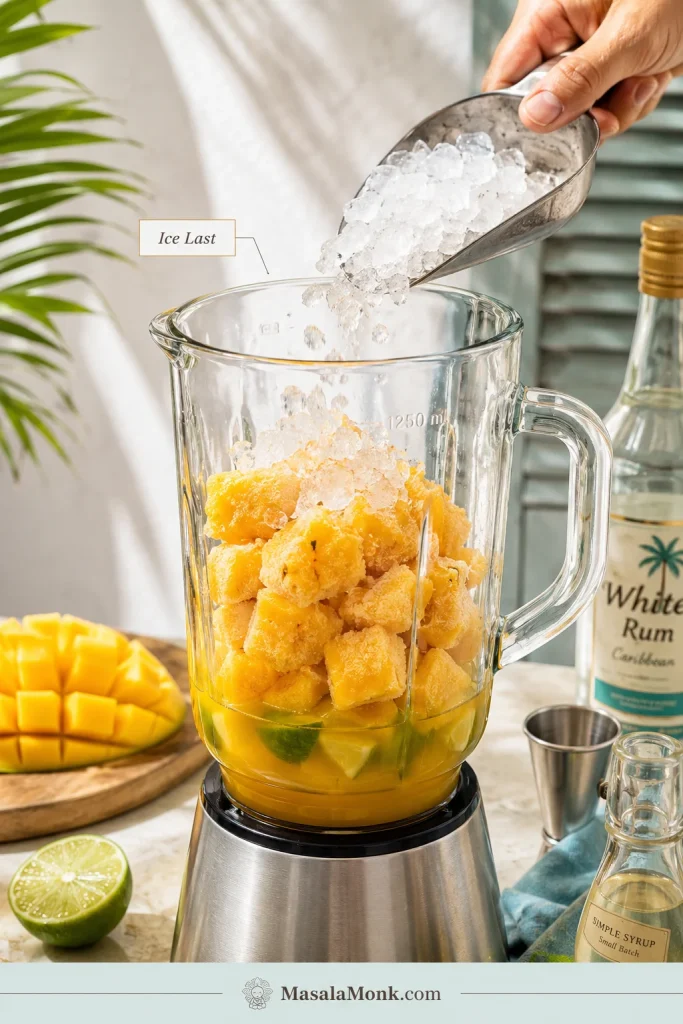
Crushed ice being poured from a metal scoop into a blender filled with frozen mango, lime, and liquid for a mango daiquiri.
Add crushed ice last so it chills the mixture without blocking the blades. This helps even weaker blenders make a smoother frozen daiquiri.

If the blender stalls, it is not a failure. Stop, stir, and only then add liquid. Extra liquid fixes movement, but it also thins the drink fast.

No crushed ice? Wrap cubes in a clean towel and tap them smaller, or pulse the ice briefly before adding the mango. For a weaker blender, let the frozen chunks sit at room temperature for 3–5 minutes.

No blender or still struggling? Try the shaken mango daiquiri, or return to the main recipe.

Back to top

Mango Daiquiri Without a Blender

For a lighter, cocktail-bar-style drink, use mango puree or thick juice and shake it instead of blending. This no-blender mango daiquiri is smooth and chilled, not frozen.

It will not have the plush frozen texture of the blender version, but it should feel cleaner, sharper, and more cocktail-bar-like.
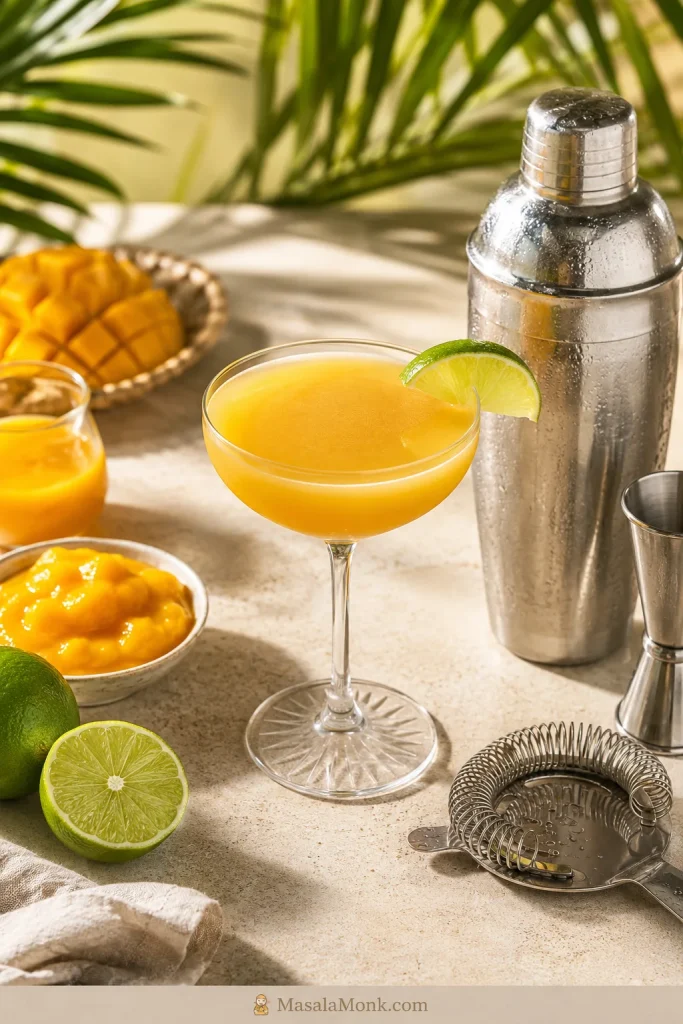
Smooth mango daiquiri in a coupe glass beside a cocktail shaker, strainer, jigger, lime, mango puree, and mango pieces.
A no-blender mango daiquiri is lighter and smoother than the frozen version. Use mango puree or nectar here, because frozen chunks need a blender to turn silky.
For 1 drinkAmount
White rum2 oz / 60 ml
Mango puree or thick mango juice1–1½ oz / 30–45 ml
Fresh lime juice¾ oz / 22 ml
Simple syrup½ oz / 15 ml
IceFor shaking

Add everything to a cocktail shaker with ice. Shake hard for 10–15 seconds, then strain into a chilled coupe or martini glass. Reduce the syrup if your puree is already sweet. Add a little more lime if the drink tastes flat.

Variations

Once the base tastes good, the fun part starts. Strawberries make it fruitier, pineapple makes it sharper, coconut makes it softer, passion fruit makes it tangier, and chili-lime makes it party-ready.

Looking for a specific version? Jump to the mocktail, mango strawberry, coconut rum, or spicy mango version.

Virgin Mango Daiquiri / Mocktail Version

For a non-alcoholic version, do not simply leave out the rum. Without the spirit, the drink still needs lift. Pineapple juice, coconut water, lime, and a splash of sparkling water keep it from becoming just a smoothie.

  • 2 cups / 300 g frozen mango
  • ⅓ cup / 80 ml pineapple juice, orange juice, or coconut water
  • 1½ oz / 45 ml fresh lime juice
  • 1–2 tbsp simple syrup, honey syrup, or maple syrup
  • ½–1 cup ice
  • Optional splash of sparkling water or lime seltzer after blending

Blend the fruit, juice or coconut water, lime, syrup, and ice until slushy. Add sparkling water after blending if you want it to feel more like a mocktail. Pineapple juice and orange juice are already sweet, so start with less syrup.
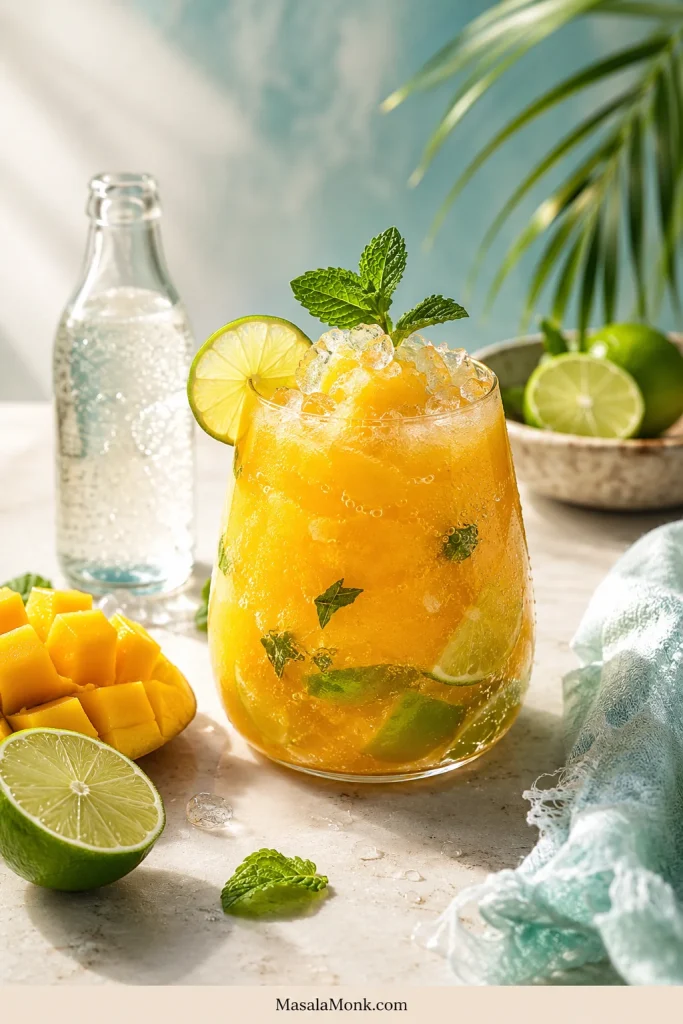
Non-alcoholic mango daiquiri mocktail in a stemless glass with crushed ice, lime, mint, mango pieces, and an unbranded sparkling water bottle.
In a virgin mango daiquiri, bubbles help replace the lift you normally get from rum. Add sparkling water gently so the mocktail stays bright, cold, and refreshing.

If coconut water is your favorite way to lighten tropical drinks, these Coconut Water Cocktails give you more rum, tequila, vodka, and mocktail-style directions.

Mango Strawberry

Replace half the mango with frozen strawberries. The drink turns brighter, pinker, and a little tarter, so taste before adding extra lime. Keep the same rum and syrup base, then add ice only as needed.
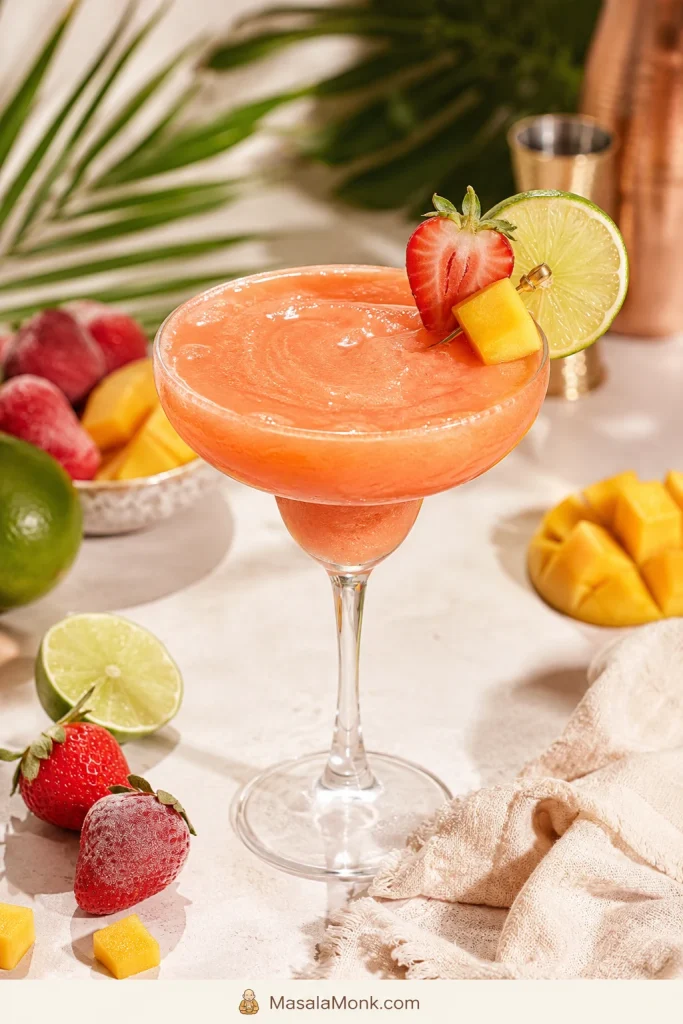
Pink-orange mango strawberry daiquiri in a stemmed glass with strawberry, lime, mango garnish, strawberries, mango chunks, and limes around it.
Strawberries make this mango daiquiri pinker, tarter, and more playful. However, the drink still needs lime for contrast, or it can drift toward smoothie territory.

Mango Pineapple

Replace 1 cup mango with 1 cup frozen pineapple. Pineapple is naturally sweet and acidic, so taste before adding extra syrup.

Mango Daiquiri with Malibu or Coconut Rum

Use coconut water as the optional thinning liquid, or replace part of the white rum with coconut rum or Malibu. Coconut rum is sweet, so reduce the syrup and add lime if the drink tastes heavy. If you want to move creamier and more pineapple-coconut, our Piña Colada Variations are the better next stop.
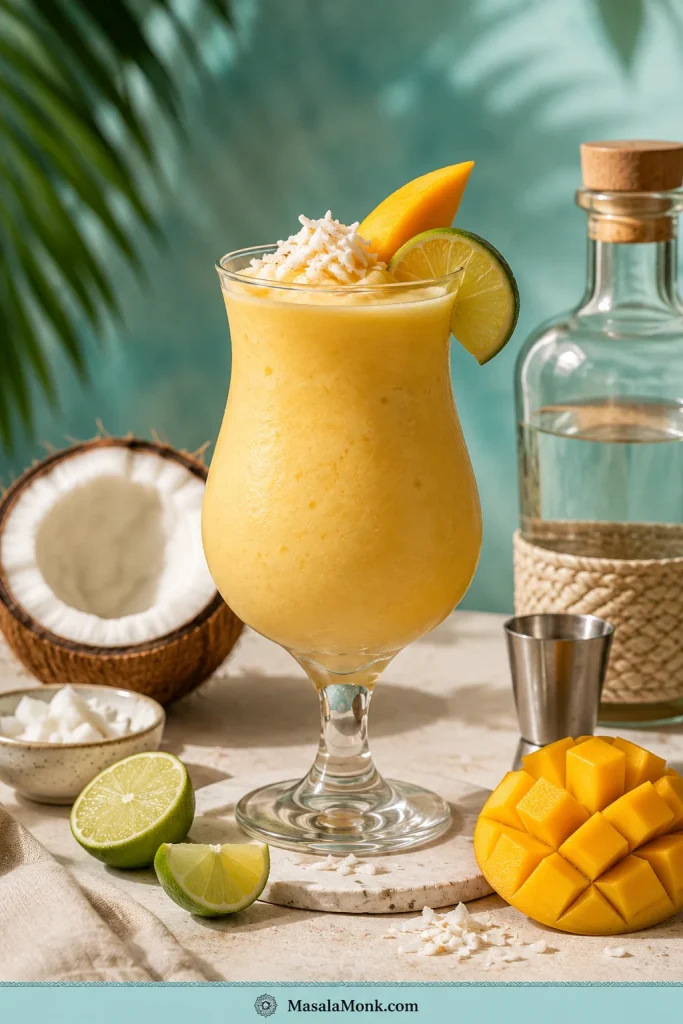
Creamy mango coconut daiquiri in a tall glass with shredded coconut, mango garnish, lime, coconut half, coconut pieces, jigger, and a clear bottle nearby.
Coconut rum or coconut water makes mango taste softer and rounder. Because coconut adds sweetness, use less syrup and let fresh lime keep the finish clean.

Mango Passion Fruit

Add 1–2 tablespoons passion fruit pulp or puree. Passion fruit is tart, so taste before adding extra lime. This version is sharp, fragrant, and very tropical.

Spicy Mango

Add a chili-lime rim, a pinch of Tajín, or one very thin slice of jalapeño to the blender. Start small. Mango takes spice well, but too much heat can overpower the lime and rum.
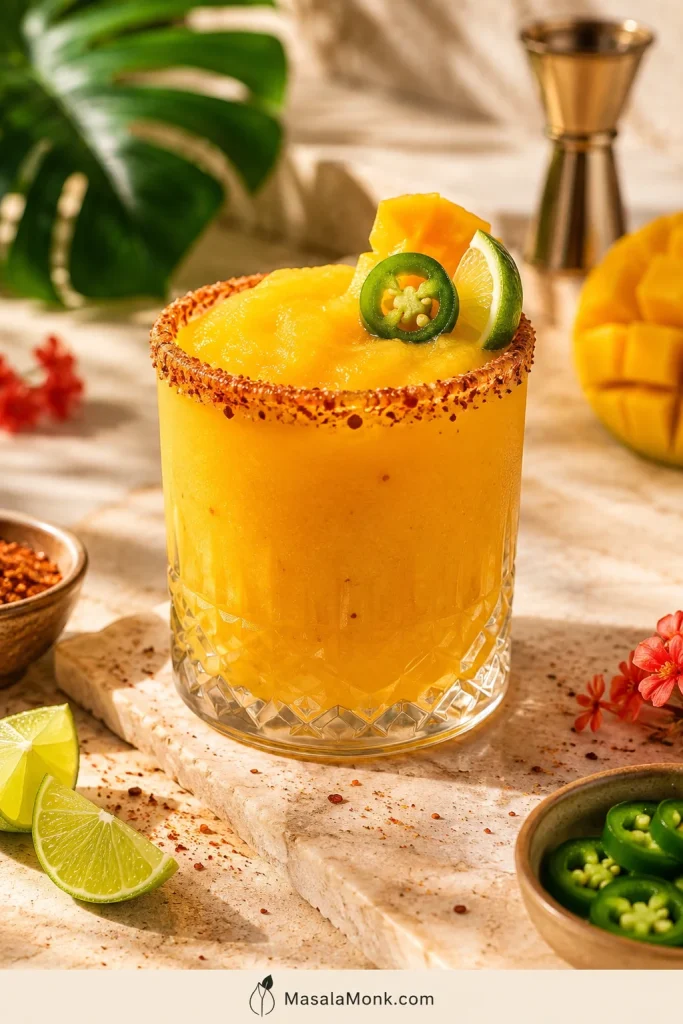
Spicy mango daiquiri in a rocks glass with a chili-lime rim, jalapeño slice, mango garnish, lime wedges, chili flakes, and sliced peppers.
A chili-lime rim turns sweet mango into a sharper party cocktail. The salt wakes up the fruit, while the chile keeps every sip from feeling too soft.

For a full chili-lime cocktail built around jalapeño and a Tajín-style rim, try the Spicy Margarita Recipe.

Vodka Mango

Vodka works as a 1:1 swap for rum, but the result is technically a mango vodka frozen cocktail rather than a daiquiri. The flavor will be cleaner and less rummy, so keep the lime strong.

Back to top

Pitcher Batch and Make-Ahead Tips

Scale the ingredients, but blend close to serving time. Frozen cocktails are best in the first few frosty minutes, before the ice melts and the fruit starts to separate.
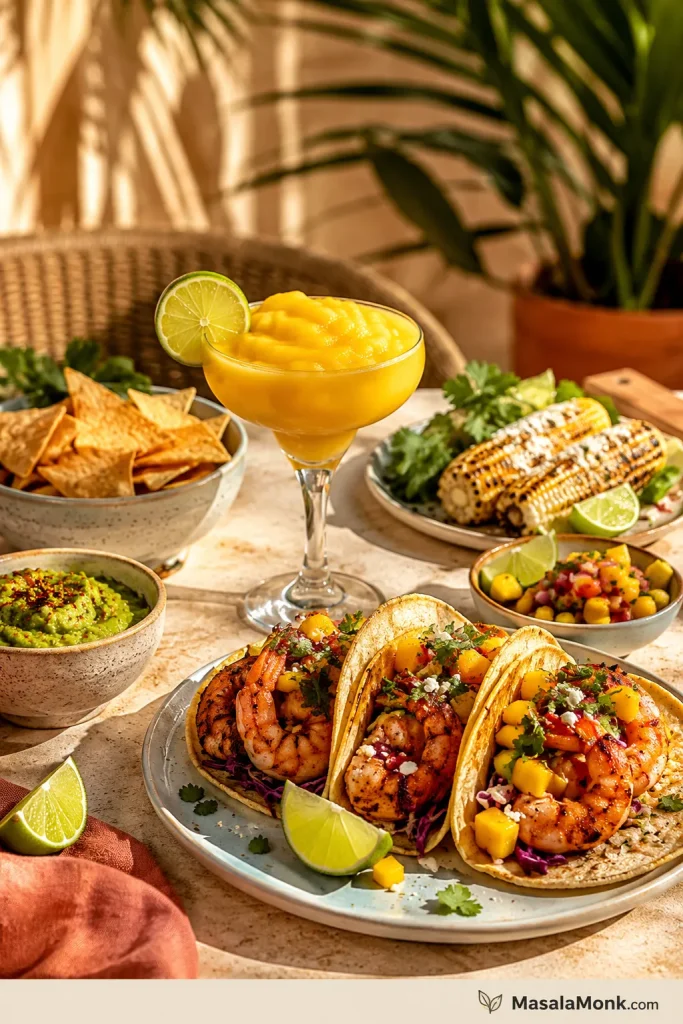
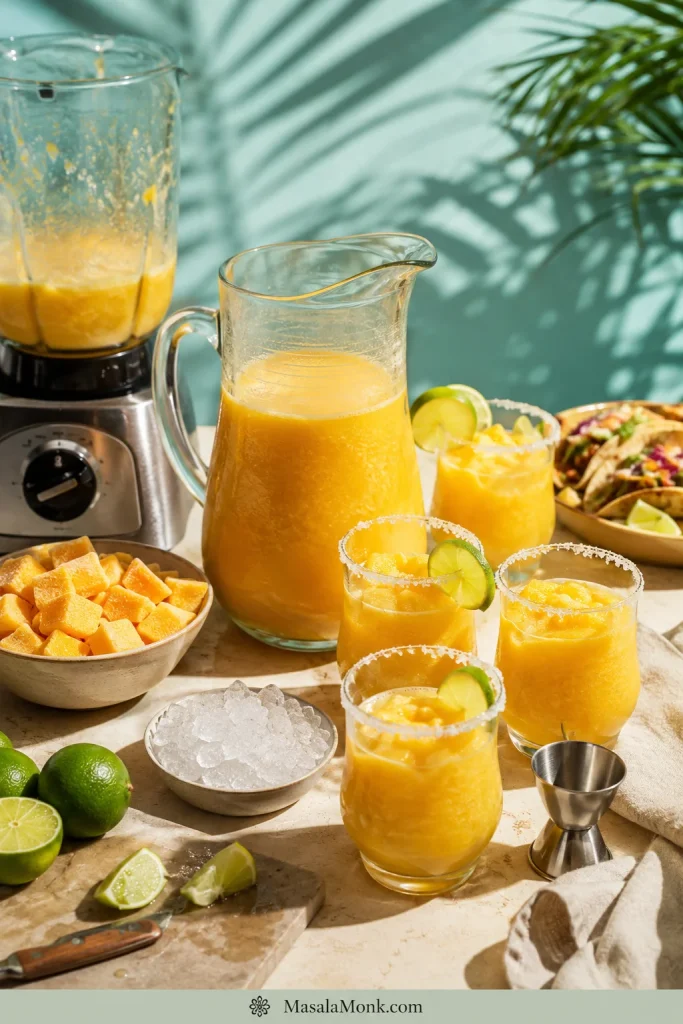
Mango daiquiri pitcher batch setup with a blender, glass pitcher, multiple glasses, frozen mango, crushed ice, limes, tacos, a jigger, and a linen napkin.
For a pitcher batch, prep the mango, lime, syrup, and rum mixture ahead, then blend close to serving. That way, the drinks stay cold, thick, and fresh for guests.

For 4 Drinks

Frozen mango4 cups / about 600 g
White rum8 oz / 240 ml
Fresh lime juice3 oz / 90 ml
Simple syrup2 oz / 60 ml
Crushed ice2 cups / about 300 g

For 8 Drinks

Frozen mango8 cups / about 1.2 kg
White rum16 oz / 480 ml
Fresh lime juice6 oz / 180 ml
Simple syrup4 oz / 120 ml
Crushed ice4 cups / about 600 g

Blend in batches if your blender jar is smaller than 64 oz / 1.9 L. Do not fill the blender to the top with frozen ingredients; leave room for movement or the blades will struggle. For parties, prep the fruit, juice the limes, make the syrup, and chill the rum mixture ahead of time. Blend only when guests are ready for drinks.

  • Best texture: serve immediately after blending.
  • Mango prep: peel, cube, and freeze fresh mango ahead.
  • Syrup prep: make simple syrup ahead and keep it chilled.
  • Avoid the fridge: a blended frozen drink will melt, separate, and lose texture.
  • Leftovers: freeze in a container, then re-blend briefly before serving.

If you want a rum drink that can sit chilled in a pitcher instead of being blended at the last minute, our Rum Punch Recipe is the easier party option.

Troubleshooting

Most mango daiquiri problems are easy to fix while the drink is still in the blender. A little lime, a little syrup, a little frozen fruit — that is usually enough to bring the glass back into balance.
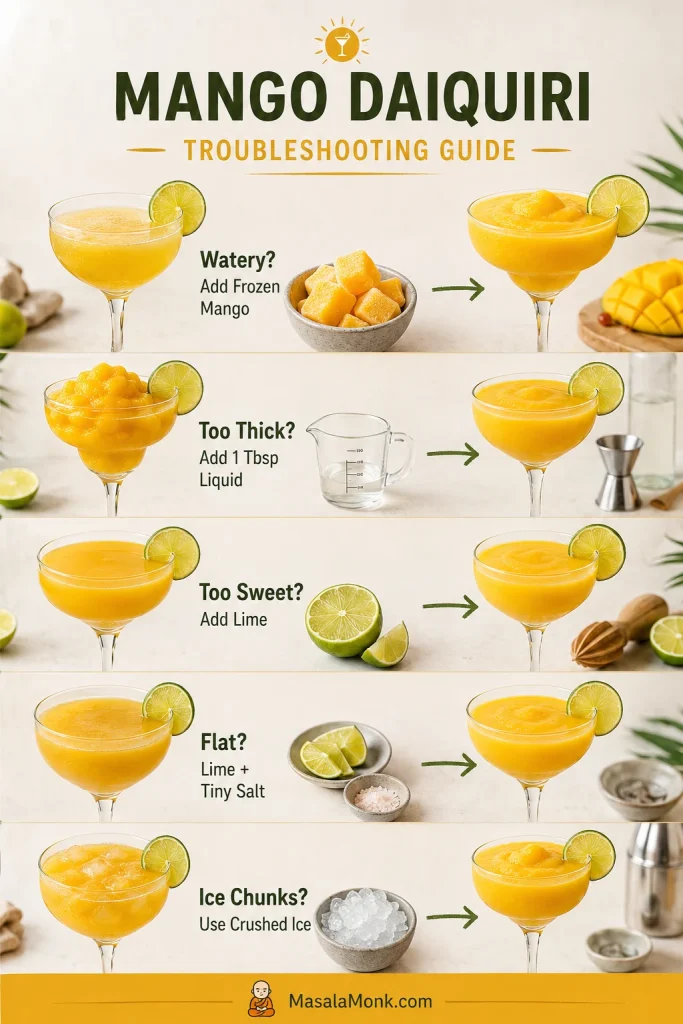
Mango daiquiri troubleshooting guide showing fixes for watery, too thick, too sweet, flat, and icy drinks using mango, lime, liquid, salt, and crushed ice.
Most texture and flavor problems can be fixed before the drink leaves the blender. Use frozen mango to fix watery texture, lime to balance sweetness, and crushed ice for smoother blending.
ProblemLikely causeFix
WateryToo much ice, melted ice, or blended too earlyAdd frozen fruit and serve immediately.
Overly thickToo much frozen fruit or not enough liquidAdd 1 tbsp liquid at a time and blend briefly.
Too sweetVery ripe mango, sweetened nectar, bottled mix, or too much syrupAdd lime juice.
Overly sharpTart mango or too much limeAdd syrup or a splash of mango nectar.
Weak fruit flavorToo much iceAdd more mango and reduce ice next time.
Smoothie-likeNot enough lime or rum structureAdd lime and check the sweetness balance.
Ice chunks remainLarge cubes or weak blenderUse crushed ice, pulse first, or soften frozen mango for a few minutes.
Too boozyRum is too high for your tasteAdd fruit, ice, or a splash of juice.
Flat flavorFruit is dull or lime is lowAdd lime and a tiny pinch of salt.
Separates quicklyThe drink sat too long after blendingRe-blend briefly with a little frozen fruit.

Back to top

What to Serve with It

This drink loves salty, spicy, grilled, and tropical food. Anything salty or chili-lime makes the mango taste even brighter.

Pairing styleServe with mango daiquiris
Salty snacksChips, guacamole, salted nuts, tortilla chips
Spicy foodShrimp Tacos, spicy chicken skewers, paneer tikka
Grilled seafoodGrilled shrimp, fish tacos, limey prawns
Fresh sidesMango Salsa, pineapple salsa, cucumber salad
Party spreadTacos, nachos, grilled corn, sliders
Mango daiquiri served with shrimp tacos, mango salsa, tortilla chips, guacamole, grilled corn, lime wedges, and cilantro on a sunlit table.
Mango daiquiris pair best with salty, spicy, and limey food. Shrimp tacos, mango salsa, chips, guacamole, and grilled corn all make the cocktail taste brighter.

This is where the drink becomes a poolside glass, a taco-night cocktail, or the cold thing people reach for between spicy bites.

FAQs

Is this always a frozen drink?

No. It can be frozen and blended or shaken and strained. The frozen version is more common at home because mango gives the drink a naturally thick texture.

Fresh or frozen mango: which is better?

Frozen mango is better for thick frozen drinks. Fresh mango has stronger ripe flavor, but it needs more ice or a short chill in the freezer before blending.

What rum works best?

White rum or light rum is the best default. It keeps the cocktail crisp and lets mango and lime stand out.

How do you keep it from getting watery?

Use frozen fruit, control the ice, blend briefly, and serve right away. If the blend gets thin, add more frozen mango instead of more ice.

Do you need simple syrup?

Usually, yes, but the amount depends on the fruit. Very sweet mango may need little or no syrup. Tart mango may need a little extra.

What if I only have mango puree?

Mango puree works well. Use it in the shaken version, or use it in the blender version with less syrup.

Is mango nectar okay?

Yes. Use it as a shortcut or thinning liquid, but reduce syrup and add fresh lime because nectar is usually sweet.

How do you make a virgin mango daiquiri?

Blend frozen mango with fresh lime juice, pineapple juice or coconut water, a little syrup, and ice. Add sparkling water after blending for a brighter mocktail feel.

Does vodka work instead of rum?

Yes, vodka works as a 1:1 swap, but the drink becomes a mango vodka frozen cocktail rather than a classic daiquiri.

How far ahead can you make it?

Prep the ingredients ahead, but blend right before serving. Once blended, the ice starts melting and the drink loses its thick texture.

Next Drinks to Try

Next, try the Lychee Martini Recipe for another tropical fruit cocktail, the Lemon Drop Martini Recipe for a sharper citrus-sweet balance, or the Appletini Recipe when you want something crisp, cold, and shaken instead of frozen.

Once you stop asking ice to do all the work, the drink becomes what it should be: golden, frosty, mango-bright, and sharp enough with lime to stay refreshing. That is the glass people finish quickly — and ask you to make again.
Posted on Leave a comment

Lychee Martini Recipe

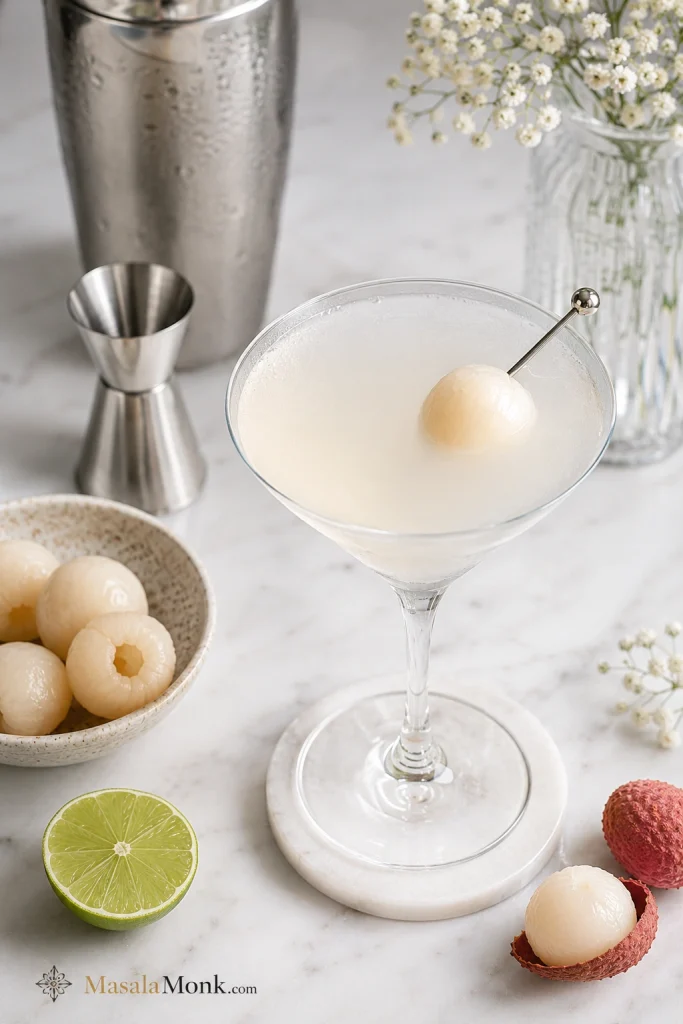
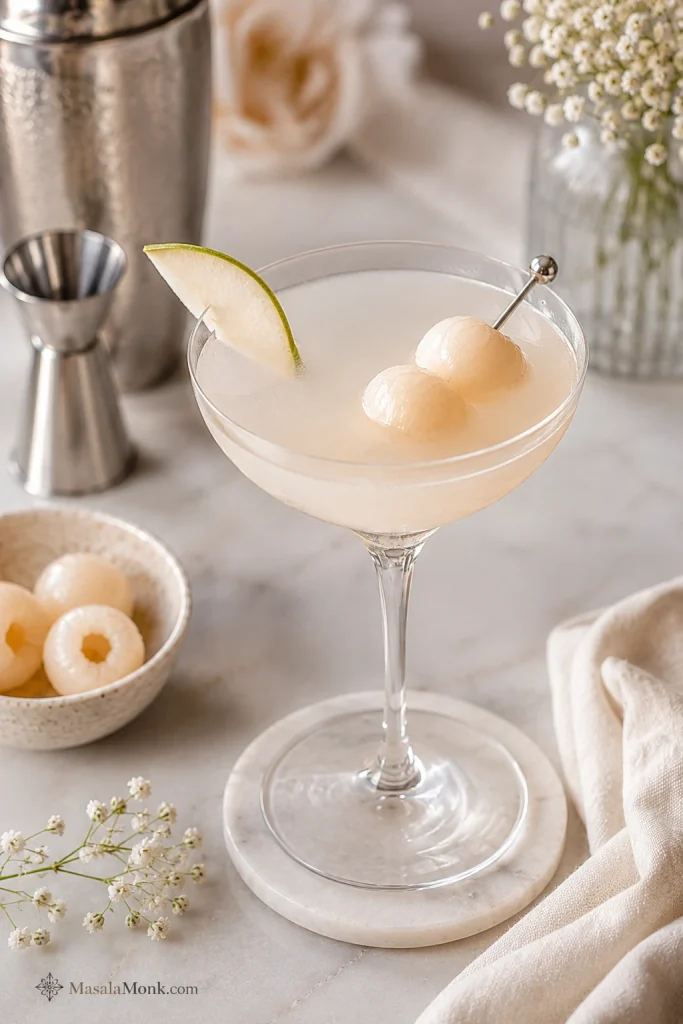
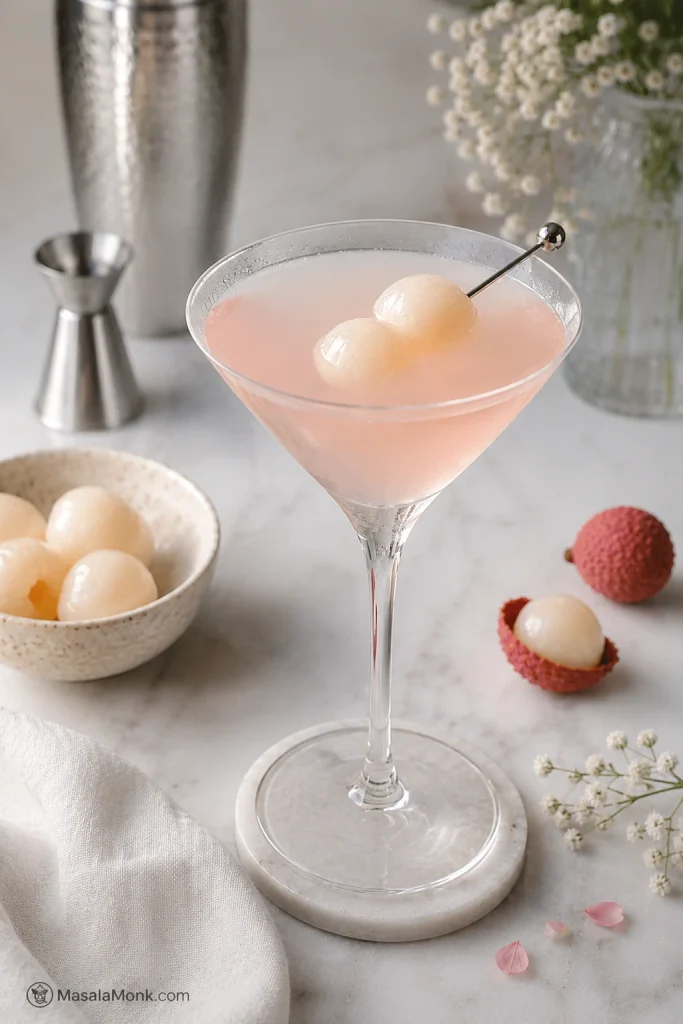
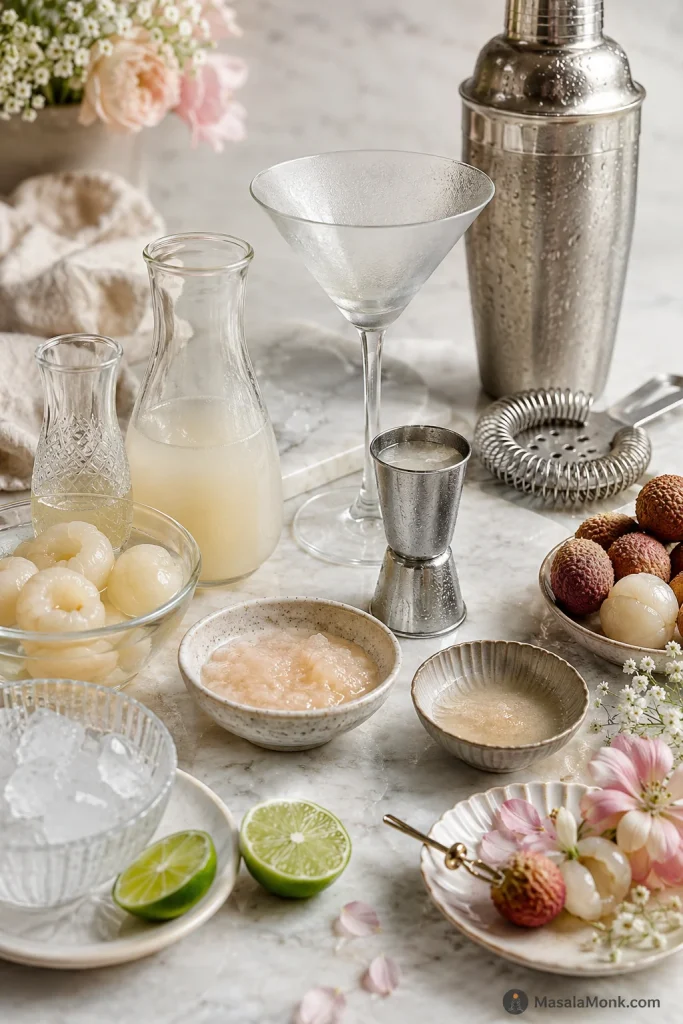
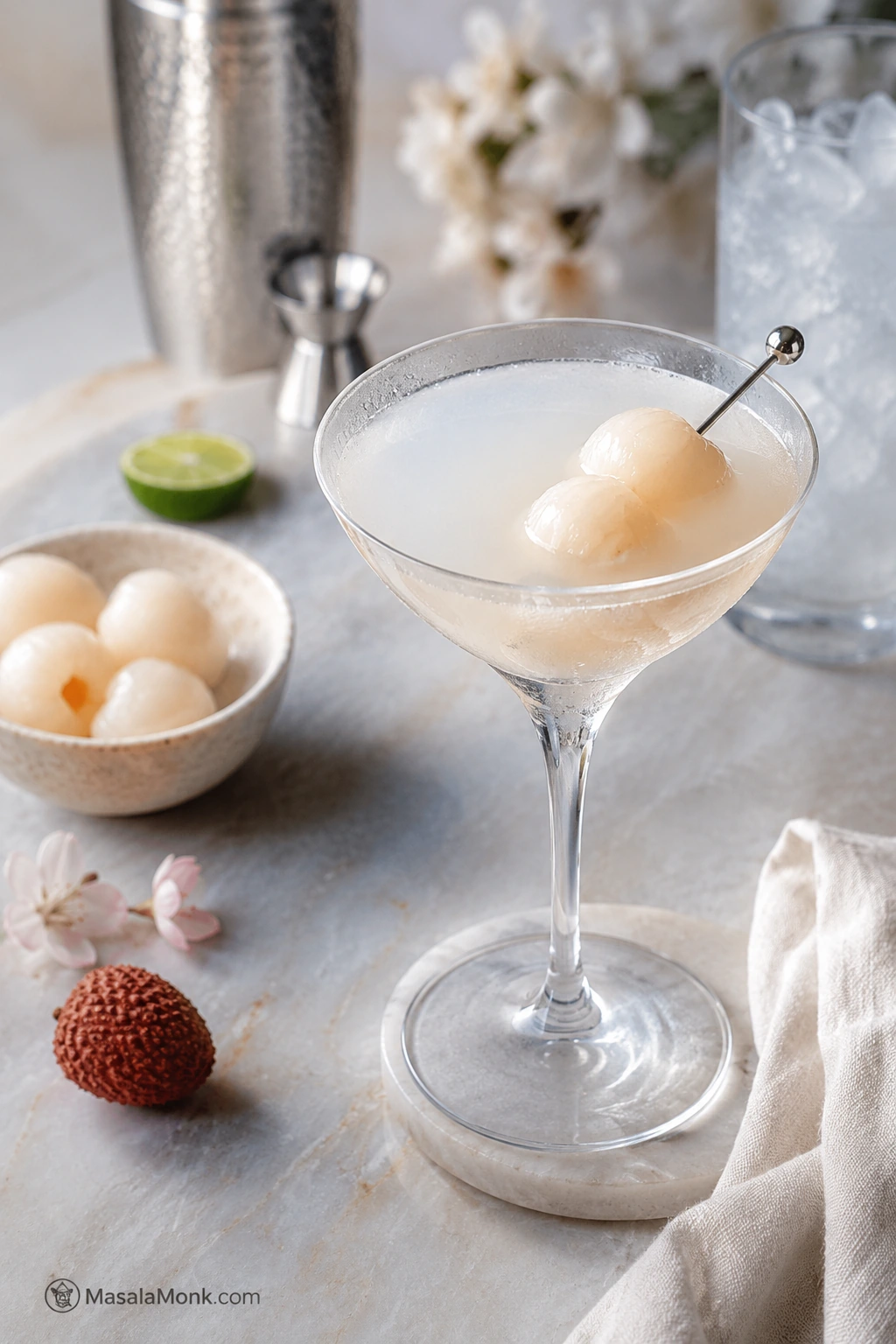
Chilled lychee martini in a coupe glass with lychee garnish on a cocktail pick on a pale stone surface.

If you have a can of lychees and a bottle of vodka, you are five minutes away from a pale, glossy lychee martini that smells floral, tastes bright, and feels far more elegant than the effort it takes.

This is the lychee martini people wanted the old version to be: still pretty, still fragrant, still a little nostalgic, but colder and cleaner. It is a good drink for people who want something beautiful without wanting something sugary.

Canned lychee syrup gives you the flavor base, the whole fruit becomes the garnish, and a small splash of dry vermouth keeps the finish crisp. This is the kind of cocktail that makes a small dinner feel planned, even if all you did was chill the glasses and open a can of lychees.

Make this simple vodka version first. Once that glass tastes right, the rest is just mood: gin for floral, puree for body, pear for elegance, or sparkling water for a zero-proof version.

Lychee Martini at a Glance

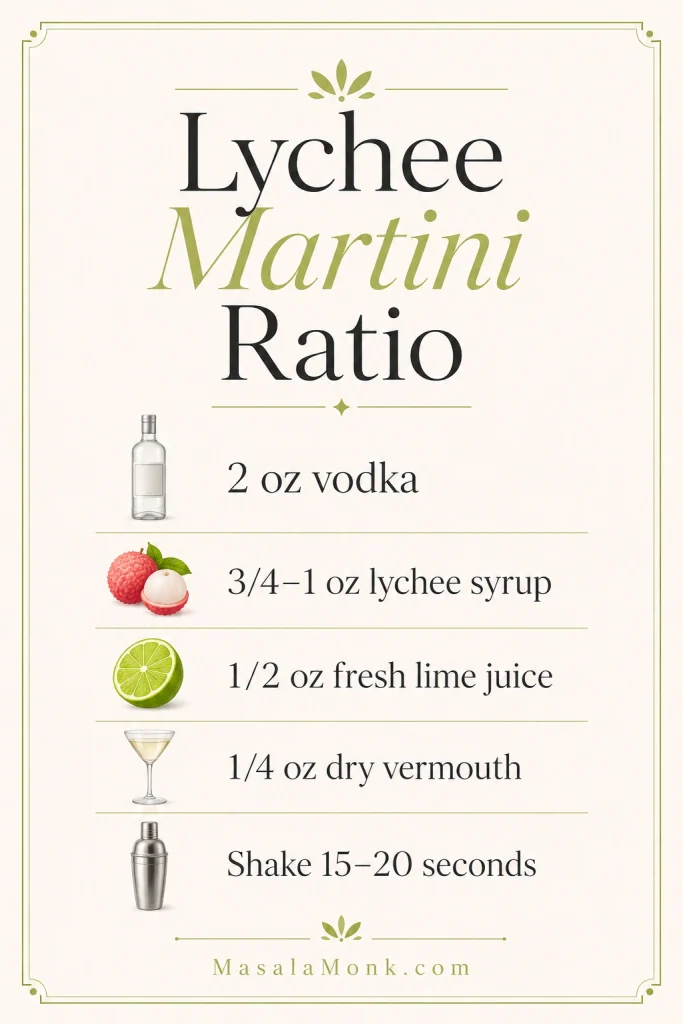
This cocktail takes about 5 minutes, serves 1, and is best shaken hard with ice until very cold. Use 2 oz vodka, 3/4 to 1 oz canned lychee syrup, 1/2 oz fresh lime juice, and 1/4 oz dry vermouth. Start with 3/4 oz syrup if your can tastes very sweet.

Prep Time5 minutes
Yield1 cocktail
MethodShake with ice
Best BaseCanned lychee syrup

The Best Lychee Martini Ratio

Think of the base as 2 oz vodka, about 1 oz lychee, and 1/2 oz citrus, with a small dry accent.

IngredientAmount
Vodka2 oz / 60 ml
Canned lychee syrup3/4 to 1 oz / 22 to 30 ml
Fresh lime juice1/2 oz / 15 ml
Dry vermouth1/4 oz / 7.5 ml
IceEnough to fill the shaker halfway
Lychees for garnish1 to 2 canned or fresh lychees
No-table version

2 oz vodka, 3/4 to 1 oz lychee syrup, 1/2 oz lime juice, and 1/4 oz dry vermouth. Shake with ice for 15 to 20 seconds, strain into a chilled glass, and garnish with lychee.

The MasalaMonk lychee martini rule

Lychee for aroma, lime for lift, vermouth for restraint. Use dry vermouth for the default version. Choose Cointreau only if you want a brighter, slightly rounder bar-style glass.

Tested balance note

I prefer 3/4 oz lychee syrup when the canned syrup is thick and very sweet, and the full 1 oz when the syrup tastes lighter. The 1/4 oz dry vermouth is small, but it makes the finish noticeably cleaner.

A quick measure note: 1/4 oz is about 1 1/2 teaspoons, and 1/2 oz is about 1 tablespoon.

Graphic showing a lychee martini ratio with vodka, lychee syrup, lime juice, and dry vermouth.
Use this ratio as the first-glass baseline; adjust only the syrup after tasting your canned lychees.

Lychee Martini Recipe Card

Balanced Lychee Martini

This is the version to make first: vodka, canned lychee syrup, fresh lime, dry vermouth, ice, and a simple lychee garnish.

Prep5 minutes
Serves1 cocktail
GlassCoupe or martini
MethodShaken

Ingredients

  • 2 oz / 60 ml vodka
  • 3/4 to 1 oz / 22 to 30 ml canned lychee syrup
  • 1/2 oz / 15 ml fresh lime juice
  • 1/4 oz / 7.5 ml dry vermouth
  • Ice, enough to fill the shaker halfway
  • 1 to 2 canned or fresh lychees, for garnish

Method

  1. Chill a coupe or martini glass.
  2. Add vodka, lychee syrup, lime juice, and dry vermouth to a shaker.
  3. Add ice and shake hard for 15 to 20 seconds.
  4. Strain into the chilled glass.
  5. Garnish with one or two lychees and serve right away.

Optional adjustments: Use lemon instead of lime for a softer finish, Cointreau instead of dry vermouth for a rounder citrus note, lychee puree for fuller body, or a tiny pinch of salt if the drink tastes flat.

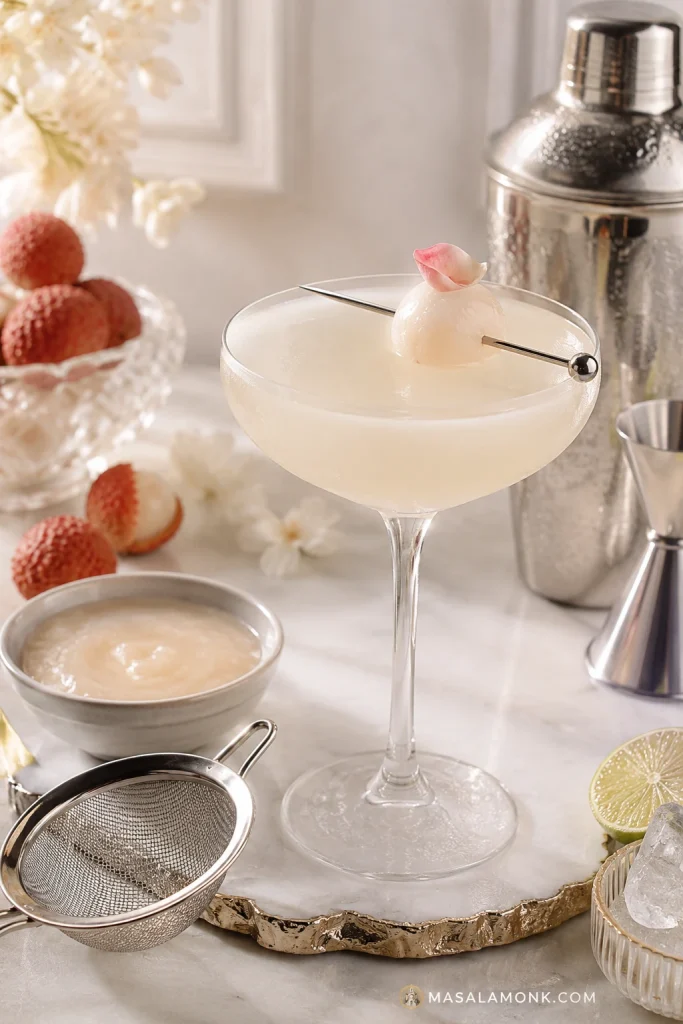
Classic vodka lychee martini in a stemmed glass with lychee garnish and bar tools nearby.
The classic vodka version is the baseline for judging sweetness, citrus, and dilution before you change the recipe.

Want to change the mood of the drink after this first glass? Go to Choose Your Version or jump straight to the variation section.

How to Make a Lychee Martini

1. Chill the glass

Place a martini glass or coupe in the freezer for 5 to 10 minutes. If you do not have time, fill the glass with ice water while you make the cocktail, then empty it before pouring. A warm lychee martini tastes heavier than a well-chilled one.

Choose a coupe if you are serving guests because it is easier to carry. A martini glass gives the drink that sharper classic look.

2. Add the ingredients to a shaker

Add vodka, canned lychee syrup, fresh lime juice, and dry vermouth to a cocktail shaker. If you are using puree, muddled fresh lychee, or lychee liqueur, add it here.

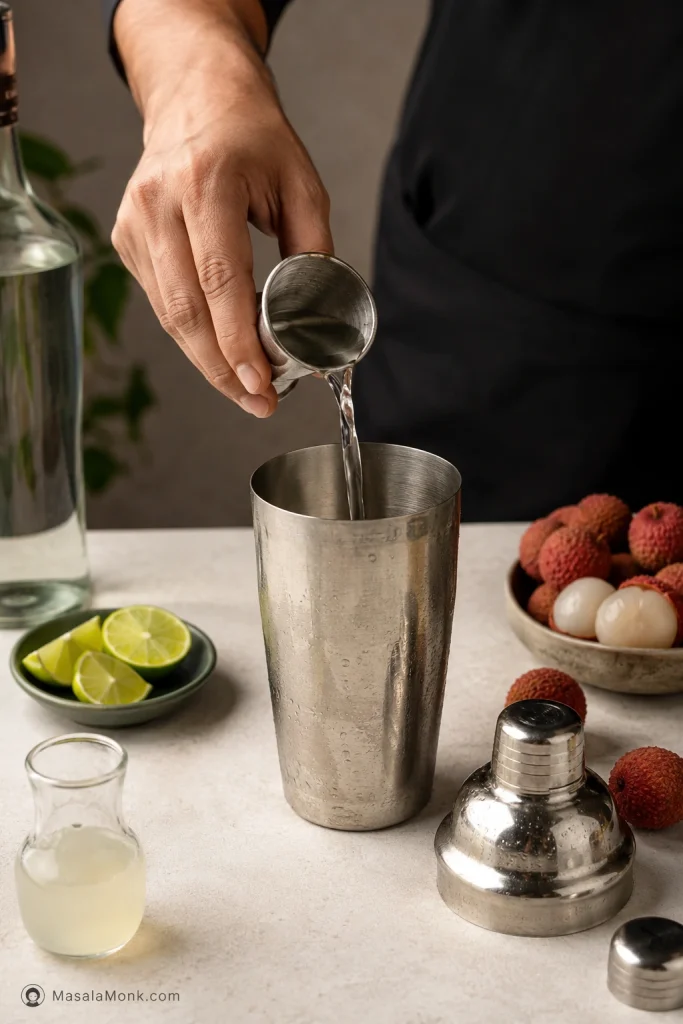
Hand pouring liquid from a jigger into a cocktail shaker while making a lychee martini.
Measure into the shaker first; in a simple drink, one careless extra pour can throw off the whole glass.

3. Add ice

Fill the shaker about halfway with fresh ice. Good ice matters because it chills the drink before it waters it down.

4. Shake hard

Shake for 15 to 20 seconds, or until the shaker feels very cold.

Why shake instead of stir?

Classic spirit-only martinis are usually stirred, but this one has citrus and lychee syrup, juice, or puree. Shaking chills it faster, blends the fruit, and gives the drink a smoother texture.

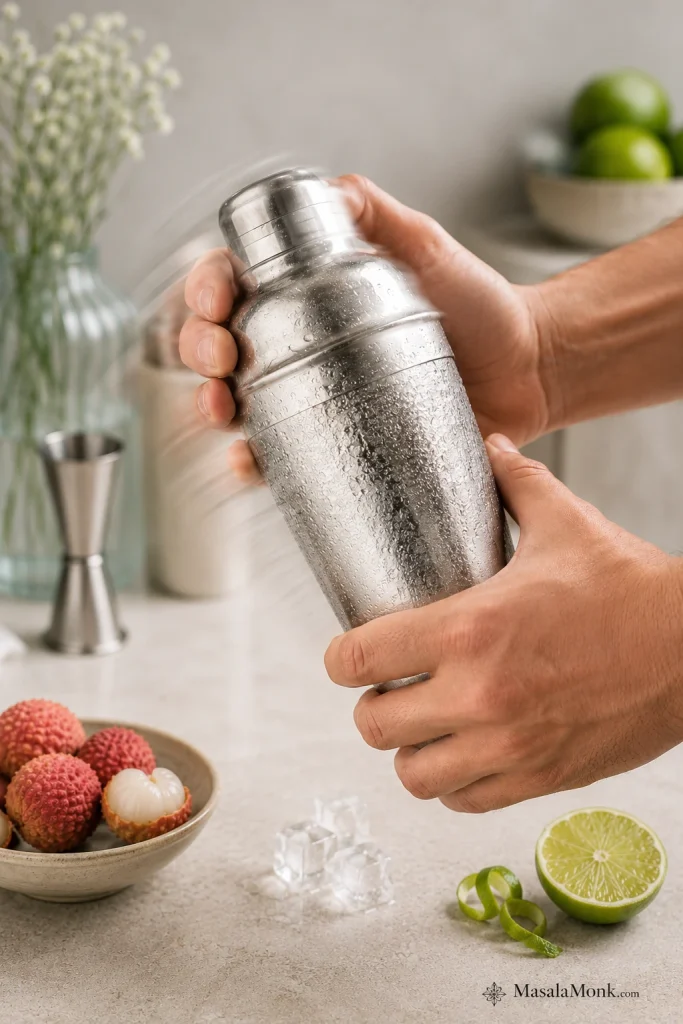
Hands shaking a metal cocktail shaker with ice while preparing a lychee martini.
Shake until the metal feels cold so the drink lands smoother, colder, and brighter.

5. Strain into the glass

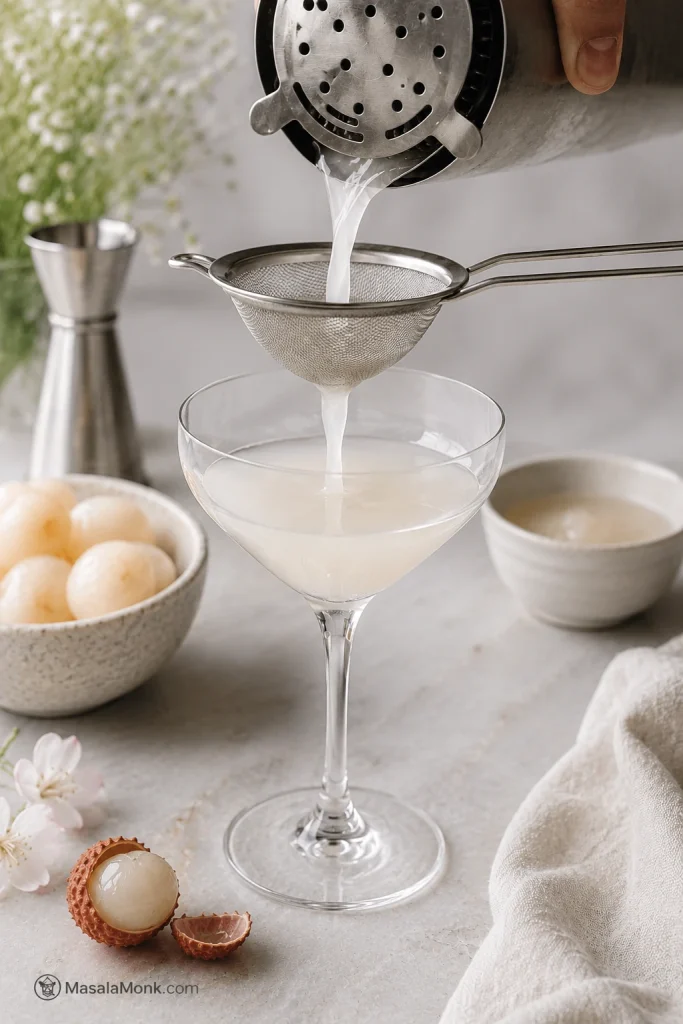
Strain into your chilled martini glass or coupe. Use a regular strainer for the syrup or juice version. Double strain through a fine mesh strainer if you used puree or muddled fresh lychee.

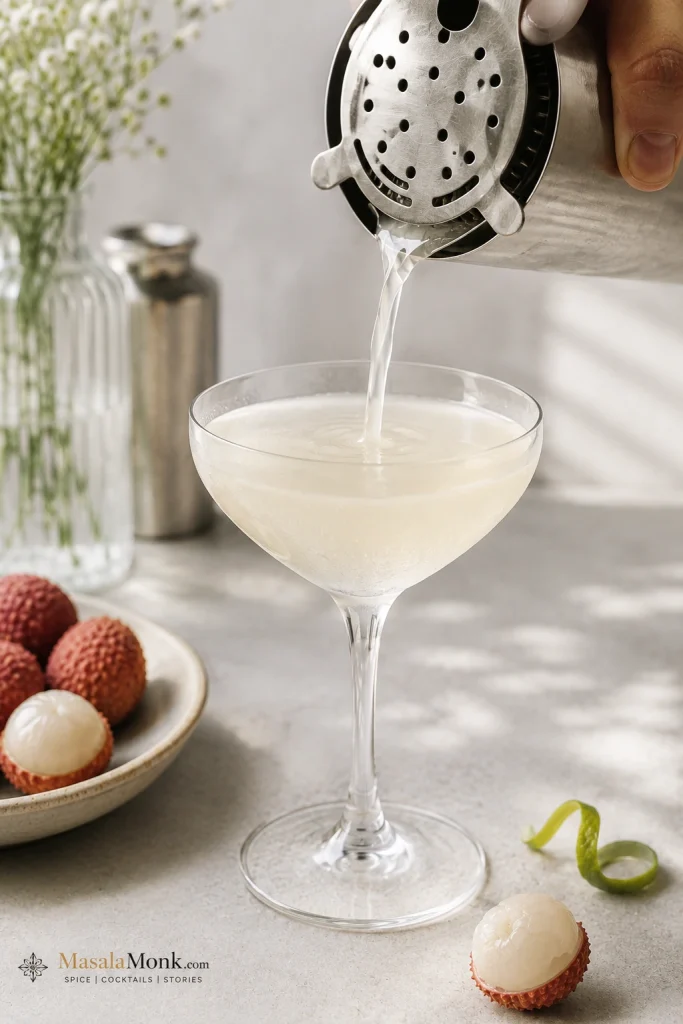
Pale lychee martini being strained from a shaker into a chilled cocktail glass.
A clean strain into a cold glass makes the final pour clearer and more polished.

6. Garnish and serve

Skewer one or two lychees on a cocktail pick and rest it across the glass, or drop one lychee gently into the drink. Serve right away while the glass is still cold and the aroma is fresh. The first sip should feel cold and fragrant before it feels sweet.

No Cocktail Shaker?

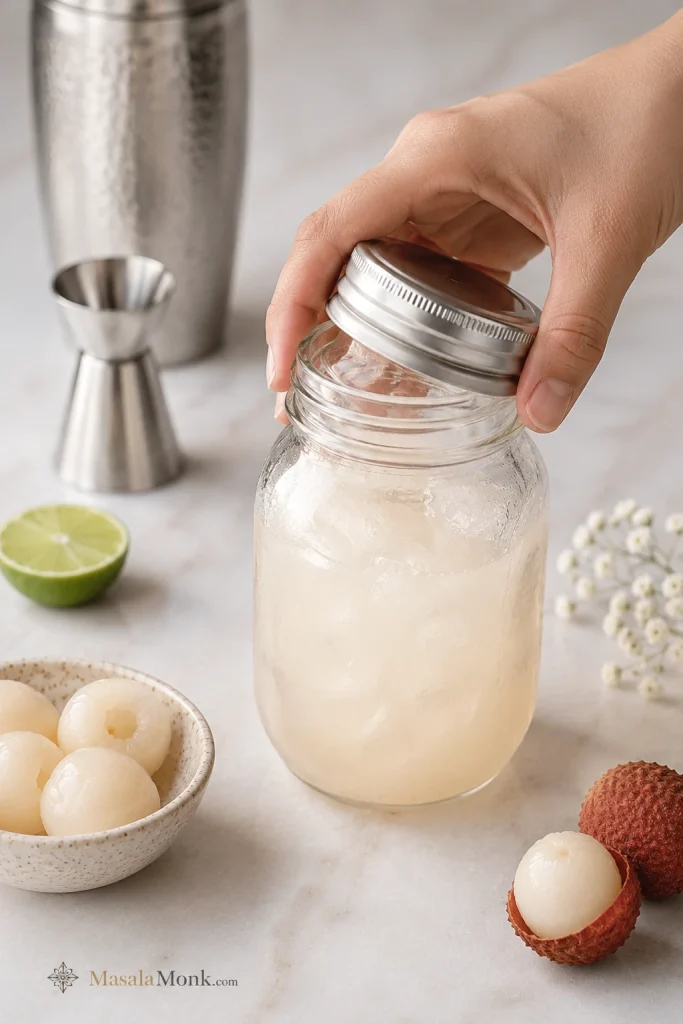
Use a mason jar with a tight lid. Add the ingredients and ice, seal it well, shake hard, then strain into a chilled glass. It will not feel quite as polished as a proper shaker, but it works well for a home cocktail.

Mason jar filled with pale lychee martini mixture and ice, with a hand holding the lid.
A mason jar works when there is no shaker, as long as it seals tightly and the drink is strained.

Using puree or fresh lychee instead of syrup? See Best Lychee to Use before moving to the second round.

Remember this before you adjust

If you remember nothing else: start with canned lychee syrup, keep the lime fresh, and shake until the tin is cold.

The finished drink should land in this order: lychee aroma first, cool vodka body second, lime at the end.

Back to top ↑

Choose Your Version

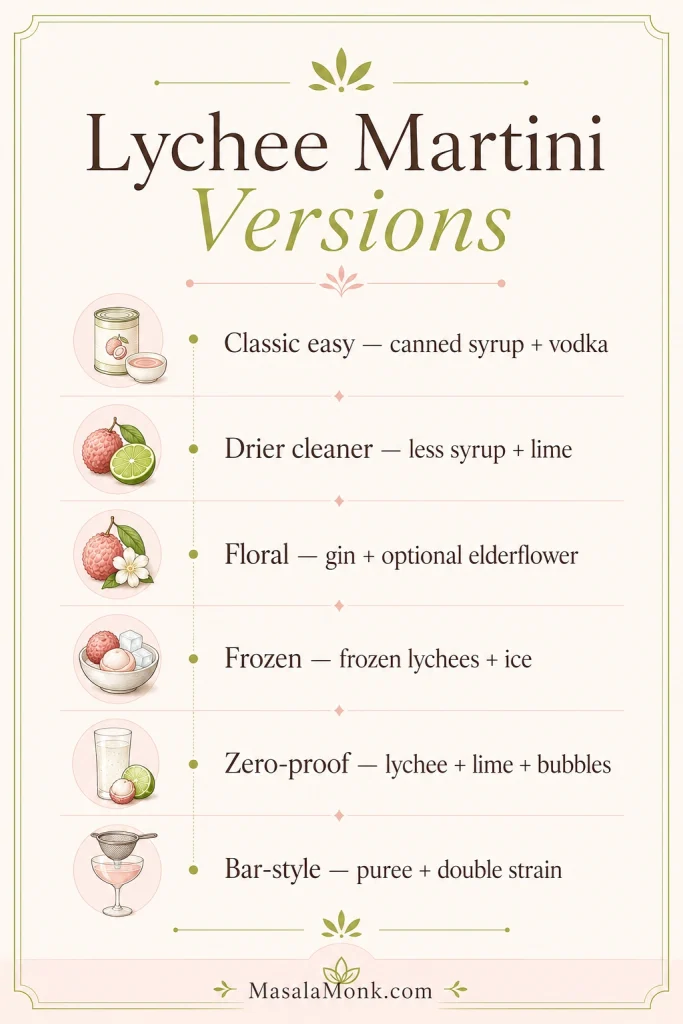
Make the default glass first. Once you know how sweet, tart, and strong you like it, use this table to adjust the mood.

Graphic listing lychee martini versions including classic, drier, floral, frozen, zero-proof, and bar-style.
Use this chart to choose your next direction: classic, drier, floral, frozen, zero-proof, or bar-style.
You WantUse This Route
Classic easy versionCanned lychee syrup + vodka + lime + dry vermouth
Drier, cleaner versionLess syrup + extra citrus + dry vermouth
More floral and grown-upGin + lychee syrup + lime + optional elderflower
Frozen party versionFrozen lychees + vodka or gin + lime + ice
Zero-proof versionLychee juice + lime + sparkling water or tonic
Smoother bar-style versionLychee puree + vodka + lemon + Cointreau or elderflower
First-glass rule

If you are making this for the first time, do not start with rose, pear, liqueur, or puree. Make the canned-syrup vodka version first, then adjust the second glass. Your biggest choice is not the garnish. It is syrup vs puree, lime vs lemon, vodka vs gin.

Need help choosing the base first? See Best Lychee to Use. Trying to fix sweetness before changing the whole recipe? Go to less-sweet fixes.

What Is a Lychee Martini?

A lychee martini is a martini-style cocktail, not a strict classic martini. It borrows the cold glass, elegant serve, and spirit-forward feel, then adds lychee and citrus for a softer fruit finish.

It is usually made with vodka, lychee syrup or juice, citrus, ice, and a lychee garnish. The drink should be pale and almost delicate, but the flavor should not be weak. You want lychee on the nose, citrus on the finish, and enough chill that the vodka feels smooth rather than sharp.

Lychee is also spelled litchi in many places, so a litchi martini and a lychee martini usually mean the same drink.

What Does a Lychee Martini Taste Like?

A lychee martini tastes floral, juicy, lightly tropical, and gently sweet, with a citrus finish. It should taste like lychee first, not sugar syrup.

Vodka keeps the cocktail quiet and lets the lychee lead. Gin pushes it in a more botanical direction. Lychee liqueur makes the fruit louder, so it needs citrus to stay crisp. Lime gives the drink a sharper edge, while lemon makes it softer and more elegant.

A good lychee martini should feel delicate, not weak. If the glass smells like lychee before you sip, you are already close. The first sip should be floral; the finish should be cleaner than expected.

Why This Recipe Works

This version works because it respects what lychee is good at: aroma, softness, and a little perfume. Lime gives it shape, vodka gives it room, and vermouth keeps the finish dry.

Canned lychee syrup gives instant flavor.
You do not need a special mixer. The syrup from canned lychees is fragrant, easy to measure, and available all year.
Fresh lime keeps the drink lifted.
If the cocktail tastes flat, it usually does not need more fruit. It needs acid. Lime gives the drink a clear finish.
Vodka keeps the fruit in front.
Because vodka is neutral, the lychee stays central.
Dry vermouth adds restraint.
You do not taste it loudly, but it keeps the finish clear-edged.

Why Lychee Martinis Are Back

The older lychee martini was often all syrup and perfume. The better modern version is colder, brighter, and more restrained: real lychee flavor, fresh citrus, and a softer finish. Punch has also covered the lychee martini’s return to real lychee flavor and layered balance, which is exactly the direction this recipe takes.

Back to top ↑

Ingredients You Need

You do not need a bar cart full of bottles. The main thing is choosing one lychee base and keeping the drink cold, fresh, and clean.

Overhead view of vodka, dry vermouth, canned lychees, lime, shaker, jigger, and ice arranged for a lychee martini.
Lychee brings aroma, lime adds lift, and vodka plus vermouth give the cocktail its cold, crisp backbone.

Vodka

Vodka is the easiest and most common base for a lychee martini. It is smooth, neutral, and lets the fruit stay in front. Use something clean and mid-shelf. If you would not drink it in a vodka soda, it will not disappear here.

Plain vodka is the best starting point. Citrus vodka can work if you want a sharper drink, but vanilla or strongly flavored vodka can make the cocktail feel less crisp.

Canned Lychee Syrup

For the default recipe, use the syrup from canned lychees. It gives you lychee flavor and a ready-made garnish in one can. Start with 3/4 oz / 22 ml if your syrup tastes very thick. Use the full 1 oz / 30 ml if the syrup tastes lighter or you want a softer fruit note.

Fresh Lime Juice

Fresh lime juice keeps the drink lifted. Bottled lime can taste dull in a cocktail this simple. Lime makes the cocktail sharper and more tropical. Lemon makes it softer and more elegant. Yuzu can work too, but use it lightly because it is aromatic and sharp.

For a deeper citrus cocktail comparison, the lemon drop martini is a useful companion because it also depends on keeping sweetness and citrus in balance.

Dry Vermouth

Dry vermouth is the default accent in this recipe. Use 1/4 oz / 7.5 ml for a subtle edge. Use up to 1/2 oz / 15 ml if you want the vermouth to be more noticeable. It should not shout. It should simply make the lychee taste cleaner.

Cointreau or Orange Liqueur

Cointreau is lovely, but it changes the drink. Use it when you want a rounder citrus cocktail, not when you want the driest martini-style version.

If using Cointreau instead of dry vermouth, start with the lower amount of lychee syrup and adjust after tasting. The orange-citrus structure is similar to fruit-forward drinks like a mango margarita recipe, where fruit, citrus, and orange liqueur all need to stay in check.

Ice

Ice chills, dilutes, and smooths the cocktail. Use plenty of fresh, cold ice. Old, wet, half-melted ice can make the drink watery before it is properly chilled.

Lychee Garnish

One or two whole lychees on a cocktail pick are enough. Canned lychees are perfect because they are soft, glossy, and easy to skewer. Fresh peeled lychees also work when they are in season.

The garnish is doing more than looking pretty. It tells the drink what flavor to expect before the first sip.

Best Lychee to Use for a Lychee Martini

For most home kitchens, canned lychees are the smartest option: predictable, easy, and already packed with garnish. Fresh lychees are wonderful when they smell floral before you even peel them, but they should feel like a bonus, not a requirement.

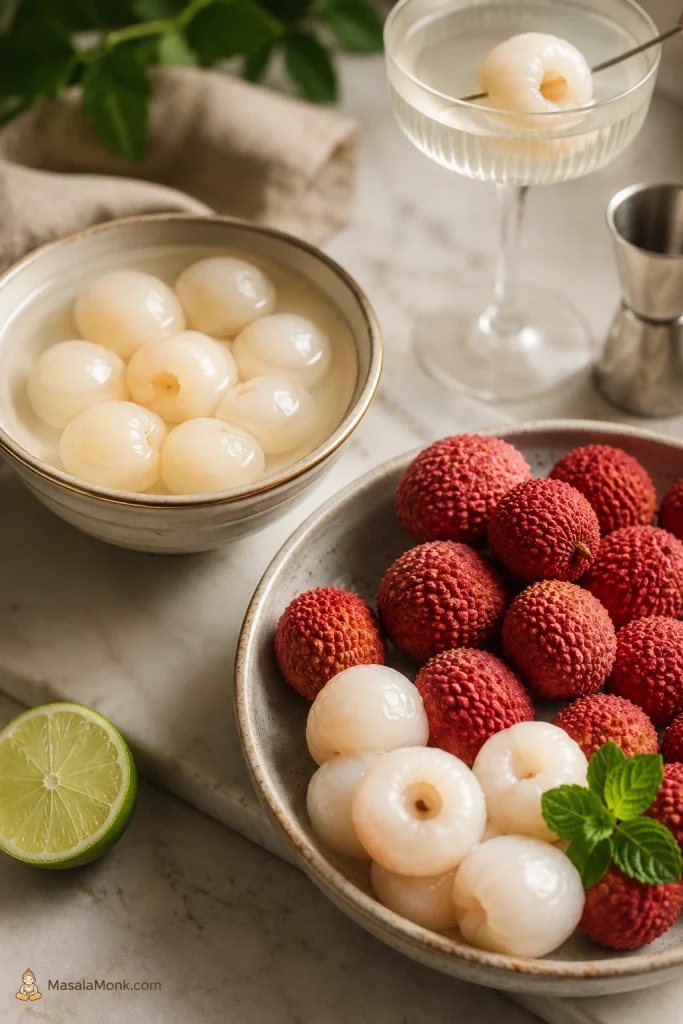
Canned lychees in syrup and fresh peeled lychees arranged side by side for comparing lychee martini ingredients.
Canned lychee is more consistent for cocktails; fresh lychee is delicate but needs more prep.
What You HaveHow to Use ItAdjustment
Canned lychees in syrupUse syrup in the cocktail and fruit as garnishAdd lime to keep the finish bright
Fresh lycheesPeel, pit, muddle or blend, then strainAdd a little simple syrup if needed
Lychee juice or nectarUse as a lighter fruit baseReduce added syrup
Lychee pureeUse for fuller fruit flavor and bodyDouble strain for smooth texture
Lychee liqueurUse for intense flavor and extra alcoholReduce or skip extra syrup
Lychee martini mixUse only if that is what you haveAdd fresh citrus, start small, and taste before adding more
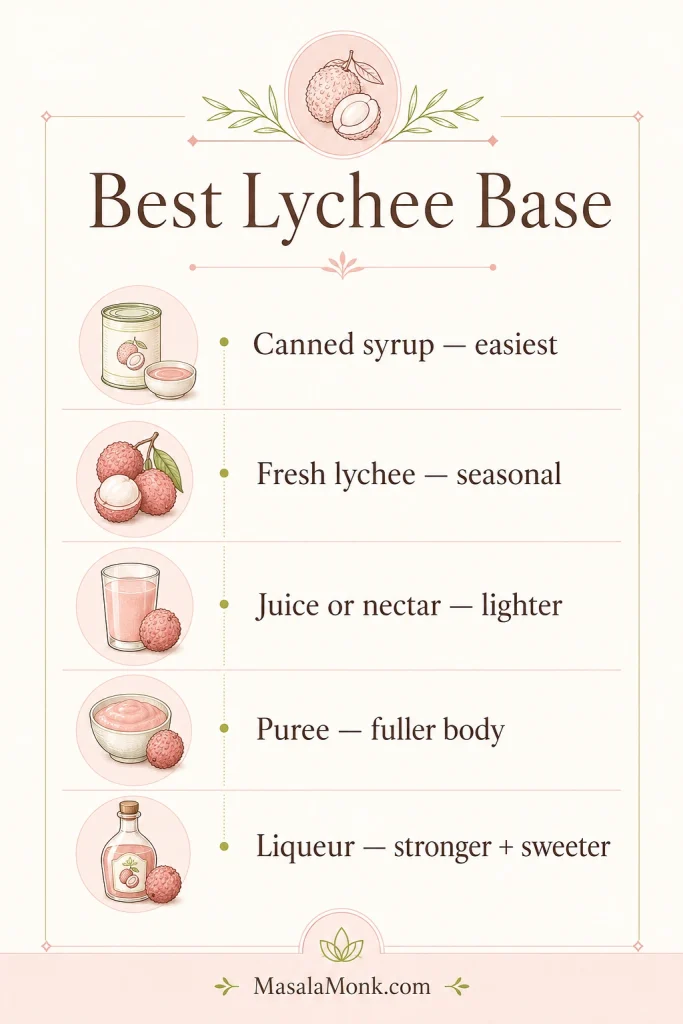
Chart comparing canned lychee syrup, fresh lychee, juice or nectar, puree, and liqueur for making lychee martinis.
Match the lychee base to the result: easy, lighter, stronger, fuller, or silkier.

Clear vs Cloudy Lychee Martinis

For the clearest drink, use canned lychee syrup and strain well. For stronger fruit flavor, use lychee puree or muddled fresh lychee. The cocktail will be slightly cloudy, but it will taste more fruit-forward. Double strain puree or muddled fruit if you want a smoother finish.

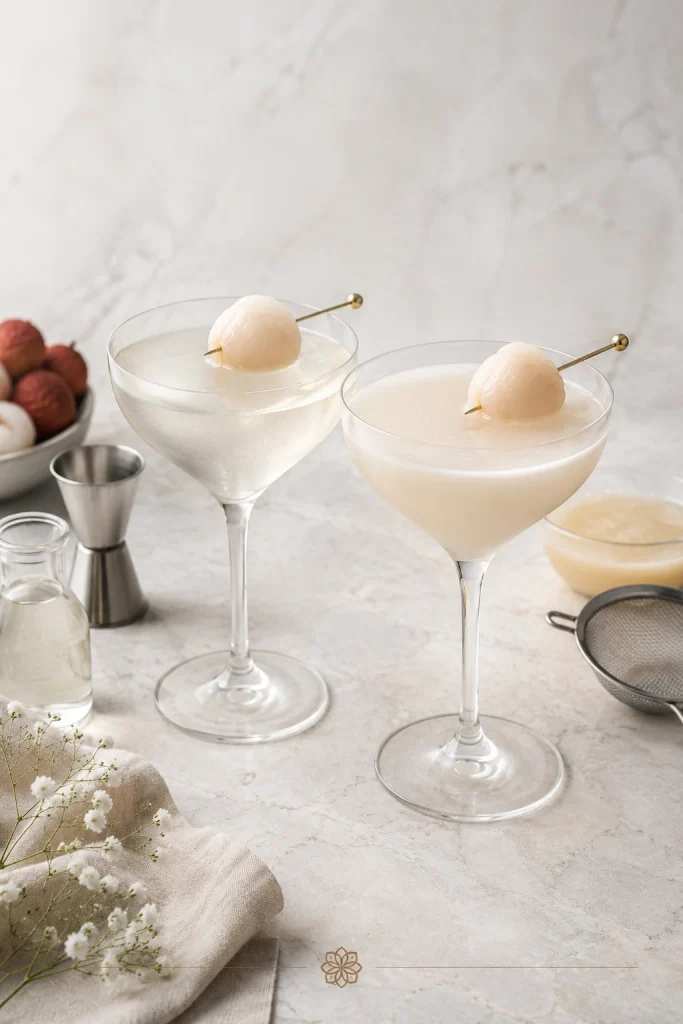
Two lychee martinis side by side, one clearer and more translucent and the other cloudier and creamier.
Syrup makes a clearer drink; puree or fresh fruit gives a cloudier, fuller-bodied glass.

How to Use Canned Lychees

  1. Open the can and strain the syrup into a small cup.
  2. Pick the firmest whole lychees for garnish.
  3. Chill the syrup if you have time.
  4. Use 3/4 to 1 oz / 22 to 30 ml syrup per cocktail.
  5. Save any leftover lychees for garnish, dessert, or mocktails.

If the syrup is very thick, start with less. You can always add more, but it is harder to pull sweetness back once the drink is mixed.

How to Use Fresh Lychees

  1. Peel the lychees.
  2. Remove and discard the seed.
  3. Muddle 2 to 3 lychees in the shaker if you only want a fresh fruit accent.
  4. If using fresh lychee as the full fruit base, blend or muddle 4 to 6 peeled, pitted lychees.
  5. Strain and measure about 1 oz / 30 ml of juice or puree for one cocktail.
  6. Add a little simple syrup only if the fruit is not sweet enough.

Use only the peeled white fruit, never the seed.

Back to top ↑

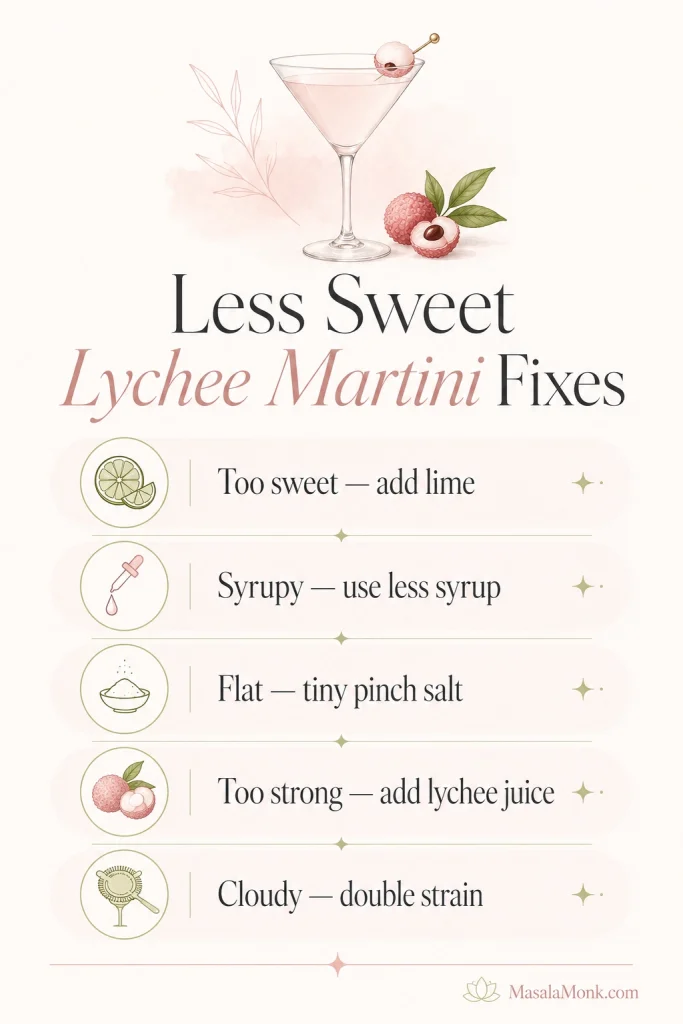
How to Make It Less Sweet

This is the part that separates a good lychee martini from a one-note one. If the glass tastes heavy, fix the balance before adding more fruit.

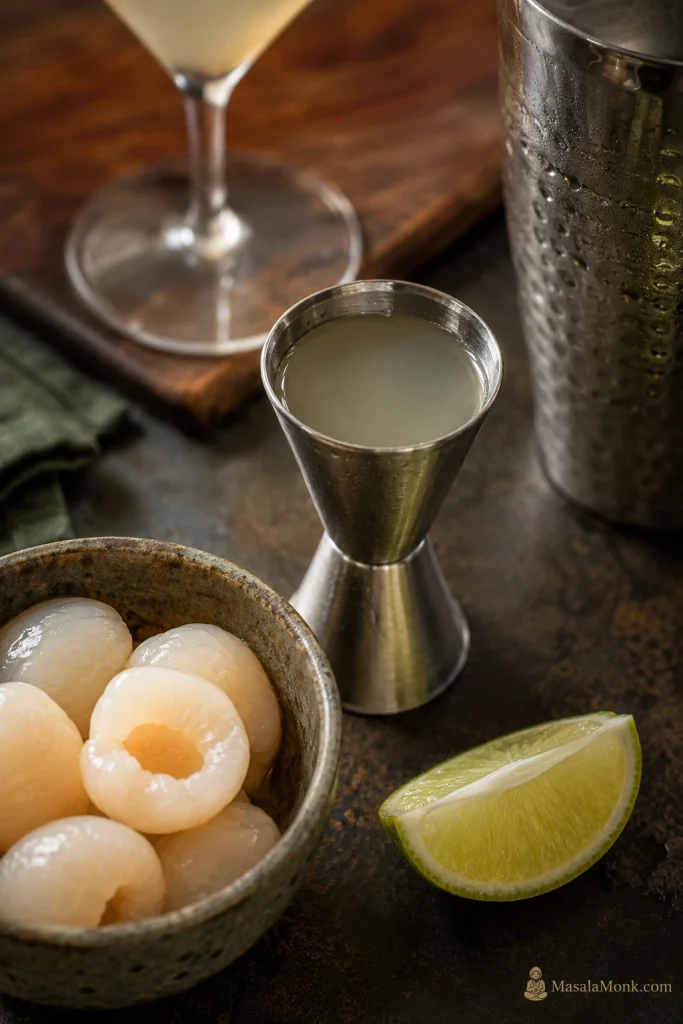
Jigger measuring lychee syrup beside canned lychees and a lime wedge for a lychee martini.
Start with a smaller syrup pour when the can tastes thick, then add more only if the glass needs fruit.
ProblemFix
Too sweetAdd 1/4 oz / 7.5 ml more lime or lemon juice
SyrupyReduce lychee syrup to 3/4 oz / 22 ml or 1/2 oz / 15 ml
Too candy-likeUse dry vermouth instead of Cointreau
Flat flavorAdd a tiny pinch of salt before shaking
Too strongAdd 1/2 oz / 15 ml lychee juice
Too wateryUse colder ice and shake only 15 to 20 seconds
Not enough lychee flavorAdd muddled lychee, puree, or a small amount of lychee liqueur

A tiny pinch of salt may sound unusual, but it can make the lychee taste clearer. Use only a few grains, not enough to make the drink taste salty.

Quick quality checks

Before you change the whole recipe, check the simple things: fresh citrus, cold glass, enough ice, and syrup amount. If using liqueur, reduce syrup; if using puree or fresh lychee, double strain.

Graphic listing fixes for a lychee martini that is too sweet, syrupy, flat, too strong, or cloudy.
Use the chart to fix sweetness, flatness, strength, or cloudiness without starting over.

Still not getting the balance right? Check the troubleshooting section before changing the whole recipe again.

Vodka, Gin, or Lychee Liqueur?

The default lychee martini is vodka-based, but the best spirit depends on the style you want.

Vodka Lychee Martini

Vodka gives the cleanest glass. It is smooth, simple, and lets the fruit stay in front. Use the main recipe if you are making the drink for the first time.

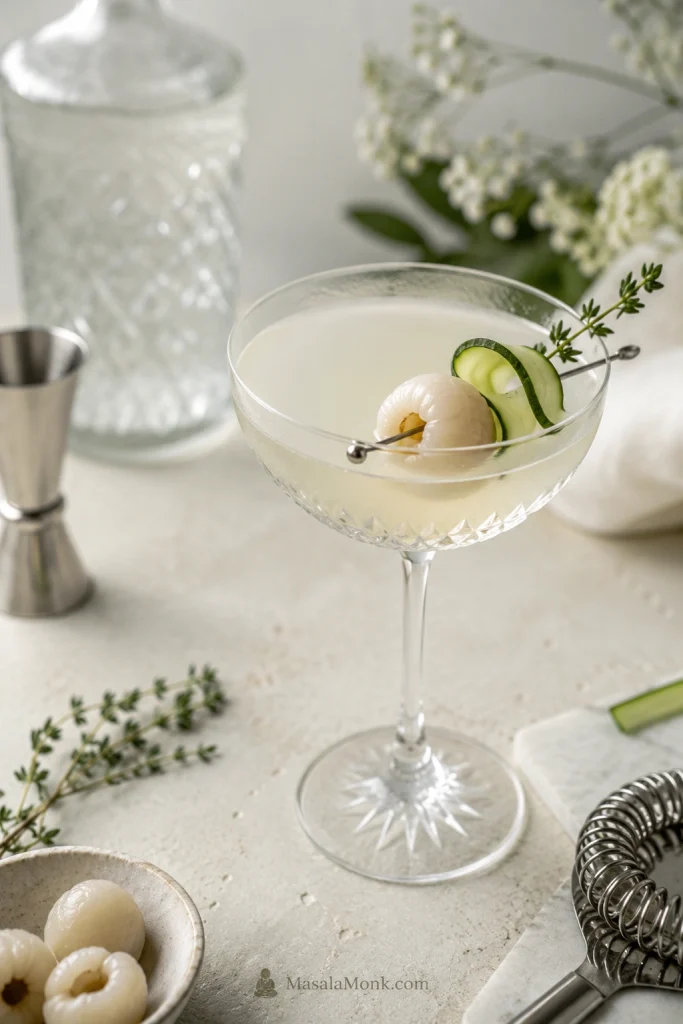
Gin Lychee Martini

Gin makes the drink more botanical and floral. It works especially well if your gin has citrus, rose, cucumber, or elderflower notes.

Pale gin lychee martini with lychee garnish, cucumber ribbon, and botanical accents in a stemmed glass.
Gin shifts the drink toward a brighter, greener, more botanical profile.
  • 2 oz / 60 ml gin
  • 1 oz / 30 ml lychee syrup or juice
  • 1/2 oz / 15 ml lime juice
  • 1/4 to 1/2 oz / 7.5 to 15 ml elderflower liqueur, optional
  • 1 to 2 lychees for garnish

Shake with ice and strain into a chilled glass. If using elderflower liqueur, reduce the lychee syrup slightly because both are sweet. If gin is the direction you like, the French 75 cocktail is another elegant gin-and-citrus drink that works well for parties.

Lychee Liqueur Martini

Lychee liqueur gives stronger fruit flavor, but it also adds sweetness and alcohol. Treat it as part of the lychee base, not as something to add on top of a full pour of syrup.

  • 1 1/2 oz / 45 ml vodka
  • 3/4 oz / 22 ml lychee liqueur
  • 1/2 oz / 15 ml lychee juice or canned syrup
  • 1/2 oz / 15 ml lime or lemon juice
  • Ice
  • Lychee garnish

Shake hard and strain into a chilled glass. This route tastes more intense and bar-like, but the citrus is important. Without it, the drink can become cloying.

Lychee Martini Variations

Once the base drink tastes right, the variations are easy. Think of them as small turns in mood, not totally new recipes. Save the rose water, pear vodka, and Halloween garnish for round two.

Every variation should still protect the same thing: lychee aroma first, clean citrus finish last.

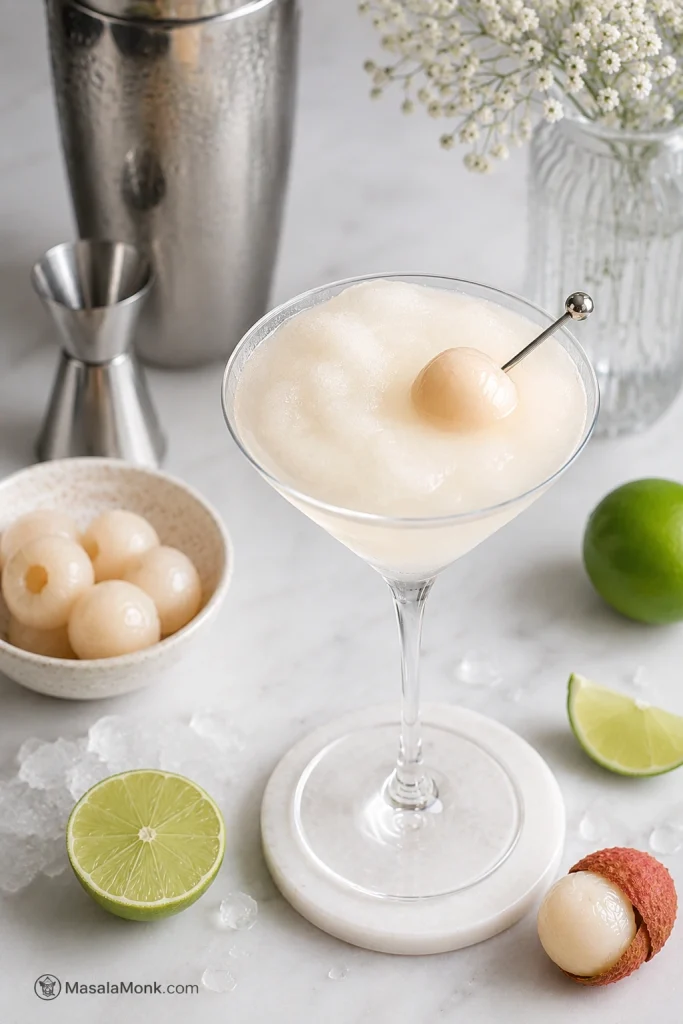
Frozen Lychee Martini

A frozen lychee martini is thicker, softer, and more slushy than the shaken version. Because very cold drinks can taste less tart, add enough lime so it stays bright.

Frozen lychee martini with slushy texture in a chilled glass with lime and lychee nearby.
The frozen version turns the drink softer and slushier, with fruit taking the lead over the spirit.
  • 1 cup frozen lychees, about 8 to 10 lychees or 100 to 120 g
  • 2 oz / 60 ml vodka or gin
  • 1 oz / 30 ml lychee syrup
  • 1/2 oz / 15 ml lime juice
  • 1/2 oz / 15 ml dry vermouth, optional
  • 1/2 to 3/4 cup ice

Blend until slushy and pour into a chilled coupe or martini glass. If it is too thick, add a splash of lychee juice. If it is too sweet, add a little more lime.

Virgin Lychee Martini

A virgin lychee martini should still feel like a proper drink, not just juice in a fancy glass.

Virgin lychee martini mocktail in a stemmed glass with bubbles, lychee garnish, and lime.
Bubbles and lime keep the zero-proof glass bright enough to feel like a proper cocktail.
  • 2 oz / 60 ml lychee juice or nectar
  • 1 oz / 30 ml canned lychee syrup
  • 1/2 oz / 15 ml fresh lime juice
  • 1 to 2 oz / 30 to 60 ml sparkling water or tonic
  • 1/2 teaspoon grenadine or cranberry juice, optional for color
  • Lychee garnish

Shake the lychee juice, syrup, and lime with ice. Strain into a chilled glass, top with sparkling water or tonic, and garnish with lychee. For a less sweet mocktail, use more sparkling water and less syrup. You can also add a thin slice of ginger, a few mint leaves, or 1 to 2 drops of rose water.

For more zero-proof lychee ideas, MasalaMonk also has lychee virgin mojitos built around lychee, lime, mint, coconut water, and sparkling water.

Rose Lychee Martini

Rose is lovely here, but it is powerful. A few drops make the drink feel romantic; too much makes the lychee disappear.

  • 2 to 4 drops rose water, or
  • 1/4 teaspoon rose syrup

Shake it with the main recipe. Garnish with a lychee and, if available, one edible rose petal.

Pear Lychee Martini

A pear lychee martini gives the drink a softer, elegant fruit note.

Pear lychee martini in a coupe glass with lychee garnish and pear accent.
Pear makes the drink gentler, softer, and more dinner-party friendly.
  • 2 oz / 60 ml pear vodka or regular vodka
  • 3/4 oz / 22 ml lychee syrup or juice
  • 1/2 oz / 15 ml lemon juice
  • 1/4 to 1/2 oz / 7.5 to 15 ml elderflower liqueur, optional
  • Lychee garnish

Shake with ice and strain. This variation is especially good for dinner parties because it feels delicate rather than tropical.

For a Din Tai Fung-inspired pear lychee martini, use pear vodka, lychee, lemon, and a small amount of elderflower liqueur. This is not the official restaurant recipe, but it follows the pear-lychee-elderflower direction people often associate with that style; Din Tai Fung’s own menu describes its Pear Lychee Martini with pear vodka, St-Germain, fresh lemon juice, and lychee fruit.

Pink Lychee Martini

A classic lychee martini is usually pale, not pink. Add cranberry, pomegranate, raspberry, or grenadine only if you want color, not because the drink needs it.

Pale blush-pink lychee martini with lychee garnish in an elegant stemmed glass.
Keep the color blush and translucent so berry or pomegranate does not bury the lychee.
  • 1/4 oz / 7.5 ml cranberry juice
  • 1 teaspoon grenadine
  • 1/4 oz / 7.5 ml raspberry liqueur
  • A small splash of pomegranate juice

The goal is a blush-pink drink, not a berry cocktail with lychee in the background.

Restaurant-Style Lychee Martini

Most restaurant-style searches are really about texture, balance, and a colder finish — not a secret bottle. The trick is mouthfeel: the drink should feel silkier, not heavier.

Pale lychee martini in a chilled coupe glass with lychee garnish, fine strainer, and small bowl of puree nearby.
Puree gives this bar-style version a silkier body while keeping the glass pale and elegant.

When the canned syrup version tastes a little too light, this is the upgrade: puree for body, lemon for softness, and Cointreau or elderflower for a rounder bar-style finish.

  • 2 oz / 60 ml vodka
  • 1 oz / 30 ml lychee puree
  • 1/2 oz / 15 ml lemon juice
  • 1/4 to 1/2 oz / 7.5 to 15 ml Cointreau or elderflower liqueur
  • Ice
  • Lychee garnish

Double Strain Lychee Puree Martini

Shake hard and double strain.

Lychee martini being poured through a fine mesh strainer into a coupe glass.
A fine mesh strain keeps puree smooth while preserving the extra fruit body.

For a Nobu-inspired lychee martini, aim for the style rather than a claimed official recipe: very cold, smooth, lychee-forward, and polished. This captures the direction with vodka, lychee juice or puree, fresh citrus, and a chilled glass.

Soho-Style Lychee Martini

If your bottle is Soho or another lychee liqueur, treat it as both flavor and sweetener. That means you need less syrup and more citrus than you might expect.

  • 1 1/2 oz / 45 ml vodka
  • 3/4 oz / 22 ml Soho or another lychee liqueur
  • 1/2 oz / 15 ml lychee juice
  • 1/2 oz / 15 ml lime juice

Shake with ice and strain. Taste before adding extra syrup.

Other Easy Flavor Twists

  • For a softer version, replace 1/2 oz / 15 ml vodka with chilled sake.
  • To make the citrus sharper, use 1 teaspoon yuzu juice in place of part of the lime.
  • A light coconut note can come from a small splash of coconut water.
  • For Halloween, stuff a canned lychee with a blueberry, raspberry, or small dark grape and rest it on the glass with a cocktail pick.

Coconut milk or cream of coconut will make the drink cloudy and heavier, so use it only if you want a creamy tropical version.

Garnish Ideas

A lychee martini should look clean and elegant. You do not need a crowded glass. A lychee garnish is enough drama for one drink.

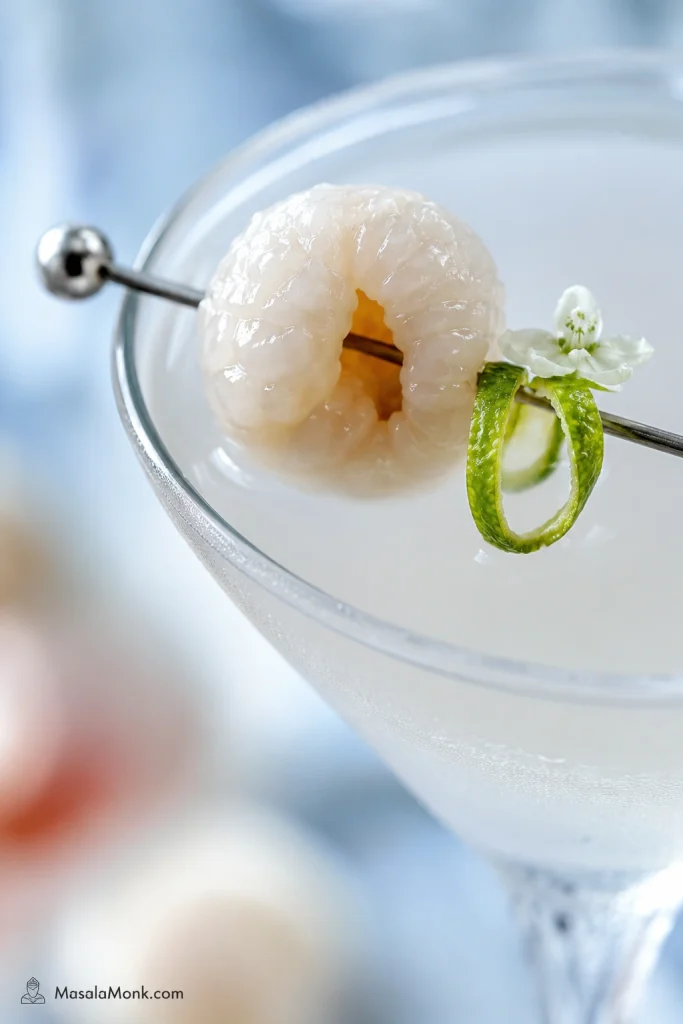
Close-up of glossy lychee garnish on a cocktail pick resting across the rim of a chilled lychee martini glass.
The lychee garnish sets the flavor expectation before the first sip.
  • One whole lychee on a cocktail pick
  • Two lychees skewered together
  • Lychee with a lime twist
  • Lychee with an edible rose petal
  • Lychee stuffed with blueberry for Halloween
  • Lychee with a tiny mint sprig
  • A very light sugar rim for a sweeter party version

The whole lychee is part of the charm: pale, glossy, and almost jewel-like in a frosty glass. For the most classic look, use one or two pale lychees in a clear, ice-cold drink.

For photos, place the lychee garnish across the rim instead of dropping it into the drink. It keeps the glass cleaner and shows the fruit.

Common Lychee Martini Mistakes

Prep table with syrup, wet ice, warm glass, puree, strainer, garnish, and bar tools arranged for a lychee martini.
Too much syrup, weak ice, warm glassware, or poor straining can change the drink more than garnish ever will.
Avoid these first
  • Using too much syrup: Start with 3/4 oz if your canned lychee syrup tastes thick.
  • Skipping fresh citrus: Bottled lime can make the drink taste flatter.
  • Serving it warm: Chill the glass and shake until the tin feels cold.
  • Adding every floral ingredient at once: Rose, elderflower, pear, and lychee can blur together quickly.
  • Not straining puree: Double strain if you want a smooth restaurant-style glass.
  • Using a harsh vodka: A simple drink will not hide a rough spirit.

Need exact fixes for a glass that already went wrong? Jump to Troubleshooting.

Back to top ↑

Make-Ahead and Party Tips

How to Make the Base Ahead

Make the base ahead, not the finished cocktail. A lychee martini is best after it has been freshly shaken with ice.

For parties, this is the kind of drink you want partly ready before guests arrive: chilled base in the fridge, glasses waiting, and the firmest lychees picked for garnish. It lets you look prepared without doing much in front of guests.

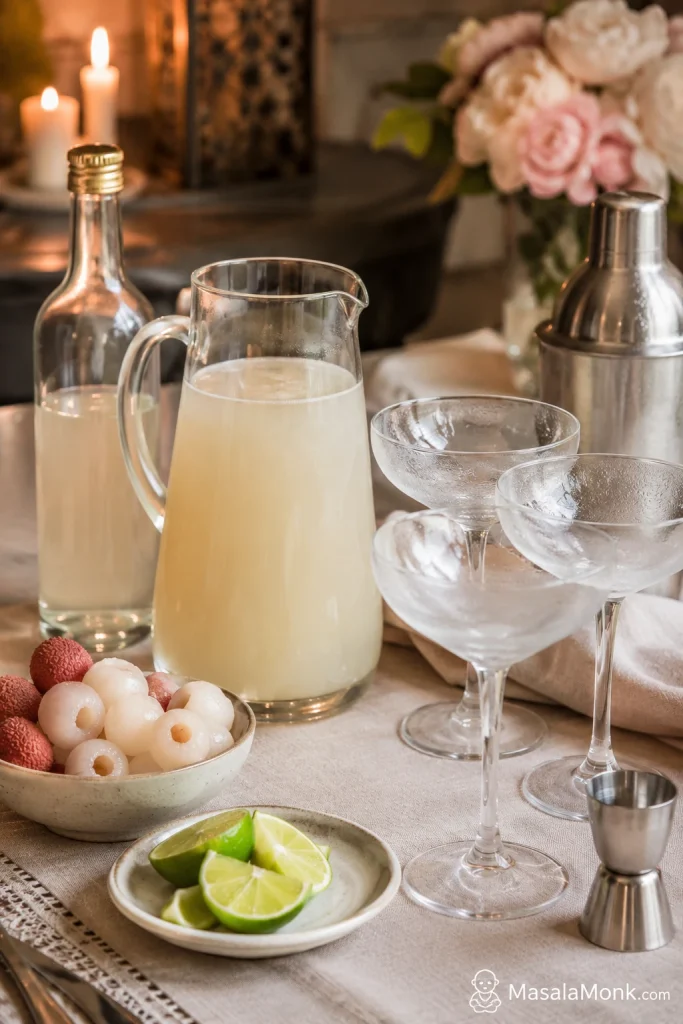
Clear pitcher and bottle of lychee martini base with empty chilled glasses, lychees, lime, shaker, and jigger on a table.
Chill the base in advance, then shake each serving to order so dilution stays controlled.

To prep a single cocktail ahead, combine the vodka, lychee syrup, citrus, and dry vermouth in a small jar and refrigerate. When ready to serve, shake the chilled mixture with ice and strain into a cold glass.

Scale for a Party

If you are batching for a group, multiply the recipe by the number of drinks you want. Keep ice out of the pitcher and shake individual portions at serving time. If you like pitcher-friendly vodka drinks, MasalaMonk’s Moscow Mule recipe is a useful companion because it also separates the make-ahead base from the fresh or fizzy finishing element.

Before batching for guests, mix one test drink. It is much easier to fix one glass than eight, and a pitcher tastes different before dilution.

ServingsVodkaLychee SyrupCitrusDry Vermouth or Cointreau
12 oz / 60 ml3/4 to 1 oz / 22 to 30 ml1/2 oz / 15 ml1/4 oz / 7.5 ml
24 oz / 120 ml1 1/2 to 2 oz / 45 to 60 ml1 oz / 30 ml1/2 oz / 15 ml
48 oz / 240 ml3 to 4 oz / 90 to 120 ml2 oz / 60 ml1 oz / 30 ml
816 oz / 480 ml6 to 8 oz / 180 to 240 ml4 oz / 120 ml2 oz / 60 ml

Serve It Without Losing Texture

For a batch, start with the lower amount of lychee syrup. Taste the chilled base, then add more only if needed. Cointreau adds sweetness as well as citrus, so keep that in mind when scaling.

For best texture, shake individual servings with ice. If serving straight from a pitcher, add about 1/2 oz / 15 ml cold water per cocktail to replace the dilution from shaking.

Garnish just before serving so the lychees look fresh. If using fresh citrus, the batch tastes best the same day.

Planning food too? Go straight to What to Serve with Lychee Martinis.

Troubleshooting

Most lychee martini problems are easy to fix. They usually come down to sweetness, temperature, or straining.

IssueLikely CauseFix
Too sweetToo much syrup or liqueurAdd lime/lemon, reduce syrup, or use dry vermouth
Too sourToo much citrusAdd a splash of lychee syrup or juice
Too strongToo much vodka or not enough dilutionAdd 1/2 oz / 15 ml lychee juice or shake with fresh ice
Too wateryWarm glass, weak ice, or overshakingChill the glass and shake only 15 to 20 seconds
Cloudy drinkPuree, juice, or muddled fruitDouble strain or use canned syrup for a clearer look
Not enough lychee flavorWeak juice or too much citrusAdd muddled lychee, puree, or a little lychee liqueur
Tastes flatNeeds acid or saltAdd a tiny pinch of salt or a little more citrus
Garnish sinks awkwardlyLychee is too soft or tornUse a cocktail pick and choose firmer lychees

What to Serve with Lychee Martinis

Serve lychee martinis with food that gives the drink contrast: salt, crunch, spice, or clean seafood. The cocktail is floral and lightly sweet, so it works best with snacks that keep the glass feeling fresh.

Best Pairings by Mood

Pairing MoodGood Options
Salty and crunchyCroquettes, fried wontons, crispy tofu
Fresh and lightSushi-style bites, shrimp appetizers, cucumber salad
SpicyChilli garlic snacks, spicy chicken skewers, spring rolls
Party boardFruit, cheese, deviled eggs, light crackers
Pairing chart showing foods to serve with lychee martinis, including croquettes, wontons, crispy tofu, sushi bites, shrimp, cucumber, chilli garlic snacks, chicken skewers, fruit, cheese, and deviled eggs.
Match the drink with salty, fresh, spicy, or party-board foods depending on the serve.

Easy Party Pairings

Lychee martini in a stemmed glass served beside a plate of golden croquettes on a tray.
Warm, crisp snacks give this floral cocktail the contrast it needs.

Crisp, hot party bites are a natural match. Croquettes work beautifully because the salty crunch balances the cocktail’s fruitiness.

Creamy snacks can also work if they are not too heavy. A platter of classic deviled eggs gives the drink something savory and rich to cut through.

Avoid very heavy dishes if you want the cocktail to stay fragrant and refreshing.

Serving a crowd as well? Pair this section with the make-ahead and party tips.

Responsible Serving Note

This recipe is intended for adults of legal drinking age. Because this uses a full spirit pour, serve smaller portions and keep the virgin lychee martini available for guests who prefer not to drink.

Back to top ↑

FAQs

What is a lychee martini made of?

A lychee martini is usually made with vodka, lychee syrup or juice, fresh lime or lemon juice, ice, and a lychee garnish. This version also uses a small amount of dry vermouth for a cleaner finish.

What does a lychee martini taste like?

It tastes floral, juicy, lightly tropical, and gently sweet, with a citrus finish. A good one smells delicate, tastes bright, and finishes cleaner than you expect.

Can I make a lychee martini with canned lychee?

Yes. For most home bartenders, canned lychee is the smartest starting point because it gives you consistent syrup and whole lychees for garnish.

Can I use the syrup from canned lychees?

Yes. Start with 3/4 to 1 oz / 22 to 30 ml per cocktail, depending on how sweet the syrup tastes.

Do I need lychee liqueur?

No. Lychee liqueur can make a good drink, but canned lychee syrup is easier to find and easier to control. If you use liqueur, reduce the syrup.

Can I make a lychee martini without vermouth?

Yes. Use vodka, lychee syrup or juice, and fresh lime or lemon. Vermouth gives the drink its dry edge, so skip it only if you want a softer fruit cocktail.

Should a lychee martini be shaken or stirred?

Shake this version because it contains citrus and lychee syrup, juice, or puree. Shaking chills and blends the drink better than stirring.

Is vodka or gin better for a lychee martini?

Vodka is best for the cleanest lychee flavor. Gin works if you want a more botanical, floral drink.

What is the best vodka for a lychee martini?

Use a clean, smooth, mid-shelf vodka that tastes good chilled. Avoid strongly flavored vodka unless you specifically want that flavor in the drink.

How strong is a lychee martini?

A lychee martini is closer to a martini than a tall mixed drink. For a lighter glass, add 1/2 oz / 15 ml lychee juice or make the virgin version with sparkling water.

How do I make a lychee martini less sweet?

Use less lychee syrup, add more lime or lemon juice, choose dry vermouth instead of Cointreau, or add a tiny pinch of salt before shaking.

Can I use fresh lychee?

Yes. Peel and pit the lychees, then muddle or blend them before shaking. Double strain if you want a smoother drink.

Can I make a frozen lychee martini?

Yes. Blend frozen lychees with vodka or gin, lychee syrup, lime juice, and ice until slushy.

Can I make a virgin lychee martini?

Yes. Use lychee juice or nectar, canned lychee syrup, lime juice, and sparkling water or tonic. Shake the juice, syrup, and lime with ice, then top with bubbles.

What is a Nobu-style lychee martini?

A Nobu-style or restaurant-style lychee martini usually means a very cold, smooth, lychee-forward vodka drink with a polished bar feel. Aim for the style with vodka, lychee puree or juice, citrus, and a small amount of Cointreau or elderflower liqueur rather than claiming an official copycat.

Can I make lychee martinis ahead for a party?

Yes. Mix the vodka, lychee syrup, citrus, and dry vermouth ahead and refrigerate. Keep ice out of the pitcher, then shake each serving with ice before pouring.

Final Tips for the Best Lychee Martini

Make the first one simple: canned lychee syrup, vodka, lime, dry vermouth, and a glass cold enough to fog at the edges. Once that balance is right, the rest is just mood — gin for floral, puree for body, pear for elegance, or sparkling water for a zero-proof glass.

Keep the garnish simple, taste before adding extra syrup, and let the lychee do the work.

Tried it with fresh lychee, gin, rose, pear, or as a mocktail? Tell us what changed the drink most for you — lime or lemon, syrup or puree, vodka or gin? Your answer may help the next reader adjust their glass too.

Back to top ↑

Posted on Leave a comment

Pina Colada Recipe: Frozen, Virgin, Malibu & Mix Tips

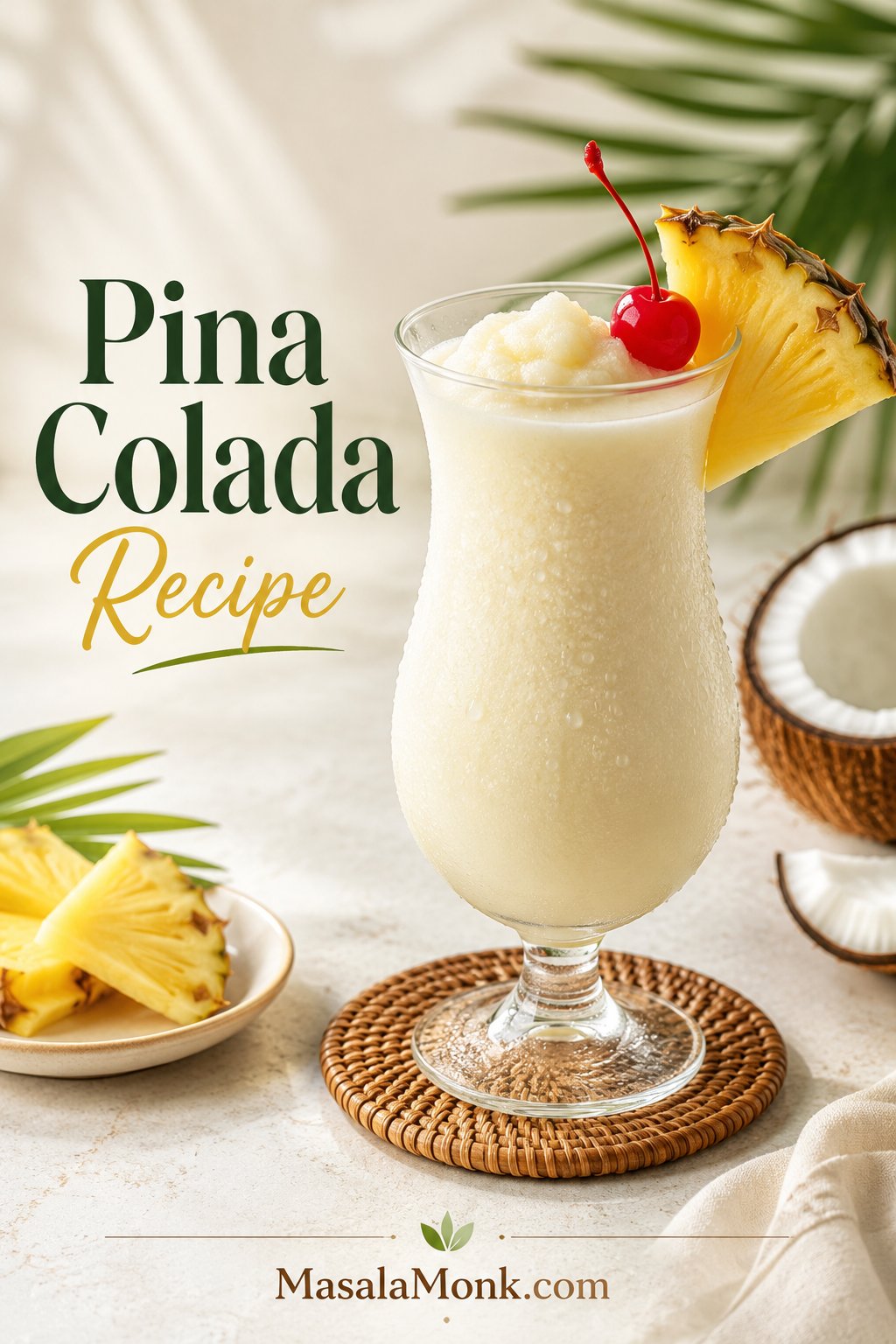
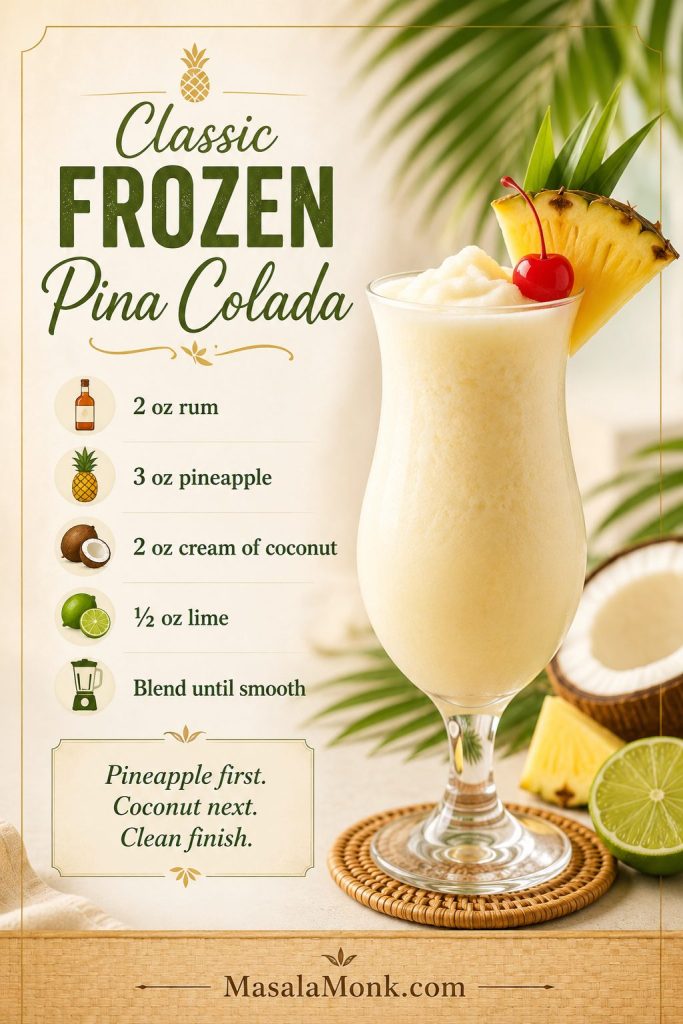
Frozen pina colada in a hurricane glass with a pineapple wedge, cherry garnish, coconut pieces, and MasalaMonk.com footer branding.

Most disappointing piña coladas fail for the same few reasons: the drink turns thin, tastes like straight sugar, or the alcohol-free version feels empty once the rum is gone. A great piña colada recipe — often searched as a pina colada recipe — solves that with the right coconut base, enough pineapple, the right chill, and a small hit of lime.

The first sip should taste cold before it tastes sweet: pineapple first, coconut next, rum in the background, and a clean finish that makes the glass feel refreshing instead of heavy.

Start with the frozen blender version, then use the same balance to make it shaken, virgin, Malibu-style, lighter with coconut milk, mixed ahead, or batched for a party. The promise is simple: a piña colada that stays smooth, avoids syrupy sweetness, and tells you exactly which coconut product belongs in the glass.

Quick Answer: The Best Pina Colada Recipe Ratio

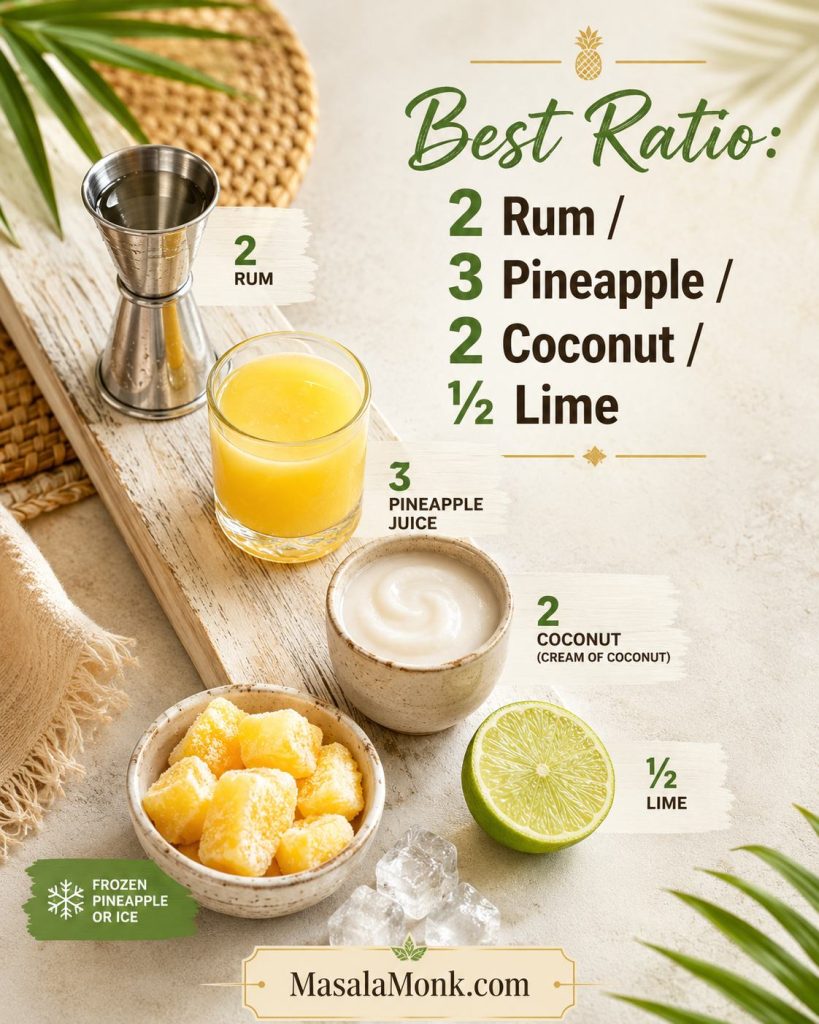
For one frozen piña colada, use 2 oz white rum, 3 oz pineapple juice, 2 oz cream of coconut, ½ oz fresh lime juice, and 1 to 1½ cups ice. For a thicker, fruitier drink, add ½ cup frozen pineapple.

Frozen, shaken, or alcohol-free shortcuts

No blender? Shake 2 oz white rum, 2 oz pineapple juice, 1½ oz cream of coconut, and ½ oz lime juice, then strain into a fresh glass over fresh ice. No alcohol? Blend frozen pineapple, pineapple juice, cream of coconut, lime, and a tiny pinch of salt so the mocktail still has depth.

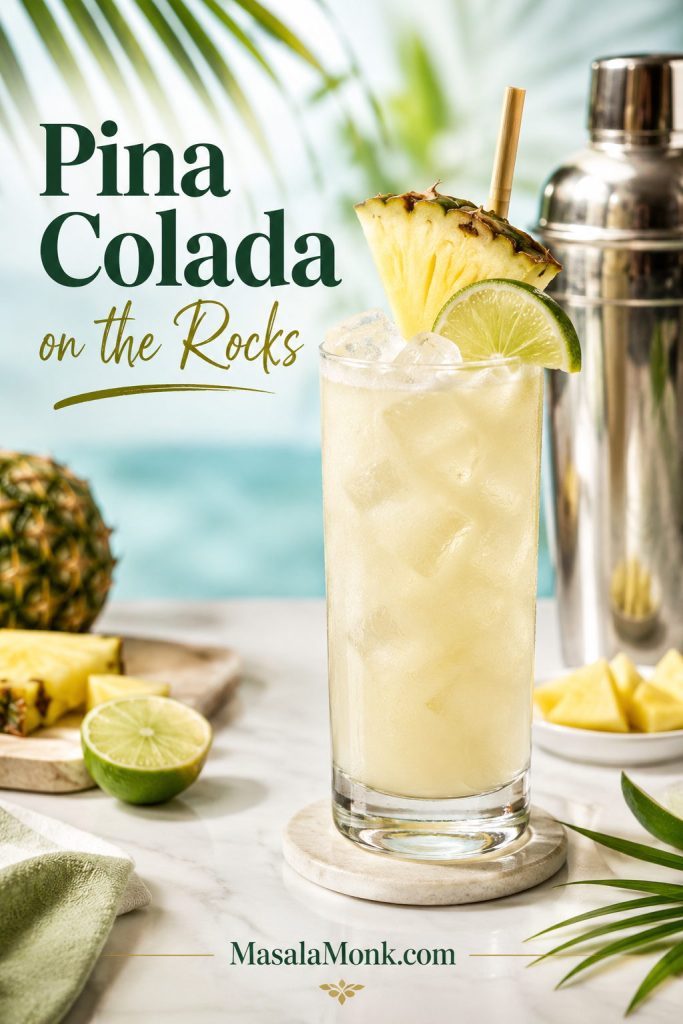
Need a different route? Go straight to the on-the-rocks version, the virgin pina colada, or the pina colada mix section.

The classic flavor is simple — rum, pineapple, coconut — but the texture depends on measurement. Cream of coconut gives the familiar sweet body, while lime keeps the finish from turning sticky.

Measured ratio for one drink

IngredientAmount for 1 drinkJob in the glass
White rum2 oz / 60 mlClean cocktail base that lets the fruit lead.
Pineapple juice3 oz / 90 mlMain tropical flavor and blending liquid.
Cream of coconut2 oz / 60 mlSweet coconut body and classic richness.
Fresh lime juice½ oz / 15 mlClean finish and better balance.
Ice1–1½ cups / 140–210 gCold, frosty texture.
Frozen pineapple½ cup / 70–75 g, optionalFruitier thickness without dulling the flavor.

Once the base ratio makes sense, use the version guide to pick your path or the success checks to fine-tune the glass.

Measured pina colada ingredients showing rum, pineapple juice, cream of coconut, lime, and frozen fruit with a best ratio guide.
The best pina colada ratio gives you a reliable base before you start adjusting. Once rum, pineapple, coconut, and lime are balanced, texture fixes become much easier.

Best first batch: measure the coconut base and frozen ingredients once. After that, you can adjust by feel without turning the drink thin, syrupy, or heavy.

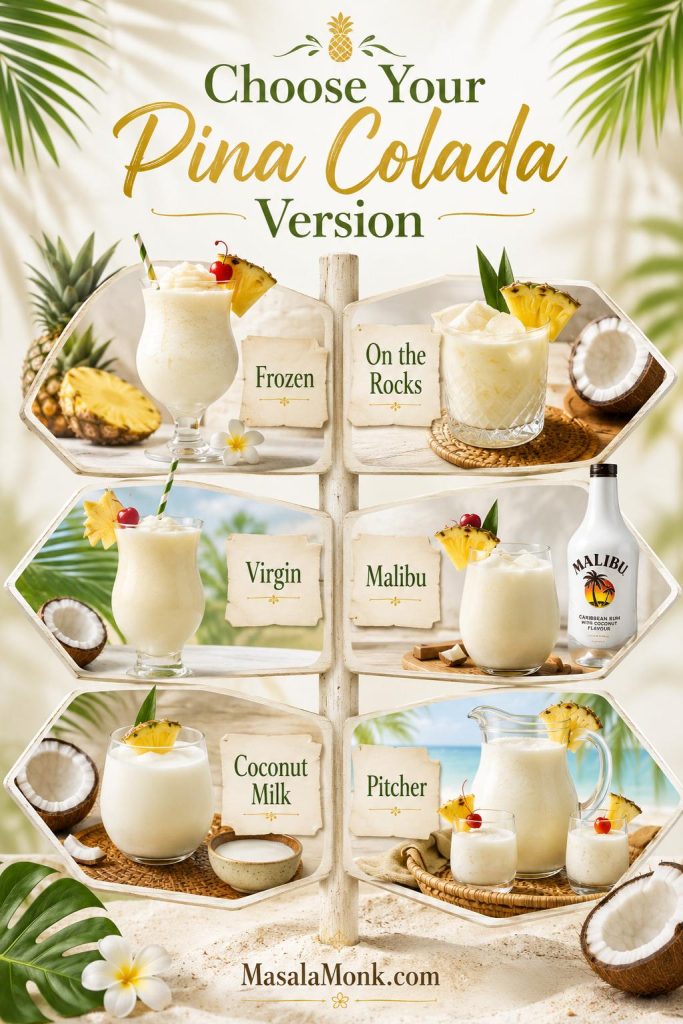
Pina Colada at a Glance: Choose Your Version

The best version depends on the glass you want: thick and vacation-style, lighter and shaken, alcohol-free but still complete, or party-ready without turning watery. Start with the classic frozen version once, then use this guide to choose your path.

VersionBest forTextureKey adjustment
Frozen Pina Colada RecipeClassic resort-style drinkFrosty, smooth, sippableUse the base ratio and optional frozen fruit.
Pina Colada on the RocksNo blender, lighter cocktailChilled and frothyShake hard; serve right away.
Virgin Pina Colada MocktailNon-drinkers and family-friendly glassesCreamy and fruit-forwardUse lime, salt, and pineapple for depth.
Malibu Pina Colada RecipeSweeter coconut-rum flavorSoft and coconut-forwardUse less cream of coconut.
Pina Colada with Coconut MilkLighter, less dessert-like drinkThinner and fresherAdd sweetener only if needed.
Pina Colada PitcherPartiesDepends on serving methodChill the base; finish at serving.
Six-panel pina colada version guide showing frozen, on the rocks, virgin, Malibu, coconut milk, and pitcher options.
The right pina colada version depends on the moment. Choose frozen for plush texture, on the rocks for no-blender ease, virgin for alcohol-free depth, or pitcher-style when you are serving more than one glass.

Why This Pina Colada Ratio Works

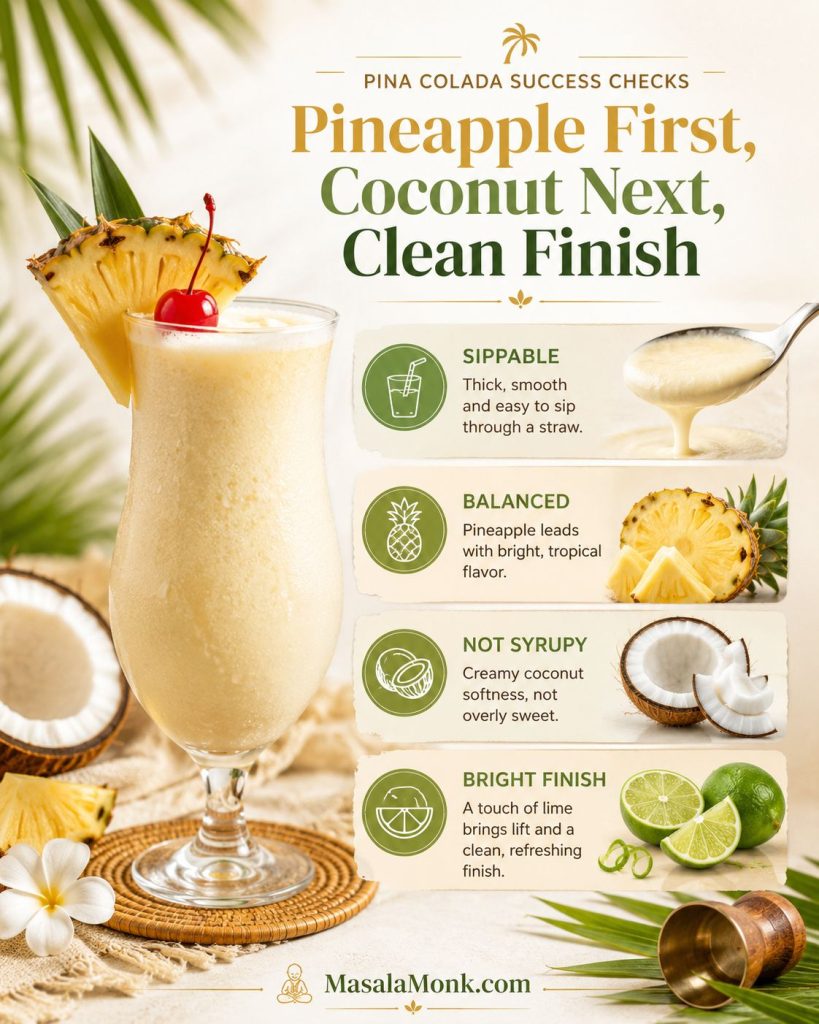
This recipe is built around three checks: the drink should pour thick but sip easily, taste pineapple-first, and finish clean instead of sticky. That is the difference between a lush piña colada and a glass of sweet melted slush.

Success checkWhat you should noticeAdjustment
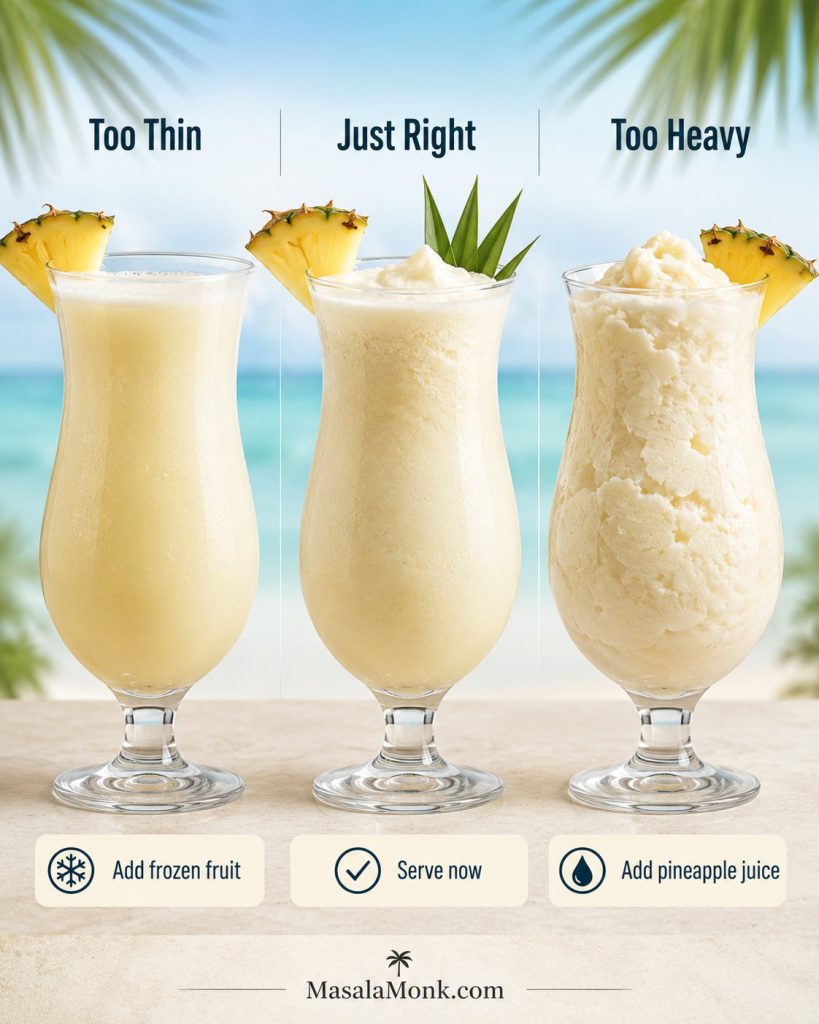
TextureFrosty pour, but still sippable through a straw.Too heavy? Add a splash of juice. Too thin? Add frozen fruit.
Flavor orderPineapple first, coconut second, rum in the background.If rum dominates, add a little more pineapple or coconut base.
SweetnessSoft and tropical, not candy-like.Use less cream of coconut next time, or add a small squeeze of lime now.
FinishCool, clean, and refreshing.Flat drinks need acid or a tiny pinch of salt, not more sugar.
Pina colada success-check graphic with pineapple first, coconut next, clean finish, and cues for sippable balanced texture.
Use this as the final taste test before serving. If the drink feels heavy, sharp, or candy-sweet, adjust one small thing instead of rebuilding the whole blender jar.

What success looks like: a good frozen pina colada should move like a soft milkshake, not crushed ice in juice. It should feel lush for the first sip and still clean by the last.

Pina Colada Recipe Card

Classic Frozen Pina Colada Recipe

This frozen pina colada is pineapple-forward, coconut-rich, cold, smooth, and balanced with fresh lime. It makes one generous drink or two smaller cocktail glasses.

Prep Time
5 minutes
Total Time
5 minutes
Yield
1 large or 2 small drinks
Method
Blended / frozen

Equipment

  • Blender
  • Jigger, measuring cup, or kitchen scale
  • Hurricane glass, highball, or tall glass

Ingredients

  • 2 oz / 60 ml white rum
  • 3 oz / 90 ml pineapple juice, chilled if possible
  • 2 oz / 60 ml cream of coconut, shaken or stirred well before measuring
  • ½ oz / 15 ml fresh lime juice
  • 1 cup / about 140 g ice, plus more only if needed
  • ½ cup / about 70–75 g frozen pineapple chunks, optional but recommended
  • Pineapple wedge and maraschino cherry, optional

Method

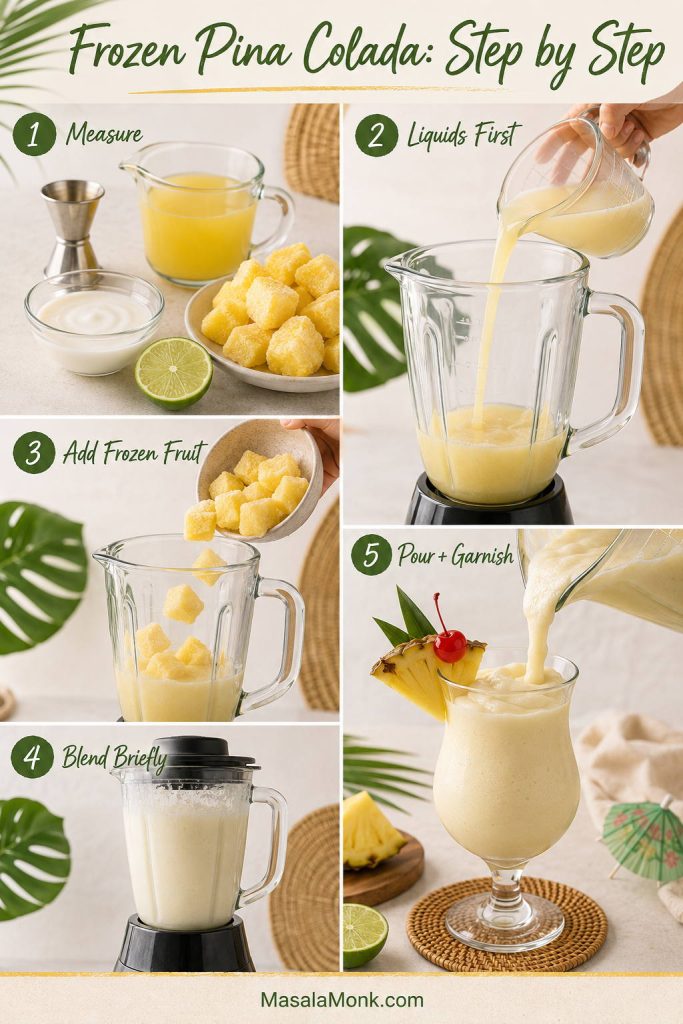
  1. Add the pineapple juice, white rum, cream of coconut, and lime juice to the blender.
  2. Add the frozen pineapple, if using, then add the ice.
  3. Blend for 20–30 seconds, just until smooth and frosty.
  4. Check before pouring: it should look thick but still sip easily through a straw.
  5. Too thick? Blend in 1 tablespoon pineapple juice. Too thin? Add a little frozen pineapple and blend briefly.
  6. Pour into a chilled glass, garnish if you like, and serve immediately.

Success Cue

Before serving, check three things: the drink should sip easily, taste pineapple-first, and finish clean rather than sticky. Thin drinks need frozen fruit; heavy drinks need pineapple juice; overly sweet drinks need lime.

Recipe Notes

  • Prefer it less sweet? Use 1½ oz cream of coconut.
  • Want a lighter cocktail? Use 1½ oz rum.
  • Want more rum warmth? Use up to 2½ oz rum and keep the finish bright.
  • Making it alcohol-free? Use the mocktail formula below instead of simply removing the rum.
Classic frozen pina colada recipe card with rum, pineapple, cream of coconut, lime, and blend-until-smooth instructions.
This frozen pina colada card is the quick-save version of the recipe. Keep the base measured, then use the texture cue to decide whether the drink needs more fruit or more flow.

What Is a Pina Colada?

A piña colada is a tropical cocktail made with rum, pineapple, coconut, and a cold blended or shaken texture. It is strongly associated with Puerto Rico, but home versions vary because shoppers often find cream of coconut, coconut cream, coconut milk, and coconut water sitting near each other.

Classic formulas are simple; the home-cocktail confusion usually starts in the coconut aisle. Cream of coconut gives the familiar sweet resort-style body, coconut cream creates a richer but less sweet path, and coconut milk makes a lighter glass. The biggest mistake usually happens before the blender starts: choosing the wrong can.

Pina Colada Ingredients

The ingredient list is short, so each choice shows up clearly in the glass. Use the classic route when you want a sweet, creamy vacation-style drink; use the lighter swaps only when you actually want a fresher, less dessert-like result.

If the coconut aisle is the confusing part, jump to the cream of coconut vs coconut cream guide before you start blending.

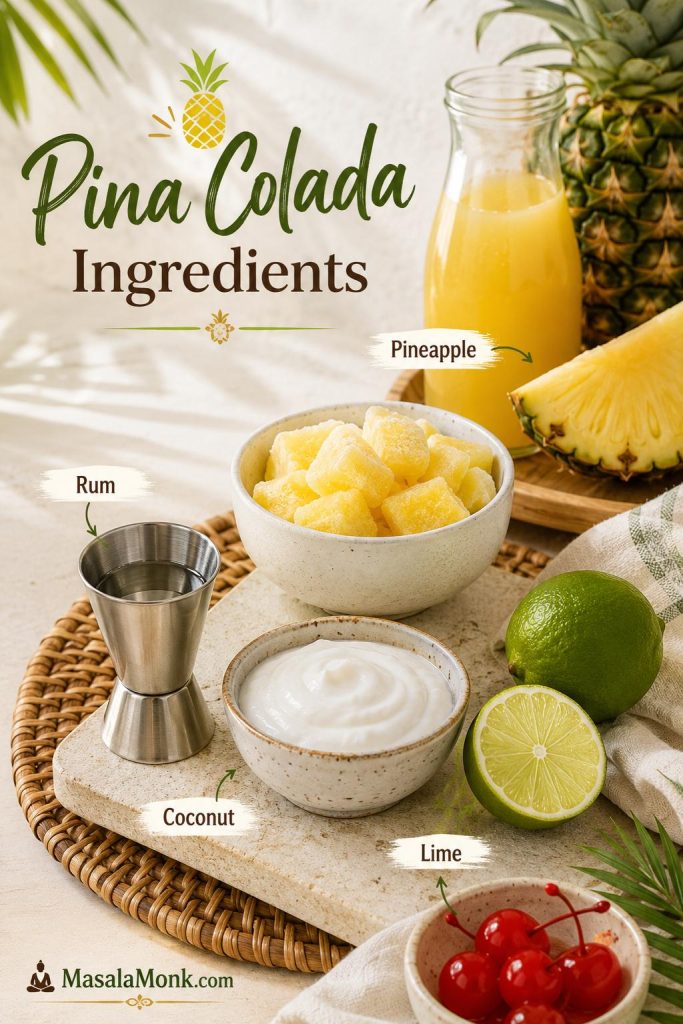
Pina colada ingredients arranged with rum, pineapple juice, cream of coconut, lime, frozen pineapple, pineapple garnish, and cherry.
A short ingredient list leaves less room to hide mistakes. For the best pina colada, use pineapple for lift, cream of coconut for structure, lime for contrast, and rum as the background note.

White rum

White rum is the best default because it keeps the drink clean, sunny, and pineapple-forward. Coconut rum is softer and sweeter. Dark or aged rum adds warmth, especially as a small float.

Pineapple

Use 100% pineapple juice for the smooth base. Fresh juice tastes vivid but varies by fruit; canned juice is more consistent. Avoid pineapple juice cocktail unless you are prepared to reduce sweetness elsewhere.

Frozen pineapple chunks are the easiest upgrade for a blender version because they add structure and real fruit flavor. Drained canned chunks can work, but syrup-packed fruit may push the drink too sweet.

Pineapple juice vs frozen pineapple

Use pineapple juice when the blender needs flow and frozen pineapple when the drink needs body. Together, they create a frozen pina colada that tastes like fruit rather than diluted ice.

Split graphic comparing pineapple juice for flow with frozen pineapple chunks for body in a pina colada.
Pineapple juice and frozen pineapple solve different problems. Juice keeps the drink pourable, while frozen fruit adds body and helps prevent a watery blender drink.

Cream of coconut

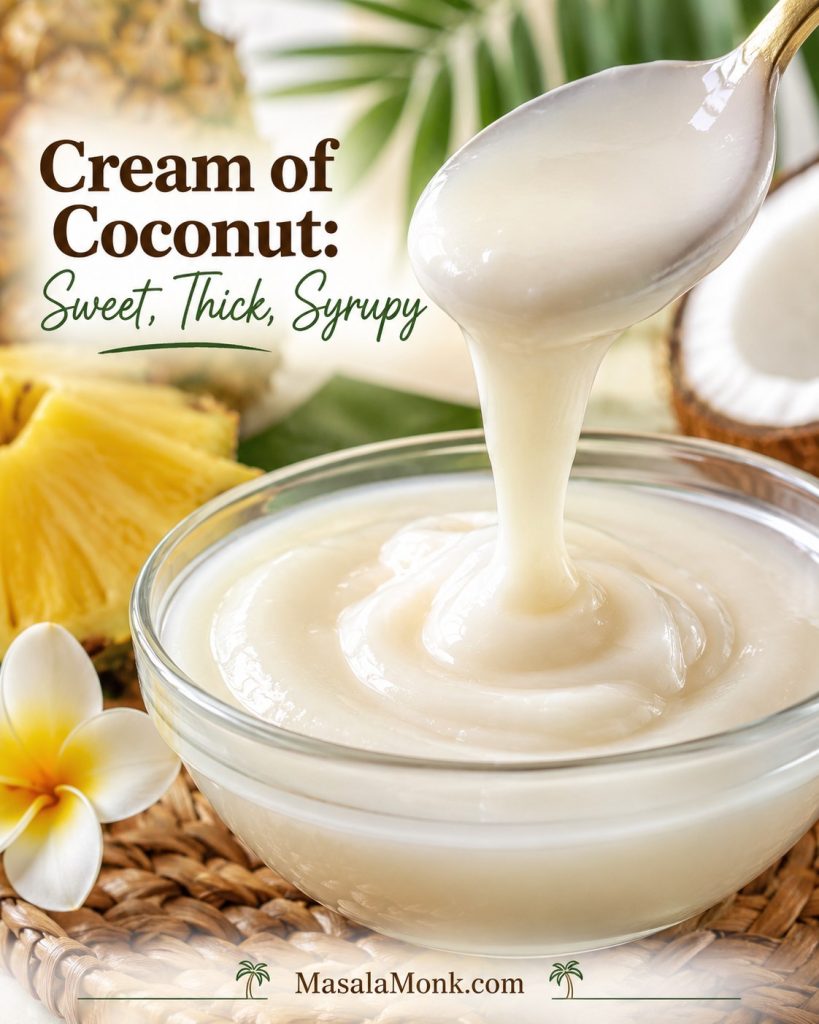
Cream of coconut is sweetened, thick, and syrupy. It gives the familiar body most people expect from a classic pina colada, so shake or stir the can well before measuring.

If it is too thick to pour, warm the closed container in a bowl of warm water for a few minutes, then shake again. Brands vary, so taste before making big adjustments.
Fresh lime juice

Lime is the small polish move. It is not required in every traditional formula, but it keeps the coconut from tasting heavy and makes the pineapple feel brighter.

Frozen texture ingredients

For a frozen drink, measured ice gives chill while frozen fruit gives body. Too much plain ice can dull the flavor, so use pineapple chunks when you want a thicker drink that still tastes tropical.

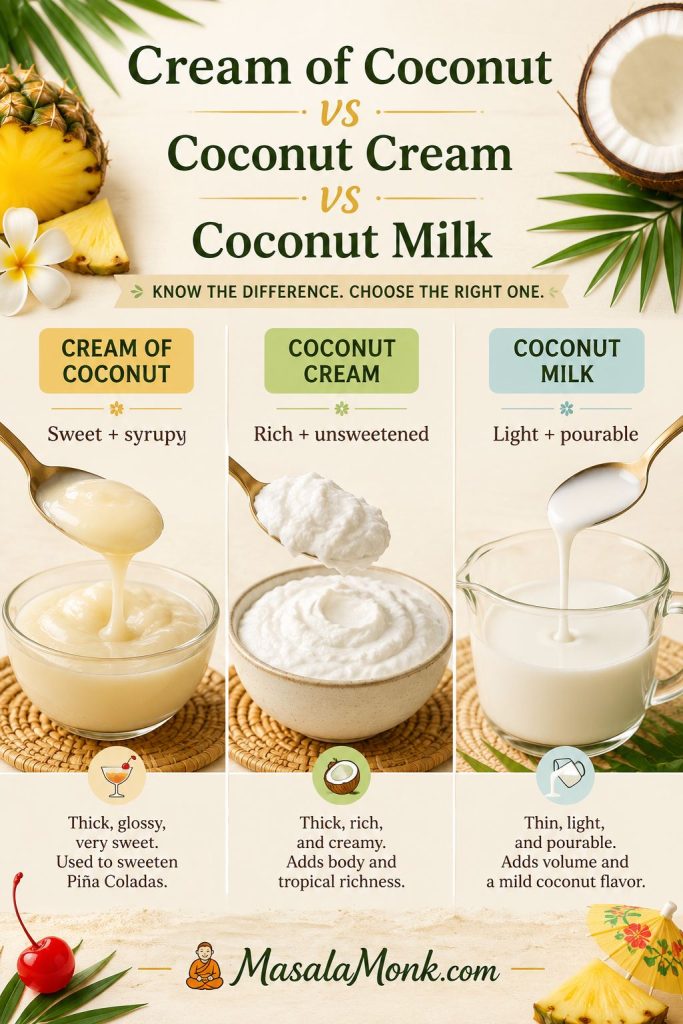
Cream of Coconut vs Coconut Cream vs Coconut Milk

This is the aisle where many homemade piña coladas are won or lost. The names sound close, but the products do not behave the same way. If you have ever stood in front of coconut milk, coconut cream, and cream of coconut wondering which one the recipe actually means, this is the part that saves the drink.

ProductSweetened?TextureBest use in a pina colada
Sweetened cream of coconutYesThick, syrupy, richClassic sweet, creamy version.
Unsweetened coconut creamUsually noThick and richLess sweet version when paired with simple syrup or agave.
Full-fat coconut milkUsually noThinner and fluidLighter drink with a fresher, less dessert-like finish.
Coconut waterNoThin and refreshingSkinny or hydrating variation, not a classic creamy one.
Homemade coconut syrupYesAdjustableFallback when bottled cream of coconut is not available.
Comparison graphic showing cream of coconut, coconut cream, and coconut milk with texture and sweetness differences.
Cream of coconut, coconut cream, and coconut milk do not behave the same way. Choosing the right one is one of the fastest ways to control sweetness, body, and classic pina colada texture.

Already have the right coconut base? Move to the frozen method, the coconut milk version, or the fix guide if your drink is too thin, too sweet, or not creamy enough.

For the safest classic choice, use cream of coconut. A less-sweet modern route starts with coconut cream plus sweetener. If you want a lighter glass, use full-fat coconut milk with extra pineapple for body.

What cream of coconut should look like

Look for a thick, glossy pour. That texture is what gives the classic pina colada its familiar body without needing to overdo the ice.

Close-up of thick cream of coconut being poured slowly, showing a glossy syrupy texture.
Cream of coconut should move slowly, almost like a glossy syrup. If your coconut ingredient pours thin like milk, the finished pina colada will usually taste lighter and less classic.

Quick homemade fallback: gently warm 1 cup full-fat coconut milk or coconut cream with ¾ cup sugar and a small pinch of salt, stirring until dissolved. Cool, refrigerate in a clean jar, and use within about 1 week. Shake before measuring.

For more detail on the coconut-aisle confusion, Epicurious has a helpful guide to cream of coconut, coconut cream, and coconut milk.

If the coconut-water direction sounds more refreshing than creamy, our coconut water cocktails guide has more long, bright drinks built around coconut water, lime, and ice.

Equipment and Cold Control

A piña colada has no cooking temperature, but it does have a temperature problem: once it warms up, the tropical flavor turns dull and the texture collapses.

  • Use a blender for the frozen version and a shaker or clean jar for the on-the-rocks version.
  • Chill the juice when possible so the drink starts cold.
  • Add liquids first so the blender catches before the frozen ingredients settle around the blades.
  • Blend briefly, usually 20–30 seconds, then stop once smooth.
  • For pitchers, chill the base ahead and finish each round right before serving.
Cold control guide for pina colada showing chilled juice, frozen fruit, a chilled glass, and brief blending tips.
Cold control matters more than simply adding more ice. Chilled juice, frozen fruit, a cold glass, and brief blending help a creamy pina colada stay smooth instead of melting too quickly.

These small moves protect the drink’s first-sip feeling: frosty, lush, and refreshing instead of loose and tired.

Avoid these common mistakes: do not use unsweetened coconut milk as a direct cream-of-coconut swap, do not over-blend after the drink turns smooth, and do not fix a flat mocktail with more sugar. Use acid and a tiny pinch of salt instead.

How to Make a Frozen Pina Colada

A frozen pina colada should pour thick, then relax slightly in the glass. It should not scoop like sorbet or run like juice.

Step-by-step frozen pina colada guide showing measuring, adding liquids, adding frozen fruit, blending briefly, and pouring to garnish.
The frozen method works best when the blender gets help from the start. Add liquids first, then frozen fruit, so the drink blends quickly without losing its thick, sippable texture.

Add pineapple juice, rum, cream of coconut, and lime to the blender first. Add frozen pineapple and ice last so the blades can catch and move smoothly.

Blender jar with liquid being poured in first and frozen pineapple waiting nearby for a pina colada blender order guide.
Blender order can change the final texture. Liquids first help the blades move freely; after that, frozen pineapple can thicken the pina colada without turning it into a frozen block.

Blend for 20–30 seconds, just until smooth. If the blender struggles, start with less frozen material, blend the liquid and fruit, then add the rest gradually.

Texture target: thick enough to look lush, loose enough to sip. Too heavy? Add pineapple juice. Too thin? Add frozen pineapple. Too sweet? Add lime.

Frozen pina colada texture target

Use this texture cue before you pour. A frozen pina colada should look plush, but it should still move through a straw without effort.

Finished frozen pina colada with thick, smooth, sippable texture shown close up with garnish and MasalaMonk.com footer.
The ideal frozen pina colada should move like a soft milkshake. If it scoops like sorbet, loosen it; if it runs like juice, add more frozen pineapple.

Too thin, just right, or too heavy?

For quick rescue, compare your drink with this texture guide or jump to the full pina colada troubleshooting section.

Three-part pina colada texture comparison showing too thin, just right, and too heavy with quick fix cues.
Texture fixes work better when you identify the problem first. A thin pina colada needs more frozen body, while a heavy one needs pineapple juice to bring back flow.

The same frozen-fruit logic is useful in a frozen strawberry daiquiri: fruit gives body, lime keeps it bright, and the blender stays on your side instead of against you.

If you want to compare this with a bartender-style baseline, the International Bartenders Association lists a simple white-rum, pineapple, and coconut piña colada formula.

How to Make a Pina Colada on the Rocks

A pina colada on the rocks is the cleaner, faster version: same pineapple-coconut flavor, but lighter on the palate and less dessert-like than the frozen drink. Choose it when you want a chilled cocktail that still feels tropical without turning into a smoothie.

Pina colada on the rocks in a tall glass with fresh ice, pineapple garnish, lime, and cocktail shaker in the background.
A pina colada on the rocks is the best route when you want the flavor without the blender. Shake it hard, strain over fresh ice, and the drink stays lighter while still tasting tropical.
IngredientAmount for 1 drink
White rum2 oz / 60 ml
Pineapple juice2 oz / 60 ml
Cream of coconut1½ oz / 45 ml
Fresh lime juice½ oz / 15 ml
Fresh iceFor shaking and serving

Add the rum, pineapple juice, cream of coconut, and lime juice to a cocktail shaker. Shake hard for 12–20 seconds, until the outside feels cold and the drink looks lightly frothy. Strain into a fresh glass over fresh ice.

Three-step on-the-rocks pina colada guide showing shake hard, strain over fresh ice, and garnish.
For a no-blender pina colada, fresh ice is not just decoration. It keeps the shaken drink crisp, cold, and clean instead of letting it turn loose in the glass.

The shorter ratio matters because this version has no blender full of frozen fruit to soften the drink. It should land silky and cold, with coconut on the edges rather than a thick milkshake texture.

No cocktail shaker? Use a clean jar with a tight lid. No strainer? Pour carefully or use a small sieve. If your coconut base is very thick, stir it with the pineapple juice first so it shakes evenly.

If you like the cleaner shaken style, a classic daiquiri is the leaner rum-lime cousin: no coconut, no blender, just balance.

Virgin Pina Colada / Non-Alcoholic Pina Colada Mocktail

For one generous virgin pina colada, blend 1 cup frozen pineapple, ½ cup pineapple juice, ⅓–½ cup cream of coconut, 1 tablespoon lime juice, ½–1 cup ice, and a tiny pinch of salt. Use the smaller amount of coconut for a less sweet adult mocktail and the larger amount for a creamier dessert-style drink.

Virgin pina colada mocktail in an elegant glass with pineapple and cherry garnish, lime, and tropical styling.
A virgin pina colada should feel complete, not like rum was simply removed. Frozen pineapple, lime, and a tiny salt cue help the mocktail keep depth and brightness.

A good non-alcoholic pina colada should not taste like the rum was simply removed. Lime, frozen fruit, and a tiny pinch of salt replace some of the bite and depth, while the coconut keeps the drink smooth. The mocktail should still feel like a drink someone chose, not the version left after the rum was removed.

Non-alcoholic pina colada formula

IngredientClassic sweet mocktailLess sweet mocktail
Frozen pineapple1 cup / about 140 g1 cup / about 140 g
Pineapple juice½ cup / 120 ml½ cup / 120 ml
Cream of coconut½ cup / 120 ml⅓ cup / 80 ml
Coconut milk or coconut waterOptional splash2–3 tablespoons
Fresh lime juice1 tablespoon / 15 ml1 tablespoon / 15 ml
Ice½–1 cup, as needed½–1 cup, as needed
Optional depthTiny pinch of salt, 2–3 drops vanilla, or non-alcoholic rumTiny pinch of salt, 2–3 drops vanilla, or non-alcoholic rum
Non-alcoholic pina colada formula graphic showing frozen pineapple, pineapple juice, cream of coconut, lime, and a tiny pinch of salt.
The non-alcoholic pina colada formula needs more than pineapple and coconut. A little lime and a tiny pinch of salt make the alcohol-free version taste fuller without making it salty.

Serving both versions? Use the pitcher section to make a shared pineapple-coconut base, then add rum only to the glasses that need it.

Blend until smooth, then taste before serving. Too sweet? Add lime. Dull? Add the smallest pinch of salt. Too thick? Loosen it with pineapple juice, coconut milk, or coconut water.

For a more grown-up mocktail, add a few drops of vanilla or a splash of non-alcoholic rum. If you are also serving lighter alcohol-free drinks, our low-sugar mocktails guide has more ideas.

Classic vs virgin pina colada

Use the same care with garnish, texture, and balance for both versions. That is what makes the non-alcoholic glass feel intentional instead of secondary.

Side-by-side classic and virgin pina coladas, showing one with rum and one alcohol-free, both garnished and served in tropical glasses.
Classic and virgin pina coladas should both feel worth choosing. Keep the same care with texture, garnish, and bright finish so the mocktail does not feel like a backup drink.

Best Rum for Pina Colada

The best rum for a pina colada depends on the mood of the drink. Choose white rum for the clean classic. Coconut rum gives you a sweeter party glass. For a more grown-up finish, keep white rum as the base and add a small dark rum float.

Rum choiceBest useWhat to adjust
White rumBest default for the classic pineapple-coconut flavor.Use the main recipe as written.
Malibu or coconut rumBest sweet party version.Reduce cream of coconut so the drink does not turn candy-sweet.
White rum + dark rum floatBest deeper, more grown-up version.Keep the base light, then float a little dark rum on top.
Spiced rumDessert-style variation, not the clean classic.Use extra lime and keep the coconut controlled.
Rum chooser graphic for pina colada with white rum, coconut rum, dark rum float, and spiced rum options.
For the best rum in a pina colada, start with white rum if you want the classic to taste clean. Then move to coconut rum, a dark float, or spiced rum when you want a sweeter or deeper variation.

First time making this recipe? Start with white rum. It lets the pineapple and coconut stay in front, which is the easiest way to understand the drink before you make it sweeter, darker, or warmer.

Malibu Pina Colada

For one Malibu pina colada, use 2 oz Malibu or coconut rum, 2 oz pineapple juice, 1 oz cream of coconut, ½ oz fresh lime juice, and ice. Because Malibu is already sweet and coconut-flavored, do not use the full classic amount of cream of coconut unless you want a very sweet drink.

IngredientAmount for 1 drink
Malibu or coconut rum2 oz / 60 ml
Pineapple juice2 oz / 60 ml
Cream of coconut1 oz / 30 ml
Fresh lime juice½ oz / 15 ml, optional but useful
IceFor shaking or blending
Malibu-style pina colada with toasted coconut topping, pineapple wedge, cherry, and coconut pieces.
A Malibu pina colada leans sweeter because coconut rum already brings flavor and sugar. Reduce extra sweetness or add a little more lime to keep the drink balanced.

Shake the ingredients with ice and strain over fresh ice, or blend with about 1 cup ice for a frozen drink. Too sweet? Add lime. Too light? Use half Malibu and half white rum. Want it more coconutty without making it sugary? Add a splash of unsweetened coconut milk instead of more cream of coconut.

Pina Colada with Coconut Milk

A pina colada with coconut milk is lighter than the cream-of-coconut version. Choose it when you want the pineapple to feel brighter and the coconut to whisper rather than coat the glass.

Use full-fat coconut milk, not watery light coconut milk. Because it is usually unsweetened, add a little simple syrup, maple syrup, or agave only if the drink tastes sharp or thin.

IngredientAmount for 1 lighter drink
White rum2 oz / 60 ml
Pineapple juice3 oz / 90 ml
Full-fat coconut milk2 oz / 60 ml
Fresh lime juice½ oz / 15 ml
Simple syrup, maple syrup, or agave½–1 oz / 15–30 ml, to taste
Frozen pineapple½ cup / about 70–75 g
Ice½–1 cup, as needed
Lighter pina colada made with coconut milk, shown with a coconut milk pitcher, pineapple garnish, cherry, and tropical background.
A coconut milk pina colada tastes lighter and brighter than the classic. Because coconut milk is thinner and less sweet, the drink needs help from pineapple and careful chilling.

Blend just until smooth. Thin? Add more frozen pineapple. Sharp? Add sweetener gradually. Want it richer? Add 1 tablespoon cream of coconut or coconut cream.

Easy Pina Colada Variations

Once the base ratio is clear, variations become easy. Keep the pineapple-coconut structure, then change one thing at a time: fruit, rum, sweetness, or finish.

If you only try one variation first, make the frozen pineapple version. It improves body and fruit flavor without changing the identity of the drink.

Frozen pineapple chunks being poured into a blender for a thicker pina colada, with a finished drink beside it.
Frozen pineapple is the best first upgrade for a frozen pina colada. It adds body, keeps the flavor tropical, and reduces the need for extra ice.
VariationHow to make it
Strawberry pina coladaAdd ½–1 cup frozen strawberries and keep the coconut slightly lighter.
Mango pina coladaAdd ½ cup frozen mango for a thicker, golden tropical version.
Frozen pineapple pina coladaUse more frozen pineapple for stronger fruit flavor and a smoother pour.
Blue pina coladaAdd a small amount of blue curaçao and reduce other sweet elements.
Dark rum floatMake the classic recipe, then float a little dark rum on top before serving.
Skinny pina coladaUse coconut water or coconut milk, frozen fruit, and less cream of coconut.
Pina colada variations board showing strawberry, mango, dark float, lighter, blue, and extra frozen pineapple versions.
Pina colada variations work best when you change one lever at a time. Add fruit for flavor, a dark rum float for depth, or extra frozen pineapple for thicker texture.

For a deeper list of flavor twists, see our full guide to Piña Colada variations, including strawberry, mango, coconut rum, frozen pineapple, and non-alcoholic versions.

Pina Colada Mix: Homemade or Store-Bought

Pina colada mix is useful when speed matters, but it can taste dull if you only add rum and blend. Store-bought mix is not a failure; it just needs freshness added back. Treat it as a shortcut base, then wake it up with acid, cold, and real pineapple flavor.

Pina colada mix guide comparing homemade base with improved bottled mix using pineapple juice, cream of coconut, lime, and a finished drink.
A homemade pina colada mix gives you control over sweetness, coconut body, and lime. Bottled mix can still work, but it usually needs freshness added back before serving.

Homemade pina colada mix

Homemade mix ingredientAmount
Cream of coconut1 cup
Pineapple juice¾ cup
Fresh lime juice3 tablespoons

Stir or blend until smooth, then refrigerate in an airtight container for 2–3 days. This is the liquid base, not the finished cocktail.

How much mix per drink?

Use about 4 oz homemade mix with 2 oz white rum. Blend for a frozen drink or shake for an on-the-rocks version. For a mocktail, skip the rum and add pineapple or coconut water if the glass needs loosening.

Using bottled mix for a party? The pitcher guide and store-bought mix fixes will help keep the drink fresh instead of flat.

How to improve store-bought pina colada mix

  • Add fresh lime if it tastes syrupy.
  • Use white rum instead of coconut rum when the mix is already very sweet.
  • Add frozen pineapple if the flavor feels thin.
  • Avoid extra cream of coconut unless the drink truly lacks body.
Guide to improving bottled pina colada mix with lime, real pineapple, chilling, and fresh serving cues.
Store-bought pina colada mix often tastes dull because it lacks fresh edges. Start with lime and real pineapple flavor, then chill well so the shortcut still tastes alive.

If you are making a big non-blended bowl instead, this punch with pineapple juice guide is better for ginger ale, Sprite, sherbet, cranberry, lemonade, and party punch variations.

Pina Colada Pitcher for a Party

A pitcher works best when you make the liquid base ahead and finish each round at serving. Do not blend the whole pitcher and park it in the fridge; that is how a good piña colada becomes sweet pineapple-coconut water.

IngredientFor 4 drinks
White rum1 cup / 240 ml
Pineapple juice1½ cups / 360 ml
Cream of coconut1 cup / 240 ml
Fresh lime juice¼ cup / 60 ml
Pina colada pitcher with serving glasses, pineapple wedges, cherries, lime, frozen pineapple, and rattan tray styling.
A pina colada pitcher should be party-ready without tasting tired. Keep the base cold and serve close to drinking time so each glass tastes fresh, not leftover.

Whisk or blend the base until smooth, then refrigerate. For frozen drinks, blend in 1–2 drink portions. For on-the-rocks drinks, shake individual servings or stir the base well over fresh crushed ice. This way, every glass tastes like the first one, not the leftover one.

Batch pina colada guide showing make cold base, hold chilled, finish per serving, and garnish fresh steps.
Batch the base, not the finished frozen drink. This keeps the pina colada smooth and bright, especially when you want every guest’s glass to taste like the first one.

If serving both alcoholic and alcohol-free drinks, make a pineapple-coconut-lime base without rum. Add rum to individual glasses for adults and label the alcohol-free batch clearly.

For alcohol-free guests, use the virgin pina colada formula. For texture problems during serving, use the troubleshooting table.

If you want a pitcher-first tropical drink rather than individual frozen glasses, this rum punch recipe is built for fruit juice, lime, rum, and party-style serving.

How to Fix a Pina Colada

Most piña colada problems are easy to fix once you know what caused them. Taste first, then adjust one thing at a time.

Fast rescue guide: thin? Add frozen pineapple. Heavy? Add pineapple juice. Too sweet? Add lime. Dull? Add lime and a tiny pinch of salt. Not rich enough? Add a little more coconut base.

Pina colada troubleshooting guide with fixes for too sweet, too thin, too heavy, dull, not rich enough, and melting drinks.
Troubleshoot by fixing the biggest problem first. Too sweet needs lime, too thin needs frozen pineapple, too heavy needs pineapple juice, and melting usually means the ingredients were not cold enough.
ProblemLikely reasonFix
Too wateryToo much liquid, melted dilution, or over-blendingAdd frozen pineapple, then blend briefly.
Too thickToo much frozen fruit or not enough liquidAdd pineapple juice 1 tablespoon at a time.
Too sweetToo much cream of coconut or coconut rumAdd lime juice, pineapple juice, or a splash of white rum.
Not creamyCoconut milk was used instead of cream of coconutAdd cream of coconut or coconut cream.
Bland or flatNot enough acid or contrastAdd fresh lime and a tiny pinch of salt.
SeparatingThe drink sat too long or the coconut was not mixed wellStir, shake, or re-blend briefly and serve immediately.
Too icyToo much frozen bulk and not enough creamy liquidAdd pineapple juice or coconut base and blend briefly.

Make-Ahead and Storage

A pina colada is best served immediately, especially when frozen. The make-ahead move is simple: prepare the pineapple-coconut-rum base, chill it, then finish the drink right before serving.

Make-ahead pina colada guide showing cold base, chill step, blend or shake later, and serve fresh.
For a make-ahead pina colada, prepare the base early but finish the drink later. That way, the flavor is ready and the texture still tastes freshly blended or shaken.

An alcohol-free base works the same way. Keep it cold, then blend or shake when guests are ready. Leftover blended drink can be frozen and re-blended with a splash of pineapple juice, but the fresh texture will always be better.

Pina Colada FAQs

What are the three main ingredients in a pina colada?

Rum, pineapple, and coconut are the core ingredients. Most creamy home versions also need a frozen element, and fresh lime makes the finish cleaner.

What is the best alcohol for a pina colada?

White rum is the best classic choice. Coconut rum is sweeter, while a small dark rum float gives a deeper finish.

Should I use cream of coconut or coconut milk?

Use cream of coconut for the classic sweet, creamy piña colada. Use coconut milk only when you want a lighter drink and are willing to adjust sweetness.

Is cream of coconut the same as coconut cream?

No. Cream of coconut is sweetened and syrupy; coconut cream is usually unsweetened and rich, so it needs added sweetener in most recipes.

How do I make a non-alcoholic pina colada taste less flat?

Use frozen pineapple, lime, and a tiny pinch of salt. Vanilla or non-alcoholic rum can add some of the depth that regular rum normally brings.

How do I make a pina colada without a blender?

Shake rum, pineapple juice, cream of coconut, and lime hard until cold, then serve in a fresh glass. It will be frothy and chilled, not frozen.

What makes a pina colada too watery?

Too much liquid, melted dilution, weak coconut body, or over-blending can make it watery. Measure the first batch and serve right away.

How do I make a pina colada less sweet?

Use less cream of coconut, choose white rum instead of coconut rum, or add fresh lime. Make small changes so the drink stays balanced.

Can I make pina coladas ahead of time?

Yes, but make only the liquid base ahead. Chill it, then blend or shake with the frozen/cold ingredients when ready to serve.

What is the difference between a pina colada and a Chi-Chi?

A pina colada is usually made with rum. A Chi-Chi is the similar pineapple-coconut drink made with vodka instead.

Final Sip

A good piña colada should taste cold before it tastes sweet: pineapple first, coconut next, rum in the background, and lime keeping the finish clean. Once that balance is right, the rest is easy — frozen, shaken, virgin, Malibu, lighter with coconut milk, or batched for a party.

Make the classic version once with measured ingredients. After that, you will know exactly how the drink should feel: tropical, smooth, refreshing, and just rich enough to feel like a small vacation in the glass.

Back to top

Posted on Leave a comment

Jungle Juice Recipe

Large glass drink dispenser filled with red-orange jungle juice, sliced oranges, strawberries, limes, ice, and party cups on a table.

A good jungle juice recipe should make hosting easier, not leave you guessing how many bottles, gallons, or cups you need while guests are walking in. This version is built as a measured party punch: fruity, cold, colorful, easy to pour, and scaled for 1-gallon, 2-gallon, and 5-gallon batches.

It is strong enough to feel like an adult party drink, but not built around the “dump every bottle in” approach that makes the punch taste harsh and unpredictable. Below, you’ll find the 2-gallon base recipe, shopping help, guest-count planning, alcohol math, lighter and more spirit-forward adjustments, plus alcohol-free, Halloween, color, and holiday-style variations.

The best batch is the one you can set out cold, point guests toward the cups, and stop worrying about mixing individual drinks all night.

Quick Answer: What Is Jungle Juice?

Jungle juice is a large-batch fruit punch for adult parties, usually made with liquor, fruit juice, sliced fruit, and a fizzy mixer. It is the kind of drink you make in a dispenser, punch bowl, or food-safe cooler when you want something colorful, easy to pour, and simple enough for guests to serve themselves.

The best version should taste fruity and refreshing first. It should not taste like straight alcohol, and it should not be so sweet that one cup feels heavy. That is why this recipe uses fruit punch, citrus, pineapple, cranberry, fresh fruit, and a bubbly finish for balance.

Jungle juice at a glance:
Good starting batch: 2 gallons for most parties
Serves: about 25–32 pours, or fewer people if guests have more than one
Alcohol: 1 bottle vodka + 1 bottle white rum for the 2-gallon batch
Main flavor: fruit punch, orange juice, pineapple juice, lemonade, cranberry, citrus, and strawberries
Container: 2.5- to 3-gallon drink dispenser, punch bowl, stockpot, or food-safe cooler
Make-ahead: mix juice, alcohol, and fruit 2–12 hours ahead
Add last: lemon-lime soda, ginger ale, club soda, or sparkling water

If you only remember one thing, start with the 2-gallon batch, chill it well, and add the carbonated mixer at the end. That gives you the easiest balance of flavor, serving size, and party convenience.

Visual formula showing vodka, white rum, juice, fizzy mixer, fresh fruit, and a finished 2-gallon jungle juice dispenser.
Once you understand the basic jungle juice formula, it becomes much easier to scale the recipe without guessing bottle math, juice volume, or fizz.

Easy Jungle Juice Recipe

Start with this 2-gallon batch for most parties. It fills a dispenser, but it is still easy to taste, chill, and adjust before guests arrive. Most importantly, it avoids the common mistake of making the punch too strong first and trying to fix it later.

Active Time10 minutes
Chill Time2 hours recommended
Total Time2 hours 10 minutes
YieldAbout 2 gallons

Servings: about 25 to 32 pours, depending on cup size

Yield note: The liquid amount lands around 2 gallons depending on how much fizz you add. Fresh fruit takes up extra room in the container, so use a larger dispenser than the final liquid yield.

Labeling tip: If you are serving alcoholic and non-alcoholic versions, label both dispensers clearly before guests arrive.

Ingredients

  • 1 bottle vodka, 750 ml / about 25.4 fl oz / about 3.2 cups
  • 1 bottle white rum, 750 ml / about 25.4 fl oz / about 3.2 cups
  • 8 cups fruit punch / 64 fl oz / 1.9 L
  • 4 cups orange juice / 32 fl oz / 950 ml
  • 4 cups pineapple juice / 32 fl oz / 950 ml
  • 4 cups lemonade or pink lemonade / 32 fl oz / 950 ml
  • 2 cups cranberry juice / 16 fl oz / 475 ml
  • 2 to 4 cups lemon-lime soda, club soda, sparkling water, or ginger ale, added last
  • 1 lb / 450 g strawberries, sliced
  • 2 oranges, sliced
  • 1 lemon or lime, sliced
  • Ice, for serving

Instructions

  1. Wash and slice the strawberries, oranges, and lemon or lime.
  2. Add the fruit punch, orange juice, pineapple juice, lemonade, cranberry juice, vodka, and rum to a large food-safe drink dispenser, punch bowl, stockpot, or beverage cooler.
  3. Stir well with a long-handled spoon.
  4. Add the sliced fruit.
  5. Cover and chill for at least 2 hours. For better fruit flavor, chill for 3 to 12 hours.
  6. At serving time, stir in the lemon-lime soda, club soda, sparkling water, or ginger ale.
  7. Serve cold over ice.
Container tip: Do not fill the container to the rim. Use a 2.5- to 3-gallon dispenser for the 2-gallon batch so there is room for fruit, stirring, fizz, and easy serving.
Saveable recipe card for easy jungle juice showing a 2-gallon yield, 25 to 32 pours, active time, chill time, and main ingredients.
This quick jungle juice recipe card keeps the 2-gallon yield, serving range, timing, and core ingredients easy to check while you prep.

Planning a bigger batch? Jump to the guest-count guide or the 1, 2, and 5-gallon amounts before you shop.

Shopping List for 2 Gallons of Jungle Juice

Here is the simple shopping list for the main 2-gallon batch, so you can shop once, chill everything, and set up the dispenser before guests start arriving.

  • 1 bottle vodka, 750 ml
  • 1 bottle white rum, 750 ml
  • 1 large bottle fruit punch, at least 64 fl oz
  • 1 carton orange juice, at least 32 fl oz
  • 1 bottle or can pineapple juice, at least 32 fl oz
  • 1 bottle lemonade or pink lemonade, at least 32 fl oz
  • 1 small bottle cranberry juice, at least 16 fl oz
  • 1 bottle lemon-lime soda, ginger ale, club soda, or sparkling water
  • 1 lb strawberries
  • 2 oranges
  • 1 lemon or lime
  • Ice for serving
Shopping list for 2 gallons of jungle juice with vodka, rum, fruit punch, orange juice, pineapple juice, lemonade, cranberry juice, fizzy mixer, fruit, and ice.
Before you shop, this 2-gallon jungle juice checklist helps you buy the right bottles, juices, fruit, fizz, and ice without doing recipe math in the store.

Why This Jungle Juice Recipe Works

Many party-punch recipes are vague: a bottle of this, a jug of that, some fruit, and maybe soda if you have it. That can work for a casual punch bowl, but it gets stressful when you are trying to shop for 20, 40, or 80 people.

This version is built around clean party math. The main recipe makes about 2 gallons, then the same formula is scaled into 1-gallon and 5-gallon amounts. You also get serving estimates, alcohol-strength notes, and a clear reminder to save the bubbly finish for the end so the punch tastes lively when guests start pouring.

Best basic formula: 1 bottle vodka + 1 bottle white rum + about 22 cups juice + 2–4 cups fizz + fresh fruit = about 2 gallons of jungle juice. Keep that formula in mind, then adjust sweetness, strength, and fizz after the punch has chilled.

It also keeps the flavor flexible. You can make it cheaper with fruit punch and lemonade, brighter with pineapple and citrus, lighter with sparkling water, or alcohol-free for a family party, baby shower, cookout, or mixed gathering.

What Does Jungle Juice Taste Like?

A good batch should taste like cold fruit punch with pineapple brightness, citrus lift, and a light bubbly finish. It should be fruity first, gently boozy second, and refreshing enough that one cup does not feel syrupy or heavy.

If the first sip tastes like straight liquor, add juice, citrus, or a bubbly mixer before serving. If it tastes flat, it probably needs fresh bubbles, colder bottles, or more ice in the cups. The best batch should look generous in the dispenser, pour easily over ice, and stay lively from the first glass to the last.

Jungle Juice Ingredients

Think of the ingredients in layers: a fruity base for volume, citrus for lift, fresh fruit for the party look, and bubbles at the end so the dispenser still feels fresh when guests start pouring. You do not need cocktail-bar precision, but you do need balance.

Jungle juice ingredients arranged by category, including alcohol, juice base, fresh fruit, and fizzy mixer.
Each ingredient group has a job: the alcohol carries the punch, the juices build body, the citrus brightens it, and the fizz keeps it lively.

Alcohol

Vodka and white rum are the easiest base for classic jungle juice. Vodka keeps the drink clean and neutral, while rum gives it a rounder, fruitier party-punch flavor. Triple sec or orange liqueur can be added if you want more citrus, but it is optional.

For a more rum-forward tropical party drink, try this classic rum punch recipe.

Juice and Mixers

Fruit punch gives the drink its classic party flavor. Orange juice, pineapple juice, lemonade, and cranberry juice make it taste brighter and less one-note. You do not need every juice in the store; you just need a good balance of sweet, tart, and tropical.

If you like pineapple-forward party drinks, this punch with pineapple juice guide has more ideas for pineapple, cranberry, ginger ale, lemon-lime soda, and make-ahead party punch combinations.

Fresh Fruit

Use fruit that can sit in punch without falling apart immediately. Strawberries, oranges, lemons, limes, and pineapple are the easiest choices. Apples, grapes, blueberries, raspberries, peaches, kiwi, and cranberries can also work, depending on the season and the look you want.

Slice citrus into wheels or half-moons, halve or slice strawberries, and cut pineapple into small chunks. The fruit should look generous in the dispenser, but it should not crowd out so much liquid that serving becomes difficult.

Fizz

Lemon-lime soda gives the sweetest, most familiar party-punch taste. Club soda or sparkling water keeps the punch lighter and less sugary. Ginger ale adds a softer spice and works especially well with pineapple and cranberry.

Save the carbonated mixer for the end so the punch tastes lively when guests start pouring.

How to Choose the Alcohol

Most batches work best with simple alcohol choices. Vodka gives the punch a clean base, while white rum adds a softer tropical note. Orange liqueur, tequila, or sparkling wine can work in variations, but they change the flavor quickly.

AlcoholUse It ForFlavor Effect
VodkaClean baseNeutral, easy to mix, lets the fruit and juice lead
White rumClassic partner for vodkaRounder, fruitier, slightly tropical
Triple sec or orange liqueurOptional citrus boostAdds orange flavor and sweetness
TequilaSmall variationSharper and more noticeable; use carefully
Sparkling wineBetter for jingle juice than jungle juiceFestive and lighter, but changes the drink style
Hosting note: This recipe is framed as a balanced adult party punch, not a drinking-game drink. Label the punch clearly, serve moderate pours, and keep water or a non-alcoholic option nearby.

How to Make Jungle Juice

Jungle juice is easy to make, but the order matters if you want the fruit to taste fresh and the punch to stay lively.

  1. Prepare the fruit. Wash everything well, then slice strawberries, citrus, and pineapple if using.
  2. Mix the still ingredients first. Add the vodka, rum, fruit punch, orange juice, pineapple juice, lemonade, and cranberry juice to your container.
  3. Stir before adding fruit. This helps the juices and alcohol blend evenly.
  4. Add fruit and chill. Two hours is enough, but 3 to 12 hours gives the fruit more time to flavor the punch.
  5. Finish with fizz. Lemon-lime soda, sparkling water, club soda, or ginger ale should go in once the punch has chilled.
  6. Serve over ice. Put ice in glasses instead of dumping a large amount directly into the punch, unless you are using an ice ring.
Step-by-step guide showing how to make jungle juice by slicing fruit, mixing liquids, stirring, chilling, adding fizz, and serving over ice.
The order matters: build the still punch first, give the fruit time to flavor it, then add bubbles at the end for a fresher pour.

How Much Jungle Juice to Make for 20, 30, 50, or 100 People

This is the table to check before you shop. A 30-person backyard party, a 50-person birthday, and a long 100-person event do not need the same batch. Use these amounts as a practical starting point, then keep extra juice, fizz, water, and ice chilled nearby.

Guest CountSuggested BatchPlanning Notes
20 people1½ to 2 gallonsBest if other drinks are available
30 people2 gallonsGood starting point for most parties
50 people3 to 4 gallonsKeep extra fizz chilled for topping up
75 people5 gallonsUse a lighter batch for longer events
100 people5 gallons plus backup drinksBetter with water and a non-alcoholic punch nearby
Guest-count guide showing how much jungle juice to make for 20, 30, 50, 75, and 100 people.
Instead of choosing a batch size by container alone, match the jungle juice amount to your guest count, party length, and backup drink options.

1-Gallon, 2-Gallon, and 5-Gallon Jungle Juice Amounts

This is the part that keeps you from overbuying, underbuying, or trying to scale a punch recipe in your head at the store. Use the table as a practical party guide, then adjust the final sweetness and strength before guests arrive.

One gallon equals 128 fl oz, or about 3.8 L. One standard 750 ml bottle is about 25.4 fl oz, or about 3.2 cups.

Batch SizeVodkaRumJuice BaseFizz, Added LastFruitApprox. Servings
1 gallon375 ml / ½ bottle375 ml / ½ bottle11 cups total juice1 to 2 cups½ lb strawberries + citrus12 to 16
2 gallons750 ml / 1 bottle750 ml / 1 bottle22 cups total juice2 to 4 cups1 lb strawberries + citrus25 to 32
5 gallons, lighter large-party batch2 bottles2 bottles3½ to 3¾ gallons total juiceAbout ½ gallon2 to 3 lb fruit60 to 80
Guide comparing 1-gallon, 2-gallon, and 5-gallon jungle juice batches with containers, alcohol amounts, juice, fizz, fruit, and serving estimates.
Use this 1, 2, and 5-gallon jungle juice guide when you need to scale the recipe without guessing bottle amounts, juice volume, or final servings.

5-Gallon Jungle Juice: Lighter vs Exact-Scale Batch

A 5-gallon batch is 2.5 times the 2-gallon recipe. Matching the main recipe’s strength means using 2½ bottles of vodka and 2½ bottles of white rum. A lighter large-party batch uses 2 bottles of each with more juice, soda, or sparkling water.

That 2½-bottle amount means 2 full 750 ml bottles plus 375 ml from a third bottle. If you do not want a half bottle left over, the lighter 5-gallon version is the simpler choice.

5-Gallon StyleVodkaRumBest For
Lighter large-party batch2 bottles2 bottlesLonger parties, mixed groups, easier sipping
Exact-scale batch2½ bottles2½ bottlesMatching the main 2-gallon recipe strength
Five-gallon jungle juice scaling guide comparing a lighter batch with 2 bottles of vodka and 2 bottles of rum to an exact-scale batch with 2 and a half bottles of each.
If you are making a 5-gallon jungle juice batch, decide first whether you want an easier-sipping party punch or the same strength as the main recipe.

If you prefer a more spirit-forward punch, adjust gradually and keep the servings smaller rather than turning the whole batch into a harsh drink.

Important: fruit takes up space in the container, and ice melts if added directly to the punch. For the cleanest flavor and most accurate yield, chill the punch first, add fizz at serving time, and put ice in the glasses instead of the main dispenser.

How Much Jungle Juice Per Person?

Plan by pour size, not just by gallons. A small party cup may hold 6 oz, while a larger cup can easily hold 10 oz or more.

Batch6 oz Pours8 oz Pours10 oz Pours
1 gallonAbout 21About 16About 12
2 gallonsAbout 42About 32About 25
5 gallonsAbout 106About 80About 64
Serving-size guide showing 6-ounce, 8-ounce, and 10-ounce jungle juice pours with estimated servings for 1, 2, and 5 gallons.
Serving count changes quickly once cup size changes, so plan jungle juice by pour size instead of relying only on total gallons.

For a party with other drinks available, estimate one or two smaller pours per adult guest. Longer events usually work better with a lighter batch, plenty of water, and at least one non-alcoholic option nearby.

How Strong Is Jungle Juice?

Because this punch is fruity and served cold, guests may drink it faster than they realize. The simplest host-friendly approach is to label the punch clearly, serve moderate pours, and keep water or a non-alcoholic drink nearby.

Standard Drink Math for This Batch

A 750 ml bottle of 80-proof vodka or rum contains about 17 standard U.S. drinks. The National Institute on Alcohol Abuse and Alcoholism defines one U.S. standard drink as about 0.6 fl oz / 14 g of pure alcohol.

The 2-gallon recipe above uses one 750 ml bottle of vodka and one 750 ml bottle of rum. That means the full batch contains roughly 34 standard drinks before it is divided into servings. At about 32 small 8 oz pours, each pour is roughly around one standard drink, though the exact strength depends on your spirits, final volume, pour size, and how much soda or ice you use.

Alcohol strength guide showing two 750 ml bottles of 80-proof spirits, a 2-gallon jungle juice dispenser, standard drink icons, and 8-ounce pours.
Since jungle juice is fruity and easy to sip, standard-drink math helps you understand how proof, pour size, ice, and final volume change the strength.

Want a lighter table option? Jump to the non-alcoholic jungle juice or the cleaner, less-sweet variation.

Why This Recipe Skips Grain Alcohol

This recipe intentionally skips grain alcohol or “dump every bottle in” formulas because the final strength becomes harder to estimate and easier to over-serve. A measured vodka-and-rum base is easier to balance, label, and adjust for a real party.

Lighter, Balanced, and Stronger Batches

Note: homemade punch strength is always approximate because bottle proof, final volume, ice melt, fruit displacement, and pour size all change the actual drink. Use the math as a planning guide, not a precise serving guarantee.
StyleHow to AdjustBest For
Lighter jungle juiceUse less alcohol and more juice or a lighter carbonated mixer.Longer parties, outdoor cookouts, mixed groups
Balanced jungle juiceUse the recipe as written: vodka, rum, juice, fruit, and fizz.Most adult parties
More spirit-forward jungle juiceIncrease alcohol gradually and keep the fruit/juice base generous.Smaller pours, clearly labeled punch, adult-only gatherings

Cheap Jungle Juice for a Party That Still Tastes Good

Budget jungle juice should still feel like a real party drink, not a random mix of whatever was cheapest. Save money on the base, not on the balance: fruit punch gives volume, lemonade adds tartness, pineapple makes it taste more tropical, and fresh citrus makes the whole batch feel intentional.

The upgrade is not expensive ingredients; it is cold bottles, citrus, enough fruit to look generous, and a bubbly finish that makes the batch feel fresh.

A cheaper version can use:

  • Fruit punch as the main base
  • Lemonade or pink lemonade for tartness
  • Orange juice for body
  • Pineapple juice for tropical flavor, if budget allows
  • Store-brand lemon-lime soda, ginger ale, club soda, or sparkling water
  • Frozen strawberries and sliced citrus

Even on a budget, the batch should taste intentional, not like alcohol hiding under sugary drink mix. Cold bottles, fresh citrus, and the final fizzy splash make a big difference.

Budget-friendly jungle juice ingredients with fruit punch, lemonade, orange juice, pineapple juice, citrus, frozen strawberries, fizzy mixer, ice, and a punch dispenser.
Cheap jungle juice tastes better when you save money on the base, then use cold bottles, citrus, fruit, and fizz to make the punch feel fresh instead of careless.

Jungle Juice Variations

Once you understand the basic formula, this party punch is easy to adjust for the season, color theme, and crowd.

Vodka Jungle Juice

Vodka jungle juice is a good option if you want a cleaner flavor and do not want rum in the batch. It tastes lighter and lets the fruit punch, pineapple, orange, and lemonade stand out more.

Vodka jungle juice variation in a clear dispenser with citrus, pineapple, strawberries, ice, and a generic vodka bottle nearby.
Vodka jungle juice is a cleaner-tasting variation because the fruit punch, pineapple, orange, lemonade, and citrus can stand out without rum in the background.

A 1-gallon vodka-only batch can use:

  • 750 ml vodka
  • 6 cups fruit punch
  • 2 cups pineapple juice
  • 2 cups orange juice
  • 1 cup lemonade or cranberry juice
  • 1 to 2 cups lemon-lime soda or sparkling water, added last
  • Sliced strawberries, oranges, lemons, or pineapple

If you like vodka-citrus drinks, this vodka with lemon guide has more bright, simple vodka drink ideas.

Non-Alcoholic Jungle Juice

A non-alcoholic jungle juice is worth making even when you are serving the regular version too. It gives kids, non-drinkers, designated drivers, and anyone taking a break something that still feels colorful, festive, and part of the party.

To make it alcohol-free, replace the vodka and rum with extra juice and a chilled fizzy mixer. Add the bubbles once the drink is cold so it stays lively.

A simple 2-gallon non-alcoholic batch can use:

  • 8 cups fruit punch
  • 4 cups pineapple juice
  • 4 cups orange juice
  • 4 cups lemonade
  • 2 cups cranberry juice
  • 8 to 10 cups ginger ale, lemon-lime soda, club soda, or sparkling water, added last
  • Strawberries, oranges, lemons, limes, and pineapple

If you are serving both versions, keep the non-alcoholic batch in a separate labeled dispenser so guests do not have to ask which one is which.

Non-alcoholic jungle juice in a labeled alcohol-free dispenser with colorful fruit punch, citrus, strawberries, ice, and party cups.
A non-alcoholic jungle juice dispenser keeps the party table welcoming for kids, non-drinkers, designated drivers, and anyone who wants a colorful alcohol-free pour.

For a lower-sugar alcohol-free option, these keto mocktails can sit alongside the fruit punch at a mixed party.

Cleaner, Less-Sweet Jungle Juice

For a cleaner, less sugary version, use 100% juices where possible and replace part of the fruit punch with cranberry juice, pomegranate juice, pineapple juice, or fresh citrus. Keep the fruit visible and use sparkling water instead of lemon-lime soda if you want it less sweet.

This version is still easy, but it tastes more like a proper party punch and less like a sugary last-minute mix.

Cleaner less-sweet jungle juice variation in a glass pitcher with cranberry-red punch, citrus slices, lime, pomegranate or cranberry, mint, ice, and sparkling bubbles.
For a cleaner, less-sweet jungle juice, use citrus and sparkling water to lighten the punch instead of relying on extra soda for balance.

Another lighter tropical direction is this collection of coconut water cocktails, especially if you want refreshing rum, vodka, tequila, or mocktail ideas that feel less heavy than a full punch bowl.

Color Variations: Blue, Green, and Bright Party Punch

Color variations are useful for parties because they make the dispenser feel more intentional. For blue jungle juice, use blue fruit punch or a blue sports drink with pineapple juice, lemonade, vodka or white rum, citrus slices, and a clear fizzy mixer. Keep darker juices like cranberry low so the color stays bright.

A green version works best with lemonade, pineapple juice, limeade, lemon-lime soda, and a small amount of blue curaçao or green-colored punch. Lime wheels, green grapes, and pineapple chunks help the drink look festive without relying only on food coloring.

Three colorful jungle juice variations showing blue punch with citrus, green punch with lime and grapes, and Halloween punch with spooky garnish.
Blue, green, and Halloween jungle juice variations work best when the color stays bright but the flavor still makes sense with citrus, pineapple, fruit, and fizz.

Halloween Jungle Juice

Halloween jungle juice is the version to make when you want the punch bowl to become part of the table. Keep the flavor fruity, then use color, citrus slices, and a little drama to make it feel spooky without making the recipe harder.

A Halloween version can use:

  • Vodka and white rum as the base
  • Pineapple juice and orange juice for color
  • Lemon-lime soda added at serving time
  • Blue curaçao for color and orange flavor
  • Lime slices, orange slices, and gummy candy garnish for serving cups
Dry ice safety: Dry ice should be handled only with proper tongs or insulated gloves. Never touch it bare-handed, never put solid pieces into individual cups, and do not drink punch while pieces of dry ice remain in the serving bowl. Use dry ice only in a well-ventilated area, never seal it inside an airtight container, and avoid using it in a closed drink dispenser.

Jungle Juice vs Jingle Juice

Jungle juice is a flexible fruity party punch made with liquor, juice, soda, and fresh fruit. Jingle juice is usually a Christmas punch built around cranberry, sparkling wine or Moscato, vodka, citrus, and holiday garnishes such as cranberries, mint, and lime.

Make jungle juice when you want a flexible year-round party punch. Make jingle juice when the party is specifically holiday-themed and cranberry, sparkling wine, mint, and citrus fit the table better.

Split comparison of jungle juice with orange-red fruit punch and citrus beside jingle juice with cranberry punch, mint, lime, cranberries, and holiday garnish.
Jungle juice works as a flexible year-round party punch, while jingle juice leans more holiday-focused with cranberry, citrus, mint, and festive sparkle.

Make-Ahead, Storage, and Serving Tips

You can make jungle juice ahead, but the timing matters. The best version tastes cold and settled, while the final fizz still feels fresh.

  • Best make-ahead window: mix the juice, alcohol, and fruit 2 to 12 hours ahead.
  • Save the bubbles: soda, sparkling water, club soda, or ginger ale should be added after chilling.
  • Keep it cold: refrigerate the punch or keep the dispenser chilled.
  • Use ice carefully: add ice to glasses, or use an ice ring, so the whole batch does not become watery.
  • Use a food-safe container: a drink dispenser, punch bowl, stockpot, or beverage cooler is better than any container not designed for food.
Make-ahead timeline for jungle juice showing when to mix juice, alcohol, and fruit, when to chill the punch, and when to add bubbles before serving.
To make jungle juice ahead without losing freshness, chill the fruit and still liquids early, then add the carbonated mixer when guests are ready to pour.

Already mixed the punch and need a fix? Jump to troubleshooting for quick adjustments.

To keep the punch cold without watering it down, chill every bottle before mixing, keep the main batch refrigerated as long as possible, and serve over ice in cups. For a punch bowl, an ice ring melts more slowly than loose ice and looks better on the table.

Because this punch contains cut fruit, keep it cold. The FDA produce safety guidance recommends refrigerating fresh produce at 40°F / 4°C or below. As a practical party rule, keep the main batch chilled and refill serving containers as needed.

What to Serve with Jungle Juice

Because jungle juice is fruity and sweet, the best food pairings are salty, easy, and snackable. Think chips and salsa, sliders, wings, nachos, pizza, tacos, grilled skewers, or a big snack board.

During a longer party, simple and sturdy food works best. Salty snacks and easy finger foods balance the sweetness of the punch and help guests pace themselves without needing a formal meal.

Party table with jungle juice, chips and salsa, sliders, wings, tacos, pizza, fruit, cheese, crackers, and snack board foods.
Because jungle juice is fruity and sweet, salty snacks, sliders, wings, tacos, pizza, and easy finger foods help balance the table and keep guests satisfied.

Equipment You’ll Need for Jungle Juice

You do not need bar tools, but you do need a clean container large enough for the batch. Leave yourself more room than you think you need; fruit, fizz, stirring, and ladling all take space.

Container Size Guide

Batch SizeMinimum ContainerMore Comfortable Size
1 gallon1.5 gallons2 gallons
2 gallons2.5 gallons3 gallons
5 gallons6 gallons6+ gallons if using lots of fruit
Container size guide showing a 1-gallon pitcher, 3-gallon drink dispenser, and 6-gallon beverage cooler with fill lines and space for fruit, stirring, and fizz.
A larger container gives the punch enough headspace for fruit, stirring, fizz, and serving without spills.
  • Large drink dispenser, punch bowl, stockpot, or food-safe beverage cooler
  • Long-handled spoon or spatula
  • Liquid measuring cup or jug
  • Knife and cutting board
  • Ladle, if using a punch bowl
  • Serving cups or glasses
  • Ice for glasses
  • Optional ice ring for the punch bowl
Avoid mixing jungle juice in a household trash can or any container that is not clearly food-safe. A clean beverage cooler, stockpot, punch bowl, or drink dispenser is a better choice.

Troubleshooting Jungle Juice

If the punch tastes a little off after mixing, do not panic. Jungle juice is one of the easiest party drinks to fix because you can adjust it by the cup: more citrus for sweetness, more juice for strength, more fizz for flatness, and more ice in the glass for serving.

ProblemLikely CauseHow to Fix It
Too strongToo much alcohol for the amount of juiceAdd fruit punch, pineapple juice, lemonade, club soda, or sparkling water.
Too sweetToo much fruit punch or lemon-lime sodaAdd cranberry juice, fresh lemon or lime juice, club soda, or sparkling water.
Too tartToo much citrus, cranberry, or unsweetened juiceAdd fruit punch, pineapple juice, lemonade, or a little simple syrup.
FlatFizz was added too earlyAdd fresh lemon-lime soda, sparkling water, club soda, or ginger ale just before serving.
WateryToo much ice melted into the punchChill the punch first and serve over ice in individual glasses.
Fruit looks tiredFruit sat too long or was sliced too thinAdd a fresh handful of citrus slices, strawberries, or pineapple before serving.
Troubleshooting guide for jungle juice with fixes for punch that is too strong, too sweet, flat, watery, or filled with tired fruit.
Most jungle juice problems are easy to fix one step at a time: juice for strength, citrus for sweetness, bubbles for flatness, and fresh fruit for presentation.

FAQs

What is jungle juice made of?

Jungle juice is usually made with liquor, fruit juice, fresh fruit, and a fizzy mixer. Vodka, white rum, fruit punch, orange juice, pineapple juice, lemonade, cranberry, strawberries, and citrus are common ingredients.

What alcohol works best in jungle juice?

Vodka and white rum are the easiest choices. Vodka keeps the flavor clean, while rum gives the punch a rounder, fruitier taste. Orange liqueur can be added for a citrus boost.

How much alcohol goes in jungle juice?

A balanced 2-gallon batch uses one 750 ml bottle of vodka and one 750 ml bottle of white rum. For a lighter batch, reduce the alcohol and add more juice, club soda, or sparkling water.

Do you pour the whole 750 ml bottle into jungle juice?

For the 2-gallon recipe, yes: use one full 750 ml bottle of vodka and one full 750 ml bottle of white rum. For a 1-gallon batch, use about half a bottle of each.

How many people does 1 gallon of jungle juice serve?

One gallon gives about 16 servings at 8 oz each, about 21 smaller 6 oz servings, or about 12 larger 10 oz servings.

How many people does 2 gallons serve?

Two gallons gives about 32 servings at 8 oz each, about 42 smaller 6 oz servings, or about 25 larger 10 oz servings.

How many people does 5 gallons serve?

Five gallons gives about 80 servings at 8 oz each. For smaller 6 oz pours, it can serve about 100. For larger cups, plan closer to 60 to 65 servings.

How much should I make for 30 people?

For 30 people, the 2-gallon recipe is a good starting point if other drinks are available. For a longer party, keep extra juice and fizz chilled for topping up.

How much do I need for 50 people?

For 50 people, plan around 3 to 4 gallons if other drinks are available, or a lighter 5-gallon batch for a longer event.

How far ahead should you make it?

Make the juice, alcohol, and fruit mixture 2 to 12 hours ahead. Add soda, sparkling water, club soda, or ginger ale when the punch is cold and ready to serve.

How long does jungle juice last in the fridge?

It is best the day it is made or the next day. Store leftovers covered in the refrigerator, and strain out tired fruit before serving again.
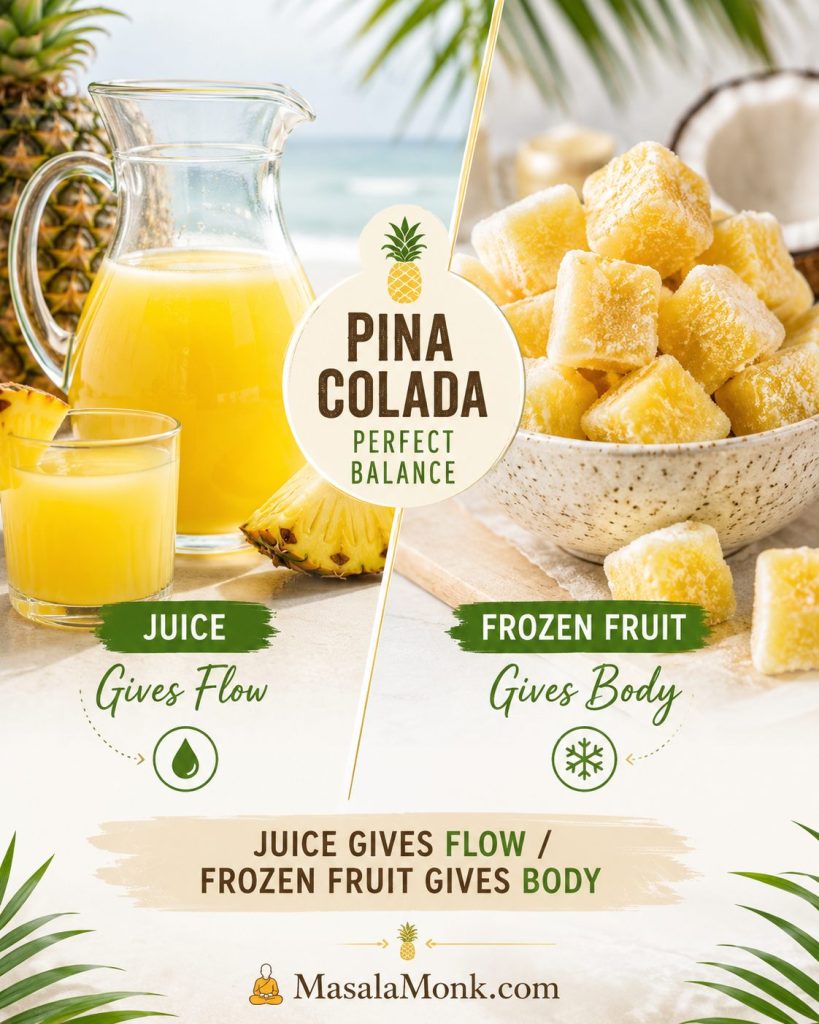
Can you freeze jungle juice?

You can freeze strained leftover punch without the fizzy mixer. It works better as a slushy-style leftover than a fresh party batch. Add fresh citrus or bubbles after thawing.

Should it be served over ice or mixed with ice?

Serve it over ice in individual cups. Loose ice in the main dispenser melts quickly and can make the whole batch watery.

What fruit is best?

Strawberries, oranges, lemons, limes, and pineapple are the easiest choices. They look good in the dispenser and add fresh flavor without falling apart too quickly.

Why does it taste too strong?

It usually has too much alcohol for the final amount of juice, fruit, fizz, and ice. Add juice or a sparkling mixer gradually, then serve smaller pours over ice.

How do you make it less sweet?

Use club soda or sparkling water instead of lemon-lime soda. Cranberry juice, fresh lime, lemon juice, or extra citrus slices also help balance sweetness.

Is jungle juice the same as trash can punch?

It is sometimes called trash can punch, but you should not mix it in a household trash can. Use a clean drink dispenser, punch bowl, stockpot, or food-safe beverage cooler.

Is jungle juice the same as jingle juice?

No. Jungle juice is a broad fruity party punch. Jingle juice is usually a Christmas punch with cranberry, sparkling wine or Moscato, vodka, citrus, and holiday garnishes.

Can jungle juice be made without alcohol?

Yes. Replace the vodka and rum with extra fruit punch, pineapple juice, orange juice, lemonade, ginger ale, club soda, or sparkling water. Keep the fresh fruit and serve it cold so it still feels like a real party punch.

Final Hosting Tips

Start with the 2-gallon recipe if you are making jungle juice for the first time. It is large enough for a party, easy to scale, and easier to control than a huge 5- or 6-gallon batch.

The best flavor comes from chilling the juice, alcohol, and fruit together, then adding the final fizz when the dispenser goes out. Keep the punch cold, serve it in moderate pours, and leave enough room for fruit and stirring.

When the dispenser is cold, the fruit looks bright, and guests can help themselves without asking you to play bartender, the whole party feels easier.

The best jungle juice is not the strongest one. It is the batch people can pour easily, sip comfortably, and come back to without you having to remix drinks all night. Keep it cold, leave room for fruit and stirring, add the fizz at the end, and the party punch takes care of itself.

Cold jungle juice dispenser with sliced fruit, cups, party food in the background, and a hand pouring punch into a cup.
When the punch is cold, balanced, and easy to pour, guests can keep serving themselves while you enjoy the party too.
Posted on 1 Comment

Watermelon Margarita Recipe

Fresh watermelon margarita on the rocks in a short glass with clear ice, a half-rim, lime wedge, and watermelon garnish.

This watermelon margarita recipe is cold, juicy, lime-bright, and built for ripe summer watermelon. Blend the fruit into fresh juice, shake it with blanco tequila and lime, then pour it over fresh ice with a salt or Tajín rim so every sip tastes crisp instead of watery.

The main version is a watermelon margarita on the rocks, because that is the cleanest way to taste the fruit without turning the drink into accidental slush. From there, you can make it stronger, softer, spicy, frozen, alcohol-free, or pitcher-friendly without guessing your way through the ratios.

You do not need a complicated cocktail setup, and you do not need to drown the drink in ice. Fresh watermelon juice, blanco tequila, lime, and a good rim do most of the work. Orange liqueur is optional, and sweetener only belongs in the glass when the watermelon needs a little help.

Table of Contents

Use this guide to make a fresh watermelon margarita on the rocks, adjust the ratio, scale it for a pitcher, or turn it into a frozen, spicy, or alcohol-free version.

Quick Answer: Best Watermelon Margarita Ratio

For one drink, this watermelon margarita recipe uses 4 oz watermelon juice, 1½ to 2 oz blanco tequila, ¾ oz fresh lime juice, and ½ oz orange liqueur if you want a rounder classic margarita flavor. Shake with ice, then strain over fresh ice so the drink stays cold without turning watery.

Very sweet watermelon usually needs no added sugar. If the fruit tastes bland, add ¼ oz agave or simple syrup. For a cleaner watermelon margarita without triple sec, leave out the orange liqueur and let the watermelon, tequila, and lime stay sharper and more fruit-forward.

Ingredient One Drink Metric Why It Matters
Fresh watermelon juice 4 oz 120 ml Gives the drink its fresh fruit flavor and natural sweetness.
Blanco tequila 1½–2 oz 45–60 ml Use 1½ oz for an easier drink or 2 oz for a stronger cocktail.
Fresh lime juice ¾ oz 22 ml Balances sweet watermelon and keeps the drink from tasting flat.
Orange liqueur ½ oz, optional 15 ml Adds classic margarita roundness; skip it for a cleaner no triple sec version.
Agave or simple syrup 0–¼ oz 0–7 ml Only needed if the watermelon is not naturally sweet.

The first sip should be cold, juicy, lightly salty, and clearly watermelon-forward — not like tequila hiding in fruit juice, and not like watered-down slush. When it tastes flat, add lime or salt. Sharpness usually means it needs more watermelon, while a heavy finish usually means the next round needs less sweetener.

Watermelon margarita ratio graphic showing watermelon juice, tequila, lime juice, optional orange liqueur, and a finished drink.
Use this watermelon margarita ratio as the first pour, not the final law. Because watermelon sweetness changes so much, mix the drink first, taste it cold, and only then decide whether it needs sweetener.

Watermelon Margarita at a Glance

Making this watermelon margarita recipe for the first time? Start here. These choices give you the freshest flavor, the cleanest texture, and the lowest risk of a watery drink.

Serving style On the rocks, shaken and strained over fresh ice
Tequila Blanco or silver tequila
Juice Fresh blended watermelon juice
Rim Salt for classic, Tajín or chili-lime seasoning for tangy watermelon flavor
Sweetener Only when the watermelon tastes bland or underripe
Pitcher tip Mix ahead, chill, and add ice only to glasses
Frozen tip Use frozen watermelon cubes instead of lots of plain ice
At-a-glance watermelon margarita guide with a finished drink, watermelon juice, tequila, lime, rim seasoning, frozen watermelon, and pitcher cues.
This visual gives the fastest decision path: fresh juice for flavor, blanco tequila for a clean finish, ice in the glass for control, and frozen watermelon only when you are making the blended version.

Why This Recipe Works

Watermelon brings a lot of juice and natural sweetness, but it is also delicate. Too much tequila makes it disappear, too much lime makes it sharp, and too much syrup turns it candy-like. This ratio keeps the drink fresh first: watermelon leads, tequila supports, lime sharpens, and the rim makes each sip pop.

A lot of watermelon margaritas go wrong because they treat watermelon like a bold citrus juice. It is not. The fruit is gentle, watery, and easily buried, so this drink needs measured lime, enough salt, and fresh ice more than it needs extra syrup.

Because this watermelon margarita recipe starts with real watermelon juice, you can taste and adjust the drink before it ever reaches the glass.

You are not locked into one exact formula either. Add orange liqueur when a rounder classic margarita feel sounds right, or leave it out when something cleaner and more fruit-forward fits the moment. Choose salt for a crisp rim, Tajín or another chili-lime seasoning for a tangy edge, or a half-rim when every sip should feel a little different.

In a classic margarita, tequila, lime, orange liqueur, and salt do the heavy lifting. Watermelon changes that balance because it brings both juice and sweetness, so this version usually needs less added sweetener than a sharper citrus margarita.

Watermelon Margarita Ingredients

The main ingredients in this watermelon margarita recipe are simple: ripe watermelon, blanco tequila, fresh lime, ice, and a salt or Tajín rim. Orange liqueur and sweetener are useful, but they should stay optional because watermelon can vary a lot in sweetness.

Before you mix the drink, taste the watermelon by itself. A great watermelon needs almost no sweetener. A flat or underripe one may need a tiny splash of agave, a better rim, or a little more lime to wake it up.

Watermelon margarita ingredients on a dark surface, including watermelon cubes, lime, tequila, orange liqueur, sweetener, salt, Tajín, and ice.
Each ingredient has a job. Watermelon brings body, lime gives the drink lift, tequila adds structure, and salt or Tajín keeps the sip from tasting one-note.
Ingredient Good Choice How to Use It
Watermelon Ripe seedless watermelon Blend, strain if desired, then measure the juice after blending.
Tequila Blanco or silver tequila Clean and crisp, so it does not hide the watermelon.
Lime Fresh lime juice Do not skip it; lime is what keeps the drink from tasting like plain watermelon juice.
Orange liqueur Cointreau, triple sec, or another orange liqueur Optional. Use it for a rounder classic margarita flavor.
Sweetener Agave or simple syrup Add only if the watermelon tastes bland or the drink is too sharp.
Rim Salt, Tajín, or chili-lime seasoning Balances the sweetness and makes the watermelon taste brighter.

Best Tequila for a Watermelon Margarita

Reposado tequila can work when you like a rounder drink, but it can pull the flavor warmer and softer. Blanco keeps the watermelon cleaner. For orange liqueur, Cointreau-style options usually taste cleaner and stronger, while basic triple sec is often sweeter and softer.

Blanco and reposado tequila comparison for watermelon margaritas, with two watermelon-colored cocktails and bottle cues.
Blanco tequila is the safest first choice for a fresh watermelon margarita because it stays crisp and lets the fruit lead. Reposado works when you want a rounder, warmer drink.

If this is the kind of tequila drink you like, the Paloma recipe is a good next one: still bright, salty, and citrusy, but lighter and sparkling with grapefruit instead of watermelon.

How Much Watermelon Do You Need?

Start with about 1 to 1½ cups diced ripe watermelon for one drink, then blend and strain it to measure 4 oz / 120 ml fresh watermelon juice. Watermelon yield changes depending on ripeness and how watery the fruit is, so measure the juice after blending instead of relying only on the diced fruit amount.

As a useful weight guide, 1 cup diced watermelon is about 152 g. That means 1 to 1½ cups diced watermelon is roughly 150–225 g before blending.

Watermelon yield guide showing diced watermelon, a blender, and about 4 ounces of watermelon juice for one margarita.
Diced watermelon does not always give the same amount of juice, so measure after blending instead of guessing. Blending extra fruit gives you room to adjust, especially when making more than one margarita.
Amount of Diced Watermelon Approx. Weight Use It For
1 to 1½ cups 150–225 g Usually enough for 1 margarita after blending and straining.
3 to 4 cups 455–610 g A good starting amount for 4 drinks, depending on how juicy the watermelon is.
6 to 8 cups 910 g–1.2 kg A good starting amount for a larger pitcher or party batch.
Useful tip: Blend more watermelon than you think you need, then measure the juice after straining. If the fruit tastes sweet and juicy on its own, skip extra sweetener. If it tastes flat, use lime, salt, or a tiny splash of agave to wake it up.

Fresh Watermelon vs Bottled Watermelon Juice

Fresh watermelon gives this drink the cleanest flavor, brightest color, and most natural summer feel. When the fruit is ripe and sweet, the margarita may not need added sugar at all.

Bottled watermelon juice works as a shortcut, especially when watermelon is out of season or you do not want to blend fruit. Choose an unsweetened or lightly sweetened juice if possible. Some bottled juices taste cooked, flat, or candy-like, and those flavors become more obvious once tequila and lime are added.

Fresh watermelon juice compared with bottled watermelon juice for making watermelon margaritas.
Fresh watermelon juice usually gives the brightest color and cleanest flavor. Bottled juice can still work as a shortcut; however, taste it first because some versions are already sweet or slightly flat.

For the brightest version, use freshly blended watermelon, especially when the fruit is cold, ripe, and naturally sweet.

Frozen watermelon cubes are a different tool. They are better for a blended frozen margarita than for a shaken on-the-rocks drink, because they give the blender body without diluting the cocktail with too much plain ice.

The balance is similar to other fruit margaritas: ripe fruit adds body and sweetness, while lime, tequila, and the rim keep everything sharp. If you want another fruit-forward example, this mango margarita recipe follows the same idea with a thicker, sweeter fruit base.

How to Make Fresh Watermelon Juice

Fresh watermelon juice takes only a few minutes. Use ripe, chilled watermelon if you have it; cold fruit makes the drink taste brighter and helps the margarita stay crisp once it hits the ice.

Watermelon cubes being blended and strained to make fresh juice for watermelon margaritas.
Watermelon releases enough liquid on its own, so there is no need to add water to the blender. Keeping the juice undiluted gives the margarita a stronger fruit flavor from the start.
  1. Cut the watermelon into cubes. Remove the rind and any large black seeds.
  2. Blend until smooth. Use a blender or high-speed blender. No water is needed.
  3. Strain if you want a smoother drink. Pour through a fine-mesh strainer and press gently with a spoon.
  4. Then measure the juice. For one drink, use 4 oz / 120 ml watermelon juice after blending and straining.
  5. Chill if making ahead. Store covered in the fridge and stir before using, because watermelon juice naturally separates.
Do not add water to the blender. Watermelon releases plenty of juice on its own. Extra water makes the margarita taste thin before it even reaches the shaker.

Strained vs Pulpy Watermelon Juice

Strain or not? Strain the juice for a smoother cocktail-bar texture. Skip straining if you like a slightly pulpy, fresh-fruit feel. For a pitcher, straining is usually better because the drink pours cleaner and settles less heavily.
Pulpy and strained watermelon juice shown in two glasses with a fine-mesh strainer nearby.
Strained watermelon juice gives a smoother cocktail texture, while pulpy juice feels more casual and fruit-forward. For pitchers, straining is usually better because pulp settles as the batch sits.

How to Make a Watermelon Margarita on the Rocks

The main method for this watermelon margarita recipe is shaken and served over fresh ice. Shaking chills and blends the lime, tequila, and watermelon juice quickly; fresh ice in the glass keeps the drink bright instead of watery.

Shaking gives you a colder, cleaner watermelon margarita than blending with a lot of ice. The drink stays juicy and bright, not foamy, diluted, or slushy by accident.

Watermelon margarita method image showing rimming a glass, adding ingredients to a shaker, shaking, and straining over fresh ice.
The on-the-rocks method keeps the drink controlled: rim the glass, shake the cocktail cold, then strain it over fresh ice. That sequence gives you chill without turning the drink into accidental slush.
  1. Rim the glass. Rub a lime wedge around the rim of a rocks glass, then dip the glass into salt, Tajín, or chili-lime seasoning. Fill with fresh ice.
  2. Add the drink ingredients to a shaker. Use 4 oz watermelon juice, 1½ to 2 oz blanco tequila, ¾ oz fresh lime juice, optional ½ oz orange liqueur, and optional ¼ oz agave if needed.
  3. Shake with ice. Shake for 15–20 seconds, until the shaker feels cold.
  4. Strain over fresh ice. Do not pour the used shaker ice into the glass; fresh ice keeps the drink cleaner.
  5. Garnish and taste. Add a lime wedge, small watermelon wedge, or mint sprig. Taste once before serving and adjust if needed.

Why Fresh Ice Matters

Do not worry if the first sip is not perfect. Watermelon changes a lot from fruit to fruit, so small adjustments are part of the recipe. When in doubt, adjust with lime and salt before adding more syrup.

Watermelon margarita being poured from a shaker into a glass filled with fresh ice.
Fresh ice gives the finished drink a clean start. Instead of carrying over half-melted shaker ice, strain into a cold glass so the watermelon and lime stay lively longer.
Problem Quick Fix
Tart or sharp Add a little more watermelon juice first; then use ¼ oz agave or simple syrup only when needed.
Overly sweet Add a squeeze of fresh lime and use a salt or Tajín rim to bring the drink back into balance.
Alcohol-heavy Add more watermelon juice or a small splash of cold sparkling water.
Flat Add more lime, a better rim, or a tiny pinch of salt before adding more syrup.

Ratio Guide: Lighter, Balanced, or Stronger

The right ratio depends on how sweet the fruit is and how strong you want the drink. Start with the balanced version, then move lighter, brighter, or stronger from there.

Four watermelon margaritas labeled Light and Juicy, Balanced Classic, Bright and Tart, and No Triple Sec.
This ratio guide turns the recipe into a choice. Go lighter for easy sipping, balanced for the first batch, brighter for very sweet fruit, or no triple sec when you want the cleanest watermelon-tequila finish.
Style Watermelon Juice Tequila Lime Orange Liqueur Use It When
Light & Juicy 4 oz / 120 ml 1½ oz / 45 ml ¾ oz / 22 ml Optional You want a softer daytime drink for a pool day, patio drink, or easy first round.
Balanced Classic 4 oz / 120 ml 2 oz / 60 ml ¾ oz / 22 ml ½ oz / 15 ml You want the main version: fresh, cold, citrusy, and clearly margarita-like.
Bright & Tart 3 oz / 90 ml 2 oz / 60 ml 1 oz / 30 ml ½ oz / 15 ml Your watermelon is very sweet or you prefer a sharper lime-forward margarita.
No Triple Sec 4 oz / 120 ml 1½–2 oz / 45–60 ml ¾ oz / 22 ml Skip it You want a cleaner tequila-watermelon-lime flavor without orange liqueur.

Start with the Balanced Classic for your first batch. If guests are coming, use the Light & Juicy version with a half-rim. When the watermelon is very sweet, move to the Bright & Tart version so the drink tastes crisp instead of like spiked juice.

As a result, this watermelon margarita recipe can lean light and juicy, balanced and classic, or sharper and stronger without changing the whole method.

The balanced classic is a good first pour: 4 oz watermelon juice, 2 oz tequila, ¾ oz lime, and ½ oz orange liqueur. If your watermelon is delicate or you want an easier patio drink, use 1½ oz tequila instead.

Watermelon Margarita Without Triple Sec

This watermelon margarita recipe also works beautifully without triple sec because watermelon already brings sweetness and aroma. Without orange liqueur, the drink tastes cleaner, sharper, and more watermelon-forward.

Skip triple sec when your watermelon is ripe, sweet, and fragrant. Add it when the drink tastes too much like tequila-watermelon juice and not enough like a classic margarita.

Watermelon margarita without triple sec in a rimmed glass with lime and watermelon garnish.
A watermelon margarita without triple sec works best when the fruit is already ripe and fragrant. Instead of adding orange sweetness, this version keeps the flavor closer to watermelon, lime, and tequila.

This is the version to make when the watermelon is already sweet enough to eat by itself and you want the drink to stay clean, fresh, and fruit-forward.

Use this no triple sec ratio for one drink:

  • 4 oz / 120 ml fresh watermelon juice
  • 1½–2 oz / 45–60 ml blanco tequila
  • ¾ oz / 22 ml fresh lime juice
  • 0–¼ oz / 0–7 ml agave or simple syrup, only if needed
  • Salt or Tajín rim
  • Ice

If the drink tastes a little too sharp without triple sec, do not rush to add a lot of syrup. First add a splash more watermelon juice. Then add a small amount of agave only if the fruit still tastes weak or underripe.

Orange liqueur is still useful when you want a more classic citrus-margarita profile. It rounds the edges of the drink and makes the watermelon taste more like a margarita than a tequila watermelon cooler. For a deeper citrus version, the blood orange margarita recipe shows how orange juice, lime, tequila, and orange liqueur work together.

Salt, Tajín, or Chili-Salt Rim

The rim is not just decoration. Watermelon is sweet and watery, so salt or chili-lime seasoning helps the drink taste sharper, colder, and more complete.

This is where the drink can lean classic, playful, or spicy. Salt keeps it crisp, Tajín makes it taste like summer street fruit, and chili-salt gives it a drier savory edge.

Three watermelon margaritas showing a salt rim, a Tajín rim, and a half-rim option.
The rim changes the mood of the drink. Salt keeps the margarita classic and crisp, Tajín adds chili-lime energy, and a half-rim gives guests control over how salty each sip feels.
Rim Flavor When to Use It
Salt Clean, classic, sharp Use for the most classic version.
Tajín or chili-lime seasoning Tangy, lightly spicy, snack-like Use when you want the watermelon to taste brighter and more playful.
Chili-salt Spicy, savory, flexible Good when you want spice without adding jalapeño to the drink.
Half-rim Controlled saltiness Great for guests because they can choose salted or clean sips.
  • Salt is the cleanest choice for a classic watermelon margarita.
  • Tajín is best when you want the drink to taste like cold watermelon with chili and lime.
  • A half-rim works best for guests, because not everyone wants salt in every sip.

How to Rim the Glass

To rim the glass, rub a lime wedge around the outside edge, then dip it into a small plate of salt, Tajín, or chili-salt. Keep most of the seasoning on the outside of the glass; otherwise, the first few sips can taste harsh instead of bright.

Close-up of a cocktail glass being rimmed with lime and seasoning on the outside edge.
Seasoning the outside edge of the glass gives the drink contrast without overwhelming the first sip. It is a small technique, but it makes the rim taste cleaner and more intentional.
Party tip: Use a half-rim. It looks polished, keeps the drink from becoming too salty, and lets each person decide how much rim they want with each sip.

Watermelon Margarita Pitcher for a Crowd

This watermelon margarita recipe also scales easily into a pitcher for a cookout, taco night, pool day, or any moment when shaking one drink at a time gets in the way of hosting.

Keep the ice out of the pitcher until serving. That way, the first round tastes cold and bright, and the second round does not turn thin or watery.

For a small gathering, use the 4-drink batch. For cookouts, parties, or make-ahead hosting, the 8-drink batch is the better starting point.

Pitcher of watermelon margaritas with rimmed glasses, lime wedges, watermelon garnish, and ice in the glasses.
A pitcher is easiest when the base is handled early and the finishing touches happen late. Rim the glasses, add ice, and garnish right before serving so each pour still feels fresh.

Use the pitcher version when guests are coming, the watermelon is already cut, and you want the drinks handled before the food hits the table.

Pitcher Measurements

Watermelon margarita pitcher measurement graphic showing amounts for 4 drinks and 8 drinks, with a note that ice goes in the glasses.
Once the single-drink ratio tastes right, scaling becomes simple. Use the pitcher amounts as a guide, then keep the ice separate so the batch does not slowly dilute.
Ingredient 4 Drinks 8 Drinks
Fresh watermelon juice 2 cups / 480 ml 4 cups / 960 ml
Blanco tequila 6–8 oz / 180–240 ml 12–16 oz / 360–480 ml
Fresh lime juice 3 oz / 90 ml 6 oz / 180 ml
Orange liqueur 2 oz / 60 ml, optional 4 oz / 120 ml, optional
Agave or simple syrup 0–1 oz / 0–30 ml 0–2 oz / 0–60 ml

If you skip the orange liqueur in a pitcher, do not replace it with more tequila automatically. Instead, taste first, then add a little extra watermelon juice for softness or a small splash of agave if the batch tastes too sharp.

How to Mix the Pitcher

  1. Blend and strain enough watermelon juice for the batch.
  2. Stir the watermelon juice, tequila, lime juice, orange liqueur, and optional sweetener in a pitcher.
  3. Then chill the pitcher mixture until ready to serve.
  4. Before serving, stir again because watermelon juice naturally settles.
  5. Rim glasses with salt or Tajín, fill with fresh ice, and pour the margarita over the ice.

Mix the pitcher before guests arrive, but save the ice, rims, and garnishes for the last minute. That small delay keeps the batch fresher and makes each glass feel more intentional.

Make-Ahead and Ice Tips

Comparison of a diluted watermelon margarita pitcher with early ice and a chilled pitcher served with fresh-ice glasses.
Make-ahead watermelon margaritas work when chilling and dilution are treated separately. Chill the mixed batch first; afterward, pour over fresh ice so the pitcher keeps its color and flavor.
Make-ahead limit: You can mix the watermelon juice, tequila, lime, and optional orange liqueur up to 6 hours ahead. Keep it chilled, stir again before serving, and pour over fresh ice.
Pitcher rule: Keep ice out of the pitcher until the last moment. Ice belongs in the glasses, not sitting in the batch for an hour.

Frozen Watermelon Margarita

To turn this watermelon margarita recipe into a frozen version, frozen watermelon cubes are your friend. They make the drink thick, cold, and slushy without watering down the flavor the way too much plain ice can.

Frozen watermelon margarita in a chilled glass with thick slushy texture, lime wedge, and watermelon garnish.
The frozen version should be thick and cold but still drinkable. Frozen watermelon cubes create that slushy texture while keeping the fruit flavor stronger than plain ice would.

Plain ice makes the drink colder, but frozen watermelon makes it colder and more flavorful.

Frozen Watermelon vs Plain Ice

Comparison of a thinner frozen margarita made with plain ice and a thicker frozen watermelon margarita made with frozen fruit.
Plain ice can make a frozen margarita colder, but it also thins the fruit. Frozen watermelon does the better job because it chills the drink while adding more watermelon flavor.

The best frozen version tastes like a watermelon slushie that still knows it is a margarita: cold, thick, lime-bright, and not watered down.

To make one frozen version, freeze diced watermelon for at least 4–6 hours or overnight. Blend about 2 cups frozen watermelon cubes with 1½ to 2 oz blanco tequila, ¾ oz fresh lime juice, ½ oz orange liqueur if using, and a small splash of agave only if needed. Add a tablespoon or two of cold water only if your blender needs help moving.

  • Thin texture? Add more frozen watermelon, not more ice.
  • Overly thick? Add 1 tablespoon cold water or watermelon juice at a time.
  • Weak flavor? Use less added liquid next time and serve immediately after blending.
  • Icy texture? Use more frozen fruit and less plain ice.

For more frozen-fruit cocktail texture help, this frozen strawberry daiquiri recipe shows how frozen fruit builds body without watering down the drink. If you want the same watermelon-lime idea with rum instead of tequila, try this watermelon daiquiri.

Spicy Watermelon Margarita

Watermelon loves heat. Jalapeño, chili, and Tajín or chili-lime seasoning cut through the fruit’s sweetness and make the drink taste brighter, not just hotter. Start small, though, because spice builds quickly in a cold cocktail.

Spicy watermelon margarita heat ladder with four drinks labeled Mild, Medium, Hotter, and Party-safe, using Tajín and jalapeño cues.
Heat is easier to control when you build it in layers. Start with a Tajín rim for gentle spice, then use jalapeño only when you want the drink to move from bright and tangy to noticeably spicy.
  • Mild: Use a Tajín or chili-lime rim only.
  • Medium: Shake with 1 thin jalapeño slice, then strain.
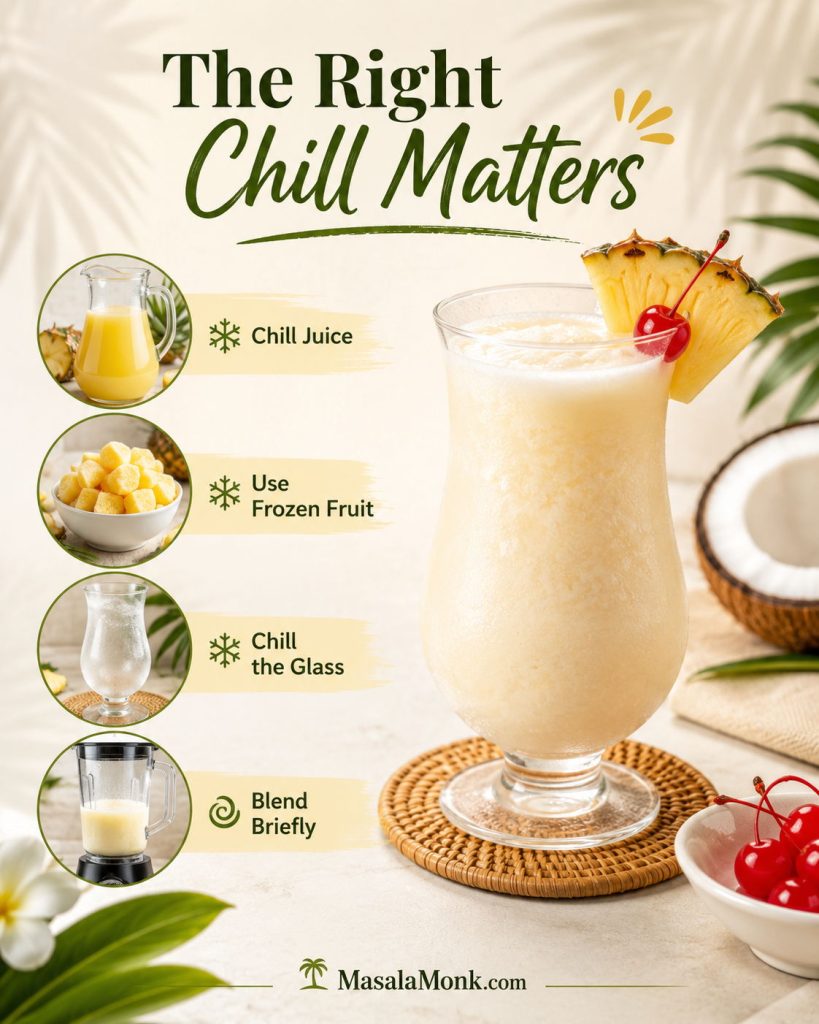
  • Hotter: Shake with 2 slices or use jalapeño syrup.
  • Party-safe: Keep the pitcher mild and let guests add jalapeño or Tajín at the glass.

Start mild, especially for a pitcher. Cold cocktails can hide heat at first, but jalapeño builds as the drink sits.

If you want more creative twists, these watermelon margarita variations include smoky, spicy, coconut, and sparkling directions.

Virgin Watermelon Margarita

A virgin watermelon margarita should still feel like a real drink: bright lime, juicy watermelon, a salty rim, and a little sparkle. The goal is not just watermelon juice in a fancy glass; it should still have contrast.

Virgin watermelon margarita with sparkling bubbles, lime, watermelon garnish, and a seasoned rim.
The alcohol-free version still needs structure. Sparkle gives it lift, lime keeps it sharp, and a salted or Tajín rim helps it feel like a real drink rather than plain watermelon juice.

For one alcohol-free version, combine 4 oz fresh watermelon juice, ¾ oz fresh lime juice, ¼ oz agave if needed, and a pinch of salt. Shake with ice, strain over fresh ice, and top with a splash of sparkling water. Serve with a salt or Tajín rim.

For a deeper alcohol-free version, this margarita mocktail guide explains how to keep lime, sweetness, salt, and bitterness balanced without tequila. For more summer drinks without alcohol, these watermelon mocktails give you mint, coconut, lime, and party-friendly ideas.

How to Serve a Watermelon Margarita in a Watermelon

Serving the drink in a watermelon is more of a party presentation than a different recipe. The safest way to do it is to make the margarita separately, then pour it back into a hollowed watermelon shell right before serving.

Watermelon margarita served in a hollowed watermelon shell with glasses, lime wedges, and a serving ladle nearby.
A watermelon shell is best used as a serving bowl, not the place where you balance the drink. Mix and taste the margarita separately first, then pour it into the shell for a cleaner party presentation.
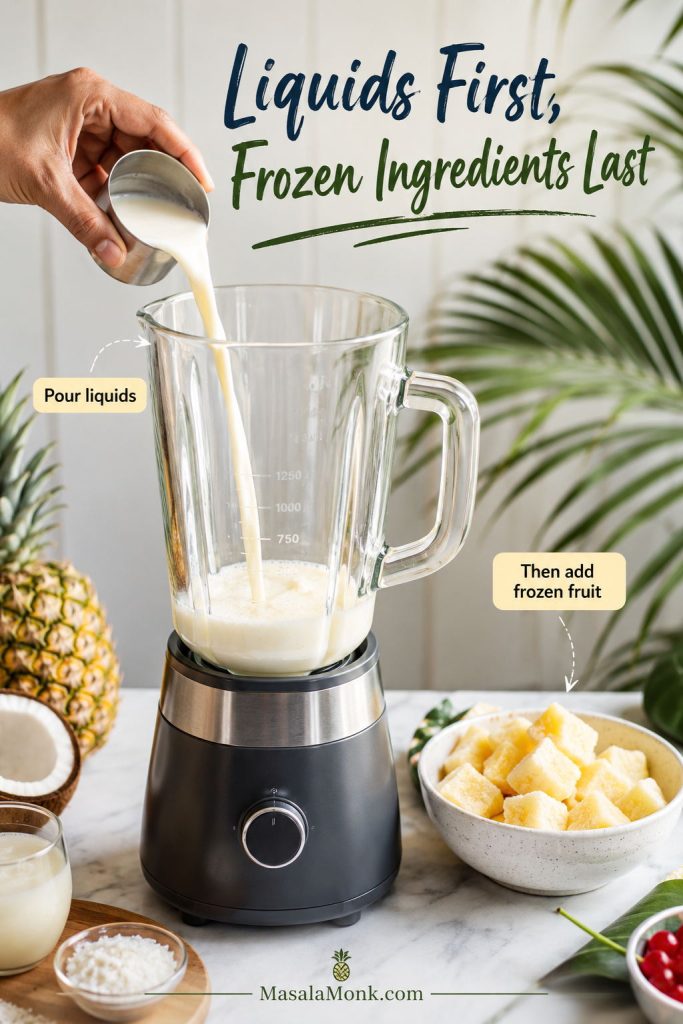
Treat the watermelon shell like a serving bowl, not a mixing tool. The drink will taste cleaner if you blend, strain, and balance it separately first.
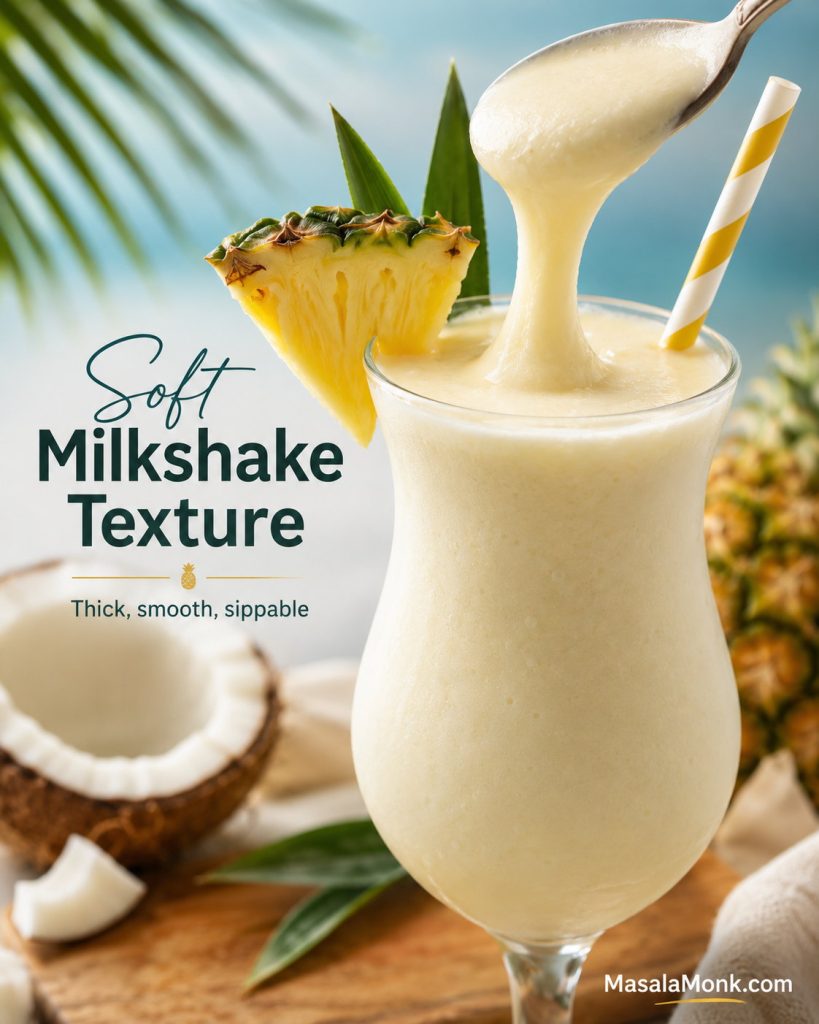
  1. Choose a small stable watermelon or a large watermelon that can sit flat without rolling.
  2. Cut off the top and scoop out the flesh.
  3. Blend and strain the watermelon flesh to make juice.
  4. Mix the margarita in a pitcher using the ratio above.
  5. Pour the chilled drink back into the watermelon shell just before serving.
  6. Finally, add ice only at serving time so it does not become watery.

If the watermelon shell feels unstable, skip the risk and use a pitcher. A good cold pitcher tastes better than a dramatic container that is hard to pour from.

How to Fix a Watermelon Margarita

Watermelon margaritas are easy to fix once you know what went wrong. Most problems come from weak fruit, too much melted ice, not enough lime, or too much sweetener. Use the recipe as a starting point, then make one small adjustment at a time.

Troubleshooting guide showing watery, too sweet, too tart, and flat watermelon margaritas leading to a balanced final drink.
Most watermelon margarita problems can be fixed with one small move. Add lime or salt for dull sweetness, more watermelon for sharpness, and fresh ice when dilution is the real issue.
Problem Why It Happened How to Fix It
Watery The watermelon was weak, the drink sat on ice, or the pitcher was iced too early. Use fresh ice in glasses, keep ice out of the pitcher, and add a little more lime and tequila to sharpen the batch.
Overly sweet The watermelon was very sweet or too much syrup was added. Add fresh lime juice and use a salt or Tajín rim.
Very tart The lime was strong or the watermelon was not sweet enough. Add more watermelon juice first, then a small splash of agave if needed.
Alcohol-heavy The tequila ratio is high for your taste. Add more watermelon juice or a splash of cold sparkling water.
Weak flavor The drink has weak fruit, too much melted ice, or not enough contrast. Add a squeeze of lime, a pinch of salt, or a small splash of tequila depending on whether it tastes flat, dull, or diluted.
Pulpy The watermelon juice was not strained. Strain the juice through a fine-mesh strainer before shaking or batching.
Flat flavor The drink needs contrast. Add lime, a pinch of salt, or a better rim before adding more syrup.

Watermelon Margarita Recipe Card

Recipe card for a fresh watermelon margarita showing one drink, 10 minutes, watermelon juice, tequila, lime, and optional orange liqueur.
This saveable recipe card keeps the core formula easy to repeat. Once the base ratio is familiar, you can adjust the style, make another glass, or scale the drink into a pitcher.

Fresh Watermelon Margarita Recipe on the Rocks

This watermelon margarita recipe is made with fresh watermelon juice, blanco tequila, lime, and a salt or Tajín rim. Serve it on the rocks when you want the cleanest fruit flavor, or scale the same ratio into a pitcher for a small crowd.

Yield1 drink
Prep Time10 minutes
Cook Time0 minutes
Total Time10 minutes

Equipment

  • Blender
  • Fine-mesh strainer, optional but recommended
  • Cocktail shaker or mason jar with lid
  • Jigger or measuring cup
  • Rocks glass or double old fashioned glass
  • Small plate for salt or Tajín rim

Ingredients

  • 1 to 1½ cups diced ripe watermelon, about 150–225 g, or enough to measure 4 oz / 120 ml juice after blending and straining
  • 1½–2 oz / 45–60 ml blanco tequila
  • ¾ oz / 22 ml fresh lime juice
  • ½ oz / 15 ml orange liqueur, optional
  • 0–¼ oz / 0–7 ml agave or simple syrup, only if needed
  • Ice
  • Salt, Tajín, or chili-lime seasoning, for the rim
  • Lime wedge and small watermelon wedge, for garnish

Instructions

  1. Blend the diced watermelon until smooth. Strain through a fine-mesh strainer if you want a smoother drink, then measure 4 oz / 120 ml watermelon juice.
  2. Rub a lime wedge around the rim of a rocks glass. Dip the rim into salt, Tajín, or chili-lime seasoning. Fill the glass with fresh ice.
  3. Add watermelon juice, tequila, lime juice, optional orange liqueur, and optional agave to a cocktail shaker with ice.
  4. Shake for 15–20 seconds, until cold.
  5. Strain over fresh ice in the prepared glass.
  6. Garnish with lime and watermelon. Taste and adjust with more lime, watermelon juice, or a tiny splash of agave if needed.
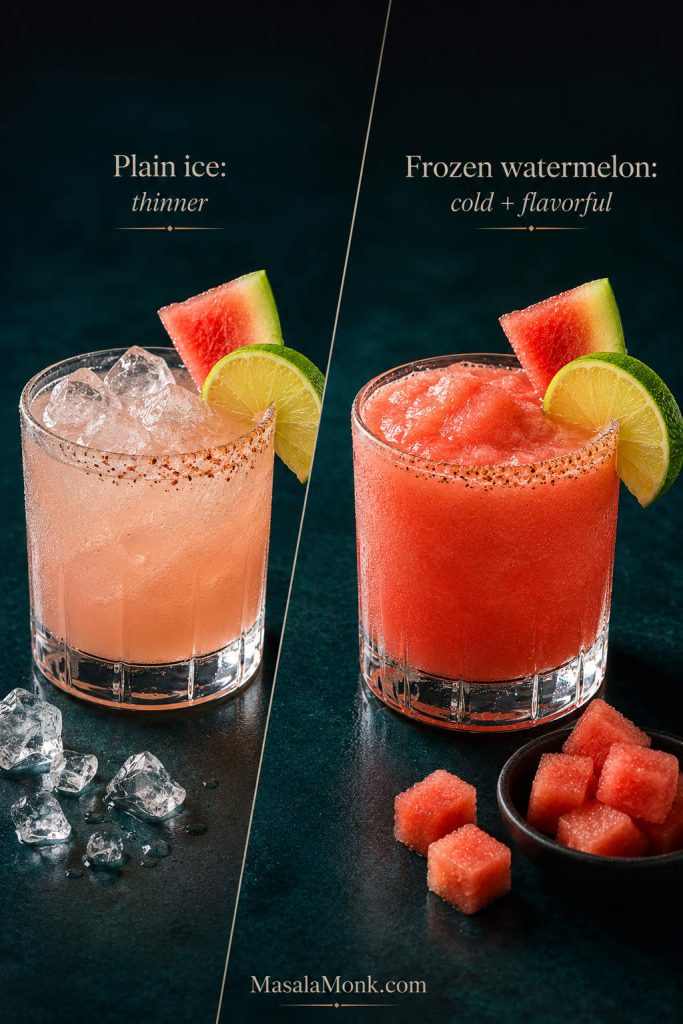
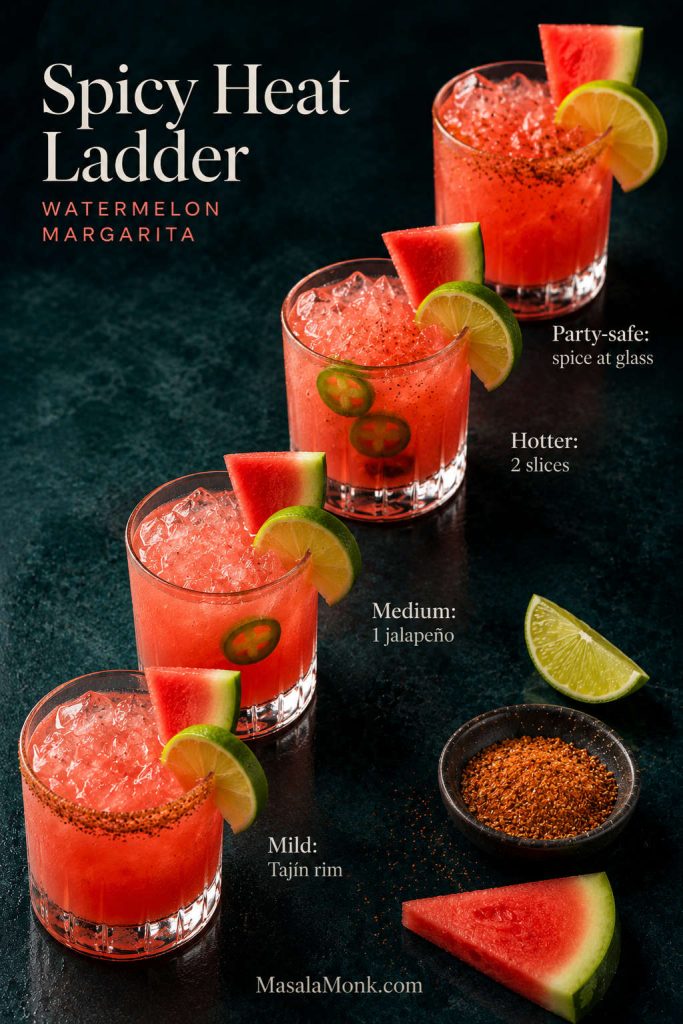
Notes

  • Use 1½ oz tequila for an easier, fruitier drink or 2 oz for a stronger classic margarita.
  • Skip the orange liqueur for a cleaner watermelon margarita without triple sec.
  • Add sweetener only if the watermelon is bland or underripe.
  • For a pitcher, mix the drink up to 6 hours ahead, keep it chilled, stir before serving, and add ice only to the glasses.
  • For a frozen version, use frozen watermelon cubes instead of lots of plain ice.

What to Serve with Watermelon Margaritas

Serve these cold and close to the moment they are made. The drink is especially good with salty snacks, grilled food, tacos, spicy paneer, corn, shrimp, or anything with lime and chili. For a party, keep the pitcher cold, rim the glasses late, and let guests choose salt, Tajín, or a clean rim.

Watermelon margaritas served with tacos, grilled corn, chips, lime wedges, and spicy snacks.
Watermelon margaritas fit naturally with salty, spicy, and grilled foods because lime and salt connect the drink to the plate. Tacos, corn, chips, and chili-lime snacks all make sense here.

FAQs

What is the best tequila for a watermelon margarita?

Blanco or silver tequila is the easiest default because it tastes clean and crisp. It lets the watermelon, lime, and rim stay bright instead of covering the fruit with heavy oak or caramel notes. That is why this watermelon margarita recipe uses blanco tequila as the default.

Does a watermelon margarita need triple sec?

Triple sec is optional. Add ½ oz orange liqueur when you want a rounder, more classic margarita flavor; skip it when the watermelon is ripe and you want a cleaner, fresher tequila-watermelon drink.

Fresh watermelon or bottled watermelon juice: which is better?

Fresh watermelon gives the brightest flavor and color. Bottled watermelon juice is fine for a shortcut, especially when watermelon is out of season, but choose an unsweetened or lightly sweetened one and taste it before adding syrup. Still, the freshest version of this watermelon margarita recipe comes from blending ripe watermelon and measuring the juice after straining.

Should watermelon juice be strained for margaritas?

Straining gives the smoothest drink and is especially useful for pitchers because watermelon pulp settles as the batch sits. Leaving it unstrained is fine for one casual drink when you like a fresh-fruit texture, but strained juice gives the cleanest on-the-rocks margarita.

How do you make a watermelon margarita less watery?

Use ripe watermelon, measure the juice after blending, shake the drink with ice, then strain it over fresh ice. For pitchers, keep ice out of the batch until serving. Melted ice is the fastest way to turn a fresh watermelon margarita watery.

How far ahead can you make watermelon margaritas?

Mix the watermelon juice, tequila, lime, and optional orange liqueur up to 6 hours ahead. Keep the batch chilled, stir again before serving because watermelon juice settles, and pour over fresh ice.

What rim tastes best with watermelon margaritas?

Salt is the classic choice, Tajín or chili-lime seasoning is the most watermelon-friendly choice, and chili-salt is best if you want a savory spicy edge. A half-rim is ideal for guests because it gives control over each sip.

How do you make a spicy watermelon margarita?

Keep the drink itself clean for mild heat by using a Tajín or chili-lime rim. Medium heat comes from shaking the drink with one thin jalapeño slice. In a pitcher, jalapeño syrup is more predictable than loose pepper slices because the heat spreads evenly.

How do you make a frozen watermelon margarita?

Freeze diced watermelon for 4–6 hours or overnight, then blend the frozen cubes with tequila, lime, optional orange liqueur, and a small amount of sweetener if needed. Use frozen watermelon for body instead of adding lots of ice.

What goes well with watermelon margaritas?

Watermelon margaritas work well with salty, spicy, and grilled food: chips and salsa, tacos, grilled corn, shrimp, paneer tikka, spicy potatoes, or anything with lime and chili. If the mint garnish is your favorite part, this mojito recipe makes mint the main character instead of just a finishing note.