Posted on Leave a comment

Pina Colada Recipe: Frozen, Virgin, Malibu & Mix Tips

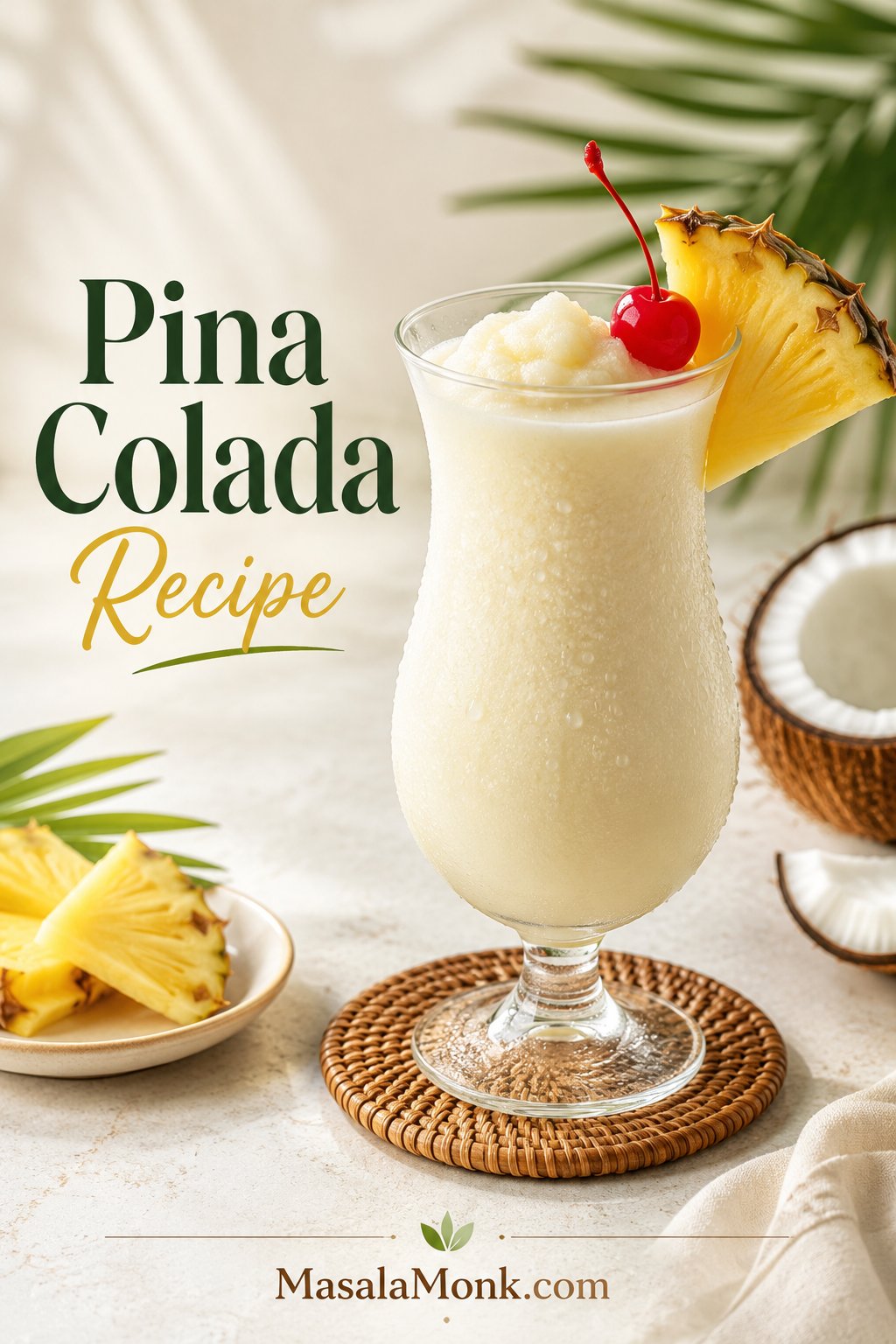
Frozen pina colada in a hurricane glass with a pineapple wedge, cherry garnish, coconut pieces, and MasalaMonk.com footer branding.

Most disappointing piña coladas fail for the same few reasons: the drink turns thin, tastes like straight sugar, or the alcohol-free version feels empty once the rum is gone. A great piña colada recipe — often searched as a pina colada recipe — solves that with the right coconut base, enough pineapple, the right chill, and a small hit of lime.

The first sip should taste cold before it tastes sweet: pineapple first, coconut next, rum in the background, and a clean finish that makes the glass feel refreshing instead of heavy.

Start with the frozen blender version, then use the same balance to make it shaken, virgin, Malibu-style, lighter with coconut milk, mixed ahead, or batched for a party. The promise is simple: a piña colada that stays smooth, avoids syrupy sweetness, and tells you exactly which coconut product belongs in the glass.

Quick Answer: The Best Pina Colada Recipe Ratio

For one frozen piña colada, use 2 oz white rum, 3 oz pineapple juice, 2 oz cream of coconut, ½ oz fresh lime juice, and 1 to 1½ cups ice. For a thicker, fruitier drink, add ½ cup frozen pineapple.

Frozen, shaken, or alcohol-free shortcuts

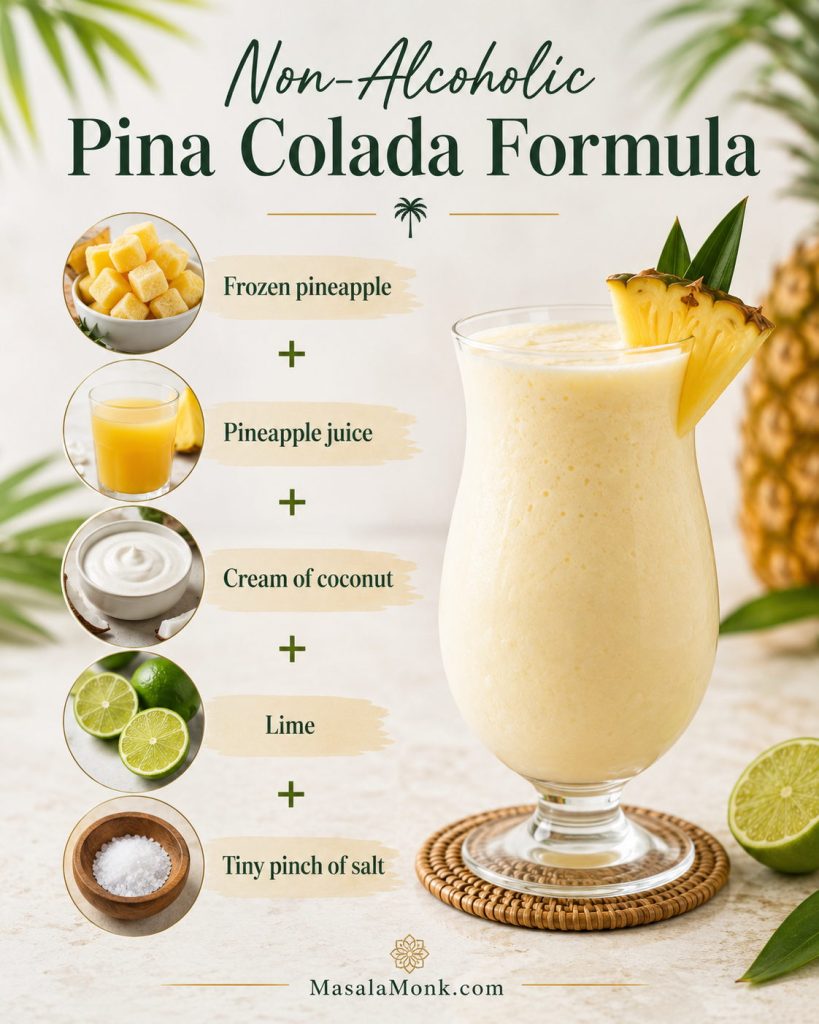
No blender? Shake 2 oz white rum, 2 oz pineapple juice, 1½ oz cream of coconut, and ½ oz lime juice, then strain into a fresh glass over fresh ice. No alcohol? Blend frozen pineapple, pineapple juice, cream of coconut, lime, and a tiny pinch of salt so the mocktail still has depth.

Need a different route? Go straight to the on-the-rocks version, the virgin pina colada, or the pina colada mix section.

The classic flavor is simple — rum, pineapple, coconut — but the texture depends on measurement. Cream of coconut gives the familiar sweet body, while lime keeps the finish from turning sticky.

Measured ratio for one drink

IngredientAmount for 1 drinkJob in the glass
White rum2 oz / 60 mlClean cocktail base that lets the fruit lead.
Pineapple juice3 oz / 90 mlMain tropical flavor and blending liquid.
Cream of coconut2 oz / 60 mlSweet coconut body and classic richness.
Fresh lime juice½ oz / 15 mlClean finish and better balance.
Ice1–1½ cups / 140–210 gCold, frosty texture.
Frozen pineapple½ cup / 70–75 g, optionalFruitier thickness without dulling the flavor.

Once the base ratio makes sense, use the version guide to pick your path or the success checks to fine-tune the glass.
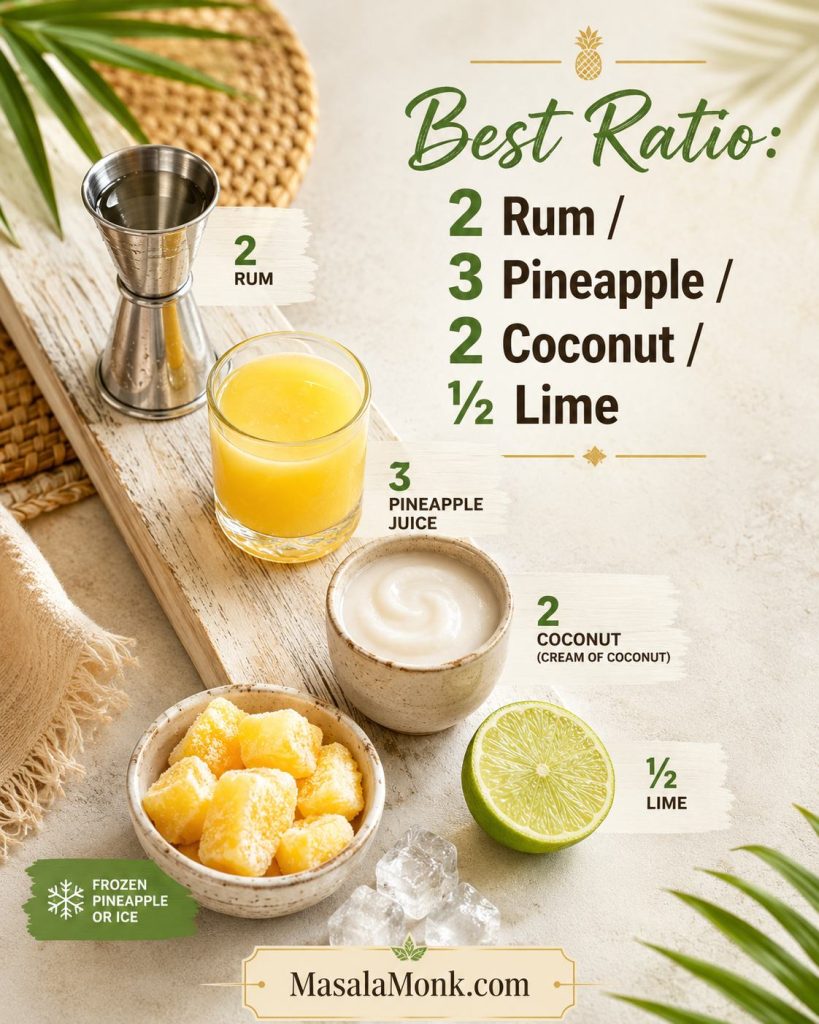
Measured pina colada ingredients showing rum, pineapple juice, cream of coconut, lime, and frozen fruit with a best ratio guide.
The best pina colada ratio gives you a reliable base before you start adjusting. Once rum, pineapple, coconut, and lime are balanced, texture fixes become much easier.

Best first batch: measure the coconut base and frozen ingredients once. After that, you can adjust by feel without turning the drink thin, syrupy, or heavy.

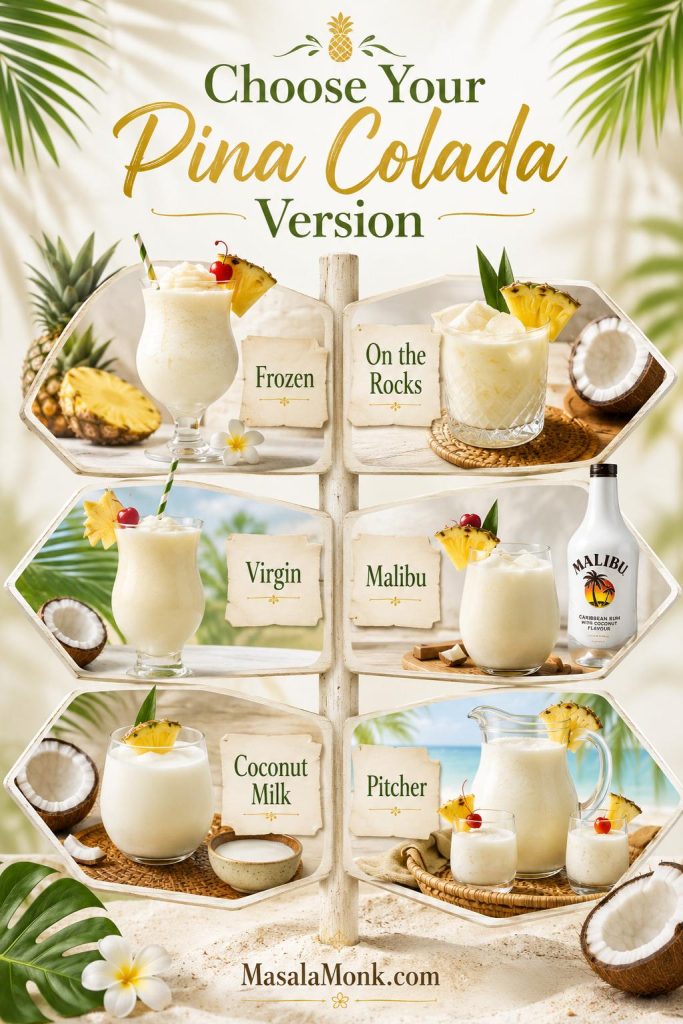
Pina Colada at a Glance: Choose Your Version

The best version depends on the glass you want: thick and vacation-style, lighter and shaken, alcohol-free but still complete, or party-ready without turning watery. Start with the classic frozen version once, then use this guide to choose your path.

VersionBest forTextureKey adjustment
Frozen Pina Colada RecipeClassic resort-style drinkFrosty, smooth, sippableUse the base ratio and optional frozen fruit.
Pina Colada on the RocksNo blender, lighter cocktailChilled and frothyShake hard; serve right away.
Virgin Pina Colada MocktailNon-drinkers and family-friendly glassesCreamy and fruit-forwardUse lime, salt, and pineapple for depth.
Malibu Pina Colada RecipeSweeter coconut-rum flavorSoft and coconut-forwardUse less cream of coconut.
Pina Colada with Coconut MilkLighter, less dessert-like drinkThinner and fresherAdd sweetener only if needed.
Pina Colada PitcherPartiesDepends on serving methodChill the base; finish at serving.
Six-panel pina colada version guide showing frozen, on the rocks, virgin, Malibu, coconut milk, and pitcher options.
The right pina colada version depends on the moment. Choose frozen for plush texture, on the rocks for no-blender ease, virgin for alcohol-free depth, or pitcher-style when you are serving more than one glass.

Why This Pina Colada Ratio Works

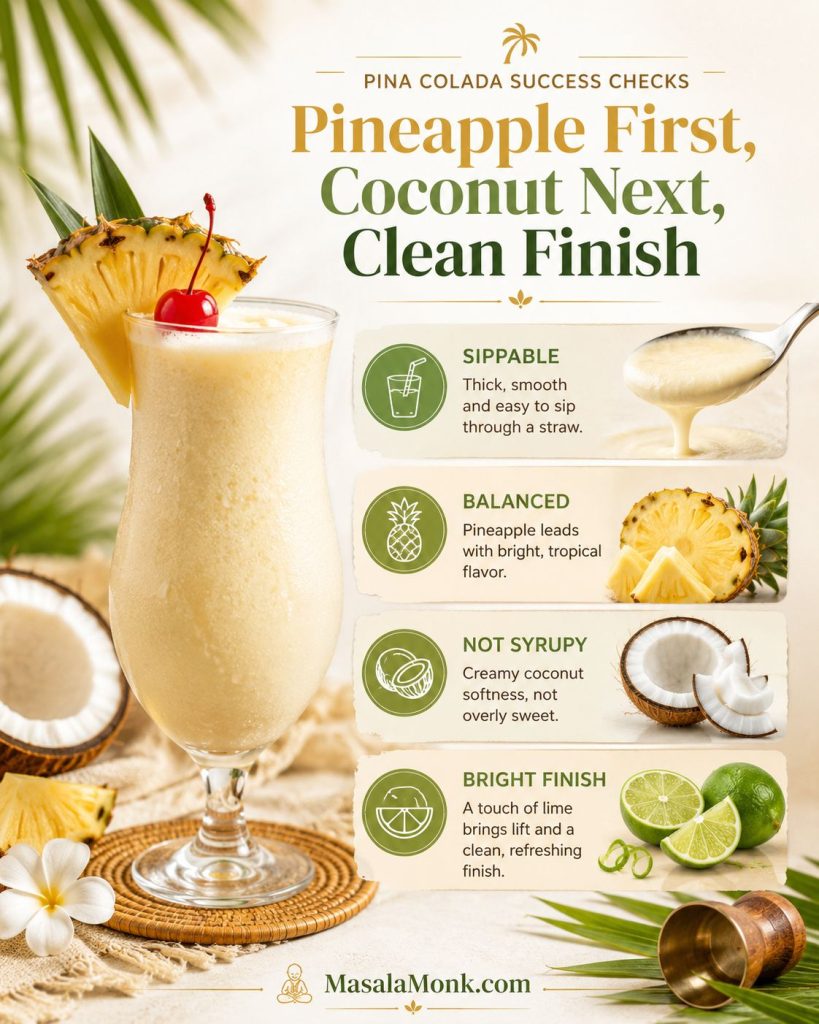
This recipe is built around three checks: the drink should pour thick but sip easily, taste pineapple-first, and finish clean instead of sticky. That is the difference between a lush piña colada and a glass of sweet melted slush.

Success checkWhat you should noticeAdjustment
TextureFrosty pour, but still sippable through a straw.Too heavy? Add a splash of juice. Too thin? Add frozen fruit.
Flavor orderPineapple first, coconut second, rum in the background.If rum dominates, add a little more pineapple or coconut base.
SweetnessSoft and tropical, not candy-like.Use less cream of coconut next time, or add a small squeeze of lime now.
FinishCool, clean, and refreshing.Flat drinks need acid or a tiny pinch of salt, not more sugar.
Pina colada success-check graphic with pineapple first, coconut next, clean finish, and cues for sippable balanced texture.
Use this as the final taste test before serving. If the drink feels heavy, sharp, or candy-sweet, adjust one small thing instead of rebuilding the whole blender jar.

What success looks like: a good frozen pina colada should move like a soft milkshake, not crushed ice in juice. It should feel lush for the first sip and still clean by the last.

Pina Colada Recipe Card

Classic Frozen Pina Colada Recipe

This frozen pina colada is pineapple-forward, coconut-rich, cold, smooth, and balanced with fresh lime. It makes one generous drink or two smaller cocktail glasses.

Prep Time
5 minutes
Total Time
5 minutes
Yield
1 large or 2 small drinks
Method
Blended / frozen

Equipment

  • Blender
  • Jigger, measuring cup, or kitchen scale
  • Hurricane glass, highball, or tall glass

Ingredients

  • 2 oz / 60 ml white rum
  • 3 oz / 90 ml pineapple juice, chilled if possible
  • 2 oz / 60 ml cream of coconut, shaken or stirred well before measuring
  • ½ oz / 15 ml fresh lime juice
  • 1 cup / about 140 g ice, plus more only if needed
  • ½ cup / about 70–75 g frozen pineapple chunks, optional but recommended
  • Pineapple wedge and maraschino cherry, optional

Method

  1. Add the pineapple juice, white rum, cream of coconut, and lime juice to the blender.
  2. Add the frozen pineapple, if using, then add the ice.
  3. Blend for 20–30 seconds, just until smooth and frosty.
  4. Check before pouring: it should look thick but still sip easily through a straw.
  5. Too thick? Blend in 1 tablespoon pineapple juice. Too thin? Add a little frozen pineapple and blend briefly.
  6. Pour into a chilled glass, garnish if you like, and serve immediately.

Success Cue

Before serving, check three things: the drink should sip easily, taste pineapple-first, and finish clean rather than sticky. Thin drinks need frozen fruit; heavy drinks need pineapple juice; overly sweet drinks need lime.

Recipe Notes

  • Prefer it less sweet? Use 1½ oz cream of coconut.
  • Want a lighter cocktail? Use 1½ oz rum.
  • Want more rum warmth? Use up to 2½ oz rum and keep the finish bright.
  • Making it alcohol-free? Use the mocktail formula below instead of simply removing the rum.
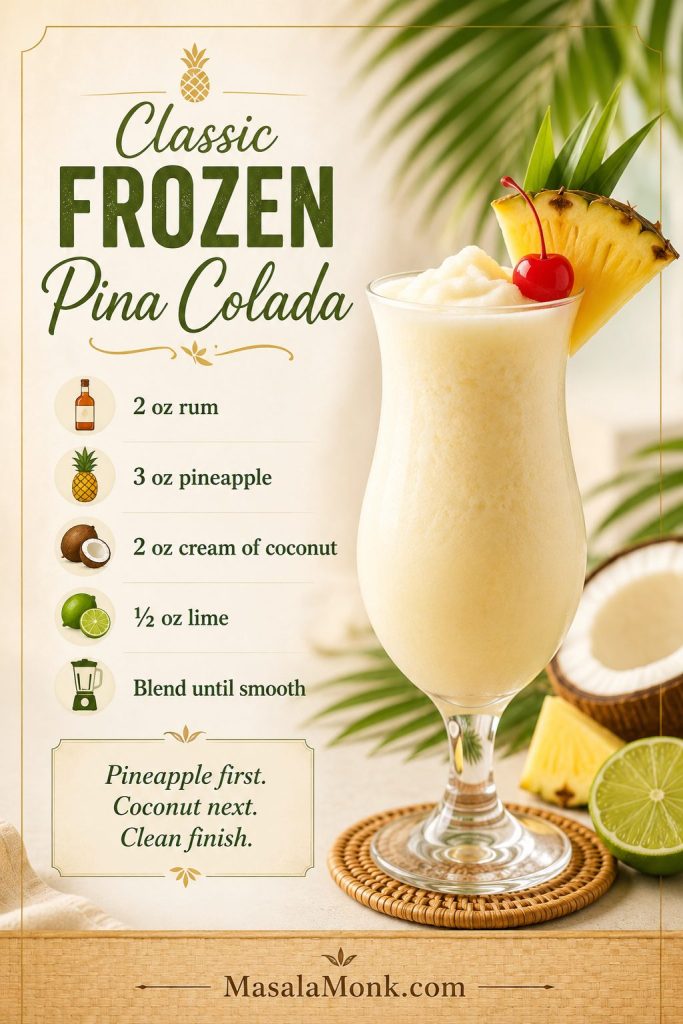
Classic frozen pina colada recipe card with rum, pineapple, cream of coconut, lime, and blend-until-smooth instructions.
This frozen pina colada card is the quick-save version of the recipe. Keep the base measured, then use the texture cue to decide whether the drink needs more fruit or more flow.

What Is a Pina Colada?

A piña colada is a tropical cocktail made with rum, pineapple, coconut, and a cold blended or shaken texture. It is strongly associated with Puerto Rico, but home versions vary because shoppers often find cream of coconut, coconut cream, coconut milk, and coconut water sitting near each other.

Classic formulas are simple; the home-cocktail confusion usually starts in the coconut aisle. Cream of coconut gives the familiar sweet resort-style body, coconut cream creates a richer but less sweet path, and coconut milk makes a lighter glass. The biggest mistake usually happens before the blender starts: choosing the wrong can.

Pina Colada Ingredients

The ingredient list is short, so each choice shows up clearly in the glass. Use the classic route when you want a sweet, creamy vacation-style drink; use the lighter swaps only when you actually want a fresher, less dessert-like result.

If the coconut aisle is the confusing part, jump to the cream of coconut vs coconut cream guide before you start blending.
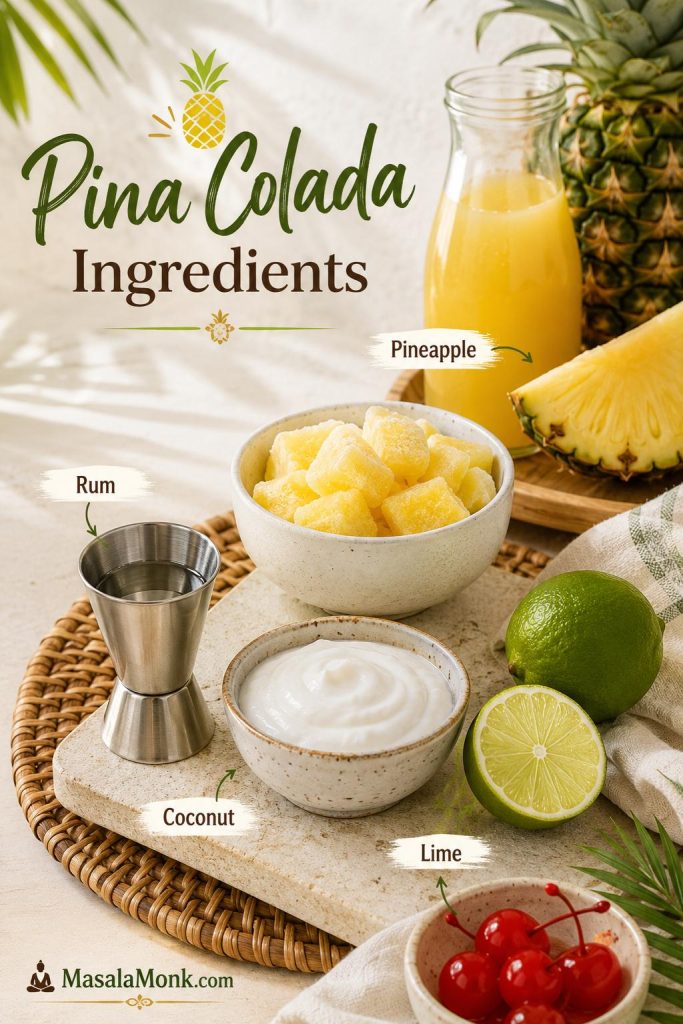
Pina colada ingredients arranged with rum, pineapple juice, cream of coconut, lime, frozen pineapple, pineapple garnish, and cherry.
A short ingredient list leaves less room to hide mistakes. For the best pina colada, use pineapple for lift, cream of coconut for structure, lime for contrast, and rum as the background note.

White rum

White rum is the best default because it keeps the drink clean, sunny, and pineapple-forward. Coconut rum is softer and sweeter. Dark or aged rum adds warmth, especially as a small float.

Pineapple

Use 100% pineapple juice for the smooth base. Fresh juice tastes vivid but varies by fruit; canned juice is more consistent. Avoid pineapple juice cocktail unless you are prepared to reduce sweetness elsewhere.

Frozen pineapple chunks are the easiest upgrade for a blender version because they add structure and real fruit flavor. Drained canned chunks can work, but syrup-packed fruit may push the drink too sweet.

Pineapple juice vs frozen pineapple

Use pineapple juice when the blender needs flow and frozen pineapple when the drink needs body. Together, they create a frozen pina colada that tastes like fruit rather than diluted ice.
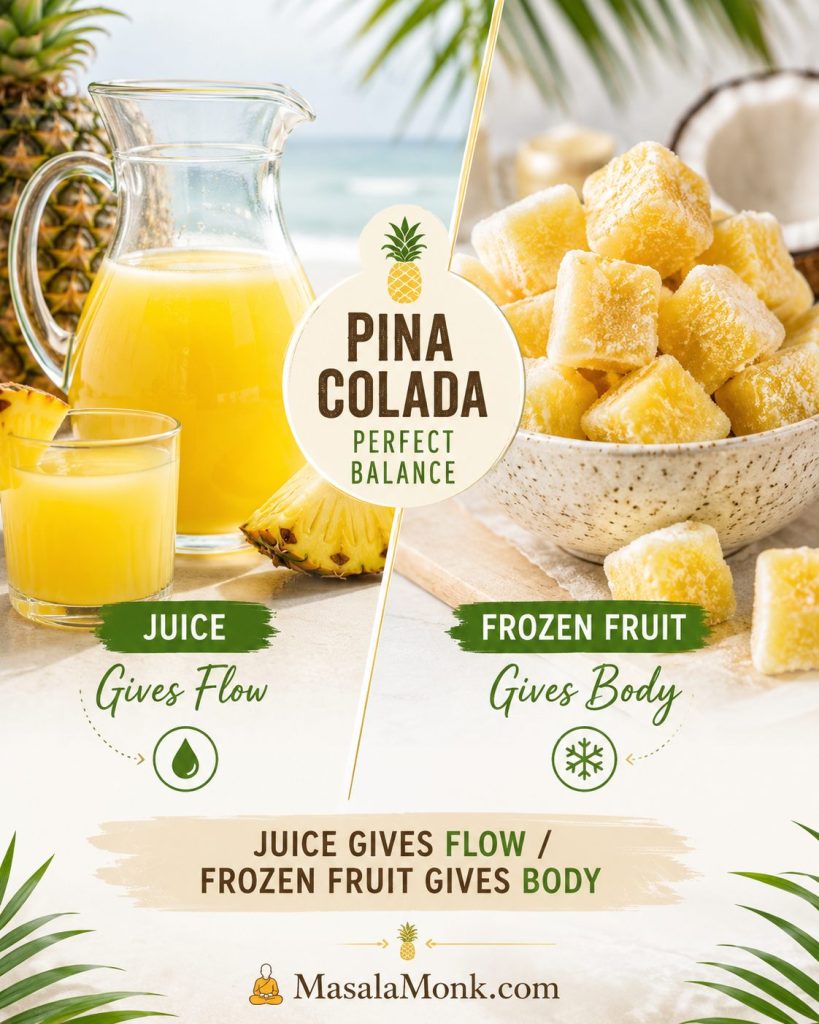
Split graphic comparing pineapple juice for flow with frozen pineapple chunks for body in a pina colada.
Pineapple juice and frozen pineapple solve different problems. Juice keeps the drink pourable, while frozen fruit adds body and helps prevent a watery blender drink.

Cream of coconut

Cream of coconut is sweetened, thick, and syrupy. It gives the familiar body most people expect from a classic pina colada, so shake or stir the can well before measuring.

If it is too thick to pour, warm the closed container in a bowl of warm water for a few minutes, then shake again. Brands vary, so taste before making big adjustments.

Fresh lime juice

Lime is the small polish move. It is not required in every traditional formula, but it keeps the coconut from tasting heavy and makes the pineapple feel brighter.

Frozen texture ingredients

For a frozen drink, measured ice gives chill while frozen fruit gives body. Too much plain ice can dull the flavor, so use pineapple chunks when you want a thicker drink that still tastes tropical.

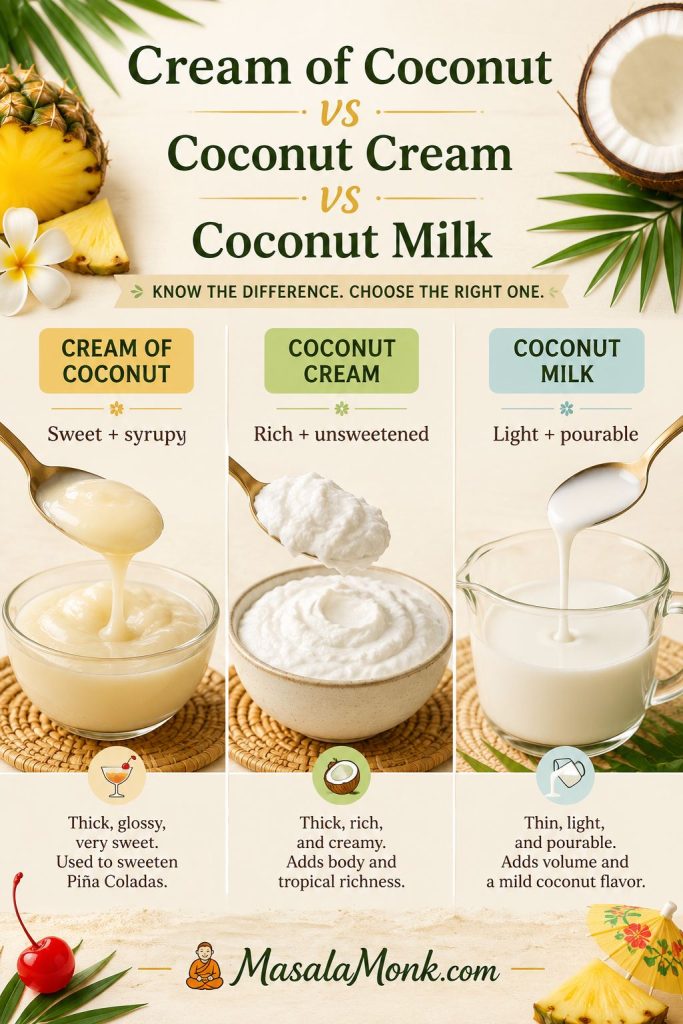
Cream of Coconut vs Coconut Cream vs Coconut Milk

This is the aisle where many homemade piña coladas are won or lost. The names sound close, but the products do not behave the same way. If you have ever stood in front of coconut milk, coconut cream, and cream of coconut wondering which one the recipe actually means, this is the part that saves the drink.

ProductSweetened?TextureBest use in a pina colada
Sweetened cream of coconutYesThick, syrupy, richClassic sweet, creamy version.
Unsweetened coconut creamUsually noThick and richLess sweet version when paired with simple syrup or agave.
Full-fat coconut milkUsually noThinner and fluidLighter drink with a fresher, less dessert-like finish.
Coconut waterNoThin and refreshingSkinny or hydrating variation, not a classic creamy one.
Homemade coconut syrupYesAdjustableFallback when bottled cream of coconut is not available.
Comparison graphic showing cream of coconut, coconut cream, and coconut milk with texture and sweetness differences.
Cream of coconut, coconut cream, and coconut milk do not behave the same way. Choosing the right one is one of the fastest ways to control sweetness, body, and classic pina colada texture.

Already have the right coconut base? Move to the frozen method, the coconut milk version, or the fix guide if your drink is too thin, too sweet, or not creamy enough.

For the safest classic choice, use cream of coconut. A less-sweet modern route starts with coconut cream plus sweetener. If you want a lighter glass, use full-fat coconut milk with extra pineapple for body.

What cream of coconut should look like

Look for a thick, glossy pour. That texture is what gives the classic pina colada its familiar body without needing to overdo the ice.
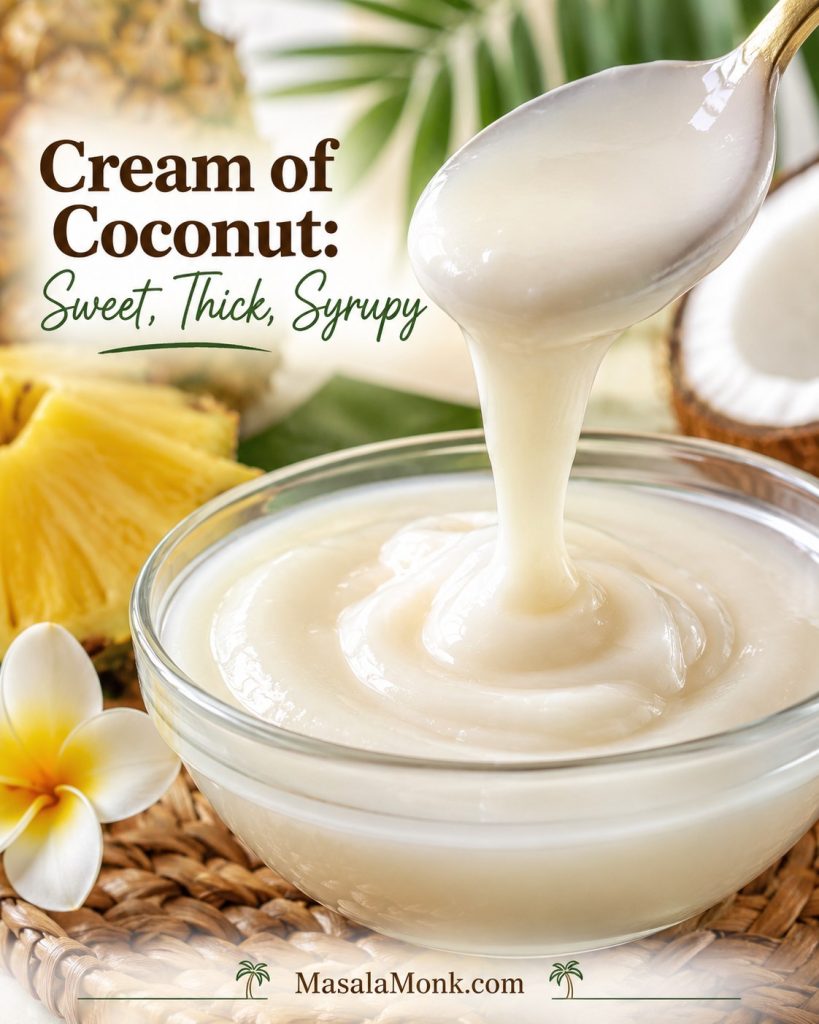
Close-up of thick cream of coconut being poured slowly, showing a glossy syrupy texture.
Cream of coconut should move slowly, almost like a glossy syrup. If your coconut ingredient pours thin like milk, the finished pina colada will usually taste lighter and less classic.

Quick homemade fallback: gently warm 1 cup full-fat coconut milk or coconut cream with ¾ cup sugar and a small pinch of salt, stirring until dissolved. Cool, refrigerate in a clean jar, and use within about 1 week. Shake before measuring.

For more detail on the coconut-aisle confusion, Epicurious has a helpful guide to cream of coconut, coconut cream, and coconut milk.

If the coconut-water direction sounds more refreshing than creamy, our coconut water cocktails guide has more long, bright drinks built around coconut water, lime, and ice.

Equipment and Cold Control

A piña colada has no cooking temperature, but it does have a temperature problem: once it warms up, the tropical flavor turns dull and the texture collapses.

  • Use a blender for the frozen version and a shaker or clean jar for the on-the-rocks version.
  • Chill the juice when possible so the drink starts cold.
  • Add liquids first so the blender catches before the frozen ingredients settle around the blades.
  • Blend briefly, usually 20–30 seconds, then stop once smooth.
  • For pitchers, chill the base ahead and finish each round right before serving.
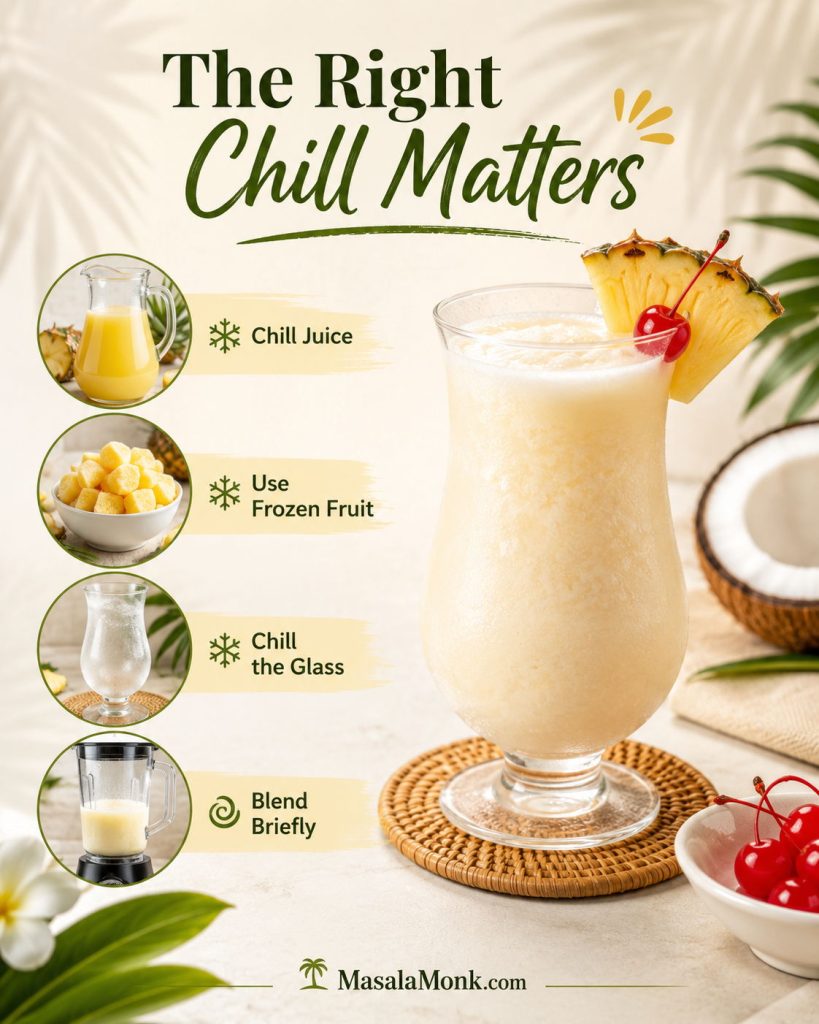
Cold control guide for pina colada showing chilled juice, frozen fruit, a chilled glass, and brief blending tips.
Cold control matters more than simply adding more ice. Chilled juice, frozen fruit, a cold glass, and brief blending help a creamy pina colada stay smooth instead of melting too quickly.

These small moves protect the drink’s first-sip feeling: frosty, lush, and refreshing instead of loose and tired.

Avoid these common mistakes: do not use unsweetened coconut milk as a direct cream-of-coconut swap, do not over-blend after the drink turns smooth, and do not fix a flat mocktail with more sugar. Use acid and a tiny pinch of salt instead.

How to Make a Frozen Pina Colada

A frozen pina colada should pour thick, then relax slightly in the glass. It should not scoop like sorbet or run like juice.
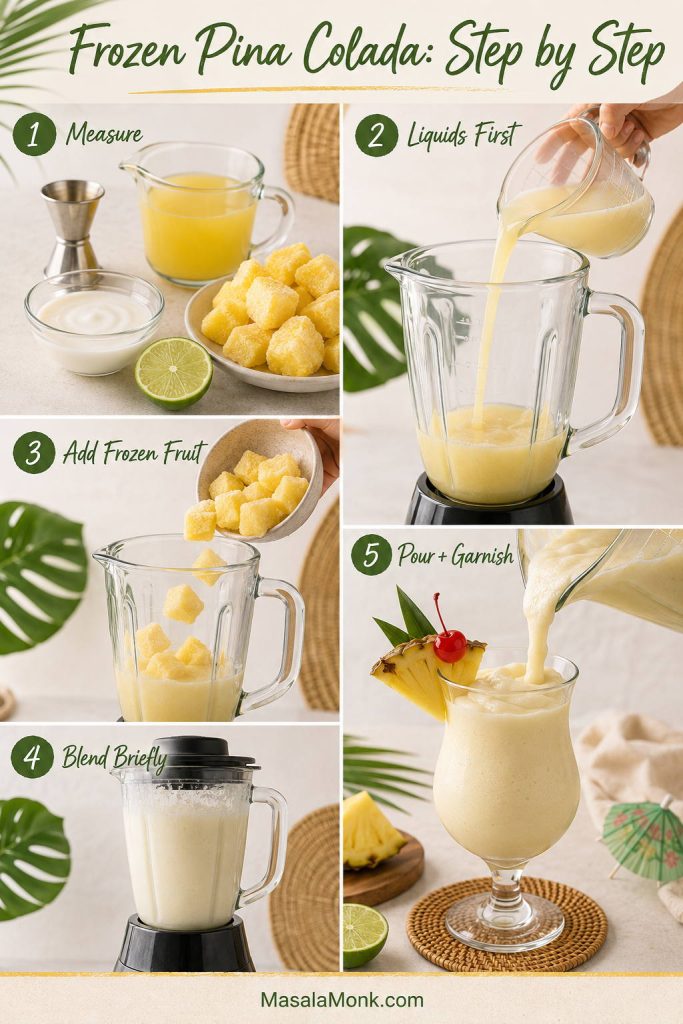
Step-by-step frozen pina colada guide showing measuring, adding liquids, adding frozen fruit, blending briefly, and pouring to garnish.
The frozen method works best when the blender gets help from the start. Add liquids first, then frozen fruit, so the drink blends quickly without losing its thick, sippable texture.

Add pineapple juice, rum, cream of coconut, and lime to the blender first. Add frozen pineapple and ice last so the blades can catch and move smoothly.
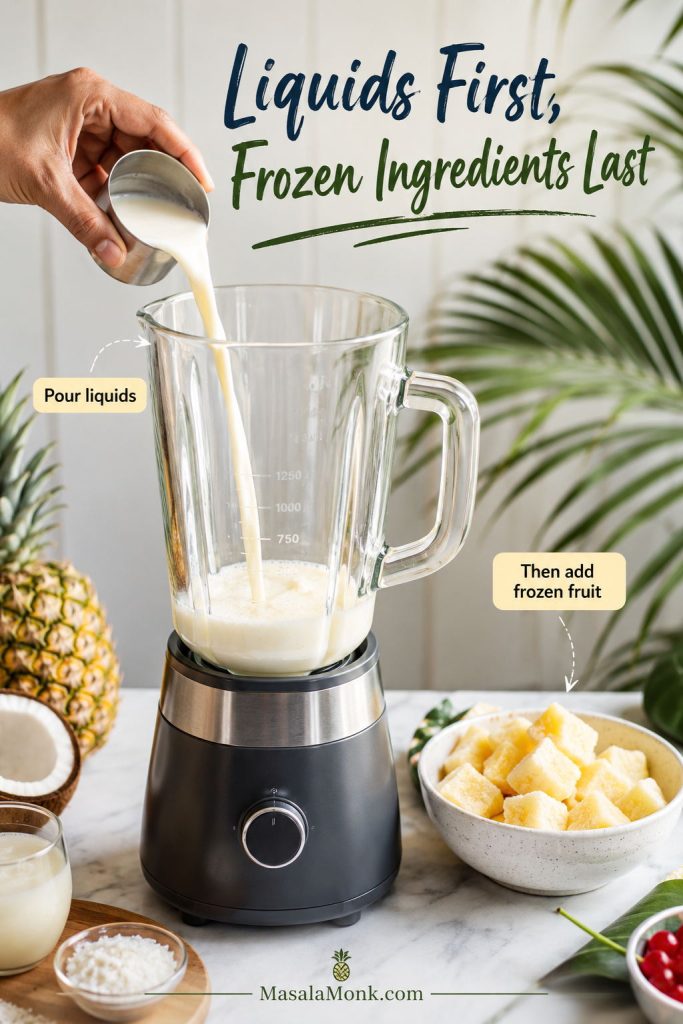
Blender jar with liquid being poured in first and frozen pineapple waiting nearby for a pina colada blender order guide.
Blender order can change the final texture. Liquids first help the blades move freely; after that, frozen pineapple can thicken the pina colada without turning it into a frozen block.

Blend for 20–30 seconds, just until smooth. If the blender struggles, start with less frozen material, blend the liquid and fruit, then add the rest gradually.

Texture target: thick enough to look lush, loose enough to sip. Too heavy? Add pineapple juice. Too thin? Add frozen pineapple. Too sweet? Add lime.

Frozen pina colada texture target

Use this texture cue before you pour. A frozen pina colada should look plush, but it should still move through a straw without effort.
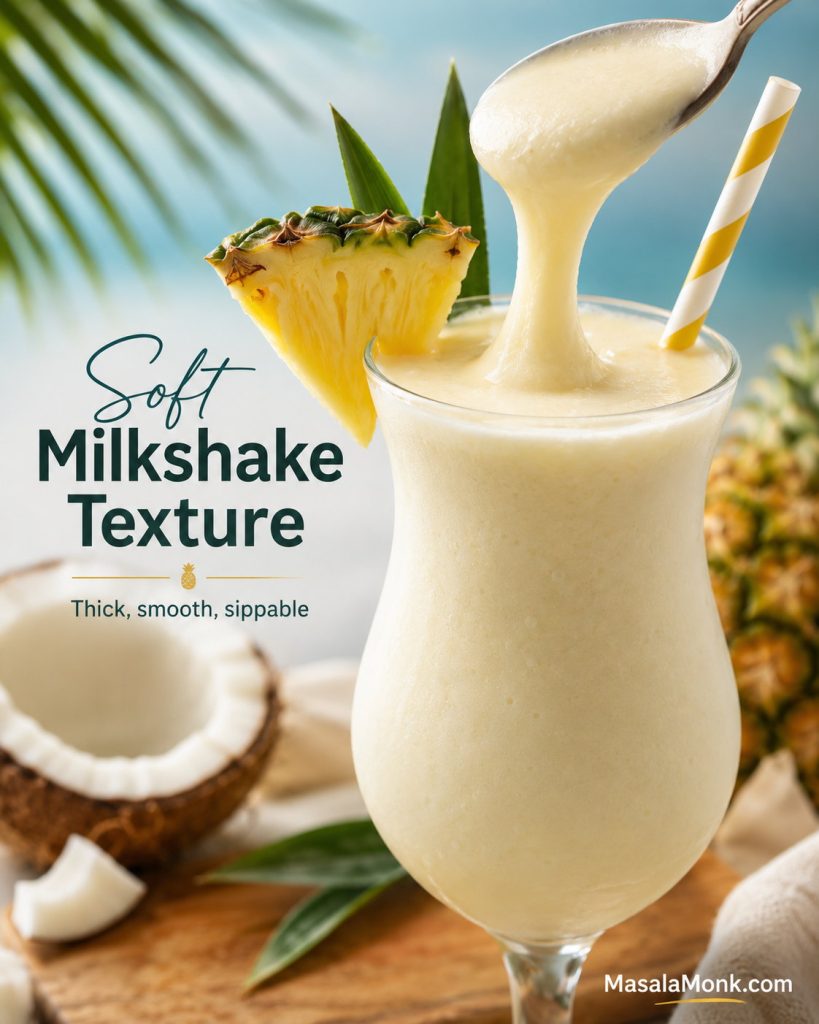
Finished frozen pina colada with thick, smooth, sippable texture shown close up with garnish and MasalaMonk.com footer.
The ideal frozen pina colada should move like a soft milkshake. If it scoops like sorbet, loosen it; if it runs like juice, add more frozen pineapple.

Too thin, just right, or too heavy?

For quick rescue, compare your drink with this texture guide or jump to the full pina colada troubleshooting section.
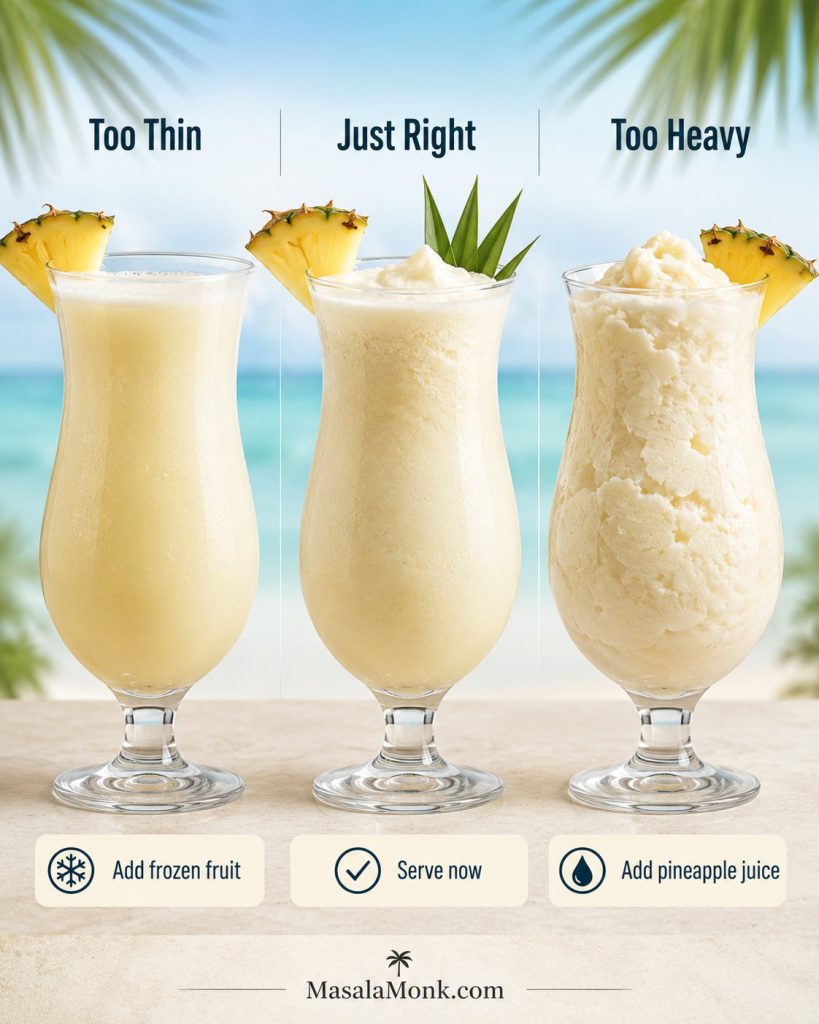
Three-part pina colada texture comparison showing too thin, just right, and too heavy with quick fix cues.
Texture fixes work better when you identify the problem first. A thin pina colada needs more frozen body, while a heavy one needs pineapple juice to bring back flow.

The same frozen-fruit logic is useful in a frozen strawberry daiquiri: fruit gives body, lime keeps it bright, and the blender stays on your side instead of against you.

If you want to compare this with a bartender-style baseline, the International Bartenders Association lists a simple white-rum, pineapple, and coconut piña colada formula.

How to Make a Pina Colada on the Rocks

A pina colada on the rocks is the cleaner, faster version: same pineapple-coconut flavor, but lighter on the palate and less dessert-like than the frozen drink. Choose it when you want a chilled cocktail that still feels tropical without turning into a smoothie.
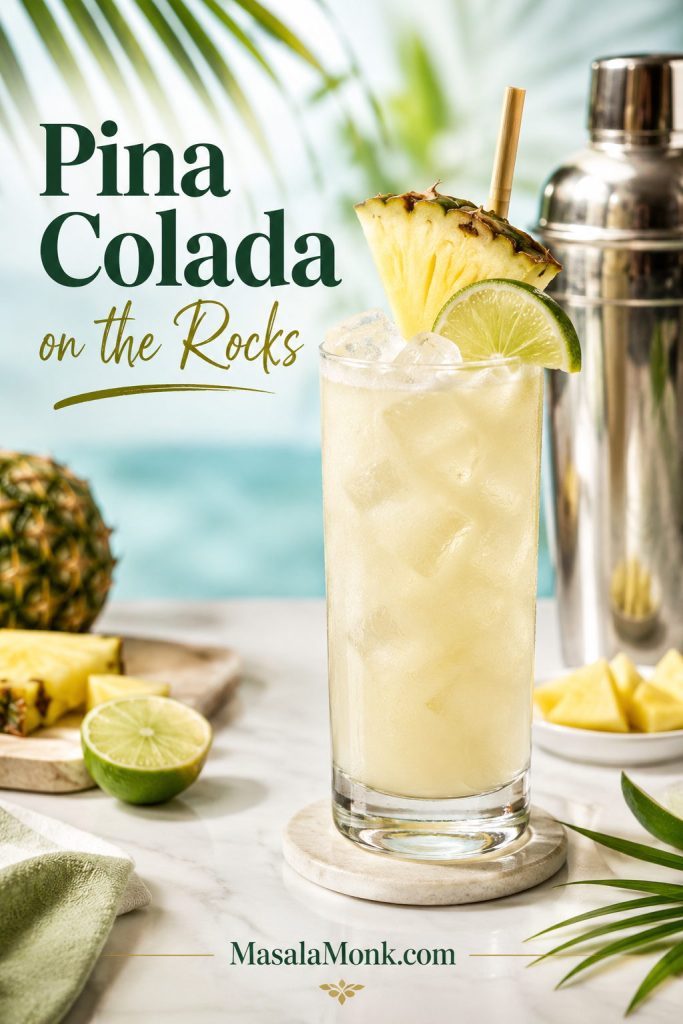
Pina colada on the rocks in a tall glass with fresh ice, pineapple garnish, lime, and cocktail shaker in the background.
A pina colada on the rocks is the best route when you want the flavor without the blender. Shake it hard, strain over fresh ice, and the drink stays lighter while still tasting tropical.
IngredientAmount for 1 drink
White rum2 oz / 60 ml
Pineapple juice2 oz / 60 ml
Cream of coconut1½ oz / 45 ml
Fresh lime juice½ oz / 15 ml
Fresh iceFor shaking and serving

Add the rum, pineapple juice, cream of coconut, and lime juice to a cocktail shaker. Shake hard for 12–20 seconds, until the outside feels cold and the drink looks lightly frothy. Strain into a fresh glass over fresh ice.
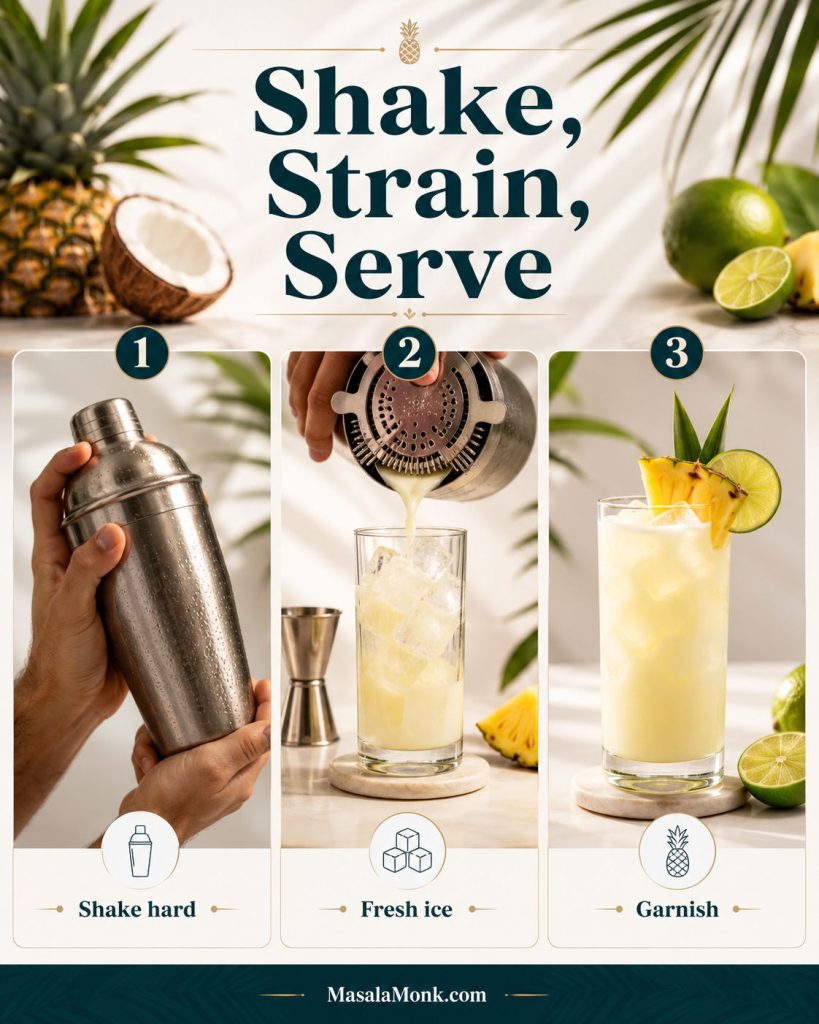
Three-step on-the-rocks pina colada guide showing shake hard, strain over fresh ice, and garnish.
For a no-blender pina colada, fresh ice is not just decoration. It keeps the shaken drink crisp, cold, and clean instead of letting it turn loose in the glass.

The shorter ratio matters because this version has no blender full of frozen fruit to soften the drink. It should land silky and cold, with coconut on the edges rather than a thick milkshake texture.

No cocktail shaker? Use a clean jar with a tight lid. No strainer? Pour carefully or use a small sieve. If your coconut base is very thick, stir it with the pineapple juice first so it shakes evenly.

If you like the cleaner shaken style, a classic daiquiri is the leaner rum-lime cousin: no coconut, no blender, just balance.

Virgin Pina Colada / Non-Alcoholic Pina Colada Mocktail

For one generous virgin pina colada, blend 1 cup frozen pineapple, ½ cup pineapple juice, ⅓–½ cup cream of coconut, 1 tablespoon lime juice, ½–1 cup ice, and a tiny pinch of salt. Use the smaller amount of coconut for a less sweet adult mocktail and the larger amount for a creamier dessert-style drink.
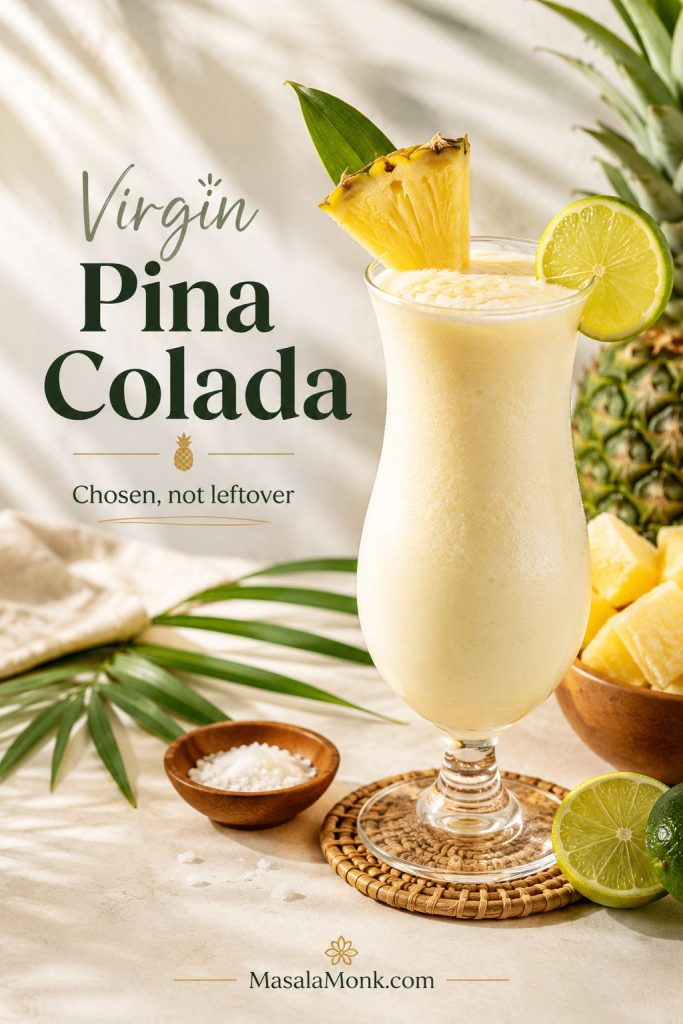
Virgin pina colada mocktail in an elegant glass with pineapple and cherry garnish, lime, and tropical styling.
A virgin pina colada should feel complete, not like rum was simply removed. Frozen pineapple, lime, and a tiny salt cue help the mocktail keep depth and brightness.

A good non-alcoholic pina colada should not taste like the rum was simply removed. Lime, frozen fruit, and a tiny pinch of salt replace some of the bite and depth, while the coconut keeps the drink smooth. The mocktail should still feel like a drink someone chose, not the version left after the rum was removed.

Non-alcoholic pina colada formula

IngredientClassic sweet mocktailLess sweet mocktail
Frozen pineapple1 cup / about 140 g1 cup / about 140 g
Pineapple juice½ cup / 120 ml½ cup / 120 ml
Cream of coconut½ cup / 120 ml⅓ cup / 80 ml
Coconut milk or coconut waterOptional splash2–3 tablespoons
Fresh lime juice1 tablespoon / 15 ml1 tablespoon / 15 ml
Ice½–1 cup, as needed½–1 cup, as needed
Optional depthTiny pinch of salt, 2–3 drops vanilla, or non-alcoholic rumTiny pinch of salt, 2–3 drops vanilla, or non-alcoholic rum
Non-alcoholic pina colada formula graphic showing frozen pineapple, pineapple juice, cream of coconut, lime, and a tiny pinch of salt.
The non-alcoholic pina colada formula needs more than pineapple and coconut. A little lime and a tiny pinch of salt make the alcohol-free version taste fuller without making it salty.

Serving both versions? Use the pitcher section to make a shared pineapple-coconut base, then add rum only to the glasses that need it.

Blend until smooth, then taste before serving. Too sweet? Add lime. Dull? Add the smallest pinch of salt. Too thick? Loosen it with pineapple juice, coconut milk, or coconut water.

For a more grown-up mocktail, add a few drops of vanilla or a splash of non-alcoholic rum. If you are also serving lighter alcohol-free drinks, our low-sugar mocktails guide has more ideas.

Classic vs virgin pina colada

Use the same care with garnish, texture, and balance for both versions. That is what makes the non-alcoholic glass feel intentional instead of secondary.
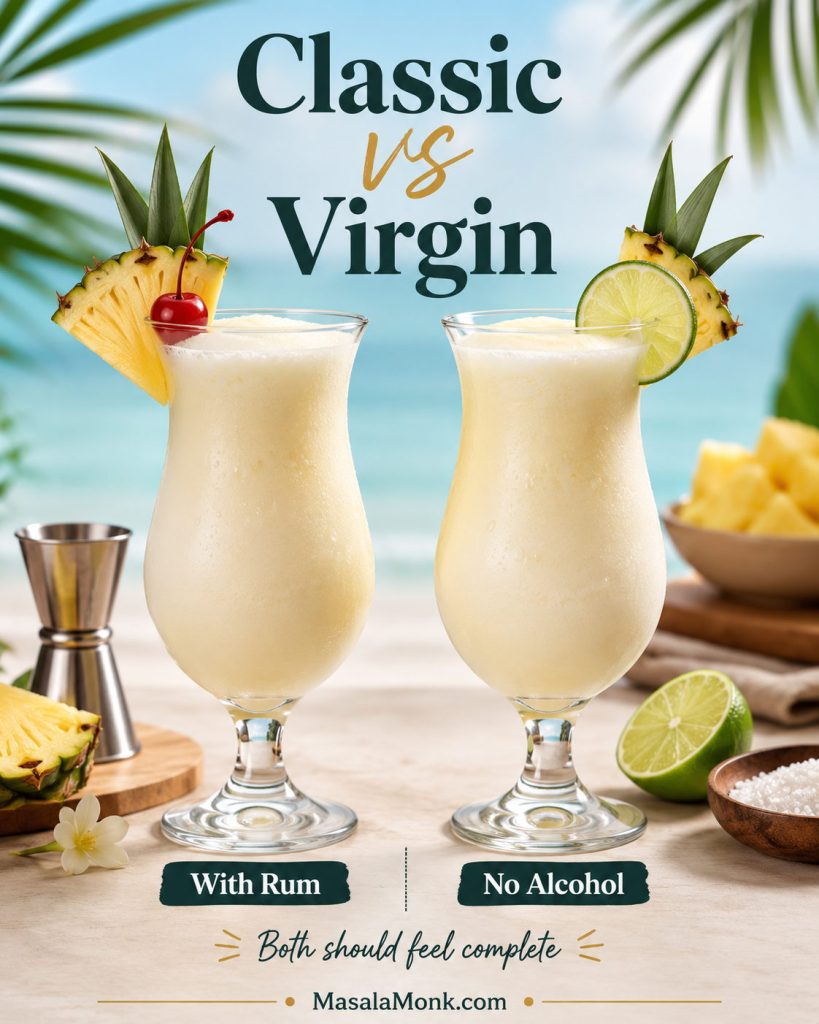
Side-by-side classic and virgin pina coladas, showing one with rum and one alcohol-free, both garnished and served in tropical glasses.
Classic and virgin pina coladas should both feel worth choosing. Keep the same care with texture, garnish, and bright finish so the mocktail does not feel like a backup drink.

Best Rum for Pina Colada

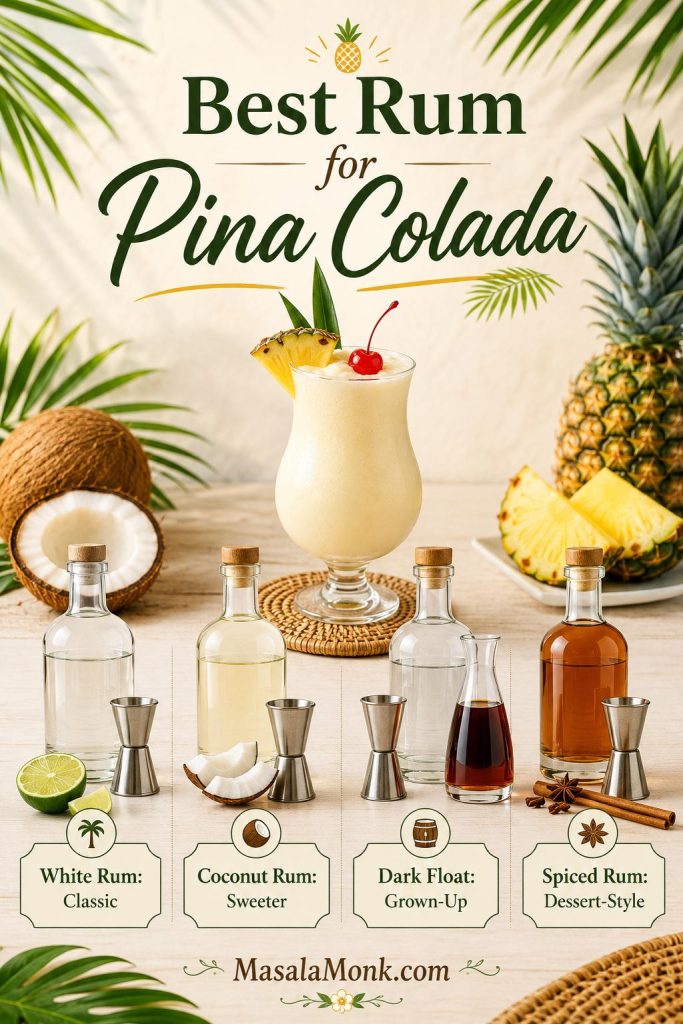
The best rum for a pina colada depends on the mood of the drink. Choose white rum for the clean classic. Coconut rum gives you a sweeter party glass. For a more grown-up finish, keep white rum as the base and add a small dark rum float.

Rum choiceBest useWhat to adjust
White rumBest default for the classic pineapple-coconut flavor.Use the main recipe as written.
Malibu or coconut rumBest sweet party version.Reduce cream of coconut so the drink does not turn candy-sweet.
White rum + dark rum floatBest deeper, more grown-up version.Keep the base light, then float a little dark rum on top.
Spiced rumDessert-style variation, not the clean classic.Use extra lime and keep the coconut controlled.
Rum chooser graphic for pina colada with white rum, coconut rum, dark rum float, and spiced rum options.
For the best rum in a pina colada, start with white rum if you want the classic to taste clean. Then move to coconut rum, a dark float, or spiced rum when you want a sweeter or deeper variation.

First time making this recipe? Start with white rum. It lets the pineapple and coconut stay in front, which is the easiest way to understand the drink before you make it sweeter, darker, or warmer.

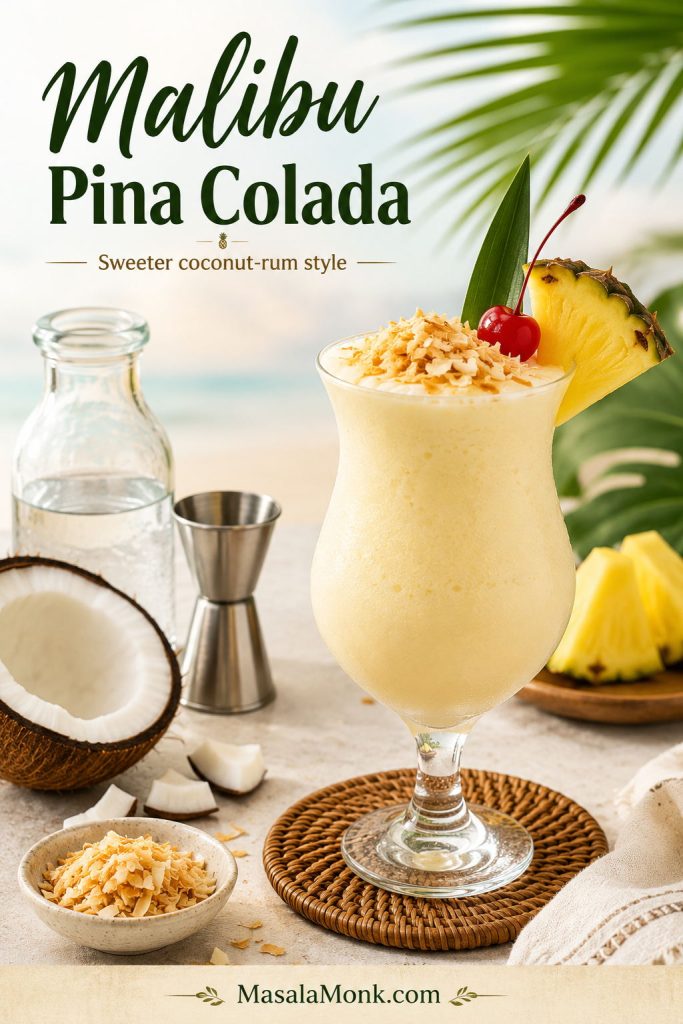
Malibu Pina Colada

For one Malibu pina colada, use 2 oz Malibu or coconut rum, 2 oz pineapple juice, 1 oz cream of coconut, ½ oz fresh lime juice, and ice. Because Malibu is already sweet and coconut-flavored, do not use the full classic amount of cream of coconut unless you want a very sweet drink.

IngredientAmount for 1 drink
Malibu or coconut rum2 oz / 60 ml
Pineapple juice2 oz / 60 ml
Cream of coconut1 oz / 30 ml
Fresh lime juice½ oz / 15 ml, optional but useful
IceFor shaking or blending
Malibu-style pina colada with toasted coconut topping, pineapple wedge, cherry, and coconut pieces.
A Malibu pina colada leans sweeter because coconut rum already brings flavor and sugar. Reduce extra sweetness or add a little more lime to keep the drink balanced.

Shake the ingredients with ice and strain over fresh ice, or blend with about 1 cup ice for a frozen drink. Too sweet? Add lime. Too light? Use half Malibu and half white rum. Want it more coconutty without making it sugary? Add a splash of unsweetened coconut milk instead of more cream of coconut.

Pina Colada with Coconut Milk

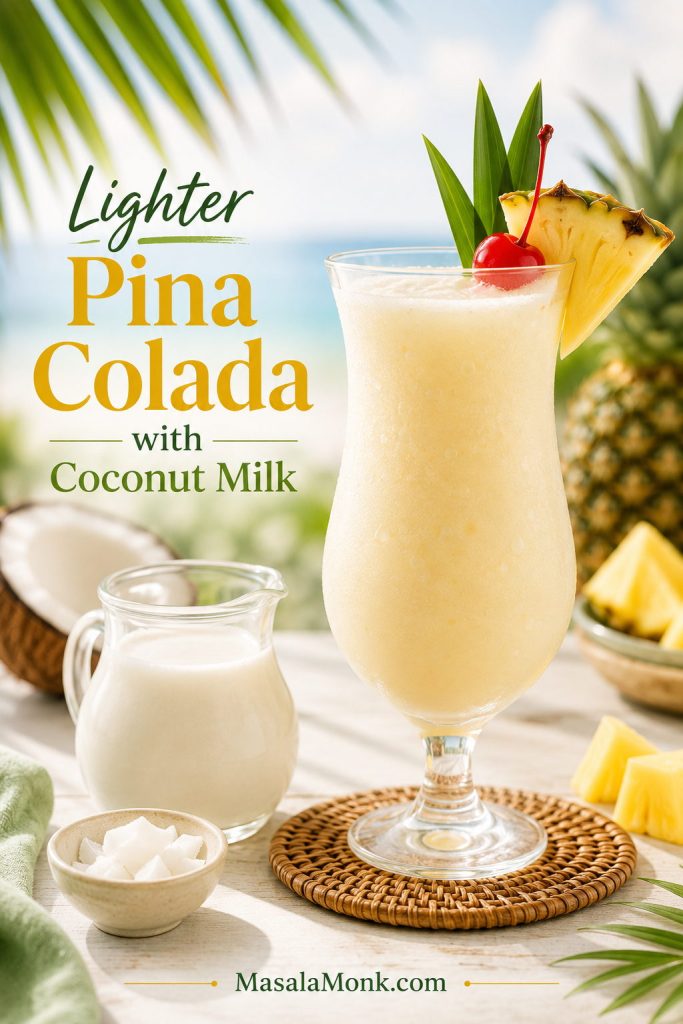
A pina colada with coconut milk is lighter than the cream-of-coconut version. Choose it when you want the pineapple to feel brighter and the coconut to whisper rather than coat the glass.

Use full-fat coconut milk, not watery light coconut milk. Because it is usually unsweetened, add a little simple syrup, maple syrup, or agave only if the drink tastes sharp or thin.

IngredientAmount for 1 lighter drink
White rum2 oz / 60 ml
Pineapple juice3 oz / 90 ml
Full-fat coconut milk2 oz / 60 ml
Fresh lime juice½ oz / 15 ml
Simple syrup, maple syrup, or agave½–1 oz / 15–30 ml, to taste
Frozen pineapple½ cup / about 70–75 g
Ice½–1 cup, as needed
Lighter pina colada made with coconut milk, shown with a coconut milk pitcher, pineapple garnish, cherry, and tropical background.
A coconut milk pina colada tastes lighter and brighter than the classic. Because coconut milk is thinner and less sweet, the drink needs help from pineapple and careful chilling.

Blend just until smooth. Thin? Add more frozen pineapple. Sharp? Add sweetener gradually. Want it richer? Add 1 tablespoon cream of coconut or coconut cream.

Easy Pina Colada Variations

Once the base ratio is clear, variations become easy. Keep the pineapple-coconut structure, then change one thing at a time: fruit, rum, sweetness, or finish.

If you only try one variation first, make the frozen pineapple version. It improves body and fruit flavor without changing the identity of the drink.
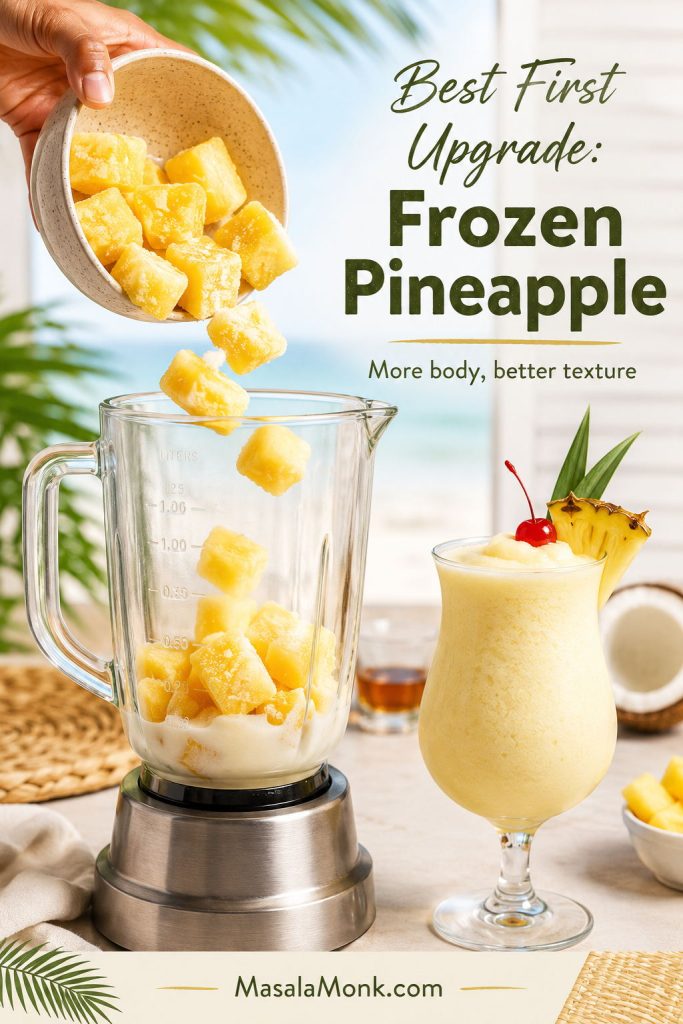
Frozen pineapple chunks being poured into a blender for a thicker pina colada, with a finished drink beside it.
Frozen pineapple is the best first upgrade for a frozen pina colada. It adds body, keeps the flavor tropical, and reduces the need for extra ice.
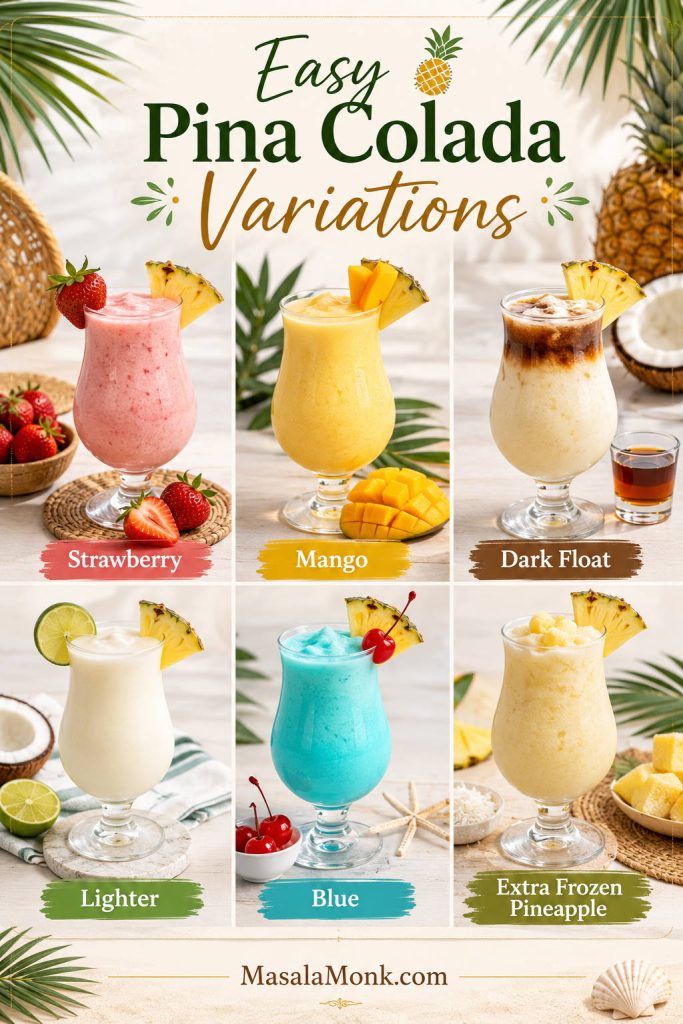
VariationHow to make it
Strawberry pina coladaAdd ½–1 cup frozen strawberries and keep the coconut slightly lighter.
Mango pina coladaAdd ½ cup frozen mango for a thicker, golden tropical version.
Frozen pineapple pina coladaUse more frozen pineapple for stronger fruit flavor and a smoother pour.
Blue pina coladaAdd a small amount of blue curaçao and reduce other sweet elements.
Dark rum floatMake the classic recipe, then float a little dark rum on top before serving.
Skinny pina coladaUse coconut water or coconut milk, frozen fruit, and less cream of coconut.
Pina colada variations board showing strawberry, mango, dark float, lighter, blue, and extra frozen pineapple versions.
Pina colada variations work best when you change one lever at a time. Add fruit for flavor, a dark rum float for depth, or extra frozen pineapple for thicker texture.

For a deeper list of flavor twists, see our full guide to Piña Colada variations, including strawberry, mango, coconut rum, frozen pineapple, and non-alcoholic versions.

Pina Colada Mix: Homemade or Store-Bought

Pina colada mix is useful when speed matters, but it can taste dull if you only add rum and blend. Store-bought mix is not a failure; it just needs freshness added back. Treat it as a shortcut base, then wake it up with acid, cold, and real pineapple flavor.
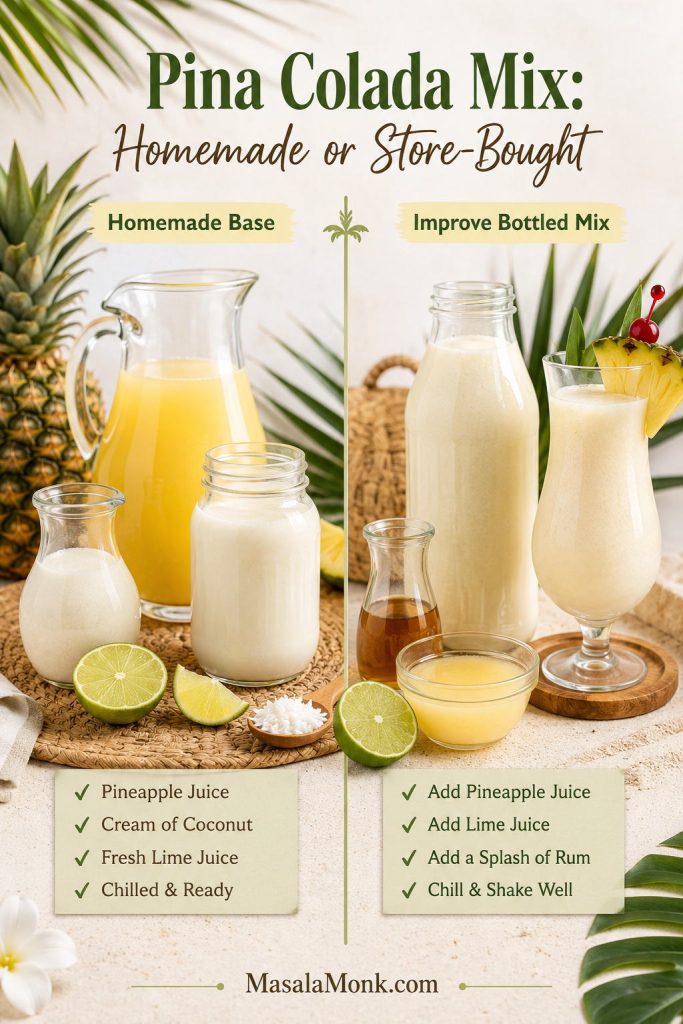
Pina colada mix guide comparing homemade base with improved bottled mix using pineapple juice, cream of coconut, lime, and a finished drink.
A homemade pina colada mix gives you control over sweetness, coconut body, and lime. Bottled mix can still work, but it usually needs freshness added back before serving.

Homemade pina colada mix

Homemade mix ingredientAmount
Cream of coconut1 cup
Pineapple juice¾ cup
Fresh lime juice3 tablespoons

Stir or blend until smooth, then refrigerate in an airtight container for 2–3 days. This is the liquid base, not the finished cocktail.

How much mix per drink?

Use about 4 oz homemade mix with 2 oz white rum. Blend for a frozen drink or shake for an on-the-rocks version. For a mocktail, skip the rum and add pineapple or coconut water if the glass needs loosening.

Using bottled mix for a party? The pitcher guide and store-bought mix fixes will help keep the drink fresh instead of flat.

How to improve store-bought pina colada mix

  • Add fresh lime if it tastes syrupy.
  • Use white rum instead of coconut rum when the mix is already very sweet.
  • Add frozen pineapple if the flavor feels thin.
  • Avoid extra cream of coconut unless the drink truly lacks body.
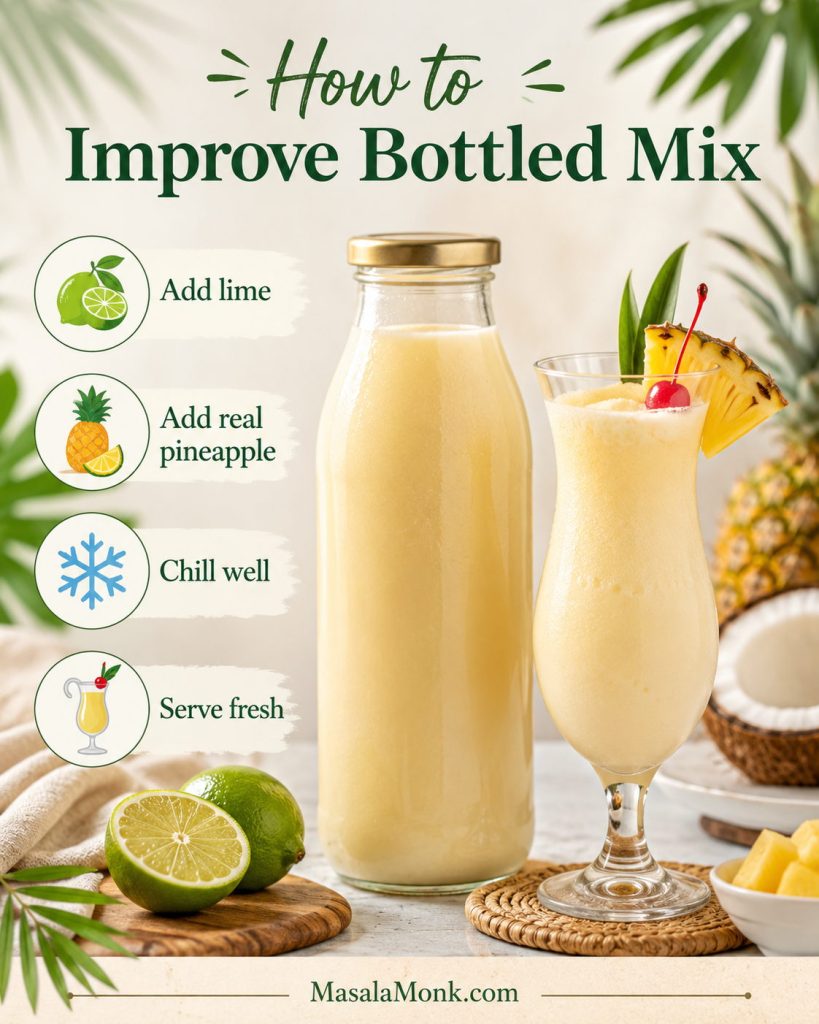
Guide to improving bottled pina colada mix with lime, real pineapple, chilling, and fresh serving cues.
Store-bought pina colada mix often tastes dull because it lacks fresh edges. Start with lime and real pineapple flavor, then chill well so the shortcut still tastes alive.

If you are making a big non-blended bowl instead, this punch with pineapple juice guide is better for ginger ale, Sprite, sherbet, cranberry, lemonade, and party punch variations.

Pina Colada Pitcher for a Party

A pitcher works best when you make the liquid base ahead and finish each round at serving. Do not blend the whole pitcher and park it in the fridge; that is how a good piña colada becomes sweet pineapple-coconut water.

IngredientFor 4 drinks
White rum1 cup / 240 ml
Pineapple juice1½ cups / 360 ml
Cream of coconut1 cup / 240 ml
Fresh lime juice¼ cup / 60 ml
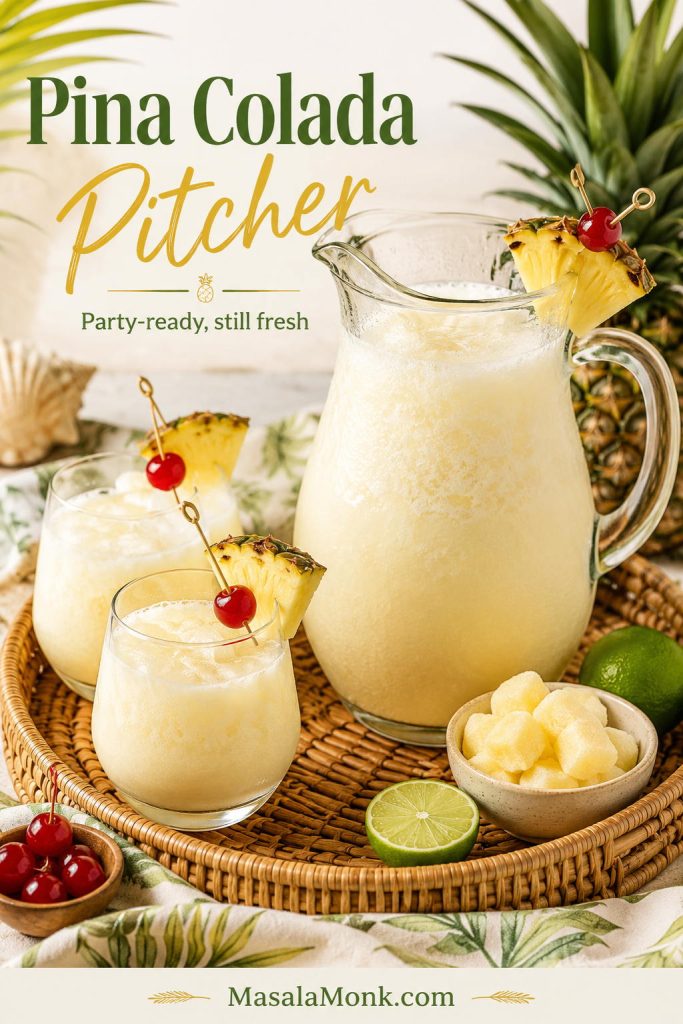
Pina colada pitcher with serving glasses, pineapple wedges, cherries, lime, frozen pineapple, and rattan tray styling.
A pina colada pitcher should be party-ready without tasting tired. Keep the base cold and serve close to drinking time so each glass tastes fresh, not leftover.

Whisk or blend the base until smooth, then refrigerate. For frozen drinks, blend in 1–2 drink portions. For on-the-rocks drinks, shake individual servings or stir the base well over fresh crushed ice. This way, every glass tastes like the first one, not the leftover one.
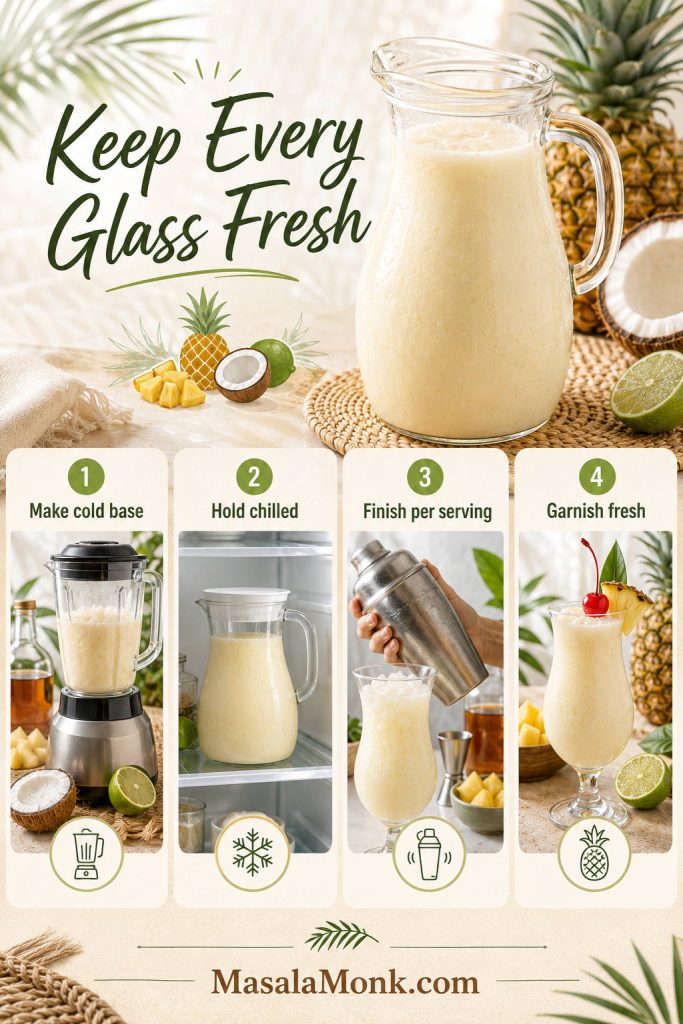
Batch pina colada guide showing make cold base, hold chilled, finish per serving, and garnish fresh steps.
Batch the base, not the finished frozen drink. This keeps the pina colada smooth and bright, especially when you want every guest’s glass to taste like the first one.

If serving both alcoholic and alcohol-free drinks, make a pineapple-coconut-lime base without rum. Add rum to individual glasses for adults and label the alcohol-free batch clearly.

For alcohol-free guests, use the virgin pina colada formula. For texture problems during serving, use the troubleshooting table.

If you want a pitcher-first tropical drink rather than individual frozen glasses, this rum punch recipe is built for fruit juice, lime, rum, and party-style serving.

How to Fix a Pina Colada

Most piña colada problems are easy to fix once you know what caused them. Taste first, then adjust one thing at a time.

Fast rescue guide: thin? Add frozen pineapple. Heavy? Add pineapple juice. Too sweet? Add lime. Dull? Add lime and a tiny pinch of salt. Not rich enough? Add a little more coconut base.
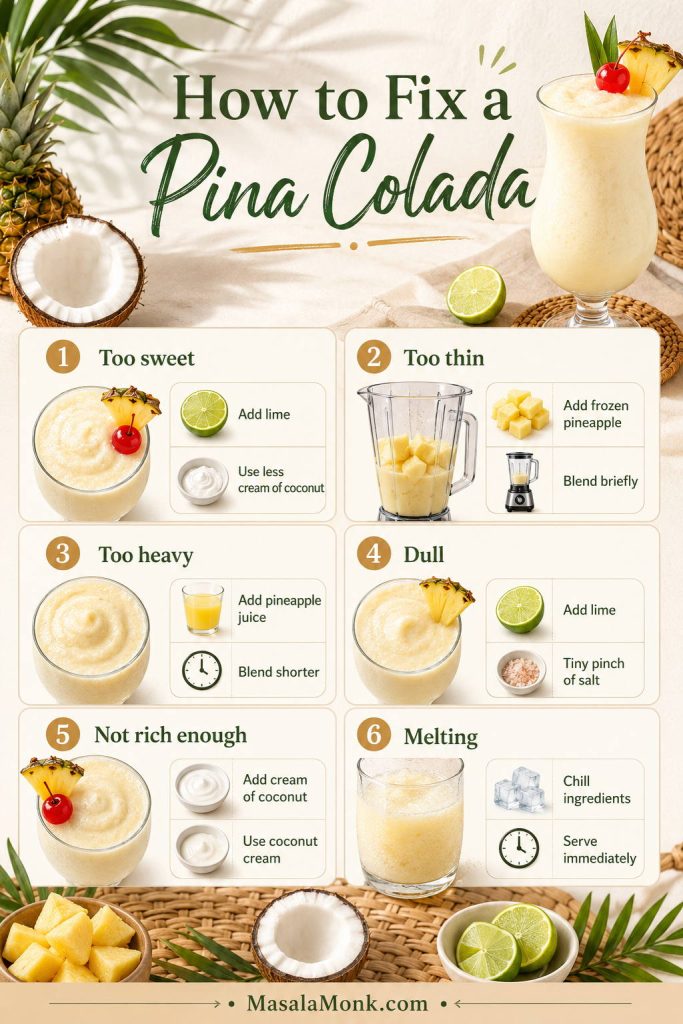
Pina colada troubleshooting guide with fixes for too sweet, too thin, too heavy, dull, not rich enough, and melting drinks.
Troubleshoot by fixing the biggest problem first. Too sweet needs lime, too thin needs frozen pineapple, too heavy needs pineapple juice, and melting usually means the ingredients were not cold enough.
ProblemLikely reasonFix
Too wateryToo much liquid, melted dilution, or over-blendingAdd frozen pineapple, then blend briefly.
Too thickToo much frozen fruit or not enough liquidAdd pineapple juice 1 tablespoon at a time.
Too sweetToo much cream of coconut or coconut rumAdd lime juice, pineapple juice, or a splash of white rum.
Not creamyCoconut milk was used instead of cream of coconutAdd cream of coconut or coconut cream.
Bland or flatNot enough acid or contrastAdd fresh lime and a tiny pinch of salt.
SeparatingThe drink sat too long or the coconut was not mixed wellStir, shake, or re-blend briefly and serve immediately.
Too icyToo much frozen bulk and not enough creamy liquidAdd pineapple juice or coconut base and blend briefly.

Make-Ahead and Storage

A pina colada is best served immediately, especially when frozen. The make-ahead move is simple: prepare the pineapple-coconut-rum base, chill it, then finish the drink right before serving.
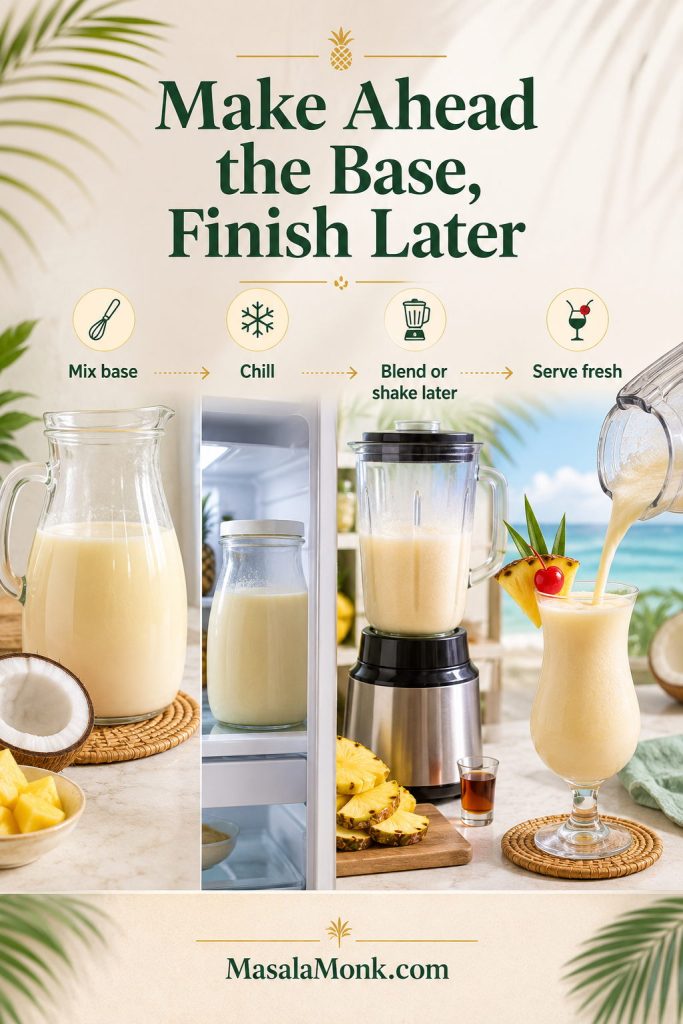
Make-ahead pina colada guide showing cold base, chill step, blend or shake later, and serve fresh.
For a make-ahead pina colada, prepare the base early but finish the drink later. That way, the flavor is ready and the texture still tastes freshly blended or shaken.

An alcohol-free base works the same way. Keep it cold, then blend or shake when guests are ready. Leftover blended drink can be frozen and re-blended with a splash of pineapple juice, but the fresh texture will always be better.

Pina Colada FAQs

What are the three main ingredients in a pina colada?

Rum, pineapple, and coconut are the core ingredients. Most creamy home versions also need a frozen element, and fresh lime makes the finish cleaner.

What is the best alcohol for a pina colada?

White rum is the best classic choice. Coconut rum is sweeter, while a small dark rum float gives a deeper finish.

Should I use cream of coconut or coconut milk?

Use cream of coconut for the classic sweet, creamy piña colada. Use coconut milk only when you want a lighter drink and are willing to adjust sweetness.

Is cream of coconut the same as coconut cream?

No. Cream of coconut is sweetened and syrupy; coconut cream is usually unsweetened and rich, so it needs added sweetener in most recipes.

How do I make a non-alcoholic pina colada taste less flat?

Use frozen pineapple, lime, and a tiny pinch of salt. Vanilla or non-alcoholic rum can add some of the depth that regular rum normally brings.

How do I make a pina colada without a blender?

Shake rum, pineapple juice, cream of coconut, and lime hard until cold, then serve in a fresh glass. It will be frothy and chilled, not frozen.

What makes a pina colada too watery?

Too much liquid, melted dilution, weak coconut body, or over-blending can make it watery. Measure the first batch and serve right away.

How do I make a pina colada less sweet?

Use less cream of coconut, choose white rum instead of coconut rum, or add fresh lime. Make small changes so the drink stays balanced.

Can I make pina coladas ahead of time?

Yes, but make only the liquid base ahead. Chill it, then blend or shake with the frozen/cold ingredients when ready to serve.

What is the difference between a pina colada and a Chi-Chi?

A pina colada is usually made with rum. A Chi-Chi is the similar pineapple-coconut drink made with vodka instead.

Final Sip

A good piña colada should taste cold before it tastes sweet: pineapple first, coconut next, rum in the background, and lime keeping the finish clean. Once that balance is right, the rest is easy — frozen, shaken, virgin, Malibu, lighter with coconut milk, or batched for a party.

Make the classic version once with measured ingredients. After that, you will know exactly how the drink should feel: tropical, smooth, refreshing, and just rich enough to feel like a small vacation in the glass.
Back to top

Posted on 14 Comments

Keto Mocktails: 10 Low Carb, Sugar Free Recipes

A dark luxe magazine-style cover featuring a coupe glass keto mocktail with ice and a lemon peel garnish on a black surface, with text overlay reading “Keto Mocktails” and “Low-Carb • No-Sugar • Full Flavor,” plus “10 recipes • 0g sugar • big taste” and MasalaMonk.com.

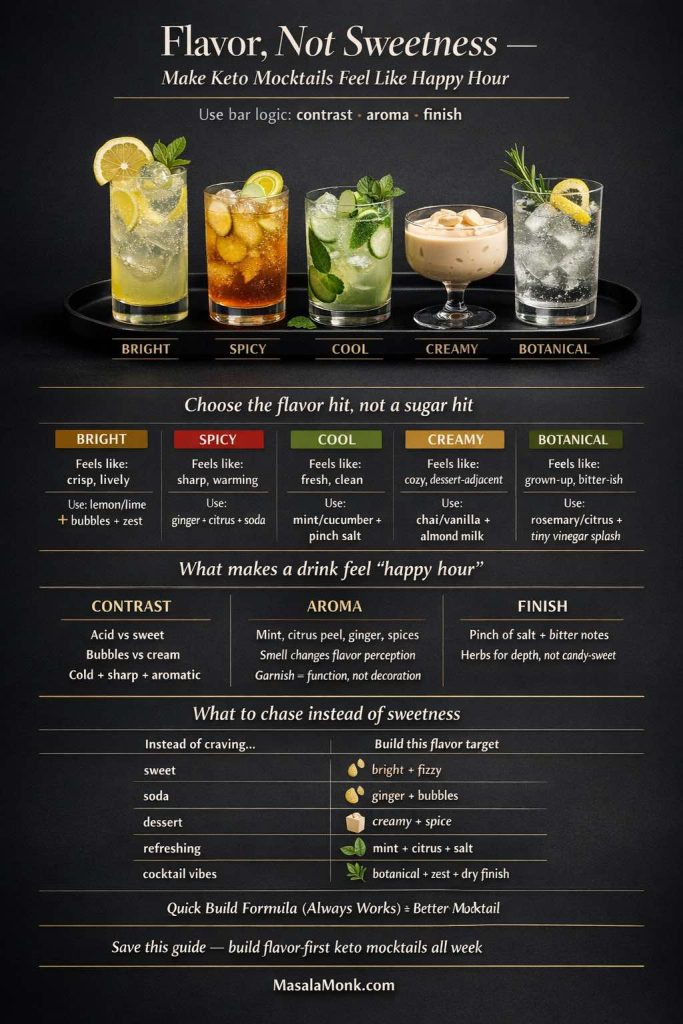
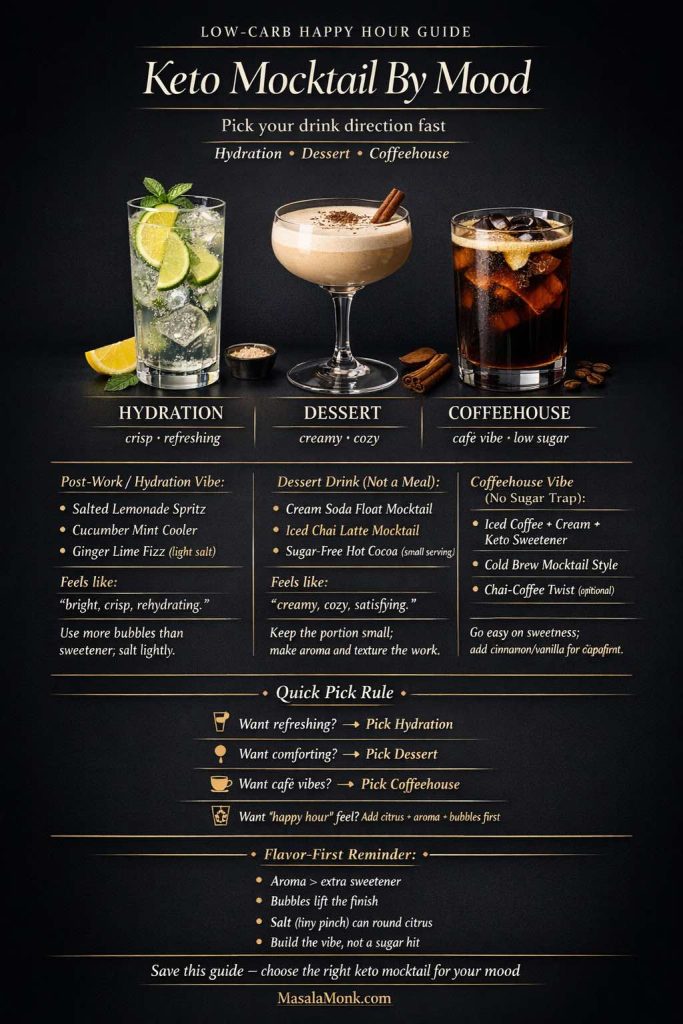
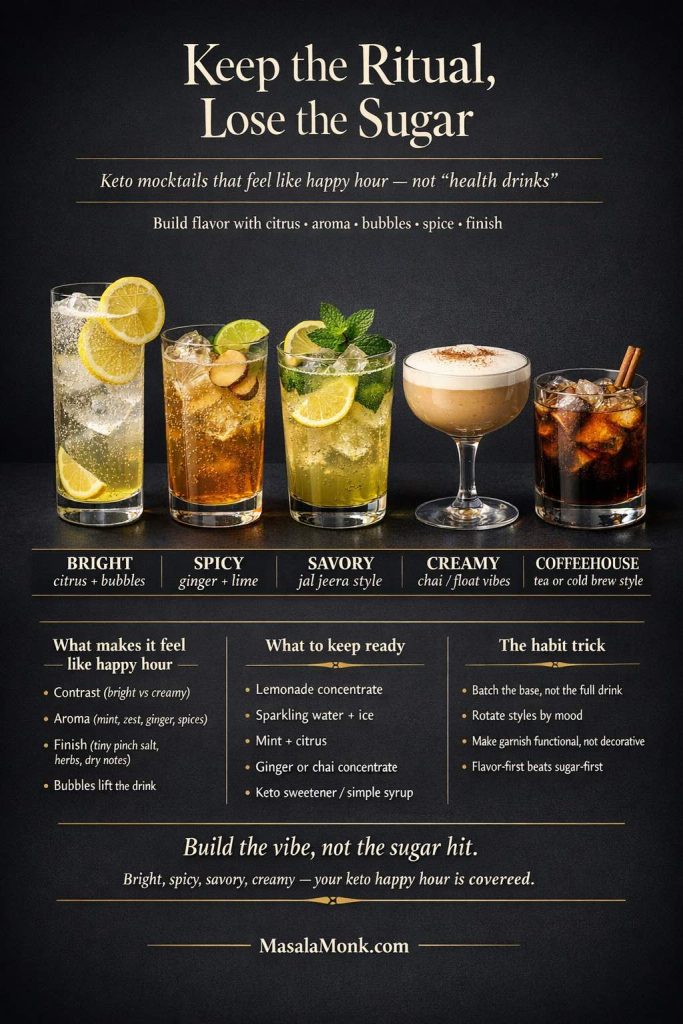
Happy hour isn’t only about alcohol. It’s about the pause—the glass that feels special, the first cold sip, the tiny ritual that tells your brain the day is shifting gears. That’s exactly why keto mocktails hit differently than “just water.” They have a point of view. They’re bright without being sharp, sweet without tasting fake, and fizzy in a way that makes you reach for another sip before you even realize you’re doing it.

Better still, once you know how to build keto mocktails the right way, you stop feeling like you’re missing out. Instead, you end up with a lineup of low carb, no sugar drinks you genuinely crave—whether you’re cooking dinner, hosting friends, or simply wanting something cold and satisfying around 4 pm.

This guide is built around simple, repeatable formulas. You’ll get ten keto mocktails that taste like real cocktails, plus the foundations that let you remix them endlessly: a lemonade base that becomes five different drinks, fizz tricks that mimic soda, tea and coffee options that feel cozy yet grown-up, and a hydration lane that’s surprisingly useful if you’ve ever felt a little “flat” on low carb.

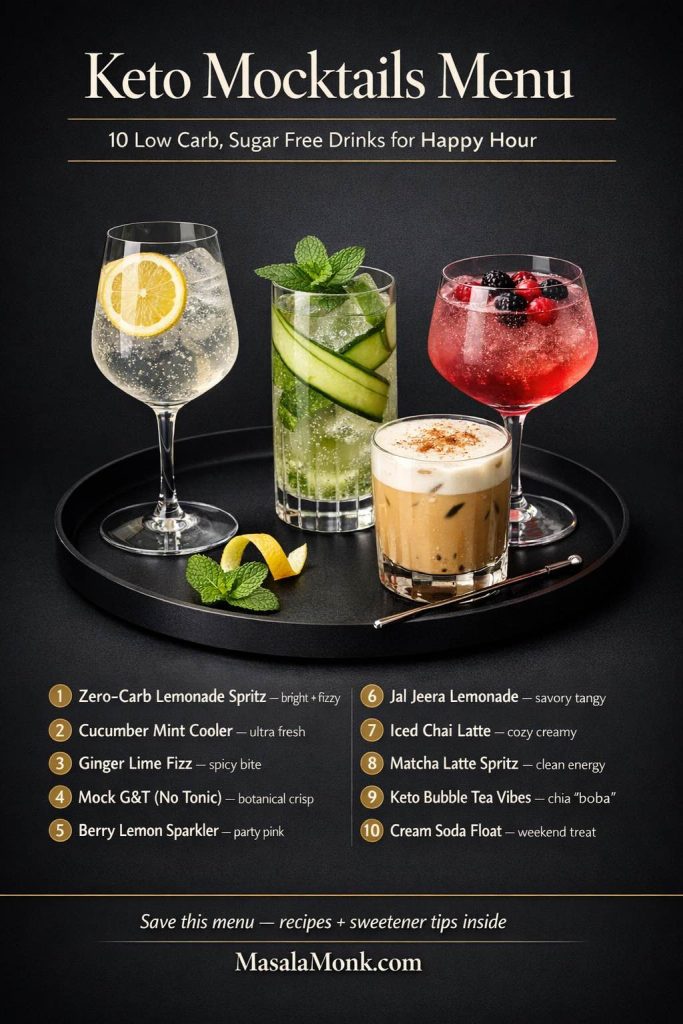
Dark luxury “Keto Mocktails Menu” graphic showing four drinks on a black tray and a list of 10 low carb, sugar free keto mocktails for happy hour, including lemonade spritz, cucumber mint cooler, ginger lime fizz, mock G&T, berry sparkler, jal jeera, iced chai, matcha spritz, keto bubble tea, and cream soda float.
Save this “Keto Mocktails Menu” as your quick pick list: 10 low carb, sugar free drinks—fizzy, fresh, spicy, creamy, and party-ready—so you can choose a mocktail in seconds and jump to the recipe below.

Throughout, we’ll keep it practical. No weird gear. No fussy syrups you’ll use once and forget. Just smart ingredients and a few small techniques that add up fast.


What makes keto mocktails taste like the real thing

The difference between a forgettable sugar free drink and a memorable keto mocktail is rarely the sweetener. Most of the time, it’s structure. Cocktails taste good because they’re balanced—acid, aroma, bitterness, sweetness, and texture all working together. Once you borrow that logic, non alcoholic keto drinks stop feeling like substitutes and start feeling like choices.

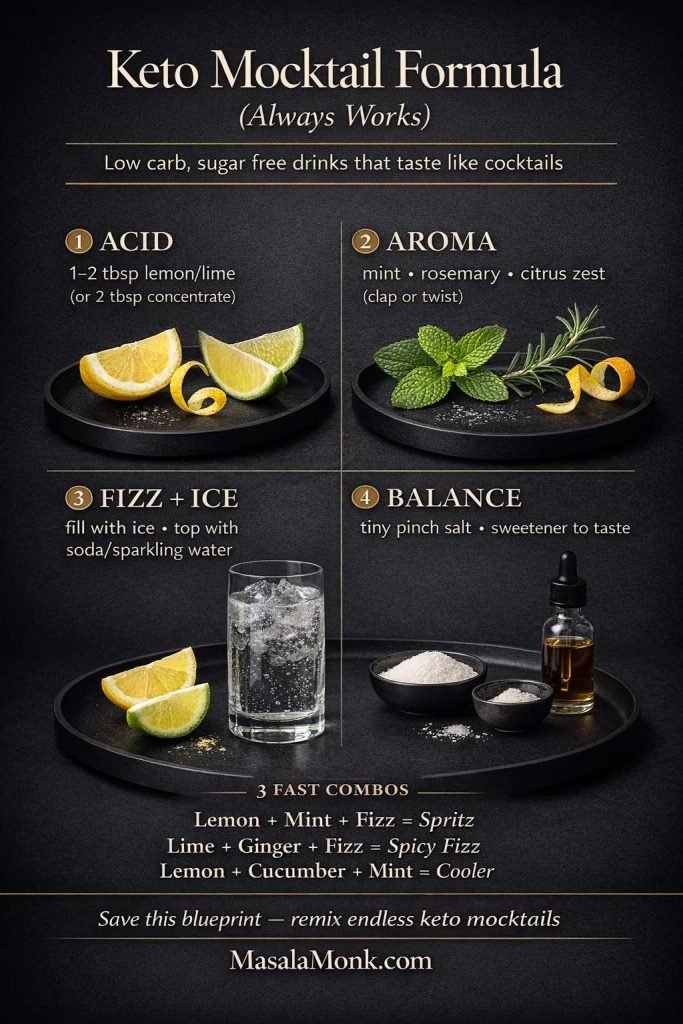
Dark luxe infographic titled “Keto Mocktail Formula (Always Works)” showing a 4-step blueprint for keto mocktails: acid (lemon/lime), aroma (mint/rosemary/zest), fizz + ice (sparkling water), and balance (salt + sweetener), plus three quick low carb, sugar free mocktail combos like spritz, spicy fizz, and cooler.
Save this keto mocktail formula: build low carb, sugar free drinks that taste like cocktails by layering acid + aroma + fizz + balance—then remix the quick combos (spritz, spicy fizz, cooler) anytime happy hour cravings hit.

Start with a base that’s naturally low carb & suits keto mocktails

Your base decides whether the drink feels crisp, creamy, punchy, or soothing. Fortunately, most of the best options are already friendly to a low carb lifestyle.

For bright drinks, sparkling water, soda water, and club soda do most of the work. For softer drinks, chilled tea, iced coffee, or diluted lemonade concentrate gives you body without relying on sugar. Meanwhile, a creamy base—unsweetened almond milk, coconut cream used lightly, or a small splash of cream—creates dessert-style mocktails that feel like treats without a sugar crash.

If you’re building a tea or coffee lane, it helps to understand how these drinks fit into your day, especially if you fast. This guide to coffee timing and fasting is a useful companion when you’re deciding whether a chilled latte-style mocktail belongs in your afternoon or evening routine: coffee and fasting basics.

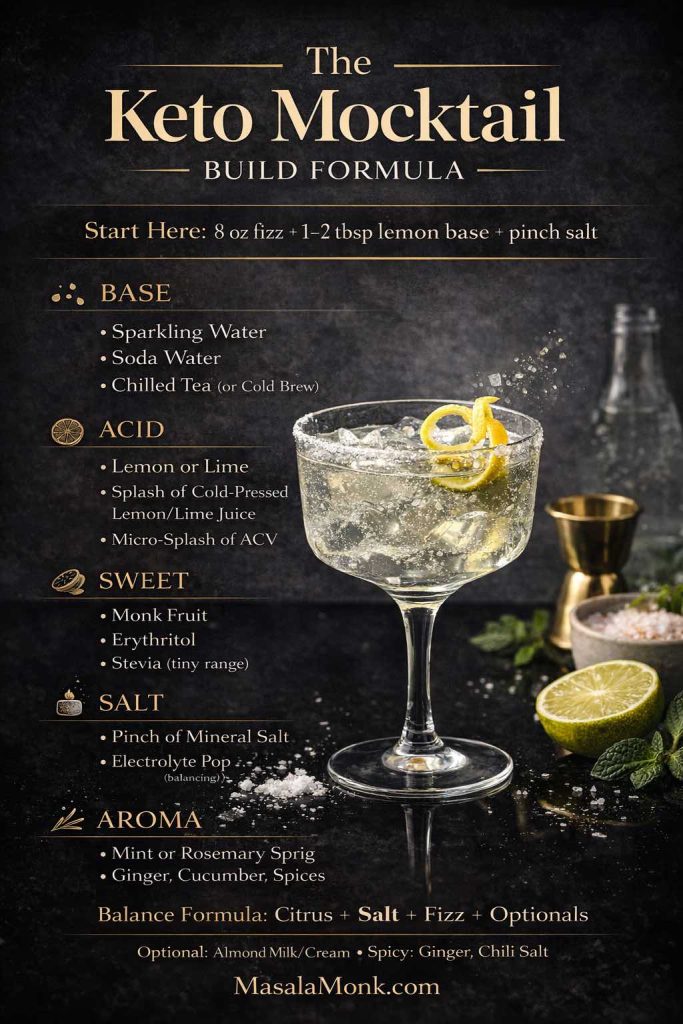
Dark luxe infographic titled “The Keto Mocktail Build Formula” showing a coupe glass fizzy mocktail with lemon peel and a salt-rim vibe, plus a step-by-step formula for keto mocktails: base (sparkling/soda water, chilled tea), acid (lemon or lime, optional ACV), sweetener (monk fruit, erythritol, stevia), salt (pinch of mineral salt), and aroma (mint/rosemary, ginger/cucumber/spices), with a starter ratio and MasalaMonk.com footer.
Want keto mocktails that feel like cocktails instead of “diet drinks”? Save this keto mocktail build formula and you can make low carb, no sugar drinks on repeat—without hunting for fancy mixers. Start with 8 oz fizz + 1–2 tbsp lemon base + a pinch of salt, then choose your lane: citrusy, herbal, spicy, or creamy. It’s the simplest way to nail that crisp, bar-style finish while keeping it keto-friendly.

Then add acid and aroma, not just sweetness to mocktails that are keto

A good keto drink doesn’t need to be sweet to be delicious. Acid creates lift and clarity. Aroma makes the drink feel complex even when the ingredient list is short.

Think beyond “lemon and sweetener.” Lime zest makes a drink smell like a cocktail bar. A bruised mint sprig adds freshness before the first sip. Ginger brings heat and depth. A pinch of salt makes citrus taste rounder and less harsh. Bitters—used carefully, and chosen thoughtfully—can bring that adult, cocktail-like edge.

This is why certain flavors translate so beautifully. A mojito works because of mint and lime. A spritz works because of bitterness and bubbles. A margarita works because of salt, citrus, and a clean finish. Once you build with those ideas, you don’t need sugar to fake flavor.

Finally, choose a sweetener strategy that stays clean in keto mocktails

Sweeteners matter, but they’re not the headline. They’re the balancing tool. Used well, they disappear into the drink and make everything else taste better.

Allulose often tastes the most “sugar-like” in cold drinks. Monk fruit blends are convenient, but quality varies. Stevia is powerful and works best with citrus and salt. Erythritol can be fine, yet it sometimes feels “cooling” and may not dissolve well unless you make a simple syrup first.

If you ever feel uncertain about what “added sugar” actually means on labels—especially when you’re buying mixers—this FDA explainer is one of the clearest references: how added sugars are defined on the Nutrition Facts label. It’s not glamorous reading, yet it makes choosing bottles dramatically easier.

Also Read: Slow Cooker Pork Tenderloin (Crock Pot Recipe) — 3 Easy Ways


Sweeteners for keto mocktails that don’t taste like “diet”

Let’s make this easy: the goal isn’t to build a drink that tastes like candy. The goal is to build a drink that tastes balanced—like a cocktail, not a soda.

That’s why “less sweet, more aromatic” is usually the best starting point. Instead of chasing a sweet hit, you create satisfaction through freshness, bite, and finish. Then you add just enough sweetener to soften the sharp edges.

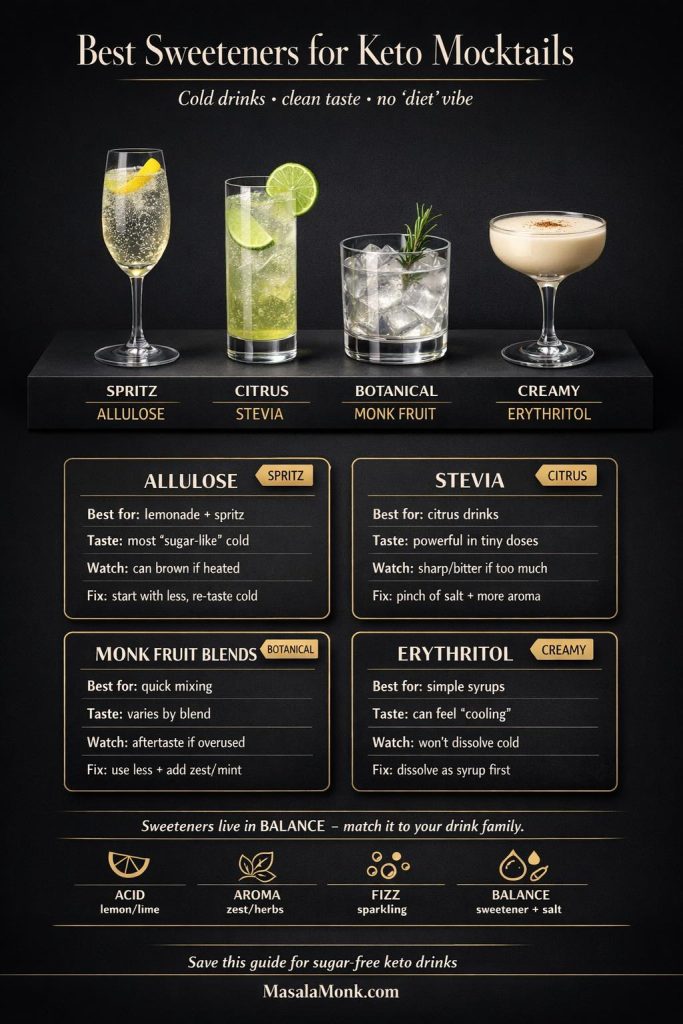
Dark luxury keto mocktail sweetener guide showing four drink styles and matching sweeteners—Allulose for spritz, Stevia for citrus, Monk Fruit for botanical drinks, and Erythritol for creamy drinks—with taste notes, common issues, and quick fixes for sugar free low carb drinks.
Save this sweetener guide for keto mocktails: match your drink style (spritz, citrus, botanical, or creamy) with the best sweetener—plus quick fixes for aftertaste, “cooling” feel, and balance so your low carb drinks taste smooth and cocktail-like.

Allulose: the smoothest in cold drinks

Allulose tends to dissolve well and tastes natural in lemonade, citrus spritzers, and berry drinks. It’s especially helpful when you’re aiming for “zero sugar zero carb drinks” vibes without tasting artificial. In practice, your exact carb impact depends on serving size and your chosen sweetener, so treat it as a flexible tool rather than a promise.

Monk fruit blends: convenient for keto mocktails, but choose carefully

Monk fruit can be great. However, many blends include extra ingredients that change the flavor or the way it behaves in drinks. If the aftertaste bothers you, reduce the amount and increase aroma instead—more zest, more mint, more ginger, or a pinch of salt.

Stevia: small doses, big payoff

Stevia can be brilliant when used lightly. If your drink suddenly tastes “sharp” or “thin,” it often means the stevia is too intense relative to the acid. Pull back, then add a tiny pinch of salt and a bit more citrus zest. Surprisingly, that fixes the problem more often than adding more sweetener.

Erythritol: best as a syrup in keto friendly mocktails

Erythritol can crystalize in cold drinks. If you like it, dissolve it into a syrup first. A small jar of syrup in the fridge makes your low carb mocktails far more consistent.

Also Read: Chicken Pesto Pasta (Easy Base Recipe + Creamy, One-Pot, Baked & More)


Keto mocktail mixers that stay low carb and still feel festive

Mixers are where most drinks either shine or quietly fail. Fortunately, the rules are simple.

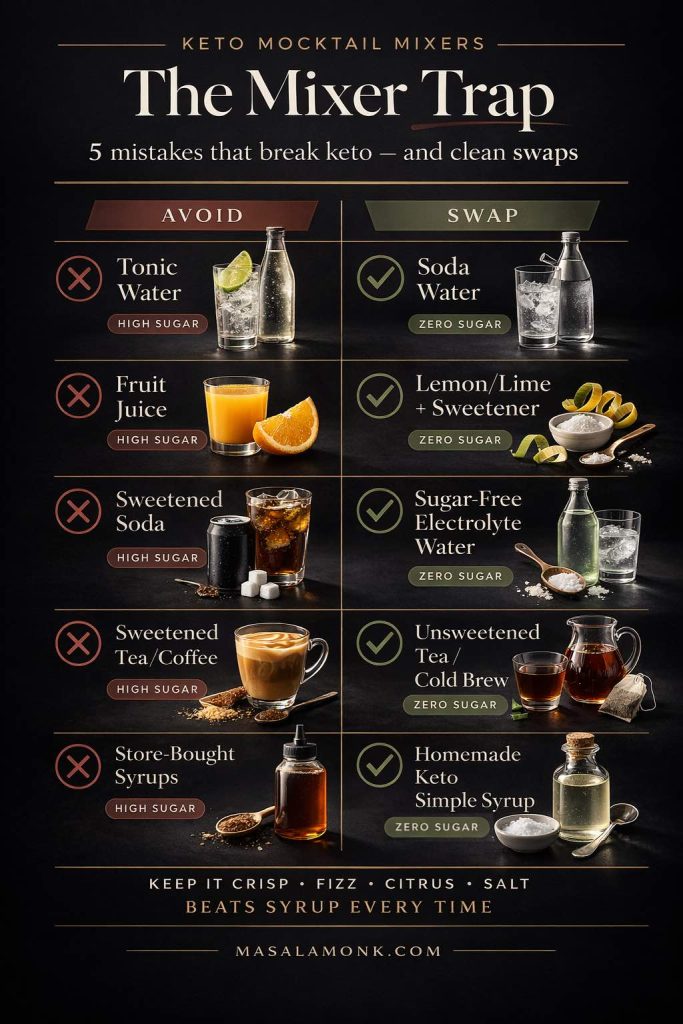
Dark luxury infographic titled “Keto Mocktail Mixers: The Mixer Trap” showing 5 avoid-vs-swap comparisons for keto mocktails, including tonic water vs soda water, fruit juice vs lemon-lime with sweetener, sweetened soda vs sugar-free electrolyte water, sweetened tea/coffee vs unsweetened tea or cold brew, and store-bought syrups vs homemade keto simple syrup.
Save this keto mocktail mixer guide before your next grocery run: these 5 avoid-vs-swap fixes help you skip hidden sugar and build low carb, sugar free drinks that still taste crisp, flavorful, and cocktail-worthy.

Choose fizz wisely

Sparkling water and soda water are the cleanest foundation for keto fizzy drinks. They deliver the party feeling—bubbles, lift, cold refreshment—without turning your drink into a sugar trap.

If you want a more “soda” experience, a low carb soda or zero carb soda can work well. Just keep the rest of the drink simple so it doesn’t become overly sweet or chemically tasting. When in doubt, treat flavored soda like a garnish, not the entire personality of the drink.

Build flavor with real ingredients, not sugary syrups

Instead of syrups, build with:

  • citrus juice and zest
  • herbs (mint, basil, rosemary)
  • spices (cinnamon, cardamom, roasted cumin)
  • ginger in a homemade concentrate
  • salt and chili for contrast
  • extracts used sparingly (vanilla, coconut, almond)

If you want an Indian-inspired direction, jal jeera is an underrated flavor blueprint. It’s tangy, savory, and intensely refreshing—exactly the kind of profile that makes sugar feel unnecessary. Traditional recipes may include sweetener, yet the spice architecture is the real star: jal jeera (Indian lemonade) flavor inspiration.

Keep a hydration lane in your rotation

Sometimes you don’t want a “dessert drink.” You want something that makes you feel better after a long day—especially if you’re eating lower carb and notice cramps, headaches, or that heavy tired feeling.

That’s where electrolyte-style mocktails come in. A salted citrus spritz, a cucumber mint cooler, or a lightly spiced lemonade can feel like a reset. If you want more ideas in that lane, these DIY recipes are handy to keep around: keto electrolyte drinks you can make at home.

For label literacy in general, this FDA guide is also useful when you’re comparing bottled mixers: how to understand and use the Nutrition Facts label.

Also Read: Pork Tenderloin in Oven (Juicy, Easy, 350°F or 400°F) Recipe


Keto lemonade: the “zero carb lemonade” vibe base that unlocks dozens of mocktails

If you make one thing from this post, make a lemonade base. It turns keto mocktails from “special occasion effort” into “I can do this anytime.”

Instead of mixing lemonade from scratch every time, you make a concentrate. That way you can build drinks quickly, keep the taste consistent, and adjust sweetness per glass. Moreover, you’ll avoid the classic mistake of over-sweetening early, then trying to fix it with more lemon, then ending up with something harsh and watery.

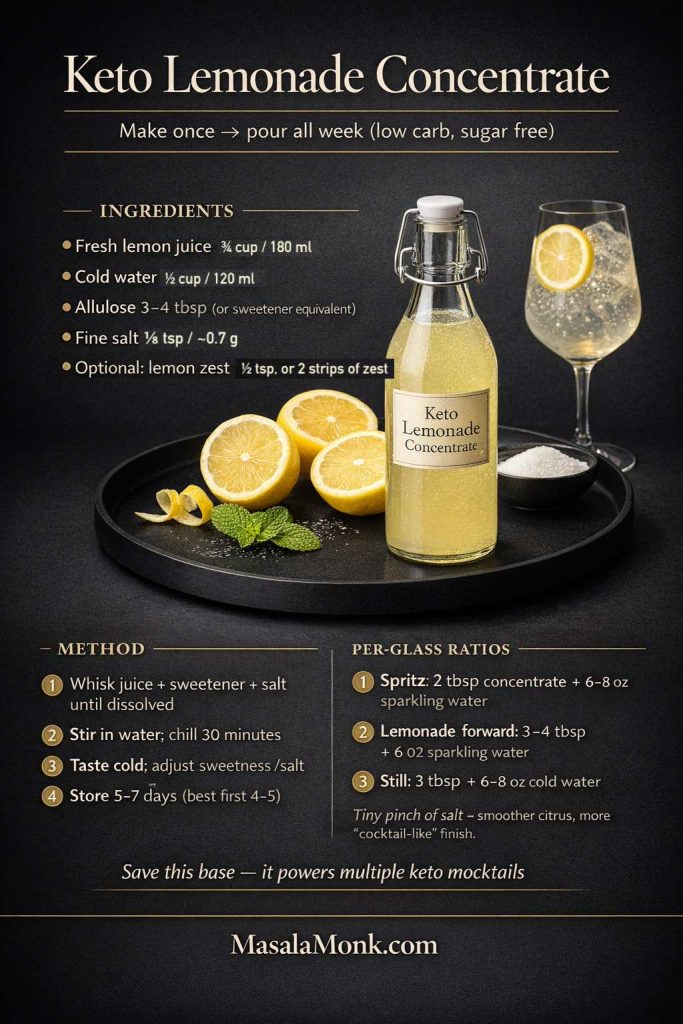
Dark luxe recipe-card graphic for Keto Lemonade Concentrate showing ingredients, method, and per-glass ratios for a sugar free, low carb lemonade base used to make keto mocktails like lemonade spritz, cucumber mint cooler, and berry lemon sparkler.
This keto lemonade concentrate is the “make once, pour all week” base: use it for a zero-carb-style lemonade spritz, quick citrus coolers, and party sparklers—just mix the per-glass ratios below and build any keto mocktail in minutes.

Keto lemonade concentrate (fridge base for mocktails)

This is the “make once, pour all week” foundation that turns your fridge into a mocktail bar. Because it’s a concentrate, you can keep it punchy and bright, then dilute per glass—so every drink stays crisp instead of watery.

Makes: about 1¼ cups / ~300 ml (enough for ~6–10 drinks, depending on how strong you like it)
Fridge life: 5–7 days, best flavor in the first 4–5 days

You’ll use it for: spritzers, coolers, mockaritas, and spiced lemonades
Texture goal: bright, clean, slightly rounded

  • Fresh lemon juice (start with enough for a small jar)
  • Cold water (a little, to soften the sharpness)
  • Your sweetener of choice (allulose is often the smoothest here)
  • A pinch of salt

Stir until dissolved and chill. Once it’s cold, taste again. The flavor shifts after chilling; it usually tastes sharper at first, then smoother later. Below is a precise recipe, tips, & upgrades to help you along the way.

Ingredients

  • Fresh lemon juice: ¾ cup / 180 ml (from about 4–6 lemons)
  • Cold water: ½ cup / 120 ml
  • Allulose (recommended): 3–4 tbsp / 36–48 g
    • or monk fruit blend / stevia blend: use the equivalent sweetness for 3–4 tbsp sugar (start low, then adjust)
  • Fine salt: ⅛ tsp / ~0.7 g
  • Optional (for extra “cocktail” depth): lemon zest ½ tsp, or 2 strips of zest (no white pith)

Method

  1. Juice the lemons into a bowl or measuring jug. If you’re adding zest, do it now so the oils perfume the base.
  2. Add sweetener + salt, then whisk until fully dissolved.
  3. Stir in the cold water and taste. At this stage it should be bold—slightly too intense to drink straight—because it will be diluted in the glass.

  4. Chill completely (at least 30 minutes). Then taste again. Cold changes the balance; you may want a touch more sweetener or a pinch more salt.

How to use it in Keto Mocktails (per drink)

  • Classic “lemonade spritz” strength: 2 tbsp / 30 ml concentrate + 6–8 fl oz / 180–240 ml sparkling water
  • More lemonade-forward: 3–4 tbsp / 45–60 ml concentrate + 6 fl oz / 180 ml sparkling water
  • Still lemonade (no bubbles): 3 tbsp / 45 ml concentrate + 6–8 fl oz / 180–240 ml cold water

Easy flavor upgrades (add to the jar)

These upgrades let you create “variants” without re-making the base:

  • Ginger-lime lane: add 1–2 tbsp / 15–30 ml ginger concentrate (recipe in the Ginger Lime Fizz)
  • Mint lane: add 8–10 mint leaves, bruise lightly, steep 15 minutes, then strain
  • Cucumber lane: add 6–8 cucumber slices, steep 20 minutes, then strain
  • Spiced jal jeera lane: don’t add spices to the jar—add them per glass so they don’t settle and intensify too much

Quick balance fixes (so it never tastes “off”)

  • Too sharp / too sour: add ½–1 tbsp / 6–12 g allulose (or sweetener equivalent), stir, chill 10 minutes, re-taste.
  • Too sweet: add 1 tbsp / 15 ml lemon juice + a pinch more salt.
  • Tastes flat or “thin”: add a tiny pinch of salt (yes, again). It’s the easiest way to make citrus taste rounded.

At this point, you’ve basically created a keto-friendly lemonade base. It can feel like “no carb lemonade” in practice, depending on how you portion it and which sweetener you use. Either way, it’s the backbone for many low carb, sugar free drinks.

If you’re the kind of person who likes a simpler morning ritual—less sweet, more gentle—warm lemon water is a separate lane that pairs nicely with the citrus theme. This piece covers that habit in a calm, practical way: the warm lemon water morning ritual.

A quick label note when you buy mixers

If you’re using bottled lemon juice or “lemonade flavor” products, it helps to understand how labels handle sugars and serving sizes. The FDA guides here are genuinely useful when you want clarity:

Now you can plug this concentrate directly into every drink in the mocktails section—especially the spritz, cucumber cooler, berry sparkler, and jal jeera lemonade—without re-measuring lemons every time.

Also Read: How to Make a Flax Egg (Recipe & Ratio for Vegan Baking)


10 keto mocktails that feel like cocktails (low carb, no sugar drinks you’ll repeat)

Each recipe below is built to be practical, not precious. In other words, you won’t need obscure ingredients, and you won’t need a blender unless you genuinely want one. Even so, every drink still has a clear “job”: crisp refreshment, spicy bite, creamy comfort, or party-ready fizz.

Meanwhile, you’ll notice the same foundations coming back—citrus + salt, herb + bubbles, tea + spice, ginger + lime, creamy + vanilla. Rather than feeling repetitive, that’s exactly what makes the set useful: once you master a few bases, you can improvise confidently.


1) Zero-carb lemonade spritz (a bright keto mocktail staple)

This is the fastest path to a satisfying fizzy drink that still feels intentional. Even better, it tastes like lemonade soda—only cleaner, sharper, and less cloying—so it works as a weeknight “reset” as well as a party pour.

Makes: 1 drink
Glass: tall glass (highball)

Ingredients

  • Ice: 1 cup / ~140 g
  • Keto lemonade concentrate: 2–4 tbsp / 30–60 ml
  • Sparkling water (plain): 6–8 fl oz / 180–240 ml
  • Lemon wheel or lemon zest: 1 wheel or a few strips

Optional upgrades (choose 1–2)

  • Fine salt: tiny pinch (about 1/16 tsp)
  • Fresh ginger: 2–3 thin slices (or ginger juice 1 tsp / 5 ml)
  • Fresh mint: 6–8 leaves
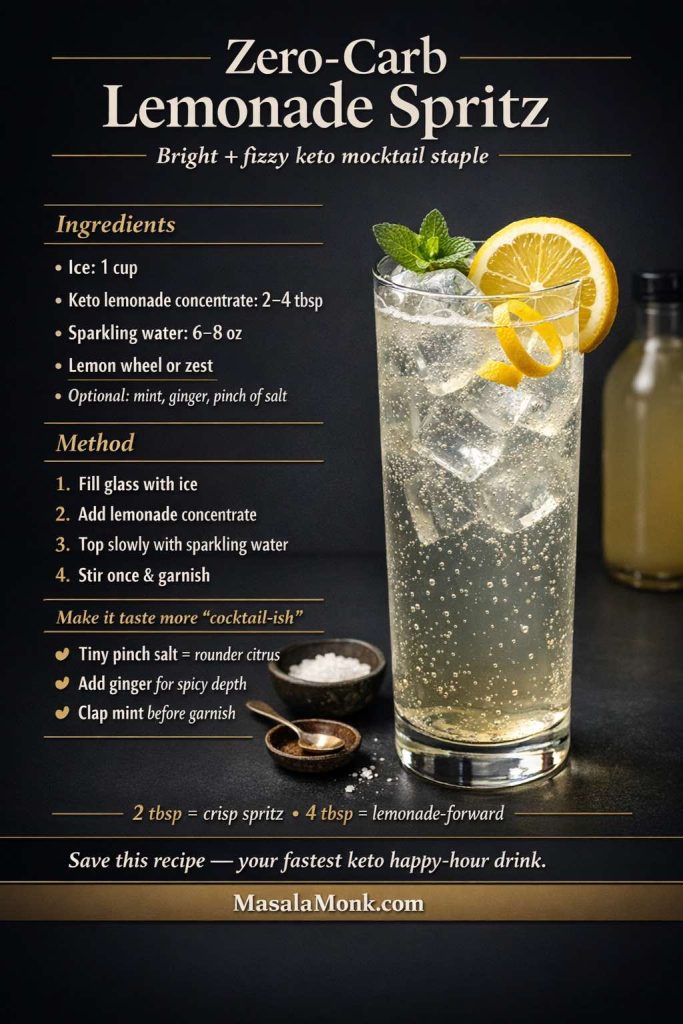
Dark luxury recipe-card infographic for a Zero-Carb Lemonade Spritz keto mocktail, showing a sparkling lemon drink with ice, lemon wheel garnish, and lemonade concentrate bottle, plus ingredients, method steps, and tips for making a low carb sugar free mocktail taste more cocktail-like.
Save this Zero-Carb Lemonade Spritz recipe card for the easiest keto mocktail: fizzy, bright, and sugar free, with a simple lemonade concentrate + sparkling water formula and quick flavor tips to make it taste crisp and cocktail-like.

Method

  1. First, fill a tall glass with ice so everything stays aggressively cold.
  2. Next, pour in the lemonade concentrate. If you’re unsure where to start, use 2 tbsp (30 ml) for a crisp drink or 4 tbsp (60 ml) for a more lemonade-forward sip.
  3. Then top with sparkling water slowly; this keeps the carbonation lively instead of foamy.
  4. After that, stir once—just one gentle turn is enough.
  5. Finally, garnish with lemon wheel or zest. If you’re using mint, clap it once between your palms before adding; that quick move releases aroma immediately.

Make it taste more “cocktail-ish”

  • Add the tiny pinch of salt. Surprisingly, it doesn’t make the drink salty; instead, it makes the lemon taste rounder and more “complete.”
  • Alternatively, add ginger slices and keep the sweetener minimal—ginger brings a natural sense of richness without extra sweetness.

Also Read: Croquettes Recipe: One Master Method + 10 Popular Variations


2) Cucumber mint cooler (cool, crisp keto mocktail energy)

When your brain wants “fresh and hydrating” rather than “sweet,” this is the one to reach for. Moreover, it’s almost impossible to mess up, which makes it ideal for busy evenings. The cucumber brings clean, watery crunch; the mint brings lift; the lemon ties it all together.

Makes: 1 drink
Glass: tall glass

Ingredients

  • Cucumber: 6–8 thin slices / 40–60 g
  • Fresh mint: 8–10 leaves
  • Keto lemonade concentrate: 1–2 tbsp / 15–30 ml
  • Sparkling water: 6–8 fl oz / 180–240 ml
  • Ice: 1 cup / ~140 g
  • Fine salt: tiny pinch (about 1/16 tsp)
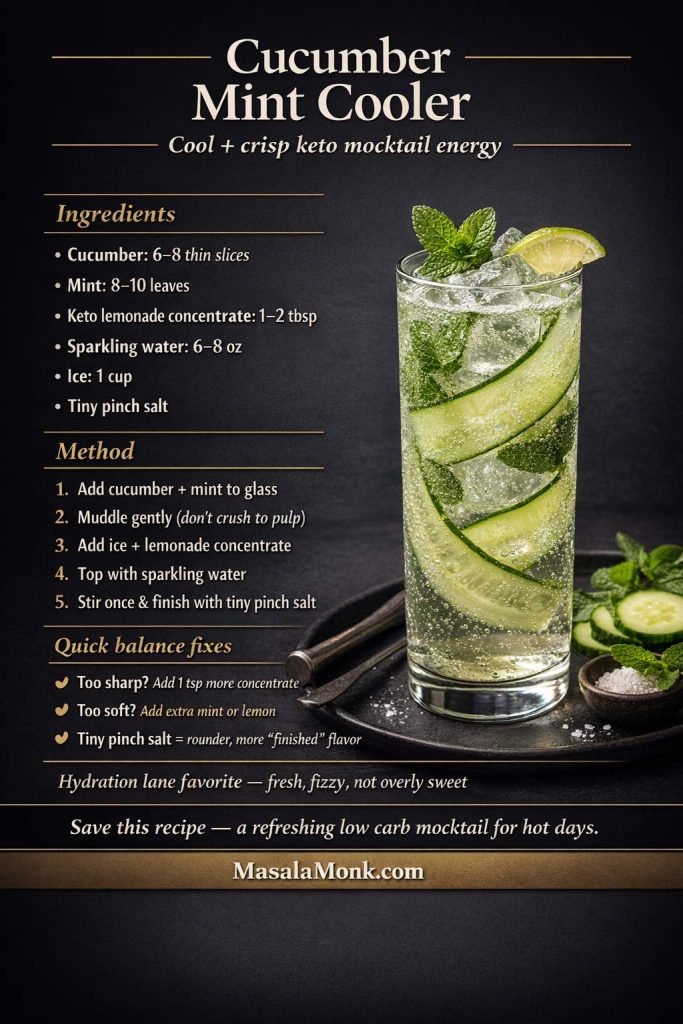
Dark luxury recipe-card infographic for a Cucumber Mint Cooler keto mocktail, showing a sparkling cucumber mint drink with ice, lime wedge, and mint garnish, plus ingredients, method steps, and quick balance tips for a low carb sugar free mocktail.
Save this Cucumber Mint Cooler recipe card for a fresh, fizzy keto mocktail that actually feels satisfying. It’s a low carb, sugar free drink made with cucumber, mint, sparkling water, and keto lemonade concentrate—plus quick balance tips so it tastes crisp, refreshing, and not overly sweet.

Method

  1. Start by adding cucumber and mint to the bottom of the glass.
  2. Then muddle gently—6 to 8 presses is plenty. You’re aiming to bruise the mint and lightly crush the cucumber, not turn everything into pulp.
  3. Add ice, pour in the lemonade concentrate, and top with sparkling water.
  4. Stir once, and only once.
  5. Lastly, add the tiny pinch of salt and taste. If the drink feels too sharp, add another teaspoon (5 ml) of lemonade concentrate; if it feels too soft, add an extra squeeze of lemon or more mint.

If you like this “hydration lane”
You’ll probably enjoy keeping electrolyte-style sips in rotation, especially on hot days or after workouts. For more DIY ideas you can adapt, see homemade electrolytes for fasting with zero-cal DIY options.


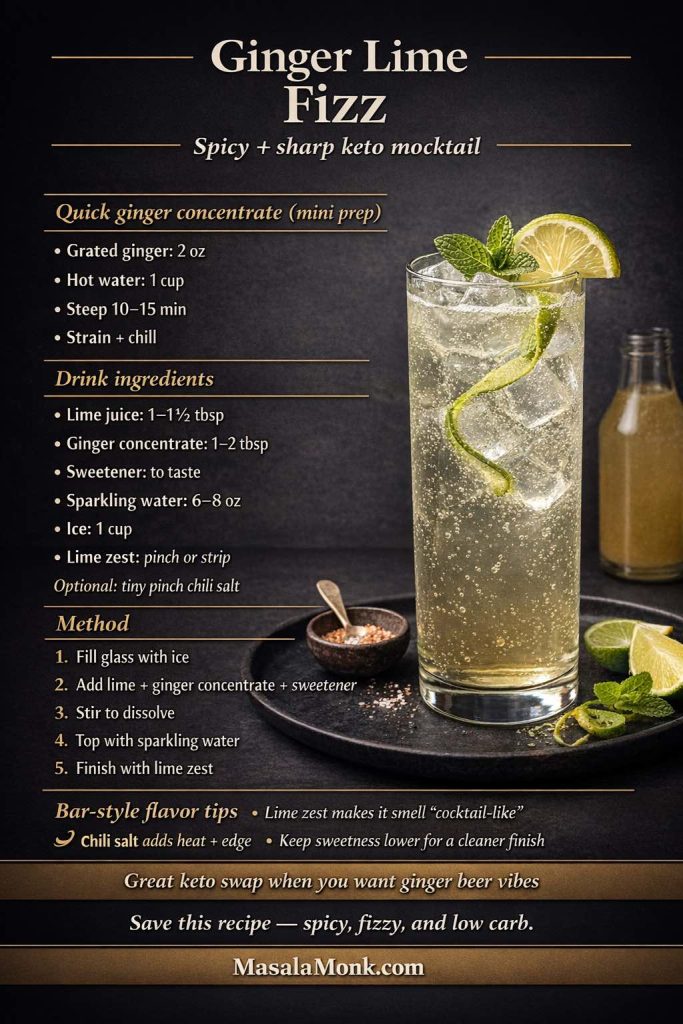
3) Ginger lime fizz (keto mocktail that scratches the ginger beer itch)

This is spicy, sharp, and unmistakably bar-like. Instead of relying on bottled “ginger beer” (often a sugar trap), you make a quick ginger concentrate that lasts several drinks. As a result, this becomes one of those recipes you repeat constantly because it tastes far more impressive than the effort involved.

Makes: 1 drink
Glass: tall glass

Quick ginger concentrate (makes 6–8 drinks)

Ingredients

  • Fresh ginger, grated: 2 oz / 60 g
  • Hot water: 1 cup / 240 ml
Dark luxury recipe-card infographic for a Ginger Lime Fizz keto mocktail, showing a sparkling lime and ginger drink with ice, mint, and lime garnish, plus a quick ginger concentrate prep, ingredients, method steps, and bar-style flavor tips for a low carb sugar free mocktail.
Save this Ginger Lime Fizz recipe card for a spicy, sharp keto mocktail that gives ginger beer vibes without the sugar. It includes a quick ginger concentrate, lime, sparkling water, and easy bar-style tips (like lime zest and chili salt) so your low carb drink tastes bright, fizzy, and cocktail-like.

Method

  1. Pour hot water over the grated ginger and steep 10–15 minutes.
  2. Strain well, then chill. The flavor intensifies once cold, so it’s worth tasting again after refrigeration.

Drink ingredients

  • Lime juice: 1–1½ tbsp / 15–22 ml
  • Ginger concentrate: 1–2 tbsp / 15–30 ml
  • Sweetener: to taste (start small)
  • Sparkling water: 6–8 fl oz / 180–240 ml
  • Ice: 1 cup / ~140 g
  • Lime zest: pinch or 1 strip

Optional

  • Chili salt: tiny pinch
  • Fresh ginger slice: 1 for garnish

Method

  1. Fill the glass with ice.
  2. Add lime juice, ginger concentrate, and sweetener; then stir until the sweetener dissolves.
  3. Top with sparkling water and give a single gentle stir.
  4. Finish with lime zest. That aroma is what makes the drink feel like a cocktail instead of “lime water.”
  5. If you want extra heat, add a tiny pinch of chili salt and let the drink sit 30 seconds before your first sip.

Also Read: Ravioli Recipe Reinvented: 5 Indian-Inspired Twists on the Italian Classic


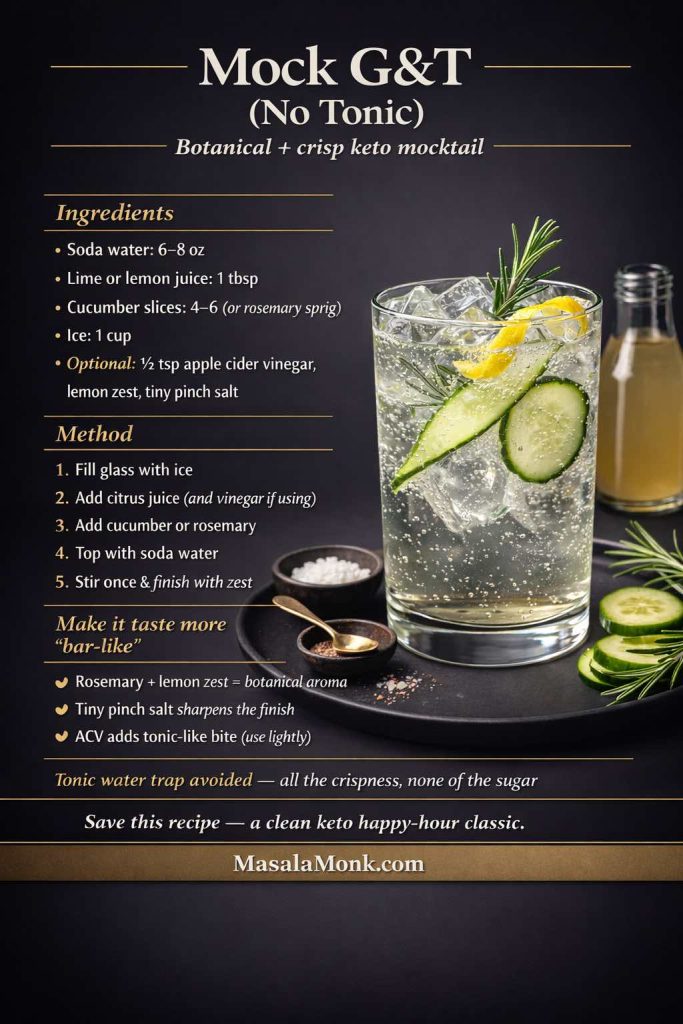
4) “Mock G&T” without the tonic trap (a crisp botanical keto mocktail)

Tonic water is the classic troublemaker—sweet, sneaky, and rarely as “light” as it tastes. Instead, this version recreates the crisp botanical vibe with aromatics and clean fizz. Even better, it’s adaptable: cucumber for spa freshness, rosemary for piney elegance, or citrus zest for pure lift.

Makes: 1 drink
Glass: rocks glass or tall glass

Ingredients

  • Soda water: 6–8 fl oz / 180–240 ml
  • Lime or lemon juice: 1 tbsp / 15 ml
  • Cucumber slices: 4–6 slices / 30–40 g or rosemary: 1 small sprig
  • Ice: 1 cup / ~140 g

Optional (for bite)

  • Apple cider vinegar: ½ tsp / 2.5 ml
  • Lemon zest: 1 strip
  • Fine salt: tiny pinch
Dark luxury recipe-card infographic for a Mock G&T (No Tonic) keto mocktail, showing a clear sparkling drink with cucumber, rosemary, lemon zest, and ice, plus ingredients, method, and tips for a botanical low carb sugar free mocktail without tonic water.
Save this Mock G&T (No Tonic) recipe card for a crisp, botanical keto mocktail that skips the sugar-heavy tonic water. This low carb, sugar free drink uses soda water, citrus, cucumber or rosemary, and optional apple cider vinegar for that grown-up bitter bite—clean, elegant, and perfect for keto happy hour.

Method

  1. Add ice to the glass.
  2. Pour in citrus juice (and vinegar, if using).
  3. Add cucumber or rosemary.
  4. Top with soda water and stir once.
  5. Finish with zest so it smells “grown-up” before it tastes “grown-up.”

When you want it extra “cocktail-like”
Use rosemary + lemon zest + that tiny pinch of salt. The combination reads herbal, sharp, and sophisticated rather than sweet.

Also Read: Fish and Chips Reimagined: 5 Indian Twists (Recipe + Method)


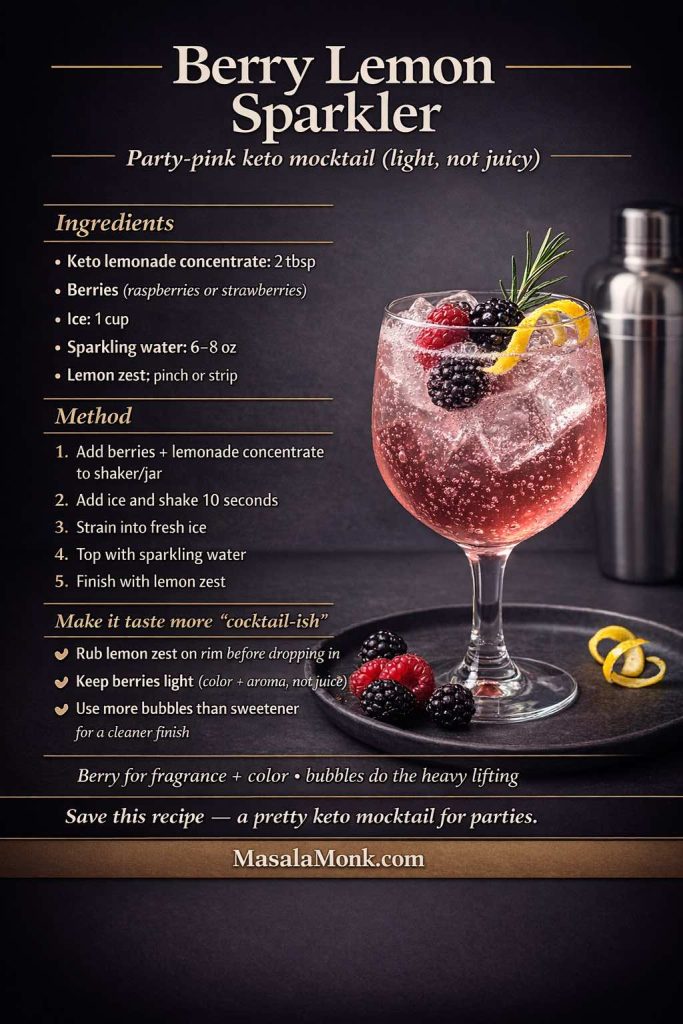
5) Berry-lemon sparkler (a bright keto mocktail that stays light, not juicy)

This is a party-friendly “pink drink” that doesn’t become fruit juice. The secret is using berries for fragrance and color, then letting bubbles do the heavy lifting. Consequently, you get something festive and pretty without the sugar baggage.

Makes: 1 drink
Glass: tall glass

Ingredients

  • Keto lemonade concentrate: 2 tbsp / 30 ml
  • Berries (raspberries or strawberries): 3–5 berries / 25–40 g
  • Ice: 1 cup / ~140 g
  • Sparkling water: 6–8 fl oz / 180–240 ml
  • Lemon zest: pinch or strip
Dark luxe recipe-card infographic for a Berry Lemon Sparkler keto mocktail, showing a pink sparkling drink in a stemmed glass with berries, lemon zest, and ice, plus ingredients, method, and tips for a light low carb sugar free party mocktail.
Save this Berry Lemon Sparkler recipe card for a pretty, party-ready keto mocktail that stays light—not juice-heavy. This low carb, sugar free drink uses keto lemonade concentrate, a few berries for color and aroma, sparkling water for fizz, and lemon zest for a clean cocktail-style finish. Perfect for keto happy hour, guests, or summer gatherings.

Method

  1. Add berries and lemonade concentrate to a jar or shaker.
  2. Add ice and shake hard for 10 seconds. This step matters because it pulls aroma and color quickly without needing a blender.
  3. Strain into a fresh glass filled with ice.
  4. Top with sparkling water and stir gently.
  5. Finish with lemon zest. If you want it more “cocktail bar,” rub the zest around the rim first, then drop it in.

If you ever want to sanity-check carbs for a specific berry portion, USDA FoodData Central is the most straightforward nutrition lookup.

Also Read: Dirty Martini Recipe (Classic, Extra Dirty, No Vermouth, Spicy, Blue Cheese, Tequila + Batched)


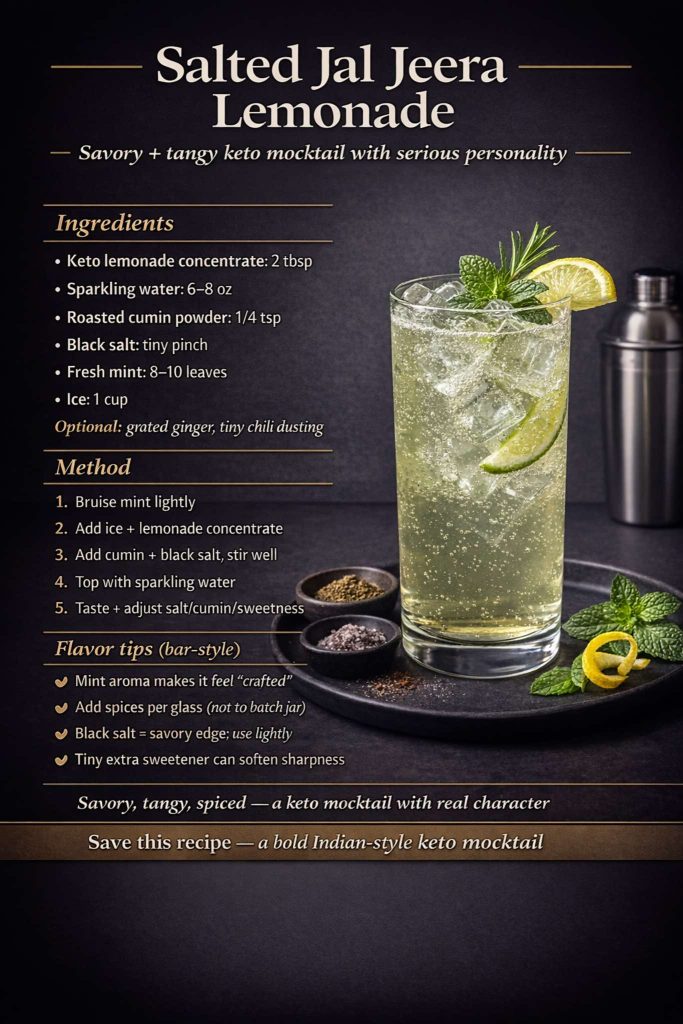
6) Salted jal jeera lemonade (Indian-spiced keto mocktail with serious personality)

This is where things get genuinely memorable: savory, tangy, and shockingly refreshing. It’s not trying to taste like soda; instead, it tastes like a crafted bar drink—sharp, aromatic, and layered. If you’ve never tried jal jeera flavors, this is a wildly satisfying place to start.

Makes: 1 drink
Glass: tall glass

Ingredients

  • Keto lemonade concentrate: 2 tbsp / 30 ml
  • Sparkling water: 6–8 fl oz / 180–240 ml
  • Roasted cumin powder: ¼ tsp / ~0.5 g
  • Black salt: tiny pinch (start with less than 1/16 tsp)
  • Fresh mint: 8–10 leaves
  • Ice: 1 cup / ~140 g

Optional

  • Fresh ginger, grated: ¼ tsp / ~1 g
  • Chili powder: tiny dusting
Dark luxe recipe-card infographic for Salted Jal Jeera Lemonade, an Indian-spiced keto mocktail with sparkling lemonade, mint, roasted cumin, and black salt, shown in a tall iced glass with ingredients, method, and flavor tips for a low carb sugar free drink.
Save this Salted Jal Jeera Lemonade recipe card for a bold Indian-style keto mocktail that’s savory, tangy, fizzy, and seriously refreshing. This low carb, sugar free drink uses keto lemonade concentrate, sparkling water, mint, roasted cumin, and black salt for a cocktail-like finish without syrupy mixers. A great keto happy-hour drink when you want something more interesting than sweet.

Method

  1. Bruise the mint first (clap it once or press gently in the glass). That step changes the aroma immediately.
  2. Add ice, then pour in the lemonade concentrate.
  3. Sprinkle cumin and black salt, then stir well so the spices don’t float on top.
  4. Top with sparkling water and stir once more.
  5. Taste and adjust: if it’s too sharp, add a touch more sweetener; if it’s too flat, add a hair more black salt or cumin.

For the classic flavor inspiration, see jal jeera as Indian lemonade.


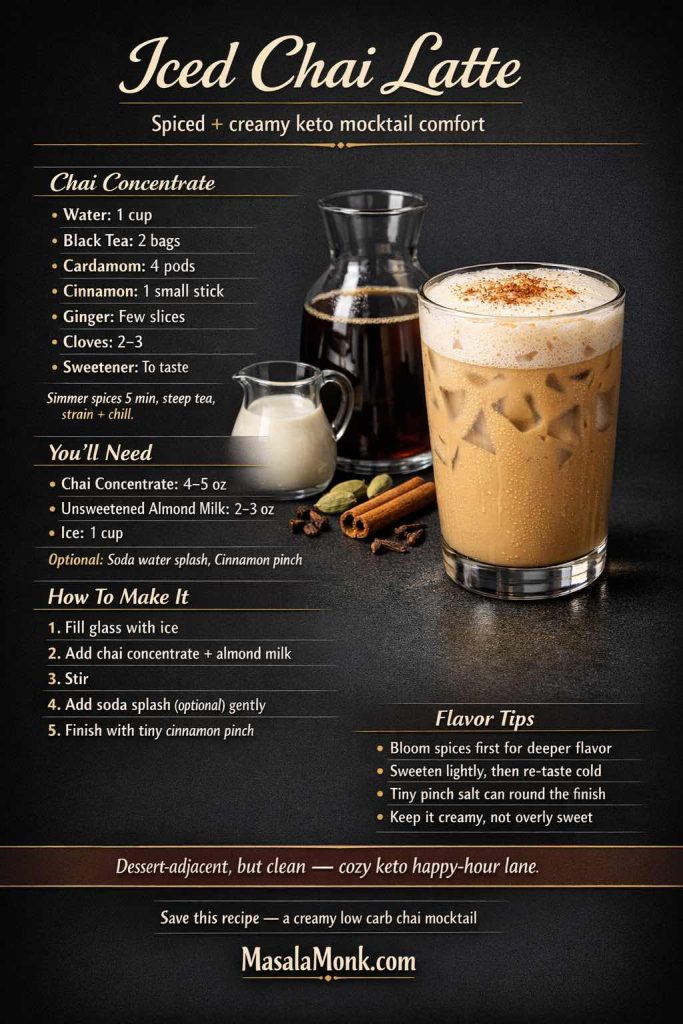
7) Iced chai latte (spiced, creamy keto mocktail comfort)

This one feels cozy without being heavy, which makes it perfect for evenings when you want something “dessert-adjacent” but still clean. Furthermore, it’s flexible: keep it still for calm comfort, or add a little soda water for a surprisingly elegant lift.

Makes: 1 drink
Glass: tall glass

Chai concentrate (makes 2–3 drinks)

Ingredients

  • Water: 1 cup / 240 ml
  • Black tea: 2 tea bags (or 2 tsp / ~4 g loose leaf)
  • Cardamom pods: 4, lightly crushed
  • Cinnamon stick: 1 small
  • Fresh ginger: 4–5 thin slices (or ½ tsp / ~2 g grated)
  • Cloves: 2–3
  • Sweetener: to taste
Dark luxe recipe-card infographic for an Iced Chai Latte keto mocktail, showing a creamy iced chai drink in a tall glass with mint and lemon garnish, plus chai concentrate ingredients, almond milk, method steps, and flavor notes for a low carb sugar free mocktail.
Save this Iced Chai Latte keto mocktail recipe card for a creamy, spiced, low carb drink that feels cozy but still refreshing. This sugar free mocktail uses chai concentrate, unsweetened almond milk, ice, and a tiny cinnamon finish for a clean keto happy-hour option. Great when you want a rich, café-style keto drink without syrupy mixers. Pin it now and visit MasalaMonk.com for the full keto mocktails guide, sweetener tips, and more easy drink ideas.

Method

  1. Simmer the water and spices for 5 minutes so the flavors actually bloom.
  2. Remove from heat, add tea, and steep 3–4 minutes.
  3. Strain, sweeten lightly, then chill completely.

Drink ingredients

  • Chai concentrate: 4–5 fl oz / 120–150 ml
  • Unsweetened almond milk (or a small splash of cream): 2–3 fl oz / 60–90 ml
  • Ice: 1 cup / ~140 g

Optional

  • Soda water: 2–3 fl oz / 60–90 ml (for lift)
  • Ground cinnamon: tiny pinch

Method

  1. Fill a tall glass with ice.
  2. Pour in chai concentrate and almond milk; stir.
  3. If using soda water, add it last and stir very gently.
  4. Finish with a tiny pinch of cinnamon on top.

If you want to level up your chai base—spice balance, brewing technique, and depth—this guide is excellent: how to make the perfect masala chai.


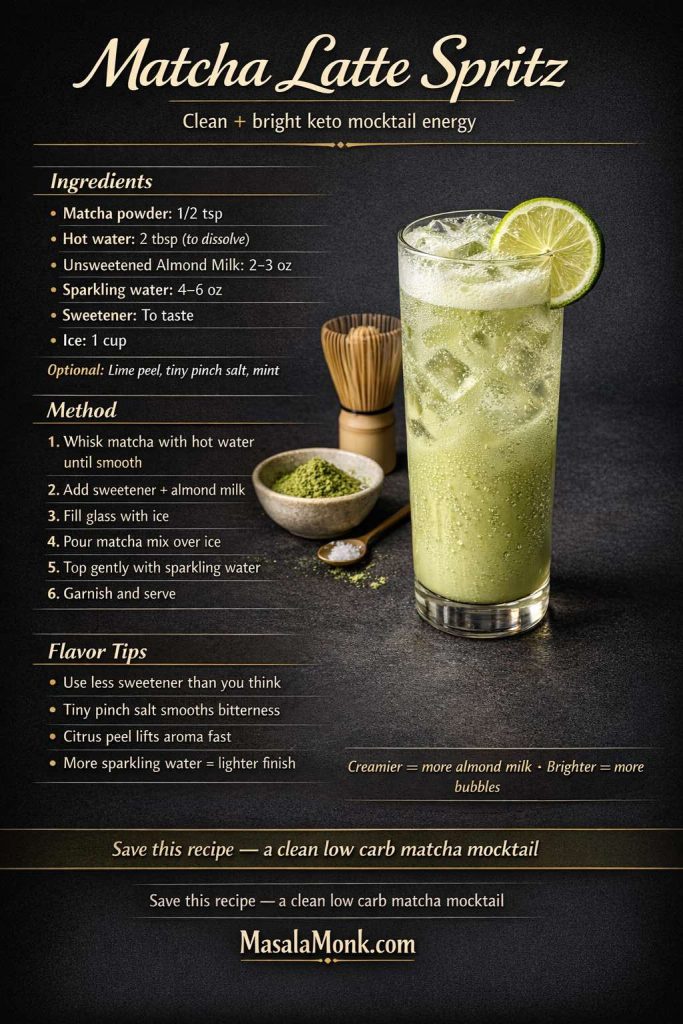
8) Matcha latte spritz (bright, clean keto mocktail energy)

This drink scratches the “energy drink” itch in a calmer way. It’s bright, earthy, and refreshing; meanwhile, the bubbles make it feel celebratory rather than functional. If you want it creamy, add a small splash of milk; if you want it sharper, add lemon zest. Either way, it feels deliberate.

Makes: 1 drink
Glass: tall glass

Ingredients

  • Matcha: ½ tsp / 1–1.5 g
  • Cold water: 2 fl oz / 60 ml
  • Sweetener: to taste (start tiny)
  • Ice: 1 cup / ~140 g
  • Sparkling water: 6 fl oz / 180 ml
  • Optional unsweetened milk: 1–2 fl oz / 30–60 ml
  • Optional lemon zest: pinch
Dark luxe recipe-card infographic for a Matcha Latte Spritz keto mocktail, featuring a pale green iced matcha drink with lime garnish, plus ingredients, method steps, and flavor tips for a low carb sugar free mocktail made with matcha, almond milk, and sparkling water.
Save this Matcha Latte Spritz keto mocktail recipe card for a clean, bright, low carb drink with a fresh matcha twist. This sugar free mocktail combines matcha, unsweetened almond milk, sparkling water, and ice for a lighter “happy hour” sip that feels energizing without sugary mixers. Great for warm days when you want something refreshing but not overly sweet. Pin it now and visit MasalaMonk.com for the full keto mocktails guide, sweetener tips, and more easy low carb drink recipes.

Method

  1. Shake matcha + cold water + sweetener in a jar for 10–15 seconds (or whisk until smooth).
  2. Fill a tall glass with ice.
  3. Pour in the matcha mixture.
  4. Top with sparkling water and stir once—very gently.
  5. Add milk if desired, then finish with lemon zest for a brighter aroma.

If tea-based rituals are your thing, you may enjoy this deeper read: tea and cortisol.


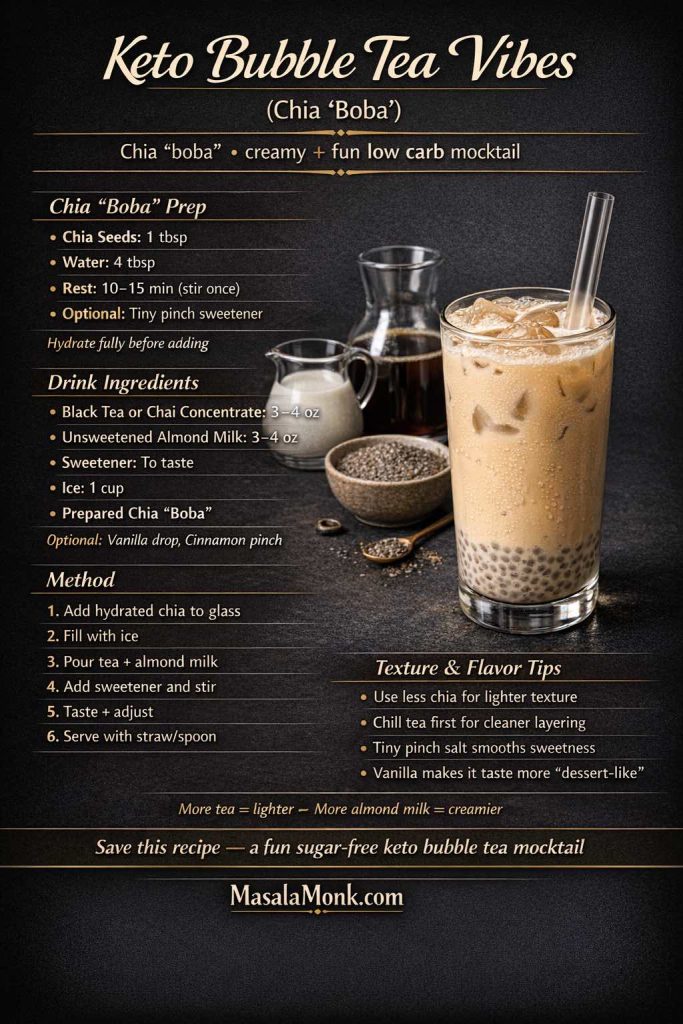
9) Bubble tea vibes (boba-style keto mocktail workaround)

This doesn’t pretend to be tapioca boba. Instead, it gives you the creamy tea satisfaction plus a fun texture—without the sugar-heavy bubble tea base. The result feels playful and comforting, especially when you want something different from endless fizz.

Makes: 1 drink
Glass: tall glass

Ingredients

  • Strong black tea, chilled: 6 fl oz / 180 ml
  • Unsweetened milk alternative: 2–3 fl oz / 60–90 ml
  • Sweetener: to taste
  • Ice: ½–1 cup / 70–140 g

“Boba-style” texture

  • Chia seeds: 1 tbsp / 12 g
  • Water (to soak): 3 tbsp / 45 ml
Dark luxe recipe-card infographic for a Keto Bubble Tea Vibes mocktail with chia “boba,” showing a creamy iced low carb drink in a tall glass with visible chia pearls, plus chia prep, ingredients, method steps, and texture tips for a sugar free keto bubble tea-inspired mocktail.
Save this Keto Bubble Tea Vibes recipe card for a fun, creamy, sugar free mocktail with chia “boba” texture. This low carb keto mocktail uses tea or chai concentrate, unsweetened almond milk, ice, and hydrated chia seeds for a bubble tea-inspired drink without sugary syrups. The card also includes quick chia prep, mixing steps, and texture tips so it turns out smooth and balanced. Pin it now and visit MasalaMonk.com for the full keto mocktails guide, sweetener swaps, and more easy low carb drink recipes.

Method

  1. Soak chia seeds in water for 10–15 minutes until gel-like; stir once halfway so it doesn’t clump.
  2. Spoon the chia gel into the bottom of a tall glass.
  3. Add ice, then pour in chilled tea and milk alternative.
  4. Sweeten, then stir well so the sweetness distributes evenly.
  5. Sip with a wide straw if you have one; otherwise, use a spoon-sip approach and enjoy the texture.

Variations that actually work

  • For dessert vibes, add 2 drops vanilla extract.
  • For a sharper finish, add a tiny pinch of salt and keep the sweetness lighter.

Also Read: 10 Low Carb Chia Pudding Recipes for Weight Loss (Keto, High-Protein, Dairy-Free)


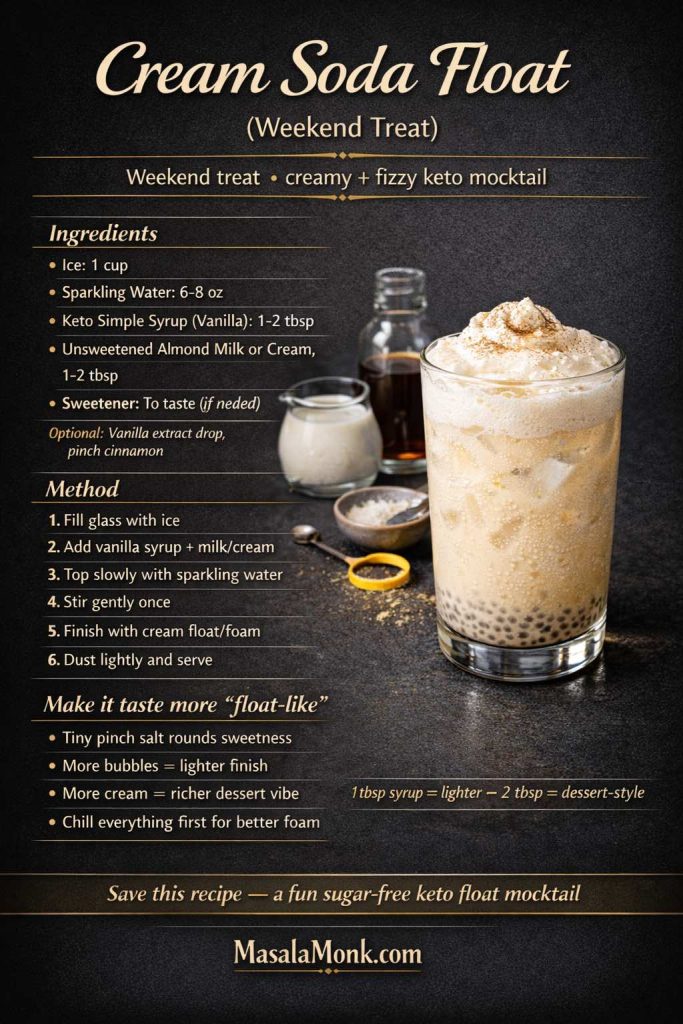
10) Cream soda float (dessert-style keto mocktail fun)

This is the “I want something fun” drink—nostalgic, creamy, and oddly satisfying. It’s not an everyday sip for most people; nevertheless, it’s perfect when you want a treat without turning the evening into a sugar spiral.

Makes: 1 drink
Glass: tall glass

Ingredients

  • Ice: 1 cup / ~140 g
  • Soda water: 6–8 fl oz / 180–240 ml
  • Vanilla extract: ¼ tsp / 1.25 ml (start with less if you prefer subtle vanilla)
  • Sweetener: to taste
  • Optional cream (or coconut cream): 1–2 tbsp / 15–30 ml
  • Optional lemon zest: tiny pinch (adds brightness)
Dark luxe recipe-card infographic for a Cream Soda Float keto mocktail, showing a creamy fizzy low carb drink in a short glass with foam on top, ice, and recipe sections for ingredients, method, and tips to make it taste more float-like without sugar.
Save this Cream Soda Float keto mocktail recipe card for a fun weekend treat that tastes creamy and fizzy without the sugar. This low carb mocktail uses sparkling water, keto vanilla simple syrup, and a little almond milk or cream for a smooth “float” vibe, plus quick tips to balance sweetness, boost bubbles, and get better foam. It’s a great dessert-style drink when you want something indulgent but still keto-friendly. Pin it now and visit MasalaMonk.com for the full keto mocktails guide, sweetener swaps, and more sugar free drink recipes.

Method

  1. Fill a tall glass with ice.
  2. Add vanilla extract and sweetener, then pour in soda water slowly.
  3. Stir gently to dissolve the sweetener without killing the fizz.
  4. Add cream last and give it one slow swirl so it stays “floaty” instead of fully mixing.

If you like dessert drinks as a category, there’s a warm companion for colder nights: keto hot chocolate with a sugar-free homemade mix.


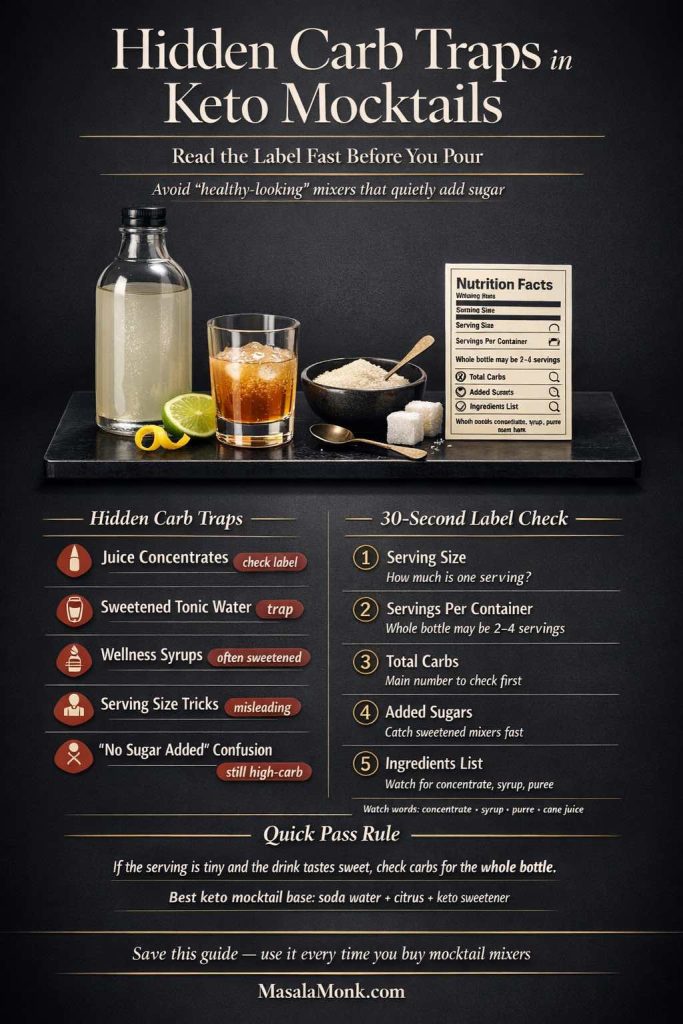
How to keep keto mocktails from becoming “hidden carb drinks”

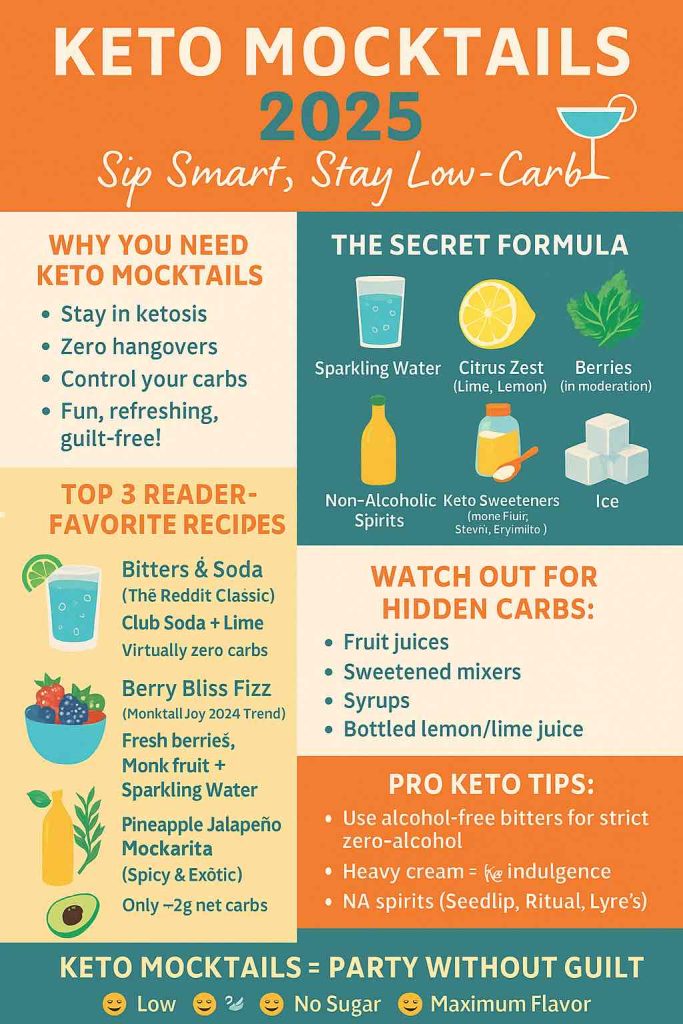
Here’s the frustrating truth: most people do everything right at home, then one “healthy” bottle ruins it. The label looks innocent. The marketing sounds clean. Then you pour it into your drink and wonder why it tastes like candy.

The problem is usually one of these:

  • juice concentrates hiding in “mocktail mixers”
  • sweetened tonic water
  • syrups dressed up as wellness
  • serving sizes that quietly double the carbs
  • “no sugar added” that still contains plenty of sugar naturally
Pinterest-style infographic titled “Hidden Carb Traps in Keto Mocktails” showing a dark luxe label-reading guide for keto mocktail mixers. It highlights common hidden carb sources like juice concentrates, sweetened tonic water, wellness syrups, serving size tricks, and “no sugar added” confusion, plus a 30-second Nutrition Facts label checklist for serving size, servings per container, total carbs, added sugars, and ingredients. MasalaMonk branding at the bottom.
Trying to keep your keto mocktails truly low carb? This quick visual guide helps you spot the hidden carb traps that sneak into “healthy-looking” mixers—like juice concentrates, sweetened tonic water, wellness syrups, and misleading serving sizes. It also gives you a 30-second label check so you can read Nutrition Facts fast before you pour. Save this for your next grocery run, and use it every time you shop for mocktail mixers, tonic, syrups, and flavored drink bases. For the full keto mocktail system, recipes, and flavor-building tips, visit MasalaMonk.com. Save, pin, and share if you want more practical low-carb drink guides like this.

If you want to keep your low carb, no sugar drinks truly low carb, use the label like a tool. The FDA’s guide makes the basics clear without drama: how to use the Nutrition Facts label. It’s especially useful for catching serving-size tricks and spotting added sugars fast.

For anything that still feels ambiguous—fruit portions, juices, or even some “natural” drinks—checking the nutrition data directly can save you time: USDA FoodData Central.

Also Read: Garlic & Paprika Cabbage Rolls (Keto-Friendly Recipes) – 5 Bold Savory Twists


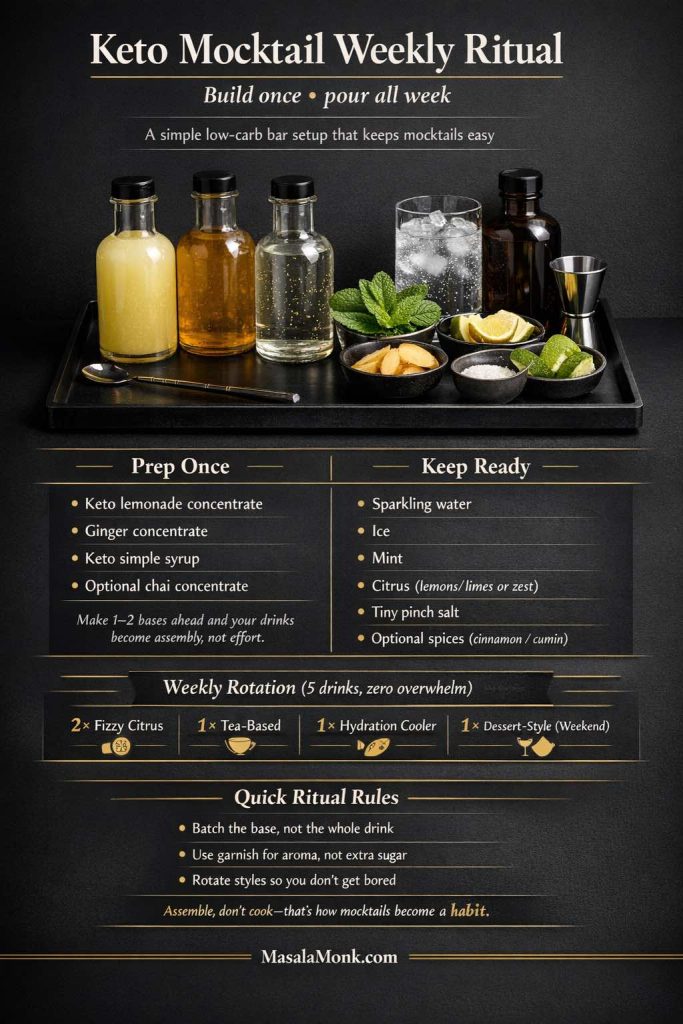
Turning keto mocktails into a weekly ritual

A mocktail becomes a habit when it’s easy. That’s why the smartest setup isn’t a long ingredient list. It’s a small “bar” of repeatable building blocks.

Dark luxe infographic titled “Keto Mocktail Weekly Ritual” showing a low-carb mocktail prep system with bottles of keto lemonade concentrate, ginger concentrate, keto simple syrup, sparkling water, mint, citrus, and salt on a bar tray. The graphic explains a weekly routine with “Prep Once,” “Keep Ready,” a 5-drink rotation, and quick ritual rules for easy keto mocktails.
Turn keto mocktails into a real habit with this simple weekly setup: prep 1–2 bases (like keto lemonade concentrate or ginger concentrate), keep sparkling water + mint + citrus ready, and rotate drink styles through the week so you never get bored. This “build once, pour all week” system makes low carb mocktails fast, repeatable, and way more realistic for busy days. Save this guide for your weekly drink routine, and visit MasalaMonk.com for the full keto mocktail recipes, concentrate cards, and flavor tips. Pin, save, and share with someone building a sugar-free happy-hour ritual.

Keep one concentrate in the fridge

Your keto lemonade base is the obvious choice, but you can also keep:

  • a ginger concentrate
  • a chai concentrate
  • a simple syrup made with your preferred sweetener

Then, when you want a drink, you’re assembling rather than cooking.

Keep garnishes simple, but intentional

A garnish isn’t decoration. It’s aroma. That’s why mint, citrus zest, and ginger matter more than complicated fruit carvings. Even a small twist of lemon peel changes how the drink smells, which changes how it tastes.

Rotate styles so you don’t get bored

A good weekly rhythm might look like this:

  • two fizzy citrus drinks
  • one tea-based mocktail
  • one hydration-style cooler
  • one dessert-style drink on the weekend

That rotation covers cravings without turning your kitchen into a beverage lab.

If you want an additional set of celebration-friendly options to keep your rotation fresh, here’s a fun companion read: more keto mocktail ideas for parties and gatherings.


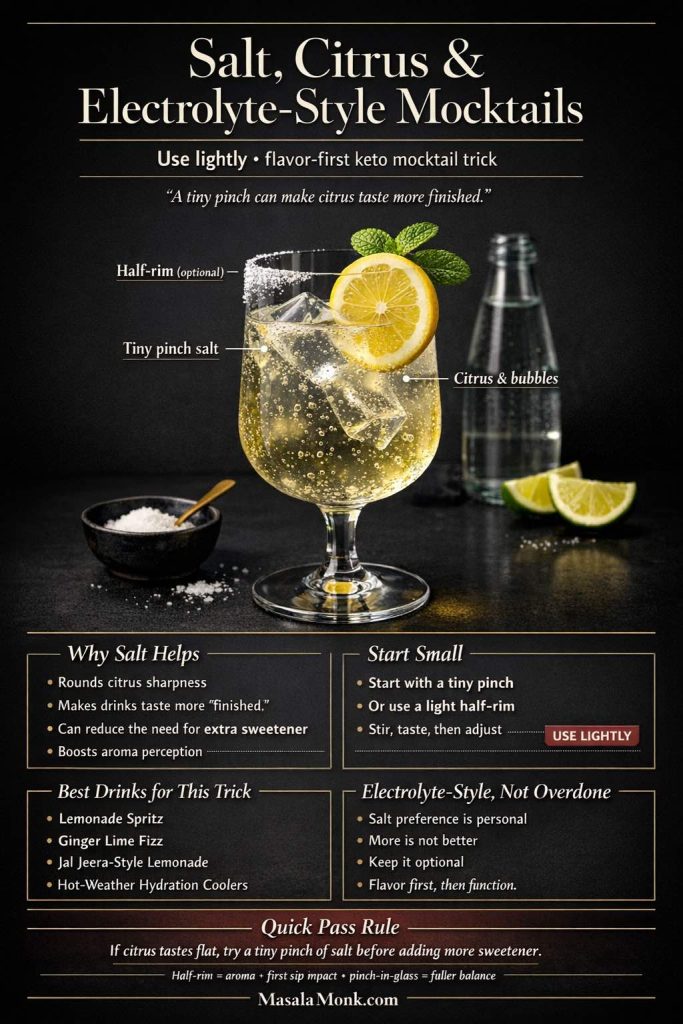
A gentle note on “salty rims” and electrolyte-style drinks

Salt makes citrus taste better. It also makes certain low carb drinks feel oddly satisfying, especially if you’ve ever felt sluggish on keto or after a long day in the heat.

Dark luxe infographic titled “Salt, Citrus & Electrolyte-Style Mocktails.” It shows a sparkling citrus keto mocktail in a stemmed glass with a subtle half-salted rim, lemon slice, mint, and bubbles, plus a small salt bowl and citrus wedges. Text explains why a tiny pinch of salt helps flavor, how to start small with a pinch or half-rim, best drinks for the trick (lemonade spritz, ginger lime fizz, jal jeera-style lemonade, hydration coolers), and a quick rule to try salt before adding more sweetener.
A tiny pinch of salt can completely change a keto mocktail. This guide shows how to use salt as a flavor tool (not a rule) to make citrus drinks taste more balanced, crisp, and “finished” without adding extra sweetener. Save this for your next keto happy-hour drink, especially if your lemonade spritz or ginger lime fizz tastes flat. Full keto mocktail recipes, concentrates, and low-carb drink ideas on MasalaMonk.com — pin it, save it, and share it with someone building a better sugar-free drink routine.

Still, salt is personal. Some people feel amazing with a salted lemonade spritz. Others prefer to keep it minimal. If you’d like a general reference point for daily sodium considerations, the American Heart Association’s overview is straightforward: how much sodium per day. It’s a useful compass while you experiment with salty rims and hydration-style mocktails.

Similarly, when people talk about electrolytes, potassium is part of the conversation. If you’re curious about potassium as an electrolyte in general nutrition terms, the NIH Office of Dietary Supplements has a detailed fact sheet: potassium overview.

Also Read: Peanut Butter Fudge: Recipes & Guide (8 Methods + Easy Variations)


Beyond mocktails: when fizzy drinks, kombucha, and “gut-friendly” fizz fit in

Sometimes you want bubbles but don’t want sweetener at all. Other times, you want something that feels like a soda replacement without being just flavored water. That’s where kombucha enters the conversation.

Kombucha isn’t automatically keto-friendly, because sugar and fermentation vary wildly. Still, small portions of lower-sugar kombucha can work for some people, and it’s often used as a “bridge drink” away from soda habits.

A dark luxe infographic titled “Mocktails, Kombucha & Gut-Friendly Fizz” comparing keto mocktails, kombucha, and gut-friendly fizzy drinks. It shows three drinks side by side with a chart for best use, sweetness, carb risk, label checks, portion tips, and a quick keto rule: sparkling water plus citrus and herbs is the safest default.
Trying to choose between a keto mocktail, kombucha, or a simple gut-friendly fizzy drink? This quick comparison guide makes it easy. It breaks down sweetness control, carb risk, label-check priorities, and when each option fits best—so you can enjoy bubbles without accidentally turning your drink into a hidden carb trap. If you’re keeping drinks low carb, this is the kind of saveable reference you’ll actually reuse. Save this pin, share it with someone building better soda swaps, and bookmark this guide for recipes, keto mixer swaps, and label-check tips.

If you want a thoughtful breakdown, these reads help you understand the landscape and decide how it fits your routine:

Even if you decide kombucha isn’t for you, the idea is useful: you can build gut-friendly fizz vibes through herbs, ginger, citrus, and sparkling water without needing sugar at all.

Also Read: Sourdough Recipe: 10 Easy Bread Bakes (Loaves, Rolls & Bagels)


Making your keto mocktails feel like happy hour, not “health drinks”

If there’s one mindset shift that improves everything, it’s this: stop trying to make drinks “healthy.” Start trying to make them enjoyable.

Dark luxe infographic titled “Flavor, Not Sweetness — Make Keto Mocktails Feel Like Happy Hour” showing five keto mocktail flavor styles (bright, spicy, cool, creamy, botanical) with example drinks, a flavor framework (contrast, aroma, finish), and a guide for swapping sugar cravings with flavor-first keto mocktail ideas.
Keto mocktails taste better when you build for flavor, not sweetness. This saveable guide shows how to create a true happy-hour feel with contrast, aroma, and finish—using bright citrus, ginger spice, minty coolness, creamy chai/vanilla notes, and botanical herbs instead of chasing sugar. Use it as your flavor map for low carb, sugar-free mocktails that actually feel satisfying. Save this for your next keto drink night, and save this post for the full mocktail recipes, sweetener tips, and weekly ritual ideas.

Enjoyable drinks have contrast. They have aroma. They have a beginning and a finish.

That’s why a salted rim matters. That’s why ginger matters. And that’s why mint matters. Those are cocktail ideas, not diet ideas. You’re borrowing the logic of the bar and applying it to low carb non alcoholic drinks.

Once you do that, you’ll notice something else: your cravings change. You stop wanting a sugar hit and start wanting a flavor hit. Instead of chasing “sweet,” you chase “bright,” “spicy,” “cool,” “creamy,” or “bitter.” That’s a better place to be—not because it’s virtuous, but because it’s sustainable.

Also Read: Sweetened Condensed Milk Fudge: 10 Easy Recipes


A few more drink directions you can keep in your back pocket

Sometimes the best keto mocktails are the ones you can customize to your day.

Infographic titled “Keto Mocktail By Mood” showing three keto mocktail directions—Hydration, Dessert, and Coffeehouse—with example drink ideas, quick pick rules, and flavor-first tips for choosing low-carb, sugar-free mocktails.
Not sure what to make tonight? This Keto Mocktail By Mood guide helps you choose fast: go Hydration (salted lemonade spritz / cucumber mint cooler), Dessert (cream soda float / iced chai latte), or Coffeehouse (iced coffee + cream / cold brew style). It’s a simple way to keep your keto mocktails fun, flavorful, and low sugar without overthinking ingredients. Save this guide for your weekly drink rotation, and use it anytime you want a happy-hour vibe without hidden carbs. Explore the full post on MasalaMonk.com for recipes, concentrates, flavor tips, and more keto mocktail ideas.

When you want a post-work vibe without the sugar

A lot of “sports drinks” and powdered mixes rely on sweeteners and flavors that feel heavy. Instead, try:

  • salted lemonade spritz
  • cucumber mint cooler
  • ginger lime fizz with extra salt (lightly)

If you want more hydration drink ideas that fit fasting and low carb days, this DIY collection is an easy reference: zero-cal electrolyte drink recipes.

When you want a dessert drink without turning it into a meal replacement

If you’re craving a creamy drink, keep it simple:

  • cream soda float mocktail
  • iced chai latte mocktail
  • a small mug of sugar-free hot cocoa on colder nights

That last one deserves its own moment—because it’s not just a recipe, it’s a comfort ritual: keto hot chocolate that stays rich and glossy.

When you want a coffeehouse vibe without the sugar trap

Cold coffee mocktails can be incredible. A simple iced coffee with a splash of cream and a touch of sweetener is often enough. If fasting is part of your routine, it’s useful to understand how coffee fits into that pattern: coffee and fasting guidance.


Closing thought: keep the ritual, lose the sugar

Keto mocktails work because they respect the moment. They don’t ask you to give up the “special drink” habit. Instead, they upgrade it.

With a lemonade base in your fridge, a jar of ginger concentrate ready to go, and a small set of garnishes, you can make low carb mocktails that feel like happy hour—bright citrus spritzers, savory jal jeera lemonade, spicy ginger fizz, creamy dessert sips, and tea-based drinks that feel like a treat.

Dark luxe infographic titled “Keep the Ritual, Lose the Sugar” showing five keto mocktail styles in a row—bright citrus spritz, spicy ginger-lime fizz, savory jal jeera style drink, creamy chai/float-style mocktail, and a coffeehouse-style iced drink. The graphic explains what makes keto mocktails feel like happy hour (contrast, aroma, finish, bubbles), what to keep ready (lemonade concentrate, sparkling water, mint, citrus, ginger or chai concentrate, keto sweetener), and the habit trick for building flavor-first sugar-free drinks.
Keep the ritual, lose the sugar 🍋✨ This closing keto mocktail guide brings the whole idea together: build drinks around flavor, aroma, bubbles, and finish instead of chasing sweetness. It maps out 5 easy directions—bright citrus, spicy ginger, savory jal jeera, creamy dessert-style, and coffeehouse vibes—plus the simple “keep-ready” staples that make low-carb mocktails feel effortless all week. Perfect if you want keto mocktails that feel like happy hour, not health drinks. Save this for your weekly drink rotation, and click through for the full MasalaMonk guide with recipes, concentrates, and flavor tricks. Pin, save, and share if you’re building a sugar-free mocktail ritual. 🍸💛

Then, over time, you’ll notice your default changes. You won’t reach for sugary mixers because your drinks already taste good. You won’t miss the syrup because aroma does the heavy lifting. And you won’t feel stuck, because you’ll have more options than you did before—options that keep your day on track while still feeling indulgent.

If you’re in the mood to keep experimenting, try building a “two-lane” rotation: one lane for fizzy citrus and party drinks, another lane for warm or creamy comfort drinks. Between those two, you can cover almost any craving without leaving the world of keto-friendly, sugar free mocktails behind.

Also Read: Keto Chips: Best Low-Carb Snacks (For Salsa, Dips & Nachos)

FAQ: Keto Mocktails (Low Carb, Sugar Free Drinks)

1) What are keto mocktails?

Keto mocktails are non-alcoholic drinks made to stay low in carbs and sugar while still tasting like a “real” cocktail. Instead of juice-heavy mixers and syrups, they lean on sparkling water, citrus, herbs, spices, and keto-friendly sweeteners to create balance and flavor.

2) Are keto mocktails really sugar free?

They can be. Many keto mocktails are built as sugar free mocktails by using zero-sugar sweeteners and avoiding juice concentrates, tonic water, and premade mixers. However, “sugar free” depends on what you pour in—so the ingredients matter more than the name.

3) Are there truly zero carb keto mocktails?

Sometimes, yes—especially when you use plain sparkling water, citrus zest, herbs, and very small amounts of lemon or lime juice. That said, many “zero carb” style drinks are best thought of as near-zero, because even citrus juice can add trace carbs depending on portion size.

4) What are the best low carb non alcoholic drinks for a party?

If you want crowd-friendly options, choose keto fizzy drinks that are easy to batch: lemonade spritzers, cucumber-mint coolers, ginger-lime fizz, or berry-lemon sparklers with a light fruit touch. In addition, tea-based mocktails (like iced chai) can be made ahead and served over ice.

5) What’s the easiest keto mocktail to start with?

A keto lemonade spritz is usually the simplest: lemonade concentrate plus sparkling water over ice. From there, you can branch into mint, ginger, cucumber, or spice variations without changing the base.

6) How do I make keto friendly lemonade without it tasting “diet”?

Instead of pushing sweetness, aim for balance. A small pinch of salt smooths sharp lemon. Zest adds aroma. Ginger adds depth. Also, sweeten lightly, then chill and re-taste—cold temperatures change how sweetness reads.

7) Which sweeteners work best in sugar free keto drinks?

Allulose tends to taste the most “clean” in cold lemonade-style drinks. Monk fruit blends are convenient, although different brands vary in aftertaste. Stevia works well in tiny amounts, particularly with citrus. Erythritol can be fine too, yet it often dissolves best when used as a syrup.

8) What should I avoid if I’m trying to keep drinks low carb and no sugar?

Avoid tonic water, regular soda, cocktail syrups, juice blends, and “mocktail mixers” that rely on fruit concentrates. Likewise, watch for sweetened flavored waters that appear light but still contain sugars or high-carb ingredients.

9) Can keto mocktails help with cravings for soda?

Often, yes. Because keto mocktails can mimic the fizz, the cold bite, and the flavor complexity of soda, they can be a smoother replacement than plain sparkling water. Additionally, citrus zest and ginger can add that “satisfying hit” soda drinkers miss.

10) What are the best keto fizzy drinks when I want something bubbly?

Sparkling water with lemon or lime is the simplest. Beyond that, lemonade spritzers, ginger-lime fizz, mint coolers, and “mock G&T” style drinks are strong go-to choices. If you like a sweeter profile, a light cream-soda style mocktail can work as well.

11) Is kombucha keto friendly?

It depends. Some kombuchas are lower sugar than others, and portion size changes everything. Therefore, if you include kombucha, treat it as an occasional small pour rather than a default base for keto mocktails—unless you’ve checked its sugar content and it fits your carb limits.

12) Can I drink keto mocktails while fasting?

It depends on what you mean by fasting. Plain sparkling water, herbs, and citrus zest are more likely to fit a “clean” approach. In contrast, sweeteners, cream, and juice—even if low carb—may not fit stricter fasts. Consequently, if fasting is a priority, keep mocktails simpler and more mineral-forward.

13) What are keto hydration drinks, and how are they different from keto mocktails?

Keto hydration drinks focus on fluids plus minerals like sodium and potassium, rather than “cocktail-style” flavor. Nevertheless, many keto mocktails can double as hydration drinks when you use citrus, salt, and plenty of water or sparkling water—especially in hot weather or after a workout.

14) What’s a good keto post workout drink if I don’t want a shake?

A salted lemonade spritz, cucumber-mint cooler with a pinch of salt, or a ginger-lime fizz with extra water can be a refreshing alternative. Also, keeping sweetness light may feel better after training, particularly if you’re aiming for low carb, low sugar recovery.

15) Can I make low carb mocktails creamy without making them heavy?

Yes. Use small amounts of cream or unsweetened milk alternatives, then balance with vanilla, spice, or tea. Moreover, keeping the base cold and the sweetener minimal helps it taste like a “treat” rather than a thick dessert drink.

16) How do I make keto bubble tea or keto boba tea at home?

Use chilled black tea (or jasmine tea), a low-carb milk option, and sweetener to taste. For a boba-style texture, chia seeds soaked into a gel can mimic that fun chew. Then adjust sweetness gradually so it stays balanced rather than overly sweet.

17) What’s the best way to batch keto mocktails for guests?

Make concentrates ahead—lemonade, chai, ginger—and chill them. When serving, build each drink over ice, then top with sparkling water at the last moment. That way, every glass stays fizzy and fresh instead of flat.

18) Can I turn these into low carb drinks that feel like cocktails without alcohol?

Absolutely. Focus on cocktail cues: aroma (zest, herbs), bite (ginger, acid), contrast (salt, spice), and texture (bubbles, a small creamy swirl). As a result, your keto mocktails will taste intentional—like happy hour—rather than like a substitute.

KETO MOCKTAILS 2025
KETO MOCKTAILS Infographic

Posted on 13 Comments

French 75 Cocktail Recipe: 7 Easy Variations

Woman in a green dress holding a French 75 cocktail in a champagne flute with a lemon twist, with text overlay reading ‘How to Make a French 75 Plus 7 Refreshing Variations’ above MasalaMonk.com.

There’s something wonderfully sneaky about a French 75. It looks delicate in the glass, but it drinks like a tiny, sparkling cannon. Gin, lemon, sugar, Champagne: that’s it. This French 75 cocktail recipe is your base. From there, we’ll walk through the most-loved variations people actually look for—vodka French 76, Mexican 75 with tequila, bourbon French 95, cognac, elderflower, lavender, Prosecco/Italian 75, batch versions and a mocktail—so you can pour exactly the kind of 75 you’re in the mood for.


What Is a French 75?

At its core, a French 75 is a classic sour (spirit + citrus + sugar) lengthened with Champagne. In most modern bars that means:

  • Gin
  • Fresh lemon juice
  • Simple syrup
  • Dry sparkling wine (usually Champagne or another Brut)

Served in a flute or coupe, garnished with a lemon twist, it’s bright, bubbly and deceptively easy to drink.

The drink’s name comes from the French 75mm field gun used during World War I. According to Wikipedia’s French 75 entry, the idea was that this pretty little cocktail hits with the power of artillery when you aren’t paying attention. Meanwhile, the International Bartenders Association recognises it as an official contemporary classic, listing a stripped-back recipe of gin, lemon, sugar and Champagne.

You’ll see slight differences in ratios from one book to the next, and some early recipes even used cognac instead of gin. That’s actually good news for home bartenders: once you understand the pattern, you can comfortably switch spirits, bubbles and flavours without losing the soul of this French 75 cocktail recipe.


Classic French 75 Cocktail Recipe (Gin, Lemon & Champagne)

Let’s start with the template every other riff builds on.

Ingredients

Makes one drink

  • 1½ oz (45 ml) gin
  • ¾ oz (22 ml) fresh lemon juice
  • ½–¾ oz (15–22 ml) simple syrup (1:1 sugar and water)
  • 3 oz (90 ml) Brut Champagne or other dry sparkling wine
  • Ice, for shaking
  • Lemon twist or thin lemon wheel, for garnish

A juniper-forward London Dry gin like Beefeater or Tanqueray gives the most classic profile, although softer, more aromatic gins absolutely work. If you enjoy exploring gin in general, you might also like the ideas in these creative gin cocktail recipes, which use similar sour-style ratios in very different ways.

Classic French 75 cocktail recipe card showing a coupe glass with a lemon-twist garnish on a wooden bar, surrounded by lemon, sugar and jigger, with text listing gin, lemon, simple syrup, Champagne and three simple preparation steps.
Classic French 75 at a glance – gin, lemon, simple syrup and Champagne with quick step-by-step instructions so you can mix this bubbly favourite in seconds.

Step-by-step French 75 Cocktail Recipe

  1. Chill your glass
    Slide a Champagne flute or coupe into the freezer for a few minutes. Cold glass, cold drink, happy you.
  2. Build the sour base
    In a cocktail shaker, combine the gin, fresh lemon juice and simple syrup.
  3. Shake with ice
    Fill the shaker with ice and shake for about 10–15 seconds. You want the metal to frost over and the contents to be very cold, with just enough dilution to soften the lemon’s sharpness.
  4. Strain into your chilled glass
    Fine-strain the mixture into the flute or coupe. A fine strainer catches ice shards and pulp so the drink stays silky and elegant.
  5. Add the bubbles
    Gently top with Champagne or another dry sparkling wine. Pour slowly, letting the foam settle as you go—you don’t want to lose half the drink in a fizzy overflow.
  6. Garnish and serve
    Express a strip of lemon peel over the surface to release the oils, rake it around the rim, then drop it in or curl it along the edge. Serve straight away, while the drink is icy and effervescent.

The Liquor.com French 75 recipe follows almost this exact pattern: gin and lemon balanced with sugar, brought to life by Champagne. It’s a simple combination, but when everything is fresh and cold it feels like you’ve stepped into a classic hotel bar.


Choosing Ingredients for the Best French 75 Cocktail Recipe

The French 75 is incredibly sensitive to ingredient quality. Small tweaks make a big difference, so this section walks through the main choices and how they change the drink.

Picking a gin

For a classic French 75 cocktail recipe, start with:

  • London Dry gin – crisp, juniper-led, slightly peppery. Tanqueray, Beefeater or similar will give you that familiar structure.
  • Softer, floral gins – brands like Hendrick’s can work beautifully if you like cucumber and rose notes playing with the lemon.

If this drink becomes a favourite, you’ll probably enjoy branching out into gin-forward recipes like the Negroni and its variations, which show how the same bottle behaves when stirred with vermouth and bitters instead of shaken with citrus.

Champagne vs Prosecco vs other bubbles

The IBA specifies Champagne for the official build, but in a home kitchen your options are broader:

  • Champagne (Brut) – toasty, bready, layered. Ideal when you want the drink to feel extra special.
  • Cava – usually very dry, clean and great value; perfect for parties and batch servings.
  • Prosecco – slightly fruitier and often a touch sweeter; we’ll lean into this in the Italian/Prosecco variations later.

Whichever you use, stay in the Brut or Extra Brut range. If the sparkling wine is sweeter (often labelled “Extra Dry” in Prosecco), you might want to reduce the simple syrup slightly so the French 75 doesn’t become cloying.

For inspiration on how sparkling wine behaves in bigger, party-ready bowls, have a look at the pineapple punch recipes that add prosecco or Champagne right at the end; the same timing works brilliantly when you batch French 75s, too.

Balancing lemon and sweetness in French 75 Cocktail Recipe

Lemon juice is non-negotiable here. Bottled lemon tends to taste flat and harsh; fresh juice brightens the drink without turning it sour for the wrong reasons.

As for sugar, think of the simple syrup range like this:

  • ½ oz (15 ml) – sharp, spritzy, more “adult”.
  • ¾ oz (22 ml) – rounder, more approachable, likely to please a mixed crowd.

You can use that same idea in other lemon-based cocktails. A good example is the lemon drop martini recipe: it leans a little sweeter because there’s no sparkling wine to help with balance, so the sugar has to do more work.


A Quick Look at the French 75’s History

The story behind the French 75 is messy in a charming way. Different books claim different origins, and arguments rage about whether the “real” drink uses gin or cognac.

Early printed recipes in the early 20th century show the drink appearing in Paris around World War I. The Wikipedia article on the French 75 mentions Harry’s New York Bar in Paris as an important early home, and notes that some of the earliest written versions were brandy-based, with champagne and lemon added. Later, gin versions became far more widespread, and today those are what most people recognise.

Writers at Difford’s Guide dig into old bar manuals and argue that cognac versions (sometimes called French 125s) have a strong claim to authenticity as well. Meanwhile, Jeffrey Morgenthaler’s essay on the French 75 walks through a tangle of recipes that includes gin, apple brandy, orgeat, grenadine and more. The takeaway? The drink has always been more like a family of Champagne cocktails than a single fixed formula.

Even Ultimate Mai Tai’s discussion of gin vs cognac in the French 75 concludes that while the IBA gives the modern gin-based template its stamp of approval, cognac versions are arguably more “French” and luxuriously dessert-friendly.

All of that means you have permission to treat this French 75 cocktail recipe as a flexible sketch. Gin is the starting point, not a prison.


French 75 Cocktail Recipe Variations

Once you’ve made a few classic French 75s, it becomes very natural to bend the recipe. Swap the spirit, change the sweetener, or alter the bubbles and you have something new that still feels like part of the family.

The pattern stays the same:

  • Around 1½ oz spirit
  • Around ¾ oz citrus
  • ½–¾ oz sweetener (syrup or liqueur)
  • 2½–3 oz sparkling wine

From here on, we’ll walk through seven prominent variations, plus a few bonus twists that are worth trying at least once.


1. Cognac French 75 (French 125) Cocktail Recipe

This variation sits closest to some of the earliest printed versions of the drink. Cognac brings warmth, dried-fruit notes and a plush mouthfeel that make the French 75 lean toward dessert.

Ingredients

  • 1½ oz cognac (VS or VSOP)
  • ¾ oz fresh lemon juice
  • ½–¾ oz simple syrup
  • 3 oz Brut Champagne or dry sparkling wine
Recipe card for a Cognac French 75, also called a French 125, showing a golden cocktail in a coupe glass with lemon twist on a dark wooden bar, plus text listing cognac, lemon, simple syrup, Champagne and three simple preparation steps.
Cognac French 75 (French 125): a richer take on the classic, made with cognac, fresh lemon, simple syrup and Champagne for a silky, dessert-worthy sparkle.

Method

Shake the cognac, lemon and syrup with ice. Fine-strain into a chilled flute or coupe, top with Champagne and garnish with a lemon twist or even a thin orange peel if you want a slightly richer aroma.

The cognac version works beautifully with after-dinner desserts. Pair it with something creamy like tres leches cake or even a plate of authentic churros dusted with cinnamon sugar for an indulgent end to the evening.


2. Vodka French 75 (French 76) Cocktail Recipe

Replace the gin with vodka and you have a French 76. The structure is identical, but the flavour shifts: cleaner, more neutral, less herbal. This is a great choice when you want the lemon and Champagne to shine without the botanical kick of gin.

Several mainstream recipes, such as the ones from Simple Joy or Southern Living, keep the ratios almost identical to the gin-based French 75. You can follow that same logic at home.

Ingredients

  • 1½ oz vodka
  • ¾ oz fresh lemon juice
  • ¾ oz simple syrup
  • 3 oz dry sparkling wine
Vodka French 76 cocktail recipe card showing a tall champagne flute with a pale yellow vodka French 76 garnished with a lemon twist, next to a frosted vodka bottle and jigger, with text listing vodka, lemon, simple syrup, Champagne and three simple preparation steps.
Vodka French 76: a clean, citrusy twist on the French 75 made with vodka, fresh lemon, simple syrup and a Champagne top-up for easy sparkle.

Method

Shake vodka, lemon juice and syrup with ice until well chilled. Strain into a cold flute, top with Champagne or another dry sparkling and garnish with a lemon twist.

If you like this direction, you’ll probably also enjoy other vodka–lemon combinations, such as the drinks in this guide to vodka with lemon cocktails and infusions, which stretches that pairing into everything from martinis to long, refreshing highballs.


3. Tequila French 75 (Mexican 75) Cocktail Recipe

When tequila joins the party, you get a Mexican 75—essentially a sparkling margarita. Tequila, lime or lemon, a touch of agave, and bubbly on top. Several recipes online, including those from tequila brands themselves, stick to that pattern.

Ingredients

  • 1½ oz tequila blanco (or a gentle reposado)
  • ¾ oz fresh lime or lemon juice
  • ½–¾ oz agave syrup (or simple syrup)
  • 3 oz sparkling wine
Recipe card for a Mexican 75 cocktail showing a pale yellow-green tequila French 75 in a coupe glass with a lime twist, set on a wooden bar with lime wedges and salt, plus text listing tequila, lime or lemon juice, agave or simple syrup, sparkling wine and three easy preparation steps.
Mexican 75: a lively tequila twist on the French 75, shaken with citrus and agave, then topped with sparkling wine for a bright, bubbly fiesta in a coupe.

Method

Add tequila, citrus and syrup to your shaker, fill with ice and shake until properly cold. Strain into a flute or coupe, then top with prosecco, cava or Champagne. Garnish with a lime wheel or a thin strip of lime peel.

For a summer party, you might serve Mexican 75s alongside something more relaxed and fruity such as these watermelon margarita variations. Together they give your guests a choice between sparkling and on-the-rocks tequila drinks.

And if some of those guests prefer to skip alcohol, it’s very easy to offer a zero-proof but equally zesty option using the margarita mocktail guide.


4. Bourbon or Whiskey French 75 (French 95) Cocktail Recipe

Swap in bourbon or rye and you’ll arrive at a French 95. Think of it as a whiskey sour in a party dress: lemon, sweetness and whiskey lengthened with sparkling wine.

Ingredients

  • 1½ oz bourbon or rye whiskey
  • ¾ oz fresh lemon juice
  • ½–¾ oz simple syrup or honey syrup
  • 3 oz sparkling wine
Bourbon French 95 cocktail recipe card showing a golden whiskey French 75 in a champagne flute with a lemon twist, set on a dark wooden bar with whiskey decanter, honey jar and lemon, plus text listing bourbon or rye, lemon juice, simple or honey syrup, sparkling wine and three simple preparation steps.
Bourbon French 95: a whiskey sour–style French 75 made with bourbon or rye, fresh lemon, a touch of simple or honey syrup and a sparkling wine top for rich, bubbly comfort.

Method

Combine the whiskey, lemon and syrup in your shaker with ice. Shake until chilled, strain into a flute and finish with Champagne or similar. A lemon twist is classic, though an orange twist can complement the caramel and vanilla notes in bourbon.

Honey syrup (one part honey to one part hot water) makes this feel cosy and comforting, almost like a festive, sparkling hot toddy—just cold. For a look at how those flavours play without bubbles, you can refer to the classic whiskey sour recipe, which uses a very similar balance of whiskey, lemon and sweetness.


5. Elderflower French 75 (St-Germain / “Saint 75”) Cocktail Recipe

Elderflower liqueur, such as St-Germain, slips easily into the French 75 template, adding floral, lychee-like sweetness. This riff is often nicknamed a “Saint 75”.

Ingredients

  • 1 oz gin
  • ½ oz elderflower liqueur (St-Germain or similar)
  • ¾ oz fresh lemon juice
  • ¼–½ oz simple syrup (optional, to taste)
  • 3 oz sparkling wine
Elderflower French 75 cocktail recipe card showing a pale golden drink in a slender champagne flute with lemon twist and white blossoms, plus text listing gin, elderflower liqueur, lemon juice, optional simple syrup, sparkling wine and three simple preparation steps.
Elderflower French 75: a soft, floral twist on the classic French 75 with gin, St-Germain, fresh lemon and sparkling wine for a brunch-ready sparkle.

Method

Shake the gin, elderflower liqueur, lemon and any additional syrup with ice. Strain into your glass and top with chilled sparkling wine. A thin lemon twist or even a few edible flowers make beautiful garnishes.

Because this variation is so brunch-friendly, it’s a smart one to batch. You can pre-mix the still ingredients in a jug, keep it chilled, then pour individual servings and top with bubbles as guests arrive—similar to how some of the coconut water cocktail recipes approach batching.


6. Lavender French 75 Cocktail Recipe

Lavender plays beautifully with gin’s botanicals, but it’s potent, so a little goes a long way. The safest way to bring it into a French 75 is via lavender simple syrup.

Lavender syrup

  • Combine equal parts sugar and water in a small saucepan.
  • Add a small spoonful of culinary lavender.
  • Warm gently until the sugar dissolves, then switch off the heat and let it steep.
  • Strain when it smells fragrant and cool before using.

Ingredients

  • 1½ oz gin
  • ¾ oz fresh lemon juice
  • ½–¾ oz lavender simple syrup
  • 3 oz sparkling wine
Lavender French 75 cocktail recipe card showing a pale golden drink in a coupe glass with a lavender sprig garnish on a wooden bar, soft purple background, and text listing gin, lemon juice, lavender simple syrup, sparkling wine and three simple preparation steps.
Lavender French 75: a soft, floral riff on the classic French 75, shaken with lavender syrup and lemon, then topped with sparkling wine for a romantic, spring-ready sip.

Method

Shake gin, lemon and lavender syrup with ice, strain, top with bubbles and garnish with a small lavender sprig or lemon twist.

If colour is your thing, you might enjoy going even further with vibrant drinks like the ones in this collection of purple cocktails and mocktails, many of which play the same visual tricks that Empress 1908 gin does.


7. Prosecco / Italian 75 (with Limoncello Option) Cocktail Recipe

The easiest Prosecco version simply substitutes Champagne for Prosecco in the classic French 75 cocktail recipe. That alone gives you a slightly more fruit-driven, often more affordable drink.

Simple Prosecco French 75

  • Classic French 75 specs
  • Swap Champagne for a dry Prosecco

If your Prosecco label reads “Extra Dry” (which paradoxically means a little sweeter than Brut), you may want to reduce the simple syrup to ½ oz so the drink still tastes bright.

To push things further into Italian territory, add limoncello.

Italian 75 cocktail recipe card showing a tall flute filled with a bright yellow Prosecco French 75 garnished with a lemon twist, set on a wooden board with Prosecco bottle, limoncello bottle and lemon slices, plus text listing gin, limoncello, lemon juice, Prosecco and simple preparation steps.
Italian 75 with Prosecco: a sunny limoncello twist on the French 75, shaken with gin and fresh lemon, then topped with chilled Prosecco for a zesty, sparkling aperitivo.

Italian 75 with limoncello

  • 1 oz gin (optional, for extra backbone)
  • ½–1 oz limoncello (taste yours and adjust)
  • ½ oz fresh lemon juice (or less, if the limoncello is very tart)
  • Top with Prosecco

Shake the still ingredients with ice, strain into a flute and complete with Prosecco. The result sits somewhere between a French 75 and a sparkling lemon dessert. It pairs nicely with creamy cakes and citrus sweets, especially if you already enjoy the flavours in a lemon drop martini.


Bonus Twists: Fruit, Colour & Seasonality

Beyond the core seven, there are a few other ways to personalise this French 75 cocktail recipe without much extra effort.

Strawberry French 75

Muddle one or two ripe strawberries in your shaker before adding the classic gin, lemon and syrup. Shake, fine-strain (to catch the seeds) and top with sparkling wine. The colour becomes a soft blush pink, and the flavour leans toward strawberry lemonade with bubbles.

Cranberry French 75

Replace part of the lemon juice and syrup with unsweetened cranberry juice:

  • 1¼ oz gin
  • ½ oz lemon juice
  • ½ oz cranberry juice
  • ½ oz simple syrup
  • 3 oz sparkling wine

Shake the still ingredients, strain, top and garnish with a few floating cranberries. For more ideas on colourful, fizzy non-alcoholic drinks in this style, you might like the mocktails in this overview of grenadine-based mocktails, which often use the same flute-and-bubbles presentation.

Fall spice and honey

In cooler months, a “fall 75” can be as simple as switching the gin to bourbon, the syrup to honey syrup, and adding a very small pinch of ground cinnamon or a dash of spiced bitters before you shake. It still feels like a French 75; it just leans into sweater weather.


Batch French 75 for a Crowd

When you’re making French 75s for more than a couple of people, shaking each one individually can turn you into a full-time bartender. Fortunately, this recipe scales neatly.

Here’s a starting point for about 8 drinks:

  • 1½ cups (360 ml) gin (or another base spirit)
  • ¾ cup (180 ml) fresh lemon juice
  • ¾ cup (180 ml) simple syrup
  • 1 bottle (750 ml) chilled Champagne, Cava or Prosecco
Batch French 75 cocktail recipe card showing a frosty pitcher of French 75 base on a wooden table with several champagne flutes being filled and garnished with lemon twists, along with text listing gin, lemon juice, simple syrup, a bottle of sparkling wine and three simple steps to serve eight cocktails.
Batch French 75: an easy pitcher recipe for about eight cocktails—mix gin, lemon and syrup in advance, then top each glass with chilled sparkling wine and a lemon twist when guests arrive.

How to batch

  1. In a large jug, combine gin, lemon juice and syrup. Stir and refrigerate until very cold.
  2. Just before serving, pour the base into flutes or coupes, filling each glass about one-third full.
  3. Top each serving with sparkling wine, then garnish with lemon twists.

The key is to add the bubbles at the last moment, just as you would with prosecco-based punches like the ones in these pineapple punch recipes. That way the carbonation doesn’t fade while the jug sits on the table.


Virgin French 75 Mocktail

Not everyone at the table will want alcohol, but it’s easy to make a French 75–style drink that looks and feels just as celebratory.

Option 1: With non-alcoholic gin

  • 1½ oz alcohol-free gin
  • ¾ oz fresh lemon juice
  • ½–¾ oz simple syrup
  • 3 oz alcohol-free sparkling wine or sparkling water

Shake the non-alcoholic gin, lemon and syrup with ice. Strain into a flute or coupe, then top with your chosen bubbles. Garnish with a lemon twist so it visually matches the alcoholic version.

Virgin French 75 mocktail recipe card showing a pale yellow non-alcoholic French 75 in a champagne flute with a lemon twist, alcohol-free sparkling bottle and lemon halves in the background, plus text listing alcohol-free gin, lemon juice, simple syrup, alcohol-free sparkling wine and simple preparation steps.
Virgin French 75 Mocktail: all the bubbles and citrusy sparkle of a French 75, made with alcohol-free gin, fresh lemon and fizzy zero-proof bubbles so everyone gets a celebratory glass.

Option 2: Simple citrus sparkle

If you don’t have non-alcoholic gin to hand:

  • 1 oz lemon juice
  • 1 oz simple syrup
  • Chilled sparkling water or alcohol-free prosecco

Add lemon and syrup to a flute, stir gently, then top with sparkling water. A twist of lemon peel on top keeps the same look and aroma.

From there, it’s easy to suggest other zero-proof options so guests don’t feel restricted to just one style. The margarita mocktail guide offers another citrus-forward, salt-friendly choice, while these keto mocktails show how to keep sugar lower without sacrificing flavour.


What to Serve with a French 75

A French 75 has three main traits that drive food pairing: acidity from the lemon, bubbles from the Champagne, and a hint of sweetness from the syrup. Together they make it incredibly forgiving with snacks and starters.

Savoury snacks

Anything salty and a bit fatty will sing next to this French 75 cocktail recipe:

Charcuterie and cheese

French 75s are naturals alongside a small cheese and charcuterie spread. The acidity cuts through creamy brie and cured meats, while the bubbles keep everything feeling light. If you’d like a simple rule for arranging the board, you can follow the “3-3-3-3” framework in this guide to building a charcuterie board.

To add a touch of sweetness, a good fig preserve or marmalade is lovely next to blue cheese and goat’s cheese. It works as a bridge between savoury bites and your French 75, echoing both the citrus and the softness.

Desserts

Because a French 75 cocktail recipe leans bright rather than heavy, it’s particularly good with:

  • Citrus desserts (lemon tarts, lemon drizzle cake, key lime bars)
  • Light sponge cakes soaked in milk or syrup, such as tres leches cake
  • Crisp fried sweets like homemade churros that like having their richness cut by acid and bubbles

Glassware and Presentation

Most recipes serve a French 75 in a Champagne flute, but coupes and even stemmed wine glasses are perfectly acceptable. Each option comes with trade-offs:

  • Flute – preserves bubbles longer, very classic look.
  • Coupe – feels more vintage, but the wider surface means the bubbles escape a bit faster.
  • Stemmed wine glass – ideal for bigger, more relaxed servings or when you’re pouring a batch for a crowd.

If you’re curious about how different glass shapes affect aroma and bubble retention, you might enjoy this broader guide to choosing the right wine glass. The same principles apply to sparkling cocktails: taller, narrower bowls keep carbonation around longer; wider bowls emphasise aroma and feel a touch more glamorous.
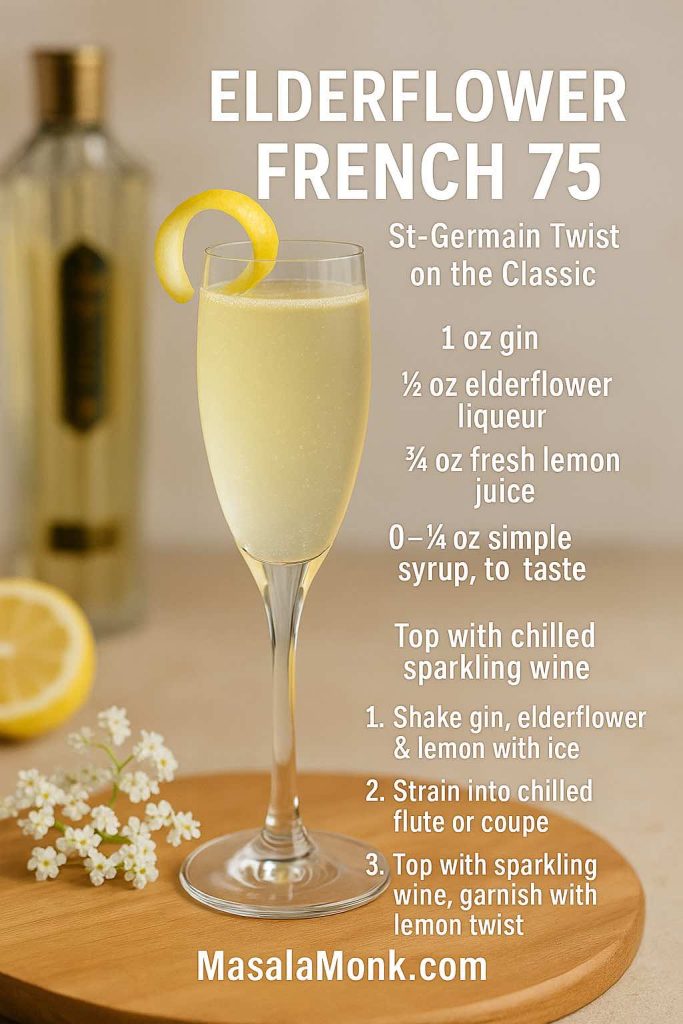
Regardless of the glass you pick, a well-cut lemon twist and icy cold temperature will do as much for the drink’s appeal as any fancy stemware.


After the French 75: Where to Go Next

Once you’re comfortable making this French 75 cocktail recipe and a few of its variations, you’ve essentially learned a reusable template:

  • Sour structure – spirit, citrus, sweetener
  • Sparkling lengthener – Champagne, Cava, Prosecco or alcohol-free bubbles
  • Aromatic garnish – usually a simple twist of lemon or lime

From there, you can branch into other families:

In the end, that’s the real charm of the French 75. It’s not just a single drink; it’s a doorway into a whole world of sparkling, citrusy cocktails. Master this French 75 cocktail recipe once, and you’ll have a reliable party starter, a flexible template for experimentation, and an easy way to make any gathering feel just a bit more celebratory.

FAQs

1. What is a French 75, and how is it different from other Champagne cocktails?

A French 75 is a classic Champagne cocktail made with gin, fresh lemon juice, simple syrup, and dry sparkling wine. Unlike a plain glass of Champagne, this drink starts with a sour-style base—spirit, citrus, and sugar—then is lengthened with bubbles. Compared with cocktails like a Bellini or Mimosa, a French 75 is stronger, more citrus-forward, and built around a clear spirit rather than fruit purée or juice alone. This is why a good French 75 cocktail recipe feels both refreshing and surprisingly potent.


2. What are the main ingredients in a French 75 cocktail recipe?

A traditional French 75 cocktail recipe uses four core ingredients: gin, lemon juice, simple syrup, and Champagne (or another dry sparkling wine). Typically, the drink is shaken with ice using the gin, lemon, and syrup, then strained into a chilled flute or coupe before topping with bubbles. A lemon twist finishes it off. Because there are so few elements, using fresh lemon juice and decent sparkling wine makes a noticeable difference.


3. What is the best gin for a French 75?

For a classic French 75 cocktail recipe, a London Dry gin is usually the best choice. Brands with a clear juniper backbone and crisp profile help the drink taste structured rather than vague. However, you can also choose a more floral gin if you’d like softer botanicals or cucumber and rose notes. As a rule, avoid heavily flavoured or very sweet gins, since they can clash with the lemon and Champagne.


4. Do I have to use Champagne, or can I make a French 75 with Prosecco or other sparkling wine?

You absolutely can use other sparkling wines. While Champagne is traditional, many home bartenders make a French 75 with Cava or Prosecco instead. Dry (Brut) styles keep the drink bright and balanced. If the sparkling wine is slightly sweeter, you might reduce the simple syrup a little so the cocktail doesn’t end up too sugary. Consequently, choosing a good but affordable bottle is often more important than insisting on Champagne every time.


5. Is gin or cognac the “original” spirit in a French 75 cocktail recipe?

The answer depends on which historical recipe you look at. Some early versions used cognac with lemon, sugar, and Champagne, while others called for gin. Over time, the gin-based build became dominant and is now the standard in most bars. Nevertheless, a cognac French 75 (often called a French 125) is still very much part of the same family. In practice, think of gin as the modern default and cognac as a richer, more luxurious variant rather than a completely different drink.


6. What is a French 76, and how does it differ from a French 75?

A French 76 swaps the gin for vodka. The rest of the structure is identical: lemon juice, simple syrup, and sparkling wine on top. As a result, a French 76 tastes cleaner and less botanical, with the citrus and bubbles standing out more clearly. If you have guests who aren’t fond of gin but still want a sparkling cocktail, offering the vodka-based version alongside your main French 75 cocktail recipe is a simple solution.


7. What is a Mexican 75, and how do I make it?

A Mexican 75 is essentially a French 75 made with tequila instead of gin. Usually, tequila blanco pairs with fresh lime or lemon, a touch of agave or simple syrup, and sparkling wine. The build is shaken and then topped with bubbles just like the original. Because of the agave and citrus, it feels a bit like a sparkling margarita, which makes it especially suited to summer parties or taco nights.


8. What is a French 95, and what other “French number” cocktails exist?

A French 95 substitutes bourbon or rye for gin and keeps the rest of the blueprint: lemon, sweetener, and sparkling wine. It tastes like a whiskey sour that has been extended with Champagne, making it rounder and more comforting. Beyond that, you may come across names like French 45, 55, 57, 65, 74, 76, and 85; these typically indicate different spirit bases or subtle ratio tweaks. Instead of memorising every number, it’s easier to remember the core French 75 cocktail recipe and view those cocktails as variations on the same sparkling sour theme.


9. Can I make a French 75 with bourbon, whiskey, or brandy?

Yes. Bourbon and rye are the base spirits in a French 95, which is a recognised variant and a favourite among whiskey drinkers. Similarly, using cognac or another brandy gives a French 125-style drink that feels richer and more dessert-friendly. In each case, the process remains the same: shake the spirit with lemon and sugar, then add sparkling wine. Therefore, you can adapt the drink to the bottles you already have without learning an entirely new method.


10. How do I make an elderflower or St-Germain French 75?

To make an elderflower French 75, you simply replace part of the simple syrup with elderflower liqueur such as St-Germain. For instance, you can use gin, lemon juice, a small amount of syrup, and a splash of elderflower liqueur, then finish with sparkling wine. The result is a French 75 cocktail recipe that tastes softer, more floral, and very brunch-friendly. Just be mindful of sweetness; elderflower liqueur is already sugary, so you may not need much extra syrup.


11. What about a lavender French 75 or other floral versions?

A lavender French 75 usually relies on lavender-infused simple syrup. You keep the typical gin and lemon base but swap plain syrup for one that has been gently steeped with culinary lavender. The key is moderation, since too much lavender can make the drink taste perfumed. Beyond lavender and elderflower, you can also experiment with rose, hibiscus, or other floral syrups, always starting with small amounts and adjusting gradually.


12. Can I use Prosecco instead of Champagne in my French 75 cocktail recipe?

Prosecco works very well in a French 75, especially in casual settings or when you’re making several cocktails at once. To keep everything balanced, look for a Brut style and consider reducing the simple syrup slightly if the wine tastes notably sweet. Interestingly, combining Prosecco with limoncello and a little gin creates an Italian-inspired twist that still follows the French 75 pattern but leans even more into lemon and fruitiness.


13. How strong is a French 75 compared with a glass of wine or a typical cocktail?

A French 75 is stronger than it looks. It contains a full measure of spirit plus sparkling wine, so its alcohol content sits somewhere between a standard cocktail and a large glass of wine. Because the lemon and bubbles make it taste very refreshing, people sometimes underestimate its strength. Consequently, it’s wise to treat a French 75 as you would any other mixed drink: enjoy slowly, sip water between rounds, and keep track of how many you’ve had.



14. Can I batch French 75s for a party?

You absolutely can batch them. To do so, mix the spirit, lemon juice, and simple syrup in a large jug and chill this base thoroughly. Then pour individual portions into glasses and top each one with sparkling wine just before serving. In this way, the carbonation stays lively, and you avoid shaking every single drink to order. As a bonus, batching lets you offer several versions—gin-based, vodka-based, or tequila-based—while keeping the workflow simple.


15. Is there a way to make a non-alcoholic or low-alcohol French 75?

A non-alcoholic French 75 is easy to create. You can shake alcohol-free gin (or simply lemon juice and syrup) with ice, then strain into a flute and top with alcohol-free sparkling wine or fizzy water. The look, aroma, and basic flavour profile stay similar, but the drink is safe for anyone avoiding alcohol. For a low-alcohol route, you can reduce the amount of base spirit and rely more on the sparkling wine, or choose a lower-ABV sparkling option and keep the rest of the French 75 cocktail recipe unchanged.


16. What glass should I use for a French 75?

Traditionally, a French 75 is served in a Champagne flute, which preserves bubbles and gives that tall, elegant silhouette. Nevertheless, many people prefer coupes for a more vintage feel, especially at home. Stemmed wine glasses work as well, particularly when you’re pouring batch cocktails or larger servings. Whatever glass you choose, chilling it beforehand and adding a neat lemon twist will make the drink feel polished.


17. Can I prepare a French 75 in advance?

You can prepare the still components in advance but not the finished cocktail. For best results, mix and chill the spirit, lemon juice and simple syrup together in the refrigerator. Then, when it’s time to serve, shake with ice if you want extra aeration, strain into glasses, and top with sparkling wine. If you were to add the bubbles too early, they would lose their fizz and the French 75 would taste flat by the time you pour it.


18. Why is this drink called a French 75 if I’m using gin instead of cognac?

The name references the French 75mm field gun rather than a specific spirit, so it doesn’t actually depend on cognac being the base. Early recipes used both brandy and gin at different times, and the drink shifted shape as it travelled and evolved. Now, the gin-based build is widely accepted as the standard French 75 cocktail recipe, while cognac versions sit alongside it as legitimate, closely related variations.